

Hydration and Microstructural Evolution of Cement Pastes Incorporating Submerged Arc Welding Slag

 , , , , and
Abstract
1. Introduction
2. Materials and Methods
2.1. Materials
2.2. Methodology
2.2.1. Setting Time and Water Demand
2.2.2. Mercury Intrusion Porosimetry (MIP)
2.2.3. Thermal Analysis (TGA)
2.2.4. X-Ray Diffraction of Hydrated Pastes
3. Results
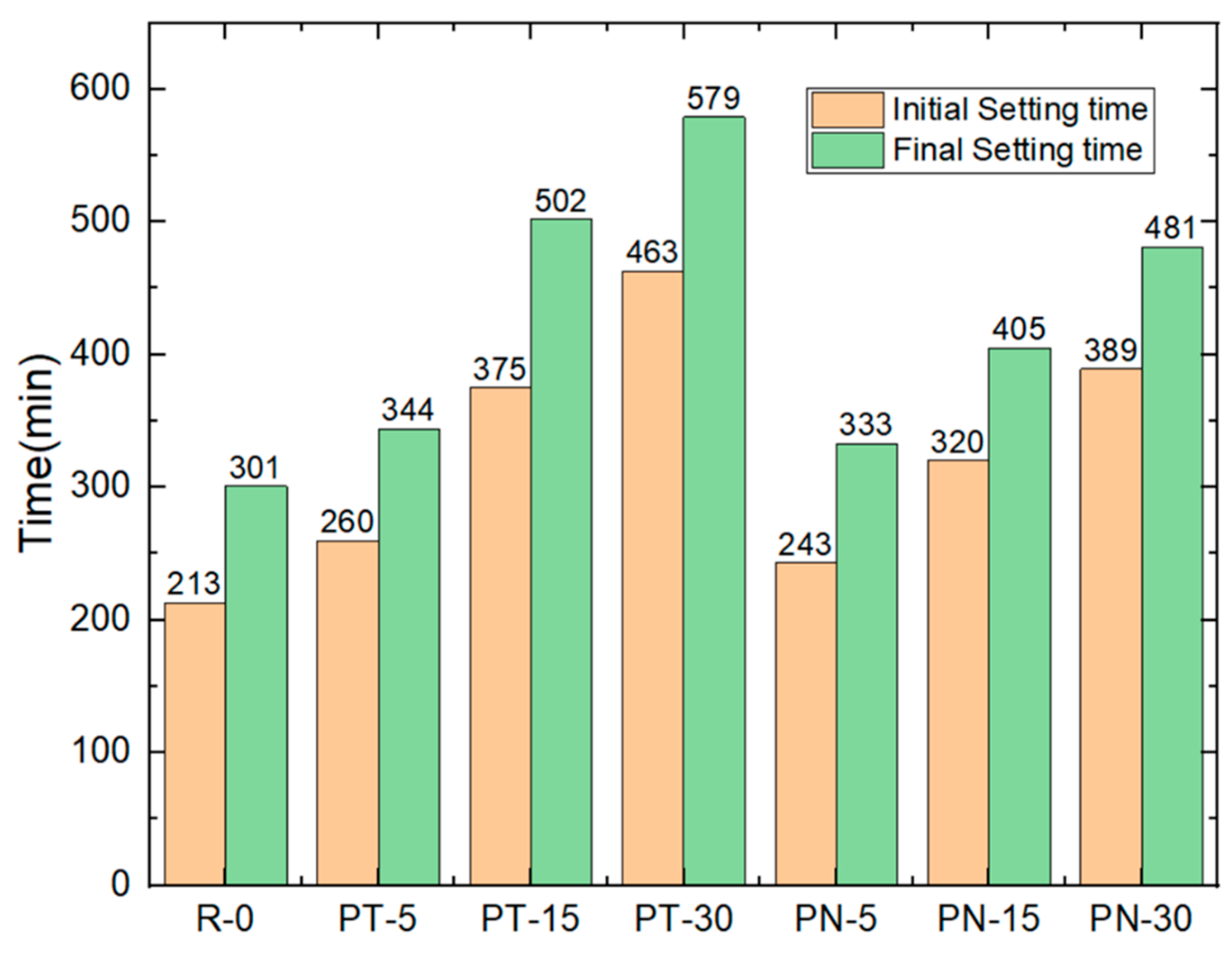
3.1. Setting Time and Water Demand
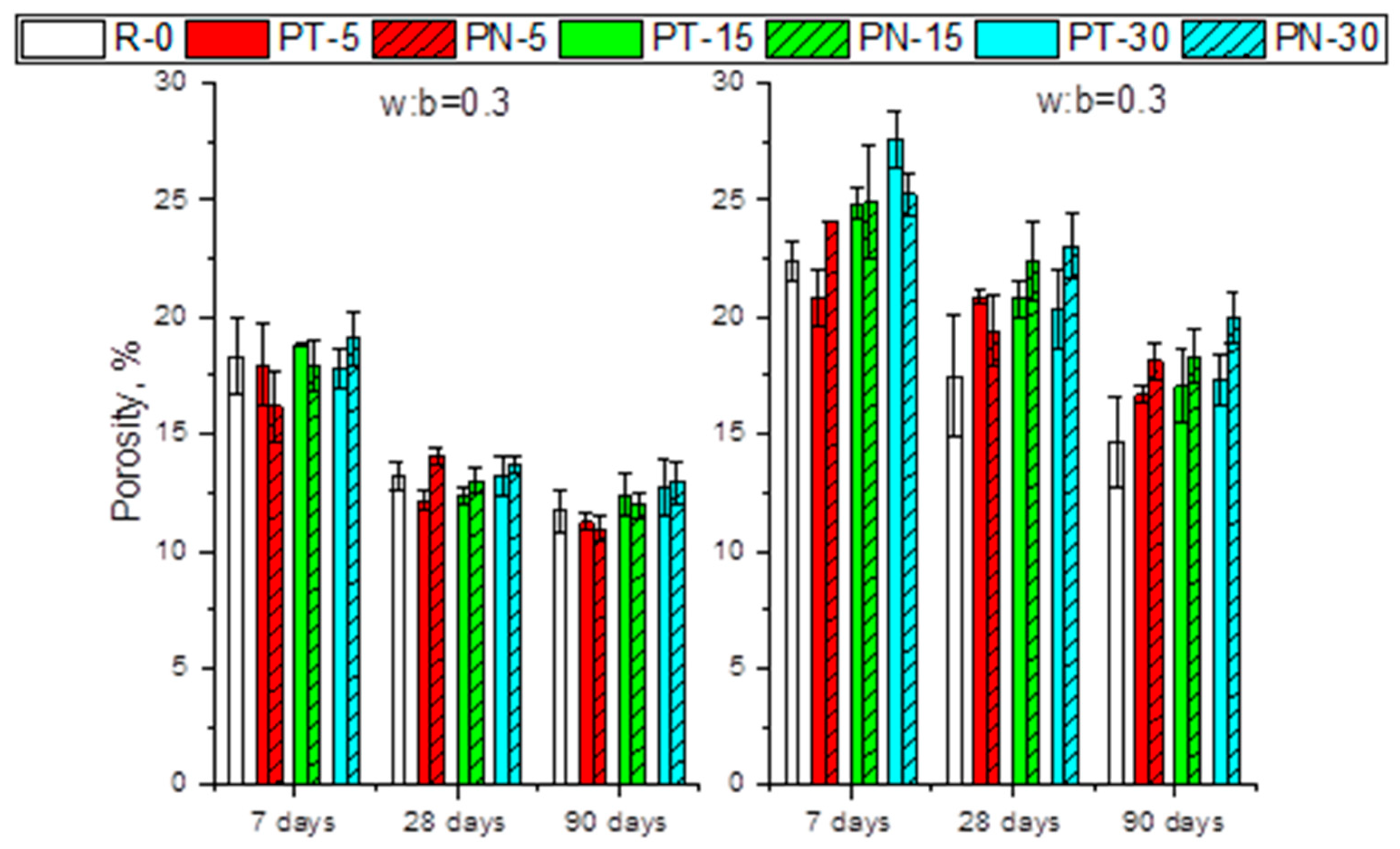
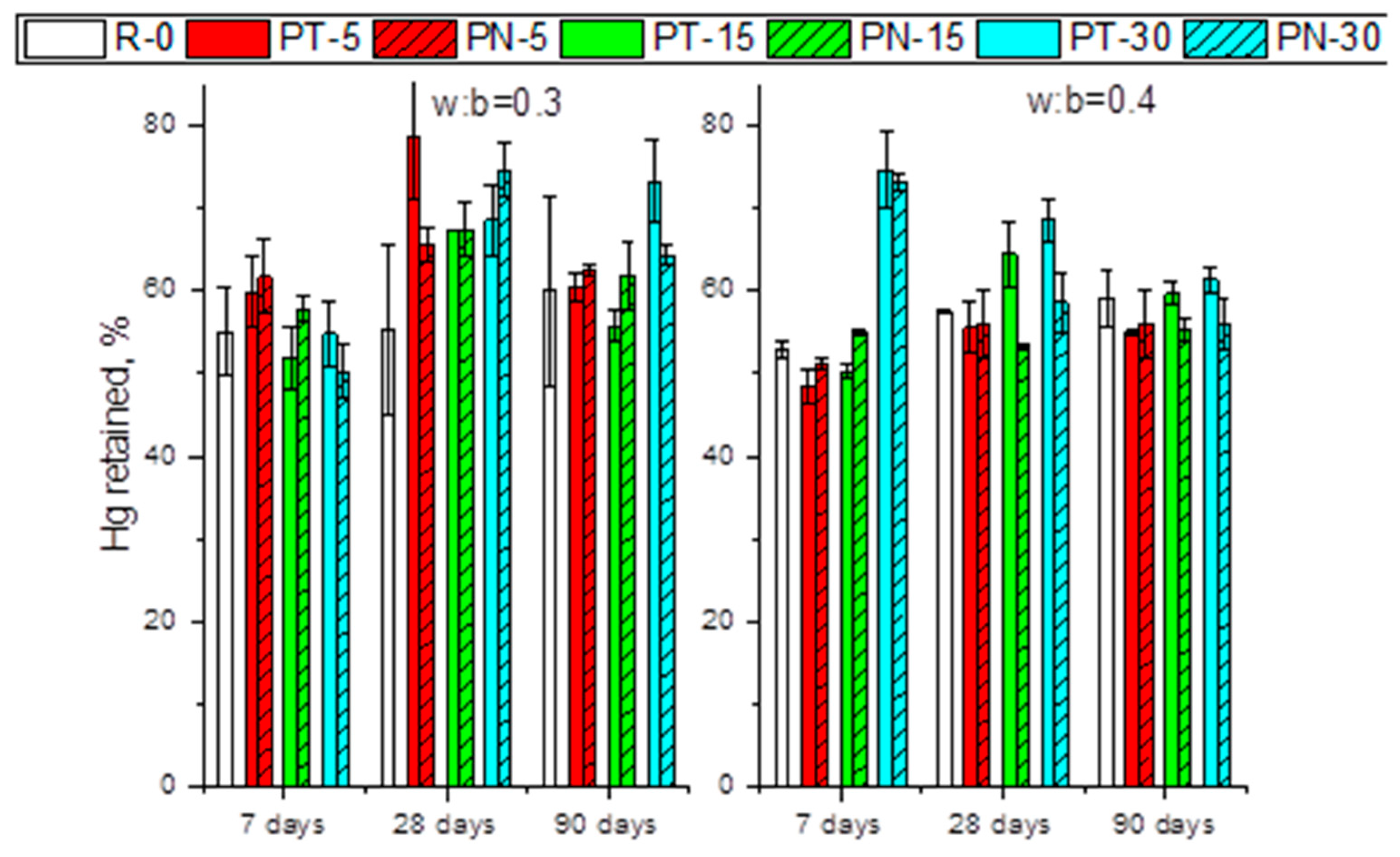
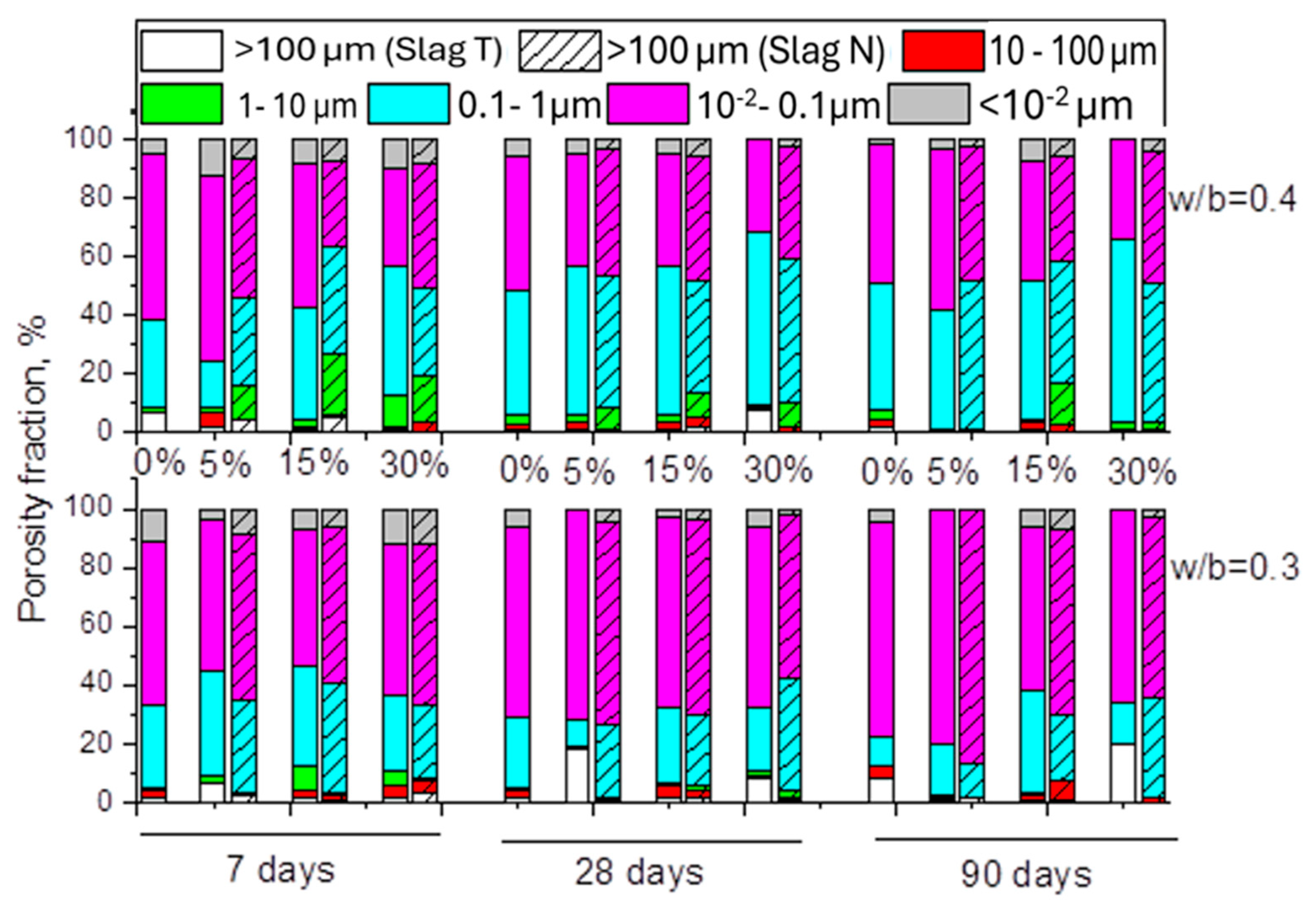
3.2. Pore Structure Characterization by MIP
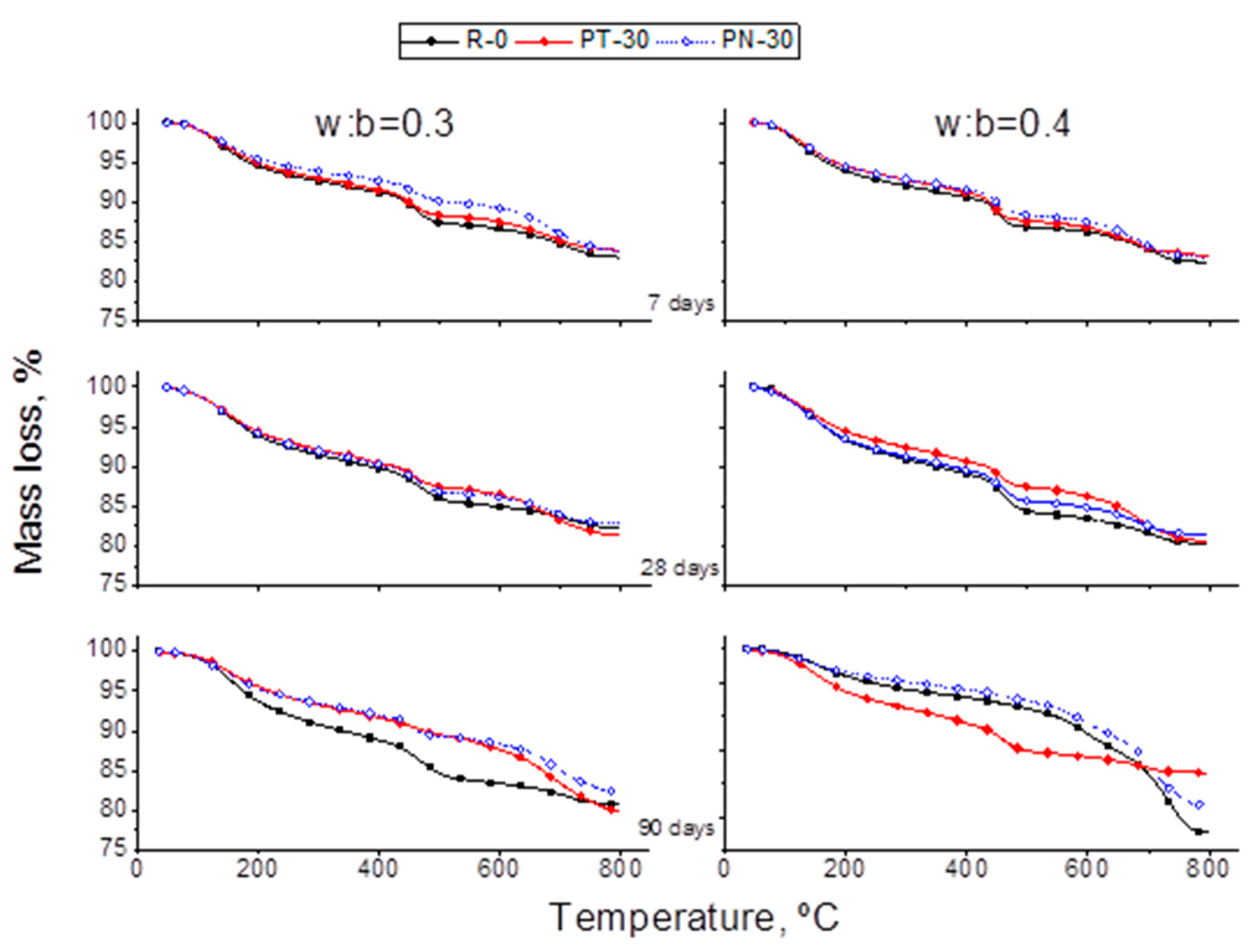
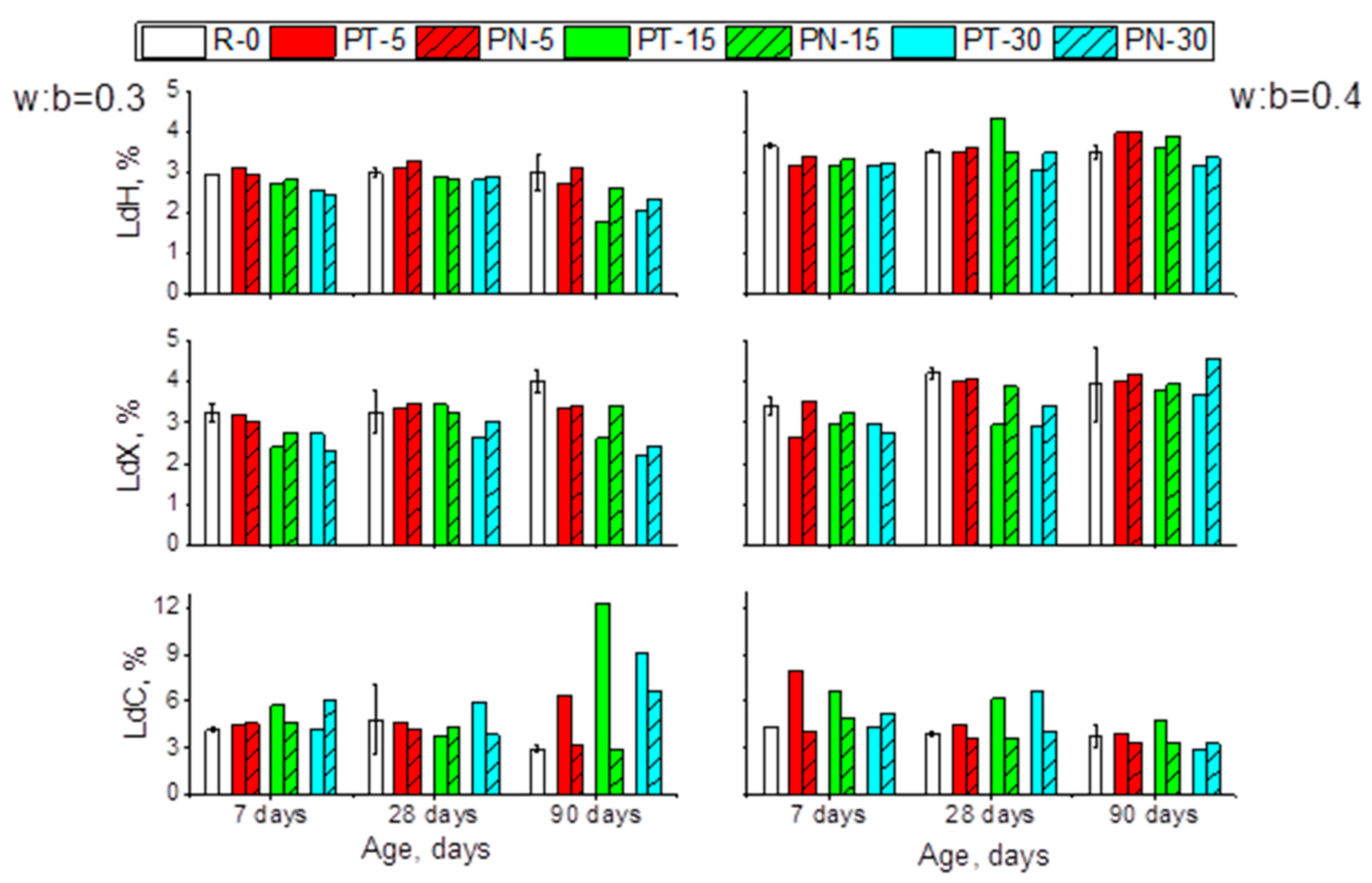
3.3. Thermal Analysis (TGA)
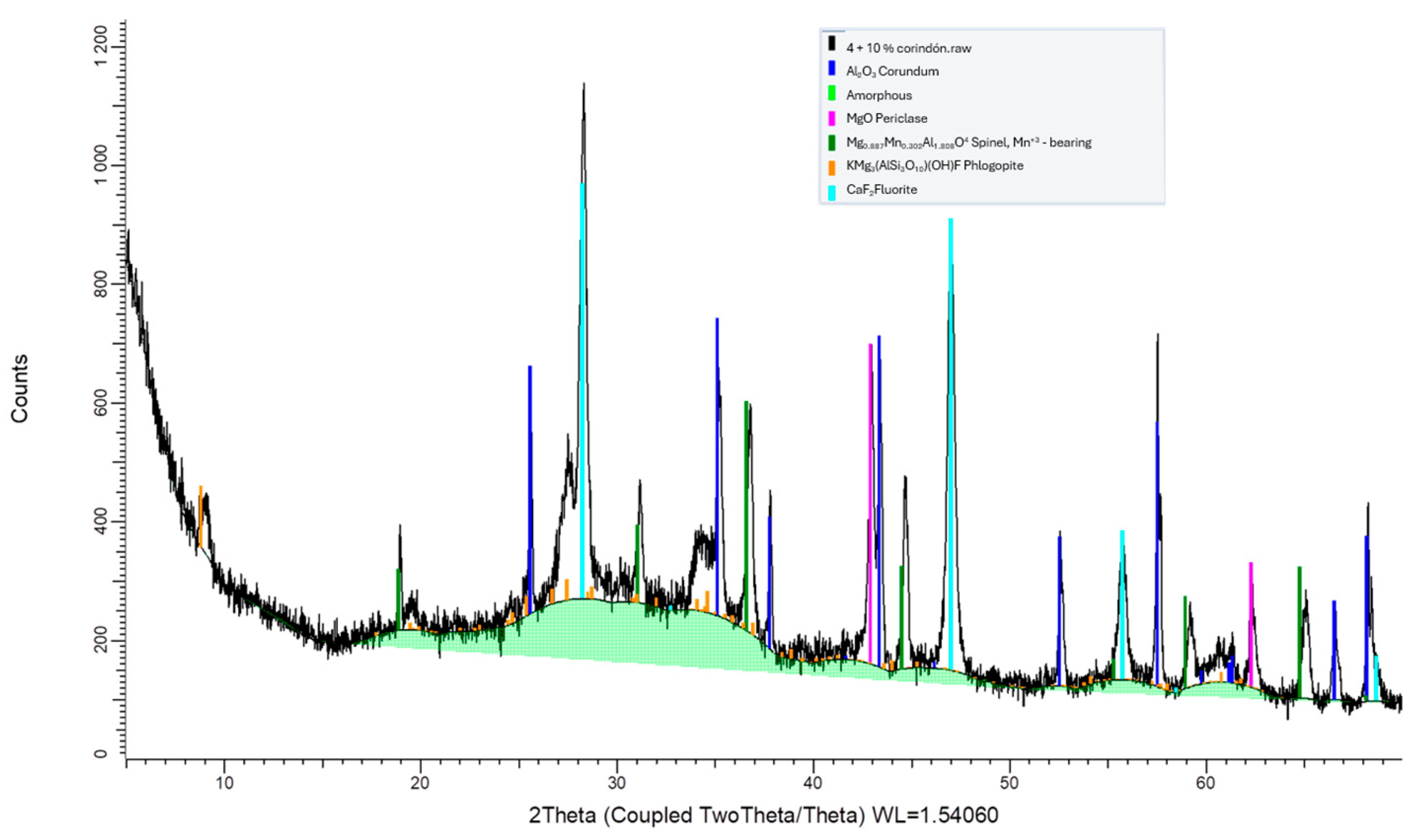
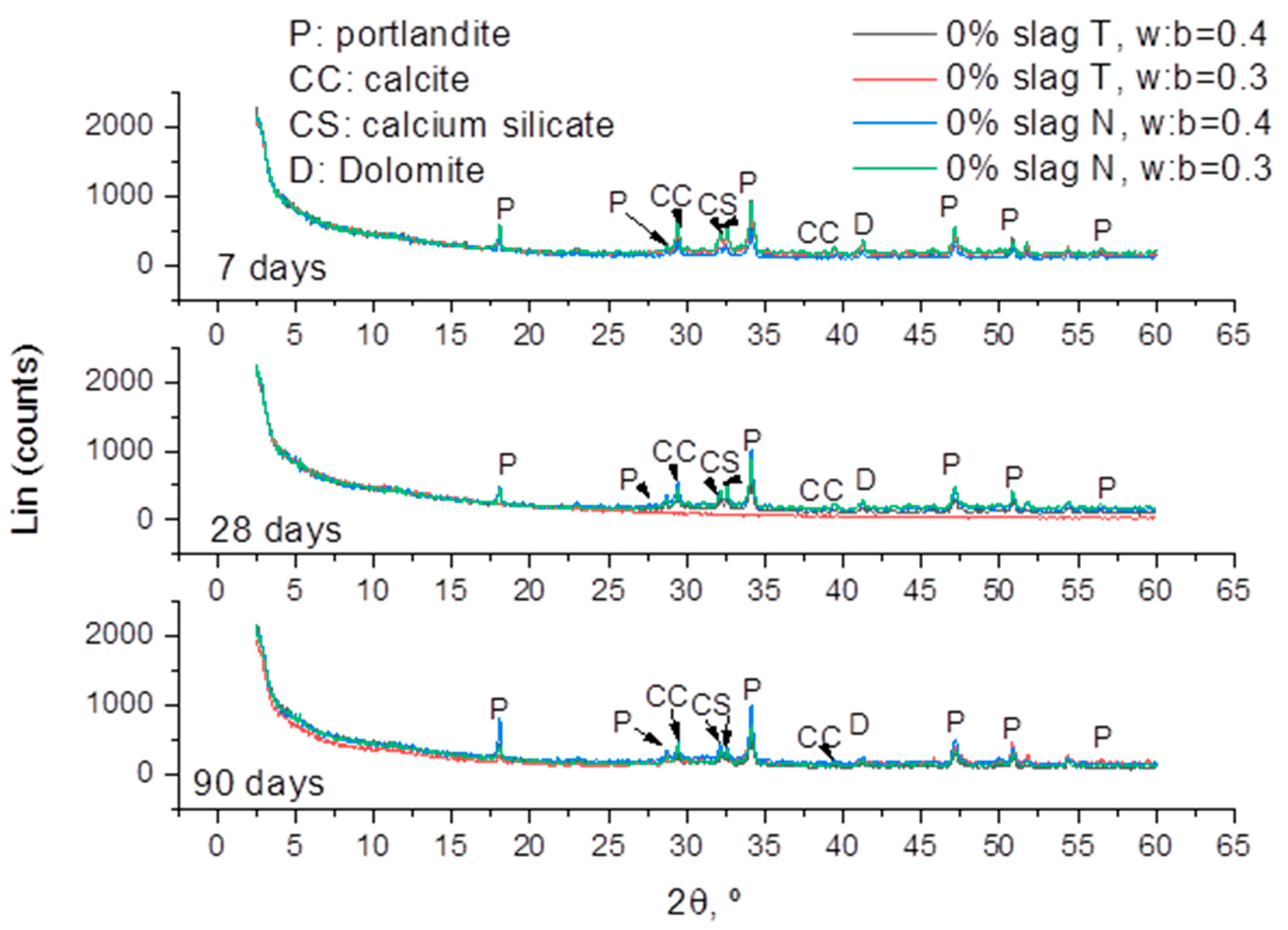
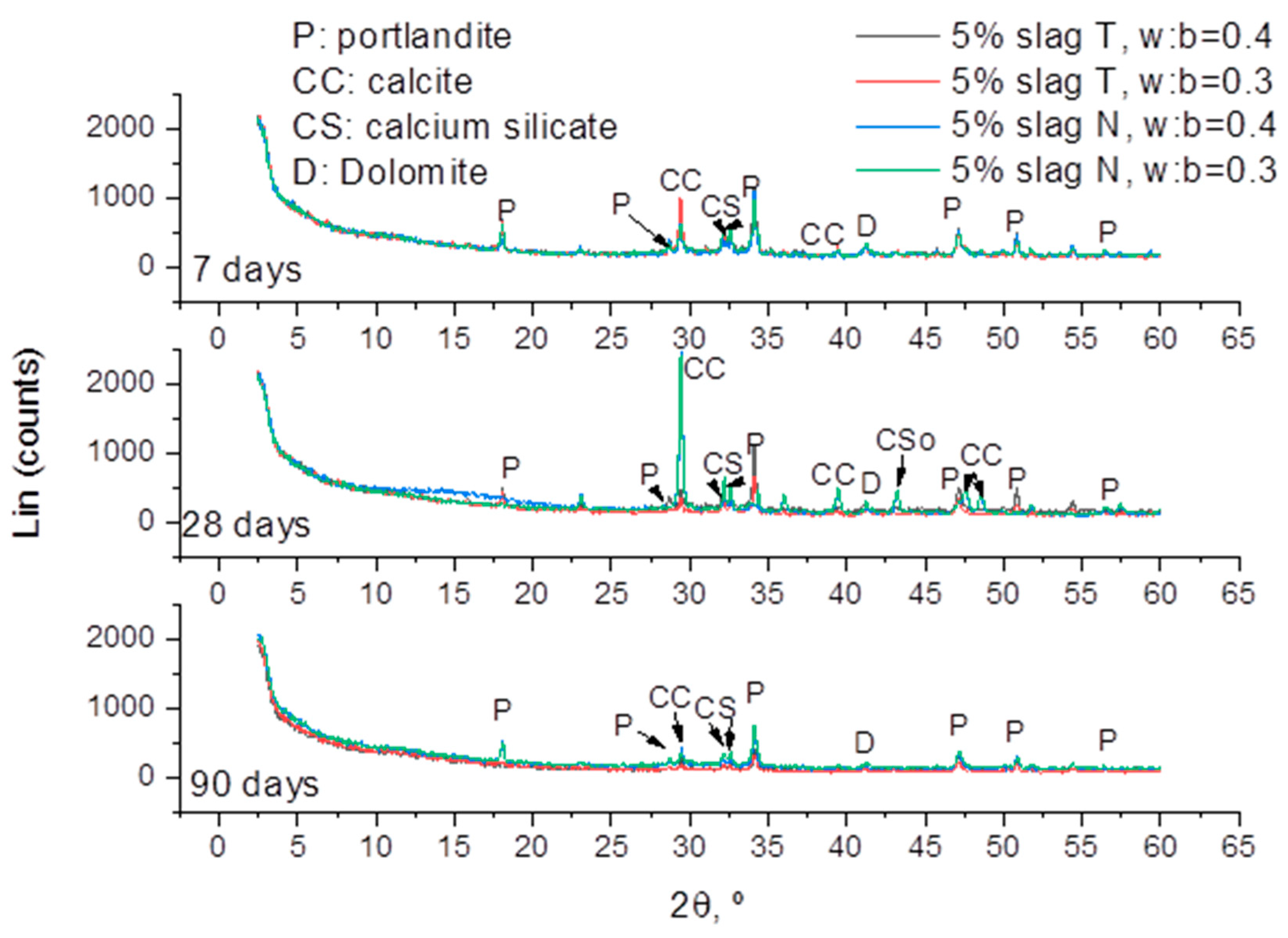
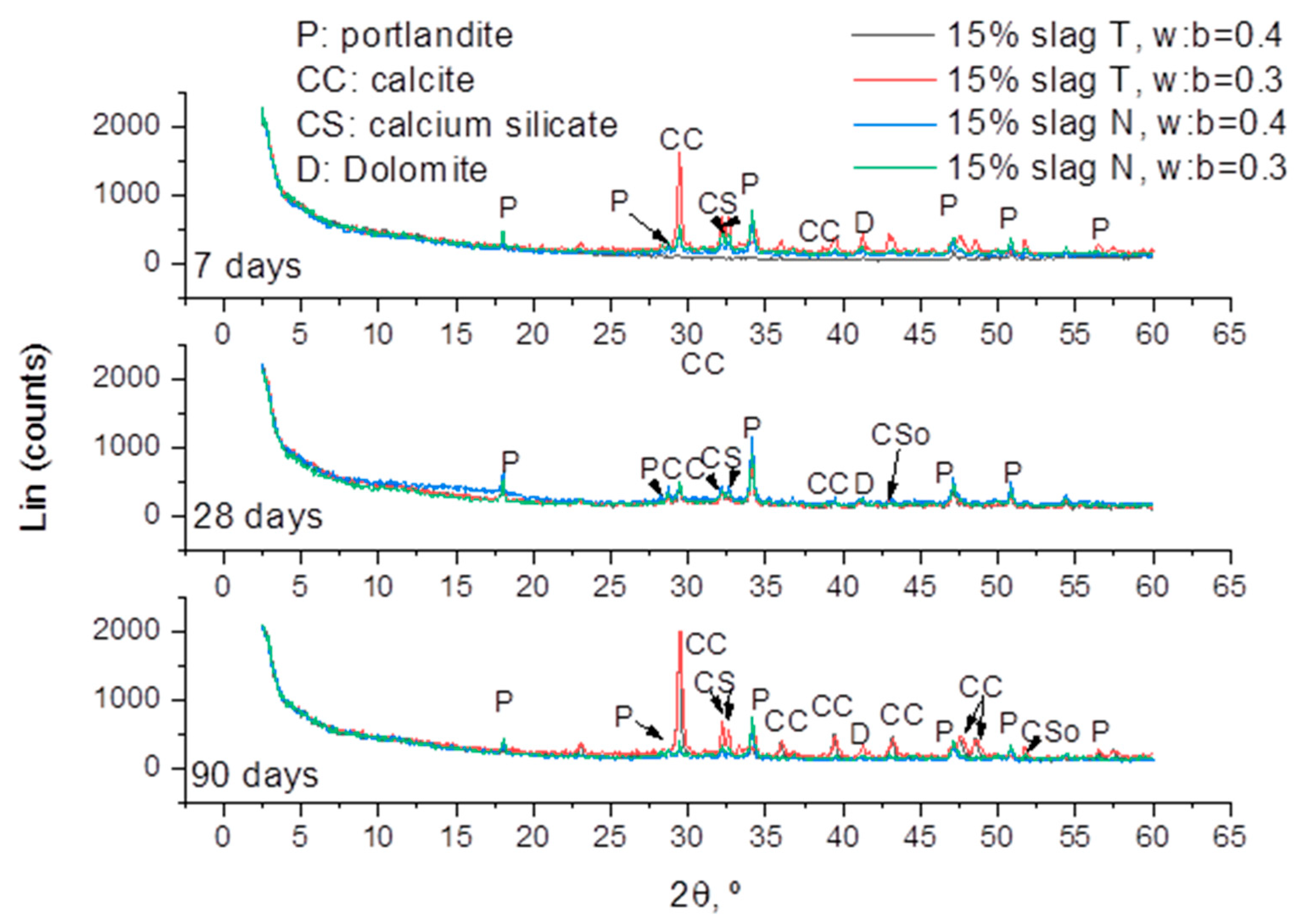
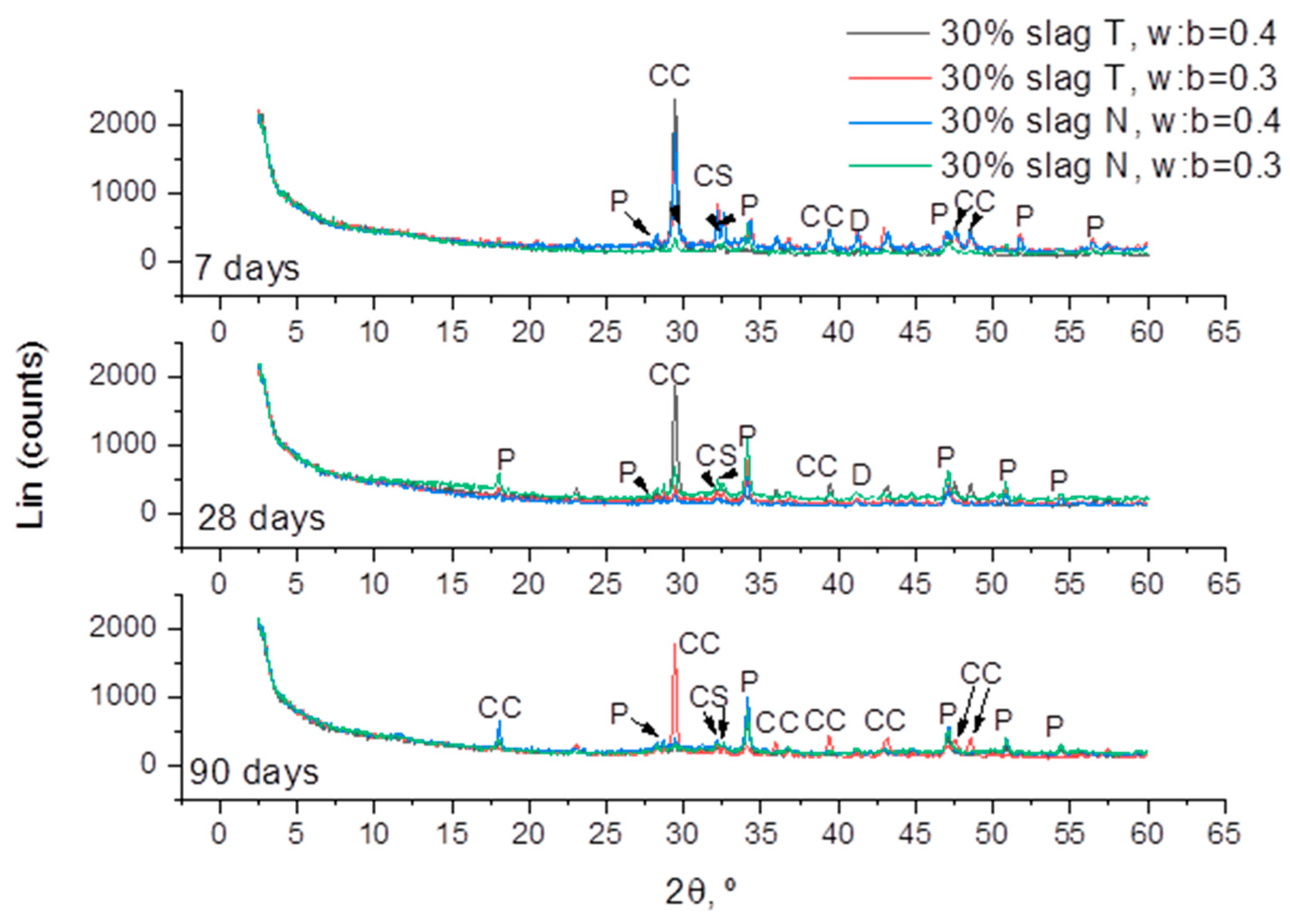
3.4. XRD of Hydrated Pastes
4. Discussion
4.1. Effect of SAW Slag on Setting Behaviour and Early Paste Structuration
4.2. Influence of SAW Slag on Pore Structure Development
4.3. Hydration Products and Phase Evolution from TGA and XRD
5. Conclusions
- SAW slag delayed both the initial and final setting times, and this effect became more pronounced as the replacement level increased. Compared with the reference paste, the initial setting time increased from 213 min to 243–463 min and the final setting time from 301 min to 333–579 min, depending on slag type and dosage. Under the fixed mix conditions adopted in this study, this retardation is interpreted as the combined effect of clinker dilution and modified fresh-state conditions, while fineness-related physical effects and possible weak secondary chemical interactions cannot be completely excluded.
- Water demand was only marginally affected by SAW slag incorporation. The reference paste showed a water demand of 140 mm, which remained unchanged up to 15% replacement and increased only slightly to 142 mm at 30% slag. This limited variation indicates that the observed delay in setting cannot be explained by major consistency changes alone.
- The incorporation of SAW slag increased early-age porosity, particularly at high replacement levels and at w/b = 0.4, whereas mixtures with up to 15% slag at w/b = 0.3 approached the reference pore structure at later ages. This indicates that moderate replacement levels did not severely impair long-term pore refinement, while the effect became more noticeable at higher slag contents and under higher water availability.
- Thermal analysis and XRD indicate that SAW slag mainly affected the evolution of hydration products through clinker dilution. Slag-containing pastes showed lower bound water and portlandite contents at early ages than the reference paste, with the effect becoming more pronounced as the replacement level increased. However, under the investigated conditions, the results did not provide strong evidence of pronounced supplementary reactivity at paste scale.
- Higher SAW replacement levels were associated with a tendency toward increased carbonate formation in some mixtures at later ages. However, since some dc values at 90 days were not consistently reproduced and no direct carbonation test was performed, these results should be interpreted with caution and not as direct evidence of carbonation susceptibility.
Supplementary Materials
Author Contributions
Funding
Data Availability Statement
Acknowledgments
Conflicts of Interest
Abbreviations
| CH | Portlandite |
| DSC | Differential Scanning Calorimetry |
| MIP | Mercury Intrusion Porosimetry |
| NS | N slag |
| TS | T slag |
| OPC | Ordinary Portland Cement |
| R-0 | Reference paste without slag incorporation |
| SAW | Submerged Arc Welding |
| SCMs | Supplementary Cementitious Materials |
| TGA | Thermogravimetric Analysis |
| w/b | Water-to-binder ratio |
| XRD | X-ray Diffraction |
| dx | CH-related mass loss associated with portlandite dehydroxylation |
| dh | Bound water content associated with dehydration of hydration products |
| dc | Carbonate-related mass loss associated with decarbonation |
References
- Bajželj, B.; Allwood, J.M.; Cullen, J.M. Designing Climate Change Mitigation Plans That Add Up. Environ. Sci. Technol. 2013, 47, 8062–8069. [Google Scholar] [CrossRef] [PubMed]
- Hoxha, E.; Habert, G.; Lasvaux, S.; Chevalier, J.; Le Roy, R. Influence of Construction Material Uncertainties on Residential Building LCA Reliability. J. Clean. Prod. 2017, 144, 33–47. [Google Scholar] [CrossRef]
- Scrivener, K.L.; John, V.M.; Gartner, E.M. Eco-Efficient Cements: Potential Economically Viable Solutions for a Low-CO2 Cement-Based Materials Industry. Cem. Concr. Res. 2018, 114, 2–26. [Google Scholar] [CrossRef]
- Scrivener, K.L.; Kirkpatrick, R.J. Innovation in Use and Research on Cementitious Material. Cem. Concr. Res. 2008, 38, 128–136. [Google Scholar] [CrossRef]
- García-Lodeiro, I.; Fernández-Jiménez, A.; Palomo, A. Cementos híbridos de bajo impacto ambiental: Reducción del factor clinker. Rev. ALCONPAT 2015, 5, 1–17. [Google Scholar] [CrossRef]
- Villagrán-Zaccardi, Y.A.; Egüez-Alava, H.; De Buysser, K.; Gruyaert, E.; De Belie, N. Calibrated quantitative thermogravimetric analysis for the determination of portlandite and calcite content in hydrated cementitious systems. Mater. Struct. 2017, 50, 179. [Google Scholar] [CrossRef]
- Ma, J.; Yu, Z.; Shi, H.; Zhang, Y.; Shen, X. Long-term hydration behavior and pore structure development of cement–limestone binary system. J. Therm. Anal. Calorim. 2021, 143, 843–852. [Google Scholar] [CrossRef]
- Panesar, D.K.; Francis, J. Influence of Limestone and Slag on the Pore Structure of Cement Paste Based on Mercury Intrusion Porosimetry and Water Vapour Sorption Measurements. Constr. Build. Mater. 2014, 52, 52–58. [Google Scholar] [CrossRef]
- Bavithra, R.; Suruthi, G. Experimental Study on Behaviour of Concrete by Using Welding Slag as a Partial Replacement of Sand. Int. J. Eng. Res. Technol. 2018, 6, 1–3. [Google Scholar] [CrossRef]
- Singh, J.; Singh, V. Experimental Studies on Concrete Containing Welding Waste Slag. Int. J. Res. 2018, 5, 1052–1060. [Google Scholar]
- Ramesh, S.T.; Gandhimathi, R.; Nidheesh, P.V.; Rajakumar, S.; Prateepkumar, S. Use of Furnace Slag and Welding Slag as Replacement for Sand in Concrete. Int. J. Energy Environ. Eng. 2013, 4, 3. [Google Scholar] [CrossRef]
- Castro-Lopes, S.; Rodrigues, V.D.; Marden, S.; Peña-Garcia, R.; Padrón-Hernández, E.; Berenguer, R. Influence of Submerged Arc Welding Slag Content Variation on Cementitious Materials: A Sustainable Alternative. Constr. Build. Mater. 2025, 483, 141792. [Google Scholar] [CrossRef]
- Liu, W.; Lin, S.; Li, Y.; Long, W.; Dong, Z.; Tang, L. Slag Blended Cement Paste Carbonation under Different CO2 Concentrations: Controls on Mineralogy and Morphology of Products. Materials 2020, 13, 3404. [Google Scholar] [CrossRef] [PubMed]
- UNE-EN 196-3:2017; Métodos de Ensayo de Cementos. Parte 3: Determinación del Tiempo de Fraguado y de la Estabilidad de Volumen. UNE: Madrid, Spain, 2017. Available online: https://www.une.org/encuentra-tu-norma/busca-tu-norma/norma?c=N0058078 (accessed on 24 May 2026).
- Hartman, M.R.; Brady, S.K.; Berliner, R.; Conradi, M.S. The evolution of structural changes in ettringite during thermal decomposition. J. Solid State Chem. 2006, 179, 1259–1272. [Google Scholar] [CrossRef]
- Zhang, Y.; Yang, B.; Yang, Z.; Ye, G. Ink-Bottle Effect and Pore Size Distribution of Cementitious Materials Identified by Pressurization–Depressurization Cycling Mercury Intrusion Porosimetry. Materials 2019, 12, 1454. [Google Scholar] [CrossRef] [PubMed]
- Monteagudo, S.M.; Moragues, A.; Gálvez, J.C.; Casati, M.J.; Reyes, E. The degree of hydration assessment of blended cement pastes by differential thermal and thermogravimetric analysis. Morphological evolution of the solid phases. Thermochim. Acta 2014, 592, 37–51. [Google Scholar] [CrossRef]
- Navarrete, I.; Kurama, Y.; Escalona, N.; Lopez, M. Impact of Physical and Physicochemical Properties of Supplementary Cementitious Materials on Structural Build-up of Cement-Based Pastes. Cem. Concr. Res. 2020, 130, 105994. [Google Scholar] [CrossRef]
- Wang, T.; Medepalli, S.; Zheng, Y.; Zhang, W.; Ishida, T.; Bishnoi, S.; Hou, D.; Shi, Z. Retardation Effect of the Pozzolanic Reaction of Low-Calcium Supplementary Cementitious Materials on Clinker Hydration at Later Age: Effects of Pore Solution, Foreign Ions, and pH. Cem. Concr. Res. 2024, 177, 107416. [Google Scholar] [CrossRef]
- Yuan, Q.; Zhou, D.; Li, B.; Huang, H.; Shi, C. Effect of Mineral Admixtures on the Structural Build-up of Cement Paste. Constr. Build. Mater. 2018, 160, 117–126. [Google Scholar] [CrossRef]
- Baroghel-Bouny, V. Water vapour sorption experiments on hardened cementitious materials. Part I: Essential tool for analysis of hygral behaviour and its relation to pore structure. Cem. Concr. Res. 2007, 37, 414–437. [Google Scholar] [CrossRef]
- Castellote, M.; Fernández, L.; Andrade, C.; Alonso, C. Chemical changes and phase analysis of OPC pastes carbonated at different CO2 concentrations. Mater. Struct. 2008, 42, 515–525. [Google Scholar] [CrossRef]
- Baroghel-Bouny, V. Water vapour sorption experiments on hardened cementitious materials. Part II: Essential tool for assessment of transport properties and for durability prediction. Cem. Concr. Res. 2007, 37, 438–454. [Google Scholar] [CrossRef]



| Properties | OPC | T Slag | N Slag |
|---|---|---|---|
| Density (g/cm3) | 3.08 | 3.07 | 3.18 |
| Blaine (cm2/g) | 3420 | 4783 | 4875 |
| Oxides (%) | Na2O | MgO | Al2O3 | SiO2 | K2O | CaO | TiO2 | Fe2O3 | P2O5 | SO3 | F | MnO |
|---|---|---|---|---|---|---|---|---|---|---|---|---|
| OPC | 0.37 | 2.51 | 4.09 | 16.89 | 1.33 | 64.74 | 0.26 | 3.51 | 0.18 | 4.06 | - | - |
| TS | 2.34 | 20.22 | 17.06 | 21.77 | 1.23 | 17.17 | 0.85 | 3.95 | 0.05 | 0.05 | 8.16 | 10.11 |
| NS | 2.64 | 16.14 | 15.09 | 22.95 | 1.30 | 23.72 | 2.54 | 2.55 | 0.04 | 0.08 | 9.86 | 6.51 |
| Mixture | TS | NS | OPC |
|---|---|---|---|
| R-0 | - | - | 100 |
| PT-5 | 5 | - | 95 |
| PT-15 | 15 | - | 85 |
| PT-30 | 30 | - | 70 |
| PN-5 | - | 5 | 95 |
| PN-15 | - | 15 | 85 |
| PN-30 | - | 30 | 70 |
| Mixture | R-0 | PT-5 | PT-15 | PT-30 | PN-5 | PN-15 | PN-30 |
|---|---|---|---|---|---|---|---|
| Water Demand (mm) | 140 | 140 | 140 | 142 | 140 | 140 | 142 |
Disclaimer/Publisher’s Note: The statements, opinions and data contained in all publications are solely those of the individual author(s) and contributor(s) and not of MDPI and/or the editor(s). MDPI and/or the editor(s) disclaim responsibility for any injury to people or property resulting from any ideas, methods, instructions or products referred to in the content. |
© 2026 by the authors. Licensee MDPI, Basel, Switzerland. This article is an open access article distributed under the terms and conditions of the Creative Commons Attribution (CC BY) license.
Share and Cite
Rodríguez, C.; Fernández, F.; Sánchez, M.; Gómez, P.; Hernández, M.; Sánchez, I. Hydration and Microstructural Evolution of Cement Pastes Incorporating Submerged Arc Welding Slag. Infrastructures 2026, 11, 268. https://doi.org/10.3390/infrastructures11080268
Rodríguez C, Fernández F, Sánchez M, Gómez P, Hernández M, Sánchez I. Hydration and Microstructural Evolution of Cement Pastes Incorporating Submerged Arc Welding Slag. Infrastructures. 2026; 11(8):268. https://doi.org/10.3390/infrastructures11080268
Chicago/Turabian StyleRodríguez, Carlos, Fernando Fernández, Marina Sánchez, Pablo Gómez, Miriam Hernández, and Isidro Sánchez. 2026. "Hydration and Microstructural Evolution of Cement Pastes Incorporating Submerged Arc Welding Slag" Infrastructures 11, no. 8: 268. https://doi.org/10.3390/infrastructures11080268
APA StyleRodríguez, C., Fernández, F., Sánchez, M., Gómez, P., Hernández, M., & Sánchez, I. (2026). Hydration and Microstructural Evolution of Cement Pastes Incorporating Submerged Arc Welding Slag. Infrastructures, 11(8), 268. https://doi.org/10.3390/infrastructures11080268