Article

Microstructure and Drying Shrinkage of Cement Mortars Containing High-Volume Fly Ash and Glass Waste Nanoparticles

1
EcoStruct Building Technologies B.V., Fluwelen Burgwal 58, 32511 CJ The Hague, The Netherlands
2
School of Architecture and Built Environment, The University of Newcastle, University Drive, Callaghan, NSW 2308, Australia
3
Faculty of Civil Engineering and Built Environment, Universiti Tun Hussein Onn Malaysia, Parit Raja, 86400 Batu Pahat, Johor, Malaysia
*
Author to whom correspondence should be addressed.
Infrastructures 2026, 11(7), 231; https://doi.org/10.3390/infrastructures11070231 (registering DOI)
Submission received: 24 April 2026 / Revised: 29 June 2026 / Accepted: 1 July 2026 / Published: 4 July 2026

Abstract

Replacing Ordinary Portland Cement (OPC) with high volumes of fly ash (FA) offers a practical approach to reducing the environmental impacts associated with cement manufacturing and landfill disposal. However, high FA replacement levels, particularly up to 60%, often lead to lower early-age strength. This study developed a green cement mortar containing 60% FA and waste bottle glass nanoparticles (WBGNPs). The WBGNPs were incorporated at replacement levels of 2%, 4%, 6%, 8%, and 10% by volume of the OPC–FA binder. The findings showed that the addition of 4–6% WBGNPs significantly promoted the formation of dense reaction gels and enhanced compressive strength by 12.5–39.1%. Similar performance trends were observed in both the engineering and microstructural properties. The combined incorporation of FA and WBGNPs also improved drying shrinkage performance by reducing capillary stresses during water evaporation and minimizing crack development within the cement matrix. Additionally, a proposed shrinkage prediction model was validated using experimental data and demonstrated good agreement, with an average prediction error of approximately 8%. Overall, the incorporation of WBGNPs provides an effective method for producing high-volume FA cement mortars with satisfactory engineering properties suitable for concrete applications in tropical environments. This approach further supports sustainability by reducing waste generation, lowering landfill demand, and minimizing environmental pollution.

1. Introduction

Concrete represents the most extensively employed construction material in infrastructure [1,2,3]. It is projected that worldwide cement usage will grow to over 5.5 billion tons by the year 2050, as compared to its current consumption of 4.4 billion tons [4,5,6]. The rapid economic growth experienced in emerging economies like China, the USA, Canada, Australia, Singapore, and Malaysia, among others, has resulted in considerable expansion in infrastructure in these countries in terms of building highways, bridges, offices, residential buildings, colleges, schools, hospitals, and universities [7,8]. This development has led to a great demand for high quantities of cement-based concrete [9,10,11,12]. Infrastructural concrete durability is critical for the long-term service life of structural systems, and it is governed by a variety of aspects [13,14,15]. Drying shrinkage is one of them, and it contributes greatly to defining structural life and durability [16].
The higher drying shrinkage of cementitious materials tends to provide low durability and a short service life [17]. When mixed with water, Ordinary Portland Cement (OPC) is known to undergo significant drying shrinkage because of its high level of hydration, loss of moisture by evaporation and the large amount of unstable calcium hydroxide (Ca(OH)2) contained in it [18]. All these factors cause capillary tension to increase, which results in more shrinkage and further accelerates the process of deterioration [19]. So, drying shrinkage plays a critical role in concrete performance, particularly regarding durability, crack development, and maintenance costs [20]. It occurs due to moisture loss from hardened cement paste, causing volume reduction. When shrinkage is restrained by reinforcement, aggregates, or external constraints, tensile stresses develop within concrete [21]. Because concrete has a low tensile strength, these stresses often result in microcracks and surface cracks. Drying shrinkage is a major cause of both early-age and long-term cracking in concrete structures [22,23]. Over time, microcracks can expand and connect, forming crack networks that reduce structural integrity and serviceability [24,25]. Shrinkage-related cracking also increases maintenance and repair costs, requiring measures such as crack sealing, surface treatment, and structural strengthening [26]. In severe cases, extensive deterioration may necessitate partial or complete replacement [27]. Therefore, developing low-shrinkage cement is essential to improve durability, extend service life, and reduce lifecycle costs [28].
Fly ash (FA) is a fine powder by-product mainly made up of silica, alumina, and iron oxide. It is formed when ground coal is burned in power plants and industrial boilers, and it is commonly used in the manufacture of Portland Pozzolana Cement (PPC) [29,30]. PPC is used in the construction industry because of its long-term performance, high resistance to chemical attack (particularly in seawater), low heat of hydration, low drying shrinkage, and low carbon emissions, which make it a sustainable material choice [31,32,33]. One of the widely used artificial pozzolanic materials, FA, increases the concrete’s strength, durability, and workability [34]. It serves as an additional cementitious material, which is usually used to substitute 10–30% of regular cement [35,36,37,38,39]. When hydrated, it reacts with Ca(OH)2 to create more cementitious compounds, which make it less permeable and more resistant to exposure to chemicals. However, high-volume FA (50–70% replacement) greatly retards the development of early-age strength, especially in the first 28 days [40,41,42]. This can be primarily attributed to slower pozzolanic reactivity with the fast hydration of cement, which restricts its wider use in the concrete industry [43,44]. Nonetheless, the use of FA as an alternative to Portland cement is still problematic because of its rather weak mechanical properties at early ages [45,46]. In order to overcome this, a number of solutions have been offered. These involve refining FA to increase its surface area and accelerating reactivity, while also letting fine particles function as nucleation sites as well as fillers [31]. Following this, to enhance FA reactivity, the alkalinity of the concrete mixture can be increased by incorporating lime. Moreover, nanomaterials have been in significant focus over the past few years on the basis of their capacity to enhance the performance of concrete at an early stage [47], particularly in blends that involve FA [48,49,50,51,52].
Indicatively, nanosilica may greatly speed up the early cement hydration process by offering nucleation sites for calcium silicate hydrate (C-S-H) gel formation [53,54]. It also elevates heat release, improves tricalcium silicate (C3S) and dicalcium silicate (C2S) hydration, and stimulates Ca(OH)2 consumption through pozzolanic reactions, resulting in enhanced compressive strength at early ages [55,56,57]. Additionally, the introduction of nanomaterials into cement-based systems has been found to enhance microstructural properties and performance in general [55,58], as well as making construction material more sustainable [59]. The high surface area-to-volume ratio of nanoparticles (NPs) has been shown to accelerate pozzolanic reactions in several studies [55,59,60]. In addition, NPs enhance interfacial adhesion between the cement matrix and aggregates, leading to better microstructural development [61]. Among the various nanomaterials studied, nanosilica has been most extensively utilized in concrete as well as cement applications [62,63,64,65]. Research findings indicate that nanosilica accelerates hydration reactions; refines microstructure; and improves compactness, early-age strength, bulk density, and durability [66,67]. Moreover, it is capable of extending concrete lifespan by mitigating Ca(OH)2 leaching, a major contributor to concrete deterioration.
Each year, a substantial amount of waste bottles made of glass are disposed of globally [68]. Approximately 82% of commercially produced glass consists of soda–lime glass [69], characterized by its chemically stable composition as well as high content of amorphous silica [70], making it suitable for use in the concrete and cement sectors especially [71]. Glass waste has been extensively utilized as a partial substitute for traditional fine and coarse aggregates and OPC in cement-based materials production, and its use has been well researched [57,72,73,74]. Although high-volume fly ash (FA) can significantly reduce the environmental impact and cost of OPC, its widespread use is limited by low early-age strength and increased porosity, which may reduce long-term durability and service life. Therefore, sustainable solutions are needed to overcome these challenges while maintaining the environmental benefits of high-volume FA systems.
This study introduces a novel approach by utilizing waste bottle glass nanoparticles (WBGNPs) as an eco-friendly nanomaterial additive in high-volume FA cement binders with 60% or more FA replacement of OPC. The novelty of this research lies in the simultaneous valorization of waste glass into high-reactivity nanoparticles and their application as a performance-enhancing material for high-volume FA cementitious systems. Unlike conventional approaches, the proposed WBGNPs are expected to accelerate hydration reactions, promote the formation of denser calcium silicate hydrate (C-S-H) gel structures, refine pore networks, and enhance matrix compactness, thereby improving early-age strength and durability performance. The main objective is to evaluate the effectiveness of WBGNPs in improving early compressive strength, reducing drying shrinkage, and extending the service life of high-volume FA mortars. Comprehensive testing included physical, chemical, mineralogical, and pozzolanic characterization of raw materials, followed by the development and assessment of mortar mixtures containing different WBGNP contents. Fresh and hardened properties, hydration mechanisms, and microstructural changes were investigated. Drying shrinkage was monitored from 3 to 180 days, and a modified B3 model was developed to predict long-term shrinkage strain in WBGNP-modified high-volume FA binders.

2. Materials and Methods

2.1. Material-Based Binders, Filler and Alkaline Solution

The proposed binders were prepared employing FA and OPC, as well as waste bottle glass nanoparticles (WBGNPs). OPC was sourced from a local cement manufacturer (Malaysia) and functioned as the principal contributor of calcium oxide (CaO), as it satisfies the requirements of ASTM C150 for Type I cement (standard specification for Portland cement). FA was collected from industrial waste and acted as the primary aluminosilicate source; it was used without additional treatment, with the exception of the crushing of agglomerated particles.
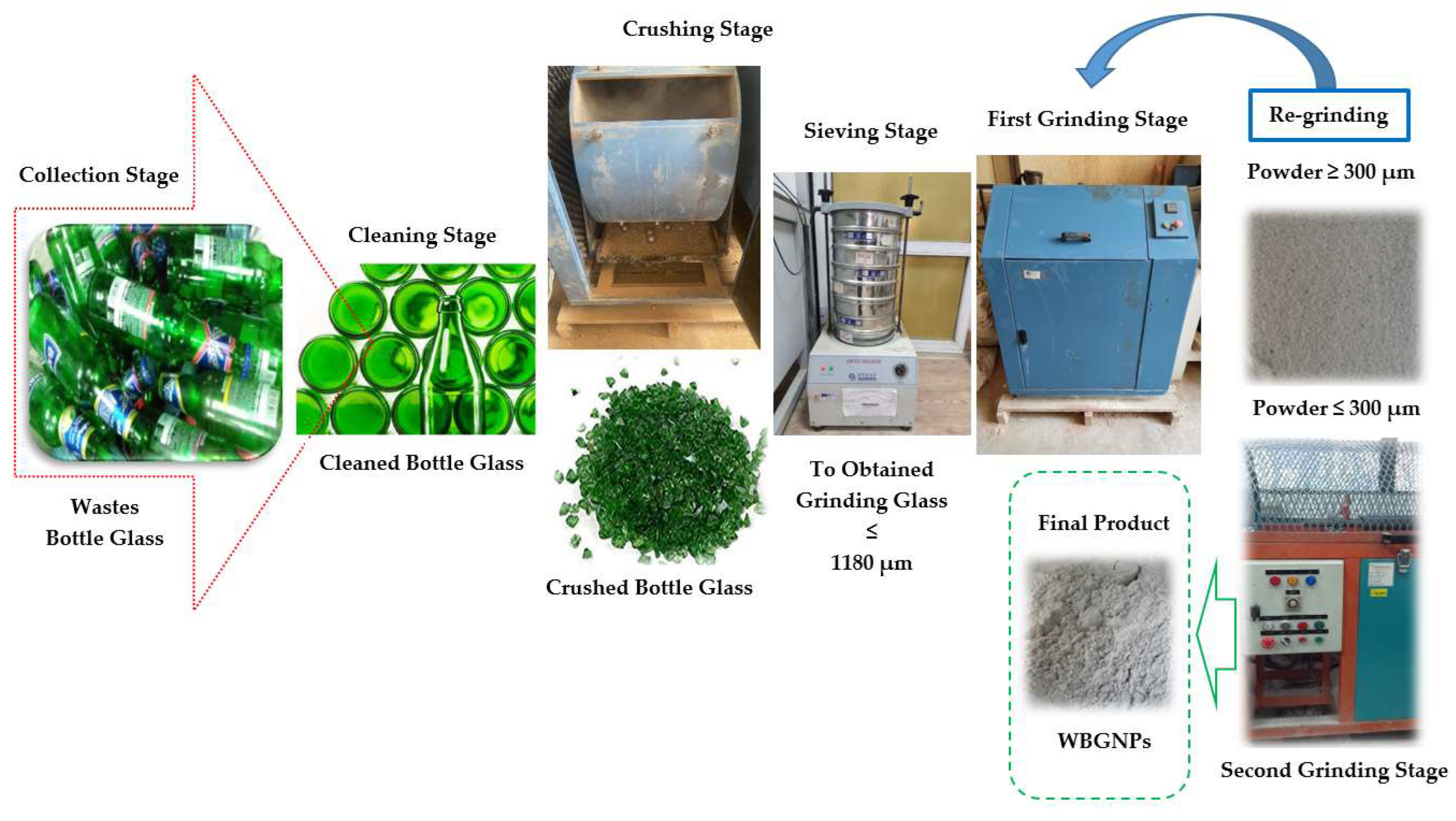
WBGNPs were produced from waste glass bottles via a top-down grinding approach, as illustrated in Figure 1. The food industry was used to collect the waste glass bottles. The bottles were initially washed using tap water to eliminate impurities before crushing. A medium particle size of about 25 µm was then attained by crushing 3 kg of crushed glass in a Los Angeles abrasion machine with a capacity of 25 kg, using 16 stainless steel balls with a diameter of 40 mm, and grinding the material over a period of 3 h. The powder obtained was then dried at a temperature of 110 °C for a duration of 1 h. Following this, the material was dried and then ground for 7 h in a small ball mill with a 0.35 kg maximum capacity, using 75 stainless steel balls with a diameter of 0.5 to 15 mm, to obtain nanosized particles (less than 100 nm).
The fine aggregate in the mix design comprised natural siliceous river sand. To remove silt, impurities and moisture, the sand was washed according to ASTM C117 (standard test method for materials finer than a 75 μm (No. 200) sieve in mineral aggregates when washed) and dried at 60 °C in the oven over a period of 24 h. Subsequently, the aggregates were thoroughly examined to ensure no contamination with damaging organic substances like dried mud, leaves, and other debris.
The physical characteristics with regard to fine aggregates, comprising specific gravity, density, evaporable moisture, void content, and water absorption, were determined following ASTM C128 (standard test method for relative density (specific gravity) and absorption of fine aggregates). All measured properties satisfied the requirements of ASTM C33 (standard specification for concrete aggregates) for the preparation of standard mortar mixes. In addition, 40% of the material retained in the 600 μm sieve was used in the computations of the mix design.
The oven-dried fine aggregates exhibited a bulk density of 1730 kg/m3, while the specific gravity measured under Saturated Surface Dry (SSD) conditions was 2.70. Notably, the aggregates conformed to a well-graded distribution, falling within the upper and lower bounds stipulated by ASTM C33. On the other hand, the nominal maximum size was 4.75 mm, whereas the fineness modulus was 2.3 mm. In essence, the use of aggregates that were well graded contributed to the improved overall performance of the suggested concrete mixes by reducing water demand and minimizing segregation.

2.2. Mix Design and Specimen Preparation

The mixes and respective content proportions of the proposed mortars are shown in Table 1. Subsequent to a 28-day curing period, the control mixtures were formulated to reach a target compressive strength of 30 MPa. For high-volume FA mixtures with cement replacement levels of 50% or greater, the mixture containing 60% FA was identified as the optimum composition. This mixture provided the highest degree of cement replacement while still meeting the target 28-day compressive strength requirement of at least 20 Mpa. The selection was based on its ability to maximize FA utilization and its associated sustainability advantages without compromising the minimum strength criteria. Following this optimization, nanoparticles were incorporated into the selected mixture to improve its mechanical properties, with the objective of increasing the 28-day compressive strength beyond 30 Mpa. In the control specimen, FA was used to replace 60% of the OPC by volume. The replacement was carried out on a volumetric basis rather than by weight because the binder materials have different specific gravities. Thereafter, nano-glass powder was incorporated at 2%, 4%, 6%, 8%, and 10 vol.% as a partial substitute for the OPC-FA binder system. Initially, the mixtures were blended for a duration of 3 min with the aim of obtaining a homogeneous specimen. Following the incorporation and mixing of the fine aggregates for a further four minutes, water was introduced. Furthermore, the water-to-cement ratio (W:C) for all proposed mortar mixes was maintained at 0.55, and the mixes were further stirred for an additional five minutes. Thereafter, the prepared mortars were cast into the molds using a two-layer pouring method. Note that each layer was vibrated during this procedure for a duration of 20 s to eliminate entrapped air voids. After casting, the mortar specimens were cured in a control room at 27 ± 1.5 °C and 50% relative humidity for 24 h before demolding. Following demolding, the cubic specimens prepared to measure the compressive strength and water absorption were immersed in water for a period of 7 days. After the curing period, the specimens were removed from the water and stored at room temperature (27 °C) until the time of testing.

2.3. Test Procedure

The fresh-state workability of the proposed mortars was evaluated through the flow table test as per ASTM C230 (standard specification for flow table for use in tests of hydraulic cement). Two types of molds were used to prepare high-volume FA mortar specimens: cubes (50 mm × 50 mm × 50 mm) and prisms (25 mm × 25 mm × 250 mm). Compressive strength tests were performed based on ASTM C109 (standard test method for compressive strength of hydraulic cement mortars (using 50 mm cube specimens)), and the recorded values represent the averages of three specimens for each curing age. The drying shrinkage was evaluated at different ages as per ASTM C157 (standard test method for length change of hardened hydraulic cement mortar and concrete). The specimens had stainless steel studs that were placed to help measure the changes in length. The prism specimens prepared to measure the drying shrinkage were demolded 24 h after casting and subsequently cured in water for two days. At the age of three days, the specimens were removed from the water and placed in a controlled environmental chamber maintained at 23 ± 1.5 °C and 50% ± 0.5% relative humidity (RH). This procedure was carried out to evaluate the influence of binder type and curing age on the drying shrinkage behavior of the specimens. Length-change variations were then recorded utilizing a demec meter at 3, 7, 14, 21, 28, 56, 90, 120, and 180 days.
Chemical and physical alterations that took place in the course of the modified cement hydration process were evaluated using X-Ray Diffraction (XRD) and Thermogravimetric Analysis (TGA). Combined, XRD and TGA-DTG methods offer an in-depth insight into cement hydration and the effect of high-volume FA and WBGNPs. A small portion was extracted from the interior region of the assessed specimens following the compressive strength testing and ground into powder. The powdered samples were sieved through a 125 nm mesh prior to conducting TGA and XRD, as well as Differential Thermal Analysis (DTA), at curing periods of 7 and 28 days to assess the influence of FA and WBGNPs on gel formation in the prepared mortars.

2.4. Theory of Model (B3 Model for Portland Concrete)

Development of the B3 model for Portland concrete: The B3 model predicts the shrinkage strain of Portland cement concrete within the following ranges of strength and compositional parameters:
0.35 w c 0.85 ;   2.5 a c 13.5
17   M P a f ¯ c 70   M P a ;   160 k g m 3 c 720 k g m 3
where f ¯ c is the 28-day standard cylinder compression strength of concrete in MPa, w c denotes the water–cement ratio by weight, c is the cement content in k g m 3 , and a c stands for the aggregate–cement ratio by weight.
According to this model, the mean shrinkage strain of concrete, ϵ s h ( t , t 0 ) , is
ϵ s h = ϵ s h k h S ( t )
where t0 is the age (in days) when drying begins; t is the age of concrete (in days); and ϵ s h is the ultimate shrinkage, defined as
ϵ s h = ϵ s E ( 607 ) E ( t 0 + τ s h )
where E ( t ) , the Young’s modulus at the age of t, is
E t = E ( 28 ) t 4 + 0.85 t
E(t) is the Young’s modulus of concrete at 28 days. E s is given by
ϵ s = α 1 α 2 ( 1.9 × 10 2   w 2.1 f c 2.8 + 270 )
α1 and α2 are taken as 1 [].
Moreover, τsh is a size-dependent parameter which is given by
τ s h = k t ( k s D ) 2
where D is the effective cross-section thickness. v/s denotes the volume-to-surface ratio of concrete samples, and kt is defined as
k t = 8.5 × t 0 0.08 f c 1 / 4   d a y / c m 2
ks is the cross-section shape factor, which is defined as
k s = 1.00                         f o r   a n   i n f i n i t e   s l a b           1.15                                 f o r   a n   i n f i n i t e   c y l i n d e r 1.25                       f o r   a n   i n f i n i t e   s q u a r e   p r i s m 1.30                                                       f o r   a   s p h e r e 1.55                                                           f o r   a   c u b e
S(t) is
S t = t a n h   ( t t 0 τ s h )
kh is a humidity factor, which is defined as
k h = 1 h 3   f o r   h 0.98 0.20   f o r   h = 1 l i n e a r   i n t e r p l o l a t i o n   f o r   0.98   h 1
The B3 model may also be used beyond the range of applicability mentioned in Equation (1) for high-strength concrete, fiber-reinforced concrete, and mortars. The following B3 model is developed with the aim of evaluating the dry shrinkage of mortar, mortar with different content of FA waste, and mortar containing 60% FA and different content of bottle glass waste nanoparticles (NPs).
Modification of the B3 model for mortar: This section presents a formulation of the B3 model to estimate mortar shrinkage strain. Accordingly, Equation (6) is revised as follows:
ϵ s = α 1 α 2 ( λ   w 2.1 f c 2.8 + 270 )
where λ is an empirical parameter. All the original equations of the B3 model are adopted in this modified model. This means that only ϵs is altered. To obtain λ, the experimental database is partitioned into two subsets: a training and a test data set. The training data set is employed with the purpose of estimating the unidentified parameters in Equation (6), whereas the test set is utilized with the aim of assessing the predictive performance with regard to the developed model.
Extension of the B3 model for mortar with FA: Currently, the B3 model is being developed to estimate the shrinkage strain of mortar with different contents of FA. To accomplish this goal, Equation (6) is revised in the following manner:
ϵ s = α 1 α 2 1.9 × 10 2   w 2.1 f c 2.8 + 270 + φ ( ν )
where the function φ is outlined as
φ ν = α ( 1 e β ν )
where ν is the volume fraction of FA in mortar, while α and β represent the assessed empirical parameters by fitting Equation (3) with the training data set.
Development of the B3 model for mortar with 60 VF% FA and NPs: Considering mortar with 60VF% FA, the developed B3 model in the former section is redeveloped to estimate the shrinkage strain of mortar with 60 VF% FA and different contents of NPs. To do this, having applied Equation (13), Equation (4) is modified to
ϵ s h = ( ϵ s h + φ ) k h S t
where the function φ’ is considered as
φ ν = a ν 4 + b ν 3 + c ν 2 + d ν
where ν’ resembles the volume fraction of NPs and a, b, c, and d denote empirical parameters that are calculated using the training data set.
Equations (14) and (16) are good choices for three reasons. First, when ν, ν’ = 0, the proposed model reduces to the B3 model. Second, as ν (ν’) increases, φ (φ’) and the shrinkage strain rise. Third, the proposed model remains properly defined across varying parameter values. Replacing cement with FA generally reduces the drying shrinkage of concrete and cement paste. This improvement is mainly attributed to the spherical shape of FA particles, which act as small “water bearings” that improve workability and reduce water demand. In addition, FA lowers the heat of hydration and gradually refines the internal pore structure through continued pozzolanic reactions, leading to reduced drying shrinkage over time. In contrast, nanosilica generally increases both drying and autogenous shrinkage, particularly at early ages. This is mainly due to its high reactivity, which accelerates pozzolanic reactions, consumes calcium hydroxide, and promotes self-desiccation within the cement matrix. However, when incorporated at an appropriate dosage together with supplementary cementitious materials such as FA, nanosilica can further refine the microstructure, improve matrix density, and help reduce shrinkage at later ages.

3. Results and Discussion

3.1. Materials’ Chemical and Mineral Properties

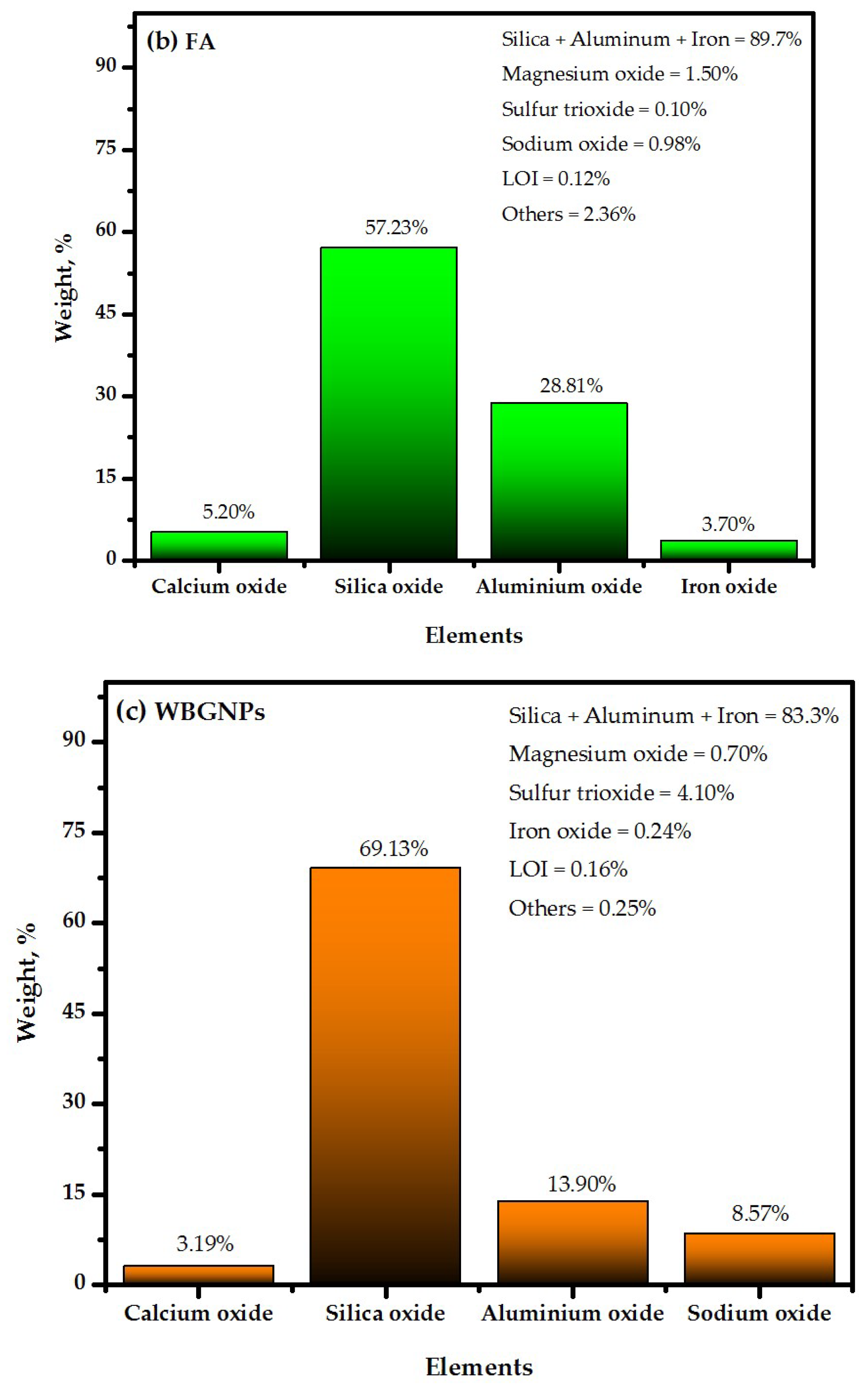
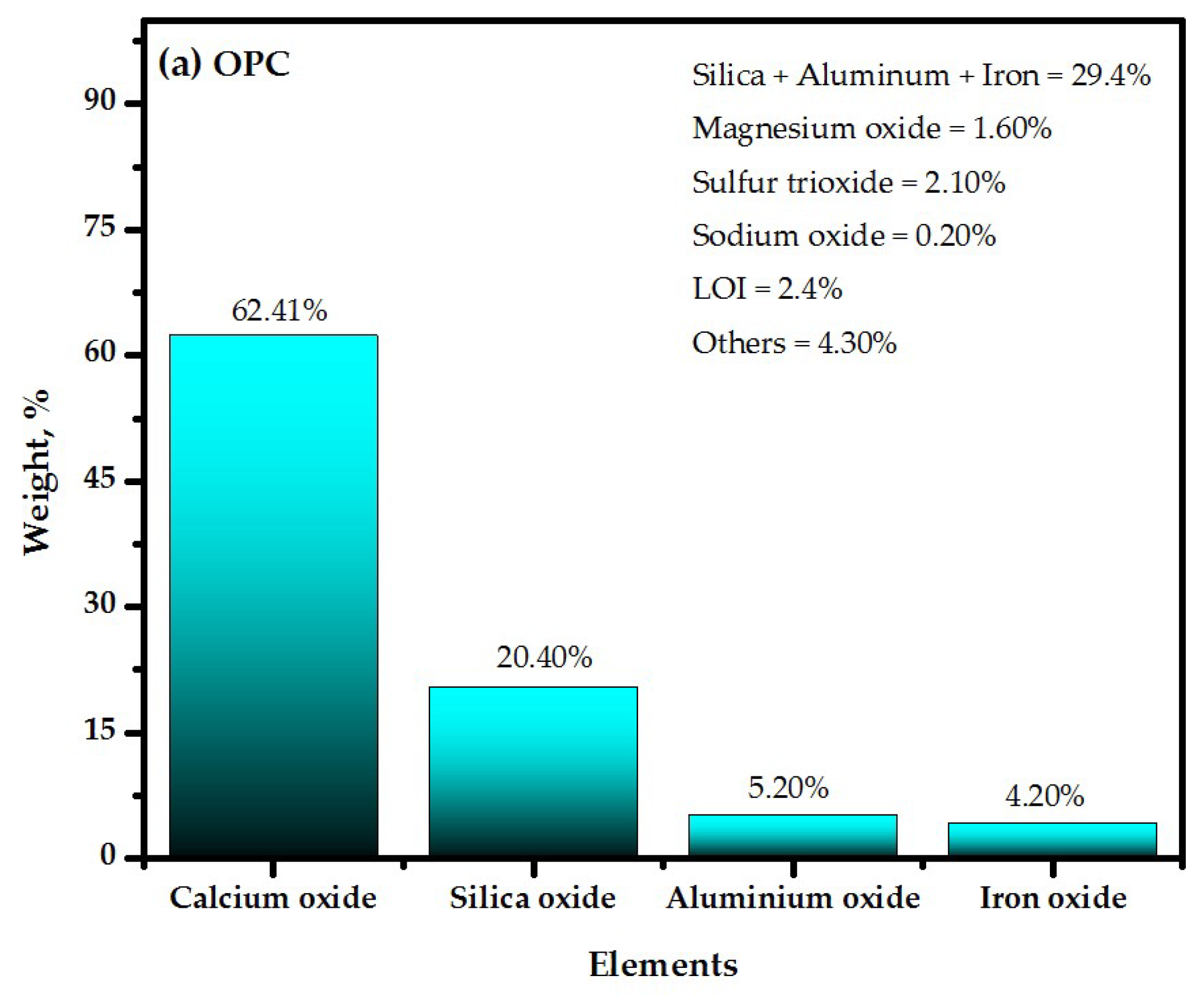
The chemical compositions of OPC, FA, and WBGNPs were analyzed through X-Ray Fluorescence (XRF), as presented in Figure 2. The combined contents of calcium (CaO) and aluminosilicate oxides (Al2O3-SiO2) were recorded as 89.97% for OPC, 91.17% for FA, and 86.16% for WBGNPs. A high proportion of CaO was observed in OPC (with an approximate of 62.4%), while FA comprised a much lower proportion (5.16%). The K2O content was below 1% in all materials. In addition, OPC and FA exhibited similar levels of iron oxide (Fe2O3), with values of 3.35% and 3.67%, respectively. Overall, the XRF results indicate that calcium, aluminum, and silica were the dominant components in FA, OPC, and WBGNPs, respectively.
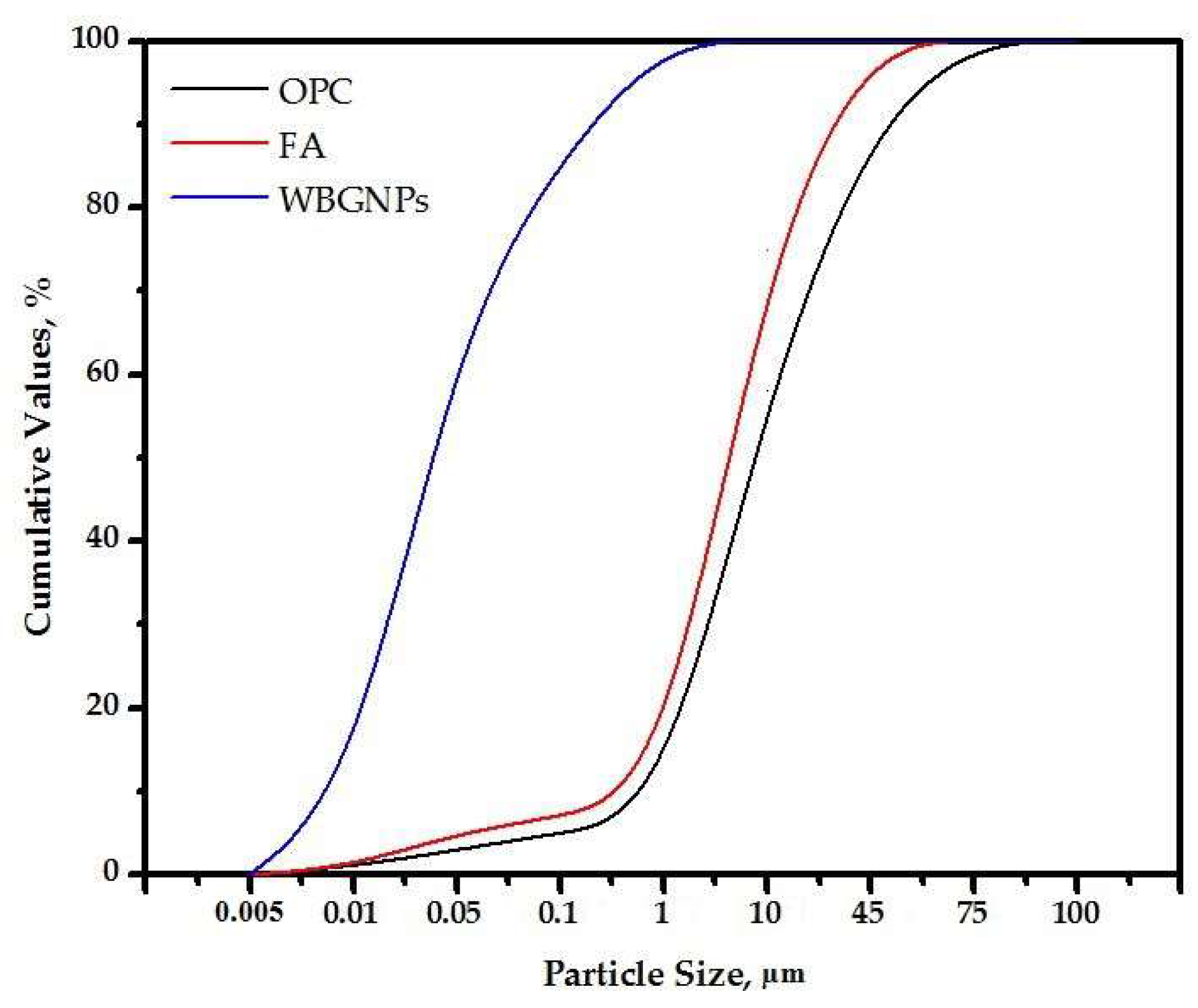
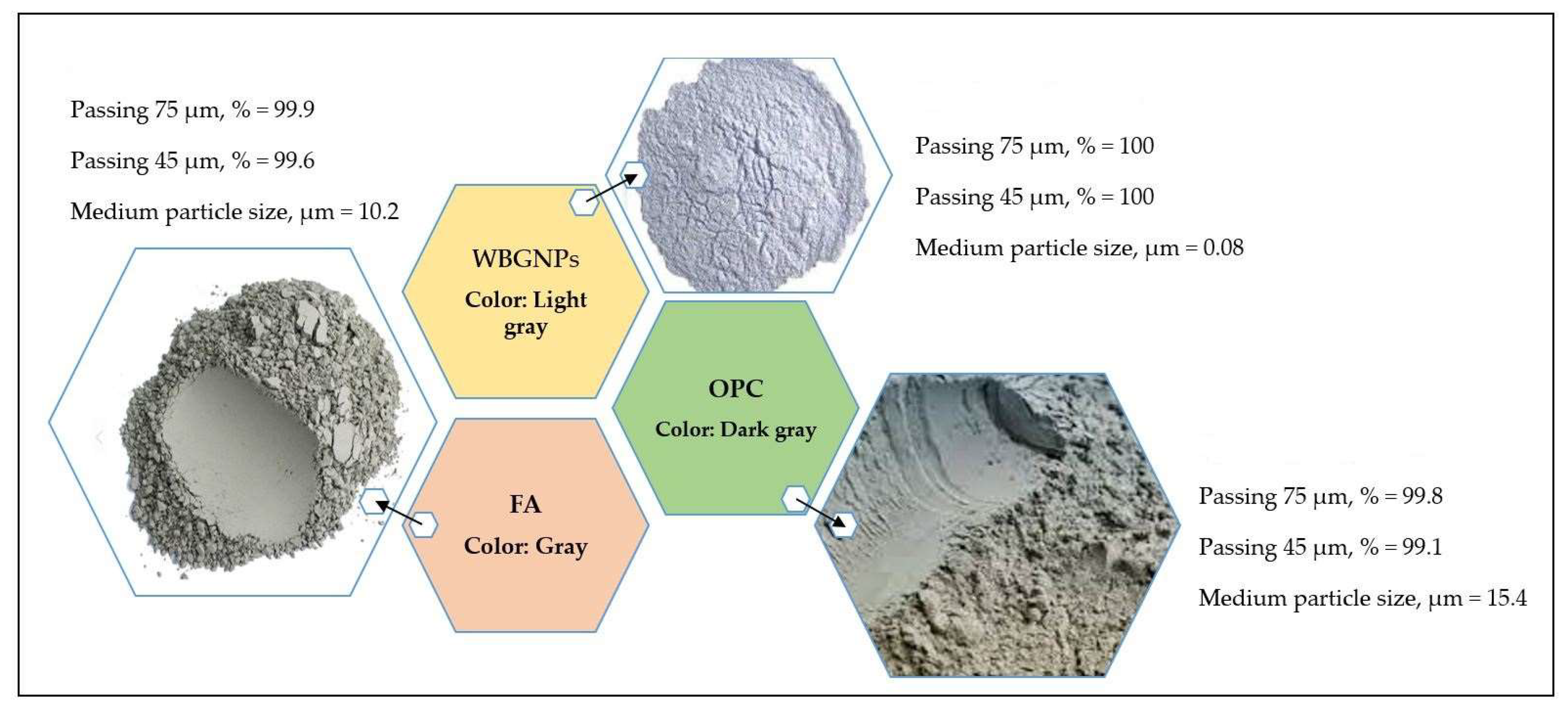
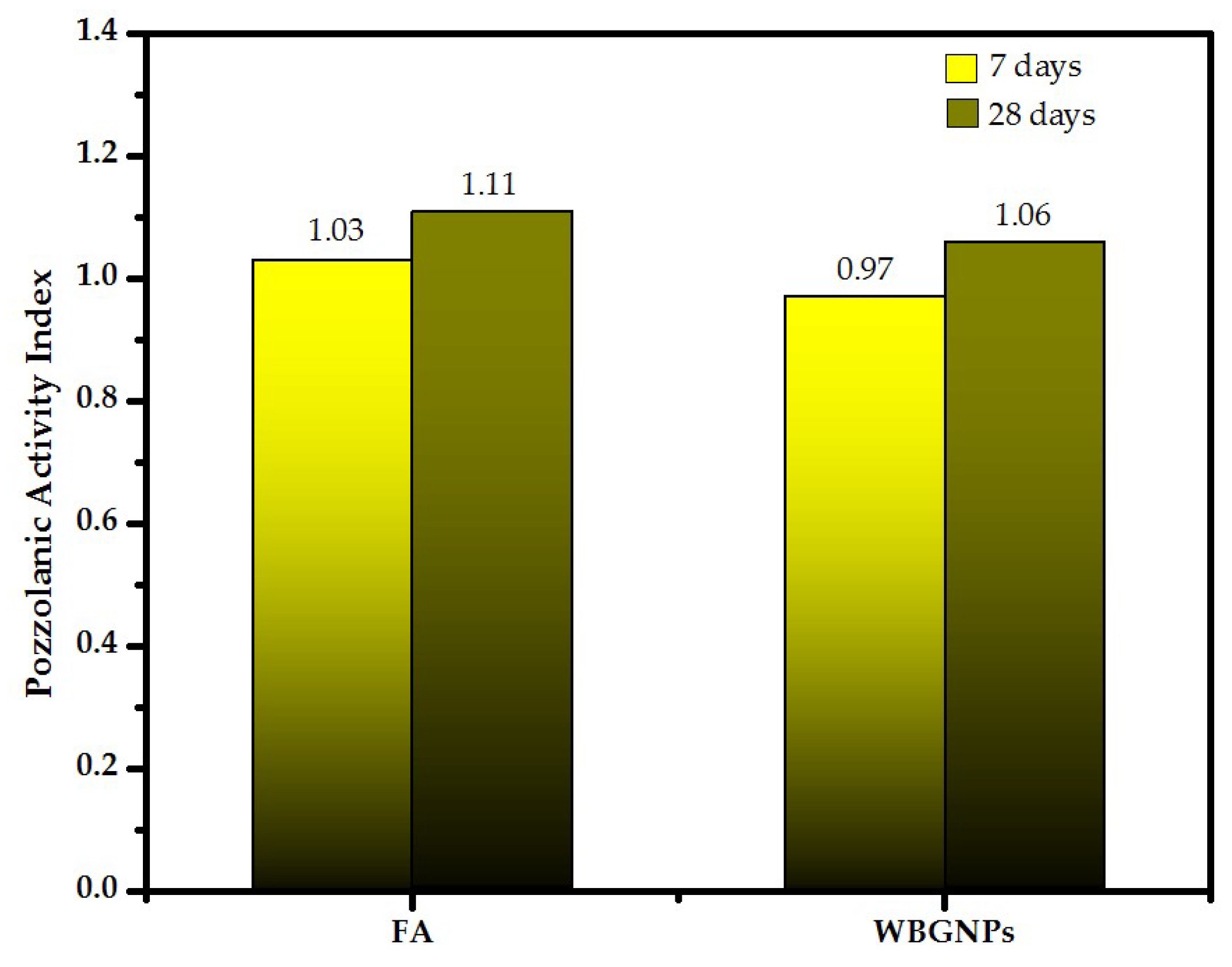
The physical properties of FA, OPC, and WBGNPs were also assessed. Figure 3 presents the particle size distribution analysis of the materials used in the cement-based green binder. The median particle sizes of OPC, FA, and WBGNPs were determined to be 15.4 µm, 10.2 µm, and 0.08 µm, respectively. Moreover, the materials displayed different colors, with OPC appearing gray, FA dark gray, and WBGNPs light gray (Figure 4). Additionally, the pozzolanic activity index with regard to glass powders and FA was determined as per ASTM C311 [75] and compared with the requirements of ASTM C618 [76] for pozzolanic materials. Figure 5 presents the findings, indicating that the pozzolanic activity indices of glass powders and FA were 0.97 and 1.03 at 7 days and 1.06 and 1.11 at 28 days, respectively, all exceeding the minimum requirement of 75%.
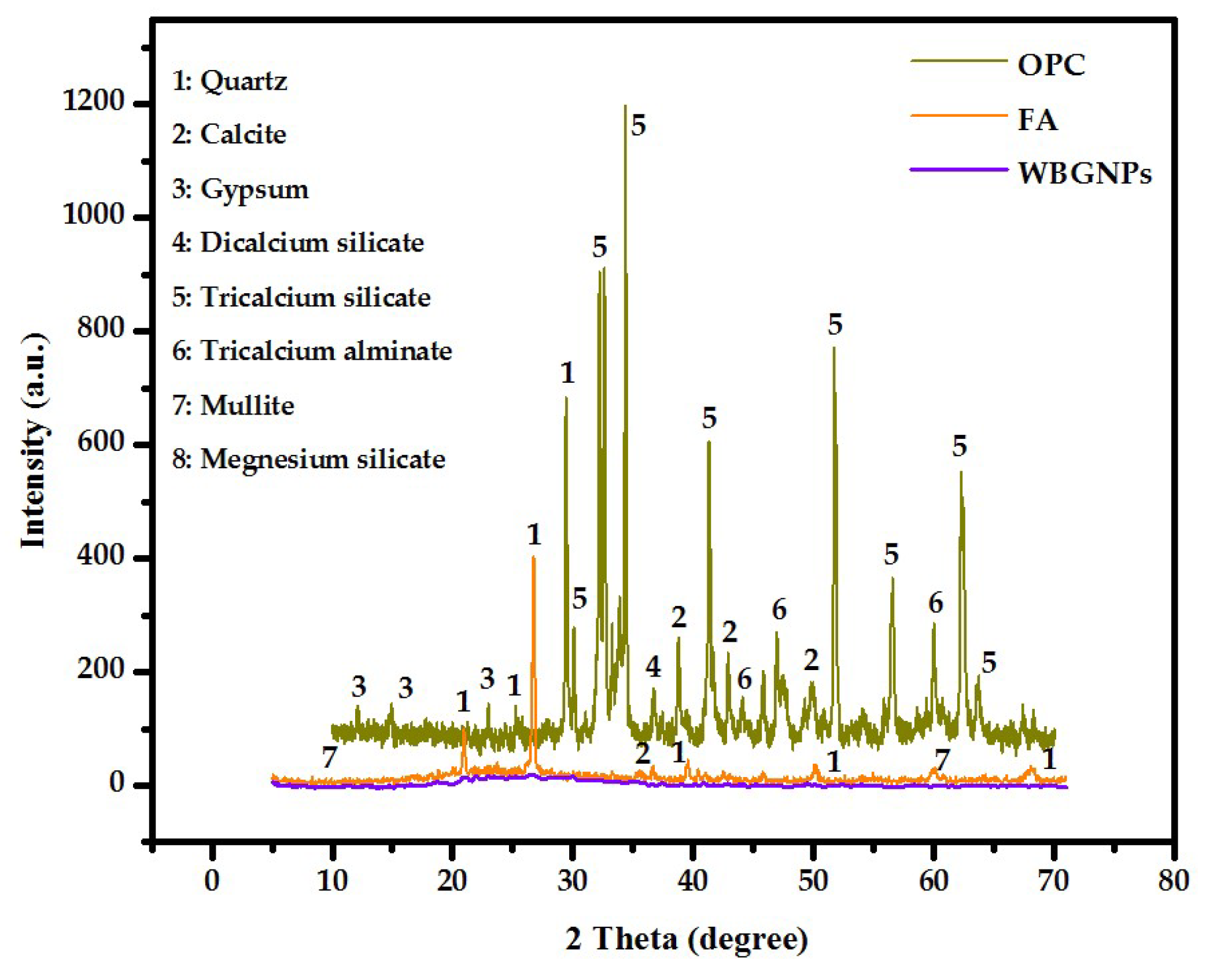
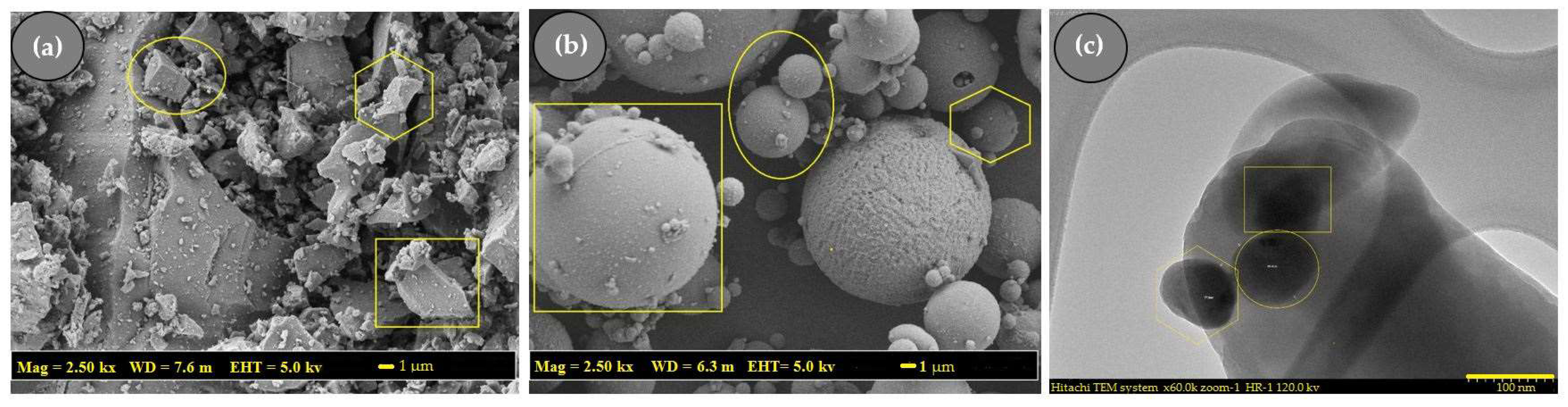
To assess the mineralogical characteristics of the raw materials (FA, OPC, and WBGNPs), X-Ray Diffraction (XRD) testing was performed, with the results illustrated in Figure 6. The XRD pattern of OPC exhibits prominent high-intensity peaks within the 2θ range of 27° to 64°. Distinct crystalline phases corresponding to C3S, C2S, and tricalcium aluminate (C3A) were identified from the observed peaks. It is well established that C2S, C3S, and C3A exert a substantial influence on Ca(OH)2 formation as well as dense C-(A)-S-H gels throughout the hydration process. FA exhibited pronounced diffraction peaks within the 2θ range of 16–30°. This can be attributed to crystalline alumina being present as well as silica phases. In addition, additional diffraction reflections were observed, arising from the existence of crystalline mullite as well as quartz phases. Furthermore, as illustrated in Figure 6, a more amorphous phase was detected in the WBGNP samples assessed relative to OPC as well as FA. Conversely, very weak intensity peaks corresponding to quartz and mullite were identified within the 2θ range of 17 to 29° as well as 42 to 59°. Correspondingly, to assess the morphology of the materials used, Scanning Electron Microscopy (SEM) as well as Transmission Electron Microscopy (TEM) analyses were employed. Notably, FA (Figure 7b) as well as WBGNPs (Figure 7c) are composed of spherical particles that exhibit smooth surfaces. In contrast, OPC (Figure 7a) consists of irregular as well as angularly shaped particles.

3.2. Workability Performance

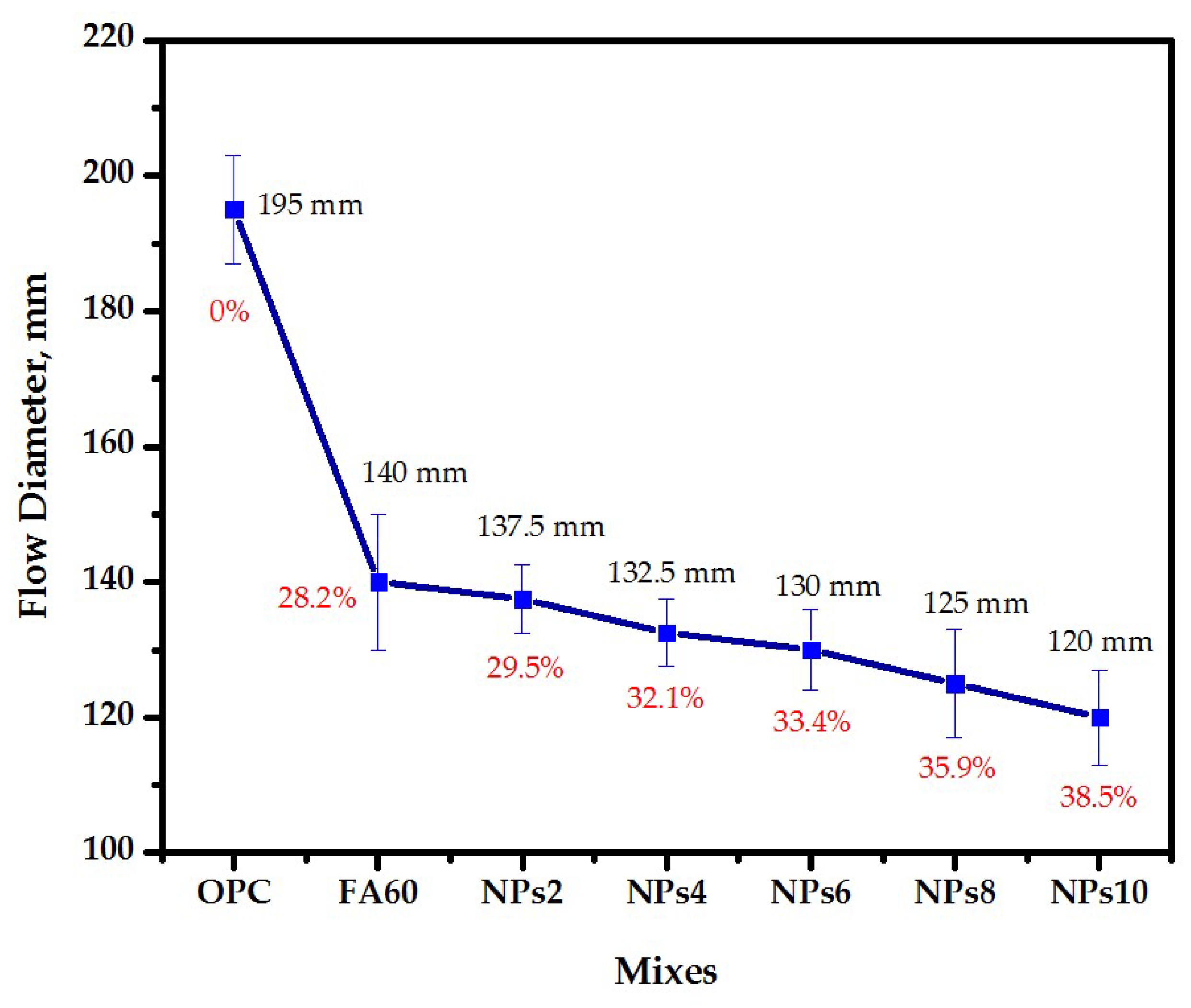
Mortar workability was significantly affected by the proportions of FA as well as binder-grade waste nanoparticles (WBGNPs). For example, when FA was incorporated to replace OPC, a steady decline in flow diameter was recorded with increasing FA content. For example, substituting 60% of OPC for FA reduced the flow value from 19.5 cm in the control mixture to 14 cm. As shown in Figure 8, the inclusion of FA decreased the mortar mixtures’ workability by about 28% at a W:C ratio of 0.55. This decrease is mainly attributed to the higher surface area as well as increased water demand of FA particles, which affects the fresh properties of mortar [77]. Similarly, the incorporation of WBGNPs led to a slight reduction in workability. With the WBGNP content increasing from 0% to 2%, 4%, 6%, 8%, and 10% (as a partial replacement for the OPC-FA binder), the flow diameter declined progressively to 140 mm, 137.5 mm, 132.5 mm, 125 mm, and 120 mm, respectively. This behavior can be attributed to the incorporation of nanomaterials, which increases the viscosity of the mixture [66]. In addition, the non-uniform morphology of WBGNPs, as well as their ability to fill the spaces between particles, enhances internal friction, thereby reducing flowability [78]. Furthermore, the presence of WBGNPs increases the demand for water required for lubrication, which limits particle mobility and further decreases the overall workability of the mortar [79,80].

3.3. Compressive Strength

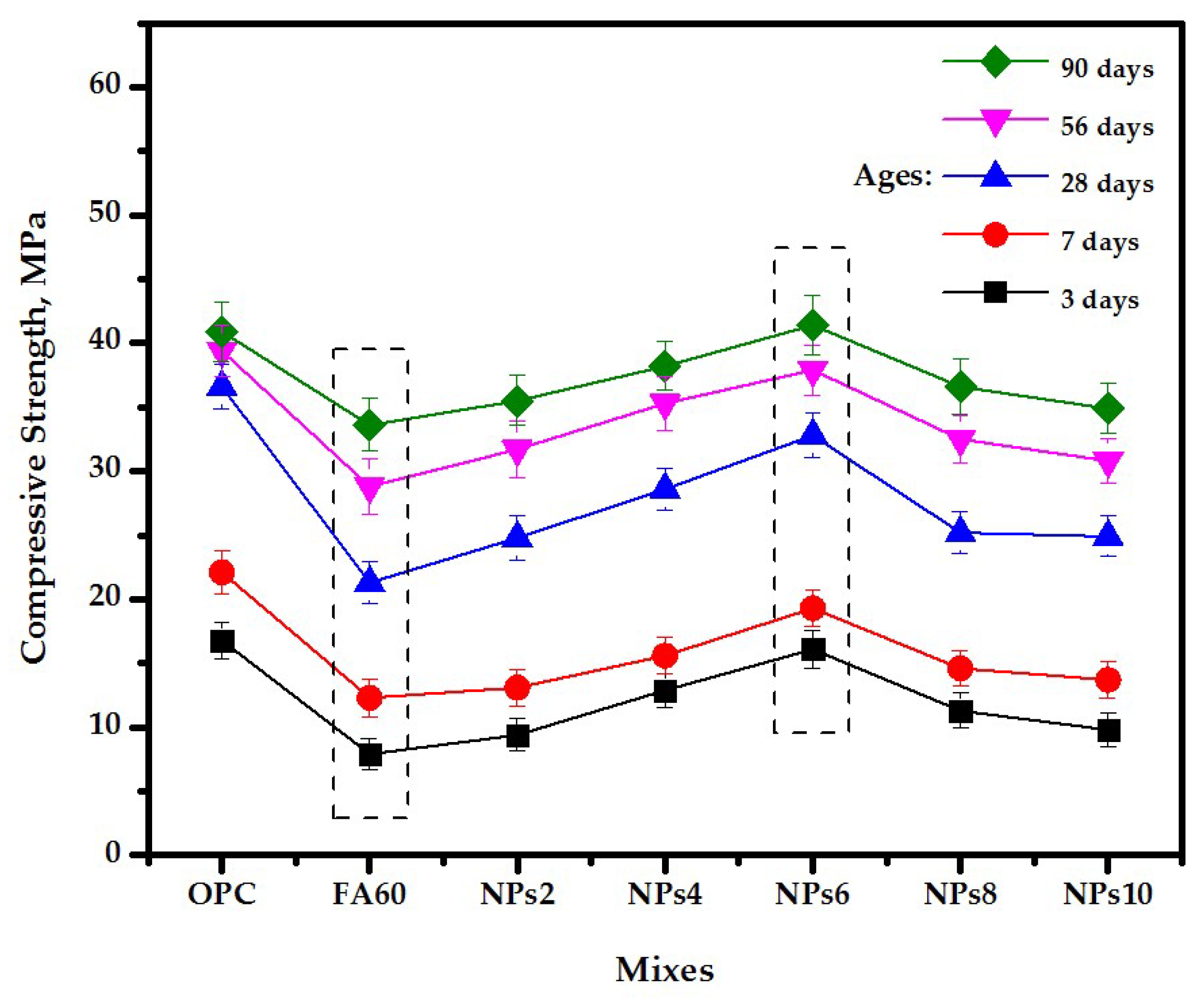
The effect of varying NPs of silica from waste glass on the compressive strength growth of high-volume FA cement mortars at ages of 3, 7, 28, 56, and 90 days was evaluated, and the obtained outcomes are displayed in Figure 9. For each of the mortar specimens proposed, the strength gain increases with curing age from 3 to 90 days. Meanwhile, in the preparation of the modified cement with high-volume FA, the incorporation of 60% FA as a cement substitute results in a significant drop in compressive strength compared with control specimens of pure cement mortars. However, the loss-of-strength trend decreases with the elevation of the curing age to 90 days. Notably, the specimens prepared with 60% FA as cement replacement displayed a loss-of-strength percentage of 52.9% at the early age of 7 days, then as the curing age increased to 7, 28, 56, and 90 days, the loss of strength dropped to 44.3%, 41.8%, 26.9%, and 17.8% %, respectively. The drop in compressive strength of 60% FA specimens to 7.9 MPa, 12.2 MPa, 21.3 MPa, 28.8 MPa, and 33.7 MPa compared to 16.1 MPa, 22.1 MPa, 36.5 MPa, 39.4 MPa, and 40.9 MPa at ages of 3, 7, 28, 56, and 90 days is due to the slow pozzolanic reaction at early curing ages. The Ca(OH)2 generated during cement hydration was insufficient to fully activate all FA particles and initiate the pozzolanic reaction in mortars containing 60% FA [46]. As a result, a considerable number of FA particles remained unreacted within the paste, leading to increased porosity and larger pore sizes in the matrix, consequently diminishing the compressive strength [81,82,83]. Following 28 days of curing, higher concentrations of Ca(OH)2 were detected surrounding the unreacted FA particles, which subsequently resulted in additional C-S-H and C-A-S-H gel formations [84,85]. In the current investigation, this behavior was confirmed through a comparison between the compressive strength of high-volume FA mixtures and that of control samples after 90 days of curing. Comparable patterns have also been documented in earlier research on high-volume FA cementitious systems [80,82], where significant improvements in compressive strength were observed over extended curing periods, often reaching or exceeding the strength of conventional concrete.
For specimens prepared with WBGNPs, a significant improvement was observed in the high-volume FA specimens that include 2, 4, 6, 8, and 10% WBGNPs. The highest gain in strength was achieved at early ages of 3 and 7 days. However, the gain-of-strength trend tends to decrease with increasing curing ages for all the levels of NPs. Compared to 60% FA specimens, the inclusion of 2%, 4%, 6%, 8%, and 10% contributed to increases in compressive strength of 18.9%, 63.3%, 103.8%, 43.1%, and 24.1% at 3 days and 6.5%, 26.8%, 56.9%, 18.7%, and 11.4% at 7 days. After 28 days, the specimens displayed an increase in strength values of 16.4%, 34.3%, 53.9%, 18.3%, and 16.9%, respectively. A comparable trend in the outcomes was found at late ages, and the incorporation of 2%, 4%, 6%, 8%, and 10% WBGNPs led to increases in strength of 10.1%, 22.6%, 31.6%, 12.8%, and 6.9% at 56 days and 5.6%, 13.7%, 23.2%, 8.9%, and 3.8% at 90 days, respectively. Among the used replacement levels, the modification of 6% WBGNPs resulted in the largest strength at early as well as later ages. Compared to OPC specimens, the WBGNPs led to a reduction in the total loss-of-strength values with 60% FA. At an early age (7 days), the specimens prepared with 2%, 4%, 6%, 8%, and 10% WBGNPs showed a loss of strength of 40.7%, 29.4%, 12.7%, 33.9% and 38.1%, respectively. Similarly, specimens tested at the age of 28 days showed loss-of-strength percentages of 32.2%, 21.8%, 10.4%, 31.1%, and 31.9%. It can be clearly observed that the incorporation of 6% WBGNPs significantly enhanced the high-volume FA specimens’ performance and achieved a strength slightly close to that of traditional mortars prepared with 100% cement. The mix of 6% WBGNPs (NPs6) achieved an enhancement in strength 1.2% higher than that of traditional mortars after 90 days of curing age, with the compressive strength increasing from 40.9 MPa to 41.4 MPa, as presented in Figure 8. In general, the enhancement in the strength performance of mortar specimens incorporating WBGNPs is ascribed to the high reactivity of nanomaterials, which accelerate hydration through increased surface area, creating a denser microstructure, and act as nucleation sites for hydration products [83,84,85,86].
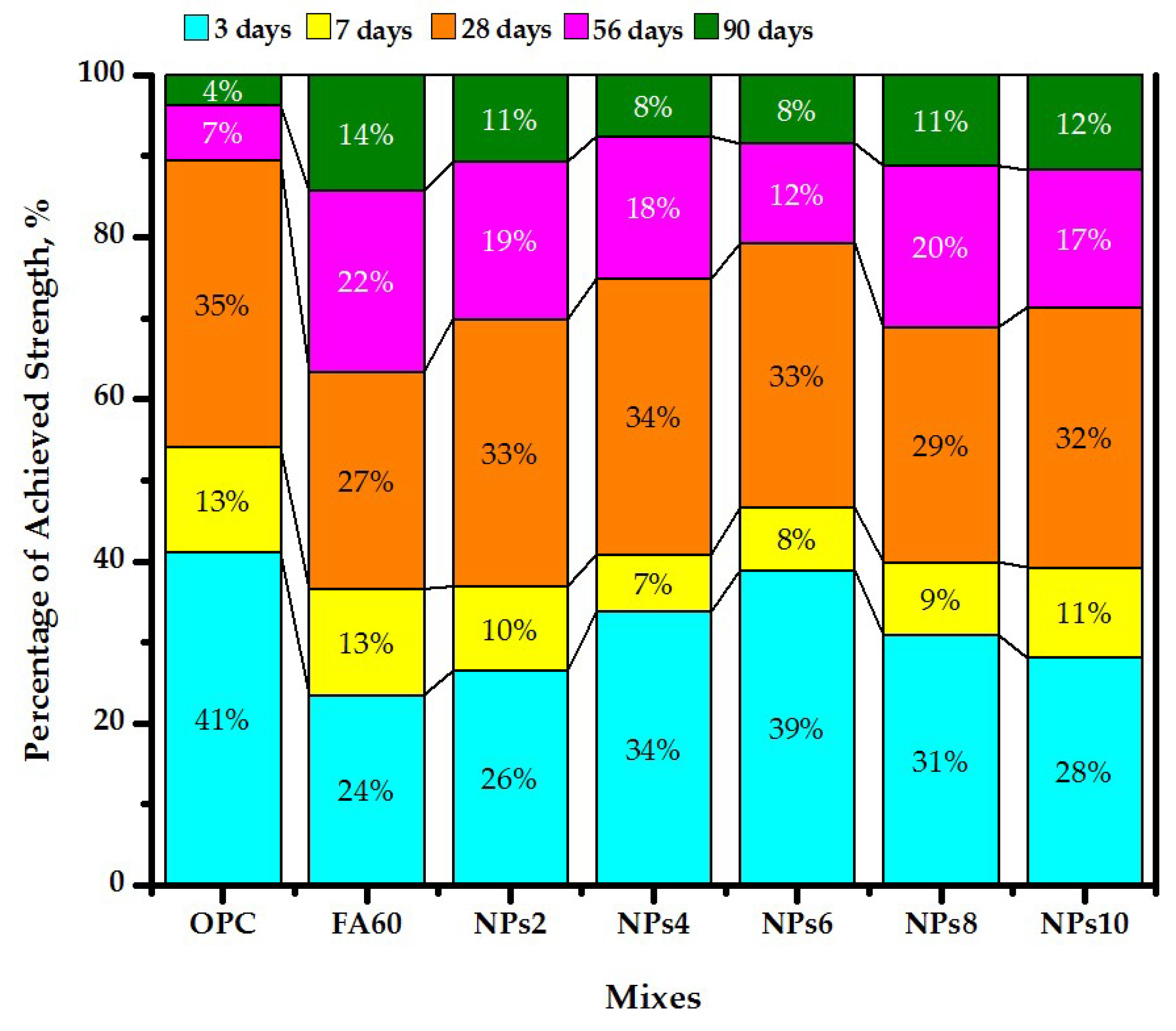
The influence of curing age and binder chemical composition on the percentage of achieved strength for each mixture is presented in Figure 10. The findings showed that the mixture of 100% OPC achieved the highest gain in early strength (41%) at the age of 3 days in comparison to the other mixtures. However, the lowest gain in strength (24%) was recorded with a mixture containing 60% FA as a substitute for cement, in contrast to the incorporation of WBGNPs into the matrix of high-volume FA cement, which significantly enhanced the hydration process as well as the gain of early strength. It was observed that the specimens prepared with 2%, 4%, 6%, 8%, and 10% WBGNPs achieved an early compressive strength of 24% to 26%, 34%, 39%, 31%, and 28%, respectively. Early incorporation of nano-additives is capable of enhancing the compressive strength of the cementitious matrix through two main mechanisms [87]. The first is a physical effect, where fine particles fill and densify micropores, thereby reducing overall porosity. The second is a chemical effect, involving additional C-S-H gel formation through reaction with Ca(OH)2, enhancing strength development [79]. Hence, it can be inferred that WBGNPs (particles smaller than 120 nm with high contents of CaO, SiO2, and Al2O3 of 3.16%, 69.14%, and 13.86%, respectively) contribute to the observed improvement in terms of compressive strength.
However, although the compressive strength of concrete generally increases with a higher nano-additive content, a reduction occurs when the dosage exceeds the optimal level. This decrease is mainly attributed to particle agglomeration, which creates weak zones within the matrix and reduces the mortar’s overall strength [88]. This behavior explains the relatively lower compressive strength observed in the NPs8 and NPs10 mixtures. Furthermore, as the concentration of NPs rises, the distance between particles decreases, hindering Ca(OH)2 crystal growth. Since these crystals play a crucial role in interacting with NPs to form additional C-S-H gel, their restricted development may negatively affect strength [89]. At later curing ages (56 and 90 days), the compressive strength of the NPs6 sample slightly surpassed that of the control (OPC), reaching 41.4 MPa and 40.9 MPa, respectively. There are two aspects to this improvement. Firstly, the pozzolanic reaction between WBGNPs and FA continues at later ages, contributing to strength gain. Second, hydration of amorphous WBGNPs optimizes the pore structure and the hardened high-volume FA-OPC matrix density. Overall, the greater the reactivity, the denser and less porous the microstructure and the better the mechanical properties and durability. This is particularly evident in the presence of harsh environmental conditions.
The results of the statistical analysis, including the mean compressive strength (x), standard deviation (SD), coefficient of variation (CV), and standard error (SE) values, of the proposed mortar mixtures at curing ages of 3, 7, 28, 56, and 90 days are presented in Table 2. Equations (16)–(19) were used to calculate the mean compressive strength, SD, CV, and SE, respectively. For each mixture and curing age, three specimens (n = 3) were tested, and the compressive strength of each specimen (xi) was recorded to determine the mean value.
At the early curing age of 3 days, the SD, CV, and SE values ranged from 1.22 to 1.46, 8.5% to 15.4%, and 0.41 to 0.47, respectively. As the curing age increased from 3 to 7, 28, 56, and 90 days, the SD and SE values showed a slight increase. As shown in Table 2, the CV results indicated that the compressive strength measurements at 3 and 7 days demonstrated good consistency among the tested specimens. In contrast, the specimens tested at 28, 56, and 90 days exhibited excellent consistency, indicating improved repeatability and reduced variability in the compressive strength results at later curing ages.
M e a n   c o m p r e s s i v e   s t r e n g t h   x = x i n
S t a n d a r d   d e v i a t i o n s   S D = ( x i x ) 2 n 1
C o e f f i c i e n t   o f   v a r i a t i o n   C V = S D x × 100
S t a n d a r d   e r r o r = S D n

3.4. Microstructure Properties

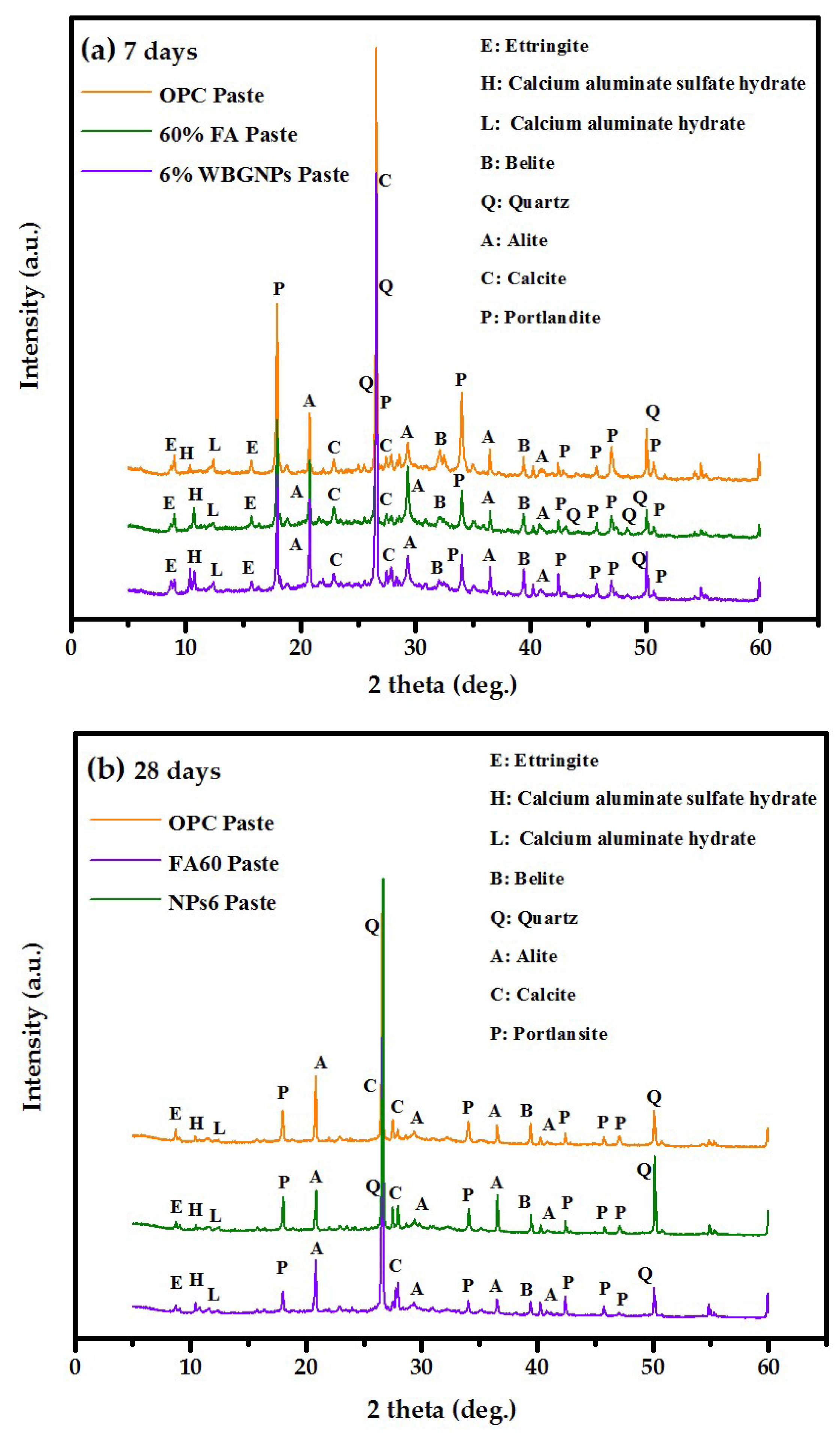
Figure 11 shows the XRD patterns for the modified cement pastes at 7 and 28 days of curing. A reduction in the intensity of Ca(OH)2 peaks was noted after 7 days of curing, with 60% FA replacing OPC, especially at 17.8°, 34.1°, and 46.9°. A similar trend was noted for the mixture containing 6% WBGNPs as a partial replacement in the OPC-FA binder system. This decrease in Ca(OH)2 peak intensity can be ascribed to the pozzolanic reaction between the amorphous silica present in WBGNPs and the Ca(OH)2 observed at early stages of hydration.
The main mineral phases identified include calcite, alite, and belite, with the generation of C-S-H gel also indicated. The overall reduction in Ca(OH)2 as well as C-S-H peak intensities in the modified mixtures may be associated with a lower availability of calcium ions due to the incorporation of FA. On the other hand, following 28 days of curing, an elevation in the peak intensities of Ca(OH)2, alite, and belite was observed, which corresponds to the improved mechanical strength of the mixtures over time.
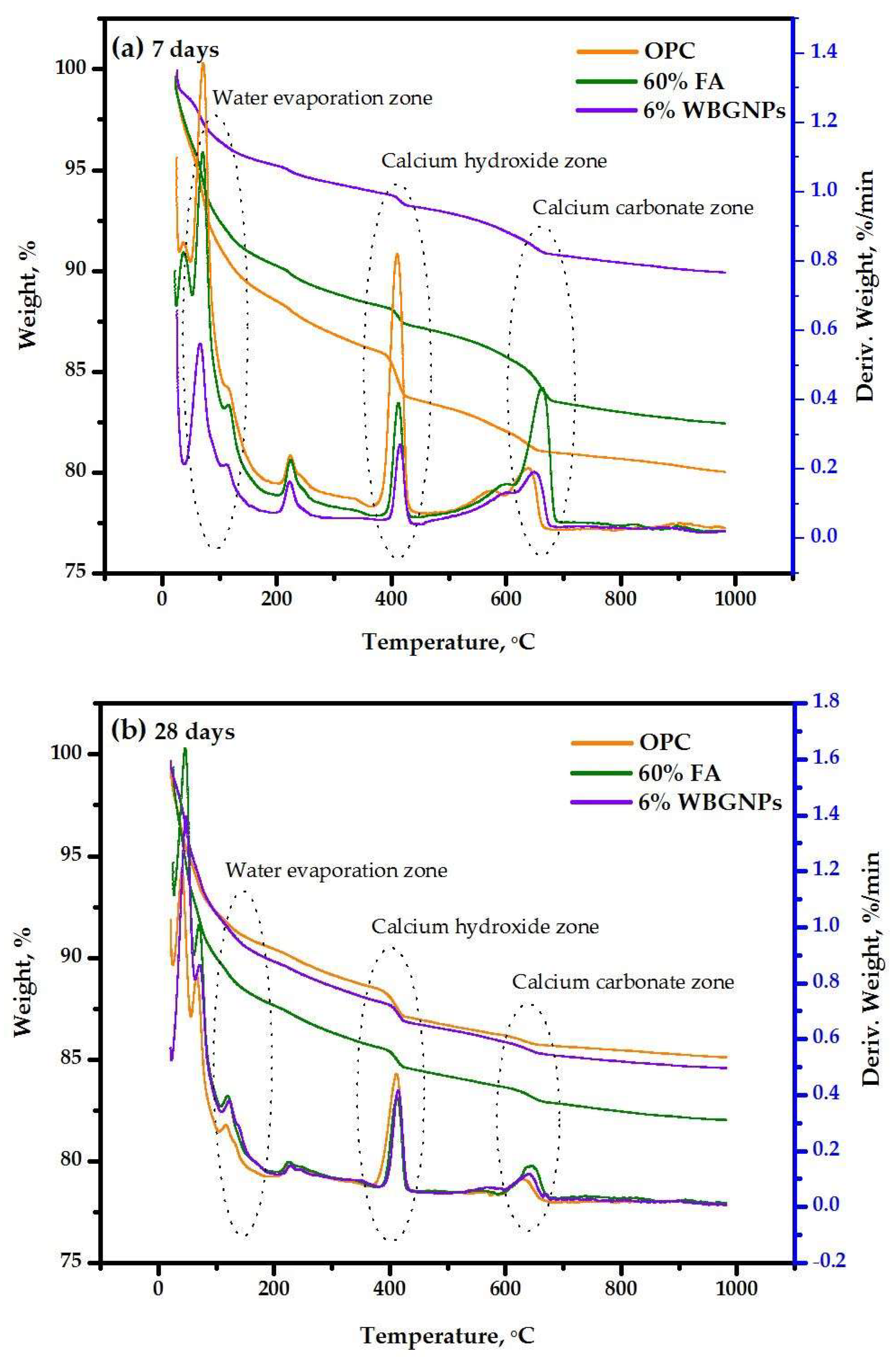
Figure 12 illustrates the thermal stability of the proposed mortars containing 60% high-volume FA and 6% WBGNPs over a temperature interval from 20 °C up to 1000 °C. The decomposition of Ca(OH)2 as well as CaCO3 occurs within the respective temperature ranges of 380–450 °C and 600–700 °C. A small endothermic peak observed in the DTG curve corresponds to the phase transformation of quartz at 573 °C, which involves a slight rearrangement of the atomic structure. The TGA curve does not reveal this change since no weight loss can be measured. Despite weight loss being observed in the TGA results, these thermal events are more evidently shown as peaks in the DTG curves.
The degree of hydration in OPC systems is often measured by the bound water content, determined by weight loss at temperatures between 105 °C and 1000 °C. Nevertheless, when there are pozzolanic materials, this measure becomes more complicated since there is an interaction between pozzolanic reactions and clinker phases that influences the release of bound water. In spite of this complication, comparison of OPC and modified binders may still be used for guidance regarding variation in hydration behavior. Furthermore, the C-S-H water content varies with curing temperature, and due to its variable composition, the release of bound water may occur even within the range of 20–105 °C. Concurrently, the weight-loss percentages of the modified cement pastes were calculated based on TGA and DTG analyses.
The TGA-DTG results indicate that OPC samples contain higher amounts of Ca(OH)2 as well as denser C-S-H gel relative to the mixtures with 60% FA and 6% WBGNPs, which results correspond to the higher compressive strengths of 22.1 MPa and 36.6 MPa at 7 and 28 days, respectively. At 7 days, replacing 60% of cement with FA diminishes the Ca(OH)2 content from 10.42% to 4.17% and that of the C-S-H gel from 11.98% to 7.58%, significantly reducing compressive strength from 22.1 MPa to 12.3 MPa. However, the inclusion of 6% WBGNPs in the high-volume FA mixture increases the Ca(OH)2 and C-S-H contents to 5.31% and 9.16%, respectively, which improves the compressive strength to 19.3 MPa.
A comparable pattern is evident at 28 days. Compared to OPC, substituting cement with 60% FA reduces the Ca(OH)2 and C-S-H contents from 8.26% and 13.84% to 5.09% and 9.26%, respectively, leading to a decrease in compressive strength from 36.3 MPa to 21.3 MPa. In contrast, incorporating 6% WBGNPs into the high-volume FA system increases the Ca(OH)2 and C-S-H contents to 5.94% and 13.64%, respectively, resulting in an improved compressive strength of 32.8 MPa.

3.5. Water Absorption

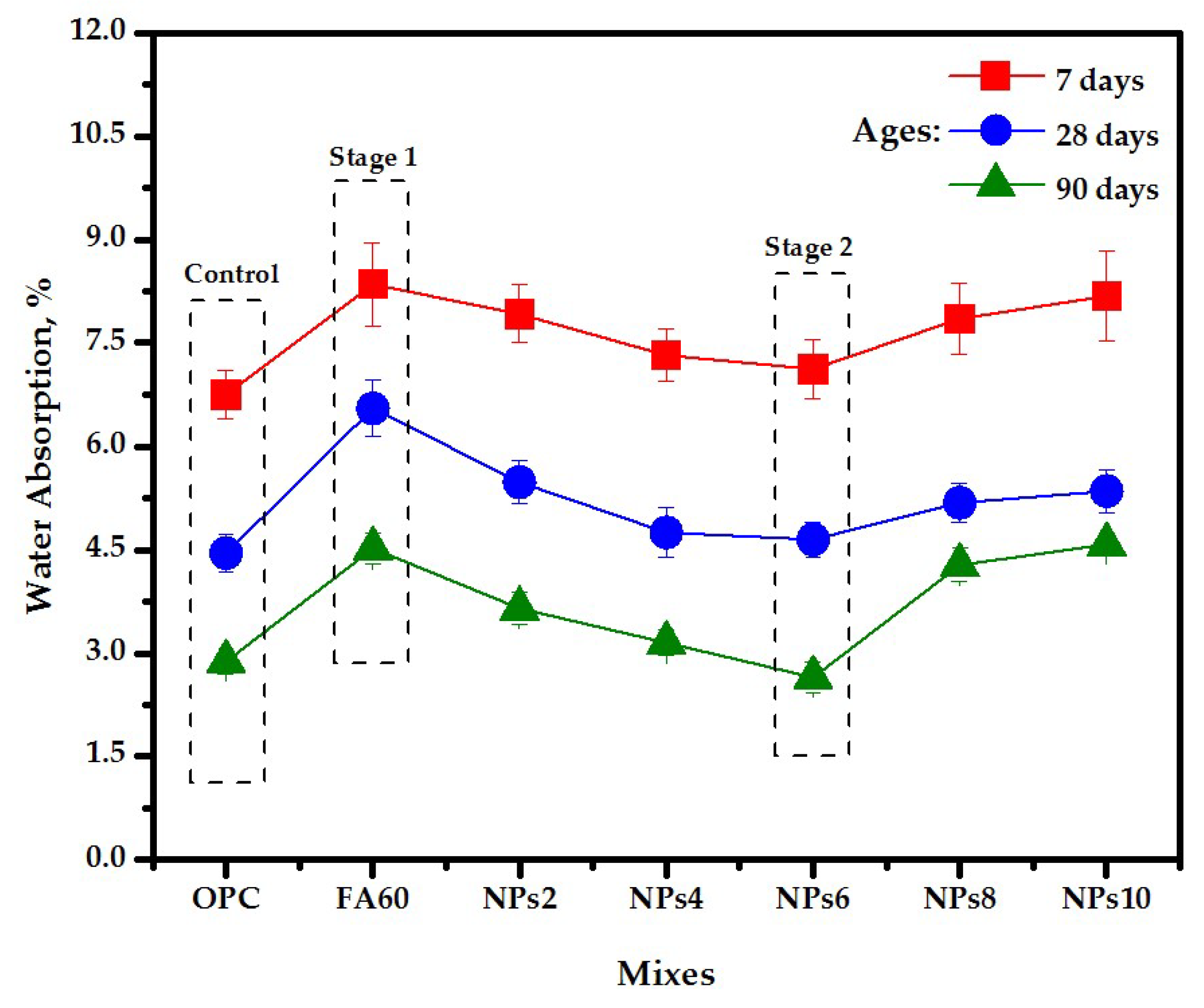
The water absorption performance of the mortars prepared with high-volume FA as a cement alternative was evaluated, and the obtained results are depicted in Figure 13. For all the prepared specimens of high-volume FA, as the curing age increased from 7 days to 28 days and 90 days, significant reductions in the water absorption values were observed. At an early age (7 days), incorporating FA to replace 60% of OPC resulted in a significant increase in total water absorption values: 8.35% compared to the 6.75% recorded for the specimens prepared with pure cement binder. However, the inclusion of varying levels of WBGNPs (2%, 4%, 6%, 8%, and 10%) as FA cement replacement enhanced the specimens’ performance by diminishing the water absorption values to 7.92%, 7.32%, 7.12%, 7.85%, and 8.18%, respectively. A comparable trend was recorded at 28 days, where specimens prepared with 60% FA displayed the highest water absorption value (6.56%) compared to the OPC specimens (4.45%). The replacement of the high-volume FA cement binder with 2%, 4%, 6%, 8%, and 10% WBGNPs in the modified cement matrix resulted in a drop in water absorption to 5.48%, 4.75%, 4.65%, 5.18%, and 5.35%, respectively. For the specimens assessed after 90 days of curing ages, the values for water absorption were found to be 2.88%, 4.52%, 3.65%, 3.15%, 2.65%, 4.28%, and 4.58% for the OPC specimens with 60% FA and 2%, 4%, 6%, 8%, and 10% WBGNPs, respectively. Among the varying levels of WBGNPs, it can be clearly seen that the mixture prepared with 6% WBGNPs exhibited a lower water absorption value and significantly enhanced durability performance by reducing the total pores and enhancing the microstructures.
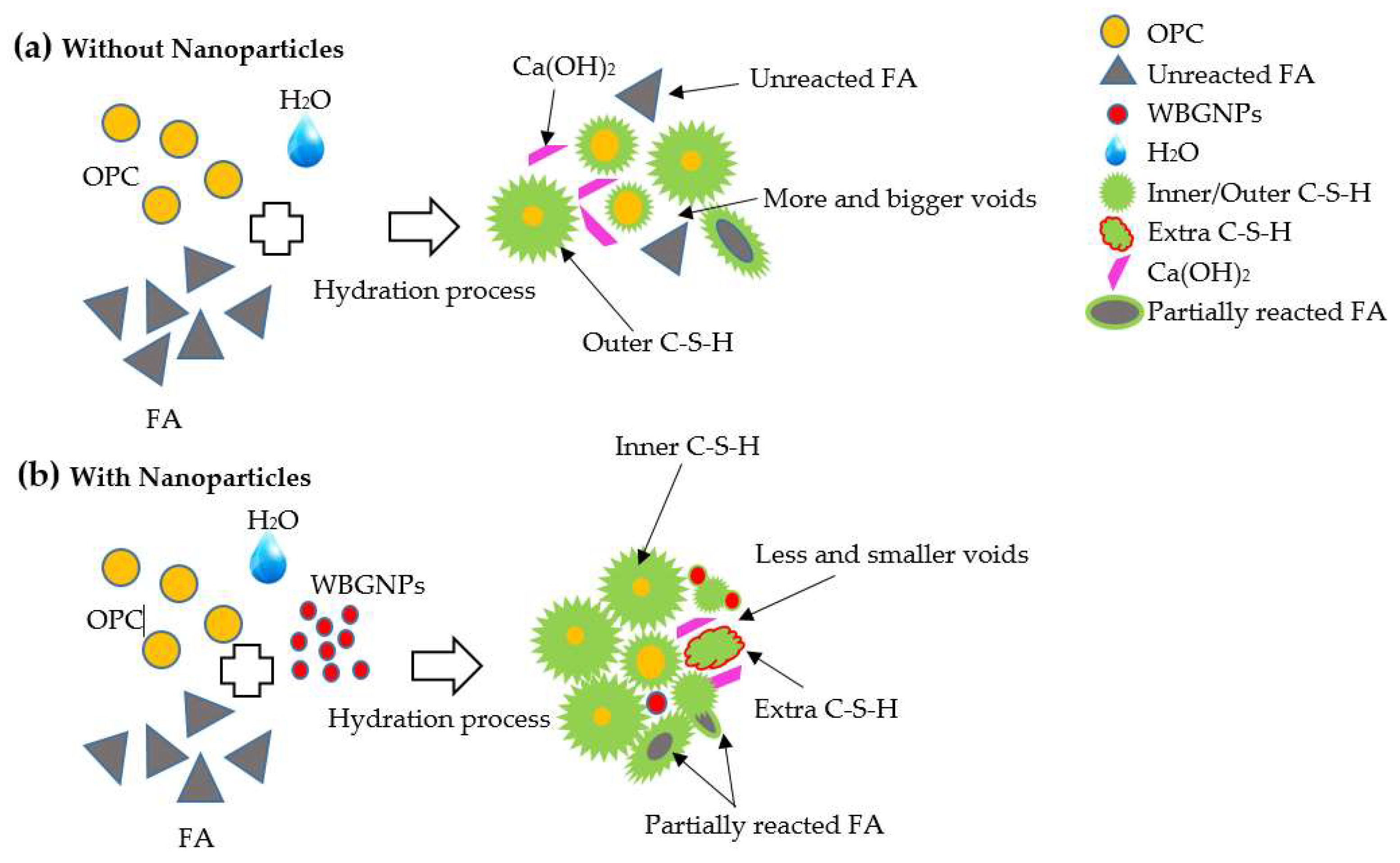
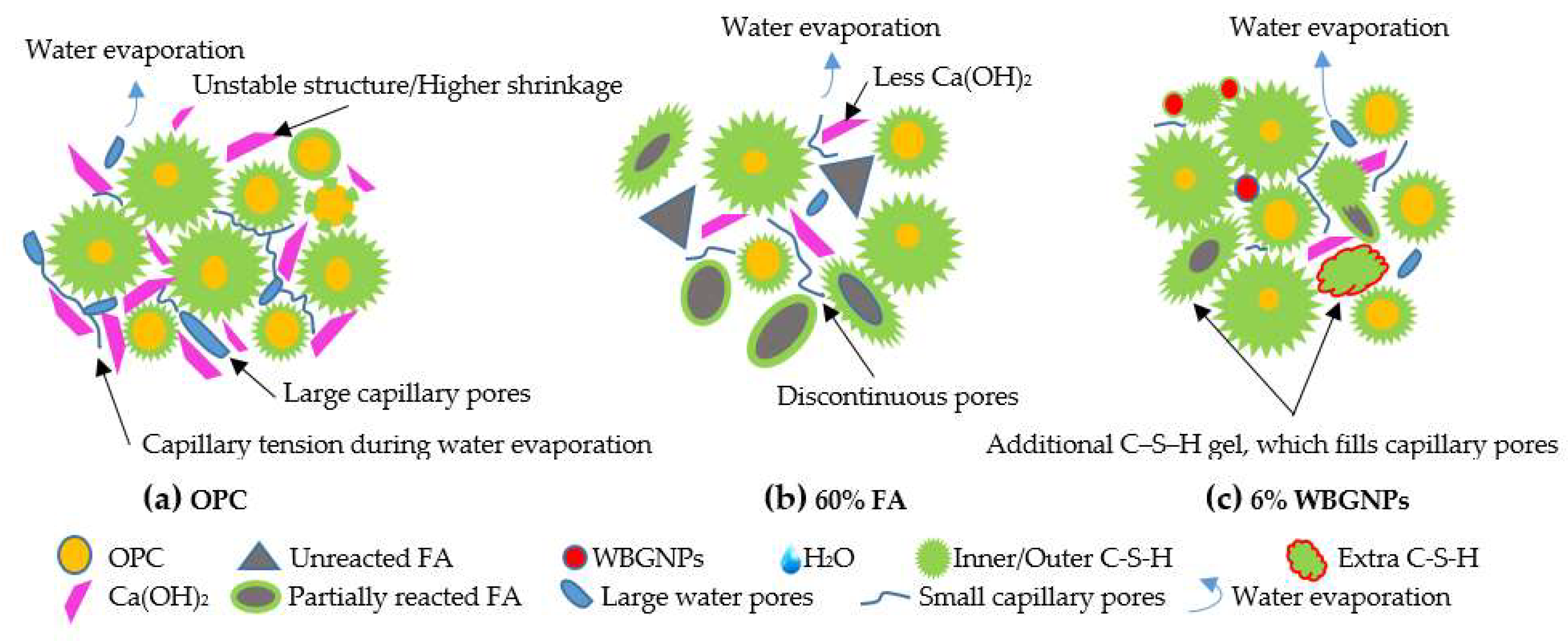
The reduction in water absorption readings, as well as the durability enhancement of the prepared specimens, were attributed to the benefits and high reactivity of NPs [90]. It is well known that the inclusion of nanomaterials such as nanosilica in cement-based materials significantly improves their durability and structural integrity by reducing capillary action and decreasing porosity, as shown in Figure 14. Nanosilica engages in a reaction with Ca(OH)2 to produce additional C-S-H gel, a key binder element [91]. This gel fills the capillary pores and reduces overall porosity. In addition, nanosilica is exceptionally fine, enabling it to infiltrate the microscopic spaces between cement particles and aggregates, leading to a more compact structure [92,93].
Table 3 presents the statistical analysis of the proposed mortar mixtures, including the mean water absorption, standard deviation (SD), coefficient of variation (CV), and standard error (SE), at curing ages of 7, 28, and 90 days. The results indicate that the CV values at all tested ages demonstrate excellent consistency among the prepared mortar mixtures. In addition, the SE values for all mixtures remained below 0.22 at each curing age. A slight decrease in SE was also observed as the curing period increased from 7 to 28 and 90 days, indicating improved consistency in the test results over time.

3.6. Drying Shrinkage

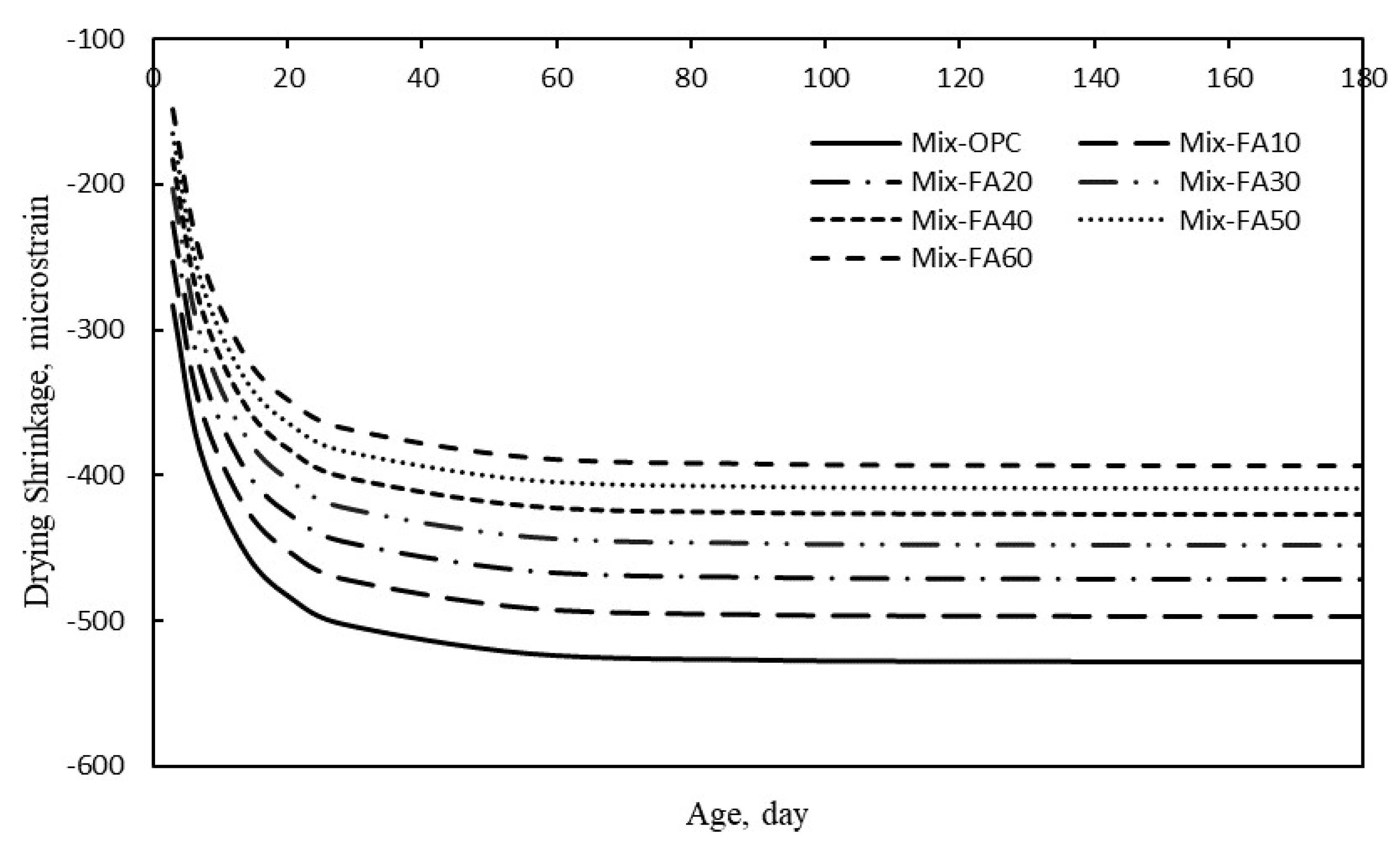
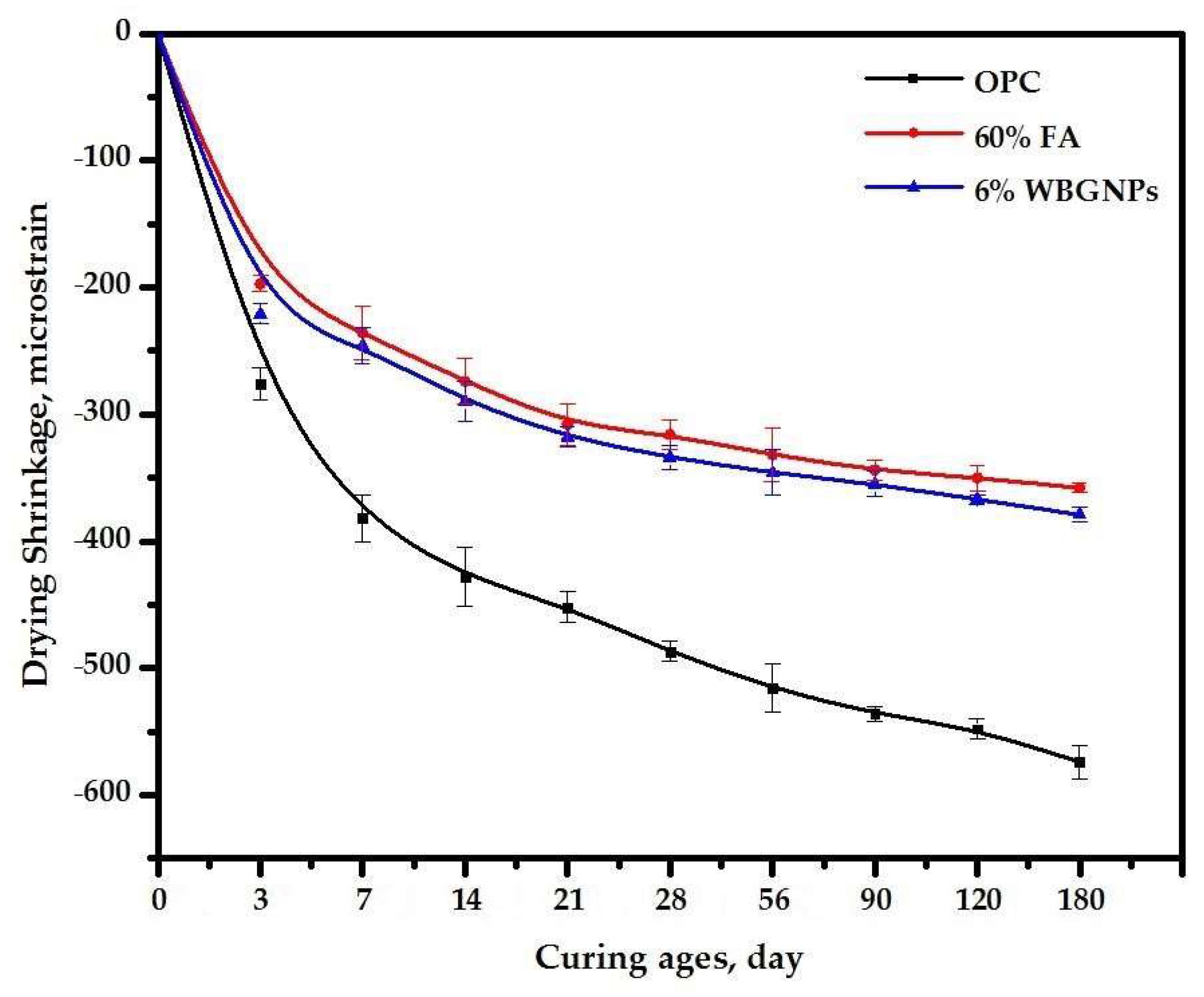
Figure 15 displays the high-volume FA and WBGNP influence on the shrinkage behavior of cement mortars at curing periods of 3, 7, 14, 21, 28, 56, 90, 120, and 180 days. For each of the tested mortar specimens, drying shrinkage increased progressively with curing time from 3 up to 180 days. The incorporation of a substantial proportion of FA markedly enhanced shrinkage performance, leading to lower shrinkage values relative to the OPC control specimens. At an early age (3 days), replacing 60% of OPC with FA resulted in a 28.6% reduction in shrinkage, with values decreasing from 276 microstrain to 197 microstrain. Nevertheless, the addition of 6% WBGNPs slightly increased the shrinkage to 221 microstrain, as opposed to 197 microstrain for the FA-only mixture. The same pattern was noticed at subsequent ages (7, 14, 21, 28, 56, 90, 120, and 180 days), where mixtures involving FA and WBGNPs showed low shrinkage in comparison to the 100% OPC samples.
Shrinkage is defined as the reduction in the volume of cementitious materials under constant temperature and relative humidity conditions without the application of external loads [94]. It is a natural property of cement-based materials and can occur during both the plastic and hardened stages [21,94]. Drying shrinkage in cementitious materials is mainly governed by moisture loss from the pore system and the development of capillary stresses within partially saturated pores. As water evaporates from the hardened cement paste, curved liquid menisci form inside capillary pores, generating negative capillary pressure that causes the solid skeleton to contract. Therefore, the magnitude of drying shrinkage is strongly influenced by the pore size distribution, pore connectivity, moisture transport characteristics, internal relative humidity, and the amount and characteristics of hydration products.
The incorporation of fly ash (FA) influences drying shrinkage through both physical and chemical mechanisms. At early ages, FA reacts slowly because of its relatively low pozzolanic activity. The incorporation of high-volume FA at 60% has a significant effect on the hydration process and pore structure of mortar. Since FA exhibits lower reactivity than OPC at early ages, the hydration reaction proceeds more slowly, resulting in a lower initial formation of calcium silicate hydrate (C-S-H) gel. This delayed hydration reduces self-desiccation and limits the development of capillary stresses within the pore network, leading to lower drying shrinkage compared with the OPC control mixture [95].
The inclusion of waste bottle glass nanoparticles (WBGNPs) caused a slight increase in shrinkage compared with the FA-only mixture. This behavior is mainly attributed to the high pozzolanic activity and filler effect of the nanoparticles, which accelerate the hydration process and promote the formation of additional C-S-H gel. As a result, the pore structure becomes denser and contains a greater proportion of fine capillary pores. Although this pore refinement generally enhances the strength and durability of the material, it can also increase capillary stresses during moisture evaporation because smaller pores generate higher meniscus pressures. Furthermore, the accelerated hydration induced by WBGNPs may reduce the internal relative humidity of the matrix, thereby increasing drying shrinkage [11,17].
The effect of WBGNPs on drying shrinkage depends on the balance between pore refinement and moisture transport. The denser microstructure produced by WBGNPs reduces permeability and moisture diffusion, slowing water evaporation and helping to maintain a higher internal relative humidity during drying. This reduction in moisture transport limits the rate of shrinkage development. In addition, the increased amount of C-S-H gel strengthens the cement matrix and improves its stiffness, allowing it to better resist shrinkage-induced deformation. However, excessive WBGNP contents may create an overly refined pore structure dominated by very small gel and capillary pores. Water retained within these finer pores experiences greater capillary stresses during drying because of the smaller pore radii. Furthermore, the accelerated hydration promoted by high WBGNP contents increases self-desiccation and reduces the internal relative humidity, particularly at early ages. These combined effects can contribute to greater drying shrinkage if the reduction in moisture transport is insufficient to offset the higher capillary stresses.
Despite this slight increase, the shrinkage values of the FA-WBGNP mixtures remained substantially lower than those of the 100% OPC specimens throughout the curing period. Therefore, the combined use of high-volume FA and WBGNPs represents an effective strategy for reducing drying shrinkage while preserving the beneficial effects of nanoparticle-induced microstructural refinement, as shown in Figure 16. Overall, the drying shrinkage behavior of mixtures containing both FA and WBGNPs results from the interaction of several competing mechanisms. FA mainly affects shrinkage through delayed hydration, gradual pore refinement, reduced elastic stiffness, and long-term formation of secondary C-S-H. In contrast, WBGNPs accelerate hydration, densify the microstructure, refine the pore size distribution, reduce moisture transport, and increase matrix stiffness. When an appropriate amount of WBGNPs is incorporated into high-volume FA mixtures (60%), they compensate for the slow hydration of FA by promoting hydration-product formation and improving the pore structure. As a result, moisture transport is reduced, internal relative humidity is better maintained, and shrinkage deformation is partially restrained. However, excessive WBGNPs may lead to excessive pore refinement and higher capillary stresses, increasing shrinkage despite the denser microstructure. Therefore, an optimum WBGNP dosage is essential to achieve the best balance between hydration enhancement, pore structure refinement, and drying shrinkage control.
At curing ages of 3, 7, 28, 56, 90, 120, and 180 days, a statistical analysis was performed on the experimental results. The mean drying shrinkage, standard deviation, coefficient of variation (CV), and standard error are presented in Table 4. The calculated CV values indicate excellent consistency among the test results, with most mixtures exhibiting CV values ranging from 1.09% to 8.9%.


4. Drying Shrinkage Modeling and Validation

4.1. Drying Shrinkage Strain of Mortar

To ensure the transparency and physical consistency of the model calibration, the modified parameters (λ, φ, and φ′) were determined through a sequential fitting process rather than a simultaneous optimization. The training data set comprises a total of 55 independent experimental data points of drying shrinkage strain measured at various curing ages (3 to 180 days). Specifically, it includes 5 data points for the plain OPC mortar, 27 data points for the fly ash-modified mortars (FA volume fractions, ν, ranging from 10% to 60%), and 23 data points for the nanoparticle-modified mortars (NP volume fractions, ν′, ranging from 2% to 10% with a constant 60% FA background), as detailed in Table 2.
The calibration was performed in three distinct steps: (1) The parameter λ was first calibrated using the five experimental data points of the plain OPC mortar to adapt the base B3 model for the mortar matrix. (2) Subsequently, with λ fixed, the function φ(ν) was determined by fitting the model to the 27 data points of the FA-modified mixtures (Mix-FA10 to Mix-FA60). This isolated the specific effect of the FA volume fraction on the ultimate shrinkage strain. (3) Finally, with λ and φ fixed, the function φ′(ν′) was calibrated using the 23 data points of the NP-modified mixtures (Mix-NPs2 to Mix-NPs10). Since these mixtures share a constant 60% FA background, this step exclusively captured the influence of the NP volume fraction.
This sequential approach prevents parameter coupling and ensures that each function accurately represents the isolated physical contribution of the corresponding additive to the shrinkage behavior.
As mentioned in the previous section, the training data set presented in Table 2 was utilized to determine the unknown empirical parameters in Equations (12), (13) and (15), while the test data set was employed to authenticate the established B3 model.
It is noted that to ensure an unbiased evaluation of the model’s predictive capability, the experimental database was partitioned into two distinct subsets from the outset: a training data set (Table 5, comprising approximately 50 data points) and an independent test data set (Table 6, comprising 58 data points). The training data set was used exclusively for estimating the empirical parameters in Equations (12), (14) and (16), while the test data set was reserved solely for validating the model’s predictions. This data partitioning strategy ensured that the model evaluation was independent and provided a genuine assessment of its generalization capability within the studied parameter ranges.
In the experimental database, which includes the training and test data sets, the mortar specimens denoted by Mix-OPC are rectangular prisms measuring 25 mm × 25 mm × 250 mm, exhibiting a 28-day compressive strength in the range of 36 to 40 MPa. The water content is 253 kg/m3, the RH is 50 ± 5%, and the age when drying starts is 1 day.
Considering the above information, the value of λ in Equation (12) is obtained using the training data set for Mix-OPC presented in Table 2 and Equation (12) is turned into
ϵ s = α 1 α 2 ( 0.0061   w 2.1   f c 2.8 + 270 )
Moreover, the test data set presented in Table 6 and labeled as Mix-OPC was used to validate the modified model. Figure 17 presents the predicted shrinkage strain values versus the test data set. A strong level of agreement was obtained, indicating that the modified model is capable of estimating the shrinkage strain of mortar with an error margin of 3% relative to the test data.

4.2. Drying Shrinkage Strain of Mortar with FA

Having considered the modified model in the previous section, the modified model is developed with the aim of estimating the shrinkage strain for mortar with 10 VF%, 20 VF%, 30 VF%, 40 VF%, 50 VF%, and 60 VF%, respectively, labeled as Mix-FA10, Mix-FA20, Mix-FA30, Mix-FA40, Mix- FA50, and Mix-FA60. Considering the training data set for mortars with FA in Table 2, along with Equation (2), the φ values are computed. Table 4 provides the φ values corresponding to each data set. Using the values reported in Table 4 and Equation (14), the explicit formulation of φ is obtained as
φ(υ) = 247.638 (1 − e−1.33υ)
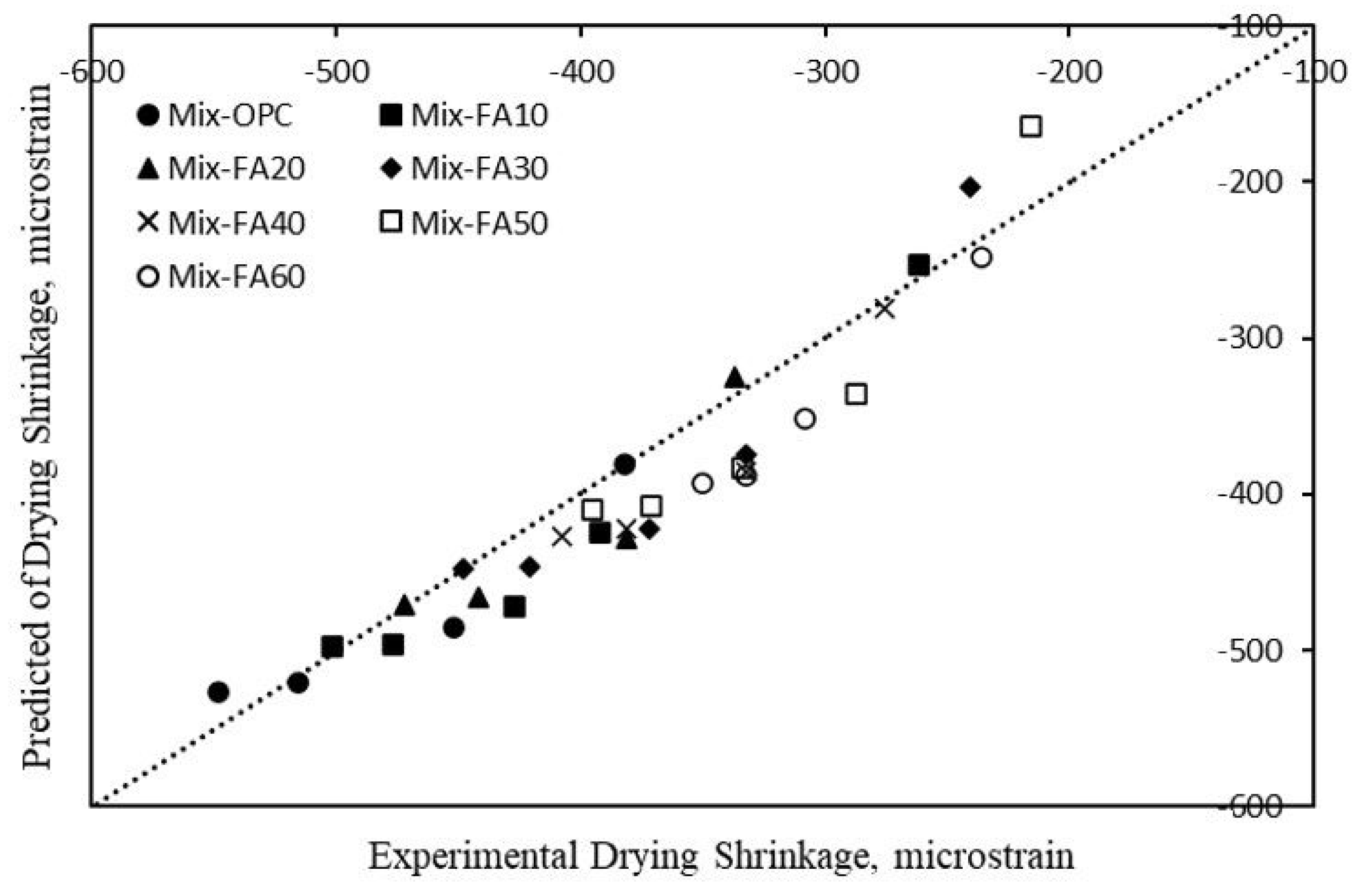
As illustrated in Figure 16, the outcomes of the proposed model are validated by comparing the shrinkage strain predicted values of mortar containing FA with the test data set for mortars with FA presented in Table 3. A strong level of agreement can be observed, with the proposed model predicting the shrinkage strain of mortar containing FA with an error of 8% deviation relative to the test data set.
As illustrated in Figure 17, the shrinkage strain decreases as the FA content increases, which is consistent with the experimental observations presented in Section 3.6. Compared to the plain OPC mortar, the shrinkage strain exhibits a decreasing trend, along with an overall coefficient of variation of 6.7%, 12.6%, 17.7%, 22.3%, 26.3%, and 29.8 for ν = 10 VF%, 20 VF%, 30 VF%, 40 VF%, 50 VF%, and 60 VF%, respectively. The physical interpretation of this downward trend is that the incorporation of high-volume FA reduces the overall cement content, thereby lowering the amount of calcium hydroxide (Ca(OH)2) available for hydration and significantly reducing the capillary stresses developed during moisture loss. Additionally, the spherical morphology of FA particles acts as a micro-filler, refining the pore structure and reducing the total porosity of the matrix. Furthermore, the slower pozzolanic reaction of FA contributes to a more gradual hydration process, which minimizes early-age shrinkage and reduces the potential for microcracking. Consequently, the combined filler and pozzolanic effects result in a net reduction in drying shrinkage strain as the FA replacement level increases. Figure 18 shows the influence of FA content on the shrinkage strain of mortar incorporating FA. It can be observed that the shrinkage strain of mortar containing FA rises as the FA content improves. In comparison with the shrinkage strain of mortar, the shrinkage strain exhibits an increasing trend, along with an overall coefficient of variation of 6.7%, 12.6%, 17.7%, 22.3%, 26.3%, and 29.8 for ν = 10 VF%, 20 VF%, 30 VF%, 40 VF%, 50 VF%, and 60 VF%, respectively. The physical interpretation is that when the FA content rises, microstructural development leads to a decrease in the spacing between the fractures, thereby increasing shrinkage strain. Moreover, the drying process accelerates as the content of FA increases. It increases the shrinkage strain. Figure 18 also illustrates the influence of mortar age with FA on the shrinkage strain. It can be observed that at 180 days the shrinkage strain is reduced by about 86.3%, 96.7%, 108%, 120.4%, 133.8%, 148.8%, 164.1% for ν = 0, 10 VF%, 20 VF%, 30 VF%, 40 VF%, 50 VF%, and 60 VF%, respectively, relative to the shrinkage strain measured at 3 days of age.

4.3. Drying Shrinkage Strain of Mortar with NPs

Considering the developed model for mortar with 60 VF% FA, the model developed in the preceding section is redeveloped to estimate the shrinkage strain for mortar with 60 VF% FA along with 2 VF%, 4 VF%, 6 VF%, 8VF%, and 10 VF% NPs, labeled as Mix- NPs2, Mix-NPs4, Mix-NPs6, Mix-NPs8, and Mix-NPs10, respectively. Considering the training data set for mortars with NPs in Table 5, along with Equation (15), the φ values are determined. Table 7 presents the corresponding φ’ values for each data set. Then, by taking into account the values given in Table 8 together with Equation (14), the explicit form of φ’ is obtained as
φ ν = 3368.7 ν + 124,178.9 ν 2 1,565,062.49 ν 3 + 6,202,641.6 ν 4
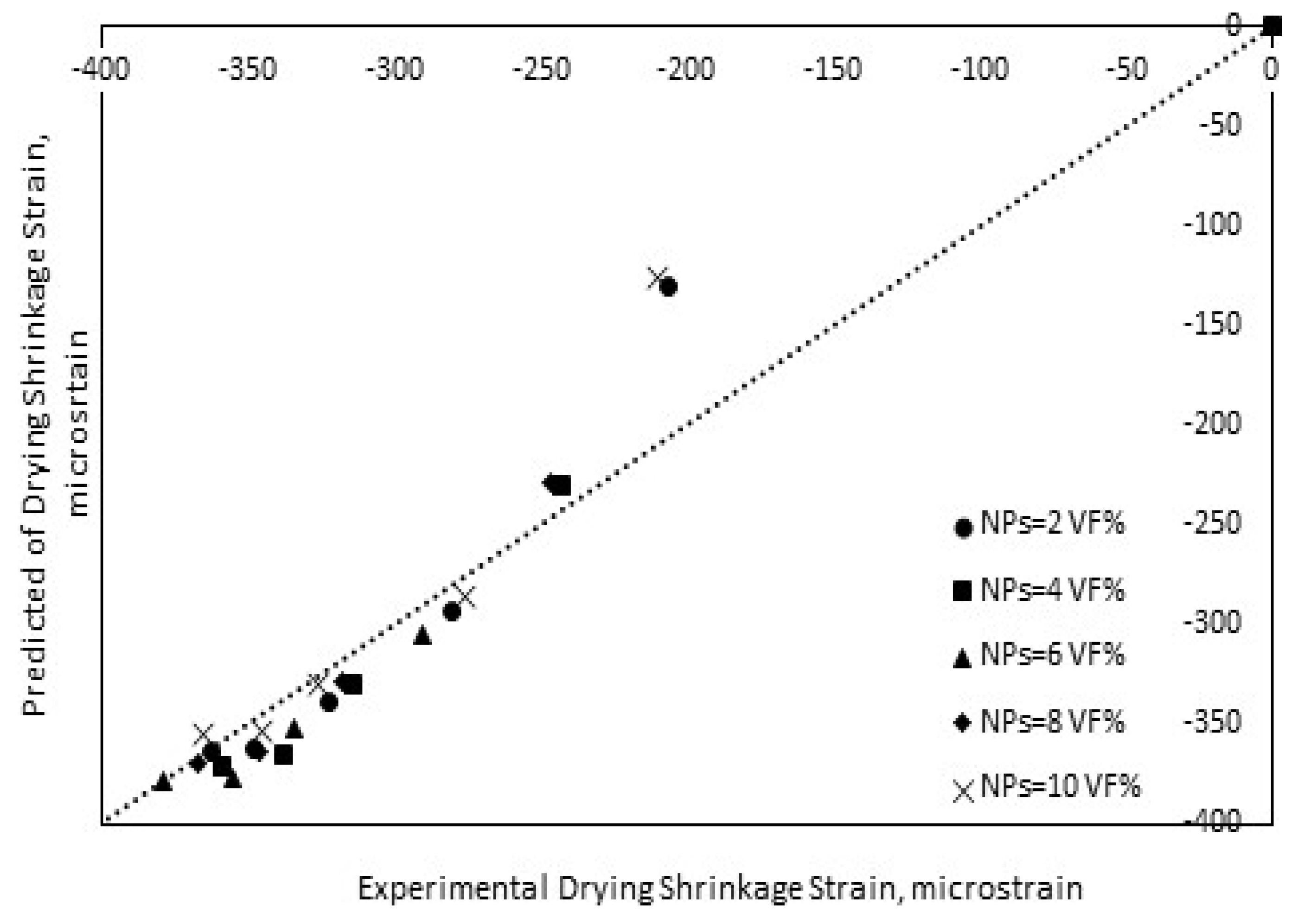
As shown in Figure 19, the outcomes of the redeveloped model are validated by comparison of the predicted shrinkage strain values of mortar containing 60 VF% FA and different contents of NPs with the test data set presented in Table 3. A strong agreement is obtained, indicating that the developed model predicts the shrinkage strain of mortar containing FA and NPs with an error of 6.45% relative to the test data set.
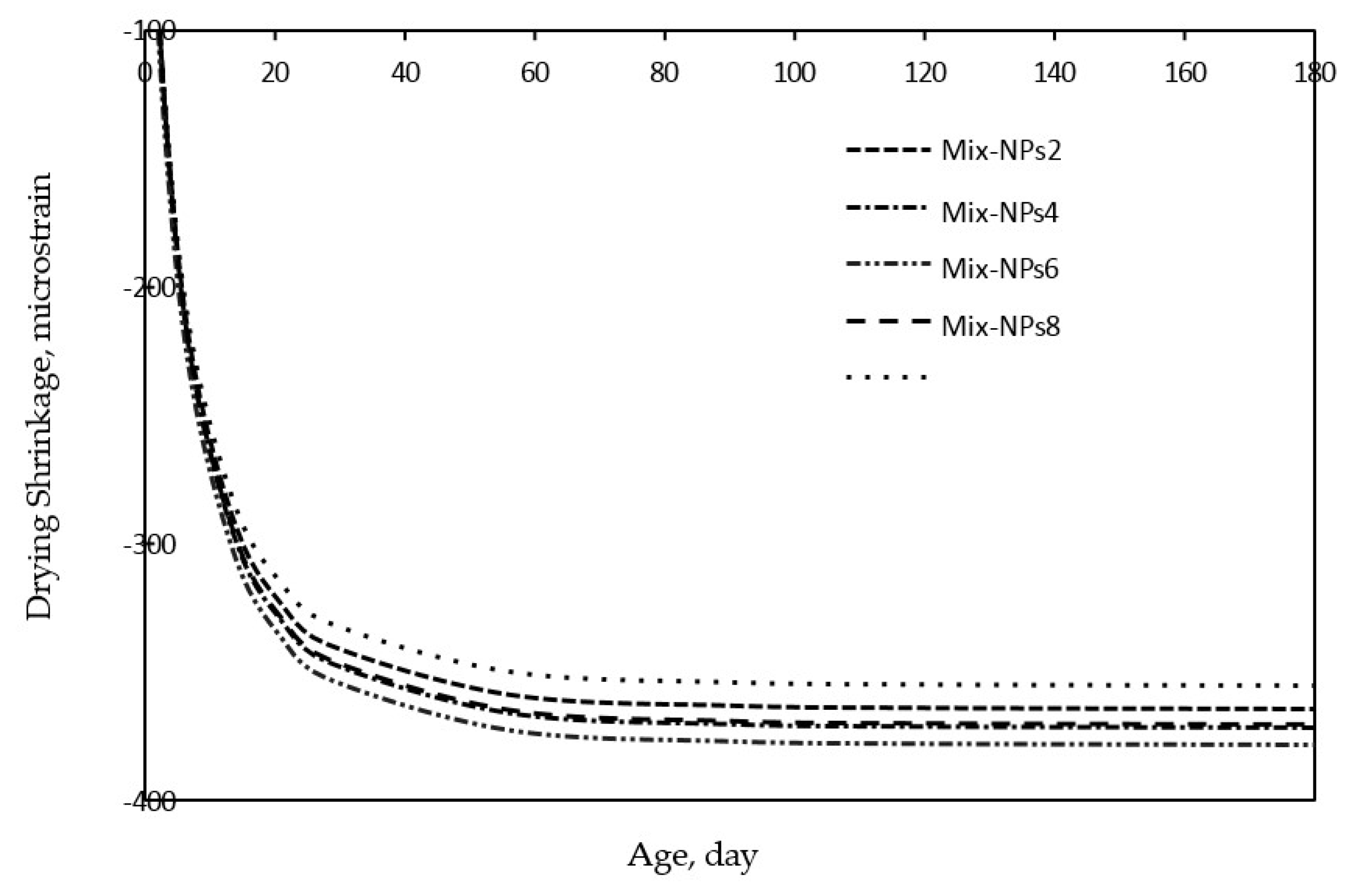
Figure 20 portrays the influence of NP content on the shrinkage strain of mortar incorporating 60 VF% FA and NPs. Notably, the shrinkage strain increases as the NP content rises for NPs contents of 4% and 6% in comparison to the shrinkage strain of 60% FA and 2% NPs. Furthermore, the shrinkage strain decreases for ν′ = 8 and 10 VF% relative to the shrinkage strain of 60% FA and 6% NPs. Figure 19 also illustrates the influence of mortar age with 60VF% and NPs on the shrinkage strain. It can be observed that at 180 days of age, the shrinkage strain is reduced by about 178%, 176%, 173.7%, 176.4%, and 182.2 for ν = 2 VF%, 4 VF%, 6 VF%, 8 VF%, and 10 VF%, respectively, in comparison with the shrinkage strain measured at 3 days.

5. Conclusions

This study develops durable cement mortars with lower drying shrinkage by replacing the cement with high-volume FA and silica NPs from waste bottle glass. The principal findings of this study are outlined as follows:
  • Inclusion of high-volume FA as well as silica NPs from waste bottle glass as cement replacement materials results in a significant drop in workability performance compared to traditional cement. The loss of workability is attributed to the FA’s high demand for water and high viscosity and friction of nanomaterials.
  • FA and WBGNPs substantially influenced the performance of the modified cement. The development of compressive strength as well as bond strength in the prepared samples showed a reduction at early curing ages (3 and 7 days) when a high FA content (60%) was used to replace OPC. However, the incorporation of WBGNPs as a partial substitute in the high-volume FA-OPC binder led to a slight increase in strength at early ages (3 and 7 days), while a substantial enhancement was noted following 28 days of curing.
  • Specimens incorporating 6% WBGNPs as a high-volume FA cement alternative markedly improved the strength performance by promoting a faster hydration process and formulated extra C-S-H dense gels. At the age of 90 days, proposed mortar specimens containing 6% WBGNPs achieved a strength higher (41.4 MPa) by 1.2% than the pure cement specimens (40.8 MPa).
  • Results regarding microstructure (XRD, TGA, and DTG) demonstrated that incorporating WBGNPs into the high-volume FA cement matrix increases binder reactivity, accelerates the hydration process, reduces the total number of pores by generating extra dense gel products, and improves the bond strength of cement paste.
  • FA and WBGNPs in the OPC matrix markedly enhanced the engineering performance as well as the durability of the mortars by reducing porosity and shrinkage. This improvement can effectively aid in extending the service life of the developed mortars.
  • The B3 model was successfully used in this study to predict the drying shrinkage of modified cement mortars, demonstrating strong agreement between the predicted and experimental results. The findings highlight the significant influence of specific mixture components on drying shrinkage behavior, providing valuable insights for optimizing mortar compositions to improve both performance and sustainability.

6. Potential Applications

The findings of this study have several important potential applications in the construction industry and the built environment, particularly in regions with tropical climates where drying shrinkage and durability are major concerns. The potential applications are as follows:
  • Infrastructure Projects: The material can be applied in roads, bridges, drainage systems, retaining walls, and other civil engineering works where durability and sustainability are important design requirements. Additionally, the reduced drying shrinkage minimizes the risk of cracking, thereby improving service life and reducing maintenance costs.
  • Structural and Non-Structural Concrete Elements: The enhanced strength and improved microstructure make the material suitable for precast concrete products, masonry blocks, paving units, wall panels, and other structural and non-structural components.
  • Precast Construction Industry: The optimized mixture containing 6% WBGNPs can be utilized in precast concrete manufacturing, where consistent quality, reduced cracking, and improved mechanical performance are highly desirable.
  • Green and Sustainable Buildings: The material supports sustainable building practices and can contribute to green building certification systems such as Leadership in Energy and Environmental Design (LEED) and Green Star through the use of recycled materials and reduced embodied carbon.
  • Circular Economy and Waste Management: The utilization of fly ash and waste bottle glass promotes the circular economy by converting industrial and municipal waste into value-added construction materials. Also, this reduces landfill disposal requirements and mitigates environmental pollution.
  • Durable Housing and Urban Development: Improved resistance to drying shrinkage cracking enhances the durability and service life of residential, commercial, and institutional buildings.

Author Contributions

Conceptualization, G.F.H. and A.M.M.; methodology, G.F.H.; software, M.K.; validation, W.T., M.K. and J.M.; formal analysis, G.F.H.; investigation, A.M.M.; resources, G.F.H.; data curation, G.F.H.; writing—original draft preparation, G.F.H. and A.M.M.; writing—review and editing, M.K., W.T. and J.M.; visualization, W.T. and J.M.; supervision, W.T. and J.M.; project administration, G.F.H.; funding acquisition, A.M.M. All authors have read and agreed to the published version of the manuscript.

Funding

This research was supported by Universiti Tun Hussein Onn Malaysia (UTHM) through a Matching Grant (Vot J273).

Data Availability Statement

Not applicable.

Acknowledgments

This work was supported/funded by the EcoStruct Building Technologies B.V. and Universiti Tun Hussein Onn Malaysia (UTHM).

Conflicts of Interest

The authors declare no conflicts of interest.

Abbreviations

The following abbreviations are used in this manuscript:
OPCOrdinary Portland Cement
FAFly ash
WBGNPsWaste bottle glass nanoparticles
NPsNanoparticles
RHRelative humidity
ASTMAmerican Society for Testing and Materials
XRDX-Ray Diffraction
TGAThermogravimetric Analysis

References

  1. Watts, J. Concrete: The most destructive material on Earth. Guardian 2019, 25, 1–9. [Google Scholar]
  2. Huseien, G.F.; Saleh, A.T.; Ghoshal, S.K. Effective Microorganism Solution and High Volume of Fly Ash Blended Sustainable Bio-Concrete. Biomimetics 2022, 7, 65. [Google Scholar] [CrossRef] [PubMed]
  3. Nora Aznieta Abdul Aziz, F.; Abdan, K.; Azline Mohd Nasir, N.; Fahim Huseien, G. Experimental study on durability properties of kenaf fibre-reinforced geopolymer concrete. Constr. Build. Mater. 2023, 396, 132160. [Google Scholar] [CrossRef]
  4. Kurtis, K.; Nanko, H.; Mohr, B. Methods for Internally Curing Cement-Based Materials and Products Made Therefrom. U.S. Patent 11/738,906, 25 October 2007. [Google Scholar]
  5. Huseien, G.F.; Mirza, J.; Ismail, M.; Ghoshal, S.; Hussein, A.A. Geopolymer mortars as sustainable repair material: A comprehensive review. Renew. Sustain. Energy Rev. 2017, 80, 54–74. [Google Scholar] [CrossRef]
  6. Huseien, G.F.; Sam, A.R.M.; Algaifi, H.A.; Alyouef, R. Development of a sustainable concrete incorporated with effective microorganism and fly Ash: Characteristics and modeling studies. Constr. Build. Mater. 2021, 285, 122899. [Google Scholar] [CrossRef]
  7. Huseien, G.F.; Shah, K.W.; Sam, A.R.M. Sustainability of nanomaterials based self-healing concrete: An all-inclusive insight. J. Build. Eng. 2019, 23, 155–171. [Google Scholar]
  8. Mhaya, A.M.; Baharom, S.; Baghban, M.H.; Nehdi, M.L.; Faridmehr, I.; Huseien, G.F.; Algaifi, H.A.; Ismail, M. Systematic Experimental Assessment of POFA Concrete Incorporating Waste Tire Rubber Aggregate. Polymers 2022, 14, 2294. [Google Scholar] [CrossRef] [PubMed]
  9. Wang, J.; Liu, E.; Li, L. Characterization on the recycling of waste seashells with Portland cement towards sustainable cementitious materials. J. Clean. Prod. 2019, 220, 235–252. [Google Scholar] [CrossRef]
  10. Xie, J.; Fang, C.; Lu, Z.; Li, Z.; Li, L. Effects of the addition of silica fume and rubber particles on the compressive behaviour of recycled aggregate concrete with steel fibres. J. Clean. Prod. 2018, 197, 656–667. [Google Scholar] [CrossRef]
  11. Xie, J.; Wang, J.; Rao, R.; Wang, C.; Fang, C. Effects of combined usage of GGBS and fly ash on workability and mechanical properties of alkali activated geopolymer concrete with recycled aggregate. Compos. Part B Eng. 2019, 164, 179–190. [Google Scholar] [CrossRef]
  12. Alyousef, R.; Ebid, A.A.K.; Huseien, G.F.; Mohammadhosseini, H.; Alabduljabbar, H.; Poi Ngian, S.; Mohamed, A.M. Effects of Sulfate and Sulfuric Acid on Efficiency of Geopolymers as Concrete Repair Materials. Gels 2022, 8, 53. [Google Scholar] [CrossRef] [PubMed]
  13. Song, S.; Yu, H.; Ma, H. Influence of drying conditions on the durability of concrete subjected to the combined action of chemical attack and freeze–thaw cycles. Materials 2024, 17, 1131. [Google Scholar] [CrossRef] [PubMed]
  14. Abbas, A.-G.N.; Aziz, F.N.A.A.; Abdan, K.; Nasir, N.A.M.; Huseien, G.F. Experimental evaluation and statistical modeling of kenaf fiber-reinforced geopolymer concrete. Constr. Build. Mater. 2023, 367, 130228. [Google Scholar] [CrossRef]
  15. Memon, R.P.; Huseien, G.F.; Saleh, A.T.; K. Ghoshal, S.; Memon, U.; Alwetaishi, M.; Benjeddou, O.; Sam, A.R.M. Microstructure and Strength Properties of Sustainable Concrete Using Effective Microorganisms as a Self-Curing Agent. Sustainability 2022, 14, 10443. [Google Scholar] [CrossRef]
  16. Hamzah, N.; Saman, H.; Baghban, M.; Sam, A.; Faridmehr, I.; Sidek, M.; Benjeddou, O.; Huseien, G. A review on the use of self-curing agents and its mechanism in high-performance cementitious materials. Buildings 2022, 12, 1–27. [Google Scholar] [CrossRef]
  17. Zhang, B.; Zhu, H.; Cheng, Y.; Huseien, G.F.; Shah, K.W. Shrinkage mechanisms and shrinkage-mitigating strategies of alkali-activated slag composites: A critical review. Constr. Build. Mater. 2022, 318, 125993. [Google Scholar]
  18. Kim, G.; Kurtis, K.E. Early-stage assessment of drying shrinkage in Portland limestone cement concrete using nonlinear ultrasound. Constr. Build. Mater. 2022, 342, 128099. [Google Scholar] [CrossRef]
  19. Nasir, M.; Alimi, W.O.; Oladapo, E.A.; Imran, M.; Kazmi, Z.A. Behavior of drying and plastic shrinkage of Portland cement concrete prepared and cured under harsh field. Dev. Built Environ. 2023, 16, 100252. [Google Scholar] [CrossRef]
  20. Huseien, G.F.; Asaad, M.A.; Abadel, A.A.; Ghoshal, S.K.; Hamzah, H.K.; Benjeddou, O.; Mirza, J. Drying shrinkage, sulphuric acid and sulphate resistance of high-volume palm oil fuel ash-included alkali-activated mortars. Sustainability 2022, 14, 498. [Google Scholar]
  21. Brue, F.; Davy, C.A.; Burlion, N.; Skoczylas, F.; Bourbon, X. Five year drying of high performance concretes: Effect of temperature and cement-type on shrinkage. Cem. Concr. Res. 2017, 99, 70–85. [Google Scholar] [CrossRef]
  22. Su, J.; Guo, Y.; Kong, T.; Shen, A.; Cai, S. Strength and shrinkage properties of cement-stabilized macadam bases incorporating crushed brick and recycled concrete aggregate blends and polyester fibers. Constr. Build. Mater. 2025, 491, 142678. [Google Scholar] [CrossRef]
  23. Huseien, G.F.; Khamehchi, M.; Kubba, Z.; Benjeddou, O.; Mahmoodi, M.J. Freeze-thaw cycle and abrasion resistance of alkali-activated FA and POFA-based mortars: Role of high volume GBFS incorporation. Heliyon 2023, 9, e17672. [Google Scholar] [PubMed]
  24. Coppola, L.; Coffetti, D.; Crotti, E.; Gazzaniga, G.; Pastore, T. An Empathetic Added Sustainability Index (EASI) for cementitious based construction materials. J. Clean. Prod. 2019, 220, 475–482. [Google Scholar] [CrossRef]
  25. Mhaya, A.M.; Baharom, S.; Huseien, G.F. Improved strength performance of rubberized Concrete: Role of ground blast furnace slag and waste glass bottle nanoparticles amalgamation. Constr. Build. Mater. 2022, 342, 128073. [Google Scholar] [CrossRef]
  26. Zhang, Y.; Shi, D.; Ren, D.; Xing, Z.; Ma, Z. A study on drying shrinkage properties of PVA fiber reinforced coal gangue fine aggregate concrete. Results Eng. 2026, 30, 110242. [Google Scholar] [CrossRef]
  27. Essienubong, I.A.; Okechukwu, E.P.; Ejuvwedia, S.G. Effects of waste dumpsites on geotechnical properties of the underlying soils in wet season. Environ. Eng. Res. 2019, 24, 289–297. [Google Scholar]
  28. Samadi, M.; Huseien, G.F.; Mohammadhosseini, H.; Lee, H.S.; Lim, N.H.A.S.; Tahir, M.M.; Alyousef, R. Waste ceramic as low cost and eco-friendly materials in the production of sustainable mortars. J. Clean. Prod. 2020, 266, 121825. [Google Scholar] [CrossRef]
  29. Chaipanich, A.; Promwijit, W.; Nararueang, A.; Aodkeng, S.; Wianglor, K. Utilization of calcareous fly ash with Lopburi calcined clay as high Portland cement replacement supplementary cementitious materials. Case Stud. Constr. Mater. 2025, 23, e05228. [Google Scholar] [CrossRef]
  30. Huseien, G.F.; Joudah, Z.H.; Khalid, N.H.A.; Sam, A.R.M.; Tahir, M.M.; Lim, N.H.A.S.; Alyousef, R.; Mirza, J. Durability performance of modified concrete incorporating fly ash and effective microorganism. Constr. Build. Mater. 2021, 267, 120947. [Google Scholar] [CrossRef]
  31. Nath, S.; Kumar, S. Role of particle fineness on engineering properties and microstructure of fly ash derived geopolymer. Constr. Build. Mater. 2020, 233, 117294. [Google Scholar] [CrossRef]
  32. Luo, Y.; Jin, H.; Wang, D.; Gao, X.; Yang, L.; Xue, G. Fly Ash-Metakaolin-Slag Ternary Cement Replacement: Synergistic Inhibition Mechanism on Concrete Efflorescence and Mechanical Performance Retention. J. Build. Eng. 2026, 124, 115984. [Google Scholar]
  33. Thwe, K.S.; Ayawanna, J.; Mase, L.Z.; Chaiyaput, S. Utilization of ladle furnace slag and fly ash as partially replacement of cement. Clean. Eng. Technol. 2025, 25, 100910. [Google Scholar] [CrossRef]
  34. Islam, M.N.; Noaman, M.A.; Islam, K.S.; Hanif, M.A. Mechanical properties and microstructure of brick aggregate concrete with raw fly ash as a partial replacement of cement. Heliyon 2024, 10, e28904. [Google Scholar] [CrossRef] [PubMed]
  35. Huseien, G.F.; Joudah, Z.H.; Memon, R.P.; Sam, A.R.M. Compressive strength and microstructure properties of modified concrete incorporated effective microorganism and fly ash. Mater. Today Proc. 2021, 46, 2036–2044. [Google Scholar] [CrossRef]
  36. Han, S.; Wan, X.; Zhang, S.; Chen, D.; Xu, Y.; Gao, M.; Huang, K.; Jah, T.N. Research on the Synergistic Optimization and Model Construction of Concrete Mechanics and Impermeability Performance by Replacing Cement with Fly Ash. J. Build. Eng. 2026, 124, 115997. [Google Scholar] [CrossRef]
  37. Zhang, J.; Saleh, M.A.; Abdelgader, H.S.; Murali, G.; Zar, A.; Alnagasa, A.A. Development of Sustainable Low Carbon Preplaced Aggregate Concrete with Portland Limestone Cement, Metakaolin, Silica Fume and Fly Ash: Evaluating Binary and Ternary Binder Systems for Strength and Microstructural Properties. Results Eng. 2026, 29, 109679. [Google Scholar] [CrossRef]
  38. Mallik, M.; Dubey, S. Performance and microstructural evaluation of sustainable self-compacting concrete incorporating eggshell powder and fly ash as environmentally sustainable cement replacements. Sustain. Chem. Pharm. 2025, 48, 102182. [Google Scholar] [CrossRef]
  39. Shirzad, S.; Mahyari, E.; Culpepper, J.; Burns, C. Synergistic biochar–fly ash blended cementitious systems: Experimental, microstructural, and predictive insights into strength development of sustainable mortar and concrete. Constr. Build. Mater. 2026, 509, 145216. [Google Scholar] [CrossRef]
  40. Etcheverry, J.M.; Villagran-Zaccardi, Y.A.; Van den Heede, P.; De Belie, N. Efficient use of low-calcium fly ash to reach replacement levels beyond 50% Portland cement with curing at room temperature. J. Build. Eng. 2025, 111, 113435. [Google Scholar]
  41. Algaifi, H.A.; Khalifa, M.H.; Syamsir, A.; Ibrahim, Z.; Baharom, S.; Sam, A.R.M.; Anggraini, V.; Mhaya, A.M. Advanced sustainable concrete incorporating high-volume fly ash and porcelain aggregate reinforced with multiscale fibers: Systematic assessment. Constr. Build. Mater. 2026, 513, 145481. [Google Scholar] [CrossRef]
  42. Wu, D.; Wu, G.; Zou, Z.; Cao, J.; Tu, B.; Liu, T. Creep performance of high-volume fly ash concrete under sulfate attack. Constr. Build. Mater. 2025, 502, 144485. [Google Scholar] [CrossRef]
  43. Ho, L.S.; Van-Pham, D.-T.; Huynh, T.-P. Strength development and microstructural characterization of eco-cement paste with high-volume fly ash. Results Eng. 2025, 26, 105013. [Google Scholar]
  44. Joudah, Z.H.; Hafizah A. Khalid, N.; Algaifi, H.A.; Mhaya, A.M.; Xiong, T.; Alsultani, R.; Huseien, G.F. Effects of waste glass bottle nanoparticles and high volume of waste ceramic tiles on concrete performance when exposed to elevated temperatures: Experimental and theoretical evaluations. Fire 2024, 7, 426. [Google Scholar] [CrossRef]
  45. Siad, H.; Lachemi, M.; Sahmaran, M.; Mesbah, H.A.; Hossain, K.M.A. Use of recycled glass powder to improve the performance properties of high volume fly ash-engineered cementitious composites. Constr. Build. Mater. 2018, 163, 53–62. [Google Scholar] [CrossRef]
  46. Huseien, G.F.; Tang, W.; Yu, Y.; Wong, L.S.; Mirza, J.; Dong, K.; Gu, X. Evaluation of high-volume fly-ash cementitious binders incorporating nanosilica as eco-friendly sustainable concrete repair materials. Constr. Build. Mater. 2024, 447, 138022. [Google Scholar]
  47. Huseien, G.F. A review on concrete composites modified with nanoparticles. J. Compos. Sci. 2023, 7, 67. [Google Scholar] [CrossRef]
  48. Ng, D.S.; Paul, S.C.; Anggraini, V.; Kong, S.Y.; Qureshi, T.S.; Rodriguez, C.R.; Liu, Q.-f.; Šavija, B. Influence of SiO2, TiO2 and Fe2O3 nanoparticles on the properties of fly ash blended cement mortars. Constr. Build. Mater. 2020, 258, 119627. [Google Scholar]
  49. Liu, M.; Tan, H.; He, X. Effects of nano-SiO2 on early strength and microstructure of steam-cured high volume fly ash cement system. Constr. Build. Mater. 2019, 194, 350–359. [Google Scholar]
  50. Rashad, A.M. Effects of ZnO2, ZrO2, Cu2O3, CuO, CaCO3, SF, FA, cement and geothermal silica waste nanoparticles on properties of cementitious materials–A short guide for Civil Engineer. Constr. Build. Mater. 2013, 48, 1120–1133. [Google Scholar]
  51. Zhang, R.; Cheng, X.; Hou, P.; Ye, Z. Influences of nano-TiO2 on the properties of cement-based materials: Hydration and drying shrinkage. Constr. Build. Mater. 2015, 81, 35–41. [Google Scholar]
  52. Shah, K.W.; Huseien, G.F.; Kua, H.W. A State-of-the-art review on core–shell pigments nanostructure preparation and test methods. Micro 2021, 1, 55–85. [Google Scholar]
  53. Zhao, J.; Huang, J.; Wang, Z.; Wu, D.; Li, G. Enhancing mechanical strength and reducing drying shrinkage in high-volume fly ash mortar: Synergistic effects of steel fibers and nano-SiO2. J. Mater. Res. Technol. 2025, 36, 7351–7360. [Google Scholar] [CrossRef]
  54. Maurya, S.K.; Bhatrola, K.; Kothiyal, N.; Prakash, C. Effect of highly dispersed hybrid carbon nanomaterials on the durability of high-volume fly ash based cementitious mortar. J. Build. Eng. 2025, 111, 113354. [Google Scholar] [CrossRef]
  55. Onaizi, A.M.; Huseien, G.F.; Lim, N.H.A.S.; Amran, M.; Samadi, M. Effect of nanomaterials inclusion on sustainability of cement-based concretes: A comprehensive review. Constr. Build. Mater. 2021, 306, 124850. [Google Scholar] [CrossRef]
  56. Abhilash, P.; Nayak, D.K.; Sangoju, B.; Kumar, R.; Kumar, V. Effect of nano-silica in concrete; a review. Constr. Build. Mater. 2021, 278, 122347. [Google Scholar] [CrossRef]
  57. Tabish, M.; Zaheer, M.M.; Baqi, A. Effect of nano-silica on mechanical, microstructural and durability properties of cement-based materials: A review. J. Build. Eng. 2023, 65, 105676. [Google Scholar]
  58. Sadeghi-Nik, A.; Berenjian, J.; Bahari, A.; Safaei, A.S.; Dehestani, M. Modification of microstructure and mechanical properties of cement by nanoparticles through a sustainable development approach. Constr. Build. Mater. 2017, 155, 880–891. [Google Scholar] [CrossRef]
  59. Huseien, G.F.; Joudah, Z.H.; Baghban, M.H.; Khalid, A.; Faridmehr, N.H.; Dong, I.; Gu, K.X. Sustainability of Recycling Waste Ceramic Tiles in the Green Concrete Industry: A Comprehensive Review. Buildings 2025, 15, 2406. [Google Scholar] [CrossRef]
  60. Samadi, M.; Huseien, G.F.; Lim, N.H.A.S.; Mohammadhosseini, H.; Alyousef, R.; Mirza, J.; Abd Rahman, A.B. Enhanced performance of nano-palm oil ash-based green mortar against sulphate environment. J. Build. Eng. 2020, 32, 101640. [Google Scholar]
  61. Huseien, G.F.; Faridmehr, I.; Nehdi, M.L.; Abadel, A.A.; Aiken, T.A.; Ghoshal, S. Structure, morphology and compressive strength of Alkali-activated mortars containing waste bottle glass nanoparticles. Constr. Build. Mater. 2022, 342, 128005. [Google Scholar] [CrossRef]
  62. Li, G. Properties of high-volume fly ash concrete incorporating nano-SiO2. Cem. Concr. Res. 2004, 34, 1043–1049. [Google Scholar] [CrossRef]
  63. Ghafari, E.; Costa, H.; Júlio, E.; Portugal, A.; Durães, L. The effect of nanosilica addition on flowability, strength and transport properties of ultra high performance concrete. Mater. Des. 2014, 59, 1–9. [Google Scholar] [CrossRef]
  64. Seifan, M.; Mendoza, S.; Berenjian, A. Mechanical properties and durability performance of fly ash based mortar containing nano- and micro-silica additives. Constr. Build. Mater. 2020, 252, 119121. [Google Scholar] [CrossRef]
  65. Khaloo, A.; Mobini, M.H.; Hosseini, P. Influence of different types of nano-SiO2 particles on properties of high-performance concrete. Constr. Build. Mater. 2016, 113, 188–201. [Google Scholar]
  66. Huseien, G.F.; Hamzah, H.K.; Sam, A.R.M.; Khalid, N.H.A.; Shah, K.W.; Deogrescu, D.P.; Mirza, J. Alkali-activated mortars blended with glass bottle waste nano powder: Environmental benefit and sustainability. J. Clean. Prod. 2020, 243, 118636. [Google Scholar] [CrossRef]
  67. Onaizi, A.M.; Lim, N.H.A.S.; Huseien, G.F.; Amran, M.; Ma, C.K. Effect of the addition of nano glass powder on the compressive strength of high volume fly ash modified concrete. Mater. Today Proc. 2022, 48, 1789–1795. [Google Scholar] [CrossRef]
  68. Hamzah, H.K.; Joudah, Z.H.; Georgescu, D.P.; Khalid, N.H.A.; Huseien, G.F. Laboratory evaluation of alkali-activated mortars modified with nanosilica from glass bottle wastes. Mater. Today Proc. 2021, 46, 2098–2104. [Google Scholar] [CrossRef]
  69. Zhang, C.; Wang, J.; Song, W.; Fu, J. Effect of waste glass powder on pore structure, mechanical properties and microstructure of cemented tailings backfill. Constr. Build. Mater. 2023, 365, 130062. [Google Scholar]
  70. Larsen, A.W.; Merrild, H.; Christensen, T.H. Recycling of glass: Accounting of greenhouse gases and global warming contributions. Waste Manag. Res. 2009, 27, 754–762. [Google Scholar] [CrossRef] [PubMed]
  71. Samadi, M.; Shah, K.W.; Huseien, G.F.; Lim, N.H.A.S. Influence of glass silica waste nano powder on the mechanical and microstructure properties of alkali-activated mortars. Nanomaterials 2020, 10, 324. [Google Scholar] [CrossRef] [PubMed]
  72. Shayan, A.; Xu, A. Value-added utilisation of waste glass in concrete. Cem. Concr. Res. 2004, 34, 81–89. [Google Scholar] [CrossRef]
  73. Yu, X.; Tao, Z.; Song, T.-Y.; Pan, Z. Performance of concrete made with steel slag and waste glass. Constr. Build. Mater. 2016, 114, 737–746. [Google Scholar] [CrossRef]
  74. Poudel, S.; Bhetuwal, U.; Kharel, P.; Khatiwada, S.; KC, D.; Dhital, S.; Lamichhane, B.; Yadav, S.K.; Suman, S. Waste glass as partial cement replacement in sustainable concrete: Mechanical and fresh properties review. Buildings 2025, 15, 857. [Google Scholar] [CrossRef]
  75. ASTM C311-07; Standard Test Methods for Sampling and Testing Fly Ash or Natural Pozzolans for Use in Portland-Cement Concrete. Annual Book of ASTM Standards: West Conshohocken, PA, USA, 2007.
  76. ASTM C618-19; Standard Specification for Coal Fly Ash and Raw or Calcined Natural Pozzolan for Use in Concrete. ASTM International: West Conshohocken, PA, USA, 2018.
  77. Huseien, G.F.; Shah, K.W. Durability and life cycle evaluation of self-compacting concrete containing fly ash as GBFS replacement with alkali activation. Constr. Build. Mater. 2020, 235, 117458. [Google Scholar] [CrossRef]
  78. Arowojolu, O.; Fina, J.; Pruneda, A.; Ibrahim, A.; Mahmoud, E. Feasibility study on concrete performance made by partial replacement of cement with nanoglass powder and fly ash. Int. J. Civ. Eng. 2019, 17, 1007–1014. [Google Scholar]
  79. Hisseine, O.A.; Tagnit-Hamou, A. Development of ecological strain-hardening cementitious composites incorporating high-volume ground-glass pozzolans. Constr. Build. Mater. 2020, 238, 117740. [Google Scholar]
  80. Alharbi, Y.R.; Abadel, A.A. Engineering properties of high-volume fly ash modified cement incorporated with bottle glass waste nanoparticles. Sustainability 2022, 14, 12459. [Google Scholar] [CrossRef]
  81. Herath, C.; Gunasekara, C.; Law, D.W.; Setunge, S. Performance of high volume fly ash concrete incorporating additives: A systematic literature review. Constr. Build. Mater. 2020, 258, 120606. [Google Scholar] [CrossRef]
  82. Yu, J.; Lu, C.; Leung, C.K.; Li, G. Mechanical properties of green structural concrete with ultrahigh-volume fly ash. Constr. Build. Mater. 2017, 147, 510–518. [Google Scholar] [CrossRef]
  83. Farjad, P.; Mehairi, A.G.; Meshkani, F.; Mowlaei, R.; Khoshnazar, R.; Nassar, N.N. Compressive strength and microstructural development of cement paste incorporating nanosilica with different particle sizes. Cement 2025, 19, 100128. [Google Scholar] [CrossRef]
  84. Vasconcellos, J.S.; Fraga, Y.S.B.; da Silva Rêgo, J.H.; Sartoratto, P.P.C.; Rojas, M.F. Hydration, mechanical performance and porosity of Portland cement pastes with functionalized nanosilica with APTES. Dev. Built Environ. 2023, 14, 100157. [Google Scholar] [CrossRef]
  85. Fraga, Y.S.B.; Martins, G.L.O.; da Silva Rêgo, J.H.; Terrades, A.M.; Rojas, M.F. Investigation of the microstructure of Portland cement pastes with functionalized nanosilica with different contents of shrinkage-reducing additive. Constr. Build. Mater. 2025, 462, 139991. [Google Scholar] [CrossRef]
  86. Liu, M.; Niu, Z.; Zhou, X.; Hou, P.; Hai, R.; Liang, S.; Sun, Y. Synergistic effects of triethanolamine and nano-SiO2 on the hydration and hardening properties of Limestone calcined clay cement. Cem. Concr. Compos. 2026, 168, 106492. [Google Scholar]
  87. Praveenkumar, T.; Vijayalakshmi, M.; Meddah, M. Strengths and durability performances of blended cement concrete with TiO2 nanoparticles and rice husk ash. Constr. Build. Mater. 2019, 217, 343–351. [Google Scholar] [CrossRef]
  88. Li, H.; Zhang, M.-h.; Ou, J.-p. Abrasion resistance of concrete containing nano-particles for pavement. Wear 2006, 260, 1262–1266. [Google Scholar] [CrossRef]
  89. Lim, N.H.A.S.; Mohammadhosseini, H.; Tahir, M.M.; Samadi, M.; Sam, A.R.M. Microstructure and strength properties of mortar containing waste ceramic nanoparticles. Arab. J. Sci. Eng. 2018, 43, 5305–5313. [Google Scholar] [CrossRef]
  90. Alvansazyazdi, M.; Alvarez-Rea, F.; Pinto-Montoya, J.; Khorami, M.; Bonilla-Valladares, P.M.; Debut, A.; Feizbahr, M. Evaluating the influence of hydrophobic nano-silica on cement mixtures for corrosion-resistant concrete in green building and sustainable urban development. Sustainability 2023, 15, 15311. [Google Scholar]
  91. Chiranjeevi, K.; Abraham, M.; Rath, B.; Praveenkumar, T. Enhancing the properties of geopolymer concrete using nano-silica and microstructure assessment: A sustainable approach. Sci. Rep. 2023, 13, 17302. [Google Scholar] [CrossRef] [PubMed]
  92. Carneiro, L.d.R.S.; Houmard, M.; Rocha, V.V.; Ludvig, P. The Effect of Nanosilica Incorporation on the Properties of Cement-Based Materials with and Without other Supplementary Admixtures–A Literature Review. Open Constr. Build. Technol. J. 2022, 16, 1–13. [Google Scholar]
  93. Kashyap, V.S.; Sancheti, G.; Yadav, J.S.; Agrawal, U. Smart sustainable concrete: Enhancing the strength and durability with nano silica. Smart Constr. Sustain. Cities 2023, 1, 20. [Google Scholar] [CrossRef]
  94. Liu, D.; Lv, L.; Cao, W.; Gan, J.; Guo, Q.; Liu, Y.; Liang, X.; Song, Y. Development of a rapid-hardening cement for low-shrinkage foamed concrete production: Synergistic activation of Na2SO4/Al2(SO4)3 for calcined coal gangue. Constr. Build. Mater. 2026, 506, 144979. [Google Scholar]
  95. Zhai, W.-q.; Jin, D.; Xie, Y.-d.; He, Z.-h.; Tao, H.-y. Shrinkage and creep behavior evolution of concrete containing metakaolin under the coupled action of sulfate attack and dry-wet cycles. Constr. Build. Mater. 2026, 525, 146334. [Google Scholar] [CrossRef]
Figure 1. Procedure of preparation of WBGNPs from bottle glass wastes.
Infrastructures 11 00231 g001
Figure 2. Chemical composition of (a) OPC, (b) FA, and (c) WBGNPs from XRF analysis test.
Infrastructures 11 00231 g002aInfrastructures 11 00231 g002b
Figure 3. OPC, FA, and WBGNP particle size analysis.
Infrastructures 11 00231 g003
Figure 4. Physical properties of OPC, FA, and WBGNPs.
Infrastructures 11 00231 g004
Figure 5. Pozzolanic activity index of FA and WBGNPs compared to OPC at curing ages of 7 and 28 days.
Infrastructures 11 00231 g005
Figure 6. Raw materials’ (OPC, FA, and WBGNPs) XRD patterns.
Infrastructures 11 00231 g006
Figure 7. Surface images of (a) OPC, (b) FA, and (c) WBGNPs obtained in SEM and TEM tests.
Infrastructures 11 00231 g007
Figure 8. Effect of high-volume FA and silica NPs on flowability of proposed mortars.
Infrastructures 11 00231 g008
Figure 9. Compressive strength development of modified mortars containing high-volume FA incorporating WBGNPs at 3, 7, 28, 56, and 90 days of curing ages.
Infrastructures 11 00231 g009
Figure 10. Percentage of achieved compressive strength of tested specimens at 3, 7, 28, 56, and 90 days of age.
Infrastructures 11 00231 g010
Figure 11. XRD patterns of proposed cement prepared with high-volume FA (60%) incorporating 6% WBGNPs at curing ages of (a) 7 days and (b) 28 days.
Infrastructures 11 00231 g011
Figure 12. TGA-DTG analysis of proposed cement prepared with high-volume FA (60%) incorporating 6% WBGNPs at curing ages of (a) 7 days and (b) 28 days.
Infrastructures 11 00231 g012
Figure 13. Effect of WBGNPs on water absorption of high-volume FA-modified cement mortars at varying curing ages (7, 28, and 90 days).
Infrastructures 11 00231 g013
Figure 14. Mechanism of silica NPs responsible for reducing the porosity of high-volume FA cement mortars and reducing the total water absorption of the tested specimens (a) without nanoparticles (b) with nanoparticles.
Infrastructures 11 00231 g014
Figure 15. Drying shrinkage values of high-volume FA cement mortars incorporating WBGNPs.
Infrastructures 11 00231 g015
Figure 16. Mechanism of high-volume FA and WBGNPs responsible for reducing the drying shrinkage of proposed cement mortars (a) OPC, (b) 60% FA, and (c) 6% WBGNPs.
Infrastructures 11 00231 g016
Figure 17. Experimental values versus the presented model predictions of the drying shrinkage strain of mortar with FA.
Infrastructures 11 00231 g017
Figure 18. Dependency of drying shrinkage strain of mortar containing FA on FA content.
Infrastructures 11 00231 g018
Figure 19. Experimental values versus the presented model predictions of the drying shrinkage strain of mortar with 60 VF% FA and NPs.
Infrastructures 11 00231 g019
Figure 20. Dependency of drying shrinkage strain of mortar containing 60 VF% FA and WBGNPs on NP content.
Infrastructures 11 00231 g020
Table 1. Mix design of high-volume fly ash incorporating WBGNPs.
Mix CodeTernary Binder, Vol. %W/C, %Fine Aggregates, Volume %
CementFly AshNano Glass Powder
OPC1000055300
FA604060055300
NPs239.258.8255300
NPs438.457.6455300
NPs637.656.4655300
NPs836.855.2855300
NPs1036.054.01055300
Table 2. Statistical analysis of mean compressive strength, standard deviations, coefficients of variation, and standard errors at ages of 3, 7, 28, 56, and 90 days for proposed mortars.
Curing AgesStatistical AnalysisProposed Mortar Mixtures
OPCFA60NPs2NPs4NPs6NPs8NPs10
3 days Mean compressive strength (x)16.87.99.412.916.111.39.8
Standard deviation (SD)1.431.221.271.321.461.371.35
Coefficient of variation (CV)8.5115.4413.5110.239.0712.1213.77
Standard error (SE)0.470.410.420.440.480.450.45
7 daysMean compressive strength (x)22.112.313.115.619.314.613.7
Standard deviation (SD)1.651.471.441.411.391.411.42
Coefficient of variation (CV)7.4711.9510.999.047.209.6610.36
Standard error (SE)0.550.490.480.470.460.470.47
28 daysMean compressive strength (x)36.621.324.828.632.825.224.9
Standard deviation (SD)1.731.641.691.661.71.641.58
Coefficient of variation (CV)4.727.696.815.805.186.516.34
Standard error (SE)0.570.550.560.550.570.540.53
56 daysMean compressive strength (x)39.428.831.735.337.932.530.8
Standard deviation (SD)2.042.152.222.141.951.881.78
Coefficient of variation (CV)5.187.467.016.065.145.785.78
Standard error (SE)0.680.720.740.710.650.630.59
90 daysMean compressive strength (x)40.933.635.538.241.436.634.9
Standard deviation (SD)2.342.061.961.892.32.141.96
Coefficient of variation (CV)5.726.135.524.945.565.845.61
Standard error (SE)0.780.690.650.630.770.710.65
Table 3. Statistical analysis of mean water absorption, standard deviations, coefficients of variation, and standard errors at ages of 7, 28, and 90 days for proposed mortars.
Curing AgesStatistical AnalysisProposed Mortar Mixtures
OPCFA60NPs2NPs4NPs6NPs8NPs10
7 daysMean compressive strength (x)6.758.357.927.327.127.858.18
Standard deviation (SD)0.350.60.420.380.430.520.65
Coefficient of variation (CV)5.187.185.305.196.046.627.95
Standard error (SE)0.120.200.140.130.140.170.22
28 daysMean compressive strength (x)4.456.555.484.754.655.185.35
Standard deviation (SD)0.280.410.320.360.250.280.31
Coefficient of variation (CV)6.296.265.847.575.375.415.79
Standard error (SE)0.090.140.110.120.080.090.10
90 daysMean compressive strength (x)2.884.523.653.152.654.284.58
Standard deviation (SD)0.180.220.240.180.220.240.17
Coefficient of variation (CV)6.254.876.575.718.305.613.71
Standard error (SE)0.060.070.080.060.070.080.06
Table 4. Statistical analysis of mean drying shrinkage, standard deviations, coefficients of variation, and standard errors at ages of 7, 28, and 90 days for proposed mortars.
Curing AgesStatistical AnalysisProposed Mortar Mixtures
37285690120180
OPC Mean compressive strength (x)−276−382−487−516−536−548−574
Standard deviation (SD)13.018.08.019.06.08.013.0
Coefficient of variation (CV)4.714.711.643.681.121.462.26
Standard error (SE)4.3362.676.3322.674.33
FA60Mean compressive strength (x)−197−236−316−332−344−350−358
Standard deviation (SD)6.021.012.021.08.010.04.0
Coefficient of variation (CV)3.048.893.796.322.322.851.12
Standard error (SE)2.07.04.07.02.673.331.33
NPs6Mean compressive strength (x)−221−246−334−346−355−367−379
Standard deviation (SD)8.014.01018.010.04.06.0
Coefficient of variation (CV)3.625.692.995.202.821.091.58
Standard error (SE)2.674.673.336.03.331.332.0
Table 5. Training data set of drying shrinkage of high-volume fly ash cement incorporating WBGNPs.
Numbert (Day)ϵsh × 10−6Numbert (Day)ϵsh × 10−6
Mix-OPC3−276Mix-FA6014−274
Mix-OPC14−428Mix-FA6028−316
Mix-OPC28−478Mix-FA6090−334
Mix-OPC90−536Mix-FA60180−358
Mix-OPC180−574Mix-NPs27−240
Mix-FA107−358Mix-NPs221−310
Mix-FA1021−411Mix-NPs256−336
Mix-FA1056−464Mix-NPs2120−355
Mix-FA10120−491Mix-NPs23−218
Mix-FA203−254Mix-NPs414−288
Mix-FA2014−364Mix-NPs428−330
Mix-FA2028−405Mix-NPs490−350
Mix-FA2090−456Mix-NPs4180−372
Mix-FA20180−491Mix-NPs63−221
Mix-FA307−309Mix-NPs67−246
Mix-FA3021−359Mix-NPs621−318
Mix-FA3056−408Mix-NPs656−346
Mix-FA30120−437Mix-NPs6120−367
Mix-FA403−237Mix-NPs83−212
Mix-FA4014−302Mix-NPs814−283
Mix-FA4028−372Mix-NPs828−328
Mix-FA4090−398Mix-NPs890−351
Mix-FA40120−426Mix-NPs8180−375
Mix-FA507−253Mix-NPs107−238
Mix-FA5021−319Mix-NPs1021−312
Mix-FA5056−362Mix-NPs1056−335
Mix-FA50120−384Mix-NPs10120−358
Mix-FA603−197
Table 6. Test data set of proposed cement.
Numbert (Day) ϵ s h × 10 6 Numbert (Day) ϵ s h × 10 6
Mix-OPC7−382Mix-FA6021−308
Mix-OPC21−452Mix-FA6056−332
Mix-OPC56−516Mix-FA60120−350
Mix-OPC120−548Mix-NPs23−206
Mix-FA103−262Mix-NPs214−280
Mix-FA1014−392Mix-NPs228−322
Mix-FA1028−427Mix-NPs290−348
Mix-FA1090−477Mix-NPs2180−362
Mix-FA10180−502Mix-NPs47−243
Mix-FA207−337Mix-NPs421−314
Mix-FA2021−381Mix-NPs456−338
Mix-FA2056−442Mix-NPs4120−359
Mix-FA20120−472Mix-NPs614−290
Mix-FA303−241Mix-NPs628−334
Mix-FA3014−332Mix-NPs690−355
Mix-FA3028−372Mix-NPs6180−379
Mix-FA3090−421Mix-NPs87−246
Mix-FA30180−448Mix-NPs821−318
Mix-FA407−276Mix-NPs856−346
Mix-FA4021−332Mix-NPs8120−367
Mix-FA4056−381Mix-NPs103−210
Mix-FA40120−408Mix-NPs1014−276
Mix-FA503−216Mix-NPs1028−326
Mix-FA5014−287Mix-NPs1090−345
Mix-FA5028−334Mix-NPs10180−365
Mix-FA5090−371
Mix-FA50180−395
Mix-FA607−236
Table 7. Optimization of the function φ.
Numberν (VF%)φ
Mix-OPC00
Mix-FA101038.5
Mix-FA202053.8
Mix-FA303080.7
Mix-FA404095.6
Mix-FA5050119.7
Mix-FA6060135.6
Table 8. Optimization of the function φ’.
Numberν’ (VF%)φ
Mix-NPs22−85.6
Mix-NPs4420.1
Mix-NPs6623.4
Mix-NPs8825.1
Disclaimer/Publisher’s Note: The statements, opinions and data contained in all publications are solely those of the individual author(s) and contributor(s) and not of MDPI and/or the editor(s). MDPI and/or the editor(s) disclaim responsibility for any injury to people or property resulting from any ideas, methods, instructions or products referred to in the content.