

Material Systems and Applicability Evaluation of Transparent Soil: Toward Transparent Model Testing in Geotechnical Engineering

 , and
, and
Abstract
1. Introduction
2. Material Systems and Basic Characteristics of Transparent Soil
2.1. Transparent Sand System
2.2. Transparent Clay System
3. Typical Application Scenarios of Transparent Soil Materials
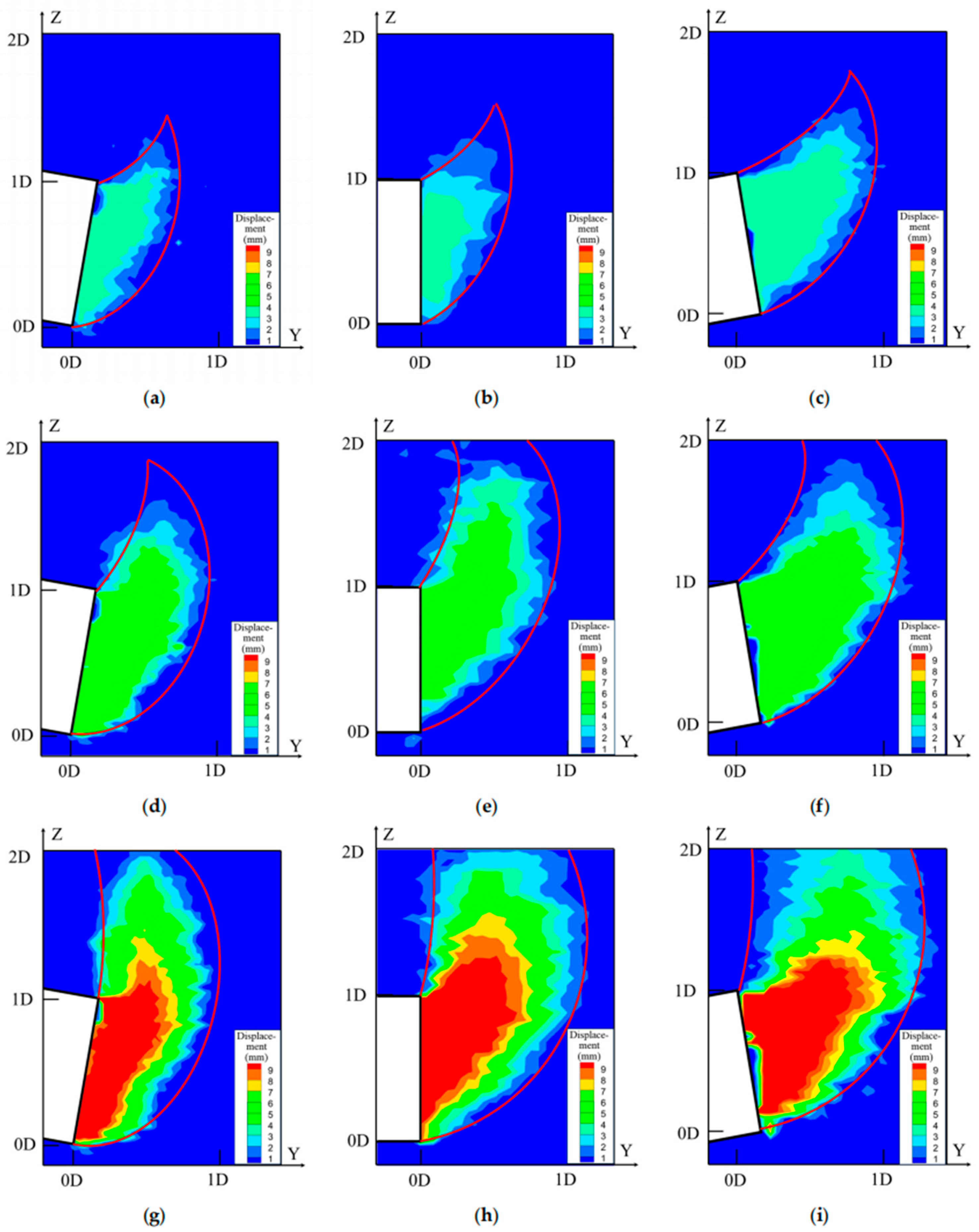
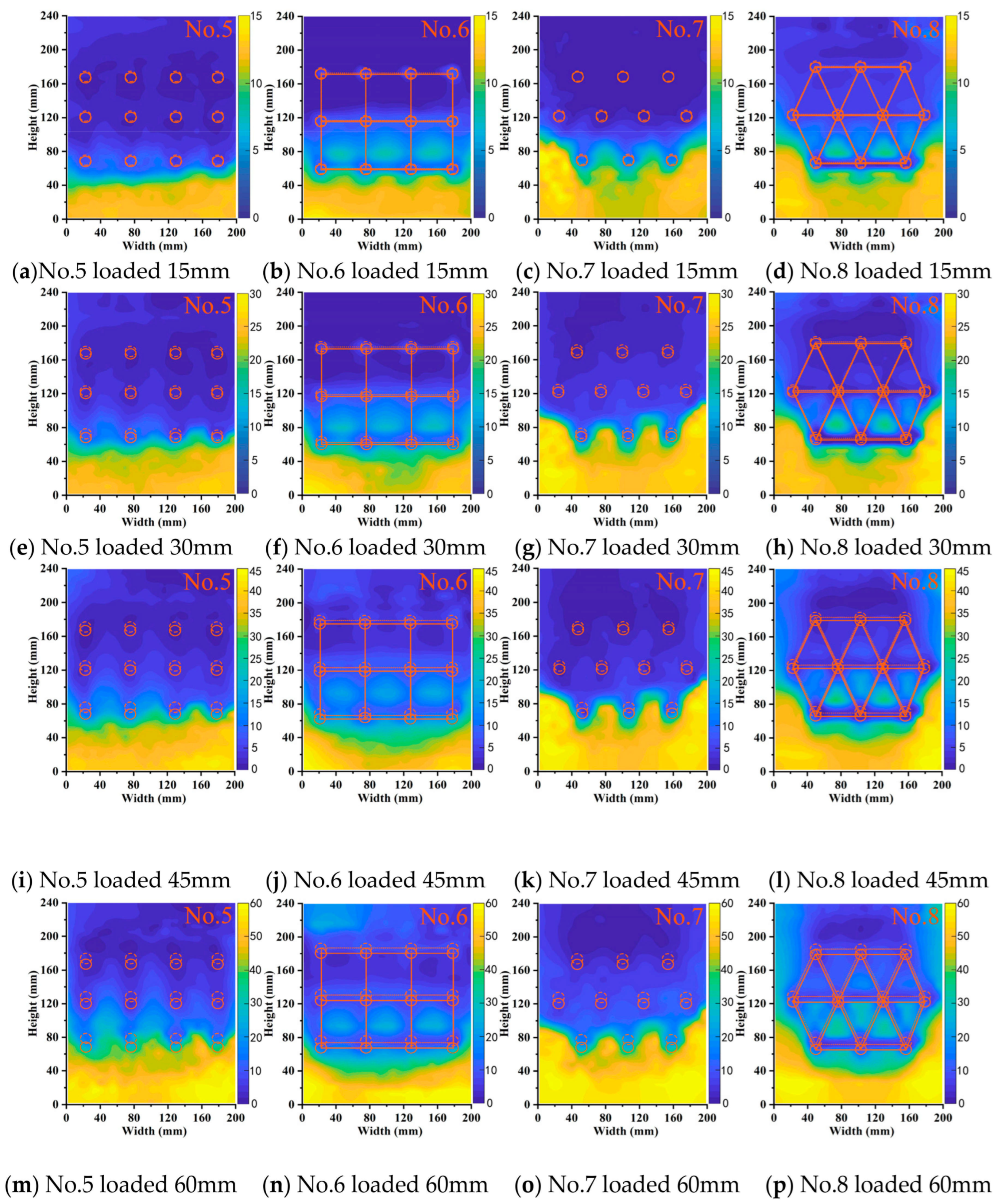
3.1. Foundation Engineering and Soil–Structure Interaction
3.2. Underground Engineering and Excavation Support
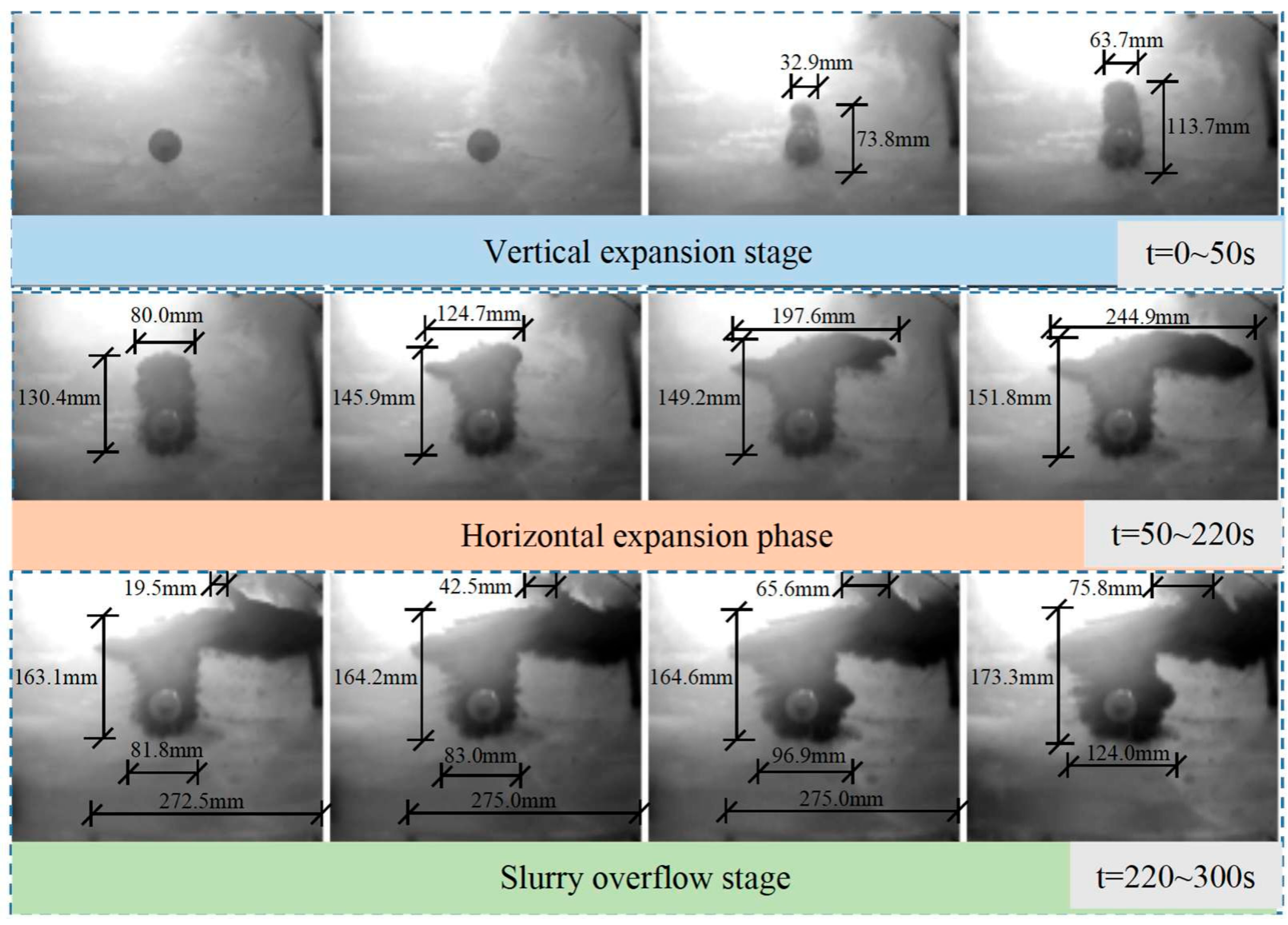
3.3. Seepage, Grouting, and Internal Erosion
3.4. Slope Stability, Sliding Failure, and Disaster Prevention and Mitigation
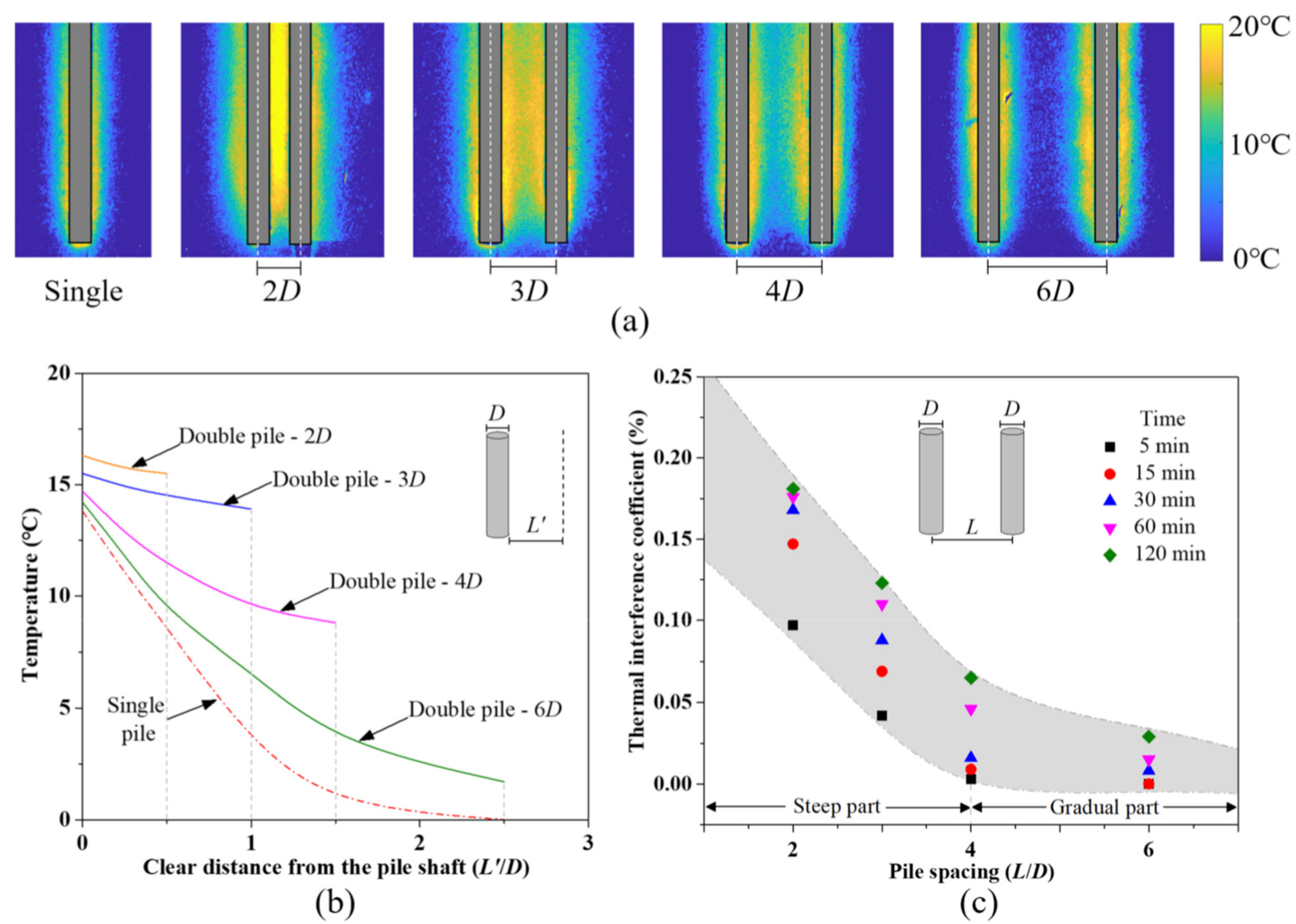
3.5. Thermal Monitoring and Interdisciplinary Applications
4. Applicability Evaluation Framework for Transparent Soil Materials
4.1. Basic Logic of Applicability Evaluation
4.2. Evaluation Dimensions and Main Criteria
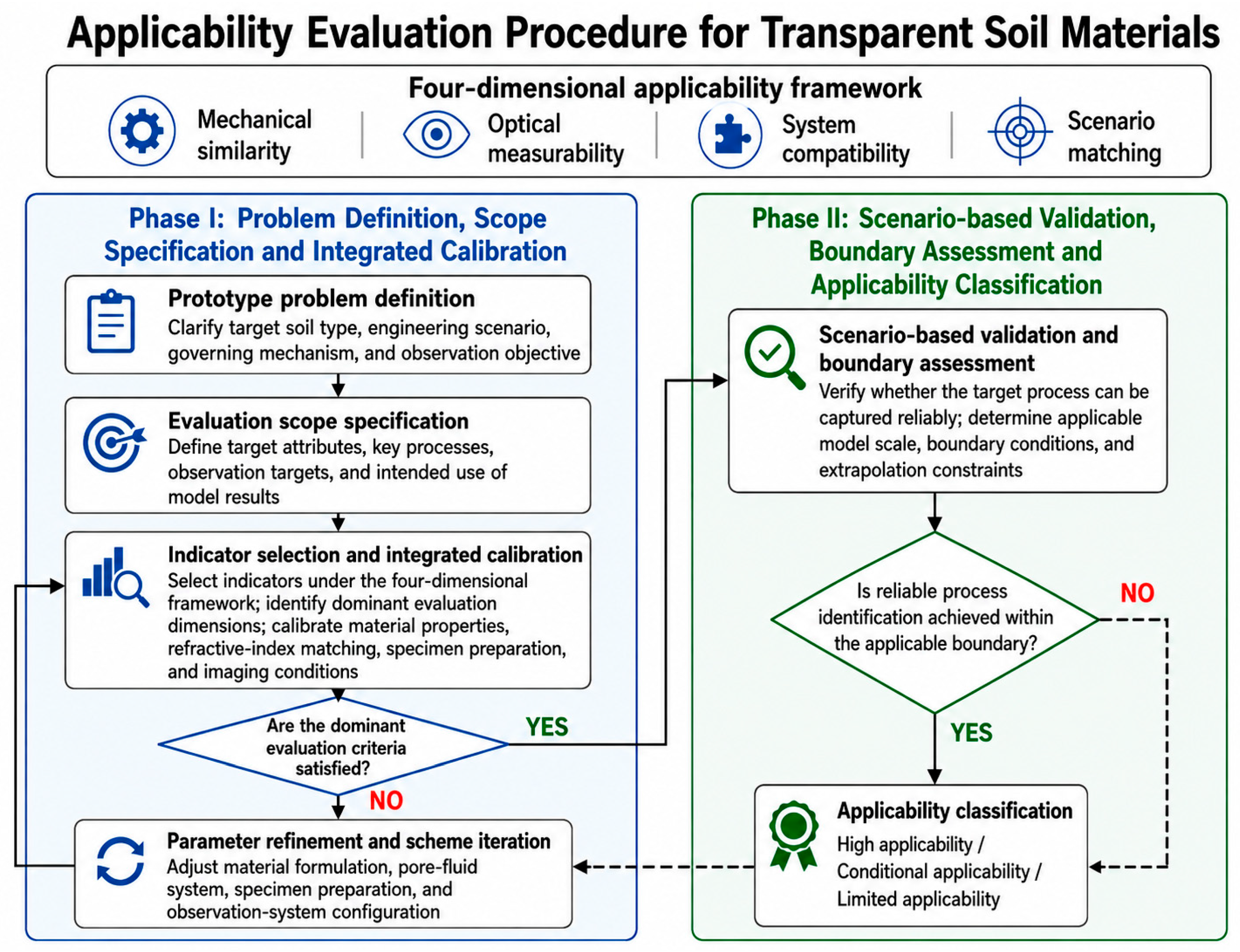
4.3. Evaluation Procedure and Applicability Classification
4.4. Evaluation of Representative Material–Scenario Combinations
5. Existing Challenges and Future Directions
5.1. Insufficient Material Equivalence and Scenario Adaptation
5.2. Limited Test Standardization and Scale Extrapolation
5.3. Need for Improved Multi-Field Coupling and Data Integration
6. Conclusions
Author Contributions
Funding
Institutional Review Board Statement
Informed Consent Statement
Data Availability Statement
Conflicts of Interest
References
- Liu, W.; Cheng, W.; Liu, X.; Zhang, Z.; Yue, Z.; Yang, L.; Shen, A. Effects of loading rate and notch geometry on dynamic fracture behavior of rocks containing blunt V-notched defects. Rock Mech. Rock Eng. 2024, 57, 2501–2521. [Google Scholar]
- Liu, X.; Jia, X.; Liu, W.; Nie, B.; Zhang, C.; Song, D. Mechanical strength and porosity changes of bituminous coal induced by supercritical CO2 interactions: Influence of saturation pressure. Geoenergy Sci. Eng. 2023, 225, 211691. [Google Scholar] [CrossRef]
- Kirkpatrick, W.M.; Belshaw, D.J. On the interpretation of the triaxial test. Géotechnique 1968, 18, 336–350. [Google Scholar] [CrossRef]
- Bransby, P.L.; Milligan, G.W.E. Soil deformations near cantilever sheet pile walls. Géotechnique 1975, 25, 175–195. [Google Scholar] [CrossRef]
- Lorenz, H.; Heinz, W. Changes of density in sands due to loading. In Proceedings of the 7th International Conference on Soil Mechanics and Foundation Engineering, Mexico City, Mexico, 25–29 August 1969; pp. 267–273. [Google Scholar]
- Wong, R.C.K. Mobilized strength components of Athabasca oil sand in triaxial compression. Can. Geotech. J. 1999, 36, 718–735. [Google Scholar] [CrossRef]
- Ng, T.T.; Kelley, M.; Sampson, J. MRI studies of direct shear tests on round particles. In Proceedings of the 11th Conference of the ASCE Engineering Mechanics Division, Fort Lauderdale, FL, USA, 19–22 May 1996; pp. 572–575. [Google Scholar]
- Desrues, J.; Mokni, M.; Mazerolle, F. Tomodensitometry and localization in sands. In Proceedings of the 10th European Conference on Soil Mechanics and Foundation Engineering, Florence, Italy, 26–30 May 1991; pp. 61–64. [Google Scholar]
- Posadas, D.A.N.; Tannús, A.; Panepucci, H.C.; Crestana, S. Magnetic resonance imaging as a non-invasive technique for investigating 3-D preferential flow occurring within stratified soil samples. Comput. Electron. Agric. 1996, 14, 255–267. [Google Scholar] [CrossRef]
- Sutton, M.A.; Wolters, W.J.; Peters, W.H.; Ranson, W.F.; McNeill, S.R. Determination of displacements using an improved digital correlation method. Image Vis. Comput. 1983, 1, 133–139. [Google Scholar] [CrossRef]
- Yamaguchi, I. Speckle displacement and decorrelation in the diffraction and image fields for small object deformation. Opt. Acta Int. J. Opt. 1981, 28, 1359–1376. [Google Scholar] [CrossRef]
- Raschke, S.A.; Hryciw, R.D.; Donohoe, G.W. Microdeformations in sands by digital image processing and analysis. Transp. Res. Rec. 1996, 1548, 31–37. [Google Scholar] [CrossRef]
- Gustafsson, L.; Gustafsson, P. Studying mixed granular flows by image analysis. In Proceedings of the Engineering Mechanics: 11th Conference, Fort Lauderdale, FL, USA, 19–22 May 1996; pp. 100–103. [Google Scholar]
- Chouhan, K.; Chavda, J.T. A review on digital image correlation in experimental geotechnics. Indian Geotech. J. 2024, 54, 639–656. [Google Scholar]
- Pan, B.; Qian, K.; Xie, H.; Asundi, A. Two-dimensional digital image correlation for in-plane displacement and strain measurement: A review. Meas. Sci. Technol. 2009, 20, 062001. [Google Scholar] [CrossRef]
- Peters, W.H.; Ranson, W.F.; Sutton, M.A.; Chu, T.C.; Anderson, J. Application of digital correlation methods to rigid body mechanics. Opt. Eng. 1983, 22, 738–742. [Google Scholar] [CrossRef]
- Tang, Z.; Liang, J.; Xiao, Z.; Guo, C.; Hu, H. Large deformation measurement scheme for 3D digital image correlation method. Opt. Lasers Eng. 2012, 50, 122–130. [Google Scholar] [CrossRef]
- Tong, L.; Zhou, H.; Sheil, B.; Liu, H.; Chen, R. Full-field internal 3D deformations measurement of transparent soil using 3D-DIC combined with optical slicing. Acta Geotech. 2024, 19, 1627–1648. [Google Scholar] [CrossRef]
- Liu, J. Visualization of Three-Dimensional Deformations Using Transparent “Soil” Models. Ph.D. Thesis, Polytechnic University, Brooklyn, NY, USA, 2003. [Google Scholar]
- Adrian, R.J. Particle-imaging techniques for experimental fluid mechanics. Annu. Rev. Fluid Mech. 1991, 23, 261–304. [Google Scholar] [CrossRef]
- Sanvitale, N.; Bowman, E.; Cabrera, M.A. Transparent synthetic soils for geotechnical modelling: A review. Environ. Eng. Geosci. 2021, 27, 127–143. [Google Scholar]
- Sadek, S.; Iskander, M.G.; Liu, J. Accuracy of digital image correlation for measuring deformations in transparent media. J. Comput. Civ. Eng. 2003, 17, 88–96. [Google Scholar] [CrossRef]
- Liu, C.; Tang, X.; Wei, H.; Wang, P.; Zhao, H. Model tests of jacked-pile penetration into sand using transparent soil and incremental particle image velocimetry. KSCE J. Civ. Eng. 2020, 24, 1128–1145. [Google Scholar] [CrossRef]
- Zhang, Z.; Tao, F.; Han, J.; Xu, C.; Huang, J. Influence of surface footing loading on soil arching above multiple buried structures in transparent sand. Can. J. Civ. Eng. 2021, 48, 124–133. [Google Scholar] [CrossRef]
- Wang, Z.; Luo, G.; Kong, G.; Zhang, Y.; Lu, J.; Chen, Y.; Yang, Q. Centrifuge model tests on anchor pile of single point mooring system under oblique pullout load using transparent sand. Ocean Eng. 2022, 264, 112441. [Google Scholar] [CrossRef]
- Dai, X.; He, L.; Wu, W.; Chen, J. Visualization experiment technology based on transparent geotechnical materials and its engineering application. J. Vis. 2023, 26, 145–159. [Google Scholar]
- Yu, G.; Cui, Y.; Chang, J. Visualization of Internal Characteristics of Soil Structures Based on Transparent Soil Technology. Int. J. Civ. Eng. 2025, 23, 1535–1547. [Google Scholar] [CrossRef]
- He, S.; Li, H.; Ye, L.; Huang, H.; Peng, W.; Xie, P.; Wang, Z.; Zhang, Y.; Lin, S.; Wen, H.; et al. Physicomechanical characteristics and mix proportions of a new transparent cemented soil: Similar material tests and ANOVA/ANOR analyses. Front. Mater. 2025, 12, 1569566. [Google Scholar] [CrossRef]
- Zhang, W.; Wang, W.; Wang, Z.; Zhang, R.; Goh, A.T.C. Review of transparent soil model testing technique for underground construction: Ground visualization and result digitalization. Undergr. Space 2022, 7, 702–723. [Google Scholar] [CrossRef]
- Wang, B.; Hou, H.; Zhu, Z. Transparency and applications of transparent soil: A review. Geotech. Res. 2021, 8, 130–138. [Google Scholar] [CrossRef]
- Yi, L.; Lyu, H.; Ye, T.; Zhang, Y. Quantification of the transparency of the transparent soil in geotechnical modeling. Adv. Civ. Eng. 2018, 2018, 2915924. [Google Scholar] [CrossRef]
- Yi, L. Transparency of Transparent Soil and Its Influence on Visualization Experimental Technology. Ph.D. Thesis, Zhejiang University, Hangzhou, China, 2017. [Google Scholar]
- Kenney, T.C.; Lau, D. Internal stability of granular filters. Can. Geotech. J. 1985, 22, 215–225. [Google Scholar] [CrossRef]
- Dai, X.; He, L.; Chen, J. A method for matching the refractive index and dynamic viscosity of transparent replicas of rock for flow visualization. J. Vis. 2023, 26, 275–287. [Google Scholar]
- Ge, J.; Xu, Y. A method for making transparent hard rock-like material and its application. Adv. Mater. Sci. Eng. 2019, 2019, 1274171. [Google Scholar] [CrossRef]
- Xie, P.; Li, Z.; Li, C.; Wen, H.; Yue, Z.; Zhu, H.; Fan, Z.; Geng, X.; Duan, H. The optimal mix proportion design method of similar transparent materials in soft soil foundation. Sci. Rep. 2025, 15, 28048. [Google Scholar] [CrossRef] [PubMed]
- Leng, X.; Cui, L.; Dong, Y.; Wang, C.; Pang, R. Study on the physical behaviour and strength characteristics of transparent soil under multiple influencing factors. Sci. Rep. 2025, 15, 16065. [Google Scholar] [CrossRef] [PubMed]
- Leng, X.; Wang, C.; Pang, R.; Sheng, Q.; Chen, J. Material preparation and geotechnical properties of transparent cemented soil for physical modeling. Front. Mater. 2021, 8, 740388. [Google Scholar] [CrossRef]
- Kong, G.; Li, H.; Yang, G.; Cao, Z. Investigation on shear modulus and damping ratio of transparent soils with different pore fluids. Granul. Matter 2018, 20, 8. [Google Scholar] [CrossRef]
- Kong, G.Q.; Sun, X.J.; Xiao, Y.; Zhao, H.H. Comparative experiments on compressive deformation properties of transparent soil and standard sand. Chin. J. Geotech. Eng. 2016, 38, 1895–1903. (In Chinese) [Google Scholar]
- He, L. Study on Soil Deformation Induced by Double-Circle Shield Tunnel Construction Based on Transparent Soil Technology. Ph.D. Thesis, Chongqing Jiaotong University, Chongqing, China, 2021. [Google Scholar]
- Xiang, Y.Z. Study on Deformation Mechanism of Tunnel Excavation in Sand Strata Based on Transparent Soil Test Technique. Ph.D. Thesis, Chongqing University, Chongqing, China, 2019. [Google Scholar]
- Sadek, S.; Iskander, M.G.; Liu, J. Geotechnical properties of transparent silica. Can. Geotech. J. 2002, 39, 111–124. [Google Scholar] [CrossRef]
- Li, Y.; Zhou, H.; Liu, H.; Ding, X.; Zhang, W. Geotechnical properties of 3D-printed transparent granular soil. Acta Geotech. 2021, 16, 1789–1800. [Google Scholar]
- Cai, J.; Perfect, E. Modelling with transparent soils: Visualizing soil structure interaction and multi phase flow, non-intrusively. Vadose Zone J. 2012, 11, 1–2. [Google Scholar] [CrossRef]
- Federal Highway Administration. Geotechnical Aspects of Pavements: Reference Manual; FHWA-NHI-05-037; U.S. Department of Transportation, Federal Highway Administration: Washington, DC, USA, 2006. [Google Scholar]
- Kong, G.Q.; Liu, L.; Liu, H.L.; Cao, Z.H. Comparative triaxial tests on strength characteristics of glass-sand transparent soil and standard sand. J. Build. Mater. 2014, 17, 250–255. (In Chinese) [Google Scholar] [CrossRef]
- Lei, H.; Liu, M.; Zhai, S.; Liu, Y.; Jiang, M. Evaluation of geotechnical properties of fused quartz for transparent material. Jpn. Geotech. Soc. Spec. Publ. 2020, 8, 170–175. [Google Scholar] [CrossRef][Green Version]
- Wu, Y.J.; Han, Y.D.; Tang, X.; Chen, M.; Chen, T.H. Transparent soil test and numerical simulation of remediation reagent migration in contaminated soil by high-pressure jet grouting. J. Tongji Univ. Nat. Sci. 2020, 48, 1305–1311. (In Chinese) [Google Scholar]
- Iskander, M.G.; Liu, J.; Sadek, S. Transparent amorphous silica to model clay. J. Geotech. Geoenviron. Eng. 2002, 128, 262–273. [Google Scholar] [CrossRef]
- Ganiyu, A.A.; Rashid, A.S.A.; Osman, M.H. Utilisation of transparent synthetic soil surrogates in geotechnical physical models: A review. J. Rock Mech. Geotech. Eng. 2016, 8, 568–576. [Google Scholar] [CrossRef]
- Sadek, S.G. Soil Structure Interaction in Transparent Synthetic Soils Using Digital Image Correlation. Ph.D. Thesis, Polytechnic University, Brooklyn, NY, USA, 2001. [Google Scholar]
- Gill, D.R.; Lehane, B.M. An optical technique for investigating soil displacement patterns. Geotech. Test. J. 2001, 24, 324–329. [Google Scholar] [CrossRef]
- Hird, C.C.; Stanier, S.A. Modelling helical screw piles in clay using a transparent soil. In Proceedings of the 7th International Conference on Physical Modelling in Geotechnics, Zurich, Switzerland, 27 June–2 July 2010; Volume 2, pp. 769–774. [Google Scholar]
- Zhou, H.; Yuan, J.R.; Liu, H.L.; Ding, X.M. Basic mechanical properties of transparent clay made from spherical silica powder: An experimental study. China J. Highw. Transp. 2021, 34, 172–180. (In Chinese) [Google Scholar]
- Ye, T.; Yi, L.D.; Hu, M.X.; Zhang, Y.; Liu, J.F. Applicability analysis of Laponite RD transparent soil for simulating soft clay. Bull. Sci. Technol. 2019, 35, 154–159, 164. (In Chinese) [Google Scholar]
- Kong, G.; Zhou, Y.; Yang, Q.; Wang, C.; Chen, Y. Geotechnical properties of a new transparent clay. Int. J. Geomech. 2020, 20, 06020032. [Google Scholar] [CrossRef]
- Bilardi, S.; Moraci, N.; Mandaglio, M.C. Predicting the saturated hydraulic conductivity of clayey soils. Geosciences 2020, 10, 393. [Google Scholar] [CrossRef]
- Liu, J.; Iskander, M.G.; Sadek, S. Consolidation and permeability of transparent amorphous silica. Geotech. Test. J. 2003, 26, 390–401. [Google Scholar] [CrossRef]
- Sun, Z.; Kong, G.; Zhou, Y.; Shen, Y.; Xiao, H. Thixotropy of a transparent clay manufactured using Carbopol to simulate marine soil. J. Mar. Sci. Eng. 2021, 9, 738. [Google Scholar] [CrossRef]
- Chen, G.; Ding, X.; Wang, C.; Zhang, L.; Zhang, D. Experimental study on the horizontal bearing performance of precast tapered full-screw pile in transparent soil. Acta Geotech. 2026, 21, 2779–2801. [Google Scholar] [CrossRef]
- Ma, Q.; Li, J.; Liu, L.; Lu, X. Model Test Study on the Bearing Mechanism of Inclined Variable Cross-Section Piles Using Transparent Soil. Appl. Sci. 2024, 14, 6277. [Google Scholar] [CrossRef]
- Derksen, J.; Ziegler, M.; Fuentes, R. Geogrid-soil interaction: A new conceptual model and testing apparatus. Geotext. Geomembr. 2021, 49, 1393–1406. [Google Scholar] [CrossRef]
- Liu, H.; Zhou, H.; Kong, G. XCC pile installation effect in soft soil ground: A simplified analytical model. Comput. Geotech. 2014, 62, 268–282. [Google Scholar] [CrossRef]
- Han, Y.; Chen, Y.; Sarajpoor, S.; Gou, Y.; Li, D. Rigid drainage pile performance in sandy soils: Transparent soil technology, particle image velocimetry, and 3D printing insights. Int. J. Geomech. 2025, 25, 04025181. [Google Scholar] [CrossRef]
- Zhang, L.; Liu, H.; Ding, X.; Chen, R.; Zhou, H.; Li, Y.; Ren, X. Development of transparent soil grouting test system and its application in grouted gravel pile. Measurement 2024, 234, 114899. [Google Scholar] [CrossRef]
- Zhang, M.; Gu, S. Stability Analysis of the Longitudinal Slope Linear Shield Tunnel Excavation Face. Appl. Sci. 2025, 15, 4083. [Google Scholar] [CrossRef]
- Wang, M.; Li, S.; Zhou, H.; Peng, K.; Yuan, C. Visualization investigation of the large deformation and instability failure of shield tunnel using transparent soil models. Eng. Fail. Anal. 2024, 166, 108861. [Google Scholar] [CrossRef]
- Ads, A.; Iskander, M.G.; Nazir, A.K. 3D ground movements due to tunnel face collapse. In Proceedings of the Geo-Congress 2020: Engineering, Monitoring, and Management of Geotechnical Infrastructure, Minneapolis, MN, USA, 25–28 February 2020; pp. 309–319. [Google Scholar]
- Zhang, W.; Zhong, H.; Xiang, Y.; Wu, D.; Zeng, Z.; Zhang, Y. Visualization and digitization of model tunnel deformation via transparent soil testing technique. Undergr. Space 2022, 7, 564–576. [Google Scholar] [CrossRef]
- Ma, S.; Duan, Z.; Huang, Z.; Liu, Y.; Shao, Y. Study on the stability of shield tunnel face in clay and clay-gravel stratum through large-scale physical model tests with transparent soil. Tunn. Undergr. Space Technol. 2022, 119, 104199. [Google Scholar] [CrossRef]
- Zhang, L.; Liu, H.; Ding, X.; Ou, Q.; Wang, C. Visual experimental investigation on the performance of grouted gravel pile during construction process in clay. Acta Geotech. 2024, 19, 7369–7387. [Google Scholar] [CrossRef]
- Guo, P.; Zhao, W. Experimental Study on Grouting Visualization of Cover Layer Based on Transparent Soil. Appl. Sci. 2025, 15, 7854. [Google Scholar] [CrossRef]
- Liang, Y.; Dai, L.; Wei, Q. Experimental study on seepage erosion based on transparent soil and particle tracing technology. Chin. J. Geotech. Eng. 2022, 44, 1133–1140. (In Chinese) [Google Scholar]
- Liang, Y.; Chen, P.F.; Lin, J.D.; Sun, Z.W. Pore flow characteristics of porous media based on transparent soil technology. Chin. J. Geotech. Eng. 2019, 41, 1361–1366. (In Chinese) [Google Scholar]
- Hunter, R.P.; Bowman, E.T. Visualisation of seepage-induced suffusion and suffosion within internally erodible granular media. Géotechnique 2018, 68, 918–930. [Google Scholar] [CrossRef]
- Zhou, C.; Ma, W.; Sui, W. Transparent soil model test of a landslide with umbrella-shaped anchors and different slope angles in response to rapid drawdown. Eng. Geol. 2022, 307, 106765. [Google Scholar] [CrossRef]
- Cong, L.; Wang, Y.; Hao, Y.; Yang, X.; Gao, X.; Zhang, B. Study on the anti-slide mechanism of double-row circular pile by model test using PIV, transparent soil material and 3D printing technology. PLoS ONE 2024, 19, e0309727. [Google Scholar] [PubMed]
- Wang, Z.; Jia, J.; Zhang, L. A Transparent Soil Experiment to Investigate the Influence of Arrangement and Connecting Beams on the Pile–Soil Interaction of Micropile Groups. Sensors 2024, 24, 5448. [Google Scholar] [CrossRef] [PubMed]
- Sui, W.; Zheng, G. An experimental investigation on slope stability under drawdown conditions using transparent soils. Bull. Eng. Geol. Environ. 2018, 77, 977–985. [Google Scholar]
- Chen, J.F.; Du, C.C.; Qi, H.; Liu, Y.; Zhang, X. Study on slope stability considering rainfall infiltration effects. J. Tongji Univ. Nat. Sci. 2023, 51, 206–214. (In Chinese) [Google Scholar]
- Wang, X.T.; Chen, M.; Tang, Y.Y.; Li, Y.; Zhang, J. Evolution of slope stability considering mining disturbance. J. China Coal Soc. 2024, 49, 3051–3060. (In Chinese) [Google Scholar]
- Zhou, Y.; Wang, J.; Li, C.; Kong, G.; Li, R. Thermal interference process between two energy piles in 2D model using transparent soil. Energy 2024, 308, 132442. [Google Scholar] [CrossRef]
- Li, R.; Liu, Y.; Zhou, Y. Visualization of thermal interference effects in energy piles using transparent soil. Front. Phys. 2026, 14, 1753194. [Google Scholar] [CrossRef]
- Jones, C.Y.; Engelhardt, I.; Patko, D.; Dupuy, L.; Holden, N.; Willats, W.G.T. High-resolution 3D mapping of rhizosphere glycan patterning using molecular probes in a transparent soil system. Cell Surf. 2021, 7, 100059. [Google Scholar] [CrossRef] [PubMed]
- Xie, J.; Wu, Q.; Feng, L.; Li, J.; Zhou, Y.; Wu, G.-Z.; Men, Y. Super-transparent soil for in situ observation of root phenotypes. Molecules 2024, 29, 2677. [Google Scholar] [CrossRef] [PubMed]



| Material Type | Grain Shape/Structure | Void Ratio or Packing | Strength/Compressibility | Permeability/Pore Fluid Issue | Optical and System Compatibility | Applicability Judgment |
|---|---|---|---|---|---|---|
| Natural sand | Rounded–angular mineral particles; morphology depends on source, transport history, and weathering | e ≈ 0.43–0.85 for typical dense/loose and uniform/well-graded sands [46] | Fujian standard sand: φp ≈ 30–37° at Dr = 30–70% in comparison tests with transparent sand [47] | k ≈ 10−6–10−2 m/s, depending on gradation, fines content, and density [46] | Opaque; internal fields cannot be directly observed optically | Reference material for evaluating mechanical similarity |
| Fused quartz sand | Angular–subangular; high purity; composition close to siliceous sand | Typical particle size: 0.5–1.0 mm; Dr = 30–70% in representative tests [40,42] | φ ≈ 38.8°; φp ≈ 40.9–47.3°; α1–2 ≈ 0.192 MPa−1 [41] | Intrinsic permeability ≈ 18.7–31.5 D; RI-matched pore fluid required [48] | High transparency; compatible with laser slicing, PIV, and DIC | Best match for sandy soil model tests; suitable for pile, tunnel, deformation, and seepage visualization |
| Silica gel particles | Porous silica-based particles; hygroscopic; lower particle strength than mineral sand | Typical particle size: approximately 0.5–5.0 mm [43] | φ ≈ 29–42°; c ≤ 1 kPa; compressibility higher than fused quartz and many natural sands [43] | No universal hydraulic conductivity; seepage response affected by interparticle voids, internal porosity, and pore fluid absorption [43] | Acceptable transparency, but optical stability may be affected by hygroscopicity and fluid interaction | Conditionally applicable; requires calibration before replacing natural sand |
| Hydrogel beads/aquarium beads | Smooth, regular, and highly deformable particles | Porosity around 0.45 in representative hydrogel/aqua-bead systems [29] | Very low strength: c or compressive strength ≈ 0.005–0.012 kPa; Cc ≈ 0.10–0.15 [29] | Hydraulic conductivity k ≈ 6 × 10⁻¹⁰–7 × 10⁻⁴ m/s; strongly affected by swelling and fluid interaction [29] | High transparency; suitable for flow, migration, and diffusion visualization, including reagent migration tests [49] | Poor mechanical similarity; mainly suitable for qualitative visualization and flow/migration observation |
| 3D-printed transparent resin particles | Designed particle shape, size, and surface morphology [44] | emin ≈ 0.598; emax ≈ 0.721–0.735 for selected printed particles [44] | φp ≈ 34.03–43.14° in direct shear tests; φp ≈ 35.76–44.20° in CD triaxial tests [44] | No universal k; depends on particle design, packing density, and pore fluid compatibility | Good designability; compatible with controlled particle-shape and image-based studies | Suitable for mechanism-oriented particle-shape studies; not a direct substitute without calibration |
| Material Type | Particle/Structure Feature | Water Content or Void Ratio | Strength/Compressibility | Permeability/Consolidation Behavior | Optical and System Compatibility | Applicability Judgment |
|---|---|---|---|---|---|---|
| Natural clay | Plate-like clay minerals; fabric affected by mineralogy, deposition, stress history, and organic content | e ≈ 0.6 for stiff glacial clay; e ≈ 1.2 for soft glacial clay; e ≈ 1.9–5.2 for organic or montmorillonitic soft clay [46] | Strength and compressibility vary strongly with water content, void ratio, plasticity, and stress history | Representative fine-grained/plastic soils: saturated hydraulic conductivity k ≈ 1.2 × 10⁻¹¹–3.9 × 10⁻⁶ m/s [58] | Opaque; internal deformation and seepage cannot be directly observed optically | Reference material for evaluating transparent clay similarity |
| Amorphous silica | Silica-based fine particles; median aggregate size ≈ 1.4–175 μm; specific gravity ≈ 2.0–2.1 [59] | Mixture-dependent; high apparent void ratio due to internal porosity of silica aggregates | Clay-like strength and compressibility under selected mixtures; Cα/Cc ≈ 0.03–0.05 in reported consolidation tests [51,52,59] | Hydraulic conductivity k ≈ 2 × 10⁻⁸–1 × 10⁻⁵ m/s in flexible-wall tests; consolidation behavior similar to organic clay or peat [51,52,59] | Good transparency under RI matching; compatible with DIC/PIV and laser slicing | Suitable for low-plasticity clay, organic-clay-like, or conventional transparent clay model tests after calibration |
| Fumed silica | Very fine silica particles; large specific surface area; gel-like structure | High pore fluid content; structure strongly affected by concentration | High compressibility; suitable for highly compressible clay or marine soft clay analogs [53,54] | Consolidation and permeability are sensitive to mixture ratio and preparation method [53,54] | High transparency, but specimen preparation and imaging stability need control | Conditionally applicable for highly compressible fine-grained soils |
| Fused silica powder | High-purity silica powder; particle morphology affects scattering | Mixture-dependent; lower-compressibility clay-like specimens can be prepared | Mechanical response depends on particle size, pore fluid, and preparation method [55] | Permeability and consolidation behavior require mixture-specific calibration [55] | Transparency may decrease due to particle morphology and light scattering | Suitable for low-compressibility silty clay or general clay-like problems after calibration |
| Laponite RD | Synthetic smectite-like nanoparticles; clear thixotropy | High-water-content system; concentration and aging effects are significant [56] | Low strength and high compressibility; thixotropic behavior is important [56] | Long consolidation time; strength and permeability may evolve with aging [56] | Good transparency, but time-dependent behavior affects repeatability | Suitable for high-water-content soft clay or marine sediment analogs |
| U10 | Carbopol-based water-transparent clay; hydrogel-like structure | 0.75% U10 mixture has been used in representative transparent clay tests [60] | Very low strength: Su,peak ≈ 0.26–0.30 kPa for 0.75% U10 mixture; sensitivity St ≈ 2.8–3.4 [60] | Hydraulic conductivity k ≈ 5.3 × 10⁻⁹ m/s; deformation response requires calibration for each mixture [57] | High light transmittance; suitable for water-based transparent clay systems | Suitable for highly compressible fine-grained soil problems; not a general clay substitute |
| Application Scenario | Dominant Process to Be Captured | Key Material Parameters to Focus on | Key Experimental Controls |
|---|---|---|---|
| Foundation engineering and soil–structure interaction | Pile penetration, load transfer, local compaction, shear-zone development | Strength, stiffness, density/void ratio, dilatancy, particle size, interface friction | Displacement-field resolution, pile–soil interface condition, boundary effect, model scale |
| Underground engineering and excavation support | Excavation disturbance, face instability, loosening zone, ground deformation | Strength, stiffness, density/void ratio, dilatancy or compressibility, target-stratum similarity | Light transmission thickness, model box size, laser-sheet stability, two- or three-dimensional deformation tracking |
| Seepage, grouting, and internal erosion | Flow path, grout diffusion, particle migration, erosion initiation | Permeability, pore fluid viscosity, void ratio, particle size distribution, fines content, erodibility | Flow-rate control, refractive-index matching, tracer reliability, flow-field visualization method |
| Slope stability, sliding failure, and disaster prevention | Slope deformation, slip-surface evolution, local collapse, support interaction | Strength, stiffness/compressibility, density/void ratio, permeability under water level change, deformation capacity | Large-deformation tracking, imaging frequency, boundary condition, speckle or tracer stability |
| Thermal monitoring and interdisciplinary applications | Temperature field, thermal interference, contaminant migration, root growth, long-term response | Refractive-index temperature sensitivity, thermal/chemical stability, pore fluid stability, biocompatibility, long-term stability | Image–temperature calibration, illumination stability, environmental control, long-term imaging repeatability |
| Evaluation Dimension | Core Question | Main Criteria | Applicability Implication |
|---|---|---|---|
| Mechanical similarity | Is it close to the target soil? | Compressibility, shear strength, consolidation behavior, permeability, and dominant deformation mode | Determines whether the material can support mechanism analysis of the target problem |
| Optical measurability | Can it be observed stably? | Transparency, effective light transmission thickness, refractive-index stability, and image recognition quality | Determines whether internal displacement, flow, or failure processes can be effectively captured |
| System compatibility | Can it be measured accurately? | Model box size, light source arrangement, camera resolution, speckle/tracer method, and image-processing algorithm | Determines the accuracy, repeatability, and reliability of test results |
| Scenario matching | Does it serve the target problem? | Consistency among the material system, observation object, and dominant engineering mechanism | Determines whether material selection and test conclusions have engineering significance |
| Material–Scenario Combination | Mechanical Similarity | Optical Measurability | System Compatibility | Scenario Matching | Overall Judgment | Main Basis |
|---|---|---|---|---|---|---|
| Fused quartz sand–foundation engineering | High | High | High | High | High applicability | The material properties are relatively stable. It is suitable for single-pile and medium- to small-scale models in sandy foundations, and can effectively identify pile-side deformation and load transfer processes. |
| Fused quartz sand–underground engineering | Moderate | Moderate | Moderate | Moderate | Conditionally applicable | It can be used to identify excavation-induced disturbance and instability processes. However, large-scale tunnel models are limited by light transmission thickness, model box size, and continuous displacement field recognition. |
| Transparent sand–seepage and internal erosion | Moderate | Moderate | Moderate | High | Conditionally applicable | It can visualize flow paths and particle migration. However, pore fluid viscosity, medium permeability, and time scale require careful calibration. |
| Amorphous silica–low-plasticity clay problems | High | Moderate | Moderate | High | Conditionally applicable | Its strength, permeability, and consolidation characteristics are close to those of low-plasticity clay. However, plasticity and thixotropic behavior are still affected by the pore fluid system and sample preparation conditions. |
| Fumed silica–highly compressible clay/marine soft clay | High | Moderate | Moderate | High | Conditionally applicable | It is suitable for modeling highly compressible fine-grained soils. However, its strong compressibility means that sample preparation and imaging conditions strongly affect the results. |
| Laponite RD/U10–high-water-content weak fine-grained soil | Moderate | High | Moderate | Moderate | Conditionally applicable | It has good transparency and is suitable for low-strength and high-water-content problems. However, its low strength and long consolidation time make it unsuitable as a general substitute for clay. |
| Functionalized transparent soil–thermal and interdisciplinary applications | Moderate | Moderate | Moderate | Moderate | Limited applicability | It can be used for thermal field or multi-field process visualization. However, the image–temperature relationship must be strictly calibrated, and the effects of temperature, chemical environment, and long-term stability must be controlled. |
| Main Challenge | Specific Manifestation | Future Direction |
|---|---|---|
| Insufficient material equivalence | Particle morphology, compressibility, permeability, and soil structure still differ from those of natural soils | Optimize materials for target soils and engineering scenarios |
| Insufficient scenario adaptation | A single material is difficult to apply across foundation engineering, underground engineering, seepage, slope stability, and multi-field coupling problems | Establish material–scenario relationships and clarify applicability boundaries |
| Lack of standardization | Material preparation, transparency evaluation, optical measurement, and image-processing procedures are not unified | Establish repeatable and comparable test standards |
| Limited scale extrapolation | Light transmission thickness, boundary effects, and particle size effects limit large-scale model applications | Develop three-dimensional visualization techniques and validate test results using field monitoring and numerical simulation |
| Insufficient multi-field coupling capability | Material stability and observation accuracy are limited under thermal, chemical, biological, and multiphase flow conditions | Develop functionalized transparent soils and integrated multi-field testing methods |
| Insufficient data accumulation | Raw images, displacement fields, and material parameters lack sharing and reuse mechanisms | Establish transparent soil test databases and intelligent analysis platforms |
Disclaimer/Publisher’s Note: The statements, opinions and data contained in all publications are solely those of the individual author(s) and contributor(s) and not of MDPI and/or the editor(s). MDPI and/or the editor(s) disclaim responsibility for any injury to people or property resulting from any ideas, methods, instructions or products referred to in the content. |
© 2026 by the authors. Licensee MDPI, Basel, Switzerland. This article is an open access article distributed under the terms and conditions of the Creative Commons Attribution (CC BY) license.
Share and Cite
Wang, S.; Zhang, C.; Xia, B.; Wang, M.; Tang, Z.; Xu, W. Material Systems and Applicability Evaluation of Transparent Soil: Toward Transparent Model Testing in Geotechnical Engineering. Infrastructures 2026, 11, 212. https://doi.org/10.3390/infrastructures11070212
Wang S, Zhang C, Xia B, Wang M, Tang Z, Xu W. Material Systems and Applicability Evaluation of Transparent Soil: Toward Transparent Model Testing in Geotechnical Engineering. Infrastructures. 2026; 11(7):212. https://doi.org/10.3390/infrastructures11070212
Chicago/Turabian StyleWang, Shifu, Changxing Zhang, Biao Xia, Meiqian Wang, Zhiyi Tang, and Wei Xu. 2026. "Material Systems and Applicability Evaluation of Transparent Soil: Toward Transparent Model Testing in Geotechnical Engineering" Infrastructures 11, no. 7: 212. https://doi.org/10.3390/infrastructures11070212
APA StyleWang, S., Zhang, C., Xia, B., Wang, M., Tang, Z., & Xu, W. (2026). Material Systems and Applicability Evaluation of Transparent Soil: Toward Transparent Model Testing in Geotechnical Engineering. Infrastructures, 11(7), 212. https://doi.org/10.3390/infrastructures11070212