1. Introduction
The worldwide high demand for oil and gas has encouraged the search for new oil fields in deeper waters, as well as the exploration and exploitation of land fields requiring advanced and specialized techniques. Until 2024, the majority of oil fields exploited in Mexico were located in shallow waters [
1]. Nevertheless, oil fields in shallow waters have reached their production limits. In Mexico, for example, Cantarell, the most important oil field which is located in the Gulf of Mexico, has progressively decreased its oil production since 2004 [
2,
3], impacting the national production significantly. This national production decrement is mainly due to the lack of investment in adequate technology to exploit oil fields in deep waters. As a result, it is necessary to determine a new structural methodology applicable to taller offshore structures for exploring and exploiting oil and gas fields. The platform structural solutions currently available for exploring and exploiting oil fields in deep waters include the following (see
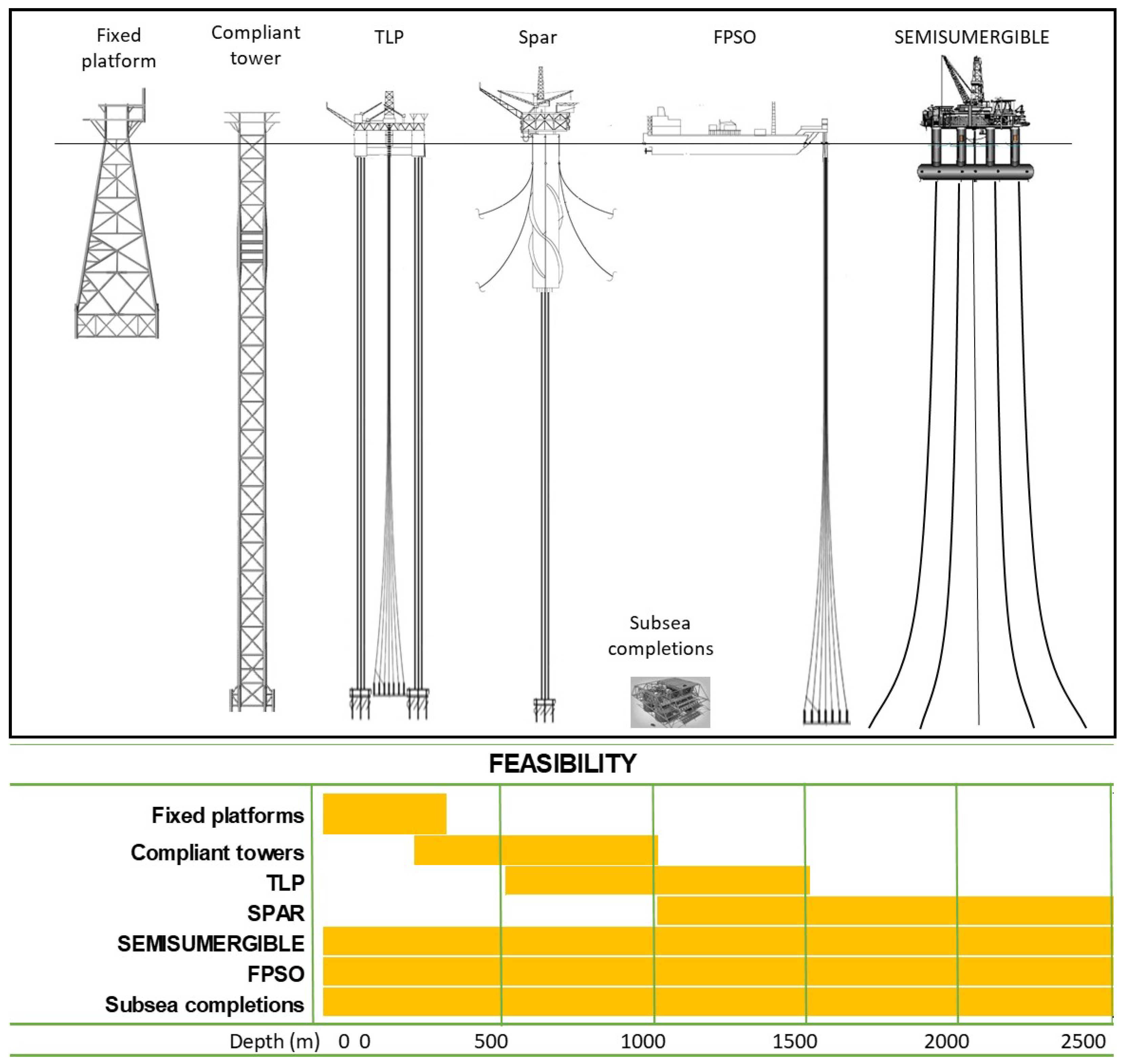
Figure 1):
Fixed platforms, employing structural solutions similar to those used in shallow waters, are feasible for water depths not exceeding 300 m.
Compliant towers take advantage of their inherent flexibility to reduce their response to environmental forces. This design is considered viable for water depths ranging from 300 m to 1000 m.
Floating production (and storage) systems (FSO & FPSO), including semi-submergible systems, offer the advantage of being suitable for water depths reaching up to 2900 m.
Tension leg platforms (TLP) are designed to minimize compression in their legs. These platforms are typically used in water depths ranging from 500 m to 1500 m.
Spars are floating platforms attached to the sea soil by a mooring system. They are suitable in water depths ranging from 1000 m to 2500 m.
Among the structural solutions shown in
Figure 1, compliant towers are the most promising alternative for deep waters ranging from 300 m to 600 m. Compliant towers are structures with few variations in the cross sections and modular structural solutions along the tower, offering slender structures compared with fixed platforms. Both fixed and compliant towers employ tubular steel structural elements to support the conventional decks used for drilling, production operations and processing of oil. Based on their characteristics, there may be distinguished at least four kinds of compliant towers, described in
Table 1 [
5].
Although a compliant tower is less sensitive to gravitational loads applied on deck (due to buoyancy effects) than fixed platforms [
5], compliant towers, being floating systems, allow large displacements. Consequently, their structural design is mainly dominated by their dynamic behavior, non-linearity and randomness of the wave forces [
6], and soil-structure interaction loads [
7,
8].
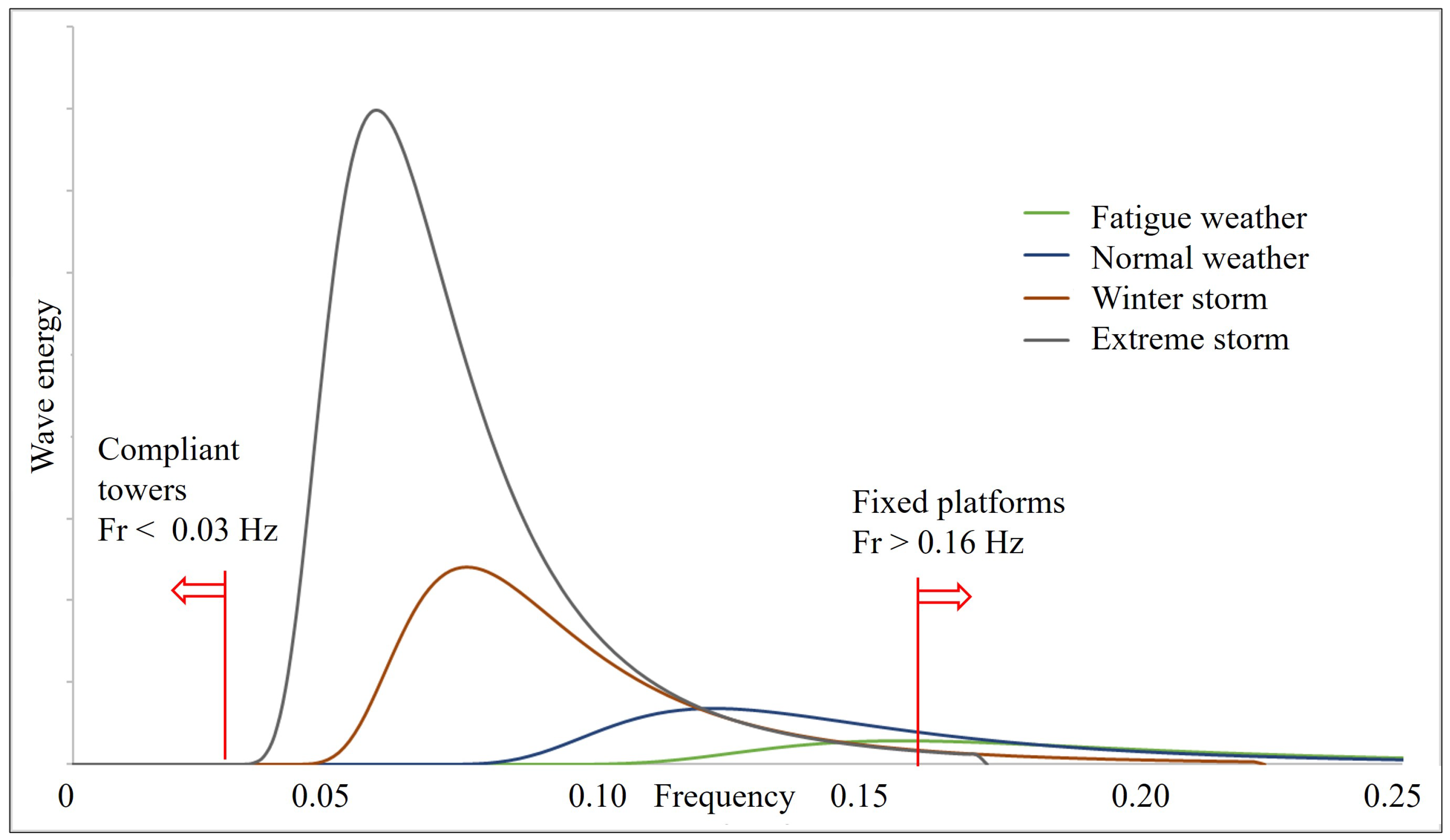
In this context, the term compliant means flexible. The flexibility of this tower serves to mitigate the structural response to the environmental forces in deep waters, as illustrated in
Figure 2. In this figure the red lines and arrows indicate the typical frequency range of compliant towers and fixed platforms. Therefore, it is important to design compliant towers for natural periods longer than the wave energy zone.
Designing compliant towers for deep waters presents new structural analysis challenges. For instance, using buoyancy tanks significantly reduces the total weight transmitted to the foundation, which in turn enables the use of foundation systems similar to those of fixed platforms. This key attribute, along with other advantages, makes compliant tower a technically and economically feasible alternative for water depths ranging from 300 m to 600 m [
9].
Beyond 600 m of water depth, compliant towers need to solve the large-displacement issues they experience under normal operational conditions, which can lead to frequent operational downtime. Since the early 21st century, there has been an increasing need to exploit oil resources from deeper water depths, particularly within the 300 m to 600 m range [
10]. Therefore, certain methodologies have been proposed for the structural analysis of compliant towers dedicated to the production of oil and gas, under extreme environmental conditions at ultimate and serviceability limit states (using ASD design philosophy [
11,
12,
13]). In this study, programming tools has been developed for the pre-analysis and post-processing of the results, considering some variables, such as water depth, environmental parameters, and direction of analysis, among others. These programming tools for pre- and post-processing are used for batch generation of parameterized SACS input files and automatic extraction of key results—such as displacements, base shear, and interaction ratios—from output files, as well as for the generation of graphs that summarize the structural behavior.
2. Methodology Proposed
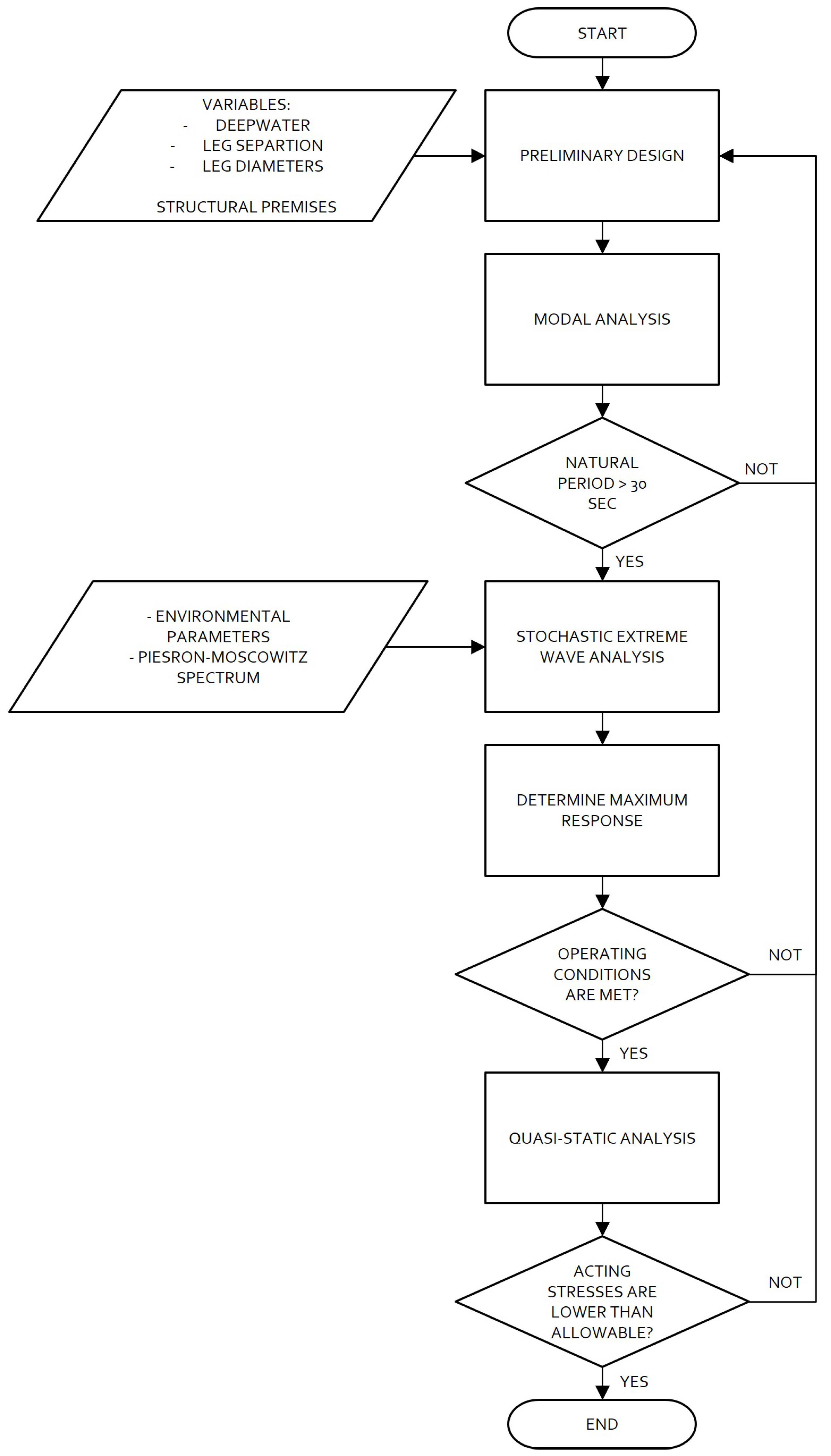
The main purpose this methodology is to analyze the structural behavior of compliant towers under dynamic conditions and to determine the maximum values of the base shear forces, overturning moments, displacements, and accelerations, as well as the minimum value of stress interaction ratios. As shown in the following list, a structural design methodology for compliant towers is mapped out, as illustrated in
Figure 3:
Identification of the main design variables affecting the structural behavior of compliant towers. For instance, leg separation, leg diameters, and buoyancy.
Preliminary design based on the structural configuration and cross sections determined for fixed platforms.
Modal analysis using eigenvalue analysis and considering linear elastic behavior and geometrical non-linearity.
Determination of the case with the maximum response generated by the stochastic extreme wave analysis.
Quasi-static analysis. After obtaining all load effects, preparation of a structural design based on the Allowable Stress Design (ASD) philosophy [
13].
The subsequent sections provides a detailed description of the methodology.
2.1. Methodology Considerations
Even when the proposed methodology is suitable to be applied to compliant towers located in deep waters between 300 m and 600 m, this paper only studies the application of the proposed methodology in a compliant tower for a water depth of 550 m. In future studies, the behavior of other deepwater systems will be examined. Before applying the proposed methodology, the most important variables need to be defined, as well as the structural parameters considered as constants during the analysis, which are described below:
Since structure foundation was not included in the methodology review, piles were considered fixed at 10 times their diameter under the seafloor. This was consistent with the experience regarding soil–structure interaction of fixed platforms reported by local platform designers and researchers.
For simplicity, environmental parameters were not taken into account during the preliminary structural design of compliant towers. Nevertheless, these were considered in subsequent analysis steps.
2.2. Design Variables
The following design variables were proposed for the application of the methodology.
Stiffness changes derived from different leg separations.
Stiffness changes derived from different leg diameter.
Buoyancy of legs. Considering a constant diameter up to the mean sea level.
Buoyancy of tanks. Located at specific points along the tower height.
2.3. Preliminary Design
A preliminary design was done considering gravitational loads, loads caused by accessories, and hydrostatic pressure experienced by the compliant tower.
The proposed cross sections of the elements and the structural configuration were selected from those regularly used in the design of fixed platforms. The critical elements taken into account for the appropriate design of these structures were the following:
Buoyancy caused by tanks located at a strategic place along the structure, considering depths where wave forces were minimum, the stresses by hydrostatic pressure were minimum, and underwater maintenance could be carried out by divers.
Tubular connections in compliance with the recommendations for offshore structural design [
13].
Dimensions of legs, piles, structural frames, and modules determined according to the building capacities of the fabrication yards for platforms structures.
Legs with variable cross-sections, starting from the seafloor. The first one (case A) with external diameter of 3300 mm (130 in), the second one (case B) with 3050 mm (120 in), and the third case (C) with 3175 mm (110 in). These case diameters were reduced gradually until they reached 2135 mm (84 in), 1880 mm (74 in), and 1625 mm (64 in), for cases A, B, and C, respectively, at the work point.
The structural model was developed using 2965 nodes and 7074 elastic beam elements with six degrees of freedom. Tubular and W-shape sections were assigned to beam elements. Additionally, gravitational, buoyant forces, added mass, marine growth, and environmental (wave, wind, and current) loads were applied to the beam elements and nodes. Accessories as buoyancy tanks and ring reinforcement were considered in the structural model. Boundary conditions were deemed as fixed in the piles at a depth of ten times its diameter.
Table 2 describes the specific criteria used in the structural configuration of the compliant tower, where among the most important considerations, it is indicated that no joint flexibility was considered in all numerical models. This is because a parametric study was carried out with and without joint flexibility, and the structural response obtained in both numerical models was similar. The numerical models executed for evaluating the proposed methodology were developed with the software SACS CONNECT v(16.0), provided by the Instituto Mexicano del Petróleo (IMP).
2.4. Modal Analysis
Upon completion of the preliminary design, a modal analysis to obtain the natural vibrating periods was carried out. In this analysis, the first eight mode shapes and the corresponding natural frequencies were obtained addressing the recommendation of having the cumulative mass participation, in the directions considered, above 90% of the total mass necessary for determining a well-accurate dynamic response.
As previously mentioned in the preliminary design, this modal analysis considered that piles were embedded at a depth of ten times the pile diameter. Additional to the weight of the sole structure and the mass on the deck, entrapped water masses and added mass for the modal were also internally calculated using the software of marine growth, as per the recommendations of ETP [
14] and API [
13].
2.5. Stochastic Extreme Wave Analysis
According to the place of location of the compliant tower, in the Gulf of Mexico, typical environmental parameters associated to water depths for operating and storms conditions (significant wave height and peak period, wind and current velocities) needed to be considered.
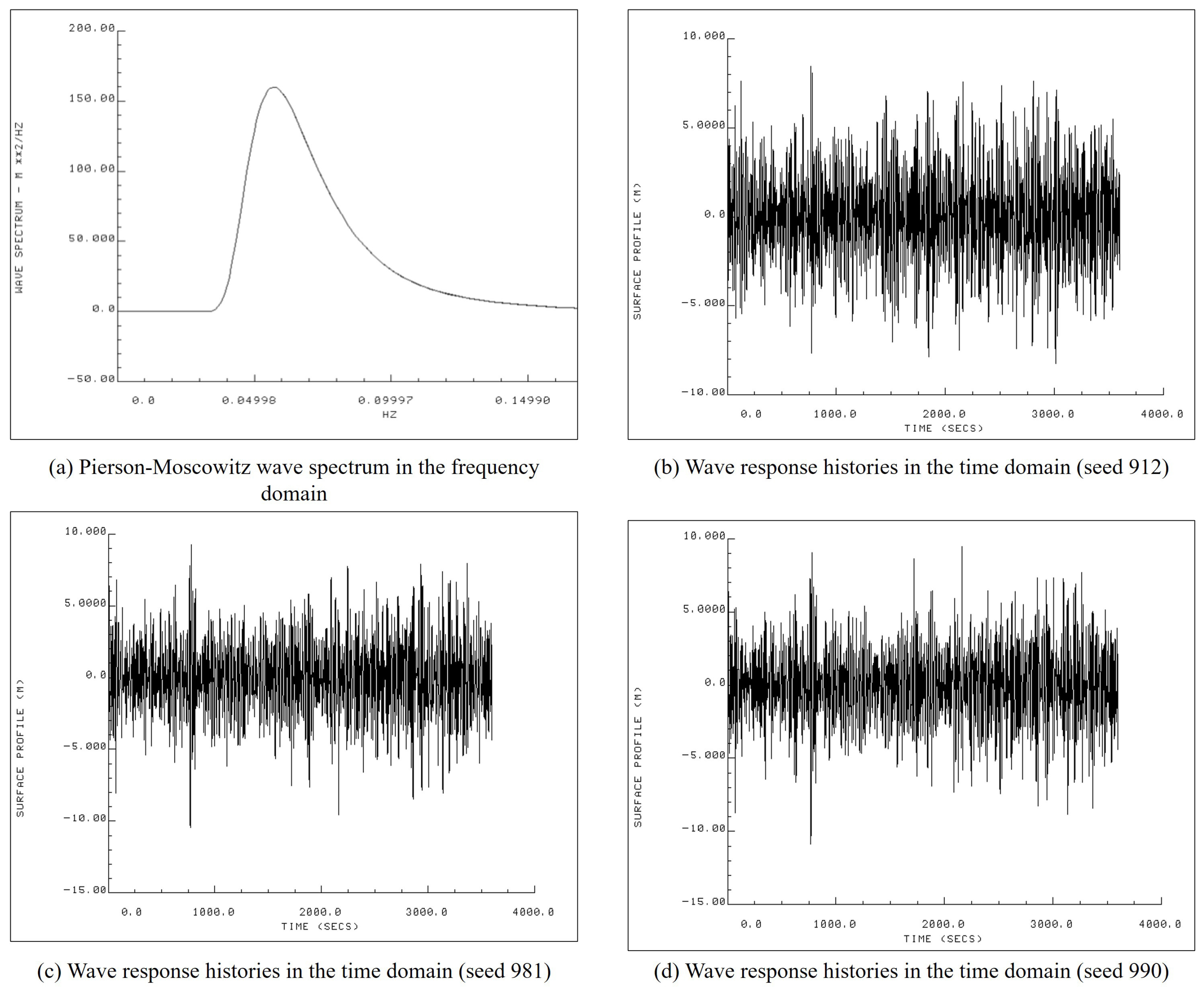
The wave height histories were calculated in the time domain using the Pierson–Moscowitz wave spectral density [
15], as well as the significant wave height and peak period, wind and current velocities, for one hour, with time increments of 0.5 s. Since the natural periods of the modal analysis used are higher than 0.5 s, the analysis comprises all natural periods. In
Figure 4, a wave spectral density and its sea surface elevation history are shown.
For the first part of the application of the methodology, only a single random wave load time history was applied in five directions of analysis (0°, 22.5°, 45°, 67.5°, and 90°). Only the first quarter (0° to 90°) was considered for the direction of analyses. Actually, the structure was double-symmetric, and there was no need to evaluate other directions in the remaining three quarters. Once all the elements presented interaction ratios IR lower than 1.00, twenty random wave time load histories determined using different seeds were applied to the same model to analyze different scenarios of wave forces that might cause higher forces.
2.6. Calculation of Maximum Forces
After observing this response, wave histories of the base shears and overturning moments were obtained, it was determined the instant when the maximum base shear (or maximum overturning moment) occurred. From this instant, a load case was obtained for the instant time yielding the maximum base shear.
2.7. Quasi-Static Analysis
The load case obtained from the instant time yielding the maximum base shear was applied to the compliant tower, in addition to the gravitational loads. Subsequently, a quasi-static analysis was performed to determine the acting stresses in the structural elements.
2.8. Structural Design and Reviewed
Finally, it was verified that the acting stresses were lower than the allowable stresses defined by API [
13]. If this requirement was not met, the studied variables (buoyancy, leg separation and leg diameter) were modified until obtaining an adequate structural behavior (i.e.,
in accordance with the revision at the ultimate limit state, using an ASD design philosophy).
3. Results
As previously mentioned, the proposed methodology was tested in a compliant tower for a 550 m water depth, considering two main variables, namely, leg separation and leg diameter.
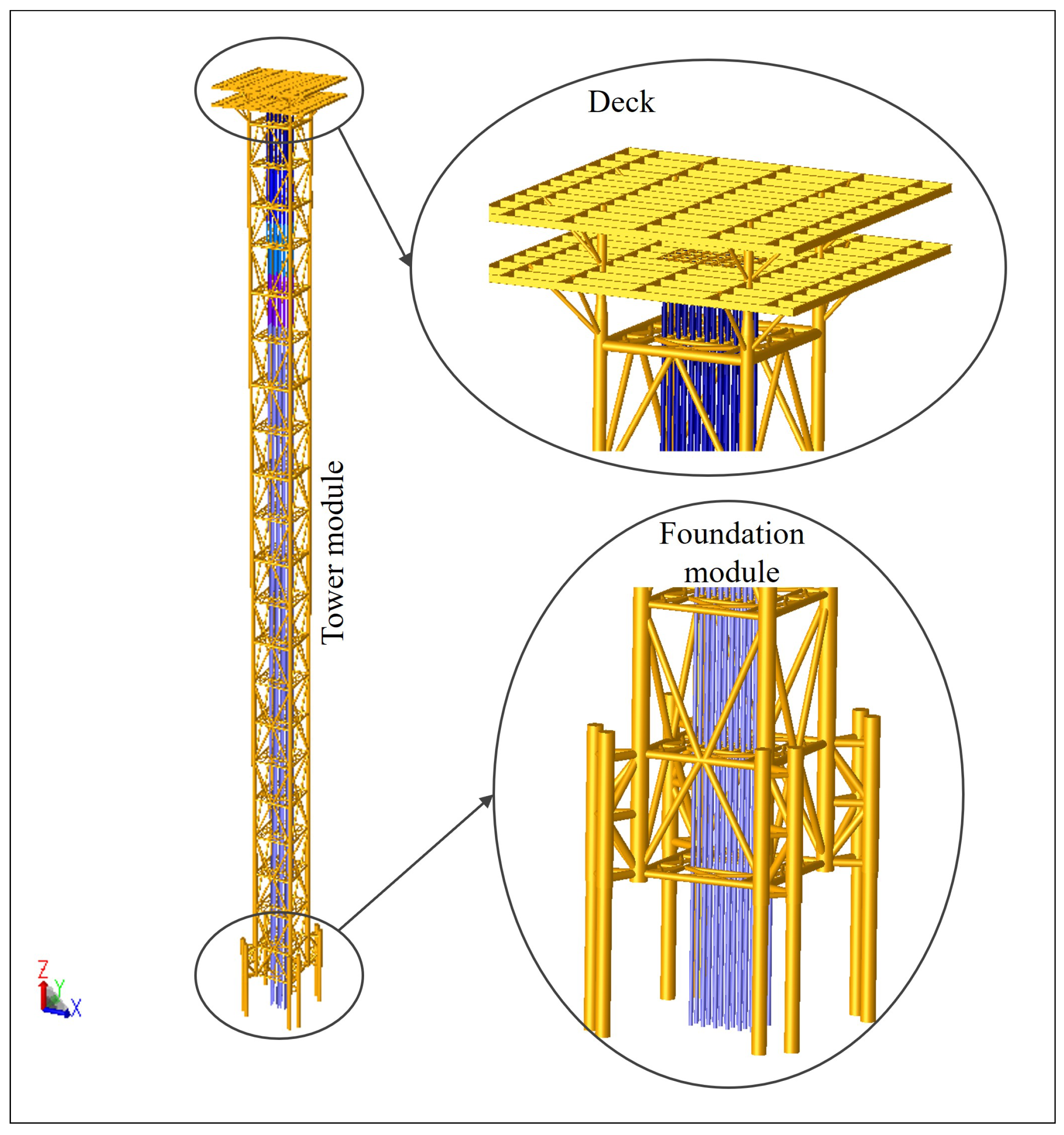
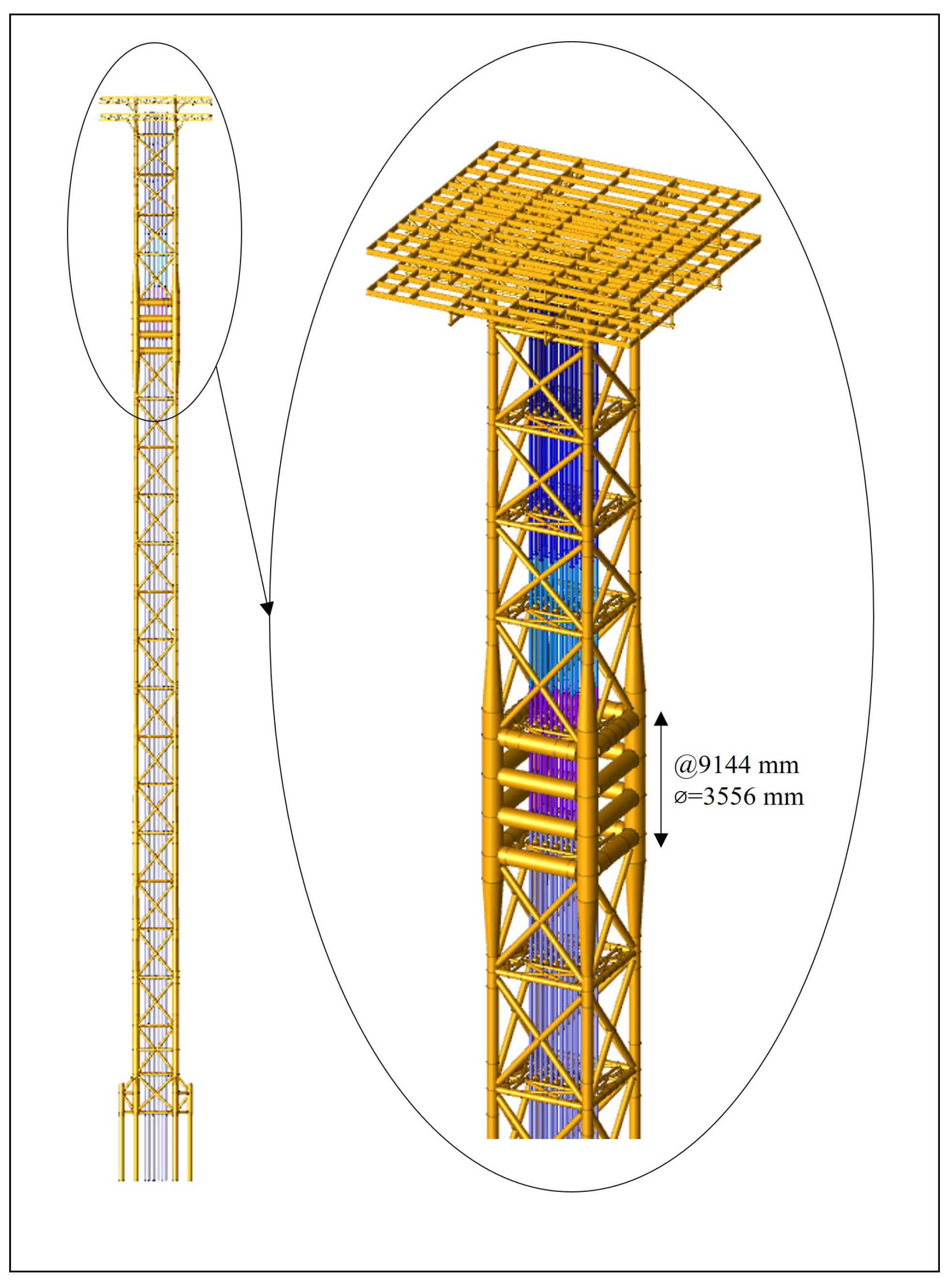
Figure 5 shows a three-dimensional structural configuration of the compliant tower indicating its main parts; meanwhile,
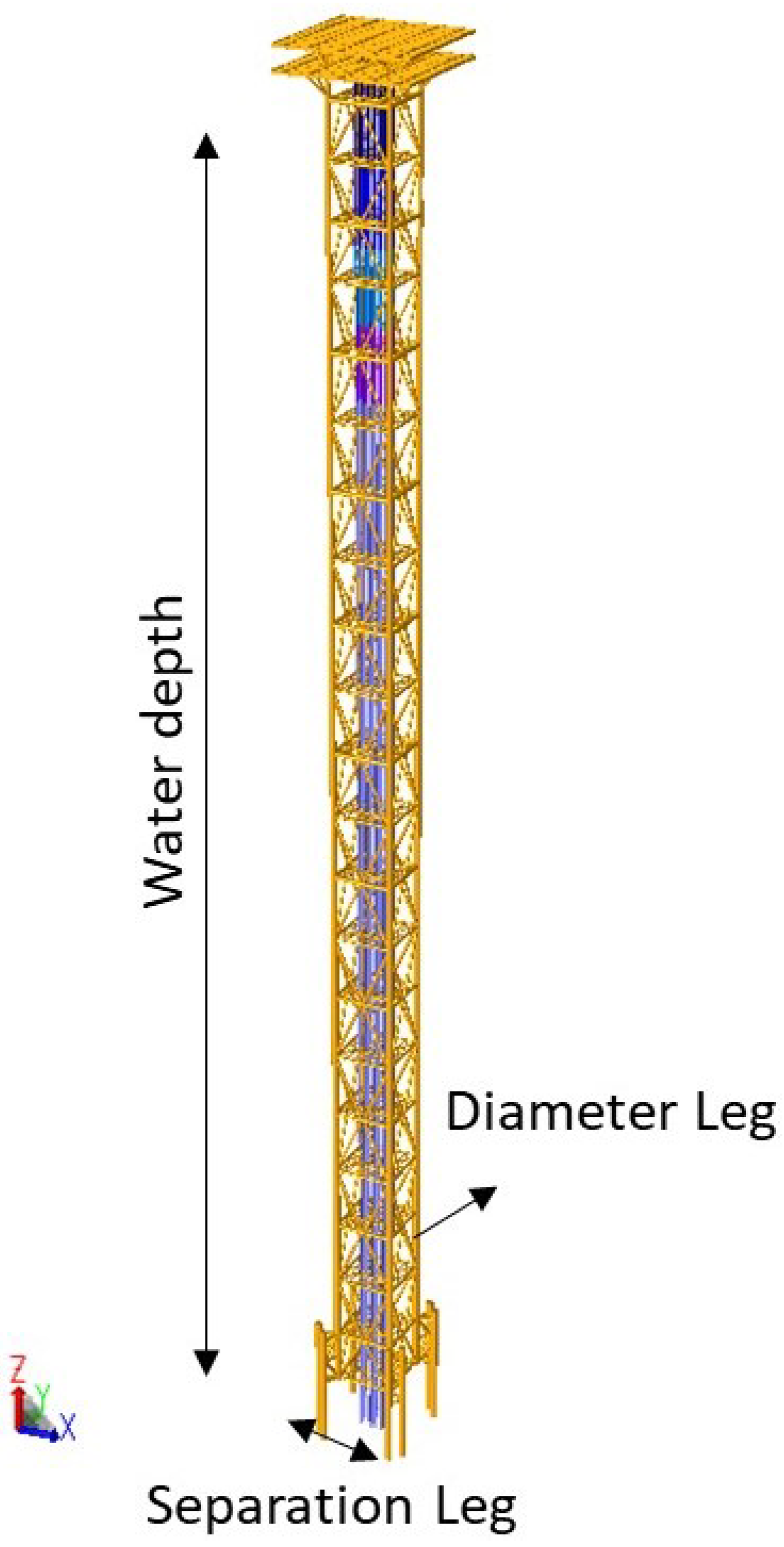
Figure 6 shows its main structural variables used in these analyses.
A parametric study was performed considering the subsequent cases of leg separation: 25 m, 27.5 m, and 30 m, as well as leg diameters A, B, and C (as previously described in the
Section 2.3), for the first analyses. Therefore, the first nine structural numerical models were obtained. Their nomenclature is described in
Table 3 and shown in
Figure 6.
For each numerical model, a stochastic extreme wave analysis was performed for two wave conditions, namely, operating and storms conditions, accordingly [
13]. The environmental parameters for each condition are provided in
Table 4. These parameters were proposed in accordance with the typical environmental parameters retrieved from the “Sonda de Campeche”.
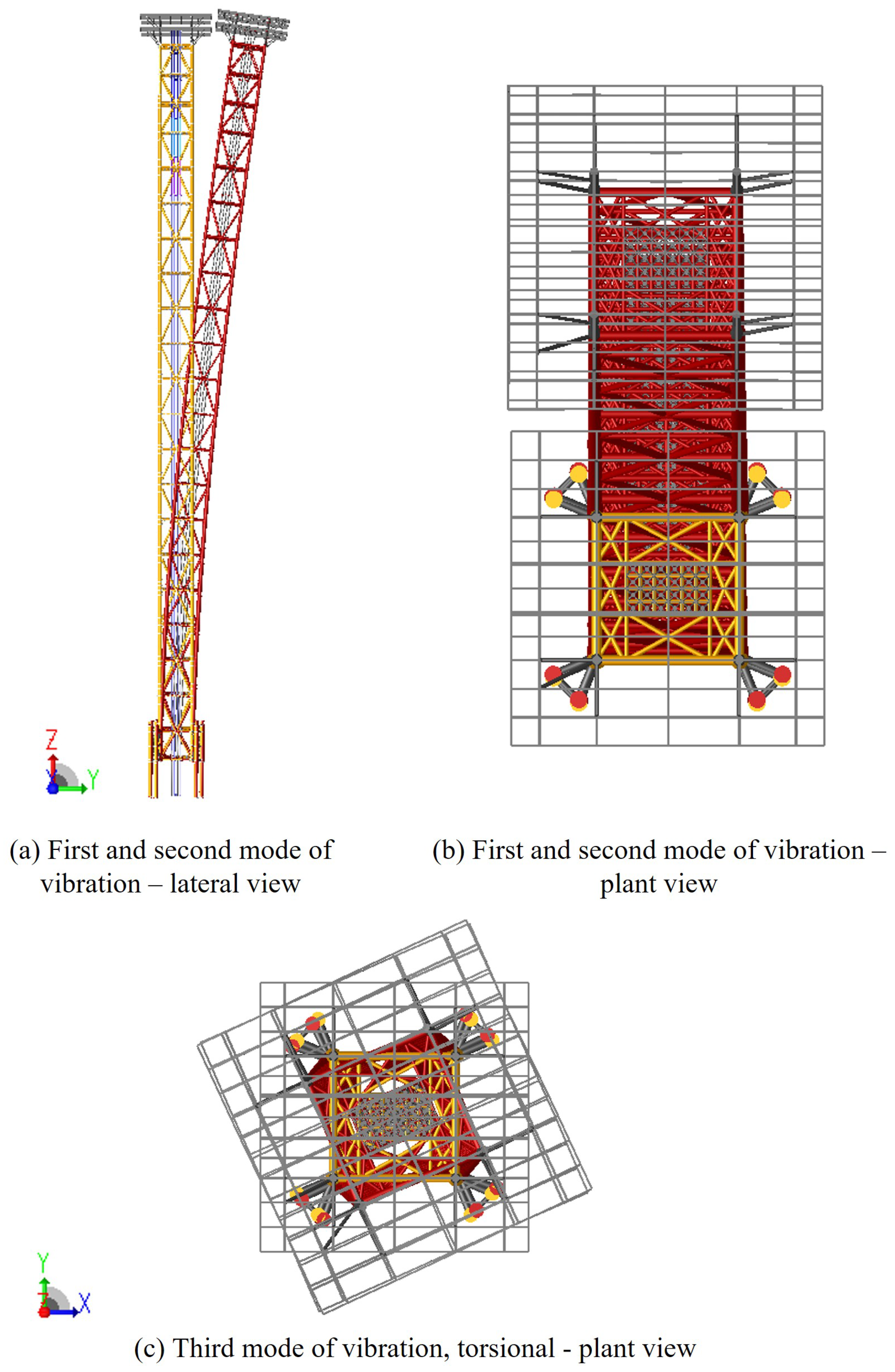
After defining the dimensional characteristics and wave parameters of the numerical models, the modal analysis was carried out for obtaining the mode shapes and corresponding natural periods by eigenvalue analysis.
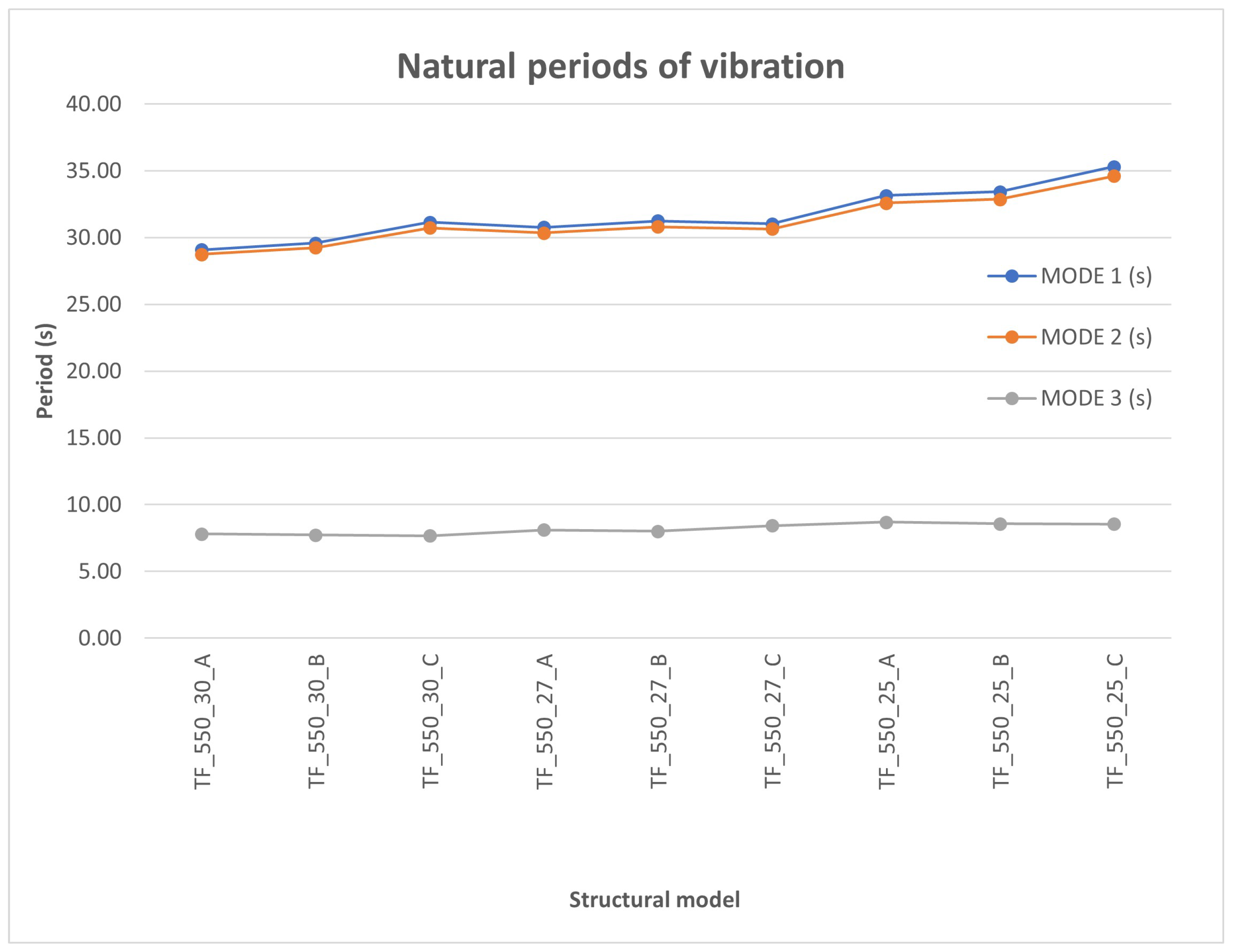
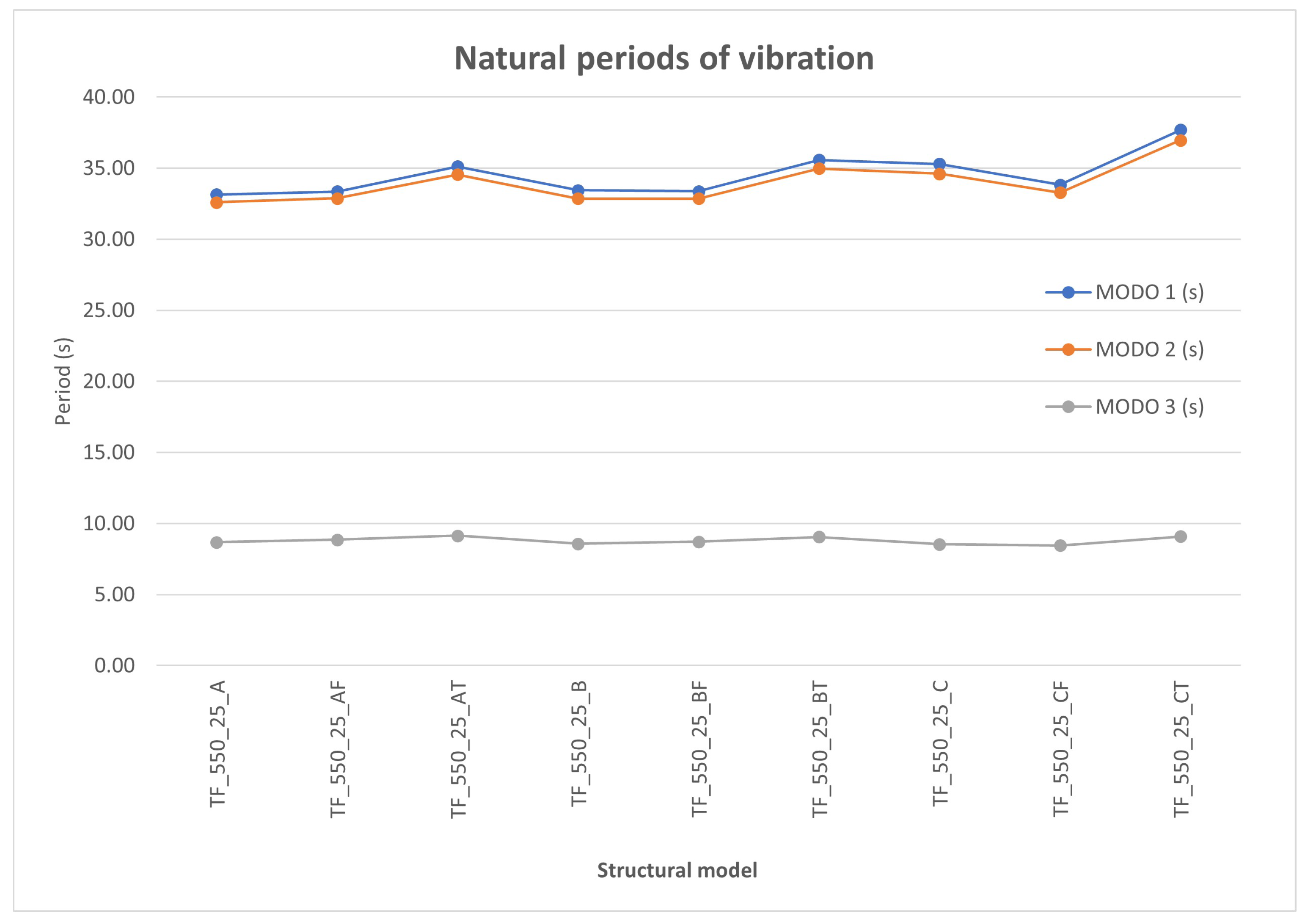
Figure 7 shows the trend of the natural periods for the different evaluated numerical models.
From
Figure 8 it is observed that all numerical models presented natural periods for the lateral directions between 35 and 25 s, while the torsional natural period (mode 3) was between 5 and 10 s. None of these three main natural periods coincided with the highest excited period for wave analysis. As a result, the structural resonance was avoided. Moreover, it is observed that leg separation increases the flexibility more than leg diameter. Thus, to get more flexibility, reducing the leg separation is more efficient than reducing the leg diameter.
After applying the methodology and checking the structural design revisions, results show that operating condition has lower impact on the structural response than storm condition. This is because the operating excitation period is positioned further from the natural periods of the structure than from the storm ones.
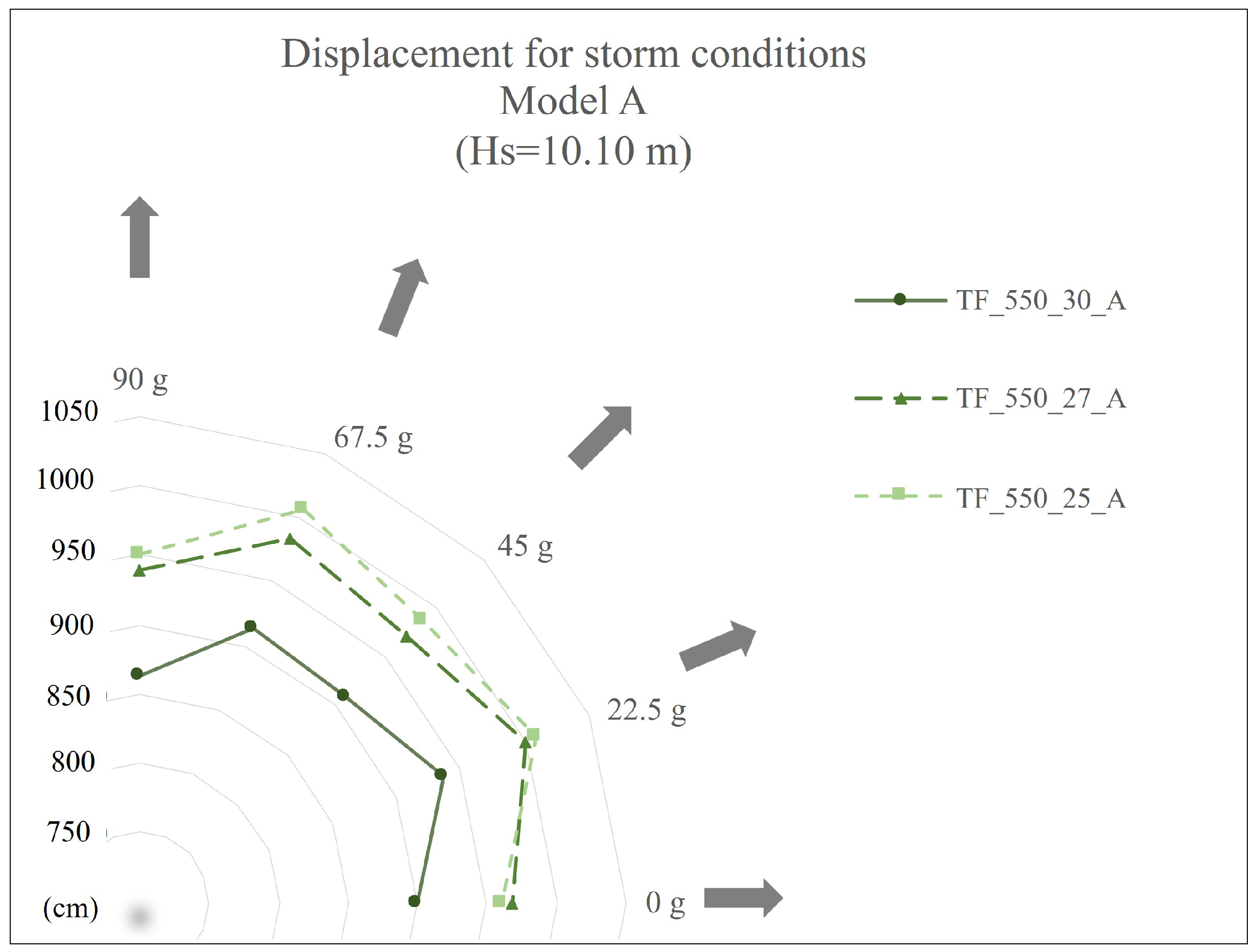
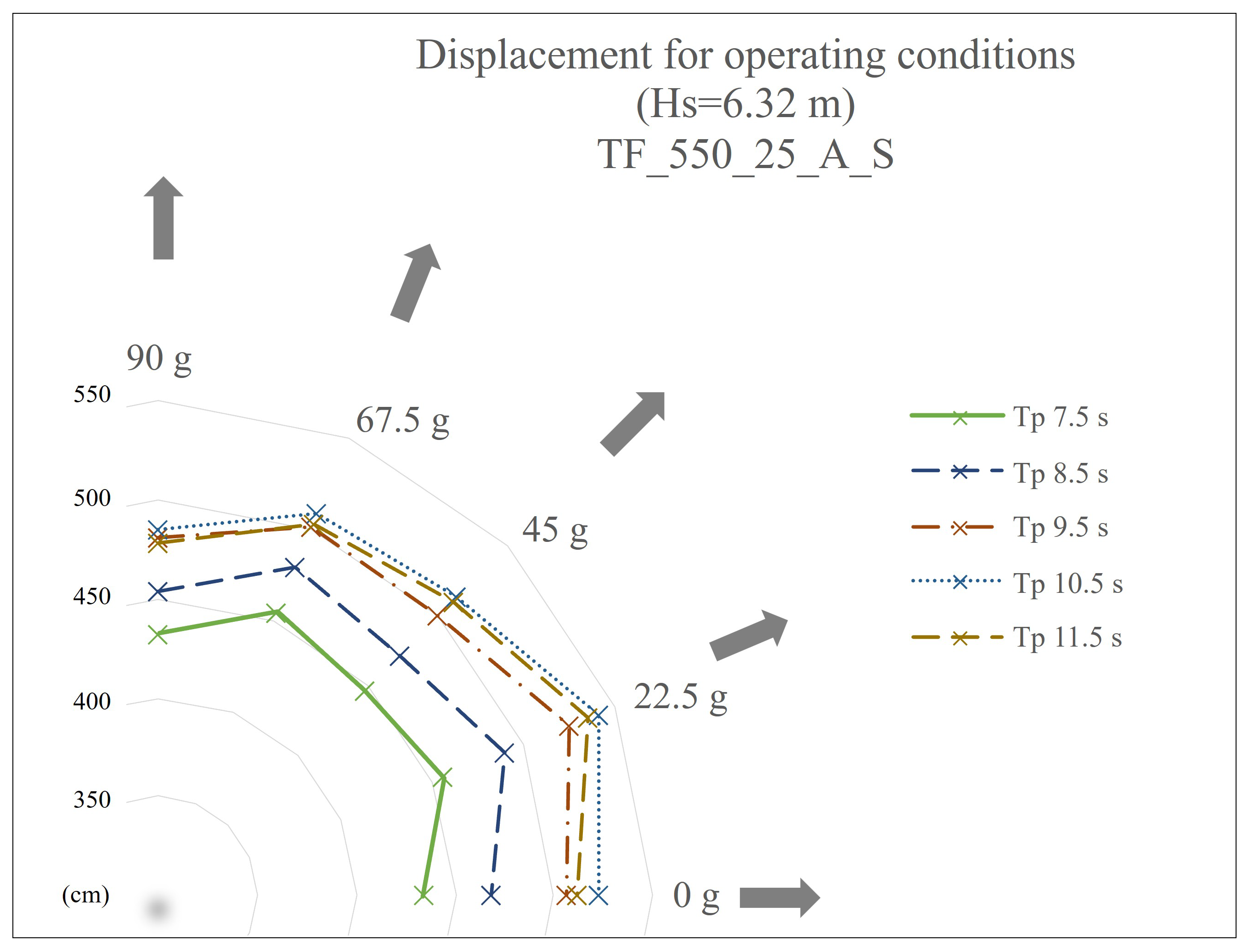
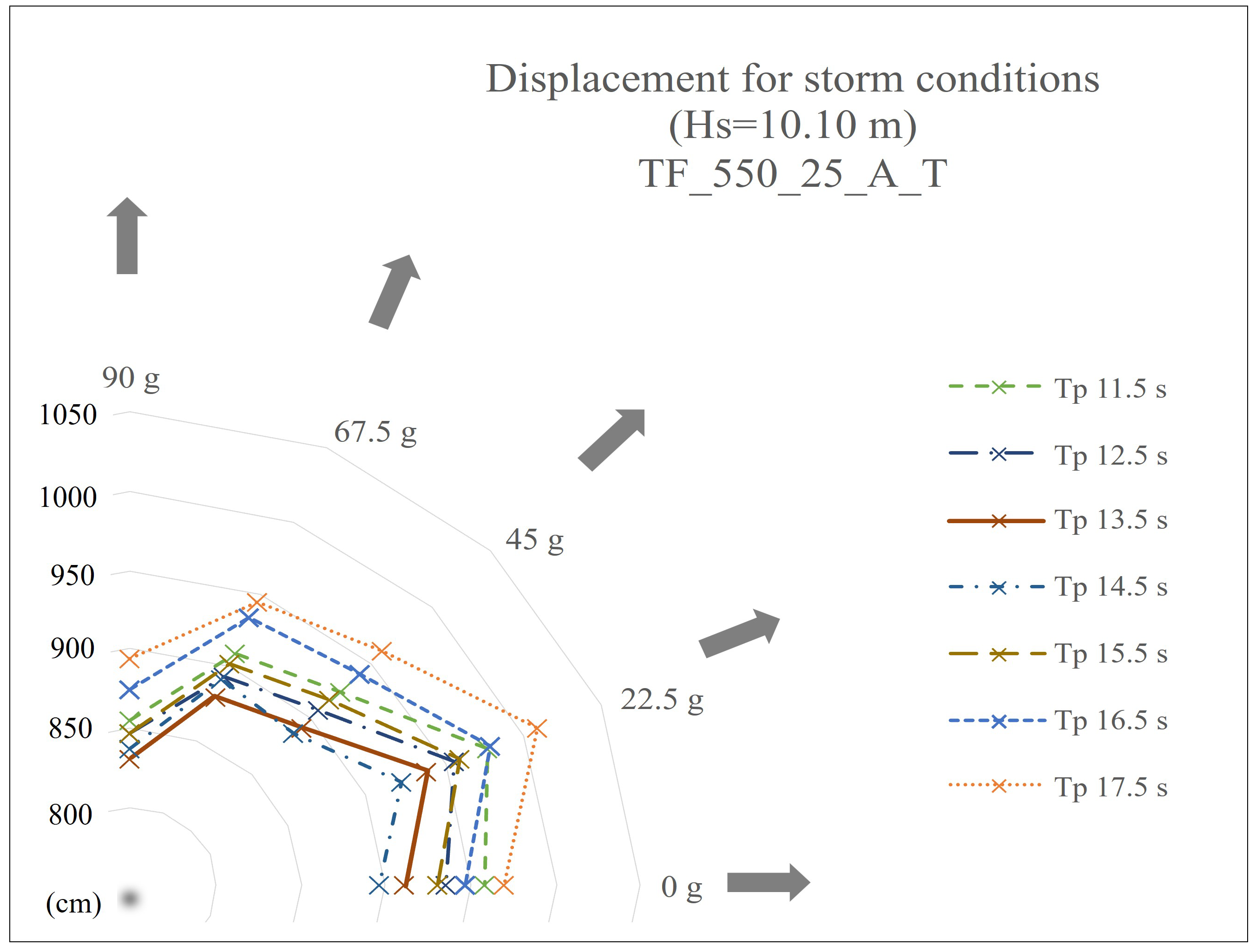
Figure 9 and
Figure 10 show the maximum displacements for different peak periods (Tp) for model TF-550-25-A.
As it is observed in
Figure 9 and
Figure 10 displacements under operating condition are shorter than displacements under storm condition. Based on these displacements and the structural response, it was determined that the greater the peak period, the greater the displacement.
Therefore, the analyses were focused only on the storm condition, considering the highest peak period and the same wave time history randomly determined for all the cases, as shown in
Table 5.
Furthermore, after comparing the results, it was observed that the greater the fundamental period, the lower the base shear and the acting stresses. It means that the tower has lower acting stresses when it presents a natural period away from the excited period of the wave spectra. However, the analyzed numerical models still had interaction ratio, (relation between acting stresses and allowable stresses) higher than 1.00 (unsafe condition).
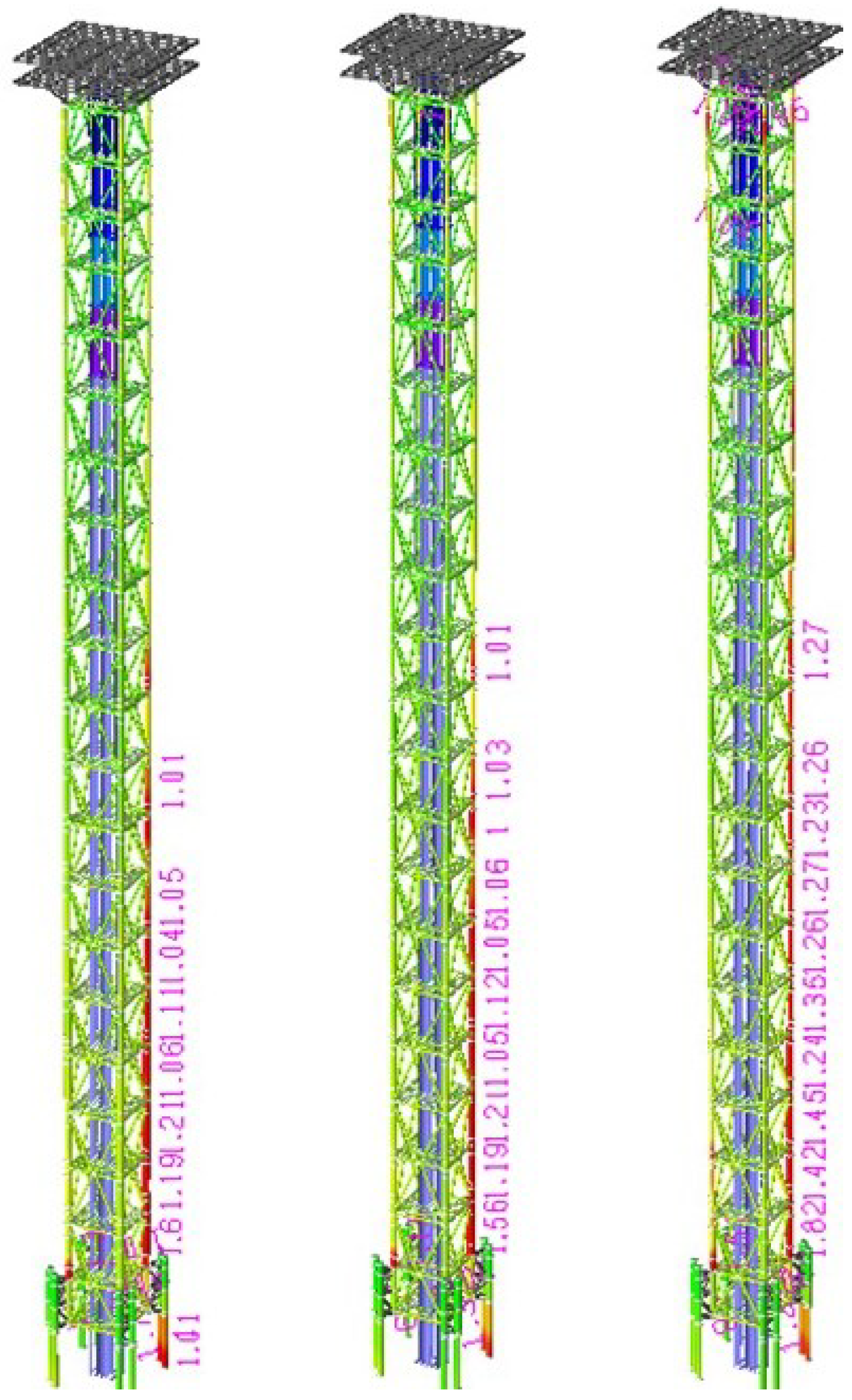
Figure 11 and
Figure 12 show results of the quasi-static structural design reviewed for the
Factor, taking into account the leg separation and leg diameter, under storm condition, with a 17.5 s peak period and for a 45° direction at the most severe scenario, with only one leg active on compression and one leg on tension.
Additionally, it is observed that leg transitions from the foundation module to the tower module present interaction ratios equal or greater than 1.00 (unsafe condition). In this zone, the acting stresses due to axial forces and bending moments are higher, because of the change of stiffness between both modules.
The next step of the applied methodology was increasing the buoyancy of the tower while trying to reduce the axial stress. To do that, it was proposed to study the buoyancy force as a variable by located buoyancy tanks at a strategic location, and increasing buoyancy with the legs, according to the conditions detailed below:
Based on the previous described characteristics in the buoyancy tanks, the following group of structural models was obtained to be reviewed by dynamic analysis, as described in
Table 6.
After determining the results from all these numerical models evaluated, the three variables analyzed for the analysis and design of compliant towers were compared.
Leg separation.
Leg diameter.
Buoyancy.
Figure 14 shows the first three natural vibrating periods for the structural models described in
Table 6.
According to
Figure 14, an increment in the tower period is observed when buoyancy tanks are used (caused by a greater mass without increasing the stiffness) instead of not using tanks or flooding the legs. Due to the period increase and the gravitational loads reduction, lower dynamics and structural response can be expected. As a result, the use of buoyancy tanks helps to increase the flexibility of the tower and reduce the gravitational loads to the foundation.
3.1. Leg Separation
Leg separation is an important factor in compliant towers regarding not only the structural design but also during the constructive processes, transportation, and deck size determination. An adequate leg separation allows the space required to install the necessary process area in the deck; as for the maximum leg separation, it is defined by the constructive capacities of the fabrication yard.
From these considerations, three leg separations were proposed, namely 25 m, 27.5 m, and 30 m. The
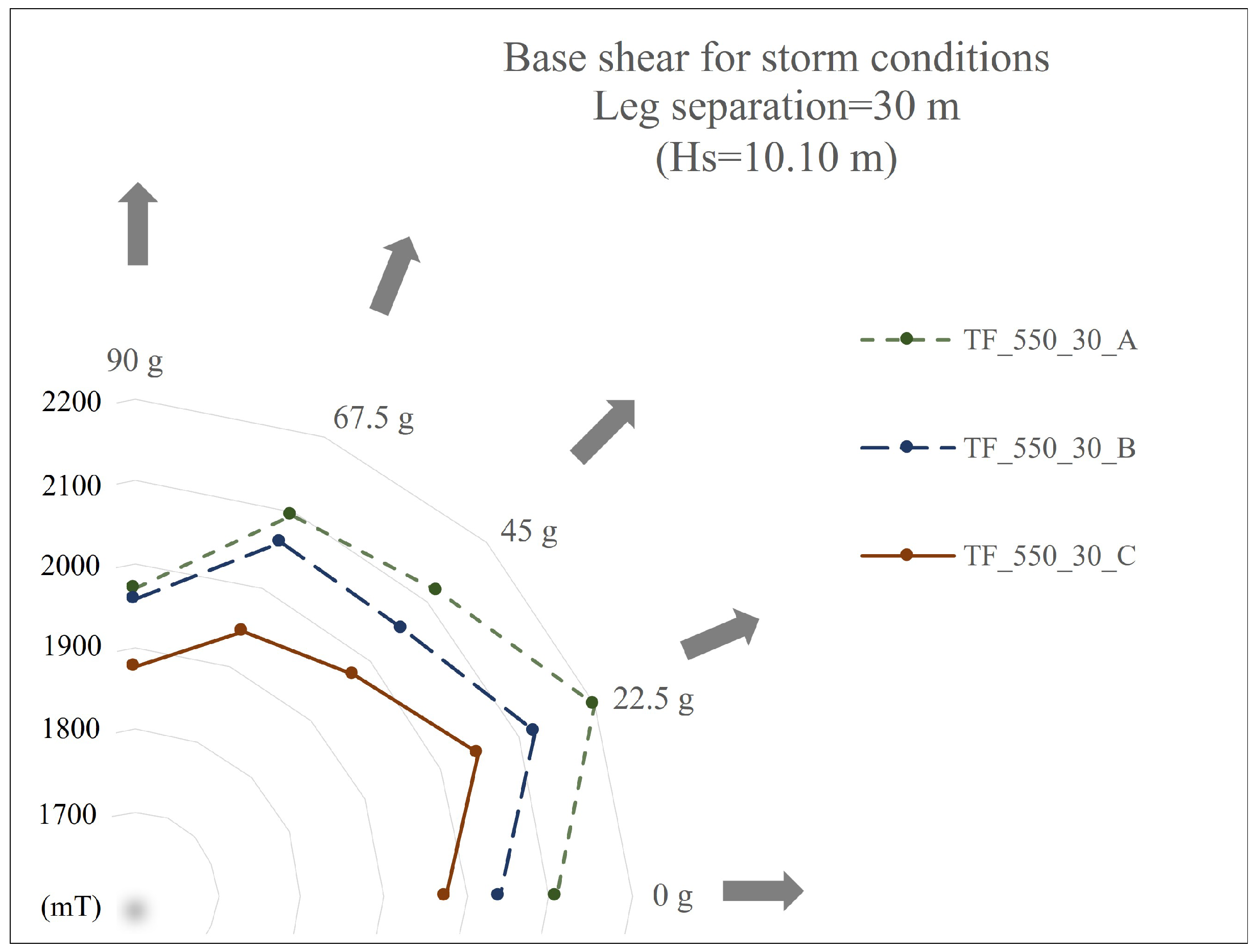
Figure 15 and
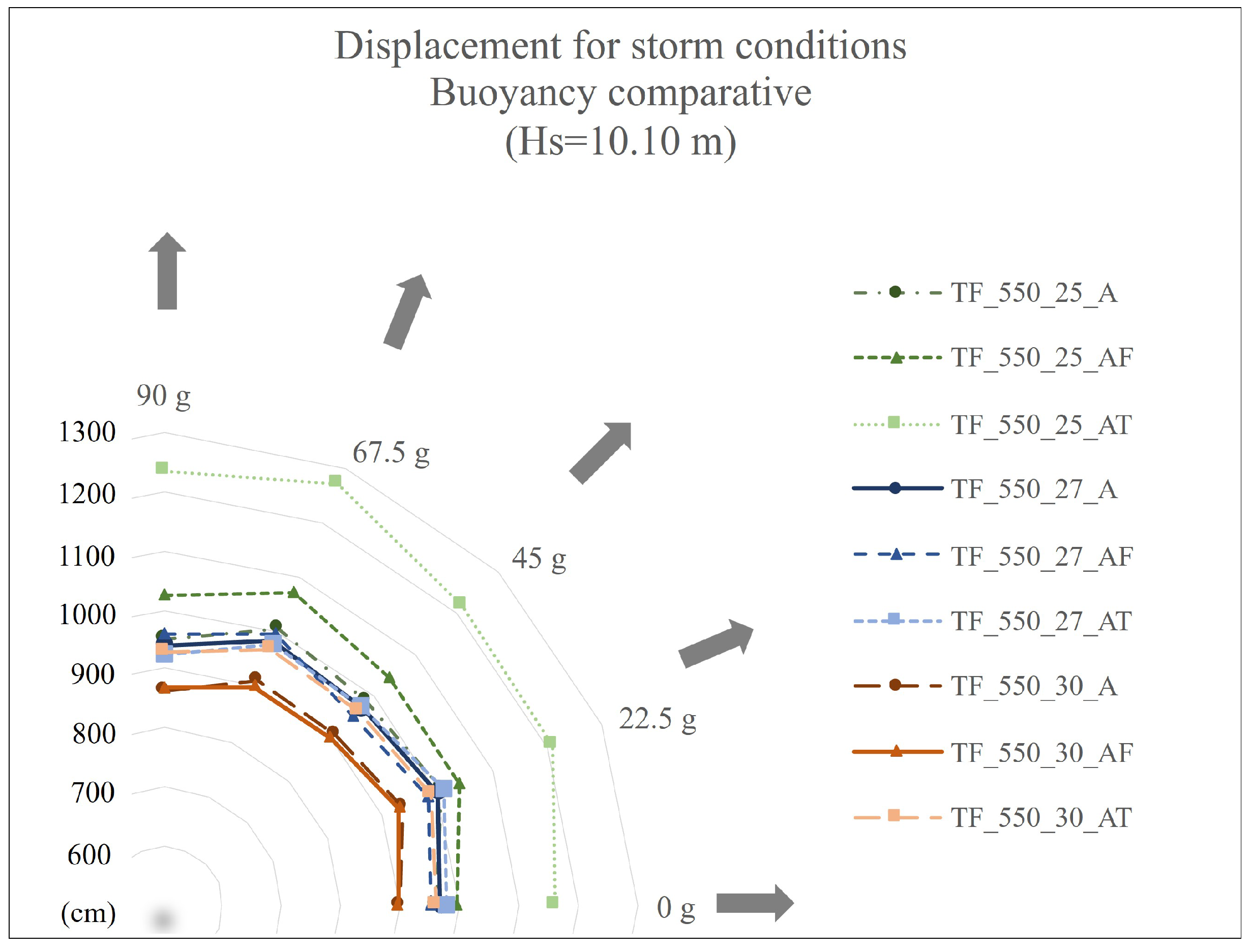
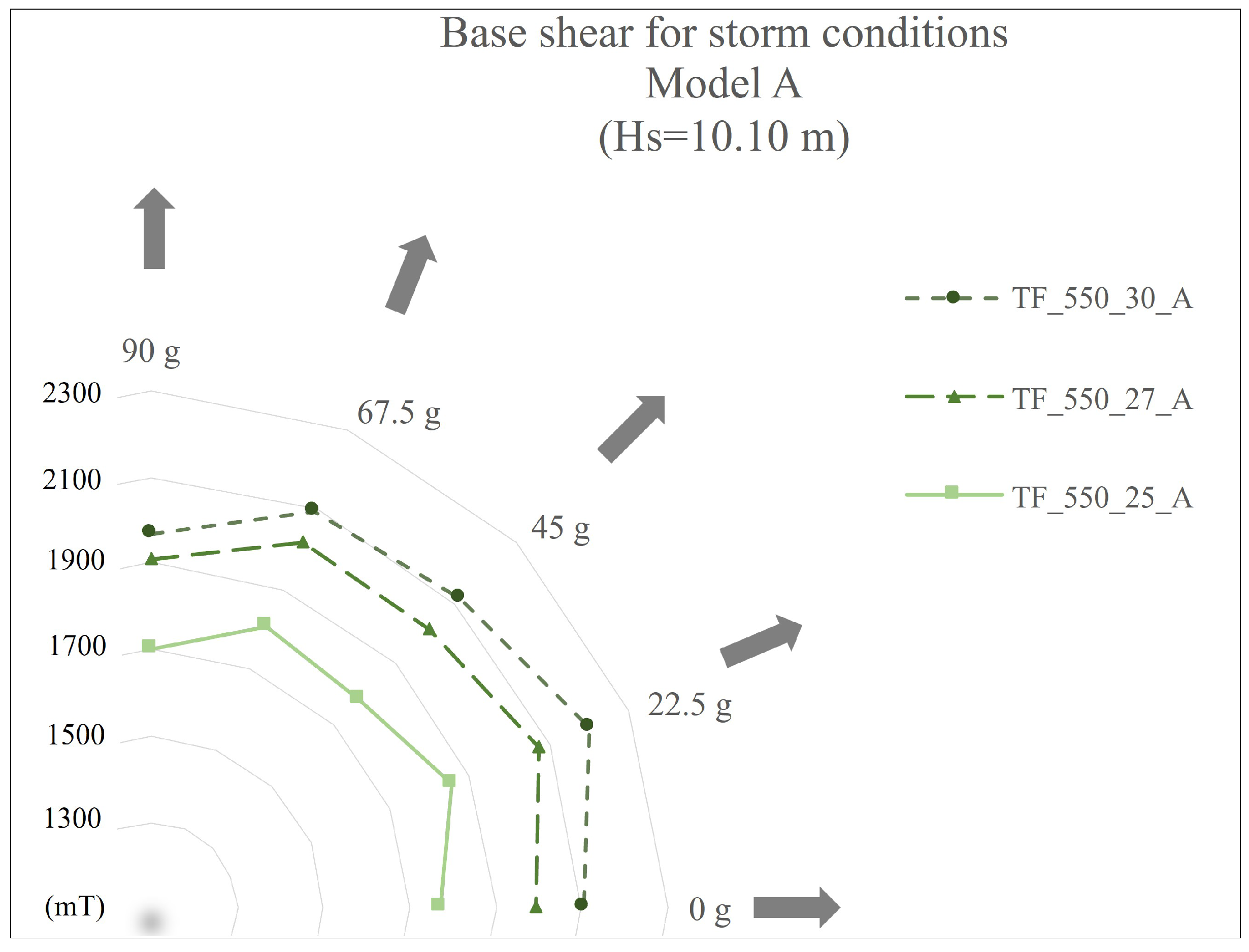
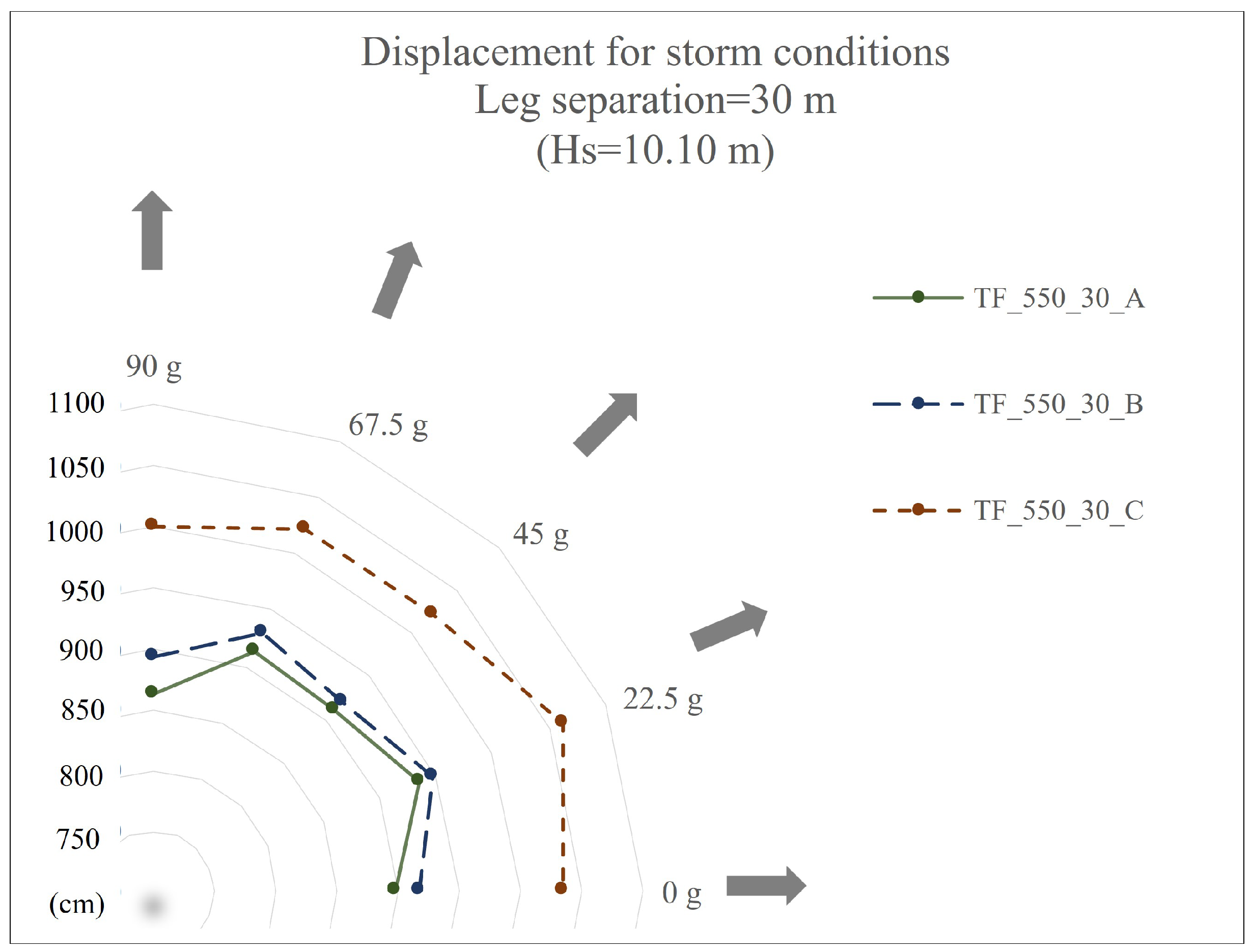
Figure 16 show the base shears and maximum displacements, respectively, of the evaluated numerical models of the compliant tower.
As shown in
Figure 15 and
Figure 16, the greater the leg separation, the greater the base shears; this is because of the larger impact area that increases the environmental forces. On the other hand, the greater the leg separation, the shorter the displacements. However, the increase in the base shear presents more impact on the structural design of the compliant tower, increasing the acting stresses. As a result, a smaller leg separation comports a better structural behavior.
3.2. Leg Diameter
Another important variable to be evaluated was leg diameter. It was proposed to reduce leg diameter from the sea floor to the mean sea level, as described below:
Case A. From 3300 mm (130 in) to 2135 mm (84 in).
Case B. From 3048 mm (120 in) to 1880 mm (74 in).
Case C. From 2795 mm (110 in) to 1625 mm (64 in).
According to
Figure 8 and
Figure 14, the change in leg diameter presents less impact on the tower’s stiffness than leg separation.
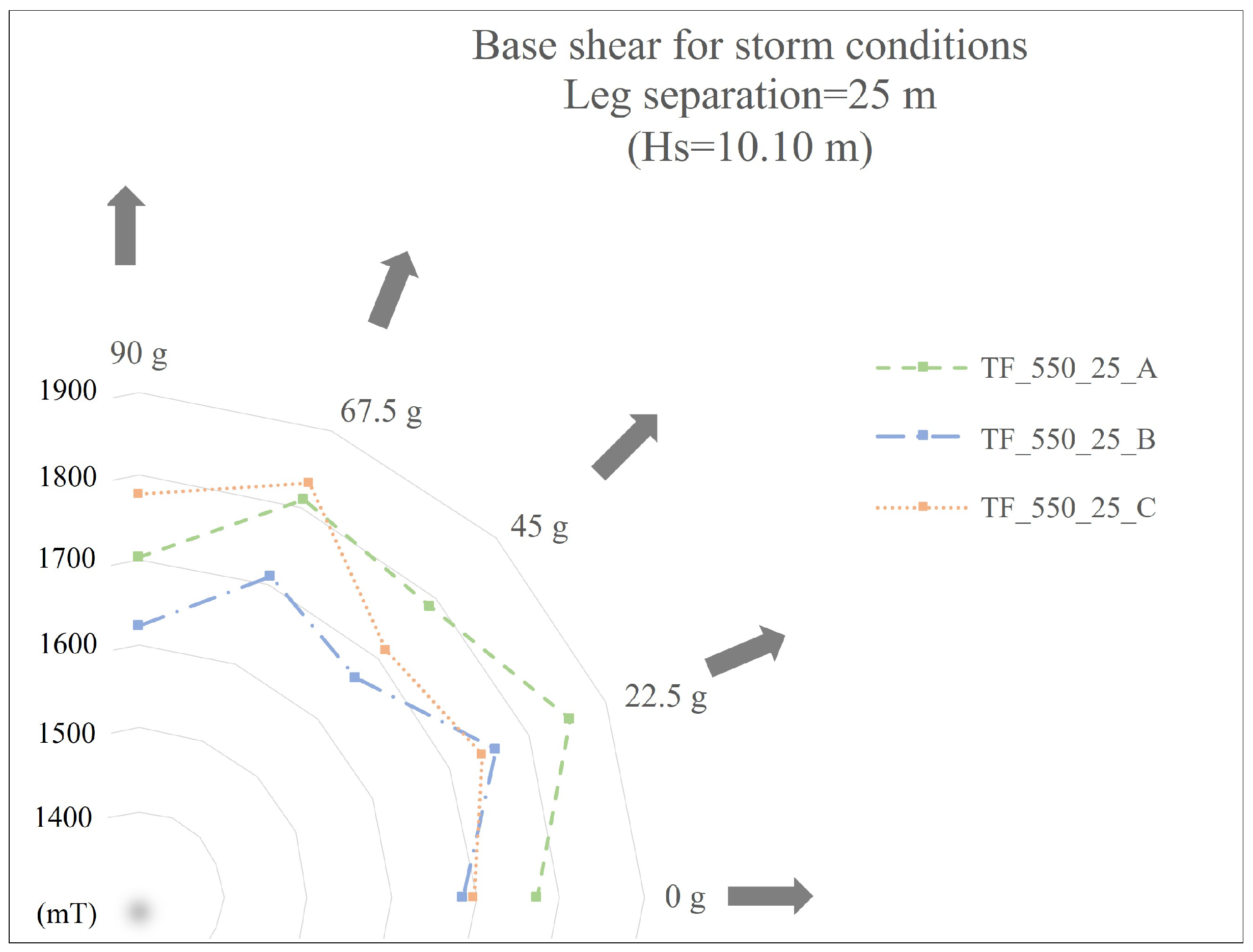
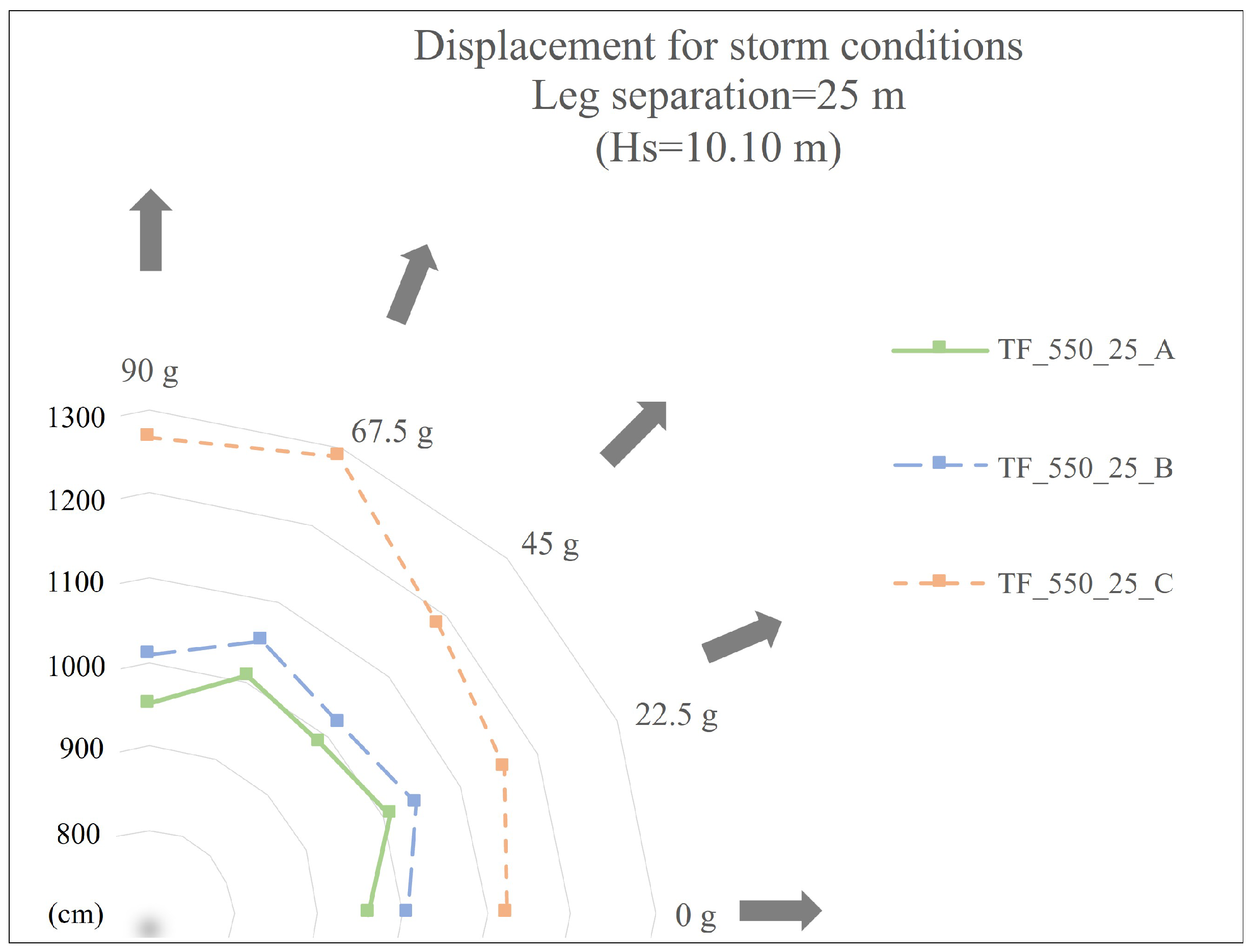
On the other hand, the variation of base shears and displacements that are showed in
Figure 17,
Figure 18,
Figure 19 and
Figure 20 is minimum between the different leg diameters; however, the variation of the base shears is greater for the different leg separations.
In summary, bigger cross-sectional areas increase the allowable stresses, reducing the structural interaction ratios; this also reduces the tower’s flexibility. As an alternative to increase the diameter, it was proposed to increase the tube thickness or reduce the leg braced length without modifying the flexibility of the tower.
3.3. Buoyancy
To improve the structural behavior of the tower, it is required to reduce the gravitational loads. Increasing the buoyancy helps to reduce the gravitational loads.
Additional to previous variables (separation and diameter of the legs), buoyancy is also considered a variable in the proposed methodology. For this reason, different ways to increase buoyancy were analyzed:
As observed in
Figure 13, specific legs and braces are used as buoyancy tanks. In other words, these structural elements have both functions contributing to structural stiffness and acting as buoyancy tanks.
According to the modal analysis (see
Figure 14), maintaining a constant leg diameter all along the leg height reduces the natural vibration period; on the contrary, using buoyancy tanks maintains a similar or greater natural vibration period. This means that the buoyancy tanks increase the mass but not the stiffness.
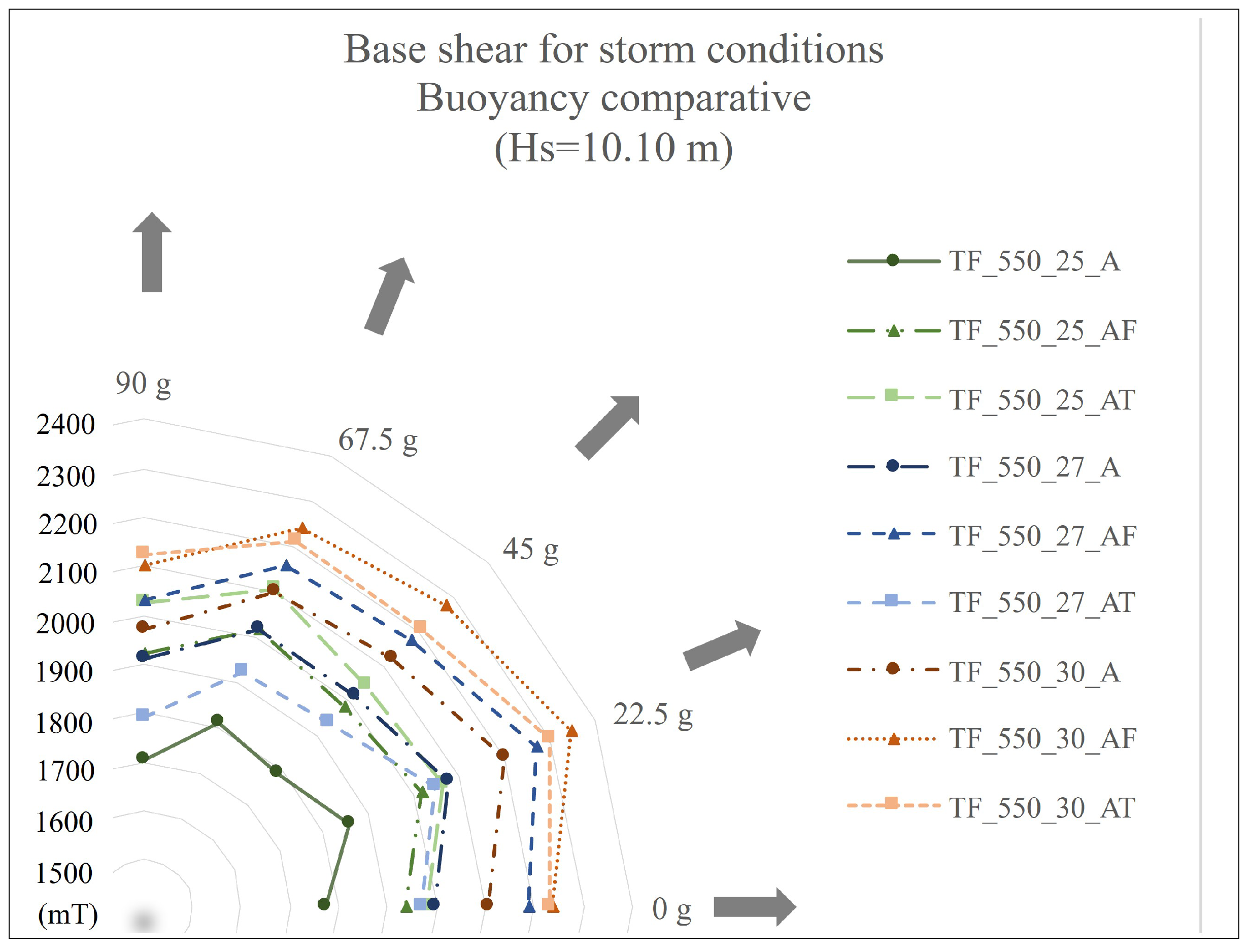
Figure 21 and
Figure 22 show the impact on base shears and displacements, respectively, due to a buoyancy increment.
The stiffness increase observed when considering a constant leg diameter shows greater base shears in comparison with those caused by increasing the impact area of environmental forces produced by buoyancy tanks. Based on this fact, the use of buoyancy tanks is recommended instead of increasing leg diameters.
In order to reduce the base shear increment caused by the additional area of the buoyancy tanks, it is recommended to install the buoyancy tanks in the greatest water depth possible, considering constructive processes, maintenance and hydrostatic pressure.
3.4. Influence of Buoyancy, Leg Separation and Leg Diameter
According to the data analyzed in the previous sections, lower leg separation, lower leg diameters and buoyancy tanks increase the tower’s flexibility. These conditions reduce the base shear amplitudes, with a slight increment in displacements. However, these displacement increments are below the allowable limits.
After evaluating the considered variables, the best proposal was the numerical model with 25 m leg separation, leg diameters from 3300 mm (130 in) to 2135 mm (84 in), and buoyancy tanks located at 90 m water depth (TF-550-25-AT1). In this numerical model, base shears were reduced but the structural response produced interaction ratios higher than the one registered for the ultimate limit state (using ASD philosophy), see
Figure 23.
As for the displacements due to different peak periods, all of them were within the admissible range. Therefore, subsequent analyses considered only a 17.5 s peak period. In this way, computational time was reduced without compromising the accuracy of the results. Using model TF-550-25-AT1 as baseline, other variables capable to reduce the structural response were evaluated.
From the model TF-550-25-AT1, other variables capable to reduce the structural response are evaluated. These variables are described in the
Table 7 as a summary of the variables changed:
Different structural brace configurations.
Different positions of buoyancy tanks.
Different transitions between foundation module and tower module.
Different geometric changes of the pile cluster.
Reduction of leg separation to 22.5 m.
3.5. Optimal Design of the Tower
According to the results obtained in this study, it was determined that numerical models with first natural periods in transversal directions greater than 30 s had almost no differences regarding base shears and displacements. However, the interaction ratio for the most critical elements were still greater than 1.0 (unsatisfactory), with the most concerning zone being the transition between the foundation module and the tower. Here, the change of stiffness between them must be gradually softened, considering the next points:
X-bracing the legs in the transition between the foundation module and the tower. This structural modification will facilitate a gradual transition of stiffness from the foundation module to the tower, thereby mitigating stress concentrations.
A reduction in pile cluster height, coupled with an increased horizontal pile divergence, serves to attenuate the stiffness of the foundation module. This modification ensures a more linear stiffness transition toward the tower interface.
Flooding leg sections facilitates the mitigation of stresses at the foundation-to-tower transition, since hydrostatic pressure-induced stresses are effectively eliminated from the total acting stress profile.
To do that, some structural changes to model T25AT1 were proposed.
Table 7 describes the changes made to the previous numerical model, as well as the values of the corresponding natural periods and maximum interaction ratios, for the new numerical models to be evaluated.
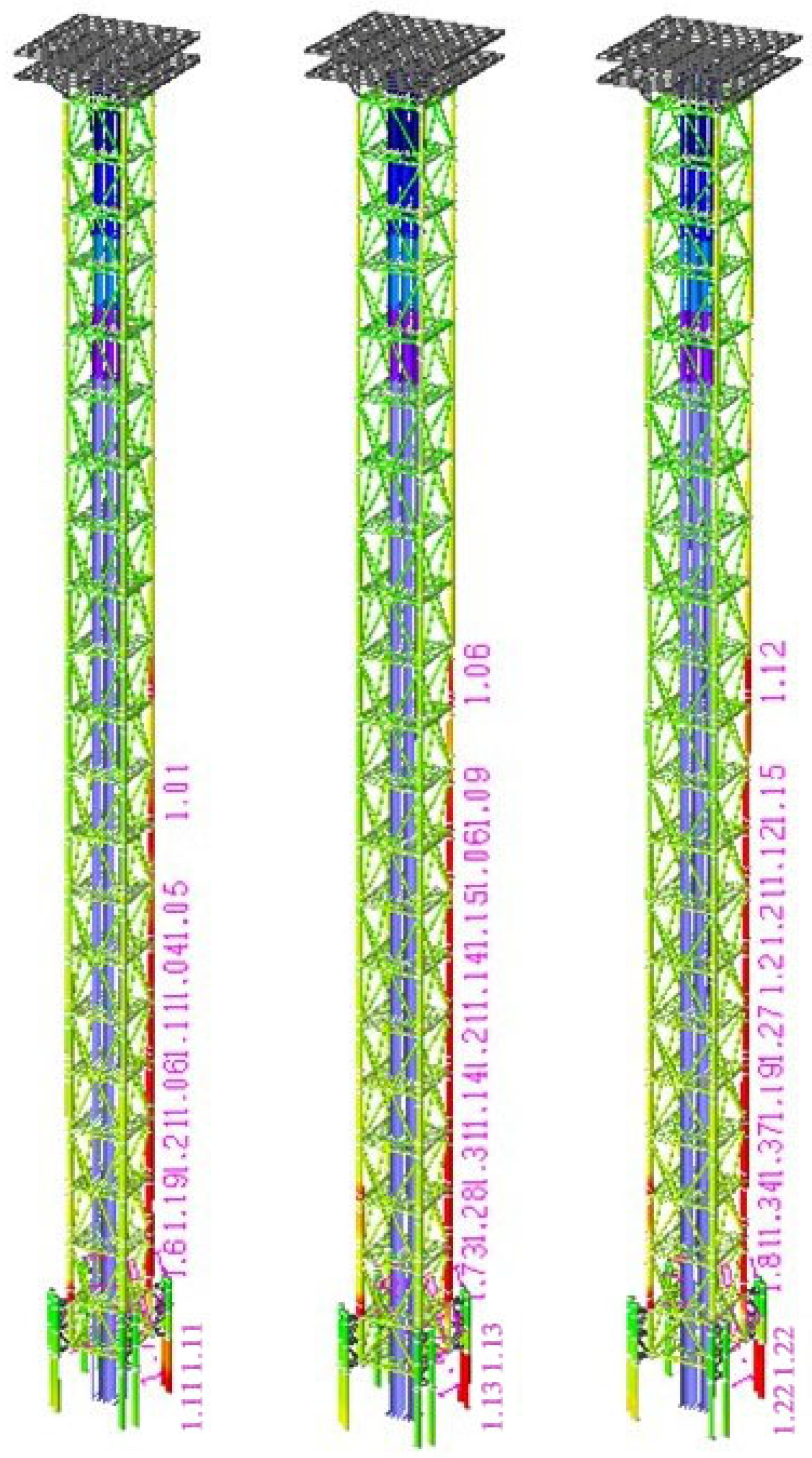
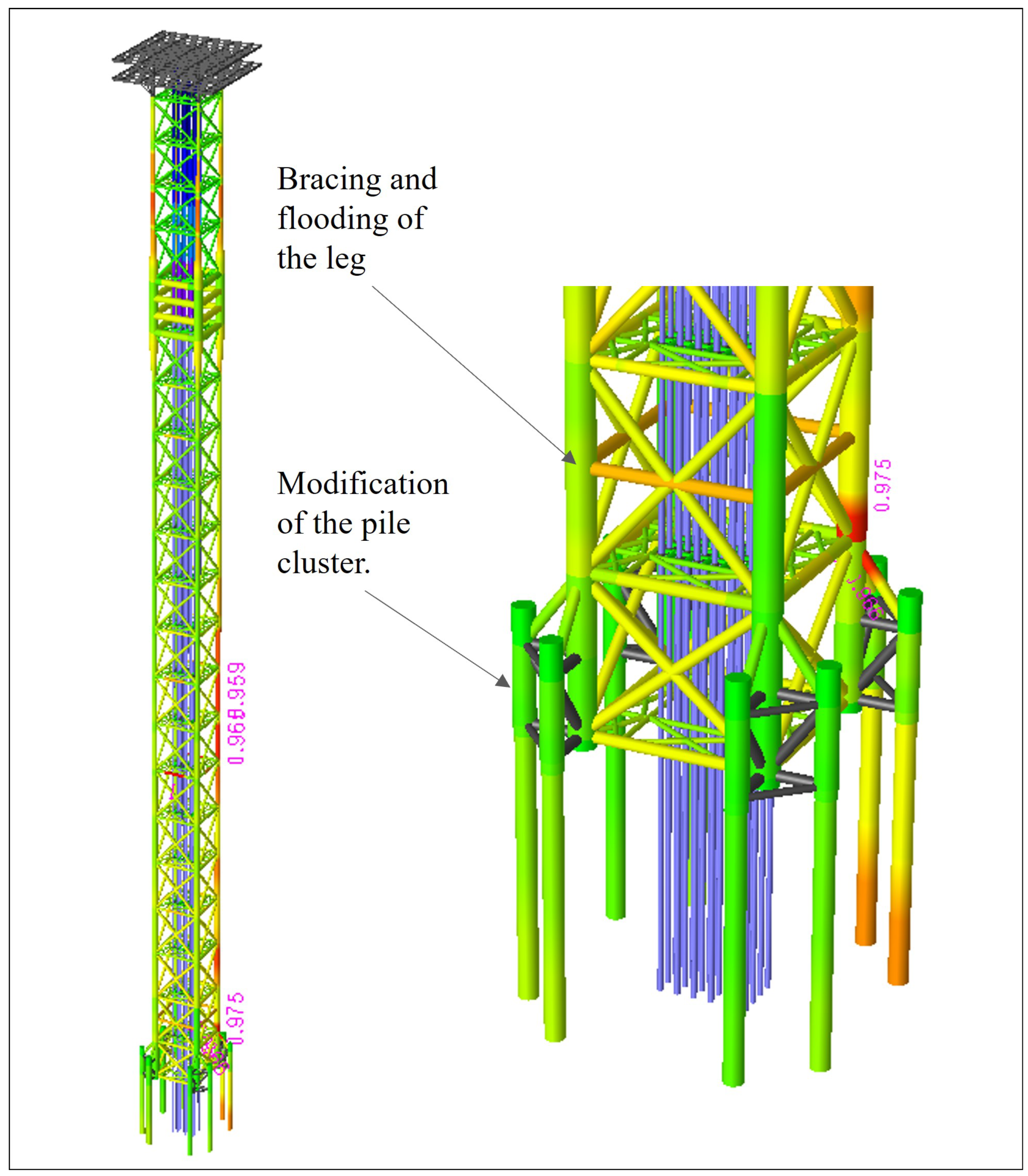
Figure 24 shows the maximum
of model TF-550-25-AT5-T. It is observed that the maximum
were located in the leg of the foundation module and in the middle of the tower. The increased
in the middle of the tower were due to a thin thickness, while the increased
in the foundation were due to stiffness difference between the foundation and the tower.
The revision of the acting stresses for model TF-550-25-AT5-T, however, is for one wave response history. Thus, model TF-550-25-AT5-T was re-examined with the leg separation reduced to 22.5 m. Additionally, the elements that presented an increased
were modified and the results are shown in
Figure 24. Furthermore, the first natural vibration period increased from 34.28 s to 41.89 s, and the maximum
was 0.74.
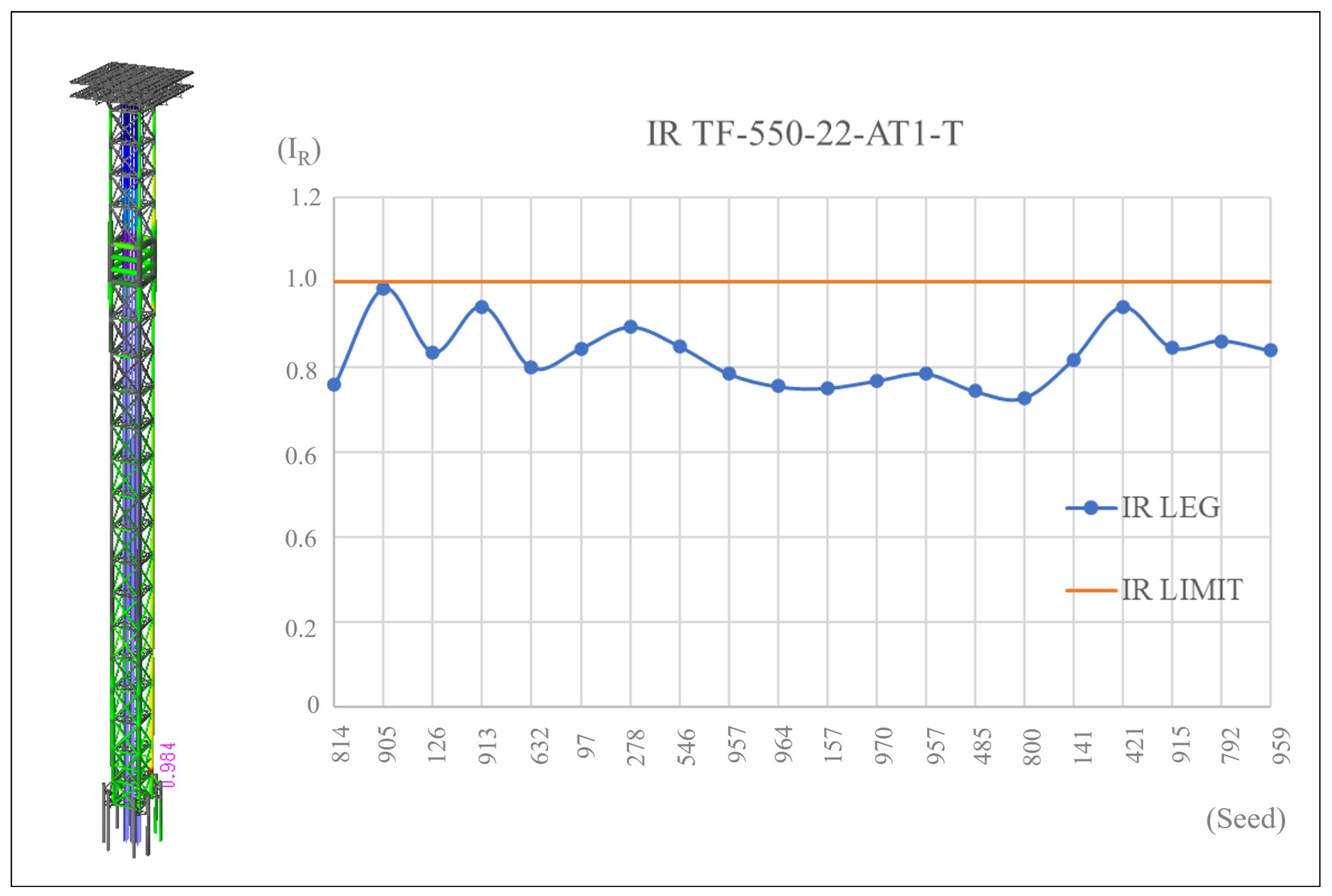
After determining a maximum lower than 1.00, the model was tested through twenty analyses, considering random wave response histories (seeds), as part of the stochastic extreme wave analysis. This step was executed last to minimize the use of computational resources.
The result from the different seeds analysis shows that model TF-550-25-AT5-T was not in compliance with for all the seeds. On the contrary, model TF-550-22-AT1-T did comply with for all the seeds.
Figure 25 shows the maximum
of model TF-550-22-AT1-T, and depicts a graph of the maximum
for all different seeds.
According to the results, the leg separation of 22.5 m was adequate with maximum lower than 1.00 for the twenty seeds.