4.2. Citation Analysis
Citation dynamics provide further insight into the temporal diffusion of scientific influence. As can be observed in
Table 2, the total citations across all databases peaked in 2021 (10,550) and 2022 (10,321), reflecting the enduring impact of foundational and early-stage research published during or immediately after the COVID-19 recovery period.
From 2023 onwards, citation counts began to decline (6110 in 2023 and 3780 in 2024), a typical trend in bibliometric cycles as newer publications require time to accumulate scholarly recognition. Notably, citations within the Web of Science Core Collection followed a similar trajectory, decreasing from 9264 in 2021 to 882 in 2025, aligning with the recency of publications and ongoing citation latency. Overall, while citation volume shows a temporal lag, the steady increase in annual publications underscores a clear research intensification and diversification trend within responsible road transport and emerging mobility technologies.
In
Table 3 presents the top ten most cited papers in the transport systems field systems extracted from the Excel file generated by Clarivate—WoS.
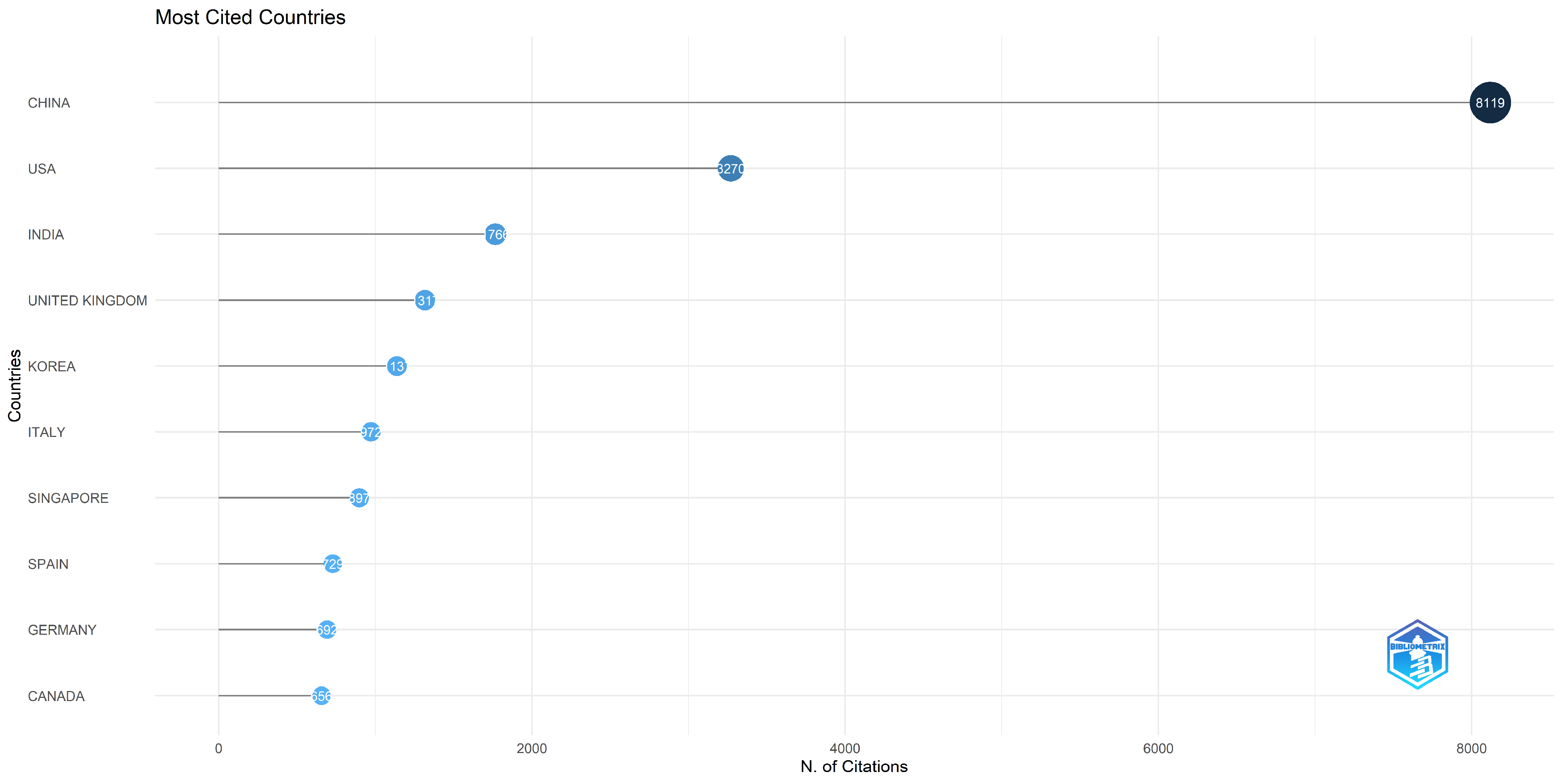
The geographic analysis of the durable road transport systems literature reveals a strong concentration of research output and citation impact within a few leading countries (
Figure 4). China emerges as the most influential contributor, with 8119 citations, accounting for the largest share of global impact. This dominance reflects the country’s strategic emphasis on electric mobility, smart infrastructure, and low-carbon innovation policies. The United States ranks second, with 3270 citations, driven by its strong presence in autonomous driving technologies, intelligent transport systems, and sustainable logistics research. India, the United Kingdom, and Republic of Korea follow, showing significant regional research activity supported by national sustainability agendas and industrial transitions toward cleaner transportation modes.
European nations such as Italy, Germany, and Spain also demonstrate notable academic engagement, often emphasizing technological innovation, vehicle dynamics, and energy efficiency in transport operations.
4.3. Network Analysis
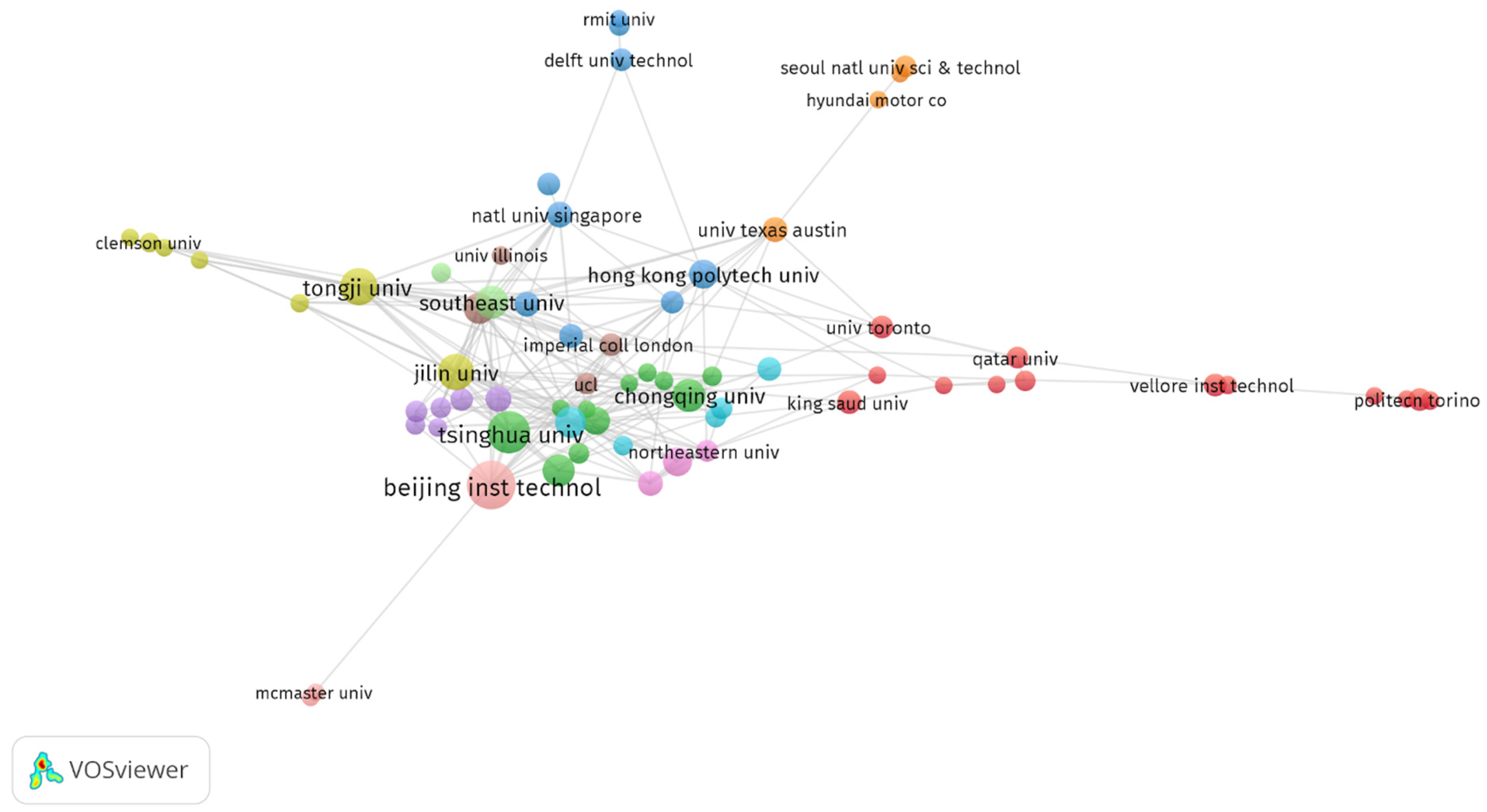
The VOSviewer co-authorship map in
Figure 5 reveals that institutional collaboration in durable road transport research is highly concentrated among Chinese universities, which form the structural core of the global research network. Beijing Institute of Technology, Tsinghua University, Chongqing University, Southeast University, and Tongji University represent the most prominent and densely connected nodes, signifying their central role in driving both national and international collaborations. These institutions maintain strong partnerships with regional allies such as Jilin University and Jiangsu University, reinforcing an integrated domestic research ecosystem. Beyond national borders, active collaborations with Hong Kong Polytechnic University, National University of Singapore, Imperial College London, and Delft University of Technology illustrate China’s outward engagement with global research leaders, serving as intellectual bridges between Asian and Western clusters.
The map also indicates several peripherals, yet strategically positioned institutions, including Seoul National University of Science and Technology, University of Texas at Austin, Qatar University, and Politecnico di Torino, which connect through secondary or specialized research networks. These linkages highlight emerging cross-continental partnerships, particularly between Asia, the Middle East, and Europe, reflecting growing internationalization in sustainable mobility research. Nevertheless, the visualization exposes clear structural imbalances: Chinese institutions dominate the central collaboration hub, while North American and European universities appear more fragmented, with weaker interlinkages across regions. This uneven network density suggests that although global cooperation is expanding, much of the intellectual exchange remains regionally concentrated. Strengthening trans-regional and interdisciplinary collaboration would be the main point towards fostering a more balanced and globally cohesive research landscape in sustainable road transport systems.
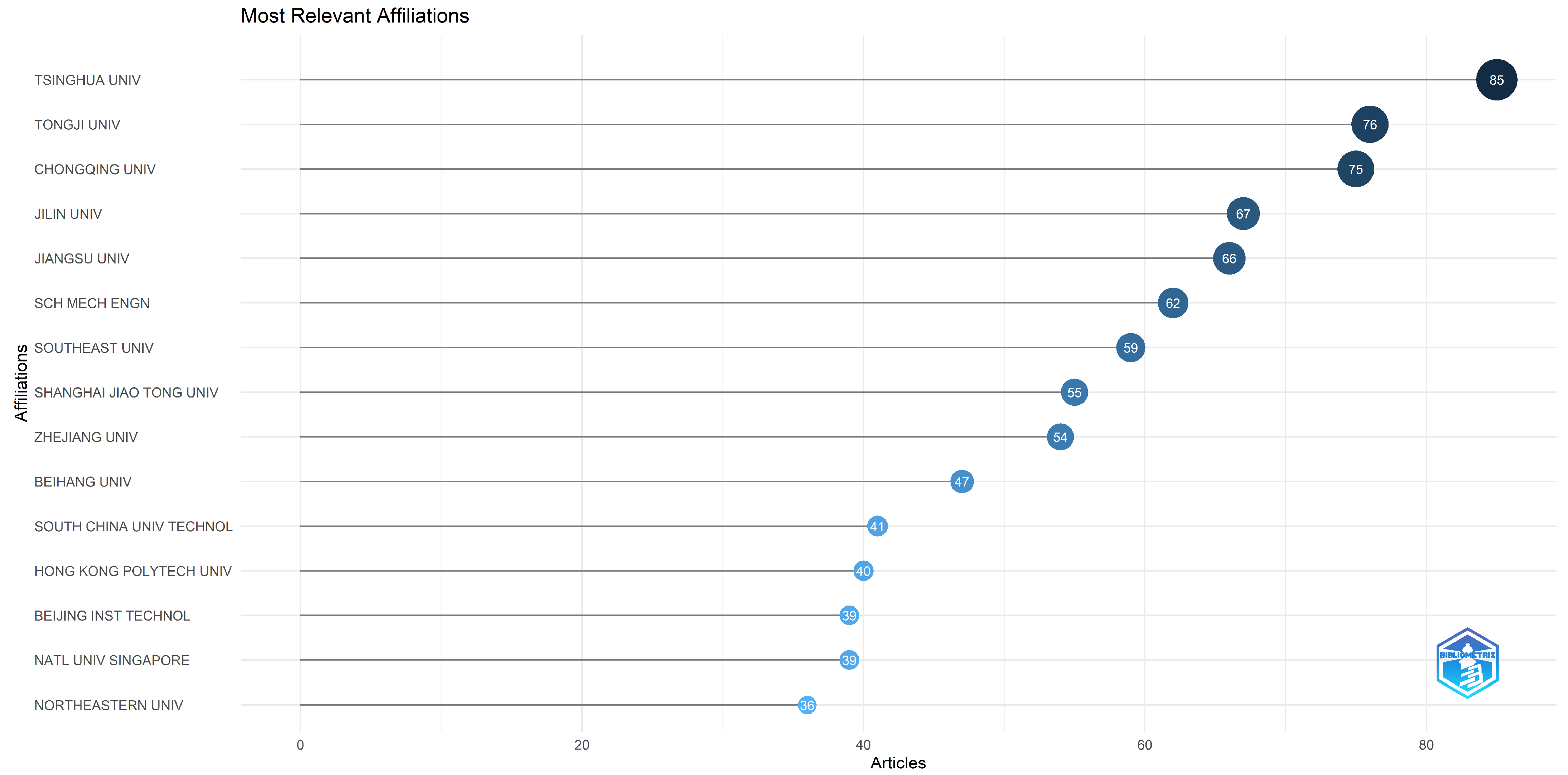
Building upon the co-authorship visualization, which underscores the centrality of Chinese universities in the global collaboration landscape, the analysis of Most Relevant Affiliations (
Figure 6) further substantiates this institutional dominance in long-lived road transport research. The leading academic contributors, Tsinghua University, Tongji University, and Chongqing University, stand out with 85, 76, and 75 publications, respectively, collectively representing the intellectual core of China’s research activity in the field. These universities not only lead in publication volume but also act as primary knowledge producers driving innovation in intelligent mobility, electric vehicle technology, and connected transport systems. Their prominence reflects both the strategic prioritization of sustainable mobility in China’s national research agenda and the high degree of institutional collaboration revealed in the co-authorship network.
Beyond these top-tier institutions, Jilin University, Jiangsu University, and the School of Mechanical Engineering maintain substantial contributions, reinforcing the dense research ecosystem that supports technological advancement and academic continuity within China. Southeast University, Shanghai Jiao Tong University, and Zhejiang University also play notable roles, indicating a concentration of expertise within major technological and engineering universities. Together, these affiliations form a cohesive and competitive national research framework that continues to expand its global visibility and influence.
Outside mainland China, Hong Kong Polytechnic University and the National University of Singapore emerge as regional players linking Asian and international research communities. While their publication counts are lower compared to the major Chinese institutions, their positions within the collaboration network indicate strong cross-border connectivity and a bridging function between Eastern and Western research systems. The relative scarcity of top contributors from Europe and North America, however, points to an ongoing geographical imbalance in global research leadership. This pattern suggests both the strength of China’s coordinated institutional effort and an opportunity for broader international diversification to stimulate more inclusive and globally integrated research on long-lived and intelligent transport systems.
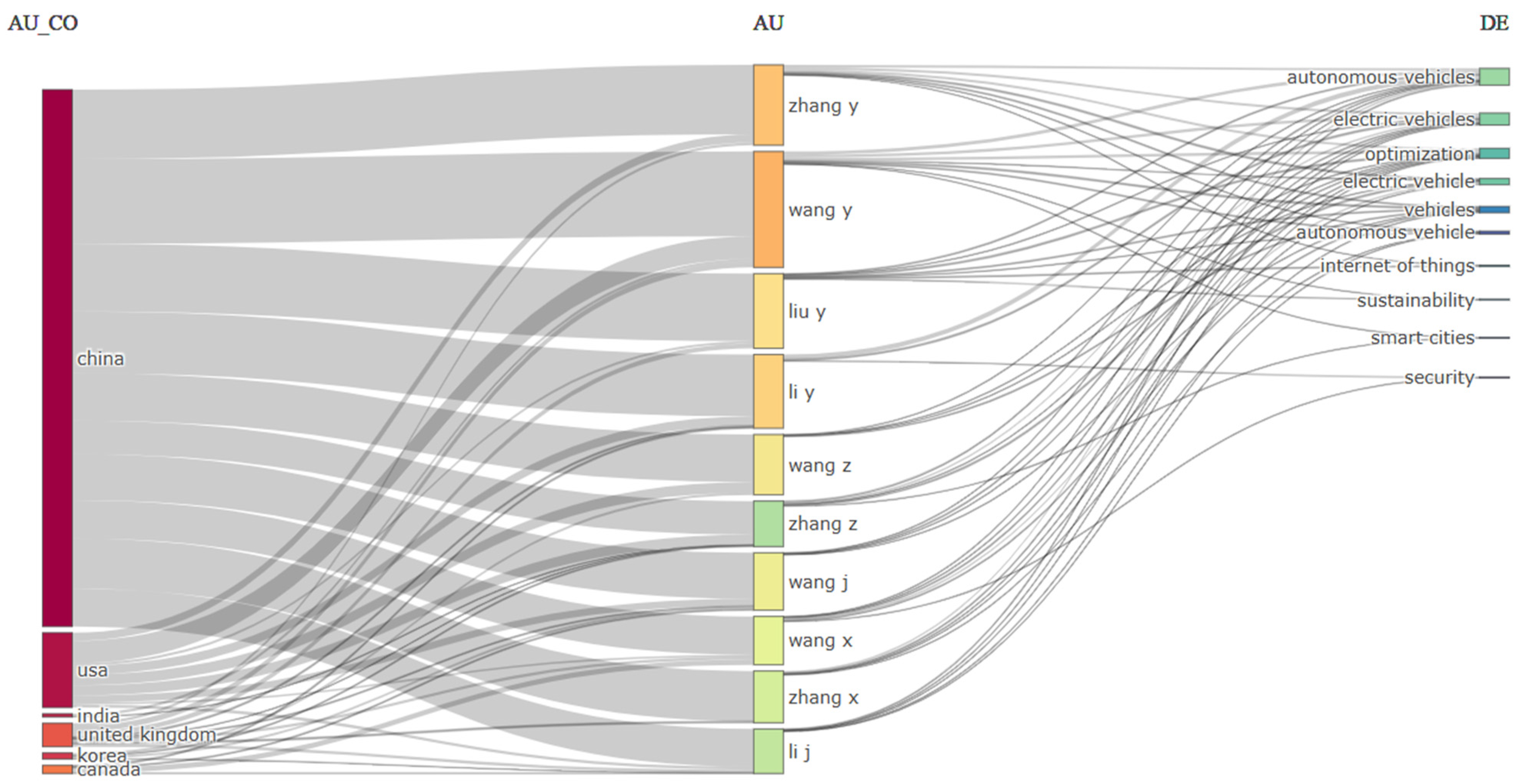
The three-field plot generated through Bibliometrix (
Figure 7) provides an integrated view of how authors’ countries, leading researchers, and dominant research themes intersect within the durable road transport systems domain. The visualization reveals a clear structural concentration of academic productivity and influence, with China emerging as the principal driver of global research output. Prominent scholars such as Zhang Y., Wang Y., Liu Y., and Li Y. occupy central positions within the network, reflecting both their prolific publication activity and strong interconnections with important thematic areas. Their research predominantly focuses on autonomous and electric vehicles, optimization frameworks, and the Internet of Things (IoT), technological pillars that underpin China’s strategic orientation toward digitalized, data-driven, and low-carbon mobility systems. This thematic clustering underscores how Chinese research is advancing core technological enablers of next-generation transport, aligning academic priorities with national innovation policies and industrial transformation goals.
Beyond China, several other countries demonstrate meaningful, though less extensive, engagement in the field. The United States, India, the United Kingdom, Republic of Korea, and Canada constitute secondary hubs of research activity, often linking technological advancement with broader performance frameworks. Studies from these nations tend to emphasize complementary perspectives, including smart city integration, environmental governance, and cybersecurity within intelligent transportation infrastructures. This diversity enriches the global knowledge base but also highlights disparities in research capacity and focus areas. For example, Western contributions are more interdisciplinary, whereas Asian contributions remain strongly technology-oriented.
Overall, the three-field analysis reveals a high thematic concentration around intelligent and electric vehicle technologies, coupled with a geographical imbalance in global research participation. The dominance of Chinese scholars and institutions within both the publication and citation networks demonstrates strong regional leadership but also indicates limited cross-national diffusion of expertise. Strengthening collaboration across regions, particularly through partnerships involving underrepresented countries and multidisciplinary frameworks, could improve knowledge exchange, foster innovation equity, and accelerate the global transition toward sustainable and intelligent transport systems.
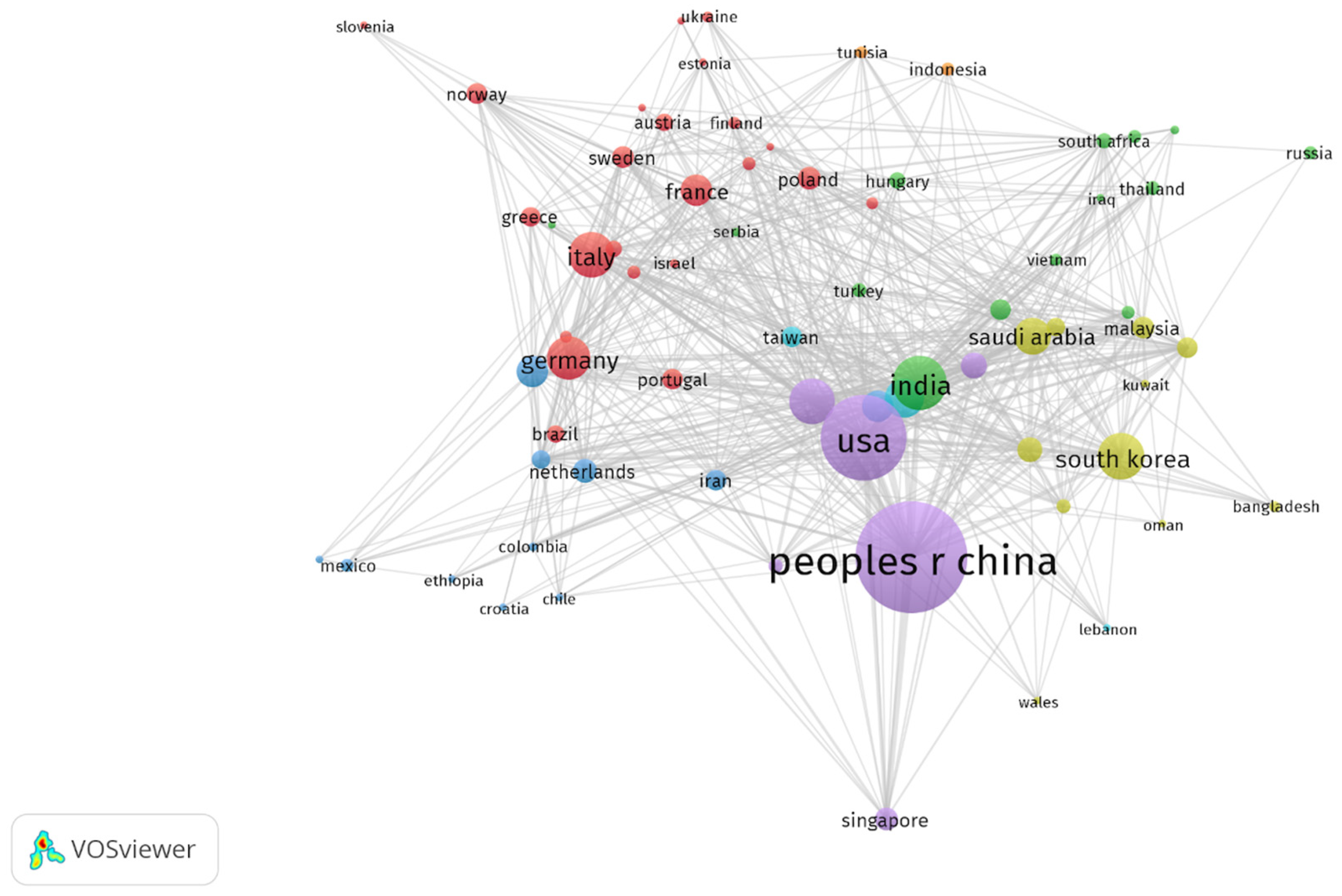
In continuation of these findings, the co-authorship network visualization (
Figure 8) provides a complementary perspective by mapping how these research actors and institutions interact within the broader international landscape. The network highlights that the largest and most interconnected clusters are centered around China, the United States, and India, underscoring their roles as global hubs of knowledge exchange and innovation. European countries, particularly Germany, Italy, France, and the United Kingdom, form a secondary but tightly connected collaboration network, frequently partnering with Asian and Middle Eastern counterparts such as India, Saudi Arabia, Malaysia, and Republic of Korea. We mention that the country collaboration map reflects international co-authorship intensity rather than overall research capacity or national output. Consequently, some countries with strong domestic research ecosystems, such as Japan, do not appear prominently in the network due to comparatively lower levels of international co-authored publications within the analyzed dataset. This highlights structural differences in collaboration practices rather than differences in scientific relevance or contribution.
4.4. Thematic Interpretation Based on Keyword Clusters
The co-occurrence analysis offers a structured view of the intellectual landscape within sustainable road transport research. To interpret the conceptual structure revealed by the six bibliometric clusters, the terms were consolidated into three broader and more coherent research domains: road transport systems, viability in road mobility, and emerging technologies for intelligent transport. This thematic grouping clarifies how core concepts interact, which areas hold central influence, and how technological, environmental, and operational dimensions converge within the field. By integrating cluster-specific terminology with representative studies identified in the dataset, the following subsections summarize the dominant conceptual patterns and highlight the scientific directions reflected in the bibliometric results.
In VOSviewer, three main indicators are used to interpret term co-occurrence networks:
Occurrence refers to the number of times a particular keyword appears in the dataset. A higher occurrence value indicates that the concept is frequently discussed within the research field and likely represents a central or recurring theme.
Links denote the number of direct co-occurrence connections a keyword has with other keywords. Each link represents a relationship between two terms that appear together in one or more documents.
Total Link Strength (TLS) quantifies the cumulative strength of all links between a given keyword and others. A high TLS value signifies that the concept is not only frequently co-mentioned but also closely integrated with other research themes, indicating its role as a bridging or interdisciplinary concept within the field.
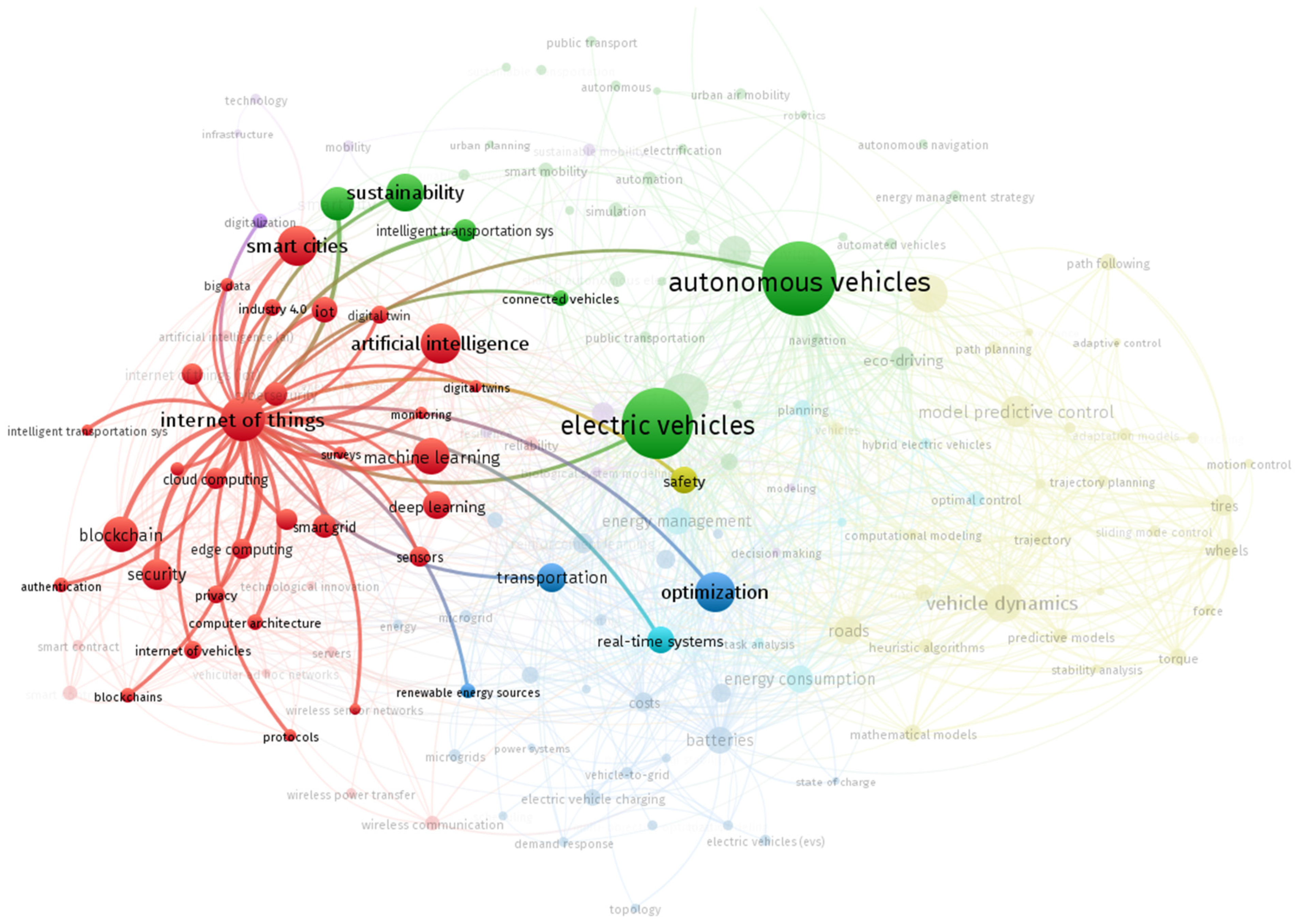
Cluster 1—Internet of Things (IoT) (Links: 81; TLS: 273; Occurrence: 103): This cluster reflects the growing integration of IoT-based solutions in intelligent transport systems (
Figure 9). The moderate number of links and total link strength indicate that IoT research is well connected to other domains such as autonomous driving and smart infrastructure but remains focused on enabling technologies like sensors, connectivity, and data analytics. Its medium occurrence level suggests steady but specialized research attention.
The main keywords and the references related are presented in
Table 4.
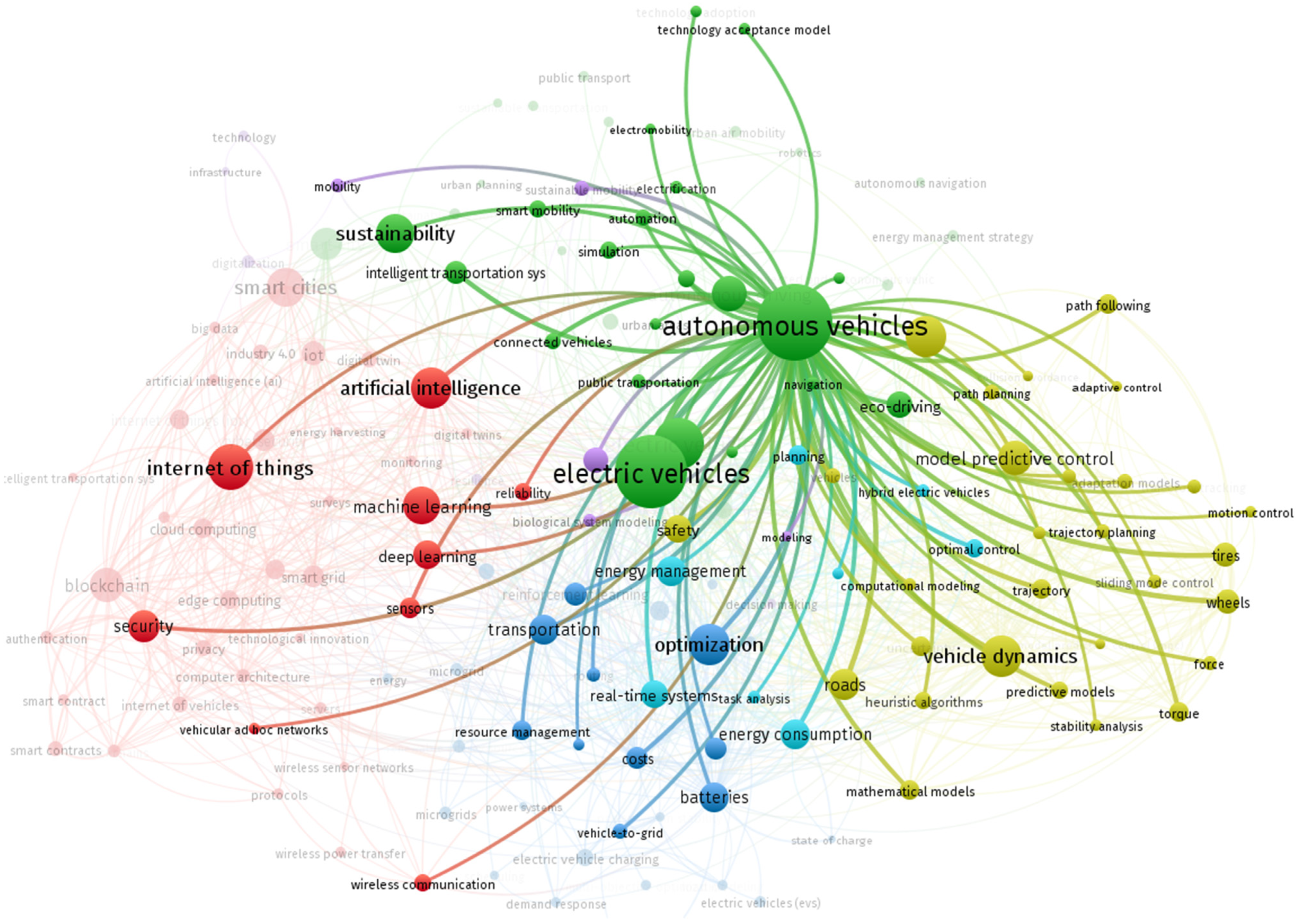
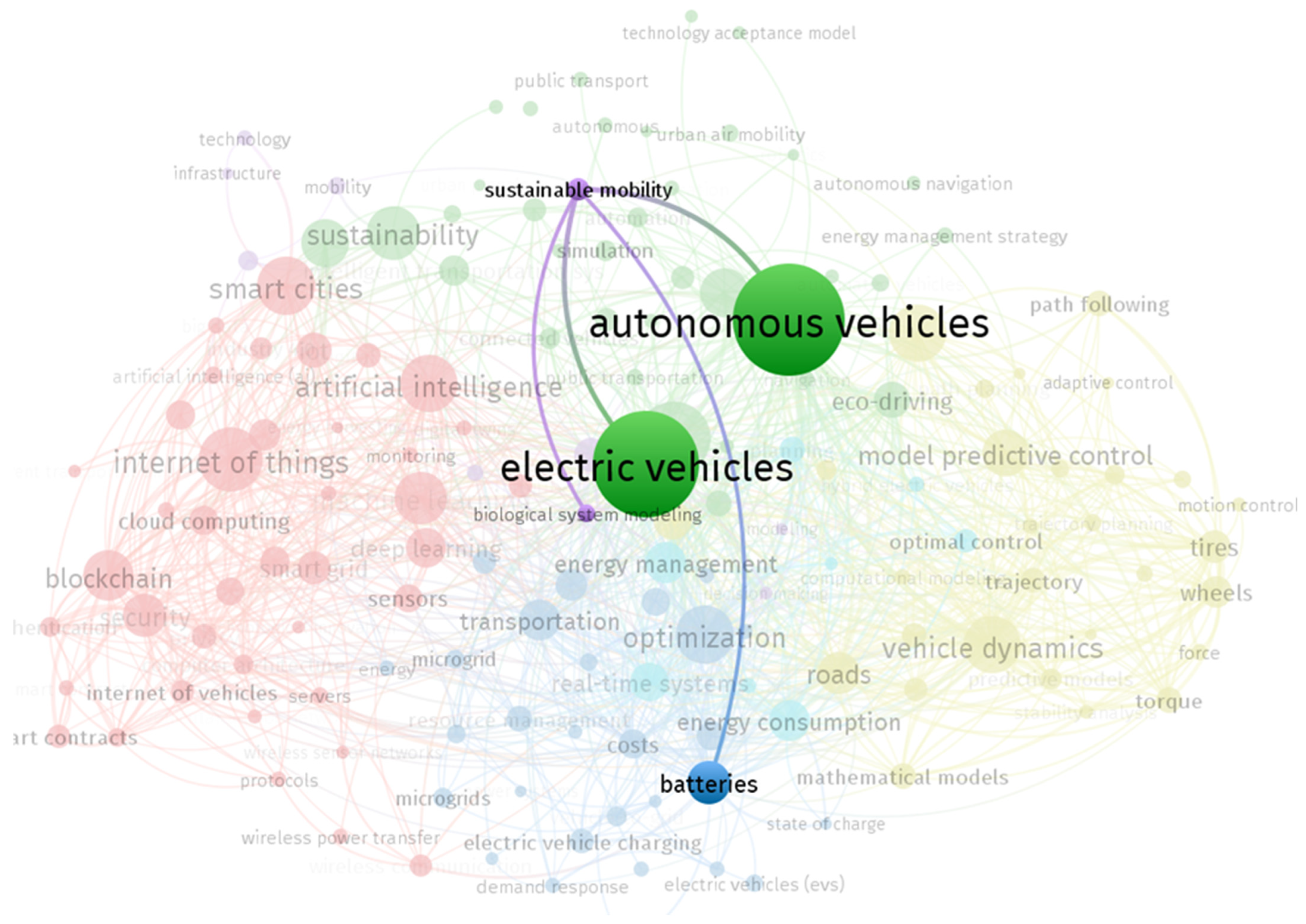
Cluster 2—Autonomous Vehicles (Links: 112; TLS: 454; Occurrence: 219): The autonomous vehicles cluster is the largest and most interconnected thematic group in the network (
Figure 10), as reflected by its high occurrence and total link strength. This indicates that autonomous mobility constitutes a central technological pillar within contemporary road transport research, with strong interdisciplinary connections to artificial intelligence, road safety, communication systems, and human–machine interaction. However, the co-occurrence structure shows that explicit sustainability-related terms occupy a more peripheral position, suggesting that sustainability considerations are most often addressed indirectly through efficiency, safety, and automation-oriented research rather than as a primary analytical focus. This pattern highlights a gap between the prominence of autonomous vehicle technologies and their systematic integration with broader performance frameworks.
The main keywords and the references related are presented in
Table 5.
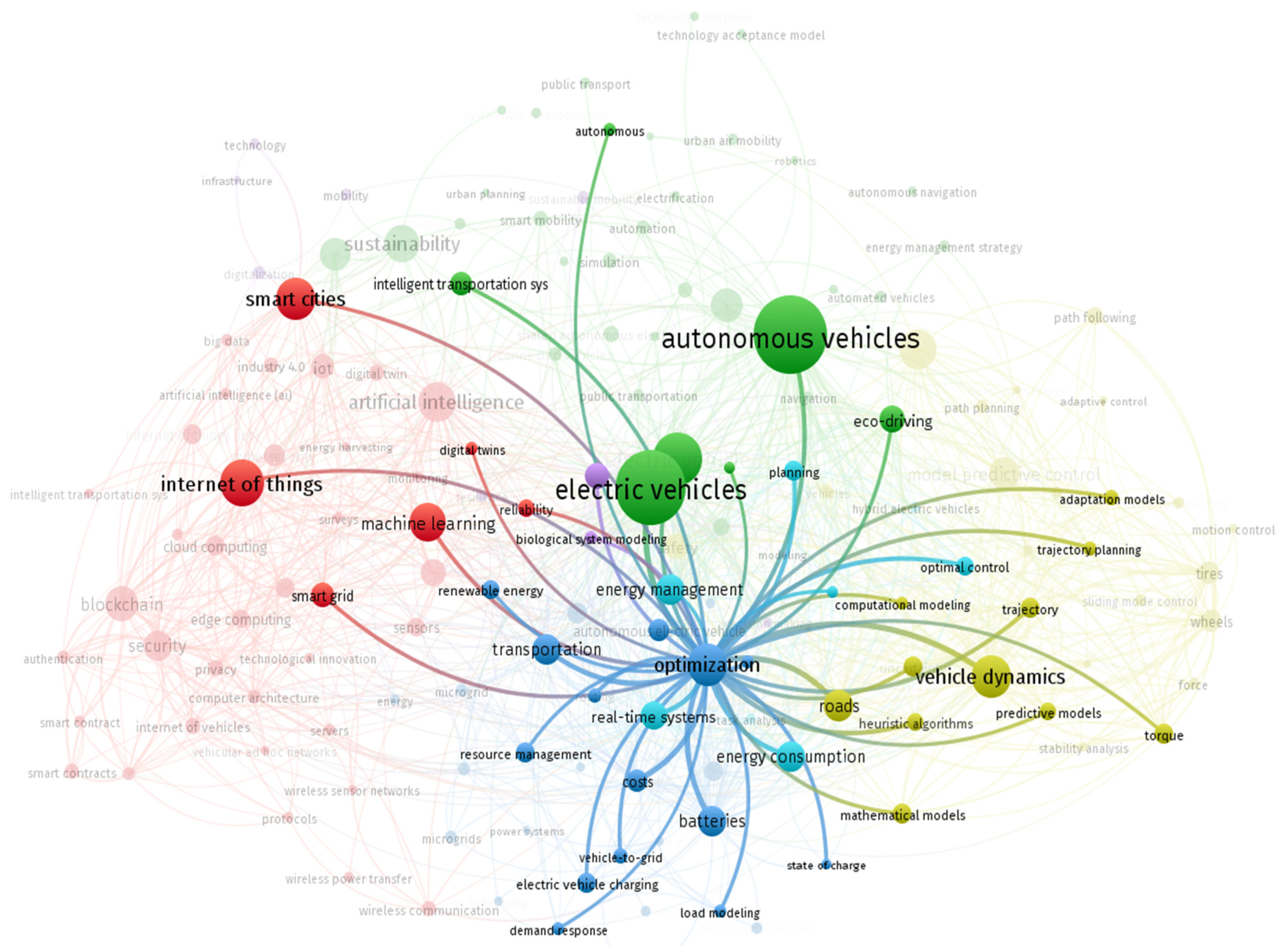
Cluster 3—Optimization (Links: 105; TLS: 350; Occurrence: 89): Optimization-related studies focus on improving transport efficiency, route planning, energy consumption, and system performance (
Figure 11). The high number of links and total link strength indicate that optimization functions as a core methodological foundation across multiple transport-related domains, supporting traffic management, energy-aware vehicle operation, and real-time system control. The co-occurrence structure suggests that sustainability considerations are largely implicit, emerging through efficiency gains and reduced energy consumption rather than through explicit environmental, social, or lifecycle-oriented frameworks. This pattern reinforces the observation that optimization research prioritizes technical performance, while broader sustainability dimensions remain weakly integrated.
The main keywords and the references related are presented in
Table 6.
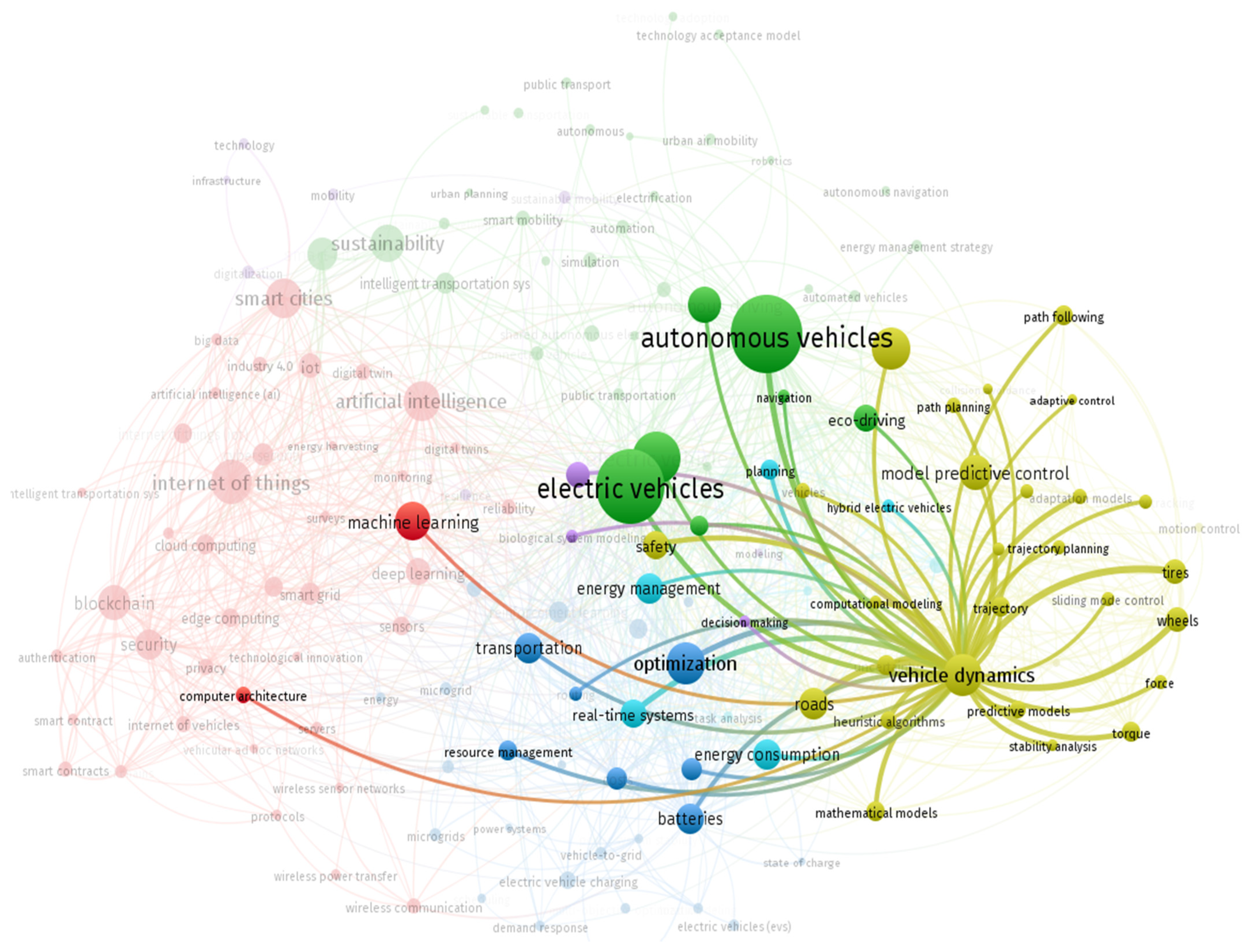
Cluster 4—Vehicle Dynamics (Links: 91; TLS: 462; Occurrence: 87): Despite its relatively lower occurrence, the vehicle dynamics cluster exhibits a high total link strength, reflecting its strong integration with control systems, performance modeling, and real-time vehicle operation (
Figure 12). The cluster is predominantly engineering-oriented, focusing on trajectory tracking, model predictive control, stability analysis, and dynamic optimization for autonomous, electric, and hybrid vehicles. While these studies may contribute indirectly to sustainability objectives through improvements in efficiency, safety, and vehicle performance, explicit sustainability-related concepts are not structurally central within this cluster, indicating that sustainability considerations are typically secondary to technical performance goals.
The main keywords and the references related are presented in
Table 7.
Cluster 5—Mobility Policy and Strategic Planning (Links: 20; TLS: 33; Occurrence: 19): This smaller cluster groups policy-oriented and conceptual terms related to mobility governance and strategic planning rather than to core technological development (
Figure 13). The relatively low link strength indicates that these topics remain weakly integrated with the dominant technology-driven research clusters, suggesting that policy and planning discussions are most often treated as contextual background rather than as components embedded within technical research workflows.
The main keywords and the references related are presented in
Table 8.
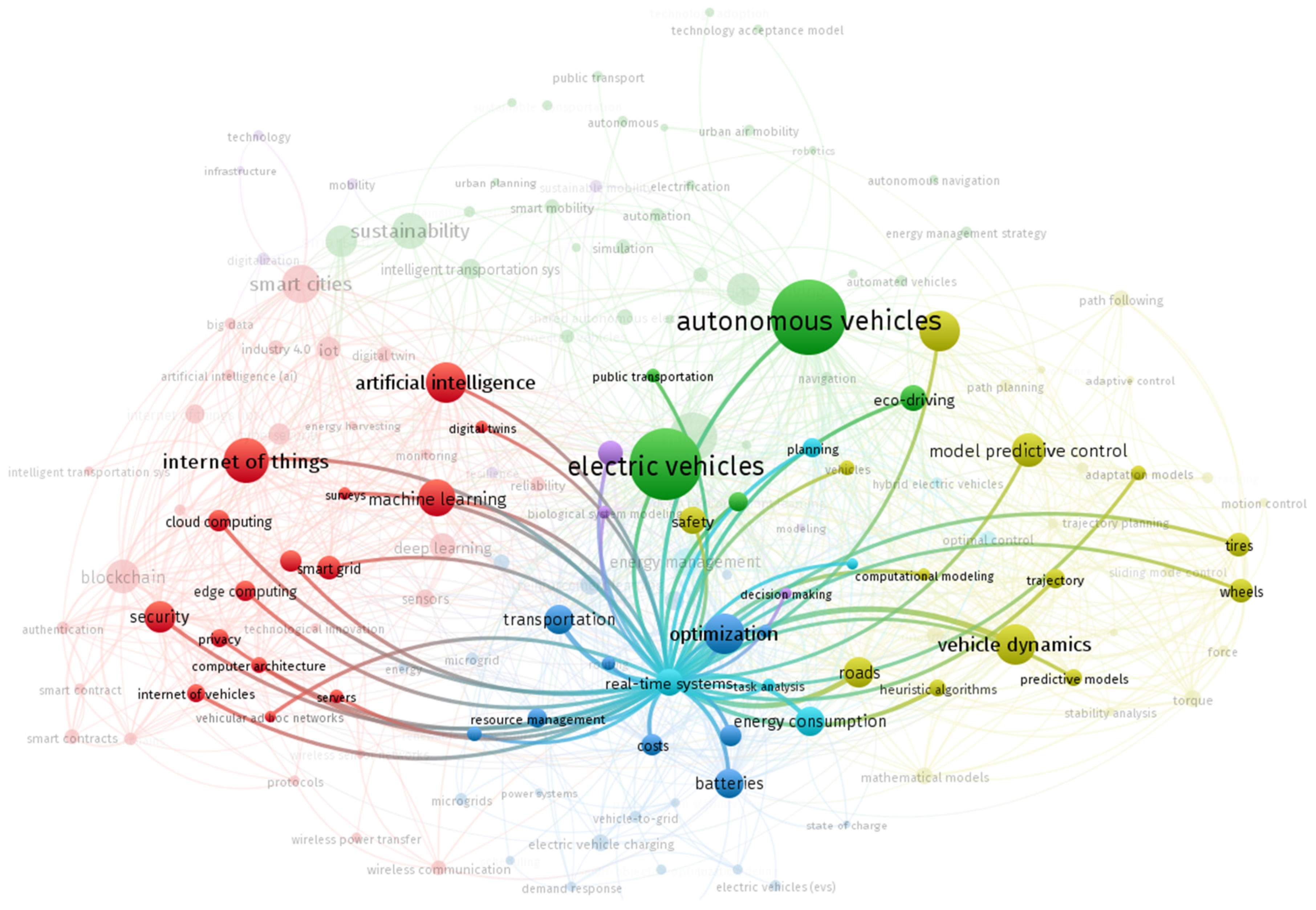
Cluster 6—Real-Time Systems (Links: 96; TLS: 293; Occurrence: 49): This cluster highlights the operational backbone of intelligent transport technologies. Real-time systems are essential for data-driven decision-making, vehicle control, and traffic optimization (
Figure 14). Its moderate occurrence and link strength show that it supports several core clusters, especially IoT and autonomous systems, indicating its foundational but often underemphasized role in implementation.
The main keywords and the references related are presented in
Table 9.
Road Transport Systems (Vehicle Dynamics + Real-Time Systems)
Research on road transport systems is anchored in clusters related to vehicle dynamics, control, trajectory tracking, and real-time operations. Keywords such as vehicle dynamics, roads, model predictive control, trajectory planning, wheels, and path following align closely with infrastructure-oriented studies that address stability, lane-changing, road–vehicle interaction, and dynamic modeling in autonomous and electric vehicles. The real-time systems cluster further reinforces this engineering foundation, with terms such as real-time systems, transportation, energy consumption, computational modeling, and resource management. These highlight the growing dependence of transport infrastructures on high-speed computation, perception pipelines, and control algorithms that ensure safe and efficient operation of vehicles within complex road networks. Together, these clusters illustrate a mature research domain focused on improving the robustness, responsiveness, and performance of digitally integrated transport infrastructures.
Energy and Efficiency-Oriented Mobility Research (Mobility Policy and Strategic Planning + Optimization)
The clusters associated with mobility policy and strategic planning and optimization primarily reflect research on energy use, batteries, renewable energy integration, vehicle-to-grid interactions, and cost-oriented performance metrics. These themes indicate a growing emphasis on infrastructure systems that enable energy-efficient and low-emission vehicle operation, such as charging networks, grid-integration mechanisms, and energy-aware mobility management. The optimization cluster is closely connected to these topics through terms such as optimization, state of charge, energy consumption, and transportation, highlighting the role of algorithmic and systems-engineering approaches in improving technical efficiency and operational performance. However, the co-occurrence structure suggests that sustainability is largely operationalized through efficiency and energy-management proxies, while broader environmental, social, and lifecycle perspectives remain weakly represented. Thus, these clusters point to a technically driven approach to sustainability in road mobility research, where infrastructure challenges are addressed primarily through performance optimization rather than through integrated sustainability frameworks.
Emerging Technologies for Intelligent Transport (IoT + Autonomous Vehicles)
Emerging technologies in road transport are represented by the two largest clusters: Internet of Things (IoT) and Autonomous Vehicles (AV). IoT-related keywords: IoT, sensors, AI, machine learning, connectivity, blockchain, smart cities, cybersecurity, cloud computing, reflect the digital transformation of transport infrastructures through real-time monitoring, data analytics, and connected roadside systems. The autonomous vehicles cluster includes autonomous vehicles, electric vehicles, sustainability, smart mobility, eco-driving, public transportation, and intelligent transport systems, indicating its central role in shaping future road networks. Together, these clusters highlight the evolution of intelligent mobility infrastructures supported by sensing technologies, communication networks, and automated decision-making systems. They show how automation, connectivity, and electrification converge to create integrated, cyber–physical transport infrastructures capable of supporting predictive operations, traffic coordination, and adaptive mobility services.