1. Introduction
Roads and highway networks have significantly enhanced global connectivity, making the world more interconnected than ever. In recent decades, growing traffic volumes have made highway expansion and the rehabilitation of existing roads and streets imperative [
1]. Asphalt pavements are preferred for their cost-effectiveness, smooth surfaces, and efficient load distribution characteristics [
2]. Despite these benefits, asphalt pavement contributes significantly to the environmental challenges of road construction due to its air pollution, energy consumption, and reliance on natural resources. Growing awareness of these impacts has shifted the focus of the asphalt industry toward sustainable development [
3]. Sustainability involves balancing economic, social, and environmental considerations to promote long-term development [
4]. For asphalt mixes, sustainable practices aim to reduce greenhouse gas (GHG) emissions, lower resource consumption, reduce the dependency on natural resources, and enhance pavement durability through the application of advanced techniques and additives [
5,
6].
In light of increasing global environmental concerns, advancements in technologies aimed at reducing the environmental footprint of asphalt pavements have gained momentum. Two key approaches to enhancing sustainability involve the implementation of energy-efficient production methods and the incorporation of additives that help reduce the environmental footprint [
7]. One of the most effective strategies for advancing sustainability in asphalt production is through innovations in the asphalt mix’s construction temperatures, which have a direct and significant impact on both energy consumption and emissions.
2. Background
2.1. Classification of Asphalt Mixtures by Construction Temperatures
Asphalt mixtures are classified by their construction temperatures into four main types: (1) Hot Mix Asphalt (HMA) is produced at temperatures ranging from 150 to 200 °C; (2) Warm Mix Asphalt (WMA) is produced at temperatures 10–45 °C lower than HMA; (3) Half Warm Mix Asphalt (HWMA) is produced at temperatures below 100 °C; and (4) Cold Mix Asphalt (CMA) is produced without heating the aggregates [
8]. HMA production is one of the major sources of GHG emissions, releasing substantial amounts of CO
2 (carbon dioxide), CH
4 (methane), and N
2O (nitrous oxide), and requiring high energy consumption due to the high construction temperatures [
9].
2.2. Warm Mix Asphalt (WMA)
WMA has emerged as a sustainable technology through substantial reductions in energy consumption and GHG emissions while enhancing working conditions by producing and placement of asphalt mix at lower mixing and compaction temperatures [
10]. This technology was initially developed in Europe in the 1990s and subsequently adopted in the United States in 2002 [
11]. WMA has gained widespread adoption due to its significant environmental and economic benefits, making it a viable alternative to conventional HMA. Jamshidi et al. [
12] observed that lowering the production temperature by 10 °C results in a reduction in heavy oil consumption by 11.8 kWh and decreases CO
2 emissions by 1 kg per ton of asphalt. These energy savings also contribute to lower overall construction costs, typically reducing production expenses by approximately 15–25% depending on fuel prices and plant efficiency Evaluations conducted in several European countries have shown that WMA technologies can significantly reduce harmful emissions during asphalt production [
13]. T. Calabi-Floody et al. [
14] conducted a comparative study evaluating gas emissions and energy consumption between WMA, WMA-RAP (WMA with reclaimed asphalt pavement), and HMA. The findings revealed that CO
2 emissions were reduced by up to 37% in WMA-RAP with 20% RAP, while energy consumption showed reductions ranging from 5 to 13%.
WMA additives are generally categorized into organic additives, chemical additives, and foaming technologies. Organic additives, such as Sasobit
®, reduce the viscosity of the binder at elevated temperatures. Chemical additives, such as Evotherm
®, improve the adhesion between the binder and aggregates without altering the binder’s viscosity. Foaming technologies include both additives and asphalt plant modifications. Additives such as Advera
® and Asphamin
®, introduce water into the binder, generating steam that temporarily expands the binder, thereby enhancing aggregate coating at reduced temperatures. Additionally, some foaming techniques involve directly injecting water into the asphalt mix during production, which requires plant modifications [
15]. The proper selection and application of these additives are critical to optimizing the performance of WMA. Various types of WMA additives have been extensively evaluated from multiple perspectives, including their sustainability and environmental impacts, as well as their mechanical performance. Key factors such as rutting resistance, moisture susceptibility, fatigue, and thermal cracking have been thoroughly investigated across a wide range of studies. Several comprehensive review papers provide valuable insights into these aspects, providing in-depth analysis and critical evaluations [
12,
16,
17,
18,
19,
20,
21,
22].
2.3. Sasobit®
Among all WMA additives, Sasobit stands out as a key organic additive frequently applied in WMA technology and its impact on binder and asphalt mixture properties has been extensively studied. Sasobit melts at approximately 100 °C, aligning with the typical temperature range for WMA production. As the temperature drops, it forms a crystalline network within the binder, enhancing its stiffness, particularly at the in-service temperatures of the pavement [
23]. The main role of Sasobit is to reduce the viscosity of asphalt binders, resulting in lower construction temperatures [
24]. This reduction in viscosity directly contributes to the sustainability of asphalt mixtures. Based on literature and manufacturer guidelines, the recommended dosage of Sasobit should not exceed 4% of the binder’s weight, with 3% being commonly recommended as the optimal amount [
12,
25,
26].
Research on Sasobit can be categorized into two primary areas. The first area focuses on its use in WMA and its effects on the performance of asphalt mixtures. Sasobit has been shown to enhance rutting resistance by improving the high-temperature performance of the asphalt binder. At intermediate temperatures, it does not significantly affect the binder’s resistance to fatigue cracking. However, at low temperatures, Sasobit can negatively impact binder performance, potentially reducing its resistance to cracking [
24,
27,
28]. The second area investigates Sasobit’s function as a viscosity-reducing agent, and compaction aid, in various modified binders and asphalt mixtures, such as polymer-modified and rubber-modified binders [
29,
30,
31,
32]. This property has been investigated and utilized in some recent studies to improve binder workability, reduce mixing and compaction temperatures, and enhance high-temperature performance while maintaining acceptable mechanical behavior [
33,
34,
35]. These studies demonstrated that Sasobit effectively lowers viscosity and energy demand during production, mitigates aging effects, and improves stiffness and rutting resistance without significantly compromising fatigue resistance.
2.4. Lignin
The incorporation of bio-based additives, such as lignin, further enhances the sustainability of asphalt mixes by offering renewable alternatives or extenders to conventional petroleum-based binders. Kraft lignin, an organic byproduct of the paper industry, is derived from either softwood or hardwood [
36]. While current production costs are high due to limited industrial scale, lignin has the potential to become an economically feasible material as production scales up. As a renewable, non-toxic substance sourced from biomass [
37], lignin presents a promising solution for sustainable asphalt modification, particularly in countries such as Canada, where the vast availability of forest resources provides a significant green alternative. In recent years, significant attention has been focused on investigating the use of lignin in the asphalt industry. Research studies consistently indicate that incorporating lignin into the binder enhances performance at intermediate and high temperatures, though it can adversely affect low-temperature performance and cause challenges in compaction due to increased air voids. A major challenge with lignin as a binder additive is its tendency to increase viscosity, resulting in higher construction temperatures, which contradict sustainability objectives [
38,
39,
40,
41,
42,
43,
44,
45,
46,
47,
48,
49,
50,
51,
52,
53]. In the author’s previous studies [
54,
55], a significant increase in the viscosity of lignin-modified binders was observed. This finding led to further research, incorporating Sasobit as a viscosity-reducing agent in the bitumen.
Previous studies have mainly examined lignin or Sasobit individually, each with distinct benefits and limitations. This study advances beyond these by combining the two additives, using Sasobit to offset lignin-induced viscosity increases, thereby achieving a more sustainable system that combines bio-based modification with warm-mix technology.
2.5. Mix Design
The design of asphalt mixtures is the foundation of pavement engineering, aimed at achieving durability, stability, and optimal performance under diverse traffic loads and environmental conditions. Over the decades, various mix design methods have been developed, each catering to specific requirements. One of the most widely used methods is the Marshall mix design. This method focuses on creating a durable mix with an optimal air void content, generally around 4%, while minimizing asphalt binder use to ensure good rutting resistance. Another notable approach is the Hveem mix design, which prioritizes stability, cohesion, and durability by ensuring adequate binder coating on aggregates to promote long-term performance. The Superpave (Superior Performing Asphalt Pavement) method represents a performance-driven approach. It integrates the selection of performance-graded (PG) asphalt binders and aggregates with compaction using the Superpave Gyratory Compactor (SGC). Superpave evaluates mix properties under targeted traffic and environmental conditions, using compaction effort levels [
56,
57].
The LC (Laboratoire des Chaussées) Method, developed by Quebec’s MTMD (Ministère des Transports et de la Mobilité Durable), has a hybrid approach, incorporating elements of both the Superpave and the LCPC (Laboratoire Central des Ponts et Chaussées) methods. One of the significant distinctions of the LC method is its reliance on the volume of effective binder (Vbe) for calculating the binder content, rather than the commonly used voids in mineral aggregate (VMA) and voids filled with asphalt (VFA). The LC method’s main features include setting the Vbe according to the specific type of mixture to be designed and optimizing the aggregate grading to meet air voids specifications (Va) at a given level of compaction energy. This volumetric approach ensures the mix achieves the desired performance and durability characteristics. Although similar to Superpave, the LC method is tailored to Quebec conditions and enables more precise control of binder content through Vbe, which is particularly beneficial when incorporating additives with different specific gravities.
The mix design process for WMA is fundamentally the same as that for HMA including aggregate gradation, binder content, and performance evaluations, except for lower construction temperatures [
58]. In most cases, WMA technologies, such as Sasobit, are incorporated into the mix without altering the core design parameters used in conventional HMA [
59]. The standard method for determining the construction temperatures of HMA is the equi-viscous (EQ) method [
60]. This method relies on measuring the viscosity of the binder using results from the Brookfield Rotational Viscometer (BRV) test. However, it is well established among researchers that the EQ method is not suitable for asphalt mixtures produced with modified binders, such as polymer-modified and warm mix-modified asphalt binders, as it often results in unrealistically high temperatures [
24,
61,
62]. This limitation has led to widespread recognition that viscosity-based methods are less effective in evaluating WMA, as several studies have confirmed their insensitivity to WMA technologies [
27,
63,
64,
65]. As a result, several alternative methods have been proposed to overcome the limitations of the EQ method for WMA mixtures. Among these alternative methods, the most prominent include the analogy, the phase angle, the CEI & TDI, and the air voids methods [
22]. Between those, the air voids method has emerged as the most reliable and widely used approach for determining WMA construction temperatures [
66]. The air voids method determines construction temperatures by evaluating the compaction behavior of asphalt mixes at various temperatures. This approach involves measuring the air voids content at different compaction temperatures and selecting the temperature at which the desired air voids level, typically the same as that of a reference mix, is achieved. Although this method does not directly measure binder viscosity, the compaction behavior reflected by air voids indirectly captures the binder’s effective viscosity at different temperatures.
In summary, the introduction of bio-based additives like lignin, along with advanced technologies such as WMA with Sasobit, represents a significant step forward in the pursuit of more sustainable road construction practices. By lowering construction temperatures, reducing energy consumption, and decreasing reliance on petroleum-based binders, these innovations contribute to environmental sustainability, reducing the ecological impact of road construction.
3. Experimental Campaign
In this study, asphalt mixes were prepared using varying proportions of Kraft lignin and Sasobit. The preparation, design, testing, and evaluation of these mixes were carried out to assess their volumetric and mass properties, with a focus on the effects of these materials on construction temperatures. The following sections provide objectives and scope, details on the materials used, mix compositions, and the methodologies employed for testing.
3.1. Objectives and Scope
The objective of this research is to investigate the novel idea of incorporating Sasobit, a WMA additive, into lignin-modified asphalt mixes. More specifically, this study aims to investigate the individual and combined use of Kraft lignin and Sasobit in asphalt mixes to evaluate the volumetric and mass properties and address challenges related to construction temperatures.
This study focuses on two sustainable approaches: first, the utilization of Kraft lignin in asphalt mixes to reduce environmental impact; and second, the reduction of construction temperatures of lignin-modified mixes, which results in decreased fuel consumption, energy use, and emissions. Combining these two approaches, the study aims to determine whether the addition of Sasobit can effectively compensate for the increased construction temperatures caused by Kraft lignin, thereby enabling a more sustainable and efficient asphalt production process. Key questions addressed in this research include whether Sasobit can mitigate the negative effects of lignin on construction temperatures and how these two materials interact in an asphalt mix in terms of volumetric properties. Additionally, the study aims to understand the role of Kraft lignin within the mix—whether it behaves more like a binder or a filler. The challenge is to develop an optimized mix design that incorporates both materials while achieving desired performance outcomes.
The scope of this study covers mix design formulation, assessment of volumetric and mass properties, and the analysis of compaction test results using the Superpave Gyratory Compactor (SGC). The study also evaluates the construction temperatures required for each mix while maintaining consistent air voids content, a crucial parameter in asphalt mix performance and sustainability. The findings are expected to provide valuable insights into the behavior of Kraft lignin and Sasobit in asphalt mixes, the optimal mix design strategies for incorporating these materials, and the potential for reducing construction temperatures. The overall goal is to contribute to the development of more sustainable infrastructure by optimizing asphalt mix designs with innovative materials.
3.2. Materials
Four distinct types of aggregates were used for the asphalt mix, including 5–10 mm, 0–5 mm wash and 0–5 mm non-washed aggregates, and limestone filler. To determine the physical properties of these aggregates, various tests were conducted. The specific gravity and water absorption tests were performed on all aggregate types according to Quebec’s LC 21-065 [
67], LC 21-066 [
68], and LC 21-067 [
69] test methods. Sieve analyses were also carried out in accordance with Quebec’s LC 21-040 [
70] test method. Each test was conducted with two replicas (
n = 2) to ensure the reliability of the results. The sampling of aggregates from the quarry followed Quebec’s LC 21-010 [
71] test method, ensuring that the material was representative of the source. For testing and subsequent use in asphalt mixes, aggregate samples were reduced using a splitter, following Quebec’s LC 21-015 [
72] test method. The detailed properties of the aggregates are shown in
Table 1.
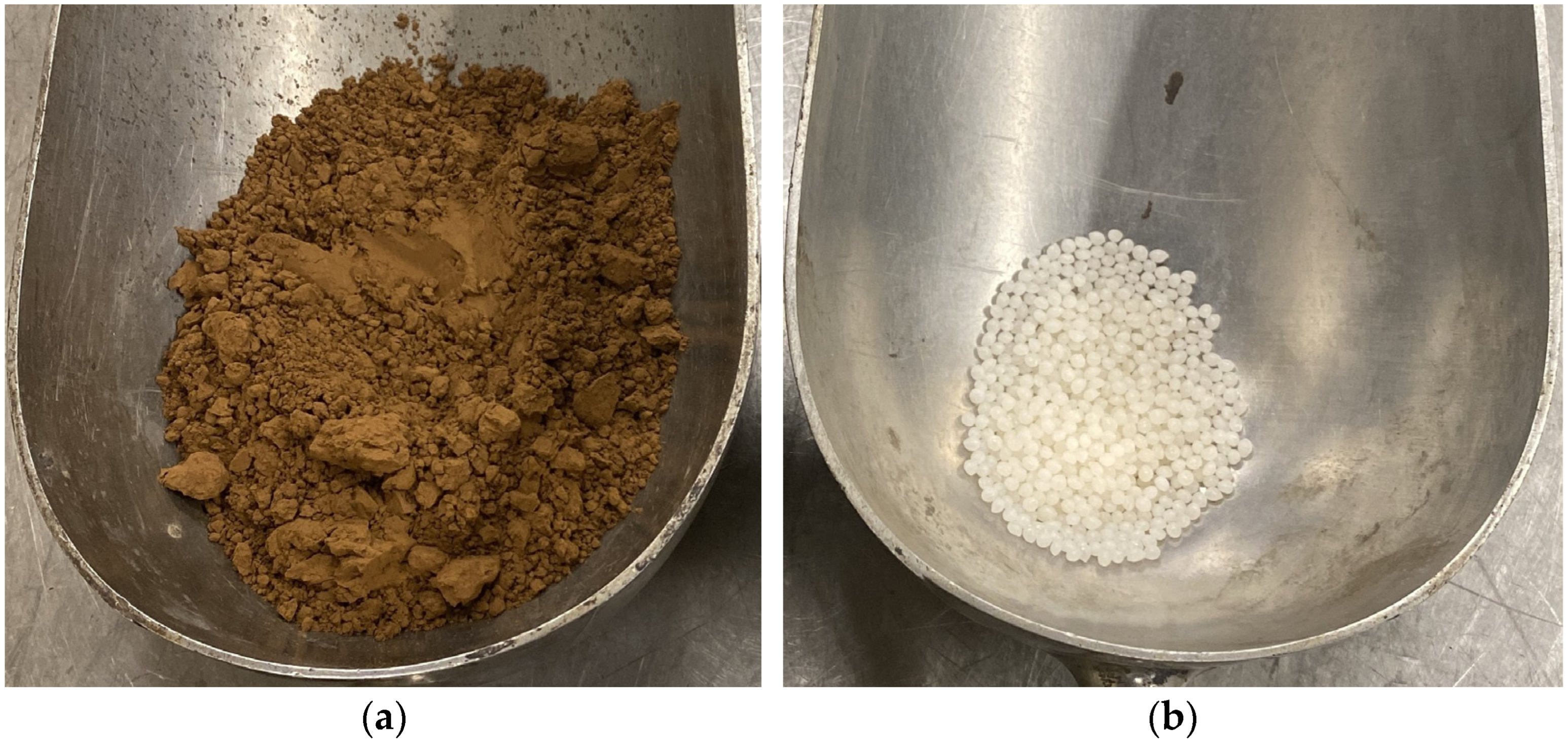
The Kraft lignin used in this study (
Figure 1a) was obtained from FPInnovations in Canada. The product is extracted from softwood and is provided as a fine, sticky brown powder. Additionally, it has been investigated in previous laboratory studies [
38,
42,
54,
55,
73]. The particle size distribution analysis revealed that the particle size ranged between 1 and 100 μm, with 80% of the particles falling between 5.47 and 48.7 μm. Additionally, the Kraft lignin has a density of 1.2–1.3 g/cm
3 and a potential of hydrogen (pH) ranging from 3 to 4. More details regarding its properties are available in the author’s earlier publications [
54,
55].
Sasobit, a long-chain aliphatic hydrocarbon wax, was used (
Figure 1b) in this study. The Sasobit used was sourced from Sasol Wax in South Africa. According to the manufacturer’s recommendation, optimal results are achieved with a 3% addition of Sasobit by weight of the bitumen. This amount can significantly lower the maximum construction temperatures required for asphalt mixes [
74].
In this study, an unmodified PG 58S−28 bitumen was utilized. This bitumen grade is suitable for standard (S) traffic levels and cold climates in Montreal area (Canada). Due to the manufacturer’s specification sheet, this bitumen has a flashpoint of 273 °C (ASTM D92 [
75]), and a density of 1.021 g/cm
3 at 25 °C (AASHTO T 228 [
76]). Other notable properties include storage stability of 0.3 °C (LC 25-003 [
77]), an ash content of 0.28% (ASTM D8078 [
78]), and a |G*|/sin (δ) value of 1.54 kPa at 58 °C, as per AASHTO T 315 [
79].
According to the author’s previous study [
55], a comprehensive evaluation of the viscosity properties of this bitumen and its modified versions incorporating Kraft lignin and/or Sasobit was conducted. The viscosity of the bitumen samples was determined using the BRV test, following the LC 25-007 [
80] Quebec test method. Four selected results from that study are utilized in the application of the EQ method, including virgin bitumen (VB) as a reference (REF), bitumen modified with 20% Kraft lignin (20L), bitumen modified with 3% Sasobit (3S), and a combined system of bitumen modified with 20% Kraft lignin and 3% Sasobit (20L3S). The viscosity measurements of these samples are detailed in
Table 2.
3.3. Asphalt Mixes
In this study, an ESG-10 (
Enrobé Semi-Grenu) asphalt mix—a surface mix with a nominal maximum aggregate size (NMAS) of 10 mm—was chosen in accordance with MTMD standard 4202 [
81]. To evaluate the effects of Kraft lignin and Sasobit on the properties of asphalt mixes, four distinct mixes/samples were prepared. These mixes include both HMA and WMA variants, each with varying contents of Kraft lignin and Sasobit. The HMA samples include a reference mix (HMA-REF), and a mix modified with 20% Kraft lignin (HMA-20L). The WMA samples consist of a mix with 3% Sasobit (WMA-3S) and a mix with both 20% Kraft lignin and 3% Sasobit (WMA-20L3S). The selected proportions of Kraft lignin and Sasobit were determined based on previous studies and experimental observations [
38,
42,
54,
55,
73]. A 20% lignin replacement was identified as an optimal level that provides significant modification to binder properties while maintaining storage stability.
Table 3 summarizes the composition and coding of each sample throughout the study.
3.4. Mix Design
The LC method was employed for the mix design, emphasizing a volumetric approach to optimize binder content and achieve target air voids (V
a) under specified compaction energy levels. This method ensures that the volume of the effective binder (V
be) for ESG-10 meets a minimum value of 12.2%. The V
a requirements with the Superpave Gyratory Compactor (SGC) are defined as follows: greater than 11% at 10 gyrations, between 4 and 7% at 80 gyrations (N
design), and above 2% at 200 gyrations. Gradation requirements are provided in the next
Section 3.4.1.
3.4.1. Reference Hot Mix Asphalt (HMA-REF)
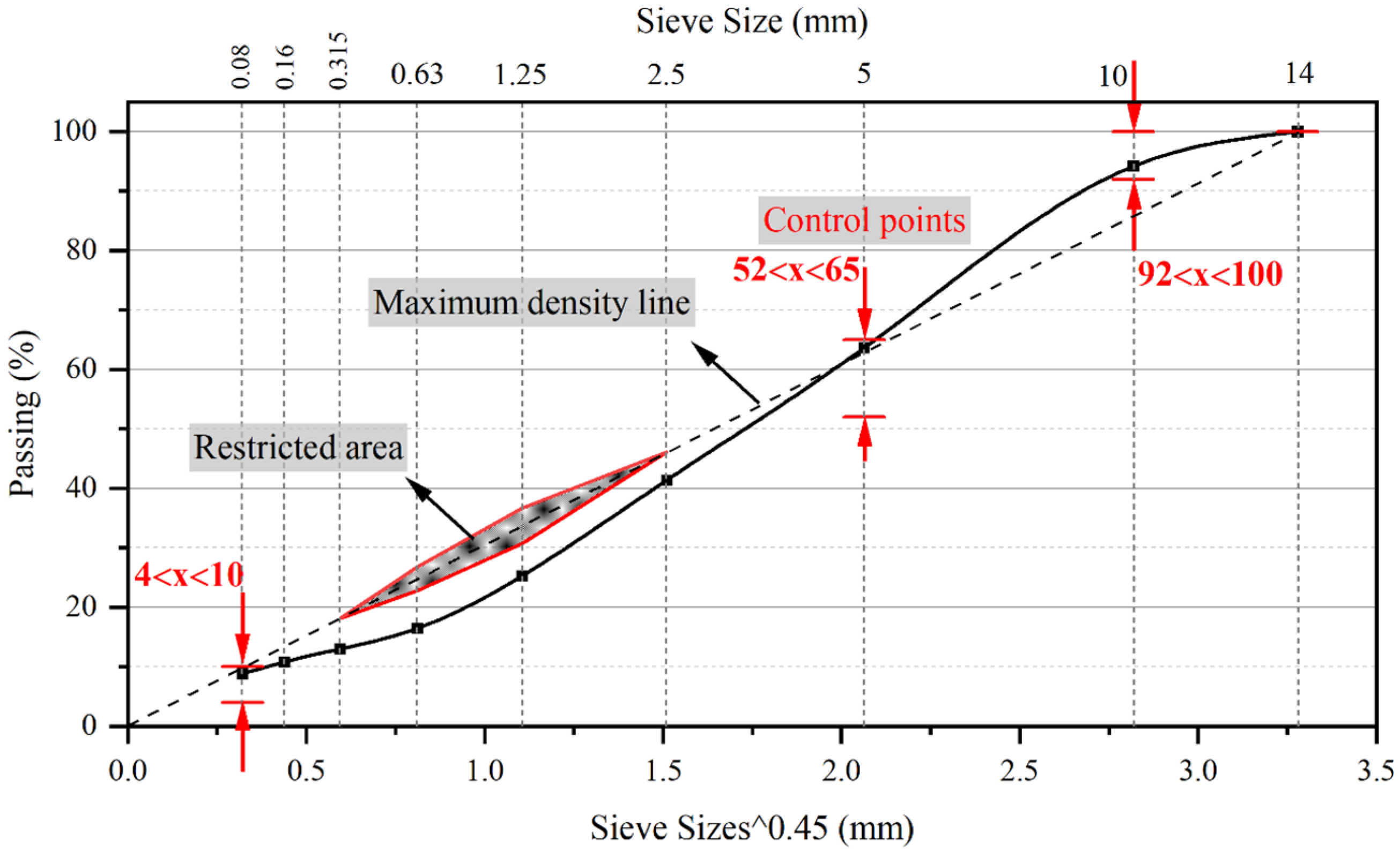
The HMA-REF serves as a baseline to evaluate the performance and characteristics of modified asphalt mixes. The mix design process followed the requirements for gradation to meet control points (
Figure 2), ensuring compliance with the mix design method. Once the gradation was finalized, the bitumen content was determined to achieve a fixed V
be as per the requirements. This V
be was verified using the theoretical maximum specific gravity (G
mm). Following that, SGC tests were conducted to ensure adequate compactability of the mix. The final mix design selected for the HMA-REF utilized a total binder content of 5.67% of the total weight of the asphalt mix (V
be required of 12.2%).
Figure 2 shows the detailed particle size distribution for the targeted mix and
Table 4 represents the proportion (%) of each material in the HMA-REF mix.
3.4.2. Methodology to Determine the Construction Temperatures
For HMA-REF and HMA-20L mixes, the EQ method was used to establish the mixing and compaction temperatures. However, for the WMA-3S and WMA-20L3S mixes, it became clear that the EQ method was not effective. While the EQ method was initially applied to determine the construction temperatures, the temperatures were subsequently adjusted based on the air voids content. The temperatures were modified until the air voids content matched the reference mix. This continuous process helped determine the construction temperatures at which the air voids were the same as the reference mix.
3.4.3. Modified Mixes with Kraft Lignin and Sasobit
In the LC mix design method, the specific gravity of the binder (Gb) plays a crucial role in formulating the mix design. One of the critical considerations in this process is how to accurately account for the impact of Sasobit and Kraft lignin, given their distinct properties in the asphalt mix. Possible approaches for integrating Kraft lignin into the mix can be considered: (1) as a binder substitute, (2) as a filler, or (3) as a hybrid, where Kraft lignin serves as both binder and filler in varying proportions. A similar approach was adopted for Sasobit, where it was considered both as a binder substitute and an additive in different configurations.
Upon evaluating these scenarios, it was determined that both Kraft lignin and Sasobit would be treated as replacements for bitumen in the binder composition for mix design calculations, enabling the same volume of binder to be used in the mixtures. This requires calculating the G
b of the binder by incorporating the proportion of these materials, as outlined in Equation (1).
where P
n is the proportion (by mass) of each component in the binder, and G
n is the specific gravity of each corresponding component. Following the calculations, the results are summarized in
Table 5, showing the G
b value and the binder composition for each mix, which are directly influenced by the varying proportions of Kraft lignin and Sasobit. For the HMA-REF mix, which contains only bitumen, the G
b remains at 1.024, reflecting the typical specific gravity of unmodified bitumen. In the HMA-20L mix, the incorporation of 20% Kraft lignin increases the G
b to 1.065, attributed to the higher specific gravity of Kraft lignin (1.267). Conversely, in the WMA-3S mix, the addition of 3% Sasobit, with its lower specific gravity (0.592), reduces the G
b to 1.002. The WMA-20L3S mix, which incorporates both 20% Kraft lignin and 3% Sasobit, results in a G
b of 1.041, reflecting the combined influence of both materials on the binder’s composition and properties. These values are crucial for accurately understanding the behavior of the modified mixes, as the G
b directly affects the overall volumetric properties of the asphalt mix.
The variation in binder content of the four mixes is primarily due to the inclusion of Kraft lignin and Sasobit. In the HMA-20L mix, the binder content increased to 5.82%, compared to 5.67% in the HMA-REF mix. This increase is necessary to compensate for the higher specific gravity of Kraft lignin (1.267) compared to bitumen (1.024), ensuring consistent volumetric properties across the mixes. Similarly, in the WMA-3S mix, the binder content was reduced to 5.50%, reflecting the addition of 3% Sasobit, which has a much lower specific gravity (0.592). In the WMA-20L3S mix, the combination of 20% Kraft lignin and 3% Sasobit required a reduction in binder content to 5.63%.
3.5. Preparation of Samples
The addition of Kraft lignin and Sasobit to bitumen can significantly alter its viscosity, directly impacting the mixing and compaction processes. Therefore, before producing the asphalt mixes, it is crucial to determine the mixing and compaction temperatures for all the mixtures. The Superpave system recommends specific viscosities for optimal mixing and compaction, with target values of 0.17 ± 0.02 Pa·s for mixing and 0.28 ± 0.03 Pa·s for compaction. These temperatures are usually determined by evaluating the viscosity at two standard temperatures of 135 and 165 °C, using the BRV test.
As mentioned previously, viscosity measurements of the four bitumen samples—VB (REF), 20L, 3S, and 20L3S—were conducted (
Table 2). Using these viscosity values, each sample’s corresponding mixing and compaction temperatures were calculated and are presented in
Table 6.
It is important to note that in this study, the dry mixing process (dry method) was used by adding both Kraft lignin and Sasobit directly into the mixes, and the following protocol was implemented to ensure the proper incorporation of all materials. Given the requirement to heat all components to the target mixing temperature, an additional 15 °C was applied to compensate for heat loss during mixing, as per the LC 26-003 [
82] Quebec test method. Special consideration was given to the Kraft lignin, which contained 2.6% moisture [
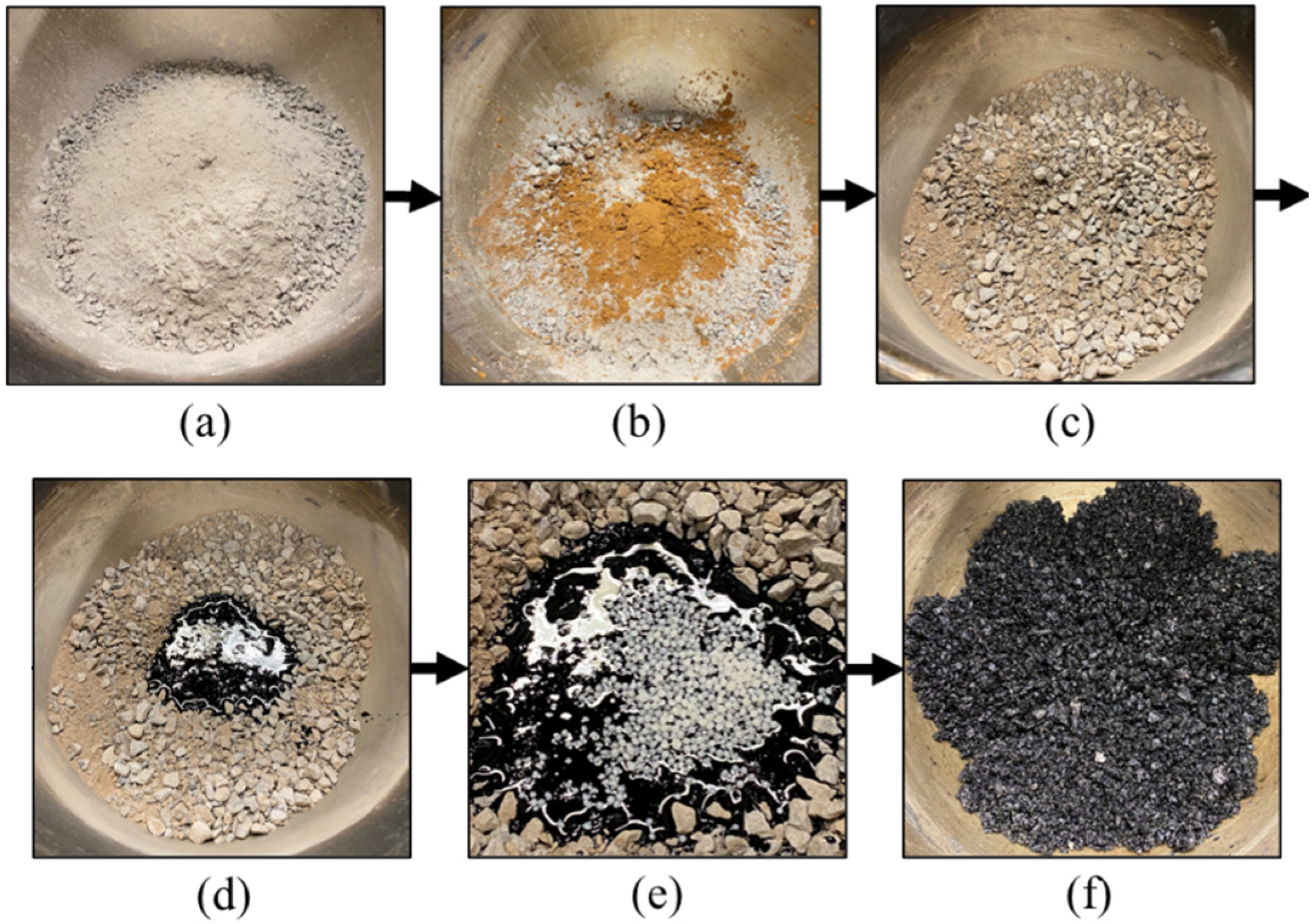
38]. Initially, heating the Kraft lignin for one hour was attempted to eliminate moisture. However, a preliminary lab test revealed that this process caused odor emission, darkening of the Kraft lignin, and the formation of clumpy masses, which prevented proper mixing with the aggregates and bitumen. As a result, the Kraft lignin was used at room temperature during the mixing process. For the HMA-20L mix, after adding Kraft lignin to the aggregates, it was manually blended with the aggregates in the mixing bowl using a spoon for a few seconds before adding the bitumen. This step was deemed necessary after visual observations indicated that it helped achieve a more uniform distribution of the Kraft lignin throughout the aggregate matrix. This ensures better interaction between the Kraft lignin, aggregates, and bitumen during mixing. In the WMA-3S mix, Sasobit prills were directly added to the bitumen after it was added to the aggregates. This approach is critical for lowering the binder’s viscosity effectively. Adding Sasobit directly to the aggregates in advance would cause rapid melting, reducing its impact on the viscosity of the bitumen. For the WMA-20L3S mix, a combination of the processes used for the HMA-20L and WMA-3S mixes was implemented, as shown in
Figure 3. This protocol might be an effective procedure for this type of mixer (countertop mixer: Hobart model A200). For mixers equipped with heating systems, this might yield even better results.
Following the mixing process, the loose asphalt mixes were cured at the compaction temperature for two hours, as specified by the LC 26-003 [
82] Quebec test method. This curing process allows sufficient time for the aggregates to absorb the binder and better simulates in-situ conditions, ensuring more representative test results. To ensure proper coating and uniform distribution of the binder, visual inspections were conducted before and after curing to ensure the aggregates were fully coated. Adequate coating of the aggregates is essential for the asphalt mix’s structural integrity and long-term durability.
3.6. Testing
3.6.1. Maximum Specific Gravity (Gmm)
The maximum specific gravity (G
mm), also known as Rice density, is a crucial parameter in designing and analyzing asphalt mixtures. For HMA and WMA, the G
mm quantifies the maximum density that a specific mix can achieve. According to LC 26-045 [
83] Quebec test method, it is measured by weighing the loose asphalt mix (uncompacted) in air and in water (volumetric method with a glass container and a glass plate). Accurate determination of G
mm is vital for subsequent volumetric property calculations of the mix (average of two replicates:
n = 2).
3.6.2. Superpave Gyratory Compactor (SGC)
The SGC is a crucial device used to compact asphalt mixtures in the laboratory, simulating the compaction that occurs in the field during pavement construction. This test is essential for evaluating key properties of asphalt mixtures, such as bulk density (Gmb), air voids content (Va), and the compaction curve (gyration number versus Va). During the SGC test, the device applies a vertical pressure of 600 kPa while simultaneously rotating the sample at an angle of 1.16 degrees. The compaction is performed at a rate of 30 gyrations per minute with specific numbers of gyrations selected to simulate various compaction levels. For ESG-10 HMA, the gyration levels are 10 (Ninitial), 80 (Ndesign), and 200 (Nmax), corresponding to N10, N80, and N200, respectively.
The SGC accommodates two mold sizes of 150 and 100 mm. The 150 mm mold is more commonly used, especially for asphalt mixes containing large aggregates, although it requires a greater quantity of material compared to the smaller mold. Due to the limited availability of materials for this study, a 100 mm mold was used. To ensure that the air voids content of these smaller samples aligns with the requirements of the LC mix design method, additional tests were performed using the standard 150 mm mold. This approach was implemented to provide a comparative analysis and allow the determination of a conversion factor for adjusting the air voids content results from the 100 mm mold to those of the 150 mm mold. Consequently, tests were conducted on both 100 and 150 mm molds for the HMA-REF and HMA-20L samples. The SGC tests were conducted in accordance with the LC 26-003 [
82] Quebec test method. Each mix was tested at least three times (average of
n = 3) to ensure the repeatability and reliability of the results.
3.6.3. Volumetric and Mass Properties
The evaluation of volumetric and mass properties is essential for understanding the overall behavior, durability, and performance of asphalt mixtures. These properties provide insights into the interaction between aggregates, binder, and additives, playing a critical role in determining the compaction, stability, and longevity of the asphalt pavement. Since aggregates are the largest portion of the asphalt mix, they have a significant influence on the engineering properties of the asphalt mix [
84]. Here, various volumetric and mass properties were examined, such as the maximum specific gravity (G
mm), binder absorbed by the aggregate (V
ba, P
ba and M
ba), air voids content (V
a), volume of effective binder (V
be), voids in mineral aggregate (VMA), and voids filled with asphalt binder (VFA), mass of effective binder (M
be) and mass of aggregate (M
agg) etc. are also analyzed to capture the overall volume and mass distributions within the mix.
Figure 4 shows the terminology of volumetric and mass properties for the components of a compacted asphalt mix.
4. Test Results and Discussion
4.1. SGC Test Results
In this study, the majority of SGC tests were performed using 100 mm molds due to material limitations. However, 150 mm molds are typically employed in standard practices, as they provide a more representative evaluation of mix performance, especially for mixes with larger aggregates. To ensure the results from the 100 mm molds align with the requirements of the LC mix design method, it was essential to determine a conversion factor. This factor facilitates the accurate interpretation and comparison of results between the two mold sizes. The subsequent subsections detail the determination of this conversion factor and the influence of Kraft lignin on the compactability of asphalt mixes.
4.1.1. Conversion Factor for Air Voids Content Between 100 and 150 mm Molds
The SGC test results for the 100 and 150 mm molds for HMA-REF and HMA-20L mixes are presented in
Table 7.
The analysis of these results revealed a conversion factor of 0.9, which was determined to adjust the air voids content from a 100 mm mold to a 150 mm mold for both HMA-REF and HMA-20L asphalt mixes. The differences in air voids content are due to variations in stress distribution and particle arrangement during compaction [
85]. While both molds receive the same compaction energy—pressure of 600 kPa combined to gyration number (1 to 200)—the larger diameter of the 150 mm mold allows for more even stress distribution and better particle packing. This leads to fewer air voids compared to the 100 mm mold, which has a higher surface-to-volume ratio, resulting in more voids around and within the sample. Consequently, the 150 mm mold achieves a denser structure. Using the conversion factor of 0.9, the air voids content measured in the 100 mm mold was correctly aligned with the requirements of the LC mix design method. As a result, the adjusted air voids content was confirmed to meet the specified ranges of >11% at N
10, 4–7% at N
80, and >2% at N
200, ensuring compliance with the mix design criteria. Based on the assumption that the WMA-3S and WMA-20L3S mixes exhibit similar behavior under the same testing conditions, the same conversion factor of 0.9 was applied to verify compliance with the mix design criteria for these mixes as well. This demonstrates the effect of mold size on compaction efficiency and air voids distribution.
4.1.2. Kraft Lignin Behavior on Compactability of Asphalt Mixes
An in-depth analysis of the data highlights the impact of Kraft lignin on the asphalt mix and clarifies its role within the mixture. The test results show that both HMA-REF and HMA-20L have similar air voids conversion factors (
Table 7) at lower gyration levels (N
10), but the differences become more pronounced at higher compaction levels (N
80 and N
200). This suggests that the presence of Kraft lignin in the HMA-20L mix impacts the compaction characteristics.
Indeed, at a low gyration level (N10), both HMA-REF and HMA-20L show similar conversion factors of 0.91. This suggests that, at the early stages of compaction, the presence of 20% Kraft lignin in the HMA-20L mix does not significantly alter the air voids distribution compared to the HMA-REF mix. Both mixes behave similarly under initial compaction stresses. At higher gyrations (N80 and N200), the HMA-20L mix with Kraft lignin shows higher conversion factors with 0.94 at N80 and 1.02 at N200, compared to the HMA-REF mix, which has conversion factors of 0.87 at N80 and 0.90 at N200. A higher conversion factor indicates that the air voids content is higher and the material achieves less compaction in the 150 mm mold.
The increased air voids in the HMA-20L mix at higher gyration levels, compared to HMA-REF, can be attributed to the presence of Kraft lignin, despite the fact that the compaction temperature was increased by 14 °C (151 vs. 137 °C). This behavior could be linked to the increased viscosity of the binder due to the addition of Kraft lignin, or the partial role of Kraft lignin acting as a filler. Although this filler effect might help to fill voids between aggregates, the increased viscosity likely hinders effective compaction by reducing the mobility and rearrangement of particles within the mix, thereby reducing the compactability of the HMA-20L.
This dual effect—where Kraft lignin may function both as a binder replacement and a filler—complicates the compaction dynamics. This highlights the complex interplay of factors introduced by Kraft lignin in the compaction process of asphalt mixes. It should be noted that this interpretation is qualitative, inferred from compaction behavior, and the potential dual role of Kraft lignin is attributed to its physical interaction with bitumen, as no chemical reaction was observed in previous FTIR analyses [
54,
55].
4.2. Determination of Optimal Construction Temperatures
To determine the optimal construction temperatures for the asphalt mixes while achieving consistent air voids content, the following steps were conducted. The first step involved conducting the SGC test on the HMA-REF as the reference mix. In this mix, the air voids at 10, 80, and 200 gyrations (N
10, N
80, and N
200) were considered the baseline values. The mixing and compaction temperatures for HMA-REF were determined based on the EQ method using the BRV test results (refer to
Section 3.5). As presented in
Table 6, the mixing and compaction temperatures for this mix were set at 148 and 137 °C, respectively.
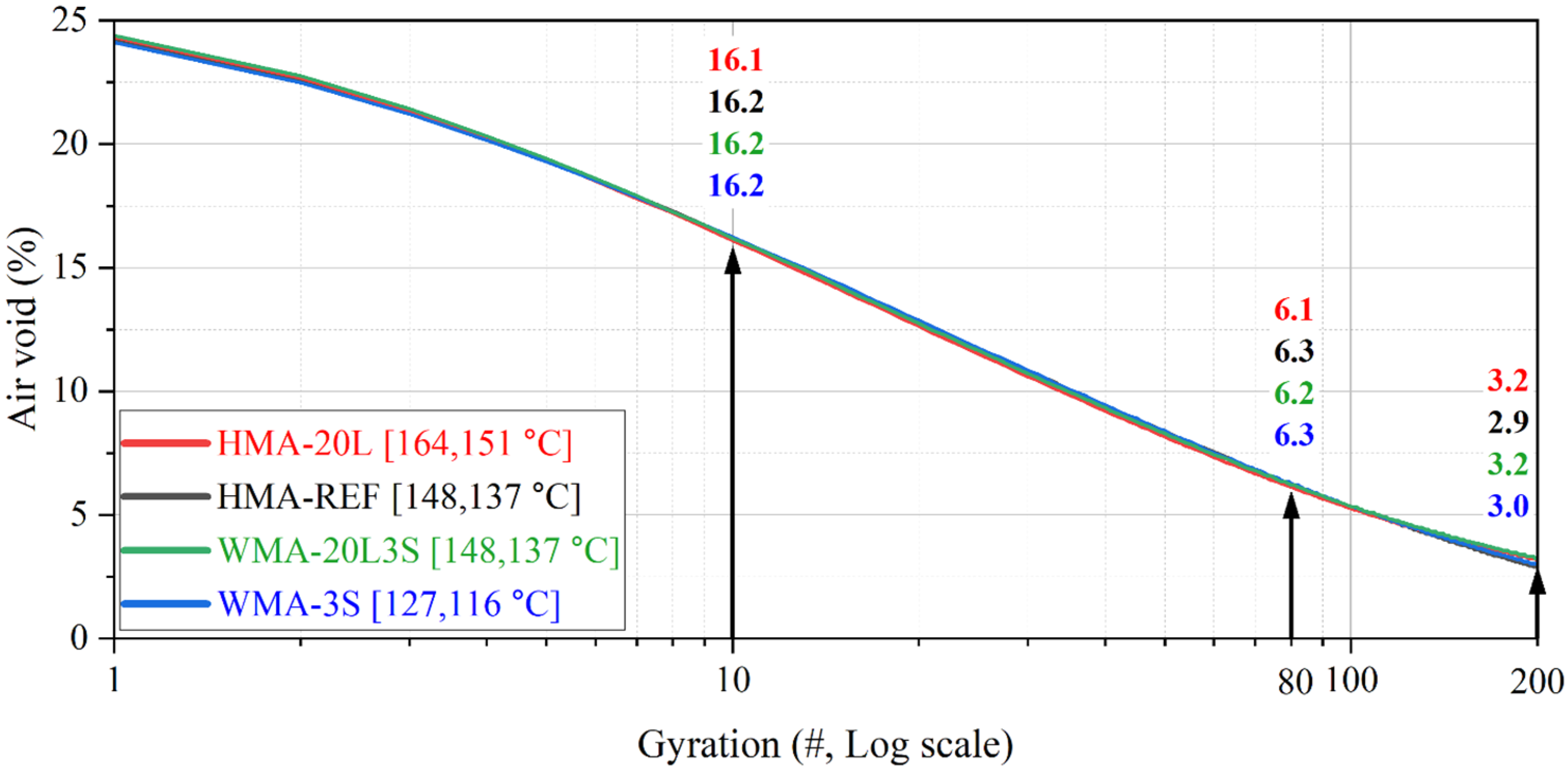
Figure 5 shows the SGC test results for the HMA-REF mix, where the air voids at N
10, N
80, and N
200 were 16.2, 6.3, and 2.9%, respectively. For the HMA-20L mix, the same procedure was followed, with the mixing and compaction temperatures set at 164 and 151 °C, respectively. The air voids content for 10, 80, and 200 gyrations were 16.1, 6.1, and 3.2%, which are nearly identical to the reference mix.
As shown in
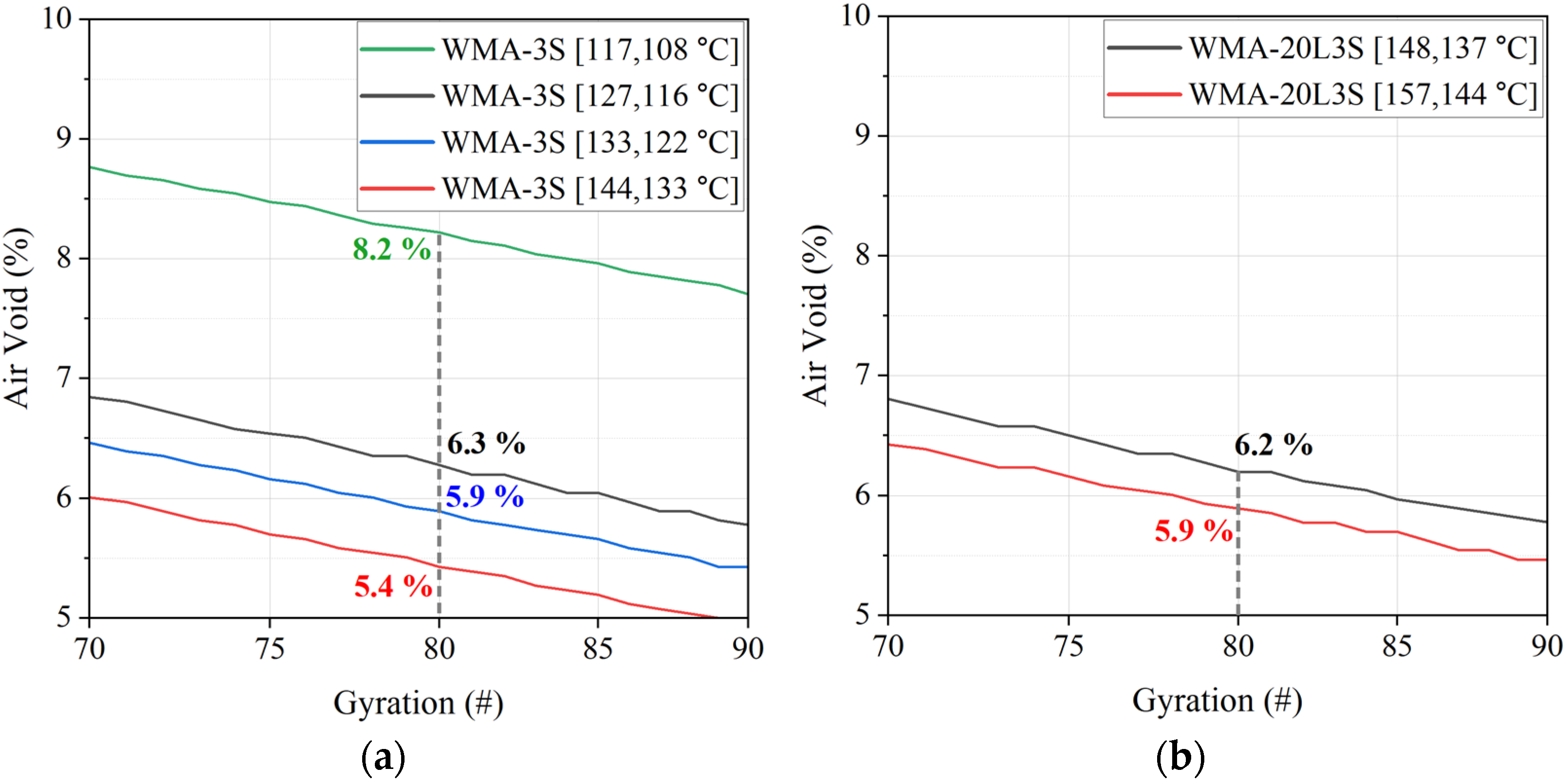
Figure 6, for the WMA-3S mix, the initial construction temperatures were selected based on the BRV test results, which were 144 °C for mixing and 133 °C for compaction. As mentioned earlier, the EQ method does not apply to mixes containing Sasobit, so these temperatures were used as a starting point. At these initial temperatures, the air voids content at N
80 was 5.4% (red curve:
Figure 6a), which did not align with the reference mix, indicating that a reduction in temperature was necessary for mixes with Sasobit. Consequently, the temperatures were lowered to 133 and 122 °C. However, the air voids content at these temperatures (N
80 = 5.9%: blue curve in
Figure 6a) still did not match the reference values. Further adjustments were made, setting the temperatures to 117 °C and 108 °C, which resulted in a significant increase in air voids content at N
80, reaching 8.2% (green curve:
Figure 6a). Through interpolation of the data, the optimal temperatures were determined to be 127 °C for mixing and 116 °C for compaction (grey curve:
Figure 6a). At these optimized temperatures, the samples were produced, and air voids content were 16.2, 6.3, and 3.0% for N
10, N
80, and N
200, respectively, matching the reference mix. Thus, the appropriate construction temperatures for the WMA-3S mix were successfully identified.
For the final mix, WMA-20L3S, the initial construction temperatures were set based on the BRV test results, which indicated 157 °C for mixing and 144 °C for compaction. The air voids content at these temperatures did not match the reference mix (N
80 = 5.9%: red curve), as shown in
Figure 6b. Given the findings from the WMA-3S mix, it was evident that the EQ method is not accurate for mixes containing Sasobit, requiring a reduction in temperatures. When the construction temperatures were reduced to 148 °C for mixing and 137 °C for compaction (grey curve:
Figure 6b), the air voids content for the WMA-20L3S mix was 16.2, 6.2, and 3.2% for N
10, N
80, and N
200, respectively, which closely matched the HMA-REF mix and met the target air voids requirements. It is important to note that changes in mixing temperatures lead to slight variations in the calculated binder content (P
b) due to their impact on the measured G
mm. These changes must be carefully considered when recalculating mix proportions to ensure compliance with the target volumetric requirements. The final air voids content for all mixes are presented in
Figure 6.
Binder Compositions and Final Construction Temperatures of Asphalt Mixes
After determining the optimal mixing and compaction temperatures to achieve consistent air voids content across all mixes, the final construction temperatures and binder compositions were identified as shown in
Figure 7 and
Figure 8.
For the HMA-REF mix, the construction temperatures were set at 148 °C for mixing and 137 °C for compaction, with a binder content of 5.67%, which consists entirely of bitumen.
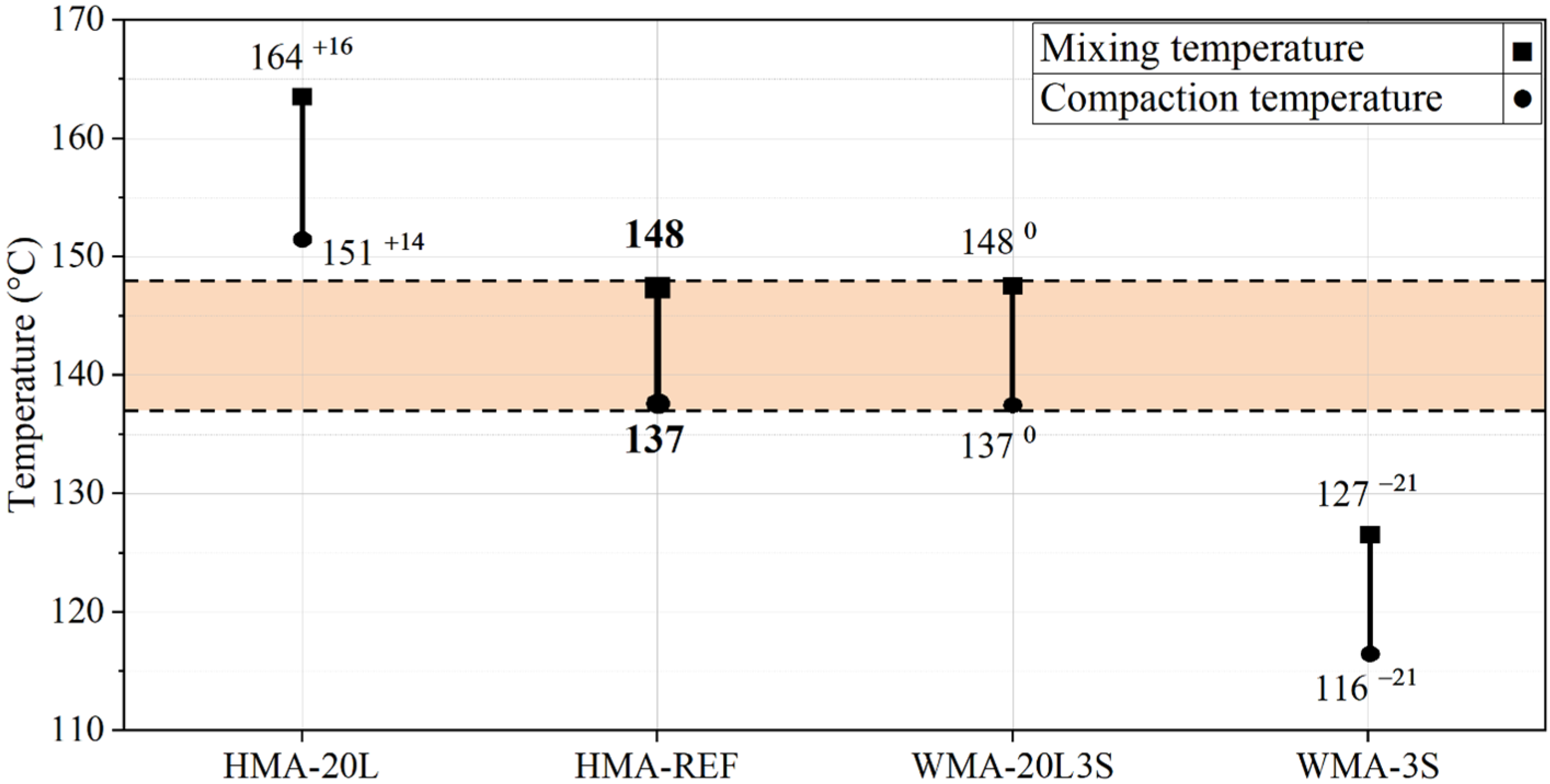
In the HMA-20L mix, the inclusion of 20% Kraft lignin led to an increase in construction temperatures. The mixing and compaction temperatures increased to 164 and 151 °C, respectively, representing an increase of 16 and 14 °C compared to the HMA-REF mix (
Figure 7). The binder content for this mix is 5.82%, comprising 4.65% bitumen and 1.17% Kraft lignin (% mass). It is notable that the addition of Kraft lignin reduced the bitumen content from 5.67% in the HMA-REF mix to 4.65% in the HMA-20L mix, a decrease of 1.02% (
Figure 8). This reduction in bitumen usage is significant and highlights the resource-saving potential of using Kraft lignin, despite the undesired increase in construction temperatures.
For the WMA-3S mix, the results show that mixing at 127 °C and compaction at 116 °C achieved the same air voids content as the HMA-REF mix (
Figure 6). As expected, these lower construction temperatures align with the role of Sasobit in reducing viscosity and promoting workability at reduced temperatures. The temperatures were lowered by 21 °C for both mixing and compaction (
Figure 7), consistent with findings from previous studies and the manufacturer’s recommendations [
74]. The binder content in the WMA-3S mix was reduced to 5.50%, with bitumen and Sasobit contents of 5.33 and 0.17%, respectively (
Figure 8). The decrease in bitumen content by 0.34% compared to the HMA-REF mix represents a positive outcome, demonstrating the efficiency of using less bitumen.
The WMA-20L3S mix achieved construction temperatures identical to those of the HMA-REF mix—148 °C for mixing and 137 °C for compaction (
Figure 7). This result is particularly promising from a sustainability perspective. While the HMA-20L mix showed higher temperatures due to the presence of Kraft lignin, the addition of 3% Sasobit in the WMA-3S mix successfully reduced the temperatures. The combination of these two materials in the WMA-20L3S mix led to a remarkable outcome as the Sasobit effectively offset the increase in construction temperatures caused by the 20% Kraft lignin. This finding is valuable, as it suggests that Sasobit can counterbalance the undesirable effects of Kraft lignin in terms of increased viscosity and higher construction temperatures. Another significant observation is the reduction in bitumen content when using both materials. The bitumen content in the WMA-20L3S mix dropped to 4.33%, compared to 5.67% in the HMA-REF mix, which is a reduction of 1.34% (
Figure 8). This substantial decrease in bitumen usage is highly desirable, as its reduction contributes to more sustainable pavement solutions.
To sum up, the addition of 3% Sasobit to lignin-modified mixes (WMA-20L3S) proves to be an effective strategy for compensating for the increased construction temperatures associated with Kraft lignin, allowing the mix with 20% Kraft lignin to achieve the same construction temperatures as the reference mix. Moreover, the combined use of Sasobit and Kraft lignin in asphalt mixes not only reduces the construction temperature but also significantly decreases the bitumen usage in the binder, further enhancing the sustainability of the mix.
4.3. Volumetric and Mass Analysis
The volumetric and mass properties of a compacted mix and understanding these parameters provide essential insights into the performance and durability of the mixtures. The detailed numerical values for all mixes are calculated and presented in
Table 8. The analysis reveals several key observations regarding the behavior of the mixes.
4.3.1. Gmm Test Results and Analysis
The G
mm is influenced by several factors, including binder type, the binder content (P
b), absorbed binder by the aggregates (P
ba), and the viscosity of the binder [
86]. Other variables, such as aggregate properties, gradation, and mixing conditions remain consistent across the mixes in this study. Generally, an increase in P
b, higher P
ba, and a greater specific gravity of the binder (G
b) will result in a higher G
mm value. In the case of the HMA-20L mix, despite a slight reduction in P
ba compared to the HMA-REF mix, the G
mm increased slightly due to the higher P
b of 5.82% and the increased specific gravity of the binder resulting from the addition of Kraft lignin. In the WMA-3S mix, both P
ba and P
b were reduced, and the specific gravity of the binder also decreased, leading to a corresponding reduction in G
mm. For the WMA-20L3S mix, the combination of Kraft lignin and Sasobit resulted in a lower P
ba but nearly identical P
b value to that of the HMA-REF mix. While Sasobit reduced the specific gravity of the binder compared to the HMA-20L mix, it remained higher than that of the HMA-REF mix. As a result, the G
mm value for WMA-20L3S closely matched the reference mix (HMA-REF). This outcome, where the G
mm values for both the HMA-REF and WMA-20L3S mixes are essentially the same, is desirable for ensuring consistent mix performance.
4.3.2. Binder Absorption (Pba) Test Results and Analysis
In asphalt mixes, the percentage of binder absorbed by the aggregate, known as P
ba, is a mass property that influences the performance and durability of the pavement. This parameter reflects the amount of bitumen absorbed into the aggregate pores by mass, affecting the effective binder content and the overall workability and compactability of the mix. Understanding the behavior of P
ba in different mixes is essential for optimizing the mix design, especially when incorporating materials like Kraft lignin and Sasobit.
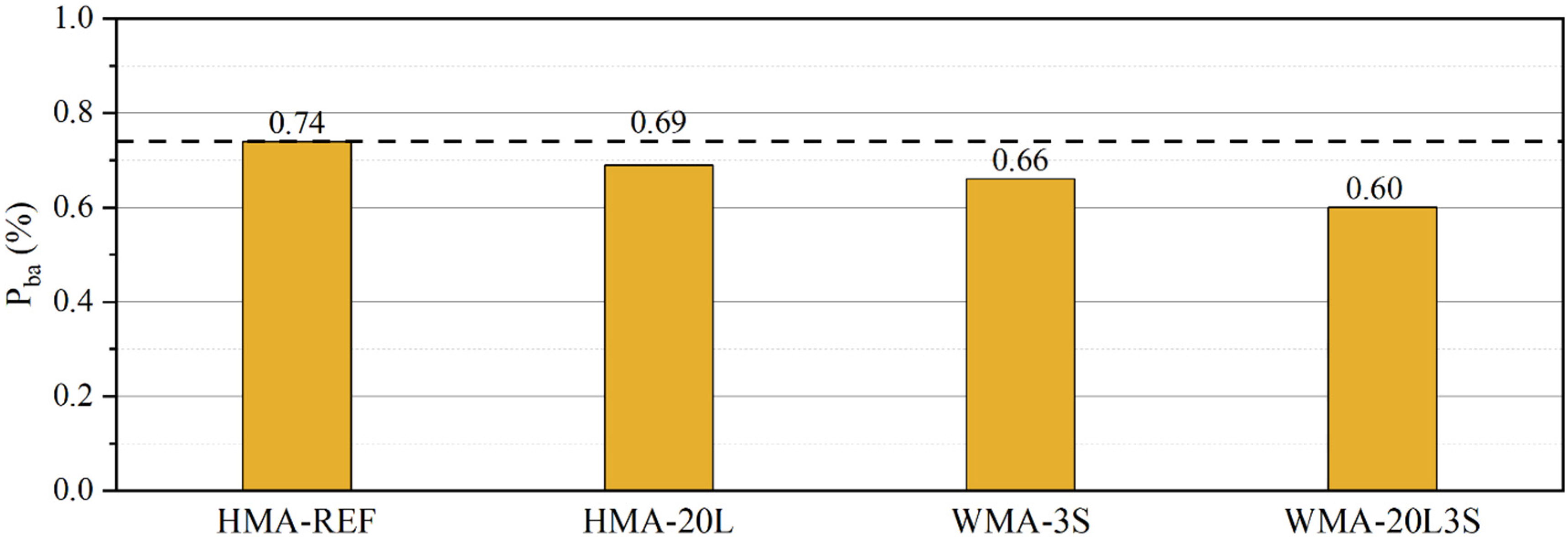
Figure 9 shows the test results of P
ba for all mixes.
The HMA-REF with 5.67% Pb, results in a Pba of 0.74%. In the HMA-20L mix, the binder content is slightly increased to 5.82% and test results show a decrease in Pba to 0.69%, which is lower than the reference mix (HMA-REF). Notably, the addition of 20% Kraft lignin required an increase in construction temperatures to achieve the desired binder viscosity. Despite this increase, the binder absorption by the aggregates did not increase proportionally. The presence of Kraft lignin reduces binder absorption, which may be attributed to the complex structure of Kraft lignin with some elements acting as a filler, thereby preventing the aggregates from absorbing the binder.
For the WMA-3S mix, the binder content is 5.50%, with significantly reduced construction temperatures. Test results indicate that Pba decreased from 0.74% in HMA-REF to 0.66% in WMA-3S. This reduction in the absorbed binder may be due to the lower construction temperature or the reduced binder content, but the exact reasons require more research study.
The WMA-20L3S mix results in a binder content of 5.63% with the same construction temperatures as the reference mix. Regarding Pba, this mix exhibits the lowest binder absorption at 0.60%, compared to the other mixes. When comparing WMA-20L3S to HMA-REF with the same construction temperatures, the lower bitumen content and the inclusion of both Kraft lignin and Sasobit contribute to the reduced Pba. Similar to the HMA-20L mix, a portion of the Kraft lignin potentially acts as a filler, reducing binder absorption, while the reduced bitumen content in WMA-20L3S further lowers the Pba.
In short, the reduction of Pba in the asphalt mix may be beneficial as it enhances the availability of effective binder, improving the durability, workability, and compaction of the mix. This also leads to cost efficiency by reducing the required binder content. However, it’s important to note that Kraft lignin does not act entirely as a binder; instead, a portion of it functions as a filler, preventing the binder from penetrating the aggregates. Maintaining an optimal balance is crucial to ensure adequate interaction between the binder and aggregates, preventing potential issues like stripping or insufficient bonding.
4.3.3. Analysis of Additional Volumetric and Mass Properties
For volumetric parameters, the air voids (Va) were maintained nearly identical, and the effective binder volume (Vbe) remained identical, as intended during the design of the mixes. The VMA, which measures the voids space in the aggregate structure, also exhibited minimal variation across the mixes, confirming the uniformity in aggregate gradation and compaction. These consistent values indicate that the design process effectively controlled the aggregate structure and binder content, maintaining the target values for all key volumetric parameters. For the VFA, slight deviations were observed. In the HMA-20L mix, the VFA was slightly higher due to the increased binder content (Pb) and slightly reduced air voids (Va), resulting in more voids being filled with binder compared to the reference mix. In contrast, the WMA-3S mix exhibited a reduced binder content (Pb = 5.50%) yet achieved a VFA similar to the reference mix. The reduced binder viscosity, owing to the Sasobit addition, facilitated better compaction and voids filling despite the lower binder content. The WMA-20L3S mix displayed similar behavior, with slight differences in VFA compared to the reference mix, demonstrating the effectiveness of the Sasobit in maintaining proper compaction and voids filling. The Vgb (Aggregate volume by bulk specific gravity) and Magg (Mass of Aggregate) values were also almost identical across all mixes, confirming consistency in aggregate content.
In summary, the volumetric and mass properties of the mixes, particularly Gmm, Pba, and VFA, indicate that the addition of Kraft lignin and Sasobit in varying proportions has a measurable impact on the binder absorption, effective binder content, and compaction. Notably, Kraft lignin does not act entirely as a binder; instead, a portion of it functions as a filler, preventing the binder from penetrating the aggregates. Despite these variations, the results demonstrate that the WMA-20L3S mix closely mirrors the performance of the reference mix (HMA-REF), maintaining key volumetric properties and meeting target performance levels. It should be noted that this analysis focuses on compactability and physical properties, while mechanical performance aspects such as rutting, moisture damage, and fatigue were beyond the scope of this study and should be addressed in future studies.
5. Conclusions
This study evaluated the impact of incorporating Kraft lignin and Sasobit into asphalt mixtures, specifically focusing on their influence on compaction behavior, construction temperatures, and the volumetric and mass properties of the mixes. The findings reveal several important insights regarding the performance of these materials in sustainable asphalt production.
First, the SGC test results showed that the compactability of the HMA-20L mix was reduced compared to HMA-REF, as indicated by higher air voids content at higher gyration levels. The observed compaction behavior and Pba parameter demonstrated that Kraft lignin may play a dual role in the asphalt mix, acting as both a binder replacement and a filler.
The determination of optimal construction temperatures for the various mixes highlighted the ability of Sasobit to effectively reduce the construction temperatures of lignin-modified mixes. The combined use of Kraft lignin and Sasobit in the WMA-20L3S mix allowed for the successful mitigation of the increased temperatures caused by Kraft lignin, resulting in construction temperatures identical to the HMA-REF mix.
From a sustainability perspective, both materials demonstrated their potential to reduce bitumen content. The reduction in bitumen content, particularly in the WMA-20L3S mix, highlights the resource-saving benefits of these materials. Kraft lignin, as a renewable material, offers an eco-friendly alternative to petroleum-based binders, while Sasobit enhances the energy efficiency of the construction process by lowering production temperatures.
The volumetric and mass analyses showed that the WMA-20L3S mix closely mirrored the reference mix, maintaining consistent performance despite the addition of Kraft lignin and Sasobit. Kraft lignin role as a partial filler reduced binder absorption.
Finally, the addition of 20% Kraft lignin and 3% Sasobit proved to be a viable strategy for producing sustainable asphalt mixtures. The WMA-20L3S mix, in particular, exhibited performance characteristics closely aligned with the reference mix, making it a promising candidate for environmentally friendly pavement solutions. Further research is recommended to explore the mechanical performance of these modified asphalt mixtures.
Overall, this study advances previous research on lignin and Sasobit by demonstrating that their combined use can counterbalance the effects of lignin in asphalt mix and shows potential for improving sustainability in asphalt production.
6. Further Developments
While this study provides valuable insights into the effects of Kraft lignin and Sasobit on asphalt mixtures, there are several areas for further development to enhance the understanding and application of these materials in sustainable pavement solutions.
Comprehensive Mechanical Performance Testing: In addition to the findings from this study, future research should include a comprehensive evaluation of the mechanical performance of asphalt mixtures containing Kraft lignin and Sasobit. This should cover key aspects such as water susceptibility, low-temperature cracking resistance, fatigue performance, and rutting resistance to ensure these mixtures perform well under diverse environmental and loading conditions.
Long-Term Field Performance: Although the laboratory results demonstrate the potential benefits of incorporating Kraft lignin and Sasobit into asphalt mixtures, pilot- or field-scale trials are needed to validate these findings under real construction and service conditions.
Complementary Investigations: Additional complementary studies are recommended to broaden the understanding of lignin- and Sasobit-modified asphalt mixtures. These include conducting life-cycle and economic assessments to quantify sustainability benefits, exploring alternative bio-based or chemical additives to further enhance performance, and evaluating large-scale production feasibility for industrial application of Kraft lignin.
By addressing these areas of further development, the asphalt industry can continue to move towards more sustainable and efficient pavement solutions, reducing the environmental footprint of road construction while maintaining high performance standards.
Author Contributions
Conceptualization, A.R.G., A.C. and S.L.; methodology, A.R.G., A.C. and S.L.; software, A.R.G.; validation, A.R.G., A.C., S.L., J.-P.B. and A.M.; formal analysis, A.R.G.; investigation, A.R.G.; resources, A.R.G.; data curation, A.R.G.; writing—original draft preparation, A.R.G.; writing—review and editing, A.R.G., S.L., A.C., J.-P.B. and A.M.; visualization, A.R.G.; supervision, A.C., J.-P.B. and S.L.; project administration, A.C., S.L. and J.-P.B.; funding acquisition, J.-P.B. and A.C. All authors have read and agreed to the published version of the manuscript.
Funding
The financial support of the Natural Sciences and Engineering Research Council of Canada (NSERC) is acknowledged (FRN: CRDPJ-533857-2018).
Institutional Review Board Statement
Not applicable.
Informed Consent Statement
Not applicable.
Data Availability Statement
Data are available upon request from the corresponding author.
Acknowledgments
The authors would like to sincere gratitude to Sylvain Bibeau and Francis Bilodeau from ÉTS for their invaluable assistance and support throughout the research study and the laboratory work. Special thanks are also extended to Bitumar and FPInnovations for providing the bitumen and Kraft lignin used in this study.
Conflicts of Interest
The authors declare no conflict of interest.
References
- Diene, A. Infrastructure Development and Economic Development. In Infrastructure Development Strategies for Empowerment and Inclusion; IGI Global: Hershey, PA, USA, 2024; pp. 1–21. [Google Scholar]
- Wang, F.; Hoff, I.; Yang, F.; Wu, S.; Xie, J.; Li, N.; Zhang, L. Comparative assessments for environmental impacts from three advanced asphalt pavement construction cases. J. Clean. Prod. 2021, 297, 126659. [Google Scholar] [CrossRef]
- Balaguera, A.; Carvajal, G.I.; Albertí, J.; Fullana-i-Palmer, P. Life cycle assessment of road construction alternative materials: A literature review. Resour. Conserv. Recycl. 2018, 132, 37–48. [Google Scholar] [CrossRef]
- Munasinghe, M. Environmental Economics and Sustainable Development; World Bank Publications: Washington, DC, USA, 1993; Volume 3. [Google Scholar]
- Mansourian, A.; Goahri, A.R.; Khosrowshahi, F.K. Performance evaluation of asphalt binder modified with EVA/HDPE/nanoclay based on linear and non-linear viscoelastic behaviors. Constr. Build. Mater. 2019, 208, 554–563. [Google Scholar] [CrossRef]
- Pouranian, M.R.; Shishehbor, M. Sustainability assessment of green asphalt mixtures: A review. Environments 2019, 6, 73. [Google Scholar] [CrossRef]
- Hegab, H.; Khanna, N.; Monib, N.; Salem, A. Design for sustainable additive manufacturing: A review. Sustain. Mater. Technol. 2023, 35, e00576. [Google Scholar] [CrossRef]
- Vaitkus, A.; Čygas, D.; Laurinavičius, A.; Vorobjovas, V.; Perveneckas, Z. Influence of warm mix asphalt technology on asphalt physical and mechanical properties. Constr. Build. Mater. 2016, 112, 800–806. [Google Scholar] [CrossRef]
- Hanson, C.S.; Noland, R.B.; Cavale, K.R. Life-cycle greenhouse gas emissions of materials used in road construction. Transp. Res. Rec. 2012, 2287, 174–181. [Google Scholar] [CrossRef]
- Milad, A.; Babalghaith, A.M.; Al-Sabaeei, A.M.; Dulaimi, A.; Ali, A.; Reddy, S.S.; Bilema, M.; Yusoff, N.I.M. A comparative review of hot and warm mix asphalt technologies from environmental and economic perspectives: Towards a sustainable asphalt pavement. Int. J. Environ. Res. Public Health 2022, 19, 14863. [Google Scholar] [CrossRef] [PubMed]
- Al-Rawashdeh, A.S. Performance Assessment of Warm Mix Asphalt (WMA) Pavements. Master’s Thesis, Ohio University, Columbus, OH, USA, 2008. [Google Scholar]
- Jamshidi, A.; Hamzah, M.O.; You, Z. Performance of warm mix asphalt containing Sasobit®: State-of-the-art. Constr. Build. Mater. 2013, 38, 530–553. [Google Scholar] [CrossRef]
- Capitão, S.; Picado-Santos, L.; Martinho, F. Pavement engineering materials: Review on the use of warm-mix asphalt. Constr. Build. Mater. 2012, 36, 1016–1024. [Google Scholar] [CrossRef]
- Calabi-Floody, A.T.; Valdés-Vidal, G.A.; Sanchez-Alonso, E.; Mardones-Parra, L.A. Evaluation of gas emissions, energy consumption and production costs of Warm Mix Asphalt (WMA) involving natural zeolite and Reclaimed Asphalt Pavement (RAP). Sustainability 2020, 12, 6410. [Google Scholar] [CrossRef]
- Caputo, P.; Abe, A.A.; Loise, V.; Porto, M.; Calandra, P.; Angelico, R.; Oliviero Rossi, C. The role of additives in warm mix asphalt technology: An insight into their mechanisms of improving an emerging technology. Nanomaterials 2020, 10, 1202. [Google Scholar] [CrossRef] [PubMed]
- Abdullah, M.E.; Zamhari, K.A.; Buhari, R.; Bakar, S.K.A.; Kamaruddin, N.H.M.; Nayan, N.; Hainin, M.R.; Hassan, N.A.; Hassan, S.A.; Yusoff, N.I.M. Warm mix asphalt technology: A review. J. Teknol. 2014, 71, 39–52. [Google Scholar] [CrossRef]
- Behnood, A. A review of the warm mix asphalt (WMA) technologies: Effects on thermo-mechanical and rheological properties. J. Clean. Prod. 2020, 259, 120817. [Google Scholar] [CrossRef]
- Cheraghian, G.; Falchetto, A.C.; You, Z.; Chen, S.; Kim, Y.S.; Westerhoff, J.; Moon, K.H.; Wistuba, M.P. Warm mix asphalt technology: An up to date review. J. Clean. Prod. 2020, 268, 122128. [Google Scholar] [CrossRef]
- Diab, A.; Sangiorgi, C.; Ghabchi, R.; Zaman, M.; Wahaballa, A.M. Warm mix asphalt (WMA) technologies: Benefits and drawbacks—A literature review. In Functional Pavement Design; CRC Press: Boca Raton, FL, USA, 2016; pp. 1145–1154. [Google Scholar]
- Guo, M.; Liu, H.; Jiao, Y.; Mo, L.; Tan, Y.; Wang, D.; Liang, M. Effect of WMA-RAP technology on pavement performance of asphalt mixture: A state-of-the-art review. J. Clean. Prod. 2020, 266, 121704. [Google Scholar] [CrossRef]
- Prakash, G.; Suman, S.K. An intensive overview of warm mix asphalt (WMA) technologies towards sustainable pavement construction. Innov. Infrastruct. Solut. 2022, 7, 110. [Google Scholar] [CrossRef]
- Sukhija, M.; Saboo, N. A comprehensive review of warm mix asphalt mixtures-laboratory to field. Constr. Build. Mater. 2021, 274, 121781. [Google Scholar] [CrossRef]
- Edwards, Y.; Redelius, P. Rheological effects of waxes in bitumen. Energy Fuels 2003, 17, 511–520. [Google Scholar] [CrossRef]
- Ghuzlan, K.A.; Al Assi, M.O. Sasobit-modified asphalt binder rheology. J. Mater. Civ. Eng. 2017, 29, 04017142. [Google Scholar] [CrossRef]
- Edwards, Y.; Isacsson, U. Wax in bitumen: Part II—Characterization and effects. Road Mater. Pavement Des. 2005, 6, 439–468. [Google Scholar] [CrossRef]
- Hainin, M.; Aziz, M.; Feizabadi, S.; Jaya, R.P.; Hassan, N.A.; Jakarni, F.M. An overall review: Modified asphalt binder containing sasobit in warm-mix asphalt technology. J. Teknol. 2015, 73, 1–6. [Google Scholar] [CrossRef]
- Wang, C.; Hao, P.; Ruan, F.; Zhang, X.; Adhikari, S. Determination of the production temperature of warm mix asphalt by workability test. Constr. Build. Mater. 2013, 48, 1165–1170. [Google Scholar] [CrossRef]
- Wasiuddin, N.M.; Selvamohan, S.; Zaman, M.M.; Guegan, M.L.T.A. Comparative laboratory study of sasobit and aspha-min additives in warm-mix asphalt. Transp. Res. Rec. 2007, 1998, 82–88. [Google Scholar] [CrossRef]
- Akisetty, C.K.; Gandhi, T.; Lee, S.-J.; Amirkhanian, S.N. Analysis of rheological properties of rubberized binders containing warm asphalt additives. Can. J. Civ. Eng. 2010, 37, 763–771. [Google Scholar] [CrossRef]
- Akisetty, C.K.; Lee, S.-J.; Amirkhanian, S.N. Laboratory investigation of the influence of warm asphalt additives on long-term performance properties of CRM binders. Int. J. Pavement Eng. 2010, 11, 153–160. [Google Scholar] [CrossRef]
- Edwards, Y.; Tasdemir, Y.; Butt, A.A. Energy saving and environmental friendly wax concept for polymer modified mastic asphalt. Mater. Struct. 2010, 43, 123–131. [Google Scholar] [CrossRef]
- Rossi, D.; Filippi, S.; Merusi, F.; Giuliani, F.; Polacco, G. Internal structure of bitumen/polymer/wax ternary mixtures for warm mix asphalts. J. Appl. Polym. Sci. 2013, 129, 3341–3354. [Google Scholar] [CrossRef]
- Gong, J.; Han, X.; Su, W.; Xi, Z.; Cai, J.; Wang, Q.; Li, J.; Xie, H. Laboratory evaluation of warm-mix epoxy SBS modified asphalt binders containing Sasobit. J. Build. Eng. 2020, 32, 101550. [Google Scholar] [CrossRef]
- Tembe, E.; Tamele, L., Jr.; Buonocore, G.; Madivate, C.; Muiambo, H. Rheological and Thermo-Oxidative Aging Properties of Asphalt Modified with a Combination of Sasobit and Linear Low-Density Polyethylene. Sustainability 2023, 15, 4460. [Google Scholar] [CrossRef]
- Wu, D.; Zhao, X.; Peng, Y.; Cheng, Y.; Zhou, P. Improving Effects of Warm-Mix Additive Sasobit on Performance of Short-Term Aged SBR Modified Asphalt. Int. J. Pavement Res. Technol. 2023, 16, 983–991. [Google Scholar] [CrossRef]
- Kouisni, L.; Gagné, A.; Maki, K.; Holt-Hindle, P.; Paleologou, M. LignoForce system for the recovery of lignin from black liquor: Feedstock options, odor profile, and product characterization. ACS Sustain. Chem. Eng. 2016, 4, 5152–5159. [Google Scholar] [CrossRef]
- Feldman, D.; Lacasse, M.; Beznaczuk, L. Lignin-polymer systems and some applications. Prog. Polym. Sci. 1986, 12, 271–299. [Google Scholar] [CrossRef]
- Al-falahat, W.; Lamothe, S.; Carret, J.-C.; Carter, A. Effects of Kraft Lignin on the Performance Grade of Two Bitumens Used for Cold Climate. Int. J. Pavement Res. Technol. 2023, 17, 1295–1308. [Google Scholar] [CrossRef]
- Arafat, S.; Kumar, N.; Wasiuddin, N.M.; Owhe, E.O.; Lynam, J.G. Sustainable lignin to enhance asphalt binder oxidative aging properties and mix properties. J. Clean. Prod. 2019, 217, 456–468. [Google Scholar] [CrossRef]
- Gao, J.; Wang, H.; Liu, C.; Ge, D.; You, Z.; Yu, M. High-temperature rheological behavior and fatigue performance of lignin modified asphalt binder. Constr. Build. Mater. 2020, 230, 117063. [Google Scholar] [CrossRef]
- Hobson, C. Evaluation of Lignin as an Antioxidant in Asphalt Binders and Bituminous Mixtures: Technical Summary; Kansas Department of Transportation: Topeka, KS, USA, 2017. [Google Scholar]
- Lamothe, S.; Al-falahat, W.; Carret, J.-C.; Carter, A. Laboratory study of the effects of the addition of softwood kraft lignin by the dry process on the compactability, moisture sensitivity, rutting and low-temperature cracking resistance of an HMA. In Proceedings of the 10th International Conference on Maintenance and Rehabilitation of Pavements, Guimarães, Portugal, 24–26 July 2024; pp. 168–177. [Google Scholar]
- Lynam, J.G.; Wasiuddin, N.M.; Arafat, M.S.; Kumar, N.; Owhe, E.O. Evaluating Using Louisiana-Sourced Lignin as Partial Replacement in Asphalt Binder and as an Antioxidant; TRID Database: Leipzig, Germany, 2018. [Google Scholar]
- Poeran, N. The Effects of a Kraft Lignin and Wood Addition on the Ravelling Resistance of Porous Asphalt Concrete. Ph.D. Thesis, TU Delft, Delft, The Netherlands, 2014. [Google Scholar]
- Ren, S.; Liu, X.; Zhang, Y.; Lin, P.; Apostolidis, P.; Erkens, S.; Li, M.; Xu, J. Multi-scale characterization of lignin modified bitumen using experimental and molecular dynamics simulation methods. Constr. Build. Mater. 2021, 287, 123058. [Google Scholar] [CrossRef]
- Sundstrom, D.W.; Klei, H.E.; Daubenspeck, T.H. Use of byproduct lignins as extenders in asphalt. Ind. Eng. Chem. Prod. Res. Dev. 1983, 22, 496–500. [Google Scholar] [CrossRef]
- Wu, J.; Liu, Q.; Wang, C.; Wu, W.; Han, W. Investigation of lignin as an alternative extender of bitumen for asphalt pavements. J. Clean. Prod. 2021, 283, 124663. [Google Scholar] [CrossRef]
- Xie, S.; Li, Q.; Karki, P.; Zhou, F.; Yuan, J.S. Lignin as renewable and superior asphalt binder modifier. ACS Sustain. Chem. Eng. 2017, 5, 2817–2823. [Google Scholar] [CrossRef]
- Xu, C.; Wang, D.; Zhang, S.; Guo, E.; Luo, H.; Zhang, Z.; Yu, H. Effect of lignin modifier on engineering performance of bituminous binder and mixture. Polymers 2021, 13, 1083. [Google Scholar] [CrossRef]
- Xu, G.; Wang, H.; Zhu, H. Rheological properties and anti-aging performance of asphalt binder modified with wood lignin. Constr. Build. Mater. 2017, 151, 801–808. [Google Scholar] [CrossRef]
- Zahedi, M.; Zarei, A.; Zarei, M. The effect of lignin on mechanical and dynamical properties of asphalt mixtures. SN Appl. Sci. 2020, 2, 1242. [Google Scholar] [CrossRef]
- Zhang, R.; Sun, S.; Wang, L.; Guo, L.; Shi, Q.; Jia, J.; Zhang, X.; Yu, H.; Xie, S. Lignin structure defines the properties of asphalt binder as a modifier. Constr. Build. Mater. 2021, 310, 125156. [Google Scholar] [CrossRef]
- Zhang, Y.; Wang, X.; Ji, G.; Fan, Z.; Guo, Y.; Gao, W.; Xin, L. Mechanical performance characterization of lignin-modified asphalt mixture. Appl. Sci. 2020, 10, 3324. [Google Scholar] [CrossRef]
- Rezazad Gohari, A.; Lamothe, S.; Bilodeau, J.-P.; Mansourian, A.; Carter, A. Laboratory study on influence of blending conditions on chemo-thermal characteristics of lignin-modified bitumen. Appl. Sci. 2023, 13, 7766. [Google Scholar] [CrossRef]
- Rezazad Gohari, A.; Lamothe, S.; Bilodeau, J.-P.; Mansourian, A.; Carter, A. Laboratory study on synergistic effects of Sasobit® on rheological and chemo-thermal properties of lignin-modified bitumen. Road Mater. Pavement Des. 2024, 26, 841–869. [Google Scholar] [CrossRef]
- McGennis, R.B.; Anderson, R.M.; Kennedy, T.W.; Solaimanian, M. Background of SUPERPAVE Asphalt Mixture Design and Analysis; Federal Highway Administration, Office of Technology Applications: Washington, DC, USA, 1995. [Google Scholar]
- Roberts, F.L.; Mohammad, L.N.; Wang, L. History of hot mix asphalt mixture design in the United States. J. Mater. Civ. Eng. 2002, 14, 279–293. [Google Scholar] [CrossRef]
- Wang, H.; Liu, X.; Apostolidis, P.; Scarpas, T. Review of warm mix rubberized asphalt concrete: Towards a sustainable paving technology. J. Clean. Prod. 2018, 177, 302–314. [Google Scholar] [CrossRef]
- Shiva Kumar, G.; Suresha, S. State of the art review on mix design and mechanical properties of warm mix asphalt. Road Mater. Pavement Des. 2019, 20, 1501–1524. [Google Scholar] [CrossRef]
- Liu, N.; Liu, L.; Li, M.; Sun, L. A comprehensive review of warm-mix asphalt mixtures: Mix design, construction temperatures determination, performance and life-cycle assessment. Road Mater. Pavement Des. 2024, 25, 1381–1425. [Google Scholar] [CrossRef]
- Chen, Z.; Zhang, H.; Duan, H.; Shi, C. Improvement of thermal and optical responses of short-term aged thermochromic asphalt binder by warm-mix asphalt technology. J. Clean. Prod. 2021, 279, 123675. [Google Scholar] [CrossRef]
- Wang, H.; Liu, X.; Apostolidis, P.; Scarpas, T. Non-newtonian behaviors of crumb rubber-modified bituminous binders. Appl. Sci. 2018, 8, 1760. [Google Scholar] [CrossRef]
- Bennert, T.; Reinke, G.; Mogawer, W.; Mooney, K. Assessment of workability and compactability of warm-mix asphalt. Transp. Res. Rec. 2010, 2180, 36–47. [Google Scholar] [CrossRef]
- Gudimettla, J.M.; Cooley, L.A.; Brown, E. Workability of Hot Mix Asphalt; National Center for Asphalt Technology: Auburn, Alabama, 2003. [Google Scholar]
- Mo, L.; Li, X.; Fang, X.; Huurman, M.; Wu, S. Laboratory investigation of compaction characteristics and performance of warm mix asphalt containing chemical additives. Constr. Build. Mater. 2012, 37, 239–247. [Google Scholar] [CrossRef]
- Wang, W.; Cheng, H.; Sun, L.; Sun, Y.; Liu, N. Multi-performance evaluation of recycled warm-mix asphalt mixtures with high reclaimed asphalt pavement contents. J. Clean. Prod. 2022, 377, 134209. [Google Scholar] [CrossRef]
- LC 21-065; Determination of the Specific Gravity and Water Absorption of Fine Aggregate. Transports Quebec (MTQ): Quebec, QC, Canada, 2019.
- LC 21-066; Determination of the Specific Gravity and Water Absorption of Fine Aggregate with A Particle-Size Class d/D. Transports Quebec (MTQ): Quebec, QC, Canada, 2019.
- LC 21-067; Determination of the Specific Gravity and Water Absorption of Coarse Aggregate. Transports Quebec (MTQ): Quebec, QC, Canada, 2019.
- LC 21-040; Particle Size Analysis. Transports Quebec (MTQ): Quebec, QC, Canada, 2013.
- LC 21-010; Sampling. Transports Quebec (MTQ): Quebec, QC, Canada, 2019.
- LC 21-015; Sample Reduction for Laboratory Tests. Transports Quebec (MTQ): Quebec, QC, Canada, 2012.
- Lamothe, S.; Carret, J.-C.; Al-Falahat, W.; Carter, A. Field Trial Sections of Kraft Lignin-Modified Hot Mix Asphalt. In Proceedings of the Sixty-Seventh Annual Conference of the Canadian Technical Asphalt Association, Kelowna, BC, Canada, 6–9 November 2022. [Google Scholar]
- Sasol Performance Chemicals. Sasobit—The Versatile Additive for Asphalt Mixes. Available online: https://www.sasobit.com/files/downloads/en/sasobit/ProductInformation_en.pdf (accessed on 1 November 2023).
- ASTM D92; Standard Test Method for Flash and Fire Points by Cleveland Open Cup Tester. ASTM International: West Conshohocken, PA, USA, 2024.
- AASHTO T 228; Specific Gravity of Asphalt Binders. American Association of State Highway and Transportation Officials: Washington, DC, USA, 2022.
- LC 25-003; Bitumen—Storage Stability of Polymer-Modified Binders. Transports Quebec (MTQ): Quebec, QC, Canada, 2019.
- ASTM D8078; Standard Test Method for Determining the Continuous Cooling Behavior of Asphalt Binder Using a Dynamic Shear Rheometer (DSR). ASTM International: West Conshohocken, PA, USA, 2016.
- AASHTO T 315; Determining the Rheological Properties of Asphalt Binder Using a Dynamic Shear Rheometer (DSR). American Association of State Highway and Transportation Officials: Washington, DC, USA, 2020.
- LC 25-007; Bitumen—Determination of the Temperature Associated with a Specified Viscosity. Transports Quebec (MTQ): Quebec, QC, Canada, 2020.
- MTMD Standard 4202; Hot-Mix Asphalt—Mix Design Method of the Pavement Laboratory. Transports Quebec (MTQ): Quebec, QC, Canada, 2019.
- LC 26-003; Determination of the Compactability of Hot-Mix Asphalt with the Gyratory Shear Press. Transports Quebec (MTQ): Quebec, QC, Canada, 2019.
- LC 26-045; Determination of the Maximum Specific Gravity. Transports Quebec (MTQ): Quebec, QC, Canada, 2019.
- Al-Bayati, H.K.A.; Tighe, S.L.; Achebe, J. Influence of recycled concrete aggregate on volumetric properties of hot mix asphalt. Resour. Conserv. Recycl. 2018, 130, 200–214. [Google Scholar] [CrossRef]
- Dubois, V.; De La Roche, C.; Burban, O. Influence of the compaction process on the air void homogeneity of asphalt mixtures samples. Constr. Build. Mater. 2010, 24, 885–897. [Google Scholar] [CrossRef]
- El Sayed, M. Effect of changing theoretical maximum specific gravity on asphalt mixture design. Eng. J. 2012, 16, 137–148. [Google Scholar] [CrossRef]
Figure 1.
(a) Kraft lignin and (b) Sasobit incorporated in this study.
Figure 1.
(a) Kraft lignin and (b) Sasobit incorporated in this study.
Figure 2.
Particle size distribution of all asphalt mixes with the requirements of MTMD standard 4202 [
81]. The dotted line represents the maximum density line.
Figure 2.
Particle size distribution of all asphalt mixes with the requirements of MTMD standard 4202 [
81]. The dotted line represents the maximum density line.
Figure 3.
Mixing protocol of mix containing lignin and Sasobit (WMA-20L3S): (a) adding aggregates, (b) adding Kraft lignin, (c) mixing aggregates and Kraft lignin, (d) adding bitumen, (e) adding Sasobit prills and, (f) mixing all materials with a mechanical.
Figure 3.
Mixing protocol of mix containing lignin and Sasobit (WMA-20L3S): (a) adding aggregates, (b) adding Kraft lignin, (c) mixing aggregates and Kraft lignin, (d) adding bitumen, (e) adding Sasobit prills and, (f) mixing all materials with a mechanical.
Figure 4.
Volumetric and mass components of a compacted asphalt mix.
Figure 4.
Volumetric and mass components of a compacted asphalt mix.
Figure 5.
Final air voids content at different gyrations for all mixes and related construction temperatures [Tmixing, Tcompaction].
Figure 5.
Final air voids content at different gyrations for all mixes and related construction temperatures [Tmixing, Tcompaction].
Figure 6.
Air void content at 80 gyrations for: (a) WMA-3S and, (b) WMA-20L3S mixes at varying construction temperatures [Tmixing, Tcompaction].
Figure 6.
Air void content at 80 gyrations for: (a) WMA-3S and, (b) WMA-20L3S mixes at varying construction temperatures [Tmixing, Tcompaction].
Figure 7.
Final construction temperatures of all mixes (superscript value: temperature difference with HMA-REF).
Figure 7.
Final construction temperatures of all mixes (superscript value: temperature difference with HMA-REF).
Figure 8.
The final binder composition of all mixes.
Figure 8.
The final binder composition of all mixes.
Figure 9.
Percentage of binder absorbed by the aggregate (Pba) for all mixes.
Figure 9.
Percentage of binder absorbed by the aggregate (Pba) for all mixes.
Table 1.
Properties of aggregates.
Table 1.
Properties of aggregates.
| Aggregate Type and Class | Sieve Analysis (% Passing by Mass) | Specific Gravity (—) | Water
Absorption |
|---|
| Sieve Size (mm) | Bulk | Apparent |
|---|
| 28 | 20 | 14 | 10 | 5 | 2.5 | 1.25 | 0.630 | 0.315 | 0.160 | 0.080 | (Gsb) | (Gsa) | (%) |
|---|
Stone L
5–10 mm | 100 | 100 | 100 | 85 | 8 | 3 | 2 | 2 | 2 | 2 | 1.7 | 2.706 | 2.752 | 0.61 |
Stone L
0–5 mm W. | 100 | 100 | 100 | 100 | 97 | 58 | 27 | 12 | 9 | 7 | 6.2 | 2.688 | 2.758 | 0.95 |
Sand
0–5 mm N.W. | 100 | 100 | 100 | 100 | 98 | 75 | 56 | 43 | 34 | 27 | 21.2 | 2.701 | 2.758 | 0.77 |
Filler L
0–315 µm | 100 | 100 | 100 | 100 | 100 | 100 | 100 | 100 | 99 | 93 | 79.0 | 2.700 | 2.775 | 1.00 |
Table 2.
Viscosity test results for VB (REF), 20L, 3S, and 20L3S bitumen samples.
Table 2.
Viscosity test results for VB (REF), 20L, 3S, and 20L3S bitumen samples.
| Code | Viscosity (mPa·s) |
|---|
| At 135 (°C) | At 165 (°C) |
|---|
| VB (REF) | 305 | 86 |
| 20L | 568 | 166 |
| 3S | 254 | 76 |
| 20L3S | 404 | 128 |
Table 3.
Composition and coding of asphalt mixes.
Table 3.
Composition and coding of asphalt mixes.
| Mix Description | Kraft Lignin
(wt%) 1 | Sasobit
(wt%) 2 | Code |
|---|
Hot Mix Asphalt
(HMA) | 0 | 0 | HMA-REF |
| 20 | 0 | HMA-20L |
Warm Mix Asphalt
(WMA) | 0 | 3 | WMA-3S |
| 20 | 3 | WMA-20L3S |
Table 4.
Proportion of binder and aggregates in HMA-REF.
Table 4.
Proportion of binder and aggregates in HMA-REF.
| Proportion of Materials in HMA-REF (%) |
|---|
| Binder (Pb) | 5.67 |
| 5–10 mm | 35.84 |
| 0–5 mm W. | 34.91 |
| 0–5 mm N.W. | 22.64 |
| Filler | 0.94 |
Table 5.
Calculated specific gravity and binder composition for all mixes.
Table 5.
Calculated specific gravity and binder composition for all mixes.
| Material | Specific Gravity at 25 °C
(Unitless) | Binder Composition (% by Mass) |
|---|
| HMA-REF | HMA-20L | WMA-3S | WMA-20L3S |
|---|
| Bitumen | 1.024 | 100 | 80 | 97 | 77 |
| Kraft lignin | 1.267 | 0 | 20 | 0 | 20 |
| Sasobit | 0.592 | 0 | 0 | 3 | 3 |
| Binder (Gb) calculated with Equation (1) | 1.024 | 1.065 | 1.002 | 1.041 |
Table 6.
Mixing and compaction temperatures of VB (REF), 20L, 3S, and 20L3S bitumen samples using BRV test results and EQ method, (LC 25-007 [
80]; see
Section 3.2).
Table 6.
Mixing and compaction temperatures of VB (REF), 20L, 3S, and 20L3S bitumen samples using BRV test results and EQ method, (LC 25-007 [
80]; see
Section 3.2).
| Code | Calculated * |
|---|
| Tmixing (°C) | Tcompaction (°C) |
|---|
| VB (REF) | 148 0 | 137 0 |
| 20L | 164 +16 | 151 +14 |
| 3S | 144 −4 | 133 −4 |
| 20L3S | 157 +9 | 144 +7 |
Table 7.
Air voids content (mean ± standard deviation) and conversion factors of HMA-REF and HMA-20L mix using 100 and 150 mm molds at different gyration levels.
Table 7.
Air voids content (mean ± standard deviation) and conversion factors of HMA-REF and HMA-20L mix using 100 and 150 mm molds at different gyration levels.
Gyration
(#: Term) | Designation
(Ni) | Air Void (%)
HMA-REF 1 | Conversion
Factor 2 | Air Void (%)
HMA-20L 1 | Conversion
Factor 2 |
|---|
| 100 3 | 150 3 | | 100 3 | 150 3 | |
|---|
| 10: N10 | Ninitial | 16.21 ± 0.18 | 14.69 ± 0.22 | 0.91 | 16.15 ± 0.35 | 14.77 ± 0.64 | 0.91 |
| 80: N80 | Ndesign | 6.27 ± 0.18 | 5.43 ± 0.27 | 0.87 | 6.12 ± 0.40 | 5.74 ± 0.51 | 0.94 |
| 200: N200 | Nmax | 2.91 ± 0.17 | 2.62 ± 0.17 | 0.90 | 3.20 ± 0.37 | 3.25 ± 0.34 | 1.02 |
Table 8.
Volumetric and mass properties of all mixes (results represent the average of two tests; variations were negligible).
Table 8.
Volumetric and mass properties of all mixes (results represent the average of two tests; variations were negligible).
| Parameters | HMA-20L | HMA-REF | WMA-20L3S | WMA-3S |
|---|
Specific
Gravity
(—) | Gmm (n = 2) | 2.515 | 2.511 | 2.510 | 2.507 |
| Pba (n = 2) (% of aggregate) | 0.69 | 0.74 | 0.60 | 0.66 |
| Gse (n = 2) | 2.746 | 2.752 | 2.741 | 2.747 |
| Gmb 1 (n = 2) | 2.361 | 2.353 | 2.354 | 2.350 |
Volumetric
(%) 2 | Va | 6.1 | 6.3 | 6.2 | 6.3 |
| Vbe | 11.45 | 11.43 | 11.44 | 11.43 |
| Vbe_0%Va 3 | 12.2 | 12.2 | 12.2 | 12.2 |
| VMA | 17.57 | 17.71 | 17.64 | 17.71 |
| VFA | 65.17 | 64.57 | 64.86 | 64.57 |
| Vba (% of aggregate) | 1.76 | 1.96 | 1.56 | 1.77 |
| Vgb | 82.43 | 82.29 | 82.36 | 82.29 |
Mass
(%) 2 | Ma | 0.00 | 0.00 | 0.00 | 0.00 |
| Mbe | 5.17 | 4.97 | 5.06 | 4.88 |
| Mba (% of total mass) | 0.65 | 0.70 | 0.57 | 0.62 |
| Mb (Pb) | 5.82 | 5.67 | 5.63 | 5.50 |
| Magg | 94.18 | 94.33 | 94.37 | 94.50 |
| Disclaimer/Publisher’s Note: The statements, opinions and data contained in all publications are solely those of the individual author(s) and contributor(s) and not of MDPI and/or the editor(s). MDPI and/or the editor(s) disclaim responsibility for any injury to people or property resulting from any ideas, methods, instructions or products referred to in the content. |
© 2025 by the authors. Licensee MDPI, Basel, Switzerland. This article is an open access article distributed under the terms and conditions of the Creative Commons Attribution (CC BY) license (https://creativecommons.org/licenses/by/4.0/).




 ,
,