
Computational Analysis of Tricuspid Heart Valves



Abstract
1. Introduction
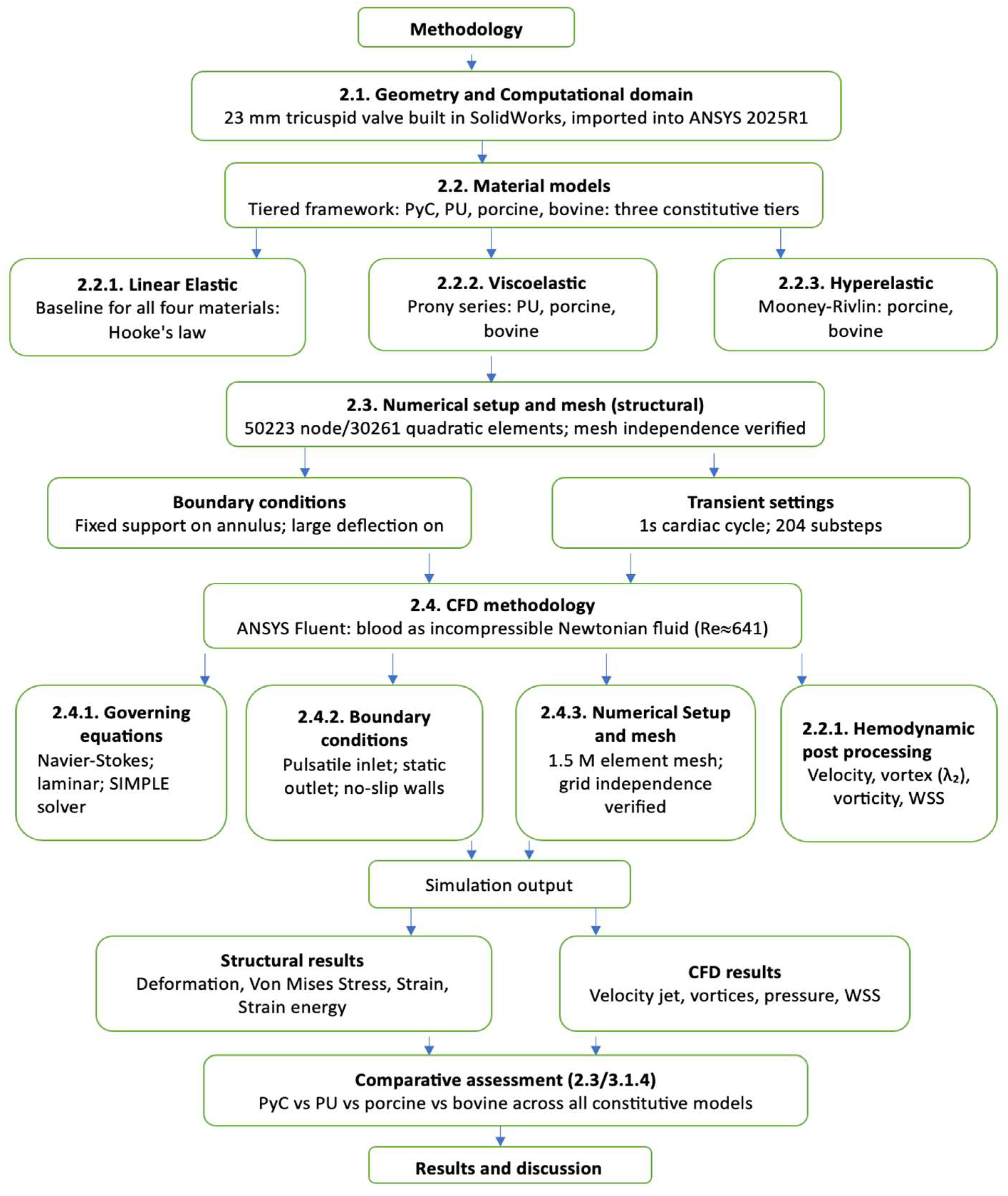
2. Methodology
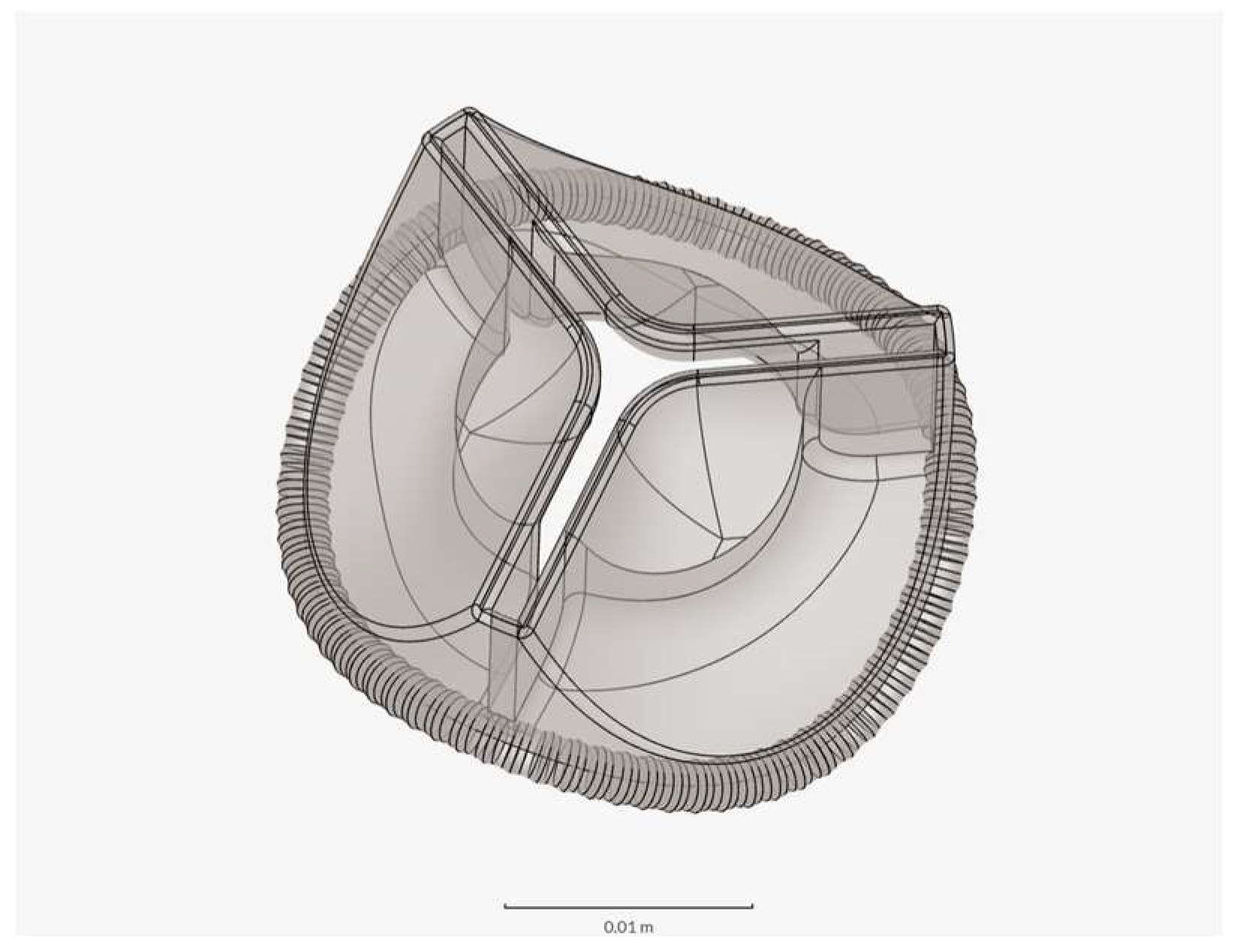
2.1. Geometry and Computational Domain
2.2. Material Models
2.2.1. Linear Elastic Model
2.2.2. Viscoelastic Model
2.2.3. Hyperelastic Model
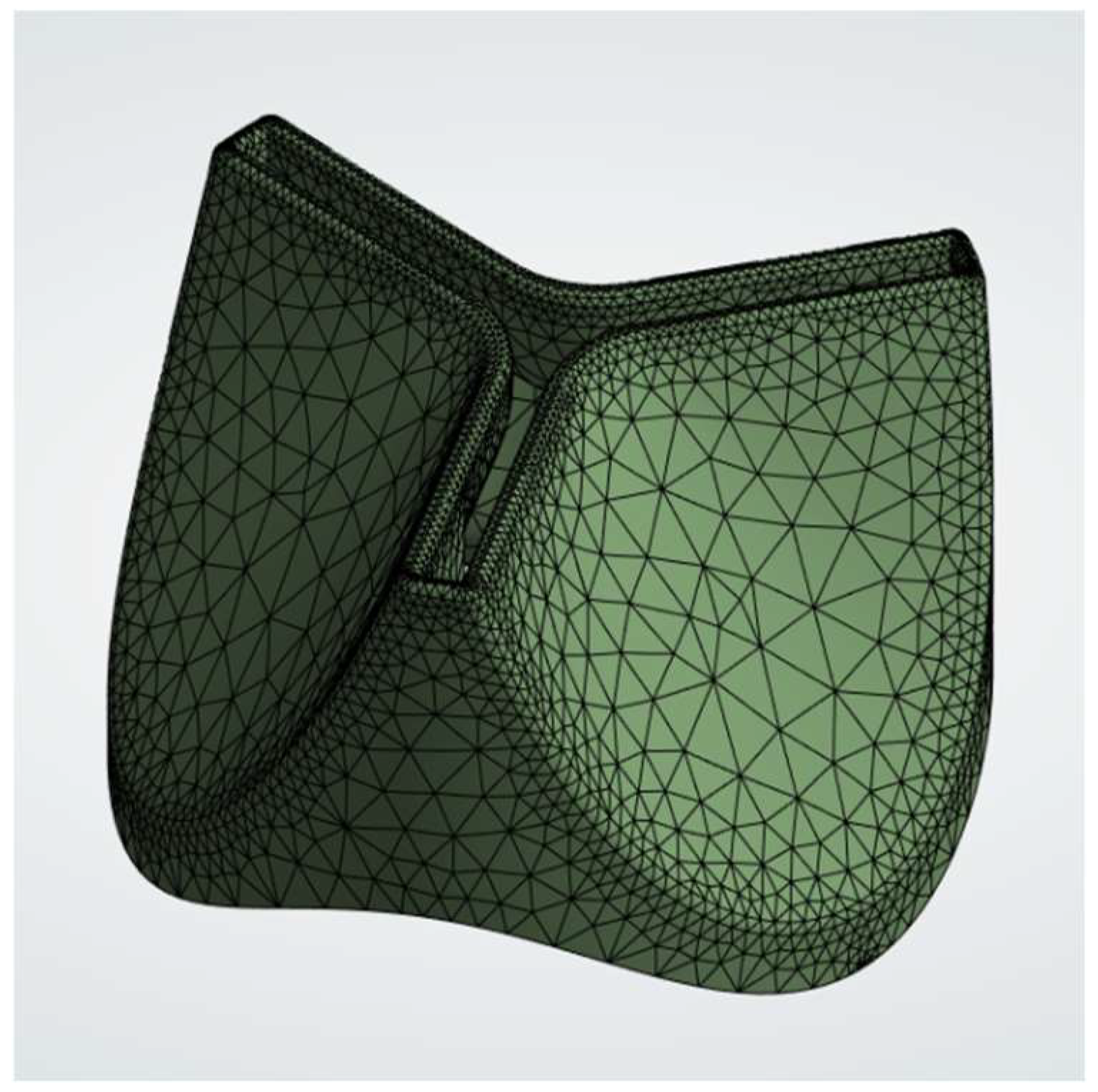
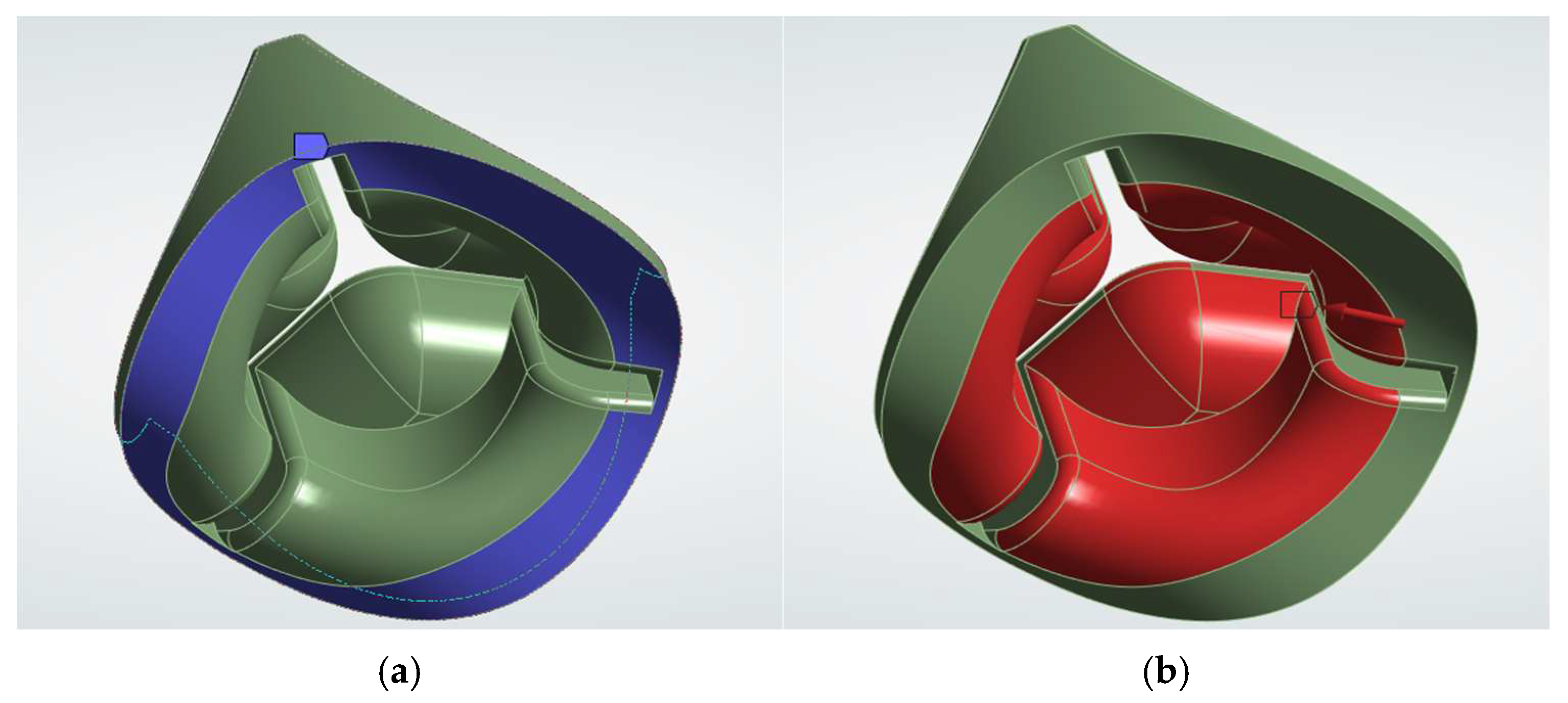
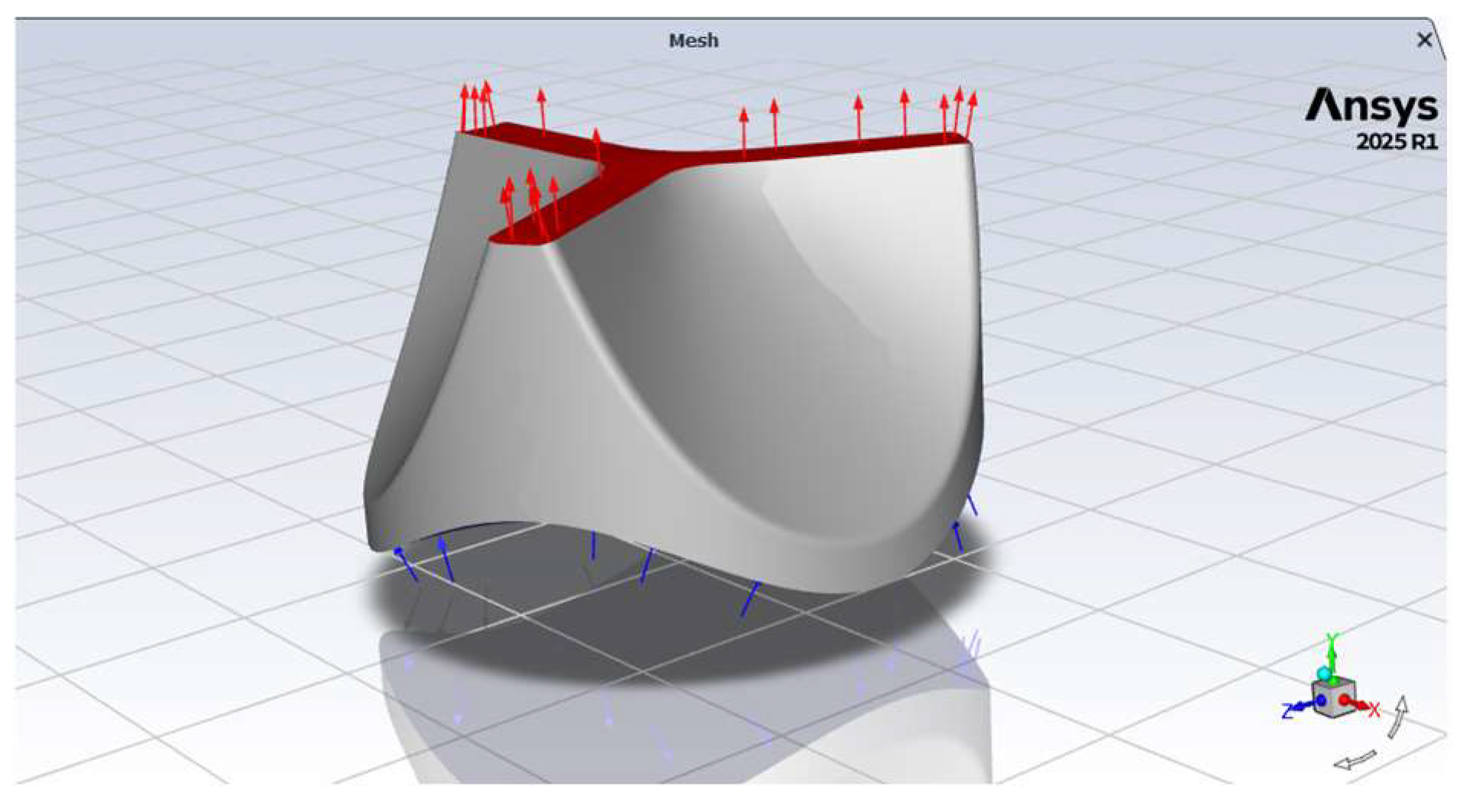
2.3. Numerical Setup and Mesh Generation (Structural Analysis)
2.4. Computational Fluid Dynamics (CFD) Methodology
2.4.1. Governing Equations and Flow Regime
2.4.2. Boundary Conditions and Pulsatile Flow
- Inlet:
- Outlet:
- Walls:
- Valve Configuration:
2.4.3. Numerical Setup and Mesh
2.4.4. Hemodynamic Post-Processing
3. Results
3.1. Structural Analysis
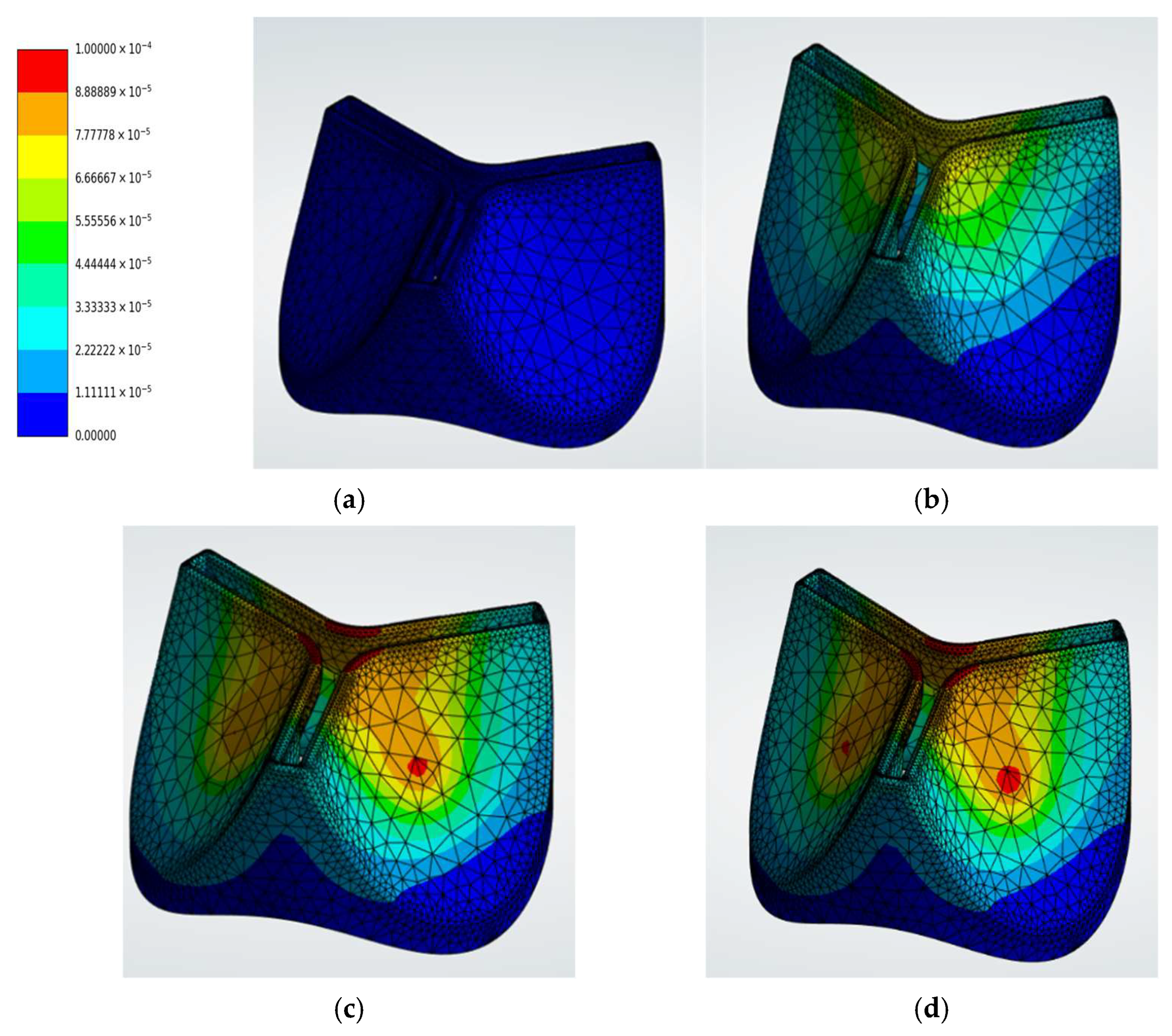
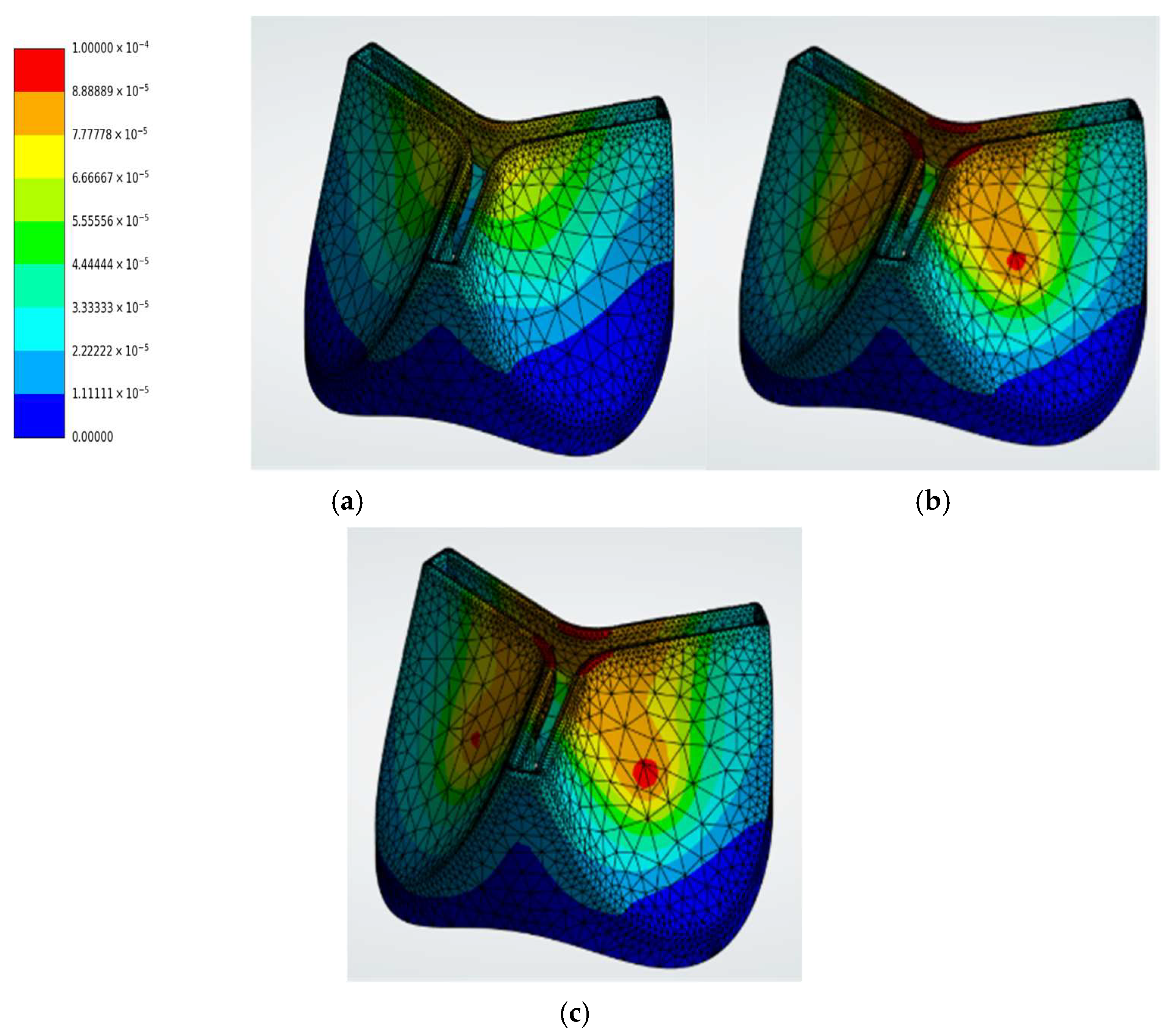
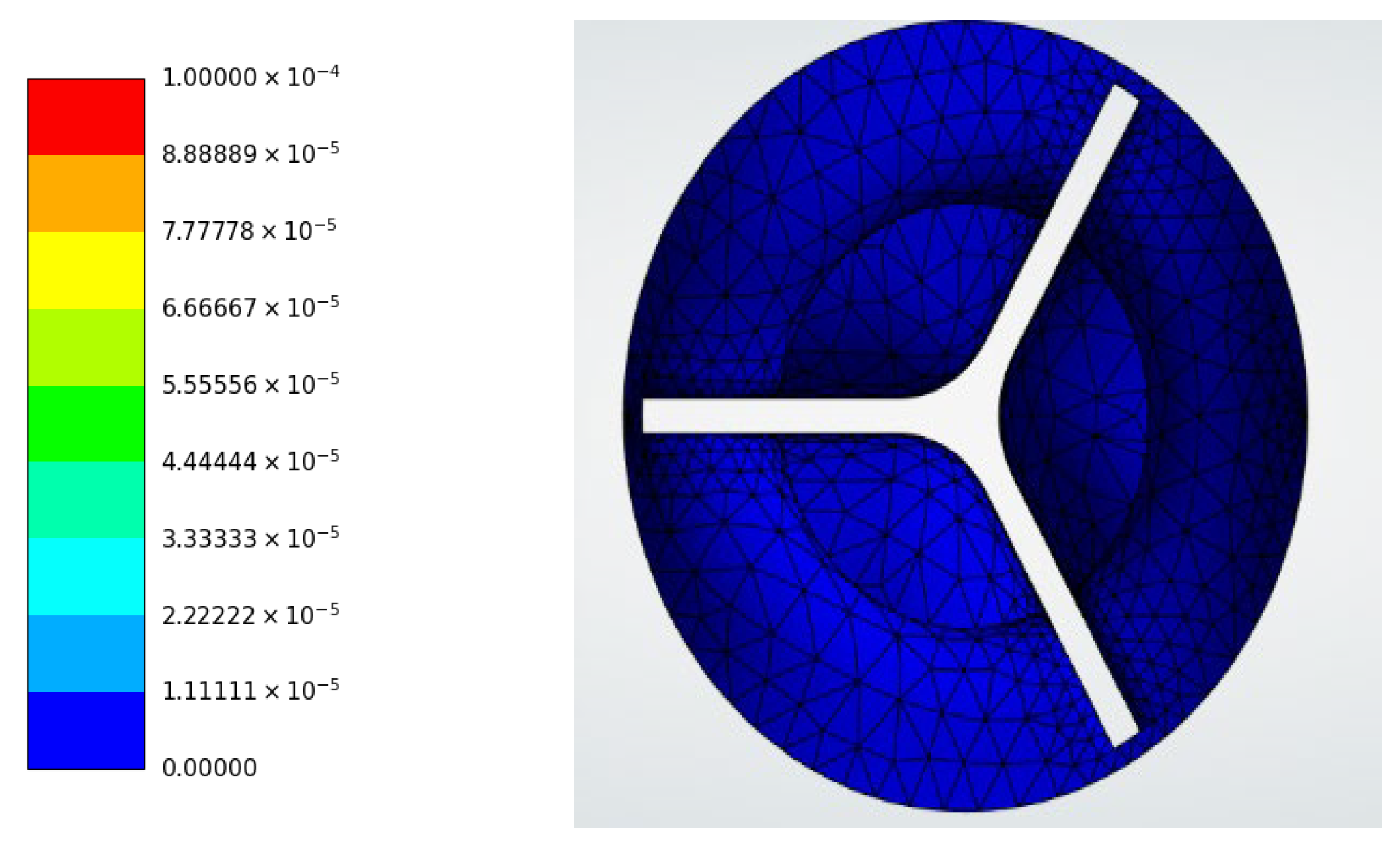
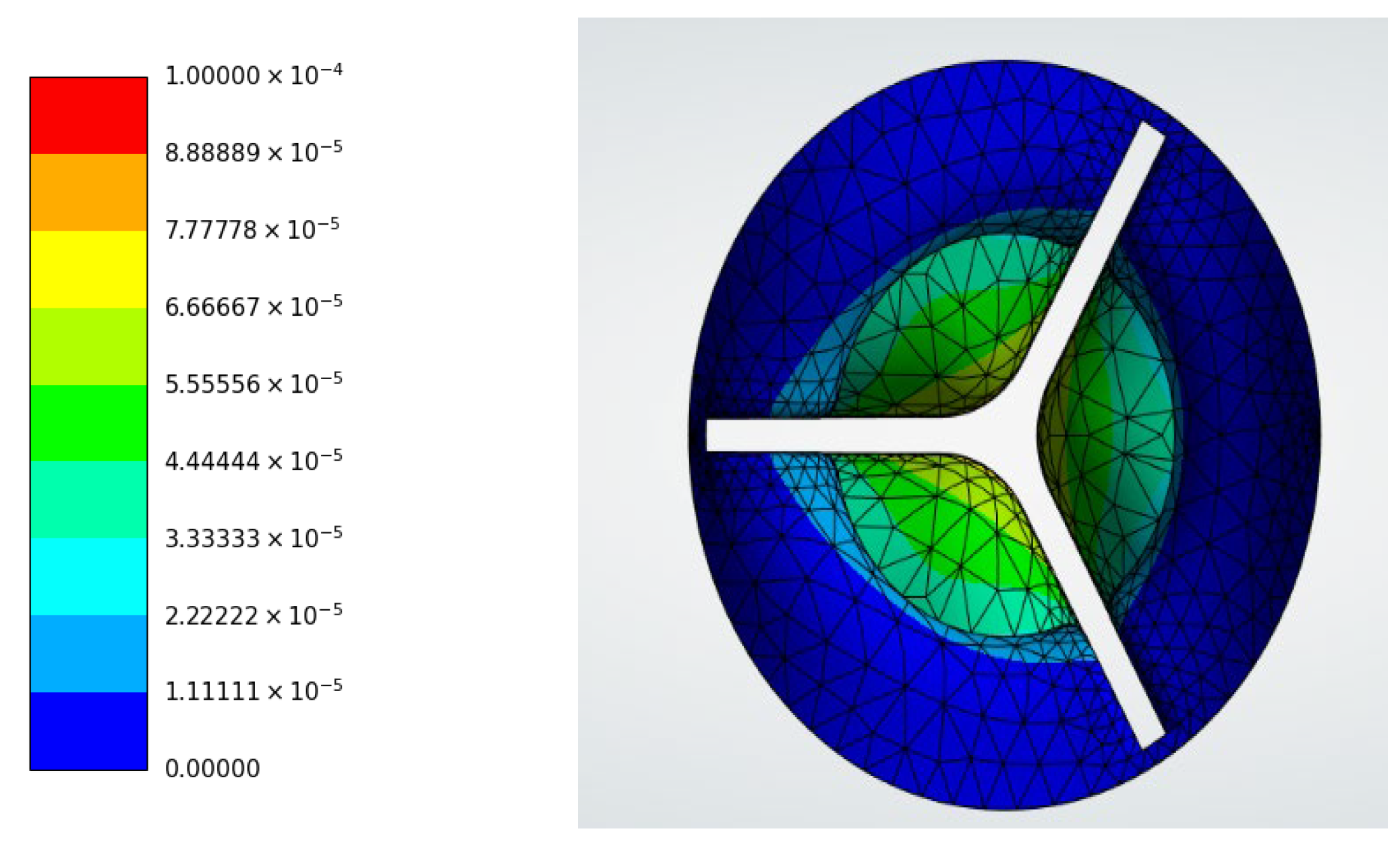
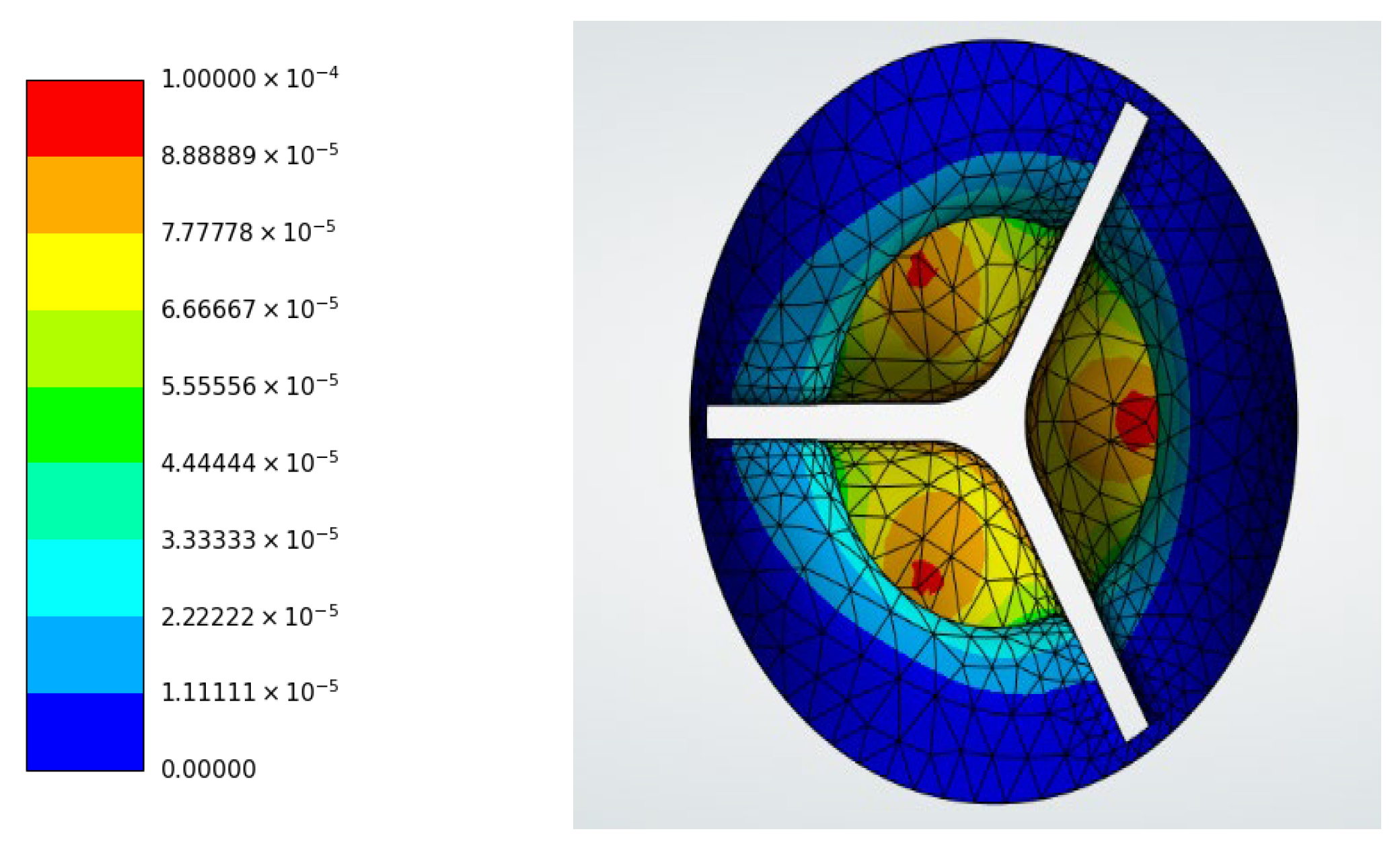
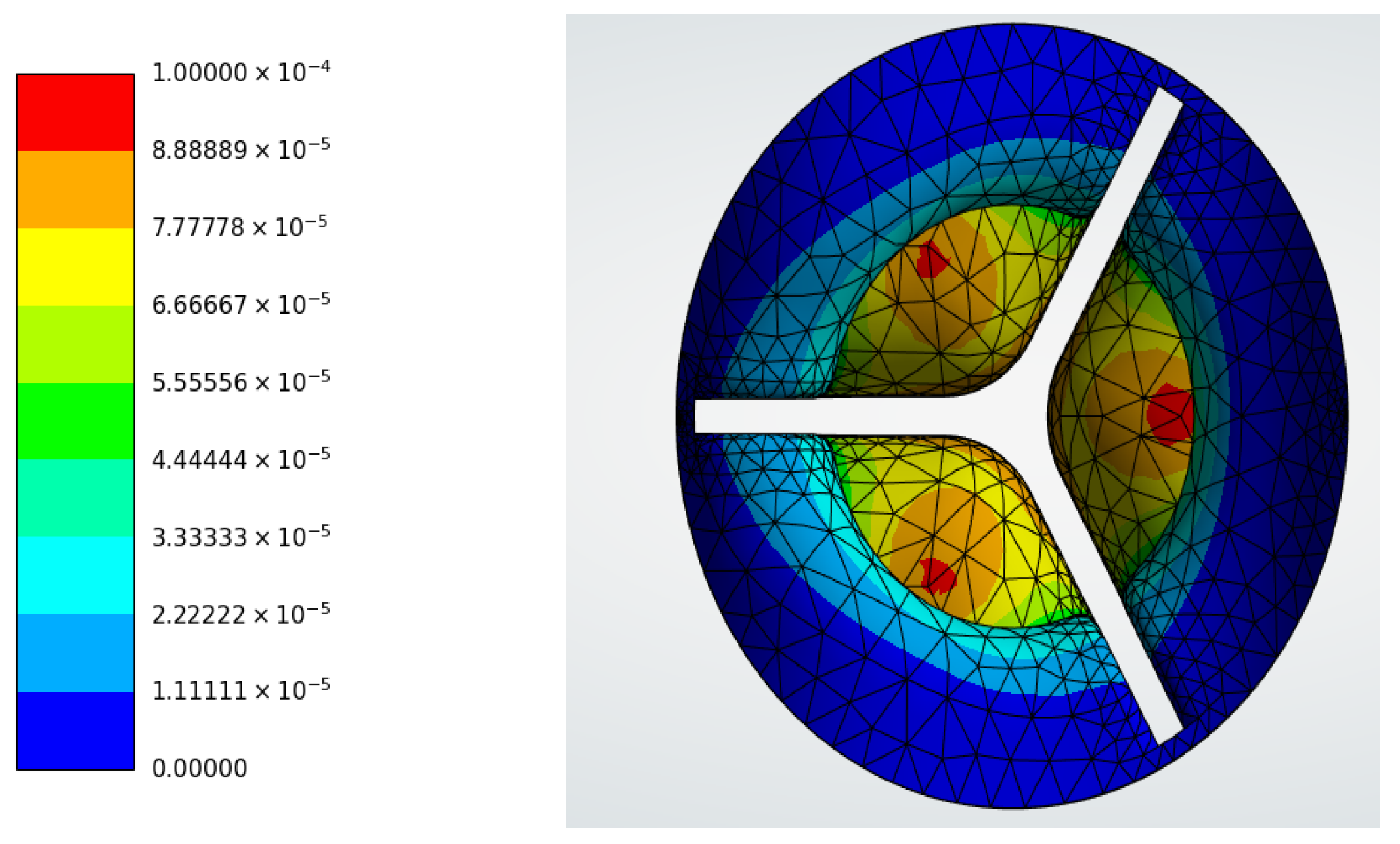
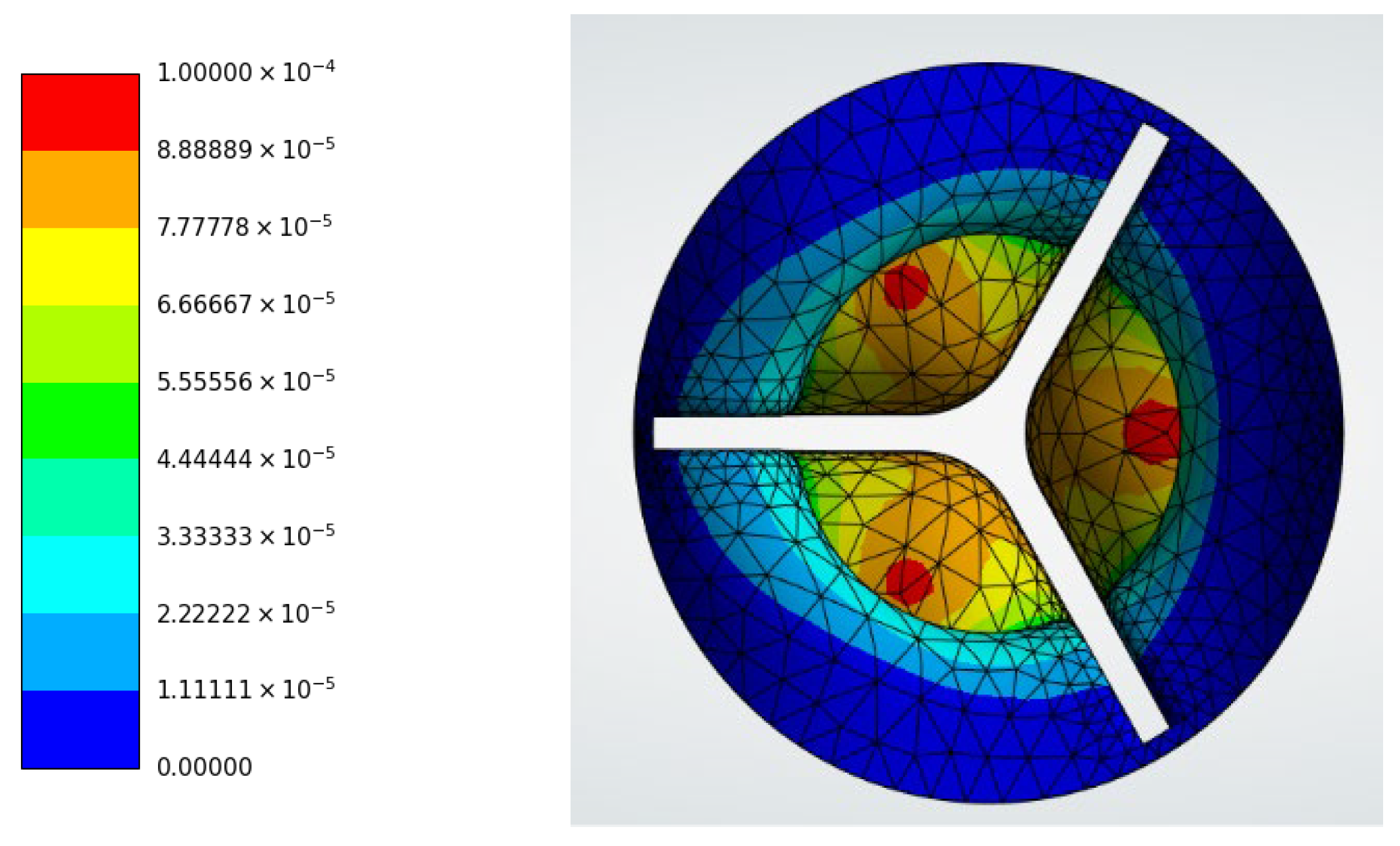
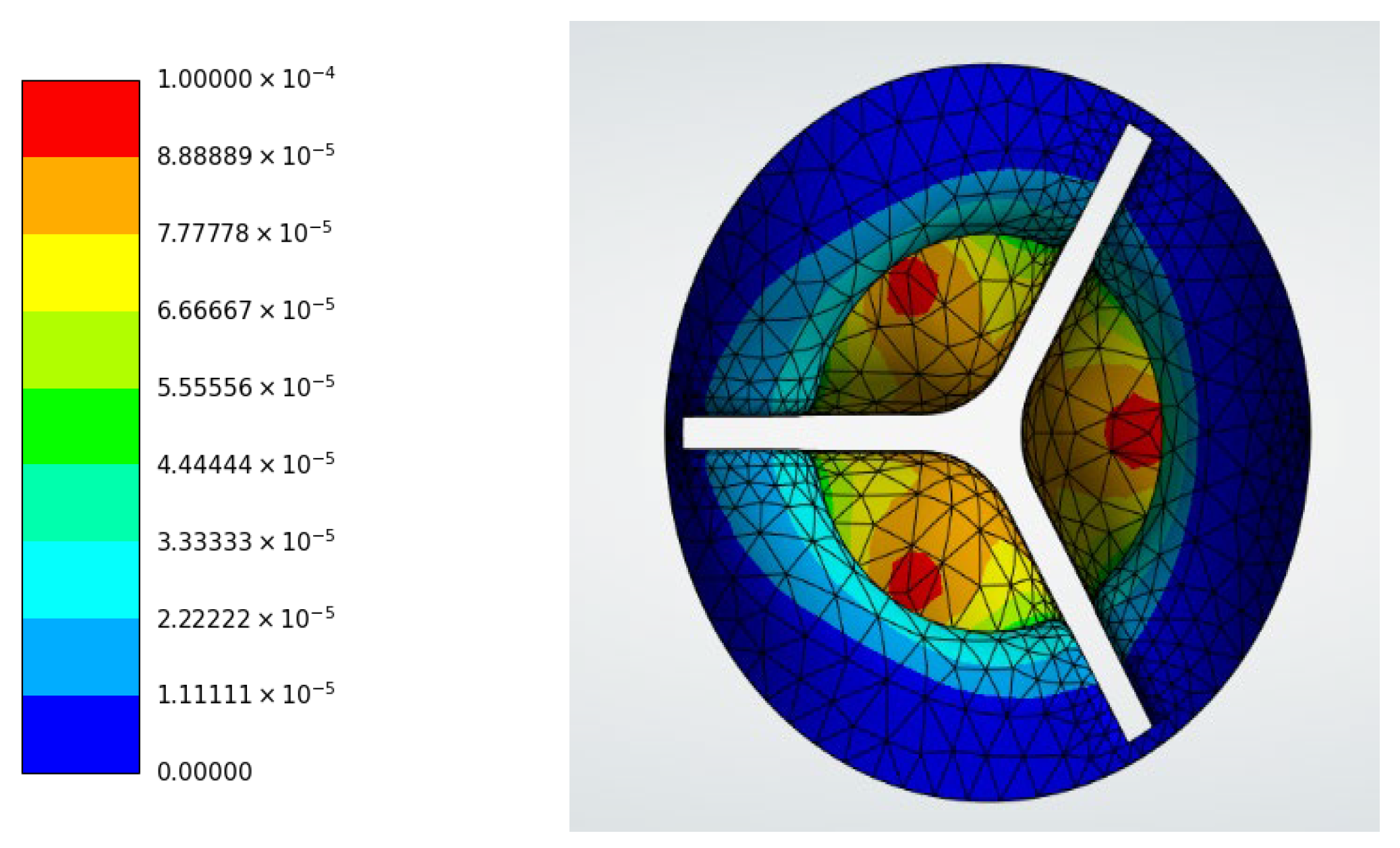
3.1.1. Deformation Response
Linear Elastic Materials
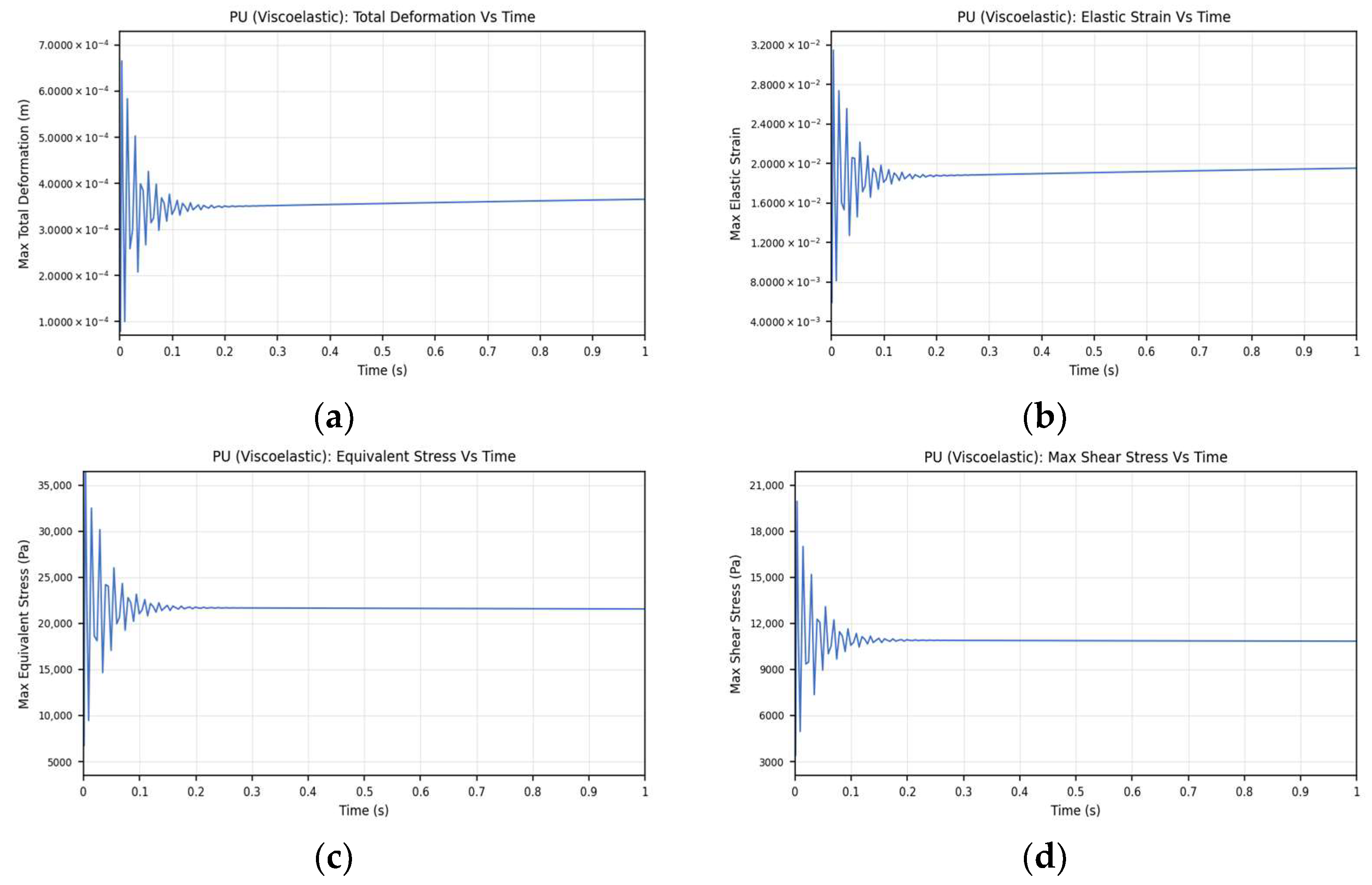
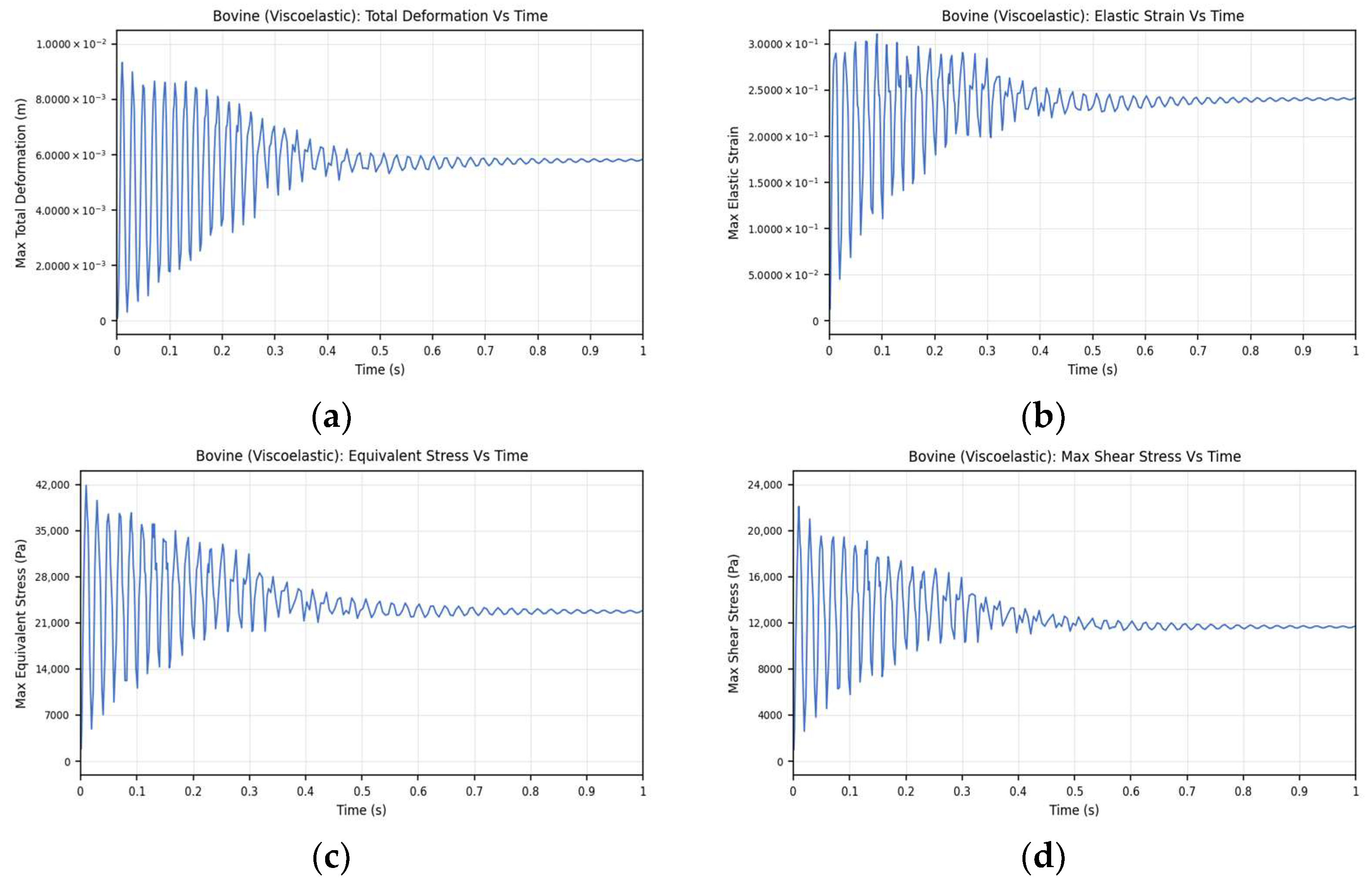
- Viscoelastic Materials
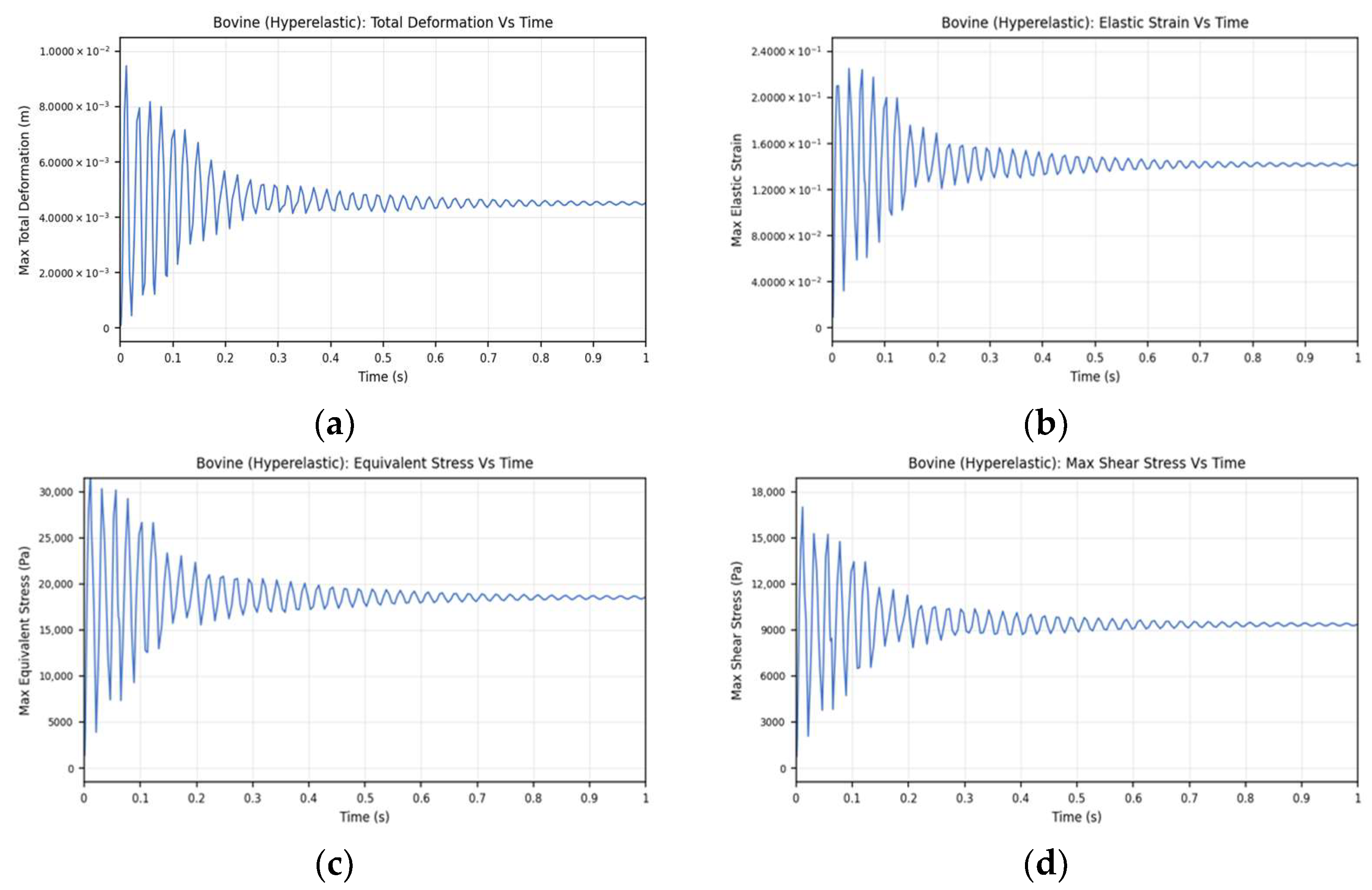
Hyperelastic Materials
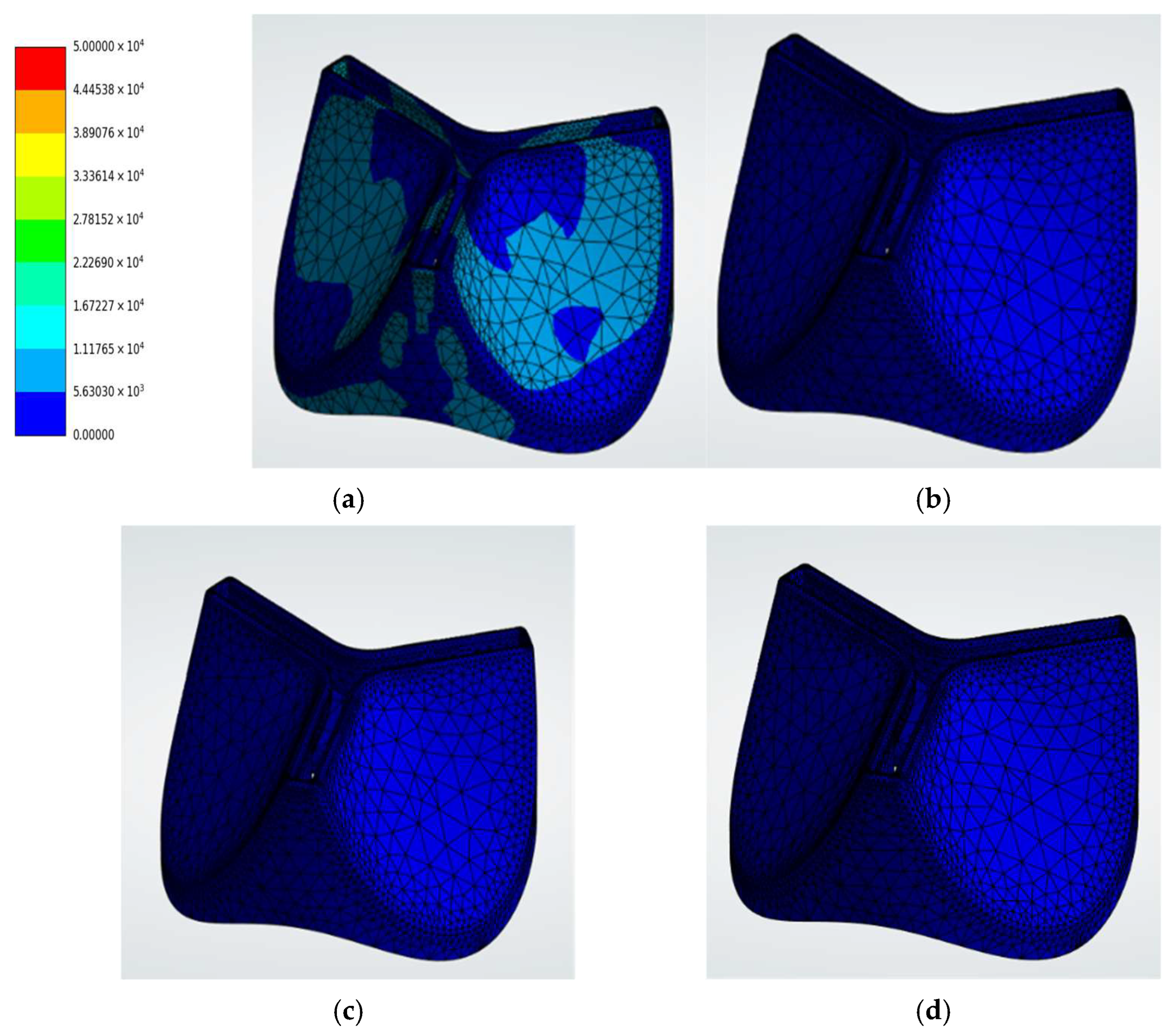
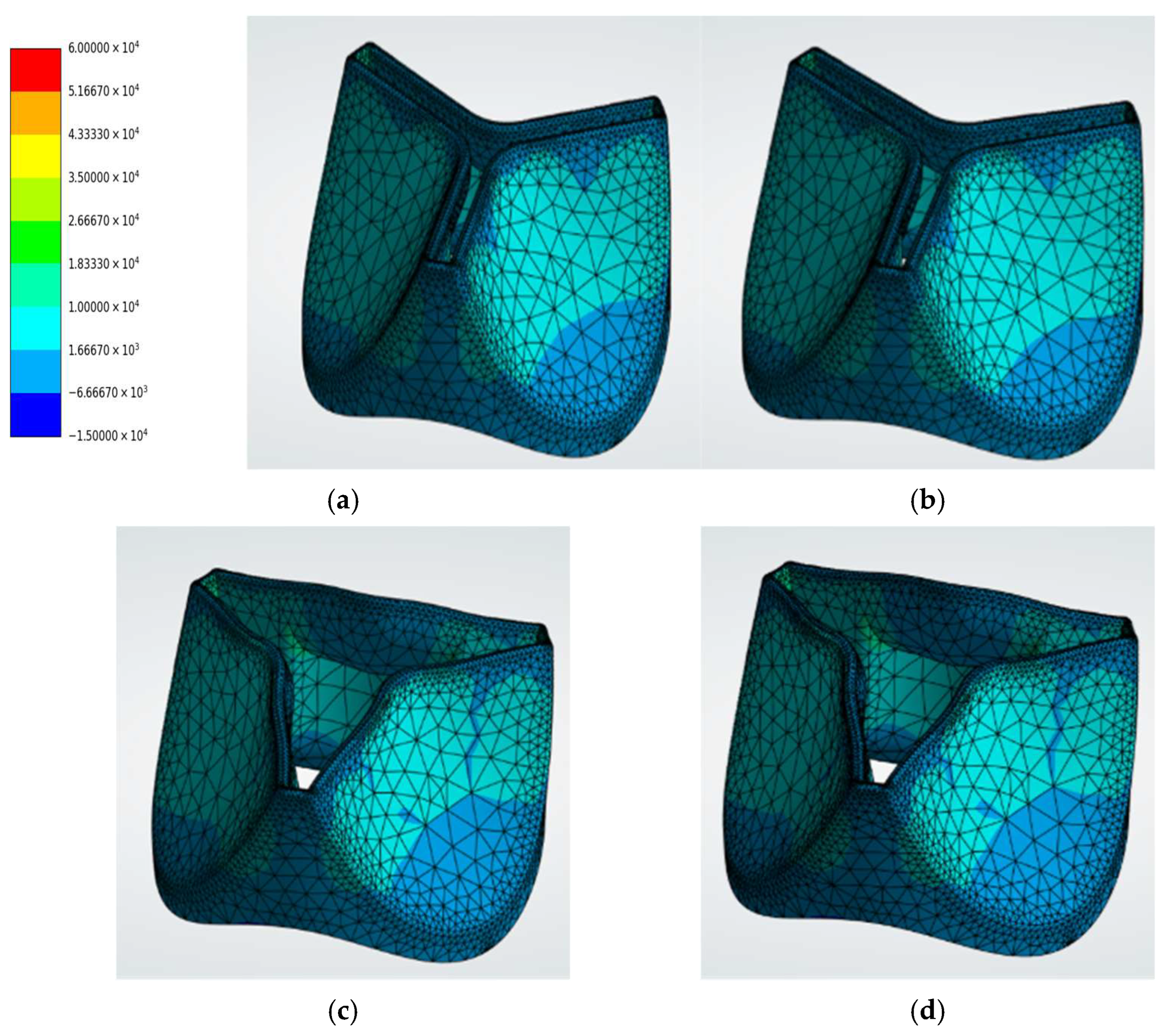
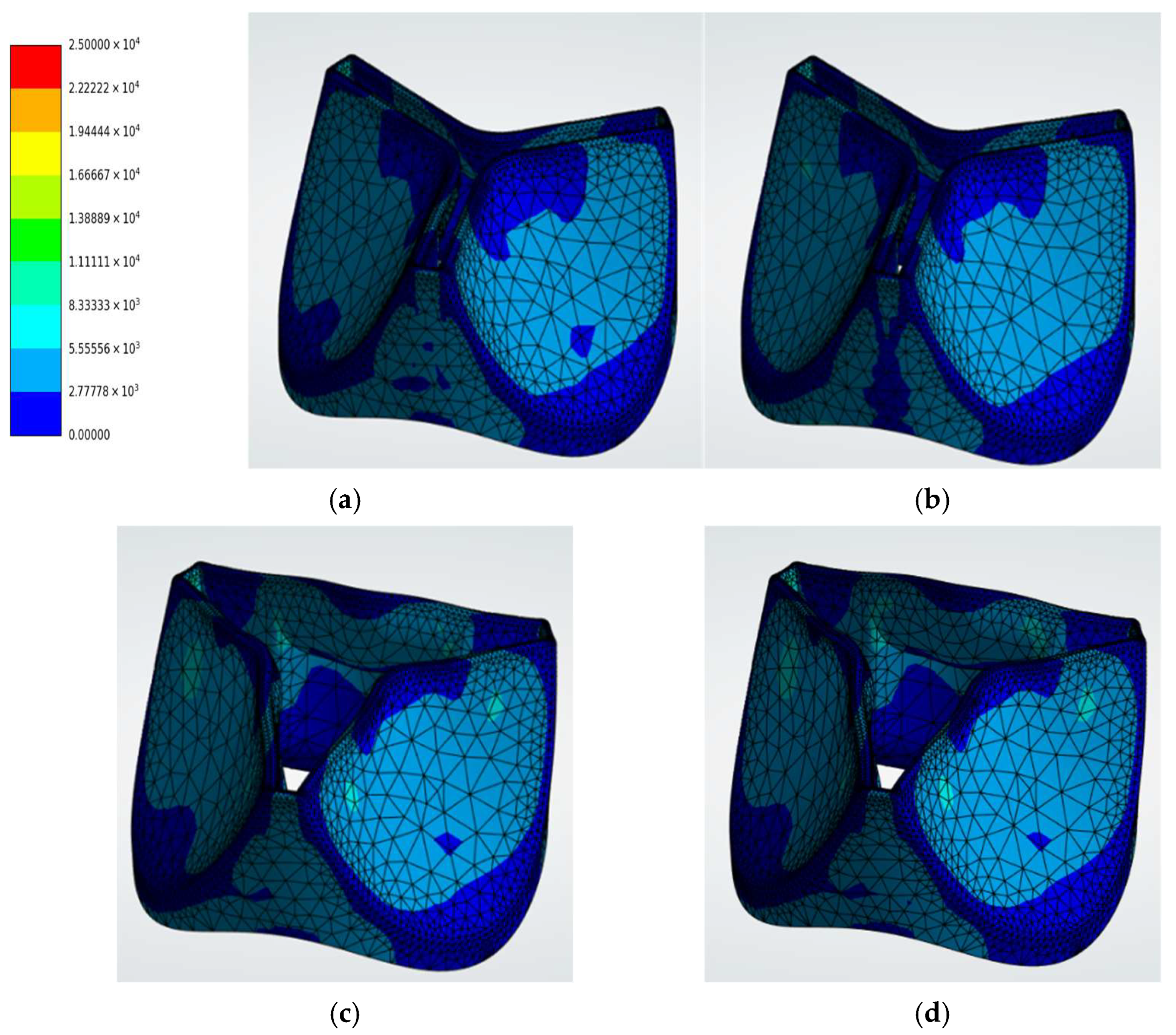
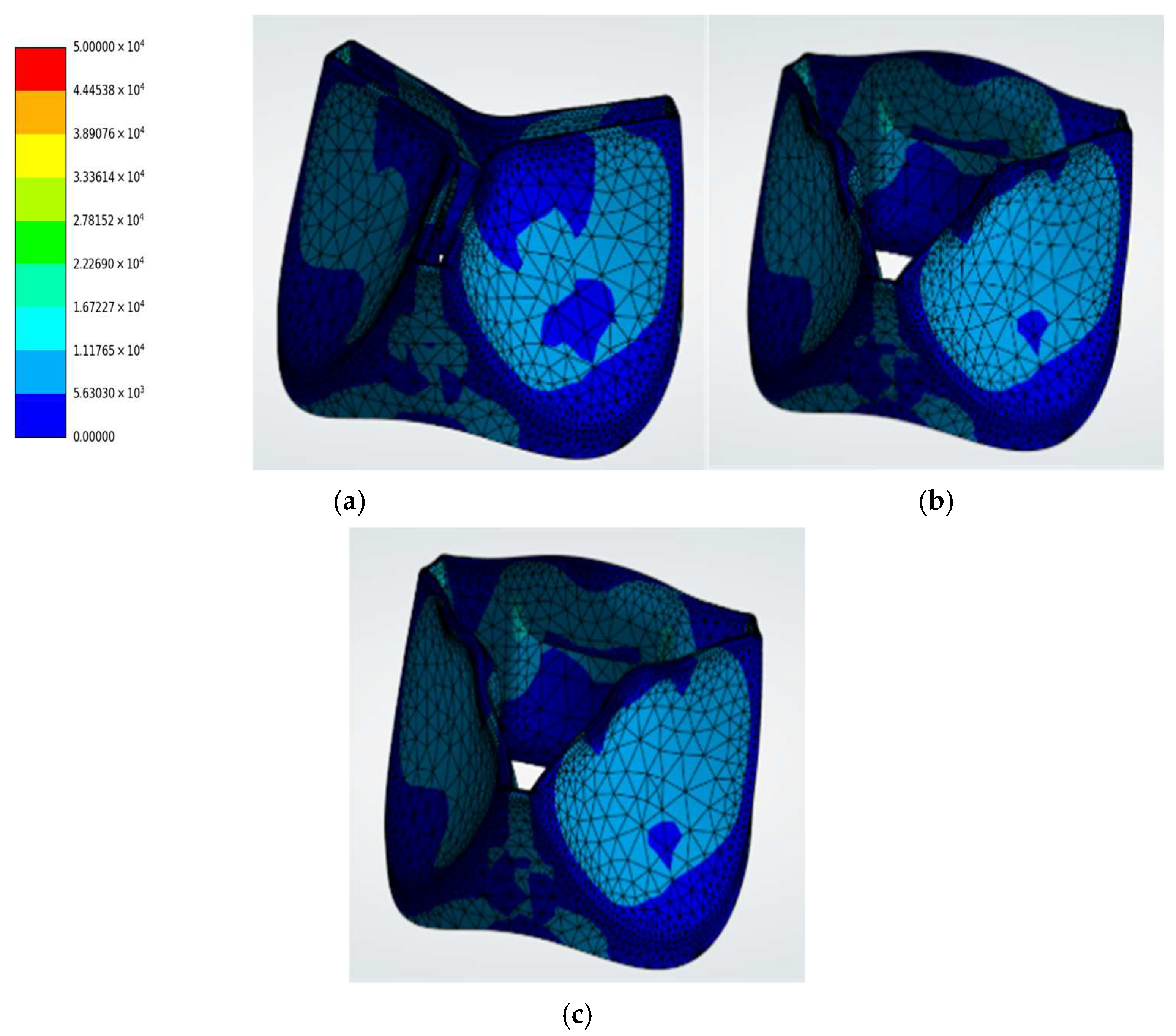
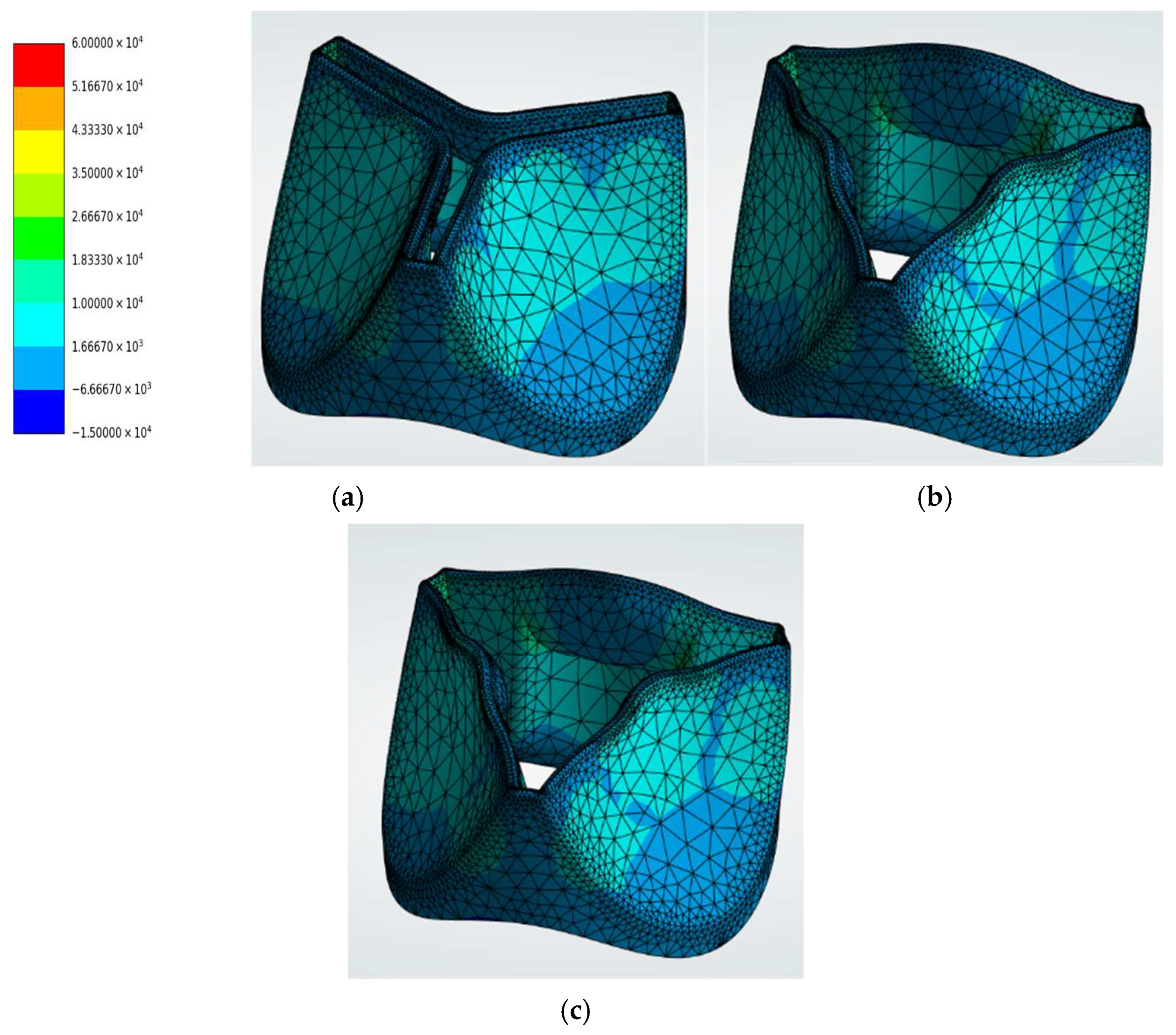
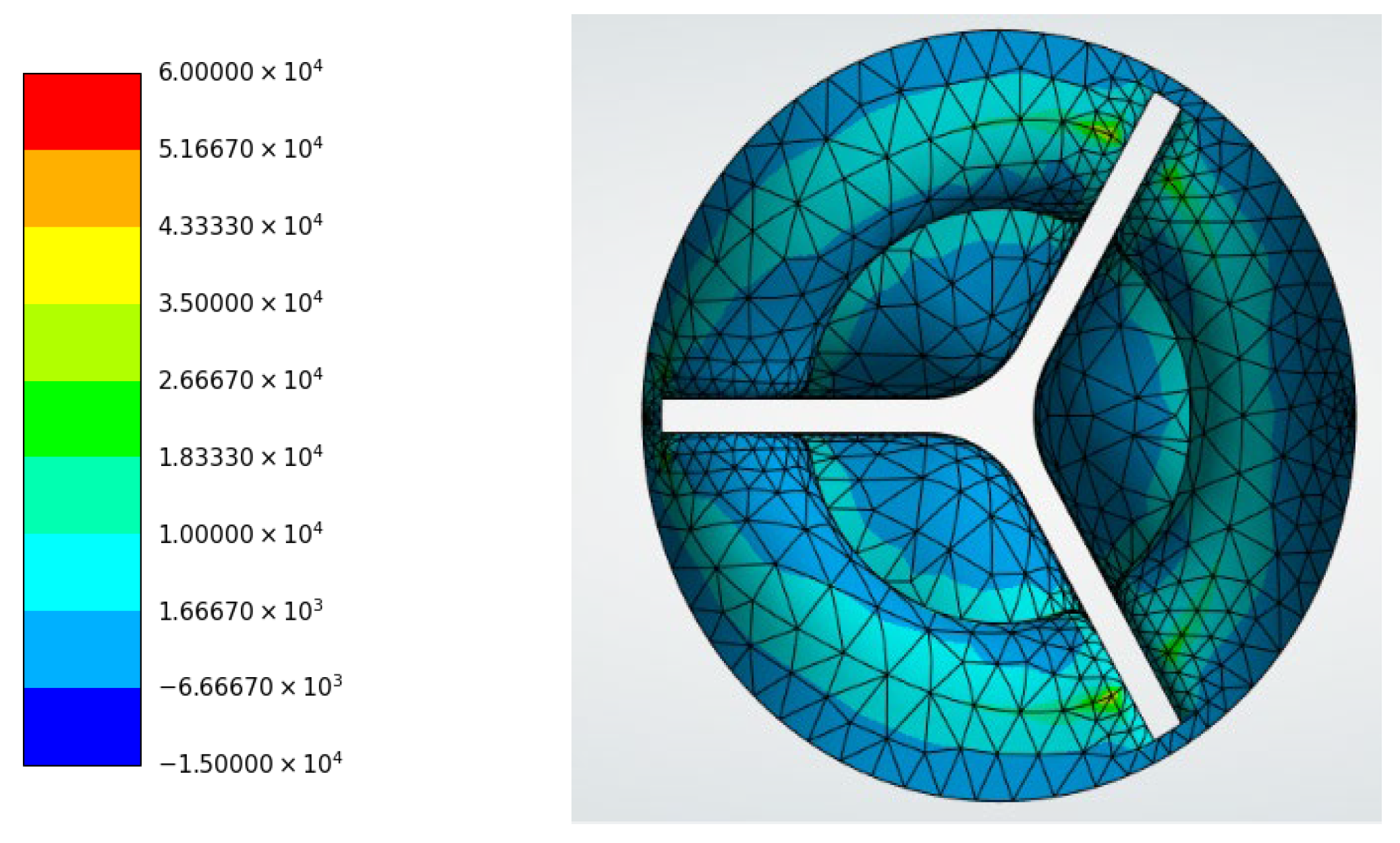
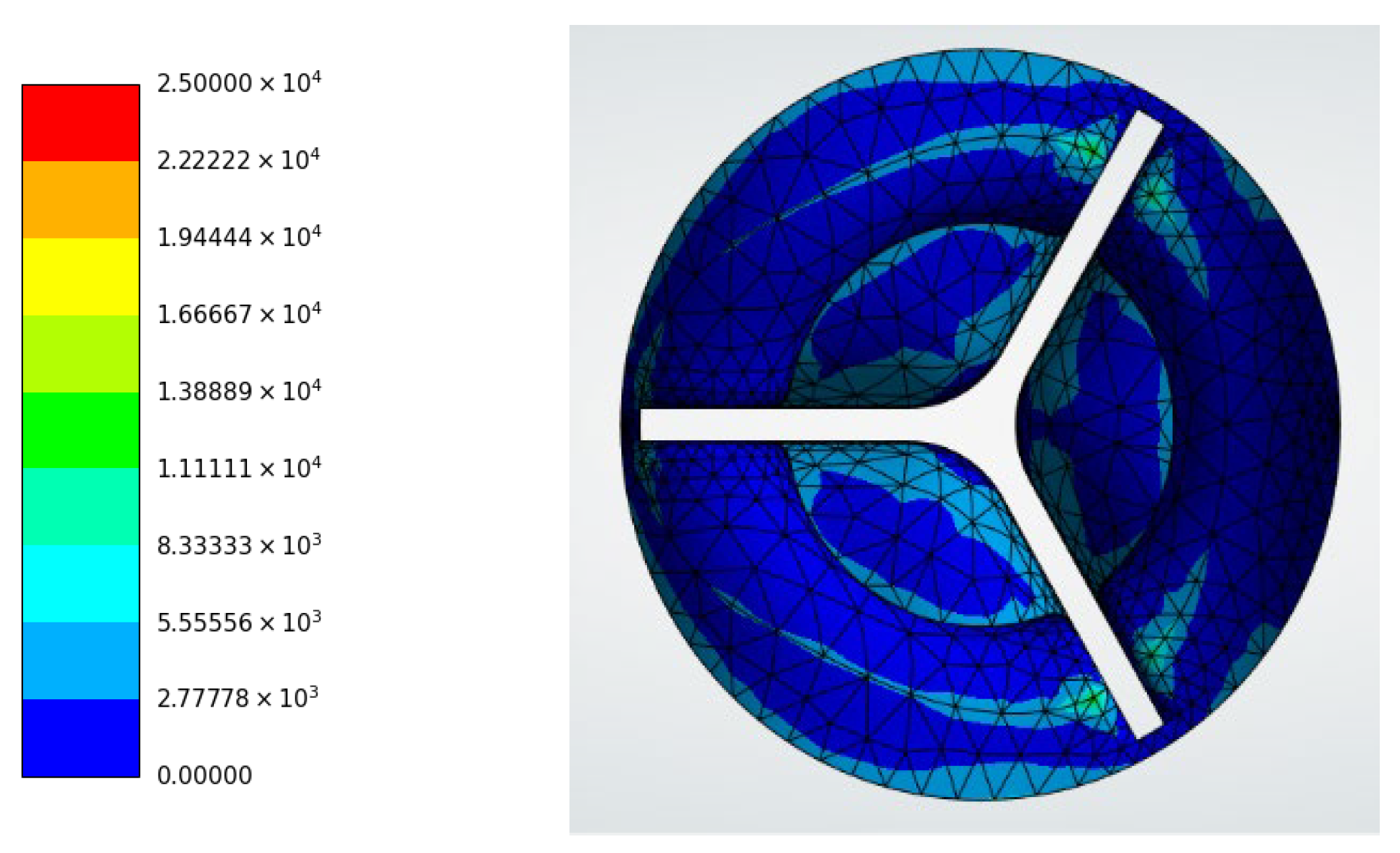
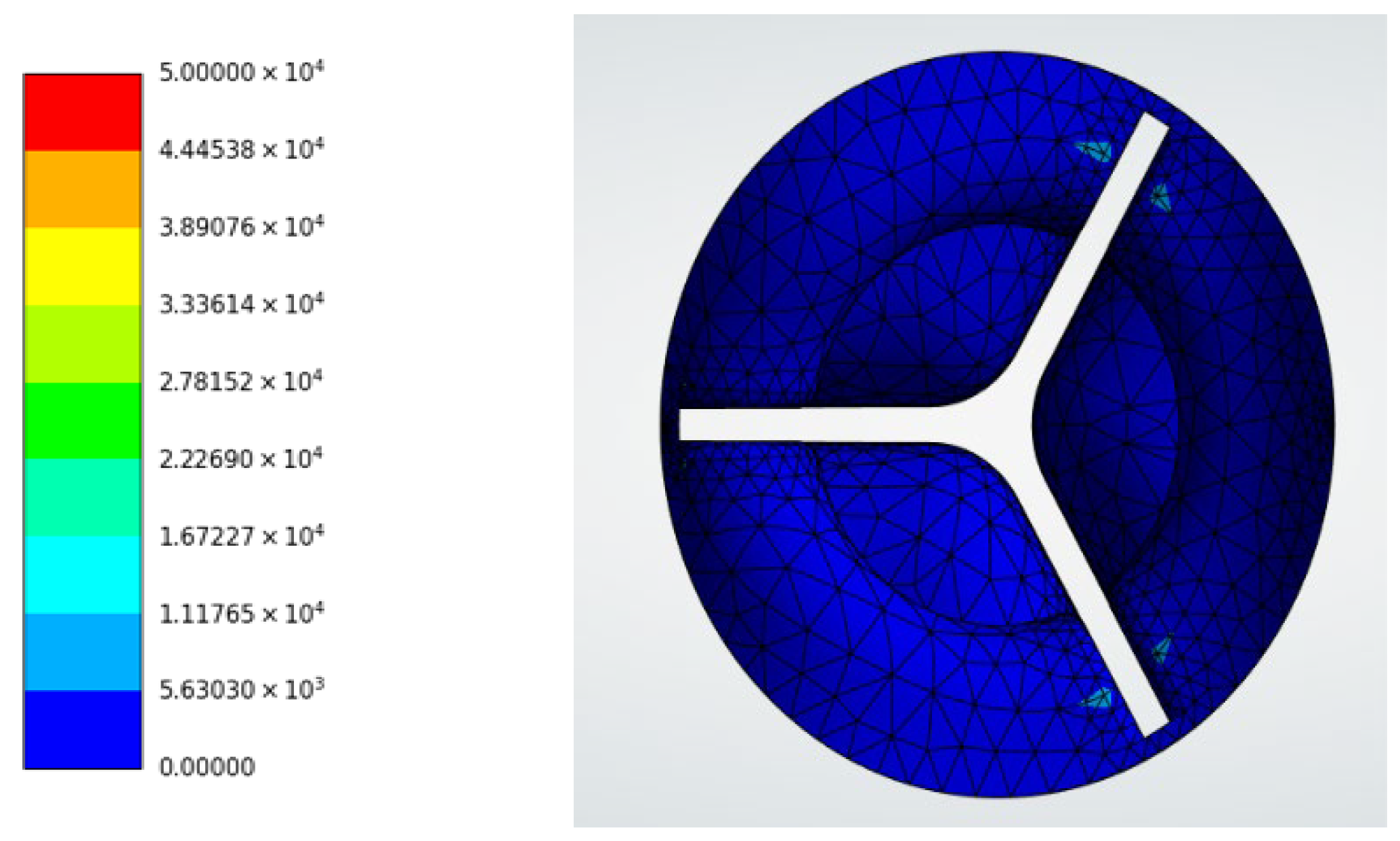
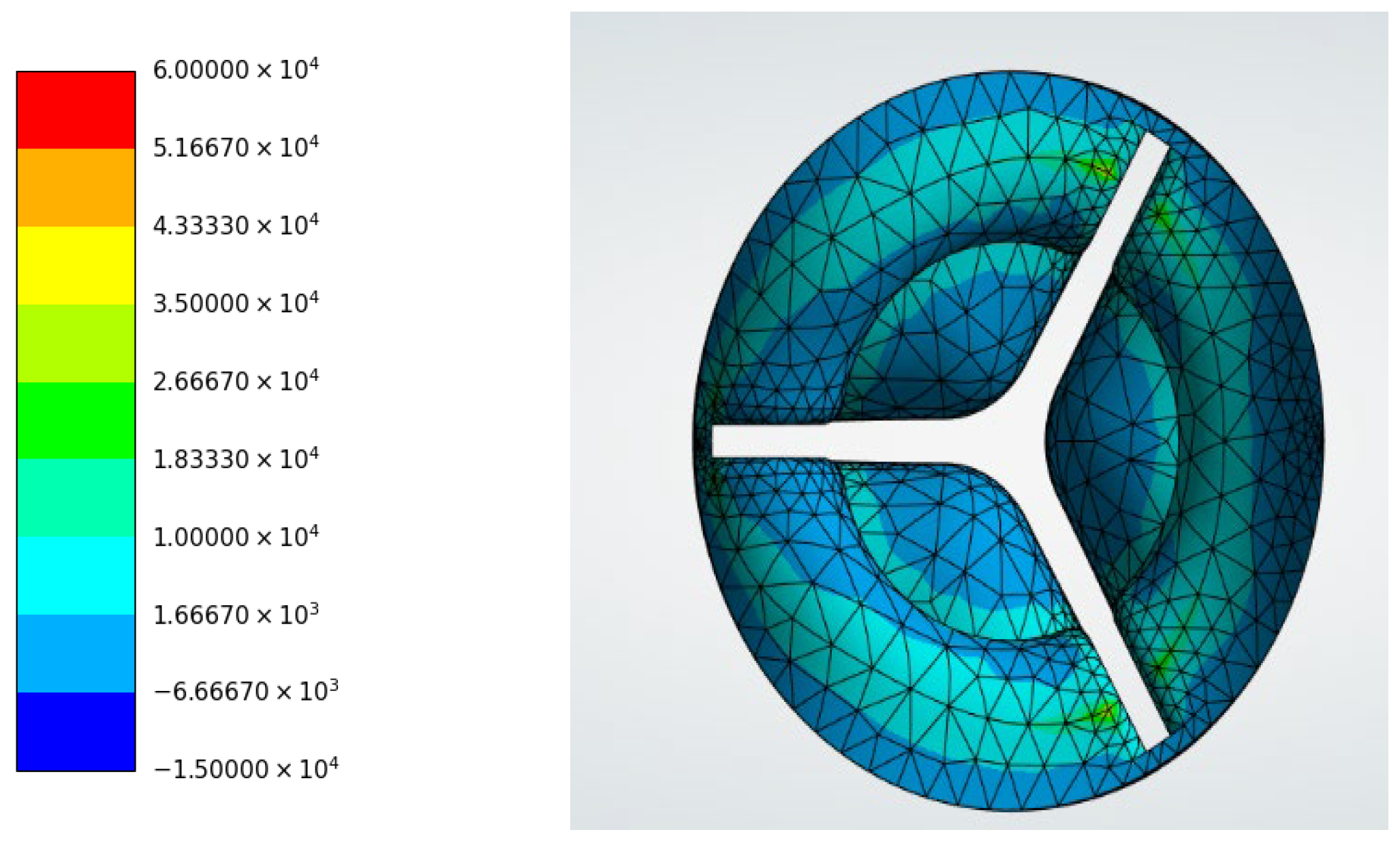
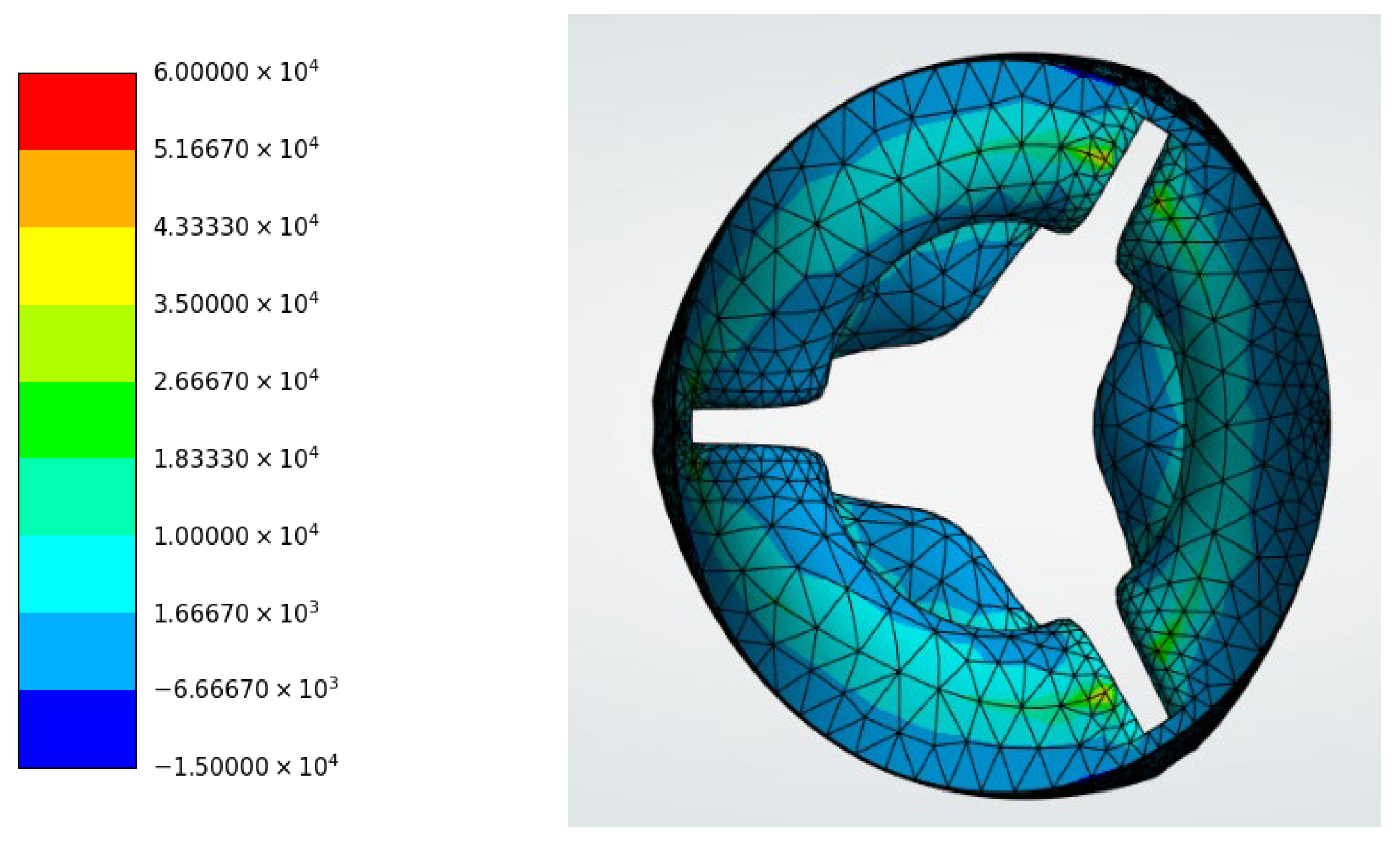
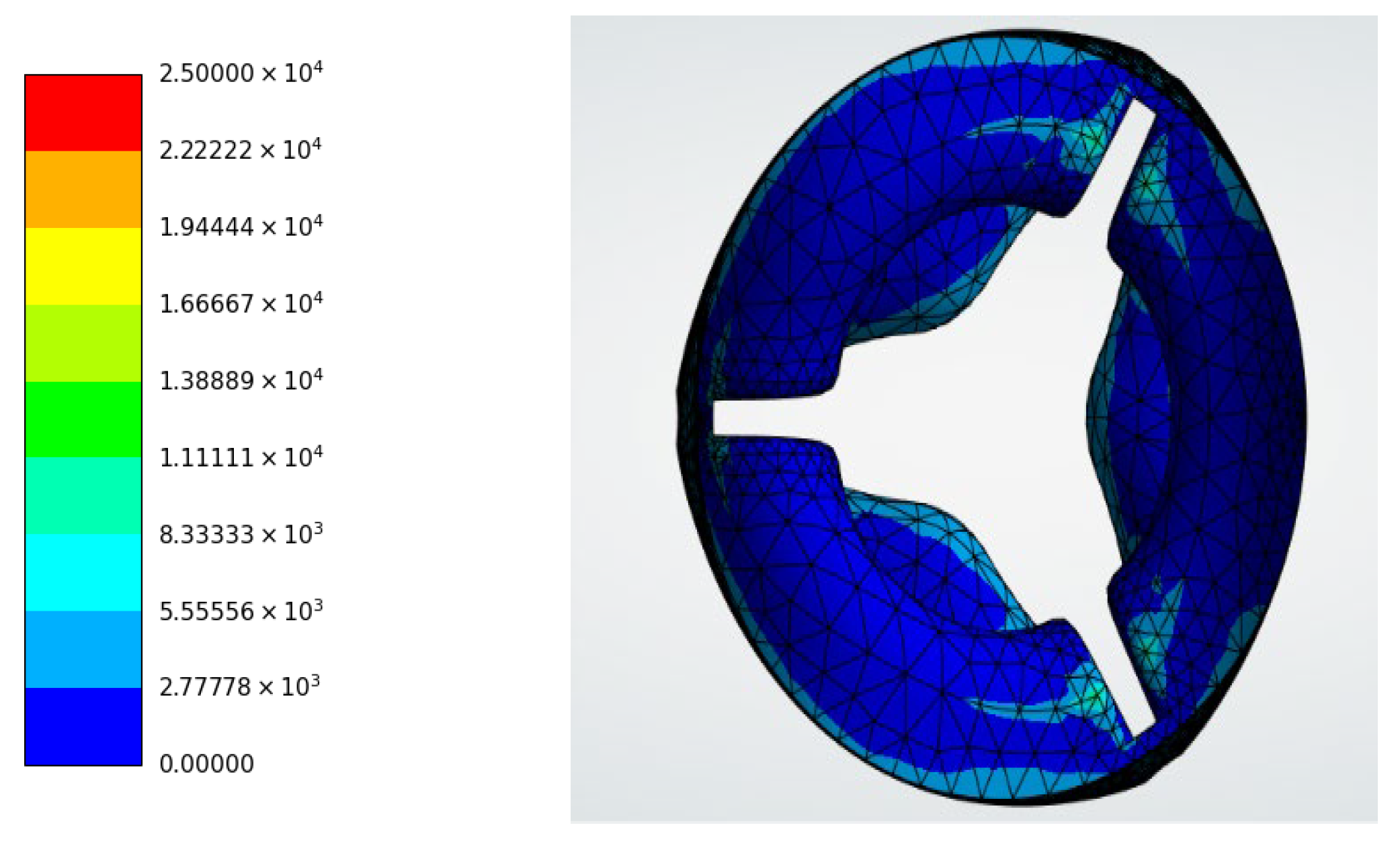
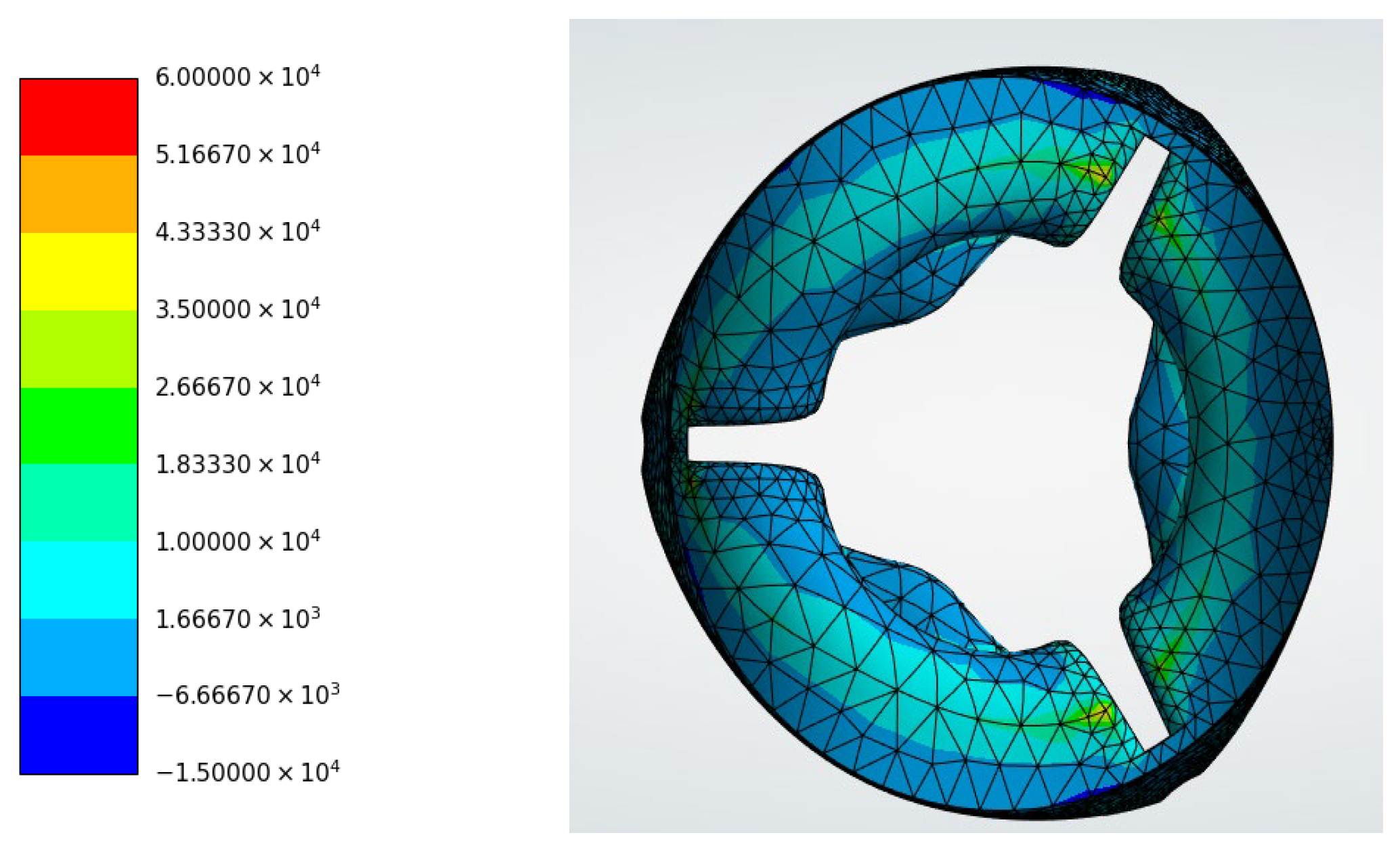
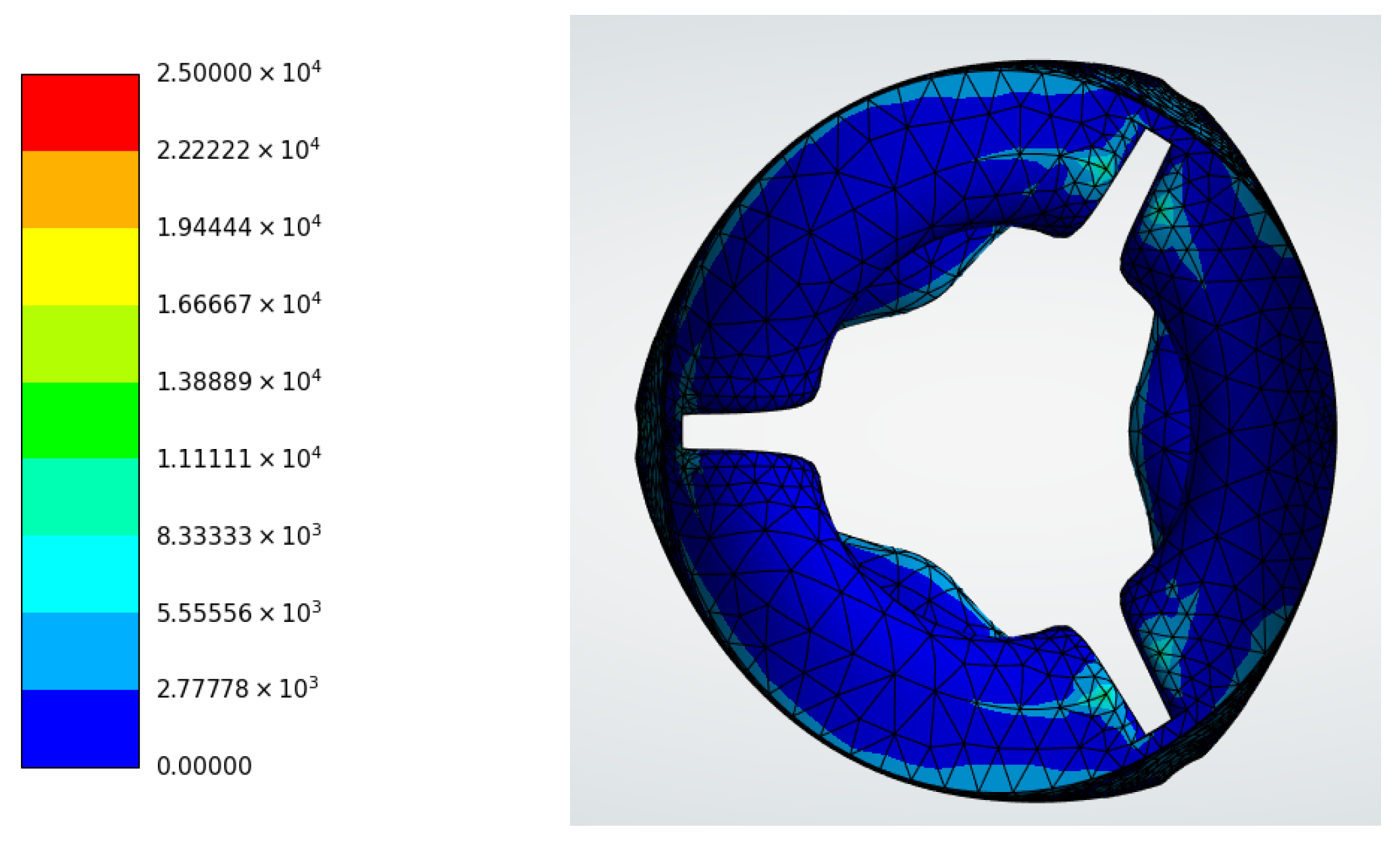
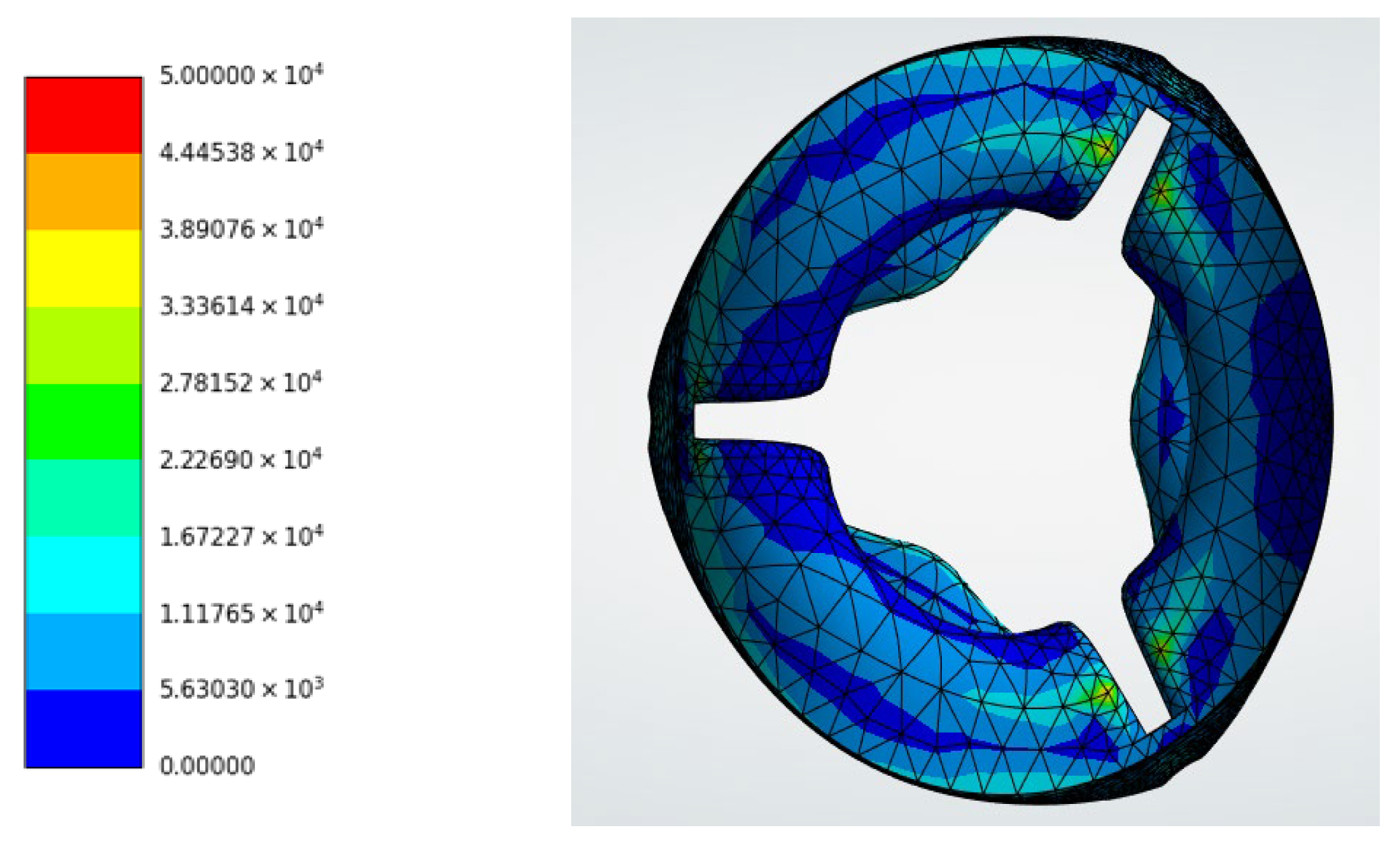
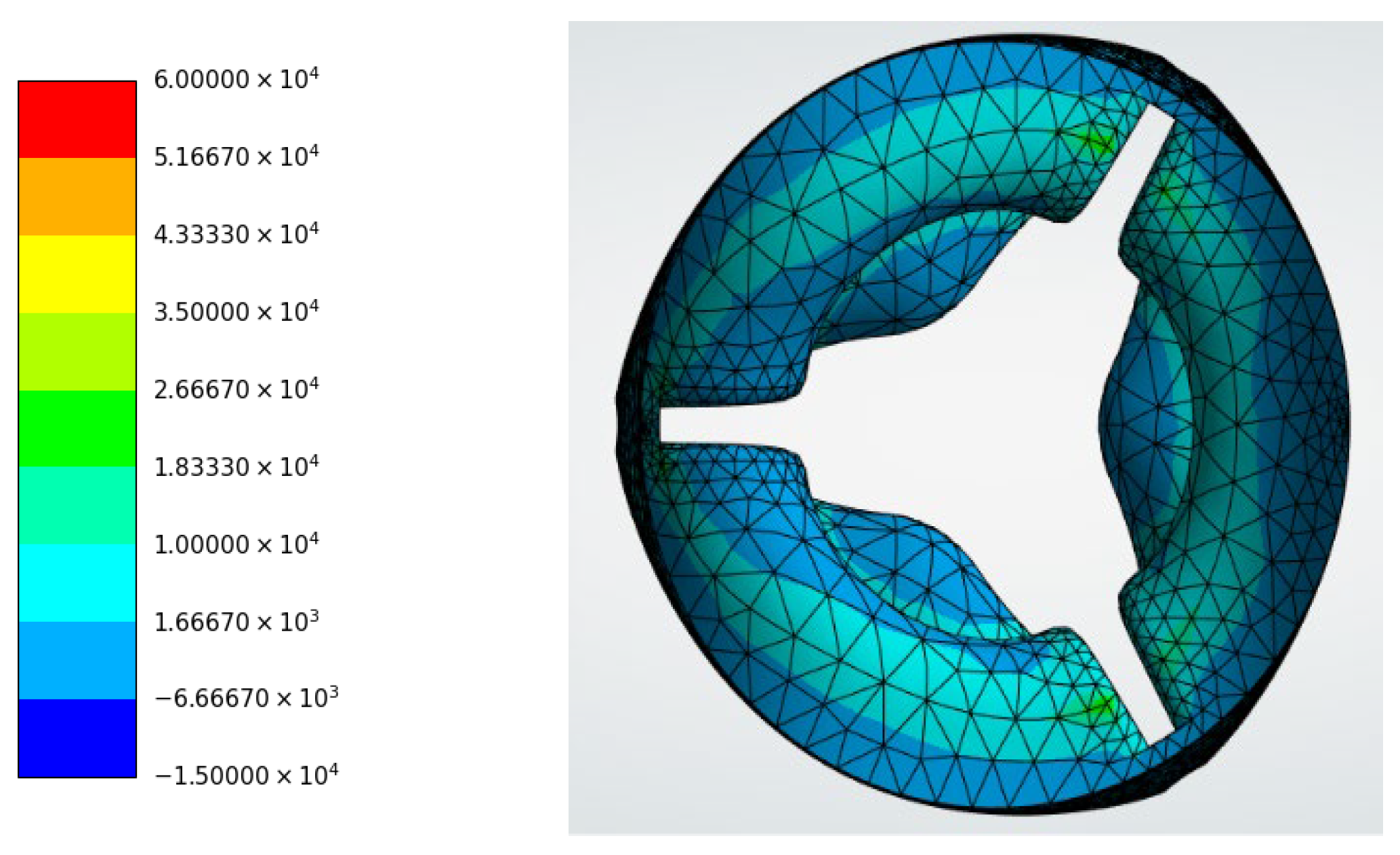
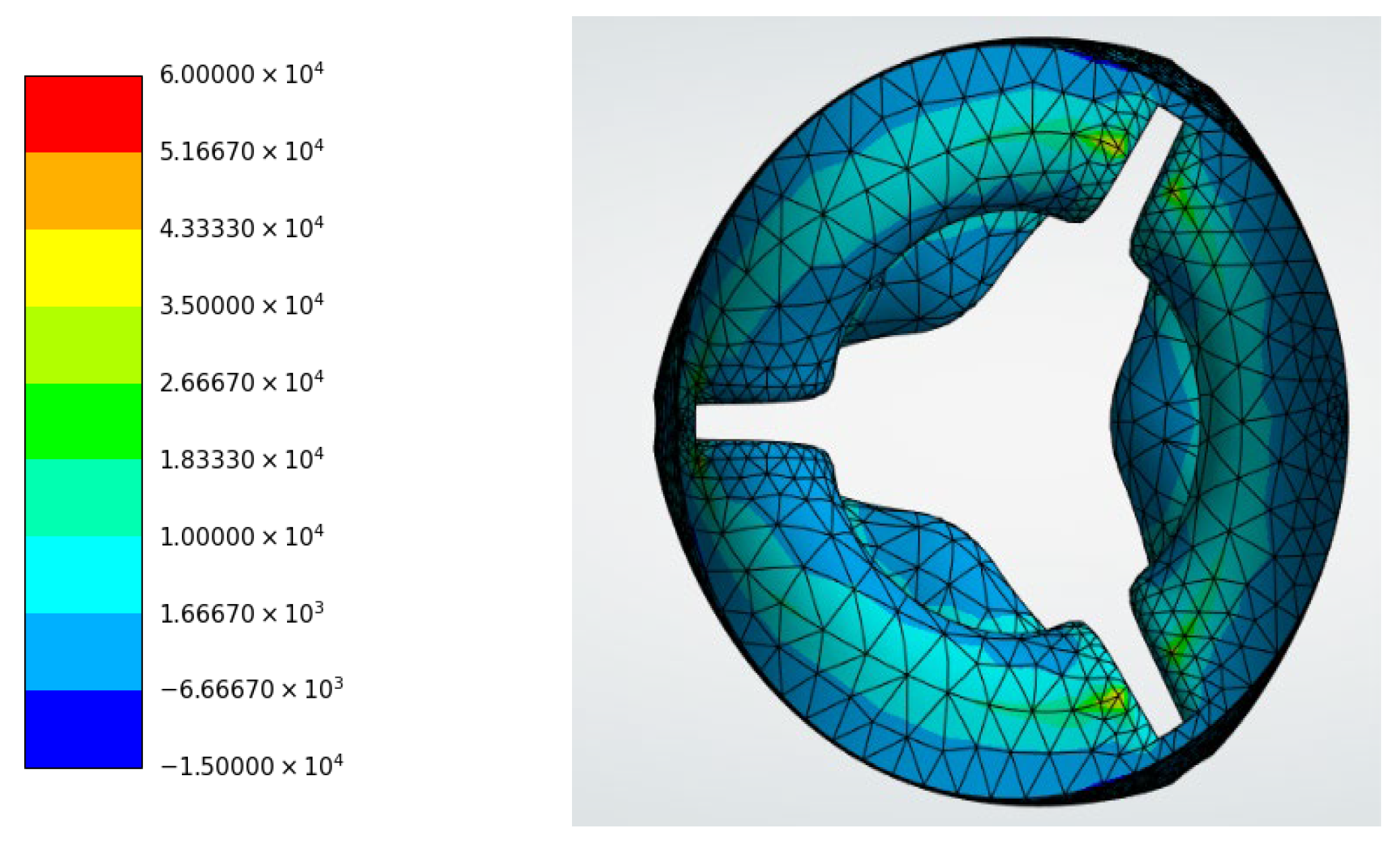
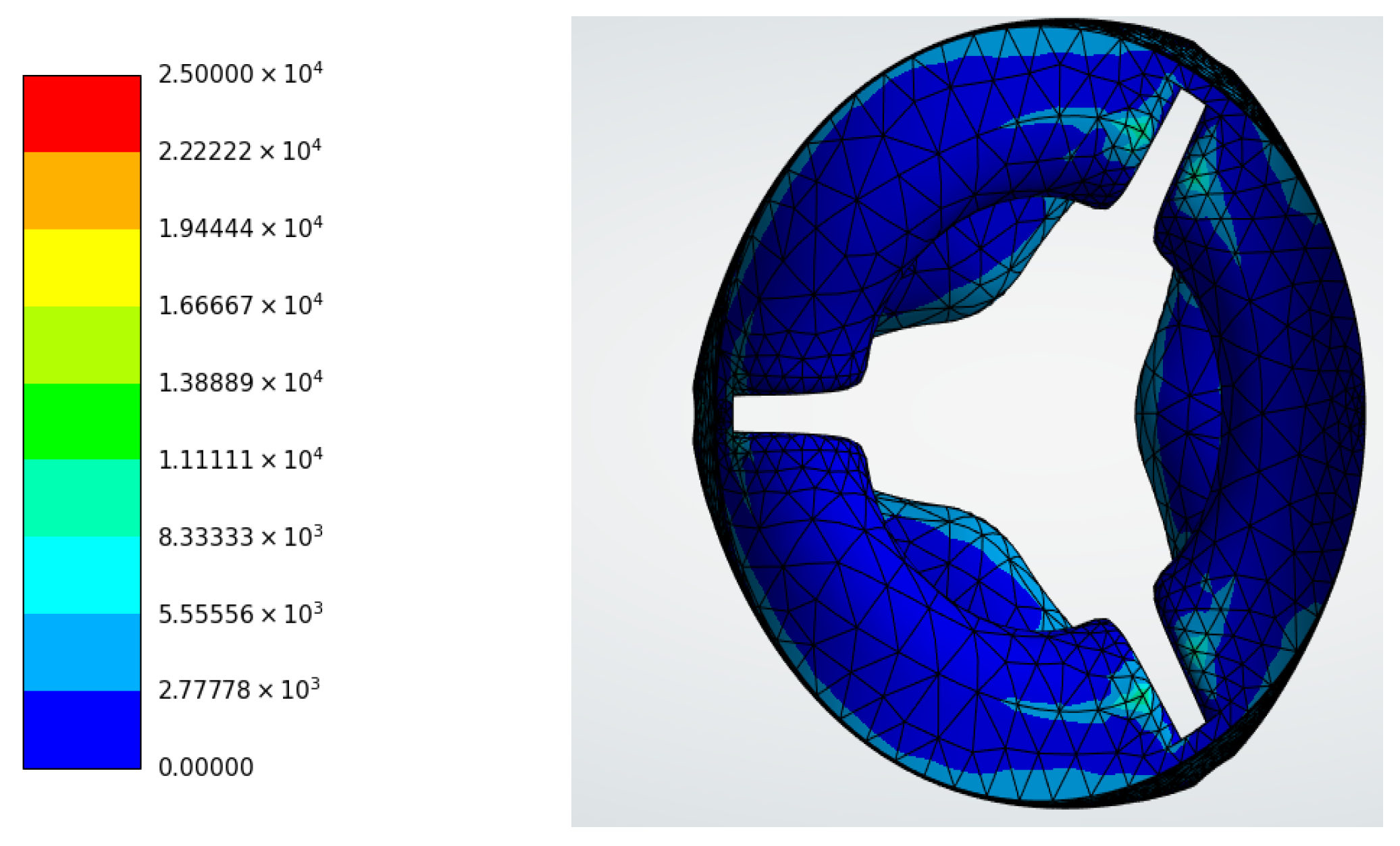
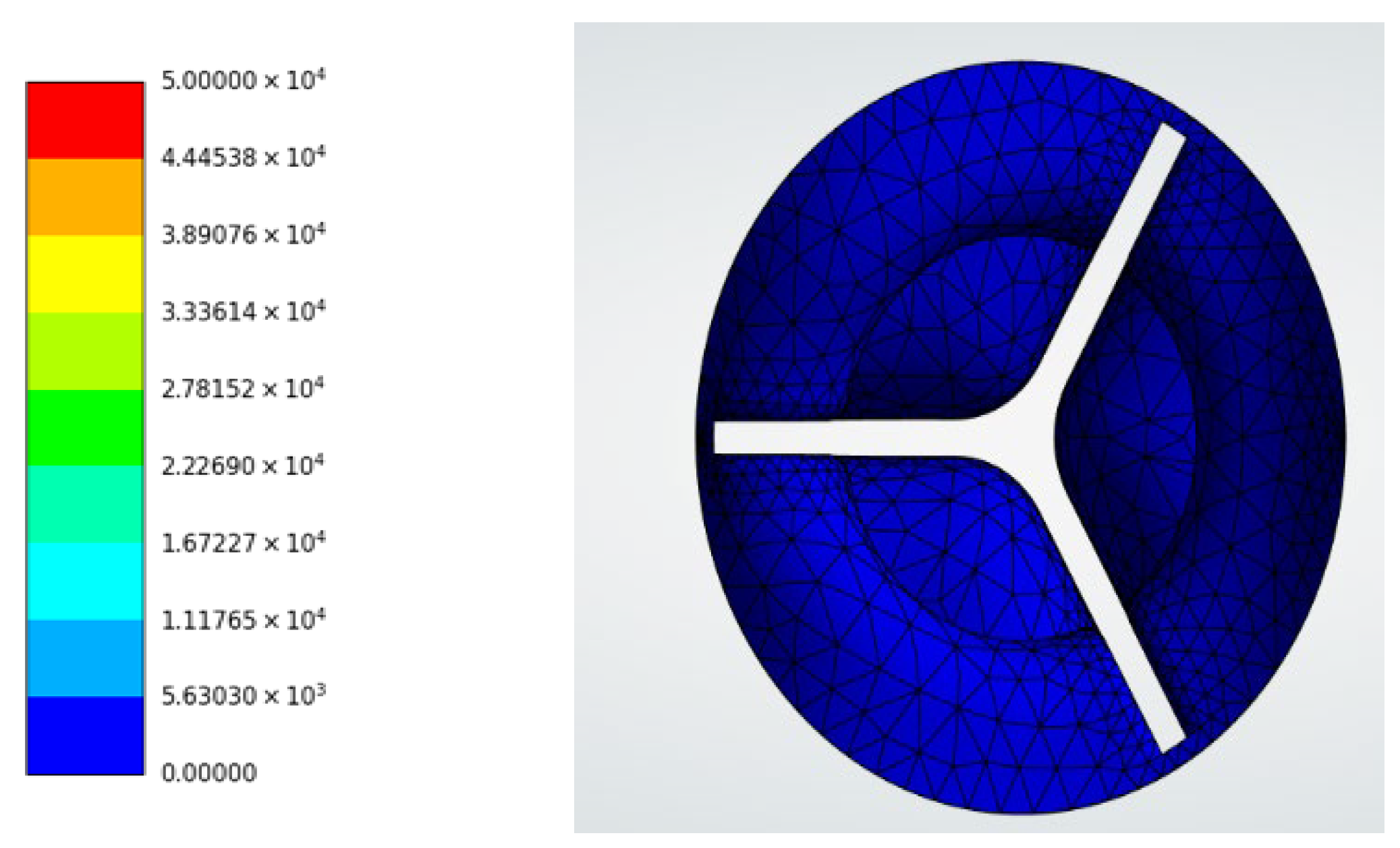
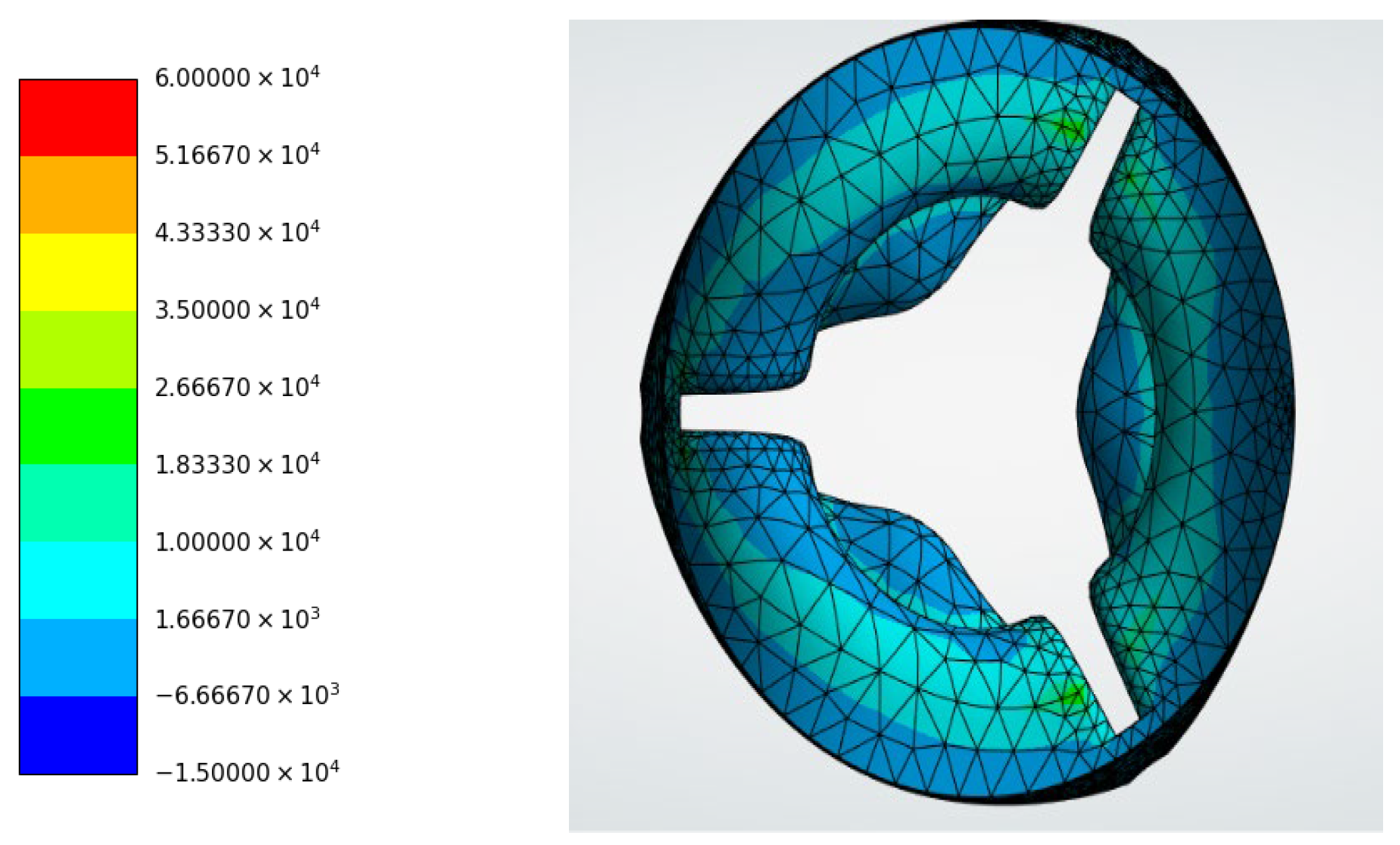
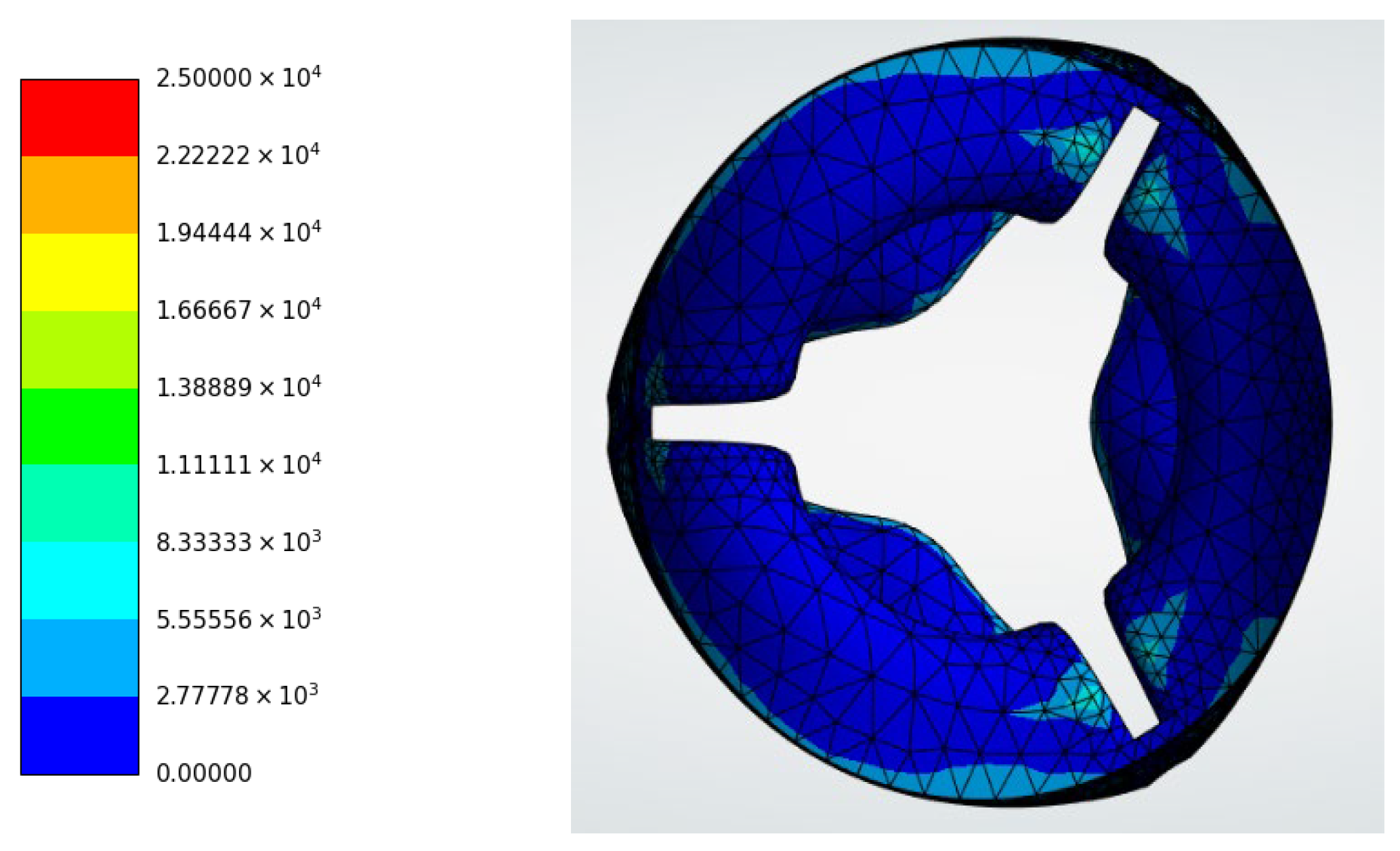
3.1.2. Stress Distribution
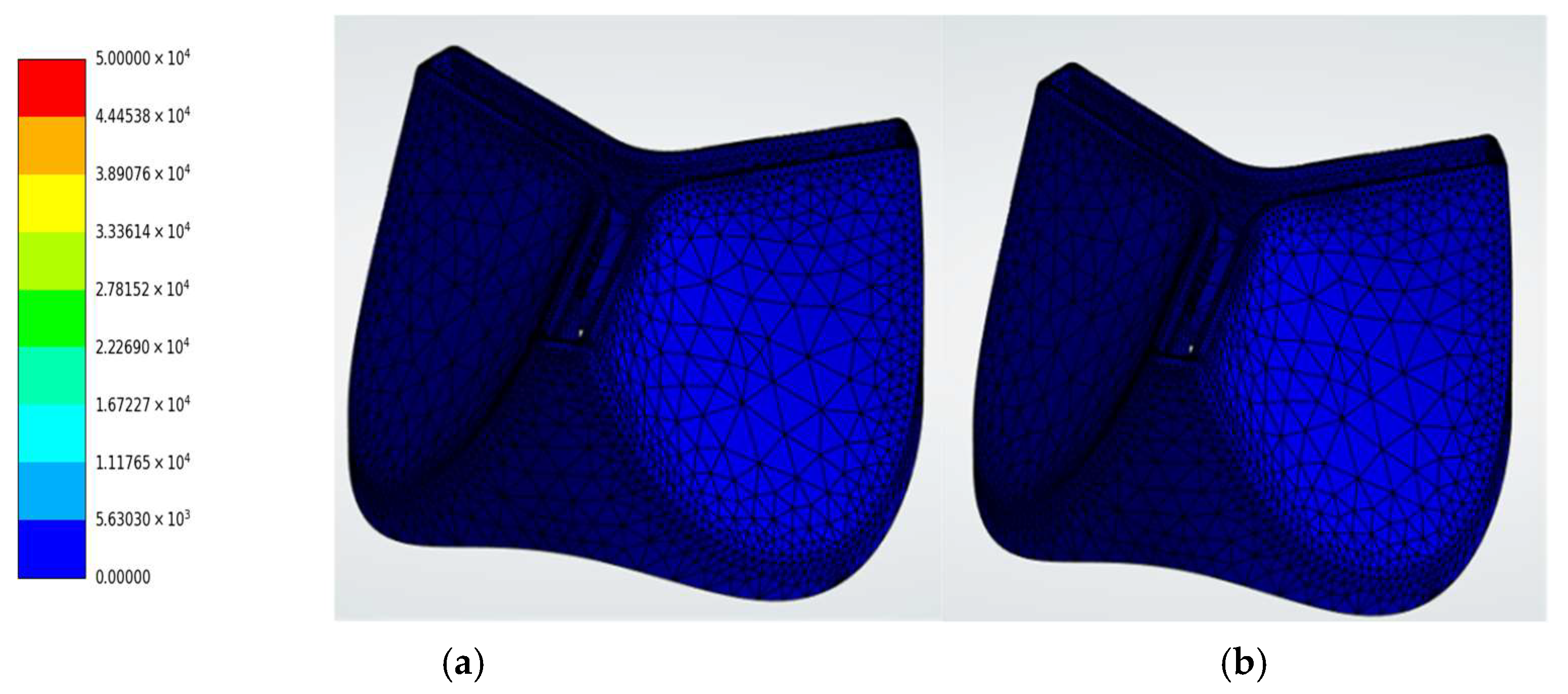
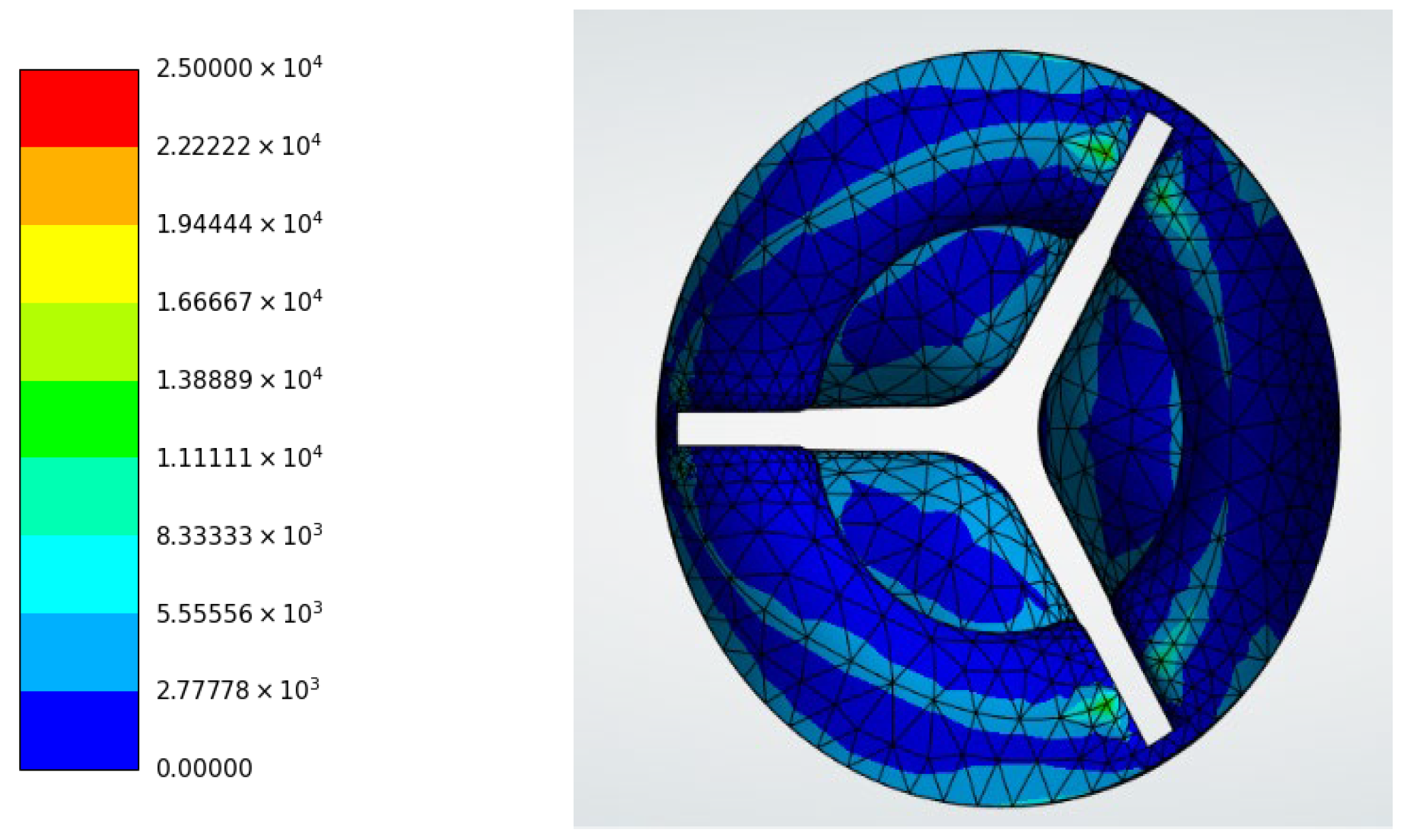
Linear Elastic Materials
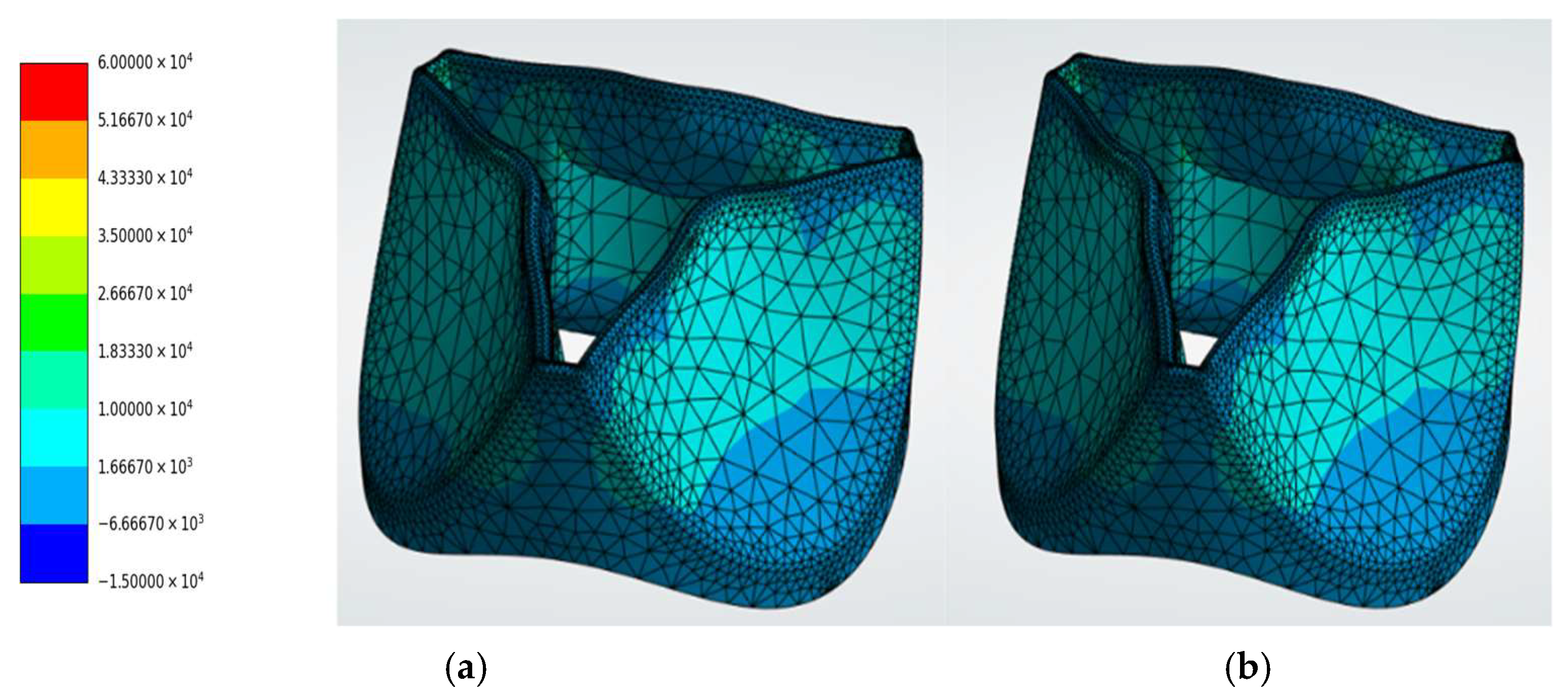
- Viscoelastic Materials
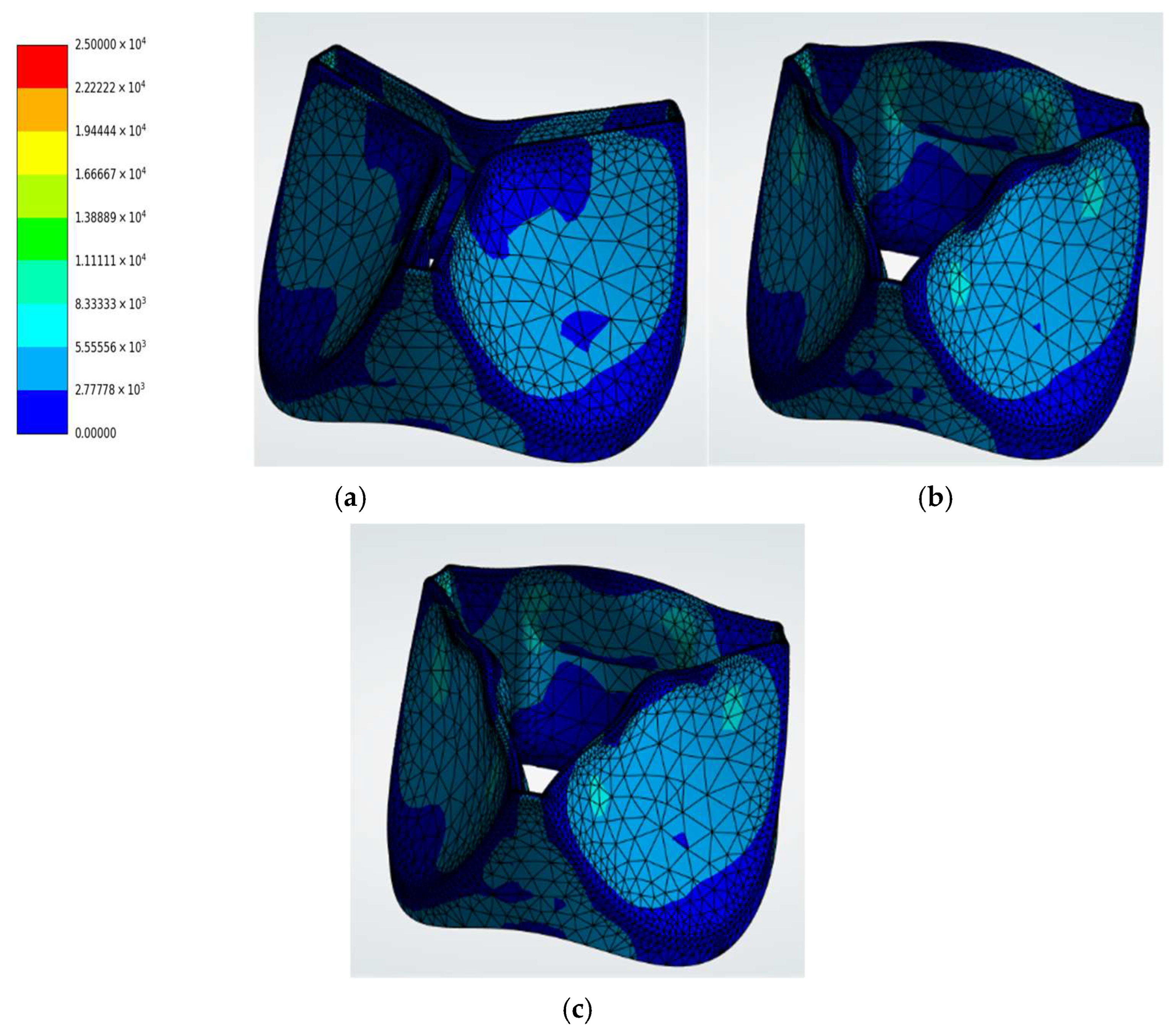
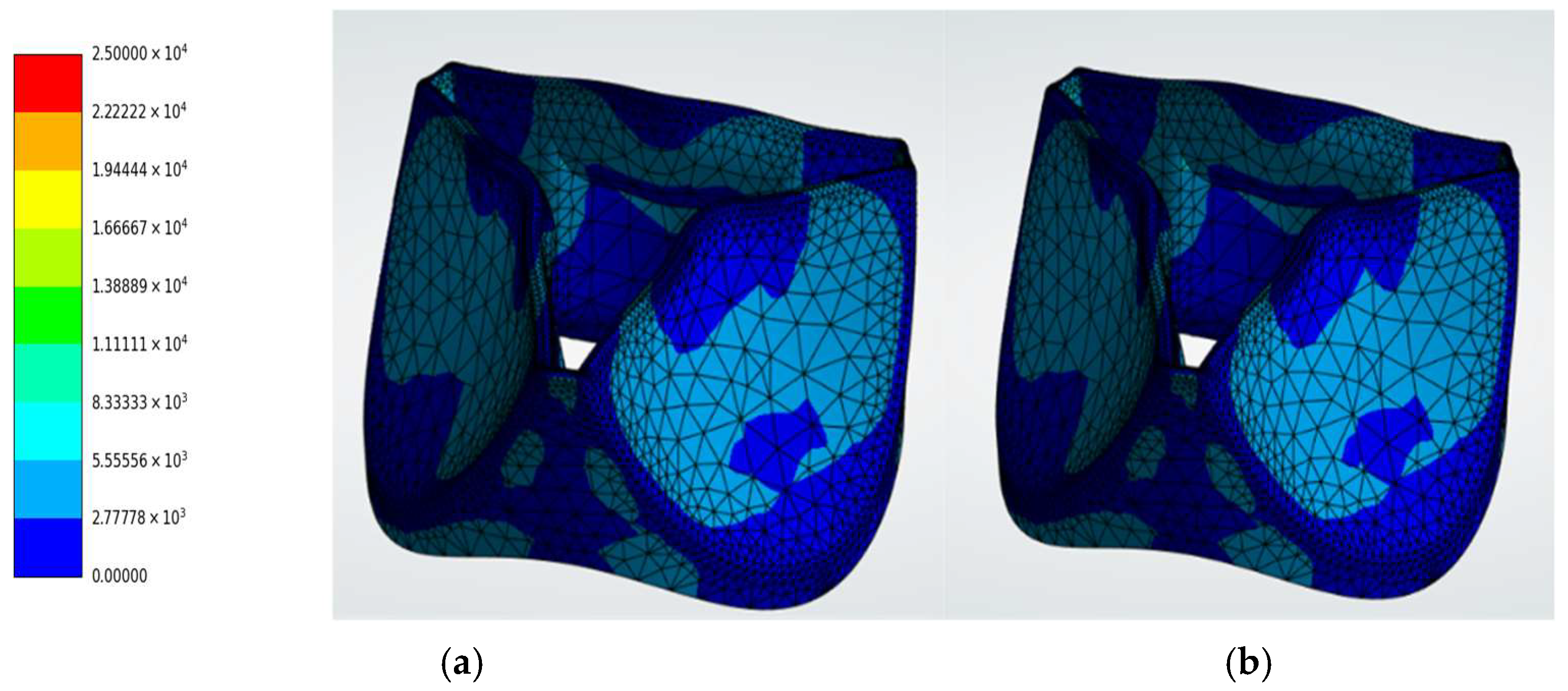
Hyperelastic Materials
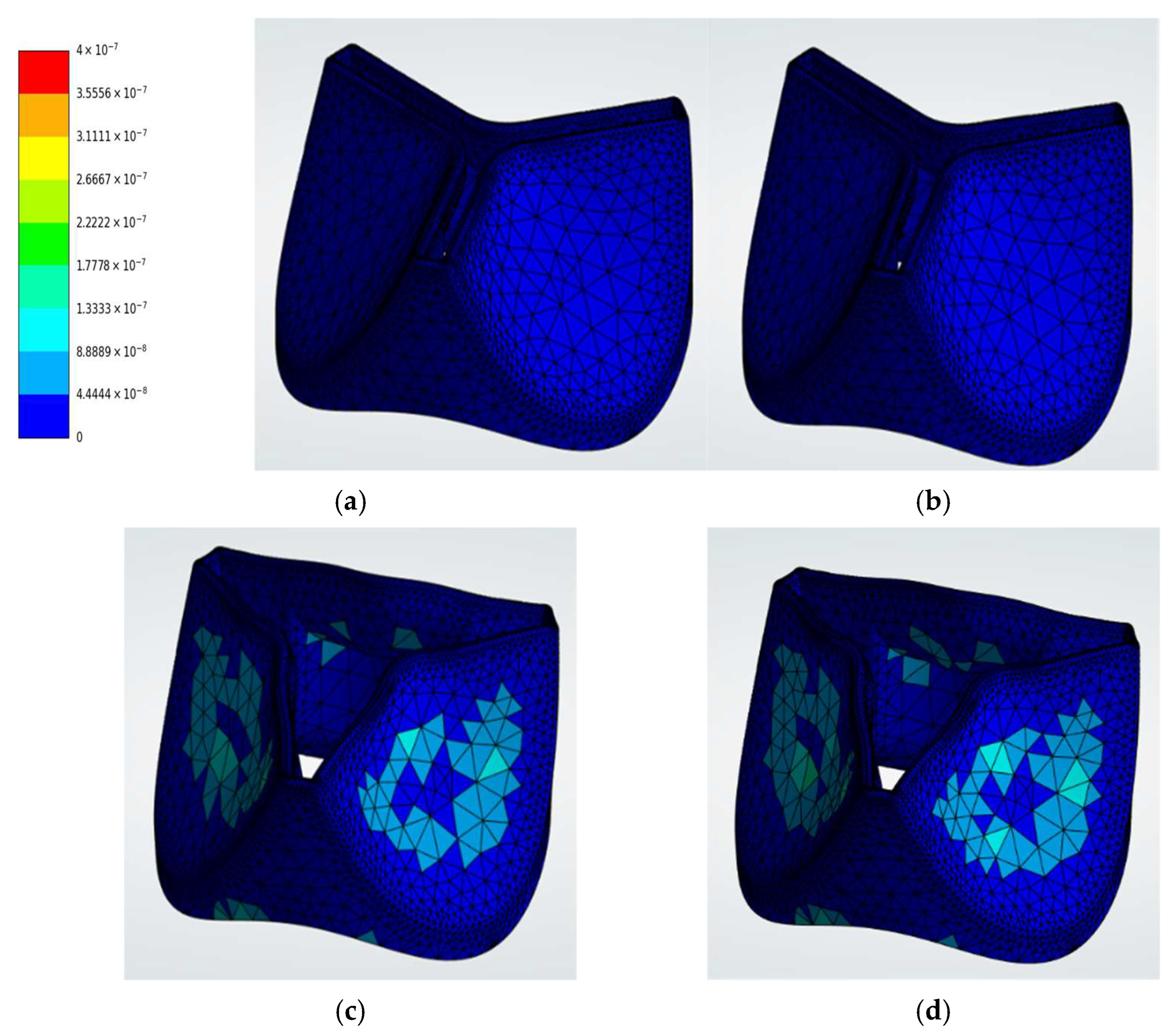
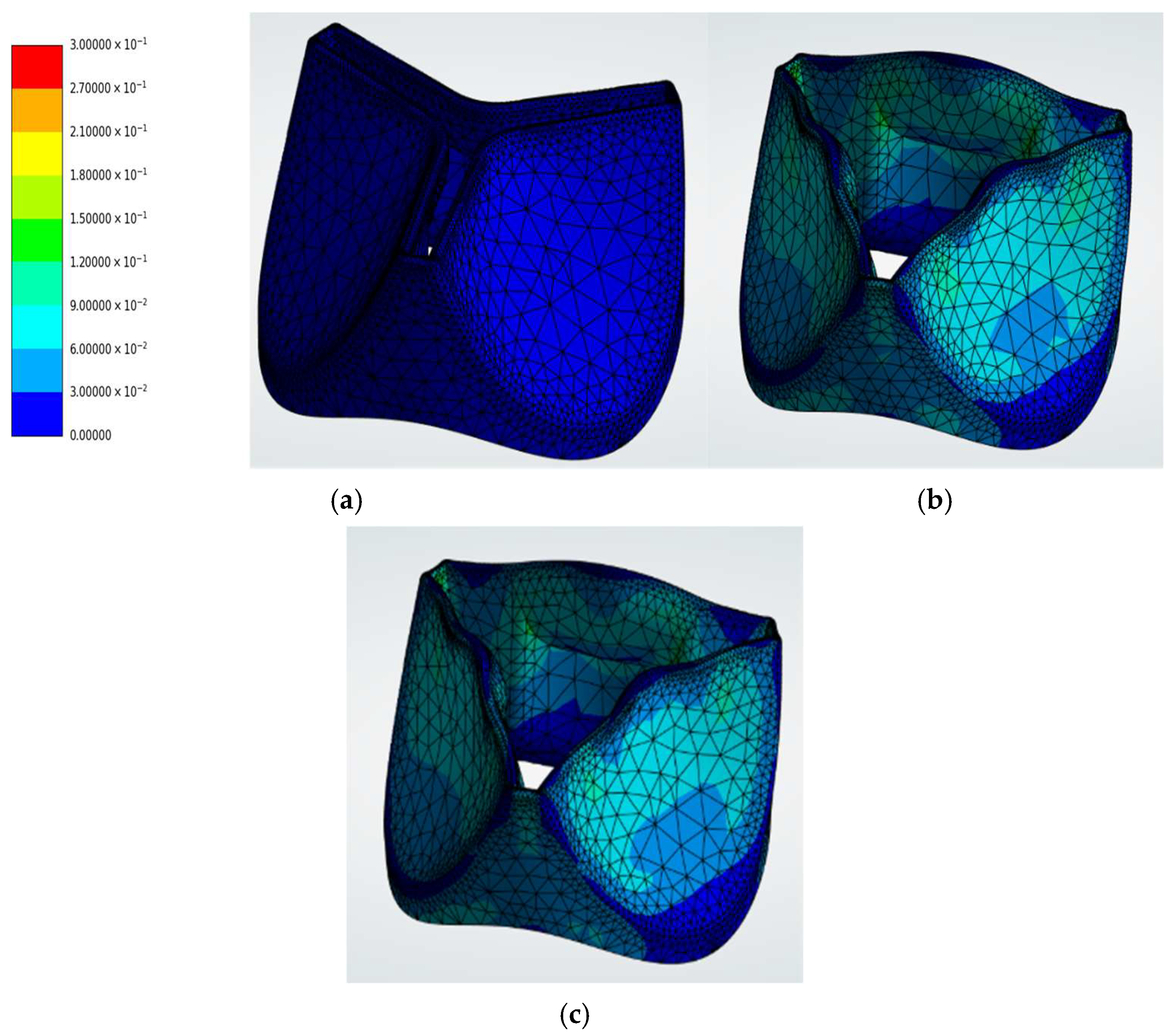
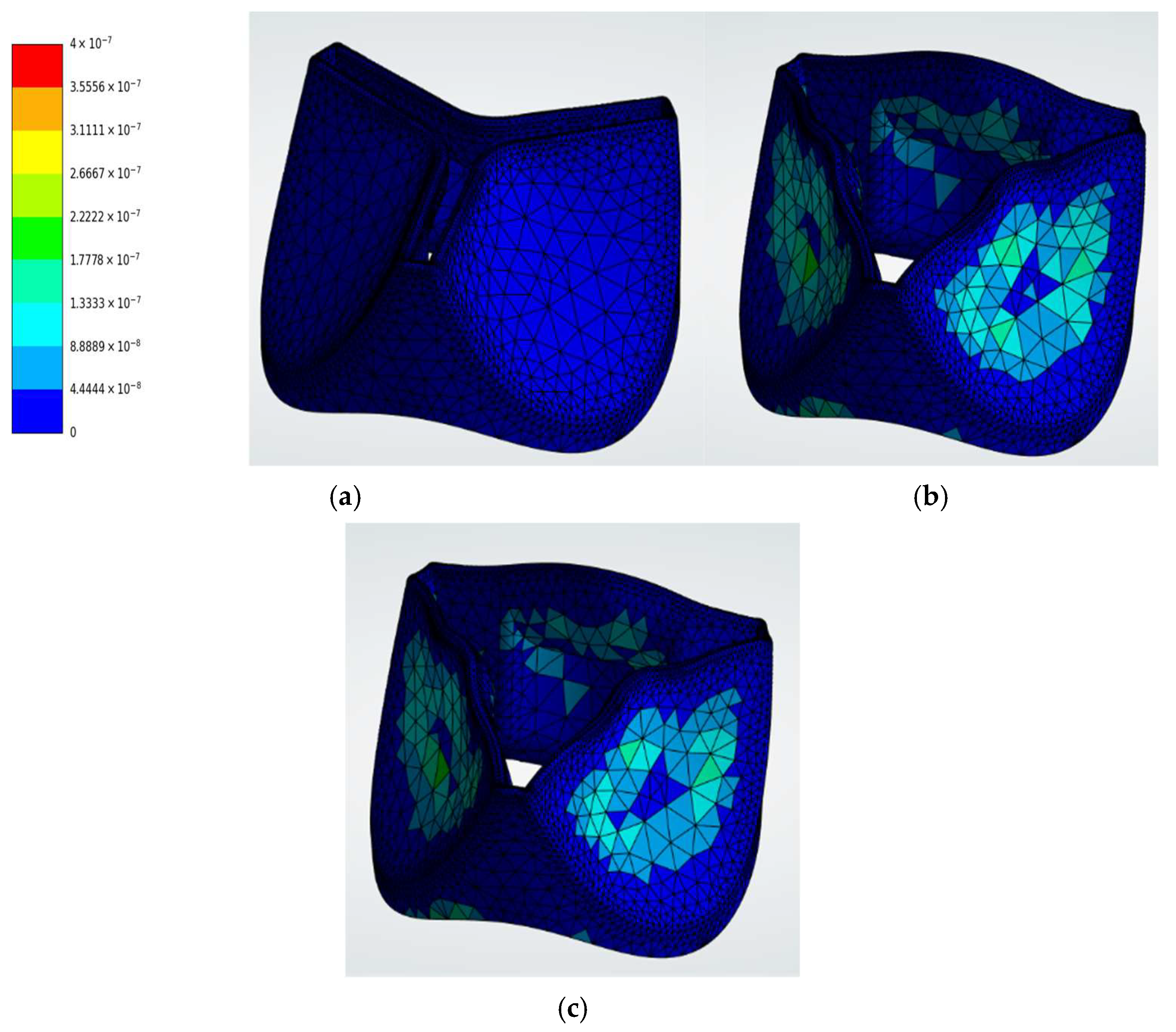
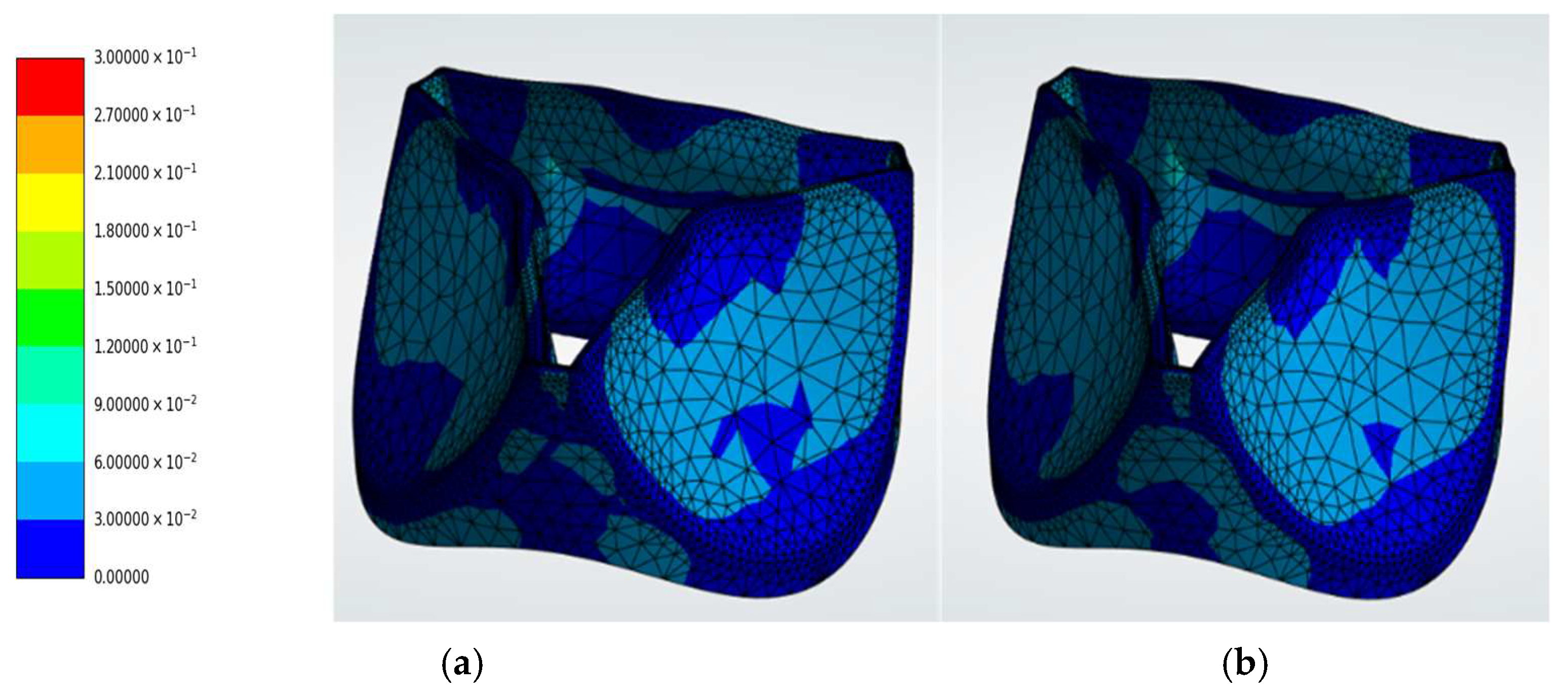
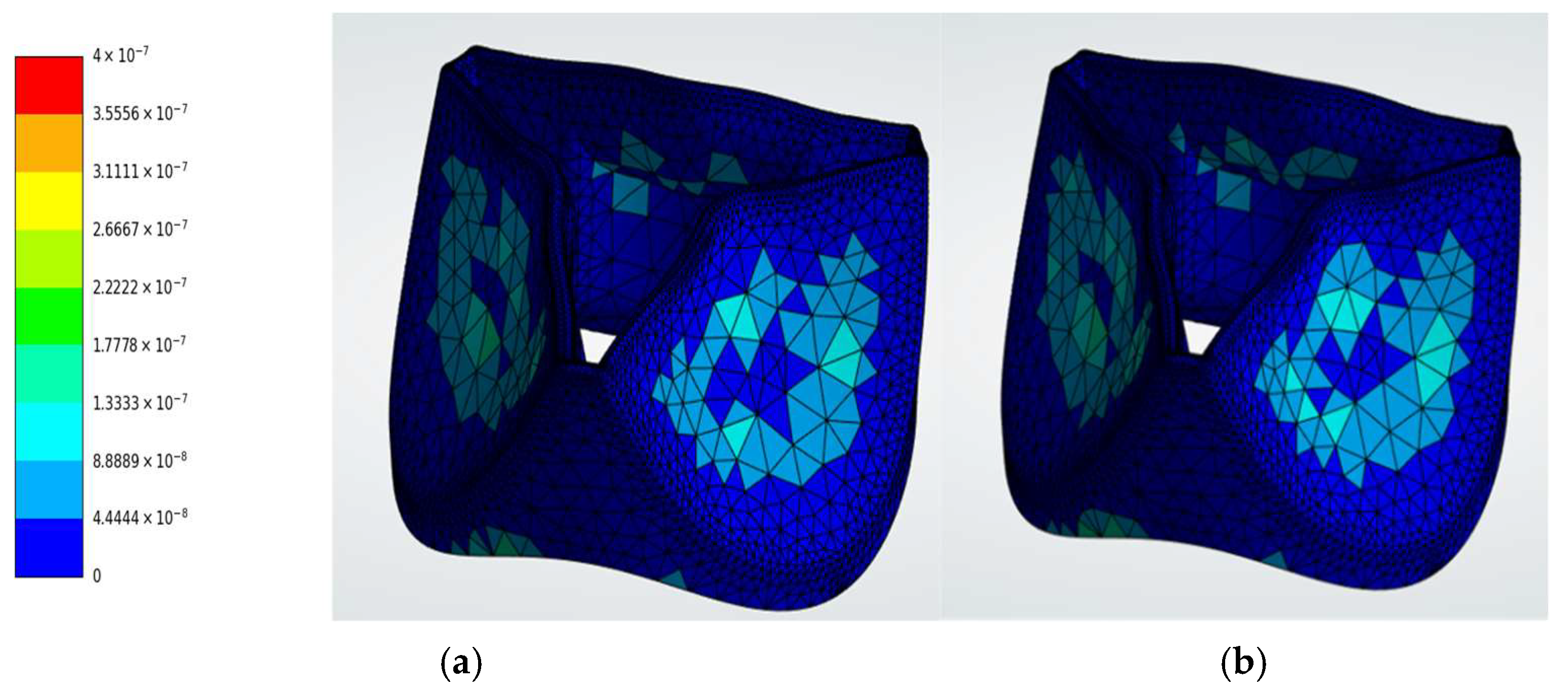
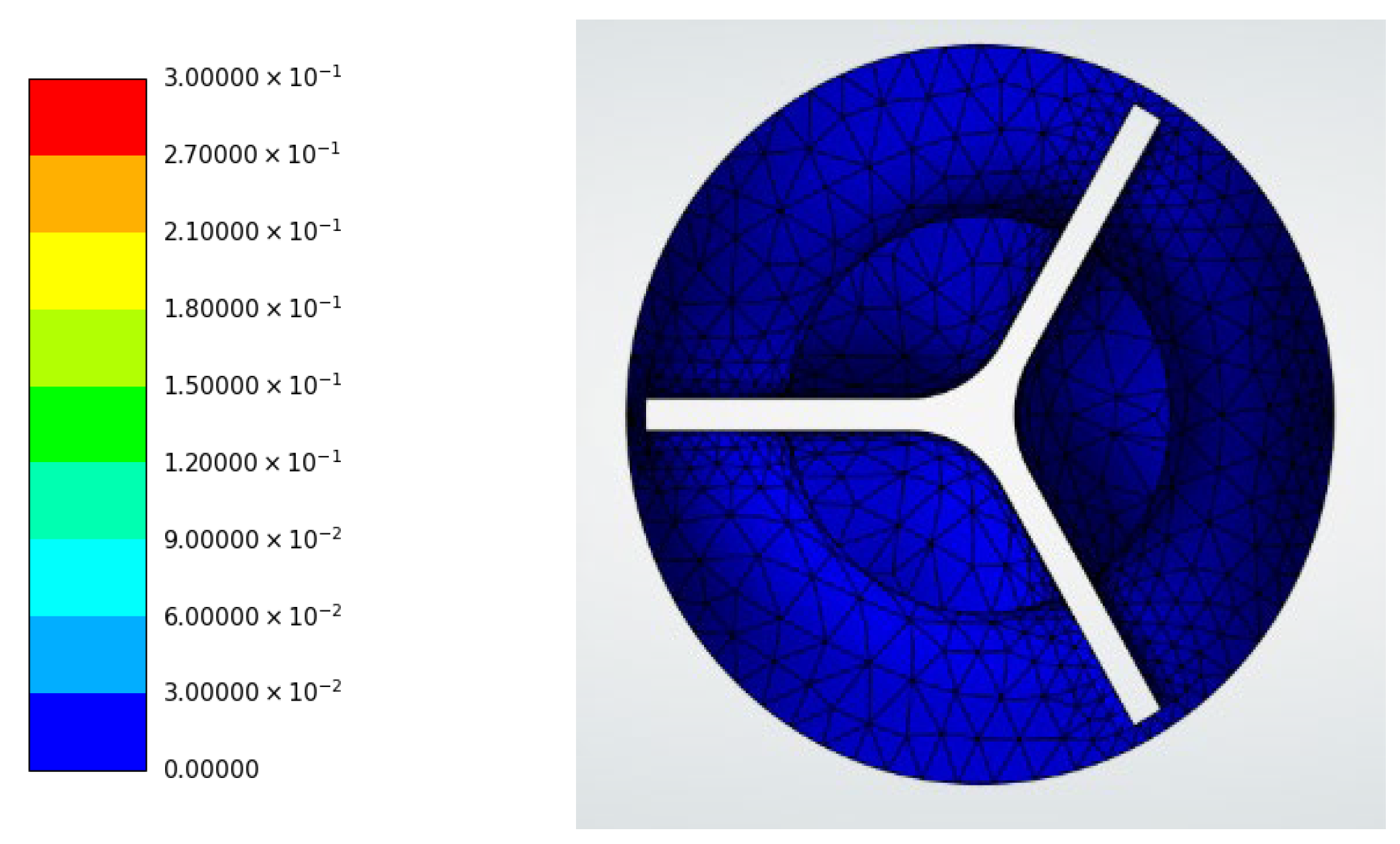
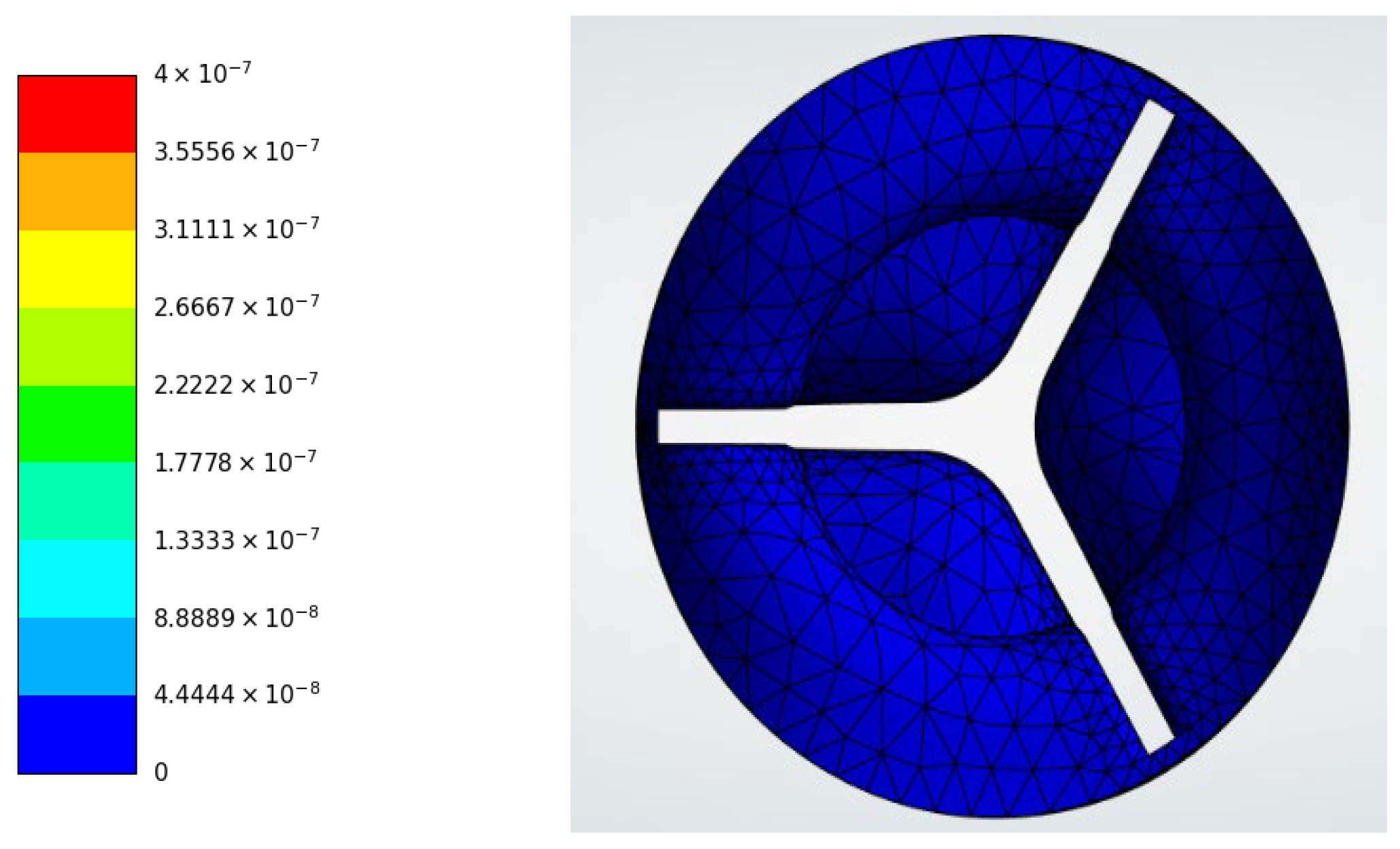
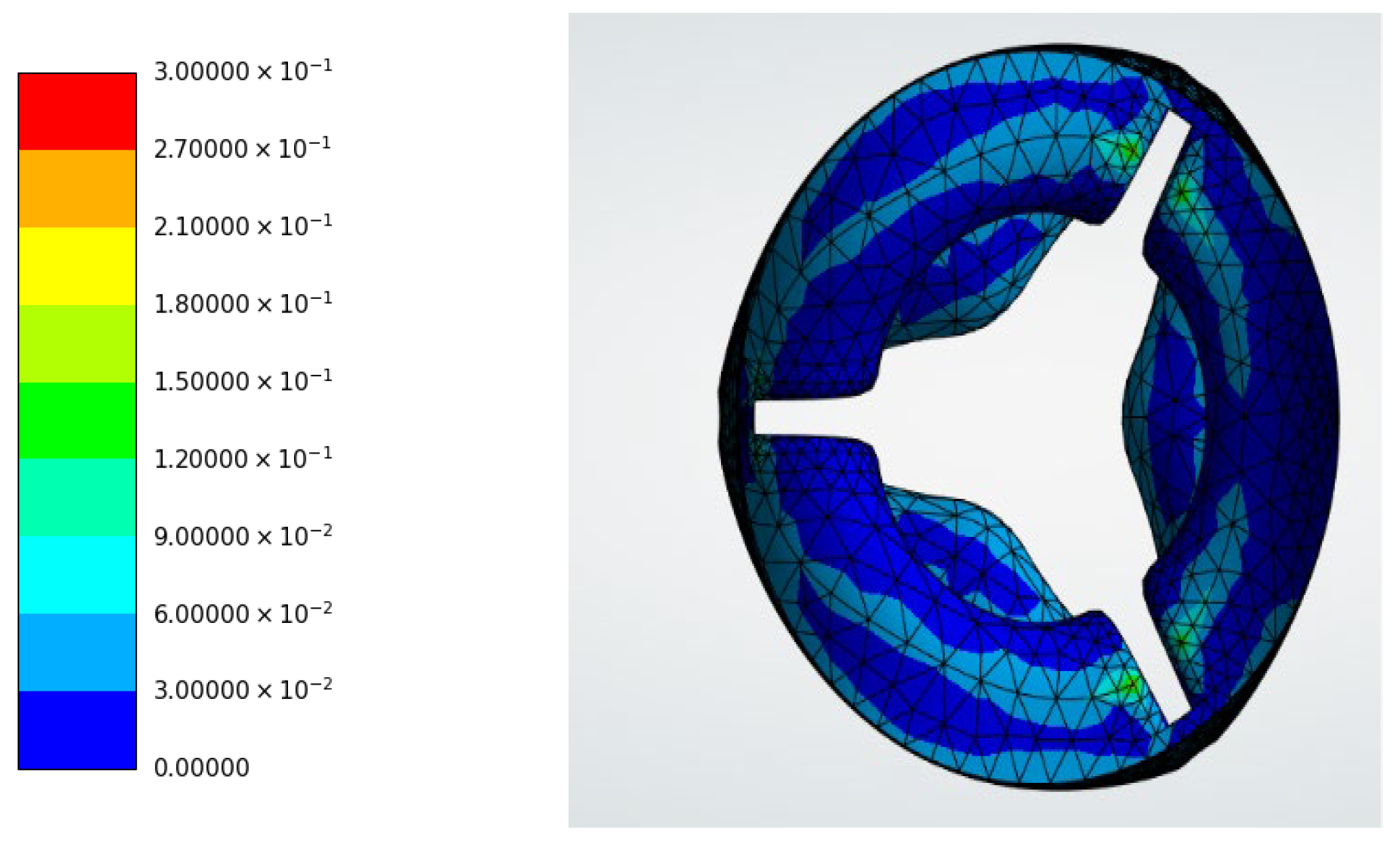
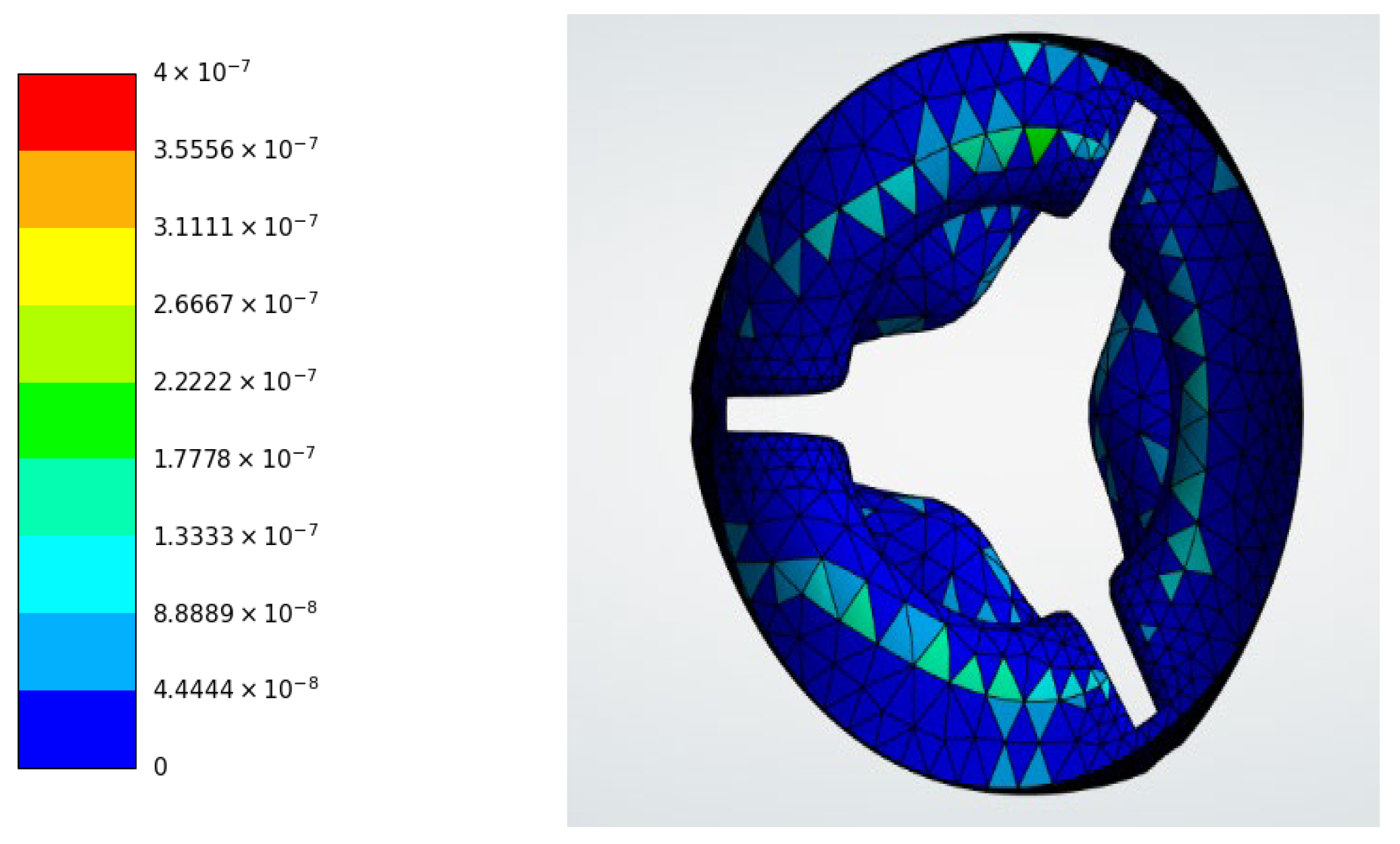
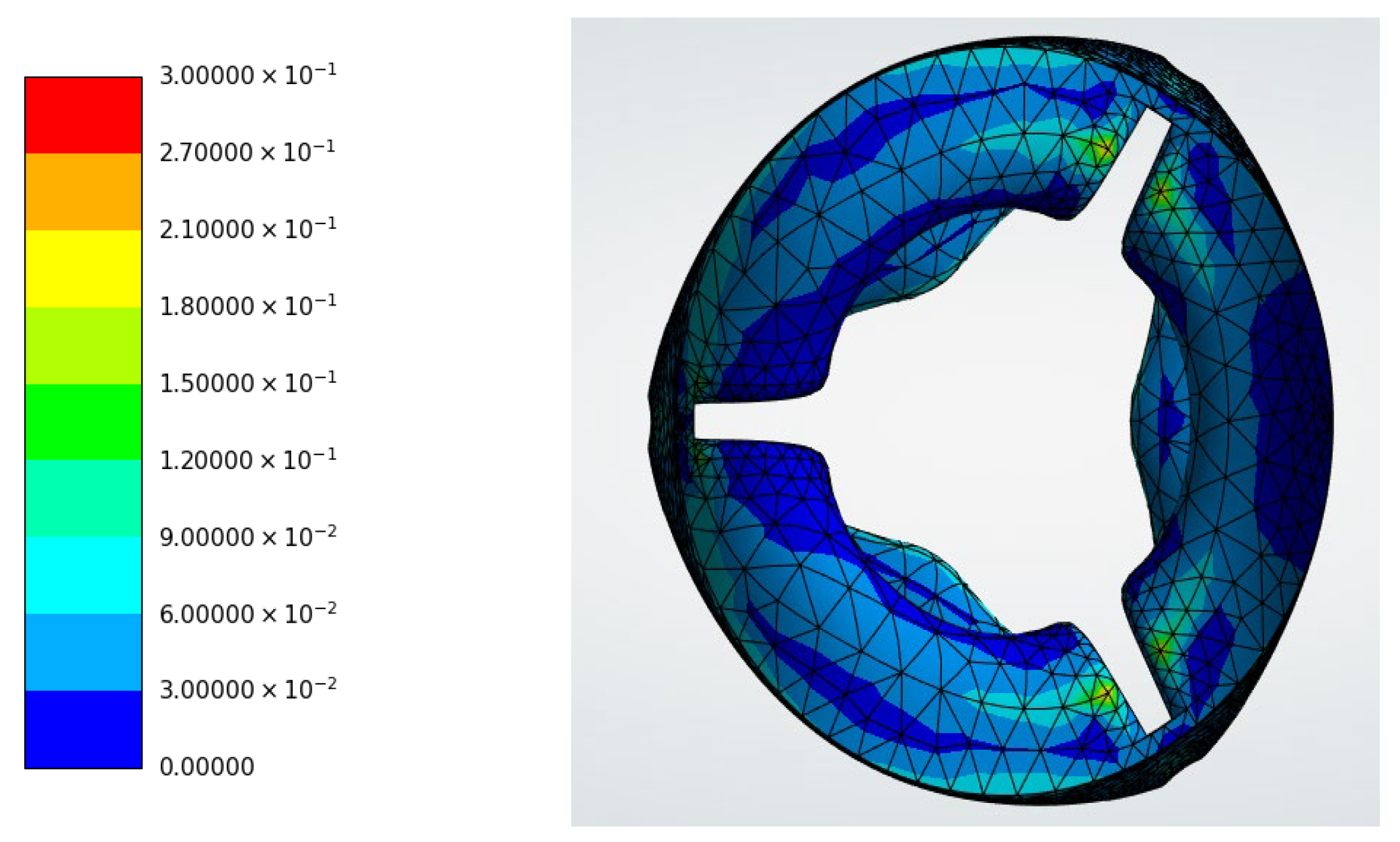
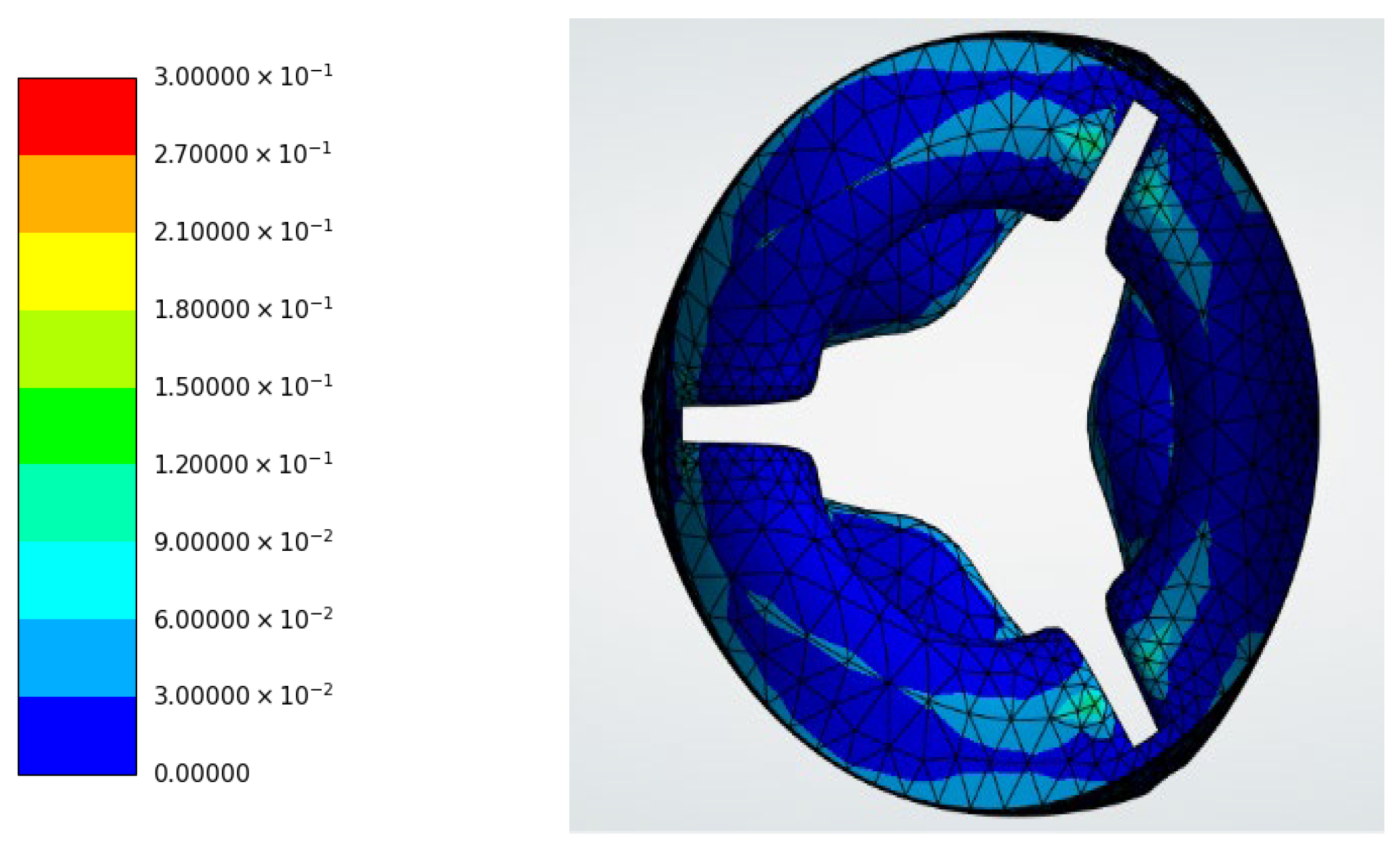
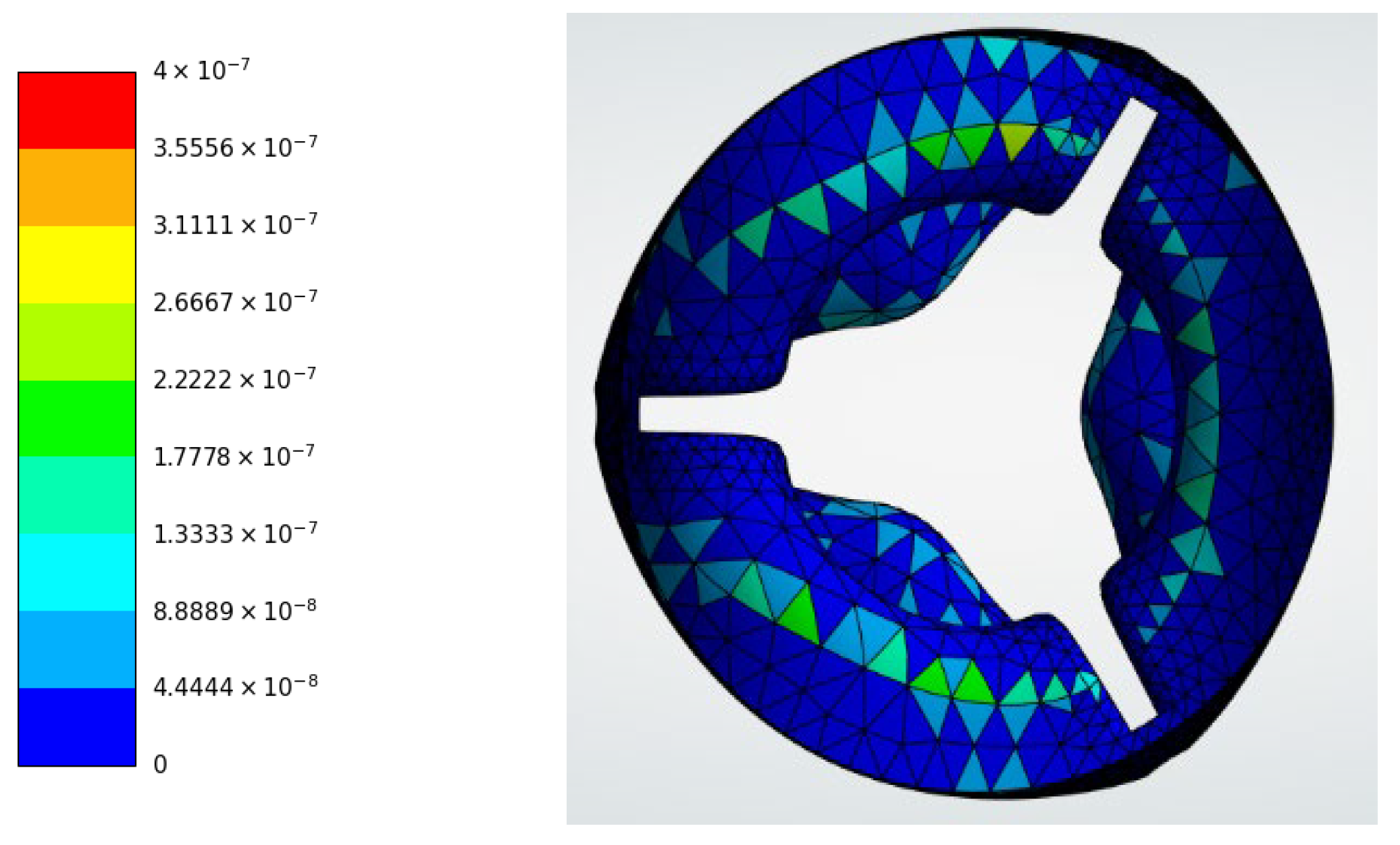
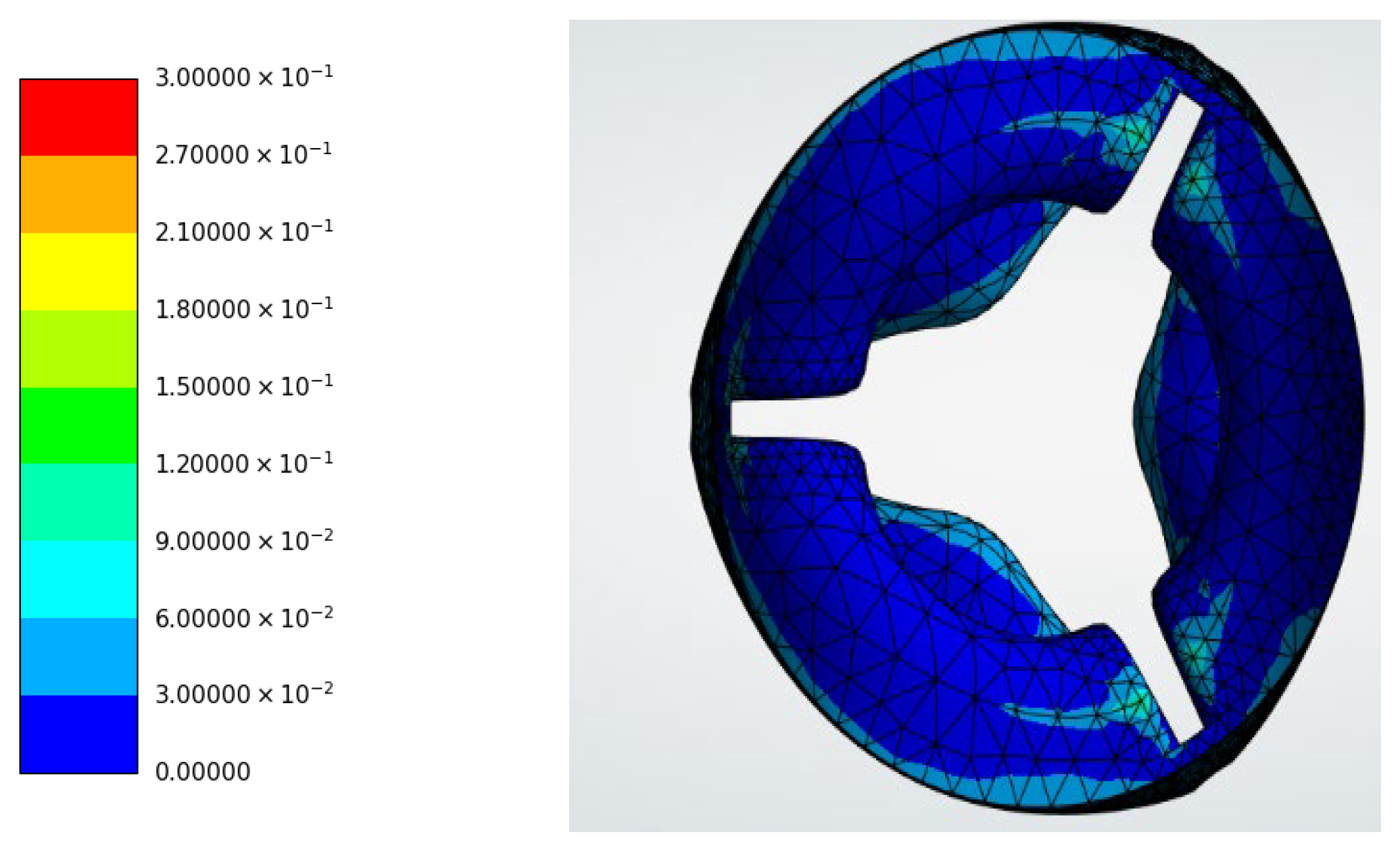
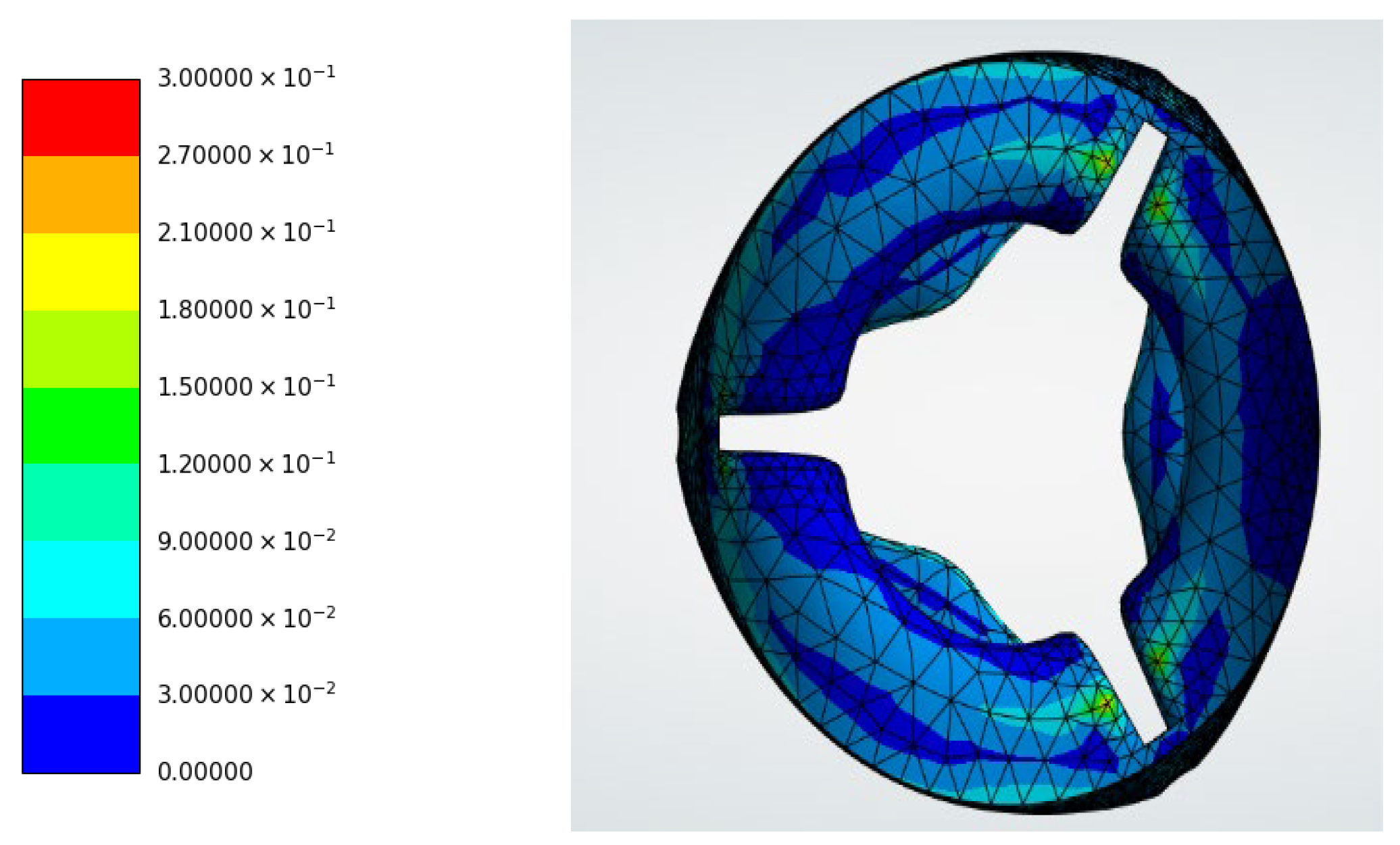
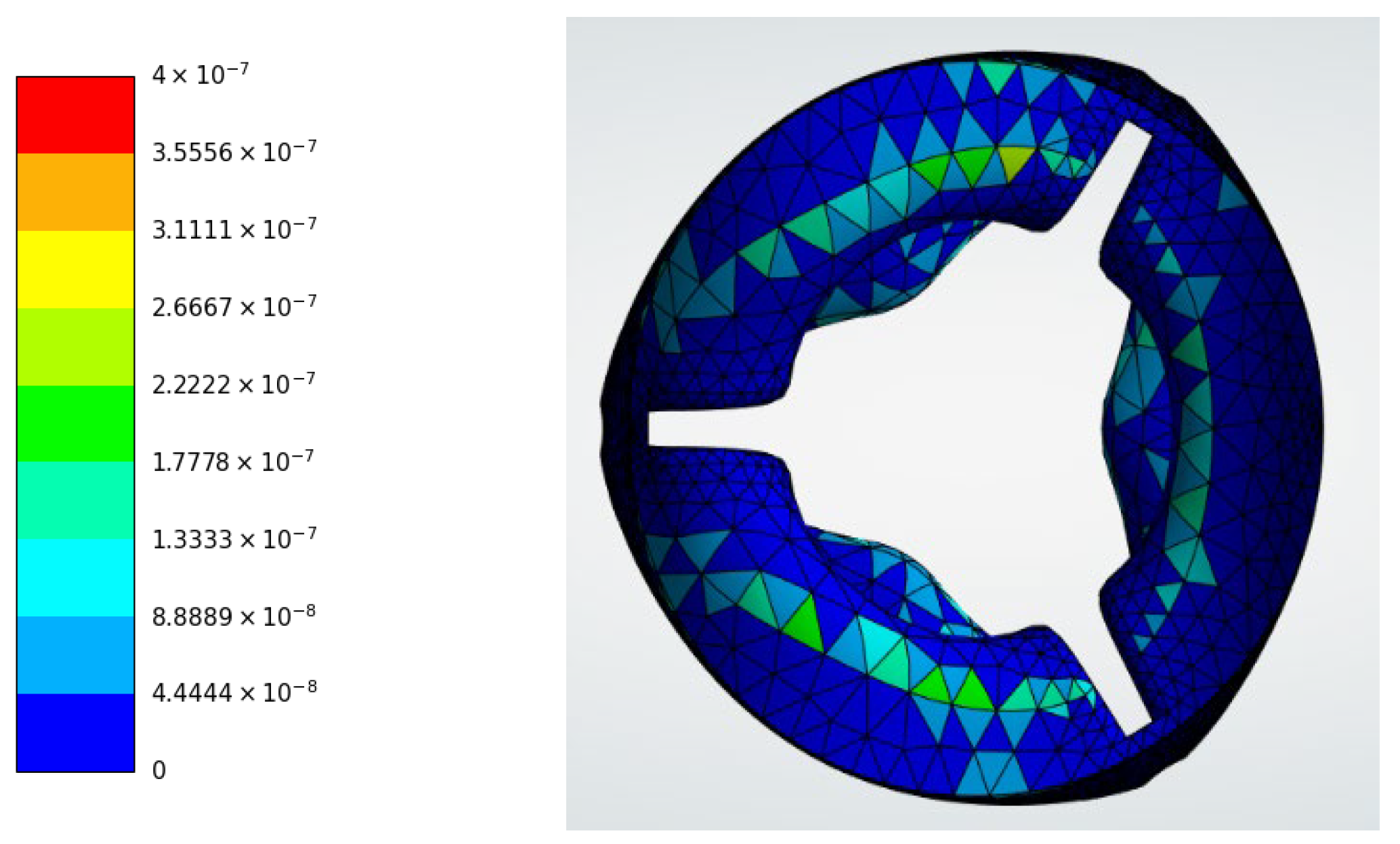
3.1.3. Strain and Energy Distribution
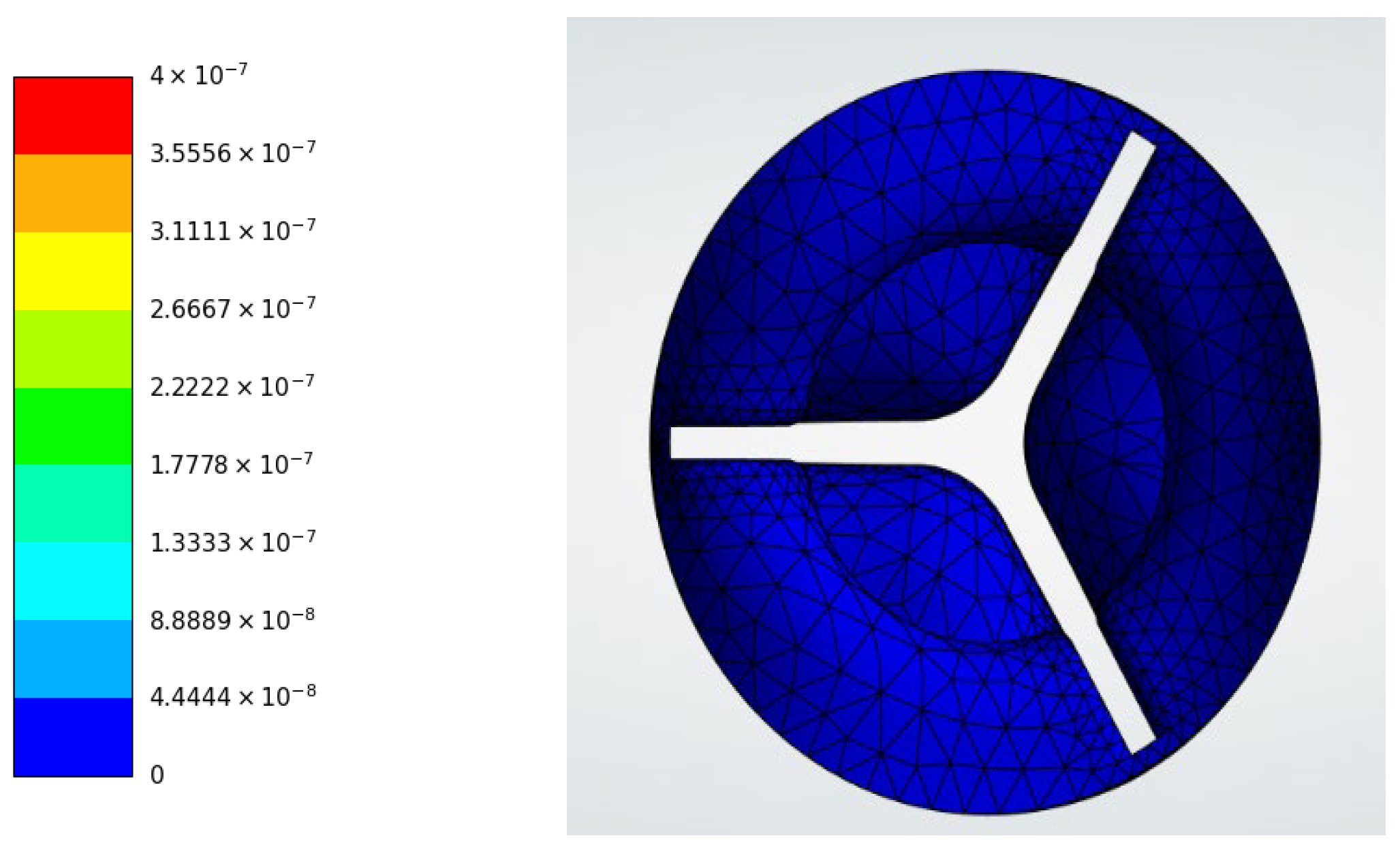
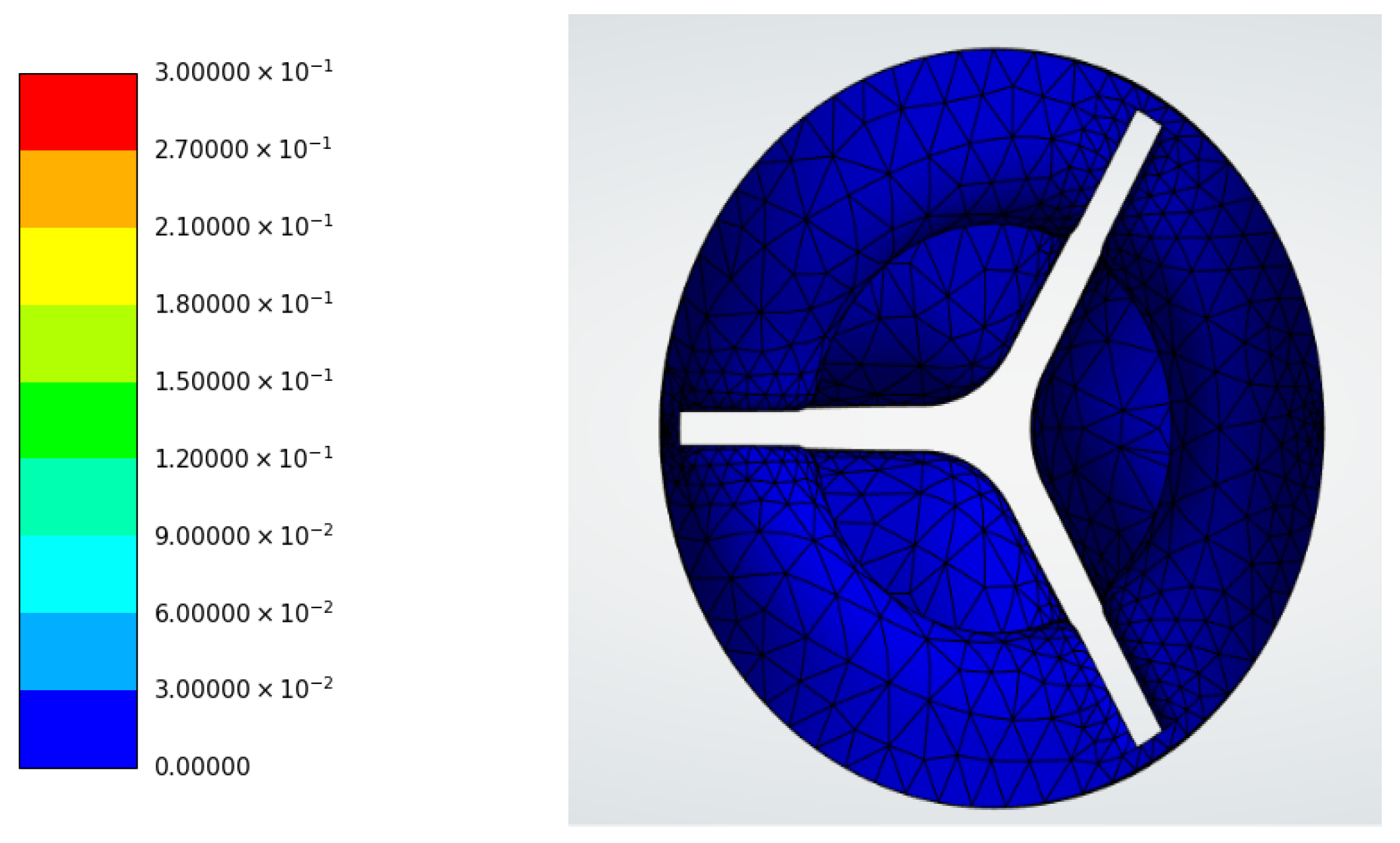
Linear Elastic Materials
Viscoelastic Materials
Hyperelastic Materials
3.1.4. Comparative Assessment of Material and Constitutive Models
Sensitivity of Synthetic Materials (PU vs. PyC)
Sensitivity of Biological Tissues (Porcine vs. Bovine)
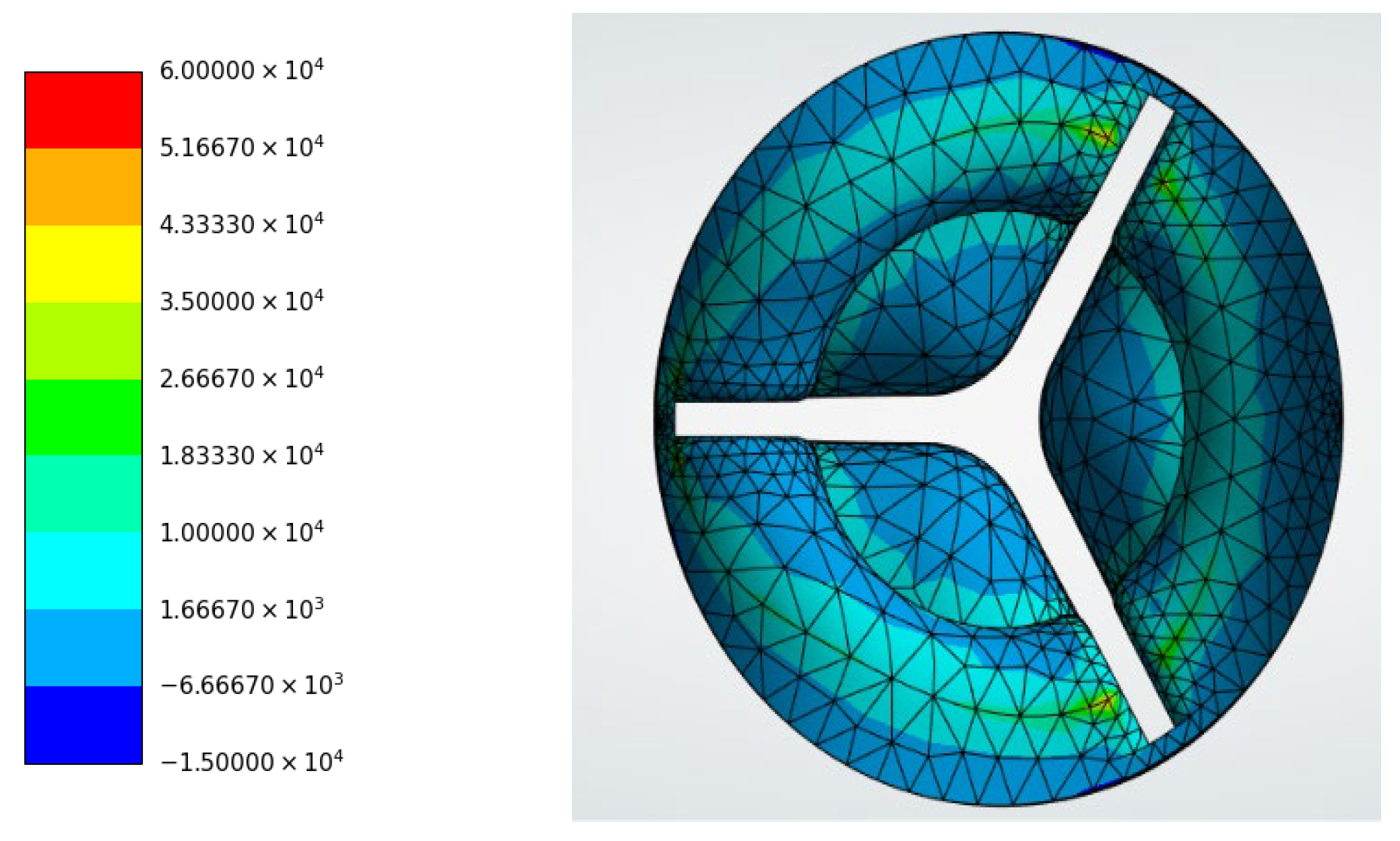
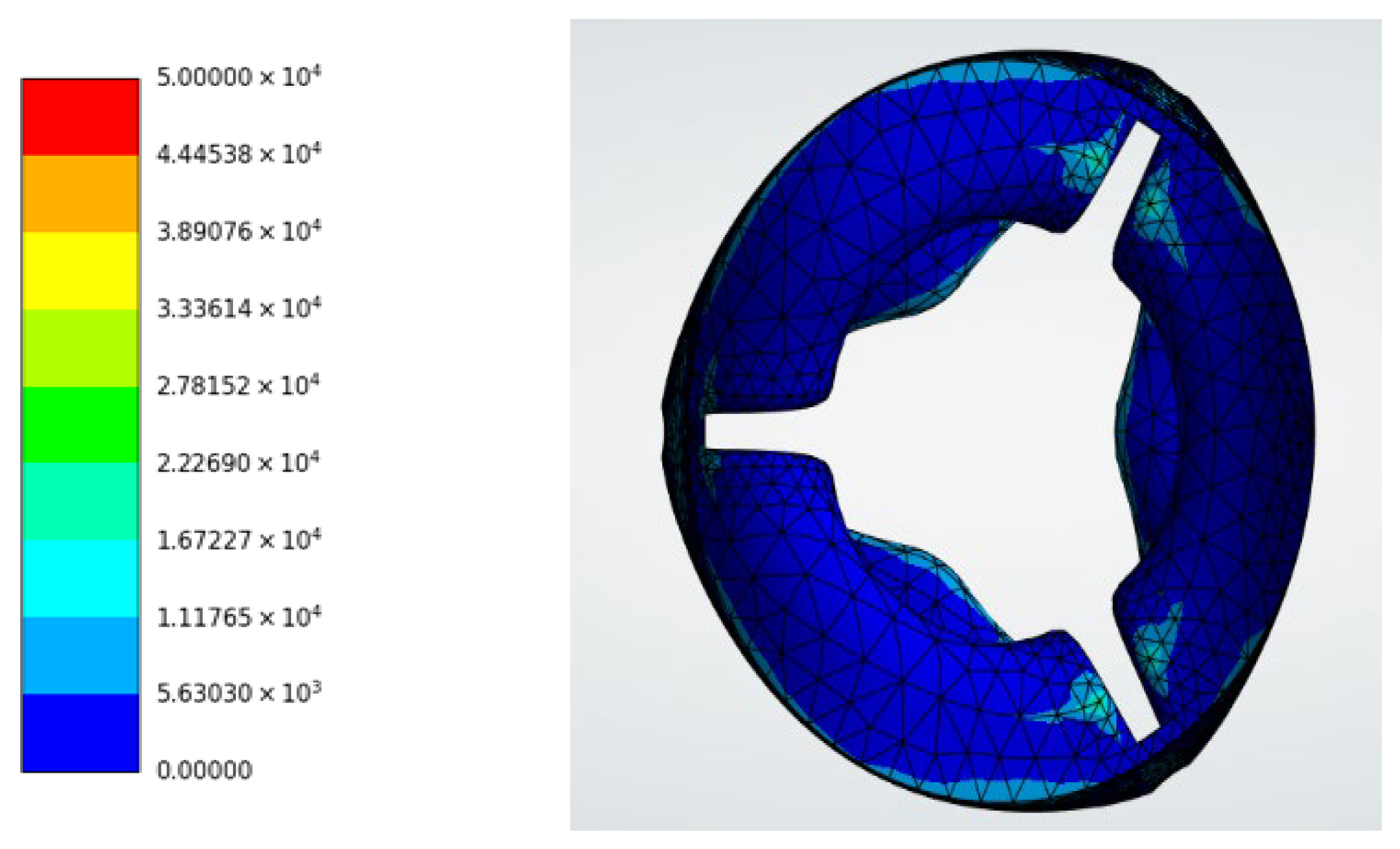
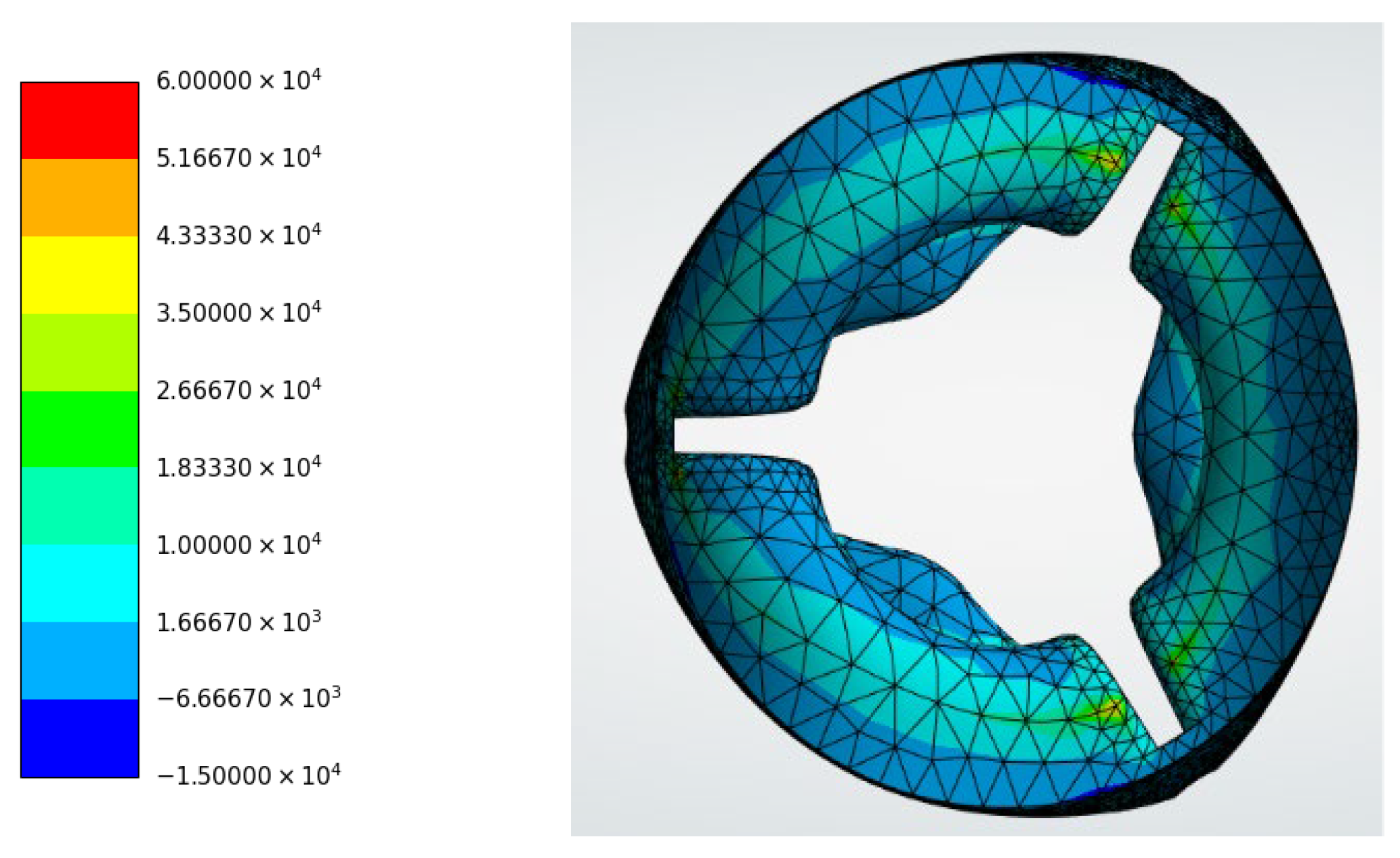
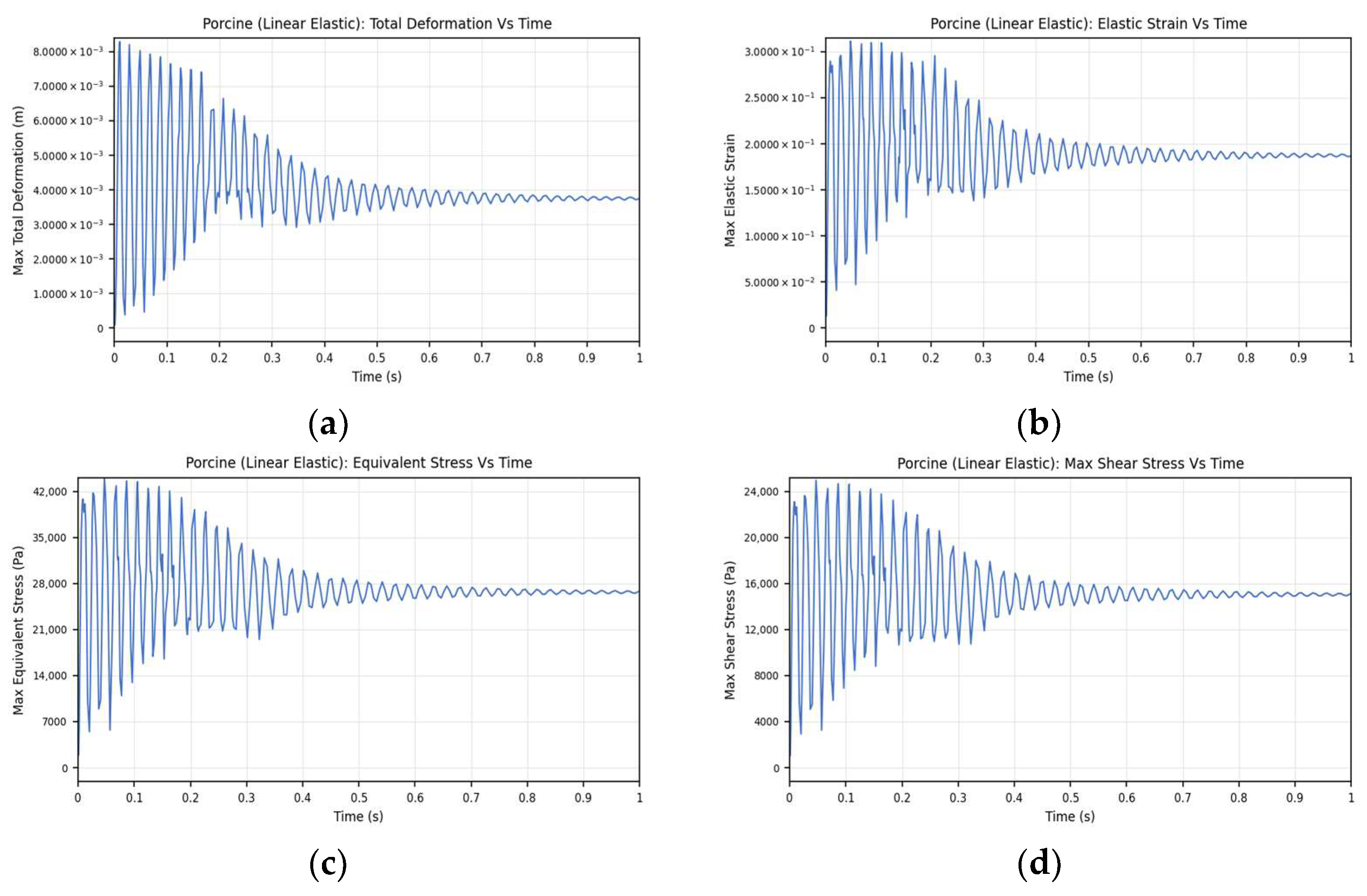
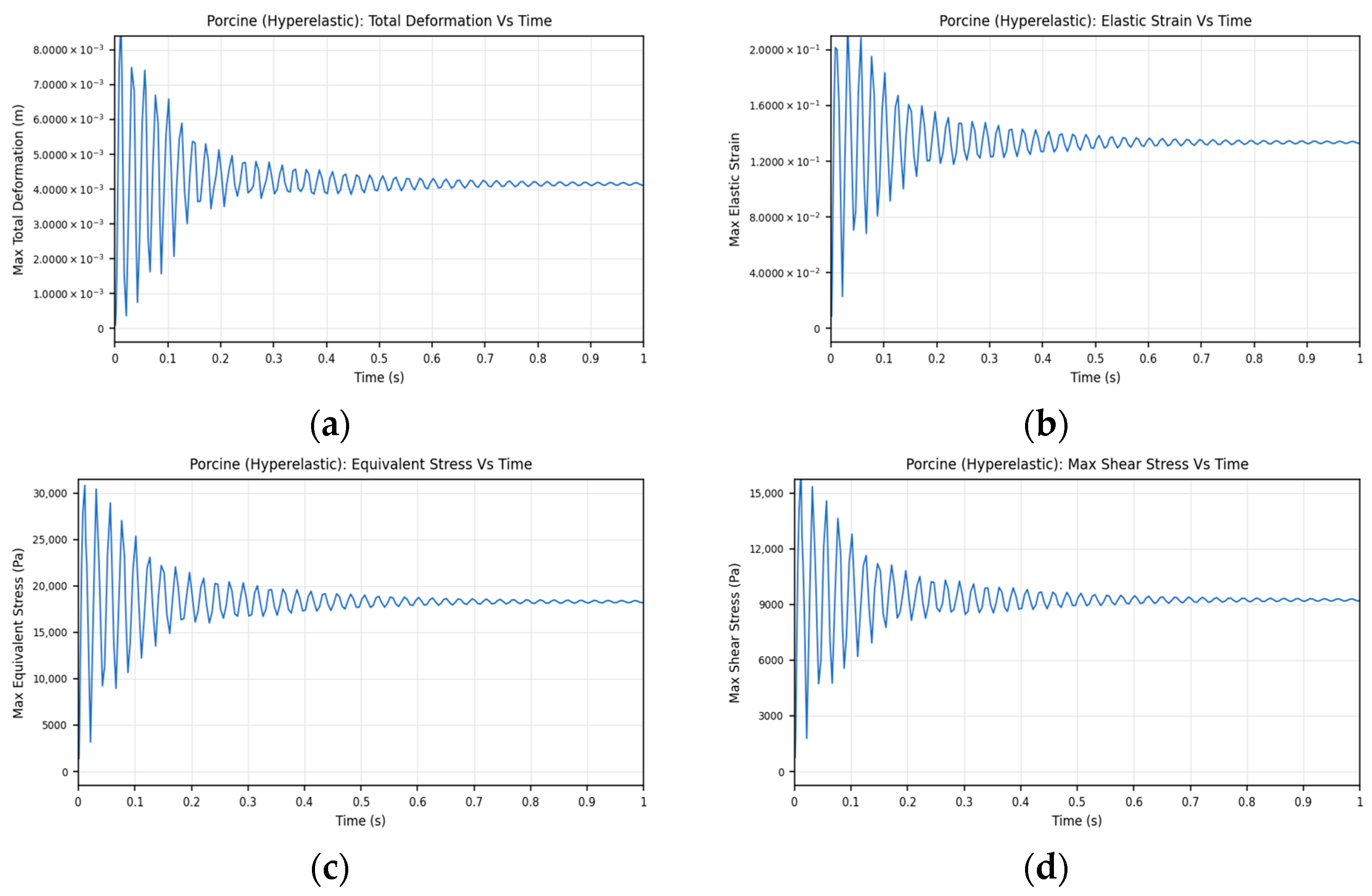
- Linear vs. Hyperelastic: For porcine tissue, the hyperelastic Mooney–Rivlin model predicted an approximately 48% lower peak stress compared with the linear elastic baseline (1.3951 × 10⁴ Pa vs. 2.6842 × 10⁴ Pa). This supports the interpretation that the nonlinear ‘toe-region’ of the hyperelastic response allows more compliant initial deformation and improved stress redistribution across the leaflet surface, consistent with previous tissue-mechanics studies [38,39,40].
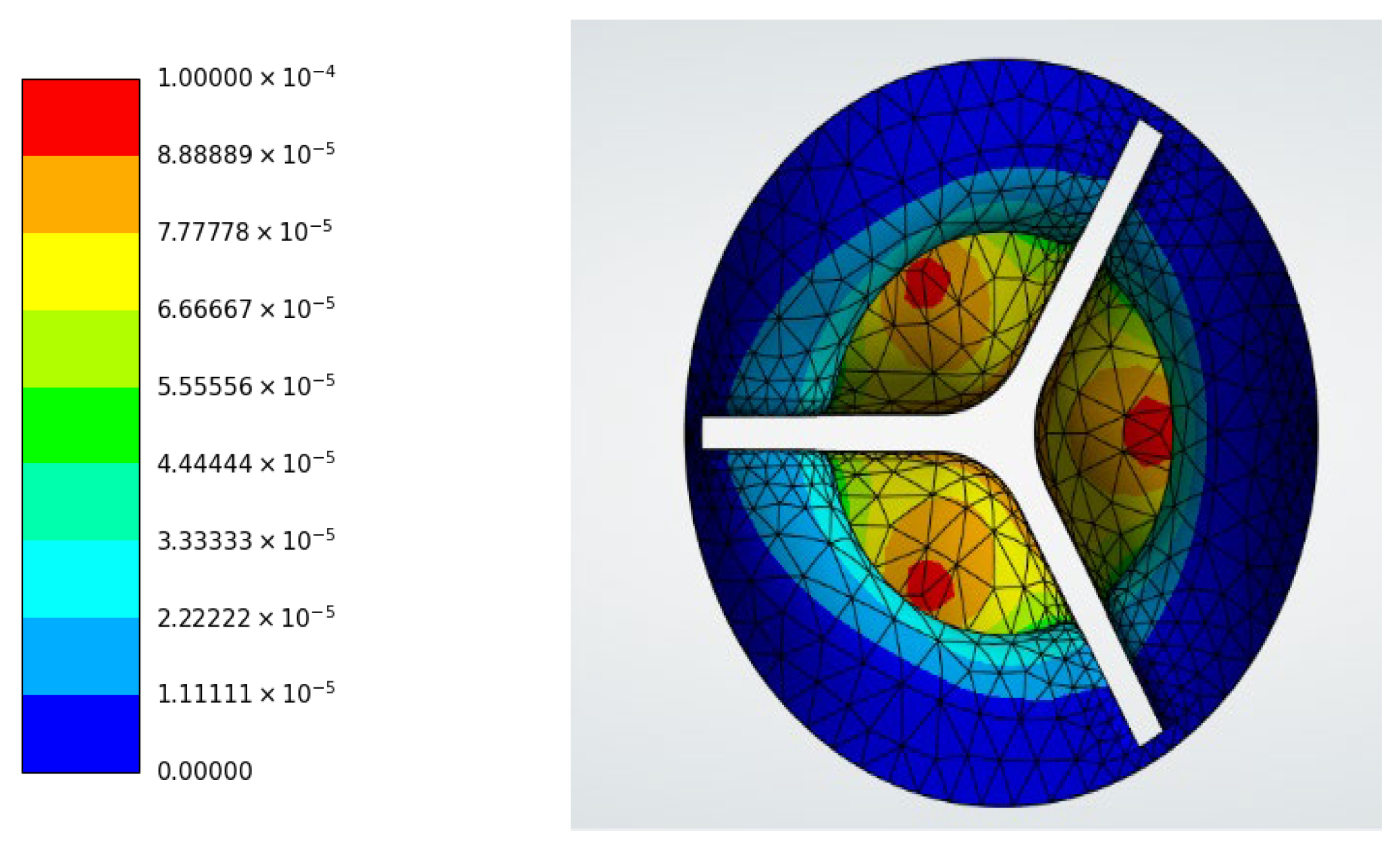
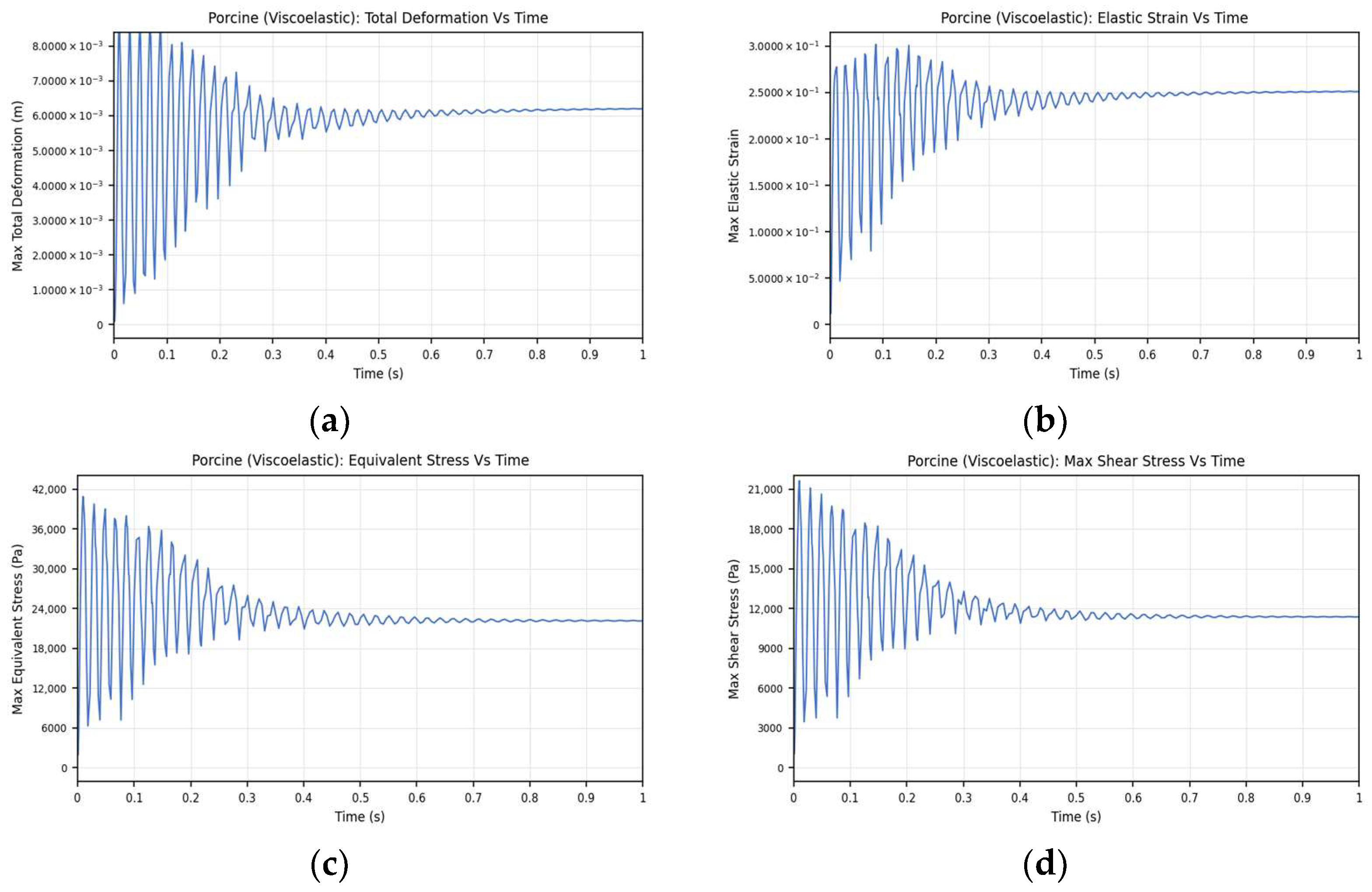
- Viscoelastic vs. Hyperelastic: For bovine tissue, the viscoelastic and hyperelastic formulations produced comparable deformation magnitudes on the order of 10−4 m, while the hyperelastic case reduced peak von Mises stress from 2.2864 × 10⁴ Pa to 1.8603 × 10⁴ Pa. This suggests that time-dependent relaxation increases compliance, whereas nonlinear constitutive behavior contributes to stress redistribution under transient loading.
Inter-Material Comparison (PyC, PU, Porcine, and Bovine)
- Structural Rigidity: PyC remains the only functionally rigid material, providing maximum durability but zero physiological compliance.
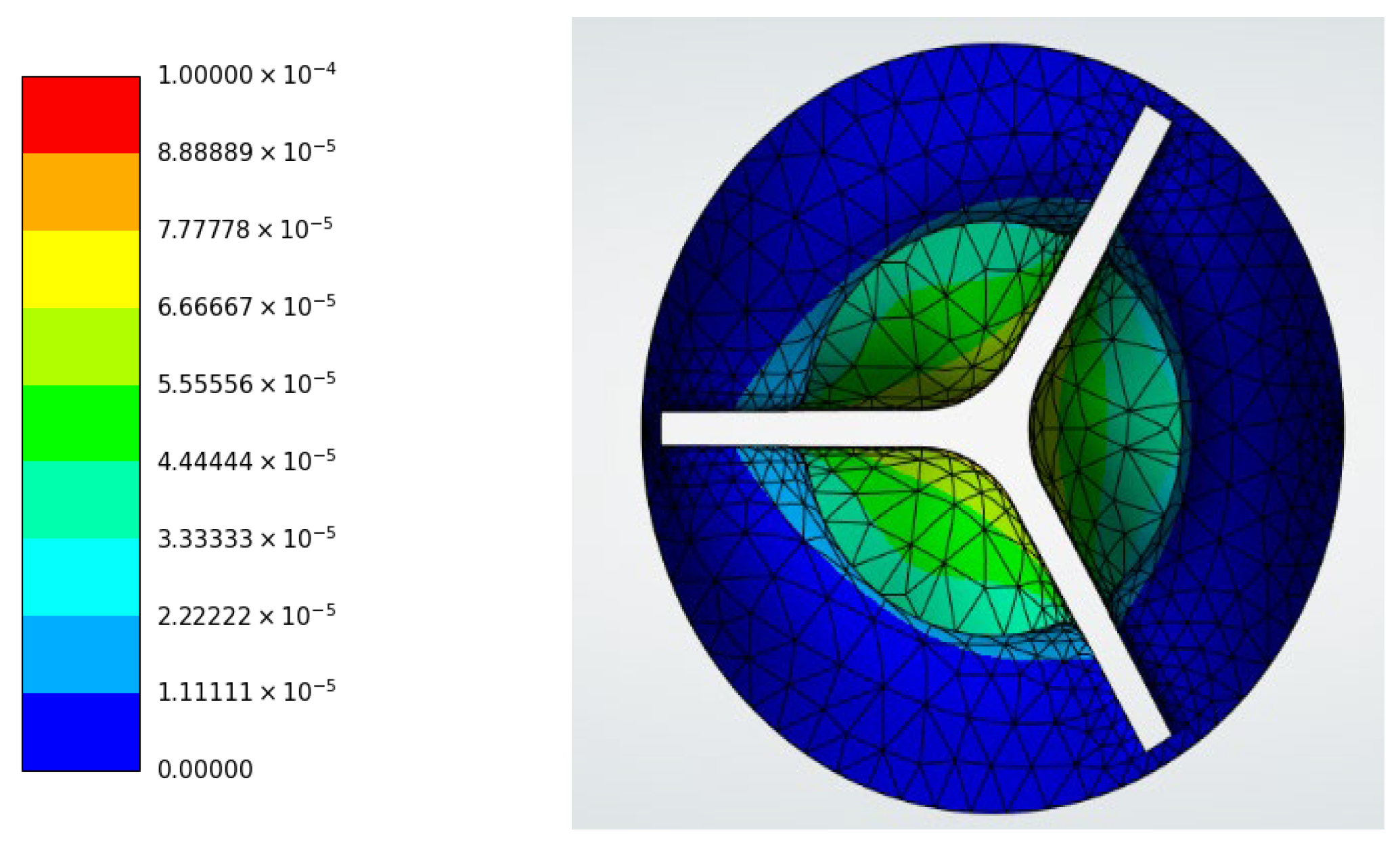
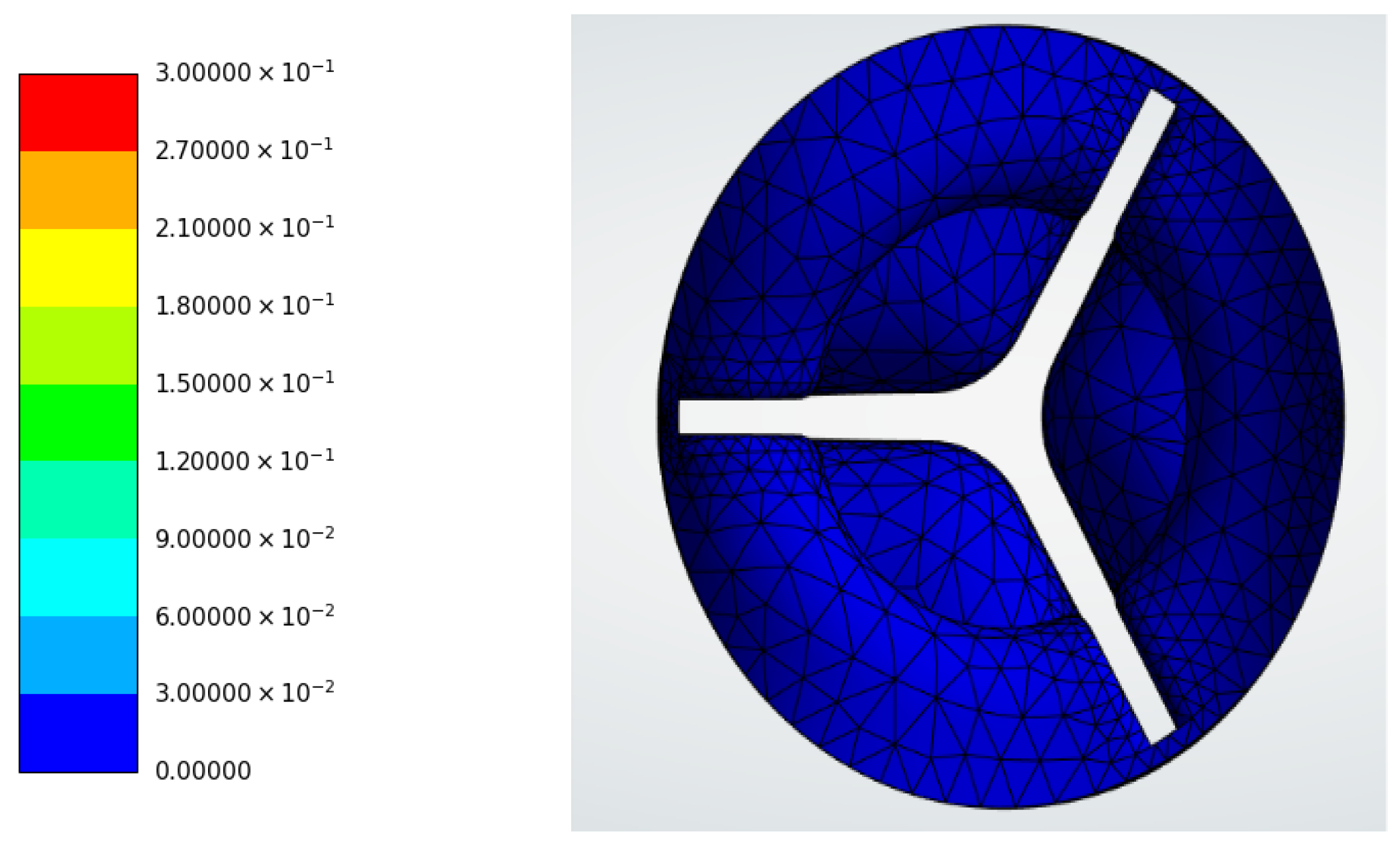
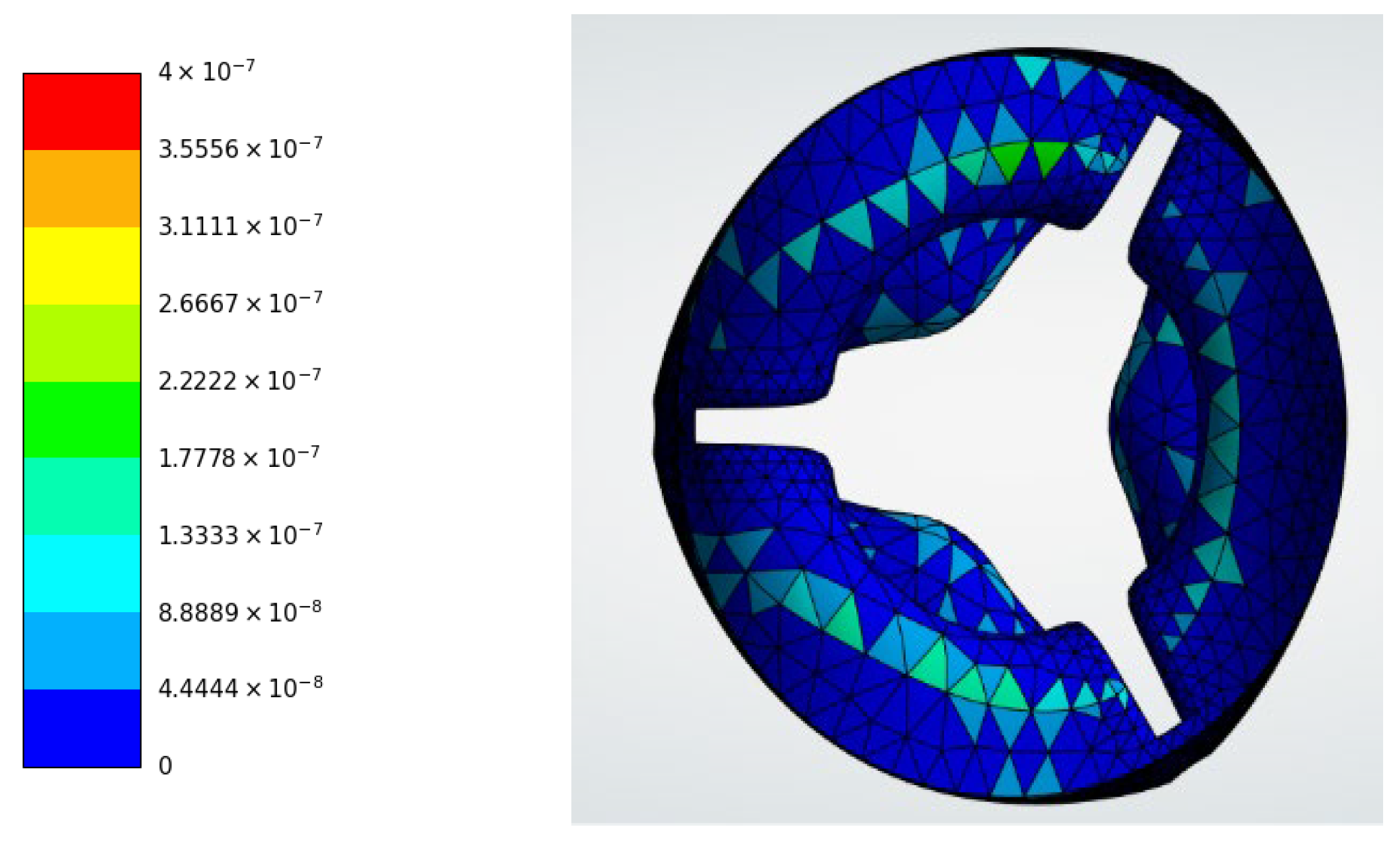
- Compliance Gradient: Biological tissues (Porcine and Bovine) demonstrated the highest strain and strain-energy storage, with deformation values slightly exceeding those of synthetic PU and the largest value observed for bovine hyperelastic tissue.
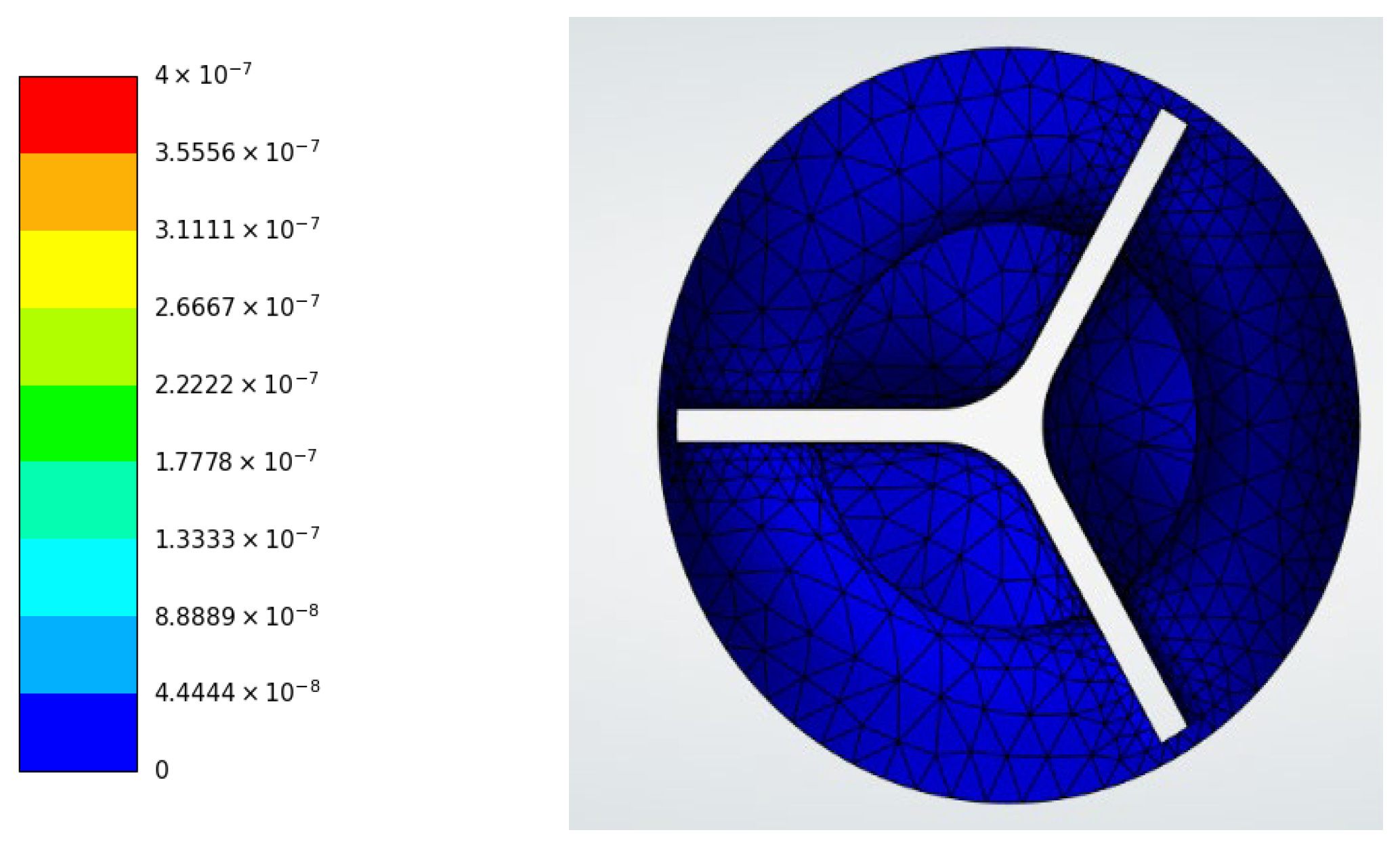
- Energy Dynamics: The strain energy density was highest in the bovine linear model (3.8541 × 10⁻⁷ J) and lowest in PyC (2.2149 × 10⁻¹² J). PU occupied a critical “middle ground”, offering a more balanced energy storage profile (4.0510 × 10⁻⁸ J in the linear elastic case) than mechanical carbon, yet maintaining higher structural stability than the biological xenografts.
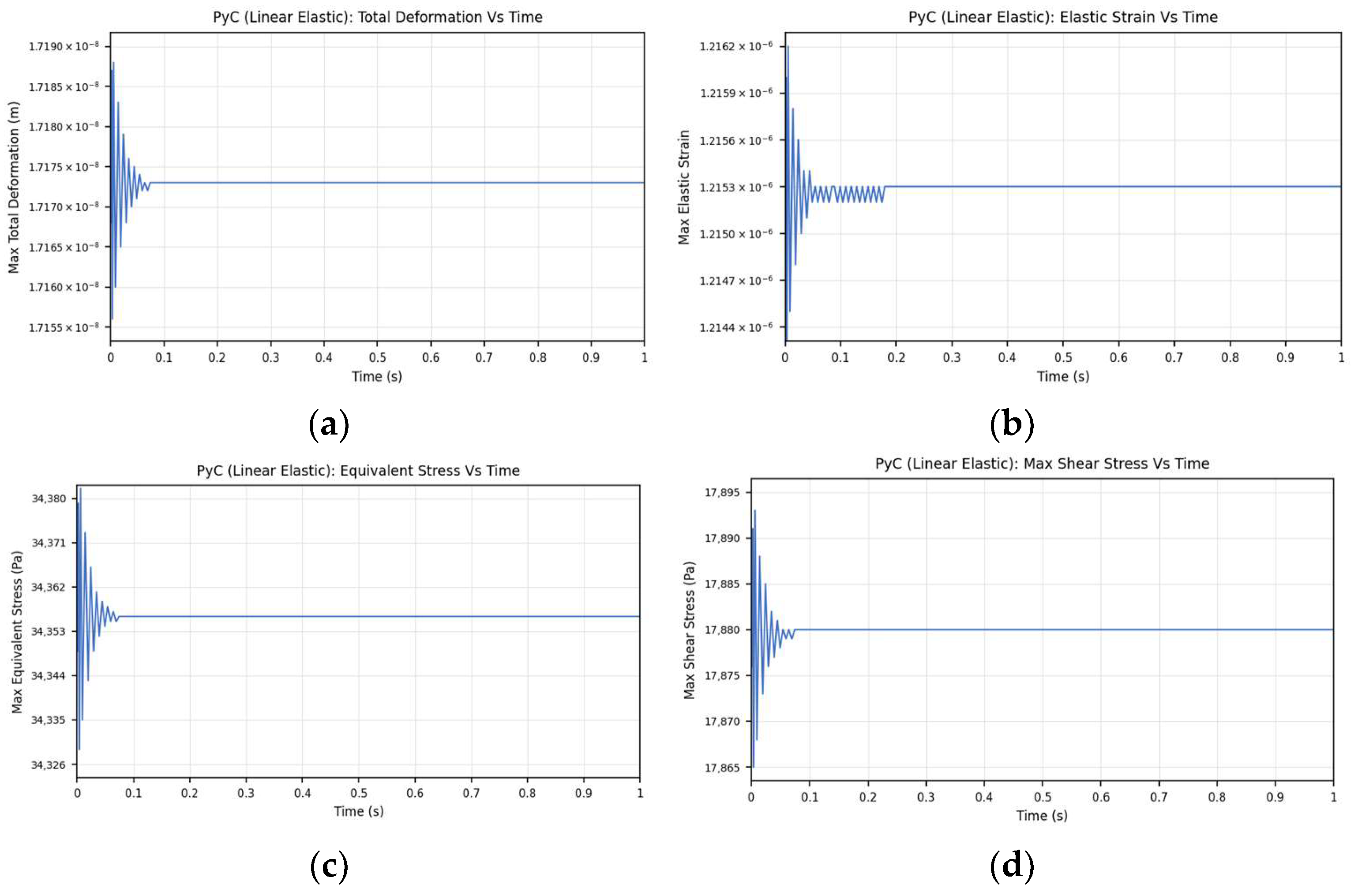
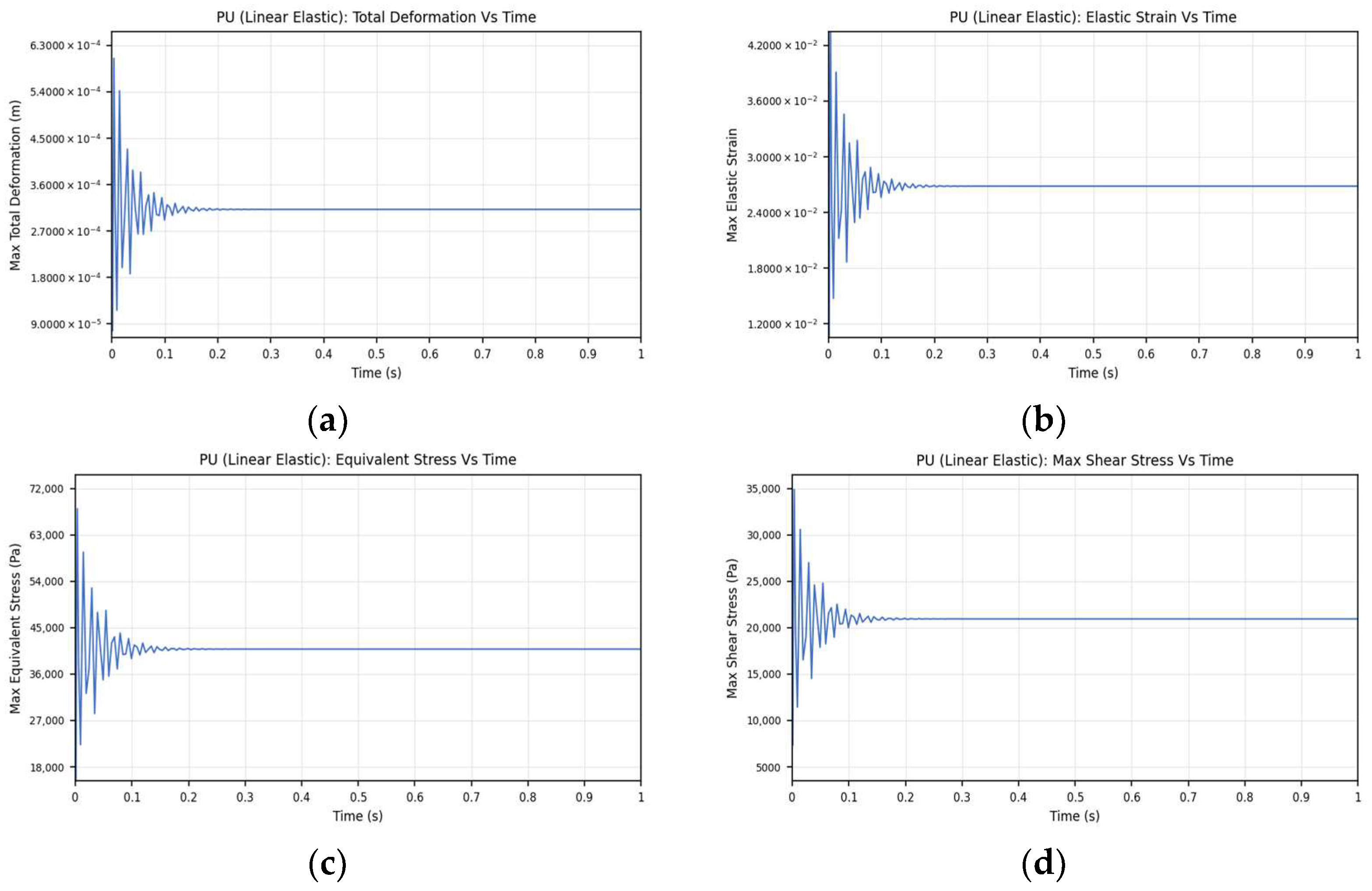
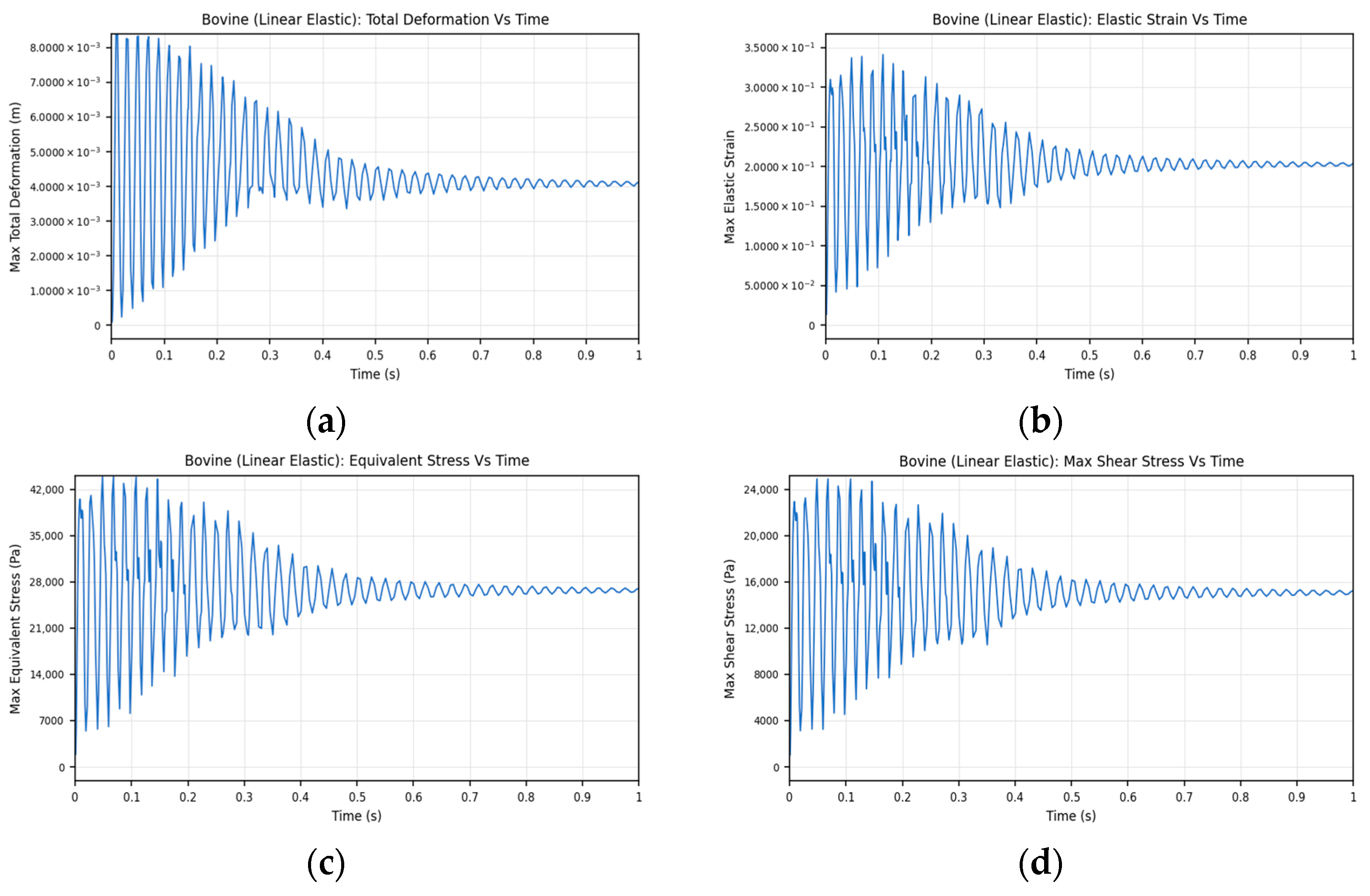
3.1.5. Transient Evolution of Maximum Structural Response
3.2. Computational Fluid Dynamics
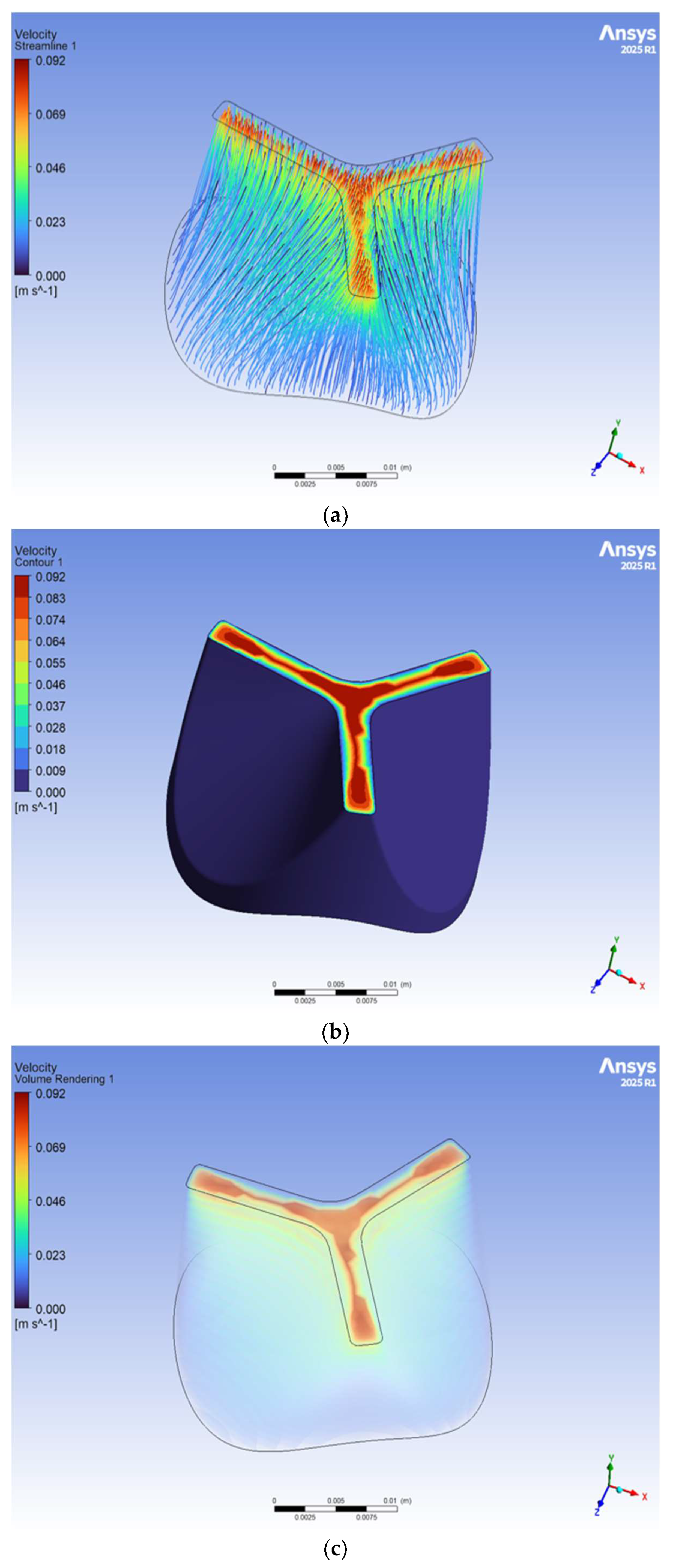
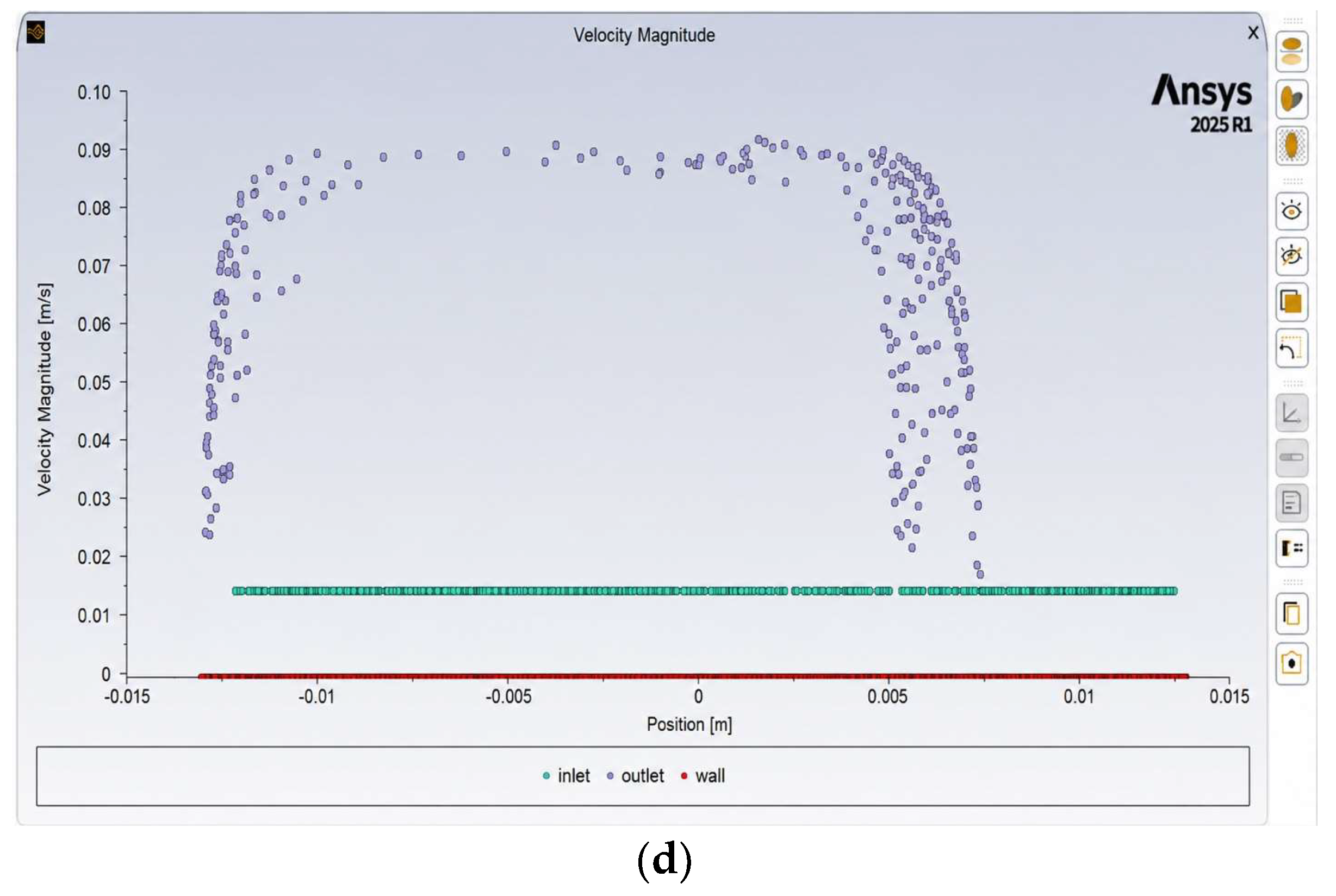
3.2.1. Velocity Distribution and Flow Characteristics
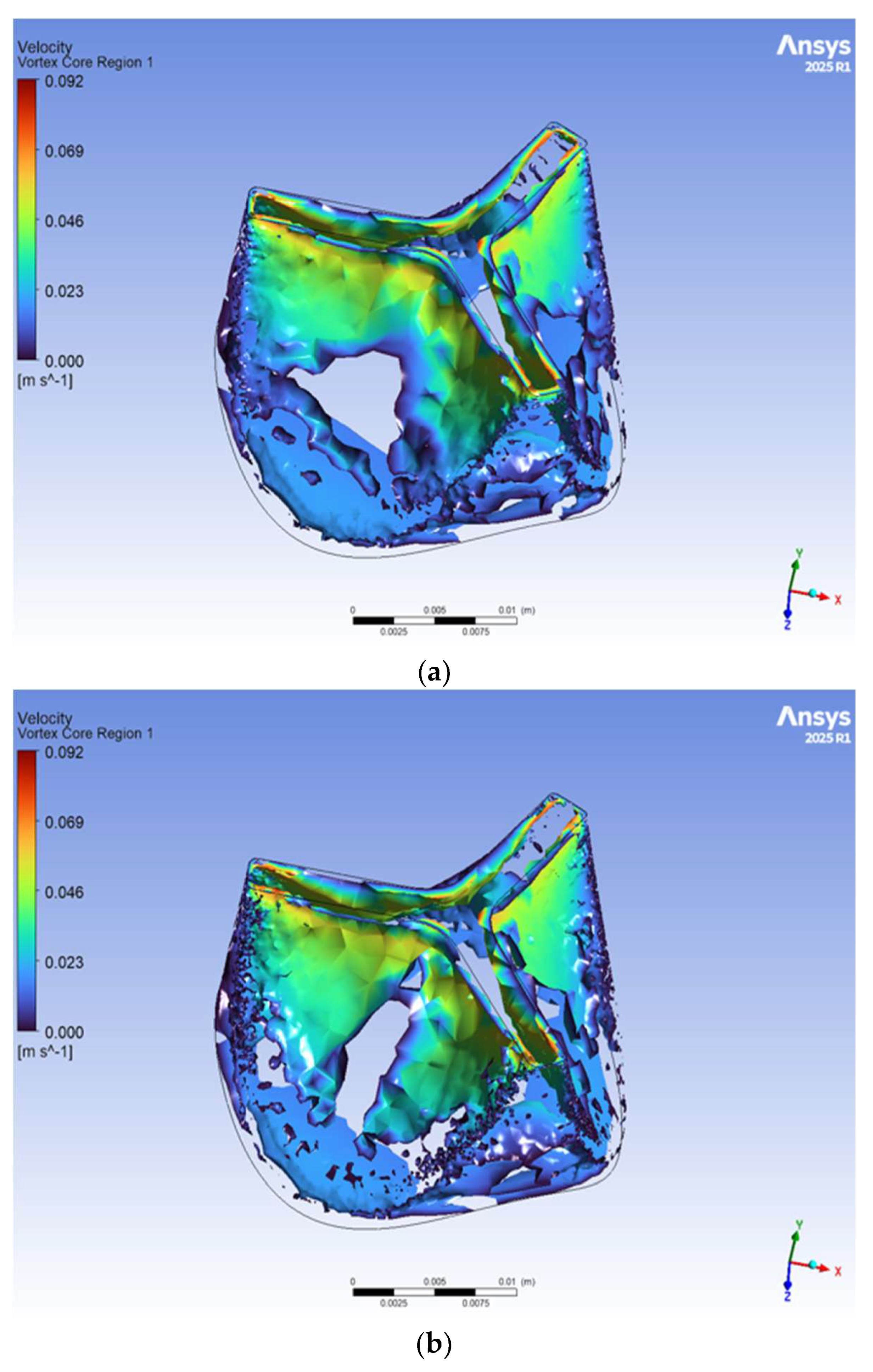
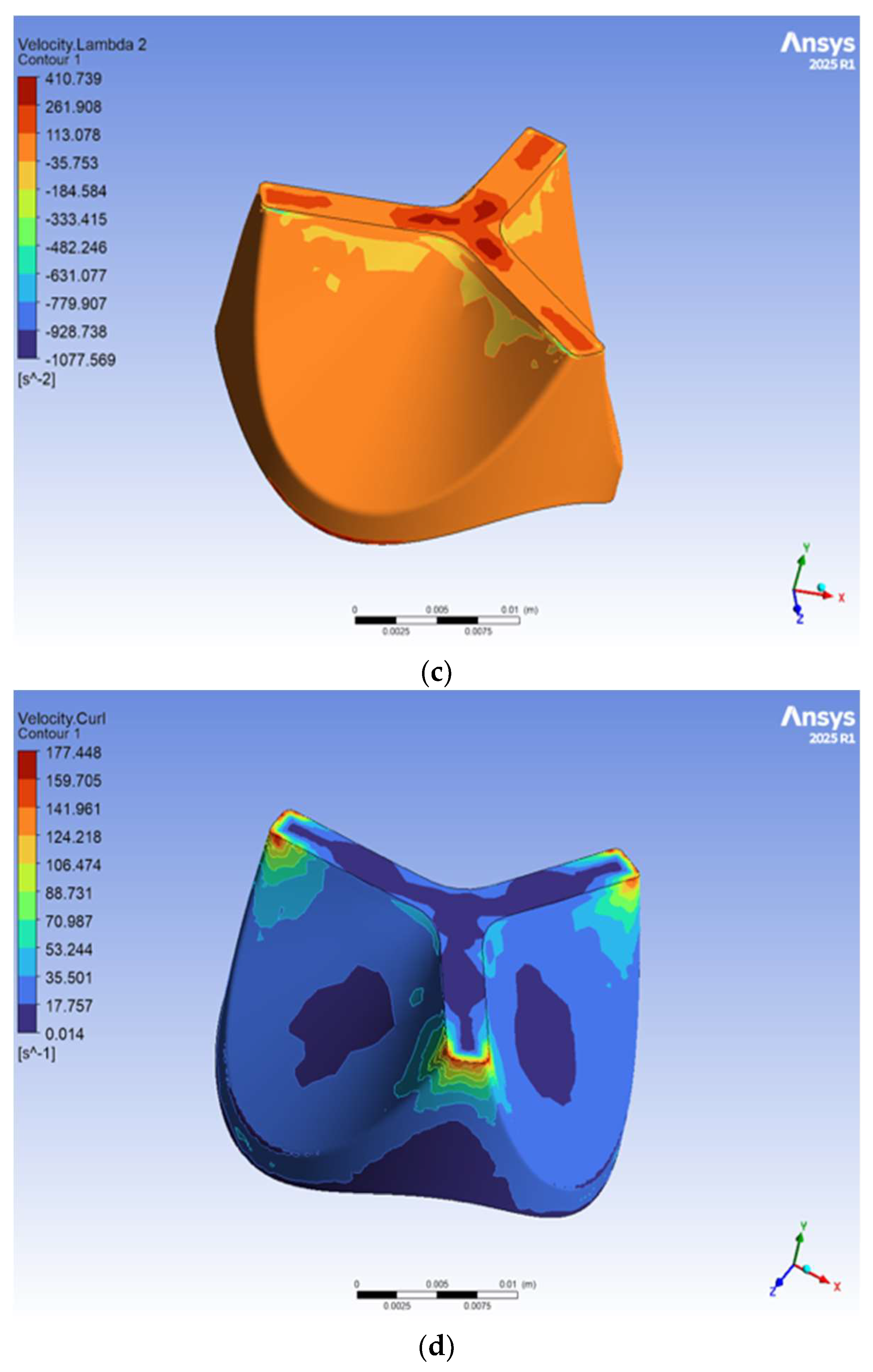
3.2.2. Vortex Formation and Flow Rotation
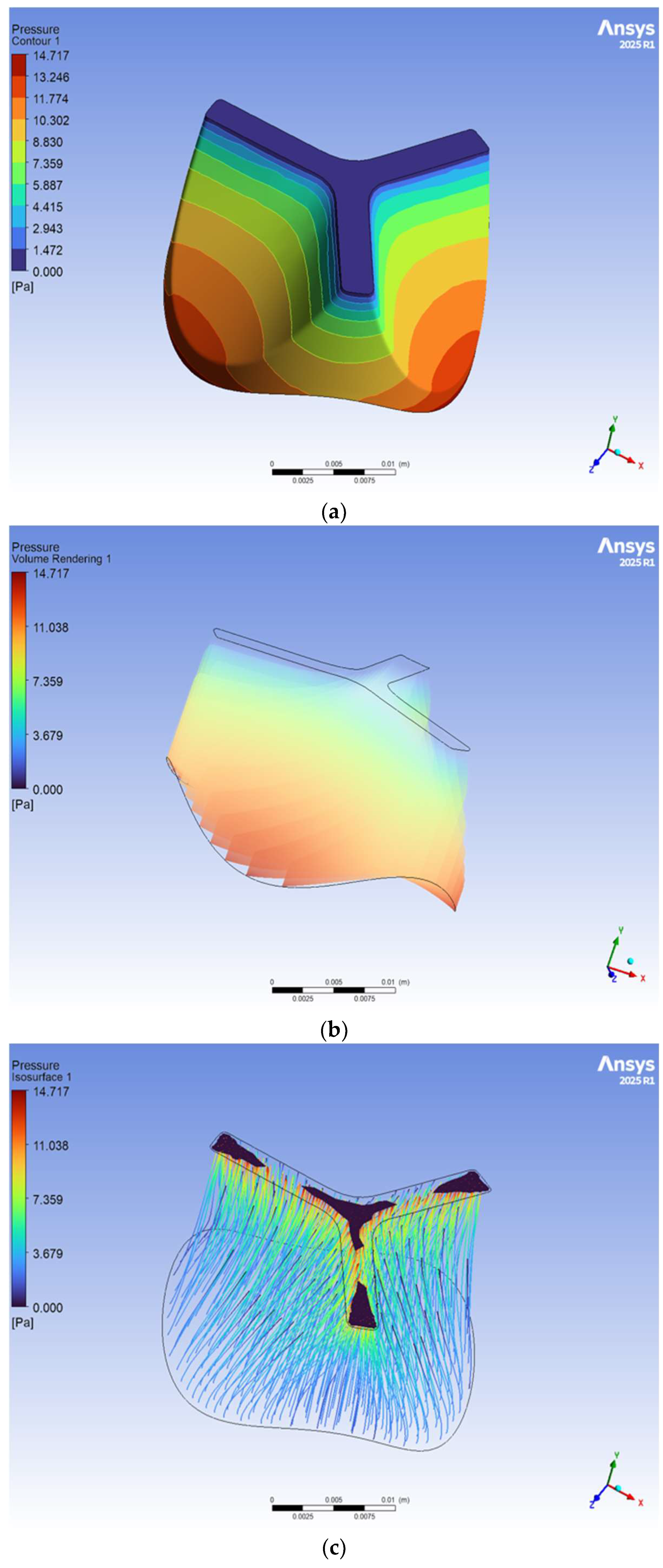
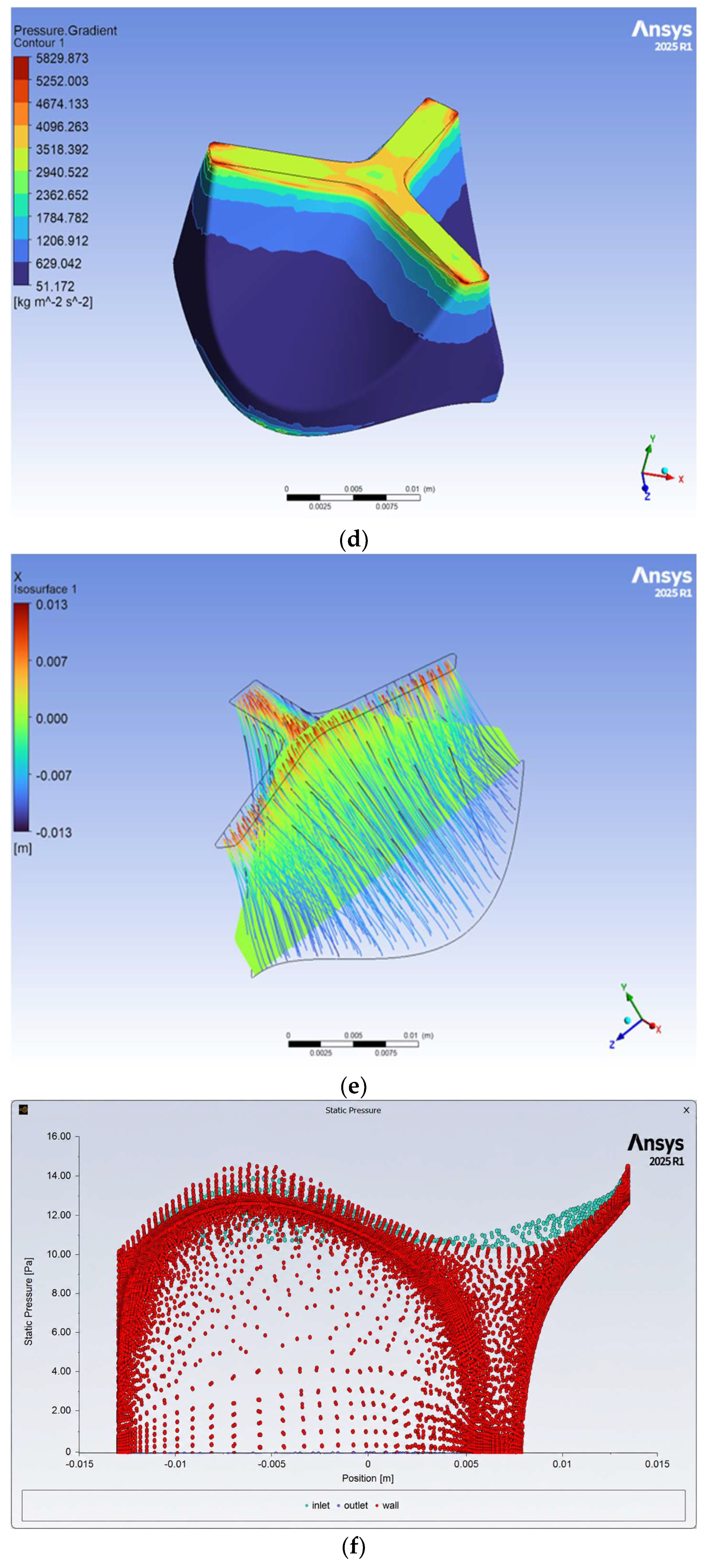
3.2.3. Pressure Distribution and Pressure Gradient
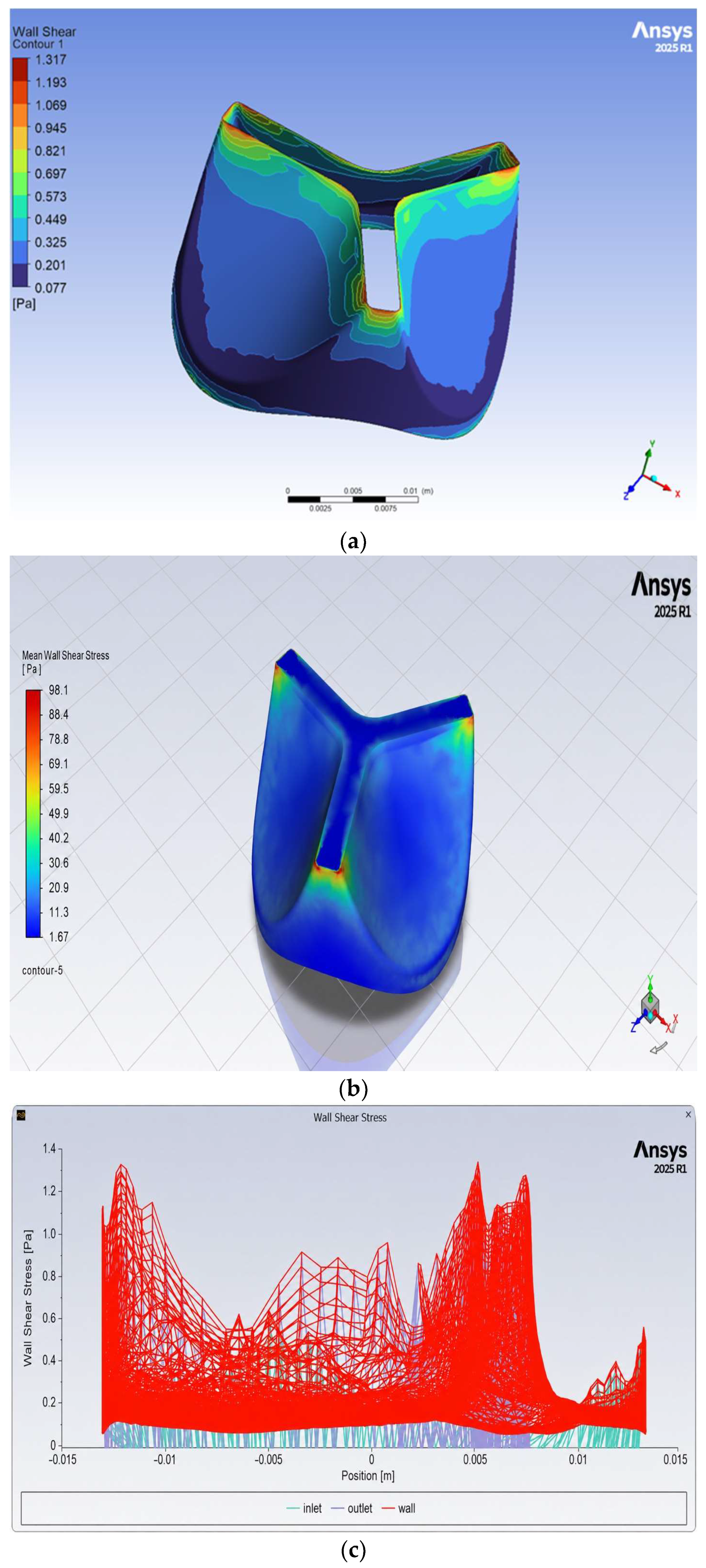
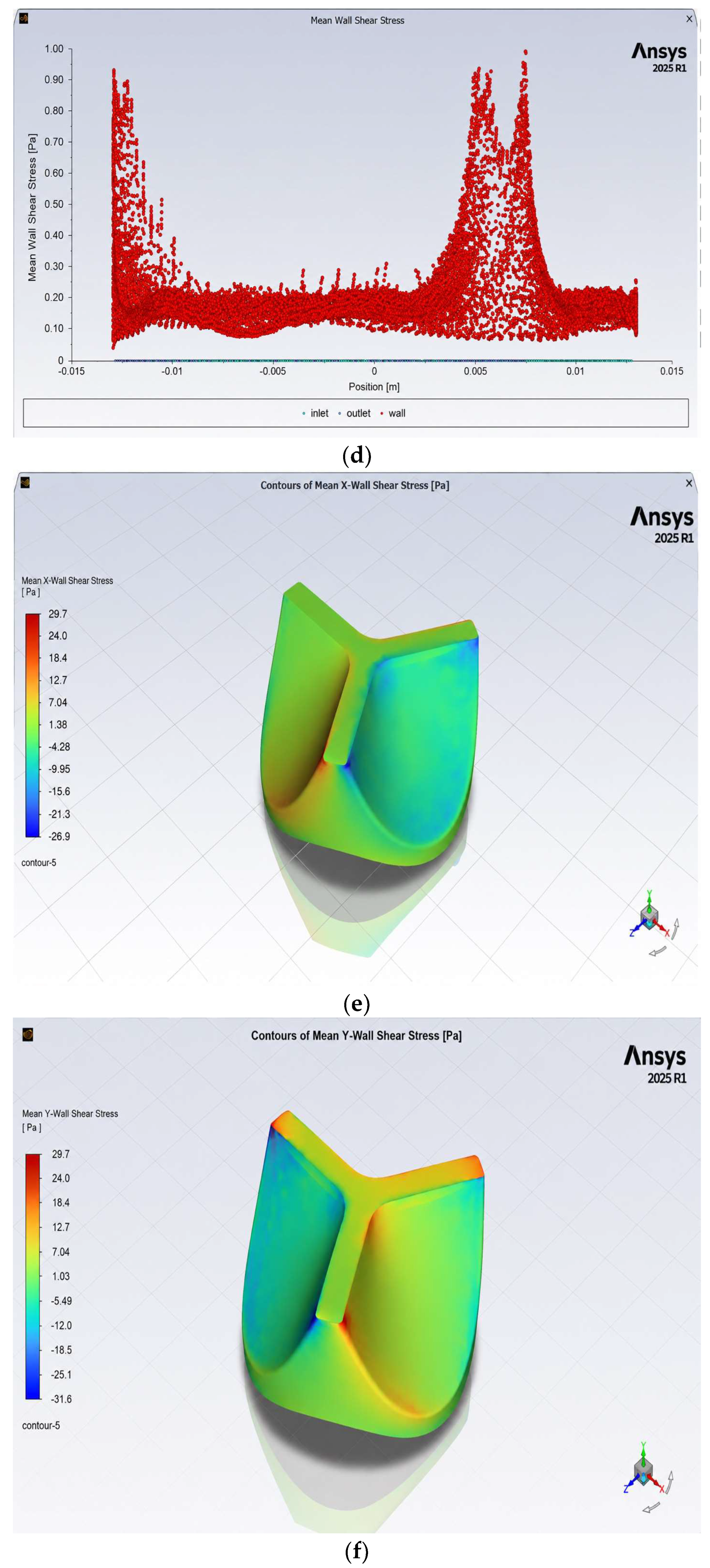
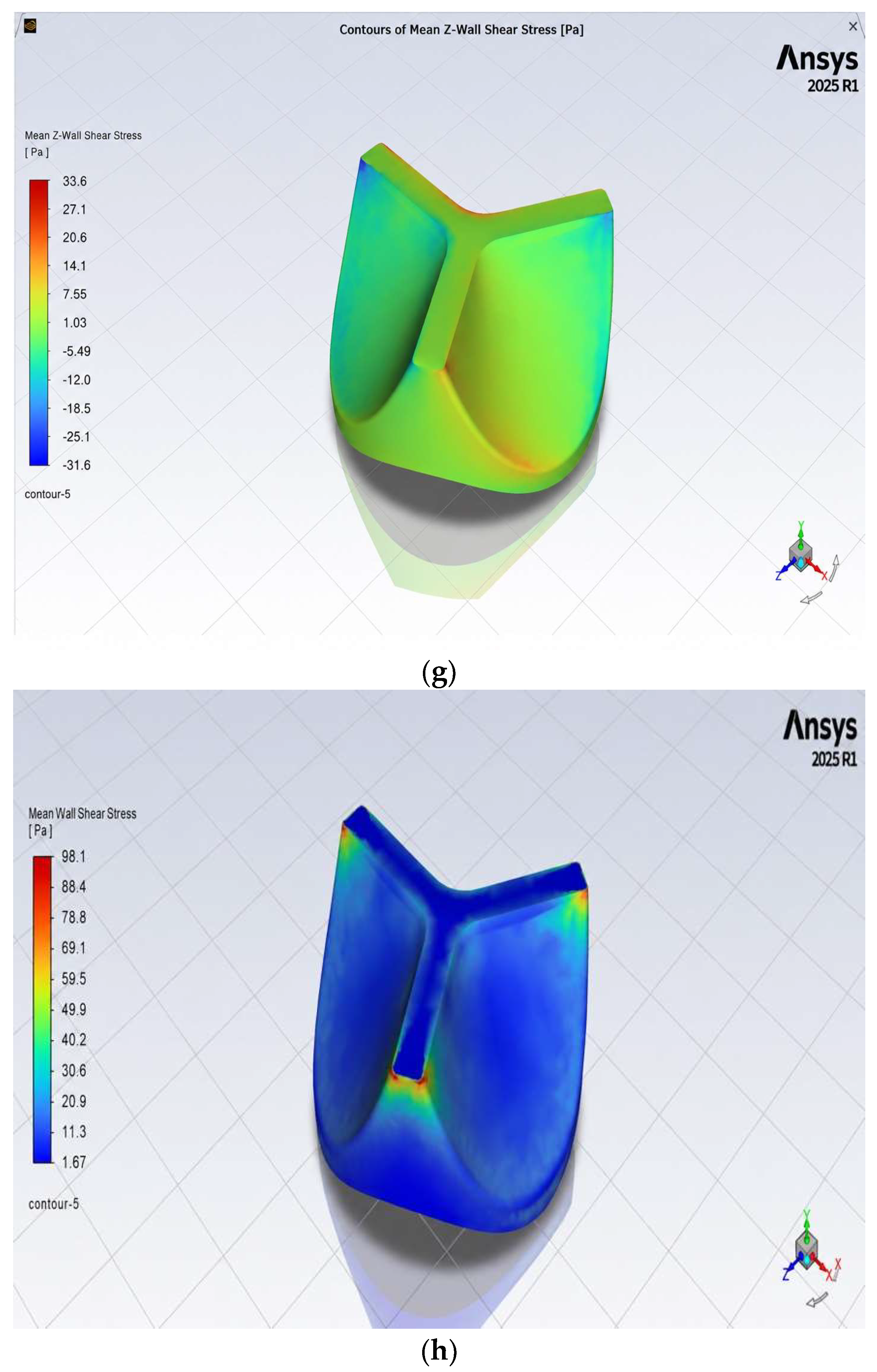
3.2.4. Instantaneous and Mean Wall Shear Stress Distribution
4. Discussion
4.1. Structural Rigidity of Pyrolytic Carbon
4.2. Mechanical Compliance of Biological Valve Tissues
4.3. Polyurethane as a Polymeric Alternative
4.4. Hemodynamic Characteristics
4.5. Implications for Prosthetic Valve Material Selection
4.6. Study Limitations
4.7. Future Work
5. Conclusions
Author Contributions
Funding
Data Availability Statement
Conflicts of Interest
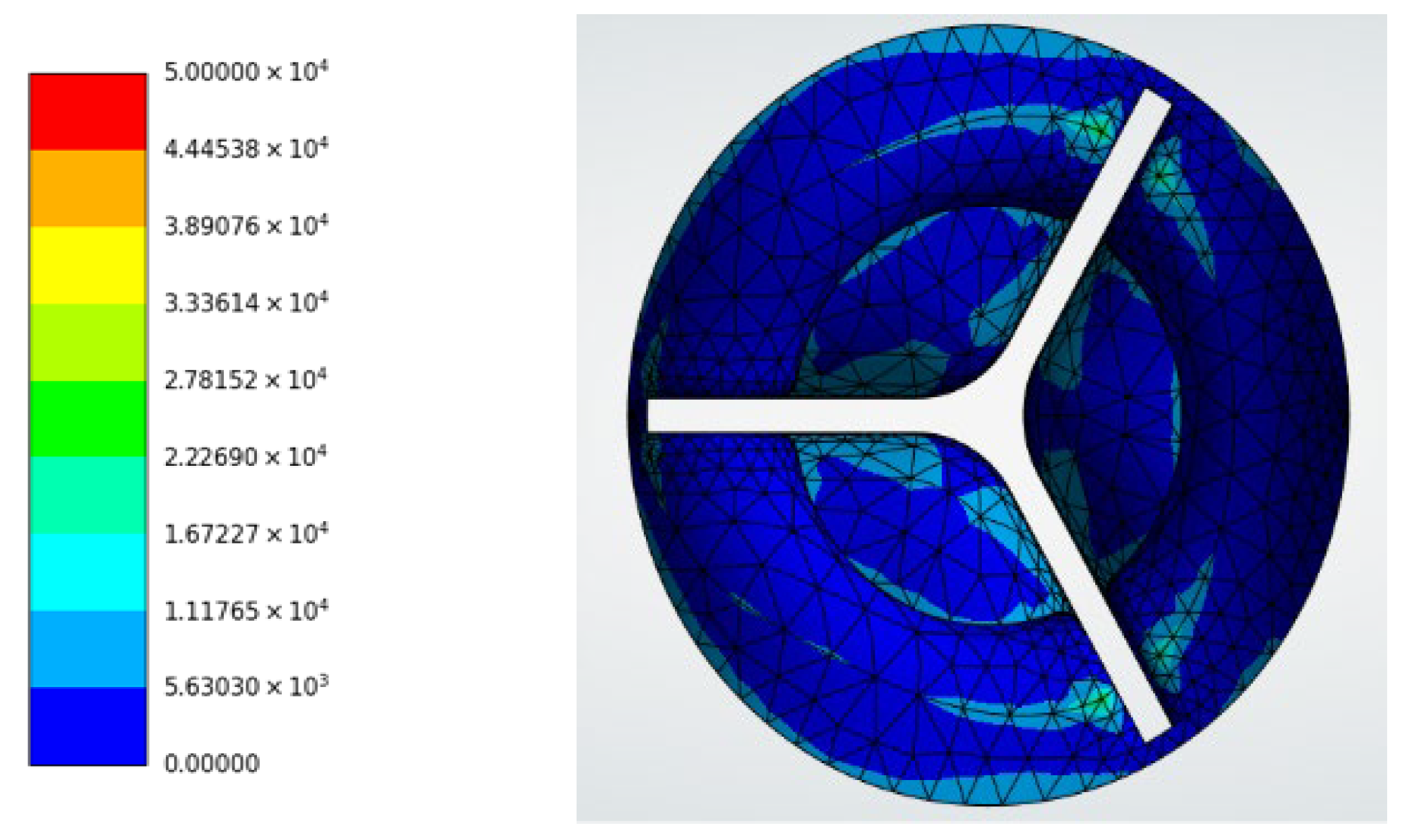
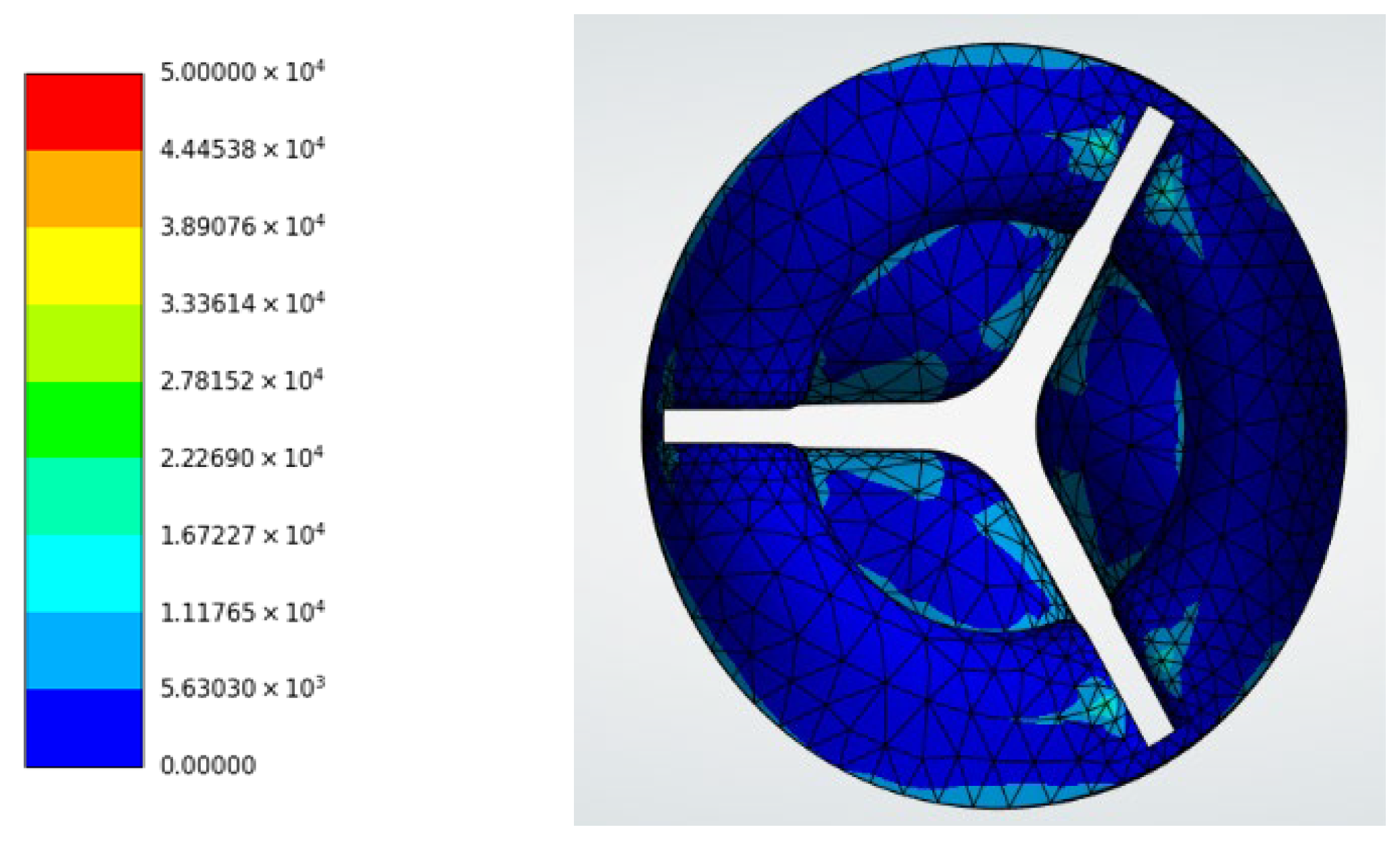
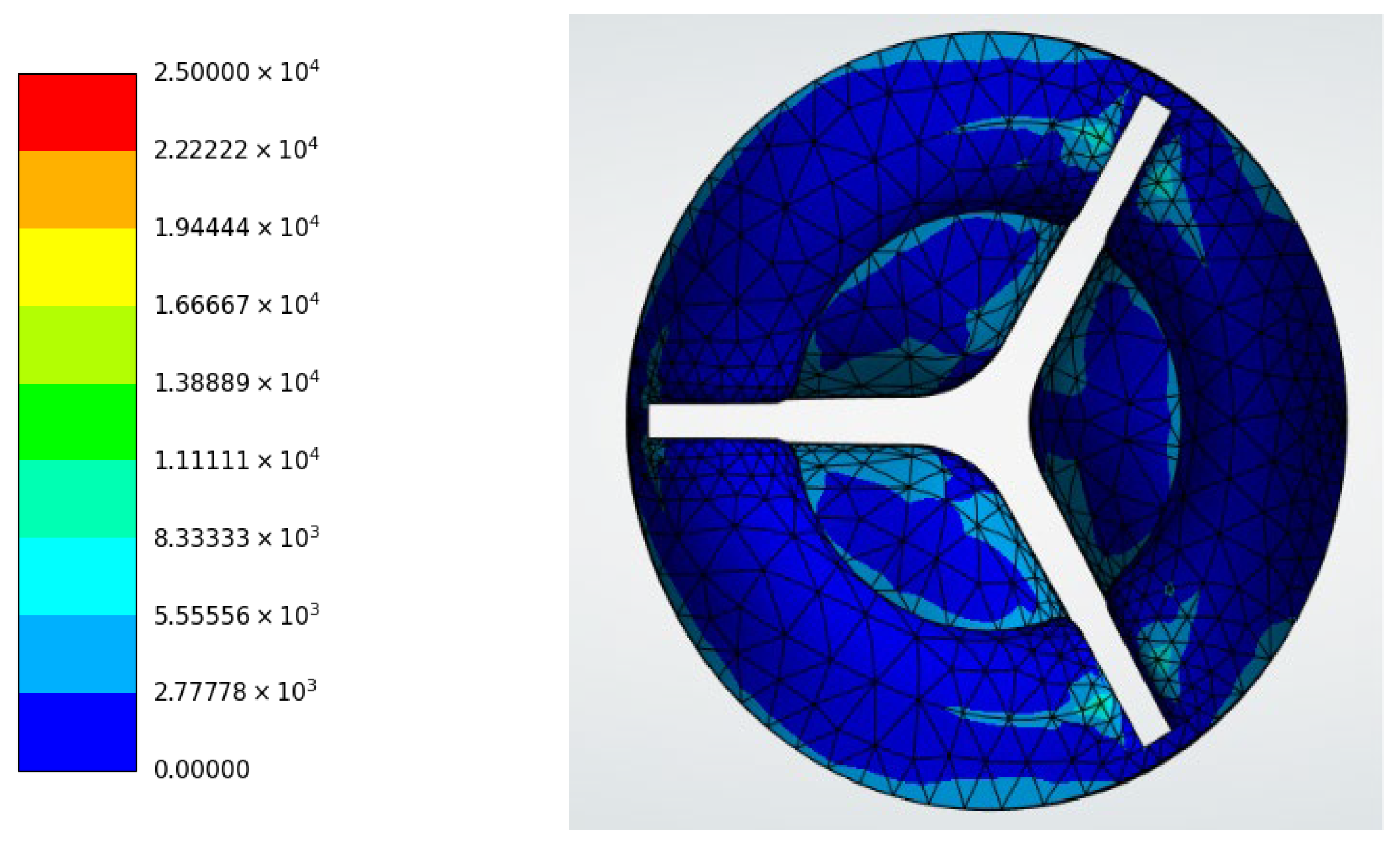
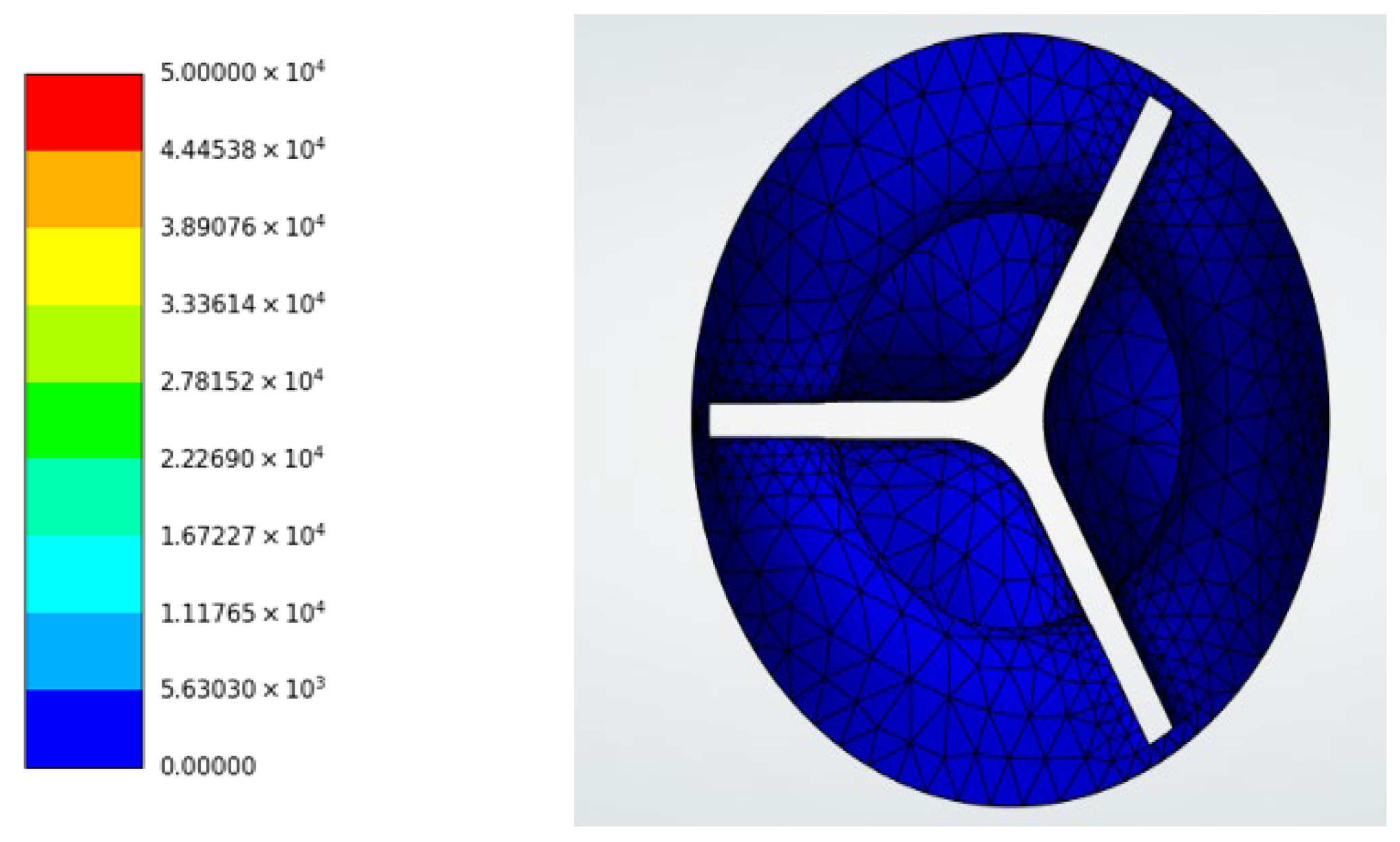
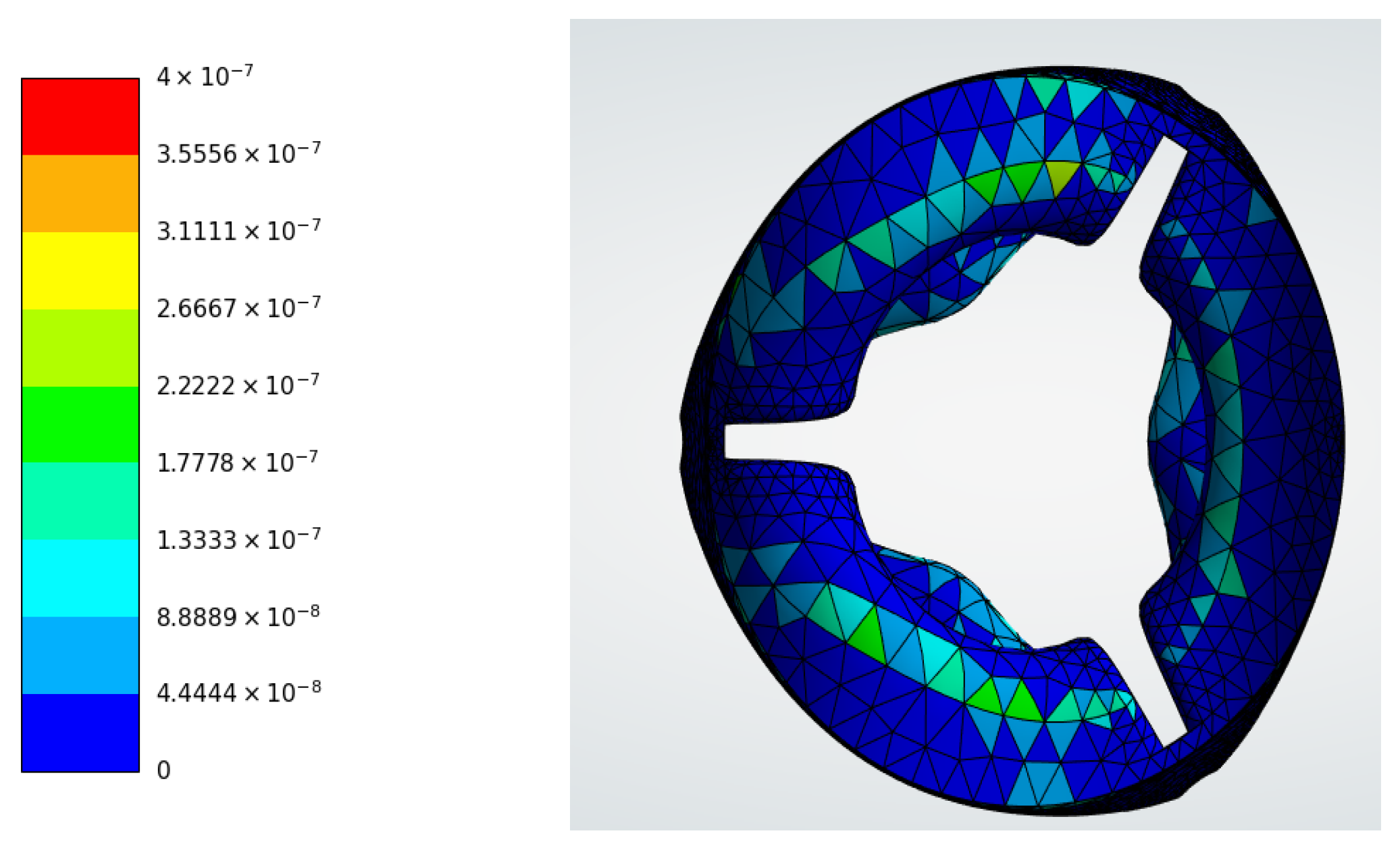
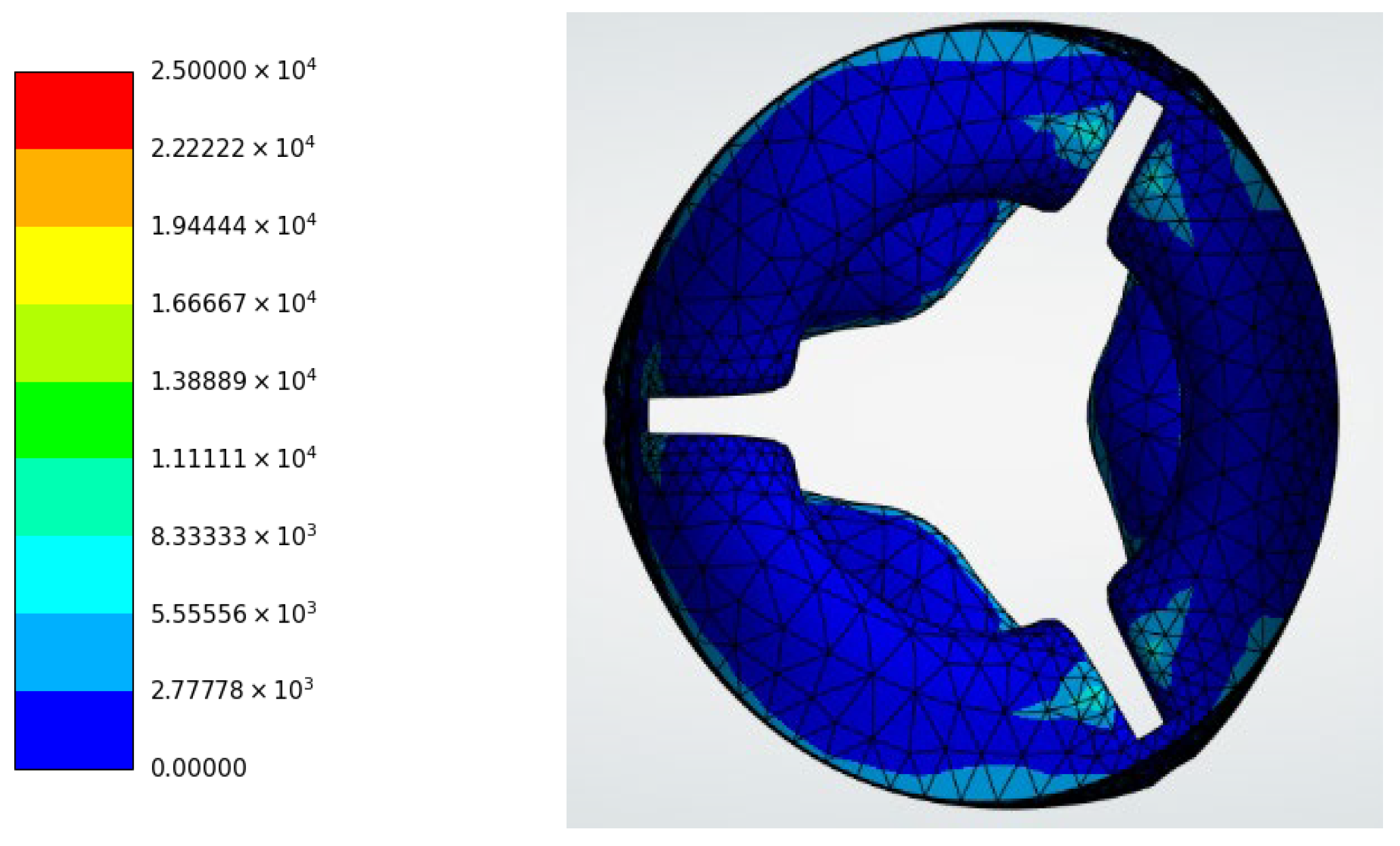
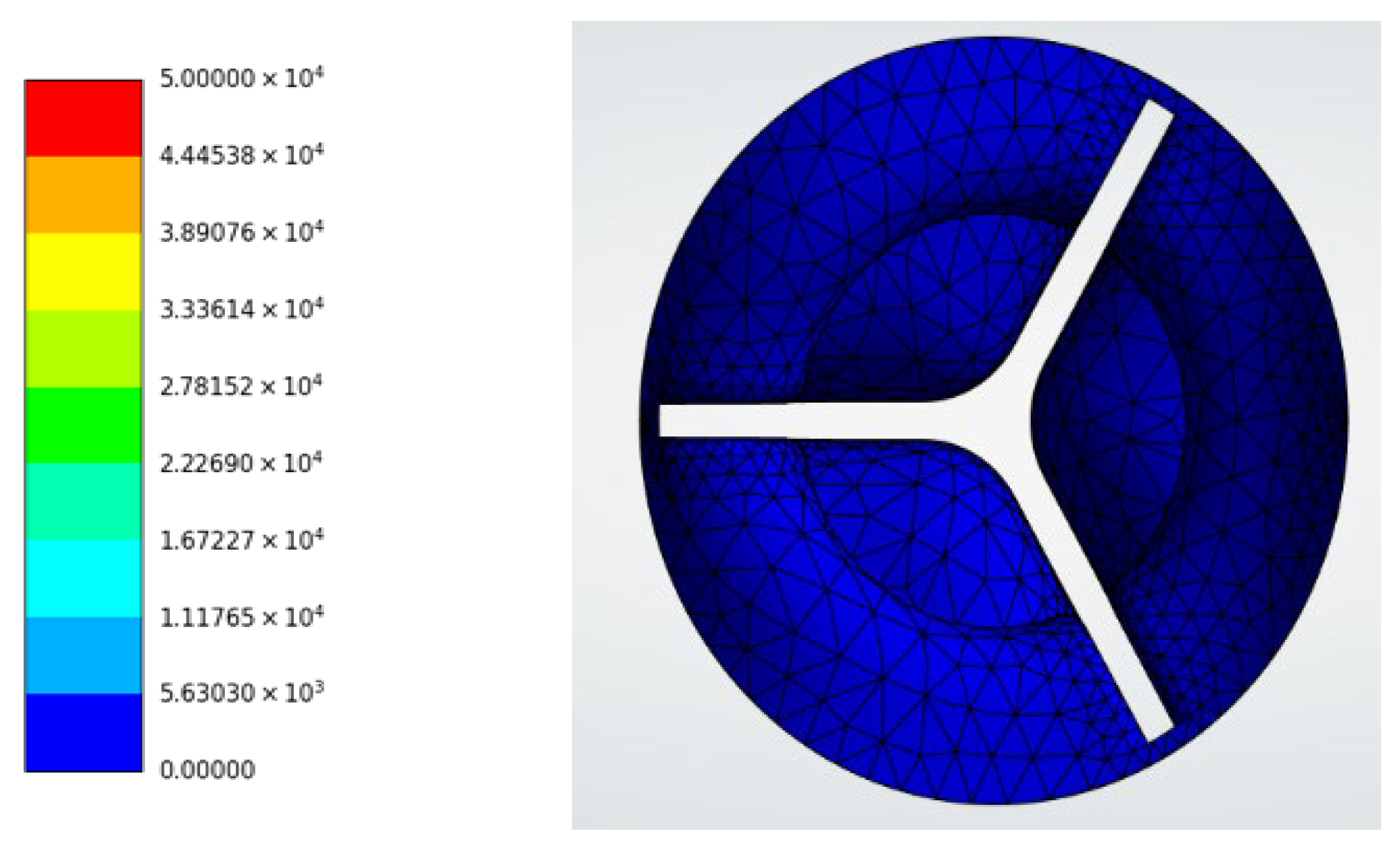
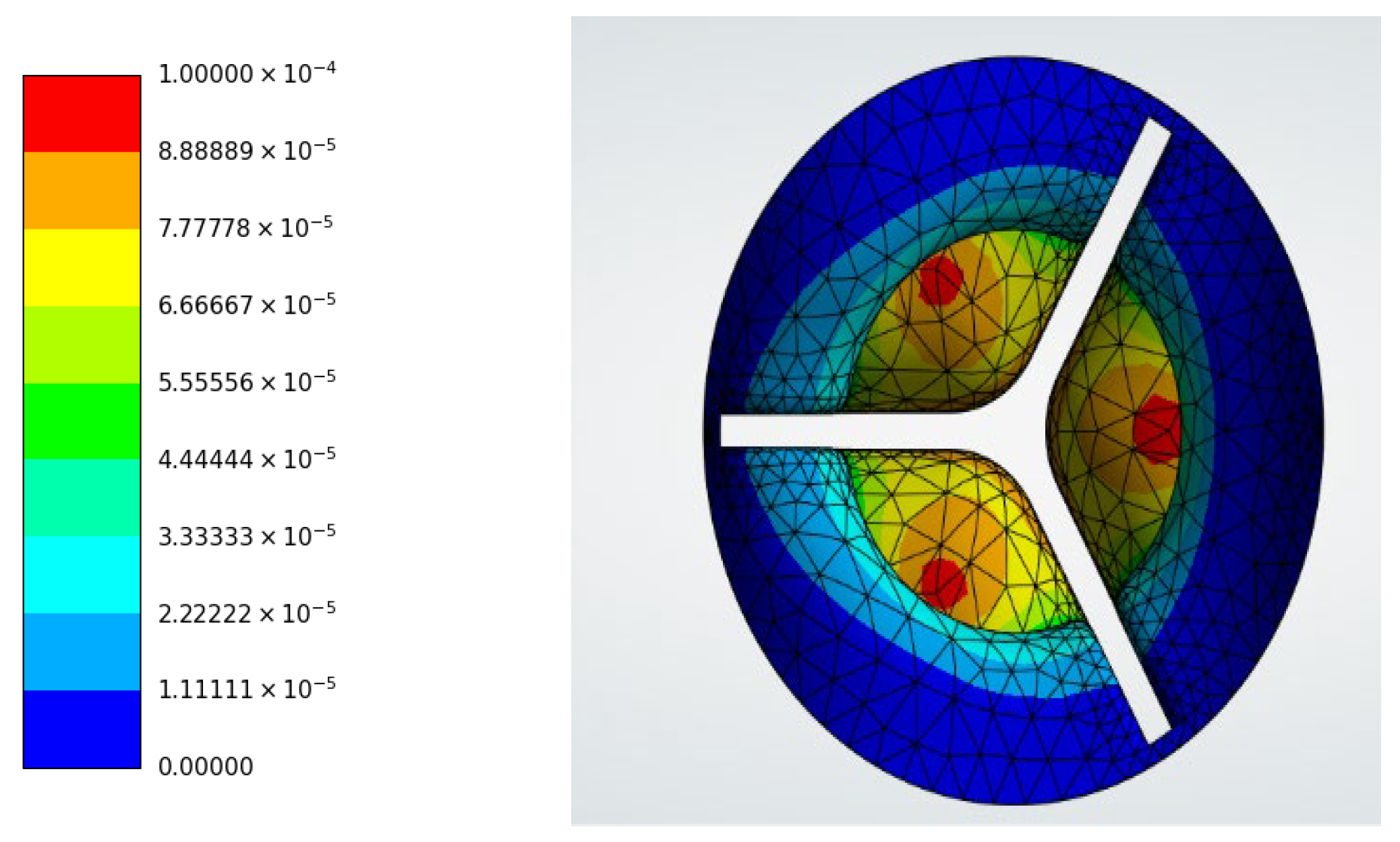
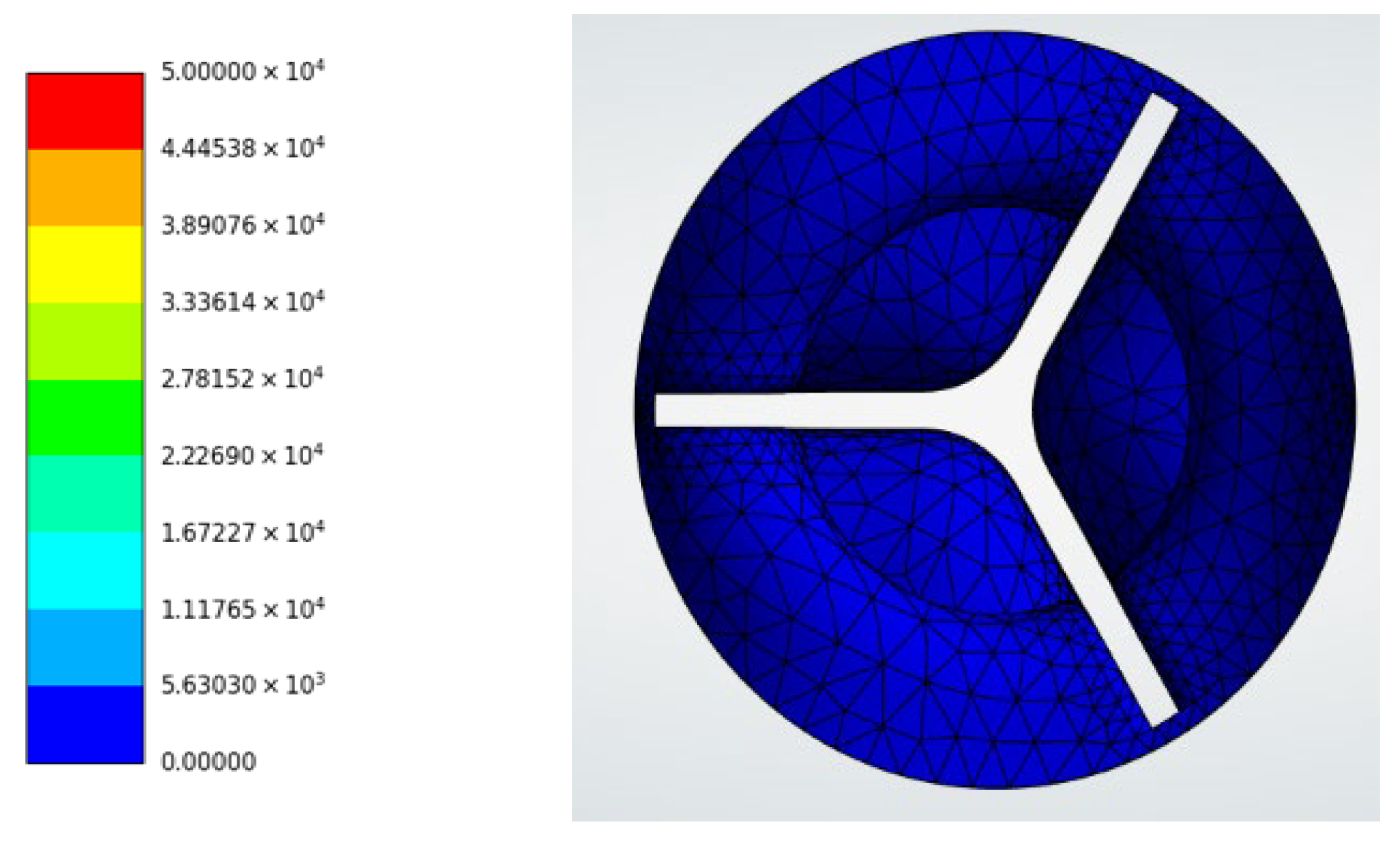
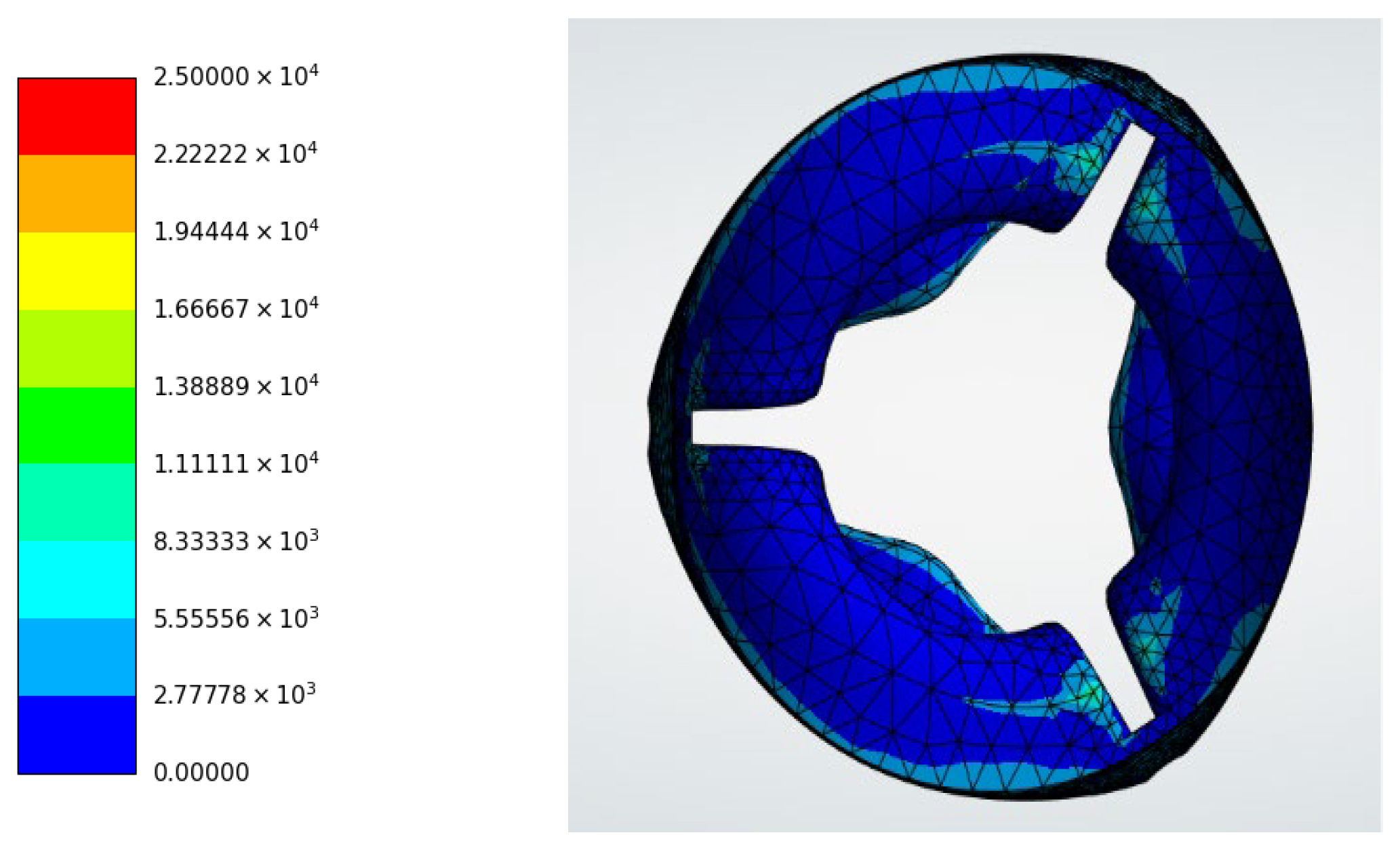
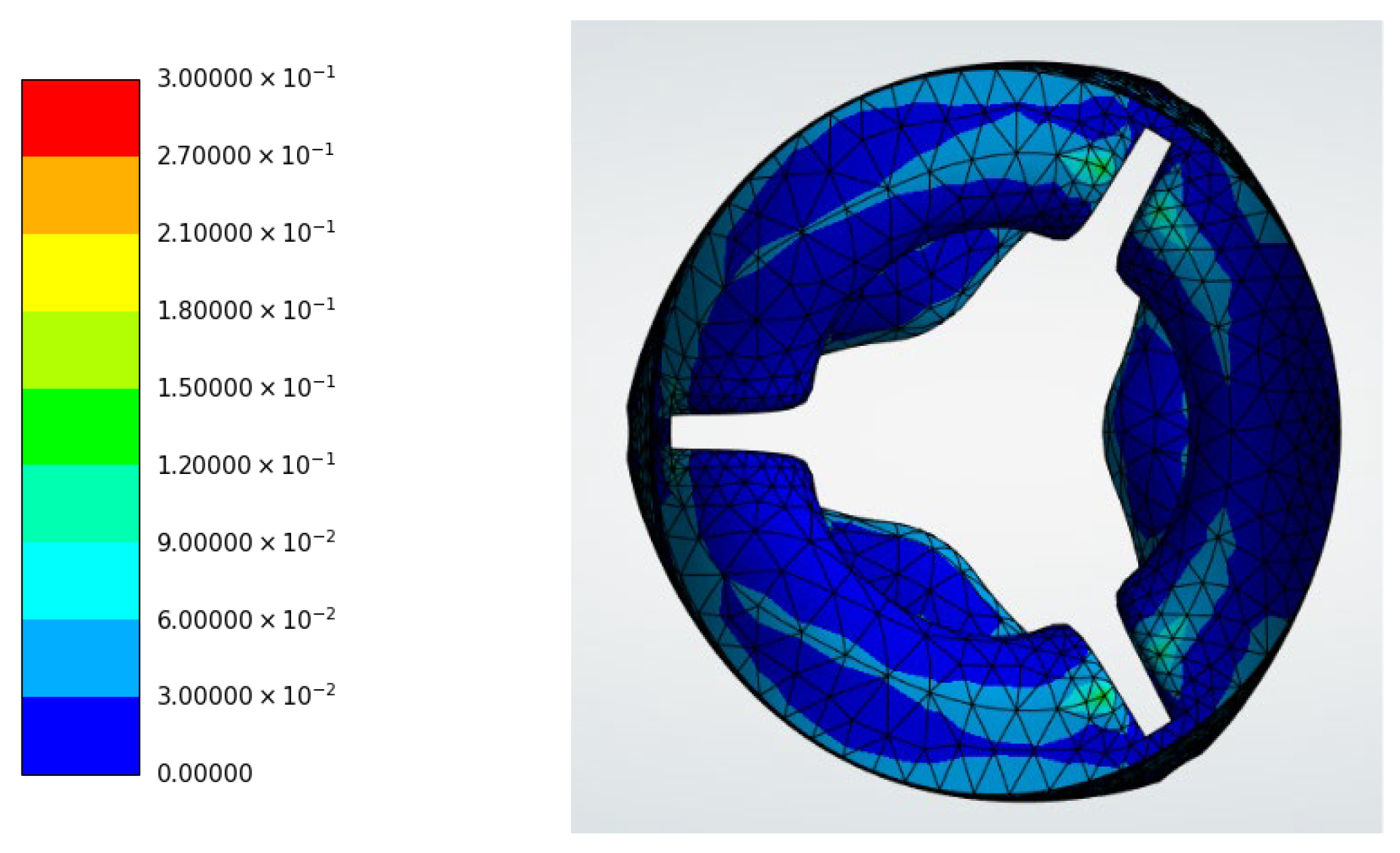
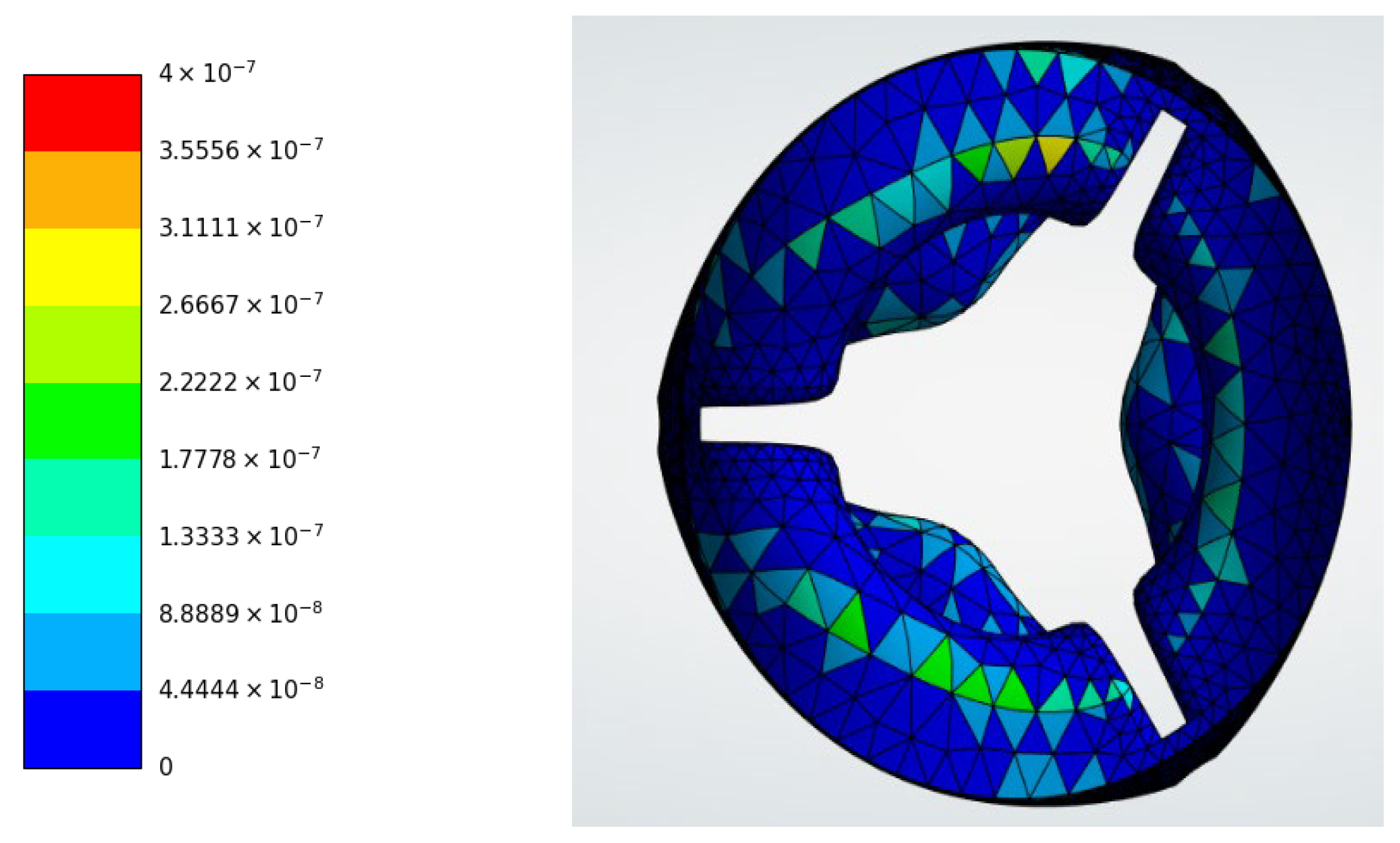
Appendix A. Additional Figures of Structural Analysis of Tricuspid Heart Valve

















References
- Oliveira, D.C.; Oliveira, C.G.C. The Forgotten, Not Studied or Not Valorized Tricuspid Valve: The Transcatheter Revolution Is Coming. Cardiol. Res. 2019, 10, 199–206. [Google Scholar] [CrossRef] [Scilit]
- Zack, C.J.; Fender, E.A.; Chandrashekar, P.; Reddy, Y.N.V.; Bennett, C.E.; Stulak, J.M.; Miller, V.M.; Nishimura, R.A. National Trends and Outcomes in Isolated Tricuspid Valve Surgery. J. Am. Coll. Cardiol. 2017, 70, 2953–2960. [Google Scholar] [CrossRef] [Scilit] [PubMed]
- Nath, J.; Foster, E.; Heidenreich, P.A. Impact of Tricuspid Regurgitation on Long-Term Survival. J. Am. Coll. Cardiol. 2004, 43, 405–409. [Google Scholar] [CrossRef] [Scilit] [PubMed]
- Negm, S.; Arafat, A.A.; Elatafy, E.E.; Fawzy, H.F. Mechanical Versus Bioprosthetic Valve Replacement in the Tricuspid Valve Position: A Systematic Review and Meta-Analysis. Heart Lung Circ. 2021, 30, 362–371. [Google Scholar] [PubMed]
- Sohn, S.H.; Kang, Y.; Kim, J.S.; Hwang, H.Y.; Kim, K.H.; Choi, J.W. Early and Long-Term Outcomes of Bioprosthetic versus Mechanical Tricuspid Valve Replacement: A Nationwide Population-Based Study. J. Thorac. Cardiovasc. Surg. 2024, 167, 2117–2128.e11. [Google Scholar]
- Tabassum, A.; Phillips, K.G.; Hage, F.; Hage, A. Prosthetic Heart Valves: More than Half a Century of Innovation—An Overview. J. Clin. Med. 2025, 14, 3499. [Google Scholar] [CrossRef] [Scilit] [PubMed]
- Hammermeister, K.; Sethi, G.K.; Henderson, W.G.; Grover, F.L.; Oprian, C.; Rahimtoola, S.H. Outcomes 15 Years after Valve Replacement with a Mechanical versus a Bioprosthetic Valve: Final Report of the Veterans Affairs Randomized Trial. J. Am. Coll. Cardiol. 2000, 36, 1152–1158. [Google Scholar] [CrossRef] [Scilit]
- Kaplan, M.; Kut, M.S.; Demirtas, M.M.; Cimen, S.; Ozler, A. Prosthetic Replacement of Tricuspid Valve: Bioprosthetic or Mechanical. Ann. Thorac. Surg. 2002, 73, 467–473. [Google Scholar] [CrossRef] [Scilit]
- Bourguignon, T.; Bouquiaux-Stablo, A.-L.; Candolfi, P.; Mirza, A.; Loardi, C.; May, M.-A.; El-Khoury, R.; Marchand, M.; Aupart, M. Very Long-Term Outcomes of the Carpentier-Edwards Perimount Valve in Aortic Position. Ann. Thorac. Surg. 2015, 99, 831–837. [Google Scholar] [CrossRef] [Scilit]
- Yoganathan, A.P.; Chandran, K.B.; Sotiropoulos, F. Flow in Prosthetic Heart Valves: State-of-the-Art and Future Directions. Ann. Biomed. Eng. 2005, 33, 1689–1694. [Google Scholar] [CrossRef] [Scilit]
- Li, H.; Li, S.; Lei, Y.; Sun, M.; Wu, C.; Wang, X.; Xiong, S.; Wang, Q.; Kang, S.; Chen, S.; et al. Advancements and Perspectives in the Bioprosthetic Heart Valve: A Comprehensive Review on Biomaterial Processing and Emerging Polymeric Materials. J. Am. Heart Assoc. 2025, 14, e043061. [Google Scholar] [CrossRef] [Scilit]
- Zwischenberger, B.A.; Milano, C.; Haney, J.; Gaca, J.G.; Schroder, J.; Carr, K.; Glower, D.D. Durability of Porcine and Pericardial Prostheses in Tricuspid Valve Replacement. JTCVS Open 2024, 21, 78–87. [Google Scholar] [CrossRef] [Scilit]
- Oveissi, F.; Naficy, S.; Lee, A.; Winlaw, D.S.; Dehghani, F. Materials and Manufacturing Perspectives in Engineering Heart Valves: A Review. Mater. Today Bio 2020, 5, 100038. [Google Scholar] [CrossRef] [Scilit]
- Claiborne, T.E.; Sheriff, J.; Kuetting, M.; Steinseifer, U.; Slepian, M.J.; Bluestein, D. In Vitro Evaluation of a Novel Hemodynamically Optimized Trileaflet Polymeric Prosthetic Heart Valve. J. Biomech. Eng. 2013, 135, 021021. [Google Scholar] [CrossRef] [Scilit] [PubMed]
- Rezvova, M.A.; Klyshnikov, K.Y.; Gritskevich, A.A.; Ovcharenko, E.A. Polymeric Heart Valves Will Displace Mechanical and Tissue Heart Valves: A New Era for the Medical Devices. Int. J. Mol. Sci. 2023, 24, 3963. [Google Scholar] [CrossRef] [Scilit] [PubMed]
- Todesco, M.; Lezziero, G.; Gerosa, G.; Bagno, A. Polymeric Heart Valves: Do They Represent a Reliable Alternative to Current Prosthetic Devices? Polymers 2025, 17, 557. [Google Scholar] [CrossRef] [Scilit]
- Dasi, L.P.; Simon, H.A.; Sucosky, P.; Yoganathan, A.P. Fluid Mechanics of Artificial Heart Valves. Clin. Exp. Pharmacol. Physiol. 2009, 36, 225–237. [Google Scholar] [CrossRef] [Scilit]
- Morganti, S.; Conti, M.; Aiello, M.; Valentini, A.; Mazzola, A.; Reali, A.; Auricchio, F. Simulation of Transcatheter Aortic Valve Implantation through Patient-Specific Finite Element Analysis: Two Clinical Cases. J. Biomech. 2014, 47, 2547–2555. [Google Scholar] [CrossRef] [Scilit] [PubMed]
- Yoganathan, A.P.; He, Z.; Jones, S.C. Fluid Mechanics of Heart Valves. Annu. Rev. Biomed. Eng. 2004, 6, 331–362. [Google Scholar] [CrossRef] [Scilit]
- Sotiropoulos, F.; Le, T.B.; Gilmanov, A. Fluid Mechanics of Heart Valves and Their Replacements. Annu. Rev. Fluid Mech. 2016, 48, 259–283. [Google Scholar] [CrossRef] [Scilit]
- Park, M.H.; Zhu, Y.; Imbrie-Moore, A.M.; Wang, H.; Marin-Cuartas, M.; Paulsen, M.J.; Woo, Y.J. Heart Valve Biomechanics: The Frontiers of Modeling Modalities and the Expansive Capabilities of Ex Vivo Heart Simulation. Front. Cardiovasc. Med. 2021, 8, 673689. [Google Scholar] [CrossRef] [Scilit]
- Arminio, M.; Carbonaro, D.; Morbiducci, U.; Gallo, D.; Chiastra, C. Fluid-Structure Interaction Simulation of Mechanical Aortic Valves: A Narrative Review Exploring Its Role in Total Product Life Cycle. Front. Med. Technol. 2024, 6, 1399729. [Google Scholar] [CrossRef] [Scilit]
- Christierson, L.; Frieberg, P.; Lala, T.; Töger, J.; Liuba, P.; Revstedt, J.; Isaksson, H.; Hakacova, N. Validation of Fluid-Structure Interaction Simulations of the Opening Phase of Phantom Mitral Heart Valves under Physiologically Inspired Conditions. Comput. Biol. Med. 2024, 171, 108033. [Google Scholar] [CrossRef] [Scilit]
- Yin, Z.; Armour, C.; Kandail, H.; O’Regan, D.P.; Bahrami, T.; Mirsadraee, S.; Pirola, S.; Xu, X.Y. Fluid–Structure Interaction Analysis of a Healthy Aortic Valve and Its Surrounding Haemodynamics. Int. J. Numer. Method. Biomed. Eng. 2024, 40, e3865. [Google Scholar] [CrossRef] [Scilit]
- Noorani, A.; Attia, R.; Bapat, V. Valve-in-Valve Procedure: Importance of the Anatomy of Surgical Bioprostheses. Multimed. Man. Cardio Thorac. Surg. 2014, 2014, mmu020. [Google Scholar] [CrossRef] [Scilit] [PubMed]
- Dassault Systemes Solidworks. Available online: https://www.solidworks.com/ (accessed on 26 April 2026).
- ANSYS, Inc. Ansys Workbench. Available online: https://www.ansys.com/products/ansys-workbench (accessed on 26 April 2026).
- ANSYS, Inc. ANSYS Fluent. Available online: https://www.ansys.com/products/fluids/ansys-fluent (accessed on 26 April 2026).
- Scuoppo, R.; Catalano, C.; Costagliola, E.; Cannata, S.; Pasta, S.; Gandolfo, C. Augmented Reality and Computational Simulations for the Preprocedural Planning of Transcatheter Aortic Valve Replacement After Previous Transcatheter Mitral Valve Replacement. Biomechanics 2024, 4, 730–737. [Google Scholar] [CrossRef] [Scilit]
- Mooney, M. A Theory of Large Elastic Deformation. J. Appl. Phys. 1940, 11, 582–592. [Google Scholar] [CrossRef] [Scilit]
- Gazzola, M.; Dudte, L.H.; McCormick, A.G.; Mahadevan, L. Forward and Inverse Problems in the Mechanics of Soft Filaments. R. Soc. Open Sci. 2018, 5, 171628. [Google Scholar] [CrossRef] [Scilit]
- Soares, J.S.; Feaver, K.R.; Zhang, W.; Kamensky, D.; Aggarwal, A.; Sacks, M.S. Biomechanical Behavior of Bioprosthetic Heart Valve Heterograft Tissues: Characterization, Simulation, and Performance. Cardiovasc. Eng. Technol. 2016, 7, 309–351. [Google Scholar] [CrossRef] [Scilit] [PubMed]
- Kanyanta, V.; Ivankovic, A. Mechanical Characterisation of Polyurethane Elastomer for Biomedical Applications. J. Mech. Behav. Biomed. Mater. 2010, 3, 51–62. [Google Scholar] [CrossRef] [Scilit]
- Rassoli, A.; Fatouraee, N.; Guidoin, R. Structural Model for Viscoelastic Properties of Pericardial Bioprosthetic Valves. Artif. Organs 2018, 42, 630–639. [Google Scholar] [CrossRef] [Scilit]
- Pil, N.; Kuchumov, A.G.; Kadyraliev, B.; Arutunyan, V. Influence of Aortic Valve Leaflet Material Model on Hemodynamic Features in Healthy and Pathological States. Mathematics 2023, 11, 428. [Google Scholar] [CrossRef] [Scilit]
- Dekerlegand, J. Congestive Heart Failure. In Physical Rehabilitation; Elsevier: Amsterdam, The Netherands, 2007; pp. 669–688. [Google Scholar]
- Reddy, Y.N.V.; Nishimura, R.A. Hemodynamics for the Structural Interventionalist. In Handbook of Structural Heart Interventions; Elsevier: Amsterdam, The Netherands, 2021; pp. 43–56.e1. [Google Scholar]
- Maragiannis, D.; Aggeli, C.; Nagueh, S.F. Echocardiographic Evaluation of Tricuspid Prosthetic Valves: An Update. Hell. J. Cardiol. 2016, 57, 145–151. [Google Scholar] [CrossRef] [Scilit]
- Zakikhani, P.; Ho, R.; Wang, W.; Li, Z. Biomechanical Assessment of Aortic Valve Stenosis: Advantages and Limitations. Med. Nov. Technol. Devices 2019, 2, 100009. [Google Scholar] [CrossRef] [Scilit]
- Schoen, F.J.; Titus, J.L.; Lawrie, G.M. Durability of Pyrolytic Carbon-containing Heart Valve Prostheses. J. Biomed. Mater. Res. 1982, 16, 559–570. [Google Scholar] [CrossRef] [Scilit]
- Singh, S.K.; Kachel, M.; Castillero, E.; Xue, Y.; Kalfa, D.; Ferrari, G.; George, I. Polymeric Prosthetic Heart Valves: A Review of Current Technologies and Future Directions. Front. Cardiovasc. Med. 2023, 10, 1137827. [Google Scholar] [CrossRef] [Scilit]
- Yousefi, S.; Borna, H.; Rohani Shirvan, A.; Wen, C.; Nouri, A. Surface Modification of Mechanical Heart Valves: A Review. Eur. Polym. J. 2024, 205, 112726. [Google Scholar] [CrossRef] [Scilit]
- Soria Jiménez, C.E.; Papolos, A.I.; Kenigsberg, B.B.; Ben-Dor, I.; Satler, L.F.; Waksman, R.; Cohen, J.E.; Rogers, T. Management of Mechanical Prosthetic Heart Valve Thrombosis. J. Am. Coll. Cardiol. 2023, 81, 2115–2127. [Google Scholar] [CrossRef] [Scilit]
- Mirnajafi, A.; Raymer, J.; Scott, M.J.; Sacks, M.S. The Effects of Collagen Fiber Orientation on the Flexural Properties of Pericardial Heterograft Biomaterials. Biomaterials 2005, 26, 795–804. [Google Scholar] [CrossRef] [Scilit]
- Billiar, K.L.; Sacks, M.S. Biaxial Mechanical Properties of the Native and Glutaraldehyde-Treated Aortic Valve Cusp: Part II—A Structural Constitutive Model. J. Biomech. Eng. 2000, 122, 327–335. [Google Scholar] [CrossRef] [Scilit] [PubMed]
- Li, R.L.; Russ, J.; Paschalides, C.; Ferrari, G.; Waisman, H.; Kysar, J.W.; Kalfa, D. Mechanical Considerations for Polymeric Heart Valve Development: Biomechanics, Materials, Design and Manufacturing. Biomaterials 2019, 225, 119493. [Google Scholar] [CrossRef] [Scilit] [PubMed]
- Yin, W.; Alemu, Y.; Affeld, K.; Jesty, J.; Bluestein, D. Flow-Induced Platelet Activation in Bileaflet and Monoleaflet Mechanical Heart Valves. Ann. Biomed. Eng. 2004, 32, 1058–1066. [Google Scholar] [CrossRef] [Scilit]
- Alemu, Y.; Bluestein, D. Flow-induced Platelet Activation and Damage Accumulation in a Mechanical Heart Valve: Numerical Studies. Artif. Organs 2007, 31, 677–688. [Google Scholar] [CrossRef] [Scilit]
- Anwar, M.A.; Razzaq, M.; Owais, M.; Jahangir, K.; Gurris, M. Investigation of Heart Valve Dynamics: A Fluid-Structure Interaction Approach. Fluids 2025, 10, 215. [Google Scholar] [CrossRef] [Scilit]
- Borazjani, I. A Review of Fluid-Structure Interaction Simulations of Prosthetic Heart Valves. J. Long-Term Eff. Med. Implant. 2015, 25, 75–93. [Google Scholar] [CrossRef] [Scilit] [PubMed]
- Wu, W.; Ching, S.; Sabin, P.; Laurence, D.W.; Maas, S.A.; Lasso, A.; Weiss, J.A.; Jolley, M.A. The Effects of Leaflet Material Properties on the Simulated Function of Regurgitant Mitral Valves. J. Mech. Behav. Biomed. Mater. 2023, 142, 105858. [Google Scholar] [CrossRef] [Scilit]
- Chen, A.; Basri, A.A.; Ismail, N.B.; Ahmad, K.A. The Numerical Analysis of Non-Newtonian Blood Flow in a Mechanical Heart Valve. Processes 2022, 11, 37. [Google Scholar] [CrossRef] [Scilit]
- Sarkar, N.; Sharma, S.D.; Chakraborty, S.; Roy, S. A Comparative Study of Newtonian and Non-Newtonian Blood Flow through Bi-Leaflet Mechanical Heart Valve. Comput. Fluids 2024, 279, 106337. [Google Scholar] [CrossRef] [Scilit]
- Chen, S.; Peng, J.; Ye, Z.; Ma, X.; Sun, M.; Fatouraee, N.; Mao, J.; Wang, G.; Wang, L. Global Hotspots and Development Trends in the New Generation of Artificial Heart Valves Based on Bibliometric Analysis from 1991 to 2024. Adv. Interv. Mater. 2026, 1, 100005. [Google Scholar] [CrossRef] [Scilit]


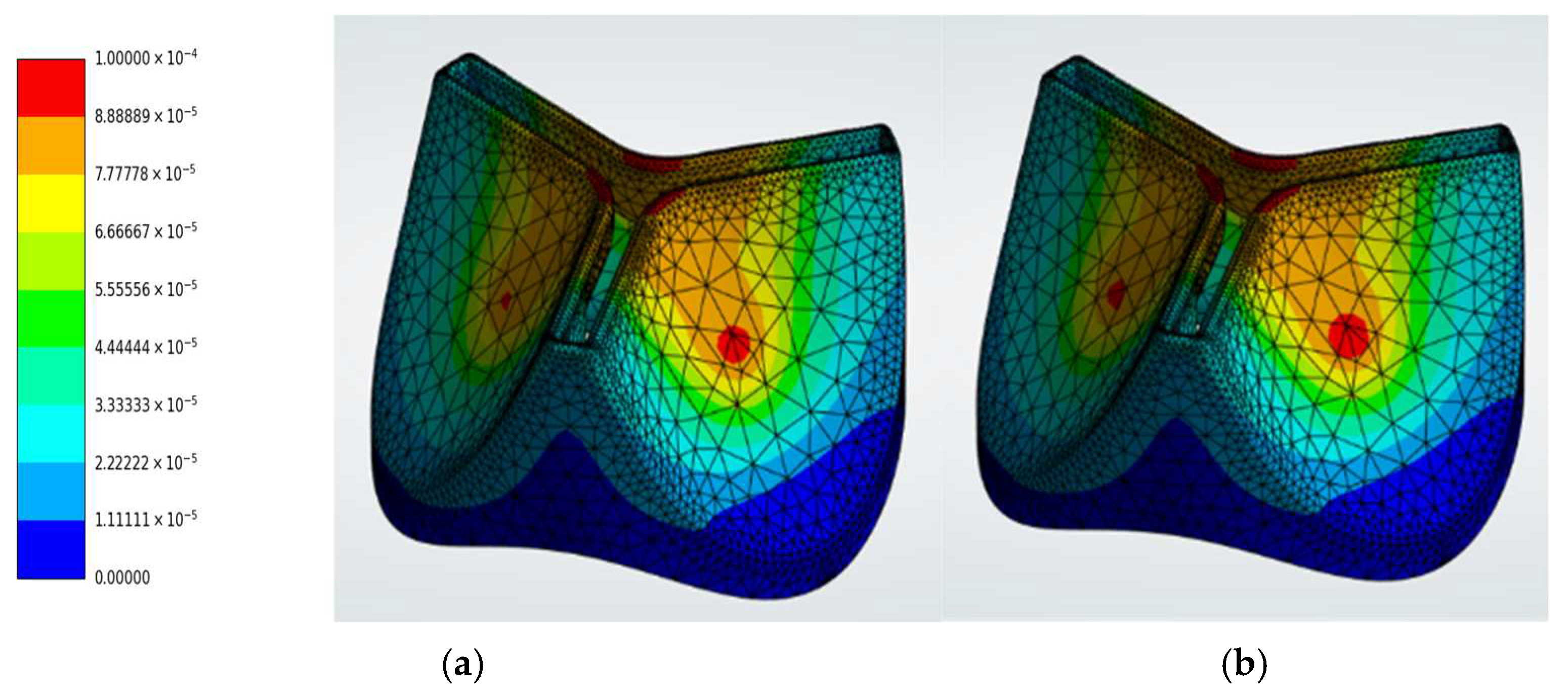


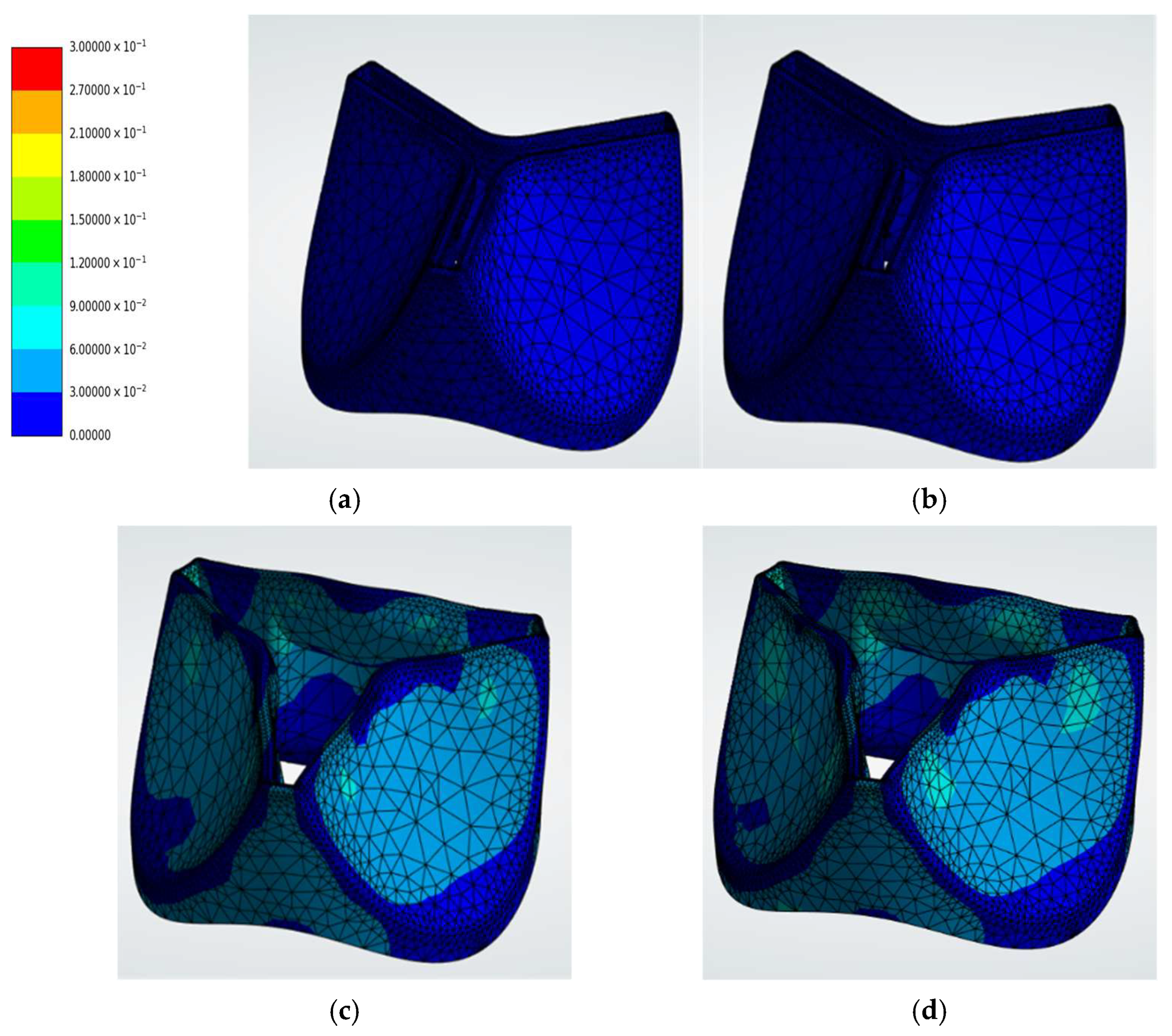








| Material | Model | Max Deformation (m) | Max von Mises Stress (Pa) | Max Principal Stress (Pa) | Max Shear Stress (Pa) | Max Equivalent Strain | Max Strain Energy (J) |
|---|---|---|---|---|---|---|---|
| Pyrolytic Carbon | Linear Elastic | 1.7166 × 10⁻⁸ | 3.4356 × 10⁴ | 5.3069 × 10⁴ | 1.7880 × 10⁴ | 1.2153 × 10⁻⁶ | 2.2149 × 10⁻¹² |
| Polyurethane | Linear Elastic | 7.6515 × 10⁻⁵ | 4.0839 × 10⁴ | 4.9016 × 10⁴ | 2.0937 × 10⁴ | 2.6812 × 10⁻² | 4.0510 × 10⁻⁸ |
| Polyurethane | Viscoelastic | 7.8948 × 10⁻⁵ | 2.1557 × 10⁴ | 5.3712 × 10⁴ | 1.0836 × 10⁴ | 1.9510 × 10⁻² | 2.1683 × 10⁻⁸ |
| Porcine | Linear Elastic | 9.3878 × 10⁻⁵ | 2.6842 × 10⁴ | 4.9068 × 10⁴ | 1.5128 × 10⁴ | 1.8710 × 10⁻¹ | 3.6160 × 10⁻⁷ |
| Porcine | Viscoelastic | 9.3311 × 10⁻⁵ | 2.2118 × 10⁴ | 5.8521 × 10⁴ | 1.1367 × 10⁴ | 2.5102 × 10⁻¹ | 2.6302 × 10⁻⁷ |
| Porcine | Hyperelastic | 9.4845 × 10⁻⁵ | 1.3951 × 10⁴ | 2.8815 × 10⁴ | 9.2030 × 10³ | 1.3287 × 10⁻¹ | 2.5339 × 10⁻⁷ |
| Bovine | Linear Elastic | 9.6104 × 10⁻⁵ | 2.7017 × 10⁴ | 5.6877 × 10⁴ | 1.5237 × 10⁴ | 2.0399 × 10⁻¹ | 3.8541 × 10⁻⁷ |
| Bovine | Viscoelastic | 9.5439 × 10⁻⁵ | 2.2864 × 10⁴ | 5.6551 × 10⁴ | 1.1705 × 10⁴ | 2.4139 × 10⁻¹ | 2.6217 × 10⁻⁷ |
| Bovine | Hyperelastic | 9.6837 × 10⁻⁵ | 1.8603 × 10⁴ | 2.9423 × 10⁴ | 9.3911 × 10³ | 1.4204 × 10⁻¹ | 2.6847 × 10⁻⁷ |
| Material | Representative Lifespan/Durability Information | Clinical Interpretation |
|---|---|---|
| Pyrolytic carbon | Reported durability commonly exceeds 25 years in mechanical heart valves [6,7]. | Clinically established long-term material with excellent durability. |
| Polyurethane | Promising fatigue resistance and hemocompatibility are reported in experimental and preclinical polymeric-valve studies [13,15,16]. | A definitive long-term clinical lifespan has not yet been established because most polyurethane valve studies remain preclinical or developmental. |
| Porcine tissue | Bioprosthetic valves generally show durability on the order of 10–15 years before structural valve deterioration becomes important [12]. | Clinically established but limited by calcification and structural degeneration over time. |
| Bovine tissue | Bioprosthetic valves generally show durability on the order of 10–15 years before structural valve deterioration becomes important [11,12]. | Clinically established with good hemodynamic performance but finite long-term durability. |
Disclaimer/Publisher’s Note: The statements, opinions and data contained in all publications are solely those of the individual author(s) and contributor(s) and not of MDPI and/or the editor(s). MDPI and/or the editor(s) disclaim responsibility for any injury to people or property resulting from any ideas, methods, instructions or products referred to in the content. |
© 2026 by the authors. Licensee MDPI, Basel, Switzerland. This article is an open access article distributed under the terms and conditions of the Creative Commons Attribution (CC BY) license.
Share and Cite
Neupane, S.; Goswami, T. Computational Analysis of Tricuspid Heart Valves. Designs 2026, 10, 57. https://doi.org/10.3390/designs10030057
Neupane S, Goswami T. Computational Analysis of Tricuspid Heart Valves. Designs. 2026; 10(3):57. https://doi.org/10.3390/designs10030057
Chicago/Turabian StyleNeupane, Samikshya, and Tarun Goswami. 2026. "Computational Analysis of Tricuspid Heart Valves" Designs 10, no. 3: 57. https://doi.org/10.3390/designs10030057
APA StyleNeupane, S., & Goswami, T. (2026). Computational Analysis of Tricuspid Heart Valves. Designs, 10(3), 57. https://doi.org/10.3390/designs10030057