
System-Level Design of Photovoltaic Recycling Infrastructure: A Review of Mechanical, Thermal, Chemical, and Laser-Based Technologies



Abstract
1. Introduction
1.1. Research Background and Motivation
1.2. Scope and Contributions of This Review
- System-level design perspective: The paper reframes PV recycling as a system engineering problem, emphasizing process integration, infrastructure configuration, and operational trade-offs across the full recycling value chain.
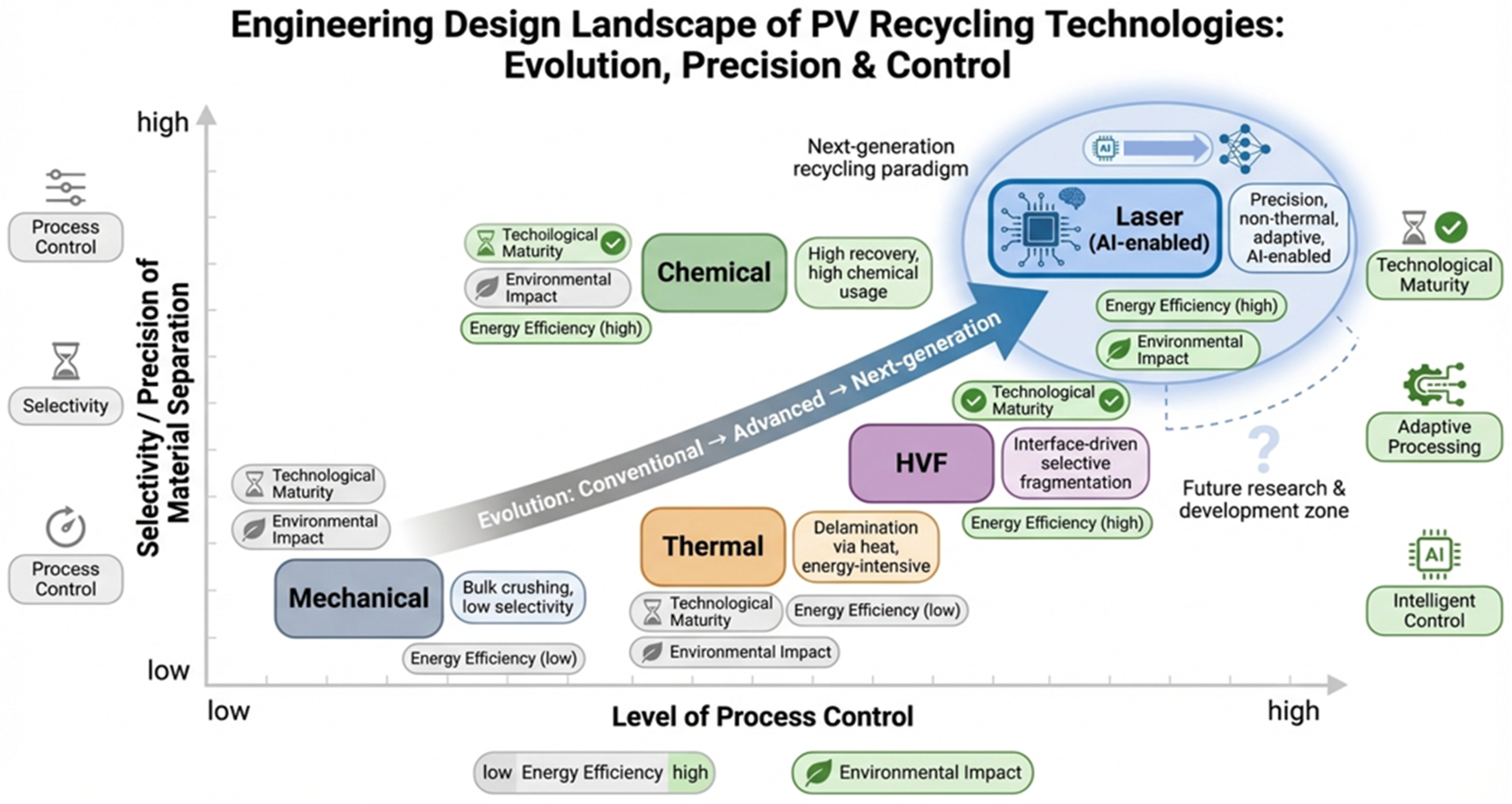
- Unified design space analysis: Mechanical, thermal, chemical, and laser-based technologies are analyzed within a common framework, enabling direct comparison in terms of process control, selectivity, scalability, and system integration potential.
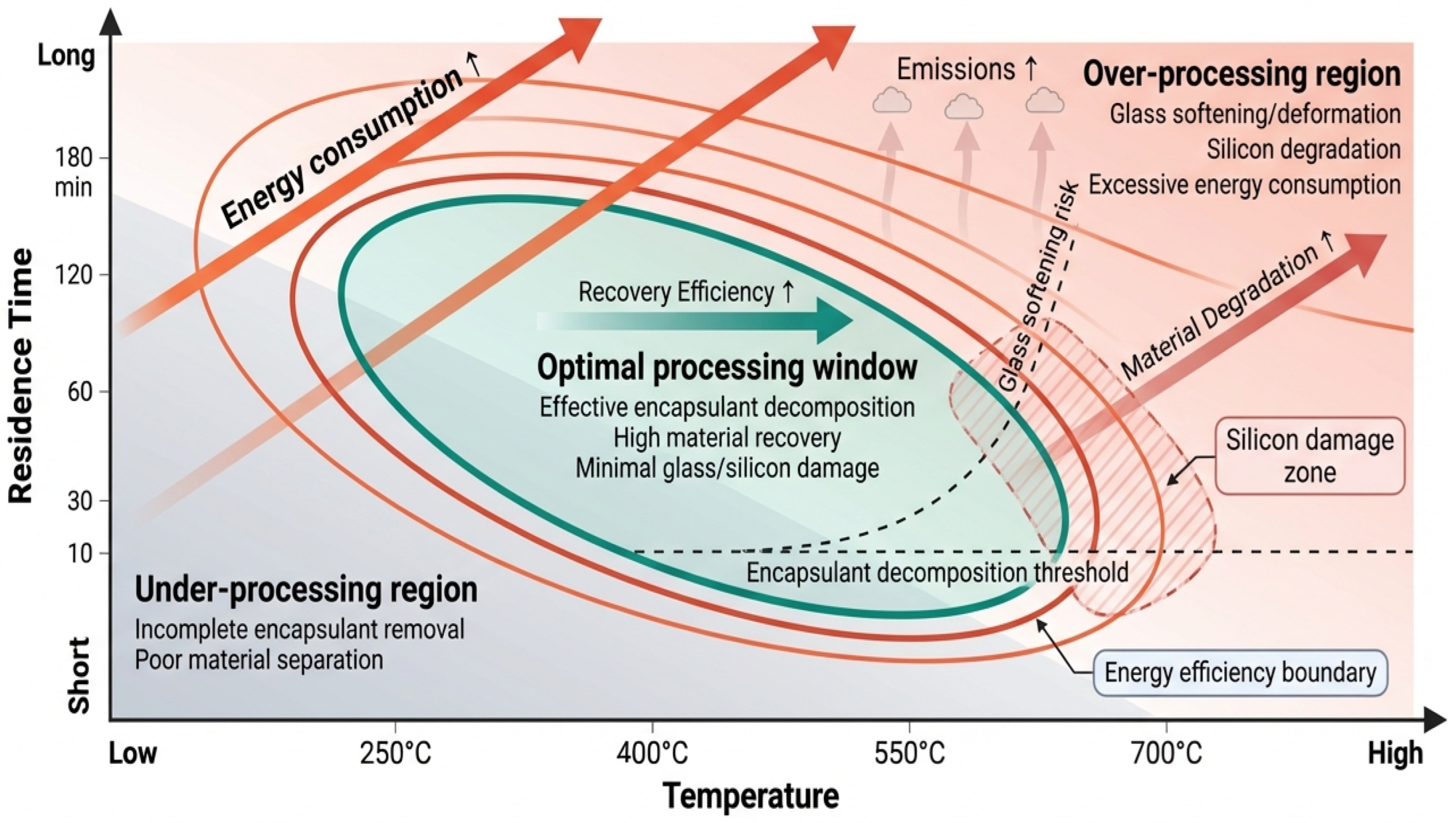
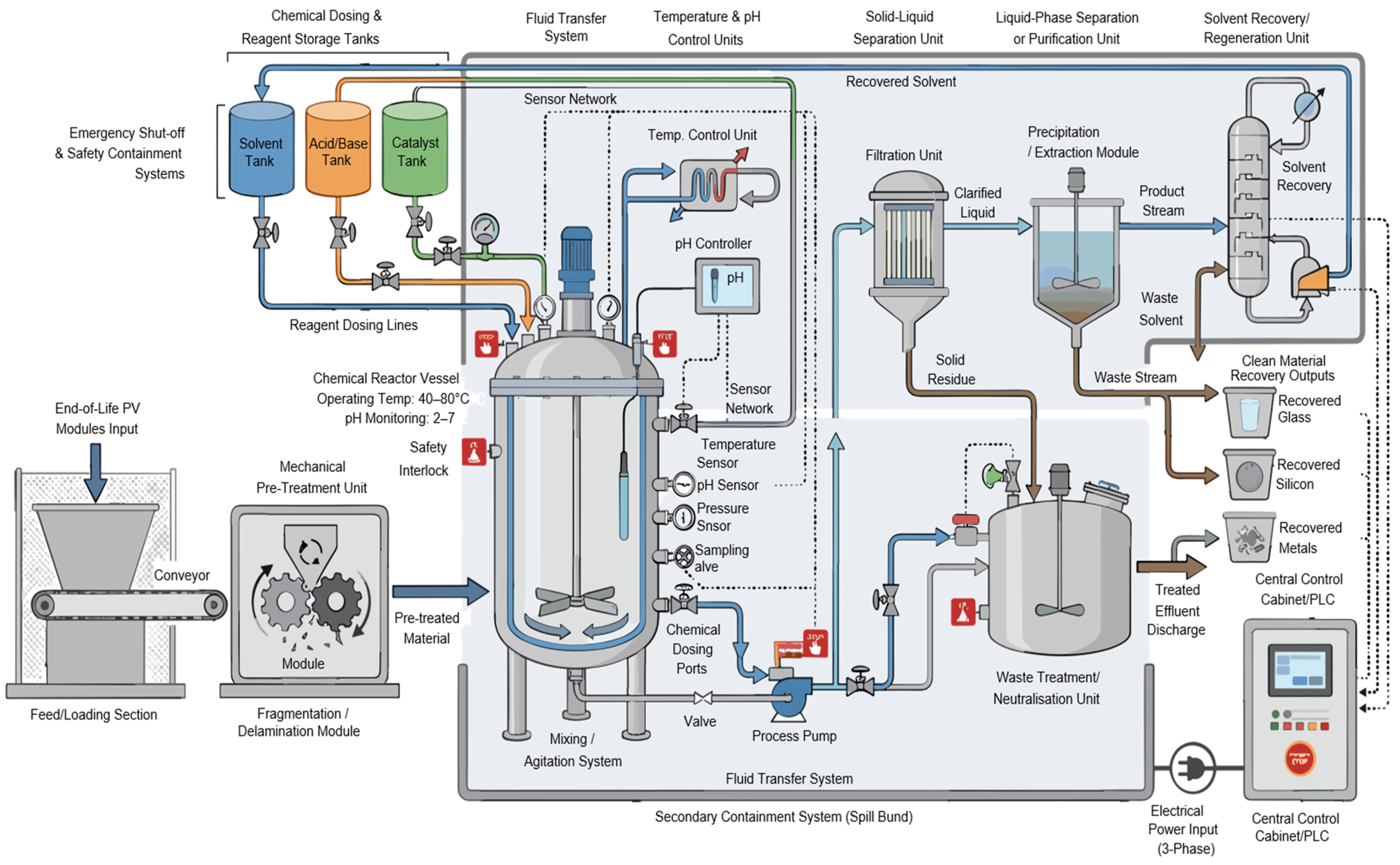
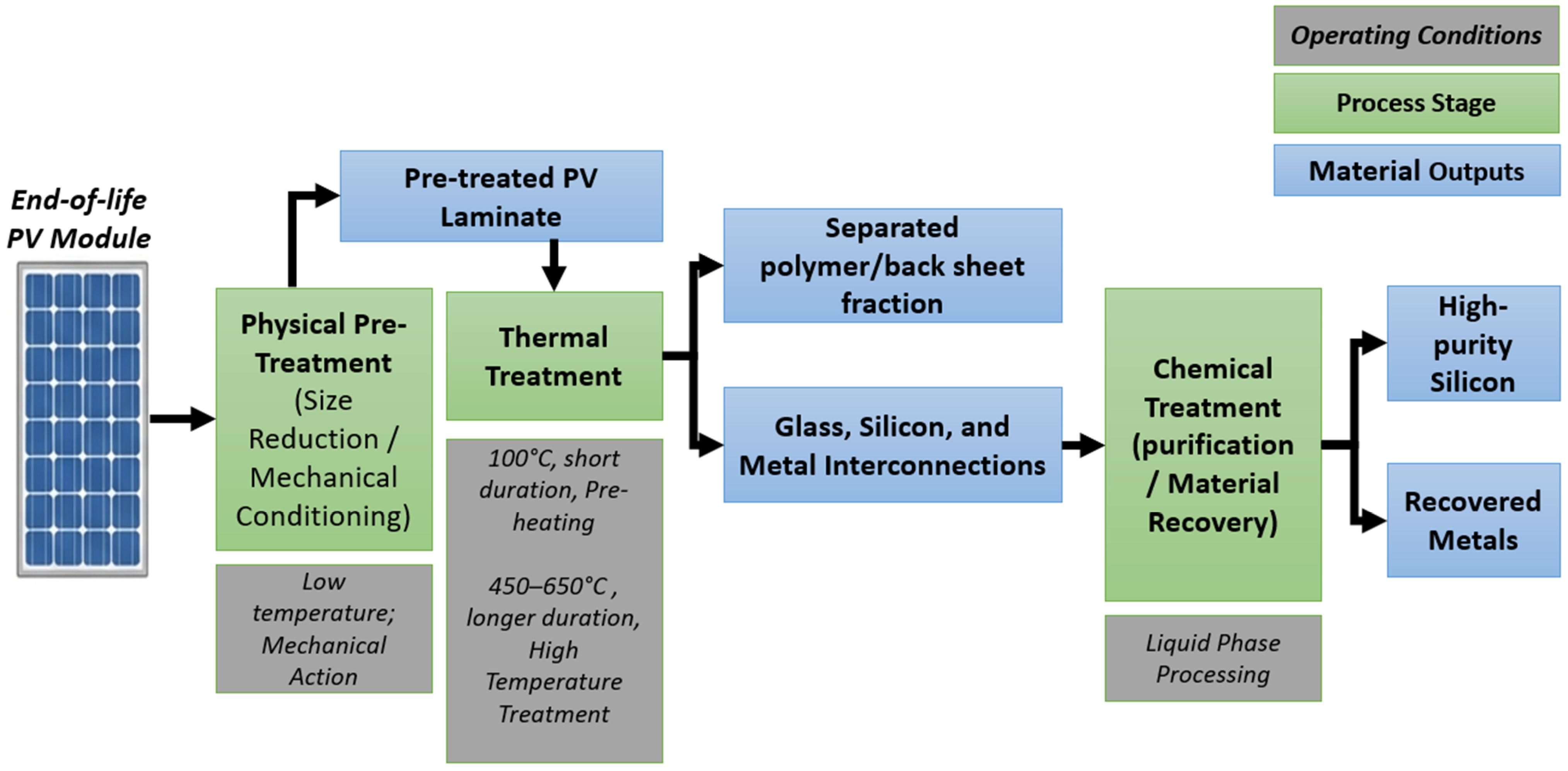
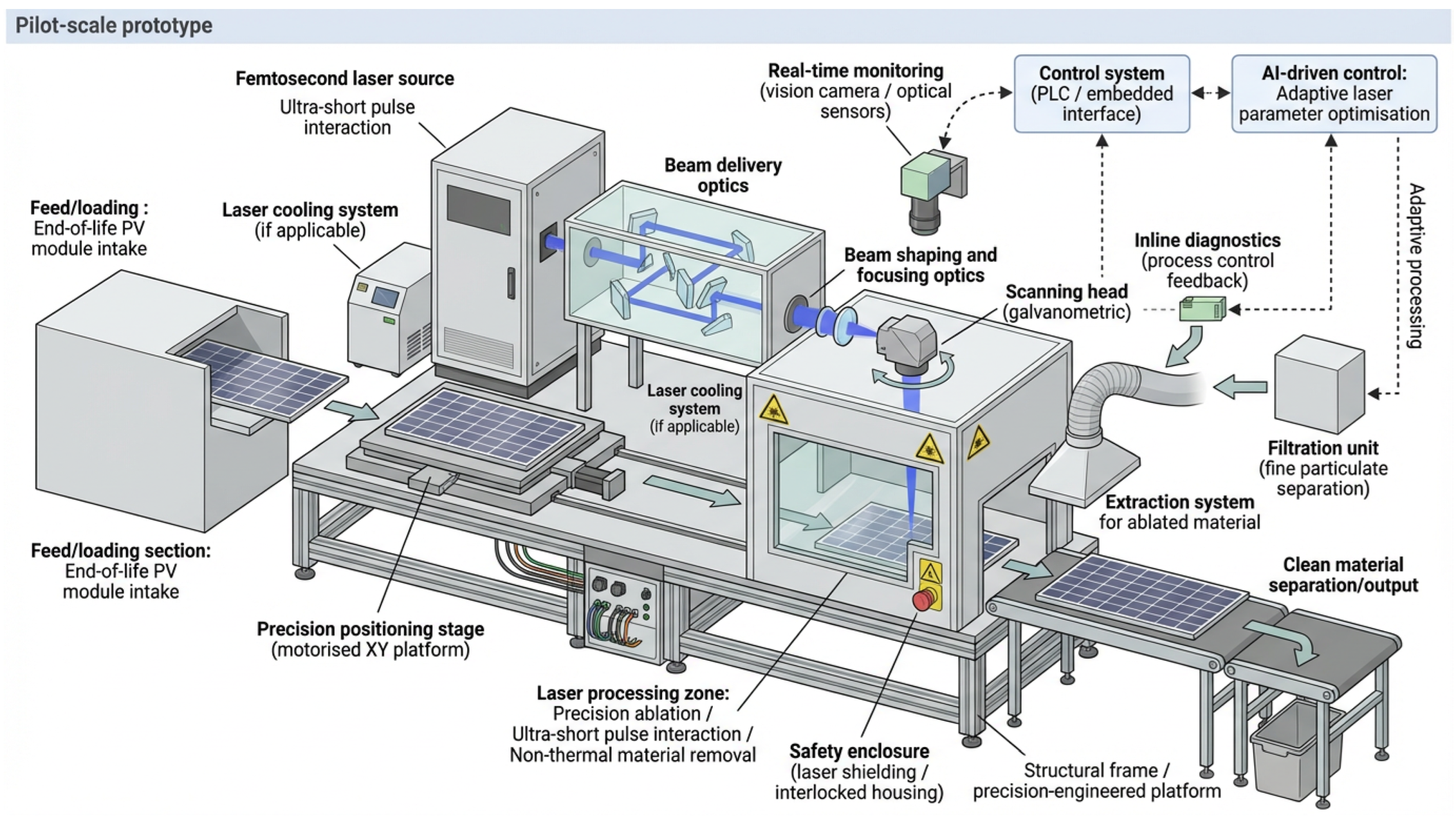
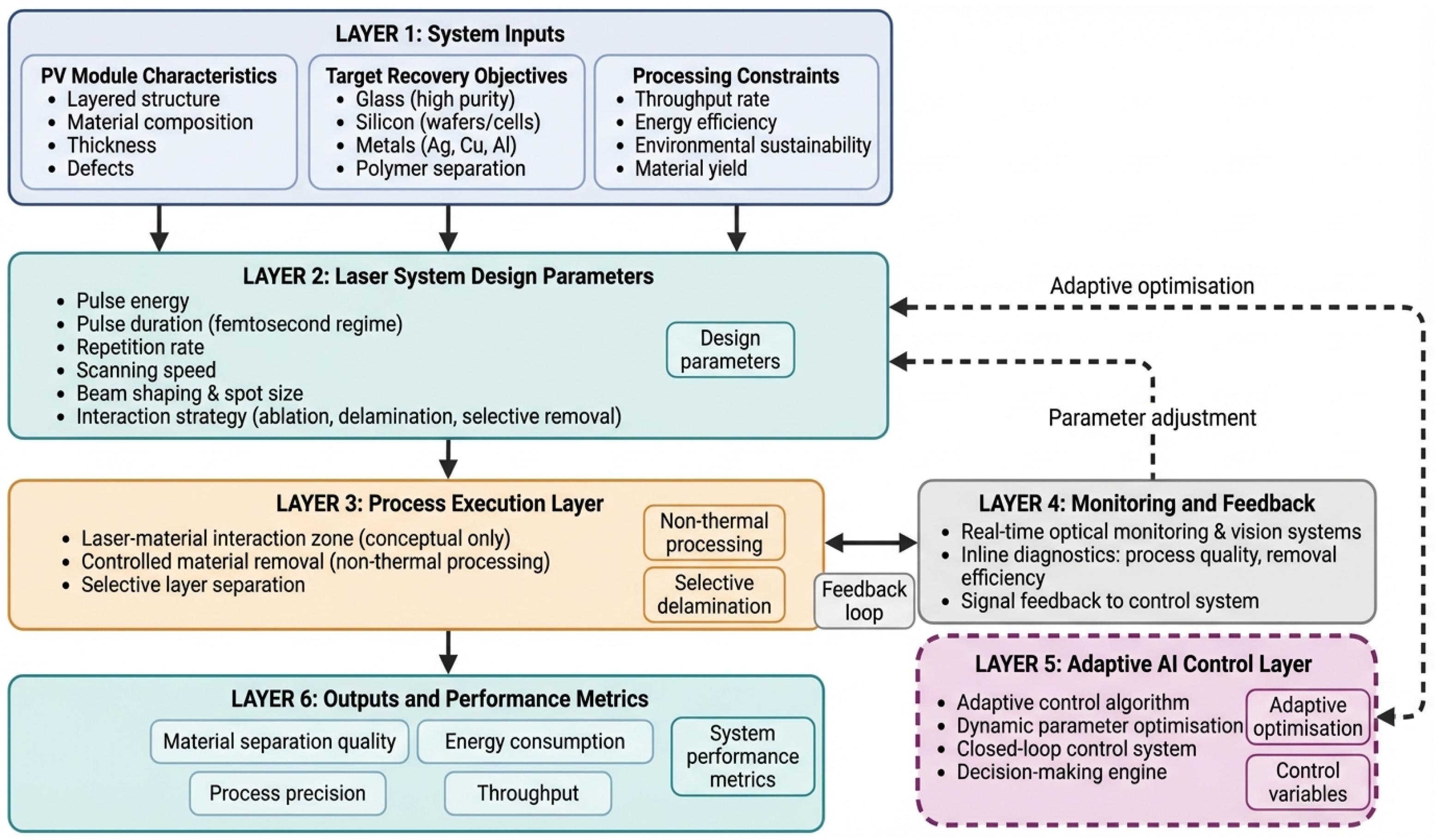
- Introduction of design-oriented frameworks: The study proposes several conceptual tools to support engineering decision-making, including (i) processing window representations for thermal systems, (ii) integrated hybrid process architectures, and (iii) a multi-layer system design framework for laser-based recycling.
- Emphasis on next-generation technologies: Particular attention is given to laser-enabled recycling and AI-driven control systems, positioning them within the broader evolution of PV recycling infrastructures and identifying their potential for precision, adaptability, and high-value material recovery.
- Identification of research and infrastructure gaps: The paper highlights key limitations in current recycling approaches, including challenges related to scalability, system integration, economic feasibility, and adaptability to emerging PV technologies, thereby outlining priorities for future research and industrial development.
1.3. Methodology of the Review
2. Evolution and Design Space of PV Recycling Technologies
2.1. Mechanical-Based EoL PV Recycling
2.2. Thermal-Based EoL PV Recycling
2.3. Chemical-Based EoL PV Recycling
2.4. Laser-Based EoL PV Recycling: The Future Technology
3. Discussion
3.1. System-Level Design Insights and Technological Evolution
3.2. Techno-Economic Considerations of PV Recycling Systems
4. Conclusions
Author Contributions
Funding
Data Availability Statement
Conflicts of Interest
References
- Pain, S.L.; Murphy, J.D. Forecasting solar module waste in the United Kingdom. Energy Strategy Rev. 2025, 61, 101849. [Google Scholar] [CrossRef]
- Säckl, G.; Wallner, G.M.; Duchoslav, J.; Tiefenthaler, M.; Stifter, D. Advanced analysis of ethylene vinyl acetate copolymer materials for photovoltaic modules. Polym. Test. 2024, 132, 108381. [Google Scholar] [CrossRef]
- Wu, D.; Wessel, P.; Zhu, J.; Montiel-Chicharro, D.; Betts, T.R.; Mordvinkin, A.; Gottschalg, R. Influence of lamination conditions of EVA encapsulation on photovoltaic module durability. Materials 2023, 16, 6945. [Google Scholar] [CrossRef]
- Wang, X.; Tian, X.; Chen, X.; Ren, L.; Geng, C. A review of end-of-life crystalline silicon solar photovoltaic panel recycling technology. Sol. Energy Mater. Sol. Cells 2022, 248, 111976. [Google Scholar] [CrossRef]
- Badran, G.; Lazarov, V.K. From waste to resource: Exploring the current challenges and future directions of photovoltaic solar cell recycling. Solar 2025, 5, 4. [Google Scholar] [CrossRef]
- Wang, J.; Feng, Y.; He, Y. Advancements in recycling technologies for waste CIGS photovoltaic modules. Nano Energy 2024, 128, 109847. [Google Scholar] [CrossRef]
- Li, J.; Yan, S.; Li, Y.; Wang, Z.; Tan, Y.; Li, J.; Xia, M.; Li, P. Recycling Si in waste crystalline silicon photovoltaic panels after mechanical crushing by electrostatic separation. J. Clean. Prod. 2023, 415, 137908. [Google Scholar] [CrossRef]
- Wang, J.; Feng, Y.; Shi, M.; He, Y. A comparative study of mechanical crushing and pyrolysis techniques for separation and recovery of discarded polycrystalline silicon photovoltaic modules. Sol. Energy Mater. Sol. Cells 2024, 275, 113020. [Google Scholar] [CrossRef]
- Tummalieh, A.; Beinert, A.J.; Reichel, C.; Mittag, M.; Neuhaus, H. Holistic design improvement of the PV module frame: Mechanical, optoelectrical, cost, and life cycle analysis. Prog. Photovolt. Res. Appl. 2022, 30, 1012–1022. [Google Scholar] [CrossRef]
- Fiandra, V.; Sannino, L.; Andreozzi, C. Photovoltaic waste as source of valuable materials: A new recovery mechanical approach. J. Clean. Prod. 2023, 385, 135702. [Google Scholar] [CrossRef]
- Zubas, A.R.; Goljandin, D.; Ivanauskas, R.; Griškonis, E.; Bonoli, A.; Kruopienė, J.; Denafas, G. Mechanically driven hybrid recycling of polyolefin elastomer glass–glass photovoltaic module for targeted material recovery. Sol. Energy Mater. Sol. Cells 2026, 299, 114221. [Google Scholar] [CrossRef]
- Kulenova, N.; Sadenova, M.; Boldyryev, S. Review of reagent-free electronic waste recycling: Technology, energy, materials and spatial effects. Recycling 2026, 11, 27. [Google Scholar] [CrossRef]
- Roy, M.; Jha, M.K.; Bhattacharya, S. Techno-economic perspectives on solar photovoltaic recycling as an emerging green manufacturing sector in India. Microsyst. Technol. 2025, 31, 1585–1595. [Google Scholar] [CrossRef]
- Padhamnath, P. Recent progress in the recovery and recycling of polymers from end-of-life silicon PV modules. Sustainability 2025, 17, 4583. [Google Scholar] [CrossRef]
- Späth, M.; Wieclawska, S.; Sommeling, P.; Lenzmann, F. Balancing costs and revenues for recycling end-of-life PV panels in the Netherlands. TNO Rep. 2022, R10860. Available online: https://www.stichting-open.org/wp-content/uploads/2022/12/22-12822_tno_rapport_recycling_zonnepanelen_16mvd_hr.pdf (accessed on 23 April 2026).
- Ali, A.; Shahid, M.; Qadir, S.A.; Islam, M.T.; Khan, M.W.; Ahmed, S. Solar PV end-of-life waste recycling: An assessment of mechanical recycling methods and proposed hybrid laser and high voltage pulse crushing method. Resources 2024, 13, 169. [Google Scholar] [CrossRef]
- Song, B.P.; Zhang, M.Y.; Fan, Y.; Jiang, L.; Kang, J.; Gou, T.T.; Zhang, C.L.; Yang, N.; Zhang, G.J.; Zhou, X. Recycling experimental investigation on end-of-life photovoltaic panels by application of high voltage fragmentation. Waste Manag. 2020, 101, 180–187. [Google Scholar] [CrossRef] [PubMed]
- Song, B.P.; Zhang, M.Y.; Fan, Y.; Jiang, L.; Kang, J.; Gou, T.T.; Zhang, C.L.; Yang, N.; Zhang, G.J.; Zhou, X. End-of-life management of bifacial solar panels using high-voltage fragmentation as pretreatment approach. J. Clean. Prod. 2020, 276, 124212. [Google Scholar] [CrossRef]
- Zhao, P.; Guo, J.; Yan, G.; Zhu, G.; Zhu, X.; Zhang, Z.; Zhang, B. A novel and efficient method for resources recycling in waste photovoltaic panels: High voltage pulse crushing. J. Clean. Prod. 2020, 257, 120442. [Google Scholar] [CrossRef]
- Nevala, S.M.; Hamuyuni, J.; Junnila, T.; Sirviö, T.; Eisert, S.; Wilson, B.P.; Serna-Guerrero, R.; Lundström, M. Electro-hydraulic fragmentation vs conventional crushing of photovoltaic panels—Impact on recycling. Waste Manag. 2019, 87, 43–50. [Google Scholar] [CrossRef]
- Zubas, A.R.; Pitak, I.; Denafas, G.; Griškonis, E.; Kruopienė, J. An application of solvent and thermal treatment to recover materials from photovoltaic module encapsulated with polyolefin elastomer. Waste Manag. Res. 2025, 43, 1260–1267. [Google Scholar] [CrossRef]
- Camargo, P.S.S.; Domingues, A.D.S.; Palomero, J.P.G.; Kasper, A.C.; Dias, P.R.; Veit, H.M. Photovoltaic module recycling: Thermal treatment to degrade polymers and concentrate valuable metals. Detritus 2021, 16, 48–62. [Google Scholar] [CrossRef]
- Patthy, G.B.; Závodi-Fodor, Z.; Jakab, M. Assessing the feasibility of integrating a thermal separational method with PV recycling technologies. Thermo 2025, 5, 10. [Google Scholar] [CrossRef]
- Tammaro, M.; Rimauro, J.; Fiandra, V.; Salluzzo, A. Thermal treatment of waste photovoltaic module for recovery and recycling: Experimental assessment of the presence of metals in the gas emissions and in the ashes. Renew. Energy 2015, 81, 103–112. [Google Scholar] [CrossRef]
- Camargo, P.S.S.; Domingues, A.D.S.; Palomero, J.P.G.; Cenci, M.P.; Kasper, A.C.; Dias, P.R.; Veit, H.M. c-Si PV module recycling: Analysis of the use of a mechanical pre-treatment to reduce the environmental impact of thermal treatment and enhance materials recovery. Waste Manag. Res. 2023, 41, 1661–1673. [Google Scholar] [CrossRef]
- Pereira, M.B.; de Souza, G.B.M.; Espinosa, D.C.R.; Pavao, L.V.; Alonso, C.G.; Cabral, V.F.; Cardozo-Filho, L. Simultaneous recycling of waste solar panels and treatment of persistent organic compounds via supercritical water technology. Environ. Pollut. 2023, 335, 122331. [Google Scholar] [CrossRef]
- Calero, M.; Ramírez-Cantero, J.; Pérez-Huertas, S.; Pérez, A.; Mateos, M.; Blázquez, G. Recycling end-of-life solar panels: A comparative study of thermal and solvent delamination techniques. Sol. Energy Mater. Sol. Cells 2026, 295, 113990. [Google Scholar] [CrossRef]
- Bogacka, M.; Potempa, M.; Milewicz, B.; Lewandowski, D.; Pikoń, K.; Klejnowska, K.; Sobik, P.; Misztal, E. PV waste thermal treatment according to the circular economy concept. Sustainability 2020, 12, 10562. [Google Scholar] [CrossRef]
- Gönen, Ç.; Kaplanoğlu, E. Environmental and economic evaluation of solar panel wastes recycling. Waste Manag. Res. 2019, 37, 412–418. [Google Scholar] [CrossRef]
- Deng, R.; Dias, P.R.; Lunardi, M.M.; Ji, J. A sustainable chemical process to recycle end-of-life silicon solar cells. Green Chem. 2021, 23, 10157–10167. [Google Scholar] [CrossRef]
- Azeumo, M.F.; Germana, C.; Ippolito, N.M.; Franco, M.; Luigi, P.; Settimio, S. Photovoltaic module recycling: A physical and a chemical recovery process. Sol. Energy Mater. Sol. Cells 2019, 193, 314–319. [Google Scholar] [CrossRef]
- Padoan, F.C.; Altimari, P.; Pagnanelli, F. Recycling of end-of-life photovoltaic panels: A chemical perspective on process development. Sol. Energy 2019, 177, 746–761. [Google Scholar] [CrossRef]
- Kavousi, M.; Alamdari, E.K. A comprehensive and sustainable recycling process for different types of blended end-of-life solar panels: Leaching and recovery of valuable base and precious metals and/or elements. Metals 2023, 13, 1677. [Google Scholar] [CrossRef]
- Wang, O.; Ma, X. Innovating the recycling of silicon-based solar panels with an eco-friendly alkaline leaching process. Resour. Conserv. Recycl. 2024, 211, 107887. [Google Scholar] [CrossRef]
- Akhter, M.; Al Mansur, A.; Islam, M.I.; Lipu, M.H.; Karim, T.F.; Abdolrasol, M.G.; Alghamdi, T.A. Sustainable strategies for crystalline solar cell recycling: A review on recycling techniques, companies, and environmental impact analysis. Sustainability 2024, 16, 5785. [Google Scholar] [CrossRef]
- Tao, M.; Fthenakis, V.; Ebin, B.; Steenari, B.M.; Butler, E.; Sinha, P.; Corkish, R.; Wambach, K.; Simon, E.S. Major challenges and opportunities in silicon solar module recycling. Prog. Photovolt. Res. Appl. 2020, 28, 1077–1088. [Google Scholar] [CrossRef]
- Zhang, Z.; Liu, M.; Wang, L.; Zeng, X.; Cao, X.; Yan, J.; Zhou, Y. Indium recycling pathways from heterojunction solar cells: Processes, challenges, and prospects. Renew. Sustain. Energy Rev. 2026, 231, 116789. [Google Scholar] [CrossRef]
- Ali, A.; Malik, S.A.; Shafiullah, M.; Malik, M.Z.; Zahir, M.H. Policies and regulations for solar photovoltaic end-of-life waste management: Insights from China and the USA. Chemosphere 2023, 340, 139840. [Google Scholar] [CrossRef] [PubMed]
- Zou, X.; Ma, M.; Zhou, G.; Xu, Y.; Wu, J.; Brohi, M.A.; Li, D.; Xu, S.; Sang, W. Efficiently and greenly removal of EVA encapsulant from photovoltaic modules: A sequential swelling-dissolution approach. Sol. Energy Mater. Sol. Cells 2026, 295, 113923. [Google Scholar] [CrossRef]
- Sim, Y.; Ankit; Tay, Y.B.; Ravikumar, D.; Mathews, N. Open challenges and opportunities in photovoltaic recycling. Nat. Rev. Electr. Eng. 2025, 2, 96–109. [Google Scholar] [CrossRef]
- Li, X.; Liu, H.; You, J.; Diao, H.; Zhao, L.; Wang, W. Back EVA recycling from c-Si photovoltaic module without damaging solar cell via laser irradiation followed by mechanical peeling. Waste Manag. 2022, 137, 312–318. [Google Scholar] [CrossRef]
- Varlamov, P.; Marx, J.; Elgueta, Y.U.; Ostendorf, A.; Kim, J.W.; Vavassori, P.; Temnov, V. Femtosecond laser ablation and delamination of functional magnetic multilayers at the nanoscale. Nanomaterials 2024, 14, 1488. [Google Scholar] [CrossRef] [PubMed]
- Reduan, M.T.; Mativenga, P. Comparing picosecond to femtosecond laser pulse duration in laser cleaning processes with a focus on diamond-like carbon (DLC) coating removal. Int. J. Adv. Manuf. Technol. 2026; in press. [CrossRef]
- He, Z.; Lei, L.; Lin, S.; Tian, S.; Tian, W.; Yu, Z.; Li, F. Metal material processing using femtosecond lasers: Theories, principles, and applications. Materials 2024, 17, 3386. [Google Scholar] [CrossRef]
- Abdelmalek, A.; Kotsedi, L.; Bedrane, Z.; Amara, E.H.; Girolami, M.; Maaza, M. Optical and thermal behavior of germanium thin films under femtosecond laser irradiation. Nanomaterials 2022, 12, 3786. [Google Scholar] [CrossRef] [PubMed]
- Yildirim, K.; Nagarajan, B.; Tjahjowidodo, T.; Castagne, S. Development of a multi-sensor system for in-situ process monitoring of femtosecond laser micromachining. Int. J. Adv. Manuf. Technol. 2024, 135, 799–813. [Google Scholar] [CrossRef]
- Mohanavel, V.; Gandhimathi, G.; Bhardwaj, D.; Kavitha, M.; Ramkumar, G.; Ishwarya, M.V.; Ali, M. Deep learning-guided femtosecond laser processing in optical materials and devices for nano fabrication advancements. Opt. Quantum Electron. 2024, 56, 210. [Google Scholar] [CrossRef]
- Wang, R.; Li, Y.; Yang, F.; Wang, Z.; Dong, J.; Yuan, C.; Lu, X. PLC-based laser scanning system for conveyor belt surface monitoring. Sci. Rep. 2024, 14, 27914. [Google Scholar] [CrossRef]
- Khetri, M.; Gupta, M.C. Recycling of silver from CIGS solar cells using laser ablation and debonding. Sol. Energy Mater. Sol. Cells 2025, 282, 113381. [Google Scholar] [CrossRef]
- Anwar, T.B.; Hanson, K.M.; Lam, K.; Bardeen, C.J. Using nanosecond laser pulses to debond the glass–EVA layer from silicon photovoltaic modules. Waste Manag. 2024, 187, 275–284. [Google Scholar] [CrossRef]
- Mathur, A.; Bahadur, P.S. Laser-assisted green manufacturing: Advancing environmental sustainability. In Laser Materials Processing and Manufacturing Techniques; Wiley-Scrivener: Austin, TX, USA, 2026; pp. 301–322. [Google Scholar]
- Ye, M.; Sun, J.; Chen, Z.; Tao, W.; Lian, Y.; Yang, Z. Controlling the morphologies of femtosecond laser-induced periodic surface structure on silicon by combining deep learning with energy deposition model. Mater. Des. 2024, 242, 113021. [Google Scholar] [CrossRef]
- Liu, J.; Wang, Y.; Zhao, H.; Yao, J.; Li, F.; Zhao, X. Optimization and cross-model validation of femtosecond laser processed nickel surface structural parameters based on deep learning. Opt. Laser Technol. 2026, 199, 114982. [Google Scholar] [CrossRef]
- Lim, D.W.; Kim, M.; Choi, P.; Yoon, S.J.; Lee, H.T.; Kim, K. Hole depth prediction in a femtosecond laser drilling process using deep learning. Micromachines 2023, 14, 743. [Google Scholar] [CrossRef]
- Ding, Y.; Wang, C.; Jia, X.; Liu, L.; Gao, Z.; Jiang, X.; Wang, S.; Yan, D.; Lin, N.; Li, Z.; et al. Machine learning-driven optimization of burst femtosecond laser processing for high-performance anti-reflective windows. ACS Appl. Mater. Interfaces 2025, 17, 65300–65309. [Google Scholar] [CrossRef]
- Bénard, A.; Sitta, R.; Brezin, A.P.; Cochener, B.; Monnet, D.; Denis, P.; Pisella, P.J.; Hayes, N.; Schweitzer, C. Cost utility and value of information analysis of femtosecond laser–assisted cataract surgery. JAMA Ophthalmol. 2023, 141, 625–629. [Google Scholar] [CrossRef]
- Raoufi, K.; Sutherland, J.W.; Zhao, F.; Clarens, A.F.; Rickli, J.L.; Fan, Z.; Huang, H.; Wang, Y.; Lee, W.J.; Mathur, N.; et al. Current state and emerging trends in advanced manufacturing: Smart systems. Int. J. Adv. Manuf. Technol. 2024, 134, 3031–3050. [Google Scholar] [CrossRef]
- Fuertes, G.; Zamorano, J.; Alfaro, M.; Vargas, M.; Sabattin, J.; Duran, C.; Ternero, R.; Rivera, R. Opportunities of the technological trends linked to Industry 4.0 for achieve sustainable manufacturing objectives. Sustainability 2022, 14, 11118. [Google Scholar] [CrossRef]
- Hu, Y.; Jia, Q.; Yao, Y.; Lee, Y.; Lee, M.; Wang, C.; Zhou, X.; Xie, R.; Yu, F.R. Industrial internet of things intelligence empowering smart manufacturing: A literature review. IEEE Internet Things J. 2024, 11, 19143–19167. [Google Scholar] [CrossRef]
- Faircloth, C.C.; Wagner, K.H.; Woodward, K.E.; Rakkwamsuk, P.; Gheewala, S.H. The environmental and economic impacts of photovoltaic waste management in Thailand. Resour. Conserv. Recycl. 2019, 143, 260–272. [Google Scholar] [CrossRef]
- Liu, C.; Zhang, Q.; Wang, H. Cost-benefit analysis of waste photovoltaic module recycling in China. Waste Manag. 2020, 118, 491–500. [Google Scholar] [CrossRef] [PubMed]
- Dias, P.; Schmidt, L.; Lunardi, M.M.; Chang, N.L.; Spier, G.; Corkish, R.; Veit, H. Comprehensive recycling of silicon photovoltaic modules incorporating organic solvent delamination—Technical, environmental and economic analyses. Resour. Conserv. Recycl. 2021, 165, 105241. [Google Scholar] [CrossRef]
- D’Adamo, I.; Ferella, F.; Gastaldi, M.; Ippolito, N.M.; Rosa, P. Circular solar: Evaluating the profitability of a photovoltaic panel recycling plant. Waste Manag. Res. 2023, 41, 1144–1154. [Google Scholar] [CrossRef]
- Wang, Q.; Wang, Y.; Huang, B.; Wang, Y.; Wang, X.; Long, Y.; Dou, Y. Techno-economic and environmental assessment of closed-loop photovoltaic recycling in China. Sustain. Prod. Consum. 2025, 56, 1–12. [Google Scholar] [CrossRef]
- Scarpulla, M.A.; McCandless, B.; Phillips, A.B.; Yan, Y.; Heben, M.J.; Wolden, C.; Xiong, G.; Metzger, W.K.; Mao, D.; Krasikov, D.; et al. CdTe-based thin film photovoltaics: Recent advances, current challenges and future prospects. Sol. Energy Mater. Sol. Cells 2023, 255, 112289. [Google Scholar] [CrossRef]
- Manimaran, U.; Dangate, M.S. A review on conducting materials in CdTe photovoltaic cells. ACS Omega 2025, 10, 23858–23872. [Google Scholar] [CrossRef] [PubMed]
- Sivasankar, S.M.; Amorim, C.D.O.; Cunha, A.F.D. Progress in thin-film photovoltaics: A review of key strategies to enhance the efficiency of CIGS, CdTe, and CZTSSe solar cells. J. Compos. Sci. 2025, 9, 143. [Google Scholar] [CrossRef]
- Balraj, B.; Raja, M.; Prabhu, T.V.; Balaji, M.; Chandrasekaran, J.; Nagarajan, S.K.; Bharathi, M.; Lee, S.; Sivakumar, C. A critical review on decade progress and future prospects of P3HT:PCBM bulk heterojunction solar cells. Sol. Energy 2025, 297, 113574. [Google Scholar] [CrossRef]
- Li, Y.; Liu, Z.; Yao, K.; Jen, A.K.Y. Perovskite-based tandem solar cells toward commercial application. Adv. Energy Mater. 2026, 16, e03826. [Google Scholar] [CrossRef]
- Talukder, M.J.; Akteruzzaman, M.; Hasan, Z.; Haque, E. Advances in high-efficiency solar photovoltaic materials: A comprehensive review of perovskite and tandem cell technologies. Am. J. Adv. Technol. Eng. Solut. 2025, 1, 201–225. [Google Scholar] [CrossRef]





| Ref./Year | Recycling Method | Key Economic Findings |
|---|---|---|
| [60]/2019 | Mechanical recycling in an existing laminated-glass recycling facility versus hybrid full-recovery recycling (FRELP) | Neither recycling route was economically profitable under the case assumptions, although recycling cost could be as low as USD 0.03/kg. The study argues that a dedicated PV recycling plant only becomes relevant as waste flows approach ~8000 t/yr. |
| [61]/2020 | Hybrid overall recovery process with collection, transport, disassembly, glass stripping/grinding, heat treatment, and chemical treatment | Recovery cost was USD 25.11/kW, benefit USD 25.68/kW, and net benefit USD 0.57/kW. Reported net present value= USD 21.14 million and benefit–cost ratio= 1.023. On a mass basis, annual unit cost and benefit were USD 334.83/t and USD 342.37/t. |
| [62]/2021 | Hybrid/advanced: organic-solvent delamination followed by downstream thermal and leaching steps | Net cost was USD 29.00/module at laboratory scale and USD 3.30/module for the optimized high-throughput case. The authors conclude that complete material recovery is unlikely to be profitable under median assumptions. |
| [63]/2023 | Plant-level recycling business-case model; route is not the paper’s main comparison variable | For a 3000 t/yr recycling plant, profitability is not verified in the absence of an avoided landfill cost. |
| [64]/2025 | Comparative closed-loop scenarios: full recovery (R1), aluminum + glass recovery (R2), and aluminum-only recovery (R3) | R1 had the best economics with return on investment (ROI) = 52.17%. R2 achieved ROI = 39.53% with an initial investment 47.1% lower than R1. R3 performed poorly with ROI = −31.00%. Environmentally, normalized benefits were 2.98 for R1 and 2.73 for R2; R1 also reduced toxic impacts by 35%. |
Disclaimer/Publisher’s Note: The statements, opinions and data contained in all publications are solely those of the individual author(s) and contributor(s) and not of MDPI and/or the editor(s). MDPI and/or the editor(s) disclaim responsibility for any injury to people or property resulting from any ideas, methods, instructions or products referred to in the content. |
© 2026 by the authors. Licensee MDPI, Basel, Switzerland. This article is an open access article distributed under the terms and conditions of the Creative Commons Attribution (CC BY) license.
Share and Cite
Dhimish, M.; Poulsen, P.B. System-Level Design of Photovoltaic Recycling Infrastructure: A Review of Mechanical, Thermal, Chemical, and Laser-Based Technologies. Designs 2026, 10, 47. https://doi.org/10.3390/designs10030047
Dhimish M, Poulsen PB. System-Level Design of Photovoltaic Recycling Infrastructure: A Review of Mechanical, Thermal, Chemical, and Laser-Based Technologies. Designs. 2026; 10(3):47. https://doi.org/10.3390/designs10030047
Chicago/Turabian StyleDhimish, Mahmoud, and Peter Behrensdorff Poulsen. 2026. "System-Level Design of Photovoltaic Recycling Infrastructure: A Review of Mechanical, Thermal, Chemical, and Laser-Based Technologies" Designs 10, no. 3: 47. https://doi.org/10.3390/designs10030047
APA StyleDhimish, M., & Poulsen, P. B. (2026). System-Level Design of Photovoltaic Recycling Infrastructure: A Review of Mechanical, Thermal, Chemical, and Laser-Based Technologies. Designs, 10(3), 47. https://doi.org/10.3390/designs10030047