1. Introduction
The excessive consumption of fossil fuels has driven tremendous demand for renewable energy sources—such as solar, wind, and hydropower—that are both environmentally sustainable and economically viable to meet the extensive demands of today’s energy market [
1,
2,
3]. Electrochemical energy storage (EES) has emerged as a promising solution to mitigate the intermittency and variability inherent in these renewable sources, attracting significant research interest [
4]. Aqueous zinc-ion batteries (AZIBs) have emerged as strong candidates for large-scale EES due to their low redox potential (−0.76 V vs. SHE), high theoretical specific capacity (819 mAh g
−1), and abundant Zn metal resources [
5,
6,
7]. Moreover, AZIBs typically employ non-flammable aqueous electrolytes instead of organic electrolytes, making them safer metal-based batteries compared to those using other types of electrolytes [
8]. However, the Zn anode in current aqueous zinc-ion batteries still faces several challenges, such as dendrite growth, hydrogen evolution reaction (HER), and side reactions. Moreover, these challenges are interrelated, forming a vicious cycle: during Zn
2+ deposition/stripping, the non-uniform deposition of Zn
2+ leads to the formation of zinc dendrites; the growth of dendrites increases the exposed surface area of the Zn anode, thereby accelerating HER. When HER occurs in the aqueous electrolyte, the local pH near the Zn anode increases, which induces the formation of by-products [
9,
10,
11]. In addition, the strong interaction between Zn
2+ and solvated H
2O molecules weakens the O–H bonds in water, facilitating the release of H
+, which further causes severe hydrogen evolution reaction (HER) during Zn
2+ deposition.
To date, researchers have made numerous efforts to enhance the application prospects of aqueous zinc-ion batteries, such as surface modification of Zn anodes [
12] and the introduction of electrolyte additives [
13]. Among the aforementioned strategies, the introduction of electrolyte additives has attracted extensive research interest due to their simple processing, precise dosage control, and cost-effectiveness. To date, various additives have been employed to improve the electrochemical performance of aqueous zinc-ion batteries, including inorganic additives, ionic additives, and metallic additives. For instance, ZnCl
2 has been used to construct highly concentrated electrolytes to suppress HER; however, such high-concentration electrolytes may pose potential corrosiveness to battery components. Consequently, organic electrolyte additive systems have gained increasing attention, such as N,N-dimethylformamide (DMF)-based electrolytes [
14], carbonate-based electrolytes [
15], and dimethyl sulfoxide (DMSO)-based electrolytes. For example, Liu et al. developed a DMF–H
2O hybrid electrolyte in which DMF enters the Zn
2+ solvation sheath; however, a certain amount of H
2O remains in the solvation sheath, resulting in insufficient suppression of HER [
16]. Xu et al. introduced an organic electrolyte additive that enhances the interaction between Zn
2+ and water molecules while reducing the average coordination number of Zn
2+, enabling a Zn symmetric cell to achieve a cycling lifespan of 3000 h at 1 mA cm
−2 [
17]. Qiu et al. found that adding 50 vol% DMSO together with 0.1 M H
2SO
4 to a 2 M ZnSO
4 electrolyte system widens the operating voltage window to 0.8–1.9 V (vs. Zn
2+/Zn), suppresses oxygen evolution side reactions at the cathode, and enables ZnMn
2O
4 to deliver a capacity of 207 mAh g
−1 at 0.1 A g
−1 [
18]. Feng et al. reported that introducing 20 vol% DMSO reshapes the (Zn(H
2O)
6)
2+ solvation sheath into [Zn(H
2O)
m(DMSO)
n]
2+, effectively suppressing dendrite growth and allowing the Zn||Zn symmetric cell to cycle stably for over 2100 h at 20 °C [
19]. Collectively, these studies highlight a fundamental trade-off in current electrolyte engineering strategies: high additive concentrations effectively suppress side reactions but compromise ionic transport, while low concentrations maintain conductivity but fail to completely eliminate water-induced degradation. As a widely studied class of electrolyte additives, organic molecules containing specific functional groups such as –N–, –O–, S=O, and C=O have been demonstrated to form hydrogen bonds with H
2O, thereby modulating the solvation structure of Zn
2+ [
20]. Although polar solvents like dimethyl sulfoxide (DMSO) have been extensively incorporated into aqueous zinc-ion battery electrolytes, current approaches commonly face a dilemma: “high dosage—high viscosity” versus “low dosage—residual water—insufficient suppression of side reactions.” Specifically, when the DMSO volume fraction exceeds 50%, the operating voltage window of the ZnMn
2O
4 cathode can be extended to 0.8–1.9 V, delivering a capacity of 207 mAh g
−1; however, this leads to significantly increased electrolyte viscosity. In contrast, when DMSO is limited to below 20 vol%, a large amount of active water remains in the (Zn(H
2O)
6)
2+ solvation shell, resulting in only partial suppression of hydrogen evolution and dendrite growth, and limiting the symmetric cell cycling lifetime to approximately 2100 h. Although various organic additives have been employed to modulate the solvation structure, most of them struggle to precisely manipulate the crystallographic orientation of Zn deposition.
Moreover, it is worth noting that the crystallographic orientation of zinc directly determines its deposition morphology and cycling stability. Recent work by Liu et al. has demonstrated that, compared to the commonly observed (002) plane, the (101)-oriented zinc exhibits lower lattice mismatch, higher atomic adsorption energy, and a more uniform electric field distribution, which collectively promote vertically aligned, dense epitaxial growth and thereby significantly enhance the cycling lifetime of symmetric cells [
21]. Nevertheless, achieving such a preferred (101) orientation while simultaneously constructing a robust solvation shell and shielding the interface usually requires high concentrations or complex formulations. Realizing this dual regulation with a simplified, low-dosage electrolyte system remains a formidable challenge. Therefore, developing a low-dosage, synergistic regulation strategy that simultaneously targets both the solvation structure and the interface chemistry is imperatively desired.
Motivated by the aforementioned challenges and the intrinsic stability of the Zn (101) crystal plane, this work proposes an “ionic liquid–polar solvent coupling” strategy employing trace amounts of 0.01 M EMIMBF4 and 0.03 M DMSO. Mechanistically, DMSO penetrates both the primary and secondary solvation shells of Zn2+, while BF4− anions occupy the primary shell, collectively reconstructing the solvation environment and significantly attenuating Zn2+–H2O interactions. At the interface, EMIM+ cations accumulate within the Helmholtz layer to provide an electrostatic shielding effect that repels interfacial water molecules, while the S=O groups of DMSO form a hydrogen-bonding network with bulk water to effectively suppress the hydrogen evolution reaction (HER). This synergistic modulation of interfacial chemistry and crystallographic orientation orchestrates vertical, dense preferred Zn growth along the Zn(101) plane, thereby eliminating the “tip effect” and inducing a compact SEI rich in ZnCO3, ZnSO3, and Zn(OH)2. Consequently, the Zn||Zn symmetric cells encapsulate an ultralong lifespan of 5362 h, and Zn||Cu cells achieve nearly 1400 cycles with an average Coulombic efficiency of 99.8% (at 1 mA cm−2, 1 mAh cm−2). This study presents a facile, low-dosage, and universally applicable electrolyte engineering protocol for high-performance aqueous zinc-ion batteries.
3. Results and Discussion
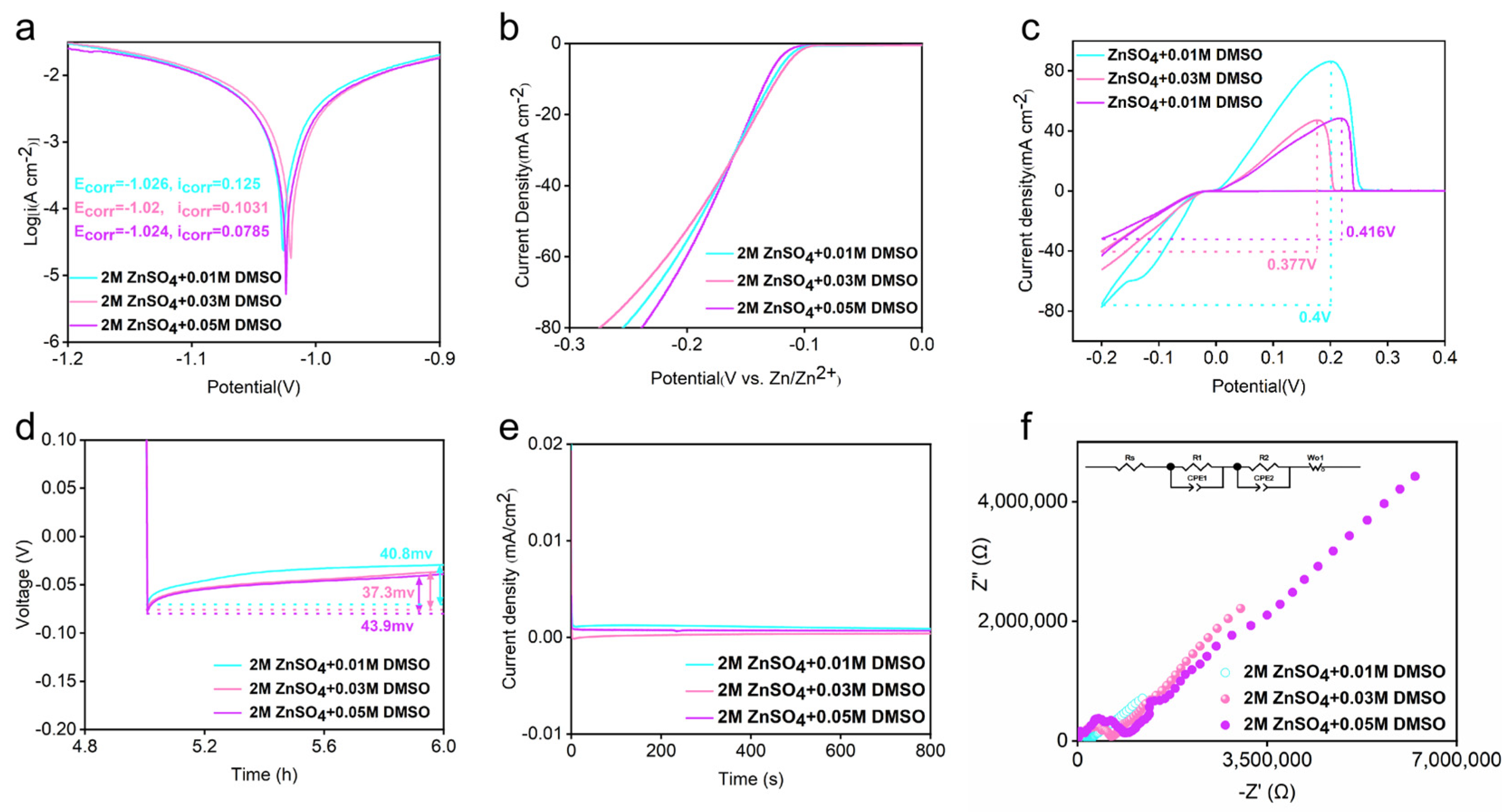
To investigate the effect of DMSO additive on side reactions at the Zn anode, Tafel curves and linear sweep voltammetry (LSV) curves of the Zn anode in different electrolyte systems were examined. As shown in
Figure 1, the corrosion potential of 2 M ZnSO
4 + 0.03 M DMSO is −1.02 V, which is superior to those of the other two compositions. Moreover, 2 M ZnSO
4 + 0.03 M DMSO exhibits a lower onset potential, indicating that it provides the best suppression of the hydrogen evolution reaction (HER). Cyclic voltammetry (CV) reveals that the potential difference for 2 M ZnSO
4 + 0.03 M DMSO is smaller (from 0.416 V to 0.377 V) compared to the other two compositions, suggesting a lower energy barrier and higher reversibility.
From the nucleation overpotentials of the three compositions, it can be seen that the nucleation barrier at 1 mA cm−2 in the 2 M ZnSO4 + 0.03 M DMSO electrolyte is 37.3 mV, which is lower than that in 2 M ZnSO4 + 0.01 M DMSO (40.8 mV) and 2 M ZnSO4 + 0.05 M DMSO (43.9 mV), demonstrating that the concentration of 0.03 M DMSO is more favorable for uniform Zn2+ deposition compared to the other concentrations. At a relatively low DMSO concentration, DMSO can interact with H2O through the S=O group and partially disrupt the continuous hydrogen-bond network among water molecules. This reduces the activity of free water and facilitates a more stable Zn deposition process. Meanwhile, DMSO can also participate in the local Zn2+ solvation/desolvation environment, thereby lowering the Zn nucleation barrier.
However, when the DMSO concentration is further increased, excessive DMSO may increase the viscosity of the electrolyte and weaken Zn2+ transport kinetics. It may also lead to stronger Zn2+–DMSO interactions, which increase the desolvation difficulty at the electrode surface. As a result, the Zn nucleation process is no longer continuously promoted at higher DMSO concentrations. Therefore, an optimal DMSO concentration exists at which the balance between water-activity suppression and Zn2+ transport/desolvation kinetics is achieved.
The chronoamperometry (CA) curves show that all three compositions rapidly enter stable three-dimensional diffusion behavior, indicating that the DMSO additive can quickly form a stable and uniform diffusion boundary layer on the electrode surface. Electrochemical impedance spectroscopy (EIS) further reveals that the solution resistance increases with rising DMSO concentration, which may be attributed to the stronger interaction between DMSO and Zn2+ that raises the migration energy barrier.
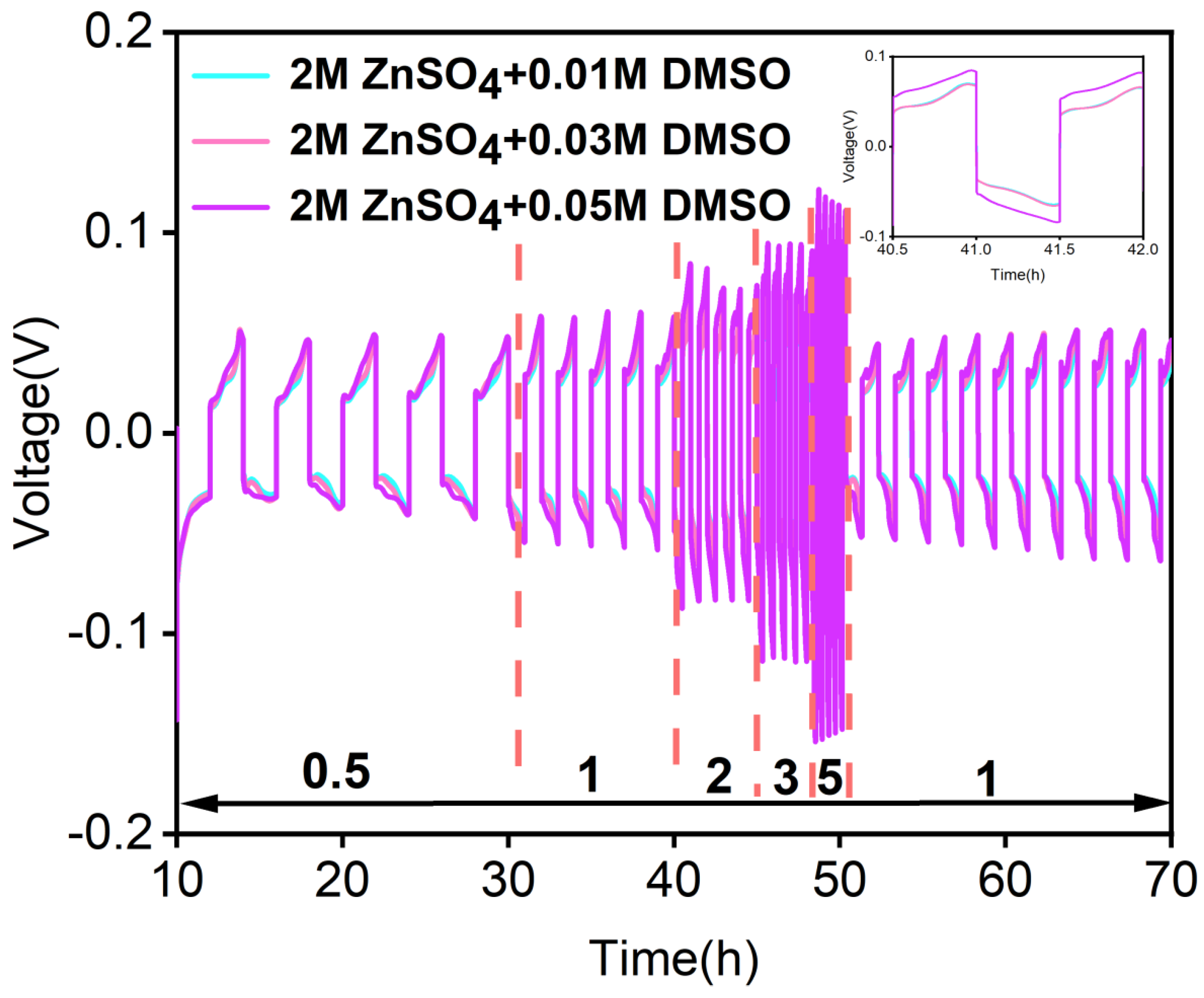
Figure 2 shows the rate performance of Zn||Zn cells with different DMSO concentrations at current densities ranging from 0.5 mA cm
−2 to 5 mA cm
−2. As can be seen from the figure, 2 M ZnSO
4 + 0.01 M DMSO and 2 M ZnSO
4 + 0.03 M DMSO exhibit similar polarization voltages, both of which are lower than that of 2 M ZnSO
4 + 0.05 M DMSO, indicating that the additive concentrations of 0.01 M and 0.03 M DMSO provide better stability during Zn deposition/stripping.
Combining the above electrochemical characterization results, it is evident that among the three groups with 0.01 M, 0.03 M, and 0.05 M DMSO added to 2 M ZnSO4, the 0.03 M DMSO concentration offers both the lowest nucleation barrier and effective suppression of hydrogen evolution, and is therefore selected as the DMSO concentration for subsequent experiments.
Once Zn metal comes into contact with an aqueous solution, it spontaneously triggers the hydrogen evolution reaction (HER), thereby exacerbating the self-corrosion of the Zn anode [
22]. To demonstrate the protective effect of the EMIMBF
4-DMSO composite additive system, morphological and phase analyses were performed on the Zn anodes of Zn||Zn symmetric cells after 20 cycles in three different electrolyte systems: ZnSO
4 electrolyte, 2 M ZnSO
4 + 0.01 M EMIMBF
4, and 2 M ZnSO
4 + 0.01 M EMIMBF
4 + 0.03 M DMSO.
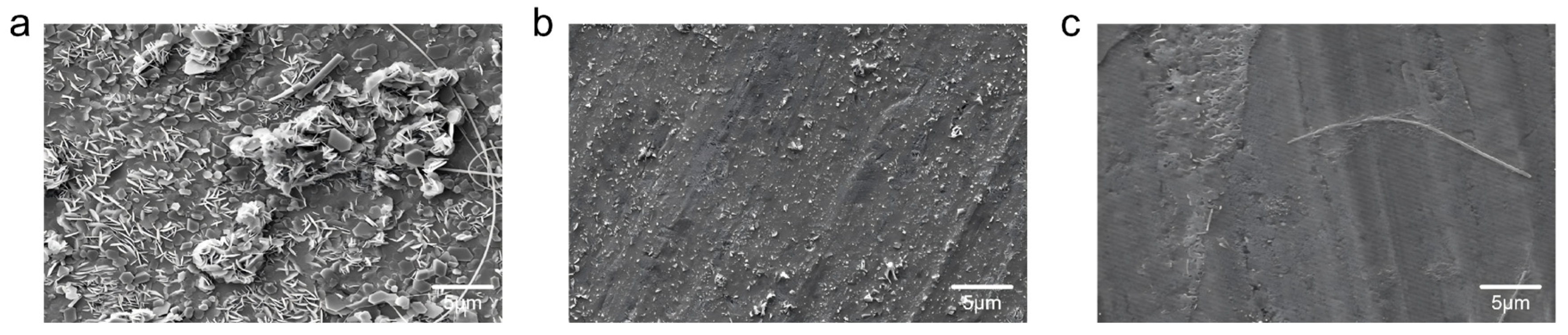
Figure 3 shows that in pure ZnSO
4 electrolyte, dense flake-like by-products form on the anode surface, resulting from the inherent surface roughness of metallic Zn and the gradual growth and accumulation of zinc dendrites, indicating severe corrosion of the Zn surface. After 20 cycles in 2 M ZnSO
4 electrolyte with 0.01 M EMIMBF
4, the anode surface retains a relatively flat morphology, with only a small amount of flake-like by-products observed. In contrast, after 20 cycles in the 2 M ZnSO
4 + 0.01 M EMIMBF
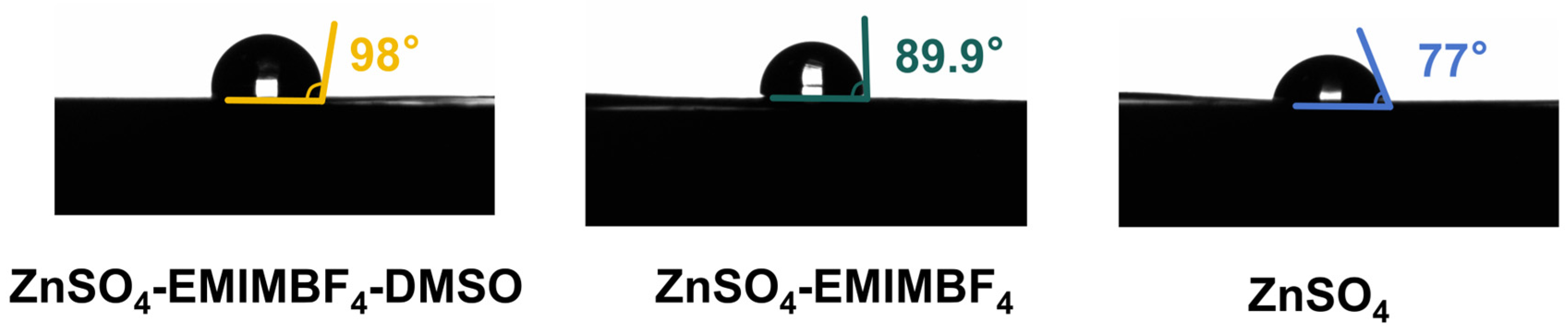
4 + 0.03 M DMSO electrolyte system, the deposited zinc is tightly adhered to the substrate, forming a dense and flat deposition layer. Static contact angle measurements were conducted to evaluate the wettability between the Zn electrode and various electrolytes (
Figure 4). The contact angle results further show that, compared to the additive-free electrolyte (77°), the Zn surface becomes significantly more hydrophobic in the presence of EMIMBF
4 (89.9°) and EMIMBF
4 + DMSO (98°), indicating the formation of a hydrophobic interfacial layer [
23].
To further investigate the composition of the by-products, X-ray diffraction (XRD) tests were conducted on the original pure zinc foil and the Zn anodes cycled in 2M ZnSO
4 electrolyte, 2M ZnSO
4 + 0.01M EMIMBF
4, and 2 M ZnSO
4 + 0.01 M EMIMBF
4 + 0.03 M DMSO electrolyte for 20 cycles.
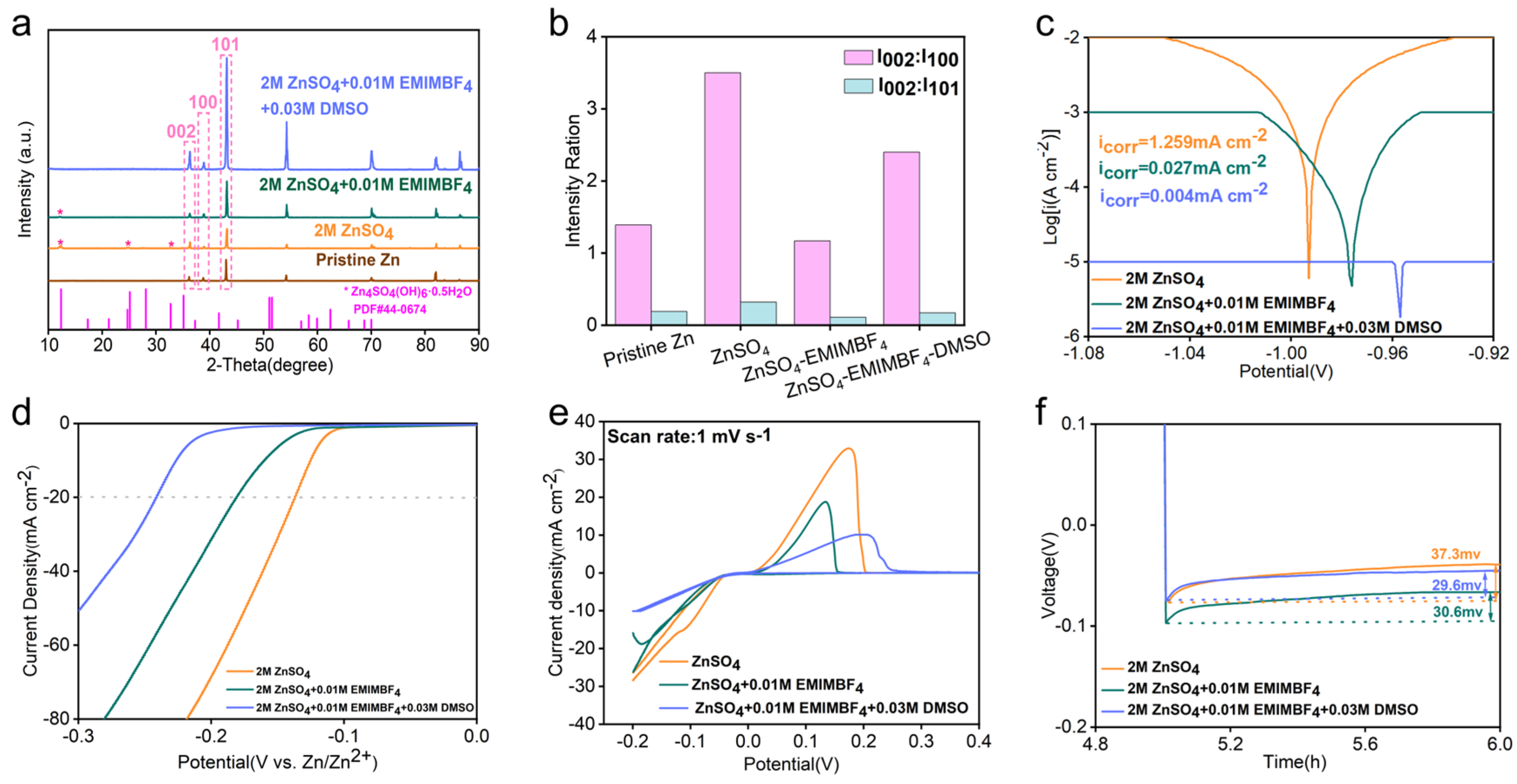
Figure 5a shows that after cycling in a 2M ZnSO
4 electrolyte without the addition of EMIMBF
4, three new sets of diffraction peaks appear at 12.3°, 24.7°, and 32.8° on the recycled zinc foil. By comparison with the Inorganic Crystal Structure Database (ICSD), these by-products are identified as Zn
4SO
4(OH)
6·0.5H
2O (PDF#44-0674). However, when cycled in the electrolyte containing EMIMBF
4, the number of by-product peaks on the zinc foil is significantly reduced, with only one diffraction peak observed at 12.3°. This indicates that the addition of EMIMBF
4 can effectively reduce the formation of by-products during cycling, thereby mitigating the corrosion of the Zn surface and potentially enhancing the stability and efficiency of the battery. This finding highlights the beneficial role of EMIMBF
4 as an additive in electrolytes, which not only improves the morphological stability of the zinc anode but also reduces unwanted side reactions leading to by-product formation. This indicates that EMIMBF
4 possesses a certain degree of anti-corrosion effect. However, in the 2 M ZnSO
4 + 0.01 M EMIMBF
4 + 0.03 M DMSO system, almost no diffraction peaks are observed. Furthermore, analysis of the intensity ratios of different crystal planes from XRD (
Figure 5b) shows that the ratios I
002/I
100 and I
002/I
101 for Zn(002) to Zn(101) and Zn(002) to Zn(100), respectively, were examined. In the ZnSO
4 electrolyte, these ratios increased from 1.39 and 0.19 for bare zinc to 3.50 and 0.32, indicating that Zn primarily grows along the (002) plane. With the addition of EMIMBF
4, the I
002/I
100 ratio continues to rise, suggesting an increase in the exposure of the (100) plane, leading to its preferential growth [
24]. The Zn(100) plane has a higher surface energy compared to the Zn(002) plane [
25], and during Zn deposition, rapid growth of the (100) plane without protection can easily trigger the “tip effect,” resulting in the formation of Zn dendrites [
26]. Notably, the specific adsorption of EMIM+ on the (100) crystal plane acts as a “terminator,” effectively reducing the interfacial energy of the (100) crystal plane and dynamically suppressing vertical growth rates along that direction; By limiting the deposition rate perpendicular to the (100) plane, this additive promotes lateral diffusion and merger of zinc nuclei, shifting the deposition pattern from tip-driven dendrite growth to planar filling. Protecting the Zn(100) plane and controlling its growth along the (100) direction is an effective way to inhibit Zn dendrites.
Additionally, due to the high surface energy, the Zn(100) surface is prone to severe side reactions, and covering the high-energy surface also helps suppress side reactions. Protecting the Zn(100) plane and controlling its growth along the (100) direction is an effective approach to suppress Zn dendrites. In the EMIMBF
4-DMSO electrolyte, the ratios I
002/I
101 and I
002/I
100 increased from 0.11 and 1.17 in the 2 M ZnSO
4 + 0.01 M EMIMBF
4 system to 0.17 and 2.4, indicating that the EMIMBF
4-DMSO electrolyte promotes preferential growth of Zn along the (101) plane. Compared to the (002) plane, Zn grown along the (101) plane maintains a stable vertical epitaxial growth pattern with faster mass transfer kinetics, which is conducive to sustained and stable regulation. Moreover, compared to the (100) plane, growth along the (101) plane more effectively releases strain, thereby providing higher stability [
27].
To further verify the suppression effect of the EMIMBF
4–DMSO additive system on side reactions, Tafel and linear sweep voltammetry (LSV) tests were performed on metallic Zn in three electrolytes: ZnSO
4, 2 M ZnSO
4 + 0.01 M EMIMBF
4, and 2 M ZnSO
4 + 0.01 M EMIMBF
4 + 0.03 M DMSO. As shown in
Figure 5c, upon addition of only 0.01 M EMIMBF
4, the corrosion potential of Zn shifts positively from −0.993 V to −0.976 V, and the corrosion current density decreases dramatically from 1.259 mA cm
−2 to 0.027 mA cm
−2, indicating that EMIMBF
4 significantly suppresses corrosion. With the further introduction of 0.03 M DMSO, the corrosion potential shifts further positively to −0.957 V, and the corrosion current density drops to 0.004 mA cm
−2, confirming that the DMSO additive provides even stronger inhibition of corrosion reactions and results in the lowest corrosion tendency among the tested systems. Moreover, linear sweep voltammetry (LSV) tests (
Figure 5d) further support the above conclusion: the addition of EMIMBF
4 shifts the onset potential of the hydrogen evolution reaction (HER) to more negative values, indicating that EMIMBF
4 can suppress hydrogen gas evolution and confirming its inhibitory effect on HER. Contact angle tests shown in
Figure 4 show that, compared to additive-free electrolytes, the zinc surface becomes significantly hydrophobic in the presence of EMIMBF
4. This result corroborates the significant reduction in corrosion current in the Tafel curve (from 1.259 mA cm
−2 to 0.0267 mA cm
−2) and the negative shift of the HER starting potential in LSVs. Upon further addition of DMSO, the HER onset potential shifts even further negatively, demonstrating that DMSO can provide additional suppression of HER.
To investigate the regulatory effect of the EMIMBF
4 additive on the anodic electrode interface (AEI) during Zn deposition,
Figure 5e presents the cyclic voltammetry (CV) curves of Zn||Cu cells in ZnSO
4, 2 M ZnSO
4 + 0.01 M EMIMBF
4, and 2 M ZnSO
4 + 0.01 M EMIMBF
4 + 0.03 M DMSO electrolytes. The CV curves reveal that the 2 M ZnSO
4 + 0.01 M EMIMBF
4 + 0.03 M DMSO electrolyte system exhibits a wider electrochemical window compared to both ZnSO
4 and 2 M ZnSO
4 + 0.01 M EMIMBF
4. Furthermore, the nucleation overpotential of 2 M ZnSO
4 + 0.01 M EMIMBF
4 + 0.03 M DMSO is lower than that of 2 M ZnSO
4 and 2 M ZnSO
4 + 0.01 M EMIMBF
4, indicating that this electrolyte system further promotes nucleation kinetics [
28]. In addition, compared with pure ZnSO
4 and 2 M ZnSO
4 + 0.01 M EMIMBF
4, the CV curve of 2 M ZnSO
4 + 0.01 M EMIMBF
4 + 0.03 M DMSO shows a lower peak current, suggesting that Zn
2+ deposition/stripping proceeds with a higher energy barrier [
1].
Figure 5f shows the deposition overpotentials of Zn||Cu cells in ZnSO
4, 2 M ZnSO
4 + 0.01 M EMIMBF
4, and 2 M ZnSO
4 + 0.01 M EMIMBF
4 + 0.03 M DMSO electrolytes. In the 2 M ZnSO
4 + 0.01 M EMIMBF
4 electrolyte, the nucleation barrier at 1 mA cm
−2 is 30.6 mV, lower than that in the ZnSO
4 electrolyte (37.3 mV), demonstrating that the addition of EMIMBF
4 increases the number of nucleation sites on the Zn surface, thereby reducing the nucleation barrier and facilitating uniform Zn
2+ deposition. Moreover, in the 2 M ZnSO
4 + 0.01 M EMIMBF
4 + 0.03 M DMSO system, the nucleation barrier at 1 mA cm
−2 is further reduced to only 29.6 mV—lower than that in the EMIMBF
4-only system—further confirming that the 2 M ZnSO
4 + 0.01 M EMIMBF
4 + 0.03 M DMSO electrolyte can increase nucleation sites and lower the energy barrier more effectively, thus significantly promoting uniform Zn
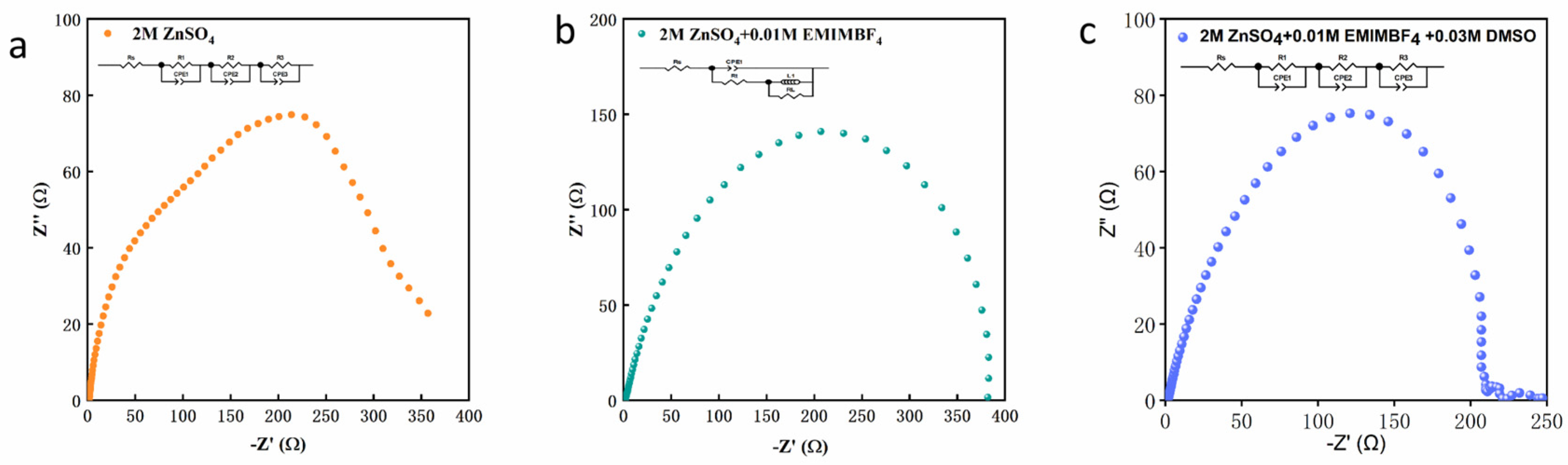
2+ deposition. In addition, electrochemical impedance spectroscopy (EIS) was employed to investigate interfacial Zn
2+ transport in Zn||Zn symmetric cells (
Figure 6). The addition of EMIMBF
4 reduces the charge transfer resistance, and with the further incorporation of DMSO, the charge transfer resistance is substantially decreased, confirming enhanced reaction kinetics. A large charge transfer resistance impedes the Zn deposition process, which explains the poor cycling performance observed in the ZnSO
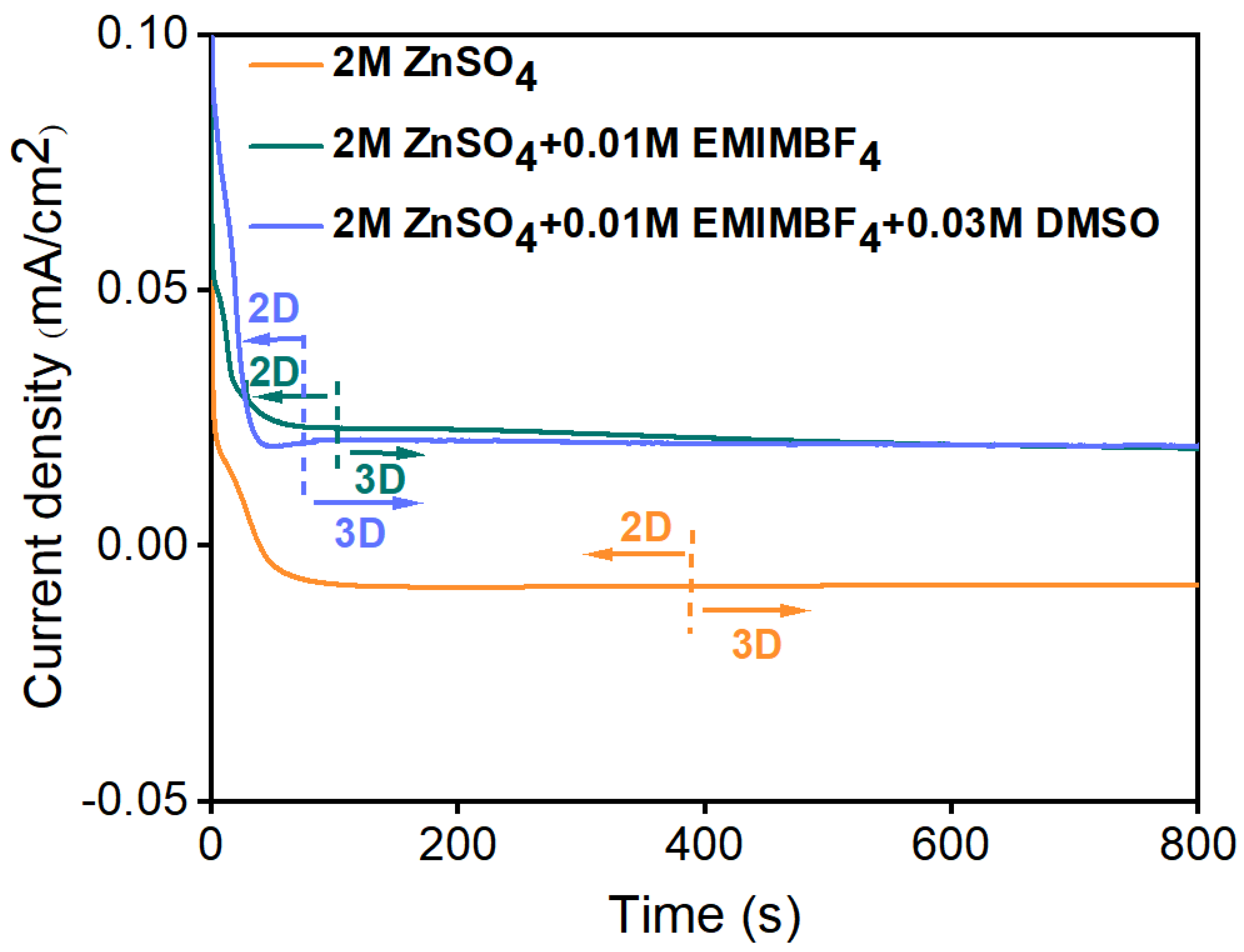
4 electrolyte. To further investigate the diffusion effects of different additives, current–time (CA) curves were measured at a constant overpotential of −150 mV. As shown in
Figure 7, the CA curves provide insights into the initial nucleation process and surface evolution Clearly, the 2 M ZnSO
4 + 0.01 M EMIMBF
4 + 0.03 M DMSO electrolyte system initially exhibits transient two-dimensional diffusion, which rapidly transitions to nearly stable three-dimensional diffusion behavior. In contrast, the CA curve for the 2 M ZnSO
4 electrolyte shows that the current density of the Zn anode only reaches a stable three-dimensional diffusion after approximately 400 s. This indicates that the 2 M ZnSO
4 + 0.01 M EMIMBF
4 + 0.03 M DMSO electrolyte enhances the planarity, uniformity, and compactness of Zn deposition [
29], thereby effectively suppressing dendrite growth.
To comprehensively reflect the regulatory effect of the EMIMBF
4 + DMSO additives on the Zn
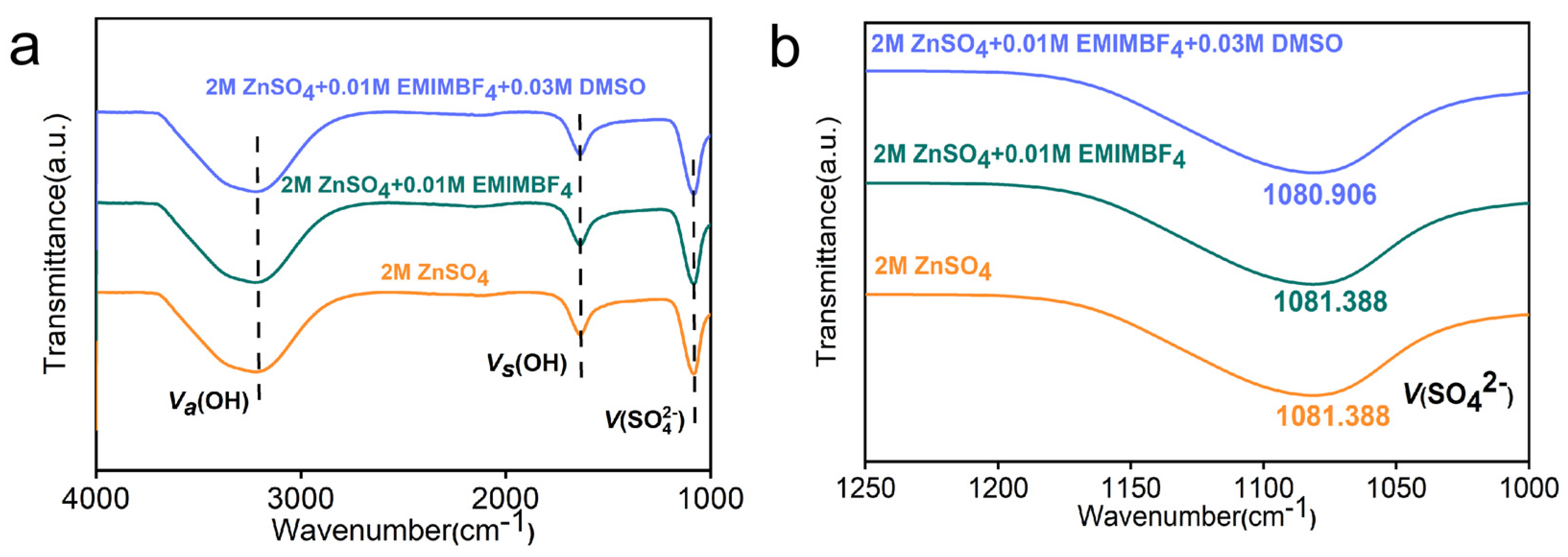
2+ solvation structure, Fourier transform infrared (FTIR) spectroscopy tests were conducted (
Figure 8a–c). In the ZnSO
4 solution, the O-H bond stretching peak at 3221.504 cm
−1 indicates that SO
42− forms a stable solvation structure with Zn
2+. Upon the introduction of EMIMBF
4, EMIM
+ expels interfacial water molecules to the outer Helmholtz plane and partially replaces water, while BF
4− enters the first solvation shell. This leads to a slight blue shift of the O-H stretching peak to 3224 cm
−1 due to the weakening of the hydrogen bonding network. Additionally, BF
4− can act as a hydrogen bond acceptor, interacting with water molecules, reducing the number of hydrogen bonds between water molecules, and thereby lowering the activity of free water in the electrolyte Meanwhile, the asymmetric stretching peak of SO
42− does not shift, indicating that the direct coordination effect of EMIMBF
4 on SO
42− is limited. Upon further addition of DMSO, there is a slight blue shift in the O-H stretching peak, indicating that hydrogen bonding occurs between DMSO and H
2O [
30]. In the 2 M ZnSO
4 + 0.01 M EMIMBF
4 + 0.03 M DMSO electrolyte, the activity of H
2O is suppressed, and there is a slight blue shift in the stretching vibration peak of SO
42−. This is attributed to the weakening of the electrostatic coupling between Zn
2+ and SO
42−, suggesting that DMSO participates in the solvation shell of Zn
2+ [
31].
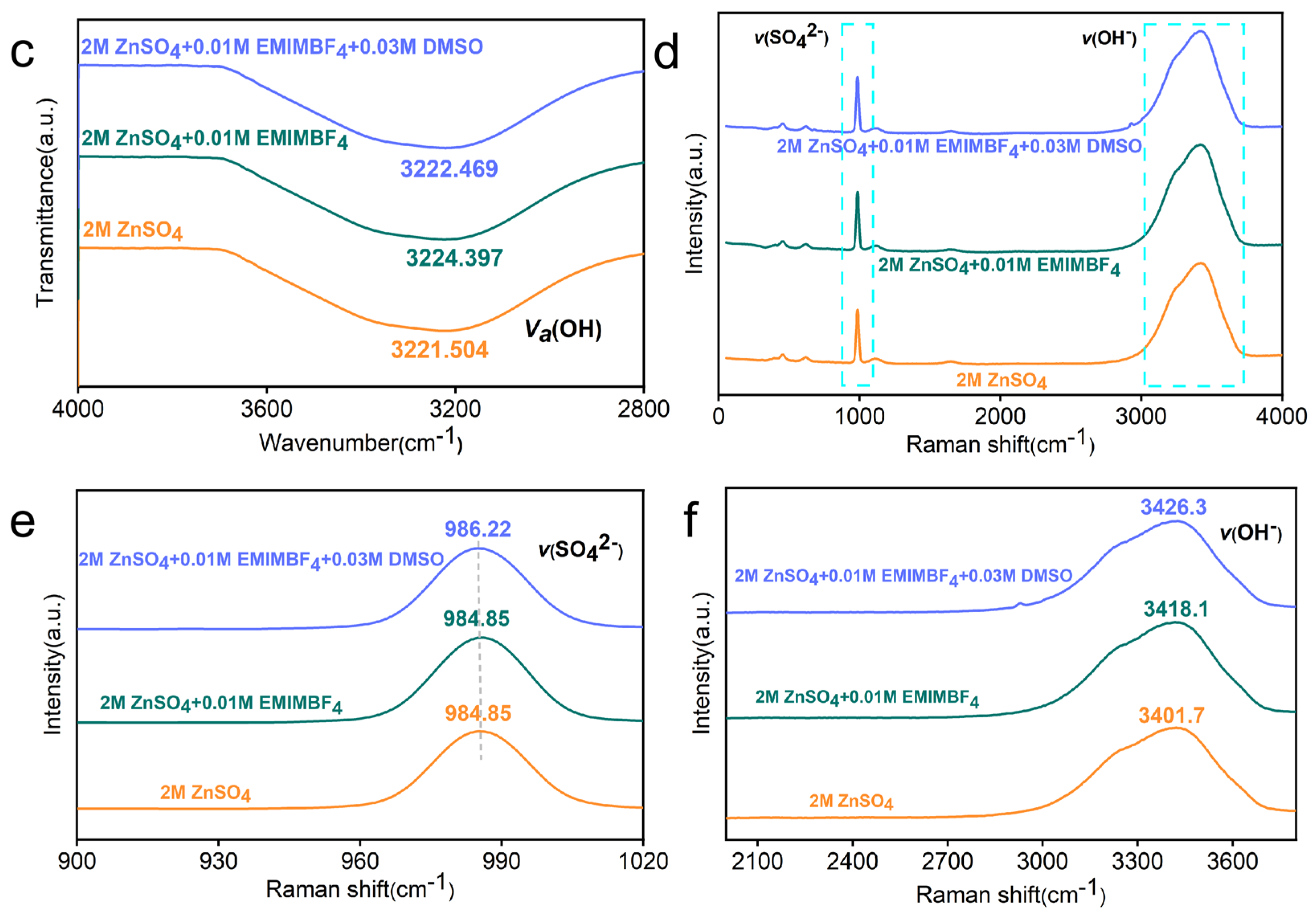
In the Raman spectrum, the O–H stretching vibration of water molecules (3050–3750 cm
−1) appears as a broad peak that can be deconvoluted into three components: strongly hydrogen-bonded (HB, ~3230 cm
−1), weakly hydrogen-bonded (~3420 cm
−1), and non-hydrogen-bonded (~3560 cm
−1) species As shown in
Figure 8d–f, in 2 M ZnSO
4, the ν(O–H) band is located at 3401.7 cm
−1. After the addition of EMIMBF
4, EMIM
+ displaces interfacial water molecules to the outer Helmholtz plane, while BF
4− replaces part of the water molecules in the first solvation shell. This weakens the hydrogen-bonding network, causing the ν(O–H) peak to blue-shift to 3418.1 cm
−1. Meanwhile, the ν(SO
42−) peak remains unchanged at 984.85 cm
−1, confirming that EMIMBF
4 has limited direct interaction with SO
42−. Upon further introduction of DMSO (Gutmann donor number DN = 29.8), DMSO penetrates both the first and second solvation shells of Zn
2+ [
32]. As a high-donor-number additive, DMSO preferentially bonds with free water molecules, thereby reconstructing the original water–water hydrogen-bonding network into a DMSO–water hydrogen-bonding network. This disrupts the continuous hydrogen-bonding chains among free water molecules. Moreover, DMSO acts as a strong hydrogen-bond acceptor with high electron-donating ability and preferentially coordinates with Zn
2+ [
33]. Consequently, the ν(O–H) peak further blue-shifts to 3426.3 cm
−1, and the ν(SO
42−) peak simultaneously blue-shifts to 986.22 cm
−1, indicating a slight increase in the bond order of SO
42− due to the reconstructed hydrogen-bonding environment.
To comprehensively evaluate the regulatory effect of EMIMBF
4 on the Zn
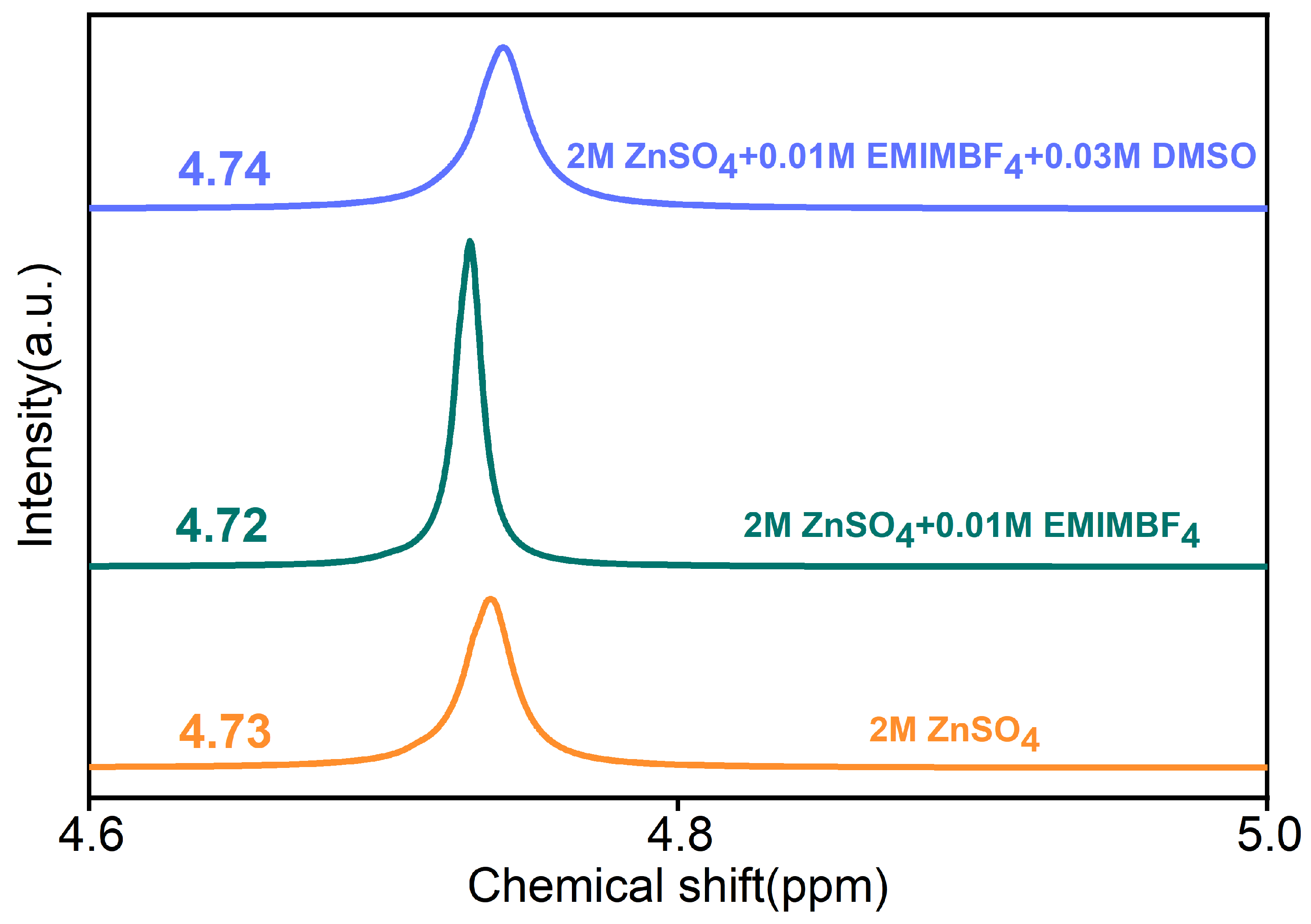
2+ solvation structure, NMR spectroscopy was performed. As shown in
Figure 9, upon addition of EMIMBF
4, the
1H NMR peak shifts slightly from 4.73 ppm to 4.72 ppm, indicating that EMIMBF
4 induces the release of several coordinated H
2O molecules from the Zn
2+ solvation shell and weakens the interaction between Zn
2+ and H
2O molecules. Upon further addition of DMSO, the
1H NMR resonance peak shifts upfield to 4.74 ppm. This shift is attributed to DMSO—possessing a high Gutmann donor number (DN = 29.8)-preferentially coordinating into the first solvation shell of Zn
2+ and displacing some coordinated water molecules. This substitution reduces the electron density around the remaining water protons, resulting in enhanced deshielding and a downfield shift of the chemical signal [
34].
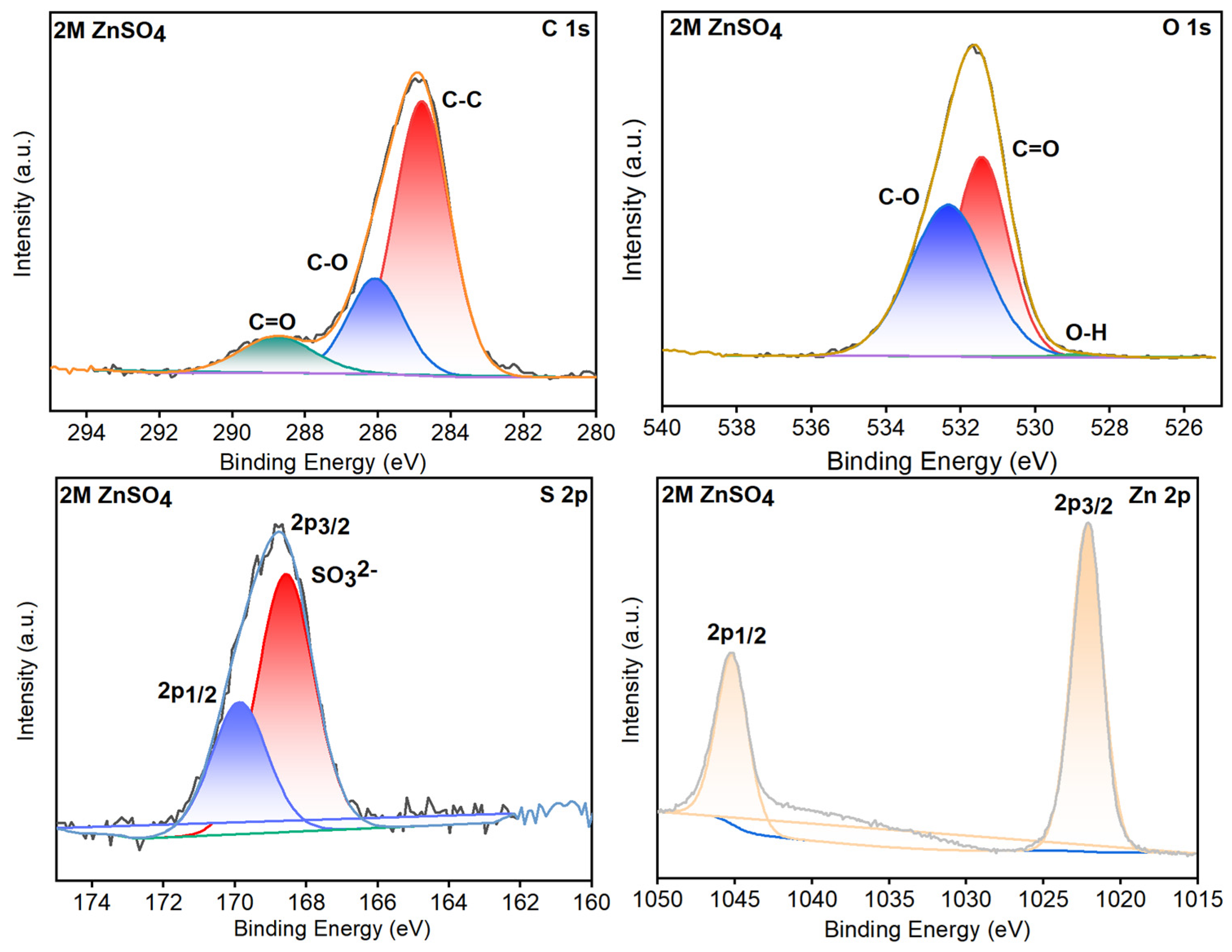
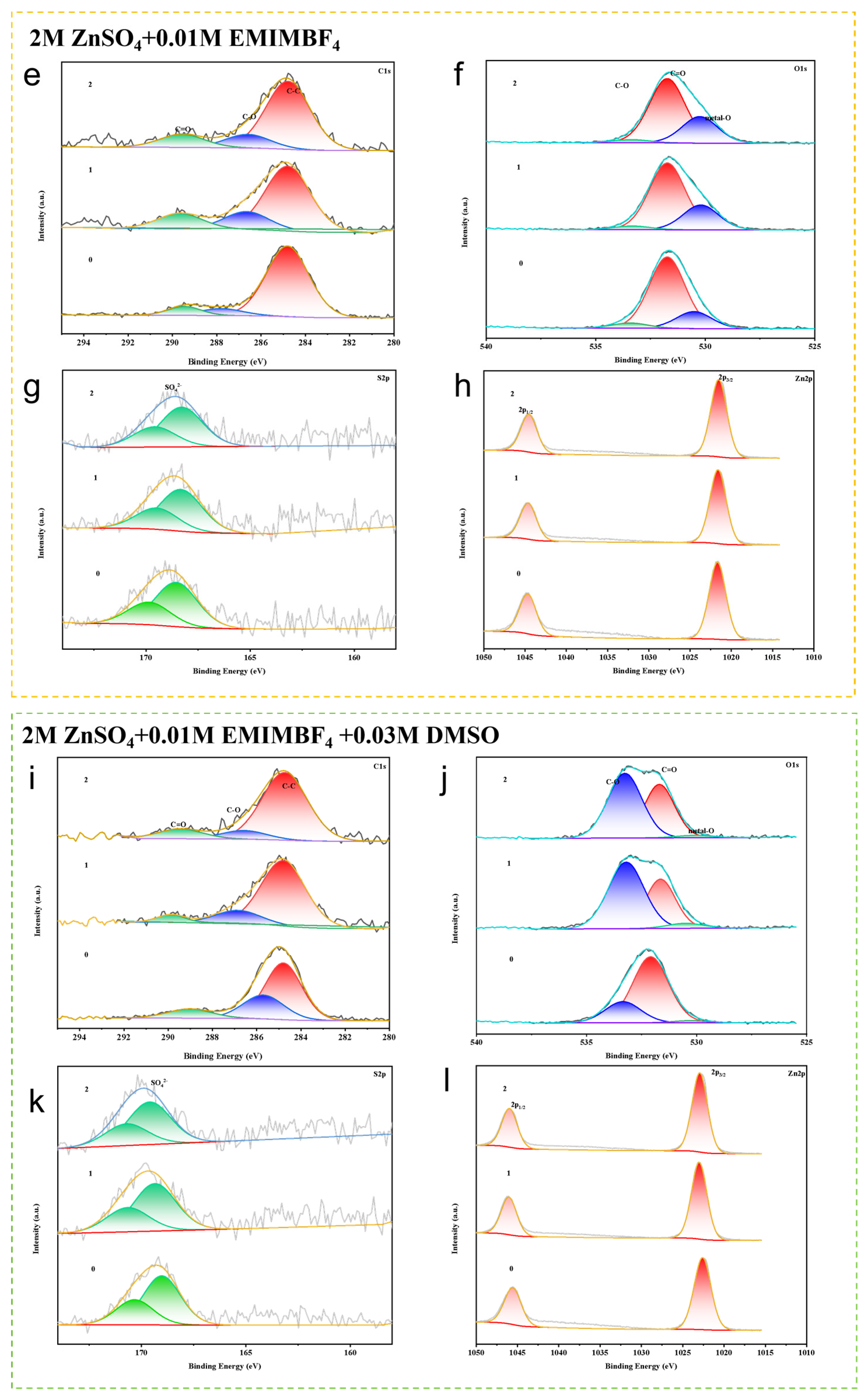
After cycling at 1 mA cm
−2 and 1 mAh cm
−2 for 20 cycles, X-ray photoelectron spectroscopy (XPS) tests were conducted on Zn anodes in 2 M ZnSO
4 and 2 M ZnSO
4 + 0.01 M EMIMBF
4 electrolytes to verify the adsorption effect of EMIMBF
4 on the Zn anode (
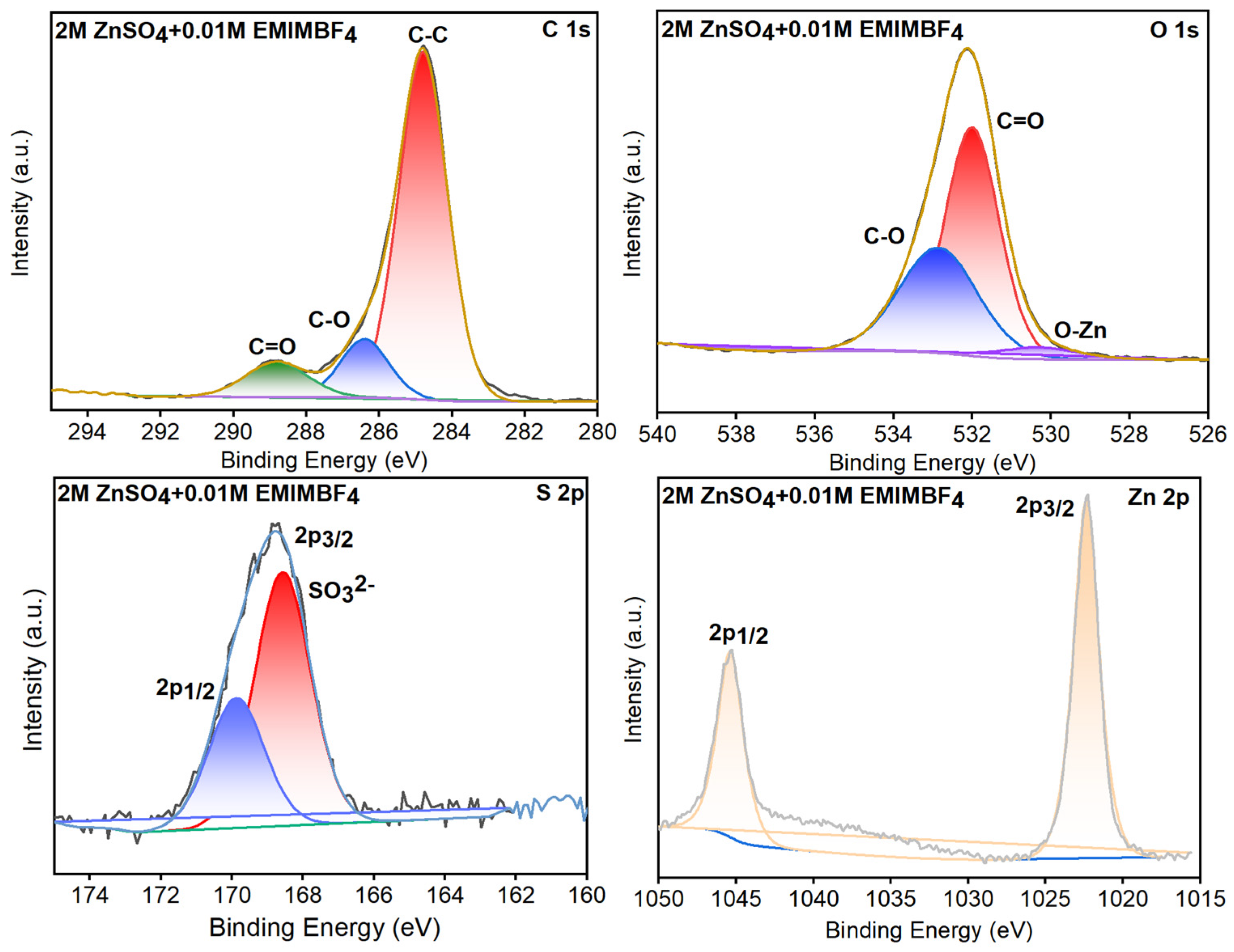
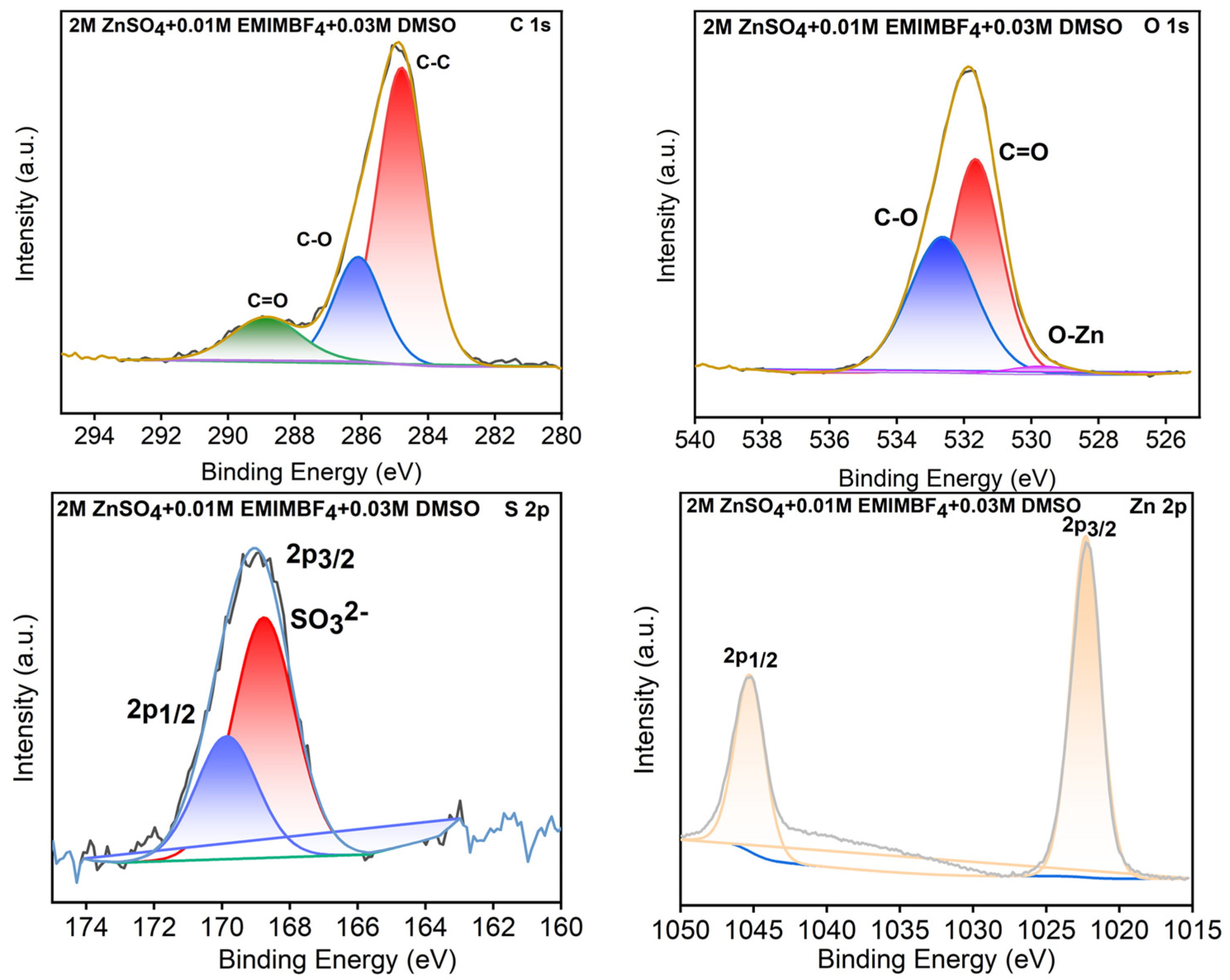
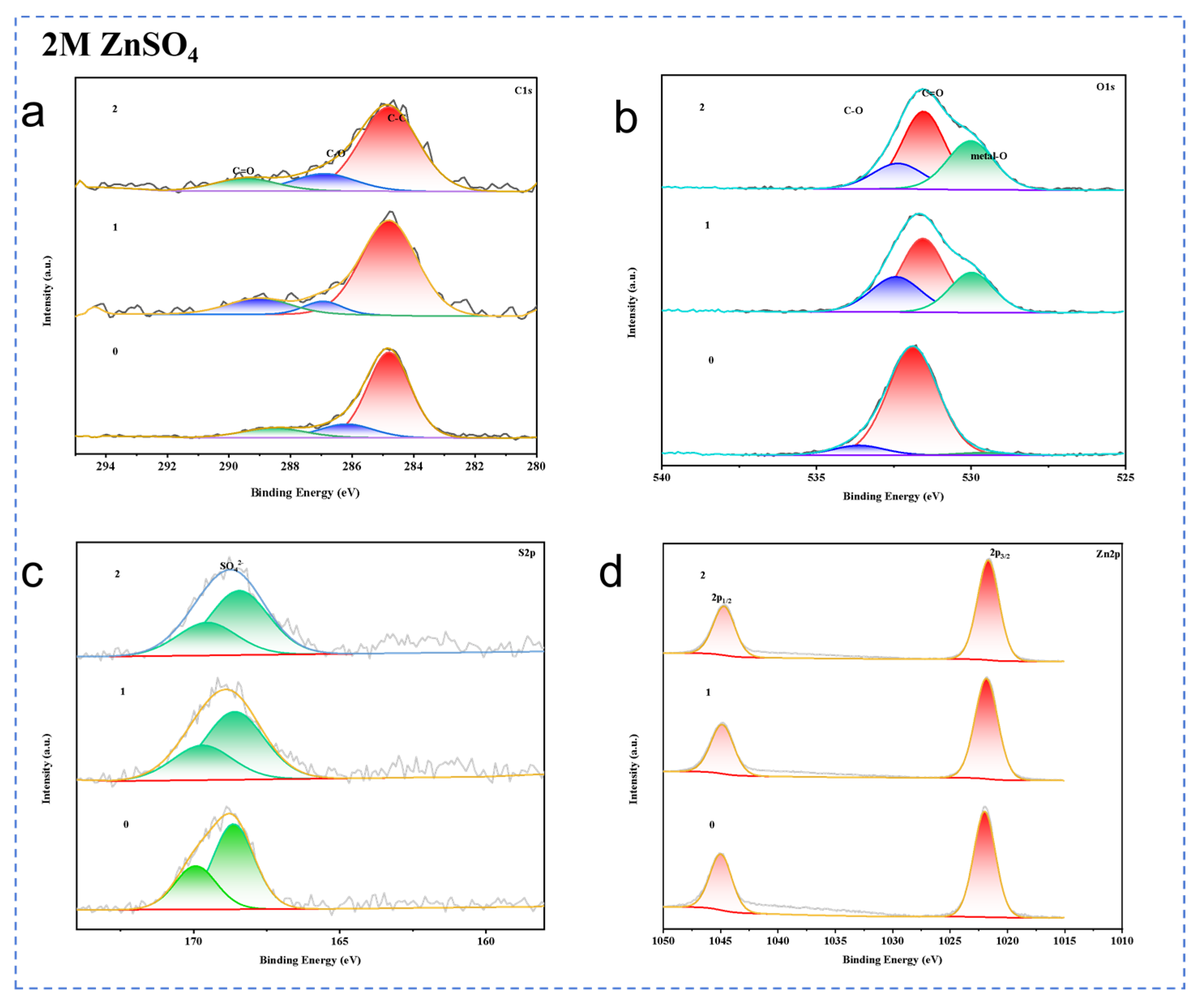
Figure 10,
Figure 11 and
Figure 12). Quantitative XPS analysis showed a 2.2-fold increase in C-C strength (64,500 vs. 29,186 a.u.), a 1.3-fold increase in C-O strength (20,826 vs. 16,509 a.u.), and a 1.4-fold increase in carbonate strength (17,419 vs. 12,384 a.u.) for the sample containing EMIMBF
4 compared to the control sample containing ZnSO
4 alone. Since EMIMBF
4 is the only organic species in the electrolyte, and its imidazolium cation is rich in C-C bonds, the disproportionate amplification of this C-C signal—especially compared with the moderate increase in C-O and carbonate—strongly indicates that the additional Carbon comes from adsorbed EMIM, rather than uniformly distributed pollutants. From the C 1s spectra, all three samples exhibit high levels of carbon content. This is mainly due to the presence of inorganic carbonate ions from ZnCO
3 and organic components such as C-O (286.2 eV) and C-C (284.8 eV) bonds. These components may originate from partially unreduced products of Zn
2+-anion (BF
4−) complexes [
35]. In the 2 M ZnSO
4 + 0.01 M EMIMBF
4 and 2 M ZnSO
4 + 0.01 M EMIMBF
4 + 0.03 M DMSO systems, the peak intensity of carbon elements is significantly higher compared to pure ZnSO
4 electrolyte, indicating the formation of a solid electrolyte interphase (SEI) layer rich in ZnCO
3 with a certain thickness Analysis of the S 2p and O 1s spectra confirms the presence of ZnSO
3 and Zn(OH)
2 in the samples. These substances are formed by the decomposition of zinc ion-anion complexes and DMSO. Previous studies have shown that ZnSO
3 can serve as an effective component of the SEI, promoting uniform Zn
2+ deposition and inhibiting water decomposition reactions Through the above analysis, it can be concluded that the introduction of EMIMBF
4 and DMSO electrolyte additives leads to the formation of a uniform SEI containing abundant ZnSO
3, Zn(OH)
2, and other inorganic species. This stable SEI regulates Zn
2+ deposition and slows down the further decomposition of DMSO and BF
4−, effectively suppressing dendrite growth on the Zn anode, thus ensuring long cycle life for aqueous zinc-ion batteries (AZIBs).
Depth-profiling XPS was further performed to investigate the thickness, compositional gradient, and compactness of the SEI formed on Zn anodes in different electrolytes in
Figure 13. For the Zn anode cycled in 2 M ZnSO
4, obvious O- and S-containing species remain detectable after sputtering, indicating the formation of a thick and loose interphase dominated by corrosion by-products and sulfate-derived species. Such an inhomogeneous layer is unable to effectively block water penetration, resulting in continuous HER and corrosion. After introducing DMSO, the intensity of O/S-containing by-products decreases, suggesting that DMSO can partially suppress water-induced side reactions by regulating the hydrogen-bond network and reducing the activity of free water. However, the remaining sulfate/sulfite-related signals after sputtering indicate that the interphase is still not sufficiently compact. In contrast, the Zn anode cycled in the DMSO/EMIMBF
4-containing electrolyte shows a more distinct depth-dependent composition. The outer layer contains additive-derived organic species, while the Zn signal becomes more prominent after sputtering, indicating a relatively thin and compact SEI. Meanwhile, the suppressed O- and S-containing by-product signals suggest that continuous water decomposition and sulfate-related side reactions are effectively inhibited. Therefore, the DMSO/EMIMBF
4 electrolyte enables the formation of a compact SEI with an organic-rich outer layer and a stable inorganic inner layer composed of ZnCO
3, ZnSO
3, and Zn(OH)
2, which contributes to homogeneous Zn
2+ flux, suppressed HER/corrosion, and highly reversible Zn plating/stripping. The formation of such a compact and compositionally gradient SEI layer is highly favorable for long-lifespan Zn batteries. As highlighted by recent investigations concerning advanced interfacial designs, an ideal SEI should possess both water-blocking capability and high ionic conductivity to physically isolate active Zn from bulk free water while directing uniform Zn
2+ flux. In our system, the EMIMBF
4/DMSO-induced SEI efficiently fulfills these criteria, thereby synergistically suppressing severe dendritic growth and parasitic reactions.
However, sulfate- or sulfite-related S 2p signals are still observed after sputtering, indicating that the interphase formed with DMSO alone is still not sufficiently compact. Therefore, DMSO can partially reduce side reactions by decreasing free-water activity, but the protective effect remains limited without further interfacial regulation.
Meanwhile, the Zn 2p signal is present, but the persistence of O and S species after sputtering indicates that the surface layer is not a thin and well-defined SEI, but rather a relatively thick, loose, and inhomogeneous accumulation of corrosion products. This type of interphase is generally unable to effectively block water penetration, thus leading to continuous HER, corrosion, and dendritic Zn growth.
To verify the stability of the Zn anode in the 2 M ZnSO
4 + 0.01 M EMIMBF
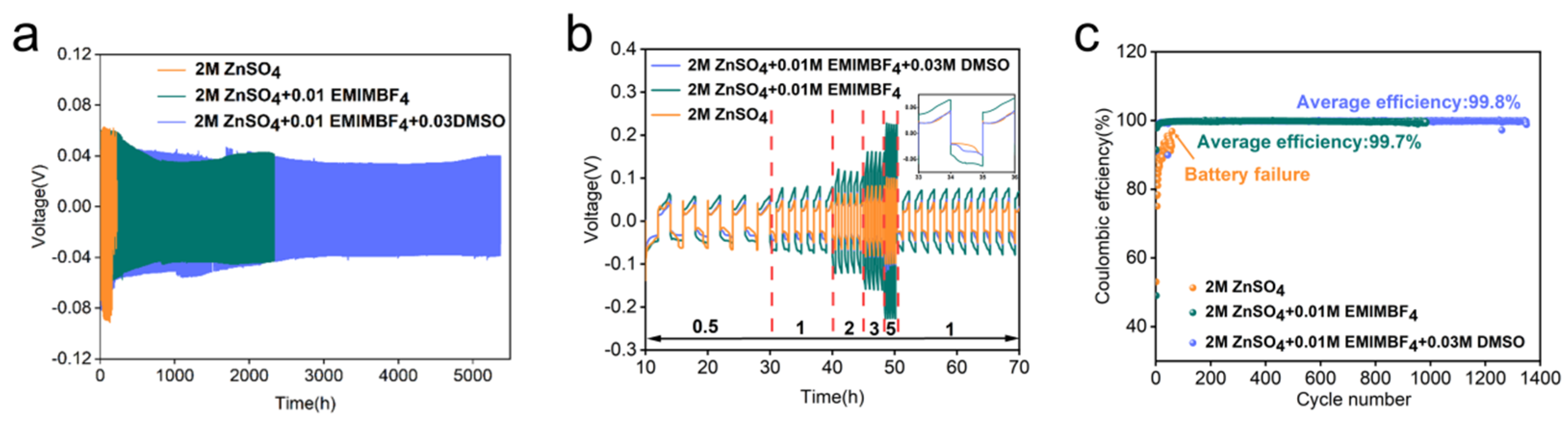
4 electrolyte system, Zn||Zn symmetric cells were assembled. As clearly shown in
Figure 14a, the cell with pure 2 M ZnSO
4 fails within a very short time, whereas the addition of EMIMBF
4 enables the symmetric cell to exhibit a stable Zn plating/stripping process at a current density of 1 mA cm
−2 and an areal capacity of 1 mAh cm
−2, with a lifespan exceeding 2300 h. Moreover, the cell with the EMIMBF
4 + DMSO additive demonstrates an even more remarkable stability, achieving over 5300 h of cycling—indicating an exceptionally stable Zn plating/stripping behavior and confirming that the Zn anode is more stable in the presence of both EMIMBF
4 and DMSO additives.
Figure 14b presents the rate capability of Zn||Zn symmetric cells at various current densities ranging from 0.5 mA cm
−2 to 5 mA cm
−2. It can be observed that the polarization voltage of 2 M ZnSO
4 + 0.01 M EMIMBF
4 is consistently higher than that of 2 M ZnSO
4 across all current densities. This is attributed to the incorporation of EMIMBF
4 into the Zn
2+ solvation sheath, which increases the energy barrier required for Zn deposition, ultimately resulting in a higher polarization potential for the 2 M ZnSO
4 + 0.01 M EMIMBF
4 electrolyte compared to the baseline 2 M ZnSO
4 [
36]. Upon further addition of DMSO, the polarization voltage is significantly reduced. The rate performance of the Zn||Zn symmetric cells thus demonstrates that DMSO markedly enhances the cycling performance of the Zn anode.
In addition, Zn||Cu cells were assembled to evaluate the reversibility and stability of the Zn metal anode. As shown in
Figure 14c, the Zn||Cu cell with EMIMBF
4 additive achieves nearly 1000 stable cycles at 1 mA cm
−2 and 1 mAh cm
−2, with an average Coulombic efficiency (CE) of 99.7%. When DMSO is further added to the electrolyte, the electrochemical performance improves even further, enabling stable cycling for over 1300 cycles with a high and stable CE of 99.8%. In contrast, the cell using only ZnSO
4 electrolyte fails after just 59 cycles due to severe dendrite growth and detrimental side reactions.
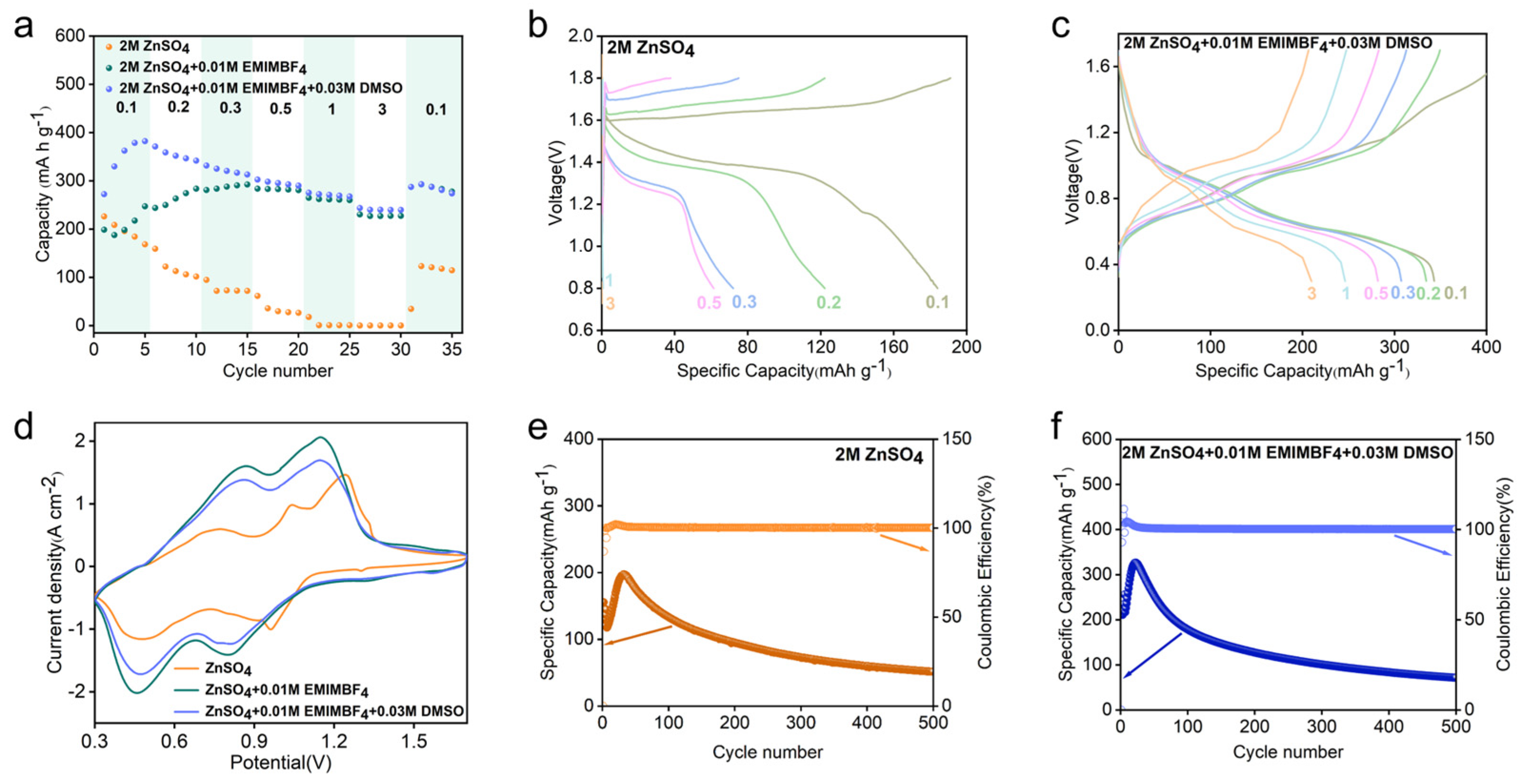
To evaluate the practicality of the EMIMBF
4–DMSO additive-based electrolyte, Zn||V
2O
5 full cells were assembled, and their rate capability was tested over a current density range of 0.5 to 3 A g
−1 (
Figure 15a). At the low current density of 0.5 A g
−1, the cell employing the EMIMBF
4–DMSO electrolyte delivers a higher charge/discharge specific capacity compared to that using 2 M ZnSO
4. As the current density increases, the full cell with the EMIMBF
4–DMSO additive consistently maintains superior capacity output.
Furthermore, the cycling performance of full cells based on these three electrolyte systems was evaluated.
Figure 15b,c present the galvanostatic charge–discharge (GCD) curves of Zn||V
2O
5 cells using 2 M ZnSO
4 and 2 M ZnSO
4 + 0.01 M EMIMBF
4 + 0.03 M DMSO at different current densities. The results show that the EMIMBF
4–DMSO-containing full cell retains a higher specific capacity, consistent with the aforementioned rate performance.
To further investigate the impact of the EMIMBF
4–DMSO additive system on the electrochemical performance of aqueous zinc-ion full cells, Zn||V
2O
5 cells were assembled, and their cyclic voltammetry (CV) curves are shown in
Figure 15d. Two distinct pairs of redox peaks are observed in all three electrolytes, corresponding to the two-step Zn
2+ insertion/extraction reactions in V
2O
5. This confirms that the addition of EMIMBF
4 and DMSO to the ZnSO
4 electrolyte does not alter the fundamental redox behavior of the cathode.
Figure 15e,f compare the long-term cycling performance of full cells using 2 M ZnSO
4 and 2 M ZnSO
4 + 0.01 M EMIMBF
4 + 0.03 M DMSO at a current density of 0.5 A g
−1. Clearly, the EMIMBF
4–DMSO-based full cell maintains nearly 100% Coulombic efficiency throughout 500 cycles and exhibits a significantly higher discharge specific capacity—reaching up to 326.4 mAh g
−1—compared to the maximum value of 197.13 mAh g
−1 achieved with the pure ZnSO
4 electrolyte. It is particularly noteworthy that both the ZnSO
4 electrolyte and the full-cell system containing the EMIMBF
4 additive exhibit a fluctuating discharge capacity pattern characterized by an initial increase followed by a gradual decline during cycling. This phenomenon can be attributed to the typical “activation-degradation” behavior of the V
2O
5 cathode. In early cycles, continuous charge–discharge processes progressively activate previously inaccessible Zn
2+ storage sites, leading to temporary capacity increases. As cycling progresses, however, trace dissolution of active materials, accumulation of lattice stress, and interface side reactions become more pronounced, ultimately resulting in capacity decay [
37].
Table 1 shows the comparison of the electrochemical performance of Zn-ion full cells with various advanced aqueous electrolytes. It summarizes the electrochemical performance of reported aqueous Zn-ion full cells, including electrolyte composition, cathode material, current density, specific capacity, cycle number, capacity retention, and Coulombic efficiency. In our work, the Zn||V
2O
5 full cell using the optimized EMIMBF
4/DMSO-containing electrolyte delivers a high discharge capacity of 326.4 mAh g
−1 at 0.5 A g
−1, and maintains nearly 100% Coulombic efficiency after 500 cycles. Compared with previously reported aqueous Zn-ion full cells, the present electrolyte shows competitive cycling stability and high cathode utilization while using only trace additives.




 ,
,