The first term is the cold compression function, which accounts the interaction of the nuclei and all electrons in an atomic cell of volume
Va at
T = 0. The second one expresses the contribution to the thermodynamic functions of the thermal excitation of ions. The last term depicts the contribution of the thermal excitation of the electrons of the atomic cell. Due to the neutrality of the atom cell, the quantity of excited electrons is equal to the average charge of the ion. This value depends on the cell volume and temperature:
, here
,
Va is the volume of the atom cell, and
Z—nucleus charge [
8]. Using known expressions of statistical physics [
9] for pressure and internal energy, one can obtain from (1) the following expressions:
2.1. Cold Pressure and Energy
As a basis for obtaining cold compression functions, one can use the expression for the binding energy in the form of the Born-Mayer potential proposed in [
25] (also see refs herein).
where Λ is the binding energy for
δ = 1,
δ =
ρ/
ρ0,
ρ0 = ρ(
T = 0) (constants
α,
η see (7) below). In the range of applicability of quantum-statistical models (QSM) of an atom, expression (4) does not agree with the well-known fact that the energy and pressure of the degenerated electron gas determine the cold compression functions. Taking into account this fact and keeping the behavior of the cold compression functions to be almost unchanged, we suggest using the following relation instead of (4):
here coefficients
a,
b, which one can find from the requirement of coincidence with the cold compression function calculated in the framework of the Thomas-Fermi model with quantum and exchange corrections (QSM) [
26]. According to (5), the following expressions define the cold pressure:
The Grüneisen parameter relates with constants
α and
η, included in (4)–(6), by the following expression [
24,
25,
26]:
One can use expression (7) to improve the accuracy of parameters α and η using known, e.g., the experimental value of the Grüneisen parameter.
As one can see from (6), the relation for cold pressure
Pc(
δ = 1) = 0, i.e., for
T = 0, gives
a = −
2b. Using the tables from work [
26], one can calculate the parameters
b = 6.021 × 10
−2 and, accordingly,
a = −1.204 × 10
−1 for the iron we investigated experimentally in [
5]. For their definition, we used the values of the parameters we refined:
α = 2.953;
η = 5.156. These values correspond to
γπo = 1.977.
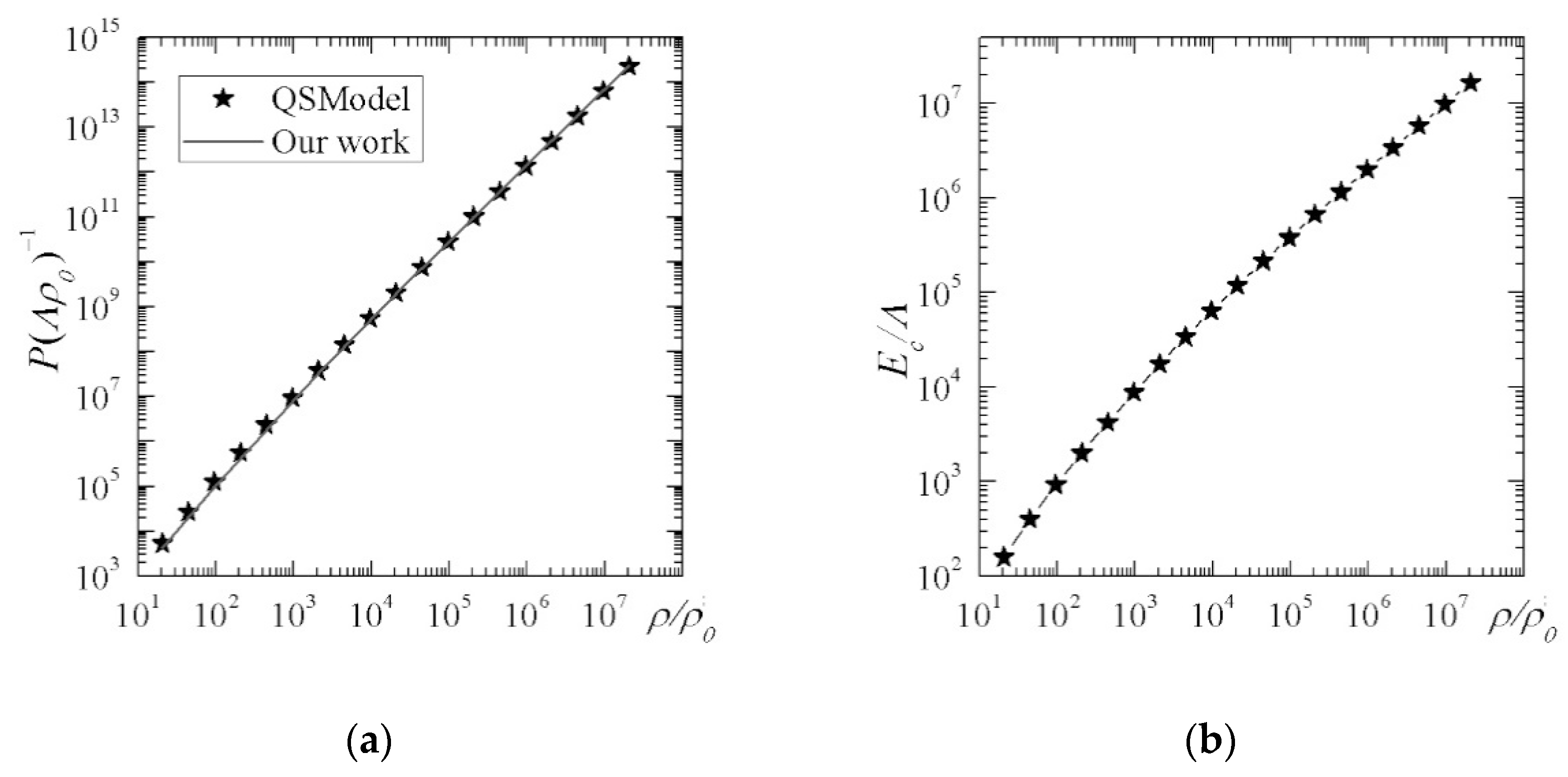
Figure 1a demonstrates the adequacy of the description of the quantum-statistical curve of cold compression using expressions (4)–(6).
Figure 1b shows the matching of the energy in a compressed state at
T = 0 to that one determined by the thermodynamic functions of the degenerate electron gas.
2.2. Cold Energy and Pressure in the Soft Sphere Model
The expanded state of matter differs from the compressed one in that it consists of singly charged ions, neutral atoms, and electrons at rather low densities and temperatures but still sufficient for ionization.
Solid-liquid and liquid-vapor PT accompany the transition of the metal from
δ = 1 densities to small values of
δ. The disappearance of the overlap of electron shells at temperatures close to zero causes metal-dielectric PT [
4]. The last one takes place in the electron liquid. Assuming the solid-liquid and liquid-gas PT occur in an ionic liquid, i.e., the structural part of the free energy or the sum of the first two terms of (1). Thus, it seems to be incorrect to use expression (4) since it overestimates the contribution of the band structure of the metal in the case of its expanded state [
25].
Let us use the well-described, e.g., in [
18] method of generalized the Lennard-Jones type potentials formation to obtain the equation of state for cold extension (compression) in an expanded matter. Besides, it requires the continuity condition of the description of substance in expanded and compressed states for
δ = 1. As a result, we obtain the following relations:
Equations (8) and (9) satisfy conditions for the continuity of cold energy and pressure at
δ = 1. But Equation (10) needs to be verified. Differentiating the pair of Equation (6), we obtain
ccx2/Λ = 2.944 for
δ = 1. Respectively, from (10), we get
ccx2/Λ
= mn/9. If one is limited using only integer values of
m and
n, then the following values
m = 9,
n = 3 will be obtained. Equations (8) and (9) do not give a satisfactory description of the iron under compression so one should use Equations (5) and (6) to study expanded states.
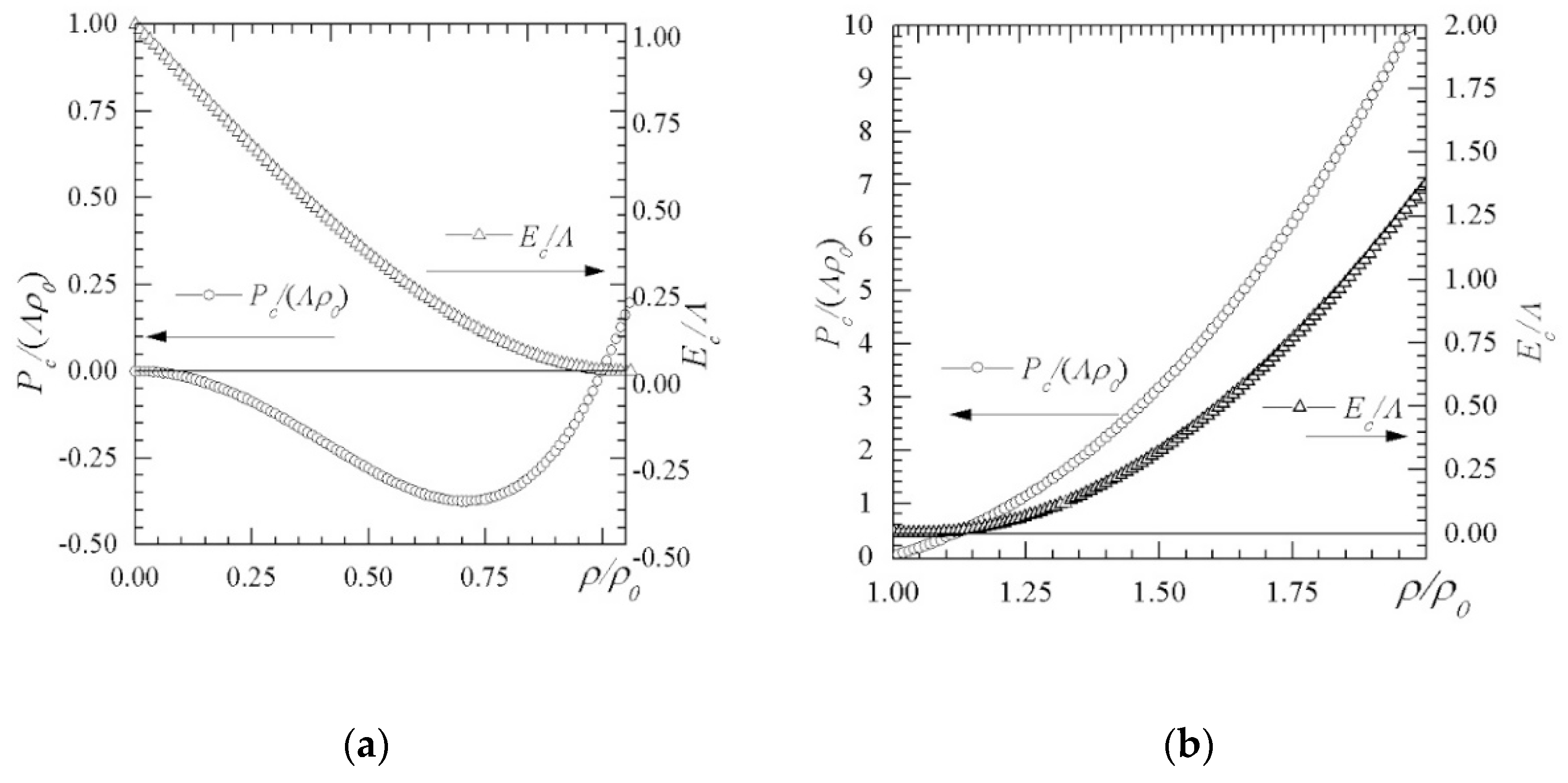
Figure 2a demonstrates the behavior of zero isotherms
Pc(
δ),
Ec(
δ) for
δ < 1, and
Figure 2b
Pc(
δ),
Ec(
δ) for
δ > 1.
2.3. Thermodynamic Functions of the Ion Component of a Metal
First, we consider the description of the thermodynamic functions of compressed metal. The study of structural and melting PT in the compressed state of metal requires a detailed consideration of the dynamics of the phonon and electronic spectra. The last one depends on the conditions of its loading and heating. We concentrate here on the expanded state of the metal. One can describe the compressed state using the Debye model [
9]. For the expression of the compressed metal free energy, one can assume the lattice zero oscillations energy is included in that one of cold compression. Then the specific free energy of an excited simple lattice is determined by the following expression [
9]:
here
is the dimensionless Debye frequency
, Λ
a = Λ
MA,
Ma = Au is the mass of the atom,
A is the atomic weight of the element,
u = 1.660 × 10
−27, kg is the atomic mass constant [
27], and:
is Debye function.
Applying (11) known thermodynamic expressions, one can obtain the following:
The relation (13) gives a contribution of thermal excitation of the ion component to the internal energy of the compressed metal.
The relation (14) gives a thermal pressure of the ion component. Here in (14), Γ is the Grüneisen parameter of the ion component of the compressed metal.
One can see (11)–(14) that it is necessary to find an explicit expression for
to calculate the thermodynamic functions and the Grüneisen parameter of the ion component for the compressed metal. In the Debye model of a solid, the mean sound speed determines the limiting frequency [
9]:
By definition, the following relation determines the mean speed of sound [
9]:
here the indexes “
t” and “
l” denote transverse and longitudinal sound wave speeds, respectively. Here we use the relations of Debye frequency for evaluation of the average sound speed proposed first by S. B. Kormer and V. D. Urlin [
28,
29] to interpret the results of experiments of shock-wave compression of porous metals and metal melting in a shock wave:
The second term in (17) makes it possible to consider the “softening” of phonon modes with pressure increase. Hence one can obtain an expression for the Debye frequency using (17) and (16):
Taking the logarithmic derivative of (18), we obtain an expression for the Grüneisen parameter:
It should be noted that relation (19) does not contain
. The shock compression of porous copper, aluminum, nickel, and lead was studied [
28]. The first two have
n1 = 0, nickel has
n1 = 1, and the last one has
n1 = −1. Also, in his survey, L.V. Altshuler stated that the majority of metals has
n1 = 1 [
30]. The thermodynamic similarity between metals of the same groups of the Periodic Table allows one to expect that for low-melting metals,
n1 = 1, and
n1 is equal to either 0 or 1 for other metals. By analogy with nickel for iron, we assume the parameter
n1 = 1.
The two ways of calculations according to (19) and (6) with the parameters of cold pressure are shown in
Section 2.1 above. A simple calculation according to (6) gives the Grüneisen parameter Γ(1)
= 1.981. It contains only
α and
η parameters of the potential given by expression (4) and yields a minimal difference: ΔΓ
= (Γ(1) −
wγπ0)
/γπ0 = 0.0024 << 1.
The calculation technique used for the thermal contribution of ions to the thermodynamic functions of the metal in the expanded state is demonstrated below. One can use the soft sphere model based on classical works [
19,
20]. According to [
18], the exponents
m and
n in (8)–(9) are related to parameters of Lennard–Jones type pair potential of atoms (ions):
here terms
εrep and
εatt determine the repulsive and attractive parts of the interaction energy, respectively, according to the following relations:
here Λ
a is the binding energy per ion (atom),
m = 9,
n = 3, and
Cm,
Cn are lattice sums [
31].
One can obtain the value of the dimensionless constant
for
bcc and
fcc lattices of iron approximating these lattice sums. As for liquid metal, it is common to use the
fcc lattice in the soft sphere model [
19,
20]. Also, one can express the contribution to the internal energy of expanded metal ions in frameworks of the soft sphere model as follows [
18,
19,
20]:
The expression (23) is the thermal pressure of ions in the soft spheres model, and (24) is the Grüneisen parameter of the ion component of the expanded metal for this model.
Then the energy and pressure of the ion component of the expanded matter are determined by the relations:
The parameter
Q was employed in equations (22)–(24) by D. Young [
20] to reduce the influence of the electron heat capacity on the thermodynamic functions of the ion component of liquid metals for defining the parameters of equations of the state according to experimental data. In the proposed approach, we attribute the solid-liquid and liquid-gas PT to the ion component of the matter when thermal excitation is taken into account in the electron liquid (gas) regardless of the thermal excitation of ions (atoms). Therefore, one should use the experimental values of pressure, temperature, and volume jump during melting to determine the values of
Q in the solid and liquid states of the expanded metal. For iron:
P = 0.101 MPa,
Tm = 1811 K, Δ
Vm/VLm = (
VL −
VSm)
/VLm = 0.034,
ρLm = 7.020 g/cm
3 [
27]. Using it one can find
ρSm = 7.26708 g/cm
3. Indexes “S” and “L” denote liquid and solid states, and index “m” denotes melting. Thus, we obtain the following values of
Q:
QSm = 0.548 for the expanded solid iron;
QLm = 0.866 for its melt. The following expression determines the change in enthalpy in the ion subsystem during the melting of iron:
for
,
δSm = Sm/ρ0 = 0.923
, ρLm = δLm/ρ0 = 0.0891
, one can obtain Δ
Hm = 9.564 kJ/mol when experimental value is Δ
Hm = 13.806 kJ/mol [
27]. The conditions of equality to zero at the critical point of the first and second derivatives
∂Pi(
V,
T)
/∂V and
∂2Pi(
V,
T)
/∂V2 allow one to determine the values of the critical density. And then, it is possible to find the critical pressure of iron according to the equation of state. Their dimensionless values are the following:
δcr = 0.263,
,
. Accordingly, the dimensional values of the critical parameters are the following:
ρcr = 2.070 g/cm
3;
Tcr = 10867 K;
Pcr = 1.256 GP. Index ”cr” denotes a critical point.
The critical compressibility factor for pair potential 9-3 is
Zcr = 0.375, i.e., corresponds to [
19].
One can see in
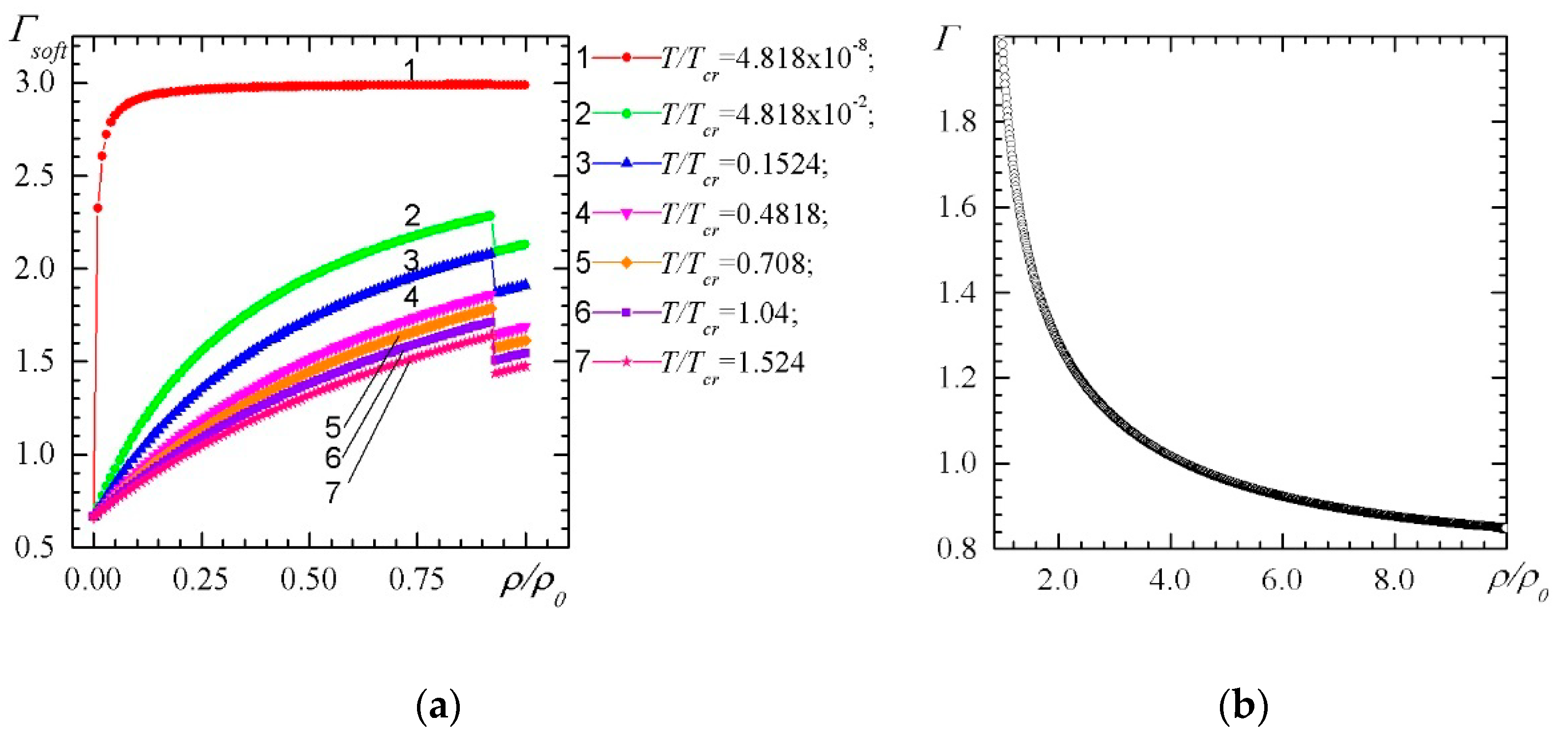
Figure 3 the behavior of the Grüneisen parameter of iron for expanded (a) and compressed (b) matter. This parameter for expanded iron at low temperatures and
δ = 1 is equal to 3, see the uppermost curve in
Figure 1a. This case corresponds to the temperature
T = 1.571·10
−3 K. The sharp jump of Γ
soft is associated with a volume (density) change during melting. It is demonstrated in
Figure 3b, the Grüneisen parameter of the compressed metal tends to its limit value of 2/3. This jump decreases as the temperature rises. It is worth noting that at the critical point (
δcr = 0.263), this parameter tends to the value of Γ
soft~1. So it becomes practically independent of temperature (the curves for
T/Tcr = 1.04 and
T/Tcr = 1.04 merge each other). This fact speaks about the non-ideal state of the expanded iron in the area near the critical point. Reduced thermodynamic stability in the region of the critical point of the liquid-gas PT was observed [
9,
32,
33,
34]. Similar intense fluctuations affecting the dynamics of physical processes at supercritical pressures are observed in it (see [
3] and refs therein).
2.4. Thermodynamic Functions of the Electronic Component of a Metal
One can express the free energy of an electron gas with a variable number of particles equal to the charge of an atomic cell
zi in the approximation of an average ion as follows:
Here
µeff is the effective chemical potential of the electron gas given by Fermi-Dirac statistics having the following distribution function:
here
Va = 1
/ni,
m,
ε,
T are the volume per one atomic cell (ion), an electron mass, energy, and temperature, respectively.
The energy value
Eg(
Va) is the width of the energy gap, which we proposed in our earlier paper [
35] for the phenomenological description of the metal-insulator transition at
T = 0 [
4] within the framework of the metal plasma model [
36].
Condition for normalizing the Fermi-Dirac distribution function:
defines an implicit relationship between the number of particles and the chemical potential
µ1. The equation (29) can be used to calculate the average ionization composition of a substance in an equilibrium state. It can be done in a wide range of temperatures and volumes if chemical potential dependence on atom cell volume is known [
35].
Since one can strictly speak of a metal-insulator PT only at
T = 0, the energy
Eg depends only on the volume of the atomic cell. In the long-wavelength approximation, the electrostatic field does not penetrate the metal. The latter means that the permittivity of the metal formally is infinite. Defining
Eg similarly to [
35], it can be written as follows:
here
δ∗ = V∗/V0 =
Va∗/
Va0 means the relative density of the substance metallization,
I1 is the first ionization potential. In Section 7, Chapter III of the classic monograph [
7], an approximate calculation of multiple gas ionization is considered in detail. The use of the
I1/2 value instead of
I1 for the evaluation of reaction constants of a neutral atom lets one obtain the best agreement with the Saha equations calculations in the area of the first ionization potential. In our case, it is also possible to expect that one can obtain the best agreement at
T = 0 if the chemical potential tends to asymptote
µ1 ≈ −
Eg(
δ)/2 in the region of
δ ≤ δ∗.
The
δ∗,
Zi values, and chemical potential for the expanded and compressed states of iron near
δ = 1 in the framework of the DFT method using LmtART-7 software package were calculated [
21,
22]. Using the chemical potential data tables, as well as exchange quantum corrections to them, calculated using the quantum statistical model of the atom (QSM) [
26], the chemical potential of iron was recalculated for the region far from
δ = 1. After that, the average charge of iron ions in the region of high compressions was calculated for
δ = 10–15. In logarithmic coordinates, the data matching was carried out so that the values of the average ion charge (i.e., the number of electrons in an atomic cell) in the intermediate region fit smoothly with the DFT model and QSM calculations. We used the dependence of
µ1(
Va, T = 0) obtained in this way as an additional correction to
µQSM for iron. We modified the values of the chemical potential obtained using QSM according to the following:
And one can calculate the thermal energy
and thermal pressure as follows:
It was possible to define the number of electrons (average ion charge) in an atomic cell
Zi(
Va,
T) according to (29) in a wide range of specific volumes and temperatures.
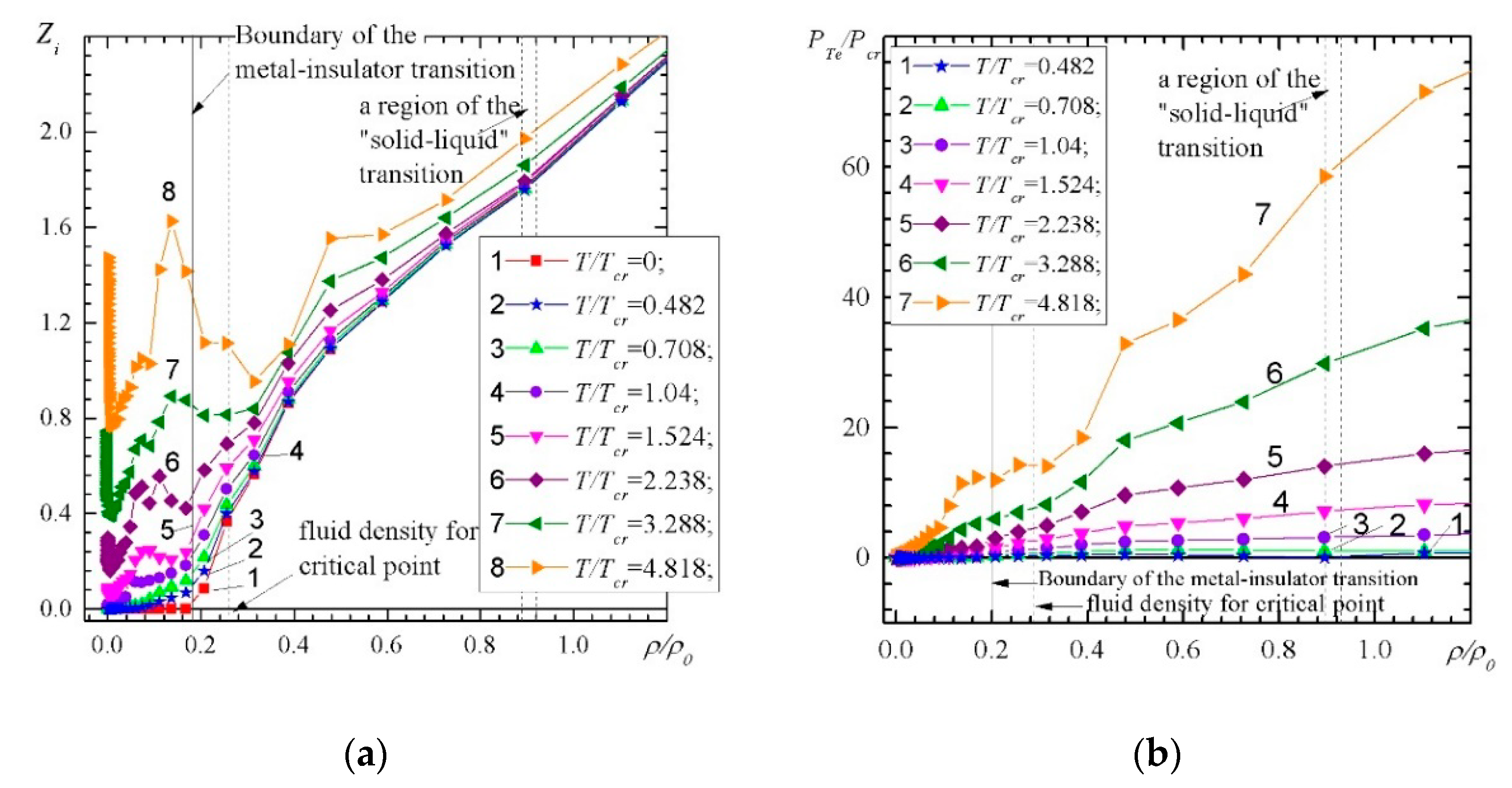
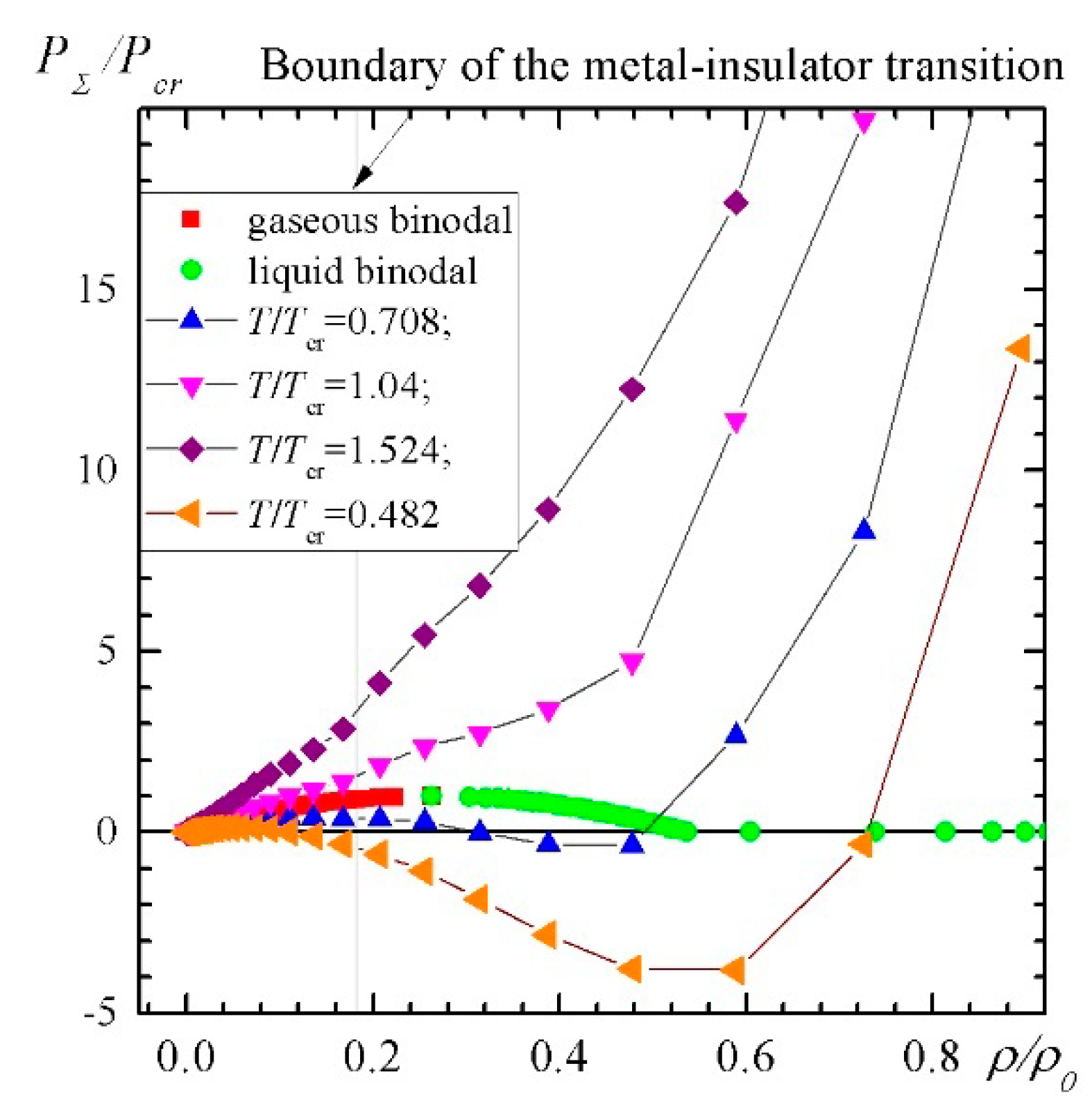
Figure 4 shows the calculation results. Solid and dashed lines show the boundaries of the solid-liquid and metal-insulator PT, respectively.
The behavior of the average charge of the ion in comparison with the experimental results of [
3] is discussed below.
The distinguishing feature of the approach we used is that a change in the metallic conductivity of a matter to a non-metallic one due to the chaos growth is considered the metal-dielectric phase transition [
37]. It occurs in the supercritical region of expanded iron in the range of relative volume
V/V0 = 0.3–0.4 (i.e., densities
δ = 0.25–0.333).
As shown in
Figure 4a, this range includes the critical iron density
δ = 0.263 obtained in
Section 2.3 above (dashed line). Also, the experimental pressure and temperature values exceed the parameters of the critical point. The lower curve in
Figure 4a corresponds to
T = 0. DFT calculations using the LmtART-7 software package [
21,
22] gave the density
ρMIT = 1.432 g/cm
3 (
δMIT = 0.182). It corresponds to the metal-insulator PT at
T = 0 when the overlap of wave functions disappears, i.e., collectivized electrons vanish. At a density of
δ = 1 and
T = 0, the number of quasi-free (“valence”) electrons is equal to
Zic = 1.95. At the same time, the total number of iron valence electrons taken into account in the DFT method is 8. In the region of densities
δMIT < 0.182, electrons obey classical statistics, and at high densities, Fermi statistics. The peculiarities of
Zi observed in the left part of the plot for lower
δ are caused by the competition between the mechanisms associated with pressure and temperature. The point is that in the region of 0.01 <
δ < 0.136, a temperature increase leads to a
Zi increase, on the one hand. And on the other hand, the energy gap
Eg(
δ) increases due to a density decrease and leads to a slowdown in the ionization rate (see (31)). The increase of
Zi for supercritical temperatures and very low densities occurs due to these densities corresponding to an ideal gas. After all, the minimum density is
δmin = 2.0674 × 10
−6 (
ρmin=1.627 × 10
−5, g/cm
3). In comparison to
Zi curves, the curves in
Figure 4b show a much more monotonic behavior of the
PTe/Pcr isotherms as a function of
ρ/
ρ0 in the supercritical region. To define the contribution of the thermal electron pressure to the total pressure, we should make some additional remarks about the metal-dielectric PT and describe methods of the electrical conductivity in the region of the compressed and expanded states of a metal. We can obtain the following expression of conductivity using the results of the previous works [
8,
35]:
here
rs = (3/4
πni)
1/3 and
leff(
ξ)
= (1
+ A2ξ4/(
Zi2L1 − 2
Zi(
Z −
Zi)
L2+(
Z −
Zi)
2L3)
2)
1/2 is mean dimensionless effective electron free path, in which
Z is a nuclear charge,
A = GT2/(
πnie4rs);
G = ρ∂
Pi/∂
ρ(
niT)
−1 is the structural factor of the metal in the long-wave approximation;
L1,
L2, and
L3 are Coulomb logarithm analogs defined as follows:
here
rcd = rc/(1
+ kDrc)
; rc—shielding radius of an ion (atom) having
Zi = 0;
kd = min{
ks2;kei2};
kei2 = kDe2 + (
kDi2 + ke4)
kDi−2;
kDi2 = 4
πe2Zi2ni/
T;
kDe2 = 2
πe2ZiniT−1F − 1/2(
x)
/F1/2(
x). The structural factor
G in the mean free path considers the electrons scatter in metal, similar to that of X-ray waves on density fluctuations. This approach allowed J. I. Frenkel to explain the dependence of the metal conductivity on temperature:
σ~T−1 [
38]. In a metal at
δ ≥ 1, the conductivity changes continuously [
8,
35]. So the metallic dependence of conductivity on temperature persists up to
T ~ Tcr. After removing the degeneracy of the electronic component, the conductivity dependence changes to plasma one:
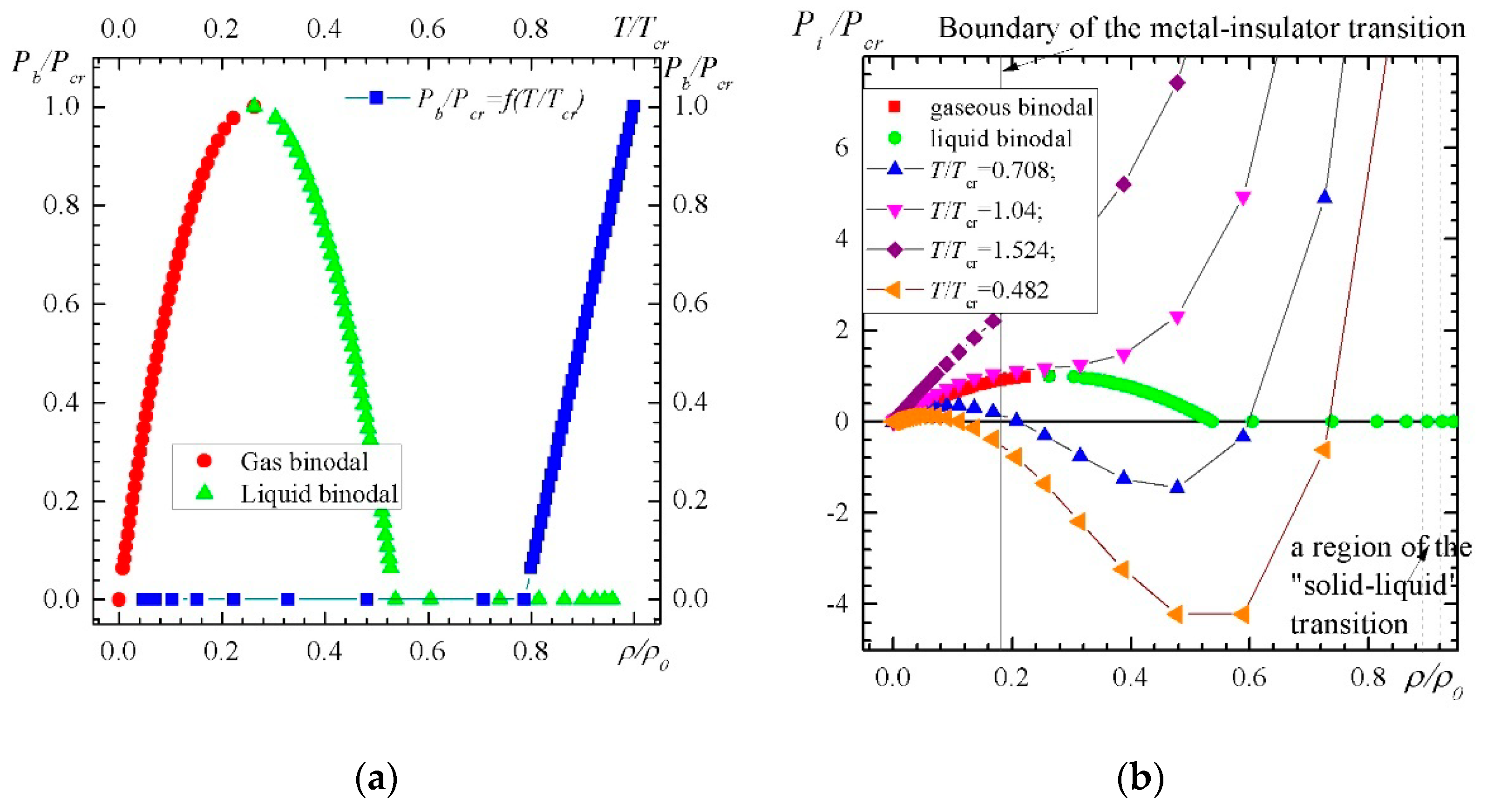
σ~T3/2. In the intermediate temperature range at a constant density, the conductivity is minimal and practically does not depend on temperature. In the region of expanded matter much higher than the critical temperature, one can expect the conductivity changes smoothly from a metallic type to a plasma one. Below the critical density in the region of the liquid-gas PT for the ionic component of the expanded matter, the dependence is
Pi/Pcr = f(
T/Tcr). Therefore, the structure factor in the two-phase region and the critical point is
G = 0 and
leff
= 1.
Then relation (35) will be as follows:
Also, the relation (37) can be used for estimates in the near critical point and in the overcritical region, the so-called supercritical fluid [
33,
34], which is characterized by low stability of matter and high fluctuations of density. We plan to publish a detailed study of physical processes in this area in a separate paper.