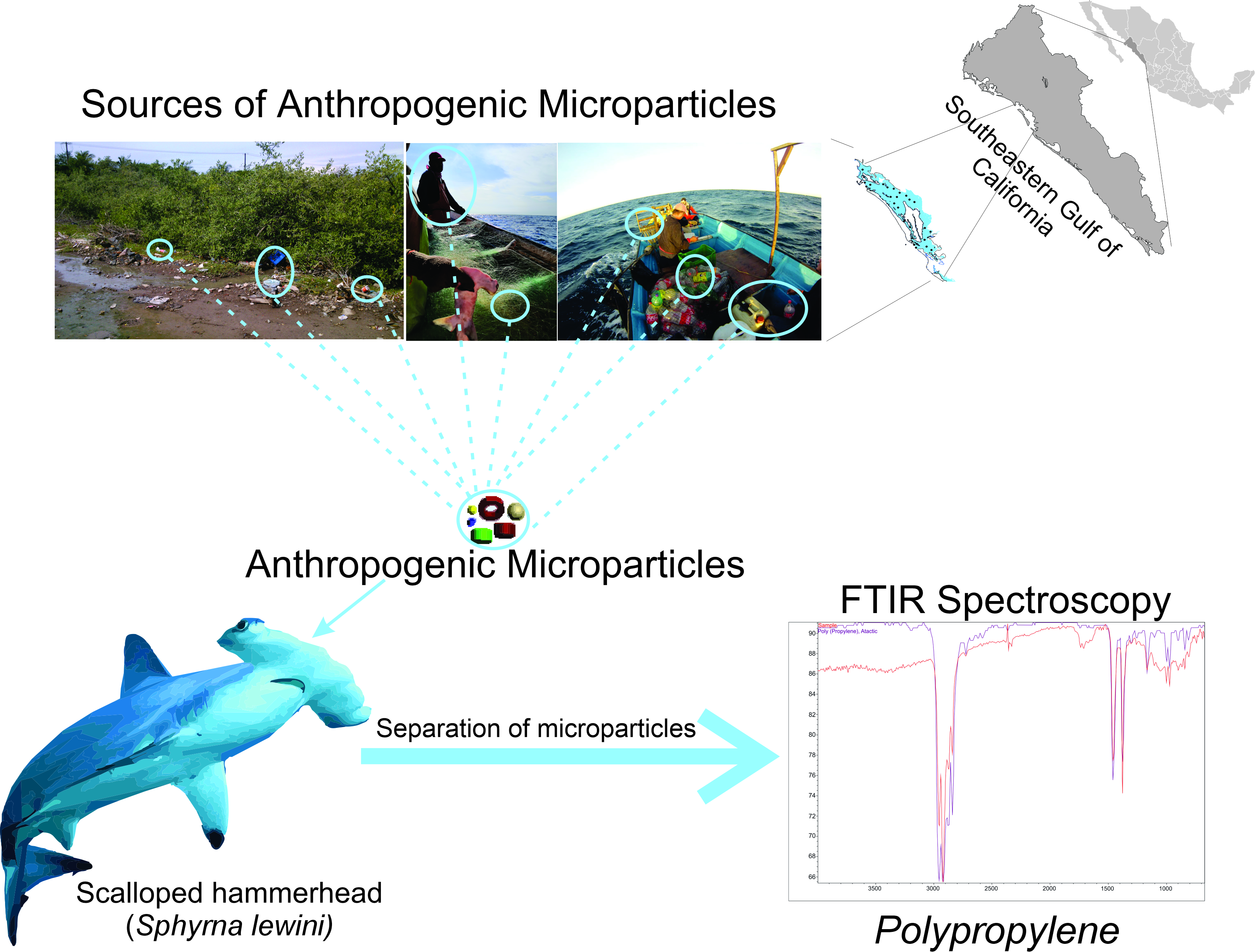

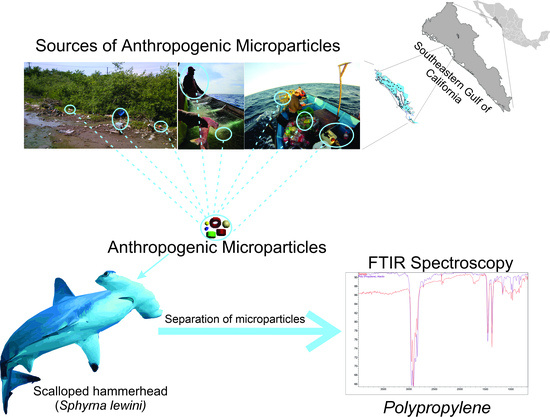
First Data on Anthropogenic Microparticles in the Gastrointestinal Tract of Juvenile Scalloped Hammerhead Sharks (Sphyrna lewini) in the Gulf of California



Abstract
Share and Cite
Malthaner, L.; Garcia, X.; Rios-Mendoza, L.M.; Rivera-Hernández, J.R.; Cruz, R.; Amezcua, F. First Data on Anthropogenic Microparticles in the Gastrointestinal Tract of Juvenile Scalloped Hammerhead Sharks (Sphyrna lewini) in the Gulf of California. Fishes 2024, 9, 310. https://doi.org/10.3390/fishes9080310
Malthaner L, Garcia X, Rios-Mendoza LM, Rivera-Hernández JR, Cruz R, Amezcua F. First Data on Anthropogenic Microparticles in the Gastrointestinal Tract of Juvenile Scalloped Hammerhead Sharks (Sphyrna lewini) in the Gulf of California. Fishes. 2024; 9(8):310. https://doi.org/10.3390/fishes9080310
Chicago/Turabian StyleMalthaner, Leony, Ximena Garcia, Lorena Margarita Rios-Mendoza, José R. Rivera-Hernández, Roberto Cruz, and Felipe Amezcua. 2024. "First Data on Anthropogenic Microparticles in the Gastrointestinal Tract of Juvenile Scalloped Hammerhead Sharks (Sphyrna lewini) in the Gulf of California" Fishes 9, no. 8: 310. https://doi.org/10.3390/fishes9080310
APA StyleMalthaner, L., Garcia, X., Rios-Mendoza, L. M., Rivera-Hernández, J. R., Cruz, R., & Amezcua, F. (2024). First Data on Anthropogenic Microparticles in the Gastrointestinal Tract of Juvenile Scalloped Hammerhead Sharks (Sphyrna lewini) in the Gulf of California. Fishes, 9(8), 310. https://doi.org/10.3390/fishes9080310