Article

Effects of Different Diets on Growth and Immunity in Juvenile Portunus trituberculatus

School of Marine Sciences, Ningbo University, Ningbo 315211, China
*
Authors to whom correspondence should be addressed.
Fishes 2026, 11(8), 490; https://doi.org/10.3390/fishes11080490
Submission received: 22 July 2026 / Revised: 16 August 2026 / Accepted: 18 August 2026 / Published: 20 August 2026
(This article belongs to the Special Issue Immunology, Environment, and Nutrition of Aquatic Animals)

Abstract

Portunus trituberculatus is an economically important marine crab species in China. Short-term nutritional conditioning during the juvenile stage may improve their physiological readiness before release. This study compared the effects of four dietary treatments on the growth, antioxidant capacity, immune function, and hepatopancreatic transcriptome of juvenile P. trituberculatus. A 4-week feeding trial compared a commercial pelleted diet (Treatment C) with three natural marine diets: Larimichthys crocea (Treatment Y), Litopenaeus vannamei (Treatment X), and Ruditapes philippinarum (Treatment B). The results demonstrated that Treatments X and B exhibited optimal growth performance, with significantly higher weight gain rate (WGR) and specific growth rate (SGR) than Treatments Y and C (p < 0.05). Regarding immune and antioxidant functions, Treatment X showed significantly enhanced parameters, including total antioxidant capacity (T-AOC) and activities of superoxide dismutase (SOD) and catalase (CAT), as well as contents of reduced glutathione (GSH) and lysozyme (LZM), all of which were markedly higher than those in Treatment C (p < 0.05). Transcriptomic analysis further revealed the molecular mechanisms underlying these physiological enhancements. Compared to the control, Treatment X exhibited significant enrichment in immune-related pathways, specifically the phagosome and gap junction signaling pathways. Notably, key cytoskeleton-related genes (tubulin alpha chain and tubulin beta chain) were significantly up-regulated, suggesting that the shrimp diet enhances cellular immunity by promoting cytoskeletal remodeling and phagocytosis efficiency. In contrast, Treatment B mainly showed enrichment in lysosome and amino sugar metabolism pathways.
Key Contribution: This study identified Litopenaeus vannamei as the most promising single diet for 4-week pre-release conditioning of juvenile swimming crabs under the tested conditions. Integrated growth, biochemical, and transcriptomic evidence indicated that the shrimp and clam diets elicited distinct physiological responses, supporting the practical selection of short-term conditioning diets for stock-enhancement programs.

1. Introduction

P. trituberculatus is widely distributed in coastal waters of China, Japan, the Korean Peninsula, and Malaysia [1]. As a vital economic aquatic species, it possesses high commercial value and ecological significance due to its rapid growth, delicious flavor, and high nutritional quality [2,3]. In recent years, however, wild populations of P. trituberculatus have shown a fluctuating downward trend driven by overfishing and habitat degradation. To effectively protect and restore this resource, stock enhancement has become a core strategy, which involves artificially breeding juveniles and releasing them into natural waters to replenish and restore the resource. Nevertheless, the focus must shift from “quantity released” to “quantity surviving.” Addressing how to alleviate the stress response of juveniles transitioning from a controlled factory environment to the complex wild ocean, thereby improving post-release survival rates and facilitating rapid adaptation, has become a critical bottleneck in the field of aquatic stock enhancement.
The early survival rate of released juveniles is constrained by multiple factors, among which individual physical condition and nutritional reserves form the intrinsic basis for withstanding environmental stressors (such as temperature fluctuations and salinity changes), evading predators, and resisting pathogen invasion. Research indicates that pre-release nutritional fortification strategies can significantly improve the physiological functions of aquatic larvae, optimizing their internal antioxidant systems and immune defense mechanisms to maintain homeostasis amidst drastic environmental changes [4]. Currently, artificial breeding relies heavily on conventional compound feeds. While these feeds meet basic growth requirements, they often lack the specific bioactive substances found in natural diets. Consequently, although the cultivated juvenile crabs may meet size specifications, they often display reduced resilience and are poorly adapted to the harsh conditions found in the natural environment after release.
In contrast, natural diets found in natural water bodies are not only nutritious and highly palatable but are also rich in unique fatty acids, enzymes, and immune-stimulating substances. They provide the comprehensive nutrition required for the growth and development of aquatic larvae [5] and are considered more conducive to promoting crab growth and comprehensively elevating physiological health. P. trituberculatus is an omnivorous species that naturally prefers shellfish, fresh trash fish, and small shrimp [6]. While existing studies have largely focused on the effects of different diets on growth rates, few have explored the concept of “pre-release physical strengthening” [7]. Specifically, there is a lack of in-depth research on how different natural diets regulate antioxidant capacity, immune function, and molecular metabolic networks to shape a “robust constitution” adaptable to wild environments at the macromolecular level. Natural diets are crucial nutritional sources affecting crustacean development; their nutritional composition, palatability, and digestibility directly influence growth performance, immune function, and adaptability to environmental stress [8,9].
Juvenile P. trituberculatus consume diverse animal prey in the wild, whereas pre-release holding commonly relies on readily available natural or commercial feeds. The three natural diets selected in this study represent protein-rich fish, crustacean, and bivalve tissues with contrasting nutritional characteristics. We therefore asked whether these practical natural diets could improve short-term growth and physiological condition relative to a commercial pelleted diet. Growth performance, digestive enzyme activity, antioxidant and immune status, and hepatopancreatic transcriptomes were evaluated. Although laboratory-based growth and immune parameters cannot directly predict post-release survival, they provide indicators of juvenile quality and physiological readiness. Accordingly, this study was designed as a practical short-term diet-screening trial rather than as a direct test of field survival or a single-nutrient requirement experiment.

2. Materials and Methods

2.1. Experimental Animals

P. trituberculatus used in the experiment were purchased from Xiangshan Harbor, China (Ningbo, China). We selected 240 healthy crabs that were active, possessed intact appendages, and shared similar sizes, with an average body weight of 15.38 ± 1.90 g. All crabs were temporarily acclimated to the experimental conditions for 7 days. Feeding was discontinued 24 h prior to the start of the experiment to evacuate the digestive tract contents. The 240 crabs were randomly divided into four treatments, with three replicates per treatment (20 crabs per replicate). Treatment C involved an artificial diet, while the three experimental treatment diets consisted of L. crocea (Treatment Y), L. vannamei (Treatment X), and R. philippinarum (Treatment B), respectively. The feeding trial was conducted in an indoor recirculating intensive rearing system and the culture period lasted for 4 weeks. A satiation feeding strategy was adopted, with feeding occurring three times daily (at 8:00, 12:00, and 16:00) to ensure a slight surplus of food. Feces and residual feed were siphoned out, and water was exchanged before the morning and evening feedings daily. Mortality was monitored; if any individual died, it was immediately removed, and the time of death and quantity were recorded. The culture water was natural seawater that had undergone sedimentation, sand filtration, and 24 h aeration. Water quality parameters remained stable during the experiment: water temperature was 16.0–20.0 °C, salinity 25‰, DO 7.0–8.0 mg/L, and pH 7.0–8.0.

2.2. Natural Diets

The commercial diet used for Treatment C was a standard commercial pellet feed for marine crustaceans, purchased from the local market (Houpijiang Aquaculture Farm, Ningbo, China). The proximate composition of the commercial diet was based on the manufacturer’s guaranteed analysis. The organisms making up the three natural diets—Larimichthys crocea (Treatment Y), Litopenaeus vannamei (Treatment X), and Ruditapes philippinarum (Treatment B)—were obtained fresh, shelled, and chopped into appropriate sizes before feeding. The approximate proximate compositions of all the natural diets used in the experiment are presented in Table 1. Moisture, crude protein, crude lipids, and ash were determined according to standard AOAC procedures.

2.3. Sample Collection

At the end of the 4-week trial, all remaining crabs in each treatment were counted and weighed to record the final body weight. Juvenile crabs were anesthetized on an ice tray. Three apparently healthy crabs were randomly sampled from each replicate tank. Hemolymph was withdrawn from the arthrodial membrane at the base of the fifth pereiopod using a sterile syringe. Equal volumes of hemolymph from the three crabs within the same replicate tank were pooled to constitute one biological sample. Thus, each pooled sample represented one tank-level biological replicate, resulting in three biological replicates per dietary treatment. The pooled blood samples were left to clot at room temperature for 2 h, incubated at 4 °C overnight, and then centrifuged at low temperature (12,000 r/min, 10 min) to prepare serum, which was stored at −80 °C. Immediately after blood sampling, the crabs were dissected; the hepatopancreas was completely peeled off and weighed, and muscle tissue was collected. All tissue samples were placed in cryotubes and rapidly transferred to a −80 °C ultra-low-temperature freezer for subsequent analysis.

2.4. Measurement of Growth Indices

After the 24-day culture period, all crabs were weighed to determine final body mass. Daily mortality was recorded during feeding. At the end of the experiment, survival rate (SR), weight gain rate (WGR), and specific growth rate (SGR) were calculated for each treatment using the following formulas:
Survival Rate (SR, %) = (N2/N1) × 100%
Weight Gain Rate (WGR, %) = [(W2 − W1)/W1] × 100%
Specific Growth Rate (SGR, %/day) = [(lnW2 − lnW1)/t] × 100%
where: N1 = initial number of crabs; N2 = final number of crabs; W1 = initial body mass (g); W2 = final body mass (g); t = duration of the experiment in days.

2.5. Assay of Non-Specific Immune Enzyme Activities

Hemolymph samples from the juvenile crabs were pooled within treatments, diluted, and homogenized in an ice bath. The homogenate was centrifuged at 10,000 r/min for 20 min at a constant 4 °C. The resulting supernatant was stored at −40 °C for subsequent assays. Activities of superoxide dismutase (SOD), total antioxidant capacity (T-AOC), reduced glutathione (GSH), catalase (CAT), and lysozyme (LZM) in the hemolymph were measured using commercially available assay kits (Jiancheng Bioengineering Institute, Nanjing, China).

2.6. Transcriptomic Analysis

2.6.1. RNA-Seq Library Construction and Sequencing

A total of 24 hepatopancreatic RNA samples were used for transcriptome sequencing, including six biological replicates from each of the four dietary treatments. Each biological replicate consisted of hepatopancreatic tissue pooled from three crabs sampled from the same replicate tank.
Total RNA was extracted from the muscle tissue of juvenile crabs in each treatment (Treatments C, Y, X, and B) using TRIzol® Reagent (Invitrogen, Carlsbad, CA, USA). RNA concentration and purity were detected using a NanoDrop 2000 spectrophotometer (Thermo Fisher, Waltham, MA, USA) (OD260/280 1.8–2.2; OD260/230 > 2.0). RNA integrity was evaluated using 1% agarose gel electrophoresis and an Agilent 5300 Bioanalyzer (Agilent Technologies, Santa Clara, CA, USA), ensuring an RNA Quality Number (RQN) > 6.5 with no obvious degradation. Qualified total RNA was enriched for mRNA using Oligo(dT) magnetic beads and randomly fragmented into approximately 300 bp fragments. Double-stranded cDNA was synthesized using random hexamers as primers. After end repair, A-tailing, and ligation of Illumina sequencing adapters, the cDNA library was constructed via PCR amplification. After passing quality inspection, the library was sequenced on the Illumina NovaSeq platform using partial paired-end (PE) 150 bp sequencing.

2.6.2. Data Preprocessing and Differential Expression Analysis

Raw reads were processed using Fastp software (v0.23.2) to remove adapters and low-quality sequences (Q < 20) to obtain clean reads, which were then aligned to the P. trituberculatus reference genome (NCBI Accession: GCF_010461885.1; https://www.ncbi.nlm.nih.gov/datasets/genome/GCF_017591435.1/, accessed on 15 January 2026) using HISAT2. Transcripts were assembled using StringTie, and gene expression levels were quantified using FPKM values. Differentially expressed genes (DEGs) were screened using DESeq2 with criteria of |log2Fold Change| ≥ 1 and p-adjust < 0.05.
Finally, DEG sequences were aligned with public databases, including the GO and KEGG databases, using Blast software (v2.9.0). GO functional enrichment analysis was performed using GOATools software (v1.4.4), and KEGG pathway enrichment analysis was conducted using the Python Scipy.stats package (v1.10.1), both utilizing Fisher’s exact test. The criterion for enrichment significance was a p-adjust < 0.05. This analysis systematically elucidated critical changes in biological processes, molecular functions, and signaling pathways in the muscle tissue of juvenile crabs under different dietary treatments.

2.6.3. Quantitative Real-Time PCR Validation

To verify the reliability of the RNA-Seq data, four DEGs were randomly selected from significantly enriched KEGG pathways related to immunity and metabolism for validation via real-time quantitative PCR (qRT-PCR). Specific primers were designed using Primer Premier 5.0; the primer sequences are listed in Table S3. Amplification was performed on a QuantStudio 6 Flex Real-Time PCR System (Thermo Fisher Scientific, Waltham, MA, USA) using the SYBR Green method, with β-actin serving as the internal reference gene. The reaction volume was 20 μL, containing cDNA template, forward and reverse primers, and SYBR Green Master Mix. The relative expression levels of target genes were calculated using the 2−ΔΔCt method and compared with the RNA-Seq results to ensure the accuracy of the transcriptomic data.

2.7. Data Processing and Statistical Analysis

Continuous outcomes are reported as means ± SD, with the replicate tank treated as the experimental unit. Statistical analysis was performed using SPSS 27.0 software. Variance homogeneity was examined with Levene’s test before parametric comparisons. Percentage data that did not meet the assumption of homogeneity were subjected to arcsine or square root transformation prior to analysis. One-way analysis of variance (ANOVA) was applied, followed by Tukey’s HSD post hoc test for multiple comparisons. Differences were considered statistically significant at p < 0.05. Figures were prepared in GraphPad Prism version 8.

3. Results

3.1. Growth Performance

Dietary treatment significantly affected final body weight, weight gain rate (WGR), and specific growth rate (SGR) in juvenile P. trituberculatus (p < 0.05; Table 2). Treatments X and B exhibited the highest and statistically comparable growth performance. Both treatments had significantly higher WGR and SGR than Treatments C and Y, whereas Treatment Y showed an intermediate response. Survival did not differ significantly among the four dietary treatments (p > 0.05).

3.2. Effects of Different Diets on Immune Parameters

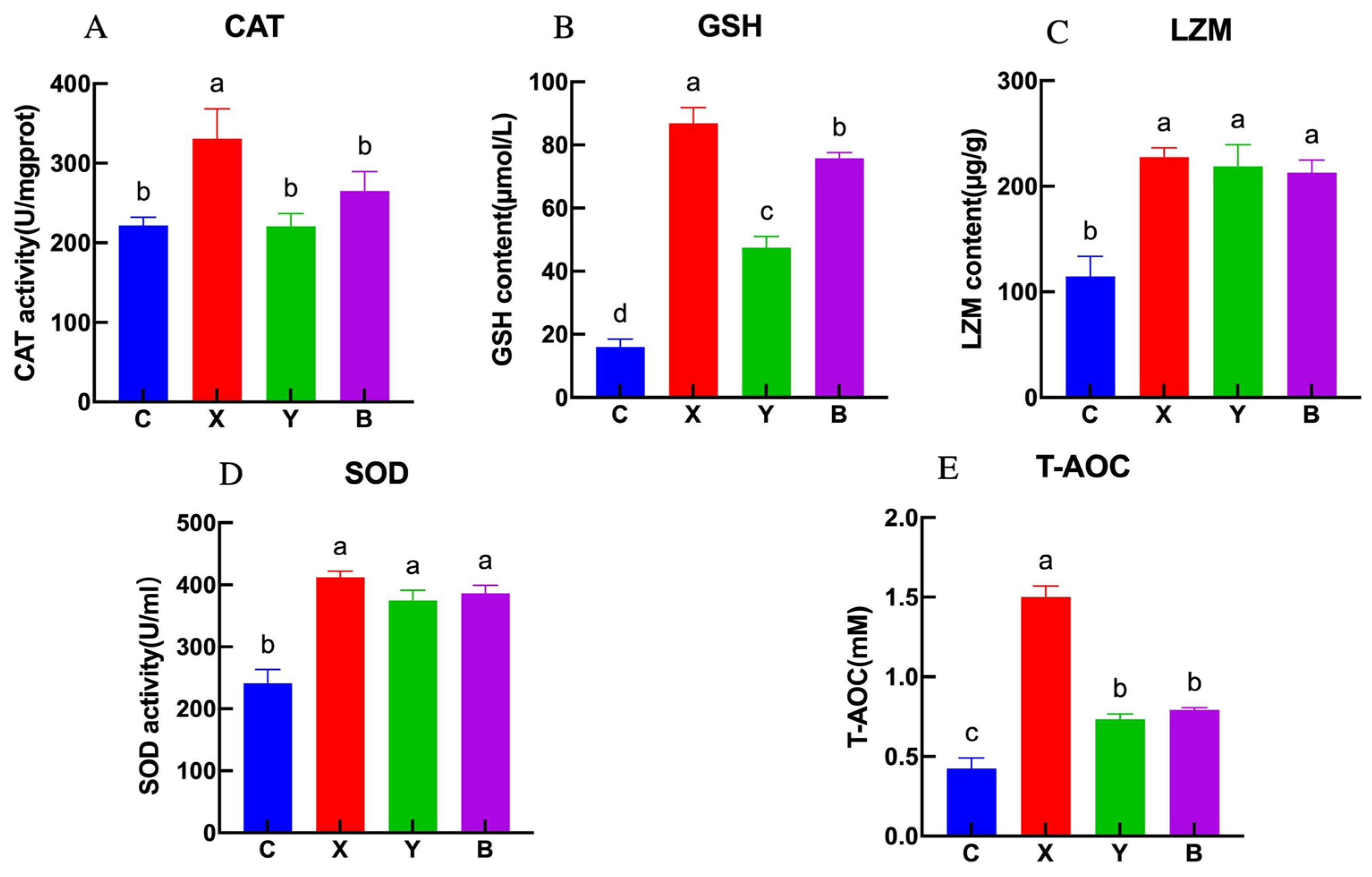
Figure 1 illustrates the variations in hemolymph immune indicators of P. trituberculatus under different biological diet feeding regimes. Compared with the control treatment, the experimental treatments exhibited significant regulatory effects on SOD activity, reduced GSH content, LZM content, T-AOC, and CAT activity in the hemolymph (p < 0.05). Specifically, CAT activity in Treatment X was extremely significantly higher than in other experimental treatments (p < 0.01), whereas Treatments Y and B showed no statistical difference compared to the control treatment. regarding GSH content, all experimental treatments were significantly higher than the control treatment (p < 0.05), with Treatment X showing an extremely significant advantage (p < 0.05). LZM content in Treatments X and B was significantly higher than in the control treatment (p < 0.05), with no significant difference observed between the experimental treatments. T-AOC content in Treatment X was extremely significantly higher than in the control treatment, Treatment Y, and Treatment B (p < 0.05), and significant differences were also observed among the experimental treatments (p < 0.01). SOD activity in all experimental treatments was slightly higher than in the control treatment, but the difference was not significant (p > 0.05), and there was no statistical difference between Treatment X and Treatments Y or B. These results indicate that the natural diets used in the experiment enhanced the overall antioxidant capacity and resistance to oxidative stress in juvenile crabs. Notably, this physiological enhancement was primarily observed in the natural diet treatments (X and B), whereas crabs fed the commercial diet (Treatment C) exhibited significantly weaker antioxidant and immune responses.

3.3. Analysis of DEGs

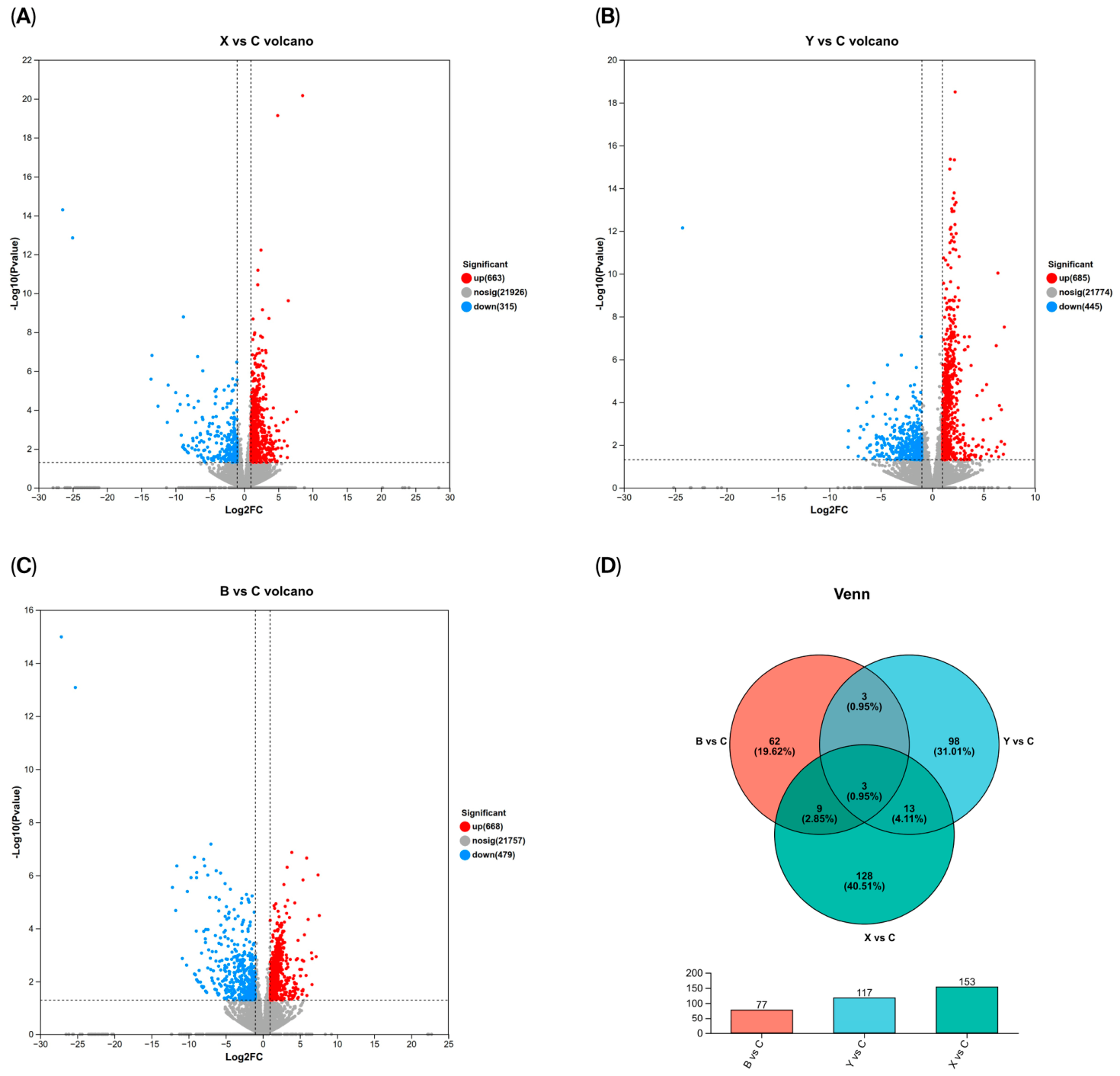
The clean reads from the muscle transcriptome of P. trituberculatus were mapped to the reference genome, yielding an alignment rate of over 91% for all samples. Ultimately, a total of 1050 differentially expressed genes (DEGs) were identified through pairwise comparisons. Treatment B exhibited the fewest DEGs compared to the control, Treatment C, with only 183 DEGs (99 up-regulated and 84 down-regulated). Meanwhile, Treatments X and Y showed much stronger transcriptomic responses, identifying 354 DEGs (283 up-regulated and 71 down-regulated) and 513 DEGs (428 up-regulated and 85 down-regulated), respectively (Figure 2A–C).
To identify and compare the distribution of DEGs in P. trituberculatus fed under three different dietary conditions, a Venn diagram was constructed (Figure 2D). The analysis revealed that 111 DEGs were shared between the X vs. C and Y vs. C treatments, 71 DEGs were shared between X vs. C and B vs. C, and 6 DEGs were shared between B vs. C and Y vs. C. Additionally, 3 core DEGs were commonly expressed across all three comparison treatments. Finally, there were 128, 98, and 82 unique DEGs exclusively identified in the X vs. C, Y vs. C, and B vs. C treatments, respectively.

3.4. GO Functional Enrichment Analysis of DEGs

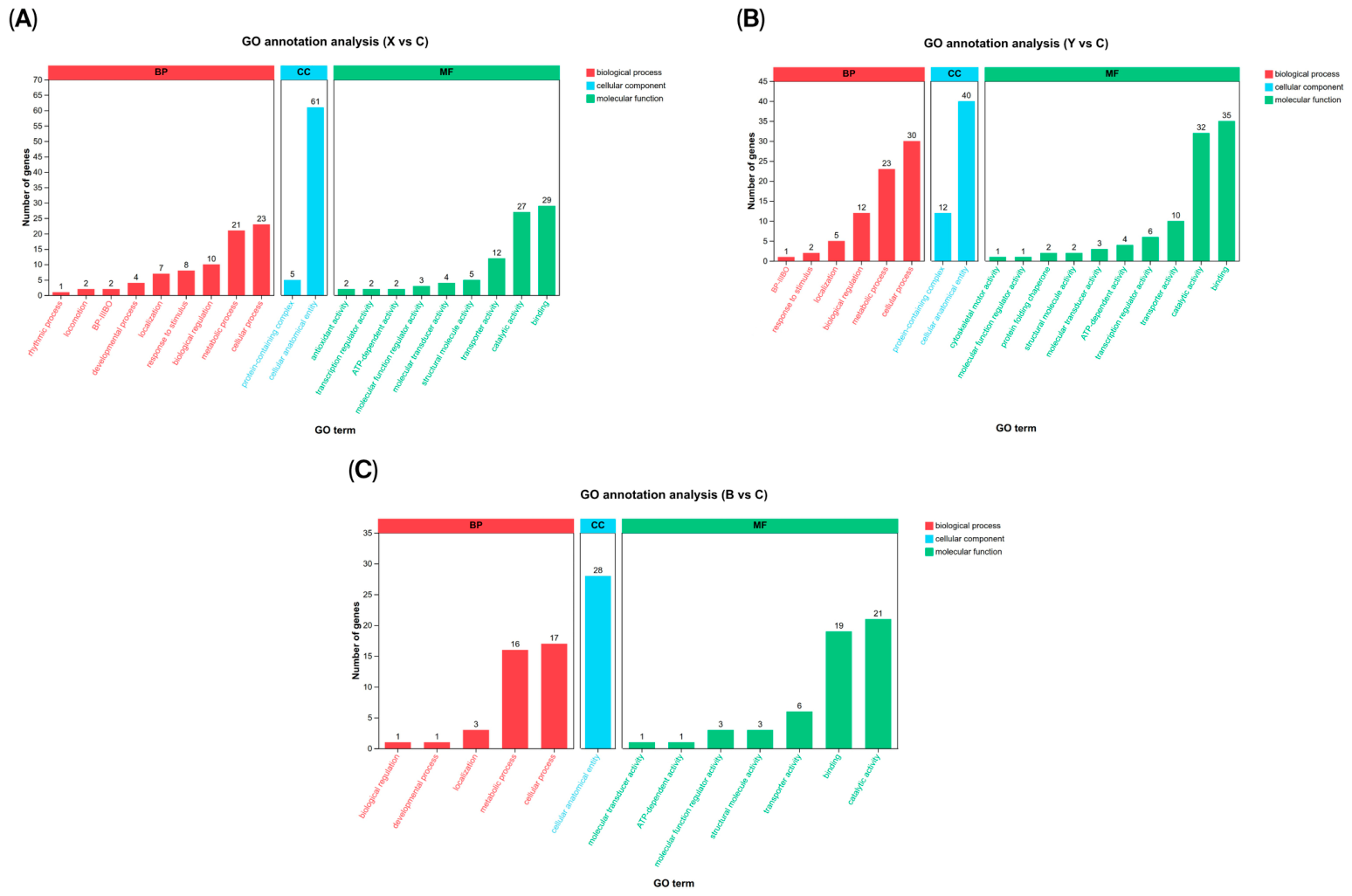
GO functional enrichment analysis revealed that 74, 55, and 24 DEGs were successfully annotated to the GO database in the X vs. C, Y vs. C, and B vs. C comparisons, respectively. These annotated DEGs were categorized into three main ontologies: biological process (BP), cellular component (CC), and molecular function (MF). Figure 3 illustrates the top significantly enriched GO terms for Treatments X, Y, and B.
In the Treatment X vs. control comparison (Figure 3A), the transcriptomic response was strongly characterized by cellular structural remodeling and active secretory processes. Highly significant enrichment was observed primarily in the CC category, including terms such as cellular anatomical entity and extracellular region. Furthermore, secretory granules and secretory vesicles were notably enriched. In crustaceans, the enrichment of secretory granulations and membrane activities in muscle tissue is closely associated with intense extracellular matrix turnover and the release of immune-related effectors (e.g., lysozyme). This robust cellular remodeling aligns perfectly with the optimal growth performance and enhanced immune parameters observed in Treatment X.
Conversely, the Treatment Y transcriptomic profile (Figure 3B) was strikingly dominated by an intense shift toward energy mobilization and mitochondrial metabolism. Across BP, CC, and MF categories, almost all significantly enriched (red/orange) terms were concentrated on oxidative phosphorylation. These included generation of precursor metabolites and energy, mitochondrial membrane, respiratory chain complex, and electron transfer activity. The massive induction of genes within the NADH dehydrogenase and cytochrome-c oxidase complexes implies a state of high metabolic demand or potential metabolic stress. This suggests that Treatment Y heavily activates energy-consuming processes in the cellular machinery, potentially allocating energy toward metabolic maintenance rather than optimal muscle deposition.
Unlike the robust responses in Treatments X and Y, the Treatment B vs. control comparison (Figure 3C) exhibited a much milder transcriptomic shift. The functional enrichment showed higher p-adjust values (p > 0.05), corroborating the earlier finding that Treatment B induced the fewest DEGs. The subtly affected GO terms were mainly related to basic amino acid turnover, such as alpha-amino acid metabolic processes and cellular amino acid biosynthetic processes, as well as peptidase inhibitor activity. This indicates that Treatment B maintains muscle homeostasis primarily through fine-tuning amino acid metabolism and enzymatic regulation rather than eliciting extreme structural or metabolic overhauls.

3.5. KEGG Functional Enrichment Analysis of DEGs

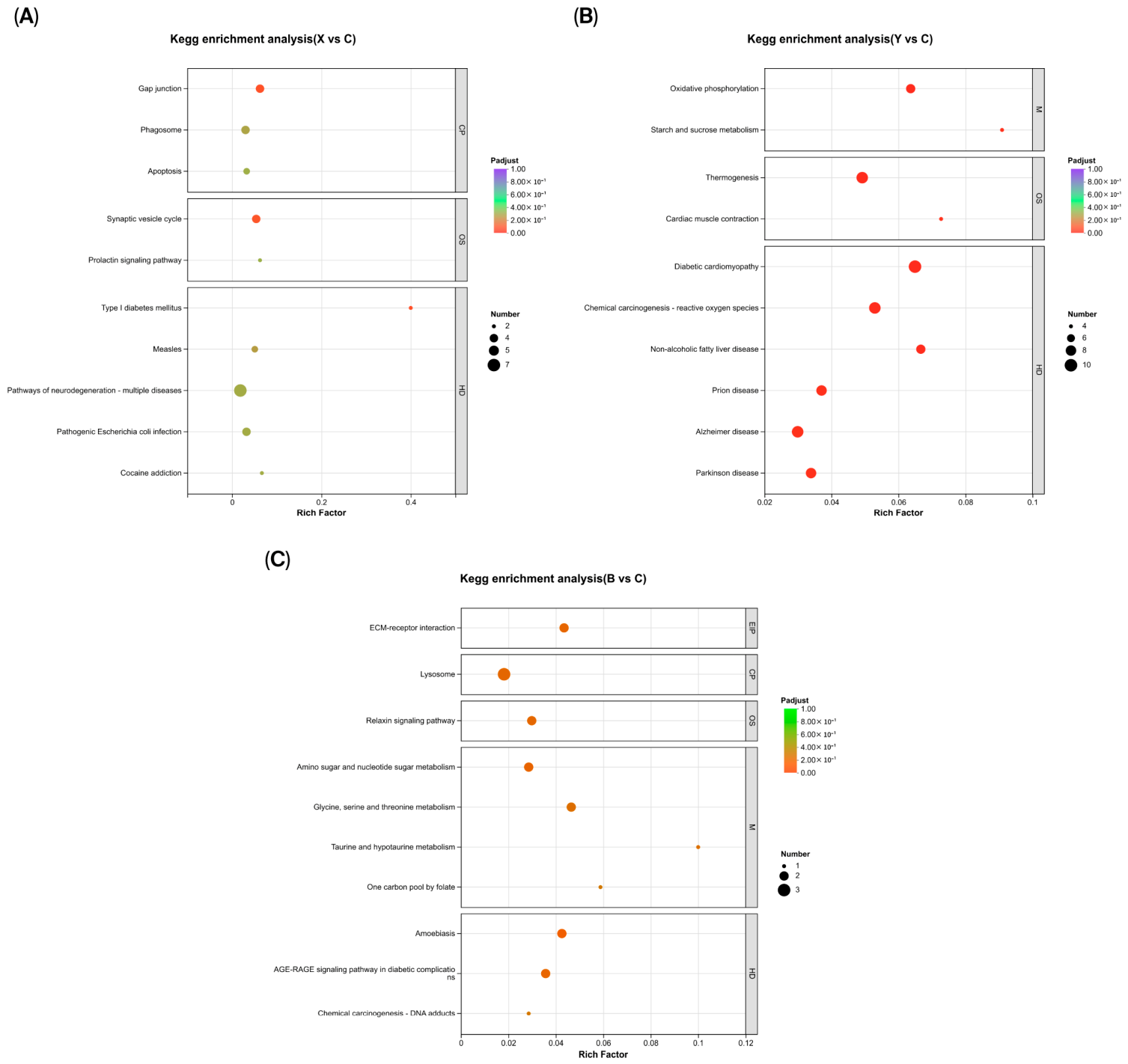
To further investigate the biological pathways activated by different dietary treatments, KEGG pathway enrichment analysis was conducted (Figure 4A–C). Additionally, the specific relationships between individual DEGs and their significantly enriched functional pathways for each experimental treatment are intuitively illustrated in the supplementary chord diagrams (Figures S1–S3). The analysis revealed distinct immune, structural, and metabolic strategies among the treatments.
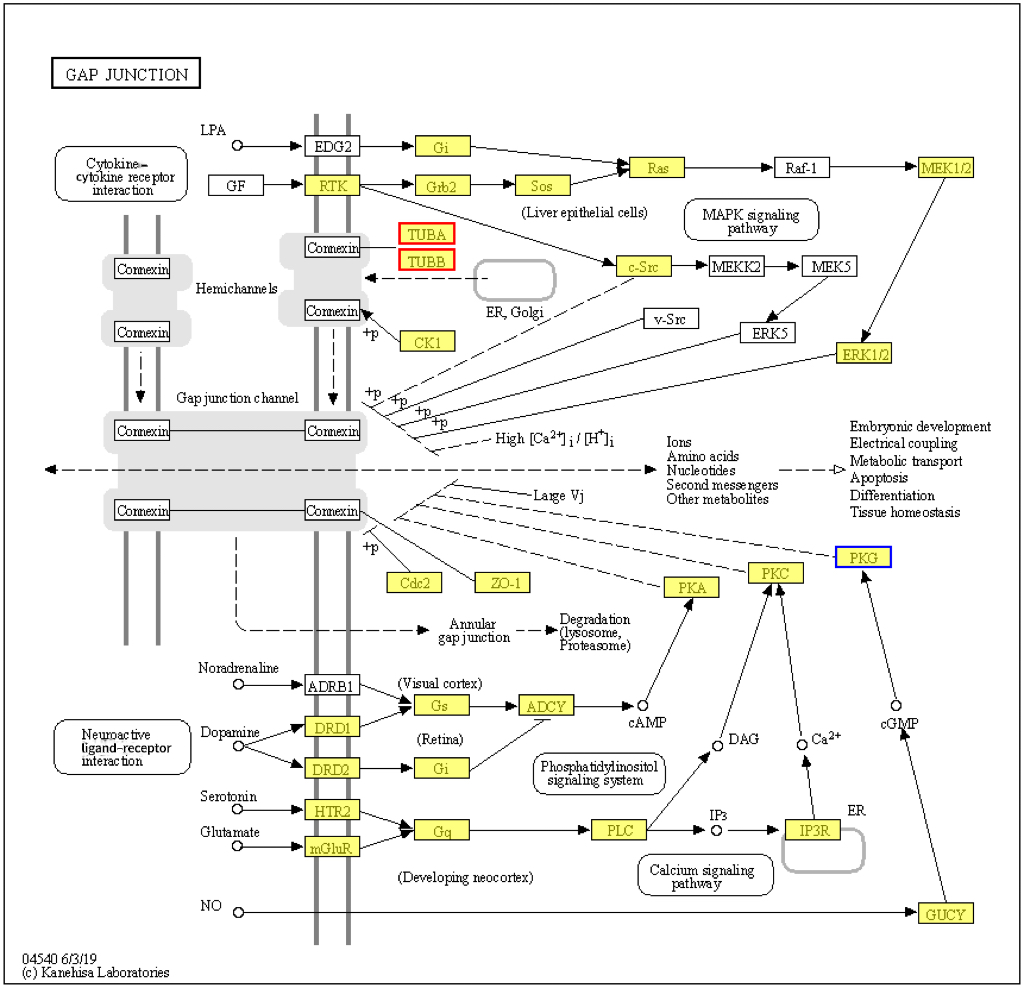
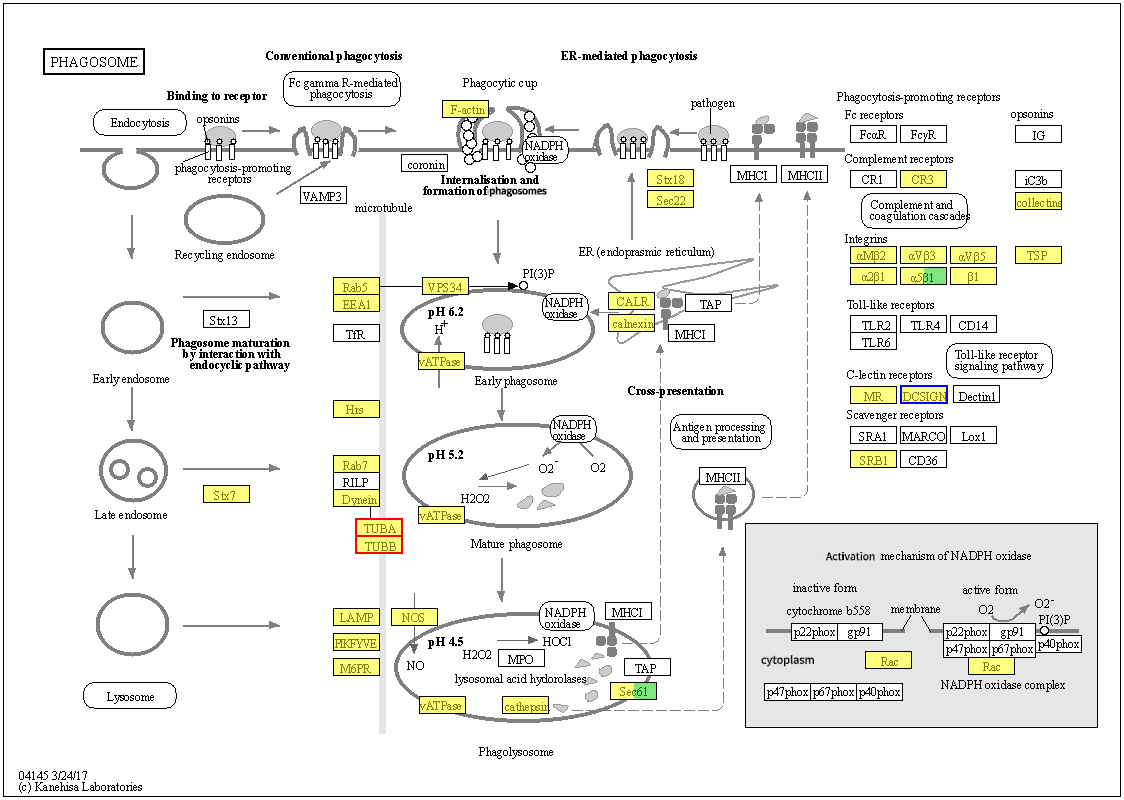
Compared to the control, Treatment X exhibited significant enrichment in innate immune-related signaling, specifically the gap junction and phagosome pathways. In the gap junction pathway (Figure 5), the significant up-regulation of key cytoskeletal scaffolding genes (TUBA, tubulin alpha-1A/1D chain; TUBB, tubulin beta chain) was observed. Similarly, the phagosome pathway (Figure 6) showed consistent up-regulation of TUBA and TUBB, suggesting that Diet X potentiates the cellular defense system by optimizing cytoskeletal dynamics for enhanced pathogen engulfment and phagocytosis efficiency.
In the Treatment Y vs. control comparison, 46 DEGs were associated with 166 KEGG pathways, showing a transcriptomic shift heavily concentrated on energy mobilization and nutrient utilization. The top 10 significantly enriched pathways (Figure 4B) were dominated by energy metabolism, including oxidative phosphorylation, TCA cycle, and glycolysis. Furthermore, multiple pathways related to carbohydrate metabolism were identified, such as starch and sucrose metabolism, galactose metabolism, and biosynthesis of nucleotide sugars. Notably, the enrichment of phenylalanine, tyrosine and tryptophan biosynthesis and beta-Alanine metabolism indicates an active protein and amino acid metabolic turnover. These results suggest that Treatment Y may induce a higher metabolic demand or a strategic shift in energy partitioning in the muscle tissue of P. trituberculatus.
In contrast to the structural immunity in Treatment X and energy focus in Treatment Y, Treatment B primarily showed enrichment in nutrient metabolism and specific cellular processes. In the Treatment B vs. control comparison, several amino acid metabolism pathways were notably affected. Cysteine and methionine metabolism was significantly enriched with two DEGs (D-3-phosphoglycerate dehydrogenase-like and adenosylhomocysteinase-like). Glycine, serine, and threonine metabolism were also enriched with two DEGs (D-3-phosphoglycerate dehydrogenase-like and L-threonine 3-dehydrogenase).
Regarding cellular homeostasis, the lysosome pathway was enriched with three DEGs (sialin-like, battenin-like, and chitooligosaccharidolytic beta-N-acetylglucosaminidase-like). Additionally, ECM–receptor interaction (agrin-like) and amino sugar and nucleotide sugar metabolism (probable chitinase 10, chitooligosaccharidolytic beta-N-acetylglucosaminidase-like) were significantly enriched, indicating a metabolic adaptation directed towards tissue maintenance and chitin-related enzymatic regulation.

3.6. Validation by qRT-PCR

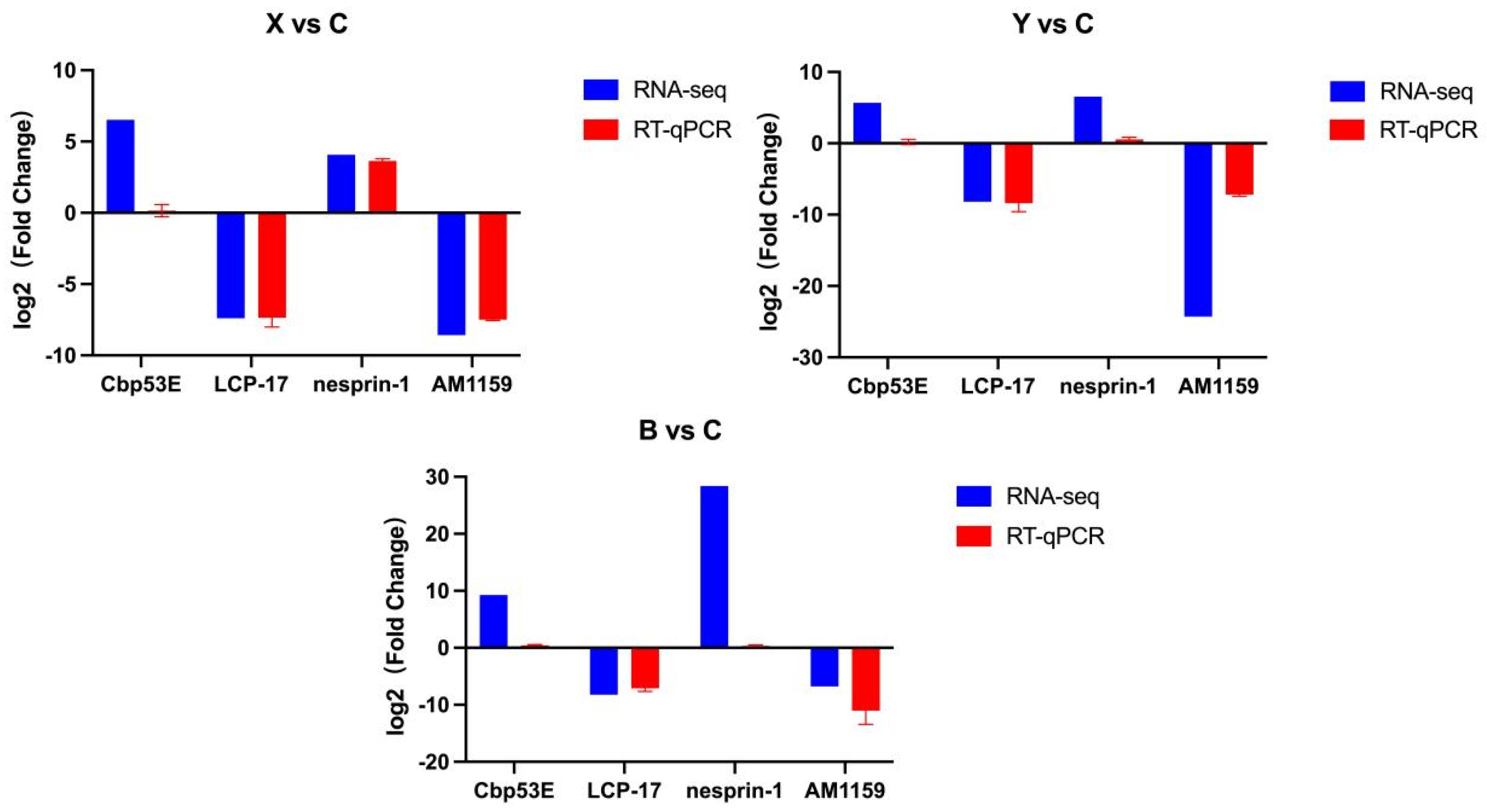
To validate the RNA-Seq results, four genes were randomly selected for qRT-PCR analysis. The primer sequences used are listed in Table S3. The selection included two up-regulated and two down-regulated genes. In Treatment X, the expression of Cbp53E and nesprin-1 was up-regulated, while the other two genes were down-regulated. Consistent trends in gene expression changes were observed in Treatments Y and B following their respective feed treatments. The qRT-PCR validation results for all three treatments are presented in Figure 7, confirming that the differential expression patterns of these genes correspond with the RNA-Seq data.

4. Discussion

4.1. Growth Performance

The type of exogenous feed during the early feeding stage directly influences the subsequent growth and development of juvenile crabs [10,11]. Protein, as the most critical nutrient for animal growth, significantly affects weight gain, largely dependent on its quality in the feed [12]. Feeding juvenile P. trituberculatus with animal-based feeds offers advantages such as a low feed conversion ratio, high survival rates, improved meat quality, and accelerated growth [13,14]. The results of this study demonstrate that the type of feed significantly affects the growth performance of juvenile crabs. Compared to the control Treatment C, fed a commercial diet, all treatments fed animal feeds (Treatments Y, X, and B) exhibited significantly higher WGR and SGR (p < 0.05). Among these, Treatments X and B showed the best growth performance. Their WGR (72.18 ± 13.02% and 70.82 ± 16.38%, respectively) and SGR (1.942 ± 0.346%/day and 1.921 ± 0.404%/day, respectively) were significantly higher than those of Treatment Y, with no statistical difference between the shrimp and clam treatments (p > 0.05). This indicates that both shrimp and clam, as feeds, provide a significant and comparable growth-promoting effect for juvenile P. trituberculatus. This outcome may be attributed to the rich, high-quality protein, balanced profile of essential amino acids (e.g., lysine, methionine), and high content of highly unsaturated fatty acids (e.g., EPA, DHA) in shrimp and clam, which better meet the nutritional requirements for juvenile crab growth and facilitate protein synthesis and energy metabolism [15,16].
In contrast, although Treatment C showed growth (WGR: 14.82 ± 6.78%, SGR: 0.496 ± 0.226%/day), its performance was significantly lower than all live-prey treatments (p < 0.05). This suggests that the commercial diets used in this experiment have room for improvement in promoting growth, potentially due to their nutritional composition, palatability, or digestibility [17]. While Treatment Y performed significantly better than the control, it was significantly outperformed by the shrimp and clam treatments. This highlights that the growth-promoting effects vary distinctly among different feed types due to differences in their nutritional composition. Although fish has a high protein content, its amino acid profile or fat content may not fully meet the demands of rapid growth in juvenile crabs.
Furthermore, as shown in the proximate composition (Table 1), the natural diets (particularly L. vannamei and R. philippinarum) possess higher crude protein levels on a dry-matter basis compared to the commercial diet. This higher availability of easily digestible marine protein likely contributed to the significantly better WGR and SGR observed in Treatments X and B. Although L. crocea (Treatment Y) also has a high protein content, its relatively higher crude lipid content might exceed the optimal lipid requirement for juvenile P. trituberculatus, thereby resulting in inferior growth performance compared to the shrimp and clam diets.

4.2. Immune and Antioxidant Capacity

The antioxidant defense system in crustaceans primarily relies on several key enzymatic indicators, including SOD, CAT, GSH, LZM, and T-AOC [18,19]. SOD acts as the first line of antioxidant defense, catalyzing the dismutation of superoxide anion radicals into hydrogen peroxide. CAT subsequently decomposes hydrogen peroxide into water and oxygen, effectively neutralizing reactive oxygen species (ROS) [20,21]. T-AOC serves as a comprehensive indicator reflecting the overall functional state of the antioxidant system [22]. Furthermore, GSH, an important non-enzymatic antioxidant, is involved in regulating cellular redox balance [23]. LZM is essential for organismal growth, metabolism, homeostasis, and health, playing a significant role in innate immunity [24,25]. This study investigated the effects of different diets on hemolymph immune parameters in juvenile crabs. The results indicate that feeds significantly modulated SOD activity, GSH content, LZM content, and T-AOC (p < 0.05), suggesting that feeds effectively enhance the immune and antioxidant capacity of juveniles.
Regarding the antioxidant enzyme system, SOD activity in Treatment X was significantly higher than in Treatments Y and B (p < 0.01), but not statistically different from the control (p > 0.05). This suggests that the shrimp feeds may have a unique advantage in sustaining SOD activity, although the underlying mechanism requires further investigation. As for GSH, a crucial non-enzymatic antioxidant, its content was significantly higher in all experimental treatments compared to the control (p < 0.05), with Treatment X showing a particularly pronounced advantage (p < 0.01). This indicates that the shrimp feeds may enhance defense by promoting GSH synthesis or reducing its consumption. Specifically, high-quality protein sources (such as L. vannamei) provide abundant precursor amino acids, particularly cysteine and glutamate, which are rate-limiting substrates for the de novo synthesis of GSH. The superior nutritional profile of the shrimp diet likely reduces the basal oxidative stress of the juvenile crabs, thereby decreasing the excessive depletion of existing GSH reserves. Furthermore, T-AOC in Treatment X was significantly higher than in the control and the other experimental treatments (p < 0.01), further confirming the superior effect of the shrimp feeds in boosting overall antioxidant capacity.
In terms of non-specific immunity, LZM content in Treatments X and B was significantly higher than in the control (p < 0.01), with no significant difference between these two experimental treatments (p > 0.05). This suggests that different diets may activate the lysozyme system through distinct pathways, thereby enhancing the innate immune defense of the juveniles. However, CAT activity, although slightly elevated in all experimental treatments compared to the control, did not show a statistically significant difference (p > 0.05). This suggests that CAT activity may be less sensitive to feed-related changes and could be regulated by other environmental or physiological factors (Li et al., 2008) [21].
Notably, our results demonstrate that dietary intervention (Treatment X) can modulate the immune status of muscle tissue in P. trituberculatus. While muscle is primarily recognized as a locomotive organ, recent studies have highlighted its role in the systemic innate immune response of crustaceans. The coordinated up-regulation of TUBA and TUBB in the phagosome pathway suggests that Diet X may provide essential nutrients (such as specific fatty acids or amino acids) that facilitate cytoskeletal remodeling, a critical process for the formation of phagosomes and the transport of lytic enzymes. This “nutritional priming” of the cellular immune machinery could explain the enhanced disease resistance and antioxidant capacity observed in the physiological parameters of Treatment X.

4.3. Regulation of Immune-Related Signaling Pathways and Key Genes by Different Diets

Beyond merely assessing enzymatic indicators, this study utilized transcriptomic technology to unveil the molecular mechanisms by which different diets shape the “robust constitution” of juvenile crabs. KEGG enrichment analysis revealed significant disparities in metabolic and immune pathways activated by different diets, with Treatment X and Treatment B exhibiting distinct patterns of immune enhancement.
For Treatment X, which exhibited the optimal performance, DEGs were significantly enriched in the phagosome and gap junction signaling pathways. This provides direct molecular evidence for the superior non-specific immune capacity of juvenile crabs in this treatment. Phagocytosis serves as the primary cellular defense mechanism against pathogen invasion in crustaceans [26,27]. Within the phagosome pathway, this study observed significant up-regulation of the tubulin alpha chain (TUBA) and tubulin beta chain (TUBB) genes. Tubulin, the core component of cytoskeletal microtubules, drives cell membrane deformation, phagosome formation, and phagosome–lysosome fusion through its dynamic polymerization and depolymerization [28]. The high expression of TUBA and TUBB suggests that the shrimp diet facilitates cytoskeletal remodeling, thereby accelerating the efficiency of foreign body engulfment and clearance by hemocytes [29]. This molecular finding aligns highly with the significantly elevated LZM and CAT activities observed in physiological indicators, indicating that this diet systematically enhances cellular immune defense from three dimensions: “gene transcription–cell structure–enzyme function”. Furthermore, the significant enrichment of the gap junction pathway in Treatment X implies enhanced intercellular communication. Gap junctions allow the rapid transfer of second messengers (e.g., Ca2+, IP3) and antioxidant molecules between cells [30]. The activation of this pathway suggests that Treatment X crabs can mount a more efficient, coordinated immune response under environmental stress, maintaining internal homeostasis, which is critical for improving early survival rates after stock enhancement.
For Treatment B, the mechanism of immune enhancement followed a different trajectory. DEGs in this treatment were primarily enriched in the lysosome and amino sugar and nucleotide sugar metabolism pathways. Specific enrichment of key amino acid metabolic pathways, such as cysteine and methionine metabolism and glycine, serine and threonine metabolism, has clear growth-promoting implications. Methionine is not only the initiating amino acid for protein synthesis, but its derivative, S-adenosylmethionine (SAM), serves as the most important intracellular methyl donor, widely participating in methylation modifications of DNA, proteins, and phospholipids [31,32,33], which are crucial for cell proliferation and gene expression regulation. The activation of these pathways indicates that the clam diet, by providing balanced essential amino acids or promoting their efficient conversion, directly strengthened the core biochemical process of protein synthesis. Moreover, the significant enrichment of genes such as chitooligosaccharidolytic beta-N-acetylglucosaminidase-like reflects not only efficient digestion of the shellfish diet but also potential involvement in the lysosomal degradation of chitin-containing pathogens (e.g., fungal or bacterial cell walls) [34]. This explains why Treatment B also performed excellently in growth performance and lysozyme activity.
In contrast, Treatment Y showed enrichment primarily in energy metabolism pathways such as oxidative phosphorylation, with up-regulation of genes related to the mitochondrial electron transport chain. The fish diet may have induced higher metabolic pressure, thereby affecting energy allocation and growth performance. High-intensity metabolic processes generate substantial byproducts—reactive oxygen species (ROS). When ROS levels exceed the organism’s scavenging capacity, they attack cell membranes, proteins, and DNA, causing oxidative damage. The enrichment of the “Chemical carcinogenesis–ROS” pathway in Treatment Y directly corroborates this. Consequently, juvenile crabs required more energy to digest, absorb, and utilize the fish diet, possibly because its nutritional components (e.g., specific fats or proteins) were less bioavailable, requiring more complex metabolic pathways for conversion [35,36]. This resulted in elevated “metabolic costs” that compromised growth performance. Although this indicates vigorous energy metabolism in Treatment Y, it also implies that the high-fat fish diet imposed a higher oxidative stress load on the organism, which aligns with the physiological results showing lower T-AOC in Treatment Y compared to Treatment X.
In summary, different diets regulate the constitution of juvenile crabs through distinct molecular strategies. L. vannamei (Treatment X) primarily endows juvenile crabs with stronger cellular immune defense capabilities by up-regulating tubulin genes to reinforce phagosome function and intercellular communication. Conversely, R. philippinarum (Treatment B) focuses on the enhancement of lysosomal activity and chitin metabolism. Given that stock enhancement mainly faces risks of pathogen infection and drastic environmental changes, the cytoskeletal reorganization and phagocytic immune enhancement mechanisms triggered by Treatment X may be more advantageous for the early survival of juveniles in the wild.

4.4. Integrated Interpretation and Practical Implications

Taken together, the growth, biochemical, and transcriptomic datasets indicate complementary rather than identical dietary responses. Treatments X and B supported the greatest short-term growth, whereas Treatment X produced the strongest overall antioxidant and non-specific immune phenotype. The transcriptomic patterns were broadly consistent with these physiological differences, including the enrichment of phagosome- and cytoskeleton-related processes in Treatment X and nutrient-metabolism-related processes in Treatment B. However, because the diets differed simultaneously in multiple nutritional characteristics, the present data do not establish a linear causal pathway from dietary composition to gene expression, biochemical activity, and growth. Instead, the integrated evidence identifies L. vannamei as the most promising single diet when both growth and physiological defense are considered.
The 4-week duration was selected to represent a short pre-release conditioning period rather than a complete grow-out cycle. This period was sufficient to detect early differences in growth and physiological status, but it does not establish long-term growth performance or post-release survival. In practical hatchery management, the shrimp diet may be considered as a principal feed during a defined short-term conditioning period, provided that feeding rate, feed hygiene, and water quality are carefully controlled. Longer-term feeding, environmental-challenge tests, and field-release monitoring are required to determine whether the observed physiological advantages translate into improved survival after release.

5. Conclusions

Under the conditions of this 4-week indoor feeding trial, the shrimp and clam diets supported the highest growth performance of juvenile P. trituberculatus, while the shrimp diet elicited the strongest overall antioxidant and non-specific immune responses. Transcriptomic analysis identified phagosome-, cytoskeleton-, and metabolism-related processes associated with these physiological differences. Considering growth and physiological defense together, L. vannamei was the most promising single diet for short-term pre-release conditioning. However, because the diets were not nutritionally standardized and post-release survival was not directly evaluated, this recommendation requires further validation through longer-term feeding, challenge, and field-release trials.

Supplementary Materials

The following supporting information can be downloaded at: https://www.mdpi.com/article/10.3390/fishes11080490/s1, Figure S1. Chord diagram illustrating the relationship between specific DEGs and significantly enriched KEGG pathways in the muscle tissue of P. trituberculatus (Group X vs. Control). The connections link individual genes to their corresponding functional categories. Colors represent different functional terms/pathways, and the size of the block indicates the number of associated genes. Figure S2. Chord diagram illustrating the relationship between specific DEGs and significantly enriched KEGG pathways in the muscle tissue of P. trituberculatus (Group Y vs. Control). The connections link individual genes to their corresponding functional categories. Colors represent different functional terms/pathways, and the size of the block indicates the number of associated genes. Figure S3. Chord diagram illustrating the relationship between specific DEGs and significantly enriched [GO terms / KEGG pathways] in the muscle tissue of P. trituberculatus (Group B vs. Control). The connections link individual genes to their corresponding functional categories. Colors represent different functional terms/pathways, and the size of the block indicates the number of associated genes. Table S1. Detailed information of DEGs involved in the Gap junction pathway (X vs. Control). Table S2. Detailed information of DEGs involved in the Phagosome pathway (X vs. Control). Table S3. Primers used for qPCR validation in this study.

Author Contributions

Conceptualization, X.N. and R.M.; Methodology, X.N., X.Z. and R.M.; Software, X.N.; Validation, X.N. and X.Z.; Formal Analysis, R.M.; Investigation, X.N.; Resources, R.M.; Data Curation, R.M.; Writing—Original Draft, X.N.; Writing—Review and Editing, X.N. and P.Z.; Visualization, X.Z.; Supervision, P.Z. and L.L.; Project Administration, L.L.; Funding acquisition, L.L. All authors have read and agreed to the published version of the manuscript.

Funding

This research was funded by the National Key Research and Development Program of China (2023YFD2401902), Youth Science and Technology Innovation Leading Talent Project of Ningbo (2024QL062), and Ningbo Yongjiang Talent Program (2023A-382-G).

Institutional Review Board Statement

Ethical review and approval were waived for this study. The experimental organism Portunus trituberculatus is a marine invertebrate crustacean. Pursuant to China’s Regulations for the Administration of Laboratory Animals, Guidance on the Humane Treatment of Laboratory Animals and national standard GB/T 42011-2022, compulsory ethical committee supervision only applies to vertebrate animals, while aquatic crustaceans are outside the mandatory review scope. Meanwhile, Ningbo University’s institutional animal ethics rules and ARRIVE 2.0 international guidelines exempt decapod crustacean aquaculture experiments from formal ethical approval. All operations were refined to reduce crab stress following the 3Rs principle.

Data Availability Statement

The original contributions presented in this study are included in the article. Further inquiries can be directed to the corresponding authors.

Conflicts of Interest

The authors declare no conflict of interest.

References

  1. Feng, Y.; Luqing, P.; Peng, X.; Debin, Z.; Jian, L. Immune responses and expression of Immune-Related genes in swimming crab Portunus trituberculatus exposed to elevated ambient Ammonia-N stress. Biol. Med. Nat. Product. Chem. 2010, 157, 246–251. [Google Scholar] [CrossRef] [Scilit] [PubMed]
  2. Hamasaki, K.; Kitada, S. A review of kuruma prawn Penaeus japonicus stock enhancement in Japan. Fish. Res. 2006, 80, 359–365. [Google Scholar] [CrossRef] [Scilit]
  3. Wang, Q.; Wu, X.; Lou, B.; Yang, Y.; Liu, Z.; Cheng, Y. Comparison of nutritional composition of different muscle parts in Portunus trituberculatus. Acta Nutr. Sin. 2013, 35, 310–312. Available online: http://manu37.magtech.com.cn/yyxb/CN/home (accessed on 15 January 2026).
  4. Narayanan, G.; Chinnu, R.; Baskaralingam, V.; Balasubramanian, M.; Sekar, V.; Kadarkarai, M.; Giovanni, B. Oreochromis mossambicus diet supplementation with Psidium guajava leaf extracts enhance growth, immune, antioxidant response and resistance to Aeromonas hydrophila. Fish Shellfish Immunol. 2026, 58, 572–583. [Google Scholar] [CrossRef] [Scilit] [PubMed]
  5. Arya, V.; Anahita, M.; Reza, R.; Caterina, F. Immunomodulation, antioxidant enhancement and immune genes up-regulation in rainbow trout (oncorhynchus Mykiss) fed on seaweeds included diets. Fish Shellfish Immunol. 2020, 106, 852–858. [Google Scholar] [CrossRef] [Scilit] [PubMed]
  6. Shentu, J.K.; Xu, Y.J.; Ding, Z.N. Effects of salinity on survival, feeding behavior and growth of the juvenile swimming crab, Portunus trituberculatus (Miers, 1876). Chin. J. Oceanol. Limnol. 2015, 33, 679–684. [Google Scholar] [CrossRef] [Scilit]
  7. Wang, X.X.; Yuan, Y.; Li, C.C.; Zhou, F.; Jin, M.; Sun, P. Partial substitution of fish meal with soy protein concentrate in commercial diets for juvenile swimming crab Portunus trituberculatus. Anim. Feed Sci. Technol. 2020, 259, 114290. [Google Scholar] [CrossRef] [Scilit]
  8. Abbaszadeh, A.; Mozanzadeh, M.T.; Qasemi, A.; Oujifard, A.; Nafisi, B.M. Effects of the addition of Calanopia elliptica, Artemia franciscana, and Brachionus rotundiformis in a nursery biofloc system on water quality, growth, gut morphology, health indices, and transcriptional response of immune and antioxidant-related genes in Penaeus vannamei. Aquac. Int. 2022, 30, 653–676. [Google Scholar] [CrossRef] [Scilit]
  9. Maria, A.M.; Jeronimo, P.; Ana, C.D.; Laura, E.; Natalia, S.A.; Jorge, L.F. Dietary photoprotective compounds ameliorate UV tolerance in shrimp (Pleoticus muelleri) through induction of antioxidant activity. J. World Aquac. Soc. 2018, 49, 933–942. [Google Scholar] [CrossRef] [Scilit]
  10. Huo, Y.W.; Jin, M.; Zhou, P.P.; Li, M.; Mai, K.S.; Zhou, Q.C. Effects of dietary protein and lipid levels on growth, feed utilization and body composition of juvenile swimming crab, Portunus trituberculatus. Aquaculture 2014, 434, 151–158. [Google Scholar] [CrossRef] [Scilit]
  11. Imran, A.; Mhd, I.; Mohammad, S.; Ambok‑Bolong, A. Growth and survival of enriched free‑living nematode, Panagrellus redivivus as exogenous feeding for larvae of blue swimming crab, Portunus pelagicus. Aquac. Rep. 2019, 15, 100211. [Google Scholar] [CrossRef] [Scilit]
  12. Mundheim, H.; Aksnes, A.; Hope, B. Growth, feed efficiency and digestibility in salmon (Salmo salar L.) fed different dietary proportions of vegetable protein sources in combination with two fish meal qualities. Aquaculture 2004, 237, 315–331. [Google Scholar] [CrossRef] [Scilit]
  13. Yue, Y.R.; Liu, Y.J.; Tian, L.X.; Gan, L.; Yang, H.J.; Liang, G.Y. Effects of replacing fish meal with soybean meal and peanut meal on growth, feed utilization and haemolymph indexes for juvenile white shrimp Litopenaeus vannamei, boone. Aquac. Res. 2012, 43, 1687–1696. [Google Scholar] [CrossRef] [Scilit]
  14. Tian, Y.; Guo, C.; Zhang, X.; Xie, S.; Zhou, Q.; Luo, J.; Zhu, T.; Yang, Y.; Li, X.; Jin, M. Effects of dietary histidine level on growth, antioxidant capacity and TOR signaling pathway in juvenile swimming crabs, Portunus trituberculatus. Aquac. Rep. 2023, 33, 101869. [Google Scholar] [CrossRef] [Scilit]
  15. Hu, S.X.; Wang, J.T.; Han, T.; Li, X.Y.; Jiang, Y.D.; Wang, C.L. Effects of dietary Dha/Epa Ratios on growth performance, survival and fatty acid composition of juvenile swimming crab (Portunus trituberculatus). Aquac. Res. 2017, 48, 1291–1301. [Google Scholar] [CrossRef] [Scilit]
  16. Jin, M.; Wang, M.Q.; Huo, Y.W.; Huang, W.W.; Mai, K.S.; Zhou, Q.C. Dietary lysine requirement of juvenile swimming crab, Portunus trituberculatus. Aquaculture 2015, 448, 1–7. [Google Scholar] [CrossRef] [Scilit]
  17. Ranjan, A.; Sahu, N.P.; Deo, A.D.; Kumar, S. Comparative growth performance, in vivo digestibility and enzyme activities of Labeo rohita fed with DORB based formulated diet and commercial carp feed. Turk. J. Fish. Aquat. Sci. 2018, 18, 1025–1036. [Google Scholar] [CrossRef] [PubMed]
  18. Orbea, A.; Ortiz-Zarragoitia, M.; Solé, M.; Porte, C.; Cajaraville, M.P. Antioxidant Enzymes and peroxisome proliferation in relation to contaminant body burdens of PAHs and PCBs in bivalve molluscs, crabs and fish from the Urdaibai and Plentzia estuaries (Bay of Biscay). Aquat. Toxicol. 2002, 58, 75–98. [Google Scholar] [CrossRef] [Scilit] [PubMed]
  19. Duan, Y.F.; Zhang, J.S.; Dong, H.B.; Wang, Y.; Liu, Q.S.; Li, H. Oxidative stress response of the black tiger shrimp Penaeus monodon to Vibrio parahaemolyticus challenge. Fish Shellfish Immunol. 2015, 46, 354–365. [Google Scholar] [CrossRef] [Scilit] [PubMed]
  20. Zhao, Y.T.; Wu, X.G.; Chang, G.L. Effects of dietary DHA levels on growth, lipid composition and hypoxia stress of juvenile Chinese mitten crab Eriocheir sinensis. Acta Hydrobiol. Sin. 2013, 37, 1133–1144. Available online: http://ssswxb.ihb.ac.cn/ (accessed on 15 January 2026).
  21. Li, E.C.; Chen, L.Q.; Zeng, C. Comparison of digestive and antioxidant enzymes activities, haemolymph oxyhemocyanin contents and hepatopancreas histology of white shrimp, Litopenaeus vannamei, at various salinities. Aquaculture 2008, 274, 80–86. [Google Scholar] [CrossRef] [Scilit]
  22. Kong, C.; Hua, X.M.; Yang, L. Nutritional physiological effects of soybean meal substituting for fish meal in the feed of obscure puffer Takifugu fasciatus and its relationship with soybean antigenic proteins. J. Fish. China 2017, 41, 734–745. Available online: https://www.fishscichina.com (accessed on 15 January 2026).
  23. Muangkeow, B.; Ikejima, K.; Powtongsook, S. Effects of white shrimp, Litopenaeus vannamei (Boone), and Nile tilapia, Oreochromis niloticus L., stocking density on growth, nutrient conversion rate and economic return in integratedclosed recirculation system. Aquaculture 2007, 269, 363–376. [Google Scholar] [CrossRef] [Scilit]
  24. Akihiro, K.; Fernand, F.F.; Hidehiro, K.; Takashi, A.; Ikuo, H. Functional analysis of C-type Lysozyme in penaeid shrimp. J. Biol. Chem. 2011, 286, 44344–44349. [Google Scholar] [CrossRef] [Scilit] [PubMed]
  25. Chen, T.; Ren, C.H.; Wang, Y.H.; Luo, P.; Jiang, X.; Huang, W.; Chen, C.; Hu, C.Q. Molecular cloning, inducible expression and antibacterial analysis of a novel i-type lysozyme (lyz-i2) in Pacific white shrimp, Litopenaeus vannamei. Fish Shellfish Immunol. 2016, 54, 197–203. [Google Scholar] [CrossRef] [Scilit] [PubMed]
  26. Harrison, R.E.; Bucci, C.; Vieira, O.V.; Schroer, T.A.; Grinstein, S. Phagosomes fuse with late endosomes and/or lysosomes by extension of membrane protrusions along microtubules: Roles of Rab7 and RILP. Mol. Cell. Biol. 2003, 23, 6494–6506. [Google Scholar] [CrossRef] [Scilit] [PubMed]
  27. Matozzo, V.; Marin, M.G. The role of haemocytes from the crab Carcinus aestuarii (Crustacea, Decapoda) in immune responses: A first survey. Fish Shellfish Immunol. 2010, 28, 534–541. [Google Scholar] [CrossRef] [Scilit] [PubMed]
  28. Zhong, R.R.; Wu, W.L.; Xu, J.Y.; Zhang, X. Regulation of phagocytosis against bacterium by Rab GTPase in shrimp Marsupenaeus japonicus. Fish Shellfish Immunol. 2018, 25, 258–263. [Google Scholar] [CrossRef] [Scilit] [PubMed]
  29. Wang, Q.; Liu, H.; Zhang, K.; Qiu, X.; Wang, Q.; Liu, W. Rab7 controls innate immunity by regulating phagocytosis and antimicrobial peptide expression in Chinese mitten crab. Fish Shellfish Immunol. 2019, 95, 259–267. [Google Scholar] [CrossRef] [Scilit] [PubMed]
  30. Liu, S.; Peng, W.; Chen, X.; Geng, X.; Zhang, W.; Sun, J. Expression and role of gap junction protein connexin43 in immune challenge-induced extracellular ATP release in Japanese flounder (Paralichthys olivaceus). Fish Shellfish Immunol. 2016, 55, 348–357. [Google Scholar] [CrossRef] [Scilit] [PubMed]
  31. Du, Z.X.; Su, Q.T.; Fu, H.H. Integrating transcriptomics and proteomics to analyze new regulatory genes related to rice grain development. Mol. Sci. 2025, 11, 100283. [Google Scholar] [CrossRef] [Scilit] [PubMed]
  32. Liu, S.J.; Gui, Y.; Wang, M.S. Serum integrative omics reveals the landscape of human diabetic kidney disease. Mol. Metab. 2021, 54, 101367. [Google Scholar] [CrossRef] [Scilit] [PubMed]
  33. Nichenametla, S.N.; Mattocks, D.A.L.; Cooke, D. Cysteine restriction-specific effects of sulfur amino acid restriction on lipid metabolism. Aging Cell 2022, 21, e13739. [Google Scholar] [CrossRef] [Scilit] [PubMed]
  34. Zhang, B. Dietary chitosan oligosaccharides modulate the growth, intestine digestive enzymes, body composition and nonspecific immunity of loach Paramisgurnus dabryanus. Fish Shellfish Immunol. 2019, 88, 359–363. [Google Scholar] [CrossRef] [Scilit] [PubMed]
  35. Nargund, A.M.; Pellegrino, M.W.; Fiorese, C.J. Mitochondrial import efficiency of ATFS-1 regulates mitochondrial UPR activation. Science 2012, 337, 587–590. [Google Scholar] [CrossRef] [Scilit] [PubMed]
  36. Nargund, A.M.; Fiorese, C.; Pellegrino, J. Mitochondrial and nuclear accumulation of the transcription factor ATFS-1 promotes OXPHOS recovery during the UPR(mt). Mol. Cell 2015, 58, 123–133. [Google Scholar] [CrossRef] [Scilit] [PubMed]
Figure 1. Non-specific immune parameters in the hemolymph of juvenile P. trituberculatus fed different diets. (A) CAT, catalase; (B) GSH, glutathione; (C) LZM, lysozyme; (D) SOD, superoxide dismutase; (E) T-AOC, total antioxidant capacity. Different letters above bars indicate significant differences (p < 0.05).
Fishes 11 00490 g001
Figure 2. Distribution and overlap of DEGs in muscle tissue. (AC) Volcano plots of Treatment X, Y, and B vs. control. (D) Venn diagram showing shared and unique DEGs.
Fishes 11 00490 g002
Figure 3. Bar charts of GO functional enrichment analysis of DEGs in the muscle tissue of P. trituberculatus. (A) Treatment X vs. control (Treatment C); (B) Treatment Y vs. control; (C) Treatment B vs. control. The functionally enriched GO terms are categorized into three main ontologies: biological process (BP), cellular component (CC), and molecular function (MF). The length of the bars represents the number of DEGs associated with each specific GO term.
Fishes 11 00490 g003
Figure 4. KEGG pathway enrichment analysis of DEGs in the muscle tissue of juvenile crabs fed different diets. (A) Comparison between Treatment X and control; (B) comparison between Treatment Y and control; (C) comparison between Treatment B and control. The Y-axis represents the enriched KEGG pathways, and the X-axis represents the Rich factor (the ratio of the number of DEGs to the total number of annotated genes in a given pathway). The color of the bubbles indicates the p-adjust value, ranging from blue to red. The size of the bubbles represents the number of DEGs associated with each pathway.
Fishes 11 00490 g004
Figure 5. Pathway diagram of the gap junction in the X vs. C treatments. Red represents up-regulation, and blue represents down-regulation.
Fishes 11 00490 g005
Figure 6. Phagosome pathway diagram in the X vs. C treatments. Red indicates up-regulation, and blue indicates down-regulation.
Fishes 11 00490 g006
Figure 7. qRT-PCR validation of DEGs.
Fishes 11 00490 g007
Table 1. Proximate compositions of the commercial diet and natural diets used in the feeding treatment.
ItemTreatment CTreatment YTreatment XTreatment B
Moisture (% as-fed)10.5076.2078.5082.10
Crude protein (% DM)46.93 162.5074.3065.80
Crude lipids (% DM)8.99 114.206.508.20
Ash (% DM)15.64 110.8011.5012.40
Note: Moisture is expressed on an as-fed basis, whereas crude protein, crude lipids, and ash are expressed on a dry-matter basis. DM, dry matter. 1 Values for Treatment C were converted from the manufacturer’s guaranteed as-fed composition using the measured or declared moisture content.
Table 2. Growth performance of P. trituberculatus fed different feeds.
TreatmentTreatment CTreatment YTreatment XTreatment B
WGR/%14.82 ± 6.78 c38.88 ± 7.05 b72.18 ± 13.02 a70.82 ± 16.38 a
SGR/%0.496 ± 0.226 c1.159 ± 0.218 b1.942 ± 0.346 a1.921 ± 0.404 a
SR/%65.00 a70.00 a80.00 a70.00 a
Note: Different lowercase superscript letters within the same row indicate significant differences among treatments (p < 0.05).
Disclaimer/Publisher’s Note: The statements, opinions and data contained in all publications are solely those of the individual author(s) and contributor(s) and not of MDPI and/or the editor(s). MDPI and/or the editor(s) disclaim responsibility for any injury to people or property resulting from any ideas, methods, instructions or products referred to in the content.