
Article

Dose-Dependent Responses of Tissue Integrity, Immune Homeostasis, and Gut Microbiota in Golden Pompano Trachinotus ovatus (Linnaeus 1758) Following Cryptocaryon irritans Infection
Development and Research Center for Biological Marine Resources, Southern Marine Science and Engineering Guangdong Laboratory (Zhanjiang), Zhanjiang 524006, China
*
Author to whom correspondence should be addressed.
Fishes 2026, 11(6), 332; https://doi.org/10.3390/fishes11060332
Submission received: 7 April 2026 / Revised: 22 April 2026 / Accepted: 25 April 2026 / Published: 2 June 2026
(This article belongs to the Special Issue Recent Studies on Pathogen-Host Interaction of Aquatic Animals)

Abstract

Cryptocaryon irritans, a ciliated protozoan parasite, is the causative agent of marine white spot disease and results in significant economic losses in mariculture. In this study, golden pompano (Trachinotus ovatus) were challenged with C. irritans at different infection doses (2000, 4000, and 8000 theronts per fish) for 48 h to evaluate histopathological, oxidative stress, immune, and intestinal microbiota responses. Histopathological analysis revealed pronounced tissue damage in the gills, skin, intestine, and liver, with severity positively correlated with infection intensity. Typical lesions included intestinal mucosal damage, hepatic vacuolation, gill epithelial hyperplasia, and skin epidermal thickening. Hepatic malondialdehyde (MDA) levels increased significantly with infection intensity, while superoxide dismutase (SOD) and glutathione peroxidase (GSH-Px) showed non-linear activation patterns. Catalase (CAT), alkaline phosphatase (AKP), and acid phosphatase (ACP) activities were consistently suppressed. Immune-related gene expression exhibited tissue-specific regulation, with myd88 downregulated in gills but upregulated in skin, while pro-inflammatory cytokines (il-1β and il-8) and il-10 were significantly elevated. Infection also altered intestinal microbiota composition, reducing beneficial bacteria (e.g., Photobacterium) and increasing opportunistic pathogens such as Vibrio. These findings provide insights into host–parasite–microbiota interactions in T. ovatus and improve our understanding of the physiological and immune responses of fish to C. irritans infection.
Key Contribution: This study found significant tissue damage, oxidative stress, and alterations in immune response and gut microbiota composition in Trachinotus ovatus following Cryptocaryon irritans infection.

1. Introduction

Golden pompano (Trachinotus ovatus) is a commercially important species in tropical and subtropical aquaculture, known for its rapid growth, strong adaptability, and desirable flesh quality [1,2]. According to the China Fishery Statistical Yearbook (2024), the annual production of T. ovatus in China reached 292,263 tons in 2023 [3]. However, disease outbreaks remain a major bottleneck restricting the sustainable development of the golden pompano aquaculture industry. Along with bacterial and viral diseases, parasitic infections pose a serious threat to fish health and production stability [4,5,6,7].
Cryptocaryon irritans (Brown, 1951) is an obligate parasitic ciliate that infects a wide range of marine teleost fishes [8,9]. Its life cycle comprises four main stages: the parasitic trophont, the free-swimming protomont, the reproductive tomont, and the infective theront [10,11]. Trophonts parasitize host skin and gills until mature and then detach and encyst as tomonts to produce infective theronts that seek new hosts, completing the cycle [12,13]. Cryptocaryon irritans infections cause significant tissue damage, disrupt osmoregulatory functions, induce asphyxiation, and often lead to secondary bacterial infections [5,14,15,16]. Clinical signs include pinhead-sized white nodules on the gills and body, mucus hyperproduction, skin discoloration, corneal cloudiness, ragged fins, and pale gills. Such infections typically result in high mortality rates, causing significant economic losses in aquaculture.
In response to infection, fish activate their innate immune system as the first line of defense against parasitic invasions [17]. The recognition of parasites by pattern recognition receptors (PRRs) triggers downstream signaling via myd88, initiating inflammatory cascades that activate pro-inflammatory cytokines such as il-1β, il-8, and tnf-α, thus enhancing local immune responses [18]. Concurrently, epithelial damage and metabolic disturbances due to parasitic infection often lead to oxidative stress. Antioxidant enzymes such as superoxide dismutase (SOD), catalase (CAT), glutathione peroxidase (GPX), and other redox-modulating factors play critical roles in neutralizing reactive oxygen species (ROS), thus maintaining cellular homeostasis [19,20]. Alterations in these immune and stress-related biomarkers are widely used as indicators of host physiological status during C. irritans infection, providing insights into the mechanisms underlying tissue damage and immune resilience in marine fish.
The intestinal microbiota is a highly diverse and dynamic ecosystem essential for host nutrition, metabolic regulation, and the maintenance of both mucosal barrier integrity and immune system regulation [21,22,23,24,25]. Emerging evidence indicates that the gut microbiota is closely linked to fish health and immune responses [26,27,28]. Parasitic infections can disrupt microbial balance, leading to dysbiosis characterized by decreased microbial diversity, depletion of beneficial taxa, and overgrowth of opportunistic pathogens, which can, in turn, modulate host inflammatory and metabolic pathways. For example, intestinal parasitic helminths share the same ecological niche as the gut microbiota, allowing them to directly influence microbial composition by secreting peptides with bactericidal or bacteriostatic properties [29,30,31,32,33]. Similarly, ectoparasites like Ichthyophthirius multifiliis and Dactylogyrus lamellatus may interact with the gut microbiota through distant ‘talking’ mechanisms. These interactions can alter the microbiota structure and function, potentially affecting host immune responses and overall health [5,34,35,36]. Previous studies have shown that C. irritans infection disrupts gut microbiota homeostasis in orange-spotted grouper (Epinephelus coioides), characterized by decreased abundance of beneficial bacteria such as Pandoraea spp., Clostridium sensu stricto 1, Christensenellaceae R-7 group, and Weissella spp., concurrent with the proliferation of pathogenic Streptococcus spp. and Acinetobacter spp. [37]. However, the impacts of C. irritans infection on the intestinal microbiota of T. ovatus and its potential associations with host immune responses remain poorly understood. Elucidating these host–parasite–microbiota interactions is essential for understanding systemic infection processes and host health regulation and may support microbiota-targeted approaches, including potential probiotic applications to maintain intestinal microbial stability under disease conditions.
In the present study, we systematically evaluated the effects of mild, moderate, and severe C. irritans infections on the intestinal microbiota, hepatic biochemical parameters, histopathology, and immune gene expression in T. ovatus. These findings provide practical guidance for improving health management and implementing targeted disease strategies in golden pompano aquaculture.

2. Materials and Methods

2.1. Ethics Statement

All experimental procedures were conducted in strict accordance with guidelines approved by the Animal Welfare Committee of the Southern Marine Science and Engineering Guangdong Laboratory Zhanjiang (Ethics Approval Number: 202505186, approved on 2 June 2025) and complied with the relevant guidelines of the National Institutes of Health Guide for the Care and Use of Laboratory Animals.

2.2. Experimental Fish and Parasites

A total of 120 healthy golden pompanos (T. ovatus), with an average body weight of 22.3 ± 3.6 g, were obtained from Donghai Island, Zhanjiang City, South China. Fish were acclimated for two weeks in several 2 m3 recirculating seawater systems under controlled conditions: temperature 28 ± 1 °C, salinity 20‰, pH 7.8–8.2, and dissolved oxygen ≥ 6.0 mg/L. During the acclimation period, fish were fed a commercial diet (Foshan Baiyang Feed Co., Ltd., Foshan, China) twice daily at 3% of their body weight.
Strains of C. irritans were isolated from naturally infected T. ovatus and maintained through serial passages at the Southern Marine Science and Engineering Guangdong Laboratory (Zhanjiang, China) [9]. Briefly, heavily infected fish were placed in seawater-filled tanks containing glass petri dishes at the bottom to collect tomonts. These tomonts were then incubated in filter-sterilized seawater supplemented with antibiotics (100 IU/mL penicillin and 100 µg/mL streptomycin, Thermo Fisher Scientific, Waltham, MA, USA) at 24 ± 1 °C for 3 days, with daily replacement of the medicated seawater. To quantify the theront concentration, ten 10 μL aliquots of the theront suspension were pipetted onto a glass slide and counted under a Motic SM7 stereomicroscope (Motic China Group Co., Ltd., Hong Kong, China). The final concentration was calculated by averaging the counts from the ten droplets and adjusted to 2000 theronts/mL. Healthy T. ovatus fish were exposed to 5000 theronts per fish for 2 h and then maintained at 24 ± 1 °C. Visible white spots appeared on the body surfaces within 2–3 days, confirming successful infection. This process was repeated to maintain stable serial passages of the parasite.

2.3. Pathogen Challenge and Sample Collection

Fish were randomly assigned to four groups (n = 30 per group): a control group (uninfected), a low-dose group (2000 theronts per fish), a medium-dose group (4000 theronts per fish), and a high-dose group (8000 theronts per fish). Each group comprised three replicates, with ten fish per tank. Prior to the formal experiment, fish were challenged with different doses of theronts, and a dose of 8000 theronts per fish was determined to be a non-lethal dose. The infection procedure is described in Section 2.2.
For each experimental group, 12 fish (four fish per replicate tank) were randomly sampled at 0 (prior to infection) and 2 days post-infection (dpi). Fish were euthanized by immersion in 0.02–0.04% MS222 (tricaine methanesulfonate, Sigma-Aldrich, St. Louis, MO, USA) until cessation of opercular movement, followed by cervical transection. Liver, gill, fin, intestine, and skin-muscle tissues were collected for histopathological analysis. Liver, spleen, kidney, gill, intestine, and skin samples were snap-frozen in liquid nitrogen and stored at −80 °C for subsequent gene expression and biochemical analyses. Intestinal contents were collected for 16S rRNA sequencing to profile the microbial population.

2.4. Histopathology

Tissue samples from skin-muscle, gill, intestine, and liver were fixed in 4% paraformaldehyde overnight, embedded in paraffin, sectioned into portions 4 μm in thickness, and stained with hematoxylin and eosin (HE) [38]. The slides were scanned utilizing a NanoZoomer S360 digital slide scanner (Hamamatsu Photonics, Hamamatsu city, Japan), and the images were visualized using NanoZoomer Digital Pathology view2 software version 2.7.25 (Hamamatsu Photonics, Hamamatsu city, Japan).

2.5. Antioxidant Capacity Analysis

Liver samples were homogenized in 10 volumes of ice-cold saline and centrifuged at 3000 r/min for 10 min at 4 °C. The supernatants were collected, appropriately diluted, and assayed for enzyme activities of catalase (CAT), superoxide dismutase (SOD), glutathione peroxidase (GSH-Px), acid phosphatase (ACP), and alkaline phosphatase (AKP), as well as malondialdehyde (MDA) content, using commercial kits (Shanghai Meilian Biological Technology Co., Ltd., Shanghai, China).

2.6. Gene Expression Analysis

Total RNA was extracted from the liver, gill, and skin using TRIpure reagent (Aidlad, Beijing, China) following the manufacturer’s instructions. The concentration and purity of RNA were determined using a SimpliNano microvolume spectrophotometer (Biochrom, Holliston, MA, USA), and its integrity was confirmed by agarose gel electrophoresis. For cDNA synthesis, 1 μg of total RNA was reverse-transcribed using the TRUEscript RT Kit (Aidlad, Beijing, China). Quantitative real-time PCR (RT-qPCR) was performed on a Bio-Rad CFX96 system (Bio-Rad, Hercules, CA, USA) using ChamQ Universal SYBR qPCR Master Mix (Vazyme, Nanjing, China). The β-actin gene was used as the internal reference for normalization. The reaction mix (10 μL) consisted of 5 μL of 2× ChamQ SYBR Master Mix, 0.4 μL of each primer (10 μM), 1 μL of cDNA, and 3.2 μL of nuclease-free water. All reactions were run in triplicate. The relative expression levels of genes were calculated using the 2−ΔΔCt method [39]. Primer sequences are listed in Table 1.

2.7. Intestinal Microbiota Analysis

Microbial DNA was extracted from freshly collected hindgut contents using the QIAamp DNA Stool Mini Kit (Qiagen, Hilden, Germany) according to the manufacturer’s instructions. DNA integrity and concentration were assessed by 2% agarose gel electrophoresis and a NanoDrop ND-2000 spectrophotometer (Thermo Fisher Scientific, Waltham, MA, USA). The bacterial 16S rRNA gene was targeted at the V3–V4 hypervariable region, amplified with primers 338F (5′-ACTCCTACGGGAGGCAGCAG-3′) and 806R (5′-GGACTACHVGGGTWTCTAAT-3′). Each PCR reaction (20 μL) contained 10 μL of 2× Pro Taq, 0.8 μL of each primer (5 μM), approximately 10 ng of DNA, and nuclease-free water. PCR conditions included an initial denaturation at 95 °C for 3 min, followed by 29 cycles of 95 °C for 30 s, 53 °C for 30 s, and 72 °C for 45 s, with a final extension at 72 °C for 10 min.
PCR products were extracted from a 2% agarose gel, purified using the AxyPrep DNA Gel Extraction Kit (Axygen Biosciences, Union City, CA, USA), and quantified using the QuantiFluorTM-ST Blue Fluorescence System (Promega, Beijing, China). Libraries were constructed using the TruSeq™ DNA Sample Prep Kit (Illumina, Inc., San Diego, CA, USA) and sequenced on the Illumina NextSeq 2000 platform (Illumina, Inc., San Diego, CA, USA), generating 300 paired-end reads.

2.8. Statistical Analysis

Biochemical parameters and relative mRNA expression levels are expressed as means ± standard error (SE). Statistical analyses were performed using one-way ANOVA followed by Duncan’s multiple range test in SPSS 20.0 (SPSS Inc., Chicago, IL, USA). Graphs were plotted using GraphPad Prism 8 (GraphPad Software Inc., San Diego, CA, USA). Differences were considered statistically significant at p < 0.05.

3. Results

3.1. Histopathological Analysis

3.1.1. Gill

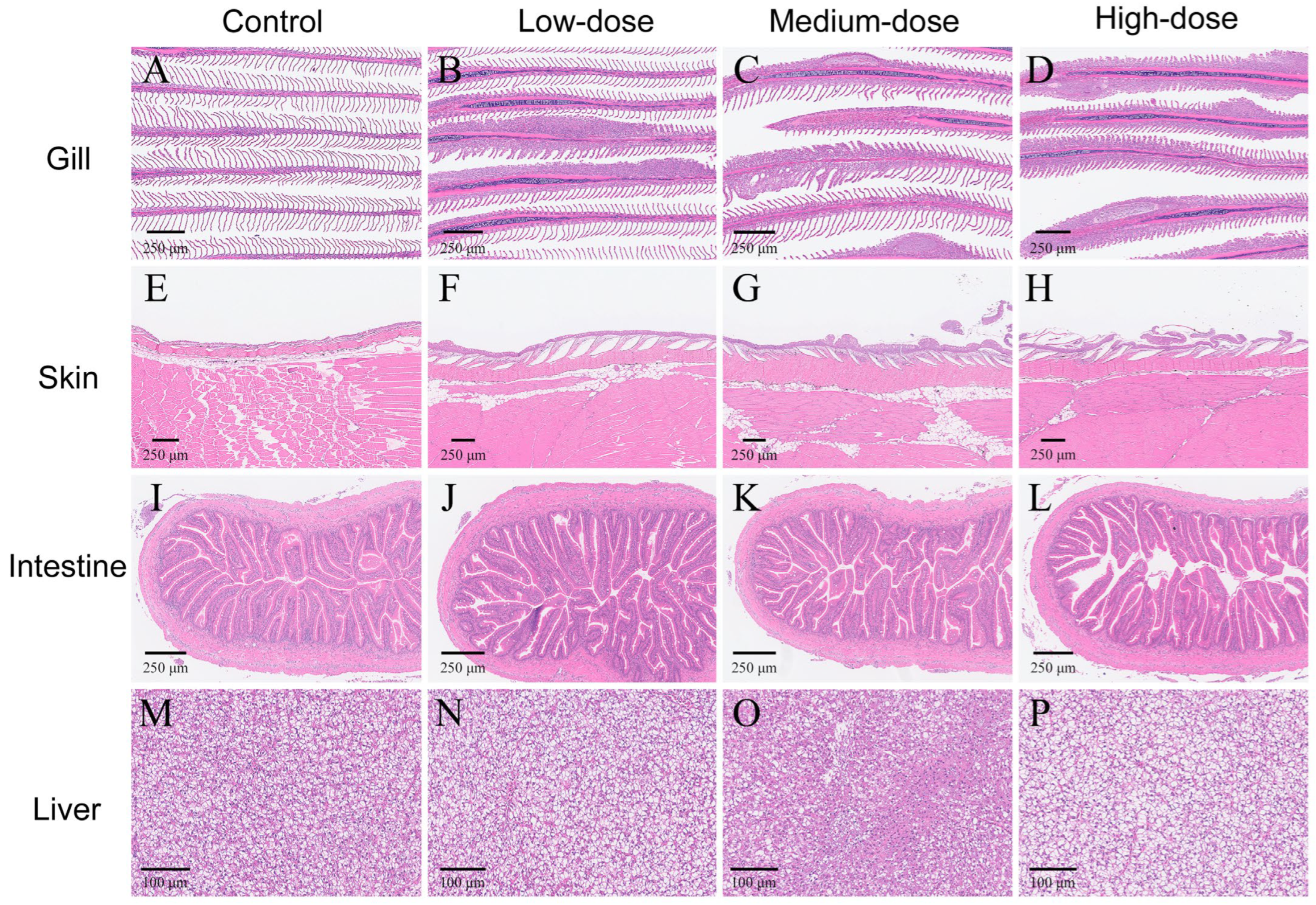
Histopathological examination revealed that C. irritans primarily parasitized the basal region of the gill lamellae or the epithelium of the gill filaments, inducing pronounced epithelial hyperplasia and extensive inflammatory cell infiltration around the trophonts (Figure 1B–D). The proliferative epithelial cells led to lamellar fusion, disorganized lamellar architecture, epithelial exfoliation, and an increase in the number of mucus cells. In the high-dose group, the epithelial cells of the gill filaments were significantly swollen, with areas of disorganized cellular arrangement, edema, and severe capillary congestion, leading to noticeable tissue damage and an impaired lamellar structure. In contrast, the uninfected group showed well-arranged gill filaments with intact epithelial structures, with no signs of congestion or inflammation (Figure 1A).

3.1.2. Skin

Histopathological observations revealed that C. irritans resided in the basal region of the epidermis, causing a distinct separation between the epidermis and dermis, along with epidermal thickening and increased mucus cell secretion (Figure 1F,G). The severity of pathological changes increased with higher infection doses. In the high-dose group, extensive tissue disruption and epidermal loss were observed, accompanied by pronounced epidermal edema, disorganized cell arrangement, epithelial exfoliation, and inflammatory cell infiltration at the epidermal–dermal junction, resulting in localized edema and vascular dilation (Figure 1H). The control group exhibited intact epidermal and dermal structures with no obvious pathological alterations (Figure 1E).

3.1.3. Intestine

In the control group, intestinal architecture was intact, with regularly arranged villi and no apparent histopathological alterations (Figure 1I). Mild infection induced slight mucosal edema, minor villus thickening, and localized shortening (Figure 1J). With increasing infection dose, lesions became more pronounced, including villus blunting, fusion, fracture, and inflammatory cell infiltration (Figure 1K). In the high-dose group, extensive mucosal damage was evident, characterized by severe mucosal edema, markedly shortened and widened villi, widespread epithelial detachment, and disorganization of the underlying lamina propria and glandular structures (Figure 1L).

3.1.4. Liver

In the control group, hepatocytes were arranged in compact hepatic cords with distinct cell boundaries (Figure 1M). Mild infection resulted in slight cytoplasmic vacuolation (Figure 1N), whereas moderate infection led to more pronounced hepatocellular vacuolation accompanied by disorganized cellular arrangement and mild congestion of the hepatic sinusoids (Figure 1O). In the high-dose group, extensive vacuolar degeneration was observed, characterized by severe disruption of hepatic structure, widened intercellular spaces, and occasional nuclear pyknosis or fragmentation (Figure 1P).

3.2. Oxidative Stress Responses

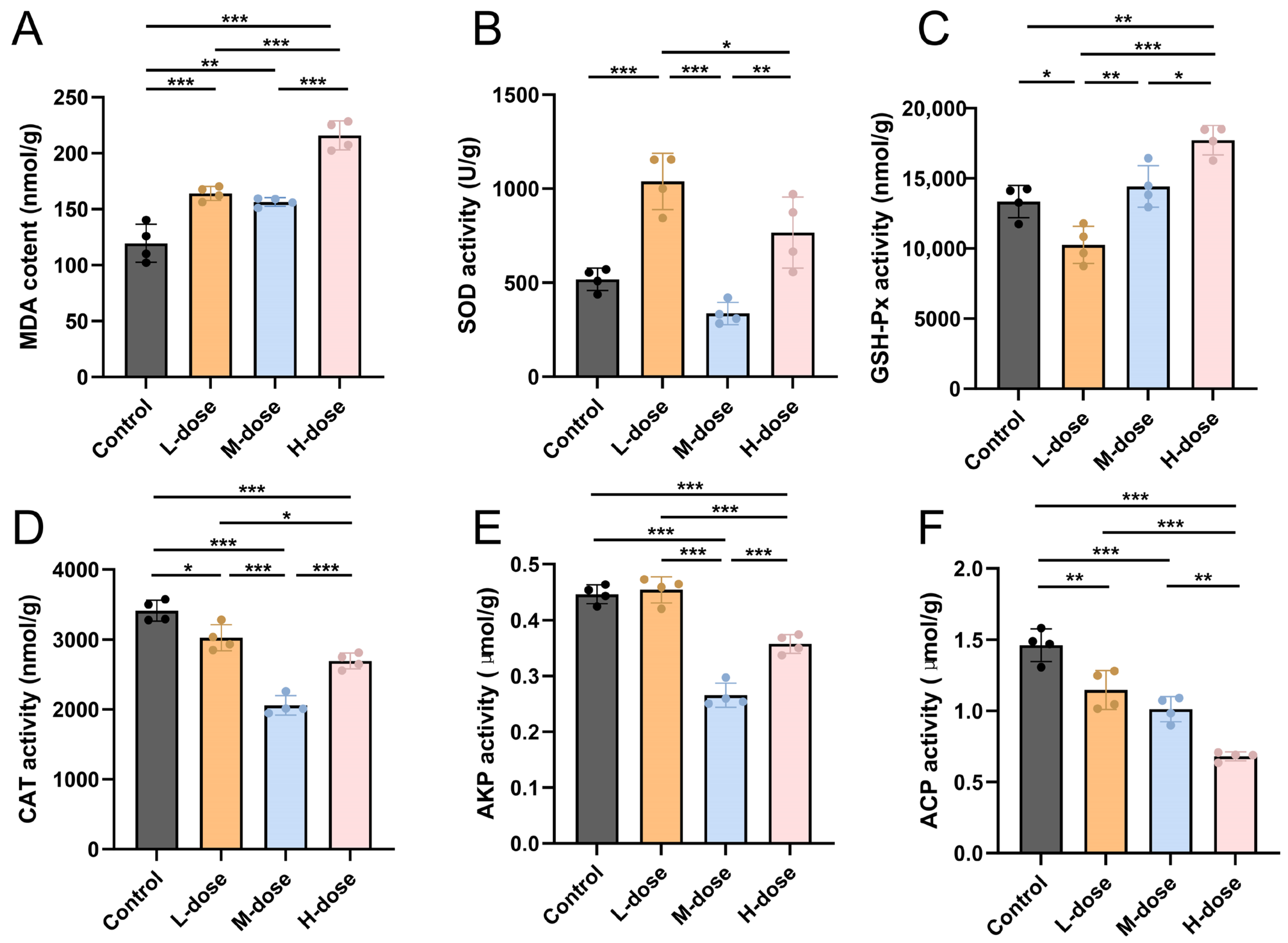
Hepatic MDA levels were significantly higher in all infected groups compared to the control group, with the high-dose group showing significantly higher levels than the other infected groups (Figure 2A). Superoxide dismutase (SOD) activity was significantly elevated in both the low and high dose groups compared to the control, while the medium dose group showed no significant difference from the control (Figure 2B). Glutathione peroxidase (GSH-Px) activity was reduced in the low-dose group compared to the control, while no significant difference was observed between the medium-dose group and the control. The high-dose group showed a significant increase in GSH-Px activity compared to the control (Figure 2C). Activities of CAT, AKP, and ACP decreased significantly with increasing infection intensity, with all infected groups showing significantly lower levels than the control group (Figure 2D–F).

3.3. Immune- and Stress-Related Gene Expression

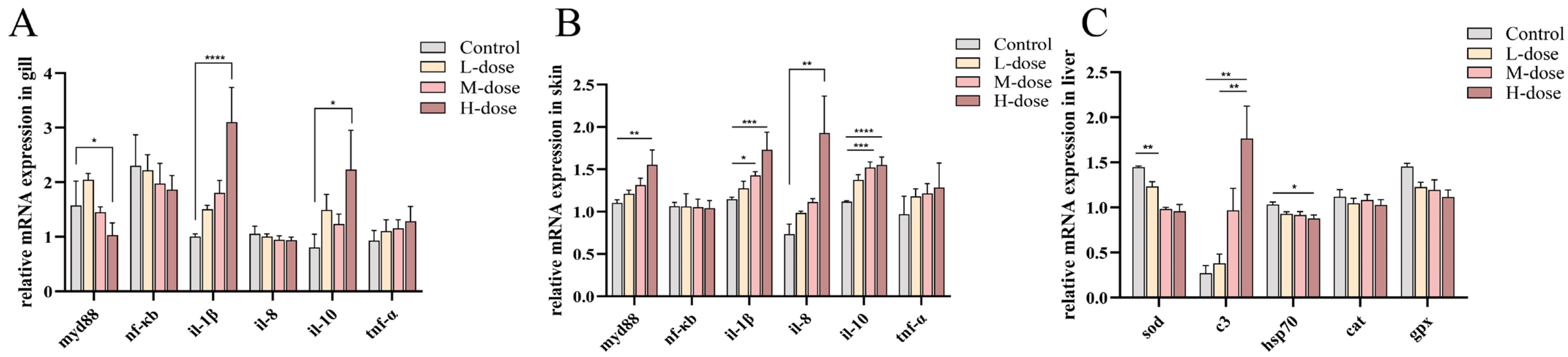
The relative mRNA expression levels of immune- and stress-related genes in the skin, gills, and liver showed dose-dependent variations following infection. In the skin, the expression of myd88, nf-κb, il-1β, il-8, and il-10 was significantly upregulated in the infected groups compared with the control, whereas tnf-α expression showed no significant difference among groups (Figure 3B). Similarly, in the gill, myd88, il-1β, and il-10 were significantly upregulated in a dose-dependent manner, while nf-κb, il-8, and tnf-α remained relatively unchanged (Figure 3A). In the liver, c3 expression increased markedly with infection intensity (p < 0.01), whereas sod and hsp70 were significantly downregulated in the medium- and high-dose groups (p < 0.05). The expression levels of cat and gpx remained relatively stable across groups but showed a slight downward trend (Figure 3C).

3.4. Diversity Analysis of Intestinal Microbiota

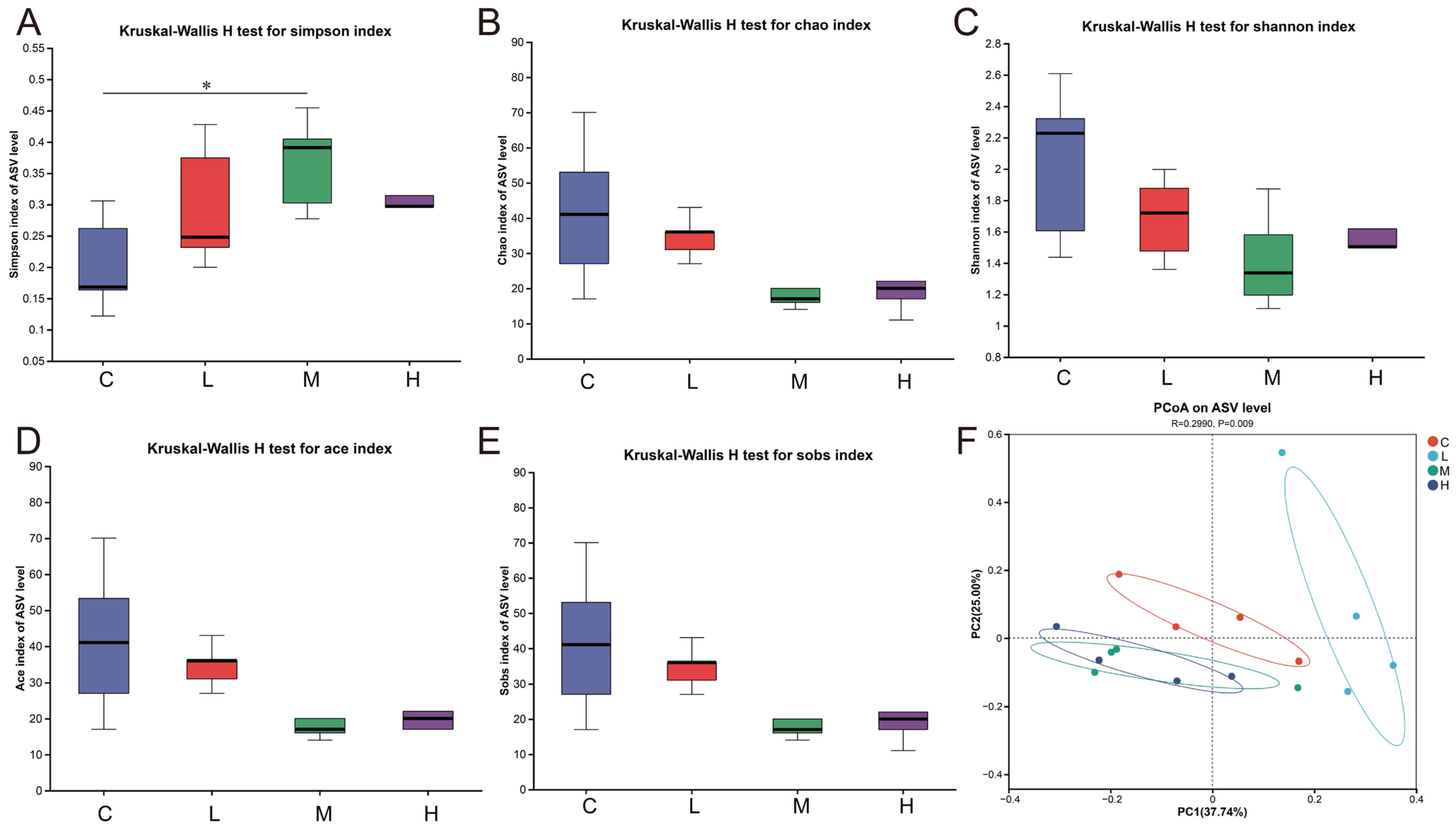
Alpha diversity was assessed using the Ace and Chao1 indices for species richness and the Shannon and Simpson indices for community diversity. The observed species (Sobs) index was calculated to directly evaluate species abundance within each sample. Compared to the control group, the Simpson index was higher in the infection groups, with a significant difference observed in group M (p < 0.05). In contrast, the other indices, including Ace, Sobs, Shannon, and Chao, exhibited a dose-dependent decline, correlating with increasing infection doses (Figure 4A–E). Principal coordinate analysis (PCoA) based on ASV-level Bray–Curtis distances revealed distinct clustering of the gut microbiota in the M and H groups, which were clearly separated from the L and control groups (Figure 4F).

3.5. Composition of Intestinal Microbiota

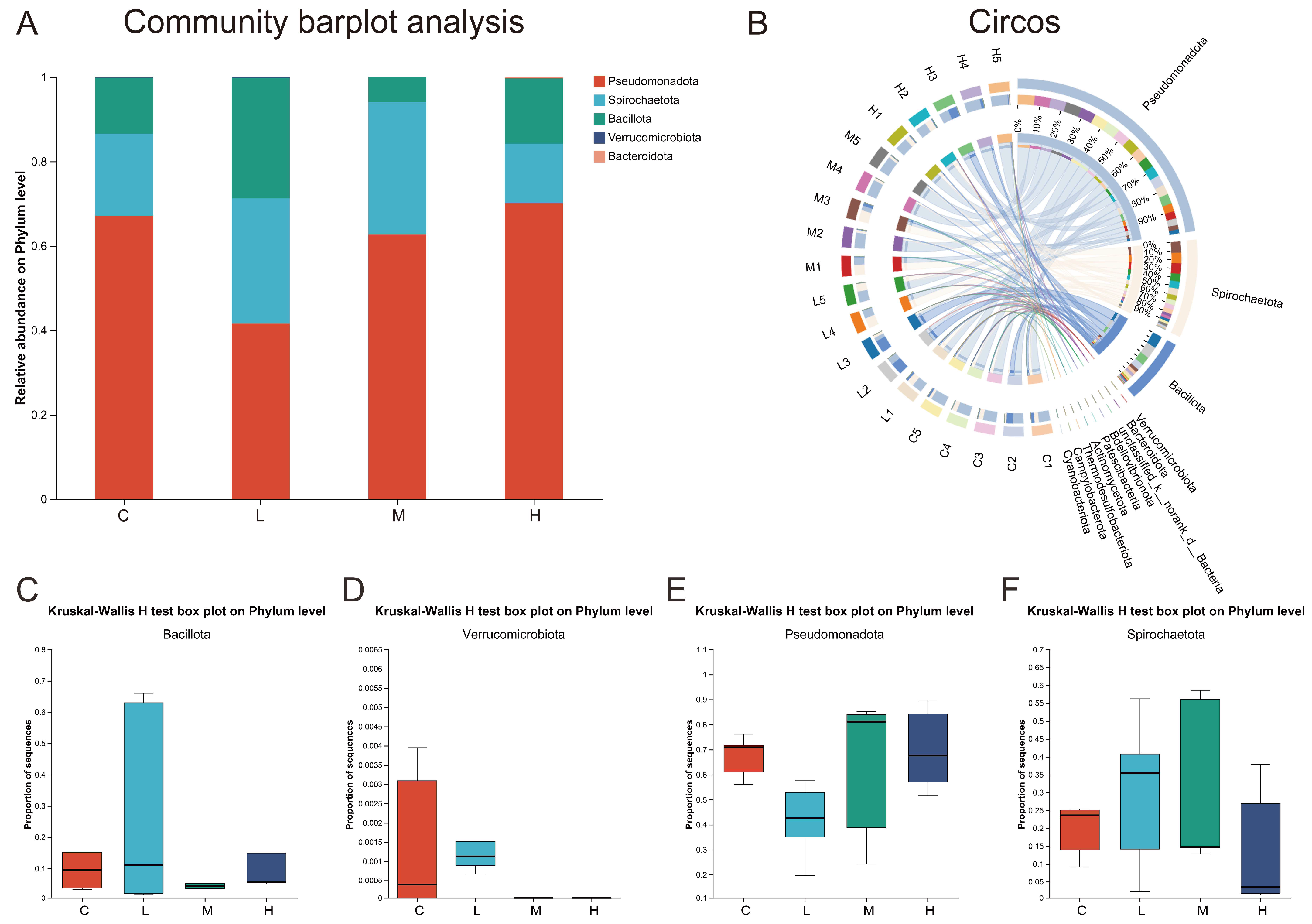
The composition of the intestinal microbiota in T. ovatus was influenced by different doses of C. irritans infection at the phylum and genus levels. At the phylum level, the dominant bacterial phyla were Pseudomonadota, Spirochaetota, and Bacillota, which collectively accounted for 41.5–70.1%, 14.1–31.3%, and 6–28.5% of the total bacterial abundance, respectively (Figure 5). Compared to the control group, the L group exhibited a decrease in Pseudomonadota abundance, along with an increase in Spirochaetota and Bacillota abundance. In contrast, the M group showed an increase in the relative abundance of Pseudomonadota, while Bacillota abundance decreased. Additionally, the relative abundance of Verrucomicrobiota was significantly lower in both the M and H groups.
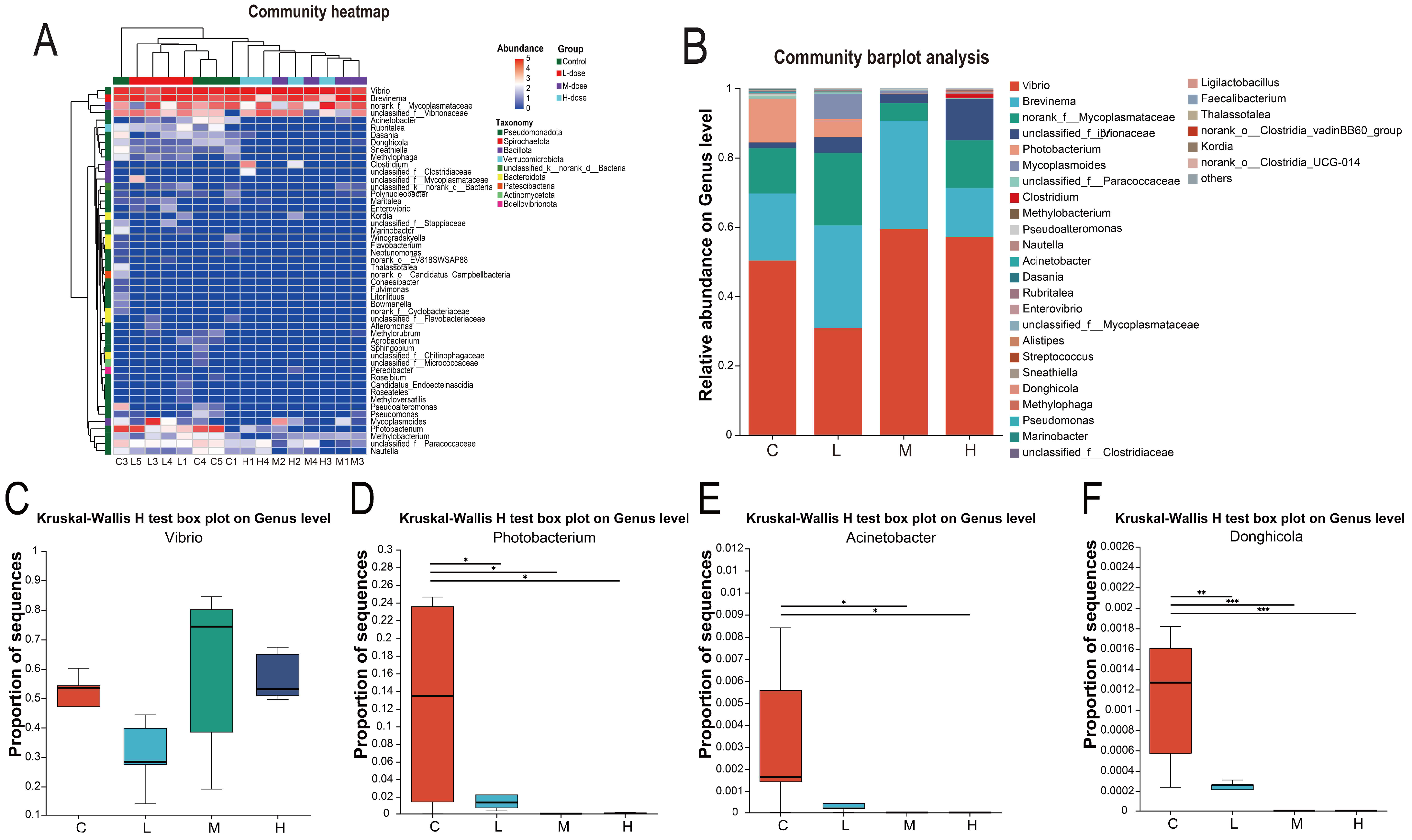
Vibrio, Brevinema, norank_f__Mycoplasmataceae, unclassified_f__Vibrionaceae, and Photobacterium were the predominant bacterial genera in all groups. C. irritans infection significantly reduced the abundance of Photobacterium, Acinetobacter, and Donghicola (p < 0.05) compared to the control group (Figure 6). In the L group, Vibrio abundance decreased, whereas Mycoplasmoides abundance increased. Conversely, both the M and H groups showed an increase in the abundance of Vibrio and unclassified_f__Vibrionaceae compared to the control group.

4. Discussion

4.1. Pathological Changes in T. ovatus After C. irritans Infection

The gill is a highly sensitive organ essential for gas exchange, osmoregulation, excretion, and circulation, while the skin serves as the outermost barrier protecting the fish from environmental stressors and pathogens. C. irritans primarily parasitizes the gills and skin of marine fish, causing extensive tissue damage. In Epinephelus coioides, C. irritans infection induces gill epithelial edema, hyperplasia, necrosis, and lamellar fusion, with the liver exhibiting disordered hepatic cords and blurred hepatocyte boundaries [37]. Similar pathological changes have been reported in other marine species, such as Chaetodontidae, Acanthuridae, and Larimichthys crocea [49,50], as well as in freshwater fish infected with I. multifiliis, such as grass carp (Ctenopharyngodon idella), largemouth bass (Micropterus salmoides), channel catfish (Ictalurus punctatus), rainbow trout (Oncorhynchus mykiss), and goldfish (Carassius auratus) [51,52,53,54,55]. In this study, T. ovatus infected with C. irritans exhibited comparable histopathological changes, with the gills showing epithelial hyperplasia, lamellar fusion, and inflammatory infiltration, and the skin displaying epidermal thickening, increased mucus secretion, and localized tissue loss. The liver exhibited hepatocellular vacuolation and disorganized hepatic cords. Notably, the intestine showed villus blunting, epithelial detachment, and mucosal disorganization, despite not being directly parasitized. These findings suggest that C. irritans infection induces multi-organ, dose-dependent pathological changes in T. ovatus, with the most severe alterations occurring in tissues directly parasitized by the parasite. Additionally, even non-parasitized organs such as the intestine are affected, likely due to systemic inflammatory responses, and the observed intestinal damage appears to be closely associated with gut microbiota alterations. Disruption of epithelial integrity and mucosal homeostasis may modify the intestinal microenvironment, thereby facilitating shifts in microbial composition and promoting the proliferation of opportunistic bacteria such as Vibrio spp., which are commonly associated with inflammation and gut barrier breakdown in marine fish under stress or infection conditions [56,57]. Conversely, microbial imbalance may further exacerbate epithelial injury and inflammation, suggesting a potential bidirectional interaction between host tissue damage and gut microbiota dysbiosis.

4.2. Immune Responses of T. ovatus to C. irritans Infection

The Toll-like receptor (TLR) signaling pathway is essential for host defense against parasitic infections, where the adaptor protein MyD88 transduces signals from TLRs to activate downstream immune cascades [58]. This process promotes the production of effector cytokines, such as pro-inflammatory mediators like il-1β and il-8, which enhance inflammation and neutrophil recruitment, and the anti-inflammatory cytokine il-10, which helps modulate immune responses and prevent excessive immunopathological damage. MyD88-mediated signaling is conserved across infections by a wide range of parasites, including protozoans such as Trypanosoma [59,60], Plasmodium [61,62], Leishmania [63], Toxoplasma [64], and Entamoeba [65], as well as helminth parasites [58,66]. Previous studies have shown that C. irritans infection activates the TLR-MyD88 signaling pathway and induces strong upregulation of pro-inflammatory cytokines, including il-1β, il-6, and il-8, in multiple tissues such as the gills, skin, and liver of grouper species [18,37,67]. In the present study, myd88 expression was significantly upregulated in the skin but downregulated in the gills. This tissue-specific regulation aligns with previous reports and likely reflects the varying infection intensities in these tissues, with the gills experiencing a higher parasite load compared to the skin [18]. The upregulation of myd88 in the skin suggests the activation of innate immune responses mediated by pattern recognition receptors (PRRs) in response to parasite invasion [58,59,60,61,62,63,64,65,66,67,68,69,70]. In contrast, the downregulation of myd88 in the gills may suggest that C. irritans suppresses host immune signaling at sites of high parasite burden, possibly representing an immune evasion mechanism that facilitates parasite persistence in these tissues. Pro-inflammatory cytokines, including il-1β and il-8, were significantly upregulated in both gills and skin, indicating a robust inflammatory response to infection. il-10 was also elevated, suggesting activation of regulatory mechanisms to balance inflammation. In contrast, tnf-α did not show a significant change, which may reflect its transient and early-phase expression pattern during acute immune activation. This temporal regulation of tnf-α expression aligns with other reports in fish infected with ectoparasites. In rainbow trout (Oncorhynchus mykiss) infected with I. multifiliis, tnf-α levels rose 3.5-fold at 12 h post-infection (PI) before rapidly stabilizing [71]. In another study using the same host–parasite model, skin tnf-α expression in rainbow trout (O. mykiss) infected with I. multifiliis surged at 4–6 days PI but remained steady at earlier time points [72]. In our study, while no significant differences were observed at 48 h PI, fish exposed to high infection intensity showed numerically elevated tnf-α expression compared with controls. This suggests that the initial tnf-α surge may have already subsided by this time point, leaving only a residual elevation in heavily infected individuals. While these cytokines are essential for pathogen clearance, sustained or excessive inflammatory responses may lead to tissue damage, particularly in sensitive organs such as the gills [73]. Taken together, these results indicate that C. irritans infection induces strong and tissue-specific inflammatory responses, which, although crucial for host defense, may also contribute to tissue injury and systemic physiological disturbances observed in infected fish.

4.3. Antioxidant Responses of T. ovatus to C. irritans Infection

Generally, oxidative stress occurs when the excessive production of ROS exceeds the capacity of the antioxidant defense system, which mainly comprises enzymatic antioxidan111ts such as SOD, CAT, and GSH-Px. Pathogen infection is a major stressor in aquatic environments and can markedly stimulate ROS generation in fish [74,75]. Excessive ROS can induce oxidative damage to lipids and proteins, thereby promoting lipid peroxidation. Malondialdehyde (MDA) is widely regarded as a sensitive biomarker of lipid peroxidation and has been closely associated with hepatocellular injury in aquatic animals [76,77]. In the present study, MDA levels were significantly elevated in all infected groups, with the highest values observed in the high-dose group, indicating that C. irritans infection induced ROS accumulation beyond antioxidant scavenging capacity and enhanced membrane lipid peroxidation. Similar increases in MDA have been reported in rainbow trout naturally infected with Saprolegnia [78] and in gilthead sea bream co-infected with Ergasilus sieboldi and Vibrio alginolyticus, where MDA contents were significantly elevated in muscle, gills, and skin compared with uninfected controls [79].
Superoxide dismutase (SOD), glutathione peroxidase (GSH-Px), and catalase (CAT) constitute the core enzymatic antioxidant defense system in fish and act in a coordinated manner to mitigate ROS-induced oxidative damage. The dismutation of superoxide radicals (O2) into hydrogen peroxide (H2O2) is catalyzed by SOD, with the resulting H2O2 subsequently detoxified by GSH-Px and CAT to maintain cellular redox homeostasis [80]. Previous studies have reported variable antioxidant enzyme responses to C. irritans infection among different fish species. Zeng et al. [37] reported decreased hepatic SOD, CAT, POD, and GPX activities and increased MDA levels in E. coioides after 72 h of C. irritans infection, which was consistent with the reduced SOD and CAT activities and elevated ROS levels observed in Pseudosciaena crocea by Yin et al. [20]. In contrast, Jiang et al. [81] reported increased hepatic SOD activity in Siganus oramin at 48 h post-infection. In the present study, C. irritans infection induced enzyme-specific and non-linear regulation of the hepatic antioxidant system in T. ovatus. At low infection intensity, increased SOD activity accompanied by reduced GSH-Px suggests preferential removal of superoxide radicals with limited engagement of downstream peroxide detoxification. With increasing infection intensity, GSH-Px activity was progressively activated, likely in response to elevated H2O2 levels. Under high infection pressure, both SOD and GSH-Px were markedly elevated, demonstrating coordinated upregulation of the antioxidant system under severe oxidative stress. In contrast, CAT activity declined progressively with increasing infection dose, possibly reflecting enzyme inactivation or depletion under sustained oxidative stress.
Acid phosphatase (ACP) is a lysosomal enzyme involved in pathogen degradation during immune responses, whereas AKP plays similar roles in non-specific immunity and cellular metabolism [82,83]. In the present study, both AKP and ACP activities were significantly reduced in all infected groups and declined in a dose-dependent manner. Given their essential roles in immune defense and metabolism, this consistent suppression suggests that C. irritans infection, together with oxidative stress, may broadly compromise basal immune functions, potentially resulting in impaired immune cell activity and reduced disease resistance.
At the transcriptional level, hepatic upregulation of complement component c3 indicates activation of the complement system as part of the systemic immune response [84]. Conversely, the downregulation of antioxidant-related genes, including sod and hsp70, suggests persistent oxidative stress, a common consequence of parasitic infection [20,37]. This imbalance between immune activation and antioxidant capacity implies that, although systemic defenses are mobilized, antioxidant protection may be insufficient, thereby increasing susceptibility to oxidative tissue injury and secondary infections.

4.4. The Impact of C. irritans on the Gut Microbiota

The intestinal microbiota is essential for maintaining gut homeostasis and immune regulation in fish [85,86]. In the present study, C. irritans infection induced dose-dependent disruption of the gut microbial community in T. ovatus, manifested by coordinated shifts in microbial composition, diversity, and overall community structure. These alterations became progressively more pronounced with increasing infection intensity, indicating a close association between parasite burden and intestinal dysbiosis [87].
At the phylum level, the gut microbiota of T. ovatus was predominantly composed of Pseudomonadota (also referred to as Proteobacteria), Spirochaetota, and Bacillota (formerly Firmicutes), which together accounted for the majority of the microbial community. C. irritans infection significantly reshaped the dominant bacterial assemblages. The relative abundance of Pseudomonadota increased markedly in the medium- and high-dose infection groups, suggesting the expansion of opportunistic taxa under dysbiosis conditions. Members of this phylum, particularly those within Vibrionaceae, are known to proliferate during intestinal disturbance and are frequently associated with inflammation and secondary bacterial infections [37]. In contrast, Bacillota and Verrucomicrobiota, phyla commonly linked to gut barrier maintenance, metabolic homeostasis, and anti-inflammatory functions, were substantially depleted following infection. The loss of these beneficial bacterial groups indicates a compromised intestinal environment that may favor inflammatory responses and barrier dysfunction [88].
Consistent with the phylum-level patterns, C. irritans infection caused pronounced shifts in several dominant bacterial genera. The most notable change was the significant enrichment of Vibrio in the medium- and high-dose groups. In contrast, Photobacterium, Acinetobacter, and Donghicola, genera frequently detected in the intestines of healthy fish, showed marked reductions in abundance following infection. Although Photobacterium comprises both pathogenic and non-pathogenic members, its decline in the present study is more likely indicative of a disruption of normal gut microbial structure rather than a selective suppression of pathogenic taxa [89,90]. The depletion of Acinetobacter and Donghicola reflects the destabilization of the gut microbiota. A transient shift characterized by reduced Vibrio and increased Mycoplasmoides occurred at low infection intensity but collapsed at higher levels, resulting in the dominance of opportunistic pathogens.
Changes in microbial composition were accompanied by significant alterations in community diversity. Alpha diversity indices showed a progressive decline with increasing infection dose, reflecting a loss of microbial diversity under high parasite burden. Reduced microbial diversity is widely recognized as a hallmark of intestinal dysbiosis and is often associated with impaired ecosystem stability and increased susceptibility to inflammation. In addition, beta diversity analysis revealed a clear separation between the medium- and high-dose groups and the control and low-dose groups, confirming that C. irritans infection induces substantial restructuring of the gut microbial community.
Overall, these results demonstrate that C. irritans infection disrupts gut microbial homeostasis, leading to dysbiosis characterized by reduced diversity and enrichment of opportunistic pathogens. Combined with the observed intestinal structural damage, these findings support a close interaction between host physiological responses and microbial dynamics, in which microbial imbalance may both result from and contribute to intestinal dysfunction.

5. Conclusions

Cryptocaryon irritans infection induces dose-dependent, multi-organ pathology in T. ovatus, primarily affecting gills and skin, with secondary impacts on the liver and intestine. These structural changes are closely linked to oxidative stress and immune modulation, including the upregulation of pro-inflammatory genes and the suppression of antioxidant defenses. Cryptocaryon irritans infection also disrupts gut microbiota, depleting beneficial taxa (e.g., Photobacterium) and promoting opportunistic pathogens such as Vibrio, which likely exacerbates intestinal barrier dysfunction and inflammation. Collectively, these findings reveal a systemic interplay among tissue pathology, oxidative stress, immune responses, and microbial dysbiosis. From a practical perspective, the study supports targeted health management in golden pompano aquaculture, including monitoring of gill and skin condition, assessment of oxidative stress and immune markers, and gut microbiota modulation to enhance disease resistance.

Author Contributions

Conceptualization, S.L.; methodology, J.H. and Z.Z.; software, J.H.; validation, Z.Z., J.J., Z.W., Y.L. and Q.J.; formal analysis, J.H.; investigation, J.H.; resources, Z.Z., J.J., Z.W., Y.L. and Q.J.; data curation, J.H.; writing—original draft preparation, J.H.; writing—review and editing, J.H., N.C. and S.L.; visualization, J.H.; supervision, S.L.; project administration, S.L.; funding acquisition, S.L. All authors have read and agreed to the published version of the manuscript.

Funding

This research was funded by Southern Marine Science and Engineering Guangdong Laboratory (Zhanjiang) (ZJW-2024-14) and the Zhanjiang Marine Pasture Industry Development Core Key Technology Research Project (2025R02116).

Institutional Review Board Statement

We have read the policies on animal experimentation (ARRIVE and PREPARE guidelines) and confirm that this study complies. All experimental procedures were conducted in strict accordance with guidelines approved by the Animal Welfare Committee of the Southern Marine Science and Engineering Guangdong Laboratory—Zhanjiang (Ethics Approval Number: 202505186, approved on 2 June 2025) and complied with the relevant guidelines of the National Institutes of Health Guide for the Care and Use of Laboratory Animals.

Data Availability Statement

The original contributions presented in this study are included in the article. Further inquiries can be directed to the corresponding author.

Acknowledgments

We acknowledge all funders of this work.

Conflicts of Interest

The authors declare no conflict of interest.

References

  1. Yang, Q.; Zhu, K.C.; Guo, L.; Liu, B.S.; Guo, H.Y.; Zhang, N.; Yang, J.W.; Zhang, D.C. Molecular characterization of GRP94 and HSP90α from Trachinotus ovatus, Linnaeus 1758 and their expression responses to various levels of stocking density stress and Cryptocaryon irritans infection. Aquaculture 2020, 529, 735601. [Google Scholar] [CrossRef]
  2. Zhou, C.P.; Huang, Z.; Lin, H.Z.; Wang, J.; Wang, Y.; Yu, W. Effects of dietary leucine on glucose metabolism, lipogenesis and insulin pathway in juvenile golden pompano Trachinotus ovatus. Aquac. Rep. 2021, 19, 100626. [Google Scholar] [CrossRef]
  3. Ministry of Agriculture and Rural Affairs of the People’s Republic of China. China Fishery Statistics Bulletin 2023; Ministry of Agriculture and Rural Affairs of the People’s Republic of China: Beijing, China, 2024.
  4. Guo, H.Y.; Li, W.F.; Zhu, K.C.; Liu, B.S.; Zhang, N.; Liu, B.; Yang, J.W.; Zhang, D.C. Pathology, enzyme activity and immune responses after Cryptocaryon irritans infection of golden pompano Trachinotus ovatus (Linnaeus 1758). J. Mar. Sci. Eng. 2023, 11, 262. [Google Scholar] [CrossRef]
  5. Liang, N.; Zhu, L.; Wang, S.; Zhang, W.; Lin, X.; Zhou, Y.; Ke, H.; Yuan, S.; Li, M.; Cai, Y. Risk of Secondary Bacterial Infections Revealed by Changes in Trachinotus ovatus Skin and Gill Microbiota During a Cryptocaryon irritans Infection Cycle. Microorganisms 2025, 13, 1660. [Google Scholar] [CrossRef]
  6. Huang, Y.; Sun, H.; Dong, J.; Zhang, J.; Wang, H.; Yang, L.; Li, Y.; Wang, Y. Novel identification of mixed infection of Lactococcus garvieae and Cryptocaryon irritans isolated from cultured Trachinotus ovatus in China. PLoS ONE 2024, 19, e0301674. [Google Scholar] [CrossRef] [PubMed]
  7. Sun, J.L.; Jiang, T.; Gu, Y.; Song, F.B.; Wen, X.; Luo, J. Differential immune and metabolic responses underlie differences in the resistance of Siganus oramin and Trachinotus blochii to Cryptocaryon irritans infection. Fish Shellfish Immun. 2022, 120, 166–179. [Google Scholar] [CrossRef] [PubMed]
  8. Burgess, P.J.; Matthews, R.A. Fish host range of seven isolates of Cryptocaryon irritans (Ciliophora). J. Fish Biol. 1995, 46, 727–729. [Google Scholar] [CrossRef]
  9. Dan, X.M.; Li, A.X.; Lin, X.T.; Teng, N.; Zhu, X.Q. A standardized method to propagate Cryptocaryon irritans on a susceptible host pompano Trachinotus ovatus. Aquaculture 2006, 258, 127–133. [Google Scholar] [CrossRef]
  10. Li, Y.; Jiang, B.; Mo, Z.; Li, A.; Dan, X. Cryptocaryon irritans (Brown, 1951) is a serious threat to aquaculture of marine fish. Rev. Aquacult. 2022, 14, 218–236. [Google Scholar] [CrossRef]
  11. Colorni, A.; Diamant, A. Ultrastructural features of Cryptocaryon irritans, a ciliate parasite of marine fish. Eur. J. Protistol. 1993, 29, 425–434. [Google Scholar] [CrossRef]
  12. Matthews, B.F.; Matthews, R.A.; Burgess, P.J. Cryptocaryon irritans Brown, 1951 (Ichthyophthiriidae): The ultrastructure of the somatic cortex throughout the life cycle. J. Fish Dis. 1993, 16, 339–349. [Google Scholar] [CrossRef]
  13. Diggles, B.K.; Lester, R.J.G. Influence of temperature and host species on the development of Cryptocaryon irritans. J. Parasitol. 1996, 82, 45–51. [Google Scholar] [CrossRef]
  14. Colorni, A.; Burgess, P. Cryptocaryon irritans Brown 1951, the cause of ‘white spot disease’ in marine fish: An update. Aquar. Sci. Conserv. 1997, 1, 217–238. [Google Scholar] [CrossRef]
  15. Pironet, F.N.; Jones, J.B. Treatments for ectoparasites and diseases in captive Western Australian dhufish. Aquacult. Int. 2000, 8, 349–361. [Google Scholar] [CrossRef]
  16. Qiao, Y.; Wang, J.; Mao, Y.; Liu, M.; Chen, R.; Su, Y.; Ke, Q.; Han, K.; Zheng, W. Pathogenic bacterium Vibrio harveyi: An endosymbiont in the marine parasitic ciliate protozoan Cryptocaryon irritans. Acta Oceanol. Sin. 2017, 36, 115–119. [Google Scholar] [CrossRef]
  17. Alvarez-Pellitero, P. Fish immunity and parasite infections: From innate immunity to immunoprophylactic prospects. Vet. Immunol. 2008, 126, 171–198. [Google Scholar] [CrossRef] [PubMed]
  18. Li, Y.W.; Luo, X.C.; Dan, X.M.; Huang, X.Z.; Qiao, W.; Zhong, Z.P.; Li, A.X. Orange-spotted grouper (Epinephelus coioides) TLR2, MyD88 and IL-1β involved in anti-Cryptocaryon irritans response. Fish Shellfish Immun. 2011, 30, 1230–1240. [Google Scholar] [CrossRef]
  19. Yin, F.; Dan, X.M.; Sun, P.; Shi, Z.H.; Gao, Q.X.; Peng, S.M.; Li, A.X. Growth, feed intake and immune responses of orange-spotted grouper (Epinephelus coioides) exposed to low infectious doses of ectoparasite (Cryptocaryon irritans). Fish Shellfish Immun. 2014, 36, 291–298. [Google Scholar] [CrossRef]
  20. Yin, F.; Gong, H.; Ke, Q.; Li, A. Stress, antioxidant defence and mucosal immune responses of the large yellow croaker Pseudosciaena crocea challenged with Cryptocaryon irritans. Fish Shellfish Immun. 2015, 47, 344–351. [Google Scholar] [CrossRef]
  21. Llewellyn, M.S.; Boutin, S.; Hoseinifar, S.H.; Derome, N. Teleost microbiomes: The state of the art in their characterization, manipulation and importance in aquaculture and fisheries. Front. Microbiol. 2014, 5, 207. [Google Scholar] [CrossRef]
  22. Ganguly, S.; Prasad, A. Microflora in fish digestive tract plays significant role in digestion and metabolism. Rev. Fish Biol. Fish. 2012, 22, 11–16. [Google Scholar] [CrossRef]
  23. Ghanbari, M.; Kneifel, W.; Domig, K.J. A new view of the fish gut microbiome: Advances from next-generation sequencing. Aquaculture 2015, 448, 464–475. [Google Scholar] [CrossRef]
  24. Nicholson, J.K.; Holmes, E.; Kinross, J.; Burcelin, R.; Gibson, G.; Jia, W.; Pettersson, S. Host-gut microbiota metabolic interactions. Science 2012, 336, 1262–1267. [Google Scholar] [CrossRef]
  25. Butt, R.L.; Volkoff, H. Gut microbiota and energy homeostasis in fish. Front. Endocrinol. 2019, 10, 9. [Google Scholar] [CrossRef]
  26. Medina-Félix, D.; Garibay-Valdez, E.; Vargas-Albores, F.; Martínez-Porchas, M. Fish disease and intestinal microbiota: A close and indivisible relationship. Rev. Aquacult. 2023, 15, 820–839. [Google Scholar] [CrossRef]
  27. Gómez, G.D.; Balcázar, J.L. A review on the interactions between gut microbiota and innate immunity of fish. FEMS Immunol. Med. Microbiol. 2008, 52, 145–154. [Google Scholar] [CrossRef] [PubMed]
  28. Xiong, J.B.; Nie, L.; Chen, J. Current understanding on the roles of gut microbiota in fish disease and immunity. Zool. Res. 2018, 40, 70. [Google Scholar] [PubMed]
  29. Fu, P.P.; Xiong, F.; Feng, W.W.; Zou, H.; Wu, S.G.; Li, M.; Wang, G.T.; Li, W.X. Effect of intestinal tapeworms on the gut microbiota of the common carp, Cyprinus carpio. Parasit. Vectors 2019, 12, 252. [Google Scholar] [CrossRef]
  30. Gaulke, C.A.; Martins, M.L.; Watral, V.G.; Humphreys, I.R.; Spagnoli, S.T.; Kent, M.L.; Sharpton, T.J. A longitudinal assessment of host-microbe-parasite interactions resolves the zebrafish gut microbiome’s link to Pseudocapillaria tomentosa infection and pathology. Microbiome 2019, 7, 10. [Google Scholar] [CrossRef]
  31. Ling, F.; Steinel, N.; Weber, J.; Ma, L.; Smith, C.; Correa, D.; Zhu, B.; Bolnick, D.; Wang, G. The gut microbiota response to helminth infection depends on host sex and genotype. ISME J. 2020, 14, 1141–1153. [Google Scholar] [CrossRef] [PubMed]
  32. Hewitson, J.P.; Harcus, Y.; Murray, J.; van Agtmaal, M.; Filbey, K.J.; Grainger, J.R.; Bridgett, S.; Blaxter, M.L.; Ashton, P.D.; Ashford, D.A.; et al. Proteomic analysis of secretory products from the model gastrointestinal nematode Heligmosomoides polygyrus reveals dominance of venom allergen-like (VAL) proteins. J. Proteom. 2011, 74, 1573–1594. [Google Scholar] [CrossRef] [PubMed]
  33. Cooper, D.; Eleftherianos, I. Parasitic nematode immunomodulatory strategies: Recent advances and perspectives. Pathogens 2016, 5, 58. [Google Scholar] [CrossRef] [PubMed]
  34. Li, F.; Jiang, D.; Wang, Q.; Chang, O.; Yin, J.; Yu, M.; Pan, H. Host–Microbiota–Parasite Interactions in Grass Carp: Insights from Ichthyophthirius multifiliis Infection. Microorganisms 2025, 13, 872. [Google Scholar] [CrossRef]
  35. Wang, L.; Zhang, D.; Xie, J.; Chang, O.; Wang, Q.; Shi, C.; Pan, H. Do ectoparasites on fish gills “talk” with gut microbiota far away? Aquaculture 2023, 562, 738880. [Google Scholar] [CrossRef]
  36. Bu, X.L.; Peng, X.Q.; Huang, L.; Zhao, Y.; Jiao, J.B.; Zhu, J.; Chen, J.; Huang, X.H.; Zheng, A.Q.; Qu, H.Y.; et al. Effect of ectoparasite Ichthyophthirius multifiliis on the histopathology and gill and gut microbiota of goldfish (Carassius auratus). Front. Vet. Sci. 2025, 12, 1539446. [Google Scholar] [CrossRef]
  37. Zeng, S.; Duan, Y.; Li, X.; Hu, Y.; Mo, Z.; Dan, X.; Li, Y. Effects of Cryptocaryon irritans infection on the histopathology, oxidative stress, immune response, and intestinal microbiota in the orange-spotted grouper Epinephelus coioides. Fish Shellfish Immun. 2023, 133, 108562. [Google Scholar] [CrossRef]
  38. Iaria, C.; Spanò, N.; Smeriglio, A.; Capparucci, F.; De Benedetto, G.; Lanteri, G.; Marino, F.; Macheda, S.; Macrì, F.; Belvedere, A.; et al. Massive infection of Cystidicoloides ephemeridarum in brown trout Salmo trutta with skeletal deformities. Dis. Aquat. Organ. 2021, 143, 159–168. [Google Scholar] [CrossRef] [PubMed]
  39. Livak, K.J.; Schmittgen, T.D. Analysis of relative gene expression data using real-time quantitative PCR and the 2−ΔΔCT method. Methods 2001, 25, 402–408. [Google Scholar] [CrossRef]
  40. Xie, J.J.; Fang, H.H.; Liao, S.Y.; Guo, T.Y.; Yin, P.; Liu, Y.J.; Tian, L.X.; Niu, J. Study on Schizochytrium sp. improving the growth performance and non-specific immunity of golden pompano (Trachinotus ovatus) while not affecting the antioxidant capacity. Fish Shellfish Immun. 2019, 95, 617–623. [Google Scholar] [CrossRef]
  41. Xun, P.; Zhou, C.; Huang, X.; Huang, Z.; Yu, W.; Yang, Y.; Li, T.; Huang, J.; Wu, Y.; Lin, H. Effects of dietary sodium acetate on growth performance, fillet quality, plasma biochemistry, and immune function of juvenile golden pompano (Trachinotus ovatus). Aquacult. Nutr. 2022, 2022, 9074549. [Google Scholar] [CrossRef]
  42. Fang, H.; Xie, J.; Zhao, W.; Liu, Z.; Liu, Y.; Tian, L.; Niu, J. Study supplementation of astaxanthin in high-fat diet on growth performance, antioxidant ability, anti-inflammation, non-specific immunity and intestinal structure of juvenile Trachinotus ovatus. Aquacult. Nutr. 2021, 27, 2575–2586. [Google Scholar] [CrossRef]
  43. Lv, J.; Yang, L.; Li, Y.; Yang, S.; Cai, S.; Jian, J.; Huang, Y. Efficacy of a formalin-inactivated vaccine against Lactococcus garvieae infection in golden pompano Trachinotus ovatus. Isr. J. Aquac. 2023, 75, 2. [Google Scholar] [CrossRef]
  44. Peng, Y.; Cai, X.; Zhang, G.; Wang, J.; Li, Y.; Wang, Z.; Wang, B.; Xiong, X.; Wu, Z.; Jian, J. Molecular characterization and expression of interleukin-10 and interleukin-22 in golden pompano (Trachinotus ovatus) in response to Streptococcus agalactiae stimulus. Fish Shellfish Immun. 2017, 65, 244–255. [Google Scholar] [CrossRef] [PubMed]
  45. Liu, M.J.; Guo, H.Y.; Liu, B.; Zhu, K.C.; Guo, L.; Liu, B.S.; Zhang, N.; Yang, J.W.; Jiang, S.G.; Zhang, D.C. Gill oxidative damage caused by acute ammonia stress was reduced through the HIF-1α/NF-κb signaling pathway in golden pompano (Trachinotus ovatus). Ecotox. Environ. Safe. 2021, 222, 112504. [Google Scholar] [CrossRef]
  46. Liu, M.J.; Guo, H.Y.; Zhu, K.C.; Liu, B.S.; Liu, B.; Guo, L.; Zhang, N.; Yang, J.W.; Jiang, S.G.; Zhang, D.C. Effects of acute ammonia exposure and recovery on the antioxidant response and expression of genes in the Nrf2-Keap1 signaling pathway in the juvenile golden pompano (Trachinotus ovatus). Aquat. Toxicol. 2021, 240, 105969. [Google Scholar] [CrossRef] [PubMed]
  47. Tan, X.; Sun, Z.; Huang, Z.; Zhou, C.; Lin, H.; Tan, L.; Xun, P.W.; Huang, Q. Effects of dietary hawthorn extract on growth performance, immune responses, growth-and immune-related genes expression of juvenile golden pompano (Trachinotus ovatus) and its susceptibility to Vibrio harveyi infection. Fish Shellfish Immun. 2017, 70, 656–664. [Google Scholar] [CrossRef] [PubMed]
  48. Liu, Y.M.; Fu, Y.W.; Hou, T.L.; Liu, H.R.; Feng, J.; Zhang, Q.Z. Neobenedenia girellae (Monogenea) infection on cultured golden pompano Trachinotus ovatus in Zhanjiang, China. Aquaculture 2022, 548, 737669. [Google Scholar] [CrossRef]
  49. Denk, D.; Boylan, S.; Just, F.T.; Sommer, M.; Clarke, E.O., III. An Outbreak of Cryptocaryon irritans in Aquarium Quarantine—New Variations of an Old Theme. J. Fish Dis. 2025, 48, e14084. [Google Scholar] [CrossRef]
  50. Zheng, L.; Qiu, J.; Chen, J.; Zheng, W.Q.; Pan, Y. Histopathological changes and piscidin 5-like location in infected Larimichthys crocea with parasite Cryptocaryon irritans. Fish Shellfish Immun. 2020, 99, 52–58. [Google Scholar] [CrossRef]
  51. Yu, H.; Wang, Z.B.; Lu, Y.J.; Tan, S.W.; Yan, Q.G.; Li, H. Histopathological study of grass carp (Ctenopharyngodon idella) experimentally infected with Ichthyophthirius multifiliis. Afr. J. Microbiol. Res. 2012, 6, 3539–3544. [Google Scholar] [CrossRef]
  52. Qu, S.Y.; Tan, X.P.; Li, B.K.; Liu, J.T.; Wang, G.X.; Ling, F. Malformed largemouth bass (Micropterus salmoides) are more susceptible and vulnerable to Ichthyophthirius multifiliis infections: Immunological and histopathological study. Aquaculture 2022, 548, 737664. [Google Scholar] [CrossRef]
  53. Maki, J.L.; Brown, C.C.; Dickerson, H.W. Occurrence of Ichthyophthirius multifiliis within the peritoneal cavities of infected channel catfish Ictalurus punctatus. Dis. Aquat. Organ. 2011, 44, 41–45. [Google Scholar] [CrossRef]
  54. Heidarieh, M.; Nowrozani, F.R.; Banaee, M.; Gholamhosseini, A.; Heidarieh, H.; Shahbazfar, A.A.; Karimi, M. Histopathological changes in the skin and gut mucus layers of rainbow trout (Oncorhynchus mykiss) challenged with Ichthyophthirius multifiliis inactivated by gamma rays and formalin. Int. J. Aquat. Biol. 2023, 11, 431–438. [Google Scholar]
  55. Huang, X.L.; Liu, S.Y.; Zuo, F.Y.; Luo, L.; Chen, D.F.; Ou, Y.P.; Geng, Y.; Zhang, Y.F.; Lin, G.; Yang, S.Y.; et al. cMOS enhanced the mucosal immune function of skin and gill of goldfish (Carassius auratus Linnaeus) to improve the resistance to Ichthyophthirius multifiliis infection. Fish Shellfish Immun. 2022, 126, 1–11. [Google Scholar] [CrossRef]
  56. Sun, H.; Zhu, C.; Fu, X.; Khattak, S.; Wang, J.; Liu, Z.; Kong, Q.; Mou, H.; Secundo, F. Effects of intestinal microbiota on physiological metabolism and pathogenicity of Vibrio. Front. Microbiol. 2022, 13, 947767. [Google Scholar] [CrossRef]
  57. Secombes, C.J.; Wang, T. The innate and adaptive immune system of fish. In Infectious Disease in Aquaculture; Elsevier: Amsterdam, The Netherlands, 2012; pp. 3–68. [Google Scholar]
  58. Venugopal, P.G.; Nutman, T.B.; Semnani, R.T. Activation and regulation of toll-like receptors (TLRs) by helminth parasites. Immunol. Res. 2009, 43, 252–263. [Google Scholar] [CrossRef]
  59. Amin, D.N.; Vodnala, S.K.; Masocha, W.; Sun, B.; Kristensson, K.; Rottenberg, M.E. Distinct toll-like receptor signals regulate cerebral parasite load and interferon α/β and tumor necrosis factor α–dependent T-cell infiltration in the brains of Trypanosoma brucei–infected mice. J. Infect. Dis. 2012, 205, 320–332. [Google Scholar] [CrossRef]
  60. Dos-Santos, A.L.A.; Carvalho-Kelly, L.F.; Dick, C.F.; Meyer-Fernandes, J.R. Innate immunomodulation to trypanosomatid parasite infections. Exp. Parasitol. 2016, 167, 67–75. [Google Scholar] [CrossRef]
  61. Gazzinelli, R.T.; Kalantari, P.; Fitzgerald, K.A.; Golenbock, D.T. Innate sensing of malaria parasites. Nat. Rev. Immunol. 2014, 14, 744–757. [Google Scholar] [CrossRef]
  62. Baccarella, A.; Fontana, M.F.; Chen, E.C.; Kim, C.C. Toll-like receptor 7 mediates early innate immune responses to malaria. Infect. Immune. 2013, 81, 4431–4442. [Google Scholar] [CrossRef]
  63. Hawn, T.R.; Ozinsky, A.; Underhill, D.M.; Buckner, F.S.; Akira, S.; Aderem, A. Leishmania major activates IL-1α expression in macrophages through a MyD88-dependent pathway. Microbes Infect. 2002, 4, 763–771. [Google Scholar] [CrossRef]
  64. Sher, A.; Tosh, K.; Jankovic, D. Innate recognition of Toxoplasma gondii in humans involves a mechanism distinct from that utilized by rodents. Cell. Mol. Immunol. 2017, 14, 36–42. [Google Scholar] [CrossRef]
  65. Maldonado, C.; Trejo, W.; Ramírez, A.; Carrera, M.; Sánchez, J.; López-Macías, C.; Isibasi, A. Lipophosphopeptidoglycan of Entamoeba histolytica induces an antiinflammatory innate immune response and downregulation of toll-like receptor 2 (TLR-2) gene expression in human monocytes. Arch. Med. Res. 2000, 31, S71–S73. [Google Scholar] [CrossRef]
  66. Motran, C.C.; Silvane, L.; Chiapello, L.S.; Theumer, M.G.; Ambrosio, L.F.; Volpini, X.; Celias, D.P.; Cervi, L. Helminth infections: Recognition and modulation of the immune response by innate immune cells. Front. Immunol. 2018, 9, 664. [Google Scholar] [CrossRef]
  67. Mo, Z.Q.; Wu, H.C.; Hu, Y.T.; Lu, Z.J.; Lai, X.L.; Chen, H.P.; He, Z.C.; Luo, X.C.; Li, Y.W.; Dan, X.M. Transcriptomic analysis reveals innate immune mechanisms of an underlying parasite-resistant grouper hybrid (Epinephelus fuscogutatus × Epinephelus lanceolatus). Fish Shellfish Immun. 2021, 119, 67–75. [Google Scholar] [CrossRef]
  68. Hu, Y.; Li, A.; Xu, Y.; Jiang, B.; Lu, G.; Luo, X. Transcriptomic variation of locally-infected skin of Epinephelus coioides reveals the mucosal immune mechanism against Cryptocaryon irritans. Fish Shellfish Immun. 2017, 66, 398–410. [Google Scholar] [CrossRef]
  69. Yin, F.; Qian, D. Transcriptomic analysis reveals the key immune-related signaling pathways of Sebastiscus marmoratus in response to infection with the parasitic ciliate Cryptocaryon irritans. Parasit. Vectors 2017, 10, 576. [Google Scholar] [CrossRef]
  70. Jiang, S.; Huang, X. Host responses against the fish parasitizing ciliate Cryptocaryon irritans. Parasite Immunol. 2023, 45, e12967. [Google Scholar] [CrossRef]
  71. Heinecke, R.D.; Buchmann, K. Inflammatory response of rainbow trout Oncorhynchus mykiss (Walbaum, 1792) larvae against Ichthyophthirius multifiliis. Fish Shellfish Immun. 2013, 34, 521–528. [Google Scholar] [CrossRef]
  72. Sigh, J.; Lindenstrøm, T.; Buchmann, K. Expression of pro-inflammatory cytokines in rainbow trout (Oncorhynchus mykiss) during an infection with Ichthyophthirius multifiliis. Fish Shellfish Immun. 2004, 17, 75–86. [Google Scholar] [CrossRef]
  73. Muñoz-Carrillo, J.L.; Contreras-Cordero, J.F.; Gutiérrez-Coronado, O.; Villalobos-Gutiérrez, P.T.; Ramos-Gracia, L.G.; Hernández-Reyes, V.E. Cytokine profiling plays a crucial role in activating immune system to clear infectious pathogens. In Immune Response Activation and Immunomodulation; Tyagi, R., Bisen, P.S., Eds.; IntechOpen: London, UK, 2019; pp. 1–30. [Google Scholar]
  74. Martínez-Álvarez, R.M.; Morales, A.E.; Sanz, A. Antioxidant defenses in fish: Biotic and abiotic factors. Rev. Fish Biol. Fish. 2005, 15, 75–88. [Google Scholar] [CrossRef]
  75. Ma, W.; Zeng, W.; Zhang, D.; Zhou, Y.; Huang, Y.; Hong, Y. Oxidative stress in aquaculture: Pathogenic mechanisms and preventive strategies in farmed aquatic animals. Curr. Issues Mol. Biol. 2025, 47, 873. [Google Scholar] [CrossRef]
  76. Slaninova, A.; Smutna, M.; Modra, H.; Svobodova, Z. A review: Oxidative stress in fish induced by pesticides. Neuroendocrinol. Lett. 2009, 30, 2. [Google Scholar]
  77. Bao, W.; Li, K.; Rong, S.; Yao, P.; Hao, L.P.; Ying, C.J.; Zhang, X.P.; Nussler, A.; Liu, L.G. Curcumin alleviates ethanol-induced hepatocytes oxidative damage involving heme oxygenase-1 induction. J. Ethnopharmacol. 2010, 128, 549–553. [Google Scholar] [CrossRef]
  78. Azimzadeh, K.; Amniattalab, A. Total sialic acid, oxidative stress and histopathological changes in rainbow trout saprolegniasis (Oncorhynchus mykiss). Kafkas Univ. Vet. Fak. Derg. 2017, 23, 55–62. [Google Scholar]
  79. Abou-Okada, M.; Rashad, M.M.; Ali, G.E.; Abdel-Radi, S.; Hassan, A. Oxidative stress, gene expression and histopathology of cultured gilthead sea bream (Sparus aurata) naturally co-infected with Ergasilus sieboldi and Vibrio alginolyticus. BMC Vet. Res. 2023, 19, 277. [Google Scholar] [CrossRef]
  80. Hoseinifar, S.H.; Yousefi, S.; Van Doan, H.; Ashouri, G.; Gioacchini, G.; Maradonna, F.; Carnevali, O. Oxidative stress and antioxidant defense in fish: The implications of probiotic, prebiotic, and synbiotics. Rev. Fish. Sci. Aquac. 2020, 29, 198–217. [Google Scholar] [CrossRef]
  81. Jiang, B.; Wang, J.; Luo, H.L.; Lu, G.L.; Li, Y.W.; Li, A.X. L-amino acid oxidase expression profile and biochemical responses of rabbitfish (Siganus oramin) after exposure to a high dose of Cryptocaryon irritans. Fish Shellfish Immun. 2017, 69, 85–89. [Google Scholar] [CrossRef]
  82. Xing, J.; Zhan, W.B.; Zhou, L. Endoenzymes associated with haemocyte types in the scallop (Chlamys farreri). Fish Shellfish Immun. 2002, 13, 271–278. [Google Scholar] [CrossRef]
  83. Xu, Z.; Regenstein, J.M.; Xie, D.; Lu, W.; Ren, X.; Yuan, J.; Mao, L. The oxidative stress and antioxidant responses of Litopenaeus vannamei to low temperature and air exposure. Fish Shellfish Immun. 2018, 72, 564–571. [Google Scholar] [CrossRef]
  84. Ricklin, D.; Reis, E.S.; Mastellos, D.C.; Gros, P.; Lambris, J.D. Complement component C3–The “Swiss Army Knife” of innate immunity and host defense. Immunol. Rev. 2016, 274, 33–58. [Google Scholar] [CrossRef]
  85. Round, J.L.; Mazmanian, S.K. The gut microbiota shapes intestinal immune responses during health and disease. Nat. Rev. Immunol. 2009, 9, 313–323. [Google Scholar] [CrossRef] [PubMed]
  86. Zheng, D.; Liwinski, T.; Elinav, E. Interaction between microbiota and immunity in health and disease. Cell Res. 2020, 30, 492–506. [Google Scholar] [CrossRef]
  87. Kakakhel, M.A.; Narwal, N.; Kataria, N.; Johari, S.A.; Din, S.Z.U.; Jiang, Z.; Khoo, K.S.; Shi, X. Deciphering the dysbiosis caused in the fish microbiota by emerging contaminants and its mitigation strategies-A review. Environ. Res. 2023, 237, 117002. [Google Scholar] [CrossRef] [PubMed]
  88. Ley, R.E.; Turnbaugh, P.J.; Klein, S.; Gordon, J.I. Human gut microbes associated with obesity. Nature 2006, 444, 1022–1023. [Google Scholar] [CrossRef]
  89. Urbanczyk, H.; Ast, J.C.; Dunlap, P.V. Phylogeny, genomics, and symbiosis of Photobacterium. FEMS Microbiol. Rev. 2011, 35, 324–342. [Google Scholar] [CrossRef] [PubMed]
  90. Chabrillón, M.; Rico, R.M.; Balebona, M.C.; Moriñigo, M.A. Adhesion to sole, Solea senegalensis Kaup, mucus of microorganisms isolated from farmed fish, and their interaction with Photobacterium damselae subsp. piscicida. J. Fish Dis. 2005, 28, 229–237. [Google Scholar] [CrossRef]
Figure 1. Histological analysis of gills, skin, intestine, and liver of T. ovatus after C. irritans infection: (AD) gills, (EH) skin, (IL) intestine, and (MP) liver of control, low-, medium-, and high-dose groups, respectively.
Fishes 11 00332 g001
Figure 2. Effects of C. irritans infection on oxidative stress and phosphatase activities in T. ovatus. The levels of (A) malondialdehyde (MDA), (B) superoxide dismutase (SOD), (C) glutathione peroxidase (GSH-Px), (D) catalase (CAT), (E) alkaline phosphatase (AKP), and (F) acid phosphatase (ACP) were measured in fish exposed to different infection doses of C. irritans. Data are expressed as means ± standard error (SE). Statistical significance is indicated as * p < 0.05, ** p < 0.01, *** p < 0.001.
Fishes 11 00332 g002
Figure 3. Expression of immune-related genes in the gills, skin, and liver of T. ovatus following C. irritans infection. Bars represent mean ± SD (n = 4). Significant differences are indicated by asterisks (* p < 0.05, ** p < 0.01, *** p < 0.001, **** p < 0.0001): (A,B) inflammatory-related genes in gills and skin, respectively; (C) oxidative stress-related genes in liver.
Fishes 11 00332 g003
Figure 4. Effects of C. irritans infection on alpha (AE) and beta (F) diversity of intestinal microbiota in T. ovatus at the OUT level: (AE) alpha diversity indices: Simpson (A), Chao (B), Shannon (C), Ace (D), and Sobs (E). p < 0.05 (ANOSIM); (F) beta diversity comparison between groups. Abbreviations: C, control; L, low-dose group; M, medium-dose group; H, high-dose group. Statistical significance is indicated as * p < 0.05.
Fishes 11 00332 g004
Figure 5. Phylum-level composition and differential analysis of the intestinal microbiota in T. ovatus: (A) relative bacterial abundance at the phylum level; (B) Circos plot of bacterial composition at the phylum level; (CF) relative abundance of Bacillota, Verrucomicrobiota, Pseudomonadota, and Spirochaetota at the phylum level based on the Kruskal–Wallis H test. Data are presented as medians with interquartile ranges. p < 0.05 indicates statistical significance. Abbreviations: C, control; L, low-dose group; M, medium-dose group; H, high-dose group.
Fishes 11 00332 g005
Figure 6. Genus-level composition and differential analysis of the intestinal microbiota in T. ovatus: (A) heatmap of the top 50 most abundant genera in samples; (B) relative bacterial abundance at the genus level; (CF) relative abundance of Vibrio, Photobacterium, Acinetobacter, and Donghicola at the genus level based on the Kruskal–Wallis H test. Data are presented as medians with interquartile ranges. Significant differences are indicated by asterisks (* p < 0.05, ** p < 0.01, *** p < 0.001). Abbreviations: C, control; L, low-dose group; M, medium-dose group; H, high-dose group.
Fishes 11 00332 g006
Table 1. Primers used for RT-qPCR in this study.
Gene NameForward Primer Sequences (5′-3′)Reverse Primer Sequences (5′-3′)Reference
myd88AATACCTTGACAGCGATGCCTGGTGCAAGGCCTGGTGTAATCA[40]
nf-κbTGCGACAAAGTCCAGAAAGATCGGACTCGAACGTGGTCACATTC[41]
il-1βCGGACTCGAACGTGGTCACATTCAATATGGAAGGCAACCGTGCTCAG[42]
il-8GAGGAGGACGCAGGGATTTAGGAGGTGATGTTGGAGGG[43]
il-10AGTCAGTCTCCACCCCCATCTTGCCCACTGGAGTTCAGATGCT[44]
tnf-αGCTCCTCACCCACACCATCACCAAAGTAGACCTGCCCAGACT[45]
sodCCTCATCCCCCTGCTTGGTACCAGGGAGGGATGAGAGGTG[46]
gpxAAGTATGTCCGTCCTGGAAATGATCCTTCCCATTCACATCCAC[46]
hsp70TTGAGGAGGCTGCGCACAGCTTGTGACGTCCAGCAGCAGCAGGTCCT[1]
catAGTTTTACACCGAGGAGGGCTGTGGGTTTGGGGATTGC[47]
c3TACTCGATCCAGGTTTTCTCACCGCGCACATTCCACAGTTCTCT[48]
β-actinTACGAGCTGCCTGACGGACAGGCTGTGATCTCCTTCTGCA[47]
Disclaimer/Publisher’s Note: The statements, opinions and data contained in all publications are solely those of the individual author(s) and contributor(s) and not of MDPI and/or the editor(s). MDPI and/or the editor(s) disclaim responsibility for any injury to people or property resulting from any ideas, methods, instructions or products referred to in the content.