
Article

Comparative In Vitro Bioactivity of Traditional Aqueous and Alcoholic Preparations of Arnica (Chiliadenus glutinosus): Effects on Marine Fish Pathogens, PLHC1 Cells and Gilthead Seabream (Sparus aurata) Leucocytes

by
Jose Carlos Campos-Sánchez
,
Francisco A. Guardiola
and
María Ángeles Esteban
*
Immunobiology for Aquaculture Group, Department of Cell Biology and Histology, Faculty of Biology, University of Murcia, 30100 Murcia, Spain
*
Author to whom correspondence should be addressed.
Fishes 2026, 11(5), 281; https://doi.org/10.3390/fishes11050281
Submission received: 25 March 2026 / Revised: 5 May 2026 / Accepted: 7 May 2026 / Published: 9 May 2026
(This article belongs to the Section Physiology and Biochemistry)

Abstract

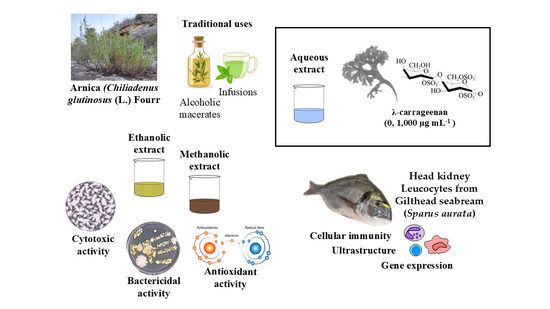
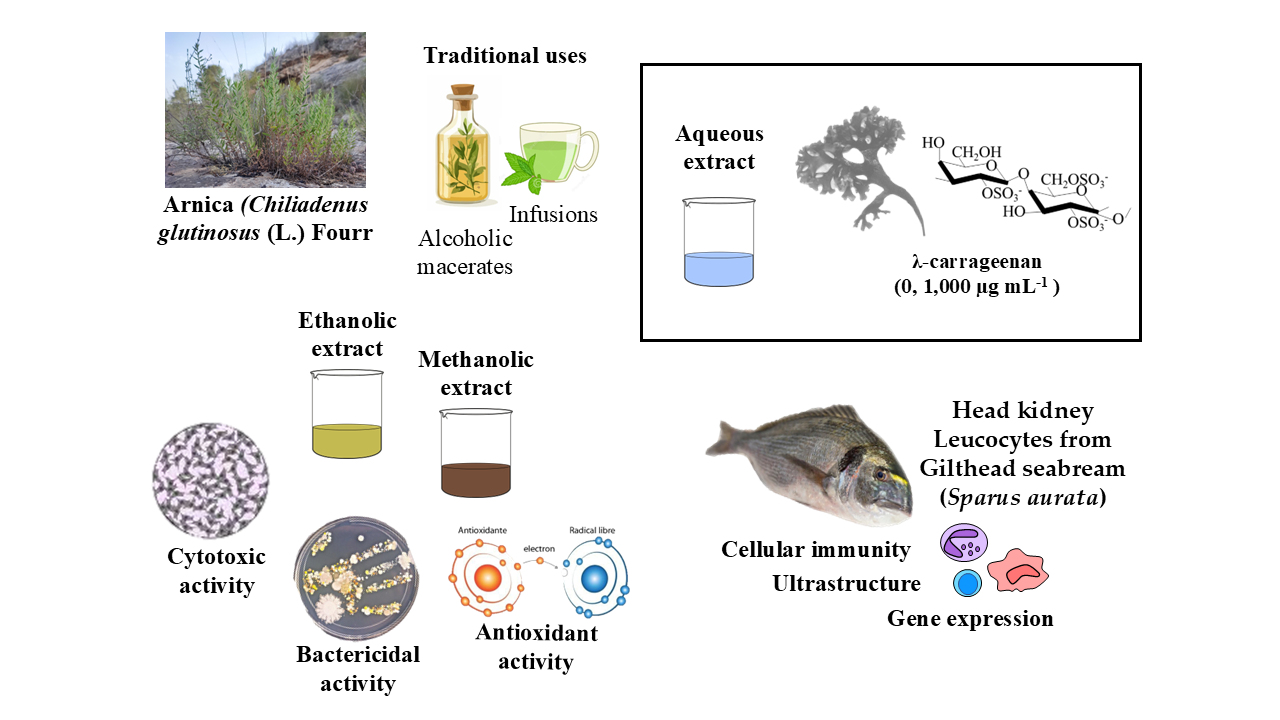
Arnica (Chiliadenus glutinosus (L.) Fourr.) is an endemic plant widely used in Spanish traditional medicine as infusions and alcoholic macerates for different ailments. Despite this use, information about the biological activity of these preparations in fish-related models is scarce. In the present study, the arnica extract bioactivity assay evaluated aqueous, ethanolic, and methanolic extracts at different doses (0, 0.001, 0.01, 0.125, 0.25, 0.5, and 1 mg mL−1) to compare their antioxidant activity, effects on four marine fish pathogens (Vibrio harveyi, Vibrio anguillarum, Photobacterium damselae and Tenacibaculum maritimum), cytotoxicity on the PLHC1 tumour cell line, and their impact on immunological parameters in head-kidney leucocytes (HKLs) of gilthead seabream (Sparus aurata). All extracts showed dose-dependent antioxidant activity, while bactericidal effects depended on the solvent and were mainly observed at the highest concentrations. Ethanolic and methanolic extracts displayed clear cytotoxicity, whereas the aqueous extract showed lower toxicity and was selected for further evaluation. In the carrageenan stimulation assay, selected concentrations (0, 0.25, and 0.5 mg mL−1) of the aqueous extract were tested in leucocytes stimulated with λ-carrageenan (0 and 1000 µg mL−1), and respiratory burst and phagocytic activity, cell morphology, and gene expression were analysed. The aqueous extract reduced respiratory burst and phagocytic capacity in activated leucocytes and was associated with morphological signs of cell activation. It also downregulated crel and casp9 expression. These results provide a comparative view of the in vitro bioactivity of different traditional preparations of arnica and show that their biological effects strongly depend on the solvent used and the concentration tested, providing initial experimental information on their cellular effects in fish.
Key Contribution: The present study provides the first comparative assessment of the biological activity of traditional arnica extracts in fish-related models, with direct effects on marine fish pathogens and gilthead seabream immune cells.

Graphical Abstract

1. Introduction

Since ancient times, plants and their derived preparations have been widely employed in traditional medicine to treat a broad range of human conditions, even when scientific evidence supporting their use has been limited [1,2,3]. Many of these remedies are still employed today as infusions, macerates, or topical applications, and their continued use has encouraged experimental studies aimed at documenting their biological activity and evaluating their potential benefits and risks. In recent years, plant-based products have also attracted attention in aquaculture research, where natural substances are being explored as alternative sources of bioactive compounds with antioxidant, antimicrobial, or immune-related effects in fish species [4]. Due to these properties, plant extracts have been proposed as potential alternatives to antibiotics and vaccines in the treatment or prevention of aquaculture diseases [4,5,6,7]. This is particularly relevant in intensive aquaculture, where the frequent use of antibiotics can contribute to antimicrobial resistance and environmental contamination [8,9]. In this context, plant extracts are of interest not only for their possible antimicrobial activity but also for their capacity to modulate fish immune responses [10]. Therefore, evaluating these products on fish pathogens and immune cells is necessary to identify plants with potential value for health management in aquaculture.
Chiliadenus glutinosus (L.) Fourr. (=Jasonia glutinosa (L.) DC.) is a native plant species belonging to the Asteraceae family, whose distribution extends through the Mediterranean littoral area of the Iberian Peninsula (including the Balearic Islands), southern France, Sicily, Malta, and northern Morocco [11,12]. It is traditionally known in Spain as “arnica”, “té de roca” (rock tea), or “té de montaña” (mountain tea) and should not be confused with Arnica montana [12,13,14]. Its characteristic lanceolate leaves and yellow flowers have been used for generations in the preparation of infusions, mainly as remedies for digestive discomfort, respiratory problems such as colds, sore throats, and asthma, and for regulating blood pressure [11]. In addition, alcoholic macerates have been applied topically to the skin to disinfect minor wounds and as painkillers [11]. In popular medicine, these preparations are associated with anti-inflammatory and antiseptic properties [11]. Despite this long history of use, most available information has focused on its phytochemical composition and the biological effects observed in mammalian models [15,16,17,18]. These studies have confirmed and identified a high presence of monoterpenes (camphor, borneol and nerolidol), sesquiterpenes (lucinone, glutinone and kudtriol), polyphenolic compounds such as flavonoids (quercetin and kaempferol), lactones, tannins and other compounds in smaller amounts such as esters, alkanes and vitamins [15,16,17,18]. In addition, these bioactive compounds appear to play a crucial role in the various functions that have been described for this plant, such as antioxidant, antimicrobial, anti-inflammatory, digestive, antihypertensive, neuroprotective, and antidiabetic activities [15,16,17,18]. However, its activity in fish has not been extensively studied. Specifically, only one previous study evaluated the dietary inclusion of arnica at 0 (control), 10%, and 30% in gilthead seabream specimens for 15 and 30 days and reported changes in antioxidant status and immune-related parameters in skin mucus, serum, head kidney leucocytes (HKLs), liver, and gut after 15 days of feeding [19]. Among these immune-related samples, HKLs are particularly relevant because the head kidney is the main haematopoietic organ of teleost fish and is functionally comparable to mammalian bone marrow [20]. Therefore, HKLs provide a suitable cellular model for evaluating the effects on fish innate immune responses. However, little is known about the direct effects of different traditional preparations of this plant on fish cells or aquatic pathogens. From an ethnopharmacological perspective, comparing aqueous and alcoholic extracts that resemble common traditional uses may help better understand how the method of preparation influences biological activity.
Based on this context, the main objective of the present study was to compare the in vitro bioactivities of aqueous, ethanolic, and methanolic extracts of arnica. Specifically, we aimed to evaluate their antioxidant activity, effects on the viability of four marine fish pathogenic bacteria, cytotoxicity on the PLHC1 tumour cell line, and impact on immune cellular parameters of HKLs from gilthead seabream, one of the most important fish species in Mediterranean aquaculture. In addition, selected concentrations of the aqueous extract were tested in leucocytes stimulated with λ-carrageenan to explore its influence on cellular responses, ultrastructural morphology, and expression of genes related to inflammation and apoptosis. Overall, this study provides a comparative assessment of the biological activity of different traditional preparations of arnica in fish-related in vitro models.

2. Materials and Methods

2.1. Collection and Preparation of Plant Extracts

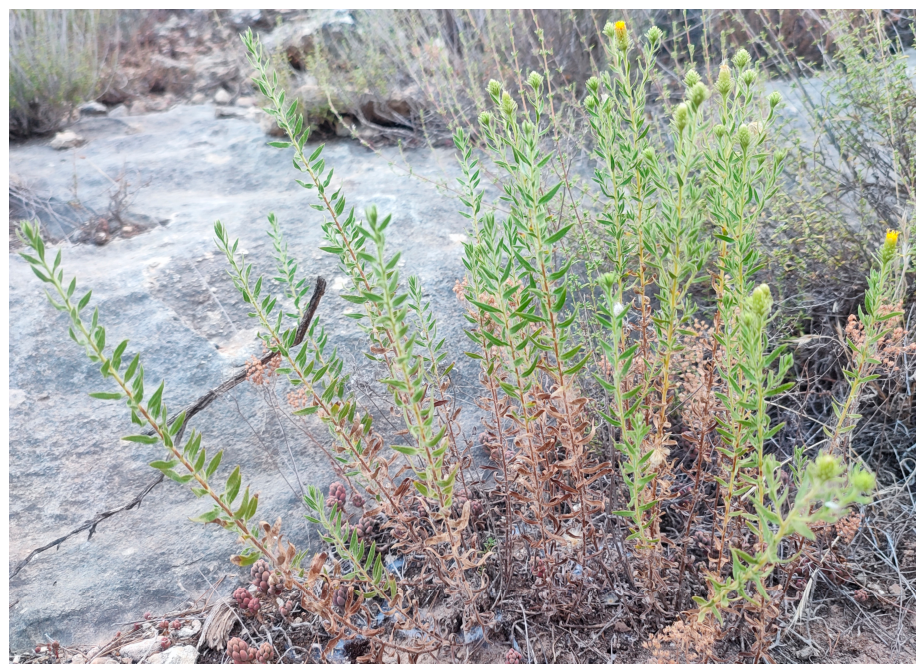
Whole arnica plants were harvested in August 2019 (Lorca, Murcia, Spain, Latitude 37°49′27.8461″ N and longitude 1°40′50.5888″ W) (Figure 1). A voucher specimen was deposited in the herbarium of the University of Murcia (Accession number: MUB 71209). The collected material was air-dried at room temperature (RT) for 15 days. Subsequently, the leaves and flowers were milled into a fine powder and kept in the dark at 4 °C until further use. This powdered material was used to prepare three different extracts by maceration using water, ethanol, and methanol as solvents. The aqueous extract was prepared to resemble traditional infusion practices, whereas the ethanolic and methanolic extracts reflect the use of alcoholic macerates traditionally applied for the treatment of wounds and external ailments. For the aqueous extract, 1 g of dried plant powder was mixed with 40 mL of boiling distilled water and shaken at room temperature (RT) for 4 h. The suspension was filtered twice through a 100 µm nylon mesh filter and lyophilised (CHRIST, Model Alpha 1-2 LD, 101021, Inycom, Spain). The dried aqueous extract was weighed and resuspended in phosphate-buffered saline (PBS; 11.9 mM phosphates, 137 mM NaCl, and 2.7 mM KCl, pH 7.4) (Fisher Bioreagents, Madrid, Spain) to obtain the stock solution, which was stored in the dark at −20 °C [21]. For the ethanolic and methanolic extracts, 1 g of dry plant powder was incubated with 40 mL of absolute ethanol or methanol (Sigma-Aldrich, Madrid, Spain), respectively, and shaken for 48 h at RT. These extracts were also filtered twice as described above, lyophilised, and stored in the dark at −20 °C. After weighing, both dried extracts were dissolved in dimethyl sulfoxide (DMSO, Sigma-Aldrich, Madrid, Spain) to prepare stock solutions at 10 mg mL−1 [22]. Both extracts were filtered and stored at −20 °C until use. For all experiments, working solutions from the three arnica extracts were prepared immediately before use by diluting the corresponding stock solution in the appropriate medium used for each experiment, as detailed below. The final solutions of 0 (Control; PBS for the aqueous extract and DMSO for the ethanolic and methanolic extracts), 0.001, 0.01, 0.125, 0.25, 0.5, and 1 mg mL−1 were obtained and assayed.

2.2. Total Antioxidant Activity

The antioxidant capacity of the plant extracts prepared as described above was evaluated using the 2,2′-azino-bis-3-(ethylbenzothiazoline-6-sulphonic acid) (ABTS, Sigma-Aldrich, Madrid, Spain) assay [23]. This method relies on the capacity of antioxidant compounds present in the sample to reduce the ABTS radical cation, which is assessed through the decolourisation of ABTS+ and the corresponding decrease in absorbance. Antioxidant activity was determined by comparing the values obtained for each sample with an ascorbic acid standard curve, and the results were expressed as ascorbic acid equivalent (mM). Briefly, 50 μL of aqueous, ethanolic, or methanolic extracts diluted in PBS to the final concentrations (as explained above) were mixed with 950 μL of ABTS+ solution. Absorbance quenching was measured at 730 nm using a spectrophotometer (BOECO S-22 UV/Vis, Hamburg, Germany), with the reaction PBS used as the blank. All samples were analysed in triplicate.

2.3. Bactericidal Activity

The bactericidal activity of the three arnica extracts against four Gram-negative marine bacteria (Vibrio harveyi strain Lg 16/00, Vibrio anguillarum strain CECT4344, Photobacterium damselae subsp. piscicida strain PP3 and Tenacibaculum maritimum) was assessed following the protocol described by Guardiola et al. with minor modifications [24]. Before each assay, a single colony of V. harveyi, V. anguillarum, or P. damselae was inoculated into Tryptic Soy Broth medium (TSB, Difco Laboratories, Franklin Lakes, New Jersey, USA) supplemented with 1.5% NaCl, whereas a single colony of T. maritimum was cultured in Flexibacter maritimus medium (FMM, Difco Laboratories, Franklin Lakes, New Jersey, USA) using flasks filled to 10% of their volume. All flasks were incubated overnight at 25 °C with continuous agitation at 100 rpm. Bacteria in the exponential growth phase were resuspended in sterile PBS and adjusted to a concentration of 1 × 10⁸ colony-forming units (CFU) mL−1. To evaluate bactericidal activity, 20 μL of aqueous, ethanolic or methanolic extracts, previously diluted in PBS to the final concentration described above, were dispensed into triplicate wells of a 96-well U-shaped plate. Culture medium alone and PBS were included as negative and positive controls, respectively. Subsequently, 20 μL of each bacterial suspension was added to the corresponding wells, and the plates were incubated for 5 h at 25 °C. Bacterial viability was determined using an MTT assay, which is based on the reduction of soluble yellow tetrazolium salt (3-(4,5-dimethylthiazol-2-yl)-2,5-diphenyltetrazolium bromide) (MTT, Sigma-Aldrich, Madrid, Spain) into an insoluble blue formazan product by succinate dehydrogenase activity [25,26]. Thus, 25 μL of MTT (1 mg mL−1, Sigma-Aldrich, Madrid, Spain) was added to each well, and the plates were incubated for 10 min to allow formazan formation. The plates were then centrifuged (2000× g, 10 min), and the resulting precipitate was dissolved in 200 μL of DMSO. Absorbance of the solubilized formazan was recorded at 570 nm and 690 nm using a microplate reader (SPECTROstar Nano, BMG LABTECH, Ortenberg, Germany). Bactericidal activity was expressed as the percentage of surviving bacteria relative to the number of bacteria in the positive control group, which was set to 100%.

2.4. Cytotoxic Activity Against PLHC1 Tumour Cell Line

The PLHC1 cell line (ATCC® CRL2406™), derived from Poeciliopsis lucida hepatocellular carcinoma, was seeded in plastic culture flasks of 25 cm2 containing Eagle’s Minimum Essential Medium (EMEM, Sigma-Aldrich, Madrid, Spain) supplemented with 5% foetal bovine serum (FBS, Life Technologies, Carlsbad, CA, USA), 2 mM L-glutamine (Thermo Fisher Scientific, Waltham, MA, USA), 100 i.u. mL−1 penicillin/streptomycin (Thermo Fisher Scientific, Waltham, MA, USA), 0.1 mM non-essential amino acids (Thermo Fisher Scientific, Waltham, MA, USA), and 1.0 mM sodium pyruvate (Sigma-Aldrich, Madrid, Spain). Cells were cultured at 30 °C in a humidified incubator with 85% humidity and 5% CO2. Cells in the exponential growth phase were detached from the flasks by brief treatment with trypsin (Sigma-Aldrich, Madrid, Spain) (0.05% in PBS, pH 7.2–7.4), following standard trypsinisation procedures. The detached cells were recovered by centrifugation (200× g, 5 min, 30 °C), and their viability was assessed using trypan blue exclusion. The cytotoxicity assay was performed in triplicate for each concentration tested. Once the cultures reached approximately 80% confluence, the cells were detached with trypsin and 100 µL aliquots containing 30,000 cells per well were seeded into 96-well tissue culture plates and incubated (24 h, 30 °C). This seeding density was previously evaluated to provide suitable absorbance values in the cytotoxicity assay while preventing cell overgrowth. After this incubation period, the culture medium was replaced with 200 µL per well of supplemented EMEM containing aqueous, ethanolic, or methanolic arnica extract at the final concentration (see Section 2.1). The cells were then incubated for 24 h at 30 °C. Culture medium alone was used as a negative control, whereas cells maintained in the same culture medium served as a positive control [27]. At the end of the exposure period, the medium was removed, and 200 µL of MTT solution (1 mg mL−1 in supplemented EMEM without FBS) was added to determine cell viability. Following 4 h of incubation at 22 °C, the MTT solution was discarded, and the resulting formazan crystals were dissolved with 100 µL of DMSO per well. The plates were then shaken (5 min, 100 rpm) in the dark, and the absorbance was measured at 570 and 690 nm using a microplate reader.

2.5. Head-Kidney Leucocyte (HKL) Isolation, Viability, and Immune Parameters

2.5.1. Animals

Twelve gilthead seabream (Sparus aurata L.) specimens obtained from a local farm (Mazarrón, Spain), with a mean body weight of 128.49 ± 3.84 g and a mean total length of 18.11 ± 0.25 cm, were acclimatized for one month in the Marine Fish Facilities of the University of Murcia (Spain). Fish were maintained in a recirculation system connected to individual 450 L tanks equipped with aeration and biological and mechanical filtration. The water temperature was maintained at 20 ± 2 °C and salinity at 28‰. Water quality parameters, including ammonia, nitrate, and nitrite, were monitored weekly. The photoperiod was adjusted to a 12 h light and 12 h dark cycle. The fish were fed a commercial diet (Skretting, Burgos, Spain) at a daily ration corresponding to 2% of the total biomass. All experimental procedures were approved by the Ethics Committee of the University of Murcia under permit number A13160416.

2.5.2. HKL Isolation and Incubation

The fish were anaesthetised with clove oil (20 mg L−1, Guinama®, Valencia, Spain) and euthanised by bleeding from the caudal vein. The excised head kidney was cut into small pieces, and leucocytes were isolated according to Esteban et al. [28]. The osmolarity of all extracts was measured using an osmometer Vapro 5520 (Wescor, Logan, UT, USA). The extracts were then resuspended in sRPMI (Sigma-Aldrich, Madrid, Spain), and dilutions were prepared for each concentration. λ-Carrageenan (Sigma-Aldrich, Madrid, Spain, CAS Number: 9064-57-7) was diluted in sterile PBS to prepare a stock solution of 10 mg mL−1 and resuspended in sRPMI to obtain the final doses. For each fish and assay, 500 μL of seabream HKLs (previously adjusted to 2 × 10⁷ cells mL−1) were dispensed into 24-well plates (Nunc, Roskilde, Denmark). Two consecutive experiments were conducted. In the arnica extract bioactivity assay, HKLs were exposed to 500 μL of each arnica extract solution to obtain final concentrations of 0, 0.001, 0.01, 0.125, 0.25, 0.5, and 1 mg mL−1. Cells were incubated with each extract for 24 h at 25 °C, 85% humidity, and 5% CO2. We selected an aqueous extract of arnica to develop a carrageenan stimulation assay. In this case, HKLs were incubated with 250 μL of λ-carrageenan at a final concentration of 0 (PBS diluted in sRPMI; used as control) and 1000 μg mL−1, together with 250 μL aqueous arnica extract [at a final concentration of 0 (PBS diluted in sRPMI; control), 0.25, and 0.5 mg mL−1], under the same conditions described for the arnica extract bioactivity assay. The λ-carrageenan concentrations were selected based on its leucocyte-activating capacity, which was previously tested in vitro [29,30,31]. HKLs obtained from six independent fish specimens were used separately in both assays, without pooling.

2.5.3. HKL Viability

The viability of HKLs in both assays was assessed by flow cytometry (FACScan, Becton Dickinson, Franklin Lakes, NJ, USA) using propidium iodide (PI, Sigma-Aldrich, Madrid, Spain) to determine the abundance of viable leucocytes, as described by Cuesta et al. [32]. The positive controls consisted of cells lysed with 50 μL of 0.02% cetyltrimethyl ammonium bromide (CTAB, Sigma-Aldrich, Madrid, Spain), shaken (10 min, 60 rpm, in the dark), and then mixed with 50 μL of PI. Dead cells were quantified as the percentage of PI-positive cells. For each sample, both the total leucocyte viability and the specific viability of acidophilic granulocytes (AGs, R1), monocytes/macrophages (MM, R2), and lymphocytes (R3) were determined, and these populations were represented in dot plots according to SSC and FSC.

2.5.4. Immune Cellular Parameters

The peroxidase activity in HKLs was measured using the method described by Quade & Roth [33], and standard samples without HKLs were used as blanks. The respiratory burst activity of HKLs was assayed by chemiluminescence [34], and the kinetics of the reaction were assessed by calculating the slope min−1 of each curve. The phagocytic activity of HKLs was studied by flow cytometry using heat-killed lyophilised Saccharomyces cerevisiae (strain S288C), labelled with fluorescein isothiocyanate (FITC, Sigma-Aldrich, Madrid, Spain), according to Rodríguez et al. [35,36]. Standard samples of FITC-labelled S. cerevisiae and HKLs were included in each phagocytosis assay. Phagocytic ability was expressed as the percentage of cells with one or more ingested yeast (green-FITC fluorescent cells) within the phagocytic cell population, whereas phagocytic capacity was expressed as the mean fluorescence intensity.

2.5.5. HKL Ultrastructure

To determine possible morphological alterations in HKLs following incubation with λ-carrageenan and aqueous arnica extract, samples were processed for transmission electron microscopy (TEM) according to Reynolds [37]. After 24 h of exposure, HKLs were centrifuged (400× g, 5 min, 22 °C), washed in 250 μL of sRPMI, and fixed with 200 μL of 2.5% glutaraldehyde prepared in 0.1 M cacodylate buffer (pH 7.2–7.4, 5–10 min, 4 °C) (Sigma-Aldrich, Madrid, Spain). The samples were then post-fixed for 2 h in 1% OsO4 (Sigma-Aldrich, Madrid, Spain) and embedded in Kit Resina Embed-812 con BDMA (Aname, Madrid, Spain). Semithin and ultrathin sections were obtained using a Reichert-Jung Ultracut ultramicrotome (Wien, Austria). Semithin sections were stained with toluidine blue, whereas ultrathin sections were contrasted with uranyl acetate and lead citrate. Ultrathin sections were examined using a transmission electron microscope (TEM, Zeiss EM 10C, Oberkochen, Germany).

2.5.6. HKL Gene Expression by Real-Time PCR

The sequences of the selected genes were retrieved from the gilthead seabream database [38]. The open reading frames (ORF) were identified using the ExPASy translation software (SIB Bioinformatics Resource Portal: https://web.expasy.org/translate/, accessed on 4 June 2021) and further verified by sequence alignment analysis using NCBI BLAST (NIH) (https://blast.ncbi.nlm.nih.gov/Blast.cgi, accessed on 4 June 2021). The primers (Table 1) were designed using the Thermo Fisher OligoPerfectTM tool, according to the following criteria: (i) each individual oligonucleotide was composed of 20 nucleotides, (ii) the size of the amplicon was between 100 and 120 nucleotides, (iii) with a guanine-cytosine (GC)% between 55% and 60%, (iv) an annealing temperature (melting temperature) as close as possible to 60 °C, and (v) the selection of primers that self-inhibit forming hairpins was avoided as far as possible, in order not to hinder the amplification reaction. After 24 h of incubation of HKLs with λ-carrageenan and aqueous arnica extract, the cells were collected by centrifugation (400× g, 10 min, 22 °C) and stored at −80 °C until analysis. Total RNA was extracted using the Pure Link® RNA Mini Kit (Life Technologies, Carlsbad, CA, USA) according to the manufacturer’s instructions. RNA quantity and purity were evaluated using a Nanodrop® spectrophotometer (Thermo Fisher Scientific, Waltham, MA, USA), and the 260:280 ratios ranged from 1.8 to 2.0. RNA samples were subsequently treated with DNase I (Promega, Madison, WI, USA) to eliminate genomic DNA contamination. Complementary DNA (cDNA) was synthesised from 1 μg of total RNA using SuperScript IV reverse transcriptase (Life Technologies, Carlsbad, CA, USA) with an oligo-dT18 primer. In the present study, the expression of the selected genes (Table 1) was analysed using real-time qPCR with a QuantStudio™ Real-Time PCR System Fast (Life Technologies, Carlsbad, CA, USA). Each reaction mixture contained 5 µL of SYBR Green supermix, 2.5 µL of primers (0.6 µM each), and 2.5 µL of cDNA template. Amplification conditions consisted of an initial incubation for 10 min at 95 °C, followed by 40 cycles of 15 s at 95 °C, 1 min at 60 °C, and a final step of 15 s at 95 °C, 1 min at 60 °C, and 15 s at 95 °C. Gene expression was calculated using the 2−ΔCt method with modifications [39,40]. Briefly, the Ct values from the technical replicates were averaged for each sample before ΔCt calculation. Relative expression was then expressed as 2−ΔCt after normalisation with the reference genes, as described below. Reactions without cDNA were used as negative controls, and all samples were analysed in triplicate. For each mRNA, expression levels were normalized using the geometric mean of ribosomal protein (18s) and elongation factor 1-alpha (ef1a) RNA levels in each sample. Gene names followed the accepted nomenclature for zebrafish (http://zfin.org/, accessed on 4 June 2021).

2.6. Statistical Analysis

The results are expressed as mean ± standard error of the mean (SEM). In the arnica extract bioactivity assay, data were analysed using one-way ANOVA followed by Tukey’s post hoc test to identify differences between experimental groups. In the carrageenan stimulation assay, data were analysed using two-way ANOVA followed by Tukey’s post hoc test to evaluate the effects of λ-carrageenan and increasing concentrations of arnica. Data normality was assessed using the Shapiro–Wilk test, and homogeneity of variance was verified using Levene’s test. All statistical analyses were performed using SPSS software (version 25.0; SPSS Inc., Chicago, IL, USA) for Windows. Statistical significance was set at p < 0.05 for all analyses.

3. Results

3.1. Arnica Extract Bioactivity Assay

3.1.1. Total Antioxidant Activity

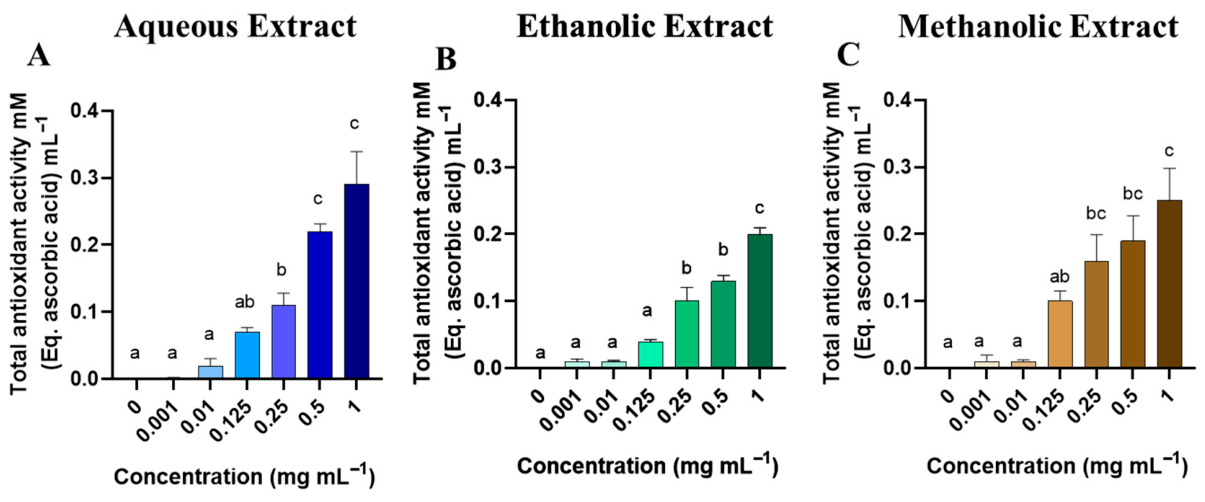
Aqueous, ethanolic, and methanolic extracts of arnica showed dose-dependent antioxidant activity. However, the two highest concentrations of the aqueous extract (0.5 and 1 mg mL−1) presented higher antioxidant activity than the other concentrations tested (Figure 2A). The 0.25 mg mL−1 dose of the same aqueous extract showed higher activity than the lower doses (0, 0.001, and 0.01 mg mL−1). In the case of the ethanolic extract, only the highest concentration showed higher antioxidant activity than the lower concentrations (Figure 2B). Moreover, the next two doses of ethanolic extract (0.25 and 0.5 mg mL−1) resulted in higher antioxidant activity than the lowest doses of the same extract. The three higher concentrations of methanolic extract, on the other hand, resulted in higher antioxidant activity compared to the doses of 0, 0.001 and 0.01 mg mL−1 (Figure 2C).

3.1.2. Bactericidal Activity

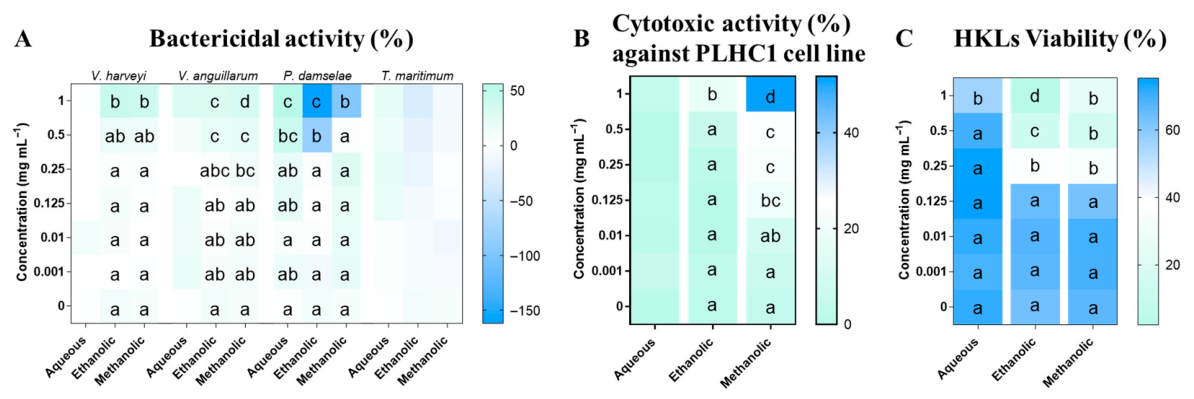
Regarding bactericidal activity, although no statistical differences were observed in the bactericidal activity against V. harveyi and V. anguillarum when incubated with the aqueous extract, the highest concentration (1 mg mL−1) of this extract increased bactericidal activity against P. damselae compared to the other concentrations, except for the concentration of 0.5 mg mL−1 which showed no statistical differences (Figure 3A). In contrast, the same concentration (1 mg mL−1) of the ethanolic and methanolic extracts showed an increase in bactericidal activity against V. harveyi compared to all other concentrations, except for 0.5 mg mL−1. Moreover, a dose-dependent increase in bactericidal activity against V. anguillarum was observed when incubated with the three highest doses (0.25, 0.5, and 1 mg mL−1) of ethanolic or methanolic extracts. In contrast, a decrease in bactericidal activity against P. damselae was observed after incubation with 0.5 and 1 mg mL−1 of the ethanolic extract compared to the control and all other experimental doses tested. The highest dose of the methanolic extract also showed a significant decrease in bactericidal activity against this pathogenic bacterium. No variation in bactericidal activity against T. maritimum was detected after incubation with any dose of any of the extracts used in this study.

3.1.3. Cytotoxic Activity

The cytotoxic assay results revealed that the aqueous extract did not affect the viability of the PLHC1 cell line (Figure 3B). In contrast, the highest dose of the ethanolic extract showed the highest cytotoxic activity compared to the other concentrations. Furthermore, the four highest doses of the methanolic extract (0.125, 0.25, 0.5, and 1 mg mL−1) showed dose-dependent cytotoxic activity in the PLHC1 cell line compared to cells incubated with lower concentrations of this extract.

3.1.4. Total HKL Viability

Our results revealed a decrease in the total viability of HKLs after 24 h of incubation with 1 mg mL−1 of aqueous extract compared to the values found in HKLs incubated with the other experimental doses (0, 0.001, 0.01, 0.125, 0.25, and 0.5 mg mL−1) (Figure 3C). Furthermore, HKLs incubated with higher concentrations of ethanolic or methanolic extract (0.25, 0.5, and 1 mg mL−1) showed a dose-dependent decrease in viability. In contrast, although no significant differences were detected in the viability of AGs and lymphocytes incubated with any concentration of aqueous extract, the viability of MM decreased after incubation with 1 mg mL−1 of the same extract compared to the other doses tested (Table 2). Interestingly, the viability of all cell types decreased dramatically after incubation with 1 mg mL−1 of both ethanolic and methanolic extracts of M. alba. Moreover, this reduction in viability was dose-dependent for MM and lymphocytes.

3.1.5. Immune Cellular Parameters

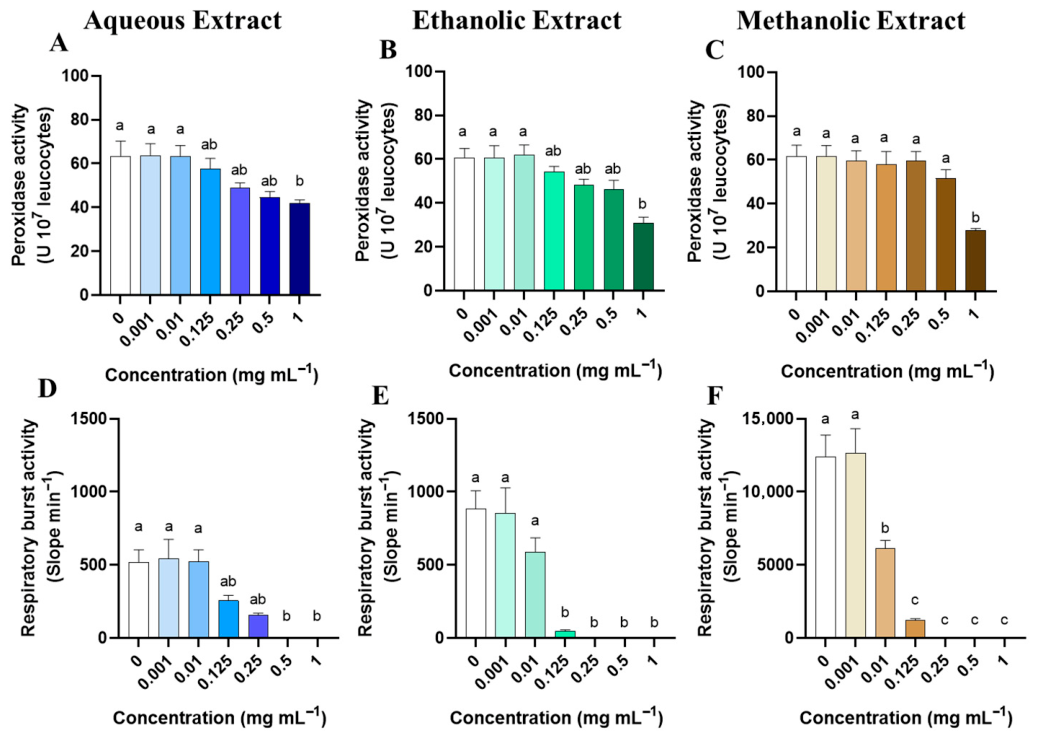
The peroxidase activity of HKLs decreased after 24 h of incubation with 1 mg mL−1 of aqueous, ethanolic, and methanolic extracts compared to HKLs incubated with 0 (control), 0.001, and 0.01 mg mL−1 of the corresponding extract (Figure 4A–C). Moreover, this decrease was also statistically significant in HKLs incubated with 0.125, 0.25, and 0.5 mg mL−1 of methanolic extract, but not in HKLs incubated with the same concentrations of aqueous and ethanolic extracts. The respiratory burst activity of HKLs decreased in a dose-dependent manner, being completely inhibited when HKLs were incubated with 0.5 and 1 mg mL−1 of aqueous extract and 0.125, 0.25, 0.5, and 1 mg mL−1 of ethanolic and methanolic extracts, compared with the lowest doses tested and the control (0 mg mL−1) (Figure 4D–F).
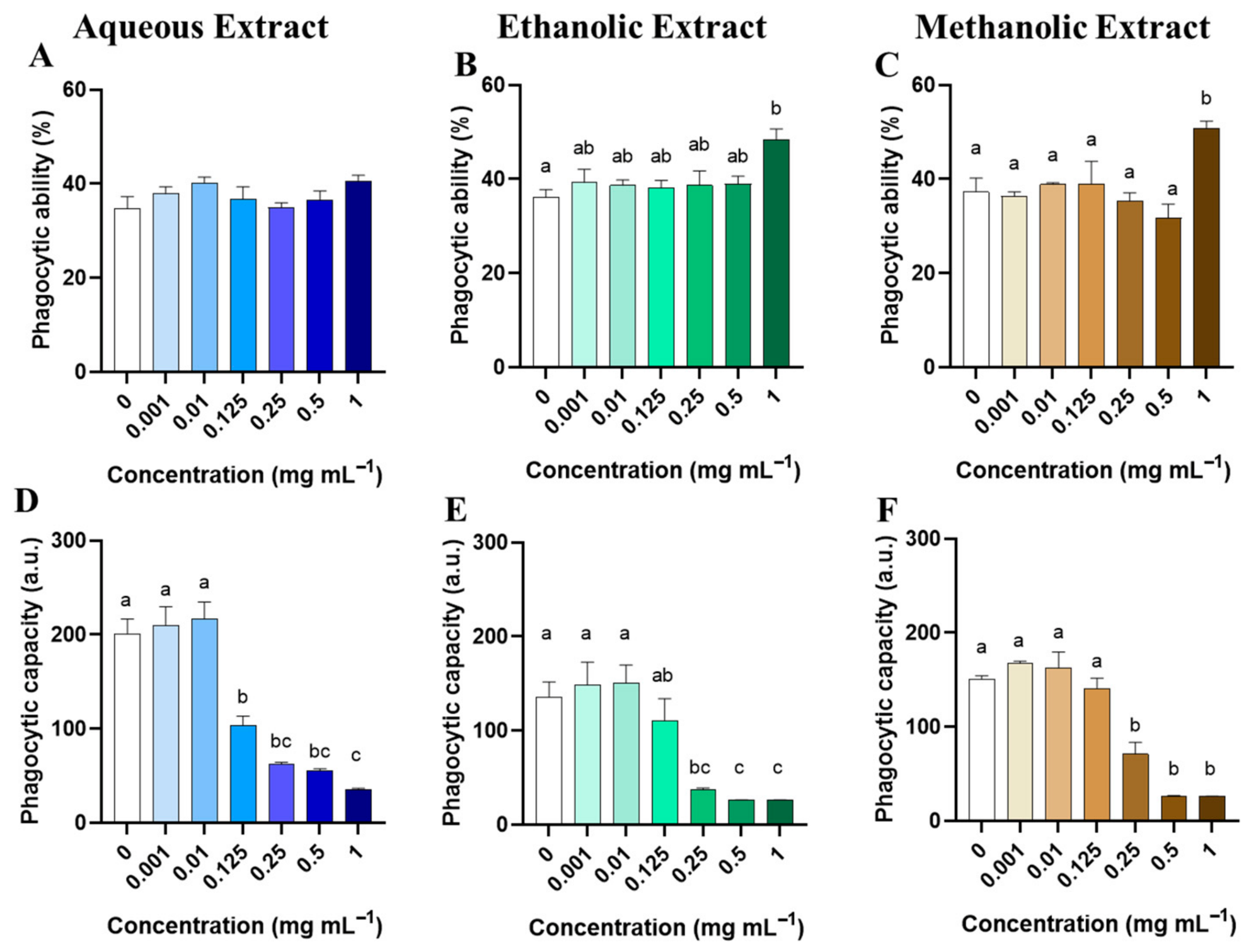
Although no variations were recorded in the phagocytic ability of HKLs incubated with the aqueous extract, increased phagocytic ability was observed at 1 mg mL−1 for the ethanolic and methanolic extracts compared to control HKL samples. Moreover, for the methanolic extract, this increase was also statistically significant at the concentrations tested (0.001, 0.01, and 0.125 mg mL−1) (Figure 5A–C). In contrast, HKLs incubated with any of the three extracts showed a dose-dependent inhibition of phagocytic capacity when incubated with 0.25, 0.5, and 1 mg mL−1 compared to the lowest doses tested. In addition, this activity decreased in HKLs incubated with 0.125 mg mL−1 of the aqueous extract compared to the lowest dose (Figure 5D–F).

3.2. Carrageenan Stimulation Assay

3.2.1. Leucocyte Viability

The total viability results did not show significant differences in HKLs incubated with any dose of λ-carrageenan or aqueous extract of arnica. Regarding the viability of leucocyte subpopulations, the viability of AGs decreased in a dose-dependent manner when incubated with arnica (0.25 and 0.5 mg mL−1) in the absence of λ-carrageenan (Table 3). However, the viability of AGs incubated with λ-carrageenan decreased with the highest arnica dose (0.5 mg mL−1). The viability of MMs decreased with arnica (0.5 mg mL−1) compared to that of the control. In contrast, lymphocyte viability increased slightly with the aqueous extract of arnica (0.25 and 0.5 mg mL−1) independent of the presence/absence of λ-carrageenan.

3.2.2. Cellular Immune Parameters

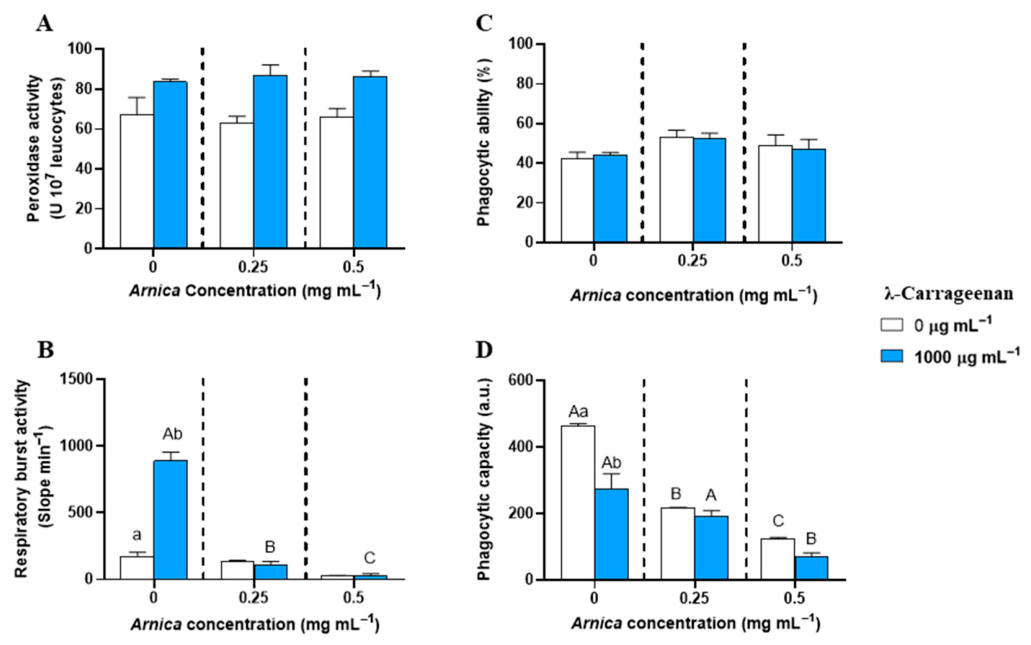
The peroxidase activity of HKLs did not vary with any combination of λ-carrageenan and arnica (Figure 6A). Respiratory burst activity increased in HKLs incubated with λ-carrageenan compared to the control (0 μg mL−1 of λ-carrageenan and 0 mg mL−1 of arnica) (Figure 6B). However, this activity decreased in a dose-dependent manner with increasing doses of arnica and 1000 μg mL−1 λ-carrageenan. The phagocytic activity of HKLs was not affected by λ-carrageenan and arnica (Figure 6C). In contrast, the phagocytic capacity decreased in HKLs treated with λ-carrageenan and without arnica (0 mg mL−1) compared to control cells (Figure 6D). In addition, this activity decreased in a dose-dependent manner with increasing doses of arnica and without λ-carrageenan (0 μg mL−1). However, the mixture of both substances only decreased the phagocytic capacity of HKLs incubated with the highest concentration of arnica (0.5 mg mL−1) and λ-carrageenan.

3.2.3. Ultrastructure of Leucocytes

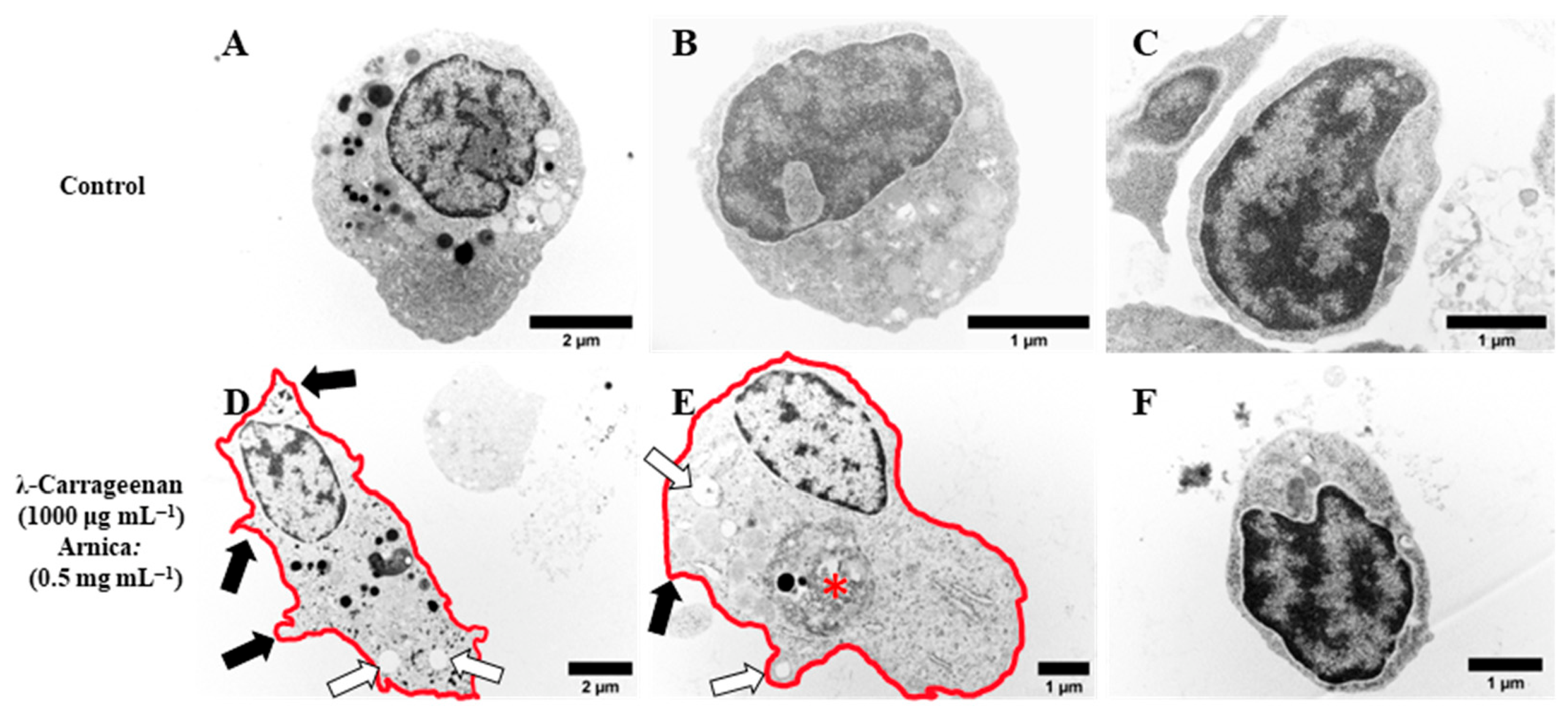
The electron microscopic study did not reveal morphological variations in AGs, MMs, and lymphocytes incubated with the control solutions of the two mixtures of λ-carrageenan or arnica prepared (Figure 7A–C). Nonetheless, clear ultrastructural alterations were detected in AGs and MMs treated with λ-carrageenan (1000 µg mL−1) and arnica (0.5 mg mL−1) (Figure 7D,E). Both cell types changed from a more rounded shape to a more elongated, irregular, and larger shape with large cytoplasmic prolongations, secondary lysosomes in the cytoplasm, and even visualisation of the phagocytosis of cellular debris. No morphological variations were detected in lymphocytes exposed to the same mixtures (Figure 7F).

3.2.4. Gene Expression Analysis

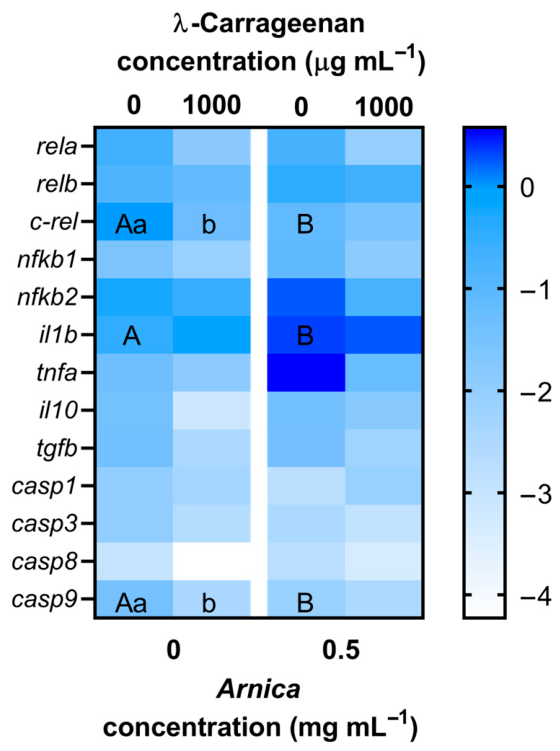
The gene expression profiles of NF-κB subunits (rela, relb, crel, nfkb1, and nfkb2), two proinflammatory cytokines (il1b and tnfa), two anti-inflammatory cytokines (il10 and tgfb), and four caspases involved in apoptotic cell death (casp1, casp3, casp8, and casp9) were analysed. The data are summarised in Figure 8. First, the expression of crel and casp9 was downregulated in HKLs by λ-carrageenan (1000 µg mL−1) compared to the control. Furthermore, the expression of both genes was downregulated by arnica (0.5 mg mL−1). In contrast, the expression of il1b was upregulated by arnica (0.5 mg mL−1). No statistical variations were detected in the values of the expression of rela, relb, nfkb1, nfkb2, tnfa, il10, tgfb, casp1, casp3 and casp8 genes in HKLs incubated with any of the mixtures tested.

4. Discussion

The present study compared the biological activity of different traditional preparations of arnica in fish in vitro assays, with the aim of determining whether extraction solvent influences responses in pathogens and host cells. Aqueous preparations were included to resemble infusions, whereas ethanolic and methanolic extracts were included to represent alcoholic macerates, as the solvent and extraction conditions are known to influence the chemical profile of the recovered compounds [43]. The concentration range (0.001–1 mg mL−1) was selected based on previous in vitro studies on gilthead seabream leucocytes and fish cell lines using medicinal plant extracts such as Origanum vulgare and Lavandula sp., where responses depend strongly on the extract type and dose [27,44]. To date, most publications on arnica have focused on its phytochemical composition, but it has been poorly studied in fish [15,45,46,47]. In this scenario, solvent comparisons in this and other species such as Rosmarinus officinalis L., Thymus vulgaris L. and O. vulgare L. indicate that aqueous extracts often recover a higher proportion of phenolic acids (mainly dicaffeoylquinic acids), whereas organic solvents such as ethanol and methanol tend to recover more lipophilic constituents such as terpenoid compounds [48,49]. In addition, because of the dielectric constant of ethanol as an organic solvent, it is common to find a high presence of terpenes in ethanolic extracts rather than in aqueous extracts [48,49]. This reasoning underlines the fact that different compounds in different proportions are extracted from aqueous and organic solvents [47], although further studies are needed to determine the bioactive compounds of arnica responsible for these effects. Thus, this background may help contextualise the differences found in this study between arnica preparations.
Among the biological activities commonly reported for medicinal plants, antioxidant capacity is frequently described and is linked to radical scavenging and metal chelation, thereby limiting the damage caused by oxidative stress [50,51]. Monoterpenes found in arnica, such as camphor and borneol, as well as flavonoids such as kaempferol and quercetin, have been documented to possess antioxidant properties. In addition, a higher phenolic content in the aqueous extract, known for its ability to scavenge free radicals, is positively correlated with higher antioxidant activity than that of the ethanolic and methanolic extracts [52,53]. The study of some phenolic compounds in in vitro assays has revealed that kaempferol can increase nitric oxide production and decrease dimethylarginine levels [54,55]. However, monoterpenes such as borneol may also reduce oxidative stress and free radical toxicity by increasing the activity of superoxide dismutase [an enzyme that catalyses the dismutation of the superoxide radical (O2-) in molecular oxygen (O2) or hydrogen peroxide (H2O2)] [56,57]. Within this context, in our study, all three extracts showed antioxidant activity in a dose-dependent manner, indicating that this property is retained across the traditional preparations tested under the present conditions. Similar dose-related patterns have been widely described for plant extracts evaluated in comparable in vitro assays, where the effect becomes more evident as the concentration increases [27,43,49]. Interestingly, a recent study has also determined for the first time the presence of pigments (carotenoids, chlorophylls, and xanthophylls) in the composition of an ethanolic extract of arnica, so other chemical compounds associated with the composition of this plant of interest could contribute to its antioxidant activity [58].
Another relevant aspect of studying medicinal plants is their potential activity against fish bacterial pathogens, as opportunistic infections represent one of the main constraints in marine aquaculture [59,60]. Previous in vitro studies have reported the anti-protozoal activity of arnica ketone extracts against Leishmania donovani and Entamoeba histolytica [61]. Furthermore, arnica ethyl acetate and dichloromethane extracts showed in vitro antifungal activity against Candida albicans and Rhizopus stolonifera, and antimicrobial activity against several human bacterial pathogens such as Mycobacterium phlei, Escherichia coli, Klebsiella pneumoniae, Pseudomonas aeruginosa, and Staphylococcus aureus due to the presence of flavonoids, terpenoids, and essential oils in their phytochemical composition [62]. However, information on its effects on fish pathogens is still scarce. In the present study, the bactericidal activity of the three extracts was evaluated against four opportunistic marine bacteria (V. harveyi, V. anguillarum, P. damselae, and T. maritimum), selected because of their relevance as causative agents of disease in farmed marine species and their associated economic impact [63,64]. In addition, it is important to consider that all tested species were Gram-negative marine bacteria, which are generally less susceptible to plant extracts than Gram-positive bacteria, a factor that may partly explain the moderate activity observed in some cases [65,66]. Under the conditions tested in our assay, the aqueous extract showed limited bactericidal activity, with a significant reduction only detected against P. damselae at the highest concentration. In contrast, the ethanolic and methanolic extracts showed clearer activity at elevated doses, particularly against V. harveyi and V. anguillarum, where the highest concentrations were associated with a more pronounced reduction in bacterial viability. The differences in bactericidal activity among the aqueous, ethanolic, and methanolic extracts may also be due to the efficacy and different components extracted in each case that act as inhibitors of microbial growth [15,47]. Therefore, whereas flavonoids such as quercetin have shown antimicrobial properties attributed to the inhibition of bacterial DNA gyrase, camphor and borneol monoterpenes can disrupt bacterial membrane integrity [57,67]. As a mechanism of action, it has been suggested that the presence of the ethyl group (-CH2-CH3) of some phytochemicals, such as terpenes, allows their entry through the bacterial cell wall, generating negatively charged free radicals, which inhibit enzymes involved in the cell cycle, peptidoglycan synthesis, and affect membrane permeability, causing its disruption [68,69,70]. These observations agree with previous similar in vitro studies carried out with other medicinal plants such as O. vulgare L. and Ceratonia siliqua L., in which organic solvent extracts often show stronger antibacterial effects than aqueous preparations, and the response varies depending on the pathogen analysed [21,27]. Interestingly, a decrease in bactericidal activity against P. damselae was observed at the highest concentrations of ethanolic and methanolic extracts, in contrast to the response recorded for V. harveyi and V. anguillarum. In this context, it has been reported that P. damselae can degrade extracellular lipids and use them as carbon and energy sources, which can favour its growth under suitable conditions [71]. This metabolic capacity could partly explain the distinct behaviour observed in our assays at the highest concentrations, where the presence of additional organic material from the extracts may have supported bacterial persistence instead of limiting it. In this sense, we hypothesised that the ethanolic and methanolic extracts of arnica are richer in terpenes than the aqueous extract, which could explain the growth of this bacterium after incubation with them [71]. However, further studies are needed to better understand the mechanisms underlying this response.
In addition to the aforementioned bioactivities, evaluating cytotoxicity is essential to define the concentration range in which cell-based responses can be interpreted. Like other species of the Asteraceae family, arnica does not contain alkaloids in its chemical composition, which are usually compounds with cytotoxic activity [15,72]. Consequently, high concentrations of monoterpenoid and flavonoid compounds may have the opposite effect and become toxic [45]. Thus, terpenes, which can present different groups such as carbonyl (-CO), aldehyde (-CHO), or hydroxyl (-OH), and the presence of hydroxyl groups is related to cytotoxic properties, can increase membrane permeability and affect proteins related to the mitochondrial respiration chain [73,74]. In addition, terpenes such as borneol have been reported to have in vitro cytotoxic effects on human epithelial colorectal carcinoma cells [75]. In the present study, PLHC1 cells were used as a tumour-derived fish cell line to evaluate the cytotoxic potential of the extracts in a standardised proliferative fish cell model [23]. Thus, ethanolic and methanolic extracts produced a strong reduction in viability at moderate and high concentrations, both in the PLHC1 tumour cell line and in HKLs, whereas the aqueous extract showed a comparatively lower impact. The marked response observed in the PLHC1 tumour cell line suggests that the alcoholic extracts may contain bioactive components (possibly terpenes) that can interfere with cellular survival. This is consistent with previous studies reporting the cytotoxic effects of ethanolic plant extracts evaluated in tumour cell lines, including O. vulgare extracts tested on human lung adenocarcinoma A549 cells and Moringa stenopetala ethanolic leaf and seed extracts tested on human hepatoblastoma HepG2 cells [22,49]. In this context, certain lipophilic compounds previously described in arnica, such as the monoterpene borneol, which are more efficiently extracted in alcoholic preparations than in water, have shown in vitro cytotoxic effects on human epithelial colorectal carcinoma cells [57,75], which is consistent with the stronger effects observed for alcoholic preparations compared to aqueous preparations.
HKLs constitute the main effector population of the innate immune response in gilthead seabream, where AGs and monocyte–macrophages actively participate in phagocytosis and other defense mechanisms in response to external stimuli or foreign substances [28]. In addition, AGs can trigger respiratory burst activity, increasing oxygen consumption and the production of reactive oxygen species (ROS) through NADPH oxidase activation. They can also promote degranulation mechanisms by releasing peroxidase enzymes (with antimicrobial activity) into the extracellular space [76,77]. For these reasons, HKLs have been used as a primary immune cell model to evaluate the direct effects on fish innate immune responses [20,28]. In the arnica extract bioactivity assay, our results showed an evident reduction in peroxidase activity, respiratory burst, and phagocytic capacity at concentrations that also reduced viability, particularly for ethanolic and methanolic extracts. When focusing on concentrations compatible with viability, peroxidase activity remained largely unchanged for aqueous and ethanolic extracts, respiratory burst showed a clearer reduction for the methanolic extract at low-medium concentrations (0.01 and 0.125 mg mL−1), and phagocytic capacity was reduced by the aqueous extract at intermediate concentrations (0.125, 0.25, 0.5 mg mL−1), indicating a possible inhibitory effect on these specific functions even in the absence of marked loss of viability. These results agree with several in vitro studies that reported that not only did the direct application of plant extracts at high doses to HKLs not have a stimulatory effect on the immune cells, but also decreased their activity [2,44]. In contrast, dietary administration of arnica in the same species has been associated with immunostimulatory effects after 15 days, including increased phagocytic activity in HKLs and higher peroxidase levels in skin mucus [19], highlighting the differences between direct in vitro exposure and systemic responses in vivo.
Based on these observations, the aqueous extract was selected for the carrageenan stimulation assay in HKLs stimulated with λ-carrageenan, using concentrations compatible with viability (0, 0.25, and 0.5 mg mL−1). Carrageenan doses (0 and 1000 µg mL−1) were selected based on their established capacity to activate HKLs, including stimulation of phagocytosis and ROS-related responses and the upregulation of proinflammatory genes such as il1b, tnfa, and il6 [29]. This ability comes from its atypical structure with sulphate moieties and unusual α-1,3-galactosidic linkages, characteristics that seem to be crucial in its action mechanisms to stimulate fish leucocytes in vitro, like what happens in mammals [29]. In agreement with this rationale, HKLs exposed to λ-carrageenan alone showed the expected activation profile, including changes in phagocytosis and respiratory burst activity. Thus, when the aqueous extract of arnica was applied together with this stimulus, the respiratory burst and phagocytic activity tended to return to values closer to the control levels, suggesting an immunomodulatory effect of arnica on previously activated leucocytes. In addition, ultrastructural changes in AGs and MMs, as evidenced by TEM after exposure to high doses of λ-carrageenan and arnica, showed morphological features associated with activation, including cytoplasmic extensions and the presence of secondary lysosomes compatible with active phagocytic processes, as previously evidenced in an in vitro assay developed by our research group (probably due to the effects of λ-carrageenan) [29]. This activation was also corroborated in vivo, where carrageenan was able to recruit acidophilic granulocytes and monocytes/macrophages, as well as other cell types, such as skin mucus-secreting cells and adipocytes, shortly after intramuscular injection [77,78]. Nonetheless, the high presence of phenolic compounds such as the flavonoid quercetin, and the minority presence of monoterpenes like borneol in the composition of aqueous extract of arnica could also be related to cytotoxic properties, since the presence of hydroxyl groups is able to increase membrane permeability and affect mitochondrial respiration chain-related proteins [73,74]. This would also explain the cellular debris evidenced by TEM and the decrease in the viability of HKLs after incubation with high doses of the aqueous extract of this plant.
Regarding gene expression analysis, we first focused on the expression of NF-κB subunits (RelA, RelB, C-Rel, NF-κB1, and NF-κB2) given their central role in coordinating the transcriptional regulation of cytokines and proinflammatory molecules [79]. In mammals, RelA:NF-κB1 heterodimers are typically associated with the canonical inflammation signalling pathway, whereas RelB:NF-κB2 combinations constitute a non-canonical or alternative activation pathway, with the c-REL subunit relegated to a secondary role in this process [80]. In our study, the gene expression of crel was downregulated in HKLs incubated with λ-carrageenan or arnica, in line with previous work from our group, suggesting that c-REL may reflect a relevant regulatory node in fish leucocytes [41,81]. In addition, caspase-9, which is responsible for activating downstream executioner caspases (caspase-3, -6, and -7), is a critical initiator and regulator of the intrinsic pathway of apoptosis [82]. The downregulation of casp9 by λ-carrageenan and arnica could be another regulatory mechanism that prevents the initiation of unnecessary apoptosis. Thus, although arnica has been described as an important anti-inflammatory agent, the upregulation of il1b that we found in this study could be a consequence of the flavonoids (quercetin) contained in its structure (as mentioned above) [83]. In addition, this upregulation could be better interpreted as a marker of cellular activation or stress or changes in the proportion of responsive subpopulations within the HKL pool rather than a change in inflammatory status. This interpretation is consistent with in vitro studies showing that direct exposure of HKLs to plant extracts does not necessarily produce the same effect as expected in vivo [2,21,44].

5. Conclusions

The present study provides an in vitro comparison of traditional aqueous and alcoholic preparations of arnica using fish-related in vitro assays. The three extracts tested displayed dose-dependent antioxidant capacities, while their effects on bacteria and cells differed across preparations and concentrations, particularly when cell viability was considered. Ethanolic and methanolic extracts showed the strongest bactericidal activity at the highest concentrations and the most pronounced reduction in PLHC1 viability, while the aqueous extract showed its ability to reduce immune parameters in HKLs previously stimulated with λ-carrageenan. Overall, these results provide a comparative basis to guide future studies on arnica preparations in fish.

Author Contributions

J.C.C.-S.: Methodology, Investigation, Writing—original draft preparation, Writing—review and editing, Visualisation. F.A.G.: Methodology, Validation, Formal analysis, Investigation, Data curation, Writing—original draft preparation, Writing—review and editing, Visualisation. M.Á.E.: Conceptualisation, Validation, Investigation, Resources, Writing—review and editing, Visualisation, Supervision, Project administration, Funding acquisition. All authors have read and agreed to the published version of the manuscript.

Funding

This research was funded by MCIN/ AEI /10.13039/501100011033 (grant number PID2020-113637RB-C21) and by the Programa regional de fomento de la investigación científica y técnica de excelencia, en la Convocatoria de ayudas de la Fundación Séneca-agencia de ciencia y tecnología de la Región de Murcia a grupos de investigación de excelencia de la Región de Murcia para el desarrollo de actividades de investigación científica y técnica y de valorización y transferencia de conocimientos (23025/GERM/25).

Institutional Review Board Statement

The study was conducted in accordance with the EU Directive 2010/63/EU and approved by the UMU Ethics Committee (Permit No. A13160416 and the approval date was 24 September 2014).

Data Availability Statement

The data are available on the DIGITUM institutional repository from the University of Murcia: http://hdl.handle.net/10201/131623 (accessed on 30 May 2023).

Acknowledgments

JCCS has a Juan de la Cierva postdoctoral fellowship (JDC2023-052846-I), funded by MICIU/AEI/10.13039/501100011033, and the FSE+.

Conflicts of Interest

The authors declare no conflicts of interest.

References

  1. Adel, M.; Yeganeh, S.; Dadar, M.; Sakai, M.; Dawood, M.A.O. Effects of dietary Spirulina platensis on growth performance, humoral and mucosal immune responses, and disease resistance in juvenile great sturgeon (Huso huso Linnaeus, 1754). Fish Shellfish Immunol. 2016, 56, 436–444. [Google Scholar] [CrossRef]
  2. García Beltrán, J.M.; Espinosa, C.; Guardiola, F.A.; Esteban, M.Á. Dietary dehydrated lemon peel improves the immune but not the antioxidant status of gilthead seabream (Sparus aurata L.). Fish Shellfish Immunol. 2017, 64, 426–436. [Google Scholar] [CrossRef]
  3. Van Hai, N. The use of medicinal plants as immunostimulants in aquaculture: A review. Aquaculture 2015, 446, 88–96. [Google Scholar] [CrossRef]
  4. Reverter, M.; Bontemps, N.; Lecchini, D.; Banaigs, B.; Sasal, P. Use of plant extracts in fish aquaculture as an alternative to chemotherapy: Current status and future perspectives. Aquaculture 2014, 433, 50–61. [Google Scholar] [CrossRef]
  5. Harikrishnan, R.; Balasundaram, C.; Heo, M.S. Impact of plant products on innate and adaptive immune system of cultured finfish and shellfish. Aquaculture 2011, 317, 1–15. [Google Scholar] [CrossRef]
  6. Oulahal, N.; Degraeve, P. Phenolic-rich plant extracts with antimicrobial activity: An alternative to food preservatives and biocides? Front. Microbiol. 2022, 12, 753518. [Google Scholar] [CrossRef] [PubMed]
  7. Su, H.; Yakovlev, I.A.; van Eerde, A.; Su, J.; Clarke, J.L. Plant-produced vaccines: Future applications in aquaculture. Front. Plant Sci. 2021, 12, 718775. [Google Scholar] [CrossRef] [PubMed]
  8. Cabello, F. Heavy use of prophylactic antibiotics in aquaculture: A growing problem for human and animal health and for the environment. Environ. Microbiol. 2006, 8, 1137–1144. [Google Scholar] [CrossRef]
  9. Santos, L.; Ramos, F. Analytical strategies for the detection and quantification of antibiotic residues in aquaculture fishes: A review. Trends Food Sci. Technol. 2016, 52, 16–30. [Google Scholar] [CrossRef]
  10. García Beltrán, J.M.; Esteban, M.A. Nature-identical compounds as feed additives in aquaculture. Fish Shellfish Immunol. 2022, 123, 409–416. [Google Scholar] [CrossRef]
  11. Las Heras Etayo, N.; Llamas, F.; Acedo, C. Ethnobotanical research and compilation of the medicinal uses in Spain and the active principles of Chiliadenus glutinosus (L.) Fourr. for the scientific validation of its therapeutic properties. Plants 2021, 10, 584. [Google Scholar] [CrossRef]
  12. Muñoz-Centeno, L.; Rico, E. Chiliadenus Cass. In Flora Iberica. Plantas Vasculares de la Península Ibérica e islas Baleares. Vol. XVI (III) Compositae (Partim), 1st ed.; Real Jardín Botánico, Consejo Superior de Investigaciones Científicas: Madrid, Spain, 2019; pp. 2092–2095. [Google Scholar]
  13. Obón, C.; Rivera, D.; Verde, A.; Fajardo, J.; Valdés, A.; Alcaraz, F.; Carvalho, A.M. Árnica: A multivariate analysis of the botany and ethnopharmacology of a medicinal plant complex in the Iberian Peninsula and the Balearic Islands. J. Ethnopharmacol. 2012, 144, 44–56. [Google Scholar] [CrossRef]
  14. Pardo de Santayana, M.; Morales, R. Consideraciones sobre el género Jasonia (Compositae, Inuleae). Sistemática y Usos. Acta Bot. Malacit. 2004, 29, 221–232. [Google Scholar] [CrossRef]
  15. Guillén, M.D.; Ibargoitia, M.L. Volatile components obtained from the leaves of Jasonia glutinosa. Food Chem. 1996, 56, 155–158. [Google Scholar] [CrossRef]
  16. Bermejo, B.P.; Abad, M.J.; Díaz, A.M.; Villaescusa, L.; González, M.A.; Silván, A.M. Sesquiterpenes from Jasonia glutinosa: In vitro anti-inflammatory activity. Biol. Pharm. Bull. 2002, 25, 1–4. [Google Scholar] [CrossRef] [PubMed][Green Version]
  17. Valero, M.S.; Oliván-Viguera, A.; Garrido, I.; Langa, E.; Berzosa, C.; López, V.; Gómez-Rincón, C.; Murillo, M.D.; Köhler, R. Rock tea extract (Jasonia glutinosa) relaxes rat aortic smooth muscle by inhibition of L-type Ca2+ channels. J. Physiol. Biochem. 2015, 71, 785–793. [Google Scholar] [CrossRef]
  18. Castro, M.; Ramón-Giménez, M.; Les, F.; Trejo, L.; Plaza, M.Á.; López, V.; Murillo, M.D.; Valero Gracia, M.S. Spasmolytic effect of Jasonia glutinosa on rodent intestine. Rev. Esp. Enfermedades Dig. 2016, 108, 785–789. [Google Scholar] [CrossRef] [PubMed]
  19. Espinosa, C.; García Beltrán, J.M.; Messina, C.M.; Esteban, M.Á. Effect of Jasonia glutinosa on immune and oxidative status of gilthead seabream (Sparus aurata L.). Fish Shellfish Immunol. 2020, 100, 58–69. [Google Scholar] [CrossRef]
  20. Meseguer, J.; López-Ruiz, A.; García-Ayala, A. Reticulo-endothelial stroma of the head-kidney from the seawater teleost gilthead seabream (Sparus aurata L.): An ultrastructural and cytochemical study. Anat. Rec. 1995, 241, 303–309. [Google Scholar] [CrossRef]
  21. Ben Othmen, K.; Elfalleh, W.; García Beltrán, J.M.; Esteban, M.Á.; Haddad, M. An in vitro study of the effect of carob (Ceratonia siliqua L.) leaf extracts on gilthead seabream (Sparus aurata L.) leucocyte activities. Antioxidant, cytotoxic and bactericidal properties. Fish Shellfish Immunol. 2020, 99, 35–43. [Google Scholar] [CrossRef]
  22. Mekonnen, N.; Houghton, P.; Timbrell, J. The toxicity of extracts of plant parts of Moringa stenopetala in HEPG2 cells in vitro. Phytother. Res. 2005, 19, 870–875. [Google Scholar] [CrossRef] [PubMed]
  23. Arnao, M.B.; Cano, A.; Acosta, M. Methods to measure the antioxidant activity in plant material. A comparative discussion. Free Radic. Res. 1999, 31, 89–96. [Google Scholar] [CrossRef]
  24. Guardiola, F.A.; Cuartero, M.; Collado-González, M.d.M.; Díaz Baños, F.G.; Cuesta, A.; Moriñigo, M.Á.; Esteban, M.Á. Terminal carbohydrates abundance, immune related enzymes, bactericidal activity and physico-chemical parameters of the Senegalese Sole (Solea senegalensis, Kaup) skin mucus. Fish Shellfish Immunol. 2017, 60, 483–491. [Google Scholar] [CrossRef]
  25. Berridge, M.; Tan, A. Characterization of the cellular reduction of 3-(4,5-dimethylthiazol-2-yl)-2,5-diphenyltetrazolium bromide (MTT): Subcellular localization, substrate dependence, and involvement of mitochondrial electron transport in MTT reduction. Arch. Biochem. Biophys. 1993, 303, 474–482. [Google Scholar] [CrossRef]
  26. Denizot, F.; Lang, R. Rapid colorimetric assay for cell growth and survival. Modifications to the tetrazolium dye procedure giving improved sensitivity and reliability. J. Immunol. Methods 1986, 89, 271–277. [Google Scholar] [CrossRef] [PubMed]
  27. García Beltrán, J.M.; Espinosa, C.; Guardiola, F.A.; Esteban, M.Á. In vitro effects of Origanum vulgare leaf extracts on gilthead seabream (Sparus aurata L.) leucocytes, cytotoxic, bactericidal and antioxidant activities. Fish Shellfish Immunol. 2018, 79, 1–10. [Google Scholar] [CrossRef]
  28. Esteban, M.A.; Mulero, V.; Muñoz, J.; Meseguer, J. Methodological aspects of assessing phagocytosis of Vibrio anguillarum by leucocytes of gilthead seabream (Sparus aurata L.) by flow cytometry and electron microscopy. Cell Tissue Res. 1998, 293, 133–141. [Google Scholar] [CrossRef] [PubMed]
  29. Campos-Sánchez, J.C.; Guardiola, F.A.; Esteban, M.Á. In vitro effects of λ-carrageenin in the head-kidney leucocytes of gilthead seabream (Sparus aurata). Fish Shellfish Immunol. 2022, 127, 813–821. [Google Scholar] [CrossRef]
  30. Campos-Sánchez, J.C.; Guardiola, F.A.; Esteban, M.Á. In vitro effects of a natural marine algae polysaccharide (λ-carrageenan) on seabream erythrocytes, tumour cell lines and marine bacterial pathogens. J. Appl. Phycol. 2024, 36, 399–409. [Google Scholar] [CrossRef]
  31. Campos-Sánchez, J.C.; Serna-Duque, J.A.; Alburquerque, C.; Guardiola, F.A.; Esteban, M.Á. Participation of hepcidins in the inflammatory response triggered by λ-carrageenin in gilthead seabream (Sparus aurata). Mar. Biotechnol. 2024, 26, 261–275. [Google Scholar] [CrossRef]
  32. Cuesta, A.; Esteban, M.A.; Meseguer, J. Natural cytotoxic activity of gilthead seabream (Sparus aurata L.) leucocytes assessment by flow cytometry and microscopy. Vet. Immunol. Immunopathol. 1999, 71, 161–171. [Google Scholar] [CrossRef]
  33. Quade, M.J.; Roth, J.A. A rapid, direct assay to measure degranulation of bovine neutrophil primary granules. Vet. Immunol. Immunopathol. 1997, 58, 239–248. [Google Scholar] [CrossRef]
  34. Bayne, C.J.; Levy, S. Modulation of the oxidative burst in trout myeloid cells by adrenocorticotropic hormone and catecholamines: Mechanisms of action. J. Leukoc. Biol. 1991, 50, 554–560. [Google Scholar] [CrossRef]
  35. Rodríguez, A.; Esteban, M.Á.; Meseguer, J. Phagocytosis and peroxidase release by seabream (Sparus aurata L.) leucocytes in response to yeast cells. Anat. Rec. Part A Discov. Mol. Cell. Evol. Biol. 2003, 272, 415–423. [Google Scholar] [CrossRef] [PubMed]
  36. Rodríguez, A.; Esteban, M.A.; Meseguer, J. A Mannose-receptor is possibly involved in the phagocytosis of Saccharomyces cerevisiae by seabream (Sparus aurata L.) leucocytes. Fish Shellfish Immunol. 2003, 14, 375–388. [Google Scholar] [CrossRef]
  37. Reynolds, E.S. The use of lead citrate at high pH as an electron-opaque stain in electron microscopy. J. Cell Biol. 1963, 17, 208–212. [Google Scholar] [CrossRef] [PubMed]
  38. Pareek, C.S.; Smoczynski, R.; Tretyn, A. Sequencing technologies and genome sequencing. J. Appl. Genet. 2011, 52, 413–435. [Google Scholar] [CrossRef]
  39. Livak, K.J.; Schmittgen, T.D. Analysis of relative gene expression data using real-time quantitative PCR and the 2-ΔΔCT method. Methods 2001, 25, 402–408. [Google Scholar] [CrossRef] [PubMed]
  40. Cordero, H.; Brinchmann, M.F.; Cuesta, A.; Meseguer, J.; Esteban, M.A. Skin mucus proteome map of European sea bass (Dicentrarchus labrax). Proteomics 2015, 15, 4007–4020. [Google Scholar] [CrossRef]
  41. Campos-Sánchez, J.C.; Mayor-Lafuente, J.; González-Silvera, D.; Guardiola, F.A.; Esteban, M.Á. Acute inflammatory response in the skin of gilthead seabream (Sparus aurata) caused by carrageenin. Fish Shellfish Immunol. 2021, 119, 623–634. [Google Scholar] [CrossRef]
  42. Campos-Sánchez, J.C.; Guardiola, F.A.; Esteban, M.A. In vitro immune-depression and anti-inflammatory activities of cantharidin on gilthead seabream (Sparus aurata) leucocytes activated by λ-carrageenan. Fish Shellfish Immunol. 2024, 148, 109470. [Google Scholar] [CrossRef]
  43. Koldaş, S.; Demirtas, I.; Ozen, T.; Demirci, M.A.; Behçet, L. Phytochemical screening, anticancer and antioxidant activities of Origanum vulgare L. ssp. viride (Boiss.) Hayek, a plant of traditional usage. J. Sci. Food Agric. 2015, 95, 786–798. [Google Scholar] [CrossRef]
  44. Fazio, A.; Cerezuela, R.; Panuccio, M.R.; Cuesta, A.; Esteban, M.Á. In vitro effects of Italian Lavandula multifida L. leaf extracts on gilthead seabream (Sparus aurata) leucocytes and SAF-1 cells. Fish Shellfish Immunol. 2017, 66, 334–344. [Google Scholar] [CrossRef] [PubMed]
  45. Muñoz-Centeno, L.M. Plantas Medicinales Españolas: Jasonia glutinosa (L.) DC. (Asteraceae) (Té de Roca). Acta Bot. Malacit. 2003, 28, 221–227. [Google Scholar] [CrossRef][Green Version]
  46. Villaescusa Castillo, L.; Lanza, A.M.D.; Faure, R.; Debrauwer, L.; Elias, R.; Balansard, G. Two sesquiterpenoids, lucinone and glutinone, from Jasonia glutinosa. Phytochemistry 1995, 40, 1193–1195. [Google Scholar] [CrossRef]
  47. Valero, M.S.; Berzosa, C.; Langa, E.; Gómez-Rincón, C.; López, V. Jasonia glutinosa D.C. (“Rock tea”): Botanical, phytochemical and pharmacological aspects. Bol. Latinoam. Caribe Plan. Med. Aromat. 2013, 12, 543–557. [Google Scholar]
  48. Kozłowska, M.; Laudy, A.E.; Przybył, J.; Ziarno, M.; Majewska, E. Chemical composition and antibacterial activity of some medicinal plants from Lamiaceae family. Acta Pol. Pharm. Drug Res. 2015, 72, 757–767. [Google Scholar]
  49. Coccimiglio, J.; Alipour, M.; Jiang, Z.H.; Gottardo, C.; Suntres, Z. Antioxidant, antibacterial, and cytotoxic activities of the ethanolic Origanum vulgare extract and its major constituents. Oxid. Med. Cell. Longev. 2016, 2016, 1404505. [Google Scholar] [CrossRef] [PubMed]
  50. Yanishlieva, N.V.; Marinova, E.M.; Gordon, M.H.; Raneva, V.G. Antioxidant activity and mechanism of action of thymol and carvacrol in two lipid systems. Food Chem. 1999, 64, 59–66. [Google Scholar] [CrossRef]
  51. Ruberto, G.; Baratta, M.T. Antioxidant activity of selected essential oil components in two lipid model systems. Food Chem. 2000, 69, 167–174. [Google Scholar] [CrossRef]
  52. Alizadeh Behbahani, B.; Imani Fooladi, A.A. Antibacterial activities, phytochemical analysis and chemical composition makhlaseh extracts against the growth of some pathogenic strain causing poisoning and infection. Microb. Pathog. 2018, 114, 204–208. [Google Scholar] [CrossRef]
  53. Tian, Y.; Puganen, A.; Alakomi, H.L.; Uusitupa, A.; Saarela, M.; Yang, B. Antioxidative and antibacterial activities of aqueous ethanol extracts of berries, leaves, and branches of berry plants. Food Res. Int. 2018, 106, 291–303. [Google Scholar] [CrossRef]
  54. Ortega-Vidal, J.; Ruiz-Riaguas, A.; Fernández-de Córdova, M.L.; Ortega-Barrales, P.; Llorent-Martínez, E.J. Phenolic profile and antioxidant activity of Jasonia glutinosa herbal tea. Influence of simulated gastrointestinal in vitro digestion. Food Chem. 2019, 287, 258–264. [Google Scholar] [CrossRef]
  55. Singh, R.; Singh, B.; Singh, S.; Kumar, N.; Kumar, S.; Arora, S. Anti-free radical activities of kaempferol isolated from Acacia nilotica (L.) Willd. Ex. Del. Toxicol. Vitr. 2008, 22, 1965–1970. [Google Scholar] [CrossRef]
  56. Chen, Z.X.; Xu, Q.; Shan, C.S.; Shi, Y.H.; Wang, Y.; Chang, R.C.C.; Zheng, G. Borneol for regulating the permeability of the blood-brain barrier in experimental ischemic stroke: Preclinical evidence and possible mechanism. Oxid. Med. Cell. Longev. 2019, 2019, 2936737. [Google Scholar] [CrossRef]
  57. Su, J.; Chen, J.; Liao, S.; Li, L.; Zhu, L.; Chen, L. Composition and biological activities of the essential oil extracted from a novel plant of Cinnamomum camphora Chvar. Borneol. J. Med. Plants Res. 2012, 6, 3487–3494. [Google Scholar] [CrossRef]
  58. Les, F.; Valero, M.S.; Moliner, C.; Weinkove, D.; López, V.; Gómez-Rincón, C. Jasonia glutinosa (L.) DC., a traditional herbal tea, exerts antioxidant and neuroprotective properties in different in vitro and in vivo systems. Biology 2021, 10, 443. [Google Scholar] [CrossRef] [PubMed]
  59. Direkbusarakom, S. Application of medicinal herbs to aquaculture in Asia. Walailak J. Sci. Technol. 2004, 1, 7–14. [Google Scholar]
  60. Turker, H.; Yildirim, A.B.; Karakaş, F.P. Sensitivity of bacteria isolated from fish to some medicinal plants. Turk. J. Fish Aquat. Sci. 2009, 9, 181–186. [Google Scholar] [CrossRef]
  61. Villaescusa, L.; Diaz, A.M.; Martin, T.; Gasquet, M.; Delmas, F.; Balansard, G. Preliminary screening of antiprotozoal activity of Jasonia glutinosa aerial parts. Int. J. Pharmacogn. 1996, 34, 303–304. [Google Scholar] [CrossRef]
  62. López, V.; Akerreta, S.; Casanova, E.; Garcia-Mina, J.M.; Cavero, R.Y.; Calvo, M.I. Screening of Spanish medicinal plants for antioxidant and antifungal activities. Pharm. Biol. 2008, 46, 602–609. [Google Scholar] [CrossRef]
  63. Rivas, A.J.; Lemos, M.L.; Osorio, C.R. Photobacterium damselae subsp. damselae, a bacterium pathogenic for marine animals and humans. Front. Microbiol. 2013, 4, 283. [Google Scholar] [CrossRef]
  64. Nguyen, A.; Jacq, A. Small RNAs in the Vibrionaceae: An ocean still to be explored. Wiley Interdiscip. Rev. RNA 2014, 5, 381–392. [Google Scholar] [CrossRef] [PubMed]
  65. Dubber, D.; Harder, T. Extracts of Ceramium rubrum, Mastocarpus stellatus and Laminaria digitata inhibit growth of marine and fish pathogenic bacteria at ecologically realistic concentrations. Aquaculture 2008, 274, 196–200. [Google Scholar] [CrossRef]
  66. Suzuki, M.; Nakagawa, Y.; Harayama, S.; Yamamoto, S. Phylogenetic analysis and taxonomic study of marine Cytophaga-like bacteria: Proposal for Tenacibaculum gen. nov. with Tenacibaculum maritimum comb. nov. and Tenacibaculum ovolyticum comb. nov., and description of Tenacibaculum mesophilum sp. nov. and Tenacibaculum amylolyticum sp. nov. Int. J. Syst. Evol. Microbiol. 2001, 51, 1639–1652. [Google Scholar] [CrossRef] [PubMed]
  67. Cushnie, T.P.T.; Lamb, A.J. Antimicrobial activity of flavonoids. Int. J. Antimicrob. Agents 2005, 26, 343–356. [Google Scholar] [CrossRef]
  68. Saddiq, A.A.; Bawazir, A.E. Antimicrobial activity of date palm (Phoenix dactylifera) pits extracts and its role in reducing the side effect of methyl prednisolone on some neurotransmitter content in the brain, hormone testosterone in adulthood. Acta Hortic. 2010, 882, 665–690. [Google Scholar] [CrossRef]
  69. Surendra, T.V.; Roopan, S.M.; Arasu, M.V.; Al-Dhabi, N.A.; Sridharan, M. Phenolic compounds in drumstick peel for the evaluation of antibacterial, hemolytic and photocatalytic activities. J. Photochem. Photobiol. B Biol. 2016, 161, 463–471. [Google Scholar] [CrossRef]
  70. Wang, L.; Chen, X.; Wu, A. Mini review on antimicrobial activity and bioactive compounds of Moringa oleifera. Med. Chem. 2016, 6, 578–582. [Google Scholar] [CrossRef]
  71. Matanza, X.M.; Osorio, C.R. Transcriptome changes in response to temperature in the fish pathogen Photobacterium damselae subsp. damselae: Clues to understand the emergence of disease outbreaks at increased seawater temperatures. PLoS ONE 2018, 13, e0210118. [Google Scholar] [CrossRef] [PubMed]
  72. Thawabteh, A.; Juma, S.; Bader, M.; Karaman, D.; Scrano, L.; Bufo, S.A.; Karaman, R. The biological activity of natural alkaloids against herbivores, cancerous cells and pathogens. Toxins 2019, 11, 656. [Google Scholar] [CrossRef]
  73. Paduch, R.; Kandefer-Szerszeń, M.; Trytek, M.; Fiedurek, J. Terpenes: Substances useful in human healthcare. Arch. Immunol. Ther. Exp. 2007, 55, 315–327. [Google Scholar] [CrossRef]
  74. Van Zyl, R.L.; Seatlholo, S.T.; Van Vuuren, S.F.; Viljoen, A.M. The biological activities of 20 nature identical essential oil constituents. J. Essent. Oil Res. 2006, 18, 129–133. [Google Scholar] [CrossRef]
  75. Petrović, A.; Milutinović, M.M.; Petri, E.T.; Živanović, M.; Milivojević, N.; Puchta, R.; Scheurer, A.; Korzekwa, J.; Klisurić, O.R.; Bogojeski, J. Synthesis of camphor-derived bis(pyrazolylpyridine) rhodium(III) complexes: Structure-reactivity relationships and biological activity. Inorg. Chem. 2019, 58, 307–319. [Google Scholar] [CrossRef] [PubMed]
  76. Klebanoff, S.J. Myeloperoxidase: Friend and foe. J. Leukoc. Biol. 2005, 77, 598–625. [Google Scholar] [CrossRef]
  77. Campos-Sánchez, J.C.; Vitarelli, E.; Guardiola, F.A.; Ceballos-Francisco, D.; García Beltrán, J.M.; Ieni, A.; Esteban, M.Á. Implication of mucus-secreting cells, acidophilic granulocytes and monocytes/macrophages in the resolution of skin inflammation caused by subcutaneous injection of λ/κ-carrageenin to gilthead seabream (Sparus aurata) specimens. J. Fish Dis. 2022, 45, 19–33. [Google Scholar] [CrossRef] [PubMed]
  78. Campos-Sanchez, J.C.; Gonzalez-Silvera, D.; Gong, X.; Broughton, R.; Guardiola, F.A.; Betancor, M.B.; Esteban, M.A. Implication of adipocytes from subcutaneous adipose tissue and fatty acids in skin inflammation caused by λ-carrageenin in gilthead seabream (Sparus aurata). Fish Shellfish Immunol. 2022, 131, 160–171. [Google Scholar] [CrossRef] [PubMed]
  79. Jiang, G.T.; Chen, X.; Li, D.; An, H.X.; Jiao, J.D. Ulinastatin attenuates renal interstitial inflammation and inhibits fibrosis progression in rats under unilateral ureteral obstruction. Mol. Med. Rep. 2014, 10, 1501–1508. [Google Scholar] [CrossRef][Green Version]
  80. Mulero, M.C.; Wang, V.Y.F.; Huxford, T.; Ghosh, G. Genome reading by the NF-κB transcription factors. Nucleic Acids Res. 2019, 47, 9967–9989. [Google Scholar] [CrossRef]
  81. Campos-Sánchez, J.C.; Mayor-Lafuente, J.; Guardiola, F.A.; Esteban, M.Á. In silico and gene expression analysis of the acute inflammatory response of gilthead seabream (Sparus aurata) after subcutaneous administration of carrageenin. Fish Physiol. Biochem. 2021, 47, 1623–1643. [Google Scholar] [CrossRef]
  82. Sakamaki, K.; Satou, Y. Caspases: Evolutionary aspects of their functions in vertebrates. J. Fish Biol. 2009, 74, 727–753. [Google Scholar] [CrossRef] [PubMed]
  83. García-Mateos, R.; Aguilar-Santelises, L.; Soto-Hernández, M.; Nieto-Angel, R.; Kite, G. Total phenolic compounds, flavonoids and antioxidant activity in the flowers of Crataegus spp. from México. Agrociencia 2012, 46, 651–662. [Google Scholar]
Figure 1. Representative specimen of arnica (Chiliadenus glutinosus (L.) Fourr.) at the collection site in Lorca (Murcia, Spain). Note that the plant grows on the ground of sunny dry streambeds in the fissures and cracks of limestone rocks. Whole plants from this location were harvested, and their leaves and flowers were used to prepare aqueous, ethanolic, and methanolic extracts.
Fishes 11 00281 g001
Figure 2. Total antioxidant activity (ascorbic acid equivalents) of different concentrations (0, 0.001, 0.01, 0.125, 0.25, 0.5, and 1 mg mL−1) of (A) aqueous, (B) ethanolic, and (C) methanolic extracts obtained from arnica. Error bars represent the standard error of the mean (n = 6). Different letters denote significant differences between the control (0 mg mL−1; PBS/DMSO diluted in PBS) and experimental concentrations (ANOVA; p < 0.05).
Fishes 11 00281 g002
Figure 3. Heat map of (A) bactericidal activity against Vibrio harveyi, V. anguillarum, Photobacterium damselae, and Tenacibaculum maritimum; (B) cytotoxic activity against PLHC1 tumour cell line; all incubated with different concentrations; and (C) viability (%) of gilthead seabream head-kidney leucocytes; all incubated with different concentrations (0, 0.001, 0.01, 0.125, 0.25, 0.5, and 1 mg mL−1) of aqueous, ethanolic, and methanolic extracts of arnica. The colour scale on the right of the heat map represents the toxicity level, while green, white, and blue colours indicate low, medium, and high toxicity of the extract on the tested bacteria/cells, respectively. Different letters denote significant differences between the control (0 mg mL−1; PBS/DMSO diluted in PBS) and experimental concentrations (ANOVA; p < 0.05).
Fishes 11 00281 g003
Figure 4. Peroxidase activity (U 107 leucocytes) and respiratory burst activity (slope/min). a.u. (luminescence) of gilthead seabream head-kidney leucocytes after 24 h of incubation with different concentrations (0, 0.001, 0.01, 0.125, 0.25, 0.5, and 1 mg mL−1) of (A,D) aqueous, (B,E) ethanolic and (C,F) methanolic extract obtained from arnica. Error bars represent the standard error of the mean (n = 6). Different letters denote significant differences between control (0 mg mL−1; PBS/DMSO diluted in PBS) and experimental concentrations (ANOVA; p < 0.05).
Fishes 11 00281 g004
Figure 5. Phagocytic ability (%) and capacity (arbitrary units, a.u.) of gilthead seabream head kidney leucocytes after 24 h of incubation with different concentrations (0, 0.001, 0.01, 0.125, 0.25, 0.5, and 1 mg mL−1) of (A,D) aqueous, (B,E) ethanolic, and (C,F) methanolic extracts obtained from arnica. Error bars represent the standard error of the mean (n = 6). Different letters denote significant differences between the control (0 mg mL−1; PBS/DMSO diluted in PBS) and experimental concentrations (ANOVA; p < 0.05).
Fishes 11 00281 g005
Figure 6. Peroxidase activity (U 107 leucocytes) (A), respiratory burst activity (slope min-1) (B), phagocytic ability (%) (C) and phagocytic capacity (a.u.) (D). Head kidney leucocytes of gilthead seabream after 24 h of incubation with different concentrations of aqueous arnica extract (0, 0.25, and 0.5 mg mL−1) and λ-carrageenan (0 and 1000 µg mL−1). Data are presented as mean ± standard error (n = 6). Lowercase letters denote significant differences between λ-carrageenan concentrations within the same arnica concentration, whereas uppercase letters denote significant differences between arnica concentrations within the same λ-carrageenan concentration (two-way ANOVA; p < 0.05).
Fishes 11 00281 g006
Figure 7. Transmission electron micrographs of gilthead seabream head kidney leucocytes after 24 h of incubation with aqueous arnica extract (0.5 mg mL−1) and λ-carrageenan (1000 µg mL−1). Representative acidophilic granulocyte (A) (Scale bar = 2 µm), monocyte/macrophage (B) (Scale bar = 1 µm), and lymphocyte (C) (Scale bar = 1 µm) under control conditions are shown. Acidophilic granulocytes (D) and monocytes/macrophages (E) exposed to aqueous Arnica extract and λ-carrageenan showed an enlarged and irregular cell profile, indicated by the red outline, with cytoplasmic prolongations indicated by black arrows, secondary lysosomes indicated by white arrows, and phagocytosed cellular debris indicated by the red asterisk. No evident ultrastructural alterations were observed in the lymphocytes exposed to the same treatment (F).
Fishes 11 00281 g007
Figure 8. Heatmap of relative expression of proinflammatory (rela, relb, crel, nfkb1, nfkb2, il1b, tnfa), anti-inflammatory (il10, tgfb), and apoptotic genes (casp1, casp3, casp8, casp9) in head kidney leucocytes of gilthead seabream after 24 h of incubation with different concentrations of aqueous arnica extract (0 and 0.5 mg mL−1) and λ-carrageenan (0 and 1000 µg mL−1). Data represent the mean ± standard error (n = 6). Lowercase letters denote significant differences between λ-carrageenan concentrations within the same arnica concentration, whereas uppercase letters denote significant differences between arnica concentrations within the same λ-carrageenan concentration (two-way ANOVA; p < 0.05).
Fishes 11 00281 g008
Table 1. Primers used for real-time quantitative PCR.
Gene NameGene AbbreviationGenBank NumberPrimer Sequences (5′ → 3′)References
v-rel avian reticuloendotheliosis viral oncogene homolog ArelaB030837F: GAACCCCACCCTCATGAGTG
R: GTTCTGGGCAGCAGTAGAGG
[41]
v-rel avian reticuloendotheliosis viral oncogene homolog BrelbB012502F: ACAGAGGAGGTGGAGGTCAG
R: TATGGATCTGGGTTGTGCGG
[41]
v-rel avian reticuloendotheliosis viral oncogene homologrelB018958F: AAGCAAGAGCCCCAGATCAC
R: TAGGGCGAGGAAGCAAGTTG
[41]
Nuclear factor of kappa light polypeptide gene enhancer in B-cells 1nfkb1B005908F: CCGACAGACGTTCACAGACA
R: TCTTCAGCTGGACGAACACC
[41]
Nuclear factor of kappa light polypeptide gene enhancer in B-cells 2nfkb2B012900F: ATCACAGCGCAGAGATCGAG
R: TGCGGGATGTAGGTGAACTG
[41]
Interleukin 1il1bXM030416076.1F: GCGAGCAGAGGCACTTAGTC
R: GGTAGGTCGCCATGTTCAGT
[41]
Tumour necrosis factor alphatnfaAJ413189F: CTGTGGAGGGAAGAATCGAG
R: TCCACTCCACCTGGTCTTTC
[41]
Interleukin-10il10XM030420872F: CTCACATGCAGTCCATCCAG
R: TGTGATGTCAAACGGTTGCT
[41]
Transforming growth factor 1 betatgfbAF424703F: GCATGTGGCAGAGATGAAGA
R: TTCAGCATGATACGGCAGAG
[41]
Caspase 1casp1DQ198376F: CCAGATCGTGGGTGTTTTCT
R: TCTTCAAAGCGTTGCATGAC
[42]
Caspase 3casp3DQ345773F: AATTCACCAGGCTTCAATGC
R: CTACGGCAGAGACGACATCA
[42]
Caspase 8casp8FJ225665F: ACACGTGTGAACAGGGAGGT
R: TTGAGGACGAGCTTCTTGGT
[42]
Caspase 9casp9DQ345775F: AACGAGTGGGGTTGTTTCAG
R: ATGGGTCCAAGTCTCTCACG
[42]
Ribosomal protein 18Srps18AM490061F: CGAAAGCATTTGCCAAGAAT
R: AGTTGGCACCGTTTATGGTC
[41]
Elongation factor-1 alphaef1aAF184170F: TGTCATCAAGGCTGTTGAGC
R: GCACACTTCTTGTTGCTGGA
[41]
Table 2. Viability (%) of gilthead seabream head kidney leucocytes (acidophilic granulocytes, monocytes/macrophages, and lymphocytes) after 24 h of incubation with different concentrations (0, 0.001, 0.01, 0.125, 0.25, 0.5, and 1 mg mL−1) of aqueous, ethanolic, or methanolic extracts obtained from arnica. Data are presented as mean ± standard error (n = 6). Different letters denote significant differences between the control (0 mg mL−1; PBS diluted in RPMI medium) and experimental concentrations (ANOVA; p < 0.05).
Head-Kidney LeucocytesAqueous Extract Concentration (mg mL−1)
00.0010.010.1250.250.51
Acidophilic granulocytes65.08 ± 3.1561.42 ± 0.6763.86 ± 4.5259.31 ± 7.5651.60 ± 9.4454.39 ± 6.8043.04 ± 5.14
Monocytes/macrophages86.85 ± 1.38 a84.10 ± 2.00 a86.04 ± 1.29 a86.24 ± 0.79 a84.94 ± 1.96 a77.75 ± 2.70 a63.72 ± 2.99 b
Lymphocytes88.78 ± 1.15 88.90 ± 0.77 89.41 ± 0.1689.36 ± 0.85 90.21 ± 1.0192.09 ± 0.1392.17 ± 0.75
Head-kidney leucocytesEthanolic extract concentration (mg mL−1)
00.0010.010.1250.250.51
Acidophilic granulocytes54.93 ± 3.93 a53.47 ± 5.06 a56.43 ± 2.13 a64.37 ± 3.18 a66.74 ± 4.37 a68.15 ± 1.54 a0.00 ± 0.00 b
Monocytes/macrophages79.85 ± 2.89 ab81.70 ± 2.64 ab82.38 ± 2.86 ab84.53 ± 1.26 a71.15 ± 4.43 bc62.95 ± 2.57 c0.47 ± 0.12 d
Lymphocytes83.46 ± 1.61 ab87.86 ± 1.14 a86.10 ± 1.79 ab85.60 ± 2.61 ab75.62 ± 1.92 bc71.44 ± 3.92 c0.00 ± 0.00 d
Head-kidney leucocytesMethanolic extract concentration (mg mL−1)
00.0010.010.1250.250.51
Acidophilic granulocytes56.99 ± 2.16 a60.45 ± 1.74 a51.58 ± 3.98 a55.44 ± 5.60 a62.78 ± 0.60 a66.9 ± 3.41 a0.75 ± 0.35 b
Monocytes/macrophages82.14 ± 1.63 ab86.92 ± 1.00 a83.14 ± 1.06 a83.71 ± 1.40 a75.14 ± 2.03 b58.48 ± 2.86 c2.16 ± 0.93 d
Lymphocytes85.69 ± 1.03 a87.44 ± 1.28 a88.15 ± 0.03 a87.83 ± 0.56 a79.87 ± 1.19 a75.64 ± 2.77 a24.11 ± 9.24 b
Table 3. Viability (%) of head kidney leucocytes of gilthead seabream (acidophilic granulocytes, monocytes/macrophages, and lymphocytes) after 24 h of incubation with different concentrations of aqueous arnica extract (0, 0.25, and 0.5 mg mL−1) and λ-carrageenan (0 and 1000 µg mL−1). Data are presented as mean ± standard error (n = 6). Capital letters denote significant differences between the control of the aqueous extract of arnica (0 mg mL−1; PBS diluted in RPMI medium) and the experimental concentrations.
Head-Kidney LeucocytesArnica Concentration (mg mL−1)λ-Carrageenan
Concentration (µg mL−1)
00.250.5
Acidophilic granulocytes84.56 ± 0.39 A57.49 ± 1.33 B34.32 ± 2.70 C0
66.24 ± 4.18 A59.03 ± 4.47 A38.27 ± 5.73 B1000
Monocytes/Macrophages83.45 ± 0.59 A70.86 ± 4.96 AB57.58 ± 2.87 B0
71.15 ± 4.6269.09 ± 4.5953.96 ± 5.031000
Lymphocytes90.77 ± 0.72 A96.32 ± 0.43 B96.49 ± 0.49 B0
92.88 ± 0.40 A95.89 ± 0.30 B96.83 ± 0.33 B1000
Disclaimer/Publisher’s Note: The statements, opinions and data contained in all publications are solely those of the individual author(s) and contributor(s) and not of MDPI and/or the editor(s). MDPI and/or the editor(s) disclaim responsibility for any injury to people or property resulting from any ideas, methods, instructions or products referred to in the content.