
Article

Effects of Offshore Wind Farm-Associated Electromagnetic Fields on the Physiology and Behavior of Sebastes schlegelii


1
North China Sea Ecological Center, Ministry of Natural Resources, Qingdao 266033, China
2
Key Laboratory of Ecological Prewarning, Protection & Restoration of Bohai Sea, Ministry of Natural Resources, No. 22 Fushun Road, Qingdao 266033, China
3
State Key Laboratory of Mariculture Biobreeding and Sustainable Goods, Yellow Sea Fisheries Research Institute, Chinese Academy of Fishery Sciences, Qingdao 266071, China
4
Key Laboratory of Sustainable Development of Marine Fisheries, Ministry of Agriculture and Rural Affairs, Yellow Sea Fisheries Research Institute, Chinese Academy of Fishery Sciences, Qingdao 266071, China
*
Authors to whom correspondence should be addressed.
Fishes 2026, 11(4), 243; https://doi.org/10.3390/fishes11040243
Submission received: 23 March 2026 / Revised: 10 April 2026 / Accepted: 13 April 2026 / Published: 17 April 2026
(This article belongs to the Special Issue Computer Vision Applications for Fisheries and Aquaculture)

Abstract

To evaluate the potential biological effects of electromagnetic fields from offshore wind farms on Sebastes schlegelii, a laboratory-controlled chronic exposure experiment was conducted using a magnet-based static magnetic field system. Each group contained 60 fish distributed across four replicate tanks, with 15 fish per tank, and the fish were continuously exposed for 20 d under controlled water-quality conditions. Daily video monitoring of collective shoaling behavior was combined with multi-tissue physiological and biochemical analyses. Electromagnetic field exposure increased the swimming speed, burst frequency, activity ratio, spatial coverage, occupancy entropy, and polarization, while reducing the nearest neighbor distance, group radius, and group area. At the physiological level, cortisol increased mainly in the liver and brain, ACTH showed tissue-dependent modulation, SOD remained relatively stable, and glutathione increased in multiple tissues, especially in the liver, gut, and brain. Correlation analysis indicated a close coupling between behavioral reorganization and endocrine–redox regulation, suggesting that chronic EMF exposure shifted Sebastes schlegelii into a stress-associated but functionally coordinated collective state.
Key Contribution: Chronic EMF exposure altered fish behavior and physiology; Swimming activity increased under EMF exposure; Shoals became tighter and more compact; Spatial use and polarization both increased; Behavioral change was linked to endocrine and redox regulation.

1. Introduction

The rapid expansion of offshore wind energy represents one of the most significant developments in global renewable power generation over the past two decades [1]. As nations transition toward low-carbon energy systems, offshore wind farms are being deployed at increasing spatial scales across coastal and shelf seas [2]. This expansion is accompanied by a growing network of submarine power cables that transmit electricity from offshore installations to onshore grids [3]. During operation, these cables generate static or low-frequency electromagnetic fields (EMFs), primarily magnetic components that extend into surrounding seawater and sediments. Although the magnitude of these fields is generally lower than that of many acute anthropogenic stressors, their continuous operation, long-term persistence, and expanding geographic footprint have raised concerns regarding potential sublethal effects on marine organisms [4].
Unlike transient disturbances such as vessel noise or construction activities, electromagnetic emissions from operational cables represent a chronic environmental feature. For benthic and demersal species inhabiting nearshore environments where submarine cables are frequently deployed, exposure may occur repeatedly or continuously over extended periods [5,6]. While regulatory frameworks typically evaluate habitat disturbance and acoustic impacts during offshore wind development, EMF-related biological effects remain comparatively less understood and are associated with ecological uncertainty [7]. As offshore renewable energy infrastructure continues to expand globally, improved biological evidence is required to inform environmental risk assessment and marine spatial planning.
Fish are among the taxa most likely to encounter anthropogenic electromagnetic fields because of both their ecological distribution and sensory capabilities [8]. Many species occupy demersal or benthic habitats where submarine cables are installed or buried, increasing the probability of exposure [9,10]. Magnetoreception has been documented across diverse fish lineages, with geomagnetic cues contributing to orientation and navigation in both teleost and elasmobranch species [11]. The mechanistic basis of magnetoreception remains under investigation, but proposed pathways include magnetite-based receptors and light-dependent radical pair mechanisms involving cryptochromes [12,13]. The widespread occurrence of magnetic sensitivity in fishes provides a biologically plausible foundation for investigating responses to anthropogenic EMFs.
Beyond long-distance navigation, experimental studies have demonstrated that artificial magnetic fields can influence movement patterns, swimming activity, and spatial distribution in marine organisms. Behavioral endpoints are particularly informative because they integrate neural processing, sensory perception, metabolic state, and endocrine regulation [14]. Even subtle changes in activity or spatial use may have ecological consequences by affecting predator–prey interactions and energy allocation [4]. However, behavioral responses to EMFs vary among species and exposure conditions, indicating potential interspecific differences in sensitivity [15].
In addition to behavioral effects, physiological responses provide mechanistic insight into organismal conditions under environmental stress [16]. Exposure to abiotic stressors in fish commonly activates the hypothalamic–pituitary–internal axis, leading to elevated circulating cortisol concentrations [17]. Cortisol is widely recognized as the primary glucocorticoid stress hormone in teleost fishes and serves as a reliable indicator of systemic stress activation. Parallel to endocrine activation, oxidative stress pathways may be modulated during environmental perturbation [18]. Biomarkers such as superoxide dismutase, catalase, glutathione-related indices, and lipid peroxidation products are frequently used to assess sublethal physiological disturbance. Because oxidative and endocrine pathways are functionally linked to metabolism and immune regulation, their combined evaluation provides insight into systemic homeostasis.
Despite increasing attention to EMF exposure in marine ecosystems, most existing studies have focused on a limited number of taxa or short-term experimental scenarios. Information regarding chronic exposure in commercially important demersal teleost remains comparatively limited. Moreover, integrative studies combining behavioral metrics with multi-organ physiological and endocrine indicators are still relatively scarce [19]. Such integrative approaches are necessary to determine whether behavioral alterations correspond to measurable physiological modulation and to evaluate potential ecological consequences.
Sebastes schlegelii (S. schlegelii) is a commercially important demersal species widely distributed in the northwestern Pacific Ocean and extensively cultured in northern China. It plays an important role in regional marine aquaculture, stock enhancement, and coastal fisheries. Juveniles and adults typically inhabit nearshore rocky and benthic habitats that increasingly overlap with submarine cable infrastructure associated with offshore wind development. Given its ecological niche and economic significance, S. schlegelii represents an appropriate model species for assessing the biological effects of offshore wind farm-associated EMFs.
The present study aimed to evaluate the effects of offshore wind farm-associated electromagnetic fields on multi-organ physiological status and behavioral performance in S. schlegelii under controlled laboratory conditions. By integrating biochemical markers of oxidative stress, endocrine indicators of neuroendocrine activation, and quantitative behavioral observations, this study provides species-specific evidence to improve the understanding of fish responses to anthropogenic electromagnetic exposure and to support environmental risk assessment of offshore renewable energy infrastructure. The overall analytical workflow of the study is shown in Figure 1.

2. Materials and Methods

2.1. Experimental Animals and Acclimation

Juvenile S. schlegelii were obtained from Mingqian Aquaculture Farm, Donggang District, Rizhao, Shandong, China, and transported to the laboratory facilities prior to experimentation. A total of 120 individuals were used in the study, with 60 fish assigned to the control group and 60 fish assigned to the EMF-exposed group. Fish had a mean standard length of 6.55 ± 1.49 cm and a mean body mass of 5.11 ± 1.98 g. Only healthy individuals without visible injury or deformity were selected to minimize biological variability.
Fish were acclimated for 7 d before the onset of exposure. During acclimation, individuals were maintained in cylindrical plastic tanks (diameter 63–74 cm; water depth 30 cm; tank height 45 cm) under controlled environmental conditions. Water temperature was maintained at 14–16 °C, salinity at 29–31 ‰, and pH at 7.2–7.6. Dissolved oxygen was kept above 6.0 mg L−1 through continuous aeration. Fish were fed a commercial pellet diet produced by Shengsuo Feed(Rizhao, Shandong, China). The main ingredients included fish meal, Antarctic krill meal, refined fish oil, lecithin, choline chloride, vitamins, vitamin-like compounds, and mineral elements. The guaranteed composition was crude protein ≥ 50%, crude fat ≥ 7%, crude ash ≤ 17%, crude fiber ≤ 4%, calcium ≤ 5%, total phosphorus ≥ 1.2%, and lysine ≥ 2.5%. No mortality occurred during acclimation. Water quality parameters, including temperature, salinity, pH, and dissolved oxygen, were monitored daily using a YSI Professional series multiparameter water quality analyzer (YSI, Yellow Springs, Ohio, USA).
All experimental procedures were reviewed and approved by the experimental animal welfare and animal experiment safety review process of the Yellow Sea Fisheries Research Institute, Chinese Academy of Fishery Sciences (approval code: YSFRI-2026067). At the end of the exposure experiment, all fish were deeply anesthetized with tricaine methane sulfonate (MS-222, 300 mg/L) and then dissected for tissue collection.

2.2. Electromagnetic Field Exposure System

Static magnetic fields were generated using N52-grade neodymium iron boron magnets (30 mm × 5 mm × 1 mm). Magnets were arranged in three circular layers around the tank wall, with eight magnets per layer positioned equidistantly at water depths of 5 cm, 15 cm, and 25 cm. A total of 24 magnets were installed per tank, forming a three-dimensional static magnetic field environment. The magnetic field intensity within the water column ranged from 0.13 to 10.17 mT, measured using a calibrated gaussmeter.
The circular tank design was intended to simulate a spatially heterogeneous magnetic environment that more closely resembles the field distribution potentially encountered near submarine cable infrastructure. This arrangement allowed fish to experience different magnetic intensities across tank regions during free movement, thereby improving the environmental relevance of the exposure scenario. In addition, the use of permanent magnets provided a simple and low-cost approach for generating a stable magnetic field under laboratory conditions. Because the NdFeB magnets were placed directly in seawater, the exposure system may also have included a weak electric component at the metal-water interface in addition to the intended static magnetic field. However, electroreception is absent in most teleost fishes, so a direct electro sensory effect would not be expected in S. schlegelii. This potential electric contribution is therefore acknowledged as a limitation of the exposure system [20].

2.3. Experimental Design

Fish were randomly assigned to the control and EMF-exposed groups, with 60 fish per group distributed across four replicate tanks (15 fish per tank). The effective water volume used in each tank was approximately 50 L, corresponding to a stocking density of about 300 fish/m3. The experimental period consisted of two phases: acclimation (7 d) and exposure (20 d). During the exposure phase, treatment tanks were continuously subjected to static magnetic-field conditions, whereas control tanks were maintained under ambient magnetic background. Behavioral recording was conducted throughout the full 20 d exposure period, including non-feeding periods from 09:00 to 11:00 and 12:00 to 14:00 each day, together with the feeding time point at 10:45. Continuous valid video data were obtained from both groups without data loss caused by excessive occlusion or equipment failure. Water quality parameters (temperature, salinity, pH, dissolved oxygen) were monitored daily. Approximately one-third of the water volume was renewed every afternoon to maintain water clarity and quality.

2.4. Behavioral Assessment

Group-level behavioral dynamics were recorded using a top-mounted digital camera (resolution 1080 × 1080 pixels; 30 frames per second) (Hangzhou, China). Video footage was processed using a YOLOv8-based detection framework combined with the Bytetrack multi-object tracking algorithm, enabling continuous tracking of individual positions within the group [21]. Behavioral endpoints included total swimming distance, mean velocity, high-intensity movement frequency, vertical distribution ratio, spatial centroid position, inter-individual distance, and group cohesion indices. Behavioral data were extracted from long-term recordings to quantify persistent alterations rather than acute responses. Under the fixed overhead imaging setup, spatial calibration was performed using the known upper tank diameter. The upper rim diameter of the tank was 74 cm and corresponded to 875 pixels in the video image, yielding a conversion factor of 1 pixel = 0.0846 cm.

2.5. Physiological and Biochemical Analyses

Following the exposure period, samples were collected from intestine, liver, brain, and muscle tissues. All experimental fish were used for tissue sampling. The fish were rapidly anesthetized, and all tissues were immediately excised, rinsed with cold physiological saline, and stored at −80 °C until analysis.
Stress-related endocrine indicators included cortisol and adrenocorticotropic hormone (ACTH). Immune-related parameters included acid phosphatase (ACP) and alkaline phosphatase (AKP). Antioxidant system indicators included superoxide dismutase (SOD) activity and glutathione (GSH) content, and the metabolic indicator included total protein (TP). Tissues were homogenized in ice-cold buffer and centrifuged at 4 °C. Endocrine indicators, including cortisol and ACTH, were measured using commercial assay kits from Shanghai Enzyme-linked Biotechnology Co., Ltd., Shanghai, China. Antioxidant, immune, and protein-related indicators, including SOD, GSH, AKP, ACP, and TP, were measured using kits from Nanjing Jiancheng Bioengineering Institute, Nanjing, Jiangsu, China, according to the manufacturers’ instructions. Protein concentrations were determined for normalization where appropriate. For each tank, the same tissue from the 15 fish was pooled to form one biological sample, yielding four biological replicates per group. Each biological sample was analyzed in three to four technical replicates to ensure analytical reliability.

2.6. Statistical Analysis

All datasets were first tested for normality and homogeneity of variance. When the assumptions for parametric testing were met, independent-samples t-tests were used to compare the control and EMF-exposed groups. When these assumptions were not met, Welch’s t-test or the Wilcoxon rank-sum test was used as appropriate. Associations between behavioral traits and physiological indicators were evaluated using Pearson correlation analysis. Statistical significance was set at p < 0.05. Statistical analyses and graphing were performed in R version 4.3.2. In the figures, ns indicates p ≥ 0.05, * indicates p < 0.05, ** indicates p < 0.01, and **** indicates p < 0.0001.

3. Results

3.1. Long-Term Group Behavioral Alterations

3.1.1. Enhanced Locomotor Output

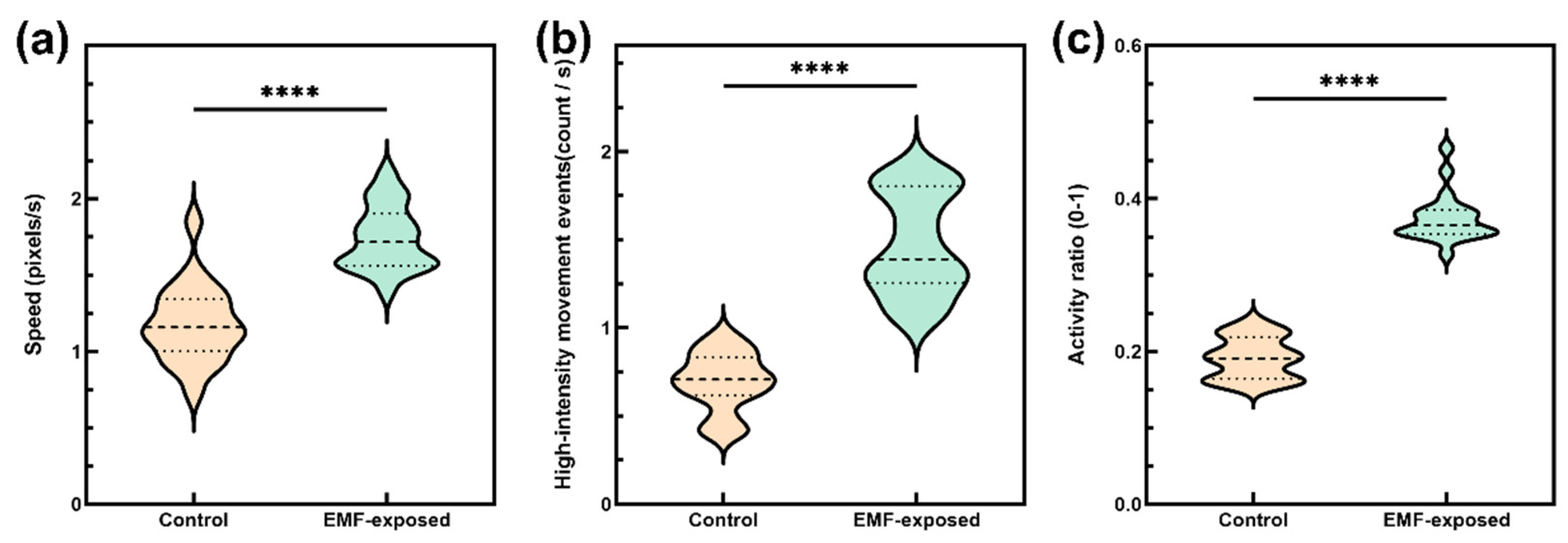
Figure 2 showed consistent increases in group movement activity under chronic EMF exposure. Compared with the control group, the EMF-exposed group exhibited significantly higher mean swimming speed, a significantly higher frequency of high-intensity movement events, and a significantly higher active movement ratio. The direction of change was consistent across all three locomotor metrics, with each variable showing an upward shift in the exposed group relative to the control condition. These results show that chronic EMF exposure was associated with an overall increase in collective locomotor output at the group level.

3.1.2. Increased Group Compactness

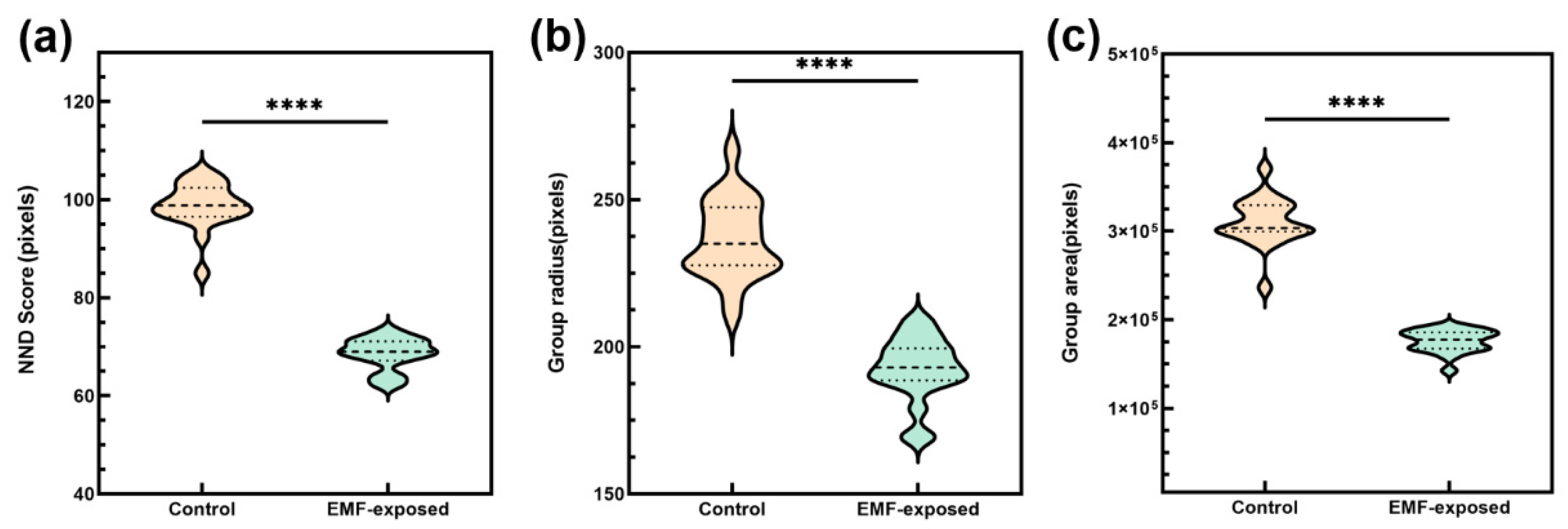
Figure 3 shows a consistent reduction in spatial dispersion within the EMF-exposed group. The nearest neighbor distance was significantly lower in the exposed group than in the control group, indicating reduced spacing among adjacent individuals. Group radius was also significantly lower under EMF exposure, showing that the overall distribution of individuals around the group center became more restricted. In parallel, group area was significantly reduced in the exposed group, further indicating a smaller instantaneous group configuration. Across these three structural variables, the EMF-exposed group showed a uniform pattern of lower values relative to the control group. Together, these results demonstrate that chronic EMF exposure altered group-level spatial structure and was accompanied by a more compact collective arrangement.

3.1.3. Broader Spatial Use with Higher Polarization

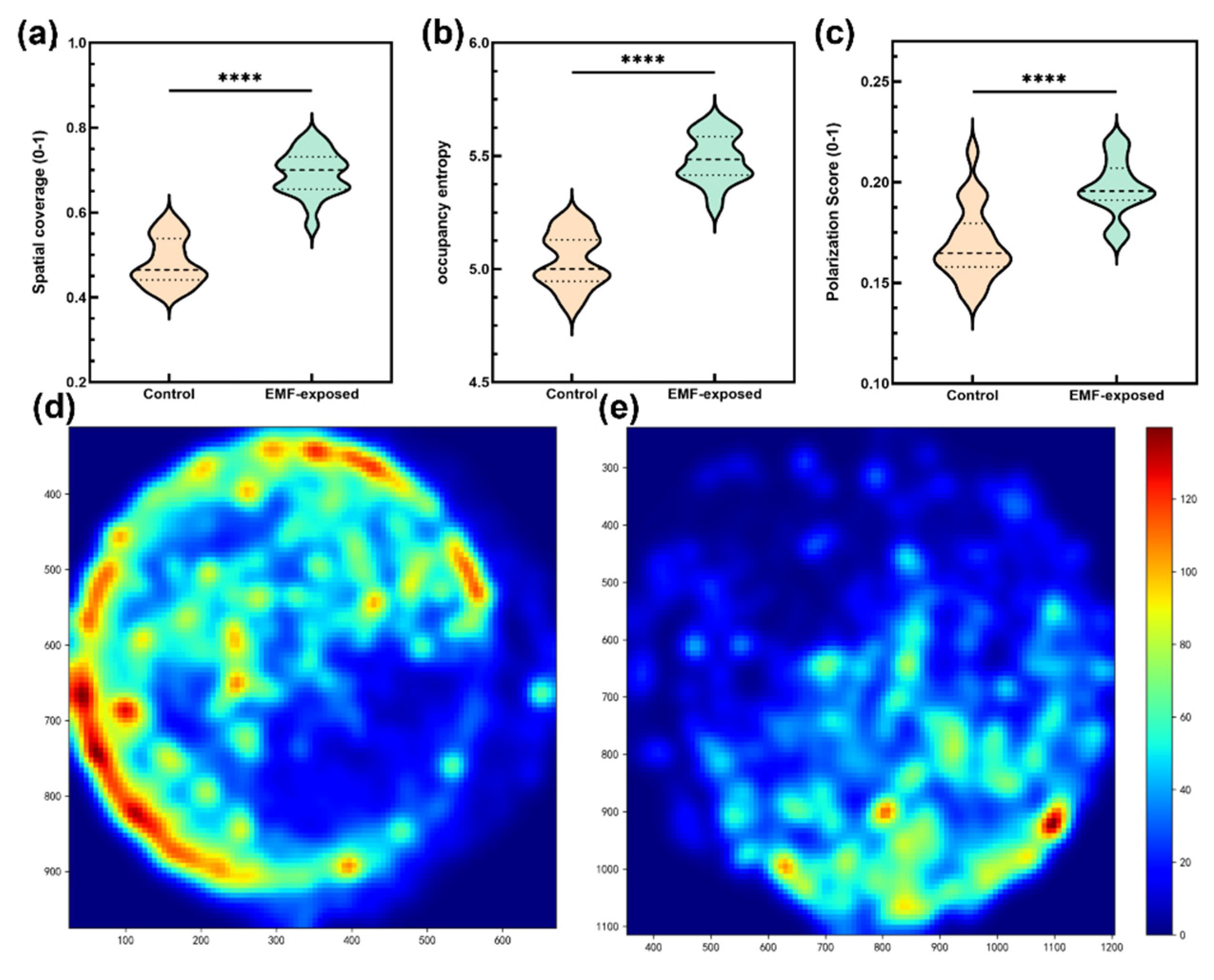
Figure 4 revealed significant increases in broader-scale space use and movement alignment in the EMF-exposed group. Spatial coverage was significantly higher under EMF exposure, indicating that the exposed fish occupied a larger proportion of the available tank area over the observation period. Occupancy entropy was also significantly higher in the exposed group, reflecting a broader and less spatially restricted distribution pattern across time. In addition, polarization was significantly increased under EMF exposure, showing that directional alignment among individuals was higher in the exposed group than in the control group. The three variables in this panel displayed the same overall trend, with all values shifting upward in the EMF condition. These results show that chronic EMF exposure was associated with broader spatial use over time together with a higher level of collective directional organization.

3.2. Activation of the Neuroendocrine Stress Axis

3.2.1. Cortisol Responses

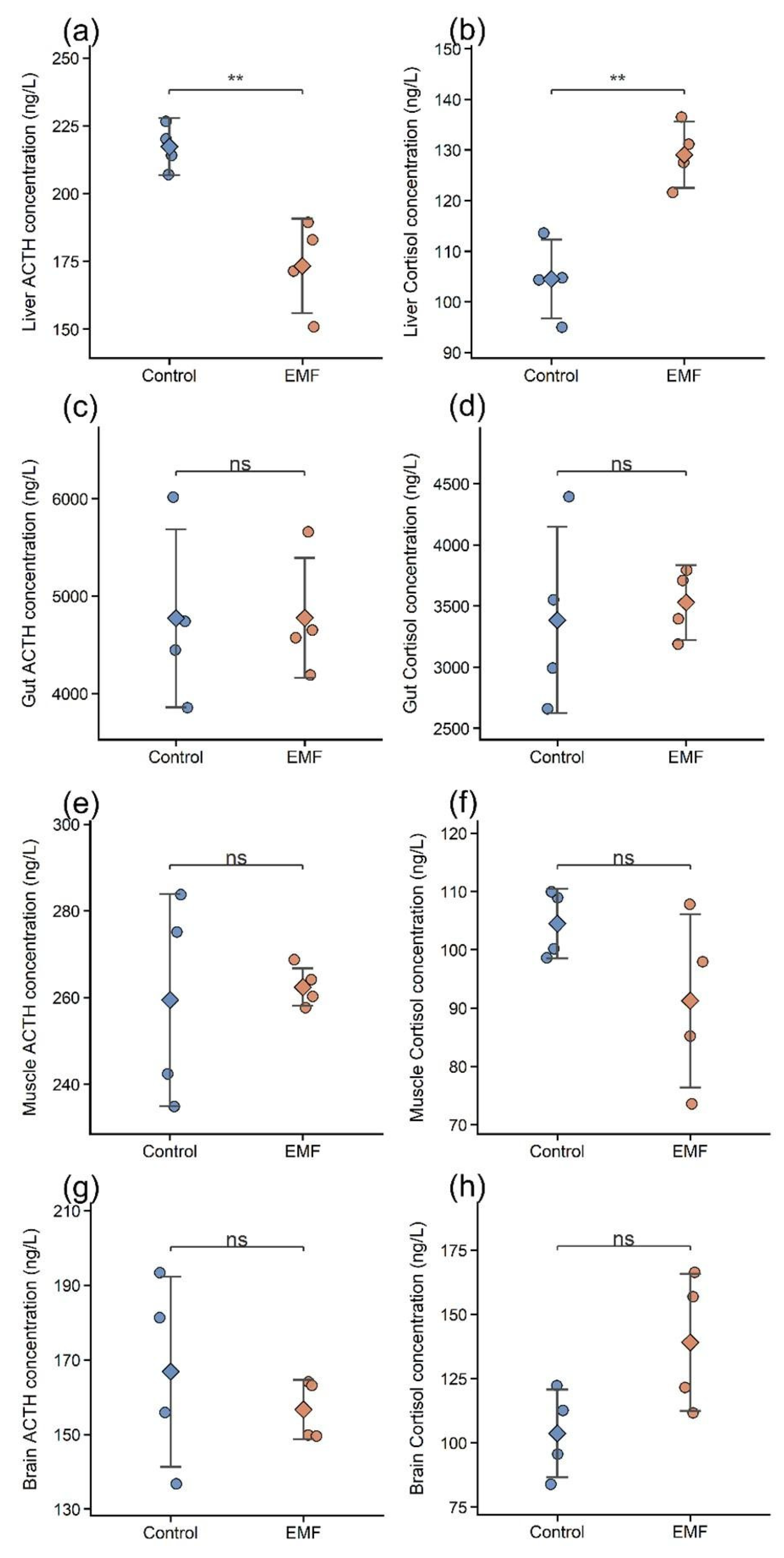
Chronic electromagnetic exposure significantly altered cortisol levels across multiple tissues. In the liver, cortisol concentration was markedly elevated in the EMF group relative to the control group (Figure 5b, p < 0.05), and similar upward tendencies were observed in the gut and brain cortisol panels (Figure 5d,h).
Muscle cortisol showed moderate variability without a clear elevation comparable to that observed in the neural or metabolic organs (Figure 5f). Overall, the increase in cortisol was most pronounced in the liver and brain, suggesting tissue-specific sensitivity to EMF exposure.

3.2.2. ACTH Modulation

ACTH concentrations exhibited tissue-dependent modulation under EMF exposure. Brain ACTH showed a moderate reduction relative to the control group (Figure 5g), and a similar decreasing tendency was detected in the liver (Figure 5a). Gut ACTH displayed greater variability without a consistent directional shift (Figure 5c), whereas muscle ACTH remained relatively stable across treatments (Figure 5e). The divergence between elevated cortisol and non-parallel ACTH variation suggests differential regulation patterns across tissues during chronic EMF exposure.

3.3. Antioxidant Reorganization Across Tissues

3.3.1. SOD Activity

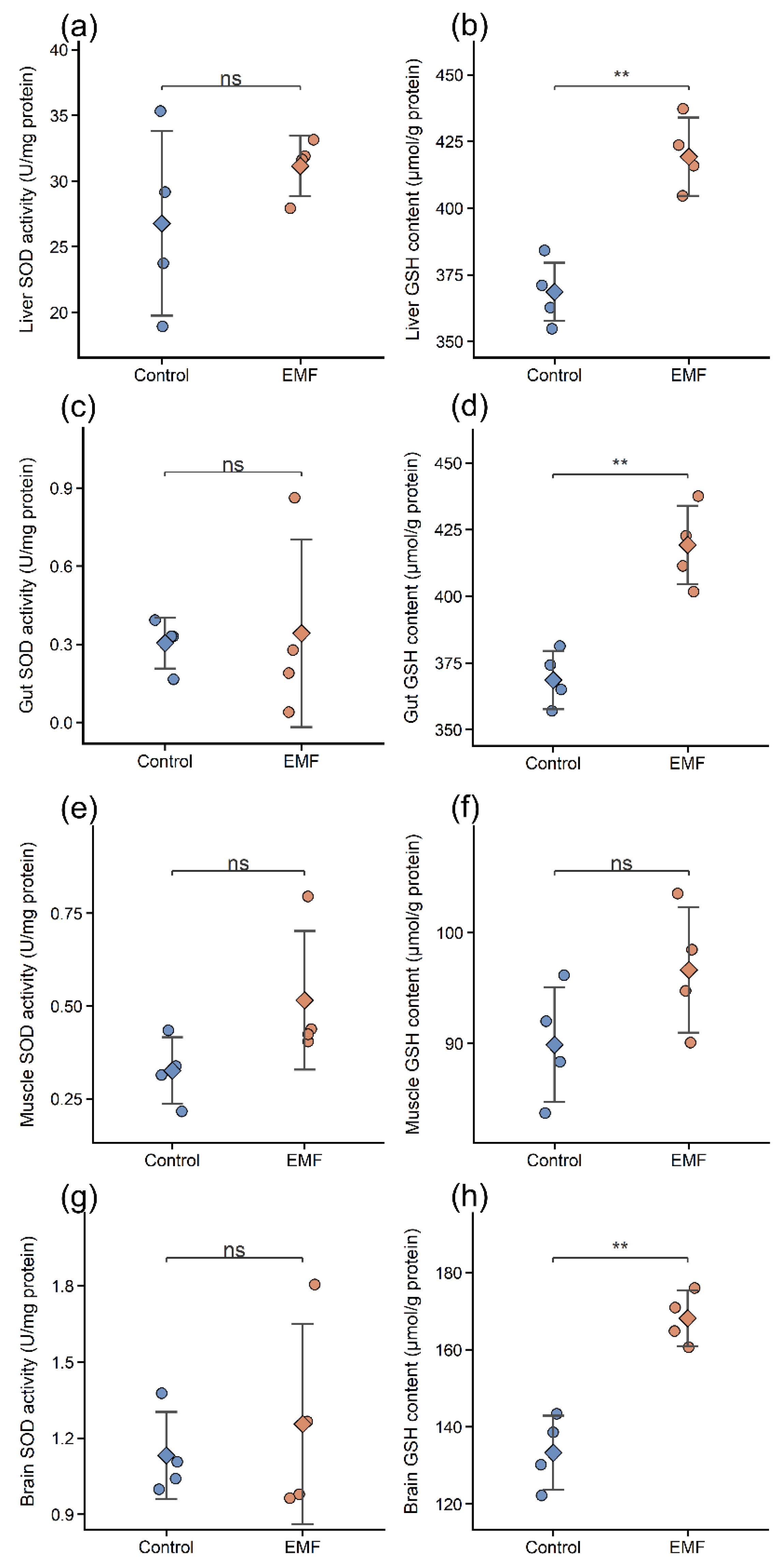
Superoxide dismutase activity remained stable across tissues under chronic electromagnetic exposure. No statistically significant differences were detected between the control and EMF groups in liver, gut, muscle, or brain samples (Figure 6a,c,e,g). Although minor numerical variation was present among tissues, the overall pattern indicated that SOD activity was not markedly affected by exposure conditions. This result suggests that the primary antioxidant response did not involve detectable modulation of the first-line superoxide scavenging pathway during the experimental period.

3.3.2. GSH Levels

GSH concentrations were consistently elevated in multiple tissues under EMF exposure. Significant increases were observed in the liver, gut, and brain compared with the control group (Figure 6b,d,h, p < 0.01), indicating coordinated antioxidant upregulation across several tissues. Muscle GSH also showed an increasing tendency, although the difference was not statistically significant (Figure 6f). Overall, the elevation of GSH across several tissues suggests systemic enhancement of non-enzymatic antioxidant capacity under chronic EMF exposure.

3.4. Immune and Metabolic Adjustment

3.4.1. Phosphatase Activity (ACP and AKP)

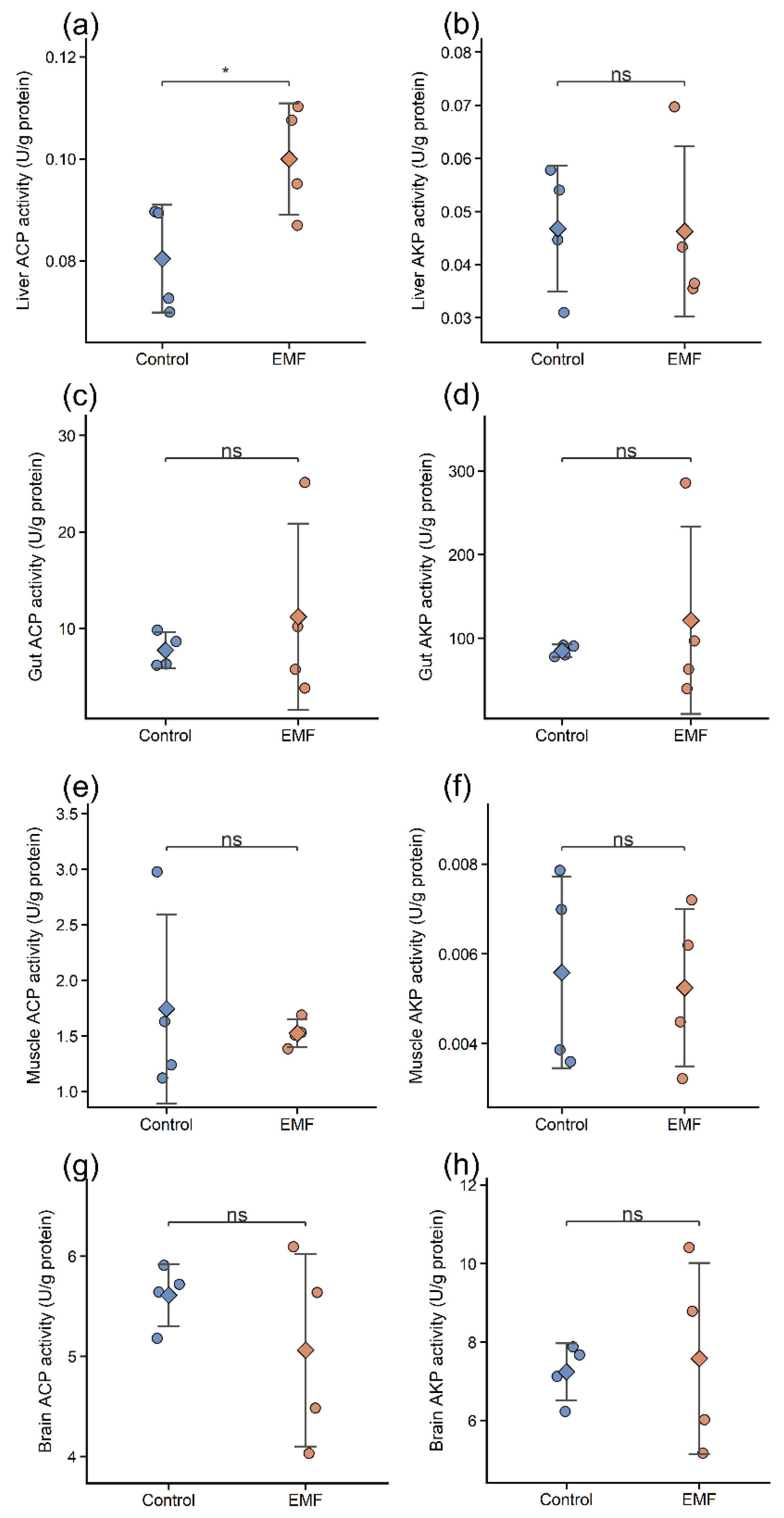
ACP and AKP activities displayed tissue-dependent modulation under chronic EMF exposure. In hepatic tissue, ACP activity showed an overall increasing tendency in the EMF group compared with controls (Figure 7a), whereas liver AKP exhibited moderate fluctuations without a uniform directional shift across replicates (Figure 7b). In gut tissue, both ACP and AKP demonstrated increased variability under EMF exposure (Figure 7c,d). Brain phosphatase activities remained relatively stable (Figure 7g,h), and muscle ACP and AKP showed only minor alterations without consistent elevation or suppression (Figure 7e,f).

3.4.2. Total Protein and Metabolic Indicators

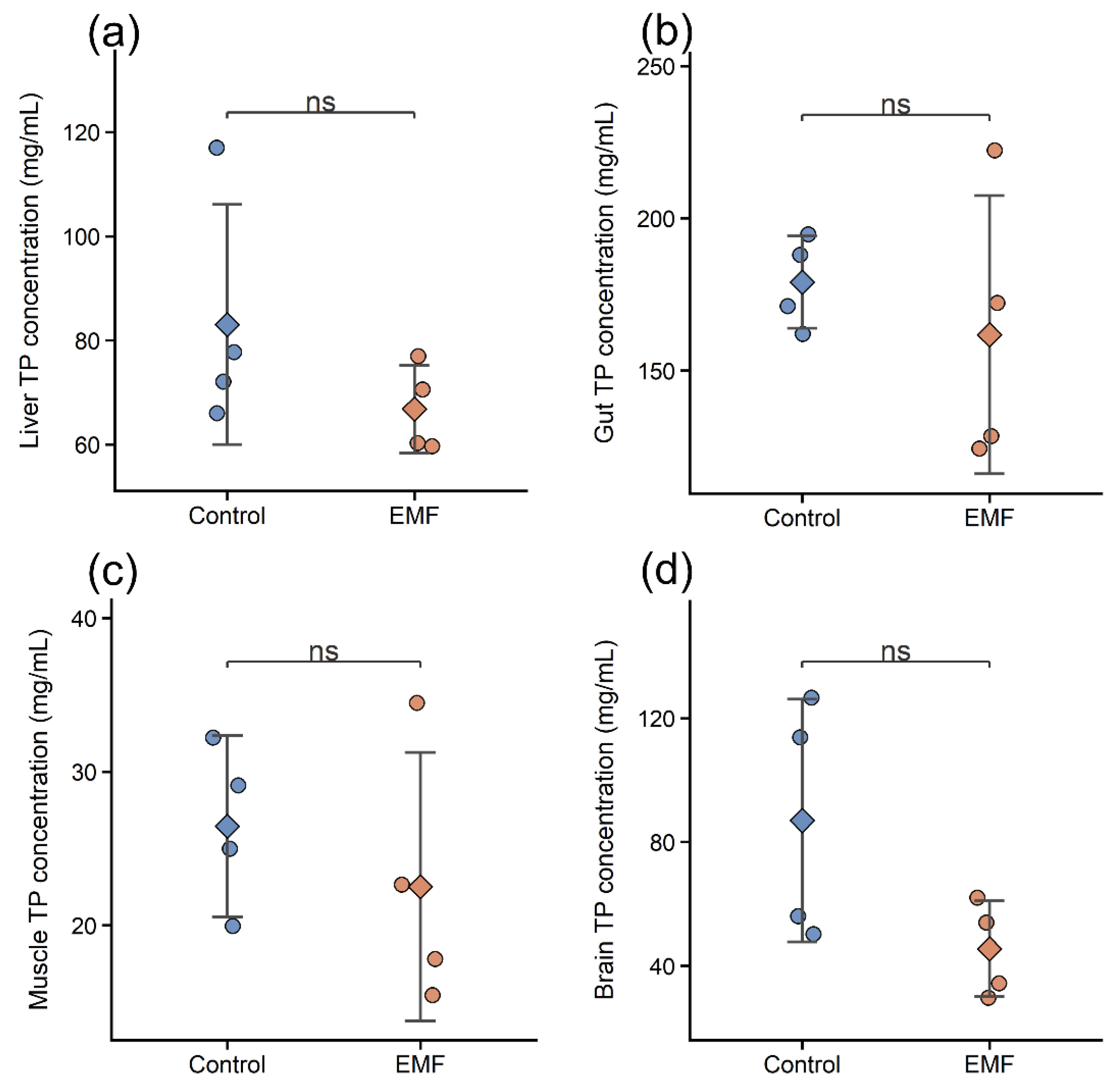
In hepatic and brain tissues, TP levels exhibited moderate shifts between treatment groups (Figure 8a,d), whereas gut TP displayed broader variability in the EMF group (Figure 8b). Muscle TP changed only slightly and showed no consistent trend (Figure 8c). Overall, metabolic indicators did not exhibit synchronized elevation or suppression across tissues, and EMF exposure was associated with heterogeneous modulation patterns depending on tissue type.

3.5. Integrated Physiological–Behavioral Coupling

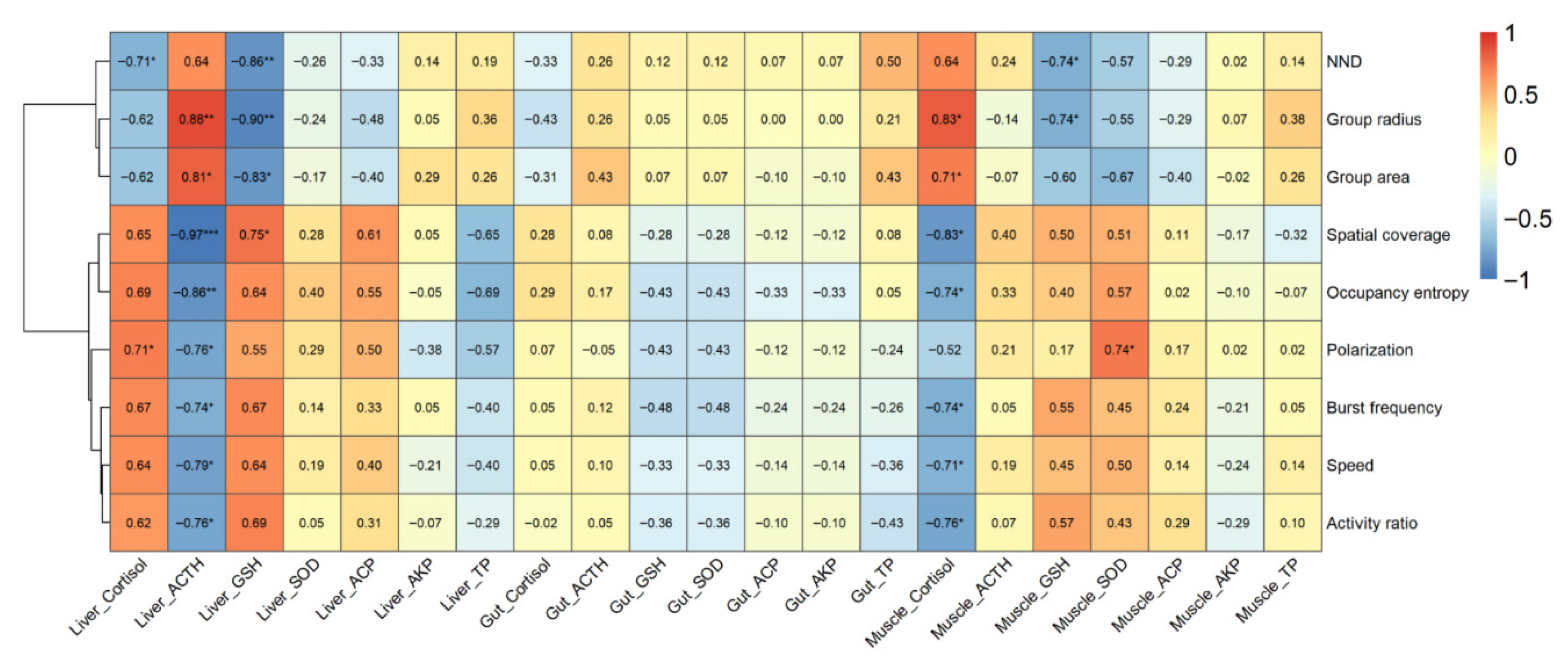
Correlation analysis revealed a structured coupling pattern between behavioral traits and tissue-level physiological variables in S. schlegelii (Figure 9). The behavioral variables could be broadly grouped into two clusters. Nearest neighbor distance, group radius, and group area showed highly similar correlation patterns and mainly reflected the spatial dispersion of the shoal. In contrast, spatial coverage, occupancy entropy, polarization, swimming speed, burst frequency, and activity ratio were also internally consistent, but generally exhibited the opposite direction of association, reflecting locomotor activation, broader space use, and stronger collective coordination.
Among the physiological variables, cortisol and glutathione showed relatively consistent correlation patterns across multiple tissues. In general, they were negatively correlated with nearest neighbor distance, group radius, and group area, but positively correlated with spatial coverage, occupancy entropy, polarization, swimming speed, burst frequency, and activity ratio. This pattern indicates that a more active, more coordinated, and spatially broader collective state was generally associated with elevated endocrine and antioxidant-related responses, whereas a more spatially dispersed group state was associated with lower levels of these variables.
By contrast, total protein showed an opposite tendency in several tissues. Total protein in liver, gut, muscle, and brain was generally positively correlated with nearest neighbor distance, group radius, and group area, but negatively correlated with spatial coverage, occupancy entropy, polarization, swimming speed, burst frequency, and activity ratio. This suggests that total protein was associated with the behavioral state in a direction opposite to that of cortisol and glutathione.
Adrenocorticotropic hormone displayed a moderate and more tissue-dependent correlation pattern. Its associations with behavioral variables were relatively more evident in liver and muscle, where it was generally positively correlated with the dispersion-related behavioral indicators and negatively correlated with the activity-, space use-, and coordination-related indicators. However, the overall consistency of this pattern was weaker than that observed for cortisol and glutathione. In comparison, superoxide dismutase, acid phosphatase, and alkaline phosphatase showed overall weaker correlations with most behavioral traits, with only several localized associations detected in specific tissues and behavioral variables.
Overall, the correlation matrix indicates that the behavioral state characterized by higher activity, tighter shoal structure, broader space use, and stronger directional coordination was accompanied by coordinated variation in multi-tissue endocrine- and redox-related physiological variables. Among the physiological indicators, cortisol, glutathione, and total protein showed the clearest associations with behavioral reorganization, whereas enzyme- and immune-related variables exhibited more limited correspondence with the observed behavioral shifts

4. Discussion

4.1. Effects of Chronic EMF Exposure on Fish Behavior

The present study showed that chronic EMF exposure altered fish behavior at multiple organizational levels rather than affecting a single locomotor variable. Based on the observed response pattern, the behavioral changes can be interpreted in three categories, including locomotor activation, collective spatial compactness, and long-term space use with directional coordination.
At the locomotor level, EMF-exposed fish showed higher speed, burst frequency, and activity ratio, indicating that chronic exposure increased overall movement output and the occurrence of short high-intensity swimming events. This pattern suggests that the fish did not remain behaviorally indifferent to the electromagnetic condition, but instead shifted toward a more activated movement state. Previous studies indicate that fish are capable of detecting magnetic information and that artificial magnetic fields can modify behavioral performance, orientation, or swimming-related responses, although the direction and magnitude of the response vary among species and exposure contexts. Evidence for magnetoreception has been reported broadly across fishes, including teleost, and magnetic disturbance has been proposed to interfere with normal sensory processing or orientation behavior [22,23,24].
At the group-structure level, NND, group radius, and group area were reduced under EMF exposure, showing that individuals remained closer to one another and that the shoal occupied a smaller instantaneous spatial extent. This result indicates enhanced group cohesion and a tighter collective configuration. In social fishes, increased cohesion is often interpreted as a coordinated response to environmental disturbance, because maintaining proximity to conspecifics can improve information transfer, reduce uncertainty, and stabilize collective movement. Studies on fish social behavior and stress biology suggest that shoaling itself can buffer stress responses, while changes in shoal cohesion can emerge under altered environmental conditions. From this perspective, the reduced spacing observed here may reflect an adaptive tendency to maintain social stability when fish are exposed to an unusual physical stimulus [25,26].
At the level of spatial use and coordination over time, spatial coverage, occupancy entropy, and polarization were all elevated in the exposed group. This means that although the fish formed a tighter shoal at any given moment, the group as a whole moved through a broader portion of the tank and maintained stronger directional alignment during collective movement. These variables therefore do not contradict the reduction in group radius and area. Instead, they suggest a state of mobile cohesion, in which fish travel as a compact and coordinated shoal while expanding their cumulative range of movement. Such a pattern is behaviorally distinct from either passive aggregation or random hyperactivity. It indicates that EMF exposure reorganized how the group moved, rather than simply increasing the movement amount. Similar collective reorganization has been discussed in the broader literature on fish shoaling, where environmental perturbation can alter cohesion, exploration, and alignment simultaneously as emergent group-level properties [27].
Elevated tissue cortisol therefore suggests that the observed behavioral changes did not occur in isolation, but were embedded within a broader physiological response to chronic EMF exposure [28]. Although the present data do not allow these mechanisms to be separated directly, they support the view that EMF acted as a biologically relevant stimulus that reorganized collective behavior rather than simply increasing random locomotion.
Overall, chronic EMF exposure shifted the fish toward a distinct collective state marked by elevated locomotor activity, enhanced shoal cohesion, and broader coordinated space use. The present results therefore support the view that EMF can reorganize fish behavior at both the individual and collective levels.

4.2. Neuroendocrine Activation and Tissue-Specific Redox Adjustment Accompany Chronic Exposure

The physiological results indicate that behavioral reorganization under EMF exposure was accompanied by measurable internal regulatory changes. Cortisol increased most clearly in liver and brain, and gut cortisol also showed an increasing tendency, indicating activation of the neuroendocrine stress axis under prolonged exposure. In teleost, cortisol is a central mediator of environmental stress responses and plays a major role in energy mobilization, metabolic adjustment [29], and behavioral regulation. Elevated tissue cortisol suggests that the behavioral changes were embedded within a broader physiological response to chronic EMF exposure.
ACTH did not increase in parallel with cortisol, and in liver it tended to decrease. This divergence suggests that chronic EMF exposure did not trigger a simple acute-type endocrine cascade. Under prolonged low-intensity stress, upstream and downstream endocrine components can become decoupled because of negative feedback, tissue-specific metabolism, or differences in temporal dynamics between hormone release, transport, and local accumulation [30]. The present results are therefore more consistent with a chronic regulatory adjustment than with a short-term alarm response.
The antioxidant profile further supports this interpretation. SOD activity remained relatively stable across tissues, indicating that chronic EMF exposure did not induce a generalized rise in first-line enzymatic antioxidant defense. By contrast, GSH increased in several tissues, particularly in the liver, gut, and brain, and also showed a positive tendency in muscle [31]. This pattern suggests that exposure may have imposed a moderate redox challenge that was buffered primarily through non-enzymatic antioxidant compensation rather than through a strong upregulation of SOD. This pattern is more consistent with controlled adjustment than with overt oxidative injury.
The tissue specificity of these responses is also informative. Liver and brain were more responsive than gut and muscle in several endpoints, which is consistent with their functional roles. The liver is a major metabolic and detoxification organ and is often sensitive to systemic stress-related reallocation of energy and redox resources [32]. The brain is central to sensory integration and behavioral control, and therefore may be particularly relevant when the environmental factor is a persistent physical signal such as EMF. Gut and muscle showed weaker or more heterogeneous changes, suggesting that the physiological burden of chronic exposure was not uniformly distributed among tissues.

4.3. Behavioral–Physiological Coupling Supports a Stress-Associated but Coordinated Collective State

The integrated results indicate that chronic EMF exposure induced a coordinated state change involving both collective behavioral reorganization and physiological adjustment. Among the behavioral interpretations proposed above, the strongest physiological support is for the view that EMF exposure was not behaviorally neutral and likely imposed a mild stress- or discomfort-associated condition. In teleost, cortisol is the principal glucocorticoid involved in environmental stress responses, and its elevation generally indicates activation of stress-related neuroendocrine regulation [33]. The increase observed here, especially in brain and liver, therefore supports the interpretation that the altered collective behavior reflected an internally regulated response to chronic exposure rather than a purely mechanical increase in movement. Instead, they remained cohesive and polarized, suggesting a structured rather than overtly pathological state.
The physiological data also indirectly support stronger reliance on group cohesion under EMF exposure. Reduced inter-individual spacing and increased polarization indicate enhanced collective coordination, while elevated brain cortisol suggests the involvement of central regulatory processes [34]. However, the present dataset does not directly measure social cognition or neural circuit activity. Therefore, the results support increased dependence on collective organization more strongly than a specific enhancement of social awareness.
The antioxidant results further refine this interpretation. SOD activity remained largely unchanged, whereas GSH increased across multiple tissues, particularly in the liver, gut, and brain. This pattern suggests compensatory redox adjustment rather than severe oxidative injury [31]. In other words, chronic EMF exposure appears to have imposed a moderate physiological burden that was buffered through non-enzymatic antioxidant support, without producing clear evidence of generalized oxidative breakdown. This is consistent with the behavioral phenotype observed here: fish were not immobilized or physiologically exhausted, but instead maintained a highly coordinated and mobile collective state while engaging in internal biochemical compensation.
Overall, the combined evidence supports the interpretation that chronic EMF exposure shifted S. schlegelii into a stress-associated but functionally coordinated collective state. The data support a biologically meaningful environmental challenge accompanied by endocrine and redox regulation, but they do not directly resolve specific mechanisms such as exit-seeking behavior or enhanced social cognition. These possibilities require targeted verification in future studies.

4.4. Ecological and Aquaculture Implications of Chronic EMF Exposure in Demersal Teleost

S. schlegelii is a demersal species with ecological and production relevance in coastal environments where submarine cable infrastructure may increasingly occur [35]. Such chronic behavioral reorganization could influence habitat use, social spacing, and energy allocation under farming or natural conditions.
In aquaculture settings, behavioral changes of this kind may have mixed consequences. Increased activity and alignment may improve group responsiveness under some conditions, but they may also elevate routine energy expenditure, modify feeding distribution, or alter competitive interactions within the shoal. Increased compactness may facilitate coordinated movement, yet prolonged tightening of group structure may also affect local crowding and social stress. Because these effects are subtle and chronic, they may not be detected through traditional endpoints such as mortality or gross pathology, but they could still accumulate into measurable consequences for growth efficiency, welfare status, or production stability over longer periods [36].
The physiological data reinforce this concern. Elevated cortisol in liver and brain, together with tissue-specific antioxidant adjustment, indicates that exposed fish were not simply behaving differently, but were operating under a modified internal regulatory state. The absence of severe oxidative damage is important because it suggests that the exposure level used here did not overwhelm homeostasis. At the same time, the presence of coordinated endocrine and redox changes means that the fish were actively compensating. In practical terms, this kind of compensation may be sustainable over short to moderate durations, but whether it remains neutral over longer production cycles is uncertain [37].
Several limitations should also be acknowledged. The present study was conducted under controlled laboratory conditions using a defined static magnetic exposure, and the experimental tank necessarily simplified the hydrodynamic, acoustic, and spatial complexity of natural or farm environments. The physiological panel captured important endocrine, antioxidant, immune, and metabolic variables, but it did not include all potential pathways, such as transcriptomic regulation, feeding efficiency, or growth outcomes. The correlation analysis revealed robust association structure, but it cannot determine causal direction. Future work should therefore examine longer exposure durations, recovery dynamics, developmental-stage sensitivity, and performance-related endpoints such as feed conversion, growth, and social stability under more realistic aquaculture scenarios [38].
Overall, chronic offshore wind farm-associated EMF exposure was sufficient to induce coordinated changes in collective behavior and tissue-level physiology in S. schlegelii. The response pattern is best interpreted as sustained regulatory reorganization involving enhanced locomotor output, tighter but more mobile group structure, activation of stress-related endocrine pathways, and selective antioxidant compensation. These findings support the view that EMF should be considered a biologically relevant environmental factor for demersal fishes exposed repeatedly or continuously to offshore renewable infrastructure.

5. Conclusions

Chronic offshore wind farm-associated EMF exposure induced a coordinated response in S. schlegelii characterized by higher locomotor output, tighter shoal structure, broader spatial use, and tissue-specific endocrine and redox modulation. The combined behavioral and physiological evidence supports the interpretation that chronic EMF exposure shifted S. schlegelii into a stress-associated but functionally coordinated collective state rather than causing simple motor suppression or overt pathological damage.
These findings provide species-specific evidence for environmental risk assessment of offshore renewable energy infrastructure and indicate that chronic EMF should be considered a biologically relevant factor for demersal teleost. Future work should further test longer exposure durations, recovery dynamics, and performance-related endpoints under more realistic field or aquaculture conditions.

Author Contributions

Conceptualization, T.W. and S.C.; methodology, H.C.; software, Z.C.; validation, X.Z.; formal analysis, Q.Z.; investigation, J.S.; resources, X.H.; data curation, H.J.; writing—original draft preparation, C.X.; writing—review and editing, M.X.; visualization, Y.Z.; supervision, W.Y.; project administration, S.C.; funding acquisition, Q.Y. All authors have read and agreed to the published version of the manuscript.

Funding

This work was supported by the National Key Research and Development Program (2022YFD2001700); CARS-47 (CARS-47-G21) and Central Public-interest Scientific Institution Basal Research Fund, CAFS (NO. 2023TD53) and Experimental Simulation of Ecological Impacts from Offshore Wind Farms Fund.

Institutional Review Board Statement

The study was conducted in accordance with the Declaration of Helsinki, and approved by the Yellow sea fisheries research institute, CAFS (protocol code YSFRI-2026067 and approval date 1 September 2025).

Informed Consent Statement

Not applicable.

Data Availability Statement

The original contributions presented in this study are included in the article. Further inquiries can be directed to the corresponding authors.

Conflicts of Interest

The authors declare no conflicts of interest.

References

  1. Inger, R.; Attrill, M.J.; Bearhop, S.; Broderick, A.C.; Grecian, W.J.; Hodgson, D.J.; Mills, C.; Sheehan, E.; Votier, S.C.; Witt, M.J.; et al. Marine renewable energy: Potential benefits to biodiversity? An urgent call for research. J. Appl. Ecol. 2009, 46, 1145–1153. [Google Scholar] [CrossRef]
  2. Galparsoro, I.; Menchaca, I.; Garmendia, J.M.; Borja, Á.; Maldonado, A.D.; Iglesias, G.; Bald, J. Reviewing the ecological impacts of offshore wind farms. npj Ocean Sustain. 2022, 1, 1. [Google Scholar] [CrossRef]
  3. Gill, A.B.; Bartlett, M.; Thomsen, F. Potential interactions between diadromous fishes of U.K. conservation importance and the electromagnetic fields and subsea noise from marine renewable energy developments. J. Fish Biol. 2012, 81, 664–695. [Google Scholar] [CrossRef]
  4. Hutchison, Z.L.; Gill, A.B.; Sigray, P.; He, H.; King, J.W. Anthropogenic electromagnetic fields (EMF) influence the behaviour of bottom-dwelling marine species. Sci. Rep. 2020, 10, 4219. [Google Scholar] [CrossRef]
  5. Cresci, A.; Durif, C.M.F.; Larsen, T.; Bjelland, R.; Skiftesvik, A.B.; Browman, H.I. Magnetic fields produced by subsea high-voltage direct current cables reduce swimming activity of haddock larvae (Melanogrammus aeglefinus). PNAS Nexus 2022, 1, pgac175. [Google Scholar] [CrossRef]
  6. Zhao, H.; Wu, Y.; Qu, K.; Cui, Z.; Zhu, J.; Li, H.; Cui, H. Vision-based dual network using spatial-temporal geometric features for effective resolution of fish behavior recognition with fish overlap. Aquac. Eng. 2024, 105, 102409. [Google Scholar] [CrossRef]
  7. Chapman, E.C.N.; Rochas, C.M.V.; Piper, A.J.R.; Vad, J.; Kazanidis, G. Effect of electromagnetic fields from renewable energy subsea power cables on righting reflex and physiological response of coastal invertebrates. Mar. Pollut. Bull. 2023, 193, 115250. [Google Scholar] [CrossRef] [PubMed]
  8. Johnsen, S.; Lohmann, K.J. The physics and neurobiology of magnetoreception. Nat. Rev. Neurosci. 2005, 6, 703–712. [Google Scholar] [CrossRef]
  9. Gross, M. Shrinking ice caps in the spotlight. Curr. Biol. 2014, 24, R941–R944. [Google Scholar] [CrossRef] [PubMed]
  10. Huang, Z.; Zhao, H.; Cui, Z.; Wang, L.; Li, H.; Qu, K.; Cui, H. Early warning system for nocardiosis in largemouth bass (Micropterus salmoides) based on multimodal information fusion. Comput. Electron. Agric. 2024, 226, 109393. [Google Scholar] [CrossRef]
  11. Scanlan, M.M.; Putman, N.F.; Pollock, A.M.; Noakes, D.L.G. Magnetic map in nonanadromous Atlantic salmon. Proc. Natl. Acad. Sci. USA 2018, 115, 10995–10999. [Google Scholar] [CrossRef] [PubMed]
  12. Wright, J.; Bolstad, G.H.; Araya-Ajoy, Y.G.; Dingemanse, N.J. Life-history evolution under fluctuating density-dependent selection and the adaptive alignment of pace-of-life syndromes. Biol. Rev. 2019, 94, 230–247. [Google Scholar] [CrossRef] [PubMed]
  13. Myklatun, A.; Lauri, A.; Eder, S.H.K.; Cappetta, M.; Shcherbakov, D.; Wurst, W.; Winklhofer, M.; Westmeyer, G.G. Zebrafish and medaka offer insights into the neurobehavioral correlates of vertebrate magnetoreception. Nat. Commun. 2018, 9, 802. [Google Scholar] [CrossRef] [PubMed]
  14. Navarro, J.M.; Oyarzún, P.A.; Haarmann, V.; Toro, J.E.; Garrido, C.; Valenzuela, A.; Pizarro, G. Feeding response and dynamic of intoxication and detoxification in two populations of the flat oyster Ostrea chilensis exposed to paralytic shellfish toxins (PST). Mar. Environ. Res. 2022, 177, 105634. [Google Scholar] [CrossRef]
  15. Scott, K.; Harsanyi, P.; Easton, B.A.A.; Piper, A.J.R.; Rochas, C.M.V.; Lyndon, A.R. Exposure to Electromagnetic Fields (EMF) from Submarine Power Cables Can Trigger Strength-Dependent Behavioural and Physiological Responses in Edible Crab, Cancer pagurus (L.). J. Mar. Sci. Eng. 2021, 9, 776. [Google Scholar] [CrossRef]
  16. Livingstone, D.R. Contaminant-stimulated Reactive Oxygen Species Production and Oxidative Damage in Aquatic Organisms. Mar. Pollut. Bull. 2001, 42, 656–666. [Google Scholar] [CrossRef]
  17. Mommsen, T.P.; Vijayan, M.M.; Moon, T.W. Cortisol in teleosts: Dynamics, mechanisms of action, and metabolic regulation. Rev. Fish Biol. Fish. 1999, 9, 211–268. [Google Scholar] [CrossRef]
  18. Ismail, M.F.S.; Siraj, S.S.; Daud, S.K.; Harmin, S.A. Association of annual hormonal profile with gonad maturity of mahseer (Tor tambroides) in captivity. Gen. Comp. Endocrinol. 2011, 170, 125–130. [Google Scholar] [CrossRef]
  19. Wendelaar Bonga, S.E. The stress response in fish. Physiol. Rev. 1997, 77, 591–625. [Google Scholar] [CrossRef]
  20. Kajiura, S.M. Sensory Systems in Elasmobranchs. In Proceedings of the Shark Deterrent and Incidental Capture Workshop, Boston, MA, USA, 10–11 April 2008. [Google Scholar]
  21. Zhao, H.; Cui, H.; Qu, K.; Zhu, J.; Li, H.; Cui, Z.; Wu, Y. A fish appetite assessment method based on improved ByteTrack and spatiotemporal graph convolutional network. Biosyst. Eng. 2024, 240, 46–55. [Google Scholar] [CrossRef]
  22. Naisbett-Jones, L.C.; Lohmann, K.J. Magnetoreception and magnetic navigation in fishes: A half century of discovery. J. Comp. Physiol. A 2022, 208, 19–40. [Google Scholar] [CrossRef]
  23. Laurien, M.; Mende, L.; Luhrmann, L.; Frederiksen, A.; Aldag, M.; Spiecker, L.; Clemmesen, C.; Solov’yOv, I.A.; Gerlach, G. Magnetic orientation in juvenile Atlantic herring (Clupea harengus) could involve cryptochrome 4 as a potential magnetoreceptor. J. R. Soc. Interface 2024, 21, 20240035. [Google Scholar] [CrossRef]
  24. Chapman, E.C.; Rochas, C.M.; Burns, Z.; Harsányi, P.; Hermans, A.; Scott, K. Effects of electromagnetic fields on flatfish activity levels. Mar. Pollut. Bull. 2026, 222, 118652. [Google Scholar] [CrossRef]
  25. Gilmour, K.M.; Bard, B. Social buffering of the stress response: Insights from fishes. Biol. Lett. 2022, 18, 20220332. [Google Scholar] [CrossRef]
  26. Pintos, S.; Lucon-Xiccato, T.; Vera, L.M.; Conceição, L.; Bertolucci, C.; Sánchez-Vázquez, J.; Rema, P. Social buffering of behavioural stress response in two fish species, Nile tilapia (Oreochromis niloticus) and koi carp (Cyprinus carpio). Ethology 2024, 130, e13464. [Google Scholar] [CrossRef]
  27. Gómez-Nava, L.; Lange, R.T.; Klamser, P.P.; Lukas, J.; Arias-Rodriguez, L.; Bierbach, D.; Krause, J.; Sprekeler, H.; Romanczuk, P. Fish shoals resemble a stochastic excitable system driven by environmental perturbations. Nat. Phys. 2023, 19, 663–669. [Google Scholar] [CrossRef]
  28. Ziegenbalg, L.; Güntürkün, O.; Winklhofer, M. Extremely low frequency magnetic field distracts zebrafish from a visual cognitive task. Sci. Rep. 2025, 15, 8589. [Google Scholar] [CrossRef] [PubMed]
  29. Lemos, L.S.; Angarica, L.M.; Hauser-Davis, R.A.; Quinete, N. Cortisol as a stress indicator in fish: Sampling methods, analytical techniques, and organic pollutant exposure assessments. Int. J. Environ. Res. Public Health 2023, 20, 6237. [Google Scholar] [CrossRef] [PubMed]
  30. Samaras, A.; Kollias, S.; Pavlidis, M. Molecular regulation of chronic stress responses in European sea bass, Dicentrarchus labrax. Front. Endocrinol. 2025, 16, 1611667. [Google Scholar] [CrossRef]
  31. Grădinariu, L.; Crețu, M.; Vizireanu, C.; Dediu, L. Oxidative stress biomarkers in fish exposed to environmental concentrations of pharmaceutical pollutants: A review. Biology 2025, 14, 472. [Google Scholar] [CrossRef] [PubMed]
  32. Faught, E.; Schaaf, M.J. Molecular mechanisms of the stress-induced regulation of the inflammatory response in fish. Gen. Comp. Endocrinol. 2024, 345, 114387. [Google Scholar] [CrossRef] [PubMed]
  33. Bhardwaj, V.; Goel, F.; Garg, V.K.; Sahani, V.; Bajwa, P.S.; Sharma, A. Zebrafish as a translational model for stress neurobiology: Mechanisms, tools, and advances. Aquac. Fish. 2026, 11, 100185. [Google Scholar] [CrossRef]
  34. Schumann, S.; Mozzi, G.; Piva, E.; Devigili, A.; Negrato, E.; Marion, A.; Bertotto, D.; Santovito, G. Social buffering of oxidative stress and cortisol in an endemic cyprinid fish. Sci. Rep. 2023, 13, 20579. [Google Scholar] [CrossRef]
  35. Xu, M.; Qi, Z.-L.; Liu, Z.-L.; Quan, W.-M.; Zhao, Q.; Zhang, Y.-L.; Liu, H.; Yang, L.-L. Coastal aquaculture farms for the sea cucumber Apostichopus japonicus provide spawning and first-year nursery grounds for wild black rockfish, Sebastes schlegelii: A case study from the Luanhe River estuary, Bohai bay, the Bohai Sea, China. Front. Mar. Sci. 2022, 9, 911399. [Google Scholar] [CrossRef]
  36. Dara, M.; Carbonara, P.; La Corte, C.; Parrinello, D.; Cammarata, M.; Parisi, M.G. Fish welfare in aquaculture: Physiological and immunological activities for diets, social and spatial stress on Mediterranean aqua cultured species. Fishes 2023, 8, 414. [Google Scholar] [CrossRef]
  37. Sánchez-Velázquez, J.; Peña-Herrejón, G.A.; Aguirre-Becerra, H. Fish responses to alternative feeding ingredients under abiotic chronic stress. Animals 2024, 14, 765. [Google Scholar] [CrossRef]
  38. Methratta, E.T.; Lipsky, A.; Boucher, J.M. Offshore wind project-level monitoring in the Northeast US continental shelf ecosystem: Evaluating the potential to mitigate impacts to long-term scientific surveys. Front. Mar. Sci. 2023, 10, 1214949. [Google Scholar] [CrossRef]
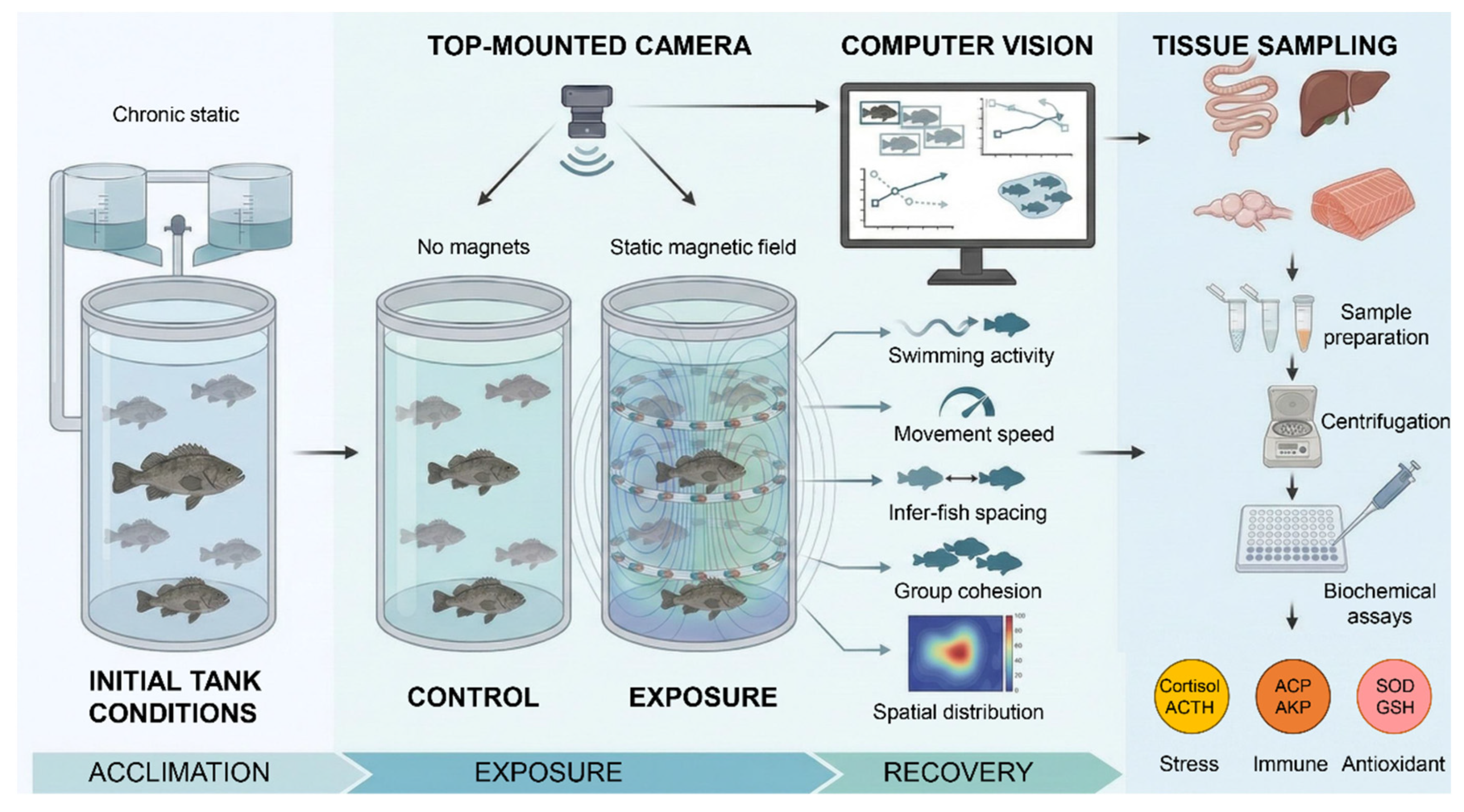
Figure 1. Overall analytical framework and experimental workflow.
Fishes 11 00243 g001
Figure 2. Effects of chronic EMF exposure on group locomotor activity. (a) Mean swimming speed, expressed as pixels/s; (b) high-intensity movement event frequency, expressed as counts/s; (c) activity ratio, representing the proportion of active movement states during the observation period. Violin plots show the distribution of replicate values in control and EMF-exposed groups, with dashed lines indicating quartiles and medians. Statistical significance was assessed using independent-samples t-test, and **** indicates p < 0.0001. The spatial calibration factor under the fixed imaging system was 1 pixel = 0.0846 cm.
Fishes 11 00243 g002
Figure 3. Effects of chronic EMF exposure on group spatial compactness. (a) Nearest neighbor distance (NND), representing the mean distance between adjacent individuals; (b) group radius, indicating the average distance of individuals from the group centroid; and (c) group area, representing the instantaneous spatial extent occupied by the group. Violin plots show the distribution of replicate values in control and EMF-exposed groups, with dashed lines indicating quartiles and medians. Statistical significance was assessed using independent-samples t-test, and **** indicates p < 0.0001. The spatial calibration factor under the fixed imaging system was 1 pixel = 0.0846 cm.
Fishes 11 00243 g003
Figure 4. Effects of chronic EMF exposure on spatial use and directional alignment. (a) Spatial coverage, representing the proportion of tank area occupied during the observation period; (b) occupancy entropy, indicating the temporal distribution complexity of spatial occupation; (c) polarization score, reflecting directional alignment within the group; (d) representative occupancy heatmap of the EMF-exposed group; and (e) representative occupancy heatmap of the control group. Violin plots show the distribution of replicate values in control and EMF-exposed groups, with dashed lines indicating quartiles and medians. Statistical significance was assessed using independent-samples t-test, and **** indicates p < 0.0001. The spatial calibration factor under the fixed imaging system was 1 pixel = 0.0846 cm.
Fishes 11 00243 g004
Figure 5. Endocrine responses across tissues under chronic EMF exposure. Panels show (a) liver ACTH concentration, (b) liver cortisol concentration, (c) gut ACTH concentration, (d) gut cortisol concentration, (e) muscle ACTH concentration, (f) muscle cortisol concentration, (g) brain ACTH concentration, and (h) brain cortisol concentration. Points represent individual biological replicates (n = 4 per group). Diamonds indicate group means, and vertical bars indicate standard deviations. Statistical significance between control and EMF groups was assessed using Welch’s t-test depending on data distribution. ns indicates p ≥ 0.05, ** indicates p < 0.01.
Fishes 11 00243 g005
Figure 6. Antioxidant responses across tissues under chronic EMF exposure. Panels show liver SOD activity and GSH concentration in (a,b), gut SOD activity and GSH concentration in (c,d), muscle SOD activity and GSH concentration in (e,f), and brain SOD activity and GSH concentration in (g,h), respectively. Points represent individual biological replicates (n = 4 per group). Diamonds indicate group means, and vertical bars indicate standard deviations. Statistical significance between control and EMF groups was assessed using Welch’s t-test or Wilcoxon rank-sum test depending on data distribution. ns indicates p ≥ 0.05, and ** indicates p < 0.01.
Fishes 11 00243 g006
Figure 7. Phosphatase-related enzymatic responses across tissues under chronic EMF exposure. Panels show liver ACP and AKP activities in (a,b), gut ACP and AKP activities in (c,d), muscle ACP and AKP activities in (e,f), and brain ACP and AKP activities in (g,h), respectively. Points represent individual biological replicates (n = 4 per group). Diamonds indicate group means, and vertical bars indicate standard deviations. Statistical significance between control and EMF groups was assessed using Welch’s t-test or Wilcoxon rank-sum test depending on data distribution. ns indicates p ≥ 0.05, and * indicates p < 0.05.
Fishes 11 00243 g007
Figure 8. Total protein concentrations across tissues under chronic EMF exposure. Panels show liver, gut, muscle, and brain TP concentrations in (ad), respectively. Points represent individual biological replicates (n = 4 per group). Diamonds indicate group means, and vertical bars indicate standard deviations. Statistical significance between control and EMF groups was assessed using Welch’s t-test depending on data distribution. ns indicates p ≥ 0.05.
Fishes 11 00243 g008
Figure 9. Correlation matrix between group behavioral traits and multi-tissue physiological indicators. * indicates p < 0.05, ** indicates p < 0.01, *** indicates p < 0.001.
Fishes 11 00243 g009
Disclaimer/Publisher’s Note: The statements, opinions and data contained in all publications are solely those of the individual author(s) and contributor(s) and not of MDPI and/or the editor(s). MDPI and/or the editor(s) disclaim responsibility for any injury to people or property resulting from any ideas, methods, instructions or products referred to in the content.