
Article

Broodstock Conditioning of the Yellow Clam (Amarilladesma mactroides)
by
José Artur Marcelino
1,2,
Virgínia Fonseca Pedrosa
1,
Luis Alberto Romano
1 and
Ronaldo Olivera Cavalli
1,*
1
Graduate Program in Aquaculture, Institute of Oceanography, Federal University of Rio Grande—FURG, Rua do Hotel, 2, Cassino, Rio Grande 96210-030, RS, Brazil
2
Higher School of Rural Development, Eduardo Mondlane University, 5° Congress Area, Vilanculo City 3453, Inhambane, Mozambique
*
Author to whom correspondence should be addressed.
Fishes 2026, 11(4), 199; https://doi.org/10.3390/fishes11040199
Submission received: 6 February 2026 / Revised: 20 March 2026 / Accepted: 23 March 2026 / Published: 26 March 2026
(This article belongs to the Special Issue Advances in Shellfish Aquaculture)

Abstract

Broodstock conditioning involves maintaining adult animals in optimal environmental conditions to ensure that the largest number of breeders reach maturity. We evaluated the gonadal development and the occurrence of spawns in the yellow clam (Amarilladesma mactroides) and estimated the duration of conditioning that results in the highest maturity rate. Clams were kept buried in a 10 cm sand bed within Ø = 15 cm containers. A concentrate of Isochrysis galbana and Chaetoceros muelleri was supplied daily. Four conditioning periods (14, 28, 45 and 60 days) with four replicates were used. On the day of collection and at the end of each conditioning period, clams were induced to spawn with thermal shocks (16.7 °C to 26 °C) and sperm. The first spawns were observed on day 28, but only 50% of the males and 33% of the females were mature, and their mean oocyte diameter (36.33 µm) was smaller than the minimum (45–50 µm) considered for ready-to-spawn clams. However, on day 45, all males and females were mature (mean oocyte diameter = 45.14 µm) and 1102 × 103 eggs were released. To ensure a high maturity rate, yellow clams should be conditioned in captivity for 45 days. Monitoring gonadal development in the wild to collect clams at advanced stages of gonadal development may be a less expensive strategy worth considering.
Key Contribution: The use of a non-invasive method of spawning induction (combined exposure to thermal shock and sperm solution) was confirmed as an effective technique for the yellow clam. Conditioning in the laboratory for 45 days resulted in 100% of the yellow clams reaching gonadal maturity and the production of viable spawns.

1. Introduction

The yellow clam, Amarilladesma mactroides, is an ecologically and economically important bivalve naturally found on the Atlantic coast of South America. It is considered a temperate species as its geographical distribution range spans from Isla del Jabali, Province of Buenos Aires, Argentina, to Ilha Grande, Rio de Janeiro, Brazil [1,2]. In the intertidal zone of these beaches, the yellow clam is one of the main elements of the community structure [3,4] and is usually the mollusk with the highest biomass [5,6]. Given this abundance, A. mactroides has been collected for human consumption for at least 4000 years [7,8] and, more recently, to be used as bait for sport fishing [9,10]. While its capture and commercialization sustain traditional fishing communities in southern Brazil and Uruguay and are part of the regional food culture, there is no data on the volume captured annually.
Over the past three decades, several populations of A. mactroides have suffered episodes of mass mortality throughout their geographic range [2,4,11]. Although the causes of mass mortality events in natural populations are very difficult to ascertain, they are probably due to a combination of factors [4,12]. Like other marine organisms, yellow clams can be susceptible to several factors that contribute to their mortality, which can be categorized into environmental, biological, and anthropogenic causes [3,13,14,15,16,17,18,19]. While the exact causes of the mass mortality events affecting A. mactroides remain unknown [4,11,12], this species has been considered endangered since the 1990s [11,20]. There is therefore an urgent need to ensure the conservation of natural populations of this species, which requires a multifaceted strategy that combines ecological protection, sustainable resource management, pollution control and community engagement [6,9,10,21,22,23]. The development of technology to produce juvenile clams in captivity could be complementary to these approaches, as it would allow for evaluating the viability of both restocking natural environments and producing clams in sustainable aquaculture systems.
A. mactroides is a dioecious species, with no apparent sexual dimorphism. It reproduces sexually through the release of large quantities of gametes into the water column, where fertilization and the formation of planktonic larvae occur [3]. At the end of larval development, yellow clams bury themselves in sandy bottoms [3,24]. Sexual maturation in A. mactroides begins in the first year of life, with the peak of spawning normally occurring during the winter–spring periods [24,25]. Under laboratory conditions, reproduction of this species has only been possible through gamete stripping [3,26], a procedure that in addition to sacrificing the breeders can negatively affect the fertilization, survival, growth, and the duration of the larval period [27,28]. It is therefore important to overcome this bottleneck as there are records of successful spawning of other members of the Mesodesmatidae family under hatchery settings [29,30].
In the process of producing bivalve seeds in captivity, the conditioning of broodstock is a fundamental step that consists of maintaining the animals under optimal environmental conditions for an adequate period of time to ensure that a larger proportion of the broodstock will be fully mature and thus available for reproductive purposes [31,32,33,34,35]. Conditioning usually maximizes the fecundity of the broodstock while maintaining the quality of the oocytes and, ultimately, larval viability. An array of synergistic, intrinsic and extrinsic factors play an important role in achieving fully mature individuals. The specific endogenous rhythms that regulate the reproductive cycle are synchronized by external factors, particularly temperature, animal health and nutritional status [36,37]. Here, we evaluated the duration of the conditioning period that would result in the highest proportion of mature yellow clam breeders, which may facilitate assisted reproduction of this species in captivity.

2. Materials and Methods

2.1. Origin and Management of Broodstock

An initial sample of 250 yellow clams visually measuring more than 50 mm in length was collected on 7 July 2023, in the intertidal zone of Cassino beach, Rio Grande, southern Brazil. At the time of collection, water temperature and salinity were measured in situ with a thermometer and optical refractometer, respectively. The geographic coordinates of the collection station (32°12′30.1″ S, 52°10′33.9″ W) were taken with a handheld navigator (GPS; model Garmin eTrex). The clams were taken from a single population to minimize the influences of genetic variability and location on reproductive condition. They were immediately transported to the laboratory in plastic containers containing sand and seawater. Brazilian legislation requires no authorization from ethics or animal welfare committees for research on invertebrates [38].
In the laboratory, a subsample of 30 clams was randomly selected, dried on paper towels, and their total length (L), total shell height (H) and width (W) were measured with a vernier caliper (0.01 mm accuracy; Vonder, Brazil). The wet weight of the whole clam (WWc), soft tissues (WWst), and valves (WWv) was obtained with an electronic scale (0.01 g precision; Marte Científica, Brazil). The dry weight of soft tissues (DWst) and valves (DWv) was determined after 48 h in an oven at 60 °C and 24 h in a desiccator. Additionally, the condition index (CI) was estimated according to the following formula [39]:
CI = (DWst/(WWc − WWv)) × 100
Clams with broken valves, siphons or feet without movement, and with L smaller than 50 mm, were discarded. A total of 160 clams were then transferred to the maintenance system.

2.2. Maintenance System and Experimental Design

The experimental set-up used for clam maintenance, feeding and management followed that used by Gauthier et al. [40,41]. Eight clams were stocked per experimental unit (EU), which consisted of a 15 cm diameter weldable PVC pipe and coupling, containing a 10 cm layer of sterilized beach sand over a 200 µm mesh. EUs were placed in 500 L tanks filled with filtered (1 µm) and chlorinated/dechlorinated seawater. The temperature in the tanks was maintained between 15 °C and 20 °C using chillers or immersion heaters as required. Each EU was equipped with an air–water pump (airlift) that forced seawater through the sand layer from top to bottom. Around 20% of the water of all tanks was renewed daily. Water quality was monitored by daily measurements of dissolved oxygen concentration, temperature and salinity with a multiparameter probe (YSI 550 A, Yellow Springs Instruments, Yellow Springs, OH, USA) and a handheld refractometer (ATC, Kasvi, Pinhais, Brazil), respectively. Values of pH and concentrations of total ammonia [42] and nitrite [43] were measured twice a week, while nitrate concentrations were measured once a week [44].
Based on the results of previous studies [40,41], clams were fed a commercial concentrate of the microalgae Isochrysis galbana and Chaetoceros muelleri at a ratio of 70:30 (MixFresh, AlgaSul, Rio Grande, Brazil). A concentration of 14 × 104 cells·mL−1 was maintained through daily monitoring using a Neubauer chamber. When the concentration fell below the pre-established level, more microalgae were added. Microalgae consumption per clam (C; cells·mL−1·clam−1) was estimated using the following formula:
C = (14 × 104 − MC)/n
where 14 × 104 is the established initial concentration of microalgae, MC is the total number of microalgae cells at the morning count, and n is the number of live clams per EU.
The clams were kept in the laboratory for different conditioning periods: 14, 28, 45 or 60 days. Twenty EUs were used, with four replicates for freshly collected clams (day 0) and for each of the four conditioning periods. On days 0, 14, 28, 45, and 60, the clams were subjected to a spawning induction process by means of thermal shocks and the addition of sperm to the water, which is considered the most promising stimulus to induce spawning in A. mactroides [41]. For this purpose, the EUs were transferred to 18 L containers maintained at 26 ± 1 °C, where they remained for 24 h. The addition of sperm followed Argüello-Guevara et al.’s procedure [45]. Each day that spawning induction was performed, sperm obtained from 2 to 4 wild clams collected at the previously georeferenced collection station was pooled and transferred to a 1 L beaker at a density of 10 million sperm.mL−1 for the purpose of providing pheromones [41,46]. Sperm motility was assessed after activation with seawater under a light microscope (200×). Approximately 100 mL of the sperm solution was added to the 18 L containers every 30 min for 2 h. The water temperature was kept constant with immersion heaters. Nearly 24 h after the spawning induction process, all eggs and trocophore larvae present in 20 mL samples were counted under an optical microscope using 0.2 mL volume slides. This procedure was carried out for two consecutive days.
Groups of 8 clams, 2 from each of the four replicates, were sampled on the day of collection (day 0) and after 14, 28, 45, and 60 days of conditioning in the laboratory, but before spawning induction. Their tissues were fixed in 20% saline formaldehyde for histological analysis. On the same days (days 0, 14, 28, 45 and 60), 12 wild clams were collected in the previously georeferenced collection station and their tissues were also fixed for histology.

2.3. Histological Analysis

Clam tissues fixed in 20% saline formaldehyde were cut, placed in labeled cassettes and processed in a Leica TP1020 automatic processor (Leica, Wetzlar, Germany). The blocks were embedded in paraplast and sectioned at 5 µm with a Leica RM 2245 microtome (Leica, Wetzlar, Germany). Hematoxylin and eosin-stained slides were examined in a Zeiss Primo Star optical microscope equipped with a camera and AxioVision 4.8.2 software (Carl Zeiss, Oberkochen, Germany) and processed using Adobe Photoshop CC 2024 (Adobe Inc., San Jose, CA, USA) for linear adjustments of contrast and brightness. The developmental stages of the gonads were classified according to Herrmann et al. [24]: rest—RE, early gametogenesis—EG, advanced gametogenesis—AG, mature—MT, spawning—SP, spent—ST, and recovery—RC.
The largest diameter (D) of 20 to 50 oocytes with visible nuclei from each female were measured using the ImageJ1 software version 1.53t (National Institutes of Health, Bethesda, MD, USA). Based on previous results [41,47], the proportion (%) of oocytes with diameters greater than 45 µm was estimated as a proxy of female clams ready to spawn.

2.4. Data Analysis

Each EU was considered an independent replicate. Since the yellow clam does not exhibit apparent sexual dimorphism and assuming a 1:1 sex ratio, eight clams were placed in each EU. Thus, each EU would theoretically present a balanced proportion of males and females, allowing spawning to occur in each replicate. Egg and/or trochophore larvae counts were quantified and analyzed at the EU level, as spawning, fertilization, and initial larval development occurred in each EU. Measurements of the oocyte diameter were taken from a single clam of the two individuals sampled from each replicated EU on days 0, 14, 28, 45 and 60.
The number of eggs/trocophore larvae and the diameter of oocytes from wild and laboratory-conditioned clams were tested for normality and homogeneity of variances using the Shapiro–Wilk and Levene tests, respectively [48]. As the assumptions for the number of eggs/trocophore larvae were not confirmed, the data were subjected to nonparametric analysis and the Kruskal–Wallis test to verify the effect of conditioning time on gonad development. On the other hand, once the premises for the oocyte diameter were confirmed, data were subjected to analysis of variance (ANOVA) to verify the effect of the duration of the conditioning period. If there were differences, Tukey’s a posteriori test for multiple comparison was performed. Percentage data were normalized by square root-arcsine, but only non-transformed means are presented. All analyses were performed with a 95% significance level. Results are presented as mean ± standard deviation (±SD).

3. Results

The mean L of clams collected on day 0 (7 July 2023) was 63.94 (±4.91) mm; H = 33.41 (±2.58) mm; W = 15.35 (±1.13) mm; WWc = 8.60 (±2.25) g; WWst = 4.14 (±1.09) g; WWv = 2.61 (±0.89) g; DWst = 0.78 (±0.19) g; and DWv = 2.06 (±0.77) g. The condition factor was estimated at 13.46 (±2.63).
The water temperature at the time the clams were collected in the wild was 16.0 °C (days 0 and 14), 16.5 °C (day 28), 14.0 °C (day 45) and 15.5 °C on day 60. Temperature in the EUs varied from 15 to 20 °C with a mean of 16.7 °C (±1.8). On day 21, a drop to 10.0 °C occurred for a period of 24 h due to a power failure, but no major impacts are expected, as all EUs were affected equally. Also, 10 °C is within the temperature range that occurs in the geographical distribution area of the yellow clam. Dissolved oxygen concentrations remained above 5.77 mg.L−1 throughout the experimental period (mean of 7.32 ± 0.91 mg.L−1). The concentration of total ammonia varied from 0.07 mg.L−1 to 0.41 mg.L−1; nitrite from 0.01 to 0.04 mg.L−1; and nitrate between 0.00 and 0.08 mg.L−1. The pH remained between 7.93 and 8.34. The mean survival rate of clams maintained in the laboratory for 14, 28, 45 and 60 days was estimated at 100%, 100%, 99.4% and 96.9%, respectively.
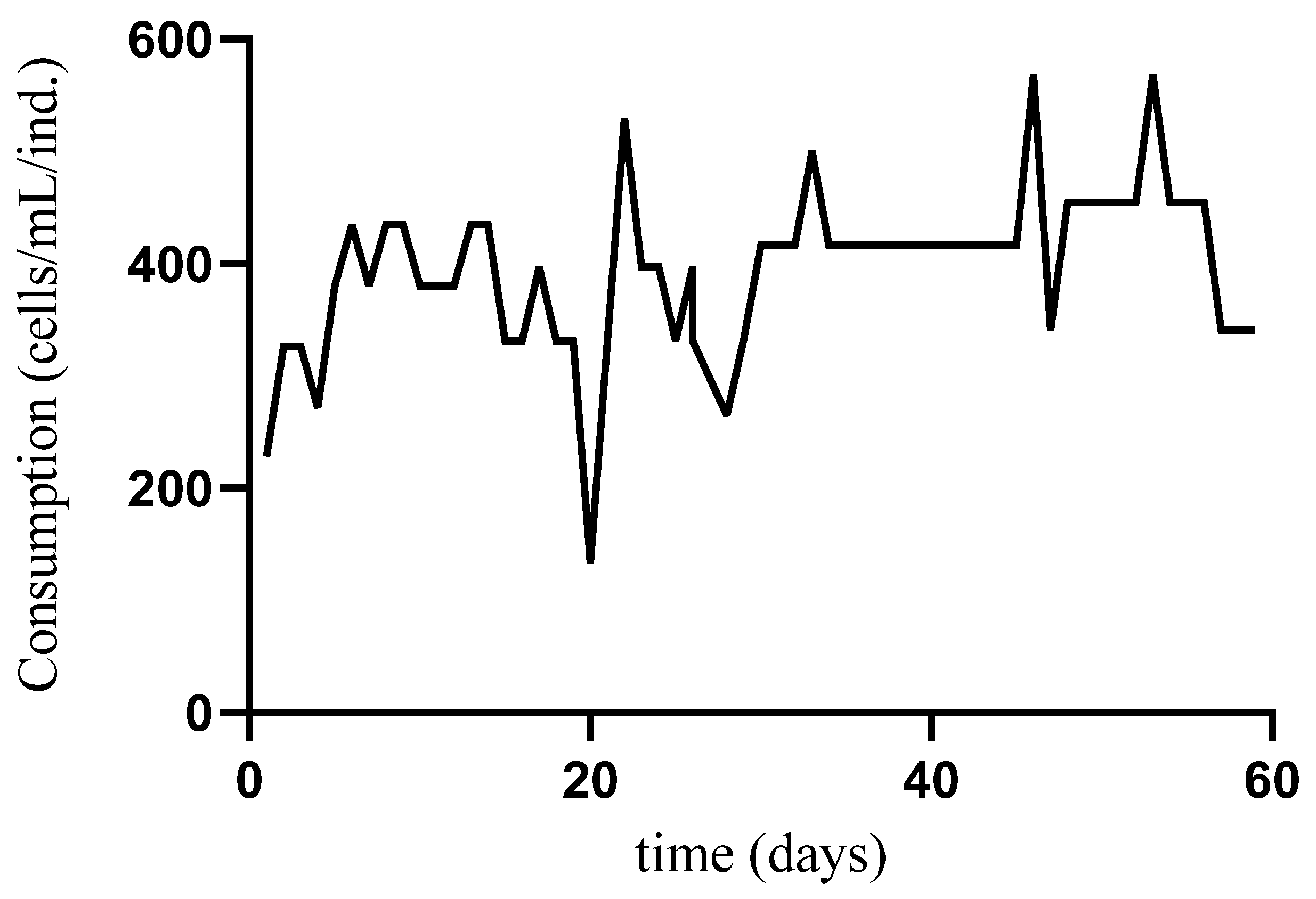
The mean daily consumption of the microalgae concentrate (mix of I. galbana and C. muelleri) throughout the experimental period was estimated at 395 (±73) cells.mL−1.clam−1 (Figure 1).
On day 20, when there was a power outage and the water temperature dropped to 10.0 °C, microalgae consumption decreased to the lowest value of 132 cells.mL−1.clam−1. The highest consumption was 568 cells.mL−1.clam−1 on day 53 (Figure 1).
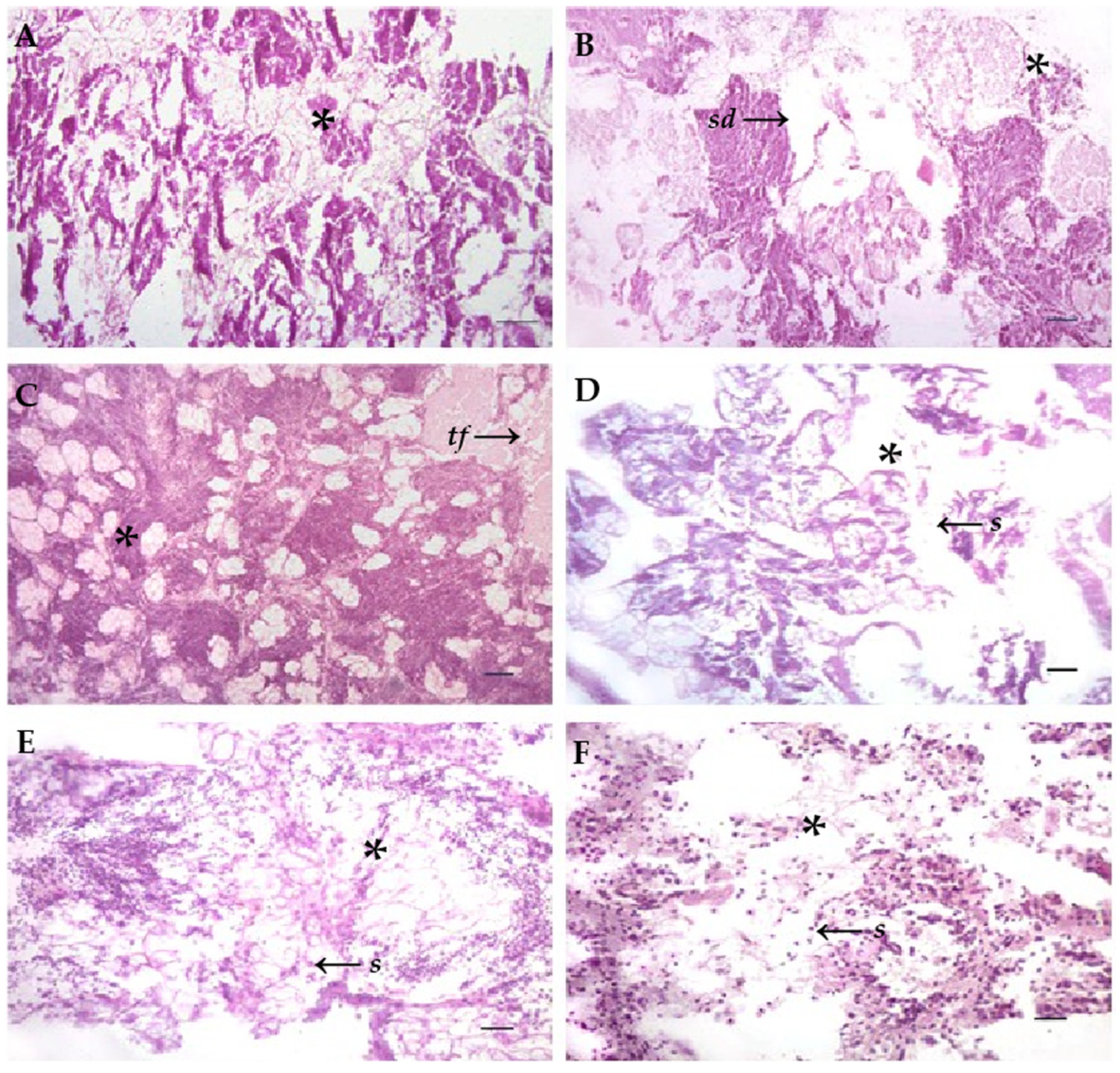
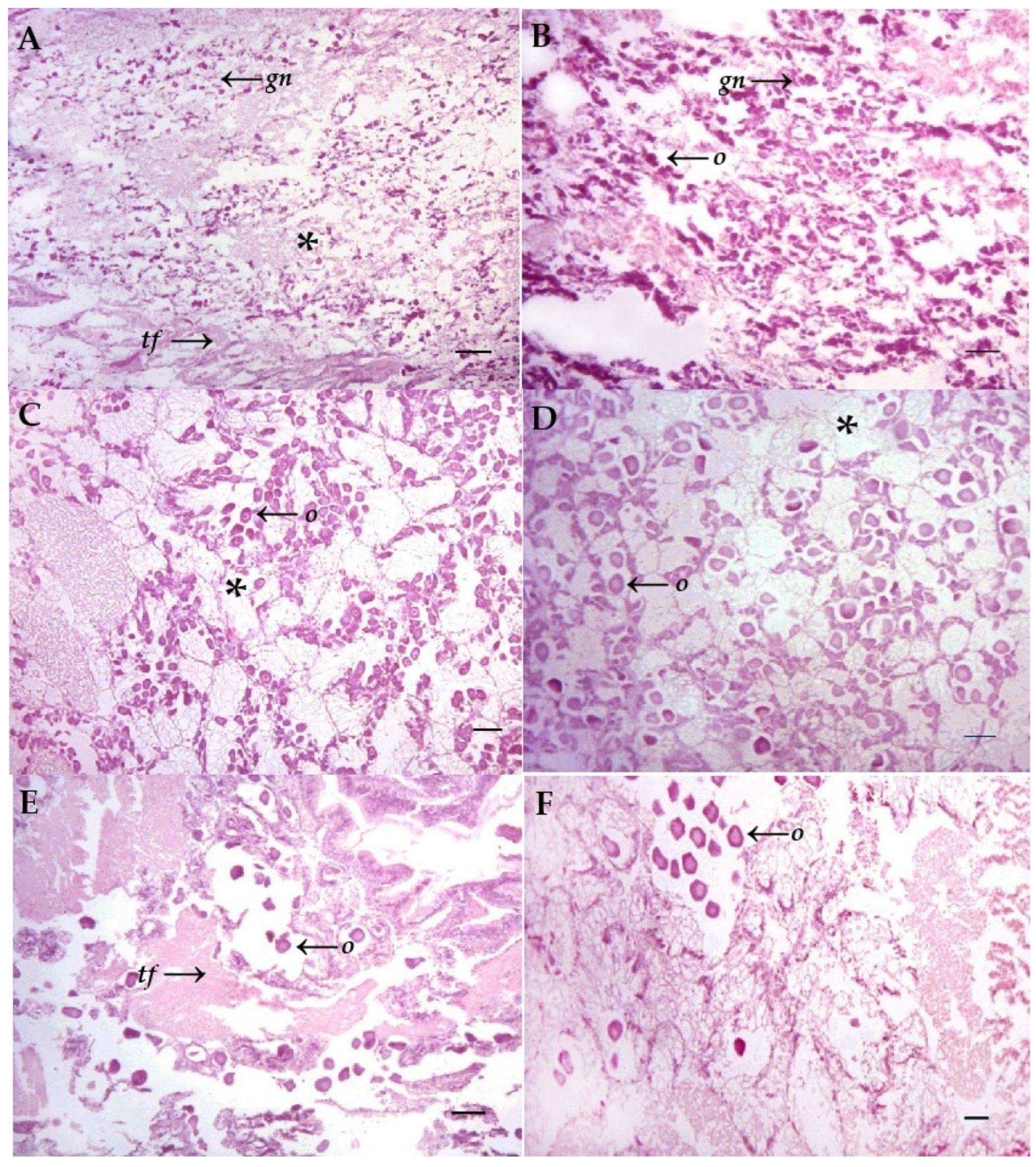
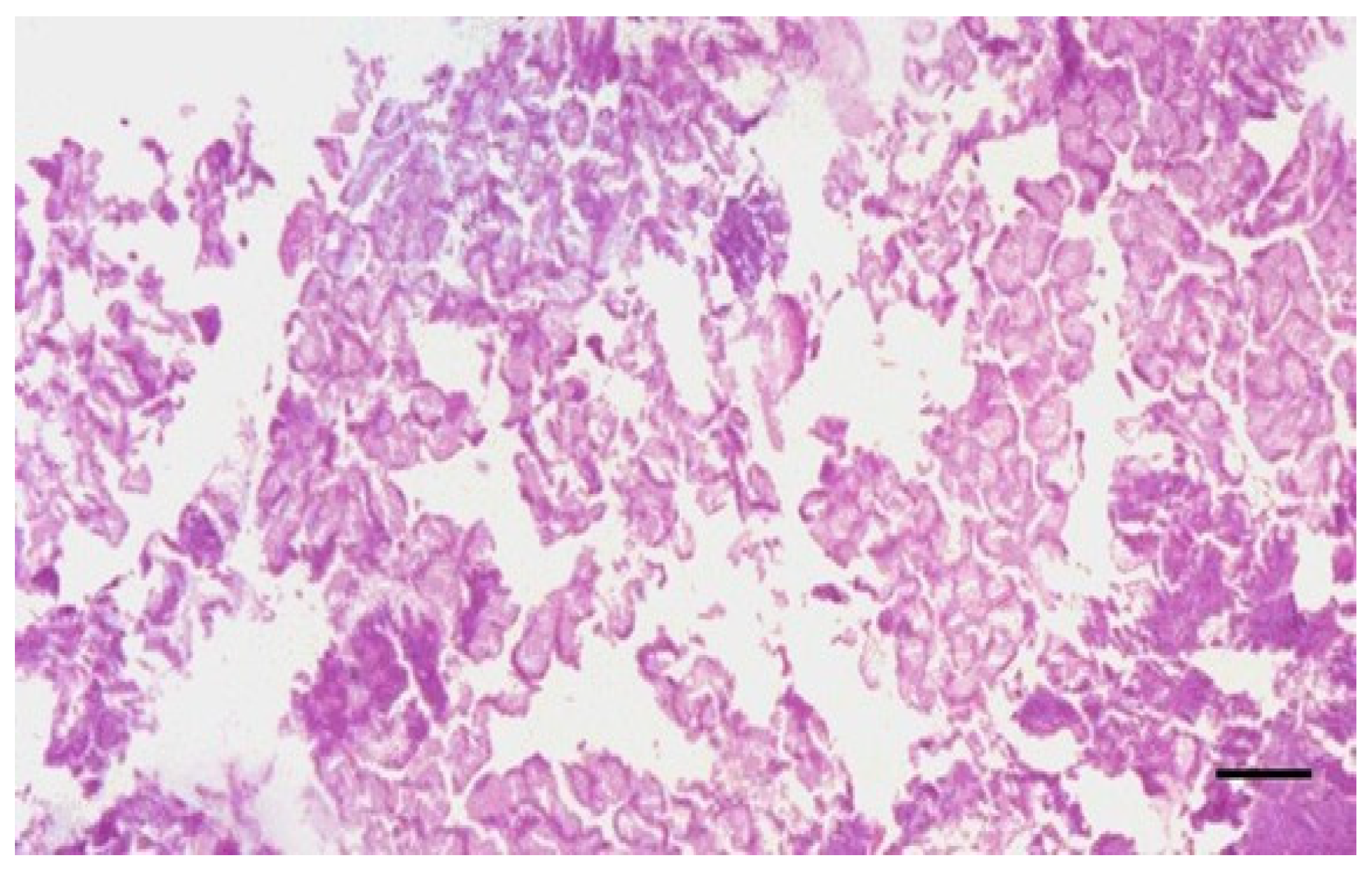
Histological examination of clam tissues confirmed the occurrence of distinct stages of gonadal development in both sexes: rest (RE), early gametogenesis (EG), advanced gametogenesis (AG), mature (MT), spawning (SP), spent (ST) and recovery (RC). In the early stage of gametogenesis, males had gonads with small follicles and a low presence of germ cells (Figure 2A), while females had oogonia and primary oocytes (Figure 3A). As gametogenesis progressed, males presented follicles with increased volume and a few sperm cells (Figure 2B). In females, some mature oocytes with a polygonal shape were observed (Figure 3B). Mature males (Figure 2C) had follicles full of sperm, while mature females presented free polygonal oocytes within the follicles (Figure 3C). Males and females in the SP stage (Figure 2D and Figure 3D, respectively) presented empty spaces between mature gametes and ruptured reserve tissue with a flaccid appearance. Regardless of sex, the follicles of spent clams were small, practically empty and with few degraded residual gametes (Figure 2E and Figure 3E). Both male and female clams in the RC stage presented a high presence of connective tissue and few follicles with a smaller diameter (Figure 2F and Figure 3F). Clams in the RE stage were characterized by the total absence of gametes, which made it impossible to distinguish sex (Figure 4).
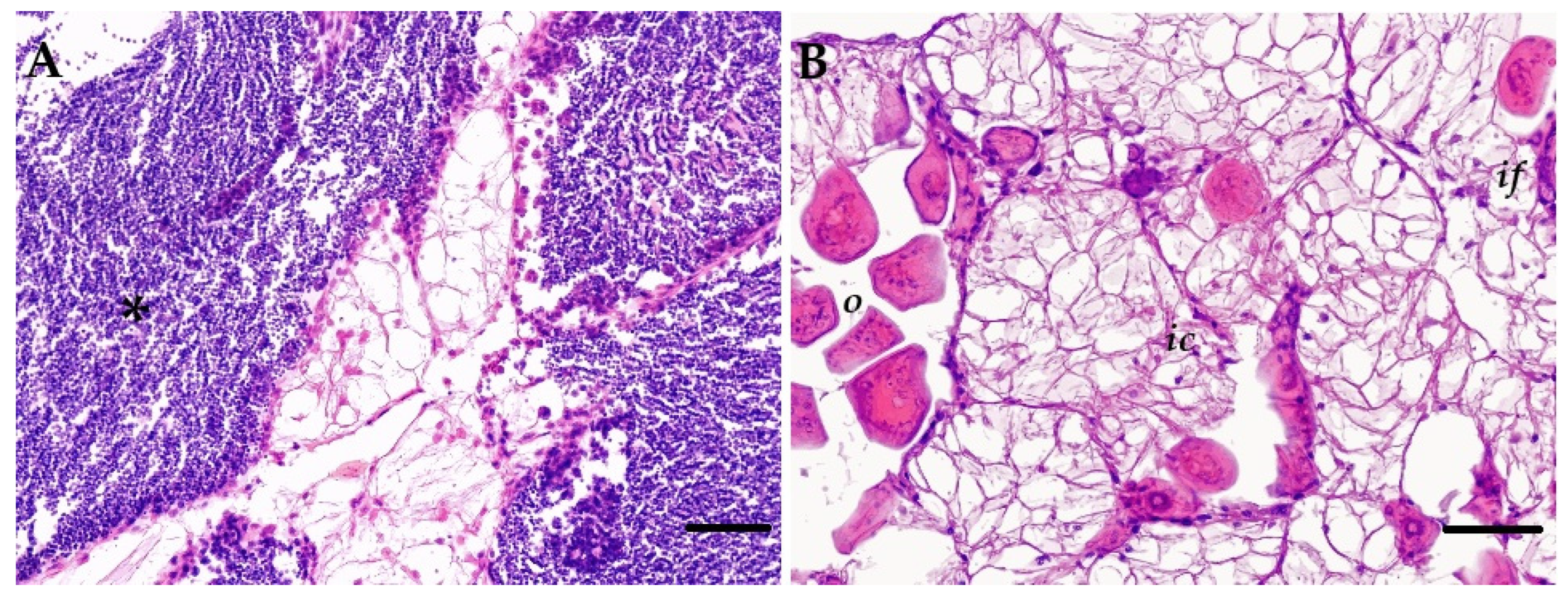
Figure 5 highlights histological sections of mature yellow clam gonads after 45 days of conditioning in the laboratory. In the male, testicular tissue with abundant spermatocytes is clearly observed, while the ovary presents several mature polygonal oocytes, interstitial cells, and some remaining immature follicles.
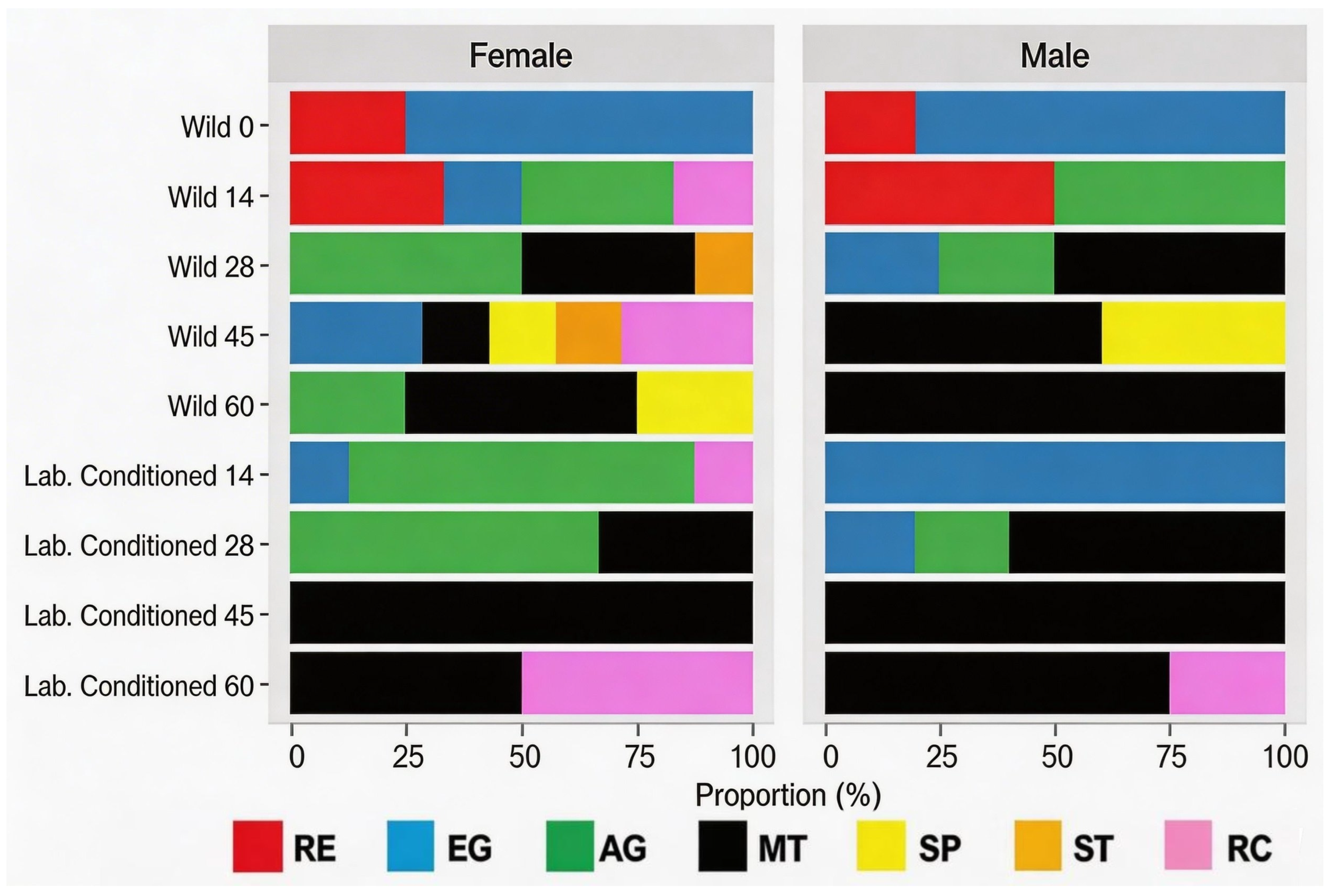
The proportion of gonadal stages of female and male clams collected in the wild and conditioned in the laboratory is presented in Figure 6. The gonads of female clams collected on day 0 were in the RE (25%) or EG (75%) stages, while males were also in the RE (20%) or EG (80%) stage. Regardless of sex, there was an increase in the proportion of clams with more advanced stages of gonadal development as the experimental period progressed, both in wild and laboratory-conditioned individuals.
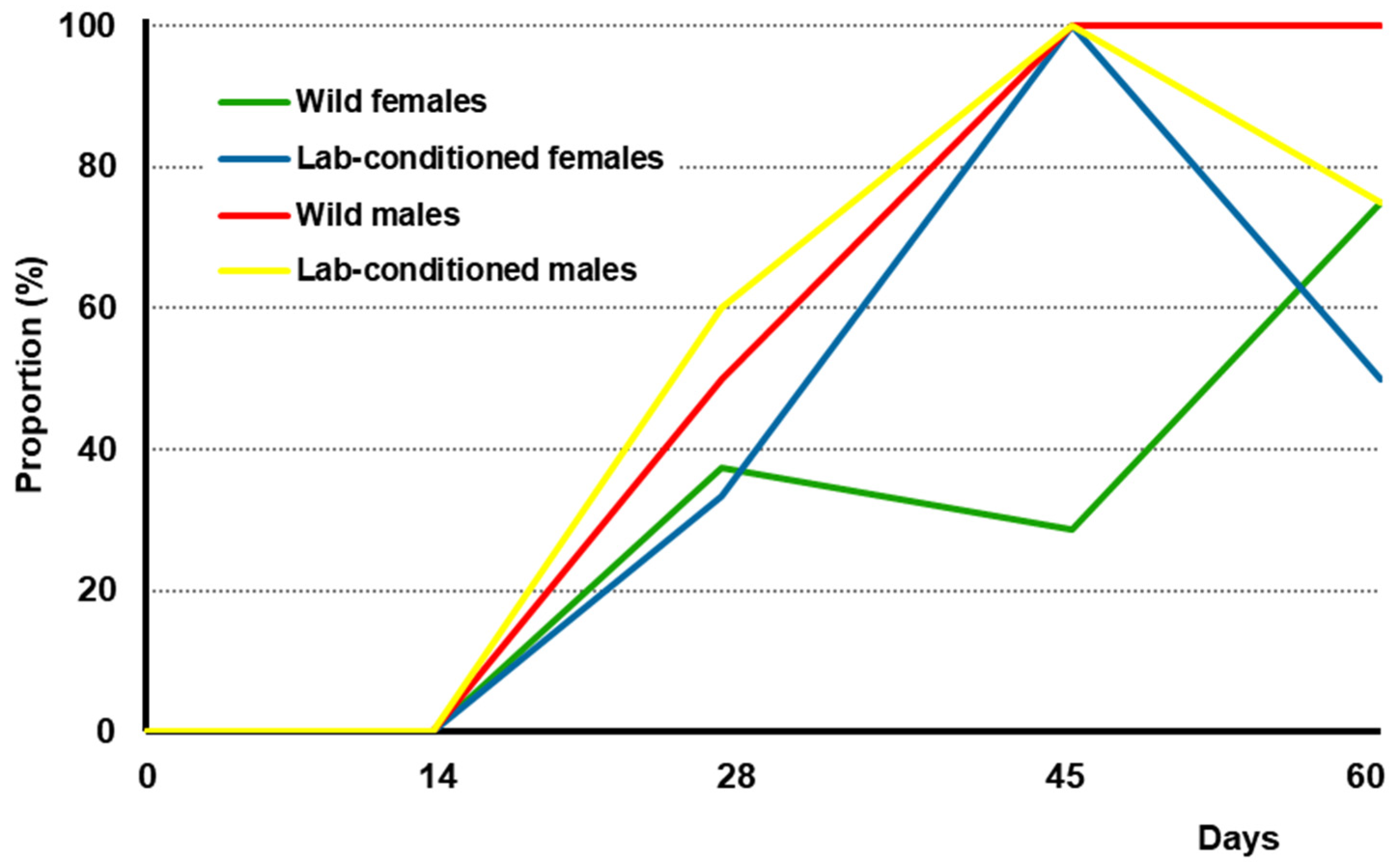
Figure 6 shows the proportional increase in gonads in the MT and SP stages of development in comparison to the total number of individuals sampled at each time point (0, 14, 28, 45 and 60 days) over the experimental period. No female or male clams had gonads in the MT or SP stages of development on days 0 and 14. On day 45, however, all males and females conditioned in the laboratory had gonads in the MT stage (Figure 5, Figure 6 and Figure 7). At the end of the experiment (day 60), all wild males were mature, while those conditioned at the laboratory were mature (75%) or in recovery (25%). Wild females on day 60 presented gonads in the stages of AG (25%), MT (50%) or SP (25%). Gonads of laboratory-conditioned females were either in the MT (50%) or RC (50%) stages of development.
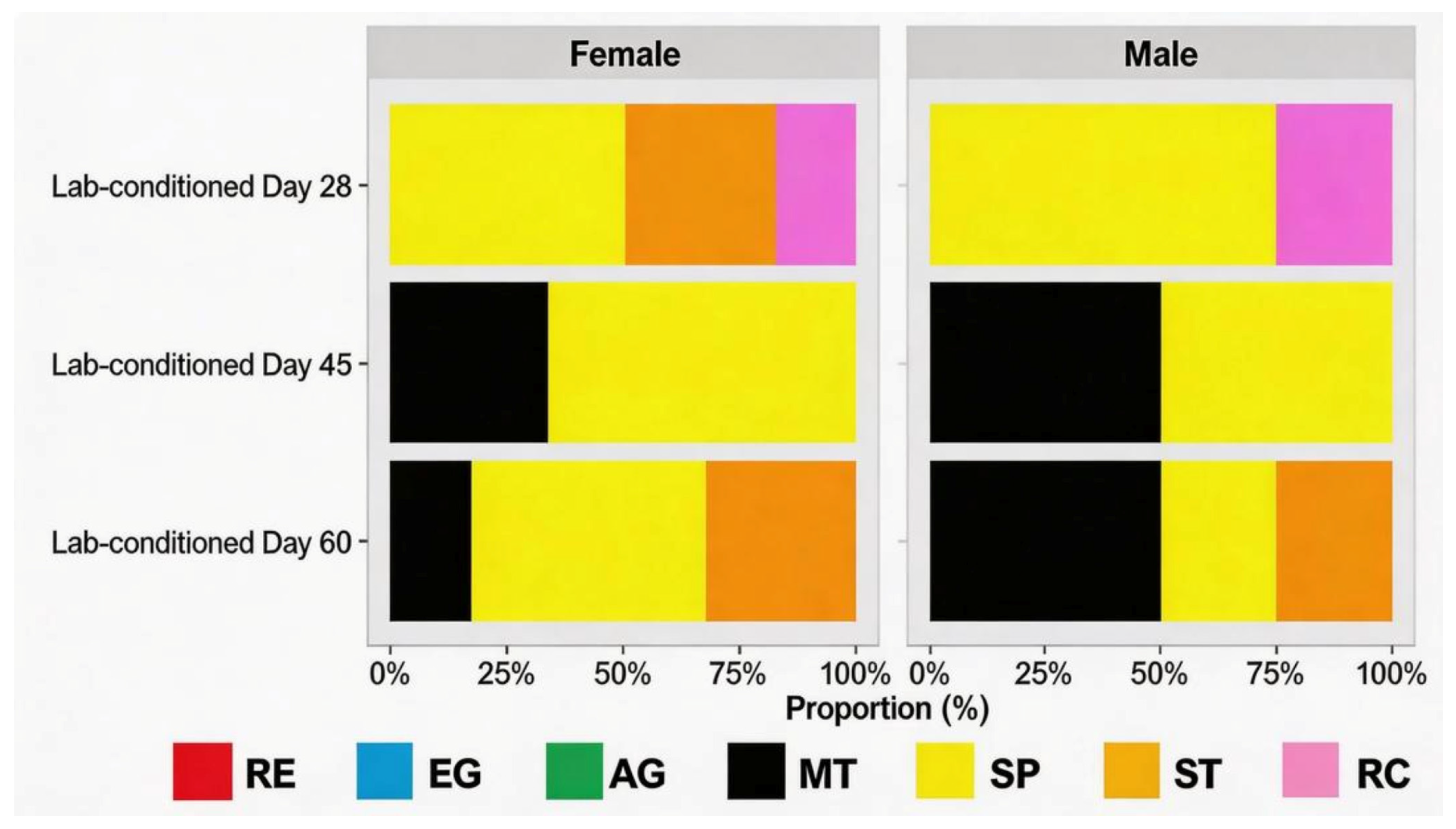
The proportion of the different stages of gonadal development of female and male clams in the experimental units where spawning occurred after induction is shown in Figure 8. Most gonads were in relatively advanced stages of development (MT and SP) or had recently spawned (ST or RC). Irrespective of the number of days of conditioning (28, 45 or 60 days), at least 50% of the females had gonads in the spawning stage of development.
No spawning was observed in clams collected in the wild and induced to spawn on day 0, as well as in those conditioned in the laboratory for 14 days (Table 1). The occurrence of spawns, however, was observed after 28, 45 and 60 days of conditioning in the laboratory in at least two of the four experimental units. Although the total number of eggs/trocophore larvae estimated for the group of clams conditioned for 45 days (1102 × 103) was numerically higher than in the other treatments, no significant differences (Χ2 = 5.00, df = 3; p = 0.17) were detected between conditioning periods (Table 1). This was likely due to the high variation observed within means, particularly 28 days and 45 days of conditioning. For these treatments, the coefficient of variation, defined as the ratio of the standard deviation to the mean, was estimated at 148% and 142%, respectively. The occurrence of trocophore larvae was observed in most treatments after a few hours.
The mean oocyte diameter (D) and the proportion (%) of oocytes with diameters greater than 45 µm (D ≥ 45 µm) from wild clams collected on days 0, 14, 28, 45 and 60 and those of the wild clams that were conditioned in the laboratory for 14, 28, 45 and 60 days are presented in Table 2. The diameter of oocytes increased significantly over time for both clams collected in the natural environment and those conditioned in the laboratory. Clams conditioned in the laboratory for 28 days had significantly greater oocytes (mean diameter = 36.33 µm) than those collected in the wild on the same day (34.37 µm), but the opposite was observed on day 60, when wild-collected clams had significantly greater mean oocyte diameters (45.85 µm vs. 43.45 µm). A similar trend was observed for the proportion of oocytes with D ≥ 45 µm. Among laboratory-conditioned clams, oocytes with D ≥ 45 µm were observed from day 28 onwards, while wild-collected clams only presented oocytes greater than 45 µm on days 45 and 60. The proportion of oocytes with D ≥ 45 µm in laboratory-conditioned clams was significantly higher on day 45. In wild clams, no significant difference was observed in the proportion of oocytes with D ≥ 45 µm between days 45 and 60.

4. Discussion

Histological examination demonstrated that the gonadal tissues of A. mactroides of both sexes could be divided into seven distinct stages of development: rest, early gametogenesis, advanced gametogenesis, mature, spawning, spent and recovery, which somewhat agrees with previous studies [24,25,40,41,49,50,51]. Histological analysis revealed that the gonads of wild-collected clams on day 0 were in the resting or early gametogenesis stage. Although oocyte size increased significantly over time for laboratory-conditioned clams as well as for those in the wild, the oocyte diameter of wild-collected clams on day 0 (mean 19.88 µm) was much smaller than that considered necessary for mature, spawn-ready yellow clams. The minimum diameter of mature oocytes is within the range of 45 µm to 55 µm [24,26,41,47,49]. Therefore, it is not surprising that the clams collected on day 0 failed to liberate gametes when induced to spawn. Based on this, it can be concluded that, at the beginning of the experimental period, the gonads of wild-collected clams were homogeneously distributed in the early stages of development.
The first spawns were only observed on the 28th day of conditioning, when 900 × 103 eggs/trocophore larvae were obtained. Histology of the gonads demonstrated that a significant portion of these clams were mature (50% of males and 33% of females) and therefore capable of spawning. Measurement of the oocytes indicated that, at 28 days, their mean diameter (36.33 µm) was below what is considered the minimum for a female to spawn (≥45 µm). However, because a small proportion of these oocytes (3.13%) had a diameter greater than 45 µm, some females were already capable of releasing gametes. These results, therefore, indicate that, in the case of A. mactroides and under the present experimental conditions, adult clams may require a minimum of 28 days of laboratory conditioning to reach gonadal maturity and spawn. However, after 45 days of conditioning, it was histologically demonstrated that all female and male clams had mature gonads, and furthermore, the mean oocyte diameter (45.14 µm) was larger than the minimum size for a female to be considered ready to spawn. Not surprisingly, by day 45, a total of 1102 × 103 eggs were released after spawning induction. All of this suggests that a conditioning period longer than 28 days may result in a higher proportion of the broodstock with fully mature gonads and therefore available to produce offspring. This is in agreement with an early study [33] which recommended that conditioning of temperate and cold-water climate bivalves should take 4 to 8 weeks. The present results also agree with previous ones [41], when an increase in oocyte size and more advanced stages of gonadal development in wild-collected A. mactroides were reported after 14 days of laboratory conditioning. These authors concluded that the 14-day conditioning period was not sufficient for the complete development of the gonads. In a study with Mesodesma donacium, a clam species from the same family as A. mactroides, the highest proportion of mature clams (56%) was observed after 44 days of conditioning [52]. It should be considered, however, that the duration of the conditioning period will depend on the maturation stage of the individuals at the time of collection [33], whether in a natural environment or in cultivation structures. Environmental conditions such as temperature, photoperiod and salinity, and the quantity and quality of the food, are commonly identified as regulatory factors for gonadal maturation in bivalves [32,33,34,37,53,54], with temperature and food availability being the key factors that affect the reproductive cycle [28,55]. Temperature is recognized as the main parameter affecting the reproductive development of bivalves, having important implications for the success of broodstock conditioning in a hatchery environment [34,56]. Food availability influences energy storage and use, affecting gonadal development, oocyte quality, and larval viability [32,57].
Maintaining the broodstock in the laboratory for a longer period, in this case 60 days, produced no positive effects. Histological analysis indicated that, on day 60, half of the females were in the recovery stage, and therefore a significant decrease in mean oocyte diameter was observed. Although a total of 400 × 103 eggs were spawned, our results suggest that under the conditions of this study, 60 days may be too long, as some individuals likely spawned earlier or reabsorbed gametes that were not released.
Since maintaining broodstock in bivalve hatcheries is an expensive process, mainly due to the cost of microalgae production [58,59,60,61], an alternative strategy that could be considered is the periodic monitoring of gonadal development of clams, regardless of whether they are in the natural environment or in aquaculture settings. When the clams are observed to have mature gonads or are close to reaching an advanced stage of gonadal development, collection and acclimation to laboratory conditions could then be performed. Knowing when clams are approaching or entering peak gonadal maturity would not only minimize the need for conditioning in captivity but would also help synchronize hatchery operations through the alignment of broodstock collection operations with peak gonadal maturity. Avoiding the use of clams with regressed or immature gonads, as was the case here with clams kept in the laboratory for 60 days, would positively affect reproductive output in terms of larval quality and quantity, as individuals at peak maturity can be selected for spawning, ensuring high fertilization rates and possibly healthier larvae.
On day 28, the higher proportion of laboratory-conditioned clams in more advanced stages of gonadal development (mature or spawning) compared to wild individuals and the occurrence of spawning in clams conditioned in the laboratory suggest that maintenance in captivity accelerated gonadal development compared to the wild. This hypothesis is supported by the significantly larger mean oocyte diameter in laboratory-conditioned clams and the initial occurrence of oocytes with diameters greater than 45 µm, which is indicative of females ready to spawn. Earlier spawning for clams is possible, but it essentially depends on environmental factors and the consistent provision of high-quality diets [33,62,63,64]. Under controlled laboratory or hatchery conditions, adjusting certain environmental cues, such as water temperature, salinity, and photoperiod, and maintaining these environmental parameters stable over time, as well as providing adequate amounts of nutrient-rich diets, can stimulate earlier gonadal development and accelerate the reproductive process, causing spawning to occur earlier than would otherwise occur naturally [63]. A strategic advantage of achieving earlier spawning is the possibility of having clams in spawning condition for most of the year, thus extending the period in which hatcheries have access to larvae [33].
After clams were induced to spawn through thermal shock and exposure to the sperm solution, a significant portion still had gonads in relatively advanced stages of development (mature and spawning) or had recently spawned (spent or recovery). Irrespective of the duration of the conditioning period (28, 45 or 60 days), we found that at least 50% of the females that were exposed to spawning induction had gonads in the spawning stage of development, clearly indicating the possibility of new spawns occurring in the coming days. This points to the need to maintain continuous monitoring of the occurrence of spawning even 48 h after exposure to the induction procedures, as initially defined in this study. The possibility of spawning occurring even after 48 h of monitoring indicates that the total spawning values reported here may have been underestimated. This is a topic of ongoing research in our group.
Future studies should also consider the possible effects of broodstock conditioning on offspring quality. Crisóstomo et al. [65] reported that both wild- and laboratory-conditioned scallops (Argopecten purpuratus) produced viable gametes and larvae, but oocytes and larvae from wild-conditioned scallops were larger and had higher lipid content. The fact that these parameters were lower in laboratory-conditioned individuals highlights the importance of further optimizing broodstock conditioning protocols in captivity, which would allow for more predictable and sustainable production.

5. Conclusions

Our results indicate that conditioning for 45 days resulted in 100% of the yellow clams reaching gonadal maturity. When exposed to a non-invasive method of spawning induction (combined exposure to thermal shock and sperm), several clams responded by releasing gametes, allowing larvae to be obtained. Furthermore, the high survival rate of clams kept in captivity for 60 days (>95%) and the occurrence of multiple spawns reinforce the notion that the experimental system, environmental conditions, and feeding management were able to minimally replicate key aspects of the natural habitat conducive to the reproduction of A. mactroides in captivity. These results provide a better understanding of the environmental requirements and management practices that will allow for the controlled reproduction of this important bivalve species.

Author Contributions

Conceptualization, J.A.M. and R.O.C.; methodology, J.A.M., L.A.R. and R.O.C.; software, J.A.M.; validation, J.A.M., V.F.P. and R.O.C.; formal analysis, J.A.M. and V.F.P.; investigation, J.A.M., L.A.R., V.F.P. and R.O.C.; writing—original draft preparation, J.A.M. and R.O.C.; writing—review and editing, J.A.M., L.A.R., V.F.P. and R.O.C.; supervision, L.A.R. and R.O.C.; project administration, R.O.C.; funding acquisition, R.O.C. All authors have read and agreed to the published version of the manuscript.

Funding

This research was funded by FAPERGS—Rio Grande do Sul Research Support Foundation (Proc. 21/2551-0002250-7), CNPq—National Council for Scientific and Technological Development (Proc. 403469/2023-6), and CAPES—Coordination for the Improvement of Higher Education Personnel. R. O. Cavalli is a research fellow of CNPq (Proc. 310045/2022-3).

Institutional Review Board Statement

Ethical review and approval were waived for this study, as Brazilian legislation does not require these procedures for studies involving invertebrates.

Informed Consent Statement

Not applicable.

Data Availability Statement

The data presented in this study are available from the corresponding author upon reasonable request.

Conflicts of Interest

The authors declare no conflicts of interest.

References

  1. Rios, E.C. Seashells of Brazil, 2nd ed.; Editora da Fundação Universidade de Rio Grande: Rio Grande, Brazil, 1994; p. 481. [Google Scholar]
  2. Fiori, S.M.; Morsán, E.M. Age and individual growth of Mesodesma mactroides (Bivalvia) in the southernmost range of its distribution. J. Mar. Sci. 2004, 61, 1253–1259. [Google Scholar] [CrossRef]
  3. Coscarón, S. La almeja amarilla (Mesodesma mactroides, Deshayes) de la costa de la Provincia de Buenos Aires. Agro. Publ. Tech. 1959, 1, 1–66. [Google Scholar]
  4. Fiori, S.M.; Cazzaniga, N.J. Mass mortality of the yellow clam, Mesodesma mactroides (Bivalvia: Mactracea) in Monte Hermoso beach, Argentina. Biol. Conserv. 1999, 89, 305–309. [Google Scholar] [CrossRef]
  5. Defeo, O.; Layerle, C.; Masello, A. Spatial and temporal structure of the yellow clam Mesodesma mactroides (Deshayes, 1854) in Uruguay. Medio Ambiente 1986, 8, 48–57. [Google Scholar]
  6. Herrmann, M.; Alfaya, J.E.F.; Lepore, M.L.; Penchaszadesh, P.E.; Arntz, W.E. Population structure, growth and production of the yellow clam Mesodesma mactroides (Bivalvia: Mesodesmatidae) from a high-energy, temperate beach in northern Argentina. Helgol. Mar. Res. 2011, 65, 285–297. [Google Scholar] [CrossRef]
  7. Rosa, A.O. A importância dos mariscos na subsistência de antigos grupos indígenas no litoral central—Sítios RS-LC-81, 86, 87, 90, 92 e 96. Pesqui. Antropol. 2006, 63, 259–288. [Google Scholar]
  8. Frontini, R.; Bayón, C. Archaeomalacological remains from the Puente de Fierro site (Buenos Aires province, Argentina). Arqueologia 2017, 23, 11–26. [Google Scholar]
  9. McLachlan, A.; Dugan, J.E.; Defeo, O.; Ansell, A.D.; Hubbard, D.M.; Jaramillo, P.E. Beach clam fisheries. Oceanogr. Mar. Biol. Annu. Rev. 1996, 34, 163–232. [Google Scholar]
  10. Gianelli, I.; Martínez, G.; Defeo, O. An ecosystem approach to small-scale co-managed fisheries: The yellow clam fishery in Uruguay. Mar. Policy 2015, 62, 196–202. [Google Scholar] [CrossRef]
  11. Vázquez, N.; Fiori, S.; Arzul, I.; Carcedo, C.; Cremonte, F. Mass mortalities affecting populations of the yellow clam Amarilladesma mactroides along its geographic range. J. Shellfish Res. 2016, 35, 739–745. [Google Scholar] [CrossRef]
  12. Vázquez, N.; Cremonte, F. Review of parasites and pathologies of the main bivalve species of commercial interest of Argentina and Uruguay, Southwestern Atlantic Coast. Arch. Parasitol. 2017, 1, 112. [Google Scholar]
  13. Olivier, S.R.; Capezzani, D.A.A.; Carreto, J.I.; Christiansen, H.E.; Aizpun de Moreno, J.E.; Penchaszadeh, P.E. Estructura de la Comunidad, Dinámica de la Población y Biología de la Almeja Amarilla (Mesodesma Mactroides Desh. 1854) en Mar Azul (Pdo. de Gral Madariaga, Bs. As., Argentina), 1st ed.; Instituto de Biología Marina: Mar del Plata, Argentina, 1971; p. 90. [Google Scholar]
  14. Odebrecht, C.; Rörig, L.R.; Garcia, V.M.T.; Abreu, P.C. Shellfish mortality and a red tide event in southern Brazil. In Harmful Marine Algal Blooms, 1st ed.; Lassus, P., Arzul, G., Erard, E., Gentien, P., Marcaillou, C., Eds.; Lavoisier Science: Paris, France, 1995; Volume 1, pp. 213–218. [Google Scholar]
  15. Cremonte, F.; Figueras, A. Parasites as possible cause of mass mortalities of the critically endangered clam Mesodesma mactroides on the Atlantic coast of Argentina. Bull. Eur. Assoc. Fish. Pathol. 2004, 24, 166–171. [Google Scholar]
  16. Thompson, G.; Bock, M. Mortandad masiva de Mesodesma mactroides (Bivalvia: Mactracea) en el partido de la Costa, Buenos Aires, Argentina, en septiembre 2004. Atlântica 2007, 29, 115–119. [Google Scholar]
  17. Bom, B.F.; Colling, L.A. Impact of vehicles on benthic macrofauna on a subtropical sand beach. Mar. Ecol. 2020, 41, e12595. [Google Scholar] [CrossRef]
  18. Lopes, F.C.; Castro, M.; Barbosa, S.C.; Primel, E.G.; Martins, C.M.G. Effect of the UV filter, Benzophenone-3, on biomarkers of the yellow clam (Amarilladesma mactroides) under different pH conditions. Mar. Pollut. Bull. 2020, 158, 111401. [Google Scholar] [CrossRef]
  19. Jankauskas, L.; Pinho, G.L.L.; Sanz-Lazaro, C.; Casado-Coy, N.; Rangel, D.F.; Ribeiro, V.V.; Castro, I.B. Microplastic in clams: An extensive spatial assessment in south Brazil. Mar. Pollut. Bull. 2024, 201, 116203. [Google Scholar] [CrossRef]
  20. ICMBio—Instituto Chico Mendes de Conservação da Biodiversidade. Livro Vermelho da Fauna Brasileira Ameaçada de Extinção—Invertebrados, 1st ed.; ICMBio: Brasília, Brazil, 2018; p. 492. [Google Scholar]
  21. Brazeiro, A.; Defeo, O. Effects of harvesting and density dependence on the demography of sandy beach populations: The yellow clam Mesodesma mactroides of Uruguay. Mar. Ecol. Prog. Ser. 1999, 127, 135–199. [Google Scholar] [CrossRef]
  22. Pittman, J.; Gianelli, I.; Trinchín, R.; Gutiérrez, N.; de la Rosa, A.; Martínez, G.; Masello, A.; Defeo, O. Securing sustainable small-scale fisheries through comanagement: The yellow clam fishery in Uruguay. In Securing Sustainable Small-Scale Fisheries: Sharing Good Practices from Around the World, 1st ed.; Westlund, L., Zelasney, J., Eds.; FAO: Rome, Italy, 2019; pp. 9–37. [Google Scholar]
  23. Defeo, D.; Gianelli, I.; Ortega, L.; Pittman, J. Responses of a small scale shellfishery to climate change: Foundations for adaptive management. In Adaptive Management of Fisheries in Response to Climate Change, 1st ed.; Bahri, T., Vasconcellos, M., Welch, D.J., Johnson, J., Perry, R.I., Ma, X., Sharma, R., Eds.; FAO: Rome, Italy, 2021; pp. 147–160. [Google Scholar]
  24. Herrmann, M.; Alfaya, J.E.F.; Lepore, M.L.; Penchaszadesh, P.E.; Laudien, J. Reproductive cycle and gonad development of the Northern Argentinean Mesodesma mactroides (Bivalvia: Mesodesmatidae). Helgol. Mar. Res. 2009, 63, 207–218. [Google Scholar] [CrossRef]
  25. Bernardes, J.P.; Santos, J.J.S.; Gomes, C.H.A.M.; Melo, C.M.R. Reproductive cycle of the yellow clam Amarilladesma mactroides (Reeve, 1854). Reg. Stud. Mar. Sci. 2023, 66, 103174. [Google Scholar] [CrossRef]
  26. Santos, J.J.S.; Bernardes, J.P.; Ramírez, J.R.B.; Ramos, C.O.; Miranda, G.C.H.A.; Romano, L.A. Embryo and larval development of the yellow clam Mesodesma mactroides (Reeve, 1854) (Mesodesmatidae) in laboratory. An. Acad. Bras. Ciênc. 2020, 92, e20190053. [Google Scholar] [CrossRef]
  27. Kent, G.N.; Maguire, G.B.; Duthie, I. Spawning, settlement, and growth of the New Zealand venerid Ruditapes largillierti (Philippi, 1849) in culture. N. Z. J. Mar. Freshw. Res. 1999, 33, 55–62. [Google Scholar] [CrossRef]
  28. da Costa, F.; Aranda-Burgos, J.A.; Cerviño-Otero, A.; Fernández-Pardo, A.; Louzán, A.; Nóvoa, S.; Ojea, J.; Martínez-Patiño, D. Clam reproduction. In Clam Fisheries and Aquaculture, 1st ed.; Nova Science Publishers, Inc.: New York, NY, USA, 2012; Volume 1, pp. 45–71. [Google Scholar]
  29. Redfearn, P. Larval shell development of the toheroa, Paphies ventricosa (Gray, 1843) (Mactracea: Mesodesmatidae). N. Z. J. Mar. Freshw. Res. 1982, 16, 241–252. [Google Scholar] [CrossRef]
  30. Gadomski, K.; Moller, H.; Beentjes, M.; Lamre, M. Embryonic and larval development of the New Zealand bivalve Paphies ventricosa Gray, 1843 (Veneroida: Mesodesmatidae) at a range of temperatures. J. Molluscan Stud. 2015, 81, 356–364. [Google Scholar] [CrossRef]
  31. Utting, S.D.; Spencer, B.E. The Hatchery Culture of Bivalve Mollusk Larvae and Juveniles; Ministry of Agriculture, Fisheries and Food, Directorate of Fisheries Research: Lowestoft, UK, 1991; p. 31. [Google Scholar]
  32. Utting, S.D.; Millican, P.F. Techniques for the hatchery conditioning of bivalve broodstocks and the subsequent effect on egg quality and larval viability. Aquaculture 1997, 155, 45–54. [Google Scholar] [CrossRef]
  33. Helm, M.M.; Bourne, N.; Lovatelli, A. Hatchery Culture of Bivalves: A Practical Manual; FAO Fisheries Technical Paper n. 471; FAO: Rome, Italy, 2004; p. 177. [Google Scholar]
  34. Matias, D.; Joaquim, S.; Leitão, A.; Massapina, C. Effect of geographic origin, temperature and timing of broodstock collection on conditioning, spawning success and larval viability of Ruditapes decussatus (Linné, 1758). Aquac. Int. 2008, 17, 257–271. [Google Scholar] [CrossRef]
  35. González-Araya, R.; Lebrun, L.; Quéré, C.; Robert, R. The selection of an ideal diet for Ostrea edulis (L.) broodstock conditioning (part B). Aquaculture 2012, 362–363, 55–66. [Google Scholar] [CrossRef]
  36. Robert, R.; Gérard, A. Bivalve hatchery technology: The current situation for the Pacific oyster Crassostrea gigas and the scallop Pecten maximus in France. Aquat. Living Resour. 1999, 12, 121–130. [Google Scholar] [CrossRef]
  37. Chávez-Villalba, J.; Pommier, J.; Andriamiseza, J.; Pouvreau, S.; Barret, J.; Cochard, J.; Pennec, M.L. Broodstock conditioning of the oyster Crassostrea gigas: Origin and temperature effect. Aquaculture 2002, 214, 115–130. [Google Scholar] [CrossRef]
  38. Brazil. Law 11794, Regulates the Rearing and Use of Animals in Teaching and Scientific Research Activities, Throughout the National Territory. 2008. Available online: https://www.planalto.gov.br/ccivil_03/_ato2007-2010/2008/lei/l11794.htm (accessed on 25 January 2026).
  39. Crosby, M.P.; Gale, L. A review and evaluation of bivalve condition index methodologies with a suggested standard method. J. Shellfish Res. 1990, 9, 233–237. [Google Scholar]
  40. Gauthier, N.B.; Goes, F.S.; Quaresma, L.; Pedrosa, V.F.; Roselet, F.; Romano, L.A.; Cavalli, R.O. Design and optimization of an experimental maintenance system for yellow clam broodstock Amarilladesma mactroides (Reeve, 1854). Braz. J. Biol. 2022, 82, e243168. [Google Scholar] [CrossRef]
  41. Gauthier, N.B.; Góes, F.S.; Pedrosa, V.F.; Roselet, F.; Romano, L.A.; Cavalli, R.O. Towards the control of reproduction of the yellow clam Amarilladesma mactroides (Reeve, 1854) in captivity: Effects of different stimuli on the spawning of laboratory-conditioned and unconditioned breeders. Fishes 2023, 8, 37. [Google Scholar] [CrossRef]
  42. UNESCO—United Nations Educational, Scientific and Cultural Organization. Chemical Methods for Use in Marine Environmental Monitoring, 1st ed.; Intergovernmental Oceanographic Commission: Paris, France, 1983; p. 53. [Google Scholar]
  43. Bendschneider, K.; Robinson, R.J. A new spectrophotometric method for the determination of nitrite in seawater. J. Mar. Res. 1952, 11, 87–96. [Google Scholar]
  44. Aminot, A.; Chaussepied, M. Manuel des Analyses Chimiques em Milieu Marin, 1st ed.; CNEXO: Brest, France, 1983; p. 395. [Google Scholar]
  45. Argüello-Guevara, W.; Loor, A.; Sonnenholzer, S. Broodstock conditioning, spawning induction, and early larval development of the tropical rock oyster Striostrea prismatica (Gray, 1825). J. Shellfish Res. 2013, 32, 665–670. [Google Scholar] [CrossRef]
  46. Taylor, A.; Mills, D.; Wang, T.; Ntalamagka, N.; Cummins, S.F.; Elizur, A. A sperm spawn-inducing pheromone in the silver lip pearl oyster (Pinctada maxima). Mar. Biotechnol. 2018, 20, 531–541. [Google Scholar] [CrossRef]
  47. Herrera-Perez, M.; Fracalossi, D.M.; Pedrosa, V.F.; Nobrega, R.O.; Monserrat, J.M.; Romano, L.A.; Cavalli, R.O. Gonad status, condition index and biochemical composition of the yellow clam Amarilladesma mactroides (Reeve 1854). Federal University of Rio Grande—FURG, Rio Grande, RS, Brazil, manuscript in preparation.
  48. Zar, J.H. Biostatistical Analysis, 1st ed.; Prentice Hall: Upper Saddle River, NJ, USA, 2010. [Google Scholar]
  49. Christiansen, H.E. Reproducción. Estudio histológico del ciclo reproductivo. In Estructura de la Comunidad, Dinámica de Población y Biología de la Almeja Amarilla (Mesodesma mactroides). (Desh. 1854) en Mar Azul, 1st ed.; Olivier, S.R., Capezzani, D., Carreto, J., Christiansen, H., Moreno, V., de Moreno, J.A., Penchaszadeh, P.E., Eds.; Instituto de Biología Marina: Mar del Plata, Argentina, 1971; Special Publication no. 27; pp. 36–48. [Google Scholar]
  50. Masello, A. Consideraciones Sobre Crecimiento y Biologia Reproductiva de la Almeja Amarilla Mesodesma mactroides (Deshayes, 1854). Bachelor’s Thesis, Universidad de la Republica, Montevideo, Uruguay, 1987. [Google Scholar]
  51. Alfaya, J.E.F. Estructura Poblacional y Reproducción de la Almeja Amarilla Mesodesma mactroides en la Playa de Santa Teresita. Cambios em 35 Años. Bachelor’s Thesis, Universidad de Buenos Aires, Buenos Aires, Argentina, 2007. [Google Scholar] [CrossRef]
  52. Zevallos, S.; Toledo, P. Use of microalgae for broodstock conditioning of Mesodesma donacium (Mesodesmatidae). Biologist 2017, 15, 109–117. [Google Scholar]
  53. Bayne, B.L. Aspects of reproduction in bivalve molluscs. In Estuarine Processes: Use, Stresses and Adaptation to the Estuary, 1st ed.; Wiley, M., Ed.; Academic Press: New York, NY, USA, 1976; Volume 1, pp. 432–448. [Google Scholar]
  54. Gosling, E. Bivalve Molluscs—Biology, Ecology and Culture, 1st ed.; Fishing News Books: Oxford, UK, 2003. [Google Scholar]
  55. Yan, H.; Li, Q.; Liu, W.; Yu, R.; Kong, L. Seasonal changes in reproductive activity and biochemical composition of the razor clam Sinonovacula constricta (Lamarck 1818). Mar. Biol. Res. 2010, 6, 78–88. [Google Scholar] [CrossRef]
  56. Marshall, R.; McKinley, R.S.; Pearce, C.M. Effect of temperature on gonad development of the Pacific geoduck clam (Panopea generosa Gould, 1850). Aquaculture 2012, 338–341, 264–273. [Google Scholar] [CrossRef]
  57. Anjos, C.; Baptista, T.; Joaquim, S.; Mendes, S.; Matias, A.; Moura, P.; Simões, T.; Matias, D. Broodstock conditioning of the Portuguese oyster (Crassostrea angulata, Lamarck, 1819): Influence of different diets. Aquac. Res. 2017, 48, 3859–3878. [Google Scholar] [CrossRef]
  58. Coutteau, P.; Sorgeloos, P. The use of algal substitutes and the requirement for live algae in hatchery and nursery rearing of bivalve molluscs: An international survey. J. Shellfish Res. 1992, 11, 467–476. [Google Scholar]
  59. Borowitzka, M.A. Microalgae for aquaculture: Opportunities and constraints. J. Appl. Phycol. 1997, 9, 393–401. [Google Scholar] [CrossRef]
  60. Heasman, M.P.; Diemar, J.; O’Connor, W.; Sushames, T.; Foulkes, L. Development of extended shelf-life microalgae concentrate diets harvested by centrifugation for bivalve molluscs—A summary. Aquac. Res. 2000, 31, 637–659. [Google Scholar] [CrossRef]
  61. Oostlander, P.C.; van Houcke, J.; Wijffels, R.H.; Barbosa, M.J. Microalgae production cost in aquaculture hatcheries. Aquac. Eng. 2020, 525, 735310. [Google Scholar] [CrossRef]
  62. Honkoop, P.J.C.; Beukema, J.J. Loss of body mass in winter in three intertidal bivalve species: An experimental and observational study of the interacting effects between water temperature, feeding time and feeding behaviour. J. Exp. Mar. Biol. Ecol. 1997, 212, 277–297. [Google Scholar] [CrossRef]
  63. Ojea, J.; Pazos, A.J.; Martínez, D.; Novoa, S.; García-Martínez, P.; Sánchez, J.L.; Abad, M. Effects of temperature regime on broodstock conditioning of Ruditapes decussatus. J. Shellfish Res. 2008, 27, 1093–1100. [Google Scholar] [CrossRef]
  64. Azirar, R.; Fettach, S.; da Costa, F.; Pérez, M.; Chiaar, A.; Aghzar, A.; Ouagajjou, Y. Effects of geographical origin and timing of broodstock collection on hatchery conditioning of the clam Ruditapes decussatus (L. 1758). Animals 2025, 15, 29. [Google Scholar] [CrossRef]
  65. Crisóstomo, R.O.; Pepe-Victoriano, R.; Méndez-Ancca, S.; Walter Zambrano-Cabanillas, A.; Marín-Machuca, O.; Perez, H.M.; Yana-Mamani, V.; Ruiz-Choque, M. Reproductive conditioning of the Peruvian scallop Argopecten purpuratus in different environments. Fishes 2024, 9, 9. [Google Scholar] [CrossRef]
Figure 1. Daily consumption (cells.mL−1.clam−1) of the concentrate of the mixture of microalgae Isochrysis galbana and Chaetoceros muelleri estimated per individual yellow clam (Amarilladesma mactroides) during the 60 days of conditioning in the laboratory.
Fishes 11 00199 g001
Figure 2. Histological sections of male gonads of the yellow clam Amarilladesma mactroides: (A) early gametogenesis; (B) advanced gametogenesis; (C) mature; (D) spawning; (E) spent; and (F) recovery (* = alveolar wall, s = sperm, sd = spermatids, tf = transverse fiber; scale bars = 100 µm).
Fishes 11 00199 g002
Figure 3. Histological sections of female gonads of the yellow clam Amarilladesma mactroides: (A) early gametogenesis; (B) advanced gametogenesis; (C) mature; (D) spawning; (E) spent; and (F) recovery (* = alveolar wall, gn = oogonia, o = oocyte, tf = transverse fiber; scale bars = 100 µm).
Fishes 11 00199 g003
Figure 4. Gonadal tissue of a yellow clam Amarilladesma mactroides of indeterminate sex in the resting stage (scale bar = 100 µm).
Fishes 11 00199 g004
Figure 5. Histological sections of mature male and female gonads of the yellow clam Amarilladesma mactroides sampled after 45 days of conditioning in the laboratory: (A) testicular tissue with abundant spermatocytes (*); (B) ovary with mature oocytes (o), interstitial cells (ic) and remnants of immature follicles (if); (scale bars = 100 µm).
Fishes 11 00199 g005
Figure 6. Proportion (%) of gonadal development stages of female and male yellow clams, Amarilladesma mactroides, collected at Cassino beach, southern Brazil, on days 0, 14, 28, 45 and 60, and of wild clams maintained in the laboratory (lab-conditioned) for 14, 28, 45 and 60 days before exposure to thermal shock and sperm solution as a joint spawning induction stimulus (RE = rest, EG = early gametogenesis, AG = advanced gametogenesis, MT = mature, SP = spawning, ST = spent, and RC = recovery).
Fishes 11 00199 g006
Figure 7. Proportion (%) of wild and laboratory-conditioned female and male yellow clams, Amarilladesma mactroides, with gonads in the mature and spawning stages compared to the total number of individuals sampled at each time point (0, 14, 28, 45 and 60 days) over the 60-day experimental period.
Fishes 11 00199 g007
Figure 8. Proportion (%) of gonadal development stages of female and male yellow clams, Amarilladesma mactroides, collected on Cassino beach, southern Brazil, and which were conditioned in the laboratory for 28, 45 and 60 days in the experimental units where spawning occurred after induction with exposure to thermal shock and sperm solution (RE = rest, EG = early gametogenesis, AG = advanced gametogenesis, MT = mature, SP = spawning, ST = spent, and RC = recovery).
Fishes 11 00199 g008
Table 1. Number of eggs/trocophore larvae (×103) per experimental unit (EU) containing eight adults of the yellow clam (Amarilladesma mactroides) on the day of collection (day 0) at Cassino beach, southern Brazil, and after 14, 28, 45 and 60 days of conditioning in the laboratory followed by spawning induction with thermal shock and exposure to sperm solution.
Day
014284560
EU 100000
EU 20090.0832.0180.0
EU 30090.0090.0
EU 400720.0270.0130.0
Mean (±SD)0 (±0)0 (±0)225 (±333)276 (±392)100 (±76)
Total 00900.01102.0400.0
Table 2. Mean (±SD) oocyte diameter (D; µm) and proportion (%) of oocytes greater than 45 µm (D ≥ 45 µm) of wild yellow clam (Amarilladesma mactroides) collected at Cassino beach, southern Brazil, on days 0, 14, 28, 45 and 60, and of wild clams that were conditioned in the laboratory for 14, 28, 45 and 60 days. Superscript capital and lower-case letters indicate significant differences within rows and within columns, respectively (p < 0.05).
Wild
(n = 5–8)
Laboratory-Conditioned
(n = 3–4)
D
Day 019.88 ± 4.08 d
Day 1422.68 ± 4.07 A,c22.76 ± 4.08 A,d
Day 2834.37 ± 3.95 B,b36.33 ± 4.07 A,c
Day 4544.74 ± 4.05 A,a45.14 ± 4.04 A,a
Day 6045.85 ± 4.09 A,a43.45 ± 4.07 B,b
D ≥ 45 µm
Day 00.0 ± 0.0 y
Day 140.0 ± 0.0 X,y0.0 ± 0.0 X,z
Day 280.0 ± 0.0 X,y3.13 ± 5.43 X,z
Day 4545.00 ± 5.77 Y,x53.47 ± 4.50 X,x
Day 6055.20 ± 12.71 X,x33.72 ± 4.31 Y,y
Disclaimer/Publisher’s Note: The statements, opinions and data contained in all publications are solely those of the individual author(s) and contributor(s) and not of MDPI and/or the editor(s). MDPI and/or the editor(s) disclaim responsibility for any injury to people or property resulting from any ideas, methods, instructions or products referred to in the content.