
Review

Mussel Mortality Events and Changes in the Mediterranean Sea Ecosystem: An Integrated One Health–One Welfare Analysis
1
Department of Medical and Surgical Sciences, University of Foggia, Viale Pinto 1, 71122 Foggia, Italy
2
Department of Soil, Plant and Food Sciences, University of Bari Aldo Moro, Via G. Amendola 165/A, 70126 Bari, Italy
3
Aquacloud S.r.l., Via L. Da Vinci 2/C, 39100 Bolzano, Italy
4
Department of Economy, University of Foggia, Via R. Caggese, 71121 Foggia, Italy
*
Author to whom correspondence should be addressed.
Fishes 2026, 11(3), 190; https://doi.org/10.3390/fishes11030190
Submission received: 7 February 2026 / Revised: 13 March 2026 / Accepted: 17 March 2026 / Published: 21 March 2026
(This article belongs to the Special Issue Advances in Shellfish Aquaculture)

Abstract

The Mediterranean mussel, Mytilus galloprovincialis, is currently facing unprecedented mass mortality events (MMEs) that threaten the economic and ecological stability of Mediterranean aquaculture. The present review gathered and analyzed current knowledge on climate change and environmental disorders that may cause MMEs in Mediterranean mussels, compromising mussel physiology and immune competence. Biological agents, which proliferate under stress conditions, can either trigger direct disease or act as co-factors in mortality. The impact of the economic loss following MMEs in mussel production in the Mediterranean Sea is also described. The main key drivers used in the analysis of the literature were “M. galloprovincialis”, “MMEs”, “environmental stressors”, “climate change”, “pathogens”, “pollutants”, “economical losses”. The One Health–One Welfare framework recognizes the inextricable interconnection between the health of human, mussel, and marine ecosystems. This approach is essential for developing holistic monitoring programs, robust risk assessment strategies, and adaptive management policies capable of ensuring the long-term sustainability of Mediterranean mussel production and the ecological stability of coastal systems. In the future, the development of integrated water monitoring systems where mussels are both farmed species and active biological sentinels is possible. The implementation of a digital monitoring system will offer a transformative strategy for mitigating MMEs in Mediterranean mussel populations.
Key Contribution: Mediterranean mussel production represents one of the most economically and ecologically relevant components of coastal aquaculture in the Mediterranean Sea, but mussels experienced a severe decrease in recent decades. An integrated approach involving environmental, biological, and anthropogenic aspects, within a One Health–One Welfare framework, is described.

1. Introduction

The Mediterranean mussel Mytilus galloprovincialis (Lamarck, 1819) is a bivalve mollusc belonging to the Mytilidae family, characterized by a smooth, symmetric shell typically measuring 50–120 mm in length, with coloration ranging from black and blue-violet to dark brown [1]. Native to the Mediterranean Sea and eastern Atlantic coasts (from Ireland to northern Africa) [2], it thrives on hard substrates in intertidal to subtidal zones up to 40 m depth, forming dense beds in rocky shores, harbors, and estuaries. As a filter-feeder, it processes large volumes of water (up to 5 L/hour for a 5 cm individual) [2,3], supporting aquaculture, bioremediation, and nutrient cycling.
M. galloprovincialis shows thermal constraints, with distribution limited at temperatures below 9 °C and lethal thresholds reported between 26 and 28 °C [4]. In addition to these general thermal limits, the experimental evidence indicates that the responses of adult M. galloprovincialis to increasing seawater temperatures are strongly influenced by their environmental history [4]. The modulation of thermal tolerance is possible due to many factors, such as ecotypes (Mediterranean versus Atlantic), habitat type (intertidal versus subtidal), and previous exposure to sub-lethal temperatures [5]. The early life stages of aquatic organisms are generally more sensitive to environmental stressors than adults [6,7]. In marine invertebrates, temperature plays a key role in species distribution and in regulating physiological processes, morphology, and behavior [8]. Numerous studies have reported that ocean warming negatively affects larval development in a wide range of marine invertebrates, with embryos, larvae, and juveniles being more vulnerable to thermal stress than adult stages [9,10]. In molluscan larvae, increased temperature and/or ocean acidification do not necessarily result in higher mortality but can significantly alter several biological traits, including immune responses, filtration and respiration rates, biomineralization, growth, and behavior. In M. galloprovincialis, elevated temperatures have been shown to disrupt normal larval development, particularly affecting the formation of D-shaped larvae at approximately 48 h post-fertilization [4,5,11,12].
The Mediterranean mussel production represents one of the most economically and ecologically relevant components of coastal aquaculture in the Mediterranean Sea, with Southern Italy playing a central role in national production [13]. Mussel farming supports local economies [14], provides high-quality protein sources, and contributes to food security, while mussel populations deliver key ecosystem services such as water filtration, nutrient cycling, and habitat structuring in coastal environments [15].
However, mass mortality events (MMEs) have increasingly jeopardized this vital resource in recent decades, from the initial occurrences in the 1980s across the western Mediterranean and Aegean Sea [16] to the devastating 1999 episode along the French and Italian coastlines, and the more recent 2020 outbreak in Boka Kotorska Bay (southern Adriatic Sea) [17]. These episodes, which are growing in frequency and intensity, afflict both farmed and wild populations of Mediterranean mussels, inflicting substantial economic losses [18]. Mortality events are rarely attributable to a single causative agent and may involve multiple mussel species simultaneously: environmental stressors—including marine heatwaves with thermal anomalies exceeding 26–28 °C, salinity fluctuations, hypoxia, and eutrophication—compromise mussel physiology and immune competence, particularly in vulnerable larval stages [17]. In particular, these changes in environmental conditions have been shown to compromise mussel physiological performance and immune competence [19,20,21]. Biological agents, encompassing protozoans, bacteria, and viruses that proliferate under stress conditions to trigger direct disease or act as co-factors in mortality, exacerbate these effects.
In wild and cultured mussels, histopathological approaches represent a powerful tool for assessing the health status of aquatic organisms and are widely applied to evaluate disease processes and parasite infections [22,23]. Among protozoans, members of Perkinsozoa, Paramyxea (e.g., Marteilia refringens), and Haplosporidia are associated with MMEs and with diseases such as Aber’s disease in M. galloprovincialis, microcell disease in Mytilus spp., and necrosis of the digestive gland and mantle in Mytilus edulis and Pinna nobilis [13,21,24,25,26,27,28].
The most significant bacterial pathogens implicated in M. galloprovincialis disease include members of the family Nocardiaceae, responsible for summer mortality outbreaks in bivalve molluscs; notably, Nocardia crassostreae has also been identified as a zoonotic agent. Other bacterial families associated with pathological conditions in M. galloprovincialis include Moraxellaceae, Colwelliaceae, and Vibrionaceae, which have been linked to summer mortality, hemocyte dysfunction, and increased larval vulnerability [24,26,29,30,31]. In addition to bacterial and protozoan pathogens, bivalves are well known for their capacity to bioaccumulate viruses through filter feeding [32]. Viral diseases are therefore considered one of the major risk factors for bivalve production, and epizootics of viral origin have been described across multiple bivalve species. Viruses documented in bivalves include members of the families Herpesviridae, Polyomaviridae, Papillomaviridae, Retroviridae, Reoviridae, Birnaviridae, and Picornaviridae [32,33,34]. Beyond pathogens causing direct bivalve disease, mussels represent a critical public health concern as passive vectors for human enteric viruses. M. galloprovincialis efficiently concentrates viral particles such as Norovirus and Hepatitis A virus (HAV), which are introduced into the marine environment via untreated or inadequately treated wastewaters. Unlike Nocardia crassostreae, which causes visible tissue pathology in the mollusc, these human pathogens can persist within the digestive gland without inducing clinical signs in the bivalve host. This absence of symptomatic infection in the vector makes the consumption of raw or undercooked mussels the primary route of zoonotic transmission to humans [35,36,37].
This complex multi-stressor scenario can be framed within the One Health and One Welfare paradigms (Figure 1), which recognizes the interdependence between environmental integrity, animal health, food systems, and human well-being [38,39,40]. As filter feeders, mussels continuously concentrate a wide range of biological and chemical contaminants present in the surrounding water column, effectively functioning as sentinels of environmental quality. Anthropogenic activities are responsible for the introduction of a broader spectrum of pollutants into Mediterranean coastal ecosystems through wastewater treatment plants, from which they are discharged into aquatic environments. Mussels are particularly vulnerable to the accumulation of contaminants such as nondioxin-like polychlorinated biphenyls (NDL-PCBs), polycyclic aromatic hydrocarbons (PAHs) and polyvinyl alcohols (PVAs), which represent the major concerns. Microplastics and microfibers affect energy storage and metabolism, dysregulate immune and inflammatory responses, cause neurotoxicity, oxidation, and DNA damage, and alter the respiratory rate and reproduction. In addition, pharmaceutical and personal care products (PPCPs) represent a particularly insidious category of pseudo-persistent pollutants owing to their continuous introduction into aquatic ecosystems through wastewater effluents that conventional treatment plants are largely unable to effectively remediate [41,42,43].
Mussel consumption, in raw or undercooked form, represents a well-documented means of exposure to a variety of pathogens and toxic compounds, with significant implications for public health [35]. For example, epidemiological surveys conducted in southern Italy, where many people are raw seafood consumers, have documented variable but consistent prevalence of gastrointestinal pathogens such as Norovirus and Hepatitis A virus associated with mussel consumption [44]. Along with inhalation and ingestion via contaminated air and tap-water, respectively [45], the consumption of MP-contaminated mussel is an important exposure route in humans [46]. The continuous consumption of contaminated seafood throughout a lifetime could lead to the accumulation of MPs or induce unknown impacts in humans.
MMEs may consequently serve as sentinel indicators of ecosystem disturbances driven by climate change, eutrophication, hypoxia, pollution, or habitat degradation, with cascading effects on ecosystem services and coastal resilience. Furthermore, given the importance of Mediterranean mussels as a seafood resource, population declines can compromise food security, public health, and the socio-economic stability of coastal communities, that depend on shellfish farming [38,40]. The welfare of cultured stocks is increasingly recognized as an integral component of responsible aquaculture, linking animal condition to environmental management and sustainable production [39]. Despite a growing number of references addressing mussel mortality, the available evidence remains fragmented across disciplines and characterized by heterogeneous methodologies. This fragmentation limits the development of a comprehensive understanding of mortality drivers and hampers the design of effective management and prevention strategies.
The present review adopts a structured narrative approach to synthesize current knowledge of mortality events affecting Mediterranean mussels. By integrating environmental, biological, and anthropogenic perspectives within a One Health–One Welfare framework, this review aims to identify key drivers, highlight knowledge gaps, and discuss implications for sustainable aquaculture management and coastal ecosystem conservation. Integrating these approaches is essential for developing holistic monitoring frameworks, robust risk assessment strategies, and adaptive management policies capable of ensuring the long-term sustainability of Mediterranean mussel production and the ecological stability of coastal systems.

1.1. Mediterranean Mussel Production

Mussel is among the most consumed species in the European Union (1.15 kg/per person in 2022 is the lowest value in the last decade, due to the rising prices), and shows high levels of self-sufficiency due to the well-established aquaculture facilities [47]. In 2023, mussel production recorded a self-sufficiency rate of 74%, down from 2022 by about 10%, mainly due to the decrease in aquaculture production. In the European Union, total mussel production in 2022 accounted for 356,568 tons, of which 94% originated from aquaculture. Capture fisheries contributed only marginally and were limited to Denmark, where production has shown a pronounced decline in recent years.
Overall, between 2014 and 2024, EU production of mussels decreased by 35%, following the decrease in production by all major EU producers: −29% for Spain, −10% for Italy, −5% for France, and −40% for the Netherlands [47]. Spain remains the dominant producer country (37% in 2024), followed by France (14%), Italy (12%), the Netherlands (8%), Denmark (7%), Greece (4%), and Ireland (3%). In 2023, M. galloprovincialis was marketed at an average price of 0.81 €/kg in Spain and 1.46 €/kg in Italy, with prices reaching 4 €/Kg in 2025. In Spain, a substantial portion of production is used as raw material for further processing, approximately a quarter of which is canned. In contrast, in Italy, mussels are predominantly consumed fresh. France mainly produces the more highly valued blue or Atlantic mussel (M. edulis), a large proportion of which is sent to the fresh market.
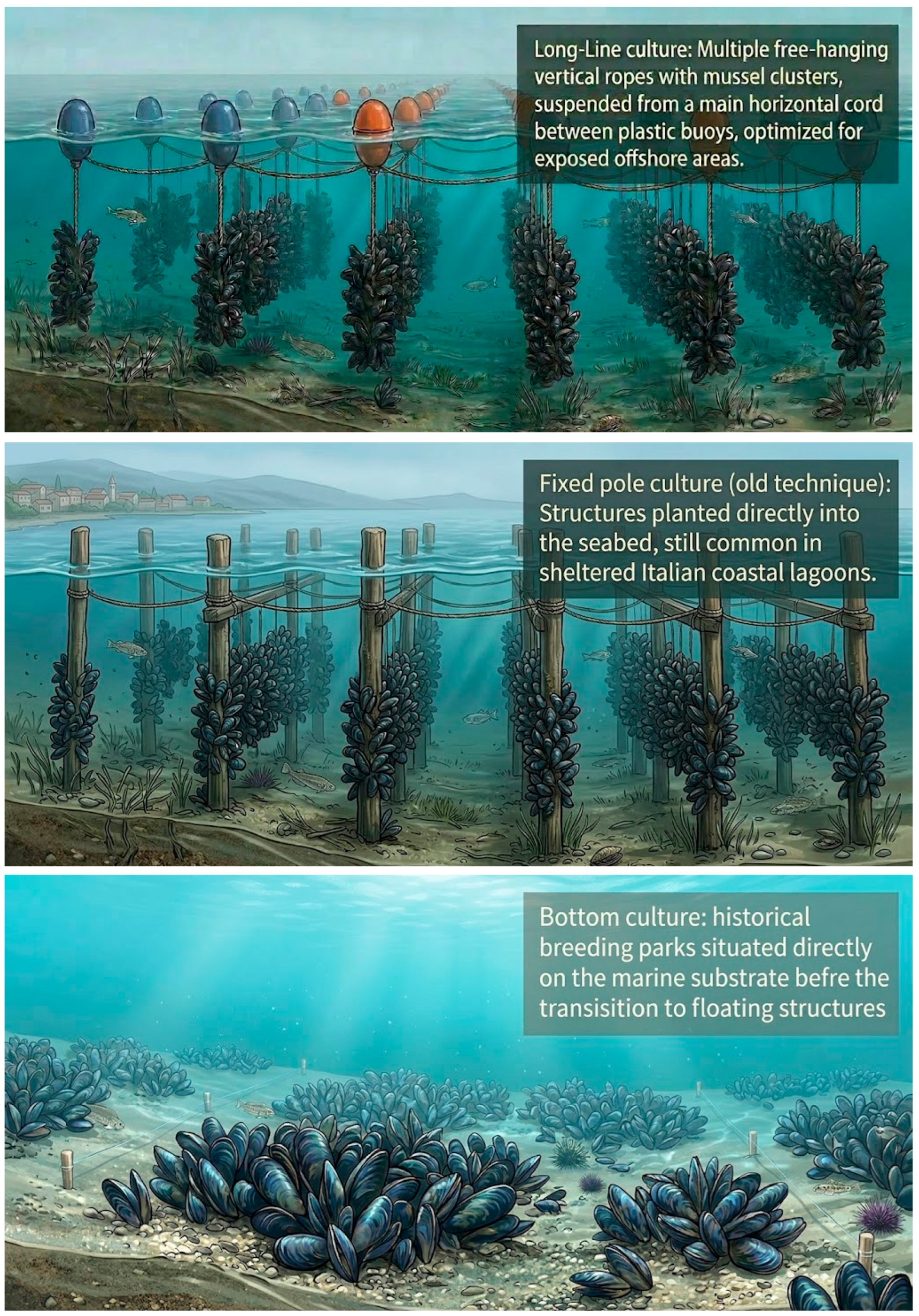
Spain and Italy primarily produce Mediterranean mussel (M. galloprovincialis) [47], with Galicia representing the main production hub and contributing approximately 97% of the national output in 2020 and nearly 40% of the total European output. Spain is not only the largest producer within the EU but it is also the country with the greatest consumption, hosting a highly developed mussel processing industry. France, the second-largest EU producer and consumer, cultivates both Atlantic and Mediterranean mussel species and markets a substantial proportion of its production under certified quality schemes. The cultivation of the Mediterranean mussel M. galloprovincialis represents the most important shellfish aquaculture sector in Italy [48], contributing approximately 17% of total mussel production within the European Union. Italy ranks third among EU producers and consumers; however, national mussel production has markedly declined in recent years. Italian aquaculture is almost exclusively based on M. galloprovincialis and is mainly concentrated along the Adriatic coastline, where mussel farming is a long-standing tradition and is primarily concentrated in well-established production areas such as the Gulf of Taranto, the Gulf of La Spezia, the Venetian Lagoon, and the Phlegraean coast [48]. Three principal farming methods are used: bottom culture, which is typical of lagoon environments such as those in the Po River delta; fixed-pole culture, the oldest technique, which is still common in lagoons and sheltered coastal areas of southern Italy; and suspended longline systems, which are currently the dominant method, particularly in offshore marine settings [49] (Figure 2).

1.2. Impact of Climate Changes on Mediterranean Mussel Production

M. galloprovincialis exhibits a high acclimation capacity, allowing it to thrive across a broad spectrum of environmental conditions and colonize diverse biotopes. The species demonstrates remarkable euryhalinity and eurythermy, tolerating salinities from 8 to 40 g·L−1 and water temperatures ranging from +1 to 28 °C. While optimal growth and physiological performance are generally observed at temperatures between 12 and 20 °C, the optimal salinity can vary; earlier reports suggest a range of 12–25 g·L−1, whereas more recent observations indicate that the species performs best under conditions resembling well-oxygenated coastal marine waters with salinities of 30–37 g·L−1 [50].
Furthermore, metabolic processes and shell formation are optimized at seawater pH values near natural oceanic levels (approximately 8.1–8.2). Conversely, prolonged exposure to a lower pH may induce physiological stress and impair calcification. Adequate dissolved oxygen is also critical for maintaining fitness, with concentrations of 7 mg·L−1 or higher required to support efficient respiration. Together, these physicochemical parameters define the favorable conditions for both the natural development and the intensive aquaculture of M. galloprovincialis in coastal environments [51].
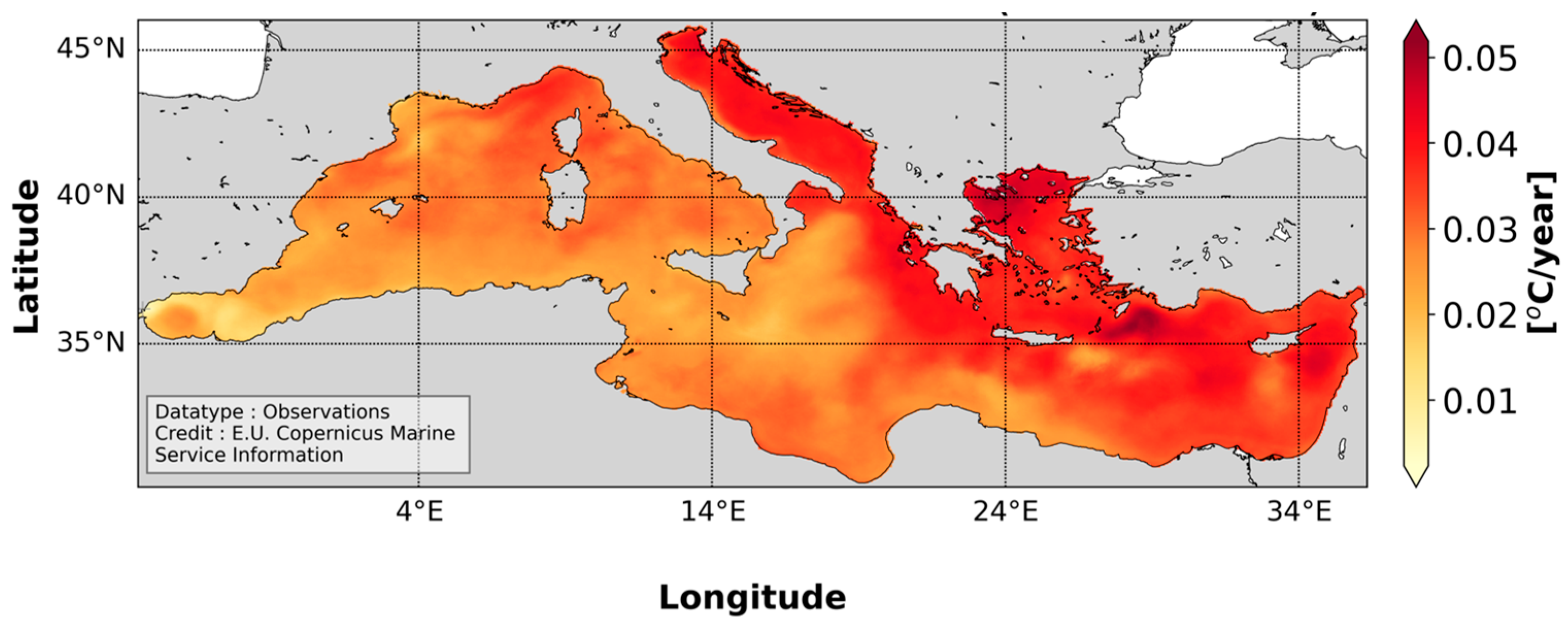
During the last few decades, the Mediterranean Sea has experienced a consistent increase in sea surface temperature, although with marked spatial variability, with warming rates estimated between approximately 0.24 °C and 0.51 °C per decade. This long-term trend has been accompanied by a substantial rise in the occurrence, duration, and intensity of marine heatwaves, together with significant modifications in the thermal structure of the water column. These include a progressive deepening and warming of the mixed layer, as well as increasing temperatures in deeper waters, particularly in the north-eastern Mediterranean basin. Such physical alterations have overlapped with pronounced changes in the structure and functioning of Mediterranean marine ecosystems [4]. Climate projections indicate that continued warming is likely to amplify these processes, potentially leading to additional cascading effects, including enhanced pressure from microbial pathogens on benthic communities [4] (Figure 3). Climate change is already producing widespread social, economic, and environmental consequences at the global scale, placing increasing stress on human activities linked to the exploitation of marine resources. Among these activities, aquaculture is sensitive to global changes, as elevated water temperatures can increase host susceptibility to infectious agents, frequently resulting in mass mortality events. Over recent decades, accumulating evidence has revealed a clear trend towards more frequent, intense, and geographically extensive disease outbreaks in both terrestrial and aquatic systems under changing climatic conditions.
Consequently, pathogens and the diseases they cause represent a major constraint on seafood production, with direct repercussions for global food security [52]. Bivalve molluscs are particularly exposed to these risks due to their filter-feeding lifestyle, which enables them to accumulate microorganisms present in the surrounding seawater, including potentially pathogenic species. Such accumulation can reach high concentrations and may represent a significant health concern for consumers [53]. In recent years, large-scale mortality events affecting mussel populations have been reported in several European regions [21,54,55]. The climate crisis represents a major threat to species, biodiversity, and ecosystem integrity, affecting organisms at the individual level as well as their interactions with other species. The Intergovernmental Panel on Climate Change [56] has highlighted that the recent acceleration of global warming has already exerted measurable impacts on weather patterns, climate systems, economic activities, and human societies worldwide [57]. Within this context, the Adriatic Sea represents a particularly vulnerable marine system. This semi-enclosed basin receives freshwater inputs from most of the rivers of northern and central Italy and is connected to the rest of the Mediterranean Sea only by the Otranto Channel, approximately 70 km wide [58]. Due to its limited spatial extent and relatively shallow depth—especially in the northern and central sectors—the Adriatic Sea responds rapidly to climatic anomalies, making the effects of climate change more immediate and pronounced in this area [57]. Its shallow depth confers a temperate climatic regime, characterized by low winter temperatures (approximately 7 °C) and pronounced vertical stratification during the summer months [59,60]. The Adriatic Sea represents the most extensive continental shelf area within the Mediterranean basin [61]. Substantial freshwater inflows further enhance nutrient availability, making this basin one of the most productive regions of the Mediterranean Sea [61]. Several environmental crises recorded in the Adriatic Sea have been associated with its shallow morphology combined with elevated water temperatures, weak wind forcing, and prolonged stable sea conditions. These factors promote water column stratification, limit pollutant dispersion, and may ultimately lead to hypoxic events [62]. Long-term observations highlighted the cumulative effects of multiple anthropogenic pressures on coastal ecosystems worldwide, including those affecting the Adriatic Sea [63].

1.3. Environmental Social Governance Analysis of Mass Mortality Events in Mediterranean Mussel Aquaculture

Mass mortality events (MMEs) driven by climate stressors pose systemic Environmental Social Governance (ESG) risks to M. galloprovincialis aquaculture, which dominates EU production and the economic consequences are substantial and increasingly well-documented [18]. EU mussel aquaculture production peaked at over 600,000 tons in the late 1990s and contracted to approximately 480,000 tons—valued at €420 million—by 2016, a 20% reduction, leading to a total of approximately €60 million in foregone gross value added and €20 million in lost profits annually, solely within the producer sector [18]. The financial damage attributable to specific mortality events is particularly striking at the farm scale. In the Ebro Delta (Catalonia, Spain), one of Europe’s most established mussel farming districts, for example, a single farm experienced a production collapse from approximately 10,000 tons to 1500 tons per year over a decade, corresponding to an 85% reduction.
In France, a series of heatwaves in August 2018 caused mass mortality of intertidal mussels along the Atlantic coast, resulting in 50–60% losses of the annual commercial value of affected production areas [55].
In Greece—whose aquaculture sector was worth over €619 million in 2021, ranking third in Europe—mass mortality events in 2020 and 2021 led to a total collapse of production in several farms in northern Greece [21], with a recurrence in 2024 raising alarm regarding the structural viability of the entire sector.
In Galicia, which accounts for approximately 37% of total EU mussel output, 2023 recorded a production decline to levels unseen since the late twentieth century, driven by rising sea temperatures, ocean acidification, and disruptions in upwelling patterns—the combined effect of which has introduced profound uncertainty into what was previously a relatively stable production system [54].
In Italy, mass mortality events tied to heatwaves have slashed output dramatically, from expected levels to 53,000 tons in 2023 and an estimated 32,000 tons in 2024, threatening farm closures in southern regions. A 2022 mass die-off along Italy’s Adriatic coast reduced mussel bed coverage from 81.6% to 0% and cut farm production by 30% [57,64].
Production declines disrupt coastal livelihoods, with 2023–2024 events threatening farm closures in Italy (output falling to 32,000 tons) and total collapses in Greek farms, eroding food security in communities reliant on this €420 million sector. Harvest closures in Spain, Italy, France, Greece, and Ireland cascade into supply chain instability, inflating seed import costs and displacing labor in regions where aquaculture supports over 20,000 jobs. Projections warn of potential annual losses of up to €1.5 billion if heatwaves intensify [65]
Enhanced animal welfare protocols and community engagement, as per the FAO blue transformation strategies, are essential to bolster social license amid rising public scrutiny of climate-vulnerable practices [18,66]. Lifecycle assessments indicate that mussel farming can act as a carbon sink (91 g CO2/kg product) if resilient practices mitigate organic enrichment from intensified operations [67]. Proactive measures, including GFCM-recommended allocated zones for aquaculture, could reduce cumulative impacts like eutrophication by 30–40% through cooperative spatial planning [68].

2. Search Strategy

2.1. Literature Search Strategy

A structured literature search was conducted to identify studies addressing mortality events in Mediterranean mussels, with a particular focus on farming systems operating in the Adriatic Sea. The scientific literature was retrieved from four major bibliographic databases: Pubmed, Web of Science, Scopus, and Google Scholar. The search was complemented by the consultation of institutional reports, European Food Safety Authority (EFSA) opinions, FAO technical documents, and the gray literature, in order to capture relevant information not available in peer-reviewed journals.
Search terms were combined using Boolean operators (AND, OR, NOT) and organized into three thematic clusters:
Species and geographic scope: “Mediterranean mussel”, “Mytilus galloprovincialis”, “mussel aquaculture”, “Mediterranean Sea”, “Adriatic Sea”, “Southern Italy”, “bivalve mollusc”.
Mortality and health: “mussel mortality”, “Mytilus galloprovincialis mortality”, “mass mortality events”, “bivalve disease”, “shellfish mortality”, “unexplained mortality”, “summer mortality”.
Stressors and drivers: “environmental stressors”, “pathogens”, “climate change”, “marine heatwave”, “chemical contaminants”, “viruses”, “pollutants”, “seawater temperature”, “hypoxia”.
Economical impact of Mussel Mortality Events: “economical losses”, “Environmental Social Governance (ESG)”, “Mussel production in Mediterranean area”.
No strict temporal limits were imposed on the search; however, priority was given to studies published between 2010 and 2026, reflecting the increasing frequency and documentation of mortality events in this period. Older foundational references were included when considered essential for contextualization.

2.2. Inclusion and Exclusion Criteria

Studies were included if they: (i) reported mortality events or health impairment in marine bivalves, with particular emphasis on M. galloprovincialis; (ii) addressed the environmental, biological, pathological, or anthropogenic drivers of mortality in the Mediterranean or Adriatic Sea; (iii) were published in peer-reviewed journals, or represented authoritative institutional or technical reports. Studies were excluded if they: (i) focused exclusively on freshwater bivalve species with no relevance to Mediterranean marine systems; (ii) addressed purely aquaculture technology or production optimization without reference to mortality or health outcomes; (iii) were not retrievable in full text.
Following the application of these criteria, a total of approximately 809 records were initially identified across the four databases. After the removal of duplicates and screening of titles and abstracts, 400 studies were assessed for full-text eligibility, of which 187 were ultimately retained for inclusion in the narrative synthesis.

2.3. Geographic and Taxonomic Scope

The primary geographic focus of this review is the Mediterranean Sea, with particular emphasis on the Adriatic Sea, which hosts the most productive mussel farming systems in Italy and represents a well-documented case study for the convergence of environmental, biological, and anthropogenic stressors. Where relevant evidence from Atlantic European coasts or other temperate marine systems was available and directly comparable, it was included to provide broader ecological and epidemiological context.
From a taxonomic standpoint, while the literature search was not restricted a priori to a single species, M. galloprovincialis is the predominant cultured mussel species in the Mediterranean and Adriatic basins and therefore constitutes the primary biological focus of this review. References to other mussel species are included where their biology, pathology, or response to environmental stressors provides meaningful comparative insight applicable to M. galloprovincialis.

2.4. Narrative Synthesis Approach

Given the heterogeneity of study designs, methodologies, and reported outcomes across the retrieved literature, a quantitative meta-analysis was not deemed appropriate. Instead, a narrative synthesis approach was adopted, through which studies were grouped thematically to identify recurring patterns and key drivers of mortality events, including environmental stressors, pathogen-related factors, chemical contamination, and the modulating influence of climate variability. Particular emphasis was placed on the interactions among these factors and their implications for mussel health, ecosystem functioning, aquaculture sustainability, and food safety. The synthesis was conducted within a One Health–One Welfare framework, acknowledging the inextricable interconnection between animal health, environmental integrity, and human well-being, and allowing for a holistic interpretation of mussel mortality events that moves beyond single-cause explanations toward a systemic and integrative perspective. The thematic classification of retrieved studies according to the One Health–One Welfare framework—encompassing animal health, environmental integrity, and human well-being—was performed independently by three authors, and any discrepancies in categorization were resolved through discussion and consensus among all co-authors.

3. Mass Mortality Events of M. galloprovincialis in the Mediterranean Sea

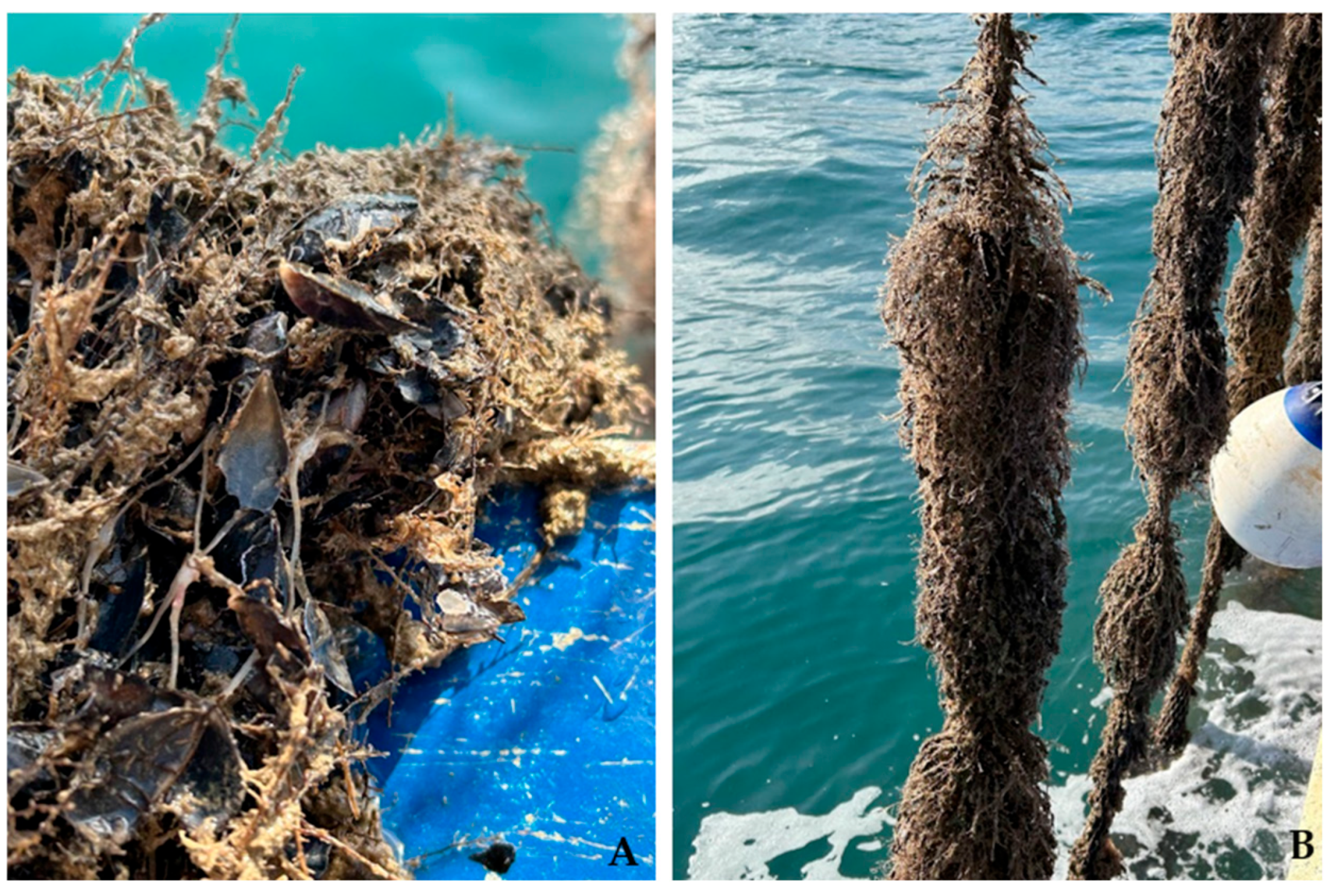
In recent years, climate change, environmental disturbances and infectious diseases have increasingly caused mass mortality events in Mediterranean mussels, compromising the physiology and immune competence of mussels (Figure 4). Notably, the international movement and trade of live aquatic organisms have enhanced the transboundary transmission of pathogens, enabling infectious agents to reach and establish in previously unaffected areas. These transboundary diseases [69] have generated substantial economic losses and social consequences over the past three decades and have significantly contributed to the global dissemination of aquatic pathogens. In response to these challenges, international biosecurity strategies and regulatory frameworks have been progressively strengthened. The World Organisation for Animal Health (WOAH) [70] has established guidelines within the International Aquatic Animal Health Code, setting standards for disease surveillance, notification, and control in aquatic animal populations [40]. Nevertheless, reports of emerging diseases in mussels and other bivalve molluscs continue to increase. This trend highlights the synergistic influence of heightened pathogen exposure and environmental stressors, such as chemical pollution and declining water quality, which may impair host immune responses and promote disease emergence. As a result, mussel health is increasingly shaped by the complex interaction between infectious agents and environmental contaminants, an issue explored in greater detail in the following section.

3.1. Pathogens of M. galloprovincialis

Rising temperatures significantly influence the development of temperature-dependent microorganisms, many of which act as opportunistic pathogens for marine organisms. Recent studies have specifically confirmed the role of thermal increase in the emergence of infectious diseases driven by Vibrio species (Table 1) [21].
However, the impact of climate change is not limited to bacterial pathogens; protozoan parasites are also heavily influenced by rising temperatures. For instance, Perkinsus spp. and Haplosporidian parasites, including species such as Bonamia spp. and Haplosporidium spp., have been implicated in mass mortalities within marine bivalve populations. The proliferation and pathogenicity of these parasites are strictly linked to environmental variables, particularly temperature and salinity [71,72]. The phylum Haplosporidia includes 36 recognized species across four genera: Urosporidium, Minchinia, Haplosporidium, and Bonamia. While these parasites are frequently associated with severe shellfish disease outbreaks, only three species have been officially described in Mytilus spp.: H. tumefacientis, H. mytilovum, and Minchinia mytili. Recent investigations in the Adriatic Sea conducted by Zupičić et al. [26] have increased knowledge about these pathogens. Although the initial PCR screenings for H. pinnae (a species linked to mass mortalities of Pinna nobilis) produced positive results, subsequent sequencing identified the presence of an undetermined member of the Haplosporida order, closely resembling M. mytili. First described by Ward et al. [73] in M. edulis, this represents the first detection of M. mytili-like DNA in M. galloprovincialis within the Mediterranean region. While a direct causal link between this parasite and increased mussel mortality remains hypothetical, possibly reflecting the mussels’ filtration behavior, its presence is concerning. Histological evidence suggests that haplosporidian infections can induce varying degrees of necrosis in the digestive gland, gills, and mantle, alongside hypersecretion in the epithelial cells of the digestive diverticula [26].
In addition to protozoan threats, the mussel microbiome and associated pathogens play a critical role in bivalve health. Predominant bacteria identified in recent studies include Psychrobacter spp., Colwellia spp., and Vibrio splendidus [29]. While Psychrobacter and Colwellia are typically associated with cold-adapted microbiomes, Vibrio splendidus is a known pathogen capable of inducing severe vibriosis and mass mortality, particularly in oysters and clams [24,30]. Although specific Vibrio splendidus-induced mortality events have not been extensively described in mussels, its presence—likely exacerbated by unfavorable environmental conditions—suggests a synergistic impact on host conditions. Consequently, monitoring both parasitic and microbial loads is essential for safeguarding both bivalve populations and public health. Beyond Haplosporidians, the protozoan parasite Marteilia spp. represents a significant threat to bivalve aquaculture, particularly under warming scenarios. First identified in Ostrea edulis in France, Marteilia the causative agent of “Aber disease” in recent decades has been a primary pathogen in Greek mussel culture. Recent research by Lattos et al. [21] highlighted a critical synergy between biotic and abiotic stressors: the mass mortality of M. galloprovincialis in the Thermaikos Gulf was driven by the combined impact of marteliosis and extreme heatwave events. This correlation underscores that while Marteilia is a persistent factor in Mediterranean shellfish mortalities, its pathogenicity is significantly exacerbated by rising seawater temperatures [21]. Emerging diseases in mussels have been increasingly reported in recent years, following patterns already observed in other bivalve molluscs. Among the most relevant findings, the potentially zoonotic bacterium Nocardia crassostreae has recently been detected in the Mediterranean mussel M. galloprovincialis [31,74]; in addition, the WOAH-listed protozoan parasite Marteilia refringens has been recorded in the Mediterranean Sea, together with a variety of other emerging pathological conditions affecting both cultured and wild bivalve species. Among parasitic diseases, Perkinsosis represents one of the most significant threats to bivalves and gastropods worldwide. Species of the genus Perkinsus are capable of infecting a broad range of hosts and are often associated with mortality events, likely due to their high invasive potential and virulence. To date, seven Perkinsus species have been described (P. marinus, P. olseni, P. qugwadi, P. chesapeaki, P. mediterraneus, P. honshuensis and P. beihaiensis), of which only P. marinus and P. olseni are currently listed as notifiable parasites by the WOAH [28,40]. The first detection of Perkinsus spp. in M. galloprovincialis in Europe was reported in mussels from the Campania region (Italy) farmed between 2019 and 2021, and it was subsequently detected in natural beds in 2020. During the same period, Perkinsus-like cells were also observed in mussels collected from Catalonia (Spain) following mortality events. Recent advances in molecular characterization, particularly analyses of internally transcribed spacer regions, have revealed substantial genetic variability within Perkinsus species, allowing for the improved assessment of intraspecific diversity and phylogenetic relationships. Phylogenetic and haplotype analyses, combined with histopathological examinations, have been used to investigate host–parasite interactions and to evaluate the potential pathogenicity of Perkinsus spp. in mussels from Italy and Spain [69]. The presence of parasites and infectious diseases in M. galloprovincialis has been widely documented and is considered a major factor contributing to population declines in both natural and cultured stocks. In addition to biological pathogens, environmental stressors such as harmful algal blooms pose a significant threat to bivalve health. While microalgae are essential primary producers in aquatic ecosystems, their excessive proliferation and toxin production can negatively affect trophic interactions, particularly for filter-feeding organisms [75]. Exposure to toxic microalgae can induce a wide range of pathological effects in bivalves, including mortality, tissue lesions, cellular dysfunction, impaired reproduction, and reductions in filtration efficiency, growth, and overall physiological condition [76]. Over the last fifteen years, increasing attention has been devoted to benthic toxic dinoflagellates of the genus Ostreopsis, whose blooms have been documented in both temperate and tropical coastal waters worldwide [77]. In the Mediterranean Sea, blooms of Ostreopsis cf. ovata have shown a marked increase in frequency, intensity, and spatial distribution [78,79]. These events have been associated with the mass mortalities of benthic organisms and adverse effects on human health, which are largely attributed to palytoxin-like compounds, mainly ovatoxins [80,81,82]. In Italy, Ostreopsis spp. has had a documented impact since 2005 in the Gulf of Naples [27,83], where many studies have investigated its effects on marine organisms, including cultured bivalves [84]. Nevertheless, baseline information on the impact of O. cf. ovata on wild and farmed M. galloprovincialis remains limited. Histopathological approaches represent a powerful tool for assessing the health status of aquatic organisms and are widely applied to evaluate disease processes and parasite infections in wild and cultured mussels [22,23], with some analyses providing direct evidence of cellular and tissue damage. Experimental studies on M. galloprovincialis exposed to O. cf. ovata have revealed alterations in immune parameters, including changes in hemocyte composition and phagocytic activity, as well as degenerative effects on the digestive epithelium, such as lipofuscin accumulation and neutral lipid deposition [85].
Host–pathogen interactions are expected to undergo significant changes under ongoing climate change, particularly in marine ecosystems. Ocean warming can influence disease dynamics through multiple mechanisms, including increased host stress, enhanced pathogen virulence, and the expansion of pathogen geographic ranges [86]. These processes are especially relevant for interactions between bivalve molluscs and bacteria belonging to the family of Vibrionaceae and Nocardiaceae [31], which are ubiquitous in marine and brackish environments and commonly detected in both healthy and diseased bivalves [87]. Vibrio populations are strongly temperature-dependent and persist even after depuration processes [29]; therefore, rising sea surface temperatures may amplify their ecological success, virulence factor expression, and impacts on host physiology, immunity, and reproduction [87,88]. The global increase in Vibrio abundance and associated infections represents an emerging threat to both animal and human health and has caused substantial economic losses in aquaculture worldwide [89]. Among Vibrio species, Vibrio coralliilyticus is a well-recognized pathogen of corals and has been implicated in the large-scale degradation of coral reef ecosystems globally [90,91]. This strain, despite being isolated from Mediterranean corals, negatively affected the early larval development of M. galloprovincialis under standard temperature conditions (18 °C) [92,93,94]. Although adult M. galloprovincialis generally exhibit higher resistance to Vibrio infections compared with other bivalves [95], Vibrio coralliilyticus may pose a significant risk to embryonic and larval stages, potentially threatening mussel aquaculture in a warming Mediterranean environment. However, data on the combined effects of elevated temperature and Vibrio exposure on M. galloprovincialis larval development are still lacking [4]. Several strains of Vibrio splendidus and Vibrio aestuarianus have been implicated in the summer mortality events that negatively impact the global production of the Pacific oyster Crassostrea gigas [96,97]. In the Mediterranean mussel M. galloprovincialis, the effects of the Vibrio splendidus strain LGP32 on both functional and molecular immune parameters have been extensively examined [98,99,100,101]. Notably, in vitro experiments using heat-inactivated LGP32 suggested that factors other than metalloprotease secretion contribute to the modulation of hemocyte responses, pointing to a possible disruption of immune signaling pathway components [100]. The strain Vibrio aestuarianus 01/032, originally isolated during a mortality outbreak, has also been demonstrated to be pathogenic to juvenile C. gigas [97]; this strain can impair hemocytes’ functional activity and release extracellular products, including a metalloprotease [102,103]. However, to date, no studies have investigated the interactions between the immune system of M. galloprovincialis and Vibrio aestuarianus 01/032. Another species of Vibrio that is associated with mortality events of mussels is Vibrio mediterranei; studies conducted by Ter et al. [30] demonstrated significant acute immune responses and tissue-level reactions in M. galloprovincialis. Carella et al. [31] described the first detection of N. crassostreae in M. galloprovincialis in the Mediterranean Sea. The lesion was observed most frequently in connective tissue surrounding the digestive tract, with a spread of multifocal lesions resulting from the formation of hemocytic nodules [13]. Furthermore, the N. crassostreae novel zoonotic pathogen invades the human body via trauma and the respiratory tract and causes a cutaneous, lung, and systemic disease called nocardiosis. The means of transmission from animal to humans is actually unknown but the most plausible mechanism may be through the consumption of raw mussels [31,74,104,105,106,107].
The MMEs in M. galloprovincialis are also associated with the presence of virus pathogens [32]. Picornavirus-like and other small virus like-particles in M. galloprovincialis were enclosed in vesicles and are associated with chronic inflammatory conditions determined to be granulocytomas, which were localized in hemolymph areas of the digestive gland and mantle and associated areas of vesicular connective tissue [32]. Despite the growing interest in bivalve health, the knowledge of the virology of these organisms is far scanter than the body of evidence for vertebrate virology, primarily because no established mollusc cell lines are available and molecular methodologies have seen limited application; as a result, the current knowledge base rests mainly on descriptive morphological studies and a restricted number of in vivo experimental models [32].

3.2. Environmental Pollutants and M. galloprovincialis

Marine bivalves, including mussels, are particularly vulnerable to the accumulation of anthropogenic contaminants, among which nondioxin-like polychlorinated biphenyls (NDL-PCBs) and polycyclic aromatic hydrocarbons (PAHs) represent major sources of concern. These substances originate from multiple anthropogenic sources, including coal combustion facilities, accidental oil spills, and industrial and urban effluents [108,109,110]. The Scientific Committee on Food of the European Commission has classified both compound classes as potentially genotoxic and carcinogenic, designating them as priority targets in the evaluation of the long-term health risks associated with dietary exposure in vertebrates and invertebrates alike [111,112]. Beyond carcinogenicity, PCBs have been extensively documented to exert a broad spectrum of adverse effects, including neurotoxicity, teratogenesis, endocrine disruption, immunotoxicity, reproductive impairment, and behavioral alterations [113].
Among inorganic contaminants, cadmium deserves particular attention due to its tendency to bioaccumulate in bivalve tissues following release from industrial and domestic discharge [108,114]. In both humans and animals, cadmium exerts toxic effects on multiple target organs, including kidneys, liver, lungs, skeletal system, and central nervous system; furthermore, it is classified as a human carcinogen with documented reproductive and immunotoxic properties [114,115,116].
The marine environment is subject to cumulative pressure from a wide array of anthropogenic activities, including industrial operations, maritime transport, agriculture, fishing, and inadequate waste management, all of which contribute to the progressive deterioration in seawater quality (Table 2) [117]. Such pollution can trigger both acute and chronic biological responses in marine bivalve populations [118], which inhabit ecosystems characterized by an extraordinary microbiological diversity, including an immense and largely uncharacterized viral community [119].

3.2.1. Microplastics and Microfibers

Microplastics (MPs) are an heterogeneous mixture of particles that can vary in size (from a few microns to several millimeters), color, and shape (from very different shapes of fragments to long filaments) [120] and are ubiquitous in marine environments, where they have been found in various marine organisms at different trophic levels. Several studies on the effects of MP accumulation in marine invertebrates have shown that MPs adversely affect energy storage and metabolism, dysregulate immune and inflammatory responses, cause neurotoxicity, oxidation, and DNA damage, and alter the respiratory rate and reproduction [121,122,123,124]. Most studies on MPs were conducted with polyethylene (PE), polystyrene (PS), and polypropylene (PP) [125,126,127]. However, it is noteworthy that the most abundant type of MPs found in marine environments or organisms is the fiber-shaped polyester polyethylene terephthalate (PET) [128]. However, research on PET is relatively scarce compared to research on PE, PS, and PP. To date, only a few studies have investigated the toxicity of PET fragments and fibers in copepods, terrestrial snails, and mussels [129,130]. MPs found in marine environments show variability in properties such as regional contamination levels, polymer types, particle size, color, and shape [131]. Therefore, to determine the toxicity of MPs found in the natural environment, it is necessary to mimic the conditions environmental contamination with MPs, such as the MP characteristics (polymer type, shape, and size) and experimental conditions (duration and dose of exposure). However, to obtain measurable effects and identify relevant modes of action, most toxicity studies using MPs, with some exceptions [132], have applied easily purchased, round, and nano-sized MPs, which are rarely found in the natural environment [127,133,134]. Few studies have applied the actual sizes and concentrations found in the natural environment to evaluate the effects of MPs. Such studies showed that even low environmental concentrations of MPs can affect the growth of the freshwater organism Chironomus tepperi, and polypropylene rope fibers can induce mortality and reproductive toxicity in Emerita analoga [135,136]. Although these studies were performed in a laboratory simulating environmental conditions, with a scientific gap between lab and field experiments, these results could indicate possible effects found in the natural environment. Nevertheless, research on how MPs can impact organisms in the natural environment is essential [127]. Since mussels are sedentary filter feeders that have a large geographical distribution, easy accessibility, and high tolerance to salinity, they have been widely used for biomonitoring marine contamination [137]. In addition, bivalves have a higher intake of MPs than other marine organisms, such as crustaceans and polychaetes, indicating that filter feeders increase vulnerability to exposure to suspended MPs [137,138]. Further, since bivalves occupy a significant trophic position in the food web, they can transfer the accumulated MPs to humans, who consume them unknowingly [137,139]. Hence, mussels are suitable model organisms for investigating the effects of MPs on acute and chronic toxicity, including survival, growth and reproductive success, accumulation, and trophic transfer [125,126,127,140]. There is scientific evidence of reproductive and cellular toxicity in mussels caused by long-term exposure to PET MFs at environmentally relevant concentrations. Given the high sensitivity of mussels to environmental toxins, neurotoxic parameters could be a potential bioindicator in sedentary mussels to monitor MP pollution in marine ecosystems. A toxicological investigation of MPs analyzing Mediterranean mussels is relevant in today’s society as it broadens our understanding of the risk of MPs in natural environments. Along with inhalation and ingestion via contaminated air and tap-water, respectively [45], the consumption of MP-contaminated seafood, such as fish and clams, is an important exposure route in humans [46]. The continuous consumption of contaminated seafood throughout a lifetime could lead to the accumulation of MPs or induce unknown impacts in humans and is worth studying further [46].

3.2.2. Legacy and Emerging Chemical Contaminants

Among the emerging contaminants of greatest concern within the context of coastal ecosystem degradation, pharmaceutical and personal care products (PPCPs) represent a particularly insidious category of pseudo-persistent pollutants, owing to their continuous introduction into aquatic ecosystems through wastewater effluents, which conventional treatment plants are largely unable to effectively remediate [41,42,43]. Within this broad class of compounds, polyvinyl alcohols (PVAs)—water-soluble synthetic biopolymers obtained through the saponification of polyvinyl acetate—have emerged as one of the most environmentally prevalent water-soluble polymers, with an estimated global input of over 65,000 tons per year into aquatic ecosystems [141]. Structurally, PVAs present as powders with molecular weights ranging from 25,000 to 300,000 Da, with higher-molecular-weight fractions exhibiting progressively reduced water solubility [142]. First introduced in the latter half of the twentieth century, PVAs are now ubiquitous in both medical and cosmetic applications, including contact lenses, synthetic tear solutions, surgical sponges, face masks, creams, and hair products [143]. In the Mediterranean Sea specifically, PVAs account for 1.2% of particles smaller than 700 μm, and their environmental persistence is governed by specific physicochemical and biological degradation conditions [141]. The ecotoxicological relevance of PVA exposure has been investigated in M. galloprovincialis, a sentinel species whose filter-feeding activity and sessile lifestyle make it particularly susceptible to the bioaccumulation of waterborne contaminants. Experimental assessments have focused on physiological, antioxidant, and metabolic responses across multiple tissue compartments—including hemolymph, gills, digestive gland, and byssus—each fulfilling distinct roles in defense and detoxification. Hemocytes and gills represent the organism’s primary interface with the external environment and constitute the first line of immunological defense, while the digestive gland functions as the principal detoxification organ. Alterations in hemocyte count and viability are well-established indicators of xenobiotic-induced stress [45,144], and the viability assays conducted in the referenced study revealed a significant negative interaction between PVAs exposure and hemocyte integrity: at the highest concentrations tested, the trypan blue exclusion assay evidenced lysosomal membrane destabilization, with impaired capacity to prevent dye penetration into cells. This hemocyte damage was paralleled by a measurable reduction in digestive gland cell viability, suggesting a systemic compromise in detoxification capacity under PVA stress conditions. An additional and innovative endpoint employed in this context was the quantitative assessment of byssus production. In Mytilus spp., the byssus—a collagen-based adhesive structure originating from the anterior and posterior muscles of the byssal gland—serves as both an anchoring system and a stabilization mechanism in the benthic environment [145,146]. Under conditions of adequate health and energy availability, mussels allocate metabolic resources to byssus synthesis; conversely, reductions in byssus production reflect energetic trade-offs imposed by physiological stress, making this parameter a sensitive and functionally relevant indicator of the overall health status and energy storage of the organism under pollutant exposure.
Beyond PPCPs, anthropogenic activities are responsible for the introduction of a broader spectrum of both legacy and emerging chemical contaminants into Mediterranean coastal ecosystems. Among the latter, gadolinium (Gd)—a metallic element belonging to the lanthanide series and classified among the rare earth elements— has attracted increasing scientific attention due to its widespread use in medical diagnostics as a contrast agent in magnetic resonance imaging (MRI), an application grounded in the strong paramagnetic properties of the Gd3+ ion [147,148,149]. Several Gd-based contrast agents form highly stable chelates that undergo no metabolic transformation in the human body and are therefore excreted primarily through urine, subsequently reaching wastewater treatment plants (WWTPs), from which they are discharged into aquatic environments with little or no chemical modification [148,150,151]. The clinical relevance of this excretion pathway is illustrated by the urinary Gd concentrations of up to 350 mg·L−1 recorded immediately following MRI examinations, which declined to approximately 7 mg·L−1 after 39 days [147].
Despite its growing environmental presence, the ecotoxicological profile of anthropogenic Gd on aquatic organisms remains poorly characterized; however, experimental evidence provided by Henriques et al. [152] demonstrated that the exposure of M. galloprovincialis to Gd resulted in a marked reduction in metabolic capacity, likely mediated by a decrease in filtration activity as a protective behavioral response aimed at limiting metal accumulation. Legacy organic contaminants represent an equally critical dimension of chemical pollution in Mediterranean mussel farming areas. In the Mar Piccolo (Apulia Region), mussel production was severely compromised by the forced closure of the majority of farming sites following the detection of dioxins, furans (PCDDs/PCDFs), and polychlorinated biphenyls (PCBs) in mussels harvested from the first inlet [48,153]. Polycyclic aromatic hydrocarbons (PAHs) and PCBs are priority organic compounds widely distributed in marine environments, characterized by high toxicity, exceptional environmental persistence, and a well-documented capacity to accumulate across trophic levels [153,154]. Collectively, these findings indicate that the cumulative exposure of M. galloprovincialis to emerging and legacy chemical contaminants—ranging from PPCPs and Gd-based MRI agents to PCBs, PCDDs/PCDFs, and PAHs—may substantially compromise bivalve welfare and ecosystem functioning, with direct downstream implications for seafood safety and human health. This multidimensional contamination scenario aligns fully with a One Health–One Welfare perspective [152], reinforcing the need for integrated chemical surveillance frameworks that account for the full spectrum of anthropogenic pollutants present in Mediterranean coastal environments.

3.2.3. Herbicides and Microbiome Dysbiosis

Glyphosate (GLY), the primary active ingredient in many global herbicides, operates by inhibiting the 5-enolpyruvylshikimate-3-phosphate synthase (EPSPS) enzyme within the shikimate metabolic pathway—a process exclusive to plants and specific microorganisms. Although its broad biological impacts on non-target species are well-documented, the precise molecular mechanisms of toxicity and its influence on bacterial symbionts in marine bivalves remain poorly understood. Recent evidence indicates that exposure to GLY and its main metabolite, aminomethylphosphonic acid (AMPA), can significantly disrupt the digestive gland microbiota of marine molluscs. This dysbiosis stems from the differential ability of various bacterial species to tolerate these compounds, alongside the impairment of the host’s physiological homeostasis. Such perturbations often facilitate the proliferation of opportunistic pathogens, most notably Vibrio spp.
Furthermore, molecular and cellular analyses reveal that the activation of the host’s immune system likely serves as a compensatory response to manage shifts in the symbiotic microbial community. These findings underscore the necessity of evaluating both direct toxicological effects and secondary changes in host–microbial dynamics to accurately assess the ecotoxicological risks posed by glyphosate-based herbicides in marine environments [155].
Table 2. Major pollutants and their biological effects on M. galloprovincialis.
Pollutant TypeBiological EffectsReferences
Microplastics (MPs)Reduction in energy storage and metabolic rate; dysregulation of immune and inflammatory responses; neurotoxicity; oxidative stress; DNA damage; respiratory and reproductive impairment[46]
Polypropylene (PP)MMEs and reproductive toxicity[46,135,136]
Dioxins/Furans (PCDDs/PCDFs)General systemic toxicity and bioaccumulation risk[153]
Polychlorinated biphenyls (PCBs)High toxicity and environmental persistence[153]
Polycyclic aromatic hydrocarbons (PAHs)Persistent organic toxicity and metabolic disruption[153]
Polyvinyl alcohols (PVAs)Damage to hemolymph, gills, digestive gland and byssus[146]
Gadolinium (Gd)Reduction in metabolic function; decreased filtration activity as a defense mechanism[152]
Glyphosate (Gly)Digestive gland microbiota perturbations; impairment of physiological homeostasis[155]

3.3. One Health–One Welfare Approach

The One Health–One Welfare framework recognizes the complex interconnection between human health, animal health, and the integrity of shared ecosystems. Within this perspective, marine bivalves and M. galloprovincialis occupy a critical interface between the aquatic environment and human dietary habits. As filter feeders, mussels continuously concentrate a wide range of biological and chemical contaminants present in the surrounding water column, effectively functioning as sentinels of environmental quality. Consequently, their consumption in raw or undercooked form represents a well-documented means of exposure to a variety of pathogens and toxic compounds, with significant implications for public health [35] (Table 3).
A critical weakness of the current European regulatory framework lies in the fact that the sanitary surveillance of bivalve molluscs governed by Regulations EC 854/2004 [156] and EC 2073/2005 [157] relies exclusively on bacterial indicators, particularly Escherichia coli, as an indirect means of assessing microbiological quality, while no mandatory virological testing is required. This approach has been widely challenged by scientific evidence demonstrating that bacterial contamination levels do not reliably predict viral load, since enteric viruses exhibit considerably greater environmental persistence and are substantially more resistant to depuration processes than bacterial pathogens [158,159]. As a consequence, mussels compliant with current EU microbiological standards cannot be considered virus-free, representing a underestimated risk for the consumer [160,161,162].
The concern is further compounded by the filter-feeding biology of M. galloprovincialis, which enables the efficient concentration of viral particles from the surrounding water column, particularly in coastal areas subject to fecal contamination from urban, hospital, and wastewaters from farm animal production [36,163]. Standard wastewater treatment plants, even in technologically advanced countries, are known to achieve only a partial reduction in viral loads, facilitating the continuous seeding of viral pathogens into marine growing areas [44]. Among the most epidemiologically relevant agents, naked and quasi-enveloped viruses—including Hepatitis A virus (HAV), Hepatitis E virus (HEV), Norovirus genogroups I and II (NoV GI/GII), astrovirus, and rotavirus—have been repeatedly detected in M. galloprovincialis tissues across the Mediterranean basin [159,164,165]. Epidemiological surveys conducted in southern Italy have documented variable but consistent prevalence rates: NoV GII was the most frequently detected agent in Campania (39.7%), followed by NoV GI (10.8%) and HAV (8.9%) [162], while detections in Sicily—NoV GI (2.9%), NoV GII (21.7%) [166]—and along the Tyrrhenian and Adriatic coasts, including Apulia (NoV GI: 1.6%; HEV: 0.89%) [44] and Molise (NoV GI: 1.7%) [167], confirm a widespread and geographically diffuse viral circulation [168]. The absence of quantitative legal thresholds for viral genome detection in food matrices of animal origin—with the partial exception of NoV GI/GII in live bivalve molluscs, recently introduced in Regulation EC 2073/2005 [153]—leaves a substantial regulatory gap that translates into a concrete public health vulnerability. Raw or undercooked consumption of contaminated mussels has been epidemiologically linked to outbreaks of acute gastroenteritis in humans, characterized by nausea, vomit, diarrhea, abdominal pain, and fever [169,170].
Bacteria such as Salmonella (typhoid, paratyphoid) [171,172], Vibrio cholerae (cholera) [173], and viruses like norovirus or hepatitis A virus cause acute gastroenteritis, with symptoms including nausea, vomiting, diarrhea, abdominal cramps, and, in severe cases, dehydration or hepatitis. These pathogens persist even after brief cooking, as raw or undercooked mussels from polluted waters serve as primary vectors.
Dinophysis or Alexandrium induce gastrointestinal syndromes (diarrhea, vomiting) or neurological effects (paralysis, paresthesia) due to their toxins, which are heat-stable and accumulate in the mussels’ digestive tissues; these toxins may lead to DSP (diarrhetic shellfish poisoning) and PSP (paralytic shellfish poisoning) in humans [174,175].
Within the One Health–One Welfare framework, this risk cannot be evaluated in isolation: emerging evidence suggests that chronic exposure to environmental pollutants including heavy metals and persistent organic compounds that bioaccumulate in mussel tissues may progressively impair the innate immune system of both the organism and, through the food chain, of the human consumer, potentially increasing susceptibility to infectious agents [176,177,178].
Heavy metals that accumulate in mussels, such as cadmium, mercury, lead and selenium, cause renal and bone damage, hepatic disorders, gastrointestinal disturbances, and long-term carcinogenic risks, such as melanoma or lung cancer [114,115,179]. Microplastics and PCBs/PAHs expose consumers to chronic inflammation, oxidative stress, and potential oncogenic risks through repeated ingestion [113].
Table 3. Major pollutants and their biological effects on human health.
ContaminantsBiological Effects on HumansReferences
Bacteria and virusesAcute gastroenteritis, with symptoms including nausea, vomiting, diarrhea, abdominal cramps, and, in severe cases, dehydration or hepatitis[171,172,173]
Algae toxinsDSP (diarrhetic shellfish poisoning) and PSP (paralytic shellfish poisoning); gastrointestinal syndromes (diarrhea, vomiting) or neurological effects (paralysis, paresthesia)[174,175]
Microplastics (MPs)Chronic inflammation, oxidative stress, and potential oncogenic risks gastrointestinal risks[46,180]
Heavy metalsRenal/bone damage, carcinogenic[114,115,179]
PCBs/PAHsChronic inflammation, oxidative stress, and potential oncogenic and Melanoma risks[113]
Integrating chemical and virological monitoring within the same surveillance framework therefore represents not only a scientific priority, but an essential step towards a more coherent and protective regulatory approach [160,161].

4. Conclusions and Future Directions

In conclusion, the mass mortality events of M. galloprovincialis in the Mediterranean Sea must be addressed as a multifactorial phenomenon driven by a lethal synergy. The interplay between climate-driven stressors—specifically rising seawater temperatures and ocean acidification (lowering pH)—acts as a physiological catalyst that weakens mussel immune defenses. This metabolic exhaustion creates a window of opportunity for the proliferation of opportunistic pathogens and enhances the toxicological impact of marine pollutants, which become more bioavailable or harmful under thermal stress. Given these environmental criticalities, a promising future direction lies in the development of integrated water monitoring systems where mussels are not only the primary farming but serve as active biological sentinels. The implementation of a digital monitoring system will offer a transformative strategy for mitigating mass mortality events in Mediterranean mussel populations. By deploying high-precision IoT sensors, farmers can achieve the real-time tracking of critical environmental variables—such as seawater temperature, dissolved oxygen, salinity, and pH—which are primary drivers of physiological stress and immune compromise in mussels. Such a system enables the detection of early warning signs for marine heatwaves or hypoxic conditions, allowing for proactive management interventions—such as adjusting stocking densities or optimizing harvest schedules—before environmental conditions reach lethal thresholds. A pilot scheme in Liguria [181] reduced losses by 35% through early heatwave detection and interventions like forced ventilation or shading.
Furthermore, an Artificial Intelligence originally developed for fish behavioral analysis (e.g., DeepFish framework) could be applied in computer vision to monitor mussel valve activity patterns, serving as a non-invasive biosensor for early-stage pathogen detection or toxicological stress: Convolutional Neural Network (CNN) algorithms identify anomalies (e.g., 70% gape reduction under hypoxia) [182] with >85% accuracy. This integrated technological approach directly supports the One Health–One Welfare framework by bridging the gap between environmental monitoring and animal health management, ultimately enhancing the resilience and sustainability of Mediterranean aquaculture. Remaining challenges include sensor calibration in turbid coastal waters and data integration with predictive models (e.g., the European Centre for Medium-Range Weather Forecast via machine learning), yet open-source prototypes like Mussel Watch-EU [183] ensure scalable, low-cost deployment for small and medium-sized enterprises.

Author Contributions

Conceptualization, C.C., S.T. and M.A.C.; methodology, M.R., F.G. and M.C.; software, C.C. and L.P.; formal analysis, C.C., N.F., S.T. and M.A.C.; investigation, N.F., L.P. and M.C.; data curation, N.F., C.C. and F.G.; writing—original draft preparation, C.C., S.T. and M.A.C.; writing—review and editing, C.C., S.T., and M.A.C.; supervision, M.R.; project administration, F.G., L.P. and M.R.; funding acquisition, F.G. and M.R. All authors have read and agreed to the published version of the manuscript.

Funding

Part of this study was carried out within the Agritech National Research Center and received funding from the European Union Next-GenerationEU (PIANO NAZIONALE DI RIPRESA E RESILIENZA (PNRR)–MISSIONE 4 COMPONENTE 2, INVESTIMENTO 1.4–D.D. 1032 17/06/2022, CN00000022; Agritech Unique Project Code (CUP): H93C22000440007). This manuscript reflects only the authors’ views and opinions, neither the European Union nor the European Commission can be considered responsible for them.

Institutional Review Board Statement

Not applicable.

Informed Consent Statement

Not applicable.

Data Availability Statement

No new data were created or analyzed in this study.

Acknowledgments

During the preparation of this manuscript, the authors used Notebook AI and Gemini AI for the purposes of image generations. The authors have reviewed and edited the output and take full responsibility for the content of this publication.

Conflicts of Interest

Authors Luca Pozzato and Michela Cariglia were employed by the company Aquacloud Srl. The remaining authors declare that the research was conducted in the absence of any commercial or financial relationships that could be construed as a potential conflict of interest.

Abbreviations

The following abbreviations are used in this manuscript:
AMPAAminomethylphosphonic acid
DUIDoubly Uniparental Inheritance
EFSAEuropean Food Safety Authority
EPSPS5-enolpyruvylshikimate-3-phosphate synthase
ESGEnvironmental Social Governance
EUEuropean Union
FAOFood and Agriculture Organisation
GdGadolinium
GFCMGeneral Fisheries Commission for the Mediterranean
GLYGlyphosate
ITSInternal transcribed spacer
MFsMicrofibers
MHWsMarine heatwaves
MMEsMass Mortality Events
MPsMicroplastics
MRIMagnetic Resonance Imaging
NDL-PCBsNondioxin-like polychlorinated biphenyls
PAHsPolycyclic aromatic hydrocarbons
PCBsPolychlorinated biphenyl
PCDDsDioxins
PCDFsFurans
PEPolyethylene
PETPolyethylene terephthalate
PPPolypropylene
PPCPsPersonal care products
PSPolystyrene
PVAsPolyvinyl alcohols
REEsRare Earth Elements
SRBSex-Ratio Bias
WOAHWorld Organisation for Animal Health
WWTPsWastewater Treatment Plants

References

  1. South African National Biodiversity Institute. Mediterranean Mussel—2018. Available online: https://www.sanbi.org/animal-of-the-week/mediterranean-mussel/ (accessed on 28 January 2026).
  2. Bonham, V.; Shields, J.; Riginos, C. Mytilus galloprovincialis (Mediterranean Mussel). CABI Compend. 2017, 73756. [Google Scholar] [CrossRef]
  3. Invasive Species Northern Ireland. Mediterranean Mussel. Available online: https://invasivespeciesni.co.uk/species-accounts/early+stage+establishment/marine/mediterranean-mussel (accessed on 25 January 2026).
  4. Balbi, T.; Bozzo, M.; Auguste, M.; Montagna, M.; Miglioli, A.; Drouet, K.; Vezzulli, L.; Canesi, L. Impact of Ocean Warming on Early Development of the Mediterranean Mussel Mytilus galloprovincialis: Effects on Larval Susceptibility to Potential Vibrio Pathogens. Fish Shellfish Immunol. 2024, 154, 109937. [Google Scholar] [CrossRef]
  5. Georgoulis, I.; Bock, C.; Lannig, G.; Pörtner, H.O.; Sokolova, I.M.; Feidantsis, K.; Giantsis, I.A.; Michaelidis, B. Heat Hardening Enhances Metabolite-Driven Thermoprotection in the Mediterranean Mussel Mytilus galloprovincialis. Front. Physiol. 2023, 14, 1244314. [Google Scholar] [CrossRef]
  6. Pechenik, J.A. On the Advantages and Disadvantages of Larval Stages in Benthic Marine Invertebrate Life Cycles. Mar. Ecol. Prog. Ser. 1999, 177, 269–297. [Google Scholar] [CrossRef]
  7. Byrne, M.; Przeslawski, R. Multistressor impacts of warming and acidification of the ocean on marine invertebrates’ life histories. Integr. Comp. Biol. 2013, 53, 582–596. [Google Scholar] [CrossRef]
  8. Doney, S.C.; Ruckelshaus, M.; Duffy, J.E.; Barry, J.P.; Chan, F.; English, C.A.; Galindo, H.M.; Grebmeier, J.M.; Hollowed, A.B.; Knowlton, N.; et al. Climate Change Impacts on Marine Ecosystems. Annu. Rev. Mar. Sci. 2012, 4, 11–37. [Google Scholar] [CrossRef]
  9. Dupont, S.; Thorndyke, M.C. Impact of CO2-Driven Ocean Acidification on Invertebrates Early Life-History—What We Know, What We Need to Know and What We Can Do. Biogeosci. Discuss. 2009, 6, 3109–3131. [Google Scholar] [CrossRef]
  10. Pandori, L.L.M.; Sorte, C.J.B. The Weakest Link: Sensitivity to Climate Extremes across Life Stages of Marine Invertebrates. Oikos 2019, 128, 621–629. [Google Scholar] [CrossRef]
  11. Anestis, A.; Lazou, A.; Pörtner, H.; Michaelidis, B. Behavioral, Metabolic, and Molecular Stress Responses of Marine Bivalve Mytilus galloprovincialis during Long-Term Acclimation at Increasing Ambient Temperature. Am. J. Physiol. Regul. Integr. Comp. Physiol. 2007, 293, R911–R921. [Google Scholar] [CrossRef]
  12. Feidantsis, K.; Georgoulis, I.; Giantsis, I.A.; Michaelidis, B. Treatment with Ascorbic Acid Normalizes the Aerobic Capacity, Antioxidant Defence, and Cell Death Pathways in Thermally Stressed Mytilus galloprovincialis. Comp. Biochem. Physiol. B Biochem. Mol. Biol. 2021, 255, 110611. [Google Scholar] [CrossRef]
  13. Carella, F.; Aceto, S.; Marrone, R.; Maiolino, P. Marteilia Refringens Infection in Cultured and Natural Beds of Mussels (Mytilus galloprovincialis) along the Campanian Coast (Tirrenian Sea, South of Italy). EAFP Bull. 2010, 30, 189–196. [Google Scholar]
  14. Food and Agriculture Organization. Fishery and Aquaculture Statistics; FAO Yearbook of Fishery and Aquaculture Statistics Yearbook 2023; FAO: Rome, Italy, 2025. [Google Scholar]
  15. Gosling, E. Marine Bivalve Molluscs; John Wiley & Sons: Hoboken, NJ, USA, 2015. [Google Scholar]
  16. Garrabou, J.; Gómez-Gras, D.; Ledoux, J.-B.; Linares, C.; Bensoussan, N.; López-Sendino, P.; Bazairi, H.; Espinosa, F.; Ramdani, M.; Grimes, S. Collaborative Database to Track Mass Mortality Events in the Mediterranean Sea. Front. Mar. Sci. 2019, 6, 707. [Google Scholar] [CrossRef]
  17. Mandic, M.; Gvozdenović Nikolić, S.; Kokić, I.; Jokanović, S. Mass Mortality of Farmed Mussels—A Phenomenon without Explanation? Stud. Mar. 2024, 37, 5–21. [Google Scholar] [CrossRef]
  18. Avdelas, L.; Avdic-Mravlje, E.; Borges Marques, A.C.; Cano, S.; Capelle, J.J.; Carvalho, N.; Cozzolino, M.; Dennis, J.; Ellis, T.; Fernández Polanco, J.M.; et al. The Decline of Mussel Aquaculture in the European Union: Causes, Economic Impacts and Opportunities. Rev. Aquac. 2021, 13, 91–118. [Google Scholar] [CrossRef]
  19. Rahman, M.A.; Henderson, S.; Miller-Ezzy, P.; Li, X.X.; Qin, J.G. Immune Response to Temperature Stress in Three Bivalve Species: Pacific Oyster Crassostrea gigas, Mediterranean Mussel Mytilus galloprovincialis and Mud Cockle Katelysia rhytiphora. Fish Shellfish Immunol. 2019, 86, 868–874. [Google Scholar] [CrossRef]
  20. Lattos, A.; Papadopoulos, D.K.; Feidantsis, K.; Giantsis, I.A.; Georgoulis, I.; Karagiannis, D.; Michaelidis, B. Antioxidant Defense of Mytilus galloprovincialis Mussels Induced by Marine Heatwaves in Correlation with Marteilia Pathogen Presence. Fishes 2023, 8, 408. [Google Scholar] [CrossRef]
  21. Lattos, A.; Papadopoulos, D.K.; Feidantsis, K.; Karagiannis, D.; Giantsis, I.A.; Michaelidis, B. Are Marine Heatwaves Responsible for Mortalities of Farmed Mytilus galloprovincialis? A Pathophysiological Analysis of Marteilia Infected Mussels from Thermaikos Gulf, Greece. Animals 2022, 12, 2805. [Google Scholar] [CrossRef]
  22. Powell, E.N.; Barber, R.D.; Kennicutt, M.C., II; Ford, S.E. Influence of Parasitism in Controlling the Health, Reproduction and PAH Body Burden of Petroleum Seep Mussels. Deep Sea Res. Part I Oceanogr. Res. Pap. 1999, 46, 2053–2078. [Google Scholar] [CrossRef]
  23. Svärdh, L. Bacteria, Granulocytomas, and Trematode Metacercariae in the Digestive Gland of Mytilus edulis: Seasonal and Interpopulation Variation. J. Invertebr. Pathol. 1999, 74, 275–280. [Google Scholar] [CrossRef]
  24. Pollock, F.J.; Wilson, B.; Johnson, W.R.; Morris, P.J.; Willis, B.L.; Bourne, D.G. Phylogeny of the coral pathogen Vibrio coralliilyticus. Environ. Microbiol. Rep. 2010, 2, 172–178.11. [Google Scholar] [CrossRef]
  25. Carella, F.; Sardo, A.; Mangoni, O.; Di Cioccio, D.; Urciuolo, G.; De Vico, G.; Zingone, A. Quantitative Histopathology of the Mediterranean Mussel (Mytilus galloprovincialis L.) Exposed to the Harmful Dinoflagellate Ostreopsis cf. ovata. J. Invertebr. Pathol. 2015, 127, 130–140. [Google Scholar] [CrossRef]
  26. Zupičić, I.G.; Oraić, D.; Arzul, I.; Canier, L.; Noyer, M.; Chollet, B.; Zrnčić, S. Detection of Undeterminated Haplosporidia DNA in Mussels (Mytilus galloprovincialis) after Mass Mortality Event in Adriatic Sea. Vet. Stn. 2024, 55, 345–356. [Google Scholar] [CrossRef]
  27. Sardo, A.; Rossi, R.; Soprano, V.; Ciminiello, P.; Fattorusso, E.; Cirino, P.; Zingone, A. The Dual Impact of Ostreopsis cf. ovata on Mytilus galloprovincialis and Paracentrotus lividus: Toxin Accumulation and Pathological Aspects. Mediterr. Mar. Sci. 2021, 22, 59–72. [Google Scholar] [CrossRef]
  28. Ramilo, A.; Carrasco, N.; Reece, K.S.; Valencia, J.M.; Grau, A.; Aceituno, P.; Rojas, M.; Gairin, I.; Furones, M.D.; Abollo, E.; et al. Update of Information on Perkinsosis in NW Mediterranean Coast: Identification of Perkinsus spp. (Protista) in New Locations and Hosts. J. Invertebr. Pathol. 2015, 125, 37–41. [Google Scholar] [CrossRef]
  29. Balbi, T.; Fabbri, R.; Cortese, K.; Smerilli, A.; Ciacci, C.; Grande, C.; Vezzulli, L.; Pruzzo, C.; Canesi, L. Interactions between Mytilus Galloprovincialis Hemocytes and the Bivalve Pathogens Vibrio aestuarianus 01/032 and Vibrio splendidus LGP32. Fish Shellfish Immunol. 2013, 35, 1906–1915. [Google Scholar] [CrossRef]
  30. Ter, Ü.; Ertürk Gürkan, S.; Gürkan, M.; Künili, İ.E.; Aksoy, E. Pathological and Oxidative Stress Responses of Mytilus galloprovincialis to Vibrio mediterranei Infection: An in Vivo Challenge. Fish Shellfish Immunol. 2024, 154, 109889. [Google Scholar] [CrossRef]
  31. Carella, F.; Carrasco, N.; Andree, K.B.; Lacuesta, B.; Furones, D.; De Vico, G. Nocardiosis in Mediterranean Bivalves: First Detection of Nocardia Crassostreae in a New Host Mytilus galloprovincialis and in Ostrea edulis from the Gulf of Naples (Italy). J. Invertebr. Pathol. 2013, 114, 324–328. [Google Scholar] [CrossRef]
  32. Renault, T.; Novoa, B. Viruses Infecting Bivalve Molluscs. Aquat. Living Resour. 2004, 17, 397–409. [Google Scholar] [CrossRef]
  33. Bower, S.M.; McGladdery, S.E.; Price, I.M. Synopsis of Infectious Diseases and Parasites of Commercially Exploited Shellfish. Annu. Rev. Fish. Dis. 1994, 4, 1–199. [Google Scholar] [CrossRef]
  34. Johnson, P.T. Viral Diseases of Marine Invertebrates. Helgol. Meeresunters. 1984, 37, 65–98. [Google Scholar] [CrossRef]
  35. Fiorito, F.; Amoroso, M.G.; Lambiase, S.; Serpe, F.P.; Bruno, T.; Scaramuzzo, A.; Maglio, P.; Fusco, G.; Esposito, M. A Relationship between Environmental Pollutants and Enteric Viruses in Mussels (Mytilus galloprovincialis). Environ. Res. 2019, 169, 156–162. [Google Scholar] [CrossRef] [PubMed]
  36. Ferri, G.; Olivieri, V.; Olivastri, A.; Di Vittori, C.; Vergara, A. Seasonal Variability of Human Enteric Viruses Discovered in Food Production Mussels (Mytilus galloprovincialis) Farmed in the Central Adriatic Sea (Italy). Foods 2024, 13, 3329. [Google Scholar] [CrossRef]
  37. Venuti, I.; Cuevas-Ferrando, E.; Falcó, I.; Girón-Guzmán, I.; Ceruso, M.; Pepe, T.; Sánchez, G. Presence of Potentially Infectious Human Enteric Viruses and Antibiotic Resistance Genes in Mussels from the Campania Region, Italy: Implications for Consumer’s Safety. Food Environ. Virol. 2025, 17, 28. [Google Scholar] [CrossRef]
  38. Garcia, S.N.; Osburn, B.I.; Jay-Russell, M.T. One Health for Food Safety, Food Security, and Sustainable Food Production. Front. Sustain. Food Syst. 2020, 4, 1. [Google Scholar] [CrossRef]
  39. World Health Organization; UNEP United Nations Environment Programme; World Organisation for Animal Health. One Health Joint Plan of Action (2022–2026): Working Together for the Health of Humans, Animals, Plants and the Environment; World Health Organization: Geneva, Switzerland, 2022. [Google Scholar]
  40. WOAH—World Organisation for Animal Health. Codes and Manuals. Available online: https://www.woah.org/en/what-we-do/standards/codes-and-manuals/ (accessed on 16 January 2026).
  41. Khalid, M.; Abdollahi, M. Environmental Distribution of Personal Care Products and Their Effects on Human Health. Iran. J. Pharm. Res. 2021, 20, 216–253. [Google Scholar] [CrossRef]
  42. Kumar, S.; Talwar, S.; Krishnan, S.; Kaur, P.; Dhir, A. Purchasing Natural Personal Care Products in the Era of Fake News? The Moderation Effect of Brand Trust. J. Retail. Consum. Serv. 2021, 63, 102668. [Google Scholar] [CrossRef]
  43. Yuan, M.; Faggio, C.; Perugini, M.; Aliko, V.; Wang, Y. Pharmaceuticals, personal care products and endocrine disrupting chemicals: The physiological consequences of exposure to pollutants in aquatic animals. Front. Physiol. 2023, 14, 1145052. [Google Scholar] [CrossRef]
  44. La Bella, G.; Basanisi, M.G.; Nobili, G.; Terio, V.; Suffredini, E.; La Salandra, G. First Report of Hepatitis E Virus in Shellfish in Southeast Italy. Appl. Sci. 2021, 11, 43. [Google Scholar] [CrossRef]
  45. Zhang, Q.; Xu, E.G.; Li, J.; Chen, Q.; Ma, L.; Zeng, E.Y.; Shi, H. A Review of Microplastics in Table Salt, Drinking Water, and Air: Direct Human Exposure. Environ. Sci. Technol. 2020, 54, 3740–3751. [Google Scholar] [CrossRef] [PubMed]
  46. Kim, J.S.; Kim, K.; Park, K.; Park, J.-W. Long-Term Exposure of the Mediterranean Mussels, Mytilus galloprovincialis to Polyethylene Terephthalate Microfibers: Implication for Reproductive and Neurotoxic Effects. Chemosphere 2022, 299, 134317. [Google Scholar] [CrossRef] [PubMed]
  47. European Market Observatory for Fisheries and Aquaculture Products. EUMOFA Monthly Highlights No. 8/2025. Available online: https://eumofa.eu/eumofa-monthly-highlights-no.-8/2025-is-online (accessed on 28 January 2026).
  48. Calabrese, C.; Arduini, D.; Portacci, G.; Quarta, E.; Giangrande, A.; Acquaviva, M.I.; Biandolino, F.; Giandomenico, S.; Prato, E.; Stabili, L. Farming Strategy under Climate Change: Growth Performances and Quality of Mytilus galloprovincialis in an Integrated Multi-Trophic Aquaculture System (North-West Mediterranean Sea). Mar. Pollut. Bull. 2025, 220, 118377. [Google Scholar] [CrossRef]
  49. European Market Observatory for Fisheries and Aquaculture Products; EUMOFA. Le Cozze nell’UE: La Struttura del Prezzo Nella Catena di Approvvigionamento: Focus su Spagna, Francia, Italia e Irlanda: Caso Studio; Publications Office: Luxembourg, 2022. (In Italian) [Google Scholar]
  50. Chelyadina, N.S.; Pospelova, N.V.; Popov, M.A. Dynamics of the Meat Yield Index of the Mussel Mytilus galloprovincialis Lamarck, 1819 Cultivated in the Northern Part of the Black Sea. Thalassas 2025, 41, 92. [Google Scholar] [CrossRef]
  51. Kamermans, P.; Saurel, C. Interacting Climate Change Effects on Mussels (Mytilus edulis and M. galloprovincialis) and Oysters (Crassostrea gigas and Ostrea edulis): Experiments for Bivalve Individual Growth Models. Aquat. Living Resour. 2022, 35, 1. [Google Scholar] [CrossRef]
  52. Rowley, A.F.; Baker-Austin, C.; Boerlage, A.S.; Caillon, C.; Davies, C.E.; Duperret, L.; Martin, S.A.M.; Mitta, G.; Pernet, F.; Pratoomyot, J.; et al. Diseases of Marine Fish and Shellfish in an Age of Rapid Climate Change. iScience 2024, 27, 110838. [Google Scholar] [CrossRef]
  53. Vernocchi, P.; Maffei, M.; Lanciotti, R.; Suzzi, G.; Gardini, F. Characterization of Mediterranean Mussels (Mytilus galloprovincialis) Harvested in Adriatic Sea (Italy). Food Control 2007, 18, 1575–1583. [Google Scholar] [CrossRef]
  54. Soliño, M.; Figueras, A. The Vulnerability of Mussel Aquaculture: Understanding Environmental Threats and Future Directions. Aquaculture 2025, 599, 742196. [Google Scholar] [CrossRef]
  55. Seuront, L.; Nicastro, K.R.; Zardi, G.I.; Goberville, E. Decreased Thermal Tolerance under Recurrent Heat Stress Conditions Explains Summer Mass Mortality of the Blue Mussel Mytilus edulis. Sci. Rep. 2019, 9, 17498. [Google Scholar] [CrossRef] [PubMed]
  56. United Nations Foundation. What’s Happening at the IPCC—Intergovernmental Panel on Climate Change. Available online: https://unfoundation.org/what-we-do/issues/climate-and-energy/climate-science/whats-happening-at-the-ipcc/?gad_source=1&gad_campaignid=19548803646&gbraid=0AAAAAD9kiAf8cd4DjuJ_mKm9zB2Xax5kU&gclid=Cj0KCQiAk6rNBhCxARIsAN5mQLvf7O29onWN2T9hKtfgRyAHjuzJXWM_Y8ZvWQOFSZgT2dpukSEGdwAaAlCqEALw_wcB (accessed on 13 January 2026).
  57. Bracchetti, L.; Capriotti, M.; Fazzini, M.; Cocci, P.; Palermo, F.A. Mass Mortality Event of Mediterranean Mussels (Mytilus galloprovincialis) in the Middle Adriatic: Potential Implications of the Climate Crisis for Marine Ecosystems. Diversity 2024, 16, 130. [Google Scholar] [CrossRef]
  58. Tojčić, I.; Denamiel, C.; Vilibić, I. Kilometer-Scale Trends and Variability of the Adriatic Present Climate (1987–2017). Clim. Dyn. 2023, 61, 2521–2545. [Google Scholar] [CrossRef]
  59. Revelante, N.; Gilmartin, M. The Lateral Advection of Particulate Organic Matter from the Po Delta Region during Summer Stratification, and Its Implications for the Northern Adriatic. Estuar. Coast. Shelf Sci. 1992, 35, 191–212. [Google Scholar] [CrossRef]
  60. Vilicic, D.; Kuzmic, M.; Tomažić, I.; Ljubešić, Z.; Bosak, S.; Precali, R.; Djakovac, T.; Marić, D.; Godrijan, J. Northern Adriatic phytoplankton response to short Po River discharge pulses during summer stratified conditions. Mar. Ecol. 2013, 34, 451–466. [Google Scholar] [CrossRef]
  61. Colombo, G. Marine Eutrophication and Population Dynamics. In Proceedings of the 25th European Marine Biology Symposium, Ferrara, Italy, 10–15 September 1990; Institute of Zoology, University of Ferrara: Ferrara, Italy; Olsen & Olsen: Fredensborg, Denmark, 1992. [Google Scholar]
  62. Djakovac, T.; Supić, N.; Bernardi Aubry, F.; Degobbis, D.; Giani, M. Mechanisms of Hypoxia Frequency Changes in the Northern Adriatic Sea during the Period 1972–2012. J. Mar. Syst. 2015, 141, 179–189. [Google Scholar] [CrossRef]
  63. Lotze, H.K.; Lenihan, H.S.; Bourque, B.J.; Bradbury, R.H.; Cooke, R.G.; Kay, M.C.; Kidwell, S.M.; Kirby, M.X.; Peterson, C.H.; Jackson, J.B. Depletion, degradation, and recovery potential of estuaries and coastal seas. Science 2006, 312, 1806–1809. [Google Scholar] [CrossRef]
  64. De Marco, A.; Baldassarro, V.A.; Quadalti, C.; Burato, V.; Calzà, L.; Giardino, L.; Montroni, D.; Falini, G.; Graziani, G.; Greggio, N.; et al. Thermal Tipping Points in Mediterranean Mussel Adhesion: Molecular Mechanisms and Mechanical Consequences of Heatwave on Byssus Production in Mytilus galloprovincialis. Sci. Rep. 2025, 15, 24752. [Google Scholar] [CrossRef]
  65. Aquaculture Advisory Council. AAC-Recommendation-on-the-Concerning-Impact-of-Climate-Change-on-EU-Mussel-Production. 2016. Available online: https://aac-europe.org/wp-content/uploads/2025/10/16-AAC-Recommendation-on-the-Concerning-Impact-of-Climate-Change-on-EU-Mussel-Production.pdf (accessed on 14 January 2026).
  66. European Union. Strategy Guideline for the Sustainable Development of EU Aquaculture. Available online: https://oceans-and-fisheries.ec.europa.eu/ocean/blue-economy/aquaculture/aquaculture-guidelines_en (accessed on 7 January 2026).
  67. Tamburini, E.; Turolla, E.; Lanzoni, M.; Moore, D.; Castaldelli, G. Manila Clam and Mediterranean Mussel Aquaculture Is Sustainable and a Net Carbon Sink. Sci. Total Environ. 2022, 848, 157508. [Google Scholar] [CrossRef]
  68. Food and Agricultural Organization of the United Nations. General Fisheries Commission for the Mediterranean—GFCM. Available online: https://www.fao.org/gfcm/activities/aquaculture/es/ (accessed on 6 March 2026).
  69. Carella, F.; Fernández-Tejedor, M.; Villari, G.; Andrée, K.; De Vico, G. The Endoparasite Perkinsus olseni Affecting the Mediterranean Mussels (Mytilus galloprovincialis) in the Italian and Spanish Waters: A New Possible Threat for Mussel Aquaculture and Wild Animal Population. Front. Mar. Sci. 2023, 10, 1116837. [Google Scholar] [CrossRef]
  70. World Organisation for Animal Health. Animal Diseases. Available online: https://www.woah.org/fileadmin/Home/eng/Health_standards/aahm/current/2.4.04_Marteilia_refringens.pdf (accessed on 17 December 2025).
  71. Arzul, I.; Gagnaire, B.; Bond, C.; Chollet, B.; Morga, B.; Ferrand, S.; Robert, M.; Renault, T. Effects of Temperature and Salinity on the Survival of Bonamia Ostreae, a Parasite Infecting Flat Oysters Ostrea edulis. Dis. Aquat. Org. 2009, 85, 67–75. [Google Scholar] [CrossRef] [PubMed]
  72. Burreson, E.M.; Ford, S.E. A review of recent information on the Haplosporidia, with special reference to Haplosporidium nelsoni (MSX disease). Aquat. Living Resour. 2004, 17, 499–517. [Google Scholar] [CrossRef]
  73. Ward, G.M.; Feist, S.W.; Noguera, P.; Marcos-López, M.; Ross, S.; Green, M.; Urrutia, A.; Bignell, J.P.; Bass, D. Detection and Characterisation of Haplosporidian parasites of the Blue Mussel Mytilus edulis, Including Description of the Novel Parasite Minchinia mytili n. sp. Dis. Aquat. Org. 2019, 133, 57–68. [Google Scholar] [CrossRef] [PubMed]
  74. De Vico, G.; Carella, F. Nocardiosis and mycobacteriosis of bivalves: “Yet-to-emerge” zoonoses of public concern? Zoonoses Public Health 2019, 66, 559–561. [Google Scholar] [CrossRef]
  75. Landsberg, J.H. The effects of harmful algal blooms on aquatic organisms. Rev. Fish. Sci. 2002, 10, 113–390. [Google Scholar] [CrossRef]
  76. Pearce, I.; Handlinger, J.H.; Hallegraeff, G.M. Histopathology in Pacific Oyster (Crassostrea gigas) Spat Caused by the Dinoflagellate Prorocentrum rhathymum. Harmful Algae 2005, 4, 61–74. [Google Scholar] [CrossRef]
  77. Rhodes, L. World-Wide Occurrence of the Toxic Dinoflagellate Genus Ostreopsis schmidt. Toxicon 2011, 57, 400–407. [Google Scholar] [CrossRef]
  78. Mangialajo, L.; Ganzin, N.; Accoroni, S.; Asnaghi, V.; Blanfuné, A.; Cabrini, M.; Cattaneo-Vietti, R.; Chavanon, F.; Chiantore, M.; Cohu, S.; et al. Trends in Ostreopsis Proliferation along the Northern Mediterranean Coasts. Toxicon 2011, 57, 408–420. [Google Scholar] [CrossRef] [PubMed]
  79. Totti, C.M.; Cucchiari, E.M.; Romagnoli, T.; Penna, A. Bloom occurrence of Ostreopsis ovata along the Conero Riviera (NW Adriatic Sea). Harmful Algae News 2007, 33, 12–13. [Google Scholar]
  80. Ciminiello, P.; Dell’Aversano, C.; Iacovo, E.D.; Fattorusso, E.; Forino, M.; Grauso, L.; Tartaglione, L.; Guerrini, F.; Pistocchi, R. Complex palytoxin-like profile of Ostreopsis ovata. Identification of four new ovatoxins by high-resolution liquid chromatography/mass spectrometry. Rapid Commun. Mass Spectrom. 2010, 24, 2735–2744. [Google Scholar] [CrossRef]
  81. Rossi, R.; Castellano, V.; Scalco, E.; Serpe, L.; Zingone, A.; Soprano, V. New Palytoxin-like Molecules in Mediterranean Ostreopsis cf. ovata (Dinoflagellates) and in Palythoa tuberculosa Detected by Liquid Chromatography-Electrospray Ionization Time-of-Flight Mass Spectrometry. Toxicon 2010, 56, 1381–1387. [Google Scholar] [CrossRef]
  82. Aligizaki, K.; Katikou, P.; Milandri, A.; Diogène, J. Occurrence of Palytoxin-Group Toxins in Seafood and Future Strategies to Complement the Present State of the Art. Toxicon 2011, 57, 390–399. [Google Scholar] [CrossRef] [PubMed]
  83. Zingone, A.; Siano, R.; D’Alelio, D.; Sarno, D. Potentially Toxic and Harmful Microalgae from Coastal Waters of the Campania Region (Tyrrhenian Sea, Mediterranean Sea). Harmful Algae 2006, 5, 321–337. [Google Scholar] [CrossRef]
  84. Aceto, S.; Formisano, G.; Carella, F.; De Vico, G.; Gaudio, L. The Metallothionein Genes of Mytilus galloprovincialis: Genomic Organization, Tissue Expression and Evolution. Mar. Genom. 2011, 4, 61–68. [Google Scholar] [CrossRef]
  85. Gorbi, S.; Avio, G.C.; Benedetti, M.; Totti, C.; Accoroni, S.; Pichierri, S.; Bacchiocchi, S.; Orletti, R.; Graziosi, T.; Regoli, F. Effects of Harmful Dinoflagellate Ostreopsis cf. ovata Exposure on Immunological, Histological and Oxidative Responses of Mussels Mytilus galloprovincialis. Fish Shellfish Immunol. 2013, 35, 941–950. [Google Scholar] [CrossRef]
  86. Cohen, R.E.; James, C.C.; Lee, A.; Martinelli, M.M.; Muraoka, W.T.; Ortega, M.; Sadowski, R.; Starkey, L.; Szesciorka, A.R.; Timko, S.E.; et al. Marine Host-Pathogen Dynamics: Influences of Global Climate Change. Oceanography 2018, 31, 182–193. [Google Scholar] [CrossRef]
  87. Destoumieux-Garzón, D.; Canesi, L.; Oyanedel, D.; Travers, M.A.; Charriére, G.M.; Pruzzo, C.; Vezzulli, L. Vibrio–bivalve interactions in health and disease. Environ. Microbiol. 2020, 22, 4323–4341. [Google Scholar] [CrossRef]
  88. Paillard, C.; Gueguen, Y.; Wegner, K.M.; Bass, D.; Pallavicini, A.; Vezzulli, L.; Arzul, I. Recent Advances in Bivalve-Microbiota Interactions for Disease Prevention in Aquaculture. Curr. Opin. Biotechnol. 2022, 73, 225–232. [Google Scholar] [CrossRef] [PubMed]
  89. Doni, L.; Martinez-Urtaza, J.; Vezzulli, L. Searching Pathogenic Bacteria in the Rare Biosphere of the Ocean. Curr. Opin. Biotechnol. 2023, 80, 102894. [Google Scholar] [CrossRef] [PubMed]
  90. Ben-Haim, Y.; Zicherman-Keren, M.; Rosenberg, E. Temperature-regulated bleaching and lysis of the coral Pocillopora damicornis by the novel pathogen Vibrio coralliilyticus. Appl. Environ. Microbiol. 2003, 69, 4236–4242. [Google Scholar] [CrossRef]
  91. Sussman, M.; Willis, B.L.; Victor, S.; Bourne, D.G. Coral pathogens identified for white syndrome (WS) epizootics in the Indo-Pacific. PLoS ONE 2008, 3, e2393. [Google Scholar] [CrossRef]
  92. Vezzulli, L.; Previati, M.; Pruzzo, C.; Marchese, A.; Bourne, D.G.; Cerrano, C.; VibrioSea Consortium. Vibrio infections triggering mass mortality events in a warming Mediterranean Sea. Environ. Microbiol. 2010, 12, 2007–2019. [Google Scholar] [CrossRef] [PubMed]
  93. Wilson, B.; Muirhead, A.; Bazanella, M.; Huete-Stauffer, C.; Vezzulli, L.; Bourne, D.G. An improved detection and quantification method for the coral pathogen Vibrio coralliilyticus. PLoS ONE 2013, 8, e81800. [Google Scholar] [CrossRef]
  94. Balbi, T.; Auguste, M.; Cortese, K.; Montagna, M.; Borello, A.; Pruzzo, C.; Vezzulli, L.; Canesi, L. Responses of Mytilus galloprovincialis to Challenge with the Emerging Marine Pathogen Vibrio coralliilyticus. Fish Shellfish Immunol. 2019, 84, 352–360. [Google Scholar] [CrossRef]
  95. Byrne, M.; Ho, M.; Selvakumaraswamy, P.; Nguyen, H.D.; Dworjanyn, S.A.; Davis, A.R. Temperature, but Not pH, Compromises Sea Urchin Fertilization and Early Development under near—Future Climate Change Scenarios. Proc. Biol. Sci. 2009, 276, 1883–1888. [Google Scholar] [CrossRef] [PubMed]
  96. Abstract. Available online: https://www.int-res.com/abstracts/dao?tx_intres%5Baction%5D=abstract&tx_intres%5Barticle%5D=0&tx_intres%5Bcontroller%5D=Article&cHash=34823a4c740de2be63b4ac69cc7cf942 (accessed on 30 January 2026).
  97. Garnier, M.; Labreuche, Y.; Garcia, C.; Robert, M.; Nicolas, J.L. Evidence for the involvement of pathogenic bacteria in summer mortalities of the Pacific oyster Crassostrea gigas. Microb. Ecol. 2007, 53, 187–196. [Google Scholar] [CrossRef]
  98. Cellura, C.; Toubiana, M.; Parrinello, N.; Roch, P. Specific Expression of Antimicrobial Peptide and HSP70 Genes in Response to Heat-Shock and Several Bacterial Challenges in Mussels. Fish Shellfish Immunol. 2007, 22, 340–350. [Google Scholar] [CrossRef]
  99. Costa, M.M.; Prado-Alvarez, M.; Gestal, C.; Li, H.; Roch, P.; Novoa, B.; Figueras, A. Functional and Molecular Immune Response of Mediterranean Mussel (Mytilus galloprovincialis) Haemocytes against Pathogen-Associated Molecular Patterns and Bacteria. Fish Shellfish Immunol. 2009, 26, 515–523. [Google Scholar] [CrossRef]
  100. Ciacci, C.; Betti, M.; Canonico, B.; Citterio, B.; Roch, P.; Canesi, L. Specificity of Anti-Vibrio Immune Response through P38 MAPK and PKC Activation in the Hemocytes of the Mussel Mytilus galloprovincialis. J. Invertebr. Pathol. 2010, 105, 49–55. [Google Scholar] [CrossRef]
  101. Tanguy, M.; McKenna, P.; Gauthier-Clerc, S.; Pellerin, J.; Danger, J.-M.; Siah, A. Functional and Molecular Responses in Mytilus edulis Hemocytes Exposed to Bacteria, Vibrio splendidus. Dev. Comp. Immunol. 2013, 39, 419–429. [Google Scholar] [CrossRef]
  102. Labreuche, Y.; Lambert, C.; Soudant, P.; Boulo, V.; Huvet, A.; Nicolas, J.L. Cellular and Molecular Hemocyte Responses of the Pacific Oyster, Crassostrea gigas, Following Bacterial Infection with Vibrio aestuarianus Strain 01/32. Microbes Infect. 2006, 8, 2715–2724. [Google Scholar] [CrossRef]
  103. Labreuche, Y.; Le Roux, F.; Henry, J.; Zatylny, C.; Huvet, A.; Lambert, C.; Soudant, P.; Mazel, D.; Nicolas, J.-L. Vibrio aestuarianus Zinc Metalloprotease Causes Lethality in the Pacific Oyster Crassostrea gigas and Impairs the Host Cellular Immune Defenses. Fish Shellfish Immunol. 2010, 29, 753–758. [Google Scholar] [CrossRef]
  104. Pal, M.; Dave, P. Nocardiosis: An Emerging Infectious Actinomycetic Disease of Humans and Animals. J. Microbiol. Microb. Technol. 2016, 1, 4. [Google Scholar] [CrossRef]
  105. Cutarelli, A.; Carella, F.; De Falco, F.; Cuccaro, B.; Di Nocera, F.; Nava, D.; De Vico, G.; Roperto, S. Detection and quantification of Nocardia crassostreae, an emerging pathogen, in Mytilus galloprovincialis in the Mediterranean Sea using droplet digital PCR. Pathogens 2023, 12, 994. [Google Scholar] [CrossRef] [PubMed]
  106. Eshraghi, S.S.; Talebi, M.; Namaki, S.; Mirshafiey, A. Nocardia. J. Chin. Clin. Med. 2009, 4, 48. [Google Scholar]
  107. Igbaseimokumo, U.; El Shafie, S.; Al Khal, A.L. First Human Infection of Nocardia Crassostreae in an Immunocompetent Patient. Chin. Med. J. 2016, 129, 114. [Google Scholar] [CrossRef]
  108. Serpe, F.P.; Esposito, M.; Gallo, P.; Salini, M.; Maglio, P.; Hauber, T.; Serpe, L. Determination of Heavy Metals, Polycyclic Aromatic Hydrocarbons and Polychlorinated Biphenyls. Fresenius Environ. Bull. 2010, 19, 2292–2296. [Google Scholar]
  109. Mercogliano, R.; Santonicola, S.; De Felice, A.; Anastasio, A.; Murru, N.; Ferrante, M.C.; Cortesi, M.L. Occurrence and Distribution of Polycyclic Aromatic Hydrocarbons in Mussels from the Gulf of Naples, Tyrrhenian Sea, Italy. Mar. Pollut. Bull. 2016, 104, 386–390. [Google Scholar] [CrossRef]
  110. Esposito, M.; Perugini, M.; Lambiase, S.; Conte, A.; Baldi, L.; Amorena, M. Seasonal Trend of PAHs Concentrations in Farmed Mussels from the Coastal Areas of the Naples, Italy. Bull. Environ. Contam. Toxicol. 2017, 99, 333–337. [Google Scholar] [CrossRef]
  111. European Food Safety Authority (EFSA). Polycyclic Aromatic Hydrocarbons in Food—Scientific Opinion of the Panel on Contaminants in the Food Chain. EFSA J. 2008, 6, 724. [Google Scholar] [CrossRef]
  112. European Food Safety Authority (EFSA). Update of the Monitoring of Levels of Dioxins and PCBs in Food and Feed. EFSA J. 2012, 10, 2832. [Google Scholar] [CrossRef]
  113. Hens, B.; Hens, L. Persistent Threats by Persistent Pollutants: Chemical Nature, Concerns and Future Policy Regarding PCBs—What Are We Heading For? Toxics 2018, 6, 1. [Google Scholar] [CrossRef] [PubMed]
  114. Satarug, S.; Vesey, D.A.; Gobe, G.C.; Phelps, K.R. Estimation of health risks associated with dietary cadmium exposure. Arch. Toxicol. 2023, 97, 329–358. [Google Scholar] [CrossRef]
  115. Vlahogianni, T.; Dassenakis, M.; Scoullos, M.J.; Valavanidis, A. Integrated Use of Biomarkers (Superoxide Dismutase, Catalase and Lipid Peroxidation) in Mussels Mytilus galloprovincialis for Assessing Heavy Metals’ Pollution in Coastal Areas from the Saronikos Gulf of Greece. Mar. Pollut. Bull. 2007, 54, 1361–1371. [Google Scholar] [CrossRef]
  116. European Food Safety Authority (EFSA). Cadmium in Food—Scientific Opinion of the Panel on Contaminants in the Food Chain. EFSA J. 2009, 7, 980. [Google Scholar] [CrossRef]
  117. Shahidul Islam, M.; Tanaka, M. Impacts of Pollution on Coastal and Marine Ecosystems Including Coastal and Marine Fisheries and Approach for Management: A Review and Synthesis. Mar. Pollut. Bull. 2004, 48, 624–649. [Google Scholar] [CrossRef] [PubMed]
  118. Breitwieser, M.; Viricel, A.; Graber, M.; Murillo, L.; Becquet, V.; Churlaud, C.; Fruitier-Arnaudin, I.; Huet, V.; Lacroix, C.; Pante, E.; et al. Short-Term and Long-Term Biological Effects of Chronic Chemical Contamination on Natural Populations of a Marine Bivalve. PLoS ONE 2016, 11, e0150184. [Google Scholar] [CrossRef] [PubMed]
  119. Weitz, J.S.; Wilhelm, S.W. Ocean Viruses and Their Effects on Microbial Communities and Biogeochemical Cycles. F1000 Biol. Rep. 2012, 4, 17. [Google Scholar] [CrossRef]
  120. Tarricone, S.; Colonna, M.A.; Freschi, P.; Cosentino, C.; La Gioia, G.; Carbonara, C.; Ragni, M. The Presence of Microplastics in the Gastrointestinal Tracts of Song Thrushes (Turdus philomelos) Wintering in Apulia (Southern Italy)—Preliminary Results. Animals 2024, 14, 2050. [Google Scholar] [CrossRef]
  121. Avio, C.G.; Gorbi, S.; Milan, M.; Benedetti, M.; Fattorini, D.; d’Errico, G.; Pauletto, M.; Bargelloni, L.; Regoli, F. Pollutants Bioavailability and Toxicological Risk from Microplastics to Marine Mussels. Environ. Pollut. 2015, 198, 211–222. [Google Scholar] [CrossRef]
  122. Sussarellu, R.; Suquet, M.; Thomas, Y.; Lambert, C.; Fabioux, C.; Pernet, M.E.J.; Huvet, A. Oyster reproduction is affected by exposure to polystyrene microplastics. Proc. Natl. Acad. Sci. USA 2016, 113, 2430–2435. [Google Scholar] [CrossRef]
  123. Ribeiro, F.; Garcia, A.R.; Pereira, B.P.; Fonseca, M.; Mestre, N.C.; Fonseca, T.G.; Ilharco, L.M.; Bebianno, M.J. Microplastics Effects in Scrobicularia plana. Mar. Pollut. Bull. 2017, 122, 379–391. [Google Scholar] [CrossRef]
  124. Magara, G.; Elia, A.C.; Syberg, K.; Khan, F.R. Single contaminant and combined exposures of polyethylene microplastics and fluoranthene: Accumulation and oxidative stress response in the blue mussel, Mytilus edulis. J. Toxicol. Environ. Health 2018, 81, 761–773. [Google Scholar] [CrossRef]
  125. Paul-Pont, I.; Lacroix, C.; González Fernández, C.; Hégaret, H.; Lambert, C.; Le Goïc, N.; Frère, L.; Cassone, A.L.; Sussarellu, R.; Fabioux, C.; et al. Exposure of Marine Mussels Mytilus spp. to Polystyrene Microplastics: Toxicity and Influence on Fluoranthene Bioaccumulation. Environ. Pollut. 2016, 216, 724–737. [Google Scholar] [CrossRef]
  126. Brandts, I.; Teles, M.; Gonçalves, A.P.; Barreto, A.; Franco-Martinez, L.; Tvarijonaviciute, A.; Martins, M.A.; Soares, A.M.V.M.; Tort, L.; Oliveira, M. Effects of Nanoplastics on Mytilus galloprovincialis after Individual and Combined Exposure with Carbamazepine. Sci. Total Environ. 2018, 643, 775–784. [Google Scholar] [CrossRef]
  127. Revel, M.; Lagarde, F.; Perrein-Ettajani, H.; Bruneau, M.; Akcha, F.; Sussarellu, R.; Rouxel, J.; Costil, K.; Decottignies, P.; Cognie, B.; et al. Tissue-Specific Biomarker Responses in the Blue Mussel Mytilus spp. Exposed to a Mixture of Microplastics at Environmentally Relevant Concentrations. Front. Environ. Sci. 2019, 7, 33. [Google Scholar] [CrossRef]
  128. Bråte, I.L.N.; Hurley, R.; Iversen, K.; Beyer, J.; Thomas, K.V.; Steindal, C.C.; Green, N.W.; Olsen, M.; Lusher, A. Mytilus spp. as Sentinels for Monitoring Microplastic Pollution in Norwegian Coastal Waters: A Qualitative and Quantitative Study. Environ. Pollut. 2018, 243, 383–393. [Google Scholar] [CrossRef]
  129. Heindler, F.M.; Alajmi, F.; Huerlimann, R.; Zeng, C.; Newman, S.J.; Vamvounis, G.; van Herwerden, L. Toxic Effects of Polyethylene Terephthalate Microparticles and Di(2-Ethylhexyl)Phthalate on the Calanoid Copepod, Parvocalanus Crassirostris. Ecotoxicol. Environ. Saf. 2017, 141, 298–305. [Google Scholar] [CrossRef]
  130. Albarano, L.; Maggio, C.; La Marca, A.; Iovine, R.; Lofrano, G.; Guida, M.; Vaiano, V.; Carotenuto, M.; Pedatella, S.; Spica, V.R.; et al. Risk assessment of natural and synthetic fibers in aquatic environment: A critical review. Sci. Total Environ. 2024, 934, 173398. [Google Scholar] [CrossRef]
  131. Coyle, R.; Hardiman, G.; Driscoll, K.O. Microplastics in the Marine Environment: A Review of Their Sources, Distribution Processes, Uptake and Exchange in Ecosystems. Case Stud. Chem. Environ. Eng. 2020, 2, 100010. [Google Scholar] [CrossRef]
  132. Christoforou, E.; Dominoni, D.M.; Lindström, J.; Stilo, G.; Spatharis, S. Effects of Long-Term Exposure to Microfibers on Ecosystem Services Provided by Coastal Mussels. Environ. Pollut. 2020, 266, 115184. [Google Scholar] [CrossRef]
  133. Lenz, R.; Enders, K.; Nielsen, T.G. Microplastic exposure studies should be environmentally realistic. Proc. Natl. Acad. Sci. USA 2016, 113, E4121–E4122. [Google Scholar] [CrossRef] [PubMed]
  134. Burns, E.E.; Boxall, A.B. Microplastics in the aquatic environment: Evidence for or against adverse impacts and major knowledge gaps. Environ. Toxicol. Chem. 2018, 37, 2776–2796. [Google Scholar] [CrossRef] [PubMed]
  135. Ziajahromi, S.; Kumar, A.; Neale, P.A.; Leusch, F.D.L. Environmentally Relevant Concentrations of Polyethylene Microplastics Negatively Impact the Survival, Growth and Emergence of Sediment-Dwelling Invertebrates. Environ. Pollut. 2018, 236, 425–431. [Google Scholar] [CrossRef] [PubMed]
  136. Horn, D.A.; Granek, E.F.; Steele, C.L. Effects of environmentally relevant concentrations of microplastic fibers on Pacific mole crab (Emerita analoga) mortality and reproduction. Limnol. Oceanogr. Lett. 2020, 5, 74–83. [Google Scholar] [CrossRef]
  137. Li, J.; Green, C.; Reynolds, A.; Shi, H.; Rotchell, J.M. Microplastics in Mussels Sampled from Coastal Waters and Supermarkets in the United Kingdom. Environ. Pollut. 2018, 241, 35–44. [Google Scholar] [CrossRef]
  138. Setälä, O.; Norkko, J.; Lehtiniemi, M. Feeding Type Affects Microplastic Ingestion in a Coastal Invertebrate Community. Mar. Pollut. Bul. 2016, 102, 95–101. [Google Scholar] [CrossRef]
  139. Alfaro-Núñez, A.; Astorga, D.; Cáceres-Farías, L.; Bastidas, L.; Soto Villegas, C.; Macay, K.; Christensen, J.H. Microplastic Pollution in Seawater and Marine Organisms across the Tropical Eastern Pacific and Galápagos. Sci. Rep. 2021, 11, 6424. [Google Scholar] [CrossRef]
  140. Chae, Y.; An, Y.-J. Effects of Food Presence on Microplastic Ingestion and Egestion in Mytilus galloprovincialis. Chemosphere 2020, 240, 124855. [Google Scholar] [CrossRef]
  141. Rolsky, C.; Kelkar, V. Degradation of polyvinyl alcohol in US wastewater treatment plants and subsequent nationwide emission estimate. Intern. J. Environ. Res. Public Health 2021, 18, 6027. [Google Scholar] [CrossRef]
  142. Julinová, M.; Vaňharová, L.; Jurča, M. Water-Soluble Polymeric Xenobiotics—Polyvinyl Alcohol and Polyvinylpyrrolidon—And Potential Solutions to Environmental Issues: A Brief Review. J. Environ. Manag. 2018, 228, 213–222. [Google Scholar] [CrossRef]
  143. Hou, Y.; Chen, C.; Liu, K.; Tu, Y.; Zhang, L.; Li, Y. Preparation of PVA Hydrogel with High-Transparence and Investigations of Its Transparent Mechanism. RSC Adv. 2015, 5, 24023–24030. [Google Scholar] [CrossRef]
  144. Stara, A.; Pagano, M.; Capillo, G.; Fabrello, J.; Sandova, M.; Albano, M.; Zuskova, E.; Velisek, J.; Matozzo, V.; Faggio, C. Acute Effects of Neonicotinoid Insecticides on Mytilus galloprovincialis: A Case Study with the Active Compound Thiacloprid and the Commercial Formulation Calypso 480 SC. Ecotoxicol. Environ. Saf. 2020, 203, 110980. [Google Scholar] [CrossRef]
  145. Curpan, A.S.; Impellitteri, F.; Plavan, G.; Ciobica, A.; Faggio, C. Review: Mytilus galloprovincialis: An Essential, Low-Cost Model Organism for the Impact of Xenobiotics on Oxidative Stress and Public Health. Comp. Biochem. Physiol. Part C Toxicol. Pharmacol. 2022, 256, 109302. [Google Scholar] [CrossRef]
  146. Multisanti, C.R.; Zicarelli, G.; Caferro, A.; Filice, M.; Blahova, J.; Vazzana, I.; Piccione, G.; Imbrogno, S.; Faggio, C.; Impellitteri, F. Personal Care Products as a Potential Source of Aquatic Pollution: Effect of Polyvinyl Alcohol on Physiological and Antioxidant Responses in Mytilus galloprovincialis. Ecotoxicol. Environ. Saf. 2025, 298, 118336. [Google Scholar] [CrossRef]
  147. Kümmerer, K.; Helmers, E. Hospital effluents as a source of gadolinium in the aquatic environment. Environ. Sci. Technol. 2000, 34, 573–577. [Google Scholar] [CrossRef]
  148. Migaszewski, Z.M.; Gałuszka, A. The use of gadolinium and europium concentrations as contaminant tracers in the Nida River watershed in south-central Poland. Geol. Q. 2016, 60, 67–76. [Google Scholar] [CrossRef]
  149. Moeller, P.; Paces, T.; Dulski, P.; Morteani, G. Anthropogenic Gd in surface water, drainage system, and the water supply of the city of Prague, Czech Republic. Environ. Sci. Technol. 2002, 36, 2387–2394. [Google Scholar] [CrossRef]
  150. Knappe, A.; Möller, P.; Dulski, P.; Pekdeger, A. Positive Gadolinium Anomaly in Surface Water and Ground Water of the Urban Area Berlin, Germany. Geochemistry 2005, 65, 167–189. [Google Scholar] [CrossRef]
  151. Möller, P.; Dulski, P.; Bau, M.; Knappe, A.; Pekdeger, A.; Sommer-von Jarmersted, C. Anthropogenic Gadolinium as a Conservative Tracer in Hydrology. J. Geochem. Explor. 2000, 69–70, 409–414. [Google Scholar] [CrossRef]
  152. Henriques, B.; Coppola, F.; Monteiro, R.; Pinto, J.; Viana, T.; Pretti, C.; Soares, A.; Freitas, R.; Pereira, E. Toxicological Assessment of Anthropogenic Gadolinium in Seawater: Biochemical Effects in Mussels Mytilus galloprovincialis. Sci. Total Environ. 2019, 664, 626–634. [Google Scholar] [CrossRef]
  153. Di Leo, A.; Annicchiarico, C.; Cardellicchio, N.; Giandomenico, S.; Conversano, M.; Castellano, G.; Basile, F.; Martinelli, W.; Scortichini, G.; Spada, L. Monitoring of PCDD/Fs and Dioxin-like PCBs and Seasonal Variations in Mussels from the Mar Grande and the Mar Piccolo of Taranto (Ionian Sea, Southern Italy). Environ. Sci. Pollut. Res. 2014, 21, 13196–13207. [Google Scholar] [CrossRef]
  154. Calabrese, C.; Arduini, D.; Portacci, G.; Quarta, E.; Giangrande, A.; Acquaviva, M.I.; Biandolino, F.; Giandomenico, S.; Prato, E.; Stabili, L. Farming Strategy Under Climate Change: Growth Performances and Quality of Mytilus galloprovincialis in an Imta System (Mediterranean Sea). SSRN 2025. [Google Scholar] [CrossRef]
  155. Iori, S.; Dalla Rovere, G.; Ezzat, L.; Smits, M.; Ferraresso, S.; Babbucci, M.; Marin, M.; Masiero, L.; Fabrello, J.; Garro, E.; et al. The Effects of Glyphosate and AMPA on the Mediterranean Mussel Mytilus galloprovincialis and Its Microbiota. Environ. Res. 2020, 182, 108984. [Google Scholar] [CrossRef]
  156. European Parliament. Regulation No. 854/2004 Laying Down Specific Rules for the Organisation of Official Controls on Products of Animal Origin Intended for Human Consumption. Available online: https://eur-lex.europa.eu/eli/reg/2004/854/oj/eng (accessed on 5 December 2025).
  157. European Parliament. Commission Regulation (EC) No 2073/2005 of 15 November 2005 on Microbiological Criteria for Foodstuffs. Available online: https://eur-lex.europa.eu/eli/reg/2005/2073/2014-06-01 (accessed on 5 December 2025).
  158. Polo, D.; Vilariño, M.L.; Manso, C.F.; Romalde, J.L. Imported Mollusks and Dissemination of Human Enteric Viruses. Emerg. Infect. Dis. 2010, 16, 1036–1038. [Google Scholar] [CrossRef]
  159. Varela, M.F.; Polo, D.; Romalde, J.L. Prevalence and Genetic Diversity of Human Sapoviruses in Shellfish from Commercial Production Areas in Galicia, Spain. Appl. Environ. Microbiol. 2016, 82, 1167–1172. [Google Scholar] [CrossRef]
  160. Alfano-Sobsey, E.; Sweat, D.; Hall, A.; Breedlove, F.; Rodriguez, R.; Greene, S.; Pierce, A.; Sobsey, M.; Davies, M.; Ledford, S.L. Norovirus Outbreak Associated with Undercooked Oysters and Secondary Household Transmission. Epidemiol. Infect. 2012, 140, 276–282. [Google Scholar] [CrossRef]
  161. Rizzo, C.; Di Bartolo, I.; Santantonio, M.; Coscia, M.F.; Monno, R.; De Vito, D.; Ruggeri, F.M.; Rizzo, G. Epidemiological and Virological Investigation of a Norovirus Outbreak in a Resort in Puglia, Italy. BMC Infect. Dis. 2007, 7, 135. [Google Scholar] [CrossRef]
  162. Fusco, G.; Di Bartolo, I.; Cioffi, B.; Ianiro, G.; Palermo, P.; Monini, M.; Amoroso, M.G. Prevalence of Foodborne Viruses in Mussels in Southern Italy. Food Environ. Virol. 2017, 9, 187–194. [Google Scholar] [CrossRef]
  163. Dawley, C.; Gibson, K.E. Virus–Bacteria Interactions: Implications for Prevention and Control of Human Enteric Viruses from Environment to Host. Foodborne Pathog. Dis. 2019, 16, 81–89. [Google Scholar] [CrossRef]
  164. Henigman, U.; Biasizzo, M.; Vadnjal, S.; Toplak, I.; Gombac, M.; Steyer, A.; Prijatelj, M.P.; Ambrožic, M.; Fonda, I.; Kirbiš, A.; et al. Molecular Characterisation of Noroviruses Detected in Mussels (Mytilus galloprovincialis) from Harvesting Areas in Slovenia. New Microbiol. 2015, 38, 225–233. [Google Scholar]
  165. Mesquita, J.R.; Oliveira, D.; Rivadulla, E.; Abreu-Silva, J.; Varela, M.F.; Romalde, J.L.; Nascimento, M.S.J. Hepatitis E Virus Genotype 3 in Mussels (Mytilus galloprovinciallis), Spain. Food Microbiol. 2016, 58, 13–15. [Google Scholar] [CrossRef]
  166. Purpari, G.; Macaluso, G.; Di Bella, S.; Gucciardi, F.; Mira, F.; Di Marco, P.; Lastra, A.; Petersen, E.; La Rosa, G.; Guercio, A. Molecular Characterization of Human Enteric Viruses in Food, Water Samples, and Surface Swabs in Sicily. Int. J. Infect. Dis. 2019, 80, 66–72. [Google Scholar] [CrossRef]
  167. Savini, G.; Casaccia, C.; Barile, N.B.; Paoletti, M.; Pinoni, C. Norovirus in Bivalve Molluscs: A Study of the Efficacy of the Depuration System. Vet. Ital. 2009, 45, 535–539. [Google Scholar]
  168. Errani, F.; Ponti, M.; Volpe, E.; Ciulli, S. Spatial and seasonal variability of human and fish viruses in mussels inside and offshore of Ravenna’s harbour (Adriatic Sea, Italy). J. Appl. Microbiol. 2021, 130, 994–1008. [Google Scholar] [CrossRef]
  169. La Rosa, G.; Proroga, Y.T.R.; De Medici, D.; Capuano, F.; Iaconelli, M.; Della Libera, S.; Suffredini, E. First detection of hepatitis E virus in shellfish and in seawater from production areas in Southern Italy. Food Environ. Virol. 2018, 10, 127–131. [Google Scholar] [CrossRef]
  170. Boxman, I.L.A.; Verhoef, L.; Vennema, H.; Ngui, S.-L.; Friesema, I.H.M.; Whiteside, C.; Lees, D.; Koopmans, M. International Linkage of Two Food-Borne Hepatitis A Clusters through Traceback of Mussels, the Netherlands, 2012. Eurosurveillance 2016, 21, 30113. [Google Scholar] [CrossRef]
  171. Mahmoud, G.A.E.; Taher, E.M.; Zeinab, I.A.; Ahmed, L.I.; Khalefa, H.S. Insights on Wastewater Impacts on Animal Health and Production. In Microbial Applications in Industrial Wastewater Treatment; Dey, S., Shah, M.P., Eds.; Springer Nature: Singapore, 2026; pp. 1–24. [Google Scholar]
  172. Oludairo, O.O.; Kwaga, J.K.P.; Kabir, J.; Abdu, P.A.; Gitanjali, A.; Perrets, A.; Cibin, V.; Lettini, A.A.; Olaniyi Aiyedun, J.O.; Daodu, O.B.; et al. Transmission of Salmonella in Humans and Animals and Its Epidemiological Factors. Zagazig Vet. J. 2023, 51, 76–91. [Google Scholar] [CrossRef]
  173. Brauge, T.; Mougin, J.; Ells, T.; Midelet, G. Sources and Contamination Routes of Seafood with Human Pathogenic Vibrio spp.: A Farm-to-Fork Approach. Compr. Rev. Food Sci. Food Saf. 2024, 23, e13283. [Google Scholar] [CrossRef]
  174. Yuan, K.K.; Li, H.Y.; Yang, W.D. Marine Algal Toxins and Public Health: Insights from Shellfish and Fish, the Main Biological Vectors. Mar. Drugs 2024, 22, 510. [Google Scholar] [CrossRef]
  175. Zoffoli, G.; Pezzolesi, L.; Simonazzi, M.; Guerrini, F.; Vanucci, S.; Calfapietra, A.; Dall’Ara, S.; Servadei, I.; Pistocchi, R. A Decade-Long Study on Harmful Dinoflagellate Blooms and Biotoxin Contamination in Mussels from the North-Western Adriatic Sea (Mediterranean Sea). Harmful Algae 2025, 146, 102870. [Google Scholar] [CrossRef]
  176. Renault, T. Immunotoxicological Effects of Environmental Contaminants on Marine Bivalves. Fish Shellfish Immunol. 2015, 46, 88–93. [Google Scholar] [CrossRef]
  177. Burgos-Aceves, M.A.; Faggio, C. An Approach to the Study of the Immunity Functions of Bivalve Haemocytes: Physiology and Molecular Aspects. Fish Shellfish Immunol. 2017, 67, 513–517. [Google Scholar] [CrossRef]
  178. Fiorito, F.; Santamaria, R.; Irace, C.; De Martino, L.; Iovane, G. 2,3,7,8-Tetrachlorodibenzo-p-Dioxin and the Viral Infection. Environ. Res. 2017, 153, 27–34. [Google Scholar] [CrossRef]
  179. Dogruyol, H.; Mol, S.; Ulusoy, Ş.; Atanasoff, A. Evaluation of Health Risks Attributed to Toxic Trace Elements and Selenium in Farmed Mediterranean Mussels from Türkiye and Bulgaria. Biol. Trace Elem. Res. 2024, 202, 5177. [Google Scholar] [CrossRef] [PubMed]
  180. Abelouah, M.R.; Romdhani, I.; Ben-Haddad, M.; Hajji, S.; De-la-Torre, G.E.; Gaaied, S.; Barra, I.; Banni, M.; Ait Alla, A. Binational Survey Using Mytilus galloprovincialis as a Bioindicator of Microplastic Pollution: Insights into Chemical Analysis and Potential Risk on Humans. Sci. Total Environ. 2023, 870, 161894. [Google Scholar] [CrossRef] [PubMed]
  181. Blue Growth. Cross-Border Regions Collaborate for Blue Growth. Available online: https://blue-growth.com/en (accessed on 6 March 2026).
  182. Le Moullac, G.; Soyez, C.; Lyonnard, P.; Chabrier, S.; Milhade, L.; Gueguen, Y.; Beliaeff, B. Non-Invasive Functional Exploration Techniques for Bivalves with Applications to Pearl Oyster Pinctada Margaritifera. Rev. Aquac. 2020, 12, 1783–1791. [Google Scholar] [CrossRef]
  183. Duran-Alvarez, J.C.; Jiménez-Cisneros, B. (Eds.) Pharmaceuticals in Marine and Coastal Environments: Occurrence, Effects, and Challenges in a Changing World; Elsevier: Amsterdam, The Netherlands, 2021. [Google Scholar]
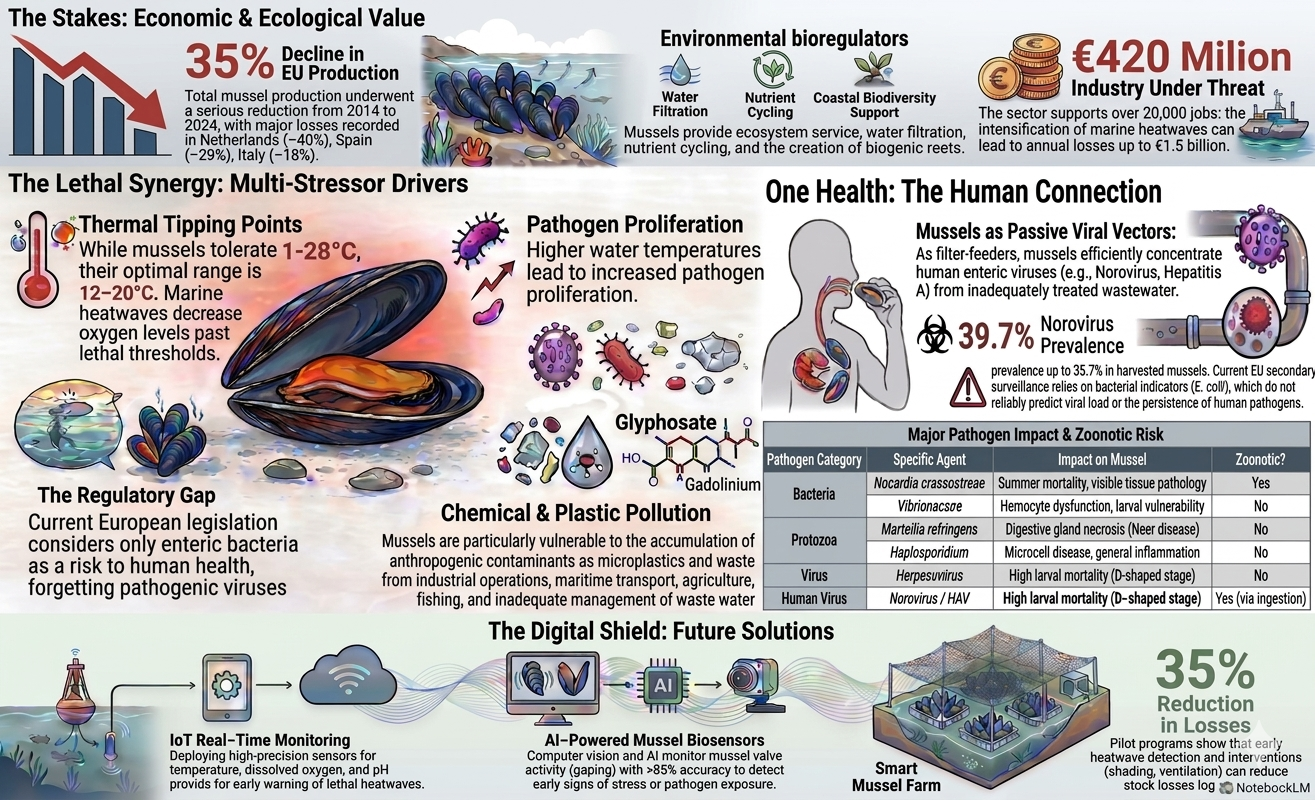
Figure 1. The complex multi-stressor scenario framed within the One Health and One Welfare paradigms.
Fishes 11 00190 g001
Figure 2. Different mussel farming systems.
Fishes 11 00190 g002
Figure 3. Linear trend of Sea Surface Temperature (SST) in the Mediterranean Sea during the period 1982–2024.
Fishes 11 00190 g003
Figure 4. Images of mortality events in a mussel farm in Varano (Apulia Region). (A) Dead adults of M. galloprovincialis mussels; (B) plantigrade form showing absence of vital M. galloprovincialis mussels (personal photos).
Fishes 11 00190 g004
Table 1. Pathogens affecting M. galloprovincialis and other marine organisms.
Family (Taxon)GenusSpeciesHostEffectsZoonosisGeographical AreaReferences
Ostreopsidaceae (dinoflagellate)Ostreopsis spp.Ostreopsis cf. ovataM. galloprovincialis, Paracentrotus lividus, HumansMMEs; risks to human healthNoGulf of Naples (Italy)[25,27]
Nocardiaceae (bacteria)NocardiaN. crassostreaeM. galloprovincialisMMEs in summer; lesion of connective tissue; digestive tract and multifocal hemocyte nodulesYesCatalonia (Spain), Gulf of Naples (Italy)[31]
Moraxellaceae (bacteria)Psychrobacter spp.-M. galloprovincialis NoAdriatic Sea[26]
Colwelliaceae (bacteria)Colwellia spp.-M. galloprovincialis NoAdriatic Sea[26]
Vibrionaceae (bacteria)Vibrio spp.V. splendidus, V. aestuarianus, V. coralliilyticus, V. mediterraneiOysters (C. gigas), M. spp.Summer mortality; hemocyte dysfunction; risk to larval stagesNo-[24,29,30]
Perkinsozoa (protozoa)Perkinsus spp.P. olseniGastropods, Clams, Oysters, M. galloprovincialisMMEsNoCatalonia (Spain), Gulf of Naples (Italy)[28,31]
Paramyxea (protozoa)MarteiliaM. refringensBivalve molluscs (M. galloprovincialis)Aber’s disease; MMEs associated with heat temperatureNoMediterranean Sea[13,21]
Haplosporidia (protozoa)BonamiaB. ostreae, B. exitiosaOstrea edulis, M. spp.Microcell diseaseNoMediterranean and Adriatic Sea[26]
Haplosporidia (protozoa)Urosporidium---NoAdriatic Sea[26]
Haplosporidia (protozoa)HaplosporidiumH. edule, H. tumefacientis, H. mytilovum, H. pinnaeM. edulis, Pinna nobilisNecrosis of the digestive gland and mantleNoAdriatic Sea[26]
Haplosporidia (protozoa)MinchiniaM. tapetis, M. mercenariae, M. mytiliCerastoderma edule, M. spp.Necrosis of the digestive gland and mantleNoAdriatic Sea[26]
Picornaviridae M. galloprovincialisChronic inflammatory; granulocytomas in digestive gland and mantle; damage of connective tissue [32]
Disclaimer/Publisher’s Note: The statements, opinions and data contained in all publications are solely those of the individual author(s) and contributor(s) and not of MDPI and/or the editor(s). MDPI and/or the editor(s) disclaim responsibility for any injury to people or property resulting from any ideas, methods, instructions or products referred to in the content.