


Abstract
The single mental barbel is a distinctive feature of the benthic Antarctic fishes of the «cryonotothenioid» subfamily Artedidraconinae. These barbels are unusual because their primary sensory modality is tactility, not chemosensation as in most other teleosts. They also exhibit considerable interspecific and intraspecific variation in length and in the appearance of the terminal expansion and its epidermis. Barbels range from short to long and the terminal expansion can be nonexistent, small and round, or large and oblong. In most species, the epidermal surface of the terminal expansion exhibits projections of various shapes and sizes. These range from smooth and furrowed, to ridged and furrowed, to pointed, to palmate (having lobes originating from a common point), and to fringed and leaf-like. Barbels are also subject to intraspecific variation among the species in the genera Dolloidraco, Histiodraco, Artedidraco and Pogonophryne. The various epidermal surface patterns all increase the sensory surface area exposed to the substrate and may enhance detection of their prey, primarily polychaetes. They also enhance surface roughness of the epidermis, thereby dissipating mechanical forces and providing some protection from abrasion by the substrate. The various patterns are likely an epigenetic response to different local conditions of the substrate. This variation warrants caution in their use as a defining taxonomic character.
Key Contribution:
The single mental barbel is a unique characteristic of benthic Antarctic fishes of the subfamily Artedidraconinae. Unlike those in most teleosts, the barbel has a tactile rather than chemosensory function. It exhibits inter- and intraspecific variation in length, shape of the terminal expansion and patterning of its epidermal surface. There is likely an epigenetic explanation for the various patterns; all serving to reduce friction and abrasion and enhance detection of polychaete prey.
1. Introduction
The sensory modalities of bony fishes are linked to their ecology, especially in facilitating movement, locating resources, avoiding predation and communicating with conspecifics. These systems include vision, mechanosensation, chemosensation, audition, somatosensation, and in a relatively small number of species, electroreception. It is not surprising that there is considerable research focused on vision as it is generally regarded as the dominant sensory system in many fishes [1], although mechanosensation is also essential, and the prevailing sense in some taxa [2,3]. In other species, the chemosenses (olfaction, taste and solitary chemosensory cell sensation) and tactility are more important [4]. Somatosensation (tactility) is an underappreciated sense used by fishes to assess substrate texture and the vibration caused by the movement of prey [5]. Tactility and chemosensation can be extended into the environs in front of the mouth by one or more whisker-like elongations that evolved independently in many taxa—the barbels. Barbels are well-innervated sensors that allow the recognition of prey. They are named for their location on the head: maxillary, mandibular, rostral, mental and hyoid [6]. Barbel development and regeneration in teleosts are regulated by chemokine C-C motif ligand 33 (ccl33), a signaling gene that provides directional information for migrating cells. It is present in fishes with barbels and is absent in those without [7].
Barbels are found in thousands of species of freshwater and marine fishes ranging from Agnathans to Perciformes and are especially widespread in the speciose freshwater taxa Cypriniformes (carps, loaches, minnows) and Siluriformes (catfishes) [8]. In some taxa, the Cyprinidae for example, the presence of barbels among the various species is intermittent. In others, the Mullidae (goatfishes) for example, they are the defining feature of the taxon. The prevalence of barbels in some freshwater and deep-sea taxa probably reflects the diminished water clarity and darkness that compromises vision in rivers and ocean depths, thus requiring more reliance on non-visual senses, especially mechanosensation, chemosensation and tactility [9,10,11]. In deep waters where visual cues are limited, barbels are a key adaptation that increase perception of the surroundings by contact that reveals the composition of the substrate and the tactile and chemical signatures and mechanical movements of prey. It is worth emphasizing that, to be located, potential prey must come into direct contact with the barbel [12]. Finally, barbels should not be confused with cirri, filamentous or fleshy appendages on the head that have a core but lack the musculature and flexibility of barbels. Like barbels they do have sensory capabilities, but they serve primarily as camouflage or play a role in mating behavior in species of the Blenniidae [13].
The receptors in barbels are free nerve endings, taste buds and solitary chemosensory cells. General sensation (touch, proprioception, vibration, pain, temperature and pressure) is via the mandibular division of Cranial Nerve V (Trigeminal), whereas chemosensation is through the recurrent branch of Cranial Nerve VII (Facial) [14]. Solitary chemosensory cells are probably tuned to dilutions of fish body mucus and bile rather than to food. They sample the ambient water for the upstream presence of conspecifics, competitors and predators [9,15,16]. The epitome of barbel functional specialization is probably represented by the two stiff chin barbels of goatfishes (Mullidae). These modified branchiostegal rays are mobile and used to probe and excavate the substrate for prey that is detected by taste buds on the barbel that are somatotopically represented in the dorsal lobe of the Facial Nerve in the brain stem [17,18]. In another mullid, Upeneus tragula, taste buds compose a remarkable 50% of the barbel surface area at the time of transition from pelagic to benthic life [19].
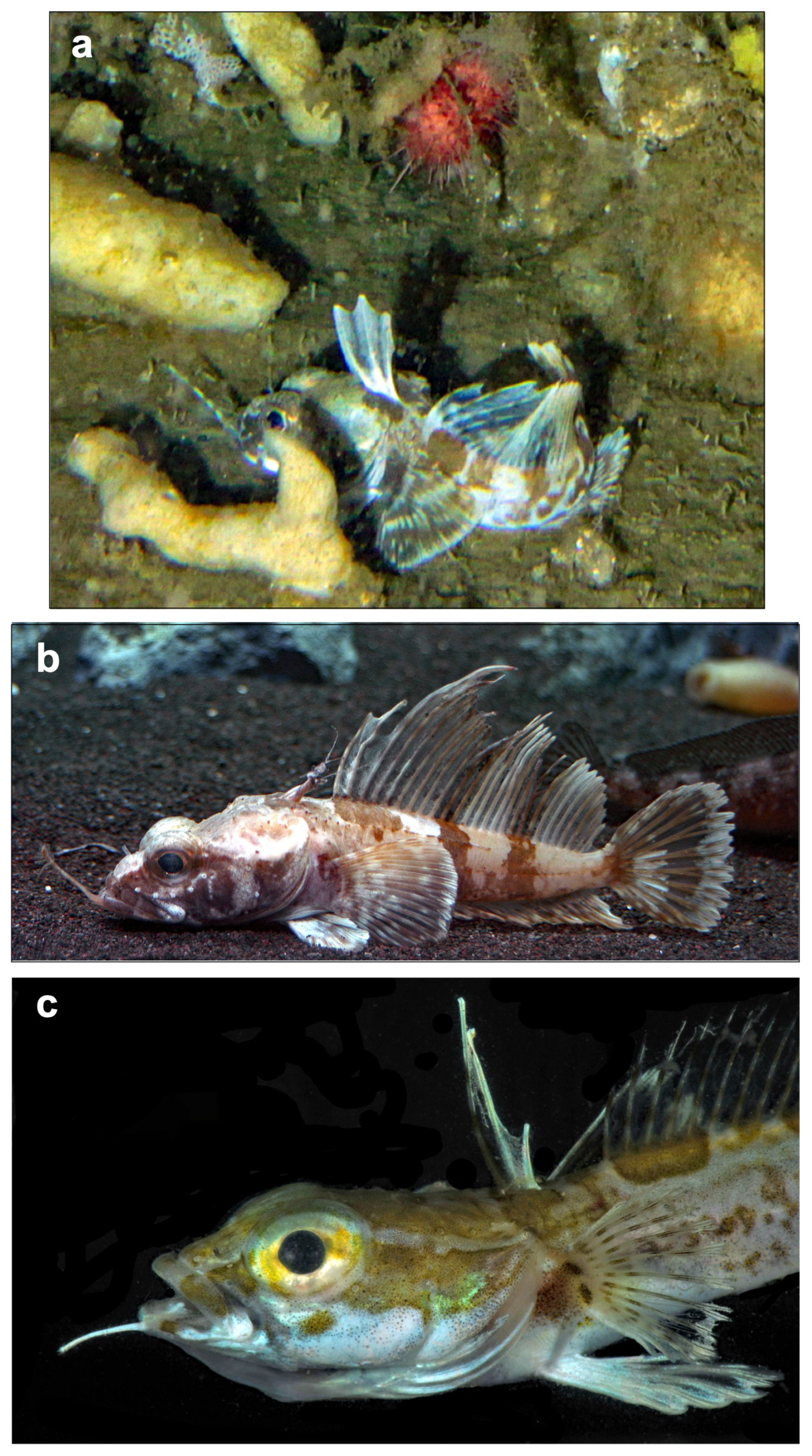
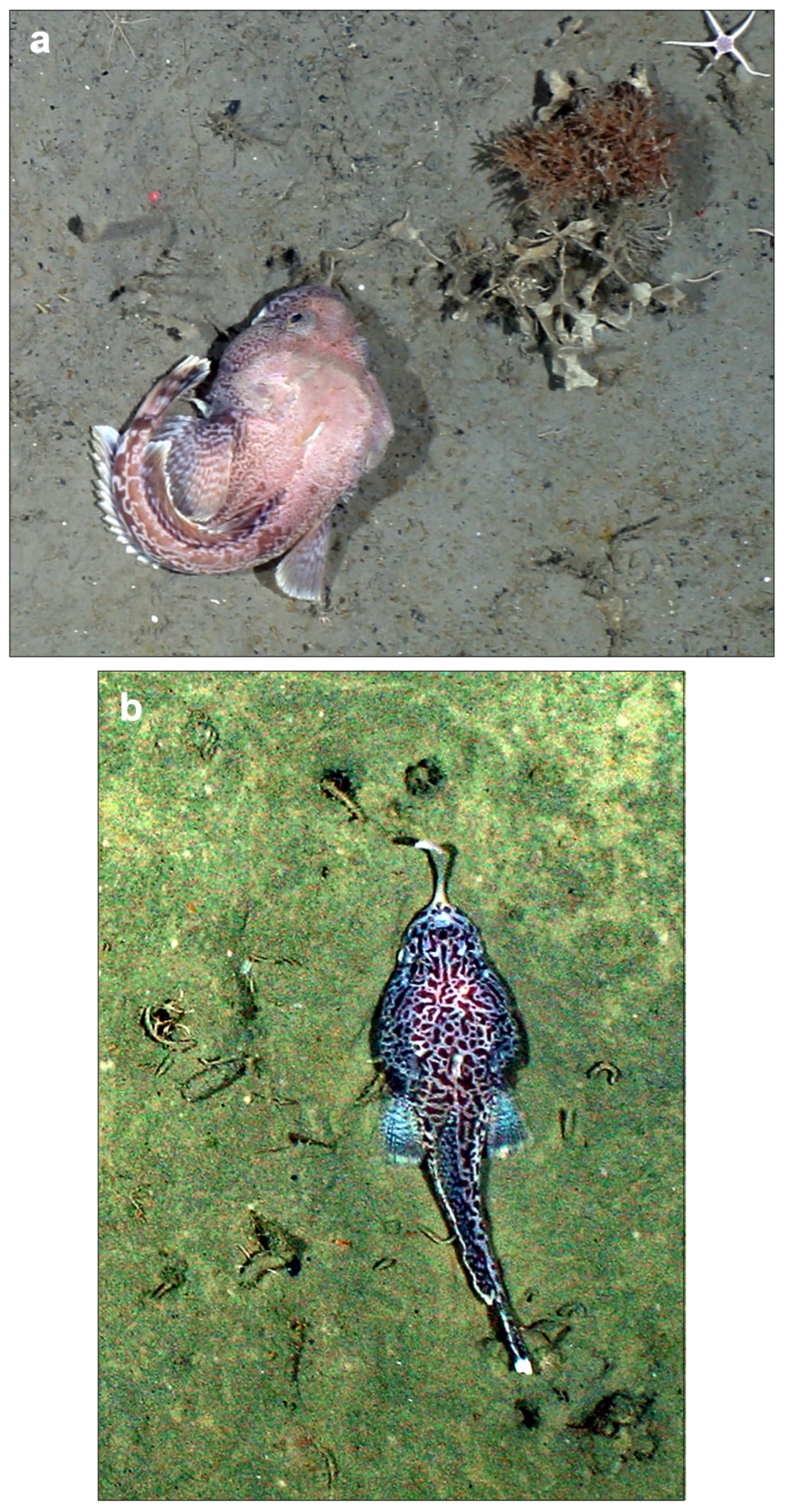
The significance of the fish barbel as a highly sensitive tactile organ is understudied and underappreciated [4]. Species of the Antarctic perciform fish subfamily Artedidraconinae are unusual among «cryonotothenioids», the dominant group of Antarctic fishes, in possessing a mental barbel with a tactile rather than the chemosensory function which is typical of most fish barbels (Figure 1 and Figure 2). The barbel also exhibits considerable morphological variability between and within species. Here, we integrate information on the structure, function and variation in the artedidraconine mental barbel. To exemplify the magnitude of intraspecific variation, we highlight seven species or species groups that encompass four of the five artedidraconine genera. Finally, we consider the consequences of recent taxonomic realignments on the scope of intraspecific variation in the barbel and, therefore, on its value as a reliable species-specific taxonomic character.
Figure 1.
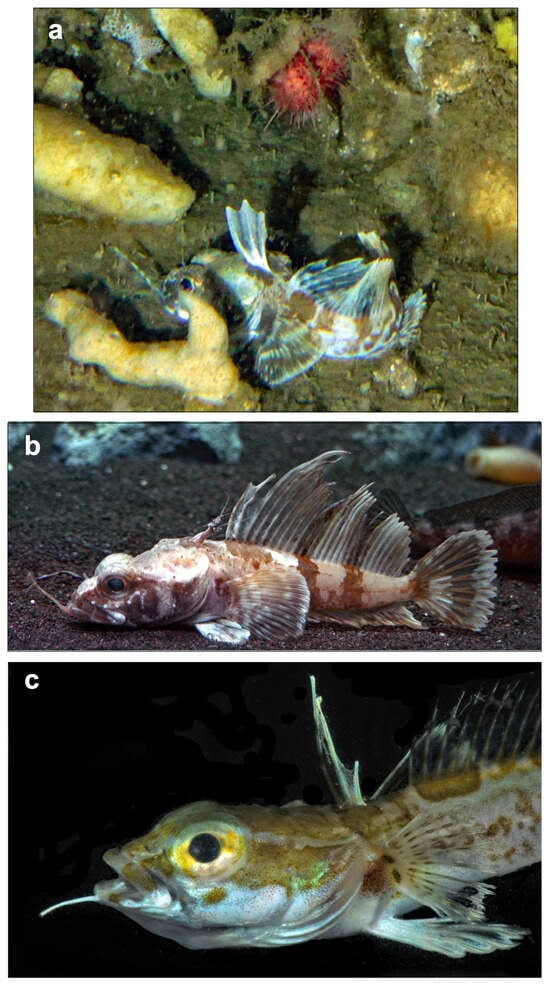
Histiodraco velifer (a,b) on typical soft benthic substrates in Antarctic shelf waters. The extended barbels are evident. Head and barbel of Neodraco lonnbergi (c).
Figure 2.
Pogonophryne scotti (a) and a member of the P. mentella group (b) on soft substrates and with barbels extended.
2. Taxonomy and Nomenclature of Artedidraconines
There are 140 species of «cryonotothenioid» fishes, the group that radiated in and dominate the shelf waters of the Southern Ocean surrounding Antarctica [20,21]. One hundred and ten species have an Antarctic distribution and 30 are non-Antarctic [22]. However, recent revisions have reduced the number of species in some taxa. We follow [23] in employing the colloquial rank-free name «cryonotothenioids» for the five families formerly known as “the Antarctic clade”. Left («) and right (») guillemets (double chevrons) indicate that this name is not compliant with the International Code of Zoological Nomenclature and therefore not capitalized [24] (pp. 48–49).
The Artedidraconidae (plunderfishes), traditionally a family [25,26], was recently incorporated into the Harpagiferidae (spiny plunderfishes) on the basis of genome-scale sequence data [27,28] (pp. 157, 216), [29] (p. 822). The six species of harpagiferids lack a barbel and have a peripheral, rather than a high latitude, distribution in the Southern Ocean. With these taxonomic reassignments, the barbeled plunderfishes are now considered a subfamily, the Artedidraconinae [30], that traditionally included 36 species in four genera: Pogonophryne (27 species), Artedidraco (7), Histiodraco (1) and Dolloidraco (1) [22]. However, other recent revisions, also based on genome-scale sequence data, now recognize only 5–6 species of Pogonophryne instead of 27 [27], and a new genus, Neodraco, has been erected to contain two species formerly in Artedidraco [30] (p. 665). These changes have been incorporated into Eschmeyer’s Catalog of Fishes [31]. Therefore, when addressing interspecific and intraspecific differences in the barbel morphology of species of Pogonophryne, we have accommodated these revisions by incorporating the data for the synonymized species of Pogonophryne into one of the 5–6 species now considered valid.
3. Biology of Artedidraconines
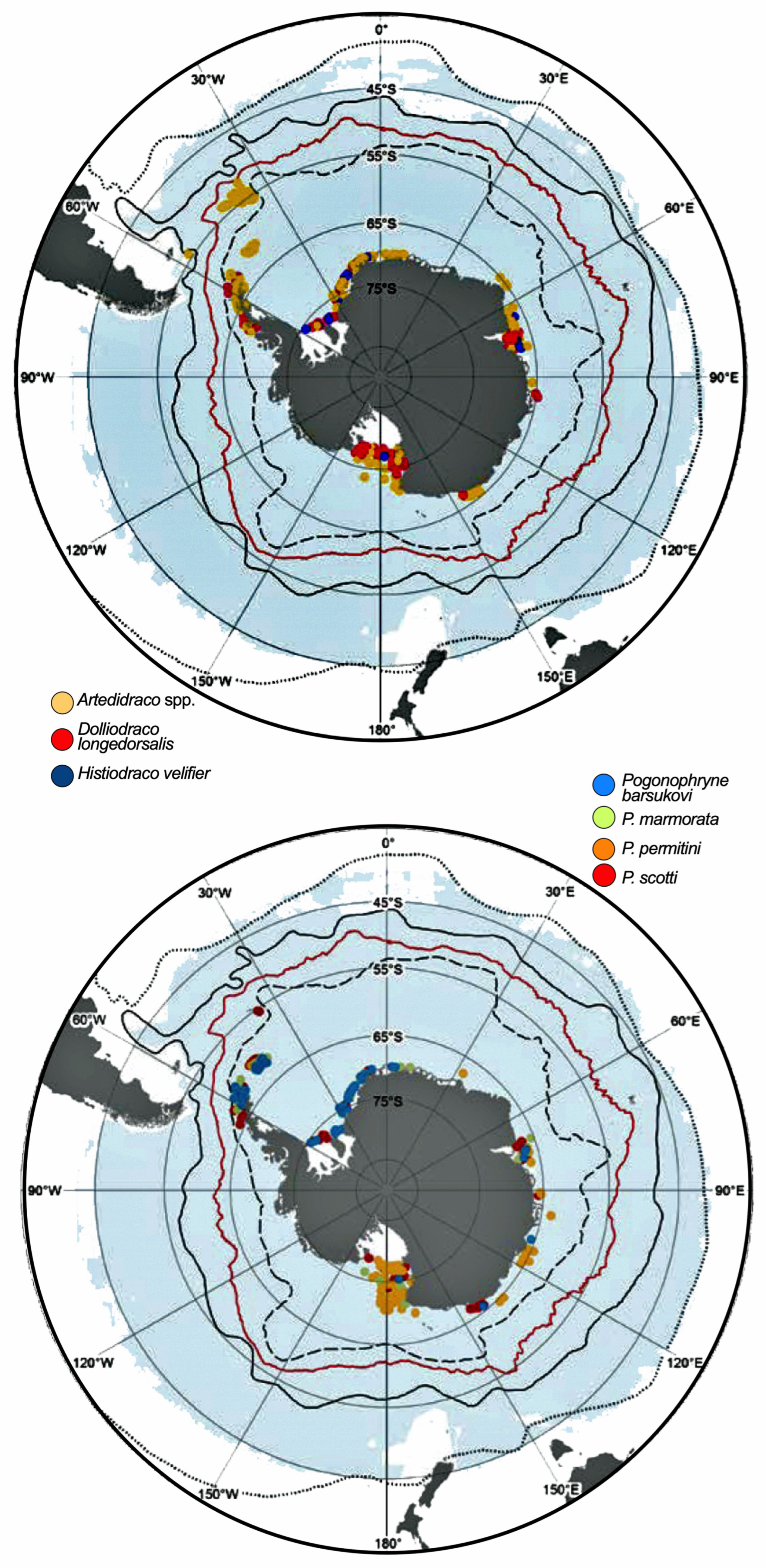
In the sub-zero shelf waters around Antarctica, the «cryonotothenioids», a perciform group of five families and 128 species, dominate fish diversity, abundance, and biomass at levels of 77%, 92%, and 91%, respectively [21]. Figure 3 shows the distribution of representative species of the subfamily Artedidraconinae in the waters of the Southern Ocean. Four species of this taxon are the subject of this review of the morphology, function, variability and taxonomic significance of their single mental barbel, a unique feature among the «cryonotothenioids». Artedidraconines are small to medium size (100–370 mm TL) benthic fishes found in continental shelf and upper slope waters around the Antarctic continent and adjacent islands [26]. The species of Artedidraco and Neodraco are generally found at depths of 100–800 m and Dolloidraco longedorsalis at 99–1243. The actual depth range for a given population is usually more constricted. For example, a sample of D. longedorsalis in the southeastern Weddell Sea was collected between 388 and 751 m [32]. Histiodraco velifer are generally found at 210–910 m, and the various species of Pogonophryne from about 300–1500 m, with one outlier at 2542 m [21,33].
Artedidraconines are sedentary—the heaviest and least buoyant «cryonotothenioid» taxon [34,35]. Based on video recordings of movement, a species of Pogonophryne remained stationary for 22 h [36]. As documented by in situ photography, a female P. scotti laid eggs in nests that were guarded by a male, the first evidence of such behavior in an artedidraconine [37]. To a greater extent than any other «cryonotothenioid» taxon, artedidraconines maintain a persistent and close physical contact with the substrate (Figure 1 and Figure 2). They are not an adaptive radiation within the larger «cryonotothenioid» radiation because their speciation was not accompanied or followed by significant phenotypic and ecological divergence [38] (p. 14). However, they do possess an evolutionary novelty [39] (p. 602)—the mental barbel. This unique morphological trait arose once during the divergence of «cryonotothenioids». It performs a function that opened a new adaptive zone, specifically, enhanced ability for comprehensive tactile detection of prey on soft benthic substrates, including information about the size, shape and surface texture of contacted objects [40].
Figure 3.
Distribution of representative species of the Artedidraconinae in the waters of the Southern Ocean surrounding Antarctica [41]. The blue area represents the pelagic realm. The solid and dashed lines represent various fronts with the red line indicating the Antarctic Polar Front, a major biological, oceanographic and climatic divide, as well as the northern range limit of many «cryonotothenioid» species including the artedidraconines.
The barbel of artedidraconines is not an accommodation for the regression of any of the other senses that remain typically developed in this taxon compared to those of other «cryonotothenioids» [42]. However, because vision is limited under sea ice at depths >50 m, mechanosensation (water flow and acoustic stimuli), chemosensation and somatosensation (touch and vibration) are of increased importance in most Antarctic «cryonotothenioids» [10,43,44,45,46].
4. Barbel Morphology
Interspecific differences in the artedidraconine barbel involve the length of the stalk, the size and shape of the terminal expansion at the distal end of the stalk, and the appearance of the epidermis of the terminal expansion. Interspecific barbel lengths range from short (≤15% of standard length) to medium (15–19% of SL) to long (20–30% of SL) [26]. The small species of the genera Artedidraco and Neodraco have relatively shorter barbels than those of larger species of Dolloidraco, Histiodraco and Pogonophryne. Some of the shortest barbels may be functionally insignificant. The terminal expansion ranges from small to large and its shape may be tapered, oblong or round. A terminal expansion is not present on the barbel of at least one species in each of the genera Artedidraco, Neodraco and Pogonophryne. The epidermis of the terminal expansion has variably shaped projections on its surface. These are dissimilar among species, and the shapes include irregular ridges and deep furrows (Figure 4a), conical or finger-like (Figure 4b,d), filamentous, leaf-like, palmate (Figure 4c), and convoluted, the latter resembling the smooth contours of the gyri and sulci of the mammalian cerebral cortex. In some species, there is noteworthy intraspecific variation in the appearance of the terminal expansion and its epidermis [47,48,49], as will be described later. It should also be mentioned that a few species, Histiodraco velifer, Pogonophryne permitini and P. barsukovi, also have small pointed or filamentous epidermal projections on the stalk of the barbel. Finally, the stalk of the barbel usually has a mottled dark and light color pattern like that of the body, and the terminal expansion is typically pale and unmarked. Exceptions include the reddish terminal expansions of the barbel of Pogonophryne orangiensis and of an unidentified species of Pogonophryne in the Museum of New Zealand-Te Papa Tongarewa. Red is lost from the color spectrum at a depth of 10 m and appears as black.
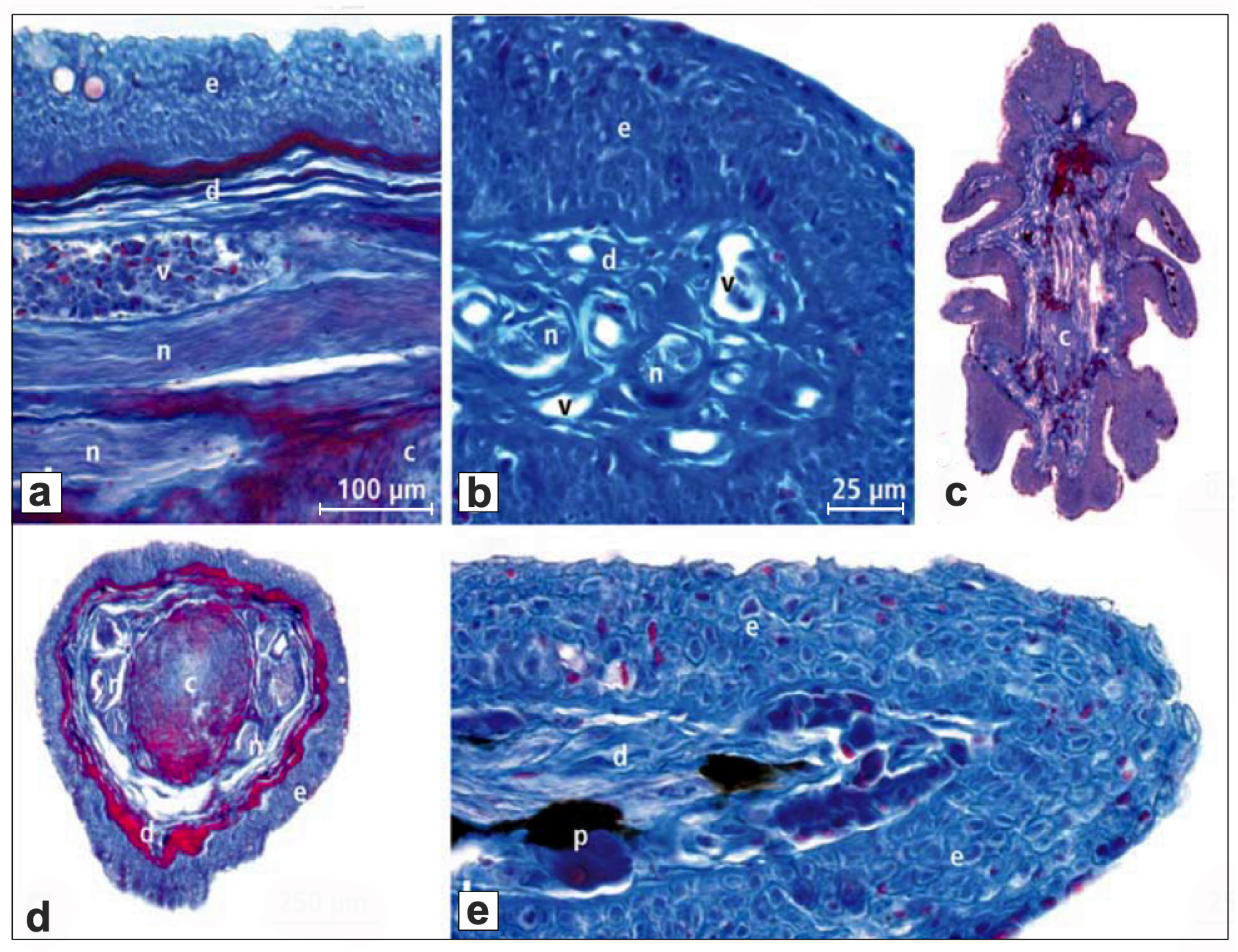
The barbels of the four species of artedidraconines studied to date have a similar histological composition [41,42,46,47,48]. The skin of the barbel consists of a stratified squamous epithelium underlain by a collagenous dermis (Figure 5). The skin also contains mucous cells that probably aid in reducing abrasion during contact with the substrate. The core of the barbel stalk is cartilage that contains relatively little ground substance [50]. The core extends from the anterior midpoint of the dentary bone to the middle of the terminal expansion in those species with a well-developed terminal expansion. The stalk frequently has small epidermal projections along its length. In Histiodraco velifer, the barbel contains blood vessels and large branches of the mandibular division of the Trigeminal Nerve located peripheral to the perichondrium of the core. Small branches of these nerves are likely proprioceptive fibers that monitor position of the barbel. Other branches of the trigeminal nerve also extend into the epidermis of the barbel of H. velifer [43]. Silver staining the barbel of another species, Dolloidraco longedorsalis, also reveals small nerve fibers, likely tactile and proprioceptive, in the epidermis [42], although in fishes these do not extend to the surface epithelial cells [51]. It should be noted that artedidraconines lack scales except for those in the lateral-line.
Figure 4.
Examples of the epidermal projections of the terminal expansion of barbels of artedidraconines. (a) Artedidraco shackletoni with deep irregular ridges and furrows and another specimen (b) with tubular projections, some with flattening of tips probably due to wear (white arrows). (c) Pogonophryne squamibarbata has palmate projections. (d) P. permitini has long, finger-like projections that are rounded at the tip. From: Ref. [49] (Figure 1b), Ref. [52] (Figure 1), Ref. [53] (Figure 2b) and La Mesa, unpublished.
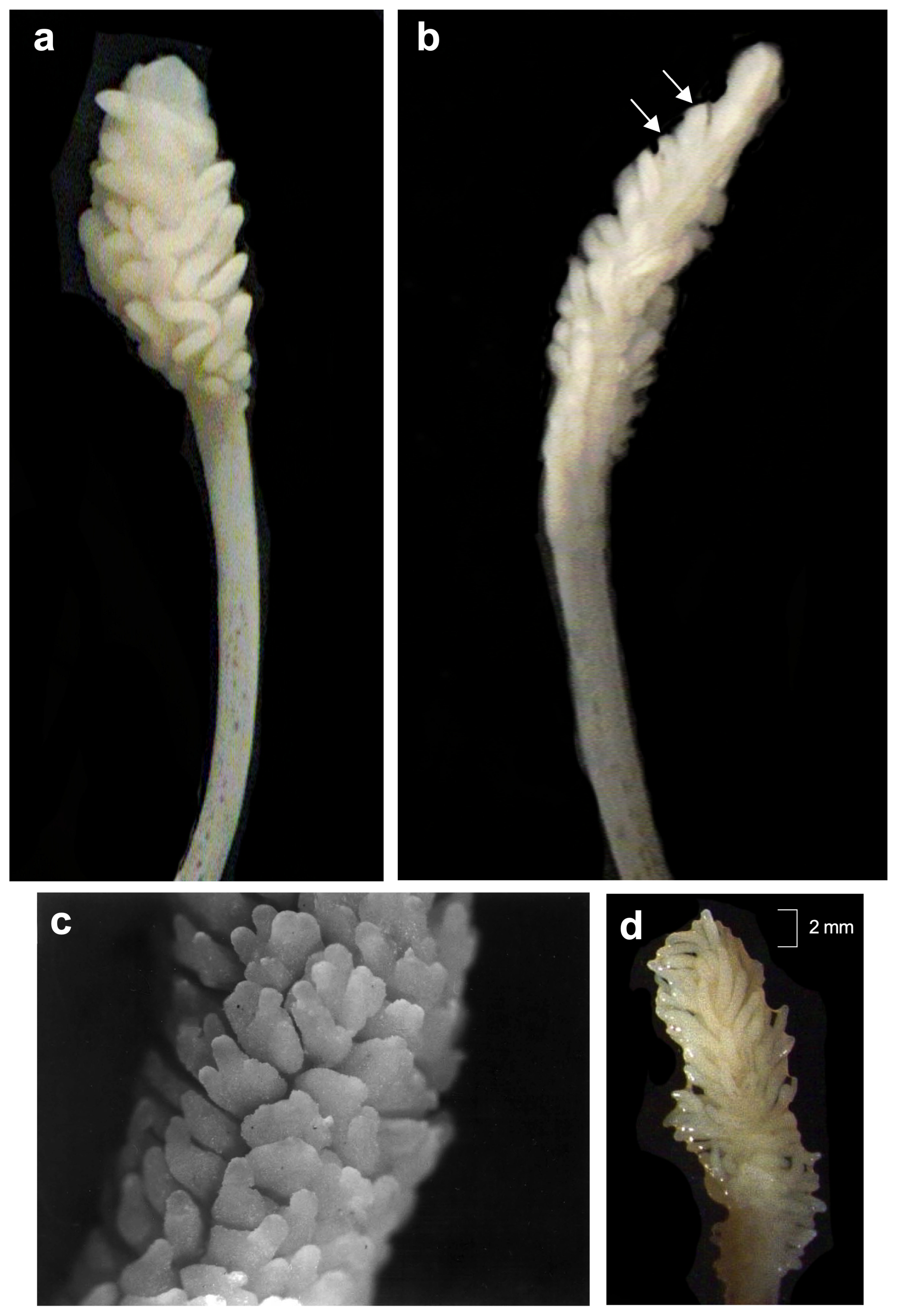
Figure 5.
Barbel histology of Artedidraco mirus. (a) Longitudinal section of distal stalk of Type B barbel
with large nerve trunks and blood vessels evident lateral to the core of barbel. Two mucous cells are visible in epithelium. (b) Longitudinal section of an epidermal projection of a Type C barbel showing epithelium with the connective tissue of the dermis beneath, collectively the epidermis. Blood vessels and nerves are evident within dermal projection. (c) Longitudinal section of the
terminal expansion of a Type C barbel showing the arrangement of the epidermal projection. (d) Cross section showing histological structure of stalk of a Type C barbel. (e) High magnification of portion of an epidermal projection of a Type C barbel showing layering of cells in stratified squamous epithelium and absence of taste buds. Dark melanin pigment is evident in dermis. Abbreviations: c, cartilaginous core of barbel; d, dermis; e, epithelium; n, nerve fibers; p, pigment (melanin); v, blood vessel. Stain: Gomori’s trichrome. Modified from [49] (Figure 1).
5. Barbel Innervation and Related Brain Morphology
The oral barbels of most fishes are associated with an expansion of chemosensation as reflected by the presence of taste buds and, sometimes, solitary chemosensory cells that allow this modality to be extended into the water and substrate anterior to the mouth. However, artedidraconines do not have taste buds on the barbel and lack the ramus lateralis accessories of the Facial Nerve [14] that would innervate these buds. As expected, the associated taste region of the brain—the facial lobes of the medulla—is not noticeably enlarged [42]. Species without taste buds on the barbel include Pogonophryne scotti [48], Dolloidraco longedorsalis [42,47], Histiodraco velifer [43] and Artedidraco mirus [49]. Dolloidraco longedorsalis, however, does have a few taste buds on the intermandibular skin of the head that are innervated by the Trigeminal Nerve [42]. It should be noted that low ambient water temperatures adversely affect the renewal rate of taste buds in fishes [54]. Finally, there have been no attempts to document the presence of solitary chemosensory cells in artedidraconines. These isolated, individual cells are found throughout the epidermis of bony fishes, especially in the head region [9,15,55]. While not present in artedidraconine barbels, they are evident and scattered throughout the head epidermis of another «cryonotothenioid», Trematomus newnesi [56].
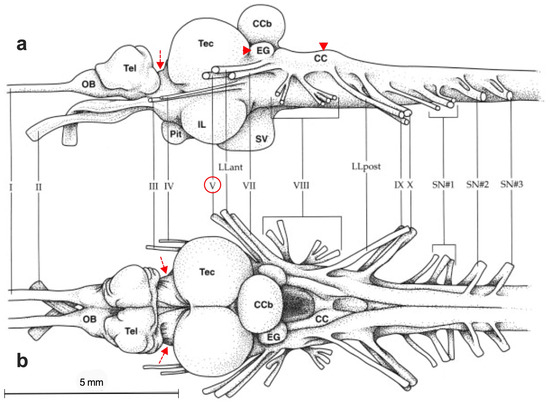
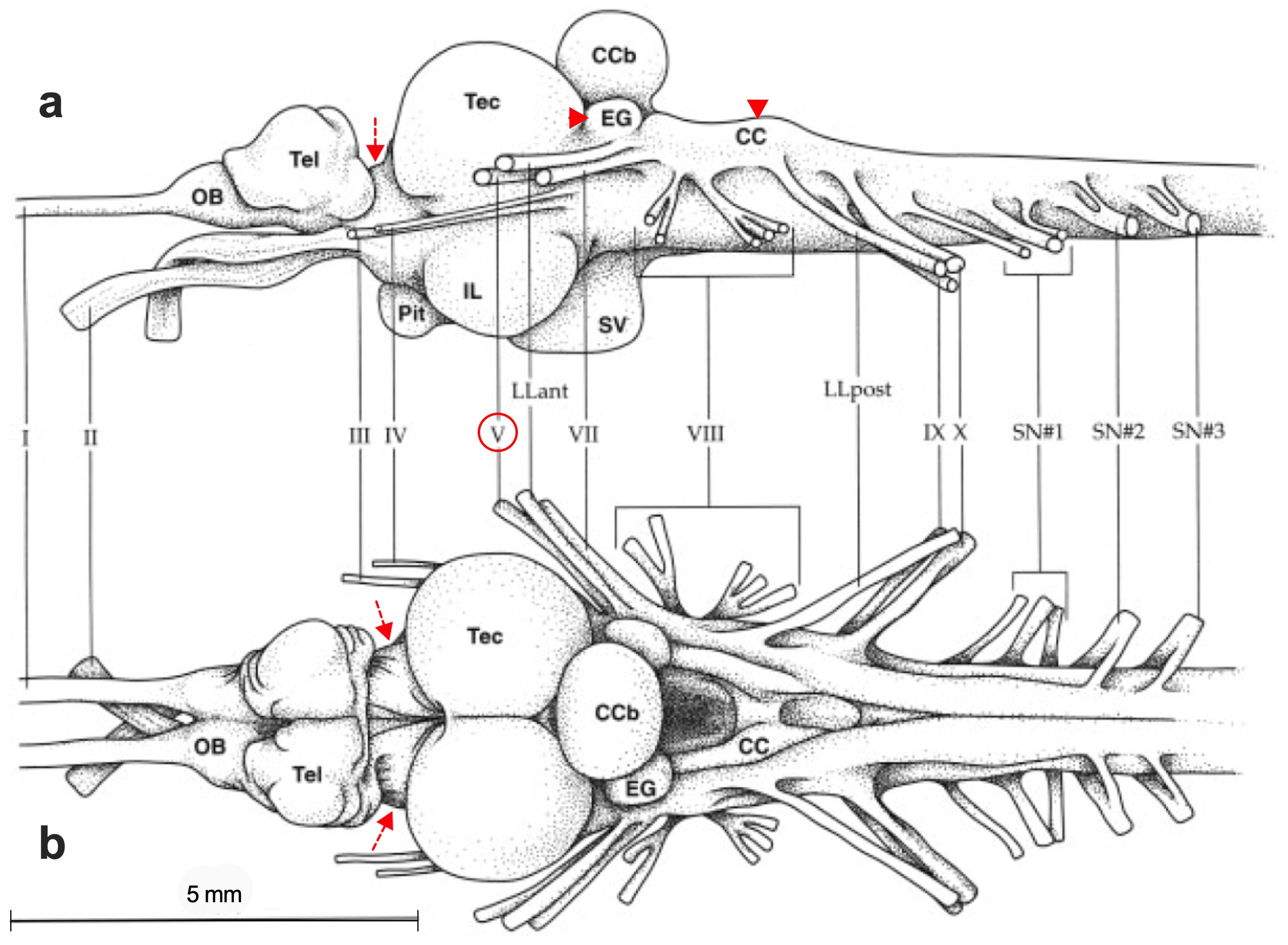
The brain morphology of Dolloidraco longedorsalis (Figure 6) is representative of the artedidraconine and displays features associated with habitation of deep water, especially a reduction in overall brain mass [42], a feature also evident in other deep living «cryonotothenioids» [21]. Decreased brain mass in diverse marine teleosts is positively correlated with habitation of greater depths [57]. Neural tissues are metabolically demanding [58] and subject to loss of mass among species living in energy-limited environments such as the deep ocean. In some of the deeper living «cryonotothenioids» this is manifest by “stalking” of the brain, meaning that a reduction in the neuropil of the lobes exposes the axis (base) of the brain between lobes. In lateral and dorsal views of the brain of D. longedorsalis, it is evident that the telencephalon and tectum are reduced, rendering the neural axis (stalk) visible (Figure 6, red arrows). Although the tactile capability of the D. longedorsalis barbel is not reflected in external brain morphology, histological sections of the brain reveal an enlarged chief sensory nucleus of the Trigeminal Nerve [42]. The Trigeminal Nerve (Figure 6) is responsible for somatosensation in the head [59] (p. 262), and its branches extend into the skin of the barbel providing tactility and proprioception. It should also be noted that in D. longedorsalis lateral-line mechanosensation is also well-developed as manifest by the prominent eminentia granularis and crista cerebellaris in the medullary region of the brain (Figure 6, red arrow heads).
Figure 6.
In lateral (a) and dorsal (b) views the brain of Dolloidraco longedorsalis exhibits a loss of mass with depth as reflected in the reduced size of the telencephalon and small corpus cerebelli that results in exposure of the neural axis (red arrows) between the lobes of the brain. Tactile sensation is reflected in the relatively large size of the Trigeminal Nerve (V). Lateral-line mechanosensation (red arrow heads) and vision (Tec) are also well-developed. Abbreviations: CC, crista cerebellaris of the rhombencephalon; CCb, corpus division of the cerebellum; EG, eminentia granularis division of the cerebellum; IL, inferior lobe of diencephalon; LLant, anterior lateral-line nerve; LLpost, posterior lateral-line nerve; OB, olfactory bulb; Pit, pituitary gland; SN1, first spinal nerve; SN2, second spinal nerve; SN3, third spinal nerve; SV, saccus vasculosus; Tec, tectum of the mesencephalon; Tel, telencephalon; I, olfactory nerve; II, optic nerve; III, oculomotor nerve; IV, trochlear nerve; V, trigeminal nerve; VII, facial nerve; VIII, auditory/vestibular nerve; IX, glossopharyngeal nerve; X, vagus nerve. Modified from [42] (Figure 2).
6. Barbel Function
In artedidraconines with long barbels, the barbel can be elevated in the mid-sagittal plane to about 45° above the substrate. Two slips of the protractor hyoidei, a ventral head muscle with tendons that insert on the proximal core of the barbel, are responsible for this movement [60] (p. 244). Branches of the Trigeminal Nerve to the skin of the barbel extend tactility (position, vibration and displacement) anterior to the mouth for the detection of benthic prey. Barbels with longer and wider terminal expansions have a greater surface area exposed to the substrate for detection of prey. Dolloidraco longedorsalis has a long barbel (12–21% of SL) and a depth range of 500–1200 m. Proprioceptive fibers to the perichondrium monitor the position of the barbel, and nerve fibers to the skin of the barbel extend tactile sensation in front of the mouth [42]. Observations of a captive specimen Neodraco skottsbergi, a species with a short barbel (3.8% of SL), gave no indication that the barbel is used in feeding. This small drooping barbel is incapable of movement [61] and probably borders on functional insignificance, as is true for other species with short barbels such as N. lonnbergi (6.2–8.5% in SL).
It should be noted that, despite some early research to the contrary, the artedidraconine barbel does not serve as a lure. Observations by SCUBA divers on Histiodraco velifer in its natural habitat and in laboratory experiments suggested that the long barbel (20–29% of standard length) of this species could be used as a lure, at least in shallow water [43]. An individual occupying a depression in a muddy substrate at a depth of 25 m in McMurdo Sound was observed by divers to move the barbel up and down over the rim of a depression it occupied. In laboratory experiments, pinching, but not chemical stimulation, evoked a strike and inhalation of the barbel. [43] characterized H. velifer as “a tactually responding anglerfish”. However, in other experiments with H. velifer, captive specimens did not move their barbel to lure prey although numerous touches of prey to the barbel did result in strikes [61]. Experiments with P. marmorata produced similar behavior, with the base of the terminal expansion exhibiting the greatest sensitivity. Therefore, given the > 300 m depths at which most artedidraconines live [33] and that their diet is dominated by polychaetes, it is unlikely that the barbel of any species serves as a lure.
7. Habitat Preference, Feeding and Diet of Artedidraconines
Remotely operated vehicle transects and photographic surveys carried out off the Antarctic Peninsula and in the Ross and Weddell Seas provide insight into the preferred substrate preferences of artedidraconines. They are most frequently found in areas of high benthic diversity such as stands of motile (ophiuroids) and sessile (sponges, bryozoans and hydrozoans) invertebrates that are sparsely or patchily distributed (Figure 1 and Figure 2). At these sites, they occupy the fine sediments that are free of stones and biogenic debris in areas between stands of epifauna. Here, they reside on the substrate or, rarely, perch on the top of large glass sponges [32,62,63,64,65]. This is also where their primary prey, polychaetes, are found. The barbel discerns the nature of the substrate and the presence of potential prey in the vicinity of the mouth. This screening function of the barbel is based solely on its tactile capability.
Artedidraconines are typical specialized benthic feeders, remaining motionless on the substrate, adopting a sit and wait strategy [66,67]. The genera with smaller-sized species (i.e., Artedidraco, Dolloidraco and Histiodraco) feed primarily on sedentary and errant polychaetes and, to a lesser extent, on amphipods (gammarideans) and isopods [66,67,68,69,70,71,72,73]. The diet of the larger artedidraconines (Pogonophryne spp.) includes a wide variety of benthic and suprabenthic crustaceans (gammarideans, isopods, mysids and decapods) and, occasionally, fishes [68,69,70,71,72,74]. Some studies indicate there is dietary specialization and niche partitioning in taxa from the Weddell Sea [72] and the Ross Sea [73]. In the western Ross Sea, for example, Artedidraco glareobarbatus and A. shackletoni feed primarily on epifaunal polychaetes while the smaller species, Neodraco lonnbergi and N. skottsbergi, have a broader diet that also includes crustaceans, such as gammarideans amphipods and cumaceans, which are small peracarid crustaceans [73].
Multivariate ordination techniques used for exploring ecomorphological trends among artedidraconine genera indicate that species with longer barbels and larger eyes, mouths and otoliths live at greater depths [72]. Cephalic mechanosensation and tactility are the dominant senses at the 300–1500 m depths where most artedidraconines are found [33]. A barbel with a larger terminal expansion increases the area of sensory coverage both when the barbel is stationary and when it is swept across the substrate anterior to the mouth. The various epidermal configurations of the terminal expansion all increase the sensory surface area (Figure 4). Insight is lacking into whether there is a relationship between specific epidermal patterns and enhanced detection of prey. However, given the intraspecific variability in the epidermal configurations described below and a diet consisting primarily of polychaetes, it is possible that there is no relationship.
8. Intraspecific Variation in the Barbel
Intraspecific variation is frequently encountered in the counts of meristic elements of fishes, including the «cryonotothenioids». Examples in the latter involve vertebrae [75], fin rays and scales [26], and even less conspicuous soft tissue features such as the number of pyloric ceca [76]. Therefore it is not surprising that the mental barbel of some artedidraconine species would also be subject to variation especially in overall length, in the size and shape of the terminal expansion and in the appearance of its epidermal surface. “It cannot be assumed that the barbel of an artedidraconine species is a reliable diagnostic trait until the extent of its stability or variability has been established” [49] (p. 45). Neither the morphology nor the growth of the barbel is sexually dimorphic [47,48,49,77,78]. However, as the following examples demonstrate, the barbels of the artedidraconine species studied to date exhibit variation in the size, shape, and degree of development of the terminal expansion and, especially, in the pattern of its epidermis.
8.1. Histiodraco velifer (Figure 7)
Description: The barbel is long (20–29% of standard length), expanded distally with fringe-like processes of various lengths and diameters [26].
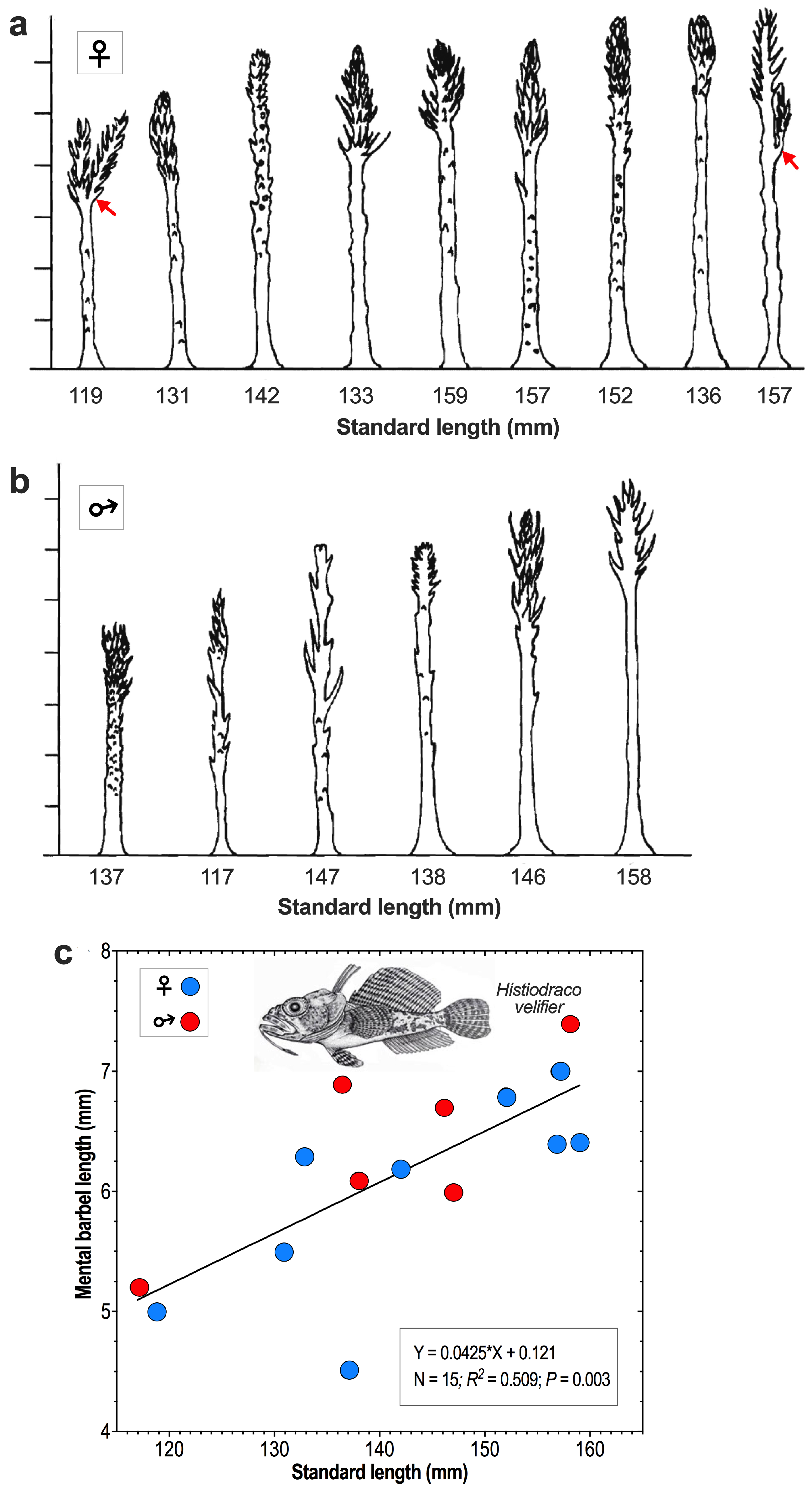
Variation (Figure 7a,b): This involves the length of the barbel and the number and appearance of the tapered, fringe-like processes that adorn the slight terminal expansion [26,77] (p. 28). There are also some small processes on the stalk. Although there is a positive relationship between standard body length and barbel length, it is not robust with standard length accounting for only about 50% of the variability (Figure 7c). In this sample of 15 specimens, the positions of the color-coded dots indicate that the barbel is relatively longer in males. The numerous variably sized epidermal projections on the terminal expansion increase the sensory surface area that contacts the substrate. Notably, the barbels of two specimens show small bifurcations of the stalk, as indicated by the red arrows in Figure 7a.
Figure 7.
Intraspecific variation in the length of the mental barbel and in the appearance of the stalk and terminal expansion in nine female (a) and six male (b) specimens of Histiodraco velifer, with data for both sexes combined and graphed (c). Barbels are arranged horizontally in order of increasing standard length of the specimen. The values of the hash marks on the ordinate are unknown and not provided in the source. Note the unusual branching of the stalk (red arrows) in two of the female specimens. Panels a and b modified from [77] (Figure 4). Fish image from [26].
8.2. Dolloidraco longedorsalis (Figure 8)
Description: The barbel is long (12–21% of standard length) and usually has a rounded terminal expansion of variable size, although some individuals lack a terminal expansion [26,47].
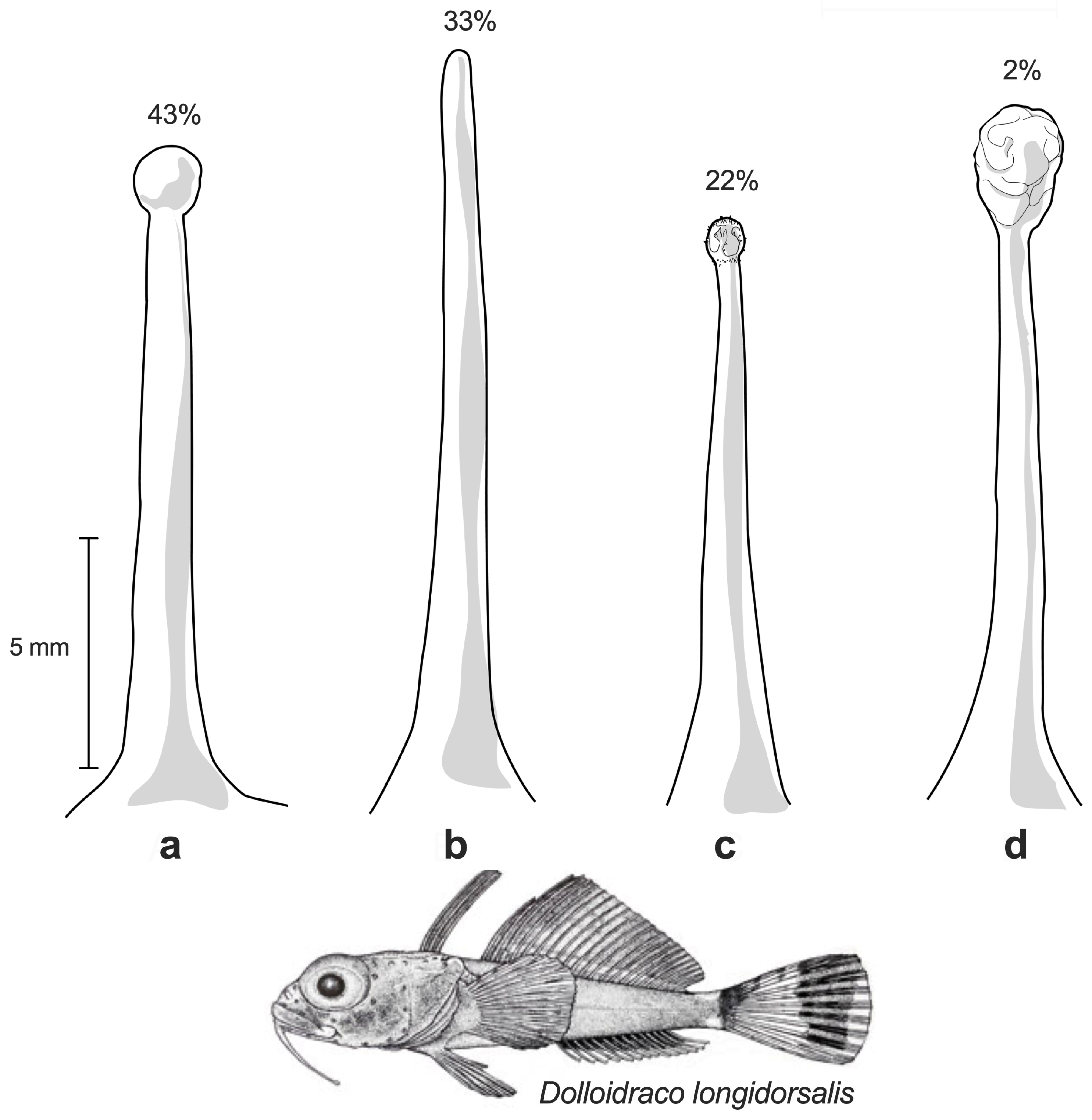
Variation (Figure 8): A sample of 58 specimens revealed four types of barbels based on relative size of the terminal expansion: (a) expanded and round (43%), (b) tapered without a terminal expansion (33%), (c) small with the epidermis showing ridges and small papillae (22%) and (d) large and slightly oblong with epidermal ridges and furrows (2%). Types a and b comprise 76% of the sample. There is no relationship between barbel type and sex or body length and sex [47]. Reference [78] also noted the absence of sexual dimorphism in the barbel variants in Dolloidraco longedorsalis but, contrary to our findings, found that only about one-third of their sample possessed a barbel with a terminal expansion. We suspect that most of the variation in the barbel of this species is functionally insignificant; however, the variant in Figure 8d has a larger terminal expansion with modest ridging and furrowing and may have more epidermal surface area.
Figure 8.
Intraspecific variation in the mental barbel of 58 specimens of Dolloidraco longedorsalis from the Ross Sea, arranged from most to least common types based primarily on the appearance of the terminal expansion. Views are of the dorsal side of extended barbel and are drawn at the same magnification. (a) Expanded (43%). (b) Straight with no terminal expansion (33%). (c) Slight terminal expansion (22%) and epidermis with both ridges and small projections. (d) Large terminal expansion (2%) with a distinct pattern of ridges and shallow furrows in the epidermis. Modified from [47] (Figure 2). Fish image from [26].
8.3. Artedidraco mirus (Figure 9)
Description: The barbel is short, 7.4–11% of standard length and is either tapered or has a terminal expansion with conical or branched and convoluted epidermal projections [49].
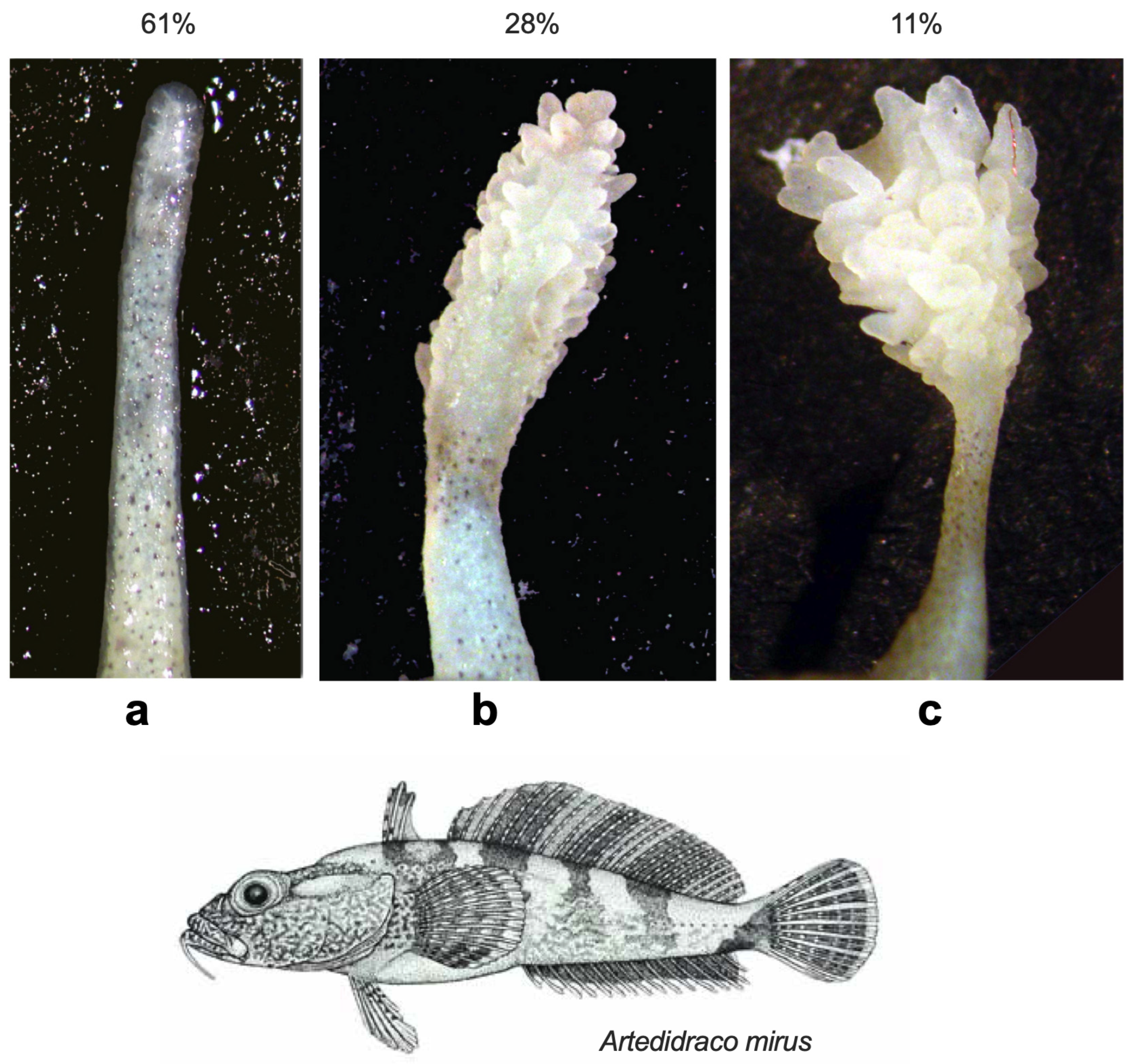
Variation (Figure 9): A sample of 28 specimens included three types of barbels: (a) slightly tapered with no terminal expansion (61%), (b) large terminal expansion with thick tubular epidermal projections (28%) and (c) large, wide terminal expansion with irregularly shaped tubular or triangular epidermal projections (11%). There is no correlation between barbel type and sex or body size.
Figure 9.
Intraspecific variation in the terminal expansion of the mental barbel of 28 specimens of Artedidraco mirus, arranged from the most to the least common types. (a) Slightly tapered without a terminal expansion (61%). (b) Narrow terminal expansion and conical epidermal projections (28%). (c) Wide terminal expansion and convoluted or branched epidermal projections (11%). All are dorsal views of the extended barbel. Modified from [49] (Figure 1). Fish image from [26] (Figure 3).
A related species, Artedidraco glareobarbatus, now conspecific with A. shackletoni [30] also exhibits variation in the epidermal pattern of the terminal expansion [52]. The typical pattern is either densely packed, blunt and somewhat flattened, irregular projections, as in the type specimen, or convoluted ridges separated by deep furrows. However, a distinctive variant had an epidermal pattern consisting of well-defined, irregularly shaped ridges separated by deep, distinct furrows.
8.4. Pogonophryne scotti (Figure 10)
Description: The barbel in this species is extremely variable in length (5.1–24.1% of standard length) as well as in the appearance of the terminal expansion which exhibits four recognizable types plus an indeterminate category. Some of variability is attributable to the inclusion of Pogonophryne doliobranchiata and P. phyllopogon, species described by [25] and now in the synonymy of Pogonophryne scotti [79]. There is no correlation between sex and barbel type.
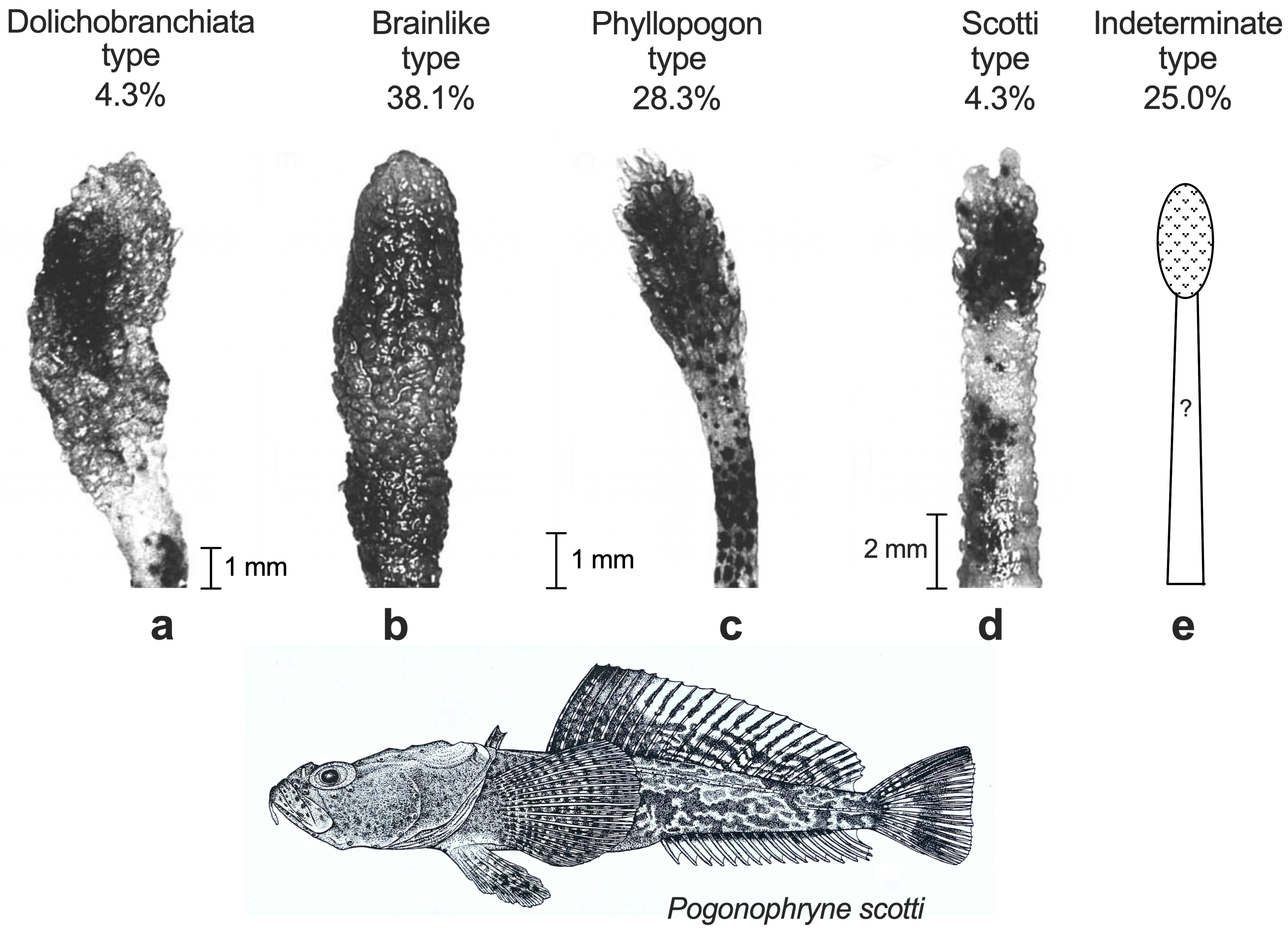
Variation (Figure 10): A sample of 92 specimens exhibits four types of barbels plus an indeterminate type: (a) tapered (pointed or blunt distally) and covered with small irregular projections, (b) expanded distally with small, smooth projections separated by shallow sulci, (c) terminal expansion flattened (typically covered with short, thin tubular projections), (d) uniform tubular shape with short, thick blunt projections or brain-like convolutions, and (e) a large percentage (25%) of barbels were indeterminate [48].
Figure 10.
Intraspecific variation in the mental barbels of 92 specimens of Pogonophryne scotti from the South Orkney Islands. The barbel ranges from a simple tapered shape to having various degrees development of the terminal expansion. (a) Dolichobranchiata type is expanded distally and has blunt conical epidermal projections. (b) Brain-like type is club-shaped with short, rounded brain-like convolutions. (c) Phyllopogon type has relatively long pointed, tubular projections. (d) Scotti type has thick tubular and small rounded or slightly pointed projections. (e) Indeterminant type. The a and c variants distinguished the now invalid species P. phyllopogon and P. dolichobranchiata from P. scotti. Modified from [48] (Figure 3). Fish image from [26].
9. The Implications of Barbel Variation on Function
The barbels of the artedidraconines reflect the ecological pressures and evolutionary processes that have also influenced other aspects of morphological diversity in teleosts. Examples include head shape, eye size, jaw size and shape, tooth size and shape, and gill filament and raker length as seen in the divergence of, for example, the Cichlidae [80], Poeciliidae [81] and Leuciscidae [82]. “Nature abhors an empty niche” [38] (p.69). The emergence of barbels in a taxon of benthic “cryonotothenioids» provided an ecological opportunity—enhanced access to polychaetes, an obscure and underutilized substrate resource in the Antarctic. Barbels are evolutionarily labile and subject to changes that may be adaptive. They function under a variety of forms that involve the size, shape of the terminal expansion and patterns of its epidermal surface. These adaptive responses do not imply that there are interspecific differences in the use of the barbel, but rather that all the variably shaped epidermal configurations increase the sensory surface area and therefore the overall effectiveness of the barbel in detecting prey. It is also possible that some of the intraspecific variation in the appearance of epidermal projections, especially in older specimens (Figure 4b), is attributable to the “wear and tear” of use [83] (p. 8).
Artedidraconine barbels are under relatively weak stabilizing selection and probably influenced by local aspects of the substrate where their prey resides. Short barbels that barely reach the substrate have minimal function. In species with longer barbels epigenesis may be responsible for the inter- and intraspecific variation in the epidermis of the terminal expansion. Without altering genetic sequences, epigenetic pathways can influence how genes are expressed in response to environmental factors. Epigenesis has the capacity to create dissimilar phenotypic traits [84]. It plays an important role in development and cell differentiation and, in the case of the barbel, it may enable adaptive responses of the epidermis to various substrates. All documented epidermal configurations create additional sensory surface area in comparison with a smooth-surfaced terminal expansion. These epidermal patterns also confer surface roughness to the terminal expansion. The epidermal patterns may dissipate mechanical forces generated by movement of the barbel across abrasive benthic substrates and provide greater resilience to physical damage from friction than a smooth-surfaced barbel [85]. An interesting parallel is that, in fishes without scales, individual epithelial skin cells also have surface patterning such as variable ridges and configurations that sometimes resemble a finger-print pattern. These have a protective function [86] (p. 148), similar to that of the epidermal patterns on barbels.
Finally, with barbels exemplifying the emergence of an adaptive trait, similar webs of genetic, epigenetic and ecological influences are worth investigating in taxon-specific features of other Antarctic «cryonotothenioid» species.
Author Contributions
Conceptualization, J.T.E.; methodology, J.T.E. Validation, J.T.E., M.L.M. and R.R.E.; formal analysis, J.T.E.; investigation, J.T.E., M.L.M. and R.R.E. Resources, J.T.E. and M.L.M.; data curation, J.T.E. and M.L.M.; writing—original draft preparation, J.T.E. Writing, review and editing, J.T.E., M.L.M. and R.R.E.; visualization, J.T.E. and M.L.M.; supervision, J.T.E. Project administration, J.T.E.; funding acquisition, J.T.E. and M.L.M. All authors have read and agreed to the published version of the manuscript.
Funding
Field and lab work was funded by US National Science Foundation grants ANT 94-16870 and ANT 04-36190 to J.T.E. The PNRA (Italian National Antarctic Research Program) financial support to M.L.M. is also acknowledged.
Institutional Review Board Statement
The authors have followed all applicable national and institutional guidelines for the collection, care, and ethical use of research organisms and material in the conduct of the research, specifically those of the Ohio University Institutional Animal Care and Use Committee. No experiments were conducted on live fishes during the field work and live fishes were not transported from Antarctica to the United States or Italy.
Data Availability Statement
Fish specimens, skeletons, histological slides, radiographs and laboratory notebooks associated with this work are cataloged into the Ichthyology Collection of the Yale University Peabody Museum of Natural History, New Haven, Connecticut, USA.
Acknowledgments
The authors have reviewed and edited the output and take full responsibility for the content of this publication. We thank the reviewer for useful comments.
Conflicts of Interest
The authors declare no conflicts of interest. The funders had no role in the design of the study; in the collection, analyses, or interpretation of data; in the writing of the manuscript; or in the decision to publish the results.
References
- Collin, S.P.; Davies, W.I.L. Editorial: Biodiversity of sensory systems in aquatic vertebrates. Front. Ecol. Evol. 2020, 8, 192. [Google Scholar] [CrossRef] [Scilit]
- Montgomery, J.C.; Macdonald, J.A. Sensory tuning of lateral line receptors in Antarctic fish to the movements of planktonic prey. Science 1987, 235, 195–196. [Google Scholar] [CrossRef] [Scilit] [PubMed]
- Montgomery, J.; Coombs, S.; Janssen, J. Form and function relationships in lateral line systems: Comparative data from six species of Antarctic notothenioid fish. Brain Behav. Evol. 1994, 44, 299–306. [Google Scholar] [CrossRef] [Scilit]
- Kasumyan, A.O. Tactile reception and behavior of fish. J. Ichthyol. 2011, 51, 1035–1103. [Google Scholar] [CrossRef] [Scilit]
- Schmidt-Nielsen, K. Animal Physiology: Adaptation and Environment, 5th ed.; Cambridge University Press: Cambridge, UK, 1997; pp. 1–607. [Google Scholar]
- Barton, M. Bond’s Biology of Fishes, 3rd ed.; Thomson Brooks/Cole: Belmont, CA, USA, 2007; pp. 1–891. [Google Scholar]
- Zhou, T.; Li, N.; Jin, Y.; Zeng, Q.; Prabowo, W.; Liu, Y.; Tian, C.; Bao, L.; Liu, S.; Yuan, Z.; et al. Chemokine C-C motif ligand 33 is a key regulator of teleost fish barbel development. Proc. Natl. Acad. Sci. USA 2018, 115, E5018–E5027. [Google Scholar] [CrossRef] [Scilit]
- Nelson, J.S.; Grande, T.C.; Wilson, M.V.H. Fishes of the World, 5th ed.; John Wiley & Sons: Hoboken, NJ, USA, 2016; pp. 1–707. [Google Scholar]
- Kotrschal, K. Solitary chemosensory cells—Taste, common chemical sense or what? Rev. Fish Biol. Fisher. 1991, 1, 3–22. [Google Scholar] [CrossRef] [Scilit]
- Montgomery, J.C.; Pankhurst, N.W.; Foster, B.A. Limitations on visual food-location in the planktivorous Antarctic fish Pagothenia borchgrevinki. Experientia 1989, 45, 395–397. [Google Scholar] [CrossRef] [Scilit]
- Helfman, G.S.; Collette, B.B.; Facey, D.E.; Bowen, B.W. The Diversity of Fishes: Biology: Evolution, and Ecology, 2nd ed.; Wiley-Blackwell: Chichester, UK, 2009; pp. 1–736. [Google Scholar]
- Hara, T.J. Gustation. In Fish Physiology Vol. 25, Sensory Systems Neuroscience; Hara, T.J., Zielinski, B.S., Eds.; Academic Press: San Diego, CA, USA, 2007; Volume 25, pp. 45–96. [Google Scholar]
- Geldof, D.L.; Summers, A.P.; Cohen, K.E. An overview and definition of cirri in fishes. In Proceedings of the Society for Integrative and Comparative Biology, Annual Meeting, Online, 3 January–28 February 2021; Abstract 97-7. [Google Scholar]
- Freihofer, W.C. Some nerve patterns and their systematic significance in paracanthopterygian, salmoniform, gobioid and apogonid fishes. Proc. Calif. Acad. Sci. 1970, 38, 215–264. [Google Scholar]
- Kotrschal, K. Solitary chemosensory cells: Why do primary aquatic vertebrates need another taste system? Trends Ecol. Evol. 1996, 11, 110–114. [Google Scholar] [CrossRef] [Scilit] [PubMed]
- Bailey, D.M.; Wagner, H.J.; Jamieson, A.J.; Ross, M.F.; Priede, I.G. A taste of the deep-sea: The roles of gustatory and tactile searching behaviour in the grenadier fish Coryphaenoides armatus. Deep-Sea Res. I 2007, 54, 99–108. [Google Scholar] [CrossRef] [Scilit]
- Gosline, W.A. Structure, function, and ecology in the goatfishes (family Mullidae). Pacific Sci. 1984, 38, 312–323. [Google Scholar]
- Kiyohara, S.; Sakata, Y.; Yoshitomi, T.; Tsukahara, J. The “goatee” of the goatfish: Innervation of taste buds in the barbels and their representation in the brain. Roy. Soc. Proc. B Biol. Sci. 2002, 269, 1773–1780. [Google Scholar] [CrossRef] [Scilit]
- McCormick, M.I. Development and changes at settlement in the barbel structure of the reef fish, Upeneus tragula (Mullidae). Env. Biol. Fish. 1993, 37, 269–282. [Google Scholar] [CrossRef] [Scilit]
- Eastman, J.T.; McCune, A.R. Fishes on the Antarctic continental shelf: Evolution of a marine species flock? J. Fish Biol. 2000, 57, 84–102. [Google Scholar] [CrossRef] [Scilit]
- Eastman, J.T. The axes of divergence for the evolutionary radiation of notothenioid fishes in Antarctica. Diversity 2024, 16, 214. [Google Scholar] [CrossRef] [Scilit]
- Eastman, J.T.; Eakin, R.R. Checklist of the species of notothenioid fishes. Antarct. Sci. 2021, 33, 273–280. [Google Scholar] [CrossRef] [Scilit]
- Near, T.J.; MacGuigan, D.J.; Parker, E.; Struthers, C.D.; Jones, C.D.; Dornburg, A. Phylogenetic analysis of Antarctic notothenioids illuminates the utility of RADseq for resolving Cenozoic adaptive radiations. Mol. Phylo. Evol. 2018, 129, 268–279. [Google Scholar] [CrossRef] [Scilit]
- Sheiko, B.A. Comments on the nomenclature of genus- and family-series taxa of notothenioid fishes (Perciformes, Notothenioidei). Bionomina 2019, 16, 46–82. [Google Scholar] [CrossRef] [Scilit]
- Andriashev, A.P. A review of the plunder fishes of the genus Pogonophryne Regan (Harpagiferidae) with description of five new species from the East Antarctic and South Orkney Islands. Biol. Results Soviet Antarct. Exped. (1955–1958) 1967, 3, 389–412. [Google Scholar]
- Eakin, R.R. Artedidraconidae. In Fishes of the Southern Ocean; Gon, O., Heemstra, P.C., Eds.; J.L.B. Smith Institute of Ichthyology: Grahamstown, South Africa, 1990; pp. 332–356. [Google Scholar]
- Parker, E.; Dornburg, A.; Struthers, C.D.; Jones, C.D.; Near, T.J. Phylogenomic species delimitation dramatically reduces species diversity in an Antarctic adaptive radiation. Syst. Biol. 2022, 71, 58–77. [Google Scholar] [CrossRef] [Scilit]
- Near, T.J.; Thacker, C.E. Phylogenetic Classification of Living and Fossil Ray-Finned Fishes (Actinopterygii). Bull. Peabody Mus. Nat. Hist. 2024, 65, 3–302. [Google Scholar] [CrossRef] [Scilit]
- Thacker, C.E.; Near, T.J. Phylogeny, biology, and evolution of acanthopterygian fish clades. Rev. Fish. Biol. Fish. 2025, 35, 805–845. [Google Scholar] [CrossRef] [Scilit]
- Parker, E.; Near, T.J. Phylogeny reconciles classification in Antarctic plunderfishes. Ichthyol. Herpetol. 2022, 110, 662–674. [Google Scholar] [CrossRef] [Scilit]
- Fricke, R.; Eschmeyer, W.N.; van der Laan, R.E. Eschmeyer’s Catalog of Fishes: Genera, Species, References. Available online: http://researcharchive.calacademy.org/research/ichthyology/catalog/fishcatmain.asp (accessed on 10 November 2025).
- La Mesa, M.; Piepenburg, D.; Pineda-Metz, S.E.A.; Riginella, E.; Eastman, J.T. Spatial distribution and habitat preferences of demersal fish assemblages in the southeastern Weddell Sea (Southern Ocean). Polar Biol. 2019, 42, 1025–1040. [Google Scholar] [CrossRef] [Scilit]
- Eastman, J.T. Bathymetric distributions of notothenioid fishes. Polar Biol. 2017, 40, 2077–2095. [Google Scholar] [CrossRef] [Scilit]
- Saint-Paul, U.; Hubold, G.; Ekau, W. Acclimation effects on routine oxygen consumption of the Antarctic fish Pogonophryne scotti (Artedidraconidae). Polar Biol. 1988, 9, 125–128. [Google Scholar] [CrossRef] [Scilit]
- Eastman, J.T. The buoyancy-based biotope axis of the evolutionary radiation of Antarctic cryonotothenioid fishes. Polar Biol. 2020, 43, 1217–1231. [Google Scholar] [CrossRef] [Scilit]
- Zimmermann, C.; Hubold, G. Respiration and activity of Arctic and Antarctic fish with different modes of life: A multivariate analysis of experimental data. In Fishes of Antarctica: A Biological Overview; di Prisco, G., Pisano, E., Clarke, A., Eds.; Springer: Milano, Italy, 1998; pp. 163–174. [Google Scholar] [CrossRef] [Scilit]
- Jones, C.D.; Near, T.J. The reproductive behaviour of Pogonophryne scotti confirms widespread egg-guarding parental care among Antarctic notothenioids. J. Fish Biol. 2012, 80, 2629–2635. [Google Scholar] [CrossRef] [Scilit]
- Schluter, D. The Ecology of Adaptive Radiation; Oxford University Press: Oxford, UK, 2000; pp. 1–288. [Google Scholar]
- Mayr, E. Animal Species and Evolution; Belknap Press of Harvard University Press: Cambridge, MA, USA, 1963; pp. 1–797. [Google Scholar] [CrossRef] [Scilit]
- Aiello, B.R.; Hardy, A.R.; Westneat, M.W.; Hale, M.E. Fins as mechanosensors for movement and touch-related behaviors. Intergrat. Comp. Biol. 2018, 58, 844–859. [Google Scholar] [CrossRef] [Scilit]
- Duhamel, G.; Hulley, P.-A.; Causse, R.; Koubbi, P.; Vacchi, M.; Pruvost, P.; Vigetta, S.; Irisson, J.-O.; Mormède, S.; Belchier, M.; et al. Biogeographic patterns of fish. In Biogeographic Atlas of the Southern Ocean; De Broyer, C., Koubbi, P., Griffiths, H.J., Raymond, B., Udekem d’Acoz, C., Van de Putte, A., Danis, B., David, B., Grant, S., Gutt, J., et al., Eds.; Scientific Committee on Antarctic Research: Cambridge, UK, 2014; pp. 328–362. [Google Scholar]
- Eastman, J.T.; Lannoo, M.J. Anatomy and histology of the brain and sense organs of the Antarctic plunderfish Dolloidraco longedorsalis (Perciformes: Notothenioidei: Artedidraconidae), with comments on the brain morphology of other artedidraconids and closely related harpagiferids. J. Morphol. 2003, 255, 358–377. [Google Scholar] [CrossRef] [Scilit] [PubMed]
- Janssen, J.; Jones, W.; Slattery, M. Locomotion and feeding responses to mechanical stimuli in Histiodraco velifer (Artedidracondiae). Copeia 1993, 3, 885–889. [Google Scholar] [CrossRef] [Scilit]
- Montgomery, J.C.; Wells, R.M.G. Recent advances in the ecophysiology of Antarctic notothenioid fishes: Metabolic capacity and sensory performance. In Fish Ecophysiology; Rankin, J.C., Jensen, F.B., Eds.; Chapman and Hall: London, UK, 1993; pp. 341–374. [Google Scholar] [CrossRef] [Scilit]
- Montgomery, J.C. An ontogenetic shift in the use of visual and non-visual senses in Antarctic notothenioid fishes. In Antarctic Communities: Species, Structure and Survival; Battaglia, B., Valencia, J., Walton, D.W.H., Eds.; Cambridge University Press: Cambridge, UK, 1997; pp. 217–220. [Google Scholar]
- Kotrschal, K.; van Staaden, M.J.; Huber, R. Fish brains: Evolution and environmental relationships. Rev. Fish Biol. Fisher. 1998, 8, 373–408. [Google Scholar] [CrossRef] [Scilit]
- Eastman, J.T.; Eakin, R.R. Mental barbel and meristic variation in the Antarctic notothenioid fish Dolloidraco longedorsalis (Perciformes: Artedidraconidae) from the Ross Sea. Polar Biol. 2001, 24, 729–734. [Google Scholar] [CrossRef] [Scilit]
- Eakin, R.R.; Eastman, J.T.; Jones, C.D. Mental barbel variation in Pogonophryne scotti Regan (Pisces: Perciformes: Artedidraconidae). Antarct. Sci. 2001, 13, 363–370. [Google Scholar] [CrossRef] [Scilit]
- Eakin, R.R.; Eastman, J.T.; Vacchi, M. Sexual dimorphism and mental barbel structure in the South Georgia plunderfish Artedidraco mirus (Perciformes: Notothenioidei: Artedidraconidae). Polar Biol. 2006, 30, 45–52. [Google Scholar] [CrossRef] [Scilit]
- Witten, P.E.; Huysseune, A.; Hall, B.K. A practical approach for the identification of the many cartilaginous tissues in teleost fish. J. Appl. Ichthyol. 2010, 26, 257–262. [Google Scholar] [CrossRef] [Scilit]
- Whitear, M. The free nerve endings in fish epidermis. J. Zool. Lond. 1971, 163, 231–236. [Google Scholar] [CrossRef] [Scilit]
- La Mesa, M.; Vacchi, M. On the second record of the Antarctic plunderfish Artedidraco glareobarbatus (Artedidraconidae) from the Ross Sea. Polar Biol. 2005, 29, 40–43. [Google Scholar] [CrossRef] [Scilit]
- Eakin, R.R.; Balushkin, A.V. A new species of Pogonophryne (Pisces: Perciformes: Artedidraconidae) from East Antarctica. Proc. Biol. Soc. Wash. 2000, 113, 264–268. [Google Scholar]
- Kasumyan, A.O. The taste system in fishes and the effects of environmental variables. J. Fish Biol. 2019, 95, 155–178. [Google Scholar] [CrossRef] [Scilit] [PubMed]
- Lane, E.B.; Whitear, M. Sensory structures at the surface of fish skin: I. Putative chemoreceptors. Zool. J. Linn. Soc. 1982, 75, 141–151. [Google Scholar] [CrossRef] [Scilit]
- Meyer, A.A.; Fanta, E. Morpho-functional studies of the chemo-sensory structures of the Antarctic fish Trematomus newnesi Boulenger, 1902 used for food detection and selection. Pesq. Antárt. Bras. 1998, 3, 49–63. [Google Scholar] [CrossRef] [Scilit]
- Iglesias, T.L.; Dornberg, A.; Brandley, M.C.; Alfaro, M.E.; Warren, D.L. Life in the unthinking depths: Energetic constraints on encephalization in marine fishes. J. Evol. Biol. 2015, 28, 1080–1090. [Google Scholar] [CrossRef] [Scilit]
- Country, M.W. Retinal metabolism: A comparative look at energetics in the retina. Brain Res. 2017, 1672, 50–57. [Google Scholar] [CrossRef] [Scilit] [PubMed]
- Wullimann, M.F. The central nervous system. In The Physiology of Fishes; Evans, D.H., Ed.; CRC Press: Boca Raton, FL, USA, 1998; pp. 245–282. [Google Scholar]
- Winterbottom, R. A descriptive synonymy of the striated muscles of the Teleostei. Proc. Acad. Nat. Sci. USA 1974, 125, 225–317. [Google Scholar]
- Iwami, T.; Numanami, H.; Naito, Y. Behavior of three species of the family Artedidraconidae (Pisces, Notothenioidei), with reference to feeding. Proc. NIPR Symp. Polar Biol. 1996, 9, 225–230. [Google Scholar] [CrossRef]
- Gutt, J.; Ekau, W. Habitat partitioning of dominant high Antarctic demersal fish in the Weddell Sea and Lazarev Sea. J. Exp. Mar. Biol. Ecol. 1996, 206, 25–37. [Google Scholar] [CrossRef] [Scilit]
- La Mesa, M.; Canese, S.; Montagna, P.; Schiaparelli, S. Underwater Photographic Survey of Coastal Fish Community of Terra Nova Bay, Ross Sea. Diversity 2022, 14, 315. [Google Scholar] [CrossRef] [Scilit]
- La Mesa, M.; La Mesa, G.; Piepenburg, D.; Gutt, J.; Eastman, J.T. Spatial patterns and behaviour of notothenioid fishes off the northern Antarctic Peninsula. Polar Biol. 2022, 45, 971–985. [Google Scholar] [CrossRef] [Scilit]
- Baena, P.; Santín, A.; La Mesa, M.; Riginella, E.; Owsianowski, N.; Gili, J.M.; Ambroso, S. Are there distribution patterns and population structure differences among demersal fish species in relation to Antarctic benthic communities? A case study in the Weddell Sea. Polar Biol. 2023, 46, 1069–1082. [Google Scholar] [CrossRef] [Scilit]
- Daniels, R.A. Feeding ecology of some fishes of the Antarctic Peninsula. Fisher. Bull. 1982, 80, 575–588. [Google Scholar]
- La Mesa, M.; Eastman, J.T.; Vacchi, M. The role of notothenioid fish in the food web of the Ross Sea shelf waters: A review. Polar Biol. 2004, 27, 321–338. [Google Scholar] [CrossRef] [Scilit]
- Targett, T.E. Trophic ecology and structure of coastal Antarctic fish communities. Mar. Ecol. Prog. Ser. 1981, 4, 243–263. [Google Scholar] [CrossRef] [Scilit]
- Wyanski, D.M.; Targett, T.E. Feeding biology of fishes in the endemic Antarctic Harpagiferidae. Copeia 1981, 1981, 686–693. [Google Scholar] [CrossRef] [Scilit]
- Schwarzbach, W. Die Fischfauna des östlichen und südlichen Weddellmeeres: Geographische Verbreitung, Nahrung und trophische Stellung der Fischarten. Ber. Polarforsch. 1988, 54, 1–94. [Google Scholar]
- Olaso, I.; Rauschert, M.; De Broyer, C. Trophic ecology of the family Artedidraconidae (Pisces: Osteichthyes) and its impact on the eastern Weddell Sea benthic system. Mar. Ecol. Prog. Ser. 2000, 194, 143–158. [Google Scholar] [CrossRef] [Scilit]
- Lombarte, A.; Olaso, I.; Bozzano, A. Ecomorphological trends in the Artedidraconidae (Pisces: Perciformes: Notothenioidei) of the Weddell Sea. Antarct. Sci. 2003, 15, 211–218. [Google Scholar] [CrossRef] [Scilit]
- La Mesa, M.; Castelli, A.; Eastman, J.T.; Riginella, E. Factors involved in prey resource partitioning in the genus Artedidraco (Notothenioidei, Artedidraconidae) from the western Ross Sea. Hydrobiologia 2015, 761, 249–259. [Google Scholar] [CrossRef] [Scilit]
- Pakhomov, E.A. Feeding and exploitation of the food supply by demersal fishes in the Antarctic part of the Indian Ocean. J. Ichthyol. 1997, 37, 360–380. [Google Scholar]
- Eastman, J.T. Vertebral variation in notothenioid fishes from McMurdo Sound, Antarctica. Polar Biol. 1983, 1, 217–220. [Google Scholar] [CrossRef] [Scilit]
- Eastman, J.T.; DeVries, A.L. Morphology of the digestive system of Antarctic nototheniid fishes. Polar Biol. 1997, 17, 1–13. [Google Scholar] [CrossRef] [Scilit]
- Balushkin, A.V.; Skóra, K.E.; Bogodist, O.E.; Tereshchuk, O.Y. Morphological study on notothenioids of the Southern Ocean. Contrib. Zool. Inst. Russ. Acad. Sci. 2002, 5, 1–34. [Google Scholar]
- Balushkin, A.V.; Spodareva, V.V. Morphological description of long-finned Dollo’s plunderfish Dolloidraco longedorsalis (Artedidraconidae, Notothenioidei) from marginal seas of Antarctica. J. Ichthyol. 2015, 55, 609–618. [Google Scholar] [CrossRef] [Scilit]
- Balushkin, A.V.; Eakin, R. A new toad plunderfish Pogonophryne fusca sp. nova (fam. Artedidraconidae: Notothenioidei) with notes on species composition and species groups in the genus Pogonophryne Regan. J. Ichthyol. 1998, 38, 574–579. [Google Scholar]
- Fryer, G.; Iles, T.D. The Cichlid Fishes of the Great Lakes of Africa; T.F.H. Publications: Neptune City, NJ, USA, 1972; pp. 1–641. [Google Scholar]
- Tobler, M.; DeWitt, T.J.; Schlupp, I.; García De León, F.J.; Herrmann, R.; Feulner, P.G.D.; Tiedemann, R.; Plath, M. Toxic hydrogen sulfide and dark caves: Phenotypic and genetic divergence across two abiotic environmental gradients in Poecilia mexicana. Evolution 2008, 62, 2643–2659. [Google Scholar] [CrossRef] [Scilit] [PubMed]
- Franssen, N.R.; Stewart, L.K.; Schaefer, J.F. Morphological divergence and flow-induced phenotypic plasticity in a native fish from anthropogenically altered stream habitats. Ecol. Evol. 2013, 3, 4648–4657. [Google Scholar] [CrossRef] [Scilit]
- Eakin, R.R. Morphology and distribution of species in the genus Pogonophryne (Pisces, Harpagiferidae). In Antarctic Research Series, Vol. 28, Biology of the Antarctic Seas VIII; Pawson, D.L., Kornicker, L.S., Eds.; American Geophysical Union: Washington, DC, USA, 1977; pp. 1–20. [Google Scholar]
- Skinner, M.L. Role of epigenetics in developmental biology and transgenerational inheritance. Birth Defects Res. (Part C) 2011, 93, 51–55. [Google Scholar] [CrossRef] [Scilit]
- Fahrenbach, W.K.; Knutson, D.D. Surface adaptations of the vertebrate epidermis to friction. J. Investig. Dermatol. 1975, 65, 39–44. [Google Scholar] [CrossRef] [Scilit]
- Hawkes, J.W. The structure of fish skin. I. General organization. Cell Tiss. Res. 1974, 149, 147–158. [Google Scholar] [CrossRef] [Scilit]
Disclaimer/Publisher’s Note: The statements, opinions and data contained in all publications are solely those of the individual author(s) and contributor(s) and not of MDPI and/or the editor(s). MDPI and/or the editor(s) disclaim responsibility for any injury to people or property resulting from any ideas, methods, instructions or products referred to in the content. |
© 2026 by the authors. Licensee MDPI, Basel, Switzerland. This article is an open access article distributed under the terms and conditions of the Creative Commons Attribution (CC BY) license.