
Article

Effects of Dietary Tryptophan on Growth Performance, Muscle Development and Quality, Gut Microbiota of Juvenile Procambarus clarkii
1
Wuxi Fisheries College, Nanjing Agricultural University, Wuxi 214081, China
2
Key Laboratory for Genetic Breeding of Aquatic Animals and Aquaculture Biology, Freshwater Fisheries Research Center, Chinese Academy of Fishery Sciences, Wuxi 214081, China
3
College of Marine and Biology Engineering, Yancheng Institute of Technology, Yancheng 224051, China
4
Animal Science Department, Helmand University, Lashkargah 3901, Afghanistan
*
Authors to whom correspondence should be addressed.
Fishes 2026, 11(3), 188; https://doi.org/10.3390/fishes11030188
Submission received: 6 February 2026 / Revised: 14 March 2026 / Accepted: 17 March 2026 / Published: 20 March 2026
(This article belongs to the Special Issue Recent Advances in Crayfish)

Abstract

This study aimed to investigate the effects of dietary tryptophan (Trp) on growth performance and muscle quality of Procambarus clarkii. Six experimental diets with graded Trp concentrations (0.05%, 0.13%, 0.29%, 0.43%, 0.56%, 0.69%; designated Trp0.05 to Trp0.69) were fed to crayfish for 8 weeks. Growth parameters, muscle proximate composition, texture, histology, related gene expression, and intestinal microbiota were measured. Compared with the Trp0.05 group, the Trp0.43 group significantly increased FW, WGR, SGR, and muscle crude protein content, while decreasing FCR. It also improved muscle texture (hardness, springiness, cohesiveness, gumminess, chewiness), increased muscle fiber diameter, and reduced fiber density and the proportion of fibers < 30 μm. Additionally, the Trp0.43 group upregulated mRNA expression of MEF2A, MEF2B, MLC1, MyHC, mTOR, S6K1, AKT, LARP6, Col1α1, Col1α2, TGF-β1, and Smad, and downregulated MSTN, 4EBP1, FOXO, and LC3. It reduced Proteobacteria and Shewanella abundance, and increased Bacteroidota and Firmicutes. In conclusion, appropriate dietary Trp improves P. clarkii growth, muscle quality, and intestinal microbiota. Based on quadratic regression analysis of WGR and SGR, the dietary Trp requirement of P. clarkii was estimated to be 0.39%, corresponding to 1.22% of feed protein.
Key Contribution: This study revealed that the addition of appropriate levels of tryptophan to the diet could improve the growth performance, muscle quality, and intestinal microbial community structure of P. clarkii. The Trp requirement of P. clarkii was estimated to be 0.39%, accounting for 1.22% of feed protein by quadratic regression analysis of WGR and SGR.

1. Introduction

Procambarus clarkii, commonly known as crayfish, is one of the most important freshwater shrimp farming species [1,2], which has occupied the fourth place in production of aquaculture in China [3]. P. clarkii has considerable aquaculture benefits, which are characterized by strong environmental adaptability, strong reproductive capacity, wide feeding habits, and fast growth rate [3]. The crayfish is classified as a high-protein, low-fat food product, which is very suitable for a healthy diet [4]. However, the current breeding is mainly based on small-sized crayfish, and the proportion of large-sized crayfish is low, mainly because the unbalanced feed nutrition limits the improvement of specifications [5]. With the upgrading of consumption, consumers’ demand for high-quality crayfish has surged, and they have begun to pay attention to the meat content, taste, and nutritional value of muscles.
Nutritional components, physical properties, tissue structure, and flavor characteristics are all factors that need to be considered when evaluating the muscle quality of aquatic animals [6]. Appropriate lipids can make the muscle fresh and juicy, and the protein content directly affects the nutritional quality of the muscle [7]. Muscle texture in physical properties is a sensory characteristic, including hardness and elasticity, which is the key for consumers to judge the freshness and taste of aquatic products [8]. A decrease in hardness may indicate microbial spoilage or excessive protein degradation [9], thereby affecting freshness and texture. Reduced elasticity suggests a loss of muscle resilience, reflecting diminished freshness. Conversely, high elasticity contributes to a ‘crisp’ or ‘Q-elastic’ mouthfeel [10]. Tissue structure includes muscle fiber type, arrangement, distribution of connective tissue, etc. The type and density of muscle fibers influence protein deposition efficiency, while collagen—as the primary component of connective tissue—is critically associated with the maintenance of muscle structure and texture [11].
Muscle quality is affected by muscle fiber growth, protein deposition, and collagen content. mTOR (mechanistic target of rapamycin) is a serine/threonine protein kinase that is the core signaling network that regulates muscle growth [12,13]. As a downstream effector of the PI3K/AKT signaling pathway, mTOR is divided into two complexes, mTORC1 and mTORC2 [14]. AKT regulates protein synthesis by phosphorylating S6K1 and 4EBP1, the downstream targets of mTORC1 [15]. LC3 and FOXO are involved in the regulation of autophagy and affect protein degradation [16]. The Myocyte Enhancer Factor-2 (MEF2) family regulates muscle fiber growth and development [17]. Myosin Light Chain 1 (MLC1) and Myosin Heavy Chain (MyHC) can interact with myogenic regulatory factors (MRFs) to regulate the formation of muscle fiber [18,19]. Collagen is an important part of muscle connective tissue and one of the important indices to evaluate the muscle quality of aquatic animals [20]. TGF-β1 (transforming growth factor-β1) is an important cytokine. In collagen synthesis, TGF-β1 promotes collagen synthesis and deposition by directly activating the promoters of collagen genes such as Col1α1 and Col1α2. TGF-β1 can also regulate the expression and synthesis of type I collagen in muscle through Smads and mTORC1 [21]. In addition, LARP6 affects the production of type I collagen by interacting with non-muscle myosin [22].
Fish muscle quality may be affected by external factors, including dietary composition [23]. More and more evidence shows that amino acid supplements can improve the muscle tissue quality of aquatic animals [24]. Tryptophan (Trp) is an essential amino acid containing an indole structure [25] and plays a regulatory role in multiple physiological functions, including growth, development, protein synthesis, and intestinal microbiota metabolism. In aquatic animals such as Penaeus (Litopenaeus) vannamei [26], Cirrhinus mrigala [27], and Apostichopus japonicus [28], Trp supplementation can improve weight gain and specific growth rate. In grass carp (Ctenopharyngodon idella) [29] and brid bagrid catfish (Pseudobagrus vachellii× Tachysurus dumerili ♂) [30], Trp has been shown to improve the myofiber growth by increasing myogenic regulatory factors and decreasing myostatin [31]. Trp improves protein deposition by regulating balanced protein synthesis and protein degradation, which has been demonstrated in adult mice [12] and hybrid bagrid catfish [30].
Gut microbiota, known as ‘central metabolic organ’, is one of the factors affecting muscle quality [32]. Accumulating research demonstrates that the gut microbiota plays a key regulatory role in host digestion, immunity, and metabolism, and further modulates muscle growth, function, and quality through the gut-muscle axis [33]. Recent evidence also confirms that Trp and its microbial metabolites—including indole derivatives, 5-hydroxytryptamine, and kynurenine—substantially influence the composition and functional activity of intestinal microbial communities [34]. Indole-3-propionic acid, as one of the metabolites, can significantly reduce oxidative stress markers (such as MDA), thereby improving muscle antioxidant capacity [35]. Collectively, these findings indicate the direct or indirect regulation of muscle quality by Trp, suggesting its potential application as a modulator in P. clarkii.
Although numerous studies have evaluated the dietary Trp requirements of various fish species and the regulatory effects of Trp on growth performance and muscle quality, related studies in crustaceans have mainly focused only on Trp nutritional requirements. For P. clarkii, an economically important crustacean species, its precise dietary Trp requirement remains unclear, and whether Trp can improve muscle quality has not been systematically investigated. Therefore, the present study was conducted to investigate the effects of dietary Trp supplementation on growth performance, muscle quality, and gut microbiota of P. clarkii, and to estimate its optimal dietary Trp requirement using quadratic regression analysis. This study aims to provide a scientific basis for the precise nutritional regulation and feed formulation of P. clarkii.

2. Materials and Methods

2.1. Experimental Diet

The formulation and proximate composition of the experimental diets are presented in Table 1. The protein sources included fish meal, rapeseed meal, corn DDGS, corn gluten meal, and amino acid mixture, while a 1:1 blend of fish oil and soybean oil served as the lipid source, and α-starch was utilized as the carbohydrate source. Based on the basal diet, six isonitrogenous, isoaminoacidic, and isolipidic experimental diets were formulated by supplementing graded levels of Trp at 0%, 0.15%, 0.30%, 0.45%, 0.60%, and 0.75%, with corresponding reductions in glycine supplementation [29,36]. The measured Trp concentrations in the final diets were 0.05%, 0.13%, 0.29%, 0.43%, 0.56% and 0.69%, and the groups were designated as Trp0.05, Trp0.13, Trp0.29, Trp0.43, Trp0.56, and Trp0.69, respectively. All raw materials were ground to pass through a 60-mesh sieve, homogenously blended, and supplemented with oils and water. The mixture was then processed into 1.5 mm sinking pellets using a twin-screw extruder (F-26, Science and Technology Industrial Factory, South China University of Technology, Guangzhou, China). After drying in the shade, it was packaged in a self-sealing bag and stored at −20 °C for subsequent use.

2.2. Experimental Design and Crayfish Feeding

Juvenile P. clarkii (3.32 ± 0.01 g) were sourced from the Jingjiang breeding farm of the Freshwater Fisheries Research Center, Chinese Academy of Fishery Sciences (Taizhou, China). After a one-week acclimation period with a commercial diet, a total of 900 healthy P. clarkii were randomly allocated to six dietary treatments (Trp0.05, Trp0.13, Trp0.29, Trp0.43, Trp0.56, Trp0.69), with three replicate tanks per treatment and 50 crayfish per replicate. Each cement tank was 2 m in length, 1.45 m in width, and filled with water to a depth of 30 cm. Artificial aquatic plants and shelters were placed in each tank to reduce cannibalism. The entire experiment was conducted in an indoor culture environment, and no artificially regulated light-dark cycle was applied. Crayfish were hand-fed twice daily at 07:30 and 19:00, with a feeding rate of 5–10% of body weight. Feeding behavior was observed, and residual feed and feces were siphoned out in a timely manner. The concentrations of dissolved oxygen (DO), ammonia nitrogen, and nitrite in the rearing water were monitored daily at a fixed time (09:00 a.m.) using commercial assay kits (Cat. No.: ZY-SBSJCH) purchased from Beijing Zhongyuan Taihe Biotechnology Co., Ltd., Beijing, China. During the experiment, water quality conditions were maintained stably: water temperature at 29–32 °C, pH at 7.0–7.5, dissolved oxygen concentration above 5 mg/L, and concentrations of both ammonia nitrogen and nitrite below 0.1 mg/L.

2.3. Sample Collection

Twelve crayfish from each group (3 per tank, 9 samples per group) were randomly selected for hemolymph collection and weight assessment. Hemolymph was collected using Alsever’s solution (comprising 13.2 g/L trisodium citrate, 14.7 g/L glucose, and 4.8 g/L citric acid), mixed with hemolymph at a ratio of 1:1, and then centrifuged at 4000 rpm at 4 °C for 10 min. Muscle tissue was collected from three crayfish per tank (3 per tank, 9 samples per group) and stored at −20 °C for subsequent analysis of nutritional components. Fresh muscle samples were collected from beneath the 2nd–4th abdominal sternites of crayfish for texture analysis (4 per tank, 12 samples per group). Muscle samples (3 fresh samples per tank, 9 samples per group) for volatile compounds analysis were boiled in a hydrothermal system at 100 °C for 15 min as a pretreatment and stored in a refrigerator at 4 °C for later use. Finally, one crayfish was selected from each tank, and muscle samples were collected from beneath the third abdominal sternite (1 individual per tank, 3 samples per group). The samples were placed in 5 mL centrifuge tubes containing 4% neutral buffered formalin (Biosharp, Hefei, China) for subsequent histological observation. Intestines were collected from 6–8 crayfish in each cement tank, pooled together, and stored in cryopreservation tubes. Remaining muscle tissue and aseptically collected intestinal tissues and contents were stored at −80 °C for subsequent molecular and microbial analysis, respectively.

2.4. Growth Performance Parameters

The associated formulas are presented here:
  • Survival rate (SR, %) = 100 × final number of crayfish/initial number of crayfish;
  • Specific growth rate (SGR, %) = 100 × [Ln (average weight of the final crayfish) − Ln (average weight of the initial crayfish)]/cultured days;
  • Weight gain rate (WGR, %) = 100 × (average final body weight − average initial body weight)/average initial body weight;
  • Feed conversion ratio (FCR) = feed consumption/crayfish weight gain.

2.5. Determination of 5-HT Content in Hemolymph

The kit was purchased from Shanghai Enzyme Company, Shanghai, China (No. YJ240110), and the methods for the determination of 5-hydroxytryptamine (5-HT) were used according to the instructions.

2.6. Analysis of Nutritive Composition in Muscle

The nutritional composition of crayfish muscle was analyzed following the standard procedures of AOAC (2003). The specific experimental methods are shown in Table 2 below.

2.7. Determination of Muscle Textural Properties

Muscle texture parameters were measured with a TA-XT2i texture analyzer (Stable Micro Systems Ltd., Godalming, UK) [37]. For this analysis, a standardized sample (8 mm × 8 mm × 8 mm) was prepared from the dorsal muscle of each crayfish. This analysis encompassed the hardness, springiness, cohesiveness, gumminess, chewiness, and resilience of the muscle tissue. Instrument operating parameters refer to the method of Xu [37].

2.8. Electronic Nose Determination

The overall flavor characteristics of each group were measured using an AirsensePEN3 electronic nose (Airsense, Schwerin, Germany) [38]. According to the method of FAN [39], 3.00 g crayfish sample was put into 20 mL sample bottle, 5 mL 18% NaCl solution was added, sealed, balanced in 50 °C water bath for 30 min, and the electronic nose probe was inserted for determination. The determination conditions were as follows: the cleaning time was 90 s, the zeroing time was 10 s, the preparation time was 5 s, the determination time was 120 s, the carrier gas velocity was 300 mL/min, the injection flow rate was 300 mL/min, and the characteristic value extraction time was set to 117–119 s. The corresponding substance types of 10 different sensors of the electronic nose are shown in Table 3.

2.9. Morphological Analysis of Muscle Tissue

Transverse muscle sections (5 μm) were paraffin-embedded and subjected to hematoxylin-eosin (H&E) staining as described to evaluate muscle morphology. Stained sections were visualized under an optic microscope (Olympus BX51, Tokyo, Japan), and images were captured by the LEICA DM1000 LED (Leica Microsystems CMS GmbH, Wetzlar, Germany). ImageJ (version 1.54r) software was used to calculate the area and number of muscle fibers. Muscle fibers were distributed into three diameter classes (≤30 μm, 30–60 μm, or >60 μm) [29,40].

2.10. Determination of Gene Expression

RNAiso Plus (Takara, Dalian, China) was utilized to extract total RNA from muscle tissues of three experimental groups (9 samples in each group). The method for cDNA synthesis used for qPCR quantification was identical to that described by Yang [41] from the same research group. Quantitative real-time PCR was conducted with TB Green® Premix Ex Taq™ II (Tli RNaseH Plus) (Takara, Dalian, China) in strict accordance with the manufacturer’s instructions. AK served as the housekeeping gene for mRNA, and three technical replicates were tested for each sample. Primers were designed using online tools (NCBI, Bethesda, MD, USA), as shown in Table 4. The coding sequence (CDS) of the target gene was retrieved from the P. clarkii transcriptome database of our laboratory, as described previously [42]. These primers were commercially synthesized by Shanghai Jierui Biotechnology Co., Ltd. (Shanghai, China), and gene expression levels were quantified using the 2−ΔΔCT method.

2.11. 16S rDNA Sequencing Analysis

The intestinal samples from the Trp0.05, Trp0.43, and Trp0.69 groups (with four samples per group) were sent to Nanjing Jisi Huiyuan Biotechnology Co., Ltd., Nanjing, China. Total microbial DNA was extracted from intestinal contents using the E.Z.N.A.® Soil kit (Omega Bio-tek, Norcross, GA, USA). The 16S rRNA gene V3-V4 region was amplified with specific primers to generate ~420 bp products. These amplicons were sequenced on an Illumina Novaseq6000 platform (Illumina Inc., San Diego, CA, USA) (2 × 250 bp) after adapter ligation. Paired-end reads were merged and analyzed within the QIIME2 (version 2023.9) framework using DADA2 (version 1.28.0) for quality control and ASV table construction. Microbial community diversity and composition were then evaluated at the phylum and genus levels based on the resulting ASVs.

2.12. Statistical Analysis

All experimental data were preprocessed using IBM SPSS Statistics 23.0 software. Normality was assessed via the Shapiro–Wilk test, and homogeneity of variances was evaluated using Levene’s test. One-way analysis of variance (one-way ANOVA) followed by Duncan’s multiple range test was performed to analyze the data of growth performance, 5-HT content, muscle nutrients, muscle textural properties, muscle histology, gene expression, and 16S rDNA sequencing. An independent samples t-test was used for electronic nose data (two-group comparison only). All data were presented as mean ± standard error (mean ± SE). Statistical significance and high significance were defined as p < 0.05 and p < 0.01, respectively.

3. Results

3.1. Growth Performance

Survival rates of P. clarkii exceeded 80% across all dietary treatments, with no significant differences observed among the six groups (p > 0.05) (Table 5). FW, WGR, and SGR exhibited a quadratic response to increasing dietary Trp levels, rising initially before declining. Among these, the Trp0.43 group showed significantly enhanced FW, WGR, and SGR (p < 0.05), along with a marked reduction in FCR (p < 0.05), relative to the Trp-deficient group (Trp0.05).
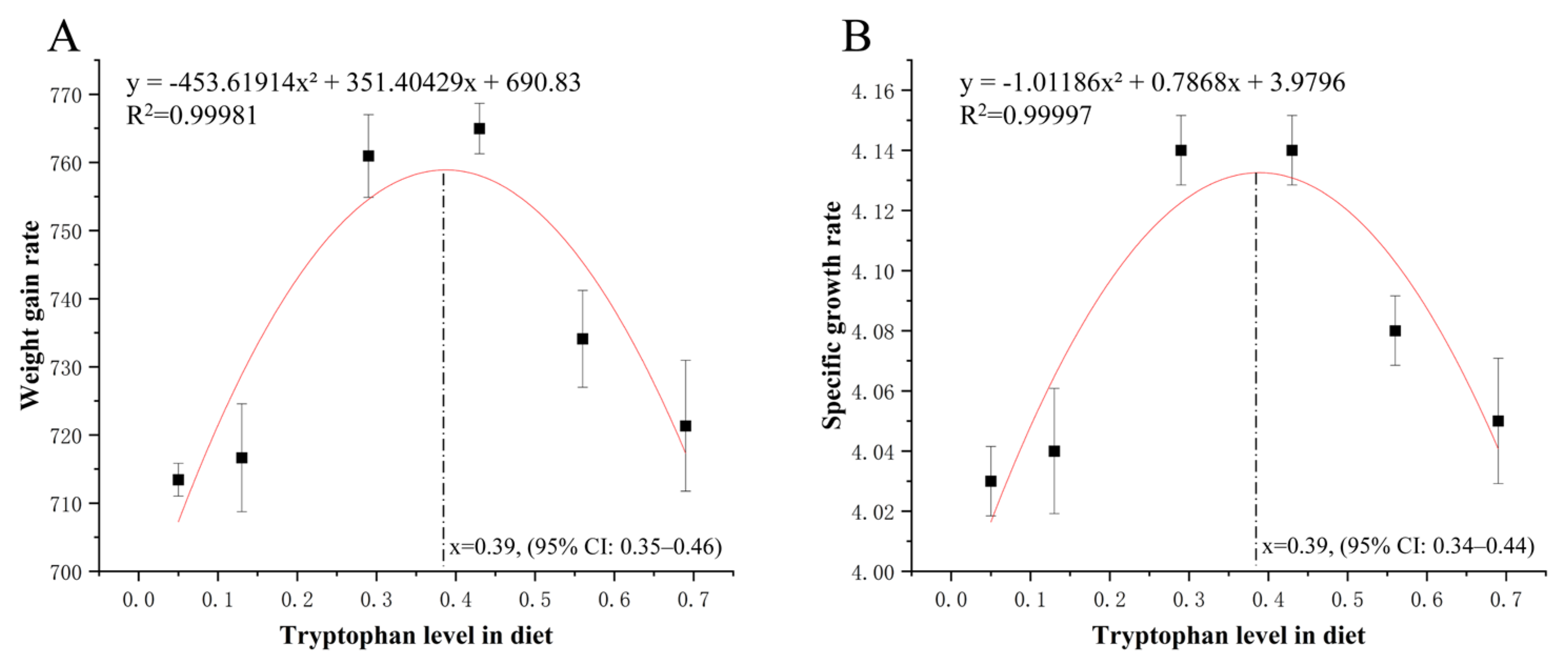
The quadratic regression analysis between dietary Trp levels and both WGR and SGR of P. clarkii was fitted using OriginPro 2024 (Figure 1A,B). The regression equations were determined as y = −453.61914x 2 + 351.40429x + 690.83 (R2 = 0.99981) and y = −1.01186x2 + 0.7868x + 3.9796 (R2 = 0.99997), respectively. The results indicated that the optimal dietary Trp requirement for P. clarkii was 0.39%, accounting for 1.22% of dietary protein.

3.2. The Content of 5-HT in Hemolymph

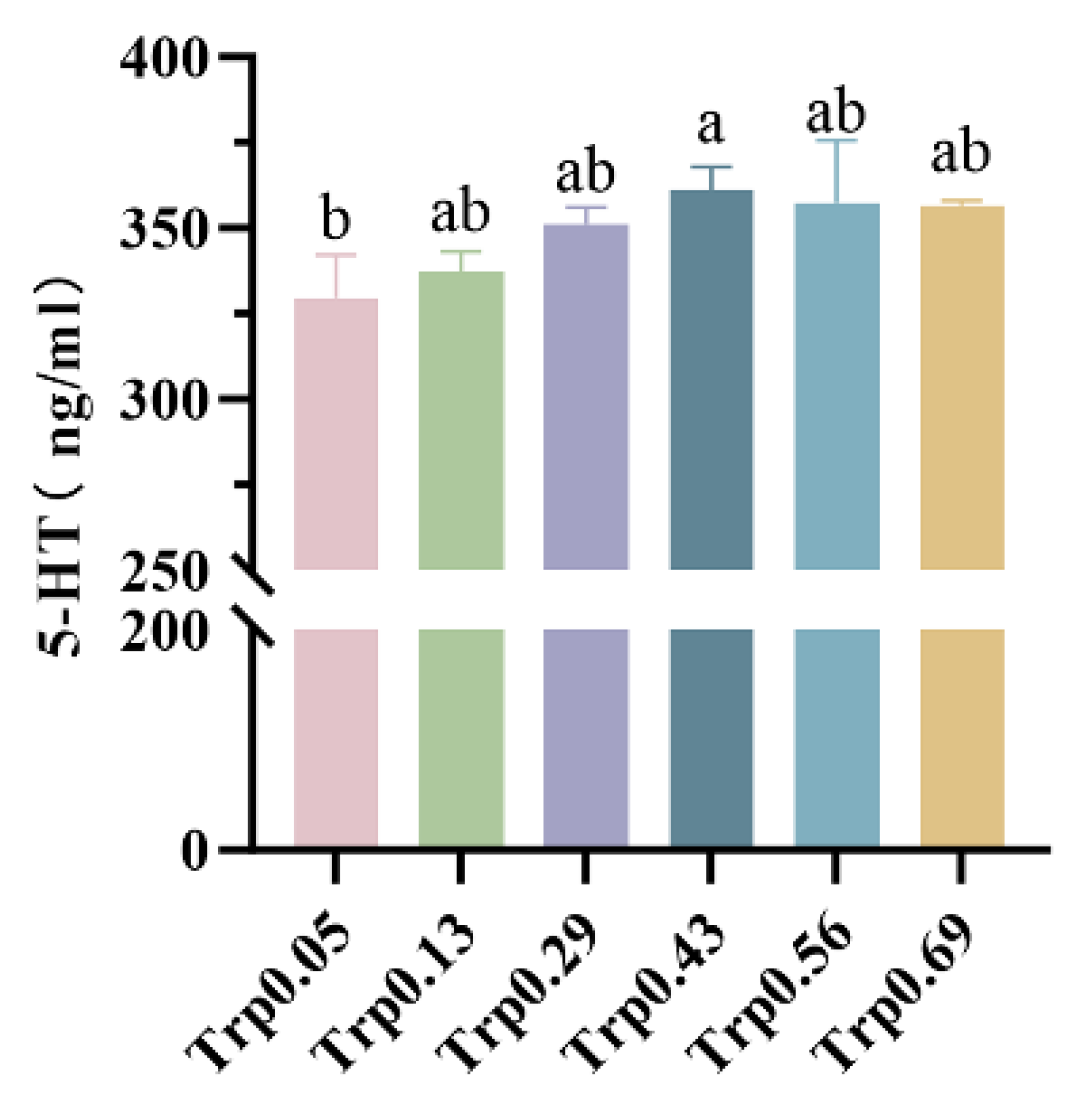
Figure 2 illustrates a quadratic relationship between dietary Trp levels and hemolymph 5-HT concentration, which increased to a peak in the Trp0.43 group before declining. The 5-HT content in the Trp0.43 group was significantly elevated compared to the Trp0.05 group (p < 0.05).

3.3. Muscle Nutrients

Table 6 presents the effects of dietary Trp levels on the muscle nutrients of P. clarkii. Muscle moisture content was significantly lower (p < 0.05) in the Trp0.29, Trp0.43, and Trp0.56 groups compared to the Trp-deficient group (Trp0.05). The content of crude protein in muscle increased with the increase of Trp level in diet, reached the maximum in Trp0.43 group, and then decreased (p < 0.05). In contrast, no significant differences were observed in muscle crude lipid or ash content among any of the Trp-supplemented groups relative to the Trp0.05 group (p > 0.05).

3.4. Muscle Textural Properties

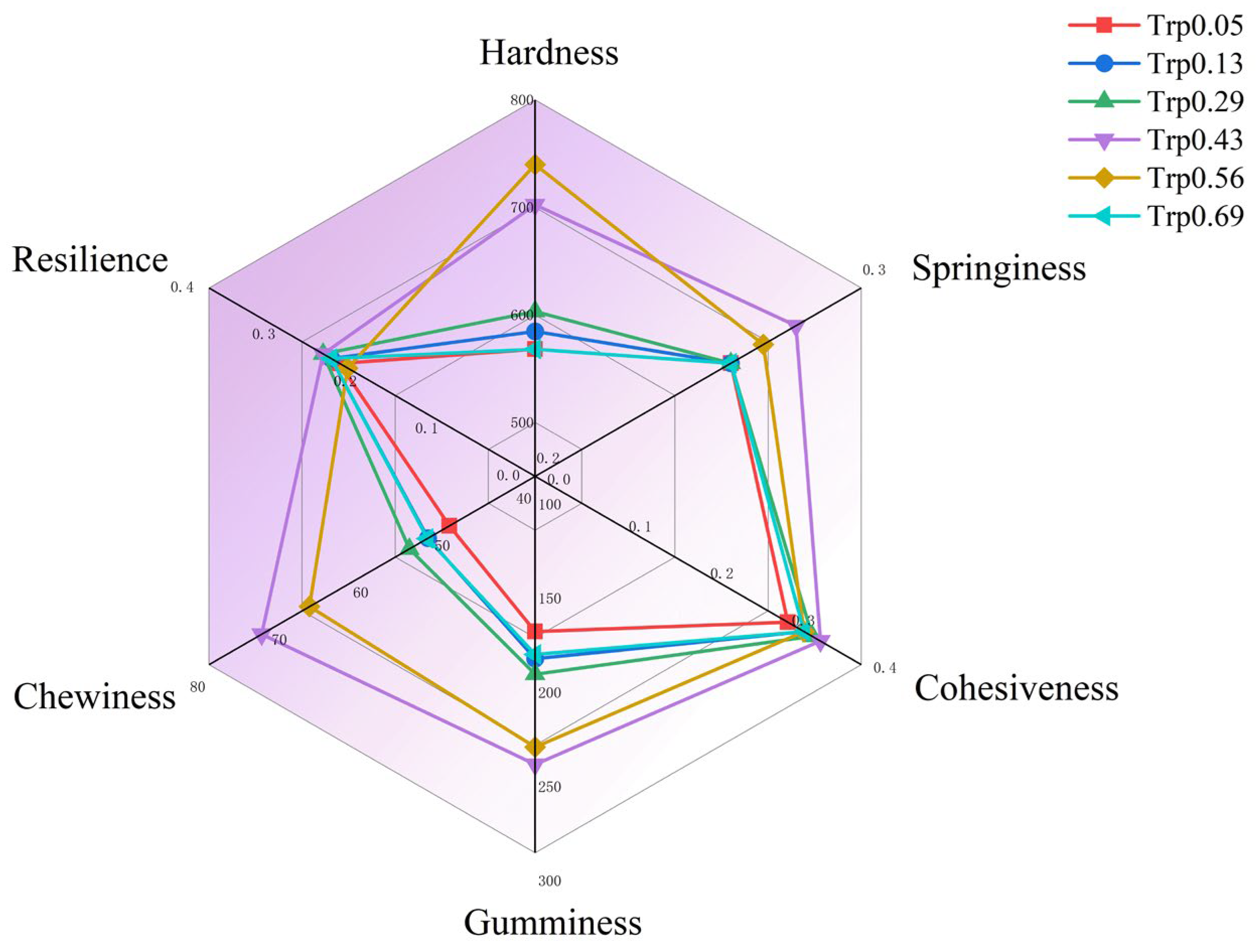
With the increase of dietary Trp level, hardness, springiness, cohesiveness, gumminess, and chewiness of P. clarkii changed significantly, showing a trend of increasing first and then decreasing, as shown in Table 7 and Figure 3. Compared with Trp deficiency group (Trp0.05), hardness and gumminess were significantly increased in Trp0.43 and Trp0.56 groups (p < 0.05), and the springiness, cohesiveness, and chewiness of the Trp0.43 group were significantly increased (p < 0.05). However, there was no significant difference in resilience among the 6 groups (p > 0.05).

3.5. Radar Chart Analysis of Electronic Nose

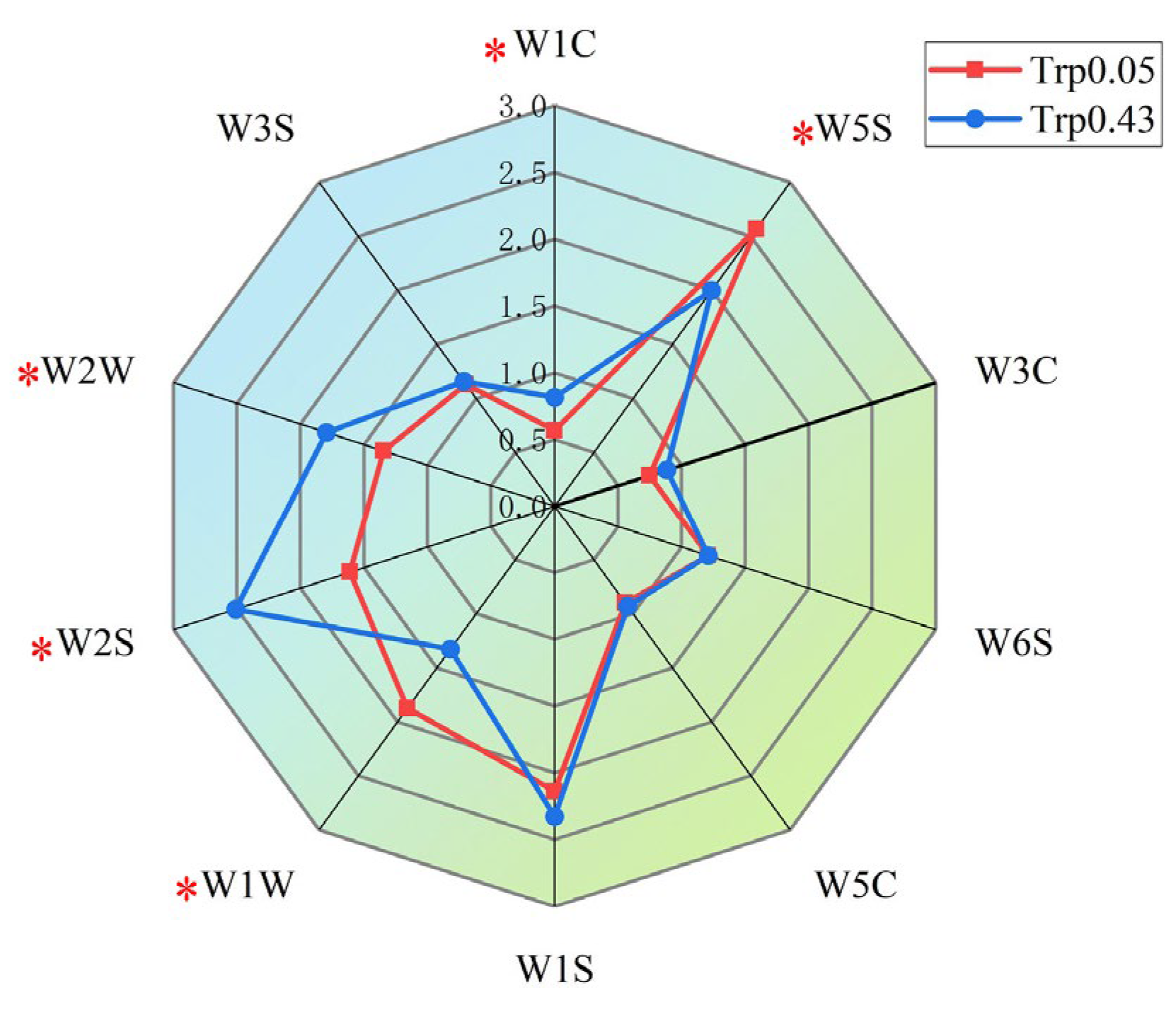
The radar map of Figure 4 shows the response values of the 10 sensors of the electronic nose to the muscle samples of P. clarkii. It can be seen from Figure 4 that the main differential sensor types between Trp0.05 and Trp0.43 groups were W1C-aromatic-benzenes, W5S-nitrogen oxides, W1W-inorganic sulfides, terpenes, W2S-alcohols, aldehydes and ketones, and W2W-organic sulfides. The response values of W1C, W2S, and W2W in the Trp0.43 group increased significantly (p < 0.05), while the response values of W5S and W1W decreased significantly (p < 0.05).

3.6. Muscle Histological Morphology

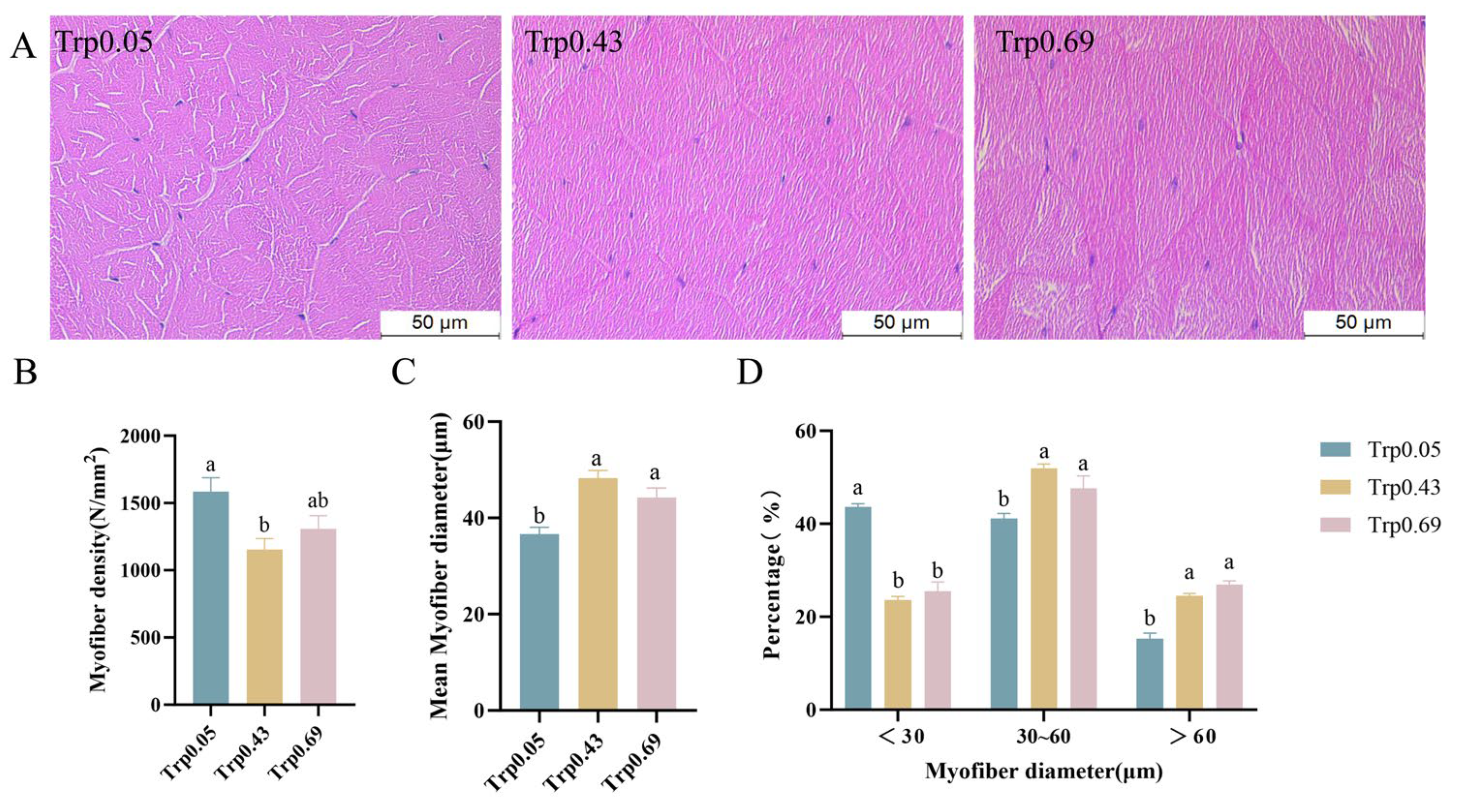
Figure 5 shows the effects of dietary Trp on muscle tissue morphology (Figure 5A), myofiber density (Figure 5B), muscle fiber diameter (Figure 5C), and muscle fiber diameter frequency (Figure 5D) of P. clarkii. As shown in Figure 5A, the cross-sectional area of muscle fiber in the Trp0.05 group was mostly irregular polygons, and the gap between muscle fibers was large. The cross-sectional area of muscle fiber in Trp0.43 and Trp0.69 groups was mostly regular polygons, and the gap between muscle fibers was small and arranged closely. As shown in Figure 5B, compared with the Trp0.05 group, muscle fiber density was significantly decreased in the Trp0.43 group (p < 0.05). As shown in Figure 5C, compared with the Trp0.05 group, the mean muscle fiber diameter of the Trp0.43 and Trp0.69 groups increased significantly (p < 0.05). As shown in Figure 5D, compared with the Trp0.05 group, the proportion of muscle fiber diameter less than 30 μm in the Trp0.43 and Trp0.69 groups was significantly reduced, while the proportion of muscle fiber diameter between 30 and 60 μm and greater than 60 μm was significantly increased (p < 0.05).

3.7. Muscle Development-Related Genes Expression

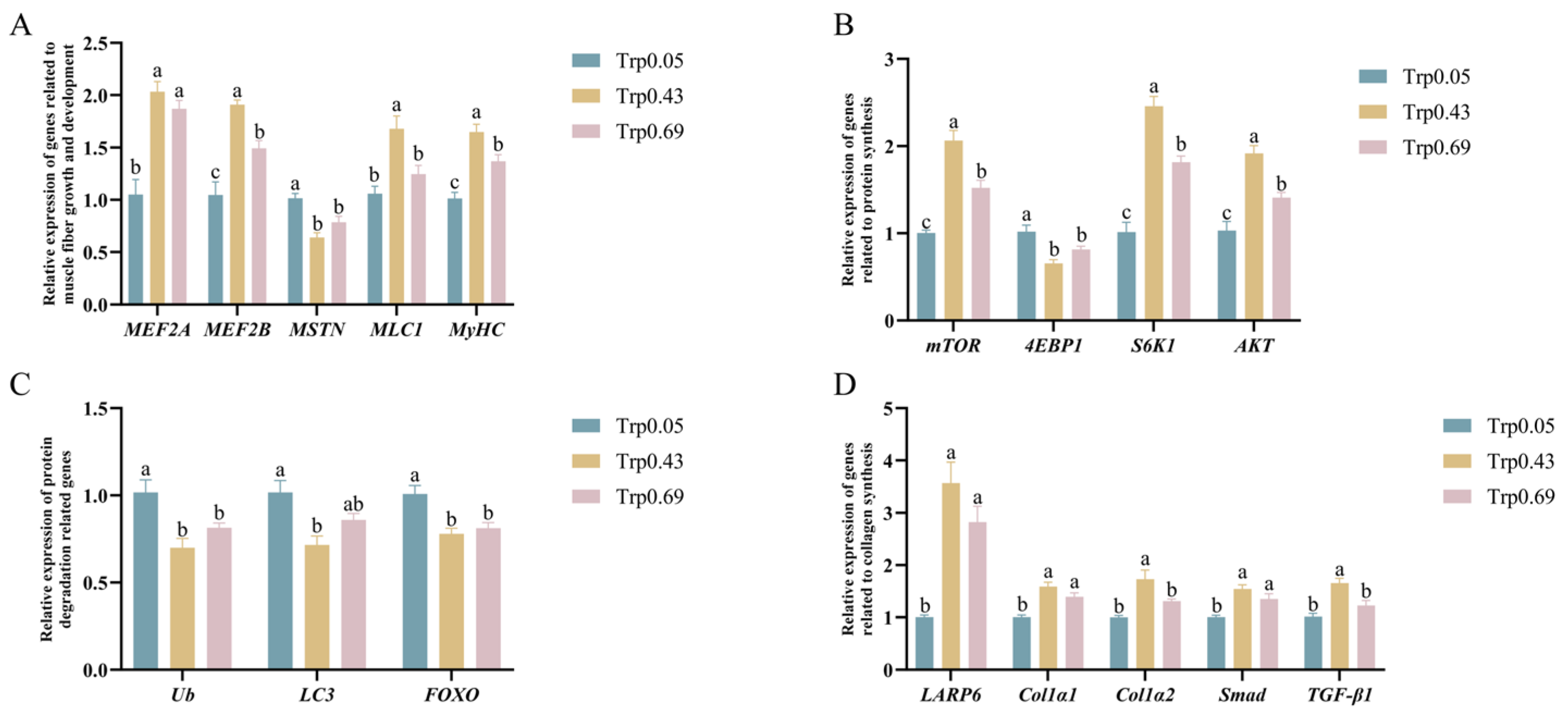
RT-PCR was used to detect the mRNA expression levels of genes associated with myofiber growth and development, protein synthesis and degradation, and collagen synthesis pathways (Figure 6). The results showed that compared with the Trp0.05 group, the mRNA expression levels of MEF2A, MEF2B, and MyHC in both the Trp0.43 group and Trp0.69 group were significantly upregulated (p < 0.05), while the mRNA expression level of MSTN was significantly downregulated (p < 0.05); among them, the mRNA expression level of MLC1 in the Trp0.43 group was significantly higher than that in the Trp0.05 group and Trp0.69 group (p < 0.05). Compared with the Trp0.05 group, the mRNA expression levels of mTOR, S6K1, and AKT in both the Trp0.43 group and Trp0.69 group were significantly upregulated (p < 0.05), while the mRNA expression level of 4EBP1 was significantly downregulated (p < 0.05). Compared with the Trp0.05 group, the mRNA expression levels of Ub and FOXO in both the Trp0.43 group and Trp0.69 group were significantly downregulated (p < 0.05), and the mRNA expression level of LC3 in the Trp0.43 group was significantly lower than that in the Trp0.05 group (p < 0.05). Compared with the Trp0.05 group, the mRNA expression levels of LARP6, Col1α1, and Smad in both the Trp0.43 group and Trp0.69 group were significantly upregulated (p < 0.05); among them, the mRNA expression levels of Col1α2 and TGF-β1 in the Trp0.43 group were significantly higher than those in the Trp0.05 group and Trp0.69 group (p < 0.05).

3.8. Alpha Diversity Index of Intestinal Microbiota

As shown in Table 8, one-way analysis of variance (ANOVA) results indicated that compared with the Trp0.05 group, both the Shannon index and Simpson index in the Trp0.43 group and Trp0.69 group were significantly increased (p < 0.05); however, there were no significant differences in the Observed species index and Chao index among all groups (p > 0.05).

3.9. Intestinal Microbiota Composition and Differences Analysis

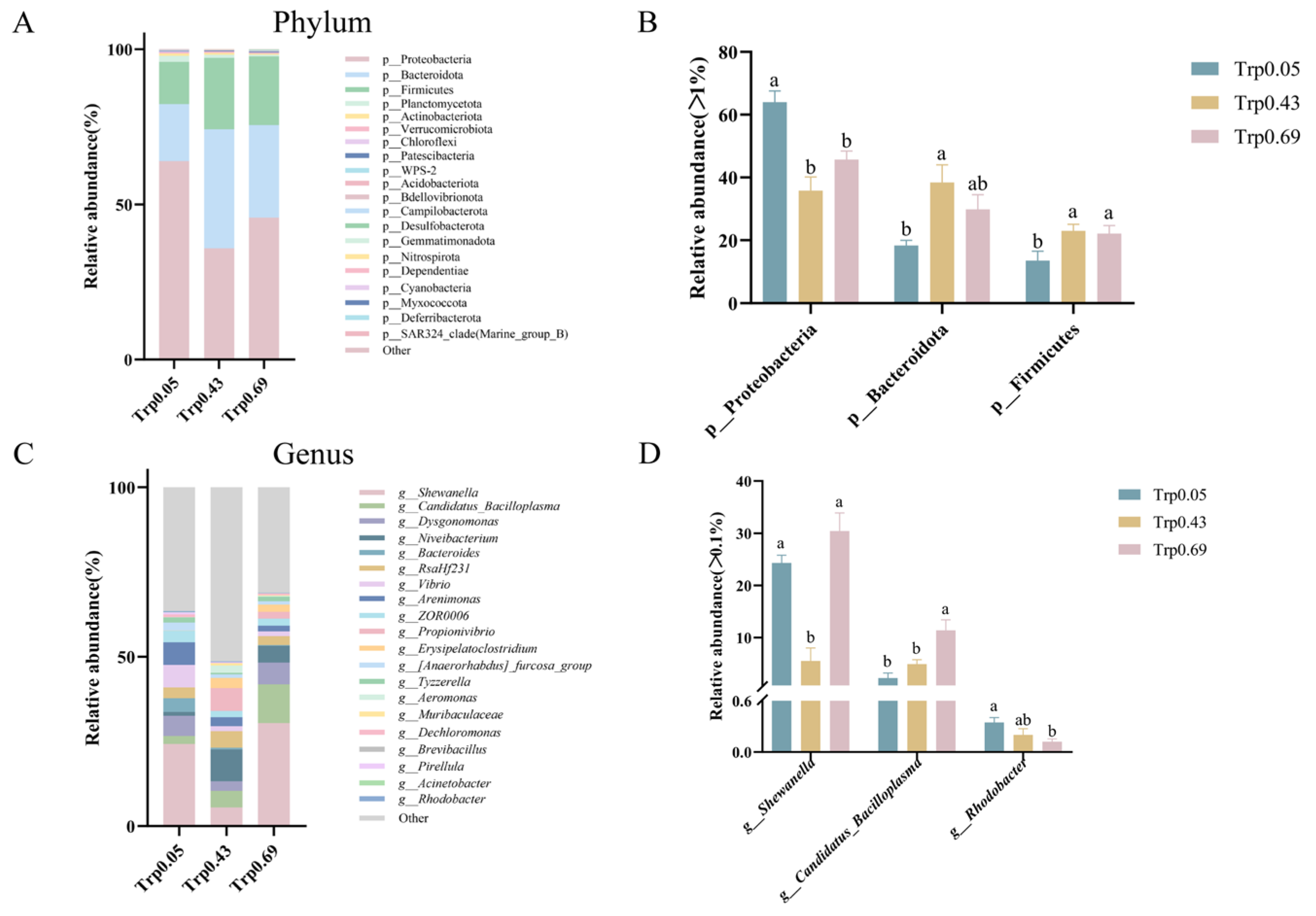
As shown in Figure 7A (phylum level) and Figure 7C (genus level), the relative abundance of the top 20 bacteria at the phylum level and genus level of the intestinal flora in each group was statistically analyzed. The results showed that at the phylum level, the top five dominant bacteria were Proteobacteria, Bacteroidota, Firmicutes, Planctomycetota and Actinobacteriota. The relative abundance of the Trp0.05 group was 58.67%, 23.52%, 14.59%, 1.43%, and 0.57%, respectively. The relative abundance of Trp0.43 group was 32.10%, 36.07%, 29.20%, 0.79% and 0.52%, respectively. The relative abundance of Trp0.69 group was 53.17%, 22.52%, 22.10%, 0.42% and 0.32%, respectively. At the genus level, the top five dominant bacteria were Shewanella, Vibrio, Arenimonas, Dysgonomonas, and Bacteroides. The relative abundance of Trp0.05 group was 24.27%, 6.70%, 6.65%, 6.04% and 4.07%, respectively. The relative abundance of Trp0.43 group was 5.51%, 1.46%, 2.68%, 2.77% and 0.49%, respectively. The relative abundance of Trp0.69 group was 30.41%, 1.37%, 1.64%, 6.46% and 0.22%, respectively.
Figure 7B shows the differential gut microbiota at the phylum level with relative abundance > 1% among the Trp0.05, Trp0.43, and Trp0.69 groups. Compared with the Trp0.05 group, the relative abundance of Proteobacteria was significantly decreased in the Trp0.43 and Trp0.69 groups (p < 0.05), while that of Firmicutes was significantly increased (p < 0.05). In addition, the relative abundance of Bacteroidota in the Trp0.43 group was significantly higher than that in the Trp0.05 group (p < 0.05). Figure 7D shows the differential gut microbiota at the genus level with relative abundance > 0.1% among the three groups. The relative abundance of Shewanella in the Trp0.43 group was significantly lower than that in the Trp0.05 and Trp0.69 groups (p < 0.05). The relative abundance of Candidatus_Bacilloplasma in the Trp0.05 and Trp0.43 groups was significantly lower than that in the Trp0.69 group (p < 0.05). Moreover, the relative abundance of Rhodobacter in the Trp0.69 group was significantly lower than that in the Trp0.05 group (p < 0.05).

3.10. Correlation Analysis Between Intestinal Flora and Muscle Development-Related Genes

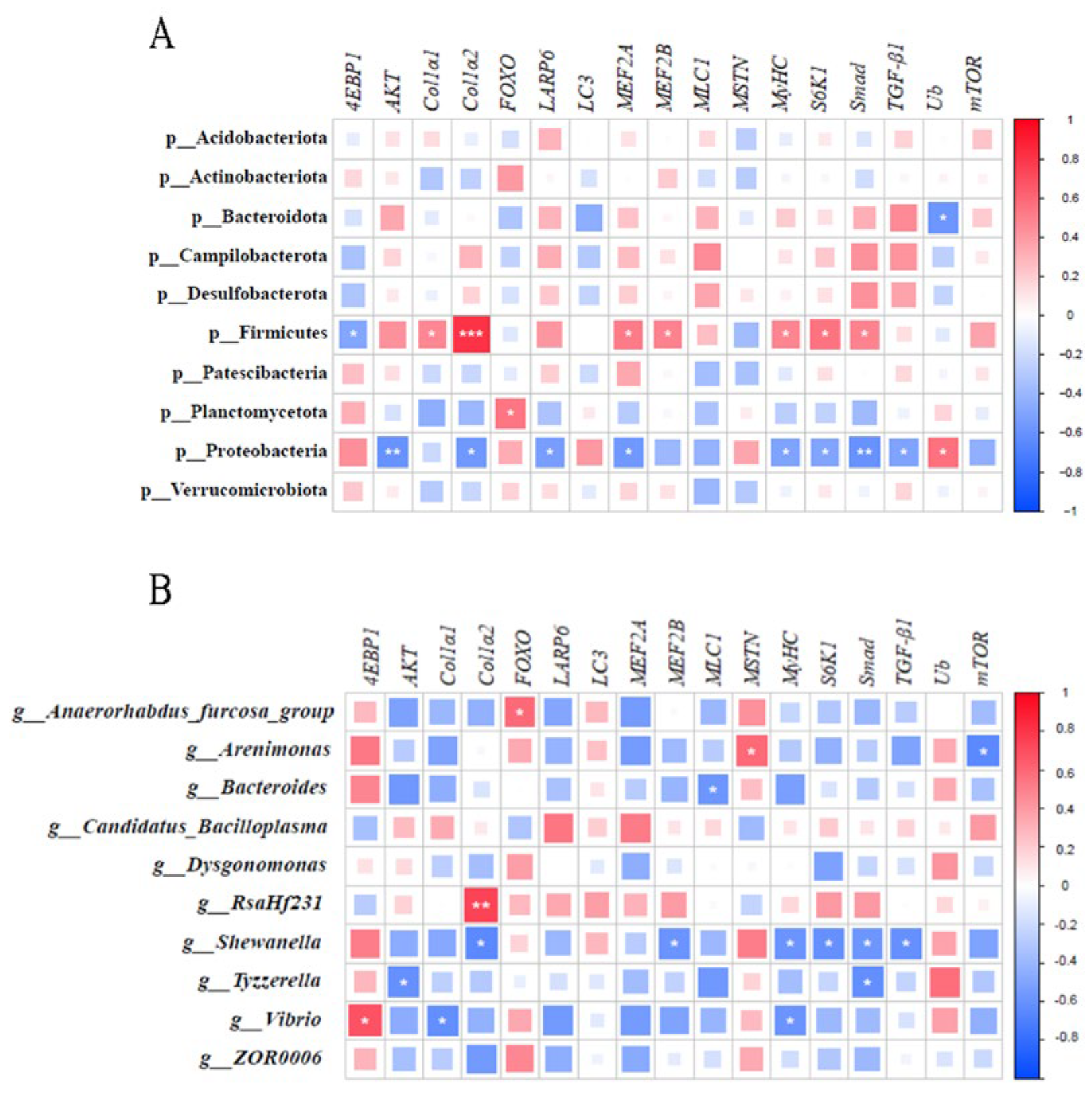
The correlation analysis between intestinal flora and the gene expression levels of muscle fiber growth and development, protein synthesis and degradation, and collagen synthesis in P. clarkii was shown in Figure 8. At the gate level (Figure 8A), the relative abundance of Firmicutes was positively correlated with MFE2A, MEF2B, MyHC, S6K1, Col1α1, Col1α2, and Smad (p < 0.05), but negatively correlated with 4EBP1 (p < 0.05). The relative abundance of Proteobacteria was negatively correlated with MFE2A, MyHC, AKT, S6K1, Col1α2, LARP6, Smad, and TGF-β1 (p < 0.05), but positively correlated with Ub (p < 0.05). At the genus level (Figure 7B), the relative abundance of Shewanella was negatively correlated with MEF2B, MyHC, S6K1, Col1α2, Smad, and TGF-β1 (p < 0.05). The relative abundance of Vibrio was negatively correlated with MyHC and Col1α1 (p < 0.05), but positively correlated with 4EBP1 (p < 0.05).

4. Discussion

4.1. Effects of Trp on Growth Performance of P. clarkii

As an essential amino acid, Trp plays an important role in promoting the growth of P. clarkii. In this study, Trp supplementation significantly increased the FW, WGR, and SGR, and decreased the FCR of P. clarkii compared with the group without Trp supplementation. The results were similar to those of Sun et al. in P. (L.) vannamei [26] and Harlıoğlu in Astacus leptodactylus [48]. Trp is a precursor of 5-hydroxytryptamine (5-HT), an important neurotransmitter that stimulates appetite and feeding behavior [49,50]. This study found that the appropriate level of Trp (Trp0.43 group) increased the content of 5-HT in hemolymph, which was consistent with the results of Sun [26] in P. (L.) vannamei. Trp may promote growth in P. clarkii by enhancing feeding activity via 5-HT regulation, as evidenced by significantly reduced FCR, notably in the Trp0.43 group. Quadratic regression analysis showed that the optimal requirement of Trp was 0.39% (1.22% of feed protein). This result is consistent with the change trend of growth performance parameters: from Trp0.05 to Trp0.43 group, WGR and SGR showed an upward trend, but after exceeding the optimal dose, there was a downward trend. In other crustaceans, such as P. (L.) vannamei [26], Penaeus (Penaeus) monodon [51] and Macrobrachium nipponense, the optimal Trp requirement was 0.36% (1.72% of dietary protein), 0.2% (0.5% of dietary protein) and 0.37% (0.95% of dietary protein), respectively, indicating that the optimal Trp requirement was species-specific.

4.2. Effects of Trp on Muscle Growth, Development, and Quality of P. clarkii

Muscle growth and development are driven by protein deposition and muscle fiber development [52]. The results of this study showed that the addition of Trp (especially Trp0.43 group) to the feed significantly increased the crude protein content of the muscle of P. clarkii. Similar results were reported in hybrid catfish [49] and grass carp [29] muscle. The increase in muscle protein content is largely attributed to the increase in protein synthesis [53,54]. As a core regulator of cell growth, mTOR activation can promote ribosome biosynthesis and protein translation initiation, thereby enhancing protein synthesis efficiency [12]. AKT regulates protein synthesis by phosphorylating mTORC1 downstream targets S6K1 and 4EBP1 [15]. This study showed that the mRNA expression levels of mTOR, S6K1, and AKT were significantly up-regulated in the Trp0.43 group, whereas the mRNA expression level of 4EBP1 was down-regulated. Jiang et al. [30] reported that optimal dietary tryptophan up-regulated the mRNA expression of mTOR and S6K1, and down-regulated the mRNA level of 4EBP1 in muscle of hybrid catfish, which was consistent with the results of the present study. Animal muscle protein deposition is the result of the dynamic balance between protein synthesis and degradation [55]. Ub is involved in the regulation of protein ubiquitination, while LC3 and FOXO are involved in the regulation of autophagy and affect the process of protein degradation [16]. In the present study, mRNA expression levels of Ub, LC3, and FOXO were significantly decreased in the Trp0.43 group, which was similar to the findings of Xiao et al. [29] in grass carp. These results indicate that tryptophan can regulate the expression of autophagy- and ubiquitination-related genes. In addition to protein deposition, muscle growth is also affected by muscle fiber growth and development. Muscle fiber density and fiber diameter frequency are useful quantitative indices to reflect the growth and development of muscle fiber [56]. The MEF2 family has been shown to be involved in the growth and development of muscle fiber [17]. MLC1 and MyHC can interact with MRFs to regulate the formation of muscle fiber [18,19]. MSTN inhibits myofibril synthesis by inhibiting mTOR signaling pathway and activating ubiquitin-proteasome system [57]. This study showed that the diameter of muscle fibers in the Trp0.43 group increased (the proportion of > 30 μm increased), and the expression levels of MEF2A, MEF2B, MyHC, and MLC1 mRNA were up-regulated, and the expression level of MSTN mRNA was down-regulated. Similar results were observed in mouse C2C12 myoblasts [12]. This suggests that Trp may be involved in the regulation of muscle fiber growth and development.
Texture is an important variable of muscle quality, which has attracted more and more attention from the aquaculture industry [58]. Texture is an important variable of muscle quality and has attracted more and more attention from the aquaculture industry. It is defined as a sensory parameter that only humans can perceive, describe, and quantify [59]. Hardness and springiness are important indicators of muscle texture [60], while cohesion and resilience are indicators of muscle elasticity because they describe the muscle’s ability to recover from deformation and provide resistance for subsequent deformation [61]. Muscle fiber diameter and density are direct determinants of tissue hardness [62], with increased fiber diameter generally resulting in elevated hardness levels. Not only that, but collagen synthesis also has a significant positive effect on muscle hardness [31], which has been proven in Wen‘s [63] experiment on grass carp. In collagen synthesis, TGF-β1 promotes collagen synthesis and deposition by directly activating the promoters of collagen genes such as Col1α1 and Col1α2. TGF-β1 can also regulate the expression and synthesis of type I collagen in muscle through Smads and mTORC1 [21]. In addition, LARP6 affects the production of type I collagen by interacting with non-muscle myosin [22]. In this study, dietary Trp supplementation significantly increased muscle fiber diameter and up-regulated the expression of Col1α1, Col1α2, Smad, and LARP6 mRNA, which was consistent with the improvement of muscle hardness and elasticity. Consistent with this, it has been proven that dietary Trp supplementation can promote muscle fiber growth and collagen synthesis in grass carp and hybrid catfish [29,30]. The flavor of aquatic products is one of the important indicators for the evaluation of muscle quality. Amino acids participate in Strecker degradation, facilitating the formation of Strecker alcohols and aldehydes that contribute to food flavor enhancement [64]. Studies have shown that Trp is involved in the regulation of flavor changes [65]. In the present study, an electronic nose was used to evaluate changes in muscle volatile composition across ten dimensions. In the Trp0.43 group, the response values of W1C-aromatic-benzenes, W2S-alcohols, aldehydes, and ketones were significantly increased, which may be due to the fact that Trp metabolism can produce indole compounds (such as phenylethanol), which can be detected by W1C and W2S sensors. In the study of Zheng [65], it was found that Trp increased the concentration of aldehydes and ketones, which was consistent with the results of this experiment.

4.3. Effects of Trp on Intestinal Microbiota of P. clarkii

More and more studies have shown that gut microbiota plays an important role in the muscle development and quality of aquatic animals. At present, a large number of studies have shown the existence of the ‘gut-muscle axis’ [66]. For example, in Aplodinotus grunniens, it has been proven that intestinal microorganisms and their derived metabolites are involved in the regulation of muscle metabolism and development [67]. Some probiotics, such as lactobacilli and bifidobacteria, can enhance intestinal protease activity, improve feed protein utilization, and promote muscle protein synthesis [66,68,69]. This study found that Proteobacteria was the dominant phylum in the intestinal flora of P. clarkii, followed by Bacteroidota and Firmicutes, which was similar to the results of Huang [70]. The cell wall component LPS of some Proteobacteria (such as Vibrio, Aeromonas) can trigger the release of inflammatory factors (TNF-α, IL-6) through the TLR4/NF-κB pathway [71,72], leading to the activation of the ubiquitin-proteasome system (UPS) [73], thereby accelerating protein degradation. Bacteroidota bacteria can produce short-chain fatty acids (SCFAs), such as acetic acid, and activate mTORC1 signaling through GPR43 receptor [74], promoting the translation and synthesis of myosin and actin [75], thereby increasing protein deposition. In this experiment, the relative abundance of Proteobacteria in the Trp0.43 and Trp0.69 groups decreased significantly, while the relative abundance of Bacteroidota in the Trp0.43 group increased significantly. The possible reason is that Trp and its metabolites can be metabolized into indole and its derivatives via intestinal microbial metabolism. These compounds can activate AhR, promote the secretion of antimicrobial peptides [76], inhibit the growth of some pathogenic Proteobacteria (such as E.coli) [77], and create a more favorable niche for Bacteroidota, thereby promoting the growth of Bacteroidota. In addition, the present study found that the Trp0.43 group significantly reduced the relative abundance of Shewanella, which belongs to Proteobacteria, and the change trend of Shewanella relative abundance was consistent with that of Proteobacteria. Studies have shown that Shewanella may reduce the abundance of beneficial intestinal bacteria [78]; excessive proliferation of Shewanella can lead to a decrease in intestinal flora diversity [79]. In the Trp0.05 group, the abundance of Shewanella was significantly increased, while the Alpha diversity Shannon index and Simpson index were significantly decreased. These results suggest that appropriate levels of Trp can indirectly regulate muscle quality by improving the structure and abundance of intestinal flora. In order to further explore the relationship between intestinal microorganisms and muscle fiber growth and development, protein synthesis and degradation, and collagen synthesis, this experiment conducted a correlation analysis. The results showed that Proteobacteria, Firmicutes, and Shewanella had a certain correlation with muscle quality-related genes. It paves the way for the subsequent exploration of the effect of intestinal microorganisms on the muscle quality of aquatic animals. The limitation of this study is that the next research plan is to determine the metabolite profile of intestinal contents, analyze the effect of Trp on intestinal microbial metabolism, and explore functional metabolites related to host muscle physiology.

5. Conclusions

In summary, dietary Trp supplementation improved the growth performance and muscle quality of P. clarkii and up-regulated the expression of genes related to muscle fiber growth, protein deposition, and collagen synthesis. In addition, Trp can improve the intestinal flora structure of P. clarkii. Finally, based on quadratic regression analysis of weight gain rate (WGR) and specific growth rate (SGR), the dietary Trp requirement of P. clarkii was estimated to be 0.39%, corresponding to 1.22% of dietary protein.

Author Contributions

Conceptualization, B.L. (Bo Liu 2), X.Z. and Y.C.; Data curation, Y.C. and C.S.; Formal analysis, B.L. (Bo Liu 1), X.B., Y.Y., H.W. and Y.C.; Funding acquisition, X.Z. and B.L. (Bo Liu 2); Project administration, L.Z., E.N. and S.S.; Visualization, B.L. (Bo Liu 2) and Y.C.; Writing—original draft, Y.C.; Writing—review and editing, Y.C., X.Z., Y.Z. and B.L. (Bo Liu 2); Supervision, L.Z. and H.T. All authors have read and agreed to the published version of the manuscript.

Funding

This work was supported by the Central Public-interest Scientific Institution Basal Research Fund, Freshwater Fisheries Research Center, CAFS (2025JBFM01), China Agriculture Research System of MOF and MARA (CARS-48), the Natural Science Foundation of Jiangsu Province for Youths, grant number BK20230178, and National Key R&D Program of China, grant number 2023YFD2402000.

Institutional Review Board Statement

The animal study protocol was approved by the Animal Care and Use Committee of Nanjing Agricultural University (Nanjing, China) (Ethical Approval Code: LAEC-FFRC-2023-04-01; Approval Date: 1 April 2023) and was conducted in strict compliance with national guidelines and institutional policies for the care and use of laboratory animals.

Data Availability Statement

The original contributions presented in this study are included in the article. Further inquiries can be directed to the corresponding authors.

Conflicts of Interest

The authors declare no conflict of interest.

References

  1. Xia, Z.; Liu, Z.; Liu, Y.; Cui, W.; Zheng, D.; Tao, M.; Zhou, Y.; Peng, X. Differentiating Pond-Intensive, Paddy-Ecologically, and Free-Range Cultured Crayfish (Procambarus clarkii) Using Stable Isotope and Multi-Element Analysis Coupled with Chemometrics. Foods 2024, 13, 2947. [Google Scholar] [CrossRef] [PubMed]
  2. Wen, C.; Jia, X.; Zhu, C.; Fang, X.; Tian, H.; Ma, S.; Wang, A.; Jiang, W.; Liu, W.; Zhang, D. Berberine Supplementation Enhances Antioxidant Defense and Glucose Metabolism in Crayfish (Procambarus clarkii) Fed a High-Carbohydrate Diet. Anim. Adv. 2025, 2, e020. [Google Scholar] [CrossRef]
  3. Chen, B.; Xu, X.; Chen, Y.; Xie, H.; Zhang, T.; Mao, X. Red Swamp Crayfish (Procambarus clarkii) as a Growing Food Source: Opportunities and Challenges in Comprehensive Research and Utilization. Foods 2024, 13, 3780. [Google Scholar] [CrossRef] [PubMed]
  4. El-Sherif, S.A.E.-H.; El-Ghafour, S.A. Nutritive Value of Canned River Nile Crayfish (Procambarus clarkii) Products. Egypt. J. Aquat. Res. 2015, 41, 265–272. [Google Scholar] [CrossRef]
  5. Qin, L.; He, J.; Rong, K.; Guo, C.; Liu, J.; Zhang, T.; Li, W. Changes in Secondary Sexual Characteristics of Female Red Swamp Crayfish (Procambarus clarkii) and Relationship to Ovarian Development: Implications for Intensive Breeding of Seedlings. Aquaculture 2024, 592, 741156. [Google Scholar] [CrossRef]
  6. Zhang, T.; Zhang, L.; Yin, T.; You, J.; Liu, R.; Huang, Q.; Shi, L.; Wang, L.; Liao, T.; Wang, W.; et al. Recent Understanding of Stress Response on Muscle Quality of Fish: From the Perspective of Industrial Chain. Trends Food Sci. Technol. 2023, 140, 104145. [Google Scholar] [CrossRef]
  7. Dong, B.; Wu, L.; Wang, Y.; Han, D.; Liu, H.; Zhu, X.; Yang, Y.; Xie, S.; Liu, Z.; Jin, J. Glutamate Improves Flesh Quality and Muscle Growth of Triploid Crucian Carp. Aquac. Rep. 2023, 33, 101832. [Google Scholar] [CrossRef]
  8. Johnston, I.A.; Alderson, R.; Sandham, C.; Dingwall, A.; Mitchell, D.; Selkirk, C.; Nickell, D.; Baker, R.; Robertson, B.; Whyte, D.; et al. Muscle Fibre Density in Relation to the Colour and Texture of Smoked Atlantic Salmon (Salmo salar L.). Aquaculture 2000, 189, 335–349. [Google Scholar] [CrossRef]
  9. Dong, M.; Zhang, L.; Wu, P.; Feng, L.; Jiang, W.; Liu, Y.; Kuang, S.; Li, S.; Mi, H.; Tang, L.; et al. Dietary Protein Levels Changed the Hardness of Muscle by Acting on Muscle Fiber Growth and the Metabolism of Collagen in Sub-Adult Grass Carp (Ctenopharyngodon idella). J. Anim. Sci. Biotechnol. 2022, 13, 109. [Google Scholar] [CrossRef]
  10. Liu, Y.; Sun, Q.; Pan, Y.; Wei, S.; Xia, Q.; Liu, S.; Ji, H.; Deng, C.; Hao, J. Investigation on the Correlation between Changes in Water and Texture Properties during the Processing of Surimi from Golden Pompano (Trachinotus ovatus). J. Food Sci. 2021, 86, 376–384. [Google Scholar] [CrossRef]
  11. Florek, M.; Domaradzki, P.; Skałecki, P.; Ryszkowska-Siwko, M.; Ziomek, M.; Tajchman, K.; Gondek, M.; Pyz-Łukasik, R. Content and Solubility of Collagen and Their Relation to Proximate Composition and Shear Force of Meat from Different Anatomical Location in Carcass of European Beaver (Castor Fiber). Foods 2022, 11, 1288. [Google Scholar] [CrossRef] [PubMed]
  12. Dukes, A.; Davis, C.; El Refaey, M.; Upadhyay, S.; Mork, S.; Arounleut, P.; Johnson, M.H.; Hill, W.D.; Isales, C.M.; Hamrick, M.W. The Aromatic Amino Acid Tryptophan Stimulates Skeletal Muscle IGF1/P70s6k/mTor Signaling in Vivo and the Expression of Myogenic Genes in Vitro. Nutrition 2015, 31, 1018–1024. [Google Scholar] [CrossRef] [PubMed]
  13. Hua, H.; Guo, H.; Liu, W.; Liu, Z.; He, C.; Huang, Y.; Cao, X.; Xiong, W.; Wang, X.; Wen, Y.; et al. Trimethylamine N-Oxide Promotes the Growth of Chinese Mitten Crab (Eriocheir sinensis), Deposition of Amines, and Activates the mTOR Pathway by Affecting Metabolism of Amino Acids. Anim. Adv. 2025, 2, e008. [Google Scholar] [CrossRef]
  14. Xu, J.; Hao, S.; Han, K.; Yang, W.; Deng, H. How Is the AKT/mTOR Pathway Involved in Cell Migration and Invasion? Biocell 2023, 47, 773–788. [Google Scholar] [CrossRef]
  15. Tan, B.; Yin, Y.; Kong, X.; Li, P.; Li, X.; Gao, H.; Li, X.; Huang, R.; Wu, G. L-Arginine Stimulates Proliferation and Prevents Endotoxin-Induced Death of Intestinal Cells. Amino Acids 2010, 38, 1227–1235. [Google Scholar] [CrossRef]
  16. Lundell, L.S.; Savikj, M.; Kostovski, E.; Iversen, P.O.; Zierath, J.R.; Krook, A.; Chibalin, A.V.; Widegren, U. Protein Translation, Proteolysis and Autophagy in Human Skeletal Muscle Atrophy after Spinal Cord Injury. Acta Physiol. 2018, 223, e13051. [Google Scholar] [CrossRef]
  17. Black, B.L.; Olson, E.N. Transcriptional Control of Muscle Development by Myocyte Enhancer Factor-2 (MEF2) Proteins. Annu. Rev. Cell Dev. Biol. 1998, 14, 167–196. [Google Scholar] [CrossRef]
  18. Schulze, M.; Belema-Bedada, F.; Technau, A.; Braun, T. Mesenchymal Stem Cells Are Recruited to Striated Muscle by NFAT/IL-4-Mediated Cell Fusion. Genes Dev. 2005, 19, 1787–1798. [Google Scholar] [CrossRef][Green Version]
  19. Dou, M.; Yao, Y.; Ma, L.; Wang, X.; Shi, X.; Yang, G.; Li, X. The Long Noncoding RNA MyHC IIA/X-AS Contributes to Skeletal Muscle Myogenesis and Maintains the Fast Fiber Phenotype. J. Biol. Chem. 2020, 295, 4937–4949. [Google Scholar] [CrossRef]
  20. Moon, S.S. The Effect of Quality Grade and Muscle on Collagen Contents and Tenderness of Intramuscular Connective Tissue and Myofibrillar Protein for Hanwoo Beef. Asian Australas. J. Anim. Sci. 2006, 19, 1059–1064. [Google Scholar] [CrossRef]
  21. Fang, C.-C.; Feng, L.; Jiang, W.-D.; Wu, P.; Liu, Y.; Kuang, S.-Y.; Tang, L.; Liu, X.-A.; Zhou, X.-Q. Effects of Dietary Methionine on Growth Performance, Muscle Nutritive Deposition, Muscle Fibre Growth and Type I Collagen Synthesis of on-Growing Grass Carp (Ctenopharyngodon idella). Br. J. Nutr. 2021, 126, 321–336. [Google Scholar] [CrossRef]
  22. Zhang, Y.; Stefanovic, B. LARP6 Meets Collagen mRNA: Specific Regulation of Type I Collagen Expression. Int. J. Mol. Sci. 2016, 17, 419. [Google Scholar] [CrossRef]
  23. Zhao, Y.; Li, J.-Y.; Yin, L.; Feng, L.; Liu, Y.; Jiang, W.-D.; Wu, P.; Zhao, J.; Chen, D.-F.; Zhou, X.-Q.; et al. Effects of Dietary Glutamate Supplementation on Flesh Quality, Antioxidant Defense and Gene Expression Related to Lipid Metabolism and Myogenic Regulation in Jian Carp (Cyprinus carpio Var. Jian). Aquaculture 2019, 502, 212–222. [Google Scholar] [CrossRef]
  24. Wu, M.; Li, M.; Wen, H.; Yu, L.; Jiang, M.; Lu, X.; Tian, J.; Huang, F. Dietary Lysine Facilitates Muscle Growth and Mediates Flesh Quality of Pacific White Shrimp (Litopenaeus vannamei) Reared in Low-Salinity Water. Aquac. Int. 2023, 31, 603–625. [Google Scholar] [CrossRef]
  25. Agus, A.; Planchais, J.; Sokol, H. Gut Microbiota Regulation of Tryptophan Metabolism in Health and Disease. Cell Host Microbe 2018, 23, 716–724. [Google Scholar] [CrossRef] [PubMed]
  26. Sun, Y.-P.; Guan, L.-Z.; Xiong, J.-H.; Xi, Q.-Y.; Zhang, Y.-L. Effects of L-Tryptophan-Supplemented Dietary on Growth Performance and 5-HT and GABA Levels in Juvenile Litopenaeus vannamei. Aquac. Int. 2015, 23, 235–251. [Google Scholar] [CrossRef]
  27. Tejpal, C.S.; Pal, A.K.; Sahu, N.P.; Ashish Kumar, J.; Muthappa, N.A.; Vidya, S.; Rajan, M.G. Dietary Supplementation of L-Tryptophan Mitigates Crowding Stress and Augments the Growth in Cirrhinus Mrigala Fingerlings. Aquaculture 2009, 293, 272–277. [Google Scholar] [CrossRef]
  28. Zhang, E.; Dong, S.; Wang, F.; Tian, X.; Gao, Q. Effects of L-Tryptophan on the Growth, Intestinal Enzyme Activities and Non-Specific Immune Response of Sea Cucumber (Apostichopus japonicus Selenka) Exposed to Crowding Stress. Fish Shellfish Immunol. 2018, 75, 158–163. [Google Scholar] [CrossRef]
  29. Xiao, L.-Q.; Jiang, W.-D.; Wu, P.; Liu, Y.; Ren, H.-M.; Tang, L.; Li, S.-W.; Zhong, C.-B.; Zhang, R.-N.; Feng, L.; et al. Improvement of Flesh Quality, Muscle Growth and Protein Deposition in Adult Grass Carp (Ctenopharyngodon idella): The Role of Tryptophan. Aquaculture 2023, 577, 740005. [Google Scholar] [CrossRef]
  30. Jiang, Q.; Zhao, Y.; Zhou, X.-Q.; Wu, X.-Y.; Xu, S.-X.; Feng, L.; Liu, Y.; Jiang, W.-D.; Wu, P.; Zhao, J.; et al. Effects of Dietary Tryptophan on Muscle Growth, Protein Synthesis and Antioxidant Capacity in Hybrid Catfish Pelteobagrus vachelli ♀ × Leiocassis longirostris ♂. Br. J. Nutr. 2022, 127, 1761–1773. [Google Scholar] [CrossRef]
  31. Johnston, I.A.; Li, X.; Vieira, V.L.A.; Nickell, D.; Dingwall, A.; Alderson, R.; Campbell, P.; Bickerdike, R. Muscle and Flesh Quality Traits in Wild and Farmed Atlantic Salmon. Aquaculture 2006, 256, 323–336. [Google Scholar] [CrossRef]
  32. Schroeder, B.O.; Bäckhed, F. Signals from the Gut Microbiota to Distant Organs in Physiology and Disease. Nat. Med. 2016, 22, 1079–1089. [Google Scholar] [CrossRef]
  33. Zhang, Z.; Guo, Q.; Yang, Z.; Sun, Y.; Jiang, S.; He, Y.; Li, J.; Zhang, J. Bifidobacterium Adolescentis-Derived Nicotinic Acid Improves Host Skeletal Muscle Mitochondrial Function to Ameliorate Sarcopenia. Cell Rep. 2025, 44, 115265. [Google Scholar] [CrossRef] [PubMed]
  34. Hu, D.; Liu, J.; Yu, W.; Li, C.; Huang, L.; Mao, W.; Lu, Z. Tryptophan Intake, Not Always the More the Better. Front. Nutr. 2023, 10, 1140054. [Google Scholar] [CrossRef] [PubMed]
  35. Ming, D.; Xu, X.; Jiang, X.; Li, Y.; Sun, W.; Xiang, J.; Huang, M.; Pi, Y.; Li, X. Indole-3-Propionic Acid Enhances Growth Performance and Reduces Diarrhea via Modulating Redox Status and Intestinal Inflammation in Weaned Piglets. Anim. Nutr. 2024, 19, 240–247. [Google Scholar] [CrossRef] [PubMed]
  36. Cao, S.; Chen, Q.; Wang, Q.; Liu, B.; Zheng, X.; Zhou, Q.-L. Optimal Tryptophan Improved Growth and Regulated Agonistic Behavior of Oriental River Prawn, Macrobrachium nipponense. Aquac. Nutr. 2025, 2025, 4002048. [Google Scholar] [CrossRef]
  37. Xu, X.; Zheng, X.; Zhou, Q.; Sun, C.; Wang, A.; Zhu, A.; Zhang, Y.; Liu, B. The Bile Acid Metabolism of Intestinal Microorganisms Mediates the Effect of Different Protein Sources on Muscle Protein Deposition in Procambarus clarkii. Microorganisms 2024, 13, 11. [Google Scholar] [CrossRef]
  38. Jia, W.; Liang, G.; Tian, H.; Sun, J.; Wan, C. Electronic Nose-Based Technique for Rapid Detection and Recognition of Moldy Apples. Sensors 2019, 19, 1526. [Google Scholar] [CrossRef]
  39. Fan, Y.; Yin, L.; Xue, Y.; Li, Z.; Hou, H.; Xue, C. Analyzing the Flavor Compounds in Chinese Traditional Fermented Shrimp Pastes by HS-SPME-GC/MS and Electronic Nose. J. Ocean Univ. China 2017, 16, 311–318. [Google Scholar] [CrossRef]
  40. De Almeida, F.L.A.; Carvalho, R.F.; Pinhal, D.; Padovani, C.R.; Martins, C.; Dal Pai-Silva, M. Differential Expression of Myogenic Regulatory Factor MyoD in Pacu Skeletal Muscle (Piaractus mesopotamicus Holmberg 1887: Serrasalminae, Characidae, Teleostei) during Juvenile and Adult Growth Phases. Micron 2008, 39, 1306–1311. [Google Scholar] [CrossRef]
  41. Yang, J.; Zheng, X.; Zhou, Q.; Song, C.; Tian, H.; Wang, A.; Li, X.; Liu, B.; Sun, C. The Role of miR-144/Nrf2 Pathway in Muscle Oxidative Stress Induced by Oxidized Fish Oil in Megalobrama amblycephala, with an Emphasis on Protein Oxidation. Antioxidants 2025, 14, 1223. [Google Scholar] [CrossRef] [PubMed]
  42. Zhao, Z.; Xie, J.; Liu, B.; Ge, X.; Song, C.; Ren, M.; Zhou, Q.; Miao, L.; Zhang, H.; Shan, F.; et al. The Effects of Emodin on Cell Viability, Respiratory Burst and Gene Expression of Nrf2-Keap1 Signaling Molecules in the Peripheral Blood Leukocytes of Blunt Snout Bream (Megalobrama amblycephala). Fish Shellfish Immunol. 2017, 62, 75–85. [Google Scholar] [CrossRef] [PubMed]
  43. Wen, C.; Ma, S.; Tian, H.; Jiang, W.; Jia, X.; Zhang, W.; Jiang, G.; Li, X.; Chi, C.; He, C.; et al. Evaluation of the Protein-Sparing Effects of Carbohydrates in the Diet of the Crayfish, Procambarus clarkii. Aquaculture 2022, 556, 738275. [Google Scholar] [CrossRef]
  44. Yang, H.; Mo, A.; Yi, L.; Wang, J.; He, X.; Yuan, Y. Selenium Attenuated Food Borne Cadmium-Induced Intestinal Inflammation in Red Swamp Crayfish (Procambarus clarkii) via Regulating PI3K/Akt/NF-κB Pathway. Chemosphere 2024, 349, 140814. [Google Scholar] [CrossRef]
  45. Zhu, M.; Zhan, M.; Xi, C.; Gong, J.; Shen, H. Molecular Characterization and Expression of the Autophagy-Related Gene Atg14 in WSSV-Infected Procambarus clarkii. Fish Shellfish Immunol. 2022, 125, 200–211. [Google Scholar] [CrossRef]
  46. Cai, M.; Zhang, Y.; Zhu, J.; Li, H.; Tian, H.; Chu, W.; Hu, Y.; Liu, B.; Wang, A. Intervention of Re-Feeding on Growth Performance, Fatty Acid Composition and Oxidative Stress in the Muscle of Red Swamp Crayfish (Procambarus clarkii) Subjected to Short-Term Starvation. Aquaculture 2021, 545, 737110. [Google Scholar] [CrossRef]
  47. Liu, J.; Du, H.; Liu, T.; Chen, C.; Yan, Y.; Liu, T.; Liu, L.; Wang, E. Accurate Reflection of Hepatopancreas Antioxidation and Detoxification in Procambarus clarkii during Virus Infection and Drug Treatment: Reference Gene Selection, Evaluation and Expression Analysis. Aquaculture 2022, 556, 738283. [Google Scholar] [CrossRef]
  48. Harlıoğlu, M.M.; Harlıoğlu, A.G.; Mişe Yonar, S.; Çakmak Duran, T. Effects of Dietary L-Tryptophan on the Agonistic Behavior, Growth, and Survival of Freshwater Crayfish Astacus leptodactylus Eschscholtz. Aquac. Int. 2014, 22, 733–748. [Google Scholar] [CrossRef]
  49. Zhao, Y.; Wu, X.; Xu, S.; Xie, J.; Xiang, K.; Feng, L.; Liu, Y.; Jiang, W.; Wu, P.; Zhao, J.; et al. Dietary Tryptophan Affects Growth Performance, Digestive and Absorptive Enzyme Activities, Intestinal Antioxidant Capacity, and Appetite and GH–IGF Axis-Related Gene Expression of Hybrid Catfish (Pelteobagrus vachelli♀ × Leiocassis longirostris♂). Fish Physiol. Biochem. 2019, 45, 1627–1647. [Google Scholar] [CrossRef]
  50. Conde, K.; Fang, S.; Xu, Y. Unraveling the Serotonin Saga: From Discovery to Weight Regulation and beyond—A Comprehensive Scientific Review. Cell Biosci. 2023, 13, 143. [Google Scholar] [CrossRef]
  51. Millamena, O.M.; Teruel, M.B.; Kanazawa, A.; Teshima, S. Quantitative Dietary Requirements of Postlarval Tiger Shrimp, Penaeus Monodon, for Histidine, Isoleucine, Leucine, Phenylalanine and Tryptophan. Aquaculture 1999, 179, 169–179. [Google Scholar] [CrossRef]
  52. Jiang, W.-D.; Wen, H.-L.; Liu, Y.; Jiang, J.; Wu, P.; Zhao, J.; Kuang, S.-Y.; Tang, L.; Tang, W.-N.; Zhang, Y.-A.; et al. Enhanced Muscle Nutrient Content and Flesh Quality, Resulting from Tryptophan, Is Associated with Anti-Oxidative Damage Referred to the Nrf2 and TOR Signalling Factors in Young Grass Carp (Ctenopharyngodon idella): Avoid Tryptophan Deficiency or Excess. Food Chem. 2016, 199, 210–219. [Google Scholar] [CrossRef] [PubMed]
  53. Millward, D.J.; Garlick, P.J.; Nnanyelugo, D.O.; Waterlow, J.C. The Relative Importance of Muscle Protein Synthesis and Breakdown in the Regulation of Muscle Mass. Biochem. J. 1976, 156, 185–188. [Google Scholar] [CrossRef] [PubMed]
  54. Toth, M.J.; Matthews, D.E.; Tracy, R.P.; Previs, M.J. Age-Related Differences in Skeletal Muscle Protein Synthesis: Relation to Markers of Immune Activation. Am. J. Physiol. Endocrinol. Metab. 2005, 288, E883–E891. [Google Scholar] [CrossRef]
  55. Sieck, G.C.; Ferreira, L.F.; Reid, M.B.; Mantilla, C.B. Mechanical Properties of Respiratory Muscles. Compr. Physiol. 2013, 3, 1533–1567. [Google Scholar] [CrossRef]
  56. Valente, L.M.P.; Moutou, K.A.; Conceição, L.E.C.; Engrola, S.; Fernandes, J.M.O.; Johnston, I.A. What Determines Growth Potential and Juvenile Quality of Farmed Fish Species? Rev. Aquac. 2013, 5, S168–S193. [Google Scholar] [CrossRef]
  57. Liu, J.; Pan, M.; Huang, D.; Guo, Y.; Yang, M.; Zhang, W.; Mai, K. Myostatin-1 Inhibits Cell Proliferation by Inhibiting the mTOR Signal Pathway and MRFs, and Activating the Ubiquitin-Proteasomal System in Skeletal Muscle Cells of Japanese Flounder Paralichthys Olivaceus. Cells 2020, 9, 2376. [Google Scholar] [CrossRef]
  58. Bjørnevik, M.; Karlsen, Ø.; Johnston, I.A.; Kiessling, A. Effect of Sustained Exercise on White Muscle Structure and Flesh Quality in Farmed Cod (Gadus morhua L.): Effect of Exercise on Cod Muscle. Aquac. Res. 2003, 34, 55–64. [Google Scholar] [CrossRef]
  59. Hyldig, G.; Nielsen, D. A Review of Sensory and Instrumental Methods Used to Evaluate the Texture of Fish Muscle. J. Texture Stud. 2001, 32, 219–242. [Google Scholar] [CrossRef]
  60. Liu, H.; Xu, Y.; Zu, S.; Wu, X.; Shi, A.; Zhang, J.; Wang, Q.; He, N. Effects of High Hydrostatic Pressure on the Conformational Structure and Gel Properties of Myofibrillar Protein and Meat Quality: A Review. Foods 2021, 10, 1872. [Google Scholar] [CrossRef]
  61. Veland, J.O.; Torrissen, O.J. The Texture of Atlantic Salmon (Salmo salar) Muscle as Measured Instrumentally Using TPA and Warner-Brazler Shear Test. J. Sci. Food Agric. 1999, 79, 1737–1746. [Google Scholar] [CrossRef]
  62. Koganti, P.; Yao, J.; Cleveland, B.M. Molecular Mechanisms Regulating Muscle Plasticity in Fish. Animals 2020, 11, 61. [Google Scholar] [CrossRef] [PubMed]
  63. Wen, M.-L.; Wu, P.; Jiang, W.-D.; Liu, Y.; Wu, C.-M.; Zhong, C.-B.; Li, S.-W.; Tang, L.; Feng, L.; Zhou, X.-Q. Dietary Threonine Improves Muscle Nutritional Value and Muscle Hardness Associated with Collagen Synthesis in Grass Carp (Ctenopharyngodon idella). Food Chem. 2023, 422, 136223. [Google Scholar] [CrossRef] [PubMed]
  64. Zhou, C.-Y. Characterizing the Effect of Free Amino Acids and Volatile Compounds on Excessive Bitterness and Sourness in Defective Dry-Cured Ham. Food Sci. Technol. 2020, 123, 109071. [Google Scholar] [CrossRef]
  65. Zheng, X.; Ai, B.; Zheng, L.; Liu, W.; Yang, Y.; Xiao, D.; Sheng, Z. Modulatory Effects of Tryptophan on Advanced Glycation End Products Formation and Flavor Enhancement in High-Protein Intermediate-Moisture Food during Storage. LWT 2024, 197, 115927. [Google Scholar] [CrossRef]
  66. Bindels, L.B.; Beck, R.; Schakman, O.; Martin, J.C.; De Backer, F.; Sohet, F.M.; Dewulf, E.M.; Pachikian, B.D.; Neyrinck, A.M.; Thissen, J.-P.; et al. Restoring Specific Lactobacilli Levels Decreases Inflammation and Muscle Atrophy Markers in an Acute Leukemia Mouse Model. PLoS ONE 2012, 7, e37971. [Google Scholar] [CrossRef]
  67. Xue, M.; Xu, P.; Wen, H.; He, J.; Chen, J.; Kong, C.; Li, X.; Wang, H.; Guo, X.; Su, Y.; et al. Gut Microbe Rikenellaceae_RC9_gut_group and Knoellia-Mediated Acetic Acid Regulates Glucose and Lipid Metabolism in the Muscle of Freshwater Drum (Aplodinotus grunniens) Under High-Fat Diets. Aquac. Nutr. 2025, 2025, 9667909. [Google Scholar] [CrossRef]
  68. Ni, Y.; Yang, X.; Zheng, L.; Wang, Z.; Wu, L.; Jiang, J.; Yang, T.; Ma, L.; Fu, Z. Lactobacillus and Bifidobacterium Improves Physiological Function and Cognitive Ability in Aged Mice by the Regulation of Gut Microbiota. Mol. Nutr. Food Res. 2019, 63, 1900603. [Google Scholar] [CrossRef]
  69. Chen, L.; Chang, S.; Chang, H.; Wu, C.; Pan, C.; Chang, C.; Chan, C.; Huang, H. Probiotic Supplementation Attenuates Age-related Sarcopenia via the Gut–Muscle Axis in SAMP8 Mice. J. Cachexia Sarcopenia Muscle 2022, 13, 515–531. [Google Scholar] [CrossRef]
  70. Huang, J.; Li, J.; Zhou, W.; Cheng, Y.; Li, J. Effect of Different Rice Transplanting Patterns on Microbial Community in Water, Sediment, and Procambarus Clarkii Intestine in Rice-Crayfish System. Front. Microbiol. 2023, 14, 1233815. [Google Scholar] [CrossRef]
  71. Kong, L.; Qian, K.; Wu, S.; Li, B.; Guo, Z.; Yin, X.; Huang, Y.; Ye, J.; Tu, X.; Fu, S. Functional Characterization of TNF-α in Pufferfish (Takifugu obscurus) in Immune Response and Apoptosis against Aeromonas hydrophila. J. Fish Dis. 2021, 44, 1343–1353. [Google Scholar] [CrossRef]
  72. Wang, J.; Li, X.; Bello, B.K.; Yu, G.; Yang, Q.; Yang, H.; Zhang, W.; Wang, L.; Dong, J.; Liu, G.; et al. Activation of TLR2 Heterodimers-Mediated NF-κB, MAPK, AKT Signaling Pathways Is Responsible for Vibrio Alginolyticus Triggered Inflammatory Response in Vitro. Microb. Pathog. 2022, 162, 105219. [Google Scholar] [CrossRef]
  73. Haberecht-Müller, S.; Krüger, E.; Fielitz, J. Out of Control: The Role of the Ubiquitin Proteasome System in Skeletal Muscle during Inflammation. Biomolecules 2021, 11, 1327. [Google Scholar] [CrossRef] [PubMed]
  74. Sun, C.; Li, A.; Wang, H.; Ma, J.; Hou, J. Positive Regulation of Acetate in Adipocyte Differentiation and Lipid Deposition in Obese Mice. Nutrients 2023, 15, 3736. [Google Scholar] [CrossRef] [PubMed]
  75. Boluyt, M.O.; Li, Z.B.; Loyd, A.M.; Scalia, A.F.; Cirrincione, G.M.; Jackson, R.R. The mTOR/p70S6K Signal Transduction Pathway Plays a Role in Cardiac Hypertrophy and Influences Expression of Myosin Heavy Chain Genes in Vivo. Cardiovasc. Drugs Ther. 2004, 18, 257–267. [Google Scholar] [CrossRef] [PubMed]
  76. Zhang, Y. Shaoyao Decoction Improves Damp-Heat Colitis by Activating the AHR/IL-22/STAT3 Pathway through Tryptophan Metabolism Driven by Gut Microbiota. J. Ethnopharmacol. 2024, 326, 117874. [Google Scholar] [CrossRef]
  77. Zhao, C.; Bao, L.; Qiu, M.; Feng, L.; Chen, L.; Liu, Z.; Duan, S.; Zhao, Y.; Wu, K.; Zhang, N.; et al. Dietary Tryptophan-Mediated Aryl Hydrocarbon Receptor Activation by the Gut Microbiota Alleviates Escherichia Coli-Induced Endometritis in Mice. Microbiol. Spectr. 2022, 10, e00811-22. [Google Scholar] [CrossRef]
  78. Wei, C.; Wang, X.; Li, C.; Zhou, H.; Liu, C.; Mai, K.; He, G. Effects of Dietary Shewanella Sp. MR-7 on the Growth Performance, Immunity, and Intestinal Microbiota of Pacific White Shrimp. Aquac. Rep. 2021, 19, 100595. [Google Scholar] [CrossRef]
  79. Liao, G.; Wu, Q.; Mo, B.; Zhou, J.; Li, J.; Zou, J.; Fan, L. Intestinal Morphology and Microflora to Vibrio Alginolyticus in Pacific White Shrimp (Litopenaeus vannamei). Fish Shellfish Immunol. 2022, 121, 437–445. [Google Scholar] [CrossRef]
Figure 1. Effects of Trp on WGR and SGR of P. clarkii. Note: (A) Weight gain rate (WGR); (B) Specific growth rate (SGR).
Fishes 11 00188 g001
Figure 2. Effects of different Trp levels on 5-HT content in hemolymph of P. clarkii. Note: The data were expressed as mean ± standard error (mean ± SE, n = 9). Different letters indicate significant differences (p < 0.05).
Fishes 11 00188 g002
Figure 3. Effect of Trp on muscle texture of P. clarkii. Note: The data were expressed as mean (n = 12).
Fishes 11 00188 g003
Figure 4. Effect of Trp on muscle texture of P. clarkii. Note: The data were expressed as mean (n = 9). * represents p < 0.05.
Fishes 11 00188 g004
Figure 5. Effect of Trp on muscle tissue morphology of P. clarkii. Note: (A) Muscle tissue morphology (×20); (B) Myofiber density; (C) Mean Myofiber diameter; (D) The proportion of different myofiber diameters. The data were expressed as mean ± standard error (mean ± SE, n = 3). Different letters mean significantly difference by Duncan’s test (p < 0.05).
Fishes 11 00188 g005
Figure 6. Effects of Trp on the expression of muscle quality-related genes in P. clarkii. Note: (A) Relative expression of genes related to muscle fiber growth and development. (B) Relative expression of genes related to protein synthesis. (C) Relative expression of protein degradation-related genes. (D) Relative expression of genes related to collagen synthesis. The data were expressed as mean ± standard error (mean ± SE, n = 9). Different letters means significantly difference by Duncan’s test (p < 0.05).
Fishes 11 00188 g006
Figure 7. Effects of Trp on the intestinal microbiota composition and differences analysis of P. clarkii. Note: (A,B) The relative abundance of the top 20 predominant phyla (with a mean relative abundance > 1%). (C,D) The relative abundance of the top 20 predominant genera (with a mean relative abundance > 0.1%). The data were expressed as mean ± standard error (mean ± SE, n = 4). Different letters means significantly difference by Duncan’s test (p < 0.05).
Fishes 11 00188 g007
Figure 8. Multidimensional correlation heat map of intestinal microorganisms with muscle growth and development-related genes. Note: ((A): phylum level; (B): genus level). Red means positive correlation, while blue means negative correlation, * represents p < 0.05, ** represents p < 0.01, and *** represents p < 0.001. The data were expressed as mean ± standard error (mean ± SE, n = 4).
Fishes 11 00188 g008
Table 1. Experimental feed formulation and proximate analysis.
Ingredients (% Dry Matter)Group
Trp0.05Trp0.13Trp0.29Trp0.43Trp0.56Trp0.69
Fish meal8.08.08.08.08.08.0
Rapeseed meal5.05.05.05.05.05.0
Corn DDGS10.010.010.010.010.010.0
Corn gluten meal15.015.015.015.015.015.0
Fish oil: soybean oil (1: 1)3.03.03.03.03.03.0
Soybean-lecithin oil2.02.02.02.02.02.0
Amino acid mixture 112.2412.2412.2412.2412.2412.24
Choline chlori(50%)1.01.01.01.01.01.0
Vitamin C0.50.50.50.50.50.5
Premix 22.02.02.02.02.02.0
Calcium biphosphate3.03.03.03.03.03.0
Cholesterol0.50.50.50.50.50.5
Carboxymethyl Cellulose3.03.03.03.03.03.0
α- Starch33.3133.3133.3133.3133.3133.31
Ecdysone0.20.20.20.20.20.2
Bentonite0.50.50.50.50.50.5
Glycine0.750.60.450.30.150
L-tryptophan0.00.150.30.450.60.75
Total100100100100100100
Proximate analysis (%)
L-tryptophan (Mc) 30.050.130.290.430.560.69
Crude protein31.831.7531.931.8531.731.9
Ether extract6.66.556.656.626.56.58
Gross energy (MJ/kg)17.317.2817.3217.3117.2517.26
1 Amino acid mixture (%): arginine 2.313; histidine 0.274; isoleucine 0.625; leucine 0.052; lysine 1.682; methionine 0.286; phenylalanine 0.298; threonine 0.546; valine 0.375; aspartic acid 1.884; serine 0.441; glycine 0.699; alanine 0.432; cystine 0.185; tyrosine 0.598; glutamic acid 1.516; proline 0.033. 2 Premix was obtained from Wuxi Tongwei Feed Co., Ltd. (Wuxi, China), and consisted of multivitamin and multimineral components (IU, g or mg kg−1 of diet): Vitamin A, 25,000 IU; Vitamin D3, 20,000 IU; Vitamin E, 0.2 g; pyridoxine hydrochloride, 0.04 g; Vitamin B12, 0.2 mg; inositol, 1 g; Vitamin C, 2 g; choline, 2 g; dicalcium phosphate, 20 g; sodium chloride, 2.6 g; magnesium sulfate, 30 mg; sodium selenate, 20 mg; cobalt chloride, 50 mg; potassium iodide, 4 mg. 3 L-tryptophan (Mc): the measured concentration of L-tryptophan.
Table 2. The methods of muscle nutrient content determination.
Nutritional CompositionExperimental InstrumentExperimental Method
Crude proteinFOSS KT260, Zurich, SwitzerlandKjeldahl
Crude lipidSoxtec 2055, Hoganas, SwedenSoxhlet extraction
Ashmuffle furnaceSamples were first subjected to smoke-free carbonization, followed by ignition in a muffle furnace at 550 ± 25 °C for 4 h, and finally dried at 200 °C for 30 min.
Table 3. Corresponding aroma types of different sensors of electronic nose.
Sensor NumberSensor NameSensor Sensitivity and General Description
1W1CAromatic organic compounds
2W5SVery sensitive, broad range sensitivity, reacts to nitrogen oxides, very sensitive with negative signal
3W3CAmmonia, also used as sensor for aromatic compounds
4W6SDetection on mainly hydrogen gas
5W5CAlkanes, aromatic compounds, and nonpolar organic compounds
6W1SSensitive to methane. Broad range of organic compounds detected
7W1WDetection on inorganic sulfur compounds, e.g., H2S. Otherwise sensitive to many terpenes and sulfur-containing organic compounds
8W2SDetection on alcohol, partially sensitive to aromatic compounds, broad range
9W2WAromatic compounds, inorganic sulfur and organic compounds
10W3SReacted to high concentrations (>100 mg kg−1) of methane and aliphatic organic compound
Table 4. Real-time PCR sequence.
GeneForward (5′-3′)Reverse (5′-3′)Reference
4EBP1ACCTGCCAGTGATACCAGGATGGCTCCTCTGAAATCGTTCCWen et al. [43]
AKTCCTCGACGTAATCCAGTCCCGAAGTCCTTGTTGGGATGTDatabase 1
AKTCCTTGGGGCGTCTACTCCTATCCTCATAATCCTCACTTTCCTXu et al. [37]
Col1α1GACGAGTTGAAGGCACCAGTTCCACGACTCACCTCCGTAXM_069319039.1
Col1α2AAGGGTCCAACAAAGGGACAGTCCCTCGCTGCTGAGTAGTXM_045729274.2
FOXOACGCGCTAACACCATGGAAGGACTCTCACTCAGCGACGAAYang et al. [44]
LARP6TCAACCGCTGCTCCTCCAAGATACCGACTGTATGCTGGGCTTCTDatabase 1
LC3TGAGTAGTCCGTCTCGGTGTCCATGTAGAGGAACCCGTCGZhu et al. [45]
MEF2ACATCTTCCAACCATCCTGGGGTTTGCTCAACGGGGTATCACai et al. [46]
MEF2BACCAGCACCACCTTCACATTGAAGATGGACCCAAATGTGAACai et al. [46]
MLC1TGAGAAGGTCGGAGGCAAGTGCCATTCTCAGATTTGTCGTCai et al. [46]
MSTNAGCAACAGCAACAACAAGGAGCAGGAAGGGACATTTACCGCai et al. [46]
mTORGAAGGCATGCTGCGGTATTGCGCAGGCTTTGGGTCTCTTAWen et al. [43]
MyHCAAGCCAACCGTACCCTCAAAGTAGCACGTTCTCTGCATTCAXu et al. [37]
S6K1ACAGCCGAGAATCGCAAGAAATCACCATTATCGGGTCCGCWen et al. [43]
SmadACCTGAGAGGCGAAGGAGATTGATGCAAGCACACGGGTATDatabase 1
TGF-β1TTGAGTTGGCAGAGCACAGTTGGTTGAGCTCGCATGAACTXM_045753184.2
UbTCCAGCCTCTCCTGCCTTCCTTCCTTATCCTGAATCTTTGCCLiu et al. [47]
1 Sequences were obtained from the P. clarkii RNAseq database.
Table 5. Effects of dietary Trp on growth performance and feed utilization of P. clarkii.
IW (g)SR (%)FW (g)WGR (%)SGR (%/d)FCR
Trp0.053.32 ± 0.0184.00 ± 5.0327.00 ± 0.51 b713.43 ± 2.41 c4.03 ± 0.04 b0.78 ± 0.01 a
Trp0.133.31 ± 0.0284.67 ± 3.5327.07 ± 0.52 b716.67 ± 7.91 c4.04 ± 0.04 b0.76 ± 0.01 ab
Trp0.293.36 ± 0.0383.33 ± 2.9128.15 ± 0.22 ab760.94 ± 6.07 ab4.14 ± 0.01 a0.76 ± 0.01 ab
Trp0.433.31 ± 0.0282.67 ± 3.5328.69 ± 0.31 a764.96 ± 3.70 a4.14 ± 0.01 a0.74 ± 0.01 b
Trp0.563.32 ± 0.0180.01 ± 3.0627.97 ± 0.49 ab734.11 ± 16.54 bc4.08 ± 0.03 ab0.77 ± 0.02 ab
Trp0.693.32 ± 0.0187.33 ± 1.2927.64 ± 0.63 ab721.34 ± 9.59 c4.05 ± 0.02 ab0.76 ± 0.01 ab
Note: IW (initial weight); FW (final weight); SR (survival rate); WGR (weight gain rate); SGR (specific growth rate); FCR (feed conversion ratio). Values are means of three replicate groups of crayfish with 50 crayfish per group. Within a column, different letters means significantly difference by Duncan’s test (p < 0.05).
Table 6. Effects of dietary Trp on muscle nutrients of P. clarkii.
Trp0.05Trp0.13Trp0.29Trp0.43Trp0.56Trp0.69
Moisture (%)77.74 ± 0.42 a76.57 ± 1.33 ab74.81 ± 1.19 b74.29 ± 0.58 b74.52 ± 0.53 b75.59 ± 1.15 ab
Crude protein (%)18.28 ± 0.08 e19.18 ± 0.08 d20.88 ± 0.09 b21.65 ± 0.19 a20.86 ± 0.25 b19.78 ± 0.11 c
Crude lipid (%)1.18 ± 0.061.20 ± 0.141.21 ± 0.441.28 ± 0.381.11 ± 0.081.16 ± 0.05
Ash (%)1.67 ± 0.091.64 ± 0.031.86 ± 0.161.72 ± 0.071.86 ± 0.101.80 ± 0.11
Note: The data were expressed as mean ± standard error (mean ± SE, n = 9). Within a row, different letters mean significantly difference by Duncan’s test (p < 0.05).
Table 7. Effect of Trp on muscle texture of P. clarkii.
HardnessSpringinessCohesivenessGumminessChewinessResilience
Trp0.05568.27 ± 37.92 b0.26 ± 0.01 b0.31 ± 0.01 b182.53 ± 18.14 c50.52 ± 6.59 b0.24 ± 0.01
Trp0.13584.66 ± 32.88 b0.26 ± 0.01 ab0.33 ± 0.01 ab196.88 ± 14.75 bc53.14 ± 5.05 b0.25 ± 0.01
Trp0.29603.28 ± 28.55 b0.26 ± 0.01 ab0.34 ± 0.01 ab205.15 ± 13.56 bc55.43 ± 4.71 b0.26 ± 0.01
Trp0.43702.58 ± 37.32 a0.28 ± 0.01 a0.35 ± 0.01 a253.02 ± 18.44 a73.54 ± 6.87 a0.26 ± 0.01
Trp0.56739.87 ± 39.34 a0.27 ± 0.01 ab0.33 ± 0.01 ab243.86 ± 14.23 ab67.68 ± 4.98 ab0.23 ± 0.01
Trp0.69568.16 ± 32.98 b0.26 ± 0.01 ab0.33 ± 0.01 ab194.67 ± 15.87 c53.22 ± 5.47 b0.25 ± 0.01
Note: The data were expressed as mean ± standard error (mean ± SE, n = 12). Within a column, different letters mean significantly difference by Duncan’s test (p < 0.05).
Table 8. Effects of Trp on alpha diversity index of intestinal microbiota in P. clarkii.
Observed SpeciesShannonChao1Simpson
Trp0.05382.83 ± 35.683.93 ± 0.16 b388.74 ± 35.970.82 ± 0.02 b
Trp0.43497.67 ± 77.564.60 ± 0.26 a503.66 ± 79.140.91 ± 0.02 a
Trp0.69475.33 ± 78.554.52 ± 0.13 a481.29 ± 79.800.90 ± 0.01 a
Note: The data were expressed as mean ± standard error (mean ± SE, n = 4). Within a column, different letters means significantly difference by Duncan’s test (p < 0.05).
Disclaimer/Publisher’s Note: The statements, opinions and data contained in all publications are solely those of the individual author(s) and contributor(s) and not of MDPI and/or the editor(s). MDPI and/or the editor(s) disclaim responsibility for any injury to people or property resulting from any ideas, methods, instructions or products referred to in the content.