
Article

Characterization of the Grass Carp trpc3 Gene Reveals Its Role in Osmoregulation Under Salinity Stress

1
Key Laboratory of Tropical and Subtropical Fishery Resource Application and Cultivation, Pearl River Fisheries Research Institute, Chinese Academy of Fishery Sciences, China Ministry of Agriculture, Guangzhou 510380, China
2
College of Marine Sciences, South China Agricultural University, Guangzhou 510642, China
*
Author to whom correspondence should be addressed.
Fishes 2026, 11(3), 139; https://doi.org/10.3390/fishes11030139
Submission received: 8 January 2026 / Revised: 11 February 2026 / Accepted: 24 February 2026 / Published: 27 February 2026
(This article belongs to the Special Issue Stress Responses in Fish)

Abstract

This study investigated the role of trpc3 in osmoregulation under salt stress in grass carp (Ctenopharyngodon idella). Tissue expression analysis showed trpc3 was highest in the brain, followed by gills, skin, and muscle. In gills and kidney, its expression increased with salinity. RNA interference using synthesized trpc3-dsRNA (2 μg/g) significantly reduced its expression. Under early salt stress, serum osmolality, Na+, Ca2+, and renal NKA activity were comparable between the interference and non-interference groups. However, gill CaN, NKA, and Ca2+-ATPase, as well as renal CaN and Ca2+-ATPase activities were significantly lower in the interference group. During late salt stress, the interference group exhibited significantly higher serum osmolality, Na+ concentration, and renal NKA activity than the non-interference group. Serum Ca2+ concentration remained unchanged between groups. Conversely, gill CaN, NKA, and Ca2+-ATPase, as well as renal CaN and Ca2+-ATPase activities were significantly lower in the interference group. Gene expression analysis revealed that early plcxd1 was higher, while trpc3, calm1a, aqp3a, nka beta 1b subunit, IL-1β, hsp70, and gill nkcc1 variant X1 were lower in the interference group. Late-stage expression showed nka beta 1b subunit (gills/kidney) and renal trpc3, nkcc1 variant X1 were higher; gill trpc3, plcxd1, aqp3a, nkcc1 variant X1, IL-1β and renal plcxd1, aqp3a, nkcc1 variant X1, hsp70 were comparable; and gill calm1a, hsp70 and renal calm1a, IL-1β remained lower in the interference group. In summary, grass carp trpc3 may mediate Ca2+ influx to regulate ion transport in the gills and kidney, playing a key role in restoring osmotic homeostasis.
Key Contribution: In this study, RNA interference was performed using synthesized trpc3-dsRNA to investigate its effects on the expression of osmoregulatory genes in gill and kidney tissues, serum osmolality and ion concentrations, and the activity of key osmoregulatory enzymes. The results demonstrate that grass carp trpc3, functioning as a salinity-sensing non-selective cation channel, regulates ion transport in gills and kidneys by mediating Ca2+ influx, thereby playing a crucial role in restoring osmotic homeostasis. These findings elucidate the molecular regulatory pathway of trpc3, providing a new theoretical basis for understanding salinity adaptation mechanisms and supporting the breeding of salt-tolerant grass carp varieties.

1. Introduction

As a major aquaculture species in China, grass carp (Ctenopharyngodon idella) is the most farmed freshwater fish. Its national production reached 5.9048 million tons in 2023 (China Fisheries Statistical Yearbook, 2024) [1]. However, output in northwestern China, where widespread saline-alkaline waters create a challenging high-salinity environment, remains significantly below the national average [1]. Developing these waters and breeding salt-tolerant varieties could expand aquaculture space and promote industry growth. Studies show that grass carp possesses a degree of salinity tolerance [2] and exhibits improved muscle quality when reared in saline water [3], supporting its potential as a candidate species for saline-alkaline aquaculture.
Salinity is a major abiotic factor in aquatic ecosystems, significantly influencing the physiological processes of aquatic organisms [4]. It primarily affects fish by disrupting osmotic and ionic balance [5]. Osmoregulation in fish, an energy-demanding process reliant on ion channels and transport proteins, occurs mainly in organs such as gills and kidneys [6,7]. As a universal second messenger, Ca2+ plays a pivotal role in sensing environmental stress and initiating intracellular signaling cascades [8]. In related freshwater species like largemouth bass, serum Na+ and Ca2+ concentrations increase with higher salinity and longer exposure duration under salt stress [9]. Transient receptor potential cation channel subfamily C member 3 (trpc3) is a non-selective cation channel permeable to Na+ and Ca2+, involved in cellular responses to external stimuli [10,11]. Elevated trpc3 messenger RNA (mRNA) levels are associated with increased salt intake; in rats, both trpc3 mRNA and Ca2+ concentrations in peripheral blood mononuclear cells are significantly higher under high-salt diets [12]. In fish, trpc3 may similarly mediate Ca2+ signaling in response to salinity stress to regulate downstream ion transport. However, its specific role in grass carp during salinity stress, including its effects on upstream and downstream gene expression and related physiological processes, remains unclear.
RNA interference (RNAi) is an established eukaryotic gene regulatory control mechanism mediated by small RNAs [13]. The technique of knocking down target genes via RNAi has been applied in aquatic organisms [14,15]. Specifically, double-stranded RNA (dsRNA) technology involves designing sequence-specific dsRNA to degrade target mRNA at the post-transcriptional level, thereby inhibiting gene expression and enabling transient gene knockdown [16].
This study aimed to elucidate the role of trpc3 in grass carp osmoregulation under salinity stress. Using qRT-PCR, we analyzed its expression in gill and kidney tissues across different salinities. We performed the first loss-of-function study of trpc3 in this species via RNAi, investigating its impact on osmoregulatory gene expression, serum osmolality, ion concentrations, and key enzyme activities in gills and kidney. The results provide the first evidence in fish for a functional link between TRPC3-mediated Ca2+ signaling and the downstream regulatory cascade of ion-transporting enzymes. This work establishes a new theoretical basis for understanding salinity adaptation and supports the breeding of salt-tolerant grass carp varieties.

2. Materials and Methods

2.1. Trpc3 Sequence Analysis

The gene sequences used in this study were retrieved from the NCBI database for grass carp (GenBank: GCF_019924925.1). The trpc3 (XM_051861043.1) cDNA sequence was retrieved from the NCBI grass carp transcriptome dataset. The open reading frame (ORF) and corresponding amino acid sequence were predicted using ORF Finder. Protein physicochemical properties were analyzed with ExPASy-ProtParam online website (https://web.expasy.org/protparam/, accessed on 5 September 2025), and subcellular localization was predicted using WoLF PSORT online website (https://wolfpsort.hgc.jp/, accessed on 5 September 2025). The number of transmembrane helices was predicted using TMHMM-2.0. Conserved domains were identified using the SMART (https://smart.embl.de/, accessed on 5 September 2025) and InterPro online tools (https://www.ebi.ac.uk/interpro/, accessed on 5 September 2025). Multiple sequence alignment was performed with DNAMAN 5.2, and a phylogenetic tree was constructed based on the Neighbor-Joining (NJ) method in MEGA 5.0.

2.2. Synthetic trpc3-dsRNA

The silencing target site for the grass carp trpc3 gene was selected from its cDNA sequence (NCBI transcriptome data) using the BLOCK-iT™ RNAi Designer online website (https://rnaidesigner.thermofisher.com/rnaiexpress/, accessed on 10 September 2025) (Primers were 18–25 bp in length with 40–60% GC content). Primers for trpc3-dsRNA synthesis were designed with Primer 5.0 software, incorporating T7 promoter sequences at both ends (Table 1). A PCR template was amplified using gill cDNA. The 50 µL reaction contained: 15 µL DEPC-treated water, 25 µL Premix taq (TaKaRa, Dalian, China), 2.5 µL of forward and reverse primer each (trpc3-dsRNA-F and trpc3-dsRNA-R), and 5 µL cDNA. The PCR program constituted of 98 °C for 30 s; then, 35 cycles of 98 °C for 10 s, 55 °C for 30 s, 72 °C for 30 s; followed by a final extension at 72 °C for 5 min. The product was analyzed by 1% agarose gel electrophoresis, purified, and used as the template for in vitro transcription with the TranscriptAid T7 High Yield Transcription Kit (Thermo Fisher Scientific, Waltham, MA, USA). The synthesized trpc3-dsRNA was purified, quantified, verified by electrophoresis, and stored at −80 °C.

2.3. Grass Carp Daily Management

The experimental grass carp were purchased from a grass carp juvenile cultivation base in Zhaoqing City, Guangdong Province, China. Before the experiment, 1000 grass carp of similar sizes (mean mass: 14.59 ± 2.07 g) were selected and transferred to four water tanks (160 L, 0.6 m × 0.45 m × 0.6 m). They were acclimated in aerated water at 28–31 °C for 7 days to alleviate transport stress. During this period, they were supplied with continuous aeration, not fed any feeds, and half of the water was replaced every three days. Water quality was monitored using a water quality test kit and maintained at appropriate levels: dissolved oxygen (>8.0 mg/L), pH (7.5–8.5), total ammonia nitrogen concentration (<0.2 mg/L), and nitrite concentration (<0.05 mg/L). Water with salinities of 4, 7, and 10 part per thousand (ppt) was prepared by mixing freshwater with sea salt (Jiangsu Yantong Technology Co., Ltd., Ji’an, China) [9].

2.4. Experimental Design and Sample Collection

2.4.1. Experiments with Different Salinity Stress

Three salinity levels were set for the treatment groups 4, 7, and 10 ppt, with a control group at 0 ppt. An acute salinity stress aquaculture experiment was conducted over four days. Salinity was increased by 3 ppt at 2 h intervals and monitored using a pocket salt meter (ATAGO, Guangzhou, China) until the target level was reached. Each group contained 20 fish, and all experimental fish were not fed. The experiment was replicated three times. At 24 h (1 d) after reaching the target salinity, nine fish were randomly collected using destructive sampling from each salinity group (0, 4, 7, and 10 ppt). Fish were anesthetized with MS-222 for tissue collection. Gills, intestines, liver, kidney, brain, spleen, heart, muscle, and skin tissues were collected from grass carp, rapidly frozen with dry ice, and transferred to a −80 °C ultra-low temperature freezer. Three fish were pooled as one sample.

2.4.2. trpc3-dsRNA Interference Efficiency Detection Experiment

To assess the interference efficiency of trpc3-dsRNA, a 5-day RNA interference experiment was conducted. Treatment groups received intraperitoneal injections of trpc3-dsRNA at three concentrations, 1, 2, and 4 μg/g, while the control group received physiological saline (0 μg/g). Each group contained 40 fasted fish, with three replicates. Gill tissues were dissected from nine randomly selected fish per group at 0, 1, 3, and 5 days, flash-frozen in dry ice, and stored at −80 °C. Three fish were pooled as one sample.

2.4.3. trpc3-dsRNA Interference Experiment in Grass Carp Under Acute Salt Stress

Based on the interference efficiency test, the optimal concentration of trpc3-dsRNA was selected for the experiment. The experimental design comprised three groups: a freshwater (FW) control injected with normal saline (NS, FW+NS), and two treatment groups acclimated to salt water (SW, 7 ppt)—one injected with normal saline (SW+NS) and the other injected with trpc3-dsRNA (SW+dsRNA). Grass carp were subjected to a 5-day acute salt stress experiment following established protocols for salinity increase and feeding. Each group contained 40 fish, with three replicates. At 0, 1, 3, and 5 days after the target salinity was reached, we randomly collected and euthanized nine fish from each group for sampling. After anesthesia with MS-222 (AbMole, Shanghai, China), blood was drawn from the caudal vein. Serum was separated by centrifugation (4500 rpm, 15 min) following 4 h coagulation at 4 °C and stored at −80 °C. Gill and kidney tissues were flash-frozen in dry ice and stored at −80 °C. Three fish were pooled as one sample.

2.5. Analysis of Osmolality, Ion Concentration

Serum osmolality was measured with a BS-200 freezing point osmometer (Shanghai Ida Medical Devices Co., Ltd., Shanghai, China). Concentrations of Na+ and Ca2+ were determined using a Cytation5 multifunctional enzyme labeler (BioTek, Winooski, VT, USA) with commercial assay kits (Nanjing Jiancheng Bioengineering Institute, Nanjing, China).

2.6. Analysis of Tissue Enzyme Activity

The ratio of tissue to ice-cold saline was 1:9 (w/v). After centrifugation (5000 rpm, 10 min, 4 °C), the supernatant was collected and stored at −20 °C. Protein concentrations were determined using a Total Protein Quantitative (TP) assay kit (A045-2-2). Na+/K+-ATPase (NKA), Ca2+-ATPase, and Calcineurin (CaN) activities in gills and kidney were assayed with a Cytation 5 multifunctional enzyme labeling instrument (BioTek, Vermont, USA). The TP, NKA (A070-2), Ca2+-ATPase (A070-4-2), and CaN (A068-1-1) assay kits were purchased from Nanjing Jiancheng Bioengineering Institute (Nanjing, China). This assay measures the maximum hydrolytic activity of the relevant enzymes in tissue homogenates under optimal substrate and ionic conditions, rather than the real-time dynamic activity of cells under specific physiological states. NKA, Ca2+-ATPase, and CaN assay kits are all based on the detection principle using para-nitrophenyl phosphate (pNPP).

2.7. Total RNA Extraction, cDNA Synthesis, and qRT-PCR Analysis

Total RNA was extracted from gill and kidney tissues using TRIzol reagent (Thermo Fisher Scientific, MA, USA) following the manufacturer’s instructions. The RNA was subsequently reverse transcribed into cDNA using the PrimeScript™ RT Reagent Kit (Thermo Fisher Scientific, MA, USA) with gDNA Eraser. Primers for the genes actin beta 2 (actb2, XM_051886219.1), trpc3, Na+/K+ transporting subunit beta 1b (nka beta 1b subunit, XM_051907489.1), Na+/K+/2Cl cotransporter 1 variant X1 (nkcc1 variant X1, XM_051908806.1), phospholipase C X domain containing 1 (plcxd1, XM_051898053.1), calmodulin 1a (calm1a, XM_051868984.1), aquaporin 3a (aqp3a, XM_051895442.1), heat shock 70 kDa protein (hsp70, XM_051886298.1) and interleukin 1, beta (IL-1β, XM_051908147.1) were designed with Primer 5.0, and their sequences are provided in Table 1. Relative gene expression was quantified using a CFX96 Touch Real-Time PCR detection system (Bio-Rad, Shanghai, China). Target gene mRNA expression was normalized to actb2 and calculated by the 2−ΔΔCT method.

2.8. Statistical Analysis

Data are expressed as mean ± standard deviation (n = 9). Statistical analyses were performed using SPSS 27.0. Intergroup differences were assessed by one-way analysis of variance (ANOVA), followed by Tukey’s HSD test for post hoc comparisons. Graphs were generated using GraphPad Prism 10. Significant differences between time points within the same treatment group are denoted by different lowercase letters, and differences between treatment groups at the same time point are indicated by different uppercase letters. A p < 0.05 was considered statistically significant.

3. Results

3.1. Sequence Analysis and Phylogenetic Tree of Grass Carp trpc3 cDNA

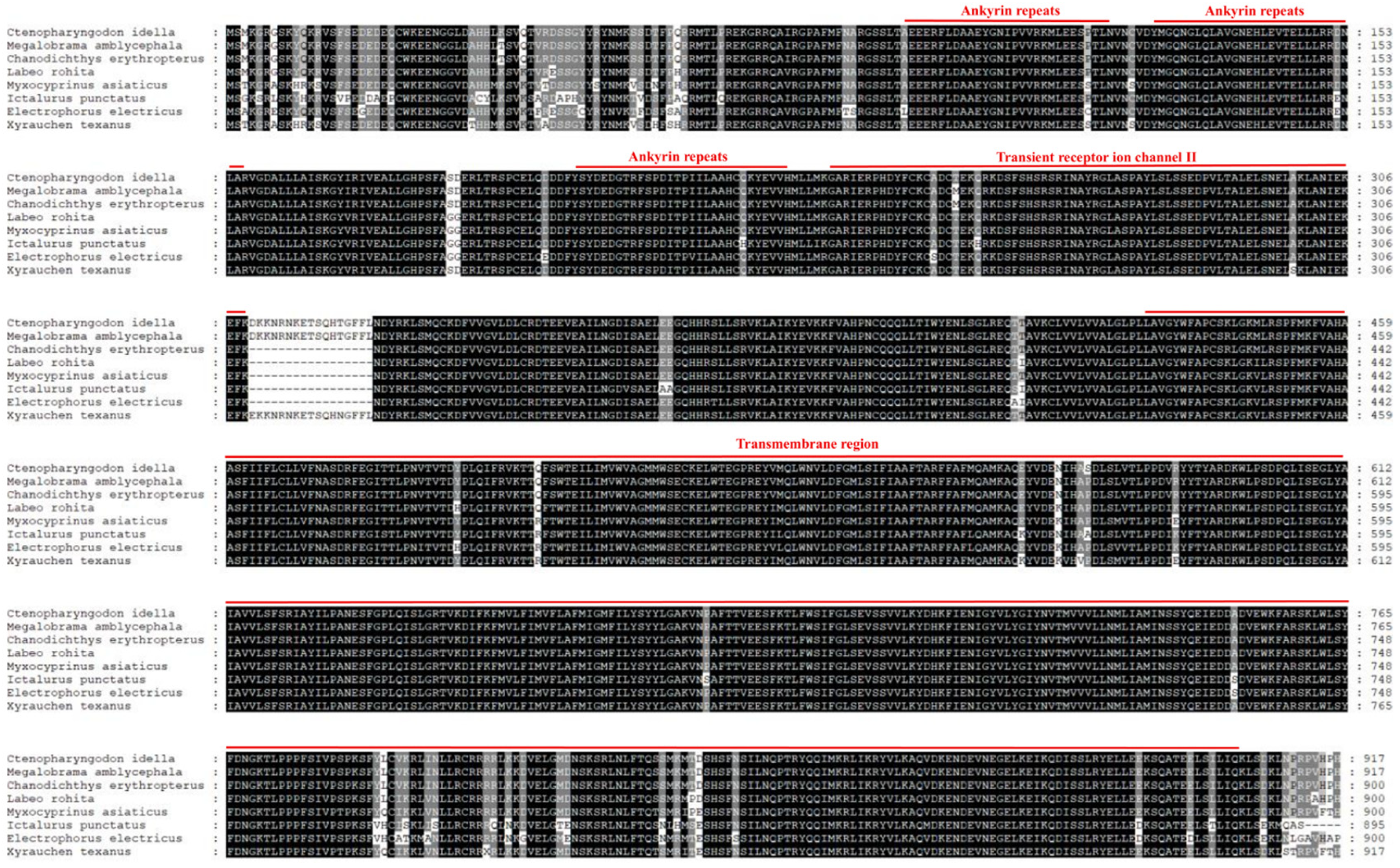
The full-length trpc3 cDNA of grass carp is 3421 bp in length, with 5′ and 3′ UTRs of 138 bp and 549 bp, respectively. Its 2754 bp ORF encodes a protein of 917 amino acids. Leucine (Leu, 11.6%) is the most abundant amino acid, followed by serine (Ser, 8.0%), whereas tryptophan (Trp, 1.3%) is the least frequent. The predicted molecular weight of the TRPC3 protein is 105.46 kDa. Key amino acid sequence parameters are listed in Table 2. Subcellular localization analysis suggests a 27% probability of plasma membrane localization. Conserved domain analysis identified ankyrin (ANK) repeats at positions 93–122, 128–156, and 212–241; a TRP_2 domain at 247–309; and a transmembrane region at 421–904 (Figure 1).
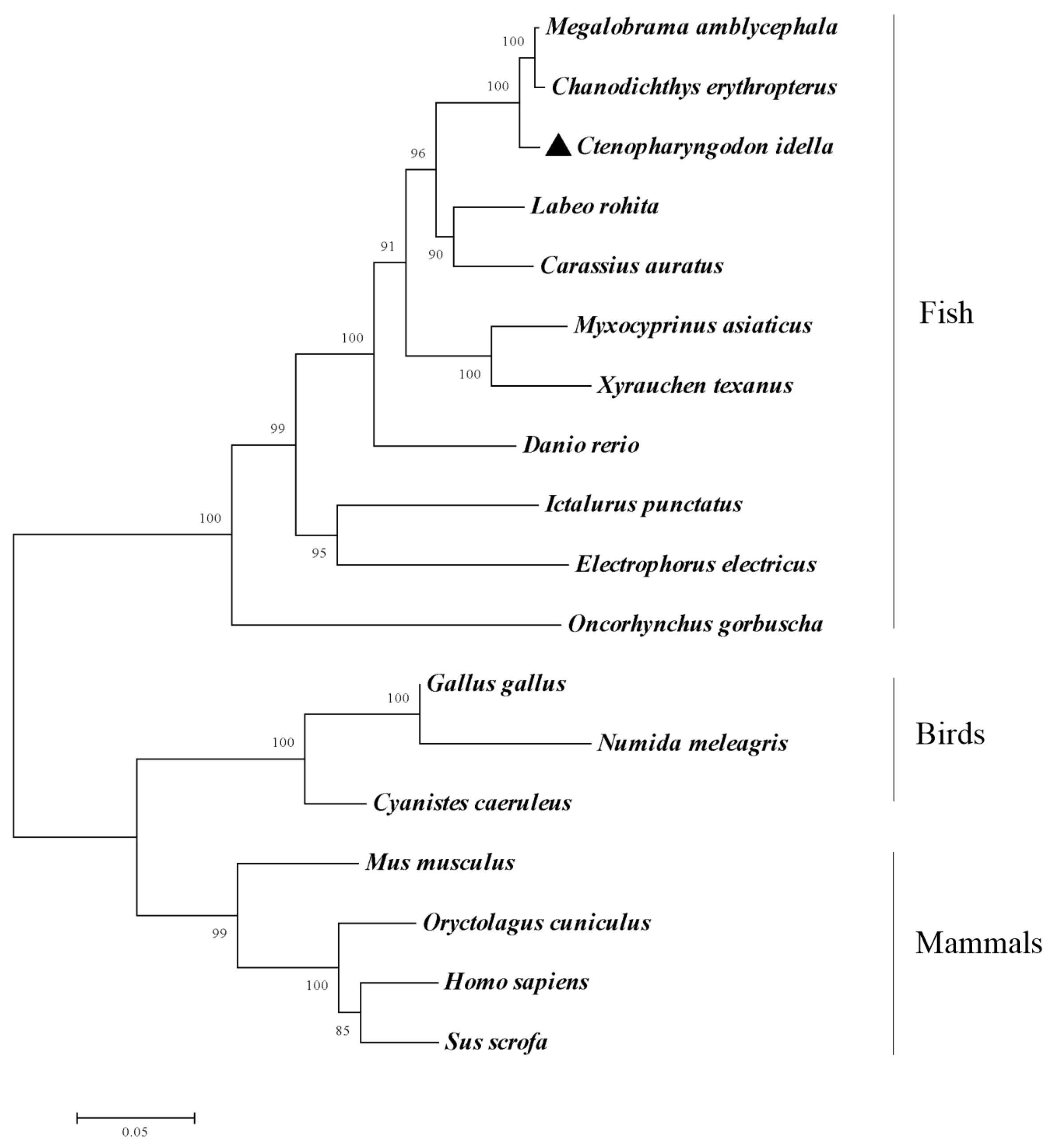
Phylogenetic analysis showed that grass carp trpc3 is homologous to teleost sequences (Figure 2). It exhibits the highest sequence identity (99.63%) with blunt snout bream (Megalobrama amblycephala) and the redfin culter (Chanodichthys erythropterus), while its identity with other fish species ranges from 90.54% to 96.22%. Compared with mammals, the grass carp trpc3 gene exhibits homology with human (Homo sapiens), mouse (Mus musculus), European rabbit (Oryctolagus cuniculus), and wild boar (Sus scrofa) at 36.78%, 39.24%, 37.84%, and 35.93%, respectively. Compared with avian species such as Red Junglefowl (Gallus gallus), the Helmeted Guineafowl (Numida meleagris), and Eurasian blue tit (Cyanistes caeruleus), the homology percentages were 24.76%, 26.15%, and 25.33%, respectively. The grass carp trpc3 gene is phylogenetically closer to cyprinid fishes than to mammals or birds, and its evolutionary position is consistent with traditional taxonomy.

3.2. Tissue Expression Distribution of Grass Carp trpc3 mRNA

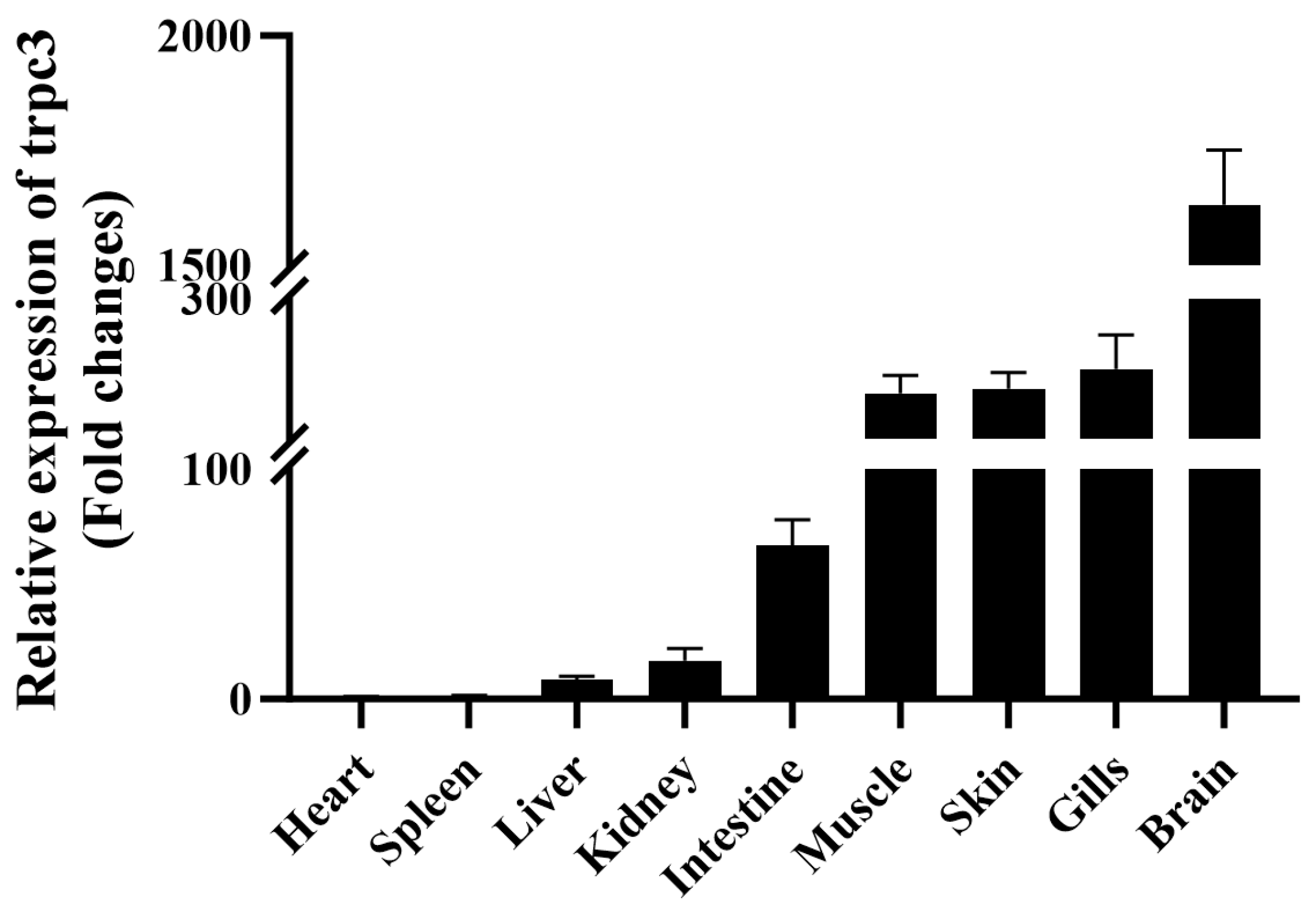
Tissue expression analysis by qRT-PCR showed that trpc3 was ubiquitously expressed in grass carp but at varying levels (Figure 3). Expression was highest in the brain, relatively high in the gills, skin, and muscle, and lower in the intestine, kidney, liver, spleen, and heart.

3.3. Changes in trpc3 mRNA Expression in Grass Carp Under Different Salinity Stress

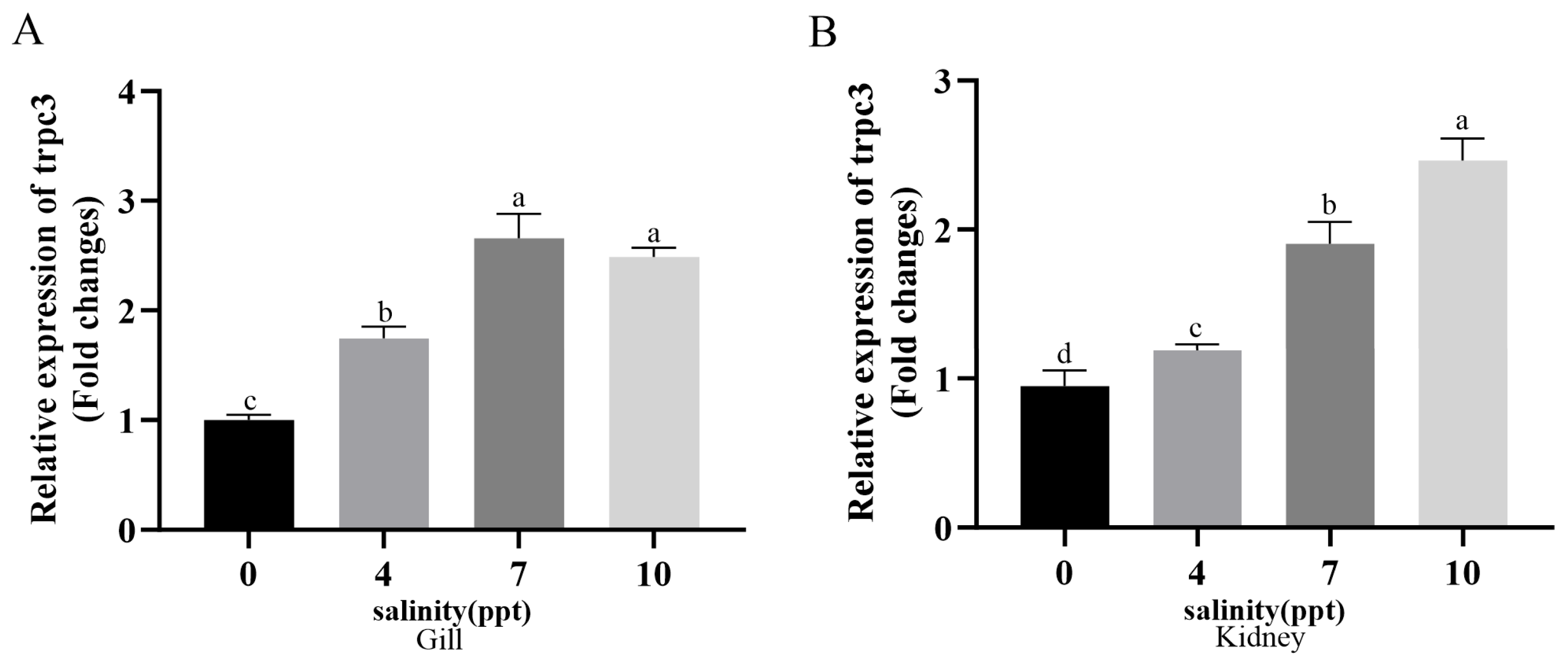
Expression of trpc3 in the gills and kidney of grass carp increased with salinity after 1 day of exposure (Figure 4). Levels at 4, 7, and 10 ppt were significantly higher than those in the control group (0 ppt) (p < 0.05). In gill tissue, the expression of trpc3 was 1.74, 2.66, and 2.49 fold that of the control group at 4, 7, and 10 ppt, respectively; in kidney tissue, its expression was 1.18, 1.90, and 2.46 fold that of the control, respectively.

3.4. trpc3-dsRNA Interference Efficiency

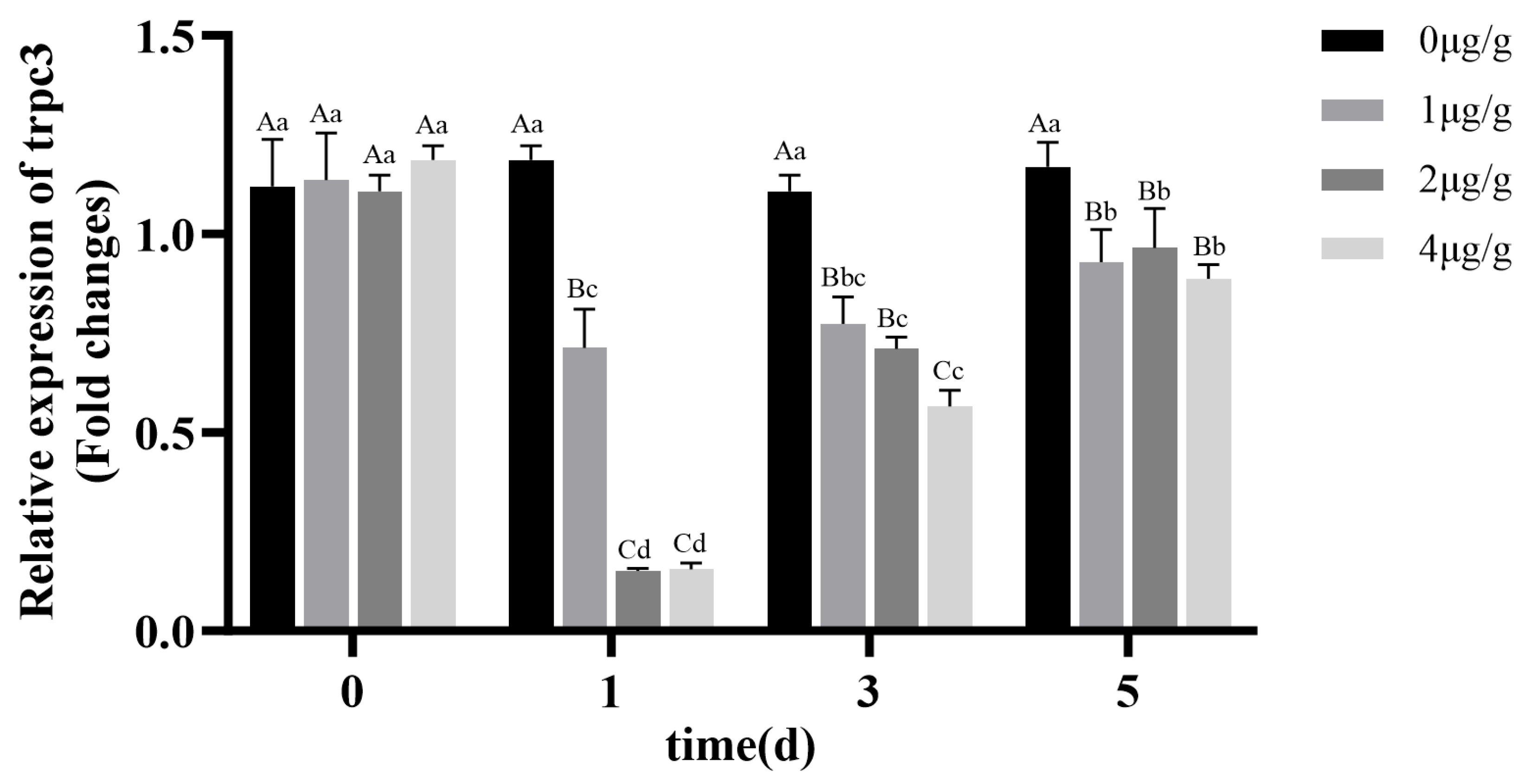
The interference efficiency of trpc3-dsRNA was assessed in grass carp gill tissue (Figure 5). Injection of trpc3-dsRNA at all tested concentrations (1, 2, and 4 μg/g) significantly reduced trpc3 expression, with the lowest level observed at day 1 post-injection (p < 0.05). The expression levels of trpc3 in groups 1, 2, and 4 μg/g were 0.71, 0.15, and 0.16 fold relative to group 0 μg/g, respectively. The inhibitory effect weakened over time, though expression remained significantly suppressed compared to the control group at day 5 (p < 0.05). The 2 μg/g and 4 μg/g groups showed significantly lower trpc3 expression than the 1 μg/g group, with no significant difference between the two higher concentrations (p > 0.05). The interference efficiency was found to be approximately 85%. Based on these results, the 2 μg/g concentration was selected for subsequent experiments.

3.5. Serum Osmolality and Ion Concentration

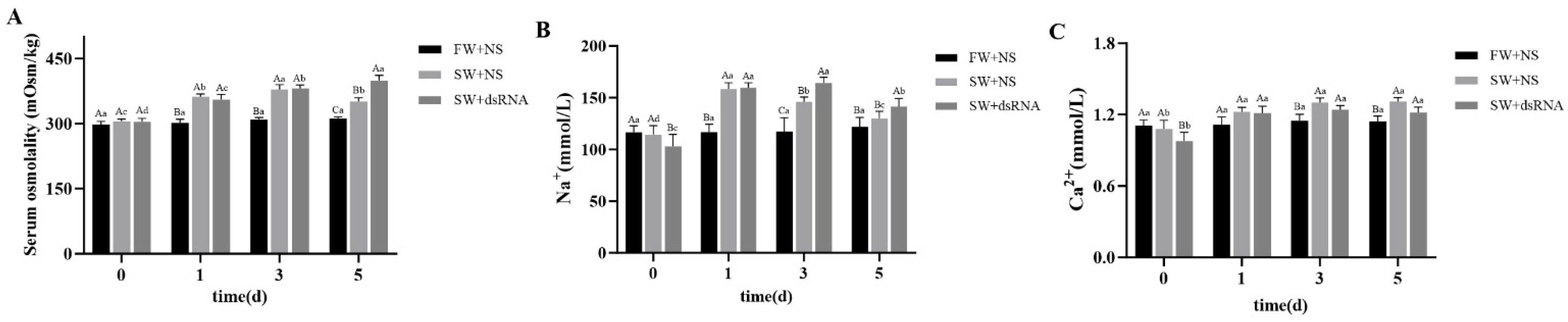
As shown in Figure 6, under salinity stress, the SW+NS group showed significantly elevated serum osmolality and Na+ concentrations on day 1 compared to the control (p < 0.05) which were 1.21 and 1.36 fold relative to the control, respectively. The Ca2+ concentration increased significantly on day 3, reaching 1.14 fold of the control level. Na+ concentration decreased significantly by day 3, and osmolality decreased significantly by day 5, while Ca2+ concentration remained stable relative to day 1 levels (p < 0.05). In the SW+dsRNA group, serum osmolality increased continuously over time without a decreasing trend by day 5, and was 1.14 fold that of the SW+NS group. Na+ concentration increased significantly on day 1 and decreased by day 5 but remained significantly higher than that in the SW+NS group (p < 0.05), and was 1.17 fold that of the SW+NS group. Ca2+ concentration was significantly higher than in the control (p < 0.05) but showed no significant difference compared to the SW+NS group (p > 0.05).

3.6. Enzyme Activity in the Gills and Kidney

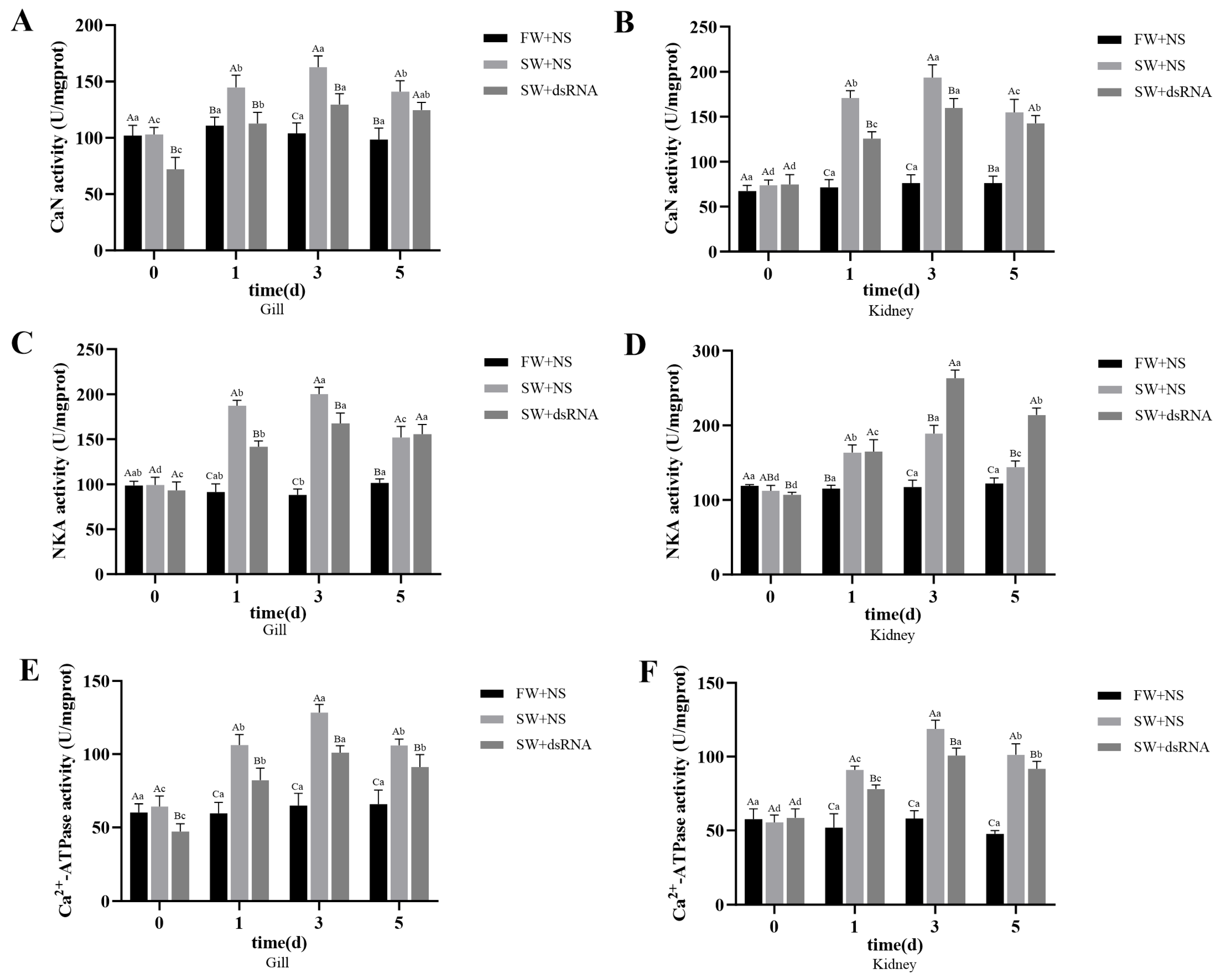
As shown in Figure 7, the activities of CaN, NKA, and Ca2+-ATPase in the gills and kidney of the SW+NS group were significantly elevated compared with the control group (p < 0.05). Although these activities decreased significantly by day 5, they remained higher than that in the control group (p < 0.05). In gill tissue, the activities of CaN, NKA, and Ca2+-ATPase in the SW+NS group were 1.42, 1.49, and 1.61 fold those of the control group, respectively, while in kidney tissue, the corresponding activities were 2.02, 1.17, and 2.14 fold, respectively.
In the SW+dsRNA group, the activities of gill CaN, NKA, and Ca2+-ATPase were 0.88, 0.84, and 0.87 fold that of the SW+NS group, respectively. The activities of kidney CaN and Ca2+-ATPase were 0.92, and 0.90 fold that of the SW+NS group, respectively. These activities were all significantly lower than in the SW+NS group but still higher than in the control during salt stress (p < 0.05). Kidney NKA activity in the SW+dsRNA group showed a distinct pattern: it was comparable to that in the SW+NS group (both higher than the control group) on day 1, became significantly higher than that in the SW+NS group on day 3, and then decreased by day 5 while remaining significantly higher than the SW+NS group (p < 0.05).

3.7. Expression Levels of Ion Transport, Cellular Signaling, Inflammatory, and Stress-Response Genes in the Gill Tissue of Grass Carp Across Different Treatment Groups

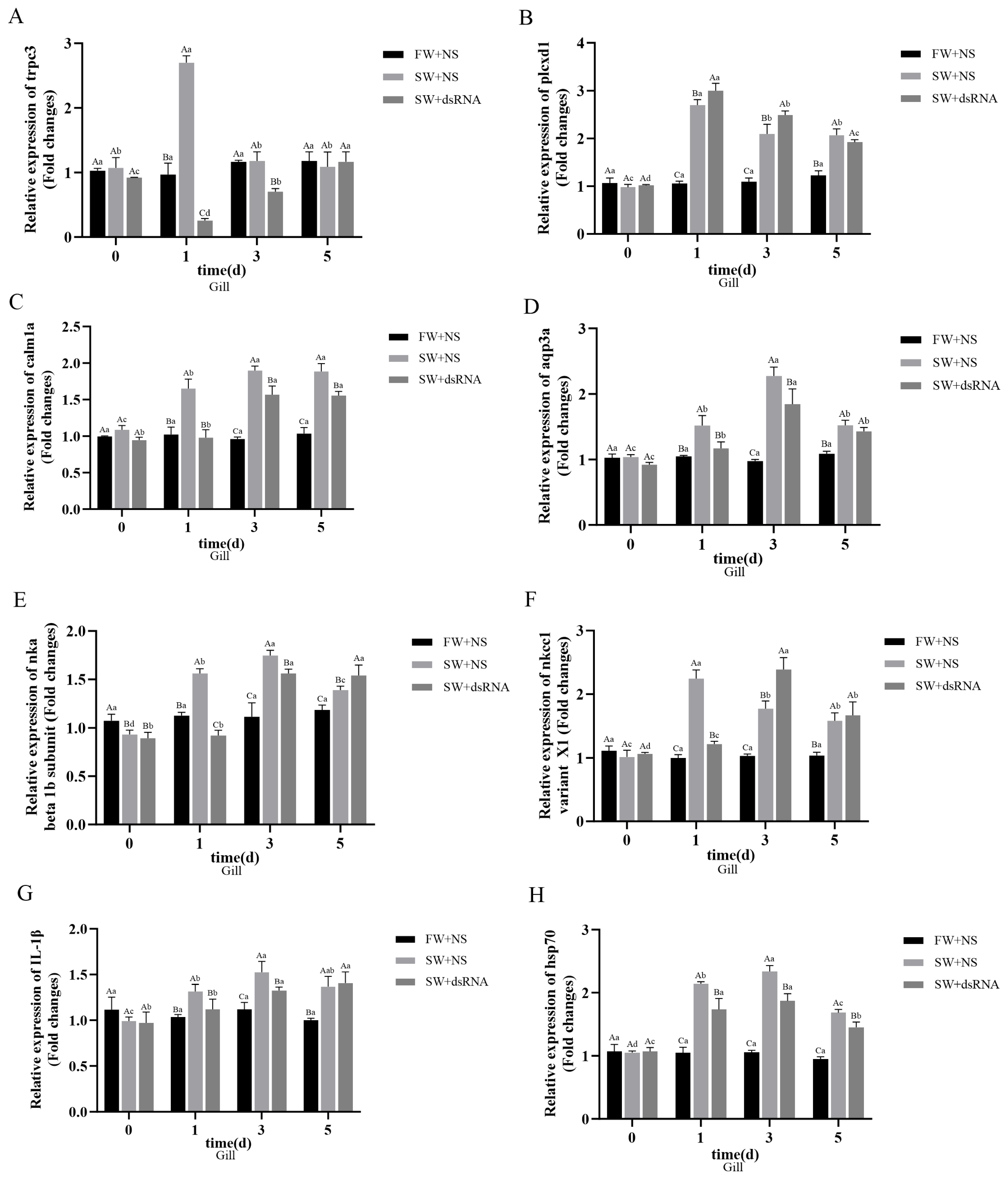
As shown in Figure 8, during the initial salt stress, the SW+NS group showed significantly elevated expression of trpc3, plcxd1, calm1a, aqp3a, nka beta 1b subunit, nkcc1 variant X1, IL-1β, and hsp70 in the gills compared to the control (p < 0.05), measuring 2.80, 2.56, 1.62, 1.45, 1.39, 2.24, 1.27, and 2.05 fold higher, respectively. Trpc3, plcxd1, and nkcc1 variant X1 expression decreased significantly by day 3. By day 5, trpc3 returned to control levels, while plcxd1 and nkcc1 variant X1 remained higher than the control (p < 0.05). Aqp3a, nka beta 1b subunit, IL-1β, and hsp70 decreased by day 5 but stayed elevated versus control. Calm1a increased over time, stabilizing at control levels by day 5.
In the SW+dsRNA group, early interference significantly reduced the expression of trpc3, calm1a, aqp3a, nka beta 1b subunit, nkcc1 variant X1, IL-1β, and hsp70 compared to the SW+NS group (p < 0.05), measuring 0.09, 0.59, 0.76, 0.59, 0.54, 0.85, and 0.81 fold lower, respectively. Specifically, trpc3 and nka beta 1b subunit were lower than the control; calm1a, aqp3a, and IL-1β were comparable to the control; nkcc1 variant X1 and hsp70 were higher than the control. With prolonged interference, expression of all these genes increased. By day 5, calm1a, aqp3a, nka beta 1b subunit, nkcc1 variant X1, IL-1β, and hsp70 were higher than the control; aqp3a, nkcc1 variant X1, and IL-1β were comparable to the SW+NS group; nka beta 1b subunit was higher than the SW+NS group; calm1a and hsp70 remained lower than the SW+NS group; and trpc3 reached levels comparable to both the control and SW+NS groups.
Plcxd1 expression in the SW+dsRNA group was significantly higher (1.11 fold) than that in the SW+NS group at the onset of interference, decreased over time, and was comparable to that in the SW+NS group by day 5, although it remained higher than the control (p < 0.05).

3.8. Expression Levels of Ion Transport, Cellular Signaling, Inflammatory, and Stress-Response Genes in the Kidney Tissue of Grass Carp Across Different Treatment Groups

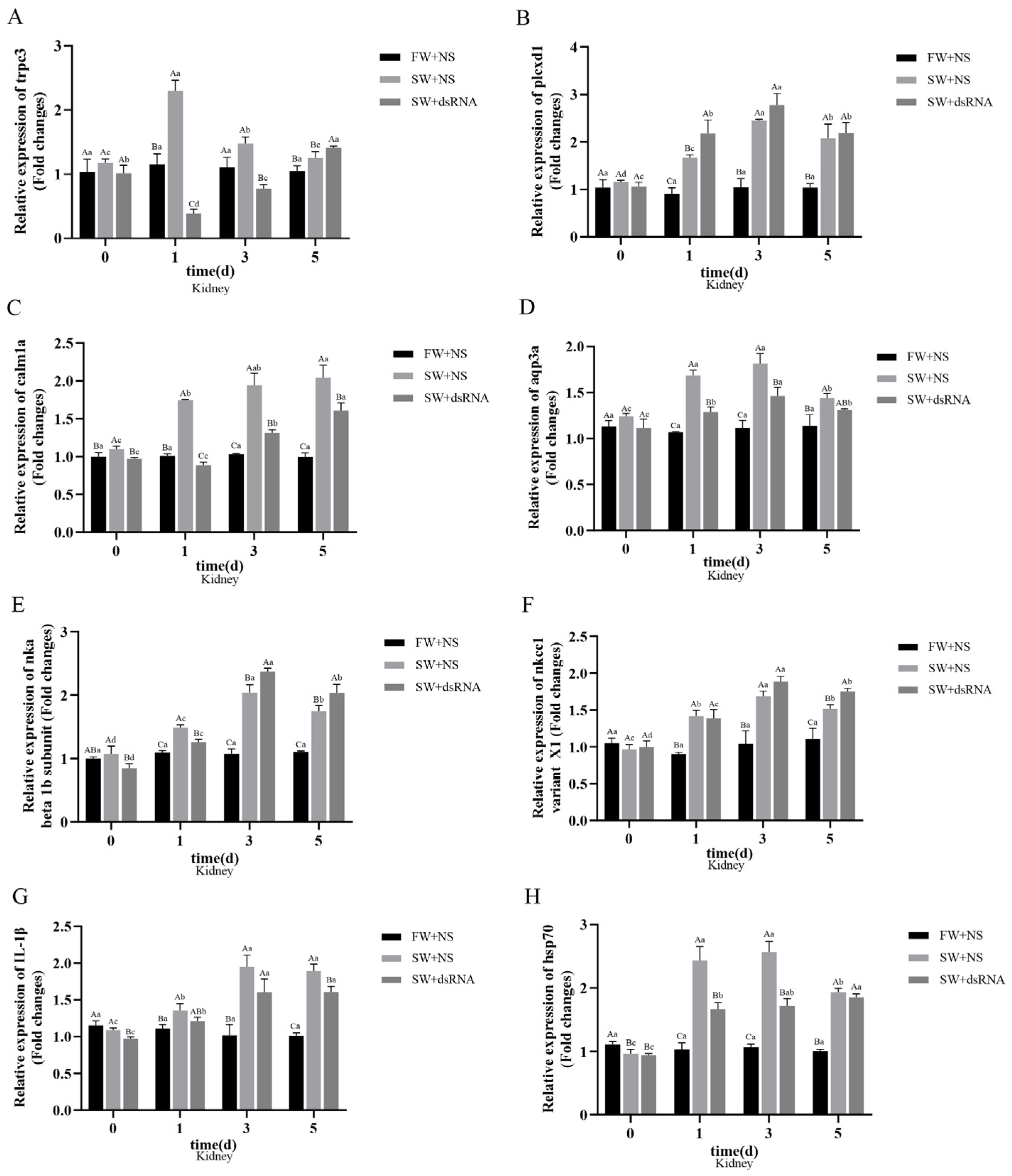
As shown in Figure 9, during the initial salt stress, the SW+NS group showed significantly elevated renal expression of trpc3, plcxd1, calm1a, aqp3a, nka beta 1b subunit, nkcc1 variant X1, IL-1β, and hsp70 compared to the control (p < 0.05), measuring 2.00, 1.84, 1.74, 1.58, 1.37, 1.57, 1.22, and 2.36 fold higher, respectively. Trpc3 decreased by day 3 but remained higher than the control at day 5. Plcxd1, aqp3a, nka beta 1b subunit, nkcc1 variant X1, and hsp70 decreased by day 5 but remained elevated compared to the control. Calm1a and IL-1β increased over time, stabilizing by day 5.
In the SW+dsRNA group, early interference significantly reduced the expression of trpc3, calm1a, aqp3a, nka beta 1b subunit, IL-1β, and hsp70 compared to the SW+NS group (p < 0.05), measuring 0.17, 0.51, 0.76, 0.85, 0.89, and 0.68 fold lower, respectively. Specifically, trpc3 and calm1a were lower than the control, while aqp3a, nka beta 1b subunit, nkcc1 variant X1, hsp70, and IL-1β were higher than the control. With prolonged interference, expression of all these genes increased. By day 5, trpc3, calm1a, aqp3a, nka beta 1b subunit, nkcc1 variant X1, IL-1β, and hsp70 were higher than the control; hsp70 equaled that of the SW+NS group; trpc3, nka beta 1b subunit, and nkcc1 variant X1 exceeded those of the SW+NS group; calm1a, aqp3a, and IL-1β remained lower than those of the SW+NS group.
Plcxd1 expression in the SW+dsRNA group was significantly higher (1.31 fold) than that in the SW+NS group at the onset of interference, decreased over time, and was comparable to the SW+NS group by day 5, though still higher than in the control (p < 0.05).

4. Discussion

Salinity is a major abiotic factor affecting fish physiology [17,18]. Studies have shown that changes in water salinity within aquaculture environments induce alterations in ion concentrations in grass carp [2]. As a non-selective cation channel, TRPC3 regulates Ca2+ signaling and is involved in various physiological processes, including synaptic transmission and motor coordination [19,20]. Upon external stimulation, activated G protein-coupled receptors (GPCRs) or receptor tyrosine kinases (RTKs) stimulate phospholipase C (PLC), which hydrolyzes phosphatidylinositol 4,5-bisphosphate (PIP2) to generate diacylglycerol (DAG) and inositol 1,4,5-trisphosphate (IP3). DAG directly activates TRPC3 channels, leading to Ca2+ influx [21,22]. This study used intraperitoneal injection of dsRNA to knock down trpc3 expression in grass carp under 7 ppt salinity stress to investigate its function.
Fish maintain internal homeostasis through osmoregulation to adapt to changing salinity [23]. In this study, on the first day of stress, the trends in serum osmolality, Na+, and Ca2+ were comparable between the SW+NS and SW+dsRNA groups, indicating the initial sensing of and response to salinity is not exclusively mediated by the trpc3 pathway. By the fifth day of stress, serum osmolality and Na+ in the SW+NS group decreased significantly, returning toward control levels, consistent with self-regulatory homeostasis reported in grass carp [24]. In contrast, the SW+dsRNA group showed no decrease in osmolality, a delayed decline in Na+, and stable Ca2+ levels. These results demonstrate that while normal grass carp can restore homeostasis, disruption of trpc3 impairs this recovery capacity, highlighting its key role in intrinsic homeostasis regulation during salinity stress.
As a primary osmoregulatory organ in direct contact with the aquatic environment, fish gills facilitate ion and gas exchange to sustain normal physiological function [6,25,26]. In this process, Na+/K+-ATPase (NKA) is a key membrane protein that mediates osmoregulation through active transport of Na+ and K+ [27]. The Ca2+-ATPase (or Ca2+ pump) maintains a low intracellular free Ca2+ level by extruding Ca2+ or sequestering it into the endoplasmic reticulum [28]. Calcineurin (CaN), a Ca2+/calmodulin (CaM)-dependent phosphatase, acts as a crucial downstream effector in calcium signaling. In T lymphocytes, it dephosphorylates the nuclear factor of activated T-cells (NF-AT) to regulate T-cell activation and proliferation [29,30]. In this study, on the first day of stress, the gills of grass carp in the SW+NS group showed a rapid response, with significantly increased activities of NKA, Ca2+-ATPase, and CaN. Concurrently, the expression of genes in the calcium signaling pathway (plcxd1, trpc3, calm1a) [31], effector factors (aqp3a, nka beta 1b subunit, nkcc1 variant X1) [32], and inflammatory/stress markers (IL-1β/hsp70) [33,34] was coordinately upregulated. On the fifth day of stress, these enzyme activities and gene expression levels showed a moderate decline but remained elevated compared to the control group. This indicates that salinity stimulated the TRPC3 pathway, activated ion transport enzymes, and triggered a stress response. However, with prolonged exposure, the fish began to establish a new steady state through self-regulation. In the SW+dsRNA group with trpc3 knockdown, this homeostatic remodeling process was disrupted. At the onset of interference, suppressed trpc3 expression interrupted the dependent Ca2+ influx signaling. The reduced calcium binding consequently inhibited the expression of the downstream key calcium signaling gene calm1a, which led to the downregulation of core ion transport genes (nka beta 1b subunit, nkcc1 variant X1, aqp3a) and stress marker genes (IL-1β, hsp70). These levels were significantly lower than in the SW+NS group. Meanwhile, although the activities of gill NKA, Ca2+-ATPase, and CaN in the interference group were initially elevated, they remained consistently and significantly lower than those in the SW+NS group. These results demonstrate that trpc3 influences ion transport capacity and stress resilience in fish by mediating calcium signaling. Faced with trpc3 interference and blocked calcium signaling, the fish activated compensatory mechanisms. This was primarily manifested by significantly higher plcxd1 gene expression in the SW+dsRNA group compared to the SW+NS group. This likely occurred because when TRPC3-mediated Ca2+ influx was restricted, cells attempted to enhance PLC activity upstream of the TRPC3 pathway to generate more IP3 and DAG. IP3 mobilizes calcium stores from the endoplasmic reticulum, while DAG may directly activate other DAG-sensitive TRPC channels (such as TRPC6) for compensation [35,36]. With prolonged salinity stress and interference, gene expression in the SW+dsRNA group generally recovered. Notably, nka beta 1b subunit and nkcc1 variant X1 expression even reached or exceeded the levels of the SW+NS group on the fifth day of stress, suggesting the initiation of adaptive gene expression via alternative pathways under prolonged TRPC3 pathway failure. However, this compensation failed to establish a new steady state. On one hand, the expression of the core calcium signaling gene calm1a and the stress indicator gene hsp70 never reached the levels observed in the SW+NS group. On the other hand, although the activity of the key ion transport enzyme NKA recovered somewhat, driven by upregulated gene expression, it still did not attain the level seen in the SW+NS group.
The kidney is a vital organ for excretion and internal homeostasis regulation in fish [7] and is not directly exposed to the ambient salinity. In this study, the renal response in the SW+dsRNA group differed from that in the gills. Unlike the comprehensive suppression of gill NKA, Ca2+-ATPase, and CaN activities following trpc3 knockdown, renal NKA activity in the interference group was comparable to that of the SW+NS group initially, became significantly higher than that of the SW+NS group on the third day of stress, and remained elevated despite a late-stage decline. This pattern was echoed at the gene level, with renal nka beta 1b subunit and nkcc1 variant X1 expression in the SW+dsRNA group exceeding that of the SW+NS group on the third day of salt stress. These results indicate that when the TRPC3 pathway is disrupted, leading to increased serum osmolality and ion concentrations, the kidney exhibits a stronger compensatory capacity than the gills in enhancing ion reabsorption and excretion, thereby maintaining internal homeostasis. The significantly higher renal plcxd1 expression in the SW+dsRNA group supports this interpretation. The kidney may also activate non-TRPC pathways to regulate the expression of ion transport genes and related enzyme activities, facilitating a new steady state [37]. The distinct response patterns of the gills and kidney to salinity stress after trpc3 interference are likely due to their different physiological roles. The gills are directly exposed to the hyperosmotic environment, necessitating a rapid and coordinated response heavily reliant on TRPC3-mediated Ca2+ signaling, making it more vulnerable to disruption. In contrast, the kidney, shielded from direct environmental contact, performs finer regulation based on systemic homeostasis and possesses a greater capacity to activate alternative compensatory pathways.
This study employed acute stress experiments to explore the underlying mechanisms. To assess its practical relevance, future studies should conduct long-term aquaculture trials to further investigate the expression of key proteins and link trpc3 expression or genotypes to survival and growth under salinity stress. If high trpc3 expression or specific alleles correlate with improved survival and growth, they could serve as potential molecular markers for the assisted selection of salt-tolerant grass carp.

5. Conclusions

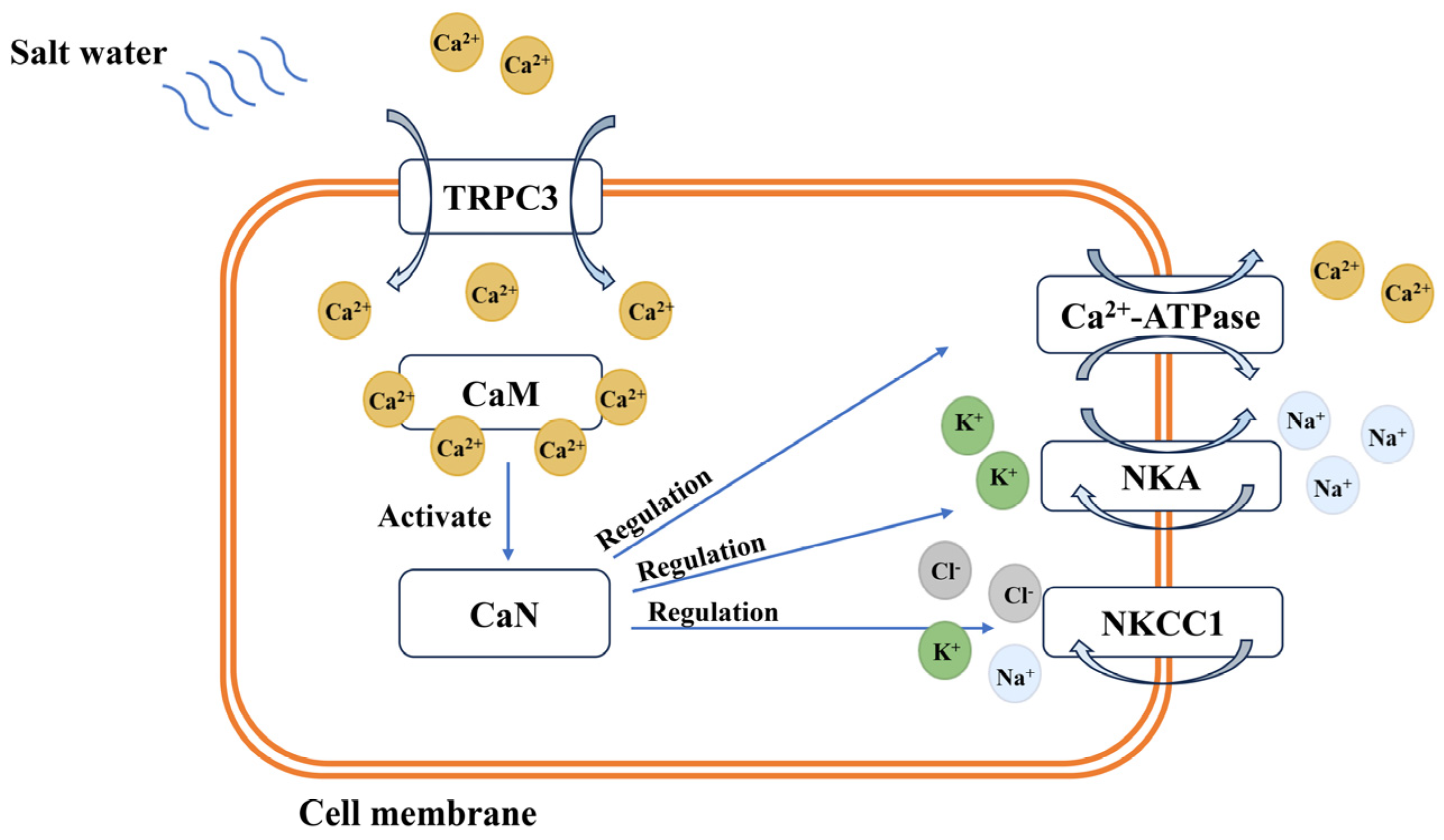
In summary, intraperitoneal injection of dsRNA effectively knocked down the trpc3 gene in grass carp under salinity stress. Through a comparative analysis of serum osmolality, ion concentrations, and the activities and expression levels of key ion transport and calcium signaling genes in gill and kidney tissues, we elucidated the function and mechanism of the trpc3 gene (Figure 10). Our results indicate that it primarily senses salinity changes and likely coordinates ion transport in osmoregulatory tissues by mediating Ca2+ influx, thereby driving the restoration of osmotic homeostasis in fish.

Author Contributions

Z.Z.: Data curation, methodology, investigation, formal analysis, visualization, and writing—original draft. J.T.: Investigation and supervision. J.D.: Investigation. T.Z.: Investigation. C.L.: Investigation. S.W.: Investigation. S.L.: Resources. H.S.: Writing—review and editing, supervision, and funding acquisition. All authors have read and agreed to the published version of the manuscript.

Funding

This work was supported by the “Agricultural Biological Breeding-2030” major project (2023ZD04065).

Institutional Review Board Statement

The experiments involving grass carp in this study were approved by the Animal Research and Ethics Committee of the Pearl River Fisheries Research Institute, Chinese Academy of Sciences (Approval code: LAEC-PRERI-2025-08-01, approval date: 1 August 2025).

Data Availability Statement

The original contributions presented in this study are included in the article. Further inquiries can be directed to the corresponding author.

Conflicts of Interest

The authors declare no conflicts of interest.

References

  1. Wang, D.; Gao, H. China Fishery Statistical Yearbook; China Agricultural Publishing House: Beijing, China, 2024. (In Chinese) [Google Scholar]
  2. Zhu, Z.; Li, S.; Lei, C.; Zhu, T.; Tian, J.; Du, J.; Wei, S.; Song, H. Survival and acute osmoregulatory response of grass carp under salinity stress. Comp. Biochem. Physiol. Part A Mol. Integr. Physiol. 2025, 308, 111905. [Google Scholar] [CrossRef] [PubMed]
  3. Jia, Y.; Du, J.; Xi, R.; Zhang, Q.; Li, L.; Li, D.; Takagi, Y.; Zhang, X. Effects of different culture salinities on the growth and muscle quality of grass carp (Ctenopharyngodon idellus). J. Anim. Sci. 2024, 102, skae281. [Google Scholar] [CrossRef] [PubMed]
  4. Xie, Y.; Zhang, L. Transcriptomic and Proteomic Analysis of Marine Nematode Litoditis marina Acclimated to Different Salinities. Genes 2022, 13, 651. [Google Scholar] [CrossRef] [PubMed]
  5. Geng, L.; Tong, G.; Jiang, H.; Xu, W. Effect of Salinity and Alkalinity on Luciobarbus capito Gill Na+/K+-ATPase Enzyme Activity, Plasma Ion Concentration, and Osmotic Pressure. BioMed Res. Int. 2016, 2016, 4605839. [Google Scholar] [CrossRef]
  6. Evans, T.G.; Kültz, D. The cellular stress response in fish exposed to salinity fluctuations. J. Exp. Zool. Part A Ecol. Integr. Physiol. 2020, 333, 421–435. [Google Scholar] [CrossRef]
  7. Hasegawa, K.; Kato, A.; Watanabe, T.; Takagi, W.; Romero, M.F.; Bell, J.D.; Toop, T.; Donald, J.A.; Hyodo, S. Sulfate transporters involved in sulfate secretion in the kidney are localized in the renal proximal tubule II of the elephant fish (Callorhinchus milii). Am. J. Physiol. Regul. Integr. Comp. Physiol. 2016, 311, R66–R78. [Google Scholar] [CrossRef]
  8. Berridge, M.J.; Lipp, P.; Bootman, M.D. The versatility and universality of calcium signalling. Nat. Rev. Mol. Cell Biol. 2000, 1, 11–21. [Google Scholar] [CrossRef]
  9. Liu, Y.; Tian, J.; Song, H.; Zhu, T.; Lei, C.; Du, J.; Li, S. Osmoregulation and Physiological Response of Largemouth Bass (Micropterus salmoides) Juvenile to Different Salinity Stresses. Int. J. Mol. Sci. 2025, 26, 3847. [Google Scholar] [CrossRef]
  10. Ramsey, I.S.; Delling, M.; Clapham, D.E. An introduction to TRP channels. Annu. Rev. Physiol. 2006, 68, 619–647. [Google Scholar] [CrossRef]
  11. Nilius, B.; Owsianik, G. The transient receptor potential family of ion channels. Genome Biol. 2011, 12, 218. [Google Scholar] [CrossRef]
  12. Hu, Y.; Xia, W.; Li, Y.; Wang, Q.; Lin, S.; Wang, B.; Zhou, C.; Cui, Y.; Jiang, Y.; Pu, X.; et al. High-salt intake increases TRPC3 expression and enhances TRPC3-mediated calcium influx and systolic blood pressure in hypertensive patients. Hypertens. Res. 2020, 43, 679–687. [Google Scholar] [CrossRef]
  13. Barstead, R. Genome-wide RNAi. Curr. Opin. Chem. Biol. 2001, 5, 63–66. [Google Scholar] [CrossRef]
  14. Yang, H.Z.; Zhuo, D.; Huang, Z.; Luo, G.; Liang, S.; Fan, Y.; Zhao, Y.; Lv, X.; Qiu, C.; Zhang, L.; et al. Deficiency of Acetyltransferase nat10 in Zebrafish Causes Developmental Defects in the Visual Function. Investig. Ophthalmol. Vis. Sci. 2024, 65, 31. [Google Scholar] [CrossRef] [PubMed]
  15. Alam, M.S.; Islam, M.N.; Das, M.; Islam, S.F.; Rabbane, M.G.; Karim, E.; Roy, A.; Alam, M.S.; Ahmed, R.; Kibria, A.S.M. RNAi-Based Therapy: Combating Shrimp Viral Diseases. Viruses 2023, 15, 2050. [Google Scholar] [CrossRef] [PubMed]
  16. Fjose, A.; Ellingsen, S.; Wargelius, A.; Seo, H.C. RNA interference: Mechanisms and applications. Biotechnol. Annu. Rev. 2001, 7, 31–57. [Google Scholar]
  17. Song, L.; Zhao, Y.; Song, Y.; Zhao, L.; Ma, C.; Zhao, J. Effects of saline-alkaline water on growth performance, nutritional processing, and immunity in Nile tilapia (Oreochromis niloticus). Aquaculture 2021, 544, 737036. [Google Scholar] [CrossRef]
  18. Yao, Z.; Guo, W.; Lai, Q.; Shi, J.; Zhou, K.; Qi, H.; Lin, T.; Li, Z.; Wang, H. Gymnocypris przewalskii decreases cytosolic carbonic anhydrase expression to compensate for respiratory alkalosis and osmoregulation in the saline-alkaline lake Qinghai. J. Comp. Physiol. B 2016, 186, 83–95. [Google Scholar] [CrossRef]
  19. Hartmann, J.; Konnerth, A. TRPC3-dependent synaptic transmission in central mammalian neurons. J. Mol. Med. 2015, 93, 983–989. [Google Scholar] [CrossRef]
  20. Hartmann, J.; Dragicevic, E.; Adelsberger, H.; Henning, H.A.; Sumser, M.; Abramowitz, J.; Blum, R.; Dietrich, A.; Freichel, M.; Flockerzi, V.; et al. TRPC3 channels are required for synaptic transmission and motor coordination. Neuron 2008, 59, 392–398. [Google Scholar] [CrossRef] [PubMed]
  21. Trebak, M.; Vazquez, G.; Bird, G.S.; Putney, J.W. The TRPC3/6/7 subfamily of cation channels. Cell Calcium 2003, 33, 451–461. [Google Scholar] [CrossRef]
  22. Tiapko, O.; Groschner, K. TRPC3, an underestimated, universal pacemaker channel? Cell Calcium 2021, 100, 102484. [Google Scholar] [CrossRef]
  23. Li, Y.; Gao, P.; Zhou, K.; Yao, Z.; Sun, Z.; Qin, H.; Lai, Q. Effects of saline and alkaline stresses on the survival, growth, and physiological responses in juvenile mandarin fish (Siniperca chuatsi). Aquaculture 2024, 591, 741143. [Google Scholar] [CrossRef]
  24. Liu, D.; Zhang, Z.; Song, Y.; Yang, J.; Lu, Y.; Lai, W.; Wu, Z.; Zhao, D.; Lin, H.; Zhang, Y.; et al. Effects of salinity on growth, physiology, biochemistry and gut microbiota of juvenile grass carp (Ctenopharyngodon idella). Aquat. Toxicol. 2023, 258, 106482. [Google Scholar] [CrossRef] [PubMed]
  25. Jiang, W.; Tian, X.; Fang, Z.; Li, L.; Dong, S.; Li, H.; Zhao, K. Metabolic responses in the gills of tongue sole (Cynoglossus semilaevis) exposed to salinity stress using NMR-based metabolomics. Sci. Total Environ. 2019, 653, 465–474. [Google Scholar] [CrossRef]
  26. Sun, Z.; Lou, F.; Zhang, Y. Gill transcriptome sequencing and de novo annotation of Acanthogobius ommaturus in response to salinity stress. Genes 2020, 11, 631. [Google Scholar] [CrossRef]
  27. Oruc, E. Oxidative stress responses and recovery patterns in the liver of Oreochromis niloticus exposed to chlorpyrifos-ethyl. Bull. Environ. Contam. Toxicol. 2012, 88, 678–684. [Google Scholar] [CrossRef]
  28. Vinayagam, D.; Sitsel, O.; Schulte, U.; Constantin, C.E.; Oosterheert, W.; Prumbaum, D.; Zolles, G.; Fakler, D.; Raunser, S. Molecular mechanism of ultrafast transport by plasma membrane Ca2+-ATPases. Nature 2025, 646, 236–245. [Google Scholar] [CrossRef]
  29. Creamer, T.P. Calcineurin. Cell Commun. Signal. 2020, 18, 137. [Google Scholar] [CrossRef]
  30. Wang, Y.; Zhuang, X.; Qi, Y.; Yiu, L.; Li, Z.; Chan, Y.W.; Liu, X.; Tsang, S.Y. TRPC3-mediated NFATc1 calcium signaling promotes triple negative breast cancer migration through regulating glypican-6 and focal adhesion. Pflug. Arch. Eur. J. Physiol. 2025, 477, 253–272. [Google Scholar] [CrossRef] [PubMed]
  31. Moccia, F.; Lucariello, A.; Guerra, G. TRPC3-mediated Ca2+ signals as a promising strategy to boost therapeutic angiogenesis in failing hearts: The role of autologous endothelial colony forming cells. J. Cell. Physiol. 2018, 233, 3901–3917. [Google Scholar] [CrossRef] [PubMed]
  32. Tian, F.; Zhou, B.; Li, X.; Zhang, Y.; Qi, D.; Qi, H.; Jiang, H.; Zhao, K.; Liu, S. Population genomics analysis to identify ion and water transporter genes involved in the adaptation of Tibetan naked carps to brackish water. Int. J. Biol. Macromol. 2023, 247, 125605. [Google Scholar] [CrossRef] [PubMed]
  33. Yazdi, A.S.; Ghoreschi, K. The Interleukin-1 Family. Adv. Exp. Med. Biol. 2016, 941, 21–29. [Google Scholar] [PubMed]
  34. Ménoret, A.; Chaillot, D.; Callahan, M.; Jacquin, C. Hsp70, an immunological actor playing with the intracellular self under oxidative stress. Int. J. Hyperth. 2002, 18, 490–505. [Google Scholar] [CrossRef] [PubMed]
  35. Eder, P.; Groschner, K. TRPC3/6/7: Topical aspects of biophysics and pathophysiology. Channels 2008, 2, 94–99. [Google Scholar] [CrossRef][Green Version]
  36. Lichtenegger, M.; Groschner, K. TRPC3: A multifunctional signaling molecule. Handb. Exp. Pharmacol. 2014, 222, 67–84. [Google Scholar]
  37. Blaine, J.; Chonchol, M.; Levi, M. Renal control of calcium, phosphate, and magnesium homeostasis. Clin. J. Am. Soc. Nephrol. 2015, 10, 1257–1272. [Google Scholar] [CrossRef]
Figure 1. Amino acid sequence alignment of grass carp and other species for trpc3. Alignment of trpc3 amino acid sequences from grass carp, blunt snout bream, redfin culter, roho labeo, suckerfish, channel catfish, electric eel, and sharpnose catfish. Identical residues, similar residues, and different residues are represented by black, gray, and white, respectively. Highlighted in red indicated a structural domain. The TRPC3 protein is predicted to contain 6 transmembrane domains.
Fishes 11 00139 g001
Figure 2. Phylogenetic tree of the trpc3 system in grass carp and other species. Numbers at phylogenetic nodes indicate bootstrap values (%). The bar chart at the bottom indicates 5% amino acid divergence in the sequence.
Fishes 11 00139 g002
Figure 3. Relative expression levels of trpc3 mRNA in various tissues of grass carp, normalized to actb2 and expressed relative to the heart tissues.
Fishes 11 00139 g003
Figure 4. Relative expression levels of trpc3 mRNA in grass carp (A) gill and (B) kidney tissues across different salinity groups, normalized to actb2 and expressed relative to the 0 ppt group. Significant differences between treatment groups are denoted by different lowercase letters. A p < 0.05 was considered statistically significant.
Fishes 11 00139 g004
Figure 5. Relative expression levels of trpc3 mRNA in gill tissue of grass carp following injection of trpc3-dsRNA at different concentrations, normalized to actb2 and expressed relative to the day 0, 0 μg/g control. Significant differences between time points within the same treatment group are denoted by different lowercase letters, and differences between treatment groups at the same time point are indicated by different uppercase letters.
Fishes 11 00139 g005
Figure 6. (A) Serum osmotic pressure, (B) Na+ concentration and (C) Ca2+ concentration in grass carp from different treatment groups. Significant differences between time points within the same treatment group are denoted by different lowercase letters, and differences between treatment groups at the same time point are indicated by different uppercase letters.
Fishes 11 00139 g006
Figure 7. Enzyme activity in gill and kidney tissues of grass carp across different treatment groups. (A) CaN enzyme activity in the gills. (B) CaN enzyme activity in the kidney. (C) NKA enzyme activity in the gills. (D) NKA enzyme activity in the kidney. (E) Ca2+-ATPase enzyme activity in the gills. (F) Ca2+-ATPase enzyme activity in the kidney. Significant differences between time points within the same treatment group are denoted by different lowercase letters, and differences between treatment groups at the same time point are indicated by different uppercase letters.
Fishes 11 00139 g007
Figure 8. Relative expression levels of selected genes’ mRNA in grass carp gill tissues across different treatment groups, normalized to actb2 and expressed relative to the day 0, FW+NS group. (A) trpc3. (B) plcxd1. (C) calm1a. (D) aqp3a. (E) nka beta 1b subunit. (F) nkcc1 variant X1. (G) IL-1β. (H) hsp70. Significant differences between time points within the same treatment group are denoted by different lowercase letters, and differences between treatment groups at the same time point are indicated by different uppercase letters.
Fishes 11 00139 g008
Figure 9. Relative expression levels of selected genes mRNA in grass carp kidney tissues across different treatment groups, normalized to actb2 and expressed relative to the day 0, FW+NS group. (A) trpc3. (B) plcxd1. (C) calm1a. (D) aqp3a. (E) nka beta 1b subunit. (F) nkcc1 variant X1. (G) IL-1β. (H) hsp70. Significant differences between time points within the same treatment group are denoted by different lowercase letters, and differences between treatment groups at the same time point are indicated by different uppercase letters.
Fishes 11 00139 g009
Figure 10. Schematic diagram of the TRPC3-mediated osmoregulatory pathway.
Fishes 11 00139 g010
Table 1. Experimental primer sequences.
PrimerSequences (5′–3′)
trpc3-dsRNA-FTAATACGACTCACTATAGGGCTCGCCAACATCGAAAAG
trpc3-dsRNA-RTAATACGACTCACTATAGGGGCAGCGGGTAGTCGGTTA
actb2-RT-FGATGATGAAATTGCCGCACTG
actb2-RT-RACCGACCATGACGCCCTGATGT
trpc3-RT-FAGCACACTGGCTTCTTTCTGA
trpc3-RT-RGACAGTTCGGATGAGCCACA
nka beta 1b subunit-RT-FAGCGATTACAAACCCACC
nka beta 1b subunit-RT-RATGCCTTCCTGACACCC
nkcc1 variant X1-RT-FTGCTGGACTGGGTAGATTGA
nkcc1 variant X1-RT-RGGAGGAGGGTTTGGATGA
plcxd1-RT-FTTAGATTGTGGAGTGCGATAC
plcxd1-RT-RCCAAGGAAGTGGCTAAATG
calm1a-RT-FCCAACTCACCGAGGAGCAA
calm1a-RT-RGACCGAGCGAACGCATCAC
aqp3a-RT-FGGGTTGGCAGAAGGCTATG
aqp3a-RT-RCAGTGAGAAAGAGTCCGTGAG
hsp70-RT-FTATGAGGGAGAGAGGGCCA
hsp70-RT-RTCACTTCAATCTGCGGGAC
IL-1β-RT-FGAAGGAGGTCACTGAAACT
IL-1β-RT-RTCTGTGATTCGGCTACTT
Note: The underlined portion represents the T7 promoter sequence.
Table 2. Basic parameters of amino acid sequences.
ParametersNumerical Value
Relative molecular mass105,442.76
Number of amino acids917
Total atomic number14,860
Theoretical pI7.24
Instability coefficient44.86
Overall average hydrophilicity−0.117
Fat coefficient91.64
Disclaimer/Publisher’s Note: The statements, opinions and data contained in all publications are solely those of the individual author(s) and contributor(s) and not of MDPI and/or the editor(s). MDPI and/or the editor(s) disclaim responsibility for any injury to people or property resulting from any ideas, methods, instructions or products referred to in the content.