Article

Stability Assessment of a Submersible Net Cage with Vertical Buoyancy Columns Under Steady Currents


1
Graduate School of Environmental Science, Hokkaido University, Sapporo 060-0810, Japan
2
College of Engineering Science and Technology, Shanghai Ocean University, Shanghai 201306, China
3
Faculty of Fisheries Sciences, Hokkaido University, Hakodate 041-8611, Japan
*
Author to whom correspondence should be addressed.
Fishes 2026, 11(2), 92; https://doi.org/10.3390/fishes11020092
Submission received: 29 December 2025 / Revised: 26 January 2026 / Accepted: 29 January 2026 / Published: 3 February 2026
(This article belongs to the Section Fishery Facilities, Equipment, and Information Technology)

Abstract

Offshore aquaculture requires net cages that remain stable under strong currents and during submersion and emergence operations. In this study, we proposed a submersible net cage structure equipped with vertical buoyancy columns as an alternative to the conventional horizontal floating-frame cage and evaluated its stability using a net geometry and load analysis system (NaLA system). Model-scale cages were tested in a recirculating flume tank at two current velocities, and the three-dimensional cage geometry was reconstructed using the multicamera through direct linear transformation method to validate the simulated cage inclination. The NaLA system accurately reproduced the measured geometry and time-varying inclination. After validation, stability was compared over a range of current velocities by tracking the cage inclination during the emergence phase. When mooring lines were attached to the top of the cage, the conventional floating-frame cage exhibited a smaller inclination than the buoyancy-column cage. However, relocating the mooring attachment point on the columns significantly improved the stability; attaching the moorings near the bottom of the columns generated the smallest final inclination and yielded a higher stability than the conventional cage. The buoyancy columns can outperform those of conventional designs when paired with an appropriate mooring configuration, thus offering a promising structure for applications under harsh offshore conditions.
Key Contribution: We proposed a new submersible aquaculture net cage structure that incorporates vertical buoyancy columns and evaluated its stability using the NaLA system-based numerical simulations. The results showed that optimizing the mooring-line attachment position markedly enhances stability, highlighting strong potential for practical application in future offshore aquaculture systems.

1. Introduction

Aquaculture is essential owing to the increasing demand for fish. Aquaculture production has significantly increased and is comparable to that of capture fisheries [1]. Aquaculture net cages are generally set in calm sea areas, where high current velocities and high waves rarely occur. However, harsh sea areas, such as offshore areas, have begun to be used for setting aquaculture net cages because calm sea areas are almost completely occupied. In the case of setting aquaculture net cages offshore, stability and environmental durability are required because unpredictable disasters have occurred owing to recent climate change. Holmer argued that it is important to properly understand the environmental effects of offshore aquaculture net cages [2]. The stability and durability of aquaculture net cages depend on their structure and how they respond to environmental changes, such as tidal currents and waves.
Research has been extensively conducted on the structure of aquaculture net cages using both experiments and numerical simulations [3,4,5,6,7,8,9]. For instance, Lader and Enerhaug conducted experiments using a flexible circular net with different weights in a flume tank and concluded that the forces acting on the net structure were mutually dependent on each other [6]. Moe et al. investigated the loads acting on a net cage and its deformation by comparing experimental and simulation results [7]. They stated that it is crucial to analyze the strength of the net cage and the volume increase because the size of the net cage rapidly increased, resulting in a volume that exceeds current experience. Furthermore, Su et al. developed a real-time monitoring system for full-scale net cage deformation by integrating positioning sensor data into numerical simulations [8]. As for net cage structure, a submersible fish cage system was proposed to improve the stability of aquaculture net cages under harsh conditions. Molnar and Toal proposed a flexible control system for offshore aquaculture systems [10]. In addition, Kim et al. conducted experiments using an automatic submersible fish cage and investigated its characteristics [11]. From several perspectives, submerging fish cages is effective. Although submerged fish cages were initially intended to prevent damage when installed offshore, rising sea temperatures have made submerged fish cages an effective approach to controlling the depth suitable for fish. Sievers et al. reviewed submerged cages and concluded that submerged aquaculture cages can provide relief from periods of less than optimal environmental conditions and that technological developments are required to realize functioning submergence systems [12]. Therefore, given that ocean warming is likely to persist, equipping sea cages with a submergence capability will further increase the importance of technological development, not only to improve resistance to waves and currents, but also to enable depth control for maintaining suitable thermal conditions for fish. Moreover, the surfacing process is crucial for stability.
Recent studies have consolidated cage net hydrodynamics into three closely related aspects—hydrodynamic loads, dynamic response (net deformation), and the surrounding flow–wave field—and emphasized that netting bears a major portion of the hydrodynamic load and that deformation can reduce the available culture volume, potentially compromising fish welfare and cage safety [13]. Accordingly, for submersible cages involving submergence/surfacing operations, the stability assessment of cage inclination during emergence becomes a key design and operational requirement to avoid excessive deformation/volume loss and its negative impacts on fish health and growth [14,15]. However, maintaining a stable horizontal attitude during lifting operations can be challenging for conventional horizontal floating-frame cages in harsh offshore conditions [16].
In marine aquaculture, surface-floating sea cages equipped with a circular floating collar are widely used because of their operational convenience and cost effectiveness, and many are constructed from polymeric materials such as high-density polyethylene (HDPE) pipes [17]. As aquaculture expands into high-energy offshore environments, submersible cages that can be lowered below the sea surface during severe weather have been increasingly investigated. Typically, the cage is submerged by flooding the buoyant collar (hollow pipes) with seawater and is resurfaced by deballasting, for example, by expelling the water using compressed air or by retrieving bottom sinkers [14,18,19]. However, when the collar itself is used as the ballast tank, uneven flooding/deballasting and internal water redistribution can increase localized bending stresses during the submergence and surfacing processes; therefore, the water distribution must be managed through appropriate valve arrangement and ballast-control procedures [18]. In addition, numerical modeling approaches that explicitly account for water ballast have been proposed to evaluate changes in cage geometry and mooring tension during these operations [19].
Meanwhile, in the field of large offshore floating structures, a design philosophy is well established in which vertical buoyant elements characterized by a deep draft and a relatively small waterplane area (e.g., spar-type floaters) are used to tune restoring characteristics and natural periods, thereby reducing wave-induced motion responses (particularly heave and pitch). In general, spar-type floaters tend to have longer natural periods because their waterplane area is small relative to the submerged volume, making vertical motions less susceptible to excitation within the typical wave-frequency range [20].
As an example of applying this concept to aquaculture facilities, the COSPAR concept—integrating a spar-type floater with a cage—has been proposed. It presents a framework for reducing motion responses by adjusting the draft via ballast compartments while controlling stability through the metacentric height [21,22,23]. The COSPAR cage dimensions have been discussed in the context of a large-scale offshore facility with an internal diameter of approximately 80 m [22,23]. Based on this background, the present study proposes a new floating-structure configuration with vertical buoyancy columns for conventional 10–20 m class horizontal floating-frame cages. The attitude (inclination) stability during surfacing and submergence operations is investigated through flume tank experiments and numerical simulations using the NaLA system ([24]). In addition, we examine evaluation indices for operationally important stability during these surfacing/submergence processes.

2. Materials and Methods

2.1. Net Cage Models

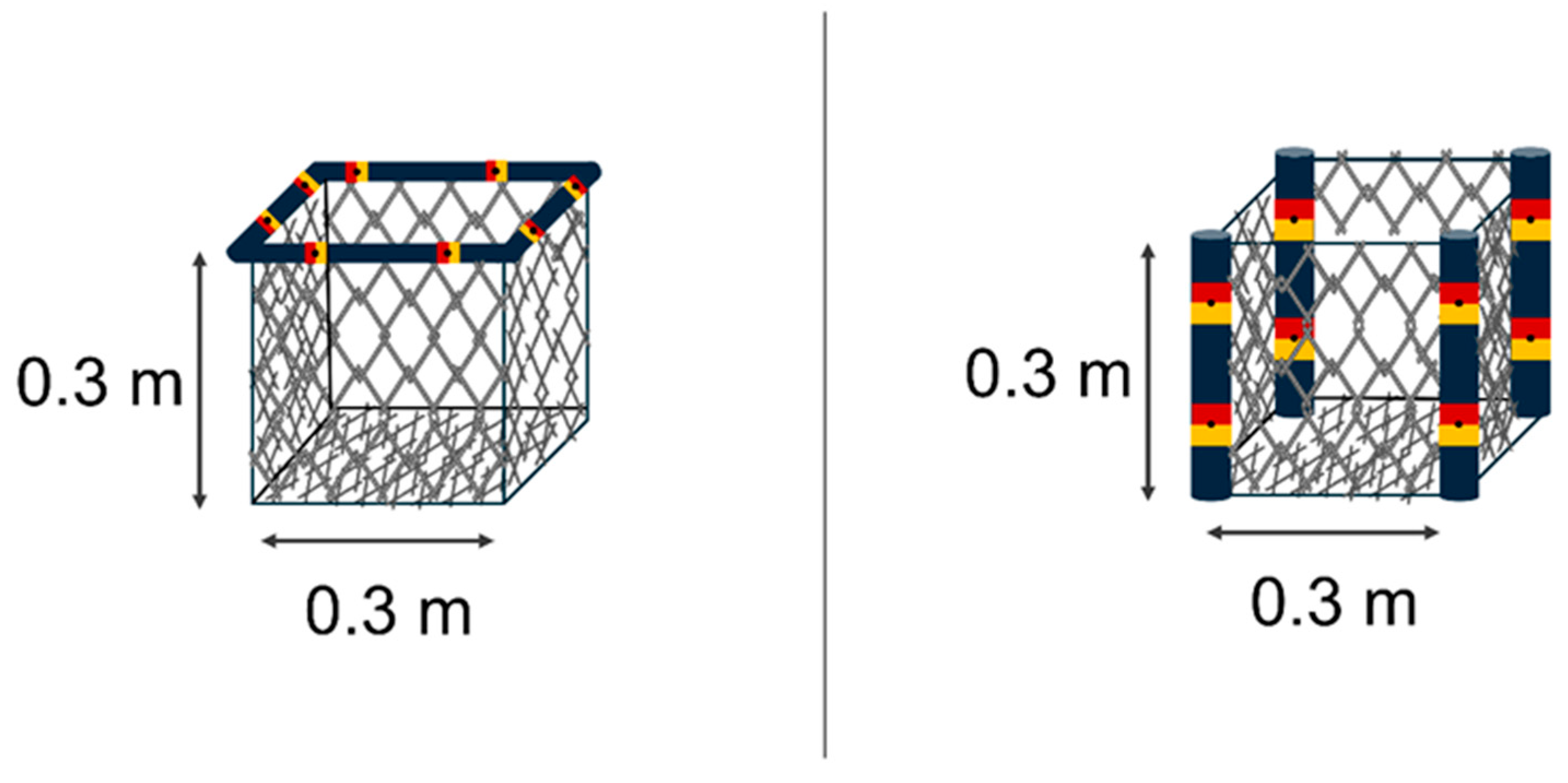
We used two types of net cage models with different buoyancy structures, as shown in Figure 1. We examined the conventional floating-frame type and the buoyancy-column type, which we proposed and expected to be more stable, to compare their stabilities under several current conditions. The cages were designed as cubes to facilitate a comparison between the two structures. Polyvinyl chloride pipes with caps were used as buoyancy structures. Their total length was 0.343 m, and the pipe and cap diameters were 0.022 and 0.030 m, respectively. Commercially used submerged cages along the Japanese coast have diameters of approximately 10 m, corresponding to a scale of 3/100. These net cages were modeled as 14 × 14 meshes, and a 15 g sinker was hung at each corner of the base to keep the net cage’s shape. The net cage models were moored using four lines anchored to the ground. The mooring lines were made of nylon, and their diameters were 4 mm. Young’s modulus of a nylon is generally around 2–4 GPa, depending on material condition. The Young’s modulus of the mooring lines was assumed to be 2 GPa, because it is difficult to measure the accurate value of it due to water absorption by the rope, and the effective Young’s modulus of a nylon rope tends to be lower than that of nylon material.

2.2. Net Geometry and Load Analysis System

The net geometry and load analysis system (NaLA system) is a numerical simulation system for underwater fishing gear behavior developed by [24]. In the NaLA system, the net models are discretized as spring bars and mass points based on the lumped-mass model. The behavior of the net model is determined by numerically solving the equations of motion at each mass point. The equation is expressed as follows:
M i + k = 1 2 C i , k Δ M i , k C i , k T α i = T i + k = 1 2 C i , k F i , k + W i + B i
where M i and Δ M i , k are the mass and added mass of mass point i , respectively. C i , k is an inertia transformation matrix that can transform a body-fixed coordinate system into an absolute coordinate system. α i is the acceleration vector of mass point i . T i and F i , k are the tension force vector and hydrodynamic force vector, respectively, and W i and B i are the gravitational and buoyant force vectors, respectively. Additional details are provided by [24]. In this study, the step size was 0.01, and Equation (1) was solved by Adams–Moulton’s method from IMSL numerical libraries (version 2022.1).

2.3. Water Tank Experiment

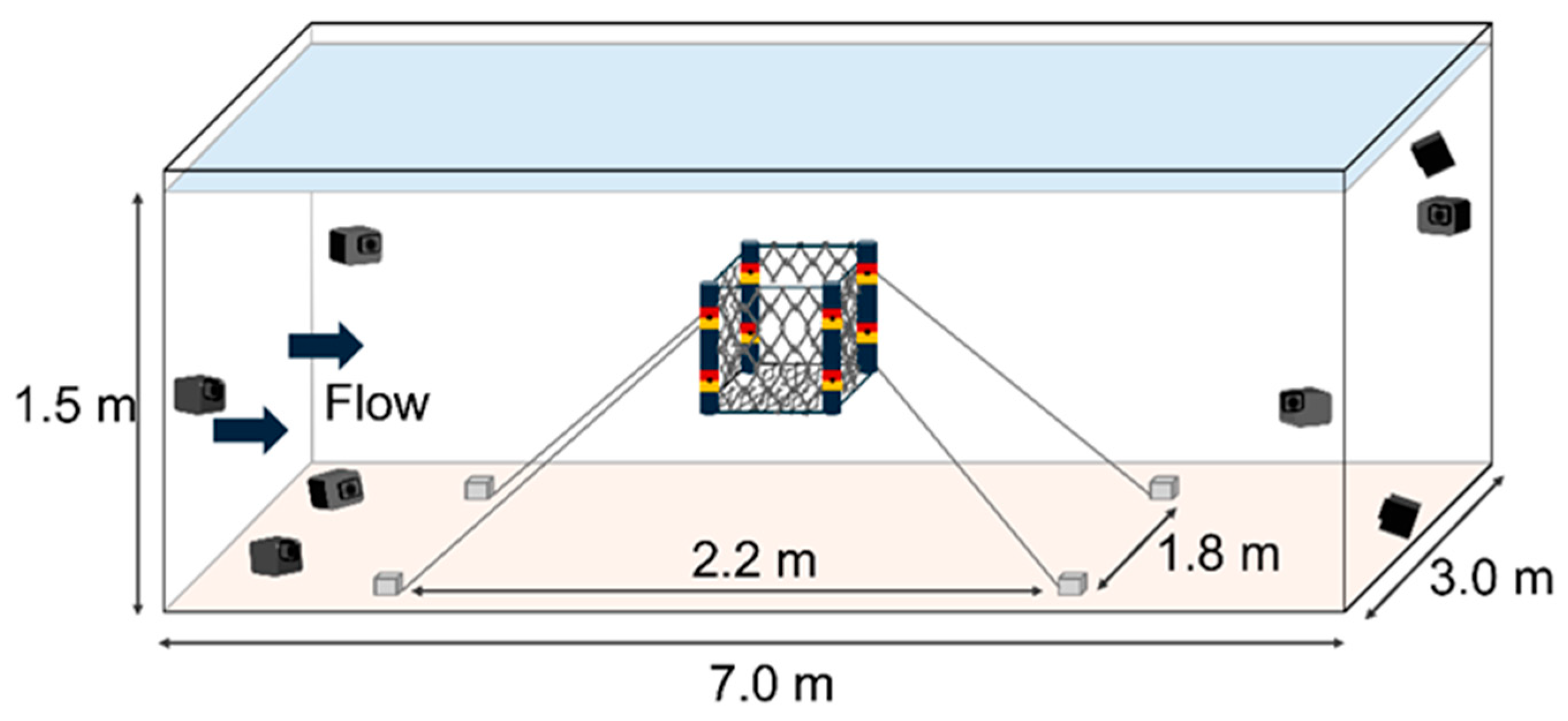
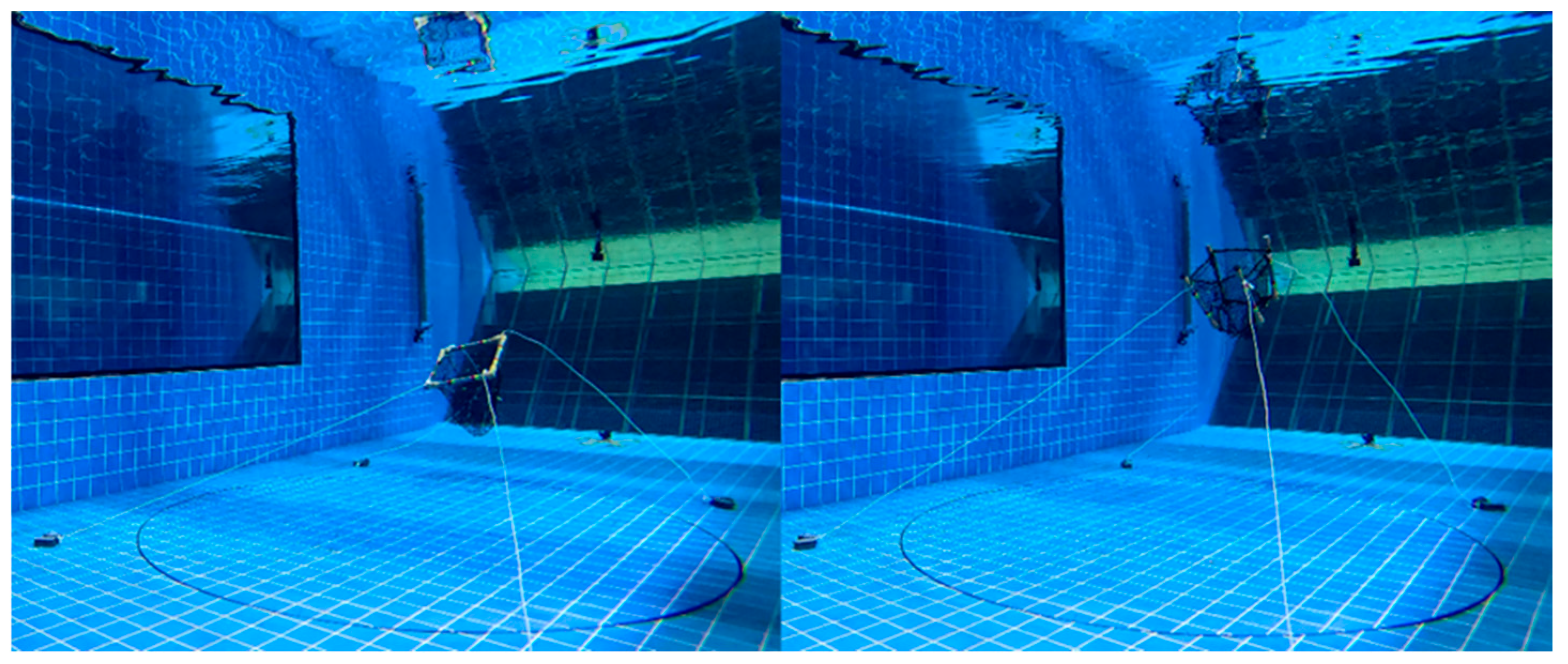
We also conducted physical net cage model experiments in a recirculating flume tank (Figure 2, Figure 3 and Figure 4) to validate the NaLA system for small net cage structures. Flume tank experiments were conducted based on the Froude similarity law since gravity is dominant in the experiments, and we assumed the scale ratio between the actual net cage model and the full-scale net cage to be 3:100. Accordingly, current velocities of 0.09 and 0.165 m s−1 were set in the experiments, assuming actual offshore conditions, which correspond to 0.52 and 0.95 m s−1, respectively. The net cage models were moored by four lines to each sinker, which were sufficiently heavy to remain on the ground under the given flow conditions. The net cage was initially stuck to the ground and was released under each flow condition after the flow had fully developed.
The actual net cage geometry in the flow was measured using camera calibration to validate the NaLA system in these cases. We set eight GoPro Cameras (GoPro HERO11 Black, fps = 60, 4 K) in the flume tank to obtain geometric information using the direct linear transformation (DLT) method proposed by [25]. Figure 2 shows the positions of the GoPro cameras. The DLT method enables the reconstruction of the 3D coordinates from 2D images after a calibration, and as a DLT method tool, we used the DLTdv digitizing tool “DLTdv8” developed by [26]. The reference points of both net cage models are represented as black circles at the boundary between the red and yellow regions in Figure 1. In the DLT method, the cameras should be arranged so that their optical axes intersect orthogonally. However, it was difficult to set these cameras as nearly orthogonal due to the size of the flume tank and the camera’s field of view. Therefore, we arranged these cameras to avoid having parallel optical axes.
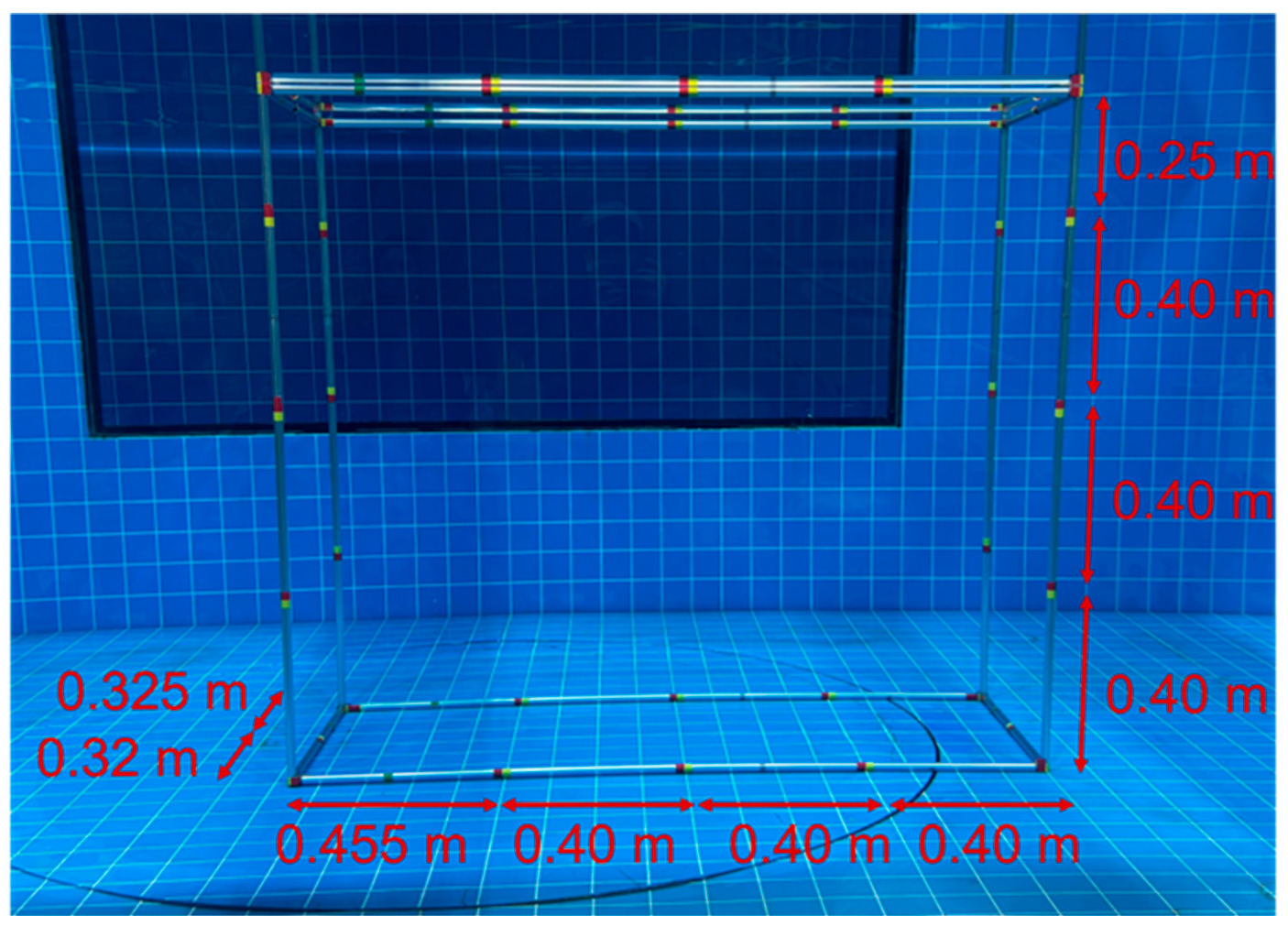
Before the reconstruction of the net cage’s 3D coordinates, a calibration was required to construct the 3D space that was to be reconstructed in the DLT method. We used a 3D frame, whose length of each part of the bar was known, as a 3D space for reconstruction, as shown in Figure 3. Generally, the reconstruction error increases when the reconstructed point lies outside the calibrated 3D frame. We used 36 calibration points of the 3D frame and examined the reconstruction using these points, since these coordinates were known.

2.4. Validation and Analysis

The net cage models were replicated in the NaLA system based on the actual net cages used in the experiments. However, some discrepancies inevitably arise in the modeling process in the NaLA system, especially for net models with complex structures, such as the actual net cages used in the experiments. Therefore, the net cage models in the NaLA system were slightly simplified. For instance, the mooring lines were virtually fixed to the ground instead of anchored to the ground in the NaLA system. To validate the NaLA system in the case of a small-scale aquaculture net cage model, we compared the geometry of the results of the NaLA system and experiments in terms of the inclination angles of the horizontal reference plane of the net cage models. These angles were calculated from the norm vectors at each time step relative to the norm vector at the time when the net cage begins to emerge from the flume tank ground. The norm vectors were calculated as the cross-product vectors of the horizontal reference plane for each net cage model. These angles were considered in two dimensions because the flow in the flume tank was uniform, and the structure of the actual net cage was symmetric, which facilitated the motions in the cross-stream direction to be neglected.
We also simulated several flow cases to evaluate the stability of the two types of buoyancy structures in the same manner as the validation (Table 1). In addition, we simulated two additional buoyancy-column models in which a mooring line was attached at the middle and bottom of the buoyancy columns to analyze a more stable structure during emergence.

3. Results

3.1. Validation Test

Table 2 shows the mean, minimum, and maximum of the error of calibration points in the x, y, and z directions through the DLT method. These results indicate that the reconstruction of 3D coordinates was accurate.
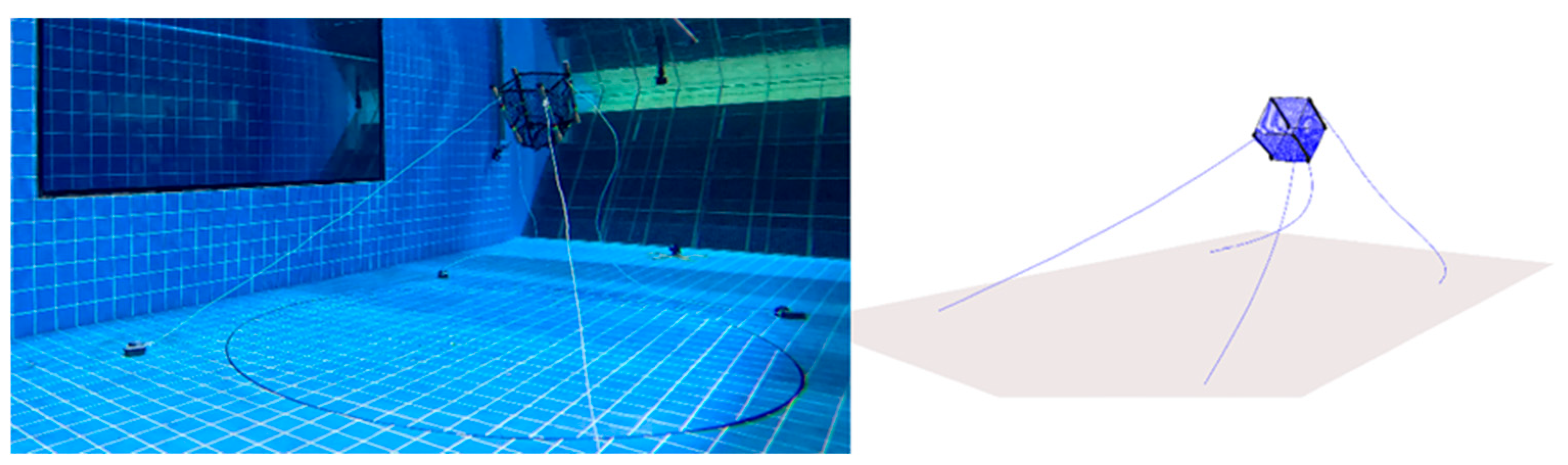
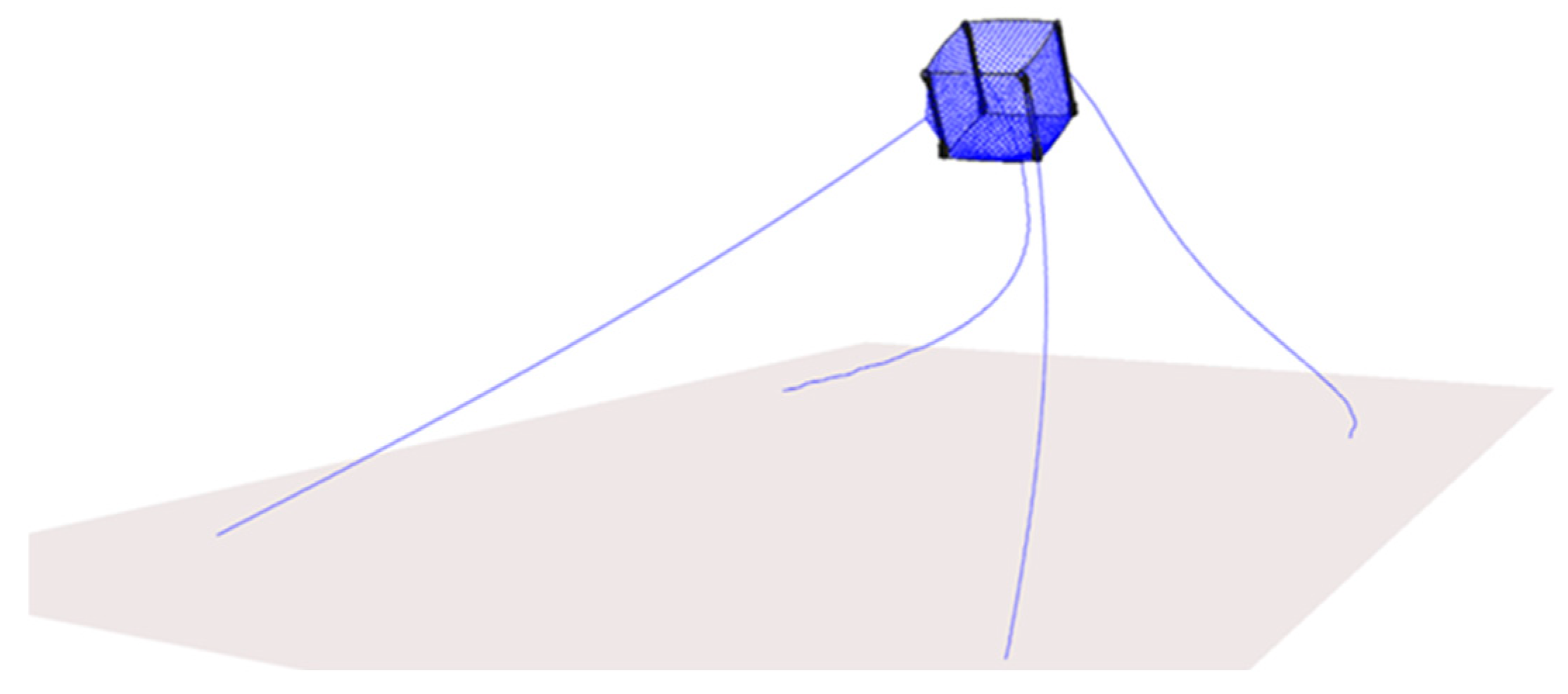
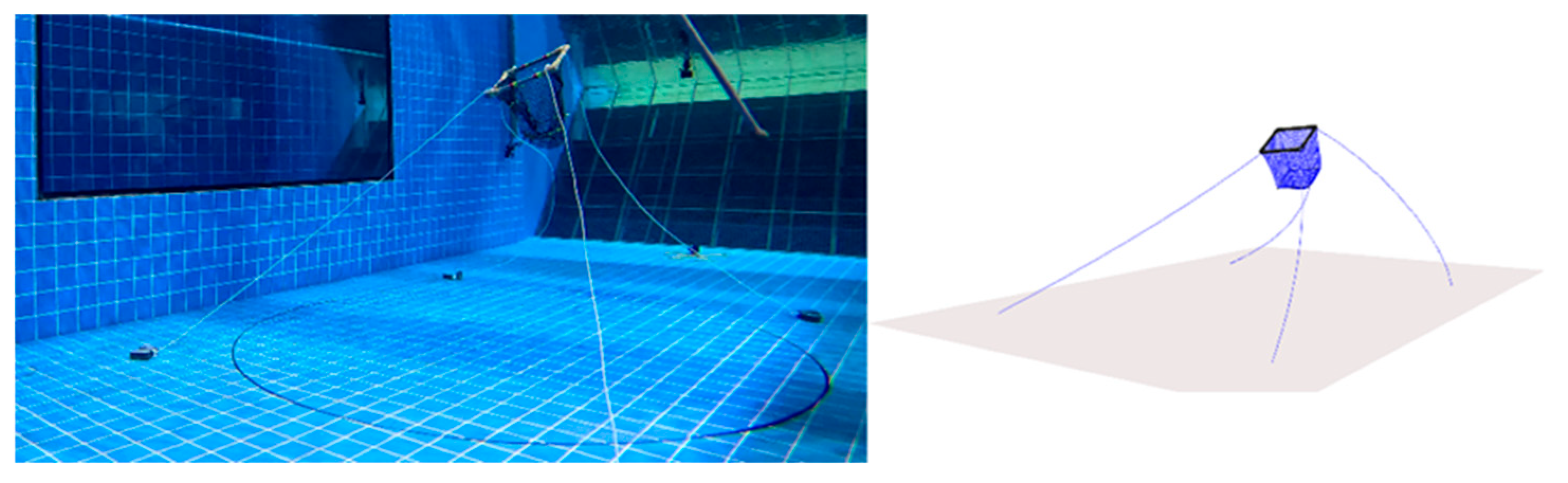
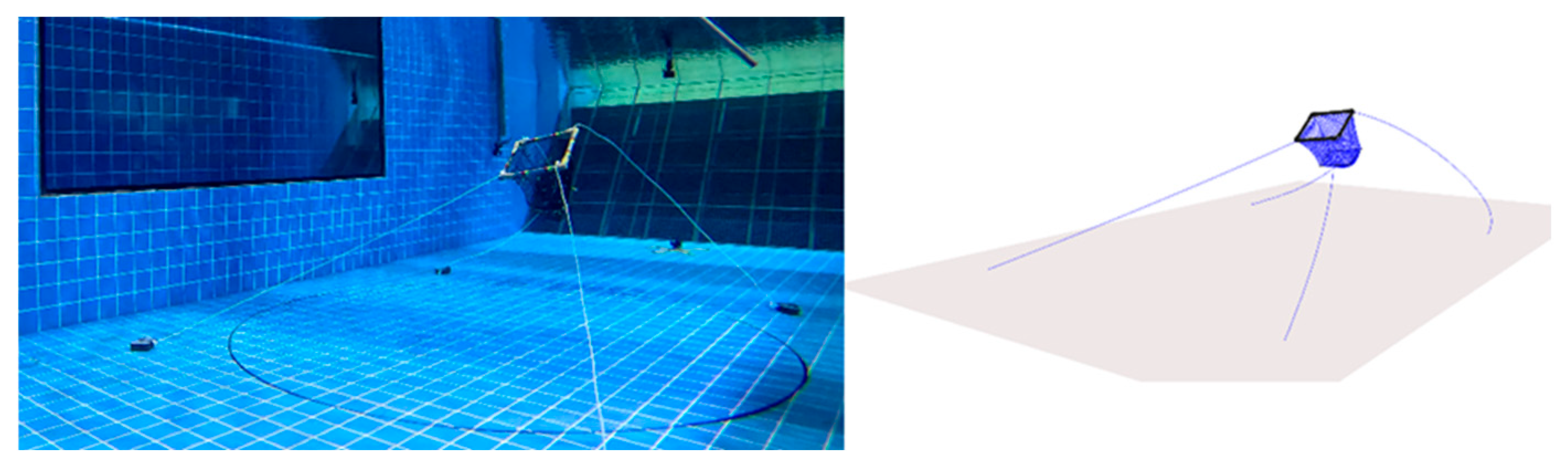
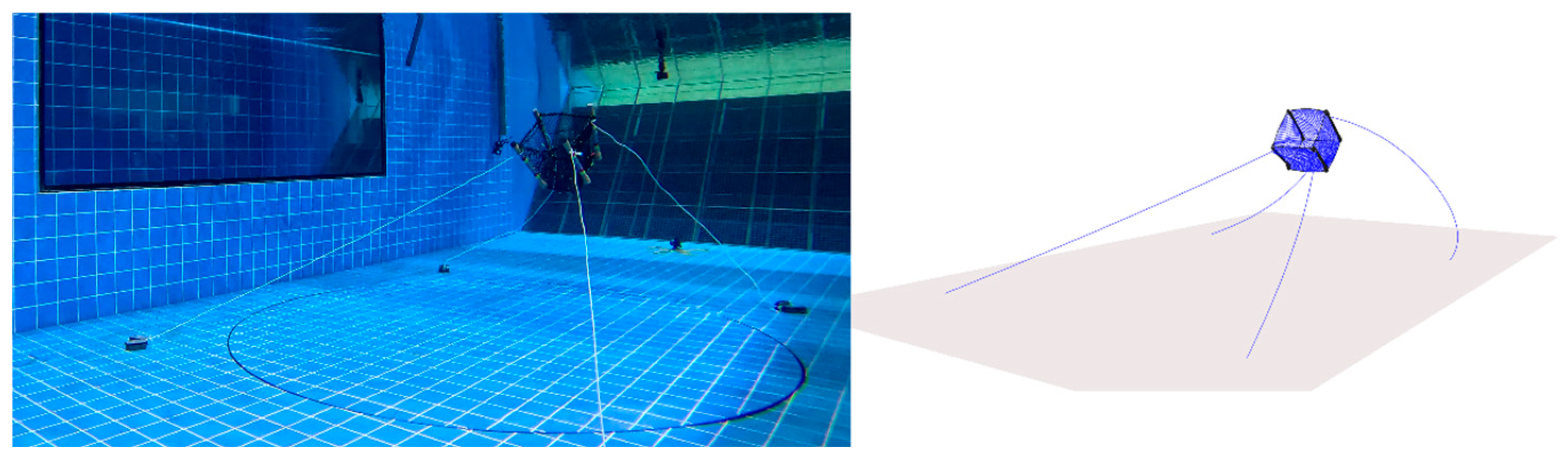
Figure 5, Figure 6, Figure 7 and Figure 8 show the experimental images and the calculation results of the NaLA system exposed to 0.09 and 0.165 m s−1. The cage geometry calculated using the NaLA system showed excellent agreement with that observed in the tank experiments, indicating a high level of accuracy in reproducing the cage geometry.
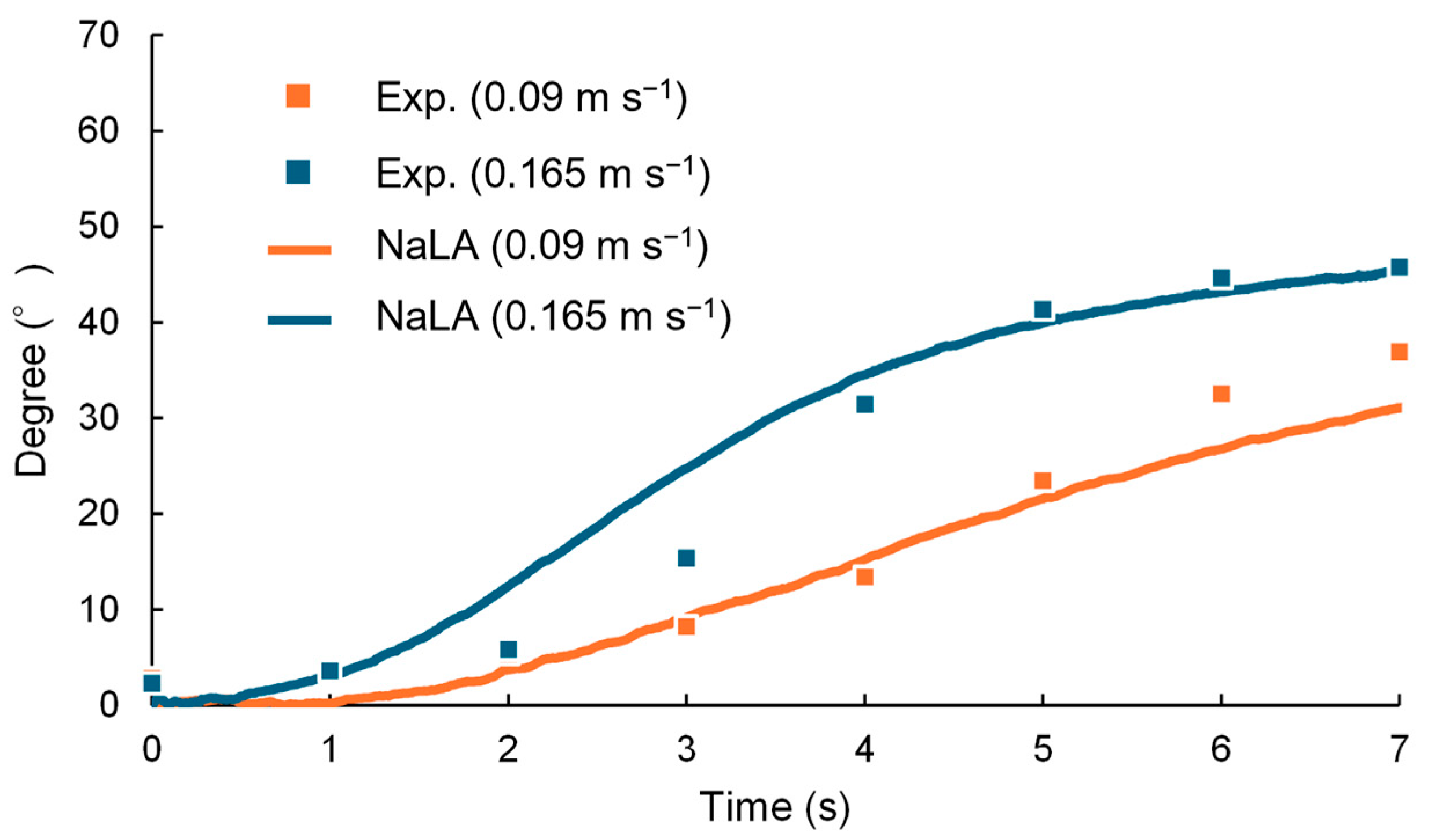
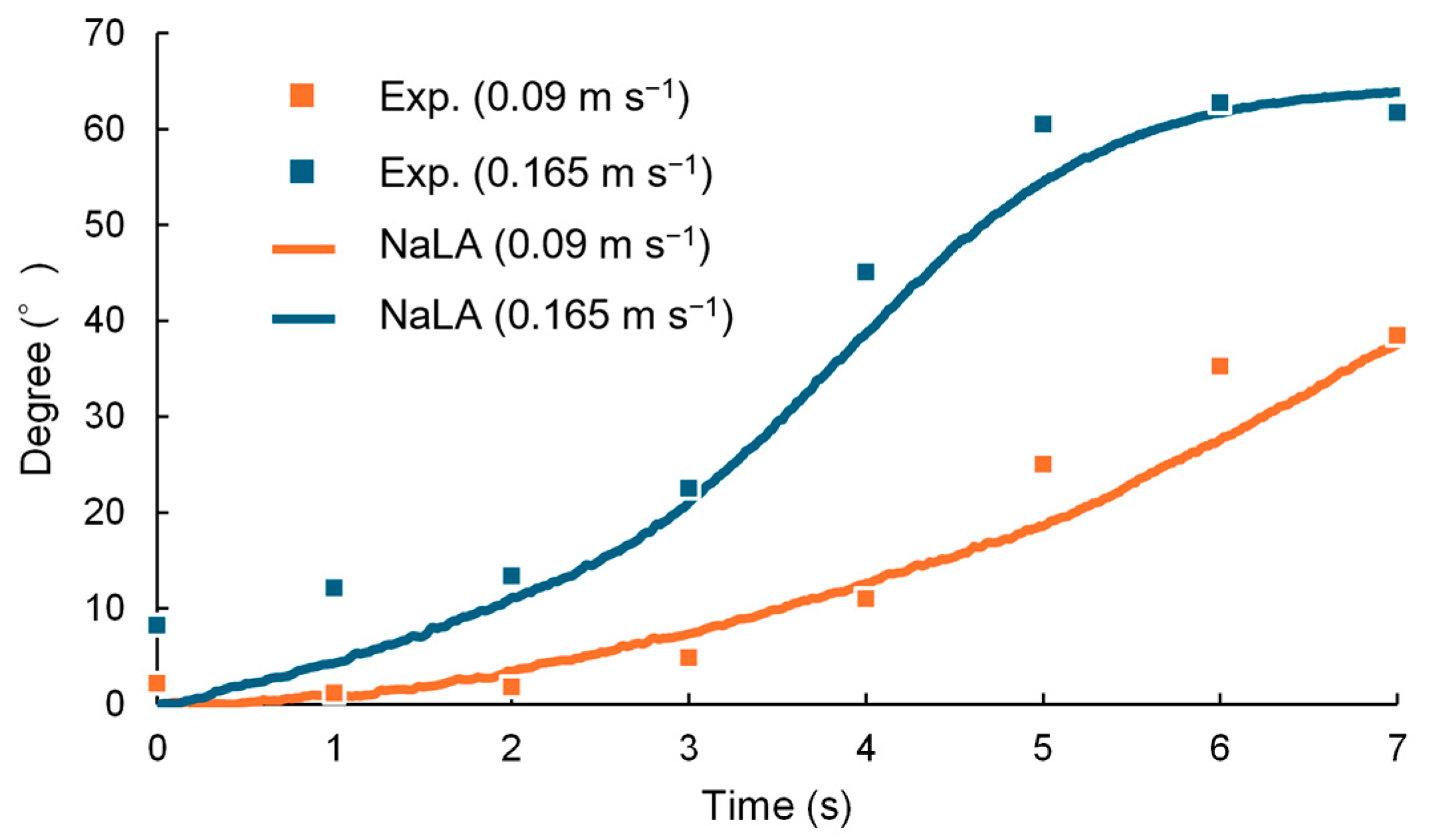
Figure 9 and Figure 10 show the time-series plots of the change in the angle of the norm vectors in the case of conventional floating-frame and buoyancy-column cages at current velocities of 0.09 m s−1 and 0.165 m s−1, respectively. In only the comparison of the conventional floating-frame-type cage at a current velocity of 0.165 m s−1, the inclination of the cage dynamics calculated using the NaLA system was overestimated relative to that observed in the tank experiments around the 2–3 s time interval. Although the experimental results could include errors owing to the DLT method and turbulation of the current, each case of the angle in the NaLA system was consistent with the experimental results. Table 3 shows the errors of the inclination angles in the case of conventional floating-frame and buoyancy-column cages at current velocities of 0.09 m s−1 and 0.165 m s−1. They are small relative to the overall angle changes.

3.2. Comparison of Stability

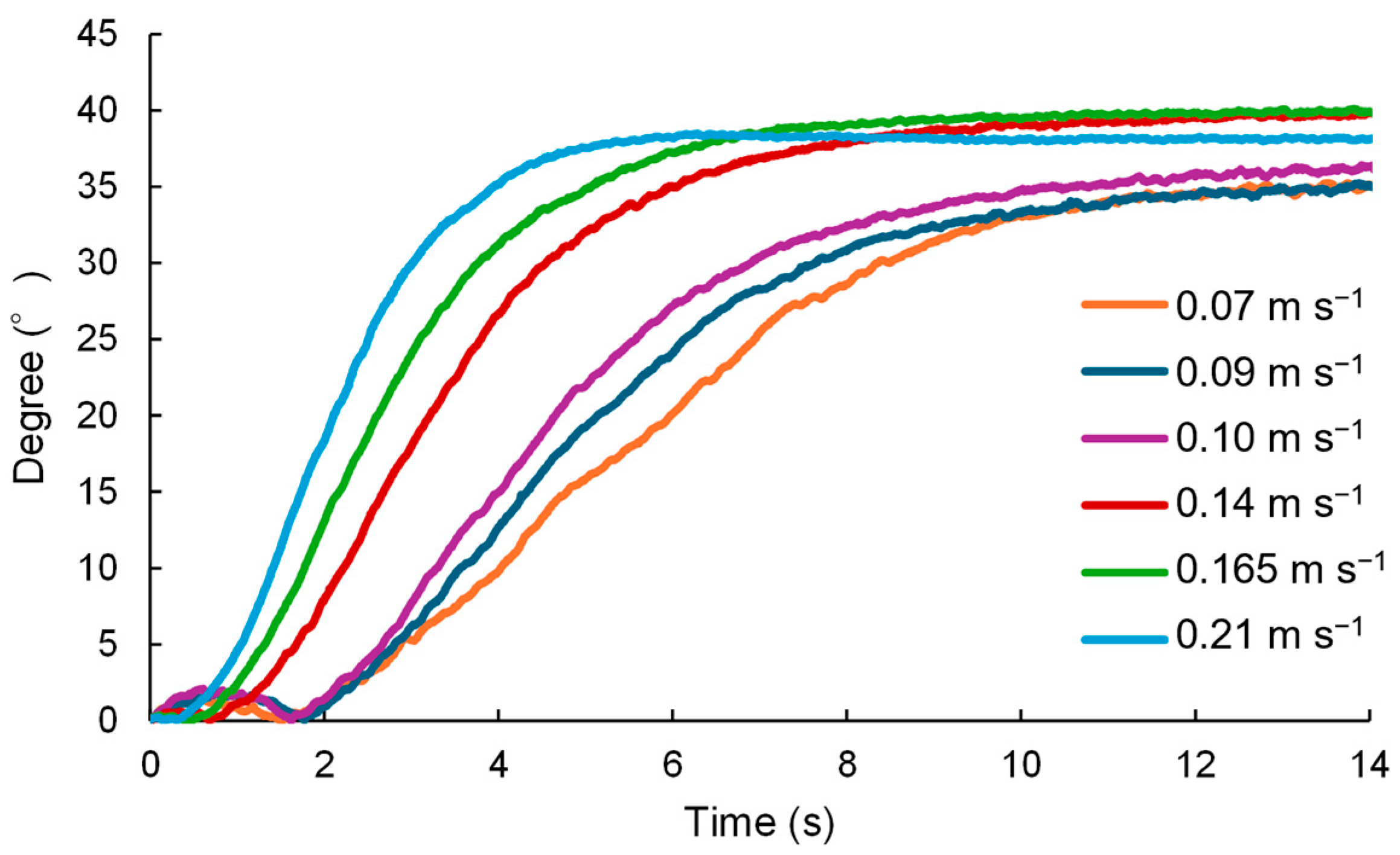
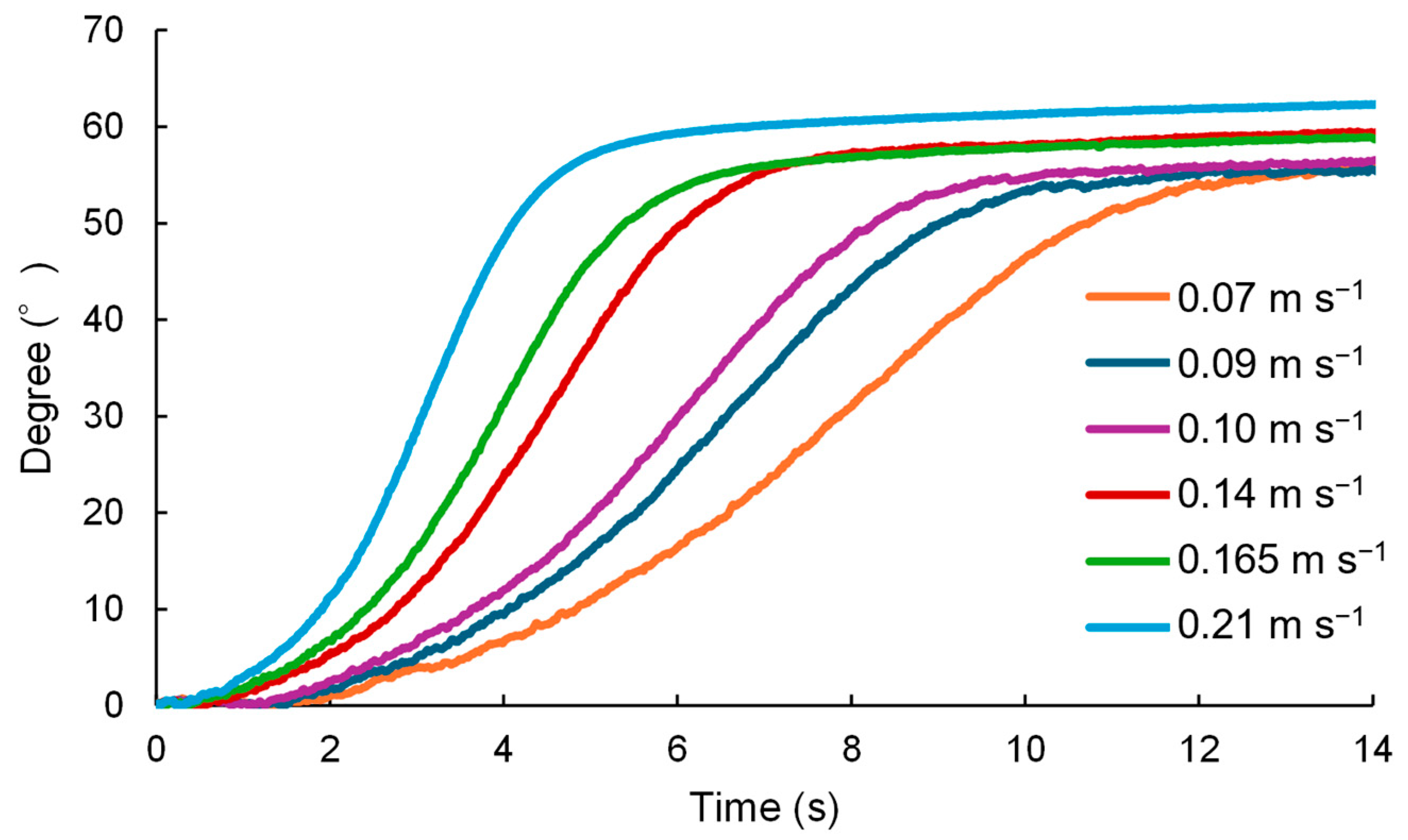
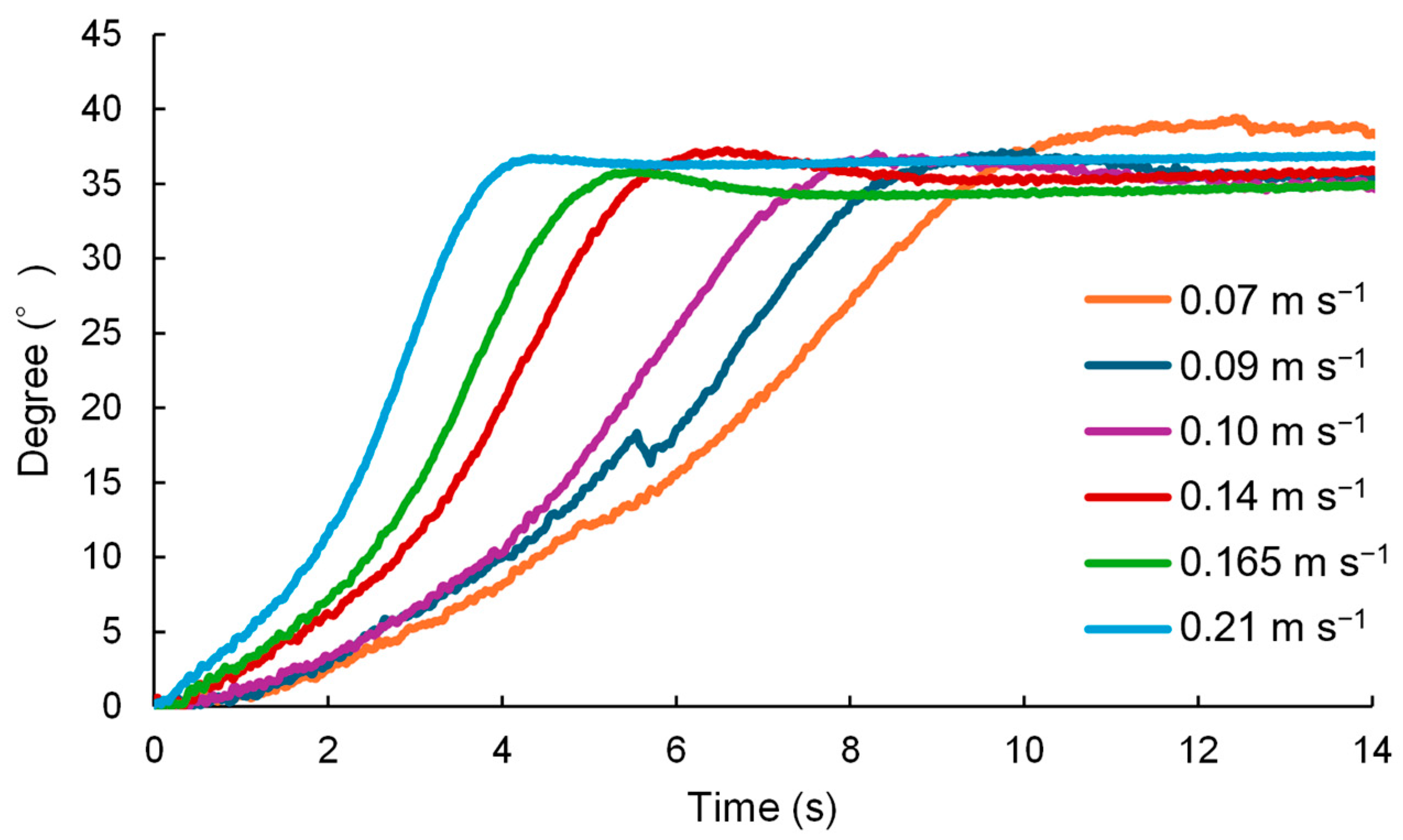
Figure 11 and Figure 12 show the variations in the angles of the conventional floating-frame and buoyancy-column types, respectively. The conventional floating-frame type was more stable than the buoyancy-column type in terms of angle magnitude. In the case of the conventional floating-frame type, a small peak appeared at approximately 1 (s) under all current conditions, and all curves showed a similar trend. Additionally, the angle at 0.21 m s−1 was smaller than those at 0.14 m s−1 and 0.165 m s−1. In contrast, in the case of the buoyancy-column type, the increase was gradual, particularly at low current velocities, and the curves were slightly different.

3.3. Stability Difference of the Buoyancy-Column Models Depending on Mooring Line Attachment Position

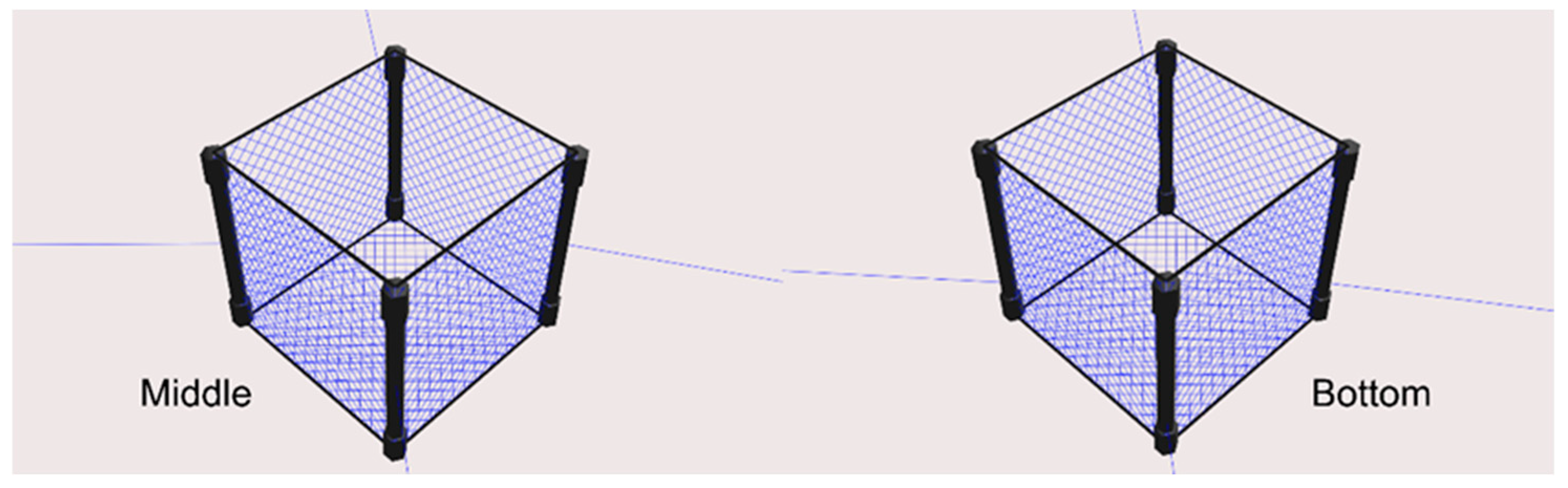
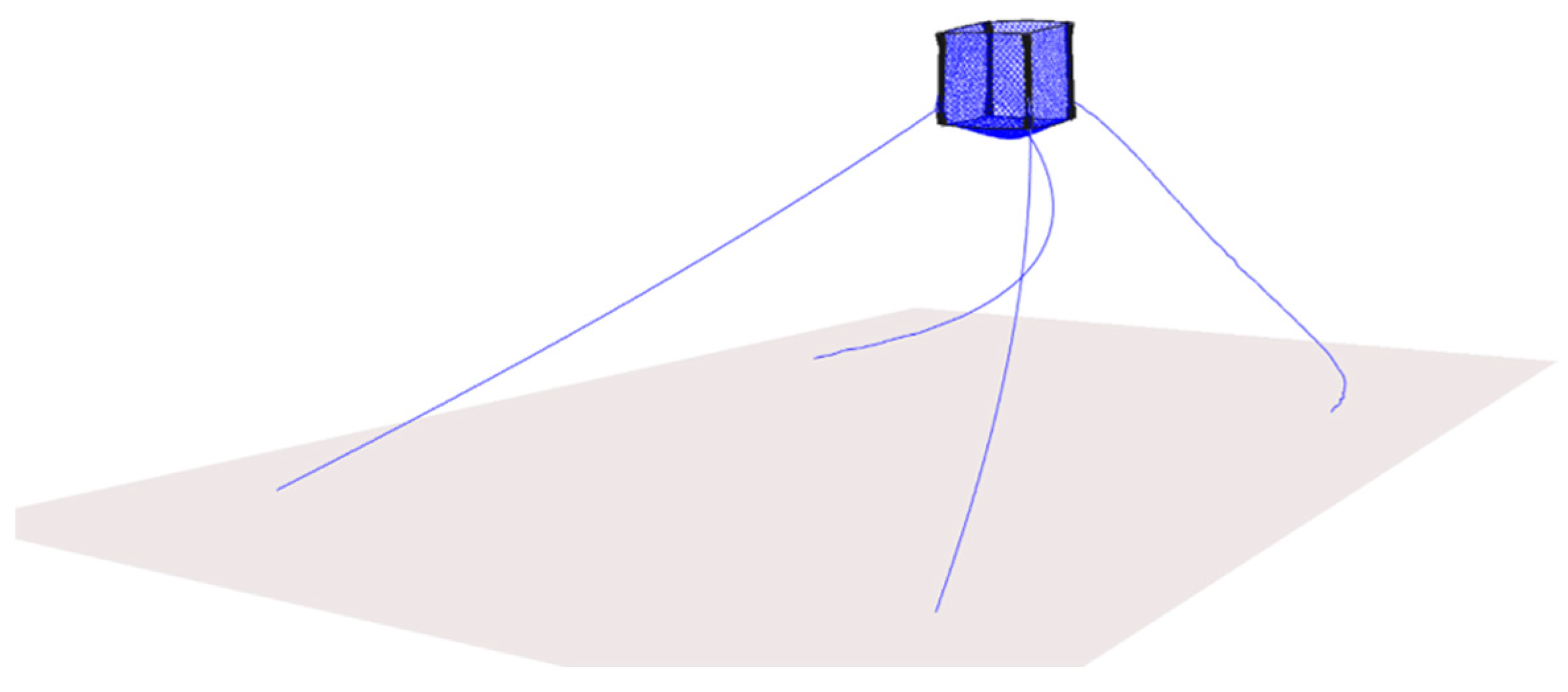
Figure 13 illustrates the buoyancy-column models in which the mooring line is attached at the middle and bottom of the buoyancy column in the NaLA system. Figure 14 and Figure 15 show snapshots of the dynamics of the buoyancy-column-type cage model in which mooring lines were attached to the mid-height and bottom parts of the buoyancy columns at a current velocity of 0.09 m s−1. These appeared to remain vertical compared to the buoyancy-column models in which the mooring line was attached at the top of the collar, particularly the one in which the mooring line was attached at the bottom of the collar, which appeared to be almost vertical.
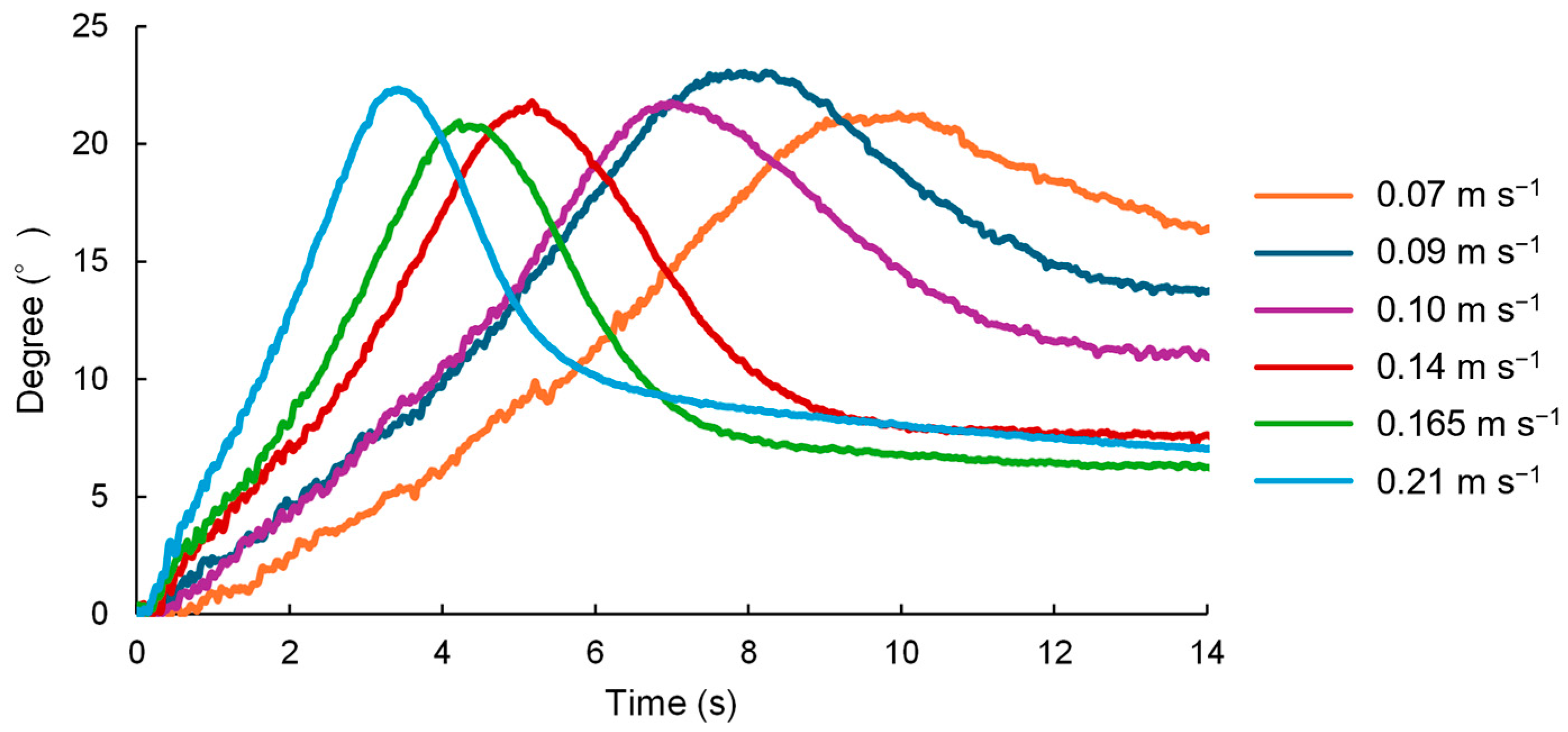
Figure 16 and Figure 17 show the variations in the angles of attachment positions of the middle and bottom mooring line models, respectively. In both cases, the angle magnitude decreased compared to that of the top-mooring-line attachment position model. In the middle-mooring-line attachment position model, the angles eventually converged to similar values. In contrast, the curves in Figure 17 show different trends. Each curve has a large peak that shifts to the left with an increase in the current velocity. In addition, the final angle magnitudes were the smallest of all study cases. Moreover, the angle magnitude at 0.21 m s−1 behaved differently compared to other current velocities, as shown in Figure 11.

4. Discussion

4.1. Validation

Although these angles are in close agreement, slight differences are observed. Numerical errors in the NaLA system and DLT errors may have caused these errors. In the experiments, to simplify the situation, the net cage was manually stuck on the bottom at the beginning. This leads to a non-reproducible initial orientation in the NaLA system, and time lag may exist between the results of the experiments and the NaLA system. In addition, the pipes are considered not to bend except the joints of the caps in the NaLA system because the NaLA system cannot handle the stiffness of materials. This can also cause errors when a material with high stiffness is used on the net.

4.2. Stability of the Conventional Floating-Frame and Buoyancy-Column Models Under Several Current Velocity Conditions

In the case of the buoyancy-column models, in which the mooring line is attached at the top of the column, the model can rotate under flow conditions because the norm vector used in the fluid force evaluation is defined as pointing upward when the tension from the mooring line acts at the top. In this study, it is assumed that the discharge of water in the pipes is virtually instantaneous. The case of the conventional floating-frame models can therefore be stable since the process of moving the mass center of the pipes is not considered. This leads to them being relatively stable compared to the buoyancy-column models from the beginning of emergence. Consequently, in the case of the buoyancy-column models, the magnitude of the angle increases compared to that of the conventional floating frame. In addition, the fluid force overcomes the buoyancy under high-current conditions, resulting in no eventual increase in the angle magnitude at 0.21 m s−1. The difference in the initial states between the conventional floating frame and buoyancy-column model may cause the eventual results of inclination.

4.3. Stability of the Additional Buoyancy-Column Types

In terms of rotation, the middle-mooring-line and bottom-mooring-line attachment models were resistant to rotation, since the normal vector used in the fluid force evaluation was defined to point downward. For the middle-mooring-line attachment model, the angle between the mooring line and the column eventually becomes vertical as the total forces balance. This behavior reflects the dependence of the initial inclination and total forces on the current velocity. In contrast, the results of the bottom-mooring-line attachment model were considerably more stable during emergence. Each peak in the curves occurs when the mooring line is fully stretched, indicating that the tension in the mooring line is likely higher than in the other cases after the peak, as it must balance the fluid force acting on the columns in the current direction.
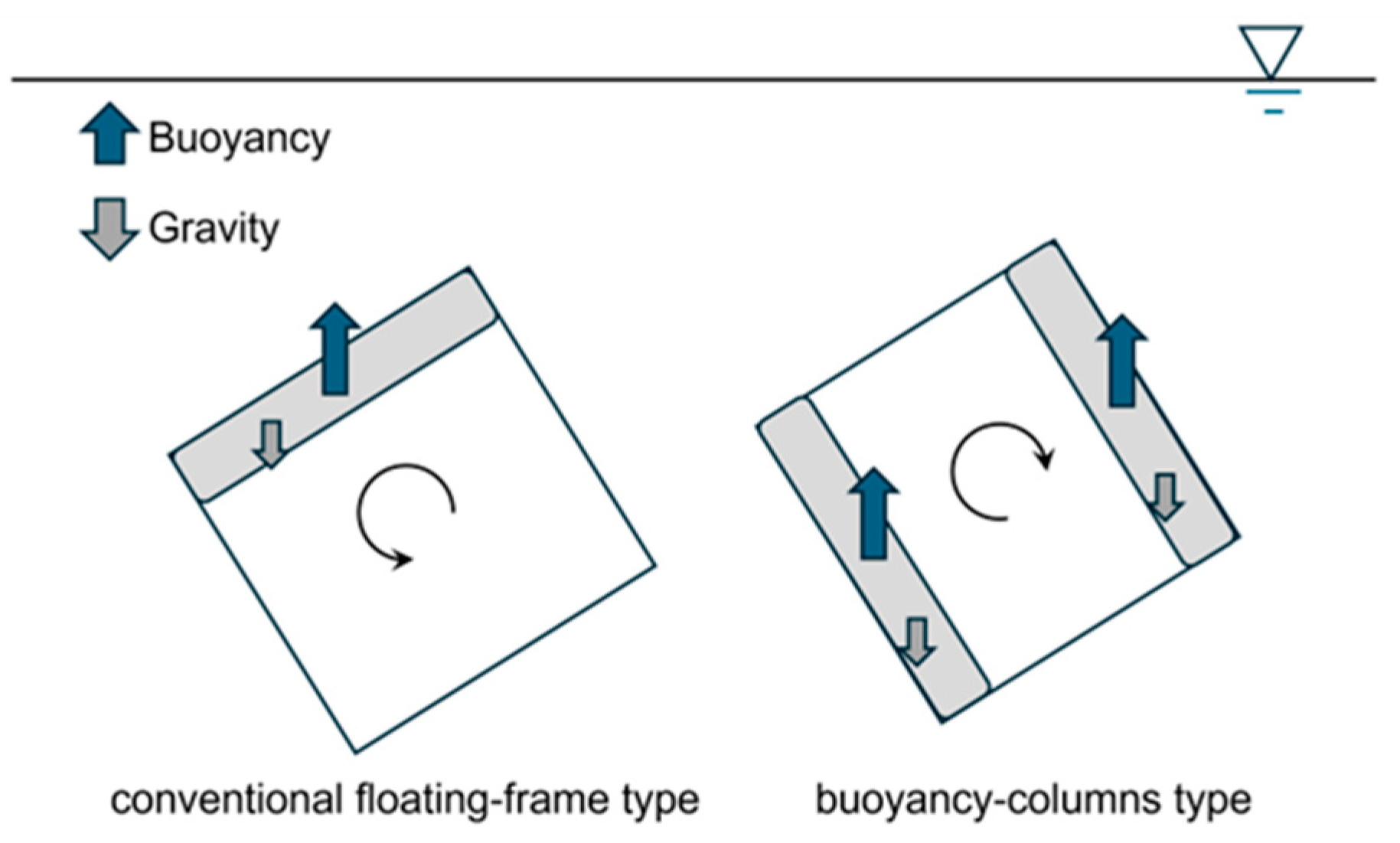
To interpret the restoring characteristics acting on the conventional floating-frame type and the buoyancy-column type, it is useful to focus on the balance between gravity and buoyancy acting on the floats. Figure 18 schematically illustrates the restoring tendency when the floats are half-flooded. In the conventional floating-frame cage, the restoring ability can be lost at large inclination angles, such that the resultant couple may act in the overturning direction. In contrast, the buoyancy-column type tends to maintain a restoring couple that promotes recovery toward the horizontal position. Based on this simplified moment–balance consideration, the present study focused on varying the mooring-line attachment position only for the buoyancy-column type to evaluate its dynamic emergence behavior.
Taken together, these results suggest that the emergence stability of the submersible cage is governed not only by the buoyancy-column geometry but also, and often predominantly, by the mooring configuration. For conventional gravity cages, the sudden failure or reconfiguration of mooring lines has been shown to markedly increase line tension, collar rotation, and loss of effective cage volume in waves and currents [27], and parametric studies of multiple-cage arrays also show that mooring-layout choices exert a first-order influence on mooring loads and cage motions under combined wave–current conditions [28]. Physical model tests on marine-fouled floating cages further indicate that changes in hydrodynamic loading are transmitted directly to the mooring lines, substantially increasing dynamic forces [29]. Together with these findings, the present results emphasize that the buoyancy structure and mooring system must be designed as an integrated stability-control system and that optimizing the mooring-line attachment position is an efficient way to reduce inclination during emergence.
As for the NaLA system itself, the effects of stiffness are necessary to be integrated into the NaLA system because stiffness can be more effective in the case of full-scale net models. It is also important in order to improve the accuracy of the NaLA system.

5. Conclusions

This study investigated the differences in stability between the net cages of conventional floating-frame and buoyancy-column models using the NaLA system. Although the results of both the water tank experiment and numerical simulation yielded errors, the NaLA system can be applied to small-scale offshore net cage models. Addressing the stiffness of materials in the NaLA system would improve the accuracy of the NaLA system. The buoyancy columns used in the water tank experiment were not more stable than the conventional floating-frame type in terms of angle magnitude. However, the results of the additional buoyancy-column type indicate that the buoyancy-column type can be more stable than the conventional floating-frame type, depending on the mooring line attachment position. Although the inclination depends on the mooring line length, tension acting on it, and current velocity, further investigation is required. In this study, the discharge of water in the pipes was virtually instantaneous to simplify the situation. In future research, the process of discharge has to be considered in both the experiment and the NaLA system. Moreover, to utilize this structure in an ocean, future studies should evaluate the tension in the mooring line and the buoyancy required to maintain a vertical attitude, as well as evaluate the tank volume and deformation during emergence with improvements of the NaLA system. The aquaculture net cage structure proposed in this study is stable and suitable for applications under harsh conditions.

Author Contributions

Conceptualization, T.T.; methodology, K.Y., K.W. and T.T.; software, K.Y.; validation, K.Y., S.G. and T.T.; formal analysis, K.Y. and S.G.; investigation, K.Y. and K.W.; resources, K.Y. and K.W.; data curation, K.Y.; writing—original draft preparation, K.Y.; writing—review and editing, S.G.; visualization, K.Y.; supervision, T.T.; project administration, T.T. All authors have read and agreed to the published version of the manuscript.

Funding

This research received no external funding.

Institutional Review Board Statement

Not applicable.

Data Availability Statement

The datasets presented in this article are not readily available due to technical limitations. Requests to access the datasets should be directed to the corresponding author.

Acknowledgments

We gratefully acknowledge the Sagami Bay Experiment Station, Kanagawa Prefectural Fisheries Technology Center, for providing access to the recirculating flume tank facility used in this study. We also thank the laboratory staff for their assistance with the experiments.

Conflicts of Interest

The authors declare no conflicts of interest.

Abbreviations

The following abbreviations are used in this manuscript:
DLTDirect linear transformation
NaLANet geometry and load analysis

References

  1. FAO. The State of World Fisheries and Aquaculture 2024; FAO: Rome, Italy, 2024. [Google Scholar]
  2. Holmer, M. Environmental Issues of Fish Farming in Offshore Waters: Perspectives, Concerns and Research Needs. Aquac. Environ. Interact. 2010, 1, 57–70. [Google Scholar] [CrossRef]
  3. Chen, H.; Christensen, E.D. Development of a Numerical Model for Fluid-Structure Interaction Analysis of Flow through and around an Aquaculture Net Cage. Ocean Eng. 2017, 142, 597–615. [Google Scholar] [CrossRef]
  4. Huang, C.-C.; Tang, H.-J.; Liu, J.-Y. Dynamical Analysis of Net Cage Structures for Marine Aquaculture: Numerical Simulation and Model Testing. Aquac. Eng. 2006, 35, 258–270. [Google Scholar] [CrossRef]
  5. Kristiansen, T.; Faltinsen, O.M. Experimental and Numerical Study of an Aquaculture Net Cage with Floater in Waves and Current. J. Fluids Struct. 2015, 54, 1–26. [Google Scholar] [CrossRef]
  6. Lader, P.F.; Enerhaug, B. Experimental Investigation of Forces and Geometry of a Net Cage in Uniform Flow. IEEE J. Ocean. Eng. 2005, 30, 79–84. [Google Scholar] [CrossRef]
  7. Moe, H.; Fredheim, A.; Hopperstad, O.S. Structural Analysis of Aquaculture Net Cages in Current. J. Fluids Struct. 2010, 26, 503–516. [Google Scholar] [CrossRef]
  8. Su, B.; Kelasidi, E.; Frank, K.; Haugen, J.; Føre, M.; Pedersen, M.O. An Integrated Approach for Monitoring Structural Deformation of Aquaculture Net Cages. Ocean Eng. 2021, 219, 108424. [Google Scholar] [CrossRef]
  9. Tang, H.-J.; Yang, R.-Y.; Yao, H.-C. Experimental and Numerical Investigations of a Mooring Line Failure of an Aquaculture Net Cage Subjected to Currents. Ocean Eng. 2021, 238, 109707. [Google Scholar] [CrossRef]
  10. Molnar, L.; Toal, D. A Control System Development for Submersible Sea Cage System. In Proceedings of the OCEANS 2007, Vancouver, BC, Canada, 29 September–4 October 2007; IEEE: New York, NY, USA; pp. 1–11. [Google Scholar]
  11. Kim, T.H.; Yang, K.U.; Hwang, K.S.; Jang, D.J.; Hur, J.G. Automatic Submerging and Surfacing Performances of Model Submersible Fish Cage System Operated by Air Control. Aquac. Eng. 2011, 45, 74–86. [Google Scholar] [CrossRef]
  12. Sievers, M.; Korsøen, Ø.; Warren-Myers, F.; Oppedal, F.; Macaulay, G.; Folkedal, O.; Dempster, T. Submerged Cage Aquaculture of Marine Fish: A Review of the Biological Challenges and Opportunities. Rev. Aquac. 2022, 14, 106–119. [Google Scholar] [CrossRef]
  13. Fan, Z.Q.; Liang, Y.H.; Yun-Peng, Z. Review of the Research on the Hydrodynamics of Fishing Cage Nets. Ocean Eng. 2023, 276, 114192. [Google Scholar] [CrossRef]
  14. Wen, X.; Ong, M.C. Dynamic Analysis of Submersible Gravity-Type Fish Cages with Single-Point Mooring Design. J. Ocean. Eng. Sci. 2025, 10, 1155–1171. [Google Scholar] [CrossRef]
  15. Gao, S.; Wang, C.; Tuene, S.A.; Li, G.; Zhang, H.; Gansel, L.C. In Situ Measurements and Simulations of a Net Cage in Currents. Aquac. Eng. 2024, 106, 102429. [Google Scholar] [CrossRef]
  16. Tian, Z.; Yang, H.; Wen, H. Hydrodynamic Performance of a Submersible Net Cage Integrated with an Offshore Platform. Front. Mar. Sci. 2024, 11, 1436992. [Google Scholar] [CrossRef]
  17. Cardia, F.; Lovatelli, A. Aquaculture Operations in Floating HDPE Cages: A Field Handbook; FAO Fisheries and Aquaculture Technical Paper No. 593; FAO: Rome, Italy, 2015. [Google Scholar]
  18. Nguyen, H.P.; Wang, C.M.; von Herzen, B.; Huang, C. Hydroelastic Responses of a Submersible Ring Structure for Offshore Seaweed Cultivation under Wave Action. J. Mar. Sci. Eng. 2023, 11, 2238. [Google Scholar] [CrossRef]
  19. Priour, D. Numerical Modelling of Water Ballast. Application to Fish Cages. In Proceedings of the 9th Conference on Computational Methods in Marine Engineering (Marine 2021), Online, 2–4 June 2021. [Google Scholar]
  20. Rho, J.B.; Choi, H.S.; Le e, W.C.; Shin, H.S.; Park, I.K. Heave And Pitch Motions of a Spar Platform With Damping Plate. In Proceedings of the Twelfth International Offshore and Polar Engineering Conference, Kitakyushu, Japan, 26–31 May 2002. [Google Scholar]
  21. Chu, Y.I.; Wang, C.M. Combined Spar and Partially Porous Wall Fish Cage for Offshore Site. In Lecture Notes in Civil Engineering; Springer: Singapore, 2021; Volume 101, pp. 569–581. [Google Scholar] [CrossRef]
  22. Chu, Y.I.; Wang, C.M. Design Development of Porous Collar Barrier for Offshore Floating Fish Cage against Wave Action, Debris and Predators. Aquac. Eng. 2021, 92, 102137. [Google Scholar] [CrossRef]
  23. Chu, Y.I.; Wang, C.M. Hydrodynamic Response Analysis of Combined Spar Wind Turbine and Fish Cage for Offshore Fish Farms. Int. J. Struct. Stab. Dyn. 2020, 20, 1047. [Google Scholar] [CrossRef]
  24. Takagi, T.; Shimizu, T.; Korte, H. Evaluating the Impact of Gillnet Ghost Fishing Using a Computational Analysis of the Geometry of Fishing Gear. ICES J. Mar. Sci. 2007, 64, 1517–1524. [Google Scholar] [CrossRef]
  25. Abdel-Aziz, Y.I.; Karara, H.M. Direct Linear Transformation from Comparator Coordinates into Object Space Coordinates in Close-Range Photogrammetry. Photogramm. Eng. Remote Sens. 2015, 81, 103–107. [Google Scholar] [CrossRef]
  26. Hedrick, T.L. Software Techniques for Two- and Three-Dimensional Kinematic Measurements of Biological and Biomimetic Systems. Bioinspir. Biomim. 2008, 3, 034001. [Google Scholar] [CrossRef]
  27. Tang, H.J.; Yang, R.Y.; Yao, H.C. Experimental and Numerical Study on the Hydrodynamic Behaviors of Mooring Line Failure on a Net Cage in Irregular Waves and Currents. Front. Mar. Sci. 2023, 10, 1122855. [Google Scholar] [CrossRef]
  28. Liu, F.; Jiang, Z.; Cheng, T.; Xu, Y.; Zhu, H.; Wang, G.; Sun, G.; Zhang, Y. Study on the Dynamic Response of Mooring System of Multiple Fish Cages under the Combined Effects of Waves and Currents. J. Mar. Sci. Eng. 2024, 12, 1648. [Google Scholar] [CrossRef]
  29. Nobakht-Kolur, F.; Zeinoddini, M.; Ghalebi, A. Hydrodynamic Forces in Marine-Fouled Floating Aquaculture Cages: Physical Modelling under Irregular Waves. J. Fluids Struct. 2021, 105, 103331. [Google Scholar] [CrossRef]
Figure 1. Two types of net cages (left: floating-frame type; right: buoyancy-columns type).
Fishes 11 00092 g001
Figure 2. Flume tank and experimental setup.
Fishes 11 00092 g002
Figure 3. 3D frame and reference points for calibration.
Fishes 11 00092 g003
Figure 4. Net cage models in the flume tank experiment (left: conventional floating-frame type; right: buoyancy-column type).
Fishes 11 00092 g004
Figure 5. Comparison between the results of the conventional floating-frame type at 0.09 m s−1 in the water tank experiment and the NaLA system.
Fishes 11 00092 g005
Figure 6. Comparison between the results of the conventional floating-frame type at 0.165 m s−1 in the water tank experiment and the NaLA system.
Fishes 11 00092 g006
Figure 7. Comparison between the results of the buoyancy-column type at 0.09 m s−1 in the water tank experiment and the NaLA system.
Fishes 11 00092 g007
Figure 8. Comparison between the results of the buoyancy-column type at 0.165 m s−1 in the water tank experiment and the NaLA system.
Fishes 11 00092 g008
Figure 9. Comparison between the angles of the conventional floating-frame type at 0.09 and 0.165 m s−1 in the water tank experiment and the NaLA system.
Fishes 11 00092 g009
Figure 10. Comparison between the angles of the buoyancy-column type at 0.09 and 0.165 m s−1 in the water tank experiment and the NaLA system.
Fishes 11 00092 g010
Figure 11. Comparison between the angles of the conventional floating-frame type at different current velocities.
Fishes 11 00092 g011
Figure 12. Comparison between the angles of the buoyancy-column type at different current velocities.
Fishes 11 00092 g012
Figure 13. Buoyancy-column models in which the mooring line is attached at the middle and bottom of the columns.
Fishes 11 00092 g013
Figure 14. Results for buoyancy-column models in which the mooring line is attached at the middle of the columns at 0.09 m s−1.
Fishes 11 00092 g014
Figure 15. Results for buoyancy-column models in which the mooring line is attached at the bottom of the columns at 0.09 m s−1.
Fishes 11 00092 g015
Figure 16. Comparison between the angles of the buoyancy-column models in which the mooring line is attached at the middle of the collar at different current velocities.
Fishes 11 00092 g016
Figure 17. Comparison between the angles of the buoyancy-column models in which the mooring line is attached at the bottom of the collar at different current velocities.
Fishes 11 00092 g017
Figure 18. Gravity and buoyancy forces acting on the floats, and the resulting couple, for the conventional floating-frame type and buoyancy-column type (schematic illustration for the half-flooded condition).
Fishes 11 00092 g018
Table 1. Additional setting velocities.
Simulation ModelFull-Scale
Velocity (m s−1)0.070.40
0.100.60
0.140.80
0.211.20
Table 2. The error of calibration points in the x, y, and z directions.
Horizontal Vertical
xyzxyz
Mean (m)2.5 × 10−31.8 × 10−32.5 × 10−32.5 × 10−33.3 × 10−32.3 × 10−3
Minimum (m)1.3 × 10−42.4 × 10−51.8 × 10−46.1 × 10−51.8 × 10−47.7 × 10−5
Maximum (m)8.5 × 10−36.9 × 10−34.7 × 10−39.7 × 10−31.0 × 10−25.9 × 10−3
Table 3. The errors of inclination in each comparison case.
Error [Exp.–Sim.] (°)
Horizontal Vertical
Time (s)0.09 m s−10.165 m s−10.09 m s−10.165 m s−1
02.742.232.168.25
13.250.430.147.88
21.64−6.64−1.632.26
3−0.99−9.40−2.491.52
4−1.86−3.06−1.626.39
51.891.366.456.04
65.761.427.691.04
75.830.640.96−2.16
Disclaimer/Publisher’s Note: The statements, opinions and data contained in all publications are solely those of the individual author(s) and contributor(s) and not of MDPI and/or the editor(s). MDPI and/or the editor(s) disclaim responsibility for any injury to people or property resulting from any ideas, methods, instructions or products referred to in the content.