Article

Microhabitat Characterization and Bioaccumulation of Trace Elements in an Invasive Population of Procambarus clarkii (Girard, 1852)


by
Víctor Espinoza
,
Frank Quispesucso
,
Yoseline Tovar-Rodriguez
and
Vladimir Camel
*
Grupo de Investigación en Ecofisiología Vegetal y Restauración de Ecosistemas Degradados, Escuela de Ingeniería Ambiental, Universidad César Vallejo, Lima 15314, Peru
*
Author to whom correspondence should be addressed.
Fishes 2026, 11(2), 119; https://doi.org/10.3390/fishes11020119
Submission received: 4 August 2025 / Revised: 15 January 2026 / Accepted: 26 January 2026 / Published: 14 February 2026
(This article belongs to the Section Environment and Climate Change)

Abstract

The Pantanos de Villa wetland, a protected Ramsar site in Lima, Peru, faces significant pressure from invasive species and urban pollution. This study provides a comprehensive evaluation of microhabitat use and trace-element bioaccumulation in the invasive crayfish Procambarus clarkii (Girard, 1852). We analyzed the physicochemical parameters of the microhabitat and measured the concentrations of macroelements (Na, Mg, P), trace metals (Cu, Zn, Al, Ni, Ti, Pb), and a metalloid (B) in water, sediment, and crayfish tissues (gill, hepatopancreas, and muscle) using ICP-OES. Additionally, we examined the growth pattern of P. clarkii through its length–weight relationships. A total of 171 individuals were recorded: 99 males and 72 females. Males were longer (13–15 cm), while females were heavier (18–21 g). Additionally, a positive correlation was observed in females between the size and weight of the hepatopancreas and abdominal muscle, whereas no significant link was found in males. Sediments had higher levels of the evaluated chemical elements, with Cu (28.26 mg kg−1) and Zn (66.88 mg kg−1) exceeding international quality guidelines, indicating a possible ecotoxicological risk. The significant negative correlation between dissolved oxygen and the abundance of P. clarkii suggests that higher D.O. is associated with less bioturbation and more predators, making the microhabitat less suitable for juveniles. We conclude that P. clarkii serves as an essential bioindicator and potential vector for the relocation of the trace in an urban wetland, highlighting the need for integrated management strategies to reduce the ecological impacts of this invasive species.
Key Contribution: This study presents the first comprehensive evaluation of the invasive crayfish P. clarkii within the Pantanos de Villa, a Ramsar-listed Protected Natural Area on the Peruvian coast, by combining the allometry of P. clarkii and microhabitat characterization with tissue-specific trace element analyses. We reveal both the species’ ecological adaptability and its role in bioaccumulating contaminants. The results reinforce the urgency of management interventions to safeguard the ecological integrity of this internationally important wetland.

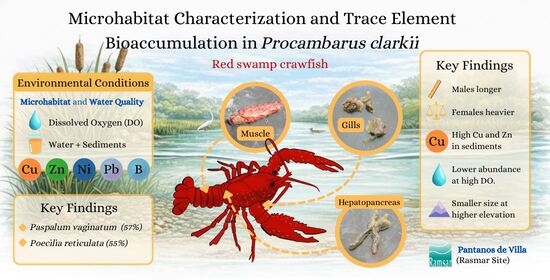
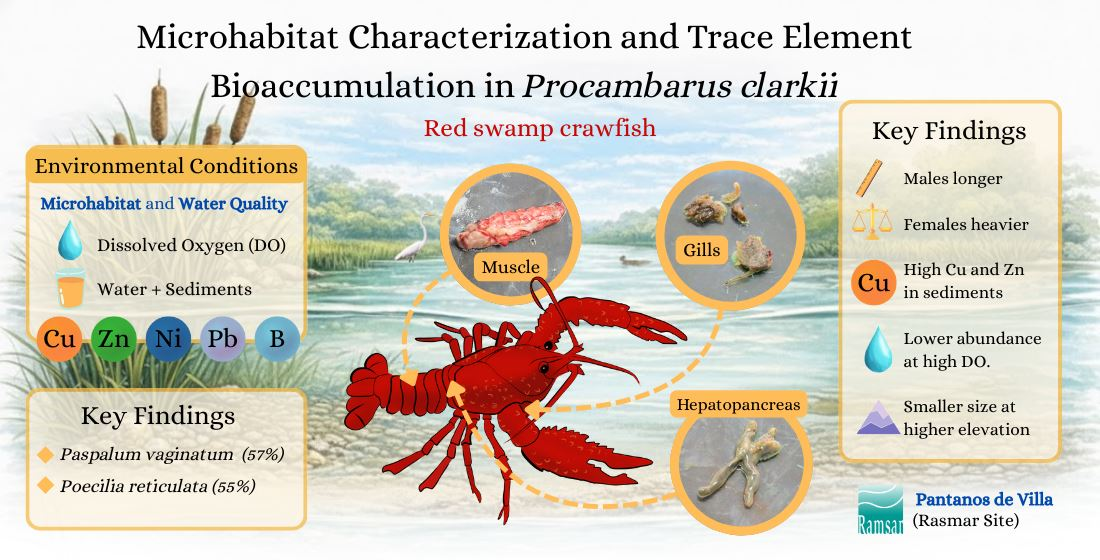
Graphical Abstract

1. Introduction

Wetlands have lost approximately 35% of their global area since the 1970s [1] due to anthropogenic activities (e.g., agricultural and industrial processes, urban discharges, atmospheric deposition species). Coastal wetlands purify polluted water, regulate water flow, and act as carbon sinks, thereby mitigating CO2 emissions from the atmosphere [2,3]. Yet, they face unprecedented threats from habitat loss, pollution, and biological invasions [4]. The Pantanos de Villa in Lima, Peru, is a Ramsar site of international importance, serving as a critical sanctuary for biodiversity—particularly for resident (Laterallus jamaicensis, Burhinus superciliaris, Phleocryptes melanops, etc.) and migratory (Charadrius vociferus, Phalaropus tricolor, Leucophaeus pipixcan, etc.) bird populations [5]. However, its location within a megacity renders it vulnerable to anthropogenic pressures, including contamination from urban runoff and the establishment of invasive species [6].
The Pantanos de Villa wetland spans over 263 hectares, featuring bodies of water and springs in the buffer zone (Ganaderos, Vista Alegre, and Horticultures), and helps supply water to lagoons [7]. The canals in the buffer zone have various impacts, including solid waste dumping, a lack of a sewage system (e.g., discharge of domestic and industrial sewage, vehicle washing on canal banks, and washing of tubers and vegetables), and even recreational activities [8]. In 2019, the first record of the Procambarus clarkii (Girard, 1852) was made in the Vista Alegre Canal. This invasive exotic species has become naturalized in the Pantanos de Villa and may threaten the food chain of native species [9]. This invasive species can degrade inland aquatic environments [9], alter ecosystems, and impact native species through predation, pathogen transmission, competition, and hybridization [10]. Therefore, studying the microhabitat and the species that cohabit with P. clarkii, both plants and animals, is crucial to understanding its ecological impact and trophic interactions. This approach allows identifying the physical and chemical factors that favor its expansion and evaluating its effects on local biodiversity [10]. Also, it enables the establishment of more effective management and conservation strategies.
Procambarus clarkii, is native to northern Mexico and the southeastern United States of America. It was introduced and disseminated in Europe in the 1970s [11], in Japan in 1918, and in China in the early 1930s [12]. It is one of the most destructive species of freshwater habitats worldwide; it has been cultivated on an industrial scale in China, generating economic profits of nearly USD 40 million [13]. P. clarkii is characterized by its high reproduction and early maturity; it is opportunistic and territorial and plays a predatory role in the food chain, which causes the displacement and death of some native species [14]. It is also characterized by presenting sexual dimorphism. The male has more prominent chelae than the female, and maternal care is more pronounced in the females of the species. They excavate vertical galleries in the benthic zone where they molt and hide from potential predators. During droughts, the quality of the hiding place’s humidity improves; this activity causes erosive impacts on the sediments where they live, significantly altering water turbidity and nutrient mineralization processes [15].
Procambarus clarkii often inhabits inland aquatic ecosystems with a high diversity of hydrophytes and riparian vegetation [16]. It feeds on fish and their eggs, Platyhelminthes, and detritus; these, in turn, undergo biomagnification processes when incorporated into the diet of their predators [17]. Likewise, this omnivorous species may consume a variety of food sources, including algae, aquatic vegetation, insects, and dead organic material (detritus), not solely fish and their eggs [18]. Due to their physiological plasticity, they colonize a wide variety of lacustrine and brackish ecosystems [19] and are resistant to extreme environmental conditions, including low water quality, high water temperatures, and low oxygen levels [20]. It bioaccumulates trace elements in the abdominal muscle and hepatopancreas, the latter being considered a bioindicator of the frequency and concentration of trace elements in their habitat [21,22]. This investigation aimed to fill this critical gap by conducting the first integrated analysis of microhabitat characteristics and trace element bioaccumulation in P. clarkii inhabiting the Pantanos de Villa. Our specific objectives were the following: (1) outline the growth pattern of P. clarkii through length-wight relationships; (2) characterize the physicochemical parameters defining its microhabitat across three main canals; and (3) determine the concentrations of a broad suite of chemical macroelements (Na, Mg, P), trace metals (Cu, Zn, Al, Ni, Ti, Pb), and a metalloid (B), in the water and sediment, as well as in composite biological samples (gill, hepatopancreas, muscle) of P. clarkii. Without an unimpacted control site within the wetland, we compared the results with internationally recognized environmental quality guidelines to establish a solid risk assessment framework.

2. Materials and Methods

2.1. Study Area

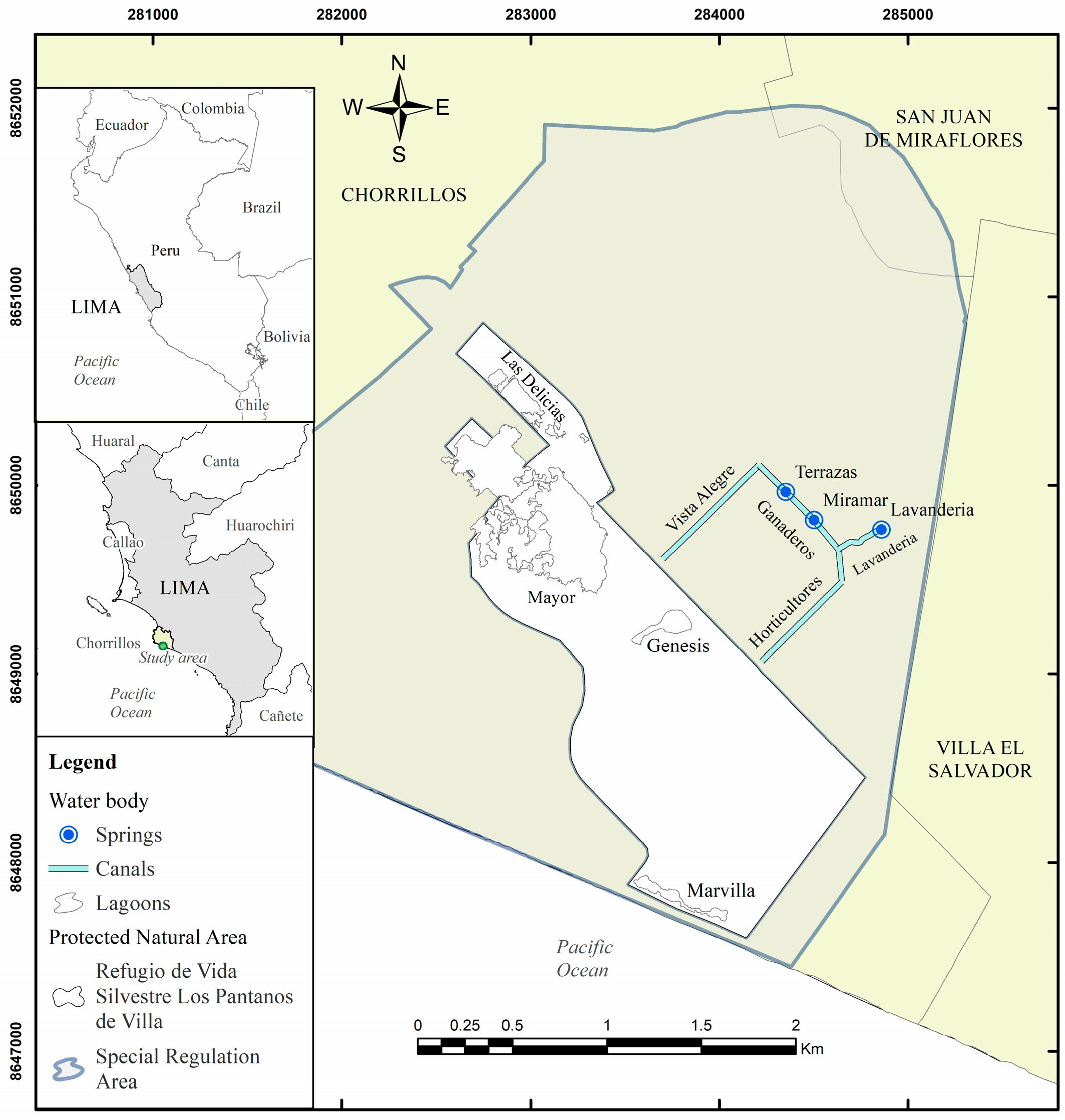
The research was conducted in the Pantanos de Villa Wildlife Refuge, a 263-hectare coastal wetland located in the Chorrillos district of Lima, Peru. Designated a Ramsar site in 1997, this protected area represents one of the last remaining coastal wetlands in the hyper-arid central Peruvian coast [23]. The regional climate is characterized by annual precipitation of <60 mm and a mean annual temperature of approximately 14–19 °C, consistent with the hyper-arid conditions of the central Peruvian coastal desert [24]. The wetland’s hydrology is sustained primarily by treated wastewater effluent, seasonal groundwater discharge, and fog condensation [24]. This study focused on three principal artificial canals (Ganaderos 12°12′27.71″ S; 76°58′47.54″ O, Horticultores 12°12′40.25″ S; 76°58′52.29″ O, Vista Alegre 12°12′21.41″ S; 76°59′7.82″ O) (Figure 1), selected to represent a gradient of anthropogenic influence based on their proximity to urban discharge points, degree of vegetative cover, and levels of human recreational activity.

2.2. P. clarkii Sampling and Microhabitat Characterization

Specimens of P. clarkii were collected using baited cylindrical traps, following established crayfish sampling methods in aquatic ecosystems [25]. Ten traps (40 cm long, 20 cm in diameter, with 1 cm mesh size) were placed in each canal for 24 h periods, consistent with standardized protocols for monitoring freshwater decapods [26]. The traps were baited with 50 g of commercially purchased sardines, which were replenished every 12 h to maintain effectiveness. A total of 171 specimens were captured across all sampling sites. Along with crayfish collection, key microhabitat variables were measured in the field at five predetermined points per canal using a calibrated multiparameter water quality probe (Hanna Instruments HI98194, Woonsocket, Rhode Island, USA). Parameters recorded included water temperature (°C), pH, dissolved oxygen (DO, mg L−1), electrical conductivity (EC, µS cm−1), total dissolved solids (TDS, mg L−1), and turbidity (NTU). Canopy cover (%) was quantitatively estimated using a spherical densiometer. The flora and fauna within a standardized 5 m radius of the trap lines were identified using specialized field guides [11,12].

2.3. Water and Sediment Sampling

Triplicate surface water samples (1 L each) were collected at each sampling site using pre-nitric acid-washed high-density polyethylene bottles. Samples intended for metal analysis were immediately acidified to a pH below 2 with ultrapure nitric acid (Merck, Darmstadt, Alemania) and stored at 4 °C during transport to the laboratory. Sediment samples were taken from the top 5 cm layer with a Van Veen grab sampler. These samples were stored in sealed, pre-labeled plastic bags, kept in a dark cooler, and then freeze-dried and ground using an agate mortar and pestle before chemical analysis.

2.4. Trace Element Analysis

Sample preparation: To determine trace elements in P. clarkii, organs (gills and hepatopancreas) and tissue (muscle) were used. A mixture of 0.5 g dry weight (3 replicates) was collected from adult male and female individuals from the three canals. Next, the digests were prepared using a standard hot-acid reflux method. Specifically, samples were treated with 8 mL of concentrated nitric acid (HNO3 65%, Merck, TraceAnalysis grade) and 2 mL of hydrogen peroxide (H2O2 30% Merck) at 90 °C for 45 min using a calibrated digestion block DB-3 (Dri-Block Techne). The resulting digestates were filtered through Whatman No. 42 filter paper and brought to a final volume of 25 mL with ultrapure water (Milli-Q, 18.2 MΩ·cm). Sediment samples (0.5 g) were processed similarly following the established EPA Method 3050B [27]. Water samples were analyzed immediately after sequential filtration (0.45 µm cellulose acetate membrane) and acidification.
Instrumental Analysis: Element quantification was performed using an Inductively Coupled Plasma Optical Emission Spectrometer (730-ES ICP-OES, Varian, Palo Alto, CA, USA), following established procedures for trace-metal detection in biological tissues [28]. The instrument was operated under optimized conditions: RF power, 1.4 kW; plasma gas flow, 15 L min−1; auxiliary gas flow, 1.5 L min−1; and nebulizer flow, 0.75 L min−1. A five-point calibration curve was prepared using certified multi-element standard solutions (CPI International, Santa Rosa, CA, USA). Instrument calibration and quality assurance adhered to USEPA guidelines for ICP-OES analysis [29]. A comprehensive quality assurance/quality control (QA/QC) protocol was implemented, including procedural blanks, analytical duplicates, and certified reference materials (DOLT-5 Dogfish Liver; NIST 2709a San Joaquin Soil). The detection limits were established based on standardized spectroscopic analysis procedures.

2.5. Data Analysis

To display the accompanying species graph, we used a donut; to represent the size and weight classes, we used a histogram. Likewise, we modeled organ/tissue mass (hepatopancreas, gills, muscle) as a function of body size using linear models, reporting slope estimates (β) with 95% CIs, R2, and two-sided p-values for the Size term. Residual normality was assessed with the Shapiro–Wilk test, and assumptions were evaluated via standard residual diagnostics (linearity, homoscedasticity, influence).
To compare site characteristics and water quality metrics across the three canals, a generalized linear mixed model (GLMM) was fitted with the Gamma family and the “log” link, due to the data’s positive skew. Next, post hoc pairwise comparisons among canals were performed using Tukey’s test at α = 0.05 on estimated marginal means (emmeans); groups sharing a letter are not significantly different. On the other hand, mixed-effects models were used to examine the microhabitat conditions (elevation, depth, turbidity, distance from the sea, and pH) that affect P. clarkii development (size) and frequency. Given the possible lack of independence among sampled individuals, canals were considered random factors. The effects of environmental conditions and the importance of each variable were analyzed using a multiple-model inference approach based on the Akaike information criterion (AIC), with a small-sample correction (AICc). The models were ranked from “best to worst” and the set of models with ΔAICc ≤ 4 was considered [30].

3. Results

3.1. Size and Weight Frequencies by Sex

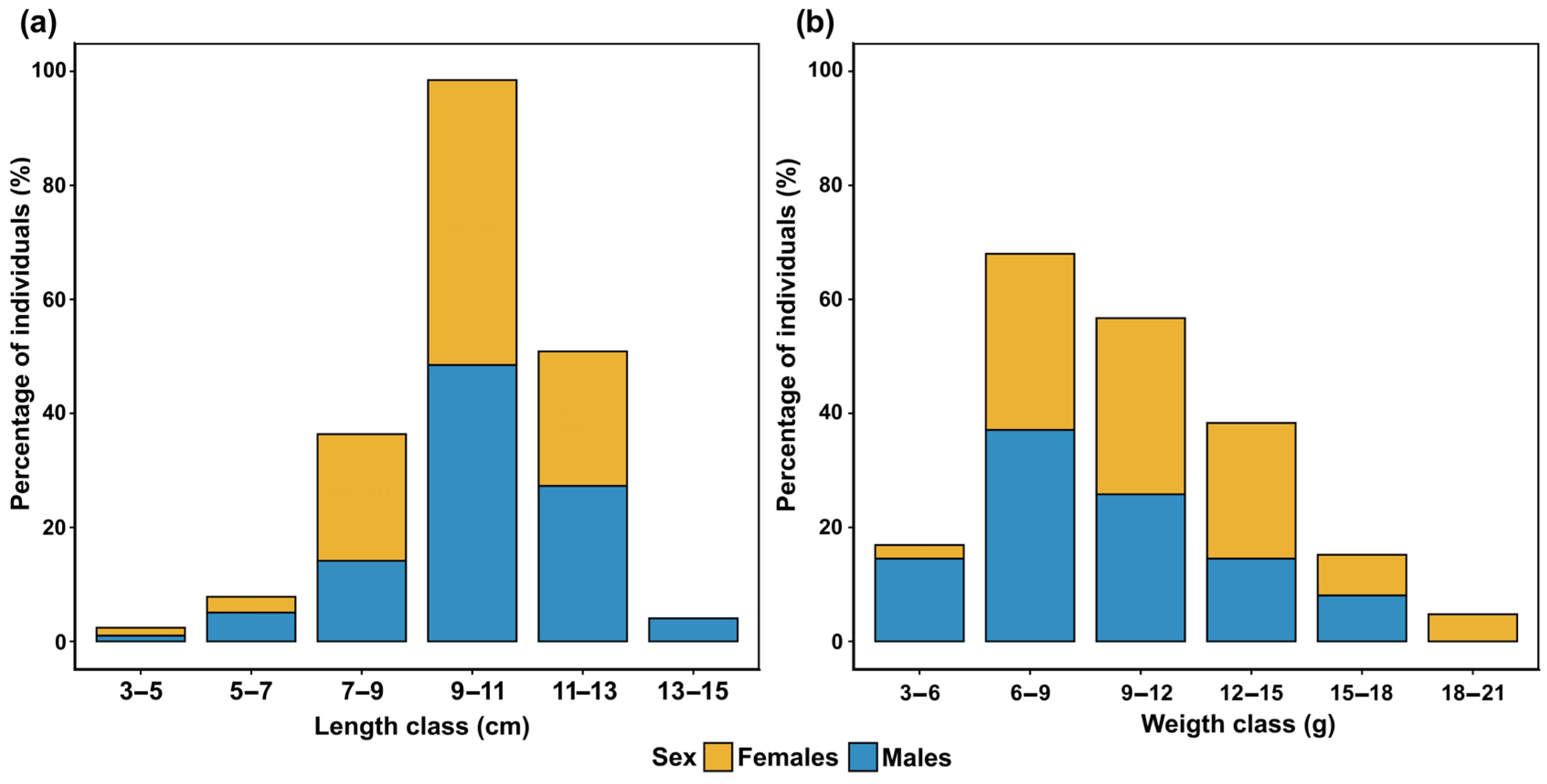
A total of 171 individuals of P. clarkii were recorded, comprising 99 males and 72 females, with notable differences in average weight and size (Figure 2). Males were longer, and females were heavier. Individuals between 9–11 cm and 6–9 g were the most abundant in both genders, while sizes of 3–5, 5–7, and 13–15 cm were the most scarce (Figure 2).
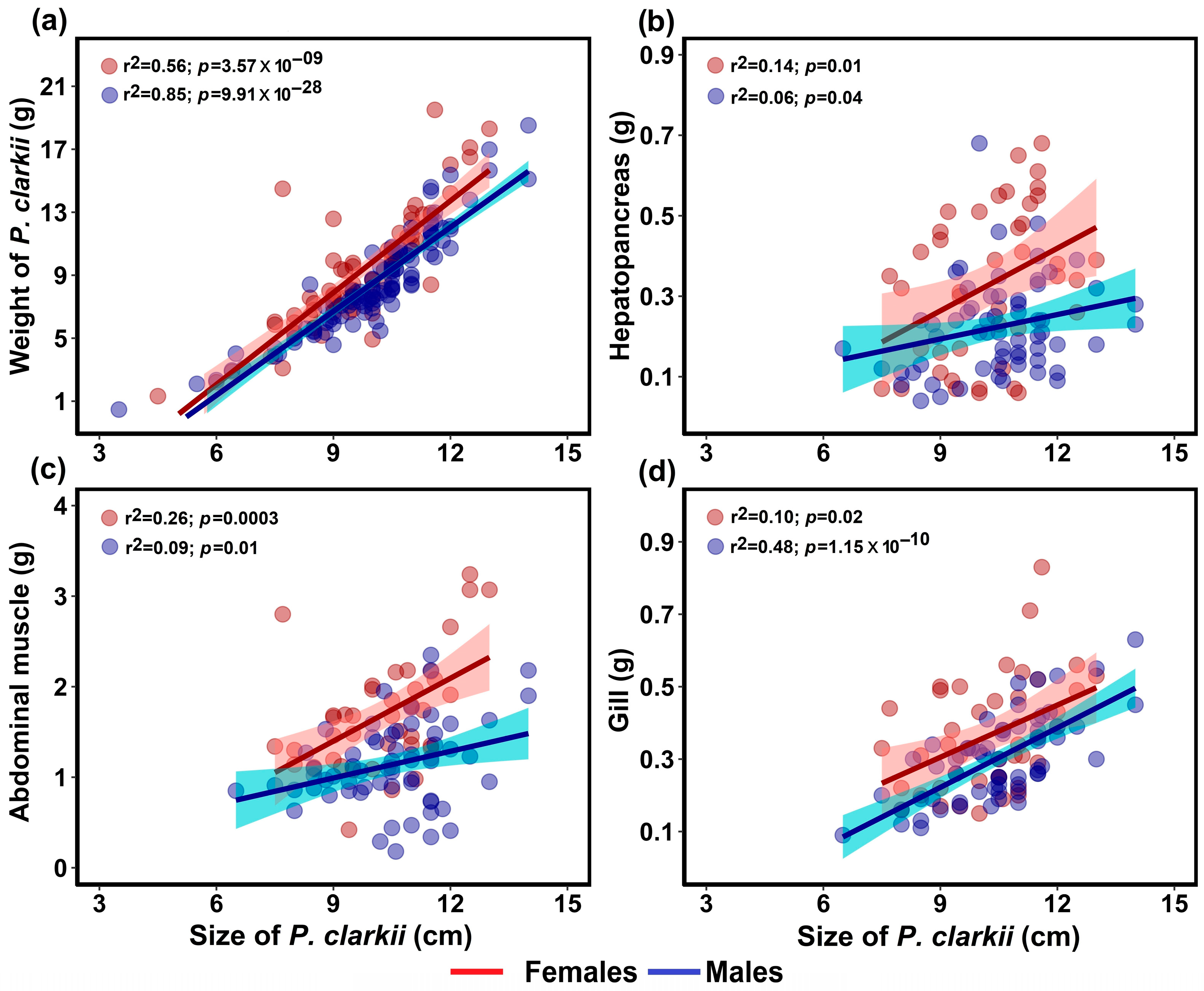
On the other hand, Figure 3 shows significant correlations between gill size and weight (Figure 3d) and between gill size and total fresh weight (Figure 3a) for both genders. However, for females, a positive relationship was observed between the size and weight of the hepatopancreas (r2 = 0.14, p = 0.01) and abdominal muscle (r2 = 0.26, p = 0.0003); in contrast, for males, no significant correlation was found. Likewise, sex differences in organs and tissues were significant. Females showed higher mean (±SE) values for total body weight (10.85 ± 0.55), hepatopancreas (0.32 ± 0.02), abdominal muscle (1.69 ± 0.11), and gill (0.36 ± 0.02) (Material Supplementary; Table S3). Males exhibited lower values for the same traits—total weight: 9.49 ± 0.40; hepatopancreas: 0.224 ± 0.016; abdominal muscle: 1.14 ± 0.05; and gills: 0.304 ± 0.015 (Material Supplementary; Table S3).

3.2. Microhabitat Characterization

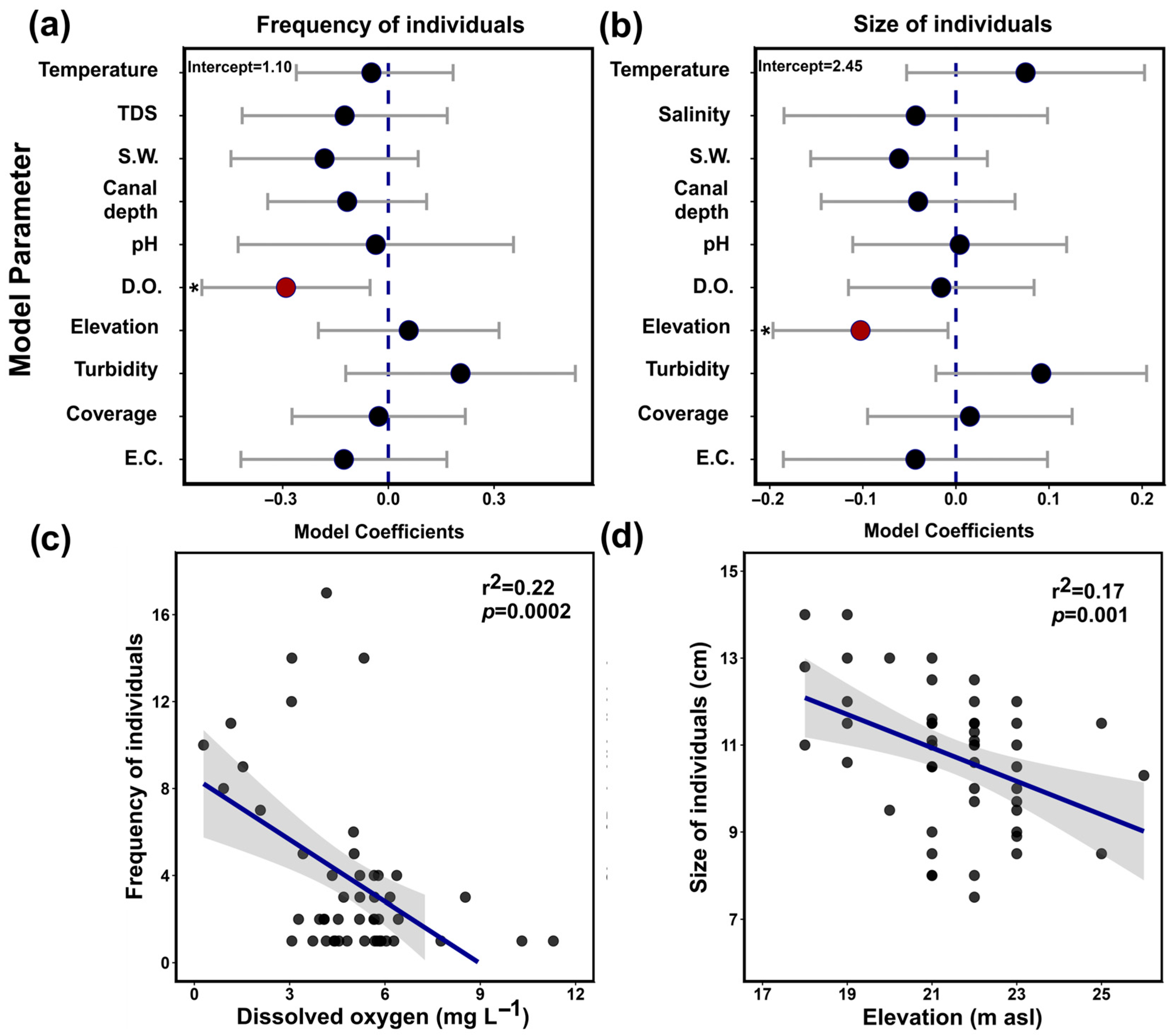
In the Horticultores canal, 83 individuals were found, and the water showed lower electrical conductivity (3.50 ± 0.11 µS cm−1), total dissolved solids (1.81 ± 0.06 mg L−1), and higher turbidity (232 ± 12.70 NTU) (Table 1). Conversely, the Vista Alegre canal reported the fewest individuals; however, it exhibited higher electrical conductivity (7.73 ± 0.32 µS cm−1) and TDS (4.16 ± 0.18 mg L−1), but lower turbidity (126 NTU) (Table 1). Most predictors had coefficients with 95% CIs overlapping zero (Figure 4a,b), but two effects were significant (red dots; D.O. and Elevation) (Figure 4a,b). For frequency, dissolved oxygen showed a negative association (r2 = 0.22; p < 0.0002), meaning higher D.O. corresponded to fewer P. clarkii (Figure 4c). For size, elevation above sea level was negatively associated with body size (r2 = 0.17; p < 0.001), indicating smaller individuals at higher elevations (Figure 4d).
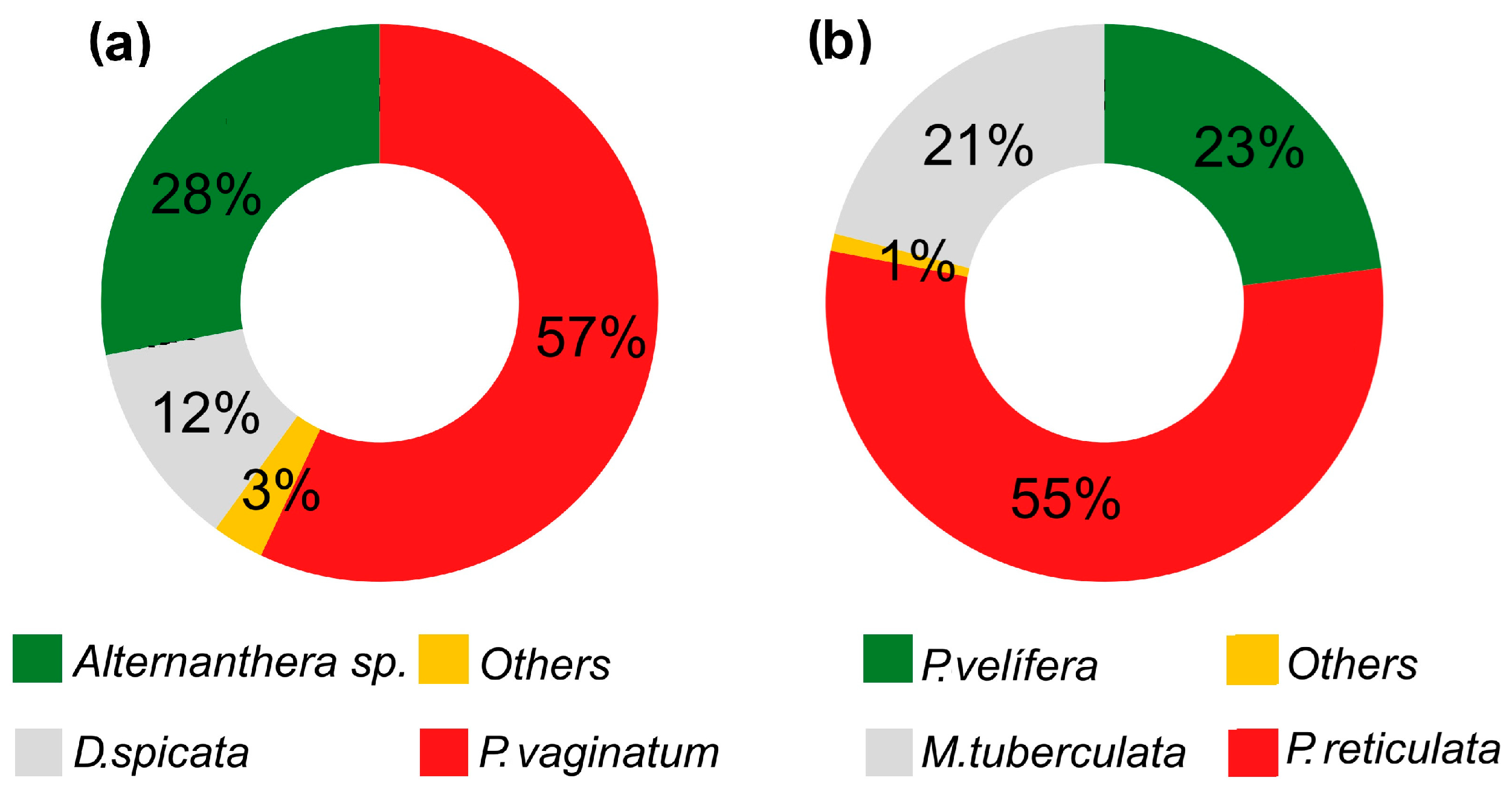
In addition, during biological monitoring, three herbaceous species were identified, including P. clarkii, which was the most frequently encountered. Of these, approximately 57% of plants were the herbaceous and perennial species Paspalum vaginatum (Family Poaceae), followed by 28% of Alternanthera sp. (Family Amaranthaceae) and 15% of Distichlis spicata (Family Poaceae) (Figure 5a). On the other hand, accompanying fauna was also identified, with the highest percentage being Poecilia reticulata (55%), followed by Poecilia velifera (23%), Melanoides tuberculata (21%), and 1% of other Formicidae species (Figure 5b).

3.3. Identification of the Concentration of Trace Elements in Water and Sediment in the Microhabitat

Elemental concentrations across the studied matrices are detailed in Table 2. A consistent and pronounced accumulation pattern was evident. Within sediment samples, concentrations of Copper (Cu) and Zinc (Zn) surpassed the Canadian Interim Sediment Quality Guidelines (ISQG). In the aqueous phase, only Boron (B) concentrations approached the USEPA chronic aquatic life criterion (Table 2).
Chemical analysis indicates that sediments have the highest concentrations of most elements. Copper showed clear evidence of bioaccumulation in P. clarkii, with values exceeding international thresholds. In contrast, water samples showed comparatively low concentrations, indicating limited mobility of metals in the aqueous phase. Overall, the pattern suggests that sediments act as the primary reservoir of contaminants, with trophic transfer to aquatic biota (Table 2).

4. Discussion

4.1. Characterization of the P. clarkii Population and Its Microhabitat

Our findings in the Pantanos de Villa reveal that P. clarkii has an established, naturalized population as evidenced by multiple size classes and reproductive activity, confirming its adaptation to subtropical estuarine environments. The microhabitat conditions observed in the field indicate a favorable environment for P. clarkii, characterized by an average temperature of 24.9 °C, a neutral to slightly alkaline pH (7.6), an average dissolved oxygen level of 5.1 mgL−1, and an average electrical conductivity of 6.02 µS cm−1 [32]. These parameters fall within the physiological tolerance range of this species, which can thrive even in eutrophic environments or waters with moderate salinity [33]. Water depth and the color of the adjacent vegetation cover can significantly influence the distribution and prevalence of P. clarkii. This species prefers shallow areas with dense aquatic vegetation, such as Eichhornia crassipes, because these habitats provide refuge from predators and enhance feeding and reproductive activities [34]. In our study area, P. clarkii was more abundant in areas with greater vegetation cover and moderate turbidity, which aligns with other studies [35]. This species’ affinity for habitats with abundant three-dimensional structure and low light penetration, conditions that can reduce visual predation pressure and increase the availability of detritivore food [35]. The water’s turbidity reached 232 NTU in the Horticultores canal, indicating a high concentration of dissolved compounds with chromatic capacity, often associated with organic matter, fine sediments, and the decomposition of macrophytes [36]. These environments generally exhibit low light penetration, which creates favorable refuge conditions for P. clarkii, facilitating their molting and enhancing the capacity of their hiding spots [37]. The Vista Alegre canal had 75% vegetation cover, which coincided with a higher abundance of P. clarkii. This finding aligns with that reported by [38], who documented the presence of P. clarkii in wetlands of the Bogotá savanna, where a correlation was evident between the activity of this crustacean and the frequency of the aquatic plant Polygonum punctatum. The results also indicate that dissolved oxygen is negatively correlated with the frequency of P. clarkii, suggesting that this species can tolerate hypoxic conditions and thrive in eutrophic or degraded environments. Similarly, at higher elevations, individuals exhibit smaller body sizes, which may relate to thermal or primary productivity gradients. None of the other environmental variables demonstrated significant effects on the frequency or size of the organisms in the applied model. These results align with previous studies that describe the high tolerance of P. clarkii to hypoxia, salinity, or environmental degradation, which provides it a competitive advantage in disturbed coastal wetlands [19,39]. Moreover, its ability to adapt to physical gradients, such as altitude or dissolved oxygen, has been attributed to its success in colonizing temperate and subtropical systems [40].
On the other hand, morphometric relationships indicate that males have a greater total length (13–15 cm) (Figure 2a), while females achieve greater body mass (18–21 g) (Figure 2b). Sexual selection in P. clarkii has favored significant morphophysiological dimorphism [32]. While males display hypertrophied chelicerae (up to 32% longer than those of females) for territorial disputes, females prioritize gonadal development, allocating up to 24% of their body mass to the reproductive system during stages preceding oviposition [40,41]. Likewise, females exhibited greater hepatopancreas (0.32 ± 0.02 g) and abdominal muscle masses (1.69 ± 0.11 g) than males (0.22 ± 0.016 g; 1.14 ± 0.05 g, respectively) (Supplementary Materials, Table S3), consistent with enhanced hepatic lipid storage and pre-oviposition detoxification capacity.
Similarly, three exotic species were recorded as associated fauna during the sampling: Poecilia reticulata, Poecilia velifera, and Melanoides tuberculata, all recognized for their broad environmental tolerance and colonization ability in disturbed ecosystems [42,43]. Melanoides tuberculata, in particular, exhibits epiphytic habits on macrophyte roots and demonstrates high resistance to salinity, eutrophication, and organic pollution, making it a strong competitor in altered environments [44]. Additionally, a predominance of the halophytic grass Paspalum vaginatum was observed, which is typical of clayey soils and those influenced by brackish waters, confirming the estuarine dynamics of the wetland [45].
The Pantanos de Villa wetland, designated as a Ramsar Site in 1997, hosts at least 13 fish species, eight of which are exotic and were introduced for biological control or aquaculture [46]. In this study, P. reticulata comprised 55% of the fish caught, while P. velifera accounted for 23% of areas where P. clarkii was detected. This pattern aligns with previous reports indicating strong dominance of P. velifera in the wetland’s freshwater systems [46].

4.2. Determination of Chemical Elements in Biological Samples, Water, and Sediments

Our geochemical assessment identifies Canal Ganaderos as a potential ecotoxicological concern, with sediment concentrations of Cu and Zn exceeding the ISQG thresholds [31] (Table 2). These guidelines represent scientifically derived levels below which detrimental biological effects on benthic organisms are considered unlikely. The observed exceedance suggests a plausible risk to sediment-dwelling invertebrate communities, which constitute a fundamental component of the aquatic food web [47]. The likely origin of these metals is anthropogenic, potentially stemming from diffuse urban runoff, a pervasive issue in wetlands.
On the other hand, a mechanism in decapod crustaceans, whereby potentially toxic metals are sequestered and immobilized within specialized cells of this organ (hepatopancreas) [48]. However, the chemical analysis of the composite (pooled) samples, homogenizing masses of hepatopancreas, gills, and abdominal muscle, clearly demonstrates that P. clarkii is actively bioaccumulating these chemical elements (Na, Mg, P, Cu, Zn, B, Pb, Al, Ni, Ti, etc.) from its environment (Table 2). It is likely that these elements from sediment residues are sequestered in organs that function as the primary sink, effectively removing them from the environment and concentrating them in the organism’s biomass.
The consistently low concentrations of trace elements detected in the water, which generally fell below stringent international food safety standards [49], indicate a negligible direct health risk to humans. This is a pivotal finding for assessing the potential public health dimension of this invasive species if locally harvested. However, the considerable metal burden sequestered in the hepatopancreas, gill, and muscle poses a significant toxicological risk to predators that consume whole crayfish, including various piscivorous birds and mammals, potentially facilitating trophic transfer and secondary poisoning [50]. This elevates the role of P. clarkii from a mere invasive species to that of a potential biological vector for the translocation of trace elements through the local food web, thereby amplifying their ecological reach.
Considering the widespread distribution and ecological adaptability of P. clarkii, its frequency in the wetland poses a potential threat to native species through competition, trophic alteration, and metal bioaccumulation. Coexistence with other exotic species indicates an invasive synergy, highlighting the need to implement environmental surveillance and ongoing biological monitoring programs while also accounting for the site’s ecological and conservation values.

5. Conclusions

Procambarus clarkii has established a stable and breeding population in the canals of the Pantanos de Villa wetlands, coexisting with other non-native fauna and flora. A total of 171 individuals of P. clarkii were recorded, comprising 99 males and 72 females. Males were longer, and females were heavier. Individuals between 9–11 cm and 6–9 g were the most abundant in both genders. On the other hand, for females, a positive relationship was observed between the size and weight of the hepatopancreas and abdominal muscle; in contrast, for males, no significant correlation was found. Likewise, females showed higher mean values for total body weight, hepatopancreas, abdominal muscle, and gill. We also showed that the channel (Horticulturists) with the highest abundance of P. clarkii presented lower E.C. and TDS, but higher turbidity. In contrast, Vista Alegre had lower abundance but also higher E.C. and TDS, and lower turbidity, demonstrating that P. clarkii persists under low dissolved oxygen conditions and in diverse habitats. Finally, P. clarkii exhibits a significant accumulation of phosphorus, sodium, magnesium, zinc, and copper. These findings highlight the species’ resilience and underscore its potential as a sentinel organism for detecting metal pollution in coastal wetland ecosystems.

Supplementary Materials

The following supporting information can be downloaded at: https://www.mdpi.com/article/10.3390/fishes11020119/s1, Table S1. Results of the generalized linear mixed model to evaluate the influence of microhabitat characteristics on the frequency of P. clarkii individuals. Asterisks indicate the level of significance: “*” p < 0.05; “**” p < 0.01; and “***” p < 0.001. Table S2. Results of the generalized linear mixed model assessing the impact of microhabitat characteristics on the size of P. clarkii individuals. Asterisks indicate the level of significance: “*” p < 0.05; “**” p < 0.01; and “***” p < 0.001. Table S3. Comparison of the fresh body mass of P. clarkii and the masses of the hepatopancreas, gills, and abdominal muscle between males and females. Different letters denote significant differences at p < 0.05 (Tukey post hoc after GLMM). Error bars show 95% confidence intervals. Significance codes: *** p < 0.001, ** p < 0.01, * p < 0.05.

Author Contributions

Conceptualization, V.E., F.Q. and V.C.; Formal analysis, V.E., F.Q. and V.C.; Investigation, V.E., F.Q., Y.T.-R. and V.C.; Methodology, V.E., F.Q., Y.T.-R. and V.C.; Resources, V.E. and F.Q.; Software, V.E., F.Q., Y.T.-R. and V.C.; Validation, V.E., F.Q., Y.T.-R. and V.C.; Writing—original draft, V.E., F.Q., Y.T.-R. and V.C.; Writing—review and editing, V.C. All authors have read and agreed to the published version of the manuscript.

Funding

This research will be funded for publication by the Cesar Vallejo University.

Institutional Review Board Statement

The animal study protocol was approved by the Institutional Review Board (Ethics Committee) of Universidad César Vallejo (protocol code: 030-DPI-LE-2023-1; approval date: 7 August 2023).

Informed Consent Statement

Not applicable.

Data Availability Statement

The original contributions presented in this study are included in the article/Supplementary Material. Further inquiries can be directed to the corresponding author.

Acknowledgments

We thank SERNAP for supporting us in conducting this study. We also thank the Scientific Research and Project Development Office of the Municipal Authority of the Villa Pantanos (PROHVILLA).

Conflicts of Interest

The authors declare no conflicts of interest.

References

  1. Xu, X.; Chen, M.; Yang, G.; Jiang, B.; Zhang, J. Wetland Ecosystem Services Research: A Critical Review. Glob. Ecol. Conserv. 2020, 22, e01027. [Google Scholar] [CrossRef]
  2. Asanopoulos, C.H.; Baldock, J.A.; Macdonald, L.M.; Cavagnaro, T.R. Quantifying Blue Carbon and Nitrogen Stocks in Surface Soils of Temperate Coastal Wetlands. Soil Res. 2021, 59, 619–629. [Google Scholar] [CrossRef]
  3. Wang, R.; Ding, J.; Ge, X.; Wang, J.; Qin, S.; Tan, J.; Han, L.; Zhang, Z. Impacts of Climate Change on the Wetlands in the Arid Region of Northwestern China over the Past 2 Decades. Ecol. Indic. 2023, 149, 110168. [Google Scholar] [CrossRef]
  4. Davidson, N.C. How Much Wetland Has the World Lost? Long-Term and Recent Trends in Global Wetland Area. Mar. Freshw. Res. 2014, 65, 934. [Google Scholar] [CrossRef]
  5. Pulido, V. Ciento quince años de registros de aves en Pantanos de Villa. Rev. Peru. Biol. 2018, 25, 291–306. [Google Scholar] [CrossRef]
  6. Nieto Juárez, J.I.; Aguirre-Soto, L. Evaluación de la calidad del agua en el humedal costero Pantanos de Villa, Chorrillos, Perú. TECNIA 2024, 34, 11–25. [Google Scholar] [CrossRef]
  7. Lodge, D.M.; Deines, A.; Gherardi, F.; Yeo, D.C.J.; Arcella, T.; Baldridge, A.K.; Barnes, M.A.; Chadderton, W.L.; Feder, J.L.; Gantz, C.A.; et al. Global Introductions of Crayfishes: Evaluating the Impact of Species Invasions on Ecosystem Services. Annu. Rev. Ecol. Evol. Syst. 2012, 43, 449–472. [Google Scholar] [CrossRef]
  8. Enrique-Ayala, E.; Adriano, C.G.; Suni, A.G.; Alfaro, D.C. Evaluación de la calidad del agua en los canales de la Zona de Reglamentación Especial de Los Pantanos de Villa (Lima, Perú). South Sustain. 2021, 2, e036. [Google Scholar] [CrossRef]
  9. Mogollón, V.; Espinoza, V.; Lopez, O.; Cotillo, A.; Torres-Zevallos, U. Primer registro del cangrejo rojo de los pantanos, Procambarus clarkii (girard, 1852) (crustacea, decapoda, cambaridae) en el perú: Su hallazgo en los pantanos de villa, lima, perú. Biol. Lima 2021, 19, 229–239. [Google Scholar] [CrossRef]
  10. Giordano, J.; Taurozzi, D.; Vecchio, G.; Scalici, M.; Battisti, C.; Bertolino, S. The Introduced Red Swamp Crayfish (Procambarus clarkii) Girard, 1852, as Prey for Birds in Italy: A First Citizen Science-Based Checklist. Rend. Lincei Sci. Fis. E Nat. 2025, 36, 647–657. [Google Scholar] [CrossRef]
  11. Souty-Grosset, C.; Anastácio, P.M.; Aquiloni, L.; Banha, F.; Choquer, J.; Chucholl, C.; Tricarico, E. The Red Swamp Crayfish Procambarus clarkii in Europe: Impacts on Aquatic Ecosystems and Human Well-Being. Limnologica 2016, 58, 78–93. [Google Scholar] [CrossRef]
  12. Shen, H.; Hu, Y.; Ma, Y.; Zhou, X.; Xu, Z.; Shui, Y.; Li, C.; Xu, P.; Sun, X. In-Depth Transcriptome Analysis of the Red Swamp Crayfish Procambarus clarkii. PLoS ONE 2014, 9, e110548. [Google Scholar] [CrossRef]
  13. Yi, S.; Li, Y.; Shi, L.; Zhang, L.; Li, Q.; Chen, J. Characterization of Population Genetic Structure of Red Swamp Crayfish, Procambarus clarkii, in China. Sci. Rep. 2018, 8, 5586. [Google Scholar] [CrossRef]
  14. Barkhuizen, L.M.; Madzivanzira, T.C.; South, J. Population Ecology of a Wild Population of Red Swamp Crayfish Procambarus clarkii (Girard, 1852) in the Free State Province, South Africa and Implications for Eradication Efforts. BioInvasions Rec. 2022, 11, 181–191. [Google Scholar] [CrossRef]
  15. Haubrock, P.J.; Oficialdegui, F.J.; Zeng, Y.; Patoka, J.; Yeo, D.C.J.; Kouba, A. The Redclaw Crayfish: A Prominent Aquaculture Species with Invasive Potential in Tropical and Subtropical Biodiversity Hotspots. Rev. Aquac. 2021, 13, 1488–1530. [Google Scholar] [CrossRef]
  16. Jung, S.W.; Lee, J.H.; Kawai, T.; Kim, P.J.; Kim, S.H. Distribution Status of Invasive Alien Species (Procambarus clarkii (Girard, 1852)) Using Biomonitoring with Environmental DNA in South Korea. Korean J. Environ. Ecol. 2022, 36, 368–380. [Google Scholar] [CrossRef]
  17. Quanz, M.E.; Walker, T.R.; Oakes, K.; Willis, R. Effects of Industrial Effluent on Wetland Macroinvertebrate Community Structures near a Wastewater Treatment Facility. Ecol. Indic. 2021, 127, 107709. [Google Scholar] [CrossRef]
  18. Palmas, F.; Podda, C.; Frau, G.; Cau, A.; Moccia, D.; Peddio, S.; Solari, P.; Pusceddu, A.; Sabatini, A. Invasive Crayfish (Procambarus clarkii, Girard, 1852) in a Managed Brackish Wetland (Sardinia, Italy): Controlling Factors and Effects on Sedimentary Organic Matter. Estuar. Coast. Shelf Sci. 2019, 231, 106459. [Google Scholar] [CrossRef]
  19. Dörr, A.J.M.; Scalici, M.; Caldaroni, B.; Magara, G.; Scoparo, M.; Goretti, E.; Elia, A.C. Salinity Tolerance of the Invasive Red Swamp Crayfish Procambarus clarkii (Girard, 1852). Hydrobiologia 2020, 847, 2065–2081. [Google Scholar] [CrossRef]
  20. Gherardi, F.; Acquistapace, P. Invasive Crayfish in Europe: The Impact of Procambarus clarkii on the Littoral Community of a Mediterranean Lake. Freshw. Biol. 2007, 52, 1249–1259. [Google Scholar] [CrossRef]
  21. Anandkumar, A.; Li, J.; Prabakaran, K.; Xi Jia, Z.; Leng, Z.; Nagarajan, R.; Du, D. Accumulation of Toxic Elements in an Invasive Crayfish Species (Procambarus clarkii) and Its Health Risk Assessment to Humans. J. Food Compos. Anal. 2020, 88, 103449. [Google Scholar] [CrossRef]
  22. Mistri, M.; Munari, C.; Pagnoni, A.; Chenet, T.; Pasti, L.; Cavazzini, A. Accumulation of Trace Metals in Crayfish Tissues: Is Procambarus clarkii a Vector of Pollutants in Po Delta Inland Waters? Eur. Zool. J. 2020, 87, 46–57. [Google Scholar] [CrossRef]
  23. Ramirez, D.W. Incendios en el humedal Ramsar Los Pantanos de Villa (Lima-Perú): Avances en su conocimiento y perspectivas futuras. Rev. Investig. Altoandin. J. High Andean Res. 2018, 20, 347–360. [Google Scholar] [CrossRef]
  24. Esenarro, D.; Vasquez, P.; Acosta-Banda, A.; Raymundo, V. Green Infrastructure as a Sustainability Strategy for Biodiversity Preservation: The Case Study of Pantanos de Villa, Lima, Peru. Urban Sci. 2024, 8, 156. [Google Scholar] [CrossRef]
  25. Longshaw, M.; Stebbing, P. Laboratory Methods for Crayfish. In Biology and Ecology of Crayfish; CRC Press: Boca Raton, FL, USA, 2016. [Google Scholar]
  26. Holdich, D. The Spiny-Cheek Crayfish, Orconectes Limosus (Rafinesque, 1817) [Crustacea: Decapoda: Cambaridae], Digs into the UK. Aquat. Invasions 2007, 2, 1–16. [Google Scholar] [CrossRef]
  27. U.S. Environmental Protection Agency. Revision 2 Method 3050B Acid Digestion Of Sediments, Sludges, and Soils; U.S. Environmental Protection Agency: Washington, DC, USA, 1996.
  28. Aib, H.; Czédli, H.; Baranyai, E.; Sajtos, Z.; Döncző, B.; Parvez, M.S.; Berta, C.; Varga, Z.; Benhizia, R.; Nyeste, K. Fish Scales as a Non-Invasive Method for Monitoring Trace and Macroelement Pollution. Biology 2025, 14, 344. [Google Scholar] [CrossRef] [PubMed]
  29. U.S. Environmental Protection Agency. Method 6010D Inductively Coupled Plasma—Optical Emission Spectrometry; U.S. Environmental Protection Agency: Washington, DC, USA, 2014.
  30. Burnham, K.P.; Anderson, D.R. (Eds.) Model Selection and Multimodel Inference; Springer: New York, NY, USA, 2004. [Google Scholar]
  31. Cly, C. Canadian Sediment Quality Guidelines for the Protection of Aquatic Life; Canadian Council of Ministers of the Environment: Winnipeg, MB, Canada, 2001. [Google Scholar]
  32. Zhang, S.; Xiong, W.; Wang, Z.; Gan, L.; Ding, X.; He, H.; Zhou, Y.; Xiang, T.; Ju, T.; Shi, L.; et al. Total Length–Weight Relationships and Condition Factor of Invasive Procambarus clarkii (Girard, 1852) in Caohai Lake, China. J. Appl. Ichthyol. 2024, 2024, 2793707. [Google Scholar] [CrossRef]
  33. Choi, J.-Y.; Kim, S.-K.; Kim, J.-C.; Yun, J.-H. Invasion and Dispersion of the Exotic Species Procambarus clarkii (Decapoda Cambaridae) in Yeongsan River Basin, South Korea. Animals 2021, 11, 3489. [Google Scholar] [CrossRef]
  34. Aquiloni, L.; Ilhéu, M.; Gherardi, F. Habitat Use and Dispersal of the Invasive Crayfish Procambarus clarkii in Ephemeral Water Bodies of Portugal. Mar. Freshw. Behav. Physiol. 2005, 38, 225–236. [Google Scholar] [CrossRef]
  35. Souty-Grosset, C.; Holdich, D.M.; Noël, P.; Reynolds, J.D.; Haffner, P. Atlas of Crayfish in Europe—Scientific Publications of the Muséum National d’Histoire Naturelle, Paris. Available online: https://sciencepress.mnhn.fr/en/collections/patrimoines-naturels/atlas-crayfish-europe (accessed on 2 June 2025).
  36. Gomes, P.C.S.; Rochinha, I.D.S.P.; De Oliveira, J.N.D.A.; De Paiva, M.H.R.; Castro, A.L.P.D.; De Souza, T.D.; Mendes, M.A.D.S.A.; Santiago, A.D.F. Effects of Plant and Substrate Types on Turbidity Removal in Constructed Wetlands: Experimental and w-C* Model Validation. Water 2025, 17, 1921. [Google Scholar] [CrossRef]
  37. Wetzel, R.G. Lake and River Ecosystems; Academic Press: San Diego, CA, USA, 2001. [Google Scholar]
  38. Arias-Pineda, J.Y.; Pedroza-Martínez, D.R. Presencia Del Cangrejo Rojo Procambarus clarkii (Girard, 1852) En La Sabana de Bogotá, Colombia. Available online: https://www.researchgate.net/publication/326197785_Presencia_del_cangrejo_rojo_Procambarus_clarkii_Girard_1852_en_la_sabana_de_Bogota_Colombia (accessed on 2 June 2025).
  39. Gherardi, F. Crayfish Invading Europe: The Case Study of Procambarus Clarkii. Mar. Freshw. Behav. Physiol. 2007, 39, 175–191. [Google Scholar] [CrossRef]
  40. Alcorlo, P.; Geiger, W.; Otero, M. Feeding Preferences and Food Selection of the Red Swamp Crayfish, Procambarus Clarkii, in Habitats Differing in Food Item Diversity. Crustaceana 2004, 77, 435–453. [Google Scholar] [CrossRef]
  41. Gherardi, F.; Daniels, W.H. Agonism and Shelter Competition between Invasive and Indigenous Crayfish Species. Can. J. Zool. 2004, 82, 1923–1932. [Google Scholar] [CrossRef]
  42. Canonico, G.; Arthington, A.; Mccrary, J.; Thieme, M. The Effects of Introduced Tilapias on Native Biodiversity. Aquat. Conserv. Mar. Freshw. Ecosyst. 2005, 15, 463–483. [Google Scholar] [CrossRef]
  43. Facon, B.; Genton, B.; Shykoff, J.; Jarne, P.; Estoup, A.; David, P. A General Eco-Evolutionary Framework for Understanding Bioinvasions. Trends Ecol. Evol. 2006, 21, 130–135. [Google Scholar] [CrossRef] [PubMed]
  44. Pointier, J.P.; David, P. Biological Control of Biomphalaria glabrata, the Intermediate Host of Schistosomes, by Marisa cornuarietis in Ponds of Guadeloupe: Long-Term Impact on the Local Snail Fauna and Aquatic Flora. Biol. Control 2004, 29, 81–89. [Google Scholar] [CrossRef]
  45. Lonard, R.I.; Judd, F.; Stalter, R. Biological Flora of Coastal Dunes and Wetlands: Paspalum Vaginatum Sw. J. Coast. Res. 2015, 299, 213–223. [Google Scholar] [CrossRef]
  46. Cano, A.; Young, K.R. Los Pantanos de Villa Biologia y Conservación; Universidad Nacional Mayor de San Marcos: Lima, Peru, 1998. [Google Scholar]
  47. MacDonald, D.D.; Ingersoll, C.G.; Berger, T.A. Development and Evaluation of Consensus-Based Sediment Quality Guidelines for Freshwater Ecosystems. Arch. Environ. Contam. Toxicol. 2000, 39, 20–31. [Google Scholar] [CrossRef]
  48. Vijver, M.G.; Van Gestel, C.A.M.; Van Straalen, N.M.; Lanno, R.P.; Peijnenburg, W.J.G.M. Biological Significance of Metals Partitioned to Subcellular Fractions within Earthworms (Aporrectodea caliginosa). Environ. Toxicol. Chem. 2006, 25, 807–814. [Google Scholar] [CrossRef]
  49. EFSA Panel on Contaminants in the Food Chain (CONTAM). Scientific Opinion on the Risks to Public Health Related to the Presence of Nickel in Food and Drinking Water. EFSA J. 2015, 13, 4002. [CrossRef]
  50. Croteau, M.-N.; Luoma, S.N.; Stewart, A.R. Trophic Transfer of Metals along Freshwater Food Webs: Evidence of Cadmium Biomagnification in Nature. Limnol. Oceanogr. 2005, 50, 1511–1519. [Google Scholar] [CrossRef]
Figure 1. Map showing the location of the Pantanos de Villa wetland in Lima, Peru. The studied sites are in the canals (Ganaderos 12°12′27.71″ S; 76°58′47.54″ O, Horticultores 12°12′40.25″ S; 76°58′52.29″ O, Vista Alegre 12°12′21.41″ S; 76°59′7.82″ O) of the wetland, a wildlife-protected area.
Fishes 11 00119 g001
Figure 2. Percentage of individuals of P. clarkii length class (a) and weight class (b) collected in May 2023 at Los Pantanos de Villa Wildlife Refuge (Peru).
Fishes 11 00119 g002
Figure 3. Allometric relationships between male and female sizes with respect to tissues and organs: (a) total individual weights; (b) hepatopancreas; (c) abdominal muscle; (d) gill weights.
Fishes 11 00119 g003
Figure 4. Average model coefficients that influence the frequency and size of P. clarkii. (a) Dissolved oxygen negatively affects the frequency of individuals present; (b) Elevation above sea level negatively influences the size of the individuals found; (c) Correlation between dissolved oxygen levels and the frequency of P. clarkii individuals; (d) Correlation between the elevation and the size of P. clarkii individuals. Error bars represent 95% confidence intervals. dark red circles with asterisks indicate significant effects (p < 0.05): “*” p ≤ 0.05.
Fishes 11 00119 g004
Figure 5. Flora and fauna coverage percentages at the sampling sites. (a) Flora; (b) Fauna.
Fishes 11 00119 g005
Table 1. Site characteristics and water quality metrics for the three sampling canals of the Pantanos de Villa wetland canals. Values are represented as mean ± SE on the response scale. Different letters denote significant pairwise differences among canals based on a Gamma–log GLMM (estimated marginal means with Tukey adjustment, α = 0.05).
VariablesCanal
Vista Alegre
Canal
Ganaderos
Canal
Horticultores
Number of individuals21 ind.67 ind.83 ind.
Average size of individuals (cm)10.5 ± 0.40 a10.3 ± 0.41 a11.0 ± 0.33 a
Temperature (°C)25.5 ± 0.16 a25.0 ±0.16 a24.3 ± 0.12 b
pH7.54 ± 0.06 a7.45 ± 0.06 b7.77 ± 0.05 a
Dissolved oxygen (mg L−1)5.98 ± 0.75 a4.94 ± 0.64 a4.29 ± 0.41 a
Electrical conductivity (µS cm−1)7.73 ± 0.32 b 6.82 ± 0.29 b3.50 ± 0.11 a
Canal depth (cm)17.0 ± 1.51 a18.6 ± 1.71 a18.1 ± 1.25 a
TDS (mg L−1)4.16 ± 0.18 b3.64 ± 0.16 b1.81 ± 0.06 a
Turbidity (NTU)126 ± 8.80 b134 ± 9.71 b232 ± 12.70 a
Table 2. Mean concentration (±standard deviation) of elements in water (µg L−1), sediment (mg kg−1, dry weight), and composite (pooled) samples of P. clarkii tissues, and organs (gill, hepatopancreas, and abdominal muscle) (mg kg−1, dry weight) prepared by homogenizing subsamples.
Chemical
Elements
Water
(µg L−1)
Sediment
(mg kg−1)
P. clarkii
(mg kg−1)
USEPA
Water
ISQG
Na390.61 ± 1.1752318.36 ±1322.251027.43 ± 27.64--
Mg63.54 ± 30.635509.06 ± 1917.58323.13 ± 31.05--
P0.19 ± 0.251172.26 ± 235.421745.92 ± 34.51--
Cu0.009 ± 0.000628.26 ± 7.2912.07 ± 0.57935.7
Zn0.004 ± 0.00266.88 ± 20.4514.07 ± 0.19120123
B1.81 ± 0.18917.26 ± 1.860.47 ± 0.01700-
Pb0.0005 ± 0.000319.38 ± 1.790.04 ± 0.0052.535
Al0.037 ± 0.01610,096 ± 1542.341.39 ± 0.17--
Ni0.0006 ± 0.00023.39 ± 0.520.06 ± 0.01--
Ti0.002 ± 0.001348.69 ± 43.650.4 ± 0.01--
Footnotes: USEPA National Recommended Water Quality Criteria (Chronic, freshwater). ISQG: Interim Sediment Quality Guideline (Canadian) [31]. Boron is classified as a metalloid.
Disclaimer/Publisher’s Note: The statements, opinions and data contained in all publications are solely those of the individual author(s) and contributor(s) and not of MDPI and/or the editor(s). MDPI and/or the editor(s) disclaim responsibility for any injury to people or property resulting from any ideas, methods, instructions or products referred to in the content.