Article

Transcriptomic and Metabolomic Responses to Growth Differences in Litopenaeus vannamei Infected with Enterocytozoon hepatopenaei


1
Ninghai Institute of Mariculture Breeding and Seed Industry, Ningbo 315000, China
2
Zhejiang Engineering Research Center for Aquacultural Seeds Industry and Green Cultivation Technologies, Zhejiang Wanli University, Ningbo 315000, China
3
Ninghai County Aquatic Technology Promotion Station, Ningbo 315000, China
*
Authors to whom correspondence should be addressed.
These authors contributed equally to this work.
Fishes 2025, 10(12), 652; https://doi.org/10.3390/fishes10120652
Submission received: 11 November 2025 / Revised: 12 December 2025 / Accepted: 12 December 2025 / Published: 16 December 2025
(This article belongs to the Section Fish Pathology and Parasitology)

Abstract

Litopenaeus vannamei, a widely cultivated aquatic species worldwide, has its growth status intrinsically tied to the economic profitability of the aquaculture industry. However, infection by the microspondian parasite Enterocytozoon hepatopenaei (EHP) has emerged as a pivotal threat to the healthy growth of these shrimp. Through transcriptome sequencing, this study identified substantial alterations in gene expression patterns related to growth regulation, immune system activation, and energy metabolism regulation. Specifically, in L. vannamei shrimp exhibiting normal growth, the elevated expression of genes such as CYP450, PPAF, FASN and ACSBG2 serves as molecular indicators of their growth superiority and resistance to parasitic infection. Furthermore, metabolome analysis revealed distinct changes in lipid and nucleotide metabolic pathways, offering valuable insights into the metabolic disruptions caused by infection. The integrated analysis of transcriptome and metabolome data indicated a notable positive correlation between the differentially expressed genes TPi and ALF-like, and the metabolites acetyl-L-carnitine and citric acid. This suggests potential synergistic mechanisms in regulating energy metabolism and immune responses against EHP infection. These findings enhance our comprehension of EHP infection mechanisms and establish a scientific groundwork for developing more precise and efficacious prevention and control strategies, ultimately promoting the healthy growth of L. vannamei and ensuring the sustainable development of the aquaculture industry.
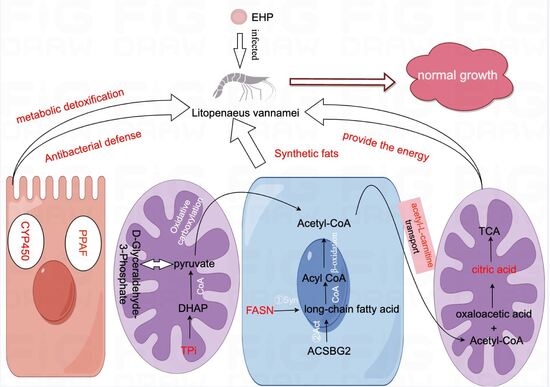
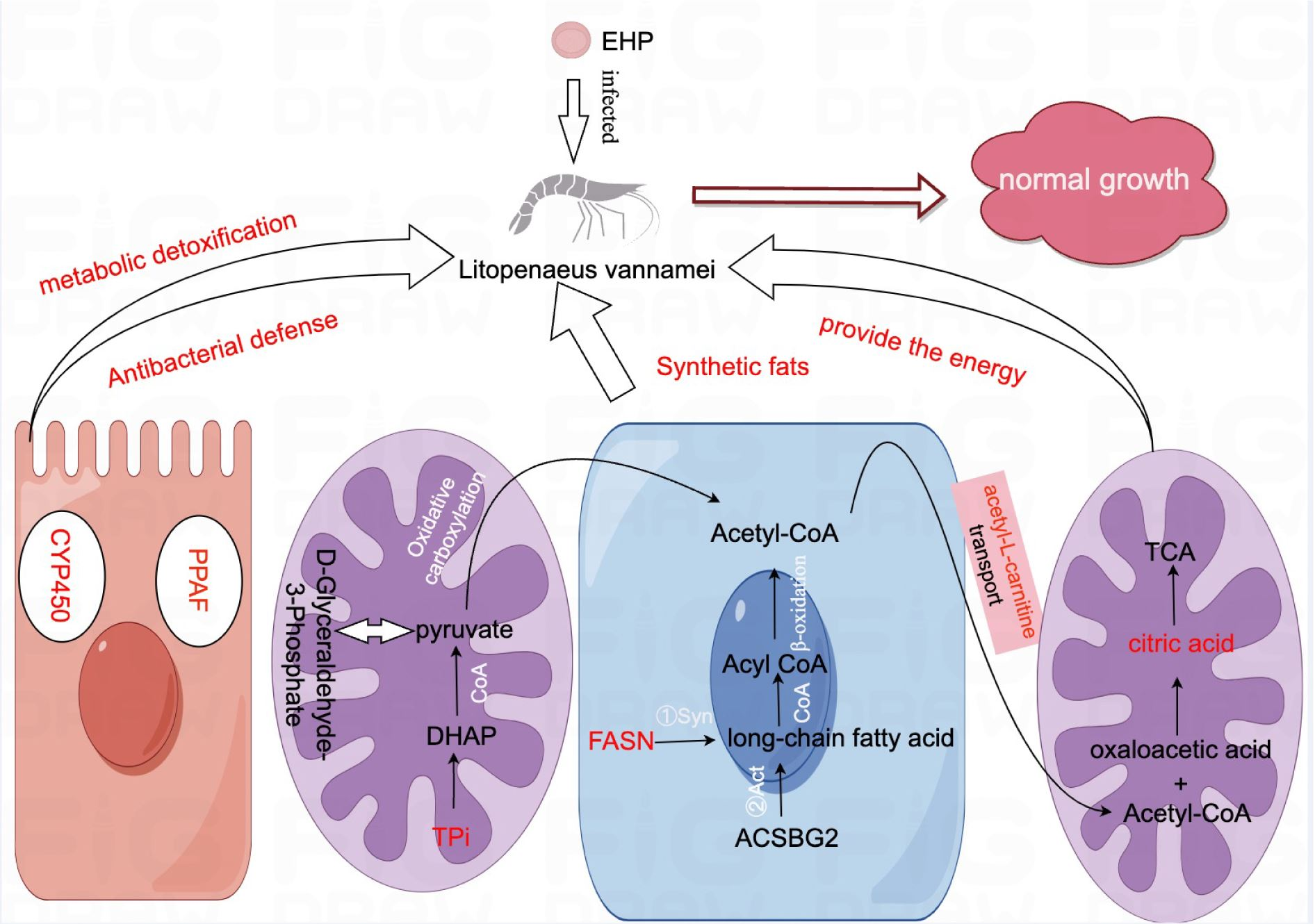
Key Contribution: Natural infection: Litopenaeus omics analysis reveals EHP’s impact. PPAF guards shrimp from bacteria, while CYP450 aids in detoxification; together, they aid in shrimp growth. FASN & ACSBG2 aid in shrimp aid fatty acid metabolism, supplying fats and enhancing shrimp growth. TPi & citric acid synergize, meeting shrimp’s energy needs and supporting robust growth.

Graphical Abstract

1. Introduction

As a key species in both wild fisheries and aquaculture systems, shrimp has seen rapid expansion in aquaculture production over recent decades, significantly boosting the global fisheries economy. The major farmed shrimp species worldwide include Litopenaeus vannamei, Penaeus monodon, Penaeus penicillatus, and Marsupenaeus japonicus. Among these, L. vannamei dominates global production due to its extensive cultivation range [1]. According to 2022 statistics, global farmed shrimp production reached 11.237 million metric tons, with L. vannamei contributing 5.812 million metric tons, accounting for 51.7% of the total output. This species demonstrates notable environmental plasticity, adapting to diverse marine ecosystems spanning tropical, subtropical, and temperate zones [2]. The biological advantages of L. vannamei—including rapid growth rates and a short reproductive cycle—have established it as the cornerstone of commercial shrimp farming. Valued not only for its superior quality and palatability but also for production efficiency, L. vannamei cultivation has driven technological innovations in seed stock optimization, formulated feed systems, and supply chain management, thereby providing sustained momentum for the global aquaculture industry’s development.
However, despite the continuous advancement of farming techniques and the rapid expansion of farming scale, the L. vannamei aquaculture industry has great challenges. One of the most concerning issues is the outbreak of Enterocytozoon hepatopenaei (EHP) infection, as a microsporidian parasite, EHP primarily parasitizes critical vital organs of L. vannamei, including the intestine, liver, and pancreas particularly the hepatopancreas. Like other crustaceans, L. vannamei primarily relies on its innate immune system to fend off pathogen invasion [3,4]. The hepatopancreas, being the most crucial organ of the immune system, plays a crucial role in shrimp’s immune response [5]. EHP causes extensive damage to the host’s hepatopancreas and intestinal epithelial cells, not only severely impacting the physiological functions of L. vannamei but also impeding its growth, diminishing its immunity, and even causing massive mortality. Consequently, this results in substantial economic losses to the shrimp farming industry [6].
It is noteworthy that, under identical aquaculture conditions, significant growth variations often arise among L. vannamei individuals, particularly when infected with parasites such as EHP [7]. These growth differences are evident not only in terms of weight and length but may also be intimately linked to shrimp’s resistance to pathogens. Existing research has demonstrated that a robust humoral immune system in shrimp plays a crucial role in resisting pathogen infections—including parasitic infections—through mechanisms such as repelling foreign invaders, inhibiting pathogen proliferation and dissemination, or directly eliminating them from the body [8].Consequently, healthy shrimps with strong immunity are typically better equipped to recognize and eliminate parasites, thereby maintaining optimal growth even under the pressure of infection. In our study, we observed that among L. vannamei infected with EHP in the same pond, some shrimp exhibited normal growth, while others experienced growth retardation. This observation underscores the growth disparities in shrimp bodies caused by EHP infection. Therefore, exploring the molecular mechanisms underlying size differences in L. vannamei, particularly those related to resistance to EHP, is of paramount importance for enhancing the resilience and growth performance of shrimp aquaculture.
Multiple research reports have highlighted the integration of genomics, transcriptomics, proteomics, metabolomics, and various other sequencing technologies as a key approach for screening biomarkers, facilitating diseases diagnosis, and enhancing our understanding of pathogenic mechanisms [9,10,11]. Specifically, transcriptome sequencing offers a comprehensive view of reveal changes in gene expression levels, whereas metabolomic profiling captures the dynamic changes in metabolites within an organism [12,13]. Combining these two techniques in a joint analysis aids in elucidating metabolic changes within the organism and contributes to a deeper comprehension of intricate relationship between different gene expressions, metabolite alteration, and shrimp growth dynamics during EHP infection [14]. In recent years, omics analyses have provided preliminary insights into the molecular mechanisms underlying EHP infection. Research has demonstrated that through the combined analysis of transcriptomics and metabolomics across different stages of EHP infection, significant variations in immunological, detoxification, and antioxidant responses have been uncovered [15]. Furthermore, studies that have merged proteomics and metabolomics have discovered that EHP infection results in alterations in crucial growth-related proteins in shrimp, such as ecdysteroid regulatory proteins and juvenile hormone esterase-like carboxylesterase 1 [16]. These changes subsequently impair energy metabolism, ultimately leading to growth retardation in shrimp. These findings provide crucial insights into the mechanisms of EHP infection and its repercussions on host growth.
This study aims to investigate the disparities in gene expression and metabolic profiles between L. vannamei infected with EHP that exhibit normal growth and those with growth retardation, utilizing transcriptomics and metabolomics analyses. The aim is to pinpoint potential genetic markers linked to resistance to EHP in L. vannamei that maintain normal growth rates. This research endeavor will enhance our comprehension of potential anti-EHP mechanisms in shrimp, thereby furnishing a scientific rationale for cultivation of disease-resistant shrimp varieties and fostering sustainable shrimp aquaculture development.

2. Materials and Methods

2.1. Experimental Samples

On 14 March 2024, a random selection of 200 two-month-old L. vannamei shrimp was conducted from Pond No. 3 of the recirculating aquaculture system at Zhejiang Ningbo Yuanfang Technology Co., Ltd, located in Ningbo, Zhejiang, China, ensuring consistent environmental and infection conditions across all samples. Using the ZMTQ002 Rapid Adsorption DNA Extraction Kit, DNA was extracted from hepatopancreatic tissue of all shrimp samples. Subsequently, comprehensive pathogen testing was conducted on all DNA samples, including screenings for an Infectious hypodermal and haematopoietic necrosis virus (IHHNV), White spot syndrome virus (WSSV), Decapod iridescent virus 1 (DIV1), Taura syndrome virus (TSV), and Enterocytozoon hepatopenaei (EHP), using the PCR primers outlined in Table 1 [17,18,19,20]. Upon confirming that the shrimp were solely infected with EHP, they were categorized based on their growth status.
Subsequently, the hepatopancreatic tissues of these shrimp were aseptically extracted using forceps and immediately snap-frozen in liquid nitrogen before being transferred to a −80 °C refrigerator for long-term preservation. Shrimp infected with Enterocytozoon hepatopenaei (EHP) were stratified into two phenotypic cohorts: a normal growth group (DG) and a growth-impaired group (XG), based on specific growth rate (SGR) calculations derived from morphometric data (body length and weight). For transcriptomic profiling, three shrimp from each group were selected as samples, resulting in three parallel samples for the DG group (D1, D2, D3) serving as the experimental groups and three parallel samples for the XG group (X1, X2, X3) serving as control groups. To enhance statistical power in metabolomic analyses, five additional specimens were included from each phenotypic group (DG group: D1, D2, D3, D4, D5; XG group: X1, X2, X3, X4, X5), yielding five biological replicates per group for LC-MS-based metabolomics. The SGR formula is as follows:
S R G ( % d a y ) = l n ( W f ) l n ( W i ) t × 100
Wi and Wf are the initial and final body weights, respectively, and t is the number of days of farming.

2.2. Transcriptomics Analysis

Following RNA extraction from sample hepatopancreas using Trizol reagent (Life Technologies), RNA quality was assessed via 1% TAE gel electrophoresis. Reverse transcription was performed using the TaKaRa PrimeScript™ RT reagent Kit with gDNA Eraser under the following conditions: 37 °C for 15 min, 85 °C for 5 s, and then cooled to 4 °C for 2 min. Subsequently, cDNA was obtained and purified using 1.8 × Agencourt AMPure XP beads. The purified double-stranded cDNA underwent end repair, A-tailing, adapter ligation, fragment size selection, and finally PCR amplification. After quality inspection with the Agilent 2100 Bioanalyzer (Agilent Technologies, Santa Clara, CA, USA), the constructed libraries were sequenced using the Illumina HiSeqTM 2500 sequencer (Illumina, San Diego, CA, USA), generating paired-end data of 125 bp or 150 bp.
To ensure high-quality data for accurate and reliable downstream analysis, we employed Trimmomatic software (v 0.39). to perform quality control on the raw sequencing data, removing reads containing unknown bases (N), adapter sequences, and low-quality reads. Subsequently, the filtered sequencing fragments were aligned to the reference genome of L. vannamei (GenBank accession number: GCF003789085.1) using HISAT2 software(v 2.2.1). For differential gene expression analysis, the DESeq (2012 R) package’s estimate Size Factors function was used for data normalization, followed by the nbinomTest function to calculate p-values and fold changes for differential expression analysis [21,22]. Genes with a p-value < 0.05 and fold change > 2 were identified as differentially expressed genes (DEGs). Next, DEGs were subjected to Gene Ontology (GO) and Kyoto Encyclopedia of Genes and Genomes (KEGG) pathway enrichment analysis using the cluster Profiler v4.4.4 package in R version 4.2.1, with results visualized using the ggplot2 package [23].

2.3. Quantitative qRT-PCR Analysis

To further corroborate the reliability and precision of the transcriptomic data, qRT-PCR was utilized to quantify the expression levels of genes associated with growth, immunity, and metabolism in the hepatopancreas. Additionally, eight differentially expressed genes (DEGs) were randomly chosen for qPCR analysis (Table 2). Each experimental sample was assayed with three biological replicates, using β-Actin as an internal control gene. Specific primers were designed with Primer 5.0 software, synthesized by a commercial supplier, and their specificity was supplier via agarose gel electrophoresis against the DEGs sequences. The stock concentrations of both forward and reverse primers used for qRT-PCR were 10 µM. RNA samples, identical to those employed in the transcriptomic sequencing, were reverse transcribed into cDNA using the TaKaRa PrimeScript™ RT reagent Kit with gDNA Eraser. Each reaction contained 4 µL of cDNA template, which was synthesized from 500 ng of total RNA using the TaKaRa PrimeScript™ RT reagent Kit with gDNA Eraser and subsequently diluted 10-fold with water (thus, each reaction corresponds to the cDNA derived from 50 ng of total RNA). Amplification and data analysis were performed on a BIO CFX96 real-time PCR system utilizing the SYBR Green I method, adhering to the manufacturer’s instructions of the ChamQ Universal SYBR qPCR Master Mix. The reaction mix consisted of 2 × SYBR qPCR Mix (5 μL), forward primer (0.5 μL), reverse primer (0.5 μL), and cDNA (4 μL). The qPCR program was set as follows: initial denaturation at 94 °C for 2 min, followed by 40 cycles of denaturation at 94 °C for 10 s, and annealing at 64 °C for 34 s. All experimental data were analyzed using SPSS statistical software(v28.0) with a t-test. Relative quantification analysis was conducted using the 2−△△Ct method, comparing the normalized expression levels of genes target normalized to the reference gene.

2.4. Metabolomic Analysis

The hepatopancreas samples were thawed at 4 °C and mixed with pre-cooled water/acetonitrile/methanol (1:2:2) solvent mixture, followed by thorough mixing. Subsequently, the mixture was subjected to 30 min of low-temperature sonication (5 °C, 40 kHz), and then stabilized by standing at −20 °C for 10 min. Finally, the samples were centrifuged at 4 °C for 20 min to collect the supernatant. All samples were analyzed using an ultra-high-performance liquid chromatography system (Agilent 1290 Infinity LC, Agilent Technologies, Santa Clara, CA, USA) coupled with a mass spectrometer (AB Triple TOF 6600, SCIEX, Framingham, MA, USA) to ensure accurate identification and quantification of compounds.
To comprehensively assess the overall metabolic differences between sample groups and the variability within each group, multivariate statistical analysis was conducted on experimental samples. Partial Least Squares Discriminant Analysis (PLS-DA) was employed, and metabolites contributing significantly to model prediction were selected based on Variable Importance in Projection (VIP) values. Metabolites with VIP values > 1 was considered key factors distinguishing different sample groups. Additionally, univariate statistical t-tests were performed to further validate the significance of these metabolites, with a p-value threshold of 0.05 set to identify metabolites showing significant inter-group differences. To elucidate the roles of these metabolites in major biochemical metabolic pathways and signaling transduction pathways, the identified differential metabolites (DMs) were compared and analyzed against the Kyoto Encyclopedia of Genes and Genomes (KEGG) database. This analysis aimed to reveal their involvement in metabolic networks and signal transduction pathways within biological organisms.

2.5. Conjoint Transcriptomics Analysis and Metabolomic Analysis

To investigate the interplay between differentially expressed genes (DEGs) derived from transcriptomic analysis and differential metabolites (DMs) identified through metabolomics analysis, we conducted comprehensive integrated analyses of both transcriptomics and metabolomics data. Additionally, we delved into the regulatory mechanisms governing gene expression and metabolite abundance, and compared the KEGG pathway enrichment outcomes for DEGs and DMS. To quantify the correlation between the transcript abundance of DEGs and the abundance changes of DMs, we employed Pearson correlation analysis.

3. Results

3.1. Pathogen Detection and Shrimp Growth Analysis

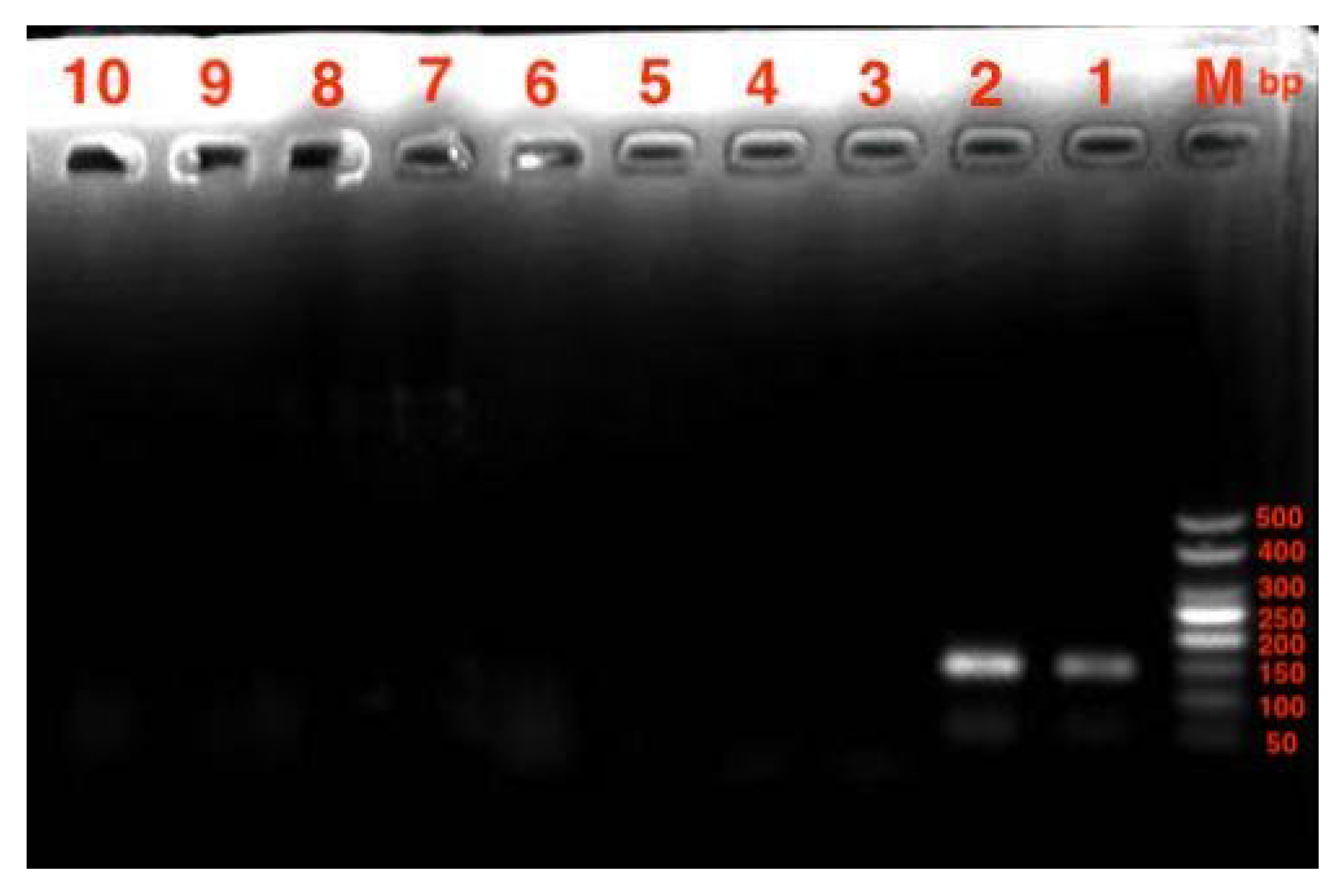
The gel electrophoresis results presented in Figure 1 confirm the exclusive presence of EHP in all tested samples (confirming that all samples are solely infected with EHP), with no indication of any other tested pathogens. Using shrimp larvae of initial size p5 as our starting point, after a 70-day cultivation period, we categorized the EHP-infected shrimp into two distinct groups based on their growth performance characteristics (Table 3): a normal growth group (DG) and a growth-impaired group (XG). Notably, the shrimp in the normal growth group, despite their EHP infection, displayed growth patterns that closely resembled those of uninfected shrimp. These shrimps exhibited an average body length of 9.16 ± 0.68 cm and an average body weight of 8.50 ± 2.00 g. They also showed a certain level of resistance, with a Specific Growth Rate (SGR) of 10.61%. In contrast, the shrimp in the growth-impaired group experienced significant growth inhibition. Their average body length decreased notably to 7.12 ± 0.98 cm and their average body weight dropped to 4.35 ± 1.53 g. Their SGR was 9.67%, which was significantly lower than that of the normal growth group (p < 0.001). To further emphasize the negative impact of EHP on shrimp growth, we compared the growth data of shrimp that remained uninfected with EHP during the same cultivation period. These shrimps had an average body length of 9.18 ± 0.23 cm, an average body weight of 8.51 ± 2.13 g, and an SGR of 10.63%, which were comparable to those in the normal growth group. These comparative results clearly underscore the substantial negative effect of EHP on shrimp growth.

3.2. Transcriptomics Analysis

3.2.1. Sequencing Data Quality Assessment and Sequence Comparison

To investigate the impact of EHP infection on the growth of L. vannamei, RNA-seq was conducted on samples from both the experimental group (D1, D2, D3) and control group (X1, X2, X3). After rigorous trimming and filtering to remove adapter sequences, repetitive sequences, ambiguous reads, and low-quality reads, a substantial total of 125,569,212 clean reads were obtained from three samples in the DG group (D1, D2, D3), These reads amounted to a total base count ranging from 6.18 to 6.35 Gb. The overall sequencing error rate was remarkably low at 0.03%, with Q20 values exceeding 97% and Q30 values hovering around 94%. Additionally, the minimum GC content was 50.18% (Table 4). Similarly, in the XG group, which comprised the control samples (X1, X2, X3), a total of 126,144,530 clean reads were obtained, with a total base count ranging from 6.41 to 6.59 Gb. The sequencing error rate remained consistently low at 0.03%, with Q20 values exceeding 97% and Q30 values approximately 94%. The minimum GC content for this group was 48.65%. Following a thorough quality assessment, all samples were deemed to be of sufficient quality for subsequent analytical procedures.

3.2.2. Identification of Differentially Expressed Genes

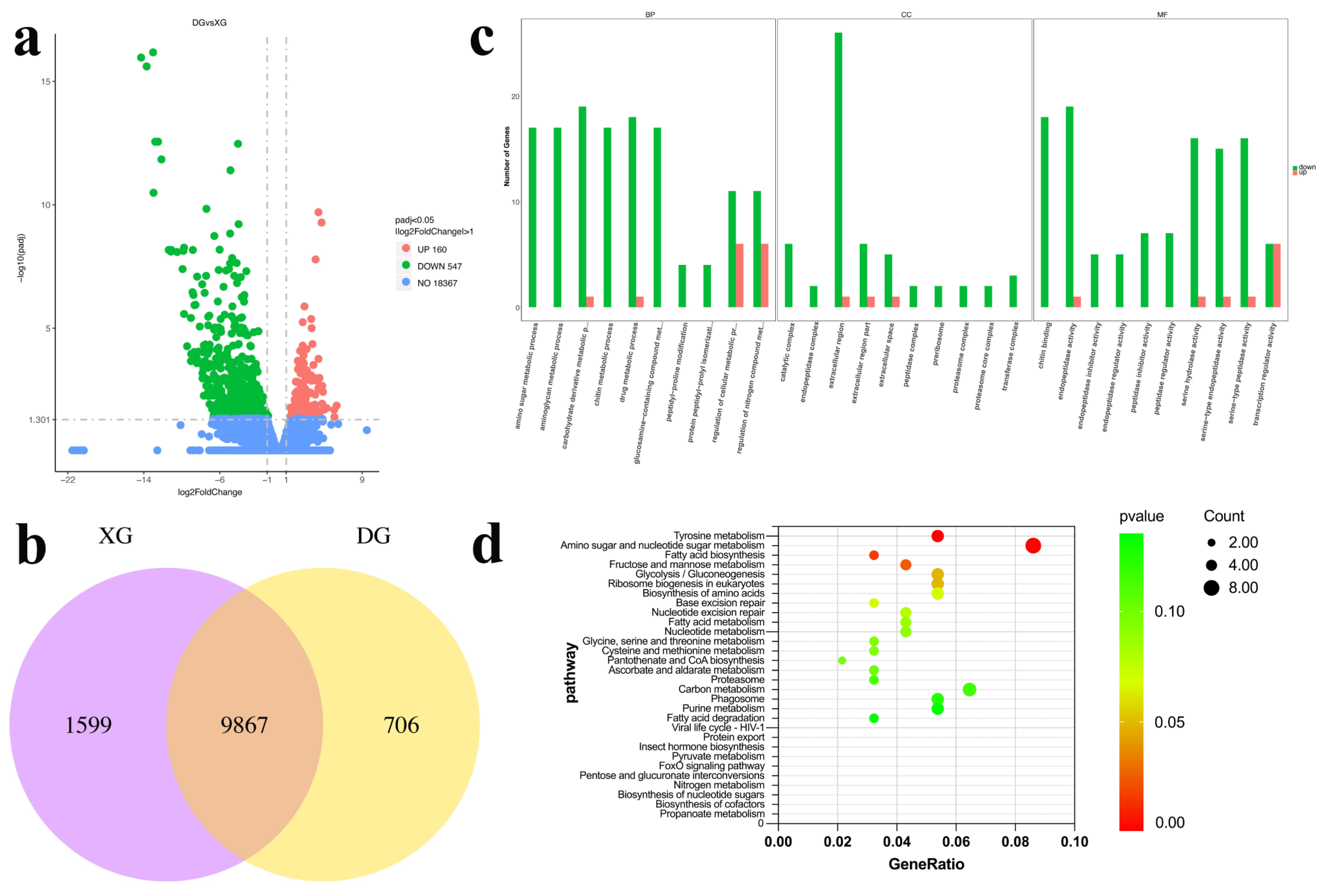
To identify genes exhibiting significantly varied expression levels across diverse conditions, a comparative analysis was performed between the DG group (D1, D2, D3) and XG group (X1, X2, X3), which exhibited growth differences. A volcano plot (Figure 2a) was generated to visually represent the overall distribution of differential genes in L. vannamei, considering both the fold change and significance level. The analysis unveiled a total of 707 differential genes between the DG and XG groups, with 160 genes being upregulated and 547 genes downregulated. A Venn diagram (Figure 2b) was utilized to depict the overlap of differential genes across different comparative combinations in L. vannamei, the results indicated that the DG group harbored 11,466 differential genes, while the XG group had 10,573 differential genes, with 9867 differential genes being common to both groups.

3.2.3. GO and KEGG Enrichment Analysis of Differentially Expressed Genes

To gain a deeper understanding of the gene and pathway alterations related to growth, immunity, and metabolism in L. vannamei infected with EHP, this study first conducted a GO enrichment analysis on the DEGs. Subsequently, the top thirty significantly enriched GO terms were selected from the enrichment results, and visually represented using a bar chart (Figure 2c), which illustrates the number of DEGs or the degree of enrichment associated with these terms. The DEGs were classified based on their biological processes, cellular components, and molecular functions within GO framework.
The results indicate that the majority of DEGs are predominantly enriched in biological processes, specifically in carbohydrate derivative metabolic processes and drug metabolic processes, which are significantly downregulated. In terms of cellular components, the majority of the DEGs are significantly downregulated in the extracellular region. Regarding molecular functions, most DEGs are associated with catalytic activity and binding, primarily including endopeptidase activity and chitin binding, which are also significantly downregulated.
Furthermore, in this study, a total of 93 enriched KEGG pathways were identified. The top 30 significant KEGG pathways were selected and depicted in a scatter plot (Figure 2d). The results reveal that these KEGG pathways are mainly enriched in metabolic pathways, such as amino sugar and nucleotide sugar metabolism and tyrosine metabolism. Additionally, pathways related to growth and immunity were also enriched, including fatty acid biosynthesis, fructose and mannose metabolism, glycolysis, and ribosome biogenesis in eukaryotes.

3.2.4. Expression of Key DEGs

Based on annotation in the NR database, several DEGs were identified which are associated with growth regulation, immune system, and energy metabolism (Table 5). For instance, member of the GAR1 family of H/ACA snoRNPs, retinol dehydrogenase 13-like, guanine deaminase-like, fatty acid synthase-like, long-chain-fatty-acid-CoA ligase ACSBG2-like, ribosomal RNA-processing protein 7 homolog A-like, GTP-binding nuclear protein, and GSP1/Ran-like are involved in the growth process of L. vannamei. DEGs related to the immune system include trypsin-1-like, phenoloxidase-activating factor 2-like and leukocyte elastase inhibitor-like proteins. DEGs linked to metabolic processes encompass alcohol dehydrogenase [NADP (+)]-like, beta,beta-carotene 9′,10′-oxygenase-like, sorbitol dehydrogenase-like, triosephosphate isomerase B-like, fructose-bisphosphate aldolase-like, aldehyde dehydrogenase X, mitochondrial-like, and acetyl-CoA carboxylase-like enzymes. Furthermore, some of these genes also participate in detoxification and antioxidant systems, such as Phenoloxidase-activating factor 2-like, Alcohol dehydrogenase [NADP (+)]-like, Beta,beta-carotene 9′,10′-oxygenase-like, and Aldehyde dehydrogenase X (mitochondrial-like) proteins.

3.2.5. qRT-PCR Validation of DEGs

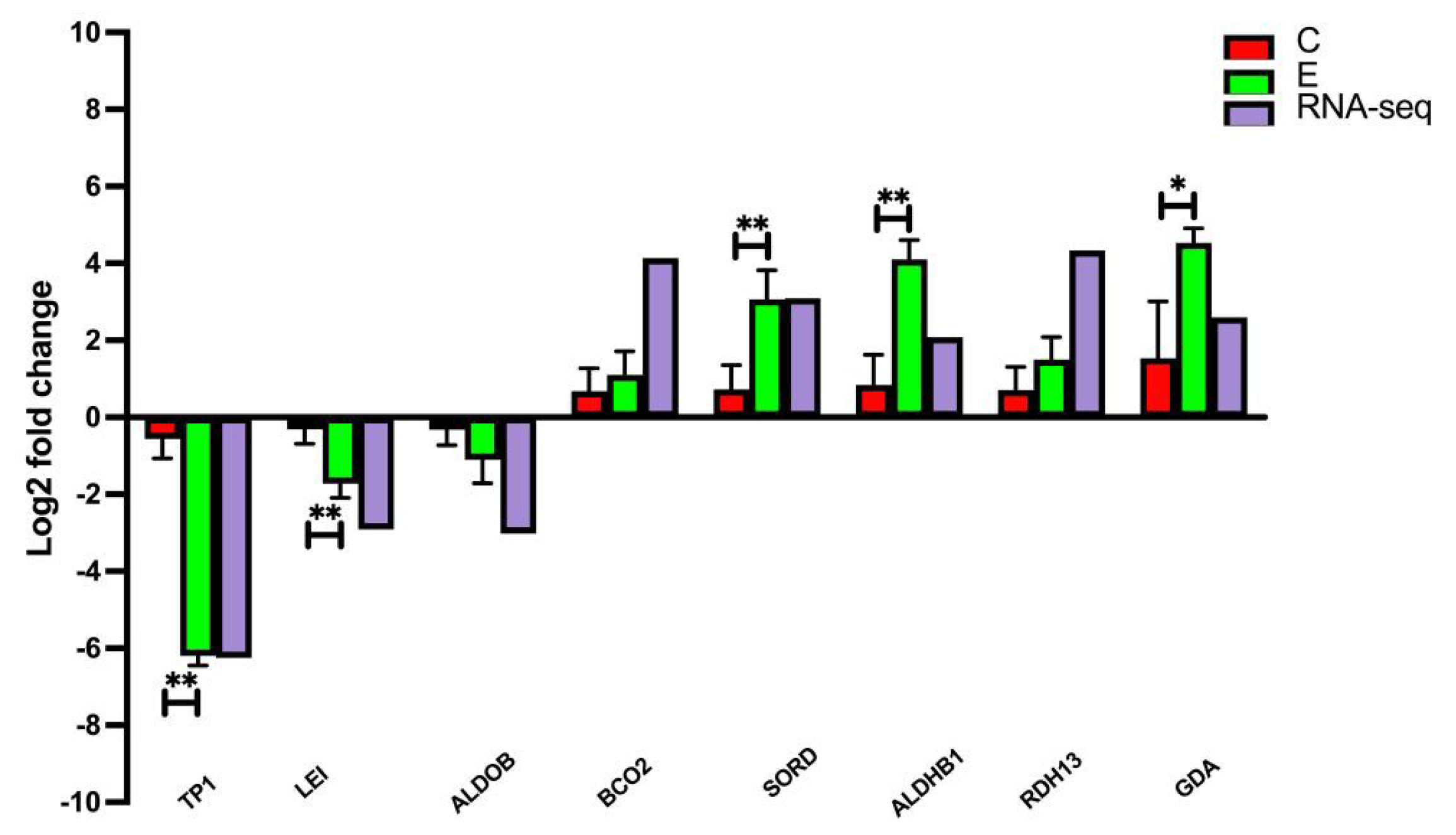
The results revealed a strong concordance between the expression patterns of the eight selected genes related to these functional categories and the RNA-seq results, thereby affirming the reliability of the transcriptional data (Figure 3).

3.3. Metabolomic Analysis

3.3.1. Multivariate Statistical Analysis

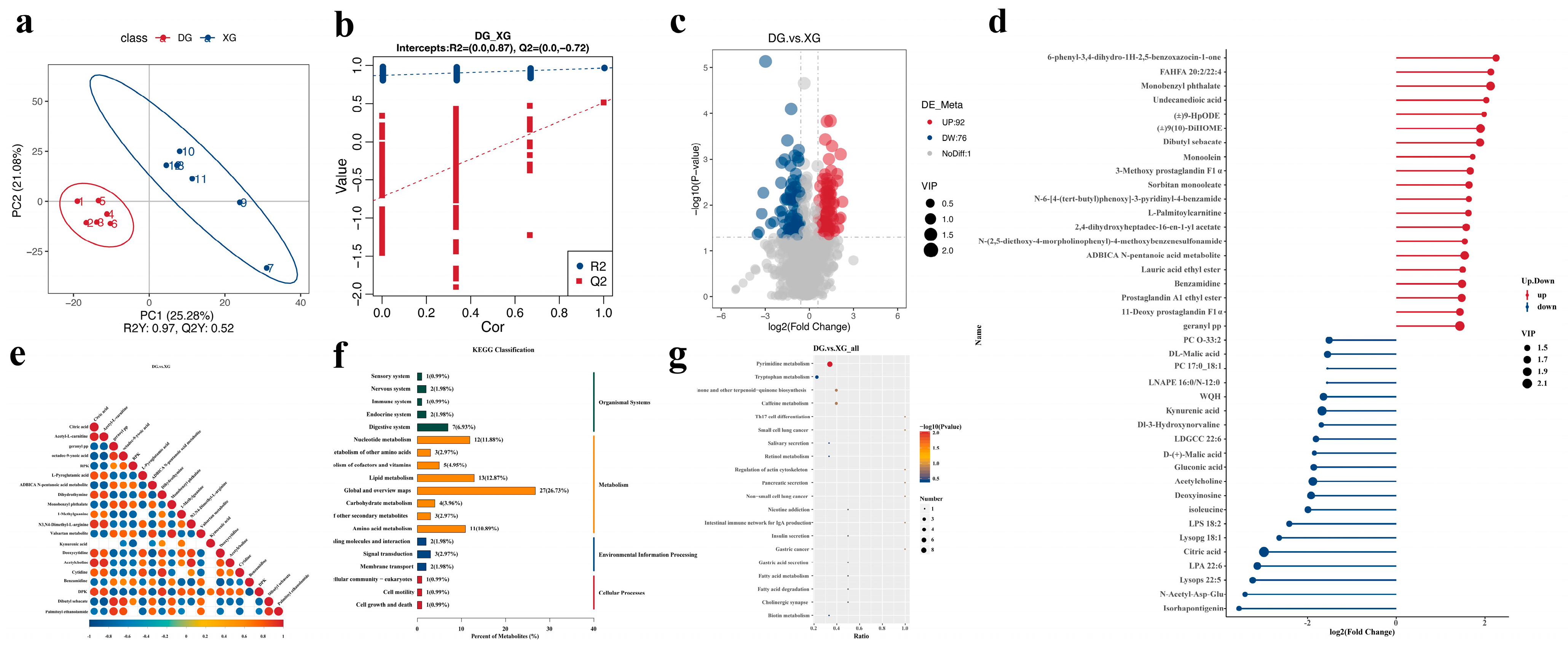
Partial Least Squares Discriminant Analysis (PLS-DA) is a supervised discriminant analysis technique employed for addressing classification and discrimination challenges. PLS-DA was used to conduct paired analysis and draw score plots for DG and XG groups (Figure 4a). The explanatory power of the model is represented by R2Y, while its predictive capability is denoted by Q2Y of the model. Specifically, in our study, R2Y = 0.52 and Q2Y = 0.97. Notably, R2Y exceeds Q2Y, and Q2Y is close to 1, indicating that the constructed model is stable and reliable. The score plot from Orthogonal Partial Least Squares Discriminant Analysis (OPLS-DA) shows significant separation between the DG and XG groups, suggesting significant differences between the experimental and control groups post infection. The PLS-DA model validation plot (Figure 4b) serves as a tool to evaluate the model’s predictive performance and assess its quality The non-parallel slopes of R2Y and Q2Y in this model indicate that the PLS-DA model is not overfitting, thereby, demonstrating its proficiency in describing samples accurately. This serves as a foundation for identifying biomarker groups within the model.

3.3.2. Differential Metabolite Selection and Correlation Analysis

In this study, differential metabolites were selected based on the following criteria: VIP > 1.0, FC > 1.5 or FC < 0.667 with a p-value < 0.05. To facilitate the identification of potential biomarkers, a volcano plot (Figure 4c) was employed to visually assess significant metabolite between the two samples. The results revealed a total of 168 differential metabolites in the comparison between DG and XG groups, with 92 metabolites upregulated and 76 metabolites downregulated. These differential metabolites were ranked based on their VIP values and |Log2FC| values, and the top 20 metabolites are displayed in a heatmap (Figure 4d). Among the significantly different metabolites, six were specifically identified. Compared to the control group, the DG group exhibited significant upregulation of hexyl alcohol, benzyl benzoate, and ADBICA N-valeric acid metabolites, while citric acid, tryptophan, and acetylcholine metabolites were significantly downregulated. Furthermore, correlation analysis (Figure 4e) confirmed a statistically significant positive correlation between citric acid and acetylcholine levels.

3.3.3. KEGG Functional Annotation and Enrichment of Differential Metabolites

To further elucidate the overall pathway enrichment characteristics of differential metabolites, we conducted comprehensive annotation using the KEGG database. A comparative analysis of pathways involving differential metabolites in the two groups is depicted in Figure 4f. Through KEGG annotation, the differential metabolites were categorized according to pathway types in the KEGG database, revealing that pathways associated with biological systems, metabolic processes, environmental information processing, and cellular processes were enriched in both DG and XG groups. Notably, differential metabolites related to metabolic processes were particularly abundant, primarily enriched in 19 pathways, including global and overview maps, lipid metabolism, nucleotide metabolism, and amino acid metabolism. For clarity, we selected the top 20 significantly enriched pathways for presentation, as shown in Figure 4g. In the DG and XG groups, the differential metabolites were predominantly annotated and enriched in pathways such as pyrimidine metabolism, ubiquinone and terpenoid-quinone biosynthesis, and caffeine metabolism.

3.4. Conjoint Transcriptomics Analysis and Metabolomic Analysis

3.4.1. Correlation Analysis of Differential Gene and Differential Metabolite Expression

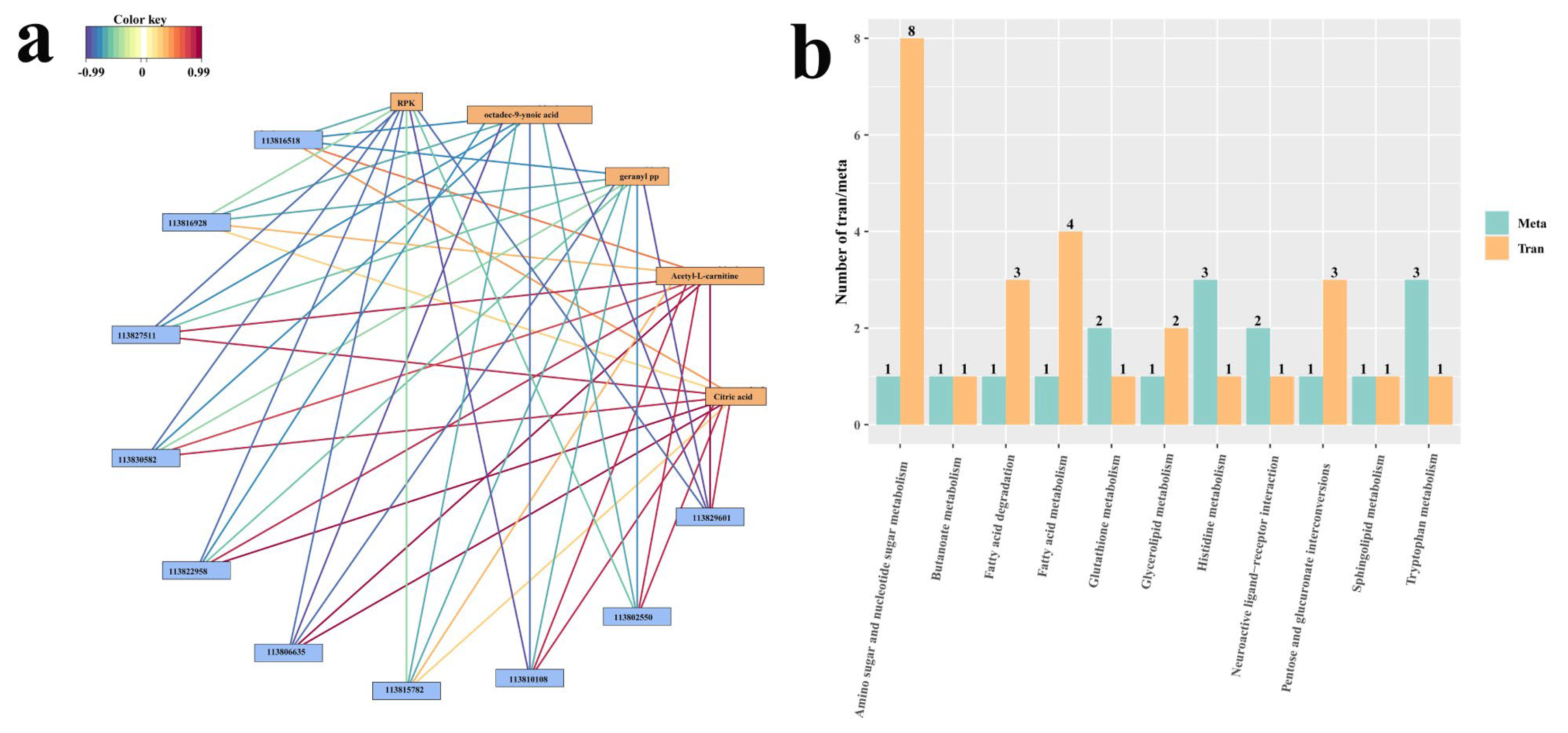
The Pearson correlation coefficient was employed to assess the correlation between differential genes and metabolites (as illustrated in Figure 5a). This analysis quantified the degree of association between the two. The results revealed intricate interactions between seven significantly differentially expressed genes (113829601 integumentary mucin C.1-like, 113802550 triosephosphate isomerase B-like, 113810108 anti-lipopolysaccharide factor-like, 113806635 uncharacterized LOC113806635, 113822958 uncharacterized LOC113822958, 113830582 uncharacterized LOC113830582, 113827501 uncharacterized LOC113827501) and four key metabolites: acetyl-L-carnitine, citric acid, RPK, and octadec-9-ynoic acid among. Notably, these seven genes exhibited a positive correlated with acetyl-L-carnitine and citric acid, suggesting that their elevated expression may stimulate the synthesis of these metabolites. Conversely, a negative correlation was observed between these genes with RPK and octadec-9-ynoic acid, indicating that their significant expression inhibits the metabolism and synthesis of these latter two metabolites.

3.4.2. KEGG Pathways Involving Both Metabolomics and Transcriptomics

The eleven KEGG pathways with the highest number of genes and metabolites significantly involved in both DG and XG groups are depicted in (Figure 5b), revealing that amino and nucleotide sugar metabolism exhibited the highest enrichment of molecular annotations in the shared pathways between both omics datasets. Specifically, within this pathway, 13 differentially expressed genes were annotated in the transcriptome, accompanied by one differentially expressed metabolite in the metabolome. In the fatty acid metabolism pathway, four genes and one metabolite were differentially expressed. Similarly, fatty acid degradation as well as pentose and glucuronate interconversions had three genes and one metabolite annotated as differentially expressed. Both the histidine metabolism and tryptophan metabolism pathways annotated one gene and three metabolites annotated as differentially expressed each. These findings suggest that metabolites pathways are predominantly enriched with significantly different genes and metabolites. Furthermore, they underscore the distinct metabolic pathways present between the DG and XG groups. Notably, in the amino sugar and nucleotide sugar metabolism pathways, there were substantial differences in basic biosynthesis and metabolic activities between the DG and XG groups. At the transcriptome level, 13 genes were notably annotated for their differential expression, while at the metabolome level, one metabolite was detected as differentially expressed, further emphasizing the significance and variability this pathway across the two sample groups.

4. Discussion

In recent years, the issue of shrimp growth retardation associated with EHP has garnered considerable public and scientific attention [6]. Despite EHP’s relatively low mortality rate, the widespread occurrence of growth inhibition poses a significant threat to the sustainable development of the shrimp farming industry, ultimately resulting in substantial losses to national economies. Indeed, reports indicate that EHP has been detected in numerous shrimp farming areas in China, with positive infection rates as high as 51.2% in Shandong and 54.40% in Jiangsu, suggesting a dire economic situation [24,25,26,27].
On an international scale, the economic impact of EHP is equally alarming. In India, for instance, the estimated losses attributed to EHP are approximately USD 567.62 million [28]. Similarly, [29] estimate that annual losses related to EHP in Thailand have reached USD 232 million. These figures further underscore the magnitude of the threat posed by EHP to the global aquaculture industry.
Unfortunately, to this day, an effective treatment for addressing the issues caused by EHP in shrimp remains elusive. Research on the molecular mechanisms underlying shrimp growth retardation, particularly how EHP infection disrupts the growth process [30], disrupts energy metabolic pathways [31], and triggers immune responses [32], is still in its exploratory stage. However, with the rapid advancement in sequencing technology, transcriptomics and metabolomics have emerged as indispensable tools in life science research, playing a crucial role in elucidating how organisms respond to various stress factors.
In previous studies, Illumina sequencing technology has been utilized to identify a large number of shrimp immune genes responsive to Vibrio parahaemolyticus infection [33]. Similarly, another investigation employed the Illumina sequencing platform to compare transcriptomic data between WSSV-infected and uninfected shrimp, revealing the upregulation of 2150 genes and the downregulation of 1931 genes [5].
In this study, we collected samples exhibiting significant growth differences under identical infection conditions to uncover distinct host response patterns among L. vannamei shrimp to the same infectious conditions. Our findings revealed significant differences between the experiment group with normal growth and the control group with growth inhibition despite both being exposed to the same infection conditions. Differential gene expression analysis identified 707 DEGs, with 160 genes upregulated and 547 genes downregulated. The higher number of downregulated genes indicates broader inhibition of gene expression following EHP infection. Furthermore, the study demonstrated that EHP infection significantly alters the expression of certain immune genes, suggesting the activation or suppression of the shrimp immune defense system in response to EHP infection. Additionally, numerous genes related to digestion, absorption, and growth exhibited significant transcriptional changes, indicating that EHP infection disrupts the nutritional metabolism of shrimp. A KEGG pathway analysis of all DEGs revealed that the majority of these DEGs were significantly enriched in energy metabolism pathways and shrimp growth regulation pathways, aligning with previous findings [34]. These results provide valuable insights into the complex interactions between shrimp and EHP infections, and offer potential targets for therapeutic interventions to mitigate the impact of EHP on shrimp health and growth. The cytochrome P450 enzyme system (CYP), as a cornerstone of metabolic processes within the hepatopancreas, is prevalent across diverse organisms [35]. This system plays a pivotal role in the metabolic transformation of various substances, including environmental toxins (like EHP), xenobiotics, endogenous hormones, and carcinogens, thereby significantly influencing the growth and development and environmental adaptability of organisms [36]. Previous research has revealed that during the late stages of EHP infection, the expression of cytochrome P450 undergoes increases, undergoes the organism’s defensive mechanism through the enhanced detoxifying and antioxidant capabilities of CYP [37]. In our study, we observed a notable upregulation of CYP 450 expression levels in the DG group. This finding not only indicates a positive immune response by shrimp to EHP infection but also implies that shrimps can more effectively cope with the physiological challenges by bolstering the metabolic and detoxifying capabilities of CYP 450, This, in turn, aids maintaining homeostatic stability. Furthermore, this augmented physiological adaptability may also positively contribute to the growth of the shrimp.
Unlike vertebrates, crustaceans mainly rely on their innate immune system to fend off microbial and pathogenic invaders [38]. Within this immune system, phenol oxidase and its activation system play a crucial role. Upon invasion by microbes or other foreign substances the phenol oxidase precursor in crustaceans becomes activated and transformed into catalytically active phenol oxidase [39]. This transformation is pivotal, as the activated phenol oxidase catalyzes the oxidation of phenolic substances, producing various antimicrobial compounds including melanin [40]. These compounds not only effectively inhibit the growth of pathogenic microbes but can also eliminate them directly, thus safeguarding crustaceans from pathogen invasion. In our study, we observed high expression levels of PPAF, an important immune molecule, in the DG group infected with EHP, despite maintaining normal growth. PPAF, as a key component of the phenol oxidase activation system, indicates that the shrimp’s immune system is effectively activated during infection to combat challenges posed by pathogens. This finding further reinforces the significant role of PPAF in crustacean immune defense, as it promotes the oxidation of phenolic substances to generate intermediate products with antimicrobial and antiviral activities, these activities help reduce damage to host tissues caused by pathogens and ensure the normal growth of shrimp. Additionally, a study has demonstrated that PPAF exerts an inhibitory effect on L. vannamei, capable of suppressing the expression of IHHNV [41]. This discovery offers a new perspective for understanding the interaction between virus and their hosts and provides a theoretical foundation for studying the mechanism of shrimp antiviral defense.
Nucleotide metabolism stands as one of the paramount metabolic mechanisms within organisms as highlighted by [42]. The apoptosis of hepatopancreatic cells can disrupt nucleotide metabolic. Notably, this study discovered that the majority of disease markers (DMs) are prominently enriched in the pyrimidine metabolism pathway. pyrimidines, being an indispensable constituent of life, play pivotal roles not only in energy metabolism but also exhibit diverse biological activities, including antibacterial and antiviral properties as stated by [43]. The enrichment of these substances imply that pathogen invasion may elicit spontaneous anti-apoptosis in shrimp. Furthermore, research has indicated that specific pyrimidine derivatives or metabolic pathways are integral to the activation and signal transduction processes of immune cells, thereby playing a crucial role in bolstering shrimp immunity of shrimp [44].
Energy metabolism plays a crucial role in shrimp’s defense against microbial invasion, as it not only furnishes the immune system with adequate energy but also bolsters shrimp disease resistance by fostering the activation and proliferation of immune cells, augmenting the synthesis and secretion of immune molecules, and improving stress response capabilities [45]. Fatty acid synthase (FASN), a vital constituent of energy metabolism, plays a pivotal role in fatty acids synthesis. As a key enzyme in this process, FASN is essential for cellular composition and exerts significant functions within organisms [46]. It serves not only as an important form of energy storage but also extensively participates in physiological processes such as bio-membrane composition, protein acetylation, and signal transduction [47]. Studies have demonstrated that overexpression of FASN significantly promotes fatty acid synthesis, resulting in excessive fat accumulation in organisms and emerging as a significant factor in obesity [48]. In our study, we observed notable upregulation of FASN expression in the DG group, hinting that FASN may not only play a role in bolstering shrimp resistance to pathogen invasion but also contribute shrimp growth. Furthermore, our study revealed significant upregulation of ACSBG2 expression. ACSBG2, an enzyme that mediates the activation of long-chain fatty acids, can further activate fatty acids synthesized by FASN to form fatty acyl coenzyme A (CoA) esters. These esters initially participate in the β-oxidation process of fatty acids, which is an important pathway for cells to obtain energy. Through β-oxidation, fatty acids are progressively degraded into acetyl CoA. Additionally, our study noted a substantial enrichment of biosynthetic pathways for ubiquinone (coenzyme Q) and other terpene quinones in the DG group. These substances are indispensable in the respiratory chain process of fatty acid β-oxidation, facilitating efficient lipid energy conversion. They also exhibit remarkable antioxidant, antibacterial, anti-inflammatory, and antitumor bioactivities [49,50]. Their accumulation may signify a significant enhancement of the antioxidant defense mechanisms in shrimp when responding to oxidative stress.
In our joint analysis of transcriptomic and metabolomic changes in shrimp infected with EHP, we observed a notable positive correlation between the differentially expressed genes, triosephosphate isomerase B-like (TPi) and anti-lipopolysaccharide factor-like (ALF-like), and the differential metabolites, acetyl-L-carnitine and citric acid. TPi, as a pivotal enzyme in glycolysis, plays a crucial role in regulating carbohydrate metabolism and energy production. Conversely, the anti-lipopolysaccharide factor encoded by the ALF-like gene is a crucial immune molecule in crustaceans, exhibiting broad-spectrum antibacterial activity [51]. Among the differential metabolites, acetyl-L-carnitine significantly contributes to.in lipid metabolism by effectively facilitating the transport of fatty acids to mitochondria for β-oxidation, which is a vital source of ATP production. On the flip side d, citric acid, as a key node in the tricarboxylic acid (TCA) cycle, not only bridges glycolysis and oxidative phosphorylation but also ensures efficient conversion of energy and intermediate metabolites. Previous studies have demonstrated that citric acid can enhance the growth, digestive enzyme activity, and disease resistance of L. vannamei [52]. In this experiment, an increase in TPi expression suggests an acceleration of glycolysis, which not only supplies more substrates for acetyl-L-carnitine-mediated efficient fatty acid utilization but also promotes energy cycling involving citric acid through the tight integration of the TCA cycle and oxidative phosphorylation. Furthermore, the differential expression of the ALF-like gene also demonstrates a positive impact on energy metabolism. The association with acetyl-L-carnitine and citric acid underscores the intimate coordination between immune defense mechanisms and energy metabolism in shrimp when facing pathogen challenges, providing essential energy reserves and material foundations for shrimp to more effectively resist pathogen invasion. Moreover, we identified a significant positive correlation between some uncharacterized genes and these two metabolites. This discovery may unveil novel biological functions, metabolic pathway regulations, and potential disease associations, albeit requiring further research for validation. The metabolic network within organisms is complex, and gene variations may regulate the expression levels of multiple metabolites. Although this study has revealed significant correlations, the underlying regulatory mechanisms still necessitate in-depth exploration. Therefore, conducting functional validation experiments to assess the potential of key genes and metabolites in improving shrimp growth performance and disease resistance will necessitate a scientific basis for formulating prevention and control strategies and optimizing aquaculture management.
The integrated transcriptomic and metabolomic analysis revealed a synergistic interplay between immune defense and energy metabolism in response to EHP infection. The upregulation of TPi enhances glycolysis, supplying pyruvate for acetyl-CoA production and citric acid synthesis in the TCA cycle. Concurrently, the elevated ALF-like gene suggests activated antibacterial defense, while metabolites like acetyl-L-carnitine facilitate fatty acid oxidation, linking lipid metabolism to energy generation. This coordinated response between TPi, ALF-like, acetyl-L-carnitine, and citric acid indicates a metabolic–immune adaptation, enabling shrimp to sustain growth under parasitic stress by balancing energy allocation and immune activation.

5. Conclusions

In this study, we delved into the molecular mechanisms underlying the impact of EHP infection on the healthy growth of L. vannamei by employing transcriptome and metabolome analyses. Significant differences in gene expression and metabolic levels were observed between normally growing and growth-inhibited shrimp. Our key findings encompass alterations in genes related to growth regulation, immune system activation, and energy metabolism regulation. Specifically, CYP450, PPAF, FASN and ACSBG2 were prominently expressed in shrimp with normal growth trajectories. Metabolome analysis further illuminated distinct perturbations within amino acid, lipid, and nucleotide metabolic pathways. The integrated results from both transcriptome and metabolome analyses hinted at a positive correlation between differentially expressed genes, TPi and ALF-like, and specific metabolites such as acetyl-L-carnitine and citric acid. This correlation suggests potential synergistic effects in regulating energy metabolism and immune responses in L. vannamei. While further experimental validation is warranted to consolidate these findings, our study contributes significantly to the understanding of EHP infection mechanisms. Moreover, it lays the groundwork for the development of more precise prevention and control strategies, thereby fostering sustainable aquaculture practices.

Author Contributions

S.L.: writing—review & editing, writing—original draft. Y.W.: investigation, visualization. J.J.: data curation. B.W.: data curation. C.Z.: data curation. Z.L.: resources, conceptualization. M.L.: funding acquisition, writing—review & editing. Z.P.: funding acquisition, writing—review & editing. All authors have read and agreed to the published version of the manuscript.

Funding

This work was supported by Ningbo Key R&D Programs and “Listed and Commanded” Project (Grant No. 2023Z113, 2023Z125), Zhejiang Province, “three rural nine parties” science and technology cooperation program “to reveal the list of commanders” project (Grant No. 2023SNJF064), the Major Scientific and Technological Programs for Selection and Breeding of New Agricultural (Aquatic) Breeds in Zhejiang Province (Grant No. 2021C02069-5-4), China Agriculture Research System of MOF and MARA.

Institutional Review Board Statement

The animal study was reviewed and approved by the Institutional Animal Care and Use Committee (IACUC) of Zhejiang Wanli University, China (approval code: 20240310001; approval date: 19 November 2025).

Data Availability Statement

The original contributions presented in this study are included in the article. Further inquiries can be directed to the corresponding authors.

Conflicts of Interest

The authors declare that there are no competing interests.

References

  1. FAO Fisheries and Aquaculture Division; Food and Agriculture Organization of the United Nations: Rome, Italy, 2022.
  2. Pan, C.; Chen, S.; Hao, S.; Yang, X. Effect of low-temperature preservation on quality changes in Pacific white shrimp, Litopenaeus vannamei: A review. J. Sci. Food Agric. 2019, 99, 6121–6128. [Google Scholar] [CrossRef] [PubMed]
  3. Aranguren, L.F.; Han, J.E.; Tang, K.F. Enterocytozoon hepatopenaei (EHP) is a risk factor for acute hepatopancreatic necrosis disease (AHPND) and septic hepatopancreatic necrosis (SHPN) in the Pacific white shrimp Penaeus vannamei. Aquaculture 2017, 471, 37–42. [Google Scholar] [CrossRef]
  4. Palanikumar, P.; Wahjuningrum, D.; Abinaya, P.; Babu, M.M.; Citarasu, T. Usage of plant natural products for prevention and control of white feces syndrome (WFS) in Pacific whiteleg shrimp Litopenaeus vannamei farming in India. Aquac. Int. 2020, 28, 113–125. [Google Scholar] [CrossRef]
  5. Zhong, S.; Mao, Y.; Wang, J.; Liu, M.; Zhang, M.; Su, Y. Transcriptome analysis of Kuruma shrimp (Marsupenaeus japonicus) hepatopancreas in response to white spot syndrome virus (WSSV) under experimental infection. Fish Shellfish. Immunol. 2017, 70, 710–719. [Google Scholar] [CrossRef]
  6. Santhoshkumar, S.; Sivakumar, S.; Vimal, S.; Abdul Majeed, S.; Taju, G.; Haribabu, P.; Uma, A.; Sahul Hameed, A.S. Biochemical changes and tissue distribution of Enterocytozoon hepatopenaei (EHP) in naturally and experimentally EHP-infected whiteleg shrimp, Litopenaeus vannamei (Boone, 1931), in India. J. Fish Dis. 2017, 40, 529–539. [Google Scholar] [CrossRef]
  7. Yu, Y.; Wang, Q.; Zhang, Q.; Luo, Z.; Wang, Y.; Zhang, X.; Huang, H.; Xiang, J.; Li, F. Genome scan for genomic regions and genes associated with growth trait in pacific white shrimp Litopeneaus vannamei. Mar. Biotechnol. 2019, 21, 374–383. [Google Scholar] [CrossRef]
  8. Xi, L.P. Preliminary Study on Growth Performance, Growth-Related Genes, and Growth Markers During the Culture of Litopenaeus vannamei. Master’s Thesis, Shanghai Ocean University, Shanghai, China, 2017. [Google Scholar]
  9. Bujak, R.; Struck-Lewicka, W.; Markuszewski, M.J.; Kaliszan, R. Metabolomics for laboratory diagnostics. J. Pharm. Biomed. Anal. 2015, 113, 108–120. [Google Scholar] [CrossRef]
  10. Shah, N.J.; Sureshkumar, S.; Shewade, D.G. Metabolomics: A tool ahead for understanding molecular mechanisms of drugs and diseases. Indian J. Clin. Biochem. 2015, 30, 247–254. [Google Scholar] [CrossRef]
  11. Khan, S.; Ince-Dunn, G.; Suomalainen, A.; Elo, L.L. Integrative omics approaches provide biological and clinical insights: Examples from mitochondrial diseases. J. Clin. Investig. 2020, 130, 20–28. [Google Scholar] [CrossRef]
  12. Mercuro, G.; Bassareo, P.P.; Deidda, M.; Cadeddu, C.; Barberini, L.; Atzori, L. Metabolomics: A new era in cardiology? J. Cardiovasc. Med. 2011, 12, 800–805. [Google Scholar] [CrossRef]
  13. Shan, Y.; Wang, X.; Cao, M.; Zhang, N.; Chen, B.; Qin, C. Transcriptome analysis of Exopalaemon carinicauda under low salinity stress. South China Fish. Sci. 2020, 16, 19–32. [Google Scholar]
  14. Saito, K.; Matsuda, F. Metabolomics for functional genomics, systems biology, and biotechnology. Annu. Rev. Plant Biol. 2010, 61, 463–489. [Google Scholar] [CrossRef] [PubMed]
  15. Zhang, L.; Zhang, S.; Qiao, Y.; Cao, X.; Cheng, J.; Meng, Q.; Shen, H. Dynamic Interplay of Metabolic and Transcriptional Responses in Shrimp during Early and Late Infection Stages of Enterocytozoon hepatopenaei (EHP). Int. J. Mol. Sci. 2023, 24, 16738. [Google Scholar] [CrossRef] [PubMed]
  16. Ning, M.; Wei, P.; Shen, H.; Wan, X.; Jin, M.; Li, X.; Shi, H.; Qiao, Y.; Jiang, G.; Gu, W.; et al. Proteomic and metabolomic responses in hepatopancreas of whiteleg shrimp Litopenaeus vannamei infected by microsporidian Enterocytozoon hepatopenaei. Fish Shellfish. Immunol. 2019, 87, 534–545. [Google Scholar] [CrossRef]
  17. Chen, B.K.; Dong, Z.; Pang, N.Y.; Nian, Y.Y.; Yan, D.C. A novel real-time PCR approach for detection of infectious hypodermal and haematopoietic necrosis virus (IHHNV) in the freshwater crayfish Procambarus clarkii. J. Invertebr. Pathol. 2018, 157, 100–103. [Google Scholar] [CrossRef]
  18. Talukder, A.S.; Punom, N.J.; Eshik, M.M.E.; Begum, M.K.; Islam, H.R.; Hossain, Z.; Rahman, M.S. Molecular identification of white spot syndrome virus (WSSV) and associated risk factors for white spot disease (WSD) prevalence in shrimp (Penaeus monodon) aquaculture in Bangladesh. J. Invertebr. Pathol. 2021, 179, 107535. [Google Scholar] [CrossRef]
  19. Lu, Y.; Wang, S.Y.; Lotz, J.M. The use of differential display to isolate viral genomic sequence for rapid development of PCR-based detection methods: A test case using Taura syndrome virus. J. Virol. Methods 2004, 121, 107–114. [Google Scholar]
  20. Jaroenlak, P.; Sanguanrut, P.; Williams, B.A.; Stentiford, G.D.; Flegel, T.W.; Sritunyalucksana, K.; Itsathitphaisarn, O. A nested PCR assay to avoid false positive detection of the microsporidian Enterocytozoon hepatopenaei (EHP) in environmental samples in shrimp farms. PLoS ONE 2016, 11, e0166320. [Google Scholar] [CrossRef]
  21. Burden, C.J.; Qureshi, S.E.; Wilson, S.R. Error estimates for the analysis of differential expression from RNA-seq count data. Peer J. 2014, 2, e576. [Google Scholar] [CrossRef]
  22. Bushel, P.R.; Ferguson, S.S.; Ramaiahgari, S.C.; Paules, R.S.; Auerbach, S.S. Comparison of normalization methods for analysis of TempO-Seq Targeted RNA sequencing data. Front. Genet. 2020, 11, 594. [Google Scholar] [CrossRef]
  23. Yu, G. clusterProfiler: An universal enrichment tool for functional and comparative study. bioRxiv 2018. bioRxiv:256784. [Google Scholar] [CrossRef]
  24. Caro, L.F.A.; Mai, H.N.; Schofield, P.; Alenton, R.R.R. A laboratory challenge model for evaluating enyterocytozoon hepatopenaei susceptibility in selected lines of pacific whiteleg shrimp Penaeus vannamei. J. Invertebr. Pathol. 2023, 196, 107853. [Google Scholar] [CrossRef]
  25. Hou, Z.H.; Yu, J.Y.; Wang, J.J.; Li, T.; Chang, L.R.; Fang, Y.; Yan, D.C. Development of a PCR assay for the effective detection of Enterocytozoon hepatopenaei (EHP) and investigation of EHP prevalence in Shandong Province, China. J. Invertebr. Pathol. 2021, 184, 107653. [Google Scholar] [CrossRef] [PubMed]
  26. Ma, B.; Yu, H.; Fang, J.; Sun, C.; Zhang, M. Employing DNA binding dye to improve detection of Enterocytozoon hepatopenaei in real-time LAMP. Sci. Rep. 2019, 9, 15860. [Google Scholar] [CrossRef] [PubMed]
  27. Shen, H.; Jiang, G.; Wan, X.; Fan, X.; Qiao, Y.; Shi, W.; Li, H.; Wang, L. Multiple pathogens prevalent in shrimp Penaeus vannamei cultured from greenhouse ponds in Jiangsu Province of China. J. Aquac. Res. Dev. 2017, 27, 675–683. [Google Scholar] [CrossRef]
  28. Patil, P.K.; Geetha, R.; Ravisankar, T.; Avunje, S.; Solanki, H.G.; Abraham, T.J.; Vinoth, S.P.; Jithendran, K.P.; Alavandi, S.V.; Vijayan, K.K. Economic loss due to diseases in Indian shrimp farming with special reference to Enterocytozoon Hepatopenaei (EHP) and white spot syndrome virus (WSSV). Aquaculture 2021, 533, 736231. [Google Scholar] [CrossRef]
  29. Shinn, A.P.; Pratoomyot, J.; Griffiths, D.; Trong, T.Q.; Vu, N.T.; Jiravanichpaisal, P.; Briggs, M. Asian shrimp production and the economic costs of disease. Asian Fish. Sci. 2018, 31S, 29–58. [Google Scholar] [CrossRef]
  30. Shen, H.; Fan, X.; Qiao, Y.; Jiang, G.; Wan, X.; Cheng, J.; Li, H.; Dou, Y.; Li, H.; Wang, L.; et al. The links among Enterocytozoon hepatopenaei infection, growth retardation and intestinal microbiota in different sized shrimp Penaeus vannamei. Aquac. Rep. 2021, 21, 100888. [Google Scholar] [CrossRef]
  31. Wu, Y.; Chen, J.; Liao, G.; Hu, M.; Zhang, Q.; Meng, X.; Li, T.; Long, M.; Fan, X.; Yu, Q.; et al. Down-Regulation of lipid metabolism in the hepatopancreas of shrimp Litopenaeus vannamei upon light and heavy infection of Enterocytozoon hepatopenaei: A comparative proteomic study. Int. J. Mol. Sci. 2022, 23, 11574. [Google Scholar] [CrossRef]
  32. Ning, M.; Bi, J.; Sun, W.; Xie, X.; Huang, Y.; Gu, W.; Wang, W.; Qiao, Y.; Jiang, G.; Shen, H.; et al. Linolenic acid improves growth performance and immune status of Penaeus vannamei infected by Enterocytozoon hepatopenaei. Aquaculture 2021, 535, 736397. [Google Scholar] [CrossRef]
  33. Qin, Z.; Babu, V.S.; Wan, Q.; Zhou, M.; Liang, R.; Muhammad, A.; Zhao, L.; Li, J.; Lan, J.; Lin, L. Transcriptome analysis of Pacific white shrimp (Litopenaeus vannamei) challenged by Vibrio parahaemolyticus reveals unique immune-related genes. Fish Shellfish. Immunol. 2018, 77, 164–174. [Google Scholar] [CrossRef] [PubMed]
  34. Yang, L.-G.; Wang, Y.; Wang, Y.; Fang, W.-H.; Feng, G.-P.; Ying, N.; Zhou, J.-Y.; Li, X.-C. Transcriptome analysis of pacific white shrimp (Penaeus vannamei) intestines and hepatopancreas in response to Enterocytozoon hepatopenaei (EHP) infection. J. Invertebr. Pathol. 2021, 186, 107665. [Google Scholar] [CrossRef] [PubMed]
  35. Dietrich, M.; Eiben, S.; Asta, C.; Do, T.A.; Pleiss, J.; Urlacher, V.B. Cloning, expression and characterisation of CYP102A7, a self-sufficient P450 monooxygenase from Bacillus licheniformis. Appl. Microbiol. Biotechnol. 2008, 79, 931–940. [Google Scholar] [CrossRef] [PubMed]
  36. Ma, R.; Zhou, G.; Feng, D.; Fang, W.; Chen, T.; Hu, K. Transcriptome analysis of Penaeus vannamei hepatopancreas reveals differences in toxicity mechanisms between phoxim and prometryne. Fish Shellfish. Immunol. 2020, 105, 274–285. [Google Scholar] [CrossRef]
  37. Yu, D.; Zhai, Y.; He, P.; Jia, R. Comprehensive transcriptomic and metabolomic analysis of the Litopenaeus vannamei hepatopancreas after WSSV challenge. Front. Immunol. 2022, 13, 826794. [Google Scholar] [CrossRef]
  38. Banerjee, D.; Maiti, B.; Girisha, S.K.; Venugopal, M.N.; Karunasagar, I. A crustin isoform from black tiger shrimp, Penaeus monodon exhibits broad spectrum anti-bacterial activity. Aquac. Rep. 2015, 2, 106–111. [Google Scholar] [CrossRef]
  39. Boonchuen, P.; Sakhor, H.; Jaree, P.; Somboonwiwat, K. Shrimp Vago5 activates an innate immune defense upon bacterial infection. Fish Shellfish. Immunol. 2022, 120, 122–132. [Google Scholar] [CrossRef]
  40. Prabu, S.; Jing, D.; Jurat-Fuentes, J.L.; Wang, Z.; He, K. Hemocyte response to treatment of susceptible and resistant Asian corn borer (Ostrinia furnacalis) larvae with Cry1F toxin from Bacillus thuringiensis. Front. Immunol. 2022, 13, 1022445. [Google Scholar] [CrossRef]
  41. He, Z.; Zhao, J.; Chen, X.; Liao, M.; Xue, Y.; Zhou, J.; Chen, H.; Chen, G.; Zhang, S.; Sun, C. The molecular mechanism of hemocyte immune response in Marsupenaeus japonicus infected with decapod iridescent virus 1. Front. Microbiol. 2021, 12, 710845. [Google Scholar] [CrossRef]
  42. Lopez-Schenk, R.; Collins, N.L.; Schenk, N.A.; Beard, D.A. Integrated Functions of Cardiac Energetics, Mechanics, and Purine Nucleotide Metabolism. Compr. Physiol. 2023, 14, 5345. [Google Scholar] [CrossRef]
  43. Carter, N.S.; Yates, P.; Arendt, C.S.; Boitz, J.M.; Ullman, B. Purine and pyrimidine metabolism in Leishmania. Drug Targets Kinetoplastid Parasites 2008, 625, 141–154. [Google Scholar]
  44. Li, Y.; Xu, W.; Li, X.; Jiang, H.; She, Q.; Han, Z.; Li, X.; Chen, Q. Comparative transcriptome analysis of Chinese grass shrimp (Palaemonetes sinensis) infected with isopod parasite Tachaea chinensis. Fish Shellfish. Immunol. 2018, 82, 153–161. [Google Scholar] [CrossRef] [PubMed]
  45. Matarese, G.; La Cava, A. The intricate interface between immune system and metabolism. Trends Immunol. 2004, 25, 193–200. [Google Scholar] [CrossRef] [PubMed]
  46. Smith, S. Architectural options for a fatty acid synthase. Science 2006, 311, 1251–1252. [Google Scholar] [CrossRef]
  47. Lau, N.S.; Ting, S.Y.; Sam, K.K.; Wong, S.C.; Wu, X.; Waiho, K.; Waiho, K.; Fazhan, H.; Shu-Chien, A.C. Comparative analyses of Scylla olivacea gut microbiota composition and function suggest the capacity for polyunsaturated fatty acid biosynthesis. Microb. Ecol. 2023, 86, 575–588. [Google Scholar] [CrossRef]
  48. Chi, G.; Xu, Y.; Cao, X.; Li, Z.; Cao, M.; Chisti, Y.; He, N. Production of polyunsaturated fatty acids by Schizochytrium (Aurantiochytrium) spp. Biotechnol. Adv. 2022, 55, 107897. [Google Scholar] [CrossRef]
  49. Tian, X.H.; Hong, L.L.; Jiao, W.H.; Lin, H.W. Natural sesquiterpene quinone/quinols: Chemistry, biological activity, and synthesis. Nat. Prod. Rep. 2023, 40, 718–749. [Google Scholar] [CrossRef]
  50. Wang, Y.; Hekimi, S. Understanding ubiquinone. Trends Cell Biol. 2016, 26, 367–378. [Google Scholar] [CrossRef]
  51. Arayamethakorn, S.; Uengwetwanit, T.; Karoonuthaisiri, N.; Methacanon, P.; Rungrassamee, W. Comparative effects of different bacterial lipopolysaccharides on modulation of immune levels to improve survival of the black tiger shrimp. J. Invertebr. Pathol. 2023, 197, 107872. [Google Scholar] [CrossRef]
  52. Su, X.; Li, X.; Leng, X.; Tan, C.; Liu, B.; Chai, X.; Guo, T. The improvement of growth, digestive enzyme activity and disease resistance of white shrimp by the dietary citric acid. Aquac. Int. 2014, 22, 1823–1835. [Google Scholar] [CrossRef]
Figure 1. Gel electrophoresis results of pathogen detection (M.DL 500 DNA molecular weight standard: 1–2 EHP; 3–4 WSSV; 5–6 D1V1; 7–8 IHHNV; 9–10 TSV).
Fishes 10 00652 g001
Figure 2. The set of diagrams for transcriptome analysis. (a) Volcano plot of differentially expressed genes. Upregulated genes are indicated by red dots, and downregulated genes are indicated by green dots. The vertical dashed lines at log₂FC = ±1 represent the fold-change threshold, while the horizontal dashed line at −log₁₀(p-value) = 1.301 corresponds to the significance threshold (p = 0.05). Genes meeting both criteria (beyond the vertical lines and above the horizontal line) are considered significantly differentially expressed; (b) Venn diagram of differentially expressed genes; (c) GO analysis of the top 30 based on the differentially expressed genes. Upregulated genes are indicated by red dots, and downregulated genes are indicated by green dots; (d) KEGG enrichment pathway analysis of differentially expressed genes. The green and red columns indicate the downregulated and upregulated terms, respectively.
Fishes 10 00652 g002
Figure 3. Validation of the expression of eight selected DEGs using qRT-PCR. The control group (C) corresponds to the growth-impaired group (XG), and the experimental group (E) corresponds to the normal growth group (DG). Fold changes are presented as mean ± SD (n = 3). Asterisks indicate statistically significant differences (* p < 0.05, ** p < 0.01). The results confirm the reliability of the transcriptomic data obtained from RNA-seq.
Fishes 10 00652 g003
Figure 4. The set of diagrams for metabolome analysis. (a) PLS-DA Score Scatter Plot; (b) Model Validation Plot of PLS-DA; (c) Volcano Plot of Differential Metabolites. Each point in the volcano plot represents a metabolite, with significantly upregulated metabolites shown in red and significantly downregulated metabolites shown in blue; The vertical dashed lines near log₂FC = 0 represent the thresholds for metabolite fold-change (significantly increased on the right side, decreased on the left side), while the horizontal dashed line near −log₁₀(p-value) = 1 indicates the significance threshold. Metabolites meeting both criteria (beyond the vertical lines and above the horizontal line) are considered significantly differential, whereas those below the horizontal line are labeled “NO” (not significant). (d) Stick Plot of Differential Metabolites. blue represents downregulation, red represents upregulation; the length of sticks represents the magnitude of log2(Fold Change); (e) Correlation plot of differential metabolites. Correlation ranges from 1 for complete positive correlation (red) to −1 for complete negative correlation (blue), sections without color indicate p-value > 0.05); (f) KEGG classification diagram of differential metabolites; (g) shows the KEGG enrichment bubble plot. The horizontal axis, labeled as x/y, represents the number of differential metabolites in the corresponding metabolic pathway divided by the total number of identified metabolites in that pathway. The color of the points indicates the p-value from the hypergeometric test; the redder the color, the smaller the p-value.
Fishes 10 00652 g004
Figure 5. Integrated analysis diagram of transcriptome and metabolome. (a) Network diagram of correlations (the boxes in the figure represent metabolites and genes, with different colors distinguishing between metabolites and genes: yellow boxes represent metabolites, blue boxes represent genes; the color of the lines indicates the correlation, where positive correlation is depicted in red, negative correlation in blue, and darker colors indicating stronger correlation coefficients); (b) KEGG pathway distribution based on differential genes and differential metabolites.
Fishes 10 00652 g005
Table 1. Primer sequences for pathogen detection.
Pathogen’s ItemPrimersPrimer Sequence (5′-3′)Product Size (bp)
WSSFWSSF-FCCAAGACATACTAGCGGATA235
WSSF-RGACGACCCTGACAGAATTAC
DIV1DIV1-F1GGGCGGGAGATGGTGTTAGAT457
DIV1-R1TCGTTTCGGTACGAAGATGTA
DIV1-F2CGGGAAACGATTCGTATTGGG129
DIV1-R2TTGCTTGATCGGCATCCTTGA
IHHNVIHHNV-FCGGAACACAACCCGACTTTA389
IHHNV-RGGCCAAGACCAAAATACGAA
TSVTSV-FAAGTAGACAGCCGCGCTT213
TSV-RTCAATGAGAGCTTGGTCC
EHPEHP-F1TTGCAGAGTGTTGTTAAGGGTTT514
EHP-R1CACGATGTGTCTTTGCAATTTTC
EHP-F2TTGGCGGCACAATTCTCAAACA147
EHP-R2GCTGTTTGTCTCCAACTGTATTTGA
Table 2. The primer sequences used for qRT-PCR.
Gene NameSequence (5′→3′)Product Size (bp)Gene Description
β-ActinAGTAGCCGCCCTGGTTGT183actin, beta 2
AGGATACCTCGCTTGCTCT
GDATCCACGATGACCGAGGGATA173guanine deaminase-like
CCATGCAAATGACCTTGGCG
ALDHB1ACATGACCATTGCCAGGGAG225Aldehyde dehydrogenase X, mitochondrial-like
AGCGCTCTATGGCTTCATCC
BCO2GACGACGGCCAGGTAATTCA112beta,beta-carotene 9′,10′-oxygenase-like
CATTGAGCGGCAGAACGAAG
SODRGTCCTTCTACCACTCCACGC179sorbitol dehydrogenase-like
CTGTGGTTCTGTACTTGGGGT
RDH13AGAGCCTTTGCGACTGACTC108retinol dehydrogenase 13-like
GGACCTACCATCGTGCGAAT
ALDOBCAAGAAGGACGGCTGTGACT109fructose-bisphosphate aldolase-like
ATAGCGAGCCGAGGACATTGG
TpiTTGAGGCCGACCTGAAGATAA99triose phosphate isomerase
AGGATTCGAGCTGTCGGAAC
LEIGTCCAGTTCTTTAAAGTGGGCG82leukocyte elastase inhibitor-like
TCTGGTCGATCCTGCCTTTG
TP1CCTTGGTACTCAGCTGGCTC158trypsin-1-like
GAATCCCGGGAACCCTTCTC
PPAFAGGTTTACAACGAGAGGAGCC90phenoloxidase-activating factor 2-like
CTTCGAGGTGGGGGAAGTTG
Table 3. The Impact of EHP Infection on Shrimp Growth.
GroupInfection
Status
Average Body Length (cm)Average Body Weight (g)Specific Growth Rate (SGR)
Normal Growth Group (DG)Infected with EHP9.16 ± 0.68 a8.50 ± 2.00 a10.61%
growth-impaired group (XG)Infected with EHP7.12 ± 0.98 b4.35 ± 1.53 b9.67%
Uninfected GroupUninfected with EHP9.18 ± 0.23 a8.51 ± 2.13 a10.63%
Means in each bar sharing the same superscript letter or absence of superscripts are not significantly different.
Table 4. Summary of sequencing data for different samples.
SampleRaw ReadsRaw
Bases
Clean ReadsClean
Bases
(Gb)
Error Rate (%)Q20 (%)Q30 (%)GC (%)
D142,473,2146.37G41,193,0906.180.0397.7494.1150.18
D243,487,4866.52G42,342,7466.350.0297.9494.5250.75
D343,199,0446.48G42,033,3766.310.0397.894.2250.49
X143,774,7886.57G42,080,9246.310.0397.7894.1948.65
X243,920,6326.59G42,395,9606.360.0397.8894.351.85
X342,742,7246.41G41,667,6466.250.0397.8694.2649.26
Table 5. Growth, immunity and metabolism-related DEGs (p < 0.001).
Gene IDGene
Abbreviation
Gene DescriptionUp/Downlog2Fold
Change
Growth-related genes
LOC113816928BRP3balbiani ring protein 3-likeDown−14.53
LOC113828658TP1trypsin-1-likeDown−6.26
LOC113815917CES6venom carboxylesterase-6-likeDown−3.75
LOC113808530CYP2L1cytochrome P450 2L1-likeUp4.15
LOC113828952EGFRepidermal growth factor receptorUp2.83
Immune-related genes
LOC113800111LvPTperitrophin-1-likeDown−3.55
LOC113802186FAXCfailed axon connections homologUp4.55
LOC113827097PO-3phenoloxidase 3-likeDown−3.99
LOC113823645HCChemocyanin C chain-likeDown−3.89
LOC113802490PPAFphenoloxidase-activating factor 2-likeUp5.84
LOC113803667LEIleukocyte elastase inhibitor-likeDown−2.92
Metabolic-related genes
LOC113808337ALDBOfructose-bisphosphate aldolase-likeDown−3.02
LOC113807231BCO2beta,beta-carotene 9′,10′-oxygenase-likeUp4.14
LOC113814341SORDsorbitol dehydrogenase-likeUp3.09
LOC113823713ALDH1B1aldehyde dehydrogenase X, mitochondrial-likeUp2.86
LOC113815940FASNFatty acid synthase-likeUp2.22
LOC113808717ACCacetyl-CoA carboxylase-likeUp2.09
LOC113811907RDH13retinol dehydrogenase 13-likeUp4.33
LOC113814208ACSBG2long-chain-fatty-acid—CoA ligase ACSBG2-likeUp1.4
LOC113807492GDAguanine deaminase-likeUp2.59
Disclaimer/Publisher’s Note: The statements, opinions and data contained in all publications are solely those of the individual author(s) and contributor(s) and not of MDPI and/or the editor(s). MDPI and/or the editor(s) disclaim responsibility for any injury to people or property resulting from any ideas, methods, instructions or products referred to in the content.