
Article

Livelihood Capital and Behavioral Responses of Small-Scale Fishers Under Seasonal Fishing Moratoria: Evidence from Coastal China

by
Yuhao Wang
1,2,
Mingbao Chen
1,3,* and
Huijuan Yu
4
1
Center of Marine Development, Macau University of Science and Technology/Southern Marine Science and Engineering Guangdong Laboratory (Zhuhai), Macau 999078, China
2
The Institute of Sustainable Development, Macau University of Science and Technology, Macau 999078, China
3
Southern Marine Science and Engineering Guangdong Laboratory, Zhuhai 519080, China
4
Marine Development Research Institute, Ocean University of China, Qingdao 266049, China
*
Author to whom correspondence should be addressed.
Fishes 2025, 10(12), 643; https://doi.org/10.3390/fishes10120643
Submission received: 1 November 2025 / Revised: 3 December 2025 / Accepted: 8 December 2025 / Published: 12 December 2025
(This article belongs to the Special Issue Sustainable Fisheries Dynamics)

Abstract

Global fishery resources are under increasing pressure from environmental change and institutional constraints. China’s seasonal fishing moratorium has contributed to resource recovery but has also created income and employment challenges for small-scale fishers. This study examines how livelihood capital structures shape annual livelihood portfolios under predictable closure constraints, using three representative fishing communities in Guangdong Province as case studies. A combination of data augmentation, regression analysis, and agent-based simulation was applied to analyze the relationships between capital endowments and behavioral responses. Results show that environmental and financial capital significantly increase the likelihood of maintaining capture as the primary livelihood, while psychological capital stabilizes decisions under uncertainty. Physical capital and social networks exhibit more variable effects, reflecting differentiated adaptive capacities. Simulations further reveal threshold effects and diminishing marginal returns in capital accumulation, with heterogeneous temporal impacts across capital types. Theoretically, the study extends the Sustainable Livelihoods Approach by incorporating environmental and psychological capital, thereby enriching the understanding of capital mechanisms in fisheries. Overall, the findings advance knowledge of how small-scale fishers adapt under institutional constraints and provide practical insights for policies aimed at aligning livelihood security with the sustainable use of marine resources.
Key Contribution: This study extends the Sustainable Livelihoods Approach by integrating environmental and psychological capital into the analysis of fishers’ livelihood strategies and applies a combined econometric–simulation framework to capture dynamic adaptation processes. The findings provide empirical evidence and policy insights for aligning small-scale fishers’ livelihood security with the sustainable management of marine resources.

1. Introduction

As a cornerstone of China’s marine economy, the marine capture fishery sector plays a central role in safeguarding national food security, supporting regional economic development, and sustaining coastal community livelihoods. By 2023, the sector had achieved a gross output value of CNY 261.83 billion, with 496,500 registered vessels and approximately 5.06 million fishers engaged in marine capture activities [1]. However, the long-standing growth trajectory driven by resource extraction has overlooked ecological carrying capacity and regeneration limits [2], leading to structural degradation of nearshore ecosystems and the decline in fishery resources [3]. To address this challenge, China has implemented and progressively refined a seasonal summer fishing moratorium since 1995, with monitoring results showing recovery of key commercial stocks and benthic habitats [4]. Nevertheless, small-scale fishers continue to face significant challenges during the closure period, including cash-flow interruptions, debt burdens, and limited off-season employment opportunities [5,6]. Although subsidies and training programs have been introduced, their mismatch with individual livelihood needs undermines both the accessibility and perceived fairness of these measures [7].
Against this background, it is essential to clarify how livelihood capital structures shape the annual livelihood portfolios of small-scale fishers under predictable seasonal closure constraints. The Sustainable Livelihoods Approach (SLA) offers an appropriate theoretical perspective, emphasizing the ways in which multiple forms of capital are reconfigured in response to institutional and market changes [8]. However, three major gaps remain in the existing literature: first, research has largely focused on terrestrial agricultural systems, with limited systematic examination of institutional adaptation in marine fisheries [9,10]; second, quantitative analyses often rely on static additive indices, making it difficult to capture the marginal effects of different capitals over time [11,12]; and third, livelihood capital is frequently treated as a static stock, with limited attention to its dynamic plasticity and cross-capital interactions during institutional transitions [13,14]. Empirical evidence has shown that when fishers shift to non-capture sectors, they often reconstruct their capital base, indicating that livelihood capital serves not only as a material foundation but also as a critical mediator of behavioral adjustment [15,16]. Accordingly, it is necessary to introduce a dynamic simulation framework capable of capturing temporal and nonlinear processes in order to disentangle the causal linkages between institutional constraints, capital accumulation, and livelihood outcomes [17]. Agent-based models have already been applied in small-scale fisheries and rural livelihood systems to represent heterogeneous decision-making and to explore policy or environmental scenarios, including work on compliance, resource-use adaptation, and development resilience [18,19,20]. In parallel, recent advances in tabular generative adversarial networks (tabular GANs), including CTGAN and CTAB-GAN, demonstrate that conditional architectures can approximate complex joint distributions in mixed-type tabular datasets and support downstream predictive modeling tasks [21,22,23]. However, published applications that jointly (i) estimate livelihood capital effects econometrically, (ii) use tabular GAN-based augmentation of small livelihood surveys, and (iii) embed these effects in an ABM to explore scenario dynamics under seasonal fishing moratoria remain scarce. By integrating these elements into a single framework, this study seeks to enrich the toolset for analyzing dynamic livelihood adaptation in small-scale fisheries while being explicit about the limitations of synthetic data and simulation outputs.
Building on the issues identified above, this study takes representative coastal capture fisheries communities in Guangdong Province as case sites, treating the national summer fishing moratorium as a long-term and predictable policy regime that sets the institutional boundary for decision-making. At the same time, we explicitly account for place-based variation in implementation strength and local adaptive adjustments by using port functions and service-related infrastructure to represent institutional support and by incorporating psychological capital to reflect perception-driven responses. The analysis focuses on how heterogeneous bundles of livelihood capital shape the composition and evolution of annual livelihood portfolios under shared national rules but locally varying conditions. Although the national summer fishing moratorium has been in place for more than two decades, it is not a static intervention. The duration, spatial coverage, gear restrictions, and subsidy arrangements have been periodically adjusted, and enforcement has intensified, so that fishers have experienced a sequence of shifting constraints and incentives rather than a one-off policy shock. Against this background, our analysis treats the current “mature” moratorium regime as the outcome of a long co-evolutionary process and asks how accumulated livelihood capitals condition present livelihood portfolios and the scope for further adjustment, instead of attempting a full historical evaluation of all policy phases.
The contributions of this study lie in two main aspects. Theoretically, it extends the Sustainable Livelihoods Approach by incorporating environmental and psychological capital alongside material, financial, human, social, and natural capital, thereby providing a more systematic understanding of how institutional support and risk perception influence behavioral choices. Methodologically, it integrates micro-level econometric regression with agent-based modeling (ABM) and employs T-GAN to mitigate small-sample heterogeneity, enabling the joint modeling of individual differences and dynamic processes. ABM scenarios further examine how variation in institutional support and capital structures conditions behavioral adjustments under the moratorium. In doing so, the study generates evidence and policy insights that are generalizable and operational while acknowledging local implementation differences and adaptation pathways, to support the governance of small-scale fisheries.
The paper is structured as follows: Section 2 introduces the conceptual framework, study sites, and methodology; Section 3 presents the empirical and simulation results; Section 4 discusses the underlying mechanisms and policy implications; and Section 5 concludes with the main findings, highlighting the practical relevance of the research.

2. Materials and Methods

2.1. Conceptual Framework

This study adopts the SLA as its theoretical foundation, identifying the types of capital accessible to individuals and examining their interactions with institutional and environmental contexts to provide a systematic framework for analyzing livelihood strategies [24]. Livelihood capital traditionally consists of five categories—human, social, natural, physical, and financial—whose endowments not only reflect accumulated resources but also determine individual adaptive capacity and livelihood sustainability under institutional interventions and environmental fluctuations [25]. Given that small-scale fishers experience significant income fluctuations linked to seasonal and tidal dynamics, face limited off-season opportunities, and are highly sensitive to regulatory adjustments, this study extends the SLA by incorporating environmental and psychological capital. The former captures the infrastructural and spatial conditions connecting vessels, markets, and policy support [26], while the latter reflects internal resources such as confidence in the future, stress regulation, and risk perception [27]. This extension refines rather than replaces the original SLA: environmental capital denotes community-level public goods and service accessibility (infrastructure and spatial connectivity to vessels, markets, and policy support), analytically distinct from household physical assets and biophysical natural stocks; psychological capital captures state-like resilience and expectations under policy shocks, distinct from stock-like human capital. This treatment is consistent with fisheries-oriented SLA extensions that explicitly incorporate enabling environments and psychosocial resources [26,28]. Within this extended SLA (Table S1), government subsidies and support programs are explicitly mapped into the capital structure: materially, they are reflected in environmental capital via access to port-based administrative and service functions and in financial capital via household income security and social protection; psychosocially, they shape expectations and risk perceptions captured by psychological capital. Making this mapping explicit clarifies how subsidy-linked support can affect both external serviceability and internal coping resources.
The seasonal fishing moratorium is defined as the core institutional variable, representing a long-term and predictable regulatory constraint. Variations in port functions and service-related infrastructure are used to capture the spatial heterogeneity of institutional support and are incorporated into the model as observable indicators. Although livelihood behaviors are often embedded within household or community-level cooperation and division of labor [28], this study adopts individual fishers as the unit of analysis for two reasons: first, the moratorium policy and its associated subsidies are directly targeted at individual operators, making the institutional boundaries explicit; and second, capital structures at the individual level allow for clearer and testable linkages between resource endowments and behavioral outcomes, thereby enhancing the consistency and interpretability of behavioral simulations. Definitions of the different types of capital and their theoretical linkages are provided in Supplementary Material Table S1, and the corresponding measurement indicators are detailed in Supplementary Material Table S2, while remaining conceptually distinct from the five DFID capitals.
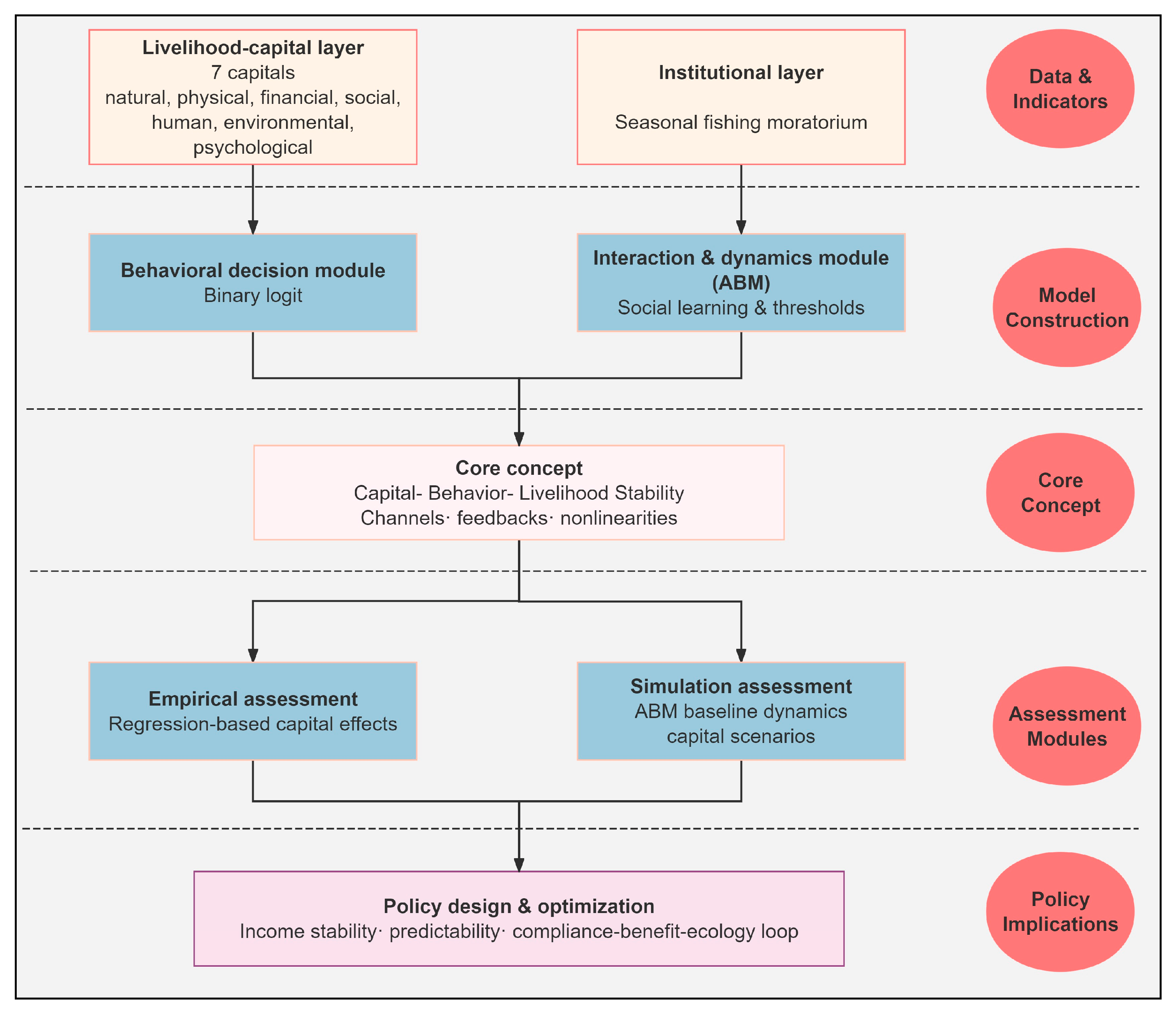
Under these assumptions, this study develops a dynamic analytical framework linking “livelihood capital–behavioral response–feedback mechanisms” (see Figure 1). The fishing moratorium, by restricting harvesting activities across time and space, directly affects access to natural, financial, and physical capital [29], while indirectly influencing human, social, environmental, and psychological capital through channels such as policy perception, social networks, and future expectations [30,31]. As boundedly rational actors, fishers weigh their current capital status against anticipated risks: when capital levels are stable or fluctuations remain within tolerable bounds, they are more likely to maintain existing fishing practices; conversely, capital depletion or heightened uncertainty may prompt shifts toward temporary or alternative livelihoods [32,33]. These decisions, in turn, feed back into the capital system, potentially causing income shocks, debt accumulation, and weakened household security [34]. In the absence of adequate institutional buffers, such feedback may exacerbate livelihood vulnerability [35] and create management spillovers that place additional pressure on ecosystem recovery [36]. Given that the moratorium represents a predictable institutional constraint, livelihood choices in this study are conceptualized as annual portfolio decisions shaped by asset endowments and expectations, rather than short-term reactions to temporary fishing bans.
Building on the extended SLA, the framework (Figure 1) organizes inputs into two layers: a livelihood-capital layer (seven capitals, including environmental and psychological) and an institutional layer that treats the seasonal moratorium as a predictable constraint. These inputs feed two complementary modules: a behavioral decision module (binary logit, identifying how capitals shape capture-dominant vs. adjustment choices) and an interaction and dynamics module (ABM, capturing social learning, thresholds, and time paths under capital change). Together, they instantiate the core concept—capital–behavior–livelihood stability—operating through two main channels (steadier incomes and a more resilient activity mix), with feedbacks (income shocks, debt, expectations) and nonlinearities (thresholds, diminishing returns, psychological lag). Assessment proceeds in two tracks: empirical assessment (regression effects and robustness, heterogeneity across capital types) and simulation assessment (baseline dynamics, capital-scaling scenarios). The framework closes with policy design principles that generalize across contexts: prioritize income stability without increasing effort, improve predictability via psychological-capital services and consistent rules, and implement compliance–benefit–ecology loops at the community level.

2.2. Study Area

Guangdong Province, as a representative marine economy in China, is characterized by abundant fishery resources, a well-developed port system, and a large fisher population. However, the province’s marine industry has long exhibited marked regional disparities: in the eastern and western coastal areas, traditional small-scale fishing remains dominant, with low unit output and limited livelihood flexibility, leaving fishers highly vulnerable to external institutional interventions. While the full implementation of the seasonal fishing moratorium has effectively eased pressure on fishery resources, it has also amplified the inherent fragility of fishers’ livelihood capital structures, leading to abrupt shifts in behavioral choices and intensifying the structural tension between ecological governance objectives and livelihood security demands. Against this backdrop, examining the behavioral responses of small-scale fishers under institutional disruptions from the perspective of livelihood capital provides important practical insights.
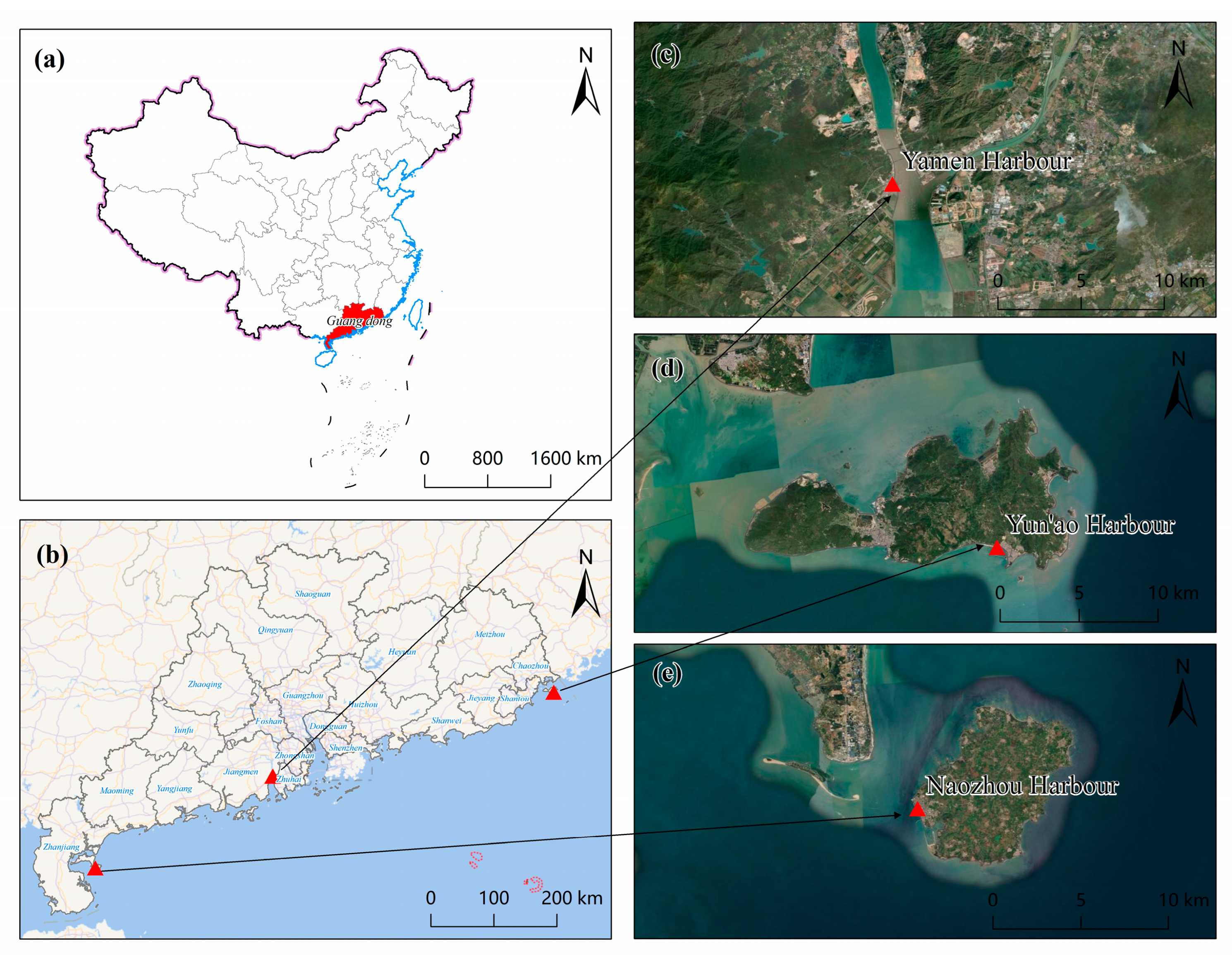
This study selected three typical coastal fishing ports in Guangdong Province—Yun’ao Port in Shantou, Yamen Port in Jiangmen, and Naozhou Port in Zhanjiang—as empirical sites (see Figure 2). These ports are located in the eastern Guangdong, Pearl River Estuary, and western Guangdong fishery economic zones, respectively, and thus provide strong spatial representativeness and regional comparability. Although they differ in geomorphology, resource endowments, and policy implementation details, they share several key characteristics: a high dependence on fisheries, a large proportion of small-scale fishers, and relatively high port grades (all classified as national first-class or regional central ports). Importantly, their responses to the fishing moratorium display notable similarities, offering an observation perspective that combines spatial variation with structural commonality. It should be clarified that national first-class or regional central ports designation refers to infrastructure grade and service role, not to the scale of the surveyed households. Our sampling frame targeted household-based artisanal fishers in adjacent natural villages and explicitly excluded company/cooperative crews and industrial fleets.
This study does not aim at broad generalization; rather, it seeks to identify common mechanisms of small-scale fishers’ behavioral choices under policy shocks based on representative spatial samples. In doing so, it provides a structured theoretical framework and a comparative analytical perspective for understanding fisheries management in similar social–ecological systems. Details of the survey instrument, sampling scheme, and data processing are reported in Section 2.4. While this cross-sectional three-port design cannot reconstruct the full temporal trajectory of adaptation to the moratorium, the observed heterogeneity in livelihood capitals and behaviors across households and ports under a common long-standing policy offers a quasi-long-run perspective on who has been able to adapt, with what capital configurations, and where residual vulnerabilities persist.

2.3. Methods

We employ a three-step workflow to address complementary needs. First, a tabular GAN (T-GAN) produces privacy-preserving synthetic microdata to alleviate sparsity and class imbalance, preserving joint distributions for downstream modeling. Second, binary logistic regression estimates the marginal effects of livelihood capitals and institutional variables and yields predicted probabilities of maintaining fishing as the primary livelihood. Third, agent-based modeling (ABM) embeds the logistic rule within an interactive environment to examine emergent dynamics and compare capital configurations. In short, T-GAN ⟶ logistic regression ⟶ ABM: distributional preparation supports estimation, estimates deliver interpretable effects and propensity maps, and ABM explores system-level dynamics and scenario comparisons.

2.3.1. Tabular Generative Adversarial Network

Given that the target respondents were small-scale artisanal fishers dispersed across natural villages around multiple coastal ports, primary data collection was constrained by geographic dispersion and high mobility due to offshore operations. As a result, obtaining samples was challenging, and 184 valid questionnaires were ultimately collected. Although this sample size meets the minimum requirement for basic statistical analysis, model robustness remains a concern because of uneven spatial coverage and marked respondent heterogeneity. In our pipeline, T-GAN primarily addresses data sparsity and preserves realistic co-distributions to support regression diagnostics and to initialize agent attributes in ABM scenarios. The original survey covers 184 fishing households. The T-GAN is then used to generate additional synthetic household records, expanding this to an analysis sample of 584 observations that combines observed and synthetic cases. This expanded sample is used for both the baseline logistic regression in the subsequent sectionand for initializing the agent population in the ABM, while the synthetic component is explicitly treated as such and subjected to dedicated robustness and limitation checks.
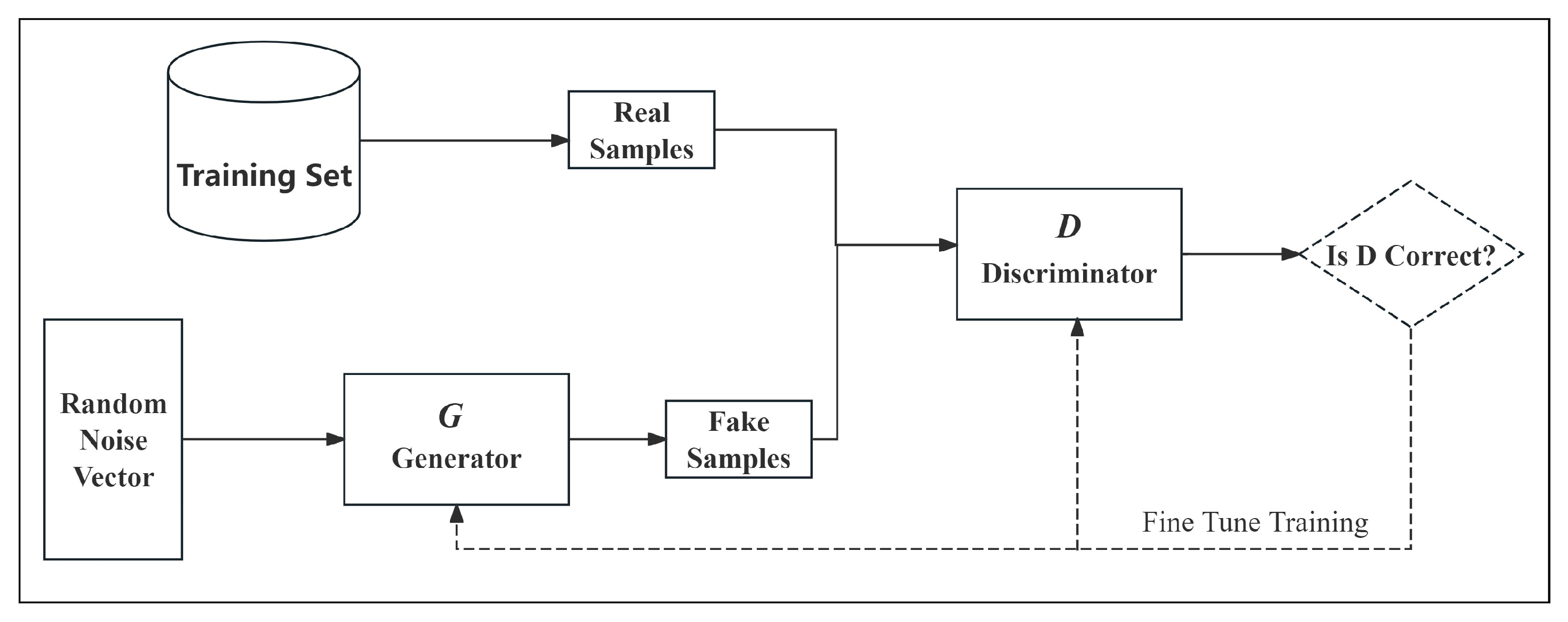
To enhance the robustness and transferability of downstream models, we used a tabular generative adversarial network (T-GAN) for data augmentation. Designed for row-column structured datasets, tabular GANs use adversarial training between a generator and a discriminator to learn the joint distribution across categorical, ordinal, and numerical variables and then produce synthetic samples that preserve these structural features [37]. Recent advances in tabular GANs, including CTGAN and CTAB-GAN, show that conditional architectures can accurately learn joint distributions in mixed continuous–categorical datasets and generate synthetic tables that preserve both marginal distributions and multivariate dependencies while supporting downstream predictive tasks [21,22,23]. In our case, the covariate space is dominated by ordinal Likert-scale capital scores with a limited number of binary controls, and the dependent variable exhibits moderate rather than extreme class imbalance. We therefore opted for a T-GAN configuration that treats covariates symmetrically and allows us to constrain synthetic records to the empirical support through simple range and frequency checks, prioritizing transparency and training stability in a small-sample, mixed-type survey. In this study, the T-GAN is used to produce synthetic fisher records that expand the range of empirically observed combinations of livelihood capitals and demographic attributes and to initialize the ABM population. Prior to model training, numerical variables were scaled, categorical variables were one-hot encoded, and extreme outliers were removed. After 10,000 training iterations, generator/discrimination losses and output distributions stabilized, and 400 synthetic records were produced. To limit potential bias and clarify parameterization, we adopt the following safeguards and criteria: (i) synthetic records neither create nor replace outcome labels and are not used to impute responses; (ii) covariates in synthetic records are constrained to the observed support (variable-wise ranges and empirically observed combinations) to avoid extrapolation; and (iii) distributional similarity between original and synthetic data is verified by two-sample K-S tests on key variable ( p > 0.05 ). Key hyperparameters are selected via cross-validation, with convergence judged by stabilized losses and matched marginal/conditional distributions, and the augmentation size ( n = 400 ) is chosen post-convergence to provide additional coverage without altering group composition or class proportions. The augmentation pipeline and T-GAN architecture are shown in Figure 3.

2.3.2. Binary Logistic Regression

This study constructs a behavioral response model of fishers’ livelihoods, using seven categories of livelihood capital—natural, physical, financial, social, human, environmental, and psychological—as covariates, with the fisher’s main livelihood choice as the dependent variable. Following livelihood-survey practice that determines the primary economic activity by the share of income from the main source [38,39], we adopt a 60% cut-off as a conservative majority standard. Specifically, given current capital endowments and institutional settings, if a fisher continues to rely on marine capture fishing as the primary livelihood activity, the case is classified as “no adjustment”; conversely, if the fisher revises the livelihood strategy (exits capture fisheries, shifts to alternative livelihoods, or diversifies into non-fishery sectors), it is classified as “behavioral adjustment”. This approach is consistent with SLA-based small-scale fisheries applications that classify the “main livelihood” by majority income share, while aligning exact thresholds with survey banding and local statistical practice [40,41]. The model estimates interpretable effects of capitals and institutional variables and outputs predicted probabilities of maintaining fishing versus adjustment; these probabilities are then used in the ABM as decision propensities.
It should be noted that small-scale fishers in reality do not choose strictly between “staying” and “exiting,” but rather fine-tune their portfolios—for example, by adopting seasonal trips, reducing voyage frequency, engaging in port-related services, or gradually transitioning to other sectors. For reasons of model identifiability and empirical measurability, this broader spectrum of behaviors is compressed into an operational indicator—whether the household’s annual livelihood is primarily dependent on capture. This binary specification does not preclude diversified pathways; instead, it sets a clear analytical boundary under data and implementation constraints, thereby facilitating a systematic assessment of how different types of livelihood capital shape the primary livelihood choice. The logistic regression is specified as follows:
ln p 1 p = α + β 1 x 1 + β 2 x 2 + β 3 x 3 + β n x n
In the model, p denotes the probability that a fisher maintains capture as the primary livelihood (no livelihood adjustment), and ln p 1 p is the log-odds of that decision. By modeling the log-odds as a linear predictor, the model identifies both the direction and statistical significance of the effects of different forms of livelihood capital on the choice, thereby enabling interpretable comparisons and hypothesis testing.

2.3.3. Agent-Based Modeling

ABM is a computational social-science approach used to simulate the evolution of complex behaviors, emphasizing bottom-up modeling that starts from micro-level decision rules to generate macro-level emergent patterns. Compared with traditional regression methods that rely on average-behavior assumptions, ABM better captures individual heterogeneity, behavioral nonlinearity, and path dependence, and is therefore well suited to examine livelihood adaptation under institutional interventions. Agent-based simulations have been widely applied in small-scale fisheries and rural livelihood studies to examine how heterogeneous resource users respond to policy and environmental change and to explore the emergent consequences of alternative scenarios [18,19]. Our ABM is designed not to deliver point forecasts, but to generate internally consistent scenario trajectories of behavioral responses and capital accumulation under different moratorium-support configurations.
Agents’ livelihood-capital vectors are initialized from the synthetic joint distributions, and at each decision stage, the logistic specification is evaluated to obtain individual propensities to maintain fishing; actions are then realized by probabilistic draws from these propensities. Building on the logistic regression results, we developed an ABM on a 20 × 20 lattice with 1000 fisher agents, using annual time steps and a 20-year horizon to track behavioral dynamics under changes in policy and asset levels. Two runs were implemented: (i) a baseline scenario in which each agent’s livelihood-capital bundle is held constant and the regression-based choice probabilities are assigned to agents to trace trajectories under a persistent moratorium; and (ii) a capital-enhancement scenario in which agents’ capital vectors are proportionally scaled to mimic capital growth, thereby identifying how higher endowments reshape decision patterns [18].
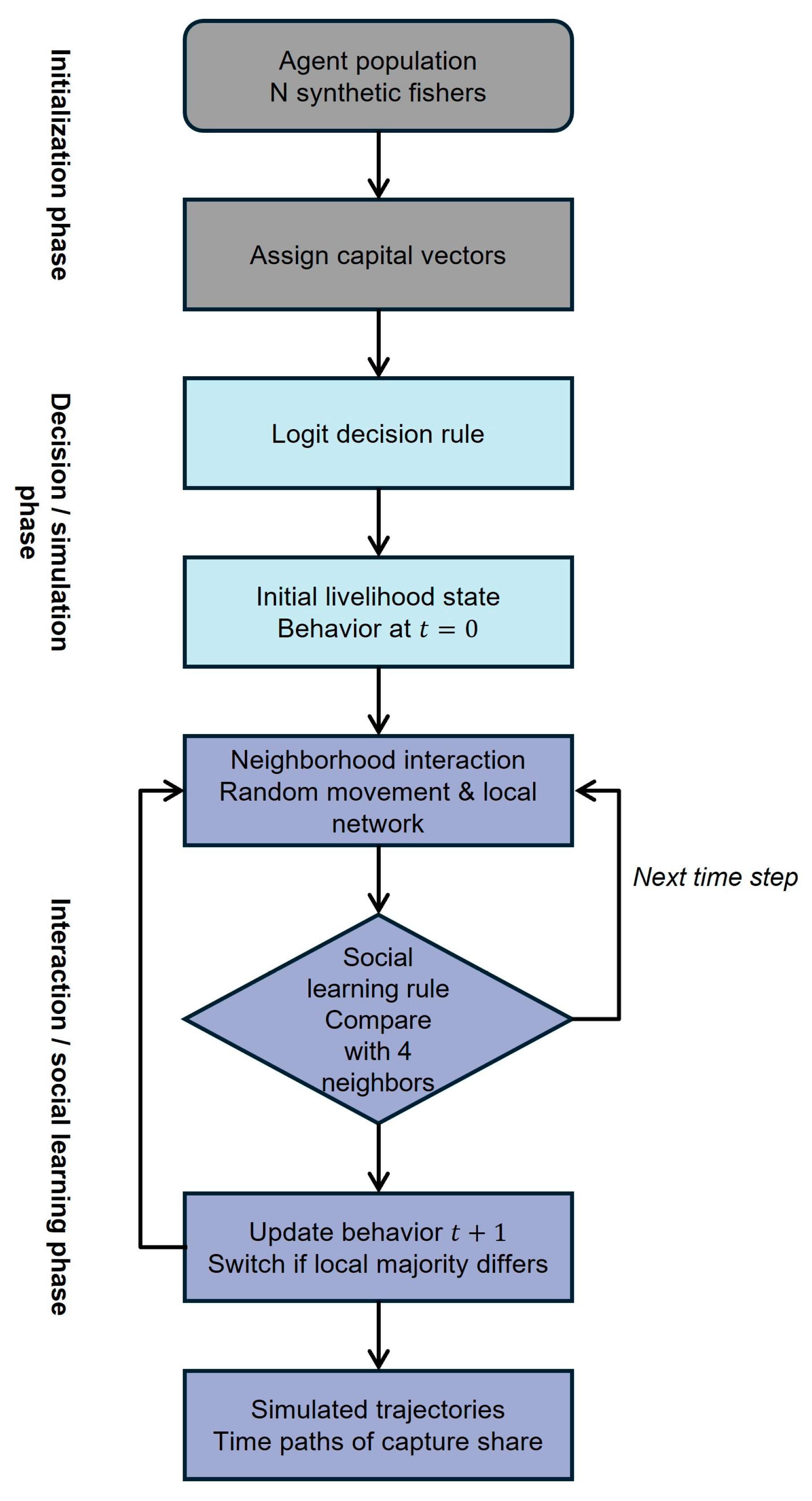
As shown in Figure 4, the agent decision mechanism comprises three stages: initialization stage—based on the empirical data, admissible ranges are specified for the seven types of livelihood capital, and each agent is randomly assigned values within these ranges; decision stage—each agent uses the logistic regression model to compute the probability of maintaining capture as the primary livelihood and makes its livelihood choice accordingly; interaction stage—agents undergo random movement and interact with their four adjacent neighbors within a local network, and if more than half of the neighbors chose a different livelihood strategy in the previous time step, the agent adjusts its behavior in the next step to align with the neighborhood norm, thereby approximating social learning and imitation effects. Under the baseline run, livelihood-capital vectors are held constant at their initialized values and only livelihood choices are updated over time. Increases in the simulated share of capture fishers therefore emerge from the interaction between the estimated baseline propensity for capture, given each agent’s capital profile, and the social-learning term, which amplifies prevailing local behavior through imitation. This baseline should thus be read as a stylized dynamic benchmark that isolates behavioral feedbacks under fixed capitals, rather than as a fully calibrated replication of any particular empirical time series.

2.4. Data Collection and Analysis

The survey instrument comprised three sections: demographic characteristics, livelihood-capital measures, and livelihood-choice items. The instrument was harmonized across the three sites and administered under standardized field protocols to ensure cross-site comparability. Except for basic demographic items, all variables were designed on a five-point Likert scale (from “strongly disagree” to “strongly agree”) to enhance measurement consistency and discrimination (see Table S2). In addition, we included four moratorium-related policy-perception items—M1 compensation standard, M2 compensation disbursement, M3 duration, and M4 procedure—which were mean-centered and entered as moderators to proxy subsidy/administration support shaping environmental, financial, and psychological conditions during closures. In June–July 2024, fieldwork was conducted at Yamen, Naozhou, and Yun’ao ports in Guangdong Province, combining semi-structured interviews with a structured questionnaire. Interviewees included local government and fisheries administration officials, focusing on enforcement of the moratorium, port governance, and fishers’ livelihood arrangements. All interviews were conducted and recorded with informed consent, and all data collection procedures complied with relevant ethical standards.
The questionnaire survey used stratified random sampling to recruit artisanal fishers from natural villages surrounding the three ports, with one primary livelihood decision-maker per household. In total, 184 valid questionnaires were collected (Yamen: 51, 27.7%; Naozhou: 83, 45.1%; Yun’ao: 50, 27.2%). The stratification was defined by port and by natural village within each port, ensuring coverage across the three sites and avoiding dominance by any single location. This stratified design captures cross-site heterogeneity while preserving comparability across the three fishery economic zones. In the econometric analysis, we therefore include port fixed effects and report robustness checks to address site-level heterogeneity and sample variability.
To ensure data quality, trained enumerators assisted respondents on site and verified questionnaires immediately upon completion. Prior to data merging, site-wise reliability and structural consistency checks were conducted to assess measurement comparability across ports, after which the datasets were integrated for analysis. Descriptive statistics for the sample are reported in Table 1. The mean age was 53.5 years; 64% of respondents had completed junior secondary education or higher; and monthly fishery income averaged CNY 5500. Average household size was 4.6 people with 1.6 children on average, indicating relatively high dependency ratios and heavier household economic burdens in this group. In addition, 43.5% of respondents identified capture fisheries as their full-time occupation, 20.3% operated vessels with lengths ≥ 12 m, and 19.1% used engines exceeding 44 kW, suggesting that most sampled fishers work with relatively small-scale vessels while a notable minority is engaged in higher-capacity operations.
To facilitate interpretation of the subsequent regression and simulation models, Table 2 summarizes the scales, labels, conceptual definitions, and descriptive statistics (sample size and standard deviation) for all variables used in the analysis, including the dependent livelihood-choice indicator and the seven categories of livelihood capital.
To assess data quality, reliability and validity tests were conducted on the sample using SPSS 29.0.1. The overall C r o n b a c h s   α for the 18-item livelihood capital scale was 0.70, which represents a modest but generally acceptable level of internal consistency for exploratory empirical research [42]. The Kaiser–Meyer–Olkin (KMO) statistic was 0.807, and Bartlett’s test of sphericity was highly significant ( χ 2 153 = 4274.825 ,   p < 0.001 ), indicating that the correlation matrix is suitable for factor analysis. Detailed reliability and validity statistics are reported in Table S3.
To address sporadic item non-response in the survey, we adopted a two-step strategy. The baseline logit, probit and LPM models were estimated on the complete-case sample. As a robustness check, we then implemented multiple imputations (MI) using a chained-equations framework: binary and ordinal items were imputed with logistic or ordered-logit regressions, and approximately continuous variables with linear regressions. All variables entering the regression models were included in the imputation model. Convergence and basic distributional diagnostics were checked before estimating the MI-based specifications, which are summarized in the robustness table, with further implementation details reported in Table S4.

3. Results

3.1. Regression Analysis Results

To test for multicollinearity in the data, variance inflation factors (VIFs) were calculated for all explanatory variables. The results showed that all VIF values were below 10, indicating that the model was not affected by severe multicollinearity (see Table S5).
Table 3 reports the estimated effects of different livelihood capital variables on fishers’ annual dependence on capture as the primary livelihood (defined as   60 % of household income derived from fishing). The results indicate good model fit ( M c F a d d e n s   R 2   =   0.641 ; C o x S n e l l   R 2   =   0.490 ; N a g e l k e r k e   R 2   =   0.754 ). Among the explanatory variables, infrastructure accessibility ( E C 1 ) under environmental capital was the strongest predictor ( O R   =   6.758 , 95 %   C I :   3.434 13.297 ,   p   <   0.001 ), indicating a significant positive relationship between external support conditions and capture dependence. In terms of financial capital, household annual income ( F C 3 ,   O R   =   4.676 , 2.204 9.920 ,   p   <   0.001 ) and social security coverage ( F C 4 ,   O R   =   3.150 , 1.544 6.429 ,   p   <   0.01 ) showed significant positive effects, while borrowing capacity ( F C 1 ,   O R   =   1.721 , 1.040 2.848 ,   p   < 0.05 ) had a marginal to moderate positive effect. By contrast, operating costs ( F C 2 ) were not significant ( O R   =   0.605 , 0.332 1.104 ,   p   =   0.102 ). Perceived livelihood crisis ( P s y C ) under psychological capital was positively associated with capture dependence ( O R   =   2.965 , 1.648 5.335 ,   p   < 0.001 ).
For physical capital, per capita housing area ( P C 1 ) was positively associated ( O R   =   1.765 , 1.208 2.581 ,   p   <   0.01 ), while vessel length ( P C 2 ) showed a negative association at the margin of significance ( O R   =   0.673 , 0.455 0.995 ,   p   <   0.05 ), suggesting that higher operating costs were linked to lower capture dependence. Although both indicators are grouped under physical capital, PC1 and PC2 capture different facets of material conditions (household residential assets versus vessel scale and operating costs), so their opposite signs reflect heterogeneous mechanisms rather than estimation instability. As all variance inflation factors for the explanatory variables are well below conventional thresholds (Table S4), these coefficients should be interpreted as partial associations conditional on the other capital variables and controls. Within social capital, S C 1 was significantly and negatively associated with capture dependence ( O R   = 0.272 , 0.133 0.559 ,   p   <   0.001 ), while S C 2 and S C 3 were not significant. Natural capital ( N C 1 ) and human capital ( H C 1 and H C 2 ) also showed no significant effects. Overall, infrastructure accessibility and financial security significantly increased the likelihood of maintaining capture as the primary livelihood strategy, with psychological capital also exerting a positive influence. In contrast, variables related to higher costs or broader opportunity sets tended to promote livelihood diversification. M1 (compensation standard satisfaction) shows a clear positive association with maintaining the original livelihood behavior ( O R 3.6 ), consistent with predictable criteria stabilizing expectations during closures. By contrast, M2–M4 (disbursement, duration, procedure) are small and negative ( O R < 1 ) with weak significance; interpret these as partial associations conditional on capitals/controls.

3.2. Robustness Test Results

To strengthen inference credibility, we implemented multi-dimensional robustness checks along two axes. First, we performed estimator substitution by re-estimating a binary probit model and a linear probability model, in addition to the baseline logit. All three use HC3 robust standard errors, include the same covariates as the baseline (seven livelihood-capital categories and institutional variables), and control for age, education, household size, and port fixed effects. Second, we examined livelihood-threshold sensitivity by complementing LD60 (≥60% of income from capture) with LD50 and LD70. A compact sign/significance summary is shown in Table 4 (***, **, * denote p < 0.01, 0.05, 0.10), and the full matrix appears in Table S4.
Across the nine specifications, signs are broadly consistent with the baseline while flagging a few threshold-sensitive cases. EC1 is stably positive; PsyC remains positive and significant under LD60/LD70. Financial depth/access (FC3–FC4) and HC1 are robust positives, while FC1 is generally positive with occasional attenuation. Negative effects concentrate in HC2 and PC2 at LD60 and weaken under LD50/LD70; PC1 is mostly positive. Social capital is mixed: SC1’s LD60 negativity attenuates, SC2 is small positive, and SC3 is threshold-sensitive. NC is positive at LD60/LD70 but turns negative at LD50, consistent with boundary reclassification; intercepts are negative. Overall, cross-estimator concordance and stability at LD60/LD70 support the main findings, with sensitivities chiefly around LD50. Thus, the coexistence of positive and negative coefficients within a given capital category is consistent across specifications and is best interpreted as capturing offsetting channels through which different facets of the same capital domain shape the relative attractiveness of capture versus diversified livelihoods, rather than as a sign of model misspecification. In addition, Table 4 reports MI-based variants for the LD50 and LD70 specifications. In these columns, MI denotes estimates obtained from the multiple-imputation procedure described in Section 2.4, which serve as a robustness check for item non-response and exhibit sign and significance patterns that are highly consistent with the complete-case results.
To further assess the risk of overfitting in the baseline logistic specification with 17 livelihood-capital predictors, we conducted a five-fold cross-validation on the analysis sample of 584 households. Out-of-fold performance remained high, with a mean AUC of 0.94 ( S D     0.03 ), mean accuracy of 0.92 ( S D     0.02 ), and an average Brier score of about 0.06 (Table S6). These results suggest that, despite the relatively rich covariate set, the model’s predictive performance generalizes well within the sample, and the main patterns are unlikely to be driven by extreme overfitting.
In addition, recognizing that infrastructure support (EC1) and fishing income (FC1) may be subject to reverse causality and omitted-variable bias, we estimated three sensitivity specifications that, respectively, exclude EC1, exclude FC1, and exclude both from the baseline covariate set. Across these specifications, the signs and significance patterns of the other key capital dimensions—particularly financial capital (FC3, FC4), social capital (SC1), and psychological capital (PsyC)—remain broadly stable, even though the magnitudes of EC1 and FC1 themselves change when included (Table S7). This indicates that the main association patterns do not hinge on the precise treatment of these potentially endogenous variables, although we do not claim to have fully resolved endogeneity with cross-sectional data.

3.3. ABM Simulation Results

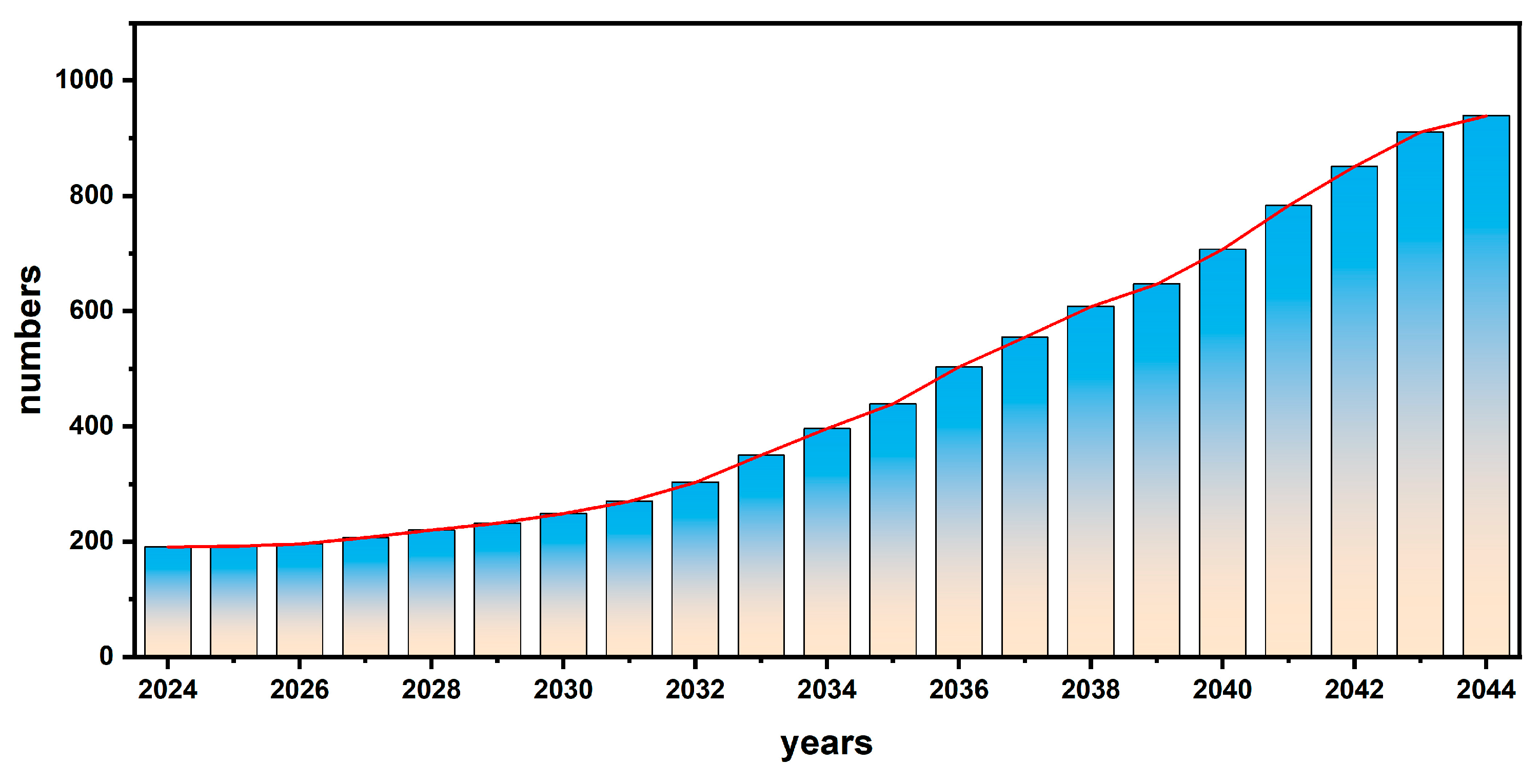
Figure 5 displays the simulated number of fishers (out of the normalized 1000 agent population) who maintain capture as their primary livelihood under the baseline ABM configuration. The trajectory follows an S-shaped pattern, with a modest increase during 2024–2030, a more pronounced acceleration in the early 2030s, and a gradual deceleration as the curve approaches a plateau in the later years. These dynamics arise from the interaction between the estimated logit-based decision rule and the social-learning term under fixed institutional settings and slowly evolving capital stocks. The absolute levels and timing of the changes are not intended to reproduce any specific empirical time series and should be read as stylized illustrations of how, in the model, self-reinforcing behavioral adjustments could emerge under a mature moratorium regime. Accordingly, we focus on the relative timing and qualitative shape of the curve, rather than on single-year counts.
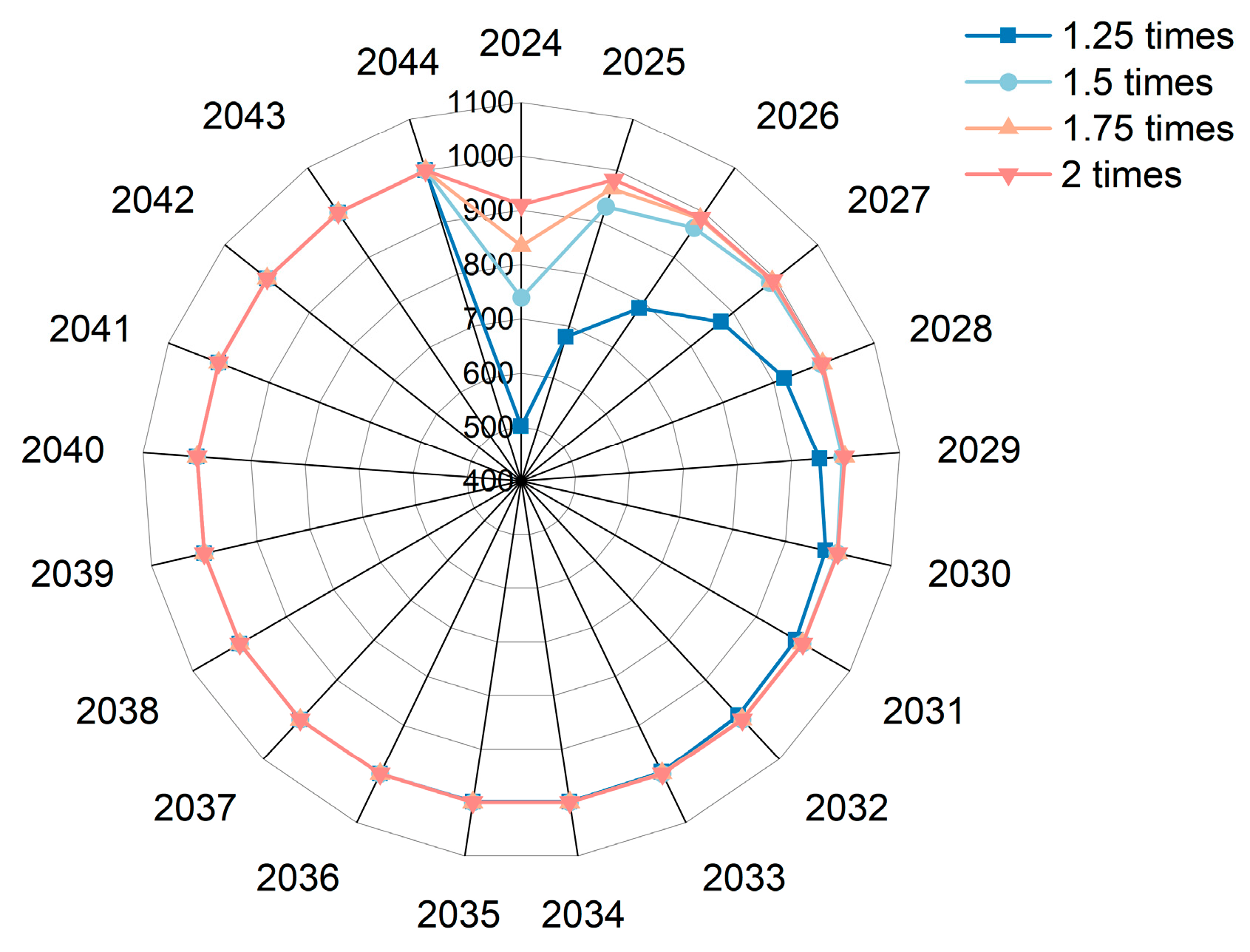
For the polar charts, years are arranged clockwise from 2024 to 2044, and the radius represents the simulated number of agents (out of 1000) who still rely primarily on capture as their livelihood; a large radius therefore indicates greater persistence of the original livelihood choice. Figure 6 summarizes how different degrees of aggregate livelihood capital enhancement influence capture persistence in the ABM scenarios. Initial capital endowments are scaled by multipliers of 0.8, 1.0, 1.2, and 1.5 to examine path sensitivity. In the simulations, higher multipliers lead to earlier and more pronounced increases in capture persistence, with the curves reaching a higher plateau sooner, while lower multipliers show slower adjustment and occasional mid-term retreats as agents temporarily diversify before reconverging to capture. By the end of the simulated period, all scenarios converge toward a relatively high plateau. This convergence reflects the particular functional forms and parameter values chosen for capital accumulation and learning. We interpret it as an illustration of the model’s internal dynamics and of how stronger capital support can dampen behavioral volatility, rather than as a literal prediction that real-world fishers will converge to a specific capture level.
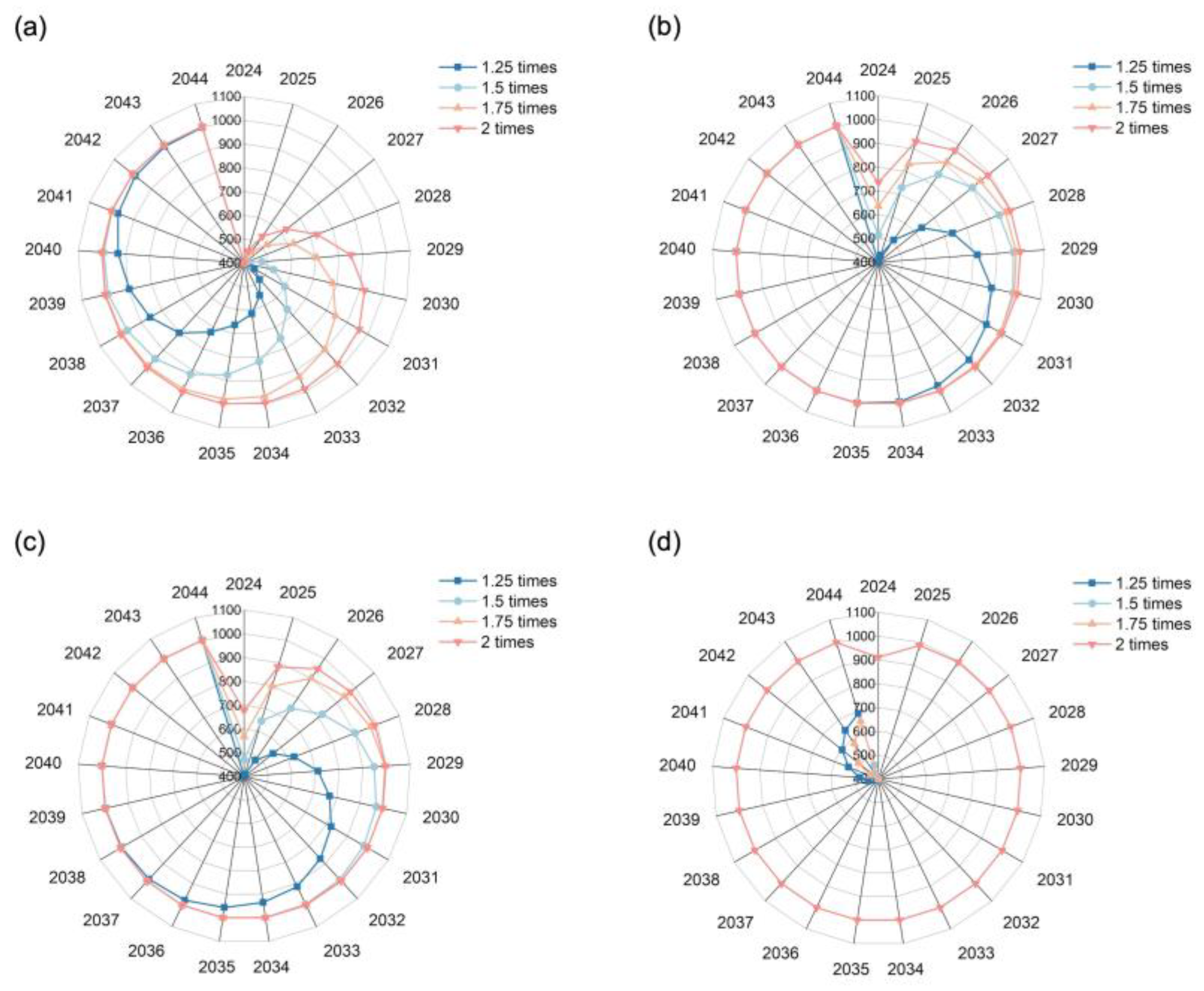
To examine the heterogeneous effects of key livelihood capital domains on fishers’ annual livelihood portfolios, we focused the ABM on four capital categories that exhibited relatively strong and policy-relevant associations in the regression analysis: physical, financial, environmental, and psychological capital (Figure 7). Although one social capital indicator (SC1) also shows a statistically significant association with capture dependence, its role is relational and context-specific. We therefore retain social capital in the ABM, in order to keep the scenario space tractable and aligned with the main policy levers (infrastructure, financial support, environmental conditions, and psychological expectations) targeted in the moratorium context.
In Figure 7a–d, the scenario multipliers are applied only to the initial levels of one capital type at a time, while holding other capitals at their baseline values, to isolate their dynamic influence on capture persistence. Increasing physical capital accelerates the early consolidation of capture, whereas higher financial capital produces more gradual but sustained gains, with temporary mid-term volatility as agents experiment before re-committing. Environmental capital shows delayed early effects followed by faster mid-term acceleration once bottlenecks in infrastructure and ecosystem quality are overcome. Psychological capital has the slowest and most asymmetric impact, reflecting the time needed for expectations and perceived security to adjust. In each case, the shapes of the trajectories are driven by the assumed thresholds and learning dynamics and are meant to illustrate the relative speed and nonlinearity of behavioral responses to different capital levers, not to forecast exact future numbers of capture fishers under specific policies.

4. Discussion

4.1. Structural Drivers of Livelihood Capital in Shaping Fishers’ Behavioral Decisions

Within the annual-dependence framework, livelihood capital is associated with fishers’ behavioral choices via channels such as liquidity constraints, cost structures, and expectation management. We interpret these patterns as within-sample associations observed under the moratorium setting and model assumptions, not definitive causal effects, and we scope applicability to contexts similar to the study sites. In physical capital, better housing conditions were associated with more stable annual livelihood portfolios, consistent with the interpretation that household assets may buffer cash-flow fluctuations during the moratorium and support risk resilience [43]. In contrast, larger vessels were associated with greater fixed-cost exposure and capital lock-in, which may raise perceived opportunity costs during closures and reduce the relative attractiveness of maintaining capture as the primary livelihood [5]. Financial capital exhibited positive associations: higher household income and broader social security coverage were associated with greater consumption-smoothing and risk-bearing capacity, while access to credit was additionally associated with marginal buffering; these patterns align with evidence that financial inclusion improves risk management among vulnerable groups [44].
Environmental and psychological capital showed both foundational and contextual associations with annual livelihood composition. Infrastructure accessibility was the strongest correlate in the multivariate framework, consistent with the idea that lower transaction costs and better market access support capture dependence—echoing evidence from Indonesian fishing villages [20]. Within psychological capital, the positive association between perceived livelihood crisis and maintaining established livelihood paths is consistent with risk-aversion and familiarity preferences under uncertainty [19]. Conversely, the negative association between social network strength and capture dependence may reflect that broader bridging ties are associated with expanded access to non-fishery opportunities, encouraging selective diversification rather than passive exit.
Natural and human capital were not statistically significant in this sample, which may indicate that under predictable seasonal constraints, the marginal salience of institutional, financial, and environmental conditions is greater; caution is warranted in generalizing this pattern. Overall, across dimensions, livelihood capital is associated with variation in annual livelihood choices through complementary economic and cognitive channels, with relative importance appearing to vary in this sample with institutional settings and cost structures.

4.2. Dynamic and Heterogeneous Characteristics of Livelihood Capital Accumulation

Under the baseline ABM assumptions, the time-series trajectories of fishers who maintain capture as their primary livelihood show an S-shaped pattern, with a modest early increase, a mid-term acceleration, and a later deceleration towards a plateau. Consistent with our use of the ABM as a mechanism-oriented scenario tool rather than a forecasting device, we interpret this S-shaped curve as a stylized depiction of how, within the model, accumulated livelihood capital and social learning can support behavioral stability under the existing moratorium regime, rather than as a literal projection of future fisher numbers. In the early years, the gradual increase suggests that, given the estimated decision rule, only a subset of agents with relatively favorable capital bundles maintain capture, while others diversify or exit. As the system moves into the mid-term, the curve’s marked acceleration reflects the transition from individual maintenance to collective convergence once a critical threshold is crossed, echoing prior arguments that cumulative asset growth generates stronger behavioral incentives [19]. Toward the end, the slope declines as the simulated increase slows, indicating diminishing marginal returns and growth saturation in higher-capital ranges, where additional capital exerts only limited behavioral influence. Within the model, this pattern illustrates that behavioral adjustments are more evident in the medium to long term, while short-term fluctuations are insufficient to alter the combination of capital constraints and risk expectations [45]. It is imperative to acknowledge the model-dependency of these dynamics, which should be regarded as a description of mechanisms rather than an empirical identification of causal thresholds. In this sense, the simulated S-shaped trajectories are qualitatively consistent with asset-based models of livelihood and poverty dynamics, where initial constraints, take-off phases, and subsequent saturation of returns to additional capital have been documented [45,46]. Because capital endowments are fixed in this baseline configuration, the steep rise in capture persistence does not reflect endogenous capital accumulation but rather the self-reinforcing adjustment of behavior. Once early stochastic variation and the estimated logit-based propensities shift the local average above the tipping region, the social-learning term rapidly aligns most agents with the dominant livelihood choice. This pattern should therefore be interpreted as a plausible illustration of how behavioral feedbacks can sustain or intensify capture under favorable initial conditions, not as a literal prediction of future capture rates in any specific port.
Sensitivity analyses of capital levels are consistent with this structure: higher initial capital enables earlier entry into and maintenance of a high and stable state, whereas at lower multipliers, trajectories exhibit a temporary mid-term retreat before rising again. Such non-monotonic pathways reflect asymmetry near threshold zones and delays in social learning [47]. These results suggest that capital enhancement may affect not only the steady-state level but also the timing of its attainment. When the system approaches a threshold, behaviors become more sensitive to minor disturbances before reconverging under expectation adjustment [48,49]. This supports the conclusion that while livelihood capital is a key driver, its incentive effects are not indefinitely sustainable and must be coupled with institutional support to generate synergistic outcomes [50]. This interpretation echoes broader evidence from sustainable livelihoods and rural development studies that capital enhancement alone rarely delivers sustained transitions without complementary institutional and governance reforms [46].
The temporal and nonlinear differences across capital types further reveal underlying heterogeneity in behavioral mechanisms. Financial and physical capital exert strong early incentives, consistent with the view that asset bases and financial accessibility facilitate consumption smoothing and risk absorption [51]. At lower multipliers, however, short-lived mid-term retreats emerge, reflecting non-monotonic transitions near thresholds and lags in expectation calibration. Environmental capital shows delayed early associations followed by rapid acceleration, indicating that its behavioral influence depends on the reliability of institutional enforcement and public service provision, with a leap once bottlenecks are overcome [52]. By contrast, psychological capital accumulates slowly and asymmetrically, aligning with the perspective that its effectiveness relies on long-term factors such as institutional credibility, perceived security, and cognitive readiness [53]. Overall, the capital–behavior relationship appears nonlinear in this setting but shaped jointly by threshold effects, diminishing returns, and type-specific differences. Such nonlinear and threshold-like patterns in capital–behavior linkages are in line with empirical work on livelihood and social–ecological traps, where small increases in assets or perceived security do not immediately trigger behavioral shifts until expectations and social learning adjust [54,55]. Overall, therefore, the ABM trajectories should be viewed as internally consistent illustrations of possible adjustment paths under the calibrated parameter settings. They are not expected to match historical or future time series for any specific fishing community and should not be interpreted as precise quantitative predictions.

4.3. Limitations and Future Work

In terms of data processing, although this study employed T-GAN to expand the sample and enhance robustness, its ability to capture higher-order dependencies and to provide interpretability of joint distributions in structured tabular data remains limited. In addition, the generated samples lack explicit probabilistic assumptions, which may affect statistical consistency and the interpretation of results. Regarding model construction, constrained by data availability and tractability, the ABM did not explicitly incorporate macro-level variables such as enforcement intensity, market fluctuations, or community norms. Instead, it emphasized livelihood-capital allocation and localized social interactions, which may have led to an overemphasis on endogenous mechanisms. Furthermore, the model treated individuals as the unit of analysis without adequately representing household and community-level linkages, thereby potentially underestimating cross-level transmission and amplification effects. Beyond policy-induced closures, fishers increasingly face exogenous shocks such as fewer safe fishing days and higher operating costs linked to climate variability; the current design does not capture these climate-linked shocks, which could influence the magnitude and timing of behavioral volatility. Relatedly, because our survey covers only a single cross-section in three ports, we cannot calibrate the social-learning strength or other ABM parameters to multi-year empirical moments or directly identify long-term changes in the moratorium’s effects. The ABM is therefore used as an exploratory, mechanism-oriented tool, and its outputs are interpreted as directional and qualitative rather than as precise quantitative forecasts. Accordingly, the combined T-GAN–logit–ABM pipeline should be interpreted as a scenario exploration tool that approximates plausible future paths of livelihood choices and capital dynamics conditional on the assumed policy environments, rather than as a precise forecasting system of exact fisher numbers in each livelihood category. From an identification perspective, our cross-sectional design and the simultaneous measurement of infrastructure access and income mean that we cannot rule out endogeneity for variables such as EC1 and FC1. Sensitivity checks in Table S7 indicate that excluding these variables does not materially alter the main association patterns for other capital dimensions, but estimates should still be viewed as within-sample correlations rather than causal effects, and future work using panel data, policy timing or intensity changes, or historical and infrastructural instruments will be needed to better address these concerns.
Future research may proceed along three directions. First, future work could benchmark alternative tabular data synthesizers, including CTGAN- and CTAB-GAN-type conditional architectures, alongside graph-based generation methods (combining causal Bayesian networks with diffusion-based approaches), and validate synthetic data against stratified tracking datasets, thereby improving representativeness, transparency, and external validity. Second, within a tractable modeling framework, macro-level variables such as enforcement intensity and price fluctuations could be parameterized for scenario-based sensitivity analyses; in parallel, embedding simple exogenous shocks—e.g., reductions in workable sea days or increases in fuel costs—into the agent-based model would clarify how livelihood capital buffers or amplifies behavioral volatility. This extension would align the study with climate-risk adaptation and provide a lightweight bridge to ecosystem objectives without modeling stock dynamics explicitly. Third, multi-level variables—including household capital portfolios, community governance characteristics, and network structures—could be incorporated into sampling and model design to establish an individual–household–community nested framework, allowing a more accurate depiction of institutional adaptation and resource allocation processes and providing replicable empirical evidence for policy evaluation.

5. Conclusions and Policy Implications

5.1. Conclusions

Our analysis suggests that livelihood-capital structures are central to fishers’ annual choices under a long-term and predictable moratorium: higher endowments—particularly the two extensions introduced here, environmental and psychological capital—consistently raise the likelihood of maintaining their original livelihood behavior, while several dimensions display heterogeneous or threshold-sensitive effects across years and sites. The timing and shape of influence differ by capital—financial resources act early with diminishing returns near decision thresholds, environmental capital accelerates in the mid-term as service reliability cumulates, physical capital strengthens gradually, and psychological capital consolidates steadily—providing a time-phased mechanism map for intervention.
Conceptually, extending the Sustainable Livelihoods Approach to include environmental and psychological capital offers an innovation that improves explanatory power near decision boundaries and complements the traditional five-capital view without redundancy. Methodologically, the integrated pipeline—data augmentation to handle small, heterogeneous samples, econometric modeling to identify marginal effects, and agent-based simulation to trace year-by-year trajectories—links individual endowments to dynamic aggregate patterns in a transparent, reproducible way. Taken together, these contributions furnish a generalizable toolkit and threshold-aware diagnostics that are transferable beyond the Guangdong cases to small-scale fisheries facing predictable seasonal closures or similar institutional shocks, thereby enhancing the broader relevance of the findings for coastal governance and livelihood policy.

5.2. Policy Implications

Our results indicate that behavioral changes under the seasonal moratorium map onto sustainable livelihoods through two reinforcing channels—steadier intra-year incomes and a more resilient activity mix that stabilizes annual choices. Environmental capital (access to ports and basic services), household financial security, and psychological capital are the strongest stabilizers of maintaining the original livelihood behavior, whereas higher operating costs and wider bridging ties tend to encourage selective diversification. Policy design should therefore follow an income-stability-first principle that steers “good” responses—compliance, low-impact/selective gear, paid ecological work during closure, and orderly diversification—aimed at safeguarding livelihoods without expanding effort.
Counter-cyclical finance synchronized with closure months can smooth cash flows and expectations, translating financial and psychological capital into lower downside risk. At community scale, expand small-ticket credit, revolving loans, and mutual insurance with repayment/settlement aligned to the moratorium; where feasible, complement with matched seasonal savings and closure-indexed micro-insurance that trigger in the off-season [56]. To avoid incentive mismatches, pair any financial expansion with effort caps and compliance-linked interest subsidies [57].
An off-season income floor can be provided without increasing effort by funding paid ecological work (habitat restoration, marine-litter removal), which both supplements earnings and strengthens ecosystem capacity [58]. Complement this with the promotion of low-impact, selective gear and simplified monitoring/grievance channels to reduce juvenile catch and bycatch [59,60], and with value-chain tools—quality grading, compliance labels, and stable procurement or long-term contracts—to lift unit prices and keep incomes predictable [61]. These steps operationalize environmental capital as a lever for income stability.
Finally, institutionalize psychological-capital services within routine public programs to enhance predictability and reduce behavioral swings: family-oriented communication, transparent information, and consistent rules should be coupled with stress/emotion management and targeted upskilling for port-service jobs to build self-efficacy and risk awareness [26,58]. At the community level, embed compliance–benefits–ecology loops and track progress with simple signals—such as steadier earnings, on-time loan repayment, participation in ecological work, price premiums for compliant products, and rule adherence. Programs can be iteratively adjusted while supporting stock recovery and ecosystem resilience.

Supplementary Materials

The following supporting information can be downloaded at: https://www.mdpi.com/article/10.3390/fishes10120643/s1, Table S1: Definition of livelihood capital and its research relevance; Table S2: Questionnaire on fishermen’s livelihood capital and livelihood behavior; Table S3: Reliability and validity test results; Table S4: Robustness test; Table S5: Multicollinearity test; Table S6: Five-fold cross-validation performance of the baseline logistic regression model; Table S7: Sensitivity analyses excluding potentially endogenous capital indicators.

Author Contributions

Y.W.: writing—review and editing, writing—original draft, visualization, validation, software, methodology, data curation. M.C.: writing—supervision, resources, project administration, methodology, investigation, funding acquisition, conceptualization. H.Y.: writing—review and editing, visualization, validation, software, methodology, investigation. All authors have read and agreed to the published version of the manuscript.

Funding

This research was funded by the Southern Marine Science and Engineering Guangdong Laboratory (Zhuhai) 2020 Project, No. SML2020SP002. This paper was also funded by National Social Science Foundation of China (Grant No. 21BSH056).

Institutional Review Board Statement

The study was conducted in accordance with the Declaration of Helsinki. Ethical review and approval were not required for this study in accordance with institutional policies on exempt research for minimal-risk, non-interventional social surveys with anonymous adult participants. Specifically, the “Exempt Review—Public Behavior/Survey/Interview/Observation” category that requires no directly or indirectly identifying information (generally not applicable to minors) is recognized in institutional guidance. In Macao, institutional practice likewise indicates that non-anonymous participation is normally not eligible for a waiver, implying that anonymous participation is a key condition for exemption. Supporting documents are available upon request.

Informed Consent Statement

Informed consent was obtained from all participants prior to data collection. Participation was voluntary and anonymous; no identifying information was collected. Verbal consent was obtained using a standardized script due to field conditions and varying literacy levels; the script is available upon request.

Data Availability Statement

The data that support the findings of this study are available from the corresponding author upon reasonable request. The dataset contains information that could potentially compromise participant privacy and community confidentiality; therefore, it is not publicly available. A de-identified, aggregated extract and the analysis codebook can be shared on request.

Acknowledgments

We thank the Marine Conservation and Integrated Governance Interdisciplinary Team (MCIGI) for their support and help and all the scholars for their help in the process of writing the paper. We also gratefully acknowledge the anonymous reviewers for their valuable time spent reviewing this paper.

Conflicts of Interest

The authors declare that they have no known competing financial interests or personal relationships that could have appeared to influence the work reported in this paper. The authors declare the following financial interests/personal relationships which may be considered as potential competing interests.

References

  1. Wang, D.; Gao, H. China Fishery Statistical Yearbook; China Statistics Press: Beijing, China, 2024. [Google Scholar] [CrossRef]
  2. He, Q.; Bertness, M.D.; Bruno, J.F.; Li, B.; Chen, G.; Coverdale, T.C.; Altieri, A.H.; Bai, J.; Sun, T.; Pennings, S.C. Economic development and coastal ecosystem change in China. Sci. Rep. 2014, 4, 5995. [Google Scholar] [CrossRef] [PubMed]
  3. Liu, Z.; Lu, W.; Wang, T.; Zhang, Y.; He, L.; Yang, L.; Deng, L. The assessment of carrying capacity of marine fishery resources in China. Front. Mar. Sci. 2025, 11, 1518235. [Google Scholar] [CrossRef]
  4. Xu, L.; Song, P.; Wang, Y.; Xie, B.; Huang, L.; Li, Y.; Zheng, X.; Lin, L. Estimating the impact of a seasonal fishing moratorium on the East China Sea ecosystem from 1997 to 2018. Front. Mar. Sci. 2022, 9, 865645. [Google Scholar] [CrossRef]
  5. Chen, Q.; Su, H.; Yu, X.; Hu, Q. Livelihood vulnerability of marine fishermen to multi-stresses under the vessel buyback and fishermen transfer programs in China: The case of Zhoushan City, Zhejiang Province. Int. J. Environ. Res. Public Health 2020, 17, 765. [Google Scholar] [CrossRef]
  6. Wu, X.; Nie, X.; Chen, Z.; Wang, H.; Kang, Q.; Lei, W. How to improve the adaptive capacity of coastal zone farm households?--explanation based on complementary and alternative relationships of livelihood capital in a sustainable livelihood framework. Ocean Coast. Manag. 2023, 245, 106853. [Google Scholar] [CrossRef]
  7. Chen, M.; Wang, Y.; Xu, Z. A framework for assessing the blue equity of social-ocean systems in marine governance transformation. Front. Mar. Sci. 2024, 11, 1403194. [Google Scholar] [CrossRef]
  8. Allison, E.H.; Horemans, B. Putting the principles of the sustainable livelihoods approach into fisheries development policy and practice. Mar. Policy 2006, 30, 757–766. [Google Scholar] [CrossRef]
  9. d’Armengol, L.; Castillo, M.P.; Ruiz-Mallén, I.; Corbera, E. A systematic review of co-managed small-scale fisheries: Social diversity and adaptive management improve outcomes. Glob. Environ. Change 2018, 52, 212–225. [Google Scholar] [CrossRef]
  10. Zhang, C.; Fang, Y.; Chen, X.; Congshan, T. Bibliometric analysis of trends in global sustainable livelihood research. Sustainability 2019, 11, 1150. [Google Scholar] [CrossRef]
  11. Kumar, A.; Mohanasundari, T. Assessment of livelihood vulnerability to climate change among tribal communities in Chhindwara and Dhar district, Central India. Sci. Rep. 2025, 15, 8843. [Google Scholar] [CrossRef] [PubMed]
  12. Li, H.; Nijkamp, P.; Xie, X.; Liu, J. A new livelihood sustainability index for rural revitalization assessment—A modelling study on smart tourism specialization in China. Sustainability 2020, 12, 3148. [Google Scholar] [CrossRef]
  13. Berchoux, T.; Watmough, G.R.; Amoako Johnson, F.; Hutton, C.W.; Atkinson, P.M. Collective influence of household and community capitals on agricultural employment as a measure of rural poverty in the Mahanadi Delta, India. Ambio 2020, 49, 281–298. [Google Scholar] [CrossRef]
  14. Novotny, I.P.; Fuentes-Ponce, M.H.; Lopez-Ridaura, S.; Tittonell, P.; Rossing, W.A. Longitudinal analysis of household types and livelihood trajectories in Oaxaca, Mexico. J. Rural. Stud. 2021, 81, 170–181. [Google Scholar] [CrossRef]
  15. Ba, F.; Li, X.; Ding, Y.; Tang, L. Livelihood transformation from fishing to tourism: An adaptive sustainable livelihood framework for understanding lakeside communities of China. Front. Agric. Sci. Eng. 2024, 11, 589–601. [Google Scholar] [CrossRef]
  16. Ma, H.; Zhong, Y.; Ou, M.; Wang, W.; Feng, X. The Transformation of Fishermen’s Livelihoods in the Context of a Comprehensive Fishing Ban: A Case Study of Datang Village at the Poyang Lake Region, China. Land 2022, 11, 2262. [Google Scholar] [CrossRef]
  17. de Almeida Leite, E.M.; Audretsch, D. Organizational emergence theory: Addressing invisible conflicts and emerging dynamics in entrepreneurship. Rev. Manag. Sci. 2025, 1–28. [Google Scholar] [CrossRef]
  18. Lindkvist, E.; Wijermans, N.; Daw, T.M.; Gonzalez-Mon, B.; Giron-Nava, A.; Johnson, A.F.; van Putten, I.; Basurto, X.; Schlüter, M. Navigating complexities: Agent-based modeling to support research, governance, and management in small-scale fisheries. Front. Mar. Sci. 2020, 6, 733. [Google Scholar] [CrossRef]
  19. Harik, G.; Alameddine, I.; Zurayk, R.; El-Fadel, M. An integrated socio-economic agent-based modeling framework towards assessing farmers’ decision making under water scarcity and varying utility functions. J. Environ. Manag. 2023, 329, 117055. [Google Scholar] [CrossRef] [PubMed]
  20. Dou, Y.; Deadman, P.J.; Berbés-Blázquez, M.; Vogt, N.D.; Almeida, O. Pathways out of poverty through the lens of development resilience: An agent-based simulation. Ecol. Soc. 2020, 25, 3. [Google Scholar] [CrossRef]
  21. Xu, L.; Skoularidou, M.; Cuesta-Infante, A.; Veeramachaneni, K. Modeling tabular data using conditional gan. Adv. Neural Inf. Process. Syst. 2019, 32, 7335–7345. [Google Scholar]
  22. Zhao, Z.; Kunar, A.; Birke, R.; Chen, L.Y. Ctab-gan: Effective table data synthesizing. In Proceedings of the Asian Conference on Machine Learning, online, 17–19 November 2021; PMLR: Cambridge, MA, USA, 2021; pp. 97–112. [Google Scholar]
  23. Bourou, S.; El Saer, A.; Velivassaki, T.-H.; Voulkidis, A.; Zahariadis, T. A review of tabular data synthesis using GANs on an IDS dataset. Information 2021, 12, 375. [Google Scholar] [CrossRef]
  24. DFID. Sustainable Livelihoods Guidance Sheets; DFID: London, UK, 1999.
  25. Wang, C.; Pang, W.; Hong, J. Impact of a regional payment for ecosystem service program on the livelihoods of different rural households. J. Clean. Prod. 2017, 164, 1058–1067. [Google Scholar] [CrossRef]
  26. Clark, C.W.; Munro, G.R. Capital theory and the economics of fisheries: Implications for policy. Mar. Resour. Econ. 2017, 32, 123–142. [Google Scholar] [CrossRef]
  27. Li, L.; Zhang, P.; Lo, K.; Liu, W.; Li, J. The Evolution of Regional Economic Resilience in the Old Industrial Bases in China: A Case Study of Liaoning Province, China. Chin. Geogr. Sci. 2020, 30, 340–351. [Google Scholar] [CrossRef]
  28. Werdofa, Z.G.; Kassahun, S.; Gashu, K. Household livelihood diversification and its determinant factors in Robe town and its surrounding hinterlands, Bale zone, southeast Ethiopia. Humanit. Soc. Sci. Commun. 2024, 11, 1744. [Google Scholar] [CrossRef]
  29. Islam, M.M.; Begum, A.; Rahman, S.M.A.; Ullah, H. Seasonal fishery closure in the northern Bay of Bengal causes immediate but contrasting ecological and socioeconomic impacts. Front. Mar. Sci. 2021, 8, 704056. [Google Scholar] [CrossRef]
  30. Wade, E. Fishers’ responses to future catch declines in Jamaican small-scale fisheries. ICES J. Mar. Sci. 2025, 82, fsaf070. [Google Scholar] [CrossRef]
  31. Zhang, L.; Wu, Q.; Zhou, Y.; Ma, S. The Satisfaction of the Fishermen in the South China Sea with the Summer Fishing Moratorium System and Its Influencing Factors. Front. Environ. Sci. 2022, 9, 770643. [Google Scholar] [CrossRef]
  32. Andrews, E.J.; Wolfe, S.; Nayak, P.K.; Armitage, D. Coastal fishers livelihood behaviors and their psychosocial explanations: Implications for fisheries governance in a changing world. Front. Mar. Sci. 2021, 8, 634484. [Google Scholar] [CrossRef]
  33. Roscher, M.B.; Waleilia, B.; Waleilia, M.R.; Batalofo, M.; Sukulu, M.; Eriksson, H. Using hypothetical scenarios to explore potential trade-offs and rebound effects from livelihoods projects in the Pacific Islands: A case study from Langalanga, Solomon Islands. Ecol. Soc. 2025, 30, 9. [Google Scholar] [CrossRef]
  34. Manlosa, A.O.; Hanspach, J.; Schultner, J.; Dorresteijn, I.; Fischer, J. Livelihood strategies, capital assets, and food security in rural Southwest Ethiopia. Food Secur. 2019, 11, 167–181. [Google Scholar] [CrossRef]
  35. Pereira, J.G.; Rosalino, L.M.; Ekblom, A.; Santos, M.J. Livelihood vulnerability and human-wildlife interactions across protected areas. Ecol. Soc. 2024, 29, 13. [Google Scholar] [CrossRef]
  36. Costello, M.J. Fully protected Marine Protected Areas do not displace fisheries. Proc. Natl. Acad. Sci. USA 2024, 121, e2412543121. [Google Scholar] [CrossRef]
  37. Goodfellow, I.; Pouget-Abadie, J.; Mirza, M.; Xu, B.; Warde-Farley, D.; Ozair, S.; Courville, A.; Bengio, Y. Generative adversarial networks. Commun. ACM 2020, 63, 139–144. [Google Scholar] [CrossRef]
  38. Kamau-Mbuthia, E.; Lesorogol, C.; Wamukota, A.; Humphries, A.; Sarange, C.; Mbeyu, R.; Cheupe, C.; Cheupe, J.; Nunez-Garcia, A.; Blackmore, I. Sustainable aquatic food systems: Multisectoral analysis of determinants of child nutrition in coastal Kenya. Front. Sustain. Food Syst. 2023, 7, 1091339. [Google Scholar] [CrossRef]
  39. Holland, D.S.; Abbott, J.K.; Norman, K.E. Fishing to live or living to fish: Job satisfaction and identity of west coast fishermen. Ambio 2020, 49, 628–639. [Google Scholar] [CrossRef] [PubMed]
  40. Villasante, S.; Macho, G.; Silva, M.R.; Lopes, P.F.; Pita, P.; Simón, A.; Balsa, J.C.M.; Olabarria, C.; Vázquez, E.; Calvo, N. Resilience and social adaptation to climate change impacts in small-scale fisheries. Front. Mar. Sci. 2022, 9, 802762. [Google Scholar] [CrossRef]
  41. Roscher, M.; Eriksson, H.; Sharp, M.; Menaouer, O.; Andrew, N. Decadal characteristics of small-scale fishing livelihoods in 13 Pacific Island Countries and Territories. ICES J. Mar. Sci. 2023, 80, 1963–1975. [Google Scholar] [CrossRef]
  42. Hair, J.F.; Black, W.C.; Babin, B.J.; Anderson, R.E. Multivariate Data Analysis; Pearson Prentice Hall: New York, NY, USA, 2009. [Google Scholar]
  43. Azis, F.; Idris, R.; Agustang, A. Involution fisheries: Post-study model of national program in integrated movement at community fishermen’s village development arungkeke, Jeneponto. Mediterr. J. Soc. Sci. 2017, 8, 441. [Google Scholar] [CrossRef]
  44. Mbebeb, F.E.; Gakuna, F.E.; Ngwenyi, K.M. Working in Harmony with Nature: Physical and Mental Cultural Ecology as Motivators of inland Fishers in Bambalang, North West Cameroon. Int. J. Bus. Soc. Sci. 2019, 10, 106–117. [Google Scholar] [CrossRef]
  45. Ellis, F. Rural Livelihoods and Diversity in Developing Countries; Oxford University Press: Oxford, UK, 2000. [Google Scholar]
  46. Scoones, I. Sustainable Rural Livelihoods: A Framework for Analysis; Institute of Development Studies Brighton: Brighton, UK, 1998. [Google Scholar]
  47. Bikhchandani, S.; Hirshleifer, D.; Tamuz, O.; Welch, I. Information cascades and social learning. J. Econ. Lit. 2024, 62, 1040–1093. [Google Scholar] [CrossRef]
  48. González-Avella, J.C.; Eguíluz, V.M.; Marsili, M.; Vega-Redondo, F.; San Miguel, M. Threshold learning dynamics in social networks. PLoS ONE 2011, 6, e20207. [Google Scholar] [CrossRef]
  49. Liu, W.; Liu, J.; Xu, J.; Li, J.; Feldman, M. Examining the links between household livelihood resilience and vulnerability: Disaster resettlement experience from rural China. Front. Environ. Sci. 2024, 11, 1340113. [Google Scholar] [CrossRef]
  50. Zhang, Y.; Zhao, W. Social capital’s role in mitigating economic vulnerability: Understanding the impact of income disparities on farmers’ livelihoods. World Dev. 2024, 177, 106515. [Google Scholar] [CrossRef]
  51. Islam, R.; Walkerden, G. Livelihood assets, mutual support and disaster resilience in coastal Bangladesh. Int. J. Disaster Risk Reduct. 2022, 78, 103148. [Google Scholar] [CrossRef]
  52. Zhong, F.; Ying, C.; Fan, D. Public service delivery and the livelihood adaptive capacity of farmers and herders: The mediating effect of livelihood capital. Land 2022, 11, 1467. [Google Scholar] [CrossRef]
  53. Zucaro, A.; Agostinho, F. Urban sustainability: Challenges and opportunities for resilient and resource-efficient cities. Front. Sustain. Cities 2025, 7, 1556974. [Google Scholar] [CrossRef]
  54. Cinner, J.E. Social-ecological traps in reef fisheries. Glob. Environ. Change 2011, 21, 835–839. [Google Scholar] [CrossRef]
  55. Cinner, J.E.; Adger, W.N.; Allison, E.H.; Barnes, M.L.; Brown, K.; Cohen, P.J.; Gelcich, S.; Hicks, C.C.; Hughes, T.P.; Lau, J. Building adaptive capacity to climate change in tropical coastal communities. Nat. Clim. Change 2018, 8, 117–123. [Google Scholar] [CrossRef]
  56. Damastuti, E.; van Wesenbeeck, B.K.; Leemans, R.; de Groot, R.S.; Silvius, M.J. Effectiveness of community-based mangrove management for coastal protection: A case study from Central Java, Indonesia. Ocean Coast. Manag. 2023, 238, 106498. [Google Scholar] [CrossRef]
  57. Nielsen, J.R. An analytical framework for studying: Compliance and legitimacy in fisheries management. Mar. Policy 2003, 27, 425–432. [Google Scholar] [CrossRef]
  58. Castillo, L.S.; Wilson, J.R.; Aceves-Bueno, E.; Quintana, A.C.; Gaines, S. Enforcement, deterrence, and compliance in co-managed small-scale fisheries. Ecol. Soc. 2024, 29, 10. [Google Scholar] [CrossRef]
  59. Ainsworth, G.B.; Pita, P.; Pita, C.; Roumbedakis, K.; Pierce, G.J.; Longo, C.; Verutes, G.; Fonseca, T.; Castelo, D.; Montero-Castaño, C. Identifying sustainability priorities among value chain actors in artisanal common octopus fisheries. Rev. Fish Biol. Fish. 2023, 33, 669–698. [Google Scholar] [CrossRef]
  60. Maltby, K.M.; Simpson, S.D.; Turner, R.A. Scepticism and perceived self-efficacy influence fishers’ low risk perceptions of climate change. Clim. Risk Manag. 2021, 31, 100267. [Google Scholar] [CrossRef]
  61. Cinner, J.E.; McClanahan, T.R.; MacNeil, M.A.; Graham, N.A.; Daw, T.M.; Mukminin, A.; Feary, D.A.; Rabearisoa, A.L.; Wamukota, A.; Jiddawi, N. Comanagement of coral reef social-ecological systems. Proc. Natl. Acad. Sci. USA 2012, 109, 5219–5222. [Google Scholar] [CrossRef] [PubMed]
Figure 1. Conceptual framework.
Fishes 10 00643 g001
Figure 2. (a) Geographical location of Guangdong Province in China; (b) geographical location of the study area within Guangdong Province; (c) geographical location of Yamen Port; (d) geographical location of Yun’ao Port; (e) geographical location of Naozhou Port.
Fishes 10 00643 g002
Figure 3. T-GAN workflow for synthetic data generation.
Fishes 10 00643 g003
Figure 4. Agent-based model decision loop.
Fishes 10 00643 g004
Figure 5. Baseline ABM simulation of fishing persistence.
Fishes 10 00643 g005
Figure 6. ABM scenario analysis: effect of aggregate livelihood-capital intensification on fishing persistence.
Fishes 10 00643 g006
Figure 7. ABM simulation of heterogeneous capital effects on fishing persistence: (a) physical, (b) financial, (c) environmental, and (d) psychological capital.
Fishes 10 00643 g007
Table 1. Demographic characteristics of the sampled fishers in study areas ( n = 184 ).
IndicatorDescriptive Statistics
Mean age (years)53.5
Education level ≥ junior high (%)64
Average monthly fishing income (CNY)5500
Average household size (persons)4.6
Average number of children (persons)1.6
Full-time capture fishers (%)43.5
Vessels ≥ 12 m in length (%)20.3
Vessels ≥ 44 kW engine power (%)19.1
Table 2. Variable definitions and descriptive statistics.
ScaleLabelConceptConcept DescriptionSample SizeStandard Deviation
Dependent VariableLDMain Livelihood—FishingPrimary livelihood status is defined by a majority income-share criterion, with the 60% threshold chosen to match the instrument’s 20% bands and to prevent borderline 50% recall issues5840.414
Natural CapitalNCMarine EnvironmentThe implementation of the fishing moratorium has improved the environmental conditions of the sea area5840.61
Human CapitalHC1Physical HealthPhysical health status of fishermen and their families5840.784
HC2Skills TrainingAttending professional skills enhancement and training activities organized by the government5840.543
Physical CapitalPC1Per Capita Residential AreaPer capita residential area of fishing households5840.883
PC2Fishing Vessel LengthSize of owned fishing vessels5840.997
PC3Car OwnershipOwnership of automobiles by individual fishers or fishing households5840.369
Financial CapitalFC1Fishing RevenueAnnual household income from fishing activities5840.887
FC2Household SavingsBank savings of fishing households5840.963
FC3Social SecurityDifficulty in obtaining social security for fishers5840.618
FC4LoansDifficulty in accessing financial loans for fishers5840.693
Social CapitalSC1Social NetworkLevel of connection with relatives and friends5840.587
SC2Cadre NetworkLevel of connection with village or community officials5840.794
SC3Activity ParticipationParticipation in village-organized activities5840.571
Environmental CapitalEC1Infrastructure SupportInfrastructure construction status of the village5840.604
EC2Educational AccessibilityAccessibility of educational services5840.526
EC3Medical AccessibilityAccessibility of medical services5840.66
Psychological CapitalPsyCSense of Livelihood CrisisDegree of perceived livelihood crisis for the future5840.83
Table 3. The impact of livelihood capitals on livelihood behaviors.
VariableCoeff.Std. Errorz Wald χ2 pOROR 95% CI
NC0.1440.3410.4220.1780.6731.1550.592~2.252
HC10.010.2590.0370.0010.971.010.608~1.678
HC2−0.40.31−1.2881.6590.1980.670.365~1.232
PC10.5680.1942.9348.6090.0031.7651.208~2.581
PC2−0.3970.2−1.9843.9370.0470.6730.455~0.995
PC30.1610.6380.2530.0640.81.1750.337~4.102
FC10.5430.2572.1134.4630.0351.7211.040~2.848
FC2−0.5020.307−1.6372.680.1020.6050.332~1.104
FC31.5420.3844.01916.15504.6762.204~9.920
FC41.1480.3643.1539.940.0023.151.544~6.429
SC1−1.30.367−3.54612.57600.2720.133~0.559
SC20.2250.3330.6740.4540.51.2520.651~2.407
SC30.5810.4421.3131.7240.1891.7880.751~4.255
EC11.9110.3455.53330.61106.7583.434~13.297
EC20.1450.4090.3550.1260.7231.1560.519~2.576
EC30.3570.3431.0431.0870.2971.4290.730~2.797
PsyC1.0870.33.62613.14902.9651.648~5.335
M11.287----3.622-
M2−0.261----0.770-
M3−0.193----0.824-
M4−0.265----0.767-
Intercept−19.4823.027−6.43741.429000.000~0.000
Note: McFadden’s  R 2 = 0.641, Cox − Snell’s  R 2 = 0.490, Nagelkerke’s  R 2 = 0.754.
Table 4. Summary of robustness test.
VariablesLD60 LogitLD60 ProbitLD60 LPMLD50 Logit (MI)LD50 Probit (MI)LD50 LPM (MI)LD70 Logit (MI)LD70 Probit (MI)LD70 LPM (MI)
NC+++ + * + * +
HC1 + * * * + * * * + * * * + + + + * + * +
HC2 * * * * * *
PC1 + + + + + + + +
PC2 * * * *
FC1 + * * * + * * + + + + + + +
FC2 + + * *
FC3 + * * * + * * * + * * * + + + + * * + * * + * *
FC4 + * * * + * * * + * * + + + + + +
SC1 * * * * * * *
SC2 + + + + + + + + +
SC3 + + + +
EC1 + * * * + * * * + * * * + * * + * * * + * * + * * + * * + * * *
EC2 + + + + + + +
EC3 + * * + * + + + + + + +
PsyC + * * * + * * * + * * * + + + + * * + * * + * *
Intercept * * * * * * * * * * * * * * * * * * * * * * * * *
Note: ***, **, and * denote significance at the 1%, 5%, and 10% levels, respectively; MI = multiple imputation.
Disclaimer/Publisher’s Note: The statements, opinions and data contained in all publications are solely those of the individual author(s) and contributor(s) and not of MDPI and/or the editor(s). MDPI and/or the editor(s) disclaim responsibility for any injury to people or property resulting from any ideas, methods, instructions or products referred to in the content.