
Article

From Chaos to Security: A Comparative Study of Lorenz and Rössler Systems in Cryptography
Faculty of Electronics, Telecommunications and Information Technology, National University of Science and Tehnology Politehnica Bucharest, 061071 Bucharest, Romania
Cryptography 2025, 9(3), 58; https://doi.org/10.3390/cryptography9030058

Submission received: 14 August 2025 / Revised: 5 September 2025 / Accepted: 10 September 2025 / Published: 12 September 2025
(This article belongs to the Special Issue Interdisciplinary Cryptography)

Abstract

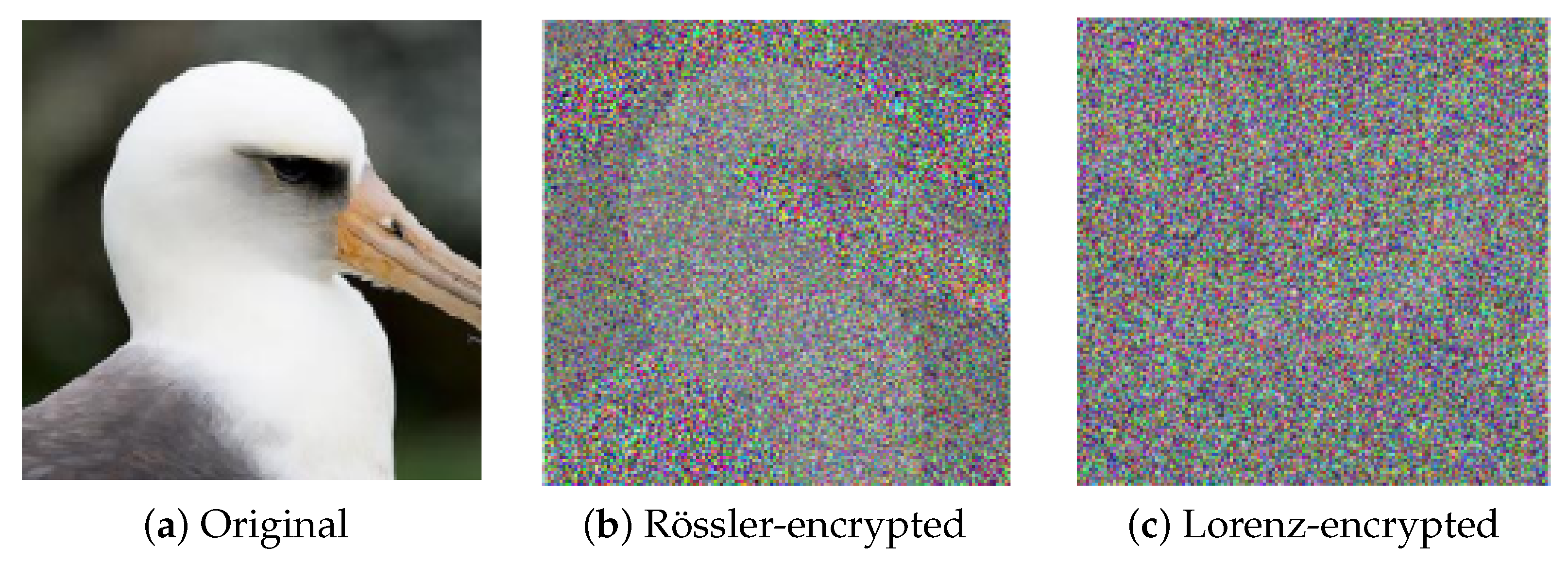
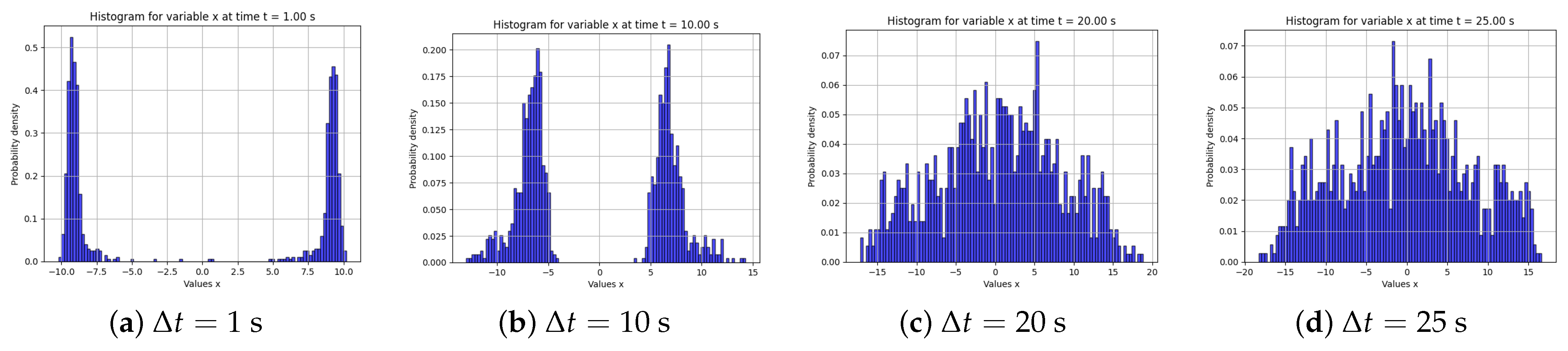
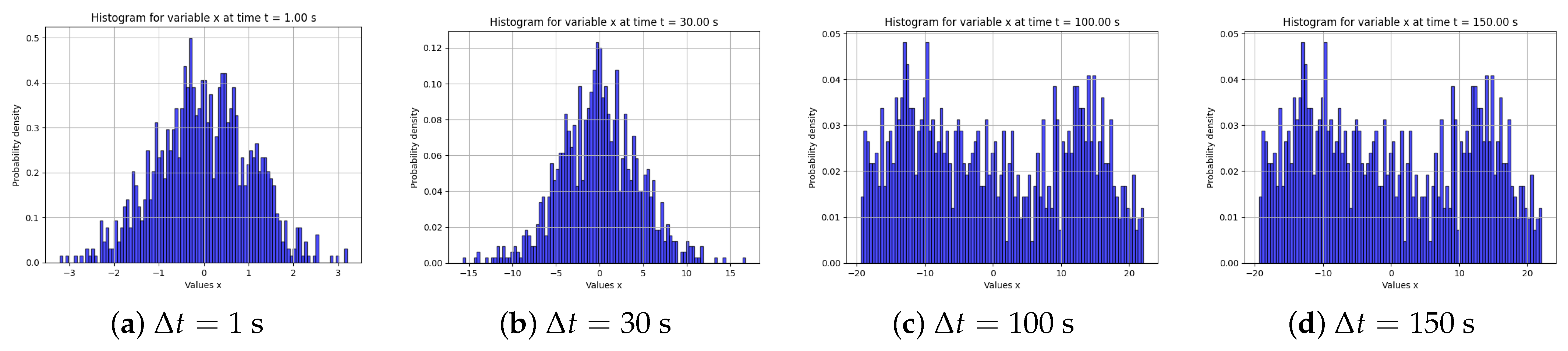
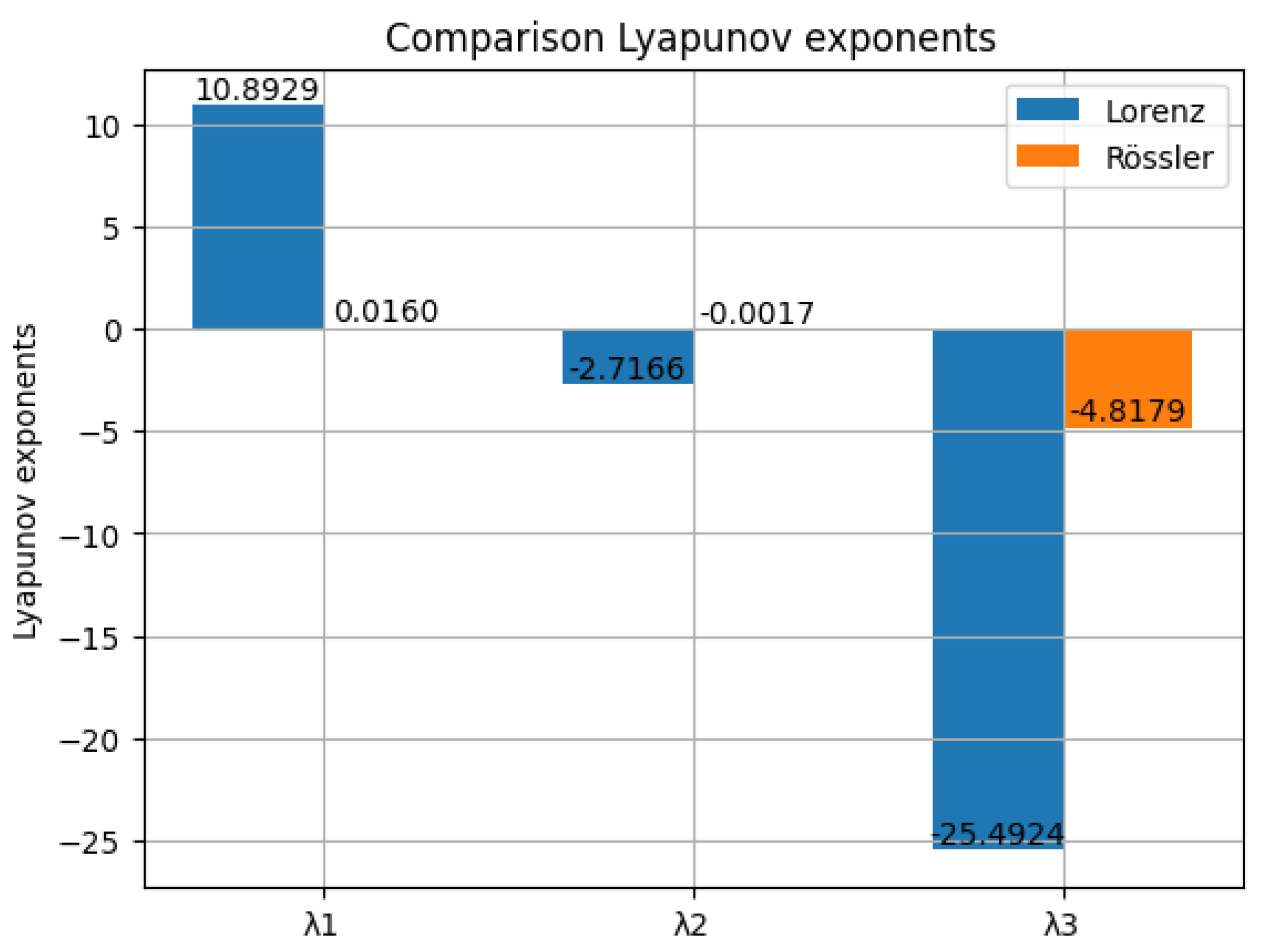
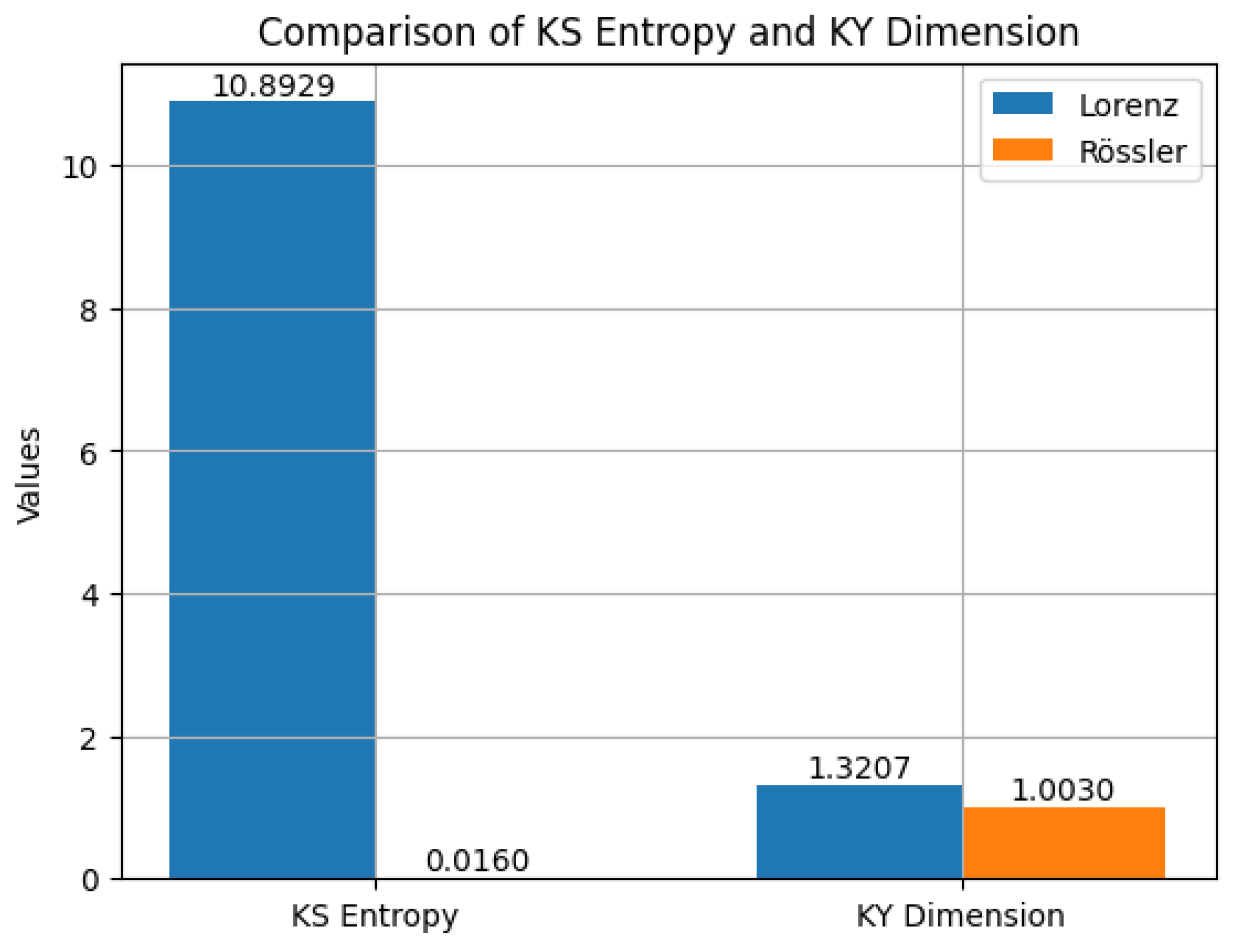
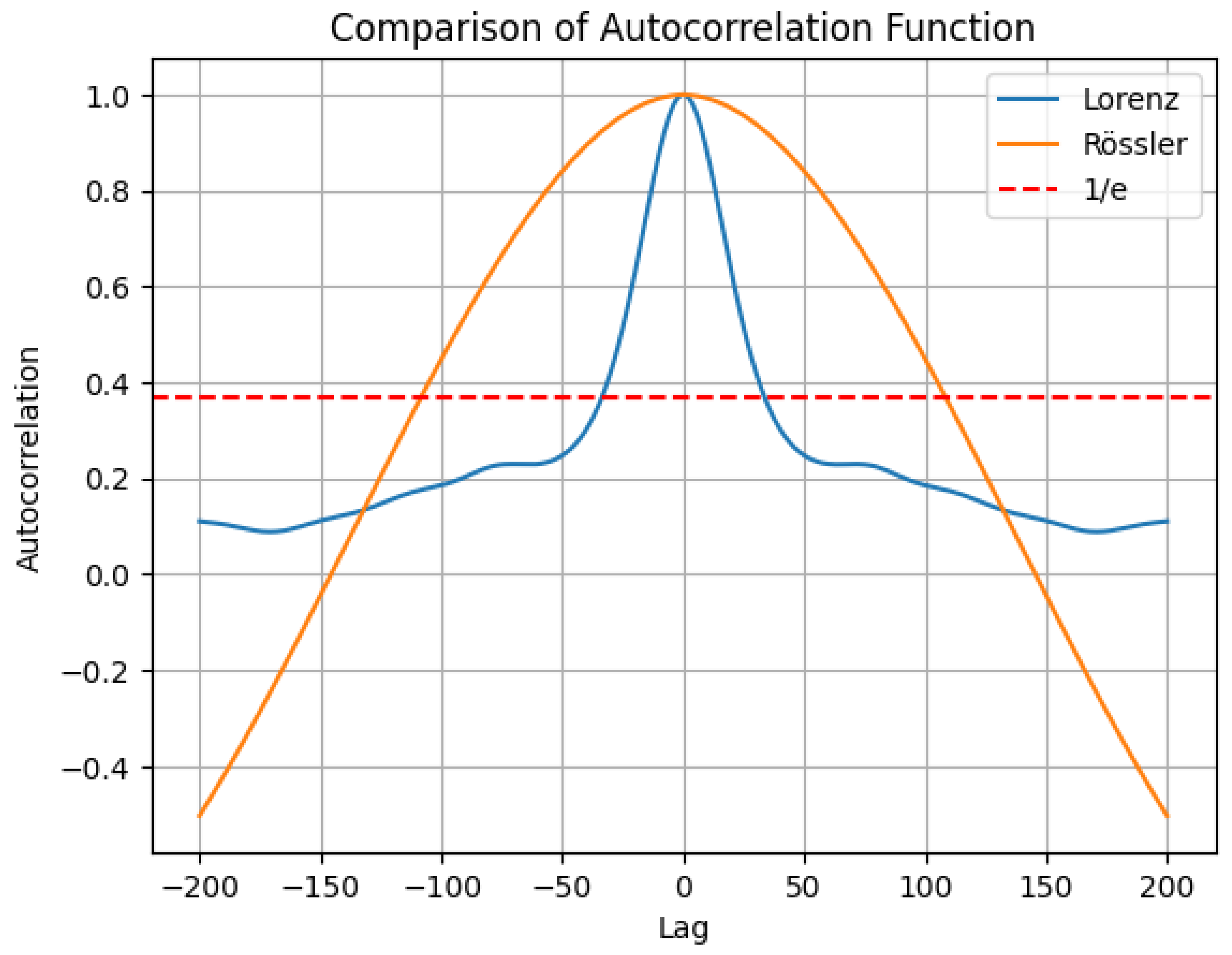
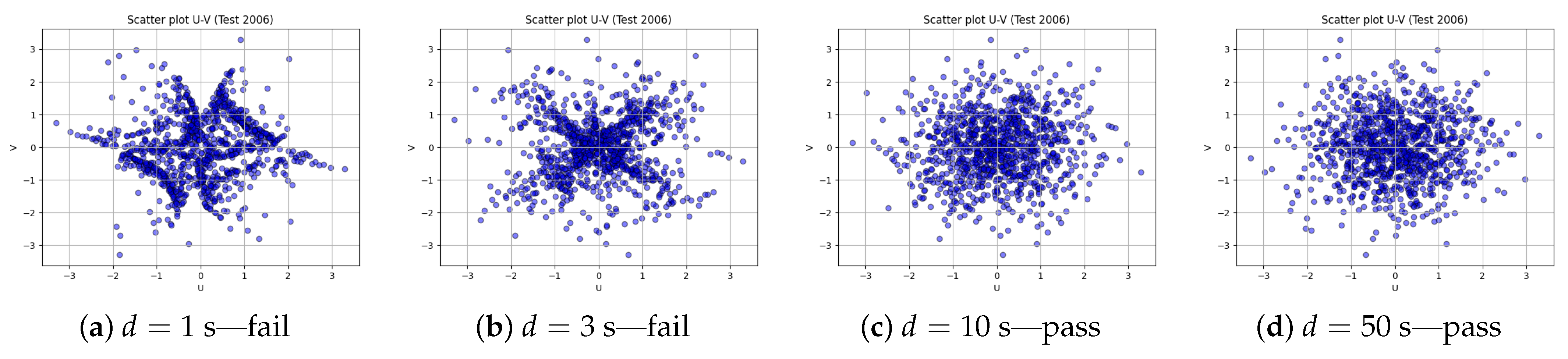
Chaotic systems, governed by deterministic nonlinear equations yet exhibiting highly complex and unpredictable behaviors, have emerged as valuable tools at the intersection of mathematics, engineering, and information security. This paper presents a comparative study of the Lorenz and Rössler systems, focusing on their dynamic complexity and statistical independence—two critical properties for applications in chaos-based cryptography. By integrating techniques from nonlinear dynamics (e.g., Lyapunov exponents, KS entropy, Kaplan–Yorke dimension) and statistical testing (e.g., chi-square and Gaussian transformation-based independence tests), we provide a quantitative framework to evaluate the pseudo-randomness potential of chaotic trajectories. Our results show that the Lorenz system offers faster convergence to chaos and superior statistical independence over time, making it more suitable for rapid encryption schemes. In contrast, the Rössler system provides complementary insights due to its simpler attractor and longer memory. These findings contribute to a multidisciplinary methodology for selecting and optimizing chaotic systems in secure communication and signal processing contexts.
Keywords: Lorenz system; Rössler system; statistical independence; chaos-based cryptography Lorenz system; Rössler system; statistical independence; chaos-based cryptography