

Detached Twig Assay to Evaluate Bacterial Canker on Peaches


Abstract
1. Introduction
2. Experimental Design
2.1. Materials
- 1.
- Gloves (TouchNTuff®, Ansell, Iselin, NJ, USA);
- 2.
- Alcohol, 70% (Thermo Fisher Scientific Inc., Waltham, MA, USA);
- 3.
- Flagging tape (for bundling each cultivar’s dormant shoots after collection; each shoot bundle should be labeled with genotype name on the tape; FisherBrand, Thermo Fisher Scientific Inc., Waltham, MA, USA);
- 4.
- Paper wipes (KimTech, ULINE, Pleasant Prairie, WI, USA);
- 5.
- Plastic plates (disposable polystyrene weighing dishes for overnight drying, 1 per accession) (Sigma-Aldrich, St. Louis, MO, USA);
- 6.
- Plastic pot labels (Hummert International, Earth City, MO, USA);
- 7.
- Parafilm (Parafilm M Lab Film, ULINE, Pleasant Prairie, WI, USA);
- 8.
- Floral foam bricks (OASIS® Standard Floral Foam Maxlife, Kent, OH, USA);
- 9.
- Ziplock bags (for second incubation) (S.C. & Son Inc. Johnson, Racine, WI, USA);
- 10.
- Autoclavable bags (Thermo Fisher Scientific Inc., Waltham, MA, USA);
- 11.
- Bleach (Clorox™, Oakland, CA, USA);
- 12.
- Razor blades (for peeling) (Ihc World LLC, Ellicott City, MD, USA);
- 13.
- Absorbent surface liners (as a bench protector during the peeling process) (Thermo Fisher Scientific Inc., Waltham, MA, USA);
- 14.
- Pathogen: Pseudomonas syringae pv. syringae isolate Pss S2, provided by Dr. Hehe Wang from Clemson University;
- 15.
- Plant material: twenty 30 cm long, one-year-old dormant shoots.
2.2. Equipment
- 1.
- Pruners (Corona Clipper Inc., Corona, CA, USA);
- 2.
- Markers (Sharpie, Newell Brands, Atlanta, GA, USA);
- 3.
- Tongs for transferring shoot segments during disinfection (Oneida®, Oneida, NY, USA);
- 4.
- Digital caliper (Mitutoyo America Corporation, Aurora, IL, USA);
- 5.
- Tube racks (Thermo Fisher Scientific Inc., Waltham, MA, USA);
- 6.
- Plastic containers (for holding shoot segments) (Sterilite Corporation, Townsend, MA, USA);
- 7.
- Beakers, 250 mL (Pyrex™, Corning Incorporated, Corning, NY, USA);
- 8.
- Orbital shaker/Advanced digital shaker (Avantor Inc., Radnor, PA, USA);
- 9.
- Containers, 1 L (ULINE, Pleasant Prairie, WI, USA);
- 10.
- Refrigerator, 4 °C;
- 11.
- Growth chamber (15 °C, 8 h dark, 16 h light) (Percival Scientific Inc., Perry, IA, USA);
- 12.
- Refrigerator, −2 °C;
- 13.
- Autoclavable trays (Nalgene, Thermo Fisher Scientific Inc., Wlatham, MA, USA);
- 14.
- Scanner (Epson America Inc., Los Alamitos, CA, USA);
- 15.
- ImageJ software v. 1.54p (National Institutes of Health, Bethesda, MD, USA);
- 16.
- R software (version 4.5.1; R Core Team, Vienna, Austria);
3. Procedure
- 1.
- Pseudomonas syringae inoculum preparation
- 1.1.
- Media Buffer Preparation
- 1.1.1.
- Prepare King’s B Media (KMB—recipe below) or Pseudomonas Agar F plates:
- Add 20 g of proteose peptone, 1.5 g of K2HPO4, and 1.5 g of MgSO4·7H2O to ~900 mL of distilled water.
- Add 10 mL of glycerol (measure accurately; viscous).
- Add 15 mg of agar powder (BD Difco, Thermo Fisher Scientific, Waltham, MA, USA, Cat. No. DF0812-07-1).
- Stir until fully dissolved.
- Bring volume up to 1 L with distilled water.
- Adjust pH to 7.2 if needed (usually not necessary).
- Autoclave at 121 °C for 15 min.
- Cool to ~55 °C and pour plates.
- 1.1.2.
- Prepare Luria–Bertani (LB) broth (BD Difco, Thermo Fisher Scientific, Waltham, MA, USA Cat. No. DF0446075); pour 20 mL into each 50 mL Falcon tube.
- 1.1.3.
- Prepare sterile 10 mM MgCl2 buffer:
- The 10 mM MgCl2 consists of 0.952 g of anhydrous MgCl2 or 2.03 g of MgCl2 × 6 H2O in 1 L of DI water; autoclave.
- 1.2.
- Revival and Plating
- 1.2.1.
- Streak Pseudomonas syringae isolate from glycerol stock preserved in Cryo media onto KMB/Pseudomonas agar plates.
- 1.2.2.
- Incubate plates at 25–30 °C for 24–48 h.
- 1.3.
- Colony Purity Check
- 1.3.1.
- Examine plates under 365 nm UV light.
- 1.3.2.
- Confirm uniform fluorescence (yellow-green).
- 1.4.
- Starter Culture Preparation
- 1.4.1.
- Using a sterile loop, pick a single colony from KMB.
- 1.4.2.
- Inoculate into 20 mL of LB broth in sterile culture tubes.
- 1.4.3.
- Incubate overnight (14–18 h) at 30 °C, 180 rpm.
- 1.5.
- Measure Starter Culture Density
- 1.5.1.
- Blank spectrophotometer with LB.
- 1.5.2.
- Measure OD600 of the starter culture. Typical values: 0.3–0.6.
- 1.6.
- Log-Phase Culture Initiation
- 1.6.1.
- Transfer 0.2–0.4 mL of the starter culture into 20 mL of LB broth.
- 1.6.2.
- Incubate at 30 °C, 180 rpm for ~6 h to reach the early log phase.
- 1.7.
- Confirm Log-Phase Density
- 1.7.1.
- Measure OD600 using LB as blank.
- 1.7.2.
- Proceed when OD600 ≈ 0.2–0.3 (≈2–3 × 10⁸ CFU/mL).
- 2.
- Cell Harvesting and Preparation of Inoculum
- 2.1.
- Pellet Cells
- 2.1.1.
- Centrifuge cultures at 5000 rpm for 15 min.
- 2.1.2.
- Discard supernatant.
- 2.2.
- Wash Cells
- 2.2.1.
- Add 20 mL of sterile 10 mM MgCl2 to each pellet.
- 2.2.2.
- Resuspend by gentle shaking.
- 2.2.3.
- Centrifuge at 5000 rpm for 10 min.
- 2.2.4.
- Discard supernatant.
- 2.3.
- Final Resuspension
- 2.3.1.
- Add 20 mL of fresh 10 mM MgCl2 to the pellet.
- 2.3.2.
- Resuspend thoroughly.
- 2.3.3.
- Transfer the entire resuspended volume into a sterile bottle containing 580 mL of MgCl2 to obtain 600 mL of inoculum.
- 2.3.4.
- Mix gently. Final concentration ≈ 1 × 10⁷ CFU/mL. Use suspension within 4 h of preparation.
- 3.
- Verification of Cell Concentration
- 3.1.
- Serial Dilution Plating
- 3.1.1.
- Prepare serial 10-fold dilutions in 10 mM MgCl2 (10−1 to 10−7).
- 3.1.2.
- Plate 100 µL of 10−6 and/or 10−7 dilutions onto KMB agar.
- 3.1.3.
- Incubate at 28–30 °C overnight.
- 3.2.
- CFU Calculation
- 3.2.1.
- Count colonies on plates with 30–300 CFUs.
- 3.2.2.
- CFU/mL = (colonies × dilution factor)/volume plated (mL).
- 4.
- Detached Twig Lab Assay
- 4.1.
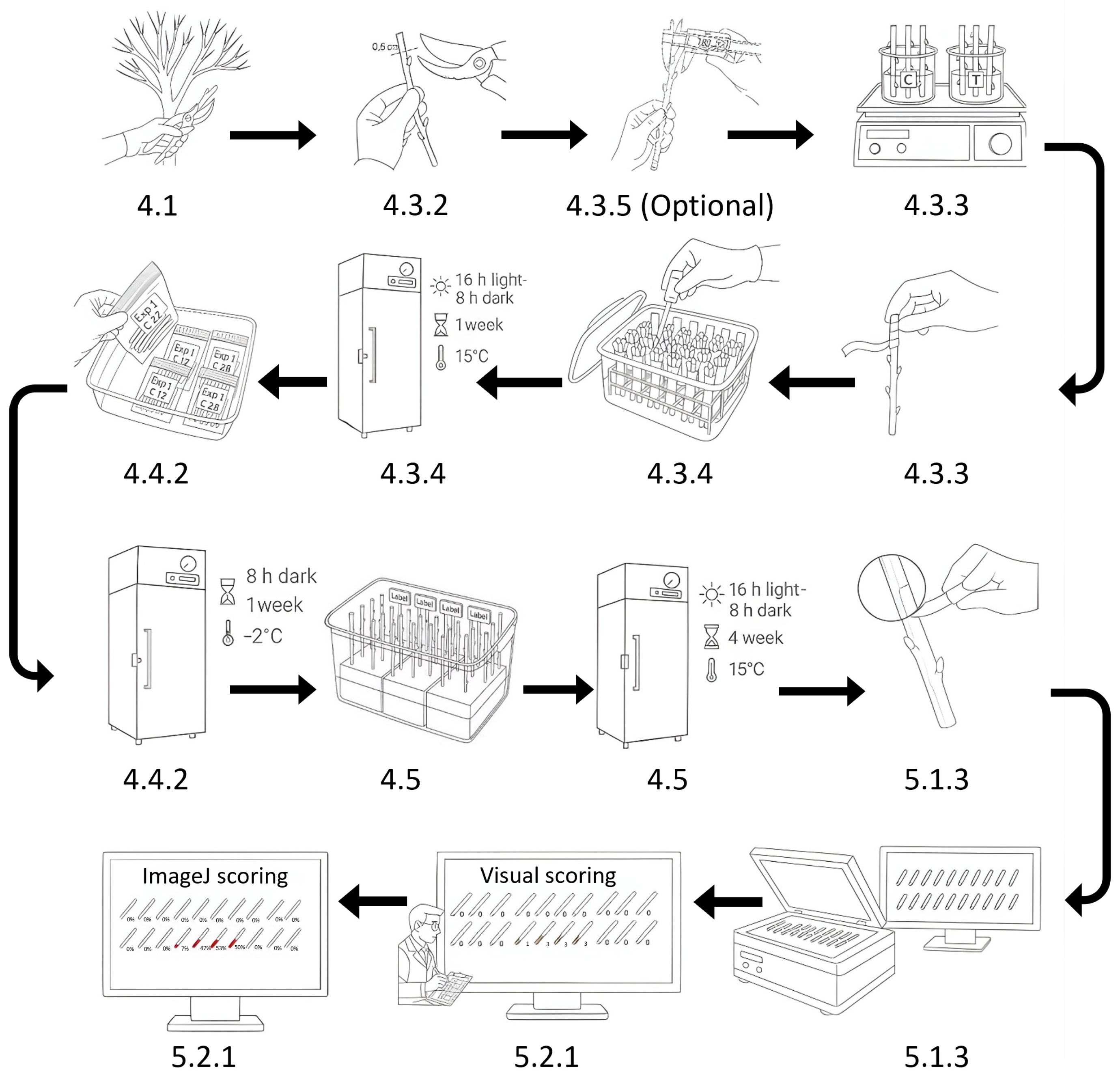
- Collection of Shoots (Day 1)
- 4.1.1.
 CRITICAL STEP: Collect dormant, one-year-old shoots from trees in the field.
- 4.1.2.
- Immediately prepare shoots following directions below, or store collected shoots at 4 °C.
- 4.2.
- Preparation of Shoots
- 4.2.1.
- Cut shoots into twenty 10 cm segments of uniform thickness for each cultivar.
- 4.2.2.
- Disinfect shoot segments by immersing in bleach (0.5% sodium hypochlorite) for 5 min, stirring periodically.
- 4.2.3.
- Rinse shoot segments in distilled water three times.
- 4.2.4.
- Set shoot segments on benchtop to dry:
- Prevent shoot segment overnight drying by loosely covering them with paper towels.
- 4.2.5.
- Measure diameter of shoot segments at the tip with caliper (can be done after incubation steps):
- OPTIONAL STEP: Shoot diameter can be also measured with ImageJ software on scanned images (step 5.1.5) by converting pixel-based measurement into millimeters (mm).
- 4.3.
- Inoculation of the Shoots (Day 2)
- 4.3.1.
- Preparation of Pss inoculum:
- Dispense actively growing Pss liquid cultures prepared above in steps 8–10 into 250 mL sterile beakers to a depth of approximately 1.3 cm. Use non-inoculated 10 mM MgCl2 solution for the mock inoculation control group.
- Place beakers onto an orbital shaker (100 RPM) to prevent bacteria from settling.
- 4.3.2.
- Preparation of shoot segments for inoculation:
 CRITICAL STEP: Trim 0.5 cm from the top of each shoot segment to remove bleach damage and expose fresh tissue.
- Use very sharp pruners or single-edge razor blades to ensure a clean cut is obtained.
- 4.3.3.
- Shoot inoculation:
- For each cultivar inoculate 10 shoot segments with Pss (treatment) and mock-inoculate 10 shoot segments with 10 mM MgCl2 solution (control).
 CRITICAL STEP: Submerge the freshly cut end of prepared shoot segments into the inoculum or 10 mM MgCl2 solution for 5 min, maintain gentle agitation (100 RPM) to ensure uniform exposure and avoid excessive shaking or frothing.
- Remove shoot segments from beakers and wrap the inoculated end with parafilm.
- 4.3.4.
- Preparation for co-cultivation:
- Label separate plastic containers for treatment and control, place plastic racks in the containers and fill with tap water to 1.5 cm depth.
- Trim 0.5 cm from the bottom of the shoot segments to expose fresh tissue.
- Bundle 10 shoot segments labeled by sample and place in plastic racks with the freshly cut end submerged in the 1.5 cm of tap water.
- Alternatively, shoot segments can be separated in floral foam bricks or individual containers.
- Incubate closed containers in a growth chamber for 1 week (16 h light-8 h dark at 15 °C).
- 4.4.
- Cold Treatment (Day 10)
- 4.4.1.
- After 1 week of incubation at 15 °C, remove the parafilm from the top and dry the base of shoot segments with paper tissue:
- Sterilize the containers with bleach for later use.
- 4.4.2.
 CRITICAL STEP: Place shoot segments into pre-labeled plastic zip-lock bags and transfer to a refrigerator for cold treatment at −2 °C in darkness for one week.
- 4.5.
- Incubation (Day 17)
- 4.5.1.
- Prepare sterile containers for incubation by placing floral foam bricks, saturating them with tap water, and maintaining a water level of 1.5 cm throughout the experiment to ensure adequate moisture:
- Alternatively, shoot segments could be placed in plastic racks or individual containers.
- 4.5.2.
 CRITICAL STEP: Incubate closed containers in a growth chamber for 4 weeks under the same conditions as described under 4.3.4.
- 5.
- Data Collection
- 5.1.
- Shoot Preparation and Imaging
- 5.1.1.
- Remove shoot segments from the experiment and proceed with recording symptom severity:
- If not evaluating symptom severity at the end of the experiment (too many shoot segments to process) within the same day, place shoot segments in zip-lock bags and store at 4 °C to suppress bacterial growth.
- 5.1.2.
- First, collect an image of shoot segments for each sample using a high-resolution scanner or camera:
- Arrange the shoot segments on the scanner tray with the control at the top and the treatment at the bottom of the tray, with the inoculated end oriented in the same direction.
- Scan the shoot sections from both sides.
- 5.1.3.
- Second, expose inner bark tissue to evaluate the symptom severity:
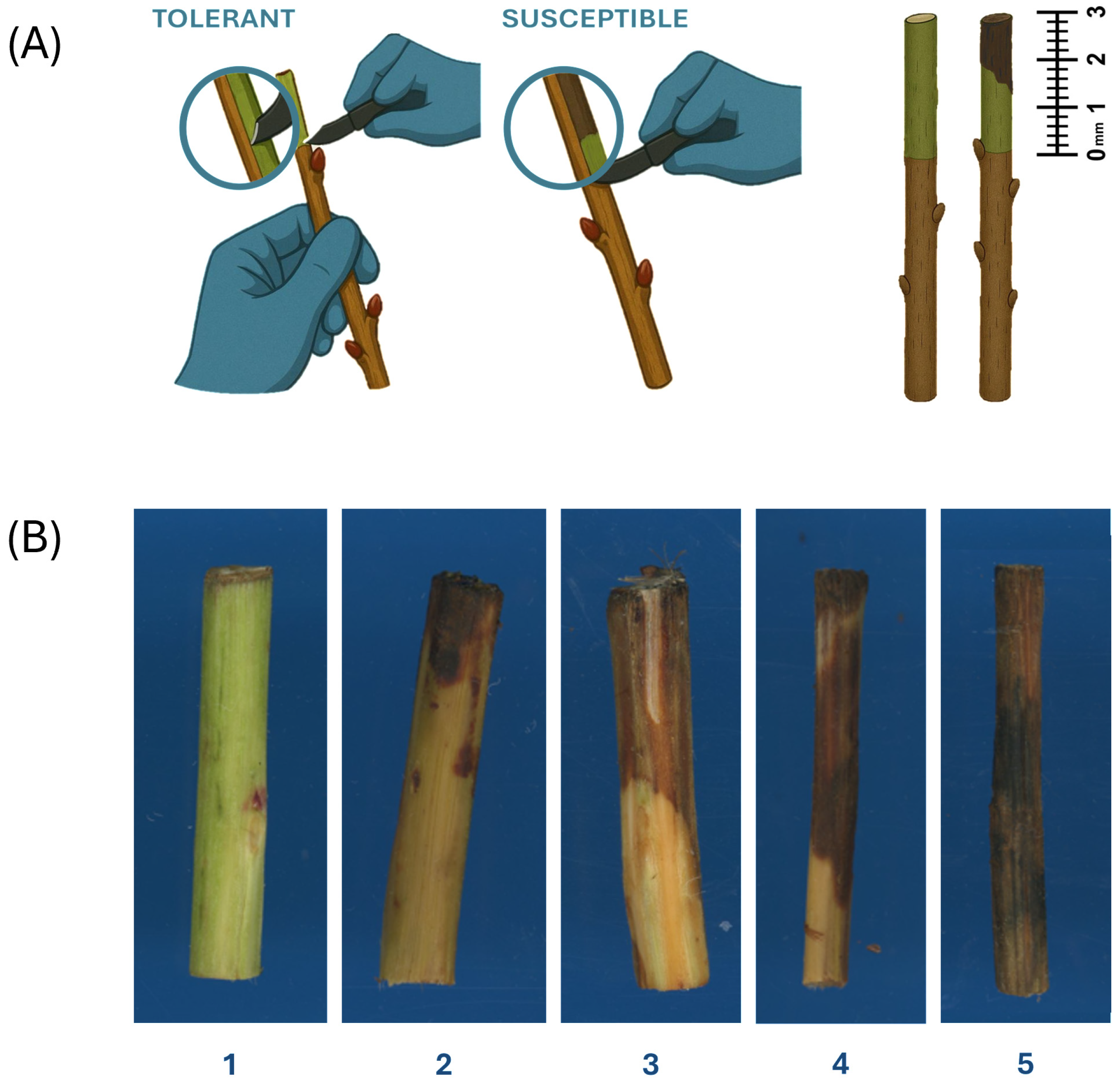
 CRITICAL STEP: Remove the outer bark with surgical scalpel or single-edge razor blade from the top 3 cm of each shoot segment (Figure 2A).
- 5.1.4.
- Trim and collect the top 3 cm of each shoot segment and discard the unpeeled base.
- 5.1.5.
- Place peeled shoot segments onto the scanner tray and collect images.
- 5.2.
- Evaluation of Symptom Severity
- 5.2.1.
- Visually evaluate symptom severity, using photographed shoot segments, on a scale from 1 to 5, where 1 represents a sample without necrotic lesion on the inner bark, and 5 represents a sample with inner bark completely covered with a necrotic lesion (Figure 2B).
- 5.2.2.
- Quantitatively evaluate symptom severity, using photographed shoot segments, by measuring the percentage of each shoot segment’s surface area covered by necrotic lesion with ImageJ software.
- 5.3.
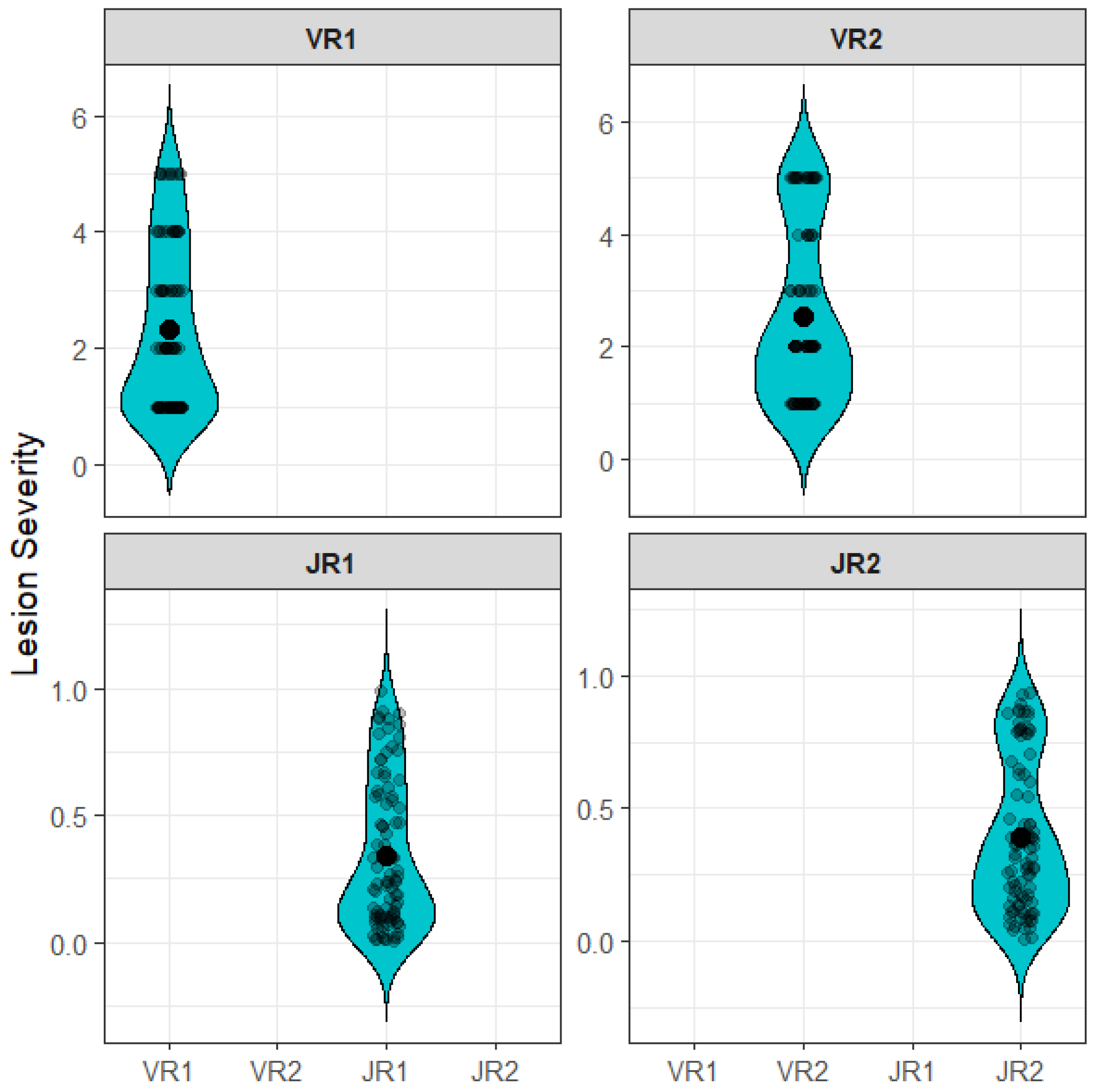
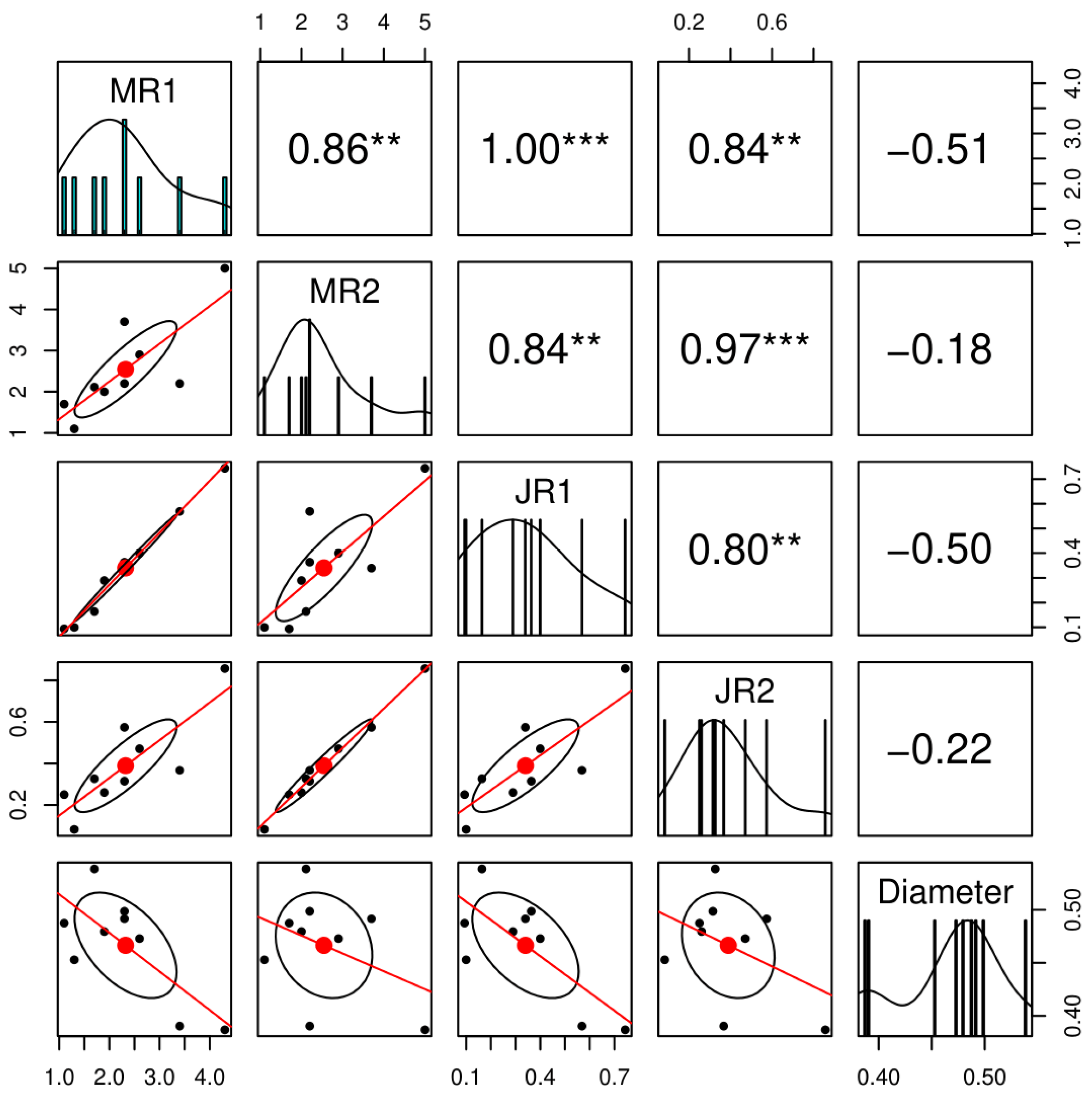
- Statistical AnalysisStatistical analyses and data visualizations were performed in R (version 4.5.1) using the psych and tidyverse packages. Spearman’s correlation coefficients between visual and ImageJ-based scoring methods, replications, and twig diameter measurements were evaluated using the pair.panels function. The distribution pattern of lesion scores across replications and scoring methods was illustrated with a violin plot by using the geom_violin function.



| Manual Score | ImageJ Score | Symptom Severity |
|---|---|---|
| 1 | 0–20% | No visible symptoms or discoloration |
| 2 | 21–40% | Slight lesion development |
| 3 | 41–60% | Moderate lesion development |
| 4 | 61–80% | Extensive lesion development |
| 5 | 81–100% | Severe lesion development |
4. Results
5. Discussion
6. Conclusions and Future Perspective
Supplementary Materials
Author Contributions
Funding
Institutional Review Board Statement
Data Availability Statement
Acknowledgments
Conflicts of Interest
Abbreviations
| PTSL | Peach tree short life |
| MgCl2 | Magnesium chloride |
| Pss | Pseudomonas syringae pv. syringae |
| ImageJ | Java-based Image Processing Program |
| CFU | Colony-forming unit |
| LB | Luria–Bertani medium |
| OD600 | Optical density at 600 nm |
| DI water | Deionized water |
| Rpm | Revolutions per minute |
| cm | Centimeters |
| h | Hours |
| Min | Minutes |
| H2O | Water |
| UV | Ultraviolet |
| MAS | Marker-assisted selection |
| KMB | King’s B Media |
| mL | Milliliters |
| mM | Millimolar |
| µL | Microliters |
| C | Control |
| T | Treatment |
| °C | Degrees Celsius |
| USDA | United States Department of Agriculture |
| AMS | Agricultural Marketing Service |
References
- Hulin, M.T.; Mansfield, J.W.; Brain, P.; Xu, X.; Jackson, R.W.; Harrison, R.J. Characterization of the pathogenicity of strains of Pseudomonas syringae towards cherry and plum. Plant Pathol. 2018, 67, 1177–1193. [Google Scholar] [CrossRef] [Scilit]
- Chen, C.X. Overview of U.S. peach breeding and production. Technol. Hortic. 2025, 5, e014. [Google Scholar] [CrossRef] [Scilit]
- USDA. 2024/2025 Peaches & Nectarines Production; United States Department of Agriculture: Washington, DC, USA, 2025.
- USDA. 2024 State Agriculture Overview; United States Department of Agriculture: Washington, DC, USA, 2025.
- Luo, C.X.; Schnabel, G.; Hu, M.; De Cal, A. Global distribution and management of peach diseases. Phytopathol. Res. 2022, 4, 30. [Google Scholar] [CrossRef] [Scilit]
- Mehrfar, S.; Shahryari, F.; Falahi Charkhabi, N. Exploration of epiphytic bacteria of stone fruit trees for the biocontrol of Pseudomonas syringae pv. syringae. Eur. J. Plant Pathol. 2025, 174, 67. [Google Scholar] [CrossRef] [Scilit]
- Marroni, M.V.; Casonato, S.; Pitman, A.R.; Visnovsky, S.B.; Beresford, R.M.; Jones, E.E. Review of Pseudomonas species causing bacterial canker of Prunus species with emphasis on sweet cherry (Prunus avium) in New Zealand. Eur. J. Plant Pathol. 2024, 168, 297–314. [Google Scholar] [CrossRef] [Scilit]
- Lamichhane, J.R.; Messéan, A.; Morris, C.E. Insights into epidemiology and control of diseases of annual plants caused by the Pseudomonas syringae species complex. J. Gen. Plant Pathol. 2015, 81, 331–350. [Google Scholar] [CrossRef] [Scilit]
- Xin, X.F.; Kvitko, B.; He, S.Y. Pseudomonas syringae: What it takes to be a pathogen. Nat. Rev. Microbiol. 2018, 16, 316–328. [Google Scholar] [CrossRef] [Scilit]
- Lindow, S. History of Discovery and Environmental Role of Ice Nucleating Bacteria. Phytopathology 2023, 113, 605–615. [Google Scholar] [CrossRef] [Scilit] [PubMed]
- de Araujo, G.G.; Rodrigues, F.; Gonçalves, F.L.T.; Galante, D. Survival and ice nucleation activity of Pseudomonas strains exposed to simulated high-altitude atmospheric conditions. Sci. Rep. 2019, 9, 7768. [Google Scholar] [CrossRef] [Scilit]
- Okie, W.R.; Reighard, G.L.; Nyczepir, A.P. Importance of Scion Cultivar in Peach Tree Short Life. J. Am. Pomol. Soc. 2009, 63, 58–63. [Google Scholar] [CrossRef] [Scilit]
- Lesmes-Vesga, R.A.; Cano, L.M.; Ritenour, M.A.; Sarkhosh, A.; Chaparro, J.X.; Rossi, L. Rootstocks for Commercial Peach Production in the Southeastern United States: Current Research, Challenges, and Opportunities. Horticulturae 2022, 8, 602. [Google Scholar] [CrossRef] [Scilit]
- Young, J.M. Orchard Management and Bacterial Diseases of Stone Fruit. New Zealand J. Exp. Agric. 1987, 15, 257–266. [Google Scholar] [CrossRef] [Scilit]
- Sundin, G.W.; Jones, A.L.; Fulbright, D.W. Copper Resistance in Pseudomonas syringae pv. syringae from Cherry Orchards and Its Associated Transfer Invitro and in Planta with a Plasmid. Phytopathology 1989, 79, 861–865. [Google Scholar] [CrossRef] [Scilit]
- Rabiey, M.; Roy, S.R.; Holtappels, D.; Franceschetti, L.; Quilty, B.J.; Creeth, R.; Sundin, G.W.; Wagemans, J.; Lavigne, R.; Jackson, R.W. Phage biocontrol to combat Pseudomonas syringae pathogens causing disease in cherry. Microb. Biotechnol. 2020, 13, 1428–1445. [Google Scholar] [CrossRef] [Scilit]
- Cao, T.; DeJong, T.; Shackel, K.; Kirkpatrick, B.; Johnson, R. Influence of rootstock, temperature and incubation duration on bacterial canker severity caused by Pseudomonas syringae pv. syringae in peach. Fruits 2013, 68, 45–55. [Google Scholar] [CrossRef] [Scilit]
- Cao, T.; McKenry, M.V.; Duncan, R.A.; DeJong, T.M.; Kirkpatrick, B.C.; Shackel, K.A. Influence of ring nematode infestation and calcium, nitrogen, and indoleacetic acid applications on peach susceptibility to Pseudomonas syringae pv. syringae. Phytopathology 2006, 96, 608–615. [Google Scholar] [CrossRef] [Scilit]
- Yang, P.; Zhao, L.; Gao, Y.G.; Xia, Y. Detection, Diagnosis, and Preventive Management of the Bacterial Plant Pathogen. Plants 2023, 12, 1765. [Google Scholar] [CrossRef] [Scilit]
- Hulin, M.T.; Vadillo Dieguez, A.; Cossu, F.; Lynn, S.; Russell, K.; Neale, H.C.; Jackson, R.W.; Arnold, D.L.; Mansfield, J.W.; Harrison, R.J. Identifying resistance in wild and ornamental cherry towards bacterial canker caused by Pseudomonas syringae. Plant Pathol. 2022, 71, 949–965. [Google Scholar] [CrossRef] [Scilit]
- Li, B.; Hulin, M.T.; Brain, P.; Mansfield, J.W.; Jackson, R.W.; Harrison, R.J. Rapid, automated detection of stem canker symptoms in woody perennials using artificial neural network analysis. Plant Methods 2015, 11, 54. [Google Scholar] [CrossRef] [Scilit]
- Santi, F.; Russell, K.; Ménard, M.; Dufour, J. Screening wild cherry (Prunus avium) for resistance to bacterial canker by laboratory and field tests. For. Pathol. 2004, 34, 349–362. [Google Scholar] [CrossRef] [Scilit]
- Bibi, S.; Inam-ul-Haq, M.; Riaz, A.; Malik, S.I. Identification of Host Resistance to Bacterial Canker Disease on Apricot, Plum and Peach Grown in Punjab and Kpk, Pakistan. Int. J. Phytopathol. 2022, 11, 43–48. [Google Scholar] [CrossRef] [Scilit]
- Thomidis, T.; Tsipouridis, C.; Exadaktylou, E.; Drogoudi, P. Comparison of three laboratory methods to evaluate the pathogenicity and virulence of ten Pseudomonas syringae pv. syringae strains on apple, pear, cherry and peach trees. Phytoparasitica 2005, 33, 137–140. [Google Scholar] [CrossRef] [Scilit]
- Maguvu, T.E.; Frias, R.J.; Hernandez-Rosas, A.I.; Shipley, E.; Dardani, G.; Nouri, M.T.; Yaghmour, M.A.; Trouillas, F.P. Pathogenicity, phylogenomic, and comparative genomic study of Pseudomonas syringae sensu lato affecting sweet cherry in California. Microbiol. Spectr. 2024, 12, e01324. [Google Scholar] [CrossRef] [Scilit]
- Omrani, M.; Roth, M.; Roch, G.; Blanc, A.; Morris, C.E.; Audergon, J.M. Genome-wide association multi-locus and multi-variate linear mixed models reveal two linked loci with major effects on partial resistance of apricot to bacterial canker. BMC Plant Biol. 2019, 19, 31. [Google Scholar] [CrossRef] [Scilit]
- Reighard, G.L.; Bridges, W., Jr.; Glenn, D.M.; Mayer, N.A. Carbon to nitrogen ratio in peach bark and incidence of bacterial canker. Acta Hortic. 2016, 1130, 341–344. [Google Scholar] [CrossRef] [Scilit]
- Cao, T.; Kirkpatrick, B.C.; Shackel, K.A.; DeJong, T.M. Influence of mineral nutrients and freezing-thawing on peach susceptibility to bacterial canker caused by Pseudomonas syringae pv. syringae. Fruits 2011, 66, 441–452. [Google Scholar] [CrossRef] [Scilit]
- Parker, M.L.; Ritchie, D.F.; Reighard, G.L.; Clark, B.; West, R.M. Peach rootstock differences in tree survival from bacterial canker in the southeastern United States. Acta Hortic. 2018, 1228, 259–264. [Google Scholar] [CrossRef] [Scilit]
- Abràmoff, M.D.; Magalhães, P.J.; Ram, S.J. Image Processing with ImageJ. Biophotonics Int. 2003, 11, 36–42. [Google Scholar]
- Patil, J.K.; Kumar, R. Advances in Image Processing for Detection of Plant Diseases. J. Adv. Bioinform. Appl. Res. 2011, 2, 135–141. [Google Scholar]
- Yadava, U.L.; Doud, S.L.; Weaver, D.J. Rating-Scales to Assess Cold Injury and Bacterial Canker Development in Peach-Trees in the Field. Hortscience 1984, 19, 645–648. [Google Scholar] [CrossRef] [Scilit]
- Krzesinska, E.Z.; Azarenko, A.N.M. Excised Twig Assay to Evaluate Cherry Rootstocks for Tolerance to Pseudomonas syringae pv. syringae. HortScience 1992, 27, 153–155. [Google Scholar] [CrossRef] [Scilit]
- Araus, J.L.; Cairns, J.E. Field high-throughput phenotyping: The new crop breeding frontier. Trends Plant Sci. 2014, 19, 52–61. [Google Scholar] [CrossRef] [Scilit] [PubMed]


| Accession | Visual Score | ImageJ Measurement | Diameter (mm) | |||
|---|---|---|---|---|---|---|
| R1 | R2 | R1 | R2 | R1 | R2 | |
| P1 | 1.1 | 1.7 | 0.093 | 0.250 | 0.536 | 0.449 |
| P2 | 1.3 | 1.1 | 0.100 | 0.083 | 0.489 | 0.417 |
| P3 | 1.7 | 2.11 | 0.164 | 0.326 | 0.592 | 0.479 |
| P4 | 1.9 | 2 | 0.289 | 0.260 | 0.543 | 0.416 |
| P5 | 2.6 | 2.9 | 0.400 | 0.471 | 0.53 | 0.415 |
| P6 | 2.3 | 2.2 | 0.363 | 0.315 | 0.51 | 0.487 |
| P7 | 2.3 | 3.7 | 0.339 | 0.574 | 0.501 | 0.482 |
| P8 | 3.4 | 2.2 | 0.569 | 0.367 | 0.393 | 0.388 |
| P9 | 4.3 | 5 | 0.744 | 0.857 | 0.383 | 0.391 |
| Average | 2.32 | 2.55 | 0.340 | 0.389 | 0.497 | 0.436 |
Disclaimer/Publisher’s Note: The statements, opinions and data contained in all publications are solely those of the individual author(s) and contributor(s) and not of MDPI and/or the editor(s). MDPI and/or the editor(s) disclaim responsibility for any injury to people or property resulting from any ideas, methods, instructions or products referred to in the content. |
© 2026 by the authors. Licensee MDPI, Basel, Switzerland. This article is an open access article distributed under the terms and conditions of the Creative Commons Attribution (CC BY) license.
Share and Cite
Geylani, B.A.; Parris, S.M.; Gelain, J.; Schnabel, G.; Gasic, K. Detached Twig Assay to Evaluate Bacterial Canker on Peaches. Methods Protoc. 2026, 9, 34. https://doi.org/10.3390/mps9020034
Geylani BA, Parris SM, Gelain J, Schnabel G, Gasic K. Detached Twig Assay to Evaluate Bacterial Canker on Peaches. Methods and Protocols. 2026; 9(2):34. https://doi.org/10.3390/mps9020034
Chicago/Turabian StyleGeylani, Bilgehan A., Stephen M. Parris, Jhulia Gelain, Guido Schnabel, and Ksenija Gasic. 2026. "Detached Twig Assay to Evaluate Bacterial Canker on Peaches" Methods and Protocols 9, no. 2: 34. https://doi.org/10.3390/mps9020034
APA StyleGeylani, B. A., Parris, S. M., Gelain, J., Schnabel, G., & Gasic, K. (2026). Detached Twig Assay to Evaluate Bacterial Canker on Peaches. Methods and Protocols, 9(2), 34. https://doi.org/10.3390/mps9020034