Article

Transnasal Endoscopic Pituitary Surgery—The Role of a CT Scan in Individual Tailoring of Posterior Septum Size Resection


by
Jakub Lubojacký
1,2,*,
Lenka Čábalová
1,2,
Michaela Mladoňová
1,2,
Viktória Hránková
1,2,3,
Tomáš Krejčí
4,5,
Jakub Mičaník
6,
Maria Miklošová
3,
Lačezar Ličev
7,
Pavel Komínek
1,2 and
Petr Matoušek
1,2
1
Department of Otorhinolaryngology and Head and Neck Surgery, Ostrava University Hospital, 70800 Ostrava, Czech Republic
2
Department of Craniofacial Sciences, Faculty of Medicine, University of Ostrava, 70103 Ostrava, Czech Republic
3
Department of Anatomy, Faculty of Medicine, University of Ostrava, 70103 Ostrava, Czech Republic
4
Department of Neurosurgery, Ostrava University Hospital, 70800 Ostrava, Czech Republic
5
Department of Clinical Neurosciences, Faculty of Medicine, University of Ostrava, 70103 Ostrava, Czech Republic
6
Department of Radiodiagnostics, Ostrava University Hospital, 70800 Ostrava, Czech Republic
7
Faculty of Electrical Engineering and Computer Science, VŠB Technical University Ostrava, 70800 Ostrava, Czech Republic
*
Author to whom correspondence should be addressed.
Tomography 2023, 9(6), 2222-2232; https://doi.org/10.3390/tomography9060172

Submission received: 21 September 2023 / Revised: 7 December 2023 / Accepted: 10 December 2023 / Published: 12 December 2023

Abstract

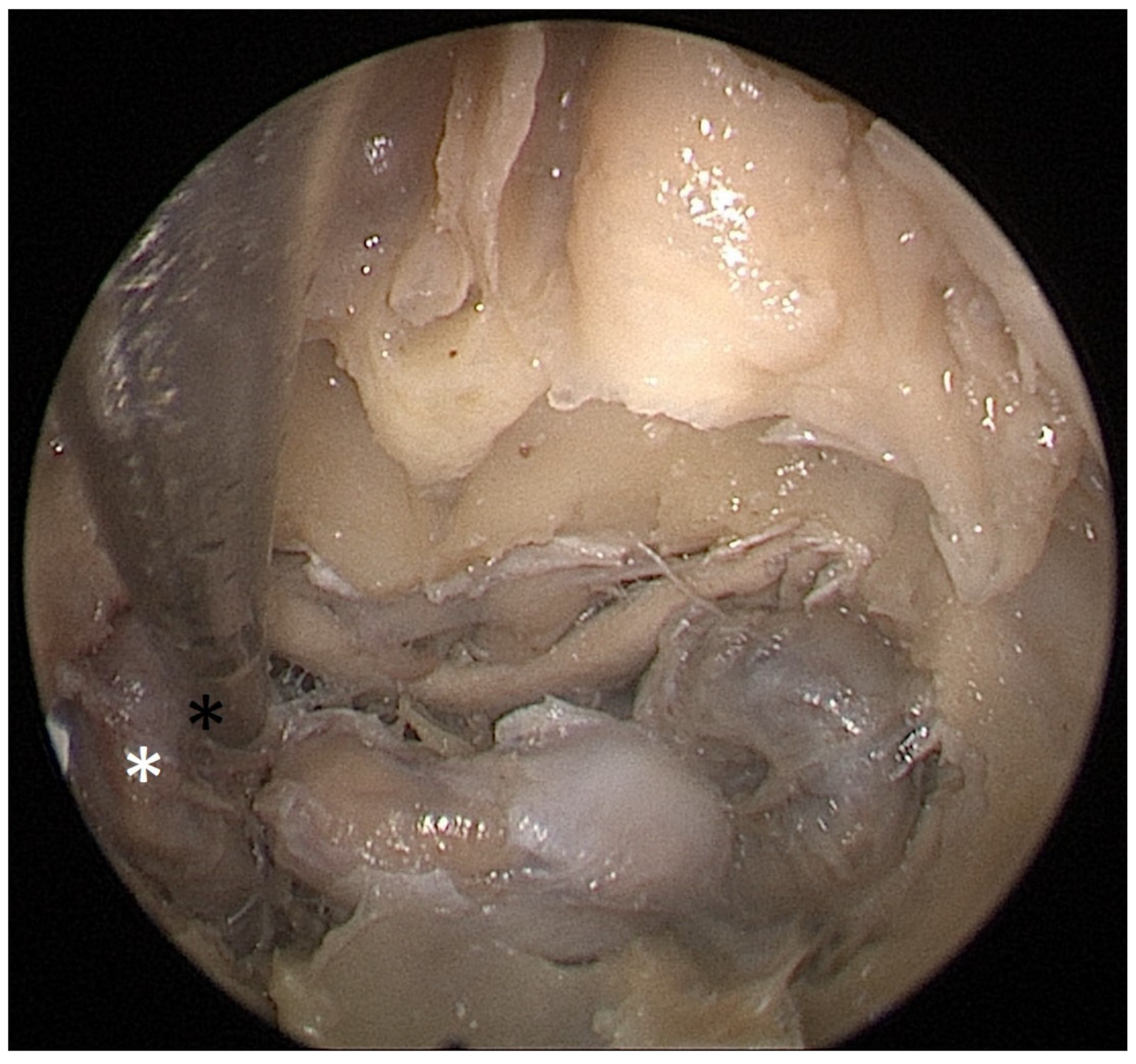
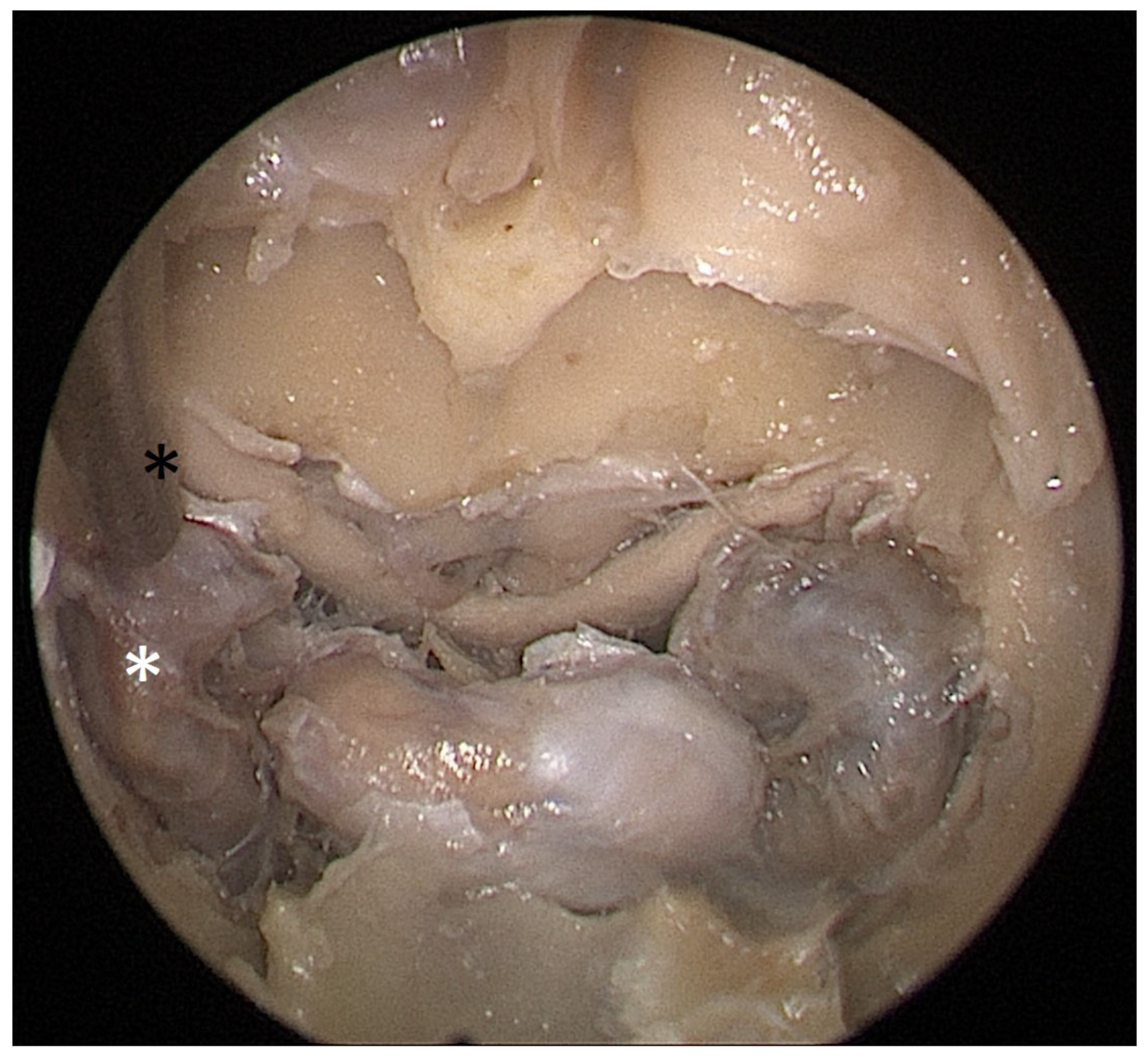
Objective: This study was designed to evaluate the possibility of predicting the minimum size of septal resection for safe tumor extraction in transnasal paraseptal pituitary adenoma resection from preoperative computed tomography scans. Methods: A retrospective CT scan analysis was performed on 20 patients who underwent endoscopic pituitary surgery at the University Hospital in Ostrava. Virtual insertion of the straight instrument into the sphenoid cavity was simulated using a CT scan. The minimum septal resection size was predicted and compared to various diameters in the nasal cavity. The results were then compared with cadaveric dissections, in which septal resections were performed at 1 cm and 2 cm distances from the anterior sphenoid wall. The association between cadaver dissections and CT scan results was studied. Results: A total of 20 patients who underwent endoscopic transnasal surgery for pituitary adenoma between the years 2020 and 2021 were enrolled in the study. The mean virtual posterior septal size resection needed to reach the medial edge of the ICA with the straight instrument, without infracturing the nasal septum, was 13.2 mm. In cadavers with a 1 cm posterior septal resection, the medial edge of the ICA was reached with the straight instrument. In 2 cm resections, it was possible to reach beyond the lateral edge of the ICA. Conclusion: There is no significant correlation between the minimum septal size resection and measured diameters in the nasal cavity. According to our study, a 1 cm resection is sufficient for a non-extended pituitary tumor extraction. More extensive septal resections allow for better maneuverability and overview in the surgical field.
Keywords: pituitary adenoma; endoscopic transnasal approach; transsphenoidal approach; binostril approach; septal resection pituitary adenoma; endoscopic transnasal approach; transsphenoidal approach; binostril approach; septal resection