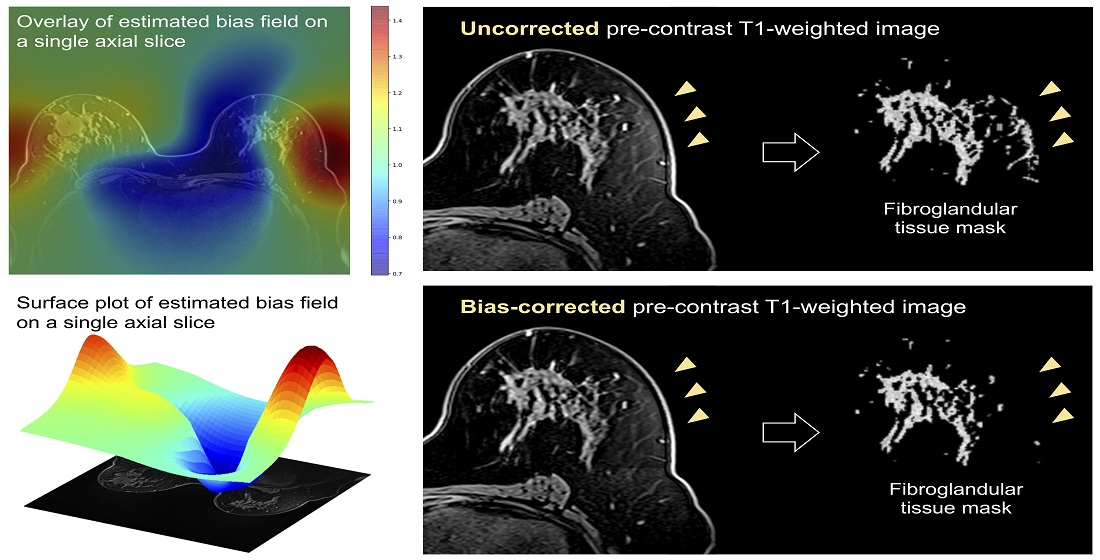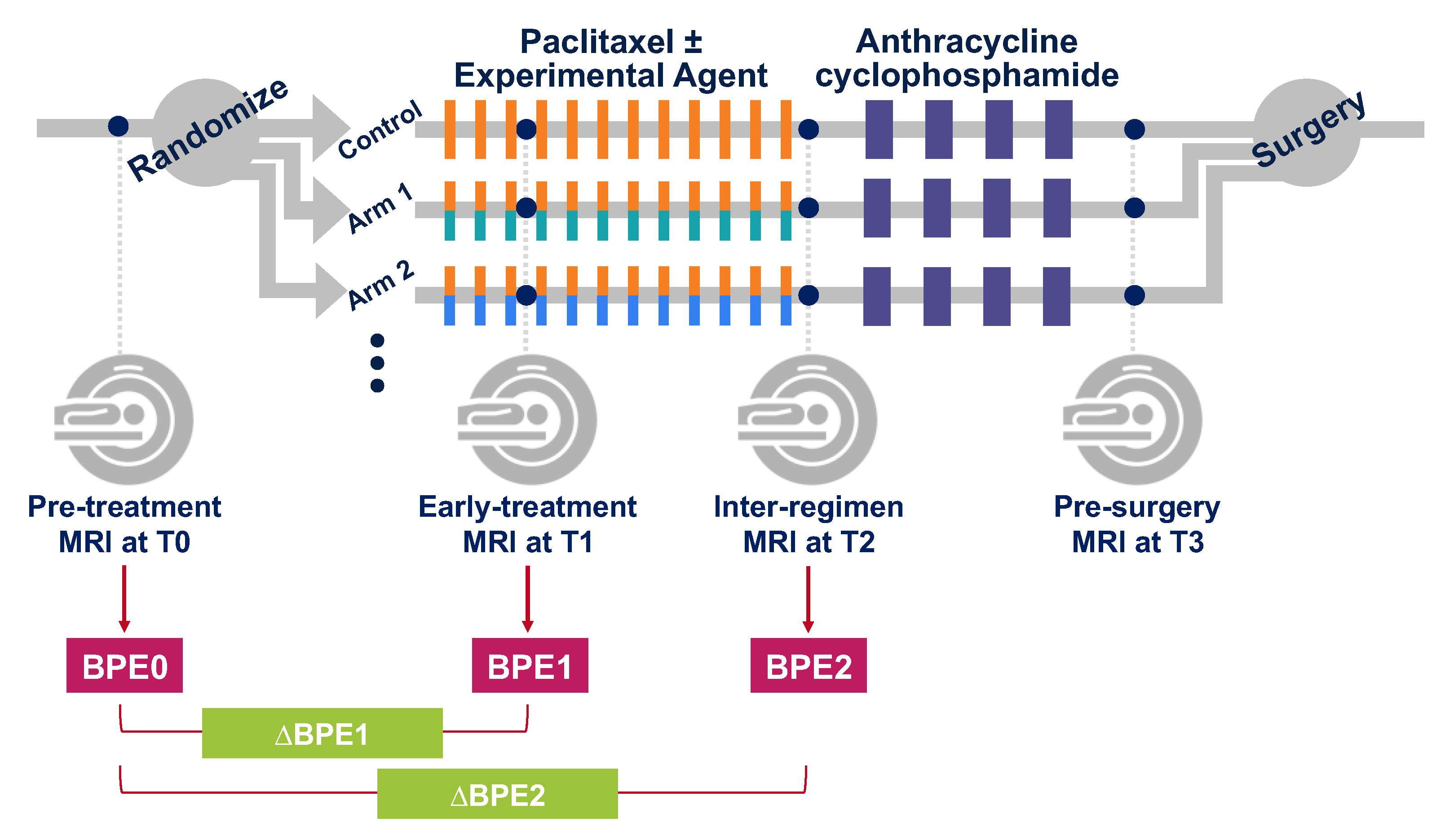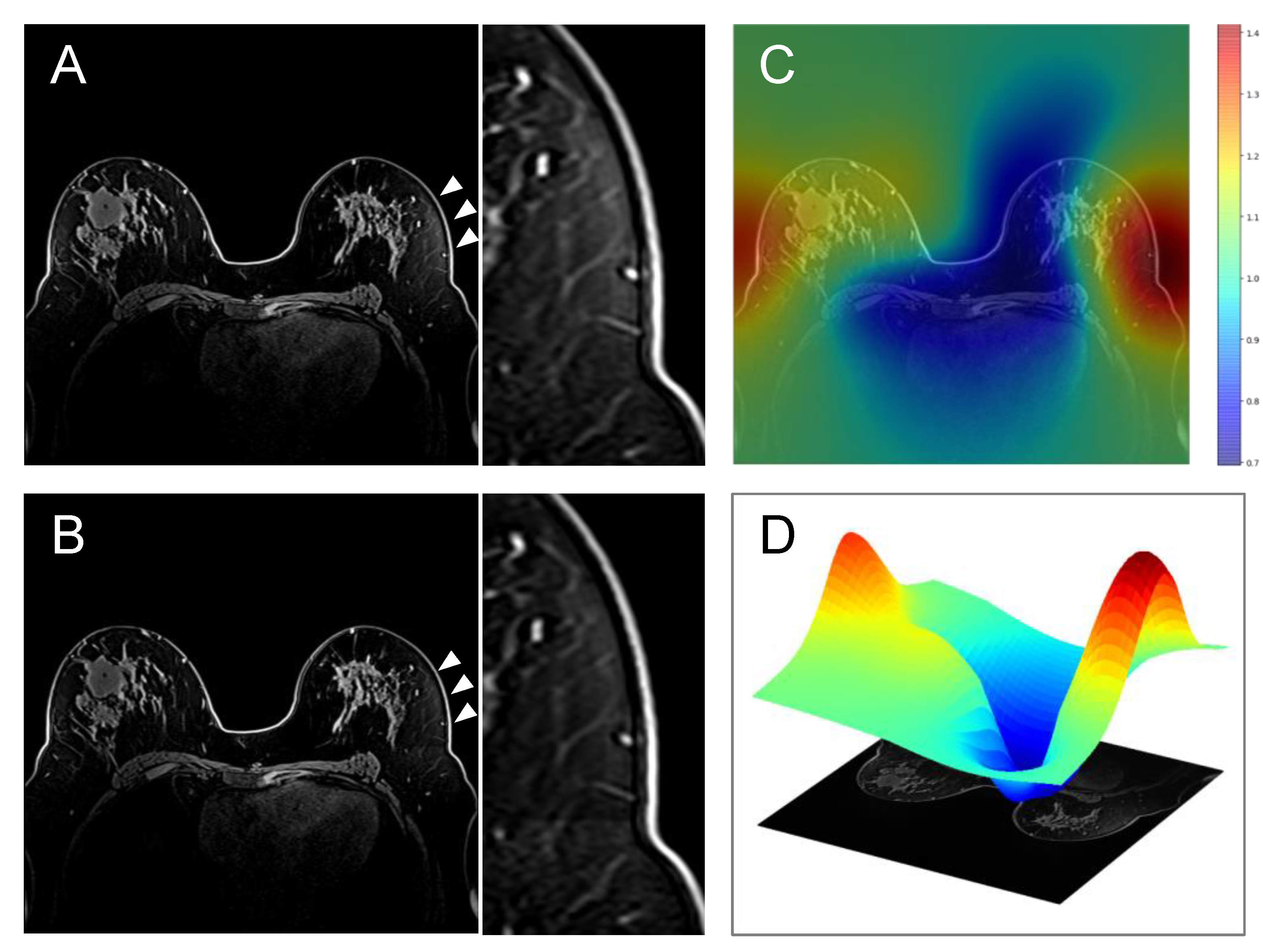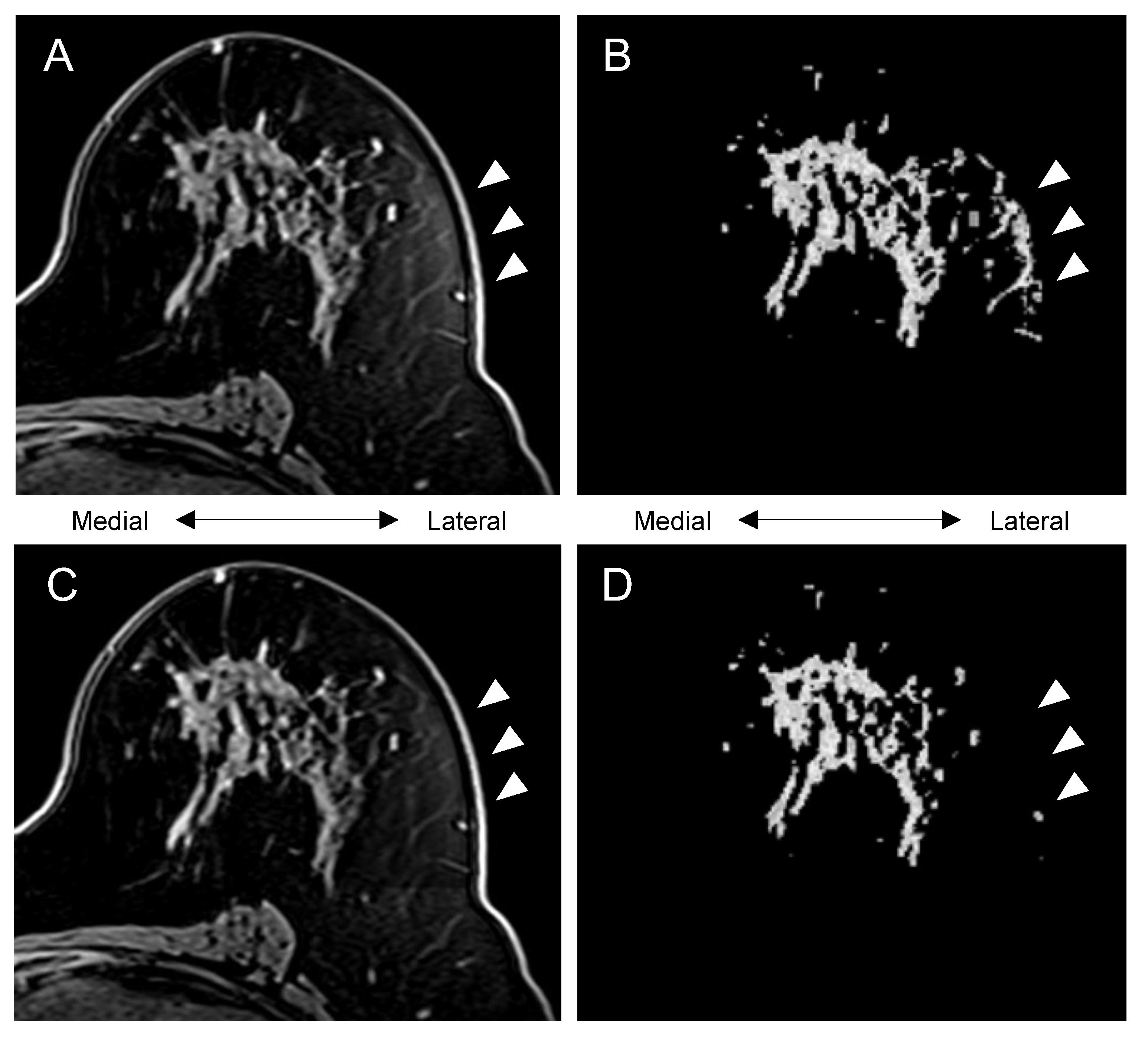

Post-Processing Bias Field Inhomogeneity Correction for Assessing Background Parenchymal Enhancement on Breast MRI as a Quantitative Marker of Treatment Response
 , , ,
, , , Abstract
Share and Cite
Nguyen, A.A.-T.; Onishi, N.; Carmona-Bozo, J.; Li, W.; Kornak, J.; Newitt, D.C.; Hylton, N.M. Post-Processing Bias Field Inhomogeneity Correction for Assessing Background Parenchymal Enhancement on Breast MRI as a Quantitative Marker of Treatment Response. Tomography 2022, 8, 891-904. https://doi.org/10.3390/tomography8020072
Nguyen AA-T, Onishi N, Carmona-Bozo J, Li W, Kornak J, Newitt DC, Hylton NM. Post-Processing Bias Field Inhomogeneity Correction for Assessing Background Parenchymal Enhancement on Breast MRI as a Quantitative Marker of Treatment Response. Tomography. 2022; 8(2):891-904. https://doi.org/10.3390/tomography8020072
Chicago/Turabian StyleNguyen, Alex Anh-Tu, Natsuko Onishi, Julia Carmona-Bozo, Wen Li, John Kornak, David C. Newitt, and Nola M. Hylton. 2022. "Post-Processing Bias Field Inhomogeneity Correction for Assessing Background Parenchymal Enhancement on Breast MRI as a Quantitative Marker of Treatment Response" Tomography 8, no. 2: 891-904. https://doi.org/10.3390/tomography8020072
APA StyleNguyen, A. A.-T., Onishi, N., Carmona-Bozo, J., Li, W., Kornak, J., Newitt, D. C., & Hylton, N. M. (2022). Post-Processing Bias Field Inhomogeneity Correction for Assessing Background Parenchymal Enhancement on Breast MRI as a Quantitative Marker of Treatment Response. Tomography, 8(2), 891-904. https://doi.org/10.3390/tomography8020072