Article

Performance Evaluation of a Cicada-Inspired Subsoiling Tool Using DEM Simulations

1
College of Agricultural Equipment Engineering, Henan University of Science and Technology, Luoyang 471000, China
2
Collaborative Innovation Center of Machinery Equipment Advanced Manufacturing of Henan Province, Luoyang 471000, China
*
Authors to whom correspondence should be addressed.
Biomimetics 2024, 9(1), 25; https://doi.org/10.3390/biomimetics9010025

Submission received: 23 September 2023 / Revised: 26 October 2023 / Accepted: 29 December 2023 / Published: 3 January 2024

Abstract

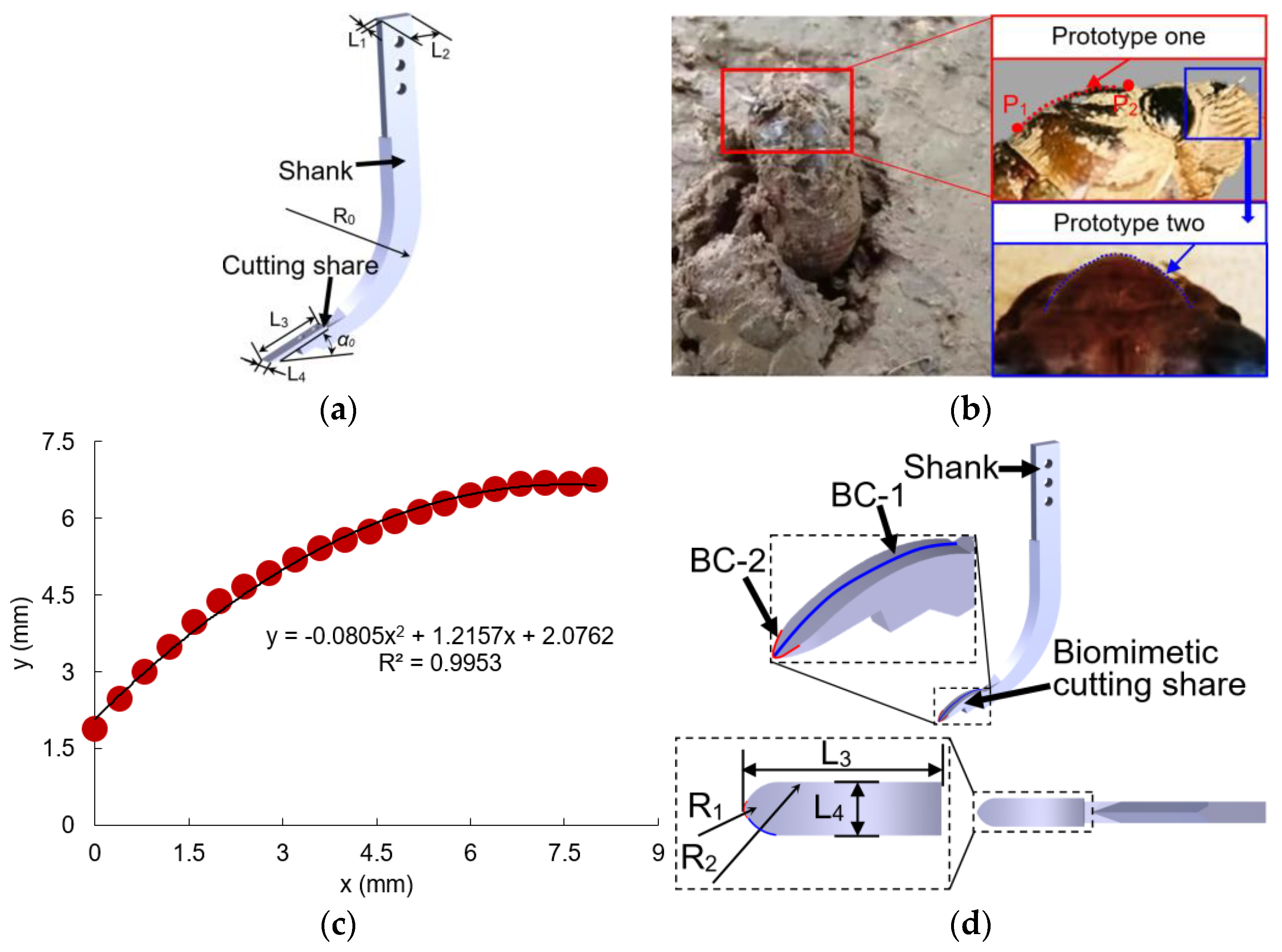
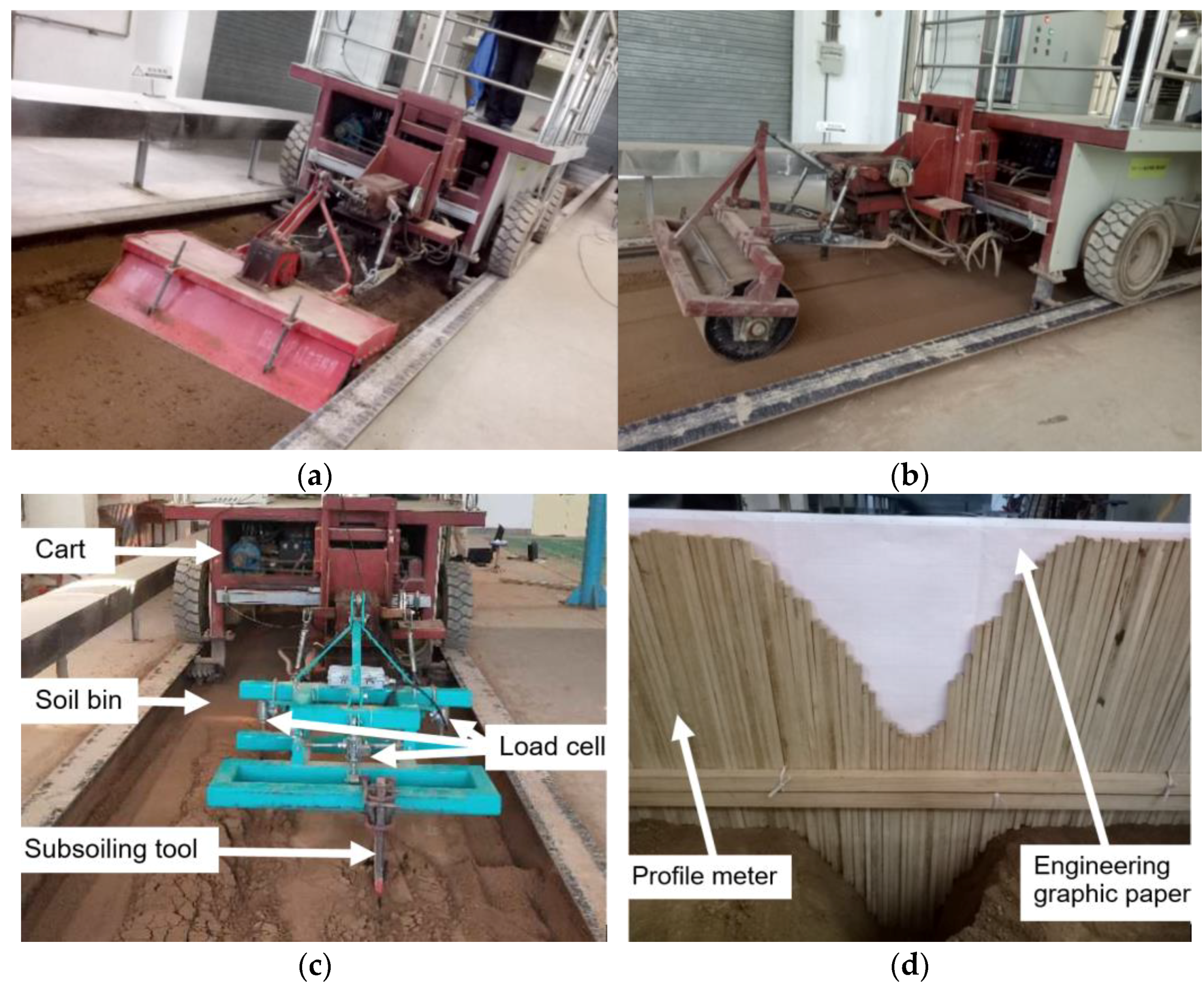
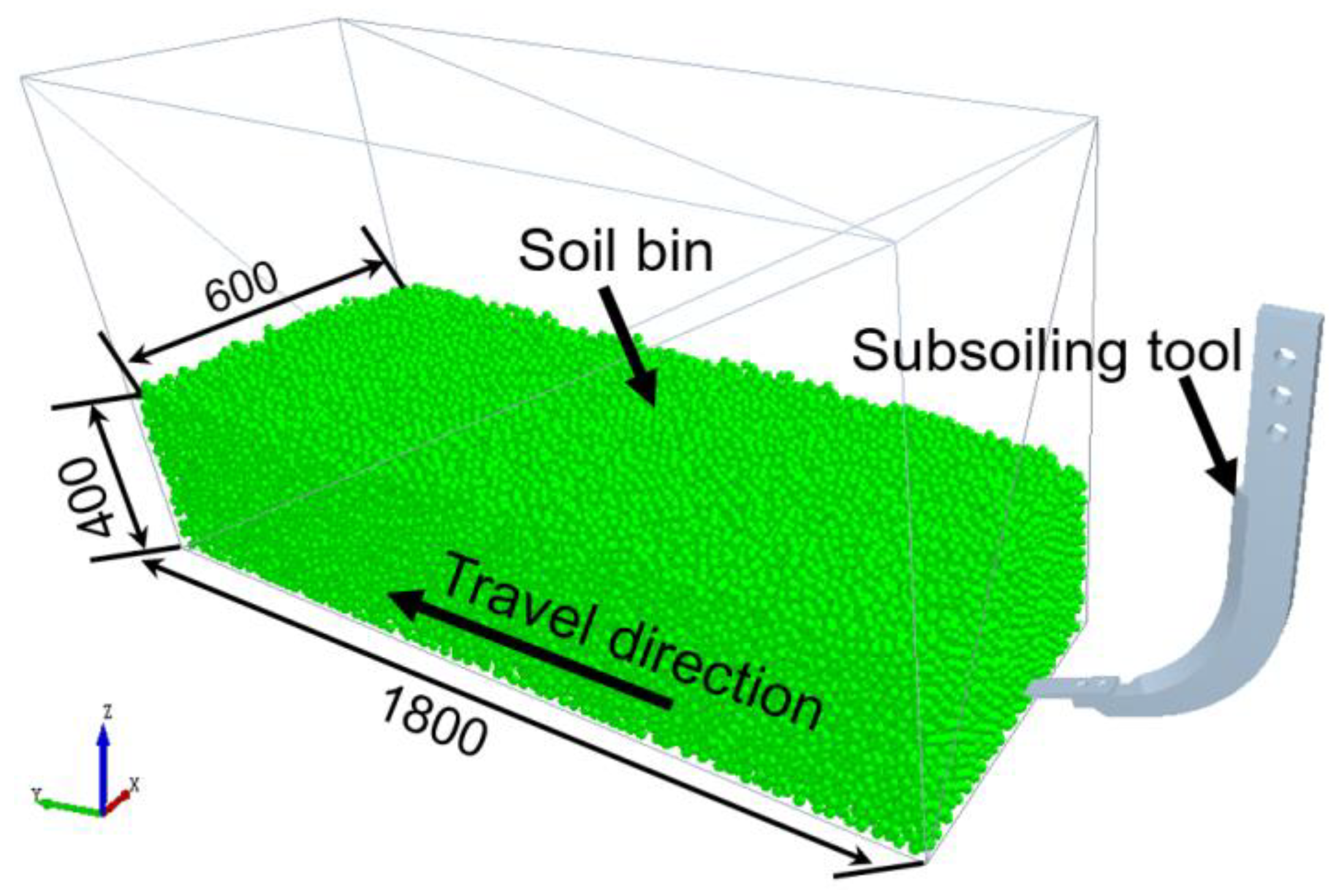
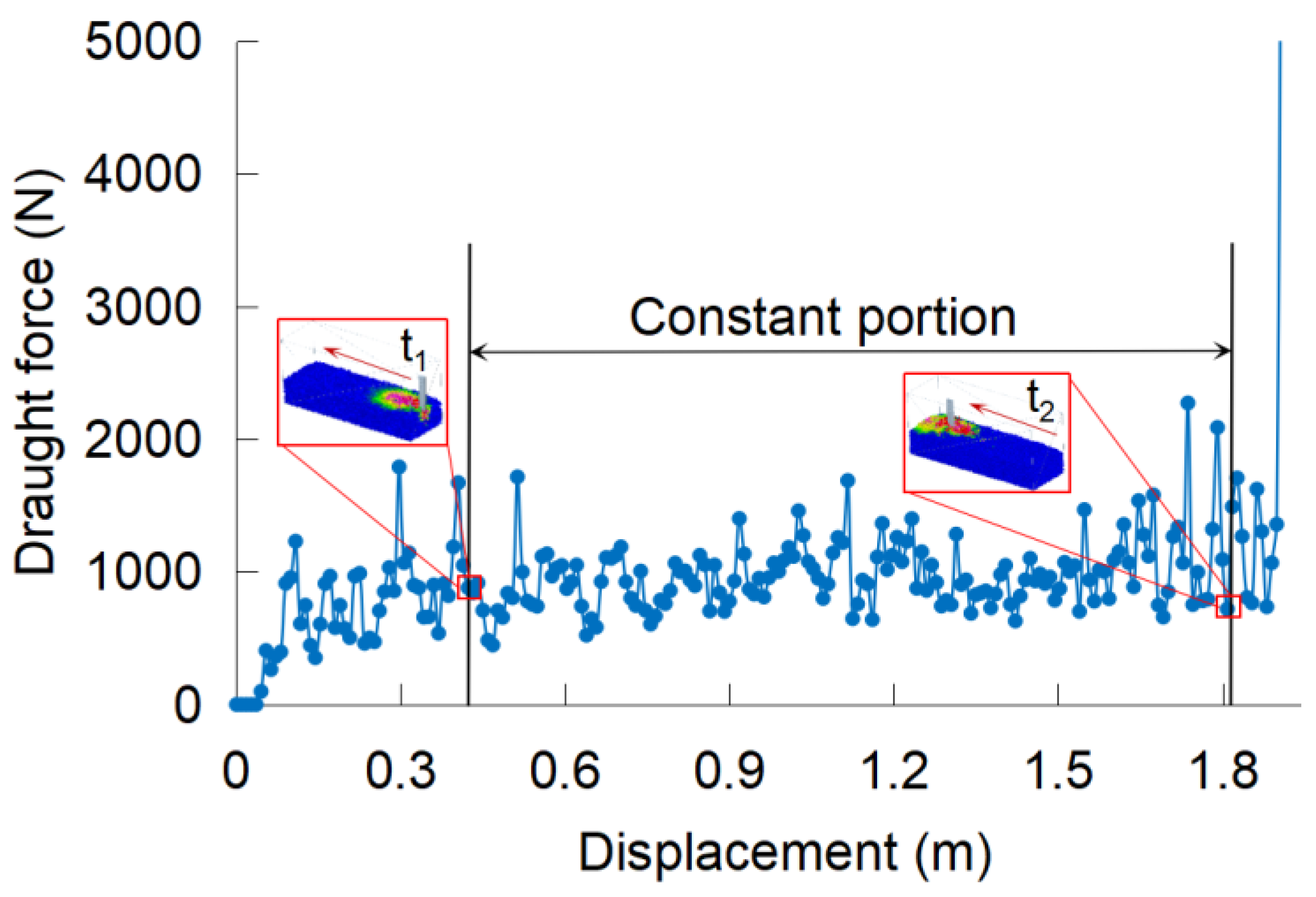
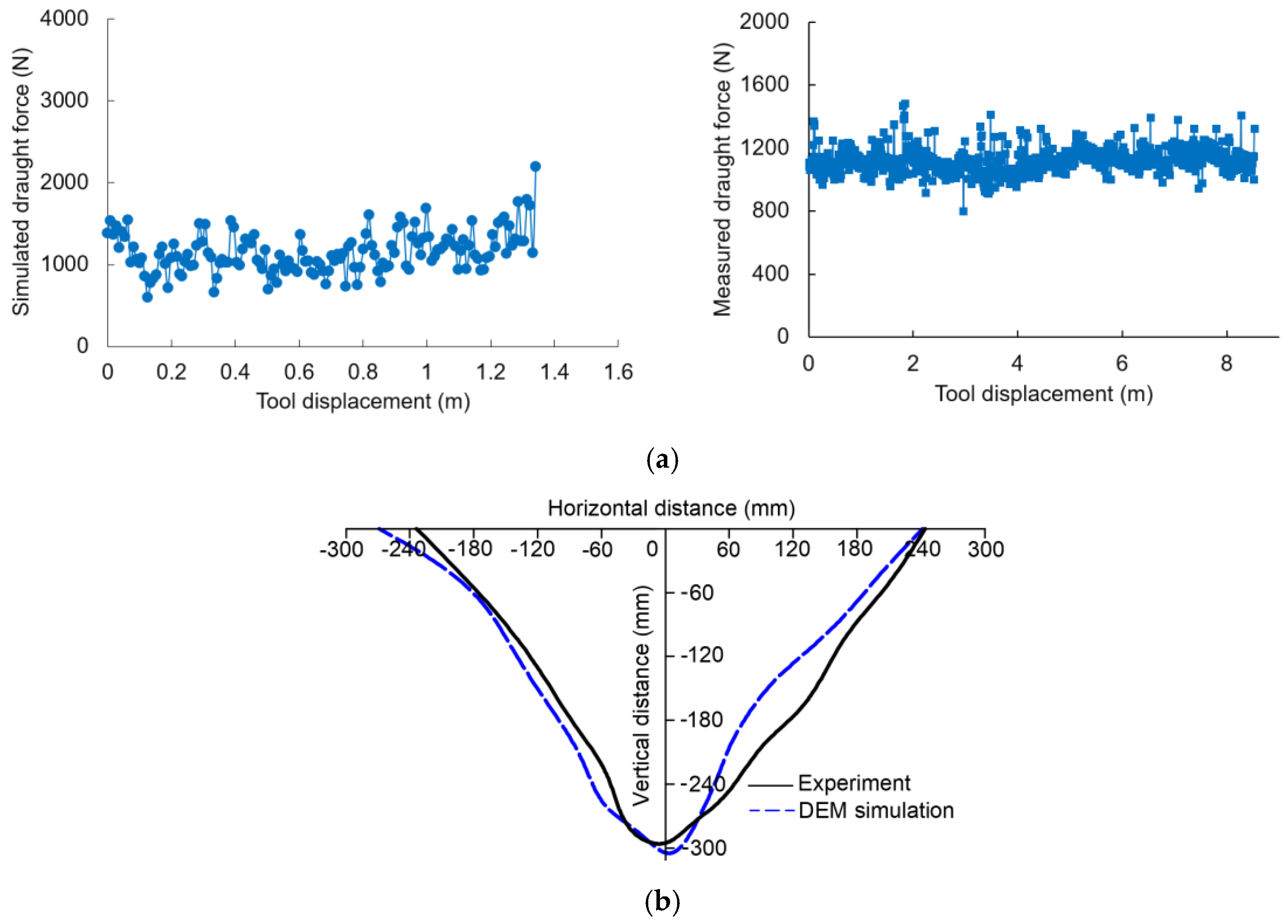
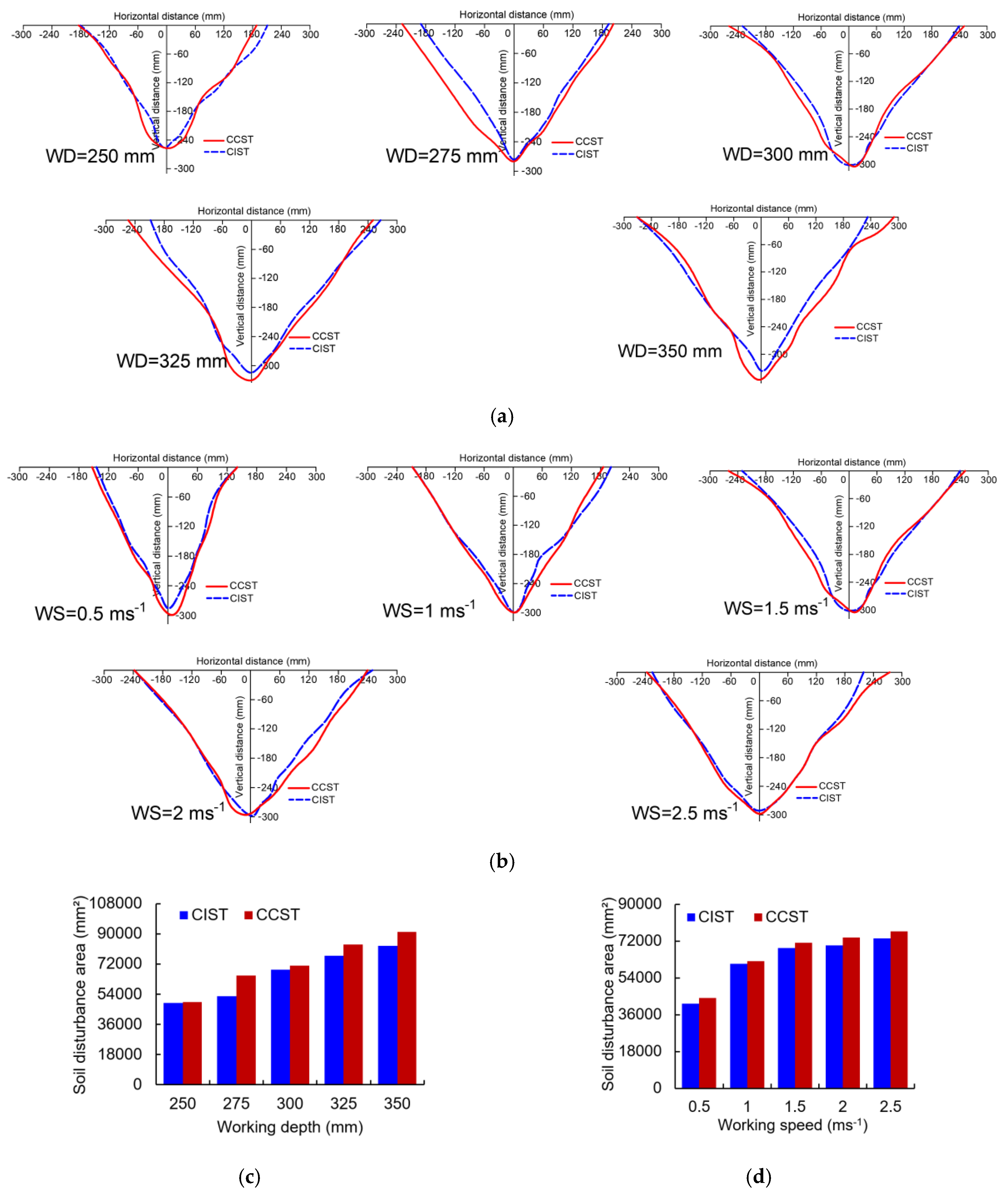
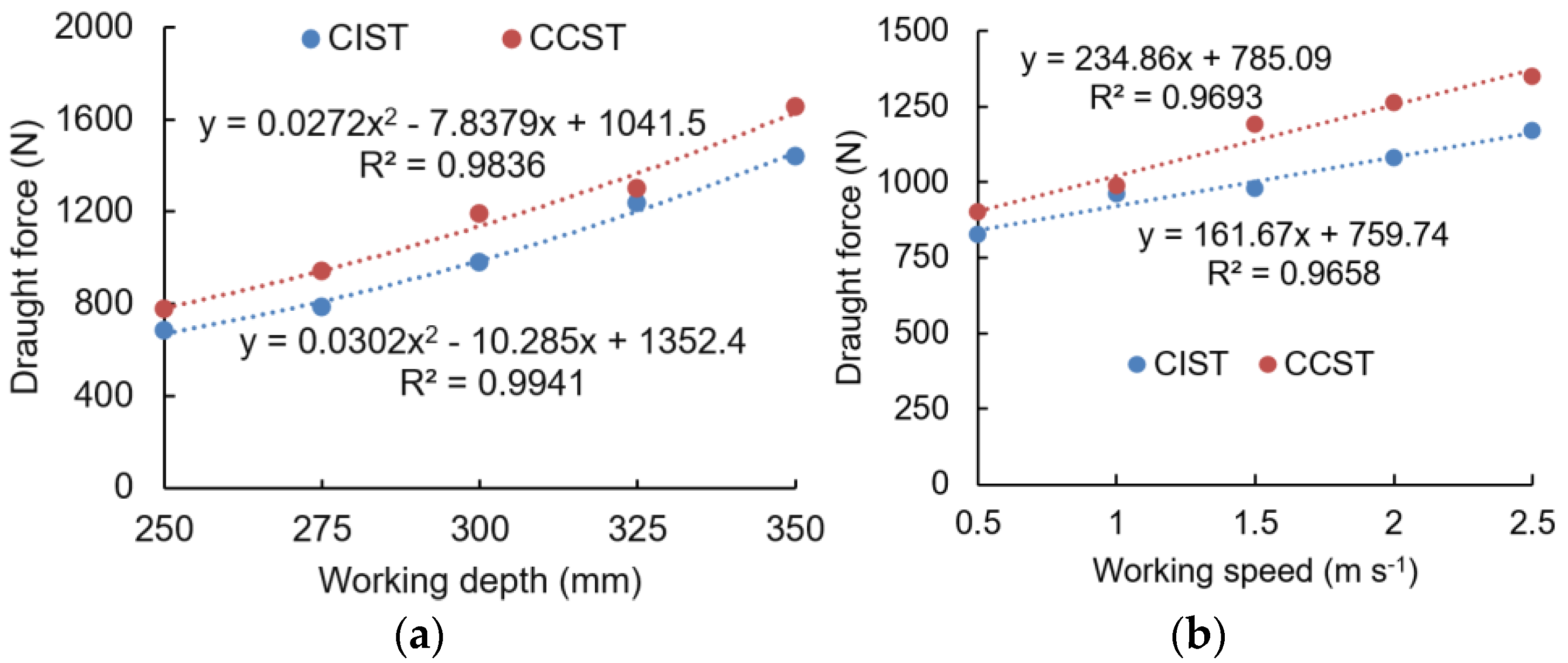
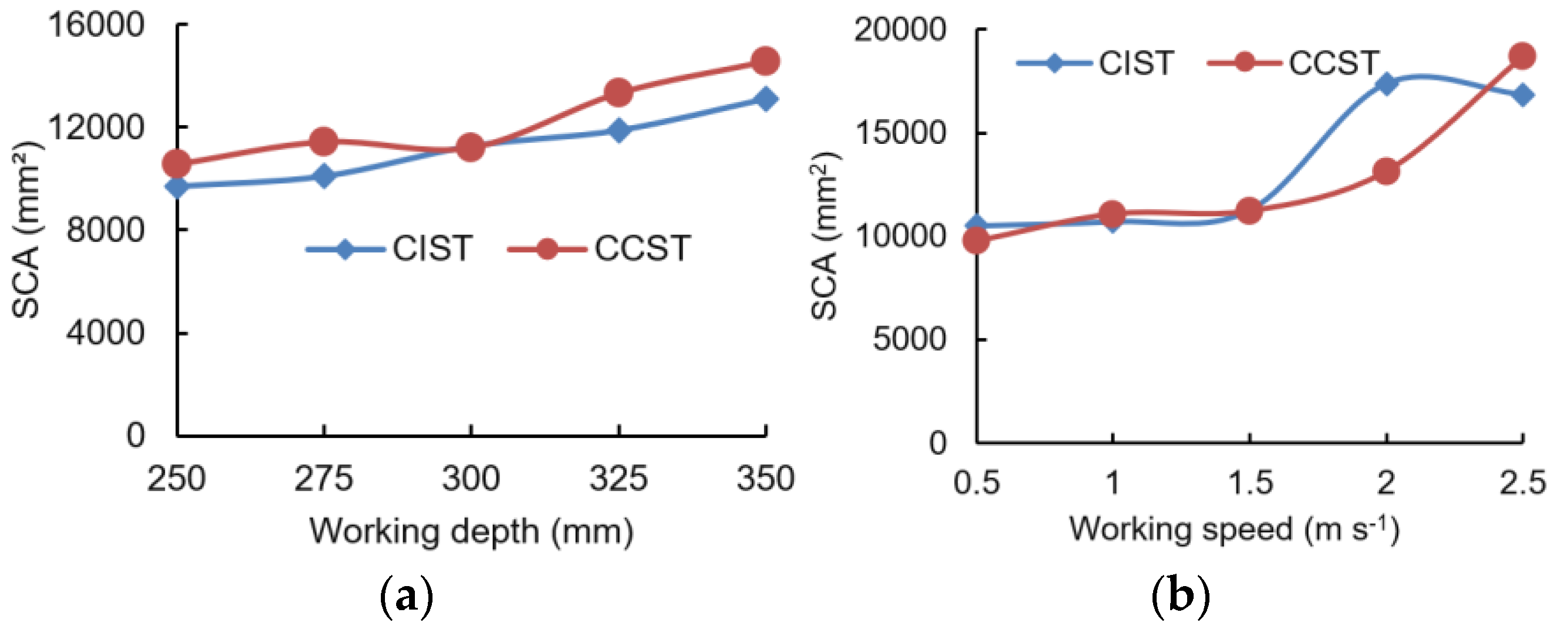
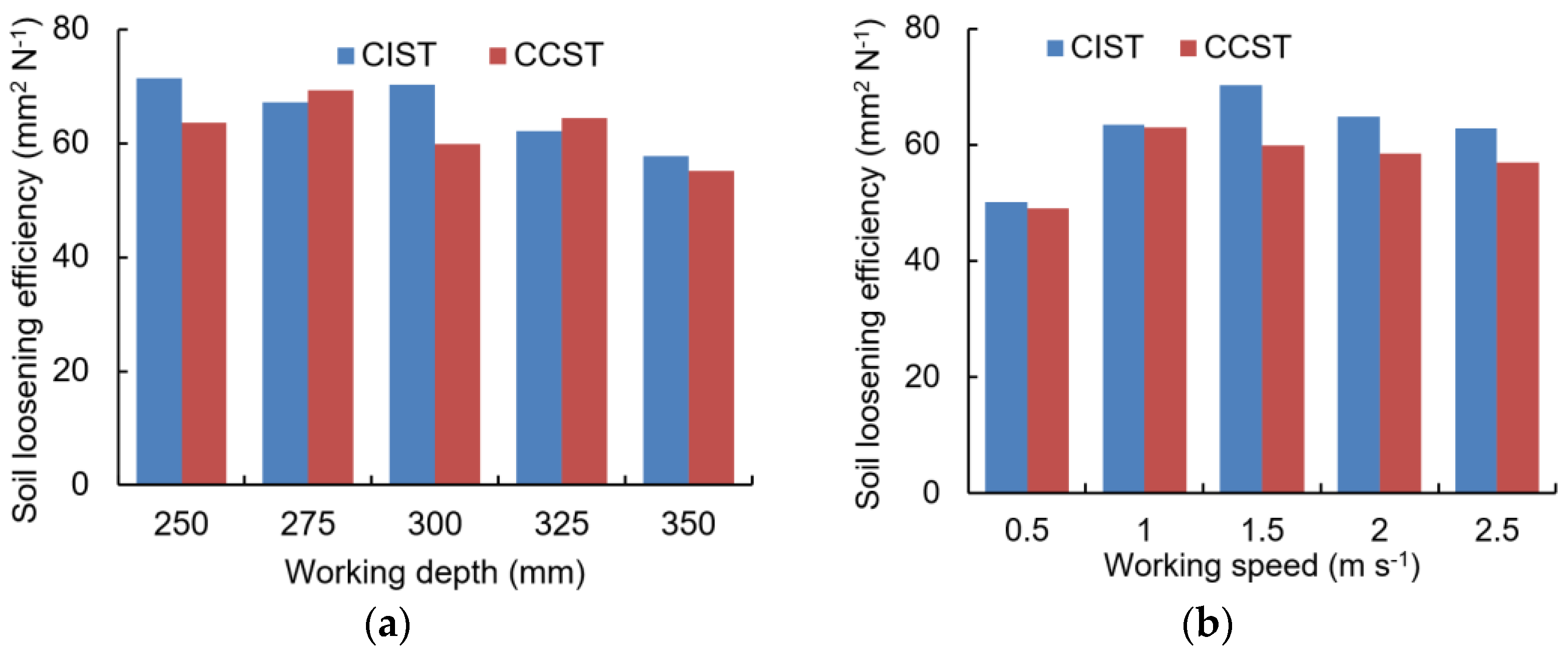
Subsoiling practice is an essential tillage practice in modern agriculture. Tillage forces and energy consumption during subsoiling are extremely high, which reduces the economic benefits of subsoiling technology. In this paper, a cicada-inspired biomimetic subsoiling tool (CIST) was designed to reduce the draught force during subsoiling. A soil–tool interaction model was developed using EDEM and validated using lab soil bin tests with sandy loam soil. The validated model was used to optimize the CIST and evaluate its performance by comparing it with a conventional chisel subsoiling tool (CCST) at various working depths (250–350 mm) and speeds (0.5–2.5 ms−1). Results showed that both simulated draught force and soil disturbance behaviors agreed well with those from lab soil bin tests, as indicated by relative errors of <6.1%. Compared with the CCST, the draught forces of the CIST can be reduced by 17.7% at various working depths and speeds; the design of the CIST obviously outperforms some previous biomimetic designs with largest draught force reduction of 7.29–12.8%. Soil surface flatness after subsoiling using the CIST was smoother at various depths than using the CCST. Soil loosening efficiencies of the CIST can be raised by 17.37% at various working speeds. Results from this study implied that the developed cicada-inspired subsoiling tool outperforms the conventional chisel subsoiling tool on aspects of soil disturbance behaviors, draught forces, and soil loosening efficiencies. This study can have implications for designing high-performance subsoiling tools with reduced draught forces and energy requirements, especially for the subsoiling tools working under sandy loam soil.
Keywords: biomimetic method; draught force; energy consumption; soil disturbance; subsoiling biomimetic method; draught force; energy consumption; soil disturbance; subsoiling