
Advances of Mussel-Inspired Nanocomposite Hydrogels in Biomedical Applications

Abstract
1. Introduction
2. Mussel-Inspired 0D Nanomaterials-Loaded Hydrogels
2.1. Hydroxyapatite Nanoparticles (HA NPs)
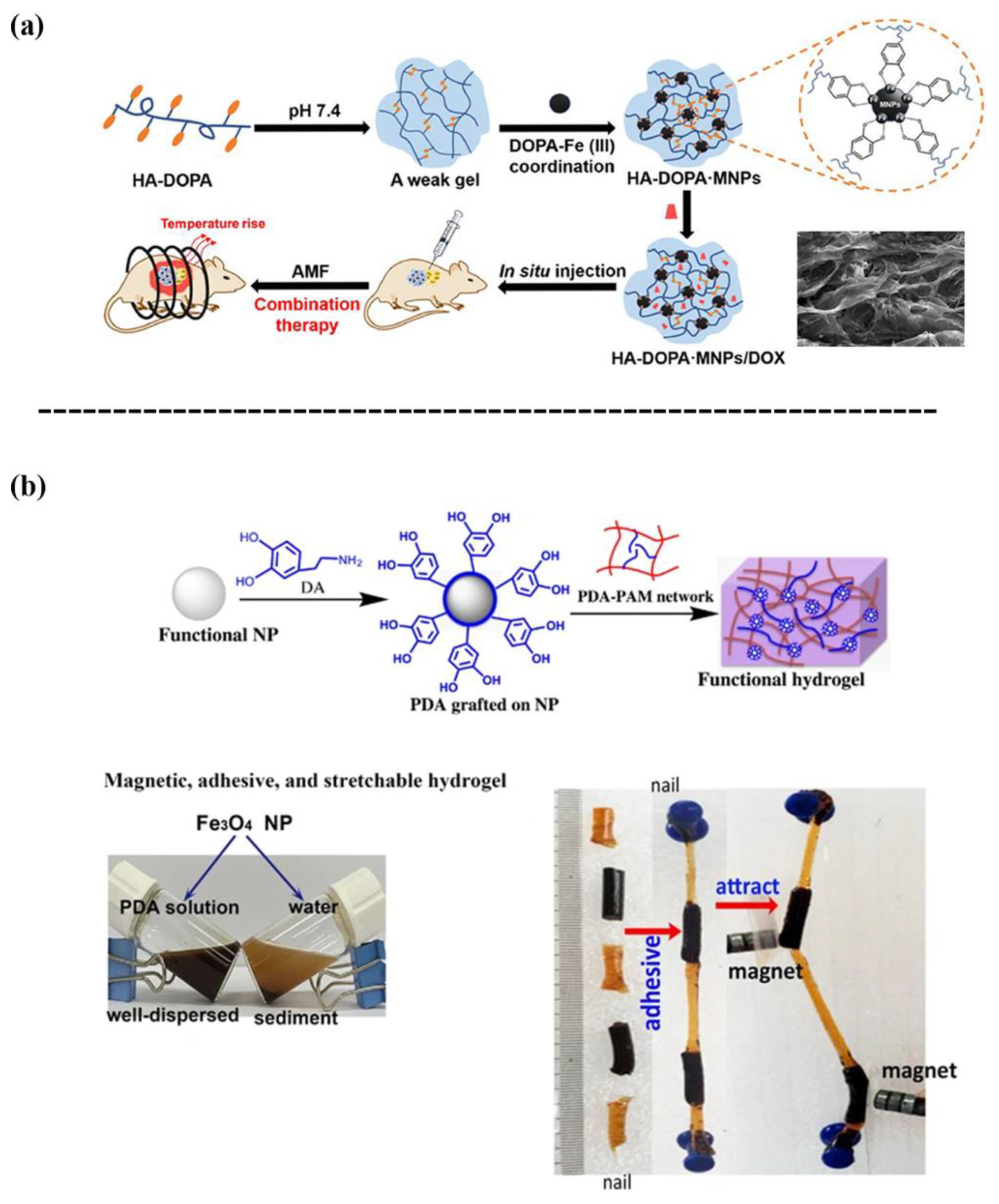
2.2. Iron Oxide Magnetic Nanoparticles (MNPs)
2.3. Mesoporous Silica Nanoparticles
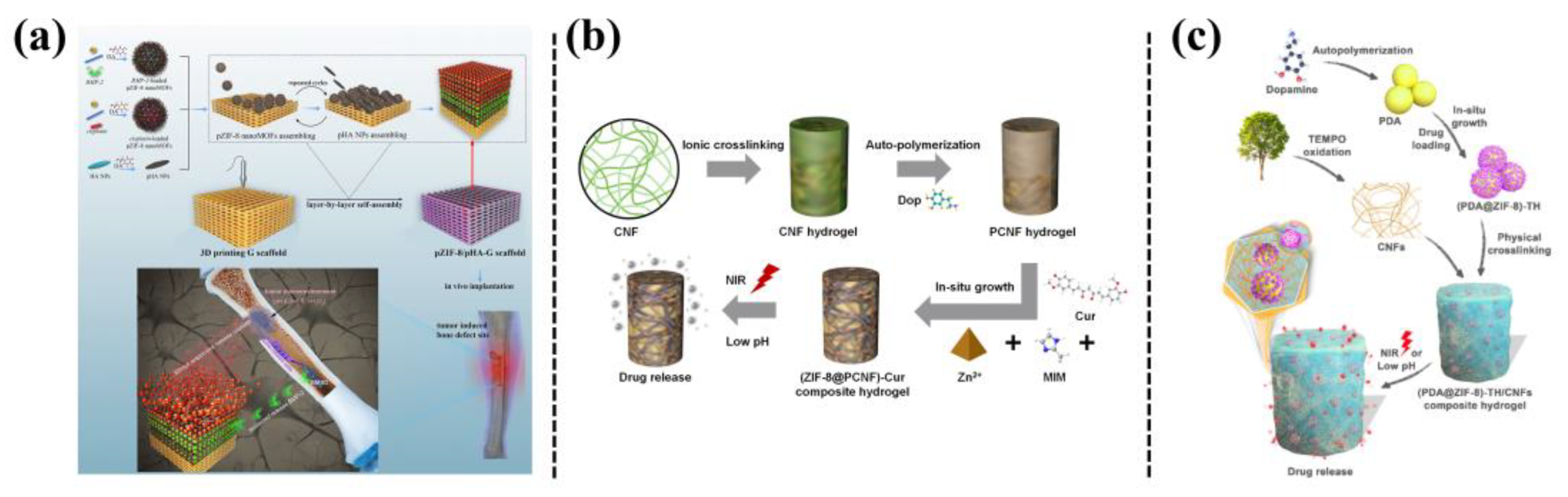
2.4. Metal-Organic-Framework
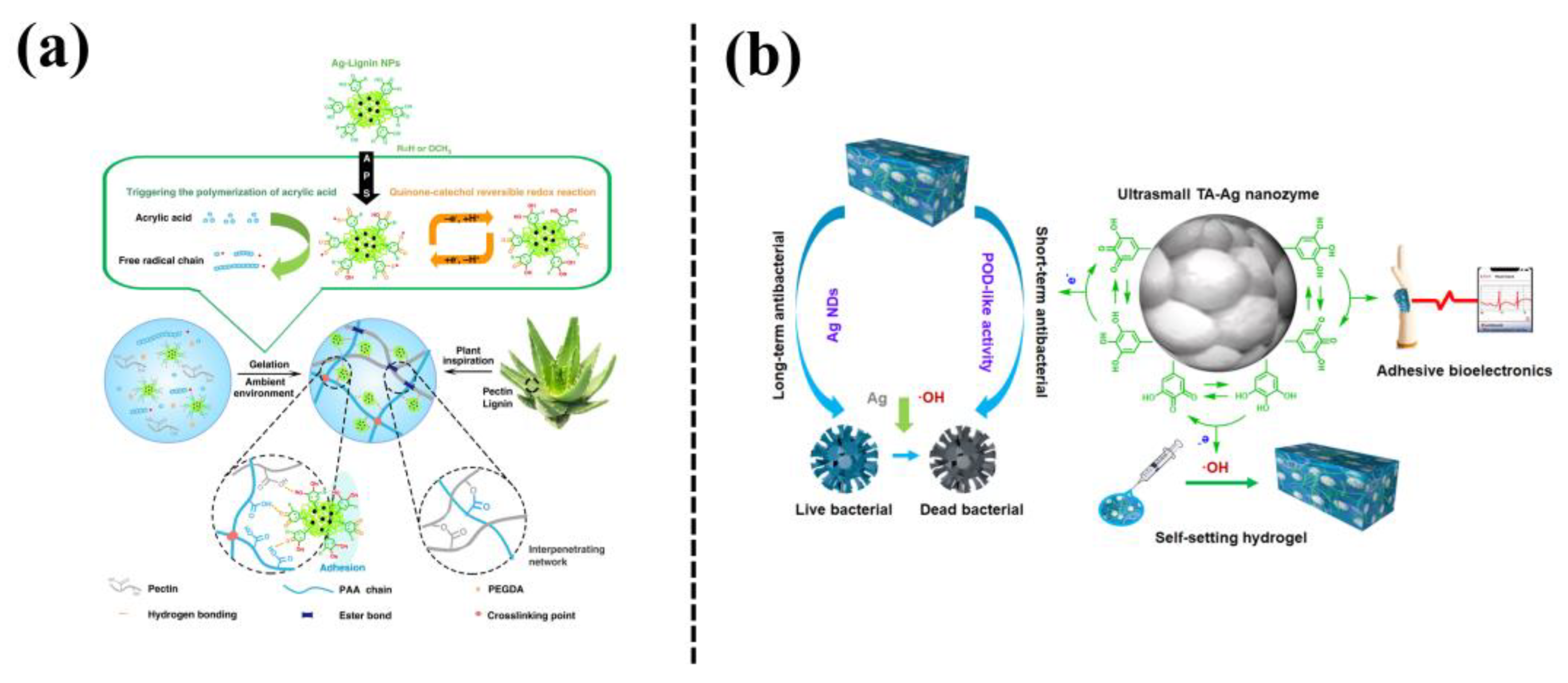
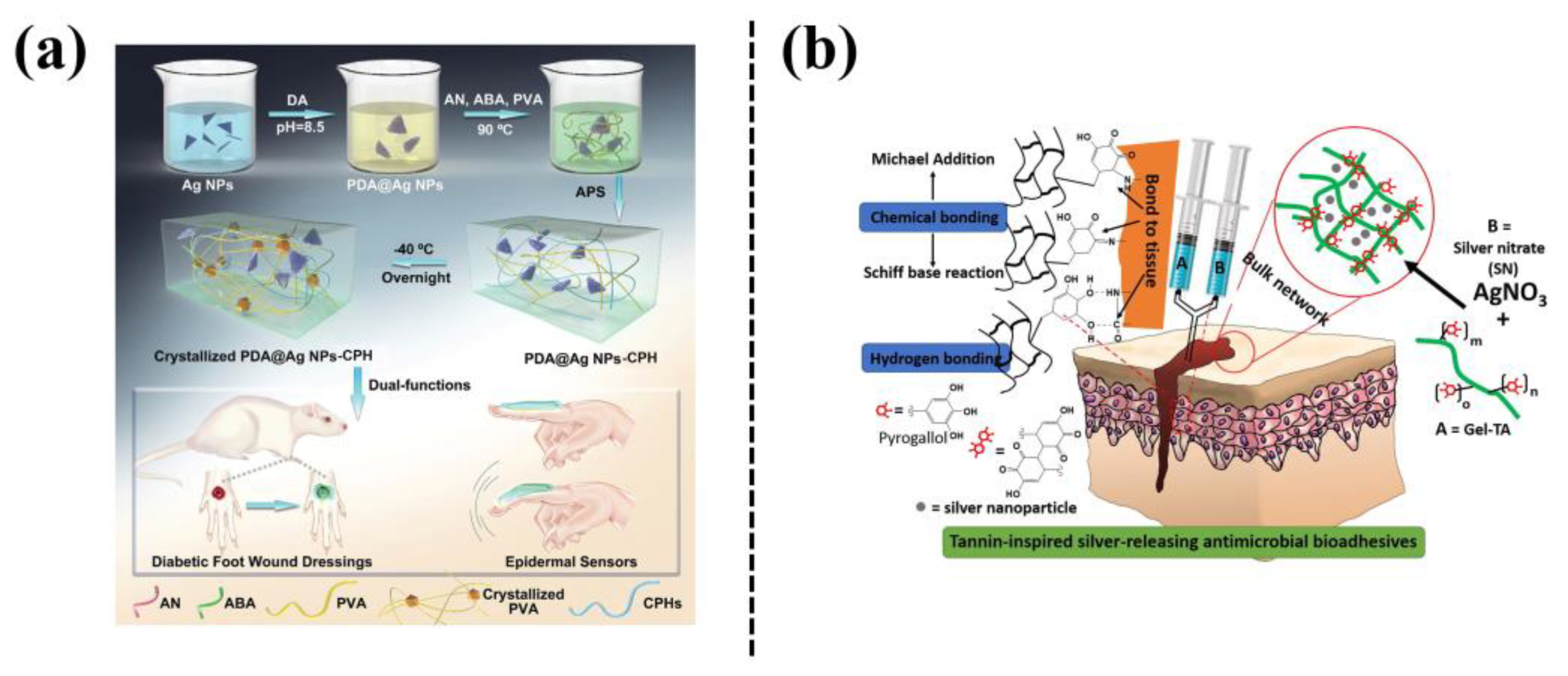
2.5. Silver Nanoparticles (Ag NPs)
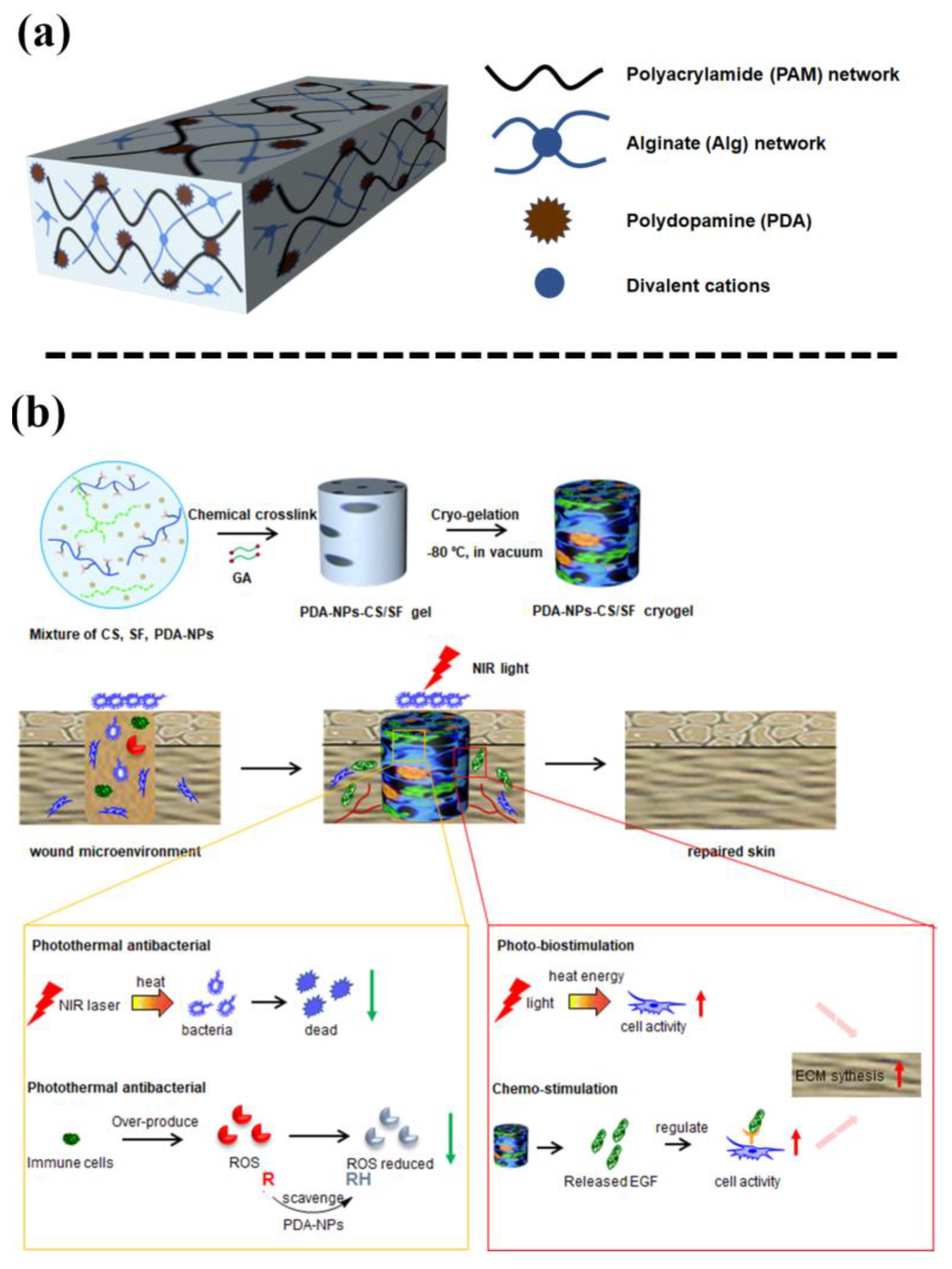
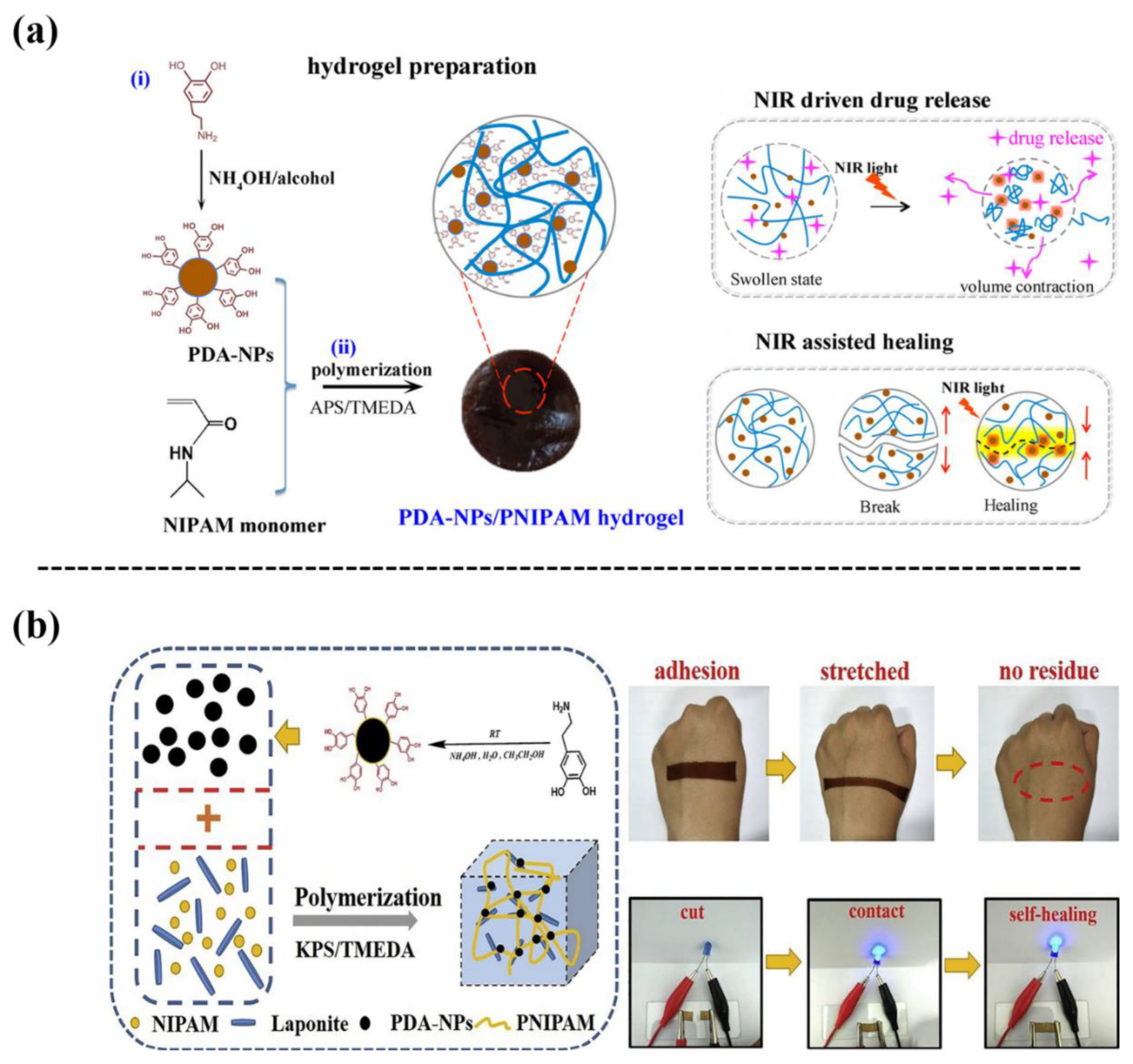
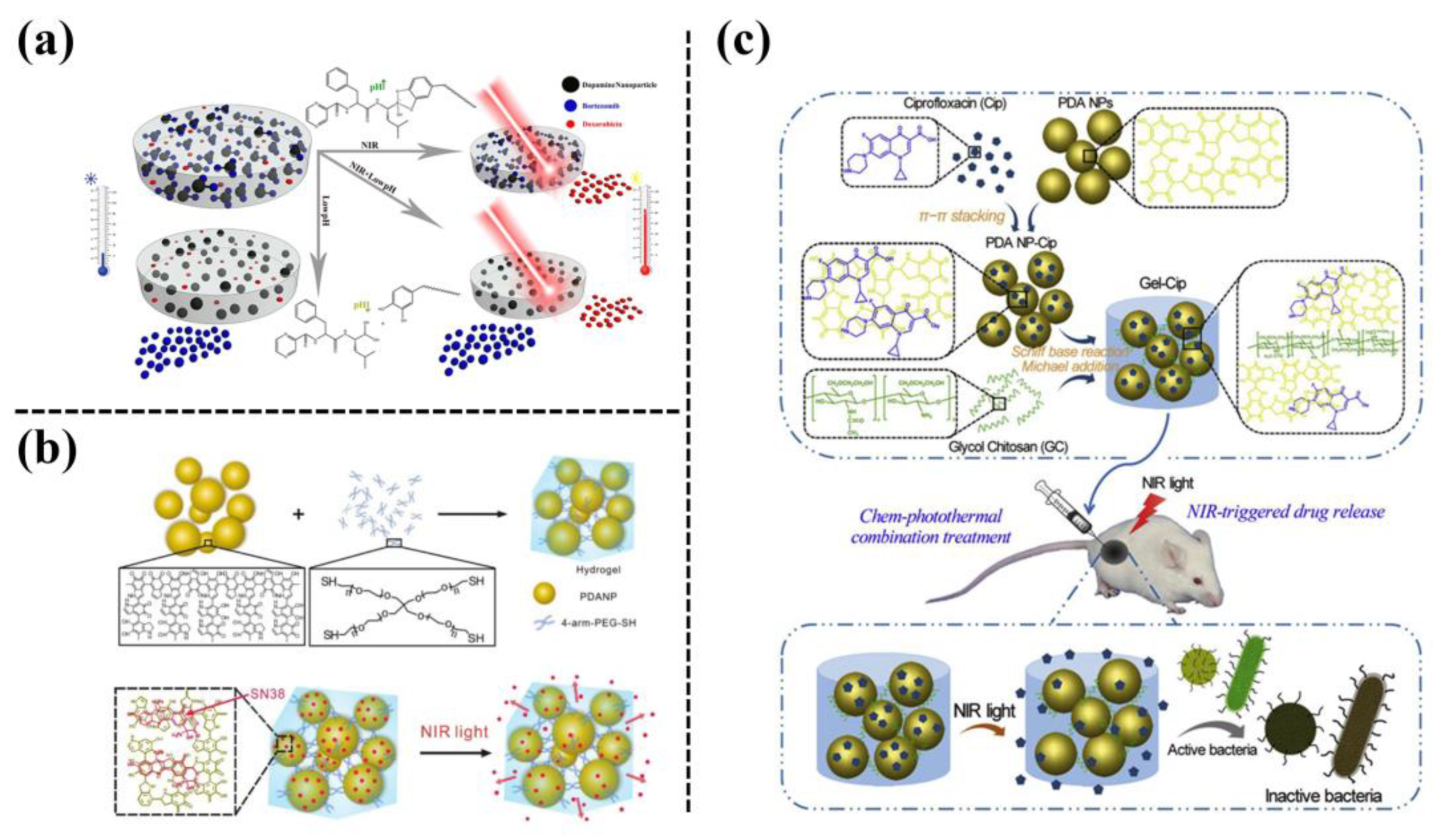
2.6. Polydopamine Nanoparticles (PDA-NPs)
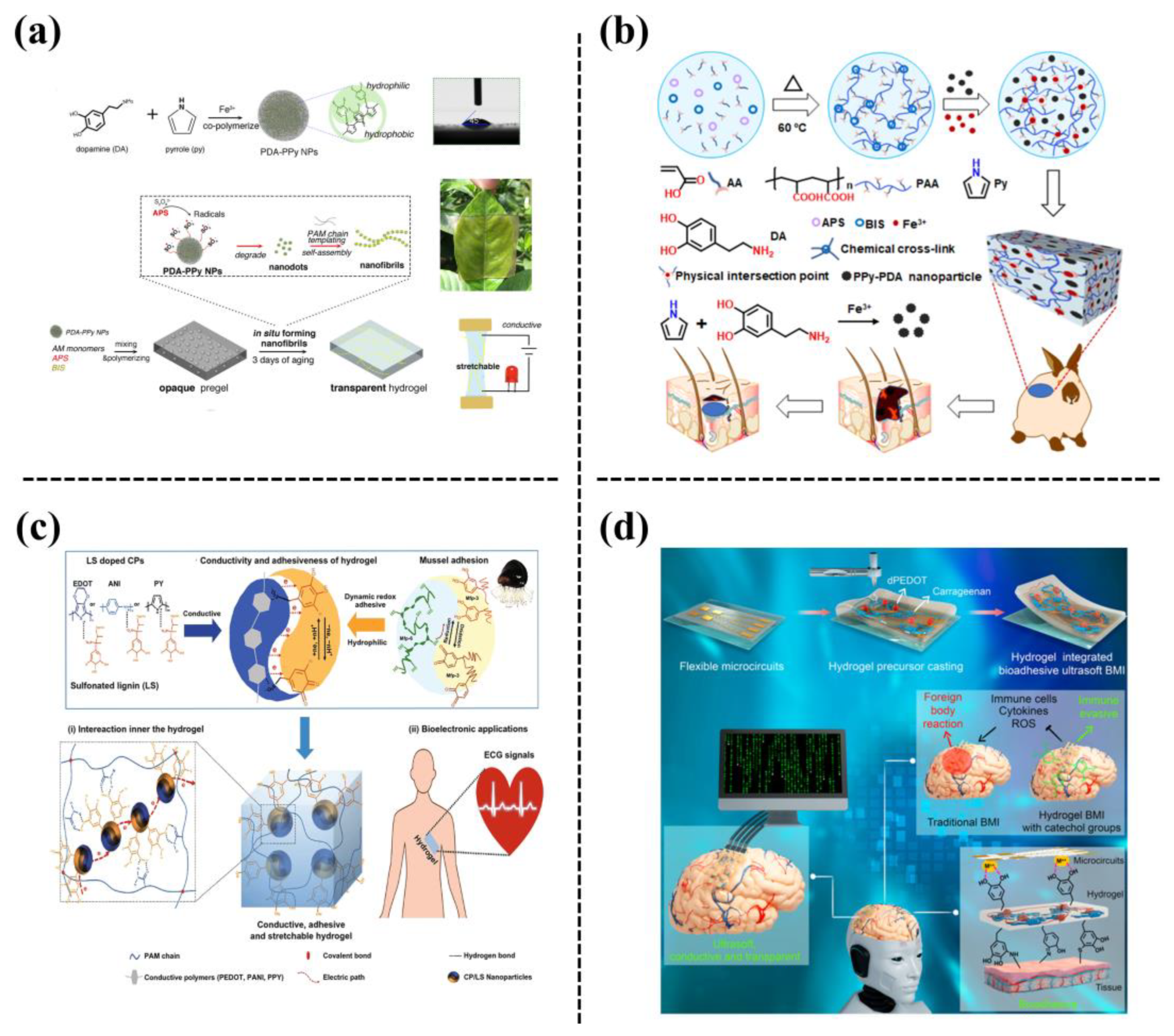
2.7. Conductive-Polymer Nanoparticles
3. Mussel-Inspired 1D Nanomaterials-Loaded Hydrogels
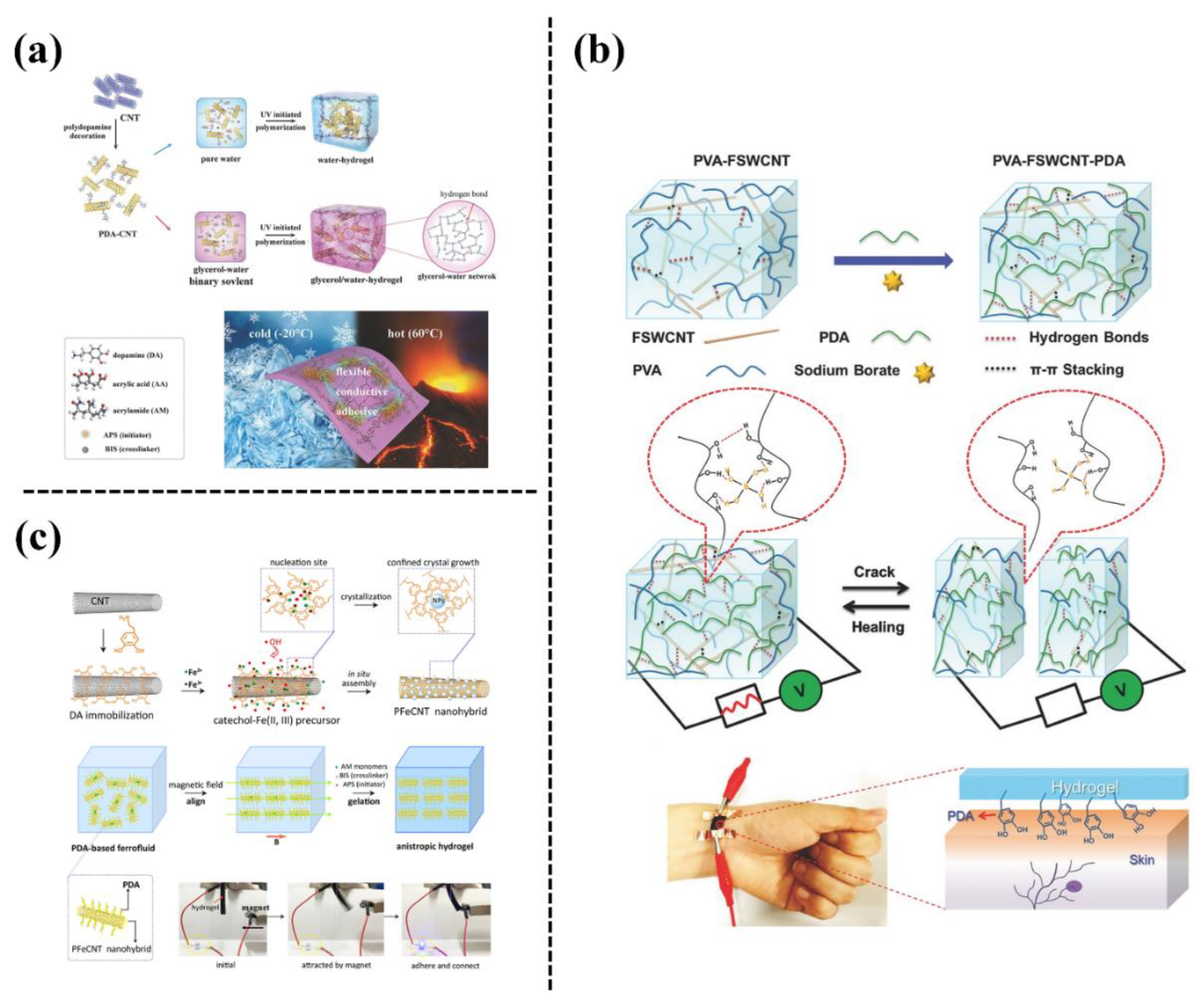
3.1. Carbon Nanotubes (CNTs)
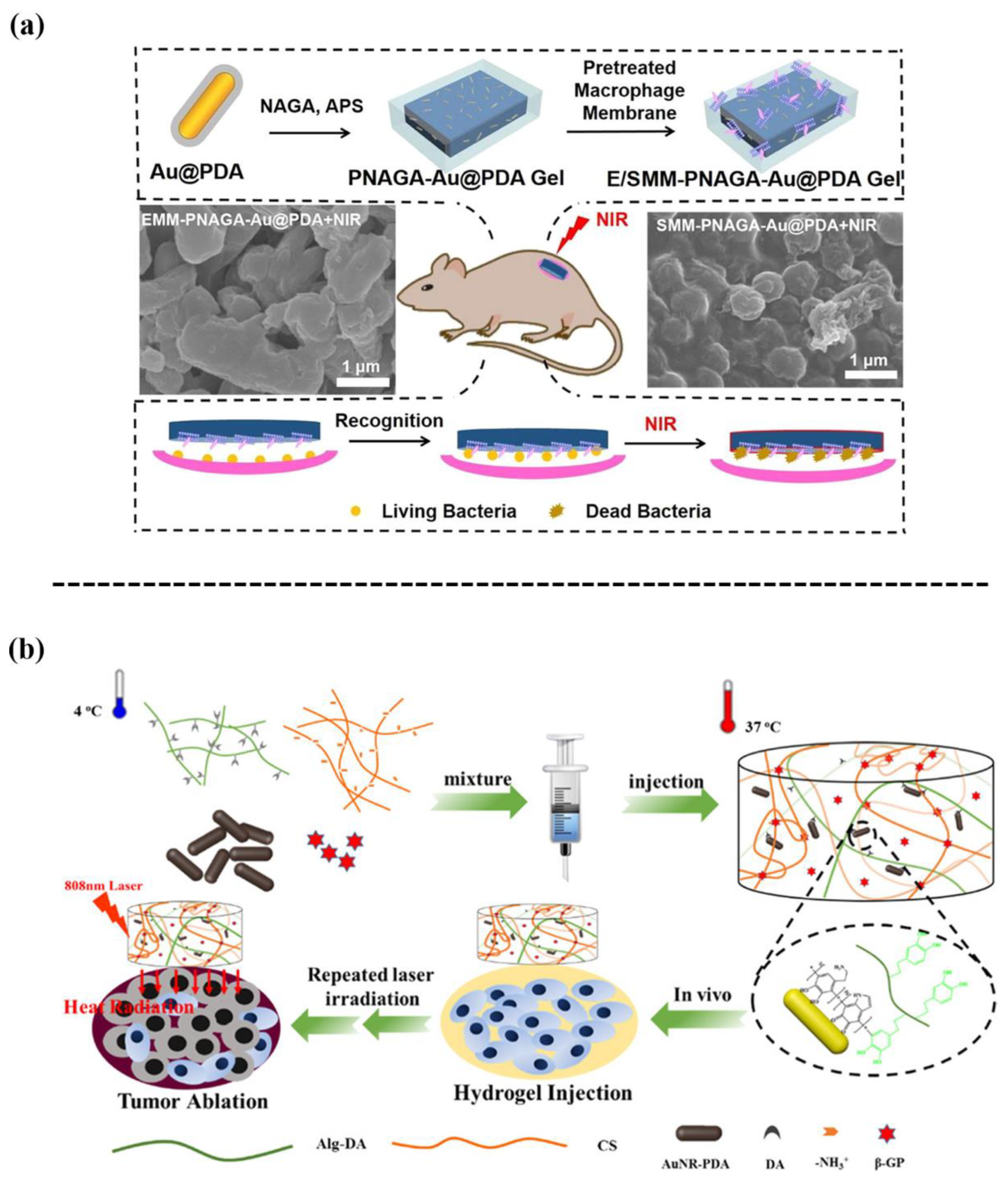
3.2. Gold Nanorods (Au NRs)
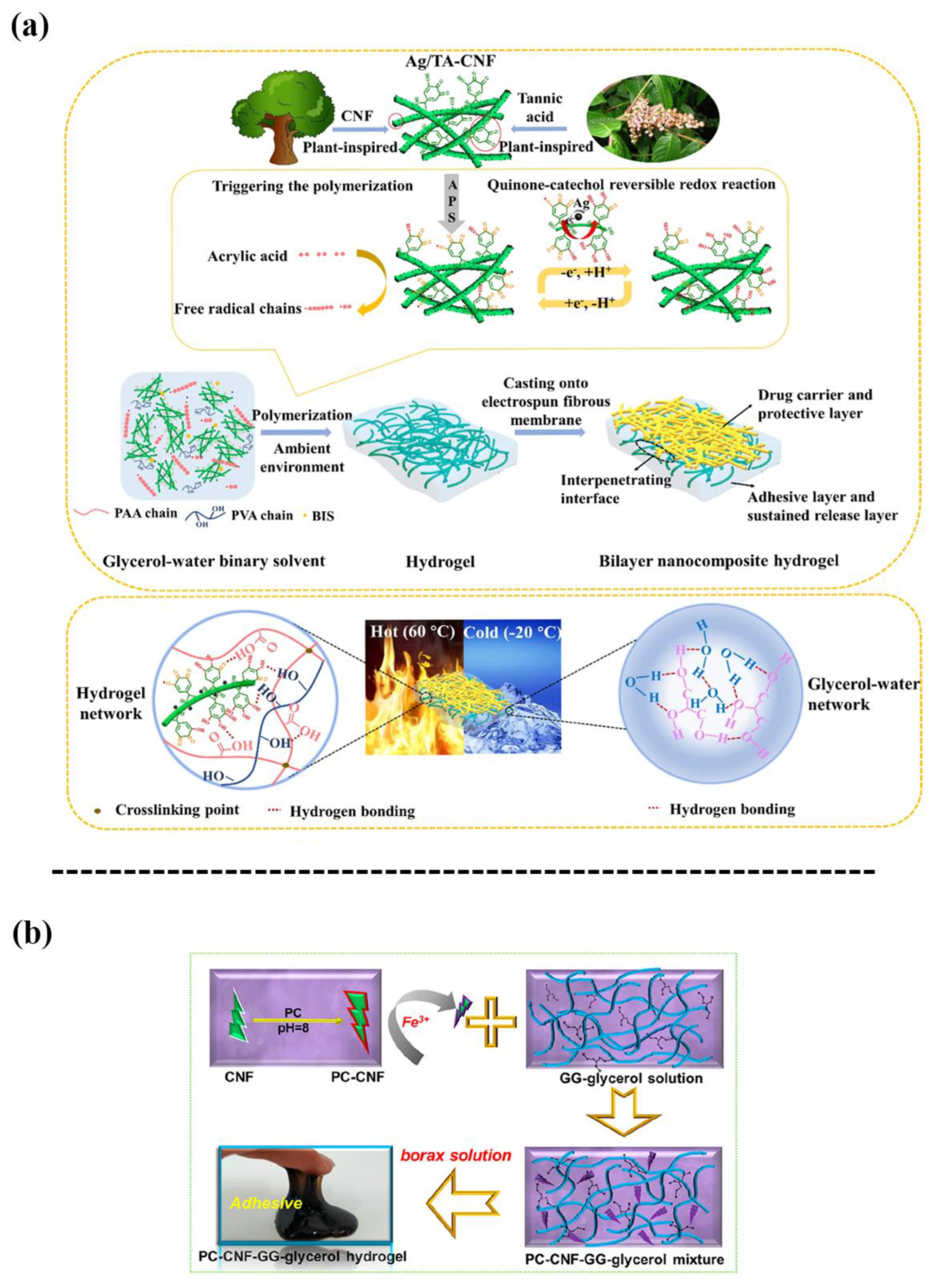
3.3. Cellulose Nanofibers (CNFs)
4. Mussel-Inspired 2D Nanomaterials-Loaded Hydrogels
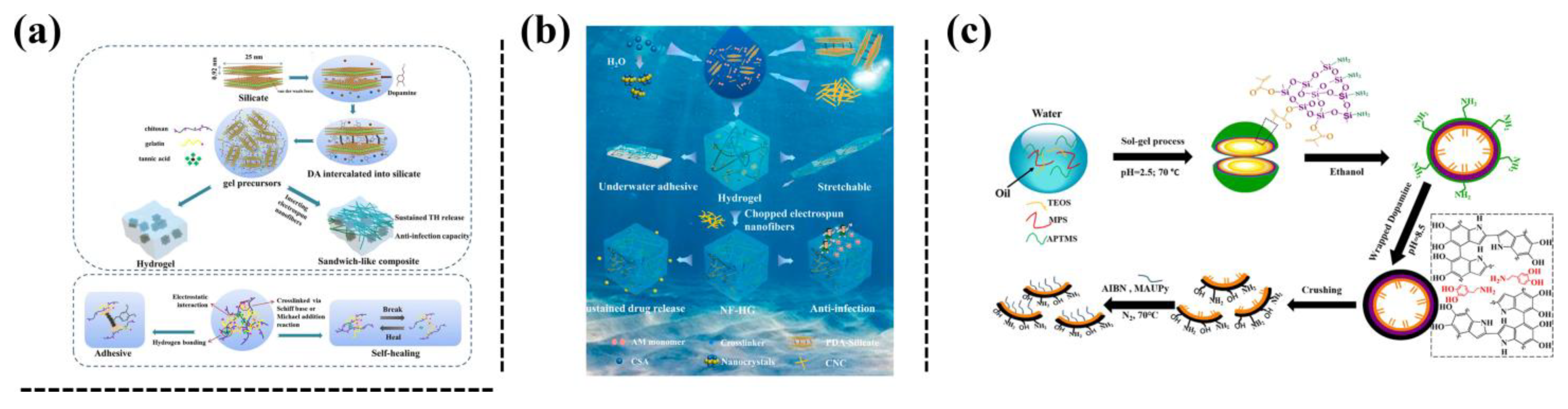
4.1. Silicate Nanosheets
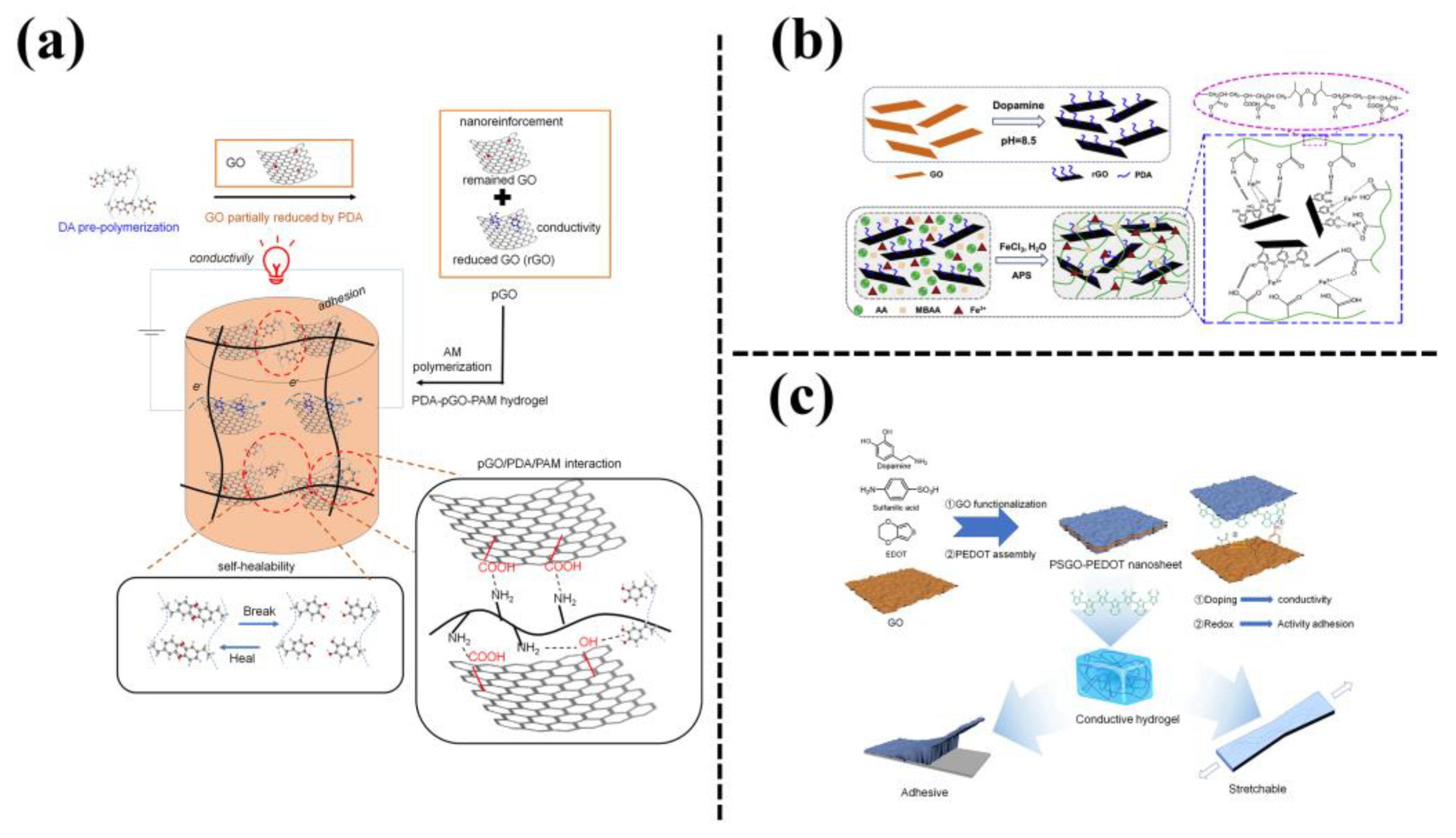
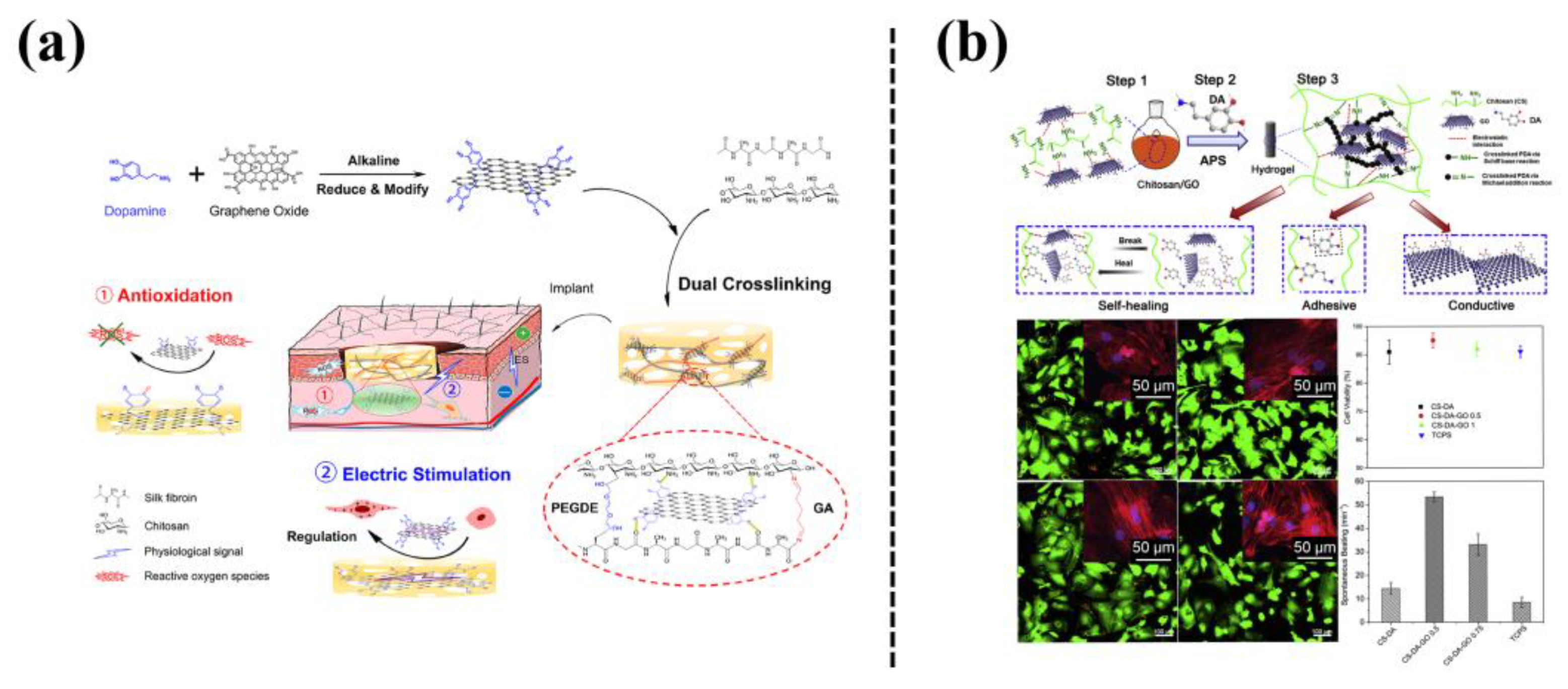
4.2. Graphene Oxide Nanosheets
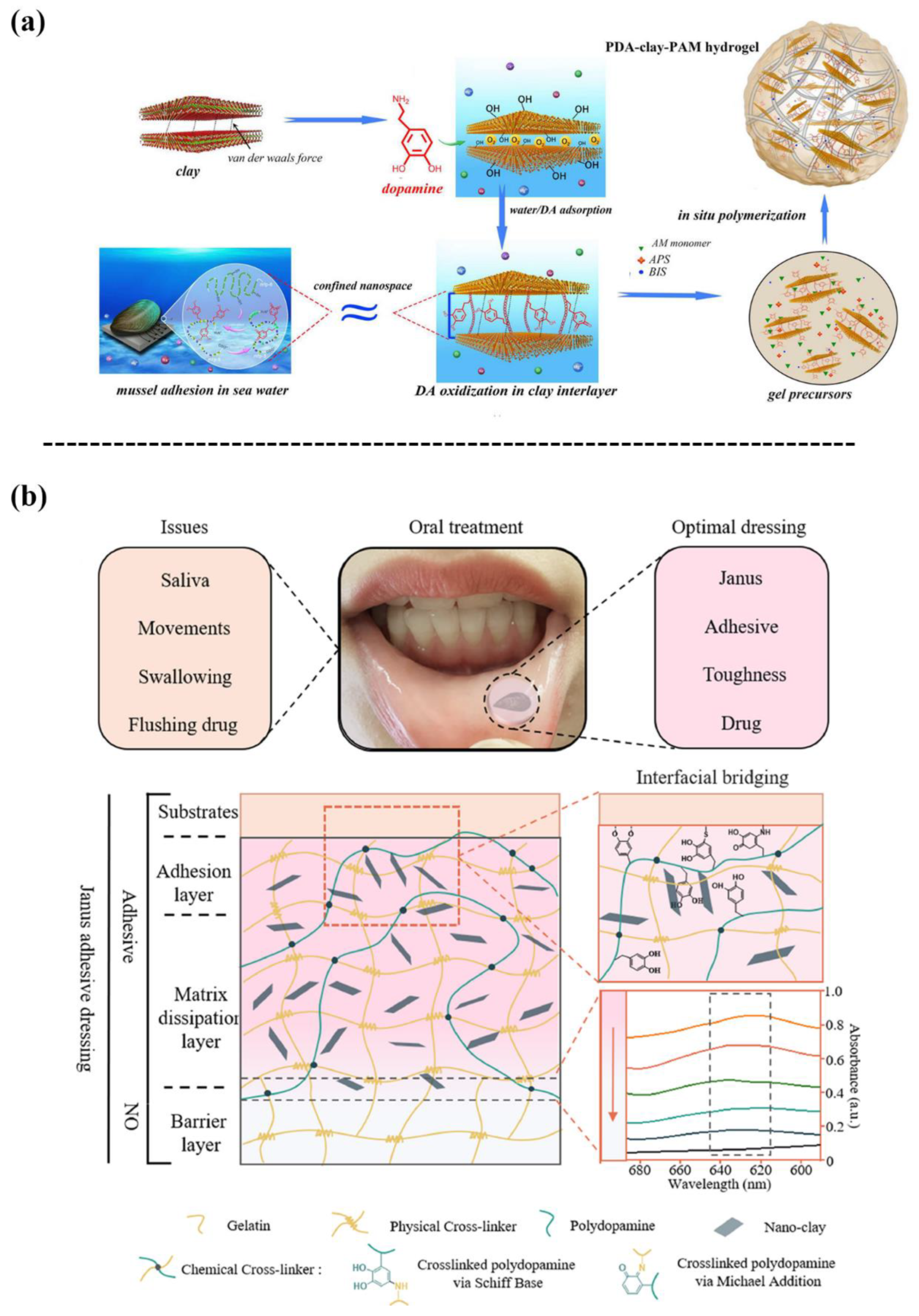
4.3. Clay Nanosheets
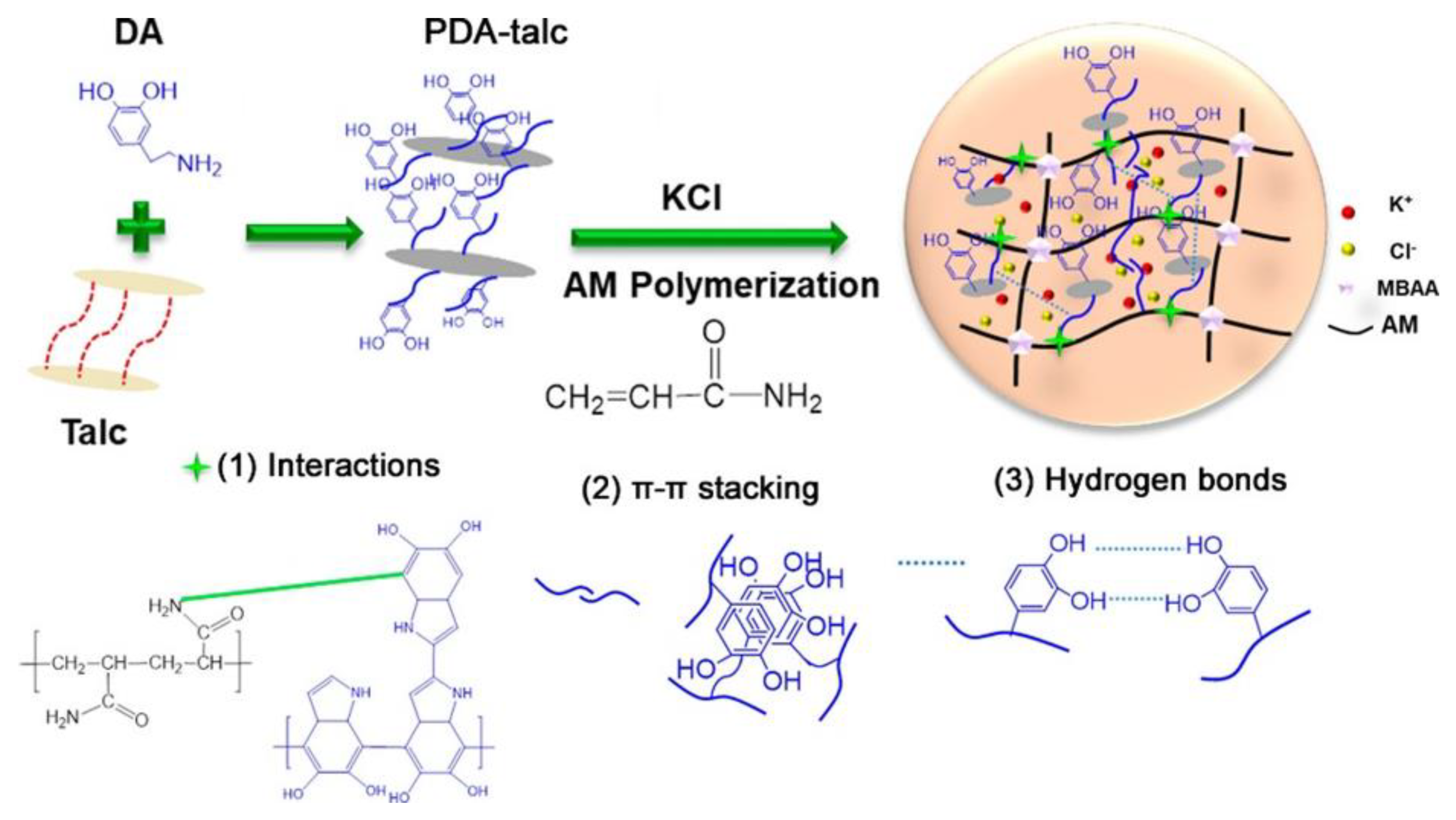
4.4. Talc Nanosheets
4.5. Phosphate-Based Nanosheets
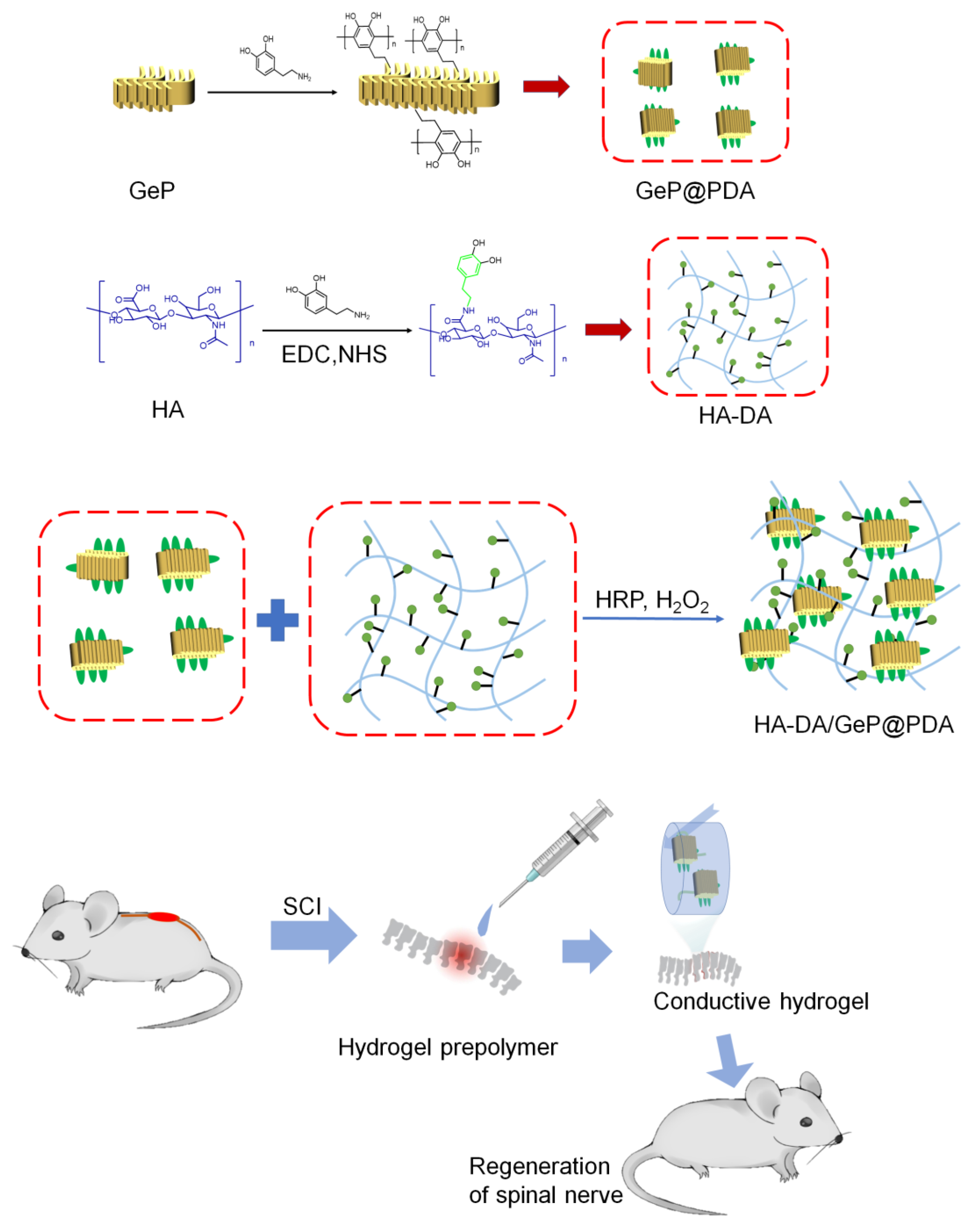
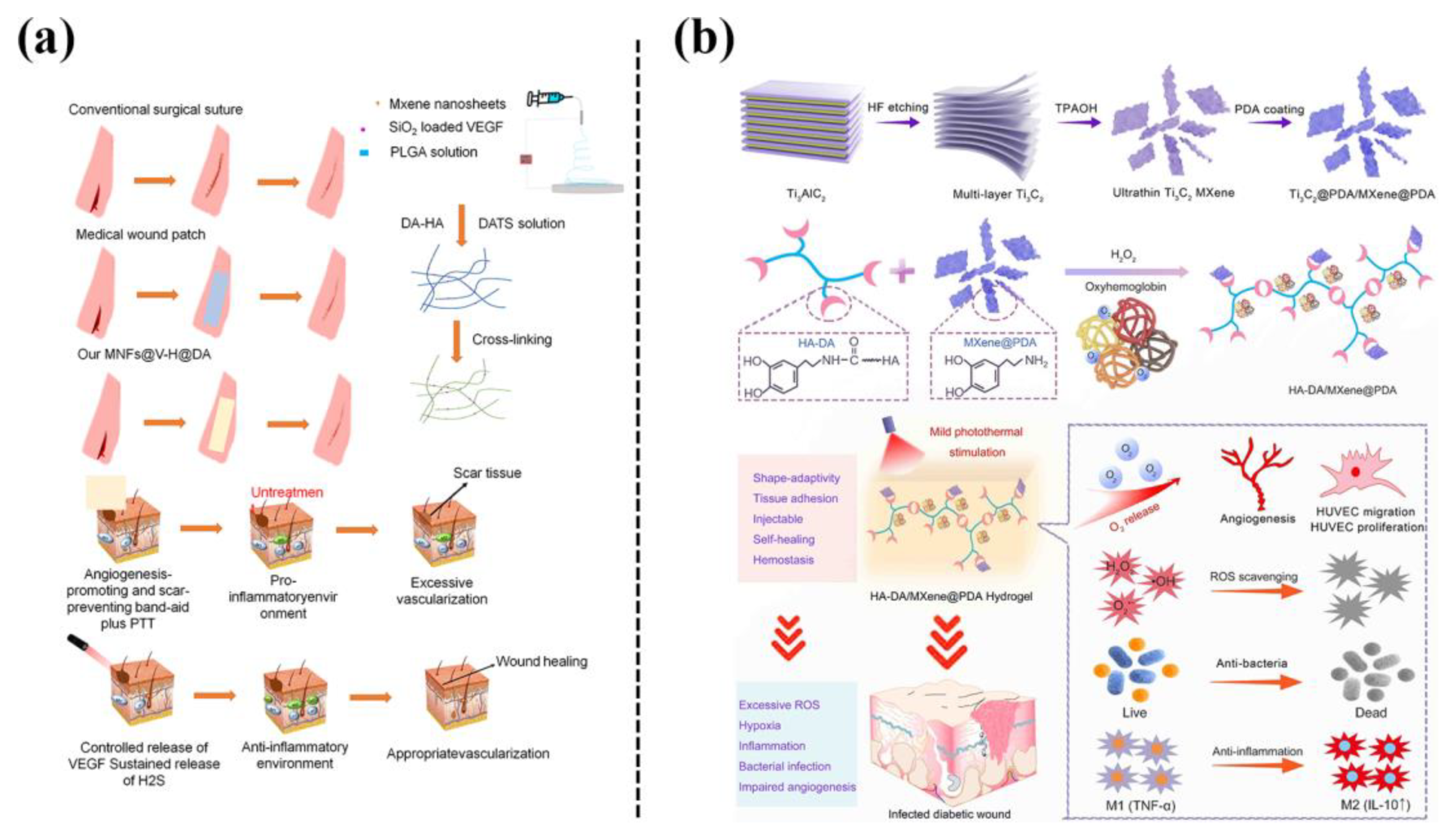
4.6. Metal Carbides and Nitrides Nanosheets
5. Conclusions and Outlook
Author Contributions
Funding
Institutional Review Board Statement
Data Availability Statement
Conflicts of Interest
References
- Mo, C.; Xiang, L.; Chen, Y. Advances in Injectable and Self-Healing Polysaccharide Hydrogel Based on the Schiff Base Reaction. Macromol. Rapid Commun. 2021, 42, 2100025. [Google Scholar] [CrossRef] [Scilit]
- Huang, H.; Qi, X.; Chen, Y.; Wu, Z. Thermo-Sensitive Hydrogels for Delivering Biotherapeutic Molecules: A Review. Saudi Pharm. J. 2019, 27, 990–999. [Google Scholar] [CrossRef] [Scilit]
- Yang, Y.; Wang, X.; Yang, F.; Shen, H.; Wu, D. A Universal Soaking Strategy to Convert Composite Hydrogels into Extremely Tough and Rapidly Recoverable Double-Network Hydrogels. Adv. Mater. 2016, 28, 7178–7184. [Google Scholar] [CrossRef] [Scilit]
- Guo, Y.; Bae, J.; Fang, Z.; Li, P.; Zhao, F.; Yu, G. Hydrogels and Hydrogel-Derived Materials for Energy and Water Sustainability. Chem. Rev. 2020, 120, 7642–7707. [Google Scholar] [CrossRef] [Scilit]
- Ding, Y.-W.; Zhang, X.-W.; Mi, C.-H.; Qi, X.-Y.; Zhou, J.; Wei, D.-X. Recent Advances in Hyaluronic Acid-Based Hydrogels for 3D Bioprinting in Tissue Engineering Applications. Smart Mater. Med. 2023, 4, 59–68. [Google Scholar] [CrossRef] [Scilit]
- Guo, Z.; Liu, H.; Dai, W.; Lei, Y. Responsive Principles and Applications of Smart Materials in Biosensing. Smart Mater. Med. 2020, 1, 54–65. [Google Scholar] [CrossRef] [Scilit] [PubMed]
- Akhtar, A.; Farzamrad, V.; Moradi, A.R.; Yar, M.; Bazzar, M. Emerging Polymeric Biomaterials and manufacturing-Based Tissue Engineering Approaches for Neuro Regeneration-A critical Review on Recent Effective Approaches. Smart Mater. Med. 2023, 4, 337–355. [Google Scholar] [CrossRef] [Scilit]
- Huang, C.; Ye, Q.; Dong, J.; Li, L.; Wang, M.; Zhang, Y.-Y.; Zhang, Y.-B.; Wang, X.; Wang, P.; Jiang, Q. Biofabrication of Natural Au/Bacterial Cellulose Hydrogel for Bone Tissue Regeneration via in-situ Fermentation. Smart Mater. Med. 2023, 4, 1–14. [Google Scholar] [CrossRef] [Scilit]
- Tian, R.; Liu, J.; Dou, G.; Lin, B.; Chen, J.; Yang, G.; Li, P.; Liu, S.; Jin, Y.; Qiu, X.; et al. Synergistic Antibiosis with Spatiotemporal Controllability based on multiple-Responsive Hydrogel for Infectious Cutaneous Wound Healing. Smart Mater. Med. 2022, 3, 304–314. [Google Scholar] [CrossRef] [Scilit]
- Mellati, A.; Hasanzadeh, E.; Gholipourmalekabadi, M.; Enderami, S.E. Injectable Nanocomposite Hydrogels as an Emerging Platform for Biomedical Applications: A Review. Mater. Sci. Eng. C Mater. Biol. Appl. 2021, 131, 112489. [Google Scholar] [CrossRef] [Scilit]
- Jiang, Y.; Krishnan, N.; Heo, J.; Fang, R.H.; Zhang, L. Nanoparticle-Hydrogel Superstructures for Biomedical Applications. J. Control. Release 2020, 324, 505–521. [Google Scholar] [CrossRef] [Scilit] [PubMed]
- Piantanida, E.; Alonci, G.; Bertucci, A.; De Cola, L. Design of Nanocomposite Injectable Hydrogels for Minimally Invasive Surgery. Acc. Chem. Res. 2019, 52, 2101–2112. [Google Scholar] [CrossRef] [Scilit] [PubMed]
- Bhattacharya, S.; Samanta, S.K. Soft-Nanocomposites of Nanoparticles and Nanocarbons with Supramolecular and Polymer Gels and Their Applications. Chem. Rev. 2016, 116, 11967–12028. [Google Scholar] [CrossRef] [Scilit] [PubMed]
- Li, X.; Yang, Z.; Fang, L.; Ma, C.; Zhao, Y.; Liu, H.; Che, S.; Zvyagin, A.V.; Yang, B.; Lin, Q. Hydrogel Composites with Different Dimensional Nanoparticles for Bone Regeneration. Macromol. Rapid Commun. 2021, 42, 2100362. [Google Scholar] [CrossRef] [Scilit]
- Huang, S.; Hong, X.; Zhao, M.; Liu, N.; Liu, H.; Zhao, J.; Shao, L.; Xue, W.; Zhang, H.; Zhu, P.; et al. Nanocomposite Hydrogels for Biomedical Applications. Biotechnol. Bioeng. 2022, 7, 10315. [Google Scholar] [CrossRef] [Scilit]
- Xin, Q.; Shah, H.; Nawaz, A.; Xie, W.; Akram, M.Z.; Batool, A.; Tian, L.; Jan, S.U.; Boddula, R.; Guo, B.; et al. Antibacterial Carbon-Based Nanomaterials. Adv. Mater. 2019, 31, 1804838. [Google Scholar] [CrossRef] [Scilit]
- Meng, X.; Qiao, Y.; Do, C.; Bras, W.; He, C.; Ke, Y.; Russell, T.P.; Qiu, D. Hysteresis-Free Nanoparticle-Reinforced Hydrogels. Adv. Mater. 2022, 34, 2108243. [Google Scholar] [CrossRef] [Scilit]
- Nie, W.; Huang, Y.; Wang, Y.; Kengla, C.; Scott Copus, J.; Sun, J.; Shao, Z.; Dai, X.; Shen, Y. Temperature Sensitive Polymof Hydrogel Formed by in Situ Open-Ring Polymerization for Infected Chronic Wound Treatment. Chem. Eng. J. 2022, 446, 136948. [Google Scholar] [CrossRef] [Scilit]
- Wang, K.; Cheng, W.; Ding, Z.; Xu, G.; Zheng, X.; Li, M.; Lu, G.; Lu, Q. Injectable Silk/Hydroxyapatite Nanocomposite Hydrogels with Vascularization Capacity for Bone Regeneration. J. Mater. Sci. Technol. 2021, 63, 172–181. [Google Scholar] [CrossRef] [Scilit]
- Konwar, A.; Kalita, S.; Kotoky, J.; Chowdhury, D. Chitosan-Iron Oxide Coated Graphene Oxide Nanocomposite Hydrogel: A Robust and Soft Antimicrobial Biofilm. ACS Appl. Mater. Interfaces 2016, 8, 20625–20634. [Google Scholar] [CrossRef] [Scilit]
- Jian, J.; Xie, Y.; Gao, S.; Sun, Y.; Lai, C.; Wang, J.; Wang, C.; Chu, F.; Zhang, D. A Skin-Inspired Biomimetic Strategy to Fabricate Cellulose Enhanced Antibacterial Hydrogels as Strain Sensors. Carbohydr. Polym. 2022, 294, 119760. [Google Scholar] [CrossRef] [Scilit]
- Wang, C.; Chai, Y.; Wen, X.; Ai, Y.; Zhao, H.; Hu, W.; Yang, X.; Ding, M.-Y.; Shi, X.; Liu, Q.; et al. Stretchable and Anisotropic Conductive Composite Hydrogel as Therapeutic Cardiac Patches. ACS Mater. Lett. 2021, 3, 1238–1248. [Google Scholar] [CrossRef] [Scilit]
- Sun, X.; Qin, Z.; Ye, L.; Zhang, H.; Yu, Q.; Wu, X.; Li, J.; Yao, F. Carbon Nanotubes Reinforced Hydrogel as Flexible Strain Sensor with High Stretchability and Mechanically Toughness. Chem. Eng. J. 2020, 382, 122832. [Google Scholar] [CrossRef] [Scilit]
- Qin, M.; Guo, Y.; Su, F.; Huang, X.; Qian, Q.; Zhou, Y.; Pan, J. High-Strength, Fatigue-Resistant, and Fast Self-Healing Antibacterial Nanocomposite Hydrogels for Wound Healing. Chem. Eng. J. 2023, 455, 140854. [Google Scholar] [CrossRef] [Scilit]
- Cui, S.; Zhang, S.; Coseri, S. An Injectable and Self-Healing Cellulose Nanofiber-Reinforced Alginate Hydrogel for Bone Repair. Carbohydr. Polym. 2023, 300, 120243. [Google Scholar] [CrossRef] [Scilit] [PubMed]
- Wu, J.; Huang, W.; Wu, Z.; Yang, X.; Kottapalli, A.G.P.; Xie, X.; Zhou, Y.; Tao, K. Hydrophobic and Stable Graphene-Modified Organohydrogel Based Sensitive, Stretchable, and Self-Healable Strain Sensors for Human-Motion Detection in Various Scenarios. ACS Mater. Lett. 2022, 4, 1616–1629. [Google Scholar] [CrossRef] [Scilit]
- Zhu, J.; Li, Y.; Xie, W.; Yang, L.; Li, R.; Wang, Y.; Wan, Q.; Pei, X.; Chen, J.; Wang, J. Low-Swelling Adhesive Hydrogel with Rapid Hemostasis and Potent Anti-Inflammatory Capability for Full-Thickness Oral Mucosal Defect Repair. ACS Appl. Mater. Interfaces 2022, 14, 53575–53592. [Google Scholar] [CrossRef] [Scilit]
- Zheng, Y.; Yan, Y.; Lin, L.; He, Q.; Hu, H.; Luo, R.; Xian, D.; Wu, J.; Shi, Y.; Zeng, F.; et al. Titanium Carbide Mxene-Based Hybrid Hydrogel for Chemo-Photothermal Combinational Treatment of Localized Bacterial Infection. Acta Biomater. 2022, 142, 113–123. [Google Scholar] [CrossRef] [Scilit]
- Zhang, C.; Wu, B.; Zhou, Y.; Zhou, F.; Liu, W.; Wang, Z. Mussel-Inspired Hydrogels: From Design Principles to Promising Applications. Chem. Soc. Rev. 2020, 49, 3605–3637. [Google Scholar] [CrossRef] [Scilit]
- Zhang, W.; Wang, R.; Sun, Z.; Zhu, X.; Zhao, Q.; Zhang, T.; Cholewinski, A.; Yang, F.K.; Zhao, B.; Pinnaratip, R.; et al. Catechol-Functionalized Hydrogels: Biomimetic Design, Adhesion Mechanism, and Biomedical Applications. Chem. Soc. Rev. 2020, 49, 433–464. [Google Scholar] [CrossRef] [Scilit]
- Yildiz, R.; Ozen, S.; Sahin, H.; Akdogan, Y. The Effect of Dopa Hydroxyl Groups on Wet Adhesion to Polystyrene Surface: An Experimental and Theoretical Study. Mater. Chem. Phys. 2020, 243, 122606. [Google Scholar] [CrossRef] [Scilit]
- Jung, J.P.; Lee, C.; Lee, J.H.; Lee, S.-Y.; Kim, J.H. Block Copolymer Membranes with Catecholic Bolaamphiphile Assemblies. J. Membr. Sci. 2018, 566, 35–43. [Google Scholar] [CrossRef] [Scilit]
- Patil, N.; Jérôme, C.; Detrembleur, C. Recent Advances in the Synthesis of Catechol-Derived (Bio)Polymers for Applications in Energy Storage and Environment. Prog. Polym. Sci. 2018, 82, 34–91. [Google Scholar] [CrossRef] [Scilit]
- De Marchi, F.; Galeotti, G.; Simenas, M.; Tornau, E.E.; Pezzella, A.; MacLeod, J.; Ebrahimi, M.; Rosei, F. Room-Temperature Surface-Assisted Reactivity of a Melanin Precursor: Silver Metal-Organic Coordination Versus Covalent Dimerization on Gold. Nanoscale 2018, 10, 16721–16729. [Google Scholar] [CrossRef] [Scilit] [PubMed]
- Wang, W.; Xu, Y.; Li, A.; Li, T.; Liu, M.; von Klitzing, R.; Ober, C.K.; Kayitmazer, A.B.; Li, L.; Guo, X. Zinc Induced Polyelectrolyte Coacervate Bioadhesive and Its Transition to a Self-Healing Hydrogel. RSC Adv. 2015, 5, 66871–66878. [Google Scholar] [CrossRef] [Scilit]
- Vatankhah-Varnoosfaderani, M.; Ghavaminejad, A.; Hashmi, S.; Stadler, F.J. Mussel-Inspired Ph-Triggered Reversible Foamed Multi-Responsive Gel—The Surprising Effect of Water. Chem. Commun. 2013, 49, 4685–4687. [Google Scholar] [CrossRef] [Scilit] [PubMed]
- Taghizadeh, A.; Taghizadeh, M.; Yazdi, M.K.; Zarrintaj, P.; Ramsey, J.D.; Seidi, F.; Stadler, F.J.; Lee, H.; Saeb, M.R.; Masoud, M. Mussel-Inspired Biomaterials: From Chemistry to Clinic. Bioeng. Transl. Med. 2022, 7, 10385. [Google Scholar] [CrossRef] [Scilit] [PubMed]
- Lee, H.; Lee, B.P.; Messersmith, P.B. A Reversible Wet/Dry Adhesive Inspired by Mussels and Geckos. Nature 2007, 448, 338–341. [Google Scholar] [CrossRef] [Scilit]
- Lee, H.; Dellatore, S.M.; Miller, W.M.; Messersmith, P.B. Mussel-Inspired Surface Chemistry for Multifunctional Coatings. Science 2007, 318, 426–430. [Google Scholar] [CrossRef] [Scilit] [PubMed]
- Kaushik, N.K.; Kaushik, N.; Pardeshi, S.; Sharma, J.G.; Lee, S.H.; Choi, E.H. Biomedical and Clinical Importance of Mussel-Inspired Polymers and Materials. Mar. Drugs 2015, 13, 6792–6817. [Google Scholar] [CrossRef] [Scilit] [PubMed]
- Barros, N.R.; Chen, Y.; Hosseini, V.; Wang, W.; Nasiri, R.; Mahmoodi, M.; Yalcintas, E.P.; Haghniaz, R.; Mecwan, M.M.; Karamikamkar, S.; et al. Recent Developments in Mussel-Inspired Materials for Biomedical Applications. Biomater. Sci. 2021, 9, 6653–6672. [Google Scholar] [CrossRef] [Scilit]
- Yu, Q.; Zheng, Z.; Dong, X.; Cao, R.; Zhang, S.; Wu, X.; Zhang, X. Mussel-Inspired Hydrogels as Tough, Self-Adhesive and Conductive Bioelectronics: A Review. Soft Matter 2021, 17, 8786–8804. [Google Scholar] [CrossRef] [Scilit] [PubMed]
- Duarte, A.P.; Coelho, J.F.; Bordado, J.C.; Cidade, M.T.; Gil, M.H. Surgical Adhesives: Systematic Review of the Main Types and Development Forecast. Prog. Polym. Sci. 2012, 37, 1031–1050. [Google Scholar] [CrossRef] [Scilit]
- Chan, B.K.; Wippich, C.C.; Wu, C.J.; Sivasankar, P.M.; Schmidt, G. Robust and Semi-Interpenetrating Hydrogels from Poly(Ethylene Glycol) and Collagen for Elastomeric Tissue Scaffolds. Macromol. Biosci. 2012, 12, 1490–1501. [Google Scholar] [CrossRef] [Scilit]
- Sun, A.; Hu, D.; He, X.; Ji, X.; Li, T.; Wei, X.; Qian, Z. Mussel-Inspired Hydrogel with Injectable Self-Healing and Antibacterial Properties Promotes Wound Healing in Burn Wound Infection. NPG Asia Mater. 2022, 14, 86. [Google Scholar] [CrossRef] [Scilit]
- Zhao, H.; Zeng, Z.; Liu, L.; Chen, J.; Zhou, H.; Huang, L.; Huang, J.; Xu, H.; Xu, Y.; Chen, Z.; et al. Polydopamine Nanoparticles for the Treatment of Acute Inflammation-Induced Injury. Nanoscale 2018, 10, 6981–6991. [Google Scholar] [CrossRef] [Scilit] [PubMed]
- Hu, J.; Yang, L.; Yang, P.; Jiang, S.; Liu, X.; Li, Y. Polydopamine Free Radical Scavengers. Biomater. Sci. 2020, 8, 4940–4950. [Google Scholar] [CrossRef] [Scilit]
- Gan, D.; Wang, Z.; Xie, C.; Wang, X.; Xing, W.; Ge, X.; Yuan, H.; Wang, K.; Tan, H.; Lu, X. Mussel-Inspired Tough Hydrogel with in Situ Nanohydroxyapatite Mineralization for Osteochondral Defect Repair. Adv. Healthc. Mater. 2019, 8, 1901103. [Google Scholar] [CrossRef] [Scilit]
- Liu, C.; Wu, J.; Gan, D.; Li, Z.; Shen, J.; Tang, P.; Luo, S.; Li, P.; Lu, X.; Zheng, W. The Characteristics of Mussel-Inspired nHA/OSA Injectable Hydrogel and Repaired Bone Defect in Rabbit. J. Biomed. Mater. Res. B Appl. Biomater. 2020, 108, 1814–1825. [Google Scholar] [CrossRef] [Scilit]
- Wang, B.; Liu, J.; Niu, D.; Wu, N.; Yun, W.; Wang, W.; Zhang, K.; Li, G.; Yan, S.; Xu, G.; et al. Mussel-Inspired Bisphosphonated Injectable Nanocomposite Hydrogels with Adhesive, Self-Healing, and Osteogenic Properties for Bone Regeneration. ACS Appl. Mater. Interfaces 2021, 13, 32673–32689. [Google Scholar] [CrossRef] [Scilit]
- Dai, G.; Sun, L.; Xu, J.; Zhao, G.; Tan, Z.; Wang, C.; Sun, X.; Xu, K.; Zhong, W. Catechol-Metal Coordination-Mediated Nanocomposite Hydrogels for on-Demand Drug Delivery and Efficacious Combination Therapy. Acta Biomater. 2021, 129, 84–95. [Google Scholar] [CrossRef] [Scilit] [PubMed]
- Han, L.; Yan, L.; Wang, K.; Fang, L.; Zhang, H.; Tang, Y.; Ding, Y.; Weng, L.-T.; Xu, J.; Weng, J.; et al. Tough, Self-Healable and Tissue-Adhesive Hydrogel with Tunable Multifunctionality. NPG Asia Mater. 2017, 9, 372. [Google Scholar] [CrossRef] [Scilit]
- Huang, J.; Wang, S.; Wang, X.; Zhu, J.; Wang, Z.; Zhang, X.; Cai, K.; Zhang, J. Combination Wound Healing Using Polymer Entangled Porous Nanoadhesive Hybrids with Robust ROS Scavenging and Angiogenesis Properties. Acta Biomater. 2022, 152, 171–185. [Google Scholar] [CrossRef] [Scilit]
- Jung, H.; Kim, M.K.; Lee, J.Y.; Choi, S.W.; Kim, J. Adhesive Hydrogel Patch with Enhanced Strength and Adhesiveness to Skin for Transdermal Drug Delivery. Adv. Funct. Mater. 2020, 30, 2004407. [Google Scholar] [CrossRef] [Scilit]
- Pinnaratip, R.; Forooshani, P.K.; Li, M.; Hu, Y.H.; Rajachar, R.M.; Lee, B.P. Controlling the Release of Hydrogen Peroxide from Catechol-Based Adhesives Using Silica Nanoparticles. ACS Biomater. Sci. Eng. 2020, 6, 4502–4511. [Google Scholar] [CrossRef] [Scilit]
- Barati, D.; Gegg, C.; Yang, F. Nanoparticle-Mediated TGF-β Release from Microribbon-Based Hydrogels Accelerates Stem Cell-Based Cartilage Formation in Vivo. Ann. Biomed. Eng. 2020, 48, 1971–1981. [Google Scholar] [CrossRef] [Scilit]
- Fu, Y.; Cen, D.; Zhang, T.; Jiang, S.; Wang, Y.; Cai, X.; Li, X.; Han, G. Implantable Fibrous Scaffold with Hierarchical Microstructure for the ‘on-Site’ synergistic Cancer Therapy. Chem. Eng. J. 2020, 402, 126204. [Google Scholar] [CrossRef] [Scilit]
- Jiang, Y.; Pan, X.; Yao, M.; Han, L.; Zhang, X.; Jia, Z.; Weng, J.; Chen, W.; Fang, L.; Wang, X.; et al. Bioinspired Adhesive and Tumor Microenvironment Responsive NanoMOFs Assembled 3D-Printed Scaffold for Anti-Tumor Therapy and Bone Regeneration. Nano Today 2021, 39, 101182. [Google Scholar] [CrossRef] [Scilit]
- Liu, Y.; Huo, Y.; Li, M.; Qin, C.; Liu, H. Synthesis of Metal-Organic-Frameworks on Polydopamine Modified Cellulose Nanofibril Hydrogels: Constructing Versatile Vehicles for Hydrophobic Drug Delivery. Cellulose 2022, 29, 379–393. [Google Scholar] [CrossRef] [Scilit]
- Liu, Y.; Huo, Y.; Fan, Q.; Li, M.; Liu, H.; Li, B.; Li, Y. Cellulose Nanofibrils Composite Hydrogel with Polydopamine@ Zeolitic Imidazolate Framework-8 Encapsulated in Used as Efficient Vehicles for Controlled Drug Release. J. Ind. Eng. Chem. 2021, 102, 343–350. [Google Scholar] [CrossRef] [Scilit]
- Zhao, Y.; Li, Z.; Song, S.; Yang, K.; Liu, H.; Yang, Z.; Wang, J.; Yang, B.; Lin, Q. Skin-Inspired Antibacterial Conductive Hydrogels for Epidermal Sensors and Diabetic Foot Wound Dressings. Adv. Funct. Mater. 2019, 29, 1901474. [Google Scholar] [CrossRef] [Scilit]
- Guo, J.; Sun, W.; Kim, J.P.; Lu, X.; Li, Q.; Lin, M.; Mrowczynski, O.; Rizk, E.B.; Cheng, J.; Qian, G.; et al. Development of Tannin-Inspired Antimicrobial Bioadhesives. Acta Biomater. 2018, 72, 35–44. [Google Scholar] [CrossRef] [Scilit]
- Gan, D.; Xing, W.; Jiang, L.; Fang, J.; Zhao, C.; Ren, F.; Fang, L.; Wang, K.; Lu, X. Plant-Inspired Adhesive and Tough Hydrogel Based on Ag-Lignin Nanoparticles-Triggered Dynamic Redox Catechol Chemistry. Nat. Commun. 2019, 10, 1487. [Google Scholar] [CrossRef] [Scilit]
- Jia, Z.; Lv, X.; Hou, Y.; Wang, K.; Ren, F.; Xu, D.; Wang, Q.; Fan, K.; Xie, C.; Lu, X. Mussel-Inspired Nanozyme Catalyzed Conductive and Self-Setting Hydrogel for Adhesive and Antibacterial Bioelectronics. Bioact. Mater. 2021, 6, 2676–2687. [Google Scholar] [CrossRef] [Scilit]
- Liang, M.; He, C.; Dai, J.; Ren, P.; Fu, Y.; Wang, F.; Ge, X.; Zhang, T.; Lu, Z. A High-Strength Double Network Polydopamine Nanocomposite Hydrogel for Adhesion under Seawater. J. Mat. Chem. B 2020, 8, 8232–8241. [Google Scholar] [CrossRef] [Scilit]
- Han, L.; Li, P.; Tang, P.; Wang, X.; Zhou, T.; Wang, K.; Ren, F.; Guo, T.; Lu, X. Mussel-Inspired Cryogels for Promoting Wound Regeneration through Photobiostimulation, Modulating Inflammatory Responses and Suppressing Bacterial Invasion. Nanoscale 2019, 11, 15846–15861. [Google Scholar] [CrossRef] [Scilit]
- Han, L.; Zhang, Y.; Lu, X.; Wang, K.; Wang, Z.; Zhang, H. Polydopamine Nanoparticles Modulating Stimuli-Responsive Pnipam Hydrogels with Cell/Tissue Adhesiveness. ACS Appl. Mater. Interfaces 2016, 8, 29088–29100. [Google Scholar] [CrossRef] [Scilit]
- Di, X.; Kang, Y.; Li, F.; Yao, R.; Chen, Q.; Hang, C.; Xu, Y.; Wang, Y.; Sun, P.; Wu, G. Poly(N-Isopropylacrylamide)/Polydopamine/Clay Nanocomposite Hydrogels with Stretchability, Conductivity, and Dual Light- and Thermo- Responsive Bending and Adhesive Properties. Colloid Surf. B Biointerfaces 2019, 177, 149–159. [Google Scholar] [CrossRef] [Scilit] [PubMed]
- GhavamiNejad, A.; SamariKhalaj, M.; Aguilar, L.E.; Park, C.H.; Kim, C.S. pH/NIR Light-Controlled Multidrug Release via a Mussel-Inspired Nanocomposite Hydrogel for Chemo-Photothermal Cancer Therapy. Sci. Rep. 2016, 6, 33594. [Google Scholar] [CrossRef] [Scilit] [PubMed]
- Wang, X.; Wang, C.; Wang, X.; Wang, Y.; Zhang, Q.; Cheng, Y. A Polydopamine Nanoparticle-Knotted Poly(Ethylene Glycol) Hydrogel for On-Demand Drug Delivery and Chemo-Photothermal Therapy. Chem. Mater. 2017, 29, 1370–1376. [Google Scholar] [CrossRef] [Scilit]
- Gao, G.; Jiang, Y.W.; Jia, H.R.; Wu, F.G. Near-Infrared Light-Controllable on-Demand Antibiotics Release Using Thermo-Sensitive Hydrogel-Based Drug Reservoir for Combating Bacterial Infection. Biomaterials 2019, 188, 83–95. [Google Scholar] [CrossRef] [Scilit] [PubMed]
- Han, L.; Yan, L.; Wang, M.; Wang, K.; Fang, L.; Zhou, J.; Fang, J.; Ren, F.; Lu, X. Transparent, Adhesive, and Conductive Hydrogel for Soft Bioelectronics Based on Light-Transmitting Polydopamine-Doped Polypyrrole Nanofibrils. Chem. Mater. 2018, 30, 5561–5572. [Google Scholar] [CrossRef] [Scilit]
- Chen, Q.; Feng, L.; Cheng, H.; Wang, Y.; Wu, H.; Xu, T.; Zhao, W.; Zhao, C. Mussel-Inspired Ultra-Stretchable, Universally Sticky, and Highly Conductive Nanocomposite Hydrogels. J. Mat. Chem. B 2021, 9, 2221–2232. [Google Scholar] [CrossRef] [Scilit] [PubMed]
- Gan, D.; Shuai, T.; Wang, X.; Huang, Z.; Ren, F.; Fang, L.; Wang, K.; Xie, C.; Lu, X. Mussel-Inspired Redox-Active and Hydrophilic Conductive Polymer Nanoparticles for Adhesive Hydrogel Bioelectronics. Nano Micro Lett. 2020, 12, 169. [Google Scholar] [CrossRef] [Scilit]
- Wang, X.; Sun, X.; Gan, D.; Soubrier, M.; Chiang, H.-Y.; Yan, L.; Li, Y.; Li, J.; Yu, S.; Xia, Y.; et al. Bioadhesive and Conductive Hydrogel-Integrated Brain-Machine Interfaces for Conformal and Immune-Evasive Contact with Brain Tissue. Matter 2022, 5, 1204–1223. [Google Scholar] [CrossRef] [Scilit]
- Han, L.; Liu, K.; Wang, M.; Wang, K.; Fang, L.; Chen, H.; Zhou, J.; Lu, X. Mussel-Inspired Adhesive and Conductive Hydrogel with Long-Lasting Moisture and Extreme Temperature Tolerance. Adv. Funct. Mater. 2018, 28, 1704195. [Google Scholar] [CrossRef] [Scilit]
- Liao, M.; Wan, P.; Wen, J.; Gong, M.; Wu, X.; Wang, Y.; Shi, R.; Zhang, L. Wearable, Healable, and Adhesive Epidermal Sensors Assembled from Mussel-Inspired Conductive Hybrid Hydrogel Framework. Adv. Funct. Mater. 2017, 27, 1703852. [Google Scholar] [CrossRef] [Scilit]
- Liu, K.; Han, L.; Tang, P.; Yang, K.; Gan, D.; Wang, X.; Wang, K.; Ren, F.; Fang, L.; Xu, Y.; et al. An Anisotropic Hydrogel Based on Mussel-Inspired Conductive Ferrofluid Composed of Electromagnetic Nanohybrids. Nano Lett. 2019, 19, 8343–8356. [Google Scholar] [CrossRef] [Scilit]
- Li, J.; Wang, Y.; Yang, J.; Liu, W. Bacteria Activated-Macrophage Membrane-Coated Tough Nanocomposite Hydrogel with Targeted Photothermal Antibacterial Ability for Infected Wound Healing. Chem. Eng. J. 2021, 420, 127638. [Google Scholar] [CrossRef] [Scilit]
- Zeng, J.; Shi, D.; Gu, Y.; Kaneko, T.; Zhang, L.; Zhang, H.; Kaneko, D.; Chen, M. Injectable and near-Infrared-Responsive Hydrogels Encapsulating Dopamine-Stabilized Gold Nanorods with Long Photothermal Activity Controlled for Tumor Therapy. Biomacromolecules 2019, 20, 3375–3384. [Google Scholar] [CrossRef] [Scilit]
- Chen, Y.; Zhang, Y.; Mensaha, A.; Li, D.; Wang, Q.; Wei, Q. A Plant-Inspired Long-Lasting Adhesive Bilayer Nanocomposite Hydrogel Based on Redox-Active Ag/Tannic Acid-Cellulose Nanofibers. Carbohydr. Polym. 2021, 255, 117508. [Google Scholar] [CrossRef] [Scilit]
- Pan, X.; Wang, Q.; He, P.; Liu, K.; Ni, Y.; Ouyang, X.; Chen, L.; Huang, L.; Wang, H.; Tan, Y. Mussel-Inspired Nanocomposite Hydrogel-Based Electrodes with Reusable and Injectable Properties for Human Electrophysiological Signals Detection. ACS Sustain. Chem. Eng. 2019, 7, 7918–7925. [Google Scholar] [CrossRef] [Scilit]
- Chen, Y.; Qiu, Y.; Wang, Q.; Li, D.; Hussain, T.; Ke, H.; Wei, Q. Mussel-Inspired Sandwich-Like Nanofibers/Hydrogel Composite with Super Adhesive, Sustained Drug Release and Anti-infection Capacity. Chem. Eng. J. 2020, 399, 125668. [Google Scholar] [CrossRef] [Scilit]
- Chen, Y.; Qin, H.; Mensaha, A.; Wang, Q.; Huang, F.; Wei, Q. Biomimetic Nanocomposite Hydrogel Networks for Robust Wet Adhesion to Tissues. Compos. Part B Eng. 2021, 222, 109071. [Google Scholar] [CrossRef] [Scilit]
- Li, M.; Li, X.; Li, C.; Liu, H.; Wang, W.; Bai, L.; Chen, H.; Yang, L. Silica-Based Janus Nanosheets for Self-Healing Nanocomposite Hydrogels. Eur. Polym. J. 2021, 155, 125688. [Google Scholar] [CrossRef] [Scilit]
- Han, L.; Lu, X.; Wang, M.; Gan, D.; Deng, W.; Wang, K.; Fang, L.; Liu, K.; Chan, C.W.; Tang, Y.; et al. A Mussel-Inspired Conductive, Self-Adhesive, and Self-Healable Tough Hydrogel as Cell Stimulators and Implantable Bioelectronics. Small 2017, 13, 160. [Google Scholar] [CrossRef] [Scilit]
- Jing, X.; Mi, H.-Y.; Peng, X.-F.; Turng, L.-S. Biocompatible, Self-Healing, Highly Stretchable Polyacrylic Acid/Reduced Graphene Oxide Nanocomposite Hydrogel Sensors Via Mussel-Inspired Chemistry. Carbon 2018, 136, 63–72. [Google Scholar] [CrossRef] [Scilit]
- Gan, D.; Huang, Z.; Wang, X.; Jiang, L.; Wang, C.; Zhu, M.; Ren, F.; Fang, L.; Wang, K.; Xie, C.; et al. Graphene Oxide-Templated Conductive and Redox-Active Nanosheets Incorporated Hydrogels for Adhesive Bioelectronics. Adv. Funct. Mater. 2019, 30, 1907678. [Google Scholar] [CrossRef] [Scilit]
- Han, L.; Lu, X.; Liu, K.; Wang, K.; Fang, L.; Weng, L.-T.; Zhang, H.; Tang, Y.; Ren, F.; Zhao, C.; et al. Mussel-Inspired Adhesive and Tough Hydrogel Based on Nanoclay Confined Dopamine Polymerization. ACS Nano 2017, 11, 2561–2574. [Google Scholar] [CrossRef] [Scilit]
- An, H.; Gu, Z.; Zhou, L.; Liu, S.; Li, C.; Zhang, M.; Xu, Y.; Zhang, P.; Wen, Y. Janus Mucosal Dressing with a Tough and Adhesive Hydrogel Based on Synergistic Effects of Gelatin, Polydopamine, and Nano-Clay. Acta Biomater. 2022, 149, 126–138. [Google Scholar] [CrossRef] [Scilit]
- Jing, X.; Mi, H.-Y.; Lin, Y.-J.; Enriquez, E.; Peng, X.-F.; Turng, L.-S. Highly Stretchable and Biocompatible Strain Sensors Based on Mussel-Inspired Super-Adhesive Self-Healing Hydrogels for Human Motion Monitoring. ACS Appl. Mater. Interfaces 2018, 10, 20897–20909. [Google Scholar] [CrossRef] [Scilit] [PubMed]
- Xu, C.; Xu, Y.; Yang, M.; Chang, Y.; Nie, A.; Liu, Z.; Wang, J.; Luo, Z. Black-Phosphorus-Incorporated Hydrogel as a Conductive and Biodegradable Platform for Enhancement of the Neural Differentiation of Mesenchymal Stem Cells. Adv. Funct. Mater. 2020, 30, 2000177. [Google Scholar] [CrossRef] [Scilit]
- Xu, C.; Chang, Y.; Wu, P.; Liu, K.; Dong, X.; Nie, A.; Mu, C.; Liu, Z.; Dai, H.; Luo, Z. Two-Dimensional-Germanium Phosphide-Reinforced Conductive and Biodegradable Hydrogel Scaffolds Enhance Spinal Cord Injury Repair. Adv. Funct. Mater. 2021, 31, 2104440. [Google Scholar] [CrossRef] [Scilit]
- Jin, L.; Guo, X.; Gao, D.; Liu, Y.; Ni, J.; Zhang, Z.; Huang, Y.; Xu, G.; Yang, Z.; Zhang, X.; et al. An NIR Photothermal-Responsive Hybrid Hydrogel for Enhanced Wound Healing. Bioact. Mater. 2022, 16, 162–172. [Google Scholar] [CrossRef] [Scilit] [PubMed]
- Li, Y.; Fu, R.; Duan, Z.; Zhu, C.; Fan, D. Artificial Nonenzymatic Antioxidant Mxene Nanosheet-Anchored Injectable Hydrogel as a Mild Photothermal-Controlled Oxygen Release Platform for Diabetic Wound Healing. ACS Nano 2022, 16, 7486–7502. [Google Scholar] [CrossRef] [Scilit]
- Liu, Z.; Liu, J.; Cui, X.; Wang, X.; Zhang, L.; Tang, P. Recent Advances on Magnetic Sensitive Hydrogels in Tissue Engineering. Front. Chem. 2020, 8, 124. [Google Scholar] [CrossRef] [Scilit]
- Fragal, E.H.; Fragal, V.H.; Silva, E.P.; Paulino, A.T.; da Silva Filho, E.C.; Maurício, M.R.; Silva, R.; Rubira, A.F.; Muniz, E.C. Magnetic-Responsive Polysaccharide Hydrogels as Smart Biomaterials: Synthesis, Properties, and Biomedical Applications. Carbohydr. Polym. 2022, 292, 119665. [Google Scholar] [CrossRef] [Scilit]
- Mertz, D.; Harlepp, S.; Goetz, J.; Bégin, D.; Schlatter, G.; Bégin-Colin, S.; Hébraud, A. Nanocomposite Polymer Scaffolds Responding under External Stimuli for Drug Delivery and Tissue Engineering Applications. Adv. Therap. 2020, 3, 1900143. [Google Scholar] [CrossRef] [Scilit]
- Li, Y.; Huang, G.; Zhang, X.; Li, B.; Chen, Y.; Lu, T.; Lu, T.; Xu, F. Magnetic Hydrogels and Their Potential Biomedical Applications. Adv. Funct. Mater. 2013, 23, 660–672. [Google Scholar] [CrossRef] [Scilit]
- Yang, B.; Chen, Y.; Shi, J. Mesoporous Silica/Organosilica Nanoparticles: Synthesis, Biological Effect and Biomedical Application. Mater. Sci. Eng. R. Rep. 2019, 137, 66–105. [Google Scholar] [CrossRef] [Scilit]
- Kazemzadeh, P.; Sayadi, K.; Toolabi, A.; Sayadi, J.; Zeraati, M.; Chauhan, N.P.S.; Sargazi, G. Structure-Property Relationship for Different Mesoporous Silica Nanoparticles and its Drug Delivery Applications: A Review. Front. Chem. 2022, 10, 823785. [Google Scholar] [CrossRef] [Scilit] [PubMed]
- Knežević, N.Ž.; Durand, J.O. Large Pore Mesoporous Silica Nanomaterials for Application in Delivery of Biomolecules. Nanoscale 2015, 7, 2199–2209. [Google Scholar] [CrossRef] [Scilit]
- Li, H.; Qu, J. Mussel-Inspired Synthesis of Silver Nanoparticles as Fillers for Preparing Waterborne Polyurethane/Ag Nanocomposites with Excellent Mechanical and Antibacterial Properties. Polym. Int. 2022, 71, 146–153. [Google Scholar] [CrossRef] [Scilit]
- Tang, Y.; Tan, Y.; Lin, K.; Zhu, M. Research Progress on Polydopamine Nanoparticles for Tissue Engineering. Front. Chem. 2021, 9, 727123. [Google Scholar] [CrossRef] [Scilit] [PubMed]
- Guo, B.; Ma, Z.; Pan, L.; Shi, Y. Properties of Conductive Polymer Hydrogels and Their Application in Sensors. J. Polym. Sci. 2019, 57, 1606–1621. [Google Scholar] [CrossRef] [Scilit]
- Nikoobakht, B.; El-Sayed, M.A. Preparation and Growth Mechanism of Gold Nanorods (Nrs) Using Seed-Mediated Growth Method. Chem. Mater. 2003, 15, 1957–1962. [Google Scholar] [CrossRef] [Scilit]
- Hu, T.; Mei, X.; Wang, Y.; Weng, X.; Liang, R.; Wei, M. Two-Dimensional Nanomaterials: Fascinating Materials in Biomedical Field. Sci. Bull. 2019, 64, 1707–1727. [Google Scholar] [CrossRef] [Scilit]
- Li, G.; Zhao, Y.; Zhang, L.; Gao, M.; Kong, Y.; Yang, Y. Preparation of Graphene Oxide/Polyacrylamide Composite Hydrogel and Its Effect on Schwann Cells Attachment and Proliferation. Colloid Surf. B Biointerface 2016, 143, 547–556. [Google Scholar] [CrossRef] [Scilit]
- Tang, P.; Han, L.; Li, P.; Jia, Z.; Wang, K.; Zhang, H.; Tan, H.; Guo, T.; Lu, X. Mussel-Inspired Electroactive and Antioxidative Scaffolds with Incorporation of Polydopamine-Reduced Graphene Oxide for Enhancing Skin Wound Healing. ACS Appl. Mater. Interfaces 2019, 11, 7703–7714. [Google Scholar] [CrossRef] [Scilit]
- Jing, X.; Mi, H.-Y.; Napiwocki, B.N.; Peng, X.-F.; Turng, L.-S. Mussel-Inspired Electroactive Chitosan/Graphene Oxide Composite Hydrogel with Rapid Self-Healing and Recovery Behavior for Tissue Engineering. Carbon 2017, 125, 557–570. [Google Scholar] [CrossRef] [Scilit]
- Dawson, J.I.; Oreffo, R.O. Clay: New Opportunities for Tissue Regeneration and Biomaterial Design. Adv. Mater. 2013, 25, 4069–4086. [Google Scholar] [CrossRef] [Scilit] [PubMed]
- Wang, S.; Zhou, L.; Zheng, Y.; Li, L.; Wu, C.; Yang, H.; Huang, M.; An, X. Synthesis and Biocompatibility of Two-Dimensional Biomaterials. Colloid Surf. A Physicochem. Eng. Asp. 2019, 583, 124004. [Google Scholar] [CrossRef] [Scilit]
- Rezanejad Gatabi, Z.; Heshmati, N.; Mirhoseini, M.; Dabbaghianamiri, M. The Application of Clay-Based Nanocomposite Hydrogels in Wound Healing. Arab. J. Sci. Eng. 2022, 1–14. [Google Scholar] [CrossRef] [Scilit]
- Becher, T.B.; Mendonça, M.C.; de Farias, M.A.; Portugal, R.V.; de Jesus, M.B.; Ornelas, C. Soft Nanohydrogels Based on Laponite Nanodiscs: A Versatile Drug Delivery Platform for Theranostics and Drug Cocktails. ACS Appl. Mater. Interfaces 2018, 10, 21891–21900. [Google Scholar] [CrossRef] [Scilit]
- Wang, B.; Liu, H.; Sun, L.; Jin, Y.; Ding, X.; Li, L.; Ji, J.; Chen, H. Construction of High Drug Loading and Enzymatic Degradable Multilayer Films for Self-Defense Drug Release and Long-Term Biofilm Inhibition. Biomacromolecules 2018, 19, 85–93. [Google Scholar] [CrossRef] [Scilit] [PubMed]
- Zhao, J.; Gao, T.; Dang, J.; Cao, W.; Wang, Z.; Li, S.; Shi, Y. Using Green, Economical, Efficient Two-Dimensional (2D) Talc Nanosheets as Lubricant Additives under Harsh Conditions. Nanomaterials 2022, 12, 1666. [Google Scholar] [CrossRef] [Scilit]
- Hou, J.; Wang, H.; Ge, Z.; Zuo, T.; Chen, Q.; Liu, X.; Mou, S.; Fan, C.; Xie, Y.; Wang, L. Treating Acute Kidney Injury with Antioxidative Black Phosphorus Nanosheets. Nano Lett. 2020, 20, 1447–1454. [Google Scholar] [CrossRef] [Scilit]
- Huang, K.; Wu, J.; Gu, Z. Black Phosphorus Hydrogel Scaffolds Enhance Bone Regeneration Via a Sustained Supply of Calcium-Free Phosphorus. ACS Appl. Mater. Interfaces 2019, 11, 2908–2916. [Google Scholar] [CrossRef] [Scilit]
- Comber, S.; Gardner, M.; Georges, K.; Blackwood, D.; Gilmour, D. Domestic Source of Phosphorus to Sewage Treatment Works. Environ. Technol. 2013, 34, 1349–1358. [Google Scholar] [CrossRef] [Scilit]
- Guo, J.; Huang, D.; Zhang, Y.; Yao, H.; Wang, Y.; Zhang, F.; Wang, R.; Ge, Y.; Song, Y.; Guo, Z. 2D Gep as a Novel Broadband Nonlinear Optical Material for Ultrafast Photonics. Laser Photon. Rev. 2019, 13, 1900123. [Google Scholar] [CrossRef] [Scilit]
- Liu, X.; Miller, A.L.; Park, S.; George, M.N.; Lu, L. Two-Dimensional Black Phosphorus and Graphene Oxide Nanosheets Synergistically Enhance Cell Proliferation and Osteogenesis on 3D Printed Scaffolds. ACS Appl. Mater. Interfaces 2019, 11, 23558–23572. [Google Scholar] [CrossRef] [Scilit] [PubMed]
- Yang, B.; Yin, J.; Chen, Y.; Pan, S.; Yao, H.; Gao, Y.; Shi, J. 2D-Black-Phosphorus-Reinforced 3D-Printed Scaffolds: A Stepwise Countermeasure for Osteosarcoma. Adv. Mater. 2018, 30, 1705611. [Google Scholar] [CrossRef] [Scilit] [PubMed]
- Yu, T.; Nie, H.; Wang, S.; Zhang, B.; Zhao, S.; Wang, Z.; Qiao, J.; Han, B.; He, J.; Tao, X. Two-Dimensional Gep-Based Broad-Band Optical Switches and Photodetectors. Adv. Opt. Mater. 2020, 8, 1901490. [Google Scholar] [CrossRef] [Scilit]
- Davis, R.; Urbanowski, R.A.; Gaharwar, A.K. 2D Layered Nanomaterials for Therapeutics Delivery. Curr. Opin. Biomed. Eng. 2021, 20, 100319. [Google Scholar] [CrossRef] [Scilit]
- Ye, G.; Wen, Z.; Wen, F.; Song, X.; Wang, L.; Li, C.; He, Y.; Prakash, S.; Qiu, X. Mussel-Inspired Conductive Ti2C-Cryogel Promotes Functional Maturation of Cardiomyocytes and Enhances Repair of Myocardial Infarction. Theranostics 2020, 10, 2047. [Google Scholar] [CrossRef] [Scilit] [PubMed]











| Class | Nano- Materials | Modification Strategy | Properties | Behaviors | References |
|---|---|---|---|---|---|
| 0DM | HA NPs | Surface coated by PDA | Nanograde solid gold particle | Osteogenic activity | [48,49,50] |
| MNPs | Surface coated by PDA | Nanograde solid gold particle | Magnetothermal conversion | [51,52] | |
| silica NPs | Surface coated or hybridized by PDA | Nano-mesoporous structure | Drug-loading capability | [53,54,55,56,57] | |
| MOF | Surface coated or hybridized by PDA | Nano-Porous structure | Drug-loading capability | [58,59,60] | |
| Ag NPs | Reduced by PDA | Nanograde solid gold particle | Antimicrobial ability | [61,62,63,64] | |
| PDA-NPs | Self-oxidized | Nanograde solid gold particle | Drug-loading capability, photothermal property | [65,66,67,68,69,70,71] | |
| CPs NPs | Hybridized by PDA | Nanograde solid gold particle | Electrical conductivity | [72,73,74,75] | |
| 1DM | CNTs | Surface coated by PDA | Hollow fibrous structure with nano radial size | Electrical conductivity | [76,77,78] |
| Au NRs | Surface coated by PDA | Linear nano-rods | Photothermal property | [79,80] | |
| CNFs | Surface coated by PDA | Cellulose nano-rods | Mechanical enhancement performance | [81,82] | |
| 2DM | Silicate NSs | Intercalated by PDA | Single or multiple layers | Drug-loading capability | [83,84,85] |
| Graphene oxide NSs | Reduced by PDA | Single or multiple layers | Drug-loading capability, electrical conductivity | [86,87,88] | |
| Clay NSs | Intercalated by PDA | Single or multiple layers | Drug-loading capability | [89,90] | |
| Talc NSs | Surface coated by PDA | Single or multiple layers | Lubricating property | [91] | |
| Phosphate-based NSs | Surface coated by PDA | Single or multiple layers | Drug-loading capability, photothermal property, photodynamic property | [92,93] | |
| Metal carbides and nitrides NSs | Surface coated by PDA | Single or multiple layers | Drug-loading capability, photothermal property, electrical conductivity | [94,95] |
Disclaimer/Publisher’s Note: The statements, opinions and data contained in all publications are solely those of the individual author(s) and contributor(s) and not of MDPI and/or the editor(s). MDPI and/or the editor(s) disclaim responsibility for any injury to people or property resulting from any ideas, methods, instructions or products referred to in the content. |
© 2023 by the authors. Licensee MDPI, Basel, Switzerland. This article is an open access article distributed under the terms and conditions of the Creative Commons Attribution (CC BY) license (https://creativecommons.org/licenses/by/4.0/).
Share and Cite
Ma, H.; Qiao, X.; Han, L. Advances of Mussel-Inspired Nanocomposite Hydrogels in Biomedical Applications. Biomimetics 2023, 8, 128. https://doi.org/10.3390/biomimetics8010128
Ma H, Qiao X, Han L. Advances of Mussel-Inspired Nanocomposite Hydrogels in Biomedical Applications. Biomimetics. 2023; 8(1):128. https://doi.org/10.3390/biomimetics8010128
Chicago/Turabian StyleMa, Haohua, Xin Qiao, and Lu Han. 2023. "Advances of Mussel-Inspired Nanocomposite Hydrogels in Biomedical Applications" Biomimetics 8, no. 1: 128. https://doi.org/10.3390/biomimetics8010128
APA StyleMa, H., Qiao, X., & Han, L. (2023). Advances of Mussel-Inspired Nanocomposite Hydrogels in Biomedical Applications. Biomimetics, 8(1), 128. https://doi.org/10.3390/biomimetics8010128