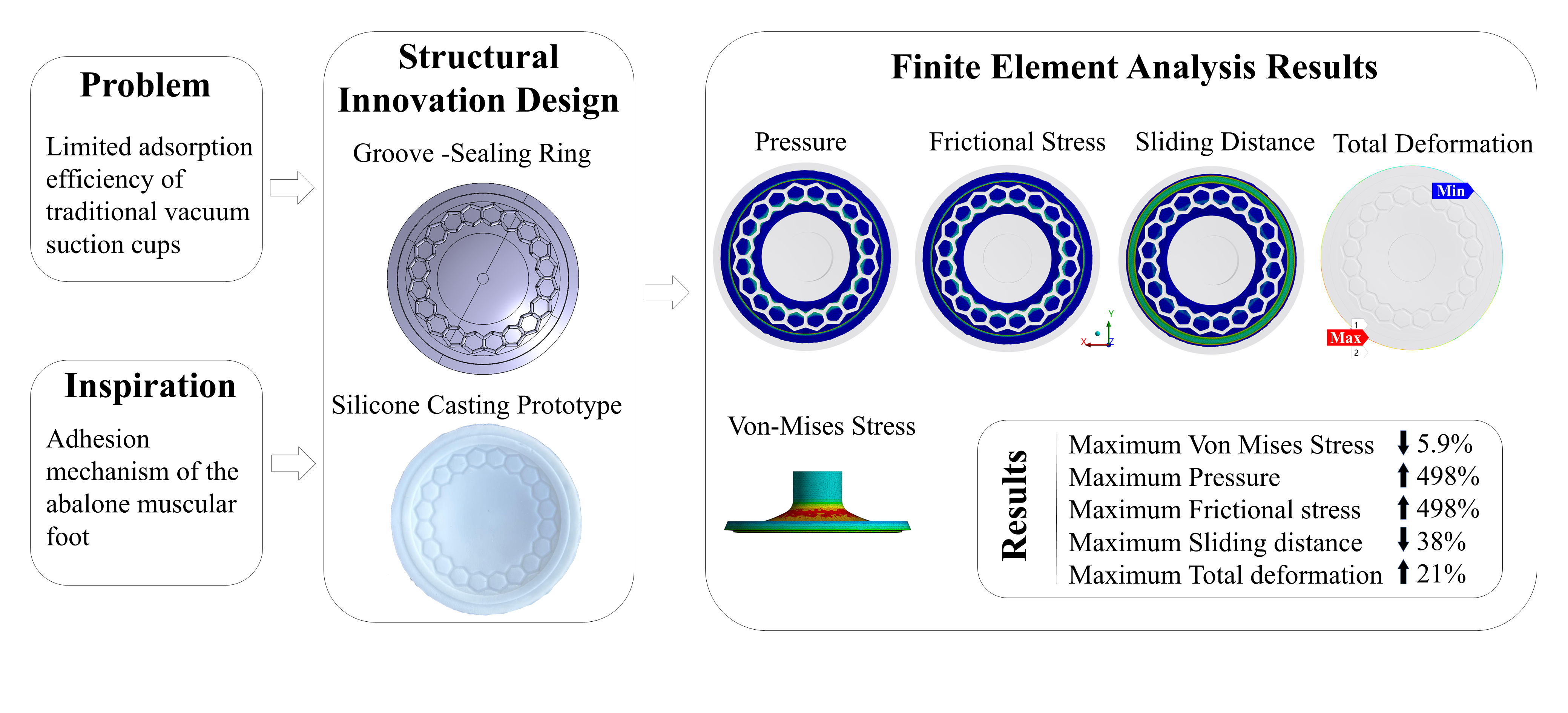

Design and Performance Evaluation of Biomimetic Suction Cups Inspired by the Abalone Muscular Foot




Abstract
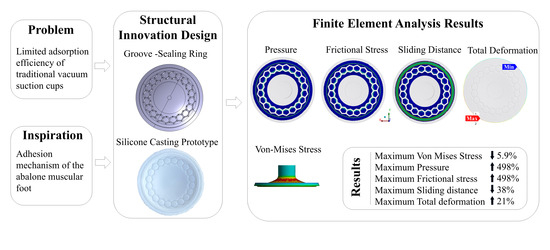
1. Introduction
2. Geometric Structure of the Biomimetic Suction Cups
2.1. Baseline Alignment and Cross-Biomimetic Comparability
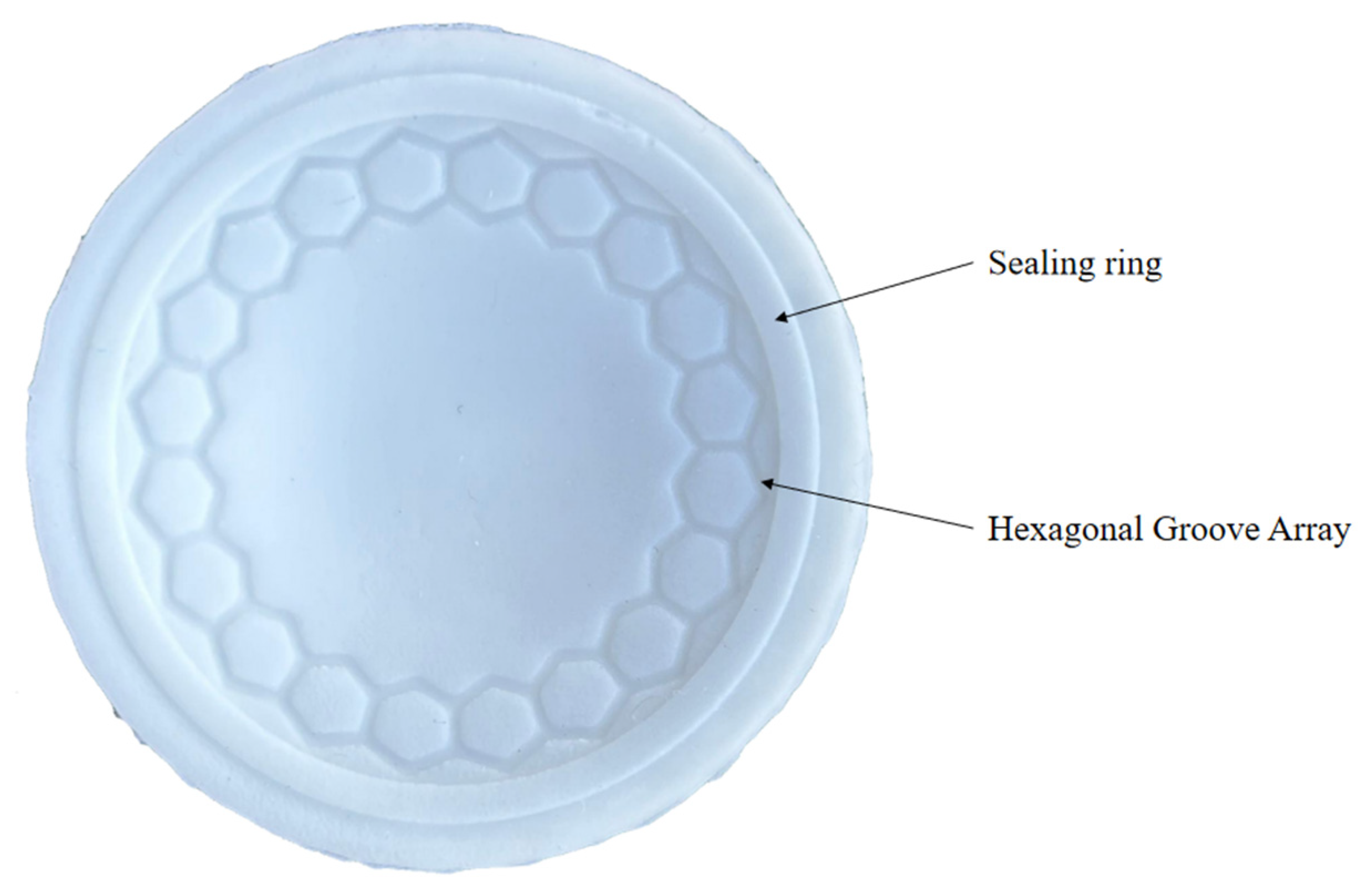
2.2. Suction Cup Surface Morphology Design
3. Structural Analysis of the Biomimetic Suction Cup Based on the Finite Element Method
3.1. Fundamental Principles of Finite Element Analysis
3.2. Finite Element Analysis Setup
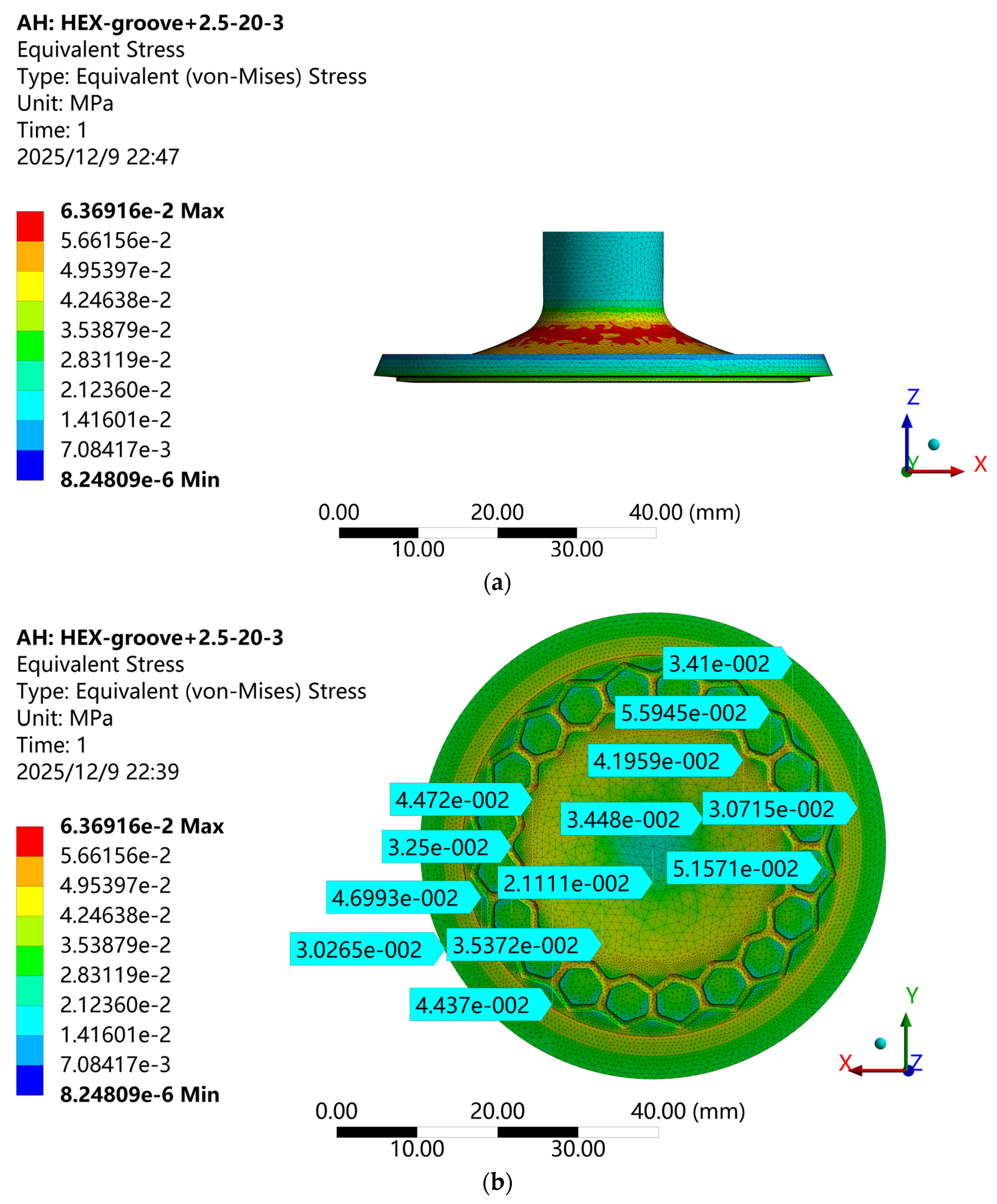
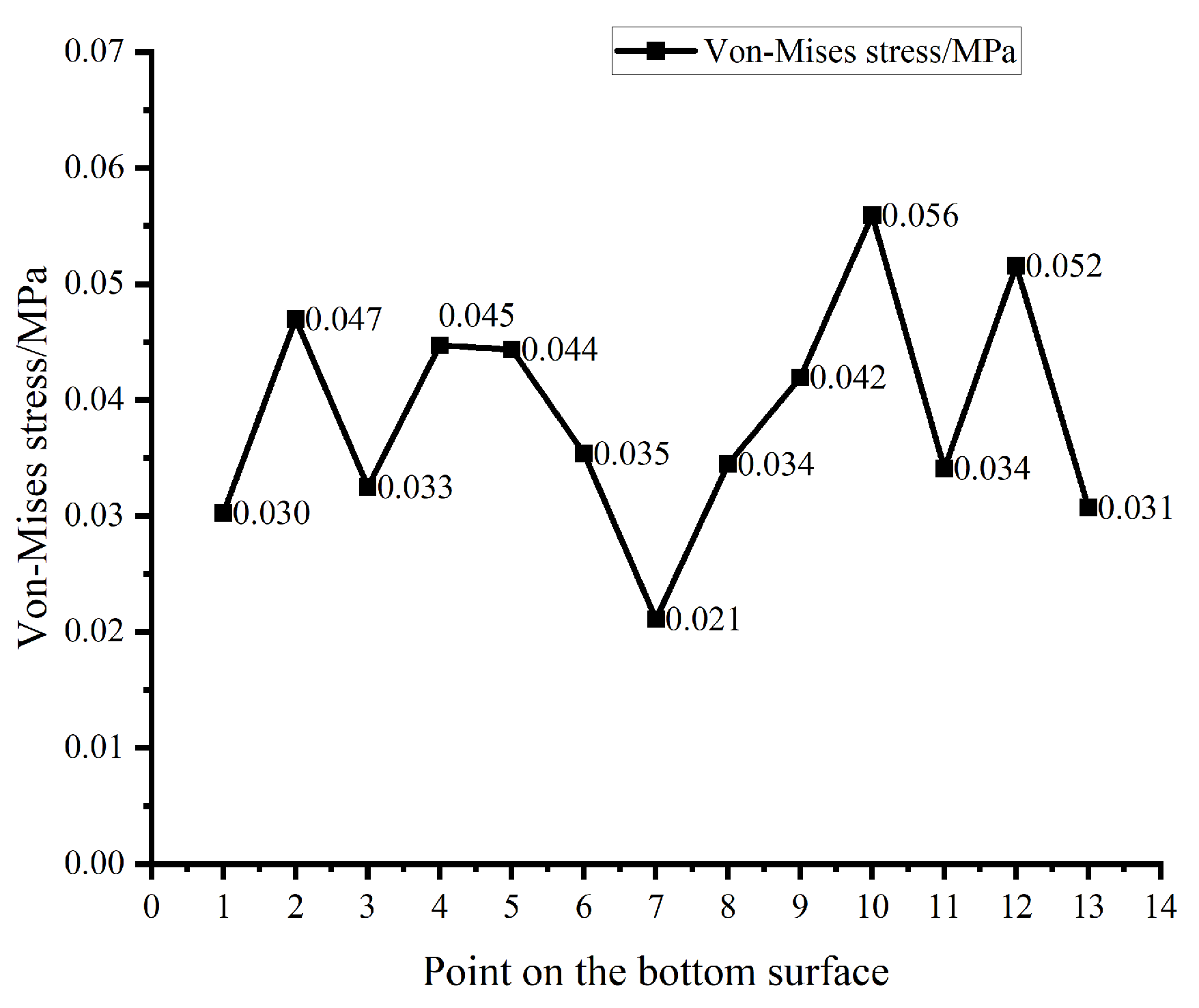
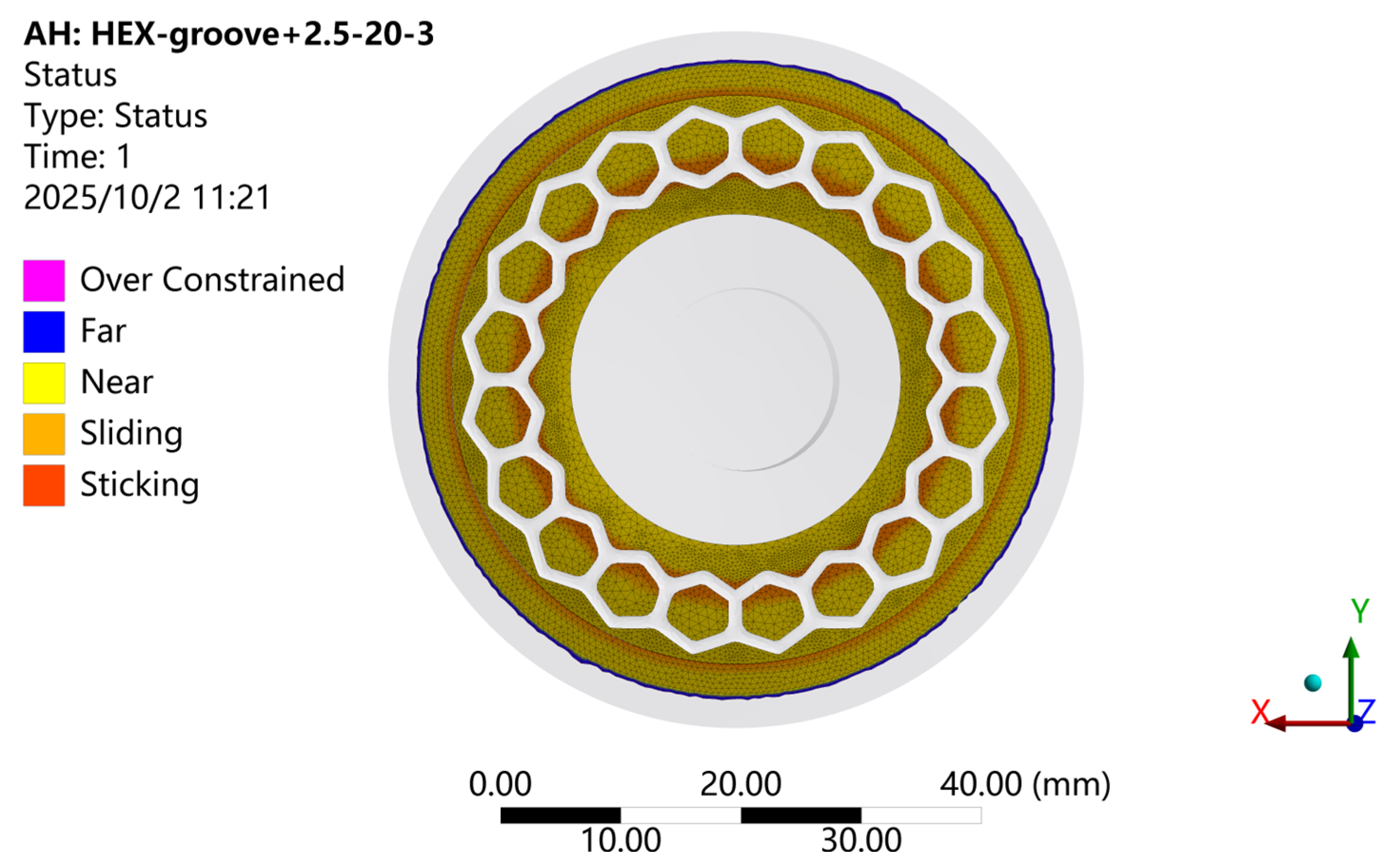
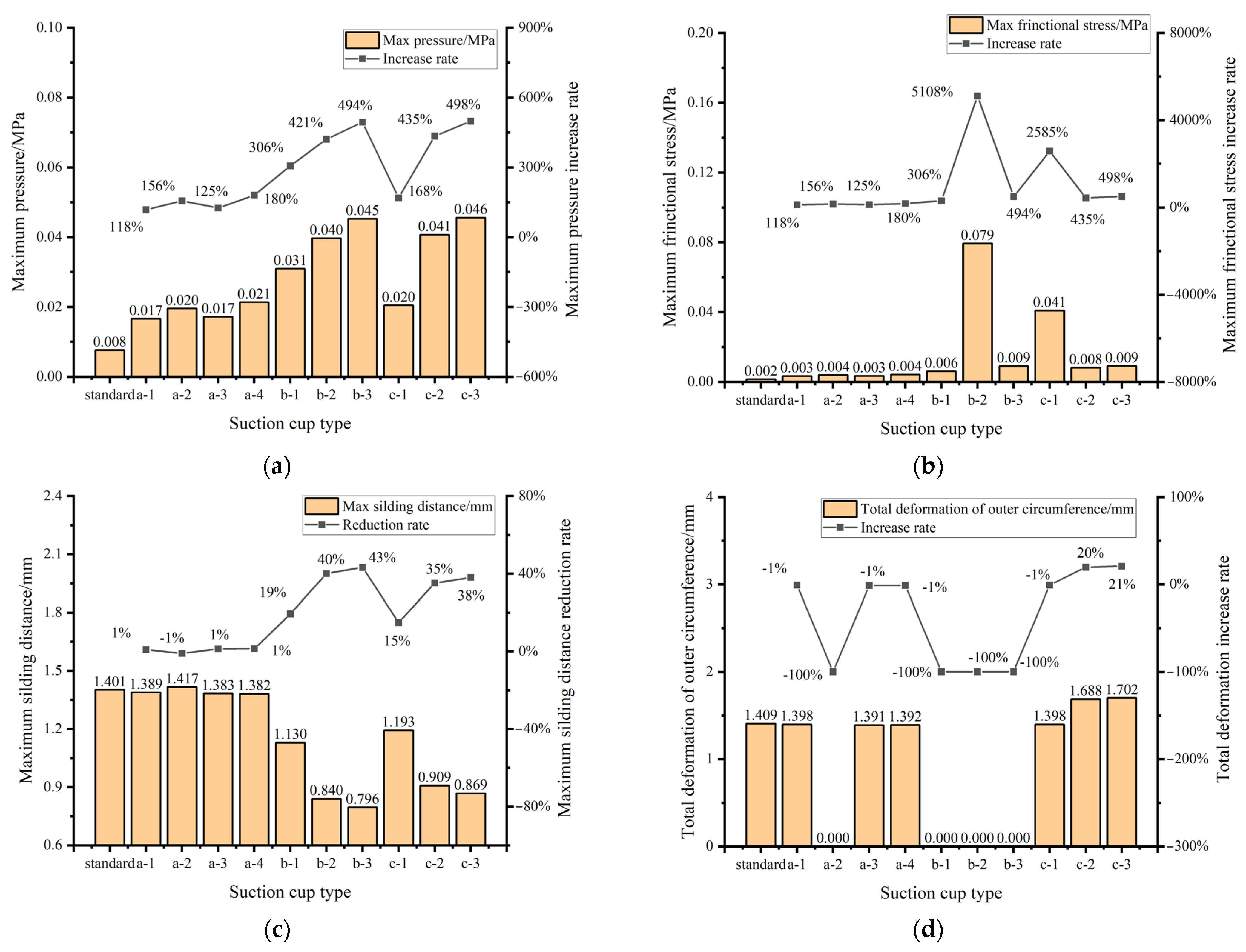
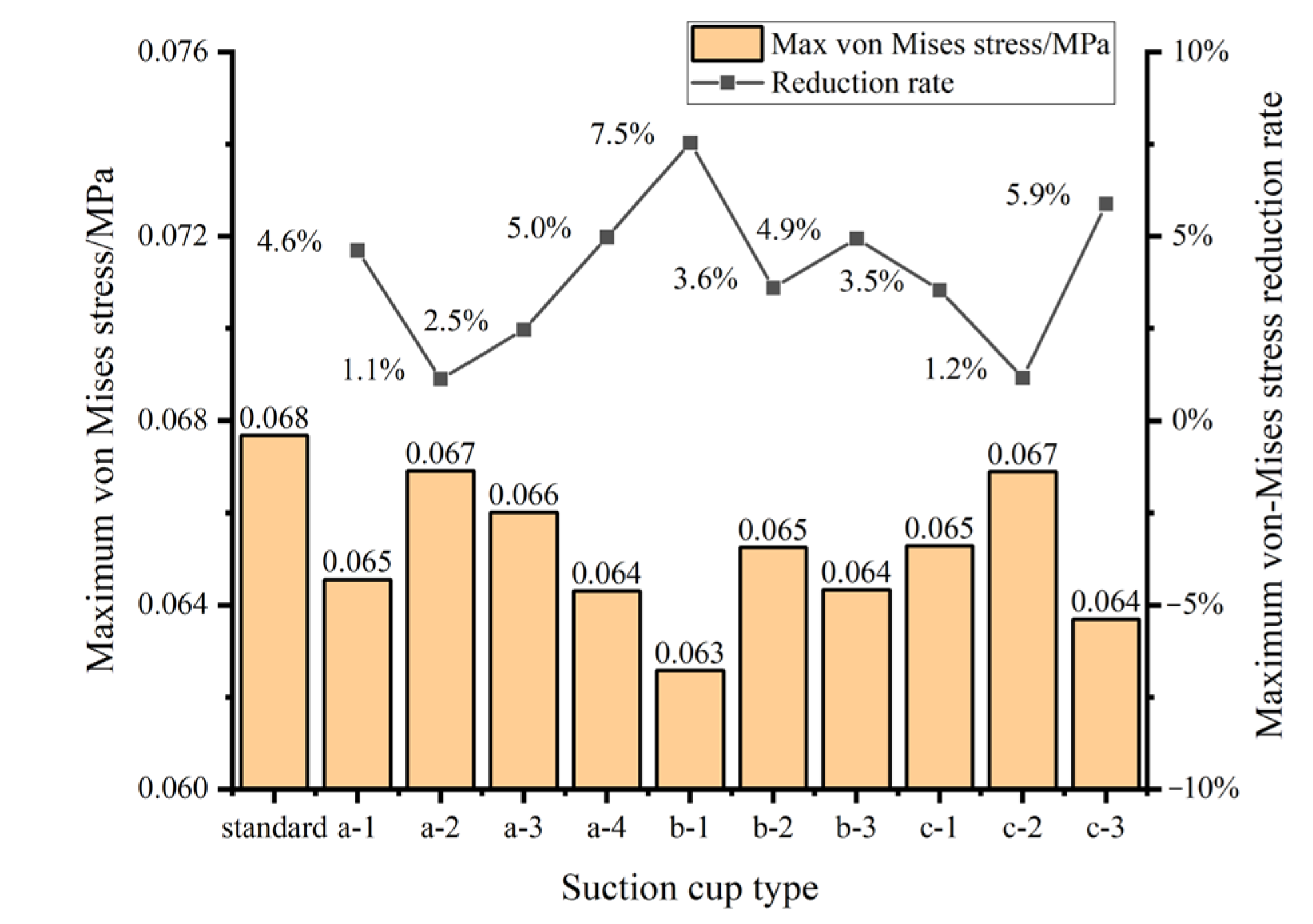
3.3. Finite Element Analysis Results
3.4. Comparison Between the Biomimetic Suction Cups and the Baseline Suction Cup
3.5. Effect of Glass Thickness on Suction Cup Performance
4. Tensile Test Comparison of the Biomimetic Suction Cup
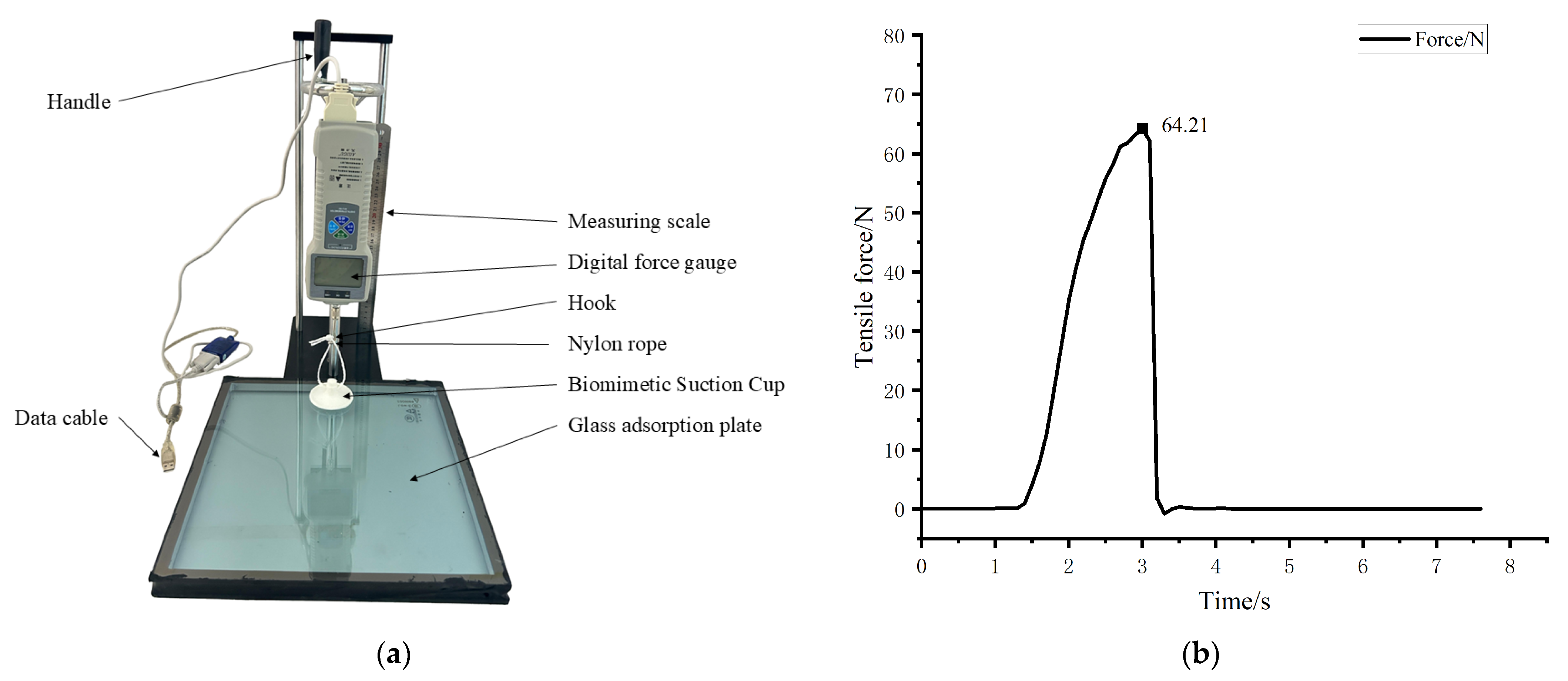
4.1. Tensile Test Conditions and Experimental Setup
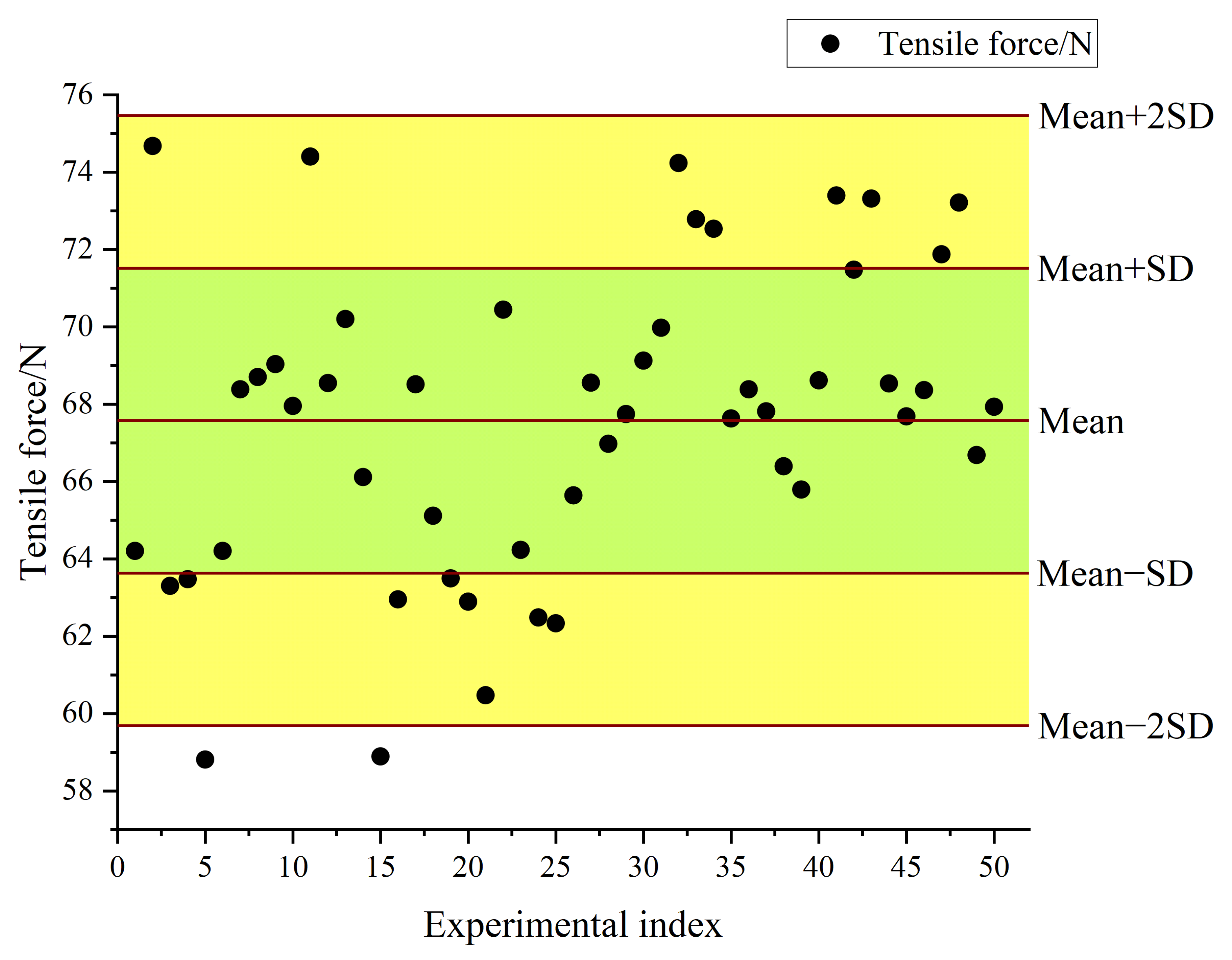
4.2. Tensile Test Results
4.3. Comparison Between the Tensile Test Results and the Simulation Result
5. Results
6. Discussion
7. Conclusions
- (1)
- A comparative analysis of ten biomimetic suction cup structures identifies the design with the best overall performance.
- (2)
- The experimental results verify the reliability of the finite element analysis, demonstrating its effectiveness for structural design and performance prediction of suction cups.
- (3)
- The optimized biomimetic suction cup shows significant increases in pressure and frictional stress, accompanied by a clear reduction in sliding distance, compared to the baseline suction cup (smooth design without grooves or sealing ring). This confirms the superiority of the biomimetic structure in improving adsorption performance, specifically in terms of better distribution of stress and reduced sliding during operation.
Supplementary Materials
Author Contributions
Funding
Institutional Review Board Statement
Informed Consent Statement
Data Availability Statement
Acknowledgments
Conflicts of Interest
References
- van Veggel, S.; Wiertlewski, M.; Doubrovski, E.L.; Kooijman, A.; Shahabi, E.; Mazzolai, B.; Scharff, R.B.N. Classification and evaluation of octopus-inspired suction cups for soft continuum robots. Adv. Sci. 2024, 11, 2400806. [Google Scholar] [CrossRef]
- Chapdelaine, B.; Celce, M.; Vidal, C.; Birglen, L.; Monsarrat, B. Simulation and experimental validation of an autonomous perching and takeoff method for a multirotor UAV on vertical surfaces using a suction cup. In Proceedings of the 2024 IEEE International Conference on Robotics and Automation (ICRA), Yokohama, Japan, 13–17 May 2024; pp. 1617–1623. [Google Scholar]
- Sareh, S.; Althoefer, K.; Li, M.; Noh, Y.; Tramacere, F.; Sareh, P.; Mazzolai, B.; Kovac, M. Anchoring like octopus: Biologically inspired soft artificial sucker. J. R. Soc. Interface 2017, 14, 20170395. [Google Scholar] [CrossRef] [PubMed]
- Sun, L. Abalone High Adsorption Performance Research and Design of Bionic Sucker. Master’s Thesis, Jilin University, Changchun, China, 2017. (In Chinese) [Google Scholar]
- Baik, S.; Kim, D.W.; Park, Y.; Lee, T.J.; Ho Bhang, S.; Pang, C. A wet-tolerant adhesive patch inspired by protuberances in suction cups of octopi. Nature 2017, 546, 396–400. [Google Scholar] [CrossRef]
- Lin, A.Y.M.; Brunner, R.; Chen, P.Y.; Talke, F.; Meyers, M. Underwater adhesion of abalone: The role of van der Waals and capillary forces. Acta Mater. 2009, 57, 4178–4185. [Google Scholar] [CrossRef]
- Wainwright, D.K.; Kleinteich, T.; Kleinteich, A.; Gorb, S.N.; Summers, A.P. Stick tight: Suction adhesion on irregular surfaces in the northern clingfish. Biol. Lett. 2013, 9, 20130234. [Google Scholar] [CrossRef]
- Tramacere, F.; Kovalev, A.; Kleinteich, T.; Gorb, S.N.; Mazzolai, B. Structure and mechanical properties of Octopus vulgaris suckers. J. R. Soc. Interface 2014, 11, 20130816. [Google Scholar] [CrossRef]
- Yoshida, Y.; Ma, S. Design of a wall-climbing robot with passive suction cups. In Proceedings of the 2010 IEEE International Conference on Robotics and Biomimetics (ICRB), Tianjin, China, 14–18 December 2010; pp. 1513–1518. [Google Scholar]
- Hou, J.; Wright, E.; Bonser, R.H.C.; Jeronimidis, G. Development of biomimetic squid-inspired suckers. Bionic Eng. 2012, 9, 484–493. [Google Scholar] [CrossRef]
- Tramacere, F.; Beccai, L.; Mattioli, F.; Sinibaldi, E.; Mazzolai, B. Artificial adhesion mechanisms inspired by octopus suckers. In Proceedings of the 2012 IEEE International Conference on Robotics and Automation (ICRA), Saint Paul, MN, USA, 14–18 May 2012. [Google Scholar]
- Tramacere, F.; Beccai, L.; Kuba, M.; Gozzi, A.; Bifone, A.; Mazzolai, B. The morphology and adhesion mechanism of Octopus vulgaris suckers. PLoS ONE 2013, 8, e65074. [Google Scholar] [CrossRef]
- Zhang, D.; Xu, J.; Zhang, Q.; Cong, Q.; Chen, T. Optimal design and experiment of bionic vacuum suckers with high attachment properties. J. Adhes. Sci. Technol. 2024, 38, 3480–3505. [Google Scholar] [CrossRef]
- Liu, S.; Dong, W.; Ma, Z.; Sheng, X. Adaptive aerial grasping and perching with dual elasticity combined suction cup. IEEE Robot. Autom. Lett. 2020, 5, 4766–4773. [Google Scholar] [CrossRef]
- Wang, Z.; Zhang, X.; Mu, Z.; Guan, X.; Liu, J.; Pan, Z.; Wang, J.; Ye, X.; Qi, Z.; Dong, J.; et al. Design and performance verification of bionic octopus sucker sealing structure for solenoid valves. Biomimetics 2025, 10, 425. [Google Scholar] [CrossRef]
- Follador, M.; Tramacere, F.; Mazzolai, B. Dielectric elastomer actuators for octopus inspired suction cups. Bioinspir. Biomim. 2014, 9, 046002. [Google Scholar] [CrossRef]
- Xi, P.; Cong, Q.; Xu, J.; Qiu, K. Design, experiment and adsorption mechanism analysis of bionic sucker based on octopus sucker. Proc. Inst. Mech. Eng. Part H J. Eng. Med. 2019, 233, 1250–1261. [Google Scholar] [CrossRef]
- Sandoval, J.A.; Sommers, J.; Peddireddy, K.R.; Robertson-Anderson, R.M.; Tolley, M.T.; Deheyn, D.D. Toward bioinspired wet adhesives: Lessons from assessing surface structures of the suction disc of intertidal clingfish. ACS Appl. Mater. Interfaces 2020, 12, 45460–45475. [Google Scholar] [CrossRef]
- Tsujioka, K.; Matsuo, Y.; Shimomura, M.; Hirai, Y. A new concept for an adhesive material inspired by clingfish sucker nanofilaments. Langmuir 2022, 38, 1215–1222. [Google Scholar] [CrossRef] [PubMed]
- Li, J.; Song, Z.; Ma, C.; Sui, T.; Yi, P.; Liu, J. A bioinspired adhesive sucker with both suction and adhesion mechanisms for three-dimensional surfaces. J. Bionic Eng. 2022, 19, 1671–1683. [Google Scholar] [CrossRef]
- Wang, Y.; Liu, D.; Wang, C.; Wu, J.; Xu, X.; Yang, X.; Sun, C.; Jiang, P.; Wang, X. 3D printing of octopi-inspired hydrogel suckers with underwater adaptation for reversible adhesion. Chem. Eng. J. 2023, 457, 141268. [Google Scholar] [CrossRef]
- Ditsche, P.; Summers, A. Learning from Northern clingfish (Gobiesox maeandricus): Bioinspired suction cups attach to rough surfaces. Philos. Trans. R. Soc. B 2019, 374, 20190204. [Google Scholar] [CrossRef]
- Tsukagoshi, H.; Osada, Y. Soft hybrid suction cup capable of sticking to various objects and environments. Actuators 2021, 10, 50. [Google Scholar] [CrossRef]
- Wang, Y.; Sun, G.; He, Y.; Zhou, K.; Zhu, L. Octopus-inspired sucker to absorb soft tissues: Stiffness gradient and acetabular protuberance improve the adsorption effect. Bioinspir. Biomim. 2022, 17, 036005. [Google Scholar] [CrossRef] [PubMed]
- Cong, Q.; Zhang, D.; Xu, J.; Chen, T.; Jin, J.; Liu, C. Design the bionic sucker with high adsorption performance based on Sinogastromyzon szechuanensis. Extreme Mech. Lett. 2024, 73, 102273. [Google Scholar] [CrossRef]
- Mei, H.; Luo, Y.; Cao, Y.; Jin, W.; Liu, Y. Research on improved suction cup structure based on finite element method. In Proceedings of the International Conference on Mechanical Design and Simulation (MDS 2022); SPIE: Bellingham, WA, USA, 2022; Volume 1226134. [Google Scholar] [CrossRef]
- Dixit, A.; Das, M.; Singh, H.; Panda, S.K.; Pugno, N.M.; Katiyar, N.K.; Tiwary, C.S. Unleashing enhanced compressive strength: 3D printed octopus-inspired suction cups using topological engineering. ACS Appl. Polym. Mater. 2023, 5, 9236–9244. [Google Scholar] [CrossRef]
- Xu, J.; Wang, L.; Zhang, D.; Shi, X.; Chen, T.; Cong, Q.; Liu, C. Bionic ring grooves design and experiment of the suction cup applied in oil-immersed substrate. Lubricants 2023, 11, 152. [Google Scholar] [CrossRef]
- Xu, J. Study on the High-Performance Adhesion Mechanism of Leech Suckers and Design of a Biomimetic Suction Cup. Master’s Thesis, Jilin University, Changchun, China, 2021. (In Chinese) [Google Scholar] [CrossRef]
- Xi, P.; Ye, S.; Cong, Q. Abalone adhesion: The role of various adhesion forces and their proportion to total adhesion force. PLoS ONE 2023, 18, e0286567. [Google Scholar] [CrossRef]
- Li, J.; Zhang, Y.; Liu, S.; Liu, J. Insights into adhesion of abalone: A mechanical approach. J. Theor. Biol. 2018, 441, 35–44. [Google Scholar] [CrossRef]
- Iwamoto, M.; Ueyama, D.; Kobayashi, R. The advantage of mucus for adhesive locomotion in gastropods. J. Theor. Biol. 2014, 353, 133–141. [Google Scholar] [CrossRef]
- Liegertova, M.; Maly, J. Gastropod mucus: Interdisciplinary perspectives on biological activities, applications, and strategic priorities. ACS Biomater. Sci. Eng. 2023, 9, 5567–5579. [Google Scholar] [CrossRef]
- Smith, A.M. The role of suction in the adhesion of limpets. J. Exp. Biol. 1991, 161, 151–169. [Google Scholar] [CrossRef]
- Gorb, S.N. Biological attachment devices: Exploring nature’s diversity for biomimetics. Philos. Trans. R. Soc. A 2008, 366, 1557–1574. [Google Scholar] [CrossRef]
- Xi, P.; Qiao, Y.; Cong, Q.; Cui, Q. Experimental study on the adhesion of abalone to surfaces with different morphologies. Biomimetics 2024, 9, 206. [Google Scholar] [CrossRef] [PubMed]
- Cook, P.A. Introduction, taxonomy, and general biology of abalone. In Developments in Aquaculture and Fisheries Science; Elsevier: Amsterdam, The Netherlands, 2023; Volume 42, pp. 1–8. [Google Scholar]
- Peng, X.; Qiao, Y.; Nie, X.; Cong, Q. Bionic Design and Adsorption Performance Analysis of Vacuum Suckers. Biomimetics 2024, 9, 623. [Google Scholar] [CrossRef]
- Zhang, D.; Xu, J.; Liu, X.; Zhang, Q.; Cong, Q.; Chen, T.; Liu, C. Advanced bionic attachment equipment inspired by the attachment performance of aquatic organisms. Biomimetics 2023, 8, 85. [Google Scholar] [CrossRef]
- Zhang, Y.; Li, S.; Zuo, P.; Xu, X.; Li, J.; Liu, J. Adhesion behaviors of abalone under the action of water flow. Front. Mech. Eng. 2021, 6, 320–328. [Google Scholar] [CrossRef]
- Peng, X. Study on the Adhesion Performance of the Abalone Muscular Foot and Design and Experimental Validation of a Biomimetic Suction Cup. Ph.D. Thesis, Jilin University, Changchun, China, 2020. (In Chinese) [Google Scholar] [CrossRef]
- Huang, J.; Xie, G.; Liu, Z. Finite element analysis of hyperelastic rubber materials based on Mooney–Rivlin and Yeoh models. Rubber Plastics Technol. Equip. 2008, 34, 22–26. (In Chinese) [Google Scholar]
- Dai, H.H. Model equations for nonlinear dispersive waves in a compressible Mooney–Rivlin rod. Acta Mech. 1998, 127, 193–207. [Google Scholar] [CrossRef]
- Wang, W. Determination for material constants of rubber Mooney–Rivlin model. J. Spec. Purpose Rubber Prod. 2004, 4, 3. [Google Scholar]
- Fukahori, Y.; Seki, W. Molecular behaviour of elastomeric materials under large deformation. Polymer 1992, 33, 502–508. [Google Scholar] [CrossRef]
- Zhang, Y. Deformation Analysis and Coordinated Motion Control of Soft Modular Robots. Ph.D. Thesis, Harbin Institute of Technology, Harbin, China, 2020. (In Chinese) [Google Scholar]
- Zhang, Y.; Liu, Y.; Sui, X.; Zheng, T.; Bie, D.; Wang, Y.; Zhao, J.; Zhu, Y. A mechatronics-embedded pneumatic soft modular robot powered via a single air tube. Appl. Sci. 2019, 9, 2260. [Google Scholar] [CrossRef]
- Qiu, K. Research on High Adsorption Performance of Octopus Sucker and Design of Bionic Sucker. Master’s Thesis, Jilin University, Changchun, China, 2016. (In Chinese) [Google Scholar]





| Type | Surface Feature Description | Main Parameters |
|---|---|---|
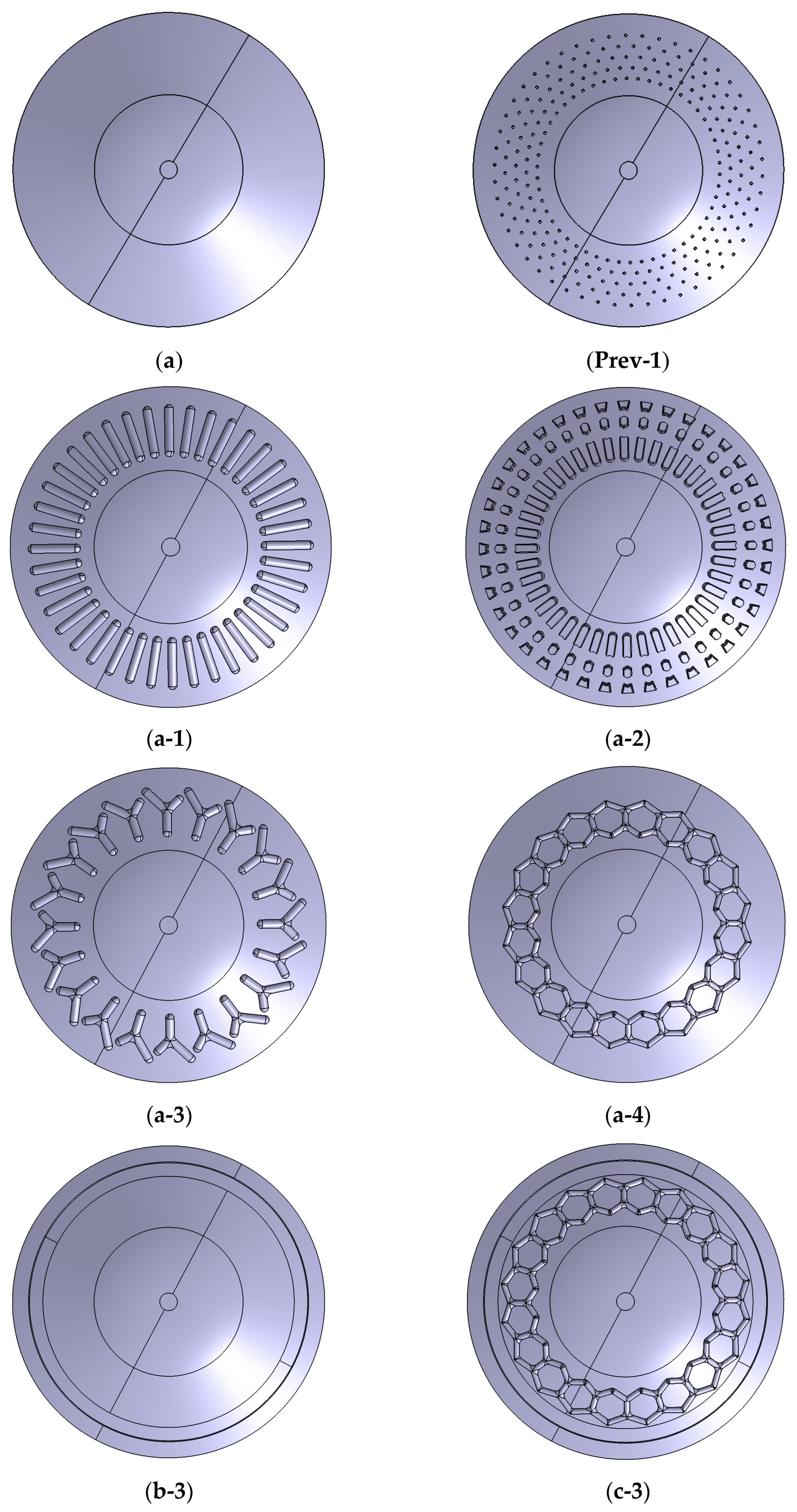
| a | Smooth baseline suction cup | Without grooves or sealing rings (ϕ 55 mm; baseline geometry for benchmarking) |
| Prev-1 | Circular hole array × 50 | ϕ 0.5 mm, depth 0.25 mm |
| Prev-2 | Circular hole array × 40 | ϕ 1.5 mm, depth 0.75 mm |
| a-1 | Slotted groove array × 40 | Width 1 mm, depth 0.5 mm |
| a-2 | Radial groove array × 40 | Width 1 mm, depth 0.5 mm |
| a-3 | Herringbone groove array × 20 | Width 1 mm, depth 0.5 mm |
| a-4 | Hexagonal groove array × 20 | Width 1 mm, depth 0.5 mm |
| b-1 | Sealing ring × 1 | Width 0.5 mm, height 0.5 mm |
| b-2 | Sealing ring × 1 | Width 1.5 mm, height 0.5 mm |
| b-3 | Sealing ring × 1 | Width 2.5 mm, height 0.5 mm |
| c-1 | Hexagonal groove array × 20 + sealing ring × 1 | Combination of a-4 and b-1 |
| c-2 | Hexagonal groove array × 20 + sealing ring × 1 | Combination of a-4 and b-2 |
| c-3 | Hexagonal groove array × 20 + sealing ring × 1 | Combination of a-4 and b-3 |
| Model | Diameter | Thickness |
|---|---|---|
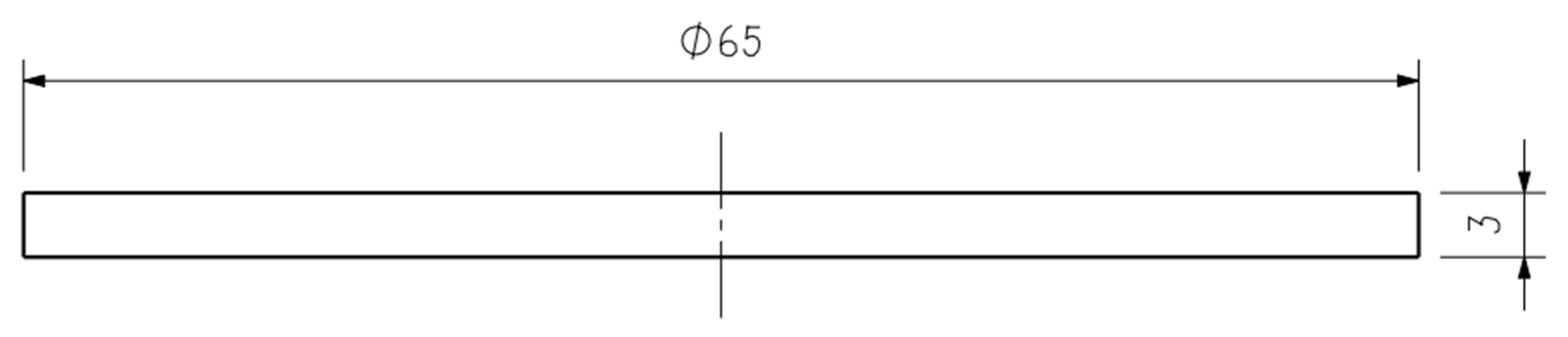
| 1 | ϕ 65 mm | 1 mm |
| 2 | ϕ 65 mm | 2 mm |
| 3 | ϕ 65 mm | 3 mm |
| 4 | ϕ 65 mm | 4 mm |
| 5 | ϕ 65 mm | 5 mm |
| Maximum von Mises Stress (MPa) | Maximum Pressure (MPa) | Maximum Frictional Stress (MPa) | Maximum Sliding Distance (mm) | Maximum Total Circumferential Deformation (mm) | |
|---|---|---|---|---|---|
| a | 6.768 × 10⁻² | 0.762 × 10⁻² | 1.524 × 10⁻³ | 1.401 | 1.409 |
| a-1 | 6.455 × 10⁻² | 1.659 × 10⁻² | 3.318 × 10⁻³ | 1.389 | 1.398 |
| a-2 | 6.691 × 10⁻² | 1.953 × 10⁻² | 3.906 × 10⁻³ | 1.417 | 3.044 × 10⁻⁴ |
| a-3 | 6.601 × 10⁻² | 1.716 × 10⁻² | 3.431 × 10⁻³ | 1.383 | 1.391 |
| a-4 | 6.430 × 10⁻² | 2.134 × 10⁻² | 4.268 × 10⁻³ | 1.382 | 1.392 |
| b-1 | 6.257 × 10⁻² | 3.095 × 10⁻² | 6.190 × 10⁻³ | 1.130 | 3.748 × 10⁻⁴ |
| b-2 | 6.524 × 10⁻² | 3.968 × 10⁻² | 7.935 × 10⁻² | 0.840 | 4.463 × 10⁻⁴ |
| b-3 | 6.433 × 10⁻² | 4.528 × 10⁻² | 9.055 × 10⁻³ | 0.796 | 4.567 × 10⁻⁴ |
| c-1 | 6.528 × 10⁻² | 2.045 × 10⁻² | 4.090 × 10⁻² | 1.193 | 1.398 |
| c-2 | 6.689 × 10⁻² | 4.072 × 10⁻² | 8.145 × 10⁻³ | 0.909 | 1.688 |
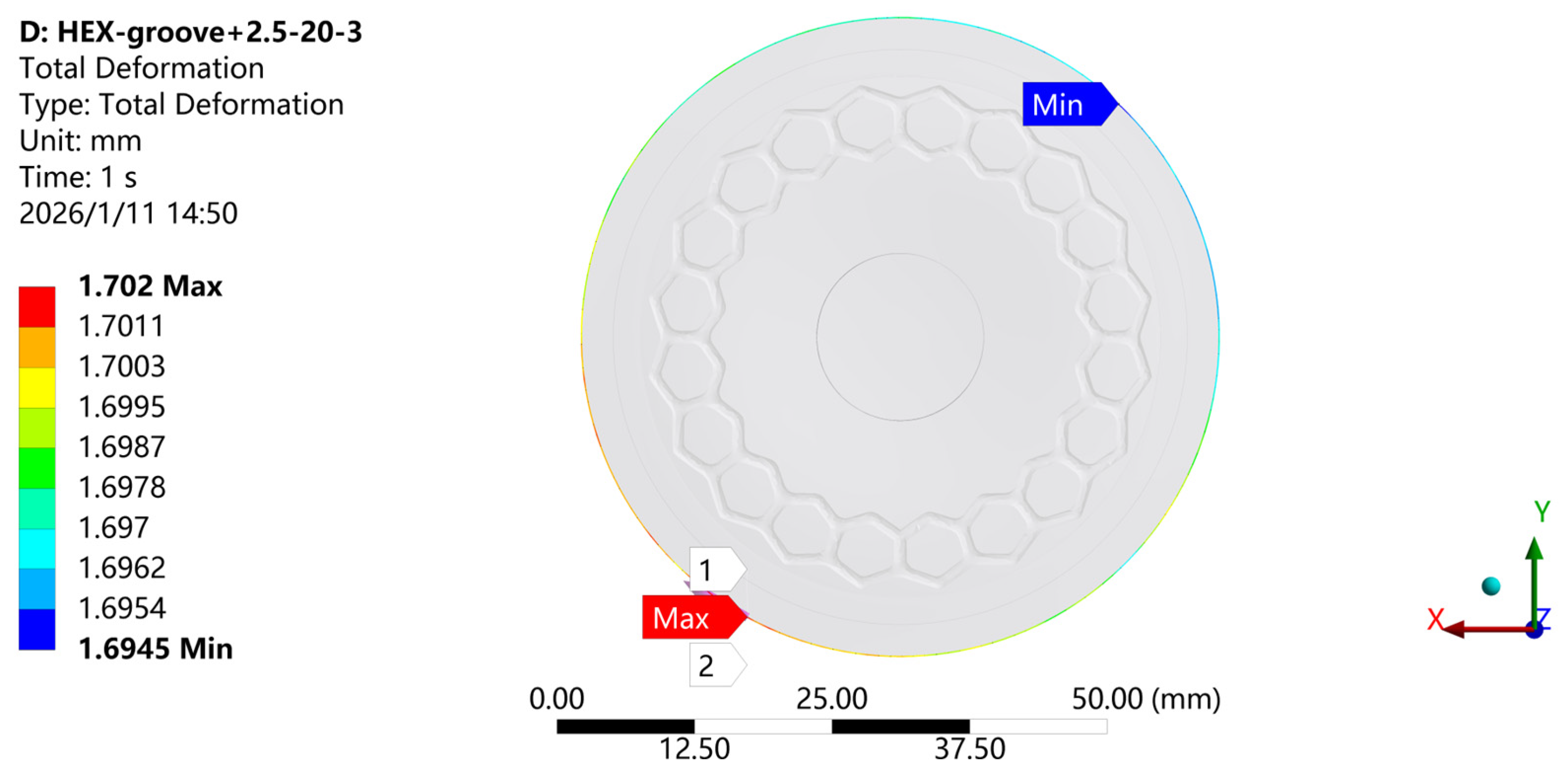
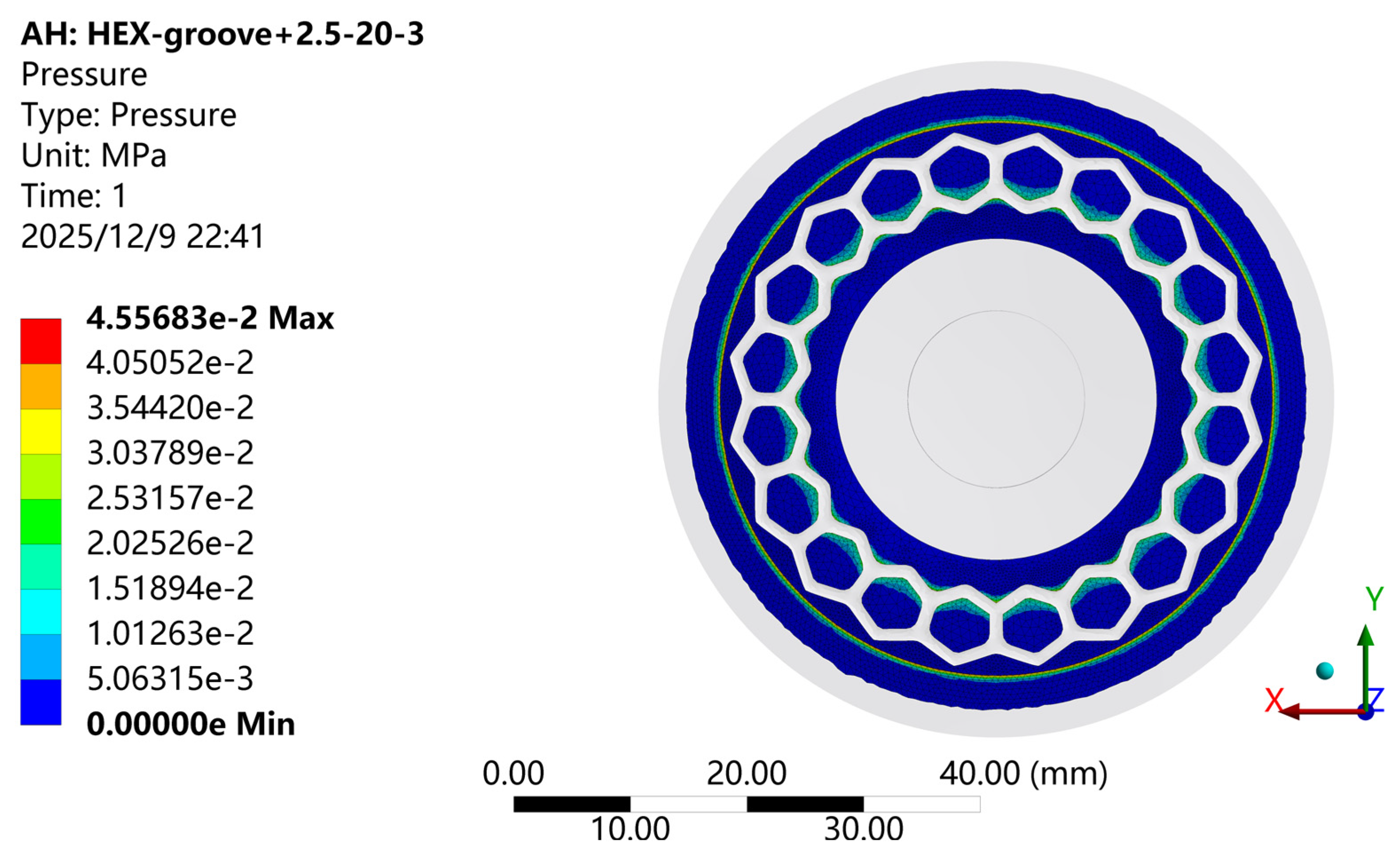
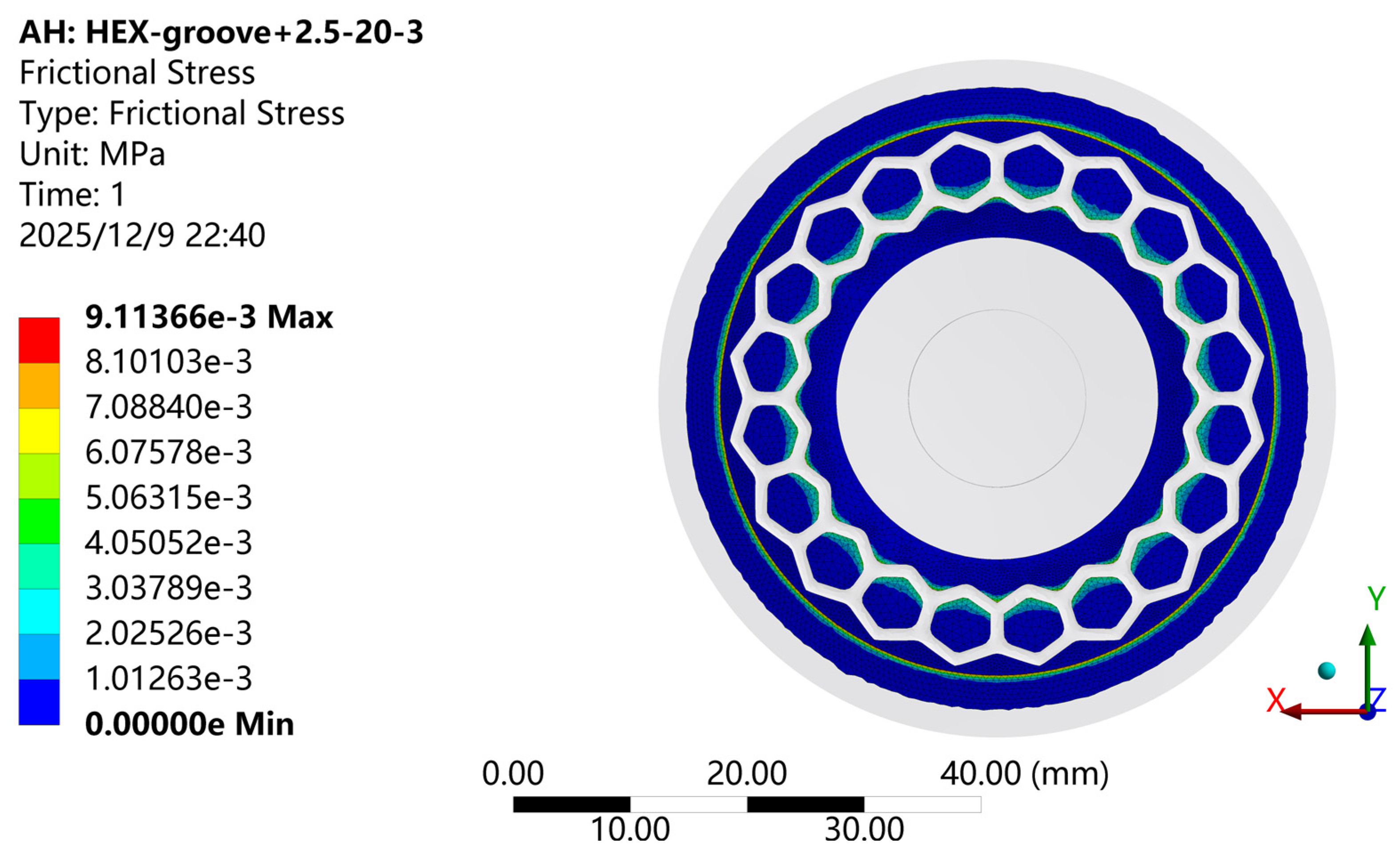
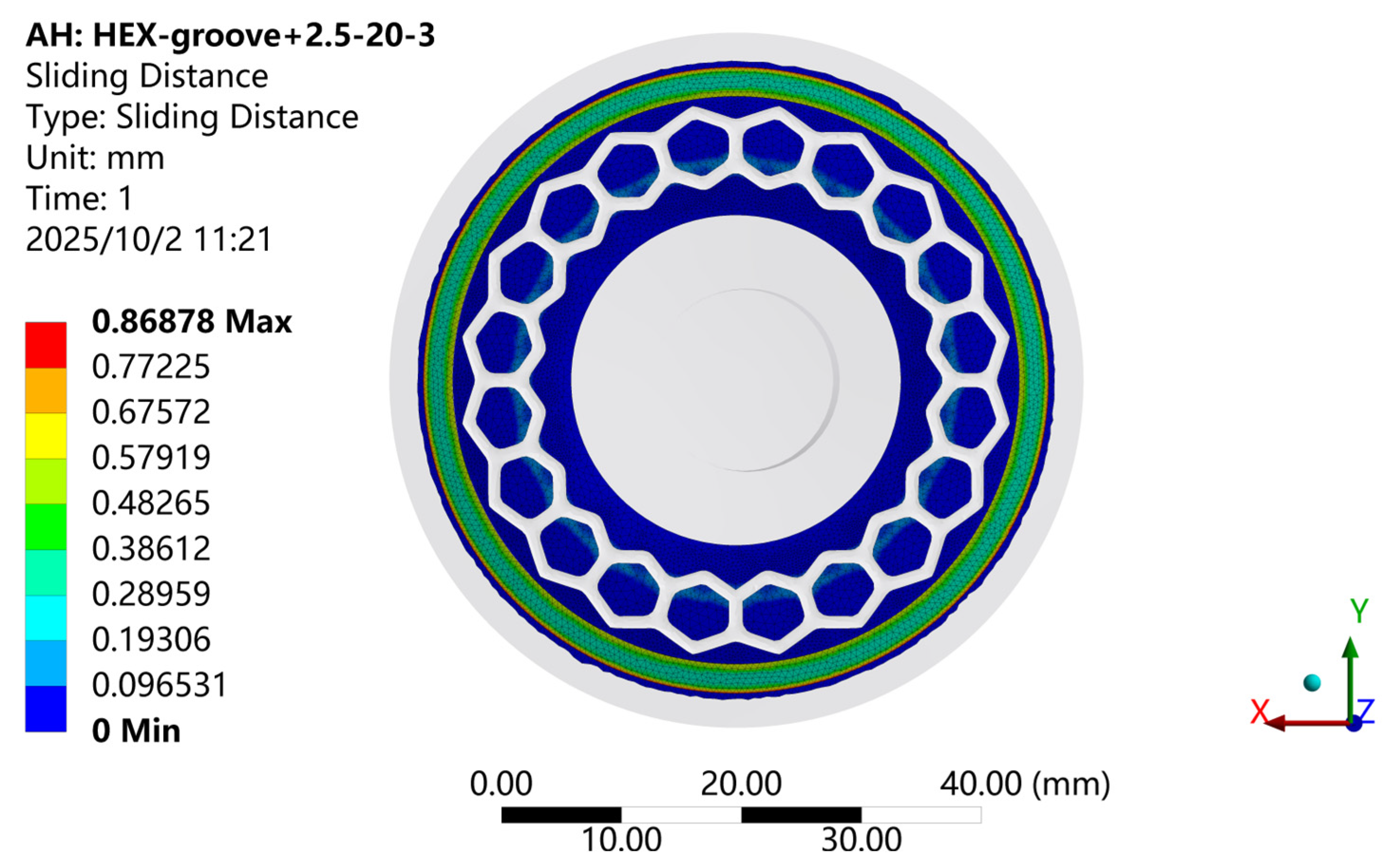
| c-3 | 6.369 × 10⁻² | 4.557 × 10⁻² | 9.114 × 10⁻³ | 0.869 | 1.702 |
| Adsorption Plate Thickness (mm) | Maximum von Mises Stress (MPa) | Maximum Pressure (MPa) | Maximum Frictional Stress (MPa) | Maximum Sliding Distance (mm) | Maximum Total Circumferential Deformation (mm) |
|---|---|---|---|---|---|
| 1 | 6.342 × 10⁻² | 4.518 × 10⁻² | 9.036 × 10⁻³ | 0.852 | 1.705 |
| 2 | 6.344 × 10⁻² | 4.527 × 10⁻² | 9.053 × 10⁻³ | 0.816 | 1.705 |
| 3 (Original thickness) | 6.369 × 10⁻² | 4.557 × 10⁻² | 9.114 × 10⁻³ | 0.869 | 1.702 |
| 4 | 6.340 × 10⁻² | 4.525 × 10⁻² | 9.051 × 10⁻³ | 0.752 | 1.701 |
| 5 | 6.340 × 10⁻² | 4.564 × 10⁻² | 9.128 × 10⁻³ | 0.821 | 1.703 |
| Parameter | Experimental Test | FEA |
|---|---|---|
| Average Force (N) | 67.576 | 72.352 |
| Standard Deviation (SD) | 3.942 | - |
| 95% Confidence Interval (N) | 66.46~68.70 | - |
| Mean ± 2SD (N) | 59.69~75.46 | - |
| Relative Error | 6.6% | |
| Maximum von Mises Stress (MPa) | Maximum Pressure (MPa) | Maximum Frictional Stress (MPa) | Maximum Sliding Distance (mm) | Maximum Total Circumferential Deformation (mm) | |
|---|---|---|---|---|---|
| a (Baseline) | 6.768 × 10⁻² | 0.762 × 10⁻² | 1.524 × 10⁻³ | 1.401 | 1.409 |
| Prev-1 | 6.656 × 10⁻² | 1.057 × 10⁻² | 2.113 × 10⁻³ | 1.370 | 1.379 |
| Prev-2 | 6.476 × 10⁻² | 1.483 × 10⁻² | 2.966 × 10⁻³ | 1.390 | 1.396 |
| c-3 | 6.369 × 10⁻² | 4.557 × 10⁻² | 9.114 × 10⁻³ | 0.869 | 1.702 |
| Study | Groove Topology | Sealing Strategy | Dominant Interfacial Mechanism | Performance Characteristics (Reported/Observed) |
|---|---|---|---|---|
| [29] (Prev-1/2) | Discrete circular holes/perforations | Rim-based sealing | Primarily local compliance/contact-area modulation | Moderate enhancement in interfacial pressure/friction compared with the smooth baseline |
| [41] | Bar-type grooves (1D) | Annular sealing ring | Directional load guidance along grooves + sealing-ring-supported vacuum retention | Improved shear resistance; response may show directionality due to 1D groove geometry |
| [38] | Sealing-ring–centered design (groove networking not the primary variable) | Single-/double-ring sealing; ring number/width/spacing as key parameters | Improved vacuum retention and sealing stability via optimized ring geometry; stress is concentrated around the sealing rings | At 60% vacuum, a double-ring design (1.5 mm width, 3 mm spacing) achieved the highest adsorption force (~15.8% higher than the baseline); higher von Mises stress near the rings and lower stress in the center |
| This work (c-3) | Hexagonal interconnected grooves (2D network) | Coupled internal annular sealing ring | Network-mediated load sharing (multi-directional) + stabilized annular sealing | Simultaneous improvements in contact pressure, frictional stress, and reduced sliding distance (Table 6) |
Disclaimer/Publisher’s Note: The statements, opinions and data contained in all publications are solely those of the individual author(s) and contributor(s) and not of MDPI and/or the editor(s). MDPI and/or the editor(s) disclaim responsibility for any injury to people or property resulting from any ideas, methods, instructions or products referred to in the content. |
© 2026 by the authors. Licensee MDPI, Basel, Switzerland. This article is an open access article distributed under the terms and conditions of the Creative Commons Attribution (CC BY) license.
Share and Cite
Wu, L.; Fang, Y.; Zhu, G. Design and Performance Evaluation of Biomimetic Suction Cups Inspired by the Abalone Muscular Foot. Biomimetics 2026, 11, 118. https://doi.org/10.3390/biomimetics11020118
Wu L, Fang Y, Zhu G. Design and Performance Evaluation of Biomimetic Suction Cups Inspired by the Abalone Muscular Foot. Biomimetics. 2026; 11(2):118. https://doi.org/10.3390/biomimetics11020118
Chicago/Turabian StyleWu, Lingmi, Yi Fang, and Guoniu Zhu. 2026. "Design and Performance Evaluation of Biomimetic Suction Cups Inspired by the Abalone Muscular Foot" Biomimetics 11, no. 2: 118. https://doi.org/10.3390/biomimetics11020118
APA StyleWu, L., Fang, Y., & Zhu, G. (2026). Design and Performance Evaluation of Biomimetic Suction Cups Inspired by the Abalone Muscular Foot. Biomimetics, 11(2), 118. https://doi.org/10.3390/biomimetics11020118