
Olfactory Function as a Candidate Endpoint of Type 2 (Th2) Inflammation: Translational Rationale from Humans to Dogs

 ,
, 
 ,
, 
Abstract
1. Introduction
1.1. Immunological Basis of Type 2 (Th2) Inflammation
1.2. Th2-Driven Diseases: Shared Core Immunopathological Pathways with Species-Specific Variation
1.3. Olfactory Function as a Functional Endpoint of Type 2 Inflammation
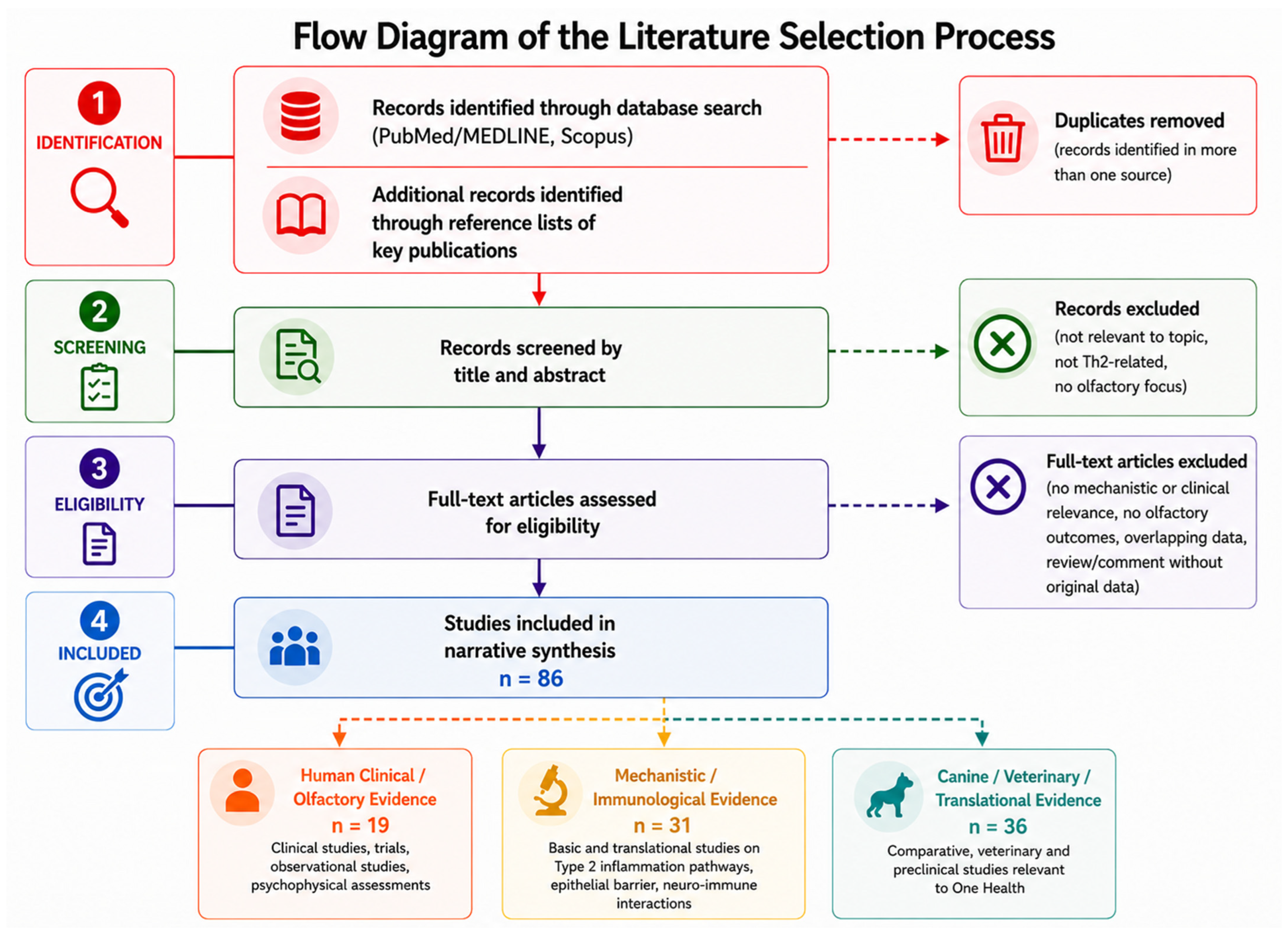
2. Methods
3. Type 2 (Th2) Diseases in Humans
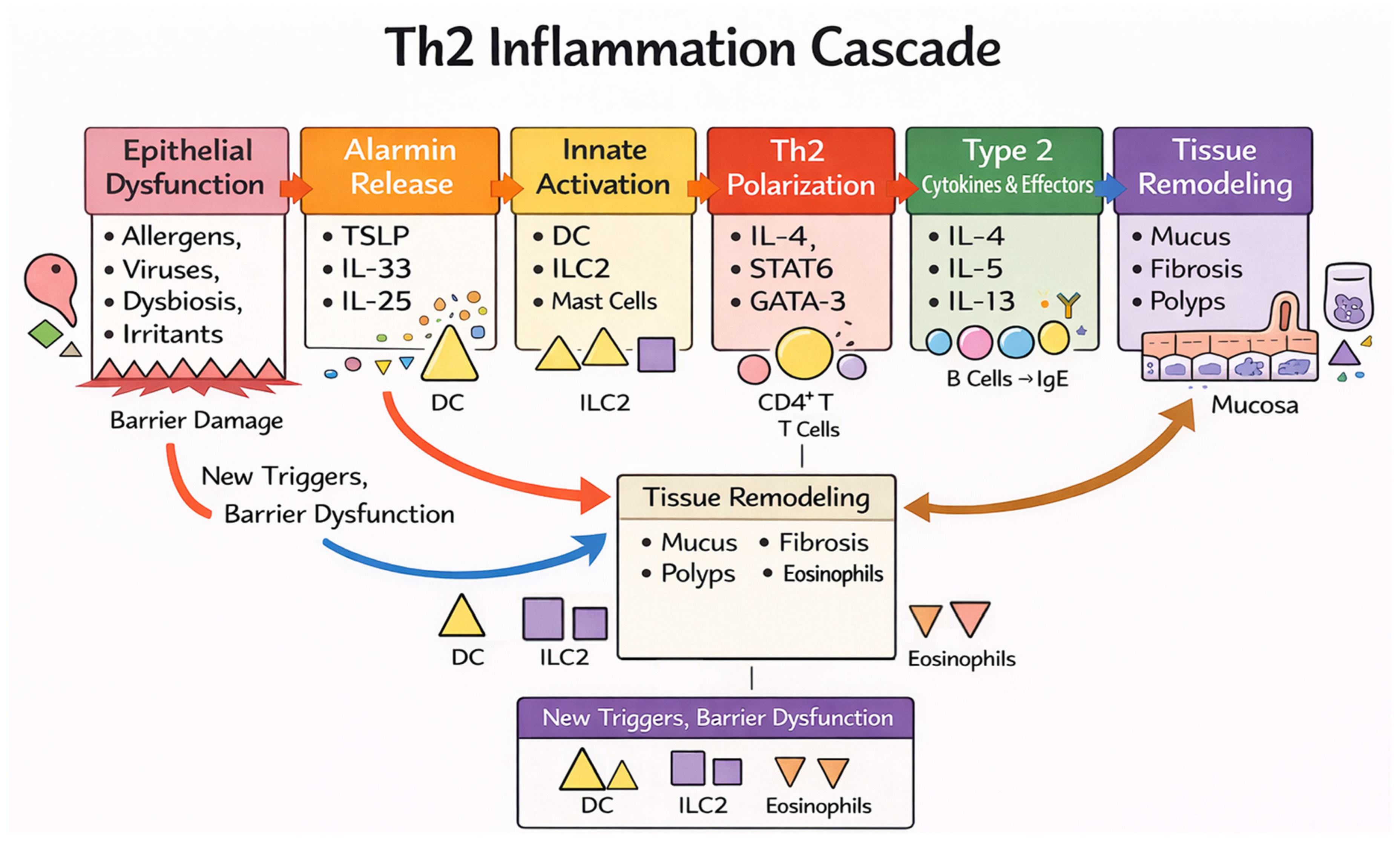
3.1. Pathogenetic Mechanisms of Th2 Inflammation in Humans
3.2. Major Human Th2-Driven Diseases
3.3. Effects of Th2 Inflammation on Human Olfaction
3.4. Olfactory Outcomes as Clinical Endpoints in Biologic Therapies
3.5. Validated Tools for Assessing Olfactory Function in Humans
4. Type 2 (Th2) Diseases in Dogs
4.1. The Th2 Axis in the Canine Immune Response
4.2. Th2-Driven Diseases in Dogs
4.3. Potential Impact of Type 2 Inflammation on Canine Olfaction
4.4. Biologic and Targeted Therapies in Veterinary Medicine
4.5. Potential Approaches to Olfactory Testing in Dogs
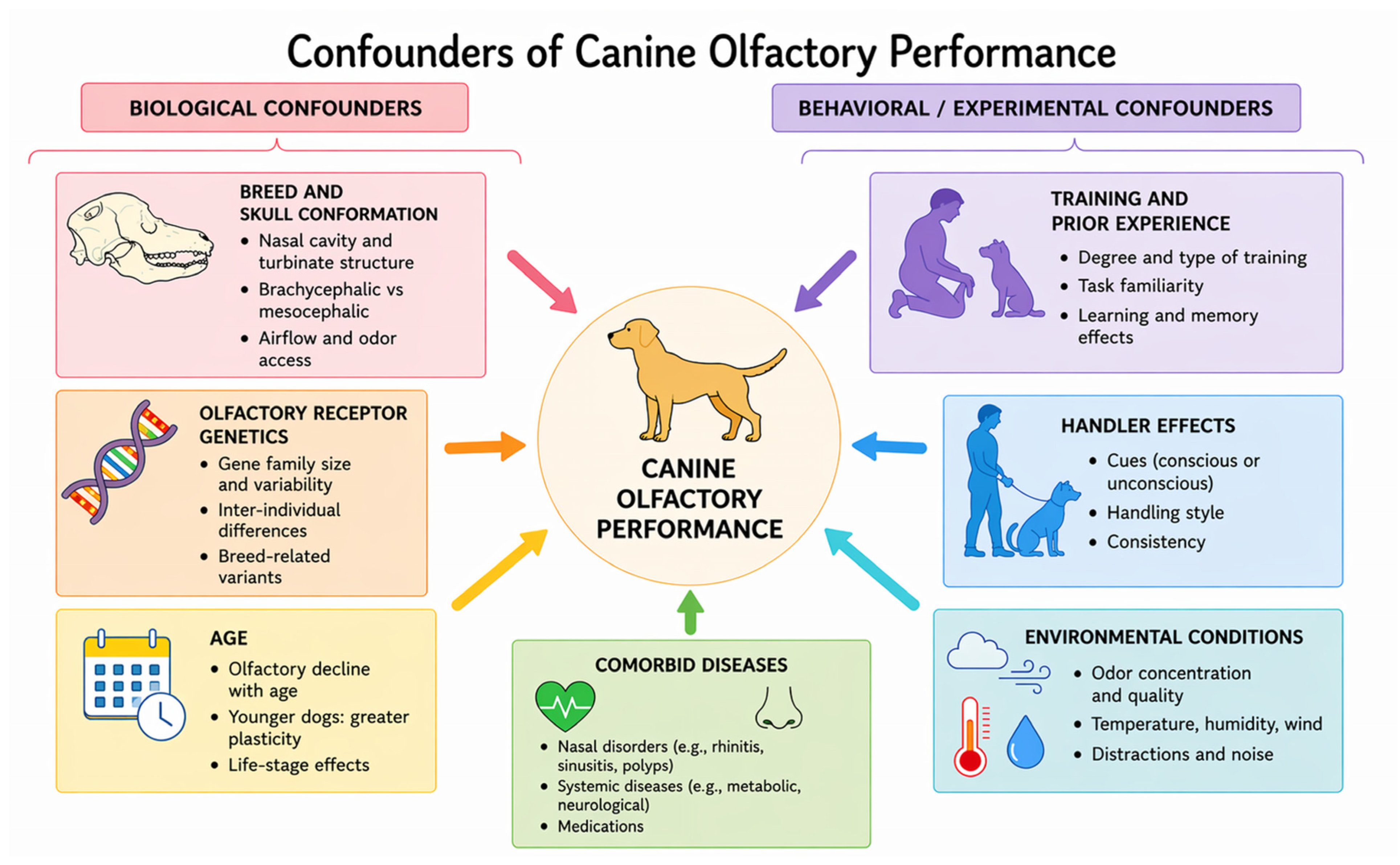
4.6. Criteria for Endpoint Validation in Canine Olfactory Assessment
5. Translational Rationale: From the Human to the Canine Model
5.1. Immunological Analogy of Type 2 (Th2) Inflammation
5.2. Anatomical–Functional and Neuro-Immune Comparison of the Human and Canine Olfactory System
5.3. Proposed Stepwise Mechanistic Framework Across Species
5.4. Methodological Limits and Challenges of Interspecies Translation
5.5. Proposed Translational Study Design Within a One Health Framework
6. Conclusions and Future Directions
Author Contributions
Funding
Institutional Review Board Statement
Informed Consent Statement
Data Availability Statement
Acknowledgments
Conflicts of Interest
Abbreviations
| CAD | Canine Atopic Dermatitis |
| CD4+ | Cluster of Differentiation 4 |
| CRSwNP | Chronic Rhinosinusitis with Nasal Polyps |
| ECP | Eosinophil Cationic Protein |
| fMRI | Functional Magnetic Resonance Imaging |
| GATA3 | GATA Binding Protein 3 |
| IgE | Immunoglobulin E |
| IL-4 | Interleukin 4 |
| IL-4Rα | Interleukin 4 Receptor Alpha |
| IL-5 | Interleukin 5 |
| IL-5RA | Interleukin 5 Receptor Alpha |
| IL-13 | Interleukin 13 |
| IL-13Rα1 | Interleukin 13 Receptor Alpha 1 |
| IL-13Rα2 | Interleukin 13 Receptor Alpha 2 |
| IL-20 | Interleukin 20 |
| IL-24 | Interleukin 24 |
| IL-25 | Interleukin 25 |
| IL-31 | Interleukin 31 |
| IL-33 | Interleukin 33 |
| ILC2s | Group 2 Innate Lymphoid Cells |
| JAK | Janus Kinase |
| JAK/STAT | Janus Kinase/Signal Transducer and Activator of Transcription |
| MBP | Major Basic Protein |
| SNOT-22 | Sino-Nasal Outcome Test-22 |
| ST2 | Suppression of Tumorigenicity 2 (IL-33 Receptor) |
| STAT6 | Signal Transducer and Activator of Transcription 6 |
References
- Zhu, J. T Helper 2 (Th2) Cell Differentiation, Type 2 Innate Lymphoid Cell (ILC2) Development and Regulation of Interleukin-4 (IL-4) and IL-13 Production. Cytokine 2015, 75, 14–24. [Google Scholar] [CrossRef] [Scilit] [PubMed]
- Goetzl, E.J. Th2 Cells in Rapid Immune Responses and Protective Avoidance Reactions. FASEB J. 2024, 38, e23485. [Google Scholar] [CrossRef] [Scilit]
- Chow, L.; Wheat, W.; Ramirez, D.; Impastato, R.; Dow, S. Direct Comparison of Canine and Human Immune Responses Using Transcriptomic and Functional Analyses. Sci. Rep. 2024, 14, 2207. [Google Scholar] [CrossRef] [Scilit] [PubMed]
- Gazi, U.; Taylan-Ozkan, A.; Mumcuoglu, K.Y. Immune Mechanisms in Human and Canine Demodicosis: A Review. Parasite Immunol. 2019, 41, e12673. [Google Scholar] [CrossRef] [Scilit] [PubMed]
- Louten, J.; Rankin, A.L.; Li, Y.; Murphy, E.E.; Beaumont, M.; Moon, C.; Bourne, P.; McClanahan, T.K.; Pflanz, S.; De Waal Malefyt, R. Endogenous IL-33 Enhances Th2 Cytokine Production and T-Cell Responses during Allergic Airway Inflammation. Int. Immunol. 2011, 23, 307–315. [Google Scholar] [CrossRef] [Scilit]
- Hristova, M.; Habibovic, A.; Veith, C.; Janssen-Heininger, Y.M.W.; Dixon, A.E.; Geiszt, M.; Van der Vliet, A. Airway Epithelial Dual Oxidase 1 Mediates Allergen-Induced IL-33 Secretion and Activation of Type 2 Immune Responses. J. Allergy Clin. Immunol. 2016, 137, 1545–1556.e11. [Google Scholar] [CrossRef] [Scilit]
- Altman, M.C.; Lai, Y.; Nolin, J.D.; Long, S.; Chen, C.-C.; Piliponsky, A.M.; Altemeier, W.A.; Larmore, M.; Frevert, C.W.; Mulligan, M.S.; et al. Airway Epithelium-Shifted Mast Cell Infiltration Regulates Asthmatic Inflammation via IL-33 Signaling. J. Clin. Investig. 2019, 129, 4979–4991. [Google Scholar] [CrossRef] [Scilit]
- Wang, C.; Wang, J.; Zheng, X.; Zhang, J.; Zhang, J.; Qiao, G.; Liu, H.; Zhao, H.; Bai, J.; Zhang, H.; et al. Epigenetic Regulation Is Involved in Traffic-Related PM2.5 Aggravating Allergic Airway Inflammation in Rats. Clin. Immunol. 2022, 234, 108914. [Google Scholar] [CrossRef] [Scilit]
- Lott, J.M.; Sumpter, T.L.; Turnquist, H.R. New Dog and New Tricks: Evolving Roles for IL-33 in Type 2 Immunity. J. Leukoc. Biol. 2015, 97, 1037–1048. [Google Scholar] [CrossRef] [Scilit]
- Bachert, C.; Hicks, A.; Gane, S.; Peters, A.T.; Gevaert, P.; Nash, S.; Horowitz, J.E.; Sacks, H.; Jacob-Nara, J.A. The Interleukin-4/Interleukin-13 Pathway in Type 2 Inflammation in Chronic Rhinosinusitis with Nasal Polyps. Front. Immunol. 2024, 15, 1356298. [Google Scholar] [CrossRef] [Scilit]
- Steelant, B.; Seys, S.; Boeckxstaens, G.E.; Akdis, C.; Ceuppens, J.; Hellings, P. Restoring Airway Epithelial Barrier Dysfunction: A New Therapeutic Challenge in Allergic Airway Disease. Rhinology 2017, 54, 195–205. [Google Scholar] [CrossRef] [Scilit]
- Gordon, E.D.; Locksley, R.M.; Fahy, J.V. Cross-Talk between Epithelial Cells and Type 2 Immune Signaling: The Role of IL-25. Am. J. Respir. Crit. Care Med. 2016, 193, 935–936. [Google Scholar] [CrossRef] [Scilit]
- Humphry, N. Epithelial Barrier Dysfunction in Type 2 Inflammatory Diseases. EMJ Dermatol. 2019, 7, 44–51. [Google Scholar] [CrossRef] [Scilit]
- Dong, X.; Ding, M.; Zhang, J.; Ogülür, I.; Pat, Y.; Akdis, M.; Gao, Y.; Akdis, C.A. Involvement and Therapeutic Implications of Airway Epithelial Barrier Dysfunction in Type 2 Inflammation of Asthma. Chin. Med. J. 2022, 135, 519. [Google Scholar] [CrossRef] [Scilit] [PubMed]
- Zhang, S.; Wu, W.; Gu, M.; Zhao, Y.; Wang, L.; Liu, K.; Yu, Z. House Dust Mite Induced Mucosal Barrier Dysfunction and Type 2 Inflammatory Responses via the MAPK/AP-1/IL-24 Signaling Pathway in Allergic Rhinitis. Int. Immunopharmacol. 2025, 148, 113972. [Google Scholar] [CrossRef] [Scilit]
- Kaymak, T.; Kaya, B.; Wuggenig, P.; Nuciforo, S.; Göldi, A.; Swiss EoE Cohort Study Group (SEECS); Oswald, F.; Roux, J.; Noti, M.; Melhem, H.; et al. IL-20 Subfamily Cytokines Impair the Oesophageal Epithelial Barrier by Diminishing Filaggrin in Eosinophilic Oesophagitis. Gut 2023, 72, 821–833. [Google Scholar] [CrossRef] [Scilit] [PubMed]
- Nakayama, T.; Tsunemi, Y.; Kashiwagi, T. Epithelial Cell Dynamics: Key Drivers of Type 2 Inflammation in Eosinophilic Chronic Rhinosinusitis. Auris Nasus Larynx 2025, 52, 354–361. [Google Scholar] [CrossRef] [Scilit] [PubMed]
- Gao, Y.; Wang, Z.; Ogulur, I.; Li, S.; Yazici, D.; Li, X.; Pat, Y.; Zheng, Y.; Babayev, H.; Zeyneloglu, C.; et al. The Evolution, Immunopathogenesis and Biomarkers of Type 2 Inflammation in Common Allergic Disorders. Allergy 2025, 80, 1848–1877. [Google Scholar] [CrossRef] [Scilit]
- Ghezzi, M.; Pozzi, E.; Abbattista, L.; Lonoce, L.; Zuccotti, G.V.; D’Auria, E. Barrier Impairment and Type 2 Inflammation in Allergic Diseases: The Pediatric Perspective. Children 2021, 8, 1165. [Google Scholar] [CrossRef] [Scilit]
- Yee, K.K.; Pribitkin, E.A.; Cowart, B.J.; Vainius, A.A.; Klock, C.T.; Rosen, D.; Feng, P.; McLean, J.; Hahn, C.-G.; Rawson, N.E. Neuropathology of the Olfactory Mucosa in Chronic Rhinosinusitis. Am. J. Rhinol. Allergy 2010, 24, 110–120. [Google Scholar] [CrossRef] [Scilit]
- Hauser, L.J.; Chandra, R.K.; Li, P.; Turner, J.H. Role of Tissue Eosinophils in Chronic Rhinosinusitis–Associated Olfactory Loss. Int. Forum Allergy Rhinol. 2017, 7, 957–962. [Google Scholar] [CrossRef] [Scilit]
- Chen, Y.; Li, M.; Lu, J. Apoptosis and Turnover Disruption of Olfactory Sensory Neurons in Eosinophilic Chronic Rhinosinusitis. Front. Cell. Neurosci. 2024, 18, 1371587. [Google Scholar] [CrossRef] [Scilit]
- Stuck, B.A.; Hummel, T. Olfaction in Allergic Rhinitis: A Systematic Review. J. Allergy Clin. Immunol. 2015, 136, 1460–1470. [Google Scholar] [CrossRef] [Scilit]
- Passali, F.M.; Passali, G.C.; Passali, D.; Ciprandi, G. Smell Impairment in Patients with Allergic Rhinitis. Int. Forum Allergy Rhinol. 2021, 11, 1031–1032. [Google Scholar] [CrossRef] [Scilit] [PubMed]
- Cantone, E.; de Corso, E.; Ricciardiello, F.; Di Nola, C.; Grimaldi, G.; Allocca, V.; Motta, G. Olfaction Recovery Following Dupilumab Is Independent of Nasal Polyp Reduction in CRSwNP. J. Pers. Med. 2022, 12, 1215. [Google Scholar] [CrossRef] [Scilit] [PubMed]
- Otten, J.J.; van der Lans, R.J.L.; Elzinga, H.B.E.; Adriaensen, G.F.J.P.M.; Benoist, L.B.L.; Hoven, R.D.; Seys, S.; Fokkens, W.J.; Reitsma, S. More than Half of Chronic Rhinosinusitis with Nasal Polyps (CRSwNP) Patients Treated with Dupilumab Experience Early and Fast Olfactory Improvement within 28 Days. Allergy 2024, 79, 3166–3168. [Google Scholar] [CrossRef] [Scilit]
- Barroso, B.; Valverde-Monge, M.; Betancor, D.; Gómez-López, A.; Villalobos-Vildas, C.; González-Cano, B.; Sastre, J. Improvement in Smell Using Monoclonal Antibodies Among Patients with Chronic Rhinosinusitis with Nasal Polyps: A Systematic Review. J. Investig. Allergol. Clin. Immunol. 2023, 33, 419–430. [Google Scholar] [CrossRef] [Scilit] [PubMed]
- Cai, S.; Xu, S.; Zhao, Y.; Zhang, L. Efficacy and Safety of Biologics for Chronic Rhinosinusitis with Nasal Polyps: A Meta-Analysis of Real-World Evidence. Allergy 2025, 80, 1256–1270. [Google Scholar] [CrossRef] [Scilit]
- Stilo, G.; Messina, G.; Faro, C.L.; Ruta, S.; Frangipane, S.; Mariut, D.; Giunta, G.; Distefano, M.E.; Zappalà, A.G.; Maniaci, A.; et al. Correlation Between Smell Recovery and Nasal Polyp Score in Patients Treated with Dupilumab: A Real-Life Retrospective, Observational, Monocentric Study. J. Pers. Med. 2025, 15, 164. [Google Scholar] [CrossRef] [Scilit]
- Hellings, P.W.; Verhoeven, E.; Fokkens, W.J. State-of-the-Art Overview on Biological Treatment for CRSwNP. Rhinology 2021, 59, 151–163. [Google Scholar] [CrossRef] [Scilit]
- Hummel, T.; Whitcroft, K.L.; Andrews, P.; Altundag, A.; Cinghi, C.; Costanzo, R.M.; Damm, M.; Frasnelli, J.; Gudziol, H.; Gupta, N.; et al. Position Paper on Olfactory Dysfunction. Rhinology 2017, 54, 1–30. [Google Scholar] [CrossRef] [Scilit] [PubMed]
- Kim, W.S.; Jang, D.P.; Kim, I.Y. The Current Status of Evaluation Technologies for the Function of Human Olfaction. Hanyang Med. Rev. 2014, 34, 120. [Google Scholar] [CrossRef] [Scilit]
- Doty, R.L. Psychophysical Testing of Human Olfactory Function. In Springer Handbook of Odor; Doty, R.L., Shaman, P., Eds.; Springer: Cham, Switzerland, 2017; pp. 59–60. [Google Scholar] [CrossRef] [Scilit]
- Su, B.; Bleier, B.; Wei, Y.; Wu, D. Clinical Implications of Psychophysical Olfactory Testing: Assessment, Diagnosis, and Treatment Outcome. Front. Neurosci. 2021, 15, 646956. [Google Scholar] [CrossRef] [Scilit] [PubMed]
- Thomas, A.J.; Mace, J.C.; Ramakrishnan, V.R.; Alt, J.A.; Mattos, J.L.; Schlosser, R.J.; Soler, Z.M.; Smith, T.L. Quality-of-Life and Olfaction Changes Observed with Short-Term Medical Management of Chronic Rhinosinusitis. Int. Forum Allergy Rhinol. 2020, 10, 656–664. [Google Scholar] [CrossRef] [Scilit]
- Cardella, A.; Riva, G.; Preti, A.; Albera, A.; Luzi, L.; Albera, R.; Cadei, D.; Motatto, G.M.; Omenetti, F.; Pecorari, G.; et al. Italian Version of the Brief Questionnaire of Olfactory Disorders (Brief-IT-QOD). ACTA Otorhinolaryngol. Ital. 2023, 43, 252–261. [Google Scholar] [CrossRef] [Scilit]
- Yang, S.; Boroughs, K.L.; McDermott, M.J. Canine Interleukin-13: Molecular Cloning of Full-Length cDNA and Expression of Biologically Active Recombinant Protein. J. Interferon Cytokine Res. 2000, 20, 779–785. [Google Scholar] [CrossRef] [Scilit]
- Rachakonda, P.S.; Rai, M.F.; Manning, K.; Schmidt, M.F.G. Expression of Canine Interleukin-4 in Canine Chondrocytes Inhibits Inflammatory Cascade through STAT6. Cytokine 2008, 44, 179–184. [Google Scholar] [CrossRef] [Scilit]
- Wang, Y.-S.; Chi, K.-H.; Chu, R.-M. Cytokine Profiles of Canine Monocyte-Derived Dendritic Cells as a Function of Lipopolysaccharide- or Tumor Necrosis Factor-Alpha-Induced Maturation. Vet. Immunol. Immunopathol. 2007, 118, 186–198. [Google Scholar] [CrossRef] [Scilit]
- Asahina, R.; Nishida, H.; Kamishina, H.; Maeda, S. Transcriptional Analysis of the IL-33 Receptor Suppression of Tumourigenicity 2 and Its Effects on Canine Type 2 T Helper Cells: A Preliminary Study. Vet. Dermatol. 2018, 29, 112-e45. [Google Scholar] [CrossRef] [Scilit]
- Protschka, M.; Di Placido, D.; Moore, P.F.; Büttner, M.; Alber, G.; Eschke, M. Canine Peripheral Non-Conventional TCRαβ+ CD4−CD8α− Double-Negative T Cells Show T Helper 2-like and Regulatory Properties. Front. Immunol. 2024, 15, 1400550. [Google Scholar] [CrossRef] [Scilit]
- Fung, K.L.; Breiner, M.L.; Mitchell, J.B.; Parchment, R.E. Abstract 2837: Conservation of JAK-STAT Signaling in Canine Lymphocytes Responding to Human IL-6, IL-7, and IL-1 Alpha. Cancer Res. 2024, 84, 2837. [Google Scholar] [CrossRef] [Scilit]
- Plager, D.A.; Torres, S.; Koch, S.; Kita, H. Gene Transcription Abnormalities in Canine Atopic Dermatitis and Related Human Eosinophilic Allergic Diseases. Vet. Immunol. Immunopathol. 2012, 149, 136–142. [Google Scholar] [CrossRef] [Scilit]
- Borek, F.; Nagashima, S.; Villalobos, W.R.; Gmyterco, V.C.; Sell, T.; de Farias, M.R.; Bechara, G.H. Immunoexpression of IL-33 in the Different Clinical Aspects of Canine Atopic Dermatitis. Vet. Immunol. Immunopathol. 2024, 273, 110786. [Google Scholar] [CrossRef] [Scilit] [PubMed]
- Tang, L.; Boroughs, K.L.; Morales, T.; Stedman, K.; Sellins, K.; Clarke, K.; McDermott, M.; Yang, S.; McCall, C. Recombinant Canine IL-13 Receptor α2-Fc Fusion Protein Inhibits Canine Allergen-Specific IgE Production In Vitro by Peripheral Blood Mononuclear Cells from Allergic Dogs. Vet. Immunol. Immunopathol. 2001, 83, 115–122. [Google Scholar] [CrossRef] [Scilit]
- McCandless, E.E.; Rugg, C.A.; Fici, G.J.; Messamore, J.E.; Aleo, M.M.; Gonzales, A.J. Allergen-Induced Production of IL-31 by Canine Th2 Cells and Identification of Immune, Skin, and Neuronal Target Cells. Vet. Immunol. Immunopathol. 2014, 157, 42–48. [Google Scholar] [CrossRef] [Scilit]
- Bottero, E.; Ruggiero, P.; Benvenuti, E.; Mussi, E.; Falcioni, D.; De Lorenzi, D.; Di Girolamo, N. Presence of Bronchial Nodules, Younger Age, and Heavier Body Weight Are Associated with a Diagnosis of Eosinophilic Lung Disease in Dogs with Cough. J. Am. Vet. Med. Assoc. 2022, 260, 414–421. [Google Scholar] [CrossRef] [Scilit] [PubMed]
- Saraswathula, A.; Liu, M.M.; Kulaga, H.; Lane, A.P. Chronic Interleukin-13 Expression in Mouse Olfactory Mucosa Results in Regional Aneuronal Epithelium. Int. Forum Allergy Rhinol. 2023, 13, 230–241. [Google Scholar] [CrossRef] [Scilit]
- Craven, B.; Paterson, E.; Settles, G. The Fluid Dynamics of Canine Olfaction: Unique Nasal Airflow Patterns as an Explanation of Macrosmia. J. R. Soc. Interface 2010, 7, 933–943. [Google Scholar] [CrossRef] [Scilit]
- Skinner, A.P.C.; Pachnicke, S.; Lakatos, A.; Franklin, R.J.M.; Jeffery, N.D. Nasal and Frontal Sinus Mucosa of the Adult Dog Contain Numerous Olfactory Sensory Neurons and Ensheathing Glia. Res. Vet. Sci. 2005, 78, 9–15. [Google Scholar] [CrossRef] [Scilit]
- Robin, S.; Tacher, S.; Rimbault, M.; Vaysse, A.; Dréano, S.; André, C.; Hitte, C.; Galibert, F. Genetic Diversity of Canine Olfactory Receptors. BMC Genom. 2009, 10, 21. [Google Scholar] [CrossRef] [Scilit]
- Benbernou, N.; Tacher, S.; Robin, S.; Rakotomanga, M.; Senger, F.; Galibert, F. Functional Analysis of a Subset of Canine Olfactory Receptor Genes. J. Hered. 2007, 98, 500–505. [Google Scholar] [CrossRef] [Scilit]
- Lesniak, A.; Walczak, M.; Jezierski, T.; Sacharczuk, M.; Gawkowski, M.; Jaszczak, K. Canine Olfactory Receptor Gene Polymorphism and Its Relation to Odor Detection Performance by Sniffer Dogs. J. Hered. 2008, 99, 518–527. [Google Scholar] [CrossRef] [Scilit]
- Moyaert, H.; Van Brussel, L.; Borowski, S.; Escalada, M.; Mahabir, S.P.; Walters, R.R.; Stegemann, M.R. A Blinded, Randomized Clinical Trial Evaluating the Efficacy and Safety of Lokivetmab Compared to Ciclosporin in Client-Owned Dogs with Atopic Dermatitis. Vet. Dermatol. 2017, 28, 593-e145. [Google Scholar] [CrossRef] [Scilit] [PubMed]
- Gober, M.; Amodie, D.; Mellencamp, M.; Hillier, A. Long-Term Use of Lokivetmab (Cytopoint®) in Atopic Dogs. BMC Vet. Res. 2025, 21, 203. [Google Scholar] [CrossRef] [Scilit] [PubMed]
- Marques, V.S.; Celesso, J.R.; Bicalho, A.P.d.C.V. Evaluation of Quality of Life in Dogs with Atopic Dermatitis and Their Owners after Lokivetmab Therapy. Res. Soc. Dev. 2021, 10, e392101119775. [Google Scholar] [CrossRef] [Scilit]
- Tamamoto-Mochizuki, C.; Crawford, N.; Eder, J.M.; Gonzales, A.J.; Olivry, T. Cytokine Transcriptome Profiling in Acute Experimental Canine Atopic Dermatitis Skin Lesions after IL-31 Inhibition with Lokivetmab. Vet. Dermatol. 2023, 34, 327–338. [Google Scholar] [CrossRef] [Scilit]
- Villalobos, W.R.; Ferreira, T.; Borek, F.; Santoro, D.; Ferrer, L.; Farias, M. Evaluation of Filaggrin 2 Expression in Dogs with Atopic Dermatitis before and after Oclacitinib Maleate Administration. Vet. Dermatol. 2025, 36, 453–461. [Google Scholar] [CrossRef] [Scilit]
- Banovic, F. Updated Insights into the Molecular Pathogenesis of Canine Atopic Dermatitis. Vet. Dermatol. 2025, 36, 375–384. [Google Scholar] [CrossRef] [Scilit]
- Polgár, Z.; Kinnunen, M.; Újváry, D.; Miklósi, Á.; Gácsi, M. A Test of Canine Olfactory Capacity: Comparing Various Dog Breeds and Wolves in a Natural Detection Task. PLoS ONE 2016, 11, e0154087. [Google Scholar] [CrossRef] [Scilit]
- Moser, A.Y.; Brown, W.Y.; Bizo, L.A. Use of a Habituation–Dishabituation Test to Determine Canine Olfactory Sensitivity. J. Exp. Anal. Behav. 2022, 118, 316–326. [Google Scholar] [CrossRef] [Scilit] [PubMed]
- DeChant, M.T.; Bunker, P.C.; Hall, N.J. Stimulus Control of Odorant Concentration: Pilot Study of Generalization and Discrimination of Odor Concentration in Canines. Animals 2021, 11, 326. [Google Scholar] [CrossRef] [Scilit]
- Jia, H.; Pustovyy, O.M.; Waggoner, P.; Beyers, R.J.; Schumacher, J.; Wildey, C.; Barrett, J.; Morrison, E.; Salibi, N.; Denney, T.S.; et al. Functional MRI of the Olfactory System in Conscious Dogs. PLoS ONE 2014, 9, e86362. [Google Scholar] [CrossRef] [Scilit]
- Berns, G.S.; Brooks, A.M.; Spivak, M. Scent of the Familiar: An fMRI Study of Canine Brain Responses to Familiar and Unfamiliar Human and Dog Odors. Behav. Process. 2015, 110, 37–46. [Google Scholar] [CrossRef] [Scilit]
- Stolarski, B.; Kurowska-Stolarska, M.; Kewin, P.; Xu, D.; Liew, F.Y. IL-33 Exacerbates Eosinophil-Mediated Airway Inflammation. J. Immunol. 2010, 185, 3472–3480. [Google Scholar] [CrossRef] [Scilit]
- Lee, H.Y.; Rhee, C.K.; Kang, J.Y.; Byun, J.H.; Choi, J.Y.; Kim, S.J.; Kim, Y.K.; Kwon, S.S.; Lee, S.Y. Blockade of IL-33/ST2 Ameliorates Airway Inflammation in a Murine Model of Allergic Asthma. Exp. Lung Res. 2014, 40, 66–76. [Google Scholar] [CrossRef] [Scilit]
- Tavener, S.K.; Badri, D.V.; Panickar, K.S. Role of IL-5/IL-5RA Axis in Eosinophilic Allergic Response in Canines with Dermatological Problems. FASEB J. 2022, 36, R4853. [Google Scholar] [CrossRef] [Scilit]
- Dietz, A.; Senf, K.; Neuhaus, E.M. ACKR3 in Olfactory Glia Cells Shapes the Immune Defense of the Olfactory Mucosa. Glia 2024, 72, 1183–1200. [Google Scholar] [CrossRef] [Scilit]
- Hara, Y.; Jha, M.K.; Huang, J.Y.; Han, Y.; Langohr, I.M.; Gaglia, G.; Zhu, C.; Piepenhagen, P.; Gayvert, K.; Lim, W.K.; et al. The IL-4–IL-4Rα Axis Modulates Olfactory Neuroimmune Signaling to Induce Loss of Smell. Allergy 2025, 80, 440–461. [Google Scholar] [CrossRef] [Scilit]
- Chen, M.; Reed, R.R.; Lane, A.P. Chronic Inflammation Directs an Olfactory Stem Cell Functional Switch from Neuroregeneration to Immune Defense. Cell Stem Cell 2019, 25, 501–513.e5. [Google Scholar] [CrossRef] [Scilit]
- Schlosser, R.J.; Mulligan, J.K.; Hyer, J.M.; Karnezis, T.T.; Gudis, D.A.; Soler, Z.M. Mucous Cytokine Levels in Chronic Rhinosinusitis–Associated Olfactory Loss. JAMA Otolaryngol. Head Neck Surg. 2016, 142, 731–737. [Google Scholar] [CrossRef] [Scilit]
- Lavin, J.; Min, J.; Lidder, A.K.; Huang, J.H.; Kato, A.; Lam, K.; Meen, E.; Chmiel, J.S.; Norton, J.; Suh, L.; et al. Superior Turbinate Eosinophilia Correlates with Olfactory Deficit in Chronic Rhinosinusitis Patients. Laryngoscope 2017, 127, 2210–2218. [Google Scholar] [CrossRef] [Scilit] [PubMed]
- Barrios, A.W.; Sánchez-Quinteiro, P.; Salazar, I. Dog and Mouse: Toward a Balanced View of the Mammalian Olfactory System. Front. Neuroanat. 2014, 8, 106. [Google Scholar] [CrossRef] [Scilit]
- Jiang, Y.; Guo, J.; Tang, X.; Wang, X.; Hao, D.; Yang, H. The Immunological Roles of Olfactory Ensheathing Cells in the Treatment of Spinal Cord Injury. Front. Immunol. 2022, 13, 881162. [Google Scholar] [CrossRef] [Scilit]
- Bock, P.; Rohn, K.; Beineke, A.; Baumgärtner, W.; Wewetzer, K. Site-Specific Population Dynamics and Variable Olfactory Marker Protein Expression in the Postnatal Canine Olfactory Epithelium. J. Anat. 2009, 215, 377–387. [Google Scholar] [CrossRef] [Scilit]
- Rouyar, A.; Classe, M.; Gorski, R.; Bock, M.-D.; Le-Guern, J.; Roche, S.; Fourgous, V.; Remaury, A.; Paul, P.; Ponsolles, C.; et al. Type 2/Th2-Driven Inflammation Impairs Olfactory Sensory Neurogenesis in Mouse Chronic Rhinosinusitis Model. Allergy 2019, 74, 549–559. [Google Scholar] [CrossRef] [Scilit]
- Kikuta, S.; Nagayama, S.; Hasegawa-Ishii, S. Structures and Functions of the Normal and Injured Human Olfactory Epithelium. Front. Neural Circuits 2024, 18, 1406218. [Google Scholar] [CrossRef] [Scilit] [PubMed]
- Dearman, R.J.; Kimber, I. Animal Models of Protein Allergenicity: Potential Benefits, Pitfalls and Challenges. Clin. Exp. Allergy 2009, 39, 458–468. [Google Scholar] [CrossRef] [Scilit]
- Bøgh, K.L.; van Bilsen, J.; Głogowski, R.; López-Expósito, I.; Bouchaud, G.; Blanchard, C.; Bodinier, M.; Smit, J.; Pieters, R.; Bastiaan-Net, S.; et al. Current Challenges Facing the Assessment of the Allergenic Capacity of Food Allergens in Animal Models. Clin. Transl. Allergy 2016, 6, 21. [Google Scholar] [CrossRef] [Scilit] [PubMed]
- Van Gramberg, J.L.; de Veer, M.J.; O’Hehir, R.E.; Meeusen, E.N.T.; Bischof, R.J. Use of Animal Models to Investigate Major Allergens Associated with Food Allergy. J. Allergy 2013, 2013, 635695. [Google Scholar] [CrossRef] [Scilit]
- Madhuranga, H.D.T.; Alles, C. Experimental In Vivo Animal Models for Asthma/Allergic Asthma: Importance and Documented Parameters—A Review. J. Phytopharmacol. 2024, 13, 49–63. [Google Scholar] [CrossRef] [Scilit]
- Santoro, D.; Marsella, R. Animal Models of Allergic Diseases. Vet. Sci. 2014, 1, 192–212. [Google Scholar] [CrossRef] [Scilit]
- Montoya-Alonso, J.A.; Balmori-de la Puente, A.; Costa-Rodríguez, N.; Matos, J.I.; Carretón, E.; Morchón, R. A One Health Perspective on Heartworm Disease: Allergy Risk in Owners of Infected Dogs in Gran Canaria (Spain). Animals 2025, 15, 3084. [Google Scholar] [CrossRef] [Scilit] [PubMed]
- Bongiovanni, L.; Brachelente, C.; Dow, S.; Bergman, P.J. Editorial: Canine Melanoma in Comparative Oncology: Translate Research Advances to Develop New Diagnostic and Therapeutic Options. Front. Vet. Sci. 2023, 9, 1127527. [Google Scholar] [CrossRef] [Scilit]
- Regan, D.; Garcia, K.; Thamm, D. Clinical, Pathological, and Ethical Considerations for the Conduct of Clinical Trials in Dogs with Naturally Occurring Cancer: A Comparative Approach to Accelerate Translational Drug Development. ILAR J. 2018, 59, 99–110. [Google Scholar] [CrossRef] [Scilit]
- Todd, L.L.; Sivakumar, R.; Lynch, S.G.; Diebolt, J.H.; White, J.; Villwock, J.A. Longitudinal Olfactory Patterns in Multiple Sclerosis: A Scoping Review and Implication for Use in Management of Disease. Int. J. MS Care 2023, 25, 131–136. [Google Scholar] [CrossRef] [Scilit] [PubMed]



| Species | Domain | Tool/ Paradigm | Training Required | Output Metrics (Examples) | Strengths | Key Limitations | Current Readiness for Clinical Use |
|---|---|---|---|---|---|---|---|
| Humans | Threshold–Discrimination–Identification | Sniffin’ Sticks (TDI 1) | None | TDI sub-scores and total | Guideline-supported; widely used; good reproducibility | Time-consuming; odor familiarity/cultural effects | High |
| Identification | UPSIT | None | Total identification score | Highly standardized; large normative datasets | Cultural adaptation; limited information on threshold | High | |
| Subjective impact/QoL | QOD; SNOT-22 | None | Questionnaire scores | Captures patient-perceived burden | Not a direct functional measure | High | |
| Dogs | Detection | Target odor vs. blank | Low–moderate | Accuracy; false positives; response time | Scalable; quantitative | Training/handler effects; motivation variability | Moderate |
| Discrimination | Two-choice discrimination (target vs. distractor odors) | Moderate | Accuracy; trials-to-criterion; response time | Higher-order olfactory function | Learning curves; requires strict odor control | Moderate | |
| Threshold | Graded dilutions/olfactometry paradigms | Moderate–high | Threshold estimate; psychometric curve | Closest analog to human threshold | Equipment burden; standardization; feasibility | Low | |
| Sensitivity (minimal training) | Habituation–dishabituation | Minimal | Investigation time; novelty response | Low training burden | Behavioral noise; external validation needed | Moderate | |
| Neural correlates (research) | Awake dog fMRI to odors | High (specialized) | BOLD response; ROI activation | Mechanistic bridge | Cost/complexity; not clinically scalable | Experimental |
| Criterion | Definition | Human Evidence | Canine Status |
|---|---|---|---|
| Construct validity | Correlation with Type 2 inflammation mechanisms | Strong (CRSwNP) | Not demonstrated |
| Responsiveness | Changes with treatment or disease activity | Demonstrated with biologics | Unknown |
| Reproducibility | Consistent results across measurements | Validated tests (Sniffin’ Sticks, UPSIT) | Limited standardization |
| Feasibility | Practical implementation in clinical settings | High | Variable |
| Confounding control | Influence of external factors | Moderate | High variability (breed, training) |
| Clinical relevance | Correlation with outcomes | Supported | Not established |
Disclaimer/Publisher’s Note: The statements, opinions and data contained in all publications are solely those of the individual author(s) and contributor(s) and not of MDPI and/or the editor(s). MDPI and/or the editor(s) disclaim responsibility for any injury to people or property resulting from any ideas, methods, instructions or products referred to in the content. |
© 2026 by the authors. Licensee MDPI, Basel, Switzerland. This article is an open access article distributed under the terms and conditions of the Creative Commons Attribution (CC BY) license.
Share and Cite
Serrone, A.; Cavallo, G.; Fadda, G.L.; Marzolla, A.; Serrone, A.; Migliore, L.; Cavallo, G.; Rustichelli, C. Olfactory Function as a Candidate Endpoint of Type 2 (Th2) Inflammation: Translational Rationale from Humans to Dogs. Allergies 2026, 6, 19. https://doi.org/10.3390/allergies6020019
Serrone A, Cavallo G, Fadda GL, Marzolla A, Serrone A, Migliore L, Cavallo G, Rustichelli C. Olfactory Function as a Candidate Endpoint of Type 2 (Th2) Inflammation: Translational Rationale from Humans to Dogs. Allergies. 2026; 6(2):19. https://doi.org/10.3390/allergies6020019
Chicago/Turabian StyleSerrone, Alessandro, Giovanni Cavallo, Gian Luca Fadda, Alessandro Marzolla, Andrea Serrone, Lorenzo Migliore, Giorgia Cavallo, and Chiara Rustichelli. 2026. "Olfactory Function as a Candidate Endpoint of Type 2 (Th2) Inflammation: Translational Rationale from Humans to Dogs" Allergies 6, no. 2: 19. https://doi.org/10.3390/allergies6020019
APA StyleSerrone, A., Cavallo, G., Fadda, G. L., Marzolla, A., Serrone, A., Migliore, L., Cavallo, G., & Rustichelli, C. (2026). Olfactory Function as a Candidate Endpoint of Type 2 (Th2) Inflammation: Translational Rationale from Humans to Dogs. Allergies, 6(2), 19. https://doi.org/10.3390/allergies6020019