
Systematic Review

Allergic Diseases in Children Born to Mothers with Gestational Diabetes Mellitus
by
Kamila Gorczyca
1,*,
Klaudia Kańczugowska
2 and
Wojciech Dąbrowski
2
1
Department of Obstetrics and Perinatology, Medical University of Lublin, 20-090 Lublin, Poland
2
First Department of Anaesthesiology and Intensive Therapy, Medical University of Lublin, 20-090 Lublin, Poland
*
Author to whom correspondence should be addressed.
Allergies 2026, 6(2), 18; https://doi.org/10.3390/allergies6020018
Submission received: 15 January 2026 / Revised: 10 March 2026 / Accepted: 29 April 2026 / Published: 14 May 2026
(This article belongs to the Section Pediatric Allergy)

Abstract

Background: Gestational diabetes mellitus (GDM) is an increasingly prevalent metabolic disorder of pregnancy. Beyond its well-established metabolic consequences, growing evidence suggests that exposure to maternal hyperglycemia during fetal life may influence immune system development and increase the risk of allergic diseases in offspring. Objective: This study aimed to systematically review the available evidence on the association between gestational diabetes mellitus and the development of allergic diseases in children, with particular emphasis on immunological mechanisms and the role of early-life gut microbiota. Methods: A systematic review was conducted using the PubMed and Scopus databases. Original human and animal studies, including cohort, case–control, cross-sectional, and clinical studies, were eligible for inclusion. Study selection followed PRISMA guidelines and was performed independently by three reviewers. Methodological quality was assessed using the Newcastle–Ottawa Scale (NOS) and Joanna Briggs Institute (JBI) Critical Appraisal Tools. Results: The included studies suggest that children born to mothers with GDM may have an increased risk of developing allergic diseases, particularly atopic dermatitis, food allergy, allergic rhinitis, and urticaria. Associations with childhood asthma were less consistent and appeared to depend on maternal body mass index, glycemic control, and duration of follow-up. Evidence suggests that maternal hyperglycemia may disrupt fetal immune programming through chronic low-grade inflammation, oxidative stress, altered cytokine profiles, and impaired regulatory T-cell development. Additionally, GDM has been associated with early alterations in neonatal gut microbiota composition and metabolic pathways, which may further contribute to immune dysregulation and increased susceptibility to allergic diseases. Importantly, effective metabolic control during pregnancy was associated with a lower risk of adverse allergic outcomes in offspring. Conclusions: GDM may represent an important prenatal exposure associated with altered immune maturation and a higher risk of allergic diseases in offspring. Early metabolic disturbances, immune dysregulation, and alterations in gut microbiota appear to be key mechanisms underlying this association. Optimizing glycemic control during pregnancy and implementing early-life preventive strategies may reduce the long-term burden of allergic diseases. Further well-designed longitudinal and mechanistic studies are required to clarify causal pathways and identify effective preventive interventions.

1. Introduction

The prevalence of metabolic disorders among pregnant women has increased in recent years. This phenomenon can be attributed to a number of factors, including but not limited to: increasing maternal age, the increased prevalence of overweight and obesity, and lifestyle changes. This represents a mounting challenge for the medical community. GDM is characterized by glucose intolerance of varying severity, first recognized during pregnancy. The incidence of GDM is increasing steadily [1]. In addition to the well-documented metabolic complications in mother and offspring, increasing attention is being paid to the long-term impact of gestational diabetes on the development of the child’s immune system and the occurrence of allergies. The intrauterine environment plays a key role in shaping the fetal immune response through mechanisms known as fetal programming. Maternal hyperglycemia is associated with chronic low-grade inflammation, oxidative stress, and cytokine abnormalities, which may affect the maturation of the immune system during critical periods of development [2]. These alterations have the capacity to persist post-partum and contribute to the development of immune-mediated diseases. Allergic diseases, including atopic dermatitis, food allergy, asthma, and allergic rhinitis, represent a substantial public health concern, particularly among the pediatric population [3]. The etiology of the condition is multifactorial, involving both genetic susceptibility and environmental influences during the prenatal and early infantile periods. Disturbances in immune tolerance mechanisms, including an imbalance between proinflammatory and regulatory responses, play a pivotal role. Several studies suggest a potential link between maternal metabolic disturbances during pregnancy, including GDM, and an elevated risk of allergic diseases in offspring. It is hypothesized that the etiology of the condition may be attributable to impaired development of regulatory T cells, changes in the expression of anti-inflammatory cytokines, and modifications in the composition of the maternal and neonatal microbiota [4].
Although several individual cohort studies and selected reviews have examined the relationship between gestational diabetes and immune or metabolic outcomes in offspring, the evidence regarding allergic diseases remains fragmented. Previous studies have often focused on single outcomes (such as asthma or atopic dermatitis), specific populations, or short follow-up periods, and the potential contribution of immunological mechanisms and early-life microbiota alterations has not been consistently integrated into a single analysis. Therefore, a comprehensive synthesis of current evidence is needed to evaluate whether in utero exposure to gestational diabetes is associated with allergic diseases in offspring and to summarize proposed biological pathways that may underlie this relationship.

2. Materials and Methods

2.1. Protocol and Reporting

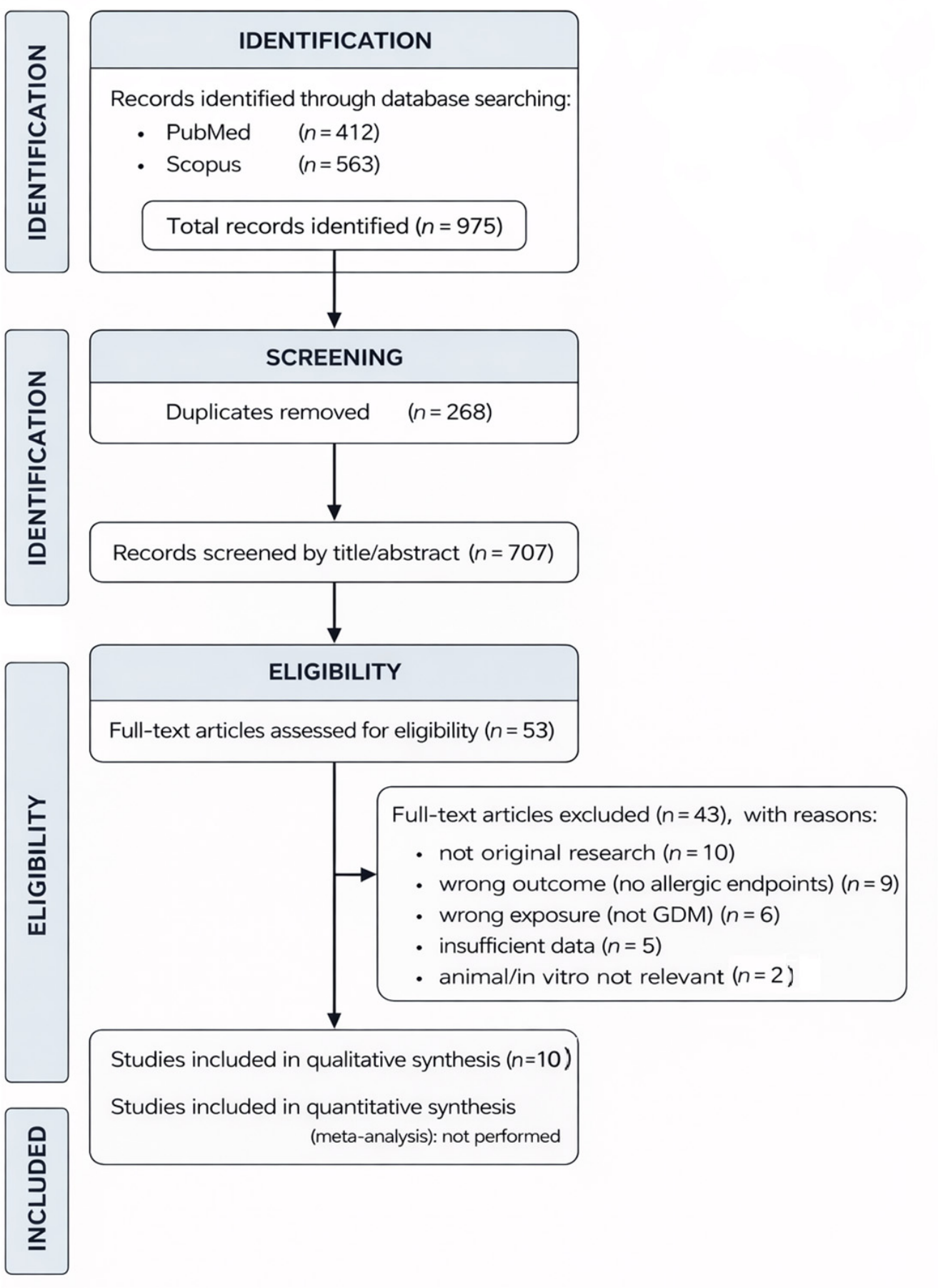
This systematic review was conducted and reported in accordance with the Preferred Reporting Items for Systematic Reviews and Meta-Analyses (PRISMA 2020) guidelines. This systematic review was registered in PROSPERO (registration ID CRD420261380475). The review methodology was designed a priori to ensure transparency, reproducibility, and methodological rigor. All essential PRISMA elements are provided, including the complete electronic search strategy (Supplementary Table S1), search dates, study selection process illustrated in Figure 1, and methodological quality assessment.

2.2. Information Sources and Search Strategy

A comprehensive literature search was performed in PubMed (MEDLINE) and Scopus from database inception to 31 January 2026. The last search was conducted on 31 January 2026. The search covered all records from database inception to 31 January 2026. The detailed search strings, including Boolean operators and applied filters, are provided in Supplementary Table S1 to ensure reproducibility.
The search strategy combined controlled vocabulary terms (MeSH) and free-text keywords related to gestational diabetes mellitus and allergic diseases in offspring. Boolean operators (“AND”, “OR”) and database-specific field tags were used to optimize sensitivity and specificity.
The complete electronic search strategies for each database are provided in Supplementary Table S1.
The search included studies published in English only. Additionally, the reference lists of all eligible studies and relevant reviews were manually screened to identify further potentially relevant publications that might not have been captured in the database search. The review protocol was not prospectively registered in PROSPERO. The full electronic search strategy for each database, including search strings and applied filters, is provided in Supplementary Table S1 in accordance with PRISMA recommendations.

2.3. Eligibility Criteria

Studies were selected according to predefined inclusion and exclusion criteria.
Inclusion criteria:
  • Original peer-reviewed studies (human or animal);
  • Cohort, case–control, cross-sectional, or clinical study designs;
  • Assessment of gestational diabetes mellitus as prenatal exposure;
  • Evaluation of allergic or atopic outcomes in offspring.
Exclusion criteria:
  • Reviews, meta-analyses, editorials, commentaries, letters, and conference abstracts without full text;
  • Non-original publications;
  • Studies not assessing allergic outcomes;
  • Studies not clearly defining gestational diabetes;
  • Studies with insufficient data for interpretation.
Population: pregnant women diagnosed with GDM and their offspring (or relevant animal models). Exposure: gestational diabetes mellitus diagnosed according to criteria applied in individual studies (e.g., IADPSG, WHO, ADA, Carpenter–Coustan, or local standards).
Outcomes: allergic diseases and sensitization outcomes, including atopic dermatitis/eczema, food allergy, allergic rhinitis, urticaria, asthma or wheezing, allergen sensitization, and IgE-related parameters. Comparators: pregnancies without GDM or normoglycemic controls. Only studies reporting original data on the association between gestational diabetes mellitus and allergic or atopic outcomes in offspring were included. Studies focusing exclusively on unrelated outcomes (e.g., metabolic, neurological, or mental health outcomes without allergic endpoints) were excluded.

2.4. Study Selection

All identified records were imported into EndNote reference management software (version 21, Clarivate Analytics, Philadelphia, PA, USA), and duplicates were removed automatically and manually. Titles and abstracts were screened independently by three reviewers. Full texts of potentially eligible studies were then assessed independently for eligibility. Disagreements were resolved by discussion and consensus; when necessary, a senior reviewer made the final decision.
Reasons for exclusion at the full-text stage were documented.
The study selection process is summarized in the PRISMA flow diagram (Figure 1).

2.5. Data Extraction

Data extraction was conducted independently by two reviewers using a standardized extraction form. The following information was collected:
  • Author and year of publication;
  • Country of study;
  • Study design;
  • Sample size;
  • Diagnostic criteria for GDM;
  • Allergic outcomes assessed;
  • Age at outcome assessment;
  • Key confounders adjusted for;
  • Main findings and reported effect estimates.
Discrepancies were resolved through discussion and re-evaluation of the original publication. Data extraction was performed independently by two reviewers, and any discrepancies were resolved through discussion or consultation with a third reviewer to ensure accuracy and reproducibility.

2.6. Quality Assessment

Methodological quality and risk of bias were assessed independently by two reviewers. Observational cohort and case–control studies were evaluated using the Newcastle–Ottawa Scale (NOS). Cross-sectional studies were assessed using the Joanna Briggs Institute (JBI) Critical Appraisal Tools. Any disagreements were resolved by consensus.

2.7. Synthesis of Results

Due to substantial heterogeneity across studies in terms of design, population characteristics, definitions of gestational diabetes, allergic outcome measures, and follow-up periods, a formal meta-analysis was not feasible. Therefore, findings were synthesized narratively, focusing on:
  • Consistency of associations across studies;
  • Strength and direction of reported effects;
  • Potential confounders and modifying factors;
  • Proposed biological mechanisms, including immune programming, inflammatory pathways, and alterations in the gut microbiota.
Due to substantial clinical and methodological heterogeneity, quantitative pooling of results and calculation of a single summary effect estimate were not appropriate. Therefore, findings were synthesized narratively.

3. Results

The database search identified 975 records (PubMed n = 412; Scopus n = 563). After removal of 268 duplicates, 707 records were screened by title and abstract. Fifty-three full-text articles were assessed for eligibility, of which 10 studies met the inclusion criteria (Figure 1).

3.1. Study Characteristics

The study selection process is presented in the PRISMA flow diagram (Figure 1). A total of 10 studies met the inclusion criteria and were included in the qualitative synthesis. The included studies comprised prospective and retrospective cohort studies, case–control studies, cross-sectional analyses, and selected mechanistic or microbiota-focused investigations. Study characteristics, including design, population size, diagnostic criteria for gestational diabetes mellitus, allergic outcomes assessed, follow-up period, and key findings, are summarized in Table 1.
Where reported, diagnostic criteria for GDM and major adjusted confounders are described in the study descriptions within the Section 3.
Considerable heterogeneity was observed across studies in terms of diagnostic criteria for gestational diabetes, definitions of allergic outcomes, follow-up duration, and adjustment for confounders. In particular, studies assessing childhood asthma differed in outcome definitions (parent-reported symptoms vs. physician diagnosis), age at assessment, and maternal metabolic characteristics, which may explain the inconsistent findings. The relatively small number of included studies reflects the strict eligibility criteria focusing specifically on gestational diabetes as prenatal exposure and clinically relevant allergic outcomes in offspring.

3.2. Risk of Bias

The methodological quality of the included studies was assessed using the Newcastle–Ottawa Scale (NOS) and the Joanna Briggs Institute (JBI) tools. Across the included studies, the overall risk of bias ranged from low to moderate. Large prospective cohort studies achieved high scores in selection and outcome domains, whereas smaller or retrospective studies presented moderate risk due to limited sample size and potential residual confounding. Detailed quality scores for each study are presented in Table 2.

3.3. Evidence from Human Studies

The following section summarizes findings derived exclusively from human observational and clinical studies evaluating associations between maternal gestational diabetes mellitus and allergic or metabolic outcomes in offspring.
GDM has been identified as an important prenatal exposure that may be associated with altered maturation of the offspring’s immune system and increase susceptibility to allergic diseases in childhood. Metabolic disorders and chronic inflammation, which are often associated with GDM, have been shown to result in abnormal programming of the fetal immune system, thereby promoting the development of atopic phenotypes.
A nationwide cohort study, based on registry data, was conducted to compare children of mothers with GDM with those of mothers without this diagnosis, in order to analyze the prevalence of selected allergic diseases [5]. The study exclusively included first pregnancies and adjusted for key confounding factors, including maternal allergic history. It is hypothesized that potential biological mechanisms may exist which link GDM to allergies in offspring [6]. These mechanisms include increased activation of proinflammatory pathways, oxidative stress, and epigenetic changes. These changes may be linked to disruption of immune balance and impaired development of immune tolerance. Furthermore, modifications in the maternal and neonatal microbiota during GDM may influence the development of the immune response early in life.
The study results indicate that children of mothers with GDM are more likely to develop allergic rhinitis, atopic dermatitis, and urticaria, but there is no increased risk of asthma. This association is primarily concerned with offspring of mothers with GDM who have not been treated with insulin, while effective metabolic control during pregnancy may serve to mitigate the adverse effects of GDM on the risk of allergic diseases [6,7,15,16,17].
Offspring of mothers with gestational diabetes were found to have a higher body mass index for age and an increased risk of food allergies in comparison to offspring of women without GDM. These results underscore the pivotal role of adequate glycemic control during pregnancy and the necessity for prompt follow-up of infants at risk for this condition, with the potential to mitigate long-term health ramifications. A number of factors have been identified as significant risk factors for developing GDM [9]. These factors include older maternal age, higher pre-pregnancy BMI, gestational hypertension, and multiple pregnancies. The development of food allergies in infants was found to be influenced by a number of factors, including prematurity, birth weight, and parental allergy history. These factors were identified as independent predictors of food allergy development in infants [16].
A cohort study of over 16,000 mothers and their children in the US found that gestational diabetes was associated with a higher risk of developing asthma in children before the age of five. This association was particularly pronounced in women who maintained a normal weight during early pregnancy [7]. Despite the absence of direct monitoring of IgE antibody levels in the study, a correlation was observed between exposure to metabolic factors during pregnancy and an elevated risk of allergies in children. This finding lends further support to the hypothesis that GDM exerts an influence on the development of the offspring’s immune system [6]. It is imperative to ascertain the specific type of diabetes, given that different types vary in terms of etiology and severity, necessitate distinct management strategies, and result in varying complications [8,9,17,18,19]. Consequently, metabolic exposure has the potential to influence the development of a child’s immune system, which may result in an elevated risk of asthma [20,21].
A cohort study of 722 mother–child pairs in the United States found that gestational diabetes was associated with decreased lung function and an increased risk of asthma in children aged 8–9 years. It has been demonstrated that children exposed to gestational diabetes during pregnancy exhibited a reduced FEV1 (the volume of air exhaled in the first second) in comparison with children whose mothers did not have gestational diabetes. FEV1 is a reliable and clinically relevant measure of lung function, which is used clinically as a marker of airway obstruction. FEF25-75 (a parameter of small airways) scores were also found to be lower. In this group, GDM was also associated with a higher risk of current asthma (e.g., a greater likelihood of wheezing or an asthma diagnosis). The results of this study lend support to the hypothesis that metabolic exposure in utero, including hyperglycemia in GDM, may have long-term consequences on the development of the offspring’s immune and respiratory systems [8].
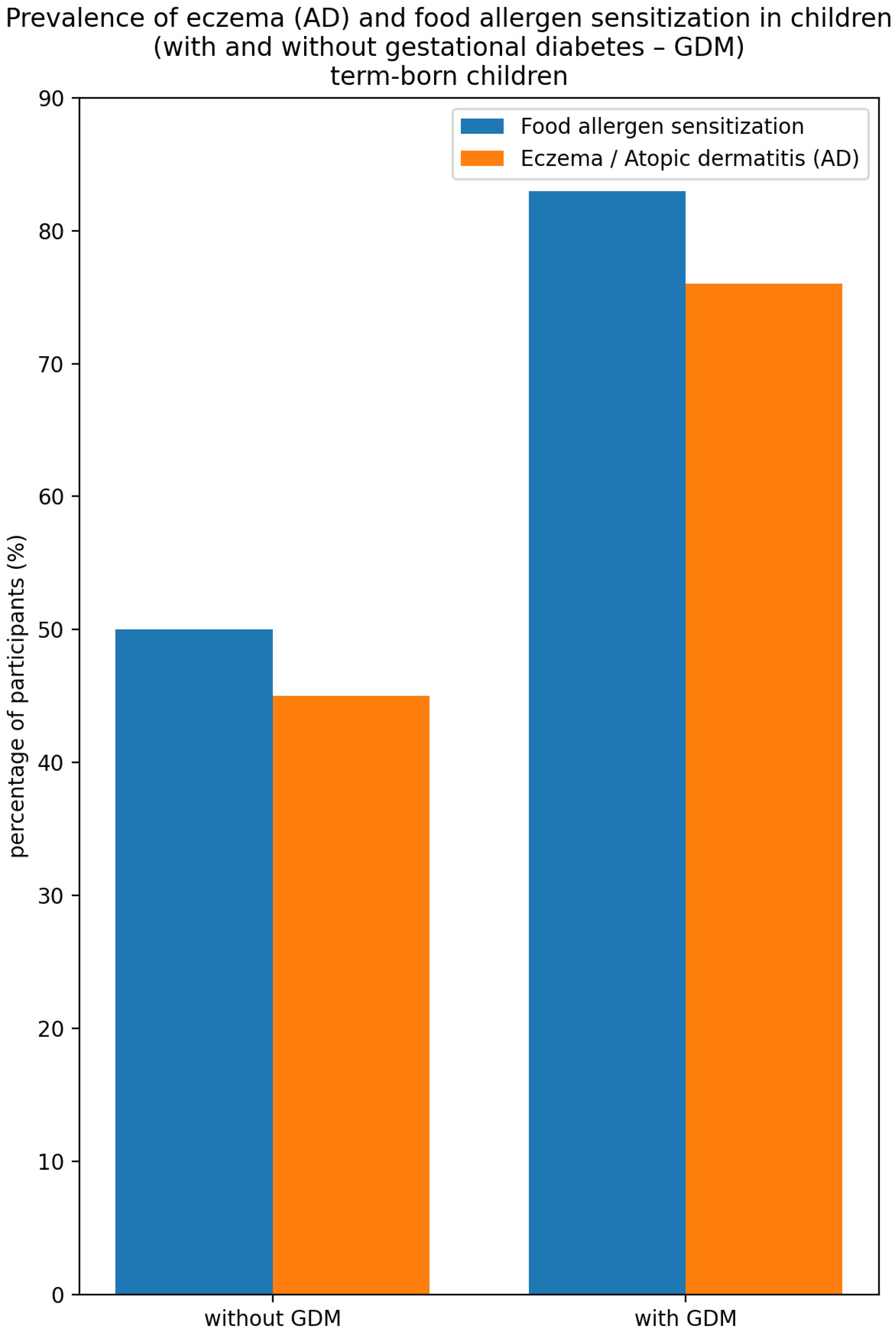
Gestational diabetes has been shown to be an independent risk factor for the development of early allergic diseases in children. A significantly higher incidence of atopic dermatitis in early childhood was observed in children of mothers with gestational diabetes compared to the control group. The children in this study were more likely to demonstrate allergen sensitivity, as evidenced by positive immunological tests (IgE). A study published in the Journal of Allergy and Clinical Immunology explores the association between maternal gestational diabetes and the subsequent development of allergic diseases in children during their early years. The authors’ primary focus was on the analysis of the incidence of atopic dermatitis and allergen sensitization in children born to women with gestational diabetes. Specifically, infants born at term with gestational diabetes exhibited a 7.57-fold and 5.91-fold elevated risk of atopic dermatitis and allergen sensitization, respectively.
However, in premature infants, no associations were found between gestational diabetes mellitus (GDM) and atopic dermatitis or allergen sensitization. The study demonstrated that children born to mothers with gestational diabetes were more prone to developing atopic dermatitis and demonstrating positive immunologically confirmed allergen sensitization when compared to children born to mothers without this condition. This association remained consistent even when other factors that may influence the development of allergies were taken into consideration, including infant birth weight, smoking during pregnancy, and parental allergic diseases. The authors hypothesize that metabolic disorders during pregnancy may affect the development of the fetal immune system, increasing susceptibility to allergic diseases in childhood. The study results emphasize the importance of maternal health during pregnancy as a significant risk factor for the development of allergies in children [18].

3.4. Mechanistic Evidence

This section summarizes mechanistic and microbiota-focused studies separately from clinical outcome studies. Several studies suggest that gestational diabetes mellitus may be associated with alterations in fetal immune programming and early microbial colonization. Proposed mechanisms include increased maternal inflammation, oxidative stress, cytokine imbalance, and impaired development of regulatory T cells, which may predispose offspring to Th2-skewed immune responses and allergic sensitization. In addition, emerging evidence indicates that GDM may be linked to reduced diversity and altered composition of the neonatal gut microbiota, accompanied by metabolic pathway changes. However, these mechanistic findings are based on relatively small and heterogeneous studies and should be interpreted as preliminary, with uncertain long-term clinical relevance. The clinical picture encompasses a wide spectrum of symptoms, ranging from mild manifestations such as allergic rhinitis, urticaria, or atopic dermatitis, to severe systemic reactions including anaphylaxis, which is immediately life-threatening and requires urgent medical intervention [19].
The preponderance of variation in immune system function is predominantly attributable to environmental factors, rather than genetic predisposition [20]. IgE-mediated allergies in children are the result of impaired immune system maturation early in life, with a predominance of Th2 responses and impaired development of immune tolerance. Increasing evidence suggests that a range of prenatal and perinatal factors, including maternal metabolic status, hyperglycemia, inflammation, and alterations to the microbiota, play a pivotal role in the increased risk of early IgE sensitization and the subsequent development of allergic diseases. The early identification of at-risk children and the implementation of interventions aimed at modulating the immune response may serve to limit the progression of allergies and the so-called atopic march in later childhood [21].
The prenatal and perinatal periods have been identified as a particularly significant biological “window of sensitivity,” during which environmental factors have the capacity to exert a substantial influence on the development of the newborn’s immune system. Disturbances in the composition of immune cell populations and cytokine profiles, which are observed at birth, have been hypothesized to contribute to increased susceptibility to respiratory infections, the development of asthma, and allergic diseases in later life. Whilst several studies suggest further research is required on certain relationships and mechanisms that have been observed, it is nonetheless vital to acknowledge the importance of facilitating proper maturation of the immune system during early life. This should be regarded as a fundamental component of a public health strategy that is aimed at the prevention of non-communicable diseases, most notably asthma and allergic conditions [22].
Immunoglobulin E (IgE) plays a pivotal role as an antibody that triggers immediate allergic reactions (IgE-mediated), including allergic rhinitis, atopic asthma and food allergies. The study was conducted as an observational study of a population of newborns and children in Australia [22]. A total of 441 individuals, ranging in age from the neonatal period to 18 years, were included in the analysis and had their serum total immunoglobulin E (IgE) levels measured. IgE concentrations are subject to change with age, resulting in divergent IgE reference ranges observed in newborns and young children. Individuals afflicted with allergies are distinguished by augmented serum IgE levels. In children grappling with allergies, such as atopic dermatitis or allergic rhinitis, the upper limits of IgE were found to be considerably elevated in comparison to children not afflicted with allergies. Consequently, separate reference intervals were established for these groups in the study. Conversely, low IgE concentrations do not exclude the possibility of an allergic disease. The graph illustrates children with diagnosed allergies whose total IgE levels remain low or within the reference range, a phenomenon that is particularly evident in younger age groups. Concurrently, a discernible effect of age on IgE concentration is evident in both the groups that were analyzed. IgE levels gradually increase with age in children who are both allergic and non-allergic. However, the dynamics of this increase vary. In children with allergies, the increase is milder, while in children without allergies, the increase is steeper [23,24].
A retrospective study of 100 mother–child pairs was conducted in Poland to assess the association between pregnant women’s diet and the occurrence of atopic dermatitis in their children. This study analyzed the consumption of eggs, fish, meat, dairy products, and fruits and vegetables. The results of the study indicated that increased maternal egg consumption during pregnancy may be associated with reduced IgE and eosinophil levels in children. However, no significant association was observed between diet and the severity of clinical symptoms. The authors emphasize the necessity for prospective studies in larger groups to validate these observations [10]. It has been demonstrated that mothers with gestational diabetes exhibit a reduction in gut microbiota diversity, a state which is associated with increased insulin resistance and proinflammatory markers. A cohort study utilizing data from 418 mothers (147 women with gestational diabetes and 271 healthy pregnant women) and their newborns demonstrated that gestational diabetes is associated with significant changes in the gut microbiota (meconium) and maternal and neonatal metabolic profiles. No significant differences were identified between the two groups with regard to maternal age, pre-pregnancy BMI, smoking, alcohol consumption, or passive smoking. Conversely, a higher rate of caesarean section (C-section) and increased birth weight were observed in the GDM group compared to the control group.
The neonatal microbiota in infants of mothers with GDM was characterized by lower diversity and different taxonomic composition, as well as different metabolite profiles. These findings suggest that GDM may modify the metabolic environment of early life by affecting the neonatal microbiota and metabolome. The microbial communities present in meconium samples from neonates born to mothers with gestational diabetes mellitus (GDM) exhibited substantial alterations. The predominant bacterial phyla across all samples were Proteobacteria, Firmicutes, Bacteroideta, and Actinobacteria. In comparison with the control group, the GDM group exhibited a significant increase in the relative abundance of Firmicutes and a significant decrease in the relative abundance of Proteobacteria at the phylum level. At the family level, the GDM group demonstrated a higher abundance of Streptococcaceae, whereas other families exhibited lower abundances in the GDM group compared to the control group. A metabolomic analysis of meconium was conducted, revealing alterations in metabolic pathways, including taurine and hypotaurine metabolism, pyrimidine metabolism, beta-alanine metabolism, and bile acid biosynthesis, in individuals diagnosed with GDM [13]. Higher rates of atopic dermatitis (AD) and food allergen sensitization were observed among children born to mothers with GDM compared with children of non-GDM mothers (Figure 2).
GDM is an increasingly recognized metabolic disorder in pregnancy, and is associated with long-term health consequences in offspring. Increasing evidence suggests that the maternal metabolic environment during pregnancy may significantly influence the development of the child’s immune system, including the risk of allergic diseases [25]. The process of early intestinal colonization, along with the metabolic processes that are associated with it, plays a pivotal role in this process. This study comprised 49 full-term newborns, including 29 children of mothers with GDM and 20 children of mothers without carbohydrate metabolism disorders. Meconium samples collected during the first days of life were analyzed. The composition of the gut microbiota was assessed using 16S rRNA gene sequencing [14]. The obtained data were then subjected to comparative analysis between the GDM and control groups. Newborns of mothers with GDM exhibited substantial disparities in the composition of the gut microbiota when compared to the control group, encompassing modulated diversity and a divergent abundance of select bacterial taxa. Furthermore, significant differences in meconium metabolic profiles were identified, suggesting disruption of early metabolic pathways related to microbiota function. These changes have the potential to influence the maturation of the intestinal barrier and modulate the immune response, which may contribute to the increased susceptibility of infants born to mothers with GDM to the development of allergic diseases such as atopic dermatitis, food allergy, or asthma [14]. Maternal gestational diabetes has been linked to early disruptions in the gut microbiota and neonatal metabolism, which may be significant for the programming of the infant’s immune system. The observed changes thus provide a possible biological basis for the increased risk of allergic diseases in offspring of mothers with GDM. The results of this study underscore the significance of initiating metabolic prevention during pregnancy, thereby underscoring the necessity for additional research to be conducted on the role of the microbiome [26].
Although these findings suggest a potential link between GDM and early microbial alterations, the available evidence is derived mainly from relatively small and methodologically heterogeneous studies, and most lack long-term follow-up assessing clinically confirmed allergic outcomes. Therefore, microbiota-related results should be interpreted cautiously and considered primarily as mechanistic or hypothesis-generating. Diagnostic criteria for GDM and adjusted confounders varied across studies and are summarized in the text.

4. Risk-Modifying Factors

The prevalence of obesity among women of reproductive age is increasing on a global scale, which is a matter of serious concern for public health [27]. Obesity has been demonstrated to promote a state of chronic inflammation, hyperinsulinemia, and insulin resistance, in addition to mitochondrial dysfunction. Consequently, women who exhibit an elevated body mass index are particularly susceptible to developing insulin resistance, even prior to pregnancy. During a normal pregnancy, there is a physiological increase in insulin resistance, the purpose of which is to ensure adequate glucose delivery to the developing fetus. However, in some women, compensatory mechanisms prove insufficient, and the combination of increased insulin resistance and limited insulin secretion is associated with impaired glycemic control and the development of gestational diabetes [9]. It is estimated that this problem affects a significant percentage of pregnancies, with the prevalence varying depending on the population and diagnostic criteria. Irrespective of ethnicity, women with a BMI in the higher range are shown to have a significantly higher risk of developing gestational diabetes compared to women of normal weight. This is reflected in the particularly high prevalence of GDM among obese women [28]. The present study has identified obesity in women prior to pregnancy as a contributing factor to the development of lower respiratory tract infections in infants. This association is especially pronounced in urban populations with a lower socioeconomic status [29]. The etiology of this relationship may be attributable to multiple overlapping mechanisms, including disturbances in the maturation of the immune system and lung development in the child, as well as modifications in the colonization of the microbiome in early life [30]. A cross-sectional study of 8877 children participating in the Shanghai Childhood Allergy Study found that excessive gestational weight gain was associated with an increased risk of offspring developing asthma and/or wheezing, allergic rhinitis, eczema, and food and/or drug allergies. This association was particularly pronounced when excessive gestational weight gain occurred in women who were already overweight or obese before pregnancy [31,32]. The presence of insulin in human milk is indicative of the mother’s metabolic status, with higher concentrations observed in women with carbohydrate metabolism disorders, particularly those diagnosed with diabetes. This observation may be of significance for the metabolic and immunological programming of the child. The study demonstrated that insulin concentrations in human milk are more than twice as high in women with type 2 diabetes compared to women with dietary control of gestational diabetes (GDM) and to women with normal glucose tolerance. Furthermore, in women with type 2 diabetes, insulin was observed in milk both in the fasted state and after a meal, and its levels were higher than those in plasma, suggesting possible active transport or concentration of insulin in milk. The presence of insulin in milk has been demonstrated to be associated with the glycemic control of the mother A balanced diet for pregnant women, rich in omega-3 PUFAs, antioxidants, and probiotics, has been demonstrated to promote proper programming of the child’s immune system and may reduce the risk of developing allergic diseases. A prospective cohort study of 172 healthy pregnant women (aged 20–38 years) monitored from the first trimester to one year postpartum demonstrated that the composition of the mother’s diet during pregnancy exerts a significant influence on the programming of the child’s immune system and the risk of allergies in the first year of life. Mothers who consumed higher levels of omega-3 polyunsaturated fatty acids (PUFAs) and probiotics gave birth to children with a more favorable immune profile, as indicated by increased activity of Th1 cytokines (e.g., IFN-γ), higher levels of IL-10, and lower levels of IL-4, IL-5, and IgE, suggesting a reduced tendency to allergic reactions. The ingestion of omega-3 PUFA has been demonstrated to be associated with a reduction in FOXP3 gene methylation in neonatal cells. This suggests that there is an epigenetic promotion of T regulatory cell (Treg) development. In the initial year of life, offspring of mothers with elevated levels of PUFA and probiotics exhibited reduced incidences of allergic sensitization and atopic symptoms. Conversely, excessive restriction of allergens in the maternal diet was associated with an augmented risk of offspring sensitization, presumably by curtailing early immune exposure [11]. The long-term consequences of maternal obesity and gestational diabetes on offspring health, manifesting in both childhood and adulthood, pose a significant public health challenge for the entire lifespan and for subsequent generations. Addressing these issues necessitates a comprehensive, systemic approach encompassing activities that support the achievement and maintenance of a healthy body weight prior to planned pregnancy, as well as the development and implementation of effective, population-based strategies for the prevention of gestational diabetes [31]. The escalating global prevalence of gestational diabetes necessitates heightened scrutiny, given its capacity to engender deleterious long-term ramifications for the health of offspring. These findings indicate the necessity for the implementation of public health initiatives that integrate maternal health care with comprehensive preventive child health strategies. Education aimed at reducing modifiable risk factors, such as excessive maternal body weight or poor glycemic control, has been shown to bring significant benefits to both mothers and their offspring. Table 3 summarizes the major maternal exposures, proposed biological mechanisms, and their potential effects on pregnancy outcomes and child health.

5. Discussion

This review underscores the mounting evidence that GDM may represent a substantial prenatal exposure associated with long-term alterations on the development of the immune system and the heightened susceptibility to allergic diseases in offspring. The findings discussed here lend support to the notion that the intrauterine metabolic environment plays a crucial role in shaping immune pathways early in life, and its influence may persist into childhood. A consistent finding across epidemiological and cohort studies is an increased prevalence of allergic diseases—particularly atopic dermatitis, food allergies, allergic rhinitis, and urticaria—among children of mothers with GDM. It is important to note that several large registry-based studies, which rigorously controlled for key confounders, such as maternal allergic history and prepregnancy body mass index (BMI), have demonstrated that these associations remain significant, particularly in first-time pregnancies. These findings support a possible association between gestational diabetes and allergic diseases in offspring; however, the observational nature of most included studies and the presence of important modifying factors mean that causal relationships cannot be established. Importantly, several studies indicate that this association may be modified by maternal body mass index, quality of glycemic control during pregnancy, and the duration and timing of follow-up in the child.
The absence of a consistent correlation between gestational diabetes and childhood asthma across studies necessitates meticulous examination. While some cohorts did not report an increased risk of asthma, others—particularly those with longer follow-up or stratified by maternal BMI—identified a significantly increased risk of wheezing and asthma-related disorders in early childhood. This heterogeneity may be indicative of differences in asthma phenotypes, the timing of outcome assessment, glycemic control during pregnancy, or postnatal environmental exposure. Furthermore, the study hypothesizes that asthma may represent a subsequent or more intricate manifestation of immune dysregulation in comparison with early atopic diseases, such as eczema or food allergy.
The inconsistent findings regarding childhood asthma across studies may be explained by several methodological and biological factors. First, studies differed in outcome definitions, with some relying on parental reports of wheeze or respiratory symptoms, while others used physician-diagnosed asthma or registry-based diagnoses. These measures capture different clinical entities and may vary in specificity, particularly in early childhood. Second, the age at follow-up varied substantially, and asthma diagnosis in preschool-aged children is less reliable than in school-aged populations, as transient wheezing phenotypes may resolve over time. Third, maternal body mass index and obesity may act as important effect modifiers, as both conditions are independently associated with offspring asthma risk and frequently coexist with gestational diabetes, making it difficult to disentangle their individual contributions. Finally, perinatal factors such as prematurity and cesarean delivery—both more common in pregnancies complicated by GDM—may function as mediators or confounders, influencing early lung development, microbiota composition, and immune maturation. Together, these differences in outcome definitions, follow-up timing, maternal metabolic characteristics, and perinatal factors likely contribute to the heterogeneity observed in the association between GDM and asthma in offspring.
The observed associations between gestational diabetes and allergies in offspring can plausibly be explained by several biological mechanisms. Maternal hyperglycemia is characterized by chronic low-grade inflammation, oxidative stress, and altered cytokine profiles, which have the potential to disrupt fetal immune programming. Several studies suggest impaired regulatory T cell development, a shift towards a Th2-dominant immune response, and impaired tolerance induction are mechanisms associated with the pathogenesis of allergic diseases. These alterations have the potential to persist post-partum, thereby increasing the likelihood of IgE-mediated sensitization during infancy and early childhood. The changing role of the gut microbiota provides an additional mechanistic link between maternal metabolic status and offspring immunological outcomes. A study of neonatal meconium, as analyzed using 16S rRNA gene sequencing, has indicated that infants born to mothers with gestational diabetes exhibit reduced microbial diversity and marked taxonomic shifts when compared to infants born to mothers without gestational diabetes. These changes are accompanied by alterations in metabolic pathways related to bile acid synthesis, amino acid metabolism, and short-chain fatty acid production, which are known to influence intestinal barrier integrity and immune maturation. It can thus be concluded that impaired early microbial colonization may be a key pathway through which GDM contributes to adverse immune programming and increased risk of allergies. While alterations in the neonatal gut microbiota provide a biologically plausible mechanism linking GDM with immune programming, the current evidence remains limited. Most microbiota studies included relatively small cohorts, differed in sequencing methods and analytical approaches, and frequently focused on early microbial composition or metabolomic profiles rather than long-term clinically confirmed allergic diseases. Consequently, microbiota findings should be interpreted as supportive mechanistic evidence rather than definitive proof of causal pathways, and larger longitudinal studies integrating microbiome data with clinical allergy outcomes are needed.
It is important to note that a number of studies have indicated that effective metabolic control during pregnancy may mitigate these adverse effects. Offspring of mothers with diet-controlled or insulin-treated gestational diabetes mellitus (GDM) appear to have a lower risk of developing allergic diseases compared to offspring of mothers with untreated or poorly controlled hyperglycemia. This observation underscores the clinical significance of timely diagnosis, continuous monitoring, and optimal treatment of GDM, with the aim of not only averting conventional metabolic complications but also mitigating long-term immunological consequences in offspring.
The analysis of the results also highlights the role of modifying factors such as maternal obesity, gestational weight gain, dietary composition, and metabolic signals associated with breastfeeding, such as insulin levels in human milk. It has been demonstrated that diets during pregnancy that are rich in omega-3 polyunsaturated fatty acids and probiotics are associated with a more favorable immune profile in infants, including increased activity of regulatory cytokines and reduced IgE levels. The findings of this study lend support to the hypothesis that interventions during the prenatal and early postnatal periods may offer opportunities for the prevention of allergies.

6. Conclusions

Gestational diabetes represents a prenatal exposure that may be associated with altered immune development and an increased risk of allergic diseases in offspring. However, the available evidence is heterogeneous and largely observational, and causal relationships cannot be inferred. The magnitude of risk appears to be influenced by modifying factors such as maternal body mass index, glycemic control during pregnancy, and duration of follow-up in the offspring. Further well-designed longitudinal and mechanistic studies are needed to clarify these associations and identify effective preventive strategies.

Supplementary Materials

The following supporting information can be downloaded at: https://www.mdpi.com/article/10.3390/allergies6020018/s1, Table S1: Detailed search strategy for PubMed and Scopus databases.

Author Contributions

Conceptualization, K.G. and W.D.; methodology, K.G.; software, K.G.; validation, K.G., K.K. and W.D.; formal analysis, K.G.; investigation, K.G.; resources, K.G.; data curation, K.G.; writing—original draft preparation, K.G.; writing—review and editing, K.G., K.K. and W.D.; visualization, K.G.; supervision, W.D.; project administration, K.G.; funding acquisition, K.G. All authors have read and agreed to the published version of the manuscript.

Funding

This research received no external funding.

Institutional Review Board Statement

Not applicable.

Informed Consent Statement

Not applicable.

Data Availability Statement

Not applicable.

Conflicts of Interest

The authors declare no conflicts of interest.

References

  1. Wang, H.; Li, N.; Chivese, T.; Werfalli, M.; Sun, H.; Yuen, L.; Hoegfeldt, C.A.; Elise Powe, C.; Immanuel, J.; Karuranga, S.; et al. IDF Diabetes Atlas: Estimation of Global and Regional Gestational Diabetes Mellitus Prevalence for 2021 by International Association of Diabetes in Pregnancy Study Group’s Criteria. Diabetes Res. Clin. Pract. 2022, 183, 109050. [Google Scholar] [CrossRef] [Scilit]
  2. Sweeting, A.; Hannah, W.; Backman, H.; Catalano, P.; Feghali, M.; Herman, W.H.; Hivert, M.-F.; Immanuel, J.; Meek, C.; Oppermann, M.L.; et al. Epidemiology and Management of Gestational Diabetes. Lancet 2024, 404, 175–192. [Google Scholar] [CrossRef] [Scilit]
  3. Matsuzaki, H.; Matsuzaki, S.; Ueda, Y.; Fukuda, K.; Matsuzaki, S.; Hiramatsu, K.; Hisa, T.; Okada, A.; Mimura, K.; Kage, H.; et al. Obesity and Asthma during Pregnancy: A Systematic Review and Meta-Analysis. Eur. Respir. Rev. 2025, 34, 240259. [Google Scholar] [CrossRef] [Scilit]
  4. Su, M.; Wang, Y.; Yuan, Q.; Tang, D.; Lu, Y.; Wu, X.; Xiong, W.; Li, Y.; Liu, T.; Zeng, S.; et al. The Impact of Gestational Diabetes Mellitus on Maternal-Fetal Pregnancy Outcomes and Fetal Growth: A Multicenter Longitudinal Cohort Study. Front. Pediatr. 2025, 13, 1592550. [Google Scholar] [CrossRef] [Scilit]
  5. Kumar, R.; Ouyang, F.; Story, R.E.; Pongracic, J.A.; Hong, X.; Wang, G.; Pearson, C.; Ortiz, K.; Bauchner, H.; Wang, X. Gestational Diabetes, Atopic Dermatitis and Allergen Sensitization in Early Childhood. J. Allergy Clin. Immunol. 2009, 124, 1031–1038.e4. [Google Scholar] [CrossRef] [Scilit]
  6. Hsu, M.-C.; Lin, C.-H.; Lin, M.-C. Maternal Gestational Diabetes Mellitus and Risk of Allergic Diseases in Offspring. Pediatr. Neonatol. 2024, 65, 365–369. [Google Scholar] [CrossRef] [Scilit] [PubMed]
  7. Chen, Y.-J.; Lin, L.-Z.; Liu, Z.-Y.; Wang, X.; Karatela, S.; Wang, Y.-X.; Peng, S.-S.; Jiang, B.-B.; Li, X.-X.; Liu, N.; et al. Association between Maternal Gestational Diabetes and Allergic Diseases in Offspring: A Birth Cohort Study. World J. Pediatr. 2023, 19, 972–982. [Google Scholar] [CrossRef] [Scilit]
  8. Adgent, M.A.; Gebretsadik, T.; Moore, P.E.; Hartman, T.J.; Nickelberry, M.; Zhang, X.; Zhao, Q.; Bush, N.R.; LeWinn, K.Z.; Wright, R.J.; et al. Gestational Diabetes and Childhood Lung Function at Age 8–9 Years in a Diverse US Cohort. Ann. Allergy Asthma Immunol. 2025, 136, 282–287.e2. [Google Scholar] [CrossRef] [Scilit] [PubMed]
  9. Dumas, O.; Arroyo, A.C.; Faridi, M.K.; James, K.; Hsu, S.; Powe, C.; Camargo, C.A. Cohort Study of Maternal Gestational Weight Gain, Gestational Diabetes, and Childhood Asthma. Nutrients 2022, 14, 5188. [Google Scholar] [CrossRef] [Scilit]
  10. Milewska-Wróbel, D.; Lis-Święty, A. Does Maternal Diet during Pregnancy Influence Clinical and Laboratory Characteristics of Infantile-Onset Atopic Dermatitis? Eur. Ann. Allergy Clin. Immunol. 2020, 52, 277–279. [Google Scholar] [CrossRef] [Scilit] [PubMed]
  11. Lisiecka, M.Z. Impact of Maternal Diet During Pregnancy on Allergic Predisposition in Offspring: Immune Programming Mechanisms. J. Mother Child 2025, 29, 175–186. [Google Scholar] [CrossRef]
  12. Rodel, R.L.; Farabi, S.S.; Hirsch, N.M.; Rolloff, K.P.; McNair, B.; Hernandez, T.L.; Krebs, N.F.; Barbour, L.A.; Young, B.E. Human milk imparts higher insulin concentration in infants born to women with type 2 diabetes mellitus. J. Matern. Fetal Neonatal Med. 2022, 35, 7676–7684. [Google Scholar]
  13. Chen, T.; Qin, Y.; Chen, M.; Zhang, Y.; Wang, X.; Dong, T.; Chen, G.; Sun, X.; Lu, T.; White, R.A.; et al. Gestational Diabetes Mellitus Is Associated with the Neonatal Gut Microbiota and Metabolome. BMC Med. 2021, 19, 120. [Google Scholar] [CrossRef] [Scilit]
  14. Zhang, L.; Tan, X.; Guo, Z.; Liang, L.; Yi, B.; Liu, X.; Li, F.; Wang, Y.; Wang, Y. Effects of Gestational Diabetes Mellitus on the Intestinal Microbiota of the Offspring. Sci. Rep. 2025, 15, 39934. [Google Scholar] [CrossRef] [Scilit]
  15. Su, X.; Zhang, Y.; Li, J.; Wang, H.; Chen, Q.; Liu, L.; Zhao, Y.; Sun, M.; Huang, X.; Zhou, Z. Gestational diabetes mellitus and risk of allergic diseases in offspring: A population-based cohort study. Allergy 2023, 78, 2305–2315. [Google Scholar] [CrossRef] [Scilit]
  16. Gu, Z.; Ma, J.; Zhang, W. Comment on: Diabetic retinopathy and cognitive dysfunction—A systematic review and meta-analysis. Acta Diabetol. 2022, 59, 1121. [Google Scholar] [CrossRef] [Scilit] [PubMed]
  17. Huang, X.; Huang, Z.; Zhang, J.; Jiang, Y. Maternal Gestational Diabetes Mellitus and the Childhood Asthma in Offspring: A Meta-Analysis. Ital. J. Pediatr. 2023, 49, 139. [Google Scholar] [CrossRef] [Scilit]
  18. Huang, L.; Wang, Y.; Zhang, L.; Zheng, Z.; Zhu, T.; Qu, Y.; Mu, D. Maternal gestational diabetes mellitus and the risk of asthma in offspring: A meta-analysis. PLoS ONE 2019, 14, e0224213. [Google Scholar] [CrossRef] [Scilit]
  19. Abbas, M.; Goldin, J. Type I Hypersensitivity Reaction. In StatPearls; StatPearls Publishing: Treasure Island, FL, USA, 2025. [Google Scholar]
  20. Brodin, P.; Jojic, V.; Gao, T.; Bhattacharya, S.; Angel, C.J.L.; Furman, D.; Shen-Orr, S.; Dekker, C.L.; Swan, G.E.; Butte, A.J.; et al. Variation in the Human Immune System Is Largely Driven by Non-Heritable Influences. Cell 2015, 160, 37–47. [Google Scholar] [CrossRef] [Scilit] [PubMed]
  21. García-Serna, A.M.; Martín-Orozco, E.; Hernández-Caselles, T.; Morales, E. Prenatal and Perinatal Environmental Influences Shaping the Neonatal Immune System: A Focus on Asthma and Allergy Origins. Int. J. Environ. Res. Public Health 2021, 18, 3962. [Google Scholar] [CrossRef] [Scilit]
  22. Arrieta, M.-C.; Stiemsma, L.T.; Dimitriu, P.A.; Thorson, L.; Russell, S.; Yurist-Doutsch, S.; Kuzeljevic, B.; Gold, M.J.; Britton, H.M.; Lefebvre, D.L.; et al. Early infancy microbial and metabolic alterations affect risk of childhood asthma. Sci. Transl. Med. 2015, 7, 307ra152. [Google Scholar] [CrossRef] [Scilit]
  23. Sears, M.R.; Burrows, B.; Flannery, E.M.; Herbison, G.P.; Holdaway, M.D.; Platts-Mills, T.A.E. Relation between airway responsiveness and serum IgE in children with asthma and in apparently normal children. N. Engl. J. Med. 1991, 325, 1067–1071. [Google Scholar] [CrossRef] [Scilit]
  24. Cai, T.; Choo, S.; Harrison, A.; Coverdale, K.; Hearps, S.; Karlaftis, V.; Monagle, P.; Ignjatovic, V.; Hsiao, K.-C. Continuous Reference Intervals for Total Serum Immunoglobulin E in Neonates and Children. Pathology 2025, 57, 621–624. [Google Scholar] [CrossRef] [Scilit] [PubMed]
  25. Sokou, R.; Moschari, E.; Palioura, A.E.; Palioura, A.-P.; Mpakosi, A.; Adamakidou, T.; Vlachou, E.; Theodoraki, M.; Iacovidou, N.; Tsartsalis, A.N. The Impact of Gestational Diabetes Mellitus (GDM) on the Development and Composition of the Neonatal Gut Microbiota: A Systematic Review. Microorganisms 2024, 12, 1564. [Google Scholar] [CrossRef] [Scilit]
  26. Su, W.-H.; Wang, Y.-W.; Chen, C.-C.; Lai, M.-W.; Chao, H.-C.; Chiang, M.-C.; Fu, R.-H.; Yeh, P.-J. Gut Microbiota and Metabolomic Alterations in Newborns of Mothers with Gestational Diabetes Mellitus. Clin. Exp. Pediatr. 2025, 69, 26–35. [Google Scholar] [CrossRef] [Scilit]
  27. Bärenson, A.; Tagoma, A.; Varendi, H.; HEDIMED Investigator Group; Uibo, R. Atopy and Asthma in Children Born to Mothers at Risk of Gestational Diabetes Mellitus: A Follow-up Study. BMC Pregnancy Childbirth 2024, 24, 610. [Google Scholar] [CrossRef] [Scilit] [PubMed]
  28. Li, G.; Wei, T.; Ni, W.; Zhang, A.; Zhang, J.; Xing, Y.; Xing, Q. Incidence and Risk Factors of Gestational Diabetes Mellitus: A Prospective Cohort Study in Qingdao, China. Front. Endocrinol. 2020, 11, 636. [Google Scholar] [CrossRef] [Scilit] [PubMed]
  29. Gutierrez, M.J.; Nino, G.; Hong, X.; Wang, X. Maternal Pre-Pregnancy Weight and Early Life Lower Respiratory Tract Infections in a Low-Income Urban Minority Birth Cohort. Sci. Rep. 2021, 11, 9790. [Google Scholar] [CrossRef] [Scilit]
  30. Vatanen, T.; Sakwinska, O.; Wilson, B.; Combremont, S.; Cutfield, W.S.; Chan, S.Y.; Godfrey, K.M.; O’Sullivan, J.M. Transcription Shifts in Gut Bacteria Shared between Mothers and Their Infants. Sci. Rep. 2022, 12, 1276. [Google Scholar] [CrossRef] [Scilit]
  31. Dalrymple, K.V.; El-Heis, S.; Godfrey, K.M. Maternal weight and gestational diabetes impacts on child health. Curr. Opin. Clin. Nutr. Metab. Care 2022, 25, 203. [Google Scholar] [CrossRef] [Scilit]
  32. Chen, Y.; Zhu, J.; Lyu, J.; Xia, Y.; Ying, Y.; Hu, Y.; Qu, J.; Tong, S.; Li, S. Association of Maternal Prepregnancy Weight and Gestational Weight Gain With Children’s Allergic Diseases. JAMA Netw. Open 2020, 3, e2015643. [Google Scholar] [CrossRef] [Scilit] [PubMed]
Figure 1. PRISMA 2020 flow diagram of the literature search and study selection process.
Allergies 06 00018 g001
Figure 2. Prevalence of atopic dermatitis (AD) and food allergen sensitization in full-term children according to maternal gestational diabetes mellitus (GDM) status.
Allergies 06 00018 g002
Table 1. Characteristics of included studies evaluating the association between gestational diabetes and allergic outcomes in offspring.
Author (Year)CountryStudy DesignSample SizeAllergic Outcome AssessedAge at Outcome AssessmentMain Findings
Kumar (2009) [5]USAProspective cohort680 mother–child pairsAtopic dermatitis, allergen sensitizationEarly childhoodIncreased risk of AD and sensitization in offspring exposed to GDM
Hsu (2024) [6]TaiwanPopulation-based cohortNational registryAD, allergic rhinitis, urticaria, asthmaChildhoodHigher incidence of AD, rhinitis, and urticaria; asthma inconsistent
Chen (2023) [7]ChinaBirth cohort>10,000Multiple allergic diseasesPreschool ageAcross several studies increased allergy risk associated with GDM
Adgent (2025) [8]USAProspective cohort722Asthma, lung function8–9 yearsReduced lung function and higher asthma prevalence
Dumas (2022) [9]CanadaProspective cohort3000+Childhood asthmaSchool ageGDM independently associated with asthma risk
Milewska-Wróbel (2020) [10]PolandRetrospective cohort100IgE levels, atopic dermatitisInfancyMaternal metabolic status influenced IgE and AD risk
Lisiecka (2025) [11]PolandProspective cohort120Immune/allergic markersInfancyMaternal diet and GDM associated with immune dysregulation
Rödel (2022) [12]GermanyProspective cohort200Breast milk insulin/metabolic programmingNeonatalAltered insulin exposure potentially affecting immune/metabolic programming
Chen (2021) [13]ChinaCohort418Gut microbiota compositionNeonatalReduced microbial diversity in GDM offspring
Zhang (2025) [14]ChinaCohort49 neonatesMicrobiota/metabolome alterationsNeonatalEarly-life metabolic and microbial dysbiosis observed
Table 2. Risk of bias assessment of included studies using the Newcastle–Ottawa Scale (NOS) and Joanna Briggs Institute (JBI) tools.
Study (Author, Year)Study DesignToolSelectionComparabilityOutcome/ExposureTotal ScoreQuality Rating
Kumar 2009 [5]CohortNOS4239/9Low risk
Hsu 2024 [6]CohortNOS4239/9Low risk
Chen 2023 [7]CohortNOS4239/9Low risk
Adgent 2025 [8]CohortNOS4239/9Low risk
Dumas 2022 [9]CohortNOS3238/9Low risk
Milewska-Wróbel 2020 [10]RetrospectiveNOS3137/9Moderate risk
Lisiecka 2025 [11]ProspectiveNOS3238/9Low risk
Rödel 2022 [12]CohortNOS3137/9Moderate risk
Chen 2021 [13]Cohort (microbiota)NOS3137/9Moderate risk
Zhang 2025 [14]Cohort (small sample)NOS2125/9Moderate risk
Table 3. Maternal metabolic and lifestyle factors associated with gestational diabetes mellitus and their proposed biological mechanisms and effects on offspring health.
Maternal Factor/ExposureBiological MechanismsEffects on Pregnancy and BabySource
Obesity in women of childbearing potentialChronic inflammation, hyperinsulinemia, insulin resistance, mitochondrial dysfunctionIncreased risk of pre-pregnancy insulin resistance[8]
Physiological pregnancyIncrease insulin resistance to ensure glucose supply to the fetusRisk of metabolic decompensation in predisposed women[8]
High BMI before pregnancyIncreased insulin resistance and relative insulin deficiencyDevelopment of GDM[8,28]
Maternal obesityDisorders of immune system maturation and lung development, changes in the microbiomeIncreased incidence of lower respiratory tract infections in infants[29,31]
Excessive weight gain during pregnancyUnfavorable fetal immune programmingAsthma, wheezing, AD, food and drug allergies[32]
A diet rich in omega-3 PUFA and probioticsModulation of Th1/Treg response, epigenetic changes (FOXP3)Reduced risk of allergies and atopic diseases in children[11]
Excessive restriction of allergens in the mother’s diet Limited early immune exposureIncreased risk of sensitization in offspring[11]
Obesity and GDMLong-term disorders of metabolic and immune programmingHealth consequences in childhood and adulthood[28,31]
Disclaimer/Publisher’s Note: The statements, opinions and data contained in all publications are solely those of the individual author(s) and contributor(s) and not of MDPI and/or the editor(s). MDPI and/or the editor(s) disclaim responsibility for any injury to people or property resulting from any ideas, methods, instructions or products referred to in the content.