
Review

Urticaria and Urticaria-like Dermatoses in Pregnancy: Clinical Spectrum, Differential Diagnosis and Management


by
Federica Trovato
1,*,
Antonio Di Guardo
2,
Maria Elisabetta Greco
1,
Giovanni Grossi
3,
Annunziata Dattola
1,
Steven Paul Nisticò
1,† and
Giovanni Pellacani
1,†
1
Dermatology Clinic, Department of Medical and Cardiovascular Sciences, Sapienza University of Rome, 00185 Rome, Italy
2
IRCCS Istituto Dermopatico dell’Immacolata (IDI-IRCCS), Dermatological Research Hospital, 00167 Rome, Italy
3
Department of Obstetrics and Gynecology, Sandro Pertini Hospital, 00157 Rome, Italy
*
Author to whom correspondence should be addressed.
These authors contributed equally to this work.
Allergies 2026, 6(1), 7; https://doi.org/10.3390/allergies6010007
Submission received: 16 November 2025 / Revised: 9 January 2026 / Accepted: 9 February 2026 / Published: 25 February 2026
(This article belongs to the Section Dermatology)

Abstract

Urticaria is a mast cell-mediated disorder commonly encountered in women of reproductive age, making its interaction with pregnancy clinically relevant. Gestation induces profound hormonal and immunologic adaptations—including shifts between Th1/Th17 and Th2/Treg responses and sustained exposure to sex steroids and placental hormones—that can modulate mast cell reactivity. As a result, chronic urticaria (CU) shows heterogeneous behavior during pregnancy: approximately half of patients improve, one third worsen, and the remainder remain stable. Pregnancy also presents several urticaria-like dermatoses, notably polymorphic eruption of pregnancy (PEP/PUPPP), atopic eruption of pregnancy (AEP) and pemphigoid gestationis (PG), as well as rare hormone-induced hypersensitivity reactions. Additionally, systemic disorders such as intrahepatic cholestasis of pregnancy (ICP), chronic kidney disease–associated pruritus and urticarial vasculitis may mimic urticaria but differ markedly in prognosis, maternal–fetal risk and management. Given this complexity, accurate diagnosis requires integration of temporal pattern, lesion morphology and duration, distribution, systemic features and targeted investigations, as outlined in the diagnostic algorithm proposed. Most pregnancy-specific eruptions are benign, whereas PG, ICP and urticarial vasculitis warrant prompt recognition due to potential fetal implications. Management of CU in pregnancy generally follows standard guidelines, with second-generation H1-antihistamines as first-line therapy and omalizumab reserved for severe refractory cases.

1. Introduction

Urticaria is a common mast cell-mediated skin disorder characterized by the abrupt appearance of transient, pruritic wheals and/or angioedema. Wheals are well-demarcated, erythematous and edematous plaques involving the superficial dermis that typically resolve within 24 h without residual skin changes [1,2]. When symptoms recur on most days for six weeks or more, the condition is defined as chronic urticaria (CU), whereas episodes of shorter duration are classified as acute urticaria [1,3,4,5]. Acute urticaria is frequent in the general population and is commonly triggered by infections, allergens, or medications capable of inducing direct histamine release. In contrast, CU affects a smaller but clinically relevant proportion of individuals and shows a marked female predominance [6].
CU comprises two main subtypes: chronic spontaneous urticaria (CSU), in which wheals occur in the absence of identifiable external triggers, and chronic inducible urticaria (CIndU), in which specific physical or environmental stimuli reproducibly elicit symptoms. Both entities share mast cell activation and mediator release—primarily histamine—as the final common effector pathway, although upstream mechanisms may differ and include IgE-mediated autoimmunity (“autoallergy”, i.e., IgE autoantibodies directed against self-antigens), autoimmune (type IIb) mechanisms driven by IgG autoantibodies (e.g., against FcεRIα/IgE), and idiopathic processes [6,7,8]. Standard definitions of urticaria, angioedema, and urticarial vasculitis, together with their key clinical features, are summarized in Table 1.
Angioedema frequently accompanies urticaria and presents as sudden swelling of the deeper dermis or submucosal tissues. Histaminergic angioedema typically responds to antihistamines, whereas bradykinin-mediated forms—such as those related to C1-inhibitor deficiency or angiotensin-converting enzyme inhibitors—follow a distinct clinical course and require different management strategies [1,4,9,10,11].
Although dedicated epidemiological studies are limited, the incidence of urticaria and angioedema during pregnancy is expected to be comparable to, or higher than, that observed in the general population, as these conditions predominantly affect women of reproductive age. CU has an estimated point prevalence of approximately 0.5–1% in the general population and shows a peak incidence between 20 and 40 years of age, overlapping with the reproductive period, with CSU accounting for approximately two-thirds of cases, while CIndU and mixed forms account for 20% of patients [12,13,14].
Clinical observations and emerging studies indicate that hormonal and immunological fluctuations during pregnancy may significantly influence urticaria activity. Chronic urticaria is more prevalent in women than in men. Observational studies suggest a higher disease burden and greater impairment in quality of life among female patients [15]. The absence of a female predominance in childhood-onset CU suggests that sex hormones play a relevant modulatory role [16,17,18,19]. Understanding how pregnancy affects CU is clinically important, as disease activity may change substantially during gestation. Available data indicate heterogeneous trajectories, with a substantial proportion of pregnant patients experiencing improvement, while others report disease worsening, particularly when disease control before conception is suboptimal [10,11,12,13]. In parallel, pregnancy is associated with several urticaria-like dermatoses—including polymorphic eruption of pregnancy (PEP/PUPPP), atopic eruption of pregnancy (AEP), and pemphigoid gestationis (PG)—that may closely mimic urticaria but differ markedly in pathogenesis, prognosis, and management. Accurate differentiation between these entities is essential to guide appropriate care and to ensure maternal–fetal safety [11,16,17,20,21,22]. An overview of the main urticaria-like dermatoses occurring in pregnancy is provided in Table 2.
Despite its clinical relevance, the literature on urticaria and urticaria-like eruptions in pregnancy remains fragmented, with most studies focusing on individual gestational dermatoses or small case series [23,24]. Data integrating pathophysiology, clinical spectrum, differential diagnosis, and therapeutic decision-making in pregnant patients with urticaria are scarce. This narrative review aims to provide an updated and clinically oriented overview of urticaria and urticaria-like dermatoses during pregnancy, with a specific focus on differential diagnosis, immuno-hormonal mechanisms, and management considerations relevant to this unique and heterogeneous patient population.

2. Physiopathology of Urticaria in Pregnancy

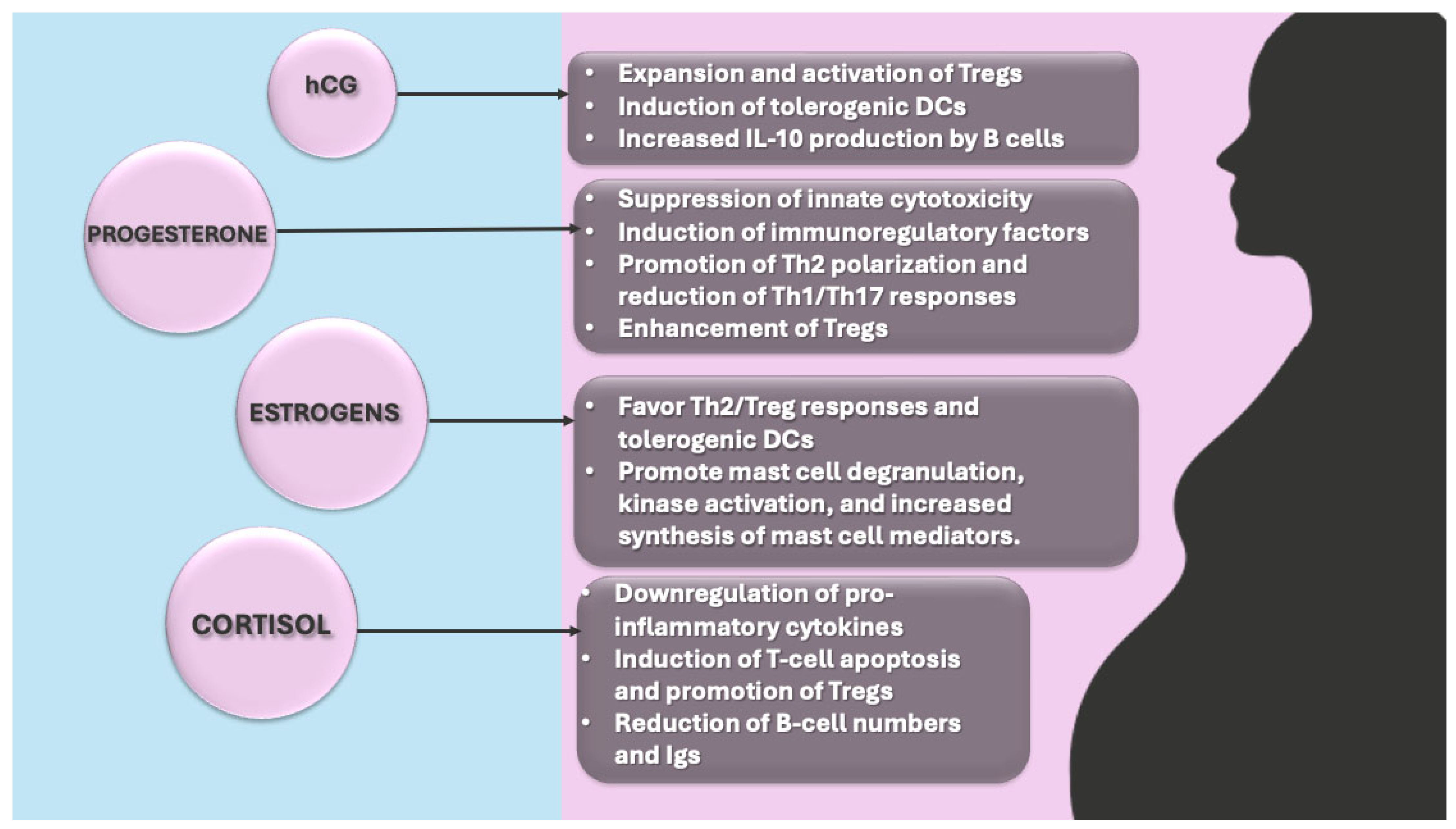
Pregnancy is associated with profound hormonal and immunological adaptations that allow tolerance of the semi-allogeneic fetus while preserving host defence [16,25,26,27]. These changes reshape both innate and adaptive immunity and have direct implications for mast cell–driven diseases such as CU. (Figure 1) The net effect on CU activity depends on the balance between pro- and anti-inflammatory signals, the prevailing Th1/Th17 vs. Th2/Treg profile, and the underlying urticaria endotype (autoimmune type I, autoimmune type IIb, or idiopathic) [28,29,30].

2.1. Hormonal Modulation and Mast Cell-Driven Inflammation

The placenta functions as a major endocrine organ that produces a wide range of hormones, including human chorionic gonadotropin (hCG), progesterone, estrogens, cortisol, prolactin, leptin, vitamin D and alpha-fetoprotein. These mediators not only sustain pregnancy but also shape the immune milieu at the feto–maternal interface and systemically [31,32,33,34,35,36,37]. HCG is the earliest pregnancy-specific hormone, peaking in the late first trimester and remaining elevated thereafter. Its main endocrine function is to support progesterone synthesis by the corpus luteum, but hCG also contributes to immune tolerance. It promotes the expansion and functional activity of regulatory T cells, induces tolerogenic dendritic cells, and enhances IL-10 production by B cells [38,39,40,41,42]. Through these mechanisms, hCG helps to establish a regulatory environment that can dampen autoimmune and inflammatory responses, potentially influencing autoimmune subsets of CU. Progesterone is produced initially by the corpus luteum and later by the placenta, showing a characteristic biphasic increase during pregnancy [34,35,36]. Beyond its role in maintaining endometrial integrity and myometrial quiescence, progesterone exerts profound immunomodulatory effects via intracellular progesterone receptors expressed on epithelial cells, eosinophils, macrophages, lymphocytes, mast cells and dendritic cells. Progesterone induces immunoregulatory factors such as progesterone-induced blocking factor and glycodelin A, suppresses innate cytotoxicity (particularly NK-cell-mediated), promotes tolerogenic dendritic cells, favors Th2 polarization by inducing apoptosis of Th1 cells, and enhances regulatory T-cell differentiation via FoxP3 upregulation. These actions can attenuate Th1/Th17-driven autoimmune responses in CU but, in rare cases of progesterone hypersensitivity, excess progesterone may trigger CSU-like eruptions or premenstrual flares [35,43,44,45]. Estrogens (estrone, estradiol, estriol) rise steadily during pregnancy, with estriol becoming the predominant estrogen produced by the fetoplacental unit. Estrogens act via receptors on B and T lymphocytes, macrophages and dendritic cells, and modulate both innate and adaptive immunity [31,32,33,46,47]. At low concentrations, estrogens tend to support Th1/Th17 pathways, whereas the high levels characteristic of pregnancy favor Th2/Treg responses and promote tolerogenic dendritic cells. Estrogens also enhance mast cell and basophil degranulation and histamine release, in contrast to the inhibitory effect of progesterone and androgens on these cells. This dual role—systemic tilt towards tolerance but local facilitation of mast cell activation—is highly relevant for CU, where small shifts in mast cell reactivity can translate into clinically meaningful flares. Exogenous estrogens and endocrine-disrupting chemicals may further perturb this balance in susceptible patients [48,49]. Cortisol levels increase progressively during pregnancy and fall abruptly postpartum. Cortisol has broad anti-inflammatory properties, including downregulation of pro-inflammatory cytokines, induction of T-cell apoptosis, promotion of regulatory T-cell function, and reduction of B-cell numbers and immunoglobulin production [38,50,51,52]. These effects may contribute to the improvement of some immune-mediated diseases during gestation and can similarly modulate CU activity, especially in autoimmune phenotypes.
Prolactin rises modestly during pregnancy and increases sharply at delivery and during lactation, contrasting with the postpartum decline in sex steroids. Prolactin is an immunostimulatory hormone that promotes maturation of effector T cells, impairs deletion of autoreactive B cells and lowers the activation threshold of anergic B cells [53,54]. Hyperprolactinemia has been linked to several autoimmune diseases, and it may contribute to disease flares or relapses in the postpartum period. In CU, data are conflicting, but increased prolactin has been reported in subsets of patients with autoreactivity, suggesting a possible role in modulating disease severity in pregnancy and breastfeeding [53,54,55]. Leptin, primarily secreted by adipocytes and placenta, rises during pregnancy. Besides its metabolic functions, leptin promotes inflammation via JAK–STAT, PI3K and MAPK pathways and can potentiate mast cell–driven inflammation, particularly in obesity [56,57,58]. Elevated leptin levels have been reported in CU and may amplify low-grade systemic inflammation and mast cell activation during pregnancy, although data in pregnant CU patients are lacking [59]. Alpha-fetoprotein is another pregnancy-specific glycoprotein with putative immune regulatory functions, although its precise impact on mast cell-mediated disease remains unclear [60].
Overall, these hormonal changes converge toward a tolerogenic, Th2/Treg-skewed environment with locally increased mast-cell activity in reproductive tissues [16,29,61,62]. In women with CU, the net effect on disease is determined by how these signals intersect with the specific urticaria endotype, mast cell threshold and comorbid atopy or autoimmunity.

2.2. Innate Immunity, Mast Cells and the Feto-Maternal Interface

Pregnancy reshapes innate immunity, especially at the uterine–decidual level, with direct implications for a mast cell–driven disease such as CU. Decidual dendritic cells are driven by progesterone, estrogens and hCG toward a tolerogenic phenotype, characterised by IL-10 production, reduced expression of MHC class II and co-stimulatory molecules, and diminished secretion of pro-inflammatory cytokines [43,46,63,64]. This DC reprogramming is largely restricted to uterine DCs, allowing systemic immune competence to be preserved while local tolerance is enforced. Monocytes and macrophages in the decidua exhibit a shift from a pro-inflammatory M1 profile to an M2 anti-inflammatory phenotype under the influence of Th2 cytokines and glucocorticoids [22,37,65,66,67]. They produce IL-10 and TGF-β and show attenuated TLR-mediated activation, contributing to an anti-inflammatory microenvironment that may dampen Th1/Th17-driven autoimmunity but does not necessarily prevent mast cell activation. Mast cells are central effectors in urticaria and undergo quantitative and qualitative changes during pregnancy [32,62]. Uterine mast cells increase in number and are activated by estradiol via estrogen receptors, releasing histamine, proteases and angiogenic mediators that support implantation, spiral artery remodelling and placental development. There is a shift towards tryptase-positive, chymase-negative mast cell phenotypes and enhanced secretion of matrix metalloproteinase-activating proteases, VEGF and galectins. Mast cells also display dynamic cytokine production, with a more pro-inflammatory profile in early and late pregnancy and a more anti-inflammatory, Th2-supporting profile in mid-gestation [47,67,68]. T regulatory cells further promote mast cell proliferation and angiogenesis via IL-9. This complex interplay between mast cells, sex hormones and regulatory immune cells is highly relevant for CU: systemic or tissue-specific changes in mast cell threshold, receptor expression or mediator release can translate into variability in wheal and angioedema activity during pregnancy. Uterine natural killer cells represent the predominant lymphocyte population in early pregnancy and are key to vascular remodelling and fetal survival [63,69,70,71]. They have lower cytotoxicity than peripheral NK cells and are driven by progesterone and local cytokines. Although primarily tissue-restricted, alterations in NK function and their crosstalk with mast cells and dendritic cells can influence systemic immune tone and potentially modulate autoimmune CU.

2.3. Adaptive Immunity and Th1/Th17-Th2/Treg Shifts

Adaptive immunity is profoundly reshaped during pregnancy. Early implantation and late gestation are characterized by a controlled pro-inflammatory state, dominated by Th1 and Th17 responses, necessary for tissue invasion and labour. In contrast, mid-pregnancy is dominated by Th2 and Treg responses, which promote tolerance of fetal alloantigens [16,38,48]. Estrogens and progesterone are key drivers of this shift, enhancing Th2 cytokines, regulatory T-cell expansion and expression of FoxP3 in the endometrium [44,47,49]. Treg cells suppress effector T-cell responses via IL-10 and TGF-β, inhibit chemokine gene expression and limit alloreactive and autoreactive T-cell activation. γδ T cells and B regulatory cells further contribute to the regulatory milieu [72].
B-cell responses also change, with modulation of natural (autoreactive) versus asymmetric (tolerance-promoting) antibodies under the influence of hCG and progesterone. These changes can reduce classical Th1-mediated autoimmunity but may allow persistence or exacerbation of Th2-linked, autoallergic processes [60,73,74]. From the perspective of CU, which includes both autoimmune type IIb (Th1/Th17-like, autoantibody-mediated) and autoallergic type I (Th2-driven IgE-mediated) mechanisms, this evolving immunological landscape is crucial [15,54,75]. Patients with a predominantly autoimmune Th1/Th17 profile may experience improvement during mid-pregnancy, whereas those with a dominant Th2/autoallergic profile or strong mast cell–IgE axis may worsen, particularly in phases with enhanced Th2 responses and high estrogen influence [17,18]. Altogether, the physiopathology of urticaria in pregnancy reflects a moving target, shaped by the evolving balance between pregnancy hormones, mast cell biology and systemic immune reprogramming. Understanding these mechanisms is essential for anticipating disease trajectories, counselling patients and tailoring management strategies throughout pregnancy and the postpartum period.

3. Clinical Spectrum of Urticaria and Urticaria-like Manifestations in Pregnancy

A wide range of dermatoses presenting with wheals, papular eruptions, or urticaria-like lesions may occur during pregnancy [23,76]. These include conditions unique to pregnancy, disorders unmasked or modified by the gestational immune–hormonal milieu, and rare hormone-induced hypersensitivity reactions.

3.1. Polymorphic Eruption of Pregnancy (PEP/PUPPP)

Polymorphic eruption of pregnancy (PEP), also known as pruritic urticarial papules and plaques of pregnancy (PUPPP), represents the most frequent pregnancy-specific dermatosis with urticarial features. It is a benign, self-limiting condition that usually arises during the third trimester or, less commonly, in the early postpartum period [77]. The disorder primarily affects primigravidae, with an estimated incidence of approximately 1 in 120 pregnancies, and appears to be associated with excessive maternal weight gain, multiple gestation, and pronounced abdominal distension with development of striae distensae [78,79]. The mechanical stretching of the abdominal wall and the consequent microtrauma within striae have been proposed as central drivers of the inflammatory cascade that precipitates the eruption. Clinically, PEP is characterized by intensely pruritic, erythematous urticarial papules that often coalesce into edematous, polymorphous plaques. Lesions typically originate within the abdominal striae and subsequently extend to the flanks, buttocks and proximal extremities, while the periumbilical area is classically spared, a useful distinguishing feature from pemphigoid gestationis [20,77]. Unlike pemphigoid gestationis, the development of tense vesicles or bullae is uncommon, and the condition does not carry risks for maternal or fetal health. No associations with hypertensive disorders, fetal growth restriction, or adverse obstetric outcomes have been demonstrated [77]. The pathogenesis of PEP remains incompletely understood. Current hypotheses emphasize the role of dermal stretching and collagen remodeling in triggering local inflammation, with possible additional contributions from hormonal changes characteristic of late gestation. The involvement of fetal microchimerism has also been suggested, although available evidence is preliminary and not yet definitive [20,23,76]. Importantly, PEP lacks the autoimmune features of pemphigoid gestationis: direct immunofluorescence does not reveal linear deposition of complement or immunoglobulins along the basement membrane zone and circulating anti-BP180 antibodies are absent [77,78,79].
The diagnosis of PEP is clinical in most cases. Histopathology, when performed, typically shows a superficial perivascular lymphohistiocytic infiltrate with eosinophils and variable dermal edema, findings consistent with an urticaria-like inflammatory process but not specific for the disease. Direct immunofluorescence is negative and serves primarily to exclude pemphigoid gestationis in atypical or vesiculobullous presentations. PEP is self-resolving, with spontaneous improvement occurring shortly after delivery, usually within days to a few weeks [80,81,82,83,84]. Management is symptomatic and generally effective with medium- to high-potency topical corticosteroids and oral antihistamines. Systemic corticosteroids are reserved for severe or refractory cases [85]. Recurrence in subsequent pregnancies is uncommon, supporting the theory that abdominal distension and mechanical factors are key contributors to disease onset rather than persistent maternal immunologic predisposition.

3.2. Pemphigoid (Herpes) Gestationis

Pemphigoid gestationis (PG) is a rare, pregnancy-specific autoimmune subepidermal bullous dermatosis characterized by intense pruritus and urticarial lesions that may evolve into vesicles and tense bullae. It typically presents during the second or third trimester, although onset in early pregnancy or in the postpartum period is well-documented [86]. Reported incidence varies widely, from 1 in 2000 to 1 in 60,000 pregnancies, reflecting geographic differences and diagnostic awareness [86,87]. A distinctive feature of PG is its marked tendency to recur in subsequent pregnancies, often with earlier onset and increased severity, consistent with persistent maternal immunologic memory [83].
Clinically, PG begins with pruritic, erythematous urticarial papules and plaques that frequently arise on the abdomen before extending to the trunk and extremities. As the inflammatory process intensifies, lesions commonly progress to vesiculobullous eruptions, with tense bullae developing in a substantial proportion of patients. The face and mucous membranes are typically spared. Symptoms often exacerbate around delivery or during the immediate postpartum period, likely reflecting the abrupt immunological shifts that occur after parturition [86].
The disorder is driven by a maternal autoimmune response against hemidesmosomal proteins, principally BP180 (collagen XVII) and, less frequently, BP230, located at the dermal–epidermal basement membrane zone. These antigens are also expressed in placental trophoblastic tissues, and aberrant presentation of antigenic peptides—facilitated by HLA-DR3 and HLA-DR4 haplotypes—induces the production of pathogenic IgG autoantibodies [86,87]. Binding of these antibodies triggers complement activation, particularly deposition of C3 along the basement membrane, and recruits eosinophils, leading to subepidermal blister formation [86,87,88].
Diagnosis is established through a combination of clinical morphology and immunopathologic evaluation. Direct immunofluorescence of perilesional skin is considered the diagnostic gold standard, revealing linear C3, with or without IgG, at the basement membrane zone [87]. Serological assays for BP180-specific IgG provide additional diagnostic support and can correlate with disease activity. Routine histopathology typically demonstrates papillary dermal edema, a lympho-eosinophilic infiltrate, and subepidermal separation, but these findings are not specific.
Although PG is generally self-limiting, with resolution expected within weeks to months after delivery, it carries meaningful obstetric implications. Observational data indicate an increased risk of preterm birth, fetal growth restriction, and transient neonatal blistering secondary to transplacental autoantibody transfer [83,89,90]. A long-term association with maternal autoimmune disorders, particularly Graves’ disease, has also been recognized, suggesting a broader underlying predisposition [90].
Therapeutic strategies focus on symptom control and reducing inflammation until postpartum remission occurs. Topical or systemic corticosteroids are commonly employed depending on disease severity, while more advanced immunomodulatory therapies may be considered in refractory cases [83,90]. The high recurrence rate in future pregnancies underscores the importance of anticipatory counselling and coordinated multidisciplinary management.

3.3. Atopic Eruption of Pregnancy (AEP)

Atopic eruption of pregnancy (AEP) represents the most frequent pregnancy-specific dermatosis and encompasses a spectrum of eczematous and papulopruritic conditions that share a common atopic and immunologic background. It affects approximately 1 in 300 pregnancies and characteristically arises early, most often during the first or second trimester, in contrast to other gestational eruptions that typically present later in pregnancy. AEP occurs in women with a personal or familial history of atopy, but it may also appear de novo, reflecting the heightened Th2-biased immunity and impaired epidermal barrier function that accompany pregnancy in predisposed individuals [91,92,93]. From a clinical standpoint, AEP includes two major phenotypic presentations. The eczematous subtype (E-type) manifests with erythematous, xerotic, lichenified patches involving classic atopic sites such as the face, neck, and flexural areas [94,95]. The papular subtype (P-type) presents with intensely pruritic papules on the trunk and extremities, often adopting an urticaria-like morphology. Dry skin, erosions from scratching, and secondary eczematization are frequent features across all AEP subtypes. The pathophysiology of AEP is incompletely understood but is thought to arise from an exaggerated expression of the physiological Th2 shift of pregnancy, combined with defects in the epidermal barrier typical of individuals with atopic diathesis. This immunologic milieu predisposes to increased IgE production, heightened pruritus, and cutaneous hyperreactivity, which facilitate the development of eczematous or urticaria-like lesions. Unlike pemphigoid gestationis, AEP does not involve autoantibodies against basement membrane components, and there are no associated risks for the fetus [94,96,97]. Diagnosis of AEP is primarily clinical, based on the timing of onset, distribution of lesions, atopic background, and the absence of systemic findings. The P-type urticaria-like phenotype can pose diagnostic challenges, particularly in early pregnancy, as it may resemble PUPPP, early PG, or idiopathic urticaria. Skin biopsy is not routinely required but, when performed, typically reveals non-specific spongiotic dermatitis or superficial perivascular lymphocytic infiltrates with occasional eosinophils, consistent with an atopic inflammatory reaction [94,97,98]. Serum IgE levels may be elevated but are not diagnostically specific. AEP generally follows a relapsing–remitting course throughout pregnancy, with improvement often occurring postpartum as the maternal immune system returns toward baseline. Recurrence in subsequent pregnancies is common, particularly in women with underlying atopic dermatitis. Management is mainly symptomatic and centers on restoring barrier function and controlling inflammation and pruritus; systemic therapy is rarely required [83].

3.4. Hormone-Induced Urticarial Reactions: Progesterone and Estrogen Hypersensitivity

3.4.1. Autoimmune Progesterone Dermatitis (APD)

Autoimmune progesterone dermatitis (APD) represents the best-characterized form of sex hormone hypersensitivity and is an uncommon but clinically significant cause of urticarial or urticaria-like eruptions displaying a cyclic temporal pattern [99]. Symptoms typically emerge during the luteal phase, when endogenous progesterone concentrations peak, and abate shortly after the onset of menses [99,100,101]. This hormonally driven fluctuation reflects the underlying immunologic reactivity to progesterone, which may involve IgE-mediated mast cell activation, delayed-type hypersensitivity responses, or mixed mechanisms. Proposed pathways include Th2 skewing, direct progesterone-induced mast cell degranulation, or autoantibody formation against progesterone or its metabolites [99,102].
Clinically, APD displays remarkable heterogeneity. Although urticaria and angioedema represent the most common initial manifestations, the eruption may also assume eczematous, papular, follicular, or even erythema multiforme–like morphologies. Mucosal involvement—particularly with erosions affecting the oral or genital mucosa—has been reported. In rare cases, APD may precipitate anaphylaxis. Symptoms may first appear after exposure to exogenous progesterone (e.g., ovarian stimulation or contraceptives), but many patients have no identifiable prior sensitizing event, and the condition may also debut during pregnancy, when progesterone levels rise 20-fold compared with the nonpregnant state [94,103,104].
Diagnosis relies primarily on clinical suspicion supported by cyclic symptomatology. Regarding in vivo testing, both skin prick testing and intradermal testing with progesterone/progestogens have been described; however, there is currently no standardized protocol for progesterone skin testing, and diagnostic performance remains uncertain [105,106,107,108,109,110]. Intradermal testing is typically performed using concentrations that are ten- to one-thousand-fold lower than the initial prick-test concentration, and readings should include both immediate (wheal-and-flare) and delayed time points, as late reactions can occur. Importantly, progesterone preparations often require dilution in an oily vehicle, which may be irritant and lead to false-positive results, while false negatives have also been reported [105,110,111]. For these reasons, skin test results should be interpreted cautiously and always in the context of a convincing clinical history. When testing is pursued, it should be performed in specialist settings with prolonged observation and immediate access to emergency management, given the potential risk of systemic reactions [109,110]. Ancillary investigations—including progesterone-specific IgE or IgG assays—have been reported, but remain non-standardized, with no established cut-off values for specific IgE and variable concordance with skin testing [94,102,112]. In selected cases, controlled progestogen or progesterone challenge may help confirm the diagnosis, but this requires highly specialized evaluation due to the risk of severe reactions, including anaphylaxis [106,111,113].
Because progesterone levels rise substantially during gestation, pregnancy represents a unique immunologic and hormonal context in which APD may either worsen or surprisingly improve. The latter has been attributed to gradual progesterone escalation leading to natural desensitization or to pregnancy-associated immunomodulation. Conversely, pregnancy can also precipitate new-onset APD in previously asymptomatic women. Recognition of this entity is therefore essential in the differential diagnosis of urticarial eruptions in pregnancy, especially when cyclicity, mucosal involvement, or progesterone exposure history is present [114].

3.4.2. Estrogen Hypersensitivity

Estrogen hypersensitivity is even less common than APD but constitutes an important consideration in women with hormonally patterned urticaria or angioedema. The condition may present with premenstrual flares, eruptions during ovulation, or symptoms triggered by exogenous estrogens, including contraceptives or hormone therapy [115,116]. Clinical manifestations are similarly polymorphous and may include urticaria, angioedema, papulovesicular lesions, eczematous plaques, or, less commonly, erythema multiforme–like reactions. Dermatitis may involve both cutaneous and mucosal surfaces [115,117].
The pathophysiology remains incompletely elucidated, but evidence suggests a possible IgE-mediated mechanism. Intradermal estrogens can provoke immediate wheal-and-flare responses, and passive transfer experiments have historically reproduced urticarial reactions using patient serum. The coexistence of immediate and delayed responses in some cases points to the involvement of both type I and type IV hypersensitivity pathways. Interestingly, estrogen hypersensitivity may persist despite oophorectomy, indicating that peripheral aromatization of androgens or environmental xenoestrogens may provide sufficient antigenic stimulus to maintain disease activity [118].
Diagnosis is largely clinical and supported by temporal correlation with estrogen peaks or by positive intradermal testing [88]. As with APD, results can be inconsistent, and testing requires careful interpretation. Recognition is particularly relevant in pregnancy, a physiological state characterized by sustained elevation of circulating estrogens. Although rare, estrogen hypersensitivity may therefore contribute to pregnancy-associated urticaria in selected patients [115,116].

3.5. Urticarial Vasculitis

Urticarial vasculitis is a rare clinicopathologic entity characterized by recurrent or chronic episodes of urticaria-like lesions that, on histopathology, exhibit features of leukocytoclastic vasculitis of small dermal vessels [119,120]. It is considered a prototypical immune-complex-mediated, type III hypersensitivity reaction: antigen–antibody complexes activate complement via the classical pathway, generating C3a and C5a, which in turn promote mast cell degranulation, recruitment of neutrophils and eosinophils, and release of proteolytic enzymes and proinflammatory mediators [121,122,123]. This cascade leads to vascular damage, dermal edema and, in more severe cases, true vasculitic injury with fibrinoid necrosis of vessel walls. Hypocomplementemia is frequent and allows distinction between normocomplementemic and hypocomplementemic urticarial vasculitis, the latter being more often associated with systemic involvement, autoantibodies (e.g., anti-C1q), and underlying connective tissue disease or other systemic disorders [124]. Given their different systemic involvement and prognostic implications, the distinguishing features of normocomplementemic and hypocomplementemic urticarial vasculitis are summarized in Table 3.
Clinically, patients present with indurated, erythematous wheals that can closely resemble chronic spontaneous urticaria. However, in contrast to ordinary urticaria, individual lesions of urticarial vasculitis persist for more than 24 h, often several days, and tend to resolve with residual purpura or ecchymotic hyperpigmentation. Lesions are frequently described as burning or painful rather than purely pruritic, and they may be partially non-blanchable with a darker central component. Angioedema and transient “true” urticarial lesions lasting < 24 h can coexist, reflecting concurrent mast cell activation. Systemic manifestations—more common in hypocomplementemic forms—include arthralgias and myalgias, renal involvement with hematuria or proteinuria, pulmonary disease (including obstructive airway changes and pleuritis), gastrointestinal symptoms, and ocular inflammation [125,126]. Histologically, lesional biopsies show the characteristic picture of leukocytoclastic vasculitis with neutrophilic infiltrates, nuclear dust, erythrocyte extravasation, and, variably, fibrinoid changes of vessel walls, with immunoreactants (IgG, IgM, complement) deposited along small dermal vessels [127].
Although exceptionally rare in pregnancy, urticarial vasculitis is clinically relevant because it can mimic persistent urticaria and be misclassified as chronic urticaria, AEP, or even early pemphigoid gestationis. The physiologic immunologic shifts of pregnancy—modulation of Th1/Th2/Treg balance and changes in complement activity—may influence disease expression, although data are limited [128,129]. In pregnant patients presenting with urticaria-like lesions that are fixed for >24 h, leave bruising or purpuric residues, are predominantly burning or painful, or are accompanied by systemic symptoms, urticarial vasculitis should be considered. In this context, skin biopsy with histopathologic and, when possible, immunofluorescence evaluation is crucial to distinguish urticarial vasculitis from chronic spontaneous urticaria and other pregnancy-related eruptions and to guide subsequent management [130,131].

3.6. Acute Urticaria (AU) and Chronic Urticaria (CU)

Acute urticaria (AU) and chronic urticaria (CU) are not more frequent in pregnant women than in the general female population, but pregnancy can significantly modulate disease activity and clinical course. AU episodes during gestation usually reflect the same triggers as in non-pregnant patients—most often infections, drugs or IgE-mediated reactions to foods—and follow a self-limited course. CU, by contrast, is a chronic, mast cell–driven inflammatory disorder that predominantly affects women of reproductive age, making its interaction with pregnancy immunology particularly relevant [18,19].
CSU comprises at least two mechanistic endotypes. Type I autoallergic CSU is driven by IgE autoantibodies directed against self-antigens, resulting in mast cell and basophil activation. Type IIb autoimmune CSU involves IgG (and, less frequently, IgM/IgA) autoantibodies targeting FcεRIα or IgE, leading to complement activation, enhanced mast-cell reactivity, and typically more severe disease with lower response to antihistamines. Pregnancy-associated shifts toward Th2/Treg immunity may differentially modulate these endotypes, potentially improving Type IIb disease while exacerbating IgE-mediated autoallergic mechanisms [6,132,133,134].
For CU, robust data on pregnancy-related disease modulation are limited to a single multicentre study from the UCARE network [15,135]. In this cohort of 288 pregnant women with pre-existing CU from 21 centres in 13 countries, approximately half of the patients reported an overall improvement of urticaria during pregnancy, about one third experienced worsening, and the remaining patients described stable disease activity. Disease severity before conception was evenly distributed among mild, moderate and severe forms. Exacerbations occurred in roughly two out of five women and were most frequently confined to the first or third trimester, time windows in which pro-inflammatory and Th1/Th17 signals and mast cell–activating stimuli are relatively increased; improvement was more often reported during mid-pregnancy, when Th2/Treg-related regulatory mechanisms predominate. Emergency visits and angioedema episodes were less frequent than in non-pregnant CU cohorts from large observational studies, suggesting that controlled disease and careful management can mitigate severe events during gestation [15,135].
Risk factors associated with CU worsening in pregnancy include mild baseline disease activity, absence of treatment before conception, need for active treatment during pregnancy, and a history of CU deterioration in a previous pregnancy [18,19,136]. Inducible urticarias may also be modified during pregnancy, with CIndU identified as a risk factor for disease worsening in the UCARE cohort [15,135,137]. These observations support the concept that undertreated or unstable CU at conception, as well as certain endotypes such as CIndU, predispose to flares under the dynamic immunologic conditions of gestation. Postpartum, about half of the women who improved during pregnancy reported disease worsening after delivery, whereas a substantial proportion of those who deteriorated in pregnancy showed no further change [137]. This pattern has been interpreted considering the postpartum decline of Th2 skewing and regulatory tone, which tends to exacerbate Th1/Th17-driven autoimmunity and may favour reactivation of autoimmune CU endotypes, while potentially improving Th2-linked autoallergic phenotypes [18,136].
From the maternal standpoint, the principal risks associated with AU and CU in pregnancy relate to symptom burden, sleep disturbance and quality-of-life impairment, together with the potential for angioedema involving the face or upper airways. Anaphylaxis remains rare and is usually triggered by identifiable allergens rather than by CU itself, but it constitutes the main acute emergency because of hemodynamic and respiratory compromise [15,18,138]. Available data do not suggest any direct deleterious effect of urticaria per se on the fetus; fetal risk is essentially linked to severe maternal anaphylaxis, uncontrolled systemic triggers (e.g., infection, severe drug hypersensitivity), or, in selected cases, to the effects of concomitant maternal disease rather than to mast cell-mediated skin disease. Management principles for AU and CU in pregnancy mirror those in non-pregnant patients but must carefully balance disease control against fetal and maternal safety. Non-pharmacological measures include avoidance of known triggers (e.g., NSAIDs, physical factors), optimization of comorbidities and patient education regarding the expected variability of disease activity during gestation and after birth. Pharmacological treatment is based on second-generation H1-antihistamines at standard dose, with dose escalation when needed, given the reassuring safety data for several agents in pregnancy and breastfeeding [139,140,141]. Omalizumab has accumulating real-world and registry evidence suggesting a favorable safety profile when used for antihistamine-refractory CU in pregnant patients, although its use should still be reserved for severe cases after an individualized benefit–risk assessment [142,143,144,145]. Short courses of systemic glucocorticoids may be employed for acute exacerbations when strictly necessary, using the lowest effective dose for the shortest possible duration [23]. More intensive immunosuppressive therapies are generally deferred unless the disease is severe, refractory and significantly impairing maternal health, and their use requires multidisciplinary discussion.

4. Differential Diagnosis

The evaluation of urticaria and urticaria-like eruptions in pregnancy requires a broad differential diagnosis, because clinically similar presentations encompass benign pregnancy-specific dermatoses, systemic diseases with maternal–fetal implications, and non–pregnancy-specific inflammatory or infectious conditions [23,89]. A careful assessment of timing of onset, primary lesion morphology, distribution, associated systemic symptoms and basic laboratory parameters is essential to distinguish chronic urticaria (CU) and urticaria-like dermatoses (PEP, PG, AEP) from other causes of pruritus and wheal-like eruptions in pregnancy [83,125,126].

4.1. Pregnancy-Specific Dermatoses

PEP/PUPPP, pemphigoid gestationis (PG) and atopic eruption of pregnancy (AEP) are the main pregnancy-specific entities that can mimic or overlap with urticaria and CU. PEP usually appears in late third trimester or early postpartum, begins in striae of the distended abdomen with urticarial papules and plaques, classically spares the periumbilical region, and lacks vesiculobullous evolution or autoimmune immunofluorescence findings. PG, in contrast, often starts peri- or periumbilically, may rapidly progress from urticarial plaques to tense bullae, and shows linear C3 (±IgG) at the basement membrane zone on direct immunofluorescence together with circulating anti-BP180 antibodies [23,90,94]. AEP typically arises earlier, during the first or second trimester, in women with personal or familial atopy, and presents with eczematous flexural lesions (E-type) or papular, sometimes urticaria-like, pruritic eruptions on trunk and limbs (P-type), without blistering or immunopathologic evidence of autoimmunity [94,112]. Correct recognition of these pregnancy-specific patterns is crucial, as PG and intrahepatic cholestasis of pregnancy (ICP) may carry fetal risks, whereas PEP and AEP are often benign.

4.2. Systemic Causes of Pruritus in Pregnancy

Pruritus without primary urticarial lesions, or with minimal secondary lesions from scratching, should prompt consideration of systemic disorders, particularly intrahepatic cholestasis of pregnancy and uremic pruritus. Intrahepatic cholestasis of pregnancy (ICP) typically develops in the second or third trimester and presents with intense pruritus—often palmoplantar and worse at night—in the absence of primary inflammatory lesions; excoriations or prurigo-like papules reflect secondary changes only [83,146]. Pruritus may precede biochemical abnormalities. Diagnosis is supported by elevated serum bile acids and abnormal liver function tests. Given its association with preterm birth, fetal distress, and stillbirth, ICP must be promptly differentiated from urticaria and benign pregnancy-specific dermatoses [80,83,147,148]. Uremic pruritus (chronic kidney disease–associated pruritus, CKD-aP) may occur in pregnant women with pre-existing chronic kidney disease or acute renal impairment. Pruritus is typically generalized, persistent, and not associated with primary wheals or papules, although secondary excoriations, xerosis, and prurigo-like changes may be present. Itching often follows a chronic, daily or near-daily course, may worsen at night, and frequently affects large bilateral and symmetric areas. Unlike urticaria and pregnancy-specific dermatoses (PEP, PG, AEP), uremic pruritus lacks transient evanescent lesions and is usually accompanied by renal dysfunction on laboratory tests (elevated creatinine and urea). The pathophysiology is multifactorial: skin xerosis, systemic inflammation, neuropathic mechanisms and opioid receptor imbalance have all been implicated, but symptoms are not histamine-dependent and do not respond to antihistamines [80,96,149]. Recognition hinges on the absence of primary urticarial lesions, chronic renal history, and compatible laboratory findings, which help differentiate CKD-aP from dermatologic pregnancy dermatoses and systemic cholestatic disorders. Other systemic causes of pruritus relevant in pregnancy include hematologic disease (e.g., iron deficiency, polycythemia), thyroid dysfunction and, rarely, malignancy-associated pruritus; these conditions should be considered in women with generalized itch, normal skin or non-specific excoriations, and abnormal systemic review or laboratory findings [80,96].

4.3. Infestations, Arthropod Reactions and Papular Urticaria

Infestations and insect-bite reactions may closely mimic urticarial or papulourticarial eruptions and must be excluded, particularly when lesions are clustered or household members are affected [150,151,152]. Scabies presents with intense nocturnal pruritus and papules or nodules on the finger webs, wrists, axillae, areolae, periumbilical area, buttocks and genital region, often with burrows and involvement of close contacts [153,154,155]. Although excoriated papules may be interpreted as “urticarial,” the characteristic distribution, burrows and epidemiologic context are key clues. Dermatoscopy and, when needed, skin scraping confirm the diagnosis [155]. Arthropod bites/papular urticaria typically manifest as grouped, edematous, often excoriated papules or small plaques, frequently on exposed areas (extremities, face) or in areas in contact with bedding or pets [24,153,154]. Lesions can persist for days, with central punctum or vesiculation, and often show a “breakfast-lunch-dinner” linear grouping in flea or bedbug bites. A history of outdoor exposure, pets, or clustered similar eruptions in family members supports this diagnosis [153,156]. Distinguishing these entities from CU and pregnancy-specific dermatoses relies on distribution, presence of burrows or puncta, family clustering, and response to acaricidal or environmental measures.

4.4. Drug Eruptions and Other Immune-Mediated Eruptions

Drug-induced eruptions are a frequent cause of new-onset pruritus and wheal-like lesions in pregnancy, given the common use of antibiotics, analgesics, and supplements during gestation. Drug-induced urticaria usually presents as transient, migratory wheals resolving within hours without residual purpura, often accompanied by angioedema or systemic symptoms [157,158,159]. Morbilliform drug eruptions present with symmetric erythematous macules and papules, predominantly on trunk and proximal extremities, with less prominent whealing; mucosal involvement or systemic signs raise suspicion for severe cutaneous adverse reactions such as DRESS or Stevens–Johnson syndrome. Detailed drug history, including over-the-counter products and herbal preparations, is therefore mandatory in any pregnant woman with acute or subacute urticarial eruptions [157,159,160].
Contact dermatitis (irritant or allergic) and other eczematous dermatoses may present with pruritic papules and plaques that can be mistaken for urticaria, but typically show longer-lasting lesions with vesiculation, lichenification and a distribution linked to specific exposures (e.g., topical products on abdomen or breasts) [23,88,89].
Systemic autoimmune or inflammatory diseases such as lupus erythematosus, dermatomyositis or neutrophilic dermatoses may also present with urticaria-like plaques; however, lesions usually have fixed distribution, characteristic ancillary signs (e.g., malar rash, Gottron papules), and histopathology distinct from urticaria [76,90].

4.5. Urticarial Vasculitis and Other Urticarial Mimickers

As discussed above, urticarial vasculitis (UV) represents a key differential diagnosis in pregnant patients presenting with persistent wheals lasting > 24 h, particularly when lesions are associated with burning or pain and resolve with purpura, ecchymosis, or post-inflammatory hyperpigmentation. UV is a rare small-vessel leukocytoclastic vasculitis, with an estimated incidence of approximately 0.5 cases per 100,000 person-years, and predominantly affects women. Most cases follow a chronic course (>6 weeks) and are associated with a substantial symptom burden and impaired quality of life [129,130].
UV is classically subdivided into normocomplementemic UV (NUV), which is more common and usually limited to the skin, and hypocomplementemic UV (HUV) or HUV syndrome (HUVS), characterized by low complement levels (C3/C4), anti-C1q antibodies, and a higher likelihood of systemic involvement affecting joints, kidneys, lungs, and eyes. Rare monogenic forms of HUVS have been associated with mutations in DNASE1L3, leading to impaired clearance of immune complexes; in such cases, genetic counseling and consideration of prenatal testing may be appropriate, particularly in women of reproductive age [161]. Systemic symptoms such as arthralgia, fever, and fatigue are particularly frequent in HUV and are uncommon in chronic spontaneous urticaria (CSU) [162,163].
Recognition of UV is particularly important during pregnancy, as persistent or purpuric urticaria may be misclassified as CSU or gestational dermatoses, delaying appropriate evaluation and exposing patients to suboptimal therapy. This is clinically relevant because oral antihistamines are often insufficient to control UV, especially in cases with systemic involvement, whereas systemic corticosteroids are frequently required, albeit with a high risk of relapse upon tapering [162,164,165]. Moreover, up to 30% of UV cases are associated with underlying conditions, including systemic autoimmune diseases, chronic infections, or malignancy, which warrant targeted investigation even in the context of pregnancy [162].
Distinguishing UV from CSU and from urticaria-like pregnancy dermatoses is crucial, as management strategies and prognostic implications differ substantially. In contrast to CSU, in which wheals are transient and typically pruritic, UV lesions persist for more than 24 h, are often painful or burning rather than itchy, and heal with residual skin changes [83,125,126]. Diagnostic evaluation relies on complement levels, anti-C1q antibodies, and lesional skin biopsy demonstrating leukocytoclastic vasculitis with immune-complex deposition [164].
Beyond urticarial vasculitis, several conditions present with chronic urticarial rash as a core clinical manifestation rather than merely mimicking urticaria and should be considered in selected pregnant patients with persistent wheals or systemic features. These include autoinflammatory disorders such as Schnitzler syndrome and cryopyrin-associated periodic syndromes (CAPS), including Muckle–Wells syndrome, in which urticarial or urticaria-like rash represents a typical and defining cutaneous presentation [166,167,168,169,170,171,172,173].
Schnitzler syndrome is an acquired, late-onset autoinflammatory disease characterized by a chronic recurrent urticarial rash corresponding histopathologically to a neutrophilic urticarial dermatosis, associated with a monoclonal IgM (less frequently IgG) gammopathy and systemic inflammatory manifestations such as fever, bone or joint pain, lymphadenopathy, neutrophilia, and elevated inflammatory markers. The rash is often only mildly pruritic or non-pruritic, lasts less than 24 h, and responds poorly to antihistamines, features that may lead to misclassification as chronic spontaneous urticaria [173,174,175,176,177].
Within CAPS, Muckle–Wells syndrome is characterized by recurrent inflammatory flares beginning typically in childhood, with fever peaks and a non-pruritic urticarial rash as a key feature. Progressive sensorineural hearing loss is a hallmark, and systemic manifestations may include myalgia, arthralgia, ocular inflammation, and chronic fatigue. Secondary AA amyloidosis, particularly with renal involvement, represents a major long-term complication. Muckle–Wells syndrome is most often caused by autosomal dominant gain-of-function variants in the NLRP3 gene, leading to increased IL-1β signaling, while somatic mosaicism may account for a relevant proportion of genetically negative cases [166,168,174,178].
These autoinflammatory conditions must be distinguished from Wells syndrome (eosinophilic cellulitis), which presents with urticaria-like plaques but is characterized by longer-lasting, indurated lesions and a distinctive eosinophil-rich infiltrate with flame figures on histopathology [170,178,179].
From a therapeutic perspective, both Schnitzler syndrome and CAPS are driven by IL-1-mediated autoinflammation and are typically refractory to antihistamines, corticosteroids, and conventional immunosuppressive agents [175,178]. Real-life evidence and expert consensus indicate that IL-1 blockade with anakinra or canakinumab is highly effective and generally well tolerated in Schnitzler syndrome, leading to rapid control of both cutaneous and systemic manifestations. Similarly, IL-1 inhibition represents the cornerstone of treatment in CAPS, including Muckle–Wells syndrome, and early initiation is crucial to prevent irreversible organ damage [178].
Finally, in the differential diagnosis of angioedema without wheals or with poor response to antihistamines, bradykinin-mediated angioedema—including hereditary angioedema (HAE)—should be considered. In contrast to histamine-mediated angioedema, HAE does not respond to antihistamines, systemic corticosteroids, or epinephrine. Estrogen exposure is a well-recognized trigger of HAE attacks, as estrogen-containing therapies (including combined oral contraceptives, hormone replacement therapy, and even locally administered estrogens) may exacerbate disease activity by enhancing bradykinin production [180,181,182]. Therefore, estrogen-containing treatments should be avoided in women with known or suspected HAE, including during pregnancy and the postpartum period. Current recommendations support plasma-derived C1-inhibitor as the treatment of choice for acute attacks and for short-term prophylaxis during pregnancy and delivery [180,183].

4.6. Practical Diagnostic Approach

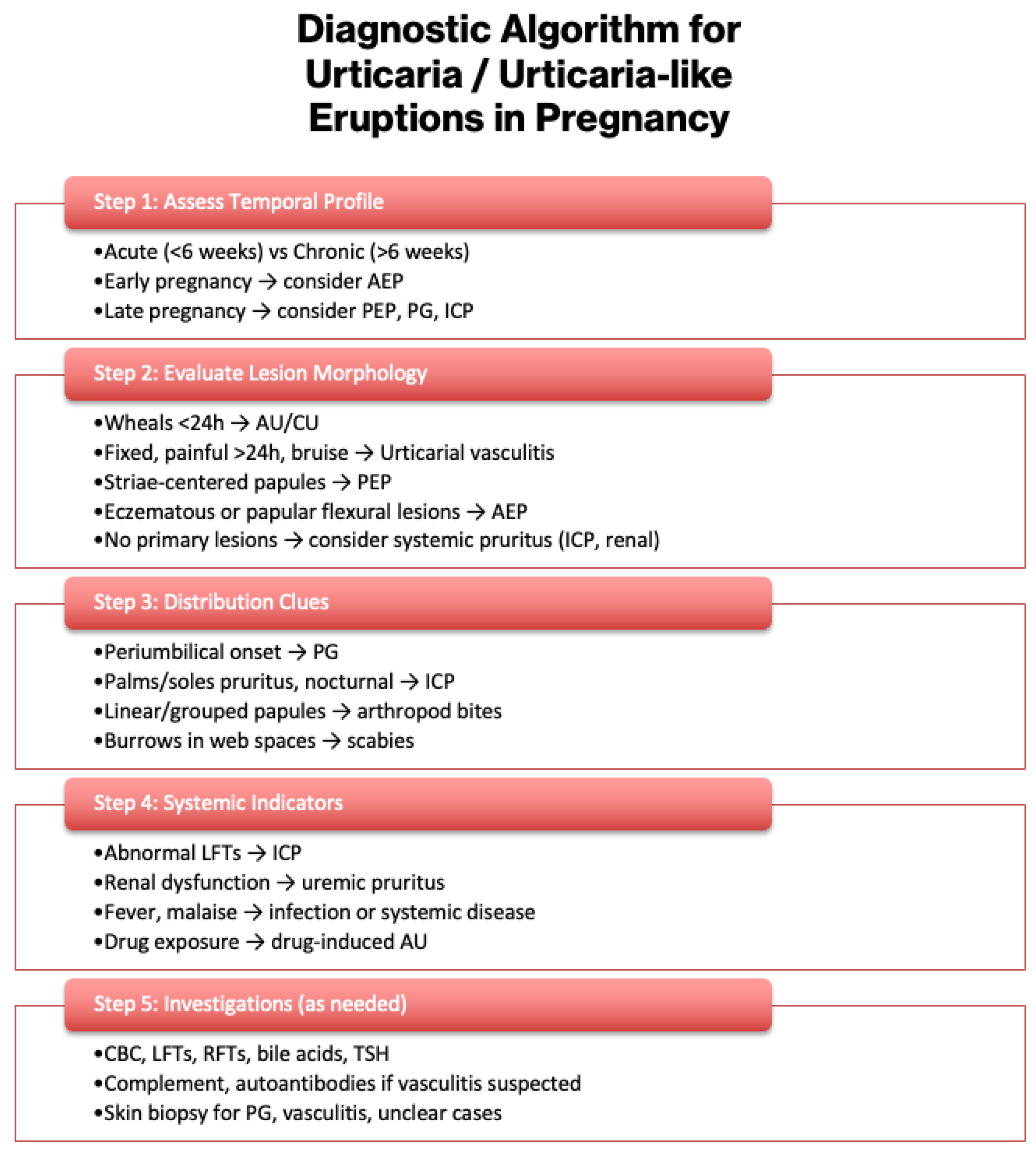
The diagnostic evaluation of urticaria and urticaria-like eruptions during pregnancy may be guided by the practical algorithm proposed by the authors and illustrated in Figure 2, which is intended as a clinically oriented framework rather than a validated diagnostic tool [94,112].

5. Therapeutic Considerations: Efficacy and Safety of Commonly Used Agents

Management of urticaria and urticaria-like eruptions in pregnancy must balance adequate maternal disease control with fetal safety, privileging drugs with the most reassuring reproductive safety data and long-standing clinical use.

5.1. Management of Urticaria

Second-generation H1-antihistamines (sgAHs) remain the cornerstone of symptomatic therapy for both acute and chronic urticaria and are widely used as adjunctive treatment in PEP, AEP, PG flares and systemic pruritic disorders. Among sgAHs, loratadine, cetirizine, and their active metabolites (desloratadine and levocetirizine) have the most robust pregnancy and breastfeeding safety data, with no evidence of increased risk of teratogenicity, obstetric complications, or adverse neonatal outcomes. These agents are generally well tolerated at standard doses. Importantly, dose escalation up to fourfold the licensed dose, as recommended in international chronic urticaria guidelines for refractory disease, appears safe in available observational cohorts of pregnant patients with CU, with no specific safety signals reported. Fexofenadine and bilastine are supported by more limited pregnancy data; however, currently available evidence does not indicate relevant fetal risk, and their use may be considered when first-choice agents are ineffective or not tolerated. In contrast, first-generation H1-antihistamines, although historically used, are generally avoided when alternatives are available because of their sedative and anticholinergic effects, which may adversely affect maternal functioning, despite the absence of strong teratogenic signals. Overall, second-generation H1-antihistamines remain the first-line pharmacologic treatment for chronic urticaria during pregnancy, with loratadine, cetirizine, levocetirizine, and desloratadine representing the preferred options based on the strength of reproductive safety data [134].
Topical corticosteroids are widely used across PEP, AEP and early PG and are considered safe when low-to-medium potency products are applied to limited areas. Potent and ultrapotent preparations may be used for short periods on restricted body sites when clinically required; cumulative high-potency exposure has been associated with low birth weight in some studies, but the absolute risk appears small and largely dose-dependent. Systemic corticosteroids (prednisone/prednisolone, which undergo substantial placental inactivation) remain an important rescue option for severe CU exacerbations, pemphigoid gestationis and refractory AEP/PEP. When prescribed at the lowest effective dose and for short courses, they are not clearly associated with major congenital malformations, although a small increase in cleft lip/palate cannot be entirely excluded. Prolonged high-dose regimens may contribute to gestational diabetes, hypertension and fetal growth restriction and should therefore be reserved for clearly defined indications and used with close obstetric monitoring [142,143,144].
Omalizumab, a recombinant humanized IgG1κ monoclonal antibody targeting circulating IgE, is the only biologic systematically evaluated in pregnant patients with chronic urticaria [6]. Registry data and real-world series, including more than 300 pregnancy exposures, have not shown increased rates of congenital anomalies, preterm birth, or serious neonatal complications, and transplacental transfer has not been associated with clinically relevant neonatal immunosuppression. Omalizumab may be considered for severe, antihistamine-refractory CU in pregnancy after individualized risk–benefit assessment, particularly when uncontrolled disease markedly impairs quality of life or would otherwise require repeated systemic corticosteroid courses [6,16,83]. More recently, a real-life multicentre study specifically addressing CSU reported reassuring maternal and fetal outcomes in women exposed to omalizumab before conception and/or during pregnancy, including cases treated throughout the entire gestational period, with no signal for congenital anomalies, obstetric complications, or adverse neonatal events. Based on the available evidence, omalizumab can therefore be considered for severe, antihistamine-refractory CU during pregnancy after individualized risk–benefit assessment, particularly when uncontrolled disease substantially impairs quality of life or would otherwise necessitate repeated systemic corticosteroid courses. Dupilumab has been used in pregnancy across several indications, with no safety signals emerging from available registries, although dedicated data for CU are lacking. In a recent systematic review and meta-analysis of observational studies in pregnant women with atopic dermatitis, dupilumab exposure during pregnancy or preconception was not associated with an increased risk of congenital malformations, and the prevalence of spontaneous abortions was comparable to that of the general population. However, the available evidence remains limited by small sample sizes and the absence of large, well-designed prospective studies, precluding definitive conclusions regarding safety. Conversely, no pregnancy data are currently available for Bruton tyrosine kinase (BTK) inhibitors such as remibrutinib, and their use is therefore not recommended during pregnancy. Although recent phase 3 trials (REMIX-1 and REMIX-2) have demonstrated robust efficacy and a favorable short-term safety profile of remibrutinib in antihistamine-refractory CSU, including rapid and sustained reductions in urticaria activity scores, pregnant women were excluded from these studies. In the absence of reproductive toxicology data and human pregnancy exposure, BTK inhibitors should be avoided in women who are pregnant or planning pregnancy.

Special Considerations for Chronic Inducible Urticaria (CIndU)

Special considerations apply to women with CIndU, particularly cold-induced urticaria, during labor and delivery. Cold exposure is a well-recognized trigger of both localized wheals and severe systemic reactions, including anaphylaxis. Therefore, delivery planning should aim to minimize cold-induced stress through maintenance of adequate ambient temperature in the labor ward and operating theatre, warming of intravenous fluids, injected medications, and skin preparation solutions, and avoidance of alcohol-based antiseptics with rapid evaporative cooling. Alcohol-free alternatives such as aqueous chlorhexidine or povidone–iodine preparations may be preferred. Commonly used methods to assess neuraxial block adequacy, such as ice or ethyl chloride spray, should be avoided because of their pronounced cooling effects; alternative modalities (e.g., light touch or assessment of pain perception during contractions) are recommended. Forced-air warming devices or warming mattresses may be used when appropriate.
A multidisciplinary antenatal management plan involving obstetricians, anesthesiologists, and dermatologists/allergists is strongly advised, particularly in patients with a history of systemic reactions. From a pharmacologic perspective, non-sedating H1-antihistamines remain the cornerstone of preventive treatment and may be administered at up to fourfold licensed doses when clinically indicated. Adrenaline should be readily available for the management of acute anaphylaxis, and patients at high risk should be provided with an epinephrine autoinjector. Omalizumab has also been used for long-term control of severe cold-induced urticaria and may be considered during pregnancy after individualized risk–benefit assessment.

5.2. Management of Urticaria-like Eruptions

For pregnancy-specific dermatoses, therapeutic choices largely reflect underlying pathogenesis. PEP and AEP usually respond to emollients, topical corticosteroids and second-generation antihistamines; systemic therapy is rarely necessary. In pemphigoid gestationis, systemic corticosteroids remain the mainstay, while steroid-sparing agents such as azathioprine may be considered in refractory, severe disease; azathioprine is generally regarded as compatible with pregnancy when monitored appropriately. Cyclosporine carries a higher maternal risk profile and is reserved for exceptional, treatment-resistant cases. Methotrexate, mycophenolate, cyclophosphamide and dapsone are contraindicated or strongly discouraged in pregnancy because of teratogenicity or hematologic toxicity [23,88,89]. In systemic mimickers, pharmacologic strategies differ. Ursodeoxycholic acid (UDCA) is the standard pharmacologic treatment for intrahepatic cholestasis of pregnancy. Large, randomized trials and an individual participant data meta-analysis including almost 7000 women suggest that UDCA is safe, produces modest improvement of pruritus and biochemical cholestasis, and—although it does not clearly reduce stillbirth alone—is associated with a reduction in overall and spontaneous preterm birth and in meconium-stained amniotic fluid, particularly in women with bile acids ≥ 40 μmol/L. These data support offering UDCA as part of antenatal management in ICP, especially in women with more severe disease, alongside appropriate fetal monitoring and timing of delivery. By contrast, antihistamines have limited utility in cholestatic and uremic pruritus, which are not primarily histamine-mediated. CKD-associated pruritus may benefit from intensive emollient use and narrowband UV-B phototherapy, which is generally considered safe in pregnancy, while systemic immunosuppressants used for urticarial vasculitis require case-by-case multidisciplinary evaluation [23,76,88,89]. Overall, available evidence supports a reassuring safety profile for the mainstay treatments used in CU, PEP, AEP and selected cases of PG during pregnancy. Second-generation antihistamines, topical therapies, omalizumab in severe refractory CU and carefully targeted short courses of systemic corticosteroids constitute the backbone of safe and effective management, whereas more potent immunosuppressive agents should be reserved for exceptional, life- or organ-threatening situations. Ongoing pregnancy-specific pharmacovigilance—particularly for biologics and newer agents—remains crucial to further refine therapeutic algorithms and optimize maternal and fetal outcomes.

6. Discussion

This review highlights how the dynamic immuno-hormonal adaptations of pregnancy intersect with mast cell–driven inflammation, resulting in heterogeneous trajectories of urticaria activity during gestation. Pregnancy is characterized by tightly regulated shifts in innate and adaptive immunity, including temporal fluctuations in the Th1/Th17 versus Th2/Treg balance, expansion of regulatory cell subsets, and sustained exposure to placental and sex steroid hormones. Within this evolving milieu, mast cell activation thresholds may change in response to endocrine and cytokine signals, potentially translating into clinically relevant improvement or exacerbation of wheals and angioedema [16,30,61,83]. Clinical variability in chronic urticaria during pregnancy is likely influenced by the underlying disease endotype. In autoimmune type IIb CU, which is often associated with Th1/Th17-skewed inflammation and complement engagement, the predominance of Th2/Treg immunoregulation in mid-gestation may contribute to improvement in some patients. Conversely, IgE-driven (autoallergic type I) mechanisms and comorbid atopy may be favored by a Th2-biased environment and by hormone-dependent modulation of mast cell reactivity, thereby predisposing to flares in susceptible individuals [125,126].
Beyond classical acute and chronic urticaria, pregnancy introduces a broad group of urticaria-like dermatoses that frequently overlap in morphology and pruritus intensity, including polymorphic eruption of pregnancy (PEP/PUPPP), atopic eruption of pregnancy (AEP), pemphigoid gestationis (PG), and rare hormone-induced hypersensitivity reactions [15,135,137]. Differentiation is clinically consequential because prognosis and fetal implications vary substantially: PEP and AEP are generally benign and self-limited, whereas PG and intrahepatic cholestasis of pregnancy require prompt recognition due to potential obstetric risks. Urticarial vasculitis represents an additional high-impact mimicker, particularly in patients with fixed lesions lasting > 24 h, burning or painful wheals, residual purpura, and/or systemic symptoms, in whom targeted laboratory assessment and lesional biopsy are essential [125,126,129,164]. Given the frequency of overlapping phenotypes—especially early in the disease course and in early gestation—diagnostic misclassification remains a practical challenge [83]. To facilitate bedside decision-making, we propose an authors’ practical diagnostic algorithm integrating temporal pattern, lesion duration and morphology, distribution clues, systemic features, and focused investigations. This approach is intended as a clinically oriented framework rather than a validated tool, aiming to streamline the differential diagnosis, prioritize recognition of red flags (e.g., periumbilical plaques with vesiculobullous evolution, pruritus without primary lesions, persistent purpuric or painful wheals), and limit unnecessary work-up in typical PEP or AEP presentations. Therapeutic decisions in pregnancy must balance maternal symptom control with fetal safety, prioritizing agents supported by the most reassuring reproductive data and long-standing clinical use [156]. For CU, guideline-based management remains broadly applicable: second-generation H1-antihistamines are first-line therapy, including dose escalation when required. Omalizumab represents the most studied advanced therapy in pregnant patients with antihistamine-refractory CU, supported by registry and real-world evidence suggesting reassuring maternal and fetal outcomes [143]. Systemic corticosteroids retain an important role for short-term control of severe flares in CU, PG, or refractory pruritic gestational dermatoses, while prolonged or high-dose exposure should be avoided whenever possible due to maternal metabolic risks and potential fetal growth effects. Conditions with systemic or obstetric implications—such as PG, intrahepatic cholestasis of pregnancy, and urticarial vasculitis—benefit from multidisciplinary management to ensure both maternal stabilization and appropriate obstetric surveillance [87,94,146]. Important knowledge gaps remain. Prospective pregnancy cohorts stratified by CU endotype are limited, and mechanistic studies dissecting how sex hormones, metabolic mediators, and immune regulatory pathways converge on mast cell activation in pregnancy are still needed. Evidence for newer targeted therapies during pregnancy is scarce, and the epidemiology and clinical spectrum of urticarial vasculitis and other mimickers in pregnancy are likely underdefined, raising the possibility of under-recognition [16]. Overall, pregnancy can be viewed as a dynamic immuno-hormonal stress test for mast cell biology and immune regulation; improving mechanistic understanding and generating pregnancy-specific safety data will be crucial to refine risk stratification, optimize preconception planning, and support safe, effective management across gestation and the postpartum period.

7. Conclusions

Urticaria and urticaria-like eruptions in pregnancy encompass a broad clinical spectrum, ranging from benign gestational dermatoses to autoimmune and systemic conditions with potential maternal–fetal consequences. Although chronic urticaria is not more prevalent during pregnancy, its activity is shaped by gestational immuno-hormonal dynamics, resulting in heterogeneous clinical courses. Accurate differentiation between CU, pregnancy-specific conditions such as PEP and AEP, and disorders with obstetric implications (including PG, ICP and urticarial vasculitis) is essential. A structured diagnostic approach that integrates temporal pattern, lesion morphology and duration, distribution and key systemic features facilitates timely recognition of high-risk disorders while preventing unnecessary investigations in benign presentations. Management of urticaria in pregnancy generally follows established guidelines, with second-generation H1-antihistamines as first-line therapy and omalizumab reserved for severe, antihistamine-refractory cases. Pregnancy-specific dermatoses are usually amenable to symptomatic treatment, whereas PG and ICP require closer multidisciplinary monitoring. Future research should prioritize prospective, endotype-stratified studies, mechanistic insight into hormone–mast cell interactions and robust safety data for advanced therapies to support evidence-based care in this unique population.

Author Contributions

Conceptualization, F.T. and G.P.; methodology, F.T.; software, G.G.; validation, A.D.G., A.D. and S.P.N.; formal analysis, G.G.; investigation, A.D.G. and M.E.G.; resources, S.P.N.; data curation, A.D.; writing—original draft preparation, F.T.; writing—review and editing, G.P.; visualization, G.G.; supervision, S.P.N.; project administration, A.D.G.; funding acquisition, F.T. and G.P. All authors have read and agreed to the published version of the manuscript.

Funding

This research received no external funding.

Institutional Review Board Statement

Not applicable.

Data Availability Statement

Not applicable.

Conflicts of Interest

The authors declare no conflicts of interest.

References

  1. Ortega Casanueva, C.; Arriba Méndez, S. Urticaria and Angioedema. Pediatr. Integral 2023, 27, 141–151. [Google Scholar] [CrossRef]
  2. Greaves, M. Chronic Urticaria. J. Allergy Clin. Immunol. 2000, 105, 664–672. [Google Scholar] [CrossRef]
  3. Wedi, B. Urticaria and Angioedema. In Braun-Falco’s Dermatology; Springer: Berlin/Heidelberg, Germany, 2022; pp. 481–506. [Google Scholar] [CrossRef]
  4. Joshi, S.R.; Khan, D.A. Urticaria and Angioedema. In Asthma, Allergic and Immunologic Diseases During Pregnancy: A Guide to Management; Springer: Cham, Switzerland, 2018; pp. 123–140. [Google Scholar] [CrossRef]
  5. Carr, T.F.; Saltoun, C.A. Urticaria and Angioedema. Chapter 21: Allergy Asthma Proc. 2012, 33, 70–72. [Google Scholar] [CrossRef] [PubMed]
  6. Zuberbier, T.; Abdul Latiff, A.H.; Abuzakouk, M.; Aquilina, S.; Asero, R.; Baker, D.; Ballmer-Weber, B.; Bangert, C.; Ben-Shoshan, M.; Bernstein, J.A.; et al. The International EAACI/GA2LEN/EuroGuiDerm/APAAACI Guideline for the Definition, Classification, Diagnosis, and Management of Urticaria. Allergy 2022, 77, 734–766. [Google Scholar] [CrossRef]
  7. Cicardi, M.; Agostoni, A. Hereditary Angioedema. N. Engl. J. Med. 1996, 334, 1666–1667. [Google Scholar] [CrossRef]
  8. Agostoni, A.; Aygören-Pürsün, E.; Binkley, K.E.; Blanch, A.; Bork, K.; Bouillet, L.; Bucher, C.; Castaldo, A.J.; Cicardi, M.; Davis, A.E.; et al. Hereditary and Acquired Angioedema: Problems and Progress: Proceedings of the Third C1 Esterase Inhibitor Deficiency Workshop and Beyond. J. Allergy Clin. Immunol. 2004, 114, S51–S131. [Google Scholar] [CrossRef]
  9. Chinniah, N.; Katelaris, H. Hereditary Angioedema and Pregnancy. Aust. N. Z. J. Obstet. Gynaecol. 2009, 49, 2–5. [Google Scholar] [CrossRef]
  10. Robinson, D.P.; Klein, S.L. Pregnancy and Pregnancy-Associated Hormones Alter Immune Responses and Disease Pathogenesis. Horm. Behav. 2012, 62, 263–271. [Google Scholar] [CrossRef] [PubMed]
  11. Yancey, K.B.; Russell, R.P.; Thomas, T.J. Pruritic Urticarial Papules and Plaques of Pregnancy: Clinical Experience in Twenty-Five Patients. J. Am. Acad. Dermatol. 1984, 10, 473–480. [Google Scholar] [CrossRef]
  12. Kocatürk, E.; Podder, I.; Zenclussen, A.C.; Kasperska Zajac, A.; Elieh-Ali-Komi, D.; Church, M.K.; Maurer, M. Urticaria in Pregnancy and Lactation. Front. Allergy 2022, 3, 892673. [Google Scholar] [CrossRef] [PubMed]
  13. Kadar, L.; Kivity, S. Urticaria and Angioedema in Pregnancy. Curr. Dermatol. Rep. 2013, 2, 236–242. [Google Scholar] [CrossRef][Green Version]
  14. Matz, H.; Orion, E.; Wolf, R. Pruritic Urticarial Papules and Plaques of Pregnancy: Polymorphic Eruption of Pregnancy (PUPPP). Clin. Dermatol. 2006, 24, 105–108. [Google Scholar] [CrossRef]
  15. Kumar, P.; Magon, N. Hormones in Pregnancy. Niger. Med. J. 2012, 53, 179. [Google Scholar] [CrossRef] [PubMed]
  16. Madendag, I.C.; Madendag, Y.; Tarhan, I.; Altinkaya, S.O.; Danisman, N. Mastocytosis in Pregnancy. Taiwan. J. Obstet. Gynecol. 2010, 49, 192–196. [Google Scholar] [CrossRef][Green Version]
  17. Panicker, V.V.; Krishna, R. Specific Dermatoses of Pregnancy. In Skin and Pregnancy: A Comprehensive Guide for Clinical Practice; CRC Press: Boca Raton, FL, USA, 2024; pp. 20–32. [Google Scholar] [CrossRef]
  18. Ambros-Rudolph, C.M.; Müllegger, R.R.; Vaughan-Jones, S.A.; Kerl, H.; Black, M.M. The Specific Dermatoses of Pregnancy Revisited and Reclassified: Results of a Retrospective Two-Center Study on 505 Pregnant Patients. J. Am. Acad. Dermatol. 2006, 54, 395–404. [Google Scholar] [CrossRef] [PubMed]
  19. Østensen, M.; Förger, F.; Nelson, J.L.; Schuhmacher, A.; Hebisch, G.; Villiger, P.M. Pregnancy in Patients with Rheumatic Disease: Anti-Inflammatory Cytokines Increase in Pregnancy and Decrease Post Partum. Ann. Rheum. Dis. 2005, 64, 839–844. [Google Scholar] [CrossRef] [PubMed]
  20. Schumacher, A.; Costa, S.D.; Zenclussen, A.C. Endocrine Factors Modulating Immune Responses in Pregnancy. Front. Immunol. 2014, 5, 196. [Google Scholar] [CrossRef]
  21. Piccinni, M.P.; Lombardelli, L.; Logiodice, F.; Kullolli, O.; Parronchi, P.; Romagnani, S. How Pregnancy Can Affect Autoimmune Diseases Progression? Clin. Mol. Allergy 2016, 14, 11. [Google Scholar] [CrossRef]
  22. Gutierrez, G.; Gentile, T.; Miranda, S.; Margni, R.A. Asymmetric Antibodies: A Protective Arm in Pregnancy. Chem. Immunol. Allergy 2006, 89, 158–168. [Google Scholar] [CrossRef]
  23. Borba, V.V.; Zandman-Goddard, G.; Shoenfeld, Y. Exacerbations of Autoimmune Diseases during Pregnancy and Postpartum. Best Pract. Res. Clin. Endocrinol. Metab. 2019, 33, 101321. [Google Scholar] [CrossRef]
  24. Yockey, L.J.; Iwasaki, A. Interferons and Proinflammatory Cytokines in Pregnancy and Fetal Development. Immunity 2018, 49, 397–412. [Google Scholar] [CrossRef]
  25. Binkley, K.E.; Davis, A. Clinical, Biochemical, and Genetic Characterization of a Novel Estrogen-Dependent Inherited Form of Angioedema. J. Allergy Clin. Immunol. 2000, 106, 546–550. [Google Scholar] [CrossRef]
  26. Narita, S.I.; Goldblum, R.M.; Watson, C.S.; Brooks, E.G.; Estes, D.M.; Curran, E.M.; Midoro-Horiuti, T. Environmental Estrogens Induce Mast Cell Degranulation and Enhance IgE-Mediated Release of Allergic Mediators. Environ. Health Perspect. 2007, 115, 48–52. [Google Scholar] [CrossRef]
  27. Pierdominici, M.; Maselli, A.; Colasanti, T.; Giammarioli, A.M.; Delunardo, F.; Vacirca, D.; Sanchez, M.; Giovannetti, A.; Malorni, W.; Ortona, E. Estrogen Receptor Profiles in Human Peripheral Blood Lymphocytes. Immunol. Lett. 2010, 132, 79–85. [Google Scholar] [CrossRef]
  28. Shah, N.M.; Lai, P.F.; Imami, N.; Johnson, M.R. Progesterone-Related Immune Modulation of Pregnancy and Labor. Front. Endocrinol. 2019, 10, 198. [Google Scholar] [CrossRef]
  29. Vasconcelos, C.; Xavier, P.; Vieira, A.P.; Martinho, M.; Rodrigues, J.; Bodas, A.; Barros, M.A.; Mesquita-Guimaraes, J. Autoimmune Progesterone Urticaria. Gynecol. Endocrinol. 2000, 14, 245–247. [Google Scholar] [CrossRef]
  30. Prieto-Garcia, A.; Sloane, D.E.; Gargiulo, A.R.; Feldweg, A.M.; Castells, M. Autoimmune Progesterone Dermatitis: Clinical Presentation and Management with Progesterone Desensitization for Successful in Vitro Fertilization. Fertil. Steril. 2011, 95, 1121.e9–1121.e13. [Google Scholar] [CrossRef] [PubMed]
  31. Zierau, O.; Zenclussen, A.C.; Jensen, F. Role of Female Sex Hormones, Estradiol and Progesterone, in Mast Cell Behavior. Front. Immunol. 2012, 3, 169. [Google Scholar] [CrossRef] [PubMed]
  32. Sakiani, S.; Olsen, N.J.; Kovacs, W.J. Gonadal Steroids and Humoral Immunity. Nat. Rev. Endocrinol. 2013, 9, 56–62. [Google Scholar] [CrossRef] [PubMed]
  33. Zarei, A.; Parsanezhad, M.E.; Younesi, M.; Alborzi, S.; Zolghadri, J.; Samsami, A.; Amooee, S.; Aramesh, S. Intrauterine Administration of Recombinant Human Chorionic Gonadotropin before Embryo Transfer on Outcome of in Vitro Fertilization/ Intracytoplasmic Sperm Injection: A Randomized Clinical Trial. Iran. J. Reprod. Med. 2014, 12, 1–6. [Google Scholar]
  34. Furcron, A.E.; Romero, R.; Mial, T.N.; Balancio, A.; Panaitescu, B.; Hassan, S.S.; Sahi, A.; Nord, C.; Gomez-Lopez, N. Human Chorionic Gonadotropin Has Anti-Inflammatory Effects at the Maternal-Fetal Interface and Prevents Endotoxin-Induced Preterm Birth, but Causes Dystocia and Fetal Compromise in Mice. Biol. Reprod. 2016, 94, 136. [Google Scholar] [CrossRef]
  35. Perrier d’Hauterive, S.; Charlet-Renard, C.; Dubois, M.; Foidart, J.M.; Geenen, V. What’s New at the Maternal-Foetal Interface: Role of the HCG/LH-HCG Receptor Couple during Embryo Implantation. Rev. Med. Liege 2006, 61, 705–712. [Google Scholar]
  36. Schumacher, A.; Brachwitz, N.; Sohr, S.; Engeland, K.; Langwisch, S.; Dolaptchieva, M.; Alexander, T.; Taran, A.; Malfertheiner, S.F.; Costa, S.-D.; et al. Human Chorionic Gonadotropin Attracts Regulatory T Cells into the Fetal-Maternal Interface during Early Human Pregnancy. J. Immunol. 2009, 182, 5488–5497. [Google Scholar] [CrossRef]
  37. Xu, Y.; He, H.; Li, C.; Shi, Y.; Wang, Q.; Li, W.; Song, W. Immunosuppressive Effect of Progesterone on Dendritic Cells in Mice. J. Reprod. Immunol. 2011, 91, 17–23. [Google Scholar] [CrossRef]
  38. O’Rourke, J.; Khawaja, N.; Loughrey, J.; McKenna, P. Autoimmune Progesterone Dermatitis in a Parturient for Emergency Caesarean Section. Int. J. Obstet. Anesth. 2004, 13, 275–278. [Google Scholar] [CrossRef]
  39. Su, L.; Sun, Y.; Ma, F.; Lü, P.; Huang, H.; Zhou, J. Progesterone Inhibits Toll-like Receptor 4-Mediated Innate Immune Response in Macrophages by Suppressing NF-ΚB Activation and Enhancing SOCS1 Expression. Immunol. Lett. 2009, 125, 151–155. [Google Scholar] [CrossRef] [PubMed]
  40. Yotsumoto, S.; Shimomai, K.; Hashiguchi, T.; Uchimiya, H.; Usuki, K.; Nishi, M.; Kanekura, T.; Kanzaki, T. Estrogen Dermatitis: A Dendritic-Cell-Mediated Allergic Condition. Dermatology 2003, 207, 265–268. [Google Scholar] [CrossRef] [PubMed]
  41. Xiong, Y.H.; Yuan, Z.; He, L. Effects of Estrogen on CD4+ CD25+ Regulatory T Cell in Peripheral Blood during Pregnancy. Asian Pac. J. Trop. Med. 2013, 6, 748–752. [Google Scholar] [CrossRef]
  42. Kovats, S. Estrogen Receptors Regulate an Inflammatory Pathway of Dendritic Cell Differentiation: Mechanisms and Implications for Immunity. Horm. Behav. 2012, 62, 254–262. [Google Scholar] [CrossRef] [PubMed]
  43. Zaitsu, M.; Narita, S.I.; Lambert, K.C.; Grady, J.J.; Estes, D.M.; Curran, E.M.; Brooks, E.G.; Watson, C.S.; Goldblum, R.M.; Midoro-Horiuti, T. Estradiol Activates Mast Cells via a Non-Genomic Estrogen Receptor-α and Calcium Influx. Mol. Immunol. 2007, 44, 1977–1985. [Google Scholar] [CrossRef]
  44. Conde, A.; Figueiredo, B. 24-h Urinary Free Cortisol from Mid-Pregnancy to 3-Months Postpartum: Gender and Parity Differences and Effects. Psychoneuroendocrinology 2014, 50, 264–273. [Google Scholar] [CrossRef]
  45. Trombetta, A.C.; Meroni, M.; Cutolo, M. Steroids and Autoimmunity. Endocr. Immunol. 2017, 48, 121–132. [Google Scholar] [CrossRef]
  46. Hughes, G.C.; Clark, E.A. Regulation of Dendritic Cells by Female Sex Steroids: Relevance to Immunity and Autoimmunity. Autoimmunity 2007, 40, 470–481. [Google Scholar] [CrossRef] [PubMed]
  47. Shelly, S.; Boaz, M.; Orbach, H. Prolactin and Autoimmunity. Autoimmun. Rev. 2012, 11, A465–A470. [Google Scholar] [CrossRef] [PubMed]
  48. Soliman, M.; Khattab, F.M.; Ebrahim, H.M.; Nasr, M. Serum Prolactin Level in Chronic Urticaria: Is Bromocriptine Inducing Remission in Chronic Urticaria? J. Dermatol. Treat. 2018, 29, 826–830. [Google Scholar] [CrossRef]
  49. Kamel-Sabry, M.; Nazmy-Farres, M.; Abdelnour-Melek, N.; Ahmed-Arafa, N.; Arek-Ohanessian, A. Prolactin and Dehydroepiandrosterone Sulfate: Are They Related to the Severity of Chronic Urticaria? Arch. Med. Res. 2013, 44, 21–26. [Google Scholar] [CrossRef]
  50. Fang, L.; Egea, E.; Pereira-Sanandres, N.; De la cruz-Lopez, F.R.; Moreno-Woo, S.; Garavito-De Egea, G. Serum Levels of Leptin, Adiponectin and Vitamin D in Colombian Adults with Chronic Urticaria. J. Allergy Clin. Immunol. 2018, 141, AB54. [Google Scholar] [CrossRef]
  51. Farres, M.N.; El khoderee, M.M.; ELkady, H.M.; Eissa, N.M. Serum Leptin in Correlation to Clinical Severity in Patients with Chronic Urticaria. QJM Int. J. Med. 2021, 114, hcab100.096. [Google Scholar] [CrossRef]
  52. Sanchez-Margalet, V.; Martin-Romero, C. Human Leptin Signaling in Human Peripheral Blood Mononuclear Cells: Activation of the JAK-STAT Pathway. Cell. Immunol. 2001, 211, 30–36. [Google Scholar] [CrossRef]
  53. Maymó, J.L.; Pérez Pérez, A.; Gambino, Y.; Calvo, J.C.; Sánchez-Margalet, V.; Varone, C.L. Review: Leptin Gene Expression in the Placenta—Regulation of a Key Hormone in Trophoblast Proliferation and Survival. Placenta 2011, 32, S146–S153. [Google Scholar] [CrossRef]
  54. Fettke, F.; Schumacher, A.; Canellada, A.; Toledo, N.; Bekeredjian-Ding, I.; Bondt, A.; Wuhrer, M.; Costa, S.D.; Zenclussen, A.C. Maternal and Fetal Mechanisms of B Cell Regulation during Pregnancy: Human Chorionic Gonadotropin Stimulates B Cells to Produce IL-10 While Alpha-Fetoprotein Drives Them into Apoptosis. Front. Immunol. 2016, 7, 495. [Google Scholar] [CrossRef]
  55. Konstantinov, S.R.; van der Woude, C.J.; Peppelenbosch, M.P. Do Pregnancy-Related Changes in the Microbiome Stimulate Innate Immunity? Trends Mol. Med. 2013, 19, 454–459. [Google Scholar] [CrossRef]
  56. Elieh Ali Komi, D.; Shafaghat, F.; Haidl, G. Significance of Mast Cells in Spermatogenesis, Implantation, Pregnancy, and Abortion: Cross Talk and Molecular Mechanisms. Am. J. Reprod. Immunol. 2020, 83, e13228. [Google Scholar] [CrossRef]
  57. Ferlazzo, G.; Moretta, L. Dendritic Cell Editing by Natural Killer Cells. Crit. Rev. Oncog. 2014, 19, 67–75. [Google Scholar] [CrossRef] [PubMed]
  58. Wan, H.; Versnel, M.A.; Leijten, L.M.E.; van Helden-Meeuwsen, C.G.; Fekkes, D.; Leenen, P.J.M.; Khan, N.A.; Benner, R.; Kiekens, R.C.M. Chorionic Gonadotropin Induces Dendritic Cells to Express a Tolerogenic Phenotype. J. Leukoc. Biol. 2008, 83, 894–901. [Google Scholar] [CrossRef] [PubMed]
  59. Meyer, N.; Zenclussen, A.C. Mast Cells—Good Guys with a Bad Image? Am. J. Reprod. Immunol. 2018, 80, e13002. [Google Scholar] [CrossRef]
  60. Yu, X.; Kasprick, A.; Petersen, F. Revisiting the Role of Mast Cells in Autoimmunity. Autoimmun. Rev. 2015, 14, 751–759. [Google Scholar] [CrossRef]
  61. Lu, L.F.; Lind, E.F.; Gondek, D.C.; Bennett, K.A.; Gleeson, M.W.; Pino-Lagos, K.; Scott, Z.A.; Coyle, A.J.; Reed, J.L.; Van Snick, J.; et al. Mast Cells Are Essential Intermediaries in Regulatory T-Cell Tolerance. Nature 2006, 442, 997–1002. [Google Scholar] [CrossRef] [PubMed]
  62. Graca, L.; Cobbold, S.P.; Waldmann, H. Identification of Regulatory T Cells in Tolerated Allografts. J. Exp. Med. 2002, 195, 1641–1646. [Google Scholar] [CrossRef]
  63. Zitti, B.; Bryceson, Y.T. Natural Killer Cells in Inflammation and Autoimmunity. Cytokine Growth Factor. Rev. 2018, 42, 37–46. [Google Scholar] [CrossRef]
  64. Poli, A.; Michel, T.; Thérésine, M.; Andrès, E.; Hentges, F.; Zimmer, J. CD56bright Natural Killer (NK) Cells: An Important NK Cell Subset. Immunology 2009, 126, 458–465. [Google Scholar] [CrossRef]
  65. Meyer, N.; Schüler, T.; Zenclussen, A.C. Simultaneous Ablation of Uterine Natural Killer Cells and Uterine Mast Cells in Mice Leads to Poor Vascularization and Abnormal Doppler Measurements That Compromise Fetal Well-Being. Front. Immunol. 2018, 8, 1913. [Google Scholar] [CrossRef] [PubMed]
  66. Hazes, J.M.W.; Coulie, P.G.; Geenen, V.; Vermeire, S.; Carbonnel, F.; Louis, E.; Masson, P.; De Keyser, F. Rheumatoid Arthritis and Pregnancy: Evolution of Disease Activity and Pathophysiological Considerations for Drug Use. Rheumatology 2011, 50, 1955–1968. [Google Scholar] [CrossRef] [PubMed]
  67. Luckey, D.; Medina, K.; Taneja, V. B Cells as Effectors and Regulators of Sex-Biased Arthritis. Autoimmunity 2012, 45, 364–376. [Google Scholar] [CrossRef] [PubMed]
  68. Rolle, L.; Memarzadeh Tehran, M.; Morell-García, A.; Raeva, Y.; Schumacher, A.; Hartig, R.; Costa, S.D.; Jensen, F.; Zenclussen, A.C. Cutting Edge: IL-10-Producing Regulatory B Cells in Early Human Pregnancy. Am. J. Reprod. Immunol. 2013, 70, 448–453. [Google Scholar] [CrossRef]
  69. Gregoriou, S.; Rigopoulos, D.; Katsambas, A.; Katsarou, A.; Papaioannou, D.; Gkouvi, A.; Kontochristopoulos, G.; Danopoulos, I.; Stavrianeas, N.; Kalogeromitros, D. Etiologic Aspects and Prognostic Factors of Patients with Chronic Urticaria: Nonrandomized, Prospective, Descriptive Study. J. Cutan. Med. Surg. 2009, 13, 198–203. [Google Scholar] [CrossRef]
  70. Kocatürk, E.; Al-Ahmad, M.; Krause, K.; Gimenez-Arnau, A.M.; Thomsen, S.F.; Conlon, N.; Marsland, A.; Savk, E.; Criado, R.F.; Danilycheva, I.; et al. Effects of Pregnancy on Chronic Urticaria: Results of the PREG-CU UCARE Study. Allergy Eur. J. Allergy Clin. Immunol. 2021, 76, 3133–3144. [Google Scholar] [CrossRef]
  71. Roth, M.M. Pregnancy Dermatoses: Diagnosis, Management, and Controversies. Am. J. Clin. Dermatol. 2011, 12, 25–41. [Google Scholar] [CrossRef]
  72. Taylor, D.; Pappo, E.; Aronson, I.K. Polymorphic Eruption of Pregnancy. Clin. Dermatol. 2016, 34, 383–391. [Google Scholar] [CrossRef]
  73. Zejnullahu, V.A.; Zejnullahu, V.A. Polymorphic Eruption of Pregnancy. Dermatol. Rep. 2023, 15, 9546. [Google Scholar] [CrossRef]
  74. Brandão, P.; Sousa-Faria, B.; Marinho, C.; Vieira-Enes, P.; Melo, A.; Mota, L. Polymorphic Eruption of Pregnancy: Review of Literature. J. Obstet. Gynaecol. 2017, 37, 137–140. [Google Scholar] [CrossRef]
  75. Stefaniak, A.A.; Pereira, M.P.; Zeidler, C.; Ständer, S. Pruritus in Pregnancy. Am. J. Clin. Dermatol. 2022, 23, 231–246. [Google Scholar] [CrossRef]
  76. Charles-Holmes, R. Polymorphic Eruption of Pregnancy. Semin. Dermatol. 1989, 8, 18–22. [Google Scholar] [PubMed]
  77. Petropoulou, H.; Georgala, S.; Katsambas, A.D. Polymorphic Eruption of Pregnancy. Int. J. Dermatol. 2006, 45, 642–648. [Google Scholar] [CrossRef] [PubMed]
  78. Sävervall, C.; Sand, F.L.; Thomsen, S.F. Dermatological Diseases Associated with Pregnancy: Pemphigoid Gestationis, Polymorphic Eruption of Pregnancy, Intrahepatic Cholestasis of Pregnancy, and Atopic Eruption of Pregnancy. Dermatol. Res. Pract. 2015, 2015, 979635. [Google Scholar] [CrossRef] [PubMed]
  79. Brzoza, Z.; Kasperska-Zajac, A.; Oleś, E.; Rogala, B. Pruritic urticarial papules and plaques of pregnancy. J. Midwifery Womens Health 2007, 52, 44–48. [Google Scholar] [CrossRef] [PubMed]
  80. Ahmadi, S.; Powell, F.C. Pruritic urticarial papules and plaques of pregnancy: Current status. Australas. J. Dermatol. 2005, 46, 53–58; quiz 59. [Google Scholar] [CrossRef] [PubMed]
  81. Chapsa, M.; Heyne, S.; Schneiderat, S.; Beissert, S.; Günther, C. Pemphigoid Gestationis. Aktuelle Derm. 2024, 44, 256–259. [Google Scholar] [CrossRef]
  82. Jenkins, R.E.; Shornick, J. Pemphigoid (Herpes) Gestationis. In Obstetric and Gynecologic Dermatology; Elsevier: Amsterdam, The Netherlands, 2008; pp. 37–47. [Google Scholar] [CrossRef]
  83. Sasseville, D.; Wilkinson, R.D.; Schnader, J.Y. Dermatoses of Pregnancy. Int. J. Dermatol. 1981, 20, 223–248. [Google Scholar] [CrossRef]
  84. Bechtel, M.A.; Plotner, A. Dermatoses of Pregnancy. Clin. Obstet. Gynecol. 2015, 58, 104–111. [Google Scholar] [CrossRef]
  85. Himeles, J.R.; Pomeranz, M.K. Recognizing, Diagnosing, and Managing Pregnancy Dermatoses. Obstet. Gynecol. 2022, 140, 679–695. [Google Scholar] [CrossRef]
  86. Balakirski, G.; Novak, N. Atopic Dermatitis and Pregnancy. J. Allergy Clin. Immunol. 2022, 149, 1185–1194. [Google Scholar] [CrossRef]
  87. Yue, C.; Zhou, H.; Wang, X.; Yu, J.; Hu, Y.; Zhou, P.; Zhao, F.; Zeng, F.; Li, G.; Li, Y.; et al. Atopic Dermatitis: Pathogenesis and Therapeutic Intervention. MedComm 2024, 5, e70029. [Google Scholar] [CrossRef]
  88. Nedoszytko, B.; Reszka, E.; Gutowska-Owsiak, D.; Trzeciak, M.; Lange, M.; Jarczak, J.; Niedoszytko, M.; Jablonska, E.; Romantowski, J.; Strapagiel, D.; et al. Genetic and Epigenetic Aspects of Atopic Dermatitis. Int. J. Mol. Sci. 2020, 21, 6484. [Google Scholar] [CrossRef]
  89. Maglie, R.; Quintarelli, L.; Verdelli, A.; Fabbri, P.; Antiga, E.; Caproni, M. Specific Dermatoses of Pregnancy Other than Pemphigoid Gestationis. G. Ital. Dermatol. Venereol. 2019, 154, 286–298. [Google Scholar] [CrossRef] [PubMed]
  90. Soutou, B.; Aractingi, S. Dermatoses de La Grossesse. Rev. Med. Interne 2015, 36, 198–202. [Google Scholar] [CrossRef]
  91. Shrikhande, L.A.; Kadu, P.P. Pruritus in Pregnancy. J. Obstet. Gynecol. India 2024, 74, 12–21. [Google Scholar] [CrossRef] [PubMed] [PubMed Central]
  92. Keeling, E.; Smith, C.H.; Woolf, R.T. The management of severe eczema in pregnancy. Clin. Med. 2025, 25, 100282. [Google Scholar] [CrossRef] [PubMed] [PubMed Central]
  93. Wilson, B.H.; Pendergraft, B.; Daniel, K. Dermatologic Conditions of Pregnancy. Prim. Care—Clin. Off. Pract. 2025, 52, 383–397. [Google Scholar] [CrossRef] [PubMed]
  94. Oskay, T.; Kutluay, L.; Kaptanoǧlu, A.; Karabacak, O. Autoimmune Progesterone Dermatitis. Eur. J. Dermatol. 2002, 12, 589–591. [Google Scholar] [CrossRef]
  95. Özdemir, Ö.; Yahśi, G.G.; Atalay, C.R. Autoimmune Progesterone Dermatitis: A Case Report. Rev. Bras. Ginecol. Obstet. 2019, 41, 203–205. [Google Scholar] [CrossRef]
  96. Detrixhe, A.; Nikkels, A.F.; Dezfoulian, B. Autoimmune Progesterone Dermatitis. Arch. Gynecol. Obstet. 2017, 296, 1013–1014. [Google Scholar] [CrossRef]
  97. Geros, H.; Maor, D.; Higgins, C.; Bala, H.R.; Nixon, R. Intradermal Testing for Autoimmune Progesterone Dermatitis: Should We Be Basing the Diagnosis on It? Clin. Exp. Dermatol. 2021, 46, 906–909. [Google Scholar] [CrossRef]
  98. Irshad, S.; Haider, M.S.; Master, M.F.; Asif, N.; Khalil, A. Autoimmune Progesterone Dermatitis. Cureus 2021, 13, e19217. [Google Scholar] [CrossRef] [PubMed]
  99. Aghazadeh, N.; Berry, N.A.; Torgerson, R.R.; Park, M.A.; Davis, D.M.R. Autoimmune Progesterone Dermatitis: A Retrospective Case Series. Int. J. Womens Dermatol. 2022, 8, e009. [Google Scholar] [CrossRef]
  100. Erlandson, M.; Wertz, M.C.; Rosenfeld, E. Common Skin Conditions During Pregnancy. Am. Fam. Physician 2023, 107, 152–158. [Google Scholar] [PubMed]
  101. Cocuroccia, B.; Gisondi, P.; Gubinelli, E.; Girolomoni, G. Autoimmune Progesterone Dermatitis. Gynecol. Endocrinol. 2006, 22, 54–56. [Google Scholar] [CrossRef] [PubMed]
  102. Cutolo, M.; Capellino, S.; Sulli, A.; Serioli, B.; Secchi, M.E.; Villaggio, B.; Straub, R.H. Estrogens and Autoimmune Diseases. Ann. N. Y. Acad. Sci. 2006, 1089, 538–547. [Google Scholar] [CrossRef] [PubMed]
  103. Bouman, A.; Jan Heineman, M.; Faas, M.M. Sex Hormones and the Immune Response in Humans. Hum. Reprod. Update 2005, 11, 411–423. [Google Scholar] [CrossRef]
  104. Chen, W.; Mempel, M.; Schober, W.; Behrendt, H.; Ring, J. Gender Difference, Sex Hormones, and Immediate Type Hypersensitivity Reactions. Allergy Eur. J. Allergy Clin. Immunol. 2008, 63, 1418–1427. [Google Scholar] [CrossRef]
  105. Kasperska-Zajac, A.; Brzoza, Z.; Rogala, B. Sex Hormones and Urticaria. J. Dermatol. Sci. 2008, 52, 79–86. [Google Scholar] [CrossRef]
  106. Venzor, J.; Lee, W.L.; Huston, D.P. Urticarial Vasculitis. Clin. Rev. Allergy Immunol. 2002, 23, 201–216. [Google Scholar] [CrossRef] [PubMed]
  107. Wisnieski, J.J. Urticarial Vasculitis. Curr. Opin. Rheumatol. 2000, 12, 24–31. [Google Scholar] [CrossRef]
  108. Wang, R.X.; Newman, S.A. Urticarial Vasculitis. Immunol. Allergy Clin. N. Am. 2024, 44, 483–502. [Google Scholar] [CrossRef]
  109. Doutre, M.S. Physiopathology of Urticaria. Eur. J. Dermatol. 1999, 9, 601–605. [Google Scholar]
  110. Ergun, T. Urticarial Vasculitis. Curr. Opin. Rheumatol. 2025, 37, 45–50. [Google Scholar] [CrossRef] [PubMed]
  111. Sjöwall, C.; Mandl, T.; Skattum, L.; Olsson, M.; Mohammad, A.J. Epidemiology of Hypocomplementaemic Urticarial Vasculitis (Anti-C1q Vasculitis). Rheumatology 2018, 57, 1400–1407. [Google Scholar] [CrossRef]
  112. Peroni, A.; Colato, C.; Zanoni, G.; Girolomoni, G. Urticarial Lesions: If Not Urticaria, What Else? The Differential Diagnosis of Urticaria. Part II. Systemic Diseases. J. Am. Acad. Dermatol. 2010, 62, 557–570. [Google Scholar] [CrossRef] [PubMed]
  113. Peroni, A.; Colato, C.; Schena, D.; Girolomoni, G. Urticarial Lesions: If Not Urticaria, What Else? The Differential Diagnosis of Urticaria. Part I. Cutaneous Diseases. J. Am. Acad. Dermatol. 2010, 62, 541–555. [Google Scholar] [CrossRef]
  114. Davis, M.D.P.; van der Hilst, J.C.H. Mimickers of Urticaria: Urticarial Vasculitis and Autoinflammatory Diseases. J. Allergy Clin. Immunol. Pract. 2018, 6, 1162–1170. [Google Scholar] [CrossRef]
  115. de Perosanz-Lobo, D.; Fernandez-Nieto, D.; Burgos-Blasco, P.; Selda-Enriquez, G.; Carretero, I.; Moreno, C.; Fernández-Guarino, M. Urticarial Vasculitis in COVID-19 Infection: A Vasculopathy-Related Symptom? J. Eur. Acad. Dermatol. Venereol. 2020, 34, e566–e568. [Google Scholar] [CrossRef]
  116. Kesarwani, V.; Phachu, D.; Trivedi, R. Hypocomplementemic Urticarial Vasculitis Syndrome or Systemic Lupus Erythematosus in Evolution? Cureus 2022, 14, e23429. [Google Scholar] [CrossRef] [PubMed] [PubMed Central]
  117. Kolkhir, P.; Bonnekoh, H.; Kocatürk, E.; Hide, M.; Metz, M.; Sánchez-Borges, M.; Krause, K.; Maurer, M. Management of Urticarial Vasculitis: A Worldwide Physician Perspective. World Allergy Organ. J. 2020, 13, 100107. [Google Scholar] [CrossRef]
  118. Kolkhir, P.; Grakhova, M.; Bonnekoh, H.; Krause, K.; Maurer, M. Treatment of Urticarial Vasculitis: A Systematic Review. J. Allergy Clin. Immunol. 2019, 143, 458–466. [Google Scholar] [CrossRef] [PubMed]
  119. Rothermel, N.D.; Vera Ayala, C.; Gonçalo, M.; Fok, J.S.; Herzog, L.S.; Kocatürk, E.; Neisinger, S.; Pereira, M.P.; Podder, I.; Pyatilova, P.; et al. Managing Urticarial Vasculitis: A Clinical Decision-Making Algorithm Based on Expert Consensus. Am. J. Clin. Dermatol. 2024, 26, 61–75. [Google Scholar] [CrossRef] [PubMed]
  120. Kolkhir, P.; Bonnekoh, H.; Metz, M.; Maurer, M. Chronic Spontaneous Urticaria: A Review. JAMA 2024, 332, 1464–1477. [Google Scholar] [CrossRef] [PubMed]
  121. Kolkhir, P.; Muñoz, M.; Asero, R.; Ferrer, M.; Kocatürk, E.; Metz, M.; Xiang, Y.K.; Maurer, M. Autoimmune Chronic Spontaneous Urticaria. J. Allergy Clin. Immunol. 2022, 149, 1819–1831. [Google Scholar] [CrossRef]
  122. Kocatürk, E.; Al-Ahmad, M.; Krause, K.; Gimenez-Arnau, A.M.; Thomsen, S.F.; Conlon, N.; Marsland, A.; Savk, E.; Criado, R.F.; Danilycheva, I.; et al. Treatment Patterns and Outcomes in Patients with Chronic Urticaria during Pregnancy: Results of PREG-CU, a UCARE Study. J. Eur. Acad. Dermatol. Venereol. 2023, 37, 356–364. [Google Scholar] [CrossRef]
  123. Robson, M.; Bernstein, J.S.; Bernstein, J.A. Chronic Urticaria in Special Populations: Pediatric, Pregnancy, and the Elderly. Immunol. Allergy Clin. N. Am. 2024, 44, 469–481. [Google Scholar] [CrossRef]
  124. Caldeira, L.E.; Paulino, M.; Coutinho, C.; Neto, M.; Barbosa, M.P.; Costa, C. Clinical Experience of a Specialized Urticaria Outpatient Clinic from a Portuguese UCARE. Eur. Ann. Allergy Clin. Immunol. 2023, 55, 9–18. [Google Scholar] [CrossRef]
  125. Zuberbier, T.; Ensina, L.F.; Giménez-Arnau, A.; Grattan, C.; Kocatürk, E.; Kulthanan, K.; Kolkhir, P.; Maurer, M. Chronic Urticaria: Unmet Needs, Emerging Drugs, and New Perspectives on Personalised Treatment. Lancet 2024, 404, 393–404. [Google Scholar] [CrossRef]
  126. Diav-Citrin, O.; Shechtman, S.; Aharonovich, A.; Moerman, L.; Arnon, J.; Wajnberg, R.; Ornoy, A. Pregnancy Outcome after Gestational Exposure to Loratadine or Antihistamines: A Prospective Controlled Cohort Study. J. Allergy Clin. Immunol. 2003, 111, 1239–1243. [Google Scholar] [CrossRef]
  127. Vestergaard, C.; Toubi, E.; Maurer, M.; Triggiani, M.; Ballmer-Weber, B.; Marsland, A.; Ferrer, M.; Knulst, A.; Giménez-Arnau, A. Treatment of Chronic Spontaneous Urticaria with an Inadequate Response to H1-Antihistamines: An Expert Opinion. Eur. J. Dermatol. 2017, 27, 10–19. [Google Scholar] [CrossRef]
  128. Hansen, C.; Desrosiers, T.A.; Wisniewski, K.; Strickland, M.J.; Werler, M.M.; Gilboa, S.M. Use of Antihistamine Medications during Early Pregnancy and Selected Birth Defects: The National Birth Defects Prevention Study, 1997–2011. Birth Defects Res. 2020, 112, 1234–1252. [Google Scholar] [CrossRef]
  129. Ocana, J.A.; Bell, M.C.; Heskett, J.B.; Baker, W.H.; Mousdicas, N.; Turner, M.J. Treatment of Estrogen-Induced Dermatitis with Omalizumab. JAAD Case Rep. 2019, 5, 481–483. [Google Scholar] [CrossRef]
  130. Pongdee, T.; Li, J.T. Omalizumab Safety Concerns. J. Allergy Clin. Immunol. 2025, 155, 31–35. [Google Scholar] [CrossRef] [PubMed]
  131. Liao, S.L.; Yu, M.; Zhao, Z.T.; Maurer, M. Case Report: Omalizumab for Chronic Spontaneous Urticaria in Pregnancy. Front. Immunol. 2021, 12, 652973. [Google Scholar] [CrossRef]
  132. Namazy, J.A.; Blais, L.; Andrews, E.B.; Scheuerle, A.E.; Cabana, M.D.; Thorp, J.M.; Umetsu, D.T.; Veith, J.H.; Sun, D.; Kaufman, D.G.; et al. Pregnancy Outcomes in the Omalizumab Pregnancy Registry and a Disease-Matched Comparator Cohort. J. Allergy Clin. Immunol. 2020, 145, 528–536.e1. [Google Scholar] [CrossRef] [PubMed]
  133. Kroumpouzos, G. Intrahepatic Cholestasis of Pregnancy: What’s New. J. Eur. Acad. Dermatol. Venereol. 2002, 16, 316–318. [Google Scholar] [CrossRef]
  134. Fan, W.G.; Qu, Y. Prurigo Gestationis. Chin. Med. J. 2010, 123, 638–640. [Google Scholar] [CrossRef] [PubMed]
  135. Rampone, A.; Rampone, B.; Tirabasso, S.; Capuano, I.; Vozza, G.; Vozza, A.; Rampone, N. Prurigo Gestationis. J. Eur. Acad. Dermatol. Venereol. 2002, 16, 425–426. [Google Scholar] [CrossRef]
  136. Mariyani, S.; Irmawati, Y.E.; Etnawati, K.; Siswati, A.S. Intrahepatic Cholestasis of Pregnancy in a Chronic Kidney Disease Patient: A Case Report. J. Pak. Assoc. Dermatol. 2023, 33, 289–293. [Google Scholar]
  137. Kumar, M.; Saadaoui, M.; Al Khodor, S. Infections and Pregnancy: Effects on Maternal and Child Health. Front. Cell Infect. Microbiol. 2022, 12, 873253. [Google Scholar] [CrossRef]
  138. Khaiboullina, S.; Uppal, T.; Martynova, E.; Rizvanov, A.; Baranwal, M.; Verma, S.C. History of ZIKV Infections in India and Management of Disease Outbreaks. Front. Microbiol. 2018, 9, 2126. [Google Scholar] [CrossRef] [PubMed]
  139. DiGiulio, D.B.; Callahan, B.J.; McMurdie, P.J.; Costello, E.K.; Lyell, D.J.; Robaczewska, A.; Sun, C.L.; Goltsman, D.S.A.; Wong, R.J.; Shawa, G.; et al. Temporal and Spatial Variation of the Human Microbiota during Pregnancy. Proc. Natl. Acad. Sci. USA 2015, 112, 11060–11065. [Google Scholar] [CrossRef] [PubMed]
  140. Sappenfield, E.; Jamieson, D.J.; Kourtis, A.P. Pregnancy and Susceptibility to Infectious Diseases. Infect. Dis. Obstet. Gynecol. 2013, 2013, 752852. [Google Scholar] [CrossRef] [PubMed]
  141. Jamieson, D.J.; Theiler, R.N.; Rasmussen, S.A. Emerging Infections and Pregnancy. Emerg. Infect. Dis. 2006, 12, 1638–1643. [Google Scholar] [CrossRef]
  142. Weill, A.; Bernigaud, C.; Mokni, M.; Gil, S.; Elefant, E.; Chosidow, O. Scabies-Infested Pregnant Women: A Critical Therapeutic Challenge. PLoS Negl. Trop. Dis. 2021, 15, e0008929. [Google Scholar] [CrossRef]
  143. Porto, I. Antiparasitic Drugs and Lactation: Focus on Anthelmintics, Scabicides, and Pediculicides. J. Hum. Lact. 2003, 19, 421–425. [Google Scholar] [CrossRef]
  144. Mathelier-Fusade, P. Drug-Induced Urticarias. Clin. Rev. Allergy Immunol. 2006, 30, 19–23. [Google Scholar] [CrossRef]
  145. Tan, E.K.H.; Grattan, C.E.H. Drug-Induced Urticaria. Expert Opin. Drug Saf. 2004, 3, 471–484. [Google Scholar] [CrossRef]
  146. Greaves, M.W.; Hussein, S.H. Drug-Induced Urticaria and Angioedema: Pathomechanisms and Frequencies in a Developing Country and in Developed Countries. Int. Arch. Allergy Immunol. 2002, 128, 1–7. [Google Scholar] [CrossRef]
  147. Shipley, D.; Ormerod, A.D. Drug-Induced Urticaria: Recognition and Treatment. Am. J. Clin. Dermatol. 2001, 2, 151–158. [Google Scholar] [CrossRef] [PubMed]
  148. Marzano, A.V.; Tavecchio, S.; Venturini, M.; Sala, R.; Calzavara-Pinton, P.; Gattorno, M. Urticarial Vasculitis and Urticarial Autoinflammatory Syndromes. G. Ital. Dermatol. Venereol. 2015, 150, 41–50. [Google Scholar]
  149. Ross, C.; D’Souza, R.; Pagnoux, C. Pregnancy Outcomes in Systemic Vasculitides. Curr. Rheumatol. Rep. 2020, 22, 63. [Google Scholar] [CrossRef] [PubMed] [PubMed Central]
  150. Gu, S.L.; Jorizzo, J.L. Urticarial Vasculitis. Int. J. Womens Dermatol. 2021, 7, 290–297. [Google Scholar] [CrossRef] [PubMed]
  151. Tuin, J.; Sanders, J.S.; de Joode, A.A.; Stegeman, C.A. Pregnancy in women diagnosed with antineutrophil cytoplasmic antibody-associated vasculitis: Outcome for the mother and the child. Arthritis Care Res. 2012, 64, 539–545. [Google Scholar] [CrossRef]
  152. Källén, B. Use of Antihistamine Drugs in Early Pregnancy and Delivery Outcome. J. Matern. -Fetal Neonatal Med. 2002, 11, 146–152. [Google Scholar] [CrossRef] [PubMed]
  153. Kar, S.; Krishnan, A.; Preetha, K.; Mohankar, A. A Review of Antihistamines Used during Pregnancy. J. Pharmacol. Pharmacother. 2012, 3, 105. [Google Scholar]
  154. Maurer, M.; Costa, C.; Gimenez Arnau, A.M.; Guillet, G.; Labrador-Horrillo, M.; Lapeere, H.; Meshkova, R.; Savic, S.; Chapman-Rothe, N. Antihistamine-Resistant Chronic Spontaneous Urticaria Remains Undertreated: 2-Year Data from the AWARE Study. Clin. Exp. Allergy 2020, 50, 1166–1175. [Google Scholar] [CrossRef]
  155. Salib, R.J.; Howarth, P.H. Safety and Tolerability Profiles of Intranasal Antihistamines and Intranasal Corticosteroids in the Treatment of Allergic Rhinitis. Drug Saf. 2003, 26, 863–893. [Google Scholar] [CrossRef]
  156. Nishimura, A.; Furugen, A.; Kobayashi, M.; Takekuma, Y.; Yakuwa, N.; Goto, M.; Hayashi, M.; Murashima, A.; Sugawara, M. Effects of Famotidine Use during Pregnancy: An Observational Cohort Study. J. Pharm. Health Care Sci. 2024, 10, 70. [Google Scholar] [CrossRef]
  157. Gilbert, C.; Mazzotta, P.; Loebstein, R.; Koren, G. Fetal Safety of Drugs Used in the Treatment of Allergic Rhinitis: A Critical Review. Drug Saf. 2005, 28, 707–719. [Google Scholar] [CrossRef]
  158. Servey, J.; Chang, J. Over-the-Counter Medications in Pregnancy. Am. Fam. Physician 2014, 90, 548–555. [Google Scholar]
  159. Moya-García, A.A.; Pino-ángeles, A.; Sánchez-Jiménez, F.; Urdiales, J.L.; Medina, M.Á. Histamine, Metabolic Remodelling and Angiogenesis: A Systems Level Approach. Biomolecules 2021, 11, 415. [Google Scholar] [CrossRef]
  160. Altuwaijri, M. Evidence-Based Treatment Recommendations for Gastroesophageal Reflux Disease during Pregnancy: A Review. Medicine 2022, 101, E30487. [Google Scholar] [CrossRef] [PubMed]
  161. Van Runnard Heimel, P.J.; Franx, A.; Schobben, A.F.A.M.; Huisjes, A.J.M.; Derks, J.B.; Bruinse, H.W. Corticosteroids, Pregnancy, and HELLP Syndrome: A Review. Obstet. Gynecol. Surv. 2005, 60, 57–70. [Google Scholar] [CrossRef] [PubMed]
  162. Barnes, P.J.; Pedersen, S.; Busse, W.W. Efficacy and Safety of Inhaled Corticosteroids: New Developments. Am. J. Respir. Crit. Care Med. 1998, 157. [Google Scholar] [CrossRef] [PubMed]
  163. Skuladottir, H.; Wilcox, A.J.; Ma, C.; Lammer, E.J.; Rasmussen, S.A.; Werler, M.M.; Shaw, G.M.; Carmichael, S.L. Corticosteroid Use and Risk of Orofacial Clefts. Birth Defects Res. A Clin. Mol. Teratol. 2014, 100, 499–506. [Google Scholar] [CrossRef]
  164. Brew, O.; Sullivan, M.H.F. The Links between Maternal Histamine Levels and Complications of Human Pregnancy. J. Reprod. Immunol. 2006, 72, 94–107. [Google Scholar] [CrossRef]
  165. Maintz, L.; Schwarzer, V.; Bieber, T.; van der Ven, K.; Novak, N. Effects of Histamine and Diamine Oxidase Activities on Pregnancy: A Critical Review. Hum. Reprod. Update 2008, 14, 485–495. [Google Scholar] [CrossRef]
  166. Asero, R.; Calzari, P.; Vaienti, S.; Cugno, M. Therapies for Chronic Spontaneous Urticaria: Present and Future Developments. Pharmaceuticals 2024, 17, 1499. [Google Scholar] [CrossRef]
  167. Patruno, C.; Guarneri, F.; Nettis, E.; Bonzano, L.; Filippi, F.; Ribero, S.; Foti, C.; Rubegni, P.; Balato, A.; Miniello, A.; et al. Safety of Omalizumab in Chronic Urticaria during Pregnancy: A Real-Life Study. Clin. Exp. Dermatol. 2024, 49, 344–347. [Google Scholar] [CrossRef] [PubMed]
  168. Giménez-Arnau, A.M. Omalizumab for Treating Chronic Spontaneous Urticaria: An Expert Review on Efficacy and Safety. Expert. Opin. Biol. Ther. 2017, 17, 375–385. [Google Scholar] [CrossRef] [PubMed]
  169. Tagka, A.; Lambrou, G.I.; Nicolaidou, E.; Nakou, E.; Makris, M.; Stratigos, A.; Katsarou, A. Omalizumab in the Treatment of Chronic Urticaria: The Effect of Drug Co-Administration and Co-Morbidities. Anti-Inflamm. Anti-Allergy Agents Med. Chem. 2021, 20, 39–50. [Google Scholar] [CrossRef] [PubMed]
  170. Acar, A.; Gerceker Turk, B.; Ertam Sagduyu, I.; Ceylan, C.; Ozturk, G.; Unal, I. Experience with Omalizumab for the Treatment of Chronic Spontaneous Urticaria in a Tertiary Center: Real Life Experience. Cutan. Ocul. Toxicol. 2020, 39, 249–253. [Google Scholar] [CrossRef] [PubMed]
  171. Francuzik, W.; Alexiou, A.; Worm, M. Safety of Dupilumab in Patients with Atopic Dermatitis: Expert Opinion. Expert Opin. Drug Saf. 2021, 20, 997–1004. [Google Scholar] [CrossRef]
  172. Sánchez-García, V.; De-Miguel-balsa, E.; Ramos-Rincón, J.M.; Belinchón Romero, I. Safety of Dupilumab Therapy for Atopic Dermatitis during Pregnancy: A Systematic Review and Meta-Analysis. Acta Derm. Venereol. 2025, 105, 41307. [Google Scholar] [CrossRef]
  173. Halling, A.S.; Loft, N.; Silverberg, J.I.; Guttman-Yassky, E.; Thyssen, J.P. Real-World Evidence of Dupilumab Efficacy and Risk of Adverse Events: A Systematic Review and Meta-Analysis. J. Am. Acad. Dermatol. 2021, 84, 139–147. [Google Scholar] [CrossRef]
  174. Worm, M.; Simpson, E.L.; Thaçi, D.; Bissonnette, R.; Lacour, J.P.; Beissert, S.; Kawashima, M.; Ferrándiz, C.; Smith, C.H.; Beck, L.A.; et al. Efficacy and Safety of Multiple Dupilumab Dose Regimens after Initial Successful Treatment in Patients with Atopic Dermatitis: A Randomized Clinical Trial. JAMA Dermatol. 2020, 156, 131–143. [Google Scholar] [CrossRef]
  175. Pousada-Fonseca, Á.; Pedreira-Bouzas, J. Remibrutinib in Chronic Spontaneous Urticaria. N. Engl. J. Med. 2025, 392, 2075–2078. [Google Scholar] [CrossRef]
  176. Metz, M.; Giménez-Arnau, A.; Hide, M.; Lebwohl, M.; Mosnaim, G.; Saini, S.; Sussman, G.; Szalewski, R.; Haemmerle, S.; Lheritier, K.; et al. Remibrutinib in Chronic Spontaneous Urticaria. N. Engl. J. Med. 2025, 392, 984–994. [Google Scholar] [CrossRef]
  177. Maurer, M.; Berger, W.; Giménez-Arnau, A.; Hayama, K.; Jain, V.; Reich, A.; Haemmerle, S.; Lheritier, K.; Walsh, P.; Xia, S.; et al. Remibrutinib, a Novel BTK Inhibitor, Demonstrates Promising Efficacy and Safety in Chronic Spontaneous Urticaria. J. Allergy Clin. Immunol. 2022, 150, 1498–1506.e2. [Google Scholar] [CrossRef]
  178. Jain, V.; Giménez-Arnau, A.; Hayama, K.; Reich, A.; Carr, W.; Tillinghast, J.; Dahale, S.; Lheritier, K.; Walsh, P.; Zharkov, A.; et al. Remibrutinib Demonstrates Favorable Safety Profile and Sustained Efficacy in Chronic Spontaneous Urticaria over 52 Weeks. J. Allergy Clin. Immunol. 2024, 153, 479–486.e4. [Google Scholar] [CrossRef]
  179. Liu, Y.; Qiao, F.; Liu, H.; Liu, D. Ursodeoxycholic Acid in the Treatment of Intraheptic Cholestasis of Pregnancy. J. Huazhong Univ. Sci. Technol. Med. Sci. 2006, 26, 350–352. [Google Scholar] [CrossRef]
  180. Lofthouse, E.M.; Torrens, C.; Manousopoulou, A.; Nahar, M.; Cleal, J.K.; O’Kelly, M.I.; Sengers, B.G.; Garbis, S.D.; Lewis, R.M. Ursodeoxycholic Acid Inhibits Uptake and Vasoconstrictor Effects of Taurocholate in Human Placenta. FASEB J. 2019, 33, 8211–8220. [Google Scholar] [CrossRef] [PubMed]
  181. Glantz, A.; Marschall, H.U.; Lammert, F.; Mattsson, L.Å. Intrahepatic Cholestasis of Pregnancy: A Randomized Controlled Trial Comparing Dexamethasone and Ursodeoxycholic Acid. Hepatology 2005, 42, 1399–1405. [Google Scholar] [CrossRef]
  182. Xiao, X.; Xue, P.; Shi, Y.; Yao, J.; Cao, W.; Zhang, L.; Zou, Z.; Zhou, S.; Wang, C.; Chen, M.; et al. The Efficacy and Safety of High-Dose Nonsedating Antihistamines in Chronic Spontaneous Urticaria: A Systematic Review and Meta-Analysis of Randomized Clinical Trials. BMC Pharmacol. Toxicol. 2023, 24, 23. [Google Scholar] [CrossRef]
  183. Palmsten, K.; Hernández-Díaz, S.; Kuriya, B.; Solomon, D.H.; Setoguchi, S. Use of Disease-Modifying Antirheumatic Drugs during Pregnancy and Risk of Preeclampsia. Arthritis Care Res. 2012, 64, 1730–1738. [Google Scholar] [CrossRef]
Figure 1. Prevalent immune–hormonal mechanisms influencing urticaria during pregnancy. Selected pregnancy-associated hormones produced by the placenta and the feto–maternal unit, including human chorionic gonadotropin, progesterone, estrogens, cortisol, and alpha-fetoprotein, modulate innate and adaptive immune responses at both systemic and local levels. These mediators promote a predominantly tolerogenic immune milieu characterized by a Th2/Treg bias, expansion of regulatory T cells (Treg), induction of tolerogenic dendritic cells (DCs), and modulation of B-cell function with reduced immunoglobulin (Igs) production. Concurrently, some hormonal signals may enhance mast cell reactivity, contributing to interindividual disease variability. The net impact on urticaria during pregnancy depends on the balance between immunoregulatory pathways and mast cell activation, as well as on the underlying disease endotype and the presence of comorbid atopy or autoimmunity. Abbreviations: Treg, regulatory T cells; DCs, dendritic cells; Igs, immunoglobulins; Th1, T helper type 1; Th2, T helper type 2.
Allergies 06 00007 g001
Figure 2. Authors’ proposed algorithmic approach to urticaria and urticaria-like eruptions in pregnancy. The diagnostic pathway integrates: (1) Temporal features (acute vs. chronic; early vs. late gestation; perimenstrual or hormone-related cyclicity); (2) Lesion morphology and duration (evanescent wheals < 24 h suggesting AU/CU; persistent painful lesions with purpura suggesting urticarial vasculitis; eczematous or papular patterns in AEP; striae-based onset in PEP; absence of primary lesions in systemic pruritus such as ICP or CKD-associated pruritus; (3) Distribution clues (peri-umbilical plaques in PG; abdominal striae in PEP; peri-umbilical onset in PG; flexural involvement in AEP; acral/interdigital burrows in scabies; grouped papules on exposed areas in arthropod reactions; palmar/plantar prominence in ICP); (4) Systemic features (jaundice or elevated bile acids in ICP; renal impairment; autoimmune signs; fever; pulmonary, renal, or ocular involvement in vasculitis); (5) Targeted investigations, including CBC, liver and renal function tests, bile acids, thyroid profile, complement levels, autoantibodies, and when indicated, skin biopsy with histology and direct immunofluorescence to differentiate PG or vasculitis. Abbreviations: AU, acute urticaria; CU, chronic urticaria; PEP, polymorphic eruption of pregnancy; AEP, atopic eruption of pregnancy; PG, pemphigoid gestationis; ICP, intrahepatic cholestasis of pregnancy; LFTs, liver function tests; RFTs, renal function tests; CBC, complete blood count; TSH, thyroid-stimulating hormone.
Allergies 06 00007 g002
Table 1. Definitions of Urticaria and Related Conditions.
TermDefinitionKey Clinical Features
Acute Urticaria (AU)Wheals and/or angioedema occurring for <6 weeks.Usually triggered by infections, drugs, or allergens; self-limited episodes.
Chronic Urticaria (CU)Recurrent wheals and/or angioedema occurring on most days for ≥6 weeks.Variable course during pregnancy. Includes:
  • Chronic Spontaneous Urticaria (CSU): Urticaria occurring without identifiable external triggers.
    May involve autoallergic (Type I, IgE-mediated) or autoimmune (Type IIb, IgG anti-FcεRI/IgE) mechanisms.
  • Chronic Inducible Urticaria (CIndU): Urticaria reproducibly triggered by specific physical or environmental stimuli. Commonly coexists with CSU; presence predicts higher risk of worsening during pregnancy.
Histaminergic AngioedemaRapid-onset swelling of deeper dermis/submucosa responsive to antihistamines.Often accompanies CSU or AU.
Bradykinin-mediated AngioedemaAngioedema not responsive to antihistamines (e.g., C1-INH deficiency, ACE inhibitors).Important differential diagnosis in pregnant patients.
Urticarial Vasculitis (UV)Urticarial lesions persisting >24 h, often painful/burning, resolving with purpura or bruising.Two forms:
  • Normocomplementemic UV (NUV);
  • Hypocomplementemic UV (HUV/HUVS) with low complement and risk of systemic involvement.
Table 2. Urticaria-like Dermatoses in Pregnancy.
ConditionFrequencyTypical Trimester of OnsetKey Clinical CharacteristicsMaternal–Fetal Risk
Polymorphic Eruption of Pregnancy (PEP/PUPPP)CommonThird trimester/early postpartumUrticarial papules/plaques starting in abdominal striae, sparing the umbilicus.None.
Atopic Eruption of Pregnancy (AEP)Very commonFirst–second trimesterEczematous or papular pruritic lesions, sometimes urticaria-like; often atopic background.None.
Pemphigoid Gestationis (PG)RareSecond–third trimesterUrticarial plaques evolving into tense bullae; often periumbilical onset.Risk of preterm birth, FGR, transient neonatal blistering.
Autoimmune Progesterone Dermatitis (APD)Very rareLuteal phase; may debut during pregnancyCyclic urticaria/angioedema; may involve mucosae; triggered by endogenous or exogenous progesterone.Rare anaphylaxis.
Estrogen HypersensitivityVery rareOvulation/premenstrual; pregnancyUrticaria/eczema triggered by estrogen peaks.No known fetal risks.
Urticarial Vasculitis (UV)Very rareVariablePainful/burning lesions lasting > 24 h with purpura; systemic symptoms possible.Possible renal/pulmonary involvement (HUV/HUVS).
Intrahepatic Cholestasis of Pregnancy (ICP)Not true urticariaSecond–third trimesterSevere pruritus without primary lesions; palmoplantar predominance.High fetal risk (stillbirth).
CKD-associated PruritusNot urticariaVariableChronic pruritus without wheals; secondary excoriations.Linked to underlying renal disease.
Table 3. Key differences between normocomplementemic and hypocomplementemic urticarial vasculitis.
FeatureNormocomplementemic UV (NUV)Hypocomplementemic UV (HUV)
Complement levelsNormal C3 and C4Reduced C3 and/or C4
Anti-C1q antibodiesTypically absentFrequently present
Cutaneous involvementPredominant or exclusiveCommon, often more severe
Systemic involvementRare or mildFrequent (joints, kidneys, lungs, eyes)
Systemic symptomsUncommonArthralgia, fever, fatigue common
Disease severityUsually milderMore severe, often chronic
Association with underlying diseaseUncommonIncreased association with autoimmune diseases (e.g., SLE), infections, malignancy
Response to antihistaminesOften inadequateUsually insufficient
Need for systemic therapyOccasionalFrequent (often systemic corticosteroids or immunomodulators)
Prognostic implicationsGenerally favorableLess favorable, relapse-prone
Disclaimer/Publisher’s Note: The statements, opinions and data contained in all publications are solely those of the individual author(s) and contributor(s) and not of MDPI and/or the editor(s). MDPI and/or the editor(s) disclaim responsibility for any injury to people or property resulting from any ideas, methods, instructions or products referred to in the content.