1. Introduction
In the United States, mental health is a critical public health concern, with nearly one in five adults experiencing a mental illness in 2020 (
National Institute of Mental Health 2022). Mental illness encompasses a spectrum of mental, behavioral, and emotional disorders that vary in severity and functional impairment. Although the causes of mental illness are multifaceted, research consistently highlights trauma as a significant risk factor across the lifespan (
Smith et al. 2014). Trauma, defined as an emotional response to deeply distressing or disturbing events, can have profound and lasting effects on mental, emotional, and behavioral health (
Center for Substance Abuse Treatment 2014). These effects extend beyond the individual and can ripple across families and communities, creating cycles of adversity that persist over generations.
Trauma manifests in diverse forms and at multiple levels. At the individual level, it may arise from natural events (e.g., environmental disasters) or human actions (e.g., interpersonal violence, accidents, or systemic oppression) (
SAMHSA 2004). Trauma can result from single or repeated events, such as physical injury, life-threatening illness, or interpersonal violence, including sexual abuse and domestic violence (
SAMHSA 2004). Developmental trauma, occurring during critical stages of growth, can disrupt subsequent adjustment and health outcomes. Adverse childhood experiences (ACEs)—including maltreatment, neglect, and household dysfunction—are particularly salient for understanding long-term sequelae of trauma (
Centers for Disease Control and Prevention 2019;
Felitti et al. 1998;
Narayan et al. 2021).
Trauma also operates at collective and historical levels. Mass trauma, such as large-scale natural disasters or human-made catastrophes, underscores its pervasive and long-standing implications for health and well-being. Historical trauma refers to the cumulative emotional and psychological wounds passed down through generations within groups that have experienced significant collective suffering. The United States’ history of enslaving, torturing, and lynching African Americans is a stark example of historical trauma, with enduring consequences for the mental, emotional, and physical health of African American communities (
Mohatt et al. 2014;
SAMHSA 2004). These legacies intersect with ongoing structural racism and social inequities to shape contemporary patterns of stress, coping, and health.
1.1. Trauma and Mental Health in African Americans
African Americans are disproportionately exposed to trauma and its associated mental health consequences. Approximately 16% of Black and African Americans in the United States report having a mental illness, though this figure likely underestimates true prevalence due to underreporting and systemic barriers to care (
SAMHSA 2023). Black adults are also more likely than White adults to report persistent emotional distress, reflecting the cumulative impact of trauma and adversity over time (
U.S. Department of Health and Human Services 2021). These patterns are rooted in historical trauma, including enslavement, racial terror, segregation, and ongoing discrimination, and are maintained through structural violence in the form of policies and institutional practices that systematically expose African American communities to harm while limiting access to safety, opportunity, and healing.
Within this broader context, Black women are disproportionately affected by trauma. Research indicates that eight out of ten Black women have experienced some form of trauma, underscoring the pervasive nature of adversity in this population (
Burnett-Zeigler 2021). African American women also face unique and intersecting psychosocial stressors, including race- and gender-based discrimination, systemic inequities, and socioeconomic challenges, which compound to create multifaceted experiences of oppression. These layered experiences place African American women at heightened risk for mental and physical health problems, with poorer outcomes reported across the life course.
Despite heightened exposure to trauma, African Americans frequently encounter obstacles in accessing mental health services, including mistrust of healthcare systems, stigma, limited availability of culturally responsive providers, and financial constraints. As a result, many African American families rely on informal support systems—such as extended family, peers, and faith communities—to navigate trauma and stress. Within this context, African American women often serve as primary caregivers and key emotional anchors in multigenerational households, making their experiences central to understanding how trauma and resilience are transmitted across generations.
1.2. Intergenerational Trauma
The concept of intergenerational trauma, also referred to as transgenerational or multigenerational trauma, describes how the effects of trauma are transmitted from one generation to the next through a range of psychological, social, cultural, and biological processes (
Kellermann 2001;
Narayan et al. 2018;
Serbin and Karp 2004). First described in studies of Holocaust survivors and their families (
Rakoff et al. 1966), the concept has since expanded to encompass a broader understanding of how trauma exposures in one generation can shape the mental health, coping, and developmental trajectories of subsequent generations. These processes include modeling of coping strategies, patterns of parenting and emotional communication, exposure to ongoing stressors, internalized narratives about strength and vulnerability, and the broader structural conditions within which families live.
Within African American communities, intergenerational trauma cannot be separated from the historical and contemporary realities of racism, economic marginalization, community violence, and gendered expectations placed on Black women. Yet much of the empirical literature on intergenerational trauma has focused on non-Black populations or on single-generation or individual-level outcomes, with relatively less attention to how trauma and resilience are negotiated within African American family relationships. Existing studies often examine dyadic relationships, such as grandmother–mother, mother–child, or mother–daughter, without explicitly situating these dyads within broader multigenerational patterns or within the structural context of racialized oppression.
African American families are frequently organized around extended kin networks and multigenerational caregiving arrangements, in which grandmothers, mothers, and daughters play distinct but interconnected roles in managing stress, providing care, and transmitting cultural knowledge. Focusing on African American dyads (e.g., mother–child, mother–daughter, grandmother–mother) and a conceptual triad (grandmother–mother–daughter) therefore offers a critical lens for understanding how trauma and resilience move “through” relationships across generations, rather than residing solely within individuals. This focus also centers African American women as both carriers of trauma-related burden and agents of resilience, honoring their historical and contemporary roles in sustaining families and communities.
Given the disproportionate burden of trauma and mental health challenges among African Americans, particularly women, and the central role of multigenerational caregiving in African American families, there is a pressing need to synthesize what is known about intergenerational trauma and resilience within this specific context. While prior work has advanced conceptual models of intergenerational trauma and documented its effects in various populations (
Kellermann 2001;
Narayan et al. 2018;
Serbin and Karp 2004), a focused synthesis of studies involving African American caregivers and children organized around dyadic and conceptual triadic relationships remains limited.
To address this gap, the present article reports a scoping review of empirical studies published between 2012 and 2025 that examine intergenerational trauma and resilience in African American families. We map current evidence on biological, psychological, social, cultural, and resilience dimensions of intergenerational processes in African American dyads and interpret these findings within a conceptual grandmother–mother–daughter triad. By integrating disparate dyadic findings within this triadic frame, we aim to clarify how trauma and resilience are transmitted across generations, identify gaps in the literature, and inform the development of culturally responsive, multigenerational interventions for African American families.
2. Materials and Methods
This study was conducted as a scoping review with an integrated conceptual analysis to map and synthesize the literature on intergenerational trauma and resilience among African American families, with a particular focus on women in dyadic and triadic caregiving relationships. The review sought to identify how intergenerational trauma has been conceptualized, measured, and experienced in this population and to organize these insights into a multidimensional framework, rather than to estimate pooled effects or compare interventions. The conduct and reporting of the review were informed by established scoping review methodology (
Arksey and O’Malley 2005;
Levac et al. 2010) and guided by the Preferred Reporting Items for Systematic Reviews and Meta-Analyses extension for Scoping Reviews (PRISMA-ScR;
Tricco et al. 2018).
This scoping review was guided by the following overarching research question: What is currently known about how intergenerational trauma and resilience are conceptualized, measured, and manifested in African American families, particularly among African American women in dyadic and conceptual triadic (grandmother–mother–daughter) caregiving relationships? To address this overarching question, we had two specific aims: (1) to map biological, psychological, social, cultural, and resilience processes implicated in intergenerational trauma and resilience among African American families; and (2) to examine how these processes are described in relation to dyadic and conceptual triadic family relationships.
2.1. Data Sources and Search Strategy
We searched PubMed, PsycINFO, CINAHL, ERIC, and JSTOR for peer-reviewed literature published between 1 January 2012 and 31 December 2025. This time frame was chosen to capture contemporary scholarship that reflects current understandings of intergenerational trauma, racism, and resilience, as well as relatively recent developments in epigenetics, stress biology, and family-based mental health. The search strategy combined database-specific controlled vocabulary terms (for example, Medical Subject Headings in PubMed) with free-text keywords related to three broad concepts: population and identity, trauma, and mental health, and intergenerational or family processes. Search strings included terms such as “African American women,” “Black women,” “African American families,” “intergenerational trauma,” “transgenerational stress,” “racism,” “discrimination,” “mental health,” “grandmothers,” “mothers,” “daughters,” “dyads,” “triads,” and “caregiving.” Search strings were iteratively refined to balance sensitivity and specificity. Initial searches cast a wide net around trauma and African American families; subsequent refinements added terms for resilience, family configuration, and intergenerational processes to narrow the focus. Reference lists of included articles and relevant reviews were also screened to identify additional eligible studies.
2.2. Inclusion and Exclusion Criteria
Eligibility criteria align with the review’s focus on African American families and intergenerational processes. Studies were included if they: (1) involved African American or Black families residing in the United States, with particular attention to women in caregiving roles (for example, mothers, grandmothers, daughters); (2) examined intergenerational trauma, adversity, or racism, and/or resilience, coping, or strengths in relation to family or caregiving relationships; (3) reported empirical findings (quantitative, qualitative, or mixed methods) or offered conceptual or theoretical analyses directly relevant to intergenerational processes in African American families; (4) included at least two generations within the family system (for example, grandmother–mother, mother–child, parent–youth, or multigenerational households) or clearly addressed intergenerational transmission processes; (5) were published in English; and (6) were published between 1 January 2012, and 31 December 2025, in peer-reviewed journals.
Studies were excluded if they: (1) focused exclusively on individual-level trauma or mental health without an intergenerational or family component; (2) included African American participants but did not disaggregate findings by race/ethnicity or did not provide interpretable information specific to African American families; (3) were dissertations, conference abstracts, commentaries, or non-peer-reviewed reports; or (4) concentrated solely on non-U.S. populations or on groups for whom African American experiences could not be meaningfully inferred. Conceptual and theoretical works were included only when they explicitly addressed intergenerational trauma, resilience, or related processes in African American families and thus contributed to the dimensional conceptual analysis.
2.3. Study Selection
All records identified through the database searches were imported into a reference management system and then uploaded to Covidence to facilitate the screening workflow. Duplicate records were identified and removed automatically and manually in Covidence. Titles and abstracts were then screened against the eligibility criteria. Studies that clearly failed to meet the inclusion criteria were excluded at this stage. The remaining articles underwent full-text review to determine final eligibility.
The study selection process is summarized in
Figure 1, which follows the structure of a PRISMA-ScR flow diagram. In total, a large initial pool of records was reduced to a small set of studies that directly addressed intergenerational trauma or resilience among African American families with a generational focus relevant to dyads and triads. Thirteen studies met the inclusion criteria and were included in the final analysis.
2.4. Data Extraction and Synthesis
For each included study, we extracted information on study design, sample characteristics (including age, gender, and racial/ethnic composition), family configuration (for example, mother–infant, mother–child, parent–youth dyads, grandmother–grandchild, or broader multigenerational households), operational definitions and measures of trauma, adversity, racism, and resilience, and the main findings related to intergenerational processes. Quantitative studies contributed data on associations between trauma exposure, stress, mental health outcomes, and intergenerational patterns of risk or resilience. Qualitative and mixed methods studies contributed narrative and thematic data on family roles, caregiving practices, narratives of survival and strength, and lived experiences of trauma and resilience. Conceptual and theoretical works contributed frameworks and constructs used to interpret intergenerational processes in African American families.
Extracted data were first organized descriptively in tables and matrices summarizing key characteristics and findings. This descriptive mapping served the scoping review aim of providing an overview of the existing evidence base. We then undertook an iterative, interpretive synthesis process to group findings into five analytic dimensions that reflected distinct yet interconnected domains of intergenerational trauma and resilience: biological, psychological, social, cultural, and resilience processes (
Roberts et al. 2019). Empirical evidence anchored each dimension, while conceptual works helped clarify mechanisms and relationships across dimensions.
2.5. Analytical Process
To integrate heterogeneous evidence into a coherent framework, we employed a dimensional conceptual analysis. This analytic approach, informed by symbolic interactionism, emphasizes how concepts are shaped and negotiated through social interaction and across time. Consistent with ecological and biopsychosocial perspectives on development and health (
Bronfenbrenner 1979;
Engel 1977) and with scholarship on cultural processes and resilience in African American families (
Garcia Coll et al. 1996;
Masten 2014;
Neblett et al. 2012), we used dimensional conceptual analysis to identify and elaborate five key dimensions of intergenerational trauma and resilience in the included studies: biological, psychological, social, cultural, and resilience processes, and to examine how these dimensions interact within African American families.
The analytic process proceeded in several iterative steps. First, we conducted open coding of the charted data to identify recurring concepts related to trauma exposure, stress responses, coping strategies, and resilience resources (for example, chronic stress biology, maternal mental health, parenting practices, spiritual and faith practices, racial socialization, and kin and community support). Second, we grouped these codes into provisional dimensions that reflected distinct but interconnected domains. In line with ecological theory, the biological dimension encompassed stress physiology and physical health; the psychological dimension included mental health symptoms, emotion regulation, and cognition; the social dimension focused on family relationships, caregiving roles, and broader social contexts; the cultural dimension addressed racialized experiences, racial socialization, and culturally grounded beliefs and practices; and the resilience dimension captured protective factors, coping strategies, and adaptive resources at individual, family, and community levels.
Third, we refined these dimensions through constant comparison within and across studies, examining how each dimension was defined or measured, how it manifested in different family configurations, and how dimensions intersected in the lives of African American women and their families. Finally, we used the resulting dimensional structure to interpret dyadic findings within a conceptual grandmother–mother–daughter triad, highlighting patterns of trauma burden and resilience across generations.
This dimensional conceptual analysis allowed us to move beyond simple categorization of study findings toward an integrated understanding of how multiple levels of influence jointly shape intergenerational trauma and resilience in African American families. It also provides a transparent analytic rationale for the five dimensions that organize the Results and Discussion sections.
2.6. Reflective Practice
Reflective practice was integrated throughout the research process to enhance analytical rigor and researcher reflexivity. Regular team discussions, referred to as “Jam sessions,” were held to consider how the researchers’ positionalities, professional backgrounds, and assumptions might influence study selection, coding decisions, and interpretation of findings. During these sessions, team members revisited ambiguous coding, discussed alternative explanations for observed patterns, and examined how concepts such as trauma, resilience, and strength are applied to African American women and families in both the literature and our own analysis. Notes from these reflective discussions were documented and used to refine the dimensional framework, clarify the articulation of dyads and the conceptual triad, and ensure that the synthesis remained attentive to structural racism and historical trauma as critical contexts for intergenerational processes.
3. Results
Most included studies focused on African American families or samples in which African American participants were the majority, with several explicitly centering Black women or mothers (e.g.,
Bartlett and Easterbrooks 2015;
Giurgescu et al. 2017;
Lee and Haskins 2025;
Younger 2025). Study designs ranged from qualitative interviews and focus groups to cross-sectional surveys, mixed methods approach, and a small number of longitudinal or intervention designs. Across studies, intergenerational trauma and resilience were conceptualized and measured in heterogeneous ways, reflecting diverse traditions in trauma, racism, perinatal health, and family research.
Synthesizing these heterogeneous definitions and measures, this scoping review organized the literature into five overlapping dimensions of intergenerational trauma and resilience: biological, psychological, social, cultural, and resilience (
Table 2). In the Results that follow, we first describe how each dimension appears in the included studies and then illustrate how these dimensions manifest within dyadic (especially mother–child and mother–daughter) and multigenerational family configurations among African American women and their families. These dimensions were applied as an analytic lens rather than a formal coding scheme imposed in the primary studies and should therefore be interpreted as a conceptual synthesis that integrates, rather than replaces, the varied constructs used in the original research.
3.1. Biological Dimension: Stress Physiology, Health, and Cross-Generational Risk
The biological dimension captures how chronic stress and adversity are associated with physiological processes and health outcomes in African American families, with implications for cross-generational risk. None of the included studies directly measured intergenerational transmission at the molecular level (for example, epigenetic mechanisms). However, several documented patterns consistent with the biological embedding of trauma and structural racism.
Perinatal and child health outcomes were central within this dimension. In a longitudinal study of pregnant African American women,
Giurgescu et al. (
2017) found that self-reported racial discrimination and stress during pregnancy were associated with adverse birth outcomes and poorer maternal health.
Cohen et al. (
2022) similarly reported that caregivers’ experiences of discrimination and stress were linked to children’s sleep health, suggesting connections between caregiver stress and child regulatory processes.
Other studies linked early-life adversity and family-level stressors to later mental and physical health.
Assari et al. (
2017), examining African American youth, observed that family structure and parental psychosocial risk were associated with increased anxiety symptoms.
Sweeting et al. (
2022), using multigenerational data on adverse childhood experiences and health, reported that caregiver exposure to adversity was associated with poorer health in the next generation, highlighting the accumulation of trauma-related risk across family lines.
Across these studies, chronic exposure to racism, discrimination, and early-life stress was consistently associated with indicators of biological stress and health outcomes in caregivers and children. Although the available evidence does not track three generations concurrently or directly measure biological transmission mechanisms, the findings point to biologically mediated pathways through which trauma-related risk may be sustained across generations in African American families.
3.2. Psychological Dimension: Mental Health, Narratives, and Meaning-Making
The psychological dimension captures how trauma, racism, and chronic stress shape caregivers’ mental health, internal working models, and the narratives through which families make sense of adversity. Across the included studies, psychological processes emerged as a central pathway through which intergenerational trauma risk is transmitted, but also as a key site where resilience and re-narration can occur.
Several studies documented direct links between caregivers’ trauma histories or psychological distress and risk within the parent–child relationship.
Smith et al. (
2014) found that African American mothers with histories of childhood maltreatment showed higher levels of psychological symptoms and greater child abuse potential, underscoring how unresolved trauma in one generation can heighten risk for the next.
Bartlett and Easterbrooks (
2015) similarly reported that mothers’ maltreatment histories and current mental health symptoms were associated with increased risk of child neglect; however, they also showed that maternal sensitivity and supportive relationships could moderate these risks, highlighting the malleability of psychological pathways even in the context of significant adversity.
Caregiver stress and emotional burden also appeared in studies that were not explicitly trauma-focused but still reflected cumulative psychological load.
Assari et al. (
2017) examined African American youth and found that family structure and parental psychosocial risk were associated with greater youth anxiety symptoms, pointing to a broader pattern in which parental distress and family instability shape children’s emotional well-being.
Cohen et al. (
2022) linked caregiver discrimination and stress burden to children’s sleep health, suggesting that the day-to-day psychological weight of racism and caregiving demands can spill over into children’s regulation and functioning. Together, these findings illustrate how parents’ emotional states and coping patterns serve as a key conduit for intergenerational transmission of risk.
Narratives about strength, vulnerability, and emotional expression were especially salient for African American women.
Lee and Haskins (
2025) described how the Strong Black Woman (SBW) schema can operate as both a protective and burdensome psychological narrative: mothers and daughters may internalize messages that they must “be strong,” suppress emotion, and prioritize others’ needs. These beliefs can foster persistence and self-efficacy in the face of adversity, but they may also limit help-seeking and emotional openness, reinforcing silence around trauma and distress. In a similar vein,
Younger (
2025) conceptualized Complex Economic Intergenerational Trauma (CEIT), describing how economic exclusion and racism shape family beliefs about self-reliance, scarcity, and responsibility across generations; these beliefs influence how women appraise their own worth, options, and obligations within family systems.
The treatment and prevention literature further underscores the importance of psychological processing and meaning making.
Metzger et al. (
2017), in the context of trauma-focused cognitive behavioral therapy for Black and Latinx youth, highlighted the centrality of processing traumatic experiences, addressing maladaptive beliefs, and integrating racial socialization into treatment to support healthier coping. These clinical insights align with the broader empirical pattern: when caregivers and children have opportunities to name, process, and contextualize trauma and racism, psychological risk may be reduced, and more adaptive narratives can emerge.
3.3. Social Dimension: Caregiving Roles, Family Structure, and Support
The social dimension captures how caregiving roles, family structure, and access to social resources shape both exposure to trauma and the capacity to buffer its effects. Across the included studies, African American women and families navigated caregiving and support within contexts of structural racism, economic marginalization, and constrained institutional resources. These social arrangements influenced how intergenerational risk and resilience unfolded in everyday life.
Several studies emphasized how family structure and caregiving roles intersect with stress exposure and child outcomes.
Assari et al. (
2017) found that among African American youth, family structure and parental psychosocial risk were associated with higher anxiety symptoms, suggesting that family composition and role strain can heighten vulnerability.
Bartlett and Easterbrooks (
2015) reported that mothers with maltreatment histories were more likely to be at risk for neglect; however, social support and the presence of emotionally available caregivers within the family mitigated this risk, underscoring how caregiving networks can either buffer or exacerbate intergenerational trauma.
Community and institutional contexts also structured social risk and protection.
Heard-Garris et al. (
2018) described how vicarious racism, such as children witnessing or hearing about discrimination experienced by parents and other adults—was common in African American families and transmitted through social interactions and media. These exposures were embedded in broader social systems, including healthcare, policing, and education, which repeatedly signaled devaluation and threat.
Giurgescu et al. (
2017) highlighted how limited access to supportive perinatal services and ongoing discrimination in healthcare settings contributed to stress for pregnant African American women, further entrenching social and structural barriers to care.
Multigenerational and extended family configurations added complexity to these social dynamics.
Hankerson et al. (
2022) examined African American families within mental health and community settings and noted that grandmothers, partners, and extended kin often shared caregiving responsibilities and decision-making. While these networks provided essential support, they also sometimes generated conflict over parenting practices and priorities.
Sweeting et al. (
2022), using multigenerational ACE data, showed that adversity was not only individually experienced but also socially distributed within families, with patterns of risk clustering in kin networks.
Younger (
2025) CEIT model developed multigenerational strategies to manage chronic economic strain, such as pooling resources and sharing childcare across households, illustrating how social organization can serve as both a response to and a carrier of intergenerational trauma.
3.4. Cultural Dimension: Racialized Narratives, Faith, and Historical Memory
The cultural dimension encompasses the racialized narratives, spiritual practices, and historical memories through which African American families interpret trauma and resilience. Rather than discrete “variables,” these cultural processes operate as meaning-making frameworks that organize how families understand their experiences of racism, economic exclusion, and survival—and how they transmit those understandings to children and grandchildren.
Racial socialization emerged as a core cultural pathway across several studies.
Dunbar et al. (
2018) showed that parents’ preparation-for-bias messages and promotion of cultural pride were associated with better psychosocial outcomes among African American youth, suggesting that explicit conversations about racism, combined with affirmations of Black identity, can bolster children’s coping and adjustment.
Heard-Garris et al. (
2018) noted that vicarious racism—children witnessing or hearing about discrimination experienced by their caregivers—shaped both parents’ and children’s perceptions of the world as dangerous and unfair. Parents responded by crafting racial socialization messages that balanced warnings about bias with messages of hope and pride.
Narratives specific to Black womanhood highlighted how cultural scripts both protect and burden African American women.
Lee and Haskins (
2025) examined the Strong Black Woman (SBW) schema and found that mothers and daughters often internalized expectations to be self-reliant, emotionally contained, and responsible for others’ well-being. These narratives provided a sense of pride, endurance, and continuity with prior generations of Black women who had survived extreme adversity. At the same time, they sometimes discouraged emotional expression and help-seeking, perpetuating silence around trauma and mental health challenges.
Younger (
2025) extended this lens to economic life describing how legacies of economic exclusion, exploitation, and racialized labor shape family beliefs about work, money, and obligation. Families developed “economic resistance” strategies—such as informal saving circles, multigenerational co-residence, and rotating financial support—that expressed both trauma and creativity. These practices were embedded within broader cultural narratives about responsibility, sacrifice, and collective survival that had been passed down across generations.
Faith and spirituality were interwoven with these racialized and economic narratives.
Hankerson et al. (
2022) and
Metzger et al. (
2017) highlighted the role of church communities and faith-based coping among African American families navigating trauma and mental health concerns. Prayer, scripture, and participation in church activities were frequently cited as central coping strategies, offering both spiritual comfort and tangible social support. In
Metzger et al. (
2017), trauma-focused treatment that acknowledged racialized experiences and incorporated culturally relevant messages resonated more strongly with Black and Latinx youth and their families, underscoring the importance of aligning clinical practice with cultural meaning systems.
3.5. Resilience Dimension: Protective Processes and Adaptive Responses
The resilience dimension focuses on the protective processes and adaptive responses that buffer the effects of trauma and support positive outcomes across generations. Rather than implying the absence of hardship, resilience here refers to the relational, cultural, and structural strategies that African American families use to survive, adapt, and sometimes transform the impact of intergenerational trauma.
Several studies identified relational processes that attenuate risk within dyads.
Bartlett and Easterbrooks (
2015) found that, among mothers with maltreatment histories, higher maternal sensitivity and supportive relationships were associated with lower risk for child neglect. Even in the presence of significant adversity, warm and responsive caregiving altered children’s developmental trajectories, illustrating how relational resilience can interrupt patterns of transmission. In
Dunbar et al. (
2018), racial socialization messages—especially those emphasizing cultural pride and coping strategies were linked to better youth adjustment, suggesting that culturally grounded communication can function as a resilience process at the intersection of psychological and cultural dimensions.
Intervention and service-based studies further underscored the role of resilience.
Metzger et al. (
2017) described how trauma-focused cognitive behavioral therapy that incorporated racial socialization and acknowledged systemic racism supported better engagement and outcomes among Black and Latinx youth, pointing to the potential of culturally attuned interventions to strengthen coping and relational functioning.
Hankerson et al. (
2022) highlighted the importance of faith communities and collaborative partnerships between churches and mental health providers in increasing access to care and reducing stigma, effectively leveraging existing resilience infrastructures within African American communities.
Resilience was also visible in how families navigated structural and economic constraints.
Sweeting et al. (
2022) showed that, despite high levels of adversity, some families demonstrated better-than-expected health outcomes, suggesting the presence of unmeasured protective factors—such as supportive kin networks or stable community resources—that buffered the biological impact of ACEs.
Younger (
2025) documented how families shaped by Complex Economic Intergenerational Trauma developed collective strategies—pooling income, sharing childcare, rotating housing support—that enabled them to maintain some degree of stability and opportunity in the face of ongoing economic exclusion.
Lee and Haskins (
2025) noted that, while the Strong Black Woman narrative can suppress help-seeking, it also embodies pride, perseverance, and commitment to family, which many women draw on as psychological and cultural resources.
Taken together, the resilience dimension highlights that intergenerational trauma is not a one-way process of damage. Across the included studies, protective factors supportive caregiving, racial socialization, faith and community involvement, economic cooperation, and meaning-making narratives, operate alongside risk, shaping whether and how trauma is transmitted, transformed, or disrupted across generations.
3.6. Summary of Study Findings Across Dimensions
Across the 13 included studies, intergenerational trauma and resilience in African American families were examined through a range of biological, psychological, social, cultural, and resilience processes. Most studies assessed more than one dimension simultaneously, although they typically foregrounded a single primary focus, such as caregiver mental health, parenting behaviors, racial socialization, or child health outcomes. Biological and psychological outcomes were frequently linked to family context variables, including parenting practices, relationship quality, and exposure to racism or other stressors. Cultural processes, such as racial socialization and racial identity, and resilience processes, such as social support and faith-based coping, were often described as salient contextual factors, even when they were not the main study outcomes.
Taken together, these findings indicate that the experiences of African American caregivers and children in the context of trauma and adversity are rarely confined to a single dimension. Instead, the available empirical work documents overlapping biological, psychological, social, cultural, and resilience-related processes in dyadic and multigenerational family relationships.
4. Discussion
This scoping review and dimensional conceptual analysis examined how intergenerational trauma and resilience are described and experienced within African American families, with particular focus on the roles of grandmothers, mothers, and daughters in dyadic and triadic caregiving relationships. Across the heterogeneous body of work synthesized, trauma emerged as a progressive and multifaceted phenomenon that is transmitted through biological, psychological, social, cultural, and resilience pathways. Maternal mental health, caregiving practices, and the broader context of structural racism consistently appeared as central mechanisms shaping how trauma and resilience move across generations. Dyads, especially mother–daughter relationships, provided a direct pathway through which emotional, behavioral, and coping patterns were conveyed, while triads offered a wider multigenerational lens that captured the cumulative effects of shared histories, cultural narratives, and systemic inequities. Within this context, resilience was fostered through adaptive coping strategies, faith-based practices, and strong social support networks, underscoring the dual role of family relationships as both sites of vulnerability and foundations for healing.
The findings align with and extend prior literature on trauma and its origins, which emphasizes the power of trauma narratives in shaping health outcomes and coping strategies. Theoretical frameworks such as the biopsychosocial model, social cognitive theory, ecological systems theory, and historical trauma theory help contextualize the patterns observed in this review and suggest potential avenues for healing and resilience (
Barker 1990;
Bartlett and Easterbrooks 2015;
Bolton and Gillett 2019;
Watlington and Murphy 2006). For example, the centrality of maternal mental health in many of the included studies is consistent with earlier work demonstrating that maternal psychological distress can significantly influence child development and adjustment. Similarly, the prominence of faith-based practices and social or collective support mechanisms in the reviewed literature reflects ongoing evidence that such resources are crucial for fostering resilience among African American families (
Avent et al. 2015;
Bartlett and Easterbrooks 2015;
Watlington and Murphy 2006). At the same time, the present review extends prior research by explicitly foregrounding African American women and by integrating dyadic and triadic perspectives that highlight the unique contributions of grandmothers to family functioning. While much existing work focuses primarily on dyads, the inclusion of triadic constellations in this synthesis emphasizes that a multigenerational perspective is essential for understanding how trauma and resilience are co-created and transmitted.
Consistent with the biopsychosocial model developed by George L. Engel, the patterns identified in this review underscore that intergenerational trauma and resilience among African American women cannot be reduced to any single domain. Instead, biological, psychological, and social processes interact dynamically over time in ways that are deeply shaped by cultural narratives and structural conditions. The dimensional conceptual analysis conducted for this review organized these processes into five interrelated dimensions, biological, psychological, social, cultural, and resilience, allowing for a more systematic synthesis of a heterogeneous literature. This analytic approach also laid the groundwork for the conceptual triadic genogram and for the SuperB construct introduced in this Discussion, both of which highlight how trauma and resilience processes are organized across three generations of African American women.
4.1. Interconnections Across Dimensions
The dimensions of intergenerational trauma are deeply interconnected, creating a complex network of transmission pathways. Historical and structural racism serve as the foundation for systemic inequities, exacerbating both psychological and biological impacts of trauma (
Hankerson et al. 2022). Limited access to resources and opportunities heightens stress and its physiological effects, creating adverse birth outcomes and health disparities (
Giurgescu et al. 2017).
Cultural norms intersect with multiple dimensions in complex ways. While social support and relationships provide protective factors that mitigate trauma transmission (
Bartlett and Easterbrooks 2015), cultural narratives like the “Strong Black Woman” archetype can simultaneously hinder healing by discouraging vulnerability and help-seeking behaviors (
Lee and Haskins 2025). The biological and psychological domains are closely linked, as maternal mental health and maltreatment history directly influence child outcomes through both behavioral and physiological pathways (
Smith et al. 2014;
Nugent et al. 2012).
Parental practices serve as critical transmission mechanisms across dimensions. Racial socialization affects child emotional development and buffers against discrimination (
Dunbar et al. 2018), while vicarious racism exposure can transmit trauma even without direct experiences (
Heard-Garris et al. 2018). Understanding these interconnections is crucial for developing comprehensive interventions. Culturally adapted therapeutic approaches that integrate racial socialization with evidence-based treatment can heal intergenerational trauma by addressing both individual and cultural contexts (
Metzger et al. 2017). By addressing these dimensions holistically, interventions can break cycles of trauma and foster healing across generations.
4.2. Integration Across Generations: Dyads and Conceptual Triads
The transmission of intergenerational trauma and resilience is shaped not only by individual experiences but also by the relational dynamics within families. Dyads and multigenerational constellations provide distinct yet interconnected pathways for understanding how trauma and resilience are perpetuated or disrupted across generations. For African American families in particular, the lived reality often involves multigenerational caregiving structures, even though most available research has focused on dyadic relationships. In this review, we therefore treat dyads as the primary empirical unit while using a triadic caregiving lens (grandmother–mother–child) as a conceptual framework to integrate findings across the biological, psychological, social, cultural, and resilience dimensions.
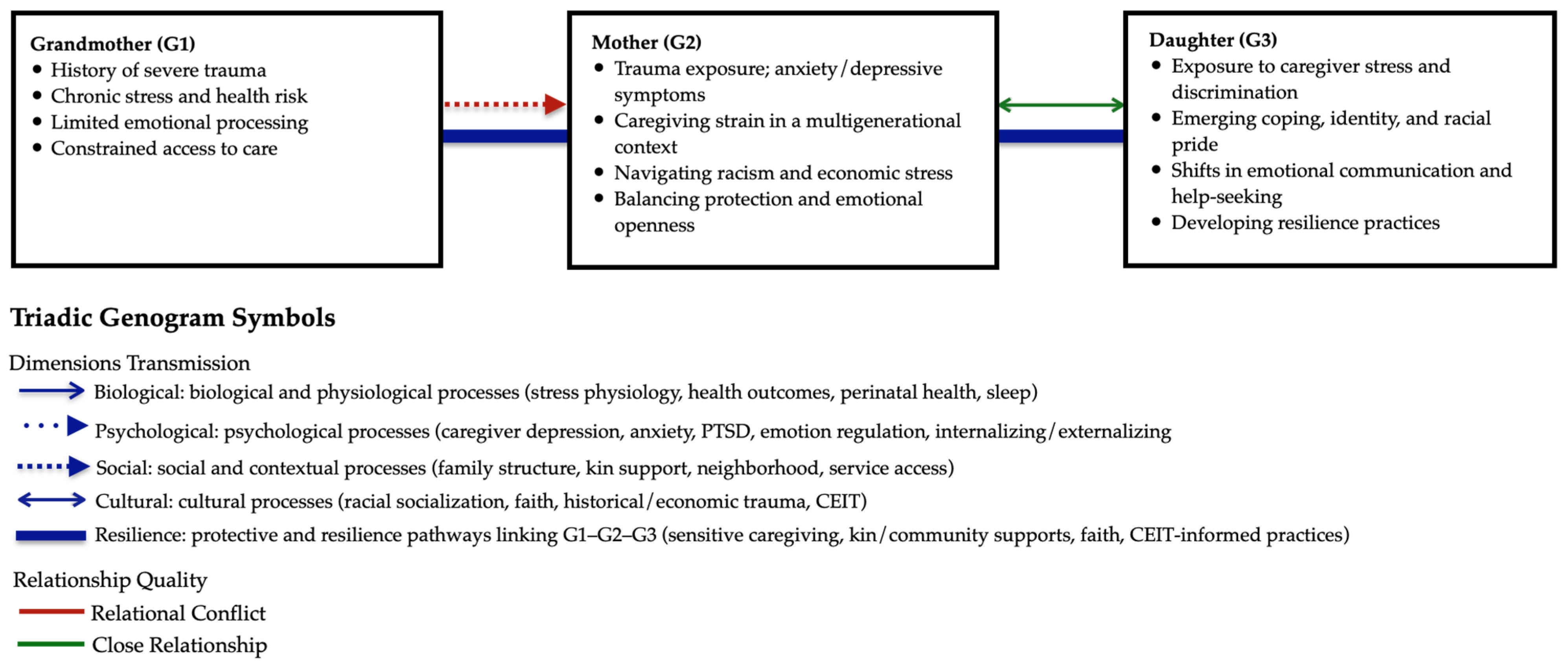
To make this framework explicit, we adapted the genogram, a family systems tool that visually maps family members and their relationships, into a conceptual triadic genogram that summarizes how multilevel pathways of trauma and resilience may operate across three generations (
Figure 2). Rather than representing data from a single family, this genogram integrates patterns from the included studies to highlight hypothesized pathways of risk, relationship quality, and resilience across grandmother, mother, and child. In this way, the triadic genogram functions as a visual synthesis of the dimensional conceptual analysis, organizing the five analytic dimensions within and across generations.
Ten of the thirteen included studies examined dyadic relationships (e.g., mother–infant, mother–child, parent–youth), providing the most direct evidence for cross-generational influences in specific pairs. These studies consistently showed that caregivers’ trauma histories, psychological symptoms, and parenting behaviors were associated with children’s emotional and behavioral outcomes, including internalizing and externalizing problems, stress responses, and sleep quality (
Bartlett and Easterbrooks 2015;
Cohen et al. 2022;
Smith et al. 2014). In dyadic terms, maternal mental health and parenting practices functioned as key mechanisms linking prior adversity to children’s current adjustment, highlighting one critical pathway in the broader triadic system.
At the same time, the conceptual triadic lens emphasizes that each dyad exists within a larger multigenerational context. For example, a mother’s parenting behaviors and coping strategies are shaped not only by her own experiences but also by her relationship with her mother (the child’s grandmother), by shared family narratives of survival and strength, and by the structural conditions that have affected prior generations. The triadic genogram captures this layering by mapping potential pathways such as: grandmother’s trauma history and coping influencing mother’s mental health and parenting; mother’s experiences of racism and stress influencing child development; and the circulation of narratives about strength, sacrifice, and silence across all three generations. This conceptualization underscores that effective research and intervention must attend to both dyadic processes and the broader triadic and structural contexts in which they unfold.
4.3. Multigenerational Patterns and Conceptual Triads
Although most included studies were dyadic, a smaller set examined multigenerational or extended family processes or provided conceptual frameworks that explicitly address multiple generations. These studies and reviews do not follow all three generations concurrently with standardized measures; however, they illuminate how risk and resilience patterns are initiated, maintained, or transformed over time. Qualitative and conceptual work highlights the importance of shared family narratives, transgenerational expectations, and cultural practices that extend beyond any single dyad. The conceptual triadic framework used in this review brings these strands together, highlighting how trauma and resilience are co-constructed across generations and underscoring the need for future research that more fully captures three-generation processes.
In multigenerational and extended-family contexts, grandmothers frequently emerge as central figures who provide childcare, financial assistance, emotional support, and socialization around race, gender, and faith. At the same time, they often carry their own histories of trauma, loss, and chronic stress, which may shape how they relate to their adult children and grandchildren. Some studies suggest that strong grandmother involvement can buffer children from the negative effects of maternal depression or economic hardship by providing stability, affection, and practical support. Other work points to tensions and conflicts within multigenerational households, especially when trauma histories and caregiving expectations are not openly addressed. These patterns reinforce the value of conceptualizing intergenerational trauma and resilience at the triadic level, where the interplay between grandmother, mother, and child can be more fully appreciated.
Collectively, these multigenerational perspectives reinforce the conceptual triadic genogram presented in
Figure 2, illustrating how the five analytic dimensions intersect within and across three generations of African American women. They also highlight key gaps in the empirical literature, including the need for more longitudinal, three-generation studies that explicitly measure trauma exposure, mental health, parenting practices, and resilience resources across time. Such work would allow researchers to empirically test the hypothesized pathways portrayed in the conceptual triad and to identify leverage points for interrupting harmful cycles and amplifying protective processes.
4.4. Interplay Between Dyads and Multigenerational Systems
Dyadic processes operate within broader family and community systems that can either amplify or buffer intergenerational risk. High-quality mother–child interactions may be undermined by unresolved conflict, economic strain, or limited support from extended kin; conversely, robust kin networks and cohesive coparenting can compensate for individual distress and stabilize children’s daily routines (
Bartlett and Easterbrooks 2015;
Hankerson et al. 2022;
Younger 2025). In some families, grandmothers and other relatives provide crucial childcare, emotional support, and spiritual leadership, helping mothers to manage stress, maintain employment or education, and access resources. In others, role conflicts or divergent beliefs about discipline, mental health, or help-seeking may intensify stress, creating additional risks for children.
Within this interplay, resilience is often generated collectively.
Hankerson et al. (
2022) documented how partnerships between churches and mental health providers can enhance access to care and reduce stigma, leveraging existing community structures.
Dunbar et al. (
2018) and
Metzger et al. (
2017) showed that interventions that integrate racial socialization and culturally responsive practices can strengthen parent–child relationships and support adaptive coping.
Younger (
2025) and
Lee and Haskins (
2025) described how families draw on narratives of strength and shared responsibility—such as the Strong Black Woman schema and collective economic strategies—to sustain each other, even as these narratives sometimes come with psychological costs.
Taken together, these findings suggest that intergenerational trauma among African American families is best understood as a dynamic process unfolding within nested systems of dyads, extended kin, and communities. Dyads remain the primary context in which trauma and resilience are directly observed and measured, but multigenerational caregiving arrangements and structural forces shape how these dyadic patterns are initiated, maintained, or transformed over time. The conceptual triadic framework used in this review brings these strands together, highlighting how trauma and resilience are co-constructed across generations and underscoring the need for future research that more fully captures three-generation processes.
4.5. Duality of the “Strong Black Woman” Narrative and the Introduction of “SuperB”
One of the recurrent themes in the literature is the centrality of cultural narratives, particularly the “strong Black woman” archetype, in shaping how African American women navigate trauma, caregiving, and resilience. This narrative emphasizes strength, independence, perseverance, and self-reliance, and has historically functioned as a protective mechanism that enables women to endure and resist systemic racism, sexism, and economic hardship. Within dyads and triads, this archetype can support stability by encouraging women to “hold it together” for their families and model determination and resourcefulness for younger generations.
At the same time, the “strong Black woman” narrative has a well-documented “double-edged sword” quality. By valorizing stoicism and self-sacrifice, it can discourage emotional vulnerability, devalue rest and self-care, and stigmatize help-seeking behaviors. In the context of intergenerational trauma, this can perpetuate cycles of unaddressed psychological distress, as women feel compelled to appear invulnerable even when carrying significant emotional and physical burdens. The findings of this scoping review are consistent with prior work that identifies both the protective and harmful aspects of this narrative, particularly in relation to mental health outcomes and willingness to seek support.
The “SuperB (Superbutstillhuman)” narrative is proposed here as a conceptual reframing rather than an empirically validated construct. SuperB offers a way of honoring the strength embedded in the “strong Black woman” archetype while explicitly making space for emotional complexity and human limitation. Within this framework, resilience and vulnerability are understood as complementary rather than contradictory. African American women are positioned as capable of extraordinary endurance and leadership, yet also as fully entitled to rest, care, and emotional expression (
Woods-Giscombé 2010). While the included studies did not directly test the SuperB model, their descriptions of women’s lived experiences, coping strategies, and tensions between strength and distress provide a conceptual grounding for this reframing. Future empirical work is needed to operationalize and evaluate this narrative in practice, but conceptually it offers a useful lens for reimagining healing processes within African American families.
4.6. Implications for Research, Policy, and Practice
The integration of dimensional, dyadic, and triadic perspectives in this review has several implications for future research, policy, and practice. For research, there is a need for more studies that explicitly operationalize intergenerational trauma and resilience within African American families, using designs that can capture both within generation and cross-generation processes. Longitudinal, multigenerational studies are particularly important for testing pathways such as those depicted in the conceptual triadic genogram. Mixed method designs that integrate quantitative measures, for example biomarkers of stress and standardized mental health and parenting measures, with qualitative data on trauma narratives, racialized experiences, and meanings of strength and vulnerability are well suited to the complexity revealed by the dimensional conceptual analysis. Such work can further clarify how biological, psychological, social, cultural, and resilience processes intersect within and across generations.
For policy, this review underscores that intergenerational trauma among African American families is deeply rooted in structural inequities, including racism in health care, housing, employment, and the criminal legal system. Policies that reduce exposure to these structural stressors, such as expanding access to equitable perinatal and mental health care, enforcing anti-discrimination protections, addressing wealth and housing gaps, and investing in community-based supports, are likely to have multigenerational benefits across biological and psychological domains. Given the central caregiving roles that mothers and grandmothers often play, policies that provide material support, for example income supplements, paid family leave, and childcare subsidies, and that offer sustainable funding for community organizations serving Black families, are particularly important for supporting resilience.
For practice, this review suggests that interventions addressing intergenerational trauma in African American families should be culturally grounded, family-centered, and multidimensional. Trauma-focused treatments that explicitly address racism, incorporate racial socialization and cultural pride, and engage with narratives such as the Strong Black Woman schema may be more responsive to the lived experiences of Black women and girls (
Metzger et al. 2017). Addressing cultural narratives such as the Strong Black Woman archetype and introducing frameworks like the SuperB narrative can help families balance resilience with emotional vulnerability and create space for healing rather than silence or emotional suppression. By explicitly naming and reframing these narratives, practitioners can support African American women in redefining strength to include help seeking, rest, and emotional expression. Programs that involve multiple generations, such as including grandmothers and other kin in parenting interventions, psychoeducation, or support groups, may better reflect actual caregiving arrangements and leverage existing resilience resources. Clinicians and community providers can build on faith communities, extended kin networks, and culturally specific coping practices as strengths, while also creating space to name and process trauma and discrimination in ways that are not constrained by expectations of constant strength or silence.
Understanding the unique contributions of dyads and triads to the transmission of trauma and resilience further refines these practice implications. Programs that focus only on the mother–child dyad may overlook the broader multigenerational context that shapes family dynamics and coping. Incorporating the grandmother’s role into interventions can provide a more holistic approach to breaking cycles of trauma. Family-based programs that include grandmothers, mothers, and children can foster open communication, address unresolved trauma across generations, and promote collective healing (
Sweeting et al. 2022). Interventions that leverage the strengths of triadic relationships, such as shared caregiving responsibilities, intergenerational storytelling, and cultural practices, can amplify resilience and disrupt cycles of trauma by integrating both dyadic and triadic perspectives.
Tools such as family genograms can also be instrumental in identifying and addressing intergenerational trauma. A family genogram visually represents family structures, relationships, and medical and psychosocial histories, and allows researchers and health professionals to trace hereditary patterns and identify trauma origins (
Cuartas Arias 2017). The conceptual triadic genogram used in this review extends this tool by summarizing how multilevel pathways of trauma and resilience may operate across three generations. This approach can help determine how far back trauma can be traced, what specific traumatic experiences and relational patterns entail, and which healing strategies are most appropriate. By incorporating genetic information, lineage histories, and cultural context, genograms can provide a comprehensive view of intergenerational trauma and resilience and offer a foundation for targeted, family-centered interventions.
The findings of this review also highlight key elements to leverage when creating mental health and emotional healing interventions for African American women. Resilience and coping strategies cited in the literature emphasize the importance of community and social or collective support (
Bartlett and Easterbrooks 2015;
Hankerson et al. 2022). Healing interventions should therefore empower individuals and familial triads by addressing both the trauma experience and the resilience that emerges from it. Interventions that integrate faith-based practices, community engagement, and culturally sensitive therapy can help families balance resilience with emotional vulnerability. Additionally, addressing maternal histories of trauma and their impact on children is essential for breaking cycles of trauma. Programs that focus on joint healing within triads, such as grandmother mother daughter or grandmother granddaughter relationships, can foster open communication, mutual recognition of pain and strength, and collective empowerment, and can support more sustainable intergenerational healing.
4.7. Limitations and Future Research
This study has several limitations that should be acknowledged. First, the number of studies identified and included in this review was relatively small, which limits the breadth and generalizability of the conclusions that can be drawn. The focus on African American families, while critical for understanding the unique challenges and strengths within this population, means that the findings may not capture the full diversity of intergenerational trauma experiences across other racial or ethnic groups. This intentional focus is appropriate to the aims of the review but necessarily narrows its applicability beyond African American communities.
Methodological constraints within the included studies also shape the strength and scope of the conclusions. Many studies relied on qualitative designs or self-reported data, which, while invaluable for capturing lived experience and meaning, may introduce recall bias, social desirability bias, or limited measurement precision. The synthesis included ten studies that examined dyadic transmission (mother–infant dyads, mother–child dyads, parent–child dyads, and parent–youth dyads) and only three studies that examined multigenerational patterns. None of the latter measured true three-generation dynamics simultaneously using standardized assessments across all three generations. The dyadic studies provide valuable insights into dimensions of intergenerational trauma transmission, especially from mothers to children, but they are limited in their capacity to elucidate grandmother trauma influences on mother–child interactions or to determine whether grandmothers buffer or exacerbate maternal stress. This gap represents a critical limitation: while dyadic studies establish that trauma can transmit from mothers to children, they cannot fully reveal the triadic mechanisms that determine whether transmission intensifies, attenuates, or transforms across three generations.
Another limitation is the primary focus on maternal and grandmother roles, with comparatively less attention to the contributions of fathers, male caregivers, and other extended family members such as aunts, uncles, or fictive kin. Given that African American family networks often extend beyond the nuclear family, the underrepresentation of these roles in the available literature may obscure important sources of both risk and resilience. In addition, contextual factors such as neighborhood conditions, school environments, and broader community institutions were not consistently measured across studies, limiting the ability to fully account for how external systems interact with family-level processes.
In keeping with the objectives and scope of a scoping review, we did not conduct a formal risk-of-bias or quality appraisal of individual studies using standardized tools such as Cochrane risk-of-bias instruments or GRADE. The included studies varied widely in design, focus, and methodological rigor, and our aim was to map this heterogeneity and identify conceptual patterns rather than to produce pooled estimates or rank studies by quality. Nevertheless, in interpreting the evidence, we considered the limitations acknowledged by study authors, including small and non-representative samples, cross-sectional or short-term designs, and restricted measurement of trauma exposure, resilience, or family relationships. We also sought to distinguish clearly between empirical description and conceptual extrapolation in our synthesis and discussion. This approach aligns with contemporary guidance on scoping reviews, which emphasizes breadth, mapping, and conceptual clarification over formal appraisal and quantitative synthesis.
Future studies should address these limitations by expanding the scope of research to include larger and more diverse samples, as well as more robust designs. Longitudinal studies that track families across multiple generations would provide deeper insight into the mechanisms of trauma and resilience transmission and how these processes evolve over time. Future work should also more fully examine the roles of fathers, other caregivers, and extended kin, alongside the impact of community resources and systemic inequities, in shaping intergenerational outcomes. Finally, additional research is needed to develop and evaluate culturally sensitive, multigenerational interventions tailored to the unique needs of African American families. By building on the patterns identified in this scoping review, future research can move toward a more comprehensive understanding of intergenerational trauma and resilience and inform effective strategies for interrupting cycles of trauma and fostering healing across generations.
5. Conclusions
This scoping review and conceptual analysis provide an integrated examination of intergenerational trauma and resilience within African American families, with particular attention to the roles of grandmothers, mothers, and daughters in dyadic and triadic relationships. Across the included studies, maternal depression, trauma symptoms, and stress were consistently associated with children’s emotional and behavioral difficulties, as well as with parenting practices that can either transmit or buffer trauma. By organizing this literature across biological, psychological, social, and cultural dimensions, the review shows that maternal mental health, caregiving practices, racialized stress, and multigenerational family structures work together to shape the transmission of both trauma and resilience. Dyads, especially mother–daughter relationships, emerged as direct pathways through which trauma-related beliefs, behaviors, and coping patterns are passed on. Triads, in turn, provided a broader lens that captures the cumulative influence of shared histories, cultural narratives, and systemic inequities across three generations and highlighted the often underrecognized contributions of grandmothers as both risk and resilience carriers.
The application of theoretical frameworks such as the biopsychosocial model and historical trauma theory deepens our understanding of how trauma develops, persists, and can be transformed over time within African American families. The evidence reviewed indicates that intergenerational trauma is not solely an individual or biological phenomenon but arises from interactions between psychological distress, relational patterns, community context, and structural racism. Within this context, the duality of cultural narratives such as the Strong Black Woman archetype becomes especially salient. Empirical work summarized in this review links this narrative to perseverance, high caregiving investment, and protection of children, but also to self-silencing, reluctance to seek help, and elevated stress among African American women. The proposed SuperB, Super but still human, narrative offers a conceptual reframing grounded in these findings. It honors the resilience and multilevel caregiving labor documented across studies, while explicitly making space for vulnerability, rest, and support, and therefore points toward new directions for culturally grounded assessment and healing.
This review also identifies several specific gaps in the current evidence base. Few studies directly examined triadic relationships using standardized assessments across three generations, and very few centered African American women’s experiences in ways that fully capture their simultaneous roles as daughters, mothers, and grandmothers. Definitions and operationalizations of intergenerational trauma were often inconsistent, which limits the comparability of findings and hinders the development of targeted interventions. Most studies focused on psychological and relational outcomes, with relatively limited integration of biological markers of stress or health. Longitudinal, multigenerational designs were rare, making it difficult to distinguish intergenerational effects from concurrent contextual adversity. Addressing these gaps will require longitudinal, multigenerational, and mixed methods research that explicitly focuses on African American families, uses clear and theory-informed definitions of intergenerational trauma and resilience, incorporates both dyadic and triadic designs, and integrates biological, psychological, social, and cultural data.
The findings also support concrete directions for practice and policy. Empirical work indicates that culturally sensitive, multigenerational interventions that engage grandmothers, mothers, and children together can support more open communication about trauma, strengthen parenting and co-parenting relationships, and enhance children’s coping. Tools such as family genograms and conceptual triadic genograms can help families and practitioners map patterns of trauma and resilience, clarify the origins and evolution of key narratives such as Strong Black Woman and SuperB, and identify specific points at which change is most feasible. Evidence that African American women frequently rely on faith communities, extended kin networks, and collective coping suggests that interventions are more likely to be effective when they incorporate faith-based and community-based resources, rather than focusing only on individual treatment. At a policy level, findings across the reviewed studies reinforce the need for investments in equitable perinatal and mental health care, income and childcare supports, and community organizations that directly serve Black families, given the central role of maternal and grandmaternal caregivers in children’s well-being.
Overall, the evidence synthesized in this review shows that African American families, and African American women in particular, are positioned at the intersection of vulnerability and strength. Intergenerational trauma is shaped by historical and ongoing structural inequities in health care, housing, employment, and the criminal legal system, yet within these same contexts, families cultivate powerful forms of resilience, creativity, and care through multigenerational caregiving, cultural and faith practices, and collective coping. By centering dyadic and triadic relationships, introducing a conceptual triadic genogram, and articulating the SuperB narrative as an evolution of the Strong Black Woman archetype, this study offers a specific framework for defining and examining intergenerational trauma and resilience in African American families. This framework can guide future empirical work, inform the design and testing of culturally responsive multigenerational interventions, and support policies that aim to promote healing and wellbeing across generations in African American communities.