1. Introduction
The ongoing transition towards low-carbon transportation and sustainable energy systems has significantly accelerated the deployment of lithium-ion battery technologies. Lithium-ion batteries have become a dominant energy storage solution for electric vehicles, industrial equipment, consumer electronics, and stationary energy storage systems due to their high energy density, long cycle life, and favorable performance characteristics [
1,
2,
3].
The rapid growth of battery applications has simultaneously increased concerns regarding operational safety throughout the entire battery life cycle. In addition to risks associated with manufacturing and transportation, significant attention has recently been directed towards hazards occurring during storage, handling, charging, maintenance, and end-of-life processing. Numerous incidents involving battery fires in industrial facilities, warehouses, logistics centers, and electric vehicles have demonstrated that lithium-ion battery failures may result in severe consequences including fire, explosion, toxic gas release, environmental contamination, property damage, and risks to human health [
4,
5,
6,
7].
One of the most critical failure mechanisms is thermal runaway. Thermal runaway represents a self-accelerating process initiated by internal or external battery abuse conditions, including mechanical damage, electrical faults, manufacturing defects, overheating, or improper operating conditions. Once initiated, exothermic reactions within battery cells generate heat at a rate exceeding the system’s ability to dissipate it, resulting in rapid temperature escalation and potential fire development [
5,
6,
8,
9,
10,
11,
12,
13,
14,
15].
Current safety strategies rely on a combination of preventive measures, monitoring systems, fire detection technologies, and emergency response procedures. Conventional fire protection systems typically utilize smoke detectors, heat detectors, or flame detection technologies. Although these systems provide essential protection functions, they often respond only after the development of observable fire phenomena. In the case of lithium-ion batteries, however, significant thermal abnormalities may occur before smoke generation or visible combustion becomes apparent [
16,
17,
18,
19,
20,
21,
22,
23].
Recent advances in thermal imaging technologies have created new opportunities for the early identification of abnormal thermal behaviour. Continuous temperature monitoring allows operators to detect localized temperature increases and thermal anomalies that may indicate the initial stages of battery failure. Consequently, thermal monitoring is increasingly considered an important component of modern battery safety management systems [
22,
23].
Despite the growing adoption of thermal monitoring technologies, the current literature remains primarily focused on battery chemistry, thermal runaway mechanisms, fire behaviour, and extinguishing methods. Comparatively less attention has been devoted to the practical implementation of integrated thermal detection systems within real industrial environments. Existing studies rarely address the complete operational chain linking anomaly detection, alarm evaluation, visual verification, notification processes, escalation logic, and emergency response procedures.
This gap is particularly evident in large-scale industrial battery storage facilities, where effective risk management requires not only accurate temperature monitoring but also clearly defined operational procedures capable of transforming detected information into timely decision-making and intervention.
Therefore, the aim of this paper is to present an integrated framework for the implementation of thermal detection systems in lithium-ion battery storage facilities. The proposed approach combines thermal imaging technology, multi-level alarm management, automated notification, visual verification, and predefined response procedures into a unified operational safety system. The framework is demonstrated through its implementation in an industrial environment where lithium-ion batteries and battery modules are routinely stored and handled.
The results contribute to the development of practical methodologies for battery storage safety and provide guidance for industrial operators seeking to improve early warning capabilities and reduce the consequences of thermal incidents.
Rather than proposing a new thermal detection technology, this study documents the full-scale implementation of an integrated monitoring, alarm-management, and operational-response system in a real automotive environment. Its contribution lies in the transparent description of the system configuration, response chain, operational experience, and field data obtained during routine operation.
2. Materials and Methods
2.1. Industrial Case Study
The proposed monitoring framework was implemented in Hall M6 of the Škoda Auto manufacturing plant in Mladá Boleslav, Czech Republic. The monitored facility is dedicated to the storage, handling, inspection, and temporary logistics of high-voltage lithium-ion traction batteries and battery modules used in battery-electric vehicles based on the Volkswagen Group MEB platform. The monitored batteries were based on nickel–manganese–cobalt (NMC) lithium-ion cell chemistry integrated into MEB traction battery packs.
The monitored areas included battery storage racks, battery-module storage locations, temporary quarantine areas, and logistics zones associated with battery handling prior to further manufacturing operations. The monitored section of Hall M6 was equipped with a total of 21 thermal imaging cameras, including four fixed radiometric thermal imaging cameras providing continuous quantitative temperature measurement and seventeen local thermal monitoring cameras supervising battery handling, storage, and logistics operations. The monitoring system covered the principal MEB battery storage areas, battery module storage, logistics routes, and temporary quarantine locations identified during the risk assessment process.
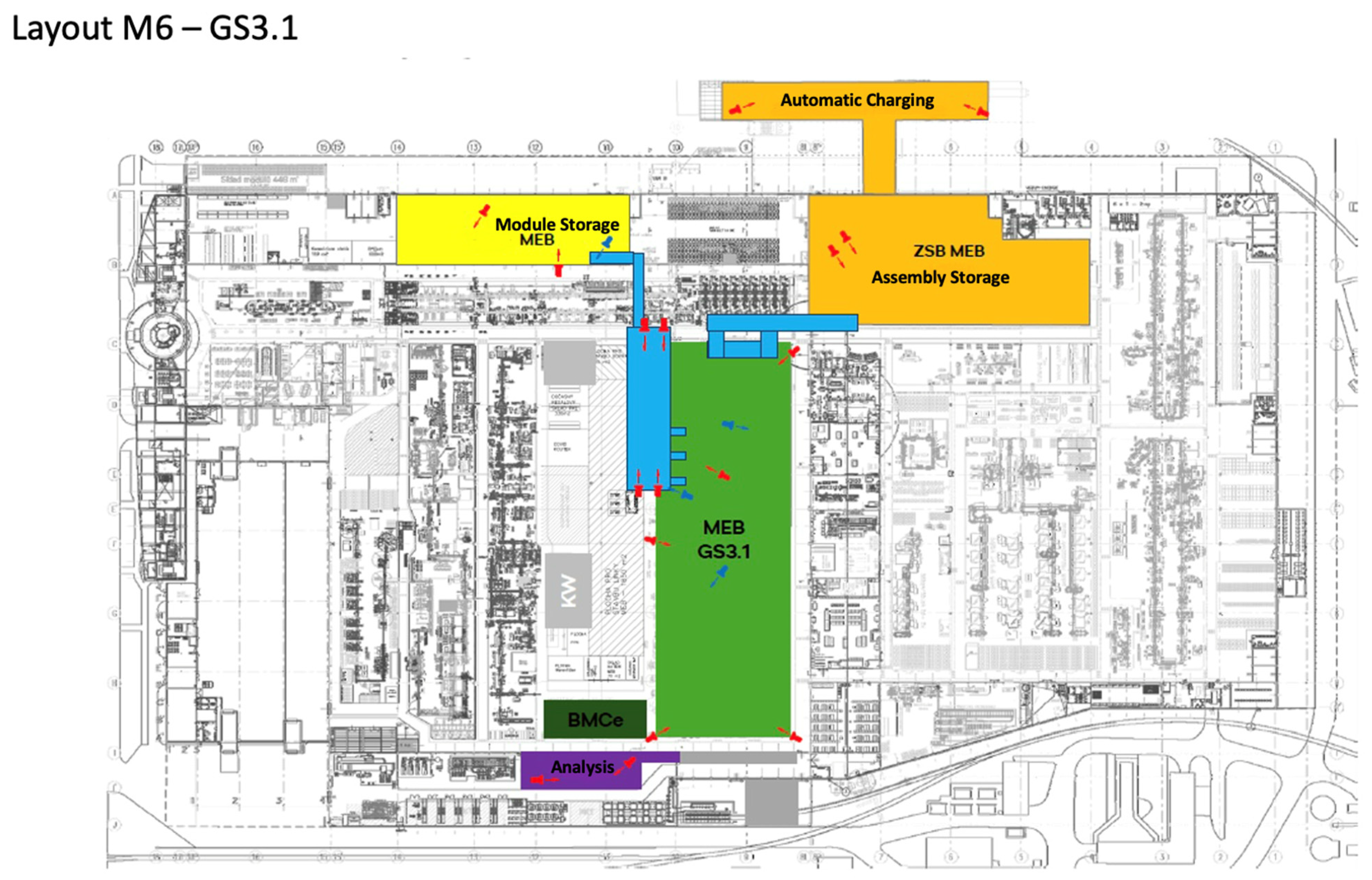
Figure 1 illustrates the monitored operational layout and the spatial distribution of the thermal monitoring system within Hall M6. The monitoring strategy was developed according to operational risk priorities, considering battery quantity, handling frequency, accessibility, and potential consequences of abnormal thermal events.
For confidentiality reasons, detailed information regarding warehouse dimensions, storage capacity, battery inventory, and production throughput cannot be disclosed. Nevertheless, the presented implementation represents a full-scale industrial deployment operating under routine automotive production conditions.
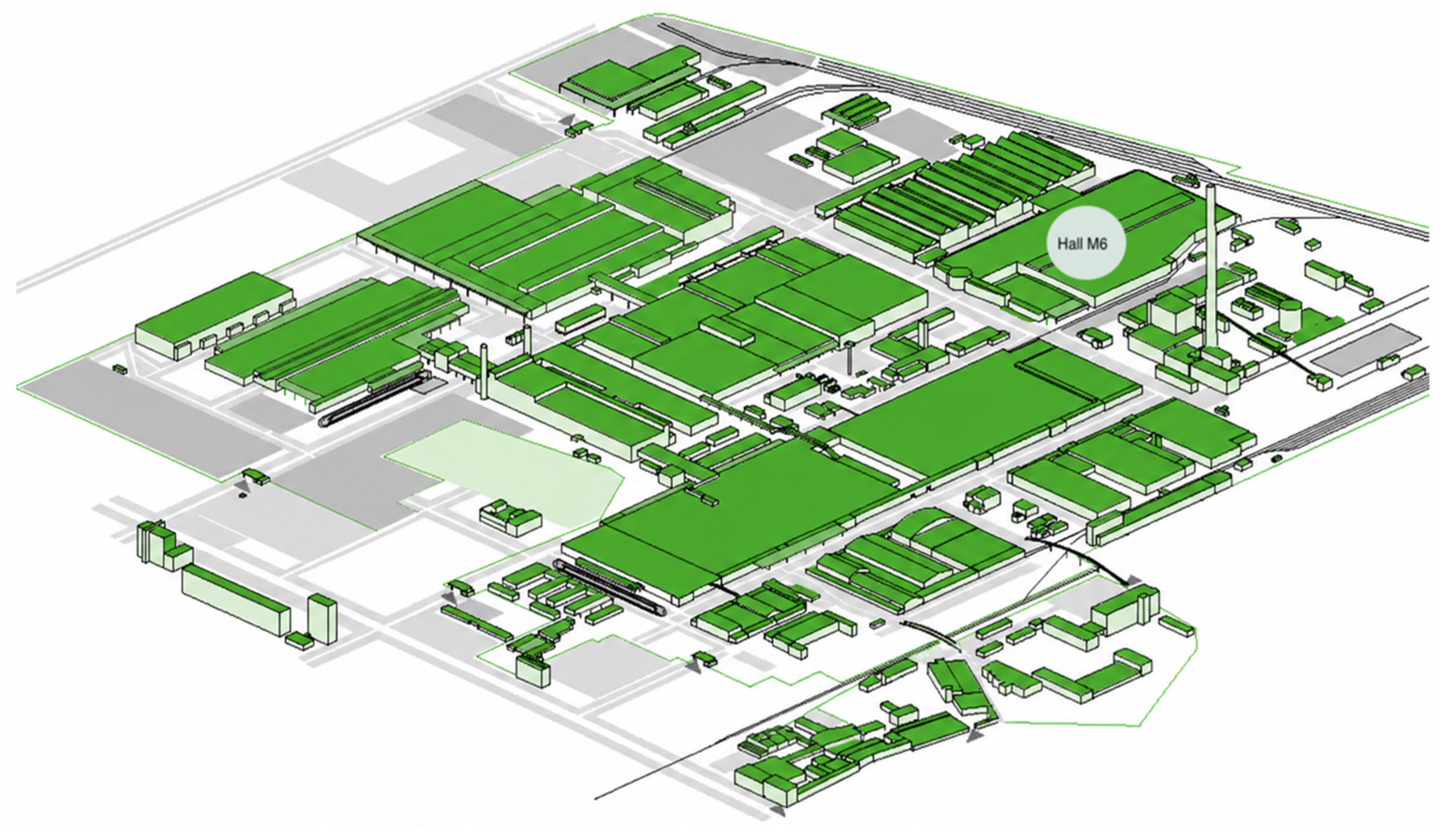
Figure 2 illustrates the location of Hall M6 within the Škoda Auto production complex, while
Figure 1 presents the monitored operational zones equipped with the thermal imaging system.
2.2. Risk-Based Design Approach
The development of the thermal detection framework was based on a risk-oriented methodology focusing on the identification, assessment, and mitigation of hazards associated with the storage and handling of lithium-ion batteries.
The design process consisted of five consecutive stages:
- -
Identification of battery-related hazards.
- -
Assessment of potential failure scenarios.
- -
Determination of critical monitoring areas.
- -
Design of the thermal detection architecture.
- -
Development of alarm management and emergency response procedures.
The risk-oriented methodology was based on a qualitative expert risk assessment combining operational experience, hazard identification, literature review, and industrial safety practice rather than on a formal quantitative method such as FMEA or HAZOP.
The methodology was developed with the objective of enabling the earliest possible identification of abnormal thermal behaviour before the occurrence of visible fire manifestations.
The proposed methodology follows a sequential workflow. The initial risk assessment identifies battery-related hazards and determines critical monitoring areas. These findings provide the basis for the thermal detection framework, including monitoring-zone design, camera placement, and alarm-threshold configuration. Thermal events identified by the monitoring system are subsequently evaluated through the alarm management logic, after which predefined operational procedures determine the corresponding inspection, notification, and emergency response actions.
2.3. Hazard Identification
Lithium-ion battery systems may be exposed to various conditions capable of initiating internal failure mechanisms. Based on the analysis of operational experience, available literature, and battery safety requirements, the following primary hazard categories were identified [
4,
5,
6,
7,
8,
9,
10,
11,
24]:
- -
Mechanical damage;
- -
Electrical abuse;
- -
Thermal stress;
- -
Manufacturing defects;
- -
Improper handling and storage;
- -
Internal cell failures.
The principal hazards associated with lithium-ion battery storage and handling operations are summarized in
Table 1. The identified hazard categories formed the basis for the subsequent risk assessment and monitoring strategy.
These factors may contribute to internal degradation processes leading to localized overheating and, under certain circumstances, thermal runaway.
The assessment demonstrated that thermal abnormalities generally represent one of the earliest detectable indicators of developing battery failure. Consequently, continuous temperature monitoring was selected as the principal monitoring strategy.
2.4. Identification of Critical Monitoring Zones
The monitored facility consisted of areas used for battery storage, battery module handling, and temporary placement of batteries requiring additional inspection.
To maximize monitoring effectiveness, a zoning approach was adopted. Individual areas were classified according to:
- -
Quantity of stored batteries;
- -
Battery state and condition;
- -
Frequency of handling operations;
- -
Potential consequences of battery failure;
- -
Accessibility for intervention.
Particular attention was devoted to locations where damaged, returned, or diagnostically uncertain batteries could be present, as these categories generally exhibit a higher probability of abnormal thermal behaviour [
13].
The zoning methodology enabled prioritization of monitoring resources and optimization of thermal imaging coverage.
The classification of monitored areas according to their operational function and monitoring objectives is presented in
Table 2. The table summarizes the principal monitoring zones together with their operational function and primary monitoring objective, thereby illustrating how the risk assessment was translated into the practical design of the thermal monitoring framework. The selected zones represented locations with the highest operational safety significance.
The monitored areas were covered by an integrated thermal monitoring system consisting of 21 thermal imaging cameras, including four fixed radiometric LWIR thermal imaging cameras for continuous quantitative temperature measurement and seventeen local thermal monitoring cameras dedicated to specific battery handling and storage locations. The monitoring architecture was designed to provide continuous surveillance of battery storage racks, battery module storage areas, logistics routes, and quarantine locations while supporting automated alarm generation, remote operator verification, mobile notification, and integration with the plant fire protection infrastructure.
2.5. Thermal Detection System Architecture
Thermal Imaging Cameras
The radiometric subsystem comprised four fixed radiometric thermal imaging cameras of two types: FLIR A310 and FLIR FC334R. Both camera types are based on uncooled VOx microbolometer technology and operate in the long-wave infrared (LWIR) spectral range. They provide continuous radiometric temperature measurement, programmable alarm functions, Ethernet communication, and integration with the plant monitoring infrastructure. The cameras were selected because of their suitability for continuous industrial operation, environmental resistance, and capability to support automatic thermal anomaly detection. Their principal technical specifications are summarized in
Table 3.
The cameras supported configurable emissivity correction, atmospheric compensation, reflected-temperature compensation, and programmable alarm thresholds. For routine monitoring, emissivity settings and camera calibration followed the manufacturer’s recommendations and the standard operating procedures established during system commissioning. Image processing, alarm evaluation, and event notification were performed automatically by the integrated monitoring platform, while authorized operators could remotely verify alarm events using workstation and mobile client applications.
Thermal imaging technology was selected as the primary detection method due to its capability to continuously monitor large storage areas and identify localized temperature anomalies without physical contact [
8,
12,
13,
14].
The proposed architecture consisted of the following components:
- -
Thermal imaging cameras;
- -
Video management server;
- -
Internal communication network;
- -
Operator workstations;
- -
Mobile client applications;
- -
Alarm management interface;
- -
Fire protection system interface.
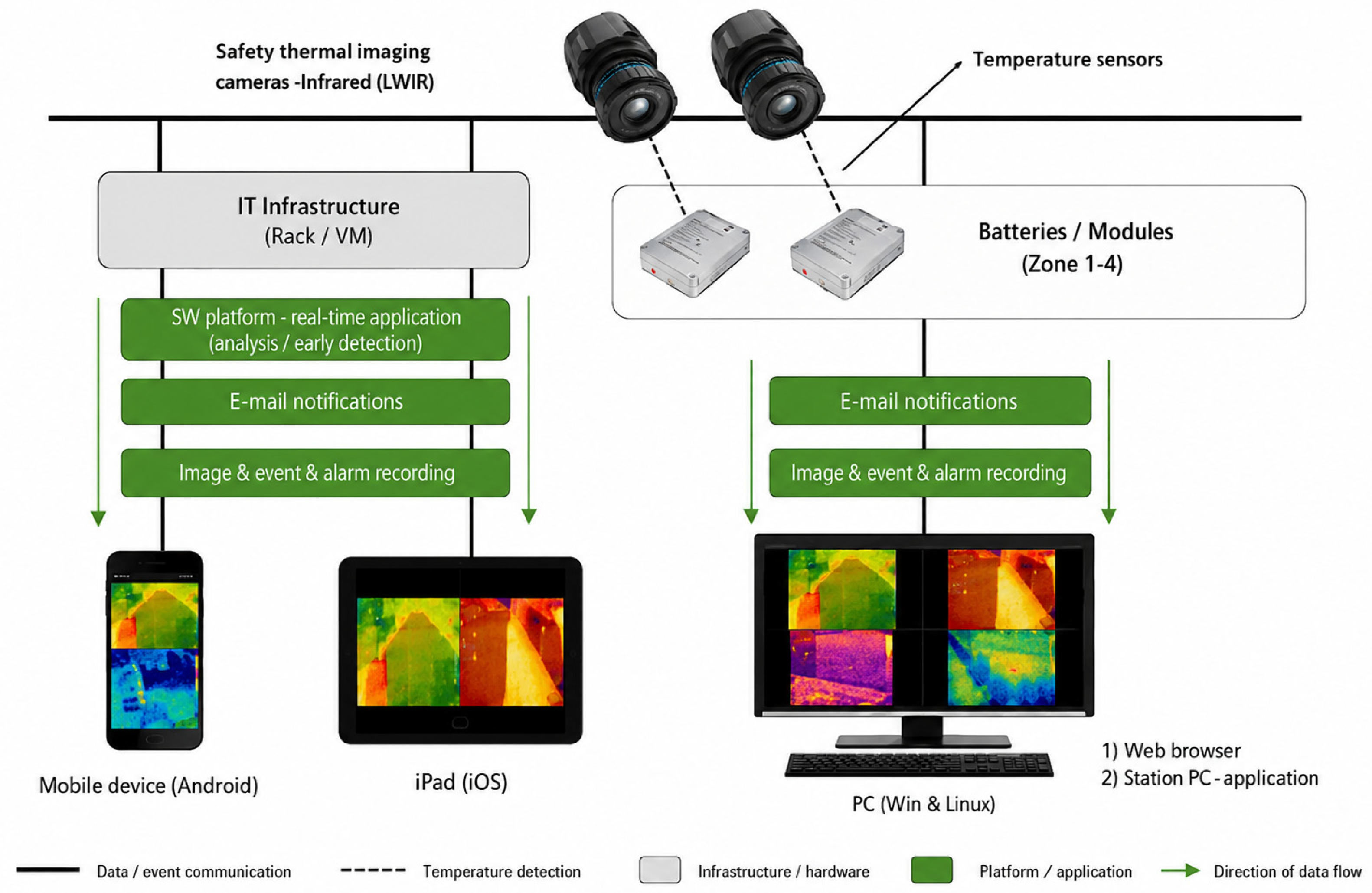
The overall architecture of the implemented thermal detection framework is illustrated in
Figure 3. The figure presents the information flow between thermal imaging devices, alarm management systems, communication channels, and responsible personnel.
Temperature data acquired by thermal imaging cameras were continuously transmitted to the central server, where predefined alarm thresholds were evaluated.
Upon threshold exceedance, the system automatically generated warning notifications and enabled immediate visual verification of the monitored area.
2.6. Alarm Logic and Response Procedures
A multi-level alarm strategy was implemented to distinguish between developing thermal anomalies and critical emergency conditions [
16,
19,
20,
21].
The first alarm level was designed to identify abnormal temperature increases requiring inspection and operational assessment.
The second alarm level represented conditions indicating a significant increase in thermal risk and requiring immediate intervention according to established emergency procedures.
Each alarm level was associated with predefined actions, notification requirements, escalation procedures, and responsibilities of operating personnel.
This approach ensured that detected thermal anomalies were systematically transformed into operational decision-making processes and corrective actions.
2.7. System Integration
To increase operational effectiveness, the thermal detection framework was integrated with existing fire protection infrastructure and communication systems.
The integration enabled:
- -
Automatic alarm transmission;
- -
Remote monitoring;
- -
Mobile notification of responsible personnel;
- -
Event documentation;
- -
Rapid verification of alarm conditions.
The resulting architecture created a continuous information flow from anomaly detection to operational response and emergency management.
3. Results
3.1. Implementation of the Thermal Detection Framework
The proposed thermal detection framework was implemented in an industrial environment used for the storage and handling of lithium-ion batteries and battery modules. The implementation focused on locations where battery systems are routinely stored, transported, inspected, and temporarily isolated in the event of suspected damage or abnormal behaviour.
The primary objective of the implementation was to establish a monitoring system capable of detecting thermal anomalies at an early stage and providing operators with sufficient time to perform preventive intervention before the development of fire-related phenomena.
The final monitoring architecture consisted of thermal imaging devices connected to a centralized monitoring platform. Continuous temperature surveillance was established for all designated critical areas identified during the risk assessment phase. The implemented solution enabled real-time visualization of monitored areas, automated alarm generation, remote access to live thermal data, and integration with operational communication channels.
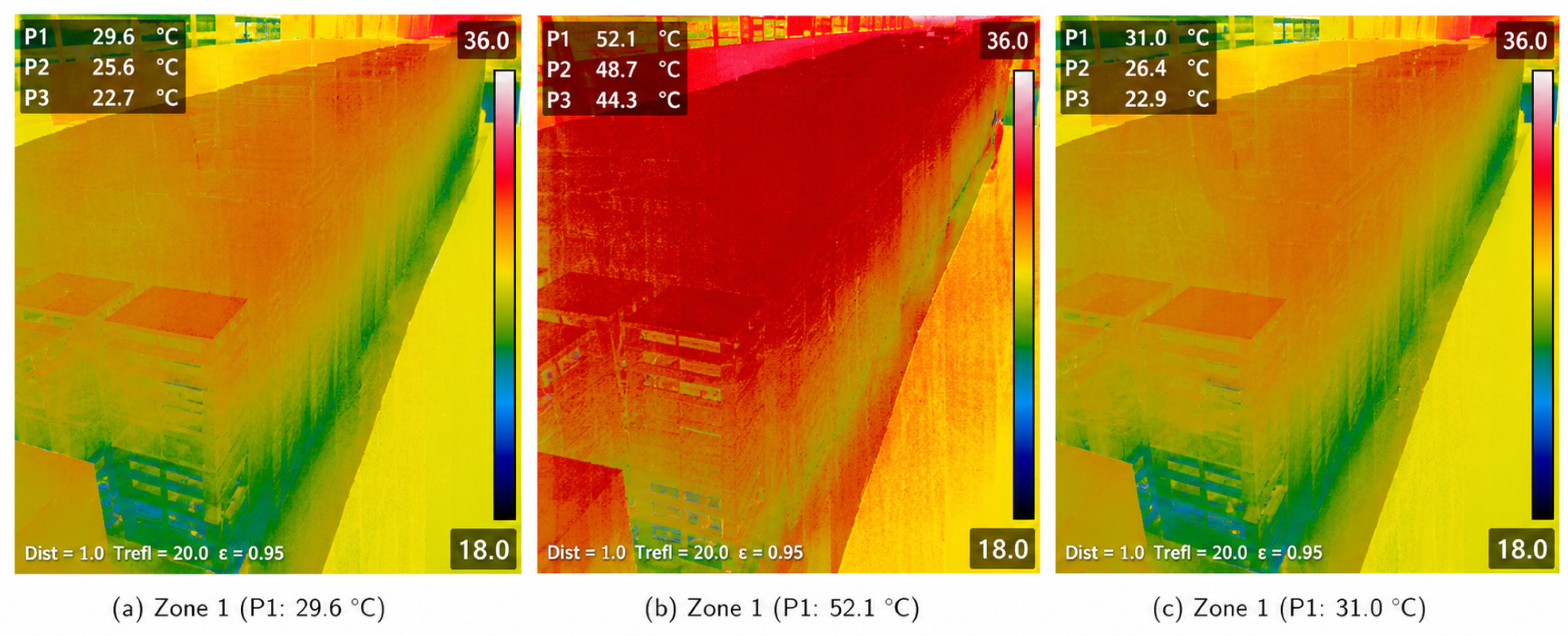
An example of thermal monitoring in a battery storage area is shown in
Figure 4. The monitored location represents one of the critical storage zones included in the implemented framework.
3.2. Alarm Threshold Configuration
The alarm strategy was based on predefined temperature thresholds representing different levels of operational risk.
The absolute temperature thresholds were not intended to represent the onset temperature of thermal runaway. Instead, they were defined as conservative operational intervention levels for externally measured surface temperatures of the monitored NMC-based MEB battery systems. The typical ambient temperature in the monitored areas ranged from approximately 18 to 28 °C and was used as the operational baseline for threshold selection. Relative to the upper ambient baseline of approximately 28 °C, the Yellow, Orange, and Red thresholds therefore represented temperature margins of approximately 17 °C, 27 °C, and 37 °C, respectively. The threshold selection combined the normal thermal baseline observed in the monitored facility, technical limits applicable to lithium-ion battery operation, published evidence concerning temperature-dependent degradation and thermal-runaway mechanisms, and operational experience obtained during system commissioning. The cited standards and manufacturer requirements were used to define the general safety and operating context; however, they do not prescribe the specific alarm values of 45 °C, 55 °C, and 65 °C. These values were established as site-specific operational thresholds during system commissioning.
The Yellow Alert threshold of 45 °C was selected as an early-warning level indicating a surface temperature clearly above the normal environmental and operational baseline and requiring visual verification. The Orange Alert threshold of 55 °C represents an increased-risk condition approaching the upper range commonly associated with normal lithium-ion battery operation and therefore requires intensified monitoring and on-site inspection. The Red Alert threshold of 65 °C exceeds the generally accepted normal operating-temperature range and was selected as a conservative critical intervention level requiring battery isolation and activation of emergency procedures. These thresholds remain substantially below temperatures associated with self-accelerating exothermic reactions and thermal runaway reported in the literature and are therefore intended to provide an operational safety margin rather than to predict the actual onset of thermal runaway [
5,
12,
15].
The implemented system did not use a separate fixed numerical rate-of-rise threshold. Rapid temperature escalation was assessed from the short-term temperature trend and subsequently verified by the responsible operator. Consequently, this criterion represented an operational escalation rule rather than an independently validated quantitative detection parameter.
The implemented alarm thresholds and associated response criteria are summarized in
Table 4. The threshold structure was designed to distinguish between developing thermal anomalies and critical emergency conditions.
The threshold configuration applies specifically to the monitored NMC-based MEB battery systems and the environmental and operational conditions of Hall M6. The values should not be transferred directly to other battery chemistries, pack designs, states of charge, or storage environments without a separate risk assessment and validation process.
A multi-level warning concept was adopted to distinguish between situations requiring inspection and conditions requiring immediate intervention.
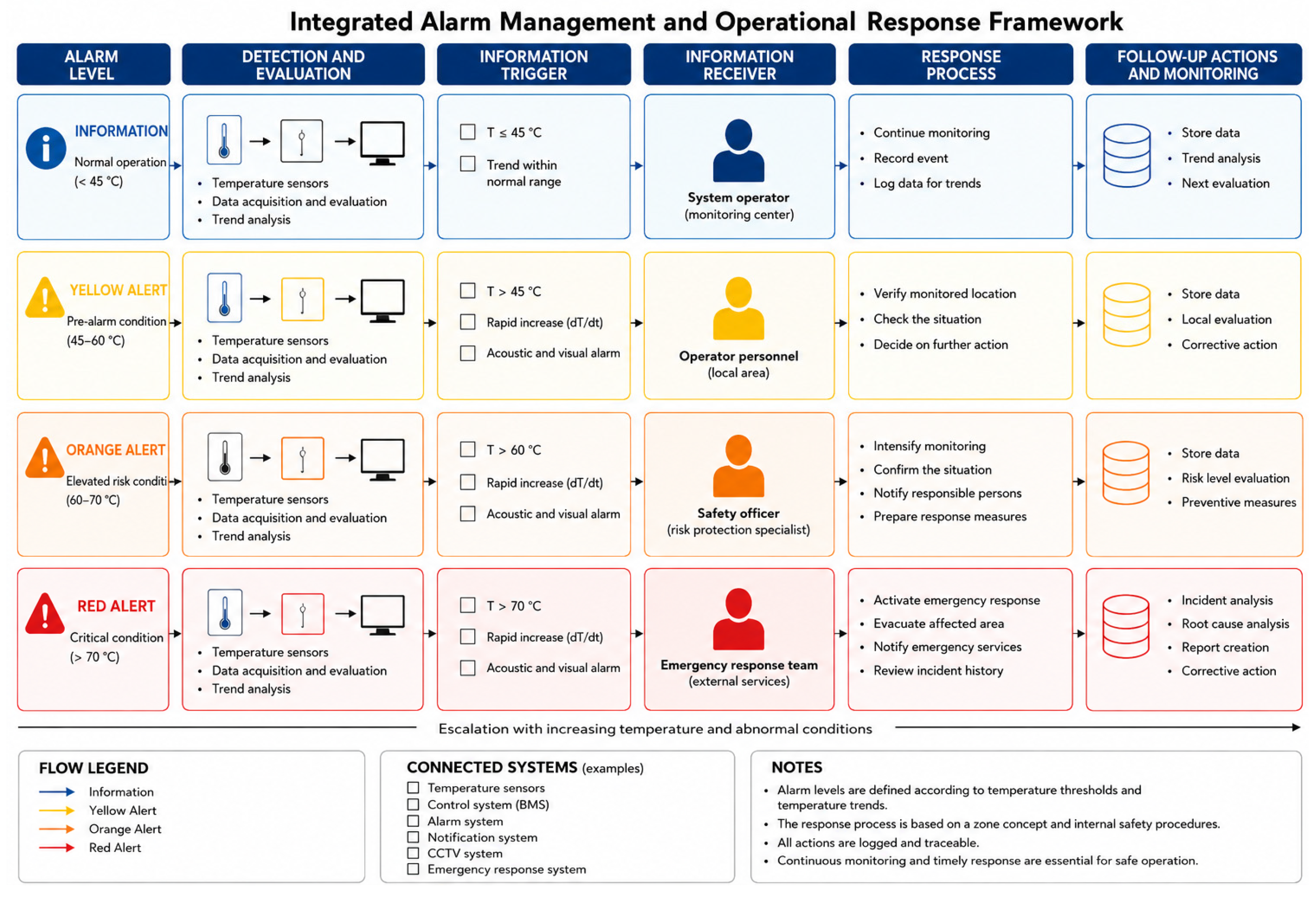
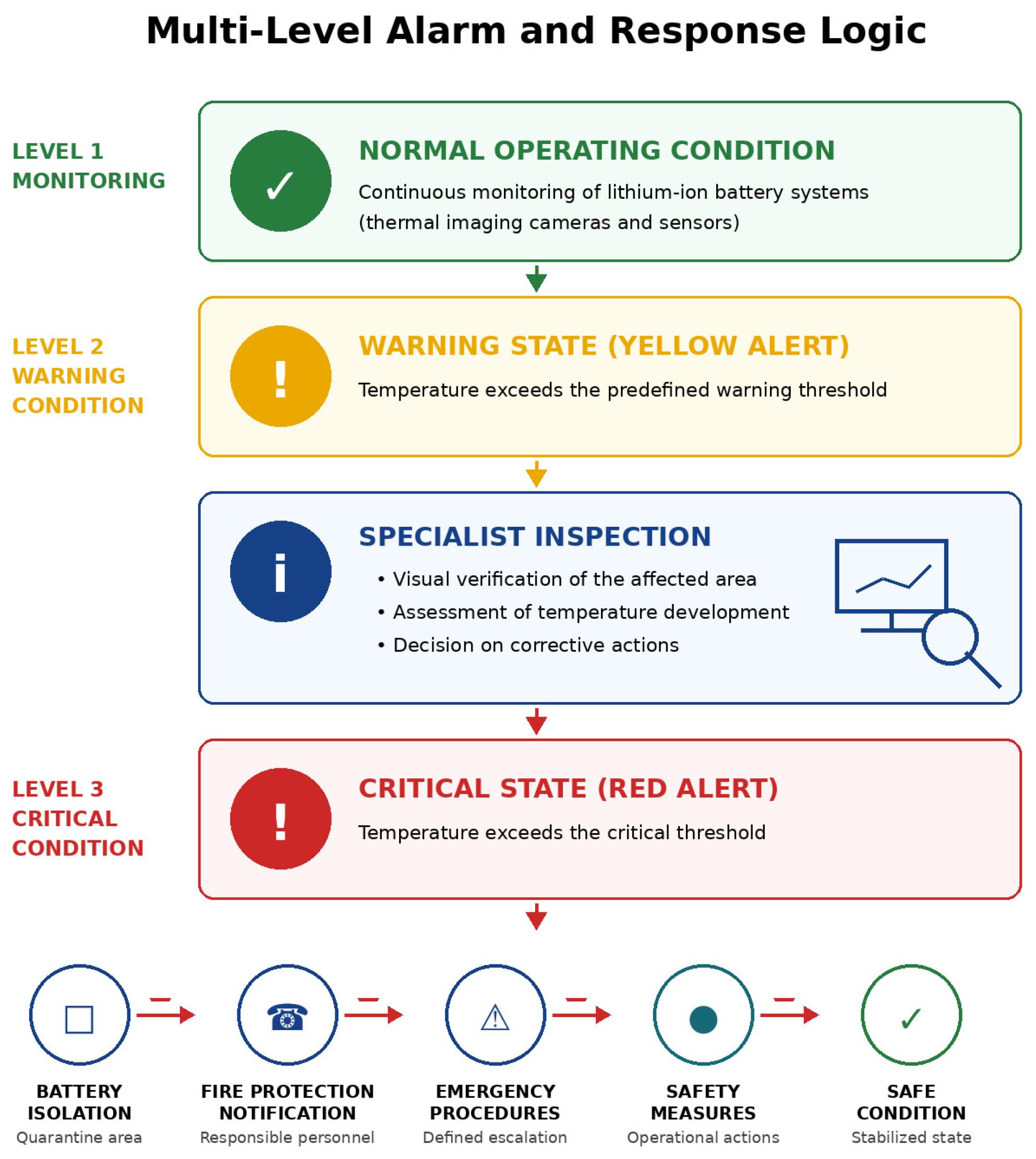
The logic of the implemented multi-level alarm system is illustrated in
Figure 5. The framework links temperature thresholds with predefined verification, notification, and response procedures.
The lower alarm level was intended to identify unusual temperature increases that could indicate developing battery degradation or abnormal thermal behaviour. In these cases, operational personnel were instructed to perform inspection and verification activities.
The higher alarm level represented conditions associated with significantly elevated thermal risk. Exceedance of this threshold initiated escalation procedures and activation of emergency response protocols.
This approach reduced the probability of unnecessary interventions while maintaining sensitivity to potentially hazardous conditions.
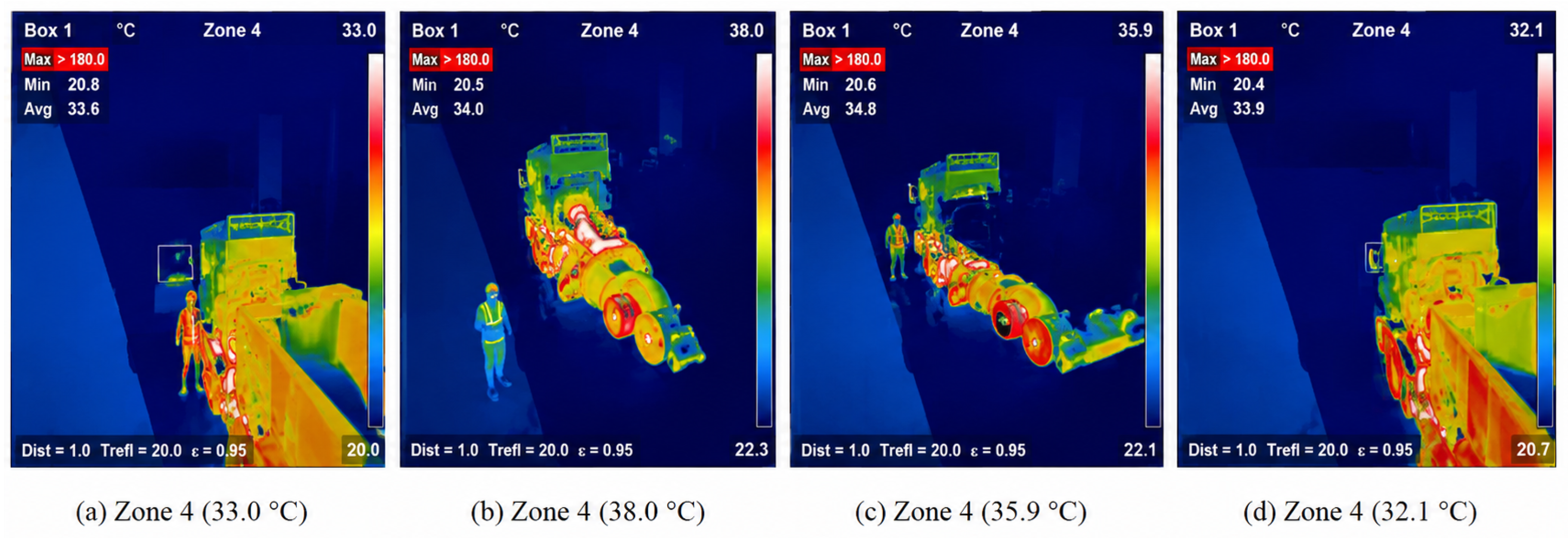
Figure 6 presents thermal monitoring during battery handling and logistics operations. These activities represent situations with an increased probability of battery damage or abnormal thermal behaviour.
3.3. Notification and Escalation Process
The monitoring system was configured to automatically notify responsible personnel whenever predefined alarm conditions were detected.
Response actions associated with individual alarm levels are presented in
Table 5. The framework defines responsibilities, escalation procedures, and corrective actions for each alarm condition.
Alarm notifications included:
- -
Identification of the affected monitoring zone;
- -
Time of alarm activation;
- -
Measured temperature values;
- -
Visual information supporting rapid verification.
The notification process was designed to minimize the delay between anomaly detection and operational response.
Remote access functionality allowed authorized personnel to evaluate alarm conditions without the need for immediate physical presence at the monitored location. This significantly improved situational awareness and accelerated decision-making processes.
The integrated alarm management and escalation process is illustrated in
Figure 7. The framework demonstrates the transition from anomaly detection to operational response and emergency management.
3.4. Operational Response Chain
One of the principal outcomes of the implementation was the establishment of a structured response chain linking thermal anomaly detection with predefined operational actions.
Following alarm activation, operators performed visual verification using the monitoring platform and assessed the severity of the detected condition.
Depending on the alarm level, corrective actions included:
- -
Additional inspection of the affected battery system;
- -
Relocation of the battery to a designated quarantine area;
- -
Activation of emergency response procedures;
- -
Notification of fire protection personnel.
The defined escalation process ensured a consistent and repeatable approach to incident management.
An example of detected elevated temperature sources within a monitored operational area is shown in
Figure 8. The figure demonstrates the practical capability of thermal monitoring to identify localized thermal anomalies.
3.5. Operational Benefits
The implementation demonstrated several operational advantages compared with conventional fire detection approaches.
The most significant benefits included:
- -
Continuous monitoring of battery storage areas;
- -
Earlier identification of abnormal thermal development;
- -
Improved localization of potentially affected battery systems;
- -
Faster information transfer to responsible personnel;
- -
Enhanced preparedness for emergency response.
To evaluate the operational characteristics of the implemented framework, selected monitoring and response performance indicators were assessed. The results are summarized in
Table 6.
Certain detailed operational and technical data are not publicly available due to confidentiality requirements of the industrial operator. The presented parameters are intended to illustrate the architecture and operational characteristics of the implemented monitoring framework.
The presented indicators demonstrate the capability of the implemented system to provide continuous monitoring of critical battery storage areas while supporting rapid identification and management of abnormal thermal conditions.
No response event exceeded the operational intervention limits established for the monitored facility, and no exceptionally long response times were observed during the monitored operational period.
The integration of thermal monitoring, alarm management, and response procedures created a comprehensive operational safety framework capable of supporting both preventive and reactive safety measures.
The implemented framework also improved traceability and documentation of detected events, providing valuable information for subsequent incident analysis and continuous safety improvement.
The presented operational indicators are descriptive because complete event-level statistical datasets are confidential and therefore cannot be disclosed.
3.6. Experimental Verification of Heat Transfer and Thermal Detectability
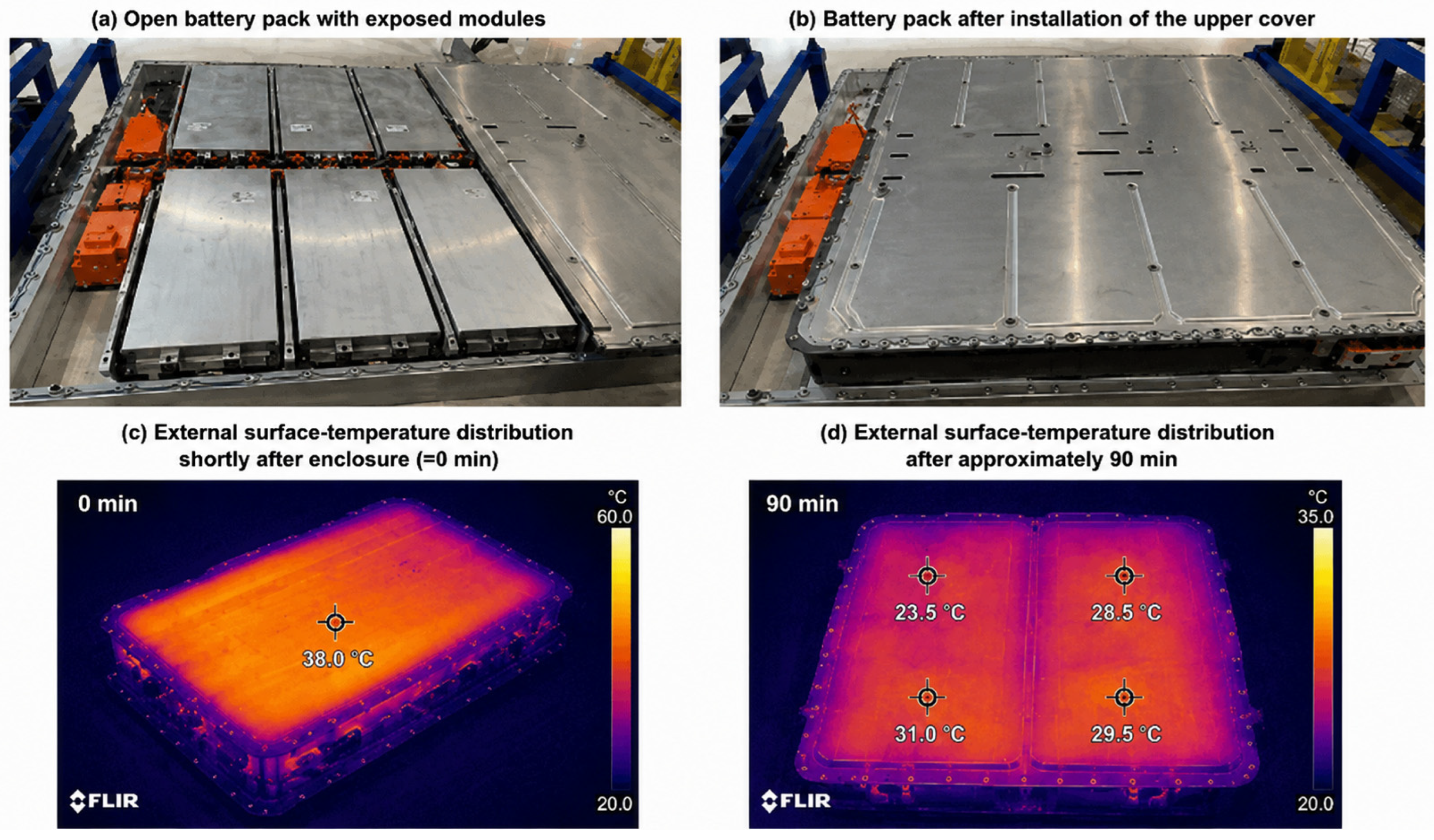
To verify the practical capability and limitations of thermal imaging for battery monitoring, a preliminary heat-transfer experiment was performed using heated dummy battery modules. The objective was to evaluate the relationship between internal module temperature and externally measurable surface temperature after enclosure of the module.
When the battery module was directly exposed, the thermal camera measured approximately 60 °C, while the contact probe indicated 63 °C, corresponding to a difference of approximately 3 °C. After inserting an 80 °C heated dummy module into the battery enclosure and closing the lid, the measured external temperatures decreased rapidly. One minute after enclosure, the thermal camera measured 41 °C while the contact probe measured 25 °C. After 5 min, the measured values decreased to 29 °C and 26 °C, respectively, and after 15 min both measurements approached ambient temperature despite the initially elevated module temperature.
An additional experiment using two battery modules initially heated to approximately 60 °C demonstrated similar behaviour. Although the internal module temperature remained close to 50 °C after approximately 90 min, the measured external enclosure temperatures generally ranged between approximately 23 °C and 31 °C.
These observations demonstrate that thermal imaging accurately detects directly visible heated battery surfaces but cannot reliably determine the temperature of battery modules enclosed within thermally insulating housings. Consequently, the proposed monitoring framework should be regarded as an early-warning system for detecting abnormal surface heating rather than a direct measurement of internal cell temperature.
These findings should therefore be considered when defining alarm thresholds for thermal monitoring systems intended for enclosed battery packs.
The measured temperatures obtained during the experimental verification are summarized in
Table 7.
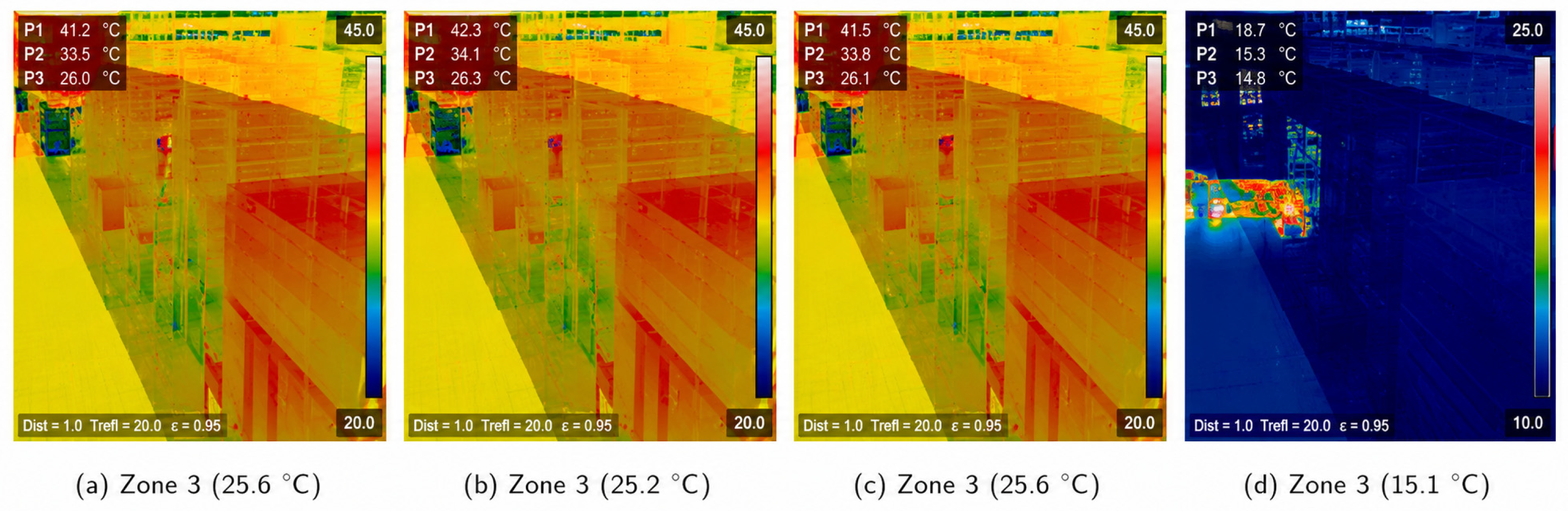
The experimental results demonstrate that the measured external surface temperature depends strongly on whether the heated battery modules are directly exposed or enclosed within the battery pack. Although thermal imaging accurately reflected the temperature of exposed battery modules, installation of the upper cover substantially reduced the externally detectable temperature because of heat transfer through the enclosure. Representative stages of the experimental verification and the corresponding thermographic observations are presented in
Figure 9.
As illustrated in
Figure 9, installation of the battery-pack cover significantly attenuated the external thermal signature of the heated battery modules. While elevated temperatures were readily detected under direct observation, enclosure reduced the externally measurable surface temperature despite the modules remaining at elevated internal temperatures. These findings confirm that thermal imaging primarily reflects surface conditions and should therefore be considered an operational early-warning tool for detecting abnormal surface heating rather than a direct measurement of internal battery temperature.
The experimental observations provide practical evidence supporting the interpretation of the operational monitoring results presented in
Table 6. At the same time, they demonstrate an important limitation of thermal imaging when battery modules are enclosed within thermally insulating structures. This aspect is further discussed in the following section together with its implications for industrial battery-monitoring strategies.
4. Discussion
The increasing use of lithium-ion batteries in industrial applications has generated growing interest in technologies capable of improving the early detection of battery failures and reducing the consequences of thermal runaway events. While significant research efforts have focused on battery chemistry, thermal runaway mechanisms, and fire suppression techniques, considerably less attention has been devoted to the practical implementation of integrated monitoring systems within real industrial environments [
5,
6,
14].
During the monitored operational period, the maximum recorded surface temperature reached 68 °C. This value exceeded the predefined Red Alert threshold and therefore initiated immediate operational intervention according to the implemented emergency procedures. Importantly, the detected events did not progress to thermal runaway or open fire, indicating that the alarm thresholds provided sufficient time for preventive response under the monitored operating conditions.
The preliminary heat-transfer experiment also demonstrated an important limitation of thermal imaging. While the temperature difference between thermal imaging and contact measurement was approximately 3 °C for directly exposed battery modules, enclosure of the heated module significantly reduced the externally measurable surface temperature. Consequently, elevated internal battery temperatures may not always be detectable through external thermal imaging when batteries are enclosed. Therefore, the proposed framework should be regarded as an operational early-warning tool for detecting abnormal surface heating rather than a direct indicator of internal cell temperature.
The results obtained during the implementation of the proposed framework indicate that thermal monitoring can provide important operational advantages compared with conventional fire detection approaches. Traditional fire protection systems are typically designed to respond to smoke generation, flame development, or significant heat release. In contrast, thermal imaging technologies enable the identification of localized temperature anomalies during the earlier stages of battery degradation [
5,
6,
14].
From an operational perspective, the most important benefit is not the temperature measurement itself but the ability to transform thermal information into actionable safety decisions. The presented framework therefore combines thermal monitoring with alarm evaluation, automated notification, visual verification, escalation logic, and predefined intervention procedures.
This integrated approach addresses one of the key challenges associated with battery safety management. Large battery storage facilities often contain hundreds or thousands of battery systems distributed across extensive storage areas. Under such conditions, the rapid localization and assessment of abnormal battery behaviour becomes essential for effective incident prevention.
The implemented framework contributes to operational safety in several ways. First, continuous thermal monitoring improves the probability of identifying abnormal conditions before the development of visible fire phenomena. Second, automated alarm transmission reduces the delay between anomaly detection and operator response. Third, visual verification capabilities allow personnel to rapidly evaluate alarm validity and determine appropriate corrective actions.
The findings are consistent with previous studies emphasizing the importance of early detection in mitigating the consequences of lithium-ion battery failures. However, unlike many laboratory-based investigations, the present study focuses on practical deployment within an operational industrial environment. This provides valuable insight into the challenges associated with system integration, alarm management, organizational procedures, and emergency preparedness [
5,
6,
14,
15,
24].
Several limitations should also be acknowledged. Thermal monitoring cannot eliminate the risk of battery failure and should not be considered a standalone protective measure. Effective battery safety management requires a combination of preventive, technical, organizational, and emergency response measures. Furthermore, system performance may be influenced by environmental conditions, facility layout, battery configuration, and alarm threshold settings [
16,
19,
20,
21,
22].
In addition, the interpretation of thermal images may be influenced by emissivity variations, reflected infrared radiation, restricted visibility of battery surfaces, and thermal insulation provided by battery-pack enclosures. Consequently, thermal imaging should be regarded as an operational early-warning tool for detecting abnormal surface heating rather than as a direct measurement of internal battery temperature. These factors further support the use of operator verification before escalation of emergency response procedures.
Because no documented thermal incidents occurred without system detection during the monitored operational period, the false-negative rate could not be experimentally quantified. Consequently, a complete confusion matrix could not be established from the available operational data. Therefore, the reported operational performance should be interpreted as descriptive rather than as a complete statistical validation of detection accuracy. Future validation using larger multi-site datasets would enable a more comprehensive statistical evaluation of detection performance.
Future research should focus on the integration of artificial intelligence algorithms for anomaly recognition, predictive analysis of thermal development, automated risk classification, and the standardization of thermal monitoring requirements for lithium-ion battery storage facilities. Additional studies should also evaluate the long-term reliability and economic effectiveness of integrated thermal detection systems under different industrial conditions.
Overall, the presented framework demonstrates that thermal monitoring can become a valuable component of modern battery safety strategies when integrated into a broader operational safety management system [
22,
23].
5. Conclusions
The increasing deployment of lithium-ion batteries in industrial applications has created a growing demand for effective safety management systems capable of identifying abnormal battery behaviour before the occurrence of severe incidents. Thermal runaway remains one of the most significant hazards associated with lithium-ion battery storage and handling, highlighting the importance of reliable early detection methods.
This paper presented a risk-based framework for the implementation of integrated thermal detection systems in industrial lithium-ion battery storage facilities. The proposed approach combines thermal imaging technology, alarm management, automated notification, visual verification, and predefined response procedures within a unified operational safety concept.
The implemented monitoring framework comprised 21 thermal imaging cameras, including four fixed radiometric cameras and seventeen local thermal monitoring cameras, covering five risk-prioritized monitoring zones within the industrial facility. During operational deployment, the system recorded 21 Yellow Alerts, 6 Red Alerts, and 4 false alarms, while maintaining an average response time of 4.2 min. Experimental verification further demonstrated that enclosure of heated battery modules substantially reduced the externally detectable thermal signature, confirming that thermal imaging should primarily be regarded as an operational early-warning tool for surface temperature anomalies.
The implemented framework extends beyond conventional fire detection by combining continuous thermal monitoring with predefined escalation procedures and organizational response mechanisms. This integrated approach provides operators with additional time to assess abnormal thermal behaviour, initiate appropriate interventions, and reduce the risk of delayed incident recognition in industrial lithium-ion battery storage facilities.
Unlike conventional fire detection systems that primarily respond to already developed fire phenomena, the proposed framework focuses on the identification of thermal anomalies before visible manifestations occur. This capability provides operators with additional time for assessment and intervention, thereby improving overall emergency preparedness.
The principal contribution of this study is the documented full-scale implementation and operational evaluation of an integrated thermal monitoring and response framework in a real automotive production environment.
The presented framework can be adapted to various industrial environments where lithium-ion batteries are stored, handled, tested, transported, or temporarily quarantined.
Future research should focus on the integration of artificial intelligence tools, predictive analytics, automated anomaly classification, and the development of standardized requirements for thermal monitoring systems in battery storage facilities. Further validation in different industrial sectors would also contribute to the broader applicability of the proposed methodology.
The results indicate that integrated thermal detection systems can become an important component of modern operational safety strategies and contribute to improving the safety of lithium-ion battery storage throughout their service life.