
Article

Exploring Causes of Safety Barriers in Sri Lankan Construction Industry: A Survey

1
School of Surveying and Built Environment, University of Southern Queensland, Springfield, QLD 4300, Australia
2
School of Engineering, American University in Dubai, Dubai P.O. Box 28282, United Arab Emirates
3
School of Computer Science, University of Massachusetts, Amherst, MA 01003, USA
4
School of Business, Texila College Australia, Melbourne, VIC 3000, Australia
5
School of Science and Technology, Faculty of Science, Agriculture, Business and Law, University of New England, Armidale, NSW 2351, Australia
6
Centre for Advanced Modelling and Geospatial Information Systems (CAMGIS), Faculty of Engineering and Information Technology, University of Technology Sydney, Ultimo, NSW 2007, Australia
7
Griffith Business School, Griffith University, Brisbane, QLD 4111, Australia
*
Author to whom correspondence should be addressed.
Safety 2026, 12(3), 69; https://doi.org/10.3390/safety12030069
Submission received: 29 October 2025 / Revised: 22 April 2026 / Accepted: 24 April 2026 / Published: 12 May 2026
(This article belongs to the Special Issue Safety Performance Assessment and Management in Construction)

Abstract

This study aims to identify key health and safety challenges and examine root causes while developing a conceptual framework to improve safety. Results of the study will be useful for policy makers, regulatory authorities, construction managers, safety professionals and researchers to improve regulations, safety practices, training programs and policy development. The emerging construction industry in Sri Lanka is facing significant safety challenges for workers, including poor practices, inappropriate conduct, and negative attitudes. The construction industry was selected for this study due to its labor-intensive nature and its consistently high exposure to occupational hazards compared to other industrial sectors. The underlying root causes of these health and safety challenges remain unclear, primarily due to a lack of comprehensive government regulations, which are currently limited to the outdated Factories Ordinance of 1942. Sri Lanka was chosen as the focus of this study because of its rapidly expanding construction sector and outdated regulatory framework; it is also a representative of underdeveloped countries. Several studies have identified contributing factors such as outdated legislation, a shortage of qualified officers, poor attitudes, lack of funding, negligence, and limited awareness. To address this research gap, the safety aspects of the Sri Lankan construction industry have been examined, revealing emerging challenges such as poor safety practices, the presence of foreign workers, and the inadequate use of personal protective equipment (PPE) by staff. A deeper examination of these challenges indicates that sufficient safety budgets reflect leadership attitudes toward preventing injuries, and that targeted safety training for different roles can help mitigate these issues. Accordingly, a conceptual safety framework has been developed. A qualitative, semi-structured interview comprising both open- and closed-ended questions was conducted to gain insights from 26 experts (including engineers, architects, human resource personnel, safety officers, and managers) regarding workplace safety challenges. The interview data was thematically categorized based on the identified safety challenges using NVivo analysis, to determine their root causes and develop strategies to improve workplace safety. To evaluate the emotional tone of participants’ response, sentiment analysis was conducted. Results highlighted participants’ optimism when discussing proactive or successful safety measures, neutrality in objective assessments, and concern or dissatisfaction when addressing safety challenges and organizational shortcomings. Experts recommended that safety education should be introduced in universities and vocational institutes. Firms can incorporate safety training through toolbox talks and induction sessions, and they can allocate a safety budget in their contracts. The study suggests developing a certificate-level safety training module for the construction industry and provides fresh insights into the underlying causes of safety issues in the Sri Lankan construction sector. Furthermore, the study has implications for delivering a health and safety framework for project risk management in developing countries that face budget constraints and limited training and development opportunities for enhancing construction skill sets.

1. Introduction

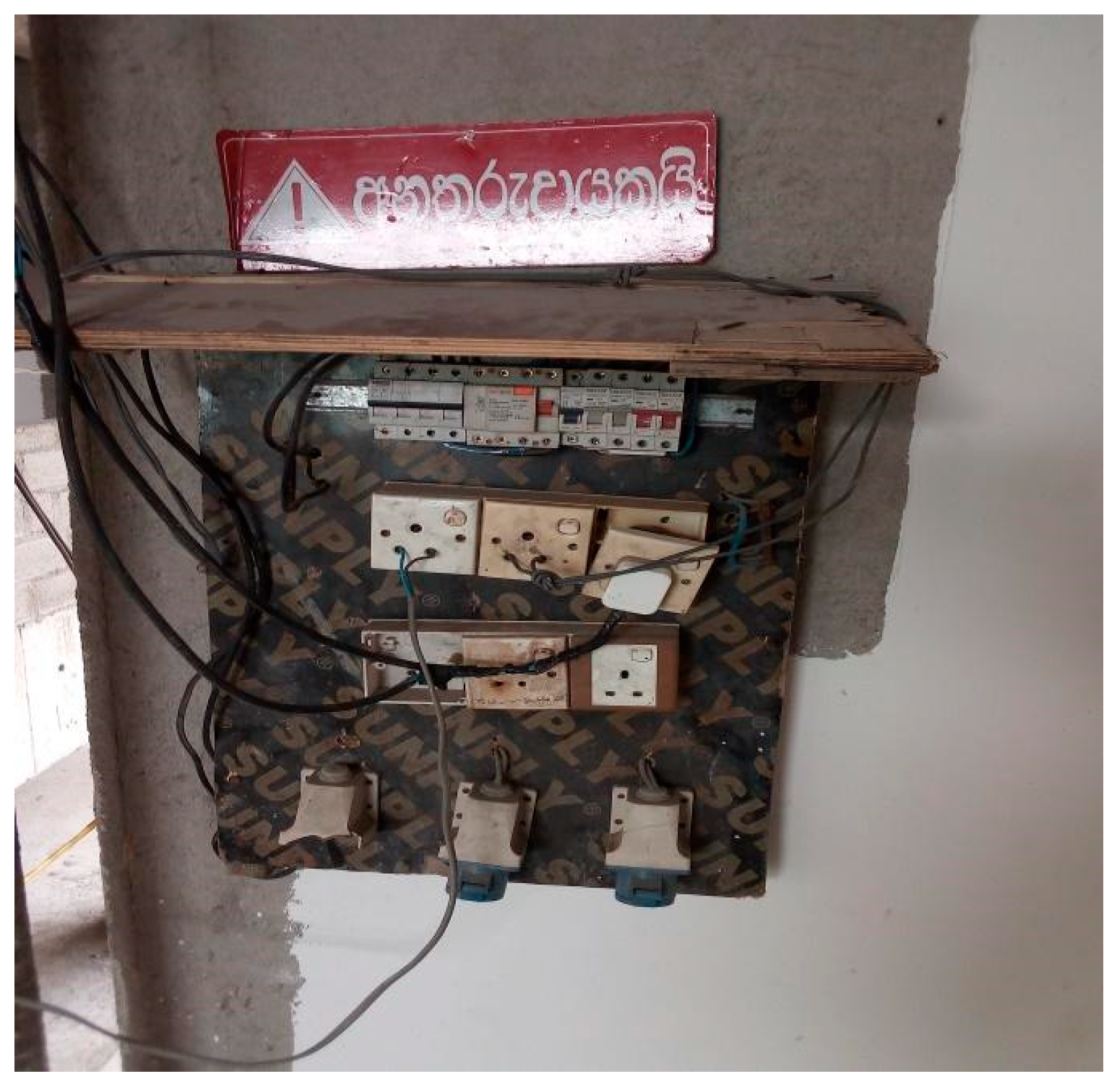
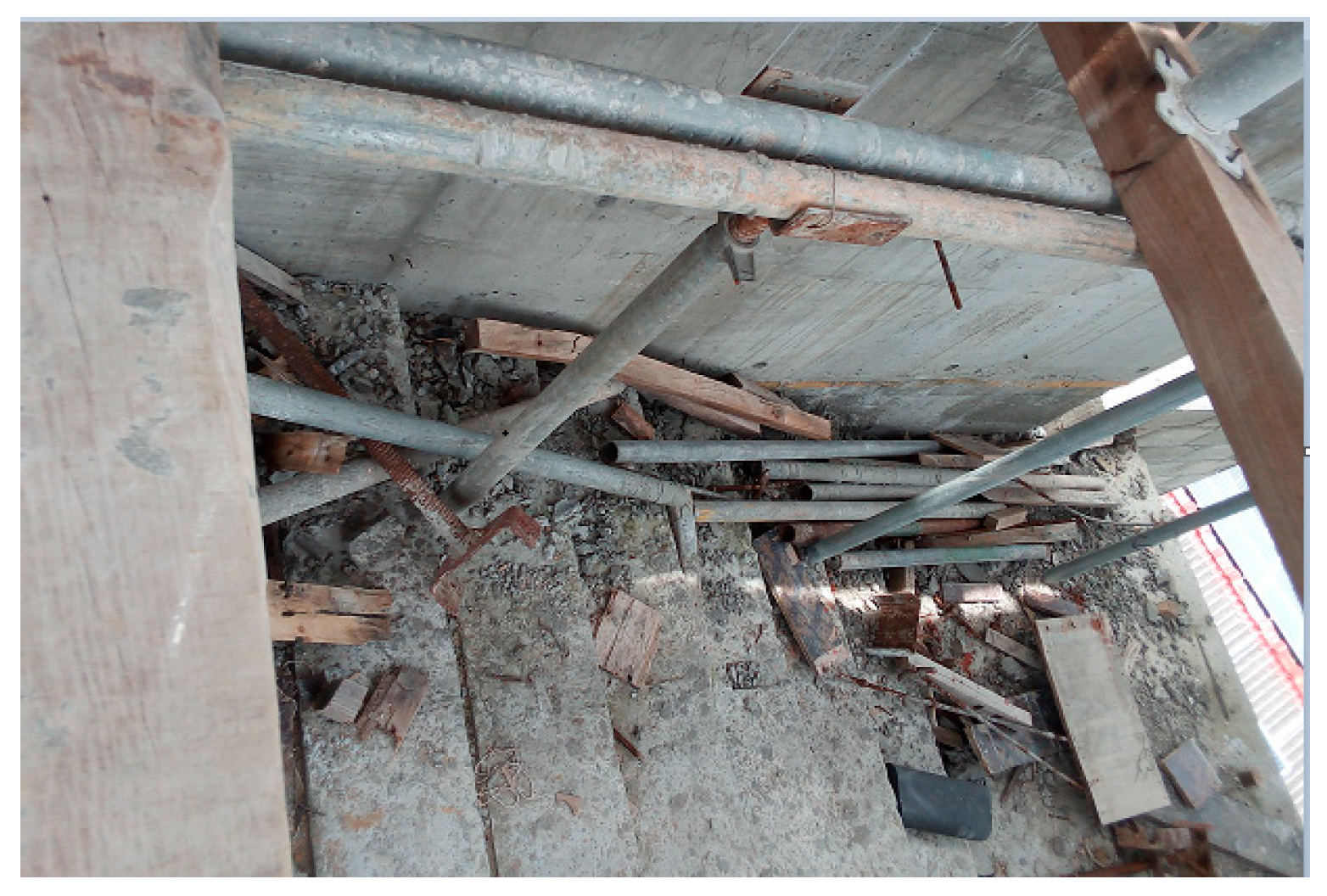
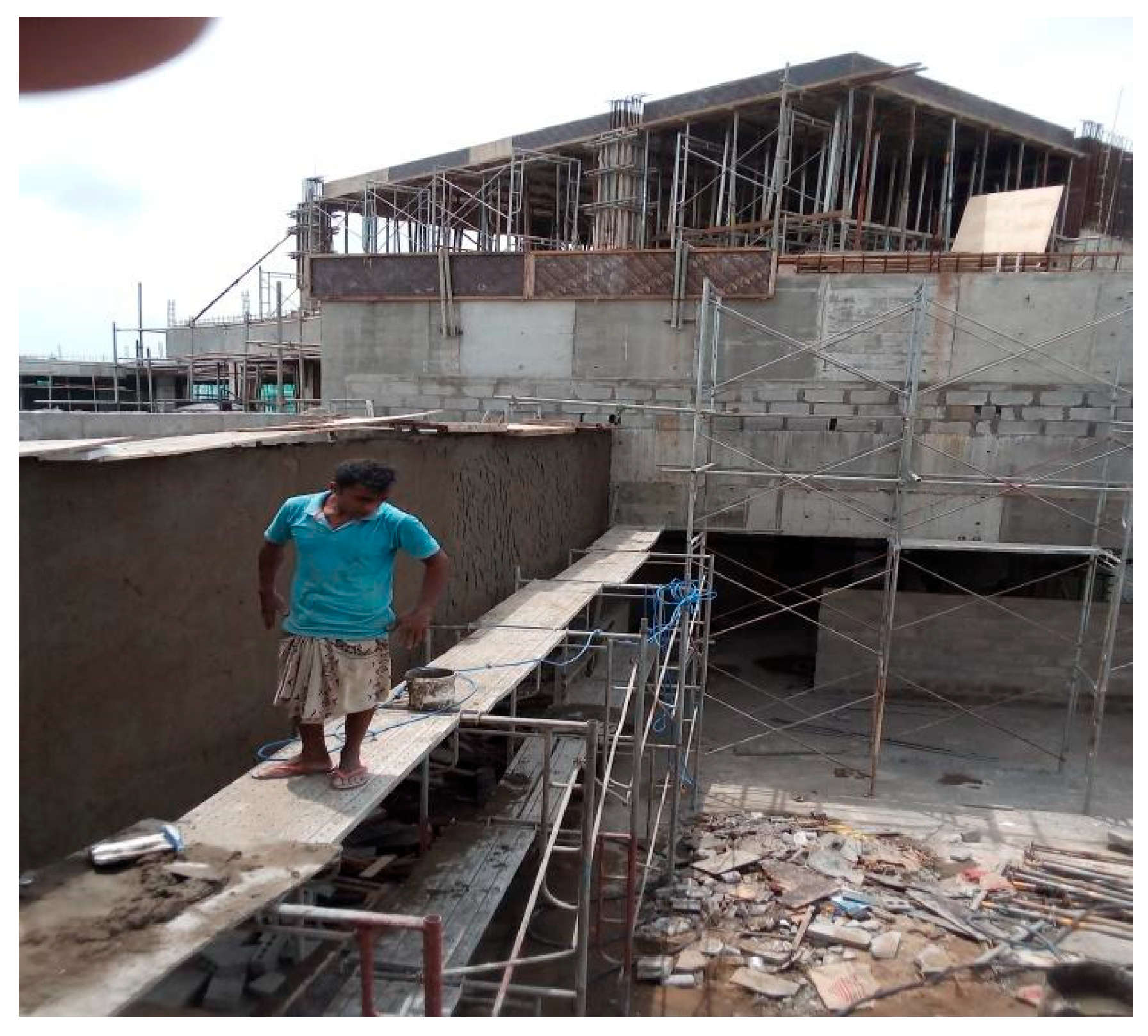
The global construction industry is facing numerous challenges, including rising material costs, poor productivity, labor shortages, and on-site safety concerns. These risks are further exacerbated in developing countries like Sri Lanka, where limited resources, institutional weaknesses (e.g., insufficient enforcement of safety regulations and lack of trained regulatory personnel), and socio-economic stress hinder efforts to improve safety practices. Despite these challenges, the construction industry in Sri Lanka plays a significant role in the country’s economic and physical development, contributing approximately 8% to the GDP. In 2019, the sector accounted for 7.1% of the country’s GDP and provided direct employment to 188,877 individuals, with over 680,000 people benefiting indirectly (more recent official data are not available), reflecting the limited availability of updated statistics and the relative maturity of governance in monitoring the sector. According to the existing literature, Jayawardana (2019) [1], Siriwardana and Wickramasinghe, (2018) [2] studies have identified contributing factors such as outdated legislation, a shortage of qualified officers, poor attitudes, lack of funding, negligence, and limited awareness. However, safety remains a critical concern, as failure to adhere to proper safety practices resulted in 40 fatal and 59 non-fatal accidents in 2019 [3]. Consequently, there is an urgent need for further investigation into these safety challenges. Analyzing interview data to identify the factors contributing the most to the poor safety record in Sri Lanka will help to address these issues. Ultimately, this research aims to provide practical recommendations to overcome these challenges. Appendix A (Figure A1, Figure A2 and Figure A3) highlights poor practices observed on Sri Lankan construction sites.
Based on a comprehensive review of international and local literature, several factors have been previously reported as contributing to poor safety performance in the construction industry. These factors, identified by researchers across different countries and contexts, are summarized in Section 1.1, Section 1.2, Section 1.3, Section 1.4, Section 1.5, Section 1.6, Section 1.7, Section 1.8, Section 1.9, Section 1.10, Section 1.11 and Section 1.12. However, the relative significance, interrelationships, and applicability of these factors within the Sri Lankan construction industry have not been empirically examined. Therefore, this study does not assume these factors as definitive causes; rather, it investigates them through stakeholder interviews to validate, contextualize, and prioritize the underlying causes of safety challenges in Sri Lanka.
This research aims to empirically examine and validate the underlying causes contributing to safety challenges in the Sri Lankan construction industry, as previously identified in the literature, using qualitative interview data from industry stakeholders. To address the objectives, the following research questions have been formulated:
  • What are the major safety challenges present in the Sri Lankan construction industry?
  • Which fundamental causes are responsible for these safety issues?
The construction industry is known for its high rate of accidents, which can result in serious injuries or even fatalities. Hazards such as being struck by construction equipment or electrocution are common in this industry [4]. An analysis of global and local literature reveals several common safety barriers. These include safety budget constraints due to the country’s socio-economic stress, which may prevent firms from providing adequate PPE for their staff, thereby putting them at risk. Institutional weaknesses result in a lack of effective safety policies, regulations, and mandatory training. Poor safety practices contribute to unsafe behaviors and the inadequate socialization of foreign workers into local work practices [5,6,7].
According to the Construction Industry Development Authority, Sri Lanka’s safety performance was below average due to a lack of safety awareness, the use of unsafe equipment, poor site maintenance, non-compliance with safety regulations, the absence of safety nets, and workers not wearing personal protective equipment (PPE) [8]. However, training programs conducted by the Occupational Training Center have contributed to improved safety outcomes, supporting the findings of [9], who noted that adequate safety knowledge enhances safety management practices. In India, safety improvements have been achieved through the implementation of fines [10]. In the United States, effective communication strategies such as toolbox talks have been used to disseminate safety information to shape positive safety attitudes and promote safe behaviors among staff [11]. In Australia, compliance with Work Health and Safety (WHS) regulations and the National Construction Code ensures construction site safety by making safety training a mandatory component of design assessments for construction companies [12].
The following subsections summarize key safety-related factors reported in previous international and Sri Lankan studies, which form the theoretical foundation for the empirical investigation conducted in this research. To improve clarity and ensure a structured approach, the factors presented in Section 1.1, Section 1.2, Section 1.3, Section 1.4, Section 1.5, Section 1.6, Section 1.7, Section 1.8, Section 1.9, Section 1.10, Section 1.11 and Section 1.12 are broadly aligned with the framework of ISO 45001:2018 [13]. Within this structure, management commitment is positioned first, reflecting its central role in leadership and worker participation (Clause 5), followed by organizational and behavioral factors. Operational controls, such as safe work practices and hazard management (Clause 8.1), are then discussed, followed by emergency preparedness measures, including first aid (Clause 8.2). Finally, personal protective equipment (PPE) is presented as a lower-level risk control within the hierarchy of controls, providing logical progression from strategic leadership to operational- and individual-level safety measures [13].

1.1. Management Commitment (as Identified in Previous Studies)

Effective safety management is fundamental to safeguarding employee well-being and ensuring organizational success. Leadership commitment is important for preventing harm and hazards based on the knowledge and process of risk response and resource allocation for contingency provisions. The lack of suitable PPE is a result of poor leadership commitment. In Australia, “due diligence” denotes organizational proactiveness for the adoption of reasonable steps to identify and evaluate workplace hazards and risks, and a counter measure would be allocating resources and framing processes to ensure workplace health and safety (i.e., WHS). Considering probability and impact analysis. International Council on Mining and Metals (2023) [14] introduced a Good Practice Guide for critical control management and clarified “As low as reasonably practicable (ALARP)” means the organizational trade-off between the likelihood and severity of harm against the cost, time, and resources of further monitoring and the control system as projected in the International Council on Mining and Metals Critical Risk Management approach. Insufficient management commitment often manifests through poor housekeeping, distractions such as mobile phone use during work, and non-compliance with PPE requirements. Conversely, proactive management involvement, including safety training and enforcement—significantly reduces workplace accidents and fosters a culture of safety [15]. Abudayyeh [16] found that in Australia, strong management commitment is driven by the legal consequences of industrial manslaughter, highlighting the importance of accountability. In contrast, construction managers in Palestine and Pakistan have been observed to provide inadequate training or show limited commitment, which contributes to unsafe worker behavior [17,18].
Management commitment has a direct impact on workers’ safety behavior [19,20]. Firms should therefore prioritize the development of managers’ safety competencies as a central element of their overall safety strategy [21,22]. Poor management attitudes toward safety often result in worker injuries or fatalities, as noted in Sri Lanka, where engineers and technical officers in leadership roles are frequently unaware of safety requirements [23,24]. By contrast, major contractors such as Maga and Sanken demonstrate strong management dedication with their motto, “Safety first and safety at any cost,” resulting in effective hazard management, safety awareness programs, provision of facilities, and regular risk assessments [25,26].
Following the easing of COVID-19 lockdowns, management ensured the safe resumption of site operations by notifying the Public Health Inspector, informing employees about protocols, and implementing new safety initiatives. These included providing cleaning supplies, hand sanitizers, and soap on-site, monitoring compliance with health guidelines, and training safety officers in COVID-19 prevention practices [27]. Such measures reflect how active management commitment continues to shape both occupational safety and public health responses in the workplace.

1.2. Not Having Safety Rules (as Identified in Previous Studies)

Kassem et al. (2023) [28] and Gunawadena and Jayawardane, (2001) [29] highlighted that, in developing countries, regulatory authorities often exhibit weaknesses in enforcing safety rules, resulting in the underestimation of safety hazards. Consequently, workers may neglect the use of PPE or engage in hazardous behaviors such as smoking on-site, thereby increasing the risk of fire incidents. To address these issues, multinational corporations have implemented punitive measures, including fines and penalties for individuals violating safety protocols, emphasizing the critical role of strict enforcement to ensure regulatory compliance.
Othman et al. [30] noted the adoption of international safety standards, particularly those promulgated by the U.S. Occupational Safety and Health Administration (OSHA), within Iraq’s construction sector. While this represents a progressive step towards harmonizing safety practices with global benchmarks, questions remain regarding the applicability and effectiveness of these standards in resolving the distinct safety challenges faced by developing countries, such as Sri Lanka. In Sri Lanka, government regulations are currently limited to the outdated Factories Ordinance of 1942, highlighting gaps in modern safety governance.
Ismail et al. [31] emphasized the significance of regulatory frameworks in promoting safety and health among workforces in Malaysia. The Occupational Safety and Health Act 1994 provide guidelines and regulations to enhance workplace safety, serving as a crucial mechanism for ensuring compliance with safety protocols.
As a result of the COVID-19 pandemic, CIDA recommended mandatory health and safety guidelines for construction firms in Sri Lanka. Consequently, soap, running water, and hand sanitizers were provided at the entrances of construction sites for staff use. Workers maintained one meter of social distancing and wore face masks and gloves. In the post-COVID period, according to directions from health authorities, these guidelines were relaxed [27].

1.3. Inadequate Safety Training (as Identified in Previous Studies)

Effective safety training initiatives are designed to elevate risk awareness and improve decision-making capabilities during high-risk operations. The transient nature of construction work presents a unique challenge for implementing effective health and safety training programs, as the knowledge acquired may not be consistently applied over time [32]. Additionally, Australian firms in Australia often face difficulties in enabling all staff to attend safety training simultaneously, highlighting a practical limitation [33]. Research has shown that even a brief safety orientation training can significantly reduce workplace injuries in the United States [34]. One proposed solution to these challenges is to tailor programs to the specific tasks performed by each worker [35]. For example, in China, safety demonstrations are delivered with comprehensive explanations; however, only 3% of Chinese construction workers have received safety training and certification, underscoring the need for further investigation into the effectiveness of task-specific training programs [36].
Barriers to effective safety training include limited funding [37], difficulties for unskilled workers in undergoing training due to linguistic and cognitive limitations [38], lack of facilities, ineffective training programs, and limited training centers in Sri Lanka [23]. Small firms are particularly affected by the lack of safety training. According to Belayutham and Ibrahim [39], safety training enhances employees’ occupational health and safety (OHS) knowledge, helping them identify hazards, understand emergency procedures, and develop positive safety attitudes. Similarly, other studies [40,41] have found that safety training increases workers’ awareness of hazards, enabling better decision-making during high-risk operations and reducing the likelihood of injuries. When management staff participate in safety training, they are more likely to establish internal safety policies and implement accident prevention measures as influenced by their improved safety attitudes and motivation, ultimately contributing to a safer workplace environment.
Given that safety is a relatively new concept in the region, local universities currently do not offer formal safety education programs. As a result, safety officer training is limited to courses provided by organizations such as NIOSH and CIDA, creating a significant need for safety officers to pursue internationally recognized qualifications, such as NEBOSH certification [42]. The COVID-19 pandemic further shaped safety training, with officers receiving instruction on COVID-19 protocols and emergency response procedures, enabling them to implement and monitor measures prescribed by health authorities. The pandemic also prompted technical universities to transition to online lectures, while hands-on training institutions that previously offered on-the-job training adopted distance learning methods [27].

1.4. Poor Safety Attitude (as Identified in Previous Studies)

Poor safety attitudes, such as overlooking safety hazards, throwing debris down without looking, violating safety rules, working unsafely, rushing without following safety practices and procedures, have been found to increase the likelihood of accidents and injuries [43,44]. In a study by [17] conducted in Palestine, it was revealed that poor attitudes of construction workers prevented them from wearing protective clothing. This finding underscores the detrimental impact of poor safety attitudes on the overall safety of workers. The implications of these findings are significant as they highlight the need for targeted interventions to address unsafe attitudes and promote a strong safety culture in the workplace.
The study by Lingart et al. [45] emphasized the role of safety leadership in addressing poor safety attitudes in Australia by promoting attentiveness, alertness, accountability, and a caring attitude among staff. This suggests that leadership and training interventions can play a crucial role in mitigating the negative effects of poor safety attitudes.
Due to the COVID-19 pandemic, staff have exhibited increased anxiety toward work because of project delays and the sudden halting of construction activities. However, the emergence of a positive organizational attitude and increased cooperation with staff have been notable developments [46].

1.5. Poor Safety Behavior (as Identified in Previous Studies)

People-Based Safety (PBS) is common in the United States, while Japan emphasizes Job Hazard Analysis (JHA) and Europe adopts Behavior-Based Safety (BBS) methods [47]. BBS has been successful globally in promoting safe behavior and could be beneficial for Sri Lanka in enhancing on-site safety practices [48,49]. This approach, supported by research, encourages employee commitment to safety by discouraging unsafe behaviors such as wearing loose clothing, displaying aggressiveness, using mobile phones, or lifting improperly [8,50].
During the COVID-19 pandemic, construction sites required staff to follow government health regulations. As a result, staff gatherings were suspended, and workers maintained social distancing and wore masks and gloves to prevent the spread of the virus. If staff exhibited COVID-19 symptoms (e.g., fever or cough), they were required to get tested before coming to work. These practices have continued as a development in the post-COVID period [51].

1.6. Poor Safety Practices (as Identified in Previous Studies)

The presence of unauthorized works contributes to site accidents. To address this, permits and Safe Work Method Statements (SWMSs) are used in Australia to plan high-risk activities. However, the absence of a comprehensive national policy for construction safety hinders the standardization of safety practices. The National Institute for Occupational Safety and Health (NIOSH) advocates project risk management through evidence-based and advisory frameworks with emphasis on the hierarchy of controls and systemic design-based solutions [52]. In contrast, Health and Safety at Work etc. Act 1974 establishes a complaint of legally enforceable duty requiring organizations to identify, assess, and control risks “so far as reasonably practicable,” emphasizing continuous project risk control throughout lifecycles [53]. This lack of standardization means that not all firms have a formal safety policy explicitly designed to ensure compliance with safety regulations. Additionally, the construction industry in Sri Lanka is not accredited with ISO standards, which can lead to safety issues stemming from overconfidence, limited knowledge, and negative attitudes toward safety among staff. Multinational organizations are required to comply with safety regulations to uphold their management’s commitment to safety. In contrast, C1 (project size: AUD 2.96 million or above) and C2 (project size: AUD 1.48 to 2.96 million) construction firms are required to adhere to safety regulations to maintain their safety licensing [25].
Even though both C1 and C2 contractors have safety policies, not all staff are aware of them due to a lack of understanding [39]. Darshana (2017) [23] stated that the Occupational Health and Safety Act (2007) is not effectively implemented, which implies weak safety enforcement. However, the NIOSH Act No. 38 of 2009 made HSE officers responsible for enforcing the Health and Safety at Work (HSW) Act by carrying out daily activities to assist NIOSH in its operations.
According to the NIOSH Act No. 38 of 2009, the Health and Safety Executive (HSE) is responsible for enforcing the Health and Safety at Work (HSW) Act by conducting daily activities that support NIOSH operations. The HSW Act of 1974 requires firms with more than five employees to have a written safety policy [23]. These policies often include disciplinary actions, such as terminating staff after their third warning [9,23]. Simultaneously, the Construction Industry Development Act No. 33 of 2014 includes provisions to establish a National Advisory Council on Construction, which is tasked with providing guidance on safeguarding the construction industry. The act empowers the Council to formulate a comprehensive national policy for construction, addressing industry concerns and objectives [54]. Construction sites must also comply with Section 61(1)(b) of the Factories Ordinance No. 45 of 1942 (as amended), which requires that major accidents be reported to a District Factory Inspecting Engineer. Casualties must be reported immediately, while other accidents must be reported within 10 days of the victim returning to work.
Due to the COVID-19 pandemic, visitors to construction sites were prohibited as a precautionary measure. However, as a new development in the post-COVID period, sites now restrict access and promote preventative measures such as temperature checks and requiring visitors to wash their hands before entering [55].

1.7. Hazard Exposure (as Identified in Previous Studies)

Vitharana [8,56] emphasized that dust poses a significant chemical risk, with its impact, alongside other chemicals on personnel, varying according to the duration and frequency of exposure, scale of use, and concentration. The study also noted that the Occupational Safety and Health Administration (OSHA) has established ceiling limits for toxic substances that must not be exceeded, even temporarily [57].
The chemical environment [57] further discussed the impact of temperature and heat extremes caused by sunlight, noting that their effects on workers vary depending on the intensity of physical labor. Wearing appropriate clothing and staying hydrated were identified as essential measures to prevent heat stroke and cramps. Additionally, Vitharana et al. (2015) [8] highlighted that vibrations from machinery can negatively affect workers’ bodies and internal organs, as evidenced by conditions such as white finger.
Most sites in Sri Lanka lack the facilities and expertise to measure workers’ hazard exposure levels. The absence of stringent legal requirements to control hazardous exposure further exacerbates the problem [58]. Risks associated with such exposure include reduced concentration, illness, and disability. In contrast, Australia’s 2012–2022 Work Health and Safety Strategy emphasizes educating staff on minimizing hazard exposure through control measures such as safe work practices, proper tool maintenance, and wearing PPE [59].
During the COVID-19 pandemic, as a precaution against infection, all construction activities were halted. After the lockdown, meetings were conducted online, executive staff opted to work from home, and some firms provided transportation for their employees [51].

1.8. Lack of First-Aid Facilities (as Identified in Previous Studies)

De Silva et al. [38] highlighted the lack of first-aid provision in some workplaces in Sri Lanka, despite the requirements outlined in the Factories Ordinance. This finding underscores a gap between regulatory standards and actual workplace practices.
In contrast to Sri Lanka, Australia has a Code of Practice that ensures workplaces are equipped to provide first aid. This Code represents a proactive approach to improving workplace safety through effective first-aid provision.
Unlike in Taiwan, where incompetent safety professionals are unable to provide basic first aid [60], safety officers in the USA receive CPR and AED basic first-aid training [61]. This training approach aligns with international best practices and could serve as a benchmark for evaluating the effectiveness of first-aid training in improving workplace safety outcomes.
During the COVID-19 pandemic and associated lockdowns, all construction activities were halted. However, over time, staff were required to follow health guidelines related to respiratory etiquette, hand washing, and wearing face masks when assisting accident victims [62]. This introduced new facilitation requirements in terms of equipment, materials, and practices.

1.9. Lack of Quality PPE (as Identified in Previous Studies)

Robertson et al. [63] conducted a study in the United Kingdom and found that 21% of staff did not comply with wearing PPE. These findings highlight the challenges of ensuring consistent PPE usage across different regions. In contrast, Mahalingam (2007) [10] reported that international firms operating in India successfully promoted PPE compliance by imposing fines, suggesting that punitive measures can effectively increase adherence to PPE regulations. This approach is particularly relevant for countries like Sri Lanka, where the lack of regulatory measures mandating PPE use has resulted in poor compliance, with some workers wearing slippers instead of boots and avoiding helmets altogether. Discomfort and a perceived lack of benefit, often due to inadequate safety education, are key factors contributing to this non-compliance. Together, these findings underscore the critical need for comprehensive safety training to improve employees’ understanding of PPE benefits and ultimately enhance compliance rates.
Furthermore, the quality of PPE used by workers is crucial for ensuring their safety. In the absence of regulatory bodies to assess PPE quality, firms that involve safety officers in the procurement process are more likely to acquire higher quality protective gear. This practice could serve as a valuable model for organizations in Sri Lanka to ensure the procurement of reliable PPE.
The COVID-19 pandemic has significantly impacted the availability and affordability of PPE globally, including in Sri Lanka. Import restrictions have caused shortages in the Sri Lankan market, leading to price increases that have affected organizations’ ability to purchase quality protective gear [64].

1.10. Inadequate Safety Budget (as Identified in Previous Studies)

Contractors are under pressure to minimize costs to remain competitive when bidding for projects. However, limited access to commercial borrowing at reasonable interest rates has contributed to reduced budgets for safety initiatives [37,65]. This financial strain has led some contractors to compromise safety standards, resulting in the use of substandard materials, unsafe work practices, and inadequate equipment on construction sites [66].
Compromised safety standards are further exacerbated by the inability of regulatory bodies (such as CIDA) to fully commit to their safety obligations [67]. Despite financial challenges, Australian construction firms have allocated approximately 0.8% of project costs toward safety measures, enabling the provision of safety training, quality PPE, and safety signage for staff. This commitment has contributed to minimizing risks and promoting a stronger safety culture within the construction industry [68].
Due to the COVID-19 pandemic, restrictions on imports and mining have led to shortages of raw materials and finished products essential for building construction. This supply shortage has significantly impacted on the construction industry, causing delays and increased costs. Even prior to the pandemic, delayed customer payments had already created financial hardship within the sector, which has since been exacerbated by the challenges brought on by the pandemic [27].

1.11. Traditional Mindset (as Identified in Previous Studies)

Research findings have highlighted that Sri Lanka’s traditional mindset significantly affects construction safety in multiple ways. For example, a study by [69] emphasizes that the promotion of a macho image among staff has contributed to high accident rates. This cultural attitude hinders the adoption of modern construction practices, thereby increasing safety risks due to a lack of innovation and open-mindedness. Furthermore, Wong et al. (2020) [70] argued that analyzing past accidents can help improve safety practices, reinforcing the importance of addressing traditional mindsets to prevent future incidents.
Sri Lanka places a strong emphasis on tradition, which shapes mindsets that can negatively impact safety in the construction industry. For instance, religious beliefs may encourage staff to grow beards, reducing the effectiveness of protective masks. Traditional clothing such as sarees and sarongs can pose safety hazards by becoming entangled in machinery. Additionally, outdated and unsafe practices are still being practiced, like testing oxygen levels by sending a burning candle down a hole with the aid of a rope to see if there is enough oxygen. However, this environment could be hazardous to staff as the burning candle could be due to the presence of biogases. Such practices are often maintained by villagers who lack formal education and safety training. In contrast, in Australia, effective safety communication has helped shift worker mindsets toward prioritizing safety. As a result, change management strategies such as safe design have emerged to further enhance safety practices [45].
As a result of social distancing measures introduced during the COVID-19 pandemic, the construction industry has increasingly integrated modern technology into its operations, marking a new trend in the sector. For example, workplace training has been conducted online [27].

1.12. Foreign Workers (as Identified in Previous Studies)

The presence of foreign workers on construction sites presents several challenges due to differences in labor traditions, cultures, and work practices. One of the most significant challenges is communication barriers, which affect foreign workers’ understanding of induction training, safety rules, and instructions [71,72]. This often leads to insufficient safety training, as it is assumed that foreign workers will leave after project completion [39]. However, the implementation of safety training has been shown to significantly improve safety outcomes on construction sites in the United States [73].
The COVID-19 pandemic further exacerbated challenges associated with foreign workers, as many returned to their home countries due to fears of lockdowns and infection [74]. Even after lockdown restrictions were lifted, foreign workers have remained hesitant to return because of ongoing fears of infection and uncertainty [75].
Based on the above statements, issues currently affecting the industry include poor safety practices, limited safety officers, lack of safety training, insufficient safety budgets, non-compliance with safety rules, poor behavior, unsafe contractors, failure to wear quality PPE, staff exposure to hazards, and challenges related to working with foreign workers. Due to the inadequate enforcement of labor laws, a considerable number of accidents has not been reported to the Labor Department [76]. Consequently, these accidents have not been investigated to determine their root causes.

2. Materials and Methods

2.1. Conceptual Framework

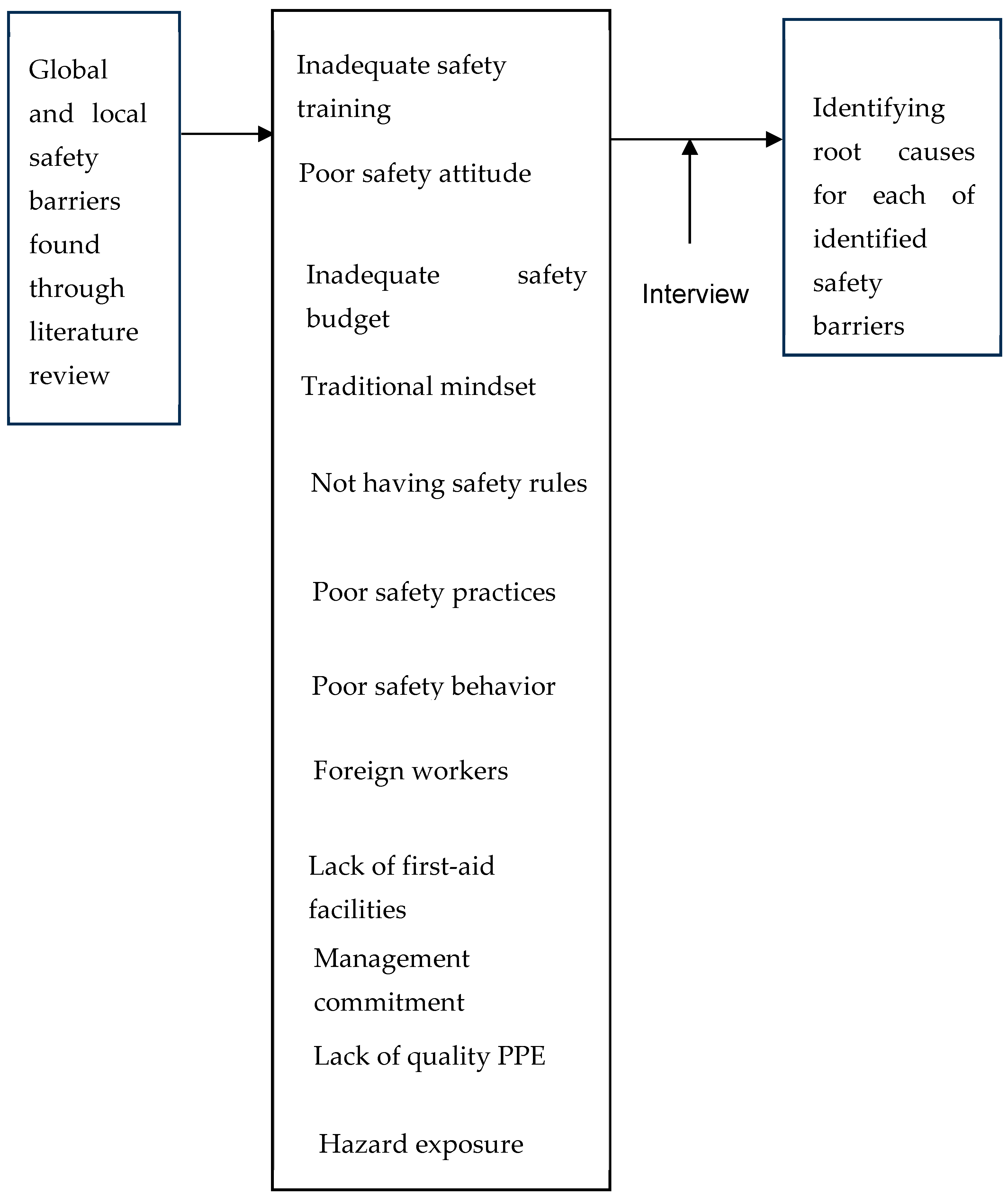
This study is guided by a conceptual framework developed from a comprehensive review of the existing literature on construction safety. The framework identifies twelve key safety challenges that act as barriers to effective safety practices on construction sites, particularly within the Sri Lankan context.
The development of the conceptual framework followed a systematic process. First, relevant literature was reviewed to identify common safety issues and their underlying causes in the construction industry. Based on this review, twelve recurring safety challenges were extracted and categorized as critical factors influencing worker safety.
These identified challenges form the foundation of the study and are treated as the primary variables to be explored through empirical investigation. The framework assumes that each safety challenge is influenced by specific root causes, which can be uncovered through qualitative inquiry.
The conceptual framework in Figure 1 illustrates the relationship between the identified safety challenges and their underlying root causes. It also demonstrates how these elements are examined through semi-structured interviews with construction industry professionals. The insights obtained from participants are used to analyze and interpret the key safety challenges and their contributing factors.
Overall, the conceptual framework serves as a guiding structure for the study by linking the research problem, data collection, and analysis. It ensures that the investigation remains focused on identifying and understanding the major safety barriers and their root causes in construction projects.

2.2. Research Design

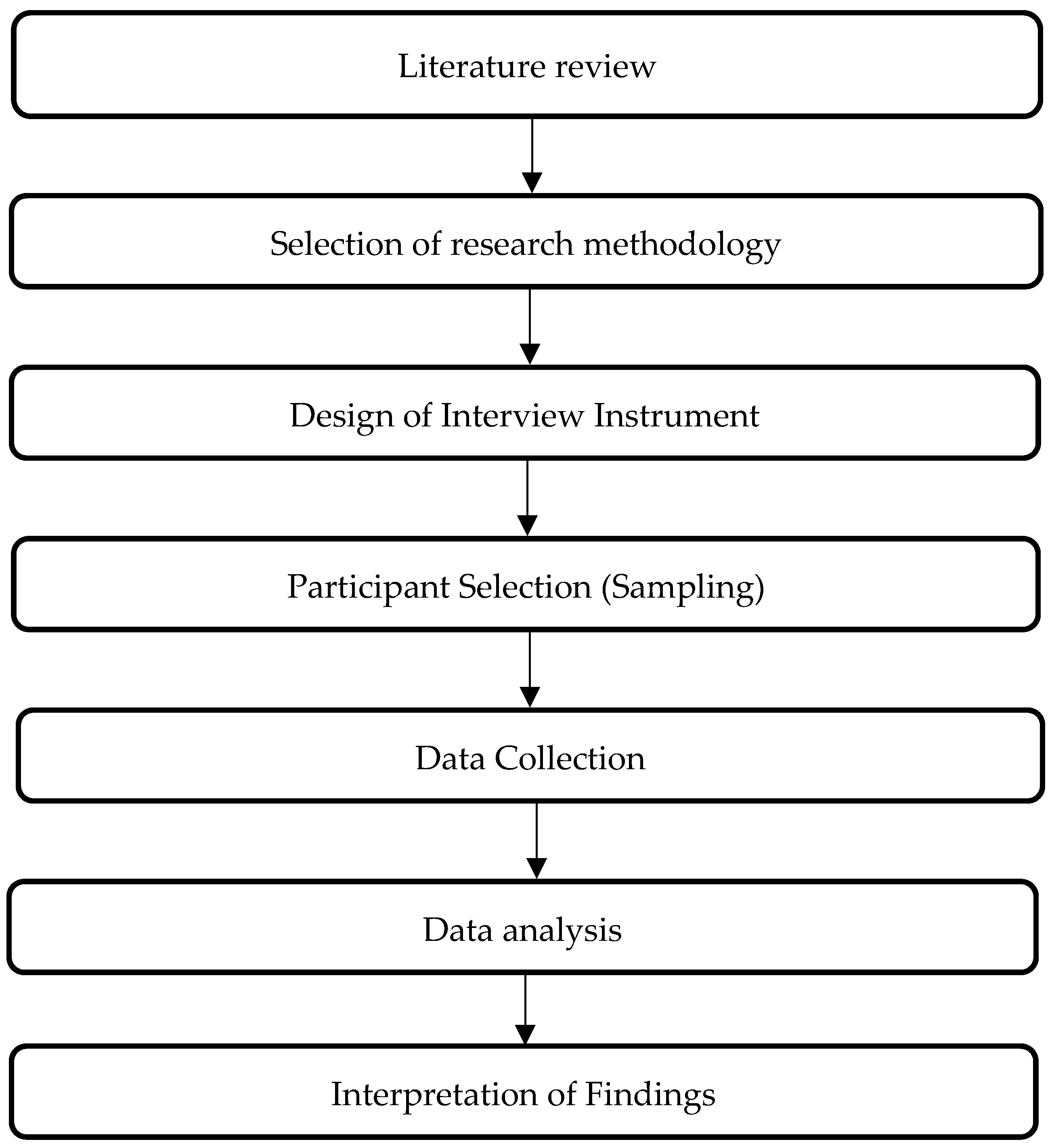
This study followed a systematic qualitative research process consisting of sequential steps to achieve the research objectives. The overall research flow is illustrated in Figure 2.
Step 1: Literature Review
A comprehensive literature review was conducted to identify the existing safety challenges and root causes affecting construction workers globally and in Sri Lanka. This step also helped to establish the conceptual framework and define the research gap.
Step 2: Selection of Research Methodology
A qualitative exploratory approach was adopted to gain in-depth insight into safety barriers. Semi-structured interviews were selected as the primary data collection method.
Step 3: Design of Interview Instrument
The interview questionnaire (Appendix D) was developed based on the identified safety challenges. It consisted of two sections:
  • Demographic information (e.g., profession, experience, firm size);
  • Semi-structured questions focused on safety barriers and their root causes.
The semi-structured format allowed flexibility to probe emerging issues during interviews.
Step 4: Participant Selection (Sampling)
Participants were selected from middle management roles in the construction industry, including engineers, safety officers, and site managers, due to their practical knowledge of safety issues. A target sample size of 25 participants was established based on recommendations for qualitative studies. A total of 26 participants was ultimately interviewed.
Step 5: Data Collection
Participants were recruited through construction firm directories, site visits, and professional referrals. Before each interview, participants reviewed and signed a consent form.
Interviews were conducted face-to-face, digitally recorded, and later transcribed.
Step 6: Data Analysis
The transcribed data were imported into NVivo software (V15) for thematic analysis. An inductive coding approach was used, involving the following:
  • Initial coding of interview responses;
  • Grouping codes into categories;
  • Developing overarching themes representing key safety challenges.
Word frequency analysis was also conducted to support theme identification.
In addition, recommendations were derived from the data by analyzing participants’ suggestions, proposed solutions, and practical strategies mentioned during the interviews. These were coded and grouped under each identified safety barrier. Where necessary, these recommendations were further supported and refined using insights from the literature.
Step 7: Interpretation of Findings
The identified themes were analyzed to determine the major safety challenges and their root causes, which are presented in Section 3.

2.2.1. Research Methodology

This qualitative exploratory study, based on semi-structured interviews, leads to thematic analysis [77].
The interview design and semi-structured interview format are described below.
The interview shown in Appendix D was divided into two sections:
(1) demographic questions and (2) semi-structured questions related to safety barriers.
The demographic section includes questions about the participant’s profession, firm size, age, years of experience in the construction industry, and years at their current workplace. The purpose of these questions was to ensure diversity among the selected participants.

2.2.2. Interview Instrument

An extensive literature review was conducted to identify the root causes of safety barriers for construction workers globally and in Sri Lanka. To gain valuable insights into the complex issue of worker safety in Sri Lankan construction sites, it was essential to build rapport and establish credibility with participants. Furthermore, using a semi-structured, face-to-face interview methodology was deemed appropriate, as it allowed the researcher to tailor questions based on the barriers identified in the literature, including probing questions to explore emerging issues and gathering meaningful insights into the root causes of safety barriers.
Engineers, safety officers, and site managers make up the middle management of the construction industry. They were invited to participate in the study due to their knowledge of factors that create safety barriers and affect safe site operations. Managerial support helped to promote safe workplaces, while engineers inspect hazards in buildings and machinery, enforcing building standards and codes to prevent accidents. Safety officers are responsible for coordinating health and safety policies, procedures, and practices to enhance safety. This knowledge of middle management roles was used to explore the research objective. Interviews were digitally recorded, transcribed and analyzed using NVivo software.

2.2.3. Data Collection

Construction firms were contacted using a phone directory. Additionally, some participants were recruited by visiting construction sites directly, and others were referred to by colleagues. Before each interview, participants were asked to read the consent form.

2.2.4. Population and Sampling

Sample Selection and Size
According to Kuzel (1992) [78], a sample size of between five and 25 participants is recommended for semi-structured interviews, which supports the likelihood of reaching theoretical saturation. Therefore, the target sample size for this study was set at 25. Additionally, interviewing at least five participants from each middle management group was considered sufficient to explore their perspectives [79]. Although 27 participants were initially approached, 26 agreed to participate in the interviews, indicating that the sample size was adequate. One participant chose not to continue with the interview due to a lack of confidence in their responses.
Following transcription, interview data were imported into NVivo for qualitative thematic analysis. An inductive coding approach was used to identify recurring concepts related to construction safety barriers. Initial codes were grouped into categories, which were then refined into overarching themes representing major safety challenges. Word frequency analysis was also conducted to support theme identification. These analytical procedures directly informed the results presented in Section 3.

3. Results

This section presents the findings derived from the thematic analysis of semi-structured interview data, as described in Section 2. Interview transcripts were analyzed using NVivo, including word frequency queries and thematic coding, which resulted in the identification of eight major safety challenges in the Sri Lankan construction industry.
Most participants were engineers employed by large firms. The majority were in the 26–30 age group and had been working in their current job for 0–5 years. Many had experience in the construction industry ranging from 0 to 5 years and 11–15 years. Half of the participants had received safety training. For a detailed distribution of participants, refer to Appendix B. The presence of individuals with varied backgrounds contributed to a diverse range of responses.
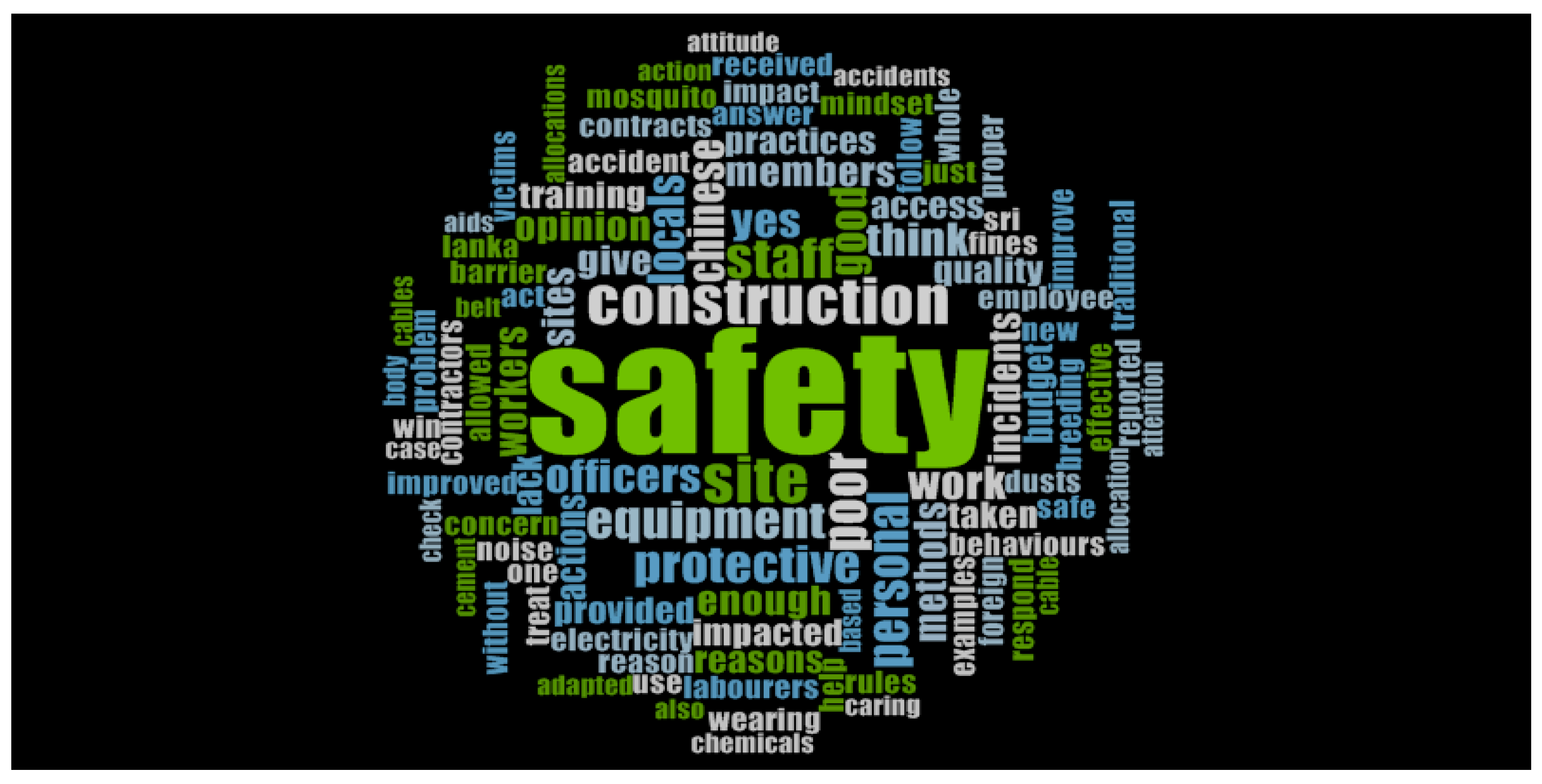
In the word cloud, the size of each word corresponds to its frequency used in the interview transcripts. As shown in Appendix C, commonly used words included safety and construction. The safety barriers highlighted in the word cloud analysis included practices, training, etc. Based on the interview responses, eight common safety challenges were identified and are discussed below.

3.1. Identification of Major Safety Challenges Through Word Cloud and Thematic Analysis

3.1.1. Safety Practices

Most participants believed that inadequate practices negatively impact safety. When working at heights, it is important to secure ladders, use appropriate tools, and remain alert to potential hazards. Commendable safety practices include using a safety harness, displaying safety signs, conducting risk assessments, and holding toolbox discussions. Due to the complex nature of their projects, large firms tend to implement better safety practices compared to smaller firms.
According to Participant 18, current government projects often exhibit poor safety practices, prioritizing cost and timelines over work quality. As a result, safety procedures are not implemented to the same extent as in the private sector (Participant 20). Participant 3 highlighted that local companies such as John Keels and Nawaloka enforce strict safety practices, as do reputable foreign clients like Hyundai and the World Bank (Participant 2). Furthermore, Participant 14 noted that foreign-funded, large-scale construction projects strictly adhere to safety protocols. Participant 23 added that safety measures are implemented in high-rise building projects.

3.1.2. Safety Training

Participants reported that current safety training is ineffective due to its generic content, limited applicability, and lack of industry involvement by trainers. Tight schedules and limited budgets are constraints for safety training. Participant 26 noted that effective safety training improves understanding of regulations, aids hazard identification, and reduces negative safety attitudes. Induction training often meets regulatory requirements but lacks follow-up or on-site mentoring. Participant 9 added that a structured training schedule ensures coverage of key areas, such as working at heights, refresher courses, and induction training.
Few tradesmen showed interest in training unless it led to a certification. University curricula continue to exclude formal safety modules, and existing facilities are often outdated. However, NEBOSH training was praised for its interactive and up-to-date approach, which helped some firms maintain OHSAS systems.

3.1.3. Safety Budget

A notable proportion of participants (n = 9, 36%), primarily safety officers and managers, reported that safety budgets were insufficient, particularly among small and medium contractors. Safety officers emphasized that budget shortfalls often lead to low-cost PPE purchases and the exclusion of safety expenses from the BOQ, while Engineers noted that funds are frequently diverted after winning contracts, as stated by Participant 14. In contrast, engineers were less likely to identify budget constraints, reflecting their limited involvement in safety planning and awareness of associated costs. Participant 9, a safety officer, suggested a fixed allocation of 2.5% of the total project cost for safety measures, including training, PPE, and hazard controls.

3.1.4. Safety Rules

Theme: Knowledge and Understanding of Safety Rules
Result: Interview data showed that the lack of safety knowledge was a major reason for non-compliance. Across the sample, 18 out of 26 participants stated that workers did not fully understand safety rules or procedures.
Participants repeatedly linked non-compliance to inadequate training:
“Most of the labourers don’t know the rules properly. They just follow what others do.”
(Participant 6)
“When deadlines are tight, they skip procedures because they don’t understand why they matter.”
(Participant 14)
NVivo coding showed that references to “lack of knowledge” and “not aware of rules”, which appeared 42 times, making it one of the most frequently coded subthemes under safety rules.
In contrast, participants who had received structured induction training reported better compliance:
“After proper induction and toolbox talks, they follow the rules more consistently.”
(Participant 9)
This demonstrates that knowledge gaps directly influence rule-following behavior, and that training interventions improve compliance.
Theme: Influence of Safety Culture and Role Models
Result: Participants emphasized that safety culture and visible role modeling strongly shaped workers’ willingness to follow rules. A total of 15 participants specifically mentioned the influence of supervisors and managers.
Workers were more compliant when supervisors consistently demonstrated safe behavior:
“When the engineer wears PPE and follows the rules, the workers also follow.”
(Participant 3)
“If supervisors ignore the rules, the workers think it’s not important.”
(Participant 11)
NVivo analysis showed that references to “role model behavior”, “supervisors influence”, and “safety culture” clustered together, indicating a strong relationship between leadership behavior and compliance.
Participants also noted that organizations with strong safety cultures conduct investigations and enforced rules:
“In foreign-funded projects, they investigate every incident and enforce the rules strictly.”
(Participant 23)
This evidence shows that positive safety culture and consistent role modeling increase compliance, while weak leadership undermines rule adherence.
Theme: Management Commitment and Enforcement
Result: Multinational organizations demonstrated strong management commitment through guidance from safety officers, enforcement of rules, safety audits, and penalties for non-compliance. This formal enforcement encouraged adherence, though some staff (80%) reported PPE discomfort as a barrier to compliance (Participant 2). Participant 9 highlighted that issuing three warnings with penalties effectively encouraged staff to follow safety procedures.

3.1.5. Safety Behaviors

Poor safety behaviors were reported by 21 out of the 26 participants (81%). These behaviors included relaxing from wearing PPE, engaging in unsafe acts, reacting negatively to safety advice, neglecting safe work methods, taking risks, cutting corners, performing unauthorized tasks, and foreign workers not adhering to safety instructions.
Participant 19 noted risk-taking behavior, particularly among older workers who climb heights without safety gear. Participant 20 observed laborers taking shortcuts when working at heights instead of following proper methods assigned by the firm, such as using scaffolds. Inexperienced individuals in the construction industry often lack proper safety behavior, viewing PPE as a burden and not recognizing the benefits of wearing helmets, jackets, and shoes, as indicated by Participant 11.

3.1.6. PPE

Due to a lack of regulation regarding PPE quality, contractors often purchase inferior, cheaper products from the market (Participant 7). The purchasing department is unaware of the PPE’s actual quality (Participant 11). Participant 15 mentioned that a safety officer once cut a shoe sample to evaluate its quality before approving a purchase. Participant 13 stated that some contractors ensure high quality by procuring PPE from reputable manufacturers.
Few participants (n = 4, 16%) agreed that PPE quality adequately protects them against contracting diseases. PPE that complies with recognized performance standards, such as EN 397 for industrial safety helmets [80], EN 354/EN 355/EN 362 for lanyards, shock absorbers and harness components [81,82,83], and N95–N98 filtration ratings for dust masks [84], meets the minimum safety requirements specified for construction environments. These standards do not refer to specific brands or models but outline the technical criteria that certified PPE must satisfy.
Safety compliance in the Sri Lankan construction sector is frequently compromised due to the management’s failure to provide or enforce quality PPE. Interviewee 5 highlighted that quality PPE was neither mandated nor regularly replaced, leading many local workers to use damaged equipment.
Some workers perceive PPE as a burdensome obligation rather than protection: helmets cause excessive sweating, safety jackets are uncomfortable, and safety shoes feel heavy sentiment echoed by Interviewee 11.
Participant 25 emphasized that non-use of PPE often stems from behavior rather than equipment quality: although many companies require helmets, other PPE standards are inconsistently enforced. Participant 26 similarly noted that proper wearing of PPE is uneven, exposing some workers to greater risk.
Resource limitations, especially among small and medium contractors, further hinder PPE provision: Interviewee 23 observed that full-body harnesses are scarce, with sometimes only two or three per site. Conversely, larger contractors are more likely to ensure PPE use, due to the complexity of projects, regulatory compliance, and disease-prevention measures, as reported by Participant 14.

3.1.7. Hazard Exposure

Dust and Chemical Exposure
Participants widely reported dust as a common hazard, with PPE and water spraying used as primary controls. For chemical hazards, compliance with MSDS/COSHH procedures was emphasized.
An engineer (Participant 1) explained that dust exposure is the most common hazard on construction sites, noting “Dust only we can expect. When they are working, we provide masks, noise guards, and goggles.” This reflects the participant’s view that while dust is unavoidable, basic PPE is provided to mitigate its effects.
Noise and Vibration Exposure
Noise and vibration were commonly associated with heavy machinery, demolition, and piling works. PPE and engineering controls were inconsistently applied. The importance of having formal policies to control noise was mentioned by Participant 2.
Heat, Confined Space, and Ventilation Issues
Heat stress and oxygen deficiency were highlighted in enclosed or underground works.
“We worked in Victoria tunnel… very difficult to breathe, so we need to use exhaust fans to give oxygen”.
(Participant 18)
Monitoring and Regulatory Compliance
Continuous project risk control throughout lifecycles is supported by environmental monitoring services, which enable firms to regularly assess workers’ exposure levels and currently represent the only government-endorsed certification pathway for workplace environmental audits in Sri Lanka. Some firms also report compliance with national requirements, including the Central Environmental Authority Act and the use of Material Safety Data Sheet (MSDS) protocols for first-aid management, as noted by Participant 26.
Budgetary Constraints
A recurring concern was the lack of dedicated funding for hazard controls. “Should include items in the BOQ and allocate a provisional sum for dust, noise and radiation control”, stated Participant 18.

3.1.8. Foreign Workers

In this study, 100% of foreign-funded construction projects sampled had a designated safety officer on site (n = 3). Since foreign workers are in Sri Lanka only for a limited time to complete projects, local contractors often do not provide them with safety training. All three major projects funded by foreign entities demonstrated the enforcement of formal safety protocols, including mandatory PPE and weekly safety audits. Participant 23 highlighted the importance of establishing a comprehensive national policy for the recruitment of foreign workers in Sri Lanka. Two participants (Participant 4 and 5) reported that supervisors sometimes provided lenient treatment to foreign workers, compromising safety compliance.
The thematic analysis identified eight key safety barriers, summarized in Table 1 with their corresponding root causes.
Overall, poor construction safety performance stems from weak management commitment, inadequate training, limited budgets, weak enforcement, and unsafe work practices. Profit-driven priorities, low safety awareness, and cultural and communication challenges further reduce compliance, highlighting the need for stronger leadership, clearer regulations, and consistent safety education across the industry.

3.2. Sentiment Analysis Result Summary

To evaluate the emotional tone of participants’ responses on construction site safety, sentiment analysis was conducted using RoBERTa-base, BERT-base-multilingual-uncased and Facebook BART model (Appendix E). Each model assessed responses across three sentiment classes (e.g., positive, neutral and negative).
The analysis revealed that
  • Positive sentiment was dominant in six questions, primarily those encouraging reflection on good practices, safety training, and innovation.
  • Neutral sentiment appeared in eight questions, mostly factual or descriptive in nature.
  • Negative sentiment was found in six questions, typically addressing systemic issues and safety failures.
These results highlight participants’ optimism when discussing proactive or successful safety measures, neutrality in objective assessments, and concern or dissatisfaction when addressing safety challenges and organizational shortcomings.

4. Discussion

This study sought to explore the key occupational health and safety (OHS) challenges affecting construction sites in Sri Lanka and to understand how organizational, economic, and workforce-related factors influence safety practices. The thematic analysis conducted using NVivo identified five interrelated themes: poor safety practices, safety training, budget constraints, safe working conditions, and the role of foreign workers. Together, these findings provide insight into systemic weaknesses in current safety management practices and highlight areas requiring policy and operational intervention.
Poor safety practices emerged prominently, particularly in relation to the selection and use of personal protective equipment (PPE) [85]. The NVivo results revealed that some contractors opt for low-quality PPE, largely driven by cost-cutting measures. This finding aligns with previous studies that associate inadequate PPE quality with financial pressures and weak regulatory enforcement [1]. The suggestion to reduce custom duties or provide tax incentives for certified PPE is therefore not only economically justified but also practically relevant, as it could encourage compliance with safety standards without increasing contractors’ financial burden.
Another recurring issue was the poor practice of not wearing safety harnesses when working at heights. Participants indicated that workers often perceive harnesses as uncomfortable and restrictive, negatively affecting productivity. This perception mirrors findings by [86], who reported that resistance to harness use is commonly linked to discomfort and insufficient training rather than a lack of awareness of risk. The present findings suggest that comprehensive working-at-height training, combined with practical demonstrations, could help change attitudes and normalize safe behavior.
Safety training was identified as a central factor influencing workers’ knowledge, attitudes, and behaviors. NVivo analysis confirmed strong associations between training and improved safety awareness, supporting earlier research that emphasizes training as a cornerstone of effective OHS management [87]. Participant 2’s emphasis on integrating safety education early in professional development further reinforces academic calls for embedding safety principles within formal education systems rather than relying solely on site-based instruction. This highlights the theoretical implication that safety culture development should begin before workers enter high-risk environments.
Budget constraints emerged as a major structural barrier to effective safety implementation. The exclusion of safety-related costs from the Bill of Quantities (BOQs) was found to undermine systematic safety planning and encourage reactive rather than proactive measures. This finding is consistent with [88], who argue that explicitly including safety costs in project budgets enhances accountability and prioritization. From a practical perspective, this reinforces the need for institutional reform in project costing practices to ensure that safety is treated as a core project component rather than an optional expense.
The findings also underscored the heightened vulnerability of foreign workers within Sri Lankan construction sites. NVivo analysis revealed strong links between foreign workers and the need for accessible medical facilities, first aid, and emergency services, indicating an increased exposure to risk. This aligns with prior research [89], which attributes such vulnerability to language barriers, unfamiliar work practices, limited access to training, and emotional stress. The suggestion to appoint foremen from workers’ home countries reflects an emerging practice-based solution that can improve communication and safety compliance. Participant 23’s call for a national policy to better prepare foreign workers further highlights the need for coordinated regulatory responses at the national level.
Overall, the discussion demonstrates that construction safety challenges in Sri Lanka are multifaceted, arising from economic constraints, behavioral factors, training deficiencies, and workforce composition. Addressing these challenges requires an integrated approach that combines regulatory reform, improved budgeting practices, targeted training, and culturally responsive management strategies. These findings contribute to the existing body of knowledge by contextualizing global safety concerns within the Sri Lankan construction industry and by offering practical recommendations grounded in empirical evidence.

4.1. Implications for Policy, Practice, and Training

Based on the study’s findings, the following suggestions propose changes at the government and institutional levels.

4.1.1. Policy

Based on study findings regarding regulatory gaps and safety budgeting, Sri Lanka’s construction safety framework could be strengthened by updating regulations to mandate a minimum percentage (e.g., 2.5%) of the project budget for safety, revising the Factories Ordinance to include construction-specific clauses, establishing a national policy for the recruitment and safety training of foreign workers, and offering duty-free imports or tax relief for certified PPE to promote the use of high-quality equipment.

4.1.2. Practice

Findings from interviews indicated cost-cutting and inconsistent training practices; therefore, construction safety can be improved by explicitly including safety costs in the Bill of Quantities (BOQs), mandating pre-site induction training tailored to specific job roles, ensuring regular on-site mentoring and toolbox talks by safety officers, and conducting internal audits with penalties for repeated safety violations.

4.1.3. Training Frameworks

Based on observations of training gaps identified in the study, enhancing construction safety education involves integrating safety modules into university and vocational curricula, implementing upskilling programs for site supervisors and safety officers with regular refresher courses aligned to current regulations, providing on-site, job-specific, hands-on safety training, and promoting trainer certification programs to ensure instructors possess up-to-date industry experience.

4.2. Trustworthiness of the Study

To ensure the rigor and trustworthiness of the findings, the study adopted several strategies aligned with qualitative research best practices. These addressed credibility, dependability, and transferability:

4.2.1. Credibility

Credibility was enhanced through methodical triangulation, which involved comparing perspectives across engineers, site supervisors, and safety officers from both local- and foreign-funded projects. Data was collected from a diverse group of participants including engineers, site supervisors, and safety officers employed across both local- and foreign-funded construction projects. This diversity allowed for the cross-verification of insights and a richer understanding of recurring themes. Furthermore, NVivo software was used for systematic coding and thematic analysis, ensuring that findings were grounded in actual participant responses rather than researcher assumptions.

4.2.2. Dependability

To ensure dependability, the research process was thoroughly documented, with all audit trails, interview guides, and coding records securely maintained by the research team. This included maintaining an audit trail of interview guides, data collection protocols, coding procedures, and analysis decisions. These steps allow for replication or review by other researchers and support the consistency of findings.

4.2.3. Transferability

Transferability was supported by providing detailed descriptions of the study context, participant demographics, and safety practices within the Sri Lankan construction sector. By detailing participant roles, industry experience, and organizational size, readers can better assess the potential applicability of the findings to similar construction environments in other developing countries.
These measures collectively enhance the validity and trustworthiness of the study and ensure that the findings are both robust and meaningful within the broader context of construction safety research.

5. Conclusions

The lack of safety on construction sites has led to fatal accidents. Identifying the root causes of these safety barriers is essential to overcoming them. Examining strategies used in other countries to address similar safety challenges, and adapting these to the Sri Lankan context, can significantly improve safety in the local construction industry.
In response to Research Question 1, the major safety challenges identified in this study include poor safety practices, inadequate safety training, insufficient safety budgets, non-adherence to safety rules, unsafe behaviors, inadequate use of quality PPE, exposure to hazards, and challenges related to working with foreign workers.
Addressing these challenges requires ensuring an adequate safety budget to provide high-quality PPE and implementing effective safety training to promote adherence to safety rules, reduce unsafe behaviors, and equip foreign workers with essential knowledge of local safety practices.
The underlying factors contributing to these major safety challenges stem primarily from
  • A lack of safety training.
  • An inadequate safety budget.
Together, they form the foundation of the proposed safety framework.
Overall, this study provides evidence to inform safety plans that support the safety officers, managers, and engineers. Neighboring countries with similar socio-economic conditions may also benefit from these findings. The study is limited by data collection being restricted to a one-month period and participants being exclusively from Colombo, but it nevertheless highlights the critical role of training and budget allocation in improving construction site safety.

Future Research

Further research could be conducted to investigate the impact of the safety budget and training on safety in Sri Lanka’s construction sites.
Table 2 identifies safety training as the central driver of construction safety performance, alongside deficiencies in budgeting, behavior, management commitment, and PPE provision, with related interpretations and recommendations provided.
In summary, improving construction safety requires the strengthening of safe work practices, delivering regular and compulsory training, and allocating adequate safety budgets tailored to project needs. Strong management enforcement, positive safety role models, regulated and comfortable PPE, and effective hazard control measures are essential. Additionally, clear national policies and targeted supervision are needed to address safety challenges when working with foreign workers.
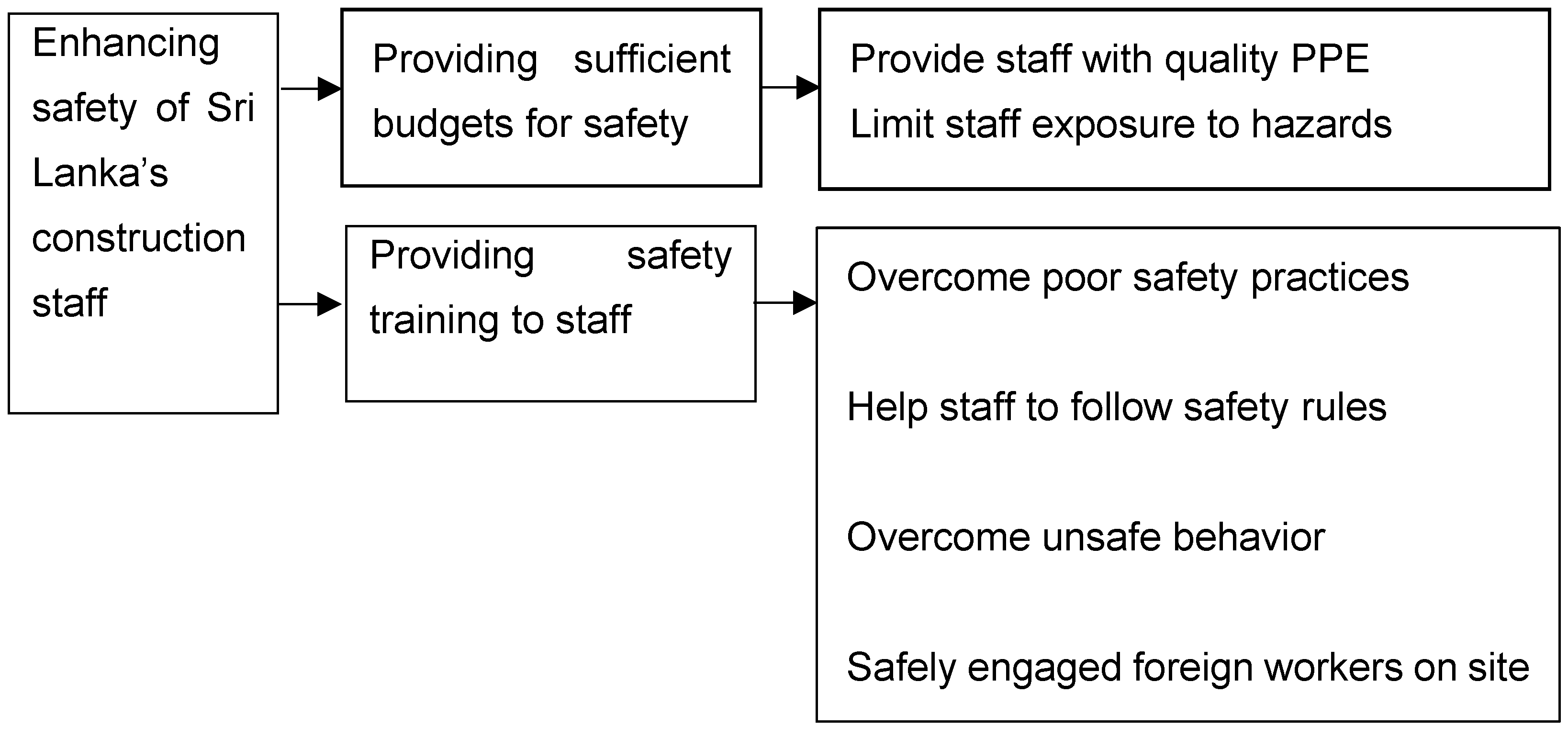
Based on the above-mentioned findings, the recommended safety framework is suggested below.
Figure 3 highlights how allocating sufficient funds for safety in the project budget and providing safety training can improve safety on building construction sites. This leads to workers wearing high-quality PPE, avoiding exposure to hazards, engaging in safe practices, adhering to safety rules, demonstrating safe behavior, and enabling foreign workers to work safely, thereby helping to overcome safety challenges.

Author Contributions

Conceptualisation, S.C., A.H. and A.W.; methodology, D.T., S.C. and A.W.; software, A.W.; validation, A.W. and S.C.; formal analysis, A.W., A.M. and A.A.; investigation, S.C., A.H., A.W. and A.A.; resources, A.W., A.A. and S.C.; data curation, A.W. and A.A.; writing—original draft preparation, A.W., A.M. and A.A.; writing—review and editing, S.C., A.M., A.A., A.W. and A.H.; visualization, S.C., A.A. and A.W.; supervision, S.C., A.H. and D.T.; project administration, S.C., A.H. and A.W.; funding acquisition, S.C. All authors have read and agreed to the published version of the manuscript.

Funding

This research received no external funding.

Institutional Review Board Statement

This research received ethics approval from University of Southern Queensland’s Human Research Ethics Committee. (H19REA217 (v0), approve on 9 June 2019).

Informed Consent Statement

Informed consent was obtained from all subjects involved in the study.

Data Availability Statement

Dataset available on request from the authors.

Acknowledgments

The authors would like to express their gratitude to the administrative and technical support provided by members of the USQ staff and to all the participants for their contribution to the production of this paper.

Conflicts of Interest

The authors declare no conflicts of interest.

Appendix A

Figure A1. Electrical wiring on site, Colombo (A. Weerakoon). Using wires instead of plugs and extension cords to connect to power points, causes tripping of staff, power shortages, and electrocution.
Safety 12 00069 g0a1
Figure A2. Untidy work site, Colombo (A. Weerakoon). Untidy stacking on sites poses safety hazards, causing slips, trips, and falls.
Safety 12 00069 g0a2
Figure A3. Staff without PPE, Colombo (A. Weerakoon). Working on an elevated platform wearing sarong can contribute to falls, trips, and injuries.
Safety 12 00069 g0a3

Appendix B

Distribution of 26 participants
ProfessionDescriptionParticipantsPercentage (%)
Engineer
(Corresponding participant number)
1, 2, 3, 4, 5, 6, 8, 10, 13, 14, 16, 18, 19, 20, 22, 2561.54%
Manager
(Corresponding participant number)
7, 12, 15, 17, 2119.23%
Safety officer
(Corresponding participant number)
9, 11, 23, 24, 2619.23%
Organizational sizeSmall27.69%
Medium726.92%
Large1765.38%
Age of the participant26–30934.62%
31–3527.69%
36–40311.54%
41–45311.54%
46–5027.69%
51–5513.85%
Over 55623.08%
Years working in the construction industry0–5726.92%
6–10415.38%
11–15726.92%
16–2013.84%
21–25519.23%
26–3013.84%
Over 3013.84%
Years in current job0–51973.07%
6–10311.53%
26–3013.84%
Over 30311.53%
Obtained safety trainingYes1350.00%
No1350.00%

Appendix C

Figure A4. Word tree.
Safety 12 00069 g0a4

Appendix D

INTERVIEW QUESTIONS
1. What is your opinion about the safety of the construction site? Why do you have the opinion you have? Give some specific examples.
2. Can you give some examples of good and poor safety practices, and what is the reason for your answer?
3. Have you received safety training from your employee? Why or why not?
4. In Sri Lanka as a whole, do you think there are enough safety officers?
5. What do you think about budget allocations for safety? Do you think it is sufficient or not? Please explain the reasons for your response.
6. Are the staff willing to follow safety rules? If not, how can this be improved?
7. Have you encountered incidents where poor attitude of the staff members has impacted safety? What are some of the incidents and reasons for it?
8. Do behaviors of the staff members impacted safety? Why do you think that is?
9. Does poor practices of the staff members impact site safety? What are some of the incidents?
10. Not enough management commitment for safety a problem? Why do you think this is the case?
11. What could have contributed to falls and fall of objects on construction staff at construction worksites?
12. Can having good safety records help contractors to win construction contracts? Do you practice this in your organisation when choosing subcontractors?
13. Do you find there is a lack of use of quality safety PPE worn by construction staff? How can this be improved and if you are happy with the quality of PPE, what is the reason for that?
14. Do workers suffer from exposure to chemicals, dusts, noise, radiation, vibration and temperature extremes at worksites? What precautions have been taken to create a safe work environment from these hazards?
15. In your opinion, what constraints are there for effective safety training? Why do you give that answer you give?
16. Does the traditional mindset act as a barrier to improve safety? Why or why not?
17. In your opinion, are sites equipped to treat accident victims? What makes you say that?
18. Can having foreign workers in construction sites contribute to workplace accidents? What are the reasons for your respond?
19. What new safety technology can be adapted into construction worksites in Sri Lanka?
20. Is there something else you want to discuss?

Appendix E

To complement the thematic analysis and gain a deeper understanding of participants’ perspectives, sentiment analysis is employed to assess the emotional tone of responses related to safety challenges in the Sri Lankan construction industry. While thematic coding identifies what safety barriers exist and why they occur, sentiment analysis offers insight into how participants feel about these issues. It gives a high-level picture on whether an average participant is optimistic, neutral, or unsatisfied with a specific safety issue. This emotional dimension is valuable in exploring workplace safety, where attitudes, perceptions, and emotions influence behavior and compliance. For example, negative sentiments around safety training or PPE can highlight underlying frustration or disengagement, which may not be fully captured through thematic codes alone. Moreover, sentiment analysis also helps reinforce the credibility of our findings by showing how participants respond to different safety aspects. It not only aligns with our goal of understanding the challenges and their deeper roots but also strengthens the interpretation of qualitative data by supporting the study’s broader objective of improving safety culture in construction.
A sentiment analysis was conducted using three state-of-the-art transformer-based language models: roBERTa-base [90], BERT-base-multilingual-uncased [91], and Facebook BART [92]. The analysis pipeline was implemented using the Hugging Face Transformers library. These models were selected for their strong performance across diverse natural language processing tasks, especially classification and sentiment analysis.
  • roBERTa-base: Robustly Optimized BERT Approach (roBERTa) is an optimized variant of BERT which is trained with more data, longer sequences, and without the next sentence prediction objective [93]. It focuses on masked language modeling to enhance performance in classification tasks. It uses the sentiment-tuned variant cardiffnlp/twitter-roberta-base-sentiment-latest, which is specifically trained on social media text to better capture informal language and opinions.
  • BERT-base-multilingual-uncased: This multilingual model, trained in over 100 languages, extends the BERT architecture to handle cross-lingual tasks. It is uncased and is useful in multilingual datasets. Despite being a general-purpose model, it is competitive on sentimental tasks in various languages and dialects.
  • Facebook BART: Bidirectional and Auto-Regressive Transformer (BART) is a denoising autoencoder that combines BERT’s bidirectional encoding and GPT’s auto-regressive decoding. It is capable of both understanding and generating text, making it well-suited for sentiment classification. It is used as a sentiment analysis head on top of BART’s encoder to predict sentiment.
Each participant’s response is tokenised and fed independently through all three models. A SoftMax layer is applied over each model’s output logits to produce a probability distribution over three sentiment classes: positive, neutral, and negative. The class with the highest score is selected as the model’s prediction. To improve robustness and account for any bias or variability across models, a majority voting strategy was adopted. Here, the final sentiment for each participant’s response is determined by taking the majority vote of the three model outputs. After obtaining the sentiment for each participant’s response, the sentiment for each question is computed by identifying the sentiment obtained by most of the responses for that question.
The table below summarizes the distribution of sentiments across questions, and the following figure breaks down the sentiment for each question across the 26 participant responses.
Question NumberQuestionSentiment
1What new safety technology can be adapted into construction work sites in Sri Lanka?Positive
2Are the staff willing to follow safety rules? If not, how can this be improved?Positive
3Can having good safety records help contractors to win construction contracts? Do you practice this in your organization when choosing subcontractors?Positive
4Can having foreign workers in construction sites contribute to workplace accidents? What are the reasons for your response?Neutral
5Can you give some examples of good and poor safety practices and what is the reason for your answer?Neutral
6Do workers suffer from exposure to chemicals, dusts, noise, radiation, vibration and temperature extremes at work sites? What precautions have been taken to create a safe work environment from these hazards?Neutral
7Do you find that there is a lack of use of quality safety personal protective equipment worn by construction staff? How can this be improved? If you are happy with the quality of PPE, what is the reason for that?Neutral
8Do behaviors of the staff members impact safety? Why do you think that is?Neutral
9Do poor practices of the staff members impact site safety? What are some of the incidents?Negative
10Does the traditional mindset act as a barrier to improve safety? Why or why not?Neutral
11Have you encountered incidents where the poor attitude of the staff members impacted safety? What are some of the incidents and reasons for it?Negative
12Have you received safety training from your employee? Why or why not?Positive
13In Sri Lanka, as a whole, do you think there are enough safety officers?Negative
14In your opinion, is the site equipped to treat accident victims? What makes you say that?Positive
15In your opinion what constraints are there for effective safety training? Why do you give that answer you give?Negative
16Is there something else you want to discuss?Positive
17Not enough management commitment for safety a problem? Why do you think this is the case?Negative
18What could have contributed to falls and fall of objects on construction staff at construction work sites?Negative
19What do you think about budget allocations for safety? Do you think it is sufficient or not? Please explain the reasons for your response.Neutral
20What is your opinion about the safety of the construction site? Why do you have the opinion you have? Give some specific examples.Neutral
Safety 12 00069 i001
Analyzing the sentiments of the participant responses for the 20 questions, the sentiments are distributed as follows:
  • Positive sentiment is dominant for six questions (questions 1, 2, 3, 12, 14, 16 from the above table)
  • Neutral sentiment is dominant for eight questions (questions 4, 5, 6, 7, 8, 10, 19, 20 from the above table)
  • Negative sentiment is dominant for six questions (questions 9, 11, 13, 15, 17, 18 from the above table)
Questions Eliciting Positive Sentiment: Positive sentiment was most associated with questions that framed safety as an opportunity for improvement or asked about existing positive safety practices. Examples include the following:
  • What new safety technology can be adapted into construction work sites in Sri Lanka?
  • Have you received safety training from your employee? Why or why not?
  • Can having good safety records help contractors to win construction contracts? Do you practice this in your organization when choosing subcontractors?
Such questions encourage participants to reflect on progress or innovation and share constructive feedback. Asking about technological adaptation (Q1), staff willingness to follow safety rules (Q2), and organizational selection practices based on safety records (Q3) generally conveyed optimism and constructive engagement. Similarly, sentiments were positive for questions about having received safety training (Q12), the availability of first-aid or emergency facilities (Q14), and the open-ended prompt for additional thoughts (Q16). This indicates recognition of the importance of safety, a willingness to engage in proactive behaviors, and a certain level of satisfaction with specific safety practices already in place.
Questions Eliciting Neutral Sentiment: Neutral sentiment was predominant in questions that were generally factual or descriptive. Examples include the following:
  • Do workers suffer from exposure to chemicals, dust, noise, radiation, vibration and temperature extremes at work sites? What precautions have been taken to create a safe work environment from these hazards
  • Can having foreign workers in construction sites contribute to workplace accidents? What are the reasons for your respond?
  • What do you think about budget allocations for safety? Do you think it is sufficient or not? Please explain the reasons for your response.
The tendency toward neutrality here means that participants provide observational responses and state facts. Hence, these responses are largely not opinionated.
Questions Eliciting Negative Sentiment: Negative sentiment was mostly associated with questions that focused on systemic issues, behavioral failures, and organizational lapses. Examples include the following:
  • Have you encountered incidents where the poor attitude of the staff members have impacted safety? What are some of the incidents and reasons for it?
  • What could have contributed to falls and the fall of objects on construction staff at construction work sites?
  • Do the poor practices of the staff members impact site safety? What are some of the incidents?
These questions prompt participants to highlight existing shortcomings and express dissatisfaction based on first-hand experiences. Particularly, questions 13, 15, 17, and 19 reflect dominant negative responses. They directly address present shortcomings, such as lack of safety officers (Q13), constraints on effective training (Q15), concern regarding management’s lack of commitment to safety (Q17), and causes of workplace accidents (Q18). This sentiment tells us where construction safety culture may be lacking now. Interestingly, even broadly phrased questions like “What is your opinion about the safety of the construction site?” elicited a neutral sentiment on majority, suggesting that participants may not feel strongly polarized when not prompted by specific issues. On the other hand, questions that included references to personal incidents, behaviors, or resource constraints push the sentiment towards the negative class.

References

  1. Jayawardana, S. Building Industry Booming, But Not So Workers’ Safety. The Sunday Times. 13 January 2019. Available online: https://www.sundaytimes.lk/190113/news/building-industry-booming-but-not-so-workers-safety-329998.html (accessed on 4 January 2023).
  2. Siriwardana, C.; Wickramasinghe, K.M.O.E. A study to investigate safety practices in Sri Lankan construction industry. In Proceedings of the 6th International Symposium on, Advances in Civil and Environmental Engineering Practices, for Sustainable Development, Galle, Sri Lanka, 22–23 March 2018; Available online: https://www.researchgate.net/publication/324030440 (accessed on 3 July 2024).
  3. Melagoda, D.G.; Rowlinson, S. The institutional framework of construction safety management: A case study of Sri Lanka. IOP Conf. Ser. Earth Environ. Sci. 2022, 1101, 042038. [Google Scholar] [CrossRef]
  4. ElSafty, A.; ElSafty, A.; Malek, M. Construction safety and occupational health education in Egypt, the EU, and US firms. Open J. Civ. Eng. 2012, 2, 174–182. [Google Scholar] [CrossRef]
  5. Ofori, G. Research on construction industry development at the crossroads. Constr. Manag. Econ. 1993, 11, 175–185. [Google Scholar] [CrossRef]
  6. Chen, J.J. The characteristics and current status of China’s construction industry. Constr. Manag. Econ. 1998, 16, 711–719. [Google Scholar] [CrossRef]
  7. Pongpeng, J.; Liston, J. Contractor ability criteria: A view from the Thai construction industry. Constr. Manag. Econ. 2003, 21, 267–282. [Google Scholar] [CrossRef]
  8. Vitharana, H.; De Silva, S.; De Silva, S. Health hazards, risk and safety practices in construction sites—A review study. Engineer 2015, 48, 35–44. [Google Scholar] [CrossRef]
  9. Perera, H.N.; Somachandra, V.; Samarasiri, N.C. Preventing accidents in building construction through safety management. In International Conference on Technology Management; University of Moratuwa: Moratuwa, Sri Lanka, 2017; Available online: http://dL.lib.mrt.ac.lk/handle/123/13037 (accessed on 2 August 2020).
  10. Mahalingam, A.; Levitt, R.E.; Asce, M. Safety issues on global projects. J. Constr. Eng. Manag. 2007, 133, 506–516. [Google Scholar] [CrossRef]
  11. Kearney, G.D.; Hisel, J.; Staley, J.A. Effectiveness of Toolbox Talks as a Workplace Safety Intervention in the United States: A Scoping Review. Safety 2025, 11, 35. [Google Scholar] [CrossRef]
  12. Safe Work Australia. Australian Work Health and Safety Strategy 2012–2022; Commonwealth Government of Australia: Canberra, Australia, 2012. [Google Scholar]
  13. ISO 45001:2018; Occupational Health and Safety Management Systems—Requirements with Guidance for Use. ISO: Geneva, Switzerland, 2018.
  14. International Council on Mining and Metals. Critical Control Management: Good Practice Guide; International Council on Mining and Metals: London, UK, 2026; Available online: https://www.icmm.com/en-gb/guidance/health-safety/2026/ccm-good-practice-guide (accessed on 20 April 2026).
  15. Berglund, L.; Johansson, J.; Johansson, M.; Nygren, M.; Stenberg, M. Structures and Processes for Safety Culture? Perspectives from Safety Leaders in the Swedish Construction Industry. Safety 2025, 11, 47. [Google Scholar] [CrossRef]
  16. Abudayyeh, O.; Fredericks, T.; Butt, S.; Shar, Q. An investigation of management’s commitment to construction safety. Int. J. Proj. Manag. 2006, 24, 167–174. [Google Scholar] [CrossRef]
  17. Enshassi, A. Factors Affecting Safety on Construction Projects (CIB Publication CIB1497). International Council for Research and Innovation in Building and Construction (CIB)/IRBNet. 2003. Available online: https://www.irbnet.de/daten/iconda/CIB1497.pdf (accessed on 20 April 2026).
  18. Zahoora, H.; Chana, A.P.C.; Masoodb, R.; Choudhryc, R.M.; Javeda, A.A.; Utama, W.P. Occupational safety and health performance in the Pakistani construction industry: Stakeholders’ perspective. Int. J. Constr. Manag. 2016, 16, 209–219. [Google Scholar] [CrossRef]
  19. De Silva, N.; Wimalaratne, P.L.I. OSH management framework for workers at construction sites in Sri Lanka. Eng. Constr. Archit. Manag. 2012, 19, 369–392. [Google Scholar] [CrossRef]
  20. Weerakoon, A.; Thorpe, D.; Heravi, A.; Chakraborty, S. Assessing the Key Construction Safety Challenges in Sri Lanka: A Survey-Based Study. Safety 2025, 11, 2. [Google Scholar] [CrossRef]
  21. Seo, H.J.; Rhee, S.-Y.; Kim, N.K. A Study on the Factors Affecting Safety Behaviors and Safety Performance in the Manufacturing Sector: Job Demands-Resources Approach. Safety 2025, 11, 29. [Google Scholar] [CrossRef]
  22. Sunindijo, R.; Zou, P.X. How project manager’s skills may influence the development of safety climate in construction projects. Int. J. Proj. Organ. Manag. 2012, 4, 286–301. [Google Scholar] [CrossRef]
  23. Darshana, W.D. Improvement of health and safety in construction sites in Sri Lanka. Engineer 2017, 1, 53–70. [Google Scholar] [CrossRef]
  24. Ahamed, M.S.S.; Nafeel, A.F.M.; Rishath, A.A.M.; Dissanayake, P.B.G. Site Safety of Sri Lankan Construction Industry; Department of Civil Engineering: Osaka, Japan, 2011; pp. 1–12. Available online: http://www.civil.mrt.ac.lk/web/conference/ICSECM_2011/SEC-11-76.pdf (accessed on 20 April 2026).
  25. Maga. The Sage of Quality Construction. 2015. Available online: https://www.maga.lk/ (accessed on 12 November 2023).
  26. Sanken Sanakan Construction Sky Is the Limit. 2015. Available online: https://sankenconstruction.com/about-us/company-overview/ (accessed on 20 April 2026).
  27. CIDA. The Development of Sri Lank’s Construction Industry: The Way Forward After CIOVID 19. CIDA. 2020. Available online: https://archives1.dailynews.lk/2020/07/04/finance/222268/%E2%80%98-way-forward-after-covid-19%E2%80%99-development-industry?page=27 (accessed on 20 April 2026).
  28. Hinze, J. Construction Safety. Saf. Sci. 2008, 46, 565. [Google Scholar] [CrossRef]
  29. Awwad, R.; El Souki, O.; Jabbour, M. Construction safety practices and challenges in a Middle Eastern developing country. Saf. Sci. 2016, 83, 1–11. [Google Scholar] [CrossRef]
  30. Othman, I.; Kamil, M.; Sunindijo, R.Y.; Alnsour, M.; Kineber, A.F. Critical success factors influencing construction safety program implementation in developing countries. J. Phys. 2020, 1529, 042079. [Google Scholar] [CrossRef]
  31. Ismail, F.; Harun, H.; Ismail, R.; Abd Majid, M. A framework of safety culture for the Malaysian construction companies: A methodological development. Pertanika J. Soc. Sci. Humanit. 2010, 18, 45–54. [Google Scholar]
  32. Wilkins, J.R. Construction workers’ perceptions of health and safety training programs. Constr. Manag. Econ. 2011, 29, 1017–1026. [Google Scholar] [CrossRef]
  33. Bahn, S.; Barratt-Pugh, L. Evaluation of the mandatory construction induction training program in Western Australia: Unanticipated consequences. Eval. Program Plan. 2012, 35, 337–343. [Google Scholar] [CrossRef]
  34. Levitt, R.E.; Samelson, N.M. Construction Safety Management, 2nd ed.; Wiley: Hoboken, NJ, USA, 1993. [Google Scholar]
  35. Constable, L. Effective Strategies for Workplace Health and Safety Training. 2024. Available online: https://safeassure.com.au/effective-strategies-for-workplace-health-and-safety-training/ (accessed on 20 April 2026).
  36. Zeng, S.X.; Tam, C.M. Integrating safety, environmental and quality risk for project management using the FMEA method. Eng. Econ. 2010, 21, 44–52. [Google Scholar]
  37. De Silva, N.; Rajakaruna, R.W.D.W.C.A.B.; Banadara, K.A.T.A. Challenges faced by construction industry in Sri Lanka. In Proceedings of the International Conference in Building Education & Research CIB, Colombo, Sri Lanka, 13–15 June 2013; pp. 1023–1032. [Google Scholar]
  38. Gao, R.; Chan, A.P.C.; Utama, W.P.; Zahoor, H. Workers’ perception of safety llimate in international construction projects: Effects of nationality, religious beliefs, and employment mode. J. Constr. Eng. Manag. 2017, 143, 04016117. [Google Scholar] [CrossRef]
  39. Belayutham, S.; Ibrahim, C.K.I.C. Barriers and strategies for better safety practices: The case of construction SMEs in Malaysia. Constr. Econ. Build. 2019, 19, 1–20. [Google Scholar] [CrossRef]
  40. Darda’u Rafindadi, A.; Kado, B.; Gora, A.M.; Dalha, I.B.; Haruna, S.I.; Ibrahim, Y.E.; Ahmed Shabbir, O. Caught-In/Between Accidents in the Construction Industry: A Systematic Review. Safety 2025, 11, 12. [Google Scholar] [CrossRef]
  41. Bęś, P.; Strzałkowski, P. Analysis of the Effectiveness of Safety Training Methods. Sustainability 2024, 16, 2732. [Google Scholar] [CrossRef]
  42. Green World Group. Nebosh Courses in Sri Lanka. Nebosh Course in Sri Lanka-Occupational Health and Safety Courses in Sri Lanka. Available online: https://greenwgroup.co.uk/srilanka/ (accessed on 20 April 2026).
  43. Furst, P.G. Employee Attitudes and Accidents. 2015. Available online: https://www.irmi.com/articles/expert-commentary/employee-attitudes-and-accidents (accessed on 20 April 2026).
  44. Choudhry, R.M.; Fang, D.P.; Mohamed, S. Why operatives engage in unsafe work behavior: Investigating factors affecting safety behaviour in construction. Saf. Sci. 2008, 46, 566–584. [Google Scholar] [CrossRef]
  45. Lingard, H.; Cooke, T.; Blismas, N. Group-Level Safety Climate in the Australian Construction Industry: Within-Group Homogeneity and Between-Group Differences in Road Construction and Maintenance. Constr. Manag. Econ. 2009, 27, 419–432. [Google Scholar] [CrossRef]
  46. Kassem, M.A.; Radzi, A.R.; Pradeep, A.; Algahtany, M.; Rahman, R.A. Impacts and Response Strategies of the COVID-19 Pandemic on the Construction Industry Using Structural Equation Modeling. Sustainability 2023, 15, 2672. [Google Scholar] [CrossRef]
  47. Chen, D.; Tian, H. Behaviour based safety for accidents prevention and positive study in China construction project. Procedia Eng. 2012, 43, 528–534. [Google Scholar] [CrossRef]
  48. Sawacha, E.; Naoum, S.; Fong, D. Factors affecting safety performance on construction sites. Int. J. Proj. Manag. 1999, 17, 309–315. [Google Scholar] [CrossRef]
  49. Alruqi, W.M.; Hallowell, M.R. Critical Success Factors for Behavior-Based Safety in the Construction Industry: A Systematic Review. Saf. Sci. 2022, 146, 105550. [Google Scholar]
  50. Choudhry, R.M.; Fang, D.; Mohamed, S. The nature of safety culture: A survey of the state-of-the-art. Saf. Sci. 2006, 45, 993–1012. [Google Scholar] [CrossRef]
  51. Fernando, P.; Gunarathna, N. Strategies Used by the Sri Lankan Construction Industry to Overcome the Challenges Posed by the COVID-19. J. Adv. Eng. Technol. 2023, 1, 14–23. [Google Scholar] [CrossRef]
  52. National Institute for Occupational Safety and Health. Hierarchy of Controls Applied to Total Worker Health. Centers for Disease Control and Prevention. 2024. Available online: https://www.cdc.gov/niosh/twh/php/hierarchy/index.html (accessed on 11 March 2025).
  53. Health and Safety Executive. Health and Safety at Work etc. Act 1974. 2024. Available online: https://www.hse.gov.uk/legislation/hswa.htm (accessed on 18 May 2025).
  54. National Advisory Council on Construction. National Policy on Construction and Its Implementation. 2014. Available online: https://www.cida.gov.lk/content/files/acts/272)%20NATIONAL%20POLICY%20ON%20CONSTRUCTION%20ENGLISH.pdf (accessed on 17 June 2021).
  55. CIDA. Health and Immunity Enhancement Guidelines for COVID-19 and Dengue; CIDA: Gatineau, QC, Canada, 2020. Available online: https://www.cida.gov.lk/content/files/notices/CIDA%20COVID%20and%20DEGUE%20Guidelines%20for%20Construction%20Industry%20Version%204.pdf (accessed on 14 March 2022).
  56. Fan, S.C.; Wong, Y.W.; Shen, L.; Lu, W.; Wang, T.; Yu, A.; Shen, Q. The effectiveness of DustBubbles on dust control in the process of concrete drilling. Saf. Sci. 2012, 50, 1284–1289. [Google Scholar] [CrossRef]
  57. Alahakoon, A. Chemical Environment [Lecture]; Construction Industry Development Authority (CIDA): Colombo, Sri Lanka, 2018. [Google Scholar]
  58. Rameezdeen, R.; Pathirage, C.; Weerasooriya, S. Study of construction accidents in Sri Lanka. Built Environ. 2003, 4, 27–32. [Google Scholar] [CrossRef]
  59. Safe Work Australia. Work Health and Safety Perceptions: Construction Industry. 2015. Available online: https://www.safeworkaustralia.gov.au/system/files/documents/1702/whs-perceptions-construction-industry.pdf (accessed on 6 January 2021).
  60. Cheng, C.; Wu, T. An investigation and analysis of major accidents involving foreign workers in Taiwan’s manufacture and construction industries. Saf. Sci. 2013, 57, 223–235. [Google Scholar] [CrossRef]
  61. CPR Educators. How to Prevent and Treat Construction Site Accidents. 2026. Available online: https://cpreducatorsinc.com/how-to-prevent-and-treat-construction-site-accidents/ (accessed on 12 September 2020).
  62. Liyanawatte, D. How Did Sri Lanka Respond to the COVID-19 Pandemic? Exemplars. 2022. Available online: https://www.exemplars.health/emerging-topics/ecr/sri-lanka/how-did-sri-lanka-respond (accessed on 3 July 2023).
  63. Robertson, I.T.; Duff, A.R.; Marsh, T.W.; Philips, R.A.; Weyman, A.K.; Cooper, M.D. Improving Safety on Construction Sites by Changing Personnel Behaviour: Phase 2; Health and Safety Executive: Merseyside, UK, 1999. [Google Scholar]
  64. Talagala, I.A.; Kodithuwakku, K.M. Supply Chain Challenges of Personal Protective Equipment, and Methods of Mitigation Amidst COVID-19 Pandemic: A Qualitative Study from Sri Lanka, a Developing Country in Southeast Asia. Research Square. 2023. Available online: https://assets-eu.researchsquare.com/files/rs-2803148/v1/1c7efbb5-e96e-44d7-b27f-11cdf57b7272.pdf?c=1703675461 (accessed on 1 March 2024).
  65. Oswald, D.; Ahiaga-Dagbui, D.D.; Sherratt, F.; Smith, S.D. An Industry Structured for Unsafety? An Exploration of the Cost–Safety Conundrum in Construction Project Delivery. Saf. Sci. 2020, 122, 104535. [Google Scholar] [CrossRef]
  66. Gunawardena, N.D.; Jayawadane, A.K.W. The Training Needs of Construction Workers in Sri Lanka. 2001. Available online: https://www.semanticscholar.org/paper/The-training-nees-of-construction-workers-in-Sri-Gunawardana-Jayawardana/9f505176c79a3354b76218e3e2a37188508e62a0 (accessed on 19 June 2022).
  67. Construction Industry’s Present Barriers and Future, Daily News. 2017. Available online: http://www.dailynews.lk/2017/07/27/business/123320/construction-industrys-present-barriers-and-future (accessed on 27 November 2024).
  68. Sachs, C. Safety Budget Success–How to Plan It, Fund It and Get Everyone on Board. 2013. Available online: https://www.workplaceaccess.com.au/safety-budget-success-how-to-plan-it-fund-it-and-get-everyone-on-board/ (accessed on 3 August 2020).
  69. Poriters, G.A. Safety Risk Analysis in Construction. Ph.D. Dissertation, University of New South Wales, Sydney, Australia, 2000. [Google Scholar]
  70. Patrick, X.; Zou, W. Fostering a strong construction culture. Leadersh. Manag. Eng. 2011, 11, 11–22. [Google Scholar] [CrossRef]
  71. Toh, R. Foreign Workers in Singapore; Information Series No.6; Singapore Institute of Labour Studies: Singapore, 1993. [Google Scholar]
  72. Híjar, M.; Salazar, M. Managing construction health and safety: Migrant workers and communicating safety messages. Saf. Sci. 2008, 46, 585–602. [Google Scholar] [CrossRef]
  73. Demirkesen, S.; Arditi, D. Construction safety personnel’s perceptions of safety training practices. Int. J. Proj. Manag. 2015, 33, 1160–1169. [Google Scholar] [CrossRef]
  74. Siriwardana, C.S.A.; Jayasekara, R. Sustainability and life beyond COVID-19: The new normal of Sri Lankan construction industry. Green Guard. 2020, 2, 6–9. [Google Scholar]
  75. Niroshana, N.; Siriwardana, C.; Jayasekara, R. The impact of COVID-19 on the construction industry and lessons learned: A case of Sri Lanka. Int. J. Constr. Manag. 2023, 23, 2521–2538. [Google Scholar] [CrossRef]
  76. Raheem, A.A.; Hinze, J. Reasons for the poor implementation of worker’s safety in the construction industry of Pakistan: A contractor prospective. In Proceedings of the CIB W099 International Conference 2012 “Modelling and Building Health and Safety”, Singapore, 10–11 September 2012; pp. 54–63. [Google Scholar]
  77. Creswell, J.W. Qualitative Inquiry & Research Design: Choosing Among Five Approaches, 3rd ed.; Sage Publications: Thousand Oaks, CA, USA, 2013. [Google Scholar]
  78. Kuzel, A.J. Sampling in qualitative inquiry. In Doing Qualitative Research; Crabtree, B.F., Miller, W.L., Eds.; Sage Publications: Thousand Oaks, CA, USA, 1992; pp. 31–44. [Google Scholar]
  79. Flick, U. An Introduction to Qualitative Research, 5th ed.; Sage: Thousand Oaks, CA, USA, 2014. [Google Scholar]
  80. EN 397; Industrial Safety Helmets. European Committee for Standardization (CEN): Brussels, Belgium, 2012.
  81. EN 354; Personal Fall Protection Equipment—Lanyards. European Committee for Standardization (CEN): Brussels, Belgium, 2010.
  82. EN 355; Personal Fall Protection Equipment—Energy Absorbers. European Committee for Standardization (CEN): Brussels, Belgium, 2002.
  83. EN 362; Personal Fall Protection Equipment—Connectors. European Committee for Standardization (CEN): Brussels, Belgium, 2004.
  84. NIOSH 42 CFR Part 84; Respiratory Protective Devices. National Institute for Occupational Safety and Health: Washington, DC, USA, 1995.
  85. Safety+Health. Eye and Face Protection. Safety+Health. 2023. Available online: https://www.safetyandhealthmagazine.com/26198-eye-face-protection/ (accessed on 7 May 2025).
  86. Wong, T.K.M.; Man, S.S.; Chan, A.H.S. Critical factors for the use of non-use of personal protective equipment amongst construction workers. Saf. Sci. 2020, 126, 104663. [Google Scholar] [CrossRef]
  87. Adami, P.; Rodrigues, P.B.; Woods, P.J.; Becerik-Gerber, B.; Soibelman, L.; Copur-Gencturk, Y.; Lucas, G. Effectiveness of VR-based training on improving construction workers’ knowledge, skills and safety behaviour in robotic teleoperation. Adv. Eng. Inform. 2021, 50, 101431. [Google Scholar]
  88. Summer, S.; Farrel, P. The influence of clients on health and safety standards in construction. In Proceedings of the 19th Annual Association of Researchers in Construction Management (ARCOM) Conference, Brighton, UK, 3–5 September 2003; Volume 1, pp. 193–202. [Google Scholar]
  89. Dainty, A.; Gibb, A.G.; Bust, P.; Goodier, C. Health, Safety and Welfare of Migrant Construction Workers in the Southeast of England; Report presentation; Department of Civil and Building Engineering, Loughborough University: Loughborough, UK, 2007. [Google Scholar]
  90. Loureiro, D.; Rezaee, K.; Pilehvar, M.T.; Camacho-Collados, J. cardiffnlp/twitter-roberta-base-sep2022. Hugging Face. 2022. Available online: https://huggingface.co/cardiffnlp/twitter-roberta-base-sep2022 (accessed on 20 April 2026).
  91. NLP Town. nlptown/bert-base-multilingual-uncased-sentiment. Hugging Face. 2020. Available online: https://huggingface.co/nlptown/bert-base-multilingual-uncased-sentiment (accessed on 20 April 2026).
  92. Hugging Face. BART. Transformers Documentation. 2020. Available online: https://huggingface.co/docs/transformers/model_doc/bart (accessed on 20 April 2026).
  93. Liu, Y.; Ott, M.; Goyal, N.; Du, J.; Joshi, M.; Chen, D.; Levy, O.; Lewis, M.; Zettlemoyer, L.; Stoyanov, V. RoBERTa: A robustly optimized BERT pretraining approach. arXiv 2019, arXiv:1907.11692. Available online: https://arxiv.org/abs/1907.11692 (accessed on 20 April 2026).
Figure 1. Conceptual framework. Source: Developed by the researcher for this study.
Safety 12 00069 g001
Figure 2. Step-by-step research process.
Safety 12 00069 g002
Figure 3. Safety framework for the Sri Lankan construction industry. Source: Developed by the researcher for this study.
Safety 12 00069 g003
Table 1. Safety barriers and root causes.
BarrierRoot Causes
Poor practicesStaff do not have adequate safety knowledge
Top management does not support safety initiatives
Workers are not mindful of the tasks they perform
Safety training not followedInsufficient training institutes
Limited budget and time
Management fails to provide safety training for staff
Not enough budget for safetySafety budgets are not included in the BOQ
Financial limitations prevent small companies from allocating funds for safety
Firms often prioritize profit over safety
Not following safety rulesFactories Ordinance lacks specific clause for construction to
enforce safety rules
Insufficient safety knowledge among workers
Perception that safety compliance reduces productivity
Poor safety behavior from staffEngaging in risk-prone behavior
Inexperience in the field
Insufficient safety knowledge
Inadequate PPELack of regulatory standards for assessing PPE quality
Purchasing departments do not involve safety officers when
procuring PPE
Purchasing low-cost, substandard PPE
Hazard exposureFailure to measure exposure levels
Inadequate rest or breaks to reduce exposure
Failure to wear appropriate PPE
Working with foreign workersIn 2 out of 3 projects employing foreign workers, staff reported that foreign workers had not received safety training in Sri Lanka
Communication and cross-cultural challenges
Foreign workers often come from regions with inadequate safety standards
Table 2. Five major safety-related factors.
Inadequate safety training
  • Lack of risk awareness, decision-making, and emergency preparedness
  • Lack of task-specific training, demonstrated in China, for improving knowledge and safety behaviors
  • Lack of courses for safety officers
Utilize directives, advisory and training from organizations like NIOSH and CIDA
Inadequate safety budget
  • Cash flow and limited access to affordable borrowing based on SME support initiatives
  • Regulatory limitations and incomplete enforcement by bodies (i.e., CIDA) affecting safety standards
  • Inadequate financial allocation to meet project costs for safety measures (i.e., training, PPE, and signage)
Increase compliance and health and safety budget to reduce injury cost and develop long-term robust strategies based on advisory guidelines of regulatory bodies such as the Construction Industry Development Authority, Sri Lanka
Poor safety behavior, rules/codes and practices
  • Outdated legal and regulatory framework, and compromised and/or unauthorized work approvals
  • Unsafe worker behaviors and non-following formal occupational health and safety policies and site access protocols by the contractors
  • To be strengthened to promote safe behaviors
Expand and much more focus on WHS, quality and risk management ISO accreditation and adopt robust WHS frameworks [i.e., People-Based Safety (U.S.), and Behavior-Based Safety (Europe)]
Management commitment
  • Lack of health and safety management procedures and usage of all required PPE procedures increasing accidents
  • Lack of site safety and protocols for occupational and public health
Promoting safety culture, influencing worker safety behavior, hazard management, and periodic risk assessments
Lack of quality PPE leading to hazard exposure
  • PPE compliance compromised due to lack of regulation and inadequate safety education
  • Lack of preventive WHS actions regarding PPE usage and site access and work practices
Promoting WHS training and involvement of safety officers on site
Source: Developed by authors for the article, 2026.
Disclaimer/Publisher’s Note: The statements, opinions and data contained in all publications are solely those of the individual author(s) and contributor(s) and not of MDPI and/or the editor(s). MDPI and/or the editor(s) disclaim responsibility for any injury to people or property resulting from any ideas, methods, instructions or products referred to in the content.