


Abstract
Passive arm support exoskeletons (ASEs) have attracted interest with the prospect of reducing shoulder musculoskeletal injuries. The objective of this study was to assess the impact of passive ASEs on electrical activation of shoulder and torso muscles while performing simulated vertical and horizontal drilling exertions by 17 experienced aircraft workers. The tasks included three vertical drilling heights (chin, head, overhead levels) and two horizontal drilling heights (eye, overhead levels), where participants performed five two-second exertions with one-second no-exertion times between successive drilling exertions. Electromyographic signals from the anterior and medial deltoids, trapezius, latissimus dorsi, erector spinae, biceps and triceps were captured. During vertical drilling exertions, ASEs significantly reduced dominant and non-dominant medial deltoid muscle activity, as well as activity in the non-dominant anterior deltoid, but not the dominant anterior deltoid. During horizontal drilling exertions, ASEs significantly decreased dominant and non-dominant anterior and medial deltoid muscle activity. ASEs significantly reduced non-dominant and dominant anterior and medial deltoid muscle activity during the time between drilling exertions in both the vertical and horizontal drilling directions. These results are encouraging in suggesting that ASEs reduce muscular exertion during drilling tasks commonly found in aircraft manufacturing. However, ASEs must be evaluated in worksite studies to better assess their efficacy.
1. Introduction
Work-related musculoskeletal disorders (WMSDs) of the shoulder (e.g., rotator cuff tendinitis, shoulder pain, and bicipital tendinitis) contribute to lost time and elevated medical-related costs for companies engaged in manual work activities. The U.S. Bureau of Labor Statistics [1] reported that 14.8% of lost-time cases in 2021–2022 involved the shoulder region, and although the number of lost-time shoulder cases was less than half that of lost-time back cases (3.7 vs. 9.4 cases per 10,000 FTE), shoulder cases resulted in almost four times the duration of lost time compared to cases involving the back (30 days vs. 8 days). The aircraft manufacturing industry involves a substantial amount of work impacting the shoulder, resulting in elevated workers’ compensation costs. A recent analysis from Kansas workers’ compensation records (2014–2022) of the aviation manufacturing industry indicated that WMSDs accounted for 67.4% of all compensable claims, shoulder sprains and strains were the largest category of WMSDs, and the shoulder (20.9%) ranked second behind the hand/wrist (29.4%) regarding total costs [2].
Aircraft manufacturing often involves manually drilling thousands of holes to house fasteners and rivets in an aircraft. These manual drilling operations occur at locations below the waist to locations well above workers’ head level and are sometimes a two-armed operation, where one arm is used to operate the drill and the other arm is used to position a drill guide to improve the quality of the drilling. Given that epidemiological investigations have shown that work involving sustained and/or repeated arm elevation and working with the elbows above shoulder level increases the risk for shoulder WMSDs [3,4], and moderate evidence exists for an exposure–response relationship between intensity level and duration of arm elevation [3], lowering overhead work heights and reducing duration and intensity of such exposures would likely reduce this risk. However, due to challenges with reducing work heights related to the size of the structures in aircraft manufacturing, concern exists about the amount of overhead work performed in this environment. Repetitively drilling holes for rivets and fasteners typically consists of a drilling exertion followed by a time between exertions to move the drill to the next drilling location. As such, there is a static muscular exertion component during the drilling exertion to push the drill bit through the material and, to some extent, when moving the drill and drill guide to the next location to drill a hole.
Advances in wearable technology have resulted in the development of and strong interest in wearable exoskeletons to assist users with their manual work activities. Passive exoskeletons are wearable, external mechanical structures that utilize materials, springs or dampers to store energy harvested by human motion, ultimately using this to support a posture or motion [5]. A passive arm support exoskeleton (ASE) attaches to the waist, chest and upper arms and provides an upward force to the arms, where numerous studies have found reduced shoulder muscular demands (e.g., anterior deltoid and medial deltoid) during overhead work tasks [6,7].
Numerous studies have investigated the impact of ASEs on the shoulder and torso musculature during overhead and shoulder-level repetitive drilling tasks [8,9,10,11,12,13,14,15]. These studies generally found reductions in shoulder elevation muscle electrical activity of the dominant and non-dominant anterior deltoid and medial deltoid. These studies have assessed drilling tasks as one task rather than two components of a task that are common in aircraft manufacturing (i.e., the actual drilling exertion and the time between exertions to move the drill to the next drilling location). Thus, it is unclear which aspect of the drilling task in aircraft manufacturing ASEs may be beneficial for. Prior research on the impact of ASEs while performing simulated aviation manufacturing tasks such as squeeze riveting and sealing tasks found that ASEs resulted in significantly larger decreases in anterior and medial deltoid electrical muscle activity at overhead locations compared to task locations near or below the shoulder [16,17]. However, previous studies evaluating drilling tasks typically evaluated ASEs either at one height (e.g., overhead or shoulder height) or one drilling direction (i.e., vertical or horizontal), whereas drilling holes for rivets in aircraft manufacturing encompasses drilling at numerous vertical heights utilizing horizontal and vertical directional exertions. Finally, most of these prior studies were performed utilizing young participants who were not experienced with industrial tasks such as drilling, so it is unclear how the findings would translate to an experienced industrial population.
Given these limitations from prior ASE studies on drilling tasks, there is currently a void in our understanding of the impact ASEs would have on shoulder and torso muscle utilization during the common aircraft manufacturing task of drilling holes, performed at various vertical heights and exertion directions. As such, the objective of this study was to assess the impact of ASEs on dominant and non-dominant shoulder and torso muscles during drilling exertions and the time between drilling exertions, at different drilling heights and drilling-exertion directions, utilizing experienced aircraft manufacturing employees. It was hypothesized that ASE use would result in larger reductions in electrical muscle activity in muscles involved in raising the arms to perform drilling tasks at heights at head-level or above compared to heights near the shoulder.
2. Materials and Methods
2.1. Approach
This study quantified and compared electromyographic muscle activity from different shoulder and torso muscles in experienced aircraft manufacturing workers during simulated drilling exertions at different vertical heights and drilling-exertion directions while wearing different passive ASEs. Normalized electromyography (EMG) signals during the drilling exertions and the time between the drilling exertions were compared across different drilling task locations and directions to ascertain the impact that ASE usage may have on various shoulder and torso muscles.
2.2. Participants
The participants for this study consisted of 17 experienced manufacturing employees (9 males, 8 females) recruited from a Midwest U.S. aircraft manufacturing facility. The mean (SD) age, height, weight, and years of experience was 43.0 yrs (7.5), 177.9 cm (14.1), 108.0 kg (21.1), and 21.7 yrs (8.1), respectively, for the male participants, and 44.1 yrs (7.8), 162.0 cm (5.3), 71.7 kg (13.1), and 15.6 yrs (7.0), respectively, for the female participants.
2.3. Experimental Equipment
This study was performed utilizing four different passive ASEs that were available on the market, including an EksoVest (Ekso Bionics, Richmond, CA, USA; 4.3 kg), a Skelex 360XFR (Skelex, Rotterdam, The Netherlands; 2.5 kg), a Paexo (Ottobock, Duderstadt, Germany; 1.99 kg), and a ShoulderX V2 (SuitX, Emeryville, CA, USA; 3.17 kg). While each of these ASEs had differences in attachment methods and adjustment capabilities to fit users of different anthropometries, as well as how to set different resistance levels, similarities among the ASEs included a waist belt, arm cuffs to support the upper arms, and connections to attach the ASE to the torso.
Electromyographic muscle activity was collected using a Noraxon TeleMyo G2 2400R telemetry 16-channel EMG system (Noraxon USA, Inc., Scottsdale, AZ, USA) sampled at 1200 Hz, utilizing pre-gelled 2 cm spacing bipolar Ag/AgCl electrodes (Noraxon HEX Dual Electrodes #272S). The experimental task locations were attained for each participant by using an adjustable structure that housed a rigid surface utilized to push the drill against. This structure was adjustable vertically and horizontally to account for participants’ differing anthropometries and to allow consistent elbow and shoulder postures for each participant. Participants utilized a 0.65 kg pistol grip commercial but non-functioning drill (Universal Tool, Jupiter, FL, USA, Model UT8892-60) connected to an air hose and performed the drilling exertions by inserting the drill into a fabricated drill guide with a built-in calibrated load cell to measure the drilling normal push force, where the real-time drilling force was displayed visually to participants during the experimental trials.
2.4. Experimental Procedure
Ethical approval for the research procedures was obtained from the Wichita State University Institutional Review Board for Human Subjects Research (IRB protocol #4738). Upon arrival at the laboratory, participants were briefed on the study objectives and protocol and signed an informed consent form, where all participants gave informed consent to participate in this research. Participants completed a musculoskeletal disorder discomfort screening form, where participants were excluded from participation if they had significant musculoskeletal injuries to their joints within the past six months or had current elevated discomfort in their body parts (i.e., head–neck, shoulder, arm, middle-low back, buttocks, thigh, knee, and leg–foot). Demographic (age and years of aircraft manufacturing experience) and anthropometric dimensions (e.g., stature and weight) were recorded, followed by the application of the EMG electrodes. The electrode sites were scrubbed with alcohol wipes to reduce resistance and applied using standardized electrode site location procedures [18] for the right and left sides of the anterior deltoid, medial deltoid, trapezius, latissimus dorsi, and the lumbar erector spinae muscles, with a ground reference electrode secured over the dominant lateral olecranon. Following the application of the EMG electrodes, static maximum voluntary contractions (MVC) were elicited from each of the muscles by performing two five-second static exertions against manual resistance provided by the research assistants, where each exertion was separated by 30 s of rest.
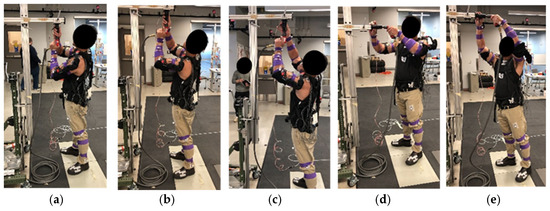
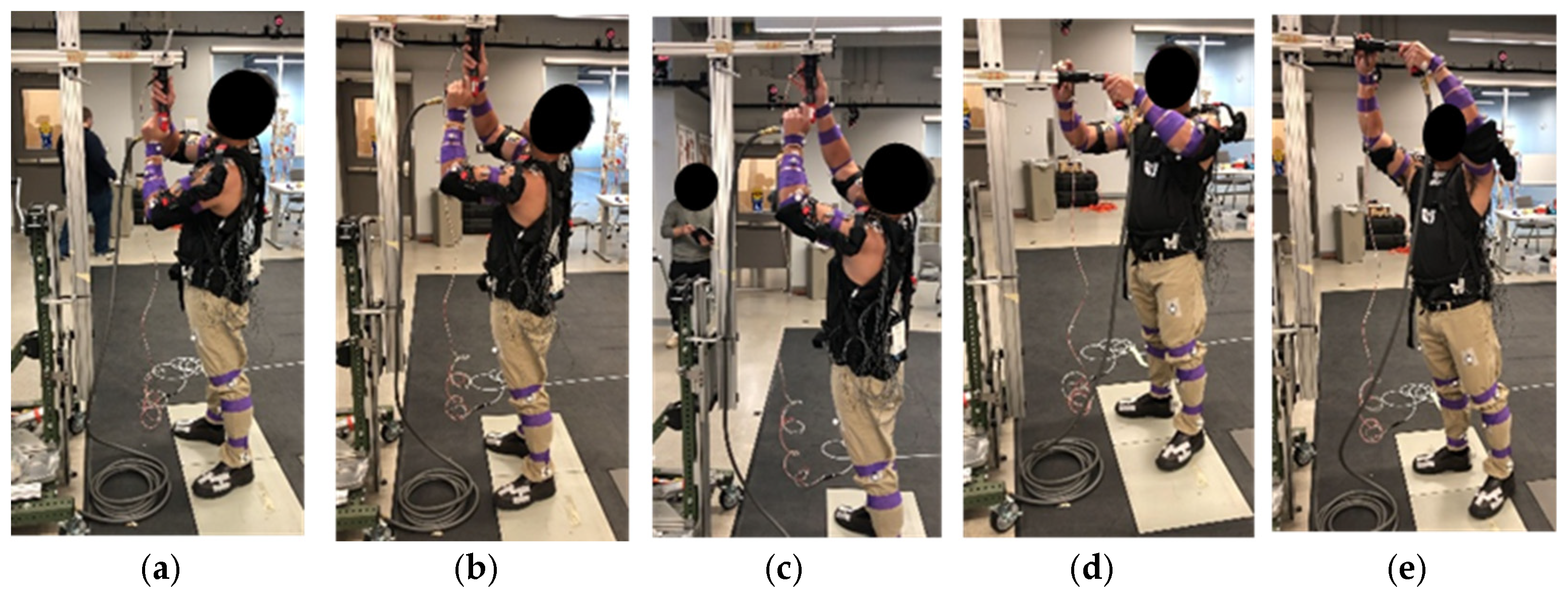
Upon completion of the MVC exertions, the testing structure was adjusted for the participant to achieve the specific elbow and shoulder postures designated for the different drilling tasks investigated. The specific drilling task, postures and exertion directions are shown in Table 1 and Figure 1, where the different posture and drilling task specifics were selected based on discussions with aircraft manufacturing personnel.
Table 1.
Drilling-exertion direction, vertical drill height location, and shoulder flexion and elbow angles for each of the experimental drilling tasks investigated.
Figure 1.
Different experimental drilling tasks investigated: (a) vertical—chin height; (b) vertical—head height; (c) vertical—overhead height; (d) horizontal—eye height; (e) horizontal—overhead height.
After the testing structure was set up for the participant, experimental tasks were demonstrated to the participants, including the postures using the upper extremities, the direction of the drilling exertions, the use of the drill and drill guide and the targeted drilling-exertion push forces, whereupon the participants were allowed to practice the experimental tasks until they indicated they had achieved familiarity.
The no-ASE condition was always the first condition the participants completed to allow feedback for each of the ASEs in comparison to the no-ASE condition. The four ASEs were then presented to each participant in a randomized order, and the drilling tasks were presented to each participant in a randomized order within each ASE condition. Participants were fitted to each ASE per the manufacturer’s instructions, and the resistance level of each ASE was adjusted such that the arms could be held (without effort) at 90° shoulder abduction and 90° elbow flexion. The maximum support angle (shoulder flexion angle with maximum support from the ASE) for the EksoVest was set to the ‘High’ level (maximum support angle of 125° for shoulder flexion) and the ShoulderX was set to the ‘Overhead Work’ level (maximum support angle of 120° for shoulder flexion), whereas the maximum support angle for the Paexo [12] and the Skelex [19] were reported to be around 90° of shoulder flexion.
For each task in the ASE experimental condition, the participant started with their arms hanging down to their sides, then raised their arms to insert the drill and drill guide against the test structure, performed five consecutive two-second 111 ± 22 N push force exertions with one second of no force (remove the push force) in between each push force exertion, then lowered their arms to their sides, ending the experimental condition. The target drill exertion push force was based on discussions with aircraft manufacturing personnel regarding their drilling training protocol. Participants used their self-identified dominant arm/hand to utilize the drill for the exertions and their non-dominant arm/hand to hold the drill guide in place. The EMG data collection began immediately before the first of five drilling exertions and ended immediately after the fifth drilling exertion was completed. After the completion of all experimental conditions, subjective feedback was sought from the participants regarding their perception as to whether or not the ASEs would be beneficial for the drilling tasks investigated (1 = no to 5 = yes).
2.5. Data Analysis
The raw EMG signals for all MVC and experimental conditions were hardware filtered using a 1st order high pass filter (10 Hz, ±10% cutoff) and 8th order Butterworth/Bessels low pass anti-alias filter (500 Hz, ±2% cutoff), then were processed in MATLAB (version 9.7; MathWorks, Natick, MA, USA), where the signals were de-meaned, rectified and low pass filtered (3 Hz cutoff, 4th order Butterworth) to create linear envelopes. Each experimental condition processed EMG signal was then normalized by dividing the peak processed EMG value from the MVCs for each particular muscle to determine the percent MVC for each muscle.
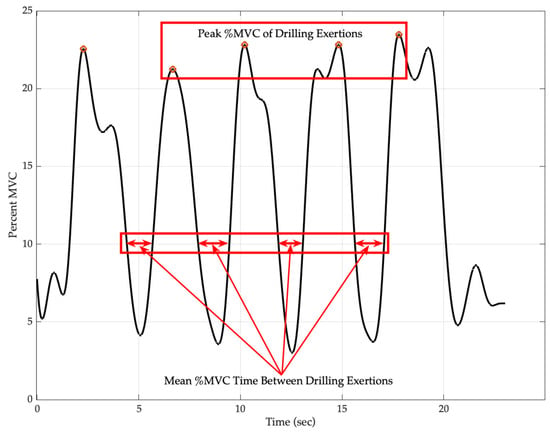
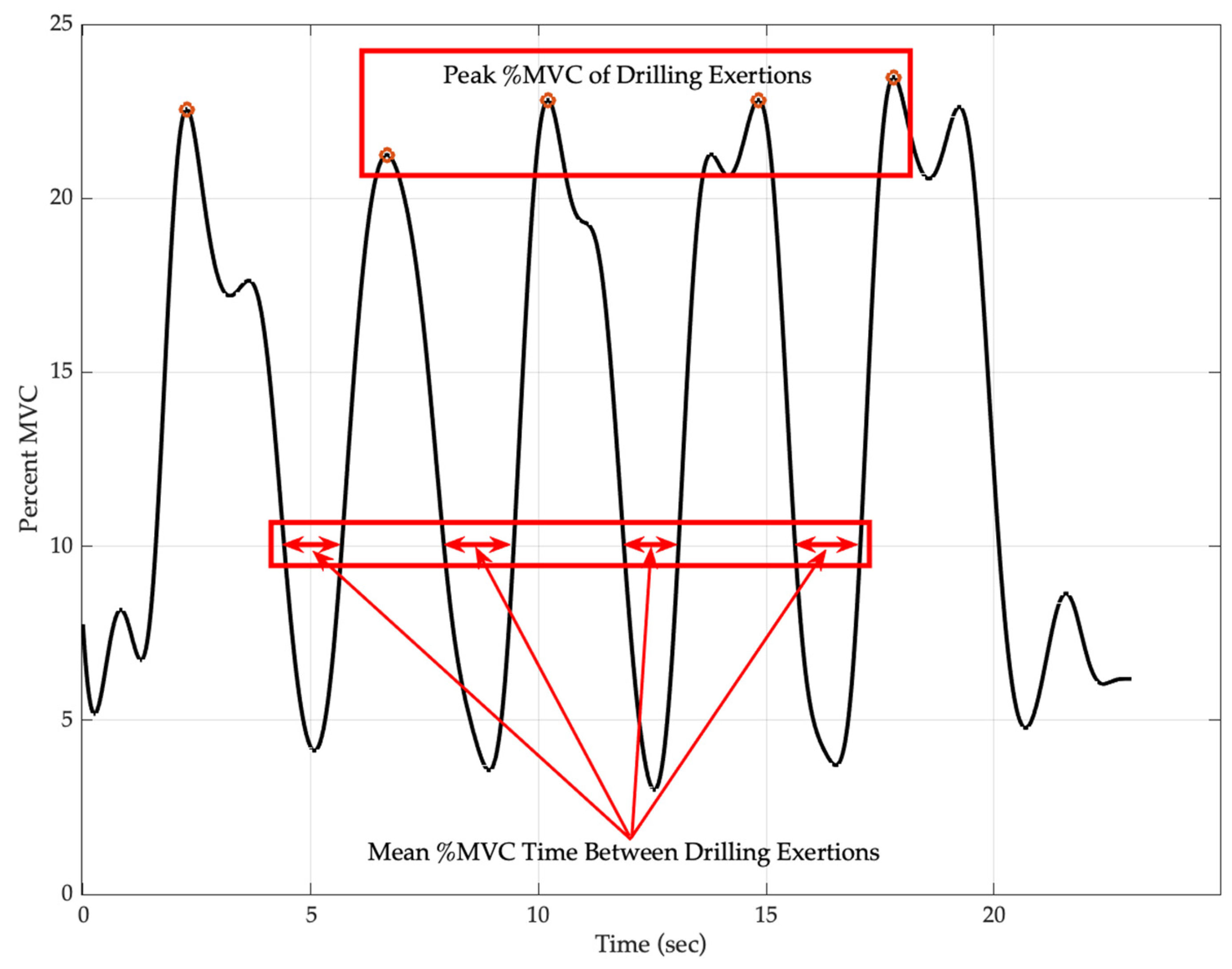
Drilling tasks in aircraft manufacturing consist of the actual time to drill a hole for a rivet (approximately two seconds) and the time to move the drill to the next adjacent drilling location (approximately one second). As such, both portions of the drilling task (drilling exertion, time between drilling exertions) were investigated separately to evaluate the impact of ASEs on the muscles investigated. The EMG signals from each experimental condition were separated into drilling-exertion and time-between-drilling-exertion portions, where the transition from exertion to the time between exertions was determined by the time corresponding to 45% of the peak exertion force across all five drilling exertions. Thus, when a drilling exertion’s force level reached 45% of the peak exertion force, this time determined the transition from a drilling exertion to the time between drilling exertions, and vice versa. As a result, each experimental condition resulted in five drilling exertions and four time intervals between drilling exertions (Figure 2).
Figure 2.
EMG data analysis of drilling-exertion and time-between-drilling-exertion components: the curve in black represents the processed normalized EMG signal.
2.6. Statistical Analysis
For each direction of the exertions (i.e., vertical, horizontal), a two-way within-subjects Analysis of Variance (ANOVA) was performed separately for each dominant and non-dominant side muscle, where the independent variables consisted of ASE condition (no-ASE, EksoVest, Skelex, ShoulderX, Paexo) and drilling task location (i.e., chin, head, overhead for vertical drilling; eye, overhead for horizontal drilling). The dependent variable was the normalized peak drilling exertion EMG signals (percent MVC), where the last four normalized peak percent MVC exertions were utilized for statistical analysis (Figure 2). For the time between the drilling exertions, a two-way within-subjects ANOVA was performed separately for each dominant and non-dominant side muscle, where the independent variables consisted of the ASE condition and drilling task location. The dependent variable was the mean normalized EMG signal for each time-between-exertion component; thus, all four time-between components for each experimental trial were utilized for the statistical analysis (Figure 2).
For all ANOVAs performed, significant main effects (p ≤ 0.05) were investigated utilizing a Tukey HSD post hoc test, whereas significant interactions were assessed via a Least Significant Difference (LSD) post hoc test utilizing a Bonferroni adjustment (dividing α = 0.05 by the number of comparisons) to control the probability of a Type I error. Effect sizes (partial eta-squared, ηp2) were computed for each main effect and interaction term, where ηp2 values of 0.01, 0.06, and 0.14 have generally been interpreted as small, medium, and large effect sizes, respectively [20].
For the subjective feedback from the participants regarding their perceptions of whether ASEs would be beneficial for aircraft manufacturing drilling tasks, a Chi-square test of independence was performed on their 5-point Likert scale responses (α = 0.05).
3. Results
The goal of this research is to discern any impact that ASEs may have on EMG muscle activity as a function of different drilling-exertion directions and heights. As such, the results will focus on differences between ASEs and the no-ASE condition rather than differences between the different ASEs. Statistical analysis results (p-values, ηp2 effect size) for the ANOVAs performed on the vertical drilling exertions and the time between vertical drilling exertions are shown in Table 2, and a summary of the mean percent MVC difference between the no-ASE condition and the ASEs that were significantly different from the no-exoskeleton condition is shown in Table 3 and in Figure 3, Figure 4, Figure 5 and Figure 6. Similarly, statistical analysis results (p-values, ηp2 effect size) for the ANOVAs performed on the horizontal drilling exertions and the time between horizontal drilling exertions are shown in Table 4, and a summary of the mean percent MVC difference between the no-ASE condition and the ASEs that were significantly different from the no-ASE condition is shown in Table 5 and in Figure 7, Figure 8 and Figure 9. A collective review of Table 3 and Table 5 suggests that ASEs led to larger reductions in percent MVC for the anterior and medial deltoids compared to other muscles, whereas the use of ASEs resulted in some increases in the percent MVC for the triceps. As such, the results and discussion will focus primarily on these muscles.
3.1. Vertical Drilling
During the vertical drilling exertions, ASE usage significantly impacted the percent MVC for the dominant medial deltoid and non-dominant anterior deltoid (Table 2). Post hoc tests indicated that all ASEs significantly reduced the dominant medial deltoid percent MVC (10.7% mean decrease, Figure 3a) and the non-dominant anterior deltoid percent MVC (12.8% mean decrease, Figure 3b).
The ANOVAs also indicated there were significant ASE by vertical drilling-exertion interactions for the dominant triceps, and the non-dominant medial deltoid and triceps (Table 2). The post hoc test results (Figure 4) found ASE usage resulted in a mean increase in the dominant triceps (14.8% increase) for the overhead level drilling (Figure 4a), and a 5.7% increase and 4.9% decrease in percent MVC at the head and overhead levels, respectively, for the non-dominant triceps (Figure 4b). ASE usage also resulted in significant decreases in percent MVC of 9.6%, 11.7% and 26.6% at the chin, head and overhead levels, respectively, for the non-dominant medial deltoid (Figure 4c).
Figure 3.
Mean percent MVC EMG for vertical drilling exertions as a function of ASE main effect for (a) dominant medial deltoid and (b) non-dominant anterior deltoid. ASEs with an asterisk (*) above their bar are significantly different from the no-ASE (None) condition; error bars are ± 1.0 SD.
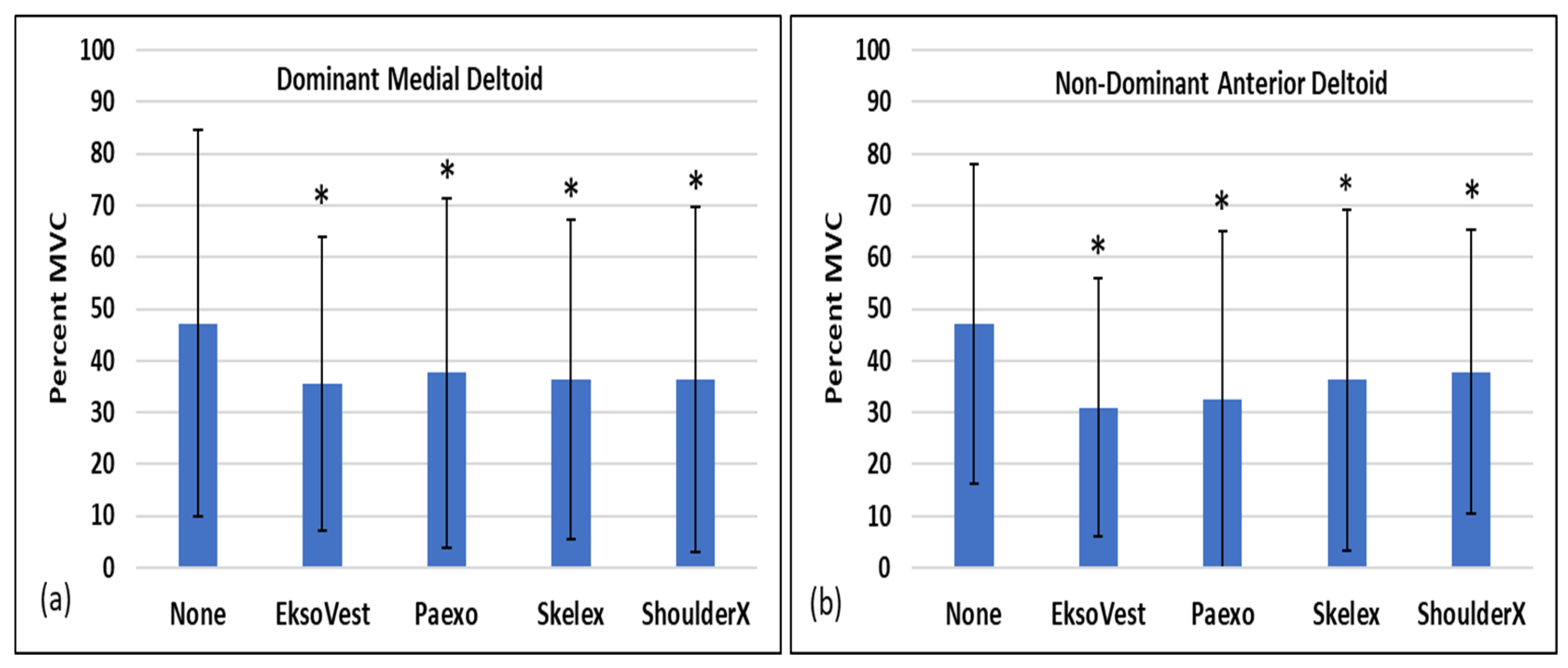
Table 2.
Vertical drilling: p-value (effect size ηp2) results from ANOVAs for vertical drilling exertions and time between drilling exertions—shaded cells represent significant effects (p ≤ 0.05).
Table 3.
Vertical drilling—percent MVC EMG absolute difference between the no-ASE condition and the mean percent MVC EMG of ASEs that were significantly different from the no-ASE condition, as a function of muscle, exertion type, and drilling task.
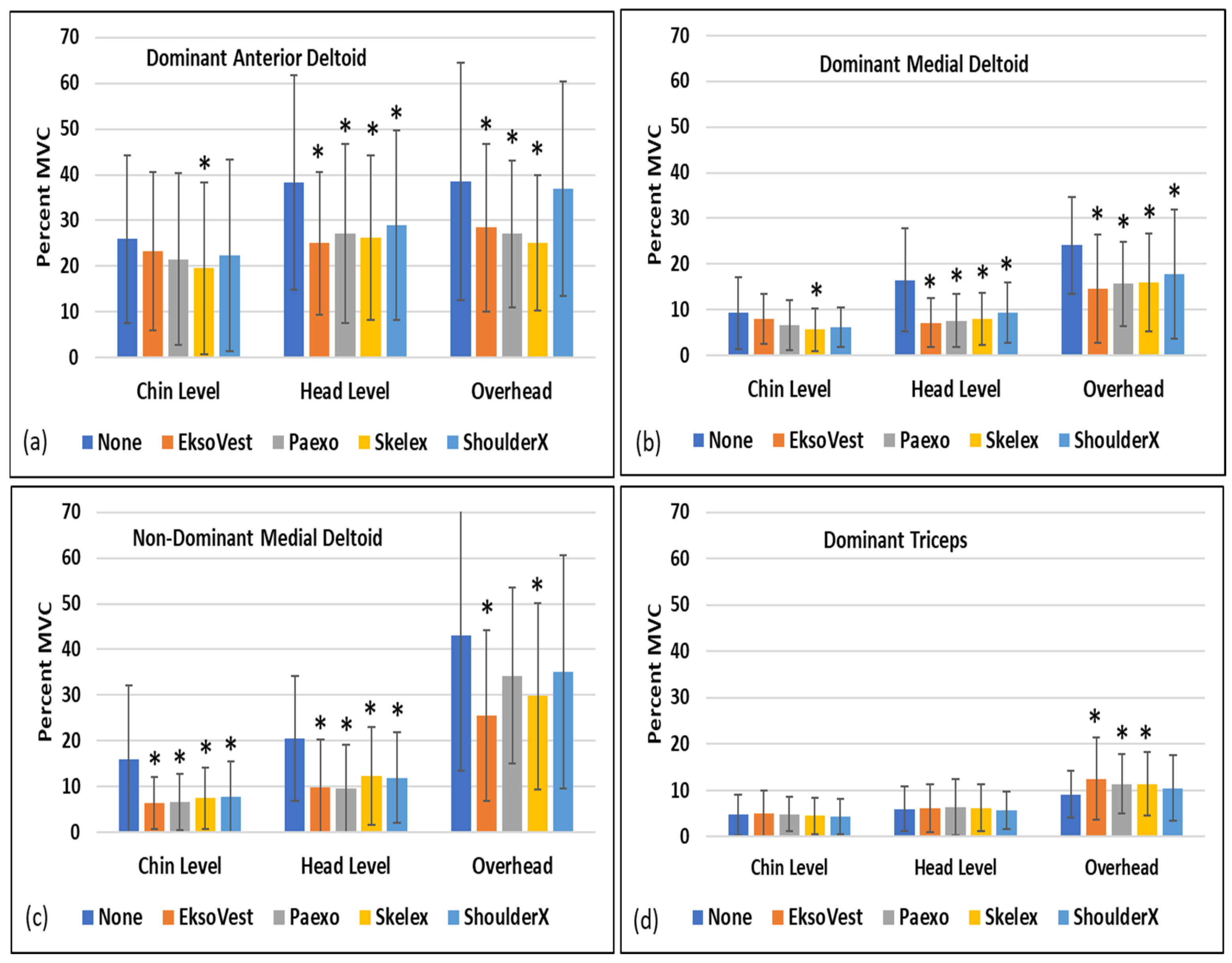
For the time between vertical drilling exertions, the ASE’s impact occurred mainly to the anterior and medial deltoids, and sporadically to a few other muscles. ASEs resulted in significant mean decreases to the non-dominant anterior deltoid (9.8%; Figure 5) and dominant anterior deltoid (6.3% to 11.7%; Figure 6a), and significant mean decreases to the dominant medial deltoid (3.6% to 8.5%; Figure 6b) and the non-dominant medial deltoid (8.8% to 11.8%; Figure 6c). However, the dominant triceps saw a significant mean increase at the overhead level (2.7%; Figure 6d).
Figure 4.
Mean percent MVC for the vertical drilling exertions as a function of ASE by drilling height interaction (a) dominant triceps, (b) non-dominant triceps, and (c) non-dominant medial deltoid. Within each height (i.e., chin, head, and overhead), ASEs with an asterisk (*) above their bar are significantly different from the no-ASE (None) condition; error bars are ± 1.0 SD.
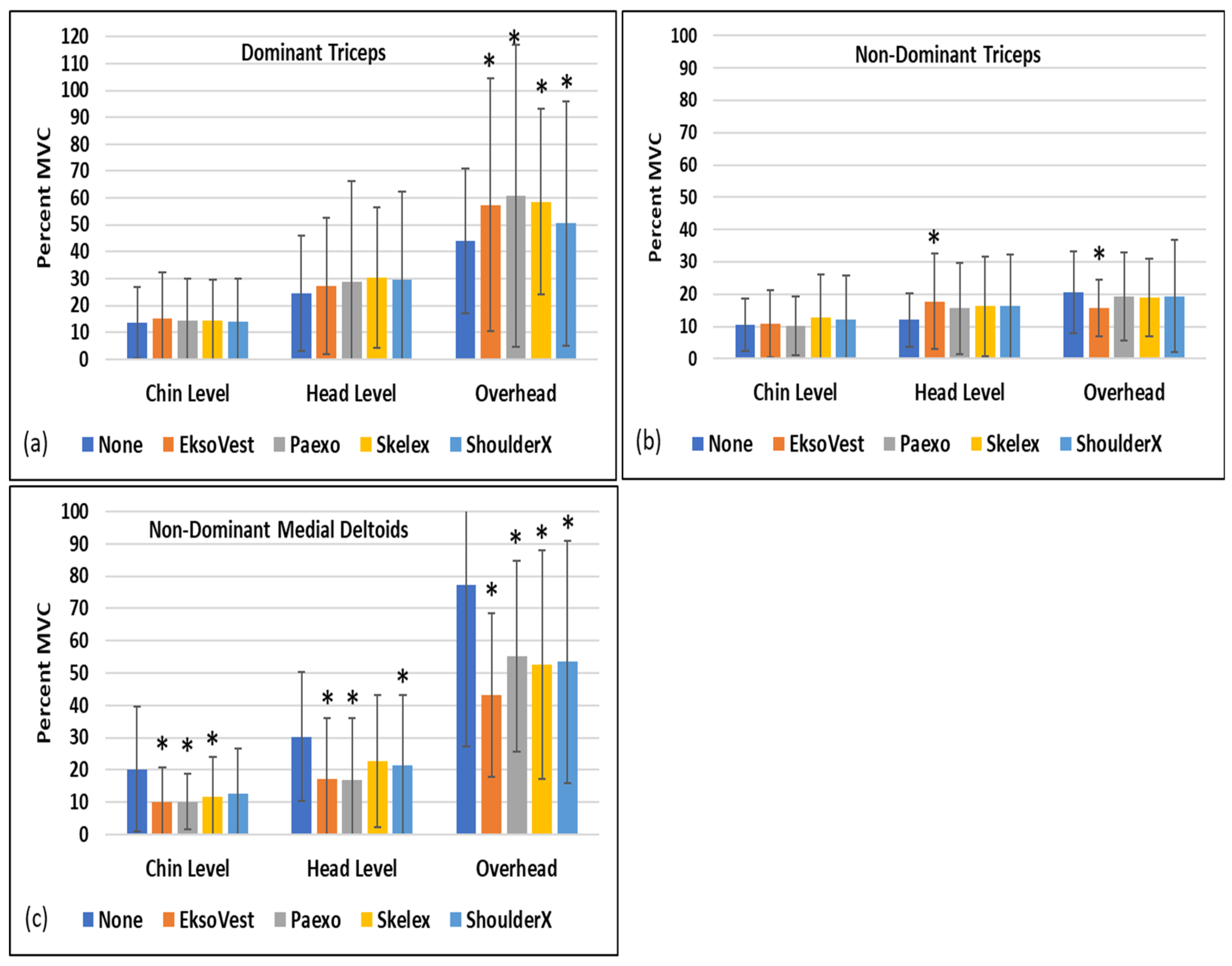
Figure 5.
Mean percent MVC EMG for time between vertical drilling exertions for the non-dominant anterior deltoid as a function of ASE main effect. ASEs with an asterisk (*) above their bar are significantly different from the no-ASE (None) condition; error bars are ± 1.0 SD.
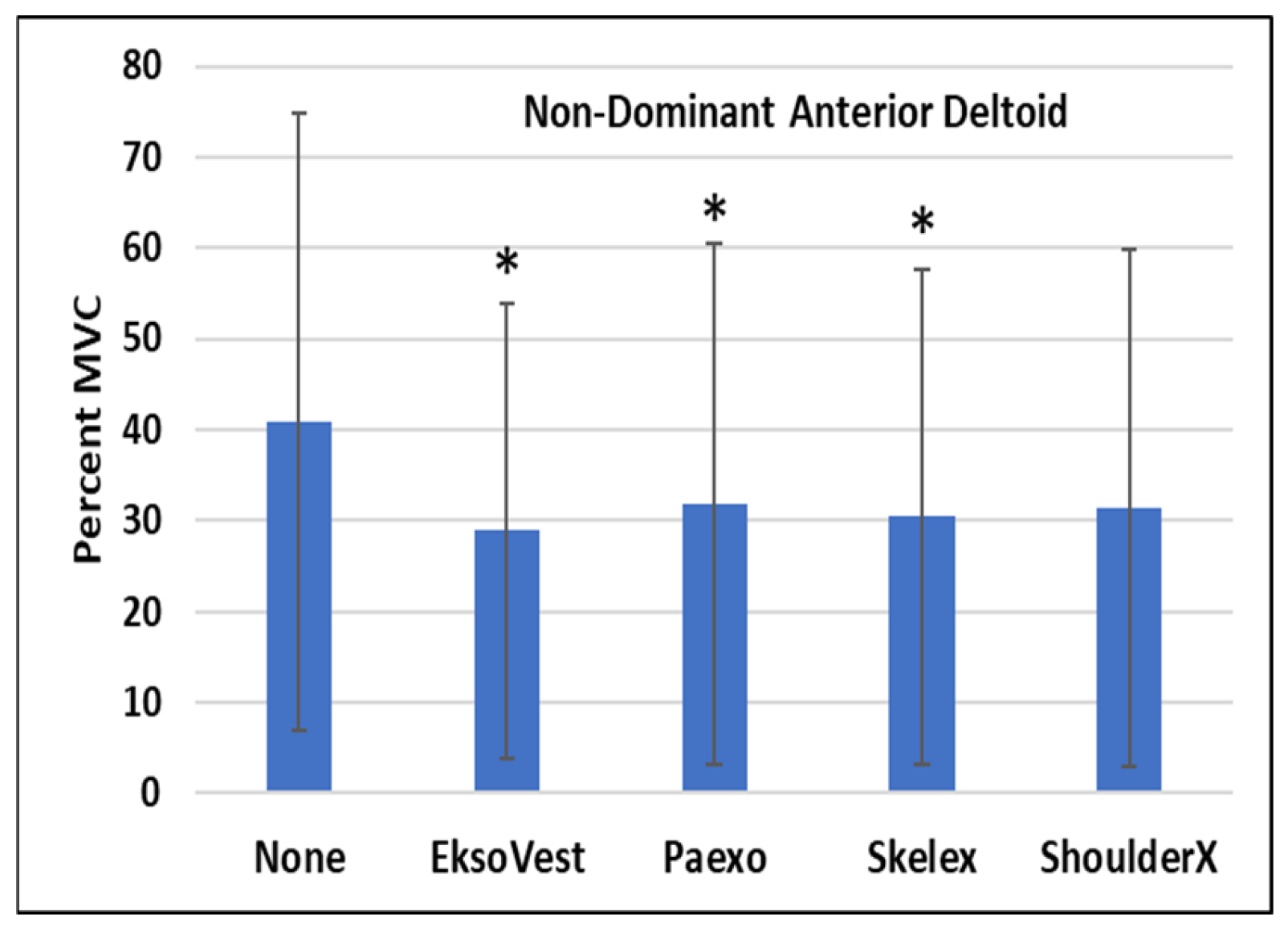
Figure 6.
Mean percent MVC for the time between vertical drilling exertions as a function of significant ASE condition by drilling task interaction for (a) dominant anterior deltoid, (b) dominant medial deltoid, (c) non-dominant medial deltoid, and (d) dominant triceps. Within each height (i.e., chin, head, overhead) ASEs with an asterisk (*) above their bar are significantly different from the no-ASE (None) condition; error bars are ± 1.0 SD.
3.2. Horizontal Drilling
During the horizontal drilling exertions, ASE usage mainly impacted the dominant and non-dominant anterior and medial deltoids, irrespective of drilling height (Table 4). ASE usage significantly reduced percent MVC for the dominant anterior deltoid (8.2%; Figure 7a) and medial deltoid (9.2%; Figure 7b) and the non-dominant anterior deltoid (15.8%; Figure 7c) and medial deltoid (9.0%; Figure 7d), whereas ASE usage resulted in a 4.3% increase in percent MVC for the non-dominant triceps (Figure 7e).
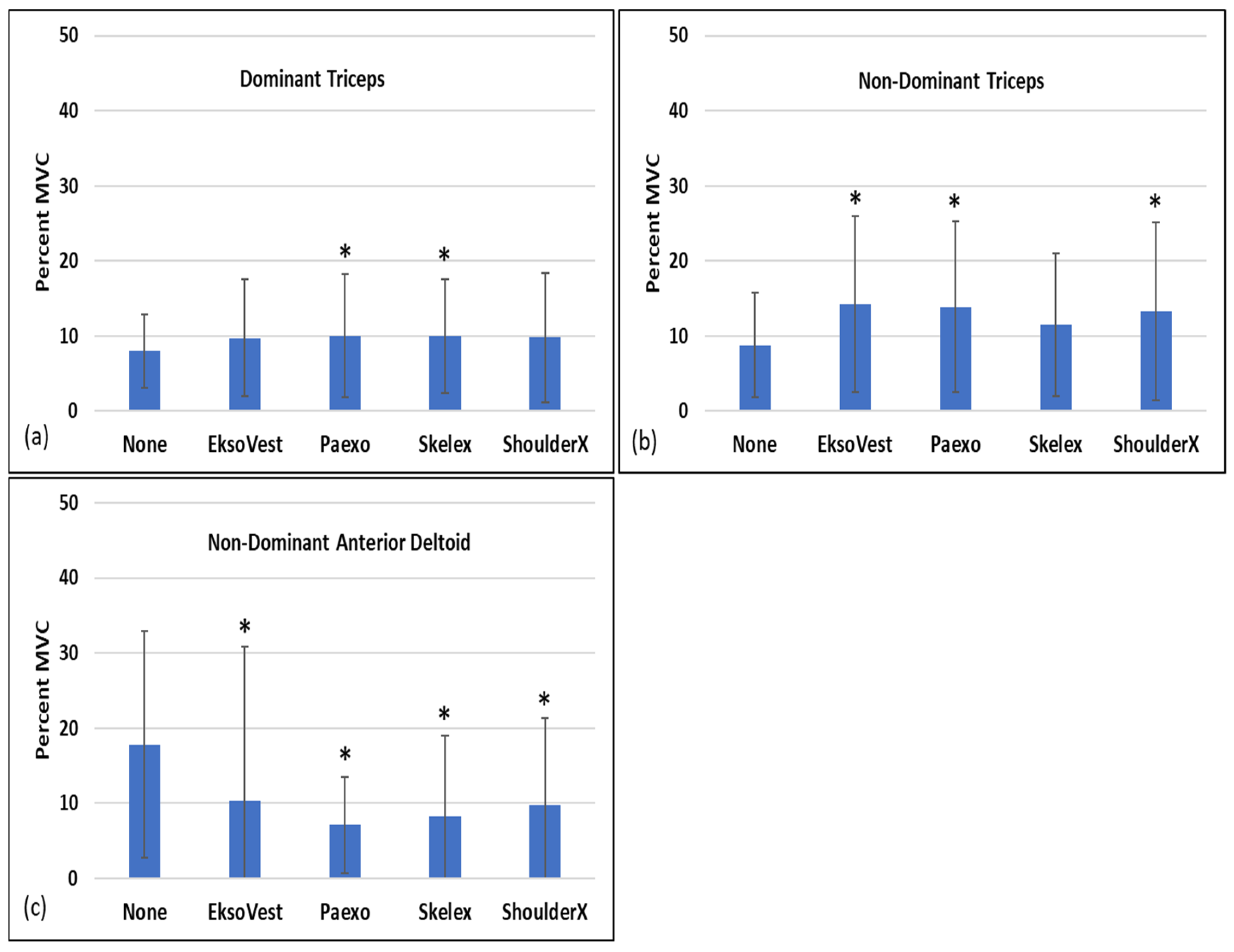
For the time between horizontal drilling exertions, numerous muscles were significantly impacted by ASE usage, both independent of and as a function of drilling height (Table 4, Table 5). The triceps saw small significant increases to the dominant (2.0%; Figure 8a) and non-dominant (5.0%; Figure 8b) sides, whereas the non-dominant anterior deltoid resulted in a mean decrease of 9.0% from ASE use (Figure 8c).
Figure 7.
Mean percent MVC EMG for horizontal drilling exertions as a function of ASE main effect for (a) dominant anterior deltoid, (b) dominant medial deltoid, (c) non-dominant anterior deltoid, (d) non-dominant medial deltoid, and (e) non-dominant triceps. ASEs with an asterisk (*) above their bar are significantly different from the no-ASE (None) condition; error bars are ±1.0 SD.
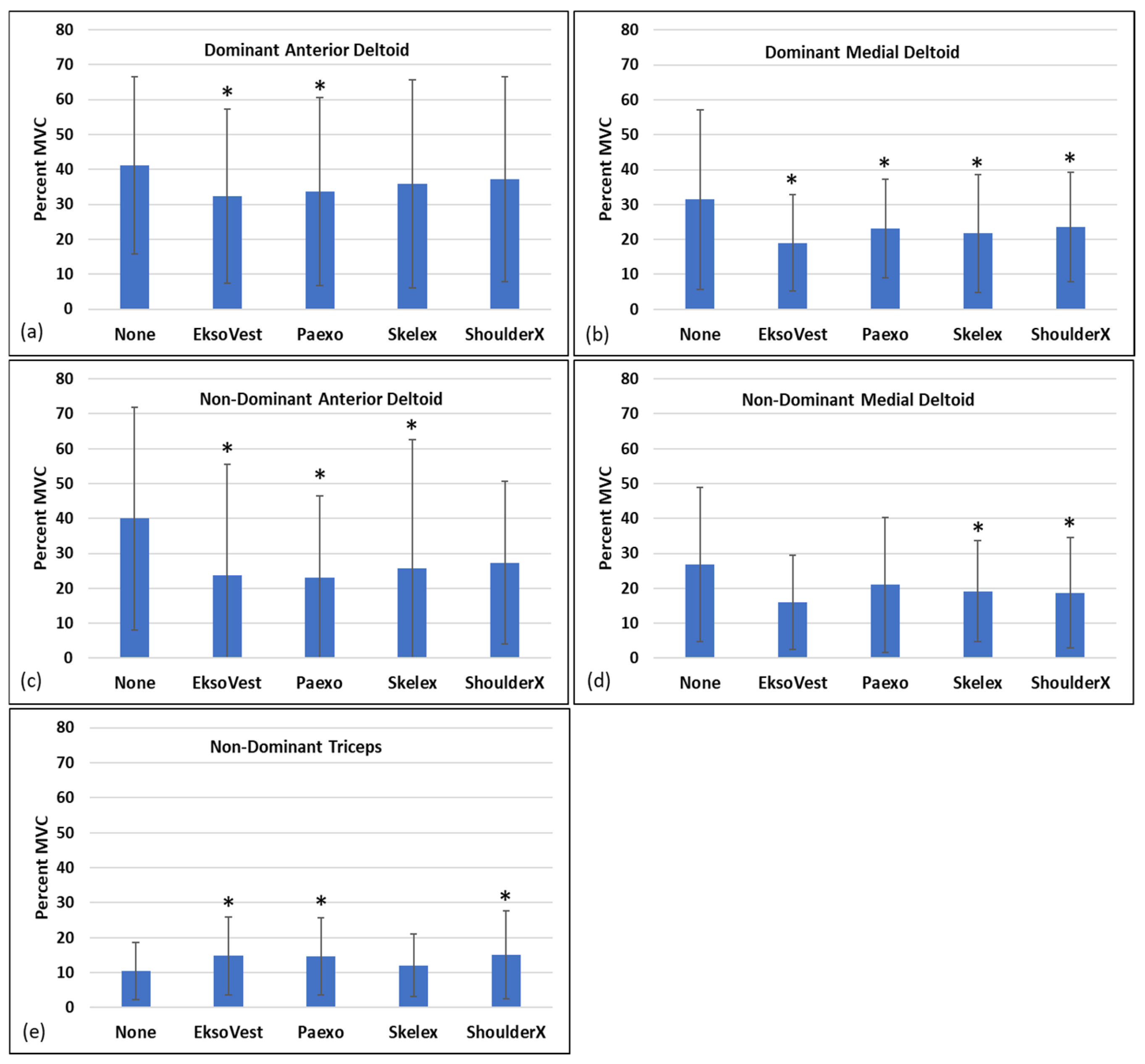
Figure 8.
Mean percent MVC EMG for time between horizontal drilling exertions as a function of ASE main effect for (a) dominant triceps, (b) non-dominant triceps, and (c) non-dominant anterior deltoid. ASEs with an asterisk (*) above their bar are significantly different from the no-ASE (None) condition; error bars are ± 1.0 SD.
The time between horizontal drilling exertions also saw a significant impact of ASE usage on percent MVC for several muscles as a function of drilling height. Significant decreases in percent MVC due to ASE usage included the dominant anterior deltoid (8.9% and 6.4% for eye and overhead levels, respectively; Figure 9a), the dominant medial deltoid (6.4% and 7.1% for eye and overhead levels, respectively; Figure 9b) and non-dominant medial deltoid (5.0% and 6.1% for eye and overhead levels, respectively; Figure 9c).
Figure 9.
Mean percent MVC for the time between horizontal drilling exertions as a function of significant ASE condition by drilling task interaction for (a) dominant anterior deltoid, (b) dominant medial deltoid, and (c) non-dominant medial deltoid. Within each height (i.e., eye, overhead), ASEs with an asterisk (*) above their bar are significantly different from the no-ASE (None) condition; error bars are ± 1.0 SD.
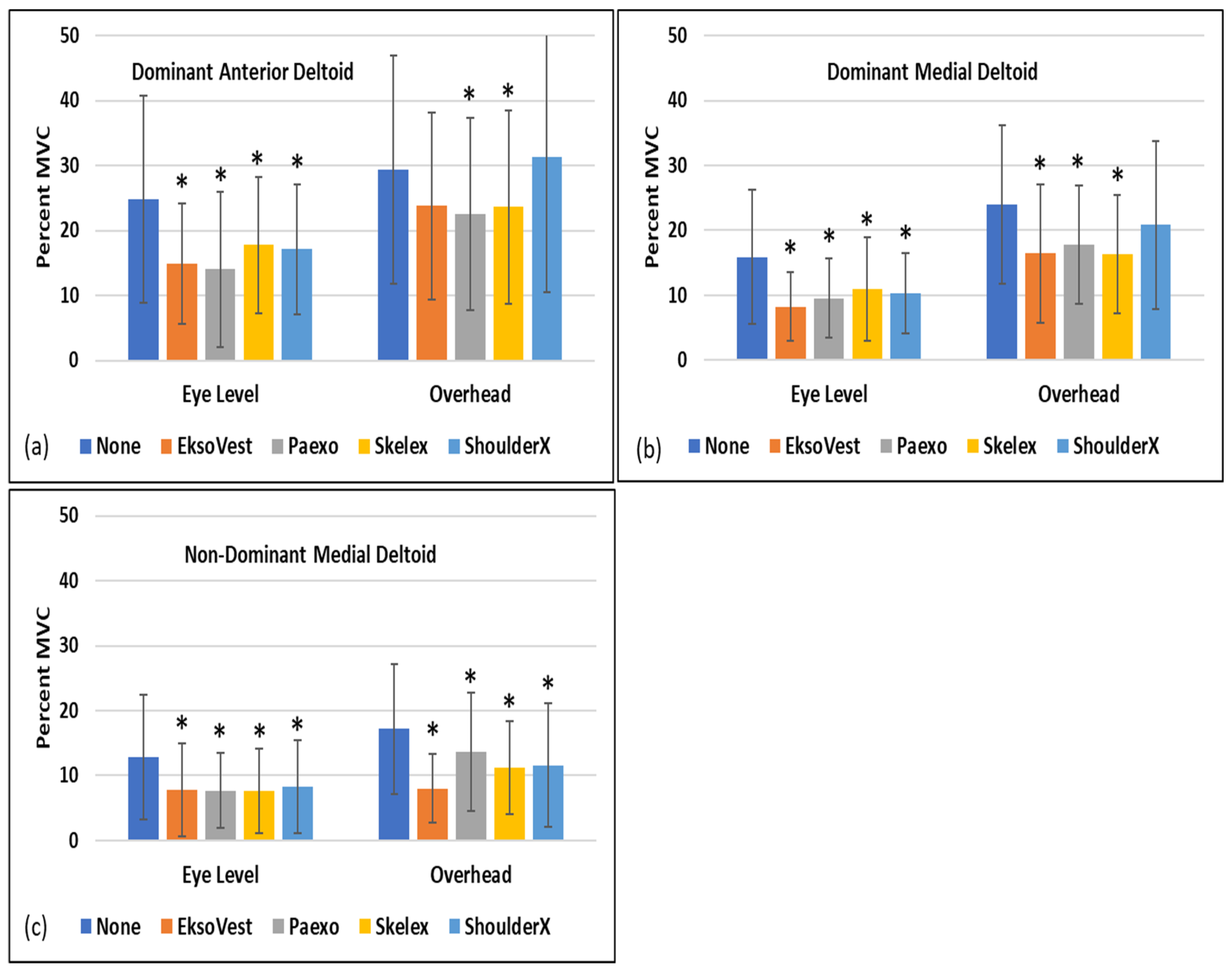
Table 4.
Horizontal drilling: p-value (effect size ηp2) results from ANOVAs for horizontal drilling exertion and time between drilling exertions—shaded cells represent significant effects (p ≤ 0.05).
Table 5.
Horizontal drilling—percent MVC EMG absolute difference between the no-ASE condition and the mean percent MVC EMG of ASEs that were significantly different from the no-ASE condition, as a function of muscle, exertion type, and drilling task.
3.3. ASE Usefulness
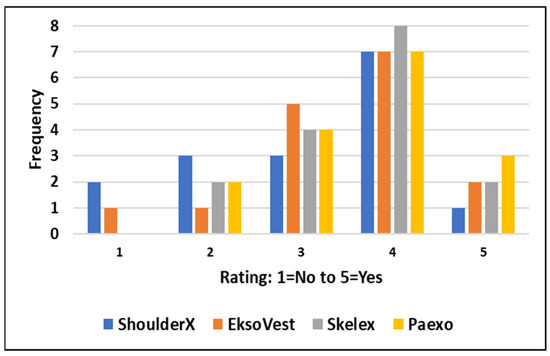
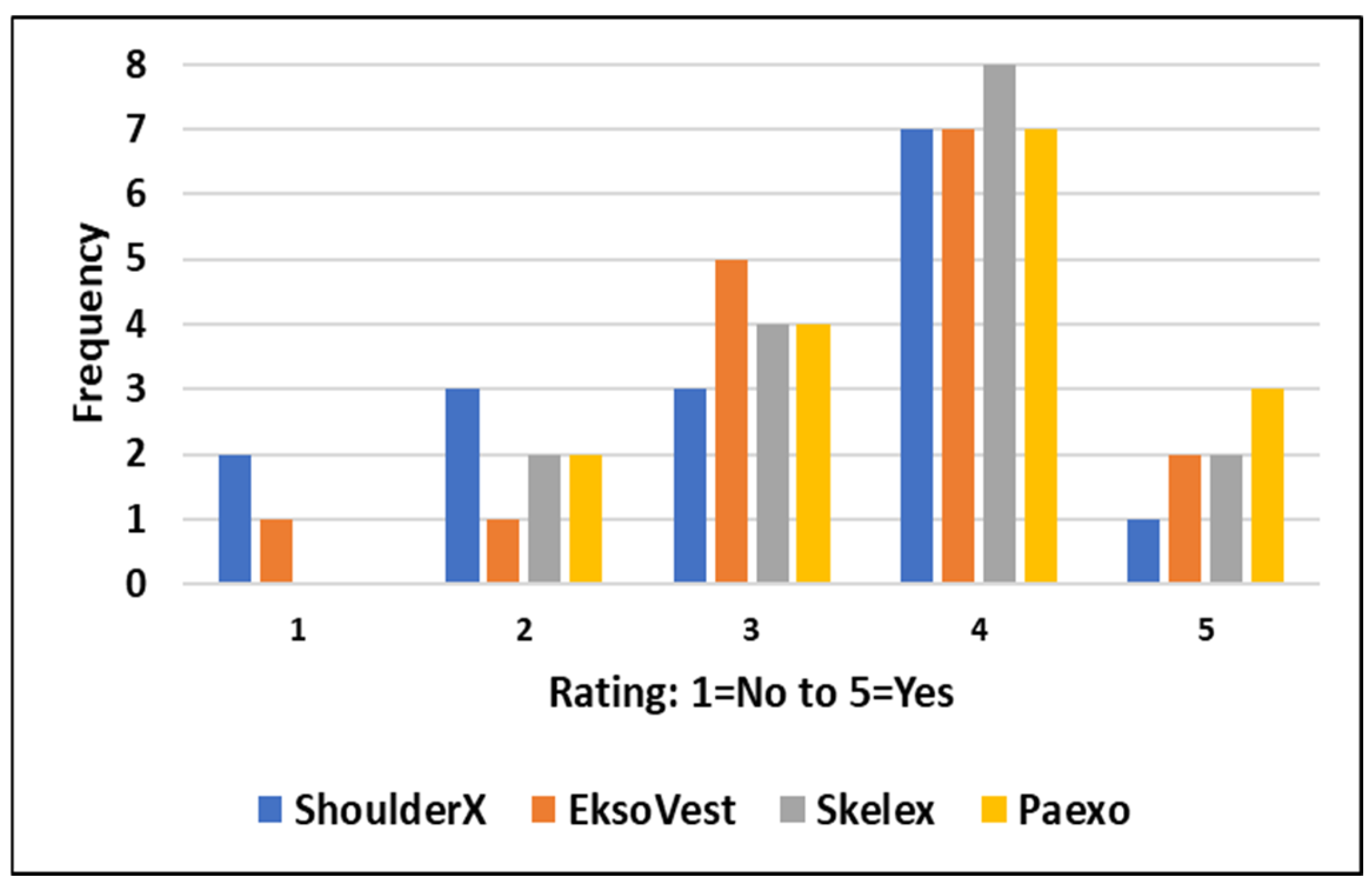
The frequency of participant responses as to their perception of the benefit of using ASEs for drilling tasks is shown in Figure 10. A Chi-square test on the distribution of the frequency of responses indicated there was a significant association between ASEs and the participants’ perception of them being beneficial for drilling tasks (χ2 = 35.4, p ≤ 0.05). As shown in Figure 10, 50%, 56.3%, 62.5% and 62.5% of the participants rated the benefit of ASEs as a 4 or 5 (Yes) when asked about the Shoulder, EksoVest, Skelex and Paexo, respectively, being beneficial for drilling tasks.
Figure 10.
Frequency of responses to survey questions on whether ASEs would be beneficial to drilling tasks (1 = No to 5 = Yes).
4. Discussion
Aircraft manufacturing involves substantial use of various power hand tools, and due to the size of the aircraft being manufactured, some of these hand tools are utilized at shoulder level and above. Some aircraft require thousands of rivets and fasteners and workers must manually drill many of these holes during the assembly process, at various vertical height locations. This study assessed the impact of various passive ASEs on shoulder and torso muscles for some of the more common locations and directions of the drilling exertions found in aircraft manufacturing. The main findings of this study indicate that ASEs generally had a larger impact on reducing electrical muscle activity of the anterior and medial deltoid muscles compared to other muscles, ASEs typically impacted more muscles during the time-between component than the drilling-exertion component of the drilling task, and participants generally perceived ASEs as being beneficial for drilling tasks.
For the horizontal drilling exertions, the most significant finding was that the decrease in muscle activity from ASE use did not vary as a function of drilling-exertion height for the anterior deltoid (mean 8.2% and 15.8% decrease for dominant and non-dominant, respectively) and the medial deltoid (mean 9.6% and 8.9% decrease for dominant and non-dominant, respectively). This suggests that ASEs can provide some upward support to the upper arm while performing horizontal exertions with the drill for the dominant arm and pushing/holding force for the drill guide with the non-dominant arm. However, the magnitude of these push forces may be larger than that which would allow the ASE to benefit further at different heights. These findings are consistent with Kim and Nussbaum [10] and Alabdulkarim et al. [9], who found decreases in the non-dominant anterior deltoid (4% and 5%, respectively) during horizontal drilling exertions at the head level. However, contrary to the finding in the current study of a mean 8.2% decrease in dominant anterior deltoid muscle activity from ASE use, these same studies [9,10] found no ASE impact on dominant anterior muscle activity during horizontal screwdriving exertions. This contrast may be due to differences in the type of task (drilling push exertion versus screwdriving push exertion) or differences in the target exertion push force (111 N in the current study versus 66.7 N in these prior studies). For time intervals between drilling exertions in the horizontal direction, ASE use resulted in modest electrical muscle activity decreases ranging from 5.0% to 9.0%, depending on the muscle (anterior or medial deltoid), side (dominant or non-dominant), where differences between eye-level and overhead were generally around 1% to 2% (Table 5). Given that the drill only weighed 0.65 kg and the plastic drill guide weighed less than the drill, these decreases in anterior and medial deltoid muscle activity from ASE use essentially represent the impact of ASEs during short static exertions of these muscles to assist with holding the arms in place.
ASE use during drilling (exertion and time between exertion) in the vertical direction resulted in significant decreases in muscle activity for the dominant (3.6% to 10.7%) and non-dominant (8.8% to 26.2%) medial deltoid muscle, consistent with prior research which found decreases from 8% to 10% during vertical drilling exertions at head level when using an ASE [8]. Similarly, for the non-dominant anterior deltoid, ASE use resulted in decreased muscle activity for drilling exertions and time between drilling exertions (6.3% to 12.8%), also consistent with prior research that found decreases ranging from 6% to 8% when drilling at head level when using an ASE [8,10]. However, ASE use decreased the dominant anterior deltoid muscle activity only for the time between exertions and not for the actual vertical drilling exertions. This is in contrast with prior research, which found decreases in the dominant anterior deltoid during the actual vertical exertions [8,10,11,15]. The decrease in medial deltoid muscle activity, with the absence of an impact of ASEs on the dominant anterior deltoid during vertical drilling exertions, may be related to the direction of the drilling exertion as well as the force needed by the shoulder muscles to perform the drilling exertion. The anterior deltoid is a shoulder flexion agonist muscle, whereas the medial deltoid is a shoulder abduction agonist muscle. As the participants flexed their shoulders and raised their arms to reach the vertical drilling location, the dominant anterior deltoids would be active, raising the arm and drill into place, and the non-dominant anterior deltoids would be active, raising the arm to hold the drill guide in place. During the drilling exertion itself, the dominant anterior deltoid would likely increase the magnitude of its contraction force to attain the 111 N target drilling force level, whereas the non-dominant anterior deltoid would contract to help hold the drill guide in place during the drilling exertion. Since the ASEs are designed to provide resistance and support to the upper limb and the muscles that contract to hold the upper limbs in place, as opposed to providing additional force, it is not surprising that the dominant anterior deltoid was not impacted during the forceful vertical drilling exertions, whereas the non-dominant anterior deltoid was assisted by the ASEs while the shoulder was flexed to hold the drill guide in place during and between drilling exertions. The dominant and non-dominant medial deltoids were likely assisted by the ASEs, as participants typically had some degree of shoulder abduction while exerting force on the drill, as well as while holding the drill guide in place.
One muscle that saw mostly increases in electrical activity when using the ASEs was the triceps (dominant and non-dominant sides). For the time between drilling exertions, ASE use resulted in the dominant triceps increasing by 2.0% and 2.7% for the horizontal and vertical drilling directions, respectively, and increasing by 14.8% for vertical drilling exertions at the overhead level. ASE use also increased the non-dominant triceps muscle’s activity by 4.5% and 5.0% for drilling exertions and the time between exertions in the horizontal direction, respectively. Collectively, the dominant and non-dominant triceps increased from 2.0% to 5.0% during the time between drilling exertions. These small increases could have resulted from the participants slightly lowering the drill guide and drill, resulting in slight shoulder extension during the one-second no-force time-between-drilling-exertions component, as the triceps assisted with shoulder extension. Additionally, this momentary lowering (slight shoulder extension) of the arms may have also worked against the upward resistance of the ASE arm cuffs, resulting in increases in triceps muscle activity [21]. The dominant triceps did see a substantially larger increase in muscle activity (14.8%) when using ASEs for vertical drilling exertions at the overhead level. It is possible that the triceps needed additional muscle force to overcome the resistance due to the arm cuff attachments at this fully extended overhead position. Overall, similar increases (3% to 7%) in triceps percent MVC during simulated overhead tasks of inserting and removing screws using a drill with different ASE resistance level settings were found by van Engelhoven et al. [11].
One unique contribution of this research is the assessment of ASE use during the time between drilling exertions. This one-second no-drilling push force component simulated the time it would take to move the drill guide and drill to the next drilling location after drilling the previous hole in an actual aircraft manufacturing setting. Participants typically lowered both arms very slightly during this no-force period, then raised them again to position the drill guide and drill to perform the next drilling exertion. As shown in Table 3 for vertical drilling and Table 5 for horizontal drilling, the dominant and non-dominant sides of the anterior and medial deltoids typically resulted in significant decreases in muscle activity when utilizing ASEs at most vertical heights, with somewhat larger decreases ranging from 1% to 5% lower at the higher overhead location compared to the lowest height (either eye or chin level). As discussed above, these time intervals between drilling exertions represent static loading of the muscles with no vertical or horizontal push forces, which would allow the ASEs to provide some degree of support depending on the vertical location and posture of the shoulders. Similar findings as a function of vertical location were found in a study of simulated aircraft manufacturing squeeze riveting tasks at the overhead and shoulder level, with the ASEs resulting in approximately 10% to 15% less shoulder muscle activity when riveting overhead compared to riveting while wearing an ASE at the shoulder level [16]. This larger decrease in the squeeze riveting study [16] was likely due to utilizing a heavier riveting tool (2.65 kg) compared to the drill (0.65 kg) in the current study.
Finally, except for the triceps, none of the ASEs resulted in percent MVCs significantly greater than the no-ASE condition for any other muscle, drilling task or exertion type (i.e., drilling exertion and time between). This collective lack of difference from the no-ASE condition may also be reflected in the participants’ overall perception that ASEs may be beneficial to use during drilling tasks. While this is encouraging with respect to potential ASE usage in industrial and manufacturing environments, recent research also highlights the importance of understanding the various characteristics of tasks intended for ASE use regarding their potential effectiveness [21,22]. Additionally, ASE comfort and fit are extremely important factors that influence the likelihood of ASE use by workers [22,23]. These factors can also be influenced by the size of the workers, as well as body size differences due to the sex of the user, such as dimensions of the hips or the chest region [24].
This study should be viewed with respect to several methodological limitations. First, this was a controlled laboratory study with short-term exposures; thus, the long-term impact on muscular demands, muscular fatigue development or musculoskeletal outcomes cannot be determined. Second, while there were sizable significant differences between the ASE and no-ASE conditions for the anterior and medial deltoids, several muscles demonstrated statistically significant but small-magnitude percent MVC differences between the ASE and no-ASE conditions (e.g., biceps, latissimus dorsi, erector spinae and triceps). As such, it is currently unclear as to whether these small differences are practically or clinically relevant in the long term. Third, these were simulated drilling tasks where the actual duration and location of drilling tasks may vary in an actual work environment. Factors such as frequently changing or variable vertical heights of drilling may result in frequent vertical movement of the arms, resulting in the arms moving against the ASE resistance or deterring the use of ASEs, or differences in actual drilling push force by employees may lengthen or decrease actual drilling-exertion time and impact muscle force exertion magnitudes, fatigue development and the impact of ASEs on the musculature. However, the utilization of experienced aircraft manufacturing employees as participants likely contributed to more realistic postures and increased relevance of the quantitative and subjective findings to actual drilling tasks. Fourth, other factors that may be important in determining ASE effectiveness were not studied, including duration of ASE use and long-term comfort. Finally, the results from this study are limited to the specific passive ASEs utilized, as well as the resistance levels and maximum support angles of these ASEs.
5. Conclusions
In conclusion, this study assessed shoulder and torso muscle activity in experienced aircraft manufacturing participants while performing simulated horizontal and vertical drilling exertions at different vertical heights, utilizing four different passive ASEs, assessing the drilling-exertion and time-between-drilling components of different drilling tasks. There are several main takeaways from this study. First, ASE use resulted in larger decreases in electrical muscle activity, primarily to the anterior deltoids and medial deltoids compared to other muscles. Second, while ASE use typically decreased muscle activity in the anterior and medial deltoids (with the exception of the dominant anterior deltoid for vertical drilling exertions), during actual drilling exertions, the reduction was not impacted by the vertical location of the drilling task. Third, ASEs typically reduced dominant and non-dominant anterior and medial deltoid muscle activity during the time between drilling exertions, with larger decreases occurring at higher overhead locations compared to lower locations (eye- or chin-level). Finally, participants generally perceived ASEs as being beneficial for drilling tasks. While these laboratory results are encouraging in terms of reducing muscular exertion during drilling tasks commonly found in aircraft manufacturing, ASEs must be evaluated in worksite studies to better assess their efficacy, and also consider other factors such as comfort, fit, and user intention to use ASEs.
Author Contributions
Conceptualization, M.J.J. and N.A.H.; methodology, M.J.J. and N.A.H.; software, N.A.H.; formal analysis, M.J.J. and N.A.H.; investigation, M.J.J. and N.A.H.; data curation, M.J.J. and N.A.H.; writing—original draft preparation, M.J.J.; writing—review and editing, M.J.J. and N.A.H.; supervision, M.J.J. and N.A.H.; project administration, M.J.J.; funding acquisition, M.J.J. and N.A.H. All authors have read and agreed to the published version of the manuscript.
Funding
This research was funded by Spirit AeroSystems.
Institutional Review Board Statement
The study was conducted in accordance with the Declaration of Helsinki and approved by the Institutional Review Board of Wichita State University (protocol #4738, 1 May 2020).
Informed Consent Statement
Informed consent was obtained from all subjects involved in the study.
Data Availability Statement
The data presented in this study are available on request from the corresponding author.
Conflicts of Interest
The authors declare no conflicts of interest. This research was funded by Spirit AeroSystems. The funding sponsors provided guidance on design and parameters of the experimental tasks but had no other involvement in this study.
References
- Bureau of Labor Statistics. Nonfatal Occupational Injuries and Illnesses Requiring Days Away from Work; Bureau of Labor Statistics, U.S. Department of Labor: Washington, DC, USA, 2024. [Google Scholar]
- Manning, C.; Jorgensen, M.J. Workers’ Compensation Injuries in Aviation Manufacturing in the State of Kansas, 2014–2022. J. Saf. Res. 2024, 90, 73–85. [Google Scholar] [CrossRef] [Scilit] [PubMed]
- Waersted, M.; Koch, M.; Veiersted, K.B. Work Above Shoulder Level and Shoulder Complaints: A Systematic Review. Int. Arch. Occup. Environ. Health 2020, 93, 925–954. [Google Scholar] [CrossRef] [Scilit] [PubMed]
- van der Molen, H.F.; Foresti, C.; Daams, J.G.; Frings-Dresen, M.H.W.; Kuijer, P.F.M. Work-Related Risk Factors for Specific Shoulder Disorders. Occup. Environ. Med. 2017, 74, 745–755. [Google Scholar] [CrossRef] [Scilit]
- de Looze, M.P.; Bosch, T.; Krause, F.; Stadler, K.S.; O’Sullivan, L.W. Exoskeletons for Industrial Application and Their Potential Effects on Physical Work Load. Ergonomics 2016, 59, 671–681. [Google Scholar] [CrossRef] [Scilit]
- Bar, M.; Steinhilber, B.; Rieger, M.A.; Luger, T. The Influence of Using Exoskeletons During Occupational Tasks on Acute Physical Stress and Strain Compared to No Exoskeletons—A Systematic Review and Meta-Analysis. Appl. Ergon. 2021, 94, 103385. [Google Scholar] [CrossRef] [Scilit] [PubMed]
- McFarland, T.; Fischer, S. Considerations for Industrial Use: A Systematic Review of the Impact of Active and Passive Upper Limb Exoskeletons on Physical Exposures. IISE Trans. Occup. Ergon. Hum. Factors 2019, 7, 322–347. [Google Scholar] [CrossRef] [Scilit]
- Alabdulkarim, S.; Nussbaum, M.A. Influences of Different Exoskeleton Design and Tool Mass on Physical Demands and Performance in a Simulated Overhead Drilling Task. Appl. Ergon. 2019, 74, 55–66. [Google Scholar] [CrossRef] [Scilit]
- Alabdulkarim, S.; Kim, S.; Nussbaum, M.A. Effects of Exoskeleton Design and Precision Requirements on Physical Demands and Quality in a Simulated Overhead Drilling Task. Appl. Ergon. 2019, 80, 136–145. [Google Scholar] [CrossRef] [Scilit]
- Kim, S.; Nussbaum, M.A. A Follow-Up Study of the Effects of An Arm Support Exoskeleton on Physical Demands and Task Performance During Simulated Overhead Work. IISE Trans. Occup. Ergon. Hum. Factors 2019, 7, 163–174. [Google Scholar] [CrossRef] [Scilit]
- van Engelhoven, L.; Poon, N.; Kazerooni, H.; Rempel, D.; Barr, A.; Harris-Adamson, C. Experimental Evaluation of a Shoulder-Support Exoskeleton for Overhead Work: Influences of Peak Torque Amplitude, Task, and Tool Mass. IISE Trans. Occup. Ergon. Hum. Factors 2019, 7, 250–263. [Google Scholar] [CrossRef] [Scilit]
- Schmalz, T.; Schandlinger, J.; Schuler, M.; Bornmann, J.; Schirrmeister, B.; Kannenberg, A.; Ernst, M. Biomechanical and Metabolic Effectiveness of an Industrial Exoskeleton for Overhead Work. Int. J. Environ. Res. Public Health 2019, 16, 4792. [Google Scholar] [CrossRef] [Scilit]
- Kim, S.; Nussbaum, M.A.; Esfahani, M.I.M.; Alemi, M.M.; Alabdulkarim, S.; Rashedi, E. Assessing the Influence of a Passive, Upper Extremity Exoskeleton Vest for Tasks Requiring Arm Elevation: Part I—“Expected” Effects on Discomfort, Shoulder Muscle Activity, and Work Task Performance. Appl. Ergon. 2018, 70, 315–322. [Google Scholar] [CrossRef] [Scilit]
- Kong, Y.-K.; Kim, J.H.; Shim, H.-H.; Shim, J.-W.; Park, S.-S. Efficacy of Passive Upper-Limb Exoskeletons in Reducing Musculoskeletal Load Associated with Overhead Tasks. Appl. Ergon. 2023, 109, 103965. [Google Scholar] [CrossRef] [Scilit]
- De Bock, S.; Rossini, M.; Lefeber, D.; Rodriguez-Guerrero, C.; Geeroms, J.; Meeusen, R.; De Pauw, K. An Occupational Shoulder Exoskeleton Reduces Muscle Activity and Fatigue During Overhead Work. IEEE Trans. Biomed. Eng. 2022, 69, 3008–3020. [Google Scholar] [CrossRef] [Scilit] [PubMed]
- Jorgensen, M.J.; Hakansson, N.A.; Desai, J. Influence of Different Passive Shoulder Exoskeletons on Shoulder and Torso Muscle Activation During Simulated Horizontal and Vertical Aircraft Squeeze Riveting Tasks. Appl. Ergon. 2022, 104, 103822. [Google Scholar] [CrossRef] [Scilit] [PubMed]
- Jorgensen, M.J.; Hakansson, N.A.; Desai, J. The Impact of Passive Shoulder Exoskeletons During Simulated Aircraft Manufacturing Sealing Tasks. Int. J. Ind. Ergon. 2022, 91, 103337. [Google Scholar] [CrossRef] [Scilit]
- Zipp, P. Recommendation for the Standardization of Lead Positions in Surface Electromyography. Eur. J. Appl. Physiol. 1982, 50, 41–54. [Google Scholar] [CrossRef] [Scilit]
- de Vries, A.; Murphy, M.; Konemann, R.; Kingma, I.; de Looze, M. The Amount of Support Provided by a Passive Arm Support Exoskeleton in a Range of Elevated Arm Postures. IISE Trans. Occup. Ergon. Hum. Factors 2019, 7, 311–321. [Google Scholar] [CrossRef] [Scilit]
- Cohen, J. Statistical Power Analysis for the Behavioral Sciences; Routledge Academic: New York, NY, USA, 1988. [Google Scholar]
- de Vries, A.; de Looze, M. The Effect of Arm Support Exoskeletons in Realistic Work Activities: A Review Study. J. Ergon. 2019, 9, 255. [Google Scholar]
- Schwerha, D.J.; McNamara, N.; Nussbaum, M.A.; Kim, S. Adoption Potential of Occupational Exoskeletons in Diverse Enterprises Engaged in Manufacturing Tasks. Int. J. Ind. Ergon. 2021, 82, 103103. [Google Scholar] [CrossRef] [Scilit]
- Kim, S.; Nussbaum, M.A.; Smets, M. Usability, User Acceptance, and Health Outcomes of Arm-Supported Exoskeleton Use in Automobile Assembly: An 18-Month Field Study. J. Occup. Environ. Med. 2022, 64, 202–211. [Google Scholar] [CrossRef] [Scilit] [PubMed]
- Gutierrez, N.; Ojelade, A.; Kim, S.; Barr, A.; Akanmu, A.; Nussbaum, N.A.; Harris-Adamson, C. Perceived Benefits, Barriers, Perceptions, and Readiness to Use Exoskeletons in the Construction Industry: Differences by Demographic Characteristics. Appl. Ergon. 2024, 116, 104199. [Google Scholar] [CrossRef] [Scilit] [PubMed]

Disclaimer/Publisher’s Note: The statements, opinions and data contained in all publications are solely those of the individual author(s) and contributor(s) and not of MDPI and/or the editor(s). MDPI and/or the editor(s) disclaim responsibility for any injury to people or property resulting from any ideas, methods, instructions or products referred to in the content. |
© 2026 by the authors. Licensee MDPI, Basel, Switzerland. This article is an open access article distributed under the terms and conditions of the Creative Commons Attribution (CC BY) license.