Article

Work-Related Musculoskeletal Disorders in Brazil’s Meat Industry: A 2006–2024 Occupation, Age, and Gender Overview


by
Lilian Dias Pereira
1,
Irenilza de Alencar Nääs
1,*,
Vando Aparecido Monteiro
1,
Hercules Jose Marzoque
1 and
Maria do Carmo Baracho de Alencar
2
1
Graduate Program in Production Engineering, Paulista University, Rua Dr. Bacelar 1212, São Paulo 04026-00, SP, Brazil
2
Department of Health, Education and Society, Federal University of São Paulo, Rua Silva Jardim, 136, Santos 11015-020, SP, Brazil
*
Author to whom correspondence should be addressed.
Safety 2026, 12(1), 18; https://doi.org/10.3390/safety12010018
Submission received: 21 November 2025 / Revised: 20 January 2026 / Accepted: 29 January 2026 / Published: 2 February 2026
(This article belongs to the Special Issue Women’s Issues in Safety)

Abstract

This study presents a quantitative, cross-sectional analysis of work-related musculoskeletal disorders (WRMSDs) among sick leave recipients in Brazil’s meat production chain, using official surveillance data. A marked temporal shift was observed; women remained more affected by upper limb injuries, such as shoulder and wrist disorders. In 2022, male notifications surpassed female ones, marking a turning point linked to improved reporting and the inclusion of WRMSDs in Brazil’s compulsory notification list. Workers aged 20–49 were the most impacted group, with diagnoses including shoulder lesions, tenosynovitis, carpal tunnel syndrome, back pain, and occupational risk exposure. The findings highlight systemic barriers, including underreporting, inadequate protection, and weak return-to-work protocols. Implementing gender-differentiated ergonomic protocols is crucial, as it requires reducing repetitive strain for women in line-feeding/cutting roles, and mitigating environmental hazards (such as cold, vibration, and chemical exposure) for men in farming/slaughtering. These results underscore the urgent need for gender-sensitive preventive strategies and occupational health policies tailored to the meat processing industry.

1. Introduction

The animal protein processing industry is a critical pillar of global food security and a significant economic driver for many countries [1]. Brazil stands out in this context, ranking among the world’s top poultry meat producers and being the leading global exporter, with 13.8 million tons produced in 2023, of which 31% were exported [2]. In beef production, Brazil surpassed 10 million tons and exported over 20% of its output [3]. These figures underscore Brazil’s strategic position, recognized by international monitoring bodies such as the European Commission and the United States Department of Agriculture (USDA), as a central actor in maintaining global meat market balance [4,5].
Despite its prominence, the Brazilian meat industry faces chronic occupational health challenges, particularly in slaughterhouses, where repetitive tasks, cold environments, and accelerated work rhythms prevail [6]. These conditions contribute to work-related musculoskeletal disorders (WRMSDs) such as tendinitis, bursitis, back pain, and carpal tunnel syndrome, leading to absenteeism, high turnover, and increased social security expenditures [7,8]. According to WHO/ILO [9] estimates, WRMSDs are among the most common of the 374 million annual non-fatal occupational illnesses worldwide.
In the International Classification of Diseases (ICD-10), many musculoskeletal disorders are coded under various categories, and one code, Z57, is often included in analyses even though it does not refer to a specific disease [10]. Code Z57 refers to occupational exposure to risk factors, identifying situations in which workers encounter potentially harmful conditions that may affect their health [9]. This classification encompasses a broad spectrum of physical, environmental, and organizational hazards, including extreme temperatures, noise, and adverse working conditions [11,12]. In labor-intensive sectors such as animal slaughter and meat processing, these exposures are intrinsically linked to production processes characterized by cold environments, repetitive tasks, and high work rhythms [13,14]. By incorporating Z57 into the analysis, it becomes possible to identify occupational exposure patterns that may coexist with or even precede clinically defined WRMSDs, thereby supporting a more comprehensive assessment of health risks in the animal protein production chain [15].
International agencies [10,11] classify the meat processing sector among the highest-risk sectors due to the biomechanical demands of tasks performed in cold, high-pressure environments. These demands include force, repetition, posture, and environmental stressors, which are distributed unevenly across the gendered workforce. In Brazil, more than 80% of meat-industry jobs require prolonged standing and are performed at low temperatures [16], conditions that exacerbate fatigue and physical strain [17]. Additionally, subjective perceptions of physical effort, influenced by age, experience, and conditioning, modulate workers’ responses to biomechanical stress [18].
Work-related musculoskeletal disorders (WRMSDs) remain among the leading causes of occupational morbidity and sick leave worldwide, particularly in labor-intensive sectors such as meat and poultry processing and animal production chains [1,2,3,4]. Studies have shown that repetitive manual tasks, awkward postures, and forceful exertions contribute significantly to the development of upper-limb and spinal pathologies in this workforce [5,6]. These risks are often exacerbated by environmental factors (e.g., cold exposure, vibration, and pace-driven production systems) that increase biomechanical load [7,8].
In Brazil, as in other countries, WRMSDs account for a large proportion of temporary or permanent incapacity cases, especially in the food-processing and agribusiness sectors [9,10]. Evidence suggests that women are disproportionately affected by repetitive, low-autonomy tasks (such as cutting, trimming, and packaging), whereas men tend to predominate in heavy-lifting, carcass handling, and maintenance roles, which are more strongly associated with back pain and shoulder lesions [11,12,13]. The age distribution of affected workers typically peaks between 30 and 49 years, reflecting cumulative exposure during early and mid-career stages [14]. Similar occupational and diagnostic patterns have been reported in international studies of WRMSD-related sick leave, in which tenosynovitis (M65), shoulder lesions (M75), carpal tunnel syndrome (G56), and back pain (M54) consistently rank among the leading causes across both sexes [15,16,17,18]. These convergent findings highlight the global nature of WRMSD determinants in the animal production chain and justify the need for sex- and task-stratified surveillance, as undertaken in the present study.
While WRMSDs are widely recognized, few studies employ multivariate approaches that integrate ergonomic, psychosocial, and organizational factors to examine their complex interplay. Most research isolates variables such as age, gender, or task type, limiting insights into interactions [19,20]. Regulatory limitations, such as the partial enforcement of Brazil’s NR-36 standard for meatpacking [21] and underreporting in Brazil’s Notifiable Diseases Information System (SINAN) [22], further complicate surveillance and intervention efforts [23,24].
Against this background, we investigated the distribution of WRMSD-related sick leave cases in the Brazilian animal protein chain, organizing data by gender, age group, occupation, and diagnosis. This study seeks to answer the following research question: how have gendered patterns of WRMSDs evolved in Brazil’s meat industry, and what ergonomic or structural factors contribute to these shifts? To our knowledge, this is the first study to focus on gender patterns of WRMSDs using a Brazilian dataset.
While previous studies recognize gender as a relevant variable in the epidemiology of WRMSDs, it is crucial to go beyond this approach and consider it as a social construct that actively shapes work and health experiences [25,26]. The gender segregation of labor, which historically allocates women to more repetitive tasks and men to roles with greater brute physical demands and exposure to environmental risks, creates distinct patterns of illness [27,28,29,30]. Our analysis, therefore, adopts an integrated approach that articulates how these social and cultural factors influence the manifestation, notification, and diagnosis of WRMSDs in this segregated sector.

2. Materials and Methods

This study employs a quantitative, descriptive, exploratory, and longitudinal design to analyze WRMSD-related sick leave notifications recorded in Brazil’s Notifiable Diseases Information System (SINAN) from 2006 to 2024. The focus is on the animal protein production chain, encompassing poultry, cattle, swine, and fish sectors.
Data were extracted from SINAN [22], which compiles nationwide mandatory reports on health conditions, including occupational diseases. An initial dataset of 133,424 records and 93 variables was obtained. These included demographic details (age, gender), sick leave, Classification of Diseases (ICD-10), occupational codes (CBO) [31], Economic Activity Codes (CNAE) [32], and Issuance of Work Accident Report (CAT). To ensure analytical clarity, a formal distinction was made between exposure-based notifications and clinical diagnoses within the ICD-10 framework. Records under code Z57 (Occupational exposure to risk factors) were categorized as indicators of environmental or organizational hazards encountered in the workplace [9].
In contrast, codes such as M75 (shoulder lesions), M65 (synovitis and tenosynovitis), and G56 (upper limb mononeuropathies) represent clinically specified WRMSDs. The inclusion of Z57 (occupational exposure to risk factors) does not imply a different clinical status or the absence of disease, as all cases recorded in the SINAN database correspond to work-related sick leave. Rather than representing a distinct diagnostic category, Z57 documents contextual and organizational conditions that influence health status, including ergonomic and organizational aspects of work, which are also intrinsically involved in the development of clinically diagnosed WRMSDs. Its occurrence, therefore, highlights limitations in diagnostic specification and variability in documentation practices within health information systems, reinforcing the role of persistent occupational risk factors without defining a separate clinical group [33].
Table 1 summarizes the key variables used in this study, along with their definitions, which underpin the analysis presented in the Section 3: Results.
The variables presented in Table 1 constitute the analytical basis of this study, allowing systematic classification by sociodemographic, clinical, and occupational dimensions. These variables also align with international surveillance frameworks, such as those recommended by the World Health Organization (WHO) and the International Labour Organization (ILO), ensuring conceptual comparability with studies conducted in other high-risk sectors [9,10,11]. Based on the cross-referencing of codes from the National Classification of Economic Activities (CNAE) [32] and the Notifiable Diseases Information System (SINAN) [22], a consistent set of occupations frequently associated with WRMSDs in the animal protein production chain was identified. This methodological step provided the foundation for the subsequent stratified analyses by sex, age group, occupation, and diagnostic category.
Table 2 presents these roles, organized according to the Brazilian Classification of Occupations (CBO) [31], and aligned with their closest international equivalents based on the International Standard Classification of Occupations (ISCO-08) [34], encompassing activities related to slaughtering, boning, meat handling, production line feeding, and meat commercialization within the animal protein production chain.
To ensure international comparability and analytical consistency, the dataset was filtered using CNAE and CBO codes that specifically represent industrial meat production, slaughtering, and processing [22,31,32]. This step mirrors the stratification criteria used in occupational health surveillance programs globally, including those outlined by the WHO/ILO joint estimates and the European Agency for Safety and Health at Work (EU-OSHA) [9,10,11,12].
These codes reflect labor-sector-specific risk profiles, ensuring contextual accuracy and enabling parallel interpretation with other international datasets. From the total dataset, which included all professions, thirteen auxiliary spreadsheets unrelated to agro-industrial contexts were excluded, resulting in a focused analytical subset of 2936 valid records. Only cases with ICD-10 codes for musculoskeletal conditions were retained for further analysis. Data cleaning involved (1) removing blank fields or replacing them with “ignored”; (2) converting leave duration to days using standard units; and (3) excluding implausible durations (<1 day or >20,000 days) (e.g., over 54 years, likely due to data entry errors or system defaults), with 17 records being removed (<0.6% of the dataset) that would have distorted temporal analyses. To exclude implausible entries due to likely data entry errors, records with estimated ages above 90 years were removed, as such ages exceed validated longevity limits and compromise data integrity. Variables with significant missing data, free-text fields, or irrelevant administrative content were removed, resulting in a final dataset of 1243 rows and 41 columns.
Descriptive statistics and tables were generated to find trends in gender, age group, occupation, and ICD-10 diagnosis. No inferential tests were conducted due to the exploratory nature of the study. However, while inferential statistical tests were not applied to analyze temporal trends or compare all subgroups, a chi-square (χ2) test was employed in a targeted and complementary manner. This specific inferential analysis was used exclusively as an auxiliary tool to explore associations between gender and WRMSD notifications. This approach allowed for an assessment of gender-based disparities within the otherwise descriptive-exploratory framework of the study, without implying causality or population-level temporal inferences. A contingency table of gender counts by period was constructed, and the test assessed whether the distribution of WRMSD notifications differed between these intervals. This test was appropriate given the variables’ categorical nature and the study’s objective of detecting structural changes in reporting trends.
To evaluate gender-based differences in the distribution of work-related musculoskeletal disorder (WRMSD) notifications, we performed Pearson’s chi-square tests for independence across three categorical variables: occupational function, ICD-10 diagnostic category, and age group [35,36]. The magnitude of observed associations was quantified using eta squared (η2) [37,38], calculated using Equation (1).
η2 = χ2/(χ2 + N)
where χ2 is the chi-square statistic and N is the total sample size.
Eta squared values were interpreted according to Cohen’s conventional thresholds: small (≈0.01), moderate (≈0.06), and large (≥0.14), providing insight into the strength of gender-related disparities in WRMSD reporting. All statistical analyses were performed using Python version 3.10 and the SciPy library (v1.11.1), with significance set at p < 0.05.
As the analysis used anonymized, public, and secondary data, ethical approval was not required under current norms [39].

3. Results

In this analysis, Z57 (‘Occupational exposure to risk factors’) was not categorized as a musculoskeletal disorder but as an exposure-related code that identifies hazardous workplace conditions, such as cold environments, vibration, or chemical agents. Z57 data were analyzed separately to contextualize exposure patterns that may precede or coexist with clinically diagnosed WRMSDs.

3.1. Gender Differences

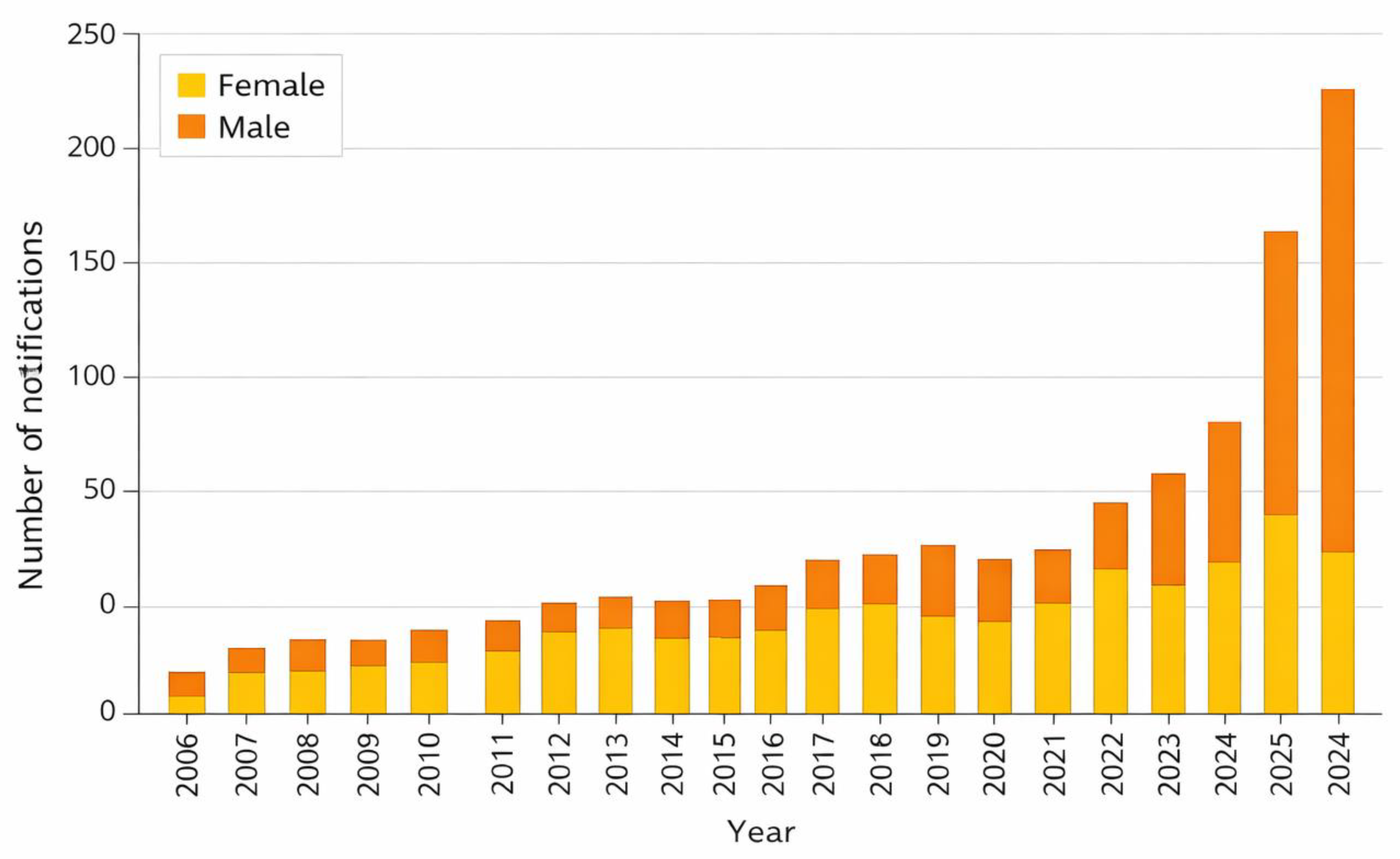
Figure 1 illustrates the evolution of gender distribution in WRMSD notifications from 2006 to 2024. Until 2016, women consistently accounted for the majority of cases, reflecting their historical concentration in roles such as line feeders and meat cutters. Until 2022, women consistently accounted for the majority of notifications, reflecting their historical concentration in repetitive line-feeding and cutting tasks. In 2022, however, male notifications began to surpass female ones, marking a turning point in reporting patterns (Figure 1). This shift coincided with improvements in the SINAN surveillance system and the regulatory inclusion of WRMSDs in Brazil’s compulsory notification list, which increased visibility of male-dominated occupations.
These results suggest a reallocation of physical risk within the workforce, indicating that male workers are increasingly exposed to, or recognized in, roles with high ergonomic demands. This shift requires the re-examination of assumptions about gender in the design of ergonomic surveillance and intervention.
Table 3 reports p and η2 values from chi-square tests evaluating the association between gender and occupational role, ICD-10 diagnosis, and age group among notified WRMSD cases in Brazil (2006–2024).
Chi-square tests confirmed statistically significant gender-based differences in WRMSD notifications across occupational roles (p < 0.001), diagnostic categories (p < 0.001), and age groups (p < 0.001). Effect size analysis using eta squared (η2) indicated that both occupation and diagnosis had moderate-to-large gendered effects (η2 = 0.162 and 0.160, respectively). At the same time, age-group differences showed a smaller but statistically significant effect (η2 = 0.032).

3.2. Age Distribution and Diagnosis Patterns (ICD-10)

Among both genders, workers aged 20 to 49 represent the majority of cases. Female notifications were more concentrated in the 30–49 age group, while male cases have increasingly occurred among those aged 20–34, especially since 2022.
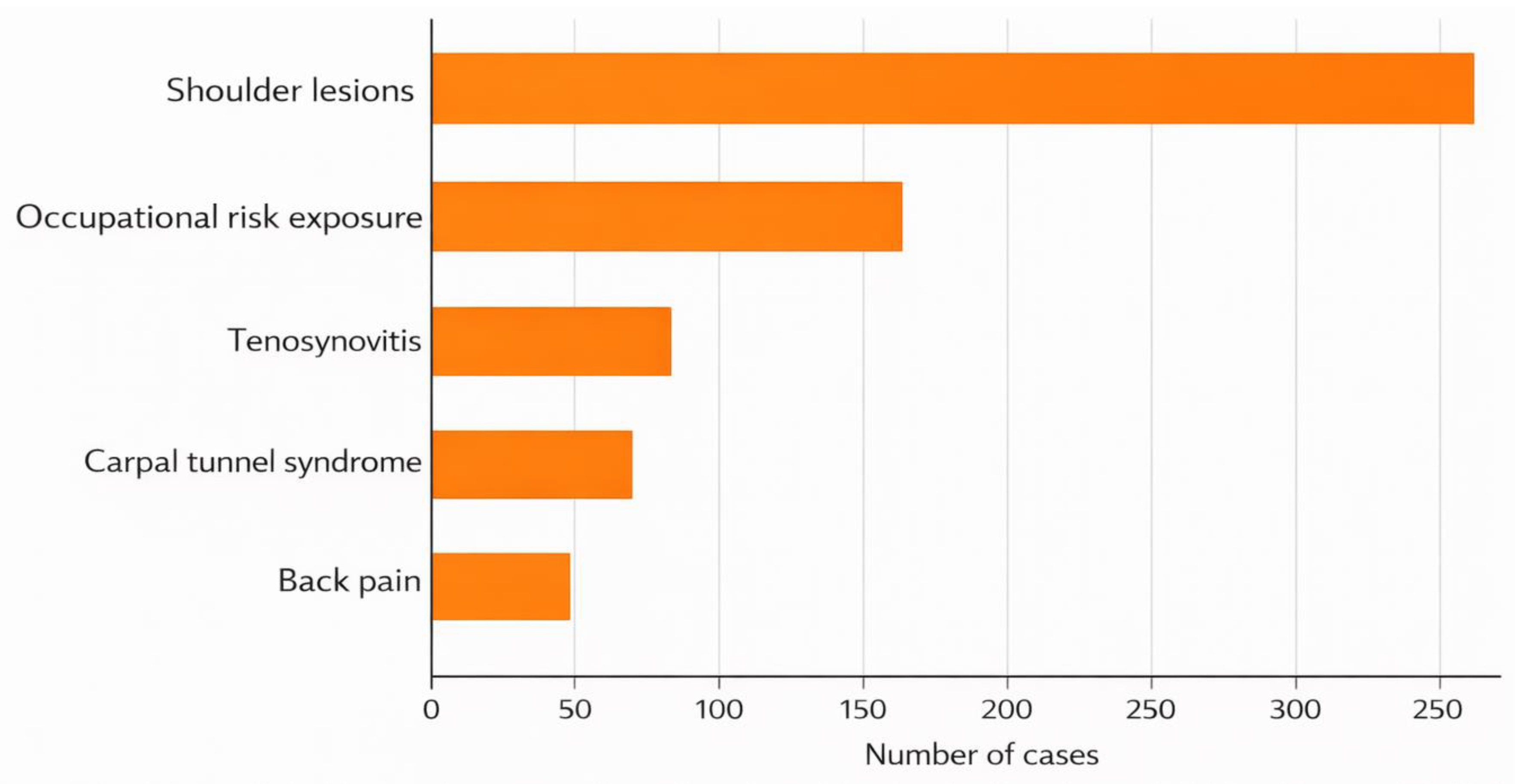
The most frequently observed diagnoses across the series included shoulder lesions (M75), tenosynovitis (M65), carpal tunnel syndrome (G56), and back pain (M54). Notably, occupational exposure to risk factors (Z57) increased dramatically in recent years, rising from almost no occurrences to 57% of all reported cases by 2024. Although the SINAN database does not provide a specification of Z57 subcategories, within the context of male-dominated roles (poultry farmer, butcher) in meat processing, the most relevant exposures likely include vibration (Z57.7) from equipment, extreme temperatures (Z57.6) due to cold environments, chemical agents (Z57.5) used in cleaning processes, and heavy physical factors (Z57.8) associated with slaughtering and carcass handling. It should also be noted that the other diagnoses identified (M75, M65, G56, and M54) likewise include subdivisions in ICD-10; however, these variations would not change the interpretation of the results, as the main categories already adequately capture the patterns observed in this study.
Figure 2 displays the five most frequently reported ICD-10 diagnoses and exposure associated with WRMSD notifications, including both clinically diagnosed conditions and occupational exposure codes.
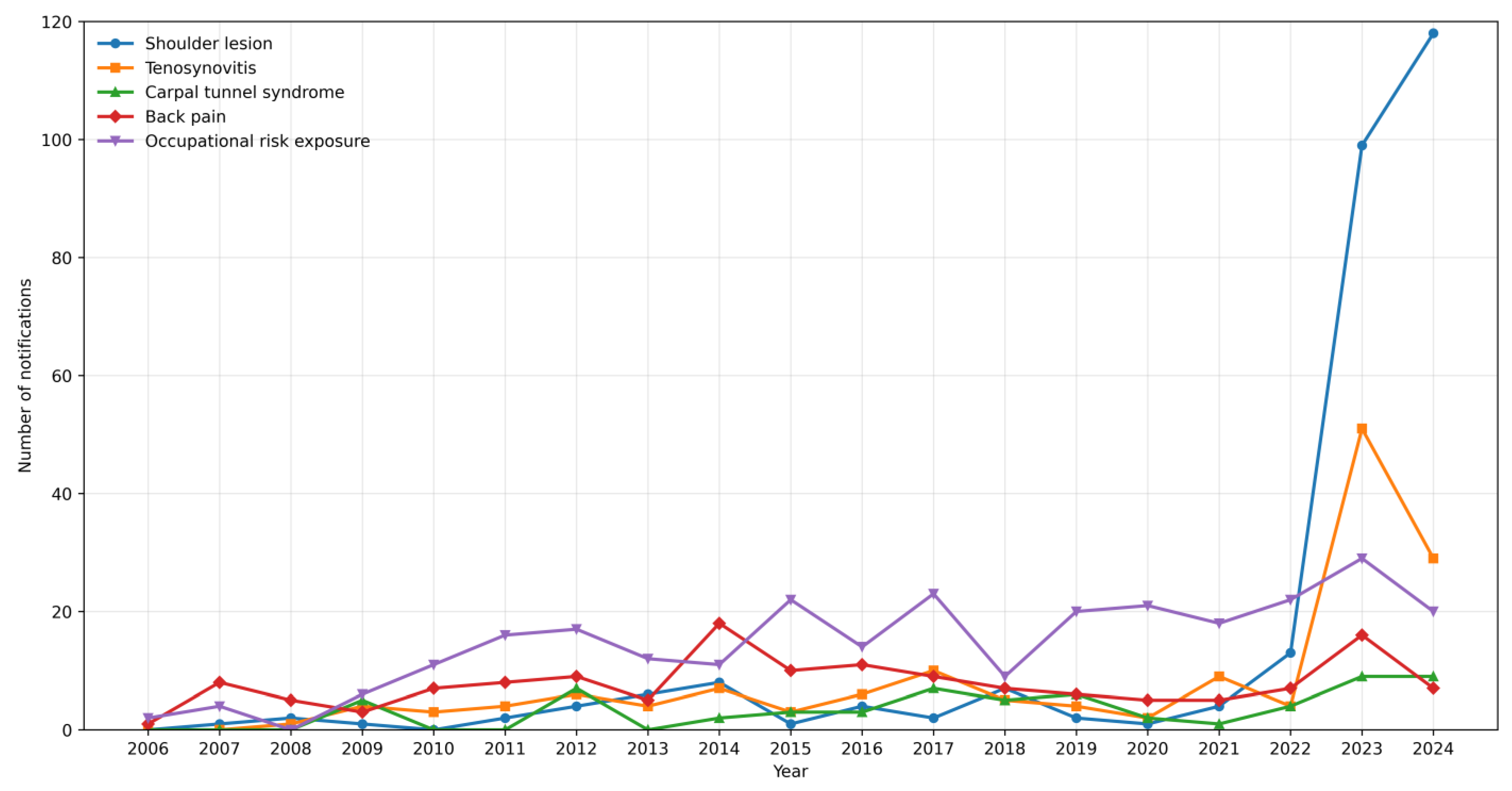
Figure 3 displays annual trends in the frequency of the five most commonly reported ICD-10 diagnoses and exposures associated with WRMSDs. Diagnosis codes include shoulder lesions (M75), synovitis and tenosynovitis (M65), carpal tunnel syndrome (G56), back pain (M54), and occupational risk exposure (Z57).
Temporal analysis (Figure 3) revealed distinct patterns across diagnoses. Shoulder lesions (M75) remained the most frequent condition throughout the series. Tenosynovitis (M65, represented by the orange line) and back pain (M54, represented by the red line) showed fluctuating frequencies, with back pain increasing notably after 2020. Occupational exposure (Z57) rose sharply after 2022, reflecting broader recognition of environmental risks rather than new musculoskeletal diagnoses.

3.3. Gendered Diagnostic Trends

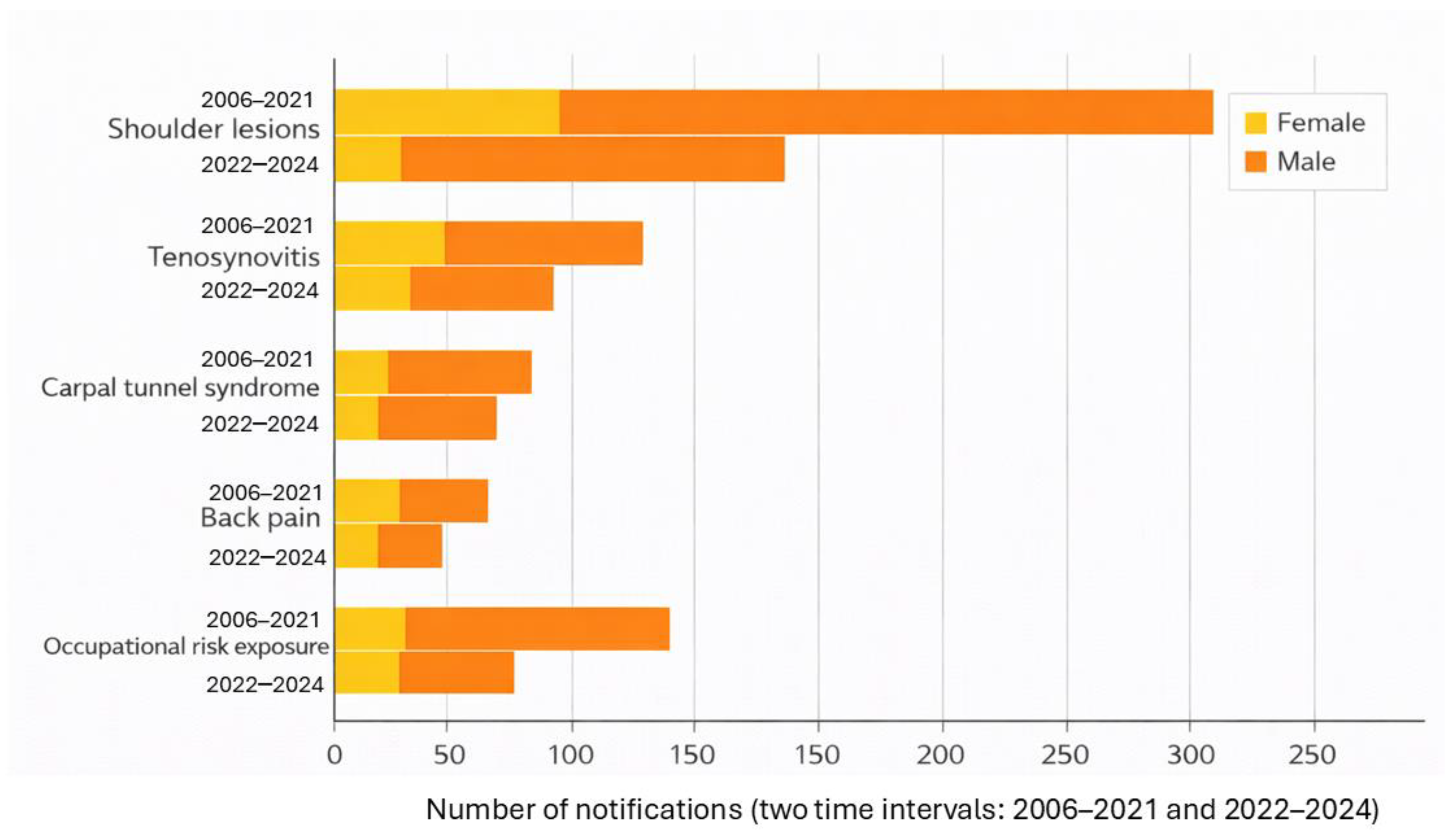
In Figure 4, the two rows per pathology represent separate time intervals (2006–2021 and 2022–2024), allowing visualization of how gender proportions evolved across the study period.
In the earlier years (2006–2021), female notifications predominated for shoulder lesions (M75), tenosynovitis (M65), and carpal tunnel (G56). In the most recent period (2022–2024), male notifications became dominant across nearly all diagnoses, especially for back pain (M54) and occupational exposure (Z57). Among females, tenosynovitis (M65) slightly surpassed shoulder lesions (M75) as the leading diagnosis. This suggests a transition in exposure patterns consistent with the overall gender inversion observed in Figure 1.

3.4. Occupational Distribution

Table 4 presents a gender-stratified analysis of the top six occupations associated with WRMSD notifications.
Table 4 presents the gender-specific distribution of WRMSD cases by occupation. Among women, the highest proportions of notifications were concentrated in the following occupations: slaughterers (24%), butchers (16%), and production line feeders (15%). Deboner accounted for 9% of female cases, while a meat processing assistant represented 3%. For men, the leading occupations were production farmer (33%) and butcher (22%), followed by slaughterer (10%). Deboner accounted for 8% of male cases, and a meat processing assistant for 2%. Absolute case counts further revealed a predominance of women in the feeder (61%) and slaughterer (62%) roles, whereas men were predominant among poultry farmers (95%) and butchers (68%).
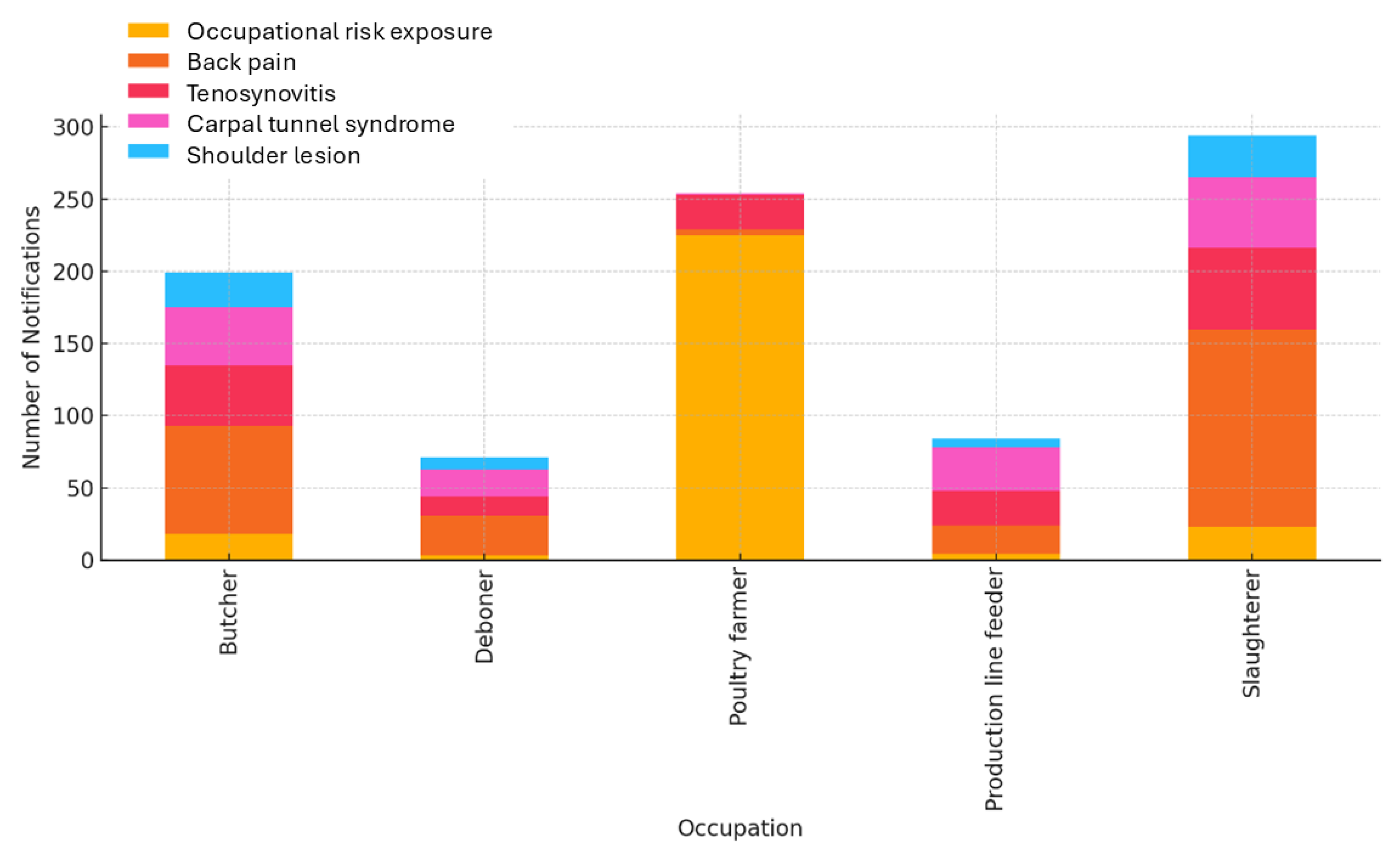
Figure 5 presents stacked bars for the five most frequently reported ICD-10 diagnoses, M75 (shoulder lesions), M65 (tenosynovitis), G56 (carpal tunnel syndrome), M54 (back pain), and Z57 (occupational exposure), across six key occupations identified in Table 2.
Across the selected occupations, the leading ICD-10 code varied by role. Among butchers, shoulder lesions (M75) were the most frequent, followed by tenosynovitis (M65). Among deboners, shoulder lesions predominated. Among poultry farmers, occupational exposure to risk factors (Z57) was the main code. Among production line feeders, M65 predominated. Among slaughterers, shoulder lesions (M75) were the leading diagnosis. Other codes (e.g., M54 and G56) appeared at lower levels within each occupation.

4. Discussion

The analysis of WRMSD notifications in Brazil’s animal protein sector between 2006 and 2024 exposed pronounced gender-related disparities across occupational roles, diagnostic categories, and age groups, highlighting distinct patterns of musculoskeletal illness that reflect both ergonomic exposures and structural workplace inequalities.
The study revealed a distinct reconfiguration in WRMSD case profiles within Brazil’s animal protein sector, particularly since 2022. Historically, our results show that women predominated in reported cases, particularly in roles such as meat cutters, boners, and line feeders, which involve repetitive upper limb movements. This data corresponds with the prior literature identifying a higher prevalence of shoulder and wrist injuries among women in meat processing environments [40,41]. Critically, the higher incidence among women has often been erroneously interpreted as biological vulnerability in the general literature, overlooking its basis in the gendered division of labor, which systematically allocates women to repetitive, high-cadence tasks [25,42]. However, data from 2022 to 2024 suggest an emerging shift: male notifications have increased sharply, with poultry farming becoming a leading occupation in recent years. In 2024, male notifications accounted for approximately 80% of all cases, representing a notable shift from the historical pattern observed in the series. This outcome likely reflects improved surveillance and reporting consistency, along with increased awareness and recognition of WRMSDs among male workers, rather than demographic changes in the workforce. A further aspect is the sharp rise in Z57 codes, which denote occupational exposure to risk factors in slaughterhouses, including cold, vibration, chemical agents, and dust. These gendered patterns of WRMSDs, where women are affected by repetitive tasks and men by heavy physical and environmental exposures, demand a structural, rather than individual, focus, providing empirical urgency for the implementation of gender-sensitive policies to ensure the health and dignity of women in this core economic sector [25,41,43].

4.1. Diagnostic Patterns and Practical Implications

In our dataset, the acceleration of Z57 recordings temporally corresponds to regulatory shifts, as outlined above, though we cannot definitively ascribe causality [6]. Since Z57 is a non-diagnostic ICD-10 code that documents occupational exposure to risk factors rather than a clinically defined disorder, and does not allow identification of disease type, severity, or clinical stage, its increased use may indicate a greater recognition of hazardous workplace conditions, such as cold exposure, vibration, chemical agents, or dust [41], rather than the identification of a specific musculoskeletal pathology [44]. Previous studies have highlighted that Z codes primarily reflect administrative and surveillance practices and should not be interpreted as proxies for confirmed clinical diagnoses, as their use is strongly influenced by institutional routines, regulatory guidance, and documentation priorities rather than by underlying morbidity patterns [10,33,45].
This observation is particularly relevant for a gendered analysis because it suggests a differential pattern of risk documentation rather than actual differences in disease occurrence, potentially leading to an overrepresentation of male occupational exposure in administrative records [28]. The rise in Z57 in male-dominated functions contrasts with the established injury patterns (M75, M65, G56), which women predominantly report. Importantly, the increased visibility of Z57 does not imply the identification of new disease entities; rather, it reflects limitations in diagnostic specificity and the formal recognition of persistent organizational and environmental risk factors that are also implicated in clinically diagnosed work-related musculoskeletal disorders [33].
The regulatory inclusion of WRMSDs and the formal incorporation of Z57 into Brazil’s National List of Compulsory Notifications in 2024 likely reinforced this trend by improving the consistency and enforcement of reporting protocols. From a surveillance perspective, Z57 should therefore be interpreted as an early warning indicator of high-risk work environments rather than a clinical endpoint, supporting targeted primary preventive interventions in occupations characterized by high physical demands and adverse environmental exposures, such as poultry farming [40].
Age-related findings indicate that WRMSDs are concentrated among workers aged 20–49, reflecting cumulative biomechanical stress during the peak labor-participation years. However, this pattern may also reflect the healthy worker effect (HWE), whereby individuals who develop chronic or disabling symptoms often leave physically demanding jobs, resulting in an apparent underrepresentation of older or more severely affected workers in the dataset [7]. Prior research corroborates this result, highlighting a higher prevalence of WRMSD and lower return-to-work rates among mid-aged workers [46]. The cumulative effects of biomechanical stress are consistent with studies indicating that prolonged exposure to physical risk factors compromises the functional capacity of adult workers [46] and that longer service duration is associated with a higher frequency of pain [40]. Our findings add nuance, showing a concentration of cases in the 30–49 age group for women and a more recent increase among men aged 20–49 years old [26,27,28,29,30,31,32,33,34,35,36,37,38,39,40,41].
This outcome may be linked to occupational segregation, where men enter physically demanding roles at a younger age [27,28]. This age-specific analysis contributes to the discussion on the sustainability of female careers by identifying the mid-career stage (30–49 years) as a critical risk window in which cumulative work stress intersects with domestic and familial responsibilities, which are known to keep women’s total workload at unsustainable levels [26,44]. This finding is essential for designing time- and age-specific interventions that protect the functional longevity of women in the workforce.
This segregation was evident in our data, with women predominating in roles such as production-line feeding, and men concentrated in poultry farming and slaughter. In particular, the analyzed dataset showed that poultry farmers were predominantly male, whereas line feeders and meat processing assistants had higher proportions of female participants, exceeding 60%. The key ergonomic consequence of this segregation is that female workers are structurally confined to low-variability, high-cadence tasks, thereby systematically increasing their risk of tension, cumulative microtrauma, and upper-limb conditions (M75, M65, G56). This gendered division of labor, shaped by cultural and political contexts, creates unequal exposure to risks and reinforces structural inequalities within the workplace [27]. This empirical evidence of gendered occupational segregation is critical, providing policymakers and organizational health specialists with the exact mapping required to design targeted ergonomic interventions (e.g., job rotation and cadence control) that address the distinct risk profiles created by this structural inequality [42,47], thereby ensuring the sustained participation of women in key economic roles.

4.2. Sociocultural and Gender-Based Considerations

While previous studies recognize gender as a relevant variable in the epidemiology of WRMSDs, it is crucial to go beyond this approach and consider it as a social construct that actively shapes work and health experiences [29]. The gender segregation of labor, which historically allocates women to more repetitive and monotonous tasks and men to roles with greater brute physical demands and exposure to environmental risks, creates distinct patterns of illness [27,28]. Additionally, sociocultural norms of masculinity, often associated with stoicism and an aversion to complaining about pain, can lead to the underreporting of health problems among male workers, affecting the visibility and recording of their health conditions [29,30]. Our analysis, therefore, adopts an integrated approach to elucidate how these social and cultural factors influence the manifestation, recognition, and diagnosis of WRMSDs within a sector as specialized as the animal protein industry [25,26]. This integrated approach, which confirms how gender segregation structurally determines disease patterns [44], is the central contribution to the field, offering the necessary framework for developing gender-transformative occupational health policies aimed at mitigating the structural risks faced by women and ensuring equity in surveillance and intervention, a perspective crucially reinforced by Maatwk [25].
This study’s finding of a recent surge in male notifications challenges a substantial body of research that has consistently identified women as more vulnerable to WRMSDs in the meat processing industry. Previous studies [40,41] have attributed this to women’s concentration in jobs characterized by repetitive upper-limb movements, such as meat cutting and boning, as well as to ergonomic mismatches and lower muscle mass. For instance, research has highlighted a higher prevalence of shoulder, back, and wrist pain among female workers due to constant physical overload and tasks performed in cold, fast-paced environments [40,41]. Psychosocial factors, such as pressure regarding productivity and a lack of support in the work environment [45], as well as social constructs influencing the perception and communication of pain [30], have also been suggested to contribute to higher reporting rates among women. However, the emerging pattern identified in this study is consistent with more recent observations by Gonçalves et al. [47], who also noted a pronounced increase in WRMSD notifications among male workers in 2023, suggesting a new dynamic in occupational illness patterns. This dynamic further underscores the need for a comprehensive workload perspective, recognizing that the concentration of women in repetitive, high-cadence roles intersects with domestic responsibilities, in which women are already exposed to longer, more intense schedules than men [27,48].
Diagnostically, M75, M65, and G56 were more frequent among women, consistent with previous studies [20,49] on female musculoskeletal vulnerability due to ergonomic mismatch, lower muscle mass, and greater postural rigidity. In contrast, men exhibited a striking rise in Z57 codes, which might reflect recognition of occupational exposure rather than injury per se. This result may also indicate a growing use of preventive diagnostic labels in male-dominated agricultural tasks. The disproportionate incidence among younger male workers, combined with the increasing frequency of diagnoses coded as Z57 (occupational exposure to risk factors), suggests two concurrent factors: early-career exposure to biomechanical stressors and greater recognition of occupational risk conditions. These patterns highlight the need for early-stage interventions and more robust diagnostic protocols. They may also suggest complementary surveillance priorities, such as reducing upper limb overload in roles with repetitive tasks and low variability (where women are more concentrated), and monitoring environmental and organizational exposures (such as cold, vibration, dust/contaminants, and chemical agents) in predominantly male roles, often coded as Z57. This diagnostic contrast is critical, as it confirms that the gendered division of labor systematically subjects women to work-related strains and risks of tension [42,50], establishing a clear agenda for policymakers to implement distinct and equitable prevention strategies that safeguard the health and long-term participation of both male and female workers [51,52].
Despite the implementation of Brazil’s specific Regulatory Standard for Occupational Health in the Meat Processing Industry (NR-36), persistent structural issues, such as cold exposure, conveyor pace, and inadequate breaks, continue to contribute to biomechanical overload [30]. An analysis of the most frequent diagnostic codes reveals a high incidence of shoulder lesions (M75), tenosynovitis (M65), carpal tunnel syndrome (G56), and back pain (M54). This diagnostic profile aligns with the types of physical stressors and ergonomic risk factors typically reported in meat processing operations. This interpretation is supported by the Fundacentro report [24], which highlighted these same conditions as predominant in the sector. Diagnostically, our results showed that upper limb conditions, such as M75, M65, and G56, were more frequent among women, a pattern supported by the current literature [20,43,50], which links female musculoskeletal vulnerability to factors like lower muscle mass, increased wrist angular velocity during repetitive cutting and handling tasks [41,50], and greater exposure to static postures in production lines [16,53]. The diagnostic distribution by occupation was also consistent with the specific biomechanical demands of each role: among butchers and boners, M75 (shoulder lesions) predominated; among line feeders, M65 (tenosynovitis) was more frequent; and among poultry farmers, Z57 (occupational exposure) stood out. In contrast, M54 (back pain) remained relatively stable across categories, suggesting a more transversal component of overload. This persistence of poor working conditions highlights how the failure of regulatory enforcement prolongs precarity and increases the mental and emotional burden on working women, directly correlating physical risk with psychosocial strain [26,27,51].
In contrast, a striking finding was the dramatic rise in notifications for Z57 (occupational exposure to risk factors) among men, particularly since 2022. This outcome may indicate a growing use of preventive diagnostic labels in male-dominated agricultural tasks or an increased recognition of occupational exposure itself as a notifiable condition, rather than waiting for an acute injury to manifest. Despite the implementation of NR-36, structural issues such as cold environments, accelerated production schedules, and inadequate rest breaks continue to be major contributors to biomechanical overload. These enduring conditions highlight the gap between regulatory intent and practical enforcement, suggesting that current measures are insufficient without more comprehensive organizational reforms. This persistent failure highlights that merely enacting standards is inadequate. Instead, the successful transformation of gender inequality and the protection of women’s health depend on mandatory organizational reform to restructure employment practices, a necessity strongly advocated in the literature on gender and work [26,45,46,47,48,49,50].
Underreporting remains a critical barrier. Institutional under-recognition and cultural stigmas, particularly among men, distort epidemiological data [29]. This issue is often gendered; sociocultural norms that associate masculinity with stoicism can lead to fewer symptom reports among men [29], while social constructs related to femininity may facilitate the communication of pain [30]. These dynamics highlight the need for gender-aware surveillance mechanisms and participatory risk assessments. These dynamics highlight the need for gender-aware surveillance mechanisms and participatory risk assessments. Despite updated regulatory frameworks, such as Brazil’s specific Regulatory Standard for Occupational Health in the Meat Processing Industry (NR-36), which mandates ergonomic adjustments and breaks, persistent structural issues, including cold exposure and accelerated work rhythms, continue to cause biomechanical overload. This pervasive failure of regulation and the persistence of stigma are significant contributions to the field of women’s studies, as they show how systemic barriers perpetuate precariousness [26]. This scenario necessitates gender-aware policies that move beyond mere biological differences to enact structural reforms that transform unequal working conditions [25].
The context of the COVID-19 pandemic significantly exacerbated underreporting and gender bias. Underreporting remains a critical barrier to effective surveillance and prevention. This issue is often gendered; sociocultural norms that associate masculinity with stoicism can lead to fewer symptom reports among men [29], while social constructs related to femininity may facilitate the communication of pain [30]. Finally, the context of the COVID-19 pandemic cannot be overlooked. Some sectors transitioned to remote work, and the meat processing industry, as an essential activity, intensified production under hazardous conditions, including high workforce density and poor ventilation [48]. These facts, combined with an overburdened healthcare system, may have reduced the capacity to detect and register occupational diseases, potentially delaying the reporting of emerging WRMSDs documented in the published data. This analysis contributes to the literature on gender and health by demonstrating how a global health crisis disproportionately intensified the pre-existing segregated risks faced by women in essential sectors, making the sustainability of their employment dependent on systemic, rather than temporary support [51].

4.3. Ethical and Structural Policy Implications

The discussion on mitigating work-related musculoskeletal disorders must transcend technical improvements and focus on ethical and organizational transformation [54]. As the manufacturing sector is a massive employer, accounting for over 8.1 million formal jobs in Brazil [54], protecting this workforce helps to protect the national economy and household income. This protection is crucial given the gender segregation evident in the data, where women are often concentrated in high-volume, low-variability roles [53], increasing their risk of illness. Ethically, public health policies cannot eliminate income opportunities for women by allowing structural failures to create endemic illness [54]; rather, the mandate is to reform employment practices that penalize them [48]. The core challenge is addressing rigid work rhythms [6]. While tools like job rotation schemes are relevant, their effectiveness is limited when the core issue, the conveyor pace, is not controlled [6]. Therefore, overcoming mitigation deficiencies requires mandating a decoupling of the biological body from the industrial cadence, achieved through strict enforcement of rest breaks, immediate control of production speed, and reengineering tasks to eliminate repetitive-motion overload in predominantly female roles [53]. This shift validates the crucial role of women in the labor market, ensuring that their participation is both dignified and physically sustainable [48,54].
Based on the distinct gendered patterns observed in this study, the implementation of gender-sensitive policies is crucial [25,26]. Interventions for women, for instance, should prioritize ergonomic adaptations to reduce repetitive strain in the upper limbs and to mitigate the high-speed work pace that often leads to conditions such as carpal tunnel syndrome [43]. For male workers, interventions should focus on monitoring and mitigating specific environmental and organizational exposures, such as prolonged cold exposure and whole-body vibration, which are prevalent in roles with greater physical demands [30,41]. To ensure women’s sustained participation and professional development, this policy must extend beyond the physical workspace to address the intersection of occupational risk and the total burden of domestic responsibilities. It mandates organizational support for career longevity and work–life balance [25,48]. Implementing such differentiated strategies would address the specific risks faced by each gender, moving beyond a one-size-fits-all approach to occupational health in the animal protein industry [28,45].

4.4. Study Limitations

This study has several limitations. First, the absence of ergonomic exposure analysis limits the ability to directly link reported diagnoses with specific physical demands. This limitation is exacerbated by the lack of information on slaughterhouse processes, such as the size and weight of the animal carcasses handled (poultry, beef, or pork), which directly affect the physical strength, posture, and biomechanical demands required for specific roles. Second, the analysis relied exclusively on recorded data, which may not capture all cases, as underreporting remains a persistent challenge [24,41]. As Z57 represents a non-specific label and SINAN does not provide subcategory details, its recent growth may indicate both improved recognition of exposures and administrative changes in reporting. Given the persistence of structural underreporting, this pattern may underscore the importance of developing more specific diagnostic protocols and standardized clinical screening to distinguish exposure from an established musculoskeletal disorder. More broadly, these limitations underscore the need for gender-aware research methodologies that capture the biomechanical and organizational nuances influencing women’s distinct injury patterns and ensuring health equity [25]. The COVID-19 pandemic may also have influenced notification patterns by overburdening health systems and altering workers’ reporting behaviors [42].
Simultaneously, the classification of the meat industry as an essential service led to increased workloads, higher workforce turnover, and limited access to ergonomic protections, all of which could have exacerbated WRMSD risks and discouraged reporting. Furthermore, fear of job loss or stigma associated with absenteeism during a health crisis may have discouraged both male and female workers from seeking medical leave for musculoskeletal symptoms, potentially deferring diagnoses that emerged more clearly in the post-pandemic period [52]. This pressure was particularly acute for women, many of whom are primary or sole providers, leading them to suppress illness and engage in a hidden struggle to maintain the dignity associated with employment, despite the heightened precarity and occupational risk [6,26,27].
Despite the analytical approach, interpreting such complex and gendered health data requires acknowledging inherent methodological limitations. Future research should incorporate field-based ergonomic evaluations to more precisely characterize risk factors and inform the development of tailored interventions. Additionally, the reliance on secondary data from SINAN introduces potential biases due to underreporting, inconsistent coding practices, and administrative omissions, particularly in high-turnover or informally employed roles. Estimating age from year-only birth data may lead to misclassification near age-group thresholds. Excluding extreme or missing values, while necessary for data integrity, may have inadvertently omitted relevant but atypical cases. Lastly, the possibility of occupational or diagnostic misclassification remains, given institutional variability in recording CBO and ICD-10 codes.
Despite these limitations, this study presents several strengths. It is the first longitudinal analysis (2006–2024) to examine gendered patterns of work-related musculoskeletal disorders (WRMSDs) in Brazil’s meat industry using nationwide surveillance data (SINAN), ensuring robust representativeness and temporal coverage. The study’s integration of occupational, diagnostic, and sociodemographic variables provides a comprehensive view of structural and ergonomic disparities between genders. Additionally, by distinguishing between exposure-related codes (Z57) and clinically defined WRMSDs, the analysis contributes to a more nuanced understanding of how reporting practices and regulatory changes shape occupational health profiles in high-risk sectors.

5. Conclusions

This study identifies a significant reconfiguration in the gender distribution of WRMSD cases in Brazil’s meat processing industry, with male workers surpassing female cases after 2022, particularly in physically demanding roles such as farming. The concurrent rise in Z57 diagnoses suggests a shift toward greater recognition of occupational exposures. These findings underscore the importance of implementing gender-differentiated ergonomic protocols, such as reducing repetitive strain injuries among women in line-feeding and cutting roles, and addressing environmental hazards (including cold, vibration, and chemical exposure) among men in farming and slaughtering. Strengthening surveillance systems and refining diagnostic coding practices will be essential to ensuring accurate monitoring. Future public health policies should therefore prioritize tailored risk management strategies that account for occupational segregation and the evolving workforce dynamics. Reforming employment practices to ensure that women’s participation in this crucial sector is both economically viable and physically sustainable remains an undeniable necessity for achieving labor equity and long-term economic growth.

Author Contributions

Conceptualization, L.D.P. and I.d.A.N.; methodology, L.D.P., V.A.M. and I.d.A.N.; software, V.A.M.; validation, L.D.P., V.A.M. and M.d.C.B.d.A.; formal analysis, L.D.P. and H.J.M.; investigation, L.D.P. and H.J.M.; resources, L.D.P.; data curation, L.D.P.; writing—original draft preparation, L.D.P.; writing—review and editing, I.d.A.N. and M.d.C.B.d.A.; visualization, L.D.P. and I.d.A.N.; supervision, I.d.A.N. All authors have read and agreed to the published version of the manuscript.

Funding

This research received no external funding.

Institutional Review Board Statement

Not applicable.

Data Availability Statement

The public dataset is available online at: [http://portalsinan.saude.gov.br/dados-epidemiologicos-sinan], accessed on 27 May 2025, in Portuguese.

Acknowledgments

The authors thank the Brazilian Federal Agency for Support and Evaluation of Graduate Education, CAPES-PROSUP, for the scholarships.

Conflicts of Interest

The authors declare no conflicts of interest.

References

  1. OECD/FAO—Organisation for Economic Cooperation and Development/Food and Agriculture Organization of the United Nations. OECD-FAO Agricultural Outlook 2023–2032; OECD Publishing: Paris, France, 2023. [Google Scholar] [CrossRef]
  2. ABPA—Brazilian Association of Animal Protein. Poultry Meat Production in Brazil in 2024. 2024. Available online: https://abpa-br.org/wp-content/uploads/2024/04/RA_2024_ABPA_ingles_avicultura.pdf (accessed on 29 August 2025).
  3. ABIEC—Brazilian Association of Meat Exporters. Beef Report 2024, Profile of Livestock in Brazil. 2024. Available online: https://www.abiec.com.br/wp-content/uploads/beefreport_v2024-qualidademedia_v2.pdf (accessed on 27 May 2025).
  4. European Commission, Directorate General for Agriculture and Rural Development. EU Agricultural Outlook for Markets, Income and Environment, 2025–2035. Publications Office of the European Union. 2025. Available online: https://agriculture.ec.europa.eu/data-and-analysis/markets/outlook_en (accessed on 27 May 2025).
  5. USDA/FAS—United States Department of Agriculture, Foreign Agricultural Service. Livestock and Poultry, World Markets and Trade. 2025. Available online: https://www.fas.usda.gov/sites/default/files/2025-12/Livestock_poultry_December%209%202025.pdf (accessed on 27 May 2025).
  6. Nascimento, A.; Messias, I.A. Job rotation in beef packing operations: Beyond the physical dimensions of work. Cad. Saúde Pública 2018, 34, e00095817. [Google Scholar] [CrossRef] [PubMed]
  7. Andersen, L.L.; Vinstrup, J.; Sundstrup, E.; Skovlund, S.V.; Villadsen, E.; Thorsen, S.V. Combined ergonomic exposures and development of musculoskeletal pain in the general working population: A prospective cohort study. Scand. J. Work Environ. Health 2012, 38, 287–295. [Google Scholar] [CrossRef]
  8. Qazi, T.H.; Duda, G.N.; Ort, M.J.; Perka, C.; Geissler, S.; Winkler, T. Cell therapy to improve regeneration of skeletal muscle injuries. J. Cachexia Sarcopenia Muscle 2019, 10, 501–516. [Google Scholar] [CrossRef]
  9. WHO/ILO—World Health Organization & International Labour Organization. WHO/ILO Joint Estimates of the Work-Related Burden of Disease and Injury, 2000–2016, Global Monitoring Report. 2021. Available online: https://www.who.int/publications/i/item/9789240034945 (accessed on 27 May 2025).
  10. Bensken, W.P.; Alberti, P.M.; Stange, K.C.; Sajatovic, M.; Koroukian, S.M. ICD-10 Z-Code Health-Related Social Needs and Increased Healthcare Utilization. Am. J. Prev. Med. 2021, 62, e232–e241. [Google Scholar] [CrossRef]
  11. OSHA—Occupational Safety and Health Administration. Inspection Guidance for Animal Slaughtering and Processing Establishments. 2024. Available online: https://www.osha.gov/laws-regs/standardinterpretations/2024-10-15 (accessed on 28 May 2025).
  12. EU-OSHA—European Agency for Safety and Health at Work. Workforce Diversity and Musculoskeletal Disorders: Review of Facts and Figures and Case Examples. European Risk Observatory Report. 2020. Available online: https://www.bollettinoadapt.it/wp-content/uploads/2020/12/Workforce_diversity_facts_figures_report_0.pdf (accessed on 12 January 2026).
  13. Sompan, R.; Keeratisiroj, O.; Aungudornpukdee, P.; Mahaboonpeeti, R. Prevalence of work-related musculoskeletal disorders and ergonomic risk assessment among production workers of pig slaughterhouse in the town municipality of Ang Thong, Thailand. Int. J. Occup. Saf. Health 2024, 14, 69–76. [Google Scholar] [CrossRef]
  14. Hassani, M.; Kabiesz, P.; Hesampour, R.; Ezbarami, S.M.; Bartnicka, J. Prevalence of musculoskeletal disorders, working conditions, and related risk factors in the meat processing industry: Comparative analysis of Iran–Poland. Work 2023, 74, 309–325. [Google Scholar] [CrossRef] [PubMed]
  15. EU-OSHA—European Agency for Safety and Health at Work. Work-Related Musculoskeletal Disorders: Why are They Still so Prevalent? Evidence from a Literature Review. European Risk Observatory Report. 2021. Available online: https://osha.europa.eu/en/publications/work-related-musculoskeletal-disorders-why-are-they-still-so-prevalent-evidence-literature-review (accessed on 12 January 2026).
  16. Tirloni, A.S.; dos Reis, D.C.; Tirloni, S.F.; Moro, A.R.P. Exertion Perception When Performing Cutting Tasks in Poultry Slaughterhouses, Risk Assessment of Developing Musculoskeletal Disorders. Int. J. Environ. Res. Public Health 2020, 17, 9534. [Google Scholar] [CrossRef]
  17. Bouzigon, R.; Dupuy, O.; Tiemessen, I.; De Nardi, M.; Bernard, J.-P.; Mihailovic, T.; Theurot, D.; Miller, E.D.; Lombardi, G.; Dugué, B.M. Cryostimulation for post-exercise recovery in athletes: A consensus and position paper. Front. Sports Act. Living 2021, 3, 688828. [Google Scholar] [CrossRef] [PubMed]
  18. Sundstrup, E.; Seeberg, K.G.V.; Bengtsen, E.; Andersen, L.L. A systematic review of workplace interventions to rehabilitate musculoskeletal disorders among employees with physically demanding work. J. Occup. Rehabil. 2020, 30, 588–612. [Google Scholar] [CrossRef]
  19. Taibi, Y.; Metzler, Y.A.; Bellingrath, S.; Müller, A. A systematic overview on the risk effects of psychosocial work characteristics on musculoskeletal disorders, absenteeism, and workplace accidents. Appl. Ergon. 2021, 95, 103434. [Google Scholar] [CrossRef]
  20. Rosado, A.S.; Cabrini, I.; Duarte, N.; Baptista, J.S.; Guedes, J.C. Evaluation of shoulder risk factors in the repetitive task of slaughterhouse. Safety 2024, 10, 63. [Google Scholar] [CrossRef]
  21. Brazil—Ministry of Labor and Employment (MTE). Regulatory Standard No. 36 (NR-36), Occupational Health and Safety in Meat Slaughtering and Processing Companies and Obligations. 2013. Available online: https://www.gov.br/trabalho-e-emprego/pt-br/acesso-a-informacao/participacao-social/conselhos-e-orgaos-colegiados/comissao-tripartite-partitaria-permanente/normas-regulamentadora/normas-regulamentadoras-vigentes/norma-regulamentadora-no-36-nr-36 (accessed on 28 August 2025).
  22. Brazil—Ministry of Health (MS). Notifiable Diseases Information System (SINAN). 2024. Available online: http://portalsinan.saude.gov.br/dados-epidemiologicos-sinan (accessed on 27 May 2025).
  23. Brazil—National Social Security Institute (INSS). Social Security Statistical Bulletin. 2023. Available online: https://www.gov.br/previdencia/pt-br/assuntos/previdencia-social/arquivos/beps122023_final.pdf (accessed on 27 May 2025).
  24. Fundacentro. Working Conditions in Slaughterhouses Can Affect Workers’ Health. 2023. Available online: http://arquivosbiblioteca.fundacentro.gov.br/exlibris/aleph/a23_1/apache_media/GJHGXDSEJ5INP49EV1FFR4BTY5DPJY.pdf (accessed on 1 April 2025).
  25. Maatwk, F. Gendered inequalities: A comparative analysis of gendered experiences of inequality in technology in Egypt and the United Kingdom. Gender Work Organ. 2025, 32, 1604–1614. [Google Scholar] [CrossRef]
  26. Spellman, C.; McBride, J. Gendering the hidden injuries of class: In-work poverty, precarity, and working women using food banks in Britain. Gender Work Organ. 2025, 32, 1421–1431. [Google Scholar] [CrossRef]
  27. Kwon, M.J. Occupational health inequalities by issues on gender and social class in labor market, absenteeism and presenteeism across 26 OECD countries. Front. Public Health 2020, 8, 84. [Google Scholar] [CrossRef] [PubMed]
  28. Zinn, I.; Hofmeister, H. The gender order in action, Consistent evidence from two distinct workplace settings. J. Gender Stud. 2022, 31, 941–955. [Google Scholar] [CrossRef]
  29. Oliveira, L.G.; Boere, V. Health of illegal workers from cattle slaughterhouses in Northeast Brazil. Rural Remote Health 2021, 21, 6061. [Google Scholar] [CrossRef]
  30. Nascimento, M.G.; Kosminsky, M.; Chi, M. Gender role in pain perception and expression, An integrative review. Braz. J. Pain 2020, 3, 58–62. [Google Scholar] [CrossRef]
  31. Brazil—Ministry of Labor and Employment (MTE). Classification of Brazilian Occupations (CBO). 2017. Available online: https://cbo.mte.gov.br/cbosite/pages/pesquisas/BuscaPorTitulo.jsf (accessed on 27 May 2025).
  32. IBGE—Brazilian Institute of Geography and Statistics. National Classification of Economic Activities (CNAE 2.3). National Classification Committee (CONCLA). 2024. Available online: https://cnae.ibge.gov.br/ (accessed on 27 August 2025).
  33. NORC at the University of Chicago. Use of ICD-10-CM Z Codes in 2018 Medicaid Claims and Encounter Data. NORC. 2022. Available online: https://www.norc.org/content/dam/norc-org/pdfs/Documentation%20of%20SDOH%20in%20Medicaid%20Claims_032422.pdf (accessed on 14 January 2026).
  34. International Labour Organization. International Standard Classification of Occupations (ISCO-08): Structure, Group Definitions and Occupational Correspondence Table (Vol. 1). ILO. 2012. Available online: https://webapps.ilo.org/ilostat-files/ISCO/newdocs-08-2021/ISCO-08/ISCO-08%20EN%20Vol%201.pdf (accessed on 12 January 2026).
  35. Kasaeinasab, A.; Jahangiri, M.; Karimi, A.; Tabatabaei, H.R.; Safari, S. Respiratory disorders among workers in slaughterhouses. Saf. Health Work 2017, 8, 84–88. [Google Scholar] [CrossRef] [PubMed][Green Version]
  36. Ekhammar, A.; Grimby-Ekman, A.; Bernhardsson, S.; Holmgren, K.; Bornhöft, L.; Nordeman, L.; Larsson, M.E.H. Prevention of sickness absence through early identification and rehabilitation of at-risk patients with musculoskeletal disorders (PREVSAM), Short-term effects of a randomised controlled trial in primary care. Disabil. Rehabil. 2025, 47, 164–177. [Google Scholar] [CrossRef]
  37. Hancharoenkul, B.; Khamwong, P.; Pirunsan, U.; Joseph, L. The effects of workplace intervention programs to manage work-related musculoskeletal pain among poultry slaughterhouse workers: A randomized controlled trial. J. Assoc. Med. Sci. 2024, 57, 10–19. [Google Scholar] [CrossRef]
  38. Monteiro, V.A.; Marzoque, H.J.; Batista, M.L.; de Alencar, M.D.C.B.; Pereira, L.D.; Nääs, I.d.A. Navigating occupational hazards, Musculoskeletal disorders among slaughterhouse workers in Brazil. Safety 2025, 11, 39. [Google Scholar] [CrossRef]
  39. Brazil National Health Council (CNS). Resolution n° 510, April 7, 2016, Standards Applicable to Research in the Human and Social Sciences. 2016. Available online: https://www.gov.br/conselho-nacional-de-saude/pt-br/atos-normativos/resolucoes/2016/resolucao-no-510.pdf (accessed on 27 August 2025).
  40. Waithaka, J.K.; Warutere, P.N.; Makhonge, P.; Korir, R. Frequency and risk factors for the occurrence of work-related musculoskeletal disorders among slaughterhouse workers in Nairobi County. Civ. Environ. Res. 2017, 9, 72–79. Available online: https://www.iiste.org/Journals/index.php/CER/article/view/39072/40180 (accessed on 27 May 2025).
  41. Tirloni, A.S.; dos Reis, D.C.; Borgatto, A.F.; Moro, A.R.P. Association between perception of bodily discomfort and individual and work organisational factors in Brazilian slaughterhouse workers, A cross-sectional study. BMJ Open 2019, 9, e022824. [Google Scholar] [CrossRef]
  42. Reis, P.; Moro, A.; Merino, E.; Vilagra, J. Influence of gender on the prevalence of RSI/WRULD in meatpacking plants. Work 2012, 41, 4323. [Google Scholar] [CrossRef]
  43. Cattani, L.; Rizza, R. Occupational gender segregation and mental health among professionals, Women’s risk exposure in five micro classes. Soc. Sci. 2024, 13, 92. [Google Scholar] [CrossRef]
  44. Mohammadi, G.; Marjani, M.R. Occupational musculoskeletal disorders among workers in poultry slaughter industries. Int. J. Public Health Res. 2017, 5, 78–82. Available online: http://www.openscienceonline.com/journal/ijphr (accessed on 12 January 2026).
  45. Baker, K.M.; Hill, M.A.; Goldberg, D.G.; Kitsantas, P.; Miller, K.E.; Smith, K.M.; Hong, A. Using Z Codes to Document Social Risk Factors in the Electronic Health Record: A Scoping Review. Med Care 2025, 63, 211–221. [Google Scholar] [CrossRef] [PubMed]
  46. Mohammed, H.H.; Rizk, S.M.; Ebied, E.M. Occupational health hazards as perceived by poultry processing slaughterhouse workers. Med. J. Cairo Univ. 2018, 86, 1129–1138. [Google Scholar] [CrossRef]
  47. Gonçalves, M.P.; Sousa, K.R.; Oliveira, A.F. Epidemiological profile of WRMSDs in Brazil from 2018 to 2023, A descriptive analysis of national health data. Rev. Saúde Pública 2024, 103, e224070. [Google Scholar] [CrossRef]
  48. Lima, A.G.C.F.; Ribeiro, C.J.N.; Lima, S.V.M.A.; Barbosa, Y.M.; Oliveira, I.M.D.; Araújo, K.C.G.M.D. Space-time analysis of work-related musculoskeletal disorders in Brazil: An ecological study. Cad. Saúde Pública 2024, 40, e00141823. [Google Scholar] [CrossRef]
  49. Hertog, E. Education and the gender division of labor in Japan, Trends in paid and unpaid work from 1991 to 2016. Gender Work Organ. 2025, 32, 1632–1648. [Google Scholar] [CrossRef]
  50. França, V.F.; Amorim, P.B.; Silva, L.P.; Lopes, A.T. Musculoskeletal disorders related to the working environment in the slaughter sector of a meat-packing plant. Int. Sci. Eng. Vet. J. Health 2023, 2, e002. [Google Scholar] [CrossRef]
  51. Lund, C.B.; Mikkelsen, S.; Thygesen, L.C.; Hansson, G.; Thomsen, J.F. Movements of the wrist and the risk of carpal tunnel syndrome, A nationwide cohort study using objective exposure measurements. Occup. Environ. Med. 2019, 76, 519–526. [Google Scholar] [CrossRef] [PubMed]
  52. Paramasivam, S.K.; Mani, K.; Paneerselvam, B. Unveiling gender-based musculoskeletal disorders in the construction industry: A comprehensive analysis. Buildings 2024, 14, 1169. [Google Scholar] [CrossRef]
  53. Garcia, S.D.; Carvalho, M.; Baltazar, M. COVID-19 among slaughterhouse workers, Relationship between workers’ health and food safety. Rev. Bras. Med. Trab. 2022, 20, 86–93. [Google Scholar] [CrossRef] [PubMed]
  54. Tirloni, A.S.; Reis, D.C.; Moro, A.R.P. Effect of knife use and overlapping gloves on finger temperature of poultry slaughterhouse workers. Int. J. Environ. Res. Public Health 2024, 21, 1314. [Google Scholar] [CrossRef]
Figure 1. Work-related musculoskeletal disorder (WRMSD) notifications by gender in Brazil from 2006 to 2024.
Safety 12 00018 g001
Figure 2. Distribution of the top five diagnoses and exposures associated with WRMSD notifications in Brazil (2006–2024). The bar chart presents the most frequently reported ICD-10 codes among WRMSD-related sick leave notifications in the animal protein sector. Shoulder lesions (M75) were the most prevalent clinically diagnosed condition, while occupational exposure to risk factors (Z57) was the most frequently reported exposure-related code rather than a musculoskeletal diagnosis.
Safety 12 00018 g002
Figure 3. Temporal distribution of the top five diagnoses and occupational risk exposures associated with WRMSD notifications in Brazil (2006–2024).
Safety 12 00018 g003
Figure 4. Gendered distribution of the top five diagnoses and occupational risk exposures in WRMSD notifications in Brazil (2006–2024). Each pathology appears twice: the upper bar corresponds to the period 2006–2021, and the lower bar to 2022–2024, allowing comparison of gender proportions before and after the turning point in reporting trends.
Safety 12 00018 g004
Figure 5. Distribution of the top five occupational risk exposures in WRMSD notifications across selected occupations in Brazil’s animal protein sector (2006–2024).
Safety 12 00018 g005
Table 1. Selected independent variables for analysis.
Independent VariableDescription
AgeFrom 15 to 79 years old
Sick leaveSick leave, equal to or greater than 1 day
GenderMale or Female
Classification of Diseases—ICD-10International Classification of Diseases, 10th Revision code associated with the musculoskeletal diagnosis.
Brazilian Occupation Classification (CBO)The Brazilian Classification of Occupations code is the official catalog of occupational titles and descriptions in the Brazilian labor market; examples include “8485-05” (slaughterer), “8485-10” (retail butcher), and “8485-15” (deboner).
National Classification of Economic Activities (CNAE)National Classification of Economic Activities code of the establishment. An official system that codes and describes the economic activities of companies and industries; in this study, it refers to activities in animal husbandry, slaughtering, and animal protein processing.
Issuance of Work Accident Report (CAT)Yes, No, and Ignored
Source: Adapted from [22,31,32].
Table 2. Definition of the occupational categories studied.
OccupationDescriptionCBO CodeInternational Equivalent (ISCO-08)ISCO-08 Code
SlaughtererSlaughterhouse worker, animal slaughterer, poultry slaughterer, cattle slaughterer, chicken slaughterer, pig slaughterer.8485-05Slaughterer and meat packer7511 *
ButcherAssistant butcher (retail), retail butcher, meat counter attendant, meat cutter (retail).8485-10Butcher7511 *
Production line feederProduction line supplier: machinery feeder for production lines.7842-05Manufacturing laborer9329
Poultry farmerPoultry farmer (employer), breeder of grandparent poultry stock, commercial poultry farmer, breeder of parent stock.6133-05Livestock and poultry producer6121
DebonerBoning assistant, boner butcher, head remover (slaughterhouse), neck remover, ear remover.8485-15Slaughterers and meat packers7511 *
* The ISCO-08 code 7511 appears to be associated with three occupations (Slaughterer, Butcher, and Deboner) because, in the International Classification of Occupations (ISCO-08), these functions are grouped within the same category “Slaughterers and Meat Packers”. In Brazil, the CBO is distinguished by specific tasks (slaughtering, cutting, and deboning). Thus, the compatibility correspondence between the codes is maintained. Source: Adapted from [31,34].
Table 3. Statistical significance and effect sizes for gender-based differences in WRMSD notifications by occupation, diagnosis, and age group, as determined by the χ2 test.
Comparisonp-Valueη2 (Effect Size)Interpretation
Gender × Occupation<0.0010.162Moderate to large
Gender × Diagnosis<0.0010.160Moderate to large
Gender × Age Group<0.0010.032Small
Table 4. WRMSD gender-specific occupational breakdown.
WRMSDGender in Occupation
Description CBOFemale
(n)
Male
(n)
WRMSD
(%)
Female
(%)
Male
(%)
Female
(%)
Male
(%)
Poultry farmer59521.02.033.05.095.0
Butcher326819.716.022.032.068.0
Slaughterer623815.824.010.062.038.0
Feeder61399.815.06.061.039.0
Deboner44568.59.08.044.056.0
Meat processing assistant53472.63.02.053.047.0
Disclaimer/Publisher’s Note: The statements, opinions and data contained in all publications are solely those of the individual author(s) and contributor(s) and not of MDPI and/or the editor(s). MDPI and/or the editor(s) disclaim responsibility for any injury to people or property resulting from any ideas, methods, instructions or products referred to in the content.