
Uncovering the Ergonomic Risks Threatening the Health of Underground Female Coal Mineworkers


Abstract
1. Background
2. Methodology
3. Results
3.1. Experience of the Participants
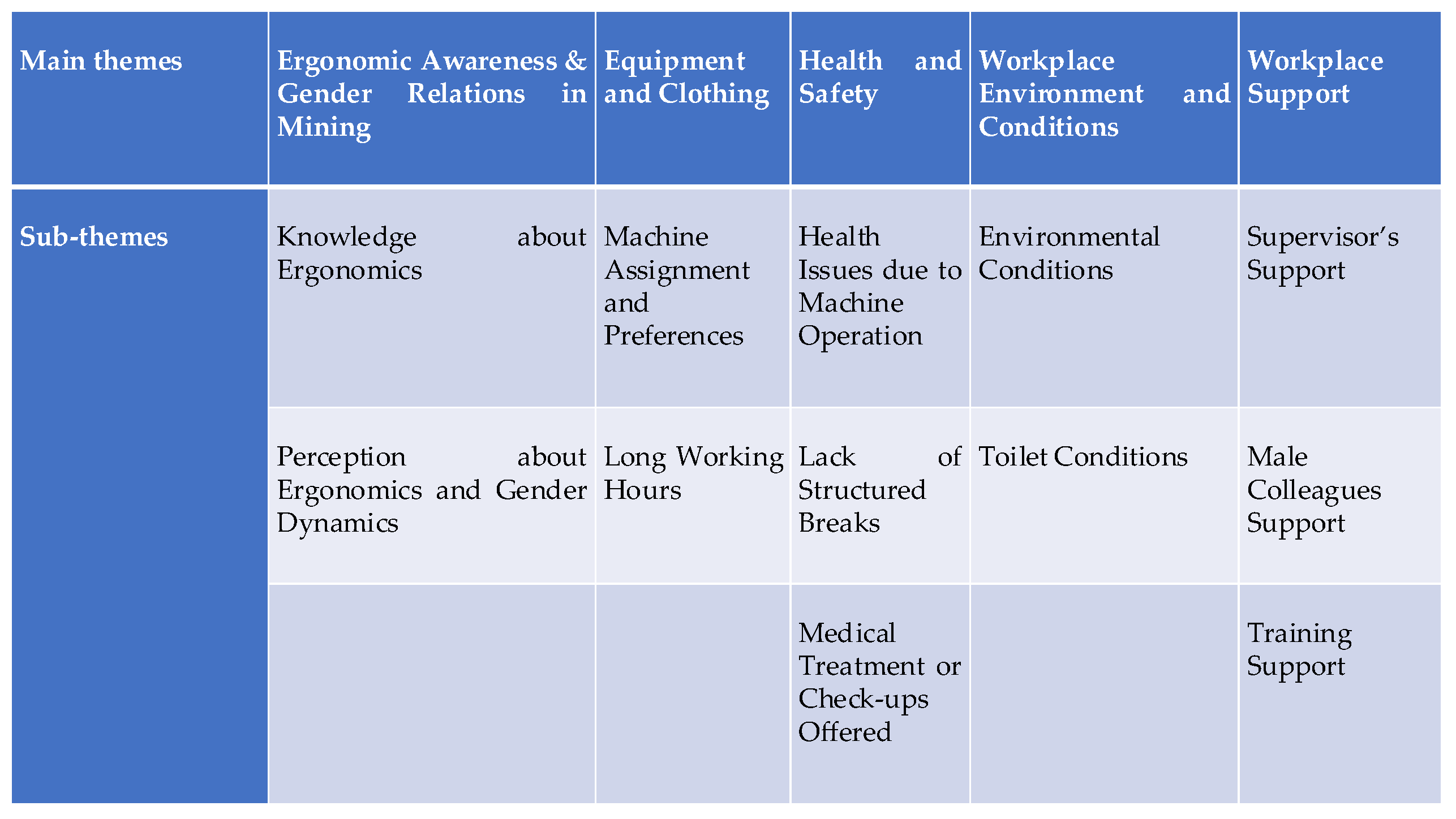
Ergonomic Awareness and Gender Relations in Mining
Knowledge About Ergonomics
“Yes, we do receive basic ergonomic training during induction.”
“No, it’s information training mostly at the training centre. There is no physical training and so forth.”
“They will train you to say this lever does this and that but not about the impact it will have to you as a woman. They never told us that.”
Perception About Ergonomics and Gender Dynamics
“Some women say they have kidney issues … I also have that problem.”
“They kept on telling me that I won’t be able to give birth anymore.”
“There are boxes there, but the last time I checked they were for Gender Based Violence (GBV).”
3.2. Equipment and Clothing
3.2.1. Machine Assignment and Preferences
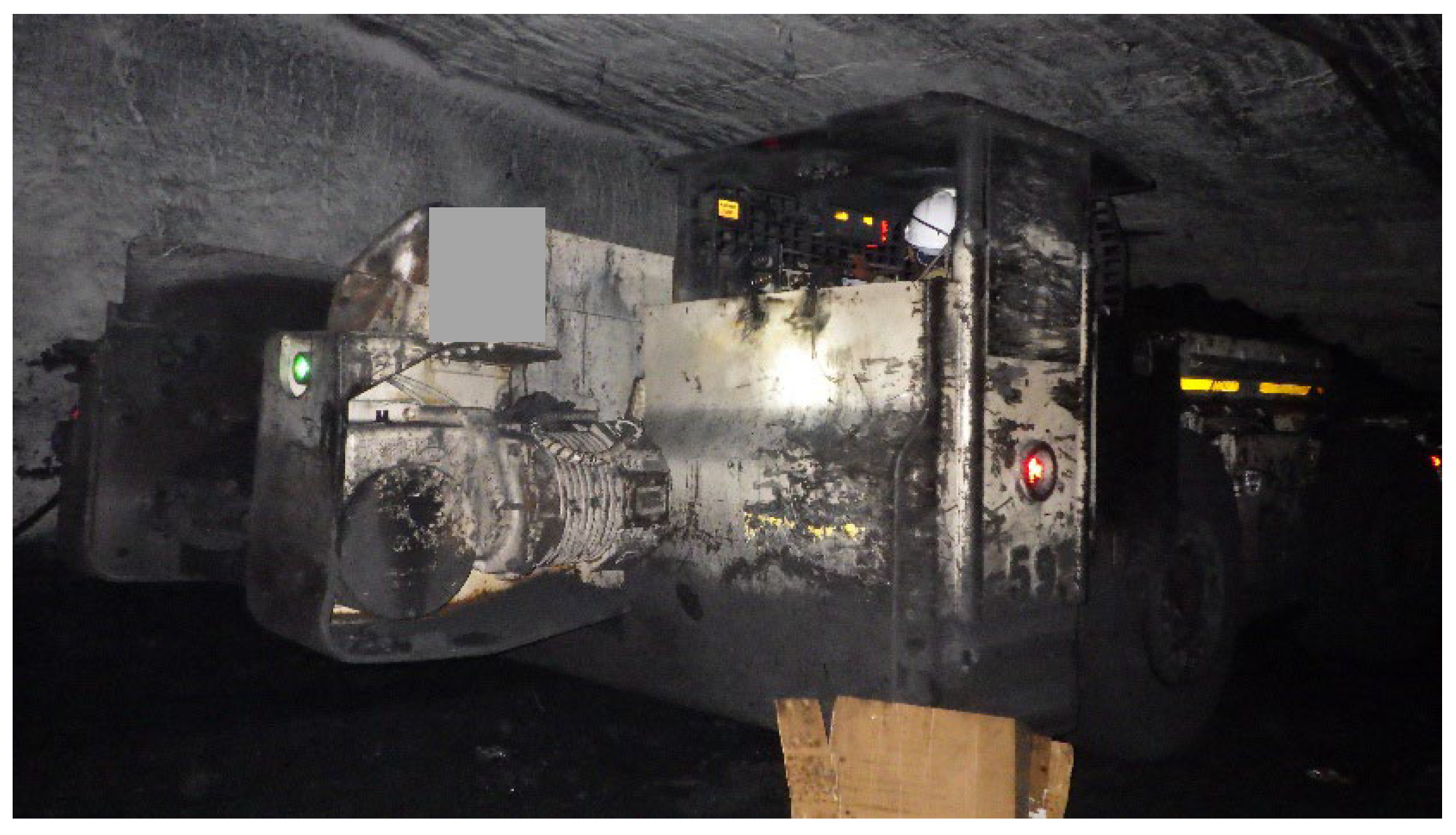
“All machines are difficult to operate, the CM has dust, the shuttle car vibrates a lot, LHDs also vibrates a lot, roof bolter as well. So, all of them has their own issues.”
“You decide for yourself and sometimes they force you to take the machine you don’t want. They give you choices cause when you are working underground, there’s LHD, CM, roof bolter and the shuttle car. So, you have four licenses, so you have to choose between the four licences which one you want to operate. We don’t want a roof bolter and LHD.”
“The roof bolter when you are working at four steams, you don’t rest. As long as it’s grinding, you will stand in the roof bolter until you are done. let’s say you get an operator that cuts well, you don’t rest. You get tired and you don’t want anything, and your spine is too painful. So, already when you knockoff, you don’t want nothing. Then the LHD, yoh, you grade the whole night for 12 hours imagine on an LHD and there’s dust and the fumes that comes out of that machine, they tighten the chest and cause chest infections.”
“All underground machines to be honest are difficult. It vibrates … maybe they can put shocks or something. Our machines, you know my machine is very rough.”
“They tell us that they are bringing a new machine … after they have bought it, you can’t complain about machines… they say others are not complaining about it.”
“And the way it’s designed, like you look in one direction. So, your body and your neck face different direction, which puts a strain on the neck.”
3.2.2. PPE and Uniform Issues
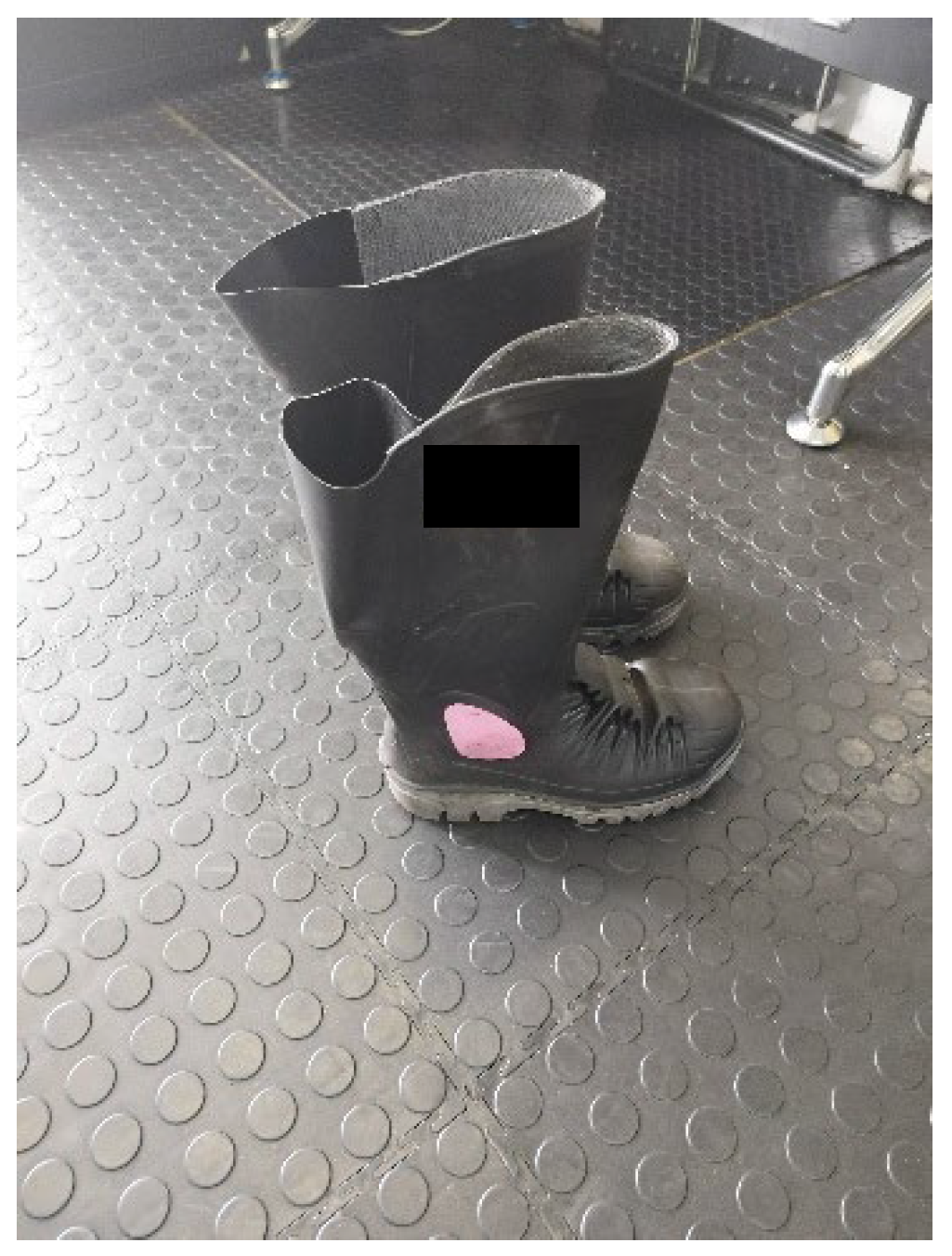
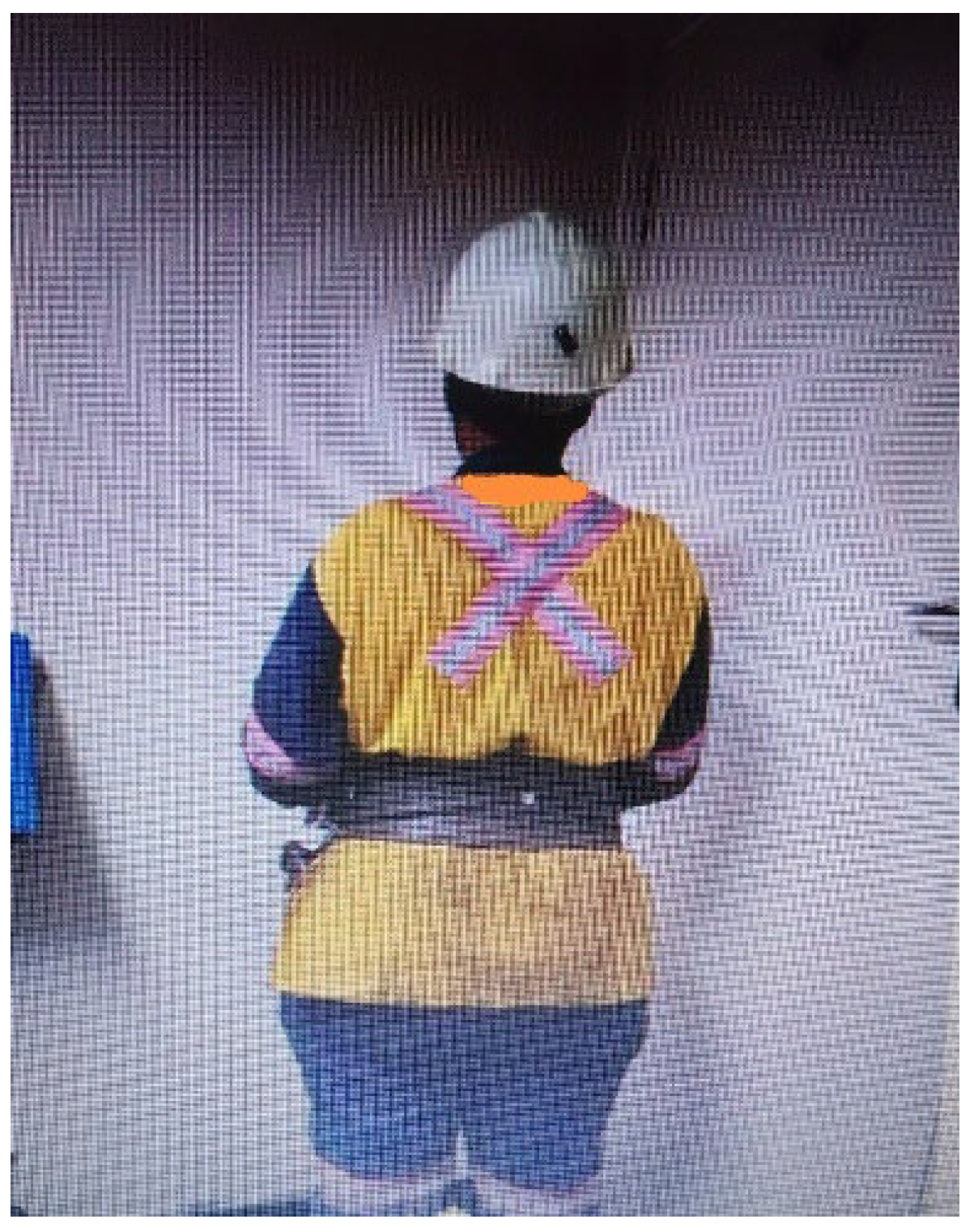
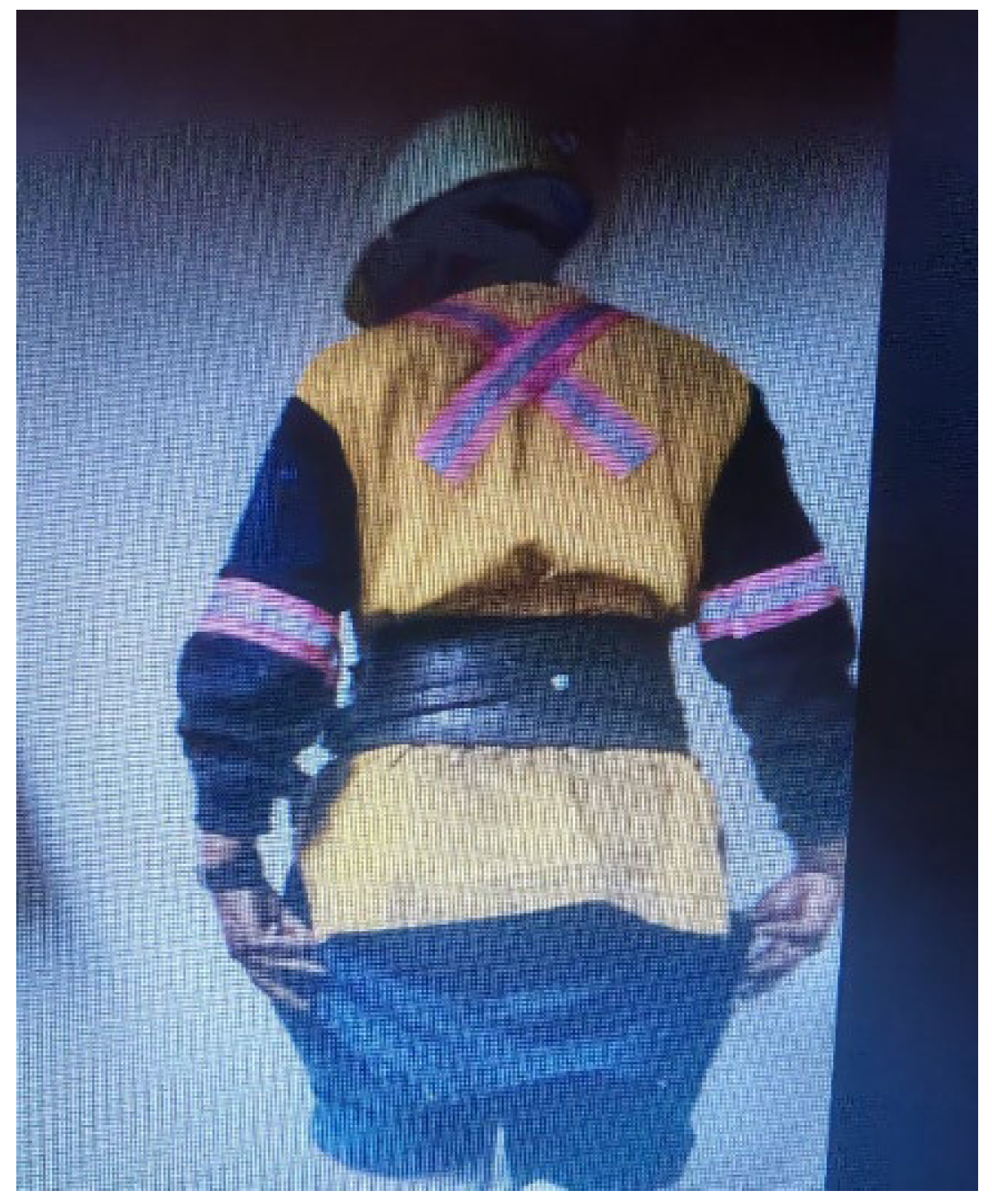
“Our main issue was with the overalls… and others used to raise concern with the safety boots … they got them.”
“It’s the new ones that you are talking about. It’s the old ones that had a bit of pink that were not painful, but the black ones are painful.”
“It’s a struggle. You see the overalls that we wear, it’s a struggle when you need to go to the toilet underground. You have to take out everything.”
“So, there are clothes that you put underneath the overall. So, when you put on the boots it’s now too tight and then you are knocking off and go and take a shower, it’s so painful. So, you might end up doing operations because of that and there are such operations.”
“For instance, if you can check our feet, we are dark in certain parts. I’m not sure if it’s only me. You see, I’m dark here because of the boots.”
3.3. Health and Safety
3.3.1. Health Issues Due to Machine Operation
“You get tired … and your spine is too painful.”
“The doctor would say you need a thrush cream or pills.”
“They have to rub you at home and take the pills before you sleep. For me, if I was at work almost the whole day, I know I have to take pills for pain and pills for bones.”
“For us, most machines affect us in the womb.”
“Especially in shuttle cars, period cycle changes, it causes period pains at the end.”
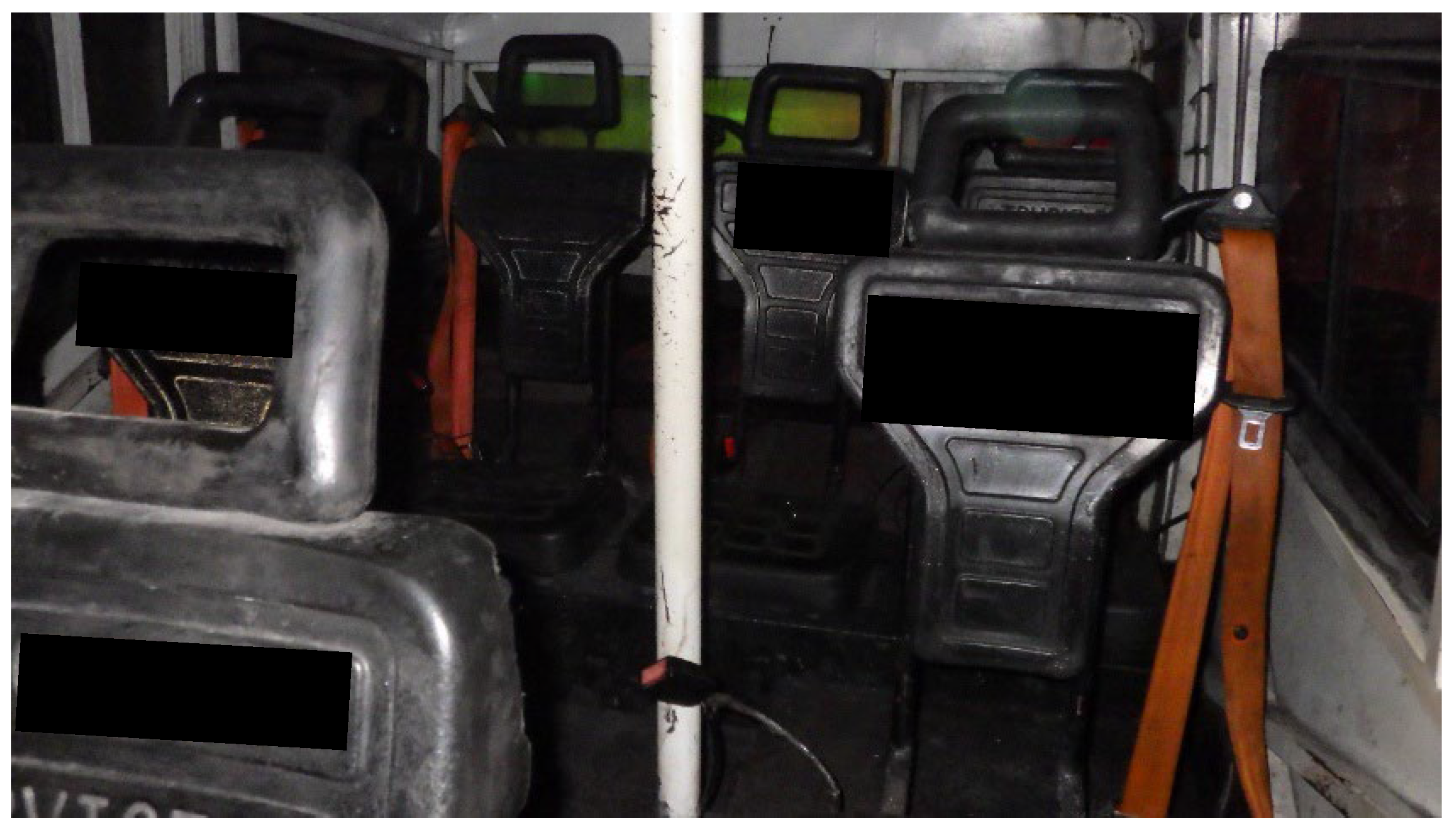
“The seats are not comfortable, back pain Yoh, other pains you are just used to them because you know it’s an everyday thing, you stay strong.”
3.3.2. Lack of Structured Breaks
“You eat when you get a chance to eat. You eat while working to the machine or while doing something, you work while eating. There are no breaks or lunch.”
“We don’t have lunch. No, you can’t work and stop to come and eat. You finish work first and if there’s nothing else that needs to be done then you can eat.”
“We operate machines for almost 7 hours without a break.”
“We are actually entitled to get fatigue breaks, but it depends on your supervisor.”
3.3.3. Medical Treatment or Check-Ups Offered
“They check your chest, eyes and ears. Also, Blood Pressure and Body Mass Index and they say you are overweight and all. But about how your spine is affected and back pains, they don’t check all that.”
3.4. Workplace Environment and Conditions
3.4.1. Environmental Conditions
3.4.2. Toilet Conditions
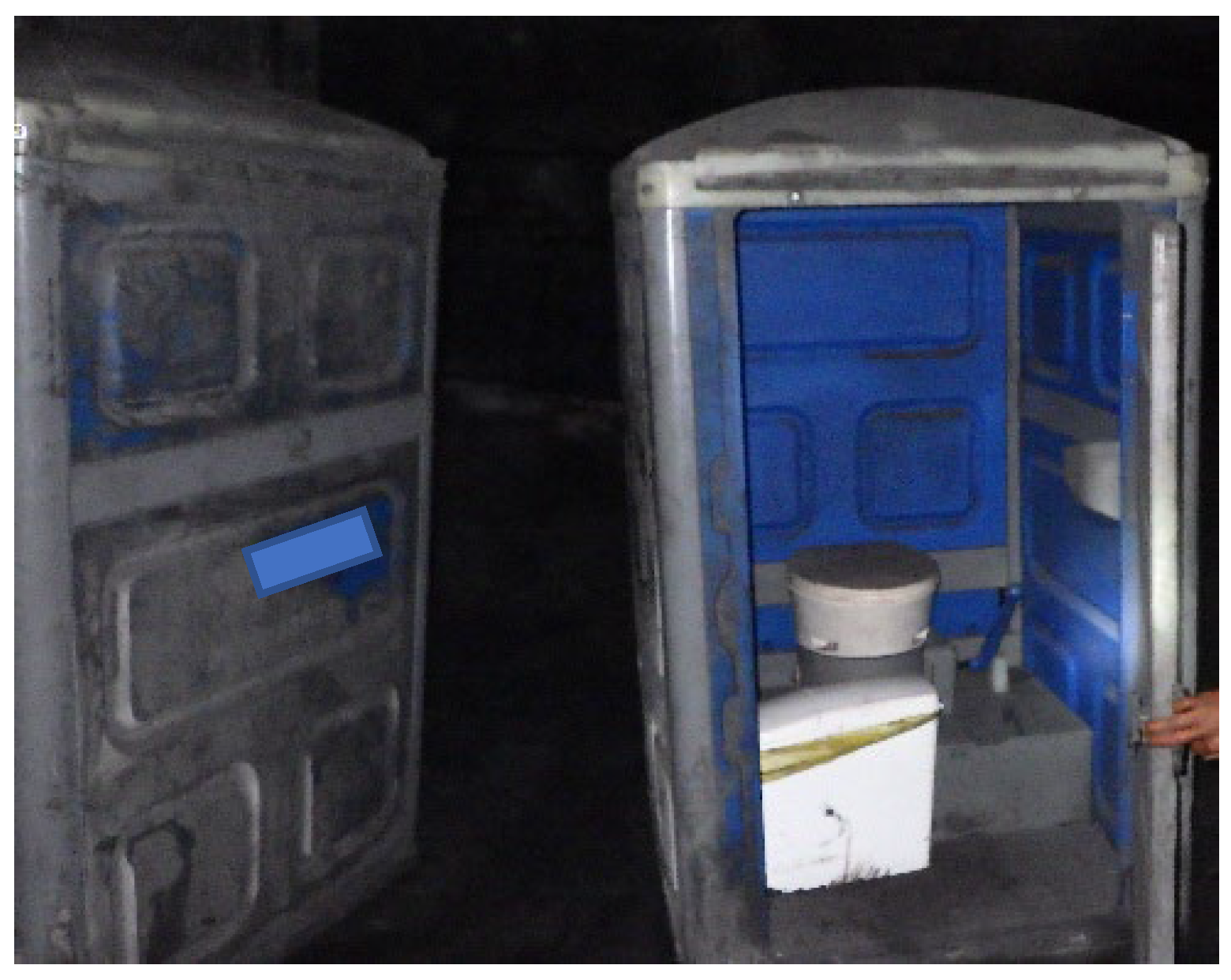
“The cleanliness, they don’t clean those toilets until they get full. Also, the structure of the toilets, they are too short; you have to bend. The chemical they use in the toilets is too strong; you can feel it in your uterus.”
“Also, the structure of the toilets, you need to leave your lamps outside, you can’t go inside the toilet with your lamps. You get used to it. What can you do, you take a urine there at Madala side where there is dust because the toilets … Rather you get dust thrush than toilet thrush.”
“No, we urinate at stick side (Madala side) anyway and I don’t think there’s a female that worked underground who did not have an infection here.”
3.5. Workplace Support
3.5.1. Supervisor’s Support
“It’s like maybe periods remember it’s every month so if you come up with that every month, they end up not taking you seriously.”
So, they just say argh we know her, she has started, every time she doesn’t want to work, she does that.”
“No, you can’t cause when you complain and say you can’t adjust your seat since we like to adjust our seats forward as women then they say others are not complaining about it. So, it’s very hard to make it accommodate us, they don’t listen to us.”
3.5.2. Male Colleagues’ Support
“You see me, as a shuttle car operator, and we work equally. This thing of no you are a woman doesn’t work here. They will tell you that we get paid the same and you are employed as a mine employee, not as someone’s wife or someone’s mother. It is you who asked to be woman in mining, this is what you get.”
3.5.3. Training Support
“Yes, we do get trained and during induction we were told about Ergonomics.”
“They only provide training for operating machines not ergonomics.”
4. Discussion
5. Conclusions
5.1. Practical Recommendations
5.2. Future Studies
Author Contributions
Funding
Institutional Review Board Statement
Informed Consent Statement
Data Availability Statement
Conflicts of Interest
References
- Mandal, B.B. Implementation of DGMS Guidelines for ergonomic risk assessment of mining operations. In National Workshop on Applied Ergonomics for Mining; National Institute of Miners: New Delhi, India, 2014. [Google Scholar]
- Gustara, R.A.; Susilawati, S. Analisis Postur Kerja Terhadap Keluhan Gangguan Muskuloskeletal pada Pekerja Pemanen Kelapa Sawit. SEHATMAS J. Ilm. Kesehat. Masy. 2023, 2, 625–633. [Google Scholar] [CrossRef]
- Zunjic, A. Comprehensive list of ergonomic risk factors-contribution of ergonomics to the science and practice of safety and health. IETI Trans. Ergon. Saf. 2024, 8, 1–20. [Google Scholar]
- Prabarukmi, G.S.; Widajati, N. The Correlation of Ergonomic Risk Factor with Musculoskeletal Complaints in Batik Workers. Indones. J. Occup. Saf. Health 2020, 9, 269–278. [Google Scholar] [CrossRef]
- Fatsiwi Hakimi, M.; Huriah, T. Pengaruh Peregangan Senam Ergonomis terhadap Skor Nyeri Musculoskeletal Disorders (MSDs) pada Pekerja Pembuat Kaleng Alumunium. Muhammadiyah J. Nurs. 2021, 2, 19–26. [Google Scholar]
- Saputra, I.M.A.S.; Rahim, A.F.; Suparsa, M. Analisis Faktor Risiko Posisi Kerja Duduk Dengan Keluhan Muskuloskeletal Pada Pegawai Administrasi Rsud Kabupaten Bangli. Adv. Soc. Humanit. Res. 2023, 1, 27–34. [Google Scholar] [CrossRef]
- Wardani, A.T.; Multazam, A. Analisis Faktor Resiko Musculoskeletal Disorders (Msds) Dengan Metode Nordic Body Map (Nbm) Dan Reba Pada Petugas Cleaning Service Di Rsu Permata Hati Semarapura. Adv. Soc. Humanit. Res. 2023, 1, 43–51. [Google Scholar] [CrossRef]
- Bandyopadhyay, A.; Dev, S.; Gangopadhyay, S. A study on the prevalence of musculoskeletal disorders among the coalminers of Eastern Coalfields of India. Int. J. Occup. Saf. Health 2012, 2, 34–37. [Google Scholar] [CrossRef]
- Widanarko, B.; Legg, S.; Devereux, J.; Stevenson, M. Interaction between physical and psychosocial work risk factors for low back symptoms and its consequences amongst Indonesian coal mining workers. Appl. Ergon. 2015, 46, 158–167. [Google Scholar] [CrossRef]
- Xu, G.; Pang, D.; Liu, F.; Pei, D.; Wang, S.; Li, L. Prevalence of low back pain and associated occupational factors among Chinese coal miners. BMC Public Health 2012, 12, 149. [Google Scholar] [CrossRef]
- Widanarko, B.; Legg, S.; Stevenson, M.; Devereux, J.; Jones, G. Prevalence of low back symptoms and its consequences in relation to occupational group. Am. J. Ind. Med. 2013, 56, 576–589. [Google Scholar] [CrossRef] [PubMed]
- Widanarko, B.; Legg, S.; Devereux, J.; Stevenson, M. Interaction between physical and psychosocial risk factors on the presence of neck/shoulder symptoms and its consequences. Ergonomics 2015, 58, 1507–1518. [Google Scholar] [CrossRef]
- Amari, M.; Caruel, E.; Donati, P. Inter-individual postural variability in seated drivers exposed to whole-body vibration. Ergonomics 2015, 58, 1162–1174. [Google Scholar] [CrossRef]
- Occupational Safety and Health Administration. OSHA Technical Manual (OTM)—Section III: Chapter 4: Heat Stress. 2017. Available online: https://www.osha.gov/dts/osta/otm/otm_vii/otm_vii_1.html (accessed on 17 November 2016).
- Quiroz, N.C.; Mauricio, D.; Mitma, J.I.; Sanga, C. Systematic Literature Review of Ergonomic Evaluation Methods in the Mining Sector (2015–2024). J. Saf. Sci. Resil. 2025, 6, 100215. [Google Scholar]
- Zungu, L.I. Occupational health and safety challenges reported by women in selected South African gold and platinum mines. J. Occup. Health S. Afr. 2012, 18, 6–13. [Google Scholar]
- Botha, D. Women in mining: Engaging men in the dialogue. J. Contemp. Manag. 2016, 13, 954–976. [Google Scholar]
- Bello, I. Women, Ergonomics and Repetitiveness; Scientific Committee on Women, Health, and Work of International Commission on Occupational Health (ICOH): Valencia, Venezuela, 2019. [Google Scholar] [CrossRef]
- Canadian Centre for Occupational Health and Safety. Work-Related Musculoskeletal Disorders (WMSDs). 2017. Available online: https://www.ccohs.ca/oshanswers/diseases/wmsd/risk.html (accessed on 16 November 2025).
- De Cassia Pereira Fernandes, R.; Pataro, S.M.S.; De Carvalho, R.B.; Burdorf, A. The concurrence of musculoskeletal pain and associated work-related factors: A cross sectional study. BMC Public Health 2016, 16, 628. [Google Scholar] [CrossRef] [PubMed]
- Schutte, P.C.; Edwards, A.; Milanzi, L.A. How Hard Do Mineworkers Work? An Assessment of Workplace Stress Associated with Routine Mining Activities. 2012. Available online: http://researchspace.csir.co.za/dspace/bitstream/10204/5855/1/Schutte_2012.pdf (accessed on 10 October 2025).
- Zungu, L. Women in the South African Mining Industry: An Occupational Health and Safety Perspective. Inaugural Lecture. 20 October 2011. Available online: http://uir.unisa.ac.za/handle/10500/5005 (accessed on 3 December 2025).
- Botha, D.; Cronjé, F. Occupational health and safety considerations for women employed in core mining positions. SA J. Hum. Resour. Manag./SA Tydskr. Vir Menslikehulpbronbestuur 2015, 13, 652. [Google Scholar] [CrossRef]
- Eiter, B.M.; Dugdale, Z.J.; Robinson, T.; Nixon, C.T.; Lawson, H.; Halldin, C.N.; Stazick, C. Occupational safety and health of women in mining. J. Women’s Health 2023, 32, 388–395. [Google Scholar] [CrossRef] [PubMed]
- Campos-Serna, J.; Ronda-Pérez, E.; Artazcoz, L.; Moen, B.E.; Benavides, F. Gender inequalities in occupational health related to the unequal distribution of working and employment conditions: A systematic review. Int. J. Equity Health 2013, 12, 57. [Google Scholar] [CrossRef]
- Jäger, M.; Jordan, C.; Theilmeier, A.; Wortmann, N.; Kuhn, S.; Nienhaus, A.; Luttmann, A. Lumbar-Load analysis of manual patient-handling activities for biomechanical overload prevention among healthcare workers. Ann. Occup. Hyg. 2013, 57, 528–544. [Google Scholar]
- Heine, A. A Model for Managing the Barriers of Introducing Women into a Mining Industry. 16 March 2012. Available online: http://hdl.handle.net/2263/28565 (accessed on 23 July 2021).
- Department of Mineral Resources. Guideline for the Mandatory Code of Practice on the Provision of Personal Protective Equipment for Women in the South African Mining Industry. 25 September. 2015. Available online: http://www.gpwonline.co.za (accessed on 1 August 2021).
- Shongwe, B.N. The Impact of Coal Mining on the Environment and Community Quality of Life: A Case Study Investigation of the Impacts and Conflicts Associated with Coal Mining in the Mpumalanga Province, South Africa. Master’s Thesis, University of Cape Town, Cape Town, South Africa, 2018. [Google Scholar]
- Boddy, C.R. Qualitative Market Research: Sample Size for Qualitative Research. 12 September 2016. Available online: https://www.emerald.com/qmr/article-abstract/19/4/426/454118/Sample-size-for-qualitative-research?redirectedFrom=fulltext (accessed on 1 August 2021).
- Burgess-Limerick, R. Participatory ergonomics: Evidence and implementation lessons. Appl. Ergon. 2018, 68, 289–293. [Google Scholar] [CrossRef] [PubMed]
- Serranheira, F.; Sousa-Uva, M.; Heranz, F.; Kovacs, F.; Sousa-Uva, A. Low Back Pain (LBP), work and absenteeism. Work 2020, 65, 463–469. [Google Scholar] [CrossRef] [PubMed]
- Smets, M.P.; Eger, T.R.; Grenier, S.G. Whole-Body Vibration Experienced by Haulage Truck Operators in Surface Mining Operations: A Comparison of Various Analysis Methods Utilized in the Prediction of Health Risks. Appl. Ergon. 2010, 41, 763–770. [Google Scholar] [CrossRef]
- Mokwena, O.S.; Shirinde, J.; Morodi, T.J. Occupational Ergonomic Risks Among Women in Underground Coal Mining, South Africa. Safety 2025, 11, 116. [Google Scholar] [CrossRef]
- Thetkathuek, A.; Meepradit, P.; Sa-Ngiamsak, T. A Cross-sectional Study of Musculoskeletal Symptoms and Risk Factors in Cambodian Fruit Farm Workers in Eastern Region, Thailand. Saf. Health Work 2018, 9, 192–202. [Google Scholar] [CrossRef] [PubMed] [PubMed Central]
- Poochada, W.; Chaiklieng, S.; Andajani, S. Musculoskeletal Disorders among Agricultural Workers of Various Cultivation Activities in Upper Northeastern Thailand. Safety 2022, 8, 61. [Google Scholar] [CrossRef]
- Kunda, R.; Frantz, J.; Karachi, F. Prevalence and ergonomic risk factors of work-related musculoskeletal injuries amongst underground mine workers in Zambia. J. Occup. Health 2013, 55, 211–217. [Google Scholar] [CrossRef]
- Government of South Africa. Mine Health and Safety Act (No. 29 of 1996); Government Gazette (G 17242); 14 June 1996; accessed at Government Printers; South Africa Government: Cape Town, South Africa, 1996. [Google Scholar]
- Razafimahefa, R.H.; Pardosi, J.F.; Sav, A. Occupational Factors Affecting Women Workers’ Sexual and Reproductive Health Outcomes in Oil, Gas, and Mining Industry: A Scoping Review. Public Health Rev. 2022, 43, 1604653. [Google Scholar] [CrossRef]
- Tamers, S.L.; Streit, J.; Pana-Cryan, R.; Ray, T.; Syron, L.; Flynn, M.A.; Castillo, D.; Roth, G.; Geraci, C.; Guerin, R.; et al. Envisioning the future of work to safeguard the safety, health, and well-being of the workforce: A perspective from the CDC’s National Institute for Occupational Safety and Health. Am. J. Ind. Med. 2020, 63, 1065–1084. [Google Scholar] [CrossRef] [PubMed]
- Noge, G. The role of African feminist philanthropy in effecting change in the working conditions of women in the South African mining industry: A literature review. Int. Rev. Philanthr. Soc. Investig. 2025, 4, 46–65. [Google Scholar]
- Rodríguez, V.; Torres, L.D. Gender, Work and Health Inequalities. In Aligning Perspectives in Gender Mainstreaming; Hassard, J., Torres, L.D., Eds.; Aligning Perspectives on Health, Safety and Well-Being; Springer: Cham, Switzerland, 2021. [Google Scholar] [CrossRef]
- Benya, A. Women in Mining: A Challenge to Occupational Culture in Mines. Master’s Thesis, University of the Witwatersrand, Johannesburg, South Africa, 2009. [Google Scholar]
- Habib, R.R.; Messing, K. Gender, women’s work and ergonomics. Ergonomics 2012, 55, 129–132. [Google Scholar] [CrossRef]
- Tomaskovic-Devey, D.; Skaggs, S. Sex segregation, labour process organization, and gender earnings inequality. Am. J. Sociol. 2012, 108, 102–128. [Google Scholar] [CrossRef]
- Lahiri-Dutt, K. Do women have a right to mine? Can. J. Women Law Rev. Jurid. Femme Droit 2019, 31, 1–23. [Google Scholar] [CrossRef]
- Abouee Mehrizi, A.; Saed-Moucheshi, S.; Dianat, I. Review of anthropometric considerations for agricultural equipment design: A systematic review. Int. J. Syst. Assur. Eng. Manag. 2022, 13, 571–581. [Google Scholar] [CrossRef]
- Kang, L.-P.; Gong, T.-S.; Quan, X.-H.; Zhang, C. The Influence of Footwear on Foot Comfort of Prolonged Standing Occupational Population: A Systematic Review. Saf. Health Work 2025, in press. [Google Scholar] [CrossRef]
- Zungu, L.I. South African guideline for the selection and provision of personal protective equipment for women in mining: Original research. Occup. Health South. Afr. 2013, 19, 4–9. [Google Scholar]
- Lahiri-Dutt, K.; Macintyre, M. Women Miners in Developing Countries: Pit Women and Others; Ashgate Publishing: Surrey, UK, 2006. [Google Scholar]
- Lerman, S.E.; Eskin, E.; Flower, D.J.; George, E.C.; Gerson, B.; Hartenbaum, N.; Hursh, S.R.; Moore-Ede, M. Fatigue risk management in the workplace. J. Occup. Environ. Med. 2012, 54, 231–258. [Google Scholar] [CrossRef]
- Wong, K.; Chan, A.H.S.; Ngan, S.C. The Effect of Long Working Hours and Overtime on Occupational Health: A Meta-Analysis of Evidence from 1998 to 2018. Int. J. Environ. Res. Public Health 2019, 16, 2102. [Google Scholar] [CrossRef]
- National Institute for Occupational Safety and Health. Workplace Fatigue Management Guidelines; U.S. NIOSH: Washington, DC, USA, 2020. [Google Scholar]
- Donoghue, A.M. Occupational health hazards in mining. Occup. Med. 2004, 54, 283–289. [Google Scholar] [CrossRef]
- Pelders, J.; Nelson, G. Contributors to fatigue of mine workers in the South African gold and platinum sector. Saf. Health Work 2019, 10, 188–195. [Google Scholar] [CrossRef] [PubMed]
- Sorrentino, E.; Vona, R.; Monterosso, D.; Giammariolis, A.M. Gender issues on occupational safety and health. Ann. Dell’istituto Super Sanita 2016, 52, 190–197. [Google Scholar] [CrossRef]


Disclaimer/Publisher’s Note: The statements, opinions and data contained in all publications are solely those of the individual author(s) and contributor(s) and not of MDPI and/or the editor(s). MDPI and/or the editor(s) disclaim responsibility for any injury to people or property resulting from any ideas, methods, instructions or products referred to in the content. |
© 2025 by the authors. Licensee MDPI, Basel, Switzerland. This article is an open access article distributed under the terms and conditions of the Creative Commons Attribution (CC BY) license.
Share and Cite
Mokwena, O.S.; Morodi, T.J.; Shirinde, J. Uncovering the Ergonomic Risks Threatening the Health of Underground Female Coal Mineworkers. Safety 2026, 12, 1. https://doi.org/10.3390/safety12010001
Mokwena OS, Morodi TJ, Shirinde J. Uncovering the Ergonomic Risks Threatening the Health of Underground Female Coal Mineworkers. Safety. 2026; 12(1):1. https://doi.org/10.3390/safety12010001
Chicago/Turabian StyleMokwena, Ouma S., Thabiso J. Morodi, and Joyce Shirinde. 2026. "Uncovering the Ergonomic Risks Threatening the Health of Underground Female Coal Mineworkers" Safety 12, no. 1: 1. https://doi.org/10.3390/safety12010001
APA StyleMokwena, O. S., Morodi, T. J., & Shirinde, J. (2026). Uncovering the Ergonomic Risks Threatening the Health of Underground Female Coal Mineworkers. Safety, 12(1), 1. https://doi.org/10.3390/safety12010001