


Abstract
Prolonged visual display terminal (VDT) work leads to static muscular loading, increasing the risk of musculoskeletal disorders. Active chairs have been proposed to alleviate such issues; however, solutions like balance balls often induce discomfort due to excessive instability. To address this trade-off, a 360° swaying chair was developed, though its physiological effects during VDT work remain unclear. This study aimed to investigate the effects of a 360° swaying chair on users performing VDT tasks. Two experiments compared the swaying chair with a standard office chair (OC) under two sitting postures: a forward tilt with feet forward (AC2) and with feet back (AC3). Muscle activity, motion analysis, and subjective evaluations were conducted. The results showed that the AC3 posture (feet back) better maintained the spinal S-curve and reduced activity in the thoracic and lumbar erector spinae and rectus abdominis compared to the AC2 posture and the OC, although it may increase lower-body load. A slight forward tilt promoted activation of the internal oblique muscle. Subjective comfort was not inferior to that of the OC. These findings suggest that the 360° swaying chair, particularly in the AC3 posture, can reduce upper-body muscular and postural loads during VDT work without compromising comfort. However, these findings should be interpreted as preliminary, as they are based on a small and homogeneous sample and short-term VDT tasks.
1. Introduction
Prolonged work with visual display terminals (VDTs) has become increasingly prevalent, with many students and office workers engaging in VDT work for extended periods to complete daily tasks. However, prolonged static loading of a muscle is known to result in sustained activation of high-threshold small motor units [1]. During VDT work, the muscles in the back, shoulders, and neck are typically subjected to low-level static muscular loading, increasing the risk of developing musculoskeletal disorders such as myalgia (muscle pain) [2]. The human spine comprises 24 vertebrae connected by intervertebral disks, and the sacrum, which naturally curves into an S-shape. However, in the seated posture during work, this S-shaped curve tends to shift into a more C-shaped form. Sustained compression of the intervertebral disks can lead to fluid expulsion [3], which may adversely affect tissue nutrition [4,5]. Unsupported spinal loading has been shown to accelerate spinal shrinkage [6]. Compressed intervertebral disks can irritate surrounding nerves, leading to lower-back pain [7].
Thus, although prolonged VDT work is often unavoidable, it poses significant potential health risks, necessitating the implementation of countermeasures. Traditionally, office chairs that maintain the natural S-shaped curvature of the spine have been considered essential for reducing physical strain [7]. However, in recent years, “active chairs” have been developed [8], featuring mechanisms designed to respond to and facilitate user-initiated movements, thereby reducing static musculoskeletal loading and discouraging the prolonged adoption of static postures. Hyeong et al. [9] introduced several types of active chairs for VDT work, including forward-tilting seat pans and balance-ball chairs, where the former help maintain lumbar lordosis [10,11]. Keegan [12] studied the dependency of spinal health on the thigh-torso angle, revealing that lumbar lordosis is often induced by a posture involving a tilted seat and a 135° angle between the thighs and torso when the feet are on the ground.
Based on these findings, forward-tilting chairs were developed, including kneeling chairs [13] that utilize knee supports to minimize forward sliding forces. A forward-tilting seat pan is expected to reduce the compressive load on the intervertebral disks by preventing posterior pelvic rotation and naturally promoting lumbar lordosis. However, comfort assessments have shown that chairs with horizontal seat pans are preferred to those with forward-tilting seats [14,15].
Moving the spine while seated is one method of reducing spinal shrinkage [16], prompting the incorporation of balance balls into the seat of chairs [17]. In such chairs, the unstable surface of the seat may promote spinal movement. Rather than encouraging a relaxed posture, the aim is to engage and strengthen the muscles around the lumbar spine to maintain an upright posture. Kingma et al. [18] reported that sitting on a balance ball increased trunk motion and lumbar variability. However, they also noted an increase in the average lumbar muscle activity, which suggests that sitting on a balance ball may increase the physical load on the muscle, which is a potential drawback. Similarly, Gregory et al. [19] suggested that using a balance ball instead of an office chair produces little change in biological responses. Moreover, considering the reported increase in discomfort, prolonged sitting on a balance ball may not be advantageous. Kitamura et al. [20] demonstrated that exercises involving balance balls effectively activate core muscles and do not reduce office work efficiency.
To address the trade-off between the benefits of active chairs, such as muscular and postural load reduction and the promotion of spinal motion, and discomfort, a chair that sways 360° has been developed [21]. In contrast with conventional chairs that prioritize stabilizing static posture, the philosophy underlying this design is promoting dynamic movement while seated. Unlike balance balls or conventional forward-tilting chairs, the 360° swaying chair allows the user to switch between a forward-tilted and a non-tilted sitting posture.
Based on a questionnaire survey, Tanaka et al. [22] suggested that the suitability of this chair depends on the perceived comfort and the nature of the work, and that it has the potential to improve productivity under certain usage conditions. In this survey, participants who used the chair for three months reported positive feedback on its comfort and beneficial physical effects. This suggests that the 360° swaying chair can alleviate the discomfort associated with balance balls and conventional forward-tilting chairs. However, the physiological effects of the 360° swaying chair have not been adequately researched, and the relationship between the chair and the physical strain it places on the user remains unclear. Because the freely tilting seat is designed to encourage spinal movement and reduce muscle strain, analyzing the impact of the 360° swaying chair on muscle strain and comfort during VDT work, compared to that of standard office chairs, is essential.
This study aims to clarify the effects of a 360° swaying chair on users during VDT work, considering motion analysis, electromyography (EMG), and subjective evaluations. This study is divided into two parts: Experiment 1 and Experiment 2. In Experiment 1, the effects of using a 360° swaying chair and a standard office chair (two conditions) on the user during VDT work are compared. Analysis of muscle activity and subjective ratings while examining the postural characteristics of users in each chair revealed that the 360° swaying chair may have different effects to a standard chair. Recognizing that different sitting postures could lead to different physical effects even on the same chair, Experiment 2 focuses on muscle activity, motion, and subjective evaluations when users adopt various postures by engaging the seat-tilting feature of the 360° swaying chair. Through this approach, the effects of dynamic seat pan changes on reducing the physical load on muscles and improving work posture were investigated. The findings of this study are expected to provide practical guidelines for sitting postures that can be adopted to reduce the physical strain on office chair users. Furthermore, the data provide guidelines for the ergonomic design of future office chairs.
2. Experiment 1
To understand the differences in the muscle load, sitting comfort, and fatigue when using a 360° swaying chair versus a standard office chair for VDT work, users were asked to perform a 30 min VDT task and the data were comprehensively analyzed, focusing on muscle activity and subjective evaluations.
2.1. Materials and Methods
2.1.1. Participants
The study participants were eight female university students with a mean age of 20.3 years (SD: 2.1), mean height of 154.7 cm (SD: 3.2), and mean weight of 51.8 kg (SD: 4.1). The average BMI was 21.5 kg/m2 (SD: 0.8), and all participants fell within the WHO “normal weight” category. To minimize the influence of task complexity, all participants were recruited based on their proficiency in touch typing, ensuring a homogeneous skill level sufficient to perform the task without excessive cognitive load. None of the participants had a history of orthopedic disease, symptoms, or related medical conditions. The purpose and procedures of the experiment were fully explained to the participants in advance and written informed consent was obtained from each of them. The study was approved by the Ethics Committee of the Graduate School of Human Life and Ecology at Osaka Metropolitan University (Approval no. 23-63).
2.1.2. Apparatus and Environment
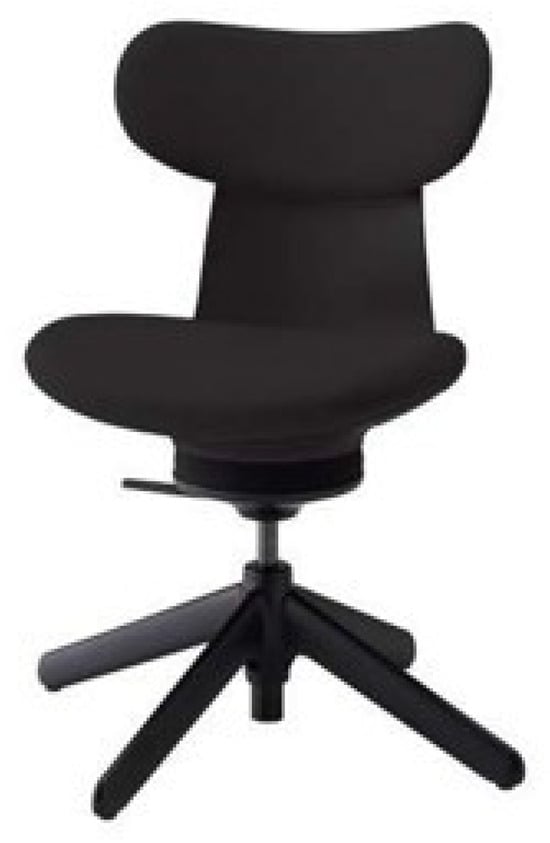
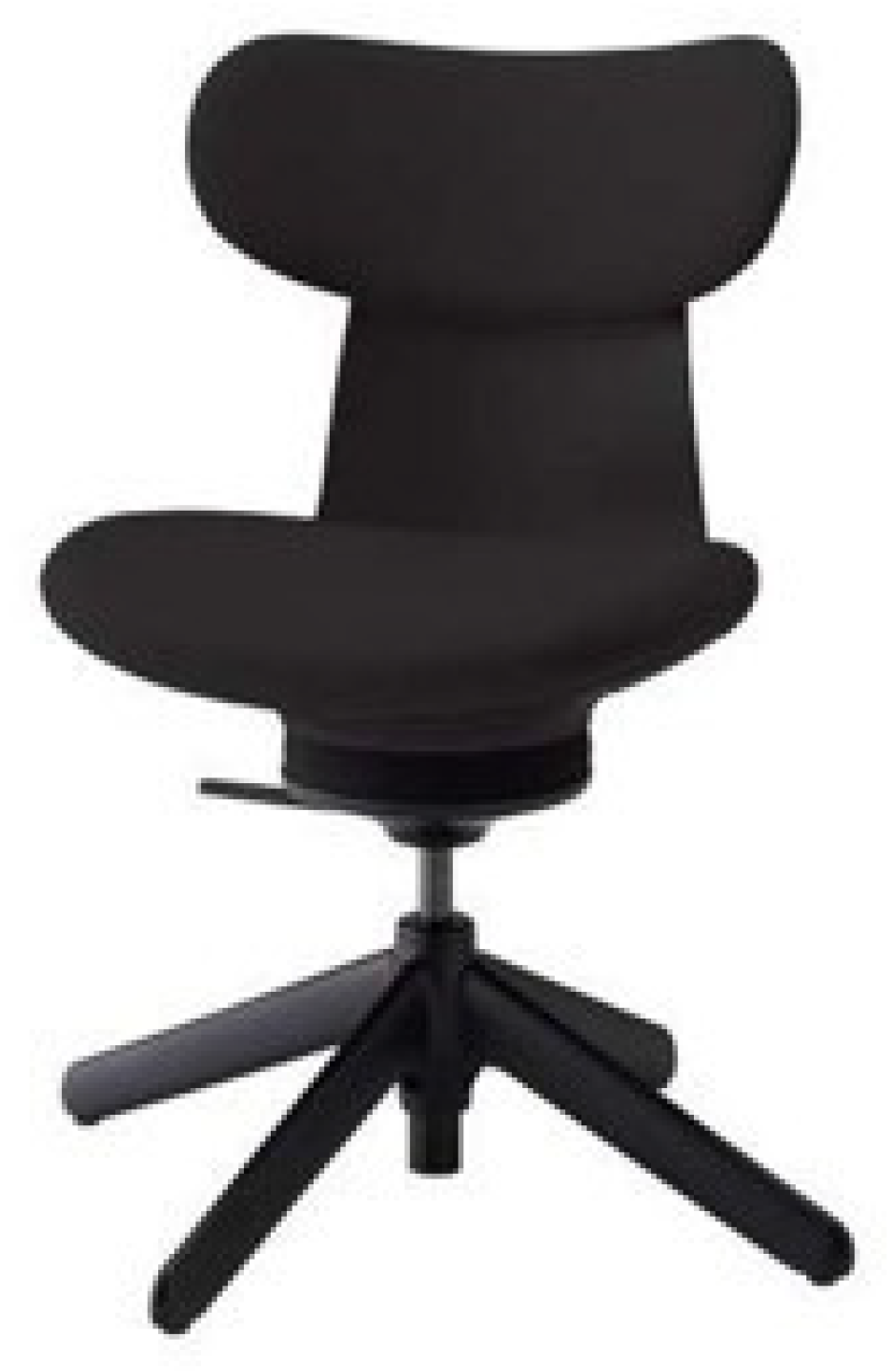
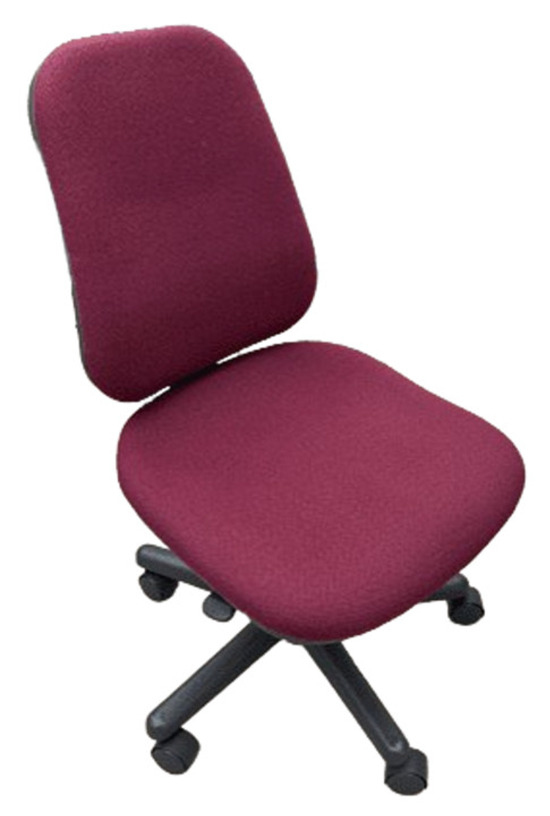
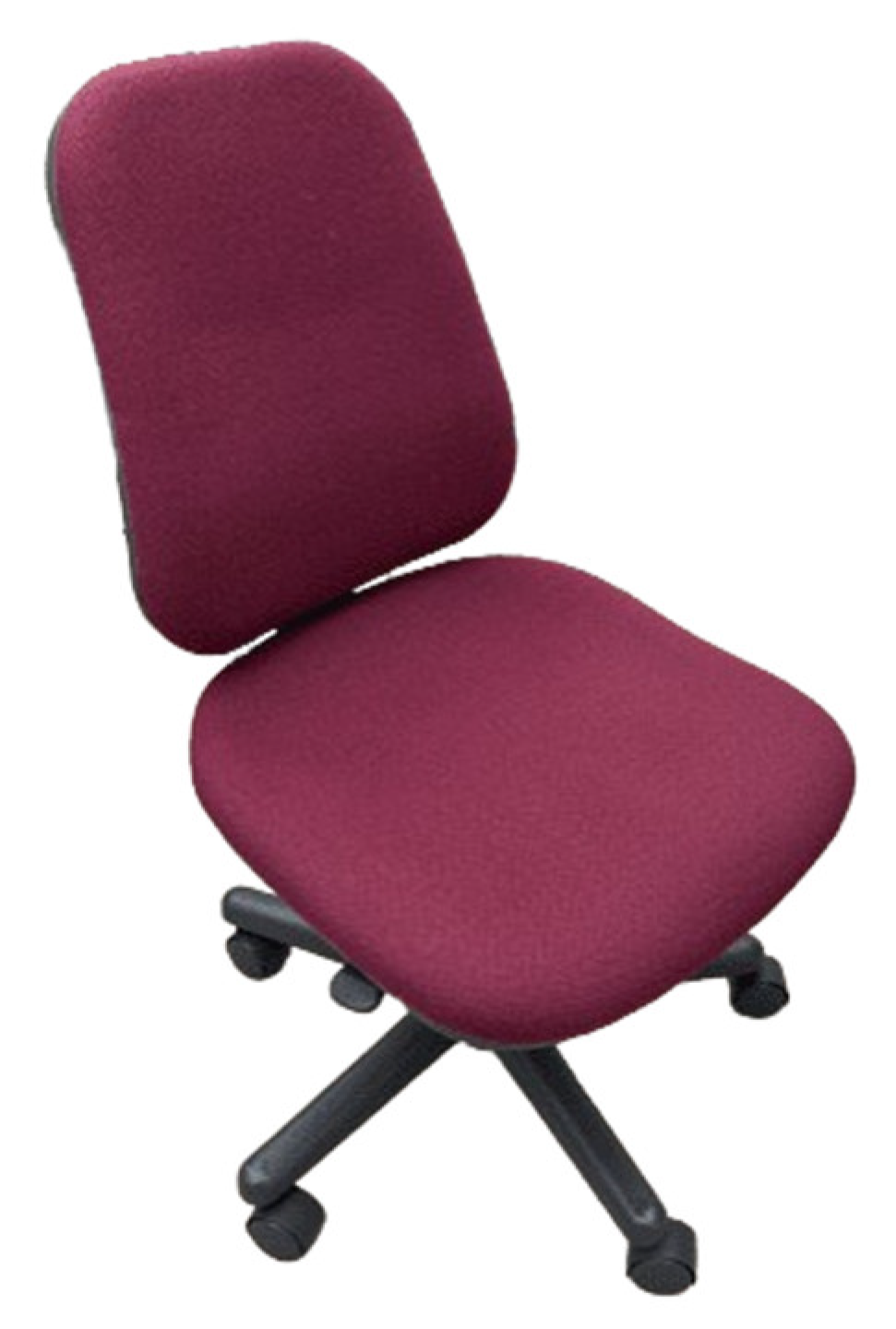
A 360° swaying chair (IngLIFE, Kokuyo, Japan, Figure 1) and a standard office chair (CRS-G287N, Kokuyo, Japan, Figure 2) were evaluated, where the participants were seated at a height-adjustable desk (B0C4YH4YSR, GIGIGET, China). Electromyography (EMG) signals were measured using a Syna Act MT11 multi-purpose telemetry system (NEC Medical Systems, Tokyo, Japan) with Blue Sensor M-00-Sm/50 disposable electrodes. The data were analyzed using Measurement and Processing Library software MPL-IM Ver. 3.4 (Nihon Santec, Inc., Komaki, Japan). The VDT task was performed on a Lenovo IdeaPad S340-13IML laptop computer (display resolution: 1920 × 1080 pixels). The experiment was conducted in the climatic chamber at the School of Human Life and Ecology at Osaka Metropolitan University. The technical details on the seats used in the experiment are provided in Table 1.
Figure 1.
360-degree Swaying Chair.
Figure 2.
Standard Office Chair.
Table 1.
Technical details of experiment 1.
2.1.3. Experimental Task
For each condition, participants were instructed to complete a 30 min typing task. A Japanese text equivalent in difficulty to the Level 1 Japanese Word Processing Examination was displayed on one half of the laptop screen. Participants were tasked with transcribing this text into a Microsoft Word document displayed on the other half of the screen, as quickly and accurately as possible.
2.1.4. Experimental Design
To enable comprehensive comparison of the 360° swaying chair with the standard office chair, participants performed a 30 min VDT task in each of the two conditions. To capture any temporal changes in the measured variables, the physiological indicators were monitored over time periods of 0–5 s, 0–10 min, 10–20 min, and 20–30 min. The 0–5 s measurement was used as a reference to establish baseline values for subsequent comparisons.
2.1.5. Procedure
First, the purpose of the experiment, procedures, and ethical considerations were explained to the participants, after which their written informed consent was obtained. The participants’ height and weight were measured. Participants were first instructed to adopt a neutral sitting posture with their feet flat on the floor, knees at 90°, and back straight. Maintaining this posture, they were then asked to adjust the laptop position to a distance that ensured optimal visibility and comfort. The desk height was adjustable, whereas the chair height was kept constant across both conditions. Electrodes were attached to the left side of each participant’s body. To reduce skin impedance, the skin was first cleansed with an alcohol swab and a skin preparation gel was applied. A bipolar lead configuration was used to place two disposable electrodes on each muscle, parallel to the muscle fibers, and with an inter-electrode distance of approximately 3 cm. A ground electrode was placed on the cervical spine. The EMG sampling rate was 1 kHz, with a time constant of 0.03 s. The participants were then seated and a baseline subjective evaluation of their fatigue and sitting comfort was conducted. They were then instructed to begin the 30 min typing task. After completing the task, the participants answered the subjective evaluation questionnaires regarding fatigue and sitting comfort again. Finally, the muscle activity during maximum voluntary contraction (MVC) was measured using manual muscle testing (MMT) methods [23]. It should be noted that MVC measurements were conducted after the task to prioritize natural posture; while this may theoretically result in slightly inflated %MVC values, the low-intensity nature of the task and consistent protocol across conditions support the validity of the relative comparisons.
To measure the MVC of the trapezius muscle, participants held their shoulder abducted at 90° with their elbow flexed while resisting a force applied to the back of the upper arm. For the erector spinae, the participants laid in a prone position with their hands clasped behind their head and lifted their trunks by extending their lumbar spines against a resistance. For the lumbar multifidus and internal oblique, the MVC was measured with the participants in a supine position having their knees bent while lifting their upper body against a resistance applied to their chest. The entire procedure described above was completed for each chair condition. Each participant took part in the experiment on two separate days, with one condition tested per day. The order of the chair conditions was randomized for each participant.
2.1.6. Data Analysis
In addition to EMG and subjective evaluations, typing performance was assessed by calculating the total number of characters typed and the number of errors during the task. Surface electromyography (EMG) and subjective evaluations were used for analysis in this experiment. The target muscles were the trapezius, the erector spinae at the T4–T5 level, the lumbar multifidus at the L3–L4 level, and the internal oblique at the L4–L5 level. The raw EMG data were full-wave rectified. The following indicators were calculated: average muscle activity (% MVC), root mean square average (% MVC), and mean power frequency (Hz). The average muscle activity and RMS average were normalized to the value obtained during maximum voluntary contraction (100% MVC). The average muscle activity was calculated by integrating the rectified waveform at 1 s intervals. The RMS average was calculated at 0.1 s intervals. For MPF, a 512-point fast Fourier-transform was performed every 500 ms, and the results were averaged every 5 s. The mean value for each of these three indicators was then determined for the following time periods: 0–5 s, 0–10 min, 10–20 min, and 20–30 min.
Pre- and post-task subjective evaluations were conducted. User fatigue was assessed on a 5-point scale using two questionnaires from the Japan Society for Occupational Health: the “Subjective Symptoms Survey” [24] and the “Fatigue Locus Survey” [25]. The Subjective Symptoms Survey grouped items into five categories (drowsiness, anxiety, discomfort, dullness, and blurred vision) in order to evaluate overall fatigue. For both fatigue surveys, the average difference between the pre- and post-task scores was used for comparison. The sitting comfort questionnaire assessed factors such as the overall comfort, fit, support, and feel for the hips and thighs, lumbar, and back regions, as well as the perception of seat and backrest position and size. All items were rated on a 5-point scale from 1 (very unfavorable) to 5 (very favorable). The pre- and post-task scores were compared for each item. All subjective evaluations were administered using Microsoft Forms.
2.1.7. Statistical Analysis
The EMG data were assessed using a two-way repeated measures analysis of variance (ANOVA). The two within-subject factors were the chair type and time period. The two levels of chair type were the 360° swaying chair and the standard office chair. The four levels of time period were 0–5 s, 0–10 min, 10–20 min, and 20–30 min. Because no interaction effects were found, simple main effect tests were not performed. Post hoc multiple comparisons were conducted using the Bonferroni correction for main effects that showed significance or a tendency toward significance. A Wilcoxon signed-rank test was performed on the subjective evaluation data for each item to compare the two chair types.
2.2. Results
2.2.1. Typing Performance
The mean number of characters typed per 10 min interval was 649.4 for the 360° swaying chair and 667.2 for the standard office chair. The average number of errors was 4.1 and 4.7, respectively. No significant differences were observed in typing performance or error rates between the two conditions, indicating that the use of the swaying chair did not negatively affect work efficiency.
2.2.2. Surface Electromyography (EMG)
Two-way repeated measures ANOVA (chair type × time period) assessment of the RMS average (%MVC) for the trapezius muscle revealed a significant main effect for the time period (F (3, 21) = 3.19, p < 0.05). However, there was no significant main effect for the chair type (F (1, 7) = 0.09, p = 0.77), nor any significant interaction effect (F (3, 21) = 0.97, p = 0.42). For the 360° swaying chair, post hoc multiple comparisons with Bonferroni correction showed significant differences for 0–5 s versus 10–20 min (p < 0.01) and for 0–5 s versus 20–30 min (p < 0.01).
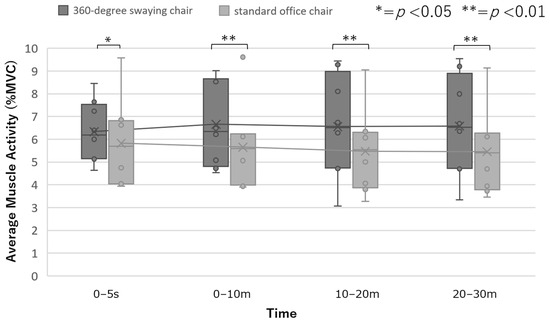
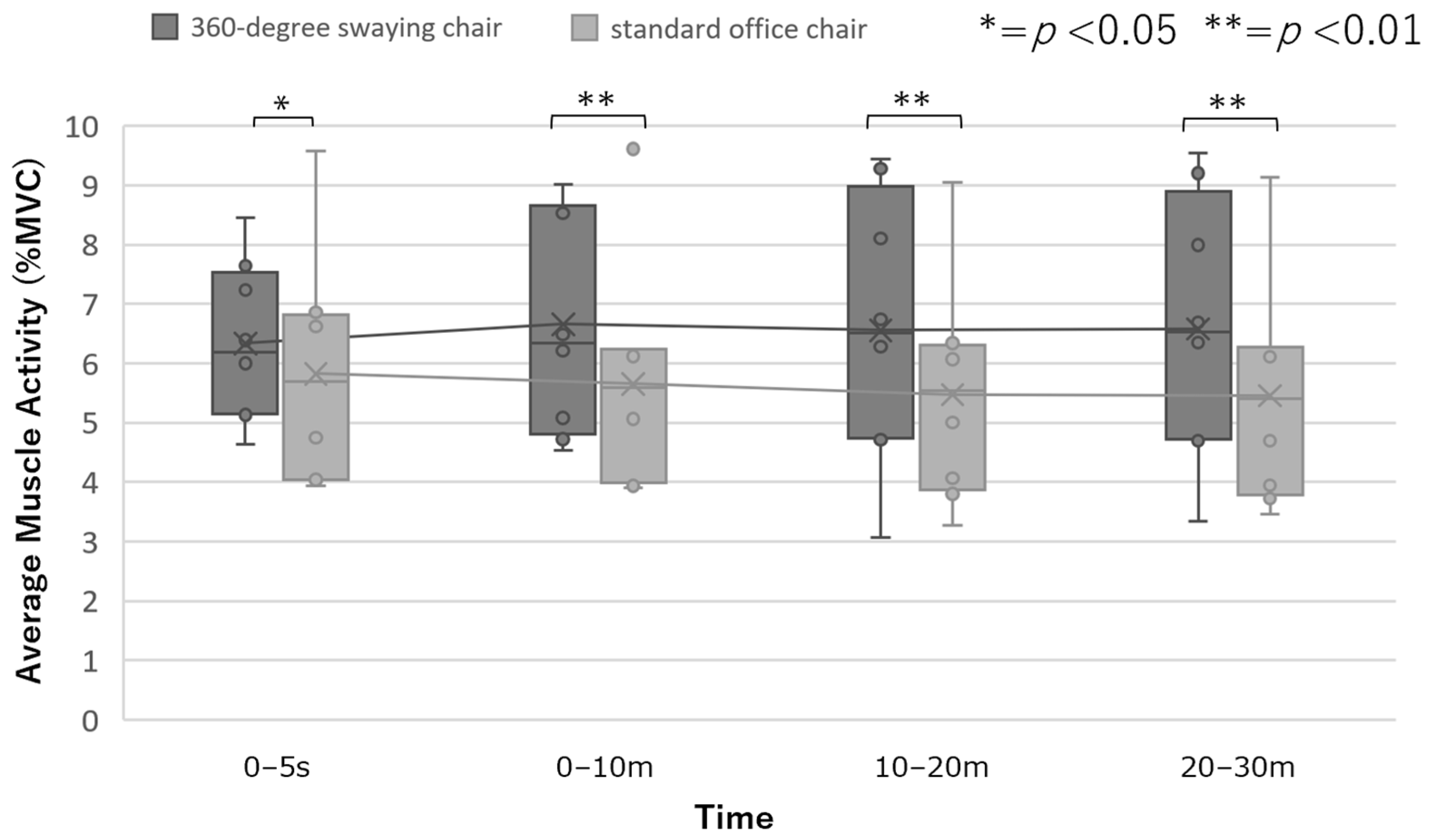
Two-way repeated measures ANOVA assessment of the average muscle activity (% MVC) of the internal oblique showed a tendency toward a significant main effect for the chair type (F (1, 7) = 4.98, p < 0.1). There was no significant main effect for the time period (F (3, 21) = 0.38, p = 0.77), nor any significant interaction effect (F (3, 21) = 1.26, p = 0.31). Post hoc multiple comparisons using the Bonferroni correction revealed significant differences between the 360° swaying chair and the standard office chair for the periods of 0–5 s (p < 0.05), 0–10 min (p < 0.01), 10–20 min (p < 0.01), and 20–30 min (p < 0.01) (Figure 3).
Figure 3.
Average internal oblique muscle activity (integral of %MVC per second). Cross markers (X) represent mean values. The box plots represent the median (horizontal line) and the interquartile range (box). The whiskers indicate the minimum and maximum values. Individual data points (open circles) are overlaid to illustrate variability (n = 8).
2.2.3. Subjective Evaluations
The change in the pre-task versus the post-task scores based on the Subjective Symptoms Survey and the Fatigue Locus Survey revealed no significant differences between the 360° swaying chair and the standard office chair for any item.
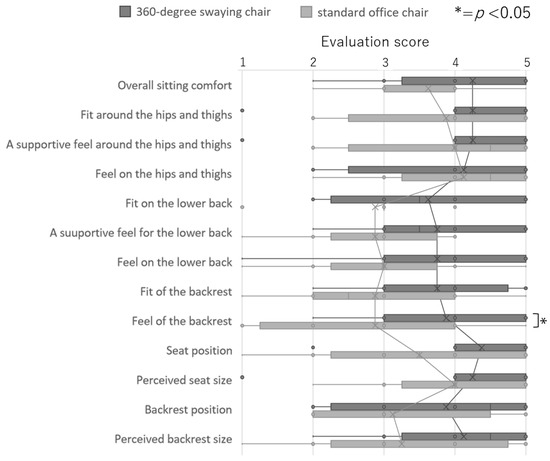
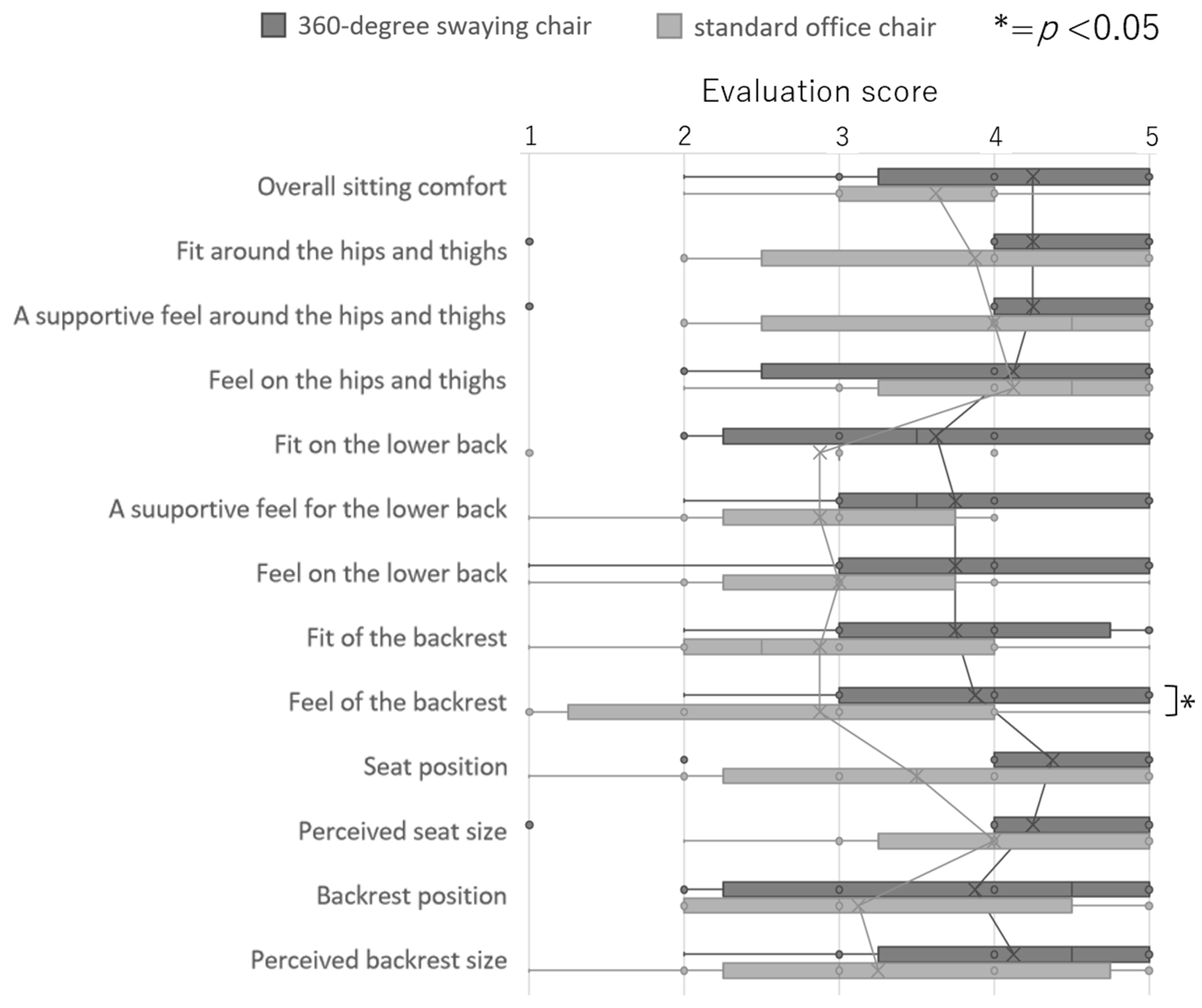
Evaluation of the sitting comfort indicated no significant differences between the chairs for any item in the pre-task assessment. However, in the post-task assessment, the Wilcoxon signed-rank test revealed a significant difference between the two chair types for the item “feel of the backrest” (p < 0.05). The results of the post-task sitting comfort evaluation are shown in Figure 4.
Figure 4.
Post-task evaluation of sitting comfort. Cross markers (X) represent mean values. Data are presented as box plots showing the median, interquartile range, and full range of scores. Individual responses are plotted as open circles (n = 8).
2.3. Discussion
For the internal oblique muscle, the RMS average (%MVC) was significantly greater with the use of the 360° swaying chair than with the standard office chair in the time periods of 0–10 min, 10–20 min, and 20–30 min. Similarly, as shown in Figure 3, the average muscle activity (%MVC) of the internal oblique was significantly greater with the use of the 360° swaying chair than with the standard office chair at all time periods: 0–5 s, 0–10 min, 10–20 min, and 20–30 min.
When working at a VDT in a standard chair, users tend to lean forward. This causes the pelvis to rotate posteriorly, resulting in a C-shaped curvature of the spine [7]. This posterior pelvic rotation causes the sacrum to rotate backward relative to the ilium, thereby expanding the dorsal side of the intervertebral disks. If the back muscles do not protect against lumbar flexion, strain is placed on the iliolumbar ligament [26]. Studies suggest that increased muscle activity in the internal oblique is necessary for preventing this pelvic rotation and maintaining the natural S-curve of the spine [27]. Thus, when using the 360° swaying chair, participants may have tilted the seat forward to maintain an upright, natural posture, which would explain the observed increase in activity of the internal oblique muscles.
Studies show that activating the trunk muscles reduces the pressure on the intervertebral disks [28] and alleviates lower-back pain [29]. Therefore, the 360° swaying chair may help to maintain the natural S-shaped curvature of the spine by promoting engagement of these muscles, and may be effective in preventing lower-back pain.
In reported subjective evaluations, active seating options such as forward-tilting chairs and balance-ball chairs were associated with greater discomfort than standard office chairs [19]. However, in the post-task evaluations of the sitting comfort (Figure 4) in this study, the overall ratings for the 360° swaying chair did not differ significantly from those of the standard office chair. Furthermore, the 360° swaying chair received significantly higher ratings for “feel of the backrest.” This result suggests that, while functioning as an active chair, the 360° swaying chair may alleviate the discomfort that has been a drawback of previous active seating designs.
The results of Experiment 1 showed greater muscle activity in the internal oblique when using the 360° swaying chair compared to the standard office chair. This increased activity is likely necessary to prevent pelvic rotation and maintain the natural S-curve of the spine. The subjective evaluations indicated that the comfort of the 360° swaying chair was not inferior to that of the standard office chair, as the former received a significantly higher rating for “feel of the backrest” while no significant differences were observed for the other items.
3. Experiment 2
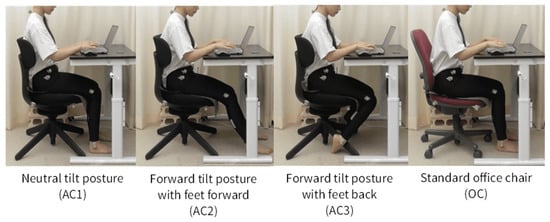
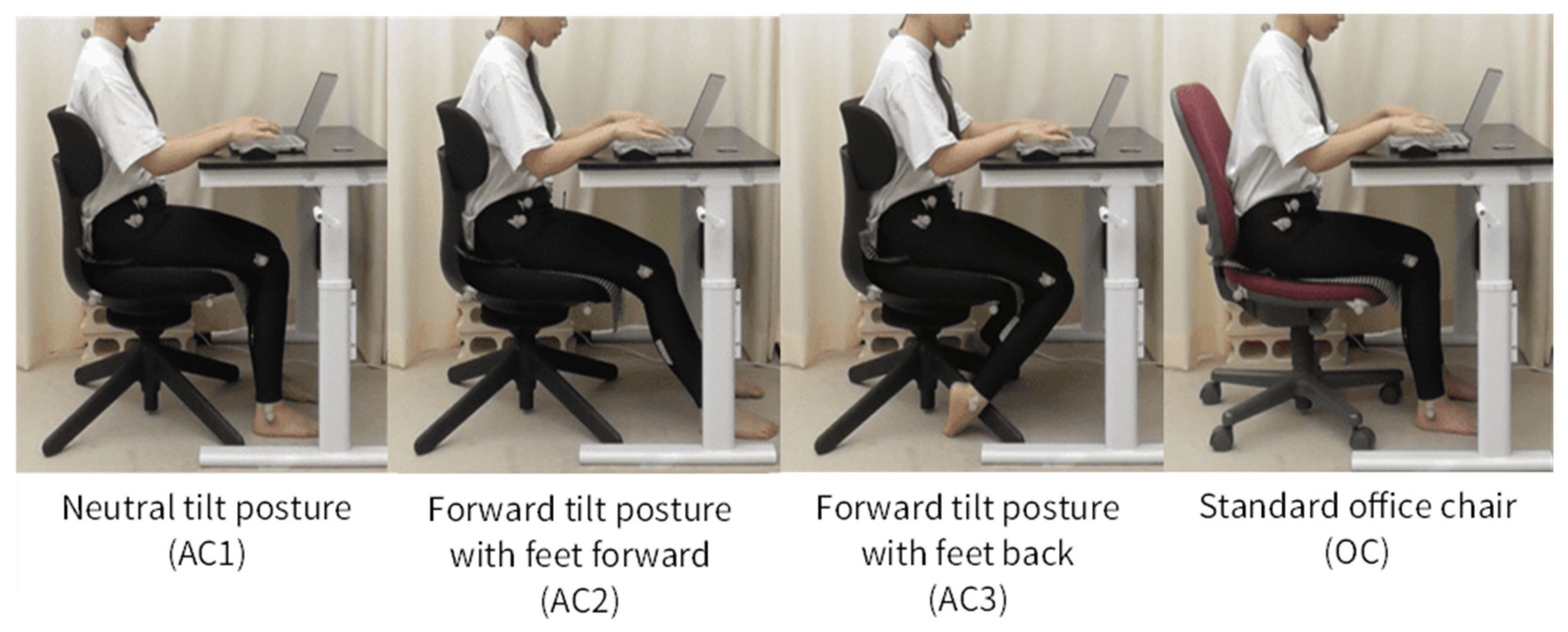
Experiment 1 revealed increased muscle activity in the internal oblique when using the 360° swaying chair than when using a standard office chair. Because the 360° swaying chair allows users to adopt various sitting postures, it is possible that each posture affects the body differently. Therefore, the purpose of Experiment 2 was to interpret the effects of four different conditions on the user. These conditions included three postures in the 360° swaying chair—a neutral tilt posture, a forward tilt posture with feet forward, and a forward tilt posture with feet back, as well as the typical posture in a standard office chair.
3.1. Materials and Methods
3.1.1. Participants
The participants of this study were ten female university students with a mean age of 20.8 years (SD: 0.9), mean height of 154.7 cm (SD: 3.2), and mean weight of 51.1 kg (SD: 5.4). The average BMI was 20.2 kg/m2 (SD: 2.1), and most participants were within the WHO normal weight category, with one participant classified as underweight. None of the participants had a history of orthopedic disease, symptoms, or related medical conditions. The purpose and procedures of the experiment were fully explained to the participants in advance, and written informed consent was obtained from each of them. Approval for this study was granted by the Ethics Committee of the Graduate School of Human Life and Ecology at Osaka Metropolitan University (Approval No. 24-43).
3.1.2. Apparatus and Environment
In addition to the equipment from Experiment 1, a three-dimensional (3D) motion analysis system (VENUS3D, Nobby Tech Ltd., Tokyo, Japan) was used in Experiment 2. Reflective markers with diameters of 19 mm (Pearl Markers, Nobby Tech Ltd., Japan) and 25 mm (VICON) were attached to the participants. The technical details on the seats used in the experiment are provided in Table 2.
Table 2.
Technical details of experiment 2.
3.1.3. Experimental Task
In each condition, the participants performed the same typing task as in Experiment 1, but for 5 min. They were instructed to transcribe a Japanese text equivalent in difficulty to the Level 1 Japanese Word Processing Examination from one half of the laptop screen to a Microsoft Word document on the other half, aiming for speed and accuracy.
3.1.4. Experimental Design
To evaluate the effects of the seat-tilting feature of the 360° swaying chair, the participants performed a 5 min VDT task under four conditions (Figure 5). These included three postures in the 360° swaying chair—a neutral tilt posture (AC1), forward tilt posture with feet forward (AC2), and forward tilt posture with feet back (AC3)—and one control condition involving a typical posture in a standard office chair (OC).
Figure 5.
Experimental conditions for Experiment 2.
3.1.5. Procedure
First, as mentioned, the purpose, procedures, and ethical considerations of the experiment were explained to the participants, and their written informed consent was obtained. The participants’ height and weight were measured. For both chair types, the chair height was adjusted to position the participant’s knees at a 90° angle relative to their feet, which were flat on the floor while sitting in a non-tilted posture. The chair height was kept constant for the three different postures in the 360° swaying chair. However, the participants were allowed to adjust the desk height and the placement of the chair and laptop to their own comfort, as fixing the desk at an unsuitable level would have forced them into unnatural working postures, which could have introduced additional bias in subjective ratings and EMG measurements. Electrodes were attached to the left side of each participant’s body and the reflective markers were attached to the participants’ right side. The participants were then seated and instructed to complete the 5 min typing task. After completing the task, they answered a questionnaire about the sitting comfort. Upon completing the questionnaire, the participants were allowed to stand up and were given a short break. They then completed the typing task and questionnaire for the remaining conditions. The order of the four conditions was randomized for each participant. After completing the tasks under all conditions, the muscle activity during MVC was measured using the same MMT methods as in Experiment 1.
3.1.6. Data Analysis
For the motion analysis, the frame rate was set to 30 Hz. Reflective markers were placed on the following anatomical landmarks: the tragus, cervical vertebra (C7), iliac crest, greater trochanter, knee–joint center, and lateral malleolus. An additional marker was placed on the chair. All measurements were performed in the sagittal plane. The calculated angles included the neck flexion angle, defined as the angle between the tragus-C7 and C7-iliac crest lines, and the spine tilt angle, defined as the angle of the C7-greater trochanter line relative to the horizontal. The trunk angle is formed by the C7-greater trochanter–knee joint center line. The pelvic tilt angle was measured as the angle of the iliac crest–greater trochanter line relative to the vertical. The knee flexion angle is the angle formed by the greater trochanter–knee–joint center–lateral malleolus line. The chair tilt angle is the angle between the seat pan and the horizontal line.
The EMG setup was the same as in Experiment 1. The target muscles were the lumbar erector spinae (at the L3–L4 level), thoracic erector spinae (at the T4–T5 level), rectus abdominis (at the L3–L4 level), and internal oblique (at the L4–L5 level).
A subjective evaluation questionnaire was administered using Microsoft Forms after the typing task while the participants were seated. In the evaluation of the sitting comfort, the participants were required to rate several items on a 5-point scale from 1 (very unfavorable) to 5 (very favorable). These items included the overall sitting comfort, ease of performing the task, and sense of stability, as well as the fit and support for both the buttocks and thighs, and the lumbar region.
3.1.7. Statistical Analysis
A one-way repeated measures ANOVA was performed for each angle obtained from the motion analysis and for the EMG data to examine the differences among the four sitting postures. When a significant main effect was found, post hoc multiple comparisons were conducted using the Bonferroni correction. The four sitting postures were compared by performing a Friedman test for subjective evaluation of the data for each item.
3.2. Results
The one-way repeated measures ANOVA revealed a significant main effect for the trunk angle (F (3, 27) = 29.11, p < 0.01). Post hoc multiple comparisons using the Bonferroni correction revealed significant differences between AC1 and AC2 (p < 0.05), AC1 and AC3 (p < 0.01), AC2 and AC3 (p < 0.05), AC2 and OC (p < 0.01), and AC3 and OC (p < 0.01).
The one-way repeated measures ANOVA revealed a significant main effect for the knee flexion angle (F (3, 27) = 330.77, p < 0.01). Post hoc multiple comparisons using the Bonferroni correction showed significant differences between AC1 and AC2 (p < 0.01), AC1 and AC3 (p < 0.01), AC2 and AC3 (p < 0.01), AC2 and OC (p < 0.01), and AC3 and OC (p < 0.01).
One-way repeated measures ANOVA of the RMS average (%MVC) indicated a significant main effect for the thoracic erector spinae (F (3, 27) = 4.00, p < 0.05). Post hoc multiple comparisons with the Bonferroni correction revealed a significant difference between AC2 and AC3 (p < 0.05). Similarly, ANOVA analysis of the average muscle activity (%MVC) of the thoracic erector spinae revealed a significant main effect (F (3, 27) = 3.71, p < 0.05). Post hoc comparisons revealed a significant difference between AC2 and AC3 (p < 0.05).
One-way repeated measures ANOVA of the MPF (Hz) revealed a significant main effect of the lumbar erector spinae (F (3, 27) = 3.01, p < 0.05). Post hoc comparisons using the Bonferroni correction showed a tendency toward a significance difference between AC2 and AC3 (p = 0.054).
One-way repeated measures ANOVA of the MPF (Hz) revealed a significant main effect for the rectus abdominis muscle (F (3, 27) = 4.24, p < 0.05). Post hoc multiple comparisons using the Bonferroni correction revealed significant differences between AC2 and AC3 (p < 0.05) and between AC3 and OC (p < 0.05).
The Friedman test revealed no significant differences among the four conditions for any of the rated items in the subjective evaluations. The results of Experiment 2 are presented in Table 3.
Table 3.
A summary table of experiment 2.
3.3. Discussion of Experiment
3.3.1. Motion Analysis
A comparison revealed that the trunk angle was significantly greater in the following order: AC3, AC2, AC1, and OC. The knee flexion angle was largest in condition AC2 and smallest in condition AC3, compared to that in the other conditions. Kim et al. [28] reported that a large trunk–thigh angle combined with a small knee angle helps to maintain the natural S-shaped curve of the spine. Based on this finding, it is suggested that condition AC3, for which the trunk angle was larger and the knee flexion angle was smaller than in the other conditions, may be the most effective posture for maintaining the natural S-curve of the spine.
3.3.2. EMG
For the thoracic erector spinae, both the RMS average (%MVC) and the average muscle activity (%MVC) were significantly greater in condition AC2 than in AC3. These results suggest that the muscular load on the thoracic erector spinae is greater in AC2 than in AC3.
For condition AC2, the MPF (Hz) of the lumbar erector spinae was significantly lower than that for AC3. Because a lower MPF indicates muscle fatigue, this suggests that the AC2 posture may lead to more rapid fatigue onset in the lumbar erector spinae compared to the AC3 posture.
Significant differences in the MPF (Hz) of the rectus abdominis muscle were found between AC2 and AC3, as well as between AC3 and OC. These results indicates that the AC3 posture reduces muscle fatigue in the rectus abdominis compared to the AC2 and OC postures, suggesting that it may be advantageous for reducing physiological load during short-term tasks.
These results suggest that a forward tilt posture with feet forward (AC2) increases the muscular load on the thoracic and lumbar erector spinae, whereas a forward tilt posture with feet back (AC3) appeared to reduce the short-term muscular load on the rectus abdominis.
3.3.3. Subjective Evaluations
For the items rated in the subjective evaluations, no significant differences were observed among the four conditions (AC1, AC2, AC3, and OC). Previous studies have reported that on the basis of comfort, horizontal seat pans are preferred over forward-tilting counterparts [14,15], contrary to the present results. The present study demonstrates that comfort is not compromised with the 360° swaying chair, even when the seat is tilted forward. These results suggest that the 360° swaying chair could effectively promote good posture and a high level of comfort simultaneously.
3.3.4. Overall Discussion for Experiment 2
Experiment 2 examined the dynamic seating properties of the 360° swaying chair, aiming to clarify the effects of the seat tilt and foot position on postural adjustments and muscle activity.
The results indicate that the AC3 posture, which features a larger trunk angle and smaller knee flexion than the other conditions, helped maintain the natural S-curve of the spine and likely reduced fatigue in the thoracic erector spinae and rectus abdominis muscles. Previous research has shown that angles of the trunk and knees that prevent posterior pelvic rotation stretch the muscles around the hip joint, including the hamstrings and other thigh muscles [30]. Thus, while effective for the upper body, the AC3 posture may place a greater load on the lower body than the other conditions. This trade-off highlights the need for future studies to quantify lower-extremity demands and confirm the comprehensive safety of this posture. The trunk angle was smaller in AC2 than in AC3, and the increased muscle activity in the thoracic erector spinae and the decreased MPF in the lumbar erector spinae observed under the AC2 condition suggest a trend toward muscle fatigue accumulation. It can be inferred that the trunk angle in the AC2 posture was insufficient to maintain the physiological S-curve of the spine, possibly necessitating compensatory activation of the erector spinae muscles. Taken together, these results suggest that to maintain the physiological S-curve of the spine and reduce the muscular load on the erector spinae, it is important not only to adjust the forward tilt of the seat but also to adjust the foot position to ensure a sufficiently open trunk angle.
Furthermore, subjective evaluations revealed no significant differences in comfort among the AC1, AC2, AC3, and OC conditions. The data confirm that implementing a forward seat tilt did not compromise user comfort. These results suggest that the 360° swaying chair may alleviate the discomfort reported with conventional forward-tilting chairs [14,15].
4. General Discussion
As confirmed by Experiment 1, compared to the standard office chair, the use of the 360° swaying chair required significantly higher average activity of the internal oblique muscle. However, Experiment 2 revealed no significant difference in the activity of the internal oblique muscle with the use of the 360° swaying chair or the standard OC. A possible explanation is that the tilt angle was greater in the instructed forward tilt posture in Experiment 2 compared to the spontaneous posture in Experiment 1. However, since spinal posture and pelvic rotation were not quantified in Experiment 1 due to the absence of motion analysis, this explanation remains speculative. Consequently, a higher proportion of body weight may have been supported by the feet in the former, thus reducing the muscular load on the internal oblique muscle. This suggest that slight forward tilting, which places minimal load on the feet, may be key in promoting internal oblique muscle activity.
The results of Experiment 2 confirmed that the AC2 posture increased activity in the thoracic erector spinae muscle. This posture likely placed a greater muscular load on the lumbar erector spinae muscle. In contrast, the AC3 posture appeared to reduce the muscular load on the rectus abdominis, suggesting that it may help minimize upper-body stress during VDT tasks. Furthermore, the larger trunk angle and smaller knee flexion angle in the AC3 posture suggest that this posture helps maintain the S-shaped curvature of the spine, which can potentially reduce the compressive load on the intervertebral disks, a key factor in maintaining spinal health. However, despite reducing the load on the upper body, the AC3 posture may increase the load on muscle groups in the lower body.
The results of the subjective evaluations showed no major differences between the conditions in Experiment 1. Similarly, no significant differences were found among the conditions in Experiment 2. These results suggest that none of the tested sitting postures on the 360° swaying chair are less comfortable than that on the standard OC.
As indicated in previous research, although conventional active chairs, such as forward-tilting seats and balance balls, can improve posture, they are uncomfortable [14,15,19,20]. However, the present study demonstrated that the forward tilt posture in the 360° swaying chair does not compromise comfort, suggesting that discomfort may not increase even during prolonged periods of sitting.
Given that not all muscles were monitored, changes in the sitting posture can possibly put stress on muscles in the lower body, such as the hamstrings, quadriceps, and gastrocnemius [30]. Because the present study did not evaluate these muscles, the effects of postural changes while seated in the 360° swaying chair on the activity of muscles in the lower body need to be investigated in future research.
Another limitation of this study is the specific characteristics of the participant pool. The research was conducted with female university students, but the user base for active chairs includes people of various ages and genders. Caution is necessary when generalizing the results of the present study considering that previous research has reported that changes in lumbar flexion and muscle activity can differ by age and gender [19]. Additionally, the small sample sizes, with only 8 participants in Experiment 1 and 10 in Experiment 2, require a cautious interpretation when generalizing the findings.
While Experiment 2 examined the effects of specific prescribed postures (AC2 and AC3), Experiment 1 allowed participants to adopt their spontaneous sitting posture. This discrepancy in posture control hinders the direct comparability of the two experiments. In future studies, the implementation of consistent posture instructions across experiments is recommended to enhance ecological validity and strengthen the interpretation of posture-specific effects.
It should be noted that MVC measurements were conducted after the task to prioritize natural posture; while this may theoretically result in slightly inflated %MVC values, the low-intensity nature of the task and consistent protocol across conditions support the validity of the relative comparisons.
The present study evaluated the effects of different sitting postures. However, the optimal frequency for changing posture and the ideal conditions for long-term comfort remain unclear. Further research is needed to analyze the effects of postural changes in long-term work environments and establish evidence-based design guidelines for OCs.
The present study evaluated only short-term VDT tasks. The effects of prolonged seated work on muscular and postural loads, as well as subjective discomfort, remain unclear and warrant further investigation.
Furthermore, motion analysis in this study was restricted to the sagittal plane to focus on spinal alignment and forward-tilting effects. Since the chair is designed to sway 360 degrees, future research should quantify lateral flexion and rotation to provide a more comprehensive understanding of the chair’s dynamic characteristics.
Finally, the VDT task in this study was a standardized transcription task involving continuous typing. In actual office environments, workers perform a variety of tasks with varying levels of cognitive demand and physical interaction. Since task type and complexity can influence muscle tension and posture, future research should investigate the effects of the 360° swaying chair across a broader range of VDT activities.
Taken together, these limitations indicate that the findings should be interpreted as preliminary and specific to short-term VDT tasks in a young female population. By investigating these issues in future studies, it will be possible to design chairs that promote more comfortable and healthier postural adjustments.
5. Conclusions
This study aimed to clarify the effects of a 360° swaying chair on users engaged in VDT work. First, Experiment 1 compared the effects of the swaying chair and a standard OC (two different conditions) on users during VDT work, focusing on muscle activity and subjective evaluations. Experiment 2 analyzed the effects of the seat-tilting feature on the sitting posture of the users in greater detail, taking into account muscle activity, motion analysis, and subjective evaluations for different sitting postures. The findings indicate that within the scope of this research, the AC3 posture placed the least muscular and postural load on the upper body.
- Although muscle activity in the internal oblique was significantly higher with the 360° swaying chair in Experiment 1, no significant difference was observed in Experiment 2. This may be because the tilt angle was greater in the forward tilt adopted by the participants in Experiment 2. This increased the proportion of body weight supported by the feet, consequently reducing the load on the muscles. These results suggest that internal oblique activation may depend on the specific degree of seat tilt and foot position, and that a slight forward tilt, rather than a deep one, may be a factor in promoting its activity.
- The results of Experiment 2 indicate that in the forward tilt posture with feet forward (AC2), the trunk angle was smaller than in the forward tilt posture with feet back (AC3). The former made it more difficult to maintain the natural S-curve of the spine, resulting in greater muscular loads on both the thoracic and lumbar erector spinae than in the AC3 posture.
- The results of Experiment 2 suggest that the forward tilt posture with feet back (AC3) appeared to reduce the short-term muscular load on the rectus abdominis and the overall load on the upper body compared to the posture in both the standard office chair (OC) and the forward tilt posture with feet forward (AC2). Thus, while AC3 is a potentially promising posture for reducing upper-body load and supporting spinal alignment, its overall suitability should be confirmed in future work that also considers lower-extremity demands.
- The results of the subjective evaluation in both Experiment 1 and Experiment 2 showed no significant differences among any of the conditions, suggesting that the comfort of the 360° swaying chair is not inferior to that of a standard OC.
Author Contributions
Conceptualization, S.N. and T.D.; methodology, S.N., T.D. and K.Y.; software, K.Y.; validation, S.N. and T.D.; writing—original draft preparation, S.N.; writing—review and editing, S.N. and T.D.; visualization, S.N.; supervision, T.D.; project administration, S.N. and T.D. All authors have read and agreed to the published version of the manuscript.
Funding
This research was funded by JSPS KAKENHI, grant number 22K18140.
Institutional Review Board Statement
The study was approved by the Ethics Committee of the Graduate School of Human Life and Ecology at Osaka Metropolitan University (Approval no. 23-63, Approved date: 15 November 2023).
Informed Consent Statement
Informed consent for participation was obtained from all subjects involved in the study.
Data Availability Statement
The raw data supporting the conclusions of this article will be made available by the authors on request.
Conflicts of Interest
The authors declare no conflicts of interest.
References
- Hagg, G.M. Static work loads and occupational myalgia—A new explanatory model. In Electromyographical Kinesiology; Anderson, P.A., Hobart, D.J., Danoff, J.V., Eds.; Elsevier Science: Amsterdam, The Netherlands, 1991; pp. 141–143. [Google Scholar]
- Visser, B.; van Dieen, J.H. Pathophysiology of upper extremity muscle disorders. J. Electromyogr. Kinesiol. 2006, 16, 1–16. [Google Scholar] [CrossRef] [Scilit]
- Kingma, I.; van Dieen, J.H.; Nicolay, K.; Maat, J.J.; Weinans, H. Monitoring water content in deforming intervertebral disc tissue by finite element analysis of MRI data. Magn. Reson. Med. 2000, 44, 650–654. [Google Scholar] [CrossRef] [Scilit]
- Holm, S.; Nachemson, A. Variations in the nutrition of the canine intervertebral disc induced by motion. Spine 1983, 8, 866–874. [Google Scholar] [CrossRef] [Scilit] [PubMed]
- Maroudas, A.; Stockwell, R.A.; Nachemson, A.; Urban, J. Factors involved in the nutrition of the human lumbar intervertebral disc: Cellularity and diffusion of glucose in vitro. J. Anat. 1975, 120, 113–130. [Google Scholar]
- Eklund, J.A.E.; Corlett, E.N. Evaluation of spinal loads and chair design in seated work tasks. Clin. Biomech. 1987, 2, 27–33. [Google Scholar] [CrossRef] [Scilit] [PubMed]
- Ueno, Y. Chairs and Low Back Pain. Chiryo 1994, 76, 161–163. (In Japanese) [Google Scholar]
- Pynt, J. Rethinking design parameters in the search for optimal dynamic seating. J. Bodyw. Mov. Ther. 2015, 19, 291–303. [Google Scholar] [CrossRef] [Scilit] [PubMed]
- Hyeong, J.H.; Roh, J.R.; Park, S.B.; Kim, S.; Chung, K.R. A trend analysis of dynamic chair and applied technology. J. Ergon. Soc. Korea 2014, 33, 267–279. [Google Scholar] [CrossRef] [Scilit]
- Mandal, A.C. The Seated Man (Homo Sedens); Dafnia Publications: Klampenborg, Denmark, 1987. [Google Scholar]
- Ravindra, S.G. An experimental study on seat depth. In ASEAN Ergonomics; IEA Press: Hamburg, Germany, 1997. [Google Scholar]
- Keegan, J.J. Alterations of the lumbar curve related to posture and seating. J. Bone Jt. Surg. 1953, 35A, 589–603. [Google Scholar] [CrossRef] [Scilit]
- Opsvik, P. Rethinking Sitting; NORTON: New York, NY, USA, 2009. [Google Scholar]
- Bendix, T.; Sørensen, F.B. Posture of the trunk when sitting on forward inclining seats. Scand. J. Rehabil. Med. 1982, 15, 197–203. [Google Scholar] [CrossRef] [Scilit]
- Bendix, A.; Jensen, C.V.; Bendix, T. Posture, acceptability and energy consumption on a tiltable and a knee-support chair. Clin. Biomech. 1988, 3, 66–73. [Google Scholar] [CrossRef] [Scilit]
- van Deursen, D.L.; Lengsfeld, M.; Snijders, C.J.; Evers, J.J.; Goossens, R.H. Mechanical effects of continuous passive motion on the lumbar spine in seating. J. Biomech. 2000, 33, 695–699. [Google Scholar] [CrossRef] [Scilit]
- Merritt, L.G.; Merritt, C.M. The gym ball as a chair for the back pain patient: A two case report. J. Can. Chiropr. Assoc. 2007, 51, 50–55. [Google Scholar] [PubMed]
- Kingma, I.; van Dieen, J.H. Static and dynamic postural loadings during computer work in females: Sitting on an office chair versus sitting on an exercise ball. Appl. Ergon. 2009, 40, 199–205. [Google Scholar] [CrossRef] [Scilit] [PubMed]
- Gregory, D.E.; Dunk, N.M.; Callaghan, J.P. Stability ball versus office chair: Comparison of muscle activation and lumbar spine posture during prolonged sitting. Hum. Factors 2006, 48, 142–153. [Google Scholar] [CrossRef] [Scilit] [PubMed]
- Kitamura, T.; Nakajima, Y.; Ikuno, T.; Yamamoto, M. EMG measurement and cognitive test evaluation when using a balance ball for the development of a chair for low back pain prevention. Trans. Jpn. Soc. Mech. Eng. 2021, 87, 898. (In Japanese) [Google Scholar]
- Kokuyo Co., Ltd. ing|Product Information. Available online: https://www.kokuyo-furniture.co.jp/products/office/ing/ (accessed on 6 August 2025).
- Tanaka, C.; Kawai, T. Evaluation of Office Work Using a 360° Swaying Chair. Unpublished manuscript. Waseda University, 2018. (In Japanese)
- Hislop, H.J.; Avers, D.; Brown, M.B. Daniels and Worthingham’s Muscle Testing: Techniques of Manual Examination and Performance Testing, 9th ed.; Saunders: St. Louis, MO, USA, 2014. [Google Scholar]
- Japan Society for Occupational Health. Jikakusho Shirabe [Subjective Symptoms of Fatigue Questionnaire], 2002. Available online: https://square.umin.ac.jp/of/jikakusyou-sirabe2.pdf (accessed on 8 December 2025). (In Japanese)
- Japan Society for Occupational Health. Hirou-Bui Shirabe [Body Parts Fatigue Questionnaire]. Available online: https://square.umin.ac.jp/of/hiroubui.pdf (accessed on 8 December 2025). (In Japanese)
- Snijders, C.J.; Hermans, P.F.G.; Niesing, R.; Spoor, C.W.; Stoeckart, R. The Influence of slouching and lumbar support on iliolumbar ligaments, intervertebral discs and sacroiliac joints. Clin. Biomech. 2004, 19, 323–329. [Google Scholar] [CrossRef] [Scilit]
- O’Sullivan, P.B.; Dankaerts, W.; Burnett, A.F.; Farrell, G.T.; Jefford, E.; Naylor, C.S.; O’Sullivan, K.J. Effect of different upright sitting postures on spinal pelvic curvature and trunk muscle activation in a pain-free population. Spine 2006, 31, E707–E712. [Google Scholar] [CrossRef] [Scilit]
- van Dieen, J.H.; Looze, M.P.; Hermans, V. Effects of dynamic office chairs on trunk kinematics, trunk extensor EMG and spinal shrinkage. Ergonomics 2001, 44, 739–750. [Google Scholar] [CrossRef]
- Kim, S.; Lee, I.; Kang, S.H.; Jin, S. Significance of lower body postures in chair design. Hum. Factors 2023, 65, 575–591. [Google Scholar] [CrossRef] [Scilit]
- Yasukouchi, A.; Isayama, T. The relationships between lumbar curves, pelvic tilt and joint mobilities in different sitting postures in young adult males. Appl. Hum. Sci. 1995, 14, 15–21. [Google Scholar] [CrossRef] [Scilit] [PubMed]

Disclaimer/Publisher’s Note: The statements, opinions and data contained in all publications are solely those of the individual author(s) and contributor(s) and not of MDPI and/or the editor(s). MDPI and/or the editor(s) disclaim responsibility for any injury to people or property resulting from any ideas, methods, instructions or products referred to in the content. |
© 2025 by the authors. Licensee MDPI, Basel, Switzerland. This article is an open access article distributed under the terms and conditions of the Creative Commons Attribution (CC BY) license (https://creativecommons.org/licenses/by/4.0/).