Article

Prevalence and Nature of Ergonomic Hazards Among Construction Workers in India: A Cross-Sectional Study


by
Syed Mohammad Fauzan Akhtar
1,
Neha Mumtaz
1 and
Abdur Raheem Khan
2,*
1
Department of Civil Engineering, Integral University, Lucknow 226026, India
2
Faculty of Medicine and Health Sciences, Integral University, Lucknow 226026, India
*
Author to whom correspondence should be addressed.
Safety 2025, 11(3), 62; https://doi.org/10.3390/safety11030062

Submission received: 23 April 2025 / Revised: 13 June 2025 / Accepted: 18 June 2025 / Published: 20 June 2025

Abstract

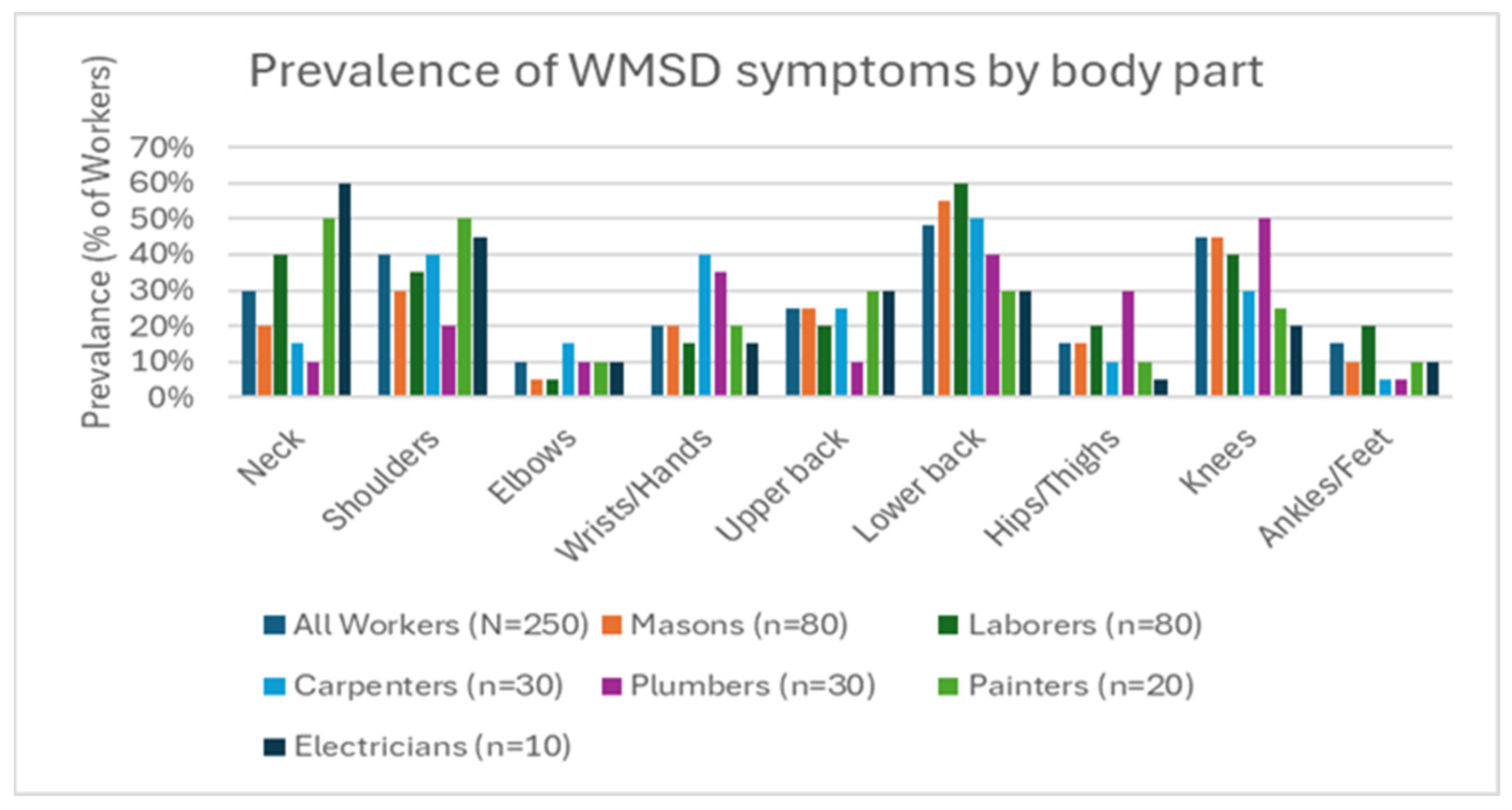
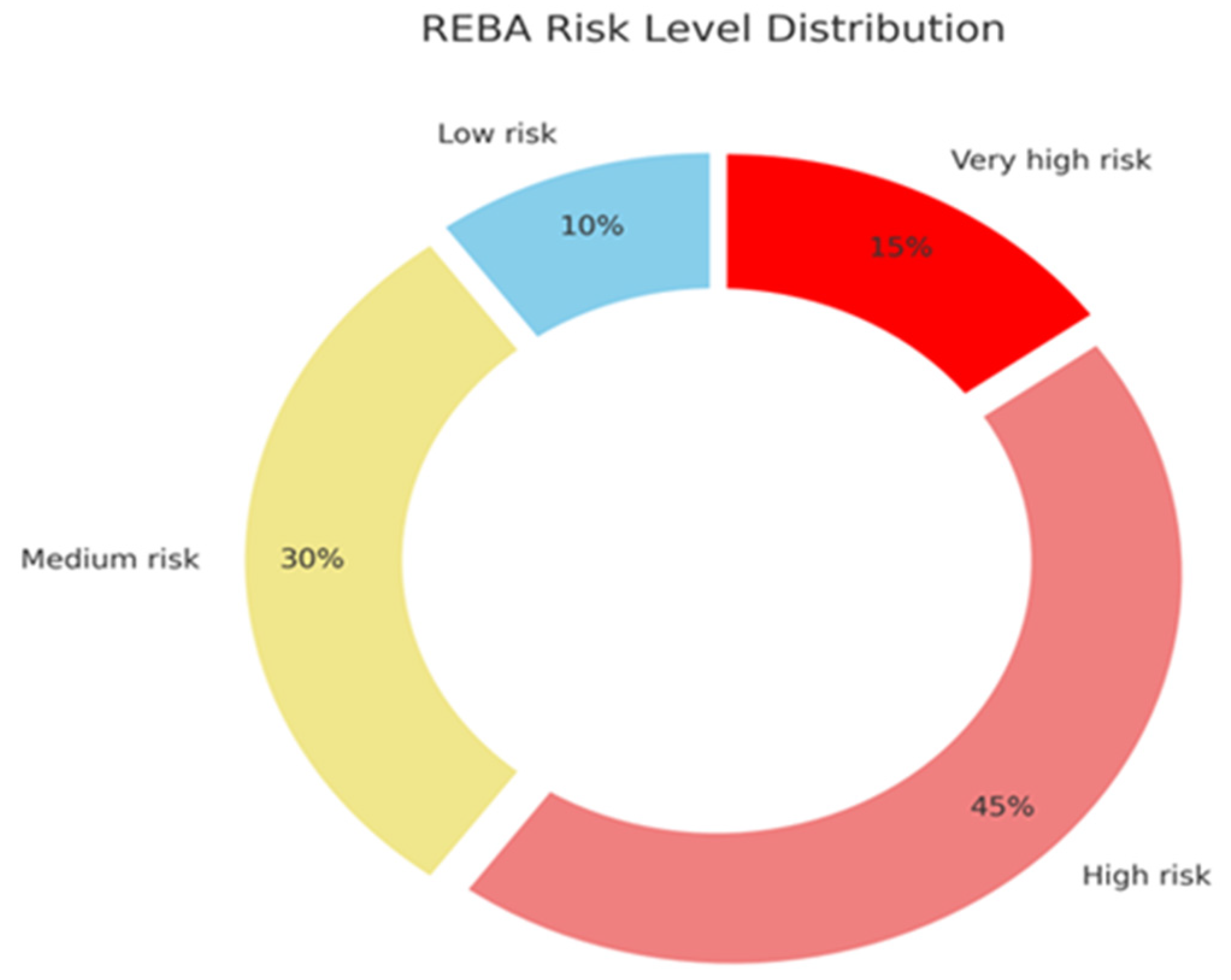
(1) Background: Work-related musculoskeletal disorders (WMSDs) are a major occupational health concern in the construction industry owing to the physically demanding tasks and poor ergonomic conditions present. Limited data exist on the prevalence of WMSDs and their ergonomic determinants among construction workers in India. This study investigated the prevalence of work-related musculoskeletal disorders (WMSDs) and the associated ergonomic risk factors among construction workers in India. (2) Methods: This cross-sectional study was conducted among 250 construction workers in India. Data on musculoskeletal disorders were collected using the Nordic Musculoskeletal Questionnaire (NMQ), and ergonomic risk was assessed using the Rapid Entire Body Assessment (REBA) tool. Logistic regression was used to identify factors associated with WMSDs, and Spearman’s correlation was used to assess the relationship between the REBA scores and the number of affected body regions. (3) Results: The prevalence of WMSDs was 60.4%. The most affected regions were the lower back (48%), knees (45%), shoulders (40%), and the neck (30%). The REBA scores indicated that 60% of the workers were at high or very high ergonomic risk and 30% at medium risk. Workers in the high/very high-risk category had significantly higher odds of developing WMSDs (OR = 4.5, 95% CI: 1.8–11.2, p = 0.001). Age above 40 years was also significantly associated with WMSDs (OR = 3.5, 95% CI: 1.2–10.2, p = 0.02). (4) Conclusions: This study demonstrated a high prevalence of WMSDs among Indian construction workers and established a clear association with poor ergonomic conditions. Targeted ergonomic interventions, including posture improvement, tool redesign, and safety training, are essential for reducing the risk of WMSDs in this population.
Keywords: work-related musculoskeletal disorders; construction workers; ergonomic risk; Nordic musculoskeletal questionnaire; REBA work-related musculoskeletal disorders; construction workers; ergonomic risk; Nordic musculoskeletal questionnaire; REBA