Article

A Kernel-Aware Regularization Model for Chromatic-Robust Detection: Analysis of Grayscale-to-RGB Generalization


College of Command and Control Engineering, Army Engineering University of the Chinese People’s Liberation Army, Nanjing 210007, China
*
Author to whom correspondence should be addressed.
J. Imaging 2026, 12(9), 457; https://doi.org/10.3390/jimaging12090457 (registering DOI)

Submission received: 24 August 2026 / Revised: 17 September 2026 / Accepted: 17 September 2026 / Published: 20 September 2026
(This article belongs to the Section Computer Vision and Pattern Recognition)

Abstract

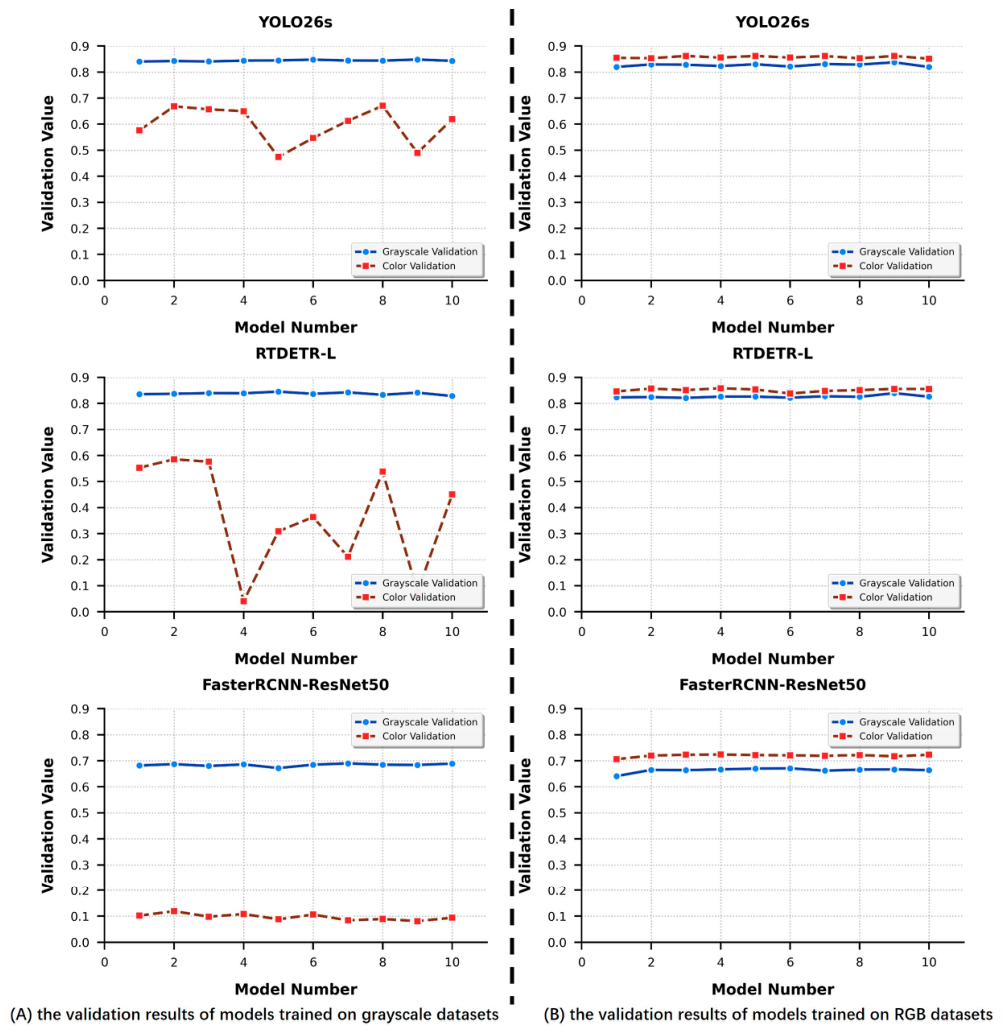
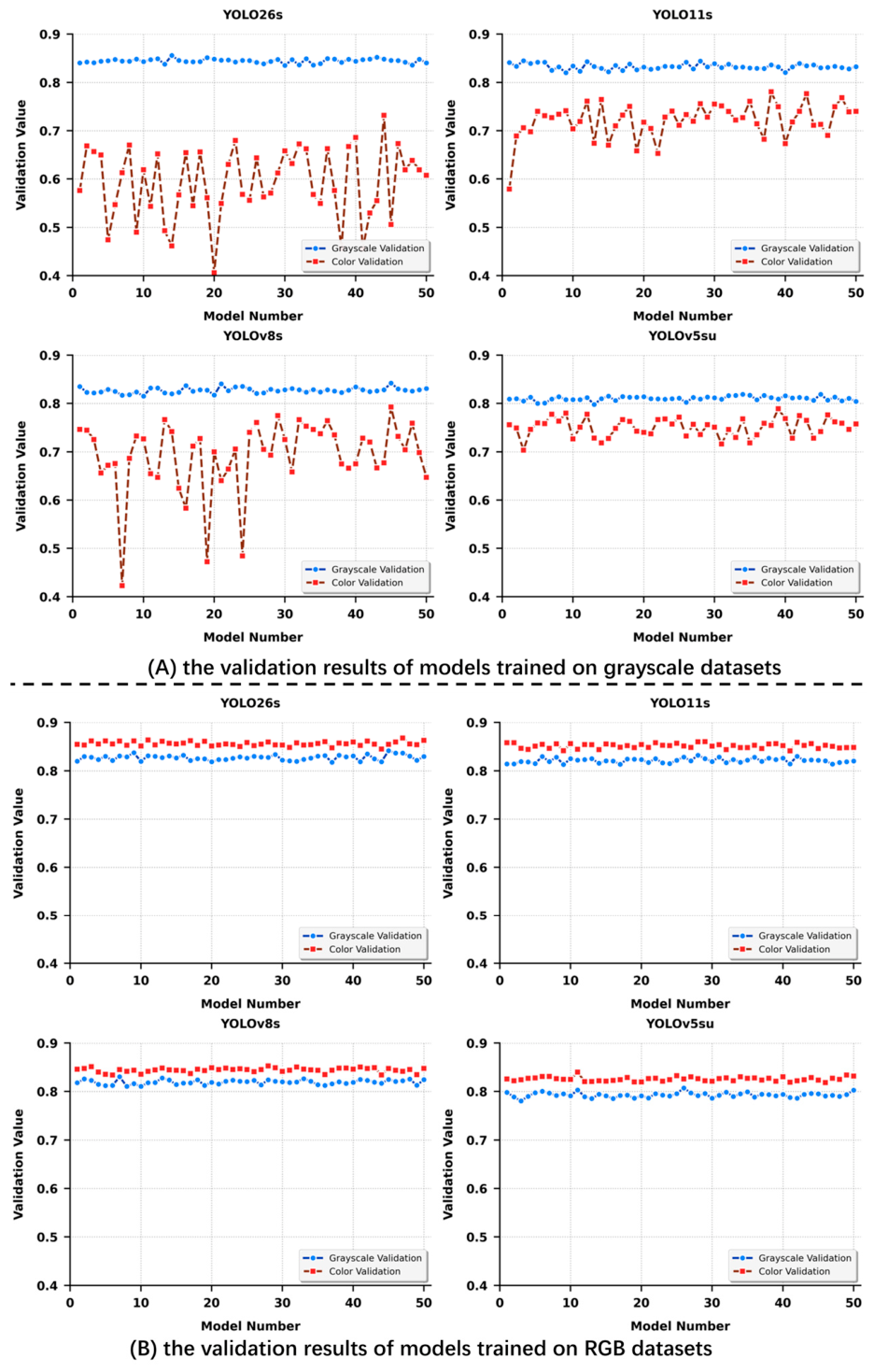
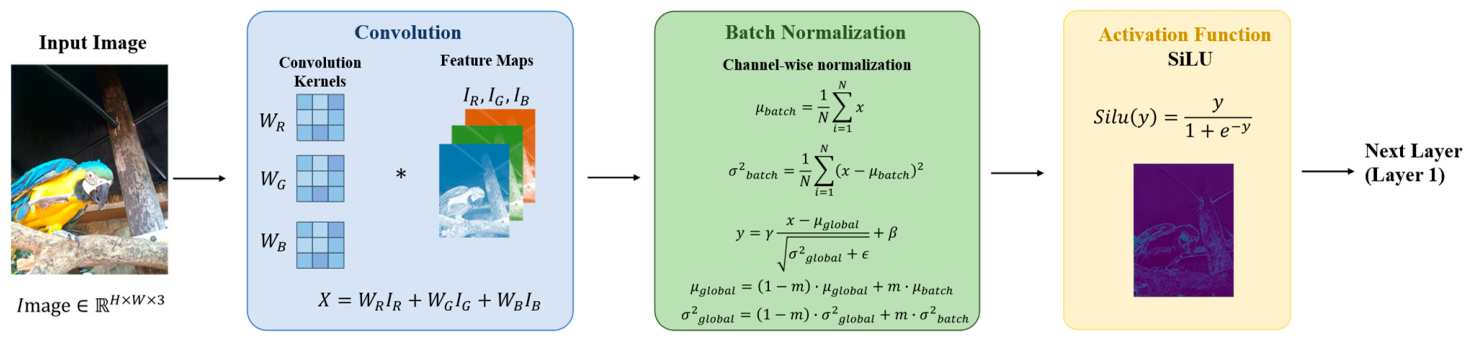
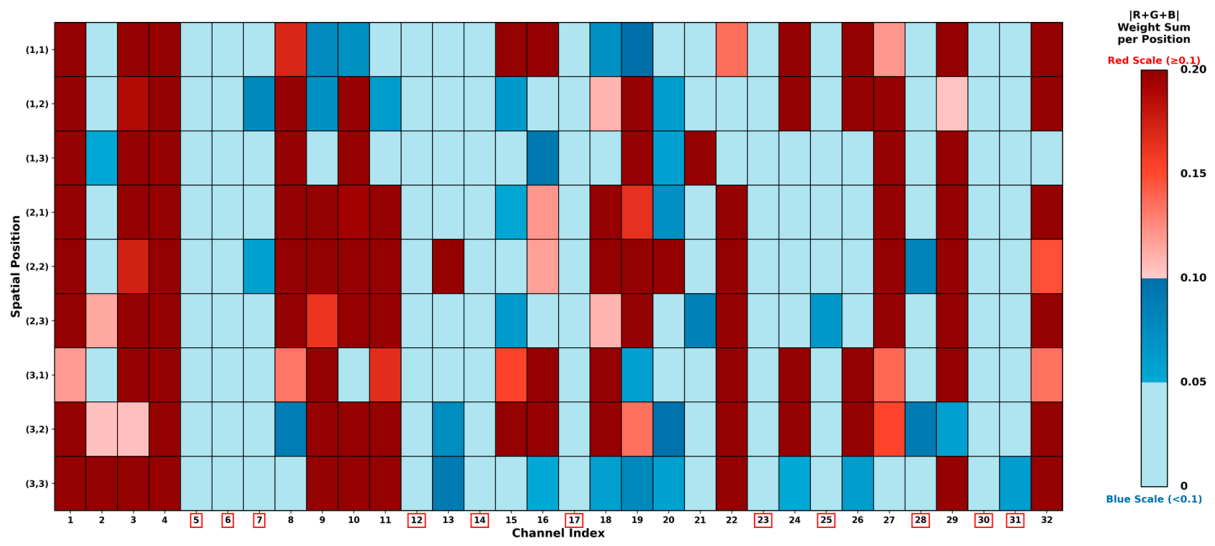
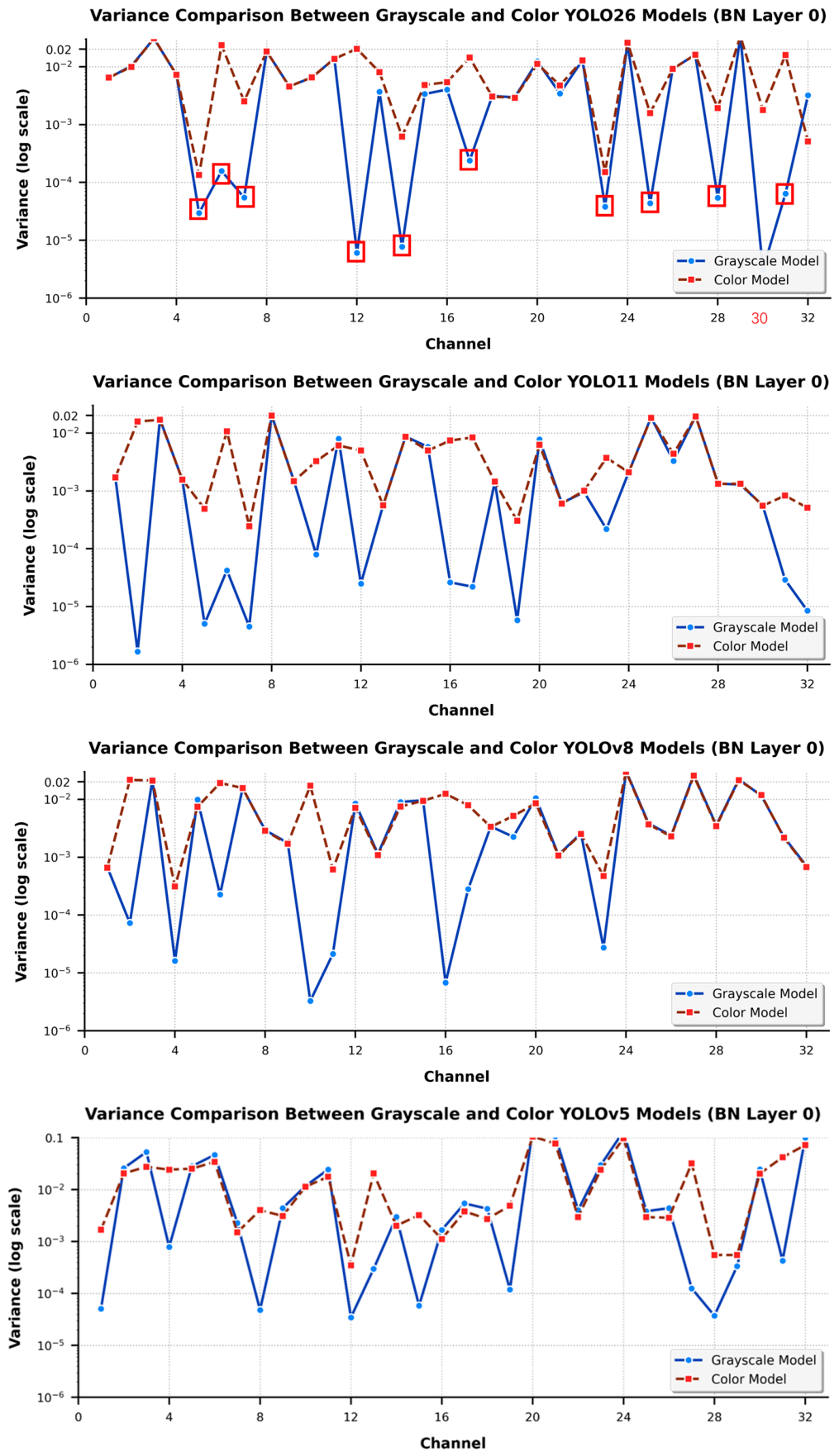
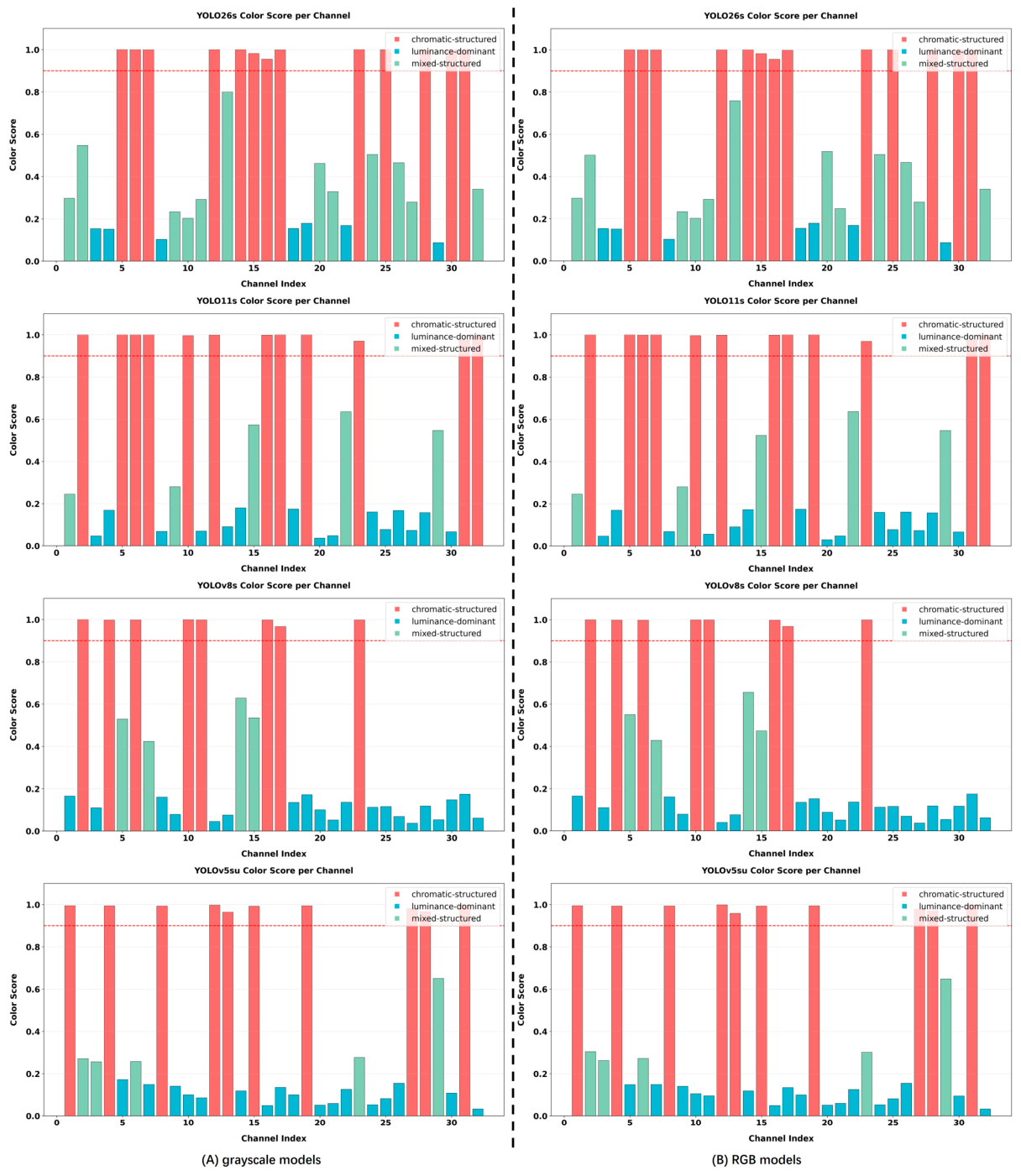
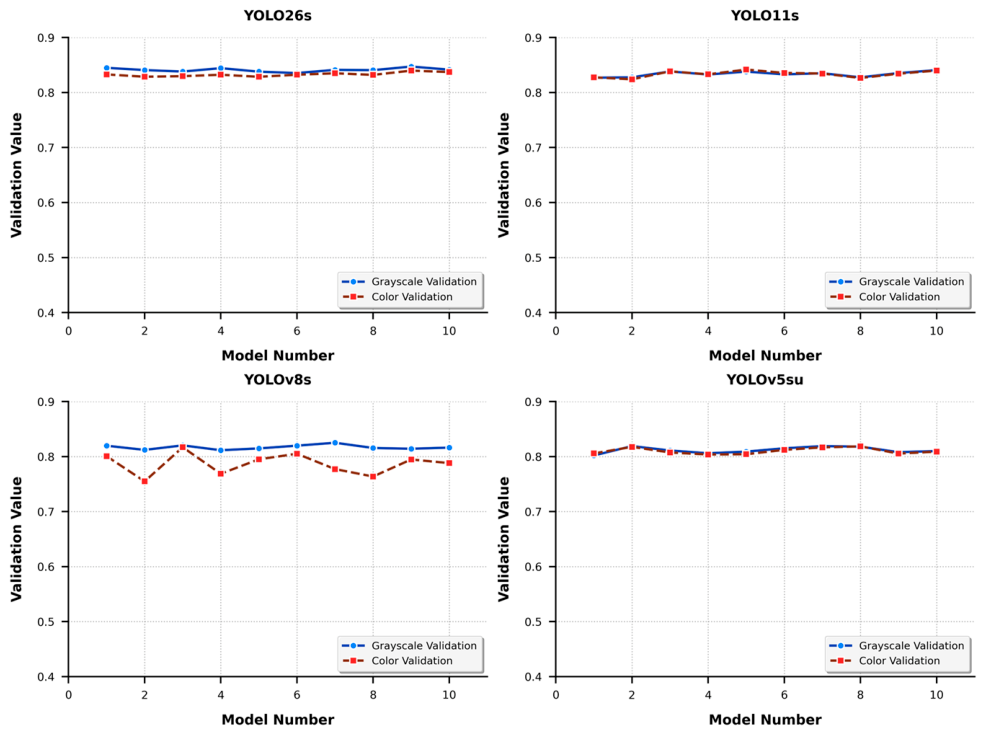
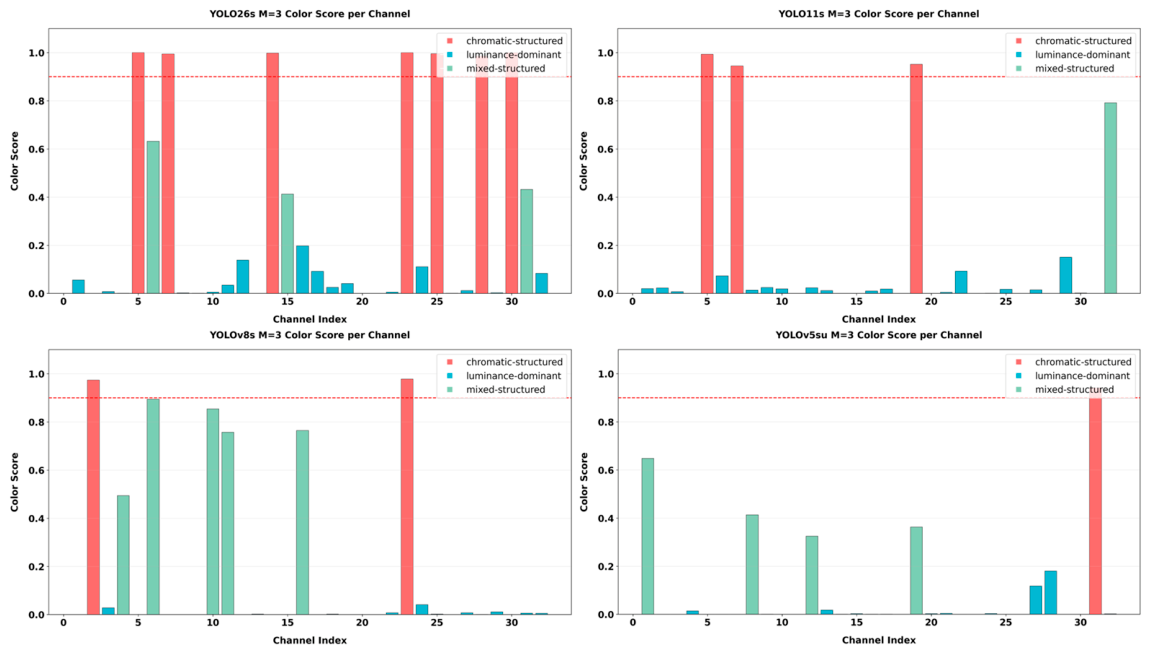
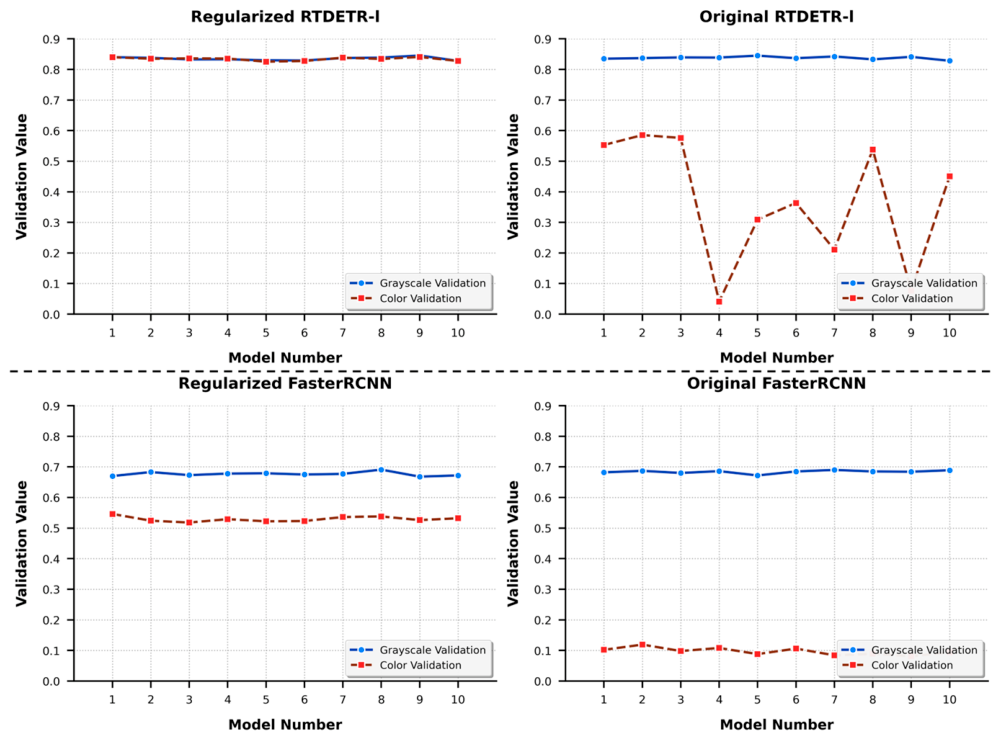
Object detection models can experience substantial performance degradation when the input representation at deployment differs from that used during fine-tuning. In this study, we investigate a specific grayscale-to-RGB distribution shift in which detectors fine-tuned on grayscale-derived images are subsequently evaluated on RGB inputs. Experimental observations reveal a pronounced asymmetry in this setting: RGB-trained models generally retain stable performance on grayscale inputs, whereas grayscale-trained models exhibit severe degradation and substantial run-to-run variability on RGB inputs. We analyze the chromatic information processing mechanism in the first layer of multiple YOLO-family detectors and show that grayscale fine-tuning induces chromatic variance collapse in specific channels, which is closely associated with RGB detection mismatch. Based on this analysis, we introduce ColorScore to quantify kernel chromatic sensitivity and propose a kernel-aware regularization method that controls the chromatic–luminance sensitivity allocation of the first input layer, thereby mitigating variance collapse without modifying the inference architecture. Across four YOLO backbones, the proposed method reduces the mean absolute mAP50 gap between grayscale and RGB evaluation from 0.140 to 0.014. The method also alleviates performance degradation in RT-DETR-L and Faster R-CNN under the same grayscale-to-RGB evaluation setting.
Keywords: convolutional neural networks; chromatic mismatch; ColorScore; feature channel allocation; chromatic-sensitivity regularization; chromatic variance collapse convolutional neural networks; chromatic mismatch; ColorScore; feature channel allocation; chromatic-sensitivity regularization; chromatic variance collapse