Article

Dual-Input Neural Networks for Personalized Image Precompensation

1
Faculty of Computer Science, HSE University, Moscow 109028, Russia
2
Federal Research Center “Computer Science and Control” of the Russian Academy of Sciences, Moscow 119333, Russia
3
Institute for Information Transmission Problems of the Russian Academy of Sciences, Moscow 127051, Russia
4
Smart Engines Service LLC, Moscow 117312, Russia
*
Author to whom correspondence should be addressed.
J. Imaging 2026, 12(9), 456; https://doi.org/10.3390/jimaging12090456 (registering DOI)

Submission received: 5 August 2026 / Revised: 7 September 2026 / Accepted: 17 September 2026 / Published: 20 September 2026

Abstract

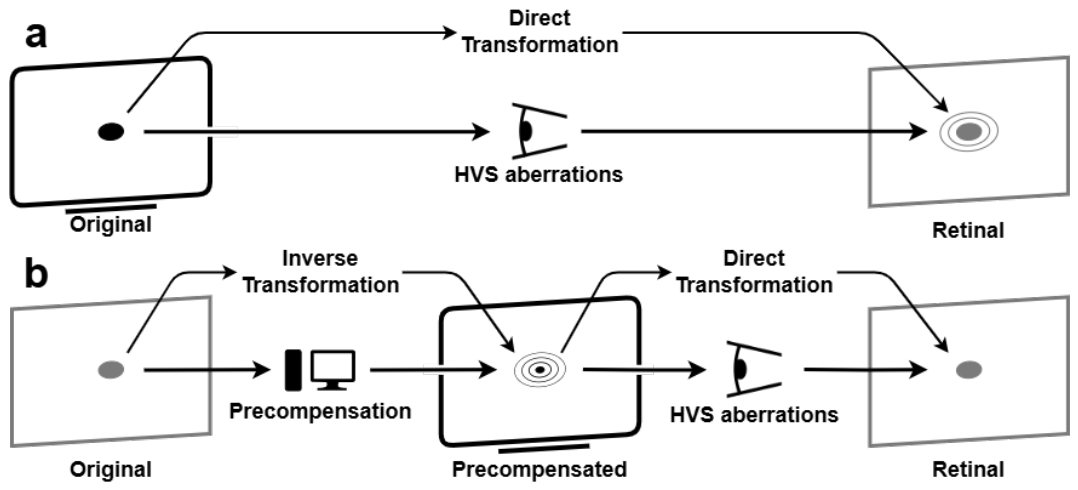
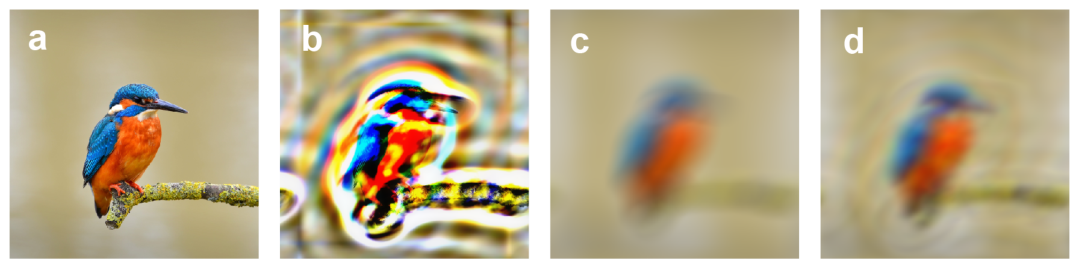
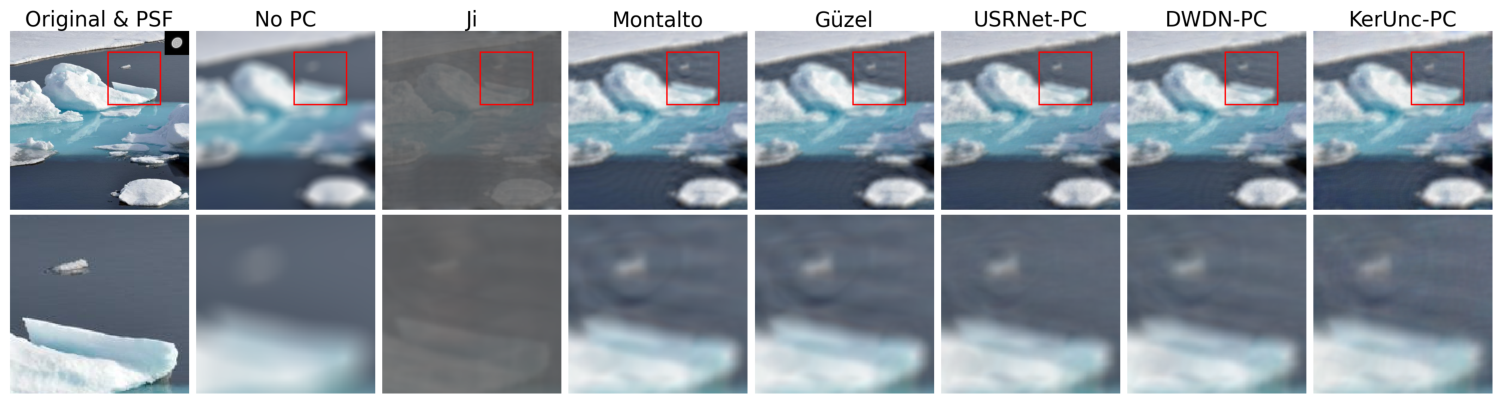
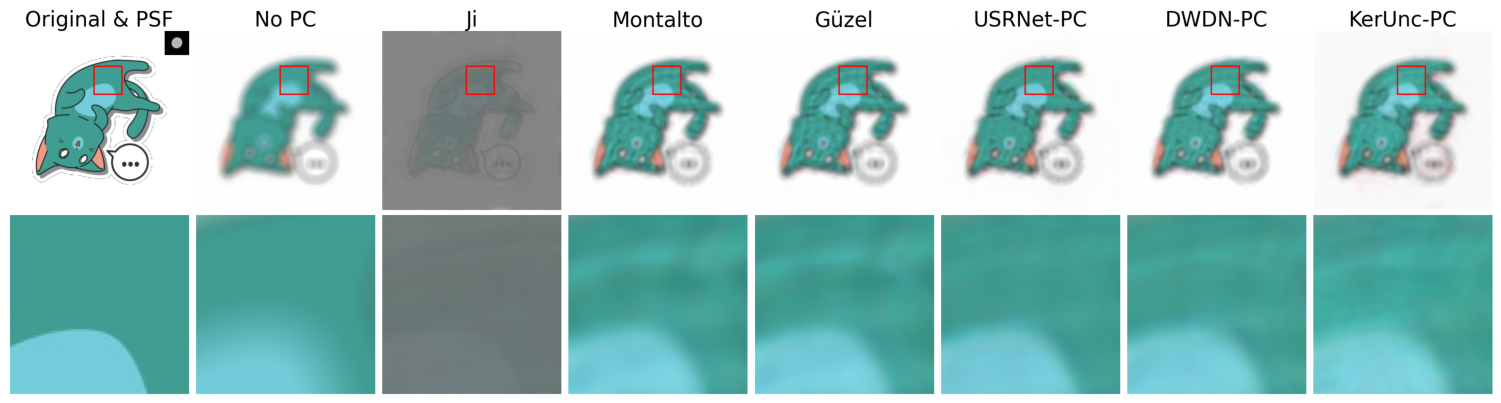
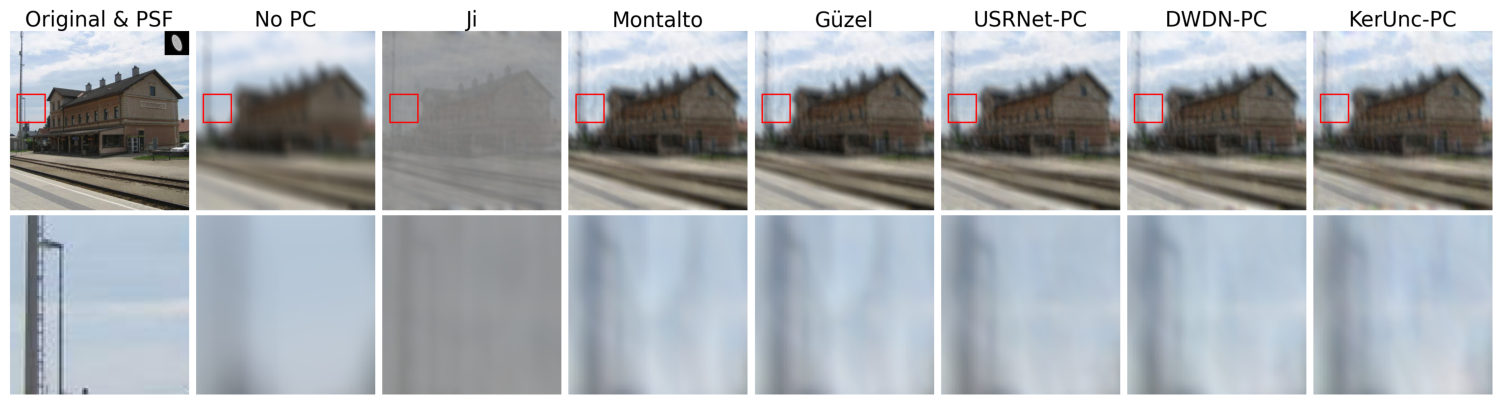
Image precompensation aimed at correcting refractive errors of the human eye seeks to transform a displayed image so that, after being blurred by the observer’s ocular optics, the image projection on the retina closely matches the original picture. The optimal precompensation varies for different refractive errors, so taking into account the specific refractive distortion introduced by a particular eye is called personalization. Existing personalized precompensation methods rely on deconvolution with built-in constraints or further tone mapping, which either produce artifacts or impose contrast loss. In this paper, we propose an approach for adapting modern two-input neural networks developed for non-blind image deconvolution to the problem of personalized image precompensation. The purpose of two inputs is the capability of independently feeding the neural-network model with the image to process and the personal characteristic function of the observer’s eye. Based on the proposed technique, three neural-network models (USRNet-PC, DWDN-PC, and KerUnc-PC) were developed, the adaptation of which was rather a unified approach than individual transformation of each architecture. These models were then comprehensively compared with other modern personalized precompensation methods on the basis of objective quality metrics, computational performance, and the results of simulation-based human studies. It has been shown that USRNet-PC provides the best subjective quality of perception and the shortest processing time on a GPU, while DWDN-PC demonstrates the highest computational efficiency on x86 and ARM CPUs. Thus, a new neural-network approach is proposed for solving the precompensation problem, which appeared to be superior in quality to previously known methods.
Keywords: image precompensation; refractive errors; visual impairments; constrained optimisation; deep learning; image deconvolution image precompensation; refractive errors; visual impairments; constrained optimisation; deep learning; image deconvolution