Article

Production of Packaging Materials by Recycling of Corn and Common Reed Fibers with the Addition of Wollastonite: Structural and Mechanical Properties


1
UNESCO Chair in Sustainable Development, Farabi University, Al-Farabi Ave. 71, Almaty 050040, Kazakhstan
2
Department of General Education, Egyptian University of Islamic Culture Nur-Mubarak, Al-Farabi Ave. 73, Almaty 050040, Kazakhstan
3
Faculty of Natural Sciences, Kazakh National Women’s Teacher Training University, Gogol Str. 114, k.1, Almaty 050000, Kazakhstan
4
Department of Transport Engineering and Mechanical Engineering, International University of Transportation and Humanities, Zhetysu-1 Microdistrict, 32a, Almaty 050063, Kazakhstan
5
Department of Medicine, Kazakh-Russian Medical University, Abylay Khan Ave. 51/53, Almaty 050004, Kazakhstan
6
Department of Automation and Robotics, Almaty Technological University, Tole bi Str. 100, Almaty 050012, Kazakhstan
7
Department of Chemistry, Abai Kazakh National Pedagogical University, Dostyk Ave. 13, Almaty 050010, Kazakhstan
*
Authors to whom correspondence should be addressed.
Recycling 2026, 11(6), 96; https://doi.org/10.3390/recycling11060096
Submission received: 16 March 2026 / Revised: 20 May 2026 / Accepted: 21 May 2026 / Published: 24 May 2026

Abstract

This study explores the possibility of making cardboard and molded egg carton packaging from corn residues and common reed as alternatives to wood-based pulp. Six formulations were made: corn husks (CHs), corn leaves (CLs), corn leaves (35%) plus corn husks (30%) and a corn blend (15%) of wollastonite (CaSiO3) (CH + CL + W), a corn blend (CH + CL: husks 60%, leaves 40%), mixed corn waste (MCW) and shredded common reed (SR). Optical microscopy was used to evaluate the fiber morphology, including the calculation of the flexibility coefficient, the cell wall rigidity and the Runkel ratio, for raw materials and fiber after alkaline hydrolysis and casting of egg cartons in silicone molds. The grammage, burst strength and index, folding endurance, thickness and moisture content were measured in the cardboard samples, while warping, compressive deformation, moisture and ink absorption were measured in the egg cartons. The flexibility coefficient of the common reed fibers (64.5%) was better than that of the corn fibers (23.6%), and so was the Runkel ratio (0.86 vs. 1.2). In the case of cardboard formulations, the maximum burst strength (462.4 kPa) and the maximum burst index (3.0 kPa·g/m2) values were obtained with the MCW formulation, and the highest folding endurance (42 and 38 double folds) was obtained with the CH and SR formulations, respectively. The addition of wollastonite improved folding endurance to 28 double folds and reduced moisture content to 4.1%, whereas the moisture content was reduced but burst strength decreased to 250.5 kPa. Egg cartons made from corn were found to satisfy all the requirements tested for good packaging, while the reed-based cartons were found to have inadequate ink absorbency time (20 min), making them less printable. Overall, mixed corn residues seem to be the most promising raw materials for sustainable packaging, and wollastonite can be used to adjust the flexibility–strength balance.

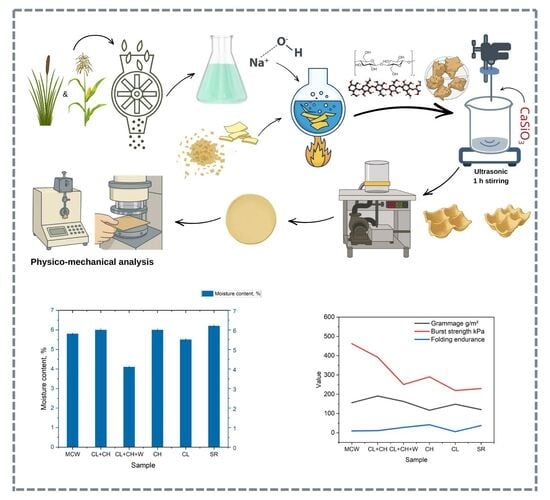
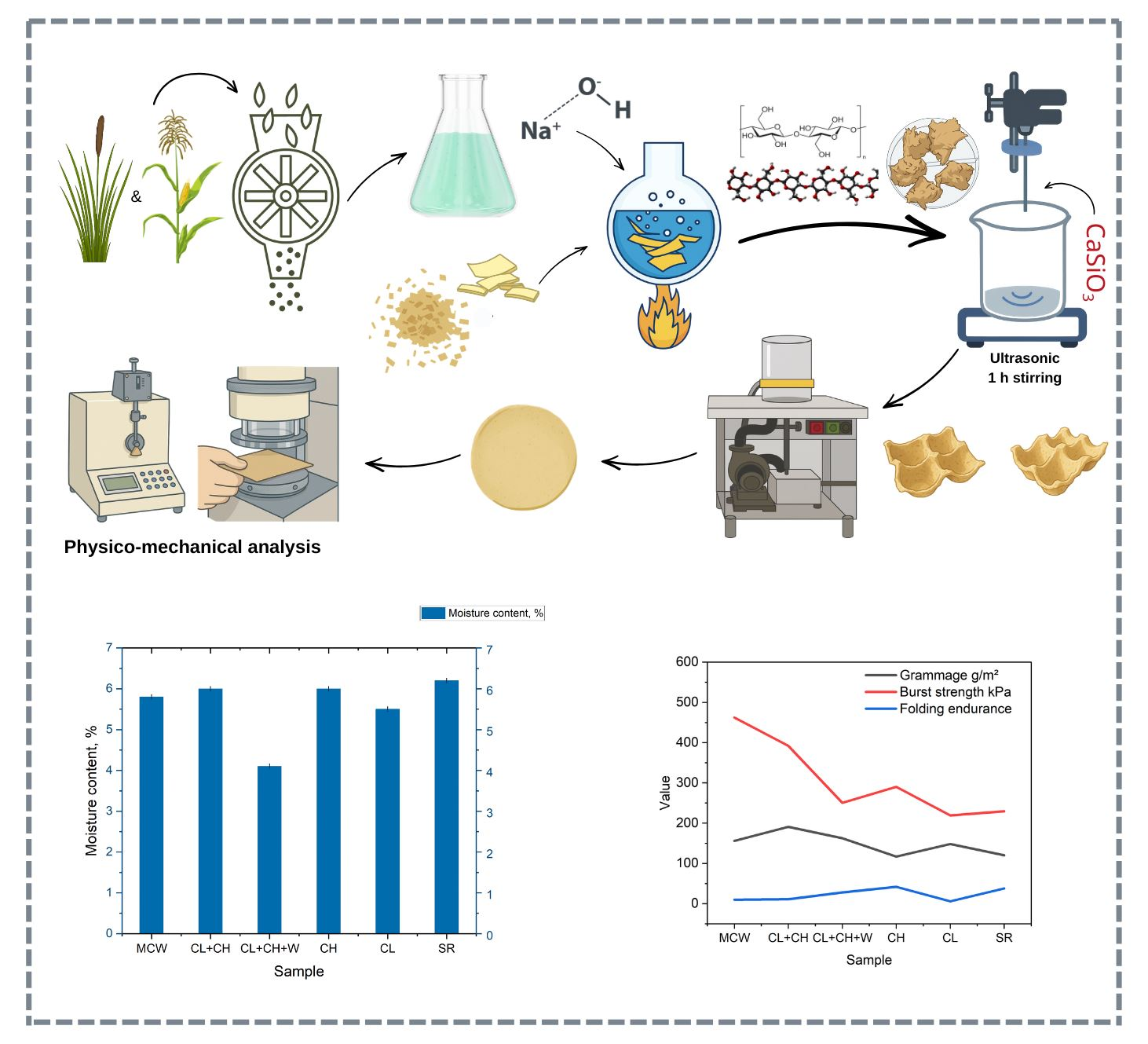
Graphical Abstract

1. Introduction

In recent years, there has been a steady increase in interest in environmentally friendly packaging materials. Traditional paper and cardboard production are based on the use of wood pulp, which leads to deforestation, reduced biodiversity and worsening climate change. In this regard, research aimed at finding alternative, renewable sources of cellulose raw materials is becoming particularly relevant.
Plant waste is widely used in “green chemistry” as an affordable raw material for producing sorbents and other environmentally friendly materials [1,2] and is additionally considered a promising source of cellulose for the production of paper and cardboard. In this context, agricultural waste, notably corn residues, is of particular interest. According to the International Grains Council (IGC), global corn production in 2025 was 1.299 billion tons [3] making it an affordable and renewable source of biomass. Corn processing generates significant amounts of by-products, such as stalks, leaves, and husks that are often not used, but can be processed into pulp and used in paper and cardboard production, reducing the burden on forest resources. According to the studies, various parts of corn can contain around 10 to 45% cellulose and 1.98% to 15% lignin. For example, corn husks are 35% cellulose, whereas in corn stalks this value is 10% and in corn cobs, up to 45% [4,5].
A number of studies have confirmed the technological and mechanical suitability of corn husks as raw materials [6,7,8,9]. So, in the recent work [6], paper with an oil absorption of 21.73% and a density of 73.44 g/m2 was obtained from corn husk using Na2CO3 as an alkali. This study has shown that corn can be a good source of raw materials for making newsprint. Corn husk fibers have an average length of about 1.5 mm and a diameter of 20 microns, which is comparable to hardwood fibers, and have sufficient tensile strength for paper production [7,8]. Sheets of corn cob paper with a strength of 189 kgf and a thickness of 0.182 mm were also successfully obtained using NaOH [9].
The literature describes various combinations of corn residues with Sansevieria zeylanica, sugarcane bagasse, and Hibiscus cannabinus, where additional improvements in paper properties were achieved through the incorporation of tapioca starch, PVA glue, wood fibers, and antimicrobial agents [10,11,12,13]. The results indicate that corn husk fibers surpass rice straw in several key characteristics and approach the properties of cotton [14].
Another potential source of alternative cellulose is common reed (Ph. australis), which is widely distributed across temperate regions. Its chemical composition, similar to that of corn, makes it suitable for alkaline and organosolv cellulose extraction. Depending on environmental and growth conditions, the cellulose content in common reed ranges from 33% to 59% [15], while its lignin content is approximately 15% [16].
An extensive study on common reed resources in Kazakhstan confirms its significant potential as a renewable raw material for the pulp and paper industry, particularly in regions with limited wood resources. For example, common reed occupies 1,600,000 to 3,000,000 hectares across Kazakhstan, with an estimated biomass reserve of 17 million tons per year [17].
A number of studies have also confirmed the potential of common reed as a valuable material for papermaking. Specifically, research has shown that cellulose extraction from common reed using 14% NaOH at 175 °C for 90 min yields a high recovery of α-cellulose and acceptable mechanical properties of the resulting paper [18]. Additionally, sulfate and soda-AQ pulping processes have been investigated, producing up to 47.5% unbleached pulp [19]. A recent study [20] further explores the production of nanocellulose from common reed stalks using the TEMPO-oxidation system, which significantly enhances paper strength and reduces water absorption.
In the paper industry, mineral fillers such as kaolin, talc, and calcium carbonate are widely used to improve both the appearance of paper and cardboard (smoothness, opacity) and their physical–mechanical properties, including strength, wear resistance, and moisture resistance [21]. The incorporation of mineral additives also helps to reduce cellulose consumption, which is economically and environmentally beneficial. One of the promising mineral components is wollastonite (CaSiO3). According to the literature, wollastonite acts as a mineral fiber, and its incorporation enhances the tensile strength of paper products [22]. Other studies report that handmade paper samples containing wollastonite exhibit a higher decomposition temperature and improved overall strength performance [23,24].
The purpose of this study is to develop an approach to the production of cellulose and cardboard from corn and common reed residues using alkaline treatment, while simultaneously investigating the role of mineral additives—in particular, wollastonite—to improve the physical and mechanical properties of the final materials.

2. Results

2.1. Results of the Assessment of the Quality of Corn and Common Reed Fibers

To assess the suitability of plant raw materials for the production of packaging materials, the morphological characteristics of fibers obtained from corn and common reed waste were analyzed. Table 1 shows the main parameters, such as fiber length, diameter, cell wall thickness, and lumen width.
The fiber length of corn waste and reed falls within a comparable range, while corn waste fibers exhibit a larger diameter and thicker cell walls. These results indicate clear morphological differences between the fibers of the studied materials.
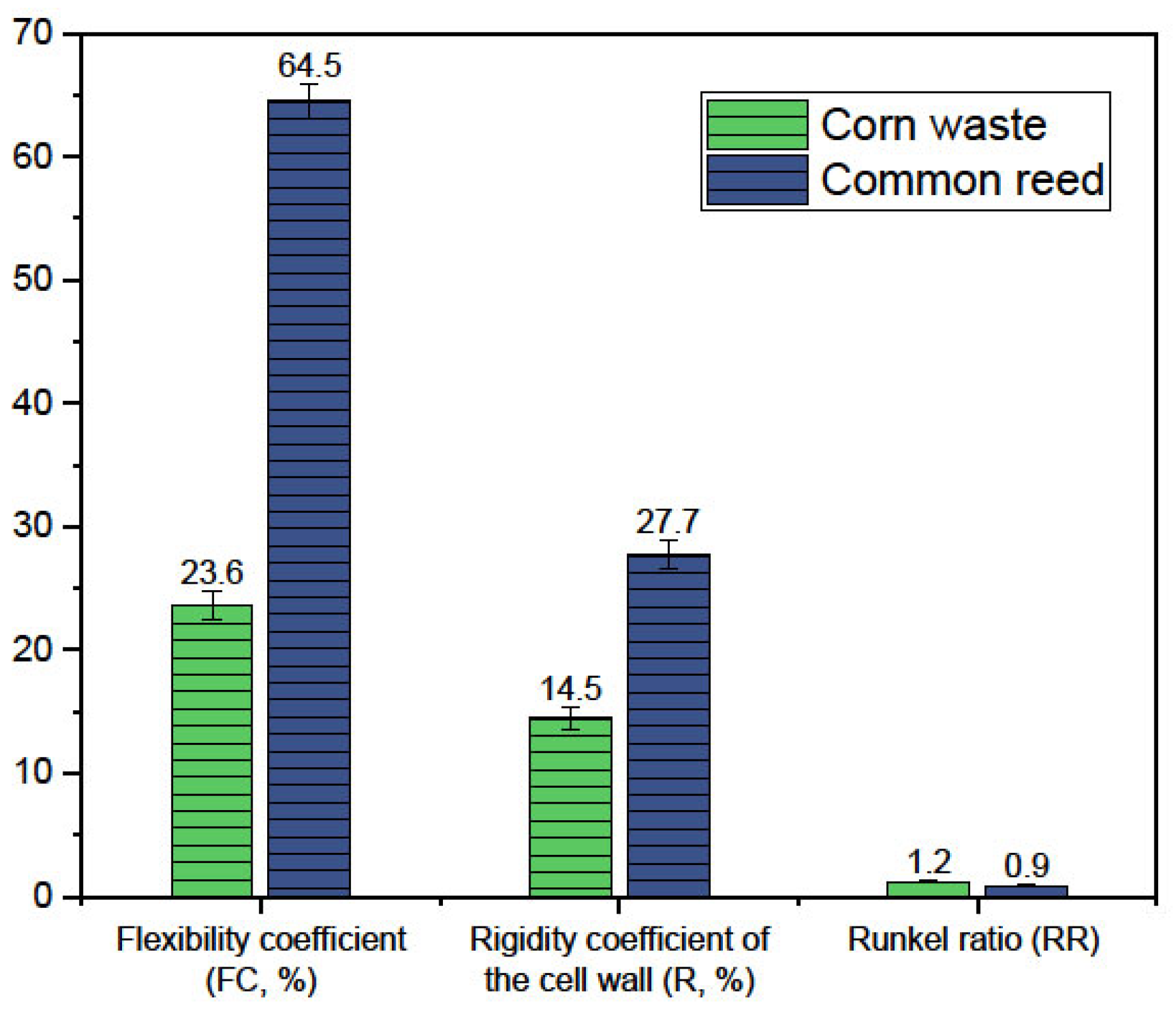
Based on the characteristics of corn and common reed fibers, the flexibility coefficient (FC, %) was calculated using Equation (1), the rigidity coefficient of the cell wall (R, %) using Equation (2), and the Runkel ratio (RR) using Equation (3). These indicators characterize the morphological and mechanical properties of the fibers and allow for predicting their behavior during sheet formation. The calculated values were subsequently used for comparison with the experimental data obtained from the physical and mechanical testing of the produced cardboard. The median values of the main morphometric parameters of the fibers were used for calculations. The calculation results are shown in Figure 1.

2.2. Results of Microscopic and Visual Studies of the Obtained Cardboard Samples

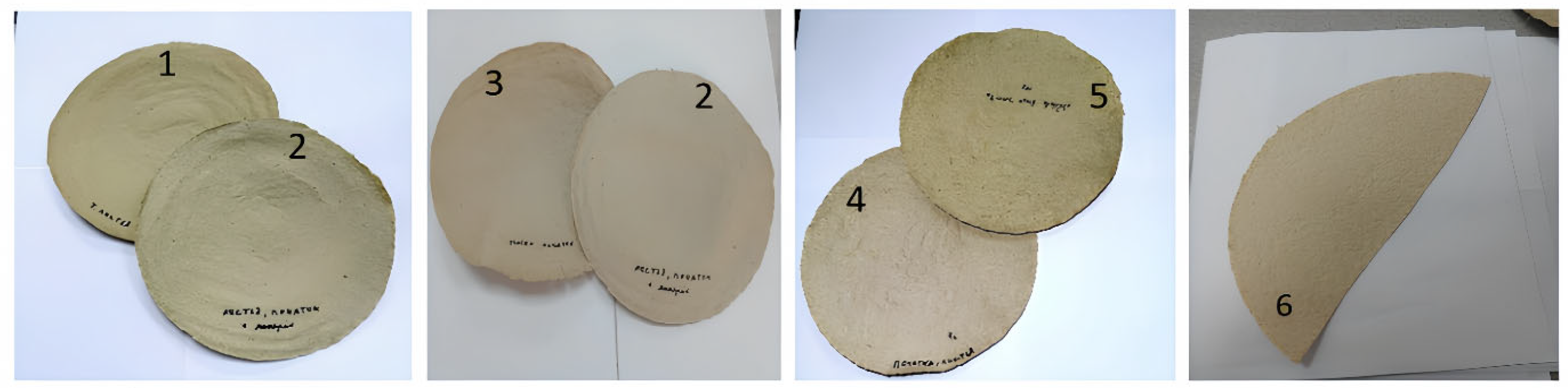
The appearance and design features of the obtained cardboard samples vary significantly depending on the composition of the raw materials. The samples containing corn leaves (CLs) and the blend of corn husks (CHs) and corn leaves with wollastonite addition—CH + CL + W (corn husks 50%, corn leaves 35%, CaSiO3 15%)—are characterized by a more even and uniform surface compared to the other variants (Figure 2). The CL sample has a yellowish-brown tint, while CH + CL + W has a darker gray-brown color.
The corn husk (CH) samples are light brown in color and contain inclusions of plant fibers. In turn, the mixed corn waste (MCW) samples are characterized by pronounced surface roughness and a yellowish-brown tint, which is associated with the presence of particles of corn cobs and other plant residues, as well as their uneven distribution during leaf formation.
The blend of corn husks and corn leaves (CH + CL; husks 60%, leaves 40%) samples exhibit a relatively smooth surface with a grayish tinge. In some cases (CH + CL, MCW), minor roughness and microscopic pores were observed, which could potentially reduce mechanical strength and increase water absorption of the material.
The shredded common reed (SR) sample obtained from the common reed turned out to be the brightest in color and saturated yellow. Its surface is more rough compared to most samples, but less rough than that of MCW. Despite its visual similarity to MCW, the SR structure is characterized by a finer distribution of plant fibers and a slightly smoother texture.
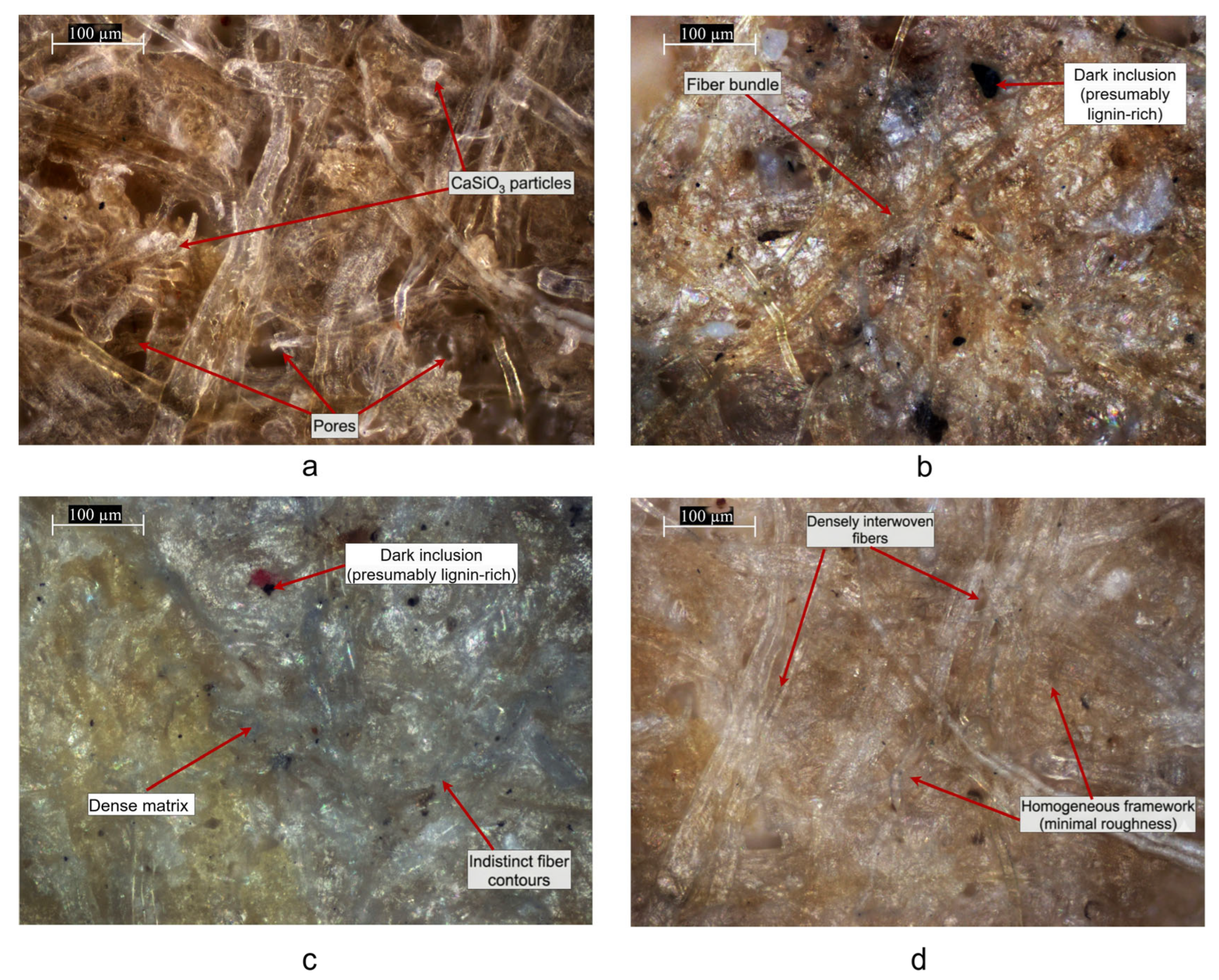
To further elucidate the surface features observed in the cardboard samples, optical microscopy was employed to examine their internal structure. Optical micrographs have shown that the internal structure of the cartons varies significantly depending on the composition and origin of the raw vegetable materials. Within the framework of this study, images of only four characteristic samples were obtained from among those whose composition was homogeneous and clearly identified. Mixed samples (with indeterminate or combined fiber origin) were not included in the microscopic analysis, since the main focus was on studying the effect of specific plant components on the formation of the structure and, as a result, on the properties of the finished material.
A loose and porous structure is observed in the sample with the addition of CaSiO3 (CH + CL + W) (Figure 3a). CaSiO3 particles are evenly distributed in the fibrous matrix, which may affect the strength characteristics. The fibers form a mesh structure, and those containing both long and short fragments mixed with non-fibrous inclusions are clearly visible.
The CL sample (Figure 3b) shows a less dense structure. Areas with stratification, bundles of fibers, as well as light and dark inclusions, presumably of lignin origin, are visible. The fiber distribution is chaotic, with both long and short elements.
In the CH sample (Figure 3c) the structure is represented by a dense, homogeneous matrix. The fibers are poorly defined and their contours are indistinct, which indicates a high level of compactification. The surface has a uniform texture without pronounced pores.
The SR sample (Figure 3d) is characterized by a dense and well-organized fibrous framework. The fibers are tightly interconnected; the structure is homogeneous and contains practically no pores. The surface is smooth, with minimal roughness, which indicates good fiber dispersion and efficient molding technology. No cracks or large inclusions were found between the fibers, which indicates the high structural integrity of the SR sample.
Thus, the microstructural differences between the samples reflect the influence of the type of plant material on the formation of the structure and correlate with differences in their mechanical properties.

2.3. Physical and Mechanical Properties of Cardboard Samples and Egg Cartons

The physical and mechanical properties of various cardboard samples are presented in Table 2.
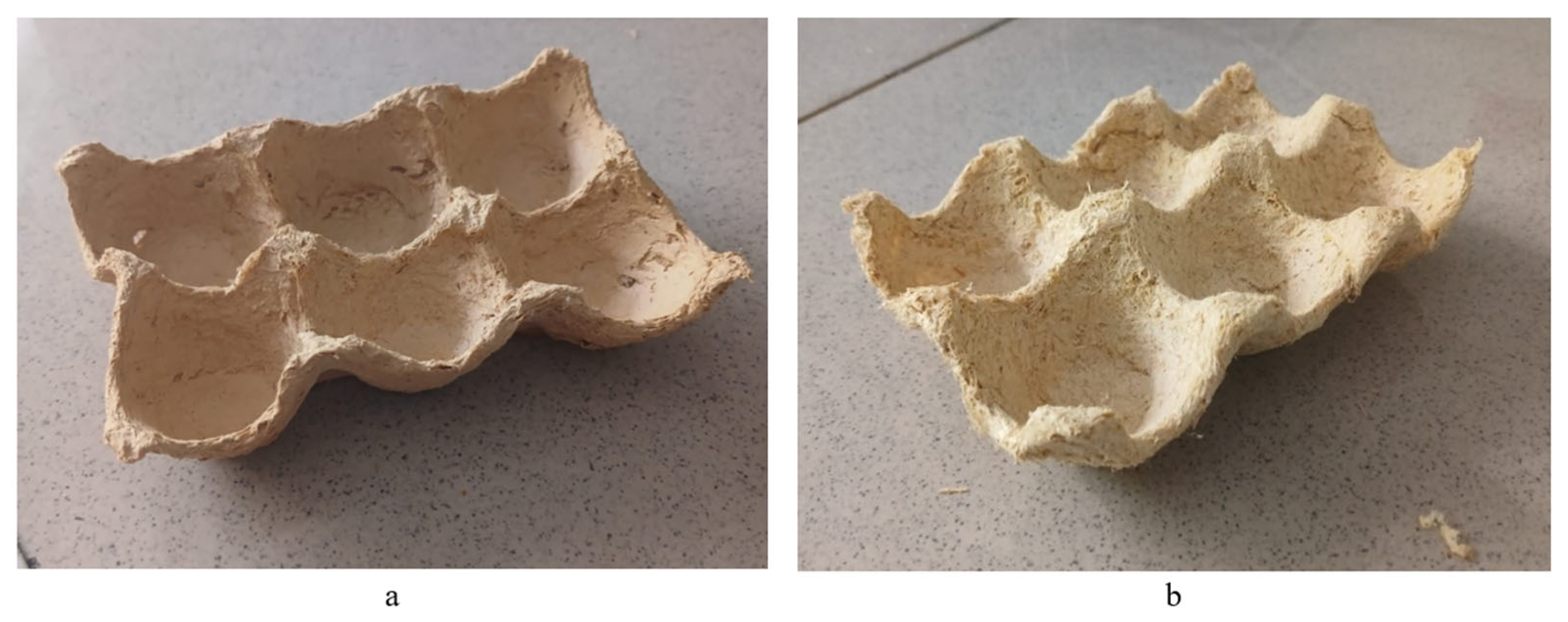
As part of the experimental work, several egg carton samples were fabricated. Special silicone molds were used for this purpose, and cellulose obtained from the outer layers of corn leaves and cobs, as well as the remains of common reeds, was used as raw materials. The boxes are made on the basis of various compositions and ratios. Among the samples from the remains of corn, the most effective were samples made from the mixed pulp of corn leaves and corn cobs. These samples were distinguished by their structural uniformity, durability, and ease of handling. While their inner surface was smooth, shaped so that the egg could settle comfortably, the outer surface was slightly rough due to the presence of natural fibers (Figure 4a,b).
Table 3 shows the results of the main physical and mechanical characteristics of the resulting egg cartons.

3. Discussion

The results obtained make it possible to comprehensively assess the potential of corn and common reed fibers as alternative raw materials for the production of cardboard. A comparison of the morphological, visual, and physico-mechanical characteristics of the samples demonstrated the effect of the initial plant material on the properties of the final product. This section compares our data with the results of other studies, and discusses the possible causes of the differences identified and the limitations of the experiment.

3.1. Fiber Quality Assessment and Microstructural Analysis

The evaluation of the flexibility coefficient showed that common reed fibers exhibit high elasticity (64.5%), which meets the criteria for suitability in papermaking (Figure 1). According to the literature, fibers with a flexibility coefficient above 50% are considered elastic and provide good inter-fiber bonding [25]. In contrast, corn fibers demonstrated low flexibility (23.6%), indicating their rigid nature and a potentially lower ability to form a strong paper structure [26].
The analysis of the rigidity coefficient showed that corn fibers have a lower value compared to common reed fibers, which may be advantageous, as increased fiber rigidity has been reported to negatively affect paper extensibility and density, while potentially improving bursting strength [25,27]. Nevertheless, both values fall within the acceptable range for use in sheet material production.
The Runkel ratio, which reflects the relationship between cell wall thickness and lumen width, also confirmed the advantage of common reed as a raw material. If this value exceeds 1, the fibers are considered stiff and less suitable for papermaking [25,28]. The value of 0.86 indicates the presence of thin-walled, more flexible fibers that are suitable for producing paper and cardboard. For corn fibers, this parameter was 1.2, indicating thicker cell walls and, consequently, a reduced ability to form a dense and strong fiber network.
Microscopic examination of the internal structure of the cardboard samples revealed substantial differences resulting from both the natural morphology of the raw plant materials and the technological features of sheet formation. The sample containing wollastonite (Figure 3a) exhibited a loose, porous structure with mineral filler particles evenly distributed within the fiber matrix, which may potentially reduce density. In the samples made from corn leaves (Figure 3b), the structure was less organized, with inclusions and non-uniform fiber distribution, which may explain their lower bending strength. Corn husk fibers (Figure 3c) formed a denser but heterogeneous matrix with noticeable lignin residues that could influence the mechanical performance. In contrast, the sample produced from common reed residues (Figure 3d) demonstrated the most uniform and tightly interwoven structure, with clearly defined fibers distributed consistently across the surface.
Based on the visual assessment of the cardboard samples, the smoothest and most uniform surfaces were observed in the CL and CL + CH + W samples. These variants were characterized by an even texture and pleasant tactile properties. The CH and CL + CH samples also showed satisfactory smoothness; however, visible fiber residues were present in their structure. Conversely, the SR and MCW samples, despite their good physical and mechanical performance, exhibited the most pronounced roughness and surface irregularities. This texture may be attributed to the specific characteristics of the raw materials and the less uniform distribution of fibers during sheet formation.

3.2. Physical and Mechanical Properties of Cardboard and Egg Cartons

The evaluation of the physical and mechanical properties of the cardboard samples showed that (Table 2) the MCW sample demonstrated the best performance, exhibiting the highest burst strength (462.4 kPa). In contrast, the CL sample showed the lowest overall performance, including the minimum folding endurance (six double folds). Notably, the CH sample exhibited the highest folding endurance (42), while the CL + CH sample, which combines corn leaves and husk, showed an intermediate value (11).
Interestingly, the addition of wollastonite to the mixed CL + CH composition (sample CL + CH + W) increased folding endurance to 28, but simultaneously reduced the burst strength, from 392.1 kPa (in CL + CH) to 250.5 kPa (in CL + CH + W). This suggests that the presence of the mineral filler may enhance flexibility but reduce the overall density or structural integrity of the material. Comparison of these folding endurance results with those reported in other studies also indicates that wollastonite addition contributes to an improvement in this parameter [11]. Furthermore, the CL + CH + W sample exhibited the lowest moisture content among all samples (4.1%), which may also be associated with the presence of the mineral additive. As for the SR sample produced from common reed residues, it demonstrated high folding endurance (38) but relatively low burst strength (229.4 kPa).
Comparison of the obtained physical and mechanical characteristics with results from other studies showed that the burst index values of the MCW and CH samples (3.0 kPa·g/m2) were higher than those reported for samples produced solely from corn husk (1.1–1.2 kPa·g/m2) or from blends of snake plant fibers and corn husk (2.3 kPa·g/m2) [11,29]. Similar results were observed in study [12], where handmade paper from corn sheath exhibited the burst index of 2.877 kPa·g/m2. At the same time, our values were lower than those reported in study [9], where mechanical processing of the raw material resulted in significantly higher values-up to 5.83.
When correlating the morphological parameters of the fibers with the physical and mechanical properties of the resulting cardboard, several relationships can be identified. For instance, the high Runkel ratio and flexibility coefficient of common reed fibers, as shown in Section 2.1, correspond to their strong folding endurance (38 double folds). However, despite these advantages, corn fibers with their lower cell wall rigidity demonstrated higher resistance to burst strength compared to the common reed fibers.
When evaluating the suitability of egg cartons produced from corn and common reed fibers, it can be noted that corn fibers generally exhibit more favorable properties.
The compression deformation, which reflects the material’s ability to elastically recover after an applied load, was 3 mm for the samples based on corn fibers, corresponding to industrial standards. In contrast, the common reed-based samples demonstrated a lower value around 2 mm indicating reduced structural stability under vertical loads (Table 3).
Ink absorption, which characterizes the time a printed mark remains stable without smudging, was also higher for the corn-based samples 45 min indicating a denser and more homogeneous surface structure. For common reed-based samples, this value was 20 min, likely associated with a more porous surface.
At the same time, common reed-based cartons showed better performance in terms of warping, which reflects shape stability under changes in humidity and temperature. The common reed samples exhibited a warping value of 3 mm, whereas the corn samples showed 2 mm, suggesting improved geometric stability of packaging materials produced from reed fibers.

3.3. Economic and Environmental Assessment of Using Corn and Common Reed Residues for Cellulose Production

The Almaty region, where the raw materials for this study were collected, provides a substantial biomass base for cellulose production (Table 4). According to official statistics, the region is one of Kazakhstan’s main corn-growing areas, with approximately 83,500 ha under corn and an average yield of 8534 kg/ha [30]. Using a residue-to-grain ratio of about 1.10, corn production in Kazakhstan corresponds to an estimated 2.52 million tonnes of collectible dry residues annually (stalks, leaves, husks, and cobs) [31]. Common reed is also abundant: nationwide, it covers 1.6–3.0 million ha with an annual biomass reserve of approximately 17 million tonnes [17]. The annual biomass growth for reed-dominated communities in the southern Almaty region located in the Ili River Delta (a largest river delta in Central Asia) was reported at 5–10 t/ha and the reed cover area was 1144–2260 km2 in 2000–2021 [32].
A preliminary cost estimate for cellulose production was developed on the basis of locally applicable data. Sodium hydroxide (NaOH ≥ 98%), the main reagent used in this study, is available in Kazakhstan at approximately 150,000–180,000 KZT/t (about 315–380 USD/t at an exchange rate of ~475 KZT/USD) [33], which is consistent with global market benchmarks [34]. This is approximately 50–60 kg NaOH per tonne of cellulose when used at the applied process conditions (10 g per 4 L water) or 16–23 USD/t cellulose. The total estimated cost of the feedstock collection and local transport was 10–20 USD/t residue, which corresponds to approximately 43–63 USD/t cellulose at a 35% yield. The price of labor and utilities in Kazakhstan was estimated at 80–120 USD/t cellulose, using the regional wage data and the requirements of the processes [35]. Altogether, the indicative production cost ranges from approximately 140–206 USD/t of unbleached cellulose.
By comparison, unbleached non-wood pulp is traded internationally at about 500–700 USD/t, with a conservative benchmark of 678 USD/t [36]. On this basis, the estimated gross margin is approximately 294–538 USD/t cellulose, and the net value-added is about 100–190 USD/t raw residue. These estimates are preliminary and site-specific, and do not account for capital investment or other scale effects; these should be tackled in future work and are not covered by this study.

3.4. Limitations and Future Research Directions

The results of this study demonstrated that the best physical and mechanical properties were observed in cardboard samples produced by combining different parts of corn husk subjected to preliminary alkaline treatment. Corn residues have a high cellulose content and higher reactivity during chemical treatment compared to common reed fibers. The study did not, however, involve a direct analytical determination of the amount of lignin or cellulose purity remaining after alkaline treatment, and so the efficiency of delignification was calculated only indirectly based on the dry residue yield obtained after alkaline treatment. In addition, although mean ± SD values were added to Table 1, Table 2 and Table 3 to show the variability of the measurements, formal significance testing was not performed in the present study, since the work was intended primarily as a comparative screening of formulations under the same processing conditions.
Other limitations of the experiment include the use of only basic processing methods and the absence of a comprehensive evaluation of material durability. Promising future research directions include improving fiber properties through additional, more environmentally friendly treatments, such as the use of organic deep eutectic solvents (DESs), as well as modifying fiber compositions with natural, resource-efficient alternative sources and hydrophobic additives to enhance the physical and mechanical characteristics of the final product [13,37,38].

4. Materials and Methods

4.1. Selection of Agricultural Waste, Sample Composition, and Raw Fiber Characterization

For the study, corn residues cultivated in the Almaty region and common reed (Ph. australis) growing in the southern areas of the Almaty region were selected. Various samples were prepared from the obtained agricultural waste: the first sample consisted of corn leaves (CLs); the second sample contained corn husk (CH); the third sample investigated the possibility of producing cardboard from mixed residues of corn leaves (35%), corn stalks (30%), and corn husks (35%), referred to as mixed corn waste (MCW); the fourth sample was a mixture of corn husks (60%) and corn leaves (40%) (CH + CL); the fifth sample included a mixture of husk (50%) and leaves (35%) with the addition of the mineral CaSiO3 powder (15%) (CH + CL + W); and the final sample consisted of shredded common reed (SR).
An optical microscope Leica DM6000 M (Leica Microsystems GmbH, Wetzlar, Germany) was used at 20× magnification to analyze the microstructure of the resulting cardboard sheets. To provide a preliminary assessment of the suitability of the raw plant fibers for cardboard production, three key parameters were calculated: the flexibility coefficient (Equation (1)), the rigidity coefficient of the cell wall (Equation (2)), and the Runkel ratio (Equation (3)).
The flexibility coefficient (FC %) is one of the main parameters characterizing the bending strength and deformability of a material, calculated using the following formula [25]:
F C = L W D × 100
where LW is the width of the fiber hole (microns), D is the diameter of the fiber (microns).
The rigidity coefficient of the cell wall (R, %) describes the resistance of fibers to mechanical stress conditions, such as compression or puncture [25,27]:
R = C W D × 100
where CW is the thickness of the cell wall (microns), D is the diameter of the fiber (microns).
The Runkel ratio (RR) is an important indicator showing the ratio between the fiber wall thickness and the width of its inner opening [25,28]:
R R = 2 × C W L W

4.2. Alkaline Delignification

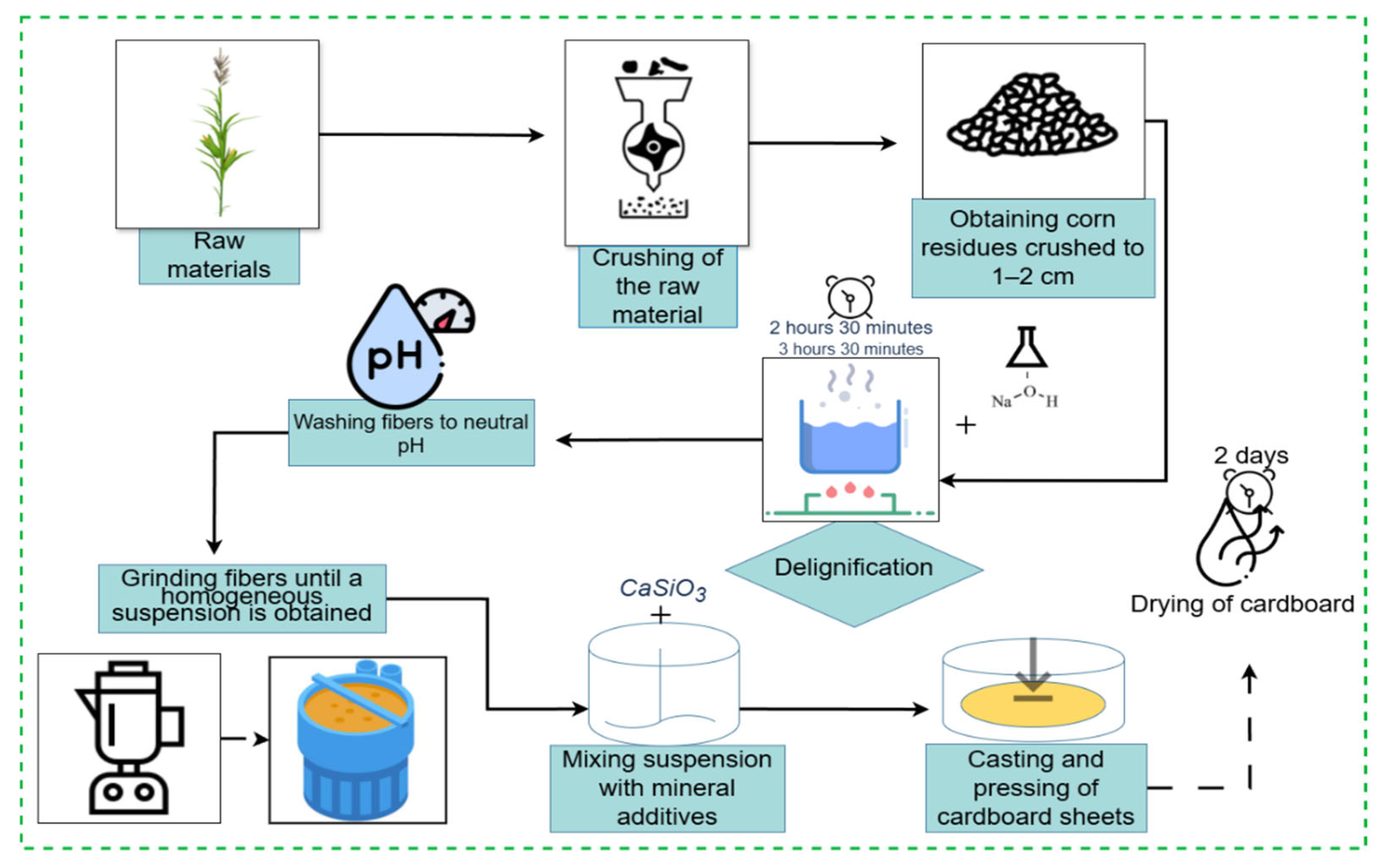
Furthermore, 100 g of raw material was subjected to alkaline treatment to facilitate fiber separation and partial removal of lignin and other non-cellulosic components. The treatment involved alkaline hydrolysis in a sodium hydroxide solution (10 g of NaOH, ≥98% analytical grade, in 4 L of water) at 90–95 °C for 2.5 h for corn samples and 3.5 h for common reed (Figure 5).
After alkaline hydrolysis, the fibers were washed with distilled water to a neutral pH value (6–7), then further ground to obtain a homogeneous suspension. The suspension was dried to determine the dry residue yield: on average, the dry matter content was 53% in corn samples and 42–44% in common reed samples. It should be noted that the raw materials obtained were unbleached (impure) cellulose, which is due to the absence of a bleaching stage.

4.3. Modification of Fibers with CaSiO3 Powder

In order to increase mechanical strength and resistance to moisture, a modifying component, CaSiO3 powder (SiO2 51 wt%, CaO 47 wt%, minor oxides ~1–2 wt%), was introduced into the structure of the pulp. The addition was carried out at the rate of 0.75 g of CaSiO3 (which corresponds to 15% of the dry pulp weight) per 5 g of remoistened pulp. The mixture was thoroughly mixed using a magnetic stirrer until the filler was evenly distributed.
Wollastonite (CaSiO3) was chosen from the range of mineral additives available for use in paper and board manufacturing for its structural and functional properties that are especially applicable to flexible packaging. Wollastonite is a wholly acicular (needle-like) crystal and has an aspect ratio of 3–20, unlike the equidimensional fillers (CaCO3 or kaolin) which has an aspect ratio of 1–2.5, which allows it to be used as a passive filler as well as a micro-reinforcing agent in a fiber matrix–analogous in principle to short mineral fiber reinforcement [22]. In addition, wollastonite has an inherent property of low moisture absorption and its pH level is alkaline (pH ~9.9), which is related to the aim of reducing hygroscopicity in cellulose-based packaging materials [23]. These are all different attributes as compared to the standard paper fillers that only boost the optical properties (brightness and opacity) and do not provide mechanical reinforcement or moisture management. The loading level of 15 wt% was selected as a moderate value based on the literature since the mineral filler content in many paper grades is in the range of 5–30 wt% and 15 wt% is a reasonable intermediate value to balance the filler function and reinforcing additive to obtain better mechanical properties of the cardboard without sacrificing the fibrous network [24,39,40,41].

4.4. Molding and Drying of Cardboard Samples and Evaluation of Their Physical and Mechanical Properties

Homogeneous cellulose suspensions were used for forming laboratory cardboard samples using an automatic SKZ124b cellulose sheet forming machine (SKZ International Co., Ltd., Jinan, China). The process included the following steps:
  • The suspension was loaded into the tank of the device and evenly distributed over the mesh base. Water removal was carried out by vacuum filtration, as a result of which a dense layer of fibers formed on the surface of the molding element.
  • The formed sheets were subjected to primary pressing using an integrated roller, which ensures sealing and removal of residual moisture.
  • The obtained sheets with a diameter of 200 mm were dried in a drying cabinet at a temperature of 60–65 °C for 5 h, after which they were kept at room temperature (20–25 °C) for 48 h until a stable humidity state was reached.
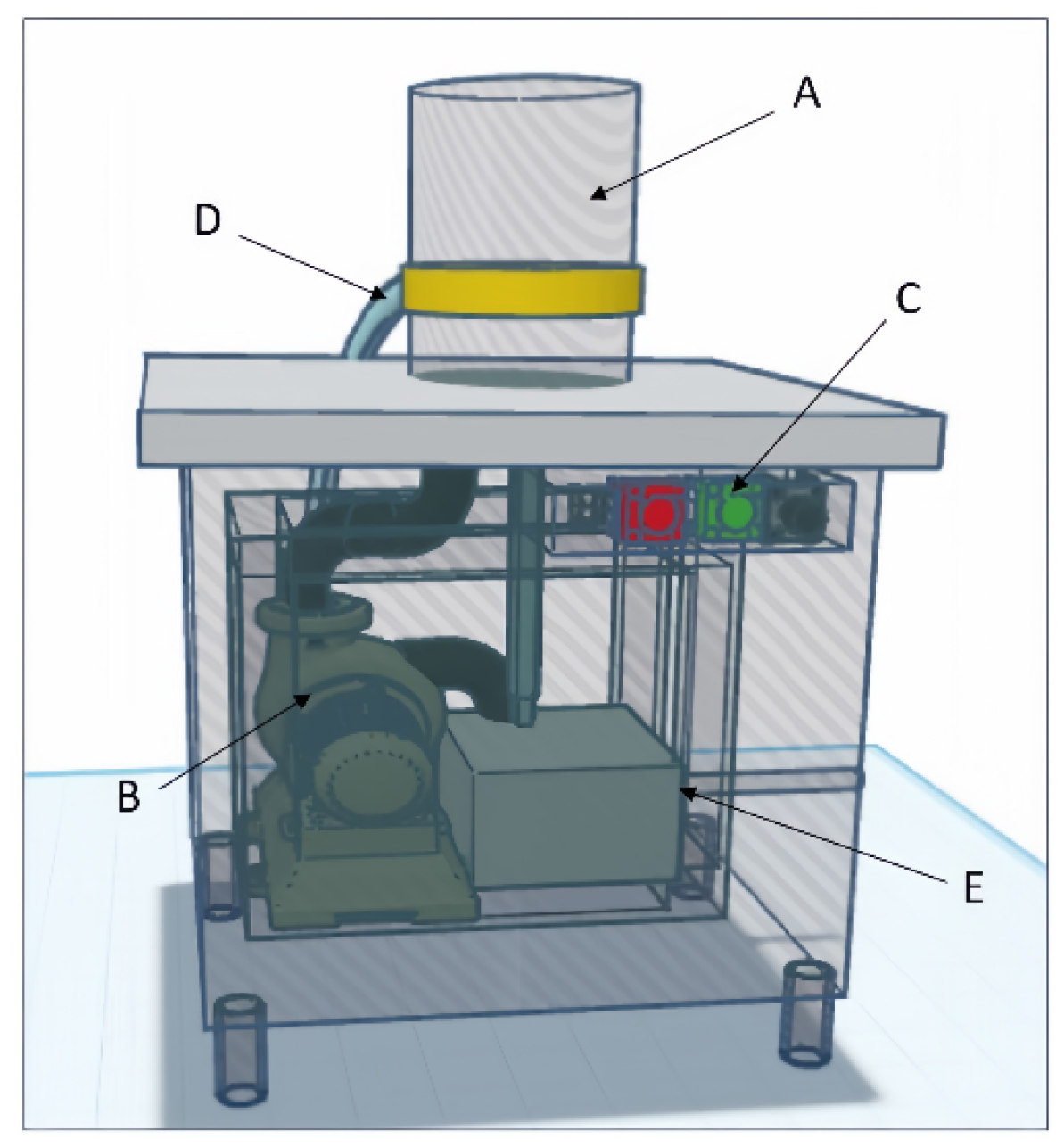
The selected drying mode ensured the production of samples with reproducible parameters suitable for subsequent physico-mechanical analysis. Depending on the raw materials used and the added mineral components, the resulting sheets were characterized by differences in structure, density, and mechanical properties, which allowed for a comparative analysis of their performance characteristics. Figure 6 shows a schematic diagram of the SKZ124b apparatus and the stages of formation of laboratory cellulose sheets.
Each type of sheet sample was obtained in three independent batches; at least three identical specimens were produced and conditioned for each batch, and measurements of physico-mechanical parameters were performed on each specimen and averaged.
In order to comprehensively assess the quality of the cardboard samples obtained, laboratory tests were conducted to determine their physical and mechanical characteristics. These tests allow an objective assessment of the suitability of the material for practical use, especially in the manufacture of packaging products.
(1)
Grammage (g/m2). The mass per unit area is calculated as the ratio of the mass of the sample to its area and expressed in g/m2 and was determined in accordance with the standard TAPPI T410 om-08 method [42].
(2)
Burst strength (kPa). This indicator reflects the ability of cardboard to withstand external mechanical stress until it collapses and plays a key role in assessing the strength of the packaging material. The Mullen test method was used to determine this indicator. The method is based on the uniform action of hydraulic pressure on a limited area of the sample until its destruction. At the moment of destruction of the material, the maximum achieved pressure in kilopascals (kPa) is recorded. The test was performed on an automatic device Automatic Mullen Burst Tester BN-8025C (Wuhan Bonnin Technology Ltd., Wuhan, China) using the TAPPI T403 om-15 method [43].
(3)
Folding endurance. The folding endurance test is used to determine the ability of cardboard to withstand repeated mechanical stress during cyclic bending. The measurements were carried out using the NG-623 MIT folding endurance tester (Jinan Xinghua Instruments Co., Ltd., Jinan, China) in accordance with TAPPI T511 om-25 [44]. Each sample was clamped in the instrument and subjected to transverse cyclic folding under a constant load of 4.90 N. The device alternately folded the specimen in both directions (double folds) until mechanical failure occurred, and the total number of double folds to failure was recorded as the folding endurance value.
(4)
Moisture content (%). Determining the moisture content of cardboard is an important step in a comprehensive assessment of its physical and mechanical properties, since the humidity level directly affects the strength, hardness and resistance of the material to external influences. Humidity measurement was carried out by drying to a constant weight in accordance with GOST 13525.19-91 standard [45]. Using this method, the cardboard sample is first measured in its initial state (wet or conditioned), and then dried in a drying cabinet at a temperature of 105 ± 2 °C.

4.5. Obtaining Cardboard Egg Boxes and Evaluating Their Physical and Mechanical Properties

In addition to the production of flat cardboard samples, experimental testing of the possibility of obtaining packaging products using the example of egg cartons was also carried out as part of this work, which makes it possible to more fully assess the practical potential of the method of processing agricultural waste. A suspension made from and cellulose obtained from corn and common reed residues was used as a raw material.
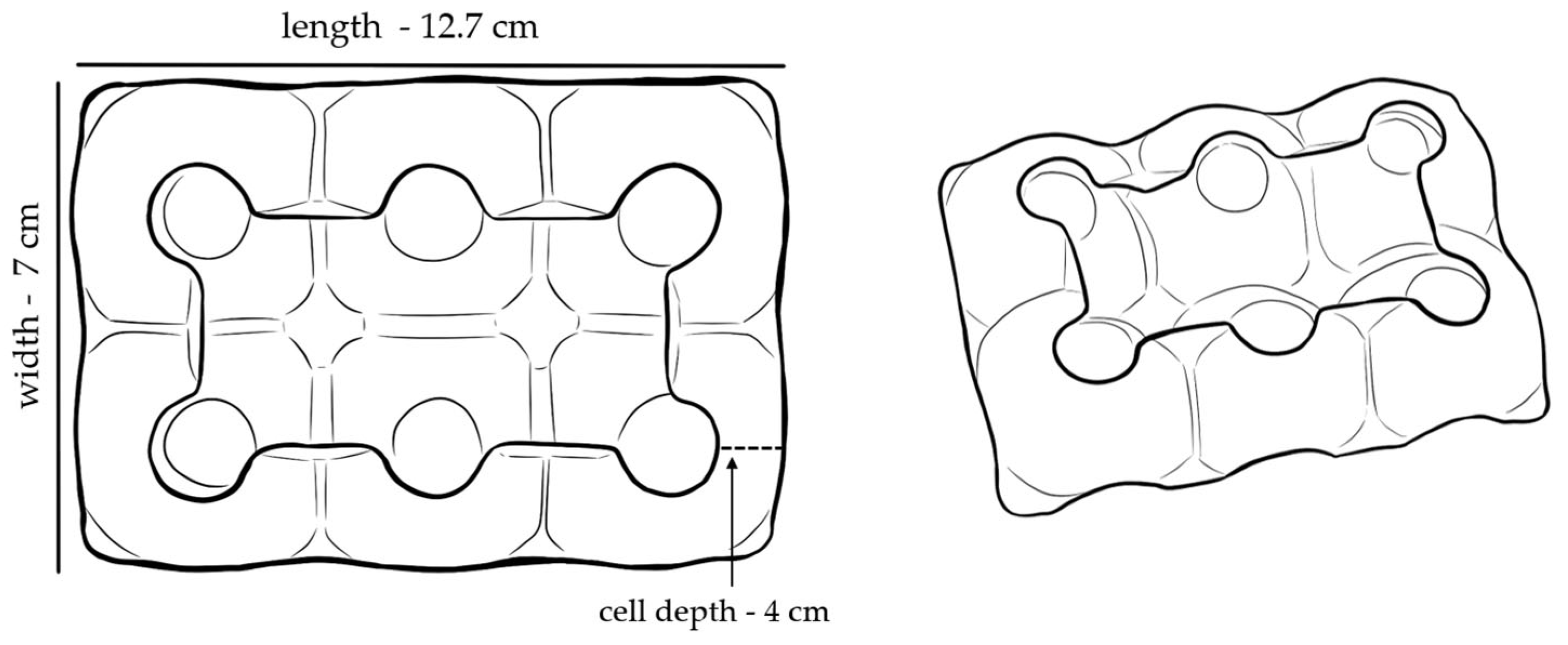
The homogenized fibrous mass was poured into special silicone molds that mimic the packaging configuration for 6 eggs (Figure 7). The average dimensions of the molds were: length-12.7 cm, width-7 cm, cell depth-4 cm. After filling, the molds were lightly shaken to remove air bubbles and evenly distribute the mass throughout the mold.
Drying was carried out in two stages: first in a drying cabinet at 75 °C for 5 h, and then at room temperature for three days to ensure complete stabilization and removal of residual moisture. This approach has made it possible to obtain packaging with sufficient strength, shape stability and low weight, which makes it potentially suitable for storing and transporting eggs.
To assess the quality of the experimental packages, tests were carried out according to the basic requirements in accordance with the requirements of the national standard ST RK 2381-2013 [46]. In accordance with the standard, the following parameters were evaluated: warping (curl), moisture content, compressive deformation (compressive strength), and ink absorption time.
The production of molded packages was carried out in at least three independent repetitions; each type of tray was cast in at least five copies and subjected to the same drying before testing.

5. Conclusions

In the present study, corn residues and common reed were successfully converted into cardboard and molded egg carton packaging, demonstrating their potential as alternatives to wood-based pulp. The morphological analysis showed that common reed fibers were more suitable for papermaking than corn fibers, with a higher flexibility coefficient (64.5%) and a lower Runkel ratio (0.86), whereas corn fibers showed lower flexibility (23.6%) and a higher Runkel ratio (1.2). However, the best mechanical performance of the final materials depended on formulation rather than on fiber morphology alone. Among the cardboard samples, mixed corn waste (MCW) exhibited the highest burst strength (462.4 kPa) and burst index (3.0 kPa·g/m2), while corn husk (CH) and shredded common reed (SR) showed the greatest folding endurance, reaching 42 and 38 double folds, respectively. These results indicate that MCW is the most favorable formulation for strength-related applications, whereas CH and SR are more suitable where flexibility is more important.
The addition of wollastonite at 15 wt% clearly changed the balance of properties in the corn-blend system. The CL + CH + W formula showed a higher folding endurance (from 11 to 28 double folds) and a lower moisture content (from 4.1% to 6.0%) compared with the CL + CH formula, while the latter decreased the burst strength of the packaging from 392.1 kPa to 250.5 kPa. This test further substantiates that wollastonite was used as a functional modifier which gave better flexibility and moisture resistant properties to the product at the cost of tensile integrity. Corn-based egg cartons demonstrated the most well-rounded performance, achieving the desired warping, compressive deformation, moisture content and ink absorbency times, while reed-based cartons achieved the least of the four. Reed-based cartons had comparable warping characteristics (3 mm) and compressive deformation (2 mm), but the shorter time required for the ink to absorb into the material indicates that there may be less surface suitability for printing.
In general, the results demonstrate that corn-residue mixtures are more appropriate for cardboard of higher strength while common reed is an appropriate raw material for molded packaging; wollastonite also provides an option to alter the material properties by adjusting the ratio of flexibility to strength. These results confirm the feasibility of converting agricultural waste into an environmentally friendly and technologically viable packaging material. This contributes to the development of sustainable solutions in the pulp and paper industry and reduces pressure on forest resources.

Author Contributions

Conceptualization, A.O. and D.B.; methodology, Y.D., A.Z. and A.S.; software, Y.D., A.O. and D.B.; validation, M.Z., S.K., A.K. and A.A.; formal analysis, N.P. and O.D.; investigation, Y.D., M.Z., A.Z. and A.S.; resources, A.O., D.B. and O.D.; data curation, A.O. and D.B.; writing—original draft preparation, M.Z., O.D., S.K. and A.K.; writing—review and editing, A.Z. and D.B.; visualization, A.K., A.A. and N.P.; supervision, A.S. and N.P.; project administration, Y.D., A.Z. and A.S.; funding acquisition, S.K., A.A. and N.P. All authors have read and agreed to the published version of the manuscript.

Funding

This research received no external funding.

Data Availability Statement

The original contributions presented in this study are included in the article. Further inquiries can be directed to the corresponding authors.

Acknowledgments

We would like to elucidate that AI-based tools (e.g., ChatGPT OpenAI, version GPT-5) were used only for language-related support, specifically for translation from Russian into English and for improving the academic style and readability of the manuscript. The original version of the manuscript was prepared by the authors in Russian, and all scientific content was developed by the authors. The research design, data analysis, interpretation of results, and conclusions are entirely the work of the authors. No AI tools were used to generate scientific ideas, results, or interpretations. Also, we would like to clarify that Nariman Pravin’s expertise is relevant to the scope of this study.

Conflicts of Interest

The authors declare no conflicts of interest.

Abbreviations

The following abbreviations are used in this manuscript:
CHcorn husk sample
CH+CLmixed corn husk and leaves sample
CH+CL+Wmixed corn husk, leaves and CaSiO3 powder sample
CLcorn leaves sample
MCWmixed corn waste sample
SRshredded common reed sample

References

  1. Mansurov, Z.A.; Velasco, L.F.; Lodewyckx, P.; Doszhanov, E.O.; Azat, S. Modified carbon sorbents based on walnut shell for sorption of toxic gases. J. Eng. Phys. Thermophys. 2022, 95, 1383–1392. [Google Scholar] [CrossRef]
  2. Seitzhanova, M.; Azat, S.; Yeleuov, M.; Taurbekov, A.; Mansurov, Z.; Doszhanov, E.; Berndtsson, R. Production of Graphene Membranes from Rice Husk Biomass Waste for Improved Desalination. Nanomaterials 2024, 14, 224. [Google Scholar] [CrossRef]
  3. APK-Inform. Prospects for Global Corn Production in the 2025/26. Available online: https://www.apk-inform.com/ru/news/1549914 (accessed on 12 January 2026).
  4. Ibrahim, M.I.J.; Sapuan, S.M.; Zainudin, E.S.; Zuhri, M.Y.M. Extraction, chemical composition, and characterization of potential lignocellulosic biomasses and polymers from corn plant parts. BioResources 2019, 14, 6485–6500. [Google Scholar] [CrossRef]
  5. Motshabi, N.; Lenetha, G.G.; Malimabe, M.A.; Gumede, T.P. Cellulose nanofibril-based biodegradable polymers from maize husk: A review of extraction, properties, and applications. Polymers 2025, 17, 1947. [Google Scholar] [CrossRef]
  6. Rahmayanti, H.; Asma, A. Development and characterization of paper from corn husks as a new material for newsprint. In Proceedings of the First Jakarta International Conference on Multidisciplinary Studies Towards Creative Industries (JICOMS 2022), Jakarta, Indonesia, 16 November 2022. [Google Scholar] [CrossRef]
  7. Tsalagkas, D.; Börcsök, Z.; Pásztory, Z.; Gryc, V.; Csóka, L.; Giagli, K. A comparative fiber morphological analysis of major agricultural residues (used or investigated) as feedstock in the pulp and paper industry. BioResources 2021, 16, 7935–7952. [Google Scholar] [CrossRef]
  8. Ratna, A.S.; Ghosh, A.; Mukhopadhyay, S. Advances and prospects of corn husk as a sustainable material in composites and other technical applications. J. Clean. Prod. 2022, 371, 133563. [Google Scholar] [CrossRef]
  9. Llangari, K.G.S.; Vinueza, X.R.C.; Mayorga, D.F.B.; Alcorser, M.A.G.; Valdivieso, J.E.V. Production of paper from the residue of the cellulose extracted from the corn cob (Zea mays L. var. ceratina). J. Pharm. Negat. Results 2023, 14, 2. [Google Scholar]
  10. Suseno, N.; Gondokesumo, M.E.; Permatasari, P.R. Utilization of corn husk for tissue papermaking. In AIP Conference Proceedings; AIP Publishing LLC: Melville, NY, USA, 2021; Volume 2338, p. 040019. [Google Scholar] [CrossRef]
  11. Fiscal, R.R.; Dandan, K.B.V. Development and evaluation of paper from corn husks (Zea mays L.) and snake plant fibers (Sansevieria zeylanica). Int. J. Sci. Res. 2016, 5, 867–870. [Google Scholar] [CrossRef]
  12. Asngad, A.; Santhyami, S.; Pertiwi, A.R.; Rahmitasari, C. The utilization of sugarcane bagasse, cassava peels and corn husks in handmade paper production. JPBIO J. Pendidik. Biol. 2021, 6, 64–75. [Google Scholar] [CrossRef]
  13. Fagbemi, O.D.; Fagbemigun, T.K.; Otitoju, O.; Mgbachiuzor, E.; Igwe, C.C. Strength properties of paper from pulp blend of kenaf bark and corn husk: A preliminary study. Br. J. Appl. Sci. Technol. 2014, 4, 4124. [Google Scholar] [CrossRef]
  14. Alagbe, E.E.; Bassey, E.S.; Daniel, O.E.; Shongwe, M.B.; Ojewumi, M.E.; Igwe, C.C. Physical, chemical and mechanical properties of corn sheath as pulp and paper raw material. J. Phys. Conf. Ser. 2019, 1378, 032083. [Google Scholar] [CrossRef]
  15. Köbbing, J.F.; Thevs, N.; Zerbe, S. The utilisation of reed (Phragmites australis): A review. Mires Peat 2013, 13, 01. [Google Scholar] [CrossRef]
  16. Garrido, R.A.; Reckamp, J.M.; Satrio, J.A. Effects of pretreatments on yields, selectivity and properties of products from pyrolysis of Phragmites australis (common reeds). Environments 2017, 4, 96. [Google Scholar] [CrossRef]
  17. Baibagyssov, A.; Thevs, N.; Nurtazin, S.; Waldhardt, R.; Beckmann, V.; Salmurzauly, R. Biomass Resources of Phragmites australis in Kazakhstan: Historical Developments, Utilization, and Prospects. Resources 2020, 9, 74. [Google Scholar] [CrossRef]
  18. Gómez-Sánchez, M.D.; Sánchez, R.; Espinosa, E.; Rosal, A.; Rodríguez, A. Production of cellulosic pulp from reed (Phragmites australis) to produce paper and paperboard. Bioprocess Eng. 2017, 1, 65–68. [Google Scholar]
  19. Ghosh, S.R.; Kalita, D.; Saikia, C.N. Studies on pulping and paper making of common reeds. Cellul. Chem. Technol. 2003, 52, 59–63. [Google Scholar]
  20. Barbash, V.A.; Yaschenko, O.V.; Gondovska, A.S.; Yakymenko, O.S. Nanocellulose from reed stalks to improve the properties of paper for packaging food products. KPI Sci. News 2021, 2, 90–96. [Google Scholar] [CrossRef]
  21. Taurbekov, A.; Kaidar, B.; Baltabay, A.; Imash, A.; Ko, W.-B.; Ko, J.-W.; Atamanov, M.; Mansurov, Z.; Smagulova, G. Valorization of grass clipping waste: A sustainable approach to cellulose extraction and paper manufacturing. Appl. Sci. 2024, 14, 6680. [Google Scholar] [CrossRef]
  22. Lei, Y.; Yan, Q.; Liu, S.; Yuan, J. Papermaking of mineral fiber composites. J. Sci. Ind. Res. 2010, 69, 215–220. [Google Scholar]
  23. Ibzhanova, A.; Niyazbekova, R.; Al Azzam, K.M.; EL-Sayed, M.N. Biodegradability of non-wood packaging paper. Egypt. J. Chem. 2022, 65, 131–139. [Google Scholar] [CrossRef]
  24. Xue, H.; Wang, G.; Hu, M.; Chen, B. Modification of wollastonite by acid treatment and alkali-induced redeposition for use as papermaking filler. Powder Technol. 2015, 276, 193–199. [Google Scholar] [CrossRef]
  25. Ekhuemelo, D.O.; Tor, K. Assessment of fibre characteristics and suitability of maize husk and stalk for pulp and paper production. J. Res. For. Wildl. Environ. 2013, 5, 41–49. [Google Scholar]
  26. Abara, L.; Gebeyehu, D. Suitability of Acacia decurrence fiber morphology for pulp and paper making in Ethiopia. Agri. Biol. Res. 2022, 40, 1164–1169. [Google Scholar]
  27. Tırak Hızal, K.; Birtürk, T. Anatomy-based papermaking potential of some woody plants under different ecological conditions. Maderas Cienc. Tecnol. 2024, 26. [Google Scholar] [CrossRef]
  28. Ferdous, T.; Ni, Y.; Quaiyyum, M.A.; Uddin, M.N.; Jahan, M.S. Non-wood fibers: Relationships of fiber properties with pulp properties. ACS Omega 2021, 6, 21613–21622. [Google Scholar] [CrossRef]
  29. Yennam, R.; Shivde, P.; Daware, G.; Mane, V.; Mawal, V.; Derle, S. Synthesis of handmade craft-paper from agricultural waste. Indian J. Chem. Technol. 2024, 31, 546–552. [Google Scholar] [CrossRef]
  30. Bolatova, Z.; Engindeniz, S. Analysis of input usage efficiency in corn production: A case study for Almaty region of Kazakhstan. Interciencia 2023, 57, 1–14. [Google Scholar] [CrossRef]
  31. Askarova, A.; Zamorano, M.; Martín-Pascual, J.; Nugymanova, A.; Bolegenova, S. A Review of the Energy Potential of Residual Biomass for Coincineration in Kazakhstan. Energies 2022, 15, 6482. [Google Scholar] [CrossRef]
  32. Nurtazin, S.T.; Galymzhanov, I.S.; Baibagyssov, A.M.; Iklassov, M.K.; Bolatbek, I.E.; Undassyn, N.S. Ecosystem Services and Problems of Reedbed Management in the Ili River Delta. Exp. Biol. 2023, 96, 151–165. [Google Scholar] [CrossRef]
  33. Zhakanov, A.N.; Aruova, L.B.; Korniejenko, K.; Urkinbaeva, Z.; Tleubayeva, A. Assessment of the Potential of Fly Ash and Blast Furnace Slag for the Production of Geopolymer Binders. EKTU J. Archit. Constr. Sci. 2026, 1, 42–49. [Google Scholar] [CrossRef]
  34. ChemAnalyst. Caustic Soda Prices, Trend, Chart, Index and Forecast. Available online: https://www.chemanalyst.com/Pricing-data/caustic-soda-3 (accessed on 8 May 2025).
  35. Bureau of National Statistics of the Republic of Kazakhstan. Number and Wages of Employees in the Republic of Kazakhstan. 2024. Available online: https://stat.gov.kz/ru/industries/labor-and-income/stat-wags/publications/412079/ (accessed on 8 May 2025).
  36. Fastmarkets Forest Products. Global Market Pulp Outlook Fastmarkets Forest Products North American Conference Chicago, October 2024. Available online: https://www.fastmarkets.com/uploads/2024/11/Global-market-pulp-outlook.pdf (accessed on 18 January 2026).
  37. Alsoy Altinkaya, S. A perspective on cellulose dissolution with deep eutectic solvents. Front. Membr. Sci. Technol. 2024, 3, 1382054. [Google Scholar] [CrossRef]
  38. Jahangiri, F.; Mohanty, A.; Pal, A.K.; Clemmer, R.; Gregori, S.; Misra, M. Wax Coatings for Paper Packaging Applications: Study of the Coating Effect on Surface, Mechanical, and Barrier Properties. ACS Environ. Au 2025, 5, 165–182. [Google Scholar] [CrossRef]
  39. Hubbe, M.A.; Gill, R.A. Fillers for papermaking: A review of their properties, usage practices, and their mechanistic role. Bioresources 2016, 11, 2886–2963. [Google Scholar] [CrossRef]
  40. Taghiyari, H.R.; Karimi, A.; Tahir, P.M.D. Nano-wollastonite in particleboard: Physical and mechanical properties. BioResources 2013, 8, 5721–5732. [Google Scholar] [CrossRef]
  41. Taghiyari, H.R.; Esmailpour, A.; Majidi, R.; Morrell, J.J.; Mallaki, M.; Militz, H.; Papadopoulos, A.N. Potential use of wollastonite as a filler in UF resin based medium-density fiberboard (MDF). Polymers 2020, 12, 1435. [Google Scholar] [CrossRef] [PubMed]
  42. TAPPI Standard T 410 om-08; Grammage of Paper and Paperboard (Weight per Unit Area). TAPPI: Atlanta, GA, USA, 2008. Available online: https://imisrise.tappi.org/TAPPI/Products/01/T/0104T410.aspx (accessed on 12 May 2025).
  43. TAPPI Standard T 403 om-15; Tensile Breaking Strength of Paper and Paperboard. TAPPI: Atlanta, GA, USA, 2015. Available online: https://www.normsplash.com/TAPPI/185225749/TAPPI-T-403-om (accessed on 10 May 2025).
  44. TAPPI Standard T 511 om-25; Folding Endurance of Paper (MIT Tester). TAPPI: Atlanta, GA, USA, 2025. Available online: https://imisrise.tappi.org/TAPPI/Products/01/T/0104T511.aspx (accessed on 8 May 2025).
  45. GOST 13525.19–91; Pulp and Paper. Test Methods for Moisture Content. Standartinform: Moscow, Russia, 1991. Available online: https://files.stroyinf.ru/Data2/1/4294852/4294852296.pdf (accessed on 22 March 2025).
  46. ST RK 2381-2013; Paper Wrappers for Eggs. Committee for Technical Regulation and Metrology: Astana, Kazakhstan, 2015. Available online: https://prg.kz/document/?doc_id=36428806&pos=0;0 (accessed on 15 May 2025).
Figure 1. Comparative analysis of the calculated coefficients of corn and common reed fibers.
Recycling 11 00096 g001
Figure 2. Experimental cardboard samples from the remains of corn and common reed: (1) CL, (2) CH + CL + W, (3) CH, (4) CH + CL, (5) MCW, (6) SR.
Recycling 11 00096 g002
Figure 3. Microstructure of cardboard samples: (a) CH + CL + W, (b) CL, (c) CH, (d) SR.
Recycling 11 00096 g003
Figure 4. Experimental samples of egg cartons from agricultural waste: (a) corn waste and (b) common reed waste.
Recycling 11 00096 g004
Figure 5. The process of obtaining cardboard samples.
Recycling 11 00096 g005
Figure 6. Schematic diagram illustration of the SKZ124b automatic apparatus for forming laboratory cellulose sheets: A—cylindrical chamber, B—vacuum pump, C—control panel, D—liquid saturation system with air bubbles, E—liquid removal tank. Note: this image is not an exact copy of the original equipment, but only serves to illustrate the principle of operation of the device.
Recycling 11 00096 g006
Figure 7. Schematic illustration of the silicone mold used for six-egg carton formation.
Recycling 11 00096 g007
Table 1. Morphological characteristics of fibers.
SampleFiber Length (µm)Fiber Diameter (µm)Cell Wall Thickness (µm)Lumen Width (µm)
Corn waste1370–170030–808 ± 0.813 ± 1.2
Common reed1360–154014–174.3 ± 0.410 ± 0.9
Table 2. Physical and mechanical properties of cardboard samples.
SampleParameters
Grammage (g/m2)Burst Strength (kPa)Burst Index
(kPa·g/m2)
Thickness (mm)Folding Endurance (Number of Double Folds)Moisture Content (%)
MCW156.0 ± 5.5462.4 ± 30.73.0 ± 0.20.86 ± 0.0110.0 ± 1.85.8 ± 0.3
CL + CH190.0 ± 5.3392.1 ± 26.72.1 ± 0.20.80 ± 0.0111.0 ± 1.76.0 ± 0.3
CL + CH + W162.5 ± 5.2250.5 ± 23.01.5 ± 0.10.75 ± 0.0128.0 ± 6.14.1 ± 0.1
CH117.0 ± 2.9290.3 ± 16.32.5 ± 0.10.72 ± 0.0142.0 ± 7.96.0 ± 0.3
CL148.0 ± 4.4219.0 ± 18.41.5 ± 0.10.78 ± 0.016.0 ± 0.95.5 ± 0.2
SR120.0 ± 3.2229.4 ± 16.31.9 ± 0.10.85 ± 0.0138.0 ± 7.96.2 ± 0.4
Note: All measurements were performed in five replicates (n = 5). Values represent mean values. MCW, mixed corn waste (leaves 35%, stalks 30%, husks 35%); CL + CH, corn leaves and corn husks blend (husks 60%, leaves 40%); CL + CH + W, corn leaves, corn husks and wollastonite blend (husks 50%, leaves 35%, CaSiO3 15%); CH, corn husks; CL, corn leaves; SR, shredded common reed.
Table 3. Physical and mechanical characteristics of the resulting egg cartons.
ParametersST RK 2381-2013Corn WasteReed
Warping (curl), mm3 (not more)2.0 ± 0.33.0 ± 0.4
Ink absorption time, minutes45 (not less)45.0 ± 4.220.0 ± 3.8
Compressive deformation, mm3 (not more)3.0 ± 0.22.0 ± 0.3
Moisture content, % 6 (not less)6.0 ± 0.26.0 ± 0.3
Weight, g-17.2 ± 0.616.3 ± 0.5
Note: Measurements were performed on five samples for each type of carton.
Table 4. Preliminary economic parameters for cellulose production from agricultural residues, Almaty region, Kazakhstan.
IndicatorValueSource/Basis
Corn cultivation area, Almaty region~83,500 ha (>50% of national total)[30]
Average corn yield, Almaty region~8534 kg/ha[30]
Collectible dry corn residues, Kazakhstan~2.52 million t/year[31]
Reed-dominated wetlands, Ili River Delta (Almaty region), 2000–20211144–2260 km2[32]
Annual reed biomass growth5–10 t/ha (up to 30 t/ha)[32]
NaOH cost (Kazakhstan, 2024)150,000–180,000 KZT/t (~315–380 USD/t)[33]
Feedstock collection + transport~10–20 USD/t residueAuthors’ estimate
Reagent cost per tonne of cellulose~16–23 USD/t[33,34]
Labor + utilities per tonne of cellulose~80–120 USD/t[35], authors’ estimate
Total production cost~140–206 USD/t celluloseThis study
Market price, unbleached non-wood pulp500–700 USD/t (benchmark: 678 USD/t)[36]
Estimated gross margin~294–538 USD/t celluloseThis study
Net value-added per tonne of raw residue~100–190 USD/tThis study
Disclaimer/Publisher’s Note: The statements, opinions and data contained in all publications are solely those of the individual author(s) and contributor(s) and not of MDPI and/or the editor(s). MDPI and/or the editor(s) disclaim responsibility for any injury to people or property resulting from any ideas, methods, instructions or products referred to in the content.