1. Introduction
Global energy consumption has recently increased by 2.2%, exceeding the decadal average [
1,
2,
3]. This accelerated growth in demand exacerbates environmental degradation [
4], predominantly attributable to anthropogenic emissions from the combustion of conventional fossil fuels—namely, petroleum, natural gas, and coal [
5].
Anthropogenic activities are the principal driver of contemporary climate change, primarily through the augmentation of atmospheric greenhouse gas concentrations [
6,
7,
8]. Consequently, the growth rate of anthropogenic carbon dioxide emissions has accelerated markedly, surpassing recent historical levels to attain unprecedented maxima [
9,
10,
11]. Consequently, the atmospheric carbon dioxide concentration reached 422 ppm in 2024, an increase of 2.9 ppm from the 2023 level [
12]. These data confirm a persistent global rise in greenhouse gas emissions, a primary driver of significant climatic disruption. Within the European Union, the transport sector is responsible for 28.9% of total greenhouse gas emissions. Road transportation constitutes the predominant share (73.2%) of this sector, resulting in substantial emissions of gaseous pollutants [
13,
14].
Addressing anthropogenic global warming and enhancing resource sustainability requires a transition from fossil fuels to alternative energy systems [
15,
16,
17]. Among these, biofuels produced from a variety of feedstocks—such as biomass, organic waste streams, and biological by-products—offer a viable pathway. Biofuels are widely regarded as carbon-neutral alternatives to fossil fuels and can be utilized either in their pure form or blended with conventional petroleum derivatives [
18]. Globally, biofuel production reached approximately 160 billion liters (equivalent to ~130 million tons) in 2023, as reported by the International Energy Agency (IEA) [
19]. The primary products dominating this output are fuel ethanol for gasoline blends (80 million tons) and diesel substitutes, comprising fatty acid methyl esters (FAME) and hydrotreated vegetable oil (HVO), which collectively account for 50 million tons [
20].
In 2021, the European Union was the global leader in biodiesel production, yielding 19.72 billion liters, followed by the United States (11.1 billion liters), Brazil (9.2 billion liters), and Thailand (6.62 billion liters). The International Energy Agency (IEA) projects a 30% increase in global biofuel demand by 2028, equivalent to a rise of 38 billion liters, with developing economies—notably Brazil, Indonesia, and India—anticipated to be the primary drivers of this growth [
20]. These data indicate significant potential for further expansion of the biodiesel market, particularly under advancing decarbonization policies.
The economic viability of biodiesel production is predominantly constrained by feedstock costs, which are driven by the agricultural demands of cultivating oilseed crops, including land use and resource allocation. A promising strategy to mitigate this challenge involves the utilization of waste cooking oils (WCO) or used cooking oils (UCO). This approach valorizes a hazardous environmental pollutant, as the improper disposal of WCO—whether in landfills, aquatic systems, or via incineration—poses significant ecological risks [
21]. The utilization of WCO offers a significant economic advantage, as its procurement cost is 50–66% lower than that of virgin vegetable oil [
22]. Consequently, this reduction in feedstock expense lowers overall production costs, thereby improving the process’ economic feasibility. Major food service chains, such as McDonald’s, KFC, and Burger King, represent the most substantial global sources for this feedstock.
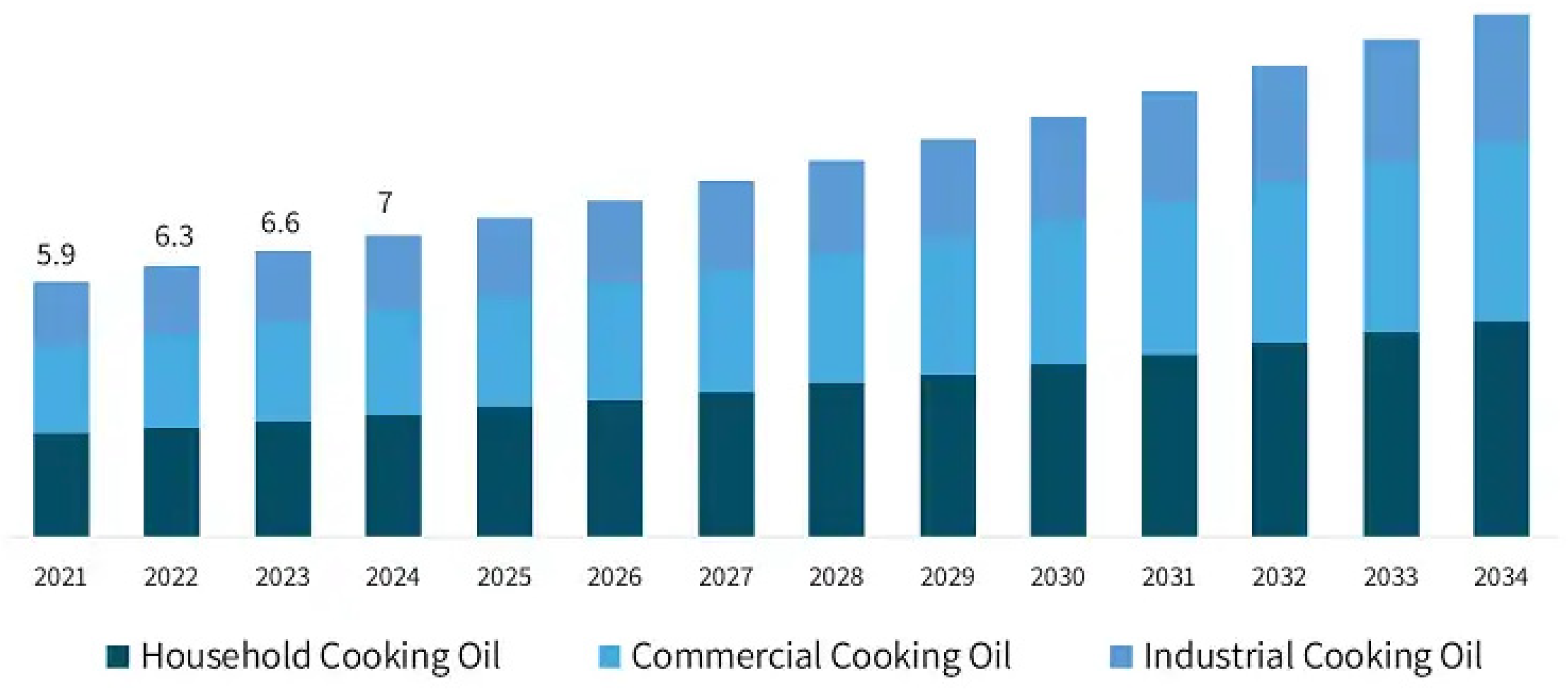
The global WCO market was valued at approximately 7 billion US dollars. Projections indicate significant growth, with an expected expansion from 7.4 billion USD in 2025 to 12.2 billion USD by 2034, representing a compound annual growth rate (CAGR) of 5.7% (
Figure 1) [
23]. Furthermore, the annual WCO collection potential within the European Union alone is estimated at 4 million tonnes.
The principal mechanism for stimulating biofuel production is the implementation of mandatory blending mandates, which have been established for several decades in the European Union and other nations. These regulations stipulate minimum biofuel content in transportation fuels. For instance, the mandated blend level for diesel is 20% in Sweden, while Spain and Poland enforce minimum incorporation rates of 8.5% for all fuel mixtures.
The article presents the following new findings:
- (1)
For the first time, an ascending trajectory in the degree of conversion of used cooking oils in relation to reaction time has been detected.
- (2)
The repeated sections of the biodiesel yield function have been mathematically described, allowing for the determination of the optimal conversion time.
- (3)
A correlation has been identified between the composition of the initial raw material and the yield of the biodiesel fraction.
- (4)
A dependence was established between the color of the glycerol phase, the composition of the glycerol phase, the composition of the raw material, and the time of synthesis.
2. Analysis of Existing Technologies
Biodiesel production methodologies are fundamentally classified according to the generation of the feedstock employed. Currently, three primary generations of biofuels are recognized.
First-generation biodiesel is derived from lipid-rich agricultural crops, such as wheat, rapeseed, soybeans, sunflower, jatropha, and oil palm [
24,
25]. However, the utilization of these feedstocks presents significant drawbacks, most notably the food-versus-fuel competition, which can impact food security and commodity prices [
26,
27]. Additional concerns include extensive land-use change leading to the loss of natural ecosystems, decreased biodiversity, and high production costs that compromise the economic viability of the resulting fuel. These combined economic and environmental challenges substantially constrain the scalability and sustainability of first-generation biofuel production.
Second-generation biodiesel production utilizes defined non-food feedstocks, primarily waste streams such as used cooking oils, agricultural residues, and municipal organic waste [
28,
29]. This strategy demonstrates three key advantages: effective waste management through industrial byproduct valorization, reduced feedstock costs compared to first-generation alternatives, and elimination of competition with food resources, thereby preventing ecosystem disruption from agricultural expansion [
29,
30,
31]. The principal limiting factor remains quantitative—global waste oil supplies are insufficient for complete fossil diesel replacement [
32,
33]. However, current availability levels support significant blend ratios with petroleum diesel, enabling substantial market penetration without requiring full fuel substitution.
The third-generation feedstock paradigm is constituted by the biomass of microalgae and heterotrophic microorganisms. These aquatic species exhibit a biological productivity that considerably exceeds that of terrestrial flora [
34,
35]. This inherent productivity advantage facilitates a substantially enhanced product yield compared to earlier generations, thereby offering a pathway for the environmentally sustainable and socially equitable valorization of organic resources. Principal limitations include the elevated levels of polyunsaturated fatty acids, which impart low oxidative stability to the resulting fuel, as well as prohibitive production expenses. Moreover, cultivation methodologies present a critical trade-off: although open systems minimize the costs associated with culture maintenance, this approach is plagued by suboptimal biomass productivity and a considerable propensity for microbial contamination of the ecosystem. Alternatively, closed bioreactor systems offer a pathway to significantly higher biomass productivity. Despite this advantage, the economic feasibility of this approach is undermined by substantial capital investment and operational costs. Therefore, under prevailing techno-economic conditions, the large-scale implementation of this biodiesel production methodology remains commercially unviable.
The comparative assessment presented herein indicates that second-generation feedstocks, particularly non-edible waste oils, represent the most promising resource for sustainable biodiesel synthesis [
36,
37]. Consequently, the following section will provide a detailed examination of used cooking oils as a representative and strategically important feedstock.
Biodiesel, or a bio-additive for petroleum diesel, is produced via the chemical processing of the lipid fraction extracted from the feedstock, which consists predominantly of fatty acid triglycerides [
23].
The utilization of methanol as an alcoholic reagent, while economically advantageous due to its low cost, is severely limited by its high toxicity. In contrast, ethanol is a prevalent reagent of choice in such applications. Although more costly, its use mitigates the considerable toxicological risks inherent to methanol, thereby offering a safer operational profile. Transesterification consistently produces two main streams: fatty acid methyl or ethyl esters (FAMEs/FAEEs) as the target product and glycerol as a co-product. Following their synthesis, these compounds undergo separation and purification. The resulting esters serve as a bio-additive or as fuel, whereas glycerol finds utility in numerous sectors such as industry, agriculture, and medicine. Modern research continues to expand the utilization portfolio for glycerol, demonstrating its potential in producing robust biopolymers [
38,
39], acting as a solvent for organic reactions [
40], and serving as an effective additive for biofuels [
41].
Optimal reaction parameters, such as duration, temperature, reagent stoichiometry, catalyst selection, and agitation intensity, are contingent upon the chemical constitution of the feedstock and require empirical determination in each instance. Notably, reaction temperature and time are predominant variables exerting a substantial influence on the yield of the desired product [
23].
Elevated temperature reduces the viscosity of the oil, enhancing the reaction rate. Nevertheless, an optimal upper threshold exists, beyond which process efficiency declines. This limitation is fundamentally governed by the physical properties of the alcohol reagents, specifically their low boiling points (e.g., ethanol at approximately 78 °C). Exceeding this temperature causes boiling, leading to the loss of alcohol from the reaction medium and a consequent rate reduction. An additional critical constraint arises with alkaline catalysts, as higher temperatures exponentially increase the rate of the saponification side reaction, which can drastically compromise the yield of the target esters [
42].
The reaction time is contingent upon a multitude of parameters, such as the chemical constitution of the raw materials, the catalyst type, the stoichiometric ratio, and the inherent properties of the reagents. Sub-optimal durations result in partial conversion, while prolonged reaction times promote the reverse reaction, thereby diminishing the final biofuel yield [
43]. Conventionally, reactions employing alkaline catalysts are complete within 60–90 min, in contrast to acid or enzyme-catalyzed processes, which typically extend from several hours to multiple days.
Among alkaline catalysts, aqueous alkali solutions are the most prevalent in industrial applications due to their low cost, ease of handling and storage, and ability to facilitate rapid reaction kinetics [
44]. Their principal drawback, however, is a high sensitivity to free fatty acids (FFAs) in the feedstock. The presence of FFA not only diminishes the yield of the target esters but also promotes the formation of stable emulsions, which complicates the subsequent separation of the reaction products [
45,
46]. Therefore, rigorous quantification and limitation of FFA and water in all feedstock components is essential [
44]. Another established synthetic pathway involves heterogeneous catalysis, a process utilizing a solid alkaline catalyst with a reagent in a supercritical state [
47]. This methodology, however, is hampered by the requisite severe operating parameters, intricate hardware engineering, and the persistent necessity for low feedstock acidity and anhydrous reagents.
An acid catalyst was chosen for its robustness to FFA and water, thereby avoiding the saponification side reactions encountered with alkaline catalysts. This advantage is counterbalanced by the main drawback of acid catalysis: considerably slower kinetics, which results in a significant extension of the reaction time.
Owing to its high catalytic activity and accessibility, sulfuric acid is the predominant homogeneous acid catalyst employed in industrial processes. However, other acidic reagents, including hydrochloric acid [
47], sulfurous acid, ferric sulfate [
48], and methanesulfonic acid, present alternatives that can afford enhanced operational flexibility. Hydrochloric acid was chosen due to its exclusive retention in the reagent phase, which precludes contamination of the final product and consequently avoids the necessity for a labor-intensive purification stage [
47].
In addition to homogeneous systems, heterogeneous catalysts are prominent, with their principal advantage being facile separation from the transesterification products. A key limitation of solid acid catalysts, however, is their activity being constrained by intraparticle mass transfer resistance and inadequate accessibility of the substrate to the active centers. It has been established that bifunctional catalysts, featuring Brønsted–Lewis acid or acid–alkaline centers, show enhanced catalytic performance in biodiesel synthesis from low-grade oils relative to their monofunctional analogues [
49]. Such systems are derived from substrates including zeolites, heteropoly acids, metal oxides, and ionic liquids. Despite this, their production and implementation are hampered by three principal impediments: firstly, the absence of foundational principles for designing efficient catalysts operable under mild conditions with stoichiometric reagent ratios; secondly, insufficient catalytic stability and recyclability; and thirdly, synthesis routes that are typically intricate, economically prohibitive, and incongruent with the objectives of green chemistry [
50].
Although numerous pathways for the synthesis of fatty acid esters (FAE) have been established, key challenges persist. These include the identification of optimal raw materials and production methodologies for the bio-additive, as well as the comprehensive elucidation of the reaction kinetics.
3. Results
3.1. Feedstock Analysis: Composition and Physical Properties of Sunflower Oil and WCOs
Transesterification serves to displace glycerol from triglyceride molecules with an alcoholic substituent. This transformation is critical for fuel applications, as the inherent high viscosity and density imparted by glycerol preclude the direct use of unmodified oils in internal combustion engines [
51]. Experimentally, the feedstock viscosities were found to be between 41.2 and 42.0 mm
2/s; refined sunflower oil possessed the maximum viscosity, while the minimum was recorded for the waste oil sourced from the No. 2 fast food chain. The density of sunflower oil was 924 kg/m
3.
The synthesized bio-additives exhibited a viscosity ranging from 1.9 to 2.6 mm2/s and a density between 838 and 859 kg/m3.
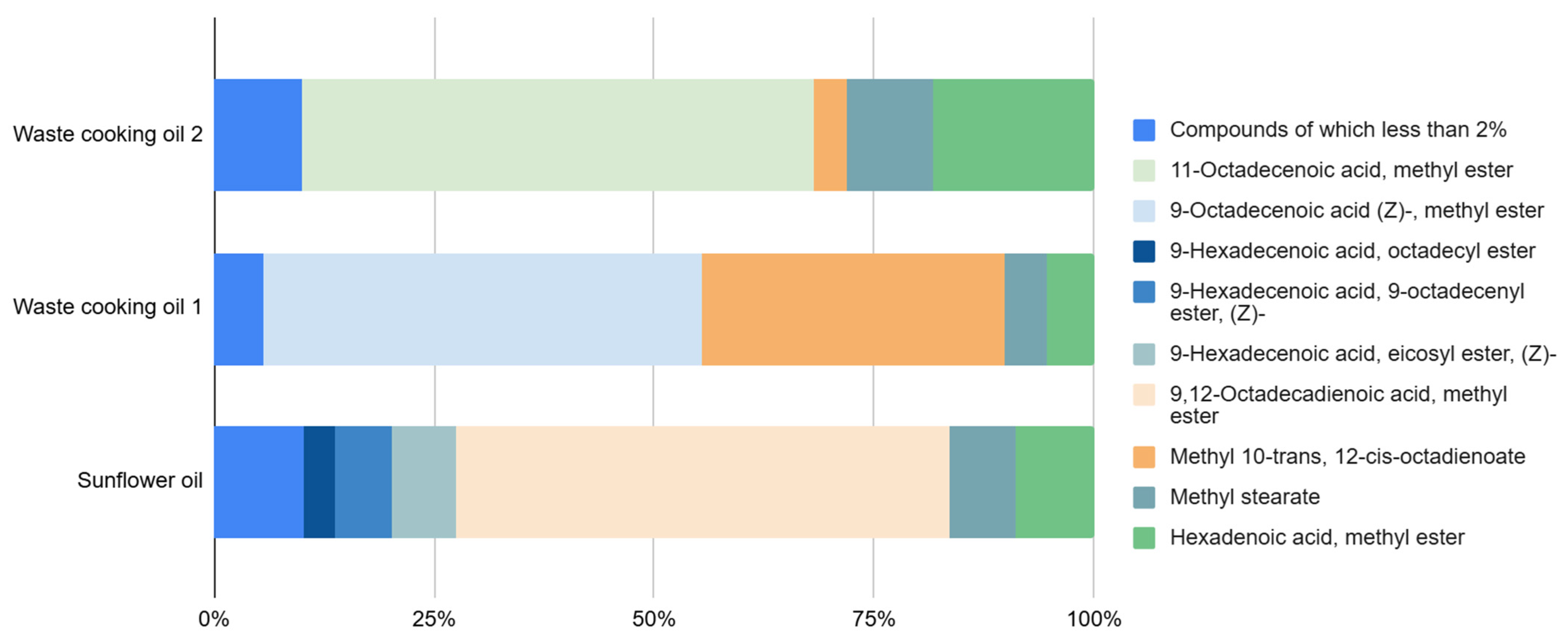
The FAME profile of the refined sunflower oil was predominantly composed of methyl esters of linoleic, palmitic, stearic, and palmitoleic acids, with specific abundances of 56.19% (9,12-octadecadienoic acid), 9.07% (hexadecanoic acid), 7.36% (octadecanoic acid), and 16.86% (9-hexadecenoic acid), respectively.
The WCO from the first restaurant chain (Sample 1) primarily contained methyl esters of oleic, 10,12-linoleic, and palmitic acids, constituting 49.93% (cis-9-octadecenoic acid), 33.67% (10-trans,12-cis-octadecadienoic acid), and 6.28% (hexadecanoic acid) of the total profile, respectively.
In contrast, the WCO from the second restaurant chain (Sample 2) mainly comprised methyl esters of vaccenic, palmitic, and stearic acids, with measured contents of 58.89% (11-octadecenoic acid), 18.99% (hexadecanoic acid), and 9.51% (octadecanoic acid), respectively.
3.2. Analysis of the Ester-Phase Biofuel Additives from 4 h Transesterification
For the initial experimental series, transesterification was performed on three distinct vegetable oil feedstocks. Based on literature indicating a four-hour duration as optimal [
52,
53], this reaction time was employed for all samples. The product mixtures were subsequently allowed to separate into ester and glycerol phases over a 24 h period.
The physicochemical properties of the synthesized ester phase were determined according to the procedures outlined in the Methodology section. The analysis revealed key fuel properties: a kinematic viscosity of 2.0–2.6 mm2/s, a density of 848–858 kg/m3, and a copper strip corrosion classification of Class 1 for all samples.
Chromatographic analysis revealed that the bio-additive (ester phase) synthesized from sunflower oil consisted of 91.79% FAEEs, 5.3% FFAs, and 2.89% other compounds, including alkanes and alcohols. The composition was dominated by ethyl linoleate (9,12-octadecadienoic acid ethyl ester) at 49.27% and ethyl oleate (9-octadecenoic acid ethyl ester) at 33.64%.
Chromatographic analysis of the bio-additive derived from waste cooking oil (Sample 1) indicated a composition of 94.19% esters, 1.72% acids, and 4.11% other compounds, including alcohols and a benzene derivative. The ester fraction predominantly comprised ethyl linoleate (31.63%), methyl linoleate (14.70%), ethyl oleate (29.44%), and ethyl stearate (8.50%).
The ester phase synthesized from the second waste oil sample (Sample 2) comprised 100% esters. The ester profile was dominated by ethyl oleate (73.01%) and ethyl palmitate (17.91%).
Given that synthesis conditions must be optimized for each specific feedstock, a subsequent series of experiments was conducted using waste cooking oil from fast-food chain No. 2 (Sample 2), with the reaction time as the variable parameter.
3.3. Properties of the Ester Phase from Time-Varied Syntheses
Further investigations were carried out on a second waste oil sample, with the reaction duration varied from 2 to 7 h in 0.5 h intervals. To address incomplete phase separation observed previously—whereby acidic impurities and by-products had not fully migrated to the glycerol layer within 24 h—the separation time was increased to seven days.
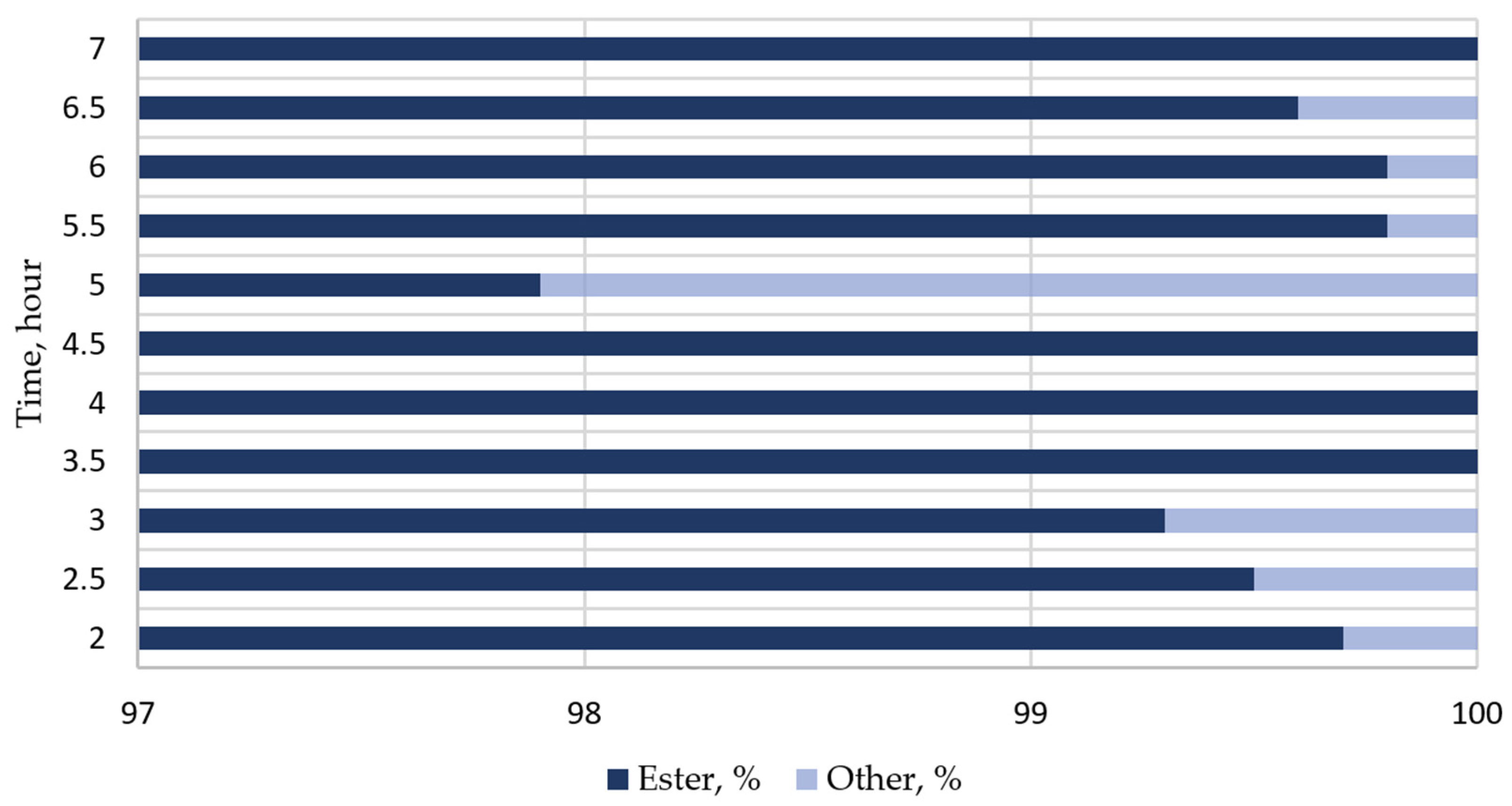
Chromatographic analysis of the synthesis products revealed a high ester content, varying from 97.77% to 100% across the different reaction durations (
Figure 3). An optimal yield of 100% was attained within a reaction window of 3.5 to 4.5 h. In contrast, the lowest purity of 97.77% was recorded after a 5.5 h synthesis.
The synthesized mixtures were numbered from 1 to 11, corresponding to reaction times from 2 to 7 h in 30 min increments.
The composition of Sample 1 was dominated by ethyl oleate (51.94%) and methyl 9-cis,11-trans-octadecadienoate (38.87%). Sample 2 primarily contained ethyl oleate (47.97%), butyl 9-cis,11-trans-octadecadienoate (31.00%), and ethyl palmitate (12.47%). Similarly, Sample 3 was chiefly composed of ethyl oleate (40.55%), methyl 10-trans,12-cis-octadecadienoate (39.37%), and ethyl palmitate (14.33%). Sample 4 consisted of 75.79% ethyl oleate and 15.95% ethyl palmitate. Sample 5 contained 73.01% ethyl oleate and 17.91% ethyl palmitate. Sample 6 exhibited a more diverse profile, comprising 51.58% ethyl oleate, 22.98% 9-cis,11-trans-octadecadienoate, and 17.50% ethyl palmitate. Sample 7 contained 64.44% ethyl oleate and 13.01% ethyl palmitate. Sample 8 was composed of 73.01% ethyl oleate and 17.29% ethyl palmitate. Sample 9 consisted of 69.79% ethyl oleate and 19.29% ethyl palmitate. Sample 10 was composed of 73.01% ethyl oleate and 17.98% ethyl palmitate. Sample 11 contained 76.63% ethyl oleate and 17.73% ethyl palmitate.
The chemical profile of a product from a 6.5 h reaction (Sample 10) is presented in
Table 1 as a representative case.
The analysis reveals distinct trends in the ester composition across the synthesis time series. Ethyl palmitate and ethyl stearate were ubiquitous, detected in all samples. Ethyl oleate was also present in nearly all cases, with the exception of Sample 1.
The concentrations of these esters exhibited clear temporal patterns. The content of ethyl stearate increased from 2.5% to a maximum of 9.51% in Sample 9 (6 h synthesis). Similarly, ethyl palmitate increased from 5.76% to a maximum of 19.29%, also peaking in Sample 9. In contrast, ethyl oleate demonstrated a substantial increase from 12.47% to a maximum of 76.73% in Sample 11 (7 h synthesis).
Furthermore, a notable compositional shift was observed. Samples 1 through 3 contained significant quantities of linoleic acid trans-isomer esters (reaching up to 39.37% in Sample 3). However, these compounds were completely absent from Sample 4 onwards.
3.4. Properties of the Glycerol Phase from Time-Varied Syntheses
The glycerol phases obtained from the syntheses detailed in
Section 5.3 were analyzed. A clear inverse relationship was observed between the ester and glycerol content over time. The ester concentration decreased from 35.16% to 13.49%, reaching a minimum of 8.13% in Sample 10 (6.5 h synthesis). Conversely, the glycerol content increased from 45.79% to 86.51%, achieving a maximum of 89.95% in the same sample.
Furthermore, organic acids were detected in several early and mid-stage samples (1–4, 7–8), with their concentration diminishing over the reaction series. Trace amounts of squalene were identified in Samples 7 and 8, and various alcohols were present in Samples 1, 3, 6, and 10.
All analyzed glycerol phase samples contained ethyl palmitate. Its concentration exhibited a general decreasing trend over time, from 14.96% to 2.1%, with a minimum of 1.34% observed in Sample 10. A notable, sharp decrease in ethyl palmitate content occurred between the 3.5 h and 4 h synthesis marks. Prior to this interval, the concentration remained high (13.62–14.96%), but it dropped abruptly to 4.28% at the 4 h mark and subsequently stabilized at a lower range of 1.34–5.72% for the remainder of the reactions.
The presence of linoleic acid and its derivatives in the glycerol phase showed a distinct temporal evolution. Free linoleic acid was detected in Samples 1, 2, and 4 at concentrations of 15.80%, 27.28%, and 6.23%, respectively. In Samples 5 through 9, the dominant form shifted to ethyl linoleate, with concentrations ranging from 4.28% to 5.68%. Sample 6 was an exception within this group, containing only 1.06% ethyl linoleate. Notably, linoleic acid and its esters were absent in all subsequent samples (10 and 11).
Ethyl oleate was detected in the glycerol phase of Samples 1, 3, 5, 7, 8, and 11. For most of these samples, its concentration ranged from 8.81% to 13.68%, with the maximum value observed in Sample 1 (2 h synthesis) and the minimum in Sample 3 (3 h synthesis). A notable exception was Sample 8 (5.5 h synthesis), where the ethyl oleate content deviated significantly from this range, measuring only 3.96%.
Trace amounts of specific esters and dioxane compounds were identified in the glycerol phase. Ethyl octanoate (caprylate) was detected in nearly all samples, with concentrations ranging from 0.43% to 0.93%; it was absent only in Sample 4. Ethyl octadecanoate (stearate) was found exclusively in the later samples (9, 10, and 11) at levels of 0.47%, 0.93%, and 0.69%, respectively.
Additionally, dioxane derivatives were present in Samples 6, 8, 9, and 10. Samples 6, 9, and 10 contained 1,4-dioxane-2,6-dimethanol at 3.13%, 2.05%, and 1.90%, respectively, while Sample 8 contained 2.14% of a dimethyldioxane isomer.
Table 2 exemplifies the glycerol phase composition with data from Sample 10 (6.5 h synthesis).
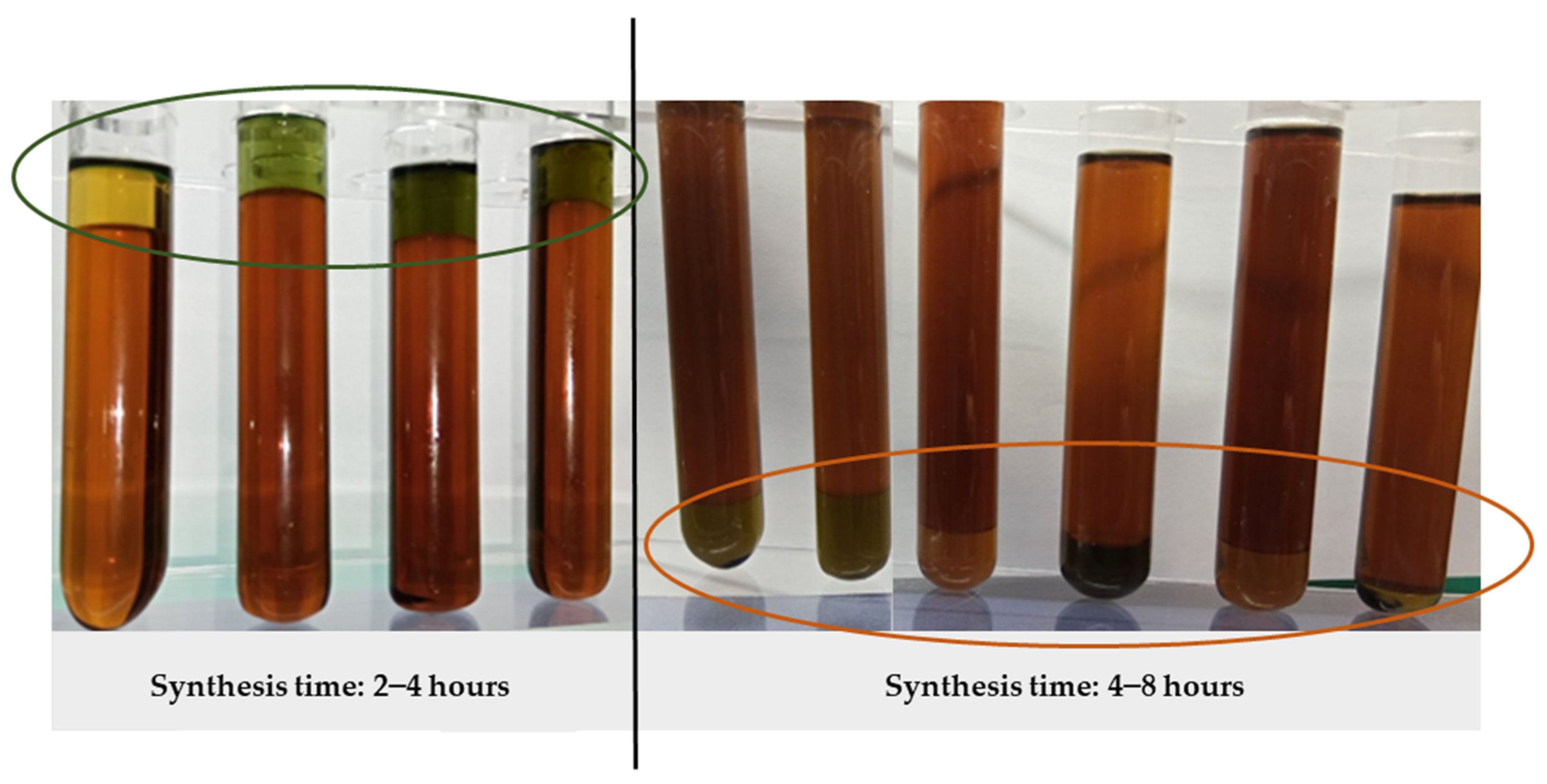
A phase inversion was observed during the settling process. In Samples 1–4, the ester phase settled below the glycerol phase. Beginning with Sample 5, this process reversed, with the ester phase forming on top of the glycerol phase and settling after separation (
Figure 4).
An additional notable observation was the color evolution of the glycerol co-product, which shifted from an orange to a green hue, as illustrated in
Figure 5.
The total ester yield was determined by analyzing both the ester and glycerol phases post-synthesis.
4. Discussion
4.1. Transesterification Reaction
As established by the preceding data, the vegetable oil feedstocks are composed of mixed triglycerides, primarily of linoleic, oleic, and linolenic acids. Chromatographic analysis (
Table 1 and
Table 2) confirms that derivatives of stearic (CH
3(CH
2)
16COOH) and palmitic (CH
3(CH
2)
14COOH) acids are also principal constituents. The compositional data for both the oils and the resulting bio-additives were determined by gas chromatography–mass spectrometry (GC-MS), a process which involved decomposition of triglycerides into monoglycerides.
Transesterification of triglycerides with alcohols (R-OH) produces fatty acid monoalkyl esters and glycerol. While alkaline catalysts (e.g., NaOH, KOH) confer higher reaction rates than acid catalysts (e.g., HCl, H2SO4), they also promote saponification. This side reaction reduces the final ester yield and increases catalyst consumption.
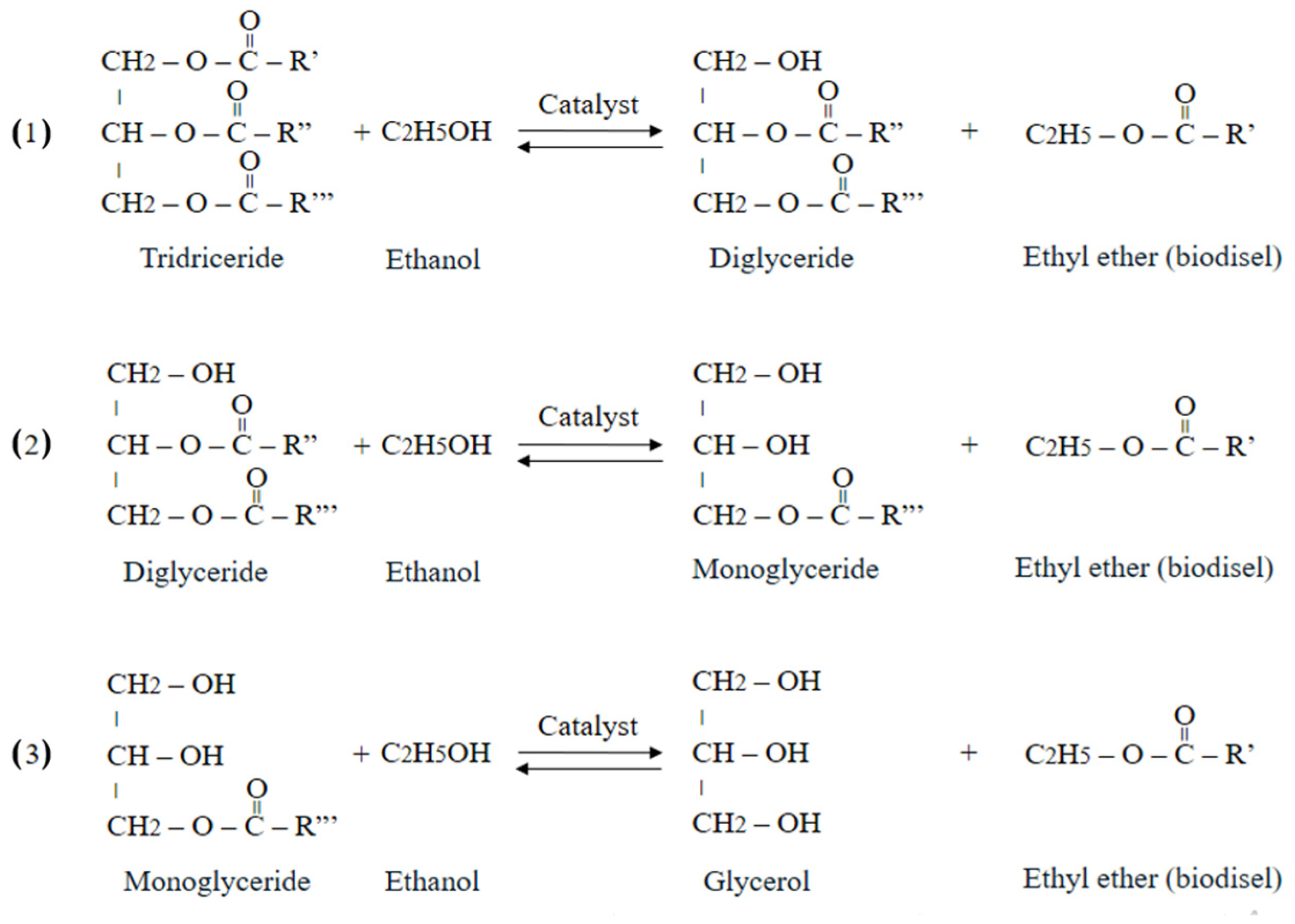
Transesterification is a three-step, reversible process (
Figure 6), involving the sequential conversion of triglycerides to diglycerides, monoglycerides, and finally glycerol. An excess of alcohol is used to drive this equilibrium towards the maximum yield of fatty acid esters [
46].
At the onset, the reaction mixture is a two-phase system, as ethyl alcohol and vegetable oil are immiscible. The catalyst, dissolved solely in the alcohol phase, is spatially separated from the triglyceride feedstock. This heterogeneity introduces significant complexity; the intrinsic chemical reaction is coupled with the physical processes of reagent supply to the interface and interphase mass transfer via diffusion. As a result, the rate-limiting step for the overall process can be either chemical (kinetic regime) or physical (diffusion regime).
The kinetic behavior and efficacy of acid catalysts in transesterification are well-documented. According to recent studies, the reaction follows first-order kinetics with respect to the catalyst when using either Lewis or Brønsted acids [
54,
55]. For Brønsted acids specifically, catalytic efficiency is directly influenced by acid strength.
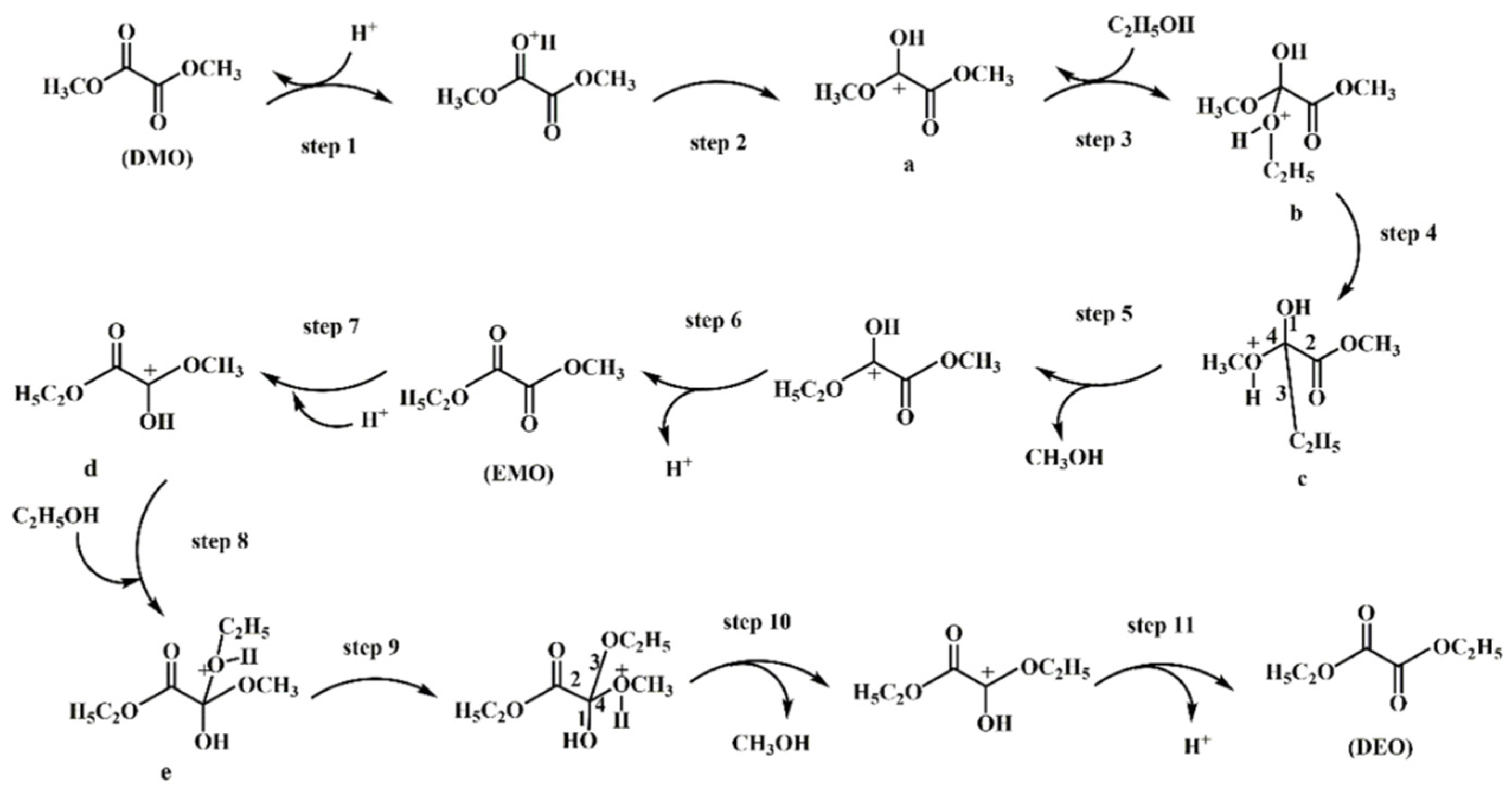
The reaction, using diethyl oxalate as a model compound and Brønsted acid, is presented in
Figure 7.
During the reaction, oxygen is initially protonated on the carbonyl group of the ester, leading to the formation of the intermediate carbocation a (Steps 1, 2), which increases the positive charge of the carbonyl carbon. Next, ethyl alcohol attacks the carbocation as a nucleophile, while oxygen in C
2H
5OH will receive an electron from the carbon atom, forming intermediate compound b (Step 3). Then the unstable intermediate compound b undergoes rearrangement with a positive charge, which is accompanied by the transfer of H, to form an intermediate compound c (Step 4). The unstable C-O
+ bond easily sequentially gets rid of CH
3OH and H+ (Steps 5 and 6). The removed proton H
+ continues to combine with the oxygen of the carbonyl group to form the intermediate carbocation d (Step 7). The carbocation is nucleophilically replaced by C
2H
5OH to form the intermediate compound e (Step 8). Next, the intermediate compound e undergoes transformations similar to those of carbocation b to form the target product (Steps 9–11) [
54].
Table 3 shows the comparative characteristics of the parameters of the transesterification process.
4.2. Compositional Analysis of Feedstocks and Products
The data indicate a successful transesterification, evidenced by a 22-fold decrease in viscosity and a lower density in the product stream compared to the raw oils. This confirms the effective replacement of glycerol with alcohol in the triglyceride molecules, enabling the use of the synthesized esters as a viable fuel component.
The composition of the synthesized bio-additives varied significantly with the feedstock. The primary esters in the product derived from sunflower oil and the first waste oil sample (Sample 1) were ethyl linoleate and ethyl oleate. In contrast, the product from the second waste oil sample (Sample 2) was predominantly composed of ethyl oleate and ethyl palmitate.
The alteration in fatty acid composition is attributed to thermal effects, specifically the positional isomerization of double bonds that occurs at elevated temperatures. Furthermore, the transformation is corroborated by spectroscopic data, which show a characteristic redistribution of electron density upon the conversion of triglycerides to esters.
Furthermore, the ester fraction retained within the glycerol phase primarily consists of unreacted heavy intermediates, namely, di- and monoglycerides. Their higher molecular weight and viscosity prevent their partition into the less dense primary ester phase during separation.
A distinct color transition was observed in the glycerol phase, shifting from yellow to green across the sample series. As visually documented in
Figure 5, Samples 1, 7, 8, and 9 exhibited the most pronounced yellow coloration, with Samples 7 and 9 being particularly intense. This yellow hue is attributable to the presence of linoleic acid esters. Linoleic acid itself can impart a yellow color, and its esters are known to exhibit less intense yellow to colorless. During the initial 4.5 h, the glycerol phase exhibited a greenish tint, which subsequently shifted to a more pronounced yellow after 5 h of reaction.
This color transition is linked to the changing composition of the glycerol phase. The initial green hue may be attributed to the presence of unreacted alcohols and residual chlorophyll derivatives from the crude vegetable oil. The subsequent development of a yellow color coincides with the accumulation of esters, particularly those of conjugated linoleic acid, which are known chromophores. The partial glycerides (di- and monoglycerides) present in the early stages appear to have a lesser contribution to the coloration compared to the free esters that accumulate later. Throughout the initial 4.5 h period of the synthesis, residual di- and triglycerides of linoleic acid are liberated into the glycerol phase. These compounds exhibit a comparatively minor influence on the chromatic alteration of the mixture. Subsequent to the five-hour mark of the synthesis, the liberation of linoleic acid esters occurs, which possess a more pronounced yellow hue and consequently exert a more substantial effect on the system’s colorimetric shift. The observed green coloration of the glycerol phase during the initial stages of the reaction is potentially attributable to the presence of unreacted and residual alcohol constituents.
Consequently, the observed reduction in linoleic acid concentration, the concomitant increase in its ester derivatives, and the distinct chromatic shift in the glycerol phase collectively indicate an inflection point in the reaction kinetics occurring at approximately four hours. Beyond this juncture, the majority of the alcohol substrate has undergone esterification with triglycerides, and the resultant reaction products consist predominantly of fatty acid esters (FAEs) rather than partial glycerides.
Prior to discussing the reaction progression, however, it is necessary to address the phenomenon of glycerol phase separation, initially observed in the upper stratum of the mixture and subsequently in the lower stratum. As evidenced by
Figure 6 and
Figure 7 for samples 1–4 (corresponding to a reaction time of up to 3.5 h), the glycerol phase initially segregates in the upper region of the product matrix before transitioning to the bottom. This phase inversion is attributable to a substantial alteration in both the glycerol content and the compositional profile of the synthesized esters. Specifically, a precipitous increase in glycerol concentration occurs within this timeframe, rising from 45.2% at 2.5 h to 77.37% at 3.5 h. This significant shift in composition consequently induces marked changes in the average molecular weight and the density of the mixture. In the second scenario, the ester composition undergoes a distinct transformation. Di- and triglycerides are supplanted by monoglycerides and FAEs. Following four hours of synthesis, the synthesized FAEs migrate from the glycerol-rich phase to the ester-rich phase. Concurrently, heavier reaction products persist within the glycerol fraction. These dual processes induce a progressive increase in the density of the heavy, glycerol phase. Upon reaching a critical threshold, the density of the glycerol phase surpasses that of the ester phase. Consequently, a phase inversion occurs, displacing glycerol from the top to the bottom of the reaction vessel.
4.3. Temporal Dynamics of Ester Phase Separation in Synthesis
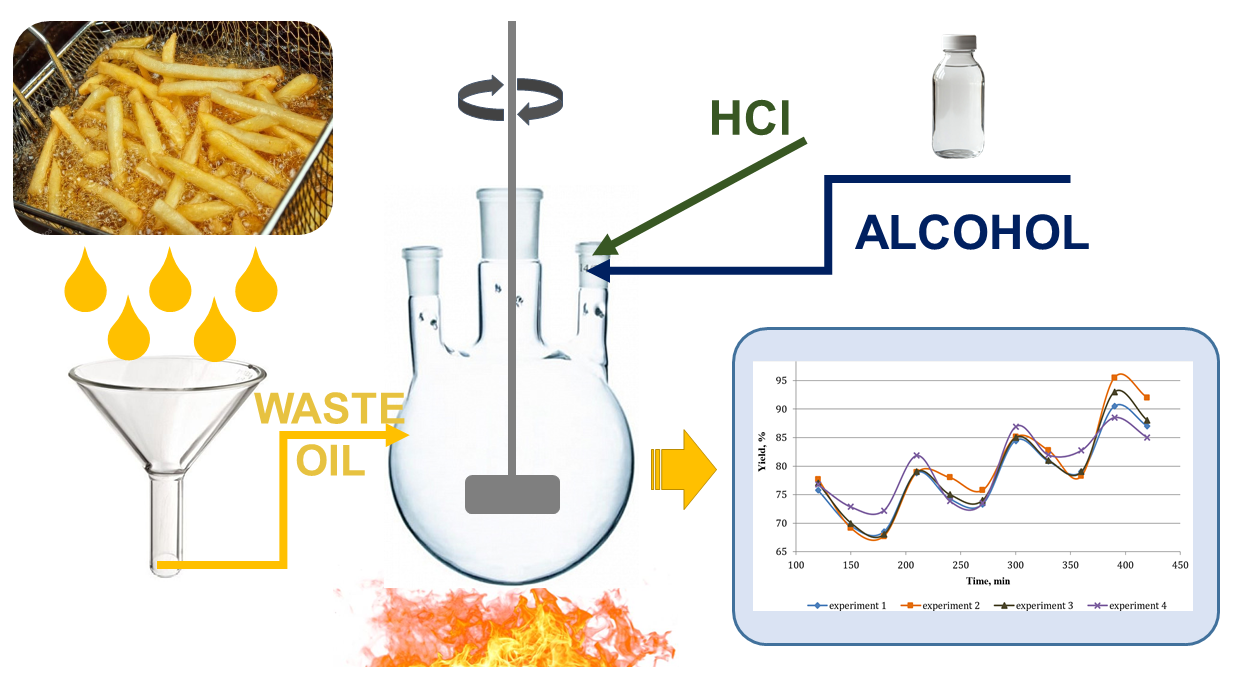
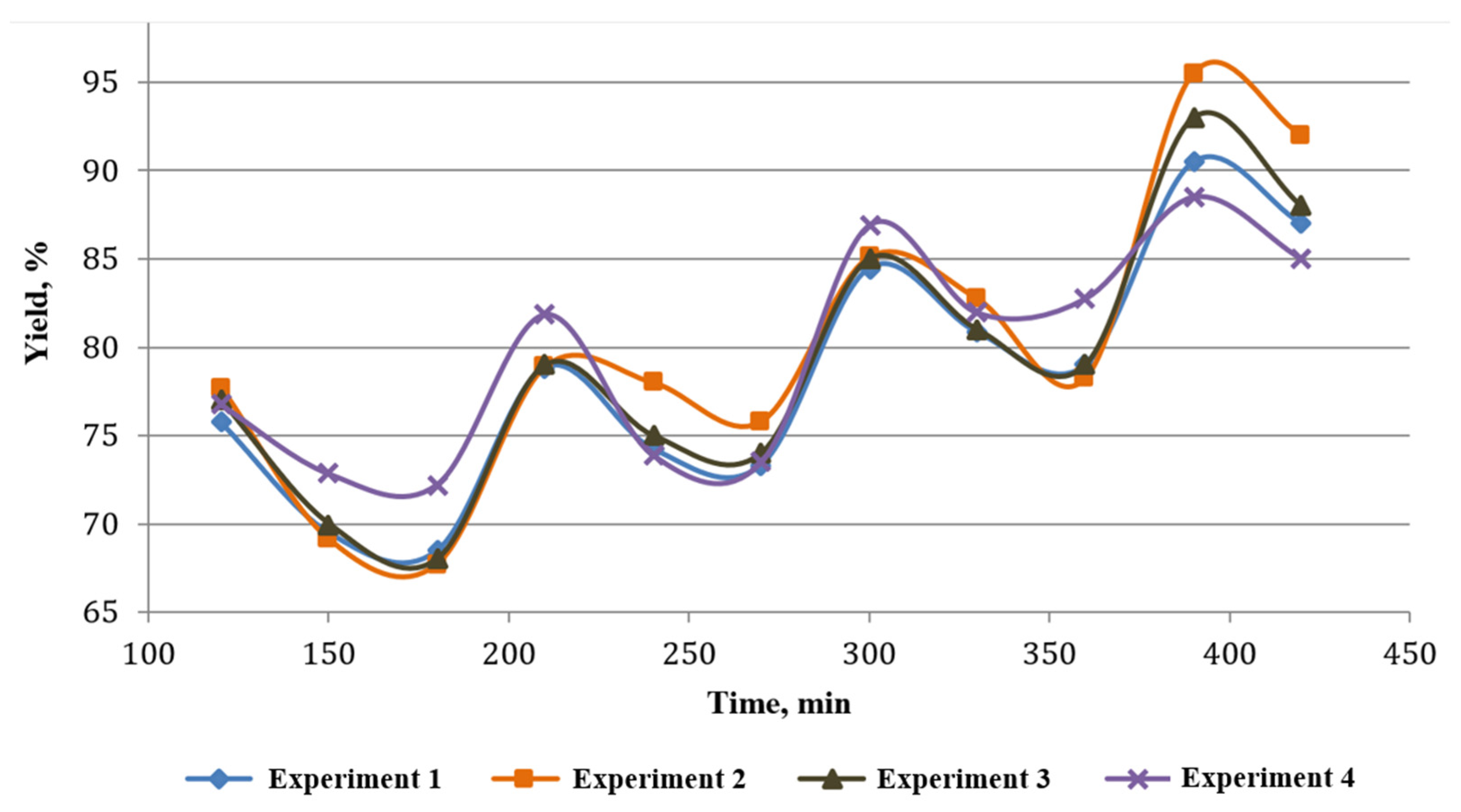
To quantify the temporal dynamics of ester phase formation, the transesterification of spent edible oil was monitored over a period of 120 to 420 min. The process was replicated quadruply at half-hour intervals, yielding 11 distinct time points. The resultant data on ester phase liberation were consolidated into a composite plot (
Figure 8), illustrating its yield as a function of synthesis duration.
The yield dependence exhibits a periodic oscillation with a 90 min cycle. This period consists of a 60 min interval dominated by the reverse reaction, followed by a 30 min interval where the forward reaction prevails. The overall function displays a positive trend, indicating that prolonged synthesis time generally increases biodiesel yield. However, the establishment of chemical equilibrium and the prevalence of the reverse reaction must be considered. During the study, more than 100 syntheses were carried out, while external factors that could affect the yield of esters were changed in part of the series of experiments. These factors included temperature, type of catalyst, settling time, etc. When the parameters were changed, the nature of the dependence remained unchanged, which allowed us to make an assumption about the oscillatory type of the reaction. This article presents the most revealing results from all the experiments. Data from the four experimental series were averaged to plot the relationship between ester phase yield and synthesis time (
Figure 9).
The respective concentrations of esters and glycerol serve as indicators of reaction completeness. A high yield signifies the near-total conversion of triglycerides into glycerol and FAEE. The maximum ester yield was observed in Sample 10, corresponding to a synthesis duration of 6.5 h. However, Sample 11 (7 h) exhibits a marked decrease in glycerol concentration concomitant with a sharp increase in ester content. This anomalous profile suggests the onset of the reverse reaction, where glycerol and esters recombine to form glycerides.
Reaction progression can be monitored by analyzing the composition of the resultant ester and glycerol phases. For instance, Sample 11 consists predominantly of glycerol and esters, indicating a high degree of triglyceride conversion. This composition suggests the system is approaching a state of chemical equilibrium, after which the reverse reaction—the re-esterification of glycerol and esters into glycerides and alcohol—becomes significant.
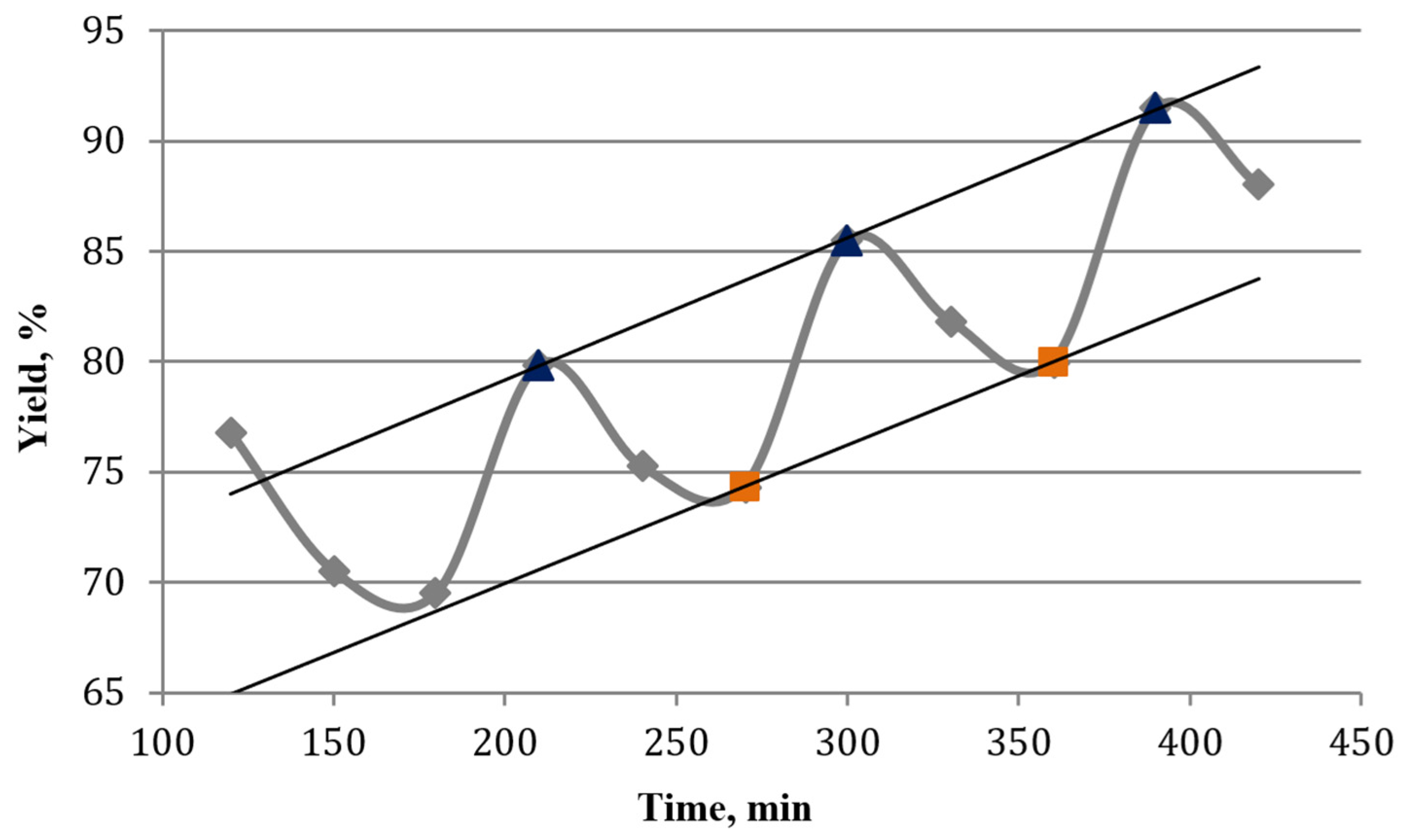
The stability threshold of the technological process can be determined from the envelope of the oscillatory function. According to the maximum and minimum theorem, a piecewise linear confidence interval was constructed for the graph. In
Figure 9, the data points used to construct these boundaries are highlighted in blue and orange. The resulting stability thresholds form two parallel lines, defining a confidence interval. The process is considered stable when the ester yield fluctuation remains within this 10% interval. The initial data point at 120 min falls outside this interval, indicating a higher margin of error and lower reliability for this measurement.
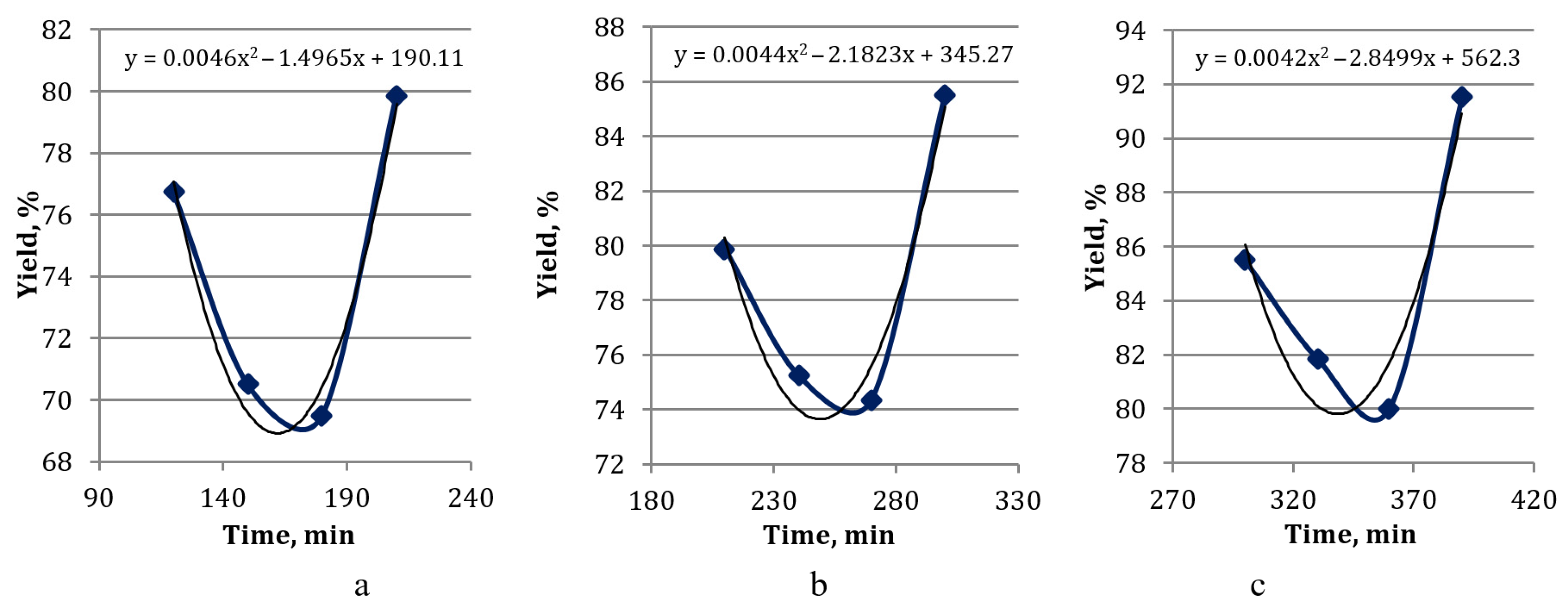
The yield increase exhibits an oscillatory pattern, where each period (defined as the interval between successive maxima) conforms to a parabolic trend, accurately described by a quadratic function. The data from
Figure 9 were segmented into three distinct periods. The corresponding quadratic dependencies for each period are presented in
Figure 10a–c.
The parabolic regressions exhibit consistent curvature, as indicated by the similar quadratic coefficients (0.0046, 0.0044, 0.0042). This consistency suggests an underlying mechanistic similarity across the three temporal periods.
The parabolas are displaced along the x-axis. The shift between successive periods (a→b and b→c) is quantified by coefficients of 0.685 and 0.667, respectively, indicating a relatively uniform sequential displacement. However, this displacement relative to the y-axis is non-linear. This non-linearity is attributed to a declining reaction rate, likely caused by the depletion of initial reactants as the synthesis progresses.