Article

Experimental Investigation of Temperature Distribution and Evolution in Hot Recycled Asphalt Mixtures with Different Reclaimed Asphalt Pavement Contents

1
College of Civil and Transportation Engineering, Hohai University, Nanjing 210098, China
2
Key Laboratory of Road and Bridge Detection and Maintenance Technology of Zhejiang Province, Hangzhou 311121, China
*
Author to whom correspondence should be addressed.
Recycling 2026, 11(1), 21; https://doi.org/10.3390/recycling11010021
Submission received: 11 December 2025 / Revised: 31 December 2025 / Accepted: 10 January 2026 / Published: 19 January 2026
(This article belongs to the Special Issue Recycled Materials in Sustainable Pavement Innovation)

Abstract

Temperature homogeneity assumes a crucial role in the manufacture of asphalt mixtures due to its impact on mechanical formation and mixing homogeneity. The existence of reclaimed asphalt pavement (RAP) exacerbates its impact on temperature inhomogeneity. To address this, the RAP contents of 20%, 40%, and 60%, combined with RAP preheated temperatures of 353 K, 373 K, and 393 K, were taken into consideration to examine the thermal transition and evolution of temperature for the recycled asphalt mixtures in the mixing. Thermal images captured within the range of 30 s to 120 s were used to monitor the temperature evolution of the recycled asphalt mixtures during the mixing. To quantitatively assess the level of thermal non-uniformity, a Relative Thermal Equilibrium Temperature Index (RETI) was introduced. This index reflects the degree of deviation from ideal thermal equilibrium within the recycled mixtures. Based on the RETI calculation, complete temperature homogeneity cannot be attained until the end of the mixing of hot recycled asphalt mixtures. However, a prolongation of the mixing time or an elevation in the RAP preheated temperature can expedite the thermal equilibrium process of recycled asphalt mixtures. Additionally, the RAP contents also exerted a crucial influence on the thermal equilibrium process of the recycled asphalt mixtures.

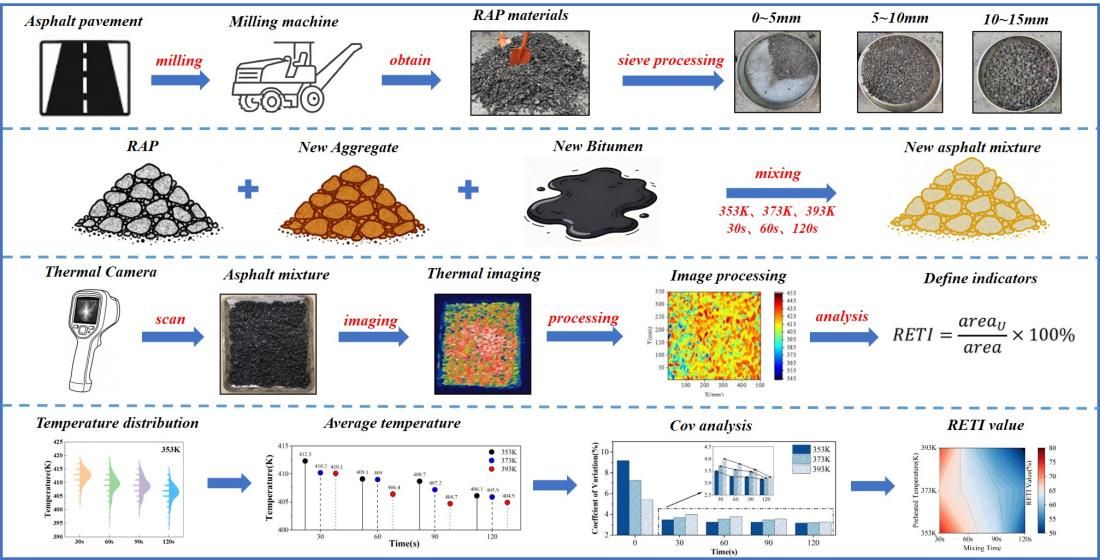
Graphical Abstract

1. Introduction

Pavement construction entails the consumption of a considerable quantity of natural aggregates and bitumen binder. The utilization of reclaimed asphalt pavement (RAP) has been demonstrated as an efficient means for resource conservation, concurrently offering substantial environmental and economic benefits [1,2,3]. However, the percentage of RAP utilization is usually limited to 20% to 30% in the case of poor-quality recycled asphalt mixtures [4,5]. Hence, it is an important issue currently to increase the amount of RAP under the premise of ensuring the performance of recycled asphalt mixtures in the field of pavement recycling.
The inhomogeneity issue of hot recycled asphalt mixtures is thus attracting the interest of numerous researchers, which is regarded as a route to enhance the mechanical properties and durability of the pavement during the service period [6,7,8]. The inhomogeneity of asphalt mixtures refers to the propensity of aggregates to agglomerate within the asphalt mixture due to interactions between the aggregates and the asphalt binder during the mixing process. It results in incomplete bonding between the aggregates and the asphalt binder, thereby contributing to the non-uniformity of the mixture. Zhu et al. [9] investigated the inhomogeneity of aggregates in a recycled asphalt mixture with a 50% content of RAP; the result showed that increasing the preheated temperature and prolonging the mixing time could improve the dispersion of aggregates and enhance the mechanical properties of the mixture. Yuan et al. [10] correlated aggregate uniformity and cracking resistance based on the force chain analysis of the aggregate skeleton in asphalt mixtures. Fan et al. [11] studied the properties of a recycled asphalt mixture containing refined RAP. It was suggested that after refined processing, the agglomeration of aged asphalt binder was reduced, which effectively enhanced the overall performance of the recycled asphalt mixture.
The incorporation of RAP in asphalt mixtures causes an inhomogeneity issue due to the presence of RAP agglomeration. From a rheological perspective, asphalt mixtures exhibit pronounced viscoelastic behavior: the binder responds both viscously and elastically under loading, and its stiffness is strongly dependent on temperature and loading time. Therefore, the thermal state of the mixture directly governs not only the flow ability of the binder but also the stiffness and relaxation behavior of the pavement. Tang et al. [12] used digital image processing (DIP) technology to differentiate the meso-structures of recycled asphalt mixtures into virgin aggregate, RAP aggregate, and asphalt mortar. Liu et al. [13] studied the influence of mixing conditions on the inhomogeneity of hot recycled asphalt, revealing that temperature was predominantly manifested in two respects: on the one hand, the variation in temperature led to a change in the viscosity of the asphalt binder, which enhanced the transformation rate of the particles to achieve a completely uniform distribution; on the other hand, temperature impacted the diffusion process between the RAP binder and new bitumen. Zhang et al. investigated the influence of mixing time, preheated temperature, and RAP moisture content on the degree of blending between a virgin binder and RAP binder. The result indicated that the mixing time or the preheated temperature should be prolonged and increased with a higher RAP content and a higher RAP moisture content, aiming to improve heat transfer between particles [14,15,16]. There has been an increasing amount of research on the thermal behavior and conduction of RAP. Coelho et al. [17] investigated thermal compaction as a strategy to stabilize mixtures composed exclusively of RAP, introducing the concept of a warm base. Miao et al. [18] studied the effect of temperature on the deformation performance of non-bonded granular materials (UGMs) mixed with recycled asphalt pavement (RAP) and raw aggregates based on single-stage repeated load triaxial (RLT) tests. Soleimanbeigi et al. [19] evaluated RAP as a base or embankment fill, and the results showed that compaction and compression at elevated temperatures increased the shear strength and reduced the compressibility and creep strain of the RAP specimens tested at room temperature.
The fundamental knowledge regarding the inhomogeneity of hot recycled asphalt mixtures has been explored from multiple perspectives. Nevertheless, few studies have concentrated on the temperature evolution of recycled asphalt mixtures, taking into account various production conditions such as RAP content, mixing time, and preheated temperature. Temperature equilibrium plays a critical role in ensuring the uniformity and durability of asphalt mixtures, which directly impacts their performance and longevity. Achieving temperature equilibrium during mixing can help optimize the mixing process, resulting in more sustainable and efficient asphalt pavement production. This study endeavors to investigate the evolution of temperature distribution and the thermal transition process within recycled asphalt based on experimental approaches employing an infrared thermal imaging device and digital image processing technology. However, limited attention has been paid to how the combined effects of RAP content, RAP preheating temperature, and mixing time govern the evolution of the temperature field during mixing. To address this gap, this study experimentally investigates the temperature pattern, distribution, and thermal transition in hot recycled asphalt mixtures with different RAP dosages using infrared thermal imaging and digital image processing. A quantitative indicator, the relative equilibrium temperature index (RETI), is proposed to characterize the degree of thermal non-uniformity. The working hypothesis is that increasing the RAP content and decreasing the RAP preheating temperature slows down the rate at which thermal equilibrium is reached, whereas longer mixing durations and higher RAP preheating temperatures can partially compensate for this effect.

2. Results and Discussion

2.1. Qualitative Analysis Based on Temperature Field Pattern

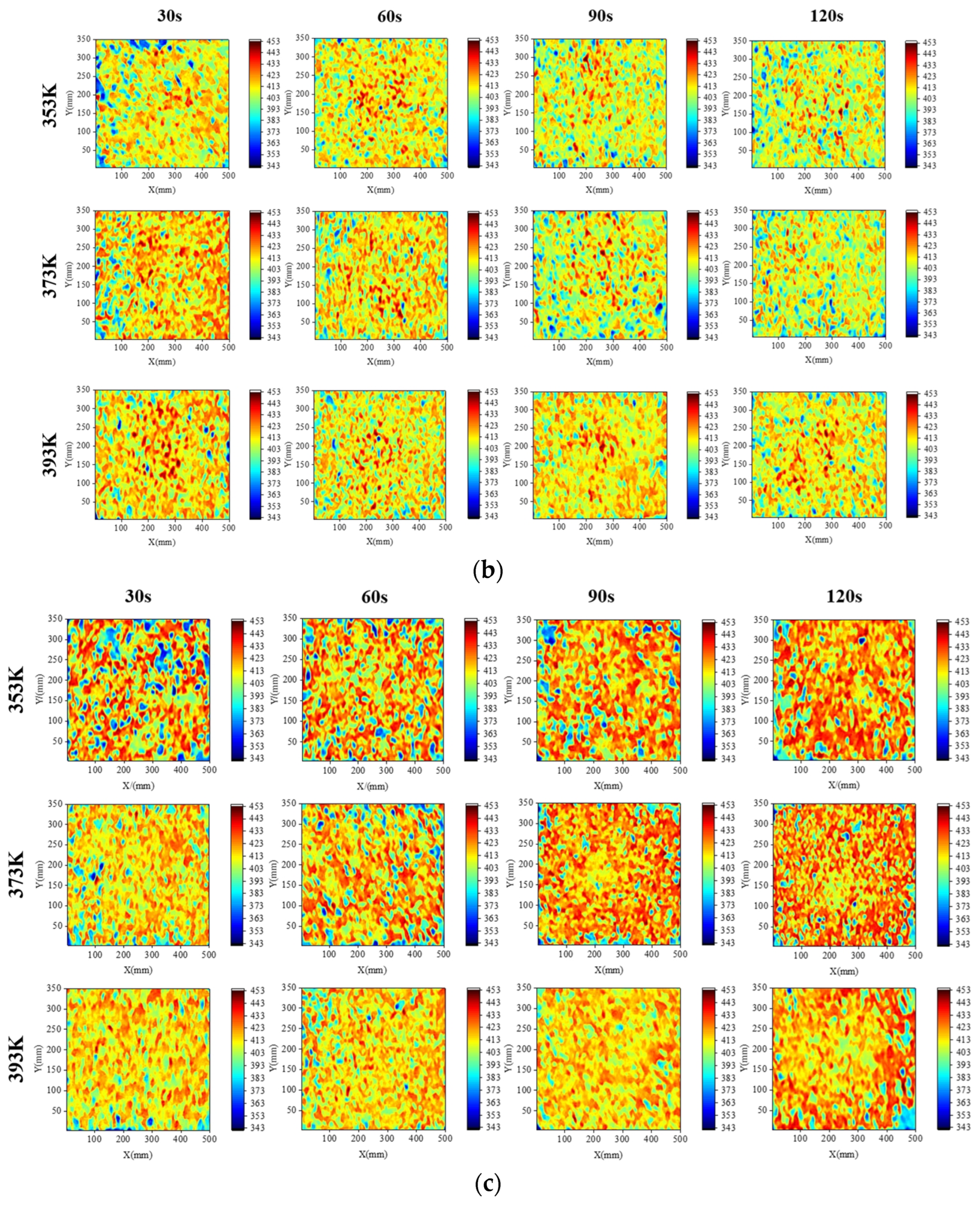
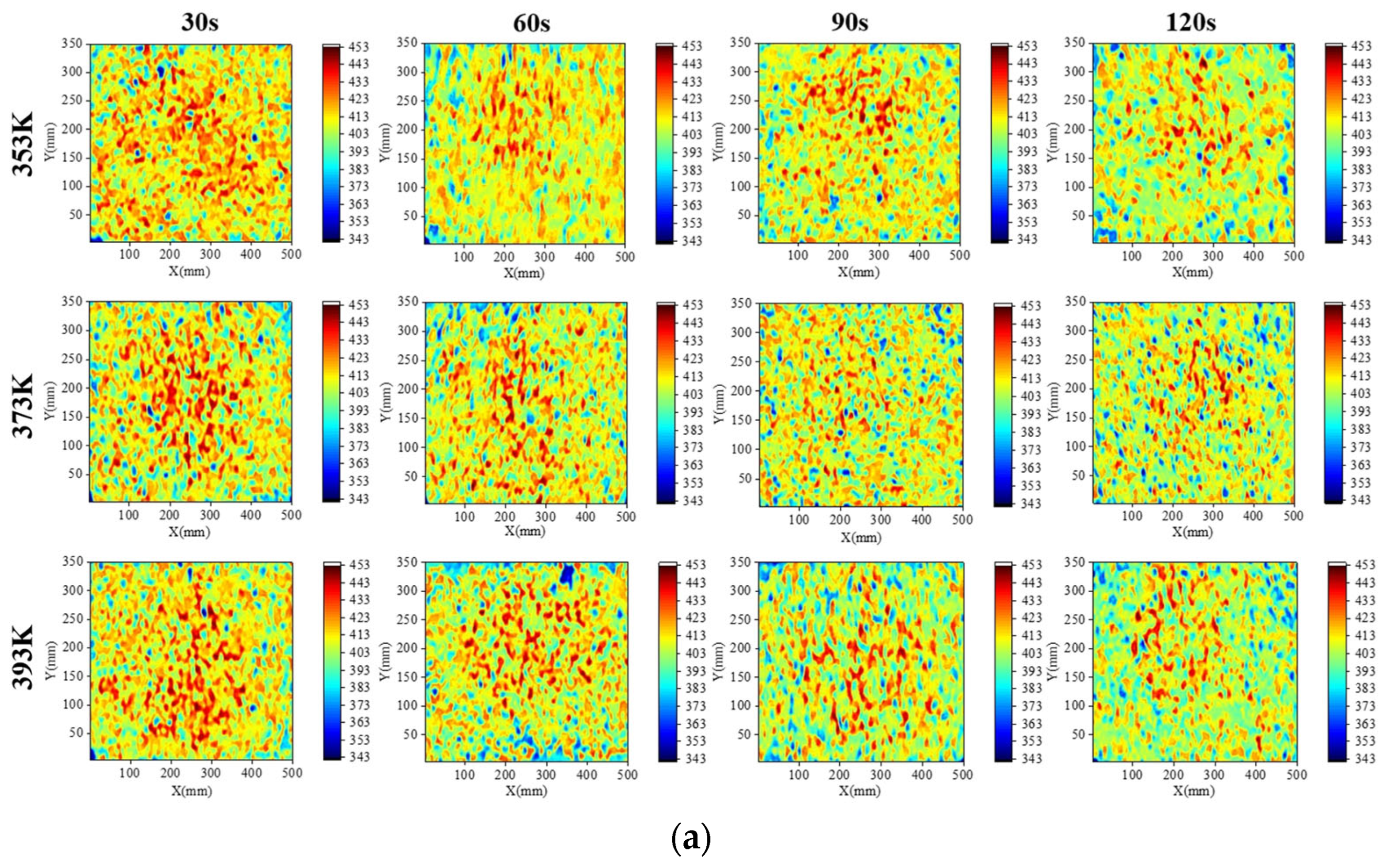
Figure 1 depicts the temperature field patterns of the recycled asphalt mixtures containing 20%, 40%, and 60% RAP materials, respectively. For each content, the recycled asphalt mixtures were mixed with RAP preheated at temperatures of 353 K, 373 K, and 393 K. Before mixing, the new aggregates were overheated up to 453 K to soften the RAP materials, while the new bitumen was preheated to 453 K, which was relevant to the equilibrium temperature. The thermal imaging results employed a chromatic scale ranging from azure (343 K) to crimson (453 K) to visualize temperature gradients.
It was evident that a prolonged mixing duration significantly increased thermal homogenization, as demonstrated by the expansion of intermediate-temperature zones (represented by green color). Nevertheless, even when the mixing time was extended to 120 s, partial high- or low-temperature particles could still be observed, which consistently indicated the non-equilibrated temperature field throughout the entire mixing process.
Notably, the RAP content played a significant role in the temperature field patterns. When the RAP content was 20%, the variation in the temperature field with different preheated temperatures (353 K, 373 K, 393 K) of RAP was negligible due to the substantial difference between the new materials and RAP. When the RAP content reached 40%, it was observed that the higher preheated temperature of RAP led to the expansion of the red color at a pixel level, which represented the high temperature, especially at the beginning of mixing. The temperature range of the 40% RAP content mixture after 120 s of mixing was 395 K to 413 K. When the preheating temperature was 373 K, the temperature distribution was most uniform, and the high temperature area was close to the ideal uniform state (50%). This change was quantitatively supported by the RETI calculation. In comparison with the 20% RAP content usage, it was apparent that the region of temperature at 30 s of mixing was considerably increased at 373 K and 393 K compared to that at 353 K.
In terms of the temperature field patterns of the recycled asphalt containing 60% RAP, a higher average temperature appeared. It signified that when the content of RAP materials increased to 60% in the recycled asphalt mixtures, a longer mixing duration was necessary to attain the equilibrium temperature, in contrast to the mixtures with 20% and 40% RAP contents. It was therefore proposed that the preheated temperature of RAP had an effect on the blending degree between the RAP and new aggregate, suggesting that a higher preheated temperature was required to expedite the transformation of the temperature field of the recycled asphalt mixtures from non-equilibrium to equilibrium with a large dosage of RAP.

2.2. Qualitative Analysis Based on the Temperature Distribution

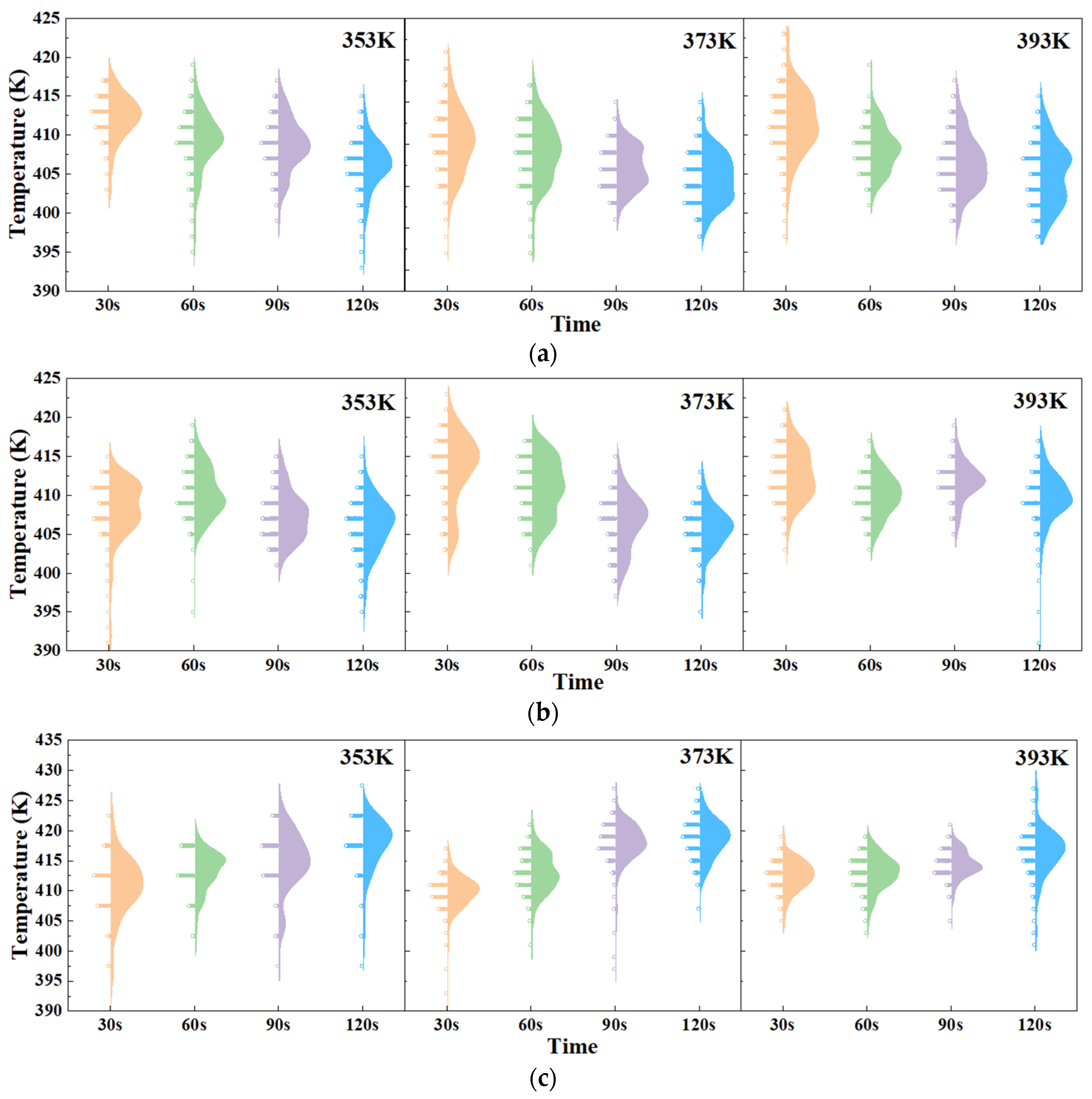
In addition to the visualization of the temperature field, a statistical analysis at the pixel level was accordingly conducted to further quantify the temperature distribution of the recycled asphalt mixtures in the mixing process, as shown in Figure 2.
When the RAP content reached 40%, the alterations in the temperature distribution were analogous to those of the 20% RAP content, demonstrating a minor shift from high temperature to lower within the mixing time, ranging from 30 s to 120 s, and the temperature range narrowed throughout the entire mixing process. At the initiation of mixing, the temperature distributions from the mixtures preheated at 353 K, 373 K, and 393 K did not show significant differences in the concentrated regions. However, as the mixing time increased, distinct gaps began to emerge between the distributions: higher preheating temperatures resulted in higher central concentrations, with the distribution narrowing as the temperature stabilized, and the temperature distribution gradually became more uniform. According to temperature image analysis, when using a preheating temperature of 373 K, the proportion of high-temperature areas was the highest, and the temperature uniformity was significantly better than that of the samples preheated at 353 K and 393 K. It was indicated that when the dosage of RAP was 40%, the preheated temperature influenced the ultimate equilibrium state of temperature, and a higher preheated temperature corresponded to a more homogeneous temperature field.
As the RAP content in the recycled asphalt mixture increased to 60%, the proportion of RAP materials surpassed that of the new material, and a significant change was manifested in the trend of temperature evolution. In contrast to the mixtures with 20% and 40% RAP contents, the temperature distribution tended to shift upwards with an increase in mixing time, indicating that the temperature within the mixture transitioned from the low to the high region. It is worth noting that a higher preheating temperature will result in significant temperature differences in the initial stage, but as the mixing time increases, the final equilibrium temperature tends to be consistent. A higher preheating temperature helps accelerate the temperature transfer process, reaching a higher temperature in a short period of time, but it has a relatively small impact on the final equilibrium temperature. This indicates that when the RAP dosage is 60%, the final equilibrium temperature of the mixture is not affected by the preheating temperature. The contribution of the preheating temperature to temperature evolution is to accelerate the temperature transfer process during the early mixing period.
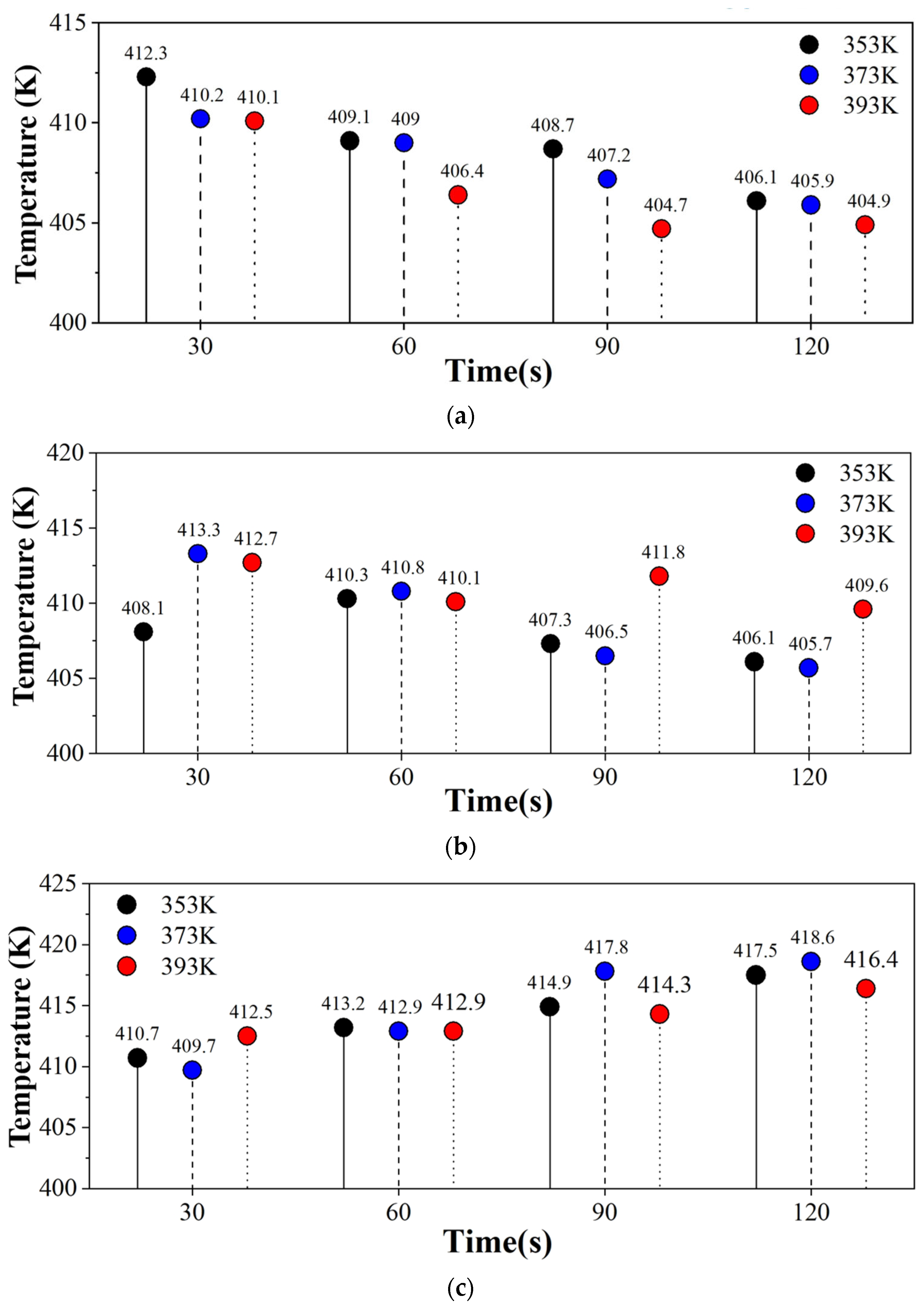
Figure 3 depicts the average temperature of the recycled asphalt. When the RAP content was 20%, the average temperature of the recycled asphalt tended to decline throughout the entire mixing process. It was noteworthy that the mixing process could be divided into two stages according to the decrease rate of the average temperature of the recycled asphalt.
The first stage ranged from 30 s to 60 s of mixing, succeeded by the second stage, spanning from 60 s to 120 s. For instance, the average temperature of the mixture preheated at 353 K decreased by 3.2 K from 30 s to 60 s of mixing, while the average temperature merely decreased by 3 K after another 60 s of mixing. In addition, the preheated temperature emerged as a crucial factor in determining the temperature evolution. It can be observed that the average temperature rose with a decrease in the preheated temperature concurrently. At 30 s of mixing, the average temperature of the mixture under the 353 K preheating temperature was 412.3 K, while the average temperatures of the mixtures under the 373 K and 393 K preheating temperatures were 410.2 K and 410.1 K, respectively. Even after 120 s of mixing, the average temperatures under the 353 K, 373 K, and 393 K preheating temperatures were 406.1 K, 405.9 K, and 404.9 K, respectively. It was revealed that the temperature equilibrium process could be expedited by elevating the preheated temperature of RAP materials.
When the RAP content reached 40%, the average temperature no longer strictly followed the decreasing trend with the mixing time. This can also be attributed to the blending process between the new bitumen and the RAP binder. As the mixing process advanced, the new bitumen with a relatively higher temperature would coat the RAP surface, thereby leading to an increase in the average temperature. Therefore, to ensure the average temperature of the recycled asphalt mixtures, extending the mixing time or increasing the RAP preheating temperature was indispensable in the case of a high RAP content. Nevertheless, the lowest average temperature was observed when the RAP preheating temperature was 373 K.
When the RAP content reached 60%, the average temperature rose with the extension of the mixing time. After 120 s of mixing, the average temperature of the mixture preheated at 393 K increased by 3.9 K, which was the lowest value among all cases of preheated temperatures. It was indicated that when the dosage of RAP materials reached 60%, a higher preheating temperature for RAP materials was beneficial for achieving the equilibrium state of the temperature of recycled asphalt during the mixing process.
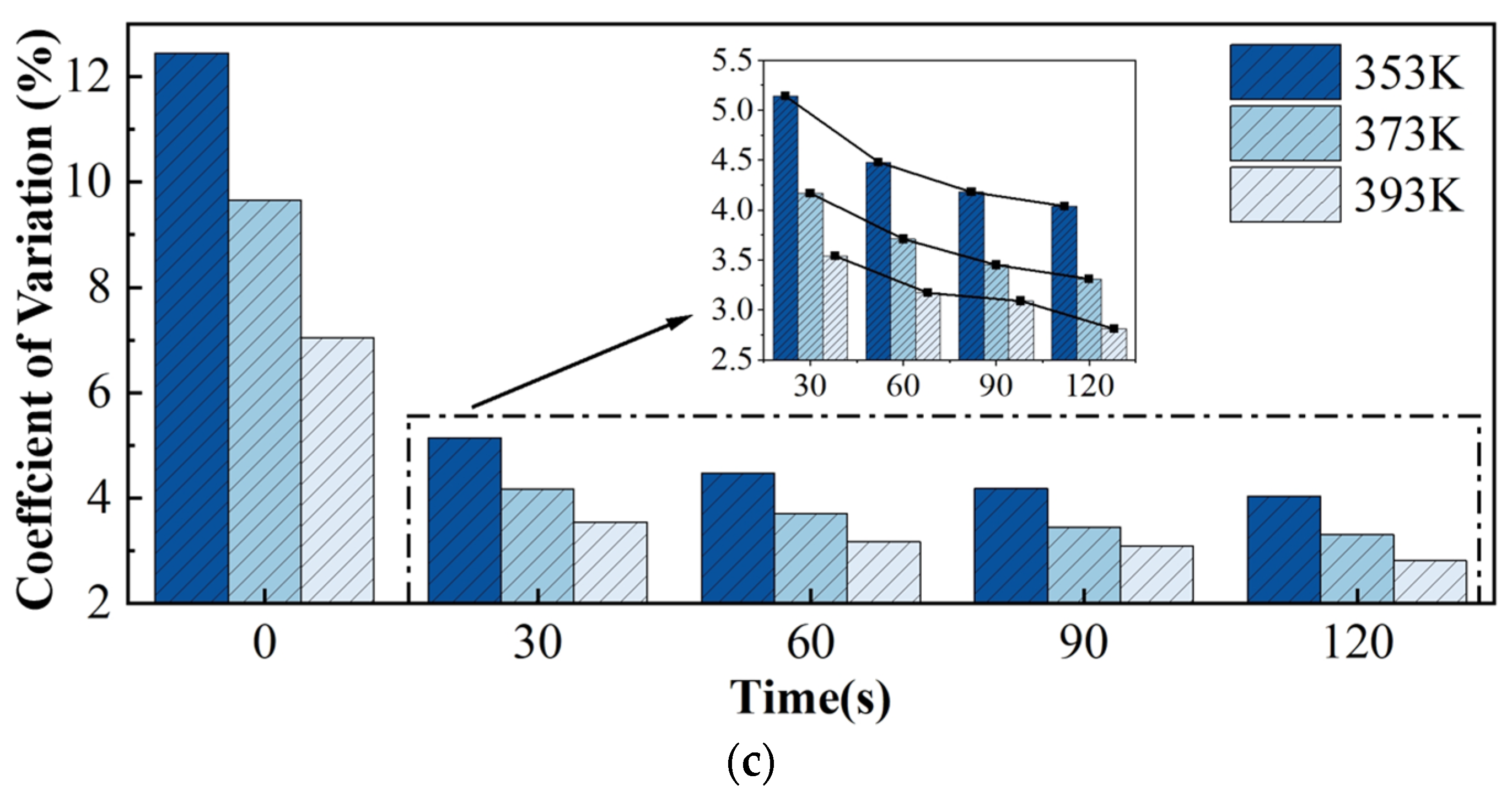
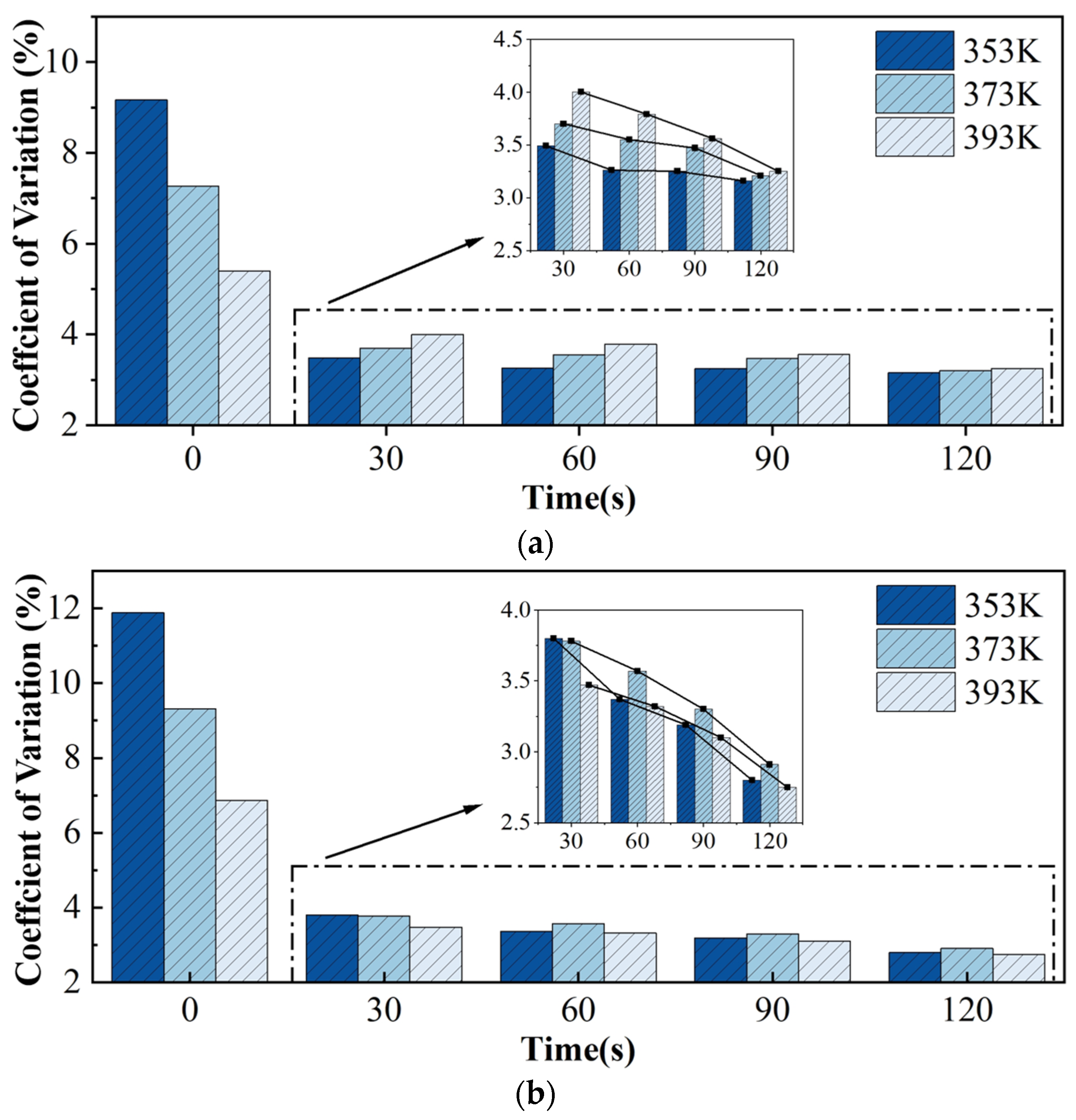
The aforementioned analysis reveals that the average temperature is inadequate for a comprehensive assessment of the temperature field of recycled asphalt mixtures. To quantify the temperature distribution from the recycled asphalt, the coefficient of variation (CoV) of temperature was accordingly computed, as depicted in Figure 4. A higher CoV value indicates a more significant deviation from temperature equilibrium. It can be conspicuously noted that the CoV value rapidly declined for all cases after 30 s of mixing, signifying that the thermal equilibrium process encompasses two stages, namely, an intense thermal equilibrium stage followed by a slow thermal equilibrium stage, which is in accordance with the results observed in Figure 3.
Figure 4a presents the CoV value of the temperature for the recycled asphalt containing the 20% content of RAP. It can be noted that the CoV value continuously decreased as the mixing time extended throughout the mixing process. It declined rapidly within 30 s of mixing, which was designated as the intensive thermal equilibrium stage, and then decreased slowly from 30 s to 120 s of mixing in the slow thermal equilibrium stage. For instance, in the intensive equilibrium stage, the CoV value of the temperature for the mixture preheated under 353 K decreased by 5.68%, while in the slow thermal equilibrium stage, it decreased by merely 0.33%.
It was notable that the CoV values of all cases regarding the preheated temperature were nearly indistinguishable at the end of mixing, indicating that the mixing time was the crucial factor determining the homogeneity of the temperature field of the recycled asphalt mixture. The preheated temperature of RAP could expedite the thermal equilibrium process, contributing to the evolution of temperature. Figure 4b presents the CoV value of the temperature for the recycled asphalt with the 40% content of RAP. The variations in the CoV value of the mixture were similar to those of the 20% RAP content, demonstrating a continuous decrease throughout the total thermal equilibrium process, ranging from 0 s to 120 s of the mixing time.
When the content of RAP reached 60%, it could be observed that the CoV value of the mixture at the end of mixing was significantly higher than that of the mixtures with a low dosage of RAP, as depicted in Figure 4c. It was found that the high incorporation of RAP materials in recycled asphalt would subsequently result in a weak thermal equilibrium of the mixture. Furthermore, in the slow thermal equilibrium stage, obvious disparities were present among the CoV values at various preheated temperatures. At 30 s of mixing time, the CoV value of the mixture under preheating temperatures of 353 K, 373 K, and 393 K was 5.14%, 4.17%, and 3.54%, respectively; after an additional 90 s of mixing, the CoV value decreased to 4.04%, 3.31%, and 2.81%, respectively. It was proposed that when the dosage of RAP materials was 60%, the preheated temperature of RAP could be appropriately elevated before its mixture with the new materials to promote the homogeneity of the temperature field of the mixture and to further enhance the performance of recycled asphalt.

2.3. Analysis of Temperature Evolution Based on the RETI

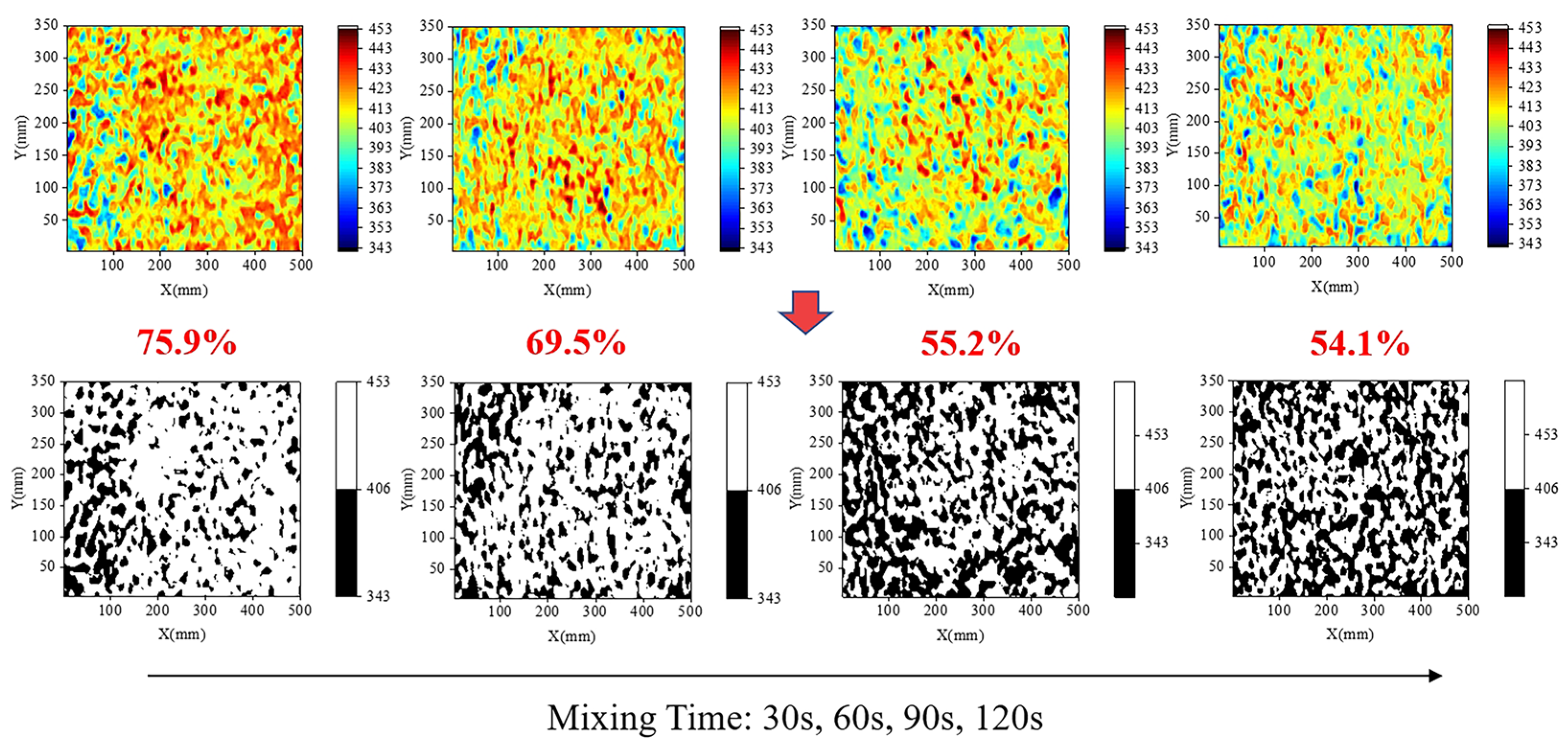
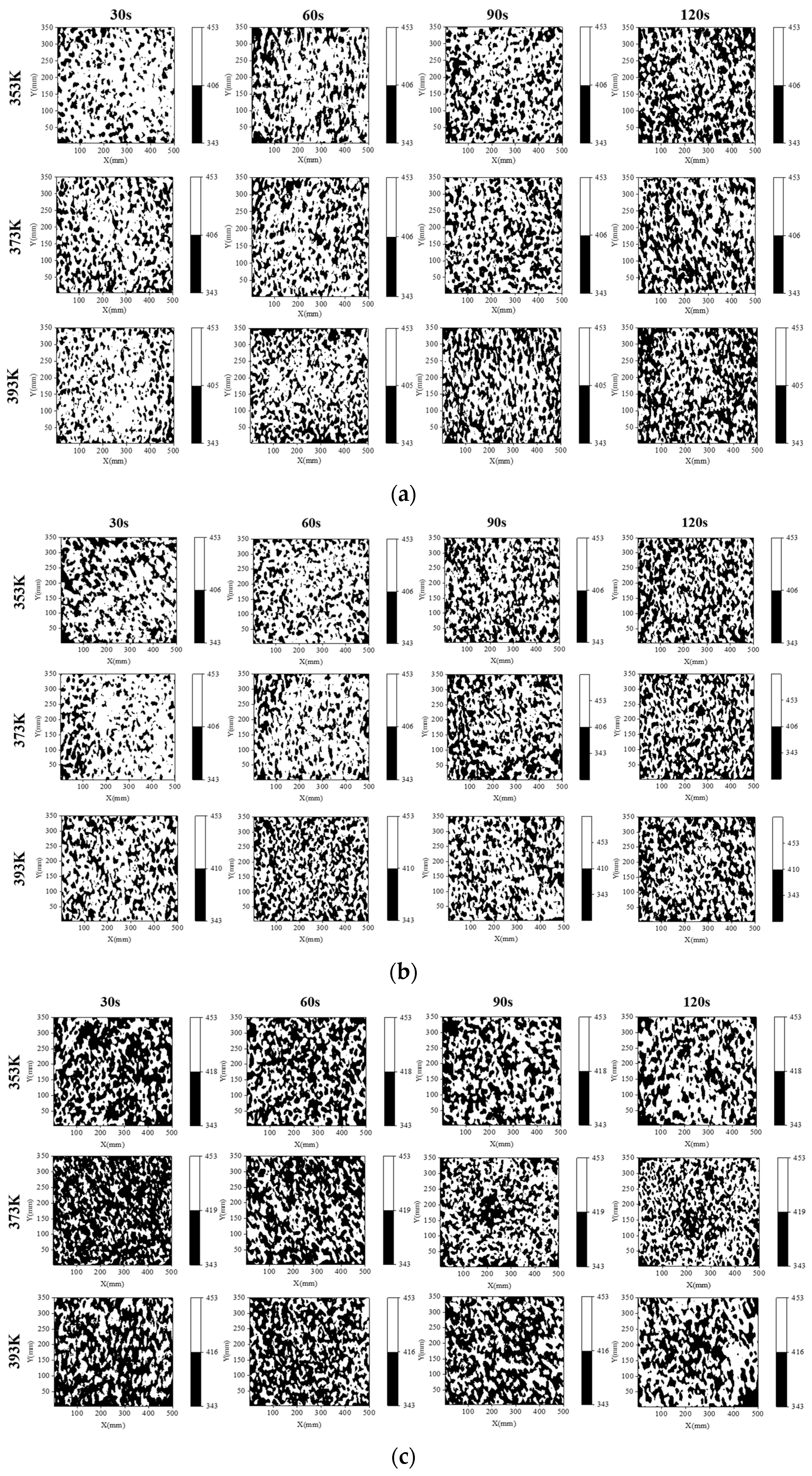
The RETI (relative equilibrium temperature index) was defined not only as a quantitative indicator for evaluating the temperature distribution of recycled asphalt mixtures during the mixing process but also as a supplement for temperature analysis. It was obtained based on the binarization of temperature field maps. Figure 5 presents the binarization maps of the temperature field for the recycled asphalt with 20%, 40%, and 60% contents of RAP under different mixing conditions. The binarization map was divided into two components: high-temperature and low-temperature regions. The white area represents the high-temperature region where the temperature was higher than the average temperature at 120 s of mixing, while the black area represents the low-temperature region where the temperature was lower than the average temperature at 120 s of mixing.
Figure 5a depicts the binarization maps for the 20% content of RAP materials. It can be observed that the proportion of the high-temperature area was significantly higher compared to that of the low-temperature region at the initial stage of mixing. This was attributed to the high proportion of virgin materials in the recycled asphalt mixture and the inadequate blending of virgin materials and RAP at the beginning of the mixing process. Consequently, the particle dispersion within the mixture was heterogeneous, leading to a concentrated distribution of temperature. As the mixing time increased from 30 s to 120 s, the high-temperature region gradually decreased, with a considerable proportion of the white color vanishing and being replaced by the black color. Eventually, the proportions of the high- and low-temperature regions were balanced, with each region accounting for half of the total area of the binarization maps. It is worth noting that the influence of the preheated temperature on the temperature dispersion in Figure 5a was scarcely detectable, which is consistent with the analyses of the temperature curves in Section 2.2. Figure 5b presents the visualization of the temperature field binarization for the recycled asphalt containing 40% RAP materials. Regarding the temperature distribution, it was similar to the cases where 20% RAP was incorporated into the mixtures.
When the RAP content reached 60%, the temperature distribution ceased to transfer from high-temperature regions to low-temperature regions. Owing to the augmented content of RAP preheated at lower temperatures, the low-temperature regions prevailed at the onset of mixing, as depicted in Figure 5c. It can be discerned that the temperature distribution shifted from low-temperature regions to high-temperature regions during the mixing period from 30 s to 120 s, which was starkly contrary to the scenarios of the mixtures with lower RAP contents. Additionally, the temperature evolution approximated an equilibrium at the 90 s mark of mixing under the 353 K and 373 K preheating temperatures, while the temperature status of the mixture preheated under 393 K remained in a conspicuous non-thermal equilibrium after 120 s of mixing. It was concluded that the mixing time is a crucial factor influencing the temperature field distribution of hot recycled asphalt mixtures, and the mixing time should be appropriately prolonged to fulfill the requirement for higher dosages of RAP in the design and production of recycled asphalt mixtures.
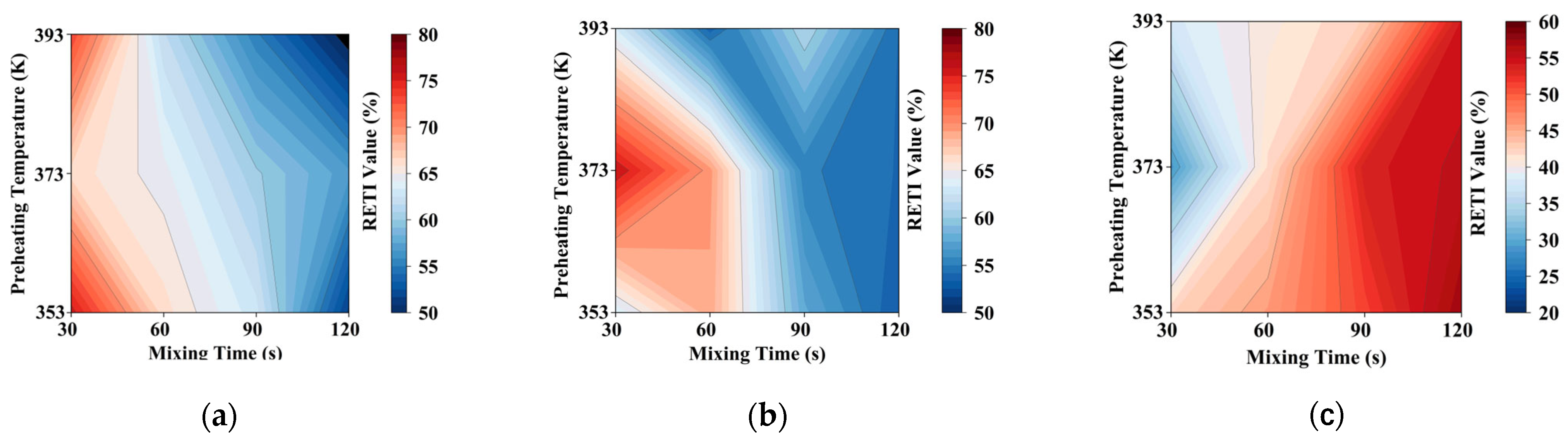
In correspondence to the visualization of the temperature field binarization, a corresponding statistical analysis was carried out to further quantify the temperature evolution of recycled asphalt, as depicted in Figure 6. Figure 6 presents the RETI values of the recycled asphalt with 20%, 40%, and 60% contents of RAP under various mixing conditions, where the color, ranging from red to blue, indicates that the RETI value shifted from high to low.
Figure 6a illustrates the RETI value of the recycled asphalt with the 20% content of RAP. It can be observed that the color in the image shifted from red to blue, signifying that the RETI value was constantly converging to 0.5 as the mixing time increased. At the beginning of the mixing process, there was a trend of initially decreasing and then rising with the increase in the preheated temperature. The RETI value of the recycled asphalt was the lowest compared with the other two cases of mixing, indicating that the optimal temperature distribution occurred when the RAP was preheated at 373 K. Meanwhile, after being preheated at 373 K, the transition in the RETI value of the recycled asphalt was more stable, indicating that the heat transfer process between the new aggregates and RAP particles was steady.
Based on the quantitative analysis results of temperature field evolution, it can be concluded that as the amount of RAP materials incorporated into the mixture increases, the mixing process and thermal equilibrium process will inevitably become increasingly complex, especially when the RAP dosage approaches that of the new aggregates. As can be observed from Figure 6b, the influence of the preheated temperature on the temperature distribution of the recycled asphalt was particularly prominent during the 60 s of mixing. The RETI value remained at high levels with preheating temperatures of 353 K and 373 K, while it was significantly lower at 393 K preheating, indicating a more uniform temperature field resulting from the increase in the preheated temperature in the early stage of the mixing process. This result is consistent with the findings from the quantitative analysis of temperature field evolution, and it verifies the feasibility of the RETI analysis method in exploring the issues related to the temperature field evolution of recycled asphalt.
When the RAP content was further elevated to 60%, the color transfer process depicted in Figure 6c was entirely distinct from that in Figure 6a,b. It can be discerned that an overall upward tendency in the RETI value for the recycled asphalt with the 60% content of RAP materials was manifested for all instances as the mixing time expanded. According to Equation (1), the RETI value was computed based on the average temperature of the mixture. Hence, an intense correlation existed between the RETI value and the average temperature of the recycled asphalt mixture.
From a material point of view, the observed differences in temperature evolution with increasing RAP content are mainly related to the rheological and thermal properties of the asphalt binder. Although the total binder content was kept constant at 6% for all mixtures, the proportion of the aged RAP binder and virgin SBS-modified binder varied with the RAP dosage. The aged RAP binder is stiffer, more brittle, and exhibits a higher apparent viscosity and glass-transition temperature than the virgin binder. As a result, RAP clusters behave as “cold and stiff inclusions” in the mixture at the beginning of mixing and act as local heat sinks. When the RAP content is relatively low (20–40%), the thermal behavior is still dominated by the overheated virgin aggregates and binder. The temperature gradient between the hot virgin materials and the colder RAP particles is moderate, so the heat can be transferred more efficiently, and the temperature distribution gradually narrows as mixing proceeds. In this case, increasing the preheating temperature of RAP mainly accelerates the homogenization process but does not fundamentally change the final equilibrium state. In contrast, when the RAP content reaches 60%, the volume fraction of RAP clusters becomes comparable to or even higher than that of virgin materials. The initial temperature gradient between the hot virgin aggregates (453 K) and the colder RAP becomes much larger, and a significant portion of the input heat is consumed in warming up the RAP particles and softening the aged binder. Because the RAP binder is more viscous and has stronger intermolecular interactions (e.g., a higher fraction of asphaltenes and resins), the mobility of the binder phase is reduced, which slows down both the heat conduction and the diffusion between the virgin and RAP binders. This explains why the temperature distribution shifts from low- to high-temperature regions and why complete thermal equilibrium is more difficult to reach at high RAP dosages.
These mechanisms are consistent with previous studies reporting that the presence of a highly aged RAP binder and RAP agglomeration can hinder heat transfer and delay the blending between virgin and RAP binders, especially at high RAP contents [1,3,7]. It should be noted that the proposed RETI index was not validated against an external reference method; instead, its consistency with conventional indicators was examined. For all RAP contents and preheating temperatures, the evolution of the RETI shows trends that are broadly consistent with those of the CoV of temperature (Figure 5) and the qualitative observations from the thermal images (Figure 1 and Figure 6). Mixtures that exhibit lower CoV values and more uniform color distributions in the thermal images also tend to have RETI values closer to 0.5. This agreement suggests that the RETI provides a physically meaningful and sensitive measure of the thermal non-uniformity in hot recycled asphalt mixtures and can be used as a complementary indicator to conventional temperature-based descriptors. To further verify the correlation between the RETI and the coefficient of variation (CoV) for temperature, a correlation analysis was conducted on the RETI and CoV values under all experimental conditions. The results showed a significant negative correlation between the RETI and CoV, indicating that the closer the RETI value is to 0.5, the more uniform the temperature field, and the lower the CoV value. This result further confirms the effectiveness of the RETI as an evaluation index for temperature uniformity.


3. Materials and Methods

3.1. Virgin Bitumen and Aggregates

This study was performed based on a previous study reported in Liu et al. [20]. Therefore, experimental protocols, including the materials and procedures, are all consistent with the previous ones. Different from reference [20], this study manufactured recycled asphalt mixtures with 20%, 40%, and 60% RAP contents, thus revealing the influence of RAP dosages. In this study, the RAP contents of 20%, 40%, and 60% refer to the total mixture mass, not binder replacement or aggregate content. Specifically, basalt was selected as the coarse aggregate, while limestone powder served as the mineral filler. The binder used was a styrene–butadiene–styrene (SBS)-modified bitumen. Additionally, a petroleum-based rejuvenator agent—sourced from a commercial supplier in Jiangsu, China—was uniformly incorporated into the aged binder within the RAP at a constant dosage of 6% by weight. The material properties and specification requirements for the bitumen can be found in Table 1.
The experimental characterization of basalt aggregates revealed the following material properties: the apparent densities measured for particle size fractions of 13.2–16.0 mm, 9.5–13.2 mm, 4.75–9.5 mm, and 2.36–4.75 mm were determined to be 2.891 g/cm3, 2.903 g/cm3, 2.871 g/cm3, and 2.904 g/cm3, respectively. The stone crushed value was demonstrated to be 20.2%.

3.2. RAP Materials

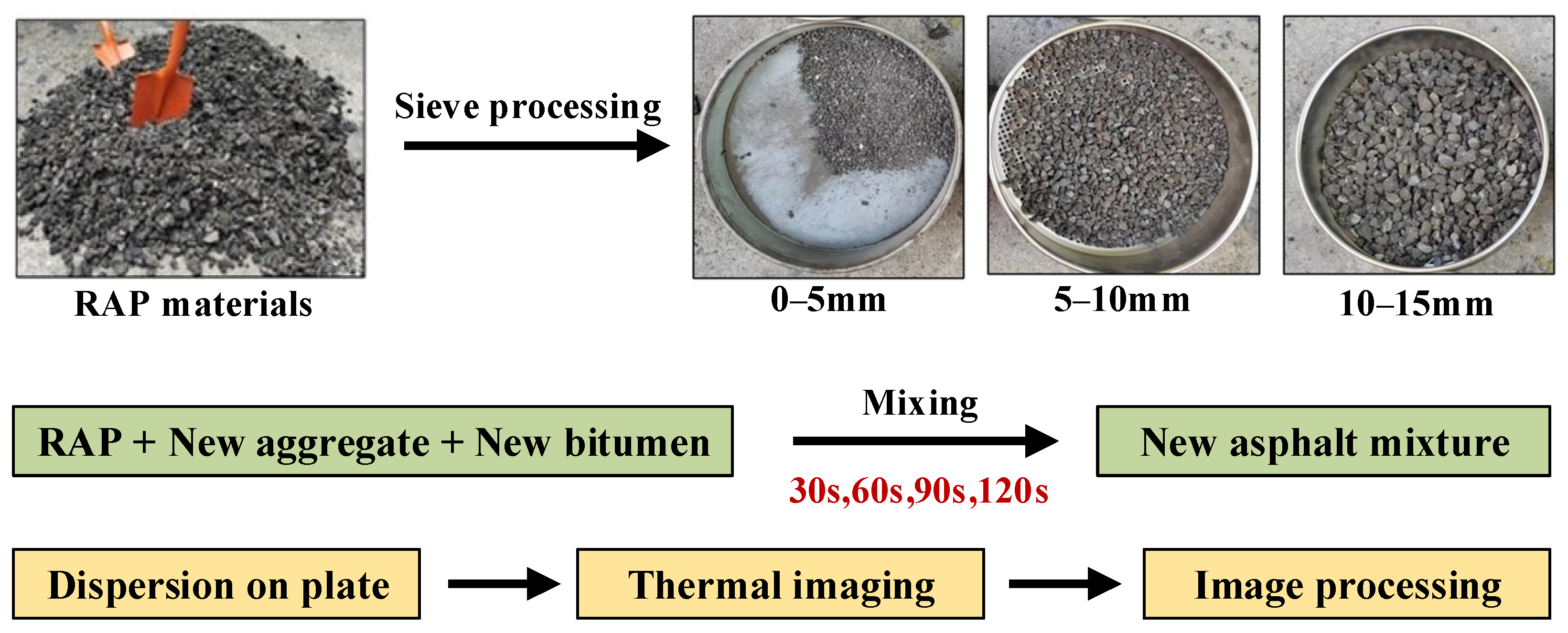
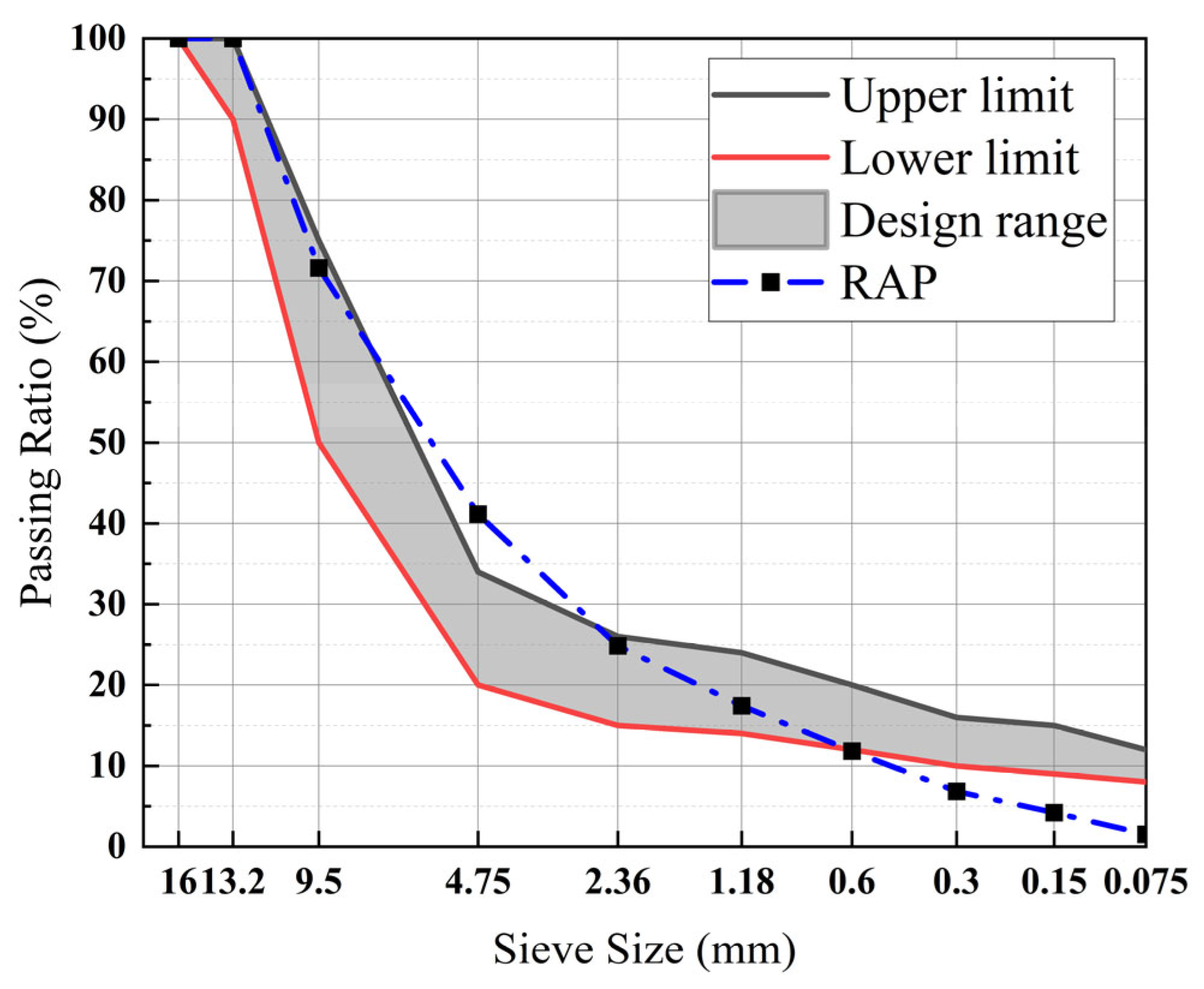
In this study, reclaimed bitumen pavement (RAP) materials were obtained through the on-site milling of existing SMA-13 pavement layers. The collected RAP was classified into three distinct particle size fractions: 0–3 mm, 5–10 mm, and 10–15 mm. The bitumen content for each fraction was determined through the solvent extraction method, yielding values of 7.91%, 6.81%, and 4.12%, respectively. Following pretreatment procedures, including crushing, sieving, extraction, and grading, the gradation curve of the RAP material was established, as shown in Figure 7.
This study developed asphalt mixtures with RAP contents of 20%, 40%, and 60%, respectively. As a result, three distinct batches of recycled asphalt mixtures were prepared, labeled G1, G2, and G3, with the gradations shown in Table 2. The mineral filler content was set at 10%, and the bitumen-to-aggregate ratio was consistently maintained at 6%.

3.3. Production of Recycled Asphalt Mixtures and Temperature Measurements

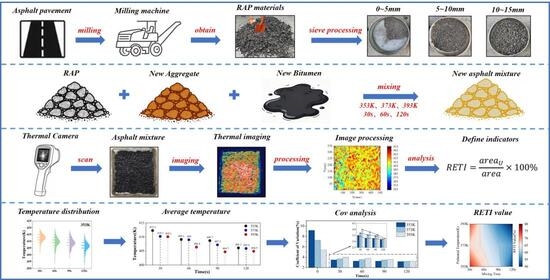
The schematic for producing recycled asphalt mixtures under different preheating temperatures and mixing times is described in Figure 8.
The RAP materials were divided into three groups and preheated at temperatures of 353 K, 373 K, and 393 K, respectively, while the virgin materials, including the asphalt binder and new aggregates, were both preheated at 453 K for a duration of 4 h. The RAP preheating temperatures of 353 K, 373 K, and 393 K were selected based on previous studies and practical temperature ranges commonly used in asphalt production to ensure efficient heat transfer and uniform mixing. The total mixing time ranged from 30 s to 120 s. The following steps were followed: First, 5 kg of the recycled asphalt mixture was precisely weighed, which consisted of raw materials and reclaimed asphalt pavement (RAP). Subsequently, it was placed in an oven set at a specific temperature and heated for 4 h to guarantee that the material attained thermal equilibrium. Throughout the process, the temperature of the mixing equipment remained constant at 423 K. After blending, the loose asphalt mixture was promptly poured onto a plate with the dimensions of 50 cm × 35 cm, evenly dispersed, and placed outside the oven. After that, an infrared thermal imaging device (model: [H11], [HIKVISION], spatial resolution: [160 × 120], temperature range: [−20 °C~350 °C], thermal sensitivity: [0.05]) was used to obtain the temperature distribution of the mixture. Subsequently, image processing techniques were applied to the acquired thermal images for further analysis. In addition, considering the occurrence of temperature loss, the temperature region of the thermal imaging device was set from 343 K to 453 K to ensure the accuracy of the experimental result. At the same time, all experiments were repeated three times, and the data points in the figure are the average of the three repeated experiments. The error bars represent the standard deviation. The sample size was 3, which conformed to the conventional practice of small sample experiments in the laboratory.

3.4. Estimation Methods and Related Indicators

This study focused on exploring the thermal transition and evolution of hot recycled asphalt mixtures with varying percentages of RAP materials. Thus, quantitative indicators of temperature analysis, such as the average temperature, the coefficient of variation (CoV) of temperatures, and the relative equilibrium temperature index (RETI), were utilized, in addition to the qualitative analysis of temperature field maps. The temperature distribution was evaluated by calculating the coefficient of variation (CoV) from thermal images obtained at the pixel level, using Equation (1) [18]. A higher CoV value reflects a greater deviation from thermal equilibrium.
C o V = i = 1 n T i T ¯ 2 n 1 / T ¯ × 100 %
where n indicates the pixel or particle number, Ti refers to the temperature of pixel or particle i, and T ¯ means the average temperature of all pixels or particles.
The relative equilibrium temperature index (RETI) was defined to quantify the evolution and distribution of the temperature field of the recycled asphalt mixtures in order to characterize the dispersion of hot recycled asphalt mixtures at a non-thermal equilibrium condition. In addition, the RETI can also be considered as a complementary indicator for temperature analysis, while the feasibility of quantitative analysis based on temperature data was significantly improved. The RETI was obtained by dividing the area of the region with a temperature higher than the average temperature at 120 s of mixing by the total area of the binarization of the temperature field map. The temperature field maps were binarized, and the area occupied by each component was calculated in MATLAB r2023a using the average temperature at 120 s of mixing as a boundary. The detailed image processing procedure followed the approach described by Liu et al. [18]. After that, the RETI values for all cases of the mixtures were calculated. Theoretically, the RETI value of the mixtures at 120 s of mixing is approximately 0.5. If the RETI value was closer to 0.5, then we deemed the distribution of the temperature for the recycled asphalt mixture to be more homogeneous.
Figure 9 represents the binarization of the temperature field maps of the mixtures that were mixed at 30 s, 60 s, 90 s, and 120 s. The calculation formula of the RETI is given by Equation (2).
R E T I = a r e a U a r e a × 100 %
where a r e a U indicates the area of the region with a temperature higher than the average temperature at 120 s of mixing and area means the area of the total temperature field.

4. Conclusions

This study focuses on deliberating the thermal equilibrium process and the homogeneity of the temperature field of recycled asphalt mixtures in light of diverse mixing parameters, such as RAP content, RAP preheated temperature, and mixing time. It also validates the hypothesis that increasing the RAP content and reducing the preheating temperature will slow down the thermal equilibrium process, while extending the mixing time and raising the preheating temperature can partially offset this effect. Through infrared thermal imaging and digital image processing techniques, the RETI is proposed to quantify temperature non-uniformity. The main findings are outlined as follows:
  • During the mixing process, the thermal equilibrium process experienced an intense equilibrium stage followed by a slow one. As the mixing time increased, the temperature distribution gradually converged in all cases, which was manifested as the narrowing of the temperature range of the recycled asphalt. However, complete thermal equilibrium could not be achieved due to the non-uniform distribution of RAP at the end of mixing, as analyzed in the temperature field.
  • Among the investigated parameters, the RAP content exerts the most pronounced influence on the thermal transition. When the RAP dosage approaches that of the virgin aggregates (60%), the thermal equilibrium process becomes substantially more complex, and the mixture exhibits higher CoV and RETI values that deviate from the ideal value of 0.5.
  • The mixing time is the key factor governing the homogeneity of the temperature field, while the RAP preheating temperature mainly accelerates the approach to equilibrium. Higher RAP preheating temperatures can partially compensate for the negative effect of high RAP dosages on thermal uniformity. The target mixing temperature in this study was set at 433 K, based on the common mixing temperature range in actual production processes. This temperature ensures sufficient bonding between asphalt and aggregates while avoiding bonding issues caused by excessive cooling.
  • From a practical perspective, the results suggest that for mixtures with moderate RAP contents (20–40%), thermal homogeneity can be improved either by slightly increasing the RAP preheating temperature or by prolonging the mixing time within a reasonable range. For mixtures with high RAP contents (60% or above), more stringent production conditions—such as higher RAP preheating temperatures and longer mixing durations—are required to mitigate the risk of thermal inhomogeneity. The findings support process optimization and offer specific operational recommendations to enhance temperature uniformity during production, thereby mitigating potential risks associated with high-RAP-content mixtures. The proposed RETI may serve as a useful tool for monitoring and optimizing mixing conditions in plant production of hot recycled asphalt mixtures.

Author Contributions

Q.L., H.L., J.L. and Y.H.: conceptualization, methodology, validation, formal analysis, investigation, writing—original draft, and writing—review and editing. Q.L. and J.W.: methodology, supervision, funding acquisition, and writing—review and editing. All authors have read and agreed to the published version of the manuscript.

Funding

The authors would like to acknowledge the financial support provided by the National Science Youth Foundation of China (No. 52408477), the Fundamental Research Funds for the Central Universities (No. B240201102), the Natural Science Youth Fund of Jiangsu Province (No. BK20220983), and the Key Laboratory of Road and Bridge Detection and Maintenance Technology of Zhejiang Province (No. 202404Z).

Data Availability Statement

The original contributions presented in this study are included in this article. Further inquiries can be directed to the corresponding author.

Conflicts of Interest

The authors declare no conflicts of interest.

Abbreviations

The following abbreviations are used in this manuscript:
RAPReclaimed asphalt pavement
CoVCoefficient of variation
RETIRelative equilibrium temperature index

References

  1. Gulzar, S.; Fried, A.; Preciado, J.; Castorena, C.; Underwood, S.; Habbouche, J.; Boz, I. Towards sustainable roads: State-of-the-art review on the use of recycling agents in recycled asphalt mixtures. J. Clean. Prod. 2023, 406, 136994. [Google Scholar] [CrossRef]
  2. Miliutenko, S.; Björklund, A.; Carlsson, A. Opportunities for environmentally improved asphalt recycling: The example of Sweden. J. Clean. Prod. 2013, 43, 156–165. [Google Scholar] [CrossRef]
  3. Xing, C.; Li, M.; Liu, L.; Lu, R.; Liu, N.; Wu, W.; Yuan, D. A comprehensive review on the blending condition between virgin and RAP asphalt binders in hot recycled asphalt mixtures: Mechanisms, evaluation methods, and influencing factors. J. Clean. Prod. 2023, 398, 136515. [Google Scholar] [CrossRef]
  4. Kaseer, F.; Arámbula-Mercado, E.; Cucalon, L.G.; Martin, A.E. Performance of asphalt mixtures with high recycled materials content and recycling agents. Int. J. Pavement Eng. 2020, 21, 863–877. [Google Scholar] [CrossRef]
  5. Liu, Y.L.; Zhao, N.; Zhao, J. The durability analysis of secondary recycled asphalt mixture. Adv. Mater. Res. 2012, 557, 1497–1500. [Google Scholar] [CrossRef]
  6. Ma, T.; Wang, Z.; Zhao, Y.L.; Huang, X.M. Evaluation of dispersive performance of asphalt mixture during mixing of hot in-place recycling. Harbin Gongye Daxue Xuebao (J. Harbin Inst. Technol.) 2012, 43, 128–131. [Google Scholar]
  7. Li, X.; Mo, J.; Zhao, L.; Ma, H.; Wang, L.; Peng, B.; Chi, L. Analysis of the impact of reclaimed asphalt pavement agglomeration on the performance of hot-recycled asphalt pavement: A perspective on diffusion-fusion. Constr. Build. Mater. 2024, 425, 135866. [Google Scholar] [CrossRef]
  8. Wang, T.; Ling, X.; Lin, J.; Xiang, B.; Yuan, D.; Wang, W.; Wang, D.; Guo, D. Effect of Blending Behavior on the Performance of Hot Recycled Asphalt Mixtures. Sustainability 2023, 15, 11723. [Google Scholar] [CrossRef]
  9. Zhu, Y.; Yuan, Y.; Wang, K.; Liu, Y.; Xu, L. Research on the Performance of Hot Recycled Asphalt Mixture Based on Recycled Asphalt Pavement Dispersion Uniformity. Transp. Res. Rec. 2024, 2679, 1626–1641. [Google Scholar] [CrossRef]
  10. Yuan, M.; Cai, X.; Yang, X.; Wu, K.; Huang, W. Study on the correlation between homogeneity of mastic and aggregate skeleton on cracking resistance of recycled asphalt mixtures. Int. J. Pavement Eng. 2024, 25, 2405873. [Google Scholar] [CrossRef]
  11. Fan, X.; Qiao, Y.; Zhang, J.; Xiong, Y.; Cao, W.; Yang, K.; Yao, Z. Towards the high RAP dosage obtained by refined processing influence on comprehensive performance of recycled asphalt mixture. Constr. Build. Mater. 2024, 452, 138885. [Google Scholar] [CrossRef]
  12. Tang, W.; Li, N.; Yu, X.; Xie, Z.; Wang, D. Aggregate uniformity of recycled asphalt mixtures with RAP from refined decomposition process: Comparison with routine crushing method. Constr. Build. Mater. 2024, 442, 137665. [Google Scholar] [CrossRef]
  13. Liu, Q.; Oeser, M. The influence of mixing conditions on the macro-scale homogeneity of asphalt mixtures blended with reclaimed asphalt pavement (RAP). Materials 2021, 14, 4137. [Google Scholar] [CrossRef] [PubMed]
  14. Zhang, K.; Wen, H.; Hobbs, A. Laboratory tests and numerical simulations of mixing superheated virgin aggregate with reclaimed asphalt pavement materials. Transp. Res. Rec. 2015, 2506, 62–71. [Google Scholar] [CrossRef]
  15. Zhang, K.; Muhunthan, B. Numerical investigation of dry and wet mixing processes of asphalt mixtures containing reclaimed asphalt pavement. Road Mater. Pavement Des. 2019, 20, 914–928. [Google Scholar] [CrossRef]
  16. Zhang, K.; Muhunthan, B. Effects of production stages on blending and mechanical properties of asphalt mixtures with reclaimed asphalt pavement. Constr. Build. Mater. 2017, 149, 679–689. [Google Scholar] [CrossRef]
  17. Coelho, L.M.; Marchi, B.Z.; da Silveira, P.H.P.M.; de Azevedo, A.R.G.; Monteiro, S.N.; Guimarães, A.C.R. Thermal compaction as an alternative approach for full-RAP base layer construction. Sci. Rep. 2025, 15, 16394. [Google Scholar] [CrossRef] [PubMed]
  18. Miao, Y.; Wang, S.; Guo, L.; Zheng, X.; Huang, Y.; Wang, L. Effect of temperature on deformation properties of unbound granular materials containing fine RAP. Constr. Build. Mater. 2018, 169, 443–451. [Google Scholar] [CrossRef]
  19. Soleimanbeigi, A.; Edil, T. Thermal conditioning to improve geotechnical properties of recycled asphalt pavements. Geotech. Test. J. 2015, 38, 537–548. [Google Scholar] [CrossRef]
  20. Liu, Q.; Liu, J.; Fang, R.; Han, Y.; Wu, J. Thermal Equilibrium Process When Mixing Asphalt with Reclaimed Asphalt Pavement: Experimental Investigation and Simulation. J. Mater. Civ. Eng. 2025, 37, 04025023. [Google Scholar] [CrossRef]
Figure 1. Visualization of temperature field maps: (a) RAP content at 20% [20]; (b) RAP content at 40%; (c) RAP content at 60%.
Recycling 11 00021 g001aRecycling 11 00021 g001b
Figure 2. Temperature distribution of different mixing scenarios: (a) RAP content at 20%; (b) RAP content at 40%; (c) RAP content at 60%.
Recycling 11 00021 g002
Figure 3. Average temperature at different mixing scenarios: (a) RAP content at 20%; (b) RAP content at 40%; (c) RAP content at 60%.
Recycling 11 00021 g003
Figure 4. Coefficient of variation of temperature at different mixing scenarios: (a) RAP content at 20%; (b) RAP content at 40%; (c) RAP content at 60%.
Recycling 11 00021 g004aRecycling 11 00021 g004b
Figure 5. Visualization of temperature field binarization: (a) RAP content at 20%; (b) RAP content at 40%; (c) RAP content at 60%.
Recycling 11 00021 g005
Figure 6. RETI value of mixture at different mixing scenarios: (a) RAP content at 20%; (b) RAP content at 40%; (c) RAP content at 60%.
Recycling 11 00021 g006
Figure 7. Aggregate gradation used for sample preparation.
Recycling 11 00021 g007
Figure 8. Experimental procedures [20].
Recycling 11 00021 g008
Figure 9. Binarization of temperature field maps.
Recycling 11 00021 g009
Table 1. Technical indicators of SBS-modified bitumen [20].
IndicatorResult
Penetration (25 °C, 100 g, 5 s) (0.1 mm)58
Softening Point (TR&B) (°C)89.2
Ductility (cm)59
Viscosity @ 60 °C (Pa·s)37,683
Mass loss after TFOT (%)0.2
Table 2. Gradation of recycled asphalt mixtures.
IDRAP Content (%)Passing Rate (%)
16.0013.209.504.752.361.180.600.300.150.08
G120100.00100.0065.9028.5021.3022.0018.0012.0011.0010.00
G240100.00100.0064.9029.0021.8020.0016.0014.0012.0010.00
G360100.0095.0062.5027.0020.5019.0016.0013.0012.0010.00
Disclaimer/Publisher’s Note: The statements, opinions and data contained in all publications are solely those of the individual author(s) and contributor(s) and not of MDPI and/or the editor(s). MDPI and/or the editor(s) disclaim responsibility for any injury to people or property resulting from any ideas, methods, instructions or products referred to in the content.