
Article

Systematic Workflow for Efficient Identification of Local Representative Elementary Volumes Demonstrated with Lithium-Ion Battery Cathode Microstructures

by
Benjamin Kellers
1,2,*,
Martin P. Lautenschlaeger
1,2,
Nireas Rigos
1,2,
Julius Weinmiller
1,2,
Timo Danner
1,2,* and
Arnulf Latz
1,2,3
1
German Aerospace Center (DLR), Institute of Engineering Thermodymanics, 89081 Ulm, Germany
2
Helmholtz Institute Ulm for Electrochemical Energy Storage (HIU), 89081 Ulm, Germany
3
Institute of Electrochemistry, Ulm University, 89081 Ulm, Germany
*
Authors to whom correspondence should be addressed.
Batteries 2023, 9(7), 390; https://doi.org/10.3390/batteries9070390

Submission received: 15 June 2023 / Revised: 10 July 2023 / Accepted: 16 July 2023 / Published: 22 July 2023
(This article belongs to the Special Issue Materials Design for Electrochemical Energy Storage)

Abstract

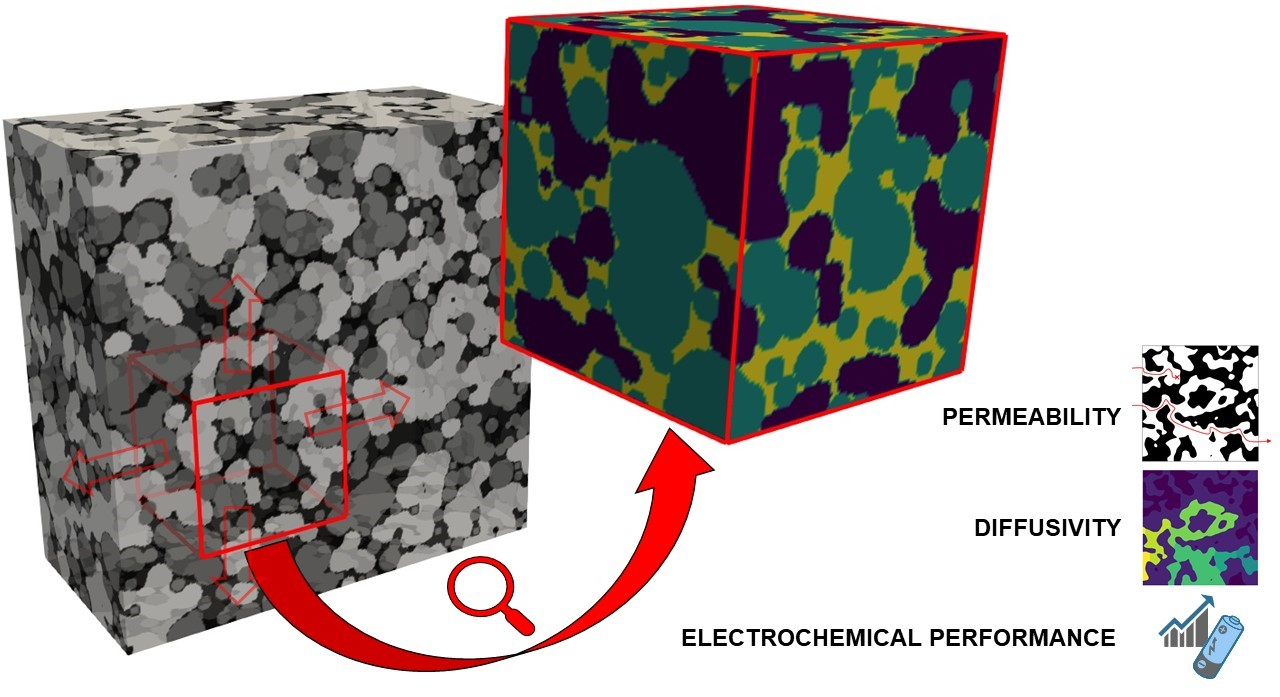
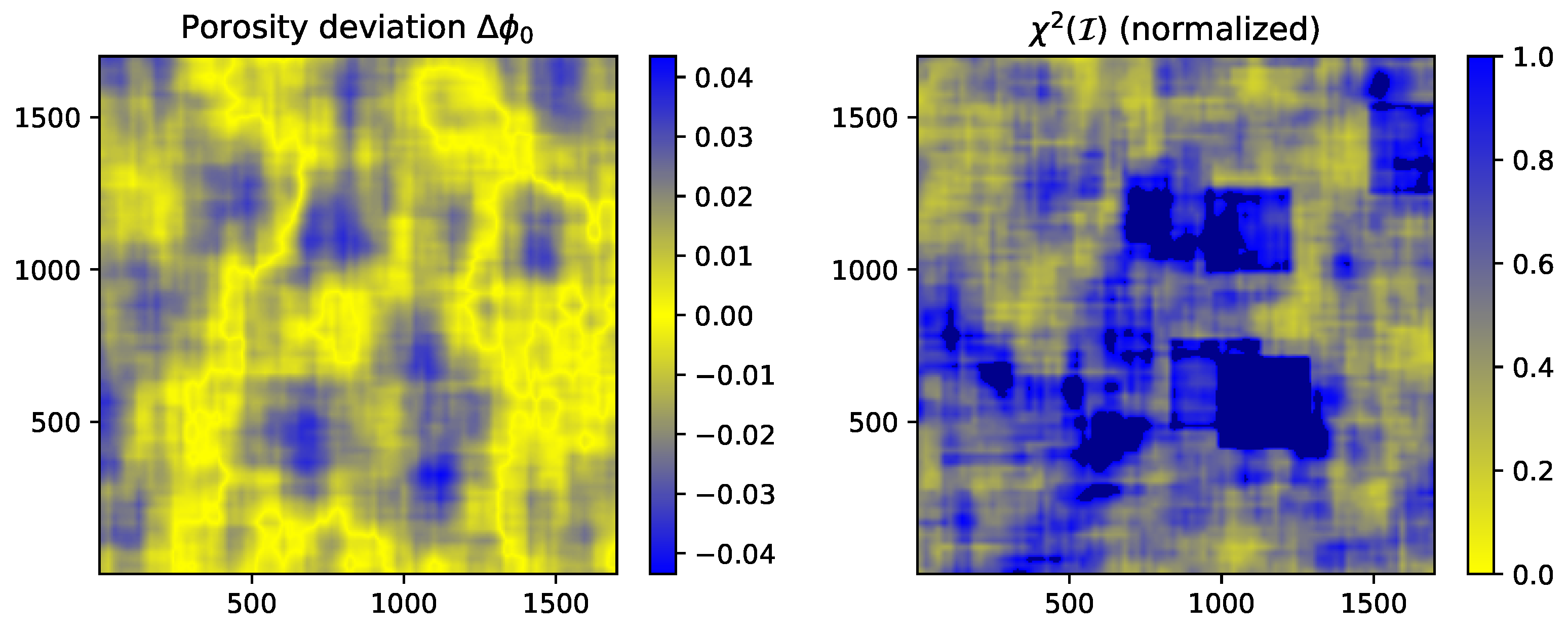
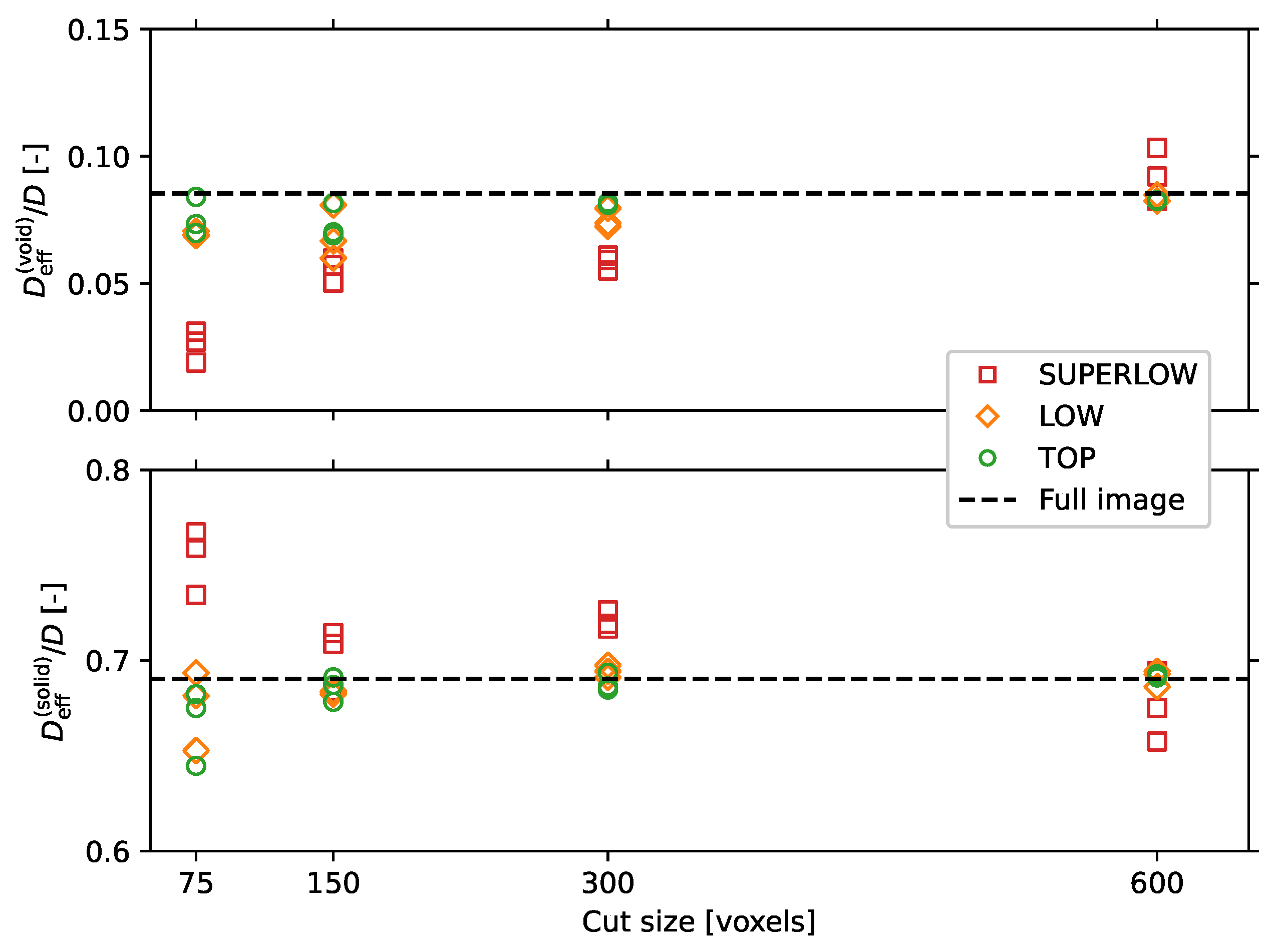
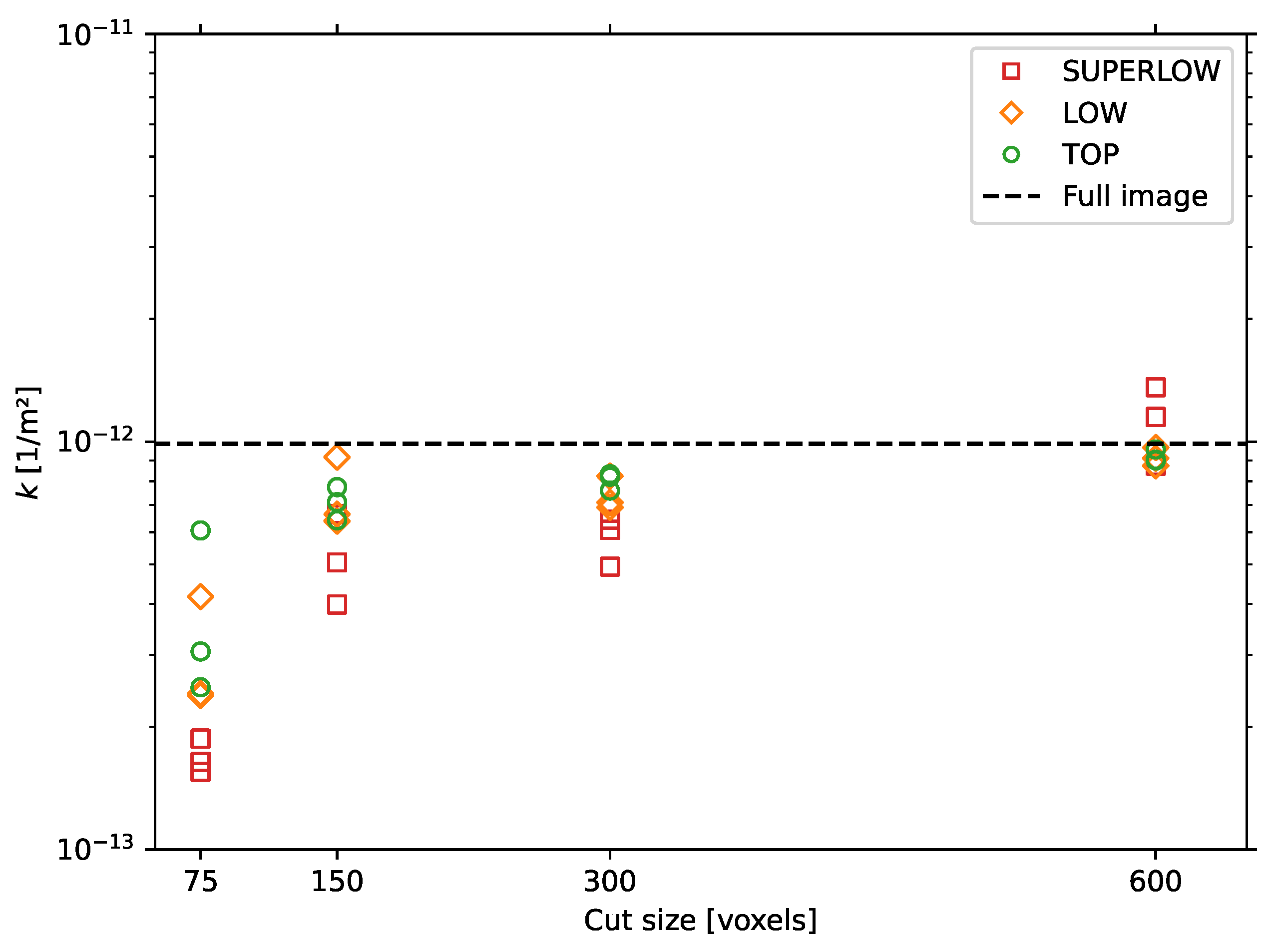
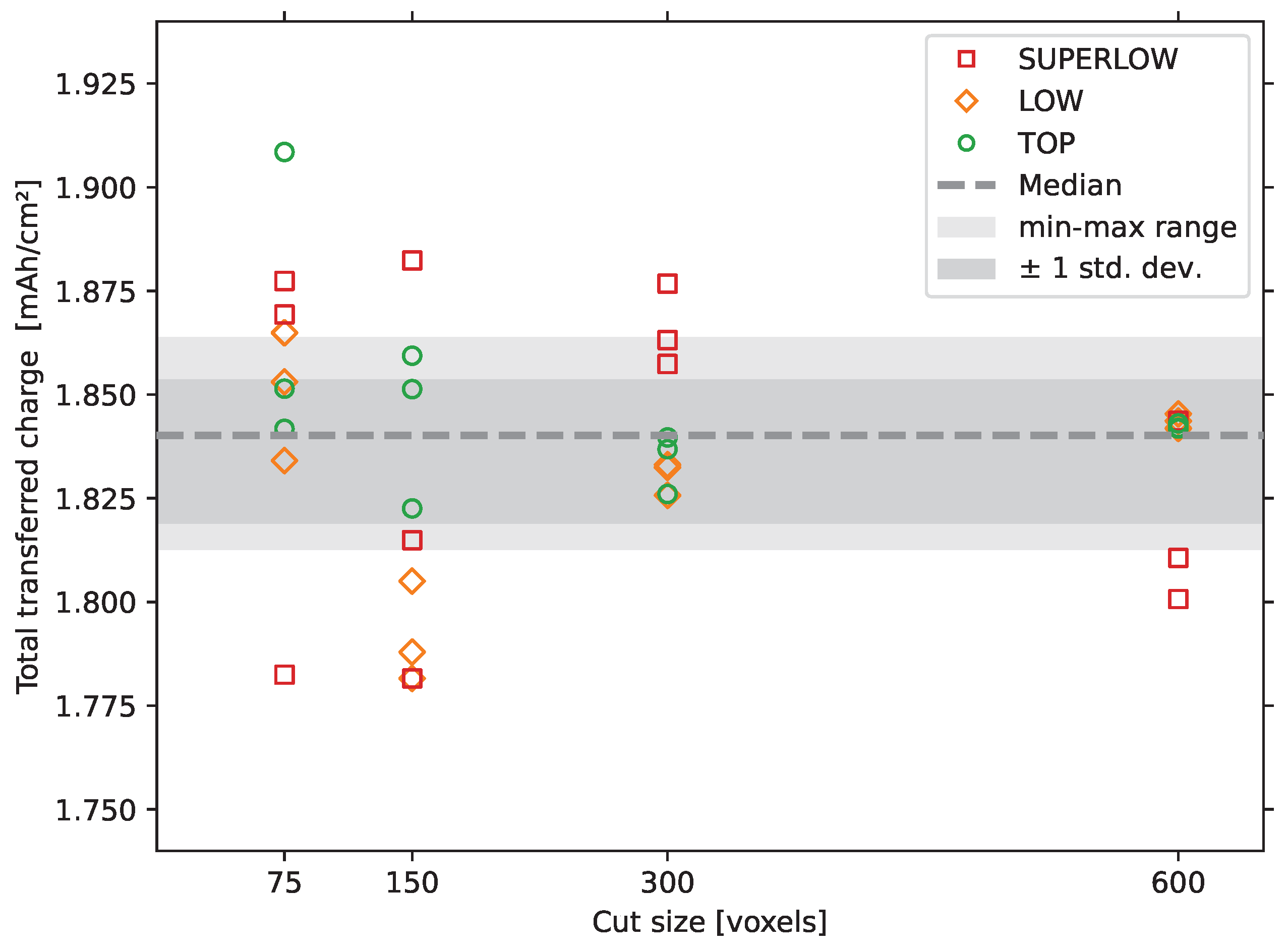
The concept of a representative elementary volume (REV) is key for connecting results of pore-scale simulations with continuum properties of microstructures. Current approaches define REVs only based on their size as the smallest volume in a heterogeneous material independent of its location and under certain aspects representing the same material at the continuum scale. However, the determination of such REVs is computationally expensive and time-consuming, as many costly simulations are often needed. Therefore, presented here is an efficient, systematic, and predictive workflow for the identification of REVs. The main differences from former studies are: (1) An REV is reinterpreted as one specificsub-volume of minimal size at a certain location that reproduces the relevant continuum properties of the full microstructure. It is therefore called a local REV (lREV) here. (2) Besides comparably cheap geometrical and statistical analyses, no further simulations are needed. The minimum size of the sub-volume is estimated using the simple statistical properties of the full microstructure. Then, the location of the REV is identified solely by evaluating the structural properties of all possible candidates in a very fast, efficient, and systematic manner using a penalty function. The feasibility and correct functioning of the workflow were successfully tested and validated by simulating diffusive transport, advection, and electrochemical properties for an lREV. It is shown that the lREVs identified using this workflow can be significantly smaller than typical REVs. This can lead to significant speed-ups for any pore-scale simulations. The workflow can be applied to any type of heterogeneous material, even though it is showcased here using a lithium-ion battery cathode.
Keywords: representative elementary volume; porous media; pore network modeling; lattice Boltzmann method; computational electrochemistry; lithium-ion battery representative elementary volume; porous media; pore network modeling; lattice Boltzmann method; computational electrochemistry; lithium-ion battery
Graphical Abstract