1. Introduction
All-solid-state lithium batteries (ASSBs) are promising next-generation electrochemical energy-storage technologies, with the potential to deliver high energy density, superior safety, and extended service life beyond those achievable with conventional lithium-ion batteries containing flammable organic liquid electrolytes [
1,
2,
3,
4,
5]. Among the various classes of solid electrolytes, sulfide-based electrolytes have attracted particular attention because of their exceptionally high lithium-ion conductivity (>10
−3 S cm
−1), excellent mechanical deformability, and ability to establish intimate solid–solid contact with electrode materials under relatively low stack pressures [
6,
7,
8,
9,
10,
11]. These unique characteristics make sulfide electrolytes highly attractive for practical ASSBs that employ high-capacity layered oxide cathodes.
Despite these advantages, the commercialization of sulfide ASSBs is impeded by the severe interfacial instability at the oxide cathode–solid electrolyte interface [
12,
13,
14,
15,
16]. The large chemical potential mismatch between oxide cathodes and sulfide electrolytes and their fundamentally different thermodynamic stability windows drive spontaneous interfacial reactions even before electrochemical cycling. These reactions produce electronically insulating and ionically resistive decomposition products, including lithium sulfide (Li
2S), phosphorus sulfides (P
xS
y), transition-metal sulfides (MS
x), and phosphate species (MPO
4), which continuously accumulate during repeated cycling. Consequently, lithium-ion transport is progressively hindered, charge-transfer resistance increases, and electrochemical polarization is aggravated, ultimately leading to rapid capacity fading. Moreover, space-charge layer formation and chemo-mechanical contact degradation further accelerate interfacial deterioration. Interface engineering is therefore one of the most critical prerequisites for realizing high-performance sulfide ASSBs.
Surface passivation of oxide cathodes has therefore become one of the most extensively investigated strategies for suppressing interfacial degradation [
17,
18,
19,
20,
21,
22,
23]. However, next-generation cathode passivation layers must satisfy far more stringent requirements than merely suppressing interfacial reactions. Existing coating materials are predominantly based on Nb-, Ta-, or Zr-containing oxides [
20,
21,
22,
23], which inevitably increase material costs and are therefore less attractive for large-scale battery manufacturing. Many oxide coatings exhibit only moderate electrochemical stability under increasingly demanding high-voltage operating conditions, while their chemical compatibility with sulfide electrolytes is far from ideal [
24,
25,
26]. Therefore, future interface materials should simultaneously provide broad electrochemical stability, excellent chemical compatibility with sulfide electrolytes, low interfacial resistance, facile Li-ion transport, and scalable and low-cost processing. Achieving these attributes using a single coating material remains a significant challenge.
Polyanionic lithium compounds have emerged as attractive alternatives; their strong covalent polyanion frameworks have substantially higher oxidative stability than conventional simple oxides [
14,
15,
27]. Lithium dihydrogen phosphate (LiH
2PO
4, LDP) is a particularly intriguing example. Although it has only been applied a few times to cathodes for lithium battery systems using liquid electrolytes [
28,
29], it has yet to be extensively studied for use in cathode coatings with sulfide electrolytes. Unlike transition-metal-containing coating materials, LDP is composed exclusively of earth-abundant and inexpensive elements, offering significant economic advantages for large-scale commercialization. More importantly, its phosphate framework comprises highly stable P–O covalent bonds, which are expected to provide excellent oxidative stability and favorable chemical compatibility with sulfide electrolytes [
28,
29,
30]. First-principles calculations predict that phosphate-based compounds have wide electrochemical stability windows, along with intrinsically low interfacial reactivity toward sulfide electrolytes [
27]. Despite its promising characteristics, LiH
2PO
4 has received little attention as a cathode passivation material for all-solid-state cells. There has been no systematic investigation into its ability to simultaneously suppress sulfide electrolyte decomposition, preserve rapid Li-ion transport, and stabilize the cathode–electrolyte interface.
Herein, we propose LiH
2PO
4 as a new low-cost polyanionic passivation layer for sulfide-based ASSBs and demonstrate its effectiveness using polycrystalline LiNi
0.6Co
0.2Mn
0.2O
2 (NCM622) cathodes. A uniform LDP coating was fabricated using a scalable spray-drying process, providing a simple and industrially viable route for large-area surface modification. We hypothesize that the phosphate-rich interfacial layer not only suppresses undesirable chemical reactions between the oxide cathode and sulfide electrolyte but also forms a chemically compatible interface that minimizes interfacial resistance while preserving efficient lithium-ion transport. To validate this hypothesis, the interfacial chemistry, electrochemical behavior, and degradation mechanisms of the LDP-coated cathodes were systematically investigated through complementary structural, chemical, and electrochemical characterization techniques, including scanning electron microscopy (SEM), transmission electron microscopy (TEM), X-ray photoelectron spectroscopy (XPS), and electrochemical impedance spectroscopy (EIS).
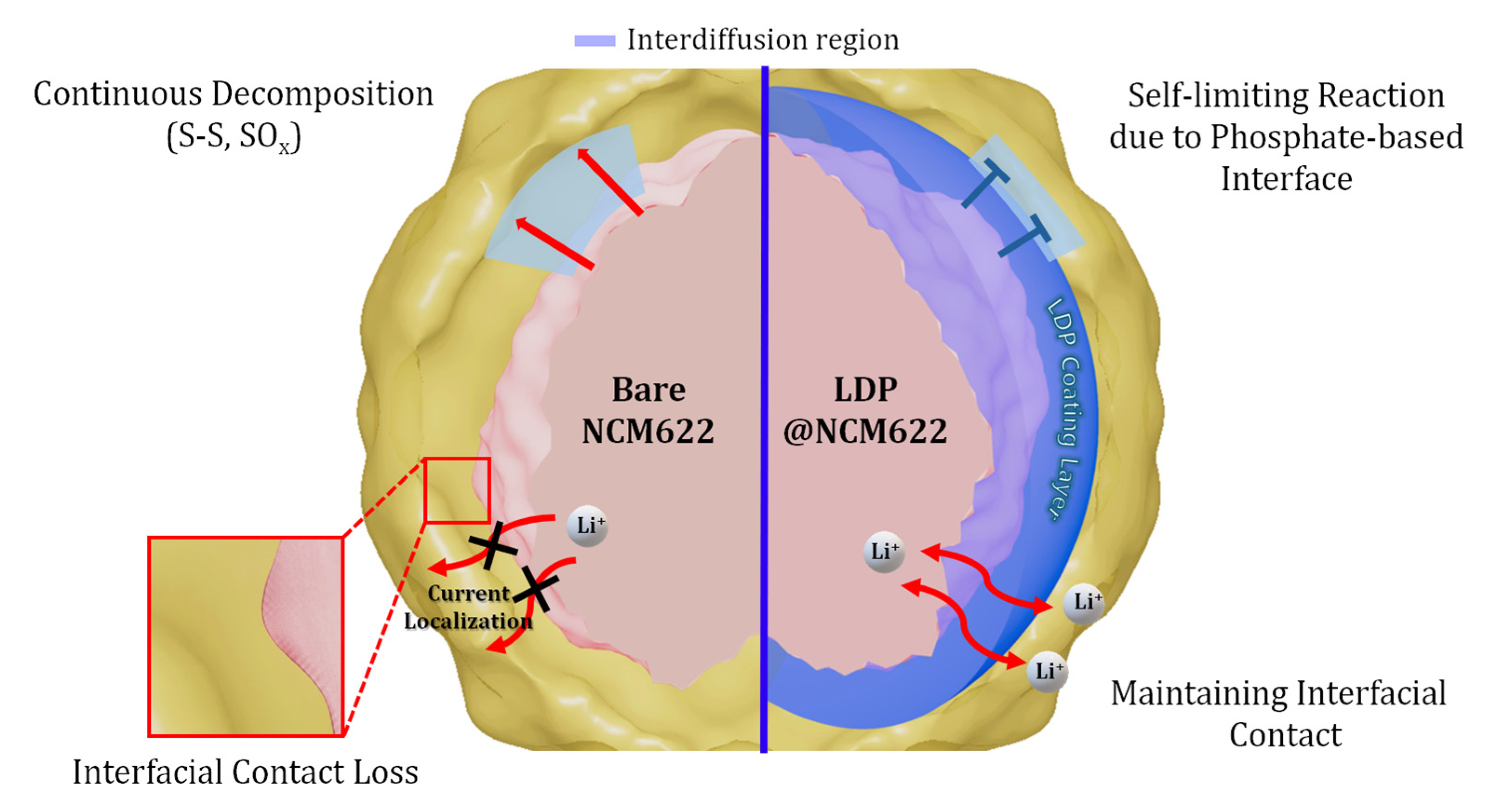
Figure 1 illustrates the expected effects of the LDP coating. This study establishes LiH
2PO
4 as a promising low-cost phosphate-based interface material and provides new principles for designing economically viable polyanionic coatings that can simultaneously achieve interfacial stability, fast ion transport, and long-term durability in next-generation sulfide ASSBs.
3. Results and Discussion
The phase purity of LiH
2PO
4 (LDP) synthesized via the three routes described in
Section 2 was examined by X-ray diffraction. As shown in
Figure S1, all three synthesis routes successfully produced crystalline LDP. However, the simultaneous addition of lithium and phosphate precursors to either ethanol or deionized water resulted in immediate precipitation; this prevented the preparation of a homogeneous precursor solution suitable for coating. Accordingly, the ethanol-based synthesis route was selected for subsequent fabrication of the LiH
2PO
4-coated cathodes.
In sulfide-based ASSBs, the effectiveness of an artificial passivation layer depends not only on its intrinsic chemical stability but also on the uniformity and morphology with which it is formed on the cathode surface. Therefore, prior to electrochemical evaluation, the structural characteristics of the LDP coating were systematically investigated.
Figure S2 presents a comparison of the XRD patterns of pristine LiH
2PO
4 (LDP), bare NCM622, and LDP-coated NCM622 prepared with coating loadings of 1 and 10 wt.%. For the 1 wt.% coated sample (hereinafter denoted by LDP@NCM622), no discernible peak shift or change in the characteristic reflections of layered NCM622 was observed. In particular, the well-resolved splitting of the (006)/(102) and (108)/(110) reflections remained unchanged, confirming that the layered α-NaFeO
2 structure was fully preserved after the coating process. Conventional oxide coatings generally require post-annealing at temperatures above 500–700 °C to crystallize the coating layer, often resulting in oxygen loss or structural degradation in Ni-rich layered oxides. However, the present LDP coating was formed through a solution-assisted spray-drying process without any high-temperature crystallization treatment. Consequently, the bulk crystal structure of NCM622 remained unaffected, indicating that any subsequent improvement in the electrochemical performance originated from interfacial engineering rather than bulk structural modification. Although the diffraction peaks of LiH (PO) were difficult to distinguish in the 1 wt.% sample because of the low coating content, characteristic LDP reflections became clearly visible in the 10 wt.% sample. This confirmed that LiH
2PO
4 remained chemically stable throughout the spray-drying process without decomposing into secondary phosphate phases.
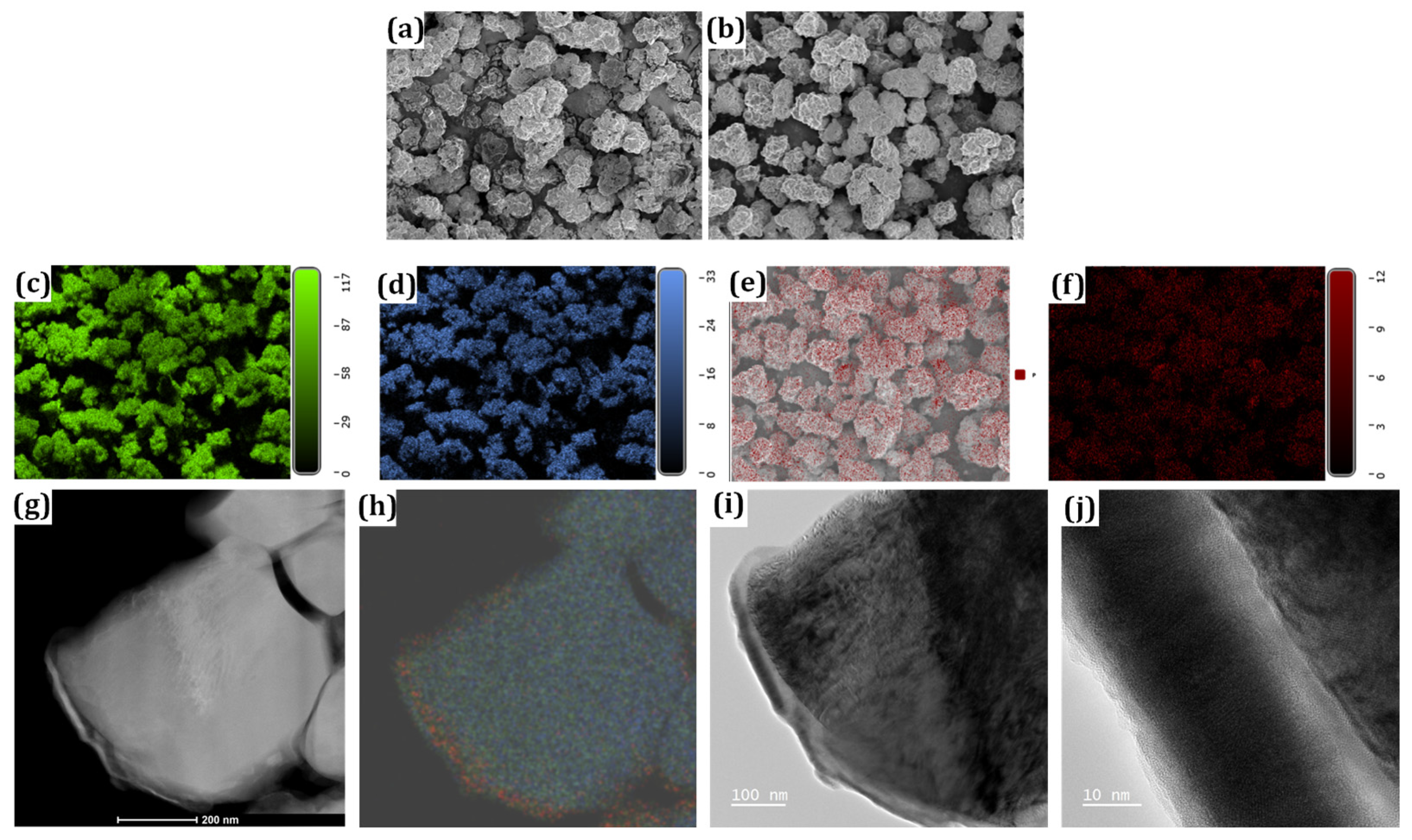
Figure 2 shows the morphology of the coated particles examined by SEM. As shown in
Figure 2a,b, the secondary particle morphology of NCM622 remains essentially unchanged after spray drying, with no evidence of particle fracture, aggregation, or surface etching. This demonstrates that the coating process was sufficiently mild to preserve the structural integrity of commercial polycrystalline cathode particles. This preservation is particularly important, because secondary particle cracking provides preferential pathways for electrolyte penetration and accelerates intergranular degradation during cycling.
The effectiveness of the coating process was further demonstrated by elemental mapping (
Figure 2c–f). In addition to the uniform distributions of Ni and Co, phosphorus, which originated exclusively from LiH
2PO
4, was homogeneously distributed over the entire particle surface. The superposition of the phosphorus elemental map with the secondary electron image clearly shows that phosphorus continuously surrounds individual secondary particles rather than forming isolated phosphate agglomerates. Such conformal coverage is essential for sulfide-based ASSBs because discontinuous coatings leave locally exposed cathode surfaces. These surfaces are susceptible to direct contact with sulfide electrolytes, which may initiate localized interfacial decomposition propagating throughout the electrode. Therefore, the highly uniform phosphorus distribution suggests that the spray-drying process effectively establishes a continuous artificial interface capable of suppressing spatially heterogeneous degradation while promoting homogeneous lithium-ion transport.
The nanoscale characteristics of the coating layer were further investigated using HAADF-STEM and high-resolution TEM (
Figure 2g–j). HAADF elemental mapping revealed that phosphorus was confined exclusively to the outer surface of the primary particles, whereas Ni remained localized within the layered oxide interior. This complementary elemental distribution provides direct evidence that LiH
2PO
4 forms a genuine surface coating without diffusing into the bulk lattice of NCM622. High-resolution TEM further revealed a continuous coating layer with an average thickness of approximately 40 nm uniformly covering the primary particle surface (
Figure 2i,j).
At first glance, this coating thickness appears to be substantially greater than that of conventional oxide passivation layers, which are typically only a few nanometers thick. However, the present coating was not intended to function as a physically inert diffusion barrier. Instead, as discussed in the following sections, the LiH2PO4 layer serves as a chemically active precursor that undergoes controlled interfacial reactions with the sulfide electrolyte during the initial electrochemical activation, thereby generating a chemically stable phosphate-rich interphase.
Following the formation of a uniform LDP coating on the cathode surface, the effectiveness of this artificial phosphate layer in regulating the electrochemical behavior of the cathode–electrolyte interface was investigated.
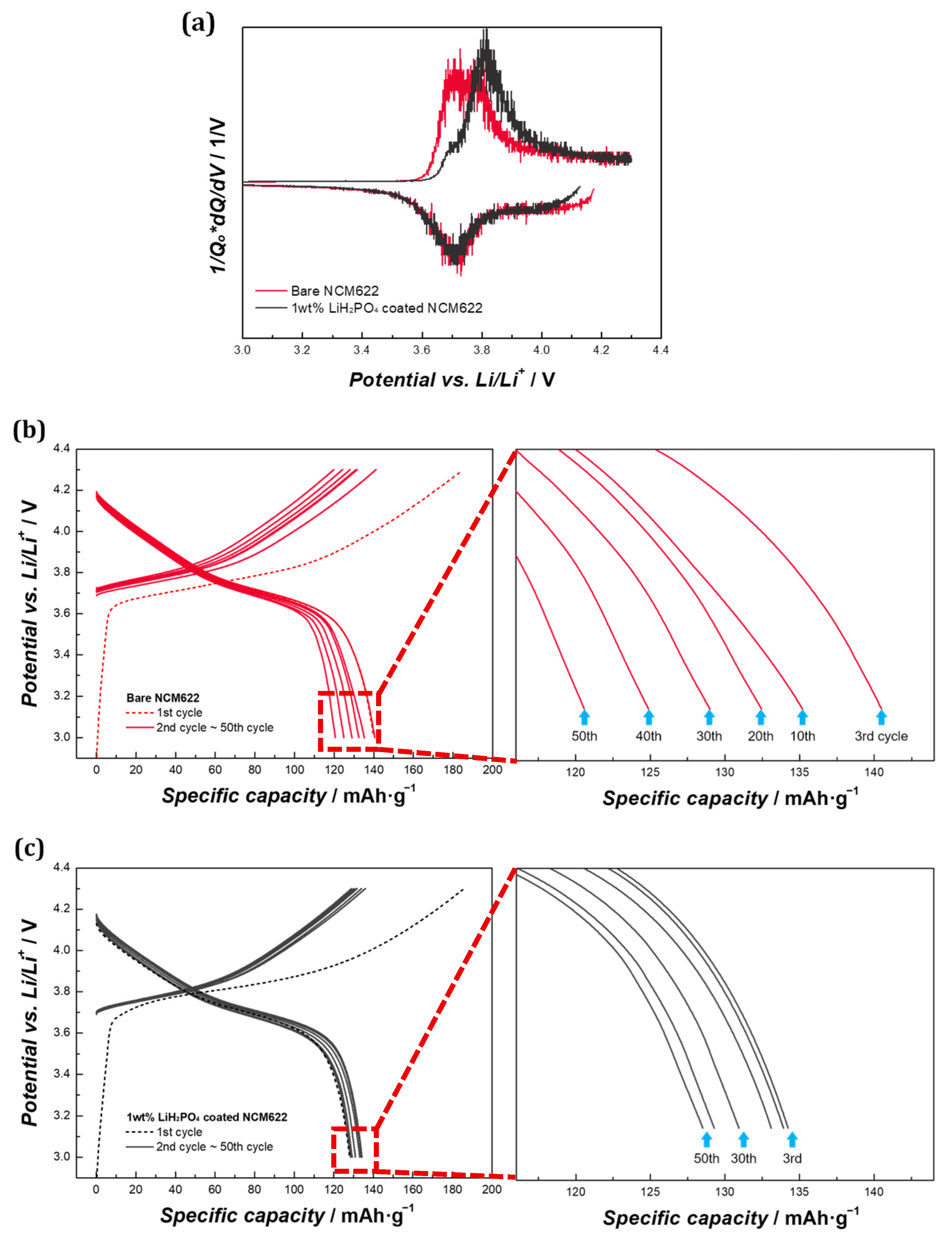
Figure 3a and
Figure S3 present comparisons of the differential capacity (d
Q/d
V) profiles of bare NCM622 and LDP@NCM622 during the initial charge–discharge cycle. The bare electrode exhibits sharp oxidation and reduction peaks with a relatively small voltage polarization, indicative of facile charge transfer during the initial cycle. In contrast, the LDP-coated electrode displays broader redox peaks along with increased separation between the anodic and cathodic peaks, reflecting the additional kinetic barrier introduced by the phosphate layer. This behavior is attributed to the coating layer, which increases the initial lithium-ion diffusion pathway, and consequently, the interfacial impedance. A more important feature is the emergence of an additional reaction near 3.7 V in the bare electrode, which is absent in LDP@NCM622. Because this feature cannot be assigned to the intrinsic phase transitions of layered NCM622, it is attributed to parasitic interfacial reactions between the oxide cathode and sulfide electrolyte. Its complete suppression after the LDP coating indicates that the phosphate layer fundamentally altered the initial interfacial reaction pathway. Rather than allowing direct electrolyte decomposition, the LDP coating is expected to promote the formation of a chemically stable phosphate-rich interphase during initial electrochemical activation.
The beneficial role of this interphase becomes increasingly evident during prolonged cycling.
Figure 3b,c compare the evolution of the charge–discharge voltage profiles with the cycle number. During the initial cycles, LDP@NCM622 exhibits a lower discharge capacity than the bare electrode alongside a slightly larger voltage hysteresis (
Figure 3c). This initial capacity reduction (~10 mAh g
−1) and kinetic penalty originate from the higher interfacial resistance introduced by the ~40 nm thick LDP coating layer prior to complete interfacial stabilization. However, this trend rapidly reversed after the initial activation period. While the bare electrode underwent continuous polarization growth accompanied by progressive capacity loss (
Figure 3b), the LDP-coated electrode exhibited relatively stable reversible capacity (
Figure 3c). After approximately ten cycles, the voltage profiles became highly stable and remained essentially unchanged throughout the subsequent cycling. This fundamentally different evolution indicated that the initial interfacial reaction occurring on LDP@NCM622 rapidly reached a chemically stable state instead of continuously propagating during cycling. In the bare electrode, direct contact between the oxide cathode and sulfide electrolyte allows persistent electrolyte decomposition, leading to the continuous accumulation of resistive interphase products and progressive impedance growth.
In contrast, it is expected that the LDP coating underwent controlled interfacial reconstruction during the early cycles, generating a stable phosphate-rich artificial interphase that effectively passivated the cathode surface and suppressed chemical degradation. Consequently, although the initial activation of the LDP layer imposes a modest capacity and kinetic trade-off (~10 mAh g−1), it substantially mitigates long-term interfacial deterioration, ultimately outperforming the bare cathode in both capacity retention and voltage stability after 10–15 cycles.
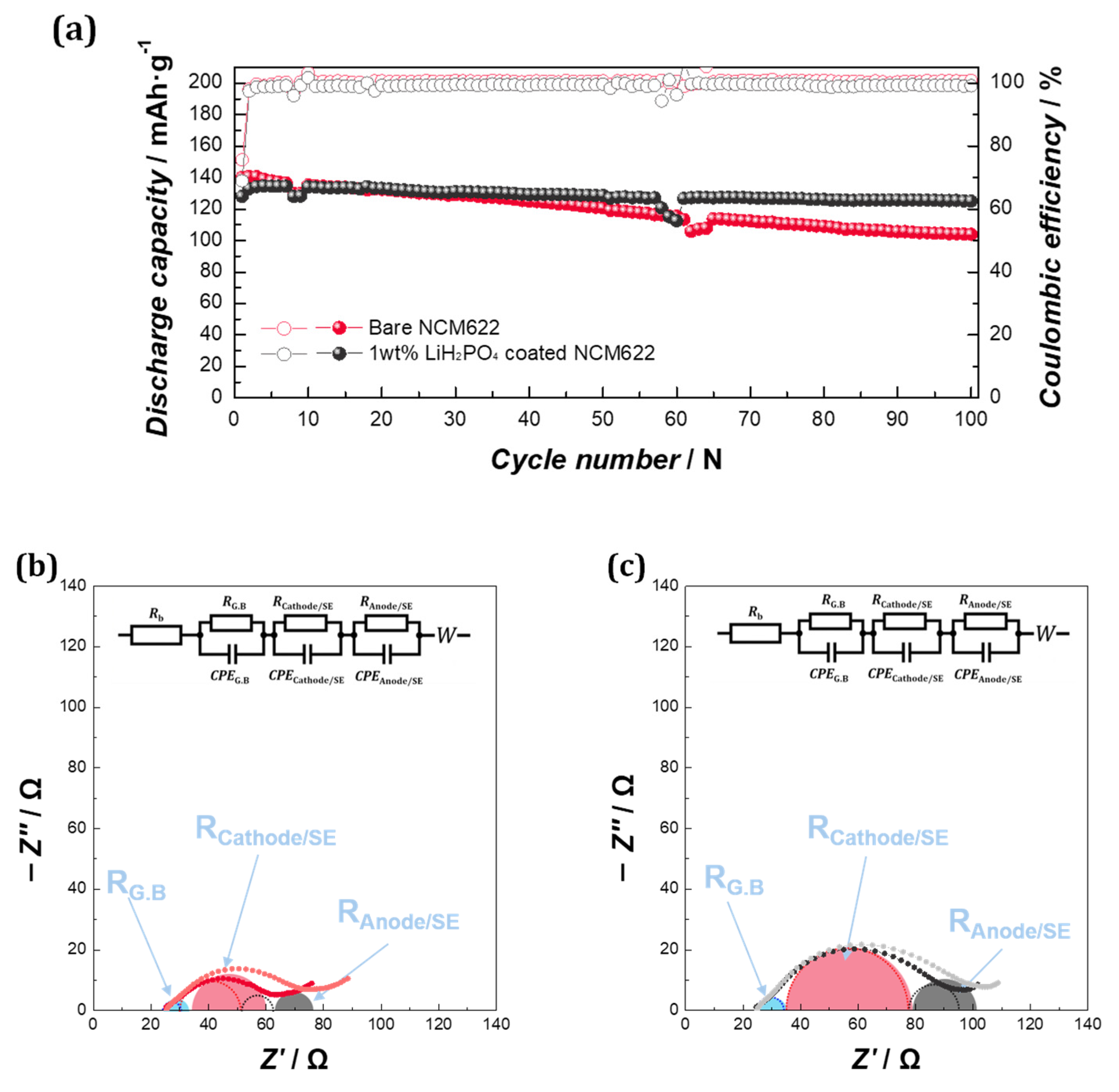
The cycling performance (
Figure 4a) provides direct evidence supporting this mechanism. Bare NCM622 retained only 73.9% of its second-cycle discharge capacity after 100 cycles, whereas LDP@NCM622 maintained 94.1% of its capacity, corresponding to an improvement of more than 20 percentage points in capacity retention. Although the phosphate coating slightly sacrificed the initial discharge capacity because of the additional interfacial resistance, its ability to stabilize the cathode–electrolyte interface ultimately delivered a substantially higher reversible capacity after prolonged cycling. These results demonstrate that the effectiveness of an artificial interphase should not be determined solely based on its initial electrochemical response. Rather, the ability to suppress interfacial degradation and stabilize impedance evolution during cycling is a decisive factor governing the long-term performance of sulfide-based ASSBs.
Figure 4b,c show the results of EIS performed after the 51st and 101st cycles in the fully charged state, further elucidating the interfacial evolution during cycling. Measurements under charged conditions are particularly advantageous because the impedance contribution from the cathode–electrolyte interface (
Rcathode/SE) can be clearly separated from that of the grain boundary of the sulfide electrolyte (R
G.B.) and the anode–electrolyte interface (R
Anode/SE). The resulting spectra reveal two fundamentally different modes of interfacial evolution. For bare NCM622 (
Figure 4b and
Figure S4a),
Rcathode/SE increased markedly between the 51st and 101st charged states, indicating that interfacial decomposition continued throughout cycling. The progressive accumulation of electrochemically inactive decomposition products thickens the reaction layer and impedes Li-ion transport. Because sulfide-derived decomposition products generally have poor ionic conductivity, their continuous growth inevitably increases the charge-transfer resistance and aggravates electrode polarization.
In contrast, LDP@NCM622 exhibited distinctly different impedance evolution (
Figure 4c and
Figure S4b). Although the R
cathode/SE impedance was initially higher than that of the bare electrode after 50 cycles, relatively lower impedance growth was observed during the subsequent 50 cycles. This behavior indicates that the interfacial reaction rapidly becomes self-limiting once a phosphate-rich artificial interphase is established. Accordingly, the relatively high initial resistance should not be taken as evidence of an inferior interface. Rather, it represents the electrochemical signature of a deliberately engineered interphase that remains chemically and electrochemically stable during prolonged cycling. This behavior closely resembles the formation mechanism of a solid electrolyte interphase (SEI) on graphite anodes in conventional lithium-ion batteries. Although SEI formation causes an initial increase in the interfacial resistance and irreversible lithium consumption, the resulting passivation layer effectively suppresses further electrolyte decomposition, thereby ensuring long-term electrochemical stability. A similar mechanism appeared to operate in the proposed system. During the initial electrochemical activation, the LiH
2PO
4 coating undergoes controlled interfacial reconstruction through limited chemical interaction with the sulfide electrolyte, producing a stable phosphate-rich interphase. While this process introduces an initial kinetic penalty, it effectively prevents continuous electrolyte decomposition and stabilizes the cathode–electrolyte interface, thereby minimizing impedance growth during extended cycling.
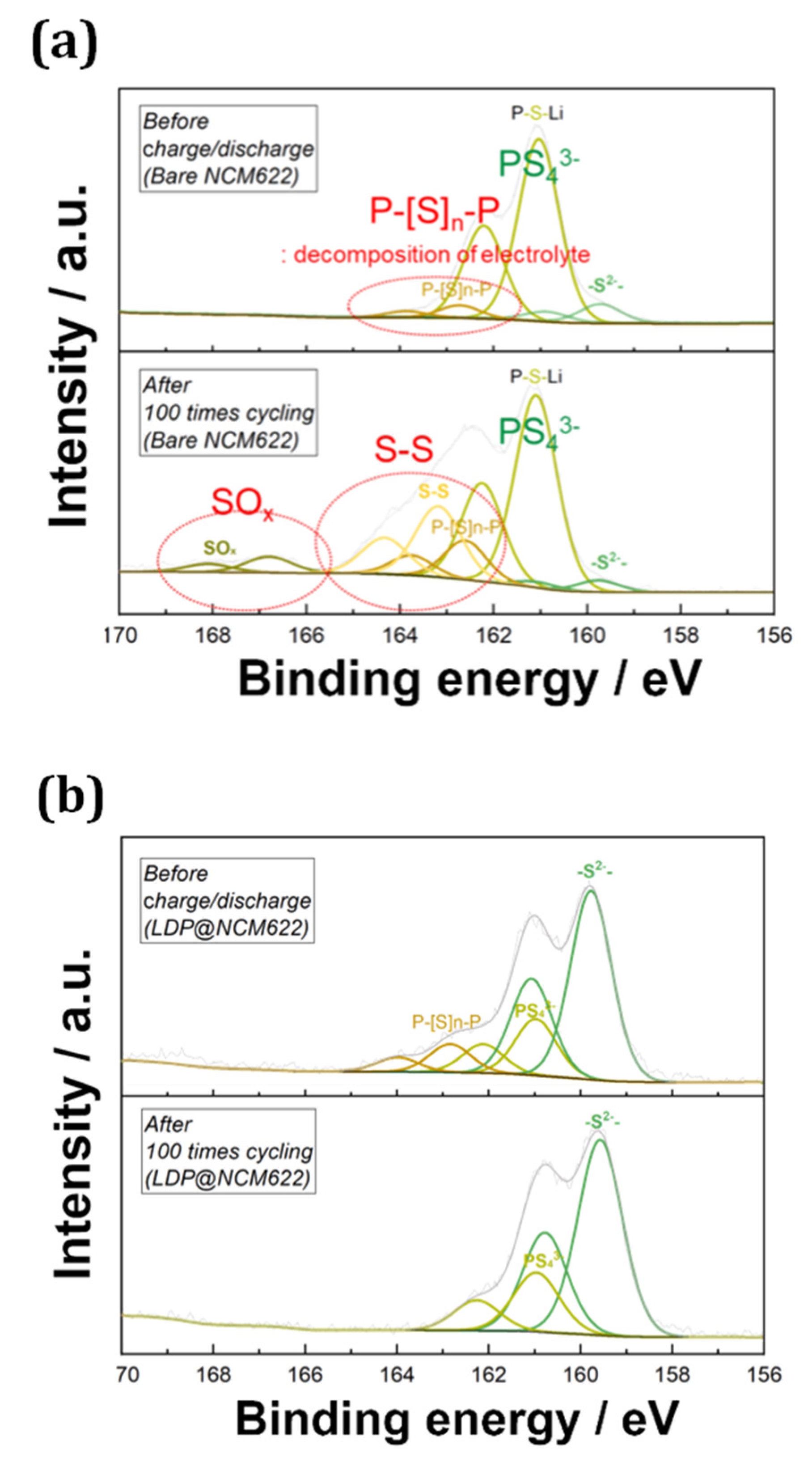
Although the electrochemical results clearly demonstrate that the LDP coating effectively suppresses the impedance evolution during cycling, the underlying stabilization mechanism cannot be fully understood without examining the chemical reactions occurring at the cathode–electrolyte interface. To elucidate the evolution of interfacial chemistry, XPS analyses were performed before and after electrochemical cycling.
Figure 5 shows a comparison of the S 2p spectra of bare NCM622 and LDP@NCM622. Prior to cycling, the bare electrode (
Figure 5a) exhibited the characteristic PS
43− species (161.3 eV) originating from the argyrodite Li
6PS
5Cl electrolyte [
31], along with minor P–[S]
n–P (163.2 eV) and S
2− components (159.7 eV) [
32,
33]. These sulfur-deficient species are commonly observed in sulfide electrolytes synthesized at elevated temperatures and arise from the partial volatilization of sulfur during heat treatment. Because the P–S bond is considerably stronger than the Li–S bond, sulfur loss preferentially disrupts the Li–S environment while largely preserving the tetrahedral PS
43− framework, resulting in the coexistence of reduced sulfur species and sulfur-deficient P–[S]
n–P units. Following electrochemical cycling, the interfacial chemistry of the bare electrode changed significantly. New S–S (164.2 eV) and SO
x components (167.5 eV) emerged, providing clear evidence of continuous sulfide electrolyte decomposition. The appearance of oxidized sulfur species is particularly significant because previous studies have shown that oxygen released from highly delithiated layered oxides readily reacts with sulfide electrolytes to form SO
x species [
34,
35]. Accordingly, the simultaneous formation of S–S and SO
x indicates coupled degradation of both the sulfide electrolyte and the layered oxide cathode, highlighting the absence of an effective interfacial passivation mechanism.
A fundamentally different evolution was observed in LDP@NCM622 (
Figure 5b). Even before electrochemical cycling, the coated electrode exhibited a substantially stronger S
2− component than the bare cathode. Although this initially appeared counterintuitive, a control experiment in which LiH
2PO
4 was simply mixed with Li
6PS
5Cl (
Figure S5) provides important insight into the origin of this behavior. Even without electrochemical cycling, direct contact between LiH
2PO
4 and Li
6PS
5Cl resulted in the emergence of a new phosphate-related P
xO
y component (133.6 eV) together with a pronounced increase in the S
2− signal. These observations clearly indicate that LiH
2PO
4 is not chemically inert toward the sulfide electrolyte but instead undergoes an initial chemical reaction upon contact with Li
6PS
5Cl. The concomitant evolution of the phosphate-related P
xO
y component and sulfur species suggests coupled interfacial reactions involving both the phosphate precursor and the sulfide framework. This interpretation is further supported by
Figure S6, which shows a substantial decrease in the sulfur-deficient P–[S]
n–P component after interfacial reaction with the LDP coating despite the use of the same sulfide electrolyte. Nevertheless, the present XPS results do not establish a direct one-to-one conversion of P–[S]
n–P into P
xO
y; rather, they support the formation of a chemically reconstructed, phosphate-rich interfacial environment through the initial reaction between LiH
2PO
4 and Li
6PS
5Cl. Consequently, the relatively high initial interfacial resistance observed in LDP@NCM622 is attributed not simply to the intrinsic ionic resistance of the LiH
2PO
4 layer, but also to the formation of this chemically reconstructed phosphate-rich interphase.
This finding fundamentally revises the conventional view on cathode coatings in sulfide ASSBs. Most oxide coatings are considered chemically inert barriers that prevent direct contact between the cathode and the electrolyte. In contrast, LiH2PO4 functions as a chemically active interphase precursor. Rather than completely suppressing the interfacial reactions, it promotes a controlled initial reaction that selectively converts unstable sulfur-deficient species into chemically stable phosphate-containing products. Once this artificial interphase is established, the subsequent reaction pathway fundamentally changes.
After prolonged cycling, the S 2p spectra of LDP@NCM622 differed markedly from those of the bare electrode. Although a small amount of P–[S]n–P species reappeared during cycling, neither sulfur precipitation (S–S) nor oxidized sulfur species (SOx) were detected. The absence of these decomposition products demonstrates that both continuous sulfide electrolyte degradation and oxygen-induced oxidation reactions were effectively suppressed. Consequently, the phosphate-rich interphase interrupted the coupled degradation of the electrolyte and layered oxide, leading to a chemically stabilized interface.
The interfacial evolution described above also provides a direct explanation of the electrochemical behavior discussed in the previous section. The formation of a phosphate-rich interphase during the initial cycles inevitably introduces an additional Li-ion transport barrier, resulting in a relatively large polarization and interfacial resistance at the beginning of cycling. However, because this interphase rapidly reaches a chemically self-limiting state, further electrolyte decomposition is effectively inhibited, and impedance growth is largely suppressed. In contrast, the initial lower resistance of the bare electrode reflects the absence of a protective interphase rather than a more stable interface. Continuous electrolyte decomposition progressively thickens the reaction layer, ultimately leading to severe impedance growth and rapid capacity fading.
Accordingly, the initial electrochemical penalty associated with LDP should not be considered a drawback but rather as the cost of constructing a chemically stable artificial interface. Once established, this phosphate-rich interphase effectively decouples the layered oxide cathode from the highly reactive sulfide electrolyte while preserving sufficient lithium-ion transport, thereby fundamentally altering the long-term degradation pathway at the cathode–electrolyte interface.
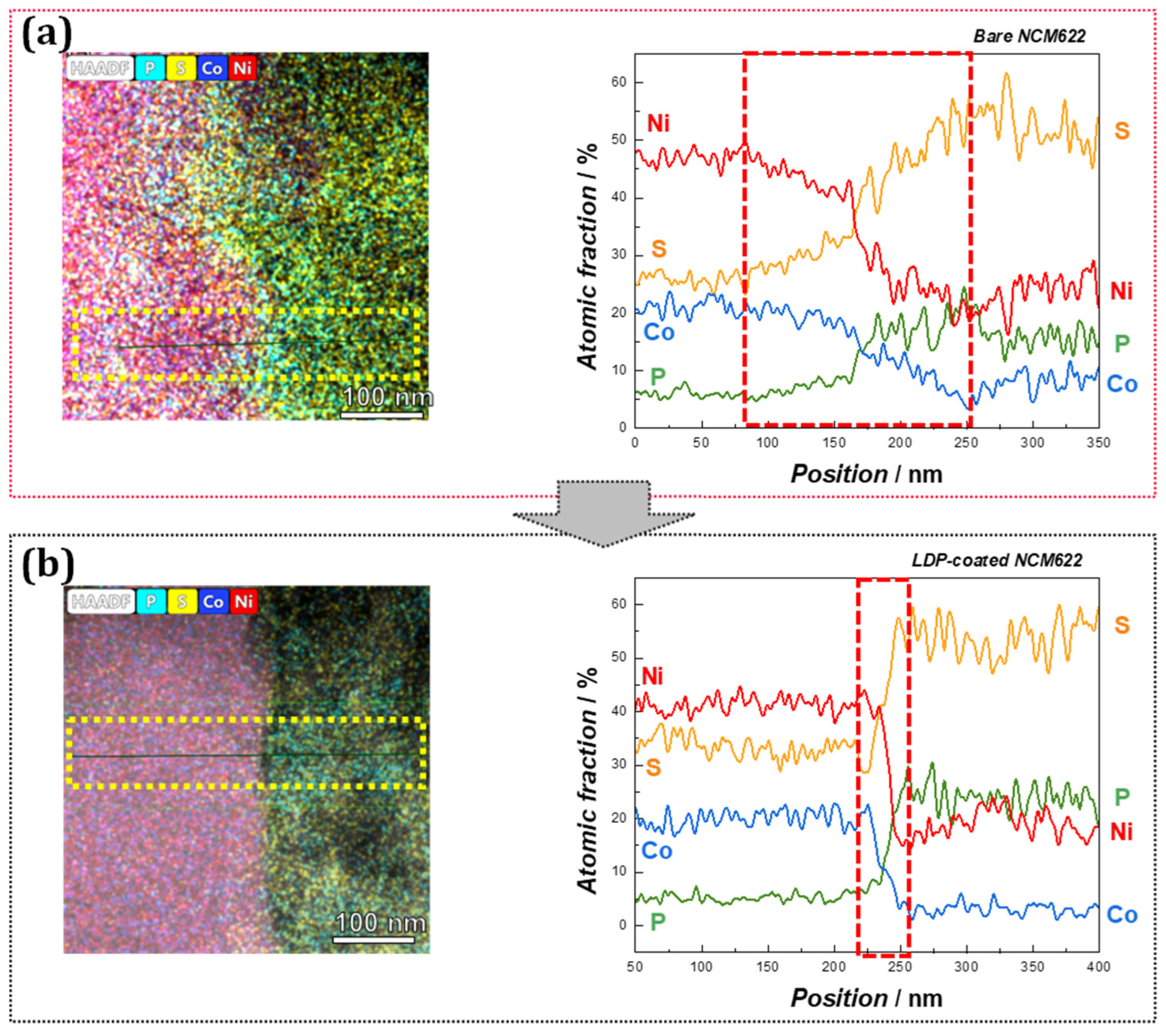
The results of cross-sectional STEM–EDS analyses performed after 100 charge–discharge cycles further elucidate how the modified interfacial chemistry governs long-term electrochemical stability.
Figure 6 compares the elemental distributions across the cathode–electrolyte interface for bare NCM622 and LDP@NCM622 after prolonged cycling. As shown in the figure, the elemental distributions remain sufficiently well-resolved to reveal distinct differences in the interfacial evolution. For the bare electrode (
Figure 6a), pronounced elemental interdiffusion was observed across the cathode–electrolyte interface. Transition metals originating from the layered oxide, particularly Ni and Co, diffused into the sulfide electrolyte, while sulfur and phosphorus from Li
6PS
5Cl simultaneously penetrated the cathode surface. The resulting interdiffusion region extended to approximately 150 nm from the original interface, demonstrating extensive chemical mixing between the two phases. Such interdiffusion is widely recognized as one of the dominant degradation pathways in sulfide-based ASSBs because it continuously alters the local chemical composition of both the cathode and the electrolyte, promoting the formation of electrochemically inactive products, including transition metal sulfides, lithium phosphates, sulfur-rich species, and mixed oxy-sulfide compounds [
12,
13,
14,
15]. The progressive accumulation of these poorly ion-conductive products thickens the resistive interphase and ultimately accelerates impedance growth and capacity fading.
In contrast, the LDP-coated electrode exhibited a fundamentally different interfacial evolution. As shown in
Figure 6b, phosphorus originating from the LDP layer remains confined to the original coating region, whereas the migration of Ni, Co, S, and P across the interface is effectively suppressed. More importantly, no measurable elemental interdiffusion beyond the ~40 nm phosphate layer was detected even after prolonged cycling. These observations demonstrate that the LDP coating continued to function as an effective chemical diffusion barrier despite undergoing partial chemical reconstruction during the initial electrochemical activation.
This behavior provides important insights into the role of phosphate coating. Rather than merely acting as a passive physical barrier, the LDP layer establishes a chemically stabilized interface that substantially reduces the chemical potential gradient that drives interfacial ion exchange. Once the phosphate-rich artificial interphase is formed, further interdiffusion between the layered oxide cathode and sulfide electrolyte becomes thermodynamically unfavorable, thereby effectively arresting the propagation of the reaction zone. This chemically stabilized interface also explains the negligible impedance growth observed in
Figure 4. Because the interfacial reactions become self-limiting after the initial formation process, additional electrochemically inactive decomposition products are no longer continuously generated. Consequently, the thickness and composition of the interphase remain essentially unchanged during prolonged cycling, resulting in a stable charge-transfer resistance and sustained electrochemical performance.
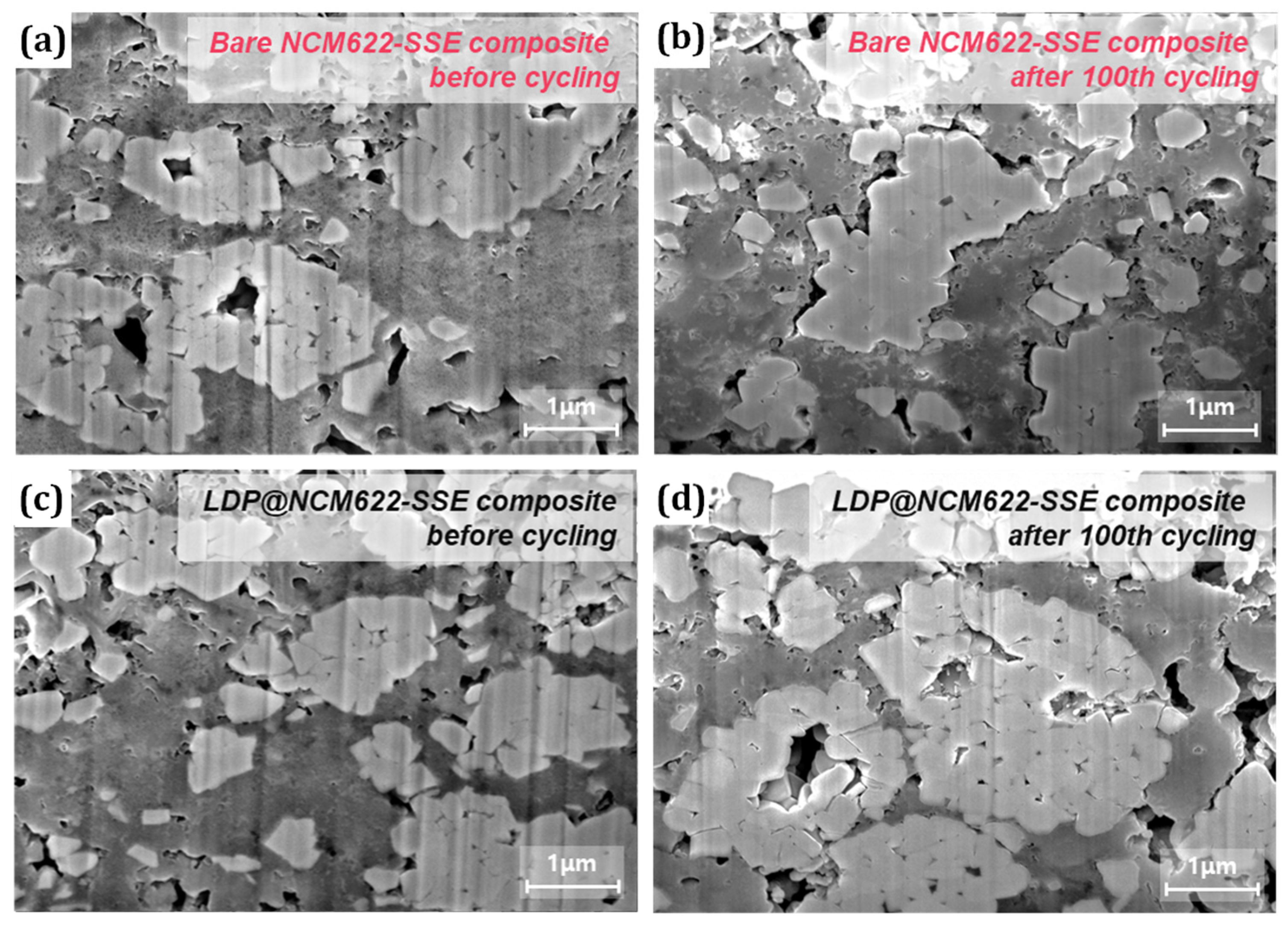
While chemical stability is indispensable for sulfide-based ASSBs, long-term performance also depends critically on preserving the mechanical integrity at the solid–solid interface. Unlike liquid electrolytes, which readily wet newly exposed surfaces, solid electrolytes cannot reestablish intimate contact once interfacial separation occurs. Repeated volume changes in layered oxide cathodes frequently generate interfacial voids that interrupt lithium-ion transport and accelerate electrochemical degradation.
Figure 7 shows the results of cross-sectional FIB analyses conducted after 100 cycles; these help examine whether the LDP-derived interphase also contributed to mechanical stabilization.
The bare NCM622 electrode exhibited numerous voids along the cathode–electrolyte interface after 100 cycles (
Figure 7b). Although these voids primarily originate from the repeated volume variation in the cathode during lithiation and delithiation, continuous interfacial side reactions further weaken the structural integrity and promote contact loss [
36]. Once local separation occurs, the effective reaction area decreases, leading to current localization in the remaining contact regions. This, in turn, accelerates local electrolyte decomposition and heterogeneous growth of the interphase, establishing a positive feedback loop between chemical degradation and mechanical failure.
Remarkably, LDP@NCM622 exhibited a different behavior. Even after 100 cycles (
Figure 7d), the intimate interfacial contact was preserved across almost the entire cathode surface with negligible void formation. Therefore, the phosphate-derived interphase not only suppresses interfacial reactions but also maintains structural continuity between the cathode and sulfide electrolyte throughout repeated cycling. Because chemical degradation was effectively inhibited, the formation of mechanically fragile reaction products was minimized, allowing stable interfacial contact to be maintained despite repeated electrode volume changes.
Taken together, these results demonstrate that the LDP coating simultaneously enhances the chemical and mechanical stabilities of the cathode–electrolyte interface. Importantly, these two effects are intrinsically coupled. Suppressing chemical degradation prevents the formation of mechanically unstable reaction products, while preserving the intimate interfacial contact minimizes local current concentration and further inhibits electrolyte decomposition. This synergistic stabilization mechanism ultimately accounts for the remarkable cycling stability of LDP-coated cathodes.