Article

Research on Thermal Runaway Features of Lithium-Ion Batteries with Different Aging Histories for Energy Storage Under Conditions of Overcharging

1
China Southern Power Grid Zhongshan Power Supply Bureau, Zhongshan 528400, China
2
Technical Department Guangdong National Energy Storage Technology Innovation Research Institute Co., Ltd., Guangzhou 510000, China
*
Author to whom correspondence should be addressed.
Batteries 2026, 12(7), 227; https://doi.org/10.3390/batteries12070227 (registering DOI)
Submission received: 22 May 2026 / Revised: 15 June 2026 / Accepted: 18 June 2026 / Published: 25 June 2026
(This article belongs to the Special Issue Battery Health Algorithms and Thermal Safety Modeling)

Abstract

In this study, we investigate the effect of aging on the thermal runaway characteristics of 314 Ah lithium iron phosphate batteries with different cycles (0, 400, and 1000 cycles), with the batteries being overcharged to thermal runaway with a 0.5 C charging rate. The results indicate that aging significantly reduces the severity of thermal runaway for a battery. Fresh batteries exhibited intense jet fires with a peak temperature of 501.4 °C, while aged batteries produced only heavy smoke without obvious flames, with peak temperatures dropping to 401.2 °C. Aging leads to the thickening of the SEI film, increased internal resistance, and an unstable voltage response, extending the thermal runaway trigger time from 1979 s to 4039 s, but with a lower trigger temperature. The negative tab consistently remained the core heat accumulation point, with temperature differences of 10–30 °C compared to other wall surfaces, and the core temperature during thermal runaway exceeded 500 °C. The transition from casing rupture to jet fire occurred within only 2 s, indicating an extremely short safety response window. Through this research, we provide critical insights for the aging assessment and thermal safety management of energy storage batteries.

1. Introduction

Lithium-ion batteries have become the core component of electrochemical energy storage systems as they offer advantages such as high energy density, a long cycle life, and a low self-discharge rate [1,2,3]. Among them, lithium iron phosphate batteries have been widely adopted in large-scale energy storage power stations owing to their excellent thermal stability and cost-effectiveness [4]. However, batteries inevitably undergo long-term cycling aging, leading to significant changes in their internal material properties and electrochemical performance [5]. These changes may profoundly impact the safety characteristics of the batteries [6,7].
Thermal runaway is the most severe safety incident for lithium-ion batteries, typically triggered by factors such as overheating, overcharging, or mechanical abuse [8,9]. It leads to a rapid increase in the internal temperature of the battery, potentially causing fires or even explosions [10,11]. Overcharging, as a common fault mode in energy storage systems, is particularly prone to occur when the battery management system fails or the inconsistency among individual battery cells worsens [12]. Under overcharging conditions, a series of chain reactions within the battery such as lithium dendrite growth, separator rupture, and internal short circuits can accelerate the process of thermal runaway. Its severity often exceeds that of thermal runaway triggered by overheating [13].
Recently, both domestical and international researchers have conducted extensive research on the thermal runaway characteristics of lithium-ion batteries, primarily focusing on the thermal behavior analysis of, gas generation properties of, and fire suppression methods for fresh batteries [14,15,16,17]. However, research on the evolution patterns of thermal runaway in batteries with varying degrees of aging, particularly in the context of actual operational scenarios in energy storage power stations, remains relatively scarce. Some studies indicate that aging leads to capacity degradation, increased internal resistance, and the thickening of the solid electrolyte interface (SEI) layer, thereby affecting the heat generation characteristics and thermal stability of batteries [18,19,20,21]. Nevertheless, there remains a lack of systematic experimental data for elucidating how aging specifically influences the thermal runaway behavior, temperature field distribution, and fire hazards of large-capacity lithium iron phosphate batteries under overcharging conditions. Moreover, the most existing studies focus on small-capacity cells [22,23,24,25,26,27,28]. This study is based on a 314 Ah large-format LiFePO4 battery, which is representative of modern grid-scale energy storage systems. Moreover, the 314 Ah large-format LiFePO4 battery has been used in practical applications for about 2–3 years. It has operated approximately 1000 cycles when it is charged and discharged once a day. Thus, the thermal runaway behavior and safety response of this large-format LiFePO4 battery with long-term cycles can provide some critical support for revising the warning strategy in energy storage systems.
In this context, 314 Ah large-capacity lithium iron phosphate batteries were selected as the research object, and batteries with 0, 400 and 1000 cycles were triggered to achieve thermal runaway with an overcharged condition at a 0.5 C charging rate. By comparing and analyzing the thermal runaway behavior characteristics, temperature evolution patterns, and voltage response characteristics of batteries at different lifespans, the mechanism by which the degree of aging influences the fire hazard posed by batteries is revealed. The aim of conducting this study is to provide theoretical foundations and data support for aging state assessment, thermal runaway warning, and fire safety design for energy storage systems.

2. Experimental Setup

As shown in Table 1, in this study, we investigate the thermal runaway behavior of energy storage lithium iron phosphate batteries at different cycle lives. The target batteries were overcharged to thermal runaway at a charging rate of 0.5 C.
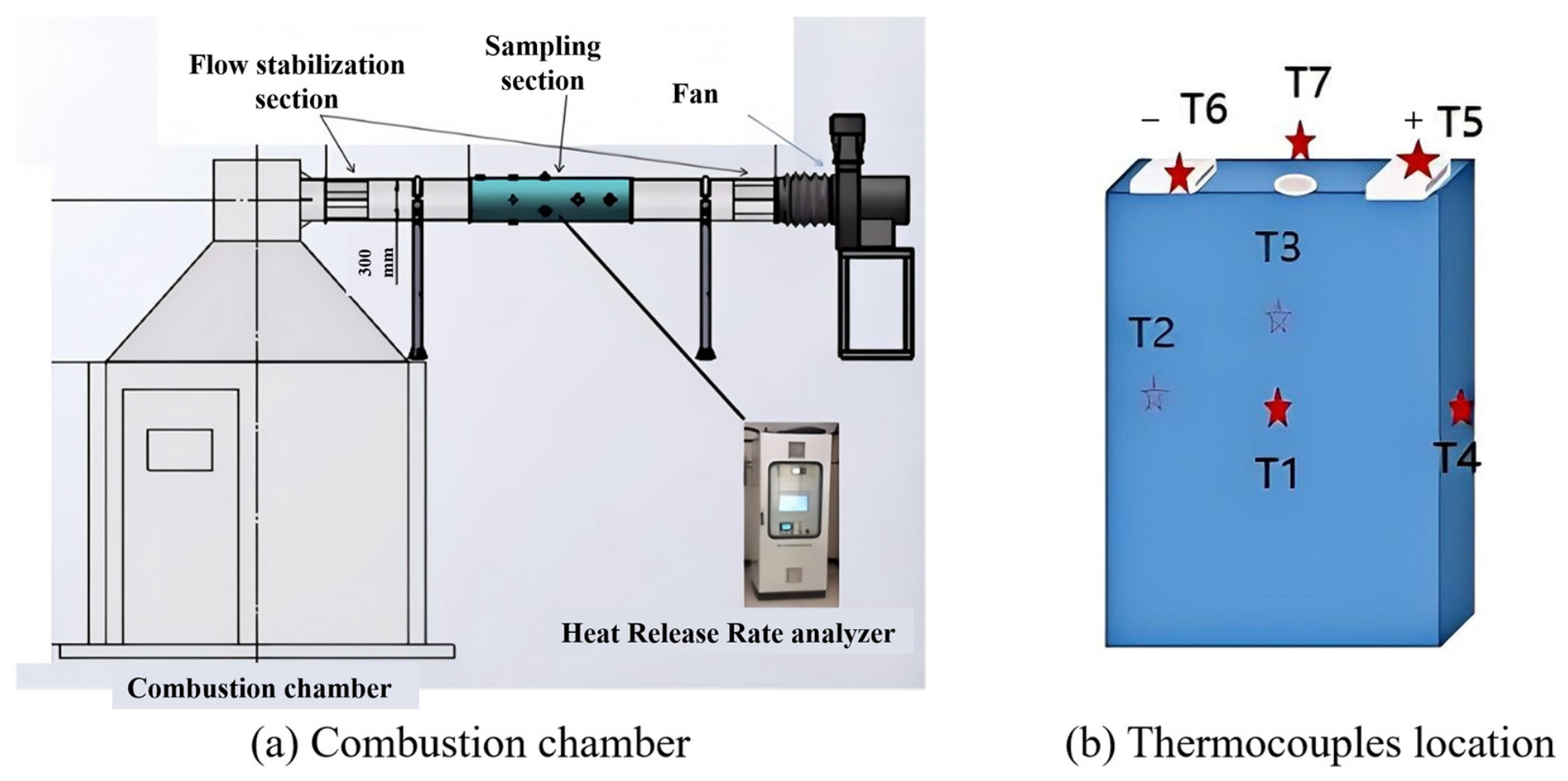
As shown in Figure 1, seven thermocouples were arranged on the different surfaces of the positive and negative electrodes in the experiment, and Table 2 outlines the positions of the different thermocouples.
In order to satisfy the accuracy and continuity of temperature measurement during thermal runaway, all K-type sheathed thermocouples (diameter 1.0 mm, sampling frequency 1 Hz, accuracy 0.1 °C, limit temperature 1000 °C) are pasted onto the battery surface using high-temperature ceramic adhesive (range to 800 °C) and double-layer high-temperature tape. The thermocouple probe and lead wires are protected by ceramic fiber sleeves.

3. Results

3.1. Subsection

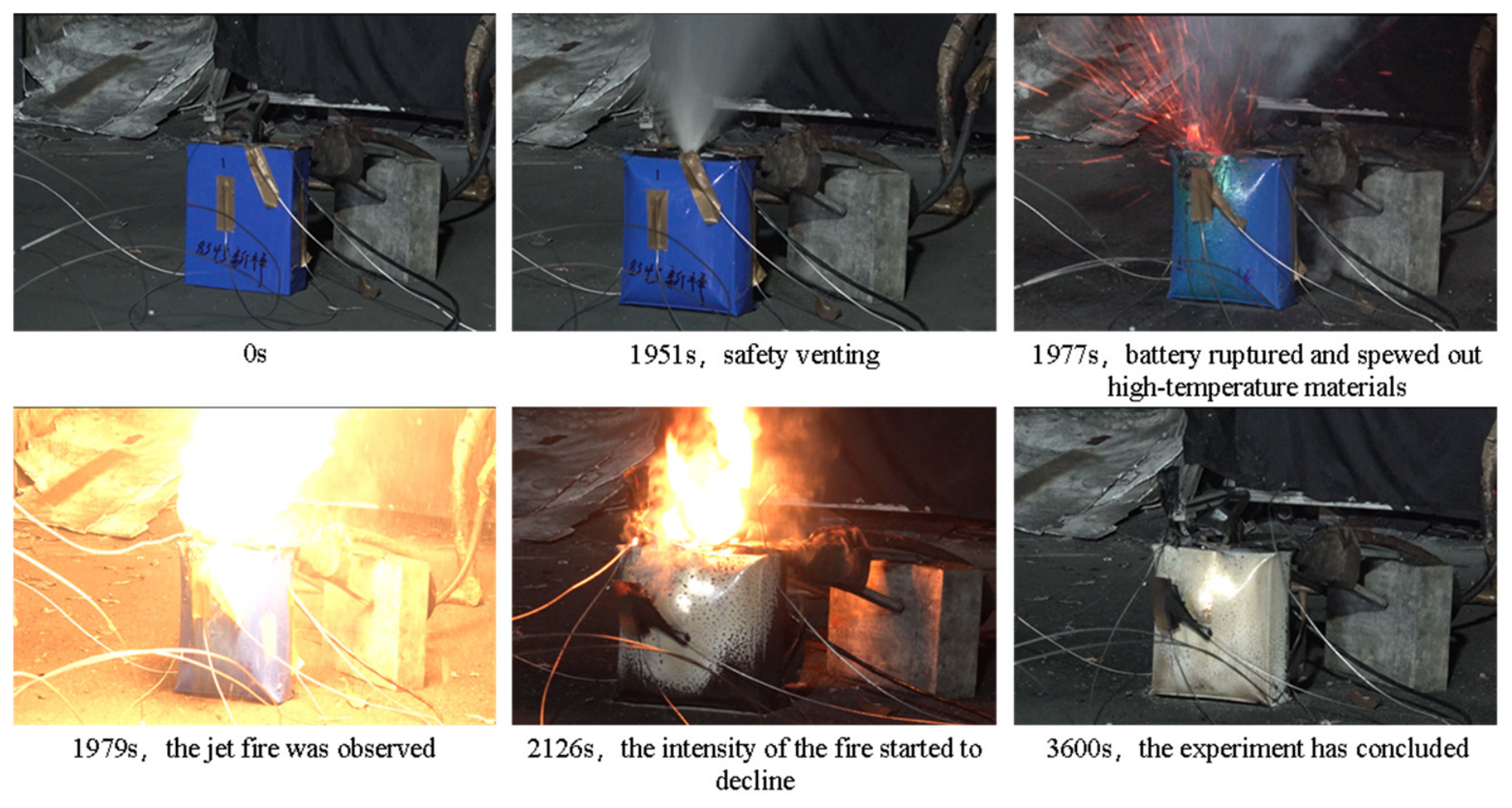
Figure 2 illustrates the thermal runaway process of a new battery. The battery’s safety valve opened at 1951 s during overcharging. At 1977 s, the casing near the battery tab ruptured, and a distinct jet fire appeared at 1979 s. The primary cause of this phenomenon was a significant fracture near the battery tab, which allowed the ejected mixed gases to fully mix with air and subsequently ignite. Only 2 s elapsed between the casing rupture and the emergence of the jet fire, indicating that large-capacity lithium iron phosphate batteries enter a runaway state almost immediately after structural failure, leaving an extremely narrow safety response window. Following the jet fire, the battery entered an intense burning phase, with its core temperature rising to 550 °C at 2126 s. Subsequently, the fire weakened, and the experiment concluded at 3600 s with a core temperature of 575 °C. The experimental results reveal that, compared to the thermal runaway process triggered by overheating, the thermal runaway behavior under overcharge conditions is more violent and exhibits a shorter buffer time.
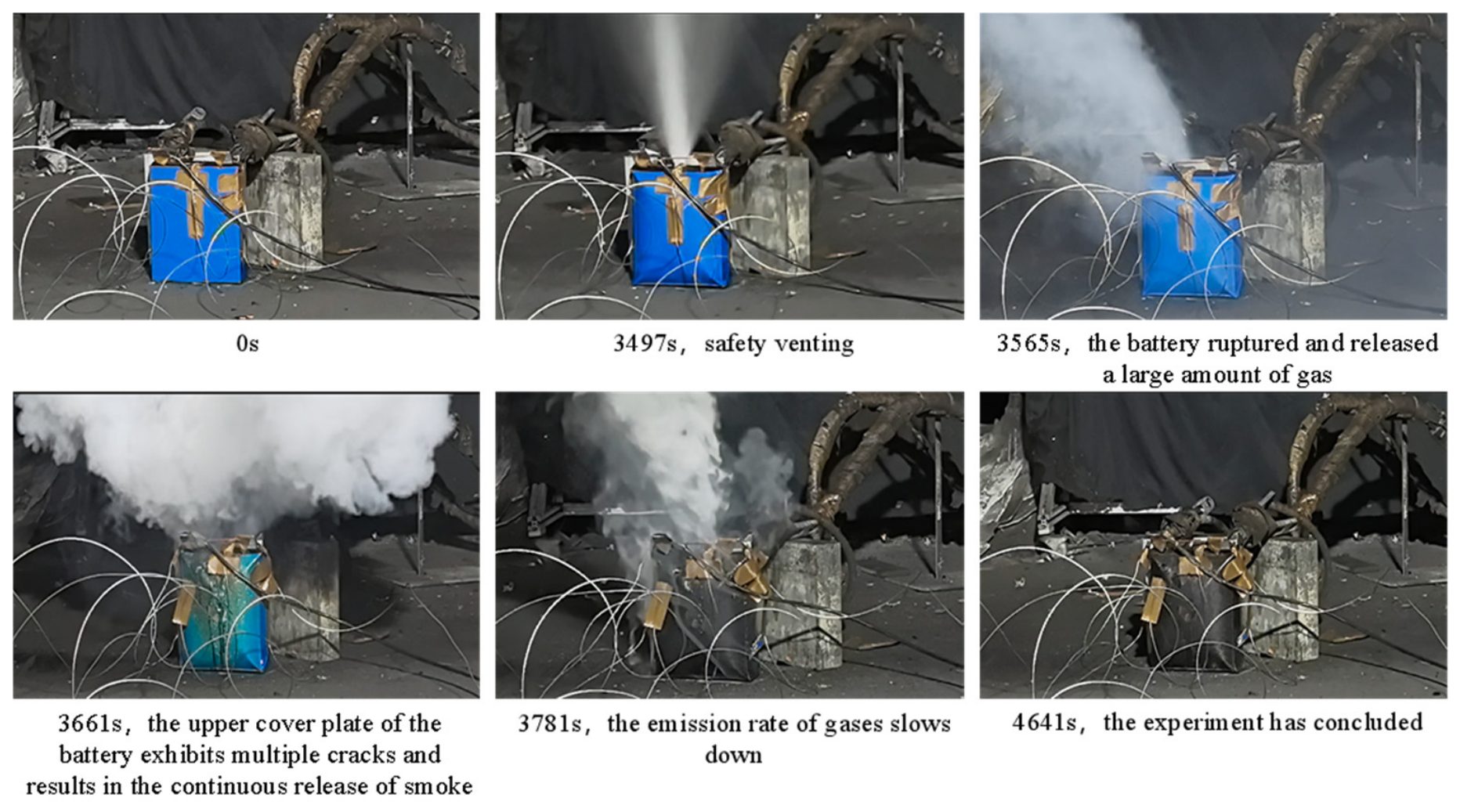
Figure 3 and Figure 4 illustrate the thermal runaway behavior of the lithium iron phosphate batteries after 400 and 1000 cycles, respectively. Figure 3 presents the full-scale thermal runaway evolution of the lithium iron phosphate battery after aging through 400-cycle charge–discharge cycling under conditions of overcharging abuse. During the overcharge test, the cell safety valve opened at 3497 s for internal pressure relief. At 3565 s, the battery upper cover ruptured, accompanied by the instantaneous ejection of a large amount of flammable gas and the generation of dense white smoke. At 3661 s, the cracks on the upper cover further propagated and developed into multiple fractures, resulting in the continuous and massive leakage of flue gas. The internal gas generation rate of the cell gradually decreased at 3781 s, leading to the synchronous attenuation of smoke emission. The experiment was terminated at 4641 s, at which point severe carbonization and structural damage were observed on the battery casing. Compared with the fresh battery shown in Figure 2, the cyclically aged battery produced no jet fire throughout the entire thermal runaway process and exhibited significantly reduced thermal runaway severity. The triggering time points for safety valve opening and casing rupture were substantially delayed. Moreover, a time interval of 96 s was recorded between casing structural failure and sustained massive smoke emission, which greatly widened the safety response window. These experimental phenomena demonstrate that 400-cycle charge–discharge cycling aging modifies the internal components and casing mechanical structure of the battery, effectively inhibiting the spontaneous ignition tendency of the vented flammable gases.
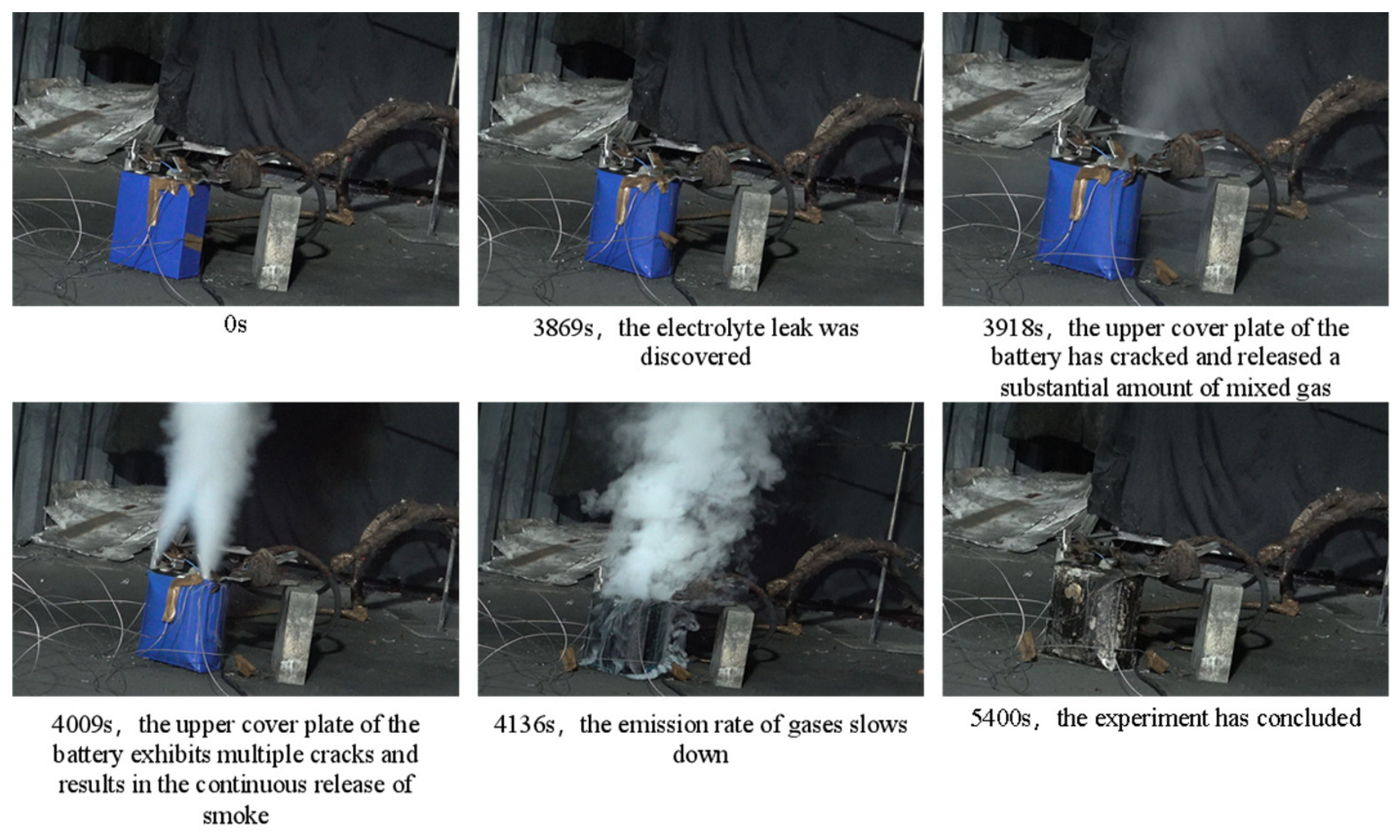
Figure 4 exhibits the overcharge degradation and thermal runaway evolution of the lithium iron phosphate battery after aging through 1000-cycle charge–discharge cycling. During the overcharge test, electrolyte leakage firstly occurred inside the cell at 3869 s. The battery upper cover cracked at 3918 s, accompanied by the outward release of substantial internal mixed gases. At 4009 s, the cover cracks further propagated and penetrated to form multiple breaches, sustaining massive white flue gas ejection. The internal gas generation reaction of the cell gradually decayed at 4136 s, correspondingly slowing down the smoke emission rate. The experiment was terminated at 5400 s, with complete structural damage and carbonization observed on the cell casing. In comparison with the fresh cell and the 400-cycle aged cell, the deeply aged cell with 1000 cycles exhibited no jet fire throughout the test, only presenting electrolyte leakage, casing cracking and continuous smoke emission, with further reduced thermal runaway heat release and combustion severity. The onset time of electrolyte leakage, casing cracking, and massive gas generation was continuously delayed compared with the former two groups of samples. The time interval from structural failure to stable massive smoke emission was further extended, leading to a sustained widening of the safety response window. The experimental phenomena reveal that the increase in cycling aging degrees induces the attenuation of internal active substances, as well as the synchronous degradation of gas generation components and casing mechanical properties. This considerably weakens the potential for the spontaneous ignition of flammable mixed gases under overcharging conditions and remarkably mitigates the overall thermal runaway severity of the cell.
No significant jet flame occurred in either experiment. The primary reason for this phenomenon is that during the initial stage of thermal runaway, none of the batteries’ casings experienced large-scale rupture. The ejected smoke and gases were released from the rupture points, resulting in limited contact between the combustible materials inside the battery and oxygen, which prevented the conditions for combustion from being met.
Based on the above experimental results, unlike overheating-induced thermal runaway behavior, under overcharge conditions, the battery first experiences an internal short circuit and releases a large amount of gas. The battery swells rapidly, and rupture is more likely to occur at the junction between the battery casing and the top cover plate. This increases the space for the release of battery smoke and gases. In this scenario, the probability of the released flammable gases mixing with air increases, making them more prone to ignition and resulting in the occurrence of a jet fire.

3.2. Temperature and Voltage

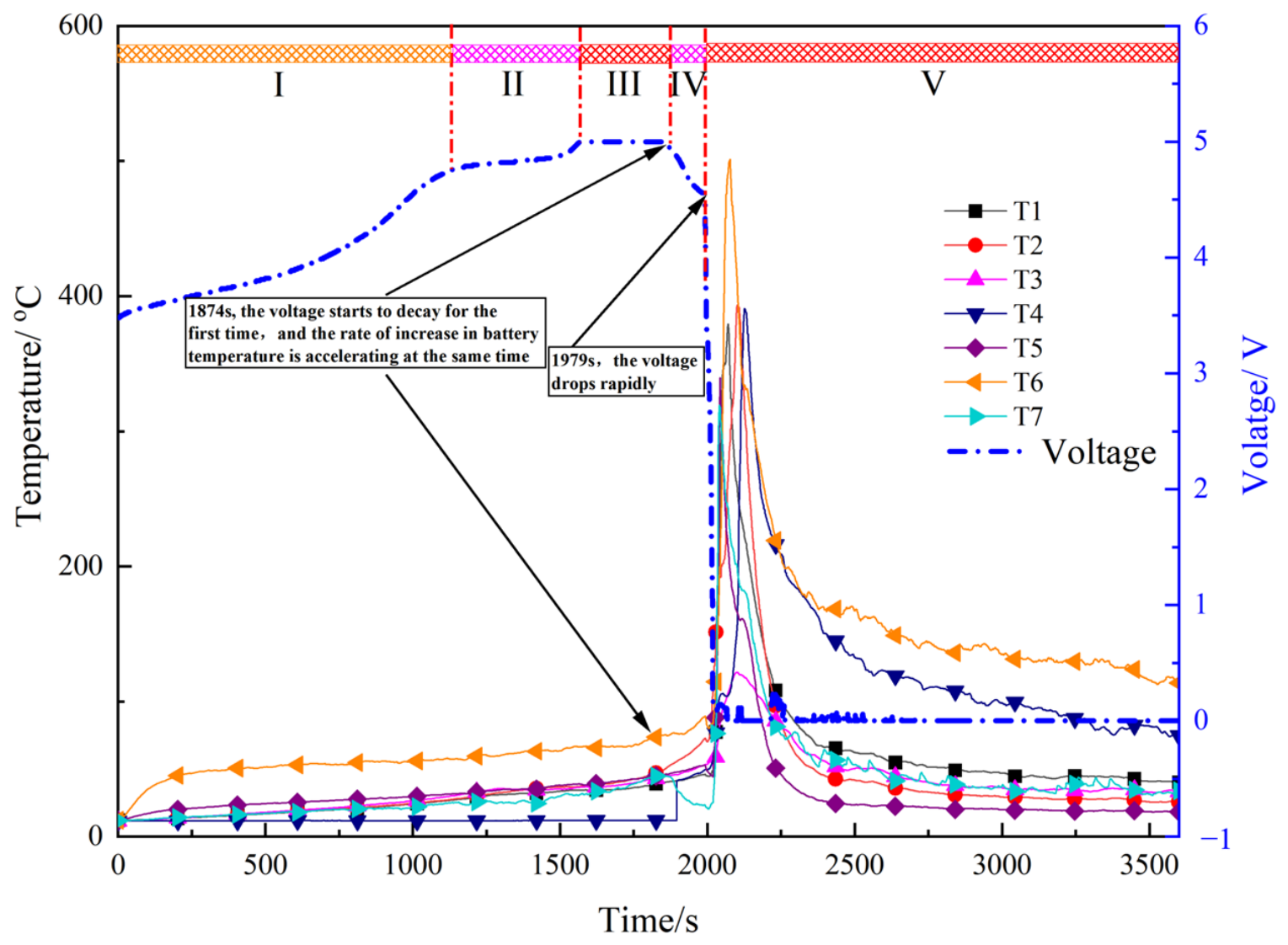
Figure 5 shows the temperature and voltage curves during the thermal runaway processes of new batteries. Under the influence of current, the temperature at the battery tabs is significantly higher than that at other wall surfaces, and the thermal runaway behavior of the batteries exhibits a clear five-stage evolution. During stage I, from 0 to 1132 s, the voltage slowly increases from 3.48 V to 4.75 V, while T6 increases from 12.1 °C to 57.1 °C, with an average temperature increase rate of approximately 0.04 °C/s. Joule heating dominates, and the voltage plateau remains stable, indicating smooth Li+ deintercalation [29]. Between 1132 s and 1568 s at stage II, as well as from 1568 s to 1874 s at stage III, the battery voltage exhibits two relatively stable plateaus. From 1874 s to 1979 s at stage IV, the battery voltage reaches 4.94 V, at which point micro-shorts occur inside the battery, and the battery casing begins to swell. The battery voltage starts to decrease unstably due to the continued reaction between the lithium embedded in the anode and the electrolyte [12]. Furthermore, the rate of increase in temperature increases significantly to 0.1 °C/s, which indicates that the side reaction inside the battery is accelerated [29].
At 1979 s, when the jet fire is triggered, the voltage drops sharply to 2.75 V, and T6 decreases to 80.6 °C, indicating instantaneous energy release caused by internal short-circuiting. During the jet fire thermal runaway stage (1979–1992 s), the voltage drops to zero, and T6 increases from 80.9 °C to 84.4 °C, marking the formal onset of thermal runaway. In the thermal runaway outburst stage (1992–2048 s), the temperature increases sharply. The T6 reaches its maximum temperature increase rate of 39.3 °C/s at 2008 s and peaks at 316.1 °C at 2018 s before continuing to increase, ultimately reaching a peak temperature of 501.4 °C at 2077 s. This result reveals that the actual internal core temperature exceeds 500 °C, while the peak temperature at the outer casing measurement point T7 is 316.1 °C, forming a radial temperature difference of approximately 185 °C. After the peak, the cooling stage begins (2049–4475 s). The coupling characteristics of voltage and temperature indicate that the 28 s period during which the voltage drops sharply from 4.57 V to 2.75 V is the critical warning period for thermal runaway. Approximately 13 s after the voltage decreases to zero, the temperature begins to increase sharply. The time from casing rupture to jet fire is only 2 s, indicating an extremely limited window for safety response. Analysis of the multi-point temperature field shows that the maximum temperature in the thermal runaway core region (T5/T6) reaches 501.4 °C, and the duration of thermal runaway is approximately 175 s.
The voltage variation reveals that there is an approximately 40 s time lag from the onset of the voltage drop to thermal runaway. Additionally, safe venting behavior may manifest 68 s prior to the occurrence of thermal runaway. These findings underscore the necessity of using gas detectors in practical applications and suggest that voltage data can be integrated with early warning strategies [26].
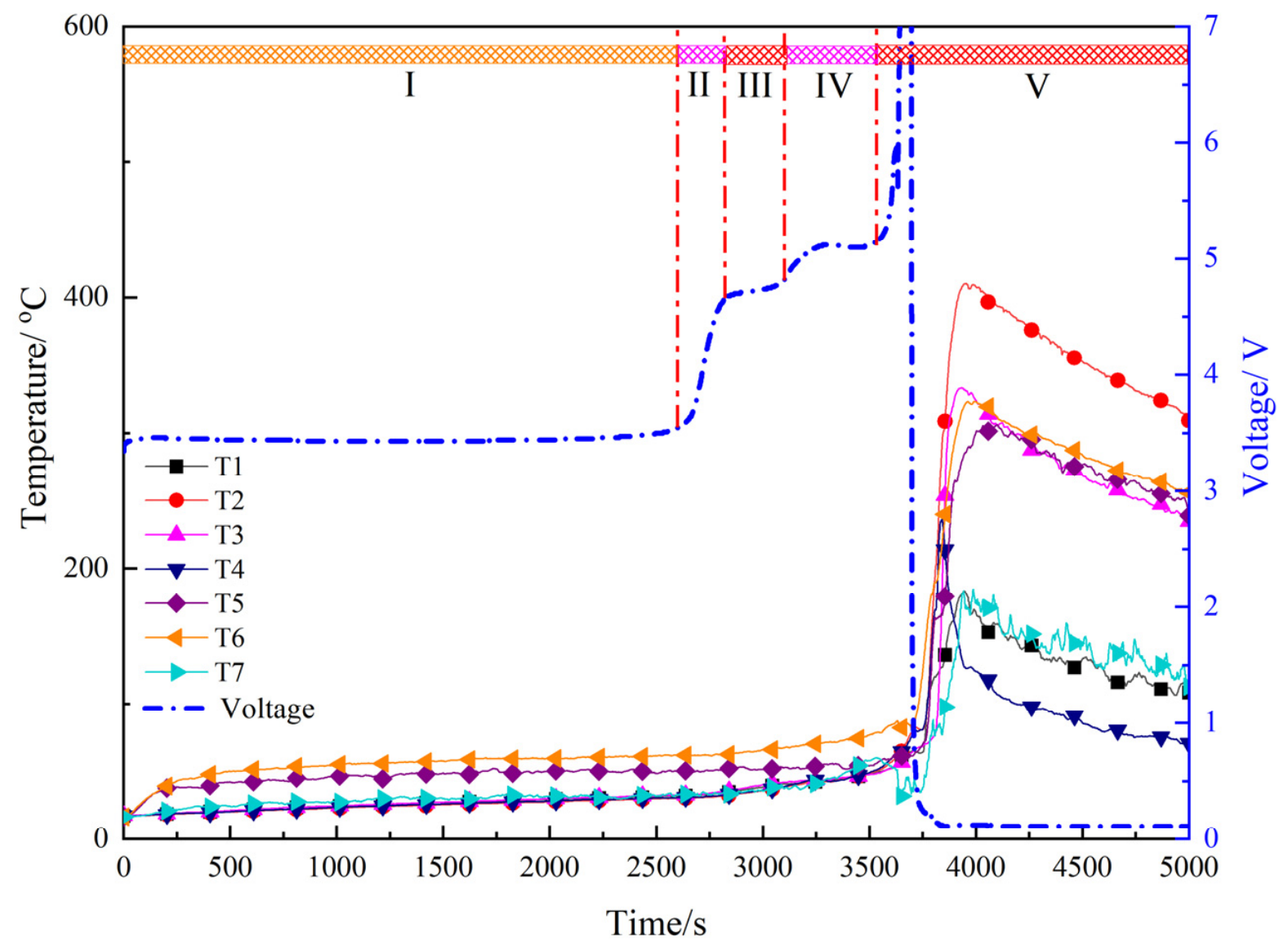
As shown in Figure 6, compared to the new battery, the lithium iron phosphate battery after 400 cycles of aging exhibits significant behavioral differences during the 0.5 C overcharge thermal runaway process. Unlike the typical slow voltage increase from 3.65 V to 3.72 V for the new battery, the aged battery displays a distinct voltage plateau from the beginning of charging. At 2611 s, the voltage begins to increase rapidly from 3.56 V, eventually reaching a higher peak voltage of 5.96 V at 3580 s (compared to 5.10 V for the new battery), reflecting the increased internal resistance and polarization due to aging. The thermal runaway trigger time is significantly extended from 1979 s for the new battery to 3591 s, but the core temperature T6 at the trigger point is only 86.8 °C, much lower than the 350 °C temperature for the new battery, indicating that the thickened SEI film and loss of active lithium in the aged battery make it more prone to thermal runaway triggered by internal short circuits. The intensity of thermal runaway is significantly reduced, suggesting decreases in available active materials and heat generation capacity in the aged battery. The delay time for temperature jump after voltage collapse is extended from about 13 s for the fresh battery to approximately 30 s.
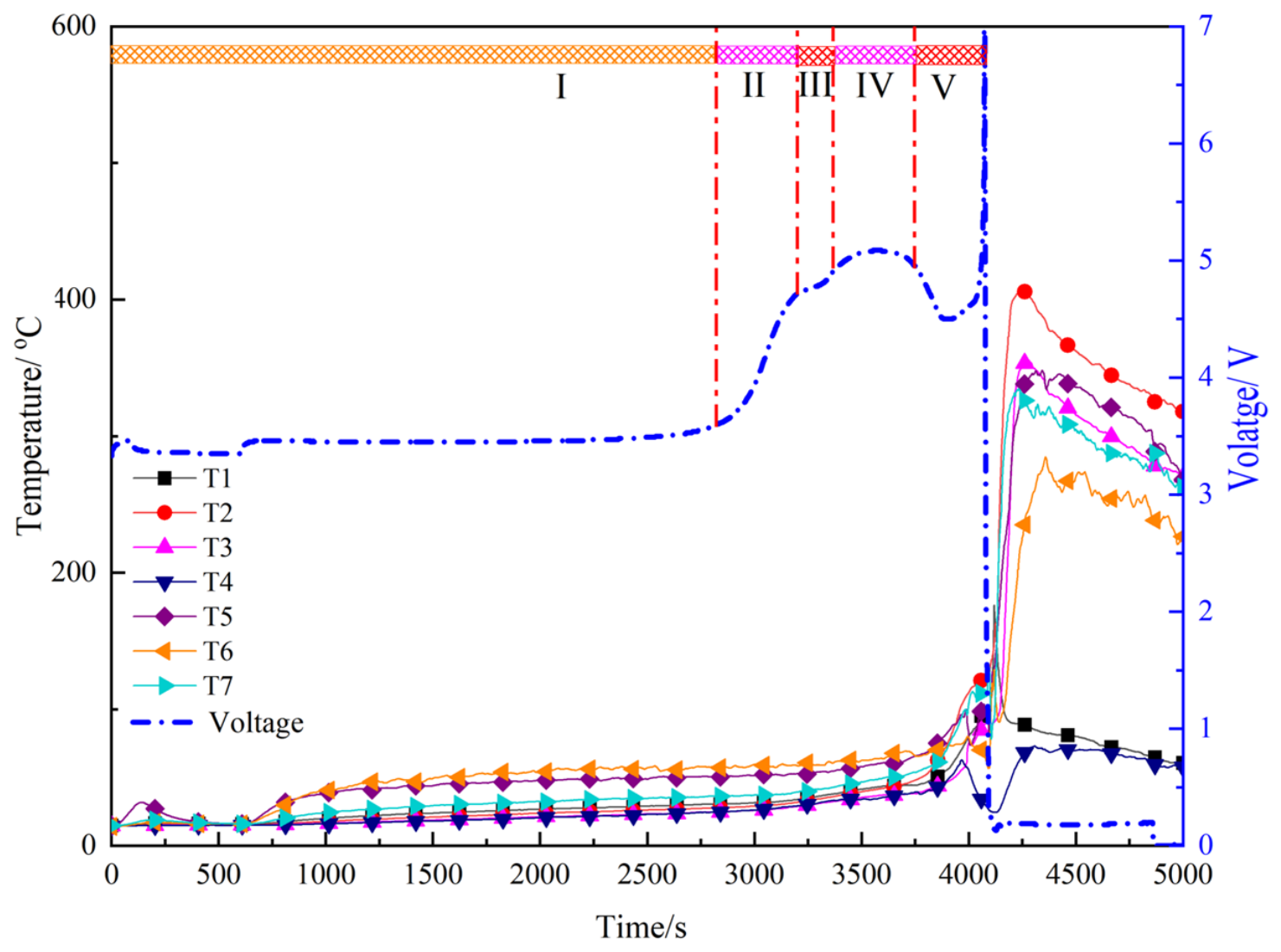
Figure 7 presents the temperature and voltage variation curves for the lithium iron phosphate battery after 1000 cycles of aging during thermal runaway. As the figure shows, from the initial stage of overcharging, the battery exhibits a distinct voltage plateau. At 2777 s, the battery voltage begins to increase significantly from 3.56 V, reaching 5.09 V at 3554 s, after which a clear decline is observed. This trend is relatively similar to the voltage curve for the new battery. At 4.70 V, an internal short circuit occurs within the battery, causing the voltage to increase sharply before a distinct decrease in voltage occurs. Simultaneously, the battery exhibits obvious thermal runaway behavior. Compared to the voltage curve after 400 cycles, the voltage plateau in stages III and IV is significantly shorter for the 1000-cycle aged battery.
As shown in Table 3, the time required for overcharging to induce thermal runaway is notably prolonged as the battery undergoes increased cycle aging. The fresh battery (0 cycles) undergoes thermal runaway at 1979 s, a delay that extends to 3626 s after 400 cycles and then to 4039 s after 1000 cycles. Furthermore, the voltages triggering thermal runaway are recorded as 4.63 V, 5.15 V, and 4.70 V, respectively. Moreover, the temperatures at which thermal runaway is initiated are 88.3 °C, 86.8 °C, and 117.6 °C, respectively, with a marked increase in trigger temperature observed in the battery after 1000 cycles. Conversely, the peak temperature during the thermal runaway process consistently declines with intensified aging, dropping from 501.4 °C in the fresh battery to 410.1 °C after 400 cycles and 401.2 °C after 1000 cycles. The results indicate that aging significantly mitigates the intensity of thermal runaway. A higher triggering temperature is noted for the battery with 1000 cycles. Long-term cycling can thicken the anode SEI film and increase the impedance inside the cell. Moreover, cycling consumes free electrolytes and accumulates inert decomposition gas within the cell. The confined gas improves internal heat dissipation and may further delay the onset of thermal runaway, resulting in the higher trigger temperature recorded. A similar result has also been observed in other studies [30,31,32].
It can be concluded that relying solely on temperature and voltage as early warning indicators may lead to a high incidence of false alarms during the thermal runaway development progress. Integrating temperature, temperature rise rate, and voltage variations for assessment can improve the reliability of early warning systems.
For example, the new batteries exhibit significant voltage changes while aged batteries show a longer plateau in voltage during the initial stage of overcharging. Furthermore, some studies have demonstrated that adjusting the thermal management and heat dissipation capabilities of the battery system based on variations in battery voltage and temperature thresholds, along with implementing multi-stage thermal management strategies, can postpone the onset of thermal runaway to a certain extent [33]. This method facilitates the more effective application of thermal management strategies to mitigate thermal runaway. This study employs energy storage batteries in practical operational scenarios to analyze the thermal runaway thresholds for temperature and voltage across batteries with varying lifespans. For instance, the new battery quickly enters a thermal runaway state while the temperature rise rate of the aged battery also begins to increase significantly after the battery voltage exceeds 4.63 V. It can be seen that in this test condition, 4.63 V is a key voltage monitoring point in the BMS system. Based on these findings, we intend to progressively establish a battery safety early warning database in future research and integrate it with the thermal management and fire protection systems of the battery system to investigate multi-stage prevention strategies for thermal runaway in energy storage systems.

4. Conclusions

With the continuous use of lithium-ion batteries in energy storage systems, their safety performance and related characterization parameters will undergo significant changes. The critical safety parameters were quantitatively compared across aging levels. The systematic comparison of trigger time, trigger voltage, trigger temperature, peak temperature and the time window from casing rupture to jet fire was provided in this research. Furthermore, more experiments will be conducted in future work and will collect key safety parameters under various operating conditions to establish a safety warning database to provide more data support for safety warnings of energy storage systems.
In this study, we conducted overcharge thermal runaway experiments on 314 Ah lithium iron phosphate batteries with 0, 400, and 1000 cycles, respectively. The conclusions of these experiments are as follows:
The degree of aging significantly affects the severity of thermal runaway. As the number of cycles increases, due to factors such as active lithium loss and capacity degradation inside the battery, the severity of thermal runaway shows a trend of decrease. New batteries exhibited open-flame combustion during overcharging, while, after 400 and 1000 cycles, aged batteries primarily released large amounts of smoke without jet fire phenomena. Correspondingly, the peak temperature during thermal runaway decreased from 501.4 °C for new batteries to 401.2 °C for aged batteries.
The electrochemical characteristics of aged batteries undergo significant changes. With the thickening of the SEI film, the voltage response of aged batteries during overcharging becomes more unstable, and the voltage plateau period is significantly shortened, reflecting the combined effects of intensified internal side reactions, capacity degradation, and increased internal resistance. Furthermore, the trigger temperature increases from 86.6 °C (fresh) to 117.6 °C (1000 cycles), which indicates that fixed thresholds should be avoided. Conversely, the battery management systems (BMSs) should incorporate cycle count or impedance-based aging estimation to adjust warning and shutdown limits dynamically.
There is significant non-uniformity in the internal temperature distribution of the battery. During overcharging, the temperature is highest at the negative tab, with a temperature difference of 10–30 °C compared to other wall locations, indicating a high risk of local heat accumulation. This difference suggests that the temperature sensor should be installed near or adjacent to the negative tab, so as to better measure the peak temperature on the battery surface and earlier activate the thermal management cooling device. The results in this work may provide critical data support for early thermal runaway monitoring and thermal management design. This area is critical for early thermal runaway monitoring and thermal management design.

Author Contributions

Investigation, X.L.; validation, W.L.; formal analysis, W.H. and W.L.; writing—original draft preparation, Z.D., W.L. and W.H.; writing—review and editing, X.L. All authors have read and agreed to the published version of the manuscript.

Funding

This study is sponsored by the Science and Technology Project of China Southern Power Grid Company Limited (032000KC24080053 (GDKJXM20240714)).

Data Availability Statement

The original contributions presented in this study are included in this article. Further inquiries can be directed to the corresponding author.

Conflicts of Interest

Authors Xinhai Li, Wei Lin and Wei Hou were employed by the company China Southern Power Grid Zhongshan Power Supply Bureau. Author Zhiying Ding was employed by the company Technical Department Guangdong National Energy Storage Technology Innovation Research Institute Co., Ltd. The authors declare that the research was conducted in the absence of any commercial or financial relationships that could be construed as a potential conflict of interest.

References

  1. Hannan, M.A.; Wali, S.; Ker, P.J.; Abd Rahman, M.S.; Mansor, M.; Ramachandaramurthy, V.; Muttaqi, K.; Mahlia, T.M.I.; Dong, Z.Y. Battery energy-storage system: A review of technologies, optimization objectives, constraints, approaches, and outstanding issues. J. Energy Storage 2021, 42, 103023. [Google Scholar] [CrossRef]
  2. Dunn, B.; Kamath, H.; Tarascon, J.-M. Electrical energy storage for the grid: A battery of choices. Science 2011, 334, 928–935. [Google Scholar] [CrossRef] [PubMed]
  3. Mitali, J.; Dhinakaran, S.; Mohamad, A. Energy storage systems: A review. Energy Storage Sav. 2022, 1, 166–216. [Google Scholar] [CrossRef]
  4. Sayed, E.T.; Olabi, A.G.; Alami, A.H.; Radwan, A.; Mdallal, A.; Rezk, A.; Abdelkareem, M.A. Renewable energy and energy storage systems. Energies 2023, 16, 1415. [Google Scholar] [CrossRef]
  5. Shi, C.; Zhu, D.; Zhang, L.; Song, S.; Sheldon, B. Transfer learning prediction on lithium-ion battery heat release under thermal runaway condition. Nano Res. Energy 2024, 3, e9120147. [Google Scholar] [CrossRef]
  6. Meng, D.; Wang, X.; Hu, W.; Zhao, C.; Wang, J. Experimental investigation of aging effects on thermal behavior of lithium-ion batteries during charging process. J. Energy Storage 2024, 98, 113102. [Google Scholar] [CrossRef]
  7. Liu, J.; Zhou, L.; Zhang, Y.; He, T.; Wang, Z. Thermal stability of lithium-ion battery subjected to inhomogeneous aging. Process Saf. Environ. Prot. 2023, 180, 992–1002. [Google Scholar] [CrossRef]
  8. Larsson, F.; Mellander, B.E. Abuse by External Heating, Overcharge and Short Circuiting of Commercial Lithium-Ion Battery Cells. J. Electrochem. Soc. 2014, 161, A1611–A1617. [Google Scholar] [CrossRef]
  9. Feng, X.; Ouyang, M.; Liu, X.; Lu, L.; Xia, Y.; He, X. Thermal runaway mechanism of lithium ion battery for electric vehicles: A review. Energy Storage Mater. 2018, 10, 246–267. [Google Scholar] [CrossRef]
  10. Wei, G.; Huang, R.; Zhang, G.; Jiang, B.; Zhu, J.; Guo, Y.; Han, G.; Wei, X.; Dai, H. A comprehensive insight into the thermal runaway issues in the view of lithium-ion battery intrinsic safety performance and venting gas explosion hazards. Appl. Energy 2023, 349, 121651. [Google Scholar] [CrossRef]
  11. Xie, W.; Zhang, L. Experimental study on thermal runaway and venting gas explosion hazards in prismatic lithium-ion batteries at different states of charge. Process Saf. Environ. Prot. 2025, 198, 107118. [Google Scholar] [CrossRef]
  12. Wang, C.; Zhu, Y.; Gao, F.; Qi, C.; Zhao, P.; Meng, Q.; Wang, J.; Wu, Q. Thermal runaway behavior and features of LiFePO4/graphite aged batteries under overcharge. Int. J. Energy Res. 2020, 44, 5477–5487. [Google Scholar]
  13. Zhu, X.; Wang, Z.; Wang, Y.; Wang, H.; Wang, C.; Tong, L.; Yi, M. Overcharge investigation of large format lithium-ion pouch cells with Li(Ni0.6Co0.2Mn0.2)O2 cathode for electric vehicles: Thermal runaway features and safety management method. Energy 2019, 169, 868–880. [Google Scholar] [CrossRef]
  14. Wang, Q.; Mao, B.; Stoliarov, S.I.; Sun, J. A review of lithium ion battery failure mechanisms and fire prevention strategies. Prog. Energy Combust. Sci. 2019, 73, 95–131. [Google Scholar] [CrossRef]
  15. Wang, H.; Xu, H.; Zhang, Z.; Wang, Q.; Jin, C.; Wu, C.; Xu, C.; Hao, J.; Sun, L.; Du, Z. Fire and explosion characteristics of vent gas from lithium-ion batteries after thermal runaway: A comparative study. Etransportation 2022, 13, 100190. [Google Scholar] [CrossRef]
  16. Koch, S.; Fill, A.; Birke, K.P. Comprehensive gas analysis on large scale automotive lithium-ion cells in thermal runaway. J. Power Sources 2018, 398, 106–112. [Google Scholar] [CrossRef]
  17. Zhang, X.; Chen, S.; Zhu, J.; Gao, Y. A critical review of thermal runaway prediction and early-warning methods for lithium-ion batteries. Energy Mater. Adv. 2023, 4, 0008. [Google Scholar] [CrossRef]
  18. Liu, J.; Wang, Z.; Bai, J.; Gao, T.; Mao, N. Heat generation and thermal runaway mechanisms induced by overcharging of aged lithium-ion battery. Appl. Therm. Eng. 2022, 212, 118565. [Google Scholar] [CrossRef]
  19. Wang, C.; Zhu, Y.; Gao, F.; Bu, X.; Chen, H.; Quan, T.; Xu, Y.; Jiao, Q. Internal short circuit and thermal runaway evolution mechanism of fresh and retired lithium-ion batteries with LiFePO4 cathode during overcharge. Appl. Energy 2022, 328, 120224. [Google Scholar] [CrossRef]
  20. Yuan, W.; Liang, D.; Chu, Y.; Wang, Q. Aging effect delays overcharge-induced thermal runaway of lithium-ion batteries. J. Loss Prev. Process Ind. 2022, 79, 104830. [Google Scholar]
  21. Zhang, L.; Liu, L.; Terekhov, A.; Warnberg, D.; Zhao, P. Thermal runaway of Li-ion battery with different aging histories. Process Saf. Environ. Prot. 2024, 185, 910–917. [Google Scholar] [CrossRef]
  22. Du, J.; Lu, J.; Wang, J.; Zheng, S.; Li, Y.; Zheng, S.; Chen, S.; Wang, C.; Wei, S.; Tu, R. Analysis of external short circuit fault characteristics and early warning algorithm research for LiFePO4 batteries. J. Energy Storage 2026, 150, 120445. [Google Scholar] [CrossRef]
  23. Jeong, I.; An, S.; Kang, C. Thermal runaway behaviors in 18,650 LiFePO4 batteries under high C-rate charge/discharge operations. Appl. Therm. Eng. 2026, 289, 129760. [Google Scholar] [CrossRef]
  24. Liu, S.; Zhao, J.; Lu, S.; Zhou, Q.; Ruan, C.; Zhang, H. In-situ measurement of heat generation and thermal behavior of cyclic aged LiFePO4 batteries. J. Energy Storage 2026, 143, 119693. [Google Scholar]
  25. Sun, S.; Brown, W.; Tan, X.; Rui, B.; Xiong, G.; Wang, Y.; Zeng, D.; Xu, J. Aging matters: How degradation pathways govern thermal runaway in lithium-ion batteries. J. Energy Chem. 2026, 114, 10–21. [Google Scholar] [CrossRef]
  26. Sun, X.; Long, T.; Xiao, L.; Wang, J.; Wang, Z.; Huang, Y.; Wang, L.; Zhang, Y.; Wang, W.; He, Q.; et al. A multidimensional-coupled signal approach for early warning and fire characteristics of overcharge-induced thermal runaway in LiFePO4 prismatic batteries. Appl. Therm. Eng. 2026, 292, 130373. [Google Scholar] [CrossRef]
  27. Yang, M.; Ye, Y.; Yang, A.; Jiang, Z.; Wang, X.; Yuan, H.; Rong, M. Comparative study on aging and thermal runaway of commercial LiFePO4/graphite battery undergoing slight overcharge cycling. J. Energy Storage 2022, 50, 104691. [Google Scholar] [CrossRef]
  28. Zhang, J.; Li, Y.; Ma, L. Study on the effects of aging temperatures on evolutionary characteristics of thermal runaway in lithium-ion batteries. J. Power Sources 2026, 665, 238997. [Google Scholar] [CrossRef]
  29. Feng, L.; Jiang, L.; Liu, J.; Wang, Z.; Wei, Z.; Wang, Q. Dynamic overcharge investigations of lithium ion batteries with different state of health. J. Power Sources 2021, 507, 230262. [Google Scholar] [CrossRef]
  30. Tong, L.; Wu, S.; Luan, W.; Chen, H. Impact of temperature-dependent aging on overcharge-induced thermal runaway in lithium-ion batteries. J. Power Sources 2025, 652, 237466. [Google Scholar]
  31. Tao, Z.; Zhou, H.; Yang, B.; Wang, Y.; Zhao, L.; Zhang, H. Experimental study of thermal runaway characteristics and quantitative risk assessment of field-aged LiFePO4 batteries under overcharging. J. Energy Storage 2026, 161, 121975. [Google Scholar] [CrossRef]
  32. Zhang, J.; Li, Y.; Ma, L. Study on the effect of aging on thermal runaway behavior of lithium-ion batteries under different heating positions. Appl. Therm. Eng. 2025, 280, 127793. [Google Scholar] [CrossRef]
  33. Li, K.; Ren, H.; Zhang, H.; Min, Q.; Yan, J.; Li, C.; Song, L.; He, Q.; Mohtaram, S. Reversible overcharge threshold and multi-parameter early warning strategy for thermal runaway prevention in lithium-ion batteries. Appl. Therm. Eng. 2026, 284, 129083. [Google Scholar] [CrossRef]
Figure 1. Schematic diagram of battery thermal runaway experiment setup.
Batteries 12 00227 g001
Figure 2. The thermal runaway process of a fresh battery.
Batteries 12 00227 g002
Figure 3. The thermal runaway process of a battery after 400 charge–discharge cycles.
Batteries 12 00227 g003
Figure 4. The thermal runaway process of a battery after 1000 charge–discharge cycles.
Batteries 12 00227 g004
Figure 5. Temperature and voltage variation in the fresh batteries during the thermal runaway event.
Batteries 12 00227 g005
Figure 6. Temperature and voltage variation in the batteries after 400 charge–discharge cycles during the thermal runaway event.
Batteries 12 00227 g006
Figure 7. Temperature and voltage variation in the batteries after 1000 charge–discharge cycles during the thermal runaway event.
Batteries 12 00227 g007
Table 1. Experimental setup.
CapacityTriggered ModeTest Samples
314 AhOvercharge at a 0.5 C rateUncycled
314 AhOvercharge at a 0.5 C rate400 cycles at 0.5 C, 25 °C
314 AhOvercharge at a 0.5 C rate1000 cycles at 0.5 C, 25 °C
Table 2. Thermocouple locations.
ThermocouplePositionThermocouplePosition
T1The center of the front side of the batteryT5The positive tab of the battery
T2The center of the side of the batteryT6The negative tab of the battery
T3The center of the front side of the batteryT7The safety valve of the battery
T4The center of the side of the battery
Table 3. Critical parameters of thermal runaway event.
Cycle CountTriggering Time of Thermal Runaway (s)Triggering Voltage of Thermal Runaway (V)Triggering Temperature of Thermal Runaway (°C)Peak Temperature
(°C)
019794.6386.6501.4
40036265.1586.8410.1
100040394.70117.6401.2
Disclaimer/Publisher’s Note: The statements, opinions and data contained in all publications are solely those of the individual author(s) and contributor(s) and not of MDPI and/or the editor(s). MDPI and/or the editor(s) disclaim responsibility for any injury to people or property resulting from any ideas, methods, instructions or products referred to in the content.